


























By Neil Sutton
The Thread Group is a new coalition of companies fostering the development of a wireless mesh networking layer that allows technology devices in the home to communicate with each other.
The group was founded by Yale Security, Silicon Labs, Samsung Electronics, Nest Labs, Freescale Semiconductor, Big Ass Fans and ARM. According to Chris Boross, president of the Thread Group and also a member of Nest’s product marketing team, Thread was created due to a perceived gap in networking technology that is currently serving the home automation market.

Midland, Ont.-based Huronia Alarms has acquired Blue Mountain Lock, Key & Safe, a locksmith company located in nearby Collingwood.
“We are very pleased that Roger and Kim Gagne have agreed to join the Huronia family,” says Kevin Leonard, president of Huronia Alarms, in a company statement.
“The locksmithing services they provide for residential, commercial, industrial and property management customers was a natural extension of our security, fire and safety, and home theatre wiring and installation businesses.”
“Our relationship with Huronia started many years ago,” says Roger Gagne, president of Blue Mountain Lock, Key & Safe, established in 1977. “So having worked with them we knew that they had the same business philosophy and values as we do.”
“We were looking for an existing standard that would allow us to connect products in the home wirelessly through a mesh network that carried Internet Protocol — we were looking for IPV6 support natively. It needed to be extremely low-power consumption and very, very secure, but also carry IP,” explains Boross.
“We couldn’t find anything that was suitable to do the job, so we started working as a group of seven companies to develop Thread.”
Thread uses the 802.15.4 radio standard in the 2.4 GHz band, which is also used by ZigBee, another wireless home automation standard which was created more than 10 years ago.
The Thread Group is still in its infancy by comparison, but shares some similarities with the ZigBee Alliance as well as the Z-Wave Alliance, both of which were started by a handful of companies and have since grown to dozens of members. (Freescale is also a member of the ZigBee Alliance and sits on its board of directors.)
The differentiator for Thread is its support for battery-operated devices, says Kevin Kraus, director of product management for Yale Residential and the Thread Group’s treasurer.
“Yale has a line of electronic residential door locks that communicate
“It’s performing extremely well. A version of Thread is seeing real use.”
—
Chris Boross, president, Thread
Group
with home control systems. We offer locks that communicate with both Z-Wave and ZigBee — two of the predominant home automation mesh network protocols. The reality is, neither of those are really optimized for battery-operated products,” he says.
He adds that Thread is “the foundation to say, ‘We’ve moved the bar up from Z-Wave and ZigBee. We now have a new protocol that is much more focused on supporting battery-operated devices.’”
But, he says, Thread isn’t likely to supplant existing protocols. Mostly likely, they will share the market, along with any others that come along. “At some point . . . the product that consumers want will drive that final solution, but I see them co-existing for many, many years.”
In an email interview with SP&T News , Mark Walters, chairman of the Z-Wave Alliance, says, “As a leader in
“We know how much hard work the Thread Group has ahead of it. ”
— Mark Walters, chairman, Z-Wave Alliance


Sthis market for almost 12 years, we at the Z-Wave Alliance know how much hard work The Thread Group has ahead of it. But we welcome them and applaud their efforts to advance the state-of-the-art in connected-home technology.”
According to Boross, Threadcompatible products should be available by the second half of 2015; the first half of the year will be devoted to helping companies test and certify products. Nest, which makes home products including thermostats and smoke detectors, currently uses an early version of Thread. “It’s performing extremely well in the field. A version of Thread is seeing real use,” says Boross.
Nest garnered attention earlier this year when it was bought by Google for US$3.2 billion. Nest subsequently acquired Dropcam, a manufacturer of Wi-Fi based surveillance cameras for US$555 million. Boross wouldn’t address Dropcam’s potential role in the Thread Group because, at the time of the interview, the acquisition had not closed.
Kraus says he expects to see other security companies show an interest in the Thread Group, saying it will “likely be looked at” by multiple vendors that wish to take advantage of its potential.
outhwest Microwave has appointed Anacon Solutions as its manufacturer’s representative agency for the company’s integrated perimeter intrusion detection solutions in Ontario (excluding the Ottawa region).
“It’s a very unique line,” says Anacon’s principal, Frank Filice. “There’s a lot of potential for perimeter protection.” Vertical markets interested in that type of product include oil and gas, correctional institutions, and hydro plants, who use it to discourage copper theft.
Filice adds that Southwest Microwave products integrate well with other lines he carries, including video surveillance solutions. Team members working with Filice include Tamara Wonta and Steve Filice. The group is currently scheduling appointments with customers. Anacon Solutions also recently opened a new office location, complete with demo room and meeting space, in Vaughan, Ont., and will be hosting open house dates in the near future for customers, dealers and distributors.

By Neil Sutton
Kaba has purchased Whitby, Ont.-based Keyscan Access Control Systems to round out its access control portfolio and leverage the company’s existing channel relationships, according to executives from both companies.
“Here in the Americas, we didn’t have a network wired access system that we were selling,” says Mark Allen, the company’s senior business development manager. “We certainly missed out on business opportunities by not having it, so Kaba basically was searching for a way to fill that gap. Keyscan is the perfect solution.”

Kaba announced the acquisition in early November. Terms of the deal were not disclosed. Keyscan’s director of sales and marketing Steve Dentinger characterizes the acquisition as a complementary one — both companies were looking for a means to expand their markets. “We were
evaluating opportunities in the market, but very, very selectively. That’s what brought us to this point,” he says. “This is a true best of both worlds fit. This exposes us to a great wealth of resources.”
Dentinger stressed that the Keyscan brand will remain in the market and will operate as a division of Kaba’s ADS Americas Group — one of the reasons Kaba opted to purchase the company was to leverage its name. “Certainly they’ve acquired the people and the resources but they’ve also acquired a significant brand within the North American market. The Keyscan brand is not going anywhere,” he explains.
The addition of Keyscan’s portfolio to its own will allow Kaba to take on more opportunities, says Allen, by offering a more complete access control solution. He cites the example of a property developer — Kaba has products that would fit within residential dwellings, but not necessarily for a
DORMA Americas has acquired Sunnyvale, Calif.-based Farpointe Data, a provider of radio frequency identification (RFID) for access control products. The deal closed April 1, day one of the ISC West exhibition in Las Vegas.
According to a DORMA statement, “advanced RFID technology is a Farpointe hallmark.” The company manufactures contactless smart card readers, cards and tags.
“It would be hard to imagine a better-realized combination than DORMA and Farpointe Data,” says DORMA AME area president Wil VandeWiel. “The
building’s perimeter security environment. “Now we can go to that company and offer them a complete solution . . . that covers every access point.”
Kaba will also be able to leverage Keyscan’s distribution relationships. “We provide a deep relationship base through our distribution — both traditional security distributors as well as datacomm distributors. That is a big piece we bring to the table,” says Dentinger, adding that Kaba’s products may soon be available to Keyscan’s resellers, but “in a controlled fashion and where there’s synergy.”
“We’re very strong with locksmiths and wholesale distribution, but not with the integrator channel where Keyscan is very strong,” adds Allen.
Keyscan’s current president John Dyall will remain with the company for an unspecified period to help oversee the transition to Kaba, says Dentinger.
Kaba is headquartered in Rümlang, Switzerland, with offices around the globe. The company also has roots in Canada. In 2001, Kaba purchased Montreal-based Unican Security Systems. It continues to operate a manufacturing facility there and employs sales personnel across the country.
corporate cultures are a good fit. Customer and channel synergies were apparent from the start.”
Farpointe product applications include physical and logical access, secure identity and vehicle identification. The company also makes long-range RFID solutions that transmit up to 150 feet (45 m), suitable for parking gates and vehicle barriers.
“We are very excited to be partnered with DORMA, and are confident they are the right company to support Farpointe’s next level of growth,” says Scott Lindley, president of Farpointe Data.

AMAG Technology, a California company that offers access control, video management and situational awareness solutions is making a push into Canada by hiring key personnel in strategic markets.
AMAG solutions have been popular in Canada for some time, says Greg Love, vice-president of sales. “We have experienced growth in Canada over the last few years with even limited activity and resources in the area,” says Love.
But having dedicated resources up here is really making a difference. Earlier this year, AMAG hired Ottawa-based Derik Beier as regional sales manager. The company also plans to hire another RSM to handle Western Canada (at press time, the hiring process was still ongoing). Before Beier joined the company, Canada was managed by sales personnel based in Northeastern and Northwestern parts of the U.S.

“Coming on board as a new RSM, a new Canada-based resource, it wasn’t starting from scratch. There was definitely good momentum to build off of,”
says Beier. “The biggest piece of my role was getting out there and educating the integrator/reseller world, the consultant/engineering space and some of key end users — reaffirming that AMAG is in the space and we have existing installations and dealers that are reselling and installing our products.”
Beier adds that the size of the opportunity is changing. While the company’s “bread and butter business” is 50 readers or less, “we’re starting to get into much larger projects now — projects that are over 1,000 devices. To see those types of projects come to us in a very short time is very exciting,” he says. “We just weren’t getting those types of looks before we had dedicated resources [in Canada].”
The company is also looking to grow its reseller base in Canada to help address new opportunities. “We’re starting to be spec’d for a couple of projects that are coming out in the near future. That will lend itself to the growth of the reseller base in the region,” says Beier.

HID Global began 2014 with a pair of high profile acquisitions: biometrics firm Lumidigm and IdenTrust, a digital identities solution provider.
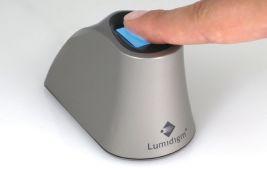
IdenTrust is a provider of digital identities for the U.S. Department of Defense’s External Certification Authority (ECA) program and the General Services Administration, an independent agency of the U.S. government. According to HID spokesperson Jeremy Hyatt, IdenTrust will remain an independent company within HID. The company “provides HID Global with PKI technology for key management,” he says, “which improves SDI security while extending our ability to deliver mobile keys for device management.”
Lumidigm, a biometrics specialist, makes technology that authenticates a user’s identity via multispectral imaging technology and fingerprint sensors. HID says its goal for the technology is to extend it beyond finger- and hand-applications into other areas of identity management such as iris, facial and gesture recognition. “This is a work in process. You can expect combined products in the near future,” says Hyatt.
According to the company, Lumidigm will maintain its current operations in Albuquerque, NM, and its management staff will report in to HID’s CTO, Selva Selvaratnam.
HID Global has also been busy managing its own operations. The company has opened a new global headquarters in Austin, Tex., which will consolidate many of its many corporate functions as well as manufacturing, product assembly, test operations, distribution and sales. The facility is now in “phase one” and will be fully operational by the third quarter of 2015.
Ottawa-based Senstar has acquired Optellios, a maker of fibre optic sensing technology, to bolster its product set and broaden its market appeal, according to Senstar president Brian Rich.
The deal was first announced in March and closed in April. Terms of the sale were not disclosed. Rich says Senstar had originally aimed to develop its own fibre optic sensing products, but ultimately it made sense to bring that technology in-house through a purchase. “Perhaps in a few more years we may have been able to do that, but the acquisition of Optellios is certainly a much better solution for us,” he says. “The acquisition of Optellios fills that gap.”

Senstar has had an OEM relationship with Optellios for several years, adds Rich, making the acquisition even more attractive. “This was kind of a next logical step in the relationship that we’ve been building.”
Optellios employs 16 people in its Newtown, Penn.,
headquarters. That facility will become a centre of excellence for fibre optic technology, says Rich, bringing Optellios and Senstar’s own fibre optic products under one roof. He adds that the company will retain the Optellios name since “there’s value in the brand. We’ll leverage that.”
David Smith, Optellios president, will depart the company. He was brought in by Optellios’ previous owner, a venture capital firm, to transform the business, according to Rich. “He’s been a great leader and built the company significantly.”
Rich says that Optellios’ technology is able to service longer perimeters and may provide new market opportunities. “Pipeline security is a huge vertical market that we’ll be able to access with this product set,” he explains. “Also borders, large oil and gas sites, plus any large facility that prefers to use a fibre optic sensor.” He adds that Senstar’s international reach will potentially widen the audience for Optellios.
Manufacturers’ representative firm, Tillicum Agencies, has added two well-known faces from the access control business to its management team.
After nine years with ASSA ABLOY as the ISS/Persona Manager for Western Canada, Bud Park joined Port Moody, B.C.-based Tillicum as vice-president and co-owner in May. Weeks earlier, John Frazer was appointed general manager of Tillicum following a stint
FST21 rebrands to FST Biometrics
Israeli biometric access solution provider FST21 has rebranded to FST Biometrics. As part of the initiative, the company says it will further concentrate its efforts on its In Motion Identification (IMID) technology. “As our team continues to establish our global presence, I believe this rebrand highlights our commitment to exceptional security and seamlessly convenient access in populated cities around the world,” says Major-General Aharon Zeevi Farkash, founder and CEO.
Ingram Micro named distributor for Invixium
Ingram Micro Canada announced it is the exclusive Canadian distribution
as Western regional sales manager for Rutherford Controls International (RCI). Park says that Tillicum’s main line of business is hardware; the company represents multiple ASSA ABLOY brands, including Sargent, Adams Rite, Assa, Corbin-Russwin, Rockwood and Yale. One of Park’s major tasks will be to expand Tillicum’s portfolio. “We’re going to look at trying to grow the security side of the business, with ASSA ABLOY being the No. 1 focus,” he says.
partner of Invixium’s IXM line of biometric fingerprint access control products. As part of the new agreement,





Ingram Micro Canada will distribute Invixium’s full line of biometric access control solutions to channel partners throughout Canada. The aim of the alliance is to broaden Invixium’s Canadian reach and make it easier for partners to market, sell and deploy solutions to business-to-business (B2B) channels. Plans to expand the distribution agreement globally are underway.
Genetec announces strategic partnership with SALTO
Through a strategic partnership, Genetec and SALTO will offer integra-
tion between Genetec Synergis, an IP access control solution, and the SALTO SALLIS wireless technology. Synergis will allow end users to consolidate their new or existing wired and wireless access control systems into one, and centralize monitoring and reporting. Customers will also be able to manage a single cardholder and credential database without having to work with separate wireless system or duplicate credentials. “Both Genetec and Salto serve customers around the world and we look forward to delivering joint solutions that will respond to both local needs as well as those of multi-site and multi-national installations looking for wireless options,” says Jimmy Palatsoukas, senior manager of product marketing at Genetec.

IBy Victor Harding
have recently become involved in selling more small “integration” businesses.
I characterize an integration company as one where 60-70 per cent of the annual revenues of the business are non-recurring revenue items, in particular installation and service revenue.
The owner here is not chasing the monitoring revenue as much as the installation revenue. Accordingly, the recurring monitoring revenue (RMR) is a much smaller piece of the business. They exist partly because relying on selling alarm systems alone does not make financial sense any more and partly because commercial jobs can produce good margins. The challenge comes when the owner wants to sell such a business. The owners rightly think their business is worth more than just the alarm accounts in it but getting buyers to pay full value for installation and service revenue is very tough.
If you break down the company’s total revenues into its various divisions (i.e. installation, service and monitoring) and apply all the relevant operating costs to each division including the overhead, the monitor-

Ting division often comes up as the division making money. Why would a buyer pay good money for a section of the business that is not making money? I recommend that owners get their accountants to do such a divisional breakdown to see how the different elements of their business are really doing.
Secondly, installation revenue by its nature is not recurring and depends in many cases on the connections and skills of the owner (not on any key salesman). This is one reason why it is easier for the seller of a small integration company to sell the business if they are prepared to stay on for a couple of years.
My experience is that the big national players will not attribute value to the integration or installation part of a business. Buyers for smaller integration firms are usually other small, integration firms looking to grow or a regional or national commercial player that is looking for a new office location. The problem is there are fewer of these buyers, they are harder to find and there is still a valuation to be agreed upon.
Integration businesses do sell, and sometimes at
By Steve Bocking
good prices, but the ones that we hear most about are the larger commercial businesses. Securadyne and Convergint in the U.S. have recently bought other integration businesses but the businesses they buy are substantial — $10 million of annual revenue and up. Here are some tips I would give to owners of smaller integration businesses:
• Try to do business in a market niche that the buyer can exploit further after he buys the company.
• Get help a broker or advisor. There is valuation expertise required and knowledge of who the buyers in this market are.
• Be prepared to end up selling to one of your competitors.
• Be prepared to be paid out over two to three years after you sell.
• Give yourself lots of time (eight to 10 months) to sell the business. It will take time.
Victor Harding is the principal of Harding Security Services (www.hardingsecurity.ca).
How networked systems are radically altering access control
he era of securing a business with locks and keys is slowly but surely dwindling away.
Not only are businesses looking for ways to leverage their corporate networks, but they also see tremendous value in moving to an IP access control system for easier day-to-day management. On top of all the obvious advantages over locks and keys such as addressing lost keys, automating unlocking schedules and tracking door activity, it is now very common for IP access control solutions to be integrated with other management systems — the most common being a video management system (VMS).
In fact, there are a few companies now offering combined software platforms for video surveillance and access control, which is commonly termed “unified solutions.” These unified solutions are changing the way property managers control access to their buildings by extending control beyond the typical reception desk. Many once high-end features are now accessible to even small property manag-
ers, such as having system control through mobile smart phones and tablets, visitor kiosks and human resource management systems (HRMS).
Mobile access control management: A growing number of facility managers don’t want to be tethered to a desktop PC or laptop to access their security system. Instead, they appreciate the convenience of using apps via their smartphones or tablets when they need immediate access. For the facility manager or security guard who is not always at their desk, a mobile client becomes a powerful tool that lets them interact with the access control system from anywhere.
Self-check-in kiosk automation: Visitor management and self-serve visitor management applications are becoming much more cost effective, and thus accessible to a larger customer base. While the pad and paper sign-in process might still be very common, visitor management software offers greater automation and improved tracking by registering all info (often including a photo) from a simple driver’s license or passport scan. Some visitor management
software are even integrated with email applications. Active Directory integration with HR systems: Many organizations have Active Directory as the central access point of their logical business data, but it can also be used to help manage physical access. For example, adding a new employee in the human resource software could automatically create a Windows user account in Active Directory and a cardholder account in the access control system. And the inverse is also possible. Disabling or removing a Windows user account will guarantee the equivalent deactivation or deletion of the cardholder account, thereby ensuring consistency. Ultimately, this integration helps to lower the risks of physical and logical security breaches.
These three examples only scratch the surface of how IP access control systems can operate beyond the security desk, but all contribute to greater efficiency and automation.
Steve Bocking is the business development manager at Genetec (www.genetec.com).

Once the stuff of super high-security facilities, biometrics technology is moving downstream. The next wave could help combat data theft and prove useful for health care, retail, education and much more
By Linda Johnson
No card to carry, no password to remember; biometric authentication offers huge convenience.
But, perhaps nothing is fuelling the move from the password to the fingerprint today more than recent, high-profile data breaches. Hacking exploits, such as last year’s attack on Target’s system, which led to the theft of the personal information of 70 million people, have demonstrated how vulnerable information today is — whether it belongs to a retailer, a bank or a hospital.
“It’s just a question of time before someone hacks into a Canadian hospital or provincial system and steals thousands or even millions of records of patients with their birth dates, addresses and social insurance numbers,” says Eric Talbot, CEO of Montreal-based S.I.C. Biometrics.
“That’s a big risk. And when someone has his ID stolen, you cannot give him back his ID. You need to change everything.”
S.I.C. provides biometric authentication technologies for mobile devices, smart phones and physical access control. Currently, S.I.C’s biometrics technology is used in several U.S. government departments, including the State Department and Homeland Security.
The company also provides biometric technologies to the commercial and health care markets, Talbot says, and has seen a lot of growth in both. In addition to saving time, it guarantees the medical
facility is in compliance with laws protecting access to sensitive information.
“In health care, there’s a lot of traction for our technology. The doctors sign e-prescriptions, sign reports, have access to patients’ e-records. You cannot rely on a PIN of six digits or a password to have access to sensitive information,” he says.
The hot product on the market now, Talbot says, is the company’s “smart case,” a plastic case that covers an iPad, smart phone or tablet. The case has a fingerprint sensor built in and usually includes a smart card reader. The smart card, which can encrypt files and emails, contains a picture of the person’s face. The case can provide triple authentication, by fingerprint, iris or facial recognition.
Their technology does not take an image of the fingerprint, he explains. Instead, it captures unique details (ends of lines, Y-shapes, for example), takes the x and y co-ordinates and measures distances between points.
“It’s very efficient. There are no privacy concerns because it’s not actually an image. And it’s really fast because it’s only a few points’ match. With an image, there’s about 92,000 points, and the minutiae fingerprint template is only 80 points,” he says.
S.I.C.’s retail projects are largely in the developing world, Talbot says. These countries offer huge
opportunities due to population sizes and the absence of existing systems.
“We have a lot of success there. I do much more selling in Africa than in Canada. I have one project in Canada, and I have hundreds of projects around the world,” he says.
iView Systems, an Oakville, Ont.-based security reporting firm, began using biometric technology in gaming and is now moving into retail and other markets, says James Moore, vice-president. Their facial recognition system is deployed in casinos in Canada and the U.S., including all Ontario Lottery and Gaming Corporation (OLG) casinos, slots and racetrack.
The system alerts staff to the arrival of people previously caught cheating or involved in criminal activity, and also those enrolled in the province’s self-exclusion program, Moore says. When a person signs up to be kept out of a casino, their information goes into a database.
“Now when they walk into any facility, cameras are automatically scanning faces for potential identification of self-excluded individuals. That reduces the liability of the operator in terms of best effort of keeping those self-excluded patrons out,” he says.
In retail, facial recognition is used to reduce theft, he says. Shoplifters often work in groups and hit many stores in an area. By getting the thieves’ pictures in one store, a company may be able to protect locations not yet struck, isolating the individuals as they come into the store.
Many companies also want to be able to recognize people who are potential assets to their business, Moore says. Thus, a retailer finds it useful to identify
“You cannot rely on a PIN of six digits or a password to have access to sensitive information.”
— Eric Talbot, S.I.C. Biometrics
There are now high-definition cameras that scan for facial recognition as an individual approaches from 15 feet away.”
— Peter Dyk,TycoIS
potential purchases of high-value items, or returning customers, as they walk into the store.
In the future, he sees the company extending its use of biometrics into sectors such as education and corporate visitor management.
“The on-premise visitor who is a contractor at a corporate security environment, or maybe in a preschool: now, you can start managing parent enrolment in a preschool or kindergarten. So, you’re managing the pickup of authorized individuals to that child,” he says.
In the last five years, Albuquerque, N.M.-based Lumidigm, now part of HID Global, has focused almost exclusively on commercial and industrial markets, with financial services and health care constituting the two principal vertical application segments, says Phil Scarfo, senior vice-president, sales and marketing. Most of their business in financial services is in Latin America. By the end of 2014, some 75,000 ATM and lottery terminals in Brazil will be equipped with their fingerprint technology.
In health care, he says, Lumidigm’s fingerprint readers are used by medical staff when they sign onto electronic medical records, helping to ensure the hospital is complying with confidentiality legislation. They are also used in medical dispensing. “So, they would know that it was really nurse Joan at such and such a time who took that particular opiate out of that drawer, and not someone who just happened to be walking by.”
In the biometric arena, Scarfo says, Lumidigm focuses today almost entirely on fingerprint recognition. Its technology, which captures both the surface image and the subsurface impression of a finger, allows them to take a fingerprint in poor conditions, where skin is damaged, or contaminated by dust or dirt.
In industrial/commercial applications — the monitoring of time and attendance, for example — a fingerprint is often a second factor, required in addition to a physical credential, such as card or user ID.
“The company wants to make sure it really was Phil who entered the building at 8 a.m. and left at 5 p.m. So they like the idea of a biometric being used and not just their password or PIN number,” he says.
Lumidigm uses the technology for other physical access control applications, including the clearance of travellers at border crossings, Scarfo says.
“In Hong Kong, a couple of thousand people go through the gates every day. If each of them had to be screened manually, it would be a nightmare. By accurately identifying people with their card and finger biometric, life is made a lot simpler, safer and more convenient,” he says.
A fingerprint credential may also be used to identify a proper car or bus driver. At amusement parks, Lumidigm biometric authentication has been deployed to prevent the sharing of tickets and passes.
TycoIS deploys an access control system that uses a fingerprint, iris scan or combination of attributes to restrict access to sensitive operations and assets, says Peter Dyk, director, product management and engineering at Boca Raton, Fla.-based Tyco Integrated Fire and Security. The company’s main market is the federal government, focusing on personal identity verification for employees and contractors, while
some agencies are also deploying biometrics technology on their card readers.
TycoIS expects biometrics will continue to grow and enter new markets, Dyk says, although it’s unclear which markets these will be. In the past, acceptance of the technology was hindered by concerns about possible transmission of disease — touching fingerprint readers, for example. However, companies are increasingly aware of and concerned about this issue.
“[They] are starting to implement biometrics at a distance. This segment of biometrics will continue to expand. For instance, there are now high-definition cameras that scan for facial recognition as an individual approaches from 15 feet away. This completely wipes any concern over spreading disease or germs out of the picture,” he says.
Cotuit, Mass.-based Biomids has designed enterprise and consumer/small business applications, says Frank Mann, CEO. It provides facial and iris recognition products and will soon be adding voice recognition, which identifies users by voice wavelengths.
The company’s software allows access to PCs and laptops through facial recognition. Once users have recorded their face, using their webcam or camera, they will be prompted to authenticate their face whenever they try to go to protected websites. Biomids also provides a facial recognition authenticator for access to apps on iPads and iPhones.
The company works mainly in financial services (iris recognition for online banking) and health care, Mann says. By making access to electronic medical files faster, biometrics allows doctors to see more patients. In an enterprise application, replacing passwords eliminates most help desk calls.
“About 40 per cent of help desk calls are to reset passwords. A help desk call is a cost to the organization of between $40 and $70, and the average person calls in four times a year,” he says.
Biomids is now moving into the academic market, as higher education institutions seek ways to reduce cheating. Students cannot get a friend to write an online exam for them or search Google for an answer.
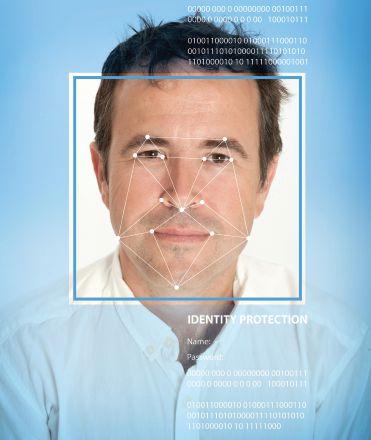
“If a student taking an exam has to put her face in front of the camera, get logged and authenticate herself, we know she hasn’t cheated,” Mann says.
Biometrics, Scarfo says, is certain to continue expanding. In addition to providing a higher level of security, the recognition technology provides the means to connect a patient, guest, or shopper across various events and locations, thus making the collection of information more intelligent and efficient.
“We have thousands of virtual identities today — passwords, PINs, all kinds of virtual credentials — but only one physical identity,” he says. “Wouldn’t it be nice if everything in the virtual world were linked to that one physical identity?”
Linda Johnson is a freelance writer based in Toronto.


How integrators can help health-care facilities solve their door hardware issues
By Ann Geissler Timme
Designing, installing, and maintaining the openings in a healthcare facility are no simple tasks.
Whether it is meeting privacy guidelines, assuring patients and staff safety or securing sensitive areas, hospital facility managers and security professionals are being forced to re-examine their access control procedures and systems. By providing medical facility managers with tools to make their centres more secure in a more convenient manner, integrators can increase their sales to healthcare organizations. Highlighting the following five areas will help integrators secure increased business.
Hospitals and health-care centres are always looking for ways to cut costs and run more efficiently. Standardizing on solutions from a single provider will ensure that medical health-care facility managers have more control
over their openings. Standardization provides more efficiency during installation and maintenance activities and ensures smoother performance of the selected electronic access control and electrified door hardware.
Choosing open architecture devices also adds efficiencies and value for both the integrator and hospital. If an access control system is already in place, but does not control all of the openings required to be effective, there are a number of open architecture solutions that are already compatible with most access control systems on the market today and can easily integrate into the system already in place.
Security professionals in healthcare applications also can now choose the specific electronic lock they need currently with full confidence that the reader or communication technology can be later upgraded without ever
taking it off the door. Such applications often use locking systems that combine the electrified lock, reader, door position and REX switches together into one device.
Today, a smart credential, at about the same price as a proximity card, provides a higher level of security, more convenience and far greater functionality. Used at health-care centres, smart credentials have the ability to manage access, payments and many other functions much more securely.
In comparison to standard door keys, magnetic stripe cards or proximity cards, the encrypted security of smart credentials ensures that they are far harder to counterfeit. It is not possible to put a dollar amount on the potential damage that a health-care organization could suffer by unauthorized individuals gaining access to restricted areas of the facility. By issuing the staff ID cards with strong authentication mechanisms, healthcare providers are effectively investing
“Automatic operators and touchless actuators allow doors to be opened with a wave of the hand.”
in their wellbeing.
Issuing only one smart credential also impacts administrative costs. Not only is the cost of a single credential lower than purchasing multiple forms of ID, but the reduced management and distribution time for one credential will have a significant impact on productivity.
Choosing the right smart card credential can make all the difference when trying to use them with applications other than access control, such as vending or logical access. Look for platforms that are open format rather than those designed for proprietary systems. Open formats allow easy integration into other applications with minimal programming, speeding up the time of deployment, reducing the cost of implementation and giving health-care organizations more freedom to get the most out of their investment.
As Near Field Communications (NFC) technology is now being added to a growing number of mobile handsets to enable access control as well as many other applications, more and more health-care organizations are considering adapting the “bring your own device” trend to access control and having their users deploy their smart phones as their access control
credentials. Once the mobile credential is downloaded, users tap their smart phone to the reader in the same way they use an ID card. For many employees, including doctors, this is much easier than searching for a card. It is projected that more than 285 million NFC-enabled smart phones were expected to be sold in 2013 and more than half the phones sold in 2015 will be NFC-capable.
Those not willing to make an upgrade today to a smart credential solution should consider incorporating multi-technology readers that read magnetic stripe and proximity cards as well as smart cards (and smart phones!) concurrently so that, when the switch to smart credentials comes about, they will not have to tear out and re-install readers.
A wireless electronic locking system, extremely popular in hospitals during retrofits, provides flexibility and simplicity of installation with the same enhanced security and lockdown capabilities of a hardwired system. Wireless access control system installation is fast and easy with minimal disruption to patient care areas and can easily be integrated with other electronic hardware for an integrated life safety and security solution.
Extending access control to remote buildings, parking garages and other areas not easily reached by hardwire systems is simplified with wireless technology. The communications range is up to 300 meters and the use of remote antennas will increase that.
Using wireless, health-care organizations can control access to many other areas of the facility that may traditionally be hard to manage. The parking gates can be operated using the same credential and access control system used in the facility. Restricting access to specific floors via elevators is simplified and provides a higher level of security to the areas that require it. And a wireless portable reader will extend the perimeter of any facility at a moment’s notice or validate credentials at remote or temporary access points. Kits are available for such applications to make installation much easier.
In many areas of a health-care facility, there are needs for higher security procedures and solutions. These are prime areas where reports emanating from the access control system on who has entered where and when can be invaluable. The addition of video is oftentimes helpful.
Research laboratories, biohazard areas, pharmaceutical dispensaries, data centres and record offices typically have a limited number of users but require
a very high level of security to protect private, dangerous or expensive materials, goods or information. For these areas, smart cards utilize encrypted technology to offer the highest in credential security. A multi-technology reader with keypad lets organizations implement multi-factor authentication to provide increased security by requiring both a card and PIN to enter.
Biometric technologies, such as hand geometry readers, deliver the highest level of security because there are no credentials to lose, have stolen or be duplicated. Only biometrics verifies that the right person is entering an opening at the right time. And hand geometry is seen as less intrusive than other solutions such as fingerprint.
It is well known that doctors and other hospital personnel need easy movement throughout the facility and don’t like to open doors or wait for them to open when they’re in a hurry. Doors that don’t open as needed can sustain repeated damage from carts and other equipment banging into them. A smart solution is to automate the hospital’s cross corridor openings which will also reduce noise.
Cross corridor openings are found in many areas of a hospital and are subject to more use and abuse than most other openings in the facility. These can be very complicated openings — especially when the doors open opposite of each other and have different security needs on each side. Although a cross corridor opening’s main purpose
is to control the spread of fire and/or smoke and create a horizontal evacuation plan to keep patients and staff safe in the event of an emergency, they also serve as department dividers and as a way to create a separation point in an emergency situation.
To reduce damage from high levels of traffic and resist damage caused by wheelchairs, gurneys and other equipment, the use of a recessed exit device with concealed vertical rods, swing clear hinges and hollow metal doors keeps openings clear of items going through them. The recessed exit device maintains a low profile and has sloped end caps that deflect objects away from the door.
Frequent opening of doors by patient and staff is inefficient and excessive noise from doors reduces satisfaction levels of patients and staff. Hold open magnets keep cross corridor doors open for easy passage but release the doors in case of fire or other emergency. Automatic operators and touchless actuators allow doors to be opened with a wave of the hand. The doors will open at the correct rate of speed, allowing free and easy passage without waiting.
To automate them with enough time for easy flow of traffic, locate a push or touchless actuator or access control reader farther than from the door opening. By creating a longer distance between the actuator and the door, it lets the user trigger the actuator sooner with the result that a door is open by the time the user gets to it, minimizing damage and noise from pushing. To make this transition, there
are wireless actuator options that talk directly to the auto-operators and make installation simpler.
Without question, the clanking and banging associated with mechanical push pads on exit devices can be an annoyance to both patients and staff. Doors with electric latches can also produce a lot of noise, especially at night when patients are trying to sleep.
Using a quiet latch and other solutions, the noise produced from doors being used can be greatly reduced to create a more pleasant environment for those in the facility. Replacing magnetic solenoids that require high voltage inrushes, which create a traditional noisy electronic latch retraction, with motor-driven latch retraction results in a much quieter solution and fewer disturbances. In hazardous areas where electronics are not permitted but still require quiet latch retraction, a pneumatic latch retraction is ideal.
Show your customer that you are the expert
There are now more options than ever to install electronic hardware that meets the credential and network requirements of a hospital’s current system. By showing your customer where they have potential security risks and how they can solve them easily and affordably with user-convenient access control equipment, you have the opportunity to increase your business in a sector that is assured of continuous growth.
Ann Geissler Timme is health-care marketing manager for Allegion (www.allegion.com).


W i t h o v e r t w e n t y - f i v e y e a r s o f d e d i c a t i o n t o electronic access control design, engineering and m a n u f a c t u r i n g , K e y s c a n h a s e
t reputation through its unwavering commitment to producing feature-rich and best-in-class electronic access control systems
T h i s c o m m i t m e n t t o p r o
customer service forms the cornerstone for Keyscan It is why over sixt y-five thousand Keyscan systems actively secure doors and elevator floors at schools and campuses, hospitals, embassies, military bases, power-generating facilities, banks, and many other small businesses and multi-national organizations around the world
K e y s c a
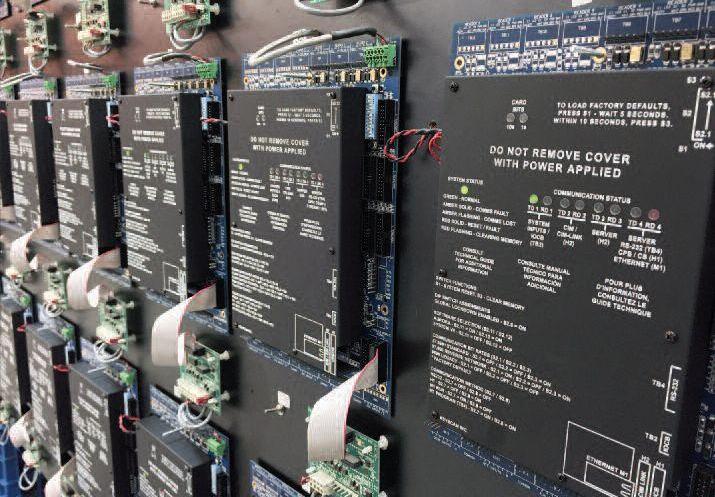
solutions sets us apart from the competition It mixes network appliance-based hardware architecture and o ur ‘Atthe-Edge’ single-door PoE equipped controller It provides unmatched system design flexibility for all new installations It also simplifies upgrading or revitalizing aged or failing access control systems where some, if not all, of existing cables, power supplies, readers and credentials can be utilized
Keyscan’s single-software solution provides maximum access control management efficiency regardless of system size,
integration and complexity No matter what the application, from a single-door entry-level system up to a multi-national, multi-site, enterprise with system integration and thousands of doors to be secured, our industry renowned access control m a n a g
expectations
Keyscan’s Centrally Managed Access Control (CMAC) and Keyscan Hosted Services (KHS) are designed to allow central stations as well as dealers and integrators to begin offering their customers RMR-based managed services with access control. These managed services provide unprecedented conveniences and a level of service excellence never before seen with access control
advantages of a world-class access control product while savi ng them much of the capital expenditures that would n
installation This can save customers thousands of dollars, provide unsurpassed convenience, and open a new source of RMR building more intrinsic value to your business
Whether you are a security dealer, integrator, distributor or end-user customer Keyscan’s line of access control units and our acces s control management software will ensure you get everything that access control should be – Keyscan!

Fuelled by 25 years of research and development, Aurora is the software platform that eclipses industry standards With new features, enhanced capabilities and expanded capacity, Aurora anticipates the evolving needs of access control
• Ten (10) assigned groups to a single credential holder
Support for 45,000 credentials (with expansion to 90,000*)
• Multiple credentials assignable to a single user
• Unlimited optional user-definable fields
• Full or partial facility lock down from client, reader or input device
• New multi-threaded communication structure
• Aurora web interface
• VMS integration and other optional licensed and add-on modules
• for enhanced functionality

Ensure your customers get the latest and very best in access control management software. Contact Keyscan or your Regional Sales Manager.
* Requires special order hardware
There are solutions available to help with contractor relationships and ensure they are managed securely
By Ajay Jain

In recent years, independent contractors have become increasingly important for budget-sensitive businesses and organizations as a flexible and less expensive alternative to regular employees. Contractors can be hired for a specific project or period of time and are paid only for the work they do within those parameters.
The potential cost savings of hiring contractors, however, comes with a certain degree of risk. Contractors and other third parties like vendors, delivery people and other outsiders, could create a breach in physical security that compromises other elements of a security program. Simply by providing access to a facility, an outsider can quickly become an insider based on his or her access to people, assets, systems and information. Even simple actions like unplugging a device, propping open a door or accessing a wireless network could leave an organization exposed.
Other risks might include damage to equipment from spills or overloading electrical outlets.
The possibility of an outsider intentionally breaching an organization’s security to cause problems is much more frightening and dangerous. Theft, fraud, vandalism, property loss and more are among the many potentially disastrous results of these types of breaches. Let’s not forget that a physical security breach can serve as the first step in a large, sophisticated cyber attack. Small, inexpensive flash drives are readily available and can easily and clandestinely be connected to computers or servers – as can mobile phones – to upload malicious software designed to breach an organization’s logical security defences or to download sensitive data. Also consider how easily someone could pocket a portable flash drive or mobile phone, or even slide a tablet or laptop into his or her bag. Once these
devices leave the facility, they are out of an organization’s control. Some of the most high-profile and extensive data breaches began with a laptop or other device being lost or stolen, so it’s important to note that the possibility of malicious software upload or information theft exist even if a contractor has permission to remove a device from the facility to work from home, for example. This type of convenience is an attractive option for many people and organizations, but it also introduces risk.
In scenarios where a parent organization uses multiple third-party vendors or contractors who need access to multiple buildings, security is already a big challenge. Provisioning access to various areas of a location is often a time-consuming manual task which not only causes delays in operations and end user dissatisfaction, but detracts from an organization’s security program, allowing potential risks and threats to arise.
There are several ingredients necessary to mitigate, if not prevent, these risks, starting with effective physical security. Both interior and exterior doors should incorporate an access control solution to restrict access, particularly to sensitive areas like server rooms, financial systems and other areas. At a bare minimum, doors should be closed and locked at all times. Thorough background checks on contractors and employees are another critical factor and should include training individuals on the security policies and procedures in place before they are provided access to a facility.
“An outsider can quickly become an insider, based on his or her access to people, assets, systems and information.”
A crucial third component is a strong logical security program. Password protection, file encryption, strong, up-to-date security software and segregating general and critical systems are necessary for protecting systems and information. Incorporating tiered login credentials that allow a person to access only relevant websites, servers, etc. can be a force multiplier for a logical security program.
The final component for addressing risks introduced by contractors and other outsiders is identity management. Each ID must be associated with a specific person to prevent them from being loaned to or stolen by another person. Physical access entitlements tied to an individual’s ID must correspond with the specific areas of a facility to which that individual requires access. Contractors also must be removed from security and access control systems as soon as their contract expires or when they are terminated.
Identity management is often a manual, paperbased process with no centralized policies about access privileges or even ID badge issuance. If organizations’ departments are segregated from each other and operate autonomously, security teams cannot perform their job properly because of the significant amount of time and energy they must spend managing contractors.
The best way to increase the effectiveness and efficiency of this process is with an enterprise-based physical identity and access management (PIAM) solution. With their automated, policy-based
approach to managing the lifecycles of contractor identities, these solutions ensure that contractor identities are accurately captured and verified within the appropriate systems such as physical and logical security and human resources, as is other important information, including proof that a contractor is properly insured and whether there are any prerequisites for ID issuance. With a policy-based PIAM solution, contractor access will not be provisioned unless all prerequisite criteria – proof of insurance, for example – have been met. Automated alerts can also be set up to remind the organization that an expiration date is coming up for a particular recurring contractor.

PIAM solutions enable centralized management of contractors’ data, identities and access authorities, with location-specific data available locally to ensure individuals have physical and logical access only to the areas and systems that are necessary for their job function and which they have been approved to enter. Self-service check-in allows the contractor to on- and off-board their own identities, with the parent company approving access before a badge is issued. From a logical standpoint, an automated PIAM system segregates data across multiple contract companies to provide clear, concise audit reports per contractor.
Perhaps the greatest benefit of these solutions is their ability to activate, deactivate, upgrade, renew and reactivate identities automatically. These factors make PIAM solutions much more effective than paper- or spreadsheet-based systems for managing the potential security risks associated with contractors and other outsiders.
Automated PIAM solutions are also well-suited for several verticals, particularly those like industrial plants and aviation that are most vulnerable to risk from security breaches.
Industrial plants, whether refineries, petrochemical plants or others, routinely undertake what are called turnarounds (TARs), or scheduled shutdowns or outages. During a TAR, the entire process unit of a plant is taken offline for specific events like inspection and testing, de-bottlenecking projects, revamps and catalyst regeneration projects. These processes are expensive in terms of both lost production and direct costs such as labour, tools, equipment and materials needed for the project. During a TAR, contractors – often numbering in the thousands – are brought onboard to assist with the execution.
Given the high cost of TARs, efficiency is crucial to a company’s bottom line. Contractors must be on-boarded as efficiently as possible after rigorous background checks, drug testing and training. Once the project is complete, a contractor’s access to the facility must also be revoked or remediated immediately. In addition, there are mandatory compliance regulations that must be met, which means the compa-
ny must have a complete audit trail of the approval process for project sign-offs. A robust PIAM solution ensures that all of these needs are met and that managing contractor identities does not delay the TAR project, increasing the company’s costs.
The aviation industry is a unique environment that features a constant mix of vendors, contractors, employees (airport, airline and government) and local law enforcement. Different contractors require different levels of access to different areas and therefore create a variety of risk levels. Therefore, it’s crucial for airports to ensure that each contractor has been properly vetted, authenticated and issued a badge that allows them to access only the areas they should be accessing to do their job.
With an automated PIAM system, vendor or contractor profiles can be created based on corporate and government policies, ensuring all identities meet the appropriate criteria. At the specific contractor or vendor level, this also ensures that no one from a particular company receives an ID badge or access to the facility until prerequisites like required insurance are met. At the individual level, individuals will not receive a badge until they undergo a thorough background check and submit a valid government ID.
The potential risks associated with third-party contractors and vendors are very real. Awareness of these risks is key, and taking proactive steps to address them should be part of every security program. Implementing and enforcing strong security policies and training on those policies for contractors and employees are good first steps, and should be combined with strong physical and logical security practices. An automated PIAM solution brings all these processes together to automatically populate particular systems and manage information centrally. This enables organizations to increase the efficiency and effectiveness of their identity management processes while ensuring contractors have the proper level of access for the proper amount of time. This frees security staff to focus on other security issues, helping deliver a higher level of overall safety and security for people, assets and facilities.
Ajay Jain is the president and CEO of Quantum Secure (www.quantumsecure.com).
A successful access control strategy starts with knowing who is using keys and for what purpose
By Fernando Pires
As part of the requirement for the safety and security of people, assets and facilities, the management of keys is a fundamental tactic in controlling access.
In fact, key management is a prerequisite for any access control strategy because of unavoidable vulnerabilities when humans are involved. Lost or missing keys, unauthorized duplicate sets of keys, manual log books that are inaccurate and often illegible or not knowing who might have keys when they should not, all have the potential to undermine even the most sophisticated and well-intentioned security initiatives.
State of the art key management systems can resolve these issues and optimize access control solutions through system integration. Today, the most advanced key management solutions can be integrated with the networked security system. Open protocols enable connectivity to access control and other
systems provided by a range of integration partners for multiple levels of security and control.
Integration of multiple locations, with common usage of databases and programming; real time information; local and remote access; computerized reporting; specialized alert notifications and ease of use take key management and access control to the next level.
“Today’s work force no longer sits primarily in a cubicle at a desk. More often than not, the office is wherever the individual happens to be.”
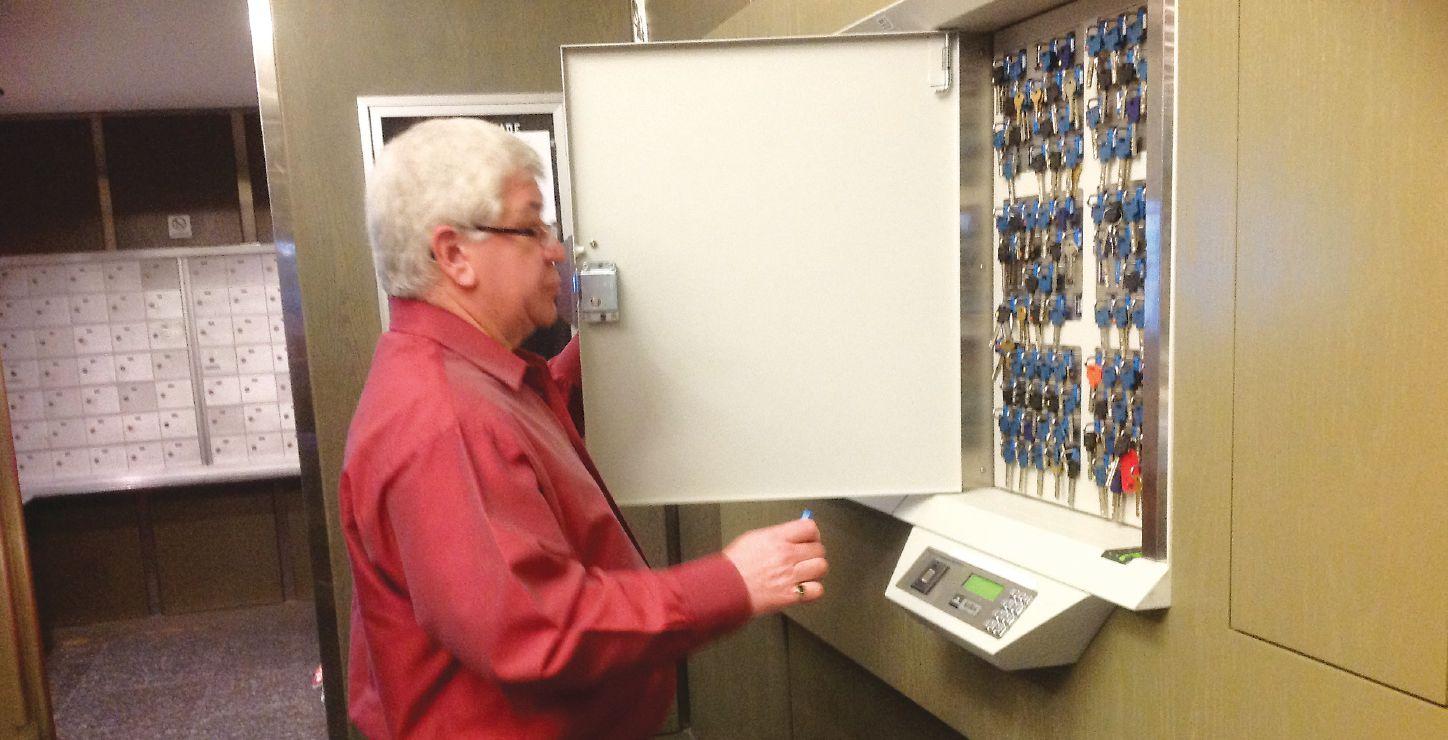
When network-connected, advanced key management systems can provide real-time information to authorized personnel for monitoring key usage activity. Systems are designed so that every time a key cabinet is accessed to either remove or return a key, the activity is automatically recorded. The time, date and identity of the individual accessing the cabinet are all automatically logged and the data is available with a few key strokes using data management software. Additional information, including when a key is scheduled to be returned or the location of a stored key (i.e. which key cabinet in the system), is also available — knowledge which could be critical in an emergency.
For example, if company vehicles must be moved out of an area because of potential flooding or fire, doing so quickly and efficiently can depend on how quickly each of the vehicle keys can be located. Immediate confirmation of where the keys are or identification of who has possession of them
can make the difference in saving or losing an organization’s assets.
Today’s work force no longer sits primarily in a cubicle at a desk. More often than not, the office is wherever the individual happens to be. Mobile apps allow users to extend their productivity beyond a physical location or regular work environment.
“Critical real time information that is easily accessed on a smart phone or mobile device ultimately provides for a safer, more secure environment.”
By integrating mobile devices with key control and asset management systems, security personnel or other authorized users can see a wide range of live information and can interact remotely with the key control system. Management can maintain optimum control of building keys at any time of the day or night or when away from the primary place of business.
For example, while off site at a seminar or convention, a manager can remotely release a key to a contractor called in to temporarily replace an employee who has called in sick. Or, they can schedule a report to be generated on their return to the office that shows all activity during their absence.
Critical real time information such as keys in use, overdue keys, alarms and system status that is easily accessed on a smart phone or mobile device ultimately provides for a safer, more secure environment.
In an information-laden environment, it is easy to miss relevant or important signals. Networkintegrated key management systems can deliver the right information at the right time to the right people on their choice of devices.
Critical information about key control that is communicated across multiple systems enables additional security actions to be taken. With a turnstile-type access control system networked to the key control system, a user who has taken a specific key can be denied egress from the facility until the key is returned.
With a networked system, selected management can be alerted via email if a high security key has been accessed or not returned on time. In integrated, network-enabled key management systems, authorization codes can be changed remotely to help prevent access being granted to a recently terminated employee. This latter action can be accomplished from a global list and all settings are automatically synchronized across the system.
For added security and efficiency, the integrated key management system can be seamlessly administered by the card access system. Through
the card access system, the key management system can be configured for access, storage and tracking.
In addition to monitoring the activity live, networked systems enable data to be collected from the various key cabinets and summary reports generated. Key usage data provides a wide range of business intelligence and programmed reports are the easiest and most effective method of assembling and viewing the information.
Authorized personnel can generate practical management reports which trace key movements by time, date and user code as well as audit reports that track keys in use and overdue keys, inconsistent key usage and so on. And for easier reading, the reports can be generated in portrait or landscape mode with colour interspaced lines.
Built-in schedulers can be programmed to automatically download all data to a secure PC as required by the user, including online as transactions occur; periodically; daily at a specified time; weekly with specified day and time; or monthly with specified day and time. As well, email delivery of customized or standard reports can be scheduled for any frequency or specific time, or they can be accessed using a smart phone app. With this capability, management can better sort and analyze information to maintain maximum control of access and security issues.
In the event of an incident, management can query the system for specific details such as listing all transactions between certain times and when doing a follow up investigation, request a report for the hour preceding the incident. Or, immediately following an incident, a report can be generated showing which keys are back in the system and which keys are still outstanding and who last accessed them. Together with the audit data from an access control system, a key control system’s reporting system provides a strong evidence trail.
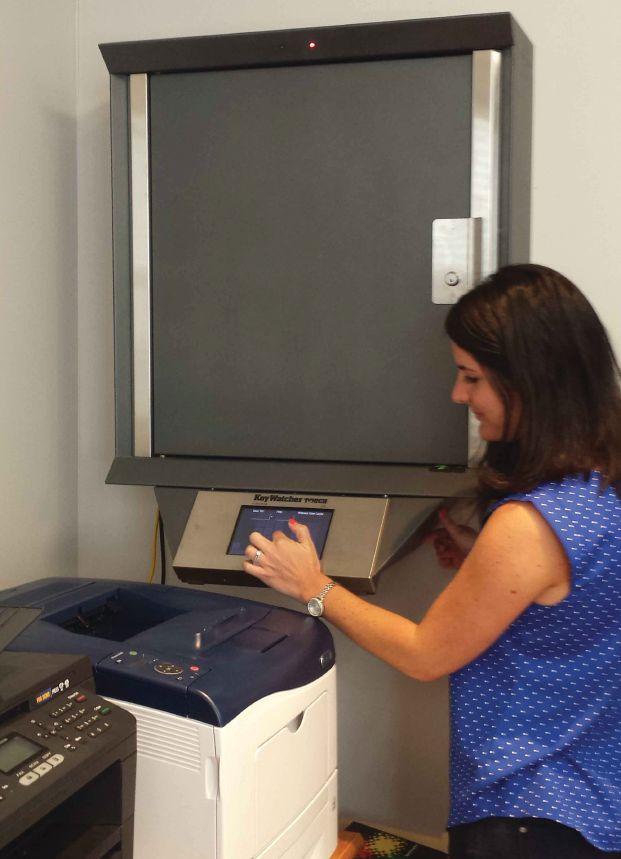
Regardless of the number of key cabinets in the system, their location or configuration type, the procedure for accessing the cabinet is always the same. Keys stored in the cabinet can be accessed only by authorized individuals with an approved user code, an access identification card or a pre-registered biometric fingerprint. If the criteria entered matches the information stored in the system database, the key cabinet will unlock and the necessary key can be removed or returned. The other keys will remain locked into place and the activity is automatically recorded.
Solutions for key security, key control and key management can be tailored to the various needs of the user, including the flexibility to have different
levels of security (i.e. dual or triple authentication) in different areas of the premises. Cabinet doors may be solid steel or they may be see-through polycarbonate material. Choices for modules to fill the cabinets may include a selection of mechanical key storage modules, key card modules, lockers of various sizes or simply blank modules to be filled at a later time. The combination of modules is entirely up to the user, offering the ability to customize and also change the system to meet specific needs.
Other system conveniences may include large touchscreens on the front panel with buttons and an easier to use interface with step by step instructions. Keys available for access can be called up on the touchscreen along with information about the location of a specified key, what keys have not been returned and when the key will become overdue. Messages can be created that will pop up when a particular key is requested; for example, a message reminder that sterile suits must be worn when one is entering a research lab.
Added features that help make a system easier and more efficient for everyone to use may include illuminated key slots to locate keys and random return capability (i.e. return to any key slot in the cabinet or in the system). As an added safety measure, alarms can be triggered for certain predetermined circumstances such as the use of force to gain access or remove a key, invalid user codes, a door left open for more than 10 seconds after use, power failure, a key missing or not returned on time or a key returned by the wrong user.
In today’s highly security conscious environment, the networking capability of advanced key control systems adds value to key management systems and allow best-of-breed solutions to be implemented without costly upgrades or overhauls.
Fernando Pires is the vice-president of sales and marketing at Morse Watchmans (www.morsewatchmans.com).
Keyscan Inc.
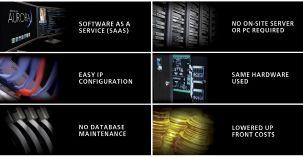
CMAC offers access control convenience allowing users to manage their system “through the cloud” from any internet-enabled PC or mobile device, at any time, from any location. Dealers and integrators can leverage CMAC and offer customers access control as a service while eliminating much of the cost of infrastructure typically required for access control. It brings the benefits of electronic access control to a whole new group of customers that may not have considered it an option.
www.keyscan.ca
Keyscan Inc. is a leading manufacturer of premium electronic access control systems. From a 2 door to a 200 plus door system Keyscan access control is designed for total scalability, flexibility and reliability. Keyscan delivers the most advanced product features and innovations to satisfy virtually any access control installation.
Keyscan Inc.
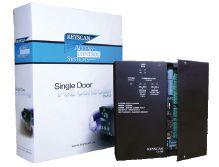
The innovative CA150 is Keyscan’s single-door ‘At the Edge’ access control solution among our flexible line of 2, 4 and 8 reader door and elevator floor access control units. Exclusive to the CA150 is support for power-over-ethernet (PoE). Customers with one critical door to be secured have never been so easily accommodated. It provides unprecedented system design flexibility and may be networked along with any of our access control units. The CA150 is the perfect choice for smaller businesses to implement access control today with the ability to expand their access control systems at a later time.
Keyscan Inc.
Keyscan Inc.
www.keyscan.ca
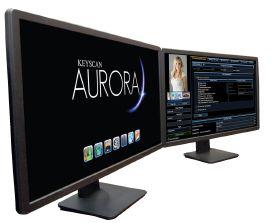
Keyscan Aurora provides maximum access control management efficiency regardless of system size, integration and complexity. From a single-door entry-level application all the way to a multi-national, multi-site, enterprise with system integrations and thousands of doors to be secured, Aurora access control management software is optimized to outperform expectations. Keyscan Aurora unleashes the expanded processing power and capabilities of Keyscan’s full line of door and elevator floor access control units. With VMS integration, web interface and other multiple add-on modules for enhanced functionality, Keyscan Aurora delivers a new experience that entrenches Keyscan’s commitment to innovation and forward-thinking.
www.keyscan.ca
Keyscan Inc.
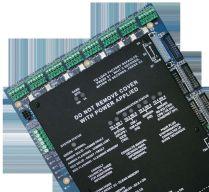
Keyscan’s full line of feature-rich 1, 2, 4 and 8-reader door and elevator floor access control units, along with our renowned access control management software, provides best-in-class access control solutions for all new installations or system upgrades. Keyscan’s ‘hybrid’ approach to access control mixes network appliance-based hardware architecture as well as our ‘At-the-Edge’ single-door PoE solution. Our access control units can be mixed and matched to satisfy all new system requirements, or simplify an upgrade of aged access control hardware while, in many cases, utilizing existing cabling, readers and credentials. www.keyscan.ca
Keyscan Inc.
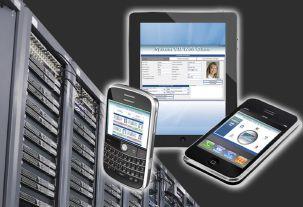
Keyscan’s Aurora Web interface allows you to manage your Keyscan access control system from any web-enabled computer, laptop, tablet or mobile phone. Perform updates and maintenance tasks using the Aurora Web Client’s available functions from the comfort of wherever you may be located. The Aurora Web interface is an add-on software module used in conjunction with Keyscan Aurora access control management software. Use Aurora Web interface for access to People, Sites, Status and Report portals of your access control software. It is the ideal solution for those who need, or want, true mobility and remote access.
www.keyscan.ca
Keyscan Hosted Services (KHS) takes Centrally Managed Access Control (CMAC) to a whole new cost-saving level. With KHS, dealers and integrators can choose to have client’s access control software and data hosted on Keyscan’s secure server infrastructure. Dealers can use KHS to create a CMAC business model offering RMR-based managed access control services and avoid the upfront expense attributed to implementing a central host service. It also helps them refine their business model in ways that will build lasting and intrinsic value to their organization.
www.keyscan.ca
Keyscan Inc.
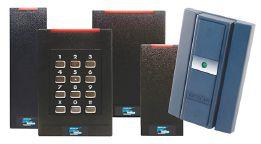
Keyscan’s access control solutions include a robust selection of powerful and versatile access control readers and credentials. Consisting of 125 kHz low frequency and 13.56 MHz high frequency product lines including iCLASS, Keyscan’s readers and credentials offer a multitude of features and benefits along with incredible accuracy, compatibility, innovation and responsiveness in any access control application.
www.keyscan.ca
AMAG technology
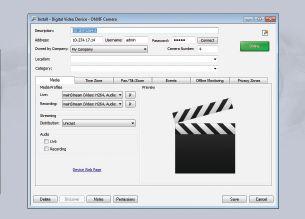
Symmetry V8 software offers a solution to manage security functions in one system through an intuitive user interface. Symmetry offers visitor management, identity management and video management free in all Symmetry software versions. Symmetry V8 supports the new Symmetry EN-2DBC Network Access Controller. The flexible, PoE edge controller operates two doors and can use PoE to power the controller, card reader and door lock therefore reducing costs for installations.
www.amag.com
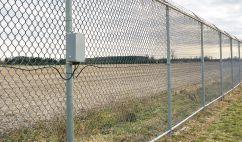
With three meter location accuracy, ranging fence-mounted sensor FlexZone enables flexible zoning through software. Compared to non-ranging systems, FlexZone reports fewer nuisance alarms while maintaining a high probability of detection. It can detect and localize multiple simultaneous intrusions and provides many features that speed installation time. FlexZone supports 600m (1,968 feet) of sensor cable per processor and carries power and data on the sensor cable — reducing the costs of supporting infrastructure for large sites. For small sites, FlexZone can provide a “one box” solution with up to four zones reported by local relays. www.senstar.com
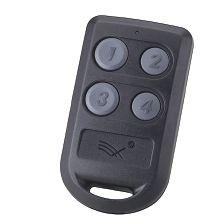
Users of the WRR-22 and WRR-44 433 MHz receivers can use either two-button or four-button transmitters to open two or four different doors from ranges up to 200 feet (61m). Each button outputs transmitter data over separate Wiegand outputs yet the receiver installs just like a Farpointe Pyramid Series proximity reader for easy integration with popular proximity or con tactless smart card access control systems. Available in either a twoor four-button configuration and equipped standard with a weath er-resistant potted proximity or contactless smart card module, the transmitter can be used as a presentation-style access credential. www.farpointedata.com
aptiQmobile lets near-field communications (NFC)-enabled smart phones be used like a badge ID to gain access to buildings and other ID card applications. To turn NFC-enabled smart phones into an access control credential, allowing people to use their smart phones to enter buildings in the same way they present a badge ID, users download the aptiQmobile app to their smart phones. Then, the user’s access control administrator uses the aptiQmobile Cloud service to send a secure mobile credential directly to the user’s phone.
www.allegion.com
Zwipe
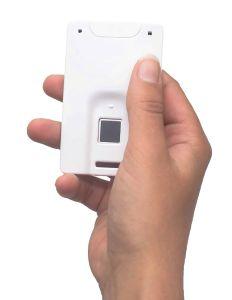
Currently installed proximity card readers, as well as smart card readers, can now be used by organizations that want to add biometric authorization to their verification process without having to implement biometric readers. An on-card fingerprint scanner with 3D capacitive technology resides on the new contactless Zwipe Access biometric card which is compatible with all popular ISO 14443 proximity and smart card readers as it is DESFIRE EV1, MIFARE Classic and Legic advant compatible. www.zwipe.com
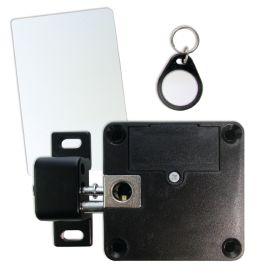
The CX-EL90 line of electromechanical cabinet locks with built-in proximity access control card readers, powered by battery or a 120 VAC adaptor, is designed for institutional, commercial, retail and industrial applications. The cabinet locks provide an intelligent locking solution for applications requiring secure storage or display of valuables. CX-EL90 Cabinet Locks are available for single lock, multi-lock (group mode) and multiple locks with individual card access (locker mode). www.camdencontrols.com
Suprema
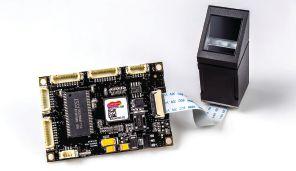
SFM5500 Series fingerprint embedded modules feature 533 MHz DSP with a high precision capacitive sensor as well as an optical sensor offering high image quality and a highly durable sensor surface. With the enhanced DSP and functions, the new module offers a much faster verification and identification time than its predecessor, the SFM3500 Series. www.supremainc.com
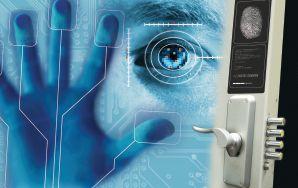
Pro-Watch 4.2 is now compatible with multiple biometric reader options, along with added support for several brands and types of wireless locks – including options from Allegion (AD-400 Series), ASSA ABLOY (Aperio Line), and Salto (Sallis and SVN) – that enable the system to protect previously hard-to-reach doors and locations. By supporting biometric readers from Suprema Entertech Systems (BioEntry Plus and BioStation T2) and MorphoTrak (Sigma Series), Pro-Watch 4.2 can provide additional security in higher-risk areas where multi-factor authentication is required.
www.honeywellintegrated.com
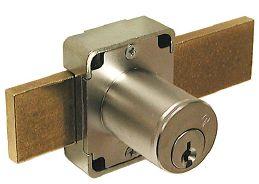
The extended bolt for the N Series 100DR and R Series 500DR cabinet door locks provide an additional 3/4” to the bolt length when in the locked position. This allows the lock to be located farther from the edge of the cabinet door while still providing enough bolt material to engage the strike. Extended bolts are available separately (item number 15-1-35) or factory installed in the lock. Olympus Lock is a manufacturer of rekeyable, pin tumbler cabinet locks and interchangeable core cabinet lock bodies for a range of commercial applications. www.olympus-lock.com
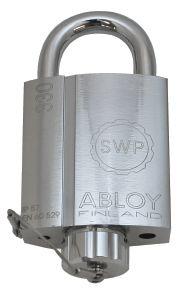

When paired with a Z-Wave-based home automation system, the SmartCode 914 Deadbolt with Home Connect technology includes a range of enhanced design features, as well as new certifications and capabilities. The design offers a new exterior style and reduced interior size for enhanced aesthetics inside and outside the home. Features include: an all-metal interior escutcheon with decorative inset; a 10-digit backlit pushbutton keypad; a dedicated lock button; and a Master Code option, that allows the user to prevent user codes from being added to or deleted from the lock. www.kwikset.com
A spring stop option is available for the Stanley Commercial Hardware QDC100 door closer product line. The new spring stop option protects the door from the jarring effect of a hard stop. In cases when extreme force is applied to the door when opening — in instances of abuse, strong wind gusts that blow the door open, etc. — the force is absorbed into the spring stop, versus the short, immediate impact often occurring with a hard stop or wall stop. The extra cushion provided by the spring stop reduces shock loads onto the door and frame, extending the life of the door.
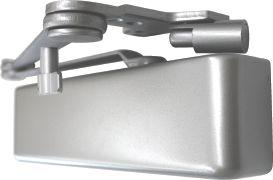
www.stanleysecurity.com
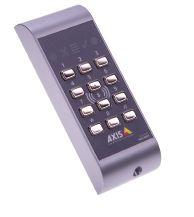
Super Weather Proof (SWP) padlocks are a range of super-tough locks that can withstand the most severe weather conditions and environmental extremes. SWP padlocks are available in two styles: mechanical locks and electromechanical locks that incorporate ASSA ABLOY’s CLIQ programmable electronic locking technologies for the added security of electronic access control. The padlocks are available with two levels of protection – with and without a weather seal cap. The cap seals the shackle and protects the keyway and cylinder against the ingress of dust and water. SWP locks with caps have an IP 68 rating, indicating a hermetic seal. SWP CLIQ models have an IP 57 environmental rating; they can be completely submerged in water and will still operate.
www.abloy.ca
The latest in the PRO-ACC line of access control solutions software package – PRO ACC 2014 includes intuitive visual enhancements along with many new features geared towards a smoother technician configuration and end user experience. Also, Protector.Net, a patent-pending true PoE web-based access controller continues to expand its features and panel options. www.hartmann-controls.com
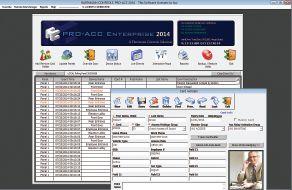
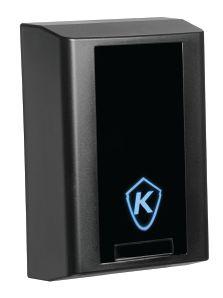
The KT-1 single door controller provides simplicity at the edge of an IP network. With its single button programming and on-board Ethernet port for direct network connection, the KT-1 controller is up and running in just a few steps. Because of its unique form factor, the KT-1 controller can also be installed in a variety of locations, from plain view to a traditional security cabinet. Combine the new KT-1 controller with EntraPass security management software, including EntraPass Web and the EntraPass GO mobile app to create a scalable solution that installs quickly. www.kantech.com
The new AXIS A4011-E Reader is a joint co-operation between Axis Communications and ASSA ABLOY and is designed to work with AXIS A1001 Network Door Controller. The reader has an intuitive user interface with illuminated symbols and a sound indicator to clearly display the status and communicate with the user. The keypad features backlight illumination and durable stainless steel buttons. The AXIS A4011-E is a future-proof and generic reader that supports several different card formats in order to meet specific system requirements. It can handle two different card formats simultaneously, which simplifies system expansion. www.axis.com
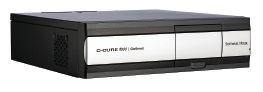
C•CURE 9000 SiteServer is an access control solution with an embedded OS providing web-based security and event management. By eliminating the need for a standard PC and its associated costs, SiteServer provides a solution for smaller sites requiring up to 32 readers. With the latest version of C•CURE 9000 pre-installed and a pre-configured database, the user has everything required to get up and running. The product is suggested for applications such as schools, commercial offices and health-care facilities. www.swhouse.com
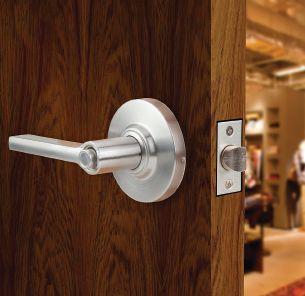
The Orlando Lever is designed for any décor and offered for both mortise and cylindrical locks. In the MR Mortise Series, Orlando is available in J and JW Trim 630 (US32D) stainless steel types. In the TJ Apartment Series, it’s provided in 630 (US32D) stainless steel. In the SD Cylindrical Lock Series, users may choose from 605 (US3) Bright Brass, 613 (Dark Oxidized Satin Bronze, Oil Rubbed) or 626 Satin Chrome finishes. www.pdqlocks.com
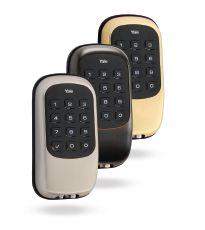
UBand is a silicone wrist band with a built-in MIFARE chip that allows it to be used for all MIFARE applications. UBand is of particular relevance on college campuses due to the variety of uses for MIFARE technology. UBand can be used for dormitory or classroom access, payment at campus dining locations, printer authorization in campus libraries and more. With the capability to perform multiple functions, UBand is suggested as a supplement to an existing campus card or “one card” solution. Available in 20 colours and three sizes, UBand can also be custom-printed with text or a graphic. With these options, UBand can be customized to feature a school’s colours and logo. www.identicard.com
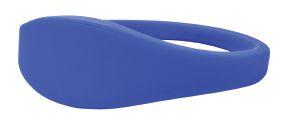
Lite blue is a two-door web-based access control system with expansion capabilities to eight devices. Lite blue features the same software as the company’s bright blue Intelligent Access Management System and is easily upgradeable to a full bright blue 32-door system. The lite blue controller includes two on-board reader interfaces. Built on the Authentic Mercury controller platform, lite blue supports standard Wiegand devices, Schlage AD Series electronic locks, and various card formats and technologies such as proximity, smart card, magnetic stripe and Bluetooth. Lite blue does not require special software or a dedicated PC.
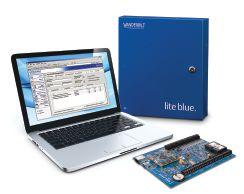
www.vanderbiltindustries.com
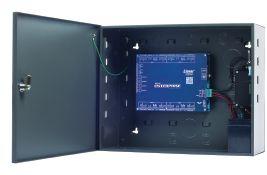
The Real Living Key Free Push Button B1L and Key Free Touchscreen T1L Deadbolts offer streamlined installation, one button Z-Wave enrollment, and a clean, modern appearance. The Yale key free deadbolts eliminate the cylinder and as a result, the lock can’t be picked or bumped. The push button version comes with a black push button keypad that illuminates when touched. The touchscreen model features a durable black acrylic capacitive touchscreen that illuminates when touched. www.yalerealliving.com
Linear Enterprise is a browser-based, embedded network appliance and access control system. Enterprise offers remote management, a path to VMS integration. Elevator control, anti-passback, threat level status, partitioning, custom reports, administrative audit trails, and an array of video, viewing and other features can be managed through Enterprise’s dashboard. Multiple, at-a-glance status indicators, graphic floor plans, an event log, a video verification window and more can all be monitored simultaneously.
www.linear.com