ACCESS CONTROL
A look into the products, technologies and solutions shaping the market

Sponsored by:


Image: Tom Merton/ Getty Images
A look into the products, technologies and solutions shaping the market
Sponsored by:

Technicians armed with equal parts physical and networking knowledge may be a rare breed today, but training and college courses could help to fill that gap
By Madalene Arias
The demand for skilled technicians in the world of alarm services remains high, and so too does the difficulty in finding the right people with the right skillsets to replenish this side of the industry.
Professional recruiters like Stanley Owah of Classic Fire + Life Safety say that taking the time to engage with schools and educate students on the career possibilities of a particular field or trade can prove useful to attracting new talent to an industry.
In April, the company, which operates offices in Ontario and Manitoba, announced the successful recruitment of 60 new candidates.
Owah explained that even in an “in-demand” industry, recruitment still presents some challenges.
“When it comes to the job market nowadays, it’s a little bit tight. It’s uncertain. A lot of people are looking for job security,” says Owah. “We don’t know what the future brings.”
However, the company offers good employee benefits, and Owah says this fact alone has been instrumental in attracting new candidates.
Additionally, Classic Fire + Life Safety invests time in educating students, or workers with some experience, on how they can pursue a career in a particular trade as a way of simplifying this process for them.
Owah says that the company maintains this level of engagement with potential candidates even if it is not looking to fill new positions.
“I think a lot of candidates actually appreciate that, especially the skilled applicants.”
The value of engagement with students and graduates is not lost on the security industry. The Canadian Security Association (CANASA) has partnered with educational institutions in Ontario like Centennial and Conestoga colleges to provide a bridge between the needs of the security industry and new technicians as they move into the field of alarms or add alarm installation to their repertoire.
Leaders in this sector who have seen changes in the industry over decades applaud CANASA’s initiatives with post-secondary institutions.
At the same time, these veterans have not shied away from identifying potential reasons for the talent shortage, including advances in technology, the cost of doing business, changing attitudes towards work, and the way security careers are perceived generally by society.
Before diving into these factors, it is important to define the ideal applicant for a security/alarm technician who meets the needs of today’s clientele.
modern alarm technician
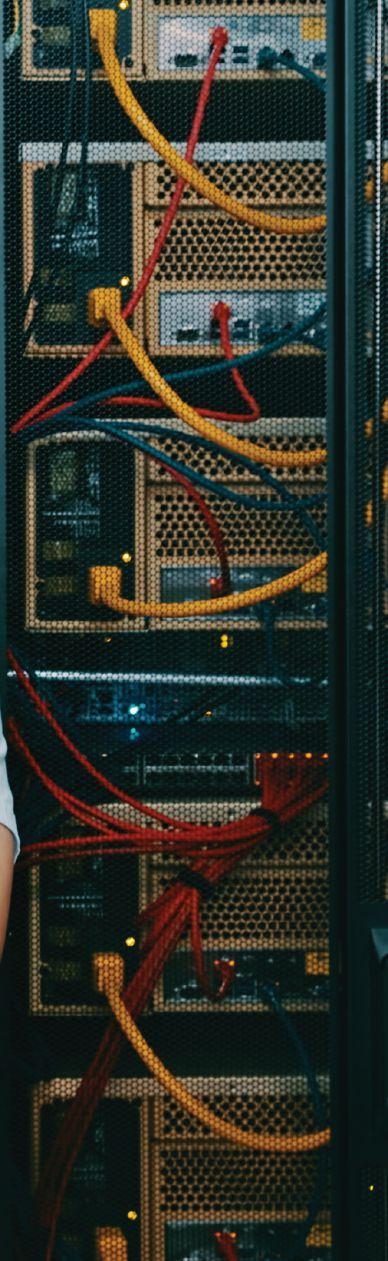
A suitable candidate for this role possesses a strong IT background and enough comfort with a toolbox for the physical installation of an alarm system. This means they can run wires, drill holes, and leave the client with a fully operating system in minimal time, according to Stuart Armour, sales operations manager at Affordable Security Systems, based in Burnaby, B.C.
The ideal technician would also demonstrate the same level of efficiency behind a computer screen to program surveillance cameras, which is what present-day installation entails according to Don Connor, regional manager at Vipond Systems Group in Toronto.
The industry wants someone who is “IT savvy with a little bit of ‘I don’t mind getting dirty,’” in Connor’s words.
“We’re looking for a high level of IT competence,” he adds. “We’re looking for people that have a good understanding of IP systems.”
Armour says there is a rift between the skillsets required for this kind of work. There are people employed in the security sector who are comfortable with the physical aspect of installations but may lack the technical requirements of the role such as networking.
“It’s really hard to find someone who is well-rounded,” says Armour, “You almost end up with two teams because it’s really hard to find a technician who is really good with both.”
Over the years, security technology has switched over to IP-based systems, which introduced an overlap of services from the telecommunications and IT sectors with those offered by the alarm and security industries.
Large telecommunications companies can afford to bundle their services to offset the cost of installations, making it difficult for smaller and mediumsized alarm companies to charge reasonably for this service, claims Armour.
“If you’re installing this stuff for free, it’s really hard to attract a technician at a good rate of pay because you’re not making any money on the work,” he says.
Armour also says this shift to digital is partly to blame for the talent gap among alarm systems technicians. As networking became integral to most alarm installations, it was not necessarily incorporated into the knowledge base of technicians entering the field.
Jo Booth, senior manager at Centennial College’s Centre for Part-time and Online Learning in Toronto, says the college has built a relationship with CANASA spanning at least 10 years.
“The relationship began when CANASA was looking to transition their old, pretty basic courses into an online modality,” Booth explains.
Currently, Centennial College offers an Alarm Technician course through online, distance learning in both English and French.
The program allows learners eight weeks to complete the course material according to their own preferred schedule as many of them typically work 10to 12-hour days.
The course covers a range of topics including basic networking, system design, field wiring, power and grounding, wireless, safety, metering and false alarm management.
“In the last 18 months, we’ve updated the course and combined things to make it more friendly for the learner and make it more of an active experience,” says Booth.
Centennial’s course is not for absolute beginners. The college recommends this course for technicians who have previously installed at least three intrusion alarm systems. They must also possess a basic understanding of electronics and mathematics to qualify.
Booth says that their program enrollments currently average 15 to 20 students for every eight-week period.
For the very first time, Conestoga College, in Kitchener, Ont., is offering an entry-level Alarm Systems certificate program, also affiliated with CANASA.
“We’re looking for people that have a good understanding of IP systems.”
– Don Connor,Vipond Systems Group
Although the college hoped to launch the program in the spring of 2022, there was not enough enrollment to move ahead with the courses for the semester.
“I think a part of it is the timing. Not as many people are looking to take courses in the spring and summer,” says Brea Medeiros, manager of continuing education at Conestoga College. “But naturally, a lot of students are looking to come in the fall.”
Conestoga’s program is designed to prepare students for careers in surveillance and investigations, alarm product and distribution sales or as representatives for manufacturers.
The college allows students a maximum of three years to complete all course material which includes systems integration, intrusion alarms and surveillance cameras and basic installation techniques.
Medeiros says the college has worked to market this program to high school students. She anticipates enrolment will increase once more people begin to understand the demand for alarm technicians as well as the differ-
ent career routes that exist within this field.
“I think it’s a great opportunity for students, especially when we see the connection to the career field through CANASA’s support,” she said. “It’s almost like a little bit of a best kept secret right now.”
A shift in perception
Connor also believes that people outside of the industry may not have a very good grasp of how much career diversity exists within the security sector.
Much of the general public’s understanding of security work is restricted to guard services as they have the most public facing roles.
Furthermore, unflattering pop culture depictions of security guards and unrealistic portrayals of security systems in film and TV have not helped the industry’s image.
“I always like the one where the guy comes in with the spray kit and sprays over the security cameras so they can’t see,” says Connor.
Connor says he thinks the public doesn’t understand the complexity of the security industry nor the challenges and the interest it can generate.
He specifically notes changes in the area of CCTV within the last decade. According to a report from Market Research Future, the industry is projected to be worth more than $46.52 billion by 2030.
According to Armour, who also sits on CANASA’s National Board of Directors and National Executive Committee, the association provides at least one scholarship to each of the three or four colleges in each province that offer an education for the security industry.
He says that CANASA’s involvement with Ontario colleges like Conestoga and Centennial is a step in the right direction, and he anticipates the collaboration will prove fruitful given the province’s population.
“Within the next 10 years, if you have any type of technical skills, you’re going to be worth your weight in gold,” says Armour.


Remember when your house only had a deadbolt, public washrooms were only privacy function locksets, your office had only one lock and you had to issue 1000 keys for it? How things have changed. Now your front door has a camera and smart lock, washrooms now have automatic operators and accessories, your office door now has a reader with cards that are programmed remotely.
Change is good. The features built into today’s security are beneficial for everyone. Now you have confirmation of whether a door is locked or not, access has indeed been revoked, scheduling is in effect or who’s at my door all from a click of your mouse or phone. The built-in safety features in today’s restroom kits provide peace of mind with both audio and visual status of the opening including built-in emergency features.
As the products change so does the ask from the customer. If you’re not well versed in any one aspect of a project, either the mechanical or electronics side, what do you do, who do you call? That’s where your distribution partner comes in. A lot has changed in our industry and distribution has changed with it. Distribution is your product and application specialists, your virtual warehouse, your trouble shooter, your sounding board, and a true partner committed to your success.
With the advent of electronic hardware, the distribution landscape has also changed. Where originally there was only mechanical hardware distributors, the market shifted to include both mechanical and electronic (security) distributors. This made sense as each specialized in their segment of the market. Over time the division between the two segments has been blurred where each segment now carries product typically available from the other. This can be attributed to dealers asking for products or solutions not currently being offered by their distributor, distributors looking to increase market share by expanding their product portfolio or new

products being made available to them through the channel. Distribution has had to keep pace with these developments by educating their team on new products, evaluating their stock position, creating marketing collateral, updating websites – no easy task. Now more than ever there are sourcing options available to dealers. Due to today’s global supply chain issues people are being prompted to look at different avenues to source the products they need. Whether it be sourcing the same product from a different supplier or a different product capable of doing the same job from a new supplier, the struggle is real.
Whether it be electrifying an existing lock, updating washrooms with operators and controls to a smart lock for the front door – IDN Canada is committed to finding the right solution for your application. For the better part of 9 decades IDN Canada has been a leading distributor of electronic and mechanical hardware across Canada. We have access to 100’s of best in class brands, most recently adding 10 new industry leading lines to our electronics portfolio. We have 9 stocking locations across Canada and a network of 50+ locations across North America. We pride ourselves in offering “old-school” customer service with product experts in all categories available to assist in providing the complete solution for you on your next project.
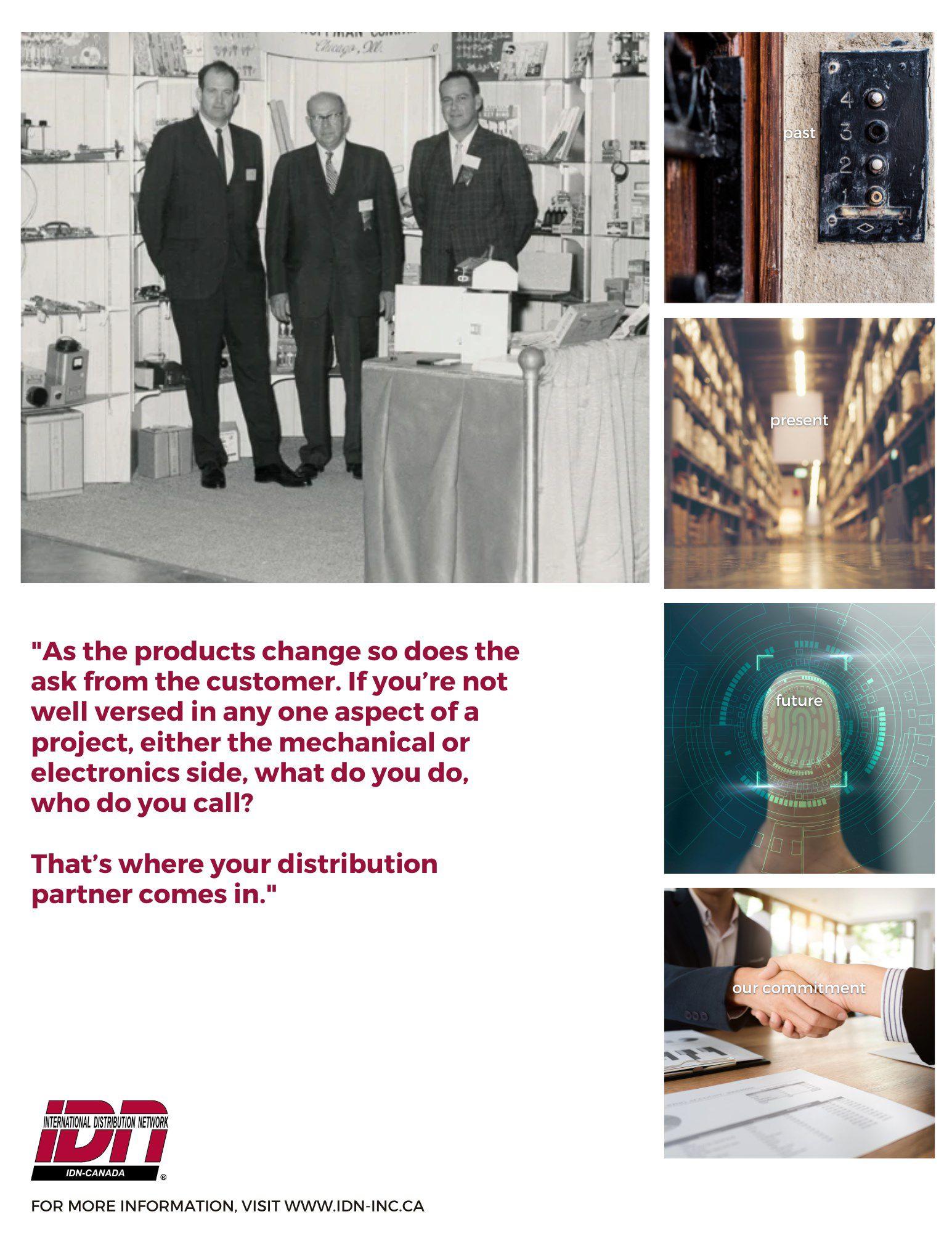

With a unified security system, the adage ‘the whole is greater than the sum of its parts’ still holds true. For business owners and those tasked with managing the safety of others, it’s important to have a security system you can trust and easily manage.
Many businesses struggle to bring together the separate strands of security, such as access control, alarms (intrusion detection), video surveillance, and building automation. Yes, you might have all these systems in place, but imagine how powerful it would be if they were all working together in unison, to keep your staff or customers safe.
Access that’s adaptable
ICT’s Protege WX platform is the unified system you’ve been looking for. It places access control, native intrusion detection, and building automation at the heart of a modern-day security solution.
Protege WX is our SME tailored, all-in-one system for single sites. An out-of-the-box solution that leverages intuitive wizard-based programming to simplify deployments and bring endusers up to speed in record time.
It’s flexible and allows for future business growth, so you can easily adapt to changes in your operating environment. The web-based interface transforms the way companies manage
their security, so your customers have the freedom to configure, control, and monitor their system from anywhere.
Since there’s no software, Protege WX is simple to install, making it perfect for system expansions or replacing legacy platforms that no longer conform to security standards. And when you include integrations with the likes of video surveillance or wireless locking, you soon unlock the full value of your access control platform.
Take this a step further and add even more value and flexibility to your security solution with our custom Protege WX API. Provide a truly unified site solution and create efficiencies by allowing external elements that complement your offering to work seamlessly within your security ecosystem.
Multi-function RFID readers: fit for the future
ICT’s innovative tSec reader range is sleek and stylish - offering multi-technology compatibility for an easy transition path from less secure 125kHz technology to 13.56MHz smart cards or mobile credentials via Bluetooth/NFC.
Available in black or white, multiple sizes, and with optional keypads, the range features an IP65 rating for indoor or outdoor use, along with vandalproof accessories. tSec readers provide
a secure RS-485 connection for direct Protege controller integration, or use OSDP or Wiegand for compatibility with legacy access systems. The tSec range is in stock across Canada and ready to ship today.
Unify to simplify
A unified solution like ICT’s Protege WX platform enables simple, end-toend management. Integrated IP reporting on-board all ICT system controllers also makes offsite alarm or fire monitoring a breeze.
Modern access control doesn’t just keep property and people safe. All these capabilities mean staff get ease-of-use, while system operators get a complete overview and control from one easy interface. As a business owner, the solution brings cost savings and efficiencies while providing a higher level of security, as well as true peace of mind.
ICT has been leading the way with integrated solutions for almost 20 years (in fact, it’s even in our name – Integrated Control Technology). Designed, engineered, and manufactured in New Zealand, and trusted by tens of thousands of businesses across Canada and around the world. To find out how ICT’s unified solution could add value to your business, visit info.ict. co/spt-handbook

Protege WX is a
Trusted by thousands of businesses around the world. Designed, engineered and manufactured in New Zealand and readily available from our full-service Toronto support o ce.
The security industry has led the migration from mechanical keys to electronic locks and SALTO has been leading the way for 20 years. We’re guided by the philosophy that old ways won’t open new doors, and we’ve been working on hardware and software solutions that open the door – literally – to the future of access control.
Improvements made in access control have been astonishing – mobile, cloud, wire free, intelligent data, and integrations. This technology gives building managers the ability to provide a secure environment and improve operations while providing employees, residents, and visitors the convenience – and freedom – to move about as they please.
SALTO began with innovative accomplishments – including pioneering the data-on-card SALTO Virtual Network (SVN). We’ve built upon that foundation to add real-time, wire-free electronic lock solutions that deliver comprehensive access control that can be easily accessed – via a smartphone, access card, PIN code, fob, wristband – and can be managed from anywhere. The best news is that this progress comes at a lower cost than traditional electronic access solutions.
How do we do it? Take, for example, the SALTO XS4 access control platform, which combines electronic door components, peripherals, and software, that provide tailor-made, wire-free networked access control. The SALTO SPACE management platform employs SVN technology to manage door openings via battery-operated devices by leveraging distribution and maintenance of user privileges with data-oncard, read/write capabilities at each device. Having a small percentage of the control locations online via a wired
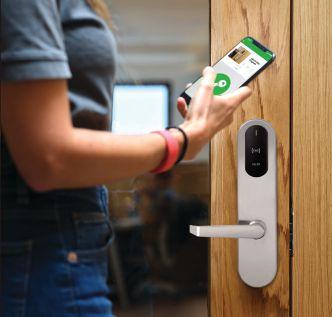
network connection or our SALTO BLUEnet RF technology with SVN Flex capabilities facilitates the update and synchronization process enabling the expansion of control throughout the facility – without the need for additional wiring or an RF wireless infrastructure. This greatly reduces not only installation costs, but the complexity of the hardware itself.
What companies are looking for in access control are solutions that achieve safety and security, but also improve operations and the customer and employee experience. Simplified checkin and check-out solutions where hotel guests can bypass the front desk and go directly to their room with a digital key that’s delivered to their smartphone not only improves the guest experience, it frees up front desk staff to tend to other matters. In retail, you can use access control management to define who can enter or exit, through certain points, at certain times, for customers and employees, or for special populations like delivery drivers.
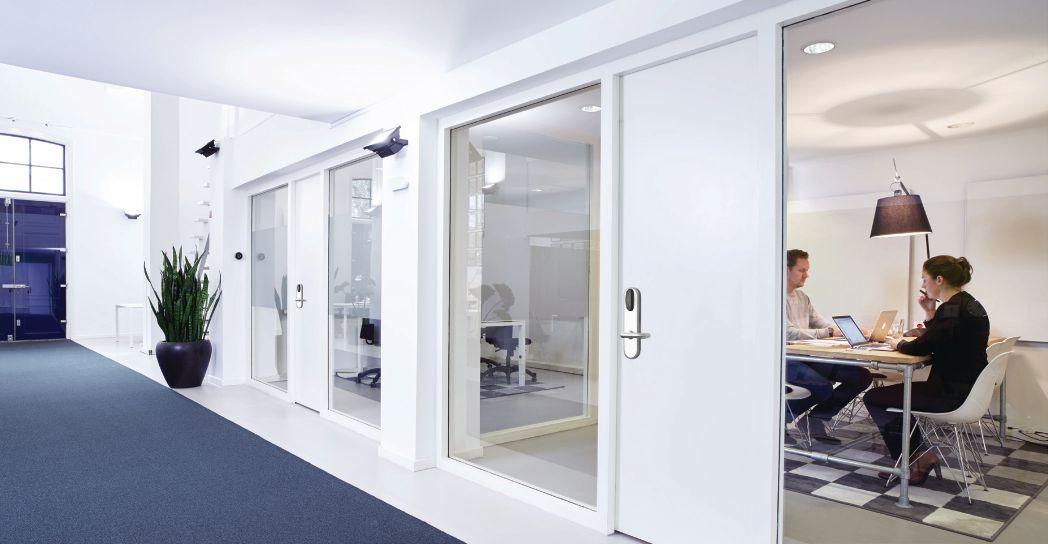
Electronic access is perfect for coworking as it’s impossible to manage a co-working space with mechanical keys. Having to rekey locks for lost or stolen keys for numerous tenants with high turnover would be cost- and
time-prohibitive. In addition to the flexibility of using electronic access control to manage these shared spaces, owners can obtain reports to see how business is operating (what rooms are used versus those that rarely get booked). Solutions like SALTO KS cloud-based access control gives smaller operators the power to affordably manage electronic locks using nothing more than a SALTO IQ hub and an internet connection!
We can also now extend reliable realtime electronic security to places we never before thought possible. Oil fields, electric power stations, and projects out on the perimeter previously had to rely on mechanical padlocks to enforce security. But with improved innovations like the SALTO Neoxx padlock, these types of businesses can have real time control over who enters into these remote areas and a report of every time that lock was opened. Harsh weather conditions won’t affect performance: the tough Neoxx padlock is IP68 certified meaning it’s protected from the weather.
SALTO continues to invest in research and development to improve our technology which results in better products. We’ve also recently invested in other companies (GANTNER, Cognitec, contidata, and Bluefield) to help us achieve that goal. Globally, SALTO has a combined workforce of over 1,200 employees in 40 countries, a turnover of $308 million, and over a million access points delivered each year.
SALTO’s innovations and solutions help empower users to achieve not just their safety and security goals, but improve their operational intelligence and customer and employee experiences. And this comes at a lower cost than traditional solutions. SALTO’s new ways will help you open new doors.

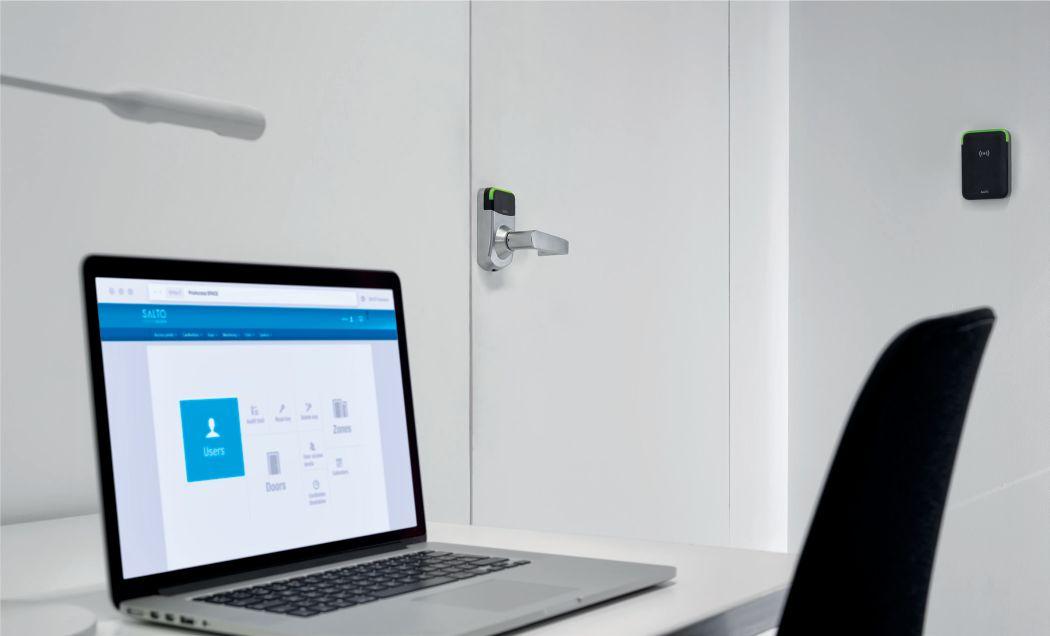
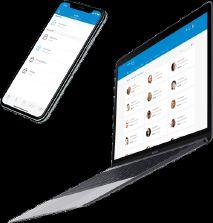



On the heels of WeSuite’s release of QuoteAnywhere and the Site Survey Version 3.0, we sat down with Tracy Larson, WeSuite’s President and Co-Founder, to discuss how faster and more accurate quoting is necessary for aggressive business growth. The company’s software, which helps security sales teams do both, was recently honored with a 2022 ESX Innovation Award, recognizing it as tops in Business Operations/Dealer Services.
Software companies talk a lot about the benefits of “workflow automation.” How does this concept apply to security sales?
Workflow automation is about creating efficient, repeatable, accurate processes. In a sales context, it allows salespeople to track opportunities, quote more efficiently and accurately, close more quickly, and keep sales on track. With WeSuite, a salesperson can arrive at a customer’s site, collaboratively design a system on their Site Survey digital canvas, simultaneously building a quote in QuoteAnywhere, generate complete proposal and contract documents, apply for financing if necessary, and obtain electronic sign-off from the customer. The deal is closed before a competitor can walk in the door.
It also guarantees uniformity and consistency across jobs and salespeople. Operations teams know what to expect as they execute delivery.
We often think of speed and accuracy as competing priorities. If you do something quickly, it might not get done right. How does QuoteAnywhere upend this paradigm?
In a security sales organization, accurate quoting is incredibly important. Inaccuracy removes profitability from a project. Furthermore, the complex nature of security systems, current supply chain issues, and steeply rising prices for parts and labor make accurate quoting exceptionally difficult. For companies that handle quoting manually or use spreadsheets, concerns are justified that quoting will result in errors. There are too many opportunities to make mistakes without realizing it.
Software like WeSuite makes quoting virtually goof-proof. It ensures the most current pricing catalogs are always used, labor is calculated correctly, and miscellaneous items like permits and subcontractor fees aren’t overlooked. Furthermore, quotes that meet specified thresholds or profit margins can be presented to customers without supervisory sign-off. As a result, salespeople have more autonomy in the field to work
with customers on pricing to close a deal on the spot.
With QuoteAnywhere and the Site Survey, speed and accuracy go hand-in-hand.
How else does sales management software help businesses grow?
Companies need to have a solid business technology foundation. It’s what gathers data to measure KPIs. Mike Ruddo, Chief Strategy Officer at Integrated Security Technologies, told an audience at a recent educational panel at ESX that WeSuite has allowed IST’s management to determine true profitability rather than operate based on gut feelings.
Secondly, centralized data makes historical analysis possible. By identifying trends, like which vertical markets are most profitable and which RMR solutions continue to generate the most revenue over time, companies can make strategic decisions about how to grow – like where to focus their marketing resources and which product lines to keep or drop.
Third, growing a business often includes merging or acquiring others. When that happens, sales management software helps new employees to onboard quickly and confidently to meet their new organization’s expectations.
Is there anything else you’d like the readers of SP&T to know? Some of Canada’s leading security companies use WeSuite, including Paladin Technologies and Fire Monitoring of Canada. WeEstimate’s Location Tax Module automatically calculates PST, QST, GST, HST, and ITC, making it easy to comply with tax regulations by jurisdiction.
You can learn how WeSuite helped Paladin, FMC, and others to grow their sales and expand their businesses by reading their success stories, posted at https://wesuite.com/success/.