ACCESS CONTROL




Clever building systems and good integration helped some businesses better manage the pandemic. The future may be more promising as a result
By Neil Sutton
The way buildings and office spaces have been used in the last year has been very much tied to the evolving pandemic situation.
Offices closed or reopened or closed again depending on jurisdictional health requirements and company policies. With the end of the pandemic possibly in sight, these facilities may be able to start planning for more permanent employee access, while still factoring in lingering work-from-home policies for some of their workers.
Throughout the COVID-19 saga, smart building technologies have helped to carry building operators forward.
Tighter and more efficient integration of surveillance, access control, intrusion, lighting, parking and environmental con-
trols allows those systems to leverage each other’s strengths while generating useful data for building owners.
“We’re definitely seeing more integration between physical security systems and wider business systems,” explains Owen Kell, senior IoT research associate, Memoori. “In terms of IoT and how it fits into the world of smart buildings, it’s through these integrations with previously siloed data sets that you start to get ‘more than the sum of its parts’ value generation.”
The security ecosystem — specifically video, access control and intrusion — was already coming together quite successfully, says Tom Mechler, regional marketing manager, intrusion and access control, Bosch Security Systems.
“An alarm system or intrusion system is very good at reporting events. In the case of video surveillance, we’re seeing the improvement of video content analy-
sis,” he says.
“By integrating an intrusion system with a surveillance system, you get that ability to report these events. An access control system can tell you where people are, and who’s going where, and should they be there? The intrusion system can tell the other two systems, ‘I’m armed, so nobody should be here.’”
Adds Paul Garms, director of regional marketing, video systems, Bosch: “These things are all coming together where you’ve got very powerful sensors generating vast amounts of data. There’s got to be software behind this that’s then triggering actions like alarms or, even better, giving you some predictive ability.”
Knowing where people are in a building generates useful information in terms of optimizing HVAC and energy usage. That type of information is also tailormade for implementing a building occupancy policy during COVID-19, when a building manager really needs to know how many people are inside a facility at any given time.
The ability to access this data and
manage systems from a remote location also means a building operator can implement security policies at a distance. “Remote access is really important,” says Mechler. A building that can be managed remotely needs fewer people on-site to manage it.
During the pandemic, this is particularly advantageous. And while these systems weren’t necessarily built with a pandemic lockdown in mind, in many cases they were “already flexible enough to handle these new requirements. There’s going to less people [in the office] at certain times, and there’s going to be more flexible hours, and we’re going to be using our buildings differently,” he says.
Knowing who is in a building and at what time can help facilities plan other services, such as cleaning or catering, more effectively, adds Kell. “It’s also through more partnerships, more open APIs, and data-sharing between previously siloed building systems that’s enabling this kind of thing to happen,” he says.
As much as building technology can be integrated successfully to realize efficiencies inside a facility, hosting some systems, like access control, in the cloud creates a different set of dynamics.
In some ways, the cloud has changed the relationship between the systems integrator and the customer, says Jason Ouellette, director of technology and business development, Johnson Controls. In some cases that customer may have a more direct relationship with a vendor as the host of a solution.
“Adapting to those changes and how integrations work is, I think, also vitally important,” says Ouellette.
“Some of the hosted side of it becomes easier for the integrator. They get to really focus more on the field deployment, potentially offering services for the managed aspect of things over the hosted, because that part’s resolved. It allows them to differentiate themselves and provide services in a different way.”
Systems integrators are traditionally very strong on the operational technology (OT) side but may have some catching up to do on the information technology (IT)
“There’s a big opportunity out there for integrators and manufacturers like us.”
— Paul Garms, Bosch Security Systems
side, argues Kell.
Physical security systems like surveillance cameras, for example, must be installed with the network — and cybersecurity — in mind. “It’s an understanding around cybersecurity and the implications of adding new nodes to the network and making sure that security policies are maintained across the organization. Those are the two main areas that the OT guys need to skill up on,” he says.
But it cuts both ways: those more skilled in IT will still need to step up their game on the operational side. “It’s the melding of those two worlds that’s the key challenge.”
With vaccinations on the rise and COVID numbers declining in most places, a return to “normal” seems possible soon. But whatever “normal” is, it’s not likely to be exactly the same as life pre-pandemic.
“We will get back to where we’re having meetings, working in teams and we’re solving problems on a whiteboard together. Those things are going to happen. But we won’t get back to where everybody’s in an office 40 or 50 hours a week and then they go home. There will be some change,” suggests Mechler. But the flexibility of building technology — which in many cases was put through some major trials during the pandemic — can allow that to happen more easily.
Pandemic-readiness, i.e. the ability to move from “normal” to a potential lockdown or other emergency measure with minimal disruption, could actually be a key differentiator for a building operator or tenant in the future, says Ouellette.
“If I’m offering space in a building for a company…I want to be able to put people at ease that, when you’re here, you’re going to be safe,” he says. “Those are going to be ways that you can now leverage as a competitive advantage to attracting talent and doing business.”
Some security technology has be-
come “supercharged” as a direct result of the pandemic, says Kell — particularly contactless and biometric access control, along with mobile access and apps that can integrate a variety of different building services. Those are likely to continue to have an impact long after we pack away our masks and worry less about social distancing.
But smart building integration, particularly complex integration that engages multiple systems, is still in its infancy.
“I think there is a lot of that going on, but I think it’s early days. I would anticipate as things move forward, you’re going to see a much deeper level of integration and improvement on its capabilities,” says Ouellette.
Adds Kell: “There’s so many diverging factors influencing this whole thing. Overall, the digitization of building assets and the value to be derived from the IoT in smart buildings is still in the very early stages.”
Garms agrees. “There’s a ways to go here, but I think we’re on that path. It’s recognized that there’s a big opportunity out there for integrators and manufacturers like us. A lot of technology that’s making that possible is cloud connectivity and different sensors that we can bring together.”
The future of work is unwritten, and how or where people do their jobs a year from now, or 10 years from now, is difficult to predict.
There are some who may crave a return to the workplace and closer interaction with their co-workers. And others who will cling to the home office where the commute is a staircase and the nearest cubicle mate is the family dog.
Likely, we’ll see a mix of these approaches and some flexibility between the two. If smart building technology has in any way eased these transitions during the pandemic, its future should be interesting to watch and integrators who stay on top of the trends may reap the rewards.
How is it, that despite the known massive security flaws and susceptibility to both man in the middle and replay attacks, that 84% of integrators continue to install the unencrypted and outdated Wiegand communication technology?
By using the Open Supervised Device Protocol (OSDP) and MIFARE DESFire smart cards, we will show you two ways you can use the latest technology to better protect your property.
Many businesses around the world have been relying on Wiegand to secure their premises – a technology that hasn’t changed for almost 40 years. It’s unencrypted, unsecured, and has been shown to have serious security flaws when it comes to today’s modern security demands. You can attack a site with cheap, easily obtainable equipment, and there are plenty of demonstrations online showing how this can be achieved in just seconds.
In response to Wiegand’s failings, the development of OSDP has brought secure two-way communication between devices and improved interoperability to access control products. Compared to Wiegand, OSDP also adds encryption, much higher levels of security, plus a lot more functionality and futureproofing.
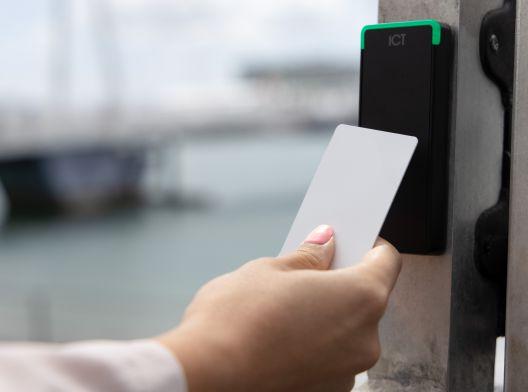
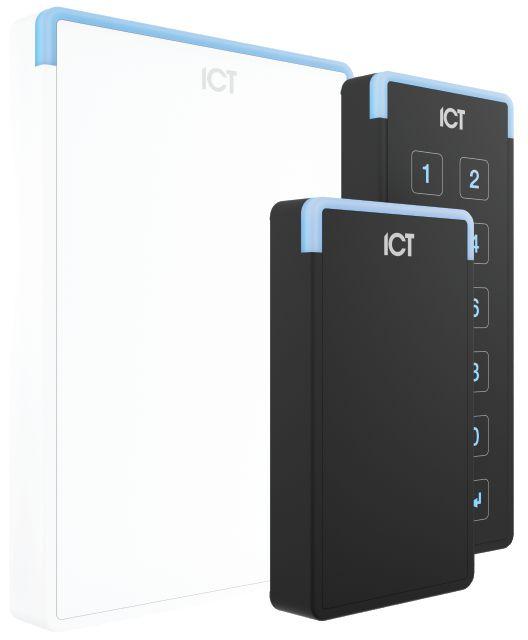
The interoperability of OSDP makes it easy to team ICT’s tSec Readers with an existing access control system or to use third-party OSDP card readers with your Protege system. Add increased security to the time and labor costs saved at installation and there is no contest.
The most common access control credentials are key-cards or fobs, however not all of these are created equal. As formats like 125kHz have been proven insecure, people have started looking for more advanced smart card technology.
For an industry-leading level of security, we recommend MIFARE DESFire for all sites. This encrypted, multi-application smart card is perfect for environments such as local, provincial or federal buildings, government departments, or any organization where security and confidentiality are a must.
We recommend giving customers a quick lesson on presenting DESFire credentials, to avoid any potential frustration. It has a shorter read range than older technologies as the cryptographic module on the card requires more energy to operate. This means you cannot simply wave or swipe a card in the general direction of the reader to gain access. It’s worth training people to think of it like contactless payment – just hold the card firmly near the reader until authorized.
ICT’s multi-technology tSec readers make it easy to transition to the more secure MIFARE DESFire card format without having to change all cards immediately. Or you could use OSDP to pair a third-party reader with a MIFARE DESFire card and an ICT Protege controller to create a totally encrypted communications path from the card to the server.
A Protege solution from ICT combines access control, intruder detection, and building automation into one unified package. Whether you’re a small business needing basic protection or a large-scale enterprise project with thousands of doors and complex user access requirements, our systems provide a comprehensive solution to meet your needs. Visit us at www.ict.co/Proximity-Products to learn more about the ICT tSec range.

As internet-based security systems continue to replace traditional alarms, there’s no way around the shift to internet protocol (IP) connections that reach central station monitoring center receivers, whether it’s through wired networks or the wireless cellular method.
If you operate as an alarm dealer or installer within the electronic security industry, you already know the importance of replacing antiquated dial-up lines and toll-free phone numbers with IP. These connections are designed to ensure that customer alarm signals reach the central station instantly, which is a major advantage over previous methods — but unless the IP address is your own, the reliability of the signal is out of your control.
In the event of a crash at the central station, the time it takes to complete disaster recovery may be more time than you have. With every hour spent on disaster recovery, your risk of losing clients increases.
The best way to protect your business against potential losses from signal unreliability is by implementing a solution that allows you to keep your own IP address.
That’s what’s offered by KeepYourIP™, the only company with a secure forwarding service that allows you to program your own IP address – and, communicate your IP alarm panels to central station monitoring receivers – all without the customer’s awareness.
• With the Keep Your IP solution, you can:
• Easily control how your customer’s alert signals get routed.
• Control the destination of where the signal terminates to.
• Be more competitive and scalable.
• Experience faster, cleaner routing with total customer confidence.
This is the first and only IP data forwarding service designed exclusively for the electronic security industry. It’s the number portability you’ve always wanted, long before the technology existed. Now, the technology exists — and it’s only available from Keep Your IP.
Central station disasters are a given. When they happen, it’s imperative that you reroute your customers’ alarm signals to a new location as quickly as possible. With Keep Your IP, it can. Your administrator simply logs into your secure account and enters the new IP address forwarding information. The customer will never be the wiser, and you protect their loyalty by preserving their confidence.
Other advantages include:
• Self-Programming: With every new IP-based system you release, you can simply program your unique IP address into each one.
• Reliable Forwarding: Alarm signals are routed through our servers, then instantly forwarded to the IP address of the central station configured on your account. It all happens in milliseconds.
Keep Your IP provides secure reliability and enables more consistent budgeting for alarm dealers. In a time of constant change and conscience buying, they deliver an aggressive product that will fit all standards of economic growth. Learn more about this outstanding solution by contacting KeepYourIP™ today.
M u l t i p l e P o r t s New!

P o r t T r a n s l a t i o n
I P I D
U s a g e R e p o r t i n g
W i t h o u r n e w M u l t i p l e P o r t s f e a t u r e , y o u ' l l h a v e t h e a b i l i t y
t o h a v e m u l t i p l e p o r t s a s s i g n e d t o a s i n g l e I P a d d r e s s .
T h i s a l l o w s y o u r a c c o u n t s i n t h e fi e l d t h a t a r e s e t u p o n o n e
p o r t a n d n e e d t h e a l a r m s i g n a l t o t e r m i n a t e t o a n o t h e r p o r t a t
t h e c e n t r a l s t a t i o n .
T h i s a l l o w s y o u t o h a v e a l l y o u r I P t r a f fi c t o l o o k l i k e i t s
c o m i n g f r o m a u n i q u e I P a d d r e s s v s a l l o t h e r I P t r a f fi c c o m i n g
f r o m K e e p Yo u r I P.
T h i s w i l l a l l o w y o u t o g e t u n l i m i t e d a c c e s s i n 2 4 h o u r c h u n k s
t o u s a g e r e p o r t i n g o n y o u r I P a d d r e s s e s , t h i s w i l l a l l o w y o u t o
h a v e v i s i b i l i t y t o t h e d e v i c e s p u b l i c I P u s i n g t h e t i m e s t a m p o f
t h e r e c e i v e r.
Your business could leverage cloud technology for better access control. But what does that really mean? Better access control means updating your security infrastructure
Better access control means updating your security infrastructure for more efficient business operations. With less equipment to install and manage, cloud access control is typically less expensive since you only need to purchase simple door hardware. Cloud access control also has higher long-term ROI compared with on-premise solutions because the need to install and maintain servers, firewalls, and MPLS connections at each location have been eliminated.
Since cloud access control is hosted in the cloud, remote management is possible as long as there’s internet access. By managing a system remotely from any internet-connected device, you can be across the world in another country and be able to open and lock doors in your facilities effortlessly. Therefore, no one is needed on-site to open doors and grant access, and a business can truly operate remotely with admins accessing the system off-site 24/7 and all locations configured and managed from internet-accessed dashboards.
Streamlined access control means being able to scale up or down based on your business’s need. Because cloud access control can connect multiple sites to the cloud service, it’s
easy to add buildings when necessary, especially in comparison with connecting multiple buildings together over a private network. And if you’re looking to increase storage and processing capability, the cloud provides scalable resources on demand rather than upgrading or installing additional hardware onsite.
Finally, leveraging cloud technology for improved access control enhances cybersecurity. Contrary to widespread belief, having an off-prem security solution can greatly reduce the chances of potential data breaches because the video surveillance and critical data is stored in the cloud and monitored by a team of trained professionals. With insecure VPN networks and human error, on-premise solutions are still subject to breaches; while cloud-based systems can push out software updates at anytime system-wide, which allows them to stay on top of evolving security threats and push out updates as they’re released. Cloud-based systems are also typically faster to detect a breach in the event that there is one.
So, is cloud access control right for your business? From reduced cost to remote management, scalability to increased cybersecurity, cloud access control offers numerous advantages that could improve your company’s operational efficiency. www.cloudvue.io/cloud-access-control
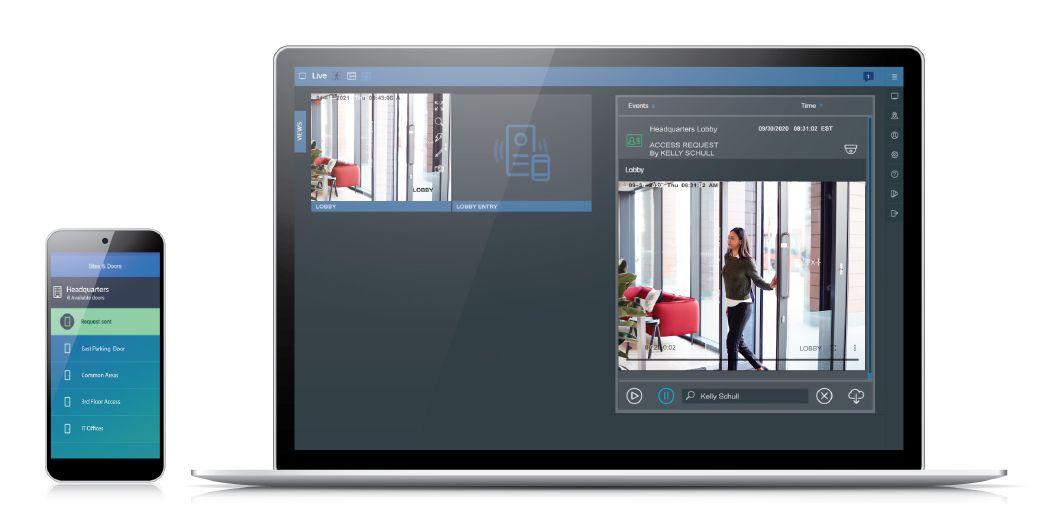
Imagine Being Able to Remotely Grant Access to All Your Doors, Closets, Gates, L o ck B oxes, or Anything Else Y ou N eed to Keep S ecure A cross Y our O rganization –
A ll F rom One Browser.
Streamline Your Access Control NOW!
How smart does a security system need to be that can recognize you and only you for access to your home?
Incredibly smart!
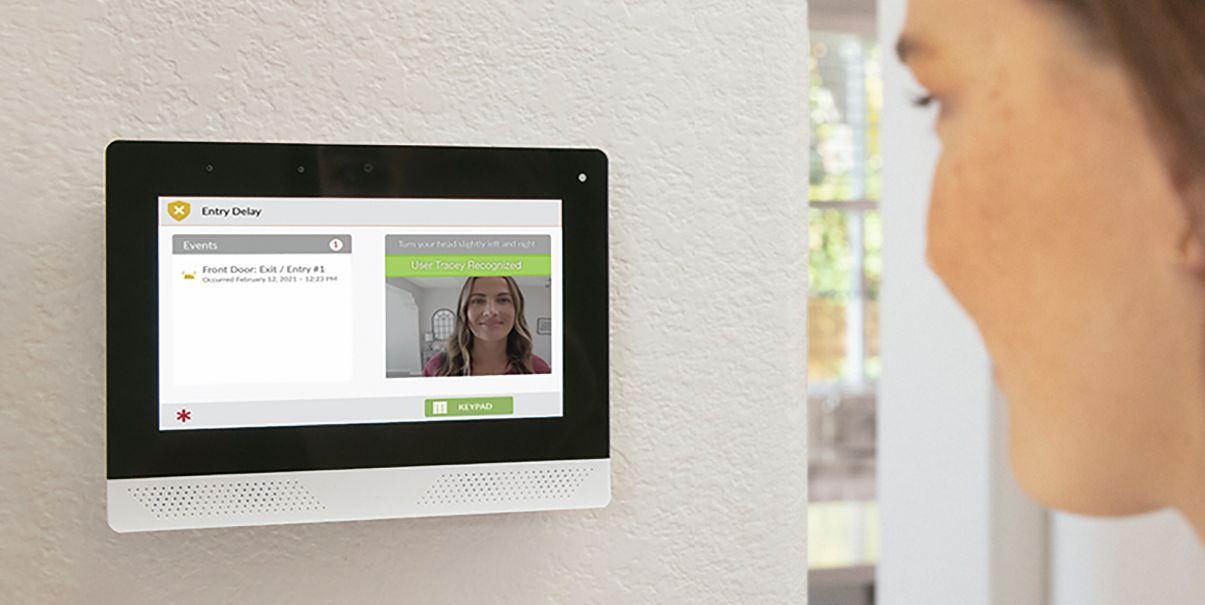
That level of intelligence is not just for defense systems, it is available now in a the 2GIG EDGE Security and Automation panel. This new system surpasses the IQ of any other smart home panel on the market today. Nortek Control designed it using state-of-the-art Artificial Intelligence (AI) and edge analytics technologies right into the panel itself. These advanced and smart technologies enable the industry’s first face recognition touchless disarm. And, further supporting face recognition as the most secure way to disarm a system, the panel integrates anti-spoofing technology that ensures only the real live person can disarm the system.
Intelligent edge analytics and AI are also the basis for ensuring a homeowner’s biometric data used for secure access stays private. Because this information is only stored and saved on the panel, once homeowner data is deleted, it is deleted forever.
In addition, access can be customized by integrators. They are able tailor based on a homeowner’s personal needs with the integrated controls, rules, scenes, notifications and Smart Areas™ zone partitioning features available with the 2GIG EDGE.
Due to its powerful processor, users will appreciate the 2GIG EDGE panel’s speed in disarming and operating cameras that showcase the added value of what a professionally-installed system can offer. Its cutting-edge features also highlight what a truly next-generation platform this is giving integrators a competitive advantage in selling the evolution of home access control and security.
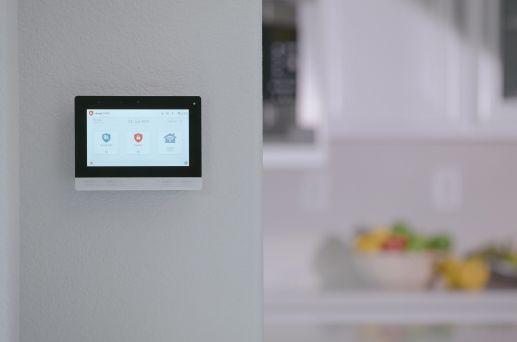
Compatibility with other smart home features further expands the usage of the 2GIG EDGE panel making it the center today’s smart home adding another level of homeowner convenience. A second industry first is the panel’s 100 percent compatibility with live feed of ONVIF cameras to the 2GIG EDGE panel. This allows homeowners to use existing ONVIF devices for their surveillance needs. And, because it is compatible with a broad array of home technologies and products, users can seamlessly connect to cameras, doorbell cameras and directly view video in real time from up to eight different camera feeds.
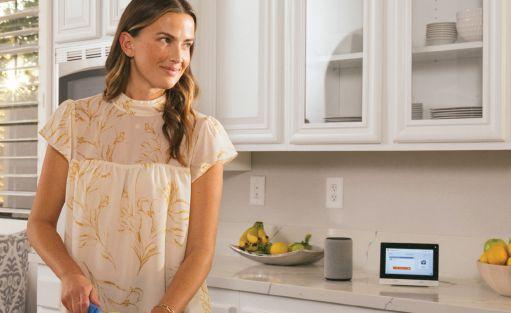
Using the 2GIG EDGE Panel and EDGE Remote Keypad – a secondary touch screen keypad – a homeowner can easily control each of these systems and be alerted to any changes that occur. One access control example shows what is possible with fully compatible 2GIG encrypted sensors and the Glass Break Detector. It can sense broken glass in a range of up to 15 feet and will relay this information directly to the EDGE panel indicating an intrusion.
Another way the EDGE panel works with other smart home automation products is with its built-in Z-Wave Plus V2 functionality. The Z-Wave Plus Garage Door Opener Remote Controller accessory can be controlled directly from the EDGE panel and is compatible with virtually any automatic opener connected to a sectional door. All these systems can work directly with the 2GIG EDGE control panel with the help of an Alarm.com app giving users another way to control access with their mobile phone or with the panel at all times.
Yes, access control is now much smarter offering the functional conveniences and security that add to quality of life and increased peace of mind.






Old ways won’t open new doors. This has been our guiding principle at SALTO Systems over the last two decades as we’ve led the industry-wide migration from mechanical keys to electronic locks.
Since SALTO pioneered the data-on-card SALTO virtual network, we’ve added real-time, wire-free electronic lock solutions that deliver comprehensive access control that can be managed from anywhere and accessed from a smartphone, access card, PIN code, fob, wristband and more.
Our solutions not only bolster security – because you’ll no longer worry about lost keys – but they’re also available at a lower cost than traditional electronic access control.
Take, for example, the SALTO XS4 access control platform – which combines electronic door components, peripherals, and software, providing tailor-made wire-free networked access control. The SALTO SPACE access control management platform employs SVN technology to manage door openings via battery-operated devices by leveraging distribution and maintenance of user privileges with data-on-card, read/write capabilities at each device. Having a small percentage of the control locations online via a wired network connection or our SALTO BLUEnet RF technology with SVN Flex capabilities facilitates the update and synchronization process enabling the expansion of control throughout the facility. This is without the need for additional wiring or a RF wireless infrastructure which greatly reduces not only installation costs, but the complexity of the hardware itself!
With today’s talent shortage, it’s essential that critical operations be easily managed and maintained without the need for highly specialized technical support at every level. SALTO’s flexible, yet simplified, approach provides the opportunity to extend centralized management and control features to applications traditionally limited to mechanical keys. The benefits are endless, resulting in expanding electronic access control through the door and into improving operations.
What companies seek now are access control solutions that achieve safety and security, but also improve operations and the customer and employee experience. Simplified check-in and checkout solutions where guests can bypass the front desk and go directly to their hotel room with a digital key on their smartphone not only improves the guest experience, it frees up front desk staff.
In retail, an access control management system can define who enters or exits through certain points, at certain times –be it customers, employees, or delivery drivers. SALTO recently released the XS4 One Deadlatch in North America that delivers electronic access control to aluminium-framed glass doors often found in retail storefronts and lobbies.
Access control is the perfect match for the growing coworking industry. It’s impossible to manage a co-working space with mechanical keys. Plus, owners can obtain reports to see how their business is operating: the smallest rooms are booked every day, but no one uses the large office suites. Should they look into replacing their larger suites with the smaller ones? This intelligence can help managers decide how best to use their facility. SALTO outfits some of the largest coworking companies in the world and also the smallest. Solutions like SALTO KS cloud-based access control gives smaller operators the power to affordably manage electronic locks using nothing more than a SALTO IQ hub and the Internet!
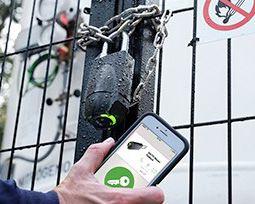
SALTO’s has extended reliable real-time electronic security to places we never before thought possible. Oil fields, electric power stations, and projects out on the perimeter previously had to rely on mechanical padlocks for security. Managers had no way of knowing the status of a mechanical padlock out in the middle of nowhere. The recently launched SALTO Neoxx padlock gives utility providers, telecom network services, and more, real-time control over who accesses these remote areas. They can also receive reports that detail every time a lock is opened. Harsh weather? No problem. The Neoxx padlock has a tough exterior and is IP66 certified meaning it’s protected from the elements.
SALTO continues to invest in research and development to improve our technology which results in better products. We’ve also invested in other companies to help us achieve that goal. In 2020, we acquired Gantner, an Austrian company that specializes in access systems, electronic locking and locker systems, cashless payment, entertainment ticketing and management, and more. The acquisitions we’ve made in the last few years – including Clay and Danalock – are helping us strengthen our position in cloud, mobile access, and customercentric solutions.
Visit our newly-redesigned website www.saltosystems.ca to see how SALTO’s new ways will help you open new doors.



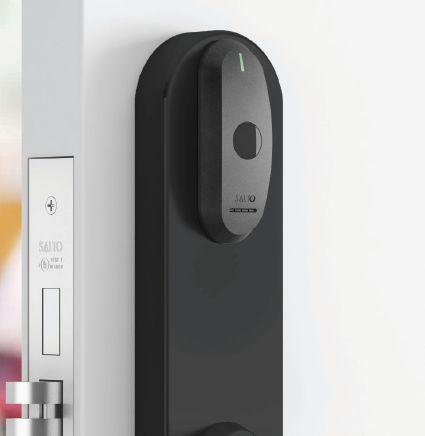






In schools and on campuses across the country, safety and budget are the highest priorities—SALTO Systems access control solutions deliver on both.
From K12 to colleges and universities, our education solutions are designed to provide the highest level of security and safety, while our innovative technology offers a lower total cost of ownership compared to other solutions on the market.
Learn more at saltosystems.ca





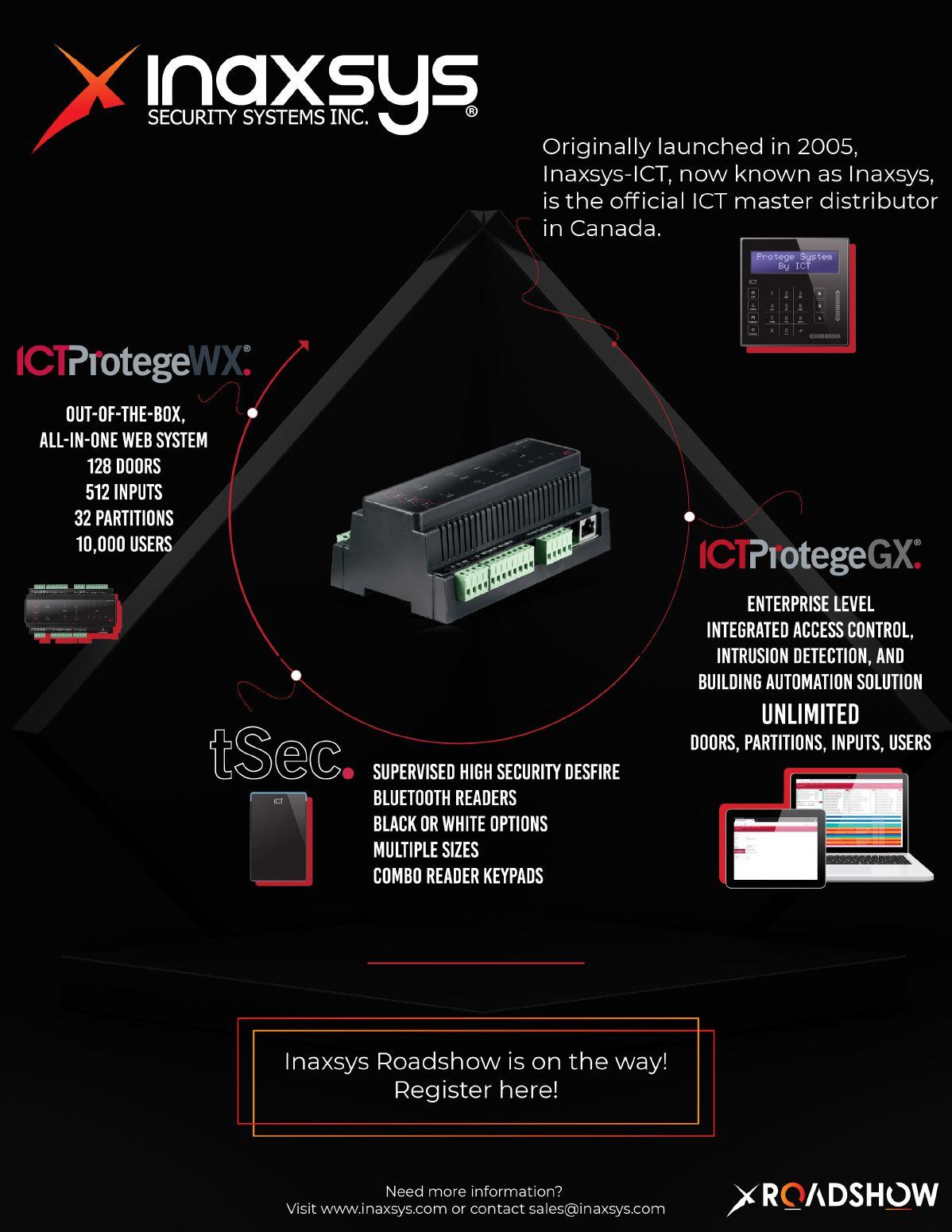
ProtegeWX is a flexible, all-in-one, web based system that integrates access control, intrusion detection, and building automation into one simple unified solution. This out-of-thebox, all-in-one system is quick to setup and intuitive to use. Simply unpack the box, connect the controller and power supply, and launch your web browser. An intuitive wizarddriven interface guides you through the process to configure your system, giving you a fully functional access control and intrusion detection solution within a fraction of the time of conventional software.

Protege schedules can be qualified by just about any other condition (or conditions) to ensure your schedule always does what it should. Why unlock a door if nobody turns up for work?


Say farewell to the typical constraints associated with software. A built-in web server means there is no software to install, making deployment quick, simple, and straightforward. No more issues with compatibility, lost DVDs, or licensing and connection limits.

Traditionally, access control systems and intrusion detection systems have worked independently of each other. ProtegeWX brings these together to provide a single cohesive and unified solution that helps you keep unwanted visitors outside, while enabling you to monitor and control access inside. All without having to break a sweat. Not only is an integrated solution a more cost-effective option than two disparate systems, the features it unlocks lead to improved staff safety and a higher level of security, while creating a more user friendly solution that is simpler to use and more efficient to operate.

Features such as NTP time synchronization, automatic adjustment for daylight savings, holiday programming and schedule qualification mean you can rely on your Protege controller to ensure things happen on time and that you won’t arrive to find your front door unlocked unexpectedly.
The All Events page provides a full live and historic view of all events within the system, while the Event Reports enable you to quickly and easily identify the relevant information you need and allow you to filter events based on specific users, doors and/or areas, such as: what a particular user or group of users has accessed on site, which users have been through a specific door, whether an individual user has been through a particular door, which user has armed an area, whether an individual user has disarmed a particular area
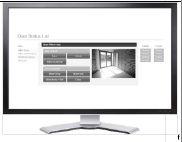
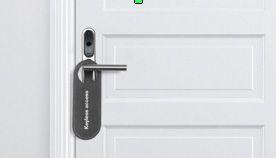
Expand your existing access control system without the limitations, cost, and inconvenience normally associated with hard wired doors by integrating ProtegeWX with a wireless and offline locking solution from SALTO SALLIS, Aperio, or Allegion.
Wireless solutions not only enable keyless access where previously only a traditional lock and key approach was possible, the wire free environment means there is no need to hard wire the building, allowing you to keep your original doors and locks in place making installation quick, simple, and cost effective. The ability to use your existing credentials means you also avoid any expensive migration costs.
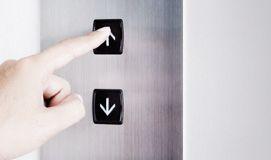
ProtegeWX is not limited to controlling access to doors. Buildings that have elevators often require access to floors to be controlled as well. Low level elevator integration enables cost effective access control of almost any elevator system, regardless of age or capability.
As well as controlling access to floors, elevator control allows the: Scheduled unlocking of a floor, Prevention of scheduled unlocking until the first person arrives (Late to Open), Unlocking the elevator when the floor area is disarmed, Prevention of access if the floor area is armed.
By Tracy Larson
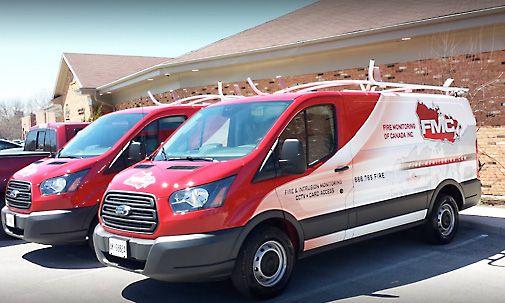
Fire Monitoring of Canada (FMC) is a trusted monitoring company and high-end security integrator headquartered in St. Catharines, ON. Its fourteen offices service customers in eight provinces. We spoke with Chad Asselstine, FMC’s V.P. of Business Development, to learn how WeSuite’s connected, automated sales process and centralized platform and has contributed to the company’s growth and success.
TL: What initially motivated FMC to invest in WeSuite?
CA: In 2018, FMC acquired Bulldog Fire & Security, a systems integrator headquartered in Kitchner, ON. We needed a way to bring our sales staff together, to make our combined teams and our administrative process more efficient in several key areas.
TL: And what were those key areas?
CA: Standardization was the first thing. We had an Excel-based quoting platform we were using, but as we were moving into the security integration space, we were dealing with many more parts and manufacturers. We wanted to be able to pull parts and model numbers straight from our ERP system.
The next issue was our approval process. From a management perspective, we wanted to get out ahead of any potential errors in our quotes before they get sent to customers. The automated approval process in WeSuite was a big selling feature for us. Since tightening things up with the help of the software, we’ve increased profitability.
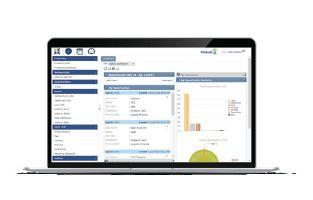
And last, our pipelines were getting out of whack, which was hurting our ability to get accurate reporting. Together, WeOpportunity and WeEstimate give us a seamless process from lead-entry all the way through closing a sale.
TL: How has WeSuite created a more collaborative sales environment?
CA: Because WeSuite is connected to all our other platforms, we’re only asking sales reps to enter data into the system a single time. It’s an automated pipeline, so once we enter a lead, it’s there. When a sales rep changes a lead’s status or the percentage probability that a job will close, it’s all reflected in the pipeline. And then, when they go to create a quote and send
it to the customer, all the data is current and in one place. When a rep is building a quote and has a question or needs assistance, we can log into WeSuite and look at it together. WeSuite keeps us connected, even when we’re working remotely, improving the team aspect of our sales and collectively bringing sales and operations together.
TL: Explain how FMC is taking advantage of WeSuite’s integration with your company’s ERP platform?
CA: We wanted to keep the hands of our sales reps out of our ERP. WeSuite has done that. Our full catalog of parts and pricing is always available, in real-time, through the WeSuite interface.
All our quotes come from WeEstimate and then, after they’re won, the quote details are automatically pushed to our ERP software from WeSuite as a new job for installation and management from there.
TL: Why should others invest in WeSuite?
CA: Take a look at how you’re currently running your company. How much are you paying multiple people to do what WeSuite can do?
It’s not a giant software company. When you reach out, you know that support will get back to you that day. We know they’re there for us.
WeSuite understands the security industry; the people there understand what we’re dealing with and speak our language. It has given us a “connected sales process” that has quickly paid for itself.