access control


Even with the advantages provided by advanced technology, there is no single correct path to follow to design, install and maintain the physical security system protecting your data center. However, the fol lowing recommendations for creating and enforcing access control policies can be offered based on realworld experience from several data center managers and consultants:
Begin with a complete enterprise access con trol solution. Choose the platform at the head-end (for both software and physical implementation) that will meets users’ needs now and in the future.
If possible, utilize the latest technol ogy. New approaches like PoE and wireless technology can result in significant cost savings and improved ROI. Rack-level security can save on floor space and the cost of pulling additional cable.
Identify which assets you want to protect. As discussed in this paper, technology is driving access control from the perimeter further into the facility. Users must decide how to install the system that best protects the most critical environments in the facility.
with stakeholders from IT, Security and Facilities to discuss each department’s challenges and requirements. If possible, hire an outside expert to help you audit the entire system, from the street to the plug in the back of the server, to identify potential problem areas.
Don’t skimp on power. Ensure your facility has enough power to be highly resilient and fault- tolerant. Design redundancy into everything from transfer stations to uninterruptible power supplies to ensure power is there when you need it.
Design a system that complies with regulations but also complements your business operations. A data center that is completely walled off will not work if that design impacts the main purpose of your building, whether it is manufacturing, sales or customer service. Identify the person who will manage the facility early in the process. Make him or her part of the team, to ensure that they understand the long-term goals as well as the day-to-day procedures of the facility. Will that person report to IT, Security, Facilities or some other department? Make that decision early and share it with all stakeholders.
Start with the question, “Who needs to go where?” Identify which employees require access to sensitive data and the facility itself, and install technology that can track and monitor access – especially critical for compliance audits.
Get buy-in at the top. Senior management must understand and support your plans and policies. Their backing will be crucial whenever there’s a high-level discussion about policies and procedures.
Educate the entire team. The greatest risk to your data center comes from the inside. Every individual working in the facility must understand the objectives of the system, so that access control is seen as a tool for increasing their productivity, not an impediment. Says one expert, “Your level of commitment to training reflects your acceptance of risk. The more you put into it, the less risk you face in the future.”
Location, location, location. When selecting the site for your facility, choose a geographic location with minimal exposure from hurricanes, earthquakes, tornadoes and other environmental threats. If you maintain a separate disaster recovery site, it should be located at least three hours away from the main facility.
Do an end-to-end analysis of the environment. Meet
Establish a policy for exceptions. “They will happen,” says one expert. “People change jobs, new hires come on board. Will your policy allow temporary access? With a card or a key? Things will change and you need a policy in place so you are ready to react quickly.”
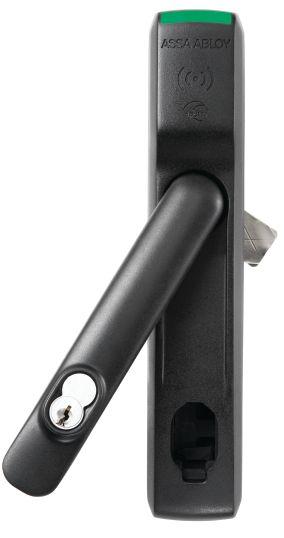
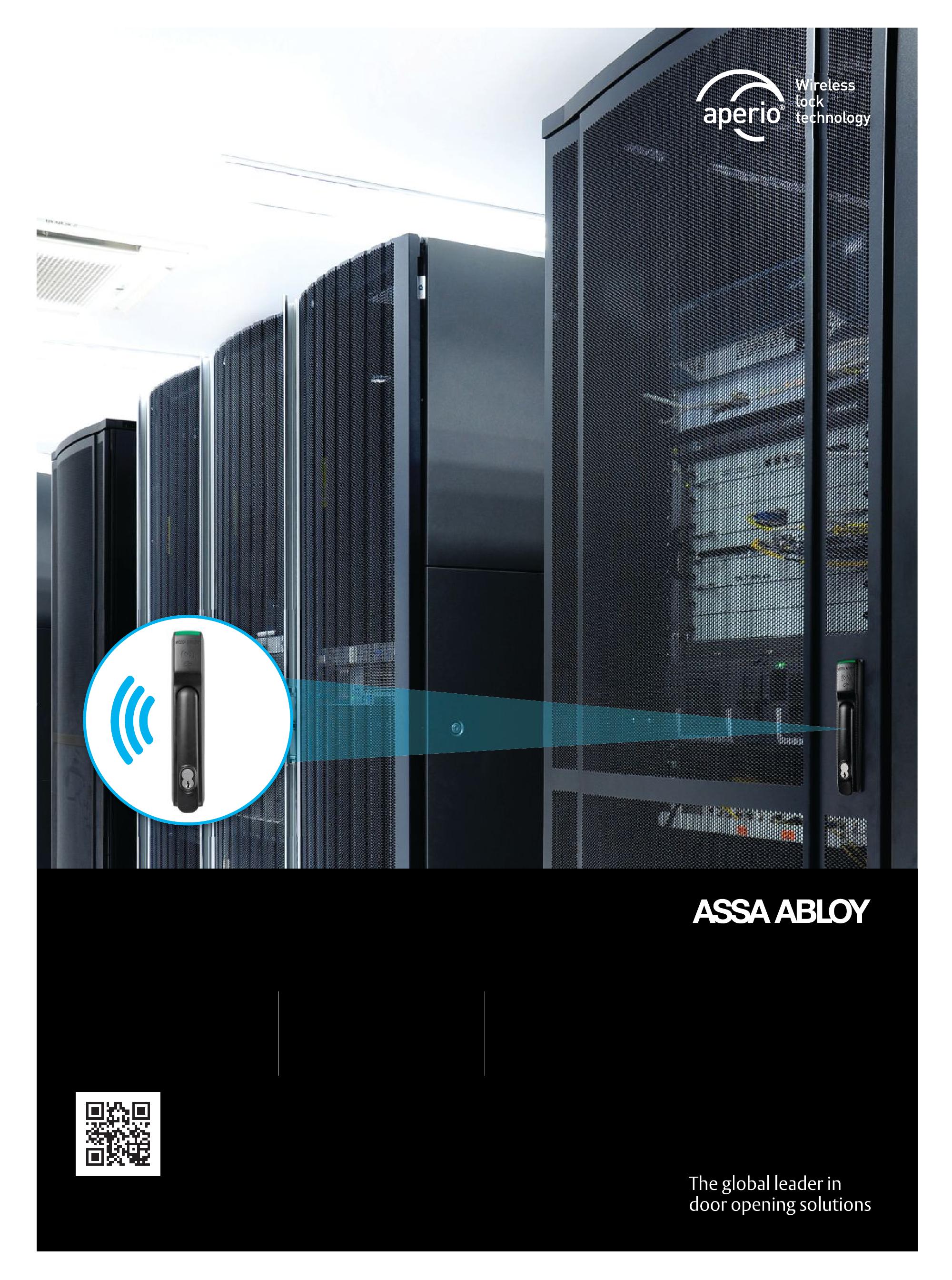
Locking systems on the market today provide benefits that far outweigh the cost of installation. The number of servers that can be served by access control will only increase as the cost to secure the door of the server cabinet is brought down with innovative products like the Aperio KS100 Server Cabinet Lock from HES, an ASSA ABLOY Group brand.
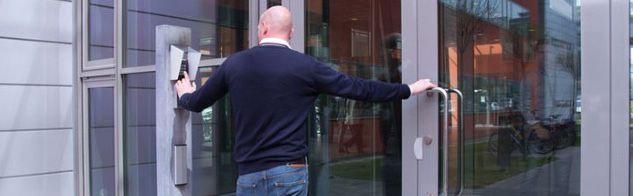
Axis is leading the industry with a new level of freedom for physical access control. Freedom that stems from the same open IP philosophy we pioneered in video surveillance.
So, what’s so special about our solution?
Our AXIS A1001 Network Door Controller is the first nonproprietary and open IP-based access controller on the market. This gives you the freedom of installation and location because our product is based on an open architecture platform. For example, a PoE supported controller at each door eliminates the need for separate power cables for door equipment such as locks and readers – allowing you to have your installation done above the door and create a more aesthetic setting to fit your customer’s needs.
Traditional proprietary systems meant limited options, central
servers with complex cabling, as well as restricted possibilities for integration and scalability. AXIS A1001 has an open interface that enables integration with other systems, such as intrusion detection, heating and HVAC systems.
AXIS A1001 can also integrate with other Axis software solutions – including AXIS Camera Station 4.0 and AXIS Camera Companion – for simple, event-triggered video integration. The controller’s color coded connectors and the configuration wizard enables fail-safe and effective installations. The controller supports most reader types and is fitted with configurable input/output ports and controllable power outputs for external equipment such as door locks and positioning sensors.
AXIS A1001 comes with built-in software for basic access management. It’s also open for third-party software, allowing the unit to be integrated with other software solutions..
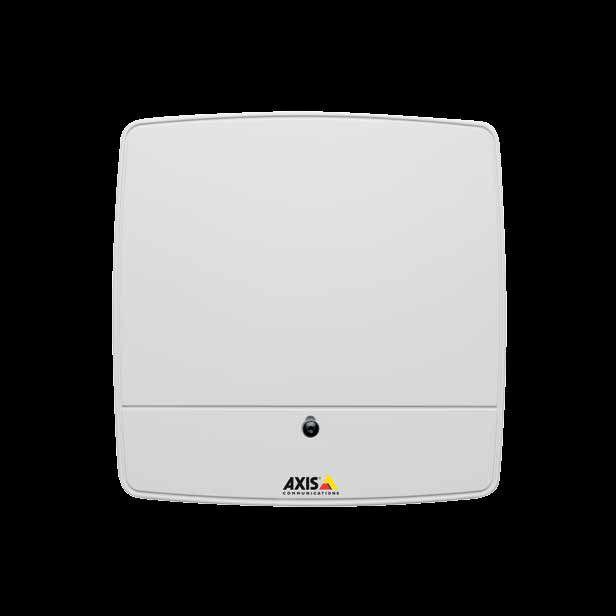
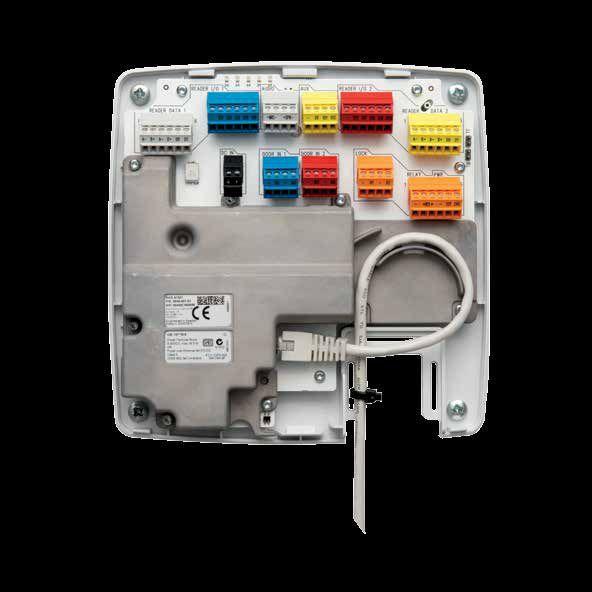
AXIS A1001 is an easy-to-install door controller with built-in access management software and an open interface for integration with other systems.
With AXIS A1001, there’s finally an open and future-flexible alternative for physical access control — whether you need to install one door or 1,000.
www.axis.com/pacs

When 16 teams from around the world converged on Williamsport, Pennsylvania for the 69th annual Little League World Series, Lenel delivered exceptional security for the 17th consecutive year. A leading provider in advanced systems for applications around the globe, Lenel contributed its technology, supplies, service and expertise to help protect attendees, players, coaches and officials throughout the 10-day event.

James Ferguson, director of security for Little League International, said Lenel’s annual participation is important to his department as it works to ensure the tournament’s safe conduct. “The time, talent and resources provided by Lenel have made them a long-term and valued partner of the Little League World Series,” Ferguson said. “With the latest electronic security technology available to us, we know we are doing all we can to ensure the safety of the players, coaches, spectators and volunteers who make this an exciting global event.”
Ron Virden, general manager, electronic access control solutions at UTC Building & Industrial Systems, said Lenel is deeply committed to the youth baseball organization, which now involves more than 2.6 million children in more than 75 countries.
“The Little League World Series is an iconic summer event and it’s our privilege to help provide a safer and more secure environment for all involved,” Virden said. “Each year we ensure that Little League Baseball has the latest updates of our industry-leading OnGuard® integrated security platform and other integrated security products.”
During the most recent Little League World Series, Lenel piloted the latest version of its Prism® open
IP video management system in the tournament command center. Featuring Prism Mobile, this new version enabled security guards in the field to remotely monitor surveillance cameras throughout the complex. Prism’s embedded Video Matrix feature allowed Little League security to share video with local first responders.
Upon arrival at the Little League complex, each player was enrolled in the OnGuard system and received a photo identification badge to wear throughout the series. The badges allowed players to access areas throughout the Creighton J. Hale International Grove, where they lived, ate and relaxed between games.
The OnGuard system also linked with the complex’s video surveillance, allowing video verification of people accessing selected areas. When a person presented a badge to a card reader, live video was displayed along with the cardholder’s database photo. This approach enabled security personnel to visually verify the person’s identity.
Lenel is part of UTC Building & Industrial Systems, a unit of United Technologies Corp. (NYSE:UTX).

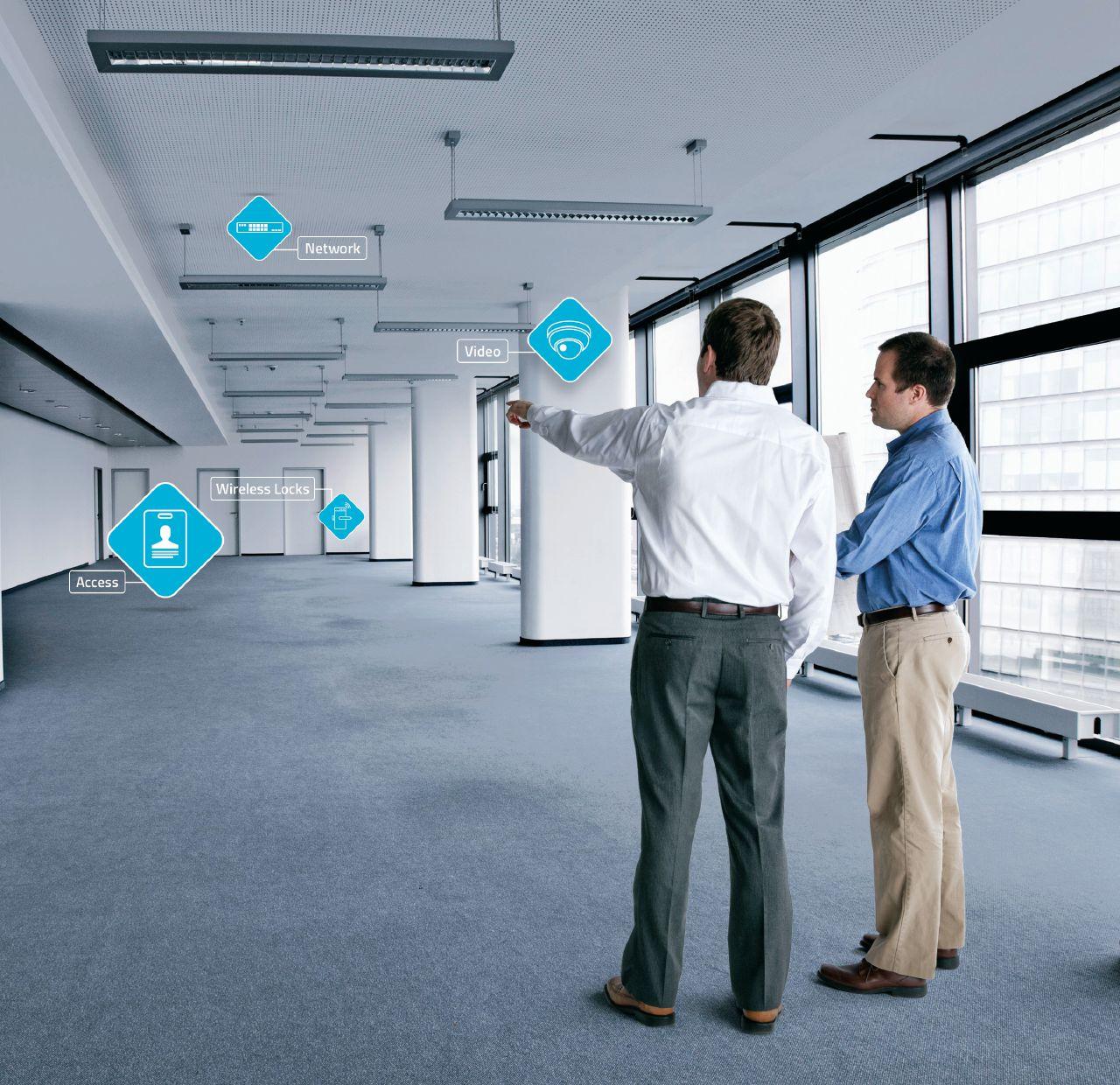
As businesses grow and expand, security needs and priorities change. Lenel’s open security platform provides the proven exibility and scalability to support your current, and even more critically, your future security requirements. Backed by global resources at UTC, Lenel continues to advance its capabilities to develop innovative security technologies with best-in-class systems integration options. See how Lenel can take your security in the ideal direction at lenel.com.