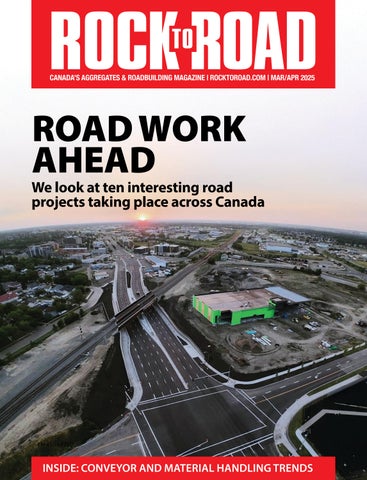
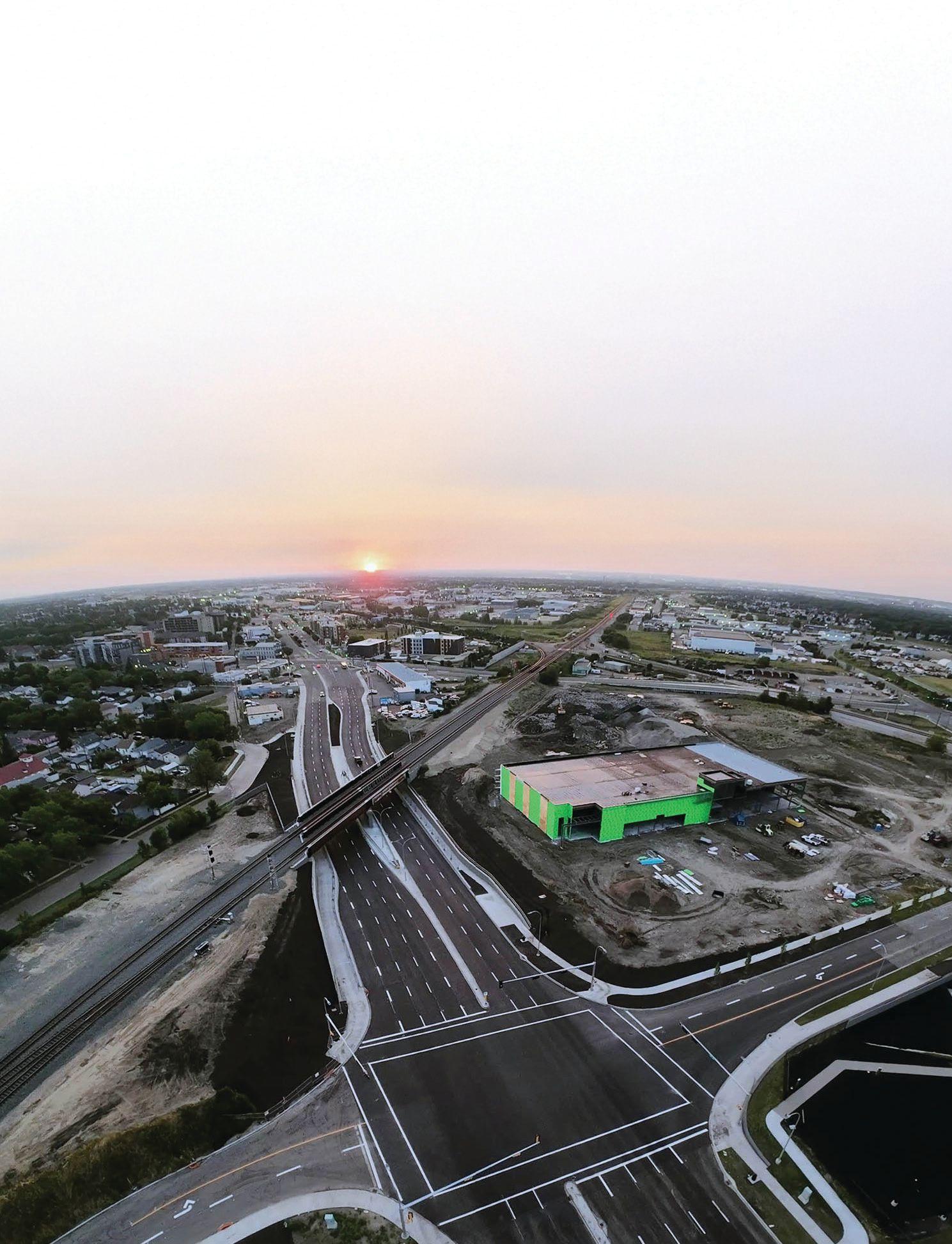
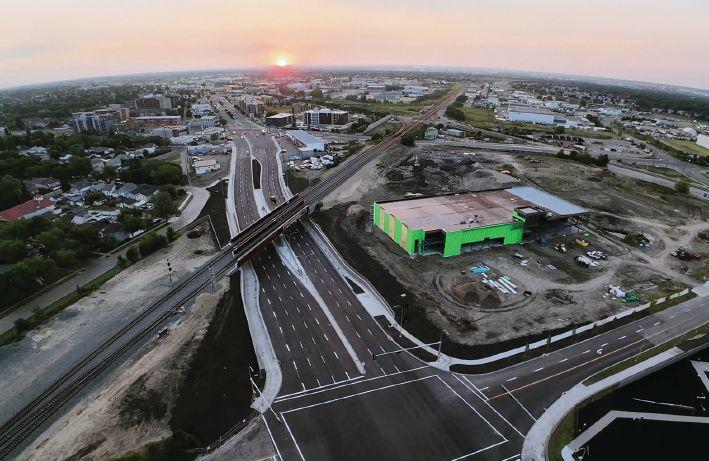
We highlight 10 interesting road projects taking place across Canada.
12 Time to act
Message at this year’s OSSGA conference was simple but stark: aggregate producers are facing a crisis and the time to act is now.
14 Making sense of ERT
Technology uses electricity to explore for sand and gravel deposits.
22 Greener roads
A deeper look at NAPA’s strategy to decarbonize the United States’ asphalt pavement industry.
24 World of Asphalt/AGG1
Couldn’t make it to this year’s show? We share some of the highlights from the 2025 World of Asphalt/AGG1 Academy and Expo in St. Louis, Missouri.
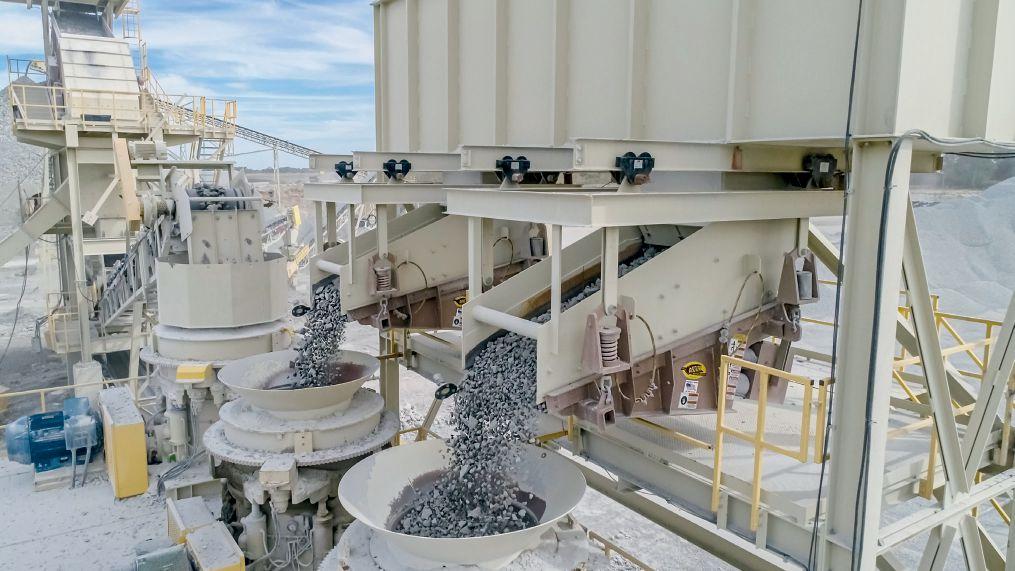
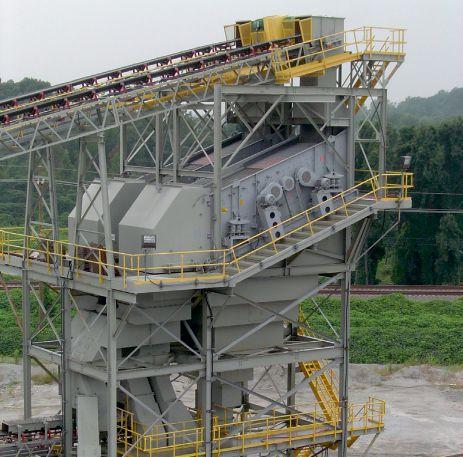
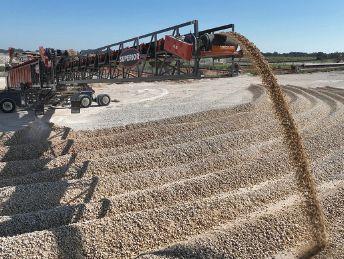
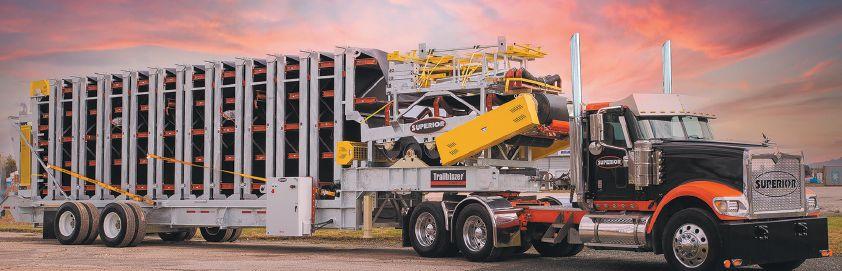
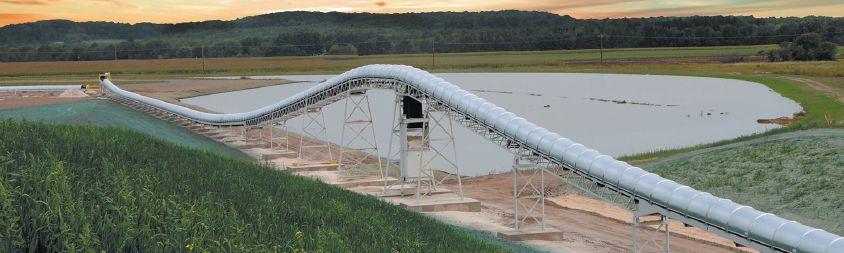
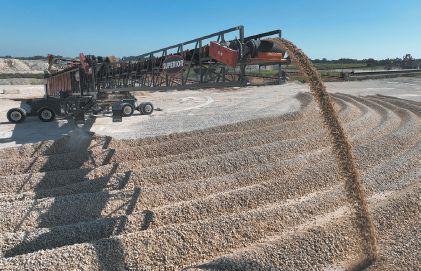
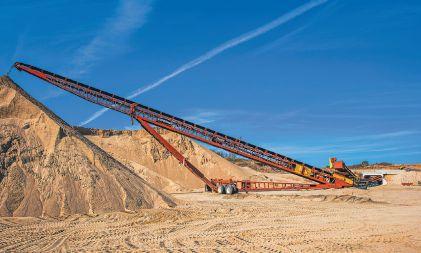
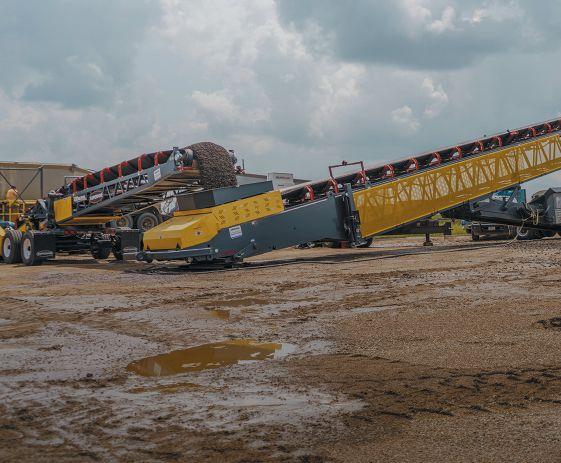
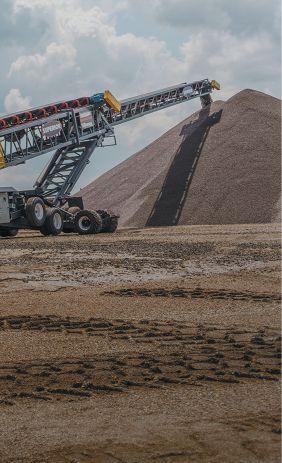
28 Conveyor and material handling showcase
We profile the latest trends in the world of conveying and material handling. 30
2025 Mid-size Pickup Preview
Coming in different shapes and sizes, what truck is best for you?
Lessons learned while on the road
This line of works offers many perks and every day I am reminded of how lucky I am to have this career.
But the one perk I probable enjoy more than all others is the ability to travel. I get to visits places in this world that I otherwise never would. It is a true privilege. Now, it's not always sunshine and lollipops. After all, not every city is one you may want to see again. As well, travel comes with some serious drawbacks, flying is chief among them. I am not a fan of flying. I don't enjoy the hours of waiting. I don't care for the cramped seating. I find the trip is awfully loud.
And, my stomach usually does a few somersaults during takeoff so I tend to keep my food intake beforehand to a bare minimum. Of course, that means by the time we are firmly in the air I am starving and my mind wanders toward what I may eat when we eventually land.
But it’s a small price to pay for the ability to see new places, meet new people and enjoy the local cuisine.
In the first few months of 2025, I have travelled across Canada and the United States. Of those trips, my favourite is without a doubt Ottawa, Ont.
The Ontario Stone, Sand and Gravel Association held its annual conference at Chateau Laurier, in downtown Ottawa, right next to the Parliament Buildings. The conference was informative and filled with interesting sessions (you can read more about it in this edition).
But that’s not why I enjoyed the trip.
The conference came at the same time our American cousins were tossing out annexation threats. I, like many other Canadians, was rediscovering my patriotism.
And is there a better place to do it then downtown Ottawa, in the shadow of the Parliament buildings? My room’s window looked out over those buildings. Every morning before heading to the conference, I couldn’t help but stare at the brilliant craftmanship that went into their construction.
So, as a good Canadian, when the day’s sessions were over and I had some free time, I took the opportunity to walk over and have a closer look at those buildings –East Block, Centre Block and West Block. They are currently under renovations as crews rehabilitated stonework, frescoes, stained glass and more. There was an immense pride in seeing the ongoing preservation of these vitally important buildings to our heritage.
But I didn’t stop there. The streets of our capital are a tapestry of Canada’s history. The Supreme Court. The Office of the Prime Minister and Privy Council. The Indigenous Peoples Space. The Wellington Building. The National War Memorial. The National Archives.
The architecture in and around the Wellington Street area is a living history of Canada. You can see in the building designs the different eras of this country. The elegent styles in our nation's early decades, the clean look of buildings constructed between the two world wars; the later modernist and avante garde architecture.
This sprawling country has a history we downplay or even ignore, a story of generations working to create a country that is both prosperous and good. Along the way, we have made mistakes – grave mistakes in some cases – but we always come back to striving to be on the right side of history.
That history is on display when walking the streets of the capital. During a time when our own sovereignty is challenged, my trip to Ottawa was a great reminder of what I love about Canada.
I write this in the middle of a federal election campaign and I don’t know who will ultimately be in power. But I do know that our desire to do good in this world will always be Canada’s guiding light, regardless of which political party wins.
mlacey@annexbusinessmedia.com
@RocktoRoad
MIKE lacey
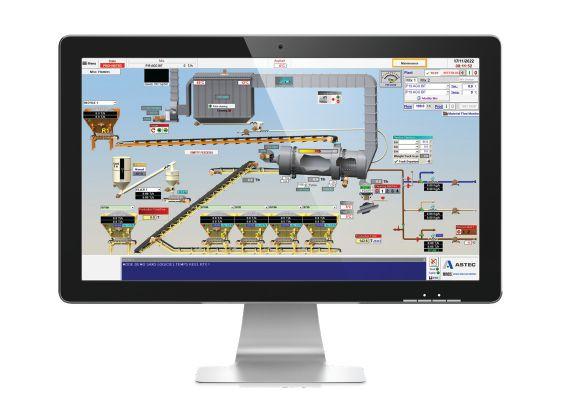
NEW IntelliPac ™ Moisture System
Astec paves the way for sustainable, innovative asphalt plants. The new IntelliPac Moisture System is a revolutionary solution that integrates seamlessly with Astec control systems. This provides unparalleled, real-time visibility into virgin aggregate moisture content. IntelliPac empowers operators to optimize mix design, minimize energy consumption, and reduce environmental impact. With Astec, you get superior asphalt production – better for the environment, better for your business.
BUILT TO CONNECT
A new look for OSSGA
For the first time in more than a decade, the Ontario Stone, Sand and Gravel Association (OSSGA) has undergone a rebranding.
Unveiled at the annual conference from Feb. 25 to 27, OSSGA states this fresh look reflects the commitment to innovation, relationship-building and environmental sustainability, while also aligning with its new strategic vision.
ORBA recognizes award recipients at 2025 convention
During the Ontario Road Builders’ Association’s (ORBA) 98 Annual Convention, members of the organization were recognized for their achievements.
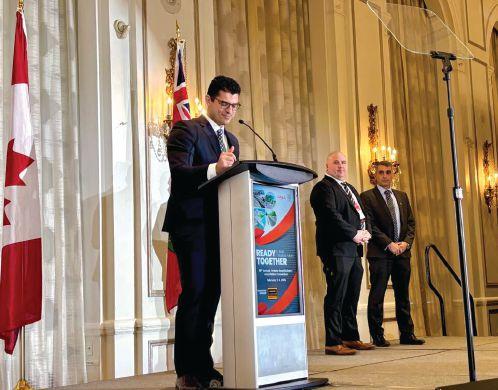
ORBA’s president, Andrew Weltz; CEO Walid Abou-Hamde; and board of directors chair Malcolm Croskery, presented the awards to winning recipients. The Director of the Year Award was awarded to Mario Villeneuve, vice president at Villeneuve Construction Co. Ltd. This award recognizes an ORBA director who has contributed significantly to the association’s objectives in the past year through leadership and volunteering. The Distinguished Service Award was awarded to Cameron Wood, vice president of administration at Roto-Mill Inc. This award recognizes a representative from a member company who contributed significantly to the association’s objectives throughout the last year. The OAPC (Ontario Asphalt Pavement Council) Honorary Lifetime Membership Award was awarded to Murrary Ritchie, manager of estimating sales and marketing at The Miller Group. This award recognizes a member for their dedication to advancing the objectives of OAPC. The ORBA Community Leadership Award was awarded to Steed and Evans Limited. This award recognizes an ORBA member company for selflessly undertaking philanthropic activities and providing community service. The Green Leadership and Sustainability Award was awarded to the Tomlinson Group of Companies. This award recognizes environmental stewardship
With the rebrand, OSSGA also launched a new website, which offers a modern, user-friendly experience that serves as a hub for resources and showcases the organization's dedication to industry excellence. Working with Mash Strategies, the branding was developed to resonate with government entities, Indigenous communities and environmental partners. Rock to Road magazine is circulated free of charge to qualified individuals holding management and supervisory positions with companies engaged in the aggregate, roadbuilding, ready-mix concrete and asphalt production industry in Canada. The Publisher reserves the right to determine qualification.
and leadership in the Ontario roadbuilding industry. The Routly Safety Awards recognized two companies promoting the highest standards of health and safety in the workplace.
The Main Safety Award, Milestone, was awarded to Aecon Infrastructure Management Inc. This award is given to a company that has surpassed the 500,000 and million person-hour plateaus without a lost-time injury for three consecutive years.
The Main Safety Award, Category II, was awarded to Peninsula Construction Inc. This award is for contractors that have worked more than 100,000 average person-hours without a lost-time injury for three consecutive years.
Paid subscriptions are available. Canada: $36.75 per annum including G.S.T. (six issues*); U.S. and Overseas: $60 US. *Includes annual Buyers’ Guide issue. Please send change of address with label from your last issue. All subscription correspondence must include your title/position, company name and address, postal code and telephone number.
Walid Abou-Hamde (left), Andrew Weltz (centre) and Malcolm Croskery presenting the ORBA awards.
Each year, the Ontario Stone, Sand & Gravel Association’s (OSSGA) Progressive Rehabilitation Award recognizes the ongoing efforts of individual operators to progressively rehabilitate their sites per site plans.
This year, OSSGA recognized 11 winners, and one Judge’s Choice.
2024 Judges’ Choice Award Winner CBM, Aggregates Division | Douglas Pit and McLaughlin Pit
West Nissouri Township
Covering approximately 6.26 hectares, the project successfully transformed former extraction sites into stable, vegetated landscapes, integrating seamlessly into natural habitats. Efforts included topsoil contouring, shoreline stabilization, and biodiversity enhancements through the introduction of native wetland species. By May 2024, the rehabilitation was completed, creating an ecologically sustainable environment.
“It is once again an honor for CBM to be awarded the Judge’s Choice Award for our rehabilitation efforts at our Douglas/ McLaughlin Pit,” says David Hanratty, director of land, resources and environment, CBM Aggregates. “Our efforts in progressive and final rehabilitation are a key component of our Sustainability Legacy as a company and we couldn’t be prouder of the recognition given to our efforts by OSSGA.”
Other winners include:
• CBM, Aggregates Division |
Sunderland Pit
Township of Brock
• Green Infrastructure Partners Inc. | Armitage Pit
Township of West Carlton
• Green Infrastructure Partners Inc. | Riddell Pit
City of Ottawa
• Green Infrastructure Partners Inc. | Torbolton Pit
City of Ottawa
• Lafarge Canada Inc. - A Member of Holcim | Brantford Pit
County of Brant
• Lafarge Canada Inc. - A Member of Holcim | Clark Pit
City of Ottawa
• Miller Paving Limited - A Colas Company | Boyington Pit 3 Township of Uxbridge
• E.C. King Contracting - A Colas Company | Breadner Pit
• Walker Aggregates & Construction | Gowanlock Pit
Grey County
Terex hires new business line director
SIX OPERATIONS NAMED OSSGA COMMUNITY RELATIONS AWARD WINNERS
At its annual conference, OSSGA recognizes member companies that have shown leadership in promoting good neighbor relations, community involvement, education and industry awareness. This year, OSSGA recognized the following six winners with its Community Relations Award:
• BM, Aggregates Division | Shelter Valley Pit Township of Alnwick/Haldimand
• Walker Aggregates & Construction | Sutherland Quarry Expansion Township of Georgian Bluffs
• Walker Aggregates & Construction | Duntroon Quarry Clearview Township
• Walker Aggregates & Construction | McGregor Quarry Town of Amherstburg
• Walker Aggregates & Construction | Severn Quarry Town of Severn
• Walker Aggregates & Construction | Vineland Quarries & Crushed Stone Town of Lincoln
Terex Conveying Systems has appointed Neil Robinson as business line director. Robinson will oversee the management of mobile conveyors offered across all Terex brands in this role.
Terex Conveying Systems has established a portfolio of conveyors, distributed through numerous Terex Materials Processing (MP) brands. This was further strengthened with the addition of ProStack, headquartered in Northern Ireland, and specializing in manufacturing mobile conveying systems, including tracked conveyors, telescopic conveyors, and port hoppers.
Robinson brings 18 years of experience at Terex to the position, most recently serving as product director for Powerscreen, where he played a key role in developing and managing the product portfolio that included a line of tracked feeders and conveyors.
His industry knowledge, direct experience with conveying systems, and leadership experience position him well to drive growth across Terex Conveying Systems.
BUILD MORE WITH A TEAM THAT HAS YOUR BACK.
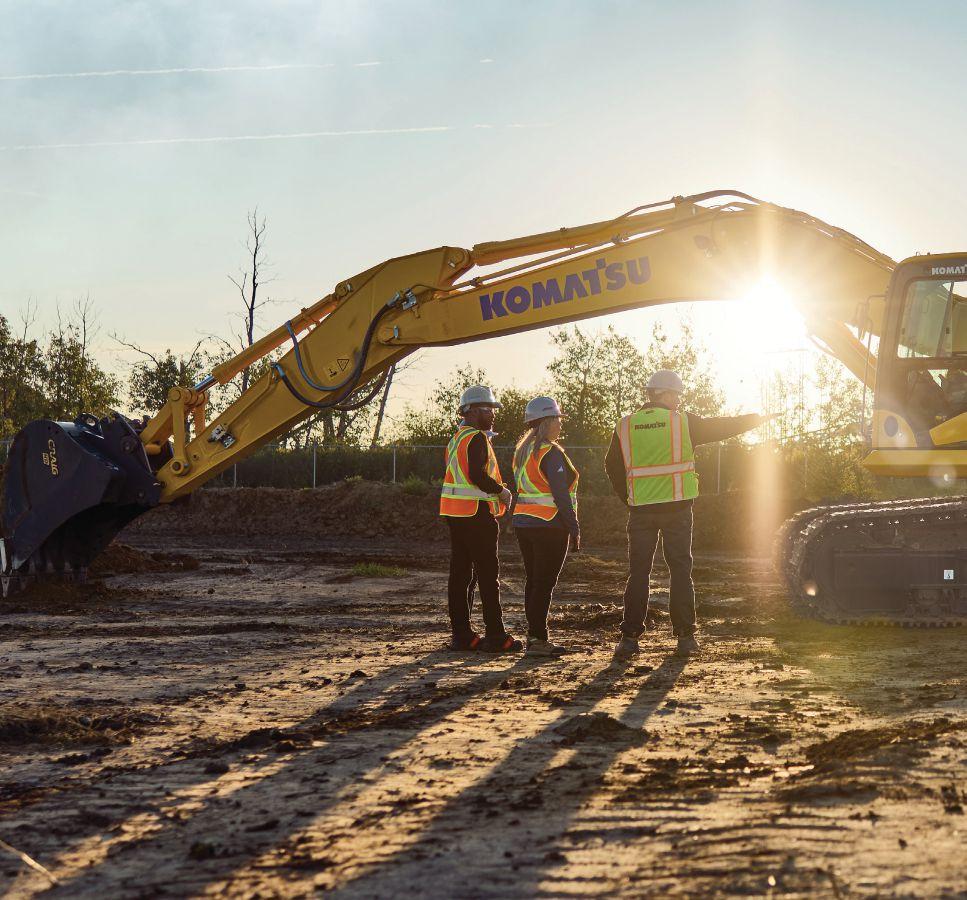
At SMS Equipment, we’re more than machines from trusted brands like Komatsu. No matter your project, we’re the people beside you—today and every day—bringing industry-leading technology and expertise to your job site.
Because the right partnership makes everything possible.
S:9.625"
industry news
McCloskey International expands partnership
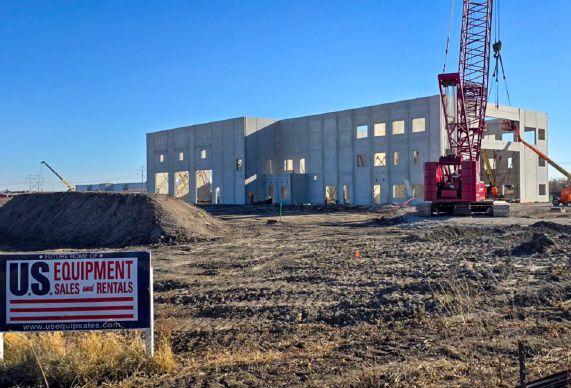
McCloskey International expands its long-time dealer, US Equipment Sales and Rentals into three additional states. US Equipment will now provide McCloskey equipment coverage in Minnesota, Eastern South Dakota and Eastern North Dakota, complementing their existing territories, which include Illinois, Iowa, Eastern Missouri, Wisconsin, and the Upper Peninsula of Michigan.
“US Equipment has proven to be a reliable and high-performing dealer for McCloskey, and we are thrilled to see them broaden their reach into Minnesota and the Dakotas,” says Anthony Bouvie, vice president of MPP global sales and marketing.
The expanded territory will see US Equipment offer the full range of McCloskey’s mobile crushers, screeners, stackers and feeders, along with spare and wear parts.
Customers in these regions can expect support from US Equipment’s team, which includes experts in McCloskey products who are equipped to handle everything from startup to ongoing maintenance and troubleshooting.
McAsphalt welcomes David LeMay as president
McAsphalt Industries Limited, a Canadian asphalt and bitumen manufacturing and distribution company, has appointed David LeMay as president. With a proven track record in business transformation, operational efficiency, and strategic growth, LeMay will drive McAsphalt’s expansion. 2024 has been a defining year for McAsphalt, marked by investments in infrastructure, innovation, and sustainability.
“I am honoured to lead McAsphalt at such a dynamic time in its history,” said LeMay. “With a strong foundation in manufacturing, an extensive terminal network, and a commitment to sustainability, we are well-positioned to drive continued success and deliver value to our customers and partners.”
Komatsu tests large dump truck with hydrogen combustion engine
Komatsu has developed a concept machine by equipping its flagship large dump truck, the HD785, with a hydrogen combustion engine. The company has commenced proof-of-concept tests in Ibaraki, Japan. According to Komatsu, this marks the world’s first attempt to equip a large dump truck with a hydrogen combustion engine. Komatsu hopes to accumulate knowledge on hydrogen engine utilization for the future development of hydrogen-powered construction and mining equipment. Komatsu has been developing new power sources to achieve carbon neutrality. While developing hydrogen engines as one of the options, Komatsu has focused on the technological expertise of KEYOU GmbH, a German startup company, which specializes in the development of hydrogen engines for large trucks. The concept machine is equipped with a hydrogen combustion engine and hydrogen tank system, which are co-developed by Komatsu and KEYOU. The hydrogen tank is mounted on a platform beside the operator’s cab to maximize hydrogen storage capacity. Additionally, to
ensure clear visibility for the operator, cameras and monitors have been newly installed both inside and outside the cab. According to Komatsu, the proof-of-concept tests will focus on evaluating driving performance, continuous operating hours, fuel efficiency and verifying safety measures related to high-pressure hydrogen gas usage. Compared to batteries and hydrogen fuel cells, the use of hydrogen combustion engines in construction and mining equipment has the advantage of a relatively lower cost, because the power-train components of existing diesel-powered machines can be used without replacement, claims Komatsu. According to the company, with virtually zero carbon dioxide emissions, some mining customers have expressed interest in adopting hydrogen engines as one of the options to achieve carbon neutrality at their sites. While there are challenges such as safety management and infrastructure for hydrogen supply, but Komatsu states it will work to address these issues in collaboration with industry associations and other related stakeholders.
WHEN THINGS GET REALLY TOUGH, YOU NEED A RESILIENT TEAM PLAYER. The mobile MCO 110 PRO cone crusher is distinguished by an extremely sturdy design, very high performance and favourable consumption figures. As a downstream crusher linked to a mobile jaw crusher, it proves its worth as a true workhorse and impresses in tough stone quarrying operations. Efficient and strong – the perfect team player.
www.kleemann.info
Message at this year’s OSSGA conference was simple but stark: aggregate producers are facing a crisis and time to act is now
> Ontario aggregate producers are facing a crisis and now is the time to act.
That was the predominant message during the 2025 Ontario Stone, Sand and Gravel Association (OSSGA) conference, which took place from Feb. 25 to 27 in Ottawa, Ontario.
OSSGA executive director Mike McSweeney told conference attendees aggregate providers are finding it increasingly difficult to provide the aggregate required for infrastructure projects.
Part of that is due to red tape the Ontario government has been unable or unwilling to remove, he explained. However, he added, there is growing opposition from a small fraction of the public who can convince municipal governments and provincial bureaucrats to stall the development of new quarries.
OSSGA plans on tackling these issues head on over the next year.
BY MIKE lacey
ACTION REQUIRED
Photo: Marcin Kilarski /iStock /Getty Images
“We continue to be treated as a problem rather than as a necessity and a solution,” he said.
“Politicians at all levels, civil servants at all levels just don’t seem to get it. They don’t seem to understand that you can’t build anything – roads, bridges, hospitals, schools, homes, sewers –without stone, sand and gravel. Concrete cannot be made without aggregates. Cement cannot bind anything without aggregates. Asphalt can’t be laid without aggregates, and that message isn’t resonating with any of our audiences.”
He said the industry needs to reinvent or find new ways to explain to politicians and communities that aggregate is vital for the province and Canada to achieve its goals.
“We have been polite. We have invested hundreds of millions of dollars on planners, researchers, lobbyists and lawyers. We try to develop strategies to get our permits or licenses approved and approved on a timely basis. We skirt around the issues in the hope that it will resonate with local or provincial politicians, but I can tell you, after 15 or 20 years of working this industry, it does not resonate with those constituencies.”
Much of the conference explored how the industry can effectively lobby municipal and provincial politicians, while also address some of the legitimate concerns the public is raising.
Dave Barton, mayor of the town of Uxbridge, Ont., advised attendees to work closely with mayors and councillors. He has a good relationship with aggregate providers in his municipality and said that makes a real difference.
“We deal with complaints from residents together. We’re partners in that. We support one another,” he said.
As a result, he says it’s important to cut down on issues like dust or noise as much as possible.
“Make it so we’re not getting those angry phone calls,” he said.
And, he added, when there are community concerns, it’s important the aggregate producers work directly with municipal politicians to deal with those problems quickly.
“We need to be better friends. Gravel is not going away. You’re still going to have to deal with mayors. You’re not going find ways around us. So, let’s find ways to work together and get winwins.”
McSweeney noted that it’s often municipal politicians and city managers who drive the local agenda.
“They are often afraid to support aggregate because they fear a backlash from the vocal opposition groups in their communities,” he said.
During one meeting OSSGA held with a municipality this past winter, council members stated privately they were in favour of an application.
“But the mayor of their community said, ‘Are you freaking nuts? That would be political suicide, and you’d all lose your election in 18 months. Why don’t we just vote against the application and let it go to the Ontario land tribunal and let that nameless and faceless group of people, political appointees, take the heat?’” McSweeney recalled.
“It’s staggering to think that this is the culture we’re working with, where misinformation and fear have more influence than science and logic.”
OSSGA is making inroads though, he said. The organization is increasing its engagement with municipalities, including taking part in this past year’s Association of Municipalities of Ontario conference, as well as actively working more closely with indigenous communities.
McSweeney said it falls on aggregate producers to hammer that message home to the public.
“Politicians at all levels, civil servants at all levels just don’t seem to get it. They don’t seem to understand that you can’t build anything – roads, bridges, hospitals, schools, homes, sewers – without stone, sand and gravel.” – Mike McSweeney >
“It’s up to us to convince our neighbors that everything that we build in society comes from aggregates,” he said.
However, he explained, its also vital for the industry to step up its efforts to lobby politicians.
“You have to repeat the message over and over and over again with politicians. On average, a politician meets with about 1,200 groups a year, and for them to try and remember what they’ve heard from each of those 1,200 people is really a tall order. So, my theory is we have to be in the politicians’ face, and we have to be in their face often. We have to figure out where the politicians are going. Are they going to church suppers? Are they going to plowing matches? Are they attending Chambers of Commerce dinners?”
We need to meet them where they are.
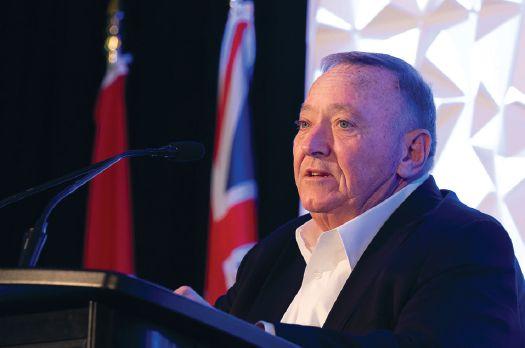
Mike McSweeney, executive director of the Ontario Stone, Sand and Gravel Association, told 2025 conference attendees that the aggregate producers are facing a crisis and must act quickly. Photo: OSSGA
UNDERSTANDING WHAT ERT IS
Technology uses electricity to search for aggregate deposits
BY MIKE LACEY
> Can a non-invasive technology provide pit operators a greater understanding of their valuable sand and gravel deposits?
Electrical resistivity tomography (ERT) is a proven tool used in other mining sectors yet is underutilized in the aggregate industry. ERT technology is a unique method to identify gravel deposits, enhance resource planning and reduce operational risks, explains Paul Leveille with RockSight Solutions.
RockSight provided an overview of ERT technology during January’s Alberta Sand and Gravel Association conference. Leveille notes that sand and gravel, the second most consumed bulk commodity on the planet — surpassed only by water — have faced increasing demand and environmen-
tal pressures, making it more challenging to find new deposits suitable for development. Companies can use a combination of invasive and non-invasive methods to prospect and explore for aggregate deposits. Each approach and method have advantages and limitations. Non-invasive methods (such as desktop studies and geophysical surveys) provide broad geological overviews but lack precise detail about material composition. Invasive methods (such as drilling and excavation) deliver highly accurate detailed geological data but are relatively expensive and spatially limited.
“Drilling gives you what’s referred to as point source data sets. So, you have highly detailed geological data, but it’s specific to an X-Y coordinate. Extrapolating a geologi-
cal model from drilling alone can result in inaccuracies as your confidence in the geology is diminished the farther you estimate from a known point,” explains Leveille ERT bridges the gap and reduces risks by offering a non-invasive way to map underground formations over a large area. It works by measuring the electrical resistivity of the ground and creates a subsurface model based on the spatial distribution and variations in the resistivity.
The principles behind ERT and execution of a survey are relatively simple even though the calculations in the modelling process are quite advanced.
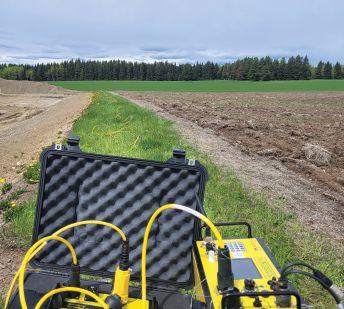
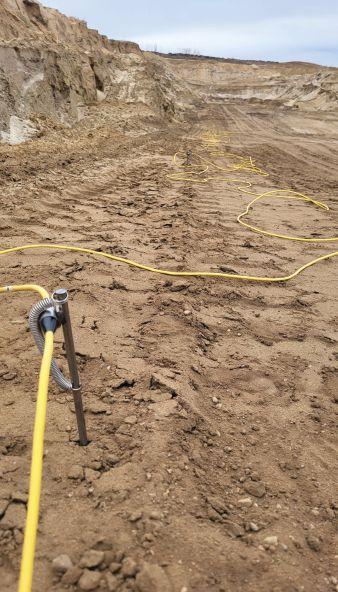
“You set up an array of evenly spaced electrodes and insert them about six inches into the ground,” Leveille explains. “These
Electrical resistivity tomography technology identifies anomalies that may be gravel and sand deposits, ehance resource planning and reduce operational risks, says Paul Leveille with RockSight Solutions. Photo: RockSight Solutions
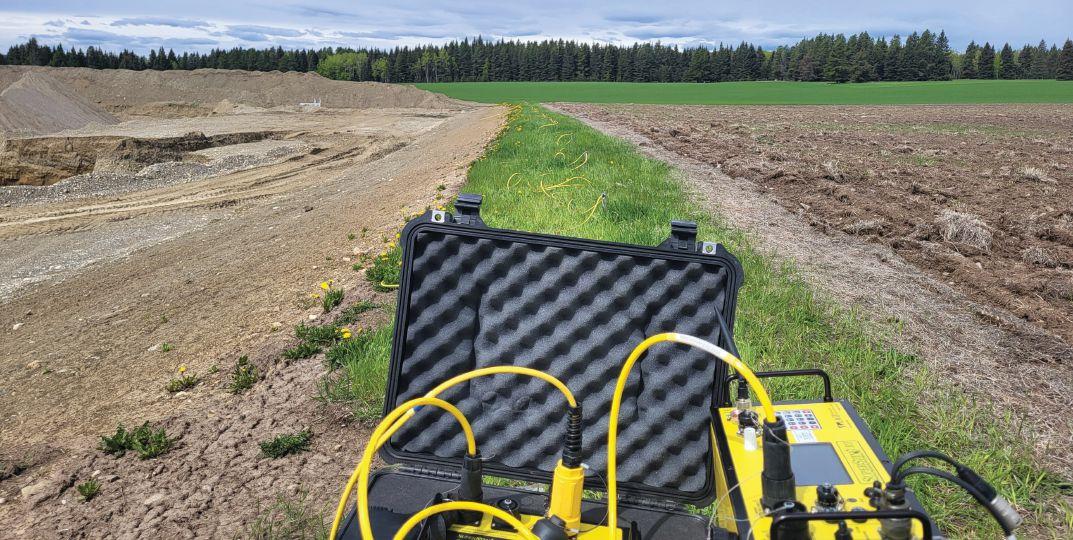
ERT involves setting up an array of evenly spaced electrodes into the ground, which are connected to a control box. The control box sends electrical currents through the subsurface. The system measures voltage differences across the array. Photo:
Solutions
electrodes are connected to a control box, which sends electrical currents through the subsurface. The system then measures voltage differences across the array, allowing us to model underground structures.”
Different materials have distinct conductive properties, allowing to distinguish different layers.
Geologically speaking, clays, silts, or water saturated materials are good conductors while poor conductors are materials with more porosity or void space (air, for example).
“Because a key property of sand and gravel deposits is increased void space, they stand out on an ERT survey. Sand and gravel deposits are tailor made to take advantage of the principles behind ERT,” Leveille says.
However, he clarifies that ERT does not directly identify deposits. Rather, it highlights anomalies that might be attributed to sand or gravel deposits. All anomalies identified from a geophysical survey, including ERT surveys, require confirmation through drilling or excavation.
ERT offers several advantages for sand and gravel operators when it comes to
understanding their resources, Leveille explains.
First, ERT can survey large areas quickly, typically collecting several hundred meters of line data in under a few hours.
Second, it is a cost-efficient way to gather large amounts of detailed information which can be combined with drilling to create a very confident geological model.
Third, it improves planning and mini-
mizes environmental impacts by locating anomalies for targeted drilling campaigns and greater clarity in the extents of a deposit.
“This technology doesn’t replace drilling—it enhances it,” adds Leveille. “By identifying promising areas first, operators can drill with confidence, optimizing both time and resources.”
Looking for Optimal Crusher Wear Parts?
Look no further than ME Elecmetal, the leader in solutions for crusher operators. We excel at tackling customer challenges while maximizing benefits. Our top priorities include safety, durability, and ease-of-use. Additionally, we offer a full line of Crusher Safety Tooling products designed to help you get the job done safer, faster, and smarter! Explore our solutions today and experience the ME Elecmetal difference.
We highlight 10 interesting road projects taking place across Canada
> Safe, stable roads and highways are a vital part of Canada’s infrastructure. They provide critical routes for daily commutes and quick and efficient corridors for truckers to haul goods across the country.
The market size of the road and construction industry across the country, measured by revenue, was $15.4 billion in 2024, supporting 2,480 businesses employing 44,372 workers, according to IBIS World.
And, between 2025 and 2030, the market size of roads, airport runways and highways is expected to grow, largely because the population has risen, requiring new thoroughfares, the organization reports.
From coast to coast in Canada, there are many exciting and noteworthy road, highway, tunnel and bridge projects under way or about to begin. Here’s a rundown on the Top 10 most interesting ventures:
GRANT cameron
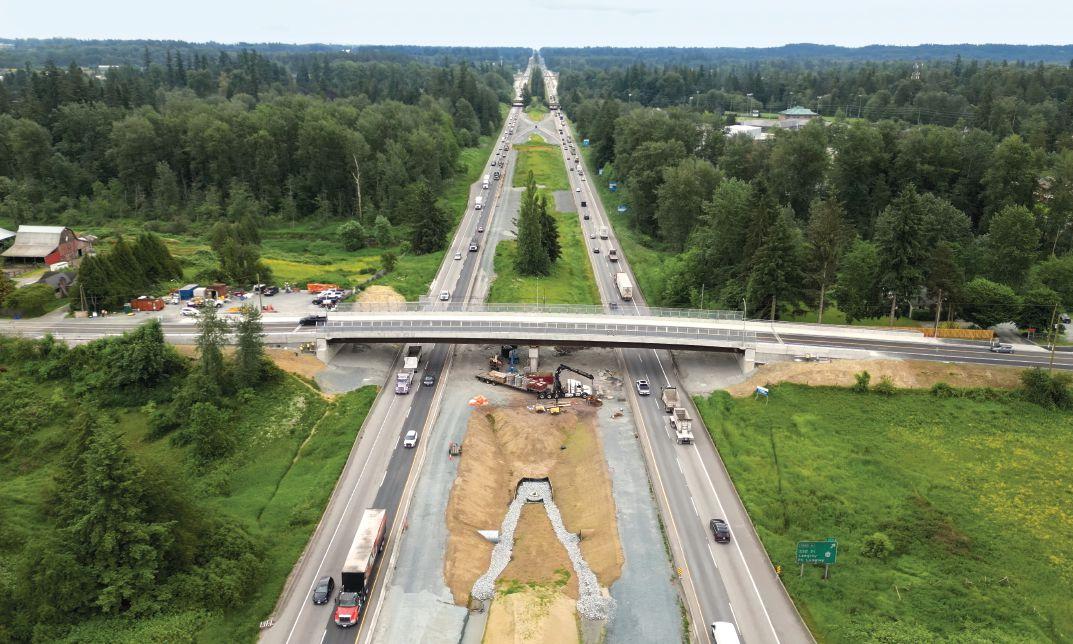
Highway 1 at Mt. Lehman Road in British Columbia. Photo courtesy of BC Ministry of Transportation and Transit
BRADFORD BYPASS
The Bradford Bypass is a 16.3-kilometrelong freeway being built north of Toronto that will connect Highway 400 in Bradford West Gwillimbury with Highway 404 in East Gwillimbury. The Ontario government maintains it will save commuters 35 minutes of driving each way.
Recently, crews completed tree clearing to allow utility relocations along the western section of the Bradford Bypass. Two requests for proposals have also been issued to complete detail design work for both the central and east sections of the thoroughfare.
The work will involve archaeological investigations and finalizing the preferred design options for the sections. A contract for the work is expected to be issued this fall.
As part of the project, a new southbound lane on Highway 400 that will connect to the Bradford Bypass is under way.
The bypass will be a four-lane controlled access highway with the potential to be expanded to eight lanes in future.
The project has been opposed by local residents’ and environmental groups, which has led to court challenges. However, the Ontario government is plowing ahead with the project anyways.
Transportation Minister Prabmeet Sarkaria says gridlock is a problem and it is important to build such critical new highway projects.
Recently, crews from Kodiak Tree Services were clearing a path between Highway 400 and Simcoe Country Road 4
along the planned route.
Price tag for the bypass project and a timeline for overall completion of the thoroughfare have not been released.
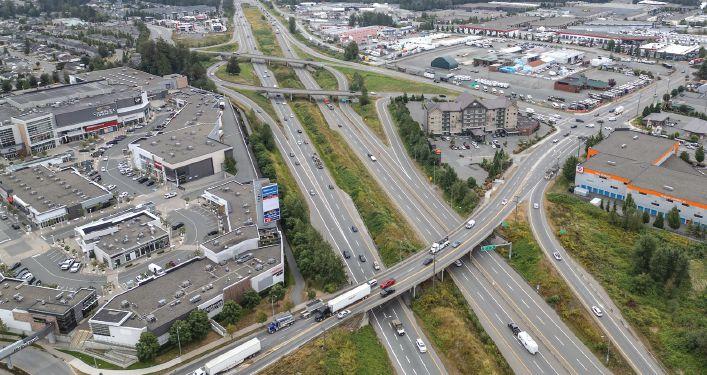
FRASER VALLEY HIGHWAY
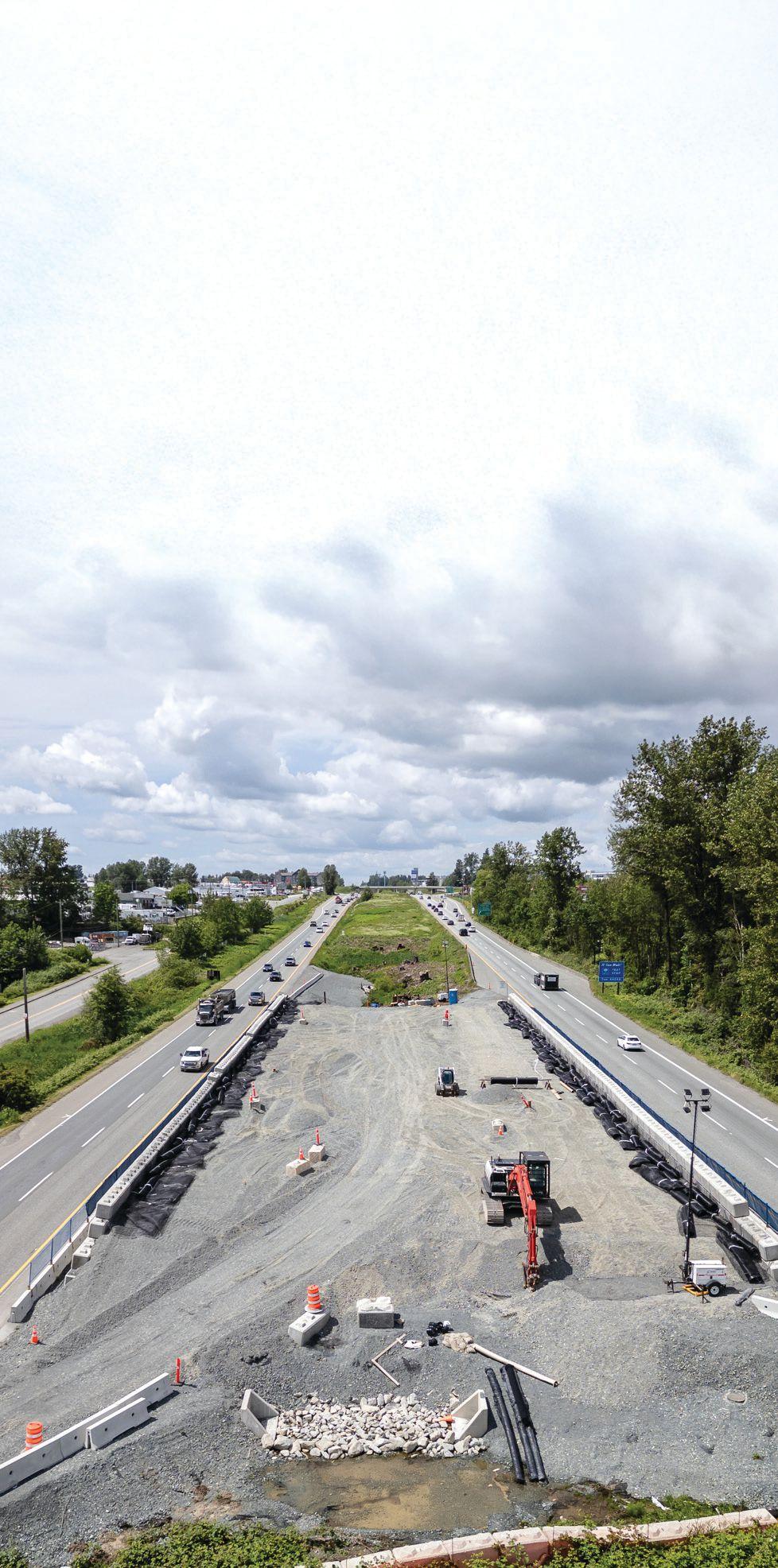
An ambitious five-stage project to improve and widen sections of Fraser Valley Highway 1 between Langley and Chilliwack, B.C., is under way. Four kilometres of the project have been completed, with 49 more to go.
The first leg of the project between
A LONG WAY TOGETHER
MAGLIFT
Highway1 through the Fraser Valley. Photo courtesy of BC Ministry of Transportation and Transit
202nd and 216th streets has been completed. The $61.9-million venture entailed upgrading and widening the highway and building a new interchange.
The second stage, a $140-million venture between 216th and 264th streets, is under construction and entails widening the highway, reconfiguring an interchange, and replacing a railway crossing. Completion is anticipated in 2026.
The third stage, between 264th Street and Mt. Lehman Road, started in summer 2024. The highway is being widened, and HOV, bus and truck climbing lanes are being added. A new interchange will be built at 264th St., and an overpass will be replaced. The project is expected to be completed in 2029 at a cost of $2.34 billion.
The fourth stage, between Mt. Lehman Road and Highway 11, is a $2.65-billion venture that will begin this year. HOV and bus lanes will be added, and an underpass and interchange will be replaced. The project is now in the design stage and advance work has started. Completion is anticipated in 2031.
The fifth section, a stretch between Highway 11 and Yale Road, is still in the planning stage.
YELLOWHEAD FREEWAY
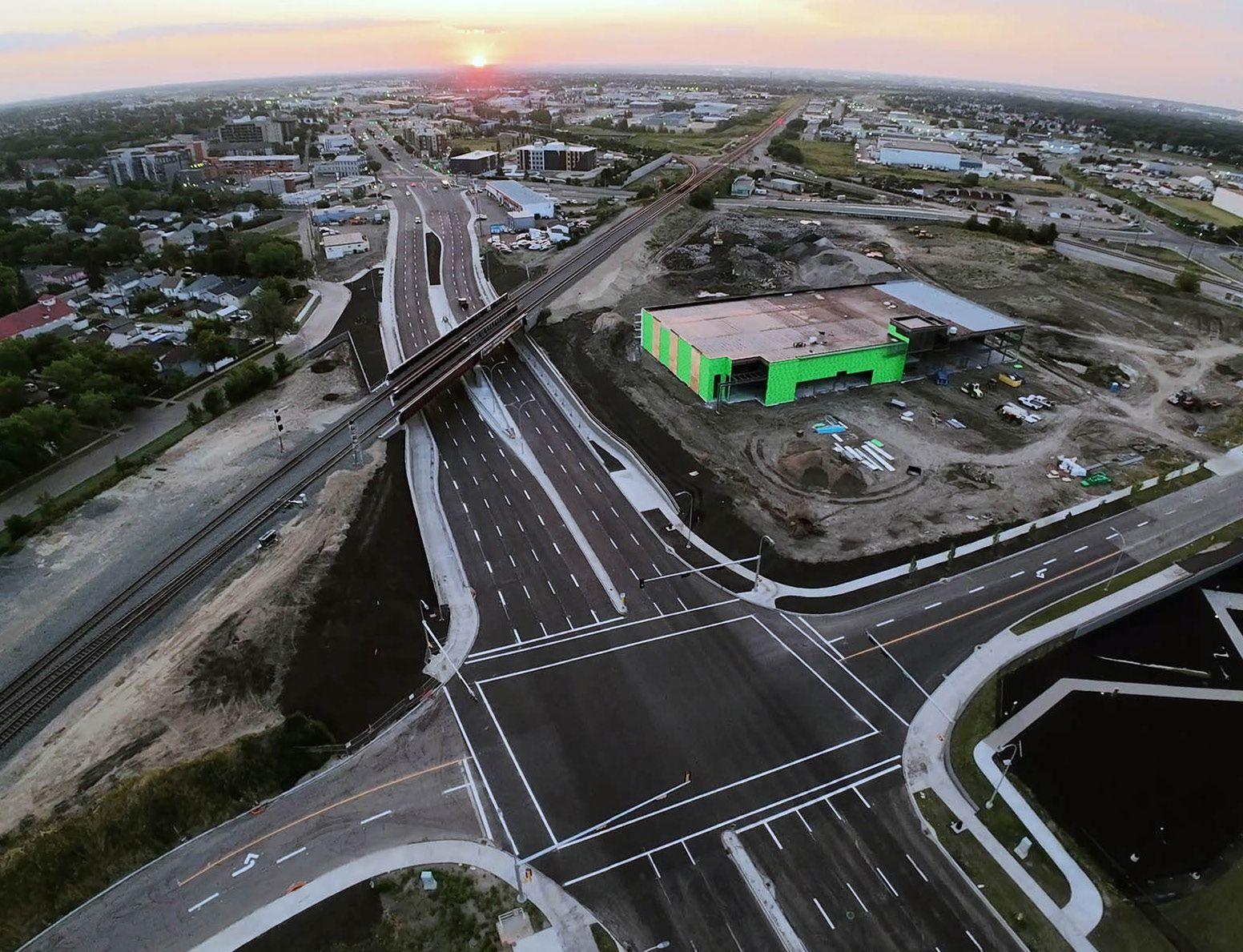
In Edmonton, work is progressing on the more than $1 billion Yellowhead Trail Freeway conversion project, the largest roadworks venture in northern Alberta.
The road, also known as Highway 16, is a major east-west thoroughfare which is part of the Trans Canada Yellowhead Highway.
The project is being implemented in five stages through a combination of large and small projects between 156 Street and Ford Road area. Signalized intersections are being removed and revamped to turn the road into a freeway with three lanes in each direction from St. Albert Trail to 97th Street.
Construction started in 2019, primarily on roadways and areas surrounding Yellowhead Trail, and will continue through 2027.
Two stages of the project have been completed – between 97 and 82 streets and in the Fort Road area where the road
was widened to three lanes in each direction – and between 156 Street and St. Albert Trail where signalized intersections were removed, and new lanes and concrete sound wall were added.
Two new interchanges, a connecting road, service roads and a pedestrian bridge and pathway will be built between St. Albert Trail and 97 Street.
ALASKA HIGHWAY
Ten culvert repair and replacement projects are scheduled to take place between kilometres 313 and 507 of the Alaska Highway, which stretches across northern B.C., the southern Yukon and into Alaska. The $4.3-million program started in October and is being done by In-Line Contracting Partnership.
New pipe culverts are being installed along with erosion protection measures and repairs are being made to existing culverts.
The project is expected to be completed in March. It is the first contract awarded under a four-year culvert replacement and
Highway 1 at Glover Road Crossing. This five-stage project will improve and widen sections of Fraser Valley Highway 1 between Langley and Chilliwack, B.C. Photo courtesy of BC Ministry of Transportation and Transit
repair program to improve the vital stretch of highway.
Public Services and Procurement Minister Jean-Yves Duclos said revitalizing the highway is crucial because it is an important transportation link for residents and tourists in the Yukon and northern B.C.
“Through this program, we are improving the highway infrastructure to better manage water flow and keep this important route safe.”
Other projects planned or under way along the highway include intersection improvements at kilometre 225, rockfall protection at kilometres 228 and 698, and erosion protection at kilometre 660.
Meanwhile, $43 million in upgrades will also begin this year on a 225-kilometre northern stretch of the highway through the Yukon, from Destruction Bay on Kluane Lake to the Alaska/Canada border.
Restoration efforts will involve resurfacing and repairing the road and culverts underneath the surface.
GARDINER EXPRESSWAY
The Gardiner Expressway in Toronto, a critical thoroughfare that runs through the heart of downtown Toronto, will be an ongoing project for some years to come.
Reconstruction of the road from Dufferin Street to Strachan Avenue began in November 2023 and is anticipated to be completed in spring 2026. The scope of work involves replacing 700 metres of concrete deck and girders, rehabilitating the associated substructure and installing new street lighting.
Crews are presently removing large steel girders that hold the road and will
be replacing them with new ones and rehabilitating the structure’s concrete support columns. The work is expected to be completed in April 2026.
Repair of five overpasses between Highway 427 and the Humber River will also begin this spring. The contract for the work should be tendered shortly.
Meantime, 2.2 kilometres of elevated Gardiner roadway from Grand Magazine to York Street are to be rehabilitated. The project will include structural modifications, deck replacement, structural steel girder repairs or replacement, and substructure rehabilitation.
LOUIS-HIPPOLYTE LA FONTAINE BRIDGE-TUNNEL
A $2.5-billion renovation and repair of the Louis-Hippolyte La Fontaine bridge tunnel, which carries the Autoroute 25 expressway over and beneath the Saint Lawrence River at Montreal, is well under way.
Crews are presently repairing and rehabilitating various components of the 1.5-kilometre-long immersed tube structure – the largest underwater tunnel in Canada - which is connected to a 457-metre-long bridge. They are putting in new concrete support beams, and fixing interchange structures and other items.
Portal steel support beams have been installed, and the highway has been widened. New pavement has been put in place on Highway 20, and a noise barrier wall and three parking lots have been built.
Upcoming work includes rehabilitating the northbound traffic tube of the tunnel, rebuilding concrete pavement on Highway 25 on either side of the tunnel, and adding
rockfill over the tunnel.
The project, which started in summer 2020, is expected to be completed in 2030.
CARIBOO ROAD RECOVERY PROJECTS
Ten separate sites along Cariboo Highway 97 from just north of Quesnel to Williams Lake in B.C. that were hit by landslides and road washouts in 2020 have been remediated or are slated to be rehabilitated.
Drainage infrastructure at Highway 20 and Hodgson/Dog Creek Road has been upgraded to support the movement of rainwater and snow melt, while ditches and culverts have been upgraded.
At Blackwater Road and Knickerbocker Road, work is under way to armour a section of the riverbank, reduce subsurface water pressure, and realign and reinforce 1.4 kilometres of road.
Realignment of Highway 97 at Cottonwood Hill is also under way and material is being removed to improve road stability.
Upcoming work includes realigning Kersley-Dale Landing Road to connect with Highway 97, a project that is expected to take two years. At Durrell Road, an analysis is being done to figure out a solution, and at Bastin Road at Bastin Hill, investigations are under way to determine how to stabilize the area.
At Quesnel-Hixon Road, the road has been closed while safety improvements are being evaluated, and at Quesnel-Hydraulic Road, long-term restoration options are being explored.
PATTULO BRIDGE REPLACEMENT
New crossing to replace the
will be an eight-lane immersed tube tunnel with three general-purpose lanes and a dedicated transit lane in each direction. The tunnel will feature a separate multi-use path for pedestrians, cyclists and other active transportation options. Rendering: BC Ministry of Transportation and Infrastructure.
Construction on a new, $1.64-billion Pattulo Bridge between Surrey and New Westminster, B.C. is taking longer than expected due difficulties getting specialized components supplied from around the world.
Work on the project began in 2020 and is now expected to be completed in 2025 – a year later than anticipated.
Crews are presently working on the structure of the four-lane bridge as well as new overpasses and intersections.
The existing bridge will remain in use until the new bridge is completed. The plan is to remove the existing bridge.
George Massey Tunnel
Upcoming work includes completing the north and south bridge approaches, nearby off-ramps and utility relocations.
GARDEN CITY SKYWAY BRIDGE TWINNING
A contract will be awarded this spring to twin the Garden City Skyway bridge in the Regional Municipality of Niagara, north of the existing bridge.
A request for proposals has closed for the new, 2.2-kilometre span. Four teams submitted bids, and they are presently being evaluated by Infrastructure Ontario and the Ontario Ministry of Transportation.
QEW approaches to the new bridge will be widened and local roads will be realigned. Pier protection systems and retaining walls will be built.
Upon completion, traffic will be tempo-
rarily switched onto the new crossing to enable the existing bridge to be rehabilitated.
The project is being delivered using a Progressive Design-Build model which allows for greater collaboration between the project owner, the successful bidder, project partners, and communities.
FRASER RIVER TUNNEL
A contract for the Fraser River tunnel project in B.C. is expected to be awarded this year, with construction starting in 2026 and completion set for 2030. Three bid teams are vying for the mega-project.
The eight-lane thoroughfare, the main component of a $4.15-billion Highway 99 Tunnel Program, will replace the existing Massey Tunnel and ease traffic along Highway 99 around the Vancouver area.
Dredging activities will be undertaken and temporary roads and bridges will be
built. Major excavation work will take place, and piles and stone columns will be installed to stabilize the ground and riverbed.
The present 65-year-old tunnel does not meet modern highway design or seismic standards and the tunnel itself is in dire need of upgrades.
The tunnel will consist of six football field-sized tubes weighing about 60,000 tonnes. Tugboats will guide them into position and cables will be used to secure them before they are gently lowered into the river. Large boulders will be placed on top of the immersed tubes to protect them from the elements.
An $87.5-million project to replace the existing two-lane Steveston Interchange with a new five-lane structure is also under construction and on track for completion in 2025.
Yellowhead Trail in Edmonton at Fort Road and 125 Avenue. Photo courtesy of City of Edmonton
BIGGER PLANTS GREATER SUPPORT
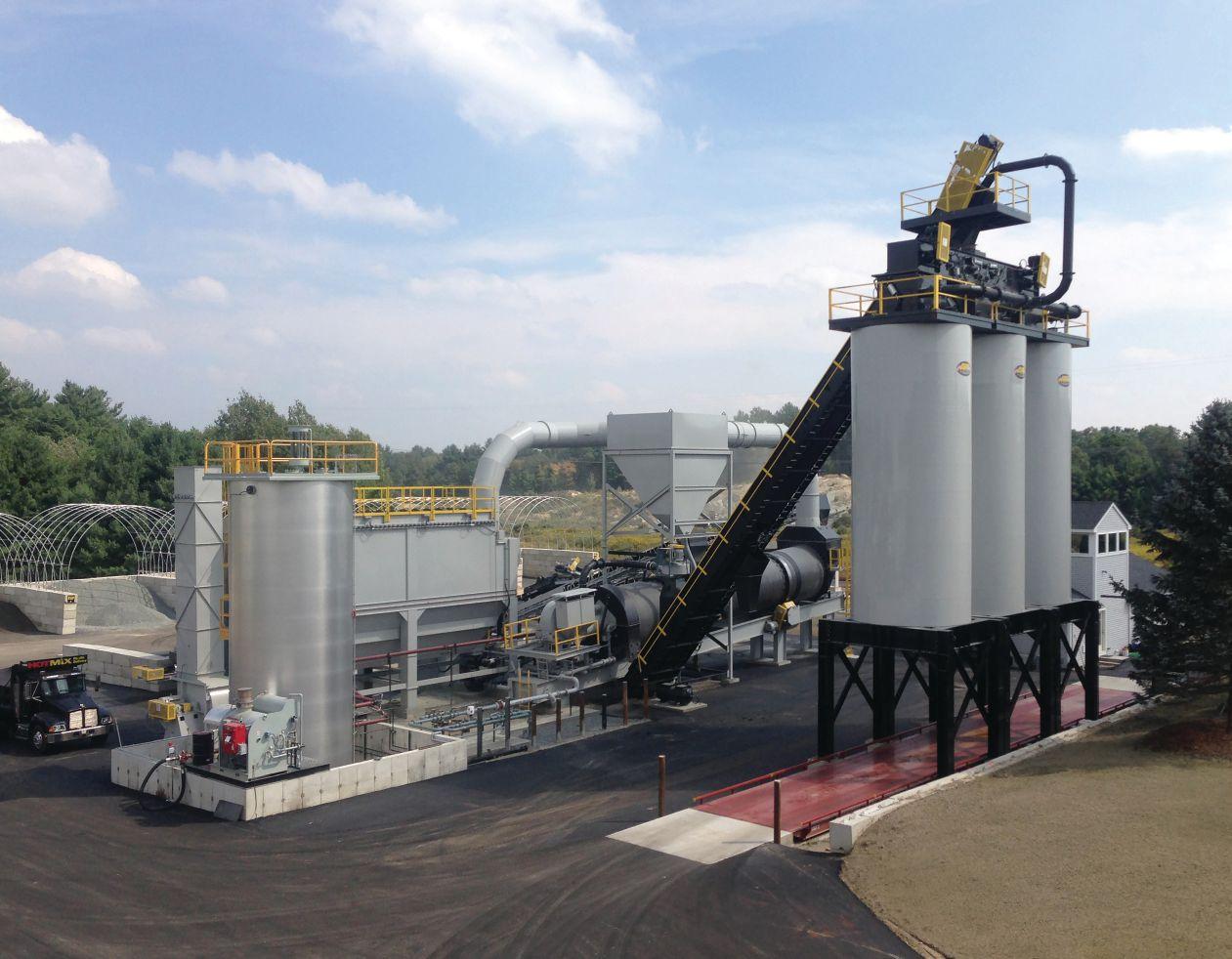
Meet your high-capacity production needs with ADM’s EX Series counterflow asphalt plants, producing up to 425 TPH and handling up to 50% RAP.
Experience even greater service and support now that ADM has joined forces with FAYAT brands such as BOMAG and DYNAPAC to bring the pavement life-cycle full-circle in the U.S. market, providing turnkey solutions to North American road-building companies for the long haul.
GREENER ROADS
Decarbonizing the asphalt pavement industry
BY JEAN-PAUL FORT
> Achieving net-zero emissions is critical to protecting our economies and daily lives from the long-term risks of climate change. Without action, these impacts will force costly and disruptive changes.
Decarbonizing the asphalt pavement industry not only contributes to this global effort but also provides immediate profitability, making it a priority for both economic and environmental sustainability.
THE ROAD FORWARD INITIATIVE
The Road Forward is the United States’ National Asphalt Pavement Association’s (NAPA) initiative to achieve net zero carbon emissions in asphalt production and construction by 2050. Launched in 2022, it advances low-carbon technologies, materials, and best practices, aligning with the Infrastructure Investment and Jobs Act (2021) and with the Inflation Reduction Act (2022) by leveraging incentives for Greenhouse Gas (GHG) reductions, energy efficiency, and alternative fuels. The strategy targets emissions reduction across four goals:
1. Direct emissions from asphalt plants and equipment.
2. Pavement quality, durability, and use to enhance efficiency.
3. Supply chain emissions from materials.
4. Energy-related emissions, reduced via renewables and efficiency improvements.
QUALIFICATION TOOLS
Reducing GHG emissions in the asphalt pavement industry requires standardized Life Cycle Assessment (LCA) tools that evaluate environmental impacts under established Product Category Rules (PCRs). Adopting standards like the International Organization for Standardization (ISO) ensures reliable, transparent, and comparable measurements, enabling accurate benchmarking, to define Low-Carbon Transportation Materials (LCTM).
ASPHALT PAVEMENT LIFE CYCLE OVERVIEW
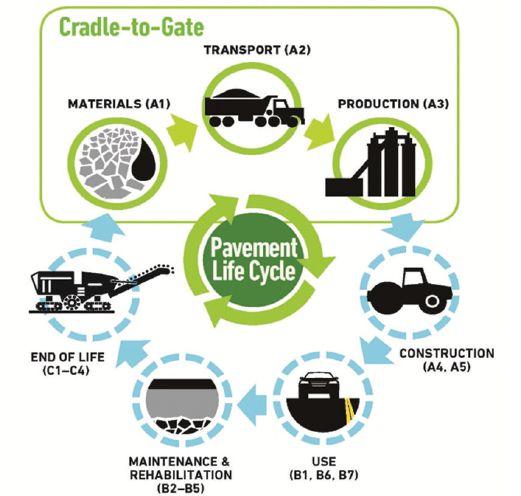
ISO 21930 defines the asphalt pavement life cycle in distinct stages. The full cycle begins with raw material extraction and processing including quarrying, crude oil extraction, refining, and transportation to asphalt terminals and continues with asphalt mix production. These three stages form the cradle-to-gate phase. Beyond production, the life cycle extends through construction, use, maintenance and rehabilitation, and end-of-life, forming a cradle-to-grave system.
NAPA’S EMERALD ECO-LABEL PROGRAM
The Emerald Eco-Label permits asphalt producers to measure the Global Warming Potential (GWP-100) of their mixes across the A1 to A3 phases and publish ISO-compliant, plant-mix-specific Environmental Product Declarations (EPDs). EPDs transparently report GWP-100 and environmental impacts, according to the Asphalt Mixtures LCA and PCR, ensuring consistency and comparability across asphalt mixes with similar specifications. The PCR, originally published in 2017 and revised in 2022, remains valid through 2027, including in Canada. Benchmark data from EPDs has helped set equitable GWP thresholds, supporting state-level Buy Clean policies and the FHWA’s Low Carbon Transportation Materials (LCTM) Grant Program.
REDUCING EMISSIONS AND COSTS IN ASPHALT MIX PRODUCTION
Achieving lower emissions while maintaining pavement performance in competitive, low-bid environments requires balancing carbon reduction, quality, and cost. Emerald Eco-Label identifies
Key stages of the asphalt pavement life cycle with reference to the ISO 21930 life cycle information modules. (All images by: NAPA)
key emission sources in the cradle-to-gate phase, enabling targeted reduction strategies.
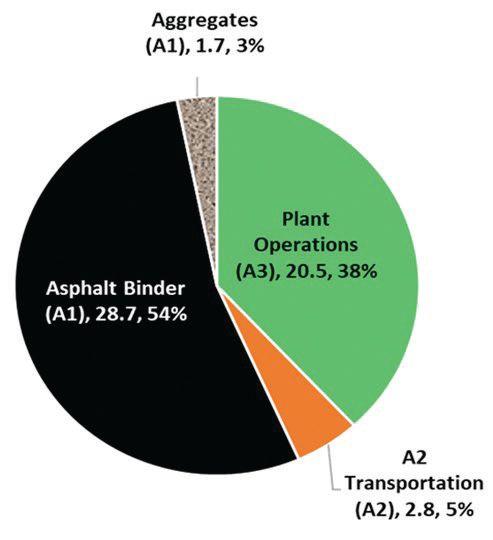
A1: Raw Materials: Asphalt binder is the largest contributor, with two-thirds of emissions from crude oil extraction and the rest from refining, transportation, storage, and additive production.
A2: Transportation: Increasing when materials travel long distances; the transport mode also affects emissions.
A3: Production: Driven by burner fuel consumption (about 30 per cent of plant emissions), with plant efficiency and fuel choice (natural gas, LNG, diesel, propane, or residual fuel oil) as key factors.
Cradle-to-Gate GHG Emissions Distribution
Total GWP: 54.7 kg CO2e/ton for a typical asphalt mix with no RAP, average transport distances, and a natural gas-fueled plant.
With emissions sources identified, the next step is to prioritize reduction strategies, starting with low-hanging fruit—measures that reduce emissions, pay for themselves, and enable further cuts. Controlling stockpile moisture and improving plant efficiency allow for greater RAP use and lower production temperatures while maintaining mix quality.
Step 1: Controlling Stockpiles Moisture
This is the quickest and most cost-effective way to cut energy use, boost production, and lower A3 emissions while maintaining mix quality. Drying accounts for 50 per cent of total production energy, and moisture vaporization absorbs heat preferentially, preventing aggregates from reaching target temperatures and hindering RAP binder activation. The key actions are paving storage areas and improving drainage. Additionally, cover fine aggregates and RAP stockpiles.
A one per cent moisture reduction lowers drying energy by 11 per cent, boosts production by 11 per cent, and cuts emissions by -1.6 kg CO2e/ton. Short return on investment (ROI) through energy savings, increased production rates and RAP use.
Step
2: Improving Plant Efficiency
Enhancing plant operations further cuts costs and emissions. The key actions are:
Burner Tune-ups and Fuel Selection: Regular maintenance improves efficiency, cutting fuel costs by negative three per cent.
Insulation: Upgrading insulation on tanks, ducts, drums, and baghouses reduces heat loss by negative 10 per cent.
Air Leak Control: Sealing leaks improves combustion efficiency, saving five to 10 per cent energy.
Stack Temperature Optimization: Adjusting flighting and using VFDs to reduce exhaust temperatures lowers fuel use by three to four per cent, keeping baghouse temperatures above the dew point.
Combined, these measures yield ten to 15 per cent fuel savings and lower CO2 emissions. A 10 per cent energy saving equals a reduction of -1.6 kg CO2e/ton. ROI is two to seven years, depending on upgrades.
Step 3: Maximizing RAP
Use
Increasing RAP content has the greatest impact on reducing costs and emissions, lowering demand for virgin aggregates and binder, which account for -80 per cent of costs and – 60 per cent of GWP. The key actions are:
Production Optimization: Adjust production temperatures based on moisture, production rate, and silo storage to optimize heat transfer and RAP binder activation.
Balanced Mix Design (BMD): Apply BMD in both design and production control to maintain performance.
Recycling Agent (RA): Apply to maximize RAP binder activation.
The impact of maximizing RAP use is A 10 per cent increase in RAP use reduces GWP by over 3 kg CO2e/ton and saves -$3/ton. And immediate payback through material cost savings.
Step 4: Optimizing Production Temperatures
Warm-Mix Asphalt (WMA) technologies lower production temperatures using additives or foaming, reducing fuel use, GHG emissions, and binder aging while improving worker safety. Optimizing production temperatures maintain dry materials and efficient plant operations to enable the lowest feasible production temperature while ensuring proper aggregate drying, RAP binder activation, and field density. Apply BMD in both design and production control.
The impact of WMA is the ability to lower production temperatures by 0 to 10°C and reducing burner fuel use and stack fugitive emissions, cutting plant GHG emissions by nine to 16 per cent and overall cradle-to-gate emissions by 3.6 to six per cent. Payback depends on the balance between drying savings and WMA technology costs.
TAKEAWAY
NAPA’s The Road Forward initiative and Emerald Eco-Label program equip the asphalt pavement industry with tools to identify and address key emission sources in the cradle-to-gate phase. By improving plant operations efficiency, maximizing RAP use, and optimizing production temperatures, the industry achieves both environmental benefits and profitability in asphalt production.
Jean-Paul Fort is the director, pavement engineering and innovation at NAPA. He presented his research and paper on decarbonzing asphalt production at 2024 Fall Asphalt Seminar in Toronto, Ont
WHAT A SHOW
2025 World of Asphalt/AGG1 Academy and Expo shines in St. Louis
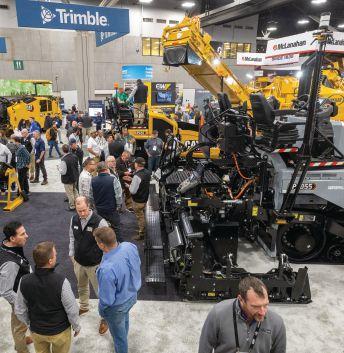
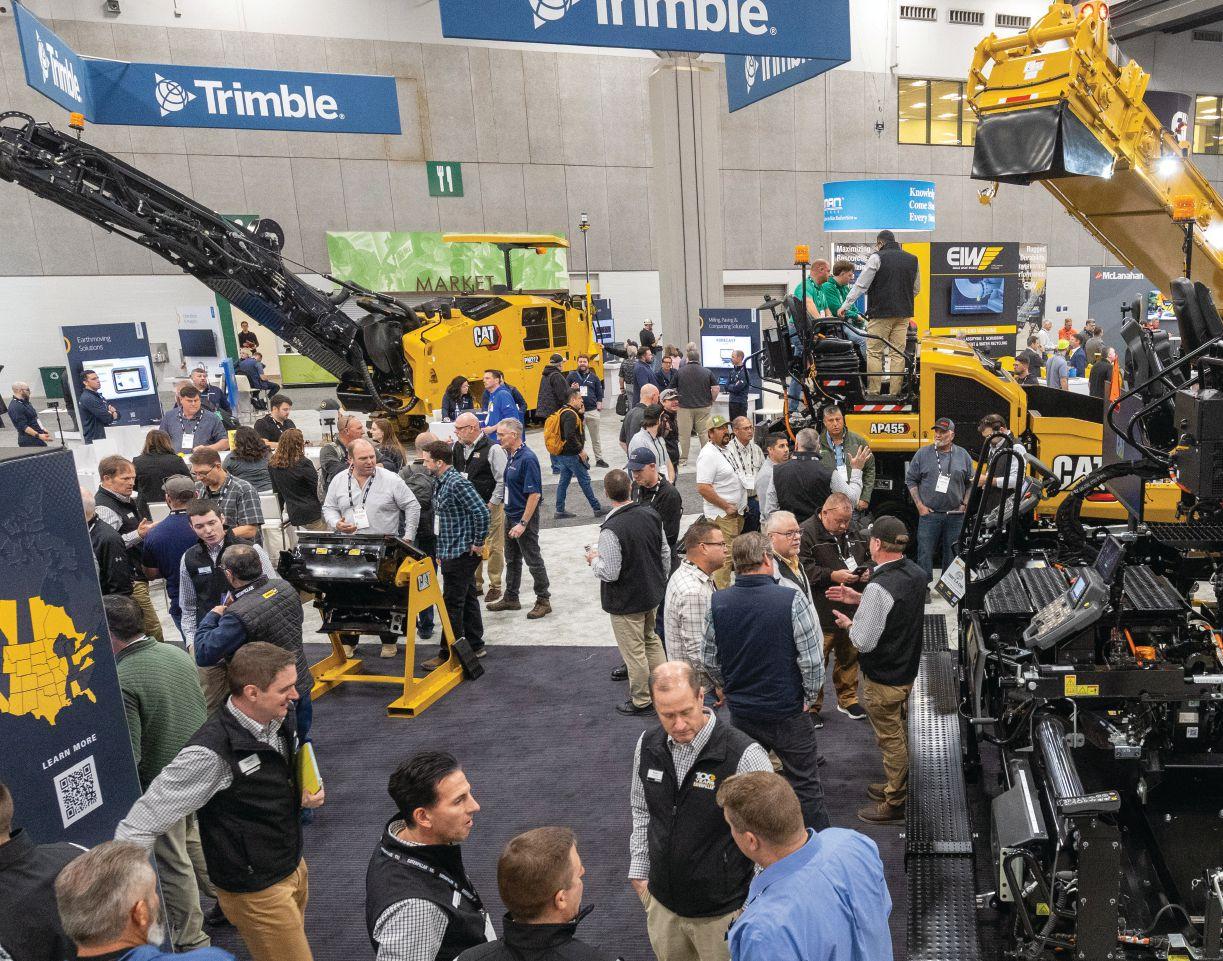
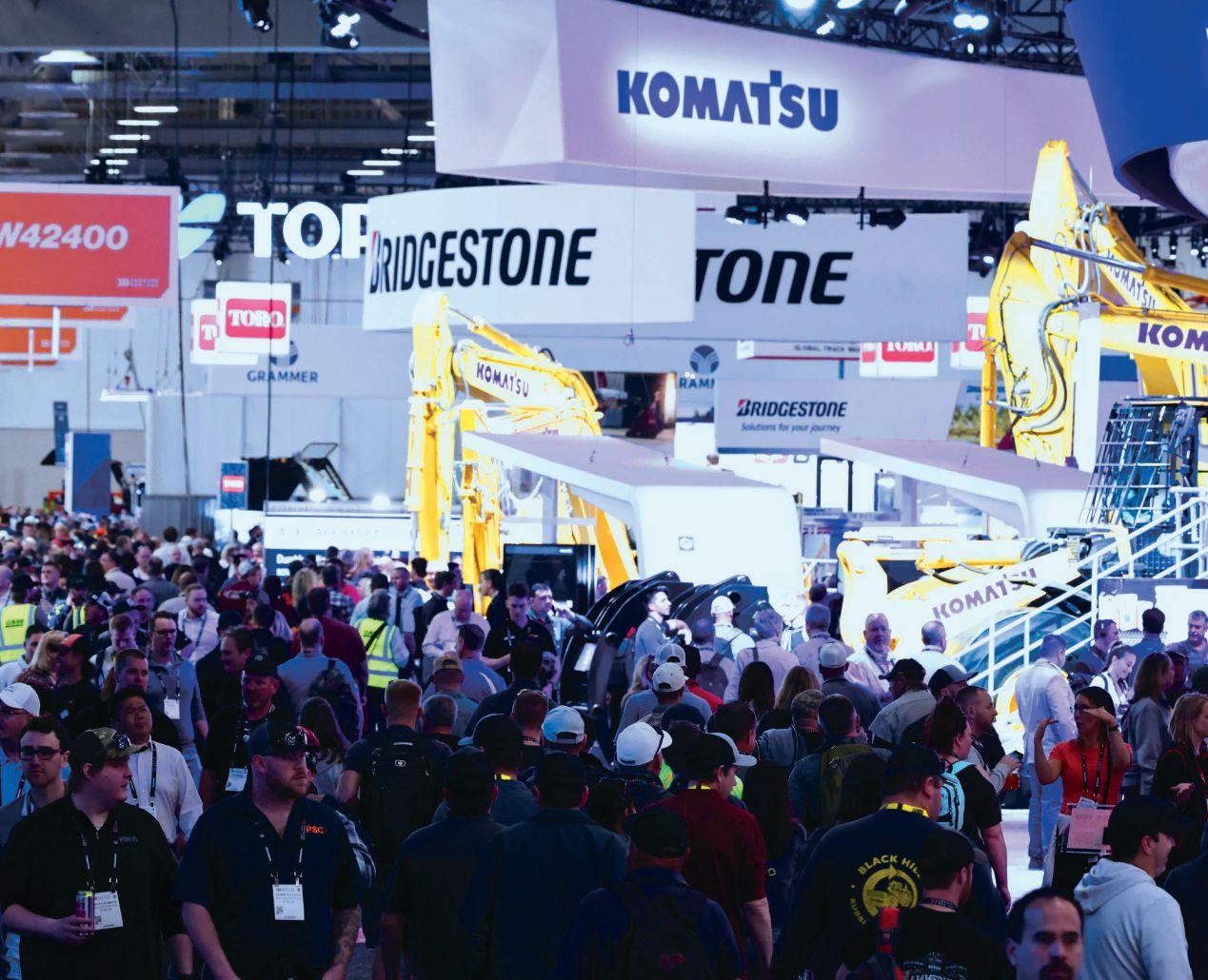
>More than 11,500 industry professionals turned out for this year’s World of Asphalt/ AGG1 Aggregates Academy and Expo, which took place March 25 to 27 at the America’s Center Convention Complex in St. Louis, Missouri.
The exhibit floor spanned more than 230,000 square feet, a roughly 23,000-foot-increase compared to the 2024 event in Nashville, Tennessee.
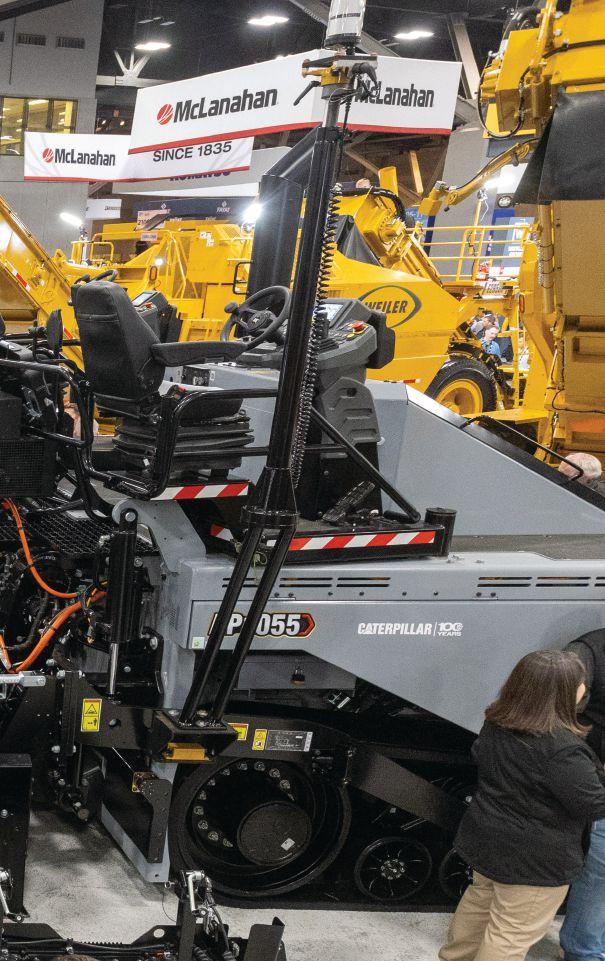
Here is a look at some of the equipment on display.
NIAGARA F-CLASS PORTABLE PLANT
Haver & Boeker Niagara wowed attendees at this year’s World of Asphalt/AGG1 Academy and Expo with its full-size Niagara F-Class Portable Plant on display.
According to the company, the portable plant allows operations to increase production by 25 per cent.
The circular-motion inclined vibrating screen features a double-eccentric shaft assembly that maintains constant g-force
W 210 XF MILLING MACHINE
This year’s World of Asphalt marked the world premiere of Wirtgen’s W 210 XF large milling machine.
Wirtgen states the new model combines high-performance and efficiency with compact dimensions. The machine offers milling widths between two metres and 2.5 metres and a maximum milling depth of 330 millimetres. It is suited for tasks ranging from surface layer rehabilitation and complete pavement removal to fine milling work with maximum efficiency in a wide range of project scenarios.
Wirtgen states the W 210 XF is deployed when high milling performance and relatively compact dimensions are required, such as highways and airports.
HAMM UNVEILS NEW SMART COMPACT PRO TECHNOLOGY
Hamm showcased its Smart Compact Pro technology at this year’s show.
The new tech builds upon Hamm’s the digital compaction assistant Smart Compact, which has simplified the compaction process in asphalt construction by automatically and separately controlling the compaction modes and forces for both drums based on the selected course type – base course, asphalt binder course, or surface course. According to Hamm, the physical properties of the asphalt, such as temperature and stiffness, as well as the complex cooling behavior of the material, are continuously considered to achieve homogeneous compaction by using the optimum compaction energy and modes in each case. Local weather data can also be included as an option.
during startup, shutdown and extreme conditions, including overloading and surging.
The plant can be customized depending on operational needs as its custom-built chassis holds the vibrating screen and periphery equipment, such as crushers or conveyors.
The plant’s hydraulic system provides setup in less than 30 minutes. Inclined, circular motion technology uses gravity to help move material down the screen deck, reducing pegging as well as energy and horsepower requirements. It also offers easy maintenance as the vibrating screen can be lowered in less than five minutes for simple screen media changeouts.
The portable plant is manufactured with six hydraulic run-on jacks to raise and lower the vibrating screen quickly. Producers gain the production benefits of an inclined screen with the maintenance benefits of a horizontal screen.
The F-Class Portable Plant can be customized to include a crusher, conveyors or other components for enhanced productivity.
According to Hamm, the new Smart Compact Pro integrates the new “Realtime Density Scan” sensor into the automated compaction process. This determines the asphalt density in real time by measuring the dielectric conductivity of the asphalt mix to be compacted forming the basis for the correlation with the asphalt density or the void content. Both parameters are decisive for self-monitoring or control testing. With the help of realtime density, Hamm states Smart Compact Pro provides construction companies with a decisive advantage by accurately implementing regulatory requirements.
“So now we don’t have fears of over compacted material. We don’t have fears of under compacted material. This is something that we’ve been chasing for the for years in the compaction industry,” says Dan Sant Anselmo with Hamm/Wirtgen Group.
KLEEMANN’S MOBIREX MR 100 NEO MOBILE IMPACT CRUSHER
Kleemann states its new impact crusher, the MOBIREX MR 100 NEO, blend compactness, performance, sustainability and flexibility.
“It’s a 78,000-pound impact crusher, so it’s the smallest one that Kleemann has built to date,” says Cole Childress, with Kleemann/Wirtgen Group. “It’s been a really good machine for our customers to get out there and be more transportable, more versatile, [get] around to different sites, and be able to move a lot more around.”
This year’s World of Asphalt/AGG1 Academy and expo took place in St. Louis, Missouri from March 25 to 27. Photo: World of Asphalt
He says Kleemann has taken many of the benefits and features of other machines and included them in the MR100 NEO.
“You’re talking continuous feed system, you’re talking Spective system. It’s a different style of Spective than our touch. We have the Spective switch here with the button controls, but still has all the necessary components that you can control,” he explains.
ASTEC’S SITELINE CAMERA SYSTEM
Astec Industries showed off its SiteLine operator environmental awareness camera system for its cold planers.
The technology offers operators with a panoramic view of their surroundings, enhancing safety and efficiency on the job site by allowing them to see previously unseen obstructions.
Key features include:
• The SiteLine system provides panoramic view around mobile equipment, eliminating blind spots and potential hazards.
• Image processing seamlessly stitches multiple camera feeds together, creating an uninterrupted view for the operator.
• Ability to tap any one of the camera screens to zoom in and get a closer look at a specific area of the machine, then be able to return to the bird’s eye view.
“The SiteLine camera system represents a significant leap forward in the realm of road construction safety,” said Tom Lenger, road recycling product manager at Astec Industries. “By empow-
ering operators with enhanced visibility and situational awareness, we’re not only protecting the workforce but also driving the success of our customers’ projects.”
Astec expects to expand SiteLine across its full Roadtec road construction lineup, with upcoming AI enhancements and advanced safety features set for release in the fourth quarter of 2025.
DYNAPAC’S CP28 PNEUMATIC TIRE ROLLER
Dynapac used this year’s World of Asphalt to introduce the CP28 Pneumatic Tire Roller to the North American market.
Dynapac states this new roller offers the heaviest ballastable pneumatic tire roller on the market. The CP28’s flexible rubber tires and adjustable air pressure system allow operators to achieve consistent density while minimizing surface damage, according to Dynapac, while the roller’s versatility allows it to be used in various applications, such as finishing asphalt layers.
A time-saving feature of the CP28 is the Air on the Run system, which inflates all tires from 0 to 120 psi KPa in just 12 minutes.
Additionally, the CP28 features front and rear suspension systems designed to optimize tire-to-surface contact. The front suspension allows for a 4.5° lateral oscillation and 1.5° tilt to both the right and left, while the new rear suspension enables a 2.0° tilt in both directions. This ensures constant ground contact for superior compaction results.
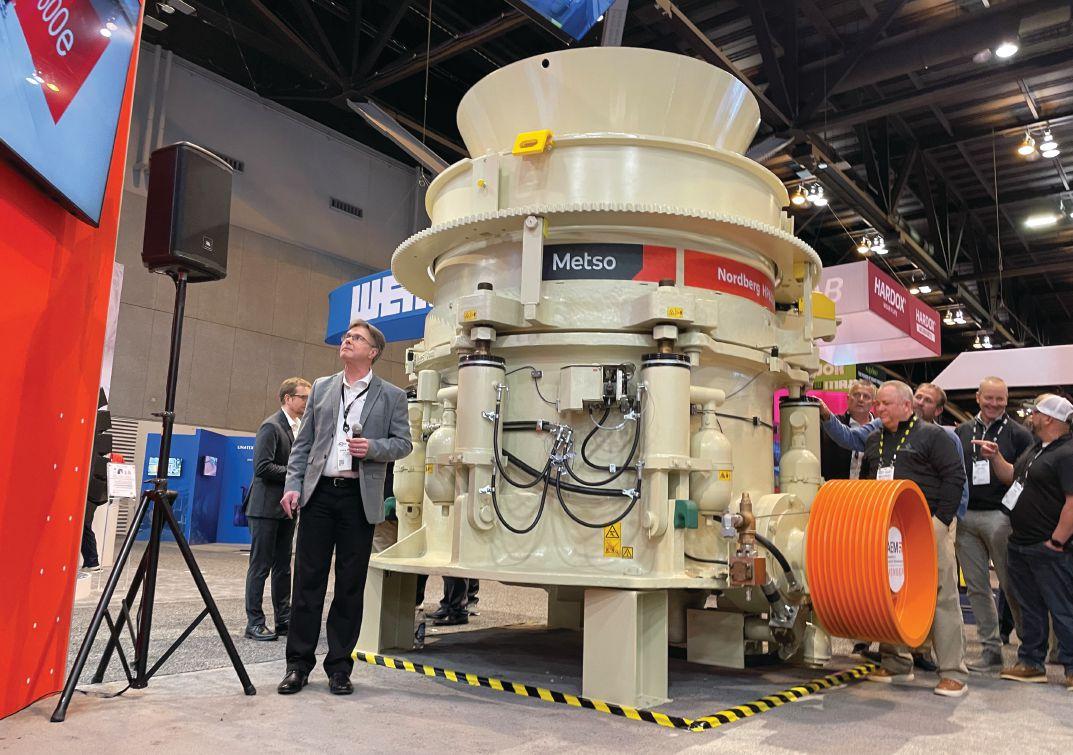
Metso used this year’s show to launch its HP600e, HP800e and HP900e cone crushers. Photo: Mike Lacey
METSO LAUNCHES THREE NEXTGENERATION NORDBERG HPE SERIES CONE CRUSHERS
Metso is launching three new next-generation cone crushers to its Nordberg HPe series.
The HP600e, HP800e and HP900e were highlights of the Metso booth at this year’s show.
Metso states the new machines maintain the HPe features while extending the series to larger crushing capacities for both aggregates production and high-demand mining applications.
“The evolution of Metso’s cone crusher technology brings multiple benefits and presents a true step change in terms of performance, uptime, serviceability and application coverage. We are excited to expand the Nordberg HPe series and bring to market a wider offering of these high-performance crushers fit for different production purposes,” says Ilkka Somero, product manager of HP Cones at Metso’s Aggregates business area. HP600e and HP900e are an evolution to the existing range, built and based on existing technology. HP800e is a new addition to the series with a crushing size option of 600 kw/800 hp. All three units come with two modern automation platform options: IC70C and MCP. Metso states its modern automation systems provide better visibility, monitoring and control of the crushing process, and enable connection to remote monitoring and further digital services.
same display available on the Volvo compact double drum compactor and excavator models. Additional improvements include auto idle and auto engine shutdown to reduce fuel consumption, and an indicator for remaining hours of fuel.
VOLVO INTRODUCES NEW AND UPGRADED MACHINES
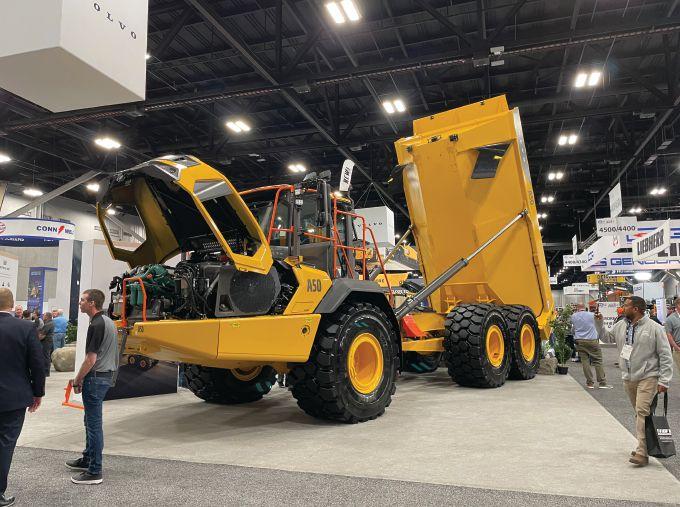
Volvo Construction Equipment showed off its newest articulated hauler, the A-50.
The A50 delivers a new electronic system, an upgraded cab for improved operator comfort and safety, and an in-house developed transmission designed to adapt to future drivetrains.
The new hauler is part of a larger revamp and update of Volvo’s articulated hauler line.
At this year’s show, Volvo also provided attendees the first look at the DD15 Electric asphalt compactor.
The 1.5-ton DD15 Electric asphalt compactor is a double drum machine with features similar to the 2.5-ton DD25 Electric. Its size fits small-scale jobs like parking lots, driveways and municipal work.
The DD15 Electric can fully charge in three and a half hours with a 240-volt Level 2 charging setup or in 12 hours with a 120-volt Level 1 outlet.
Volvo also introduced updates to the SD75 and SD45 soil compactors and the PT125 pneumatic tire roller, which will enhance safety, serviceability and the user interface for operators.
The machines have seen several human-machine interface (HMI) upgrades, including all-new software, advanced keypads, a USB charging port and a 5-inch full-color LCD display — the
Volvo CE’s A50 articulated hauler was among the equipment on display at the company’s booth. Photo: Mike Lacey
This year’s World of Asphalt/AGG1 Academy and Expo had more than 11,500 people turn out. Photo: World of Asphalt
Latest trends in conveyor and material handling
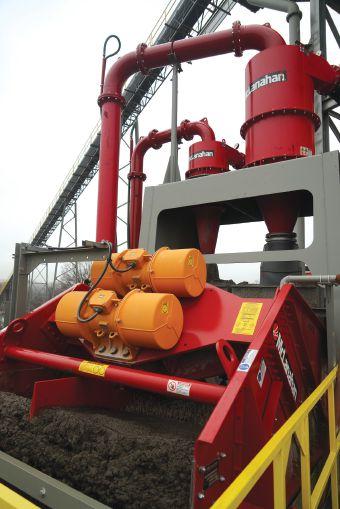
McLanahan Ultra Sand Plants are a sand washing solution that deliver consistent, drip-free sand at high yields. Composed of a sump, pump, hydrocyclone(s)/ separator(s) and dewatering screen, Ultra Sand Plants are designed for a wide variety of applications, from a standalone solution for washing and dewatering to a key part of multi-stage washing systems. Due to the separation efficiency of hydrocyclones/ separators, ultra sand plants deliver high product yields, while the dewatering screen ensures drip-free sand in all applications. This results in a product that can be sold quicker, steeper stacking angles for increased stockpile capacity, reduced water loss and overall better site housekeeping. McLanahan offers Ultra Sand Plants in a variety of configurations to meet the needs of its customers, including compact, modular designs for quick and easy setup as well as designs tailored to fit unique applications.
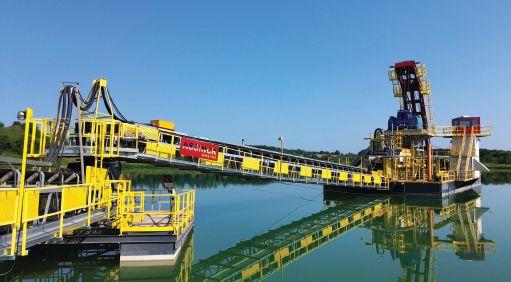
Assinck’s Tilting Boom Grab Dredge
Assinck Limited’s Tilting Boom Grab Dredge is a purpose-built solution engineered to meet the growing demand for below-water-table extraction in Canada’s aggregate sector. Designed and manufactured in Ontario, this dredge offers a durable, efficient and locally-developed alternative to imported systems.
Equipped with a seven-yard hydraulic clamshell bucket and able to handle 400 TPH, the dredge ensures dependable performance in large-scale operations. Important characteristics comprise a floating conveyor arrangement, robust scalping screen, hydrocyclone-oriented fines recovery, and a joystick-operated PLC system with an easyto-use HMI - providing exact, user-friendly management in challenging environments. The dredge’s modular construction supports easier transport and installation, while its adaptable design aligns with licensing and operational challenges unique to Canadian aggregate sites. Its creation was propelled by industry demand: an affordable, high-capacity dredging option designed without dependence on lengthy delivery times from international vendors.
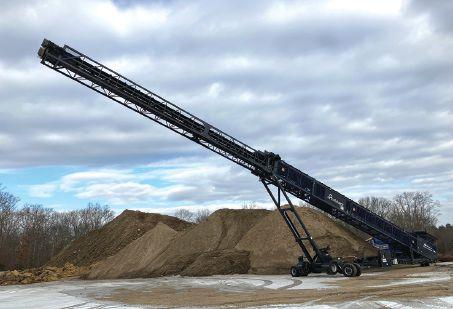
ProStack TW 36-140 radial telescopic conveyor
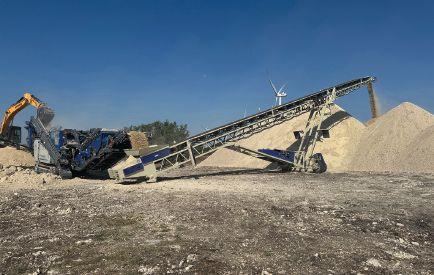
The TW 36-140 radial telescopic conveyor has a working length of 42 meters, 270° of radial movement and is available in multiple tonnage options - 0-2000tph. Available in pit portable or road towable variants, the TW 36-140 is a high-quality machine suitable for almost all applications including ports and terminals and quarry and aggregate applications. Features include a fully electric drive, allowing the machine to be run from site electric or from an electric crusher, reducing machine maintenance. Automated stockpile patterns can be generated, reducing segregation, degradation, contamination and compaction, providing the correct specification for any application or industry. The machine also has a lattice design for increased strength while reducing the total weight. The pit portable version has multifunctional wheels which can be repositioned to perform the radial function. The road towable version allows the machine to be towed on the road in countries where it is permitted.
McLanahan Ultra Sand Plants
products showcase
Luff Industries’ Wear Wolf Wing Pulley
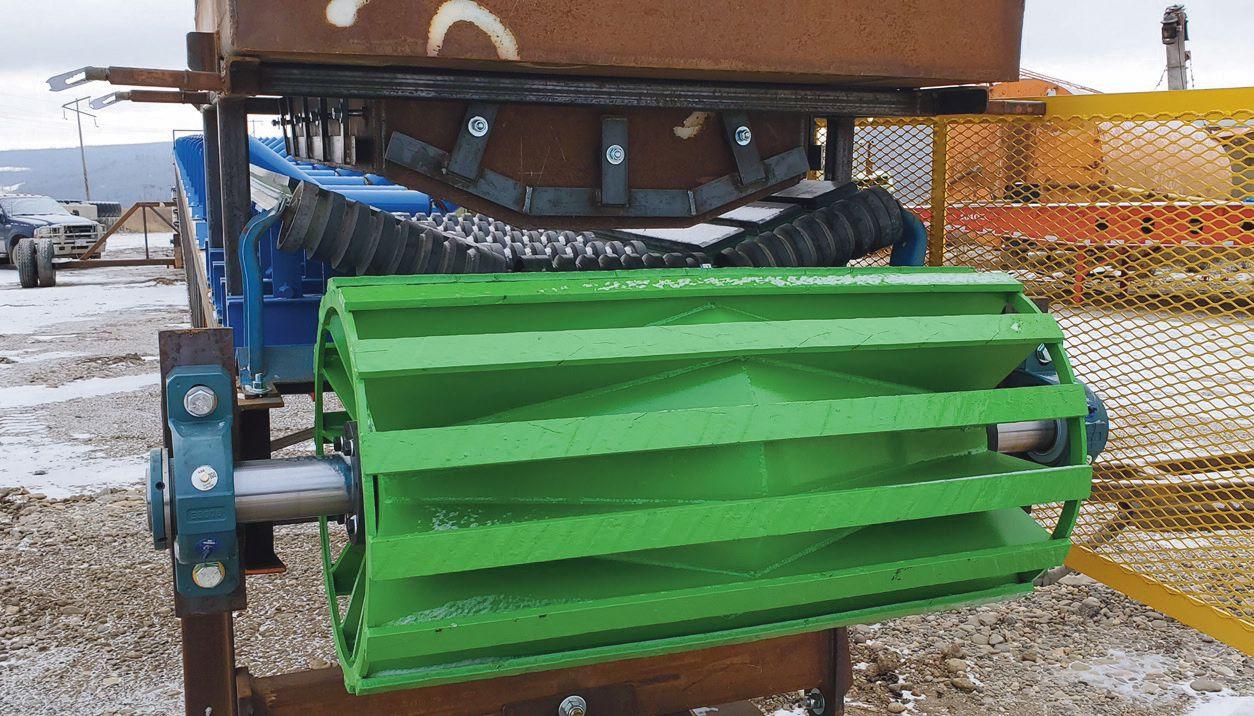
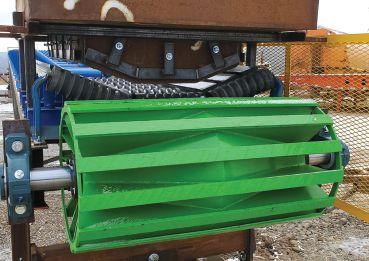
When operating in high wear applications, Luff Industries’ Wear Wolf Wing Pulley is a great solution. The Wear Wolf material provides enhanced wear characteristics, proven in the field, with zero wear after two years of service, according to the company. The proprietary material blend, boasts 66 Rockwell C, maintains ductile properties and has abrasion resistance. This material has demonstrated wear properties four times better than AR plate and with 100 per cent surface coverage on the contact bar this is also outlasting hard surface welding two to three times.
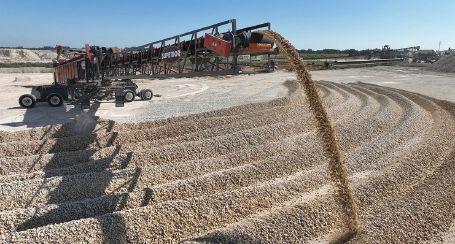
Masaba introduces its new line of self-contained hydraulic radial stacking conveyors. Fully designed and built by Masaba, these road- and pit-portable stackers operate under their own power via a 72 hp Yanmar onboard diesel hydraulic power unit, making them ideal for remote operations and job sites. Built to the same specifications as Masaba’s traditional electric-powered stackers and not limited to lighter steel weights and brandless components. Masaba self-contained stackers are currently available in a standard belt width of 36-in and in standard lengths of 80-ft and 100-ft. The company will offer additional lengths in the future and will work with customers who desire custom widths and lengths. The conveyors easily transport via a heavy-duty fifth-wheel hitch; they are easy to position with onboard lifting eyes. Masaba’s current standard line of self-contained models delivers 500 tph capacity at an 18° incline. The conveyors feature hydraulic raise, lower, and fold (the latter is a feature on the 100-ft model). With Masaba’s swivel-block axle design, these versatile stackers can be used inline as a transfer conveyor, or as a radial stacker.
Masaba has further improved its track technology, with the development of its patented GEN2 track drive. Available in singleor dual-drive, this design further improves engagement between the teeth and drive(s) for even smoother stinger operation, aiding long-term durability and minimizing required maintenance. The updated track drive now comes standard on all units. Ranging from 100 feet to 195 feet, Masaba offers standard Magnum models, or we can custom engineer a solution to match your needs. Additional Magnum track drive benefits:
• Eliminates cable maintenance issues associated with winch systems – and the associated danger of cable breakage and uncontrolled rollback.
• Masaba’s load roller supports ensure equal load distribution on all support rollers, minimizing fatigue stress on critical components.
Superior TeleStacker Conveyor
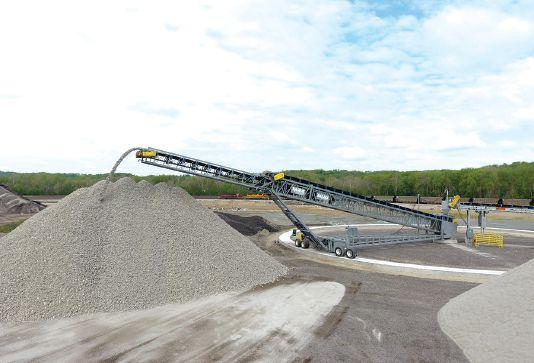
The PilePro Automation v14.0 is available on all new TeleStacker Conveyors from Superior Industries. This next-generation upgrade is built for simple operation and extreme environments, helping get more out of every pile. Features include:
• Remote viewer for operation directly form a webpage.
• Reliable performance in extreme temperatures from -30°C to 65°C
• On-screen operational instructions available at multiple screen steps.
2025 MID-SIZE PICKUP PREVIEW
BY MARIO cywinski
Coming in different shapes and sizes, what truck is best for you?
> When thinking of work trucks, light-duty full-size or heavyduty pickup trucks or vans are usually the first to come to mind.
Topping the list are the Ford F-series, Ram 1500 and HD, Chevrolet Silverado/GMC Sierra and Toyota Tundra. However, the everpopular term ‘right-sizing’ comes into play for many businesses. The size and cost of LD and HD models can be cost prohibitive for many, and this is where mid-size pickup models come in.
The mid-size was once a dying breed of the pickup market, with fewer models produced as consumers wanted larger models. However, the mid-size market is increasing as more consumers are finding the 1500 and larger are getting out of reach. Many new mid-size vehicles are the same size as their larger full-size cousins once were (with LD trucks looking like HD models used to).
Currently, the main players in the midsize pickup space include Ford, which offers two mid-size trucks in the Ranger and the
smaller Maverick. General Motors offers two in the GMC Canyon and Chevrolet Colorado, but they are both the same size in different guise. Nissan offers its Frontier, the only pickup it currently sells in Canada, while Toyota sells the popular Tacoma. Other players in the midsize space include Stellantis with its Jeep Gladiator, and two who offer unibody models, Honda with its Ridgeline and Hyundai with its Santa Cruz.
Focus is paid to vehicles that are updated for 2025. However, some vehicles saw major changes for 2024 and continue into this model year.
FORD MAVERICK
One of two mid-size pickup trucks at Ford, the smaller Maverick, made its debut in 2021. It is the only truck in Ford’s stable that is a unibody, with the rest all using a body-on-frame. As a result, it is a smoother ride.
For 2025, the front grille and bumper are updated, each trim having a unique grille. LED Projector Headlamps with LED Signature Accent Lighting are standard on Lobo, Lariat and Tremor. LED reflector headlamps, including auto LED high beams and auto lamp (auto on/off LED headlamps) are standard on XL and XLT, with XLT also adding wiper-activated LED headlamps. The Hybrid models will have the option of having all-wheel drive with an optional towing package. While Android Auto and Apple CarPlay are now wireless, and the touchscreen is now a 13.2” unit (replacing the outgoing eight-inch screen). Maverick comes standard as a
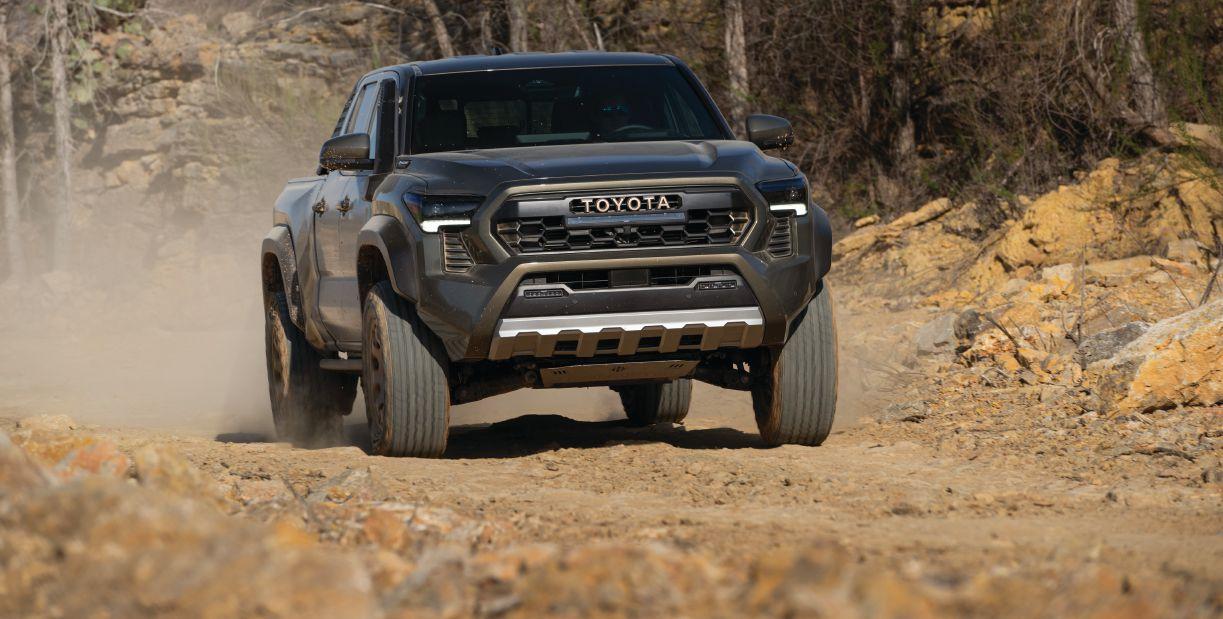
Toyota’s Tacoma is now the only pickup truck sold in Canada that can still be bought with a manual transmission. Photo: Toyota
Hybrid FWD, while Lariat offers Hybrid AWD standard.
For those who depend on their work truck to transport items, the Maverick has a payload capacity of 1,500 pounds on FWD hybrid models, and AWD EcoBoost models (AWD Hybrid is 1,400lbs, and Tremor EcoBoost is 1,140lbs). The bed has molded pockets allowing for better cargo organization, along with a multiposition tailgate. The bed also has a 110V/400W outlet (along with another in the cab), as well as being prewired for 12V connections.
Power for the Maverick is brought by way of a standard 2.5L four-cylinder engine with an electric motor offering 191hp and 155 ft/lbs of torque mated to a CVT transmission, the other option is a 2.0 litre EcoBoost (turbocharged) four-cylinder engine with 250 horsepower and 277 foot/pounds of torque mated to an eight-speed automatic transmission. Both engines provide the same towing capacity at 2,000lbs, which can be increased to 4,000lbs with the 4K towing package (requires AWD, excluding Tremor).
FORD RANGER
The Maverick’s bigger brother, the Ranger, which is a body-onframe truck, was redesigned for the 2024 model year, and was recently named the North American Truck of the Year by the 2025 North American Car, Truck and Utility Vehicle of the Year awards committee.
“Earning this recognition celebrates our team’s dedication to continuously raising the bar for midsize truck customers,” said Jim Baumbick, vice-president, advanced product development, cycle plan, and programs, Ford Motor Company. “We rigorously tested Ranger in challenging environments around the world to deliver the Built Ford Tough durability our customers demand. This award is a tribute to our customers who inspire us every day.”
Or those who need more power from their truck than the smaller Maverick, the Ranger provides this via two EcoBoost (turbocharged) engines, with a 2.3L EcoBoost inline-four-cylinder engine with 270hp and 310 ft/lbs of torque, or a 2.7L EcoBoost V-6 engine offering 315hp and 400 ft/lbs of torque. Both are mated to a 10-speed automatic transmission and have auto start/stop. Both engines provide max towing of 7,500 lbs, with a max payload of 1,711 lbs with SuperCrew 4x4 models, and 1,805 lbs with SuperCrew 4x2.
NISSAN FRONTIER
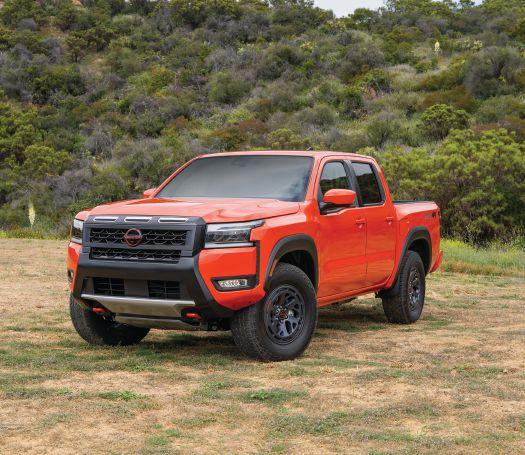
As the only pickup truck left in the Canadian Nissan stable, the Frontier has been given some attention and updated for the 2025 model year. The exterior is redesigned with an updated front fascia with revised grille and bumper, new tailgate finisher for PRO-4X models, new 17-inch wheels, and the addition of an in-your-face orange colour.
On the inside, the Frontier now has a larger 12.3-inch touchscreen packaged with standard wireless Apple CarPlay and Android Auto, and a telescopic steering wheel is now standard. Also, the rear sliding window is now standard. Other trim level changes also occur.
Other updates for 2025 include an improved off-road view for the 360 cameras, which now work up to 12 mph; a long-wheelbase configuration is now available with a six-foot bed on PRO-4X trims; and all trims now increase towing capacities by 500 lbs.,
with a max tow rating of 6,850 lbs. Max payload ranges between 1,050 and 1,200 lbs (on crew cab), and 1,340 lbs (on king cab).
The towing improvements help work truck drivers to be able to do more, with more capacity, they may be able to do less trips, the camera update allows for more comfort when it comes to driving through terrain while on a job site.
Frontier continues into 2025 with its 3.8L V-6 engine (with 310hp and 281 ft/lbs of torque) mated to a nine-speed automatic transmission and offers engine stop/start. Active brake limited slip is standard on all grades, PRO-4X gets electronic locking differen-
On the 2025 Ford Maverick, the front grille and bumper are updated, with LED headlights and DRL now available on higher trims. PHOTO: Ford
tial. Two bed lengths (five or six feet), and two cab lengths (crew cab and king cab) are available this year. Giving companies the flexibility to equip the truck the way they need.
Safety comes standard, with lane departure warning, blind spot warning, rear cross traffic alert, rear parking sensors, high beam assist and intelligent cruise control, available on all trims. SL trim and above adds traffic sign recognition.
GMC CANYON
The Canyon is a body-on-frame model, which is seen on most fullsize pickups. The Canyon is one of the smoothest riding mid-size pickups available. It comes with a 2.7L turbocharged inline-four engine offering 310hp and 430 lb/ft of torque mated to an eightspeed automatic transmission and includes active fuel management and start/stop.
The Canyon has a payload capacity from 1,010 and 1,590 lbs depending on trim level. Towing capacity tops out at 7,700 lbs (with other trims offering 6,600 lbs and 5,500 lbs).
The Canyon comes with standard automatic emergency braking, following distance indicator, forward collision alert, lane keeping assist and warning, and buckle to start; while available features include blind spot steering assist, rear cross traffic braking, rear park assist, and rear pedestrian alert.
General Motors also offer the Chevrolet Colorado, which is the Canyon’s stablemate. With a similar package but with different looks, in Chevrolet guise.
TOYOTA TACOMA
What do you need in a work pickup truck? For many, having choices would be the number one concern. In that regard, the Tacoma comes in 12 trim levels, from the entry level SR5 to the top end Hybrid i-Force Max Trailhunter, and everything in between. This year all models are double cab, and offer two bed lengths, five or six feet.
One interesting fact is that the Tacoma is now the only pickup truck sold in Canada that can still be bought with a manual transmission (in this case a six-speed). While many will opt for the automatic transmission, for those that want or need a manual transmission, this is now your only option.
Two engine options are available, each with a 2.4L i-Force fourcylinder turbocharged DOHC engine. All manual transmission models offer the 2.4L engine with 270hp and 310 ft/lbs of torque, while the eight-speed automatic transmission models get a small bump in power, at 278hp and 317 ft/lbs of torque. The i-Force Max version (with the addition of the hybrid powertrain) offers 326hp and 465 ft/lbs of torque mated to an eight-speed automatic transmission.
Apart from a capable engine, towing and payload are the most important aspects of a pickup truck. The Tacoma offers max payload of between 1,380 lbs. and 1,705 lbs, depending on trim, and max towing of 6,400 lbs.
“The Tacoma is more than a truck: It is an invitation to go where you want to go, to do what you want to do and to see what you want to see,” said Cyril Dimitris, vice-president, Toyota Canada Inc. “When Toyota introduced this newest generation, we took
great care to retain everything that has made Tacoma a legend for nearly 30 years, while raising the bar with more capability, more features, more comfort, and modern style – plus the advanced power and awesome torque of Toyota’s hybrid powertrain technology. With 12 grades – including several that we have enhanced for 2025 – there’s a Tacoma for every adventurous Canadian.”
Safety is always top of mind for fleets and the Toyota Safety Sense 3.0 system on the Tacoma includes pre-collision system (with pedestrian and bicycle detection, intersection support, and emergency steering), radar adaptive cruise control, lane departure warning with steering assist, lane tracing assist, and automatic high beams. Also included is a backup camera, eight airbags, the blind spot monitoring, tire pressure monitoring system, among others.
OTHER OPTIONS
Honda offers a unibody truck, the Ridgeline, that while it is considered more of a recreational pickup truck, can tow up to 5,000 lbs, and has a payload of up to 1,583 lbs. It also offers an underbed trunk, which offers 206L of storage.
Hyundai produces the Santa Cruz, another pickup that is geared towards recreational use. It also offers 5,000 lbs of towing and offers standard AWD. It has a 2.5L four-cylinder engine offering 281hp and 311 ft/lbs of torque mated to an eight-speed automatic transmission.
On the other end of the spectrum is the Jeep Gladiator, which is based on the off-road Wrangler utility vehicle. While not seen as a work truck for many, it is a capable option, as it offers 7,700 lbs of max towing and 1,725 lbs of max payload. It will also not have any issues going to a job site that is off the beaten path.
Mario Cywinski has worked in the automotive industry for over 20 years, both as an automotive journalist and working for a local dealership. He is a member of the Automobile Journalist Association of Canada and has been a judge for the Canadian Truck King Challenge.
The Frontier is the only pickup truck left in the Canadian Nissan stable.
Photo: Nissan
> MAY 4-7 CIM Connect
MONTREAL, QC www.convention.cim.org
> JUNE 3-5 Canadian Crane Rental Association annual conference
EDMONTON, AB www.cra-aclg.ca/en/2025annual-conference-2/
> JUNE 20-22 CIQS Congress 2025 WINNIPEG, MB www.ciqs.org
> OCT. 5-8 TACConf
QUEBEC CITY, QB www.tacconf.ca
> DEC. 3-6 The ShowBuildings
TORONTO, ON www.informaconnect.com/ the-buildings-show/
> MARCH 3-7, 2026 CONEXPO
LAS VEGAS, NEVADA www.conexpoconagg.com
one more load Up in the air
Meeting air quality guidelines for aggregate operations
Until recently, aggregate operators have not typically had to worry much about air quality concerns from a regulatory perspective.
Operators increasingly are being asked to consider air quality as part of their regional and municipal permit applications and have been required to limit the air and dust emissions being generated by their operations to meet those regulations. One of the challenges faced by both operators and regulators centers around the application, interpretation and enforcement of relevant air quality guidelines and objectives.
Historically, provinces have regulated air quality permitting via their regional environmental governing bodies. For example, in Ontario pits are regulated provincially under the Aggregate Resources Act, and in British Columbia under the Mines Act, while in Alberta the responsibility lies with counties and municipalities to issue development permits. Of course, if your project crosses a provincial boundary, it’s now subject to federal Environment Canada rules and regulations, which muddies the regulatory waters even deeper.
So how does an operator know when they’re compliant? In the case of a new or proposed facility, the best way to predict compliance is by applying a dispersion model. Several models are approved by regulators as most are developed by the US EPA, and the specific model used is typically determined by the size and throughput of the proposed operation - the larger the operation, the more complex the model required. Estimating the potential emissions from a new or proposed project brings its own challenges. A high level of project detail is required, such as predicting the specific locations of crushers, conveyors, stockpiles and other potential sources, anticipating the types and volumes of heavy equipment and trucks, operating schedules and more. The typical industry-standard way of estimating emissions from these activities has been based on a US EPA method that in many cases is both outdated and overly conservative, resulting in overpredictions. In some cases, refined emissions estimates can be applied using test data from other locations, such as the California Air Resources Board (CARB). In others, figuring out how to interpret the prediction results to determine compliance (i.e., is a nearby residence
impacted or not) may be the most appropriate route to follow.
Peripheral conditions also need to be accounted for, such as local ambient data and meteorology, as well as the presence of nearby operations that could result in cumulative impacts. This type of “infrastructure” is well established for industries that have been regulated for several decades, but in the context of gravel pit applications, how do you account for an adjacent facility that doesn’t have air quality as part of its existing permit conditions, and may not have had to consider its air emissions at all during its lifetime?
Monitoring can be undertaken and is occasionally recommended as a permitting requirement. Improvements in monitoring technologies over the years have provided industry with many new “fit for purpose” options, but often the required regulatory compliant monitor setup is bulky and power intensive. Many of the newer particulate monitoring options that appear to be applicable for project use don’t have sufficient correlation data to be approved by the regulators yet. And more and more jurisdictions are requiring silica sampling, which is in itself challenging since the guideline and method are developed for occupational health, not environmental protection.
While the task of completing an air quality assessment may seem daunting, there are several air quality specialists available to assist in its preparation. It is critical for these experts to work closely in conjunction with owners, operators, regulators and the public, to develop a sound and defensible program. The modelling and monitoring tools available are built to assist in supporting operators in managing the regulatory requirements for operating a sand and gravel operation, often at the insistence of regulators, and aid in developing best management practices for air quality mitigation and management. Model predictions and ongoing air quality monitoring of operations work together to provide due diligence, ensure environmental compliance and meaningful data in the event of environmental complaints and concerns when they arise.
Craig Vatcher is a Senior Air Quality Project Manager at SLR Consulting.