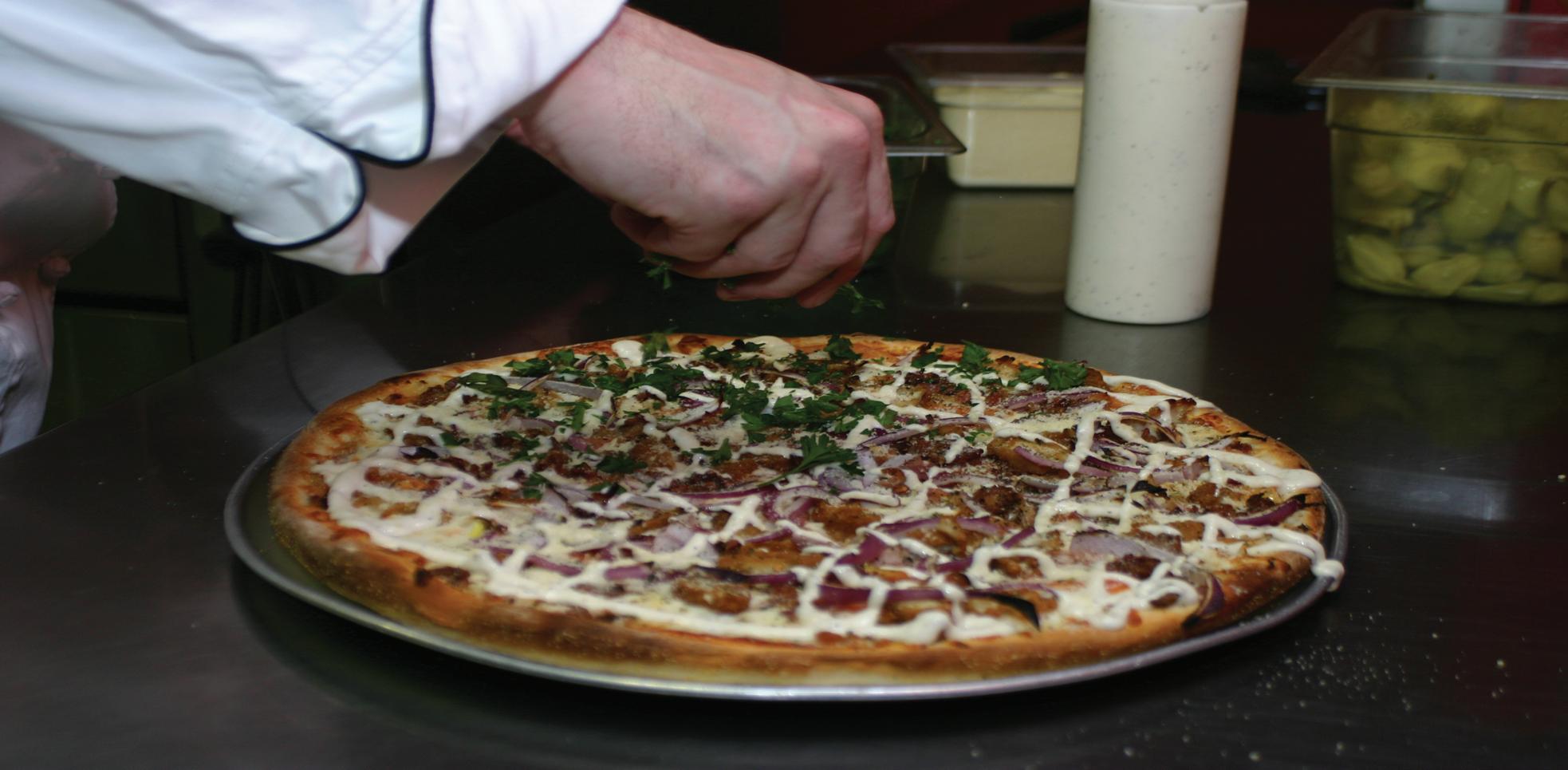
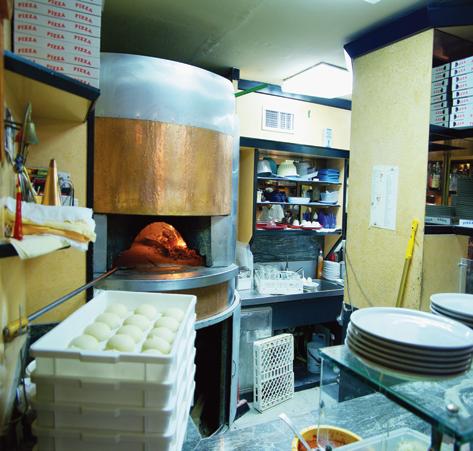
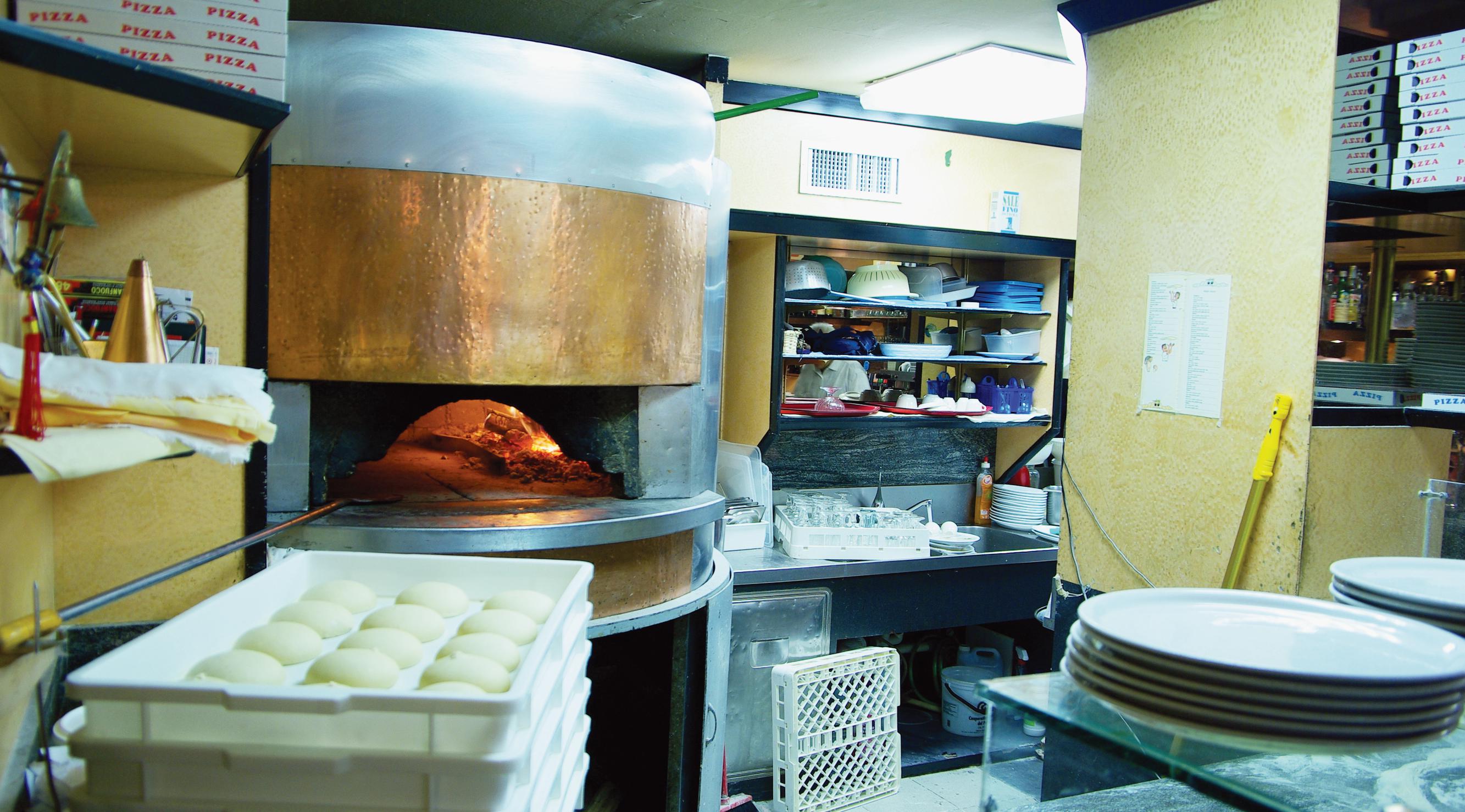
From Black Eyed Peas to Burning Sicilians, this London pizzeria has gained a loyal following in an extremely competitive market.
Companies can drastically improve their workforce quality by adopting a proactive mindset and consistently using the right hiring procedures.
If you’re already in business together, what can you do to improve your company, both
and emotionally?
Why do pizzerias fail; and if you’re looking to enter the market, should you buy one?
What are some of the strategies pizzeria operators can employ to maximize their
TFood safety
he impact of speculation is quite significant in our modern lives. This morning, as I dragged my weary carcass out of the sack, I heard that oil stocks had reached record highs on the speculation that the per barrel cost will hit $200.
Now, keep in mind, this is “speculation” based on nothing but a bunch of analysts ... with a heckuva lot more dough than you and I.
The world supply of oil, tightly controlled, is not in a shortage situation. In fact, we recently learned that despite what the world powers would have you believe – especially those in power south of the border –reserves and shipments into North American refineries are doing quite well, thank you very much.
Regardless, the speculation has pretty much driven the consumer into a cocoon mentality, which means an extremely difficult task lay ahead for the small business owner.
Last month on BusinessWeek.com, business analyst Keith Girard wrote: “In a market like this, the only actions business owners can take are raise prices, cut costs, or operate more efficiently. But small businesses operate on thinner margins than large corporations and have less leverage to negotiate product pricing, transportation, marketing, and labor costs. Because the economy is also slowing, the ability to raise prices is limited. The effects of the squeeze are evident throughout the economy, but small businesses are feeling the most pain.”
Feeling pain because of speculation … fuelled by comments like those made by American president (and oil-rich son of a…merican oil baron), George W. Bush earlier this year to the Associated Press:
“It should be obvious to you all that the (gasoline) demand is outstripping supply, which causes prices to go up.”
Another BusinessWeek.com columnist and automotive expert Ed Wallace took exception this position.
“Gasoline reserves on hand are at the highest levels since the early 1990s. In fact, average gasoline reserves on hand have risen since this past October, while oil reserves in this country have gone up virtually every week this year. There’s no shortage of gasoline or oil in the U.S. today, and we have nearrecord reserves on hand. Meanwhile the Congressional mandate for ethanol has jacked up the price of food,” the writer stated in an April column.
Funny thing is … even the oil executives don’t buy into the speculation. ExxonMobile CEO Rex Tillerson told Marketwatch: “The record run in oil prices is related more to speculation and a weakening dollar than supply and demand in the market. In terms of fundamentals, fear of supply reliability is overblown.”
For us, this sinks into third spot on a triple whammy for the pizza business. We’ve endured over a decade on increasing dairy costs (despite lower overall consumption by Canadians), a global wheat “crisis” that has sent per-bag costs beyond $50, and now fuel prices pumping what little income our consumers have, and own meagre margins.
Speculation has fuelled something we don’t have to speculate about: we’re in for a long, fearful ride, and it’s not going to be cheap. •
President Mike Fredericks mfredericks@annexweb.com
Mailing Address
P.O. Box 530, 105 Donly Dr. S., Simcoe, ON N3Y 4N5
PUBLICATION MAIL AGREEMENT #40065710 RETURN UNDELIVERABLE CANADIAN ADDRESS TO CIRCULATION DEPARTMENT, P.O. BOX 530, SIMCOE, ON N3Y 4N5 e-mail: cnowe@annexweb.com
Periodicals postage paid at Buffalo, NY. USPS 014-059, ISSN 1203-6838. Published eight times per year (Jan/Feb, Mar, Apr/May, Jun, Jul/Aug, Sept/Oct, Nov, Dec), by Annex Publishing & Printing Inc. U.S. Office of publication c/o DDM Direct.com, 1223 William St., Buffalo, NY 14240. U.S. Postmaster send address change to P.O. Box 1042, Niagara Falls, NY 14304
Hello everyone! Mama Rosa here. What a smart bunch of pizzaiolos we have in Canada! I sure hope you are staying cool in those steaming hot kitchens. So, I hope you’re ready for this month’s trivia contest question. Remember, it’s easy – I’ll ask the question and you find the answer somewhere in this month’s issue of Canadian Pizza magazine. Then fax, mail or e-mail your answer to me. If I pick your name from the answer bag, you win! Are you ready? This month’s trivia question is: What percentage of Canadians have said they changed their lifestyle due to gasoline prices?
This
monthʼ s trivia question: What percentage of Canadians have said they changed their lifestyle due to gasoline prices? T
Last month’s winner was Sue White, from Blakeslee Foodservice in Scarborough, Ont. Mama Rosa will put a nice little something into the mail for Sue. Deadline is June 23, 2008
e-mail: mamarosa@annexweb.com
Fax: 519-429-3094, Attn: Mama Rosa
Mail: Mama Rosa, Canadian Pizza Magazine, P.O Box 530
105 Donly Drive South Simcoe, ON N3Y 4N5
did you know …
Over 30 per cent of CEOs said up to half of their employees are a poor fit for the job! Learn key tips for hiring on page 11.
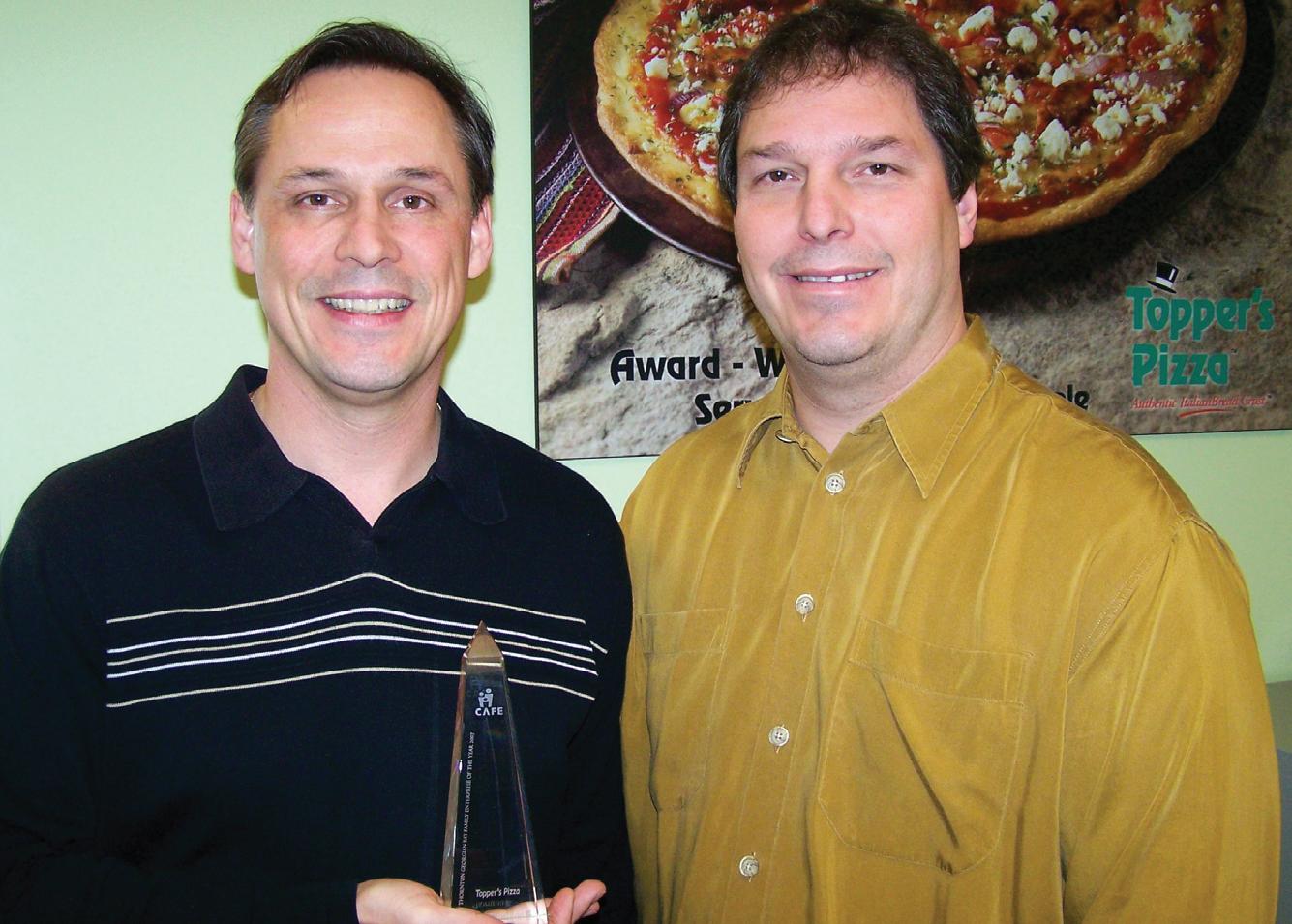
Topper’s recognized as a top family-run business
opper’s Pizza, a thriving 35-store franchise, business has been short listed as Canada’s best family-run business – an award that is handed out each year by the Canadian Association of Family Enterprise (CAFÉ).
This comes in the wake of winning the family business of the year award late last year by the CAFÉ Georgian Bay district. In winning the regional award, Topper’s was recognized for its remarkable transition from a small family bakery at the turn of the century, followed by a single pizza store in the ’60s, to the current Ontariowide operation with over 700 employees.
Remarking on the recent award and being nominated as one of the best familyrun businesses in Canada, Topper’s president Keith Toppazzini attributes much of the company’s success to his own family values of perseverance. “Over the years, we’ve learned hope to cope with some
pretty brisk competition. Initially, it was the family bakery up against the major grocery stores … then it was finding a way to grow a single location pizza store into a strong regional chain that today is almost twice as profitable at the store level as the industry average.”
Toppazzini adds that the company’s family values have spilled over into the strategic partners who run the store’s franchises.
Virtually all of our franchisees are family-run businesses as well … so on the one hand we’ve transcended the typical family business and become a much larger corporate entity … but on the other, it’s strong family values that are shared within the organization that helps us to continue to be successful.”
The CAFÉ award for Canada’s top family-run business will be announced in late May at the organization’s annual conference.
mama rosa
Keith, left, and Kelly Toppazzini with the CAFÉ Award.
Apizzabites
Restaurants return to trans
BY CARLY WEEKS
spike in food prices is spurring some restaurants to switch back to cooking oils containing trans fats and driving up prices for menu items across the country, according to industry members who warn that the problem is likely to get worse before it gets better.
There has been a significant push across Canada to get restaurants and food manufacturers to eliminate the use of hydrogenated oils, which contain trans fats and may pose an increased risk of heart disease and other health problems.
But an increasing number of restaurants are finding it tough to use healthier alternatives, including canola and other vegetable oils, which have been steadily rising in cost in recent months. Some restaurants and industry associations say prices for various types of vegetable oils have risen from 10 to 50 per cent in the past few months, and expect they will continue to go up as demand increases.
“We started getting phone calls. Approximately 20 restaurants have indicated they’re having difficulty or
they’re switching to a shortening,” said Robert Greene, program resource manager of Effective Resource Management Inc., which collects used vegetable oils from restaurants to convert into alternative fuels. “It’s usually the smaller restaurants that are having the difficulties.”
Trans fats, which are typically cheaper than vegetable-based oils, occur naturally in some animals. But most are created by hydrogenation, an industrial process in which liquid oils are turned into semi-solid fats such as margarine and shortening.
Greene didn’t disclose which restaurants are switching to hydrogenated oils for fear the public would ostracize them, but said the company is working on plans to help them avoid using cooking oils that are cheaper but less healthy.
But the situation reflects a larger problem that is taking shape across Canada as restaurants and other food providers struggle to cope with sharp increases in the price of cooking oil, a base ingredient in many menu items.
Papa John’s to open 57 restaurants in Canada
Papa John’s International, Inc. recently announced the signing of development agreeme nts to open 57 additional Papa John’s restaurants throughout Canada. The agreements call for 20 restaurants to be built throughout the Atlantic Provinces by franchisee PJ Atlantic Franchising Ltd., and 10 to be built in Saskatchewan by MJ Taylor Holding Company. Additionally, Bajco LLC has agreed to build 15 restaurants in Western Ontario, with PDR Associates Inc. committed to build an additional 12 units in Eastern Ontario. Each franchise group has committed to opening one or more restaurants in 2008.
“Canada is a key focus area for our international expansion, and these
multi-unit franchise operators will help us further establish a strong foothold in that country,” said David Flanery, Papa John’s chief financial officer and managing director, international.
“There’s a growing demand for better quality pizza in Canada, and we, along with our franchisees, are eager to continue meeting that demand by delivering our award-winning pizza.”
There currently are 14 Papa John’s restaurants open throughout Western Canada, and more than 3,200 open worldwide, including 450 international restaurants in 28 countries.Headquartered in Louisville, Kentucky, Papa John’s is the world’s third largest pizza company.
New counters from Eagle hot stuff
Eagle Foodservice Equipment recently announced the introduction of new Chef’s Choice counters. These UL and NSF-listed units utilize standard components to create a system customized to meet the needs of individual foodservice operations – but with faster delivery and lower cost. Eagle’s Chef’s Choice counters are available with a wide range of features and options. All share the same heavy-gauge stainless steel construction with 14-gauge tops as standard. Cabinet bodies offer open storage with hinged or sliding doors optional. Each counter is sized per application with bolted or welded field joints. All Chef’s Choice counters can be pre-wired with a full range of food holding options. For more information, contact Lynda Donavon with sales inquires or the marketing department for marketing support at 800-441-8440.
Globe introduces new veggie cutter
Globe Food Equipment Company, a provider of precision food preparation equipment, recently introduced the new GVC600 Vegetable Cutter. The cutter features a large hopper opening, stainless steel body and base, a removable hopper head and food pusher. The food pusher has antimicrobial protection built in, inhibiting the growth of bacteria and providing superior sanitation.
With advanced cutting technology, users will experience improved product yield, increased product shelf life and reduced costs. The cutter can process up to 900 pounds of product per hour and has 40 different cutting discs available.
The cutting discs are made of rigid cast aluminum and the knives are hardened, ground, hand-polished stainless steel. The cutter is backed by Globe’s two-year parts and labour warranty.
FEATURES
PREPARING FOR THE UNEXPECTED
Every business owner owes it to his or her family, employees and customers to create a plan for the “What If.” Business owners and their professional advisors need to work as a team to develop the plan, which would allow everyone involved to know exactly what to do and how to proceed. Thomas E. Houck writes about what is needed in the tragic event and what should be included in your “What If” plan.
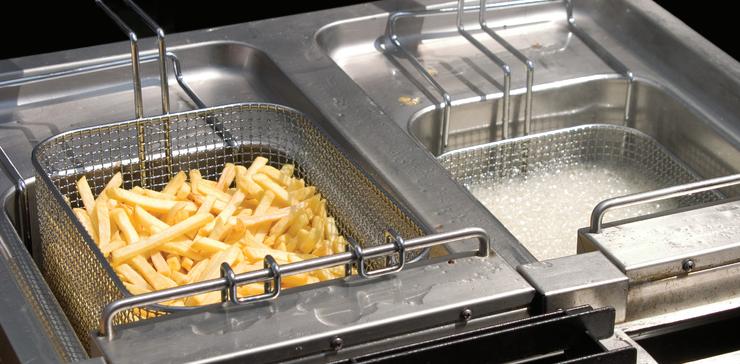
FUEL UP ON COOKING OIL
With gas prices on the rise, some motorists are turning to an unusual source – the deep fryer – to avoid paying big bucks at the pump. One
FROZEN RAW DOUGH – AS GOOD AS FRESH?
Previously, frozen raw dough could not match the quality of fresh made. The latest freezing technology has changed this – opening great possibilities for inhouse bake-off stores.
JUNIOR BOOZING IN MANITOBA
Children in Manitoba will soon be allowed to lift a glass of alcohol with their parents at sports facilities like golf or curling club dining rooms. The move is one of a number of changes to the Liquor Control Act that the Manitoba government introduced in a bill this past spring.
Montreal mechanic converts diesel vehicles to run on cooking oil that can be obtained from a restaurant, often at no charge.
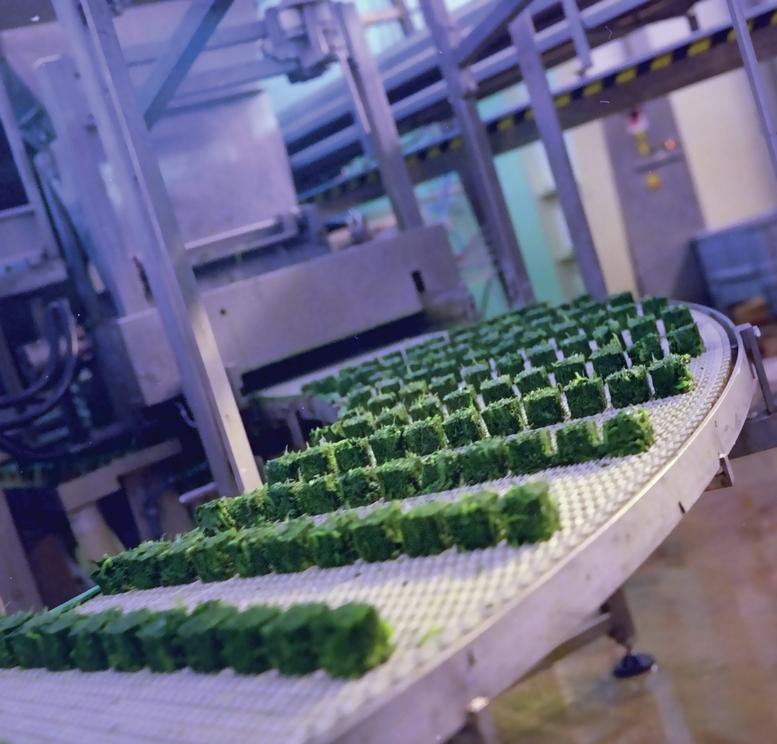
FROZEN OPTIONS FOR HIGH PRICES
Frozen food consumption is estimated at 40 million tons a year, and is a necessity for millions of families and institutional consumers in both developed and developing countries: our food distribution systems are largely dependent on refrigeration – what technologies are available to restaurateurs and foodservice companies looking for cold hard options?
www.canadianpizzamag.com
The Canadian Federation of Independent Business is renewing its call for Ontario to overhaul its apprenticeship programs in light of new research showing record levels of concern over the shortage of qualified labour.
LABOUR SHORTAGE
Bondi’s burning success in London feature
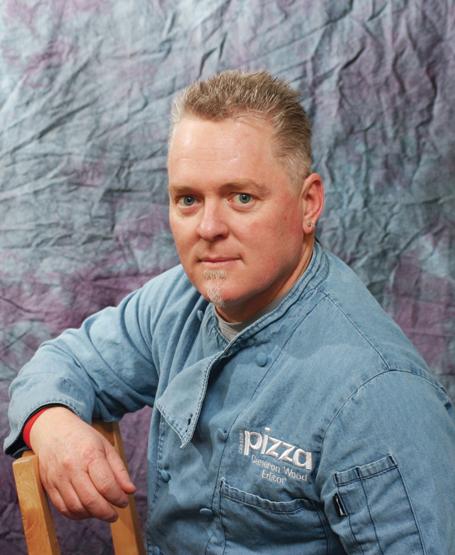
BY CAMERON WOOD
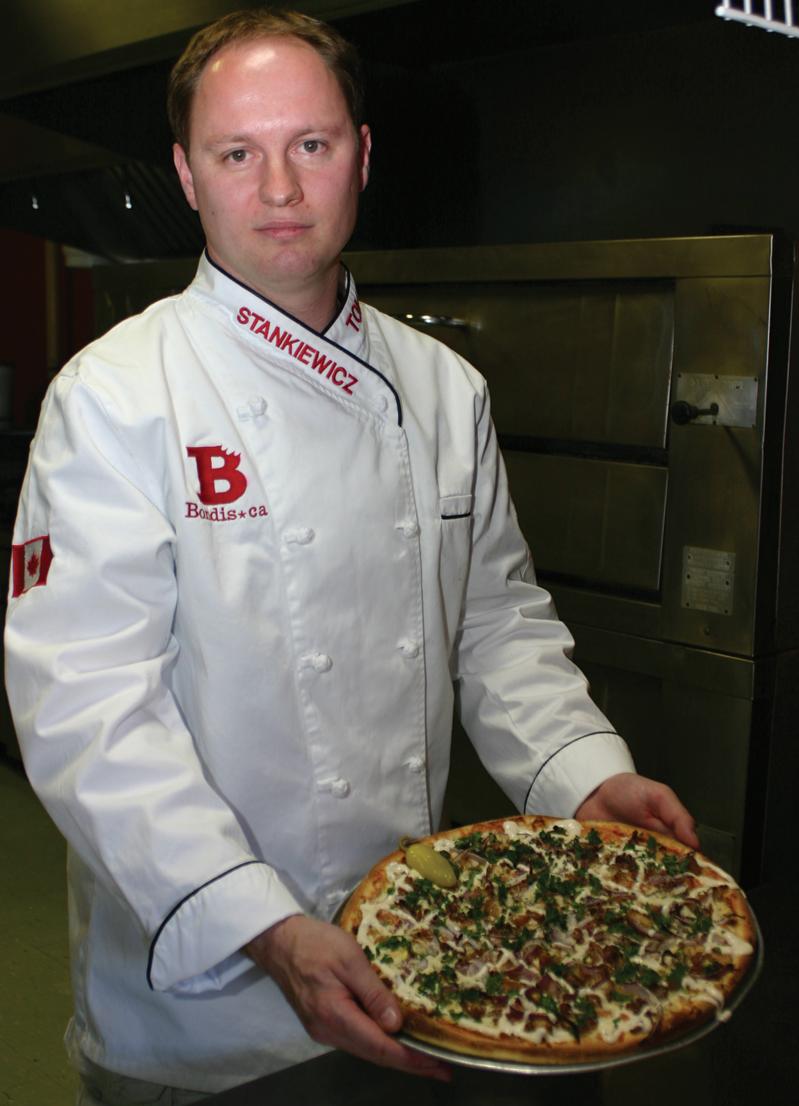
When discussing Black Eyed Peas with pizzaiolo Tom Stankiewicz, he’s not really talking about a new topping for his gourmet pizzas.
Fergie and her band mates have enjoyed his pies, thanks to some good business connections at London’s John Labatt Centre.
“It’s fortunate for us that we know a lot of people who give us advertising for nothing,” he says.
In fact, other than word of mouth, company website and the occasional in-store promotion, Stankiewicz says they do very little to promote their business via traditional media methods. Instead, they’ve invested their efforts into caring for, and building relationships with the best marketing team out there – their customers.
Now in his 10th year of dishing out gourmet pizza from Bondi’s Wharncliffe Road South location, Stankiewicz says, “if you provide the service and the product the people want, they will come.”
The pizzaiolo, who competed for the first time this year at the International Pizza Expo in Las Vegas, says in order to build on that kind of loyalty, the product has to be “100 per cent.”
Each pie is also finished with a pepperoncini, a mild pepper with just a touch of heat.
“It’s our signature. If you get a pizza that doesn’t have a pepperoncini, it’s not a Bondi’s pizza,” Stankiewicz says.
Of course, a little creativity helps when creating some of the other “signatures” on the menu. While pizza lovers can get the more traditional kinds of pie at Bondi’s, real connoisseurs delight in how Stankiewicz pushes the limits. The most impressive offering – although not currently on
the Bondi’s menu – is a spectacular pizza known as the Burning Sicilian.
Just a rundown of the items on the pie is enough to set the appetite ablaze; among them: smoked maple bacon-wrapped asparagus spears, grilled Shitake mushroom caps, oven roasted garlic, sautéed zucchini and red onion, topped off with a few other
alcohol on fire, producing a wow factor ne’er before seen at any chain store.
The pie was something else that he created for competition, but has grown into a culinary work of art. When pressed about adding it to the mainstream menu, Stankiewicz admits the temptation is there, but there are a few issues that would need to be explored.
key ingredients (including purple kale, which adds some incredible colour). All of Bondi’s pizzas enjoy a foundation of proprietary sauce – the recipe which he admits, not even his wife knows.
The pie – which he figures would have to be menu priced in a five-star range – is literally on fire. Just prior to being fully baked, the pizzaiolo drizzles brandy on top and the heat from the oven (which must also be close to perfect) sets the
As to his menu, the Londoner admits they are looking at fresh changes, and – like other Canadian restaurateurs – pricing is a consideration. He won’t harp on the impact of cheese prices over the past few years, nor will he dwell on wheat prices. Rather, Stankiewicz prefers to maintain a focus on customer service and winning the inflation battle through building a loyal following.
This year’s bestseller has been his “Big Chicken.” The pie is built on a whole-wheat crust with a blend of California mozzarella and Monterey Jack cheese. It also has that Canadian twist of the double smoked maple bacon, julienne chicken breast and a drizzle of garlic caesar dressing.
Stankiewicz says while the products are market proven, there is still a lot of work that must continually go into the business, especially in tough economic times.
“With any business, you need to be here,” he says. “You need to look after it, and you need to relate to your customers to build relationships and learn what they want. When people come through that door, and you provide the service and product they want, there’s nothing more successful than that.” •
AHow to recruit more ‘A’ players
ll Aboard!
Don’t you just wish that hiring new employees was that easy? Unfortunately, it’s such a challenge today that in a recent national survey, over 30 per cent of CEOs said up to half of their employees are a poor fit for the job.
What’s more, putting the wrong person in the wrong position just to fill the vacancy can have dire consequences to your organization in terms of poor employee morale, low productivity and lost opportunities. The impact to your company’s bottom line can be staggering.
The good news is that companies can drastically improve their workforce quality by adopting a proactive mindset and consistently using the right hiring procedures. Of course every company is always looking for good people, but the employees who are considered “A” players are usually working elsewhere – and happily – so they’re less likely to be seeking greener pastures.
BY LEE FROSCHHEISER
tendency of waiting until a job opening occurs to initiate an emergency job search – reactive recruiting at its worst. In a rush to fill the open position and lacking constant, solid recruiting procedures, the company is more likely to take a less qualified candidate or, in some cases, whoever shows up first.
GOOD JOB DESCRIPTIONS
Avoid such dire measures by establishing a very structured and systemized selection process well ahead of when your company actually needs it. This begins with writing a job description before the actual recruiting process.
The first 90 days of employment are critical to the long-term success of the new employee.
A good job description includes: the job’s purpose,a detailed breakdown of responsibilities, to whom the new person will report, ways to measure the person’s effectiveness, the job’s vital factors, how the person will spend their time, their authority within the company, and the required competencies, background and experience.
you need an interview game plan.
Considering what’s required and wanted in the new hire, what are you truly looking for in an ideal employee, and how do these attributes relate to what’s needed for the position? Also, if given the opportunity, what competencies would your internal or external customers look for from your employee to serve their needs?
Whatever these competencies are, the candidate you choose must have them.
Your interview game plan must also include a robust selection process. This enables you to evaluate the potential hire in different ways. For example, you may need to conduct several interviews, and will want to do background check(s) at the very least.
PROFESSIONAL DEVELOPMENT
After successfully hiring an employee, the next step in the recruitment process is to develop this person via ongoing coaching, training and planning that will enable his or her professional growth.
So if your company’s recruiting strategy isn’t well developed, you’re basically hiring other companies’ “B” and “C” players. True, an occasional “A” player will walk through your door, but you’re more likely to find that elusive diamond through the establishment of solid, consistent recruitment processes.
A multi-layered, robust, recruiting process must be rooted in proactive versus reactive recruiting. In today’s world, many companies have the risky
The job description also drives your interviewing process and questions, as well as the employee’s training plan. What’s more, writing a job description before recruiting forces you to think through the position, the competencies of the person you need and becomes the blueprint for the success of the job and that person.
INTERVIEW GAME PLAN
Once you’ve attracted the top candidates,
Unfortunately, most companies have no structured on-boarding plan for new personnel. By solely focusing on bringing someone “aboard the bus,” they forget to follow through with important ongoing training and development. If this is happening at your company, you’re significantly reducing your retention odds. And if that new recruit is one of those rare “A” players, the loss is even greater.
The first 90 days of employment are critical to the long-term success of the new employee. Therefore you should develop and implement a 90-day training plan to secure the employee’s place
Continued on page 25
’Til death do us part…
How to survive as a couple in business
BY ZELDA FRADEN
when Bob and his wife Prudence decided to start a business together, they jumped right in, with little or no thought to the idea. They thought it would be fun to work together so they just did it. Unfortunately, this kind of strategy and its lack of planning can cause a couple to kill their romance or even end their relationship.
Bob was on the road working a large territory in the corporate world for many years. With a hectic schedule, he flew home on weekends. Prudence – home raising the children – handled all thresponsibilities of educating and raising a happy, well-adjusted, healthy family. She also managed their personal matters, including the finances and schedule.
While on the road, Bob called home frequently and during one of these phone calls he became alarmed. While on a call
home, his daughter asked to speak to her “phone” dad. She asked him, “Are you my phone dad or are you my real dad?” That was the moment Bob decided his road warrior days were over.
Without a lot of time or thought into how the couple would work together, Bob and Prudence jumped at the opportunity to own a popular pizza franchise. The problem they ran into was the same one that many couples realize when opening a shared business. While many couples understand how to manufacture or sell their product or service, few of them have the necessary skills to run a successful business. To be successful, you have to do more than just place an “Open” sign in the window.
With 80 per cent of businesses being family-owned, many couples desire to work together, even when it means overcoming various obstacles and challenges that face business owners. So, if you’re
already in business together, what can you do to improve your company, both financially and emotionally? How can married couples and families thrive in business together?
SET GOALS
Every business should have a written business plan. In the beginning it might be only a couple of pages.
A business plan is always a work in progress. Continue to tweak the plan as the company grows. There are basic items a plan must convey to avoid future conflict among married couples.
First, the plan should state the overall goals that you want to accomplish. Perhaps you want to grow your company from a local to a statewide company. Perhaps you dream of becoming a franchisor one day. The overall goal of what you want to accomplish is the main element in the business plan.
Ask each other how you plan to let customers know you are open? What will you do to advertise and market your goods or services? These are two basic elements of the business plan.
The plan should cover all the responsibilities necessary to help make the company successful. It should also describe who is in charge of each responsibility, including sales, marketing, expenditures, and finances. Then it’s time to sit down together to determine a budget. Discuss how much money you will need to accomplish all the goals you have placed in the business plan.
DETERMINE RESPONSIBILITIES
Your business plan clearly states the different responsibilities needed to run your business.
Together, you should determine who is best to accomplish each of the responsibilities. Is your spouse better at finance and numbers? Let the stronger one be in charge of fiscal responsibilities. The spouse who is in charge of the financials should also be responsible for government reporting and all functions relating to accounting.
Who will handle sales and customer service? Once a jobfunction is designated to someone, respect him or her to
make the right decisions. As the company continues on, make sure the appropriate person continues to handle his orher responsibilities. Check back with one another on a regular basis.
COMMUNICATE EFFECTIVELY
Everyone has a different style of hearing and learning. Listen to how you speak to one another. Some people hear what you say but they need a little time to process what was said. Learn how each other hears and be patient.
Whenever you have a disagreement, never voice those concerns in front of others. Always go behind closed doors or go to a nearby café to discuss the issues. Nobody likes being told what to do by his or her spouse.
Avoid acting or appearing as if you are the boss of the other. Let each person state their opinion and if possible, go back to the written business plan as a reference guide.
DROP EGOS AT THE FRONT DOOR
There is no room for power plays in a family-run business or restaurant. You must create and maintain a harmonious environment for yourself and your staff members, even if it just the two of you.
Your harmony together (or lack thereof) can make a huge difference in sales, customer service and productivity. You must be united in your efforts to succeed. Customers, employees, vendors, and suppliers must see the couple working together. A bickering couple creates tension and makes the entire restaurant environment toxic.
HOLD WEEKLY MEETINGS
If you aren’t doing this already, it is a great idea is to schedule weekly or even daily meetings. These are meetings held at the restaurant, not your home in the evenings.
This is the time to discuss expenses, the profit and loss statements, goals, problems you have or think you may encounter. Nothing should be combative or argumentative. All the communication should be constructive and in line with carrying out the goals of the business. •
Should you buy a failing pizzeria?
Why do pizzerias fail?
BY LLOYD R. MANNING
Last month we discussed how to use your advertising dollars to reach the female buyer. This month, we’ll explore the male buyer, and some key areas that affect decision-making.
Although the Canadian Restaurant Association reported a slight decrease in 2007 sales in restaurants of all classes, including pizzerias, have been on the increase for several years.
Still, many pizzerias are in dire financial straits and can be acquired at fire-sale prices with little capital investment and liberal terms. However, the percentage of closed and bankrupt restaurants that have been successfully turned around is small.
This does not mean it cannot be done,
or you cannot do it, just that the law of averages is not on your side. You will need unlimited perseverance, innovation, extensive financial control, people skills, a co-operating banker, and an undeveloped sense of fear.
There are numerous reasons why restaurants fail, the most common given are bad management and under capitalization. Although both hold true in a high percentage of cases, it’s an oversimplification, sometimes true, sometimes not.
Causes for a pizzeria’s failure are many, several of which are obvious even to the untrained eye, while others are well disguised. Some problems are readily rectifiable, others can be corrected but at too high a cost to be feasible, and some are
incurable. Accordingly, before contemplating the purchase of a distressed pizzeria it is absolutely essential that you understand why it is failing and what is required to make it profitable.
To this end it could be necessary to develop a new or different concept, renovate the premises, buy new equipment, develop new and innovative marketing techniques, hire a new staff, and have new and better management. It’s all about making winners out of losers.
An extensive study conducted by Cornell University groups the causes of restaurant failure into three distinct categories: external, internal, and economic. There is of course the usual overlap with some fitting into all three categories.
Still, failure is more often dictated by internal and not external or economic influences. It is the internal problems that are most readily identifiable and correctable.
EXTERNAL FACTORS
For the most part these are impediments you cannot overcome, or if so at an excessive cost. They would include a poor location such as being too far from the pizzeria’s market, (delivery and pick-up customers will normally patronize the one closest to home), hard to find, hard to see, (a good location is clearly visible from one half block in a built up area and two full blocks when on a highway or main thoroughfare, either of which could be made so by large signs), hard to get to, limited or restricted accessibility, unsafe neighbourhood, changing demographics such as a declining market, a saturated market with excessive competition, etc.
Like Cornell University we are going to classify building deficiencies as an external impediment to success. Although some pizzerias are quite simple with little other than a front counter area, kitchen, and storage areas, others are very elaborate dining edifices, subject not only to location inadequacies, but improper design, structural deficiencies, and deferred maintenance.
Where they are property related the first step is to clearly identify those shortcomings which can be rectified and those which cannot, and where applicable, the cost of correction, including soft costs.
the first restaurateur to spend thousands of dollars upgrading the premises only to do less business than before.
If contemplating a leased property be certain to check out the ramifications of the lease. With most leases all improvements become a part of the building. If the upgrading cannot be amortized during the first lease term either it costs too much or the rent is too high. You can never assume that the lease will be renewed.
For a simple way to determine “Will it pay?” start with the market value of the pizzeria as it is, add the cost of the renovations, and then estimate the value after. If you have not gained more than the cost of upgrading the answer is “No”, it will not pay.
INTERNAL FACTORS – MOSTLY CURABLE
Bruce Flesher, of Edmonton, a highly successful restaurateur who has been in this business for about 40 years and has owned restaurants of all types – including pizzerias – says that the most common reason for restaurant failure is lack of motivation by the owner.
Breathes there a man with soul so dead
Who never to himself has said, Someday I’d like to own a restaurant.
Soft costs are those that are additional to the basic cost of construction or renovation. And, do not overlook replacement or upgrading of the furniture, fixtures and equipment (FF&E). If it’s a bad location or no off-street or nearby parking, and you cannot acquire the same, the building is inadequate or dilapidated, and so forth, don’t buy.
If acquiring a building needing a major renovation, be careful. You would not be
Many lose focus, and they become frustrated and burn out when they discover this is a labour-intensive, low-profit business. Cornell University says that lack of or diversion from a workable concept is the second principal cause. Overextending resources, being overly optimistic, ignoring or misunderstanding competition, relying on short-term and quick fixes, overreacting to problems or not acting at all, lack of product quality and standardization are on the list.
For the most part failure caused by internal factors comes down to lack of management capability, adequacy, competence, efficiency, and experience. These shortcomings are reflected in a poor financial condition caused by poor controls, accounting that fails to provide the necessary data, limited access to necessary information, poor staff control, internal
theft, and lack of good managerial advice.
Many pizzerias fail as they are not sufficiently marketed or there is no originality or marketing innovation (who has gone to Mesa, Arizona, without visiting Organ Stop Pizza), too much reliance on existing customers, not obtaining new ones, or adapting to neighbourhood changes only as needed.
Flesher recommends that before you buy a pizzeria you take a tour of the target’s market area. Check out the competition. Don’t be afraid to spend a dollar in a competitor’s pizzeria or talk to the owner.
Compare, compare, compare. How does your intended acquisition stack up? Be honest. They might be better than you could be. If you fool anyone it will only be yourself.
Other common management problems include overextending resources, staff’s couldn’t care less attitude, poor service, bad food, uncompetitive prices, failure to address customer complaints, dirty premises, particularly washrooms, dirty and torn menus, poor maintenance on property and FF&E, none or poor pest control – having a friendly cockroach join in for lunch, etc.
You can do something about all of these, it just takes time, patience, and staying on top of it.
ECONOMIC FACTORS
These are failure reasons unrelated to the pizzeria’s operation.
Lack of capital is always listed as a principal cause of failure, yet more often it is not the amount of capital available but how it is used. Other reasons could be loss of lease, or the landlord increased the rent unfairly, death of the owner, excessive new competition entering the marketplace, partnership or shareholder disputes, family squabbles, spousal separation and/or divorce, inability to attract competent employees due to high-paying non-restaurant competition, a restaurant fire, and changes in the economy.
Next month, in Part 2 of Lloyd’s feature, he will tackle the topic of whether you can turn around a failing pizzeria and make it profitable. •
Use your ad dollars to reach the men
BY PETER KOEPPEL
Back in the old days of advertising, all a marketer needed to do was decide whether the company wanted to reach men or women with their advertising message, and then create and place an appropriate ad on the right TV or radio station and in a certain section of the local newspaper. Because so few marketing mediums existed, advertising was easy, at least by today’s standards.
These days, marketing is a bit more complex. New technologies and increased options for how people spend their leisure time make reaching your target market a bit harder. On top of that, you need to do more than simply decide whether you want to reach men or women. You also need to delve deep into the different generations to make your message relevant, and you need to place your message in the correct place for your ideal target customer to see it.
The fact is that today’s media is getting more fragmented. While you used to be able to reach the majority of the population via television, today television reaches a small percentage of the population. Things like the Internet, online gaming, DVDs, iPods, Xboxs, and more compete for people’s attention. That means these mediums are competing for your advertising dollars as well.
For the purposes of this article, we’ll explore how to reach the male demographic. Why focus on men? Because eye-opening research on how men spend their leisure time was recently released by Advertising Age magazine. In it, columnist Mike Vorhaus asked consumers of both genders and of all ages to identify from a list of activities their favorite leisure activity. What
he found in the male category impacts all advertisers who have a product that targets men.
THREE DISTINCT GENERATIONS
When it comes to favorite pastimes of men, three distinct generations emerge: 12-24 year olds, 25-44 year olds, and 4564 year olds. Each group prefers to spend their leisure time differently, which means marketers need to tailor not only their message, but also their message placement, if they want to attract consumers in more than one age group.
12- TO 24-YEAR-OLDS
This group ranks playing games on consoles such as PlayStation 2 and Xbox as their number one leisure activity (34 per cent), followed by playing sports (14
per cent), and using the Internet (13 per cent).
Listening to music, watching television, and reading magazines (some of the top advertising mediums used by many marketers) only ranked in at 7 per cent, 6 per cent, and 1 per cent respectively. So if you’re an advertiser trying to reach this demographic, you need to consider supplementing your television, radio, and print ads with new advertising vehicles, such as billboards in video games, as well as with online advertising.
Even though this group doesn’t read traditional print media very much, they do read articles and view ads online.
25-TO 44-YEAR-OLDS
This group ranks using the Internet as their number one leisure activity (18 per cent), followed by watching television (16 per cent), playing games on consoles such as PlayStation 2 and Xbox (12 per cent), and listening to music (10 per cent).
While this group does show some stronger ties to traditional mediums, newer technologies like the Internet, video games, and iPods still have a heavy draw on this demographic. So if you’re trying to reach men in this market, you really need to diversify your advertising dollars and exposure.
This group is nothing like their fathers or grandfathers – they are up-to-date on the new gizmos and gadgets … and they like them.
45-TO 64-YEAR-OLDS
This group ranks watching television as their number one leisure activity (23 per cent), followed by using the Internet (20
per cent), and listening to music (6 per cent).
Perhaps most surprising is that this older group of men is quickly becoming tech-savvy and using new technologies in areas outside of work. Even in this demographic, things like playing sports and playing video games on consoles still had a ranking of 5 per cent and 4 per cent respectively.
So if you’re trying to reach a more mature market, don’t simply assume television ads are the way to go. People in this demographic are online, playing sports, and gaming with the best of them. They’re re-writing the rules of what it means to be “mature.”
WHAT IT ALL MEANS
The bottom line is that men like multimedia, no matter what their age. And as an advertiser, you can’t rely on just one medium to reach men. Additionally, the media consumption patterns differ by age
group. Understanding that will allow you to more effectively reach men in various demographic groups.
For example, let’s suppose you’re advertising a new car (something all men in all age groups can appreciate). In the past, a few ads on TV and in magazines or newspapers would do the trick to effectively spread the word about a new car model. Before long most men in the target audience would know about the car and be talking about it.
Today you have to take a more complex approach. In addition to your TV and print ads, you’d have to have a web presence with online ads and articles pointing to your web site. On the web site you might have a marketing video of the car model and in-depth statistics about the new vehicle. You would also need to seriously consider utilizing video-ondemand marketing via cable or satellite TV networks to more effectively sell your car. This way men could view all the details
about the new car when it’s convenient for them or right after they see a short TV ad.
If this sounds like a fragmented approach to marketing, it is … and that’s the point. In order to reach men you have to spread your advertising dollars appropriately and look at marketing in a whole new way.
Ultimately, if you don’t understand the different generations and market to them accordingly, you could be wasting both your time and money. So take heed of this advertising advice. Doing so could enable you to reach more male prospects, close more sales, and increase your company’s overall profits. •
Peter Koeppel is founder and president of Koeppel Direct, a leader in direct response television (DRTV), online, print and radio media buying. He is a Wharton MBA, with over 25 years of marketing and advertising experience. Koeppel has helped Fortune 1000 businesses; small businesses and entrepreneurs develop direct marketing campaigns to increase profits. For more information on his company, please visit: http://www.koeppeldirect.com or call: 972-732-6110.
Diana Coutu
Last month, Canadian Pizza Magazine columnist Diana Coutu started sharing her experience in relocating her pizzeria in Winnipeg. The following is part 2 of her series:
When completing your build out you never want to have to redo anything. Therefore it is imperative that time is blocked for each portion of the build and that it’s understood amongst all your trades what job(s) are to be done and who is completing it during what time frame.
Communication between you and your tradespeople is paramount to the successful and timely completion of any construction project.
For the structural portion of our build out there was actually very little to do. Other than the landlord’s work of providing a washroom, there were only four other full walls and a half wall to build. We wanted an open concept for our new age pizza production kitchen and other than some easy-to-clean surfaces, the rest of it was equipment.
I stumbled across a place that happened to be the largest restaurant equipment dealer in Manitoba, MetalTech Industries. They also did in house custom stainless steel work.
We were fortunate to work with a delivery carry-out pizzeria specialist and he was very helpful in more than just finalizing an accurate budget. He understood why we wanted specific things placed at each station and was meticulous in taking notes, a very good sign.
He was very interested in our choice of oven – a Picard tunnel oven with a black granite stone baking surface on a conveyor belt. This would be the first
The project manager… part 2
one installed in Canada, west of Quebec. He was impressed that we’d already flown out to the Picard plant, twice. Each time we brought with us a cooler full of our dough, sauce, cheeses and toppings to test the oven.
We ultimately chose Metal-Tech to complete the fabrication of all of our custom stainless steel pieces and we sourced all of our large equipment through them, as there was no one else who could compare to the level of knowledge and expertise that they could provide.
From the beginning of the project to the very end, we were continually delighted with the level of excellence, professionalism and quality of the custom pieces they made and of the people who installed them. Now that my staff and I use the equipment day in and day out, I know we couldn’t have made a better choice.
Like many projects, ours did take longer than planned. There were hiccups and interruptions along the way and even a two-week delay due to a lack of city gas inspectors. And thank goodness that I choose good tradesmen to complete the work because they caught things that I wouldn’t have.
For instance, after the cement floor had cured enough to walk on, I gained access into my unit with my electrical engineer so he could assess the workspace. That was the first time he saw the transformer installed inside my unit, the one which was supposed to be heavy duty, but wasn’t. Apparently, it was indeed the right size unit, but the wires leading out were too small and wouldn’t have enough capacity for our equipment.
It was specifically written in our lease to have the heavy-duty capacity and so this was important that it was caught early and had to be corrected before any power could be hooked up to it. So the new transformer was ordered immediately, but got lost in transit from Quebec for more than a week.
How does a transformer the size of a large A/C unit, weighing several tons get misplaced? You got me.
Then, it finally arrives, but the power for the entire mall – all 18 units – had to be shut down to replace this transformer, so it became a scheduling nightmare. I think it was finally switched one Sunday night at 10 p.m.
In another instance, early on in the project when I was gathering estimates, I called my local sales rep for my phone company for an accurate estimate to move all my lines over. And I had prepared questions, like whether I had to have the phone company install the lines or my electrician.
She decided to check the original mall work order and learned that there were only a small number of phone lines coming into that mall. Even though I hadn’t started my build out, nor had a couple of other tenants, there weren’t any more lines to give out. Good thing she checked and put in another work order to expand the number of phone lines coming in.
I bet the new tenants have no idea that they have her to thank for eliminating days of delays because the work was completed months ahead of us moving in.
In another instance, also written into my lease, was having a specific capacity for natural gas. We’d always planned to add a second oven once we reached
the maximum capacity of our one oven, so rather than have to upgrade later, we wanted to have ample gas capacity in place for the second oven right from Day 1.
My gas installer used the architect’s drawings to estimate the cost to hook up the ovens. Luckily, he decided to go up on the roof and actually check; he saw that not only was the pipe in a completely different place than what the architect’s drawings had shown, but the pipe was a lot smaller than it was supposed to be, and wouldn’t allow enough gas to flow for one oven, let alone two.
Why wasn’t everything done according to the architect’s plans? You got me. Why was my tradesman the only who got on the roof to inspect the gas lines?
The truth of it is that when you contract or sub-contract a job to someone they’re supposed to complete the job according to the plans you give them. But I’ll bet that not too many architects and landlords get up on roofs to check that things have been properly completed.
The truth is that people take shortcuts, especially when they think no one’s checking. Most people don’t check on the work, they just assume that people will do things properly.
Early on I decided that I wouldn’t make the same mistakes and on the day that all of my equipment went up on the roof I climbed up a 50-foot ladder to inspect what I expected it to be.
Sure I could have come up with an easy excuse; it was minus 40 C, I completely trust the guy I chose to install and maintain those pieces of equipment, plus I’m terrified of heights. But I was determined to see firsthand where such a large part of my budget was going.
It was important for me to check everything, after all, not only was I signing everyone’s cheque, but as project manager and general contractor, I was also signing off on all the work. This was our vision of the ultimate delivery and take-out pizzeria coming to reality. It was going to have to be exactly what we wanted, exactly as laid out in the plans, to code, as written in the lease,
or I would have serious issues with the non-compliant party.
Diversions from the floor plan and any work not compliant with food establishments bylaws would result in delays in permits being issued, which delays opening which delays the all-important cash flow. In the construction business, more than ever, time is money.
By late October 2007 our existing store on St. Mary’s Road was literally falling apart at the seams, and we couldn’t wait a week longer than was absolutely necessary to move into our bigger location. The St. Mary’s store was never designed to hold 23 staff, let alone do the weekly record sales that we did.
Besides, we’d agreed with the St. Mary’s store landlord that we’d vacate the premises by the end of the year; which worked well for all because he let us off the last eight months of that lease so that he was able to bring in a new tenant much sooner.
As the new St. Anne’s store was quickly coming together it was time to begin arranging our move from our tired, worn out St. Mary’s location into this brand new dream pizzeria.
If I could give you one golden piece of advice in taking on this type of endeavour it would be to check all work; presumed, existing and ongoing. Check everything then check it again. Have good people who know their stuff. Keep good lists for progress reports and conversation pages with dated notes of what you discussed and with whom.
Most people don’t take notes of meetings and conversations and as a result forget many key details. Most people are extremely busy and can’t possibly remember all the details from past conversations as time passes. Writing things down in one place, such as a day timer or a project binder will be helpful to keep everyone on track.
As the project moved along I found that it was helpful to give everyone confirmation calls or e-mails for prebooked meetings, just to make sure that everyone remembered to attend and where the meeting was to take place.
Everyone appreciated the extra effort to keep them organized, even though I did it solely for our benefit and I received many compliments on how well I managed the project.
During the final stages of the build out, in addition to being known as “the boss lady,” I became known as “the coffee fairy.” I made it a point to drop by the work site with fresh hot coffee for all the tradesmen, sometimes twice a day, but always late afternoon, between 2:30-3:30 p.m.
I found that it was the perfect time for a quick pick-me-up and that by delivering it to the tradesmen I created goodwill and kept them on site working. I also brought fresh hot pizzas for lunch, Timbits for snacks, and other goodies to keep the trades happy and on site.
Although it wasn’t my intention, many of the trades did extra work that they didn’t bill us for, and even stayed late simply because I took good care of them. I’m pretty sure that I spoiled them because they made several comments about being sad to finish up and move on to the next job.
We opened our bigger, and better St. Anne’s location on Dec. 19, 2007, and more incredibly, we vacated the old location in those last 12 days of 2007. We moved all of our dough trays, our small wares and our POS system over and “set in place” in one day. Then we dismantled the equipment left behind and had it moved to an auction house.
The entire process from beginning to end was an unbelievable amount of work, with an incredible amount of planning and preparation. It was all worth it. And through it all we weren’t at it alone. We had a team of great people who helped to make it a success.
Looking back now, we are all thrilled with the results, even the tradesmen are proud of what we all accomplished together. I’m able to say that even though I’d never read a book about project management, that I was a good project manager, certainly the best choice to take the lead for our own 21st-century pizzeria. •
Jay Forte
verything has become a commodity; we find more inexpensive versions of the same things. Businesses, like our pizzerias, quickly catch up with what others have done – and even a good idea quickly becomes “commodicized.”
How do you keep your edge? How do you get remembered? How do you develop your SO…the “Stand Out” factor?
Even though we know that new, different and distinct is what gets people’s attention, most of our services and products look like what people expect or what has already been done. We are stuck in a pattern doing what we’ve always done. Bland. Boring. Blah.
The issue is actually deeper and more personal. Most of us don’t like to stand out or to be different. We started off as unique and independent – seeing things in our unique patterns of synaptic responses.
The SO factor: How to make your business stand out
be,” not in the “what is.”
Standing out is about creating something original, exciting and dynamic.
The result is that much of the workplace, and the workforce as well, is now bland, doing yesterday’s approach even though today is different. Customers and employees become bored and the effect is employees changing jobs hoping to find more excitement and the ability to significantly contribute. Customers and employees look for organizations that commit to the largest experiences and impact in what they do because it’s a lot more fun. And if the organization could be ordinary or extraordinary, why not work and shop in a place that is extraordinary? In “Stand Out” thinking, being different is key. The goal is to know what others do and insist on doing something better. We don’t try to fit in; we separate ourselves because in a crowded marketplace fitting in is failing.
ence and when all employees are required to openly invent, think and participate in decision-making, and say what is on their minds. This is way to invite the new, the different and the great.
As we were herded into similar thinking, much of our ability to stand out was challenged, diminished or eliminated. Over time we became great at doing what others did. We learned to be okay with blending and fitting in. The good news is that we can relearn how to stand out.
Focus on these two areas to get back in touch with your “Stand Out” abilities: 1. Reconnect with your creative side. Over 90 per cent of five-year-olds are creative, but only five per cent of 13-year-olds (and older) are creative. We have trained ourselves out of being creative.
Train yourself back into creative thinking by learning how to revisit a problem, issue or opportunity in the following ways:
• Frame it differently. Make it a product, a hobby, an inanimate object, a cartoon, a food, a superhero, etc.
And then we were corralled into school. We were taught the grass is green, the sky is blue and the sun is yellow. What if in your mind, the sun is not yellow but some other colour? Our first thought is “that is not right.”
The universe has an order and the sun has always been yellow. We perpetuate the conventional approach by requiring what should be instead of encouraging what could be.
In today’s thinking or service economy, our value is in our thinking. Passionate performance happens when we have freedom to imagine, create and innovate. Business and life successes are in the “could
As Tom Peters states, “In a busy marketplace, not standing out is the same as being invisible.” If the point of being in business is to develop a loyal customer base – those customers who return and bring their friends, it is not going to happen by doing what others do. Regardless of the case, it is about getting noticed and being remembered. Standing out is about creating something original, exciting and dynamic.
“Stand Out” thinking starts with the permission to let yourself invent. This happens in an open and accepting environment. It happens when your workplace is diverse in both background and experi-
• See it from another perspective: man, woman, child, minority, friend, enemy, teacher, employee, customer, affluent, poor, honest, greedy, etc.
• Morph the problem by changing it to the best, worst, an object, a person, a policy, a fruit, a car, a game, etc.
• Link it to an unrelated item to see the correlations; identify how it is similar, how it is different. This forces the brain to see connections it would normally ignore.
• Use pictures to visualize the problem, issue or opportunity. How does the visual encourage different thinking?
• View the problem as a colour – what does it make you think of, how does the
colour offer a new perspective?
• Brainstorm using the phrases, “What if?” “How about?” or “Just consider…”
• Use word association to generate ideas.
• Write a headline, poem, obituary, news report or book title that relates to a business issue, event or other need. This forces a new perspective on the situation.
2. Build a culture of creative thinkers in your organization by the following: Allow employees to invent and take calculated risks. Reward excellent failures; punish mediocre successes. Encourage greater thinking. If you are not failing every now and then, chances are you are not doing anything innovative. Visibly applaud creative efforts that focus on value, profits and customer service. Applaud employee reach and innovation.
• Break a few rules. Identify the rules that do not add value for a customer, business or process. Challenge pattern thinking by constantly questioning everything.
Be sure it is the best way to do something, respond or make a difference. If not, suggest a change. Stand out as an employee who focuses more on value than rules.
• Invent a Creativity Zone – an area of the workplace that is committed to “Stand Out” and extraordinary thinking.
• Invent the “Creativiteam” – a team assembled to generate ideas to solve an issue, invent something new, create an event, etc.
• Require an idea a day from each employee. Create a new theme each week to direct employee thinking. Insure that the only requirement is that the idea must not look like what is already done.
• Create an idea journal and add to it each day.
Organizations that openly encourage all employees to think, dream and invent, create the possibility of standing out. And standing out is the only way to compete in this information blurred and “over-commodicized” economy.
Service that stands out encourages customer loyalty. Workplaces that stand out encourage employee loyalty. At a time when there seems to be so little loyalty by either party, a bold commitment to being remembered is a critical advantage.
So, remember the bad B’s: bland, boring and blending as a way of going bust. To succeed, “Stand Out.” Think unique, valuable, exceptional and exclusive.
Think success by focusing on what makes you different and distinct. Then help your employees show up to get it done, step up to do it right and “Stand Out” to be remembered. •
Jay Forte is a powerful performance speaker, consultant and founder of Humanetrics, LLC. He applies years of research, along with his training as a CPA, to help organizations maximize performance and profits through improved employee productivity, creative thinking and customer service. Renowned for producing results, Jay is working on the forthcoming book, “Own It! Getting Your Employees to Think Like Owners.” For information on keynotes, speaking, programs or to see the daily BLOGucation, visit www.humanetricsllc.com or call 401-338-3505.
Time to stockpile T
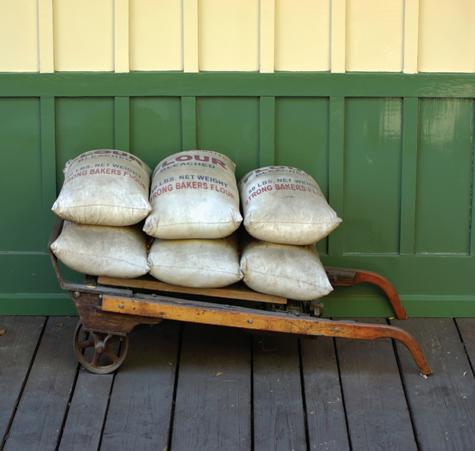
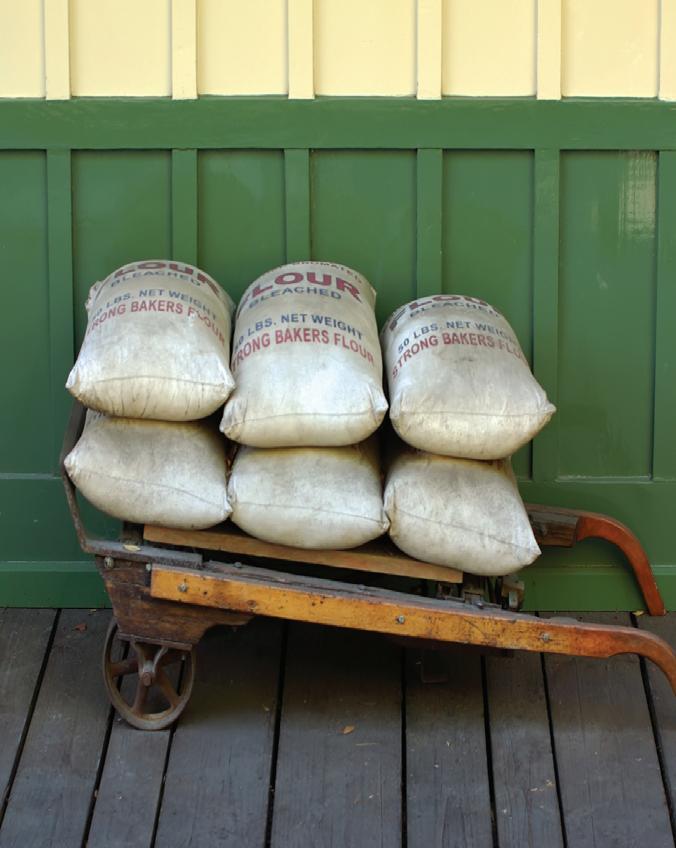
he combination of a 30-year low in global wheat stocks, drought and transportation costs have made flour prices rise like leaven dough.
In fact, wholesale flour prices are reaching a point of triple the price from what they were just a few short months ago. For the mom and pop pizzeria, these costs hit hard – even more so after another hike in dairy prices for 2008.
The Canadian Wheat Board identifies the supply problems as a result climatic “disasters” in the world’s five top wheat-exporting areas – drought in Australia, rain in Europe at harvest, frost in Argentina, a wet 2007 Canadian Prairie spring and crop damage in the U.S. due to both drought and rain.
Now commercial costs are varying anywhere from $20 to $36 per 20-kilo bag, depending on geographic location, purchasing quantities and distributor. Speculation – that nasty word in industry today – is that prices could touch the $40 range.
“My prices have gone up 25 cents on every pizza and 10 cents on a sub in the last year, and I don’t remember the last time we put our prices up before that,” pizzaiolo Noel Estoppey told reporter Sabrina Skinner in April.
In discussing prices with The Guardian newspaper, the Newfoundland business owner said he was paying nine dollars for a 20-kg bag of flour at this point in 2007. That price has risen to $30 a bag today.
“I’m lucky where I don’t buy premade stuff. I do everything from scratch, I’m going in with a bag of flour and making it,” he said in that interview.
The reality today is that pizzerias from Estoppey’s in Bay St. George, Nfld., to Victoria, B.C., must address the rising costs of raw materials and the effect on margins.
At the recent International Pizza Expo, dough expert Tom Lehmann suggested that one avenue of choice for operators is to rethink their storage and purchasing habits for flour.
Flour can be effectively stored for
several months – even up to a year for white flour – if the conditions are carefully managed to prevent spoilage. Proper containerization and freezing will extend the shelf life of flour.
Some of the other storage strategies include: storing flour at low temperatures below 12 C and refrigerate if possible, keep the area free of flour dust, and keep the storage area free of old stock as it may harbour weevils. Weevils are part of our natural environment. They are most active when it is warmer than 12 C and prefer warmth and often light.
Stock should be rotated, so that the oldest supplies are always used first.
“It’s extremely hurtful to small businesses,” Thunder Bay, Ont., pizzeria and bakery operator Angelo Perna told the Thunder Bay Chronicle-Journal in regard to the current flour prices.
“When you go from a $9.99 bag of flour to a $20 bag to make bread, it’s extremely high. It’s more than doubled in a matter of about two to three weeks. I’m going to have to increase the price of bread by at least a dollar. And the same thing with our pizza,” he said in the interview.
“We sell pizza for $12. I can’t just go and say now that the price of flour’s gone up, I’m going to have to charge $15. Customers aren’t going to buy it. And if they do still buy it, they’re not going to buy it as often.” •
Continued from page 11
within the organization and facilitate his or her improvement.
You can vary this training based upon the new employee’s level of experience with your existing systems. But it’s important to train this new hire on business practices, how your company functions and how these fit into the organization, too.
Key to the success of this 90-day training plan is using a mentoring team consisting of a peer, manager and support person. The mentoring team should meet at least monthly to give feedback to the new hire, ensure he or she has someone they can go to with questions, and enable their success at adhering to the 90-day training plan.
Because setting these requirements will communicate company expectations and accountability for results, ensure that the new employee understands the company’s priorities, and, most importantly, measure whether he or she is the right person for the job.
Each employee should be assigned personal vital factors
Once the employee successfully completes the first 90 days, you’ll need a six-months-toone-year, personal-development plan to facilitate his or her advancement and growth. Focus on consistent improvement and job-performance strengthening.
INCORPORATE THE PLAN
Finally, do you have a well-developed, current business plan?
ESTABLISH EXPECTATIONS NOW
Also during this time, it’s critical to set clear, result-oriented goals. Why?
From Day 1, such a plan helps new employees understand the company’s direction and the role they play in it. Based upon the business plan, your recent hire
should also grasp the company’s vital factors – the unique set of critical elements that can either hold a company back or propel it to success. Each employee should be assigned personal vital factors that support the company vital factors – an exercise that creates that crucial strategic alignment within your organization.
Following these fundamental strategies is a sure way to onboard those “A” players and, more importantly, keep them aboard the company bus. With the right team in place, you’ll find it’s easier to retain those good workers, maintain strong company morale and meet your business’ goals. •
Lee Froschheiser, president and CEO of Map Consulting (MAP), works with many premiere business leaders and companies nationwide. Lee is also co-author of the best-selling book, “Vital Factors, The Secret to Transforming Your Business – And Your Life.” His consulting firm, MAP, specializes in transforming companies, and accelerates the performance of people, teams and organizations. Clients include WebEx Communications, Cold Stone Creamery, Los Angeles Clippers and KIA Motors. For more information call 1-888-834-3040 or visit www.MapConsulting.com.
Michelle Brisebois
Gosh I hate it when my grandmother’s right. She warned me once that every party came with a morning after, which kind of makes it hard to enjoy the good times.
It’s pretty safe to say that the last few years economically have been … shall we say, one heck of a kegger? Historically low unemployment, coupled with low interest rates, have made us all feel as snug as a bug in a designer rug.
That is until recently.
Cool the economy a titch, throw in escalating fuel costs and add a dash of
Recession proofed
rising food prices and you’ve got yourself a nice little consumer squeeze. If consumer discretionary income dries up then that’s bad news for the restaurant industry – right? After all, dinners out are among the first things to get cut when the going gets tough.
Not necessarily, if you’re talking about pizza. As the New York Times reported recently, “no other food delivers this much taste and nutritional value for the money.”
Pizza traditionally has boasted a relatively low food cost of about 30 per cent. Of course, your mileage may vary
classifieds
REAL PEPPERONI... Never compromise when it comes to your pepperoni toppings. What would your pizza be without great tasting pepperoni? Sila believes in traditional values. These values are supported by quality – quality you can feel, taste and smell. We never compromise on the rich flavour of real pepperoni. For more info, call Viau Foods, Inc. 1-514-321-8260 or fax 1-514-321-8770.
ITALIAN SPECIALTY CHEESE... Salerno Dairy Products Ltd. Manufacturers and distributors of great tasting Italian cheeses and food products, invite you to contact their sales professionals. Each representative is motivated to ensure quality dairy products backed by service second to none.
For more information and quality products, call 1-800-263-6536 or 1-905-544-6281.
FOR ALL YOUR PIZZA NEEDS... Ricco Food Distributor. Your complete pizza supply distributor, serving southwestern Ontario. For further information and pricing details, call Don Windsor at 1-519-245-7081 or fax 1-519245-7126.
SPRINGER’S MEATS INC... Processors of quality fresh, smoked and cooked meats. We specialize in pepperoni, ham, back bacon, bacon ends, over 150 items. Serving the food service industry of southwestern Ontario. For details call 1-905-544-0782 or fax 1-905547-3107.
THE OVEN THAT CONSERVES ENERGY... Middleby Marshall’s PS 200 Direct Gas Fired Conveyor Ovens. Middleby’s ovens provide very efficient heat transfer to products. Energy is conserved as air is recycled from heater to product, with minimum flue or vent loss. For details Call Middelby Marshall 1-905-696-8252.
depending on what kind of toppings and production practices you have.
The restaurant industry is definitely feeling the pinch of higher ingredient costs and many are absorbing these costs rather than attempting to pass them on to their customers. This is the time to look for those menu items that deliver a “win/win” for you and your customers. You benefit from a low food cost by serving pizza and a family of four can share one pie and have dinner out without re-mortgaging the house.
Thin crusts will use less flour and
appeal to calorie-conscious customers. Sprinkle smaller amounts of artisan cheeses on top as opposed to the traditional gooey layer of mozzarella cheese. Of course, pizza is traditionally the item of choice for “ordering in” when a family is cocooning at home rather than gallivanting on the town.
And cocooning is about to get a lot more popular.
Don’t assume they know about you because they drive past
Discretionary income is what’s left to spend after the necessary bills are taken care of. As consumers are forced to pay more at the gas pumps, grocery stores and for energy-related utilities – there will be less to spend on entertainment.
As gasoline becomes more expensive, people will think twice before they venture out. South of the border, The Atlanta Journal Constitution released results of a survey in March 2008 indicating that 52 per cent of readers said the cost of gas has caused them to limit their driving, while 11 per cent had actually purchased a more fuel-efficient car.
A similar Canadian survey in April 2008 by MSN Finance asked at what fuel price (ranging from $1.25 to $2.00 per litre) would Canadians change their lifestyle. Of the 4,700 respondents, 56 per cent said they already had.
The pearl of wisdom for your business in this trend lies in your ability to let the consumers who live within a 2-5 kilometre radius know where you are and what you offer.
Don’t assume they know about you because they drive past you every day and you’ve been there for years. Neighbourhoods tend to have approximately a 20 per cent turnover per year so there are new faces you’ve not seen and old customers who’ve disappeared. They’ll especially like to know if you deliver.
When you advertise, mention that pizza is “great value for a fun night of entertaining at home.” This type of messaging will be quite timely.
If you have the space, consider
in-store seminars or events. Come up with some wild menu items and hold a “pizza tasting.” Promote it ahead of time and allow customers to sign up. Let them try different items and to make notes on what they liked. It could turn out to be quite a neat little “date night” for couples who are into good food. This will give them a fun night out and give you a chance to make a sales pitch.
Try charging a small fee if you include a speaker or even some wines to pair with it.
Make sure you promote your pricing unapologetically. It’s easier for consumers to budget when they can clearly see what they’re being asked to spend.
Promote your hours of operation and point out that customers can call ahead from work to then pick up their food on the way home. The research also shows that consumers will be planning their trips more carefully to combine as many errands as possible in one journey in an effort to conserve gas.
Consumers are definitely waking up with a bit of a fiscal hangover from the party. In between the doomsday headlines is a very positive message for quick-serve and casual restaurants. People will defer buying the new car, big screen TV or trip to Disney World. In its place they will be looking for the “small indulgence” and they’ll want to get it close to home. •
Michelle Brisebois is a marketing professional with experience in the food, pharmaceutical and financial services industries. She specializes in brand strategies. Michelle can be reached at briseboismichelle@sympatico.ca.
World’s Finest Pizza Dough Processing Dividers -
Divider/Rounders - Rollers
MODEL LD-626
Large Capacity DOUGHDIVIDER
12-Part Division 6-oz up to 26-oz each
MODEL JN Semi-Auto DIVIDER/ROUNDER
36,18,9,6-Part Divisions 1-oz up to 26-oz each
MODEL SDR-42
Front Loading - Two Pass DOUGH ROLLER
42 ounce dough capacity Dough up to 20” diameter
Take advantage of the strong Canadian dollar and add high quality Dough Dividing, Dividing/Rounding and Dough Rolling equipment from Dutchess. We’ve been producing the world’s finest dough working equipment for over 120 years.
For more information call: 1-800-777-4498
e-mail: sales@dutchessbakers.com Web site: www.dutchessbakers.com
R EMANUFACTURED O VENS
D ELIVERY S IGNS
E QUIPMENT M ARKETING
Wayne Rempel
Are you tired of coming to work in the morning and finding things are not done the way they should be?
We all know as owners or managers or both we cannot be at work from morning until close. We have to be able to leave and trust that the people working for us will do their job. I know it is not always easy, but if you are overworked, it will have a negative impact not only on you, but also on your employees and your business.
I frequent a number of pizza-related bulletin boards and I was astounded to read a fellow pizzeria owner’s method of dealing with his staff. Basically, this is part of what he said: “I degrade them, let them know how useless they are and I don’t do it quietly, I do it in front of as much staff as I can assemble before I blow my top and I’m a really great boss because the people that are there know it’s to protect them and to make sure they stick around, I do not have a babysitting business and I do not give second chances.”
Now, I know we all have our own style of management and we all do things differently, but why would you ever degrade someone? Even when I have to terminate people I do it in a compassionate way and I try to make it so when they leave my premises they still respect me – even though they may not like me. I do know treating people badly won’t help you get what you want.
So how do you get people to do what you want them to do?
I believe it is through leadership. You have great ideas, a clear vision, and you are out to change the world but you have a problem … no one is following you.
Here are ways to connect with your people and have them follow your lead:
If you lead they will follow
THINK LIKE THE OTHER PERSON
You can motivate people if you appeal to what they desire or want.
First, you need to remember that old saying: “People do not care what you know until they know that you care.” Great leaders win the trust of people through their identification with them. To identify with your people you must not set yourself apart from them but become one of them.
SHOW SOME HUMILITY
So you think you are better than your people? No wonder why they don’t follow you.
Humility is what makes a good leader that people will want to follow and want to please.
People who rule with an iron fist usually rule out of anger and a big ego. When those things are stripped away, they have nothing left.
They say most great leaders are ones that have been thrust into the role, rather than one who seeks to rule because they desire power. Rudy Giuliani was a prime example of this on 9/11. He was already leading a whole city, but he truly shone when the tragedy of the terrorist attack hit New York City. He was humbled and became like one of his people, it was truly his best time as a leader.
You do not have to be better than someone else to be a leader – you just have to be more willing.
The most effective way to lead and have people follow you is to keep things simple.
Nothing makes it harder for people to follow then vague, disorganized and complex strategies. Be clear and organized with what you want people to do so that they will align themselves to your way of
doing things. Always be flexible but only when it makes sense and don’t budge if it is something that makes the task easier but doesn’t have the outcome you are looking for.
CONTROL THE EMOTIONS
So how do you present yourself as a leader so people will do what you want?
First don’t be overly emotional. Emotion shows passion, which is good, but you can go overboard. Overly passionate people are believable but they don’t make good leaders.
People don’t want to follow someone that is overly emotional. Never yell at someone, you will immediately lose his or her respect and people become defensive and will not listen to what you have to say.
SHOW SOME RESPECT
Respect everyone; belittling people does not make them smaller, it makes you smaller. You will have more people follow you not because you show them how great you are, show them how great they are.
You don’t need people to believe in you, make them believe in themselves and they will want to follow your direction.
So now that you have them following you, you need their commitment.
Give them responsibility. Ask for their input when you need it but also take the lead when you have to. Sometimes you have to dictate but you must balance it out. •
Wayne Rempel owns and operates JP’s in Lacombe, Alberta. He has been in the foodservice business for 20 years. Wayne also consults and does seminars for the hospitality industry. Have any questions or comments? E-mail Wayne at waynejustpizza@shaw.ca.