Hypocrisy and the 'fossil free' movement
“The only way to impact emissions is to target the users, who are, of course, everyone...”
per capita growth in fossil fuel consumption. Harnessing our planet’s enormous endowment of natural hydrocarbon energy is the greatest factor underpinning the huge gains in virtually every aspect of humanity’s remarkable progress. And the technological advances made by approximately one million workers who unlock those buried resources have been equally profound.
But now those workers and the companies that employ them are being attacked
as environment destroying pariahs in a global anti-fossil fuel war that aims to cripple their financing and destroy their livelihood.
Last February, an international group calling themselves Fossil Free disrupted the opening of stock exchanges around the world. The occasion was a so-called “Global Divestment Day” aimed at convincing shareholders of corporations “who have become rogue entities seeking profits at the expense of people and
planet” to divest their holdings. The group claims their advocacy has stimulated a $50 billion reduction in fossil fuel investments. That number is likely exaggerated but the movement is definitely gaining traction.
In Canada, the General Council of the United Church has voted to drop fossil fuels from its investment portfolios, saying the decision is based on “the Christian duty to care for the earth.” Divestment campaigns are under way at some 30 Canadian universities including the University of British Columbia and University of Toronto where professors have voted to urge portfolio divestment. Victoria City Council recently passed a motion asking the provincial Municipal Finance Authority to allow divestment. And just last week, the Canadian Medical Association announced it’s doing the same.
Target the user
We’re problem solvers. We do what it takes to help our customers get the job done.
Peter
Omran Account Manager
WFS Ltd., an Acklands-Grainger company Mississauga, Ontario Find solutions in Our Brands.
“ When I visit a customer, I keep my eyes open for problems I can help solve. By offering solutions, I become my customer’s go-to. It’s my purpose during each visit. I take pride in that.“
At Acklands-Grainger, we take a special pride in solving problems, not just selling products. We find ways to make our customers’ businesses stronger by finding solutions to problems big and small. It’s how we do business every day.
Peter Omran is an example of this thinking. One of his customers, an automotive parts manufacturer in Ontario, had a piece of machinery that was critical to production. What the customer didn’t have, though, was a maintenance kit for the machine. The kit had been discontinued and without it, an otherwise functional piece of equipment would effectively become obsolete.
Get the full story of how Peter solved this problem, as well as other examples of Acklands-Grainger team members finding solutions, by visiting: AcklandsGrainger.com/ProblemSolved/Peter
But most greenhouse gas (GHG) emissions are caused by users of fossil fuels. Environment Canada’s website states, “Globally, almost 80% of GHG emissions from human sources come from the burning of fossil fuels and industrial processes. Specific activities include . . . vehicles, electric production, heating and cooling of buildings, operation of appliances and equipment, production and transportation of goods, and provision of services and transportation for communities.”
In Canada and other oil and gas producing countries, the proportion of GHG emissions from hydrocarbon production is higher than the global average, but even our much vilified oil sands produce only about 0.01% of global GHG emissions. The only way to impact emissions is to target the users, who are, of course, everyone. So why aren’t those university professors, who fancy themselves as intellectually rigorous thinkers, calling for divestment of the shares of companies that use fossil fuels? And if, as those church leaders, doctors and politicians believe; fossil fuels are morally wrong, shouldn’t they be boycotting their own use of fossil fuels? No driving, no air travel, no road or rail transported food, no natural gas heat for their houses, no electricity from fossil fuelled power plants. And those passionate Fossil Free divestment activists must also target any company that uses fossil fuels in its production or distribution system, which means virtually all companies. Without hydrocarbon energy, the global economy would shut down. Ironically, if producers failed to supply user demand, the public would be outraged.
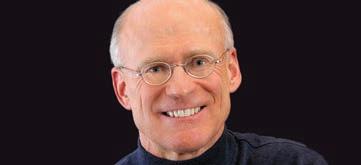
Gwyn Morgan is the retired founding CEO of EnCana Corp. and has been a director of five global corporations. This column is distributed by Calgary-based Troy Media.
Comments? E-mail jterrett@plant.ca.