
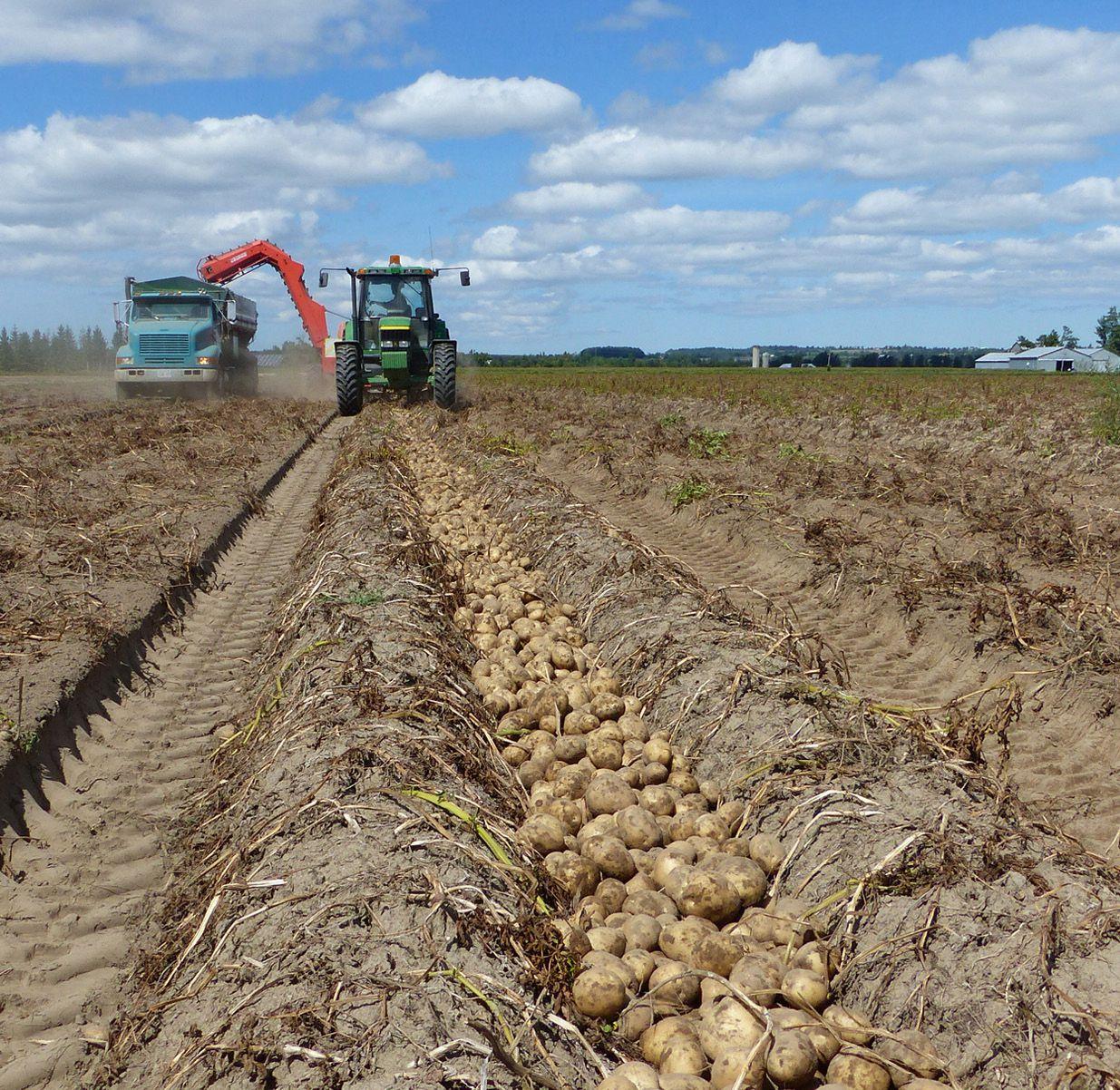
You’ve grown a healthy potato crop – the next challenge is to limit the loss of tuber quality during harvest.
BY EUGENIA BANKS
Harvest management is in large part bruise management. Bruising increases the probability of storage diseases and tuber shrinkage, which results in a reduction of marketable yield. Significant bruise damage to more than three to four per cent of the crop is considered excessive, so minimizing bruise damage from vine kill to harvest should be a priority for growers.
Luckily, there are several things a grower can do to minimize the risk of bruising.
There are a variety of crop factors to consider in order to harvest a healthy crop.
Fully mature tubers retain their quality during storage
A mature tuber with a well-set skin is considerably more resistant to mechanical damage during harvest. This reduces the risk of bruising and wounds where fungal and bacterial pathogens can penetrate and infect the tubers. For example, shatter bruise occurs when impacts cause cracks or splits in the potato tuber skin. The cracks may extend into the underlying tissue. Diseases such as Fusarium dry rot and bacterial soft rot easily invade tubers that have shatter bruise. Ultimately, fully mature tubers at harvest retain their quality during prolonged storage.
In order to ensure crop maturity, careful management
of soil fertility is needed. An adequate amount of nitrogen (N) applied during the season is considered to be a best practice. Applying N in amounts that exceed plant needs will end up delaying maturity.
Vine killing stops photosynthesis and translocation of sugar to tubers. This hastens maturity and skin set. Timely vine killing also improves harvest by reducing the total vine mass moving through the harvester and speeds up the separation of tubers from stolons. Vine killing also kills weeds that might interfere with harvest. It’s important to note that the process of skin set is usually
complete within 10-14 days of vine death. Tubers should not be overly hydrated or dehydrated. Dehydrated potatoes are susceptible to black spot bruise, which occurs when the impact of a potato tuber against an object damages cells in the tissue just beneath the skin without actually breaking the skin. Within 24 to 48 hours, the damaged tissue turns dark gray to black in colour, but can be seen only after peeling. Crisp (overly hydrated) tubers are usually more susceptible to shatter bruise.
In irrigated production areas, the frequency and amount of irrigation should be adjusted to reduce available soil moisture to 70-75 per cent during tuber maturation. This will encourage good skin set. Excessive soil moisture during maturation causes the enlargement of lenticels, which often leads to more bacterial soft rot in storage.
Pulp temperature at harvest is also important not to overlook. The optimal temperature considered desirable is 10 C to 16 C. Pulp temperatures below 7 C make it very difficult to handle potatoes without causing significant shatter bruise damage.
Mechanical damage to tubers is cumulative throughout the harvest and handling operations. All harvest and handling equipment should be inspected before harvest to ensure that it causes minimum damage to the crop. Bruising can be reduced considerably by identifying and modifying problem areas.
All harvesters, windrowers, bulk trucks, bin pilers and other equipment used during harvest should be tested and serviced to ensure proper operation during periods of peak use. Worn and damaged parts should always be replaced. It’s also important to clean and sanitize equipment before use to reduce the risk of spreading diseases.
Personnel involved in the potato harvest are just as important as the equipment in minimizing bruise damage. A trained crew working together with bruise control as a common objective is necessary to store healthy potatoes. Each member of the crew should strive to protect tuber quality at each step as potatoes move from the field to the storage bin.
Some bruise damage to tubers is obvious upon inspection, but fresh bruises often involve hairline cracks or internal shatter bruises that are difficult to detect visually.
For example, black spot bruises develop beneath unbroken skin and cannot be detected without peeling. Several techniques can be used to monitor bruise damage at harvest and pinpoint operational and mechanical adjustments to minimize bruising.
For example, there are bruise detection devices that can reduce bruising by 50 per cent. These devices have wireless sensors that provide a real-time measure of impact, as well as the location and severity of the damage displayed on a screen. This realtime information allows growers to take immediate corrective action of the equipment or parts that are causing mechanical damage. Happy harvesting!
70 -75
The frequency and amount of irrigation should be adjusted to reduce available soil moisture to per cent during tuber maturation.
It’s important to conduct all harvest, transportation and bin-loading operations with bruise management as the primary goal:
Keep harvester chains properly filled with soil and tubers.
Ensure that tubers are dropped from heights of no more than six inches.
Ensure that tubers are properly hydrated for at least eight days prior to harvest.
Time the harvest to coincide with tuber skin maturity.
If late blight is present, delay harvesting until the foliage is completely dead. However, it’s still important to harvest early enough in the season to avoid frost damage.
Remove as much soil and debris as possible from tubers during harvest.
Coordinate harvest operations with current and expected weather conditions so tubers are dug when conditions are as close as possible to optimal (70 per cent available soil moisture and tuber pulp temperatures of 10 C - 16 C)
Utilize tarp-loaded trucks to protect harvested tubers from rain, direct sun, and adverse temperatures.
If possible, use a bruise detection device to detect the harvest equipment part that is causing bruises.
If possible, avoid harvesting in wet weather. If tubers are damp at harvest, dry them immediately. Do not allow a film of water to remain.
Avoid harvesting potatoes when day temperatures are above 27 C. Heat predisposes the tubers to soft rot and Pythium leak.


BY CAROLYN KING
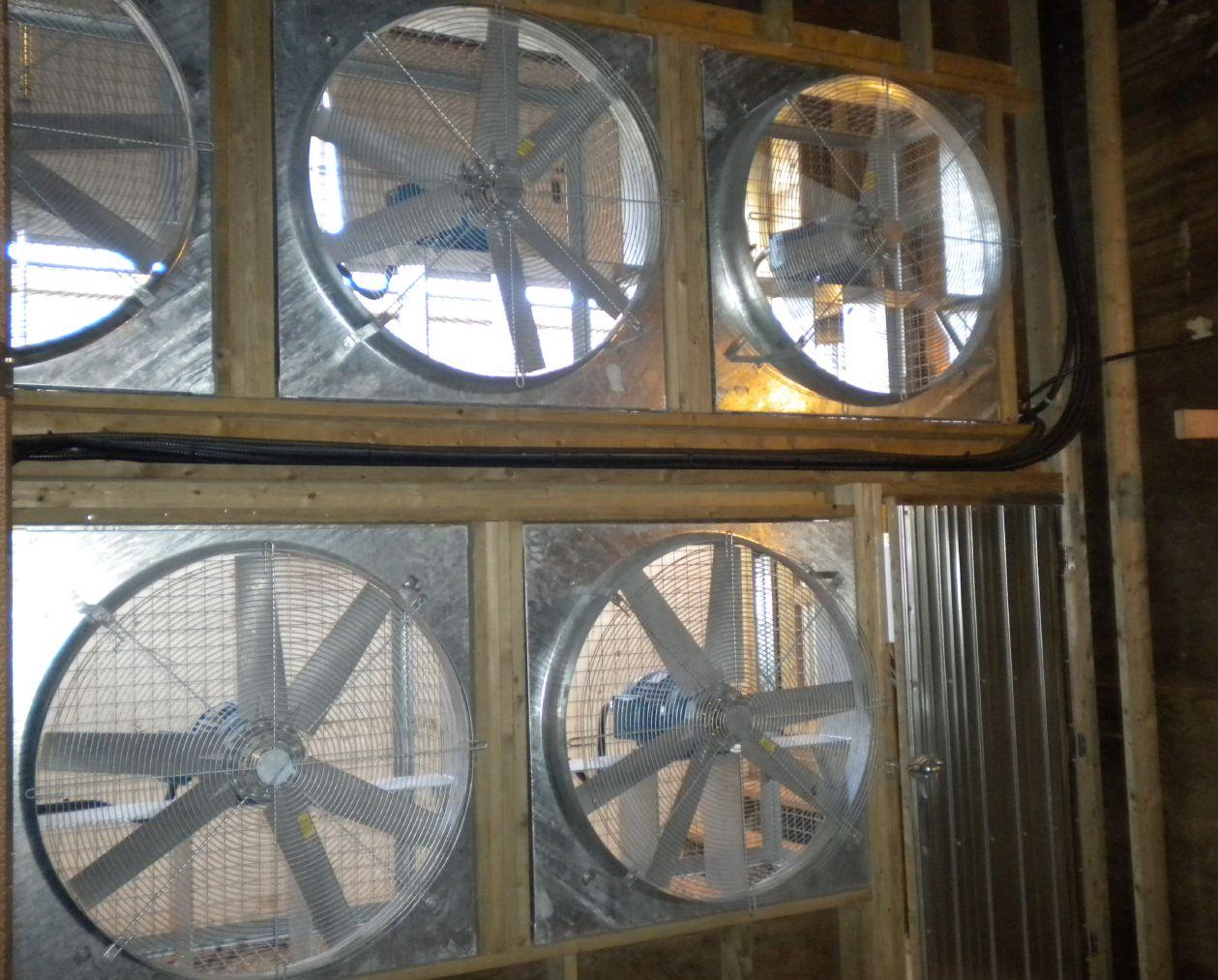
A proper storage environment is essential for maintaining tuber quality, and a key part of providing that environment is ventilation control. That’s because temperature, humidity and air quality have a big influence on things like tuber respiration, disease levels, sprouting, shrinkage, pressure bruising, and conversion of starch into sugar.
When you look at its basic components, a ventilation system for potato storage seems simple. But these systems need to be carefully designed, maintained and monitored for
successful management of stored tubers.
Duane Gorman of Gorman Controls Ltd., reviews the requirements of a potato storage ventilation control system: airflow, humidification, temperature control, and flexibility.
“The airflow has to have the capacity to remove the byproducts of tuber respiration, including heat and carbon dioxide, and to provide fresh air so the tubers have oxygen to breathe in,” Gorman says. A
ventilation system should be able to deliver at least 1.0 cubic foot of air per minute per hundredweight (cfm/cwt) of potatoes (or 20 cfm/ton). He notes, “New buildings typically have 1.5 to 2.5 cfm/cwt.” These higher capacities help in rapidly dealing with special situations, like managing tuber rots or drying out tubers that have been harvested wet.
As well, the system needs to provide even airflow through the pile. “North American systems are designed [so] the speed of the air increases from the plenum to the laterals and to the lateral openings as the

square area for the air decreases. This ensures even airflow over all of the laterals,” explains Gorman. “If the system isn’t properly balanced, the airflow will take the path of least resistance.” That would be like a water sprinkler with irregularly sized holes; the water doesn’t flow evenly out.
“It is absolutely imperative to use humidification in our climate to reduce pressure bruising and shrinking,” Gorman says. “The average annual humidity in Canada is 65 per cent. So consider the following scenario: if we have 10 C inside air, a supply setpoint of 8 C, and 6 C outside air, the intake system will blend equal parts inside air and outside air to achieve the 8 C supply temperature. However, the relative humidity of the inside air will likely be about 95 per cent, the typical level for potato storages, while the outside air could be much drier. If we assume the outside air is at 65 per cent, then the 8 C blended supply air will have 80 per cent relative humidity, which is much too low for successful ventilation.”
Managing cold, dry winter air is a special challenge. “If you look at a curve showing how much moisture air can hold at different temperatures, you’ll see that warmer air can hold much more moisture than cooler air. And when the temperature goes down to zero and below zero, the waterholding capacity gets very, very low,” explains Peter VanderZaag of Sunrise Potato Storage Ltd. near Alliston, Ont., who is a potato scientist and grower.
“So probably the biggest headache for Canadian farmers is to warm up that cold air and get enough moisture into that air before it reaches the potatoes in the pile,” Peter says. “For instance, if the pile is 10 C and the temperature of the air going into the pile is 9 C, then
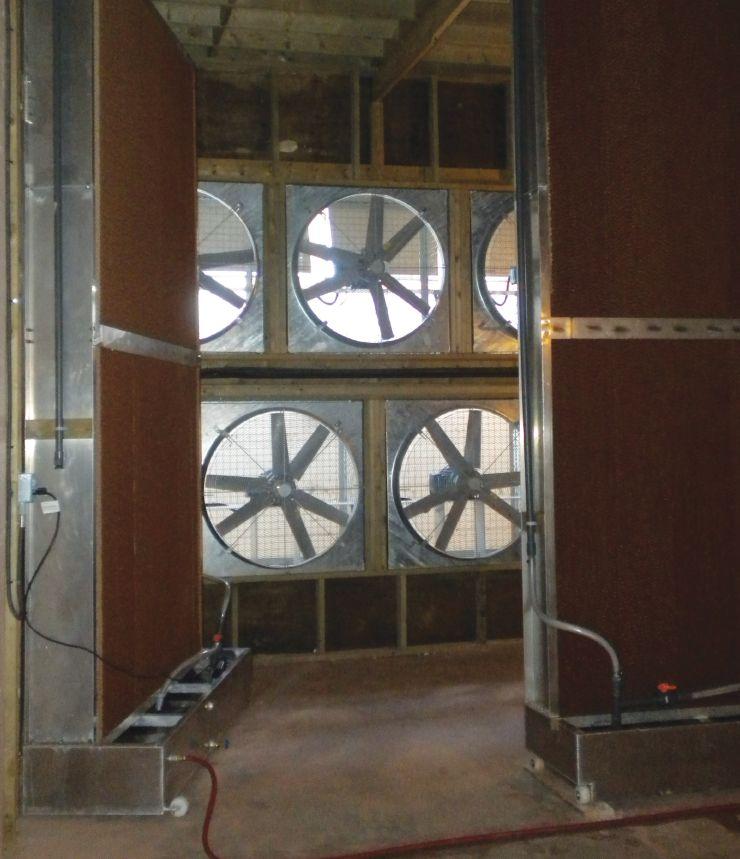
the air will still suck moisture out of the potatoes as it passes by the potatoes. That causes pressure bruising, one of the biggest defects that consumers and the processing plants don’t want.”
To prevent this problem, the VanderZaags make sure the difference between the plenum temperature and the pile temperature is very small. “Ideally the difference should be 0.3 C, but 0.5 C is a good starting point,” Peter says. They also humidify the plenum air to close to 100 per cent relative humidity. That way, as the air warms a little more as it moves through the pile, it will reach the recommended 95 to 97 per cent relative humidity. Their humidifier system mainly uses humidification cells. “A humidicell is a
Requirements of a potato storage ventilation control system: airflow, humidification, temperature control, and flexibility.
curtain saturated with water, and a fan blows the air through that wet cardboard curtain to add humidity to the air,” he explains.
Other types of humidifiers on the market include centrifugal spinners and nozzle humidifiers; these systems produce a fine mist in the air. Peter has some spinners, but he prefers humidicells. “The spinners are easier to maintain but harder to set properly.”
The type of precise temperature control needed to ensure the plenum temperature is within 0.3 C of the pile temperature is made much easier by the VanderZaags’ computerized ventilation system, which monitors and manages the temperature, humidity and carbon dioxide levels in the storage.
Accurate temperature control is important for each phase of the storage season.
Temperatures that are too cool can cause problems like chilling injury, freezing injury, and increased sugar levels, which affect processing quality. And temperatures that are too warm can also increase sugar levels and can contribute to disease development, sprouting and shrinkage. Gorman explains that the “just right” temperatures depend on the end-use of the potato and the specific variety.
Ventilation systems also need flexibility. “Differences in varietal characteristics and end-use requirements, and yearly variation call for changes in strategy. A control system must be flexible to allow for differing strategies.”
Gorman advises annual maintenance to ensure all mechanical equipment is working properly, the physical structures are secure and sound, and the sensors for temperature, relative humidity and carbon dioxide are calibrated.
At Sunrise Potato, the first priority for annual maintenance is to clean the humidity systems every summer. Even with annual maintenance, the humidity system will need to be checked regularly during the
storage season.
The VanderZaags also check all the bearings and the fans annually, replacing any worn parts and greasing everything properly. The sensors also get a yearly check. “We go around with an accurate thermometer and verify that every probe is reading the same temperature as the thermometer,” Peter says.
“The carbon dioxide sensors need to be calibrated properly; our provider does that every year. The sensors need to work correctly so we know the carbon dioxide level in the bin. Excess carbon dioxide is flushed out of the bin automatically.” High carbon dioxide levels can cause darkened colours in chips and fries.
“Ventilate with a purpose, rather than doing ‘recreational ventilation.,’” Gorman says. “The two main reasons to ventilate are removal of the byproducts of respiration and to ensure a uniform temperature throughout the stored crop. Over-ventilating leads to tuber shrinkage and excessive power consumption.”
One option for older storage buildings is to increase the airflow by increasing the number or size of the fans. “The more airflow you have, the quicker you can remove the byproducts of respiration, and the faster you can dry out tubers in the case of a wet
“The airflow has to have the capacity to remove the byproducts of tuber respiration, including heat and carbon dioxide, and to provide fresh air so the tubers have oxygen to breathe in.”
harvest season, and it increases your cooling capacity too,” Gorman says.
Another option is to increase the number of temperature, humidity and carbon dioxide sensors. “It could help detect any problem areas in the pile. Then you could use auxiliary sensors and put them in the problem area so the system can make decisions on that particular area.”
As well, Gorman recommends, “Building managers should ensure that their buildings are properly insulated, with R60 in the ceiling and R40 in the walls. Oftentimes improperly insulated buildings require ‘building maintenance ventilation’ to prevent condensation, whereas the crop is being over-ventilated.”
He adds that circulating fans and heaters over the pile can also help with preventing over-ventilation of the crop.
A nice feature to have is Internet access to the ventilation controllers. Gorman notes, “Internet connectivity can provide added security in storage management, but daily visits are still required.”
If you’re looking to install a new system in the coming years, Gorman says, “As the base components of ventilation controllers – micro-controllers and circuit design – improve so should the end-product, providing more robust systems with additional capabilities and greater flexibility.”
And finally, Peter reminds growers that the best any storage system can do is to completely maintain tuber quality; it can’t make poor tubers better. “If you put good potatoes in your storage and manage them well, you’ll probably get out good potatoes. If you put in bad potatoes, you’re not going to get out good potatoes. You can’t do miracles!”
BY MARK HALSALL
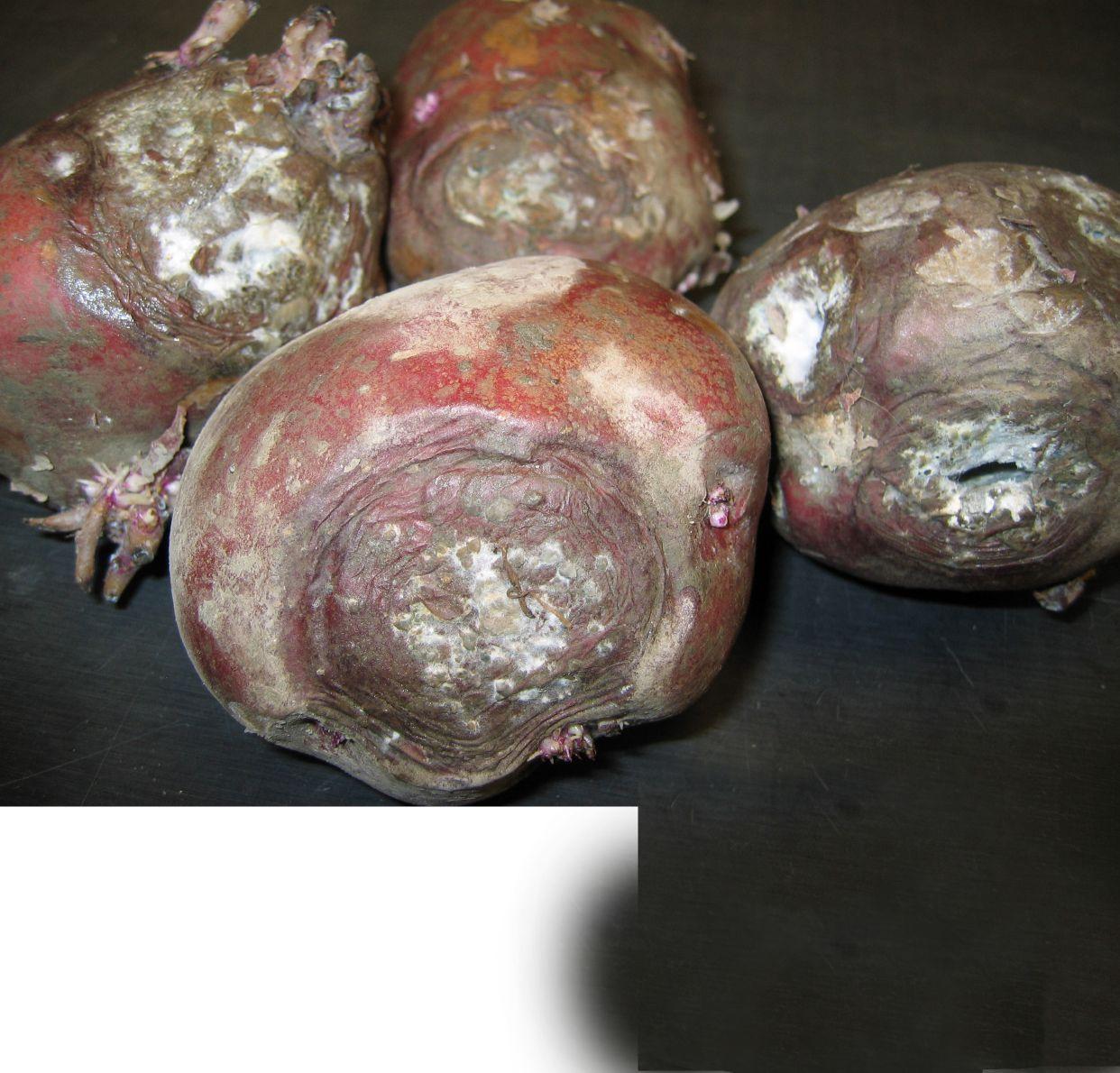
The major disease threats facing potato producers this storage season - and what can be done to manage or prevent them.
Potato diseases often originate in the field, spreading to healthy tubers through natural and mechanical wounds or disease damage. Once diseased potatoes are in storage, they will not get better – and the pathogens they carry can cause catastrophic damage to the pile if left unchecked.
To maintain the value of their crop, it’s important for growers to monitor potatoes going into the bin to cull out diseased tubers, and keep a close eye on storage conditions to stop infections from spreading.
Rick Peters, a research scientist with Agriculture and Agri-Food Canada (AAFC) in Charlottetown, P.E.I., is one of Canada’s leading experts on potato disease management. He says the top five storage diseases that potato growers need
to watch out for are late blight, pink rot, Fusarium dry rot, bacterial soft rot, and Pythium leak.
Peters says late blight is always top-ofmind – not just in-crop but in storage as well.
“It’s not only disease in the field on the foliage. Those spores can wash down and infect the tubers, which can then cause rot on the tubers going into storage,” he says.
Like many fungal diseases, late blight thrives in wet conditions. For this reason, Peters says, growers putting potatoes in storage need to be particularly cautious if the weather’s been conducive to foliar development of late blight.
“Even if you’re seeing some good control in the foliage with your fungicide program, you can’t be complacent,” he says. “There could still be a tuber rot
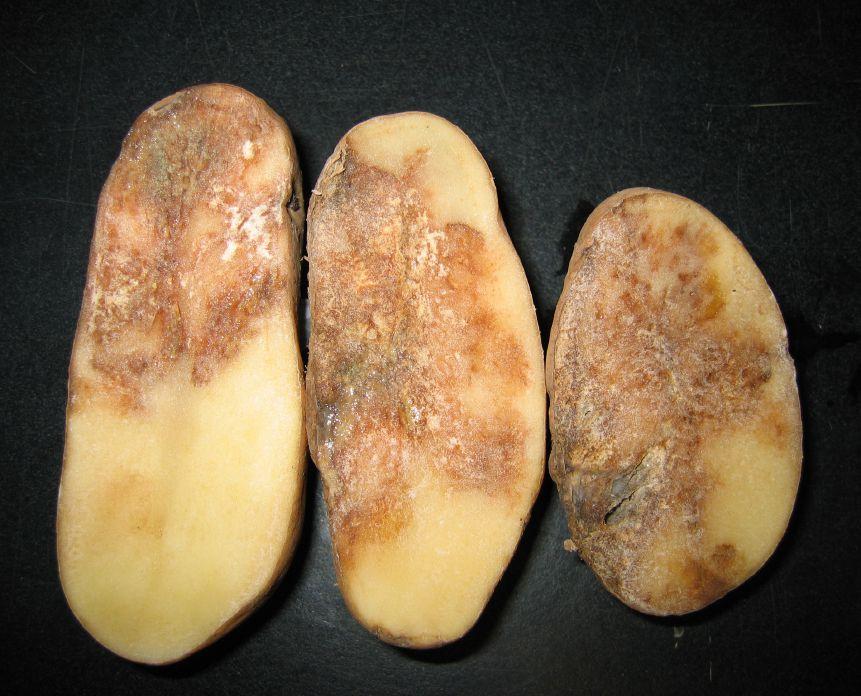
issue there.”
According to Peters, the Maritime provinces generally experienced warm, dry summers this past growing season and didn’t see much late blight as a result. There were some reports of late blight in Manitoba prior to harvest, he added, but not many in Alberta and Quebec.
Ontario potato producers reported the most late blight in the country during the growing season. “I would expect growers there need to be particularly cautious around late blight in storage situations this year,” Peters says.
Like in late blight, pink rot
is a Phytophthora pathogen. It typically shows up in the field around harvest time.
“You’ll often see the rot right at harvest coming up on the digger, but for some of the tubers that are only mildly affected, the rot will start to appear in storage later on,” Peters says.
Peters notes that if late blight is causing issues in storage, there’s a good chance pink rot will be a problem, too.
“Pink rot usually follows pretty closely with the late blight scenario, because both pathogens are sort of moisture dependent,” he says. “If you have a strong late
“Pink rot usually follows pretty closely with the late blight scenario, because both pathogens are sort of moisture dependent; if you have a strong late blight year, then you commonly also have concerns around pink rot.”
blight year, then you commonly also have concerns around pink rot.”
Another fungal disease, Fusarium dry rot is typically transmitted through bruises and cuts in potatoes.
“It’s a wound pathogen… those are commonly made during harvest and the handling operations, when tubers can get banged up a bit,” Peters says, adding that any soil adhering to tubers may carry Fusarium pathogens which can then infect damaged potatoes later on.
“The rot develops slowly and sometimes it’s not noticed right away. It takes a few months in storage before you really start to see a lot of the rot developing.”
Bacterial soft rot is not a fungal disease, but it can be triggered by fungal infections as well as by poor handling.
“You can get Fusarium or late blight causing the initial damage in the tuber, and that kind of opens the door for the soft rot bacteria to start to melt those tubers down,” Peters says.
“Again, it’s one of these issues that is more common when the tubers are banged up going into storage. You can quickly get a tuber that is melting down and then spilling those bacteria onto the adjacent tubers in the pile.” Peters says fall weather that’s warmer and wetter than normal is conducive to bacterial soft rot development.
Pythium leak is related to the late blight/pink rot group of pathogens.
Peters says that unlike pink rot, which infects tubers through the eyes or stolons of tubers, Pythium leak is prone to infect through wounds, particularly during warm, wet
harvests. He adds there’s a chance of spotting Pythium leak on potatoes during harvest time but usually it’s a problem that only develops during storage.
Robert Coffin, a potato agronomist in P.E.I., is a leading potato storage expert. He says once a storage disease has infiltrated a pile, it can be difficult to manage. But fortunately for growers, he says there are strategic measures that can help limit the spread of pathogens from diseased, to healthy tubers.
Once the potatoes are in storage, then proper management of the storage environment is essential. As Coffin points out, diseased potatoes in storage can’t be cured, so careful manipulation of the temperature, relative humidity and air movement inside the bin is the grower’s best bet for keeping pathogens from spreading.
Peters agrees. “Your main tools are manipulating the physical environment to prevent the further spread, and also trying to target lots that you think are more at risk.” He adds that at-risk potatoes, which may have come from a field that was in danger of late blight or pink rot infection for instance, should ideally be identified, stored separately and then moved quickly to reduce the chances of disease exposure.
Coffin notes that potatoes from flooded areas of the field should not be placed into long-term storage, and that potatoes that were rained on while in the windrows often won’t store well either. Another thing growers need to closely watch out for
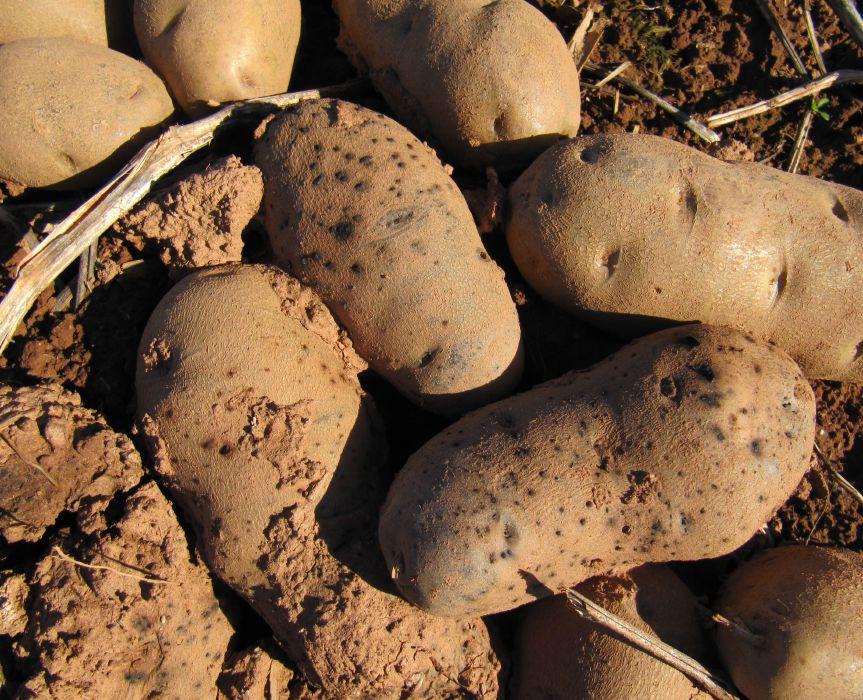
is water. “You can’t let free water accumulate on the potatoes, because that will really stimulate the growth of microorganisms,” Coffin says.
“If wet, rotting potatoes are observed in the pile, immediate action should be taken to dry these tubers. The relative humidity of the air in the building may need to be decreased in order to dry the leaking potatoes.”
Coffin says growers should also take care not to import warm humid air into storage buildings. That’s because when the warm air contacts the colder potatoes, condensation will occur. “Then you will have a rot problem.”
“Before importing outside air, the temperature and humidity must be carefully assessed,” he adds, “Making those informed decisions really helps to assure getting a much better result.”
Air-flow is always an essential consideration in managing storage rot: “You have a huge capacity to make better use of that outside air when it’s an appropriate time
to use it,” Coffin says. Innovations in remote sensing technologies in recent years are also allowing growers to get a better grip on what’s happening in their storages. One example are infrared thermometer guns which enable earlier detection of bacterial soft rot. Areas of potential breakdown will show up as “hot spots,” often several weeks before other symptoms are noticeable.
Coffin, however, stresses that despite technological advancements, farmers themselves are the most effective tool in managing storage rot.
“No matter how automated your computer monitoring system is, the daily visit to the storage is the most valuable thing that you can do on a potato farm.”
“The three most effective tools for monitoring of storages are your nose, eyes and brain,” Coffin says. “You have to think about what you’re seeing and how you [are] going to correct it.”