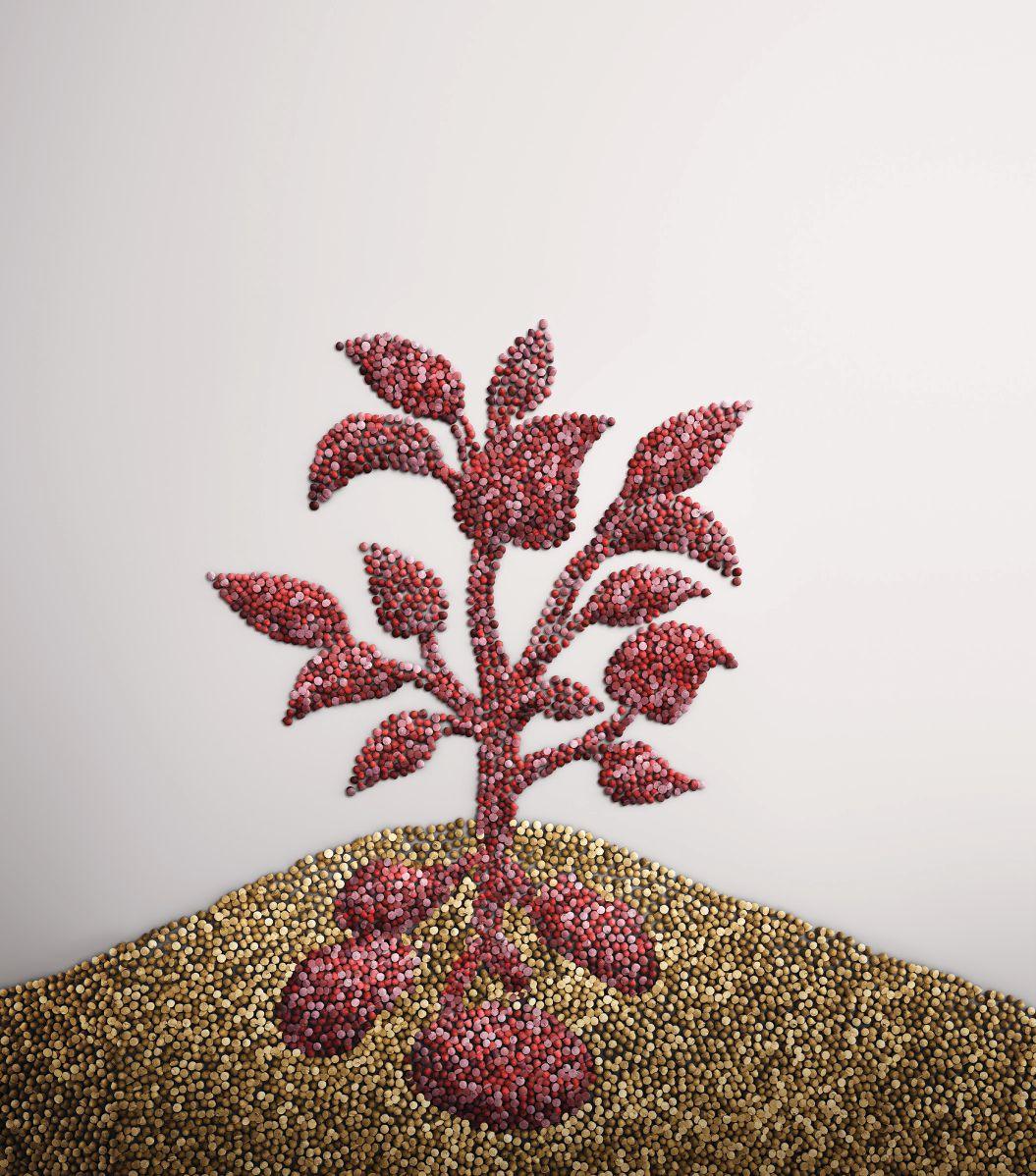
We just bring the tools. The unmistakable red formula of Emesto® Silver fungicide seed treatment protects your potato seed-pieces from seed and soil-borne diseases. With two modes of action against fusarium, it even safeguards against current resistant strains. But what insecticide you choose to combine it with is completely up to you – because when it comes to art, the artist always knows best.
& VELUM
SAVE $8/ACRE when you purchase matching acres of Emesto Silver and Velum® Prime nematicide/fungicide. GrowerPrograms.ca
THE RISE AND FALL OF BLACKLEG-CAUSING BACTERIA
Blackleg confounds potato growers, especially since several bacteria can cause the yieldrobbing scourge. Fortunately, one of the main culprits, Dickeya dianthicola, is not often found in Canada and tends to be localized when it is. However, other bacteria that can cause Blackleg infect fields regularly. The difficulty is knowing which bacteria is present in order to mitigate the problem effectively.
Research at the University of Maine, where Dickeya has been common, showed that growers who effectively control Blackleg caused by Dickeya are now seeing an increase in other Blackleg-causing bacteria. This has prompted them to issue a warning to growers to identify the bacteria as a means to better arrest the spread of Blackleg. Even though Canadian growers have ably
United
States scientists are seeing the decline of Dickeya dianthicola, but a rise in Pectobacterium.
controlled Dickeya-initiated infections, knowing the type of bacteria that is causing Blackleg is helpful for planning disease reduction.
“With the decline in Dickeya, we are seeing an increase in pathogens that never bothered potatoes before but are bothering them now,” says Dr. Steve Johnson, a disease specialist at University of Maine Co-operative Extension. “Pectobacterium parmentieri is a real problem now. Dickeya dianthicola and Pectobacterium parmentieri are often seen together and it can be difficult to separate their symptoms in the field.”
Johnson says proper identification of the bacteria causing the problem will allow growers to plan an effective control strategy. He adds that, when found together, Dickeya and Pectobacterium can cause more damage than when they appear singly in a crop. It is possible that Pectobacterium will
cause worse Blackleg infections than Dickeya ever did because the latter has a low genetic diversity. Pectobacterium, on the other hand, is “promiscuous,” according to Johnson, and frequently mutates.
In general, about four Pectobacterium species, including P. parmantieri, cause Blackleg. “Potato diseases caused by Pectobacterium do exist in Canada, but are not a major threat to the potato industry,” explains Dr. Sean Li of the Canadian Food Inspection Agency in Charlottetown. “The pathogens are not regulated in Canada or the United States as a quarantine pathogen.”
The recognition that another disease species will take over if a previously dominant bacteria declines will help growers plan and manage crops more effectively. Johnson and Li agree it all
BY ROSALIE I. TENNISON
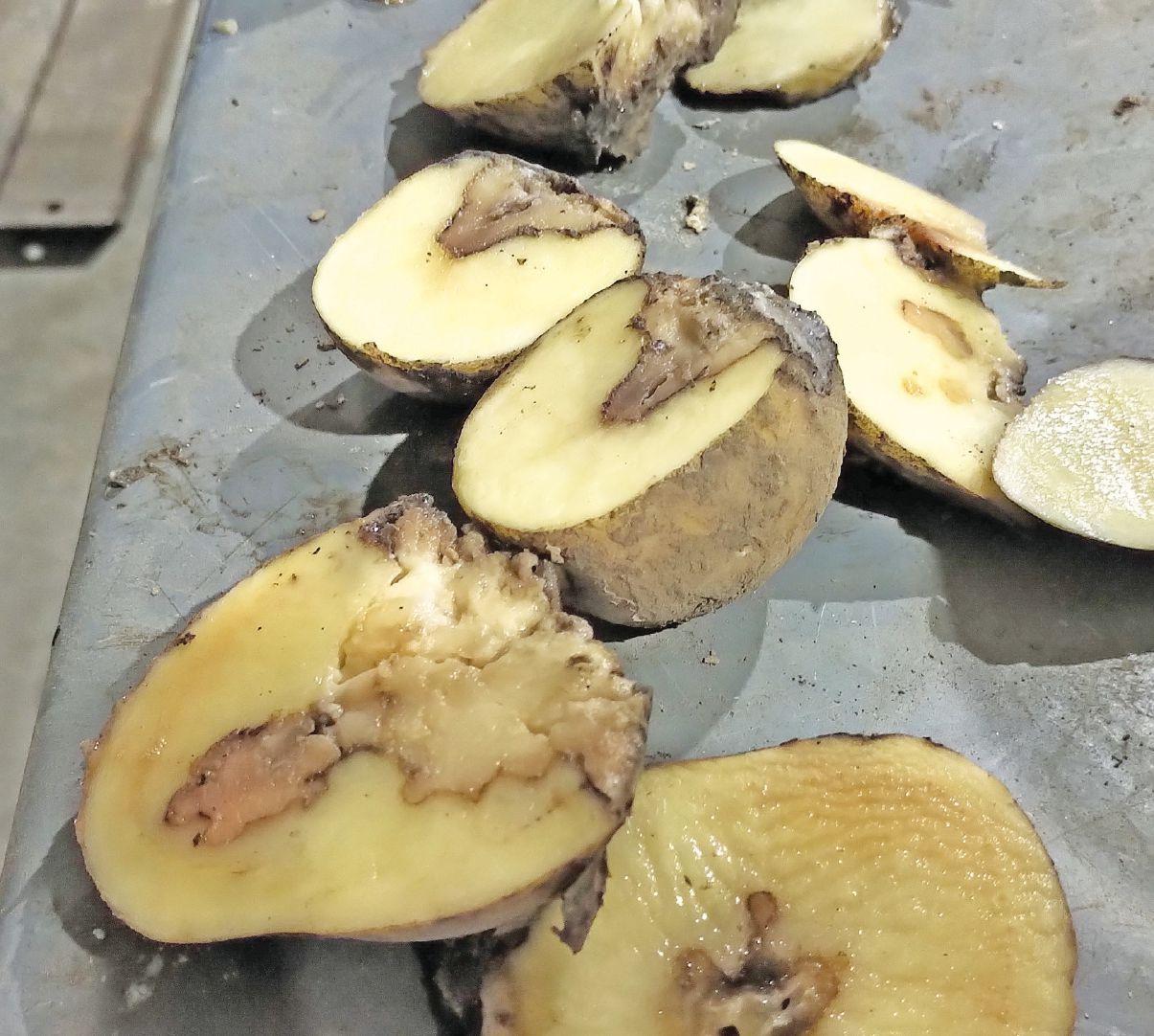
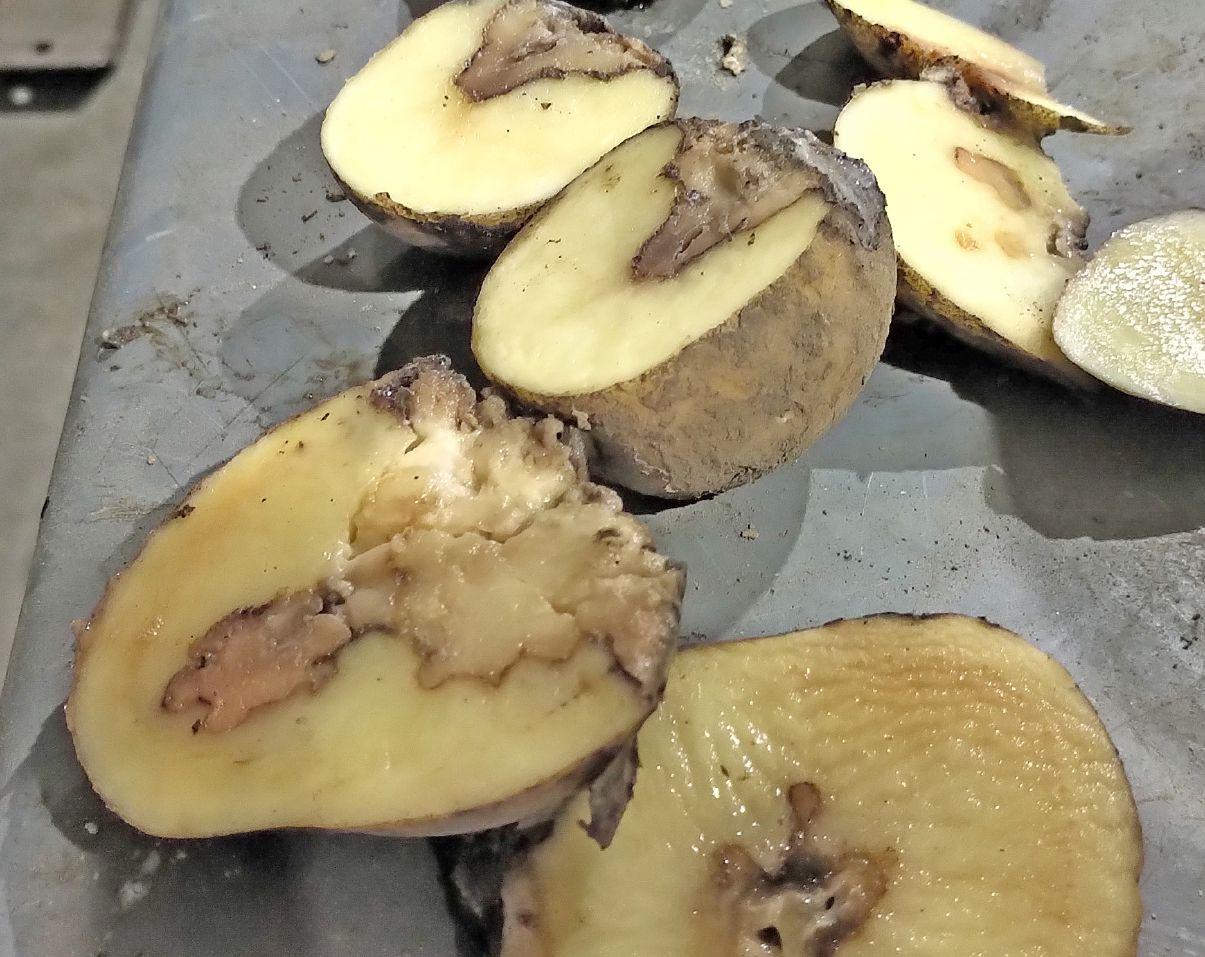
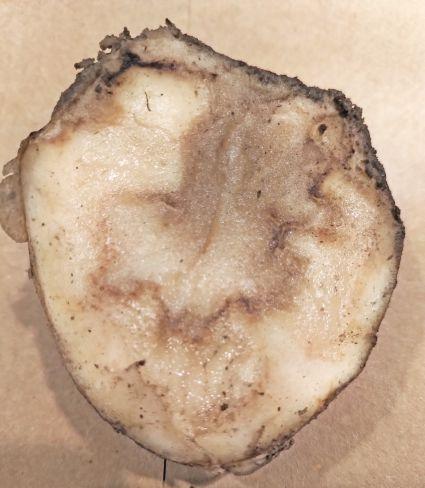
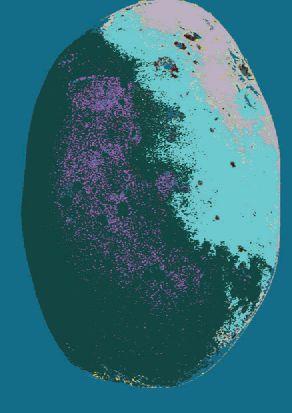
Tubers infected with Pectobacterium parmentieri.
PUTTING ROOT LESION NEMATODE UNDER THE MICROSCOPE
Scientists are looking to build foundational research on this tiny pest with an enormous impact.
BY JULIENNE ISAACS
Root lesion nematode is a tiny pest, about one millimetre in length. But it has an outsized ability to damage potatoes in Canada. The reason? It’s part of a complex of pests that causes Potato Early Dying (PED) disease, which is responsible for major economic losses of potato in Canada each year.
The Canadian Potato Early Dying Network (CanPEDNet) is a program comprising 12 different research projects aimed at reducing the incidence and effects of Potato Early Dying disease in Canada. The program, which began in late fall 2019, is run through the Horticulture 3 Cluster of projects in the Canadian Agriculture Partnership AgriScience Program led by the Canadian Horticultural Council, with support from a long list of industry collaborators. Several projects are focused on identifying and managing the species of pests responsible for PED.
At the top of the list is Verticillium wilt, a serious fungal disease caused by the pathogen Verticillium dahliae – as well as at least one species of root lesion nematode.
More is currently known about the former than the latter, mainly because a nematode problem is difficult to diagnose on its own.
Dr. Mario Tenuta is a professor in the department of soil science at the University of Manitoba, and the principal investigator of CanPEDNet.
“When we think about PED, we often think of it as a ‘complex,’ because yes, you can have one pathogen issue –primarily it’s V. dahliae – but in other places, like Ontario and the Maritimes, you have both the Verticillium and the root lesion nematode. And when the two are combined [in a field], you have severe disease,” Tenuta says.
Tenuta notes root lesion nematodes feed on potatoes by poking tiny holes in the roots, entering them and feeding on cells inside. Eventually, they leave the root and lay eggs either
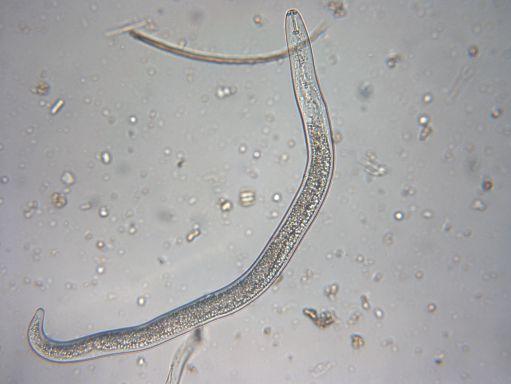
A juvenile root lesion nematode of the species Pratylenchus neglectus recovered from a potato field in Manitoba.
inside or outside the root in the soil.
High levels of nematode damage look like an “unhealthy root system,” he says, with stunted growth, chlorosis of the plant and increased vulnerability to drought. Nematode damage can be visible as discoloration of the roots, he says, and lesions can develop on thicker roots.
Wounds caused by nematodes can allow pathogens to gain entry to the plant, compounding its problems.
There are many species of root lesion nematodes in Canada, but one species in particular is known to cause problems for potato growers: Pratylenchus penetrans.
“With potatoes, this particular species interacts with V. dahliae to aggravate PED,” Tenuta explains. “In other words, the damage by V. dahliae is magnified, and you don’t really need too many of the nematodes in the roots to cause problems.”
Photo courtesy of Mario Tenuta.
P. penetrans has not been found outside Eastern Canada or British Columbia – yet. Another species of nematode, Pratylenchus neglectus, is commonly found in the Prairies, and can be a problem in canola and wheat, Tenuta says. But it’s not yet known whether P. neglectus is problematic in potatoes.
Tenuta says Canada is “far behind” in its comprehension of nematode problems. “We need foundational work done – which species are there, where they are, and their levels. That’s a critical first step here,” he says.
CanPEDNet is taking that step. Dr. Benjamin Mimee is a nematologist with Agriculture and Agri-Food Canada at Saint-Jeansur-Richelieu Research and Development Centre in Quebec. He’s leading efforts to sequence nematodes found in soil samples collected across Canada in order to identify which species might interact with V. dahliae to show synergistic effects in potato.
“Currently we’ve tested more than 2,500 nematodes,” Mimee says. “We’ve identified them under the microscope and by sequencing. After that, we are raising colonies of isolates from each province and each species; we’ll test their pathogenicity over the winter.
“Among the isolates that are identified, we know there are huge genetic differences, and that two species of nematode have different genomes. We’ll look at how they interact with Verticillium and test whether their interactions with Verticillium are different. We want to know which species [and subspecies for P. penetrans] are pathogenic for potatoes and capture the real damage potential that’s present in each field.”
Mimee says the key for growers’ ability to manage PED will be species identification. Species can be mixed in a field, or fields can have just one species, but even if there are high levels of a species in a field, unless that species is P. penetrans, producers may not have a problem at all.
In Alberta, Dr. Dmytro Yevtushenko, an associate professor and research chair in the Potato Research Laboratory at the University of Lethbridge, is also working on nematode species identification as part of CanPEDNet.
“The ultimate goal for Alberta is to establish the threshold levels of Verticillium and nematodes that affect yield,” he says – hopefully by the study’s end in late 2022.
“PED is one of the most important diseases in Canada. It’s probably more severe in Eastern Canada, but still present in Western Canada. But in contrast to Eastern Canada, we still have a very mixed picture of PED – we’re not even sure of the
causative agents,” he says.
“We suspect [the causative agents of PED in Western Canada] could be different from those in Eastern Canada.”
Yevtushenko’s lab has processed tissue samples from across the province and confirmed widespread presence of V. dahliae, even in fields with low PED. They haven’t found any P. penetrans, he says, although P. neglectus is present. His lab is hoping to figure out whether the latter is responsible for economic damage.
In January, they’ll set up a real-time PCR system to begin assessing soil and plant samples in-house for the presence of Verticillium as well as other phytopathogens. Producers should have quick turnaround of test results, he says.
Species identification via soil testing will be the cornerstone of management when it comes to PED, Tenuta says. Right now, that’s a bit of a problem for some producers.
The first question to answer is whether the producer has P. penetrans in a field. “If they do, they should be concerned,” he says. “If they have other species than P. penetrans, now it’s a question of the levels. They need to be really high for producers to get concerned.”
Soil testing is the “best means” for producers to understand what’s afflicting their fields, he says. But not all testing is alike. “You can get root lesion analysis. You have to be careful and ask for the P. penetrans determination and make sure you have confidence that the lab can do a good job of that determination,” he cautions. “Different species look very much alike, so it’s best if there’s a molecular PCR diagnostic.”
Once the presence of this species has been confirmed, producers have the option of using a nematicide, but these are not 100 per cent effective and “aren’t the best option from a soil ecology standpoint,” Tenuta says.
The best option is to take a cultural management approach, although many crops can play host to nematodes and thus can’t be used to break up pest cycles. Producers can use “trap crops” such as sudangrass or forage pearl millet, but should carefully research what to plant as rotational crops, as Brassicas, corn and even forage legumes can be hosts for nematodes. The best option, Tenuta says, is often cereals.
As CanPEDNet projects progress, producers should stay tuned for results.
“Over the next year and a bit, we’ll have a lot of information and knowledge coming out about these species,” he says.
Publisher reserves the right to refuse advertising that does not meet the standards of the publication.
PotatoesInCanada.com
SCAB RESISTANCE BUILDING BLOCKS
Finding resistance genes could mean a major boost to common scab management.
BY ALEX BARNARD
Lurking in the majority of fields across Canada is a disfiguring disease that affects potatoes and root vegetables: common scab.
Common scab is a bacterial disease caused by the soil-borne bacteria Streptomyces scabies, which can live in the soil for decades; once established, it’s very difficult to get rid of the disease in a field. Common scab can also be spread through spore-infected tubers and seed potatoes. It causes rough, scabby blemishes on the skin of potatoes, which can be raised or corky and sunken into the skin.
The disease is prevalent across Canada and can lead to major economic losses – at least $17 million per year – for producers.
While potatoes infected with common scab are still edible if peeled, the blemishes have a significant, negative impact on marketability: they spoil the appearance of potatoes for the fresh market and make the tubers difficult to process. Common scab also makes stored potatoes more susceptible to diseases like soft rot, which will completely decay the potato.
So, what can producers do to combat the disease?
MISSION:
CONTROL
Dr. Bourlaye Fofana, a research scientist with Agriculture and Agri-Food Canada’s (AAFC’s) Charlottetown Research and Development Centre in Prince Edward Island, grows 814 different genetic
lines of potatoes in fields at AAFC’s Harrington Research Farm in pursuit of different, desirable types of resistance – including common scab resistance.
Fofana outlines some cultural management practices which can assist in managing common scab in a field. The first step? Try not to bring it into your field.
“The key point is to basically use certified, scab-free potato seed first,” he says. “The disease can build up year after year, [so] second, managing your soil [is important] because, even if you have certified [scab-free] seed, if your fields already have some scab problems you need to manage them to reduce the incidence.”
According to Fofana, common scab prefers a basic environment;
Photos courtesy of Agriculture and Agri-Food Canada.
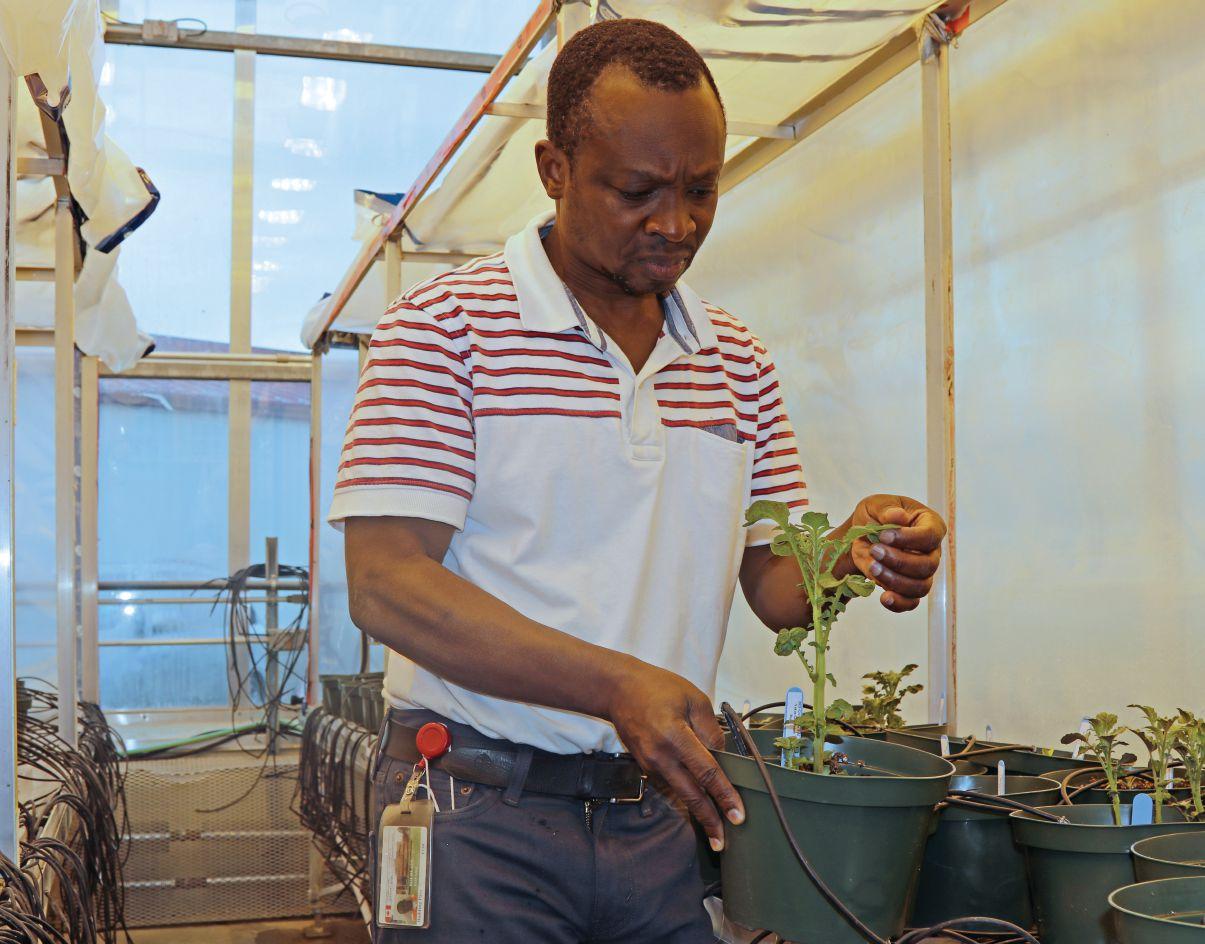
Dr. Bourlaye Fofana in an AAFC greenhouse.
keeping fields at a pH level of 5.8 to 6 is ideal for managing the disease.
He also suggests irrigation as a way of reducing scab infection, as dry conditions at the tuber initiation stage increase the likelihood of infection. However, irrigation is not economical or realistic for many producers outside of the Prairies, where the infrastructure is more necessary and better developed. The warmer, drier weather that many regions have experienced in recent years also presents a greater challenge in keeping soil adequately moist.
Another strategy Fofana has seen used in managing common scab is fumigation. “Those [chemicals] have a negative effect on the microbiome in your soil, but fumigation has been used before,” he says. “But this method has a really variable outcome.”
Fofana was quick to say that his area of research didn’t encompass crop rotation, but he pointed out that he hadn’t seen any research papers that conclusively demonstrated crop rotation had removed common scab disease loads from the soil.
Andy Robinson, a potato extension agronomist with North Dakota State University, notes on the university’s extension website that “utilizing a disease suppressive rotation with green manures, such as buckwheat, canola, oat, rye or millet, can inhibit Streptomyces scabies.” However, cover crops can be very dependent on geographical region, so these crops may not have disease-suppressing properties in all cases.
Even with all these strategies combined, Fofana notes that incidence of common scab in potatoes is still quite high. Currently, there are no methods that provide complete and consistent control. So, a long-term solution would be ideal – which is where Fofana’s research comes in.
IN THE GENES
Since 2017, Fofana has worked on figuring out how to find scab resistance genes, with the intent of
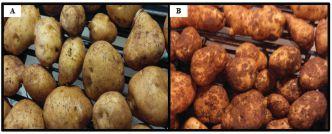
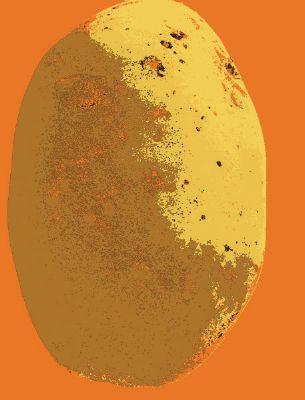
Potatoes showing common scab reactions: scab-resistant cultivar Hindenburg (A); and scab-susceptible cultivar Green Mountain (B).
using the genes to breed better scab-resistant varieties through gene editing. The research’s starting point looked for statistically significant differences in gene expression between two potato varieties as the research’s controls in the lab and field: Hindenburg, a variety with strong scab resistance, and Green Mountain, which often develops common scab and shows little resistance.
Comparative gene expression profiling – the method Fofana is using – is the measurement of the activity, or expression, of thousands of genes at once. These gene activities are then compared between two organisms – in this case, two potato varieties.
“We have done some RNA expression analysis – we call that transcriptomic – and we now have data on what genes differentiate a resistant cultivar from the susceptible Green Mountain, and what are the genes that prompt the resistant [cultivar] to respond to scab,” Fofana says.
“But we really want to go further to understand better. [We] have a transcriptome – a group of genes – but we want to narrow that down. Last summer (2021), we wanted to confirm exactly what genes are associated with scab resistance.”
This involved testing 384 potato clones, this time using Green Mountain and Shepody, which Fofana refers to as a very good cultivar which is also very susceptible to common scab, in the trial. Last fall, the lines were evaluated for a scab rating – susceptible or resistant.
“We also sequenced all 384 clones by next-gen sequencing to see how each clone differs, one to another, based on genetic composition,”
Fofana says.
“So, we have all this information, and we merged the scab phenotypic data with plant genetic data” for purposes of genetic mapping.
“By doing that, we are trying to find out what genetic regions of potatoes that are associated with resistance to scab. We know there are some chromosomal regions which are associated with scab; we are now in the process of comparing this data with what we knew before to narrow down, very, very closely, regions of interest.”
NEXT STEPS
“The next steps – where we are right now – is to take some of the clones we have found as resistant in this trial and transfer that to our breeding program to do some crosses,” Fofana says. “This is one option we are taking. But the genes we’ve identified, we will use that in gene editing.
“We know that Shepody, for example, is very susceptible; how can we use the gene that we identify in Shepody and make a little change there? Because resistance can occur by just changing one letter [in the DNA code] through CRISPR gene editing.”
Fofana says that the current research will lead to a new, connected project, so his pursuit of common scab resistance genes and gene editing techniques will continue.
As for other projects he believes would be beneficial to managing common scab, Fofana notes the importance of having an up-to-date understanding of the disease’s presence in Canada.
“Something I think needs to be done at some point is a map of [common scab] incidence [in Canada],” Fofana says. “The last survey that I know of was conducted back in 2003 – almost 19 years ago now. At that time, based on that survey, 82 per cent of the fields across the country had scab problems.
“That number will not be going down, so what is the current state of scab incidence across the country?”
RESISTANCE POSTER INSECT
Tackling important insect pests like the Colorado potato beetle.
SPONSORED BY BAYER
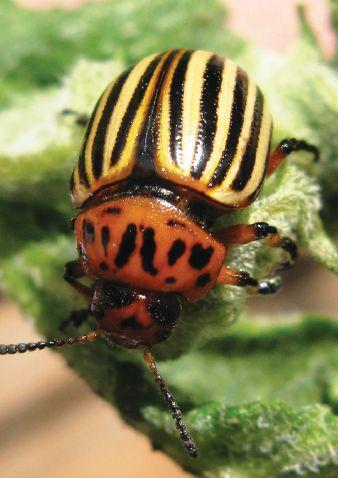
Colorado Potato Beetle (CPB) is still the number one insect pest of potatoes around the world. It’s a formidable enemy; left uncontrolled it can decimate a crop, but it can also quickly adapt and build resistance to chemical controls.
“The potato beetle has been referred to as the poster insect for resistance – it’s found a way to overcome the majority of insecticides we’ve thrown at it,” says Bill Moons, a market development agronomist for Bayer Crop Science.
Since they were first introduced, neonicotinoid seed treatments have proved the most effective line of defense against CPB, but these are becoming less effective in parts of the country, Moons says.
“The vast majority of acres
are still getting a neonicotinoid up front. When they were first introduced, we were getting 90-plus days of protection, but that’s down to 50 to 60 days in some regions, so the need for another mode of action is a must,” he says. “We’re having some pretty significant issues in Manitoba and parts of [Ontario and] Quebec.”
Integrated pest management (IPM) combines a variety of tools – biological, physical and chemical – to reduce risks from pests. When it comes to managing CPB, IPM is critical.
The most important strategy in producers’ toolbox, Moons says, is the rotation of chemistries. Beyond neonicotinoids (Group 4A), there are chemistries from several other groups on the market; the most commonly used belong to Group 5
(spinosyns) and Group 28 (diamides).
Mixing and rotating chemistries is critical to prolong the use of these products, but just as important is holding off on spraying until economic thresholds have been reached, he says.
“Potatoes are pretty resilient, have a lot of vine and can take a certain amount of damage. If producers can avoid spraying, that will help to prolong the life of the products.”
Dr. John Gavloski is the extension entomologist for Manitoba Agriculture and Resource Development. Last year, he says, Manitoba saw quite a few incidents of CPB in July and the later part of the growing season. “Some of these, we feel, were escapes, since most of the growers had a seed
It can be a problem trying to maximize control of the insects if neonicotinoids are breaking down early in the season–but it’s critical to minimize the use of any chemistries until they’re absolutely necessary.
Photos courtesy of John Gavloski.
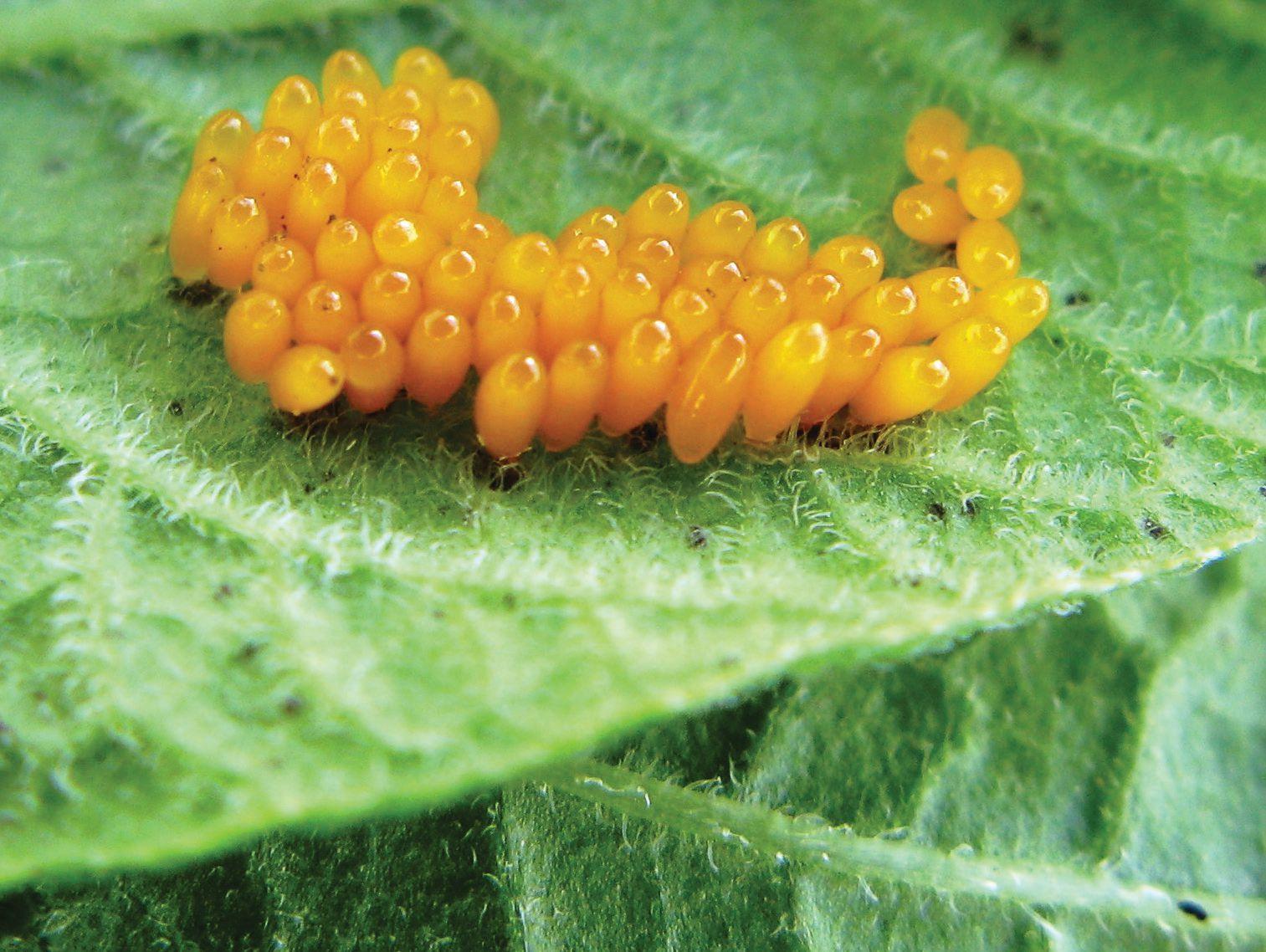
Bright orange CPB eggs on a leaf.
treatment or in-furrow application,” he says. “There’s good evidence that potato beetles have some resistance.”
Crop rotation has some utility for CPB as it makes beetles “work harder” to find potato fields, Gavloski says, although the pest can easily move between fields within a quarter-mile radius.
“We do advise people to scout and use thresholds to try to minimize foliar spraying,” Gavloski says. He adds potatoes can tolerate 25 to 30 per cent defoliation when they are in the vegetative stages, but when tubers begin to bulk, which begins soon after flowering, they can only tolerate about 10 per cent defoliation. Because high populations can defoliate plants quickly, treatment is usually applied when about 10 per cent defoliation is found.
CPB larvae go through four growth stages. Older larvae cause as much as 75 per cent of feeding damage. Spraying, if needed, should be timed for when the oldest larvae are in the third growth stage (about five millimetres long), Gavloski says. Fully grown larvae are about eight mm long.
NEW PRODUCTS
Bayer has recently launched a new Group 28 formula marketed under the trade name vayego® that can be used to control CPB as well as potato flea beetle and European corn borer. A second-generation diamide (tetraniliprole), the product has residual control that is equal to or longer than any other products on the market, Moons says.
“This year we’ll be recommending to growers that if they’re going with a neonicotinoid up front, when that protection starts to break, they can come in with a product like vayego, which should give them at least two weeks’ protection. This could get them past the critical time period of the crop,” he says.
To prolong the use of the product, Moons says producers should switch to a Group 5 product if a second foliar application is required, although a second application may not be necessary, as vayego has been shown to be effective against CPB at
all stages.
“In any given field you have anything from eggs to the fourth instar to adults. That’s the nice thing with vayego – you don’t have to worry about targeting them at a specific growth stage,” he says.
Vayego has a two-application label, but Moons says Bayer is not recommending a second Group 28 application in the field. “We don’t want to burn out the Group 28s,” he cautions. “If we can rotate between neonics, Group 28s and Group 5s, we can have a pretty good handle on managing this pest going forward.”
Darin Gibson, an independent researcher with Gaia Consulting in Manitoba, has done contract research on vayego among other products. He confirms that vayego appears to have good residual control and is effective against larvae and adults.
Gibson says it can be a problem trying to maximize control of the insects if neonicotinoids are breaking down early in the season–but it’s critical to minimize the use of any chemistries until they’re absolutely necessary.
“Sometimes the knee-jerk reaction is to assume that if you see any number of eggs and larvae in your crop after your neonic is wearing out, you should spray, but you definitely want to wait until you have enough larvae there that you’re maximizing your application to control as many
insects as you can,” he says. “That might mean putting up with some defoliation.”
ADDITIONAL PEST CONSIDERATIONS
Bayer’s Sivanto® Prime insecticide (Group 4D) targets other key damaging pests, including aphids and leafhoppers – while minimizing impacts on beneficial insects. The product offers quick knockdown as well as residual control of target pests; translaminar movement means pests on the underside of leaves are targeted.
For control of aphids, psyllids and whiteflies, Bayer’s Movento® insecticide, a Group 23 (spirotetramat) chemistry, is an option that offers systemic and residual control. Movento works by inhibiting insects’ lipid production, which eventually kills them. Because Movento is effective against aphids, it can also limit the risk of Potato virus Y (PVY).
Any insecticide use should be based in an IPM program that includes scouting and record keeping, and incorporates every effective tool for mitigating pest pressures. Prolonging the life of insecticides is critical.
Gibson suggests producers try dip testing if they suspect they have some resistance to minimize economic losses due to ineffective spraying – it’s an “old-school” method, but can be helpful.
The point, Gibson says, is that producers should do everything they can to keep insecticides in the running. “What I often tell people is that we have to do the simple things like rotating insecticide groups and doing dip tests and scouting before we have to go back to old things like vacuums, flamers and trenches. We don’t want to ever have to go back to those,” he says.
ADDITIONAL RESOURCES
Manitoba Agriculture and Resource Development maintains a list of chemistries registered against CPB on its website.
The Ontario Ministry of Agriculture, Food and Rural Affairs offers guidelines for dip testing on their website.
The potato beetle has been referred to as the poster insect for resistance.
TAKE TIME TO PREPARE SEED
The most effective way to minimize the development of any disease in a crop of potatoes is to start with good seed from a respected seed producer. Once growers have done what they can to minimize the chance of disease developing, they have to trust in the science and hope for good growing weather.
3. Disinfect seed cutters and potato handling equipment between lots and at the end of each day
4. Avoid bruising and damage during planting, harvest, and loading of storage
5. Avoid harvesting wet fields or tubers with pulp temperatures higher than 20 C (68 F)
The rise and fall of blackleg-causing bacteria
CONTINUED FROM PAGE 3
begins with seed. Planting disease-free seed coated with a seed piece treatment that minimizes infection will get the crop off to a good start. The important aspect of the process is to know which bacteria could be the potential problem. In the United States, growers managing for Dickeya managed to control it, but missed the rise of Pectobacterium because the resulting infection (Blackleg) looked the same. Concerns that the chosen control had failed were unfounded.
“We made changes in how we handled seed and Dickeya petered out,” Johnson explains. “But something else took its place.” If growers effectively control Pectobacterium, he hopes that whatever takes its place isn’t worse.
“Our diagnostic capabilities have improved and we can identify disease quicker,” Johnson adds. Quicker identification will help growers adjust their disease control strategy in any growing season.
Li suggests the changing environment may contribute to the movement of disease across potato-growing areas or even continents. “Along with environmental changes, different incidents may become a dominant cause while others are controlled,” he says. “For instance, in Europe, during the last fifteen to twenty years, Dickeya solani used to play a dominant role as the major causal agent for potato Blackleg. However, Pectobacterium Brasiliense has become the dominant causal agent for Blackleg in some potato production regions over the last few years.”
For growers in all parts of Canada, it is time for a reality check to know what species of bacteria are in their fields. The results may look the same but the cause could be completely different, requiring another chemistry for effective control of Blackleg.
Without question, planting uninfected seed is one cure for the problem. Fortunately, Canada has a robust seed industry that does a good job of minimizing seed-borne pathogens, according to Bill Moons, an agronomist at Bayer Crop Science. He says seed growers are doing a good job of providing disease-free seed, but the next step is for growers to protect the cut seed. Using seed treatmeants, like Emesto Silver from Bayer, and holding the seed prior to planting, allows for the cut surface to suberize. This can reduce infection from soil-borne bacteria, he adds.
“No amount of good luck, good management, or good weather will make up for poor seed,”
Growers must be on the looking for the different types of bacteria that can cause Blackleg.
Moons says. “Long rotations are better to help some soil-borne diseases from becoming a big problem. But it’s not just the length of rotation – the type of rotation [will] minimize disease in the field.” He adds management of the potato crop has vastly changed in the last 20 years, as growers have intensified their management practices from seed to storage.
As the University of Maine research shows, potato growers cannot become complacent. Once they feel they have controlled a disease, another may take its place and they need to be ready. Testing a sample of Blackleg is a good defence that will indicate what pathogen is causing the infection. It turns out one Blackleg is not like another.
Even though Dickeya has not been a big problem in Canada and growers who have had it managed to control it effectively, Johnson’s research shows disease-causing bacteria in a field can change, and growers need to be prepared. He suggests managing seed from the beginning, which will help identify where the infection started. “If you get seed from two sources, separate them – even if it is just a stake pounded into the field where you changed seed lots.” This action would highlight where planting infected seed began if a problem is noted.
Johnson says potato growers are savvy and they can recognize problems in fields. “Especially with familiar varieties, because growers know what the crop should look like in the field, so they will notice changes,” he explains. “If a grower sees something wrong in the field, trust your instincts and ask for help.” Be prepared to see different pathogens in fields going forward, he advises.
Photo courtesy of Eugenia Banks.
Make more art.
Apply Velum® Prime nematicide/fungicide in-furrow at planting to increase your yield potential. With a unique mode of action and Group for nematode control, it also has secondary fungicidal properties offering early blight and black dot suppression. Get the most out of your masterpiece, with Velum Prime.
SAVE $8/ACRE when you purchase matching acres of Velum Prime and Emesto® Silver fungicide seed-piece treatment. GrowerPrograms.ca