Canadian start-up companies become world leaders in advanced technology
ARTA isn’t just a Health Benefits provider for retirees. We have plans to meet the needs of OACETT members of all ages! Whether you’re actively working, retired, or semi-retired, as long as you are eligible to join ARTA, you qualify for coverage as a member of OACETT.
WHAT’S INSIDE
Micheal Mooney, C.E.T. 19
Dennis Furlan
Fanshawe
MGeneration Z reshapes entrepreneurship
ove over, baby boomers, Gen X and millennials—a new entrepreneurial generation is in the limelight. And it’s none other than Gen Z, a young, ambitious group of 18- to 27-yearolds admired for their optimism, digital fluency, innovativeness, and willingness to leap into business ownership despite the enormous economic barriers they face.
According to the Square Future of Commerce report, more than half of Gen Z consumers surveyed (54%) reported that they’ve considered starting a business. That’s surprising, considering today’s inflationary pressures and slowing economy. However, even with these bumps, GEN Zers are moving full speed ahead with their business aspirations in ways generations haven’t done before.
Why are they so comfortable with entrepreneurship? Having grown up in the digital age with access to groundbreaking technologies like AI, they’ve been empowered to pursue entrepreneurial ventures more easily and confidently than other generations. Also, their natural comfort with leveraging digital communication, social media and e-commerce has made starting and growing their business less complex.
The changing nature of work has made Gen Z more open to alternative paths to career success, where they have more freedom to do things their way on their own time rather than working a traditional 9-5 workday. Whether it’s freelancing, gig or remote work, Gen Z is proving there are alternatives to conventional employment.
Even though Gen Zers are carrying the entrepreneurial torch with their unique perspectives and approaches to work, entrepreneurs of all ages are making
their mark and achieving great success. Especially here in Ontario, technological advancements and the shifting business landscape have generated a new generation of purpose-driven entrepreneurs fuelling today’s high-tech industries.
On page 22, in “Ontario’s high-tech economy,” BF Nagy talks about the exciting things Canadian start-up companies are achieving to become world leaders in advanced technology. Ontario’s entrepreneurial spirit is thriving, and our connection to technology is more profound than ever.
Bringing a vision to life is an amazing thing and is something entrepreneurs and individuals in the workforce successfully do. Whether you’re your own boss, a business leader or a part of a team, many ideas come to life when we work to achieve a goal, solve a problem, or put innovation into action.
On page 26, our second feature story, “MTO and Metrolinx awarded project of the year,” explores the Highways 401 and 409 Rail Tunnel Project and the outstanding effort of the project’s team to deliver worldclass engineering excellence through collaboration, innovation, and business smarts.
In this issue of The Ontario Technologist, the article “Water First: Helping to empower Canada’s Indigenous Peoples,” shows us how working together can enhance water security in Indigenous communities — another example of the endless possibilities that come with hard work, togetherness, and entrepreneurial thinking.
We have more information to share with you inside. Read about lean culture, Fanshawe College’s new packaging centre and what OACETT chapters have been up to over the summer. Enjoy!
OACETT is dedicated to excellence in the engineering and applied science technology profession in a manner that serves and protects the public interest.
The Ontario Technologist is published bi-monthly by:
The Ontario Association of Certified Engineering Technicians and Technologists (OACETT) 10 Four Seasons Place, Suite 700 Etobicoke, Ontario, Canada M9B 6H7 Tel: (416) 621-9621 • Fax: (416) 621-8694 www.oacett.org
Please direct all inquiries, submissions and subscription requests to OACETT at the above address.
The Ontario Technologist is published in conjunction with:
Annex Business Media 111 Gordon Baker Road, Suite 400 Toronto, ON M2H 3R1 Tel: (416) 442-5600 • Fax: (416) 442-2230
Letters regarding the journal should be addressed to the Editor at the Association’s address. Letters regarding the Association and other related subjects may also be addressed to the Editor for forwarding.
International Standard Serial Number (ISSN) 0380-1969. Publications Mail Agreement #40062764.
Return undeliverable Canadian address to: Circulation Department, 10 Four Seasons Place, Suite 404, Etobicoke, ON M9B 6H7.
The Ontario Association of Certified Engineering Technicians and Technologists, a self-governing, non-profit organization, maintains standards of excellence in the practice of engineering and appliedscience technology in Ontario. Founded in 1957, the Association became provincially legislated in 1984, and has statutory powers and responsibilities.
PRESIDENT
Micheal Mooney, C.E.T.
PRESIDENT-ELECT
Christopher van Dop, C.E.T.
PAST-PRESIDENT
Rosanna Baggs, C.E.T., rcji, CAPM
CENTRAL REGION
Governance, Strategy and Policy Committee Chair
Norman Sandberg, C.E.T.
EASTERN REGION
Finance and Audit Committee Chair and Treasurer
Brian Raymond, C.E.T.
HORSESHOE REGION
Diversity, Equity and Inclusion Committee Chair
Shelley Parker, A.Sc.T.
NORTHERN REGION
Registration and Professional Practice Committee Chair
Stephanie Pesheau, C.E.T.
TORONTO REGION
Member Engagement and Services Committee Chair
Roy Sue-Wah-Sing, C.E.T.
WESTERN REGION
Human Resources Committee
Member-At-Large
Samuel Nammari, C.E.T., P.Eng.
Young Professionals Committee Chair
Mladen Ivankovic, C.E.T.
Student Representative
Dave Visentin
APPOINTEES
Daniel Liao
Heads of Technology Representative
Alex Lusty, LLB Public Representative
EX-OFFICIO MEMBER
Cheryl Farrow, MBA, CAE
OACETT Chief Executive Officer
DIRECTOR, FINANCE AND CORPORATE SERVICES
Arshad Zaver, CPA, CA
DIRECTOR, REGISTRATION AND PROFESSIONAL PRACTICE AND REGISTRAR
Barry Billing
DIRECTOR, MEMBER ENGAGEMENT, SERVICES AND GOVERNMENT RELATIONS
David Terlizzi
MNavigating market disruption
arket disruption is a concept that has transformed the engineering and technology landscape in recent years, reshaping traditional business models and creating new opportunities for innovation.
As an OACETT-certified technician or certified engineering technologist, it is important to keep up with the latest trends and adapt to market disruptions and changes as they happen. The ability to respond quickly and efficiently to these changes will make you a valuable asset to your industry now and in the future.
There are several key strategies to help manage market disruptions, and OACETT is here to support its members along the way. Some of these strategies are being a responsible tech steward, keeping up-to-date with continuous professional development (CPD), expanding strategic partnerships within industry and growing government relations with key ministries.
Tech stewardship is a professional identity, orientation and practice that involves actively monitoring and imagining new ways to shape technology for the benefit of all. We must all do our part to demonstrate our commitment to affect technology for good. This includes embedding ethics, sustainability, equity, diversity, and inclusion principles into the practice and culture of engineering technology.
Keeping up with emerging technologies and trends and assessing how they could affect your industry and adjacent industries is an essential skill for every technologist. Subscribing to industry newsletters, attending webinars, and participating in meet-ups or conferences can be useful ways to stay informed about upcoming market disruptions and changes.
CPD is also necessary to remain an effective technologist. Investing time in
researching current trends in technology will help you continually adapt and be prepared to deploy creative and innovative solutions to incoming market disruption. Tools like Massive Open Online Courses (MOOCs) and online training programs, such as those offered by OACETT, provide excellent options to acquire the necessary professional development needed to be able to pivot quickly and confidently when the next market disruption takes shape. It is also essential to create and maintain strategic partnerships with industry partners. By working hand in hand with technology stakeholders like policy-makers, businesses, and regulatory bodies, you become privy to market disruptions and changes much earlier than those who are not. Also, these partnerships help ensure that a technology infrastructure is put in place to support advancing technologies, ensuring that technicians and technologists are ready to adapt and stay competitive.
Lastly, maintaining strong government relations, especially with key ministries in Ontario, will help us better understand the changing institutional environment. Through collaboration with the government, technicians and technologists can acquire insights into emerging policies and trends from a technology perspective.
Ultimately, it is also essential for technologists to invest in continuous professional development, respond proactively to market disruptions and trends, and seek collaborations with industries and policy-makers. The ability to adapt, create, and innovate is an inherent trait of the technologist, and these are traits that produce meaningful contributions to society and generate technological changes that benefit everyone.
Micheal Mooney, C.E.T., is president of OACETT.
Technology Professionals Canada joins Sydney and Dublin Accords
by Muktha Tumkur, MBA, P.Eng.
With Technology Accreditation Canada (TAC) federally incorporated on December 30, 2013, 2023 is already a great year, with it being our 10th anniversary. We have a lot to celebrate since key Canadian stakeholders have continued to work closely together to support national accreditation of post-secondary engineering technology and applied science programs that meet global standards in engineering education.
Another significant initiative for TAC to celebrate in 2023 is the International Engineering Alliance (IEA), which recognized Technology Professionals Canada (TPC) as the signatory for Canada for both the Dublin and Sydney Accords in June 2023. TAC, Canada’s sole accreditation body for the engineering technology and applied science profession, will administer the Dublin and Sydney Accords on TPC’s behalf.
The Dublin and Sydney International Accords were established to facilitate the mutual recognition of educational qualifications in the engineering technology field. Members of the International Engineering Alliance establish and enforce international benchmark standards for engineering education and expected competence for engineering practice through the Accords and additional competence agreements.
These Accords promote superior education and align industry work competency standards among the participating countries — key for the international mobility and professional recognition of graduates from programs that are TAC accredited.
“For TAC to offer the Dublin and Sydney Accords is a major win for Canadian stakeholders, including graduates, post-secondary institutions, provincial certification bodies, employers, and the economy. TAC is proud to of-
fer these Accords for technicians and technologists,” says Stephen Morley, C.E.T., C.I.M., chair, TAC Board.
What do the Accords mean for Canada?
The Accords are global standards in engineering technology education and ensure Canadian graduates possess the necessary skills to excel in the rapidly evolving engineering and applied science landscape. If a graduate from a TAC-accredited program wants to study or work in any of the other Accord signatory countries, the country will recognize their education. There are nine signatory countries under the Dublin Accord (https://www.ieagreements.org/accords/dublin/signatories/) and 11 signatory countries under the Sydney Accord (https://www.ieagreements.org/accords/sydney/signatories/). This will also facilitate graduates from other signatory countries having their education recognized in Canada.
Here are some high-level benefits of the Accords’ global mobility for education qualification:
• Allow graduates to have their education recognized internationally without undergoing additional assessments or evaluations, except to meet country-specific needs –increases career opportunities for graduates and provides a broader pool of candidates for employers.
• Professional credibility is gained through quality assurance – assures employers that graduates meet global standards of competence and knowledge through consistent education across signatory countries.
• Continuous improvement – the IEA encourages post-secondary institutions to instill continuous learning in students and the institution’s policies and program development. Accrediting bodies are encouraged to collaborate, share knowledge, and exchange best practices or research.
• Economic benefits – increased mobility which can address skills shortages.
These Accords and the benefits of a TAC-accredited program provide tremendous value for many stakeholders. TAC is playing a vital role as a bold, world-class accreditation organization, and being able to offer these Accords further demonstrates our commitment to Canada and beyond.
If you would like more information about the Accords, visit https://www. ieagreements.org/. For more information about the accreditation of programs, contact TAC executive director
Muktha Tumkur, MBA, P.Eng., at edirector@technologyaccreditation.ca.
The article includes excerpts from the Technology Professionals Canada press release on June 21, 2023.
Muktha Tumkur, MBA, P.Eng., is TAC executive director.
Advertise with us…
Connect with the right people. Gain new customers. Grow your business.
To place your ad or for more information email: OTads@oacett.org
Celebrating 25, 40 and 50 years of membership!
This listing represents those who reached their milestone between February 25, 2023 and August 6, 2023.
25-year members
Nadine Abrams, C.E.T.
Michael Albano, C.Tech.
Joe Avsec, C.E.T.
George Azzopardi, C.Tech.
Chad Barber, C.E.T.
Kevin Barendregt, C.E.T.
Robert Barnett, C.E.T.
Paul Belaskie, C.Tech.
Luc Bellefeuille, C.E.T.
Brent Belzac, A.Sc.T.
David Berriman, A.Sc.T.
Richard Bigelow, C.Tech.
Justin Bishop, C.Tech.
David Booker, C.E.T.
Jerry Borovicka, C.E.T.
Julie Bottos, A.Sc.T.
Samuel Bradshaw, C.Tech.
Matthew Brewer, A.Sc.T.
Jeffrey Brown, C.Tech.
Yvonne Bruce, C.E.T.
Francis Cadeau, A.Sc.T.
Sergio Cardoso, C.Tech.
Antonio Carrabau, C.E.T.
Matthew Case, C.E.T.
Colin Cassar, C.E.T.
Curtis Cesarin, C.E.T.
Stephen Cheel, C.E.T.
Shawn Chickowski, A.Sc.T.
Greg Choquette, C.E.T.
Allan Cleland, C.Tech.
Scott Cole, C.Tech.
Richard Conard, C.E.T.
Nelson Cordeiro, C.E.T.
Pasquale Costanzo, C.E.T.
James Coughlin, C.E.T.
Daniel Cross, C.Tech.
Michel De Repentigny, C.E.T.
Jamie Dech, C.Tech.
Gregory Delong, C.E.T.
Jeremy DeMello, C.Tech.
Ernesto Diarez, C.E.T.
Brian DiPaolo, C.E.T.
Richard Doupe, A.Sc.T.
Thiru Elaguppillai, C.E.T.
Ashraf Elhanafey, A.Sc.T.
Richard Engel, C.E.T.
Janet Fazackerley, A.Sc.T.
Douglas Fear, C.E.T.
Daniel Fedun, C.Tech.
Steve Fernandes, C.E.T.
Trevor Filion, C.Tech.
Timothy Follwell, C.Tech.
D Forrester, C.E.T.
Robert Fortin, C.E.T.
John Foucher, C.Tech.
Corrine Gabriele, C.Tech.
Timothy Gant, C.E.T.
Michael Gaudino, C.Tech.
Daniel Gazzola, C.Tech.
David Gilpin, A.Sc.T.
Adriana Girdler, C.E.T.
Maria Regina Goze, C.E.T.
Paul Green, C.E.T.
Cory Halvorsen, C.E.T.
Dennis Hannah, C.E.T.
Jessica Happl, A.Sc.T.
Nancy Haywood, A.Sc.T.
Peter Hess, C.E.T.
Darryl Hindle, C.E.T.
Peter Ho, C.Tech.
Yuen Ho, C.Tech.
Steven Hogg, C.Tech.
Martin Hughes, C.E.T.
Erik Ianuzzo, C.Tech.
Salvadore Ingraldi, C.Tech.
Zafar Iqbal, C.Tech.
G Ian Jameson, A.Sc.T.
Alan Jazvac, C.E.T.
D Jefferies, C.Tech.
Douglas Johnson, A.Sc.T.
David Jolliffe, C.E.T.
Anthony Kearney, C.Tech.
Michael Kearns, C.E.T.
Susanne Kennedy, C.E.T.
Cynthia King, C.E.T.
Terrence Knox, C.Tech.
Ronald Kolbe, A.Sc.T.
Henri Korie, C.Tech.
Melissa Kosterewa, C.E.T.
Frantisek Kumbera, C.E.T.
Arthur Lacelle, C.Tech.
Rod Langford, C.E.T.
Douglas Ledlie, C.E.T.
Robert Lee, C.E.T.
Boguslaw Lipka, C.E.T.
Kendell Leckie, C.Tech.
Steven Loomis, C.E.T.
Robert Losier, A.Sc.T.
Chris Luksys, C.E.T.
W E B I NA R S
ROAD TO CERTIFICATION
Join OACETT for a webinar on the benefits of becoming a Certified Engineering Technologist (C.E.T.) and Certified Technician (C.Tech.).
WHY ATTEND?
• Learn how OACETT certification can boost your career — higher salary, networking, and marketability.
• Learn about CTEN.ca, OACETT's career site.
• Learn about OACETT certification requirements.
To register for a webinar, visit: Students: www.oacett.org/student-road-to-certification
Internationally Educated Professionals: www.oacett.org/iep-road-to-certification QUESTIONS? Contact Trishia at ttedoldi@oacett.org.
WEBINARS
DATES AT A GLANCE
COLLEGE STUDENTS: Mondays @ 12:OO p.m.
October 16, 23, 30
November 6, 13, 20, 27
December 4, 11
INTERNATIONALLY EDUCATED PROFESSIONALS:
Thursdays @ 1:OO p.m.
October 12, 19, 26
November 2, 9, 16, 23, 30
December 7, 14
Shane MacDonald, A.Sc.T.
Wm Paul MacIntyre, C.E.T.
Fernando Magisano, C.E.T.
Neila Marsh, A.Sc.T.
Michelle Mathies, C.E.T.
Ken Mattson, C.Tech.
Mark McClelland, C.E.T.
Gordon McLellan, C.Tech.
David McNicol, A.Sc.T.
Lisa McNiven, C.E.T.
Eric Menezes, C.E.T.
Grant Mercer, C.E.T.
Jason Mervyn, C.Tech.
Patricia Mitchell, C.E.T.
Michael Mittelstaedt, C.E.T.
Pasha Mohammed, C.Tech.
Daniel Moody, A.Sc.T.
Donald Moore, C.E.T.
Lorne Morton, C.Tech.
Shrinivasalu Mundlur, C.E.T.
Bradley Murphy, A.Sc.T.
Nick Najdenov, A.Sc.T.
Farhad Noory, C.E.T.
Robert Nyffenegger, A.Sc.T.
Daniel O’Hara, C.Tech.
Winston Oostenbrug, C.Tech.
Kevin Orida, C.E.T.
D.T. Gentry Orr, C.E.T.
Douglas Otto, C.E.T.
Shelley Parker, A.Sc.T.
Karl Pasternak, A.Sc.T.
Douglas Patterson, C.E.T.
Christopher Payant, C.E.T.
Douglas Pegg, C.Tech.
Laurie Peters, C.E.T.
Dayel Peterson, C.Tech.
Thien Phuong, A.Sc.T.
Mario Pretto, C.E.T.
Antonio Puim, C.E.T.
Justin Purdy, C.E.T.
Robert Scott Recoskie, C.E.T.
Kendra Reid, C.E.T.
Stephen Reid, C.E.T.
Romulo Rimorin, C.Tech.
Julia Risi, C.E.T.
Robert Roberts, C.Tech.
John Rocha, C.E.T.
R. Andrew Schell, C.E.T.
Mark Scherer, C.E.T.
Andrew Scott, C.E.T.
Winfield Scott, C.E.T.
Alexander Scott, C.Tech.
John Sheets, C.E.T.
Kendra Shurgold, C.E.T.
Stephen Sit, A.Sc.T.
Michael Spendik, A.Sc.T.
Steven Steele, A.Sc.T.
Daniel Steinwender, C.Tech.
Frank Stokes, C.E.T.
Chris Suddard, C.E.T.
David Taylor, A.Sc.T.
Edward Tedford, C.E.T.
Fessehaye Tesfai, C.E.T.
Edwin Tupe, C.E.T.
Leo Tuusa, C.Tech.
Todd Ulrich, C.E.T.
Christopher Uremovich, C.E.T.
Manolo Uy, C.E.T.
Daniel Vaillancourt, C.Tech.
Victoria Van Oosten, C.E.T.
Jurriaan Vandenberg, C.Tech.
Daniel Vidal, C.Tech.
Robert Wagner, C.E.T.
Clarence Walters, C.Tech.
Dawn Weber, C.Tech.
Thomas Wegner, C.Tech.
Jason West, C.E.T.
Paul Wilkinson, C.E.T.
Eajaz Zaheer, C.E.T.
40-year members
Carlito Agaton, C.E.T
Steven Allen, C.E.T.
James Anderson, C.E.T.
George Armstrong, C.E.T.
Brant Armstrong, C.E.T.
Ronald Augustin, C.E.T.
John Ban, C.Tech.
Timothy Bailey, C.Tech.
Brian Baker, C.E.T.
Delbert Barber, C.E.T.
Walter Beck, C.E.T.
Bradley Ballanger, C.E.T.
Peter Belling, C.E.T.
Vincenzo Bellissimo, C.E.T.
John Ban, C.Tech.
James Bennett, C.Tech.
Helmut Berg, C.E.T.
Edmeston Bernard, C.E.T.
Bertrand Berneche, C.E.T.
Alan Billiald, C.E.T.
Gordon Bird, C.Tech.
Robert Blakemore, C.E.T.
Terry Bone, C.E.T.
Anthony Boon, C.E.T.
Glen Borbely, C.E.T.
Kelly Boudreau, C.E.T.
Gordon Brown, C.E.T.
Douglas Buckley, C.E.T.
Mark Cahill, C.E.T.
Sandy Chin, C.E.T.
Ernest Chu, C.E.T.
Giovanni Cimino, C.E.T.
Frank Col, C.E.T.
Michael Cole, C.E.T.
Ross Cooper, C.E.T.
Maurice Coulter, C.E.T.
Denis De Luca, C.E.T.
Rui De Sousa, C.E.T.
Domenic Dell’Aquila, C.E.T.
Host Louis Savard, C.Tech., conducts thought-provoking interviews with industry leaders, government officials, academia and influencers on hot topics relevant to the engineering and applied science profession.
EPISODE 4 Future of nuclear technology in Canada
EPISODE 5
Hacking for good: Safeguarding the digital world
EPISODE 6
The future of 3D printing
Listen to the podcast at https://www.oacett.org/tech-takes or on your favourite podcast app!
OACETT IN ACTION
John Dooley, C.E.T.
Luigi Doria, C.E.T.
Terrence Dragomatz, C.E.T.
Eric Duerrstein, C.E.T.
Walter Dupuis, C.E.T.
John Dworatzek, C.E.T.
Thomas Dziedziejko, C.E.T.
Brian Emery, C.E.T.
Gerhard Ens, C.E.T.
William Everitt, C.E.T.
Randy Fleming, C.E.T.
Donald Forbes, C.E.T.
Larry Fotopoulos, C.E.T.
Joseph Frisoli, C.E.T.
Robert Gatt, C.E.T.
Murray Gerson, C.E.T.
James Gianetto, C.E.T.
Lisandro Gomez, C.E.T.
Michael Gooch, C.E.T.
Matthew Graham, C.E.T.
William Graham, C.E.T.
Richard Grandmaison, C.E.T.
Thomas Gunsinger, C.E.T.
Sadhan Gupta, C.E.T.
Guy Hall, C.E.T.
M. Bruce Hill, C.E.T.
Todd Hallam, C.E.T.
Kim Harrison, C.E.T.
Wayne Hawthorn, C.E.T.
Ronald Hicks, C.E.T.
John Humphries, C.Tech.
John Hutt, C.E.T.
Arthur Ibarra, C.E.T.
Daniel Jones, C.E.T.
Peter Kennedy, C.E.T.
Clement King, C.E.T.
Randy Kitts, A.Sc.T.
Miroslav Kolar, C.E.T.
David Kopp, C.Tech.
Constantinos Kopsas, C.E.T.
Andre Kornhauser, C.E.T.
Ihor Kowal, C.E.T.
Roland Kretschmer, C.E.T.
Norman Ladouceur, C.E.T.
Paul Lahvicka, C.E.T.
Kevin Lan, C.E.T.
David Langedock, C.E.T.
Michael Lapierre, C.Tech.
John Le Coche, C.E.T.
George Leja, C.E.T.
Steven Levine, C.E.T.
Daniel Luke, C.E.T.
Pran Malik, C.E.T.
Dennis Manarin, C.E.T.
Donald Mann, C.E.T.
Paul Manna, C.E.T.
Jean-Guy Marchand, C.E.T.
Ronald McMaster, C.E.T.
Wendy Meininger-Dyk, C.E.T.
Sophia Mills, C.E.T.
George Minow, C.E.T.
Paul Morton, C.E.T.
Walter Nerling, C.E.T.
Tom Nollert, C.E.T.
John O’Reilly, C.E.T.
Murray Otton, C.E.T.
Michael Pace, C.E.T.
Harshadbhai Patel, C.E.T.
Kenneth Pebesma, C.E.T.
Michael Pelzowski, C.E.T.
Roy Peruzzo, C.E.T.
Brian Plant, C.E.T.
Arjun Rana, C.E.T.
Vincent Richard, C.E.T.
Kaye Rickatson, C.E.T.
Dennis Round, C.E.T.
Lawrence Rutledge, C.E.T.
Drago Samardzic, C.E.T.
S. Saunders, C.E.T.
Lloyd Scammell, C.E.T.
William Schaly, C.E.T.
Daniel Schmid, C.E.T.
Charles Scicluna, C.E.T.
Battista Severin, C.E.T.
Kevin Smith, C.E.T.
Eric Somermaa, C.E.T.
Paul Stephenson, C.E.T.
Kevin Stevens, C.E.T.
James Stewart, C.E.T.
Anthony Subryan, C.E.T.
Brian Sugg, C.Tech.
Paul Sulman, C.E.T.
Roman Telecki, C.Tech.
James Thannickal, C.E.T.
David Trimble, C.E.T.
Barry Tsuruda, C.E.T.
Shawn Turner, C.E.T.
Mark Turney, C.E.T.
Edward Van Vliet, C.E.T.
Z. Varga, C.E.T.
Richard Verberne, C.E.T.
Stephen Vida, C.E.T.
Lorne Wall, C.E.T.
Richard Warnock, C.E.T.
Clay Williams, C.E.T.
William Wilson, C.E.T.
Gavin Winch, C.E.T.
Donald Wolan, C.E.T.
50-year members
Santosh Acharjee, C.E.T.
Licio Arquilla, C.E.T.
George Avramidis, C.E.T.
Patrick Berne, C.E.T.
Thomas Brant, C.E.T.
Eric Boere, C.E.T.
James Carson, C.E.T.
Donald Cameron, C.E.T.
Anthony Carnevale, C.E.T.
A. Chalmers, C.E.T.
Richard Chapman, C.E.T.
Jackson Chow, C.E.T.
Anthony Cianfarani, C.E.T.
Brian Claxton, C.E.T.
Richard Coleman, C.E.T.
Ronald Coughlin, C.E.T.
Joseph D’Agostino, C.E.T.
Asbjorn Dalseth, C.E.T.
Robert DeWolfe, C.E.T.
Wayne Ehnes, C.E.T.
William Ellis, C.E.T.
Nicholas Fabry, C.E.T.
David Gardner, C.E.T.
Clayton Gerling, C.E.T.
Gerald Gerling, C.E.T.
Stanley Godzisz, C.E.T.
John Goodwin, C.E.T.
Douglas Gunton, C.E.T.
Thomas Hague, C.E.T.
Roy Haig, C.E.T.
Richard Henze, C.E.T.
Karunaratne Hippola, C.E.T.
Dennis Hogan, C.E.T.
Robert Hoy, C.E.T.
Ching-Chung Huang, C.E.T.
John Inglis, C.E.T.
Laurence Jackson, C.E.T.
Josef Jaras, C.E.T.
Barrie Jones, C.E.T.
Thomas Kahnert, C.E.T.
Michael Kalinovich, C.E.T.
Michael Kenny, C.E.T.
Alois Lack, C.E.T.
Victor Lesnicki, C.E.T.
Eric Liznick, C.E.T.
Rod MacLeod, C.E.T.
Malcolm MacPherson, C.E.T.
Larry Makish, C.E.T.
John Malda Jr., C.E.T.
Frank Mason, C.E.T.
James McConkey, C.E.T.
Roger Meadows, C.E.T.
Gilles Michaud, C.E.T.
Jose Millare, C.E.T.
Gordon Mitton, C.E.T.
Albert Moore, C.E.T.
Wm Newbury, C.E.T.
Ben Nogueira, C.E.T.
Charles Parent, C.E.T.
James Peacock, C.E.T.
James Pirrie, C.E.T.
Adolfo Pitton, C.E.T.
Charles Poole, C.E.T.
Don Robinson, C.E.T.
Robert Scott, C.E.T.
John Slade, C.E.T.
Cedric Smith, C.E.T.
Jagjit Sohi, C.E.T.
Josef Soil, C.E.T.
Norman Stephens, C.E.T.
William Stewart, C.E.T.
Allen Stickney, C.E.T.
Eberhard Stoewner, C.E.T.
Larry Street, C.E.T.
Alan Suggett, C.E.T.
Donald Tashiro, C.E.T.
Harish Thakkar, C.E.T.
Camill Theroux, C.E.T.
John Thorpe, C.E.T.
Esmond Toppin, C.E.T.
Barry Trott, C.E.T.
Jan Van Der Ahe, C.E.T.
Peter Vokins, C.E.T.
Alan Wallbanks, C.E.T.
Michael Walsh, C.E.T.
John Watson, C.E.T.
John Williams, C.E.T.
Douglas Wilson, C.E.T.
Glenn Wilson, C.E.T.
Howard Wilson, C.E.T.
Pavol Zelenak, C.E.T.
Members on the move
Jefin Sunny, C.Tech., has recently become an operations support services analyst at Toronto Hydro Corporation. Sunny’s responsibilities include supporting Toronto Hydro’s facilities department on significant construction and infrastructure projects. Previously, Sunny was a manufacturing and supply chain supervisor at Polar Racking for two years.
Lindsay Taylor, student member, has recently completed the Environmental Technician, Field and Laboratory (co-op) and Ecological Restoration program at Niagara College. Last spring, the St. Catharine Downtown Association voted to bring Taylor on full-time as a sustainability director for the downtown business improvement area. Her responsibilities include exploring low-impact development solutions, sustainable revitalization projects and programming for the community. Currently, Taylor is working with Niagara College’s Environmental Management & Assessment program interns to survey various sites and write project proposals.
WHAT’S NEW?
We want to hear from other members who have recently changed jobs, received a promotion or an award, or completed an educational program. Make sure your fellow OACETT members read about it in The Ontario Technologist. Promote your success – send your submissions to the editor at editor@oacett.org.
Colin Gaudet: Walking the walk in engineering technology
by Dennis Furlan
Anewcomer to engineering technology might think it’s about, well, technology. But the more someone becomes familiar with the field, the more they learn that engineering technology encompasses a dynamic world of people, growth, experiences and adaptability as vibrant as any sector in Canada — Colin Gaudet encapsulates much of that vibrancy.
For the 30-year-old Gaudet, it all started with fixing things with his dad, a mechanical engineer working for the military. Gaudet says, “I guess engineering was in my blood, as they say. I used to love tinkering with dirt bikes with my dad, taking motors apart, and that kind of thing. For a long time, I knew I wanted to get into engineering.”
The more, the better
That love of engineering had him move from Ottawa, where he grew up with his family, to Kitchener, where he took environmental civil engineering technology at Conestoga College, a program for which Gaudet has much admiration, but for reasons that might be surprising.
While many students want to avoid class, Gaudet couldn’t get enough of it and credits the amount of class time offered by the program as a reason for its success. He says, “They just offer so many more hours of class time than a lot of other programs. By the end, I think it makes you truly prepared for what’s out there in the real world.”
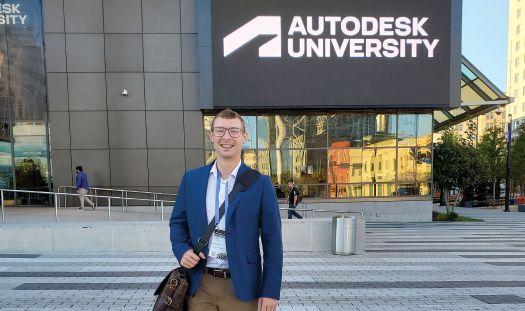
That real world eventually led Gaudet to his present-day job as a civil technical consultant with SolidCAD, a technology solutions provider. Gaudet works from home in Kitchener and is part of a team of 13 people that supports SolidCAD clients.
SolidCAD is a reseller of Autodesk’s infrastructure software. Gaudet provides hands-on help for software users while providing feedback to Autodesk about each client’s experience with the software.
“I love my job”
Gaudet says, “I love my job. Initially, in my career, I was focused on the design end of software. But someone found me on LinkedIn, and that’s when I entered this current field, which I think is so dynamic. I’m dealing with so many aspects of infrastructure and so many different clients. You never know what’s coming next, and that’s what I love about it.”
Growing up in Ottawa, where French is spoken often, Gaudet learned the language by taking immersion classes in school, and he very much believes his bilingualism is an asset
to his employer and its clients. He says, “I recently helped a client in Quebec. Being bilingual opens more doors and just adds to the variety and diversity of the field.”
Although there is no current C.E.T. designation beside his name, it’s something Gaudet plans on rectifying very soon. He says, “I think it just adds credibility for your resume and your career. You’re no longer just talking the talk. You’re letting people know that you walk the walk, too.”
And, by judging Gaudet’s dynamism in his young career so far, he’ll probably be walking that walk for the foreseeable future.
Dennis Furlan is a contributor with The Ontario Technologist.
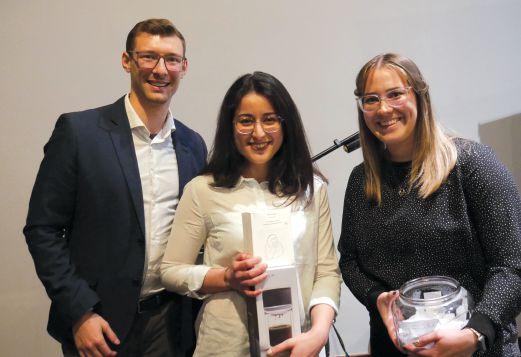
OACETT member Colin Gaudet (left) and Alex Howlett (right) from SolidCAD with a door prize winner of the company’s Bluebeam Brew educational event in Vaughan last spring.
Colin Gaudet, OACETT member
OACETT member joins Engineers Canada board
by Michelle Malcolm-Francis
Engineers Canada has appointed former OACETT Council member Tim Kirkby, C.E.T., P.Eng., to its board of directors.
During his three-year term, he will serve on the qualifications and accreditation committees – which complements his previous experience working on onsite accreditation audits at Royal Military College in Kingston and Lakehead University. Specifically, he will work on the policy and direction of licensing recognition for engineers.
Kirkby is a respected creative thinker who challenges the status quo and has worked effortlessly to improve the engineering profession. While sitting on a federal treasury board, he brought forward new professional recognitions and qualifications to ensure that the licensing of federal employees is protected and applied. He hopes to have a similar impact with Engineers Canada, promoting the professional recognition of engineers.
Kirkby says he hopes to bring professional recognition and understanding to employers to ensure that professional licensed engineers, certified technicians, and certified engineering technologists complete engineering work that safeguards Canadians.
“Allowing and accepting less has become more acceptable more often, unfortunately these days,” he says.
Kirkby has volunteered in many roles within the engineering profession, including serving as the PEO representative on OACETT’s Council from 2019 to 2023 and sitting as chapter executive on OACETT’s Cornwall Chapter from 2020 to 2021.
Kirkby served as a Lieutenant Governor-in-Council Appointee (LGA) on the PEO Council from 2016 to 2020. As an LGA councillor, he served on sev-
eral committees, including Discipline, Finance, Government Liaison, Human Resources, and the Public Information Campaign and Council Composition task forces.
He says, “As a volunteer board member, you bring your voice to the table, and you can influence change. And it’s for that reason that as a young engineer, I observed collective bargaining within the federal government from a distance and decided to get involved.”
“From there, I evolved to the lead role as national president of the Engineering Architecture & Land Survey Group of the Professional Institute of the Public Service and set in place huge improvements that affected 4500 employees.”
Making an impact in the engineering community and beyond is important to Kirkby, which led to his volunteering with the United Way, a hospital board, and other boards. He embodies what “making a difference” means and sets an example for his peers. It’s something Kirkby intends to continue for years to come.
The start of the year ushers in a new Continuing Professional Development cycle. If you were certified in 2020 or were supposed to certify in 2020 and did not, your CPD cycle is
January 1, 2021 –December 31, 2023.
You must complete four CPD activities including one mandatory activity in either technical knowledge or management/leadership. For more information visit www.oacett.org/cpd or email: cpd@oacett.org.
Tim Kirkby, C.E.T., P.Eng.
Making it in Canada: Bijay Mainali’s pathway to success
by Gail Powell
Nepali certified engineer Bijay Mainali wants to continue to exercise his civil engineering skills in Ontario to raise further the standard of living for the public.
“I wanted to pursue a career where I could make positive changes to people’s lives,” he says. “I enjoy engineering from design to build, and I aspire to become a successful engineering professional contributing back to society—with the best of my knowledge and experience.”
The 32-year-old is furthering his Canadian engineering credentials while working with The City of London in his Technologist ll role. He’s training with a professional engineer and C.E.T. to become a certified civil engineering technologist in Canada.
As a child, Mainali found science and technology courses the most appealing.
“Physics and mathematics were my favourite subjects,” he says. “I found civil engineering as a perfect career choice for me.”
Mainali graduated from a four-year civil engineering program obtaining his degree from Pokhara University in Nepal in 2016.
“After graduation, I worked as a professional engineer and ran a successful business in Nepal. I also worked on various infrastructure projects including—but not limited to—water supply, sanitation and renewable energy projects in technical and management positions for various clients,” he adds.
Mainali travelled to Canada in 2021 to further pursue his civil engineering goals. “It was a difficult journey to move to a new country and start fresh,” he says. “I would often hear
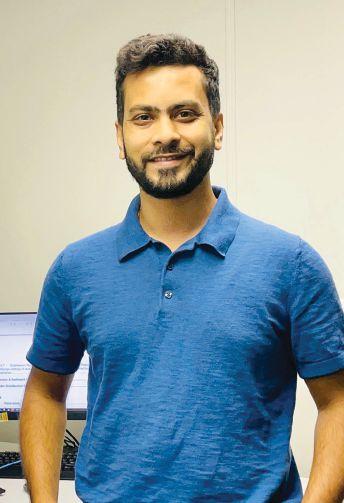
Bijay Mainali, OACETT member
“I aspire to become a successful engineering professional contributing back to society—with the best of my knowledge and experience.”
people say to me, ‘You need experience to get a job and a job to get experience,’ so I started looking for other opportunities in the Canadian construction industry.”
“I enrolled in a construction technology training course offered by the Pathways Employment Help Centre in London. They helped me find a job as a construction labourer, where I crossed paths with many technicians, technologists and engineers from whom I learned more about the engineering technology industry. I then became a member of OACETT and PEO, where I got connected with more professionals from my respective field.”
After Mainali joined OACETT to explore professional development oppor-
tunities and network with other certified technicians and technologists, he also faithfully followed the eTech News e-newsletter and The Ontario Technologist magazine to keep up-to-date about the industry he wanted to pursue.
“OACETT has been an excellent platform and has provided me the opportunity to connect with a number of certified technologists and technicians,” he says. “These connections have helped me understand the industry better. I have also joined a number of continuing professional development opportunities, which has also helped me in my career growth.”
Gail Powell is a contributor with The Ontario Technologist.
Calendar of Events
November 7 - 8
2023 Canadian Aerospace Summit Shaw Centre, Ottawa www.aerospacesummit.ca
November 29 – December 1
The Buildings Show 2023 Metro Toronto Convention Centre, Toronto www.informaconnect.com/thebuildings-show
December 7
The 2023 iTech Conference and Exhibition Metro Toronto Convention Centre, Toronto www.itechconference.ca
OACETT 360 PARTNERSHIP PROGRAM
HELP STUDENTS SUCCEED
Unlock more savings & rewards with OACETT’s MemberPerks®
by Ana Sierra
As a member, you already know that having your OACETT designation and belonging to an enriching network of like-minded, committed professionals are invaluable to your career. But, aside from those benefits, your membership can help your bottom line by giving you access to exclusive discounts.
OACETT has recently partnered with Venngo to offer a new MemberPerks® program which provides even greater value for members by delivering more than 1,200 discounts across Canada, including clothing, cellphone plans, car rentals, travel, electronics, dining, entertainment and more. It’s all included with your OACETT membership and available from a digital platform, and accessible anytime and anywhere!
There is something for everyone. “We have students, young professionals early in their careers, members mid-career who juggle work and family needs and long-time members who may be retired. Our focus is on having a range of benefits that provide choices for this very diverse group and to serve members where they are in life,” says Roy Sue-Wah-Sing, the new chair of OACETT’s Member Engagement and Services Committee (MESC).
How to access the MemberPerks® discounts?
The program is immediately available to all active OACETT members. Visit oacett.venngo.com to create your free account — keep your OACETT membership number handy — and visit the website or download the Venngo mobile app to access hundreds of local savings in your area.
Discounts on the go
It’s easy to take advantage of your discounts. You can redeem in-store — via
the mobile app or printed coupon — or shop online. Each perk includes simple instructions on how to use it. Going on vacation? Change your location and take advantage of the savings wherever you are in Canada.
Learn about new discounts
New perks are added regularly, so check before you shop to see what discounts are available. You can subscribe to the MemberPerks® e-newsletter and receive updates, exclusive offers and seasonal deals.
Plus, if you want to see a discount on a program that is not already there, you can suggest a perk on the website, and the team at Venngo will contact that company and invite them to join the program as well!
Share the perks
Share your OACETT MemberPerks® discounts with up to five family members by visiting your account’s settings and clicking the invite tab.
About Venngo
Venngo is The Original Perks Company™. Since 2000, Venngo has provided exclusive, private group discount programs to member-based organizations and Canada’s top employers. Venngo programs are currently available to over 1 million Canadian households via custom programs operating under product names MemberPerks®, WorkPerks® and CustomerPerks®. Venngo’s clients span various industries and include some of Canada’s top employers and largest member-based organizations. For more information, visit www.venngo.com.
Ana Sierra is a marketing specialist at OACETT.
OACETT member crowned Miss Canada 2023
by Michelle Malcolm-Francis
This past May, Ashley Borzellino, C.Tech., a development inspector/operator with the City of Brantford, added another feather to her cap of achievements when she was crowned Miss Canada 2023.
During her reign, Borzellino will use the Miss Canada platform to advocate for women in STEM careers, a subject very close to her heart. She’s looking forward to representing women in STEM and the organization Women on Site, sharing her journey at various public speaking events, locally and nationally.
She will also promote diversity in STEM careers and encourage other women to pursue careers in engineering, technology, or science.
“As Miss Canada, I hope to showcase that there is no particular physical appearance to success. I believe there is a stereotype that women in STEM are typically more “masculine.” As a pageant title holder, I aim to break this stigma. Because I believe that success has no face,” says Borzellino.
“I would also like to demonstrate that there is no “right” path. Everyone’s journey is unique, and every experience is valuable.”
Borzellino also offers this advice: “For those women who are already in the industry, make it your goal to share your stories with others and encourage more women to join the team.”
She has a passion for volunteering, mainly through extracurriculars and positions with the Royal Canadian Air Cadets for six consecutive years. She graduated from the Royal Canadian Air Cadets as a level five flight sergeant and held the positions of drum major and flight commander. She is also a Women on Site group member and has been a special speaker for various engineering and construction-related events. Most recently, she was a special guest speaker at the Hamilton High Tea Women in STEM event, hosted by OACETT on September 23.
“As Miss Canada, I hope to showcase that there is no particular physical appearance to success. Because I believe there is a stereotype that women in STEM are typically more “masculine.” As a pageant title holder, I aim to break this stigma. I believe
that success has no face.”
Borzellino, C.Tech., working as a development inspector/operator for the City of Brantford.
Borzellino graduated with an advanced diploma from Mohawk College in civil engineering technology and has worked in the public sector as a construction/development inspector for five years.
OACETT is proud of Borzellino’s achievements and wishes her much success as Miss Canada.
OACETT member Ashley Borzellino, C.Tech., was crowned Miss Canada 2023 in May.
Ashley
BY DENNIS FURLAN
Water First: Helping to empower Canada’s Indigenous Peoples
The systemic problems facing Canada’s Indigenous communities aren’t exactly an international secret. While Canada often champions human rights abroad, observers are also quick to point out that the plight of the people who lived here before anyone else is not exactly something to brag about, either. And near the top of these communities’ struggles is access to clean and safe water.
That’s where an organization such as Water First comes in, a charitable organization that helps Canadian Indigenous communities provide clean water for themselves. And that’s the key. Water First doesn’t, for example, ship in clean water from the outside. It helps the people provide for themselves.
It’s about know-how
Dillon Koopmans is senior manager for education with Water First. He says, “I think many Canadians believe that the problems in these communities are related to infrastructure, specifically, treatment plants. While that’s only partly true, there’s another aspect that’s overlooked. There’s simply a lack of knowledgeable and qualified personnel among the Indigenous People themselves with the know-how to provide water for their communities.”
In other words, Water First is about education, and it has programs in place to produce credentialed experts qualified to work on providing clean water. Koopmans says, “We’ve produced over a hundred qualified Indigenous People trained in the various aspects of providing safe water to communities in a way that embraces science while also respecting traditional Indigenous approaches to the environment.”
Koopmans adds, “Yes, water is about pH levels and other scientific measures. But these Indigenous communities also have an understanding of water and the environment that tends to be more comprehensive than our own. They see water and other aspects of the environment as a part of life, and it must be treated and respected as such.”
A collaborative, respectful approach
Water First engages in its efforts not in a top-down manner or from the perspective of an outsider lecturing Indigenous communities on how things should be done. Instead, it’s very much a collaborative effort that must have the approval of the communities and their leaders in a way in which everyone works together to empower these communities to achieve desired results.
And, for Koopmans, he’s not exactly a complete outsider, either. Although he’s not officially part of the Indigenous community, he says he’s half Indigenous, with a family back-
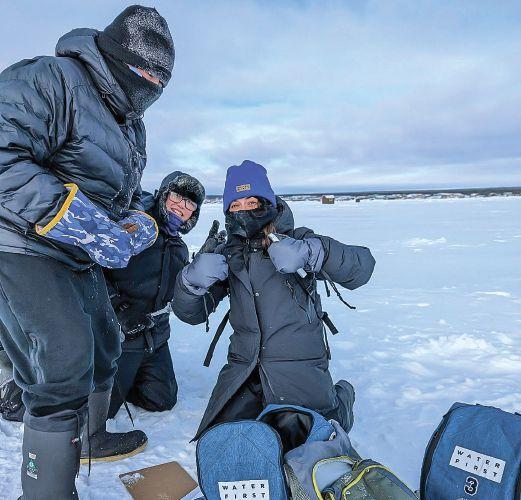
Up in the Northwest Territories during a weeklong workshop with the Indigenous Schools Water Program, students from Deline First Nation brave the cold winter temperatures to analyze water samples from their local watershed.
ground that somewhat mirrors Canada’s history with its first peoples.
He says, “My grandfather was Indigenous, but he lived during a time when it was easy to be ashamed of that heritage, to even neglect it and not nurture it. So, I’ve been working with Indigenous People for a few years now, and it’s provided an opportunity to not only learn about the people but to learn a bit about myself, too.”
There are various ways in which all Canadians can help restore pride and dignity to Canada’s Indigenous communities, especially regarding clean water. According to Water First, the first challenge is for Canadians to educate themselves on these issues. But you can also donate.
Koopmans says, “Everything helps, but monthly contributions provide a consistent and predictable source of funding so that we can continue to educate Canada’s Indigenous People to bring the best out of themselves and their communities.”
For more information about Water First, visit https://waterfirst.ngo/.
Dennis Furlan is a contributor with The Ontario Technologist.
MEGAN ZINN
Fanshawe receives funding to create packaging advancement centre
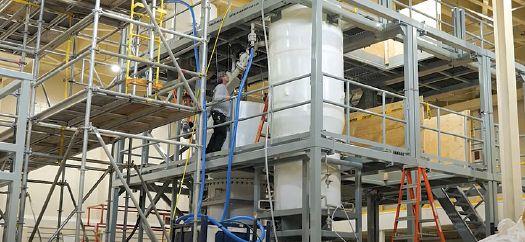
Fanshawe College’s Centre for Research and Innovation (CRI) has received a grant of $353,343 from Canada Foundation for Innovation (CFI) to launch a new Packaging Advancement Centre. The Centre will work to develop more efficient processes in food packaging and is expected to open later this year.
Housed at The Grove at Western Fair District, an agribusiness hub where participants share resources, space and connections, the new Packaging Advancement Centre will address the difficulty small- and medium-sized food processing enterprises face in finding facilities to help them develop packaging for new products on a small scale. One of London’s main economic drivers is food processing, employing more than 8,000 people. Over 70 local companies produce meats, frozen foods, beverages and ready-made meals, among other products. While the agri-food sector is the fastest-growing in the region, a major challenge exists in developing and implementing new packaging technologies. Most food processing companies in London are small (under 50 employees) and are increasingly affected by rising consumer demand for sustainable products, legislative pressure to reduce singleuse plastics and long-standing labour shortages.
“The Packaging Advancement Centre will help shorten the commercialization gap for food processing companies,” says Alison Ewart, dean of CRI. “It’s great for us to be able to help them come up with a new product or improve an existing one, but if they can’t package it afterwards, that is a major challenge. Getting companies to the critical stage where they can actually sell their product is a game changer for most of them.”
“The partnership between CRI and Western Fair Association has created the base for the packaging centre concept to become a reality,” says James Smith, director of agri-food at The Grove. “It is an extraordinary opportunity for small-scale, start-up food processing companies. It removes the barriers to entering the market by supplying attainable packaging solutions for their delicious food products, for us all to benefit from.”
The Centre will also provide research on sustainable packaging, led by Sahar Samimi, professor of food science, innovation and processing in Fanshawe’s School of Tourism, Hospitality and Culinary Arts. Samimi will explore biodegradable solutions to the pervasive use of plastic packaging in the food sector. Other major research themes will include safe packaging and the automation of packaging processes.
The funding was announced on May 24 by the Honourable François-Philippe Champagne, Minister of Innovation, Science and Industry, through CFI’s College Fund, which supports productive partnerships within Canadian industries and communities.
“Through investments like the College Fund, our government is proud to enable colleges to drive innovation in Canada,” says Minister Champagne. “With their infrastructure and highly skilled researchers and students, colleges play a central role in building a stronger economy and are at the forefront of addressing the country’s most pressing challenges.”
“Collaboration is at the heart of Canada’s college community,” says Roseann O’Reilly Runte, president and CEO of Canada Foundation for Innovation. “By forging research connections across public, private and non-profit sectors, colleges are positioned to be key contributors to our national prosperity. These CFI investments will enhance their ability to conduct meaningful research that serves the needs of our communities.”
Megan Zinn is a corporate communication officer at Fanshawe College.
The Grove at Western Fair District, home of Fanshawe’s new Packaging Advancement Centre.
High-pressure laboratory homogenizer equipment, a key component in packaging process.
BY PHILLIP BOND, C.E.T.
Creating a lean culture
Organizational culture is a learned behaviour that has become an acceptable way of life on the job. No one likes changes. But organizational rules and standards shared with employees must change to create a lean culture.
Culture starts from the top of all organizations with leadership and management teams. When culture is developed and taught, it guides our organization positively or negatively in how we perform. Through interaction with all coworkers, this performance can be very harmful and toxic. Lean is the means of removing harmful, toxic waste from any process throughout the organization. It is not a quick-fix situation but an effective long-term solution that is hard to do, but it will compensate and transform an organization in the end. Company culture starts with people, and a lean culture has the most significant effect; it begins with upper management, executives, and supervisors because their roles in decision-making and strategic direction affect all workers. When an organization implements lean culture, it encourages all workers to participate, react quickly to suggestions for improvement, provide a collaborative learning environment, seek perfection in its products, services, and processes, and enjoy employee and leadership’s visible support.
A lean culture is a customer focus learning culture oriented towards continuous development. There are four main pillars of the lean culture:
• Cultural enablers – Lead with humility and show consideration for others. Every individual in a company should be respected, no matter their position.
reasoning, flow and pull value. For example, continue to integrate decisions that make the company better.
• Enterprise alignment – Think systemically, build constancy of purpose. Everyday operations must become the standard mission that helps to build a strong bridge.
• Results – Generate value for the customer. Customer feedback helps to improve product updates, which should be implemented through monthly meetings.
Here are some other ways to promote a lean culture in an organization:
1. Communicate a clear vision for the company. It helps employees understand how their work fits into the larger picture and work toward achieving the company’s objectives.
2. Communicate established metrics. Use a Plan-Do-Check-Act approach to solve problems and manage change effectively.
3. Provide training. A hands-on learning approach allows employees to master a skill by practicing what they have learned in training or in-the-moment coaching, growing their confidence.
4. Focus on the customer. Provide the right product on time and without flaws.
5. Make it a way of life. Creating a new culture in the workplace requires an identity shift.
Lean is a set of concepts and tools that allow people to improve care. It’s also a management approach, philosophy, and technical means that fosters all employees’ engagement in continuous improvement toward perfection.
Lean defines how work is done and improves quality and cost without asking people to work harder. Lean is straightforward yet very complicated at the same time. For lean to occur, organizations must identify wasteful ways and think of new ways to operate better and remove the waste. They must question what they do and learn to act upon it for change. With the shift from traditional work culture to a lean culture, they’ll achieve their ultimate goal – improved care, quality and cost, and happier workers.
Phillip Bond, C.E.T., is a biomedical engineering technologist and sales representative. He is self-employed and works in the medical field, serving and selling ultrasound and MRI equipment.
Ontario’s high-tech economy
Canadian start-up companies become world leaders in advanced technology
BY BF NAGY
H. Jackson Brown’s motivational quote “Sail away from the safe harbor. Catch the trade winds in your sails. Explore. Dream. Discover.,” has probably inspired more than one hightech entrepreneur to travel to faraway lands seeking their fortune. However, it might be cold comfort if you end up thousands of miles from home, unemployed and nearly penniless. That happened in 1997 when University of Waterloo graduates Michael Worry and his partner Geoff White loaded their meagre belongings into a van and headed for Silicon Valley in San José, California, hoping to sell all the gamechanging ideas they had come up with during their engineering studies.
They had great dreams, a shared apartment, almost no money, and fewer people interested in them than they had hoped. But an envelope arrived in the mail offering them a credit card, so they applied. By the time they maxed it out and the introductory interest-free period expired, they had applied for another, which they then used to pay off the first one. They kept this going, receiving more than $250,000 in interest-free debt. It bought them the time they needed to get some of their ideas off the ground and “catch the trade winds in their sails.”
Worry has been quoted as saying he would not recommend trying this anymore because banking rules are different. They were foreigners without U.S. credit histories or social security numbers. Today Nuvation Engineering and Nuvation Energy are both successful, with customers and partners worldwide, offices in both Sunnyvale, California and Waterloo, Ontario and 80 employees, up from 50 three years ago.
“We would have 90 if we could find people with the right skills,” says director of marketing Joseph Xavier. One of the companies makes circuit boards for numerous manufacturing firms, and the other licenses and develops battery
“Sail away from the safe harbor. Catch the trade winds in your sails. Explore. Dream. Discover.” - H. Jackson Brown, 1990.
Power selected Nuvation
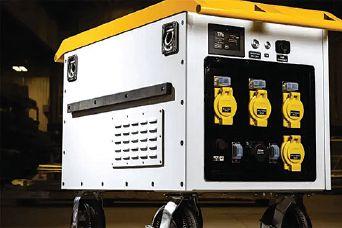
A client chose Nuvation to implement camera input aggregation into their video capture and graphics rendering device. Nuvation’s hardware team provided hardware design, schematics, layout, prototyping, and validation testing.
management systems for stationary electricity storage, a rapidly growing sector as the planet shifts from fossil energy to renewables-plus-batteries.
The talent shortage is widespread across numerous industries in North America and Europe. Some say it’s particularly difficult in the science, technology, mathematics and engineering (STEM) disciplines. Still, University of Waterloo’s professor of economics Anindya Sen says in “Silicon Valley North” interest remains high in these
areas. He is also associate director at the University of Waterloo’s Cybersecurity & Privacy Institute (CPI), one of numerous entities working to maintain a high-tech reputation for the province of Ontario. “The University of Waterloo (where he teaches economics) has extremely strong placement across most of our faculties, based on a solid student co-op program... It’s a model that not many universities have developed in the same way, but it would benefit them if they did.”
Nuvation Energy has developed field-proven and UL 1973 recognized battery management systems for stationary energy storage.
Valid
Energy’s low- and high voltage battery management systems for their lithiumion portable power product line.
Brand development
Ontario has developed a good brand in the U.S. and around the world for talent and successful companies in modern, high-tech sectors like cybersecurity, information technology, electric vehicles, other clean energy products, robotics, aerospace, film, television, and life sciences. They are all progressive, quickly expanding areas that position Ontario well for continued economic performance.
Zentek is still a young technology company, focusing on graphene innovation only since 2018 in Guelph, Ontario, and unlike Nuvation, it enjoys an environment that has been more supportive of startups. Nevertheless, the pandemic arrived moments after it refocused on graphene innovation, and the new management found itself holed up in the research lab for the first few years. Everything else was shut down, including its university partners. It had nothing except some early research in material science and PhD talent.
Nonetheless, they spent their time wisely, developing graphene technology and filing patents under Dr. Francis Dubé, a strategic planning, fundraising and capital markets veteran, as chair of their executive board. Dubé steered the firm to early success, has already brought one product to market, and is preparing several others with apparent promise. They are now working with
Blackberry has transformed into an electric vehicle software developer, fitting well with an explosion of opportunities in Ontario for high-tech activity connected with EVs.
Zentek graphene HVAC filters boost bacterial and viral filtration without increasing energy use. PHOTO: ZENTEK
Zentek graphene face masks were verified at more than 99.99% bacterial and viral filtration efficiency ratings. PHOTO: ZENTEK
numerous Canadian universities on different graphene projects and have received over $20 million in the past three years in government support.
Newest technology
The characteristics of graphene make it an exciting new element, and working with it means cultivating a rare ability to toil on nanotechnology at an atomic scale. “One strand of human hair is equivalent to a million layers of graphene,” says Dubé. “We have created ZenGUARD, and it is being used in surgical masks, and we expect it will soon be used for filters for HVAC equipment. When combined with silver, graphene oxide captures far more bacteria and viruses.” It is now awaiting approval from Pest Management Regulatory Agency (PMRA), a Canadian standards body, and is undergoing Environmental Protection Agency (EPA) certification in the U.S. Tests have verified more than 99.99 per cent bacterial and viral filtration efficiency ratings, which exceed the highest standard specifications for medical masks. “HVAC was a problem in seniors’ homes during the pandemic when ventilation systems would carry the virus from room to room.
Most systems used MERV 8 filters which captured very little pathogens; however, increasing to MERV 13 significantly increases energy use.”
This kind of research for companies like Zentek is supported by Canada’s Mitacs and Natural Sciences and Engineering Research Council of Canada programs, along with dollar-for-dollar investment matching (the company retains intellectual property). Later in the process, another program called Innovative Solutions Canada pays for premarket certification tests, helping to identify any hurdles, so start-ups and small/medium size businesses can produce globally-demanded products and services before they hit the market. “The bonus is the possibility of the government then becoming a customer for the product,” Dubé explains.
Zentek has also developed a graphenebased environment-friendly coating that reduces ice accretion on wind turbine blades and drone propellers. “A single turbine in a cold region might save $60,000 every year using our coating to mitigate ice on the blades.”
Partnerships
University of Waterloo’s CPI also works indirectly for the Canadian government,
at the intersection of data and life sciences, through events organized in partnership with The Canadian Institute for Health Information (CIHI). CIHI develops health system databases, measurements, standards, reports and analyses to accelerate improvements in health system performance and citizen health across Canada. Key topics explored at events are explained by CPI managing director Colin Russell, a colleague of Professor Sen, who asks, “How can these clients work with artificial intelligence professionals and use our AI facilities while being cyber secure?”
He describes a constant race between those wishing to protect and those wishing to defraud the public. He notes that cryptographic standards for any data being transferred or housed are very strong currently. So far, artificial intelligence combined with quantum computing is still within reach of nation-states and giant corporations, but this will change. It’s already easy to gather and store vast quantities of data, and it might be cryptographically protected, but post-quantum, those storehouses might be unlocked and mined. “We need intelligent regulations and standards for artificial intelligence, cybersecurity and privacy.” Russell and Xavier at Nuvation imply that Canada is usually slower with modern standards, especially lately, and they are less sustainability-focused than the U.S.
CPI also works with companies such as Blackberry, which has transformed into an electric vehicle (EV) software developer. This connection fits in well with an explosion of opportunities in Ontario for high-tech activity connected with EVs. Numerous battery and EV assembly plant announcements have happened here, and global demand for EVs is skyrocketing.
Apart from beneficial partnerships between industry, governments and universities/colleges, startups can also receive support from large incubators like MarS in Toronto and others in the Silicon Valley north corridor. For hightech entrepreneurs in Ontario, there has never been a better time to explore, dream and discover.
Tunnelling Association of Canada honours Highways 401 and 409 Rail Tunnel Project team for world-class engineering excellence
BY NICK PRESTINACI AND KRISTIN STAHLMAN
In 2017, Metrolinx wanted to tunnel under Highways 401 and 409 to expand GO train service on the Kitchener line and needed a Ministry of Transportation (MTO) Encroachment Permit. Central region’s corridor management section brought together Ministry experts to facilitate this request, which resulted in a worldclass multi-year project.
This project, named the Metrolinx Tunnelling or Rail Tunnel Project, received industry recognition, including the Canadian Council for PublicPrivate Partnerships Silver Award for Infrastructure, and was awarded the Canadian Project of the Year from the Tunnelling Association of Canada.
This $116.9 million design, build and finance project created twin 180-metre tunnels next to an existing rail tunnel,
under 21 lanes of traffic, with three metres of cover. The project progressed without disrupting travel on the busiest highway in North America and the world’s busiest truck route — a significant achievement.
With the construction completed in July 2021, the tunnels increased capacity on the GO Kitchener rail corridor as part of Metrolinx’s GO Expansion program. The new 180-metre twin tunnels beneath the access ramps of Highway 401 and Highway 409 enabled the simultaneous passage of two trains travelling in opposite directions without speed restrictions.
MTO actively collaborated with Metrolinx, sharing essential information and knowledge to complete the project. MTO played a significant role in working with Metrolinx throughout all project
phases, including procurement, design development, quality control monitoring of construction, and the permitting approval process and construction phases.
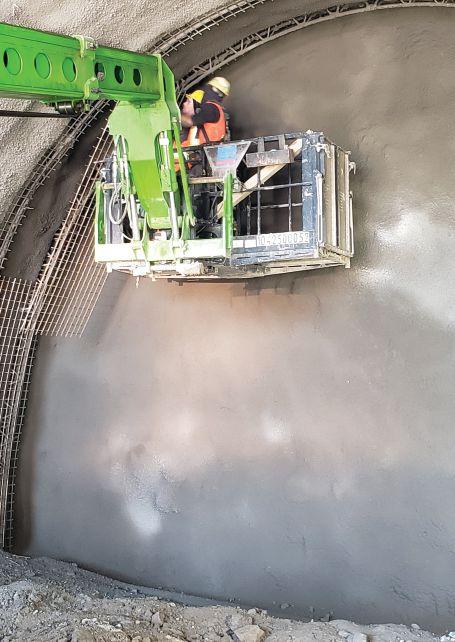
The project set a new standard for tunnel construction and design in Canada, developing and employing unique construction specifications, methods, and technologies and using a new-toCanada auger boring system to install a pipe roof before tunnel excavation that helped to drastically minimize risk, speed up the schedule and protect workers. A sequential excavation method, rather than traditional cut-and-cover tunnelling, also helped to avoid traffic disruption. A complex network of monitors tracked the displacement of the highway’s adjacent structures and surrounding soil as a safety precaution and a measure of operational performance.
The project team developed an Emergency Response Plan to address potential issues and maintained regular contact with MTO traffic and COMPASS, providing 24/7 support to emergency services as required. In addition to a sophisticated monitoring system, the Ministry’s maintenance staff provided visual inspections, allowing the project team to react quickly to any issues. Corridor management also provided afterhours and weekend support, quality control, oversight and decision-making as required.
Expansion benefits
GO Transit is Canada’s most dynamic transit system, implementing new routes and more frequent service to meet expected demand with a growing population. It delivers opportunities to travel quickly across the region.
The Highway 401 and 409 Rail Tunnel Project is a considerable first step in completing the infrastructure required to bring more GO train service to communities, businesses, and customers along core segments of the Kitchener corridor, located 108 kilometres west of Toronto.
Challenging decisions
The project team experienced unprecedented engineering challenges and significant project risks that exemplify the type of work undertaken by the MTO in supporting and improving Ontario’s transportation system.
Before construction, the Ministry faced a difficult situation where they had to choose from four complex options to construct a new crossing beneath Highways 401 and 409 for the Kitchener corridor, each with significant inherent risks.
MTO and Metrolinx agreed to find the best engineering solution to address the requirements of both organizations to deliver a project that would support transit expansion, maintain the safety and efficiency of the provincial highway network, address the significant risks associated with the project, and ensure value for money for Ontario taxpayers.
The four options MTO and Metrolinx considered and the results of the collaborative decision-making process were as follows:
1. Cancel project – The Kitchener corridor is a provincial priority. Accordingly, MTO/Metrolinx eliminated this choice.
2. Construct structure over the highway – This option had the lowest risk and management concerns. Ordinarily, it may have been the preferred option. However, Metrolinx advised that it would not be possible to change the alignment of the proposed rail tracks due to conflicts with existing infrastructure and the operational constraints of heavy rail. Therefore, MTO/Metrolinx eliminated this option.
3. Open-cut highway and construct the tunnel – This option would require numerous lane closures on Highways 401 and 409, a popular route to the Toronto Pearson International Airport. Closures would have resulted in significant safety and operational impacts on both provincial highways and the surrounding municipal road networks. MTO opposed open-cutting Highways 401 and 409 because the disruption would negatively affect Canada and Ontario’s gross domestic product during construction. This choice was eliminated too.
4. Tunnel under fully operational Highways 401 and 409 – Given the unique constraints of this project, the
Preparing for boring phase
MTO/Metrolinx quality control and oversight
MTO/Metrolinx team preferred this option and determined it should be pursued with the clear understanding that it was unprecedented from an engineering and risk management perspective—however, several engineering challenges associated with tunnelling under fully operational highways needed to be addressed.
The MTO/Metrolinx team completed an extensive evaluation of design options and construction methodologies to confirm that a tunnel was possible.
Tunnelling under operational highways
A tunnel of this size designed to regular specifications would ideally be located approximately 30 metres beneath the pavement surface of the highway. In this case, the tunnel was about three metres beneath the surface, and the ground conditions between the top of the tunnel and the highways posed an excavation challenge.
Tunnelling at this depth required MTO/Metrolinx to mitigate significant risks and use a tunnelling approach never undertaken in Ontario.
As part of the procurement process for the project, the MTO/Metrolinx team systematically identified significant engineering challenges faced by the project, then wrote performance specifications to address and manage these concerns.
This process ensured that the selected contractor would have the necessary knowledge, experience, skills, and equipment to perform the work successfully and effectively mitigate risks.
Typically, the Ministry retains engineering firms that provide technical guidance and ensure the selected contractor adheres to provincial standards and specifications. However, this was the first time MTO had collaborated on a project of this nature and accepted provincial standards that could only partially address the proposed work. As a result, MTO and Metrolinx developed project-specific processes and procedures to mitigate the risks of this unique situation.
Initial set-up of excavating machinery
An aerial view of the project’s location. The yellow line shows the approximate location of the twin tunnels.
Engineering solutions
Computer modelling helped assess the impacts of the construction of the new tunnels on existing infrastructure such as highways, retaining walls, adjacent structures, sewers, luminaires, and signage.
The most sophisticated monitoring program used in Ontario, and one of the most sophisticated in North America, was used to monitor the overhead highways and adjacent soil conditions.
The team employed the following unique solutions for the tunnelling project:
• A comprehensive risk registry was developed to identify project risks and develop proactive solutions to mitigate or minimize issues during execution of the work.
• Project-specific toolbox measures were developed to address risks during tunnel excavation.
• A specialized tunnelling method was designed to address risks introduced by the limited ground cover to the highway surface.
• Specialized equipment was used for crew training and to perform work in Canada. Teams were also sent to Germany to investigate and evaluate the new tunnelling technology proposed for this project.
MTO/Metrolinx consultants and contractors worked as a single team to ensure the project met the requirements of all parties. Weekly, specialized team meetings resolved specific issues.
The team-building meetings ensured all participants shared a common vision. The team implemented a dynamic and flexible work strategy to address emerging challenges during construction.
Engineering results
The several innovative engineering techniques incorporated into the project met all technical requirements, considered world-class by the industry. The team completed the project on schedule and, most importantly, safely without
disrupting active highway traffic directly above the new tunnels or the adjacent railway traffic.
MTO and Metrolinx undertook this task because of the shared realization that the economy of Ontario is dependent on the successful integration of the provincial highway and transit system.
The team resolved many complex engineering challenges to make this project a reality. The challenges posed a significant risk but held the potential for a great reward to the province.
Ultimately, both MTO/Metrolinx considered the teamwork exhibited on this project to be a template for future collaborations. The project team, including MTO engineering, MTO operations and Metrolinx staff, exemplified how collaborative teamwork can overcome unprecedented engineering challenges to deliver results for Ontarians.
This project served as an excellent ex-
ample of world-class engineering and a fantastic opportunity to remind Ontario’s engineering and technical staff that their exceptional contributions are essential to every aspect of Ontario life and integral to the provincial transportation network’s safe, efficient, and sustainable operations.
For more information on the Highway 401 and 409 Rail Tunnel Project, contact Nick Prestinaci, C.E.T., head, operational services, operations division, Ministry of Transportation, at nick.prestinaci@ ontario.ca.
To view more photos and for more project information, visit: https:// bit.ly/MTOMetrolinxprojectoftheyear.
This article originally appeared in MTO’s RoadTalk Summer 2023 publication. Permission of The Kings Printer, 2023.
The new twin tunnels beside the existing tunnel.
World-class interior and exterior construction techniques.
NEW MEMBERS
June 2023
Certified Engineering Technologists
Yaser Barghi, C.E.T.
Kevin Barratta, C.E.T.
Laura Blain, C.E.T.
Joshua Burton, C.E.T.
Ashley Dennis, C.E.T.
Linda Fragnito, C.E.T.
Leonard Gonzales, C.E.T.
Helia Khamseh, C.E.T.
Karolina Kukielka, C.E.T., rcsi
Dylan Madahbee, C.E.T., rcji
Jeongnam Pak, C.E.T.
Leonard Papp, C.E.T.
Christopher Rennie, C.E.T.
Ghazal Saveh Shemshaki, C.E.T.
Andrew Scott, C.E.T.
Xiaohan Shi, C.E.T.
Evan Tunstall, C.E.T.
Laurie Wells, C.E.T.
Certified Technicians
Yekatsiaryna Alisiyevich, C.Tech.
Jason Arts, C.Tech.
Michelle Baillie, C.Tech.
Tanya Beishuizen, C.Tech.
Naishil Bhalavat, C.Tech.
Nathaniel Brandt, C.Tech.
Rajwinder Burmy, C.Tech.
David Cheriyan, C.Tech.
Jaewon Choi, C.Tech.
Ryan Crawford, C.Tech.
Angelo Dela Pena, C.Tech.
Angela Doyle, C.Tech.
Daria Fenina, C.Tech.
Eric Ferguson, C.Tech.
Jillian Ferguson, C.Tech.
Spencer Gauthier, C.Tech.
Jefin George, C.Tech.
Benjamin Gibson, C.Tech.
Giuseppe Grasso, C.Tech.
Abdulrahman Hans, C.Tech.
Milad Khairallah, C.Tech.
Emily Knight, C.Tech.
Carl Leung, C.Tech.
Tyler Manikus, C.Tech.
Cove McConnell, C.Tech., rcji
Benjamin McEwen, C.Tech.
Kevin Morassut, C.Tech.
Eliseo Dale Pasaron, C.Tech.
Jay Patel, C.Tech.
Jaykumar Patel, C.Tech.
Malay Patel, C.Tech., rcji
Nirmit Patel, C.Tech.
Thomas Roy, C.Tech.
Kyle Rutter, C.Tech.
Ajith Sasi, C.Tech.
Yash Savaliya, C.Tech.
Han Gyul Seo, C.Tech.
Amber Sethi, C.Tech.
Mohammad Shaikh, C.Tech.
Michael Siemens, C.Tech.
Gurpinder Singh, C.Tech.
Ranjith Siyon, C.Tech.
Brayden Stillwell, C.Tech.
Cody Strickland, C.Tech.
Ngoc Vien Tran, C.Tech.
Jay Trivedi, C.Tech.
Stephanie Yeung, C.Tech.
Alieh Zareian, C.Tech.
Andrii Zolotai, C.Tech.
Associate Members
Tariq Alhayek
Ammar Al-Qaysi
Omid Amir Baglouie Darian
Waqar Arshad
Akshay Babu
Subhesh Baral
Yannis Batsos
Patrick Baxter
Adam Bell
Harshil Hitendrakumar Bhavsar
Soor Bhavsar
Sri Harsha Bollineni
Brandon Caracciolo
Shaji Chennakkattu
Chun Kit Cho
Neave Constantine
Sudipta Das
Navkaran Dhaliwal
Michael Dhanraj
Andrew Dobson
Mohit Dogra
Daniel Fernandes
Andrew Flynn
Monica Galezowski
Thomas Huynh
Jalaleddin
Jamshidipourkhameneh
Sebastian Jelacic
Mohit Kareliya
Jacob Kemper
Ian Kendall
Mackenzie Kretz
Joey Lamarche
Xiaocong Ma
Steven Mackenzie
Jaswinder Mahi
Awa Manneh
Gunjankumar Mayani
Minal Dhruval Mistry
Syed Mohiuddin
Anirudh Narinedath
Alix Ndayisenga
Timothy Norton
Prasanth Pandiyan
Scott Parkinson
Chanakya Sunilbhai Patel
Carlos Peralta
Tori-lee Phillips
Gunasekaran Ramasamy
Renzy Ricafrente
Jonathan Rivera
Ruhallah Ruhallah
Devarsh Shah
Sheharyar Sheharyar
Barkirat Singh
Karandeep Singh
Parwinder Singh
Shivan Singh
Sukhdev Singh
Mubeen Subhani
Andrew Szmurlo
Akku Thankam
Baiju George Thomas
Digna Thomas
Keegan Thomson
Christopher Toews
Wilson Untalan
Gautamkumar Vastarpara
Gabriel Vicencio
Student Members
Daniel Ackom
Lina Al-sabbagh
Nicholas Andres
Ravi Chaudhary
Bhagya Jayasundara
Kelly Kaye
Maurice Kwizera
Sebastien Lefebvre
Stephen MacNutt
Karole Montalban
Chukwuma Okeke
Omar Pathan
Ethan Punter
Supun Randeniya
Wedikkara Silva
Deepanjaly Sindhu Shaju
Deepak Thakkar
Muhammad Umar
Andrew Vale
Nathaniel Zonruiter
Existing Members In Road
Construction
Certified Engineering
Technologists
Jason Beauchesne, C.E.T., rcsi
Hari Chauhan, C.E.T., rcsi
Tyler Fowler, C.E.T., rcji
Lukas Heathers, C.E.T., rcji
Certified Technicians
Wyatt Carey, C.Tech., rcji
Erin Higgins, C.Tech., rcsi
Kirk Larcina, C.Tech., rcsi
Erick Stewart, C.Tech., rcji
Associate Members
Jennifer Allen, rcji
Danny Blatenszky, rcji
Brandyn Dube, rcsi
Brodie Fischer, rcji
Husanpreet Kaur Gill, rcji
Fardeen Hedoo, rcji
Joshua Keefe, rcji
Fahmida Nasrin, rcji
Pratik Reddy Nomula, rcji
Gunasekaran Ramasamy, rcji
Steven Sepulveda Ospina, rcji
Devarsh Shah, rcji
Bo Wang, rcji
Municipal Infrastructure
Inspector
Cam Johnston, C.E.T., rcca, mii
July 2023
Certified Engineering
Technologists
Tolulope Adeleye, C.E.T.
Gagandeep Bal, C.E.T.
Juan Rodrigo Briones, C.E.T.
NEW MEMBERS
RECOGNIZING
Alexander Bultje, C.E.T.
Benson Chan, C.E.T.
Kevin Day, C.E.T.
Michael Desautels, C.E.T.
Judite Detone, C.E.T.
Zachary Farrell, C.E.T.
Jason Gilham, C.E.T.
Shawn Iwanchuk, C.E.T.
Amey Mohan Kubal, C.E.T.
Yeuk Tung Lai, C.E.T.
Michel Lalonde, C.E.T.
Nolan Mancuso, C.E.T.
Bartosz Mazan, C.E.T.
Philip McIntyre, C.E.T.
Hayret Muhtar, C.E.T.
Taylor Nancekivell, C.E.T.
Larissa Pinkney, C.E.T., rcji
Benedict Rivera, C.E.T., P.Eng.
William Russell, C.E.T.
Zachary Savoie, C.E.T.
Robyn Sills, C.E.T.
Tak Tam, C.E.T.
Alexander Tarnawski, C.E.T.
Jonathan Tshisekedi, C.E.T., rcji
Certified Technicians
Evan Gonsalves, C.Tech.
Aaron Gregorio, C.Tech.
Mackenzie Hunter, C.Tech.
David Jorge, C.Tech.
Harneet Kaur, C.Tech.
Justin Kelly, C.Tech.
Amy Kurek, C.Tech.
Anthony Lastella, C.Tech.
Sarah Latta, C.Tech., rcsi
Thomas Louws, C.Tech.
Gurmeet Love, C.Tech.
Youming Luo, C.Tech.
Andrew MacNaughton, C.Tech.
Gordon Magee, C.Tech.
Eric Matkowski, C.Tech.
Gregory McCorquodale, C.Tech.
Johnathan McKinnon, C.Tech.
Musse Nerayo, C.Tech.
Kirstin Olsen, C.Tech.
Raphael Orugbo, C.Tech.
Christian Palmquist, C.Tech.
Erik Pankratz, C.Tech.
Adriano Paradiso, C.Tech.
Alain Patoine, C.Tech.
Steven Polich, C.Tech.
Vincenzo Policheni, C.Tech.
Gentian Prifti, C.Tech.
Steven Rimmer, C.Tech.
Domenic Romano, C.Tech.
Mohamed Nadjib Salmi, C.Tech.
Mark Schaffhauser, C.Tech.
Steven Sepulveda Ospina, C.Tech., rcji
Syed Shah, C.Tech.
Anurag Sharma, C.Tech.
Vinayak Sharma, C.Tech.
Maxim Shleyfman, C.Tech.
Gordon Smith, C.Tech.
Jonathan Smythe, C.Tech.
Jedediah Snider, C.Tech., rcji
Amanda Springer, C.Tech.
Julie Stewardson, C.Tech.
Marika Susi, C.Tech.
Andrew Szmurlo, C.Tech.
Hung That Viet Ton, C.Tech.
Ion Trifan, C.Tech.
Kendra Tyhurst, C.Tech.
Stephen Vander Kooi, C.Tech.
Yue Zeng, C.Tech.
Associate Members
Mohammed Abduljaleel
Kevin Allan
Abdollah Aly
Sean Atkin
Fady Awad
Jainesh Bavadiya
Rebecca Belch
Jagdeep Bhullar
Michael Bogul
Scott Chartrand
Cody Chrusch
Arian Cruz
Heffey Daniel
Eloy Govea Rodriguez
David Handelsman
Josh Hiemstra
Samantha Ho
Tim Humphrey
Andre Imbeault
Mitchell Jalak
Anjuanandan Jayabal
Travis Jeffray
Mathus Jeganathan
Mutumbianganyi Kamunga
Amrit Kaur
Bhisma Khadka
Jabril Khalif
Mohammad Sabahat Khan
Mary Mable Ashna
Kuranganthara Sebastian
Jam Patrick Lagumen
Daniel Leduc
Carl Lesperance
Krista Lilley
Parthkumar Marwania
Semen Meliakov
Uneet Mittal
Simran Panesar
Hiral Patel
Mukeshkumar Patel
Priyanshkumar Patel
Dan Perissinotti
Dillon Pertout
Emmalena Petersen
Ryan Piche
Philip Quattrociocchi
Anthony Rago
Karthik Rai
Nirav Raval
Glendon Reid
Michael Robertson
Tyler Robidoux
Manuel Ron Lleras
Shubham Sahni
Bader Salem
Shayann Sarkaar
Nadeem Siddiqui
Ganga Singh
Manreet Singh
Rajender Singh
Richard Solis
Dhavnil Thakkar
Kimberly Tran
Kareena Vassell
Jasson Villeneuve
Tiffany Waters
Tengfei Yang
Rafael Aren Yap
Muhammad Ali Zaheer
Student Members
Ibrahim Aftab
Prasan Mohan Bagga
Matthew Bernard
Nolan Coyle
Gayatri Gambhire
Shubham Gupta
Ayham Jarrar
Saarangan Jeevananthan
Khushi Khushi
Yan Lao
Gopal Nautiyal
Ashley Nollner
Rahul Raviprakash
Sarahi Rodriguez Villena
Tomas Sharaf
Mostafa Shirzada
OACETT past-president passes away
With great sadness, we announce the passing of former OACETT president Gibeon W. Bradbury, C.E.T., Fellow OACETT, ASCT (BC), Eng (UK). Mr. Bradbury was involved in OACETT for many years and served two terms as president of OACETT (1983 – 1985 / 1988 – 1989). He owned Bradbury Technologies in Ridgeway, Ontario, recognized as a successful engineering company.
He was incredibly proud of OACETT and its accomplishments and was impressed with OACETT’s desire to produce excellent quality practitioners and enhance their recognition for being so.
In The Ontario Technologist’s May/June 2017 issue, he said, “It was a privilege to be in some small part involved in the betterment of technicians and technologists.”
Mr. Bradbury was a sailing legend as an instructor and a dedicated Sea Scout leader for many years. He was a great friend to many in his professional career and as a sailing mentor. He will be greatly missed by his family, friends, colleagues, and associates. Thank you for your 50-plus years of membership with OACETT and for your support, dedication and service to the Association.
Stephen Silverio
Navjot Singh
Bharathkumar Srinivasan
Pourya Taherioskouei
Nancy Totino
Existing Members In Road
Construction
Certified Engineering Technologists
Mudassir Ahmad, C.E.T., rcji
Natalie Bourcier, C.E.T., rcji
Steve Paslawski, C.E.T., rcca
Certified Technicians
Asif Abbasi, C.Tech., rcsi
Paul Gregorio, C.Tech., rcca
Christopher Harvey, C.Tech., rcji
Richard Parsons, C.Tech., rcsi
Brandon Reid, C.Tech., rcca
Applied Science Technologist
Bradley Gilbert, A.Sc.T., rcsi
Associate Members
Sahib Singh Bains, rcji
Ian Chornoby, rcji
Kuldeep Kuldeep, rcji
Kyle MacKenzie, rcji
Anmol Mehta, rcji
Alix Ndayisenga, rcji
Priyanshkumar Patel, rcji
Obaid Qureshi, rcji
Gagandeep Sharma, rcji
Sheharyar Sheharyar, rcji
Parwinder Singh, rcji
In Memoriam
Staff and members of OACETT send their sincere condolences to the family and friends of the following members. They are remembered.
Ammanuel Yousif, C.E.T.
James Best
Daniel Bourke, C.E.T.
Donald Rice, C.E.T.
Douglas Ross, C.E.T.
John Rizzo, C.Tech.
Basil Tzaferis
Donald Murch, C.E.T.
CHAPTERS AT WORK
CHAPTER NEWS, UPDATES AND EVENTS
Meet the new 2023-2024 chapter chairs
OACETT chapters welcomed new chapter chairs following the Annual Chapter Meeting elections last spring. We’d like to introduce them to you over the next few issues of The Ontario Technologist. Meet Steven Sek, C.Tech. and Jennifer Fabbro, C.Tech.
Steven Sek, C.Tech. Grey-Bruce Chapter Member since 2012
Q: What is your most significant personal or professional achievement?
A: Starting my corporation in the Industrial Water Treatment sector in 1998. It followed the closure of Meggitt Energy, a company I worked for over 12 years.
Q: What is the one thing you are learning now, and why is it important?
A: I’ve learned more about patience and trust. We are not all the same at work. It is important to understand levels and when people need space to figure themselves/things out. If I see someone struggling with a task, I might offer a suggestion, but it’s more important to ensure they have what they need to achieve their goal.
Q: What three things would you bring if you were stuck on an island?
A: An axe, a good flint, and a solar-powered Shortwave Radio.
Q: Did you have a mentor while on the chapter executive?
A: Not really, and COVID lockdowns and my lack of awareness can take credit for that situation. Our present executive is well seasoned, and I will be learning far more from them now.
Q: What advice would you give to a prospective member and/ or volunteer?
A: Certification shows commitment to one’s career and has a lot of value, which deserves recognition from employers. On the volunteer side, it’s a great way to meet interesting people and make great contacts.
Jennifer Fabbro,
C.Tech. Windsor-Essex Chapter OACETT member since 2020
Q: What is your most significant personal or professional achievement?
A: I have been working on the Gordie Howe
International Bridge Project since 2018. Once complete, it will be the longest cablestayed bridge in North America. This project is a once-in-a-lifetime opportunity for me, and I am so proud to be working with some of the world’s most talented engineers and technologists. Every day I learn something new, and I am so grateful to be a part of this team!
Q: What is the one thing you are learning now, and why is it important?
A: I am currently pursuing a Bachelor of Arts degree in political science at the University of Windsor. This is important to me and my career because I work in infrastructure, and understanding the legislation and politics behind the decisionmaking process of government-funded infrastructure projects has brought a lot of value to my work and my team.
Q: What advice would you give to a prospective member and/ or volunteer?
A: You get what you give. Engaging with my chapter, participating in CPD, and connecting with my peers has introduced me to new knowledge and perspectives I would never have otherwise had. Volunteering with OACETT has had countless benefits for me socially and my career.
Empowering Women in Technology: Unleashing the power of diversity
by Inna Bernaz, C.E.T.
Imagine a world where diverse voices, experiences, and perspectives come together to shape innovation and transform industries. That is what happens in the engineering technology world when women in technology are supported and encouraged to succeed. Here’s why it matters.
• Sparking innovation: When individuals from different backgrounds, genders, and cultures collaborate, magic happens. Supporting women in technology ignites innovation, as each person brings their unique ideas and approaches to the table. By fostering diversity, we open doors to groundbreaking advancements and solutions that can change the world.
• Bridging the gender gap: The tech industry has been traditionally male-dominated, creating a significant gender
gap. It’s time to bridge this gap by providing equal opportunities and empowering women to pursue careers in technology. By doing so, we tap into a vast talent pool, unleashing the potential for exponential growth and progress.
• Creating a vibrant workforce: Embracing diversity makes the engineering technology workforce more dynamic, resilient, and inclusive. Giving women a seat at the technology table enables them to contribute their unique skills, perspectives, and problem-solving abilities. It also enriches the industry and creates a vibrant, supportive environment for everyone.
Let us continue to empower women, inspire future generations, and shape a brighter future for technology together.
Jennifer Hazelton becomes WIT network liaison
The OACETT Women in Technology Network is pleased to introduce Jennifer Hazelton, C.Tech., as the new OACETT WIT network liaison. Hazelton will offer guidance and support to new and existing WIT chapter representatives in this role. She will work closely with staff to set the agenda, lead discussions for the tri-annual WIT networking group meetings, and provide input into WIT resources, programs, and training for members – providing the vital link between members, volunteers and staff. Here is what Hazelton had to say about the tech industry and the progress of Women in Technology.
Q: What first sparked your interest in working in the tech industry?
A: I loved drawing and math. When I spoke to my guidance counsellor, they said you should look at this new thing called computeraided drafting. It brought my two passions together.
I had some amazing teachers at Seneca College who helped me grow and improve my skills. I had a job before I graduated.
Q: Why is it important for women to join the tech industry?
A: Everyone talks about equality and the importance
of having representation, but it is easy to say. We need to put our words into action and continue to have representation by having more women in the technical fields. The more women join the tech industry; the more women will be in large boardroom meetings, completing site inspections, testing new computer boards for new clients or climbing up silos to test noise levels. We can become the mentors and individuals that kids look up to.
Q: In what way has the industry changed since you joined?
A: Employees no longer have to attend meetings in person. They often join via online meeting platforms, making meeting with municipalities and consultant teams more convenient without travelling to a meeting. The environment has
become a high priority in the last couple of decades. We must continue to have a balance between land development and protecting our environment and the natural world around us.
Q: What actions need to be taken to attract more women to the tech industry?
A: We need to be present and approachable. We need to brag about our accomplishments and each other. We must be there for each other to ensure we never feel alone because then we will attract more women.
Q: What advice would you give to women entering the tech field?
A: Be yourself. If you do not fit in a company by being yourself and true to your beliefs, then you are not working at the right company, which is okay. You will find the right place.
Jennifer Hazelton, C.Tech. York Chapter Member since 2000
Volunteer of the Month – June 2023
Kelly Dell, C.E.T.
Secretary, Niagara Chapter
Volunteer since 2018
Q: Tell us about yourself.
A: I work for the City of Niagara Falls as an asset management programs supervisor. I am responsible for managing, collecting, and analyzing data and providing support in developing and implementing the City’s asset management plans, including its strategies, frameworks, business processes and tools to support capital and operating budget development,
rehabilitation and replacement planning of the City’s infrastructure. I hold a postgraduate diploma in geospatial management from Niagara College. I joined the Niagara Chapter as the Women in Technology chap-
Volunteer of the Month – July 2023
Narayan Parkash Secretary, London Chapter Volunteer since 2021
Q: Tell us about yourself.
A: I graduated from Conestoga College’s Civil Engineering Technology program in 2021. Since then, I have worked for R.V. Anderson Associates Limited as a civil technologist contributing to design, cost estimations, and drafting for infrastructure renewal projects. I have had broad exposure to various projects while collaborating and sharing knowledge with experienced professionals. I joined OACETT in my final year of college in 2021. Conestoga College has a specific program dedicated to preparing to write the OACETT professional prac-
tice exam. This made it easier for me to become a member and be informed about the organization during my studies.
Q: What volunteer role was the most rewarding to you?
And why?
A: The most rewarding volunteer role was college liaison. As a fresh graduate, this position enabled me to establish a great bond between
ter representative in 2018 and am currently the recording secretary.
Q: What volunteer role was the most rewarding to you?
And why?
A: My current role as the recording secretary has been extremely rewarding. I get to listen, take notes, network, and help others.
Q: What do you enjoy most about being an OACETT volunteer?
A: I enjoy helping new OACETT members navigate through the technology field.
Q: What is your most significant personal or professional achievement?
A: It is a tie between becoming a supervisor of asset information at the City of Niagara Falls and teaching data management and geospatial courses at Niagara College and Brock University.
Q: What advice would you give to a prospect member and/or volunteer?
A: Never stop learning! Professional development opens doors for opportunities you never knew were there.
the college and OACETT by organizing events in the college and attracting new members. It helped students learn about OACETT and its role in the industry.
Q: What do you enjoy most about being an OACETT volunteer?
A: I enjoy learning about different industry sectors. Volunteering with OACETT has allowed me to expand my network with like-minded peers and learn from their experiences. I like hearing innovative ideas from other chapter members and trying to implement the concepts.
Q: What is your most significant personal or professional achievement?
A: I have worked on multiple projects. However, my most
significant personal/professional achievement is from the infrastructure renewal project in London, Ontario. I contributed to the sewer design portion of the project, which is now under construction. I felt accomplished when I saw my design constructed, knowing it would serve the community in the coming years.
Q: What advice would you give to a prospect member and/or volunteer.
A: Attend OACETT meetings and events because it is a wonderful way to network and share thoughts with your peers. Volunteering with your chapter provides insight into various engineering technology and applied science disciplines and helps your career evolve.
Eastern Region
Kingston Chapter
The OACETT Kingston Chapter demonstrated its unwavering support for the Machine Mavericks (MM), a local youth robotics team, by proudly donating $225. The chapter’s relationship with robotics teams dates back to 2013 with the Cyber Falcons Robotics Team, which developed into the MM. Chapter members witnessed the incredible work of youngsters, including robot building and programming. Effective communication, embracing feedback, and prioritizing team goals were just a few of the other valuable attributes they cultivated.
Looking forward, mark your calendars for November’s highly anticipated Milestones Award Dinner. This extraordinary evening will honour and celebrate the remarkable achievements of our esteemed 25-, 40-, 50-, and 60-year members.
Also, get ready to attend the annual Kingston Frontenacs hockey game in early December. It’s a chance to come together, cheer on the team, and enjoy an electrifying atmosphere.
Finally, join us in having festive fun at our Skate Social in late December.
This delightful event is perfect for the whole family, where laughter fills the air and cherished memories are made.
Bruce Fudger, C.E.T., is Kingston Chapter chair: kingston-chapter@oacett.org.
Lanark, Leeds & Grenville Chapter
From left to right: Gill Bujold, Ray McKinstry, Al Billiald, C.E.T., Kathryn Reilander, C.E.T., Vanessa Bernicky, C.E.T., Rob Wright, C.Tech., Bryan Ainsworth, C.E.T., and Fayyaz Ahmed, C.E.T., at the Cardinal Power Plant.
The Lanark, Leeds & Grenville Chapter (LLG) Chapter hosted well-attended and exciting tours in June and July. On June 24, Bryan Ainsworth, C.E.T., hosted a technology information tour of the Cardinal Power Plant. The plant tour consisted of steam and gas turbines, an electrical motor control center, gas-insulated switchgear and a pump house. The tour’s final leg included the backup systems, the standby diesel generator and the
auxiliary boiler room and then to the water treatment plant. Ainsworth’s excellent detailed technical tour was appreciated by all attendees. Chapter chair Rob Wright, C.Tech., presented Ainsworth with an OACETT jacket in appreciation for organizing the technical tour and providing an overview. On July 8, LLG Chapter hosted a member and family event at the Travelling Bricks Exhibit, presented by Brockville Aquatarium. Guests visited the many exhibits, participated in a scavenger hunt and enjoyed themselves in the massive Lego Pit. LLG Chapter chair Rob Wright, C.Tech., presented Jen Carter, Aquatarium director of operations, with a donation on behalf of the LLG Chapter.
Stay tuned for more chapter events.
Robert Wright, C.E.T., is Lanark, Leeds & Grenville Chapter chair: leeds-chapter@oacett.org.
Renfrew County Chapter
Chapter Volunteer of the Month was awarded to Renfrew County Chapter’s long-serving treasurer Michael Behm, C.Tech., in May 2023. The chapter would like to thank Behm for his dedicated, long-term service to Renfrew Chapter. Jack VanGemeran, C.E.T., has also served the chapter for a long tenure. The chapter thanks VanGemeran for his tireless efforts and dedication as well.
Renfrew County Chapter is planning a chapter-designed CPD event this fall. Stay tuned!
This winter is Calabogie Peaks Ski Day in February or early March 2024. The chapter also plans to repeat the Renfrew County Science Fair in April 2024. If you’re interested in judging at the science fair, please contact Larry McHenry, C.E.T., at renfrewcountychapter@oacett.org.
Larry McHenry, C.E.T., is Renfrew Chapter chair: renfrewcounty-chapter@oacett.org.
OACETT members at robotics event, from left to right: Ryan Klein, C.E.T., Kyle Hart, Peter Hart, Bruce Fudger, C.E.T., Josh Pullman, Karina Bree.
Rob Wright, C.Tech., LLG Chapter chair hands a baseball cap to one of the winners of the Travelling Bricks Exhibit chapter event attendees.
Cornwall Chapter
Cornwall Chapter attendees at the Kilkenny Passive House tour in Glen Walter, from left to right: Sébastien Gervais, C.E.T., Chris Moran, C.E.T., Patrick Gaudreault, Réjean Fortin, C. Tech. (chair), Gabriel Ippoliti, C.E.T., Dale Phippen, C.E.T., Brock Wilson, C.E.T., Lloyd Chaput, C.E.T., Fellow OACETT, and Earle DePass, C.E.T. (kneeling).
OACETT Cornwall Chapter organized a tour of the recently constructed Kilkenny Passive House in Glen Walter on July 15. The tour was hosted and conducted by Brock Wilson, C.E.T. In 2021, Wilson started Wilson Architectural Design, the same year he received his Passive House designer/consultant certification.
The Kilkenny Passive House was built with one purpose in mind: to achieve Passive House Institute certification. Kilkenny is a semi-detached, roughly 1,200 square foot (per unit), two-storey building.
Passive houses allow for space heating and cooling-related energy savings of up to 90 per cent. They are known to use less than 1.5 m3 of gas to heat one square metre of living space for a year – substantially less than common “low-energy” buildings. To mitigate eastern Ontario’s extreme summer heat and humidity, Kilkenny House will achieve energy savings by using Passive cooling techniques such as strategic shading, Enersign windows, and a Legalett floor slab which transitions to the Nudura ICF continuous insulation, which then transitions to a fully insulated roof system. In the frigid winter months, Kilkenny will use the sun,
internal heat sources and heat recovery efficiently, rendering conventional heating systems unnecessary throughout even the coldest of winters.
Post construction, Kilkenny House achieved a verified third-party airtightness result of 0.03 air changes per hour (ACH) @50 Pa. Kilkenny House is the first Passive House to apply for certification in southeastern Ontario.
Réjean Fortin, C.Tech., is Cornwall Chapter chair: cornwall-chapter@oacett.org.
Western Region
Grand Valley Chapter
Dwayne Hofstetter, Paul Hayes, A.Sc.T., Dan Bee, C.E.T., and Andrew Butler, student member, at the Grand Valley Chapter Golf Tournament.
Mike Luyckx, C.E.T., is Grand Valley Chapter chair: grandvalley-chapter@ oacett.org.
Northern Region
Near North Chapter
The roadside clean up event happened on June 3. Five volunteers picked up 12 bags of litter from along Homer Watson Boulevard (between Conestoga College and the Edelweiss Tavern) in Kitchener. Thank you to the volunteers that helped and David Lupton, C.E.T., for organizing the event. The chapter is looking forward to the next Roadside Clean Up Event.
On July 13, Grand Valley Chapter held its annual golf tournament at Ariss Valley Golf and Country Club. Despite the forecasted rain, the day turned out to be great. Sixty-one members and guests enjoyed lunch, an afternoon on the course and dinner. Big thanks to Dwayne Hofstetter, Paul Hayes, A.Sc.T., and Jason Wigglesworth, C.E.T., for organizing the event and to all who donated prizes and attended.
Near North Chapter members at Canvas Brewery in Huntsville.
In July, the Near North Chapter hopped on the opportunity to tour the Canvas Brewery establishment in Huntsville. This was a fun, tasty, and informative event with a history lesson of where beer comes from, followed by a behind beer making, science lesson in waste management (water, wheat and hops) and its effects on infrastructure! It was a great turnout, lots of fun, and not to forget the live entertainment afterwards! Thank you to all who attended.
Julie Beaudry, C.Tech., rcca, is Near North Chapter chair: nearnorth-chapter@oacett.org.
Grand Valley volunteers Martin, Nathan, Scott, and Leslie at the roadside clean up event Thank you!
Horseshoe Region
Peel Chapter
The Peel Chapter held a CPD-approved event on Sustainable HVAC Systems at Big Ass Fans on July 18 with presenter Mohamed Ali, the company’s regional sales engineer. The 30-plus members who attended the event learned about the principles of thermal comfort, heat transfer and the benefits of the innovative HVAC strategy, which pairs traditional air conditioning with energy–efficient air movement. They were also taught the factors that affect thermal comfort, the basis of ASHRAE Standard 55 requirements in LEED v4.1 BD+C, and how ASHRAE Standard 55 and 90.1 are applied in airconditioned spaces.
Thank you to the CPD event volunteers Peter Huang C.Tech., Dev Harripersad, C.E.T., Anil Kevin Kolassery, C.E.T., Adam Martin, C.E.T., Eajaz Zaheer, C.E.T., and Ron Abbas, C.E.T.
Vinayak Patel, C.E.T., rcca, is Peel Chapter chair: peel-chapter@oacett.org.
Hamilton Chapter
The 27th Annual Stewart Baxter Memorial Golf Tournament was held at Oak Gables Golf Club in Ancaster on June 24. OACETT members, friends and guests enjoyed a fine day of golf with an afternoon shotgun start. Winners of the golf tournament:
• Gross female Amber Morrison
• Low gross male John Maxwell
• Longest drive female Sandra Hanlon
• Longest drive male Salvador Aviles
• Closest to the pin female
Lana Maxwell
• Closest to the pin male
John Kennedy
• Most honest Zdravko Djuric, C.E.T.
Each golfer selected a gift, with the final activity being a raffle draw for nine larger-ticketed gifts.
The Hamilton Chapter would like to recognize and thank the tournament sponsors: Alectra Utilities, A&W High Voltage Contracting, Black & McDonald, Burlington Hydro, K-Line Insulators, NBM Engineering, RR Power Consulting, Stantec, The Personal Insurance and TransPower. Additionally, the Hamilton Chapter acknowledges the continued support from long-time playing participant Greg McIntosh for the never-ending supply of various prize donations.
Mark Jakubowski, A.Sc.T., is Hamilton Chapter chair: hamilton-chapter@ oacett.org.
Central Region
York Chapter
York Chapter’s attendance at the 2023 OACETT Annual Conference and President’s Awards Dinner in June was good. Our new Women in Technology (WIT) representative who attended the conference found it an excellent opportunity to communicate and network with peers from other chapters. All York Chapter members who attended had positive comments about their experience at the conference.
Phelia Kung, C.E.T., is York Chapter chair: york-chapter@oacett.org.
Peel Chapter members at the Sustainable HVAC systems CPDapproved session at Big Ass Fans.
Peel Chapter chair Vinayak Patel, C.E.T., rcca, (left) gifts presenter Mohamed Ali with an OACETT jacket after his presentation on “Sustainable HVAC Systems.”
From left to right: Salvador Aviles, Amber Morrison, Sandra Hanlon, John Kennedy, John Maxwell, C.Tech., Lana Maxwell and Zdravko Djuric, C.E.T. at the 27th Annual Stewart Baxter Memorial Golf Tournament in June at Oak Gables Golf Club.
Toronto Region
Toronto Central Chapter
Toronto Central Chapter Women in Technology (WIT) rep Shalevia Briscoe, C.Tech., organized the Port Lands Flood Protection Project tour, which included a 30-minute project introduction and scope of work with a safety briefing, and an additional 90-minute walking tour of the project site, followed by networking social at the Keating Channel Pub.
The Port Lands Flood Protection Project is about taking action to protect Toronto’s southeastern downtown area. Right now, in an extreme weather event, floodwaters from the Don River would overwhelm portions of the Port Lands, South Riverdale and Leslieville. The plan is to reconnect the Don River to Lake Ontario by creating a naturalized river mouth. To do this, Waterfront Toronto and its partners are embarking on one of the biggest infrastructure projects in Toronto’s history, which includes:
• Improvements to watershed features
• Future transit improvements like the Waterfront East LRT Extension through the Lower Don Lands
• Relocating Cherry Street and its connection to Lakeshore Blvd.
• New Cherry Street bridge over the Keating Channel with an LRT and a road/pedestrian twin bridge
• New Cherry Street bridge over the Polson Slip and re-routed Don River mouth
• New Commissioners Street bridge
• Pedestrian-only bridges
• Other project nuances
Thank you to our host and tour guides Brenda Barcelos, assistant project manager, Ellis Don, and Cameron W. Coleman, director of communications, Ellis Don. And thank you to OACETT’s WIT for sponsoring the networking social.
Akrivi Nicolaou, C.Tech., is Toronto Central Chapter chair: torontocentralchapter@oacett.org.
The Toronto Central Chapter members networking at Keating Channel Pub after the CPD-approved event on the Port Lands Flood Protection Project.
FELLOW OACETT RECIPIENT
MICHAEL BELMONTE, A.SC.T. AT THE OACETT 2023 CONFERENCE
Nominate a certified member who has demonstrated one or more significant achievements/ contributions in the engineering technology or applied science field. We welcome self-nominations.