

WASTEWATER GOES TO WORK
Low-carbon communities use green technologies to heat and cool homes

ARTA isn’t just a health benefits provider for retirees. We have plans to meet the needs of OACETT members of all ages! Whether you’re actively working, retired, or semi-retired, as long as you are eligible to join ARTA, you qualify for coverage as a member of OACETT.

WHAT’S INSIDE
Columns
4 From the editor
New year, new goals by Michelle Malcolm-Francis
5 The first word
Navigating the blur: Artificial intelligence (AI) by Micheal Mooney, C.E.T.
22 Learning curve
Mohawk College becomes first Canadian post-secondary institution to receive certification from national testing body by Andrea Johnson
23 Sustainable infrastructure
A bridge to brownfield redevelopment by Peter Saunders
Departments
6 OACETT in action
Sharing the latest news, happenings and announcements from your professional association and more!
29 New members
Recognizing new and certified members
32 Chapters at work
Events and news from OACETT’s regions and chapters
Features

24 COVER
Wastewater goes to work
Low-carbon communities use green technologies to heat and cool homes by BF Nagy
27
All mixed up
How an decades-old sewage problem in Hamilton was discovered. What now? by
Dennis Furlan
MICHELLE MALCOLM-FRANCIS

HNew year, new goals
appy New Year, everyone!
A new year is the perfect time to make changes for the better. Traditionally, we commit to changing unwanted habits and behaviours and introduce personal or professional objectives, notably New Year resolutions. Unfortunately, only a few of us will successfully achieve these challenging goals. Researchers say being realistic about the objectives we set, and not making too many resolutions might be the difference between us succeeding or flopping at what we want to achieve by the end of the year. Researchers also say having objectives in our personal life or business helps to provide a sense of direction and focus and motivates us to do our best. In business, for example, objectives help stakeholders understand the direction an organization plans to take. It also helps prioritize resources and efforts, boost support for new projects and encourage employees to work harder to achieve common goals set by the organization.
At OACETT, the new year is an exciting time for us to move forward with new or existing plans or projects that meet our members’ needs. Whether it be the new Municipal Infrastructure designations, enhancing our CPD (continuing professional development) program, creating a mentorship program or hosting an artificial intelligence executive summit, we have your wants and needs top of mind in what we do.
In 2024, The Ontario Technologist will continue covering critical stories that keep you informed. Many will relate to the disruptive forces changing our world,

impacting how we do business, work and live. For instance, we were introduced to artificial intelligence (AI) a few years ago, but this technology has broadened its toolkit over the past year, and we can expect more in 2024.
From on-device AI functionality to generative AI, we’ll need to buckle up our seatbelts and prepare for an incredible technological ride this year. Products like smartphones, personal computers and electric vehicles are expected to have chipsets to run neural networks on some of today’s most capable gadgets. With more advancements in AI, companies will need to implement business strategies to infuse AI into their business, especially when building AI models.
Quantum computing, cybersecurity, sustainability, renewable energy, datification, smarter devices, and extended reality are technological innovations also gaining momentum and are playing a pivotal role in shaping our future. We’ll cover as many of these trends as possible and invite you to submit articles relating to these matters in 2024.
On page 24, the cover feature story “Wastewater goes to work” explains how newly formed low-carbon communities use green technologies to heat and cool their homes. This is just the beginning of a year of stories with the technology community in mind.
As always, there is much more inside, including OACETT news and announcements, information on the Gordie Howe Bridge development project receiving an award, a story on Hamilton’s cross-connection leaks and much more.
Enjoy the issue!
OACETT is dedicated to excellence in the engineering and applied science technology profession in a manner that serves and protects the public interest.
The Ontario Technologist is published bi-monthly by:
The Ontario Association of Certified Engineering Technicians and Technologists (OACETT)
10 Four Seasons Place, Suite 700 Etobicoke, Ontario, Canada M9B 6H7 Tel: (416) 621-9621 • Fax: (416) 621-8694 www.oacett.org
Please direct all inquiries, submissions and subscription requests to OACETT at the above address.
The Ontario Technologist is published in conjunction with:
Annex Business Media
111 Gordon Baker Road, Suite 400 Toronto, ON M2H 3R1
Tel: (416) 442-5600 • Fax: (416) 442-2230
EDITOR Michelle Malcolm-Francis editor@oacett.org
ART DIRECTION Svetlana Avrutin
ACCOUNT COORDINATOR Cheryl Fisher
SALES CONTACT OTads@oacett.org
Subscriptions:
One year: $24 (Canada), $48 (U.S.A.), $96 (International). Please add 13% HST. HST Registration #107796658
©2024. The opinions expressed in this publication are not necessarily those of the Association. Neither The Ontario Technologist nor OACETT assumes any responsibility or liability for damages arising from any error or omission or from the use of any information or advice printed in this publication.
Letters regarding the journal should be addressed to the Editor at the Association’s address. Letters regarding the Association and other related subjects may also be addressed to the Editor for forwarding.
International Standard Serial Number (ISSN) 0380-1969. Publications Mail Agreement #40062764.
Return undeliverable Canadian address to:
Circulation Department, 10 Four Seasons Place, Suite 404, Etobicoke, ON M9B 6H7.


The Ontario Association of Certified Engineering Technicians and Technologists, a self-governing, non-profit organization, maintains standards of excellence in the practice of engineering and appliedscience technology in Ontario. Founded in 1957, the Association became provincially legislated in 1984, and has statutory powers and responsibilities.
PRESIDENT
Micheal Mooney, C.E.T.
PRESIDENT-ELECT
Christopher van Dop, C.E.T.
PAST-PRESIDENT
Rosanna Baggs, C.E.T., rcji, CAPM
CENTRAL REGION
Governance, Strategy and Policy Committee
Norman Sandberg, C.E.T.
EASTERN REGION
Finance and Audit Committee Chair
Brian Raymond, C.E.T.
HORSESHOE REGION
Diversity, Equity and Inclusion Committee Chair
Shelley Parker, A.Sc.T.
NORTHERN REGION
Registration and Professional Practice Committee Chair
Stephanie Pesheau, C.E.T.
TORONTO REGION
Member Engagement and Services Committee Chair
Roy Sue-Wah-Sing, C.E.T.
WESTERN REGION
Human Resources Committee
Member-At-Large
Samuel Nammari, C.E.T., P.Eng.
Young Professionals Committee Chair
Mladen Ivankovic, C.E.T.
Student Representative
Dave Visentin
APPOINTEES
Daniel Liao
Heads of Technology Representative
Alex Lusty, LLB Public Representative
EX-OFFICIO MEMBER
Cheryl Farrow, MBA, CAE
OACETT Chief Executive Officer
DIRECTOR, FINANCE AND CORPORATE SERVICES
Arshad Zaver, CPA, CA
DIRECTOR, REGISTRATION AND PROFESSIONAL PRACTICE
Barry Billing
DIRECTOR, MEMBER ENGAGEMENT, SERVICES AND GOVERNMENT RELATIONS
David Terlizzi
MESSAGE FROM OACETT PRESIDENT MICHEAL MOONEY, C.E.T.

INavigating the blur: Artificial intelligence (AI)
n an era where technological advancements are reshaping the landscape of various industries, the realm of AI stands out as a revolutionary force. As the president of the Ontario Association of Certified Engineering Technicians and Technologists (OACETT), I often find myself at the intersection of technology and society, grappling with the intricate challenges posed by AI. One of the most pressing issues is the difficulty in distinguishing between AI-generated content and content crafted by human hands.
The exponential growth of AI capabilities has reached a point where machines can generate text, images, and even videos that closely resemble the work of their human counterparts. As a certified engineering technologist, I have witnessed the tremendous potential of AI in automating complex tasks and enhancing efficiency. However, the blurred line between AI and human(s) raises ethical concerns and challenges the very fabric of authenticity in various fields.
Consider the implications in journalism, where reliable information is paramount. AI can now generate news articles, press releases, and social media posts and even fabricate the information needed to support statements made with a level of sophistication that makes it increasingly difficult to discern between fact and fiction. This blurring of boundaries necessitates a heightened awareness and critical evaluation of the information we consume.
This article is a thoughtful example of the blurred boundaries between human-created and AI-generated content. Can you distinguish the voice of AI from my own?
In the realm of visual content, AI-driven tools can create lifelike images and deepfake videos that are virtually indistinguishable from reality. The risk this poses is not just to entertainment and creative industries but
The advent of AI confronts us with the need to reevaluate much more than our traditional ideals and definitions of authorship and ownership.
also to politics and security. The ability of AI to replicate or imitate human creativity and expression also raises concerns about intellectual property, artistic integrity, and the potential for misinformation. What happens when the same capabilities are applied to solving our technical challenges? What questions or concerns does this raise; what ethical challenges does this pose to our members?
These questions, concerns, ethical challenges, and the impact on our members are not a futurist perspective; they are today’s reality. The advent of AI confronts us with the need to reevaluate much more than our traditional ideals and definitions of authorship and ownership. As we navigate AI’s complex and evolving capabilities, it’s crucial to acknowledge the ethical considerations and societal impacts of this technological transformation. Integrating AI into our daily lives demands a thoughtful and responsible approach.
As the president of OACETT and someone deeply involved in the world of engineering and technology, I advocate for a balanced and informed approach that considers the ethical implications of AI. Our ability to discern between the two realms will shape the future of industries, communication, creativity, and engineering technology.
If you have any questions, comments or feedback, feel free to contact me at president@ oacett.org.
Micheal Mooney, C.E.T., is president of OACETT.
OACETT’s government relations webinar recap: Insights from the experts
by David Terlizzi
This past December, Counsel Public Affairs, OACETT’s government relations partner, hosted a “Leveraging Expertise to Address Provincial Priorities” forum for OACETT members that touched on several significant themes essential to increasing our members’ profile and engagement with critical provincial government ministries.
The forum commenced with a detailed overview of the current political climate in Ontario, highlighting legislative priorities and accomplishments, recent challenges and emerging issues, as well as high-profile changes to the Premier’s cabinet.
Several of these changes to Cabinet were directly relevant to OACETT and its members, and brought the following cabinet ministers into the fold:
• David Piccini as Minister of Labour, Immigration, Training and Skills Development;
• Paul Calandra as Minister of Municipal Affairs and Housing;
• Rob Flack as Associate Minister of Housing, with a specific mandate on attainable housing and modular homes; and
• Andrea Khanjin as Minister of Environment, Conservation, and Parks.
Political landscape
A portion of the forum was dedicated to political polling and the fiscal landscape of Ontario, with projections indicating conservative economic growth and a deficit expected to turn into a surplus in the next few years.
Michael Ras, Counsel’s senior vice president of Ontario, noted that Premier Doug Ford’s PC Party remains at the top of the polls despite some of the
headwinds the party experienced in 2023. With a provincial election scheduled for 2026, it will be interesting to see how these polling numbers will trend in 2024 and beyond.
Government priorities
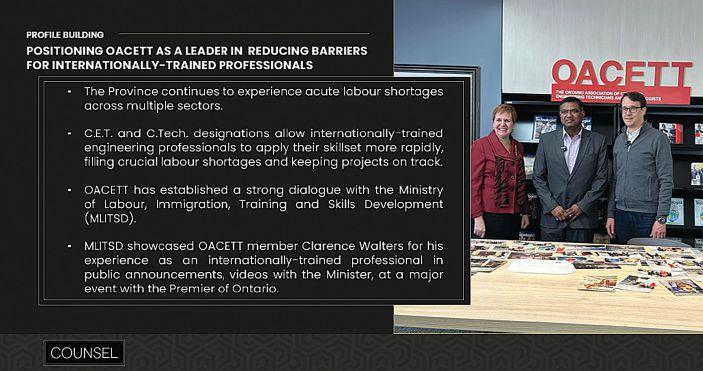
The government priorities discussions underscored the need for strategic planning within OACETT’s advocacy efforts, especially considering the province’s commitment to tackle housing supply challenges and re-establishing its leadership role in manufacturing and infrastructure funding, which encapsulates a large group of our membership. Chief among all these is the goal of building 1.5 million homes by 2030 and $185 billion for infrastructure.
OACETT government relations priorities
OACETT’s government relations priorities were extensively covered, emphasizing the importance of raising the profile of OACETT members. OACETT’s mandate includes establishing constructive relationships with the government to better reflect key considerations for certified en-
gineering technicians and technologists (C.E.T.s and C.Tech.s) within the Ontario Building Code and harmonizing regulations to better reflect appropriate recognition of what certified members do.
Engagement with government entities was another focal point covered during the forum. OACETT and Counsel Public Affairs have established dialogue with key government ministries and officials, including those in Municipal Affairs and Housing and Red Tape Reduction. These interactions are pivotal for OACETT’s contributions to the labour market, especially in addressing acute labour shortages with internationally trained engineering professionals.
The forum addressed the underutilization of C.E.T.s and C.Tech.s due to regulatory barriers that have contributed to delays and cost increases in construction projects. OACETT’s recommendations to the provincial government centred on streamlining Building Code Identification Number (BCIN) exam requirements and harmonizing regulations. OACETT’s subject matter experts have shared their expertise with the Ministry of Red Tape
Reduction and are engaged in ongoing conversations across the government to advocate for these changes. Removing unnecessary red tape will help the government achieve its goal of building 1.5 million homes by 2030. Full stop!
The presentation concluded with a call to action for OACETT members, encouraging them to support the Association’s advocacy for the profession. This involves participating in legislative consultations, raising their profile amongst government staff, and positioning themselves as invaluable applied engineering experts.
The forum concluded with a Q&A session, allowing members to delve deeper into the subjects presented and express their viewpoints on the Association’s future direction in government relations.
In essence, the OACETT Government Relations Forum was a vital convergence of ideas and strategies to strengthen the influence and recognition of engineering technicians and technologists in Ontario’s socio-economic landscape. The active participation of OACETT members in these dialogues is beneficial and critical in shaping policies and standards that resonate with our members’ professional ethos and technical competencies. Part of OACETT’s commitment to its government relations program is to include these forums every year to provide members with an update on our
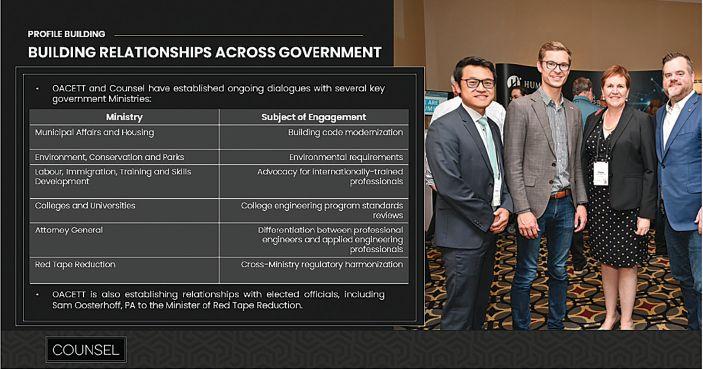
OACETT’s recommendations to the provincial government centred on streamlining Building Code Identification Number (BCIN) exam requirements and harmonizing regulations. OACETT subject matter experts have shared their expertise with the Ministry of Red Tape Reduction and are engaged in ongoing conversations across the government to advocate for these changes.
engagement plan and keep them informed on relevant government policy.
Nothing we do on our end can compare to the time and expertise you can provide for your Association and profession. If you are aware of any proposed changes to legislation that may affect your scope of practice, quali-
fied person status, or any opportunities that may benefit your discipline, please get in touch with us at govrelations@oacett.org.
David Terlizzi is the director of member engagement and services, and government relations.
NEW CPD AUDIT BEGINS
The end of another year means the beginning of a new Continuing Professional Development (CPD) audit. This audit affects all members belonging to the 2021-2023 cycle. To see what cycle you belong to, check the OACETT Member Portal under CPD.
CPD is a mandatory component of OACETT membership. Check your email/mail to see if you have been selected.
IF YOU HAVE ANY QUESTIONS, PLEASE EMAIL
Counsel Public Affairs presentation slide from the Government Relations Forum held online in December.

Members on the move
Anthony D’Aurizio, C.E.T., has recently joined Halton Region as a development project manager. D’Aurizio brings a wealth of experience from key positions at the City of Toronto and R.V. Anderson & Associates. In his current capacity, D’Aurizio oversees the intricate process of reviewing and facilitating water and wastewater systems for new developments, ensuring seamless integration with regional infrastructure. D’Aurizio is driving innovation in the field of development and engineering.
Leonn De Paula Ledoux, C.Tech., recently joined EllisDon as assistant project manager, bringing three and a half years of valuable experience in the construction industry. Formerly a project coordinator, De Paula Ledoux navigated the complexities of the profession with skill and dedication.
Alongside contributing to the success of projects, he is an active member of the Grand Valley Chapter. De Paula Ledoux continues to impact the dynamic realm of project management at EllisDon significantly.
Supneet Singh, C.Tech., currently serves as an engineering technician II at the County of Simcoe. With five years of experience in civil engineering, Singh is instrumental in reviewing and providing crucial insights on development applications, ensuring strict compliance with County standards and design criteria. His diverse background includes roles such as utility coordinator at the City of Markham and design technician at Telecon.
Herbert Masamvi, student member, is now a quality coordinator at EllisDon. He is responsible for
developing inspection and test plans and conducting internal and external audits to ensure the implementation and maintenance of quality control requirements at EllisDon. Masamvi graduated from Algonquin College’s civil engineering technology program last year, and previously worked at The Ottawa Hospital as a staffing assistant before embarking on this new career.
Ben Van Der Werff, associate member, has joined the City of Kawartha Lakes as senior engineering technician in the development engineering department. In this dynamic position, Van Der Werff will play a pivotal role in coordinating the review and approval of planning applications and development proposals, managing the preparation of master drainage plans and sub-watershed studies, and facilitating collaboration with the
City’s water/wastewater department for sanitary and water system initiatives. He has two and a half years of prior experience at the City of Kawartha Lakes.
Hans Dworatzek, C.E.T., is now employed at Chung and Vander Doelen Engineering Ltd., where he has been contributing his expertise for several years. As part of a team of geotechical professionals, Dworatzek is vital in providing consulting services that address geotechnical structural and geotechnical environmental factors in construction projects, ranging from buildings and roads to new developments. Dworatzek also ensures the success and quality of geotechnical aspects in various construction processes.
Jude Okolie, C.E.T., has recently acquired the role of maintenance response manager at the Greater Toronto Airport Authority. As a project coordinator at the same authority and a project engineering specialist at Thermofisher Scientific, Okolie brings valuable experience to this position. Okolie’s responsibilities include: leading the maintenance team for passenger boarding bridge and baggage handling, ensuring budget alignment, and fostering a culture of excellence within the group. Okolie’s role also involves addressing labour-related matters and participating in grievances and arbitration.
Sydnee Botham, C.E.T., has a new position as development engineering coordinator at the Town of Amherstburg. With a background as an engineering technologist - development at the Municipality of Lakeshore for three years, Botham is now responsible for coordinating and approving engineering aspects of development applications. This includes reviewing various reports, providing engineering
requirements in subdivision agreements, and leading compliance efforts with the Ministry of the Environment, Conservation and Parks and the consolidated linear infrastructure process for the Town.
Adam Mildenberger, C.E.T., has a new job title: municipal market leader, transportation at Stantec. He has brought extensive experience to the role with his 13 years of transportation engineering experience and serving as the treasurer of the Hamilton section of the Canadian Institute of Transportation Engineers. His responsibilities involve growing Stantec’s transportation group in southwestern Ontario through account management, business development, team mentorship, and project management. Mildenberger is critical in driving Stantec’s transportation capabilities and regional market presence.
Timothy Skrins, A.Sc.T., has a new position as manager of permits and inspections at the Regional Municipality of Halton. With nearly 25 years of dedicated service at Halton, Skrins previously served as the supervisor of permits. As part of the newly formed development services division within Public Works, Skrins oversees the entire permitting process from intake to inspection and final assumption. Additionally, Skrins provides inspection oversight for all development engineering-related infrastructure in new development projects throughout Halton.
WHAT’S NEW? We want to hear from other members who have recently changed jobs, received a promotion or an award, or completed an educational program. Make sure your fellow OACETT members read about it in The Ontario Technologist. Promote your success – send your submissions to the editor at editor@oacett.org.
CPD CYCLE
The start of the year ushers in a new Continuing Professional Development cycle. If you were certified in 2023 or were supposed to certify in 2023 and did not, your CPD cycle is
January 1, 2024 –December 31, 2026.
You must complete four CPD activities including one mandatory activity in either technical knowledge or management/leadership. For more information visit www.oacett.org/cpd or email: cpd@oacett.org.
Celebrating 25, 40 and 50 years of membership!
This listing represents those who reached their milestone between October 19, 2023, and December 14, 2023.
25-year members
Samir Bahnam, C.E.T.
Derick Boshell, C.E.T.
Kenneth Carpenter, C.Tech.
Robert Chwiecko, C.E.T.
Jason Cowgill, C.E.T.
Chadwick Cuirrier, C.E.T.
Leslie Eakins, C.Tech.
Brad Foslett, C.Tech.
Marco Ganassini, A.Sc.T.
Jason Gaynor, C.E.T.
Chad Henderson, A.Sc.T.
Benedicto Joanes, C.Tech.
Jason Krynicki, C.E.T.
Giuseppe Landolfi, C.E.T.
Steve Leclerc, C.E.T.
Robert Low, C.E.T.
Alan Scott MacLennan, C.E.T.
David Maillie, C.Tech.
Frazer McLeod, C.E.T.
Steven Meser, A.Sc.T.
Emilie Mojica, C.E.T.
Domenic Nesci, C.E.T.
Phillip O’Connor, C.Tech.
Jaime Ramirez, C.E.T.
Thomas Salisbury, C.Tech.
Robert Squire, C.E.T.
Ramesh Subramanian, C.E.T.
Matthew Talar, C.E.T.
Steven Toll, C.Tech.
Fernando Ventresca, C.Tech.
James Craig Waller, C.E.T.
Paul Wozniczka, C.Tech.
Jan Ziminski, C.E.T.
40-year members
Christopher Blackwood, C.E.T.
Filippo Capuano, C.E.T.
Romano Del Tin, C.E.T.
Ralph Hamma, C.E.T.
Alexander Logan, C.E.T.
Larry Marks, C.E.T.
Bradley Masterson, C.E.T.
William McGinness, C.E.T.
Edward Melcarek, C.E.T.
Peter Mitchell, C.E.T.
Ross Monsour, C.E.T.
Paul Muia, C.E.T.
Stephen Penfound, C.E.T.
Munesh Phulesar, C.E.T.
Michael Piett, C.E.T., CST
Chris Sheehan, C.E.T.
Domenic Somma, C.Tech.
Robert Spence, C.E.T.
Adrian St Kitts, C.E.T.
Domenic Tarulli, C.E.T.
50-year members
Ronnie Beatson, C.E.T.
David Bowden, C.E.T.
Neil Buonocore, C.E.T.
Brian Fenton, C.E.T.
Charles Foster, C.E.T.
Patrick O’Connell, C.E.T.
Robert Patterson, C.E.T.
William Ranich, Sr.E.T.
Ljiljana Simeunovich, C.E.T.
Richard Tapak, C.E.T.
Kenneth Taylor, C.E.T.
Neil Valentino, C.E.T.
James White, C.E.T.
Kurt Williams, C.E.T.
Mario Zuccaro, C.E.T.

ROAD TO CERTIFICATION
Join OACETT for a webinar on the benefits of becoming a Certified Engineering Technologist (C.E.T.) and Certified Technician (C.Tech.).
WHY ATTEND?
• Learn how OACETT certification can boost your career — higher salary, networking, and marketability.
• Learn about CTEN.ca, OACETT's career site.
• Learn about OACETT certification requirements.
To register for a webinar, visit: Students: www.oacett.org/student-road-to-certification
Internationally Educated Professionals: www.oacett.org/iep-road-to-certification
QUESTIONS? Contact Trishia at ttedoldi@oacett.org.
WEBINARS DATES AT A GLANCE
COLLEGE STUDENTS: Monday, March 4, 18, 25 Monday, April 8, 15, 22, 29 @ 12:00 p.m.
INTERNATIONALLY EDUCATED PROFESSIONALS: Thursday, March 7, 14, 21, 28 Thursday, April 4, 11, 18, 25 @ 1:00 p.m.
Willie Perez: A career journey worthy of celebrating
by Gail Powell
Willie Perez, C.E.T., P. Eng., a seasoned engineering expert in TV broadcasting, electronics, and semiconductor industries, has been instrumental in changing the digital television footprint of communities in Canada and beyond.
The Manilla-born professional began his passion for creating things when he graduated from a five-year program at the University of the East, Philippines, in 1981 with a Bachelor of Science in electronics and communications engineering. He then sought to further broaden his knowledge and pursued a diploma in advanced computer hardware from Access Computer College.
His broadcasting career began in 1984 when he joined GMA-7 as a TV transmitter technician. Following the EDSA 1986 revolution, he was promoted to a supervisory position and provided technical support to GMA-7 affiliate stations nationwide. This role involved extensive fieldwork, where he conducted troubleshooting, assisted in installations, and oversaw the commissioning of TV stations and antennas.
Soon after, he continued his broadcasting career in the Middle East where he worked as a transmitter engineer for STESA (Saudi Technical Engineering Systems Associated) and was involved in the first digital TV deployment in Saudi Arabia. He was also part of an engineering team in Riyadh, where he worked on designing, installing, testing, and commissioning TV/FM stations.
When Perez moved to Canada in 2004, he joined OACETT and completed the certification requirements to earn the Certified Engineering Technologist (C.E.T.) title.
“Becoming a C.E.T. was a proud moment,” Perez says.
“Becoming OACETT certified should be a goal for every technician or technologist,” he adds. “Joining OACETT has been fruitful for me in many ways. I have met more people in the engineering profession and have been able to present myself to companies as a C.E.T.”
In the mid-2000s, Perez was hired by Rogers Broadcasting in Toronto as a transmitter technician, where he played a part in the first digital TV deployment in Canada.
“With Rogers, I did a proof of concept (POC) and a proof of value (POV) with how to transmit live video using wireless links. It tested positive, and at Rogers, we successfully deployed the technology. That POV saved the company thousands of dollars in transmission links,” he recalls.
“Also, with that role at Rogers, I worked on converting and using wireless links to control remote cameras.”
Today, Perez works in post-secondary research and development at Humber College as a B²C research lab engineering manager.
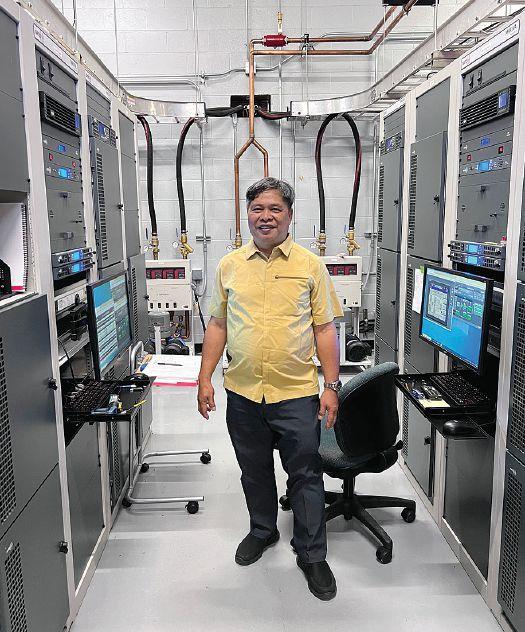
Willie Perez, C.E.T., P.Eng., at the North Carolina CBS TV Station, visiting their ATSC 3 TV transmitters.
“Joining
OACETT has been fruitful for me in many ways. I have met more people in the engineering profession and have been able to present myself to companies as a C.E.T.”
He is also an OACETT Toronto East Chapter executive member. He says that he advises other engineering professionals coming to Canada to join OACETT, aiming to become certified as a C.E.T.
“Joining OACETT opened more roads for me to secure a job here in Canada,” says Perez.
“The membership has been a great way to get to know a huge community of technical people. The community, the help, and advice – all of this helps us [engineering professionals] succeed in our chosen field.”
Gail Powell is a contributor with The Ontario Technologist.
Business development is for everyone
by Nate Simpson, C.E.T.
An essential part of a firm’s success is business development. Why? It supports the firm’s marketing strategy through various planned activities oriented to forming relationships with prospects and deepening bonds with existing clients. However, numerous challenges hinder effective business development, endangering revenues, client relationships, and overall growth.
One such challenge is a common perception that the responsibility for business development belongs solely to company principals and senior leadership. How a company has organized their business development model may reinforce this idea. The consequence is that companies miss out on potential growth by not promoting a mindset of ‘everyday business development (BD)’ that engages all staff.
Generally, firms will operate under one of two primary business development models:
1. Seller/doer lead – Company owners (e.g., partners, principals) are primarily responsible for client cultivation, project acquisition activities and technical project delivery.
2. Marketing/BD lead – A company with dedicated marketing and business development staff, primarily responsible for developing and fostering relationships with prospects and clients. These staff may engage technical personnel, including executive and senior leadership, for assistance in producing proposals, marketing collateral, prospect and client relationships, etc.
As a company matures and grows, the model employed may need to change. Moving from a seller/doer to a marketing/BD model introduces its own range of complexities. During the transition, a firm may need to use a ‘hybrid’ of the two models for some time.
An underlying issue common to each model, and any hybrid application, is the approach to their deployment. A company’s structures, processes and actions may limit involvement in business development to a few select people. Whether or not this is the company’s actual intent, the implication is in the signal sent to other staff in both technical and non-technical roles. Specifically, the company does not see a need, or even have an interest, to engage them in busi-
OACETT 360 PARTNERSHIP PROGRAM



























To join or for more information, visit www.oacett.org or email 360partners@oacett.org.
ness development activity. The consequences of this situation can include the following:
1. Missed opportunities for winning additional and betterquality projects, impacting revenues.
2. Reduced capacity for gathering and assessing important information (intel) concerning prospects and the competitive environment.
3. Lesser degrees of engagement with clients, impacting depth of connection and retention.
4. Fewer avenues for staff mentorship and development that might otherwise help with retention and open the door to uncovering a latent skillset within an emerging leader at the firm.
In creating a culture of ‘everyday BD,’ companies can breakdown this ‘myth’ of business development as the exclusive responsibility of a small group of people. Firms can realize untapped opportunities by actively engaging all staff in business development activity appropriate to their respective roles. Structures, processes and actions indicative of this type of culture include the following:
1. Onboarding: The onboarding process involves introducing new staff to the company’s BD culture by leadership personnel. From day one, new staff understand that BD is part of the company’s culture, the support systems, and the reasons behind the approach.
2. Position descriptions, career development plans: Inclusion of BD responsibilities on a progressive basis and professional development programs and training support skills and career advancement in BD-related areas.
3. Mentorship: A program of pairing the company’s senior leadership with emerging leaders for BD-related guidance.
4. Habits and leadership: Have a range of engrained, positive habits to support BD, with company executives leading by example. For example, senior leaders and staff can arrive early at a project meeting and engage in informal discussions with the client and project team.
5. BD-involved feedback and communications loops: Having processes in place for sharing information, successes and lessons learned across the company (e.g. at town hall meetings). For example, upon hearing information on a potential new development at a project meeting, an employee would know the process by which to pass the intel to a designated firm leader, who can review it further and take appropriate BD actions.
Together, these practices ingrain a business development culture that becomes a regular aspect of operations, benefitting the entire firm. Ultimately, the thoughtful development and implementation of an ‘everyday BD’ approach through
BUSINESS DEVELOPMENT MODELS
54%
Percentage of firms that do not have a formal business development process.
THREE BUSINESS DEVELOPMENT MODELS
(% USAGE AMONGST A/E/C FIRMS)
SOURCE
Clarity: Architecture & Engineering Industry Study. 44th Annual Comprehensive Report (2023). Deltek, American Council of Engineering Companies, Association of Consulting Engineering Companies - Canada, American Institute of Architects, Society for Marketing Professional Services.
structured processes, broad employee involvement, and exemplary leadership holds substantial potential for a firm’s growth and development – making the firm more profitable and successful.
Nate Simpson, C.E.T., is principal of Nate Simpson Business Development. He has over 25 years combined experience as a building and fire code specialist in the fire protection engineering sector and as a business development leader.
Fletcher Foundation EEE Grant helps students become next wave of tech innovators
by Jessie Ciupka
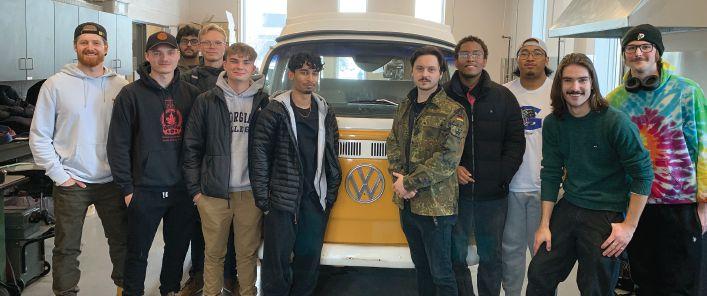
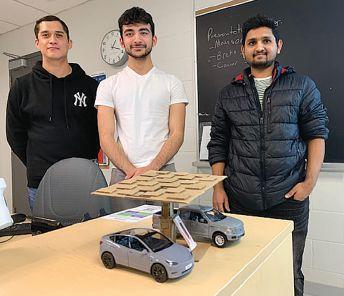
The Fletcher Foundation Enhanced Educational Experience (EEE) Grant is transforming ambitious ideas into impactful realworld projects at Georgian College. Georgian classrooms have always been a space where theory meets practice, offering dynamic, hands-on learning experiences. Now, with the support of the Fletcher EEE Grant, Georgian can launch new projects that provide its students with an unrivalled experience to influence the future of technology.
Empowering students with hands-on experience
The Solar EV Charger and the 1972 VW Westfalia Van Retrofit are the two key projects Georgian has created to support student learning needs. These projects extend beyond traditional academic exercises; they are actual applications where students actively convert their lessons into real-world solutions, grooming themselves to be the next wave of tech innovators.
Solar EV charger: From concept to creation
Emphasizing this practical approach, the Solar EV Charger project embodies the essence of applied learning. Stu-
Through the Fletcher Foundation’s EEE Grant, Georgian College is not just keeping pace with the changing world of technology; we’re helping to lead the charge.
dents go beyond merely learning about solar technology; they use their knowledge to develop innovative solutions for sustainable transportation. This project transitions from theoretical learning to impactful implementation, providing students with the necessary skills and experience to contribute significantly to global energy challenges.
VW Westfalia retrofit: Blending heritage with high-tech
Similarly, in the VW Westfalia retrofit project, students delve into the art of transforming the old into the new. This initiative is more than a restoration; it’s a reimagining, equipping a vintage icon with modern, eco-friendly technology. In this project, students not only hone their technical skills but also develop an appreciation for blending historical integrity with modern innovation.
More details on Georgian’s VW Westfalia retrofit project is on page 20 in this issue of The Ontario Technologist.
Impact beyond the classroom
These projects extend their influence beyond academia, including the Georgian College campus. They are live examples of how education can directly contribute to solving real-world problems, aligning with Georgian’s mission to prepare students for the job market and instill a sense of responsibility toward sustainable and innovative development.
Thank you to the Fletcher Foundation
Through the Fletcher Foundation’s EEE Grant, Georgian College is not just keeping pace with the changing world of technology; we’re helping to lead the charge. This grant has provided Georgian students with extraordinary opportunities to apply their knowledge in meaningful, real-world contexts, further shaping the future of technology.
Jessie Ciupka is a social media officer with Georgian College’s engineering & environmental technologies, skilled trades department.
Georgian College students in front of the 1972 Volkswagen Westfalia which they are transforming into an electric vehicle.
Georgian College students showcase an EV charger station prototype.
Empowering the future: A journey with the Fletcher Foundation EEE Grant
by Marc Simard
In a transformative stride towards enhancing educational experiences, Collège La Cité is proud to be recipients of the 2023 Fletcher Foundation Enhanced Educational Experience (EEE) Grant. This grant, a beacon of support for progressive educational initiatives, has opened doors to innovative avenues for educators and students alike.
One significant aspect of this grant’s impact is its contribution to acquiring cutting-edge technology, exemplified by purchasing a Haas desktop mill. This state-of-the-art equipment is not merely a machine; it’s a gateway to revolutionizing how we train the next generation of technicians and technologists.
The Fletcher Foundation EEE Grant has empowered us to go beyond conventional teaching methods. The Haas desktop mill, renowned for its precision and efficiency, is a technological marvel that introduces students to the intricacies of modern manufacturing processes. With this acquisition, we embark on a journey that aligns classroom learning with realworld applications, preparing our students for the challenges of the evolving industrial landscape.
The Haas desktop mill is not just a tool; it’s a catalyst for fostering hands-on learning experiences. Students will have the opportunity to delve into the world of computer numerical control (CNC) machining, mastering the skills that are increasingly in demand in today’s workforce. This immersive training ensures that our students are not just passive recipients of knowledge but active participants in their own skills development.
The grant allowed us to procure this advanced machinery and create a dedicated space for a state-of-the-art training facility. The Haas desktop mill finds its home in a dynamic workshop designed to simulate a professional manufacturing environment. This setting encourages collaboration, problemsolving, and teamwork – essential skills for success in any
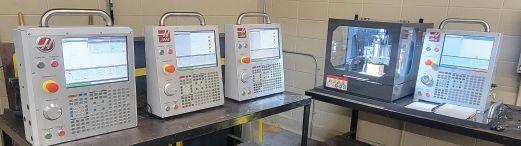
Left table: Three Haas control modules in light grey with the red and yellow push buttons. Right table: The new Haas Desktop Mill in dark grey with its own control module to fabricate parts. The EEE grant allowed Collège La Cité to purchase the one on the right table.
technical field. By incorporating the Haas desktop mill into our curriculum, we are bridging the gap between theoretical knowledge and practical application. Students will gain a profound understanding of machining techniques, materials, and processes, paving the way for them to become adept technicians and technologists. This experience will undoubtedly set them apart in a competitive job market, where hands-on skills and technical proficiency are highly valued.
The Fletcher Foundation EEE Grant has not only provided us with a technological marvel but has laid the foundation for a paradigm shift in how we approach vocational education. We are committed to leveraging this opportunity to inspire a new generation of technical workers who are proficient, innovative, and adaptable.
The Fletcher Foundation EEE Grant, coupled with acquiring the Haas desktop mill, marks a pivotal moment in our educational journey. We are investing not only in machinery but in the future of our students and the industries they will shape. This grant empowers us to foster a learning environment that transcends boundaries, preparing our students to excel in the ever-evolving technical landscape.
Marc Simard is a program chair at Collège La Cité.
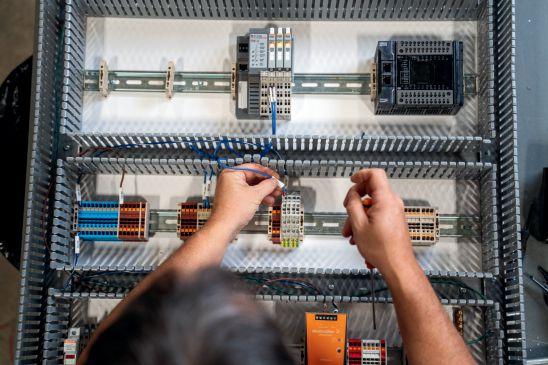
CONTROL PANEL BUILDING


National update: TPC and TAC
As you may know, OACETT is a member of two national associations: Technology Professionals Canada (TPC) and Technology Accreditation Canada (TAC). A lot happened in both organizations in 2023, so we wanted to provide you with an update.
Technology Professionals Canada
2023 has been focused on moving forward on the five strategic priorities that were established following the reunification of all the provincial organizations in 2019:
1. Create uniform certification and practice standards.
2. Develop standard designations and/or equivalencies which will ensure labour mobility.
3. Provide support to provincial organizations pursuing the development of definitions of practice.
4. Generate greater awareness of TPC and the role of engineering and applied science technology professionals in Canada.
5. Continue to support the success of TAC.
Much of the work revolved around re-constituting the group of registrars from each organization, who have been focused on gathering everyone’s documentation to understand where the similarities and differences lie for recommendations to come forward in 2024. ASET, the association in Alberta, has shared a set of competency profiles that are being reviewed and validated by all the provinces – OACETT is hoping to use these to create better tools for evaluating the differences between technicians and technologists.
All the provinces have also contributed their existing definitions of a scope of practice, including, most impor-

tantly, New Brunswick, where right-to practice legislation was passed in 2022. The Professional Governance Act passed in B.C. means that a similar agreed scope of practice is likely forthcoming sometime in 2024.
From an awareness perspective, TPC will be launching National Engineering and Applied Science Technology or NEAT Week the week of November 25, 2024. The highlight will be a capstone project competition opened to engineering and applied science technology students in colleges across Canada. Watch for information about OACETT’s plans for participation as the year progresses!
Technology Accreditation Canada
After almost a year without an executive director, TAC welcomed Muktha Tumkur in December 2022. A key focus in her first year was supporting TPC’s efforts to manage the transition of signatory status with the International Engineering Alliance (IEA) from CCTT (Canadian Council of Technicians and Technologists) to TPC (with a sub-contract for the Sydney and Dublin Accords being agreed with TAC). TAC welcomed international IEA auditors in December 2023, and we looked forward to the results. TPC has had provisional status approved for international certifications – we are just waiting on an IEA audit of the application and review processes.
TAC accreditation has remained a challenge in Ontario because of the colleges’ expressed concern that the application process is too duplicative of the audits that are required by the Ministry of Colleges and Universities. TAC recognizes the challenge and is looking to develop a specific strategy to address these concerns in 2024.

OACETT members gain access to CSA OnDemand™ subscription
OACETT is pleased to announce the release of the 2024 CSA (Canadian Standards Association) OnDemand subscription, which CSA has made complementary to OACETT members (valued at $4,290).
The offer provides members access to a custom collection of all current and historical standards for the Ontario Building Code Collection and National Building Code Collection.
Ontario Building Code Collection and National Building Code Collection
These collections contain all CSA Group standards referenced in the Ontario Building Code and NRC National Building Code. They are essential for those working on the design and construction of new buildings as well as the alteration, change of use, and demolition of existing buildings.
Benefits for OACETT members
• Access to up-to-date standards whenever and wherever you are.
• Access to OACETT’s collection content in all available previous editions in English and French.
• A hassle-free, easy-to-use, and responsive interface lets you quickly find what you need through full-text keyword search, extensive search filters, and bookmarking capability.
• You can add up to nine additional users to your subscription.
How to access this offer
Visit the OACETT member portal at https://oacett.powerappsportals.com/membership/ membership-benefits/csa-group/ to obtain the promo code and instructions on activating your subscription. You can also refer to the eblast sent on January 29, 2024, for information.
Licenses are limited and will be assigned on a first-come, first-serve basis. Access is valid until January 25, 2025.
For general questions, contact: services@oacett.org.



PEO makes significant policy changes
As many of you are no doubt aware, Professional Engineers Ontario (PEO) made several changes in 2023 to the licensure requirements to become a professional engineer (P.Eng.), some of which have a direct impact on OACETT members, so we wanted to advise how your leadership has been responding on your behalf.
Major changes include suspending the engineering intern (EIT) program to new applicants (currently under review with replacement options being contemplated) and eliminating the Canadian work experience requirement, both as of May 15, 2023.
The key change impacting OACETT members is the elimination of an advanced diploma as a possible pre-
requisite to a P.Eng. licence. The only educational qualification that PEO will accept going forward is a bachelor’s degree in an engineering program accredited by the Canadian Engineering Accreditation Board or a bachelor’s degree that meets PEO’s acceptance criteria, plus successful completion of a technical examination program. While the path via an advanced diploma was always a challenging one, with a seemingly insurmountable number of exams required, it was a path that was closed following deliberation by PEO Council with little consultation with key stakeholders, like OACETT, on the impacts of such a change.
President Micheal Mooney, C.E.T., wrote to PEO president Roydon Fraser in the fall, expressing our disappoint-
ment about the lack of consultation, given our collegial relationship. The issue was further revisited during our annual joint leadership summit on November 23, 2023, where the staff and volunteer leaders of OACETT and PEO met to provide mutual updates and address issues of mutual concern. PEO apologized for the lack of consultation and explained their need to give a quick turnaround on changes required to comply with the Fair Access to Regulated Professions and Compulsory Trades Act (FARPACTA) updates. OACETT is subject to the same legislative changes and communicated that the deadlines did not require such precipitous action.
Ultimately, in response to the closure of one pathway, OACETT is push-
LISTEN TODAY!
HOST

Louis Savard, C.Tech., conducts thoughtprovoking interviews with industry leaders, government officials, academia and influencers on hot topics relevant to the engineering and applied science profession.
GUESTS


Pieter Bruwer, C.E.T. OACETT Member Engagement and Services Committee, northern representative
Daniel Liao
St. Lawrence College, OACETT’s Board of Director’s Heads of Technology Representative
Charline Tyrell
Career and training counsellor Achév
EPISODE 7 Bridging the Gap: Supporting Internationally Educated Professionals in Ontario
Host Louis Savard, C.Tech., discusses with Pieter Bruwer, C.E.T., Charline Tyrell, and Daniel Liao, the difficulties that internationally educated professionals face when they immigrate to Canada and the resources available to support them.
Listen to the podcast at https://www.oacett.org/tech-takes or on your favourite podcast app!
ing PEO to enhance the profile and process of the Licensed Engineering Technologist or LET class of limited licence. Efforts requested include:
• Greater visibility and clarity of the licence on the PEO website.
• Clearing up the backlog of applications.
• Enforcement of maintenance of the C.E.T.
• Support in communicating with employers who do not recognize the licence.
OACETT staff will follow up with their PEO counterparts in 2024 to ensure these changes are made. OACETT will then enhance our visibility of the limited licence on our website with links to the PEO application portal. Advocating on behalf of engineering and applied science technicians and technologists is a key mandate for OACETT, and that includes with the other organizations within the engineering continuum.
Calendar of Events
March 8-10 & 13-17
Toronto Home Show
Enercare Centre, Toronto www.torontohomeshows.com/tbo/
April 14-17
Ontario Transportation Expo Conference
Delta Mariott Toronto Airport, Toronto https://ote.ca/
April 21-24
Good Roads Conference
Fairmont Royal York Hotel, Toronto https://goodroads.ca/conference/
OACETT’s most recent fireside chat highlights
Based on the popularity of the open question time during the Annual General Meeting, OACETT leadership has committed to hosting two other “fireside chat” sessions during the year. We hosted our first one on February 21, 2023, and held the most recent one on November 1, 2023. More than 770 members registered, which is an excellent sign that these sessions are engaging!
President Micheal Mooney, C.E.T., opened the session with a brief update on the member survey results, which was conducted from mid-June to mid-July of 2023 and had an eight per cent response rate, considered average for professional associations and is statistically reliable. There is an entire article on the key learnings from the member survey in the November/December 2023 edition of The Ontario Technologist, and here are some of the commitments in the 2024 business plan that respond to the results of the member survey:
• OACETT plans to add a staff resource dedicated specifically to curating relevant and affordable CPD (continuing professional development) for our members, including content for all disciplines.
• Continued investment in making the Member Portal as intuitive and userfriendly as possible, particularly regarding members’ status concerning certification and membership renewal.
• Creation of a mentorship program.
• Consolidation of member communications to avoid inbox overload.
• Work with our retired and about-to-retire members to ensure ways to remain engaged and derive value from continuing to be part of OACETT.
President Mooney also provided an update on our government relations efforts. You can view the full recording at https://bit.ly/OACETTfiresidechatNov2023 or scan the QR code to access the recording.

The introduction lasted about ten minutes and then we opened things up for questions. Just like the last time, the questions were wide-ranging, and we had more questions than we could answer in the time available. Several focused on CPD (as per the commitment above). The Registration and Professional Practice (RPP) Committee is also working on clarifying the CPD requirements for members. There were questions about job search advice, and members helpfully responded to each other in the chat. There were excellent, futurelooking questions about the profession and various emerging technologies. There were also questions clarifying the requirements for retired members. At www.oacett.org/members-area/retired-members, there is more information on this topic, answering your questions as well. There were requests for more information about the pending new Municipal Infrastructure designations –watch your email for the pending launch early this year!
In some cases, members had questions that were very specific to their circumstances. To focus on the questions that would be of the broadest interest, these were either responded to privately during the webinar or in follow-up questions that we could not get to, which you can find posted at https://bit.ly/ OACETTfiresidechatQA. It is an excellent way for members to get the information they seek about our Association.
Our next Fireside Chat is scheduled for Thursday, March 7, 2024, from 4:00 p.m. to 6:00 p.m. We hope to see you there!
Georgian students retrofit VW Westfalia into an electric vehicle
by Michelle Malcolm-Francis
In December, Georgian College announced the launch of an exciting new project that brings students from various programs together to retrofit the iconic 1972 Volkswagen Westfalia (VW) camper van into a modern-day electric vehicle showpiece.
The VW electrification project, a collaboration between Georgian’s engineering and environmental technologies department, the research and innovation department and the Automotive Business School of Canada, is part of the college’s Sustainable Projects Learning Initiative, which gives students innovative, hands-on learning in sustainable technology, and meets the college’s commitment to the United Nations’ Sustainable Development goals.
Ron Sky, engineering and environmental technologies professor and the project manager of the VW electrification project, says, “The project, partly funded by the Fletcher Foundation, brings students together to work together for a common goal — making our world a better place and getting the skills they need to get jobs that can help our communities become more sustainable.”
Sky expects 30 to 50 Georgian students from different engineering technology programs to be involved in the hands-on conversion, changing the vehicle’s powertrain to electric propulsion. Another 20 to 30 students from other programs, including the interior design program, will help redesign the inside of the electrified van with a very retro theme that embraces the 1970s. Other students will help manage and promote the project.
Using retrofit technology, mechanical, electrical and environmental tech-

nology students will put in a new electrical drive system, incorporating the original VW controls and instruments, making it more powerful with a capable drivetrain. The electric motor will go where the engine is located, and the lithium batteries will be nearby. Plus, the van will be equipped with inverters and a CAN (controller area network) van system, allowing microcontrollers and devices within the vehicle to communicate with each other. With all these modern improvements, the new retro-styled zero-emission people-mover will be faster than the original van, have a quicker response, and range of about 160 kilometres.
“Getting our hands dirty and working on an electric vehicle is an amazing opportunity for our future careers, especially for those who want to work in the automotive industry. Whether it’s welding or fabrication, I can’t wait to see what everyone will do to bring this VW back to life,” says Parker Johannesson, a first-year mechanical engineering student at Georgian College.
This January, students began the hard work of the conversion and will aim to have the vehicle fully functional and completed by this spring. After the big reveal, Georgian plans to take the new and improved VW on the road to showcase the cool projects their students work on and use the electrified van as a marketing tool to promote the Georgian experience and grow enthusiasm for Georgian, motivating young people to enter careers in trades and technology. Serving as a mobile learning lab, high school students will have an opportunity to see the various components of the van, including the controllers, inverters, and motor, and participate in creative fun activities within the van. The rolling advertising machine may also visit OACETT’s 2024 Conference, showing OACETT members how Georgian took something really cool and made it even more remarkable.
Michelle Malcolm-Francis is the editor of The Ontario Technologist magazine.




BY ANDREA JOHNSON
Mohawk College becomes first Canadian postsecondary institution to receive certification from national testing body
Mohawk College’s Construction Materials Laboratory has been certified by the Canadian Council of Independent Laboratories (CCIL) for industry testing.
Mohawk College is the first postsecondary institution in Canada to become certified by CCIL, a non-profit organization representing independent, private-sector testing laboratories in Canada. It offers the most extensive laboratory certification program in the country.
“This certification showcases how our students, and our applied research expertise will meet the highest of quality standards that employers and partners of Mohawk College demand,” says Jeff McIsaac, dean of Engineering Technology and Aviation. “Hamilton and our surrounding communities are recognized as a hub of innovation for the aggregate industry. As the first and only college in Canada to have been certified, we now can offer the industry the talent and expertise they need.”
The Construction Materials Laboratory at Fennell Campus supports applied research projects within the construction industry and serves as an operational lab for teaching in the college’s Civil Engineering Technology and Architectural Technology programs. This certification means the college has met the standardization and interlaboratory testing requirements of the CCIL Aggregate Laboratory Certification program and is qualified for Aggregate Quality Control Laboratories (Type C) and Aggregate Physical Property Tests (Type D).
“I am proud and grateful to work with this amazing team to make this certification a reality,” says Irene
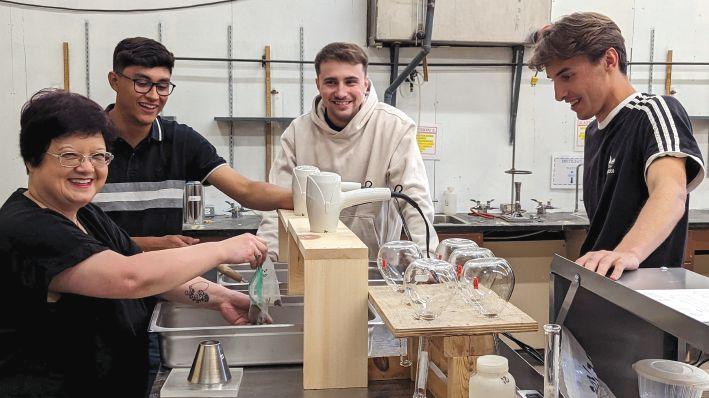
Amog, a faculty member in the college’s School of Engineering Technology and Aviation, who led the certification process along with Tyler Sowden, the technologist for the college’s Building and Construction Sciences programs. “The certification will bring many learning opportunities to present and future students of Mohawk College. I look forward to working with industry partners on their projects soon.”
The newly certified lab will help support the growing demand in Ontario for expertise in aggregate materials testing and applied research, in addition to giving Mohawk students an advantage when launching their careers in the construction sector. Regular laboratory inspections from CCIL will ensure that equipment is calibrated, staff members are proficient, and standardized test procedures are used.
Three Mohawk College students also received their certifications during the lab certification process.
“This was a tremendous opportunity to further my knowledge in this field,”
says Tyler Theim, who, along with his classmates Evan Weidner and Oscar Padron Janica, received top marks on the certification exam. “It will assist in jump-starting my career and I am grateful that Mohawk College can provide these experiences to students such as myself.”
Programs using the newly certified lab include Civil Engineering Technology, Civil Engineering Technician, Architectural Technology, Architectural Technician and Civil Engineering Technology-Transportation. Applied research projects are underway in the lab, with new research project opportunities available in winter 2024. For a complete list of Type D tests available at Mohawk College, please refer to the CCIL website (www.ccil.com). For applied research partnerships, please reach out to Sherif Abdou at sherif.abdou@mohawkcollege.ca.
Andrea Johnson is general manager of the Centre for Emerging Research in the IDEAWORKS applied research division at Mohawk College.
BY PETER SAUNDERS
A bridge to brownfield redevelopment
As construction proceeds on the Gordie Howe International Bridge to provide a direct freeway connection between Windsor, Ont., and Detroit, Mich., the public-private partnership (P3) project is already winning accolades before its expected completion in 2025.
On Nov. 24, its multidisciplinary project team—which includes the Windsor-Detroit Bridge Authority (WDBA) Crown corporation, the Bridging North America (BNA) design-build-finance-operate-maintain (DBFOM) consortium, the Michigan Department of Transportation (MDOT) and consultants Parsons, WSP, GHD, Jacobs and Mannik & Smith Group—won the top prize in the Best Large Project category of the Canadian Brownfields Network (CBN) and Actual Media’s Brownie Awards.
This program celebrates the successful redevelopment and revitalization of brownfield sites, i.e., previously contaminated, underused or underdeveloped lands. The bridge project was considered for its comprehensive environmental program and design approach that addressed more than 450 conditions identified in a bi-national environmental study.
The resulting honour recognizes:
• The strategic federal acquisition of lands previously associated with a coal-fired power generation station will serve as the bridge site and a new Canadian port of entry.
• Extensive earthworks, remediation and associated measures during the project’s design and construction phases.
• The team successfully obtained capital financing for the restoration of multiple sites.
“An early site review for the crossing had eliminated greenfield options in Windsor,” explains Clayton Sereres, WDBA’s senior director of regulatory compliances services and engineering. “We ran into many hurdles with a wide array of contamination, particularly from the coal-fired power plant’s historical use and the fly ash basin. The goal of the project was to reuse 250,000 m3 of soil on-site. We placed it in an engineered stockpile with a demarcation layer and vegetated it. Due care was needed to ensure workers would be aware and safe after we handed the land over to BNA to start construction in 2018.”
Such efforts helped the project achieve a Leadership in Energy and Environmental Design (LEED) v4 Silver rating for the Canadian and U.S. port of entry facilities, and the Institute for Sustainable Infrastructure‘s (ISI’s) Envision Platinum certification.
Another challenge, as one might guess from the project’s significance to international trade, was satisfying multiple stakeholders.

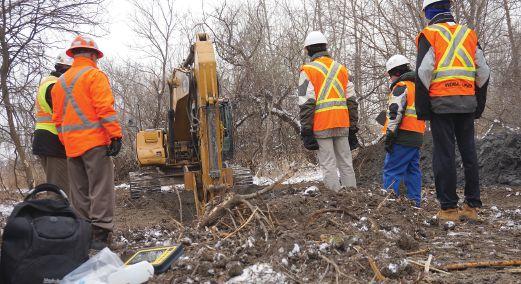
Environmental test pitting was undertaken on the Canadian bridge lands.
“This is federally owned land now,” explains WDBA chief capital officer Grant Hilbers, who started out on the project as environmental manager. “Technicians and technologists who were accustomed to Ontario’s regulations had to apply Canadian federal rules for the appropriate level of cleanup. It was a bit of a learning curve that added another level of nuance to a project that was already unique because it crosses an international border.”
“This project is transforming brownfield sites into a symbol of sustainability and cross-border cooperation between many stakeholders,” adds Sereres. “We are proud to be recognized for the progress we’ve made to date.”
Peter Saunders is a regular contributor to The Ontario Technologist.
WASTEWATER GOES TO WORK

BY BF NAGY
LLow-carbon communities use green technologies to heat and cool homes
ocated near old-growth woodlands of red cedar, Douglas fir and western hemlock, the University of British Columbia birthed lel Village, a 22-acre master-planned community of low-rise and mid-rise condos, townhomes, and rental suites, with eight acres of parks, trails, gathering spaces, and 30,000 square feet of street-level shopping. lel is an indigenous word meaning “home.” About one-third of its 17 buildings are in place, and on completion, it will provide more than 1,200 homes for about 2,500 people. As you would expect, it’s a low-carbon community that employs the latest green technologies, including one that is destined to become “the next big thing.”
Now that the world’s engineers are applying themselves to greening our buildings, we’re witnessing a renaissance – innovative designs, re-emerg-
ing technologies, updated equipment, new combos and hybrid systems. They are all multiplying.
Are buildings becoming decarbonized? Yes. They employ “clean” lowcarbon energy and use much less energy for the same purposes. However, environmentally speaking, we still have a considerable distance to achieve widespread mainstream adoption.
Heat pumps are one of the most discussed technological element for reasons that are now obvious to readers of The Ontario Technologist; however, some emerging building energy conservation technologies offer a similar impact in terms of percentage energy reduction or decarbonization.
The latter is a largely untold story about a mostly untapped resource that offers substantial economic and environmental benefits and can be developed in almost any city worldwide.

lel Village
At lel Village, the development’s hot water needs for kitchens and bathrooms (60°C/140°F domestic hot water - DHW) are met by utilizing a wastewater energy recovery system as part of a district energy loop. It achieves significant carbon savings and energy efficiency. “The wastewater energy transfer system reduces by 80 per cent the amount of electricity that would have been needed for the heat pumps to heat and cool the buildings,” says Lynn Mueller, CEO of Sharc Energy, which has developed some of the most popular systems. “It also helps with upfront geothermal costs, because 1,000 boreholes might become 300 or 400 wells.”
His company has partnered with engineering firms to create standard equations for reducing geothermal loop needs and developing educational tools

Village in Vancouver, B.C., will provide more than 1,200 homes for about 2,500 people.
for the engineering community. Cities are increasingly taking note, mainly because Mueller’s team is also beginning to map the potential in key cities, using existing temperature and flow data collected by water system operators.
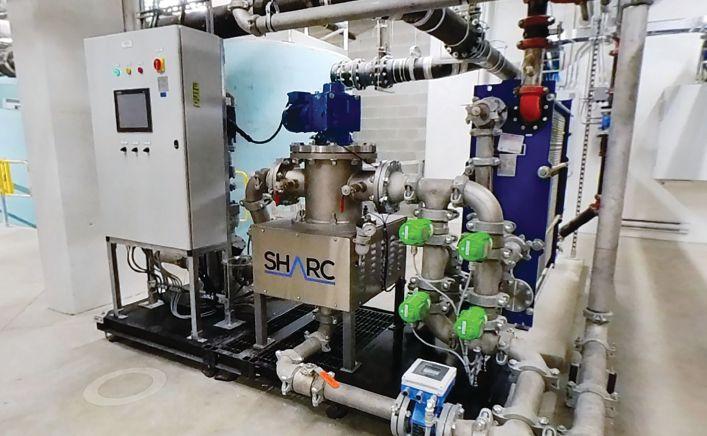
Sharc systems include wastewater collection tanks and a filter system that removes solid particles exceeding 20 millimetres (mm) and 3mm before drain water flows through copper heat exchangers equipped with autoreverse flushing. This has meant that heat exchangers never need to be dismantled for cleaning. The resulting hot water can be used for HVAC, DHW and other uses.
Wastewater energy recovery originated in Europe, but innovators in the Province of British Columbia are said to have perfected it, and they are very involved in its proliferation across North America.
Vancouver’s False Creek project
North America’s biggest operating wastewater project is likely the False Creek district heating facility in Vancouver, Canada. In 2021, facility manager Linda Parkinson said that phase one was developed to heat the Olympic Village in Vancouver and two other buildings, totalling about 1.5 million square feet. In 2021, they increased the network to 6.5 million square feet. It supplied seven residential buildings, all of Science World, some campus buildings at Emily Carr University, a large mountain equipment co-op store, a community center and an office building. “At full build-out, we will be serving 37 buildings or about 21.5 million square feet,” she says.
Ottawa
Last year, a low-carbon project was announced called LeBreton Flats, which
lel
The wastewater energy transfer system at lel Village. IMAGES: SHARC ENERGY.

will be built just west of downtown Ottawa and will consist of a 30-storey tower and a 35-storey tower, totalling 601 rental housing units. About 40 per cent will be affordable housing. A wastewater energy recovery system will tap into the sewer trunk line beneath the site as an energy source that will provide all of the development’s heating, domestic hot water and airconditioning needs.
National western rodeo project in Denver
One of the most significant US projects is the National Western Rodeo in Colorado, updating about one million square feet of new indoor spaces on its 250-acre property. About 90 per cent will be heated and cooled mainly using wastewater energy. It has secured the rights for energy from a nearby 72-inch sewer trunk line. “The Rodeo is the focal point for waste energy transfer systems in the USA,” says Mueller. “They are doing tours every week. About 80 per cent of the time, they’re doing cooling with it, and it saves about 30,000 gallons on each of those days that would otherwise have been used by cooling towers. HVAC energy loads are now more often cooling-dominant.”
Denver is also promoting its wastewater energy resources with additional customers around town. Other North American cities are studying the potential. Mueller says in the USA, there are
350 billion kilowatt hours of hot water going down the drain, worth 40 billion dollars. For those seeking high-impact ways to meet greenhouse gas reduction targets, wastewater energy recovery is a simple, proven technology.
DC Water
During a 2022 tour of DC Water’s new head office in Washington, Saul Kinter explained how easy it was to heat and cool 170,000 square feet of office space using recovered wastewater energy.
DC Water’s beautiful modern headquarters has been constructed on top of an existing sewage treatment plant. The system is economically viable and efficient, and the energy resource is already built. You simply tap into it.
Mueller says DC Water saves about 35 per cent on air conditioning and 85 per cent on heating, plus four to six million gallons of water each year that the cooling tower would have used. Kinter says the system was sized for the building on the hottest and coldest days, reaching about 40 megawatts monthly in July and August, but the resource available at the site is far bigger than what is being used. “It might be able to do ten buildings of this size.” DC Water has been talking to nearby potential customers about taking advantage of the resource. The American Geophysical Union installed a similar system at its headquarters, which is also in Washington, D.C.
American and European studies on the potential of wastewater energy reveal significant potential. A New York City study found that if 5oF of heat were removed from wastewater flowing through the sewer pipes beneath the streets over one year, $90 million worth of energy could be recovered. In Germany, it could heat and cool two million homes. It could provide seven per cent of the country’s heating demand in Switzerland.
As systems have scaled, problems and lessons have been learned, such as flooded facilities, leaking heat pumps, and so on, but nothing that system engineers could not quickly remedy. As mentioned, it’s simple technology.
Average operating cost
Generally speaking, the operating efficiencies of the heat pumps used in conjunction with Mueller’s Sharc system are 20-30 per cent better than conventional ground source heat pumps.
“When comparing the efficiency of heat pumps on our system to that of air source heat pumps...average efficiency gains can be 30 to 50 per cent with a much longer life cycle...Air conditioning operation of heat pumps are 25-50 per cent more efficient than air source heat pumps in warm to hot climates as the sewer temperatures remain a constant 70oF range.”
Heat pumps with wastewater energy recovery are 3.5 to 4.5 times more efficient than electric resistance heating.
A conventional boiler using natural gas as a fuel is limited to less than 100 per cent efficiency, compared to 350 per cent – 450 per cent for heat pumps with wastewater energy recovery.
Since the U.S. passed the Inflation Reduction Act last year, other Western countries have added clean energy incentives to the demand side. “We’re seeing so many projects coming in now we expect exponential growth over the next five years,” says Mueller. “There are 928 trillion litres of sewage going down the drain daily. Every city worldwide has 60 gallons per citizen flowing from apartments into sewer lines. It contains so much energy it’s ridiculous.”
At full build out the wastewater energy recovery system at False Creek in Vancouver will serve 37 buildings or about 21.5 million square feet. IMAGE: FALSE CREEK ENERGY.
All mixed up
How an decades-old sewage problem in Hamilton was discovered. What now?
BY DENNIS FURLAN
There’s an episode of Seinfeld where it’s revealed that George urinated in the gym shower. He ends up getting into a heated exchange with Elaine. George says, “It’s all pipes! What’s the difference?” Elaine responds, “Different pipes go to different places. You’re going to mix them up!”
Well, George is right. All the wastewater from a home or business goes to the same pipes. So, if there is a problem, it’s usually not some fool peeing in the shower. No. Given how most cities’ wastewater systems work, the problem can occur once the waste leaves our homes, and a relatively recent event in Hamilton proved that point.
In late 2022, three leaks were discovered in the City of Hamilton’s sewage system. Specifically, these leaks resulted from faulty cross connections leading to human wastewater being mixed with storm waste so that much of it ended up in Hamilton Harbour. One leak dates back to 1982. The biggest leak dates back to 1996. It’s estimated that about 400 million litres of water containing human waste spilled into the harbour.
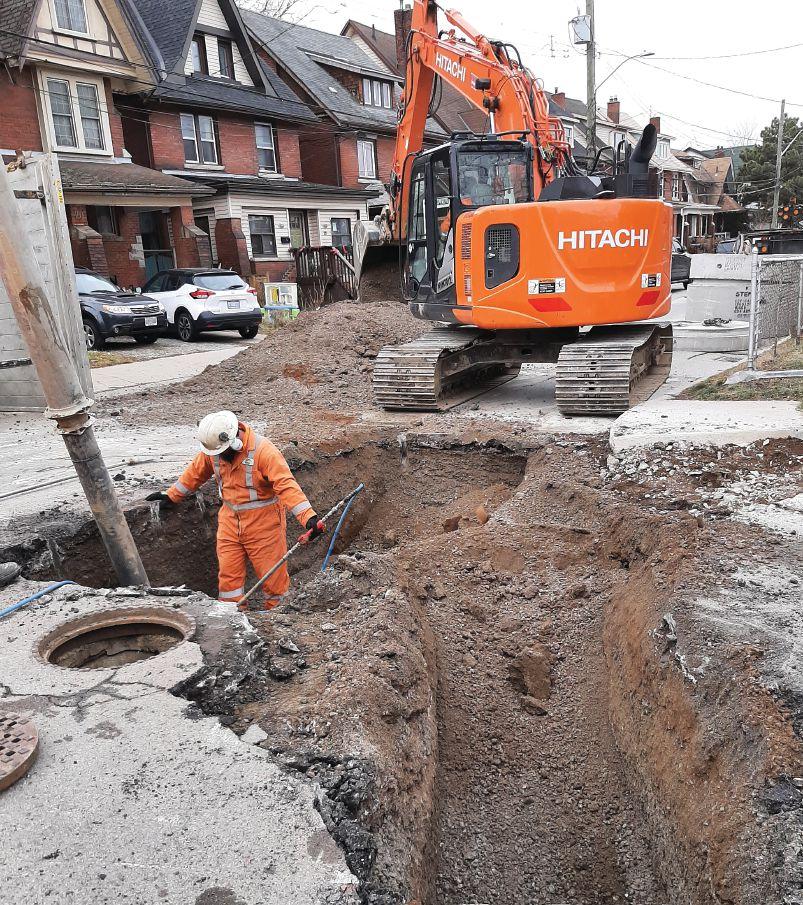
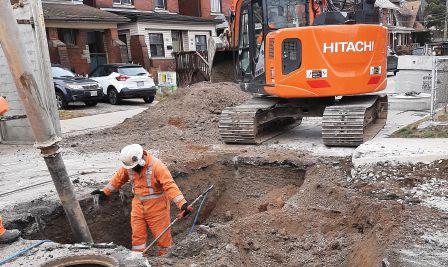
After the initial leaks were found, Hamilton engaged in a program to proactively find cross connections in higher-risk areas. This cross connection on Rutherford Ave. was found and work almost immediately began to fix the issue.
How does this happen?
It’s probably not unreasonable for the average person to wonder how our waste ends up in open water in our modern society. However, the answer isn’t as simple as one would think, and cities such as Hamilton aren’t as inept as initially assumed.
Nick Winters is the director of the City of Hamilton’s Water Division for the Public Works Department. He explains the context: “People should understand that there was a time when all sewage, both stormwater and human waste, went to the same pipes. Only after implementing modern water-treatment plants, the pipes started differentiating between stormwater and human waste.”
Winters continues: “Any pipe with human waste goes to a water-treatment facility. Any water that is just storm sewage goes into the harbour.
“Now, as a city evolves and grows, so does its sewage system. Some pipes contain human waste, and that gets treated. Some of the pipes have only stormwater that goes into the harbour. But even the pipes that contained a combination of human waste and stormwater, such as the older ones, go to a treatment facility.”
So, what was the problem? Winters says, “The problem is that, as time goes by, new pipes are added or repaired, and the documentation from decades ago sometimes isn’t exact or is just incorrect; mistakes happen. So, we get

Once this cross-connection was found on Rutherford Ave., it was determined that it has existed since 1996. In other words, for all that time, human waste from 11 homes flowed into Hamilton Harbour instead of a waste-treatment facility.
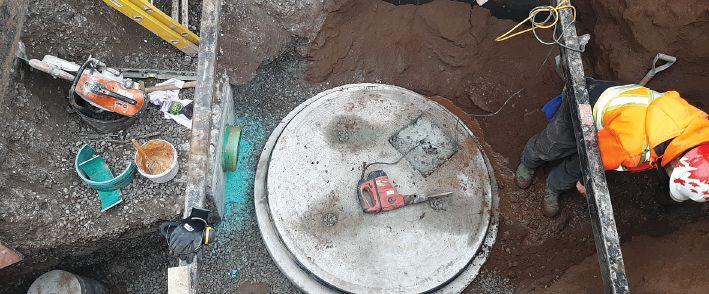
The problem with a cross-connection is that what was supposed to be a storm sewer serving the homes on Rutherford Ave. turned out to be a combined sewer containing both storm water and human waste. The smell emanating from the sewer is what tipped off the inspectors.
the kind of cross-connections that led to the leaks that were discovered in 2022.”
It’s probably not just Hamilton
In fact, Winters says it’s a problem that’s shared with many cities on the continent. Only, in this instance, Winters says that some transparency led to the public disclosure. He says, “Well, in many other cities, these problems exist, but no one is saying anything about it. In our case, once we found out, the problem was revealed publicly, and we took our lumps when the headlines appeared.”
So, what now?
Several steps have been taken since the leaks were discovered in 2022. First, the leaks were fixed relatively quickly, according to Winters. The Hamilton Auditor General also recent-
ly completed a report, and the Ontario government has ordered the City of Hamilton to audit its sewage system.
Inspecting the entire sewer system entirely over a short period is impossible. So, the City of Hamilton examined about 600 areas in six months, especially those considered high-risk for cross-connections and spills, and two issues were found and fixed quickly.
One of the leaks highlighted the problems that can happen over time with a city’s sewage system. Winters says, “Back in the 1980s, a combined sewer pipe containing human waste and stormwater was mislabelled and subsequently connected to a separated storm pipe. That’s exactly the kind of thing that can happen over time, and we’re now tasked with correcting.”
What now?
What exactly will that long-term correcting look like? Well, any possible crossconnection needs to be found and fixed. It’s as simple as that. And according to Winters, the first step is people. He says, “We’re increasing our staffing complement by 12. We’re filling in positions currently as part of new and ongoing programs to investigate the potential for these cross-connections.
“Eventually, over at least five years, we will inspect every maintenance chamber in the City of Hamilton, looking for evidence of cross-connected sewers. We’re also implementing a program to have staff in our sewer system sampling during dry weather, looking for evidence of human sewage.”
The City of Hamilton was in a tough spot when these cross-connections and leaks were publicly disclosed. It is a nowin situation for the City and officials such as Winters.
He says, “You know, the short story is that you can have the best staff, engineers, and contractors, but it’s just a numbers game. Every once in a while, a mistake will be made unless you have the quality-control programs to prevent it.”
Light at the end of the tunnel or pipes?
Asked if, once all is said and done, any leaks have been found and fixed, and the quality-control programs are in place, he has confidence that, from now on, these issues will be addressed. Winters says, “Oh, yes! I’ve been here for 19 years. Believe me, if I knew then what I know now, I would have implemented all these programs back then.”
Winters continues, “But we are where we are. The problems have been discovered, extensive analyses of the problems have been made, we’ve done some preliminary inspections, the people are in place, and we continue to hire. When all is said and done, I hope Hamilton serves as an example to other cities of how to fix the problem and ensure it’s no longer a problem for the future.”
Dennis Furlan is a contributor with The Ontario Technologist.
NEW MEMBERS
RECOGNIZING NEW AND CERTIFIED TECHNICIANS AND TECHNOLOGISTS
October 2023
Certified Engineering Technologists
Matthew Beasley, C.E.T.
Matthew Carson, C.E.T., P.Eng.
Tyler Copeland, C.E.T.
Linda Cosgrave-Jarvis, C.E.T.
Neel Damani, C.E.T.
Mark Douglin, C.E.T.
Angela Doyle, C.E.T.
Jordan Eras, C.E.T.
Bryn Flewelling, C.E.T.
Abdulrahman Hans, C.E.T.
Mackenzie Hunter, C.E.T.
Olasope Kareem, C.E.T.
Luke Krznaric, C.E.T.
Adrianna Lawlor, C.E.T.
Dong Li, C.E.T.
Kirstin Olsen, C.E.T.
Brodie O’Rourke, C.E.T.
Leonel Perez, C.E.T.
Oleksandr Polyak, C.E.T., P.Eng.
Esa Pulkkinen, C.E.T., P.Eng.
Marcus Raitanen, C.E.T.
Noor Sahyon, C.E.T.
Tyler St-Denis, C.E.T.
Bradley Taylor, C.E.T.
Clarence Walters, C.E.T.
Trevor Wright, C.E.T.
Certified Technicians
Alexander Al-ani, C.Tech.
Shaymaa Andrews, C.Tech.
Javier Armstrong, C.Tech.
Erin Baig, C.Tech.
Mirza Crroj, C.Tech.
Rudenc DeJonge, C.Tech.
Daniel Flachs, C.Tech.
Krista Foley, C.Tech.
Patrick Hare, C.Tech.
Joshua Henderson, C.Tech.
Blair Hillary, C.Tech.
Prince Johnson, C.Tech.
Savannah Kerr, C.Tech.
Kailyn Korpu, C.Tech.
Venkat Lau, C.Tech.
Hin Ting Lubczuk, C.Tech.
Vinodhini Mahesh, C.Tech.
Henry Mallari, C.Tech.
Cameron McIlwee, C.Tech., rcji
Roman Melnikov, C.Tech.
Dayna Musclow, C.Tech.
Marie Cris Nuyda, C.Tech.
Nicole Oresti, C.Tech.
Randolph Paraiso, C.Tech.
Vraj Patel, C.Tech., rcji
Anastasia Piskunova, C.Tech.
Mohmad Qureshi, C.Tech.
Richa Rayamajhi, C.Tech.
Renzy Ricafrente, C.Tech.
Cameron Romain, C.Tech.
Deepak Roy George, C.Tech.
Rowin Sambath, C.Tech.
Paula Alejandra Sandoval
Beltran, C.Tech.
Mahmoud Shahwan, C.Tech.
Jay Siddhapura, C.Tech., rcsi
Mandeep Singh, C.Tech.
Keegan Thomson, C.Tech.
Oleksandr Tsynda, C.Tech.
Danial Tunio, C.Tech., rcji
Hongpeng Wang, C.Tech.
Tiffany Waters, C.Tech.
Tyler Watters, C.Tech.
Sumitra Yudha, C.Tech.
Associate Members
Abanoub Abadeer
Oloyede Ajala
Shoaib Akram
Enas Al-Dulaimy
Corey Andrews
Thanh Duy Banh
Benjamin Barkley
Aaron Benner
Midhun Roy Bimal Roy
Tubonimi Briggs
Andrew Britnell
Malcolm Brown
Robert Carriere
Matthew Curry
Olivia Dinsmore
Sebastian Distefano
Elise Donohue
Roberto Estay Diaz
Gonçalo Ferreira
Alex Flores-Portillo
Meagan Fullerton
Michelle Hayman
Syed Jafri
Anson Jess Kurian
Omar Johnson
Gouled Kalombi
Evan Kerr
Ziauddin Khaja
Numan Khan
Peter Kiriakos
Tai Fai Li
Andres Machado Riveros
Dougal Medley
Christopher Mercieca
Kush Modi
Diarmuid Moloney
Jatinder Narindra
Bijan Nikpasand
Danny Nolivos
Brandon Nutt
Afifabanu Patel
Divyesh Patel
kushalkumar patel
Preeti Preeti
Cole Quinlan
Muhammad Qutub Shariq
Kaushal Rami
Matthew Revoredo
Jose Rosa Jr.
Mona Sandhu
Harsh Shah
Aston Shaw
Dil Amar Singh
Iqbal Singh
Bradley Smith
Minh Thai
Nicholas Thompson
Mark Anthony Tongol
Keyurbhai Vadadoriya
Jorn van Veen
Rajkumar Vanpariya
Rory Watson
Joseph Weiss
Henry J Westenberg
Wing Shing Yip
Juan Zhang
Le Zhang
Student Members
Abbas Ahmadi
Kiley Aarsteinsen
Rohan Abraham
Sabarinath Ajithkumar
Christopher Akpoyomare
Arjun Ammunivas Rajesh
Paul Anane
Dheeraj Krishna Sai Andey
Aby Anil
Joel Arulandoo
Kenson Ayers
Aiden Azevedo
Dexie Baay
Kyler Bechard
Monica Beny
Tyler Boersma
Émilie Caza
Stephanie Olive Rose Cuevas
Bradley Dauria
Amara Devries
Sunpreet Dhindsa
Rahat Dina
Jeremy Domino
Robert D’Oria
Pearl Ann Duyag
Nicholas Fong
Kyle Graham
Keegan Haight-Scott
Manisha Hamal
Zhaodi He
Joshua Henrique
Alexander Hergert
Abdul Hafiz Iddriss
Aditya Jadhav
Jithin Jayakumar Raji
Gurjant Johal
Colin Judt
Rishin Kasthuri
Benjamin Kavanagh
Ethan Kennedy
Matthias Khan
Sreehari Kidarathil Sajeev
Junesung Kim
Sophanoch Kram
Chamath Kulathilaka
Krishna Kumar
Saket Kumar
RECOGNIZING NEW AND CERTIFIED TECHNICIANS AND TECHNOLOGISTS
Sabrine Lamti
Christopher Langlois
Megan Elizabeth Laput
Sebastian Larco
Paul Lazier
Brian Lewin
Zheng Liu
Jorge Loucel
Leonardo Malagon Palma
Amena Maududi
Meghna Meghna
Maxwell Molnar
Isabella Moya
Huu Nghia Nguyen
Tobechukwu Nwokolo
Ashley O’Connor
Hammed Omitogun
Allan Palissade
Komalben Panchal
Dev Patel
Prince Manishkumar Patel
Vedant Patel
Yashbhai Patel
Darsh Pateliya
Lenin Pena
Stephen Peppas
Matthew Potvin
Jatin Ralowal
Arjun Ram
Amol Ramana
Sujan Rathnakumar
Riya Reji
Francis Ringor
Adrian Russo
Sagar Sagar
Ebin Saji
Arnel Sales
Francisco Sampedro-Cortez
HarshKumar Savaliya
Evan Schedewitz
Ryan Scherbak
Andrew Scott
Javan Sequeira
Namrata Shah
Rutul Shah
Davinderpal Singh
Harjot Singh
Manjot Singh
Nara Sonu
Nash Sop
Nolan Sousa
Nanda Krishnan Sreenivasan
Jacob Suppa
Anagha Suresh Nair
John-Robert Tait
Aneri Tank
Chigozie Ugwuanyi
Meetkumar Upadhyay
Blaine Upson
Aryan Vasoya
Ping Wang
Nicholas Warren
Jacob Wilkins
Russell Wood
Ricardo Yamazaki
Baggio Yesudas
Existing Members In Road
Construction
Certified Engineering Technologists
David Bader, C.E.T., rcca
John Kehn, C.E.T., rcji
Travis Romer, C.E.T., rcji
Certified Technician
Anjit Gurung, C.Tech., rcji
Associate Members
Omid Amir Baglouie Darian, rcji
Kaye Celine Daguman, rcji
Craig Kennedy, rcji
Sayan Mondal, rcji
Miteshkumar Moradiya, rcji
Kaushal Rami, rcji
Logan Ransome, rcji
Nirav Raval, rcji
Fatemeh Sarabadanitafreshi, rcji
Akhil Sindhu Raju, rcji
Salim Toeg, rcsi
November 2023
Certified Engineering Technologists
Ademola Adebayo, C.E.T.
Robert Coke-Davis, C.E.T.
Gordon Crowley, C.E.T.
Jaclyn Dusome, C.E.T.
Marc Hebert, C.E.T.
Joel Hussey, C.E.T.
Junyun Kim, C.E.T.
Gimuel Ledesma, C.E.T., rcji
Harischandra Mapa, C.E.T.
Matthew McClean, C.E.T.
Pavan Teja Muthyala, C.E.T.
Yazan Nabhan, C.E.T.
Oludare Oduekun, C.E.T.
Aaron Schistad, C.E.T.
Mark Sieminski, C.E.T.
Certified Technicians
Benjamin Abbah-Bentil, C.Tech.
Sujeethan Alfred, C.Tech.
Javier Andrews, C.Tech.
Kacee Andrews, C.Tech.
Melissa Annecchiarico, C.Tech.
Fady Awad, C.Tech.
Jonathan Bautista, C.Tech.
Franklin Chikosha, C.Tech.
Hong Lun Chung, C.Tech.
Christy Cooper, C.Tech.
Anthony DiCarlo, C.Tech.
Paul Francis, C.Tech.
Christopher Hansford, C.Tech.
Navneet Kaur, C.Tech.
Taylor Keck, C.Tech.
Craig Kennedy, C.Tech., rcji
Rame Kudeih, C.Tech.
Andrew Laing, C.Tech.
Clayton Lovell, C.Tech.
Anmol Mehta, C.Tech., rcji
Devin Moak, C.Tech.
Andrew Morrison, C.Tech.
Thi Kieu Trinh Nguyen, C.Tech.
Tejiri Nikoro, C.Tech.
Pinalkumar Patel, C.Tech., rcsi
Arpankumar Rathod, C.Tech.
David Roldan Elizondo, C.Tech.
Nicholas Ruttan, C.Tech.
Harpreet Saggu, C.Tech.
Oluwatobi Sanusi, C.Tech.
Sohail Shaikh, C.Tech.
Jeevan Sian, C.Tech.
Dil Amar Singh, C.Tech.
Karandeep Singh, C.Tech.
Sukhdev Singh, C.Tech.
Abhishek Kamleshkumar Surti, C.Tech.
Matthew Thomson, C.Tech.
Sunny Vargheese, C.Tech.
Derek Viskovich, C.Tech.
Associate Members
Momand Ahmadzai
Fláviò Alficò
Abdalazez Alhumaid
Ghazanfer Ali
Ifeanyichukwu Anazodo
Alexander Averkov
Eric Baillargeon
Joseph Ball
Matteo Bélanger
Nirvaan Bhagwandass
Sunshine Billones
Luis Borba
Ryan Brideau
Mathieu Brouillette
Alexander Bucholtz
Lekhraj Butan
Xiaochen Cai
James Chisholm
Benjamin Chmiel
Ka Chun Cho
Patrick Clancy
Nuno Cordeiro
Travis Courtemanche
Ravirajsinh Dabhi
Andi Dedja
Natsai Dodo
Sherry Dunn
Ali Ebrahimzadeh
Travis Exley
Jonathan Fallat
Sanjeev Gopinath Menon
John Graham
Sarmad Hameed
Sahul Hameed Iqbal
Ankit Italiya
RECOGNIZING NEW AND CERTIFIED TECHNICIANS AND TECHNOLOGISTS
Parth Kharasadiya
Ryan Khemraj
Anish Kunwar
Melissa La Roche
James Labordo
Julie Lalonde
Pavlo Lapikov
Harmanpreet Maan
Gurujot Marzara
Justin Massie
Vivek Mathur
Graeme McDonald
Jake McGowan
Tanner McNeil
Darin Merritt
Bahareh Mohajeri Aval
Zobair Ahmad Mohammad Umar
Marc Molenaar
Julian Muir
Fred Muriu
Thanh Nguyen
Lakhan Pandya
Angelica Pardo Espitia
Matthew Parker
Mehul Patel
Avinash Potipagu
Mark Potros
Filipe Rodovalho de Castro
Fiore Sarro
Dwayne Schertzing
Emmanuel Sekoni
Ishan Shah
Harwinder Singh
Satnam Singh
Corey Smith
Tanner Stanton
Ali Tahir
Iginations Takavada
Afanur Rahman Talukder
Kitenge Tambwe
Pascal Tan
João Paulo Tolentino
Stephen Turnbull
Phillip Vermeeren
Josip Vujica
Brandon Walpac
Zavian Wilson
Patricia Workman
Student Members
Robert Aguilar
Shameer Ahmed Khan
Richard Appiah-Nkansah
Akshat Arora
Aaron Arulnesan
Robert Bardaloo
Arjay Joseph Barrios
Naga Sai Bendalam
Dona Biji
Richard Boulard
Hunter Bradley
Norma Cardenas
Nevaeh Carmo
Gianne Genesis Casuco
Christopher Clark
Jack Clausen
Rein Comley
Jared Cooke
Dylan Cosme
Summer Courtemanche
Braiden Daschuk
Deeshma Deepa
Isabela Dias Michelin Sanches
Rico Diola
Quentin Emley
Cornell Falconer-Lawson
Rijo Geo Raj
Ashleigh Granados
Mumen Hameed
Makaila Hickman
Elvis Ho
Emmett Jaynes
Noah Jebreen
Noah Joseph
Yedidia Babanjila Katambo
Sujit Khadka
Vignesh Kishore
Roshith Kombadiyil Robin
Julianne Kryla
Aleena Kumar
Rinjin Lama
Nhi Le
Josue Lima
Dyan Ross Mabini
Brock Macintosh
Kshitij Magar
Anfal Maheen
Youssef Maher
Anh Tu Mai
Jerome Marshall
Brooklyn McAllister
Manan Mehta
Nesrodie Messardo
Brennan Mitchell
Ashwin Mukundarajan
Begnansou N’guessan
Trai Nguyen
Godsend Omote
Joshua Opoku-Darkwah
Aleena Padayattil
Wilmi Paredes
Mit Patel
Vedant Patel
Graham Pinette
Long Qiang
Ajan Reghunathan
Omkarsinh Rathod
Surya Raveendranathan
Zander Rondeau
Matthew Ross
Reeauna Rossi
Rosa Ryan
Mohammad Sahem
Ardra Pramod Sajitha
Juan Salazar
Alan Santy
Adam Silver
William Sinclair
Harpreet Singh
Santokh Singh
Ali Siyad
Cristal Sobrio
Emma Sooley
Justin Strange-Dedier
Aswin Kumar Subash Kumar
Krishnadev Sudevan
Sandro Tenaglia
Marcus Tessier
William Thomson
Cole Timony
Shiva Tiwari
Kiet Tran
Quoc Tuan Tran
Krishk Verma
Alexandra Wilson
Tanner Winchester
Mishu Zafar
Mohammad Zamanikherad
Zach Zehr
Existing Members In Road Construction
Certified Engineering Technologists
Alexander Brooks, C.E.T., rcji
Cliff Chan, C.E.T., rsci
Husam Hamadeh, C.E.T., rcji
Certified Technicians
Renzo Baldassi, C.Tech., rcsi
Vraj Patel, C.Tech., rcsi
Kyle Rutter, C.Tech., rcji
Monica Vargas, C.Tech., rcji
Associate Members
Andrew Britnell, rcji
Sudipta Das, rcji
Ahmad Fararia, rcji
Aidan Fitchett, rcji
Tanisha Flaro, rcsi
Gord Hustler, rcca
Jalaleddin
Jamshidipourkhameneh, rcji
Gurujot Marzara, rcji
Alexander McKenzie-Hayles, rcji
Christopher Mercieca, rcji
Darshan Patel, rcji
Kushalkumar Patel, rcji
Naresh Saud, rcji
Keyurbhai Vadadoriya, rcji
In Memoriam
Staff and members of OACETT send their sincere condolences to the family and friends of the following members. They are remembered.
Barry Pengelly, C.E.T.
W.S. Weber, C.E.T.
Largo Albert, C.E.T.
CHAPTERS AT WORK
Introducing three of OACETT’s newest chapter chairs
Meet Ahmad Tuhmazi, C. Gail Willis, C.E.T., and Mark Jakubowski, A.Sc.T.
GET TO KNOW YOUR LOCAL LEADERS.
Ahmad Tuhmazi Niagara Chapter Member since 2018
Q: What is your most significant personal or professional achievement?
A: One of my most cherished achievements is being part of an incredible team that collaborates with the Town of Niagara-on-theLake. Also, I’m balancing work life while living in beautiful Niagara-on-theLake – raising my children and contributing to the town’s development.
Q: If you were stuck on an island, what three things would you bring?
A: If I found myself stranded on an island, I’d have a survival kit with tools for shelter, fire, and water. I’d supplement it with a guidebook on edible plants or survival techniques. And of course, I wouldn’t forget to bring along watermelon seeds for a healthy fruit snack.
Q: If you could snap your fingers and become an expert in something, what would it be and why?
A: If I could instantly become an expert in something, I’d choose home renovations. Mastering this skill would allow me to enhance my living space and save me a significant amount of money while doing the renovations myself.
Q: Did you have a mentor while on the chapter executive?
A: During my time serving on the chapter executive, Scott Barbacki, C.Tech., has been both a mentor and a close friend. His guidance has been invaluable in navigating the complexities of our field and OACETT leadership roles.
Q: What advice would you give to a prospective member and/ or volunteer?
A: To anyone considering joining OACETT or volunteering, I’d suggest actively engaging in networking opportunities, seeking mentorship, and contributing wholeheartedly to make the most out of the experience.

Q: What is your most significant personal or professional achievement?
A: My most significant achievement is owning my own company. Willis Technical Services opened in 2022 and is a Thunder Bay-based municipal engineering design company specializing in stormwater management, green infrastructure design, community development, and climate resilience. We offer services to other businesses and organizations, as well as private developers or landowners.
Q: What is the one thing you are learning now, and why is it important?
A: I’m working towards obtaining the Envision Sustainability Professional (ENV SP) designation. Envision is a framework that assists decision-makers in recognizing sustainable methods throughout the various stages of civil infrastructure projects. The designation is important as I hope to implement sustainability principles into infrastructure planning, design, and construction practices. My goal is to help communities be prepared for our changing climate, now and for the future.
Q: What advice would you give to a prospective member or volunteer?
A: You will meet many new people and develop and
grow your network of likeminded professionals. Feel free to take small steps, ask questions, and take time to understand the various roles and positions within OACETT.
Mark Jakubowski, A.Sc.T. Hamilton Chapter Member since 2003
Q: What is your most significant personal or professional achievement?
A: For the most part, being complimented by my manager and coworkers on an ongoing basis is my most outstanding achievement and having a great team environment makes my work much more rewarding.
Q: What is the one thing you are learning now, and why is it important?
A: How electrification, climate change, and net-zero carbon targets are driving grid modernization and sustainability for electrical utilities. This seems to be the future for electric utilities with decarbonization
C. Gail Willis, C.E.T. Thunder Bay Chapter Member since 2009
talks and the adoption of electric vehicles in the coming years, as the combustible engine will go away like the dinosaurs.
Q: If you were stuck on an island, what three things would you bring?
A: If I knew in advance I would be stuck on an island, I’d bring a fishing rod (to eat and survive), a magnifying glass (to start a fire and read), and some books (to keep me occupied).
Q: Did you have a mentor while on the chapter executive?
A: Ken Browne, C.E.T. and Makeda George, C.E.T., have been previous mentors. I’m looking forward to mentoring some newer Hamilton Chapter members.
Q: What advice would you give to a prospective member and/or volunteer?
A: Use your volunteering as a stepping stone to achieve your subsequent personal and professional development while giving back and mentoring the next generation.

Volunteer of the Month – October 2023
Steven Govenlock, C.E.T. Treasurer, Hamilton Chapter
Q: Tell us about yourself.
A: I am a principal marine systems technologist at BMT, a leading maritime design house and technical consulting firm. I’m a proud alum of St. Lawrence College (Cornwall) since 1994. I graduated through the Royal Canadian Navy’s Marine Engineering Technician Training Program in instrumentation engineering technology. More recently, I earned a Master of Technology Management degree from Memorial University of Newfoundland and hold a Project Management Professional (PMP) certification.
Q: When did you begin volunteering? What volunteer roles have you fulfilled as a volunteer?
A: Since 2012, I have sought a more active role within OACETT and began volunteering as a chapter executive member. Over the years, I have served as the chapter secretary-treasurer and currently hold the position of chapter treasurer.

Q: What volunteer role was the most rewarding to you? And why?
A: While each role has been rewarding, I find satisfaction in my current position. I’ve been focused on supporting new chapter volunteers, actively encouraging them to step into more significant leadership roles for the future growth of the chapter.
Q: What do you enjoy most about being an OACETT volunteer?
A: I greatly value the opportunity to connect with many tech professionals from varied backgrounds, disciplines, and career stages. It’s rewarding to give back by sharing my experiences with younger members and support our collective efforts at a local level.

Q: What is your most significant personal or professional achievement?
A: A definite career highlight was serving as chief engineer of HMCS St. John’s, a Royal Canadian Navy (RCN) Halifax Class frigate, meeting Queen Elizabeth and Prince Phillip during the Navy’s Centennial in 2010. Since retiring from the RCN after a 25-year career, I transitioned to work alongside, as well as leading, engineers and project management professionals as a technologist. What is particularly satisfying is that I can now be selective and choose rewarding work, not just a job.
Q: What advice would you give a prospective member or volunteer?
A: For prospective members and, more importantly, those curious about volunteering –take the plunge! Volunteers are the lifeblood of our local chapters, and we are always looking for members interested in giving back. Volunteering can be tremendously rewarding, no matter where you are in your career. Involvement in chapter work provides opportunities to develop soft skills, grow your professional network, and be exposed to the greater OACETT organization.


CHAPTERS AT WORK
Eastern Region
Renfrew Chapter
The Renfrew Chapter has developed CPD events for early to mid-2024. Chapter chair Larry McHenry, C.E.T., is spearheading a CPD plan around AI technology applications in the machine vision space, drawing on his affiliation with Pleora Technologies. Additionally, there will be a CPD event on civil infrastructure projects and the techniques employed in Renfrew County. Vice-chair Richard Bolduc, A.Sc.T., is coordinating this CPD event to share insights with OACETT members in the civil municipal space.
The chapter has resumed its involvement in sponsoring and judging a local science fair, providing student awards for engineering technology projects. The chapter actively seeks local OACETT members to participate as judges.
In an ambitious move, the chapter seeks a meeting with local representatives of the Association of Professional Engineers of Ontario (APEO) at the science fair. The objective is to explore the possibility of coordinating a joint professional engineers and OACETT summer fundraiser to raise funds for a charity.
Larry McHenry, C.E.T., is Renfrew Chapter chair: renfrewcounty-chapter@ oacett.org.
Cornwall Chapter
On October 1, the Cornwall Chapter demonstrated community support by donating 47 OACETT-branded yo-yos to the Optimist Club of Cornwall, celebrating its 75th anniversary. Sébastien Gervais, C.E.T., the Cornwall Chapter secretary, represented the chapter at the Optimist Park event and was joined by Dane Dupuis, a retired North American yo-yo champion with an undefeated record in 250 competitions.
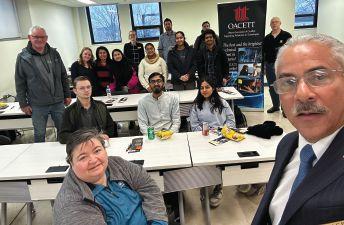
Vice-chair Earle DePass, C.E.T. (right front), takes selfie with Tim Kirkby, C.E.T., P.Eng., (middle left), WIT representative Linda Fragnito, C.E.T. (front left), Michael Gallinger, C.Tech. (middle right), ten students from St. Lawrence College’s Environmental Technician program, St. Lawrence College coordinator Jordan Ann Kevan de Hann, and game programming coordinator James Dupuis.
On November 17, the Cornwall Chapter hosted its third virtual presentation by Brian Ewenson, conducted from Arizona via Zoom—a first for the chapter. The CPD-eligible presentation, supported by PowerPoint and short movies, attracted 190 online participants from across Ontario and the Ontario Power Generation (OPG) auditorium in Cornwall. The chapter extended a spe -
cial invitation involving Alexandria’s 253 Royal Canadian Air Cadet squadron to stimulate young minds.
On November 22, a meet and greet presentation occurred at St. Lawrence College’s Cornwall campus. Michael Gallinger, C.Tech., college liaison, delivered a brief presentation on OACETT and the Cornwall Chapter. The event allowed students to network with Cornwall Chapter executive members, sharing experiences and knowledge.
Looking ahead, the Cornwall Chapter is eagerly anticipating its upcoming event, the Tour of Ross Video.
Dale Phippen, C.E.T., is Cornwall Chapter chair: cornwall-chapter@oacett.org.
Lanark, Leeds and Grenville Chapter
Milestone recipients pictured together, from left to right: Lee Sheets, C.E.T. (25-year recipient), Fayyaz Ahmed, C.E.T. (10-year recipient), Al Billiald, C.E.T. (40-year recipient), Spencer Marcolini, C.Tech. (10-year recipient), Steve Allen, C.E.T. (40-year recipient), and chapter chair Rob Wright, C.Tech.
The Lanark, Leeds and Grenville Chapter held a dinner on November 30 to acknowledge chapter members who achieved milestone anniversaries in 2023. Five members and their guests joined the executive for the celebration at the 1000 Islands Brewery in Brockville. Ranging from 10 to 40 years of membership, each milestone recipient shared their experiences and highlighted the benefits of OACETT membership. The face-to-face conver-
An astronaut (left) and Brian Ewenson, aerospace educator, consultant and professional speaker (right) with Cornwall Chapter executive members, sharing his experience and knowledge.
sations were particularly appreciated, providing a valuable opportunity for interaction that had been missing during the COVID-19 lockdown. Chapter chair Rob Wright, C.Tech., personally presented each attending milestone member with a corresponding pin and OACETT swag to honour and recognize their achievements.
Robert Wright, C.E.T., is Lanark, Leeds and Grenville Chapter chair: leedschapter@oacett.org.
Kingston Chapter
Pictured from left to right: Ryan Klein, C.E.T., Christina Klein, Karina Bree, Douglas Fear, C.E.T. (25-year member), Joe D’Agostino, C.E.T. (50-year member), Aaron Hatton, C.E.T. (10-Year member – not seen), Bruce Fudger, C.E.T., Doug Wilson, C.E.T. (50-year member), Connie Barber, Delbert Barber, C.E.T. (40-year member), David Kempson, C.E.T., Caroline Kirkwood, C.E.T., Csaba Vanyolai, C.E.T.
On November 15, the Kingston Chapter enjoyed a wonderful annual awards dinner. Executives and members gathered to collectively recognize and celebrate the dedicated members who reached their 10-, 25-, 40-, and 50-year milestones with OACETT. It was a heartwarming event highlighting the commitment and achievements of individuals within our professional community.
In December, chapter members came together for the annual Hockey Meet and Greet event during the festive season. The atmosphere was lively as members convened at Tir Nan Og for a pre-game meeting and social. Following the gathering, the
group headed to the Leon’s Centre to watch the Kingston Frontenacs face off against the Niagara IceDogs.
Bruce Fudger, C.E.T., is Kingston Chapter chair: kingston-chapter@oacett.org.
Horseshoe Region
Hamilton Chapter
On October 17, the Mohawk College Building and Construction Sciences faculty and coordinators held another successful fall Meet the Grad (MTG) event.
The Hamilton Chapter sponsored two student memberships. The winners were Albert Taye (civil engineering technology student) and Julia Lins (architectural technology student).
Maura Lecce, associate dean of engineering technology, welcomed students and industry representatives to the MTG event. Erin Henderson (architecture technology graduate, class of 2020), David Meyer (civil engineering technology graduate, class of 2015) and Sahar Shams (transportation engineering technology graduate, class of 2020) spoke to MTG attendees, sharing their career journey.
The employers and professional associations in attendance were as follows: BLR Drafting, CJDL Consulting Engineers, Community Employment Services, CRH Canada Group, DeFaveri, Edison Engineers, Element FE, Empire Communities, Flynn, GD Vallee, HAND (Hamilton and District Heavy Construc-
tion Association), Halton Region, Hatch, Hickory Dickory Decks, JNE Consulting, MTE, Mohawk Alumni and Co-op Department, OACETT (represented by Trishia Tedoldi, Ken Browne, C.E.T. and Bill Stewart, C.E.T., Hamilton Chapter college liaison), Ontario Building Officials Association, PCL, Rankin Construction, Ritestart, RWDI, Stubbe’s Precast, Tektum Consulting Group, Three Seasons Landscape Group, Town of Huntsville, Tulloch Engineering/AJ Clarke, Walterfedy, Walters Inc., WSP Canada and UrbanTech.
Report prepared by William Stewart, C.E.T., Hamilton Chapter college liaison.
Mark Jakubowski, A.Sc.T., is Hamilton Chapter chair: hamilton-chapter@ oacett.org.
Peel Chapter
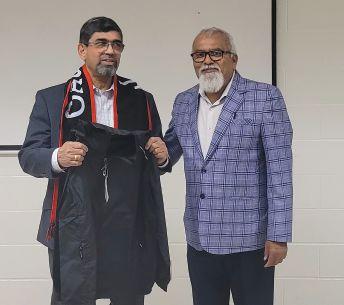
Chapter
event guest speaker.
The Peel Chapter organized a CPDapproved event on October 19 in Mississauga on emergency power generators to educate attendees on the principles of emergency power generators. The event covered various aspects, including applicable codes, available technologies, fuel criticality applications and criteria for fuel elections. Topics ranged from applications in homes or standby systems to
Dan Robichaud, Mohawk College professor, building & construction sciences (right) at podium with faculty member/professor Matt Shelley.
Peel
chair Vinayak Patel, C.E.T. (right) presents OACETT swag gift to Sunil Karandikar (left), the Emergency Power Generators CPD
CHAPTERS
CHAPTER
industrial and legally required setups, optional standby systems, paralleling, peak shaving, safety considerations, installation aspects, sizing, minimum start time, maintenance, and the criticality of locations for high-rise buildings, data centers, prime power, and fire pumps.
Ninety-eight members registered for the CPD event, and 59 members attended. The chapter was honoured to have Sunil Karandikar as the technical speaker for the event. Karandikar holds an M.S. in electronics with a Distinction Award. He has extensive experience in process control, automation, panel instrumentation, steam engineering, control valves, UPS and emergency generator systems, batteries, DC systems, and industrial electronics. He is also a Generac-certified trainer for approximately 15 subjects.
The Peel Chapter expresses gratitude to the volunteers who contributed to the success of the CPD event, namely Anil Bose, C.E.T., Dev Harripersad, C.E.T., Anil Kevin Kolassery, C.E.T., Adam Martin, C.E.T., Eajaz Zaheer, C.E.T, and Ron Abbas, C.E.T.
Vinayak Patel, C.E.T., rcca, is Peel Chapter chair: peel-chapter@oacett.org.
Western Region
Grand Valley Chapter
The Grand Valley Chapter of OACETT would like to thank the dedicated volunteers and event attendees who contributed to a bustling fall season.
On November 1, the chapter hosted a booth at the South-Central Ontario Water Works Association conference, attracting substantial interest in the new Municipal Infrastructure designations. Subsequently, on November 15, Grand Valley actively participated in the Career Education Council Event for Guelph Wellington high school students, themed “Your future, your choice,” aiming to inspire students to pursue STEM programs while enhancing awareness of OACETT and the career benefits of certification. The chapter also held its annual family skating event in Waterloo on November 26, creating an enjoyable experience for all attendees at a fantastic rink.
The Grand Valley Chapter looks forward to more engagement at its upcoming winter events.
Michael Luyckx, C.E.T., is Grand Valley Chapter chair: grandvalley-chapter@ oacett.org.
Julia Evers, A.Sc.T. and Dean Dixon hand out prizes at the Grand Valley Family Skate in Waterloo.
Chris Urbina, C.E.T. (left) and Martin Roberts, C.Tech. at the “Your future, your choice” event for high school students in Guelph Wellington.


Chatham-Kent Chapter
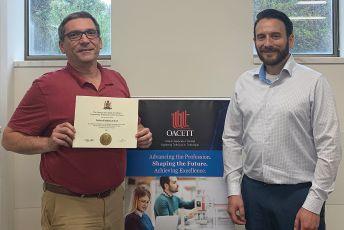
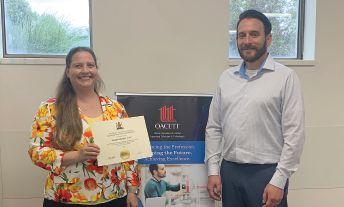
Kendra Shurgold, C.E.T. (left) holds 25-year OACETT milestone certificate, presented by Marco Fernandes, C.E.T., chapter chair.
Chapter chair Marco Fernandez, C.E.T., presented 25-year milestone certificates to Chatham-Kent Chapter members on September 28.
Marco Fernandes, C.E.T., is ChathamKent Chapter chair: chathamkent-chapter@oacett.org.
London Chapter
The London Chapter hosted its annual seasonal holiday party on November 24 at the Best Western Lamplighter Inn and Conference Centre in London. The event, organized by Natalie Beauregard, C.E.T., featured a dinner with a selection of three meals. Shervin Reyhani, C.E.T., shared his expertise on “The Advances of Construction of Buildings Using Wood,” emphasizing the environmental benefits of wood construction in carbon sequestration and the efficiency of using prefabricated floor and wall
panels for faster building construction compared to concrete.
Peter Nicholas, C.E.T., thanked Reyhani for his insightful presentation. Associate members had the opportunity to engage with certified members during the event, including discussions with Bill Climie, C.E.T., Fellow OACETT, about the details and benefits of becoming certified with OACETT.
Looking ahead to 2024, the London Chapter plans to host a tour of the Hydrostor Compressed Air Energy Storage facility in Goderich. The tour, hosted by executive member Zahid Hashmi, C.Tech., promises to be an engaging event. Further details will be announced soon.
Peter Nicholas, C.E.T., is London Chapter chair: london-chapter@oacett.org.
Toronto Region
Toronto West Chapter
The Toronto West Chapter executive members continue their monthly meetings, providing a blend of in-person, virtual, and hybrid sessions. Congratulations are extended to all certified members in the chapter who reached milestone membership anniversaries of 10, 25, 40, or 50 years from February 25, 2023, to August 6, 2023. Special recognition goes to Howard Gibson,
C.E.T., for his recent achievement of receiving the chapter volunteer award. Members of the OACETT’s Toronto West Chapter regularly engage with fellow technology professionals, fostering connections and participating in local events beneficial to their careers or for leisure. Opportunities for professional development abound as members actively volunteer within the local chapter, making it a valuable networking resource. The chapter encourages and urges its members to actively support and participate in various initiatives. Further details about upcoming events can be found at https://www. oacett.org/Upcoming-Events.
Jason Wattleworth, C.E.T., is Toronto West Chapter chair: torontowest-chapter@oacett.org.
Toronto Central Chapter
On September 26, the Toronto Central Chapter (TCC) organized an in-person CPD-approved event on tough conversations featuring facilitator Alvin Pilobello, an experienced workshop facilitator in leadership and emotional intelligence, a professional coach, and a community builder. The event, which garnered significant attendance, focused on enhancing participants’ self-awareness of communication patterns and provided strategies to improve the initiation of tough conversations at work. Attendees had the opportunity to network both before and after the event. Looking ahead, the TCC has scheduled its Annual Chapter Meeting for March 20, with the location to be determined. The TCC executive holds regular virtual monthly meetings and organizes events supporting the chapter’s membership. The chapter executive encourages members to share event ideas at torontocentral-chapter@oacett.org.
Akrivi Nicolaou, C.Tech., is Toronto Central Chapter chair: torontocentralchapter@oacett.org.
Peter Nicholas, C.E.T. (left), thanks Shervin Reyhani, C.E.T., for sharing his informative presentation.
Nelson Cordeiro, C.E.T. (left) holds his 25-year OACETT membership certificate, presented by Marco Fernandes, C.E.T., chapter chair (right).
Toronto East Chapter
On October 5, Toronto East Chapter members enjoyed a presentation at Centennial College, Morningside Campus. The presentation demonstrated the benefits of being certified and how students can benefit from getting involved with the organization and the chapter.
The chapter also sponsored an inperson CPD seminar on “Protecting GPS with Resilient PNT Solutions” at Humber College, which was put on by Humber College’s Barrett Centre of Technology Innovation and the National Association of Broadcasters.
On November 21, the chapter also sponsored a two-hour CPD-approved
Northern Region
Near North Chapter
OACETT Near North Chapter milestone recipients at holiday dinner, from left to right: Leslie Collins, C.E.T., Dawn Weber, C.Tech., and Jason Hack, C.E.T.
This year’s milestone recipient’s dinner celebration held particular significance as the organization acknowledges 17 esteemed milestone recipients from the Near North Chapter.
Among these recipients, the organization proudly recognized 12 members who marked a decade of membership, one member with 25 years of dedication, another with 40 years of commitment, and three members reached an impressive 50-year milestone with OACETT.
OACETT members from the Toronto region attend a Toronto Transportation Control Centre tour.
tour at the Toronto Transportation Control Centre. Brian Fu, P.Eng., a senior engineer with the City of Toronto’s traffic management transportation servic-
es department, conducted the tour. The tour provided an overview of how the traffic flow is managed and controlled within the City of Toronto, including monitoring highway cameras.
On December 15, the chapter held its end-of-year dinner for the chapter executives and their families at the Mandarin in Scarborough. The chapter members were pleased to have the companionship of students studying engineering technology at various community colleges in Toronto.
Pasha Mohammed, C.Tech., is Toronto East Chapter chair: torontoeast-chapter@oacett.org.
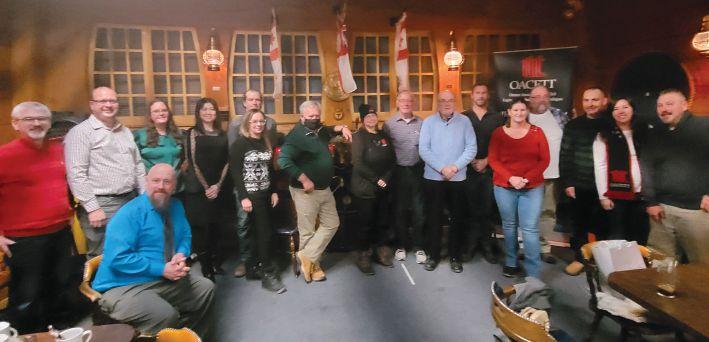
from left to right: Richard Labelle, C.E.T., Michel Jérôme, C.Tech., Andre Moncion, C.E.T., Julie Beaudry C.Tech., Mei-Huei Chen, Len Church, Erin Banfield A.Sc.T., rcca, Dave Saunders, C.E.T., Christine Johnston, C.E.T., Leslie Colins, André Tardif, C.E.T., Kyle MacKenzie, Dawn Weber, C.Tech., Fairleigh Cottrell, C.Tech., Jason Hack, C.E.T., Kasandra Ethier, C.Tech., Ben McTaggart., C.Tech.
At the Christmas milestone dinner, the organization presented three milestone pins to Les Collins, C.E.T., 40-year member, Dawn Weber, C.Tech., 25-year member, and Jason Hack, C.E.T., 10-year member.
The chapter extends heartfelt congratulations to the milestone recipients on their remarkable achievements!
Julie Beaudry, C.Tech., rcca, is Near North Chapter chair: nearnorth-chapter@oacett.org.
Sudbury Chapter
The Sudbury Chapter hosted its 14th Annual Pool Night at Rhythm’N’Cues on December 13. Participants enjoyed a fabulous evening engaging in a spirited 9-ball pool tournament. The event was complemented by excellent food, and jokes and laughter filled the atmosphere throughout the night, contributing to a lively and enjoyable gathering.
Gilles Villeneuve, C.E.T., is Sudbury Chapter chair: sudbury-chapter@oacett.org.
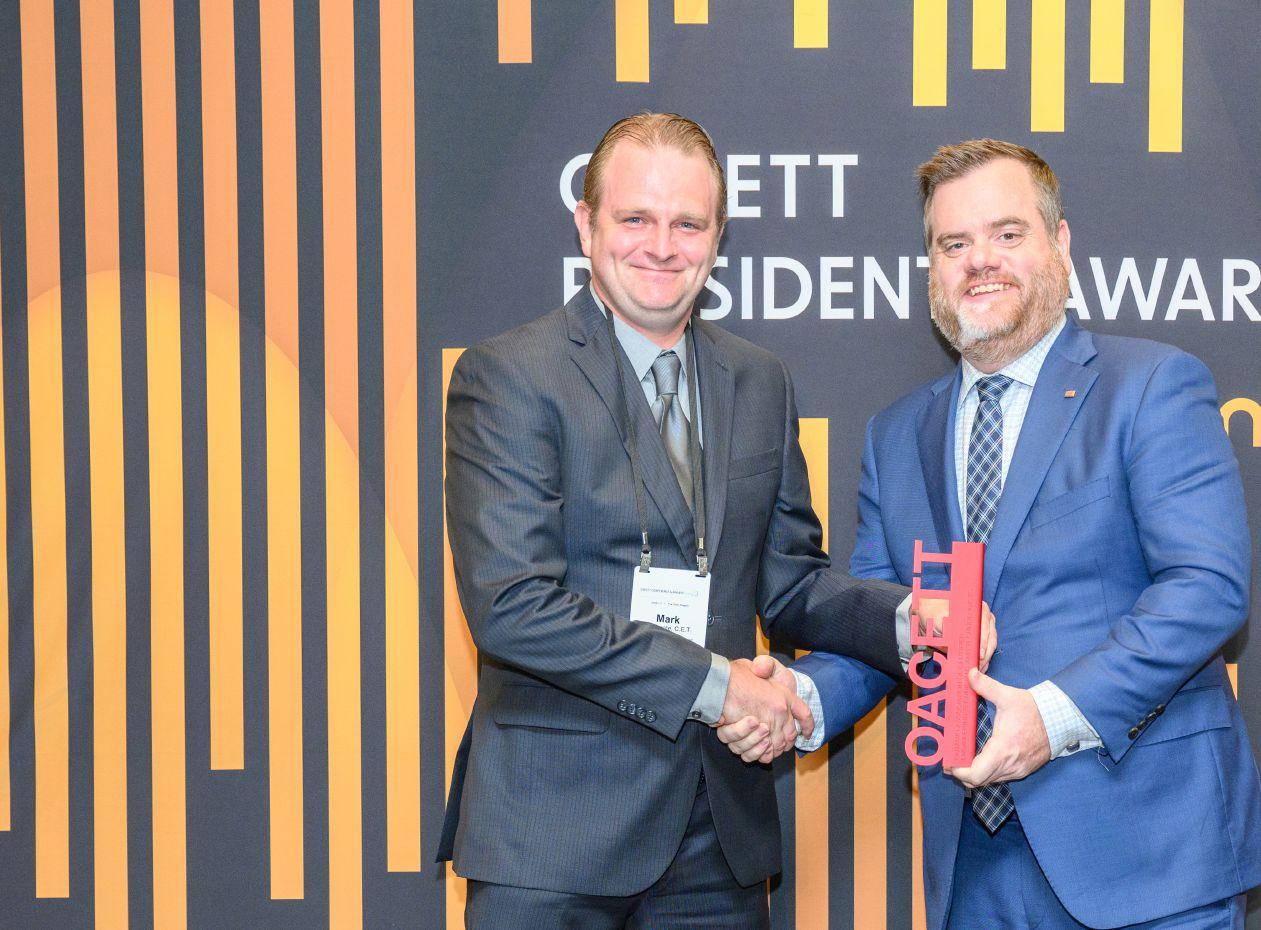
Pictured
2025 NOMINATIONS OPEN
Learn why Mark Heathcote, C.E.T., received the George Burwash Langford Memorial Award. Watch video! https:// bit.ly/MarkHeathcoteStory
Nominate a colleague, mentor, educator or industry leader or even yourself!
OACETT 2025 PROVINCIAL HONOURS AND AWARDS NOMINATE TODAY!
NOMINATION CATEGORIES:
• Distinguished Service Award
• Honourary Membership
• Life Membership
• Outstanding Community Service Award
• Outstanding Educator Award
• Outstanding Technical Achievement Award
• Student Award - New!
• Young Professionals Award - New!