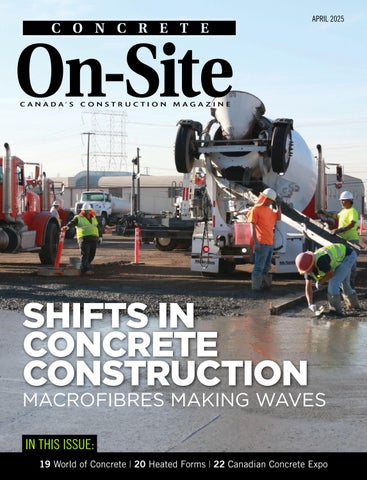
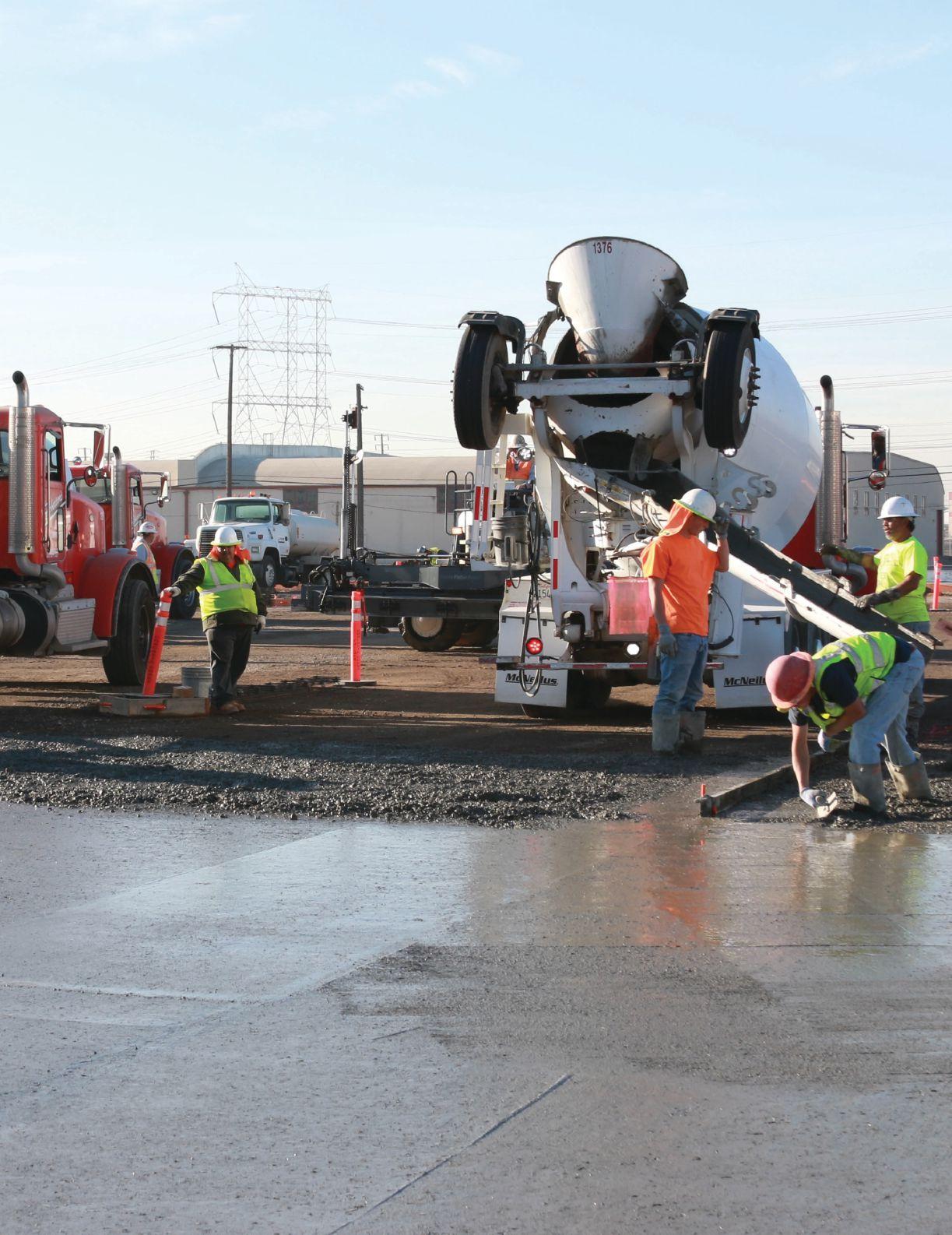
SHIFTS IN CONCRETE CONSTRUCTION
MACROFIBRES MAKING WAVES
CONCRETE INDUSTRY CONNECTS IN VEGAS
The industry was on display at the world’s largest concrete construction and masonry tradeshow.
Moving from the classroom to the outdoor competition sites, this year’s show saw 27 masons from around the world competing to be “the world’s best bricklayer” in the Spec Mix Bricklayer 500 World Championship, while apprentices in the trade competed in their own Masonry Skills Challenge.
Ohio mason Cole Stamper, working with his brother Forest as his tender, laid 738 bricks in one hour win a new Chevrolet Silverado truck and other prizes as the Bricklayer 500 champion.
“We created this competition in 2003 to highlight the incredible skill and pride that bricklayers all over the world dedicate every day to the projects they build,” said Spec Mix vice-president, Brian Carney. “Now it’s the masonry industry’s most celebrated annual event.”
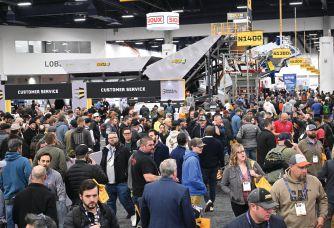
With almost 58,000 registered attendees, World of Concrete dove into its next decade of service to the concrete construction and masonry industries this past January at the Las Vegas Convention Center.
Over 1,500 companies exhibited this year, putting a spotlight on the latest heavy machinery, tools, products and services for material handling, concrete reinforcement, concrete masonry, cement production and decorative concrete for all types of building, repair, demolition and reconstruction.
Along with the exhibits, the event also had an educational side, with more than 180 learning sessions available on topics ranging from business and project management to concrete fundamentals.
“This event sets the standard for excellence in construction, both excelling in size, attendance and engagement as well as the ability to deliver highly relevant and tailored content to our various audience types,” explained Jackie James, vice-president of World of Concrete. “It provides actionable insights and tangible takeaways that attendees can take into the real world, empowering them to thrive in their roles and stay ahead as the knowledge gained at WOC is applied in the day-to-day work.”
In addition to being transformed into the competition battleground, the parking lots surrounding the convention centre were teaming with machinery and tool demonstrations, as well as the Western Star Trucks Get Tough Challenge, where commercial drivers could test drive vocational trucks on an outdoor obstacle course.
Tuesday night saw tool manufacturer DeWalt put the industry on display for all of Las Vegas to see with a coordinated Sphere and drone show in the skies above one of the city’s newest attractions. The exterior screens of the giant dome were lit up with images from the industry, all “revealed” by drones flying in the shape of a giant crane and other lifting equipment.
At its booth, the company immersed attendees in its lineup of concrete tools, encouraging active participation.
“Attendees really embraced the hands-on aspect of the event, whether it was taking a rammer for a drive or crushing through blocks of concrete with a demolition hammer,” explained Richard Cacchiotti, the company’s director of product development.
Inside the halls of the convention centre, even more booths were buzzing as attendees checked out product displays and new technologies, like a prototype rebar tying robot from Max USA.
“This year’s show really stood out, with strong attendance and exceptional engagement from the customers who drive our industry’s success,” stated Craig Olson, director of sales at Astec Industries.
Next year’s World of Concrete will return to the Las Vegas Convention Center from January 20 to 22, 2026, with education beginning on January 19.
CLIMATE FRIENDLY MAKING CONCRETE CONSTRUCTION MORE
Sensors and formwork technology are facilitating the use of low-carbon concrete.
BY DANIELA EHRENREICH
Concrete is a crucial construction material. It is essential for infrastructure, housing, and even renewable energy projects. Yet, its climate impact cannot be ignored. Concrete production is a major source of greenhouse gas emissions. The challenge is clear: How can we make concrete more climate friendly?
In 2023, the Cement Association of Canada joined with partners in the concrete sector to launch a roadmap and action plan to reduce the CO2 emissions of cement to net-zero by 2050. The cement and concrete industries were also the first to join Canada´s Net Zero Challenge.
These commitments represent an important step forward for everyone who aims to build more sustainably, but achieving these ambitious targets will require innovative approaches. Focus areas will need to include carbon capture, utilization and storage, as well as advocacy for smarter planning with performance-based codes and standards and higher material efficiency.
NEW MIXES, NEW CHALLENGES
There are three primary approaches to reducing CO2 emissions in concrete production. The first focuses on optimizing the cement production process by using alter-
native fuels and improving energy efficiency. While this has already led to significant reductions, further progress is slowing. Emerging technologies such as CO2 capture and storage show promise but remain costly and face some technical hurdles.
The second approach involves advances in concrete technology. High-performance mixes with dense structures reduce material demand but are expensive and complex to produce. A more common solution is reducing clinker content in concrete mixes. This is a practice initially driven by cost savings rather than sustainability. Further reductions face regulatory constraints.
The third approach is developing novel binders that reduce or eliminate cement clinker by using supplementary cementitious materials. One example is using Portland-limestone cement (PLC) in place of traditional Portland cement. PLC contains a higher percentage of limestone, typically five to 15 per cent, which reduces the need for clinker, the most carbon-intensive component of cement. Using PLC is just the beginning. There are alternative materials like geopolymers or calcined clays that can replace traditional cement, or at least a certain amount of cement. While technically possible, these alternatives are currently limited to niche applications.
A MORE SUSTAINABLE PATH FORWARD
The cements that are in use today can´t be easily replaced by new clinker-reduced cements, because the components do not act in the same way. The required concrete compression strength cannot be reached as easily, especially with certain temperature conditions. Concrete compositions will need adjustment to ensure that each project’s technical requirements are met and that they can perform as expected in practical applications under real-world conditions.
Contractors and ready-mix concrete suppliers should be aware that using cement with lower clinker content may slow reaction time. This can delay the setting and hardening of the concrete, and the compressive and tensile strength of the concrete develops more slowly. These delays often result in prolonged pressure on the formwork.
In some cases, this slower process can cause the opening of element joints of the formwork if the fresh concrete pressure is increased due to different assumed setting behaviours, and the height and speed of concreting are not adjusted accordingly.
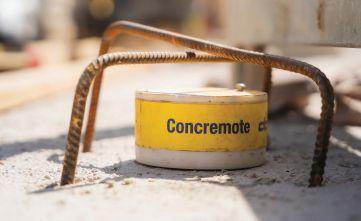
In addition, if the system is overloaded, the connecting parts may fail or collapse. Consequently, this slower strength development leads to changed stripping times. Cold or even cool ambient temperatures can
cause delayed development of the early age compressive strength in these new concrete mixes, especially between fall and spring.
When the strength development slows down and more time is needed to reach the required concrete compressive strength, it can cause major challenges and project delays. Previous wisdom such as “pour in the afternoon and remove the formwork the next morning” can no longer be assumed to apply. Results will depend on weather and environmental conditions. Ignoring these aspects can lead to significant safety risks.
On the other hand, we also know that in some cases slower curing times can actually increase the concrete quality and reduce the risk of cracks. However, concrete contractors are frequently under pressure from tight project timelines, so the requirements of quality and efficiency must be balanced.
NEW TECH ON THE SITE
New digital solutions and initiatives can accelerate the green turnaround on construction sites. Above all, they help to ensure that CO2-reduced concrete mixes can be used safely and productively on jobsites across Canada and around the world.
Reliable and timely information about the temperature and strength of the concrete is crucial for a smooth construction process,
especially with new concrete mixes. Sensorbased solutions provide data on temperature and strength development in real-time, which enables improved control of formwork and in-situ concrete work. Everything from stripping times and curing times to the earliest time for prestressing can be derived from these concrete pressure measurements.
Another exciting development is intelligent heated formwork. This enables the efficient and safe use of CO2-reduced concrete mixes, even in low temperatures. Since these concretes take longer to cure, the heated formwork provides a targeted “heat boost” to accelerate early strength development and reduce curing times.
Encouraging results from an Austrian research project using a heated formwork prototype showed that, in cold weather conditions, the prototype formwork ensured proper strength development, prevented structural damage, and enabled CO2-reduced concrete to be used reliably on-site.
LOW-CARBON CONCRETE IN EXTREME CONDITIONS
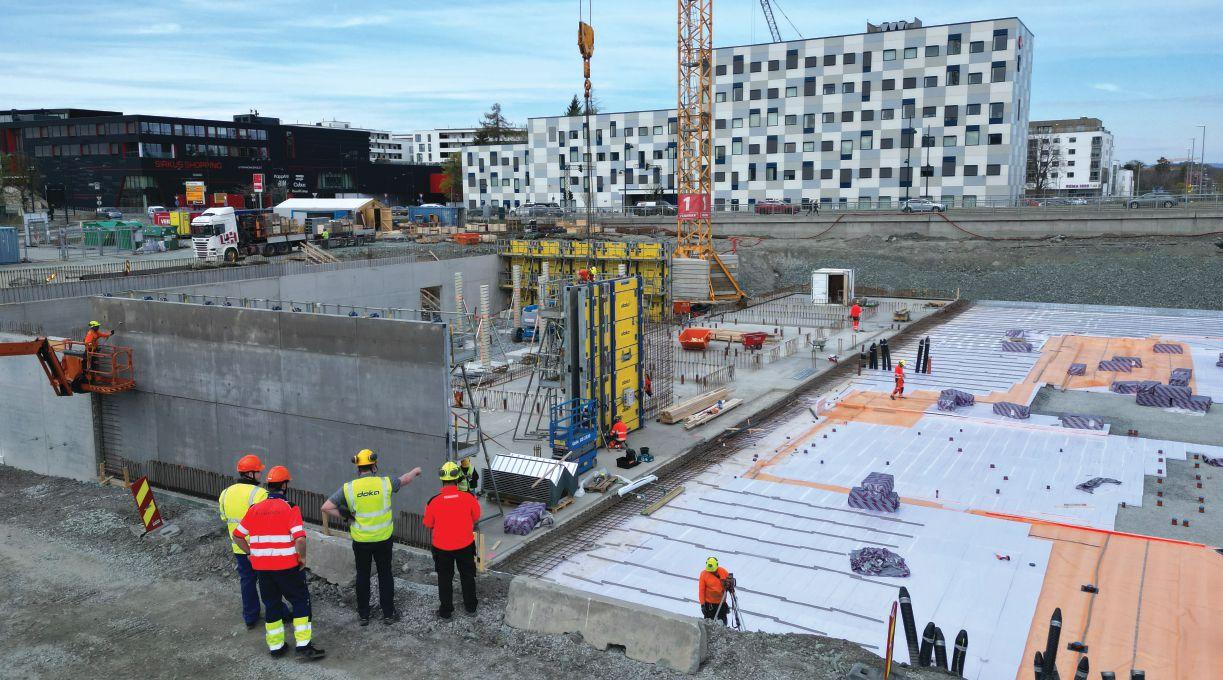
In Norway, a significant stride has been made toward sustainable construction at Cissi Klein Upper Secondary School in Trondheim, where the construction team proved they could use innovative techniques
to reduce carbon impacts, even in harsh winter climates.
The project used CEM III low-carbon extreme concrete paired with heated formwork, reducing CO2 emissions by over 50 per cent compared to traditional concrete.
Despite Norway’s intense winter temperatures, which frequently plunge to -15°C, the project has shown that it is possible to pour low-carbon concrete in frigid conditions without compromising quality. Again, the heated formwork prototype proved its effectiveness.
As the construction industry moves toward more sustainable practices, embracing low-carbon concrete and advanced technology will be essential to achieving net-zero targets. The challenges of slower strength development, temperature sensitivity, and project timelines can be effectively managed with smart formwork solutions, real-time monitoring and innovative heating technologies.
Daniela Ehrenreich is a senior researcher in the research and design department at formwork and scaffolding producer Doka.
A GREAT EVENSHOW, WITH THE SNOW EVEN WITH THE SNOW
The Canadian Concrete Expo was in growth mode in 2025.
Despite having to navigate one of the largest snowstorms in recent record, the 7th Annual Canadian Concrete Expo (CCE) still managed to set records as it continued its growing trajectory. Held at the International Centre in Toronto on February 12 and 13, CCE 2025 smashed the one-day attendance record on the opening day only to be slowed on day two by the snowstorm. Overall attendance for the two-day event was 6,657 visitors. The show experienced a 35 per cent increase in visitors from outside Ontario.
The largest annual trade show exclusively focused on construction in Canada, this year’s event featured 343 national
and international exhibitors representing all sectors of the diverse and ever evolving concrete construction industry.
“CCE is becoming a must attend tradeshow for contractors and professionals operating in the Canadian construction industry,” stated CCE president Stuart Galloway. “The rapid growth of CCE in size, scope and visitor attendance each year indicates the need for knowledge and networking, plus the need to keep up with changing technology and equipment, in this era of modern construction.”
The show, which has significantly increased its footprint at the trade centre, featured two new areas that were well received by show visitors.
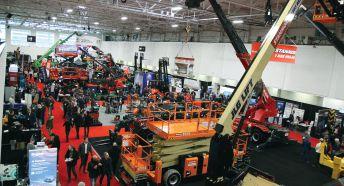
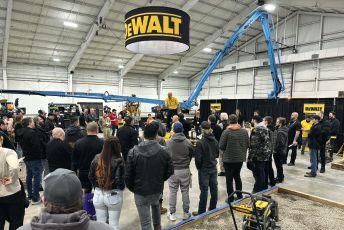
The indoor Equipment Demo Area provided show visitors the opportunity to test and operate the latest cordless concrete construction tools at the interactive job site demo areas, as well as to test and operate telehandlers, material handling and concrete pumping equipment.
“The equipment demo area was a complete success and demand in 2026 will likely see the number of participating companies and the size of the demo area double or triple in size,” suggested Galloway.
Elsewhere on the show floor, the Forming, Shoring and Scaffolding Pavilion brought together major manufacturers and distributors serving the Canadian market, attracting strong interest from builders, contractors and developers seeking changing technology, methods, efficiency in use, and cost to projects.
Sharing of knowledge played a key role at this year’s event, with almost 700 visitors registering for the educational sessions on offer, and hundreds more taking in product presentations on the main stage.
“The sessions and presentations at CCE provide a deeper understanding of advanced construction methods, sustainable materials and structural efficiency,” explained Galloway.
Planning for CCE 2026 is already underway, with the show president saying that he expects to see the show grow again in size and scope. The 2026 event will be hosted on February 11 and 12, once again at the International Centre.
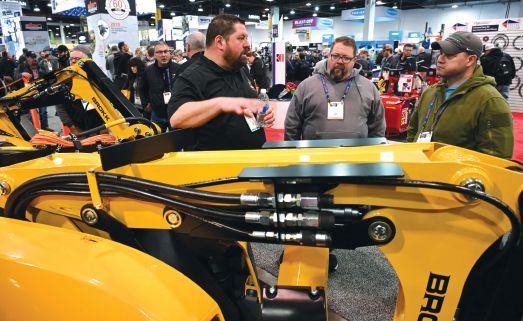
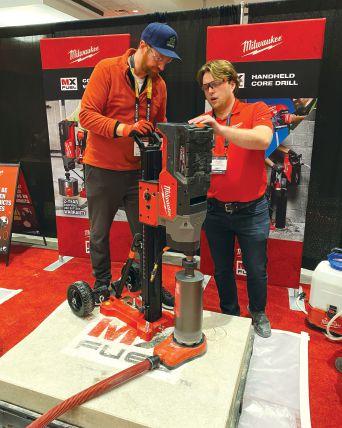
Left: Greg Whitby, left, a student from Mohawk College, tries out the newest coring drill with direction from Daniel Talman at the Milwaukee Tool demonstration area. Top Right: The show floor featured lots of new equipment on display. Bottom Right: The new equipment demo area proved popular.
SYNTHETIC MACROFIBRES IN CONCRETE PAVING
Evolving material choices bring a paradigm shift in construction.
BY GUSTAVO POLIDORO
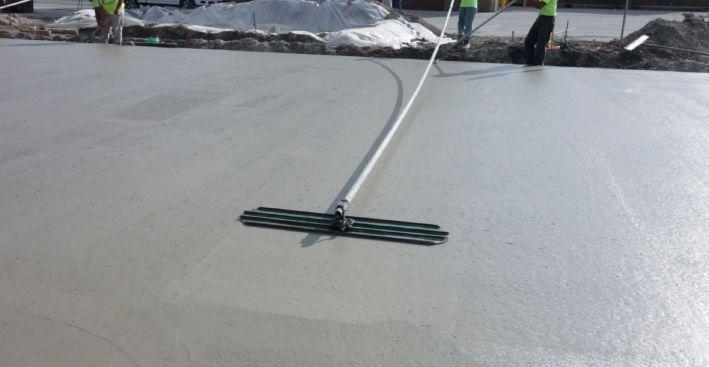
The construction industry is constantly evolving, with new technologies and materials emerging to improve efficiency, reduce costs and enhance sustainability. One of the most transformative developments in recent years is the adoption of synthetic macrofibres in concrete pavements.
While fibre reinforcement has been used for centuries to reinforce mud bricks with straw, considerable advancements have since been made to fibre technology to better enhance mixing and finishing characteristics, as well as to impart improved mechanical properties to concrete. Nowadays, these advanced fibres are reshaping the way we approach modern concrete construction, providing a cost-effective, durable and sustainable alternative to traditional reinforcement.
WHAT ARE SYNTHETIC MACROFIBRES?
Synthetic macrofibres are engineered, polymer-based materials, commonly made from polypropylene or polyethylene, that are designed to provide crack control and post-
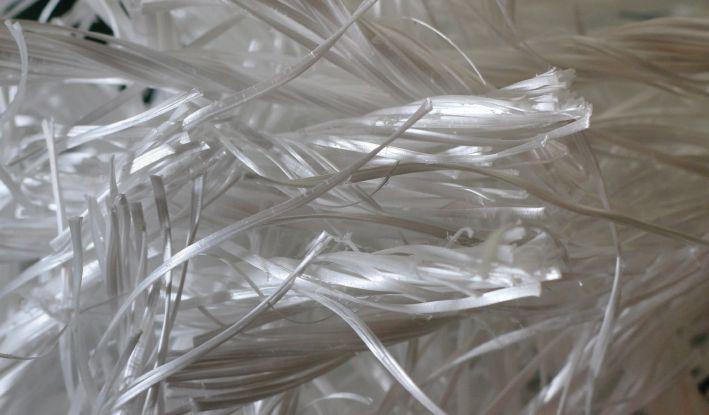
crack load-bearing capacity to concrete.
Unlike traditional steel reinforcement, which is placed in specific locations, synthetic macrofibres are mixed into the concrete to form a three-dimensional network throughout the structure. This uniform distribution enhances the material’s ability to handle stress, improve durability, and enhance impact and fatigue resistance.
When the size and functionality of fibres are considered, they can be classified into “microfibres” and “macrofibres.”
Microfibres are usually applied for plastic shrinkage crack control, and typically they do not add any structural capacity to a concrete section. These fibres are relatively fine with a diameter in the range of 0.0004 to 0.004 inches and a typical length in the range of one-quarter to one inch.
Macrofibres are typically larger, ranging from three-quarters to two inches in length,
and are designed with unique surface textures or shapes to improve bonding with the concrete matrix. This design ensures that the fibres are anchored securely within the concrete, optimizing their ability to transfer loads and control cracking.
The versatility of synthetic macrofibres makes them suitable for a wide range of applications, including industrial flooring, pavements, precast elements, shotcrete and overlays.
THE CASE FOR SYNTHETIC MACROFIBRES
Concrete is one of the most widely used construction materials globally, prized for its strength, versatility and durability. However, traditional reinforcement methods like steel rebar and welded wire fabric come with significant drawbacks, including high costs, labour-intensive installation and vulnerability to corrosion.
For certain applications, synthetic macrofibres offer a solution to these challenges, controlling the shrinkage and temperature cracks as well as providing post-crack load-bearing capacity in flexural and tensile concrete members.
The economic benefits of synthetic macrofibres can be compelling, with savings stemming from reduced material costs as well as the elimination of the labour-intensive process of tying rebar.
ENHANCED PERFORMANCE AND DURABILITY
One of the key advantages of synthetic macrofibres is their ability to improve the performance and durability of concrete.
Synthetic macrofibres are non-corrosive, ensuring long-term durability even in harsh environments. This makes them particularly well-suited for applications like parking lots, bridge decks and highway pavements, where exposure to moisture and de-icing chemicals can accelerate the deterioration of concrete. Smaller crack widths limit the penetration of potentially harmful chemicals into concrete.
Synthetic macrofibres also enhance concrete’s resistance to common failure modes. Since concrete is strong in compression but relatively weak in tension, it needs a reinforcing mechanism to carry the tensile
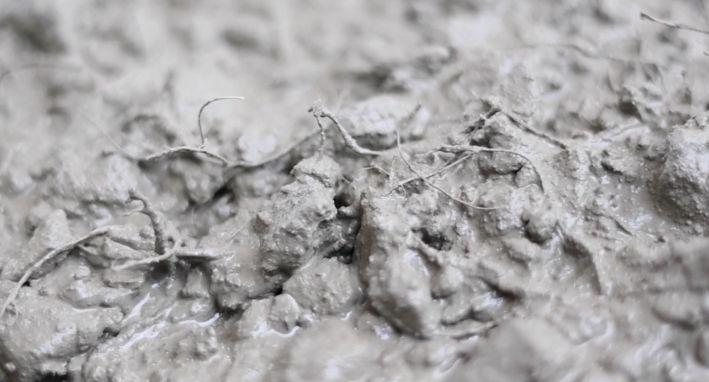
or flexural stresses caused by loads, shrinkage and thermal stresses after cracking.
It should be noted that fibres at moderate dosage rates do not typically increase the flexural strength of concrete (at cracking), nor do steel rebar or wire mesh. The flexural strength, or the strength at which concrete cracks, is mainly a function of concrete mix design and curing. The main role of reinforcement of any kind is in the post-crack stage for crack control, providing load-bearing capacity to withstand ultimate forces and moments.
At elevated dosage rates, however, some fibre types can provide strain hardening and increase the ultimate flexural strength.
Field studies have shown that fibre-reinforced concrete (FRC) pavements experience fewer surface cracks and remain functional longer compared to traditional concrete pavements. This makes macrofibres a reliable choice for infrastructure projects requiring long service lives.
TECHNICAL CONSIDERATIONS
The successful application of synthetic macrofibres requires careful consideration of some technical factors. One of the most important aspects is the concrete mix design.
To achieve optimal performance, the concrete mix must be properly proportioned to accommodate the macrofibres without compromising workability or strength. This often involves the use of water-reducing admixtures to maintain the desired consistency and strength.
Pumpability is another key aspect to be considered. Best practices for adequate pumpability include ensuring the concrete
mix is not over-watered, using a working vibrator on the pump grate, and discharging the mix at an appropriate height to facilitate the passage of fibres through the grate.
Finishing operations also play a crucial role in the appearance of FRC. Timing is essential, as the cohesive nature of the mix can make it appear to set up more quickly.
Using a vibratory screed during initial finishing and maintaining clean equipment for broom or tine finishes can help achieve
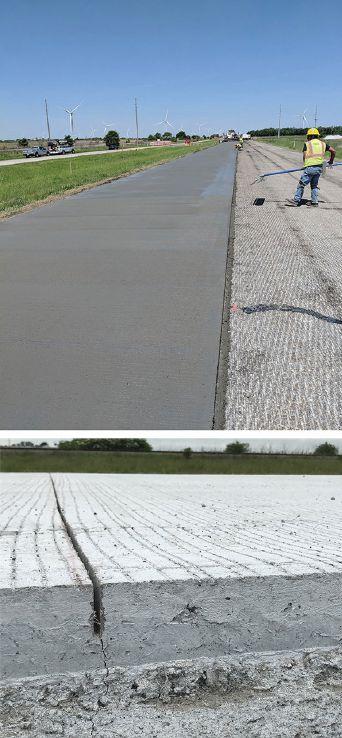
the desired surface quality while minimizing the visibility of fibres.
Some fibre types in the industry, such as twisted fibres, do not have as much of a tendency to be pulled to the surface during finishing operations, making this fibre an ideal candidate over steel fibres or rigid synthetic fibres, whose stiffness can cause issues along joints when saw-cutting operations are underway.
CONCRETE PAVING APPLICATIONS
The versatility of synthetic macrofibres has led to their adoption in a wide range of concrete paving applications. Parking lots, industrial floors and roadways are among the most common uses, where the fibres provide enhanced load-bearing capacity and resistance to wear and tear.
In the U.S., some state transportation agencies are increasingly incorporating FRC
YOUR PARTNER IN ROADWORK HUSQVARNA FLAT SAWS & BLADES
Rip through the toughest of concrete with Ulti-Grit™, a series of powerhouse blades engineered to squeeze every ounce of performance from your flat saw. Go further with exceptional flat saw performance - from the first cut to the last. Contact your sales representative today to learn more about our road sawing solutions and how they can help drive your business forward.
www.husqvarnaconstruction.com
into bridge decks and overlays, leveraging its durability and cost-effectiveness for critical infrastructure projects.
A notable example was the rehabilitation of US 52 in Indiana. This project involved the application of a thin concrete overlay reinforced with macrofibres. The result was a durable, cost-effective solution that met the project’s performance requirements while streamlining construction processes.
Another high-profile project is SoFi Stadium in Inglewood, Calif. By using macrofibre-reinforced concrete for its topping slabs, the construction team was able to significantly reduce costs and accelerate the construction schedule.
The growing adoption of synthetic macrofibres in concrete pavements is a testament to their transformative potential within the construction industry. As more engineers, architects and contractors recognize the benefits of these advanced fibres, their use is expected to expand across a broader range of applications—from industrial flooring to bridge decks and roadways.
Research and development efforts are also driving innovation in fibre technology, with new products emerging to meet the specific needs of different projects. For example, self-fibrillating fibres are gaining popularity for their ease of finishing and reduced visibility on the concrete surface, making them an ideal choice for applications where aesthetics are a priority.
Synthetic macrofibres represent a significant advancement in concrete construction, offering a cost-effective, durable and sustainable alternative to traditional reinforcement methods. These fibres are paving the way for a more efficient and environmentally responsible future in infrastructure constructions.
As the industry continues to evolve, synthetic macrofibres will undoubtedly play a central role in shaping the built environment for years to come.
Gustavo Polidoro is a professional engineer and product manager of marketing and technology for fibre-reinforced concrete at Euclid Chemical.
The Worldwide Leader in Concrete Paving Technology
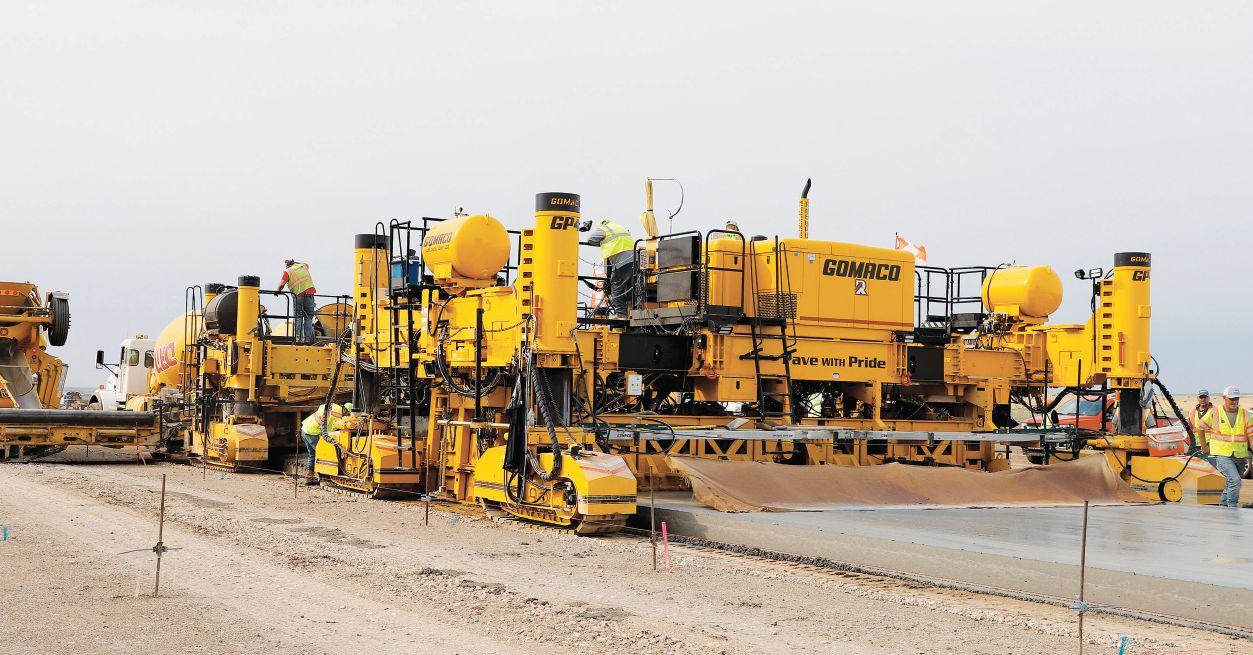
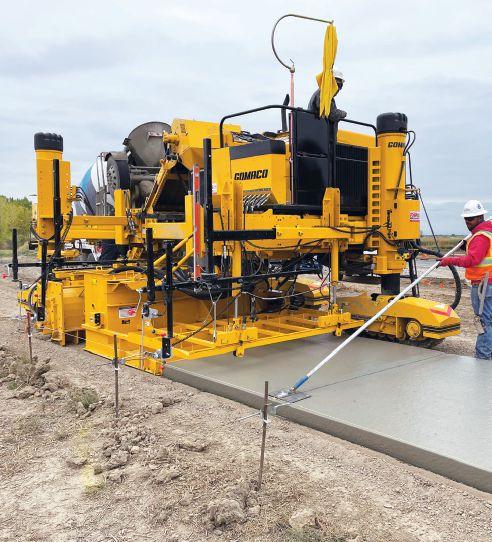
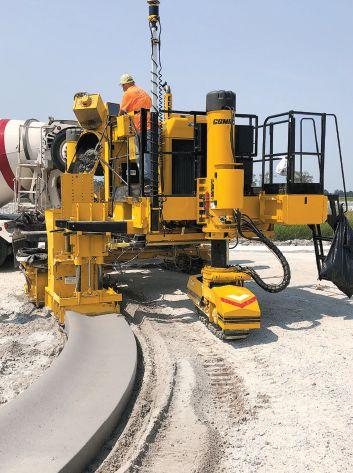
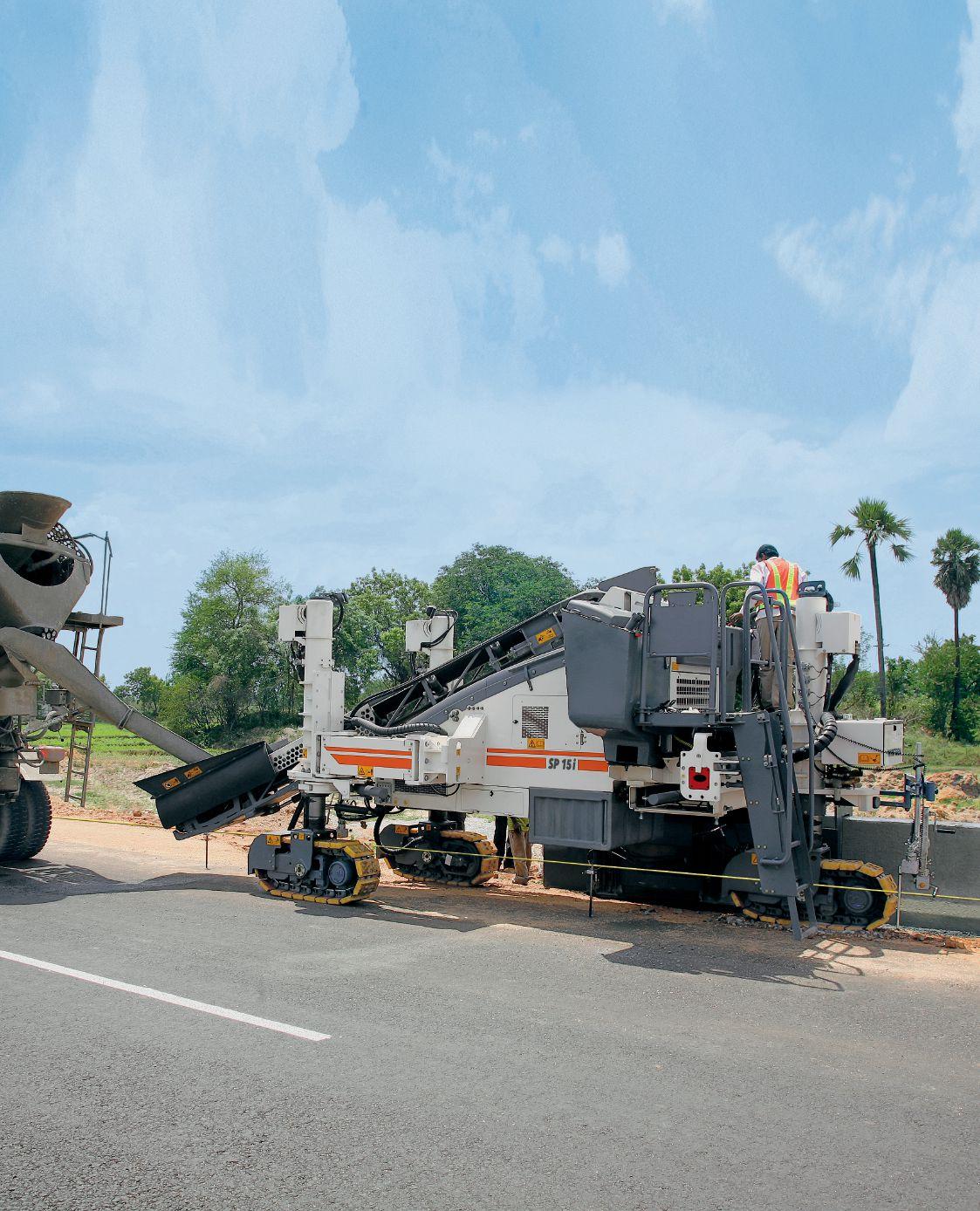
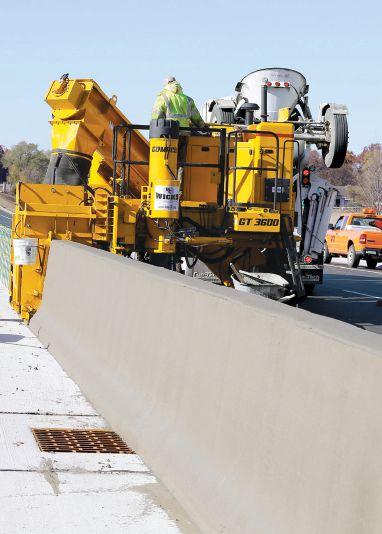
GOMACO offers the full range of concrete slipform pavers, curb and gutter machines, trimmers, placer/spreaders, texture/ cure machines and bridge/canal finishing equipment. GOMACO equipment features our exclusive and proprietary G+® control system, created in-house by our software engineers from the wants and needs of contractors paving in the field. At the heart of GOMACO equipment is our passion for concrete and our commitment to our customers. We look forward to visiting with you about your upcoming paving projects and your concrete paving equipment needs. Our worldwide distributor network and our corporate team always stand ready to serve and assist you.

CONCRETE PRODUCTS


WHITE CAP GUIDE
White Cap has released its Concrete Formwork Supplement Products, a resource for Canadian tradespeople in the construction industry that contains the most common products used on jobsites. The free guide serves as a reference for any jobsite, offering diverse options that meet different needs.
CORDLESS EQUIPMENT SYSTEM
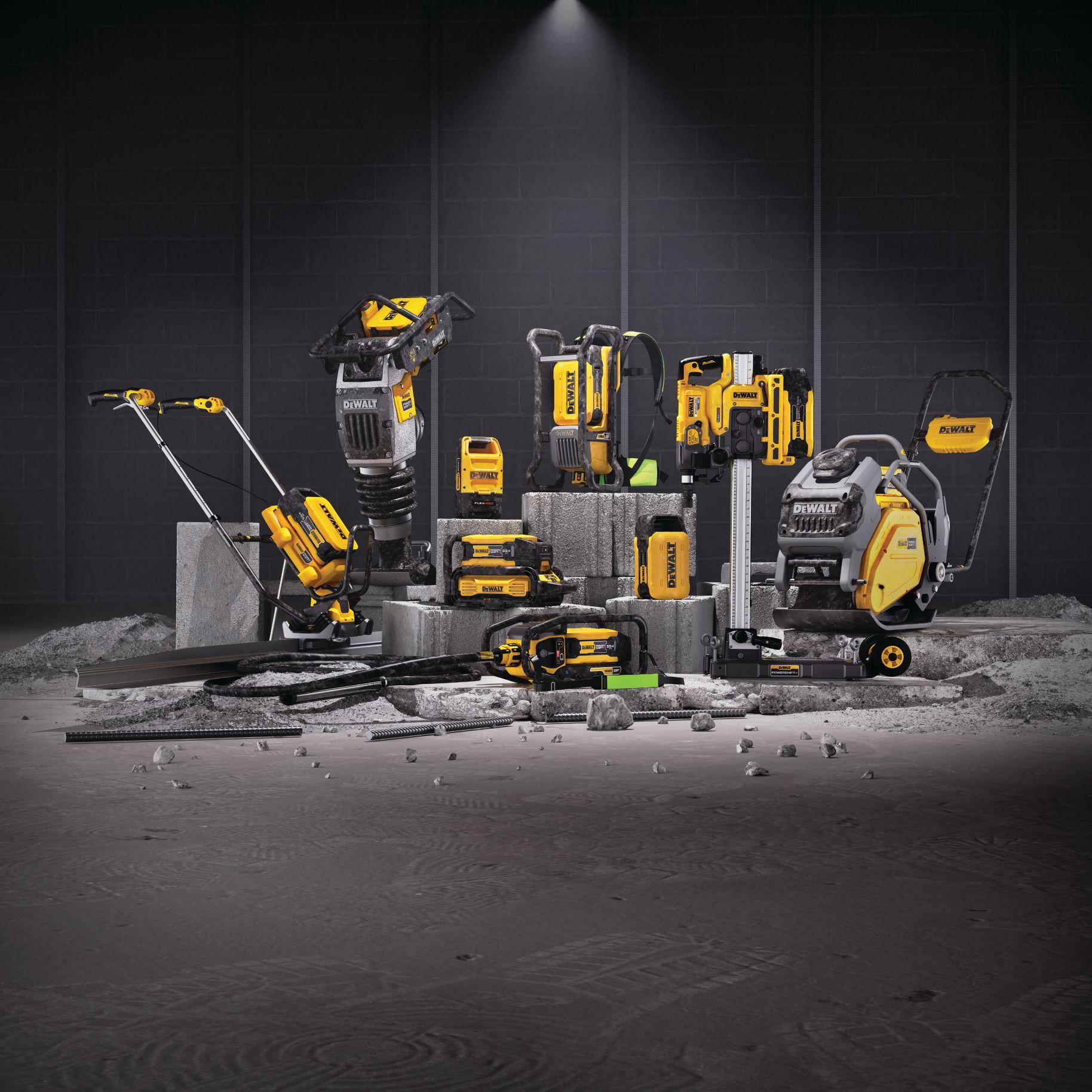
DeWalt Powershift is a cordless equipment system engineered to optimize the workflow of concrete and construction jobsites through electrification. The system meets the critical needs of concrete professionals – power, runtime and ergonomics – allowing users to transition away from gas-powered equipment, without compromising efficiency and performance. The line includes a vibrator, backpack vibrator, concrete power screed, rammer, plate compactor, core drill and stand, 554WH battery, and a 550W charger.
SOMERO LASER SCREED
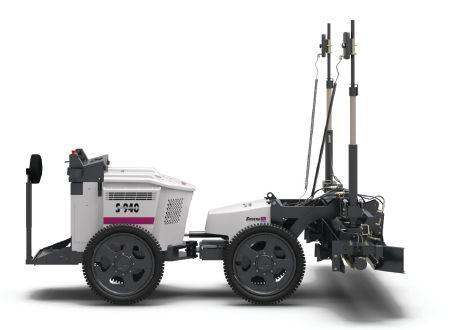
The S-940 Laser Screed Machine from Somero is available with a fully automated self-levelling screed head, raking/fine grade head and the option of a diesel engine. The machine has a foldable elevation beam that provides a narrower profile during transport and easy entry to jobsites, and its offset screed head provides minimal overlap per pass.
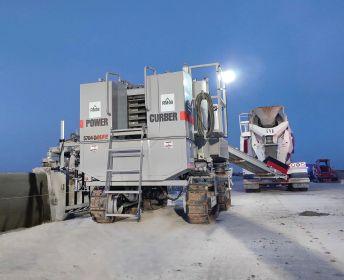
POWER CURBERS SLIPFORM MACHINE
The latest generation of slipform machine from Power Curbers, the Power Curber 5704-D MAX, is a four-track version of its popular 5700 series. Designed to pour curb and gutter, sidewalk, barrier, ditches, paving, tunnels, agricultural and specialized applications, the machine features a compact size, simple design, easy operation, and high productivity, says the manufacturer. It is available with several conveyor options, including a 12 ft. (3.7m) auger, 20 ft. (6m) belt, and 28 ft. (8.5m) belt.