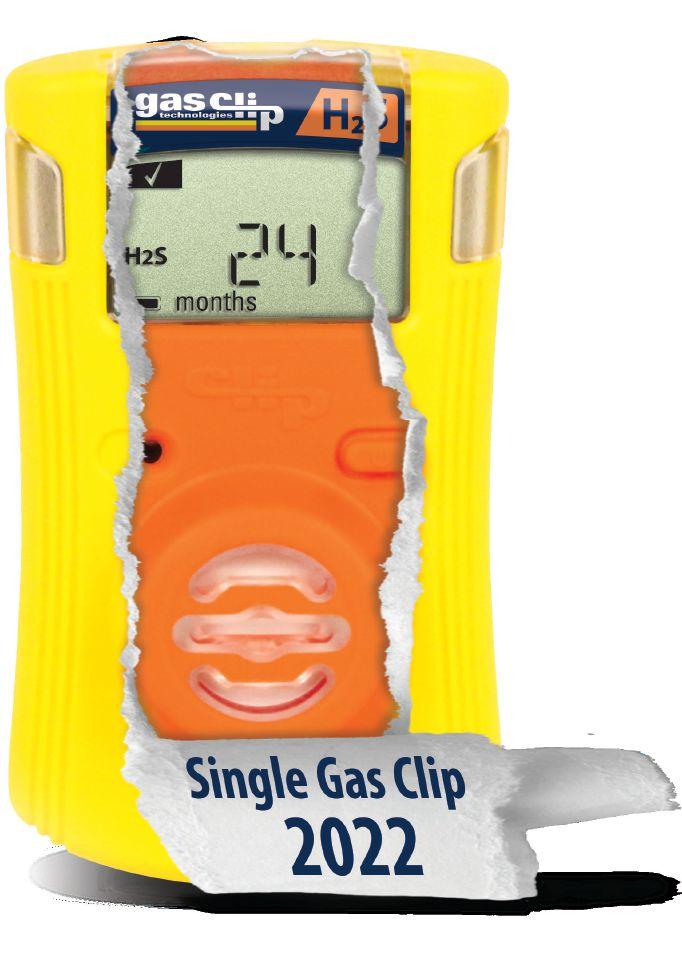
2-year battery life • Simple-to-use one-button operation • Adjustable alarm set points
Programmable 6-digit ID • Compatible with the new GCT External Pump
DEPARTMENTS
04 | From the Editor Through COVID-19, leadership has become dangerous work
05 | In the News
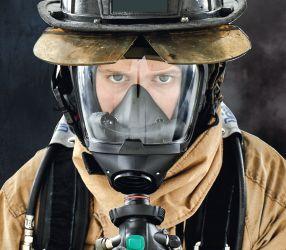
26 | Safety Gear Innovations continue in firefighting PPE
28 | CCOHS Corner
Coping with substance use in the Canadian workplace
30 | Time Out COLUMNS
10 | Safety Leadership
Reframing health and safety for the ‘next normal’
12 | Neurosafety
The link between psychosocial risk and musculoskeletal injury
13 | Person of Interest
Halifax’s Robin Angel named chair of BCRSP
Creating safe environments in long-term care homes
Best practices developed here may provide guidance for all workplaces BY
MEAGAN GILLMORE
What is the future of safety training? COVID-19 has overhauled the way learning and development gets done
JACK BURTON
Buyers Guide: Your connection to OH&S vendors and suppliers
Go shopping with OHS Canada’s annual directory, also available year-round on our website.
By Marcel Vander Wier
Through COVID-19, leadership has become dangerous work
What is happening to Canadian society as we know it?
Since when has taking on a role of leadership in this great country become such a dangerous affair?
Recent days and weeks have revealed various incidents of harassment and vandalism directed towards political leaders.
L iberal Leader Justin Trudeau was pelted with gravel at a campaign stop in London, Ont.
The home and vehicles of St. Catharines, Ont., Mayor Walter Sendzik were vandalized with hateful graffiti.
A raw egg was cracked on the head of Maxime Bernier, leader of the People’s Party of Canada.
Nickel Belt Liberal candidate Marc Serré was assaulted in his campaign office in Sudbury, Ont.
Tack on the anti-vaccine protests taking place in front of hospitals across the country and this is all becoming very unCanadian.
EDITORIAL ADVISORY BOARD
The COVID-19 pandemic has affected all facets of Canadians’ lives, and leaders of all types appear to be the target as tensions boil over.
Messages of “we’re in this together” and “ca va bien aller” have fallen by the wayside for some groups of Canadians as pandemic restrictions continue into their 19th month.
Trust in our societal framework continues to be eroded by the advances of social media.
Trust in our societal framework continues to be eroded by the advances of social media, and the cracks are beginning to show. It’s getting ugly. And, as Canadians, we need to be much better than this.
With vaccine passports now being implemented across the country, there is a chance this vitriol begins to be directed towards OH&S professionals and security workers who are simply doing their jobs.
To those entrusted with our work health and safety, I urge you to continue leading with diligence and professionalism.
Paula Campkin: chief safety officer, Energy Safety Canada
Marty Dol: president and founder, HASCO Health & Safety Canada
Cindy Moser: director of communications, Institute of Work & Health
Natalie Oree: prevention consultant, SAFE Work Manitoba
David Powers: EHS director (Atlantic), Sysco Canada
For those who say it’s simply time for us all to move on from COVID-19 — unfortunately, that’s now been tried in Alberta, with very poor results.
Jason Kenney’s cry that the pandemic is over in Alberta as of July 1 backfired, and as of press time, the province was returning to a state of healthcare crisis less than three months later, with hospitals once again overwhelmed.
The hard-learned lesson here is as much as we want to wish this crisis away, it’s not quite that easy.
There’s still some road left in this pandemic, and according to the best experts we have, widespread vaccination is the way out.
As frustrating as it has been, we need to persevere through this trial by holding tight to our roots.
After all, aren’t Canadians best known for being humble and polite, peacekeeping and loving our neighbours? Is not the greatest of these love?
From one Canadian to another, let’s choose to continue to trust the leaders we elected — for the betterment of society as a whole
NATIONAL SALES MANAGER Ross Anderson 289-925-7565 randerson@annexbusinessmedia.com
GROUP PUBLISHER
Paul Grossinger pgrossinger@annexbusinessmedia.com
COO Scott Jamieson sjamieson@annexbusinessmedia.com
Printed in Canada ISSN 0827-4576 (Print) ISSN 1923-4279 (Digital)
PUBLICATION MAIL AGREEMENT #40065710
SUBSCRIPTION RATES
Published six times per year – Jan/Feb, Mar/Apr, May/Jun, Jul/Aug, Sep/Oct, Nov/Dec
Canada $100/yr plus tax USA $130/yr (100 USD) Foreign $214/yr ($164.50 USD)
Occasionally, OHS Canada will mail information on behalf of industry related groups whose products and services we believe may be of interest to you. If you prefer not to receive this information, please contact our circulation department in any of the four ways listed above.
Annex Business Media Privacy Office privacy@annexbusinessmedia.com Tel: 800-668-2374
All advertising is subject to the publisher’s approval. Such approval does not imply any endorsement of the products or services advertised. Publisher reserves the right to refuse advertising that does not meet the standards of the publication.
Richard Quenneville: senior director of corporate services, T. Harris Environmental Management
Maureen Shaw: lecturer and presenter
Dylan Short: managing director, The Redlands Group
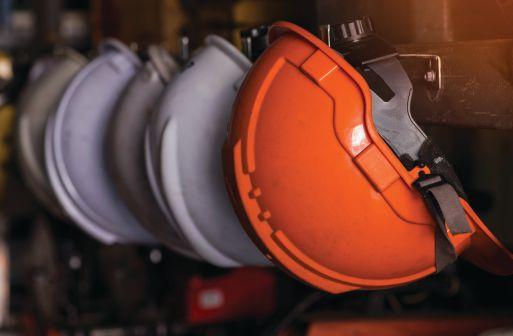
New headgear regulations take effect in B.C. as of Sept. 1
WorkSafeBC is reminding employers that new health and safety requirements for safety headgear took effect on Sept. 1.
WorkSafeBC’s Board of
Directors approved the change to Part 8 of the Occupational Health and Safety Regulation (OHSR) pertaining to safety headgear in April of this year.
Board of Canadian Registered Safety Professionals
Conseil Canadien Des Professionnels
En Sécurité Agréés
The change to the OHSR followed an extensive public and stakeholder consultation process by WorkSafeBC.
The revised regulation means that before a worker starts an assignment in a work area where there is a risk of head injury, the employer must take measures to eliminate or minimize the risk of head injury before requiring the worker to wear safety headgear.
Employers are encouraged to involve workers in the review of any workplace hazards and any controls measures that may be implemented.
The intent of the change is to improve OH&S in the workplace by requiring employers to follow the hierarchy of controls, which is a
step-by-step approach to eliminating or reducing risks. The hierarchy of controls ranks risk controls from the highest level of protection to the lowest. In the hierarchy, workers are best protected from head injury when the risks from falling, flying or thrown objects are eliminated, or minimized to the lowest level practicable. Personal protective equipment, such as safety headgear, provides the lowest level of protection in the hierarchy.
Safety headgear is required where the risk of head injury cannot be eliminated or minimized to the lowest level practicable. Eliminating the dangers of head injury removes the need for head protection.
The BCRSP is a self-regulating, self-governing organization certified by BSI Management Systems to ISO 9001. The CRSP certification is accredited by the Standards Council of Canada to ISO/IEC 17024. www.bcrsp.ca
The following individuals have been granted certification as a Canadian Registered Safety Technician (CRST)/Technicien en sécurité agréé du Canada (TSAC)
Adam Arpa CRST
Jason Eric Atkinson CRST
Aislyn Debra Balak CRST
Michael Allen Boone CRST
Jason Alan Brokop CRST
Michael Cardillo CRST
Cherry Crystal Cardwell CRST
Sabrina Ashley Day CRST
Matthew David Deakin CRST
Carly Jean DeCiantis CRST
Alexander Ethier CRST
Julie Faludi CRST
Cynthia Fudgell CRST
Steven James Gore CRST
Tessa Hambly CRST
Neil David Horsley CRST
Taylor Hurd CRST
Matthew Hutchings CRST
Janelle Ingwersen CRST
Dane Alexander Richard Itner CRST
Samantha Patricia Labossiere CRST
Heather Lawrence CRST
Trisha Martin CRST
Aaron Millar CRST
Lindy Monahan CRST
Brent Nichol CRST
David Obrigewitsch CRST
Raymond Latuga Orticio CRST
Vineeth Sasi Pazhayillath CRST
Robert Pearn CRST
Pascal Perreault CRST
Milagros Ramos CRST
Ashis Sarker CRST
Leah Scheer CRST
Lisa Shier CRST
Shoruba Soosaipillai CRST
James Stewart Taylor CRST
Jessica Leslie Turgeon CRST
Jorden Christopher Velthuys CRST
Balkeerat Kaur Vig CRST
Craig White CRST
Jill Whitebone CRST
Hyeona Yoon CRST
The following individuals have been granted certification as a Canadian Registered Safety Professional (CRSP)®/Professionnel
Morgan Anand CRSP
James Beck CRSP
Jessica Bowles CRSP
Carmela Coffa CRSP
Treena Crockett CRSP
Duncan Ross Drummond CRSP
Micheal Dufresne CRSP
Elizabeth Mary Wilhelmina Durnford CRSP
Ian David Elsom CRSP
Kim English CRSP
Gregg H Ferris CRSP
Velma Figur CRSP
Jutta Gouin CRSP
Timothy Hoveland CRSP
Cherlyn Hudson CRSP
Jayanti Khemchandra CRSP
Roberta Lee Kiesman CRSP
Adam Kletchko CRSP
Coralee Nicole Linman CRSP
Tony Maurais CRSP
Nicola McGovern CRSP
Jason William Miller CRSP
Kaitlyn Moor CRSP
Phil O’Connell CRSP
Paul Rabelo CRSP
Ayden Hugh Robertson CRSP
Stephanie Heather Anne Smith CRSP
Victor Benton Stinson CRSP
Jason Stockall CRSP
Kathleen Sullivan CRSP
Barbara Anne Tillsley
Nadine Trodel CRSP
Xijia Amy Wang CRSP
Lori-Ann M Warren CRSP
Jeffrey Sean Wight CRSP
Jason Zaffino CRSP
Opioid poisoning response added to Red Cross first aid/ CPR training
To help save lives, the Canadian Red Cross has added training to identify and respond to opioid poisoning in all its first aid and cardio-pulmonary resuscitation (CPR) programs offered across the country.
The program modification represents the first of a series of Red Cross measures funded by Health Canada’s Substance Use and Addictions Program (SUAP) to help reduce opioid-related deaths by increasing Canadians’ access to response training and a life-saving medication that buys those affected enough time for medical attention.
“We have seen first-hand how the opioid crisis is devastating Canadian families and communities,” said Conrad Sauvé, president and CEO of the Canadian Red Cross, in a press release. “We are pleased to have the opportunity to bring the strength of Red Cross to this very complex health and social issue.”
Between Jan. 2016 and Dec. 2020 there were more than 21,000 apparent opioid toxicity deaths in Canada — with 97 per cent happening by accident.
The crisis has worsened since the onset of COVID-19 — with 6,214 deaths recorded in 2020 alone.
Saskatchewan re-enacts emergency order to combat record COVID-19 cases
REGINA (CP) — It was supposed to be a “great Saskatchewan summer.”
But on Sept. 13, the province saw 449 new cases of COVID-19 — its highest single-day count of new infections during the pandemic.
1,315
Alberta reported 1,315 new cases of COVID-19 on Sept. 1, the highest one-day total since mid-May, when the peak of the last wave began to recede.
WEB POLL: Which of the following will have the greatest effect on workplace safety in the coming years?
Total responses 117
The same day, it also re-enacted an emergency order to deal with a surge of COVID-19 hospitalizations. There were 209 people in hospital with COVID-19, 41 of them in intensive care.
The order, which previously ended July 11, gives the government the power to redirect health-care workers to areas experiencing pressure from COVID-19.
And the Saskatchewan Health Authority activated a plan to reduce elective surgeries in order to free up staff, mainly to care for unvaccinated patients in hospital with the virus.
“We can’t care for you when there’s nowhere to put you,” said Dr. Alexander Wong, an infectious disease physician in Regina. “And it’s not just a matter of where. It’s a matter of no one to actually look after you.”
Premier Scott Moe said that 17,000 health-care worker shifts
were unfilled in July, an increase of 160 per cent from the year prior. Beds are limited as well. The health authority said it increased its 79 intensive care beds to 130 to accommodate a projected need for 80 COVID-19 intensive care patients, while also leaving beds for 50 ICU patients without COVID-19.
Moe said the rise in summer cases has put a “tremendous strain” on the province’s health-care system, but his Saskatchewan Party government will not implement any restrictions at this time.
He said he believes vaccination is a choice.
The premier tweeted several times over the summer about having a “great Saskatchewan summer.” It’s a phrase that was also used by Alberta Premier Jason Kenney.
Saskatchewan and Alberta now face the highest COVID-19 rates in the country, which are putting strain on their health-care systems.
Saskatchewan’s rate of cases in the last week was 217 per 100,000 people, according to data from Health Canada. That’s triple the national average of 71 cases per 100,000 people.
Ontario to require proof
of vaccination as of Sept. 22
To further protect Ontarians as the province continues to confront the Delta-driven fourth wave of the COVID-19 pandemic, the Ontario government, in consultation with the chief medical officer of health, will require people to be fully vaccinated and provide proof of their vaccination status to access certain businesses and settings starting Sept. 22.
“Based on the latest evidence and best advice, COVID-19 vaccine certificates give us the best chance to slow the spread of this virus while helping us to avoid further lockdowns,” said Premier Doug Ford.
“If you haven’t received your first or second dose of the COVID-19 vaccine, please do so today.”
As of Sept. 22, Ontarians will need to be fully vaccinated (two doses plus 14 days) and provide their proof of vaccination along with photo ID to access certain public settings and facilities.
This approach focuses on higher-risk indoor public settings where face coverings cannot always be worn and includes:
• restaurants and bars (excluding outdoor patios, as well as delivery and takeout)
• nightclubs (including outdoor areas of the establishment)
• meeting and event spaces, such as banquet halls and conference/convention centres
• facilities used for sports and fitness activities and personal fitness training, such as gyms, fitness and recreational facilities, with the exception of youth recreational sport
• sporting events
• casinos, bingo halls and gaming establishments
• concerts, music festivals, theatres and cinemas
• strip clubs, bathhouses and sex clubs
• racing venues (i.e. horse racing).
These mandatory requirements will not apply to outdoor settings where the risk of transmission is lower, including patios, with the exception of outdoor nightclub spaces, given the risk associated with the setting.
These requirements will not apply to settings where people receive medical care, food from grocery stores, medical supplies and the like, though indoor masking policies will continue to remain in place.
Vaccine passports come into effect in Manitoba in effort to avoid shutdown
(CP) — Vaccine passports came into effect in Manitoba Sept. 3 as the province strengthens its public health measures to fend off a fourth wave.
Proof of COVID-19 vaccination is now required to enter a range of venues and businesses, including restaurants, bars, bingo halls, gyms and movie theatres.
3Ontario will extend its temporary sick leave program for workers until the end of this year. The province introduced three paid days of sick leave in April to accommodate self-isolation requirements during the pandemic, reimbursing employers up to $200 per day for what they pay out.
Dr. Brent Roussin, chief provincial public health officer, says the measure could help avoid another shutdown and encourage unvaccinated residents to get their shots.
The central Canada province has already reintroduced a mask mandate for indoor public spaces and, as of Sept. 7, reduced outdoor gathering limits to a maximum 500 people from 1,500.
U.S. safety council calls on all employers to require COVID-19 vaccinations
The U.S.-based National Safety Council (NSC) is urging employers across America to implement a COVID-19 vaccination requirement for their employees, saying COVID-19 vaccines are the clearest route to ensuring worker safety and well-being is prioritized in the workplace.
“The data is clear: workplace requirements are a proven way to encourage vaccine uptake and accelerate the country’s path to community immunity against COVID-19,” said Lorraine Martin, NSC president and CEO. “Consistent with our mission, we’re calling on employers to advance the nation’s progress on living safely with this virus by requiring vaccines in a manner that’s appropriate for their workers’ risk profile.”
Safety Leadership
By Lisa McGuire
Reframing health and safety for the ‘next normal’
While the pandemic has exacerbated the challenges manufacturers face in Canada and around the world, some issues have been quietly growing for years.
Manufacturing labour gap: Employers are struggling to find and keep skilled talent as vacancies soar with an aging workforce retiring and fewer young workers choosing manufacturing careers.
Supply chain disruptions: Inventory management is in crisis with worldwide supply shortages. Holding too little inventory in this environment risks production schedules, while stockpiling strains cash flow and improper storage introduces new safety risks.
Digitization learning curve: Robotics and automation are accelerating manufacturing towards Industry 4.0.
While automation can reduce risk and shrink the manufacturing skills gap, it can be difficult and costly to implement — and can introduce new hazards.
A changing workplace environment: Every industry is adjusting to new work demands, including remote and flexible hybrid work options.
A fourth wave of COVID-19: Employers are weighing human rights concerns against increasing infections and new health orders,
and taking new steps to encourage or even require proof of vaccination.
Rethinking health, safety and well-being
As restrictions ease, it’s time to rethink complex pandemic safety protocols to keep workers safe while regaining efficiencies.
Against this turbulent backdrop, and despite (or because of) the pandemic, demand for domestically manufactured products is surging, requiring innovative approaches to meet consumer expectations while ensuring a healthy and resilient workforce.
A strong recovery will require leaders to rethink the way they approach health and safety in the workplace — to create tomorrow’s strong, sustainable, and flexible companies. COVID-19 vaccination and testing policies are becoming mainstream.
Lisa McGuire is the CEO of the Manufacturing Safety Alliance in Chilliwack, B.C., and a regular columnist for OHS Canada.
And looking ahead as restrictions ease, it’s time to rethink complex pandemic safety protocols to keep workers safe while regaining efficiencies.
Finding skilled employees may require embracing flexibility. The work-fromhome trend is transitioning into hybrid models where possible. While production line workers can’t work from home, now is the time to reconsider meetings and travel in our connected world.
Creating a culture where workers feel valued and safe — and understand how they contribute to your company’s success — is critical to retaining people. Safety and wellness programs that address the whole person help workers feel appreciated and respected on the job.
Partnerships with post-secondary institutions may be a key strategy to direct young workers into skilled manufacturing careers.
Consider upskilling your existing team for more complex roles and broaden your search to look for trainable candidates who may lack experience.
From compliance to wellness: a ‘whole person’ approach
As we emerge from the pandemic, employers will need to refocus efforts to help their people and businesses thrive.
With workers recovering from pandemic impacts on health, morale and stability, a sustainable approach to safety has to include mental health and wellness.
Beyond employee assistance programs (EAPs), this requires making time to re-engage with employees in meaningful ways, and considering new initiatives to ensure they feel safe, valued and cared for at work. Consider partnerships to provide workplace mental health support.
Your safety staff or committee can be your ally in understanding health and safety gaps and regulations, and helping your team navigate change.
Consider adding a skilled health and safety professional to your team or tapping into your health and safety association for support.
As our economy and communities
Consider adding a skilled health and safety professional to your team or tapping into your health and safety association for support.
reopen, expand training to address health, safety, and wellness.
Making work better (and safer) for people
As you continue to make employee safety and well-being a top priority, look for ways to make your work — and work environment — better for your team.
Become an employer of choice for the next generation of manufacturing workers.
Look for opportunities with automation to address skills gaps and improve safety by tackling higher-risk tasks.
And if you are in a leadership role, take a breath to evaluate the personal toll of
leading through a sustained crisis.
Build resilience in yourself and your team, refining your vision and embracing the long view of sustainable business operations to emerge from this crisis safer, more innovative, and vital.
What are the keys to building a sustainable business strategy and thriving safety culture?
I invite you to join us online at Make it Safe 2021 Conference (makeitsafe.ca) Oct. 28 to 29, as we explore these topics with safety and business leaders from around the world.
Be a part of the conversation and help redefine the future of work and workplace health and safety.
SAFETY InYOUR HanDS
Neurosafety
By Theo Heineman
CHSC, B.Sc.Ag.,
OHS Canada.
The link between psychosocial risk factors and musculoskeletal injury
Statistics provided by the Mental Health Commission of Canada show that one in five Canadians experience a mental health problem or illness each year, with stress and trauma sited as the primary causes. This is equivalent to 500,000 employees unable to work every week.
It was further reported that psychological health problems cost the Canadian economy approximately $51 billion per year — $20 billion of which results from work-related causes. In addition, 47 per cent of working Canadians consider their work to be the most stressful part of daily life.
Keep in mind that these findings are pre-pandemic.
The stress response is a primitive survival mechanism intended for short-term duration. For example, when the deer outruns the wolf, 15 minutes later it goes aback to grazing.
Yet, when humans regularly turn on the stress response (autocratic leadership, production demands, information overload, pandemics, teenagers, divorce, traffic, news) and can’t turn it off, to the body, it’s just like constantly being chased by “the wolf.”
The alarming fact is most workers are living in an environment of stress 70 per cent of the time.
Stress at work is predictive of workplace incidents in general, since a person living in stress is living in survival mode.
When in stress, blood is sent from the forebrain to the hindbrain, causing it to disconnect from the prefrontal cortex and to fire incoherently.
In other words, the brain isn’t
working optimally. As a result, workers are more likely to become aggressive or reactive and make errors in judgment, such as taking shortcuts.
They are also less likely to perceive hazards and as a result experience more injuries and incidents.
Chronic stress is a lot like a motor that is revved too high for too long, and after a period of time, can have a cascading effect on the body.
Chronic stress is a lot like a motor that is revved too high for too long, and after a period of time, can have a cascading effect on the body.
In addition, stress-induced physiological factors can be linked to musculoskeletal injuries (MSI) and disorders:
• Stress hormones like adrenaline and cortisol continually coursing through the body catabolize and harden tissues and arteries causing greater muscle tension. This is turn results in symptoms such as stiff muscles and high blood pressure.
• Stress sustained over time causes the body to release cortisol, inhibiting muscle repair and immune system function so bodies cannot recover properly.
• Stress-induced increased blood pressure can lead to pressure in joints, specifically on ligaments, nerves and
tendons, increasing the risk for carpal tunnel syndrome.
• High stress in the body can result in decreased sensitivity to pain, resulting in workers pushing themselves beyond their body’s physical capacity.
• When in stress, the pupil of the eye opens or dilates. This can result in greater sensitivity to light.
• A worker experiencing stress or frustration may overexert their body, resulting in muscle strains and sprains.
What can management do?
Management can have a significant impact on workplace psychosocial risk factors and reduce related MSI in the workplace.
Consider your organizational culture. Is it one of civility and respect? Or is it driven by autocratic leadership, constant high pressure, and fear?
Is there clear leadership and expectations? Or are workers being set up to fail with unclear standards?
Psychological risk factors can be effectively managed by establishing psychological competencies and requirements for managers, as well as training and supports implemented for workers.
Workload management and engaging workers through growth and development plans are other ways that psychosocial risk factors can be mitigated in the workplace.
When employees feel safe, valued, and rewarded for doing a great job, the results are less injuries and incidents — along with improved morale, reduced turnover and, ultimately, improved financial results for the organization.
Theo Heineman, CRSP,
founder and CEO of 1Life Workplace
Safety Solutions in Winnipeg, is a certified NeuroChangeSolutions consultant and certified trainer in the science and practice of heart coherence by the HeartMath Institute. She is a regular columnist for
Person of Interest
featuring Robin Angel
Certification remains BCRSP’s backbone
Effective July 1,
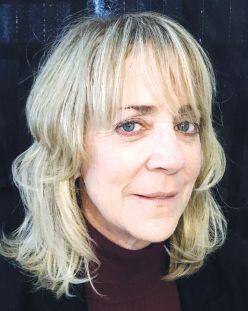
Robin Angel was appointed governing board chair of the Board of Canadian Registered Safety Professionals (BCRSP) in Mississauga, Ont.
Angel is the 26th chairperson since the certification body’s incorporation in 1976, and succeeds David Johnston.
An OH&S professional based out of Halifax, she has diverse experience in the disciplines of workplace health and safety, environmental management, industrial hygiene, and quality assurance systems.
Responses have been edited for length.
OHS Canada: What is the BCRSP mandate through 2021 and beyond?
Robin Angel: The vision “safe and healthy workplaces through certification” and mission to “set certification standards for the occupational health and safety profession” are the backbone of the BCRSP.
To support our vision and mission, the BCRSP reviews and updates the strategic plan on a three-year cycle.
In 2021, our goal is to do a deep dive into the strategic plan and make adjustments where required to our focus areas and their associated plans to ensure we remain effective and efficient through the use of metrics and key performance indicators.
OHS: What unique perspective do you bring to BCRSP board?
RA: My diverse work and educational experience in health and safety of 30 years in private, public and not-forprofit sectors has given me a deep understanding of the differences in how health and safety is approached, embraced and deployed in the workplace.
Embedding safety as a continuous thread throughout an organization’s culture, although challenging and often met with resistance, leads to everyday activities being viewed through the health and safety lens.
The practice of health and safety is a balance of science, art and curiosity that is enriched by embracing diversity of thought and perspective.
OHS: What efforts is BCRSP backing at the national level?
RA: BCRSP continues to work on title protection for the safety practice, and the advocacy work in both Alberta and Ontario in support of title protection has been an ongoing focus for the board.
In addition, BCRSP volunteers who are part of the BCRSP Accreditation Task Force have worked diligently to make progress towards the
accreditation of Canadian post-secondary education programs in health and safety.
The combined impact of both the title protection and accreditation of post-secondary education programs will be a revolutionary change to the practice of health and safety in Canada.
Employers and employees will benefit from enhanced workplace safety culture and its associated programs.
OHS: What is the most pressing issue affecting workplace safety today?
RA: Understanding that the work of safety is a profession and should be recognized as such.
Through COVID-19, the skills, competencies and capabilities of health and safety practitioners were leveraged in collaboration with other professions and provided valuable expertise.
It is time for health and safety practitioners to stand at the same podium amongst other professions that are governed through professional certification and legislation.
Injury Prevention
By Annie Barnwell, Linda Miller and Andrew Seal
Ergonomics a vital lifeline in pandemic economy
Ergonomics is about making work as efficient as possible.
Productivity is at its highest when the work environment is optimized for the safety of the people employed in it, something that is hard to keep up with as workplaces adapt to the COVID-19 pandemic.
As the economy reopens, many employees may return to the office, while others will stay remote or work in a hybrid model.
Herein lies the risk: those who haven’t been working, or have been only from home, may be deconditioned to the demands of their tasks, or have developed habits that could put their physical and mental health at risk.
Bringing productivity and injury prevention together
Long months of isolation have led to widespread weight gain and muscle loss in the working population. Being thrust back into eight or 10 hours of on-site work every day can put them at risk for injury.
Lower-risk occupations are, in some cases, at an even higher risk because people aren’t used to watching for hazards in those environments.
Employers can turn this problem into an advantage by facilitating reconditioning as part of the return-towork process. Seeing this as part of necessary training and paying workers to participate may save money in the short and long run. Injury claims will be reduced; productivity will go up.
Realistically, we might not see this practised. But, is it sustainable or even cost effective over the long run as a primary prevention method?
It’s a stressful time to be managing a team, which is why we need to look for quick wins wherever possible.
Workstation setup, job rotation, and education in areas to improve posture, reduce physical demands, and manage manual handling processes are a few ways employers can work with ergonomists to support their team.
At the same time, conducting an ergonomic assessment is also a time to examine job processes and task design. In fact, this is often where the solutions lie.
Ergonomists bring productivity and injury prevention together by ensuring the human body can flourish while still performing the work.
What we need to remember at this point is that, if work or the workstation has been modified due to COVID-19, these processes and the equipment used will need to be assessed again to ensure they are not introducing new risks.
An ergonomist can help with identifying where the new risk lies and developing effective solutions. The first step in this process is
updating or conducting a job demands analysis (JDA).
JDAs offer an important lifeline to employers whose focus is on modifying existing processes due to the pandemic, while also supporting safe reintegration back into the workforce for people who’ve been absent from work due to illness or injury.
Yet, when we conduct JDAs, looking at the physical and cognitive demands on the individual worker are just a couple of factors. This is a crucial opportunity to examine the job process and work environment as a whole.
Using ergonomics to improve workflow
With an ergonomics program in place, workers who develop discomfort know that early reporting leads to addressing the root cause of the issue, decreasing chances of serious injury and keeping work processes smooth.
While stretching and taking postural breaks are a couple of ways to reduce short-term discomfort, they won’t decrease injury risk.
Annie Barwell is a senior ergonomist at EWI Works in Calgary, Linda Miller is CEO of EWI Works in Edmonton, and Andrew Seal is director of communicatinos, also at EWI Works.
It can be difficult for individual workers’ concerns to catch management’s attention in large organizations. What will catch their attention is increased production numbers and reduced costs, particularly when they enhance safety at the same time.
A subsequent step is to standardize these new processes across the company. Our approach to ergonomics always includes encouraging our clients to share solutions with their other sites.
When an ergonomics case study or pilot project has been completed at one location, it’s extremely cost effective to implement them at sister sites; the work has already been done and may just need some tweaking to fit the new locations’ needs.
Sharing information brings productivity gains and health-care savings to other areas, while also standardizing work processes and equipment across the organization.
One site’s ergonomics initiative can offer proactive solutions to others. Leveraging all the ergonomic resources available is
Offering your employees support in any way you can, might just be what keeps them going at this time.
fundamental to reopening the economy and helping management keep their staff employed.
Being proactive about ergonomics shows workers you care about them and their well-being.
A great example of this is providing guidance and education on safe workstation setup for home offices for remote staff. This can be crucial for keeping your team safe and morale high.
More and more people — especially office workers — are quitting their jobs or plan on leaving due to the increased stress related to working remotely. Changes in the environment, poor workstation setup, feeling disconnected from the team, or struggling with technology has an impact, both physically and mentally.
By working with ergonomists,
employers can understand the essential human factors principles used to support decision making — for example, providing the minimum equipment an employee doing “office work” needs to successfully work from home.
Even if resources are scarce, offering your employees support in any way you
can, might just be what keeps them going at this time.
Of all the costs businesses are going to incur as the economy reopens and the pandemic enters a new chapter, being proactive with ergonomics will protect people, improve productivity, and keep injury claims at a minimum.
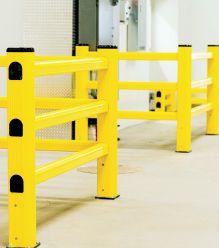
Innovative Protective Barrier System
Reflex Polymer Safety Barriers
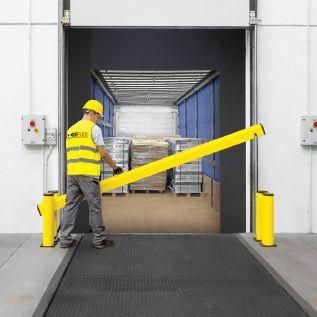
Protect people and equipment from accidental impact of moving vehicles.
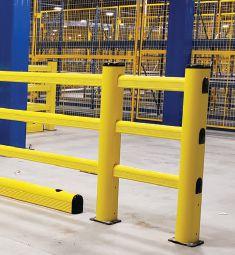
Industry leading polymer safety barriers flex upon impact and return to their original state. This energy absorbing ability significantly reduces maintenance costs and help prevent expensive floor repairs.
Our patented, proprietary, REFLEX polymer is scratch resistant, safe in food processing environments and is fire resistant.
The modular design can accommodate virtually any application.
Used in over 85 countries REFLEX polymer safety barriers are the most cost effective logical choice for modern day facility and asset protection.
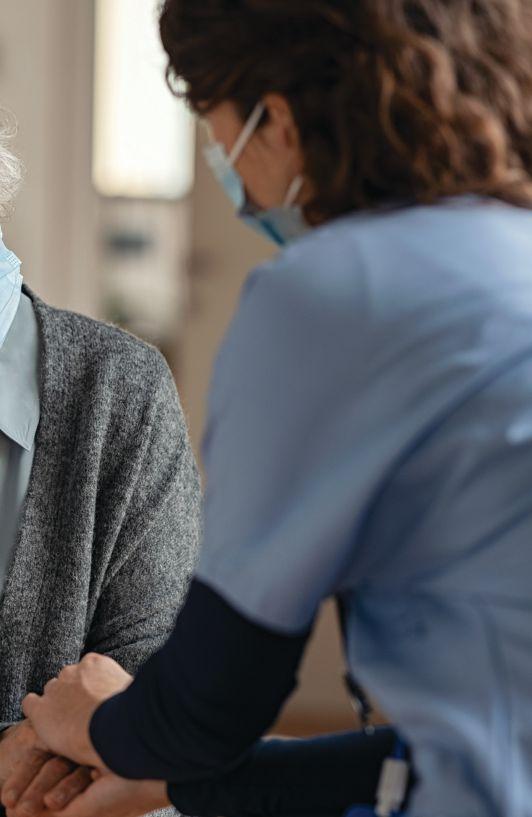
Creating safe environments in long-term care homes
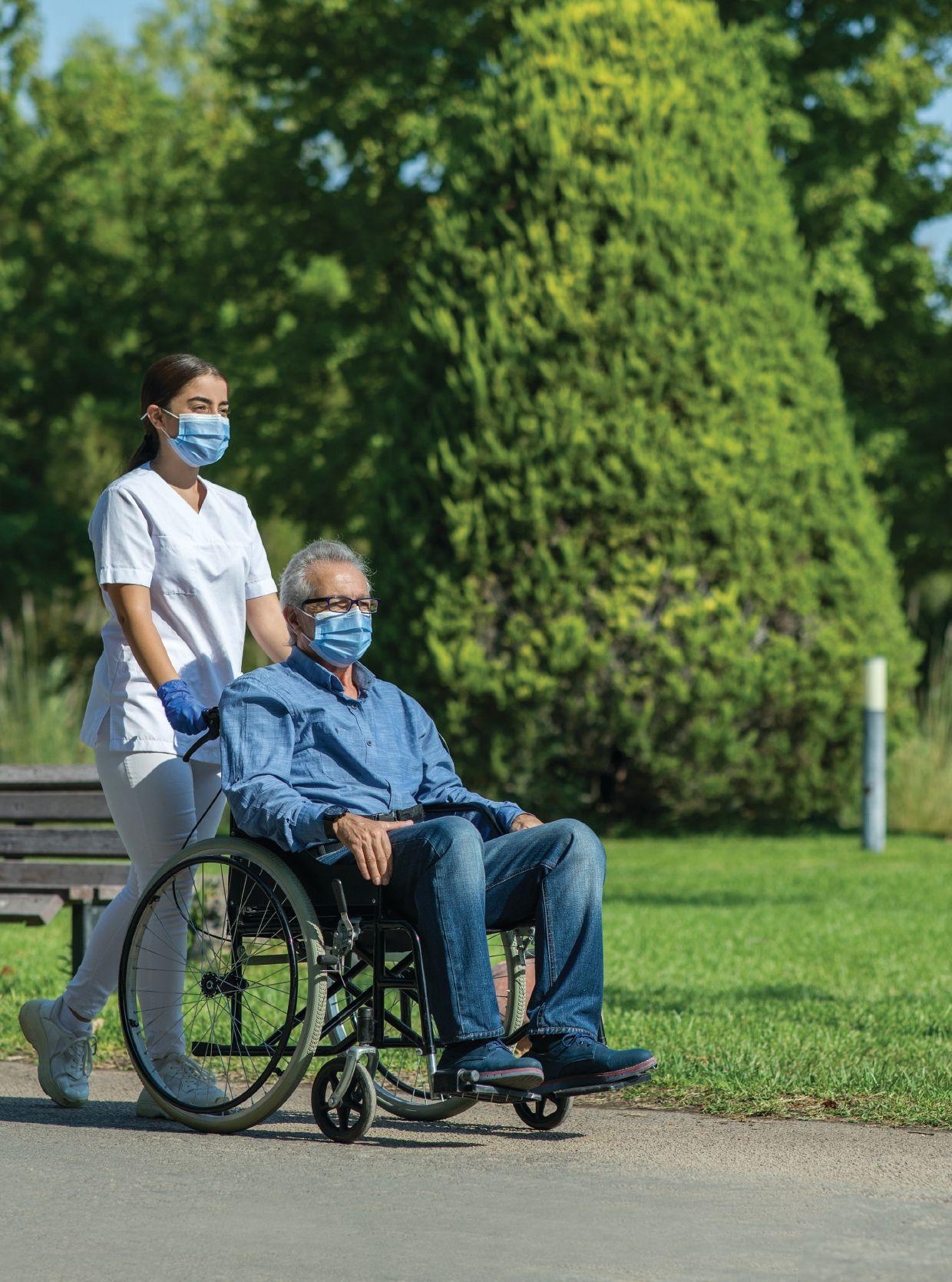
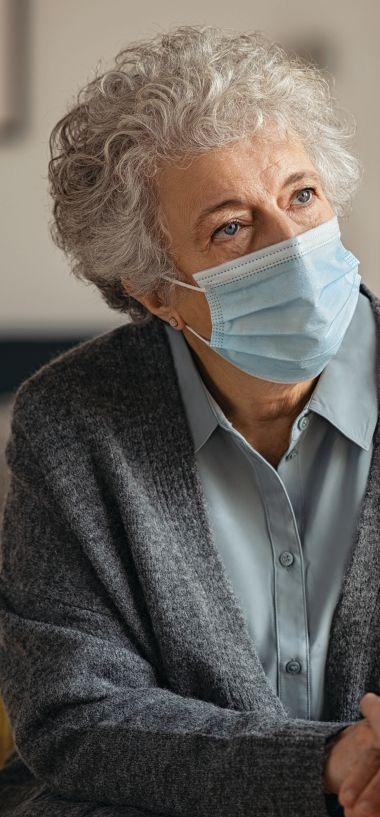
While group-care settings have come to symbolize the worst of the COVID-19 pandemic, the practices they develop to protect residents and staff could provide guidance for workplaces across sectors.
By Meagan Gillmore
In some ways, the four longterm care homes operated by the Yee Hong Centre for Geriatric Care appear unscathed by the COVID-19 pandemic.
During the first wave, there were no reported cases at the homes across Toronto and the Greater Toronto Area that combined have 805 beds, said Dr. San Ng, Yee Hong’s CEO.
Less than five residents had died of the disease by the beginning of Sept. 2021.
“We have the utmost respect for seniors and caregivers, but also for each other,” said Ng, explaining the motivation of her staff.
The not-for-profit service organization supports seniors of Chinese and other ethnicities, and provides a range of community services from recreational activities, meals-onwheels and medical clinics.
Staff began wearing masks before the pandemic was declared, and the organization implemented visitor restrictions and policies that re -
stricted staff to working at one site early in the pandemic, said Ng.
“Diligence and catching things early have really helped our organization and prevented outbreaks,” she said. “That’s how we’ve been able to do it.”
It’s hurt, though.
Staff have been busy, setting up virtual visits and phone calls for residents. During lockdowns, public health guidelines required residents to be confined to their rooms.
Yee Hong workers from the community programs were reassigned to the long-term care homes; some staff have brought programming and virtual supports to residents’ rooms.
The isolation has “saddened” staff, Ng said. “It’s been really heart-wrenching.”
In that way, staff at Yee Hong resemble workers at all long-term care homes — risking their physical and mental health to ensure vulnerable individuals are safe.
Yet, while long-term care homes have come to symbolize the worst of
the pandemic, the practices they develop to protect residents and staff could provide guidance for workplaces across sectors.
Risks vary; there’s no consistent standards
Workers at long-term care facilities face numerous hazards, ranging from exposure to diseases and dangerous chemicals, musculoskeletal disorders, to workplace violence, said Matthew MacLeod, an occupational health and safety specialist at the Canadian Centre for Occupational Health and Safety in Hamilton, Ont.
“Always consider the most effective controls first,” he said. “Those are controlling the ones at the source, followed by controlling the hazards along the path, and lastly those that provide protection at the worker level.”
This could mean closing non-essential spaces or allowing some administrative staff to work remotely. Changes to the physical environment, like upgrading ventilation or
Provincial and territorial governments give guidelines about long-term care homes, which means that requirements in these facilities can vary greatly across the country.
installing Plexiglas barriers and rearranging furniture, can also help. Finally, employers need to ensure staff have appropriate personal protective equipment.
“Even between long-term care homes, there’s going to be differences,” said MacLeod, emphasizing the importance of performing risk assessments for each task.
However, some say the sector needs consistent standards to improve conditions in long-term care homes. Provincial and territorial governments give guidelines about long-term care homes, which means that requirements in these facilities can vary greatly across the country.
“Always consider the most effective controls first.”
– Matthew MacLeod, CCOHS
While the Canadian Standards Association (CSA) Group has several standards for medical facilities like clinics or hospitals, there isn’t yet one specifically for long-term care homes.
“There’s actually no long-term care standard that any home or facility has to follow,” said Alex Mihailidis, chair of a CSA Group technical subcommittee that is developing a national standard for operation and infection prevention and control at long-term care homes.
This is why building and room designs aren’t consistent across the country, and neither are policies about visitors and infection prevention, he explained.
The new standard, still being developed, will look at building infrastructure and design elements that are important for infection prevention and control. This could include standards about ventilation and air conditioning, residents’ washrooms, and furniture fabrics, said Mihailidis.
But it also includes making sure long-term care homes can effectively use technology, like wireless internet and tablets, so residents can communicate virtually with relatives, friends and caregivers during future health crises.
Public review is scheduled for early 2022, with the final document scheduled to be published in Nov. 2022. Then, governments will decide if they will incorporate it.
“These standards need to be as inclusive as possible,” explained Mihailidis, who is also the scientific director and CEO of AGE-WELL, a Canadian network that develops technology to help individuals age in healthy ways. “We are going to design them for current homes, but also future builds, (and) also for homes in different parts of the country.”
Still, long-term care homes can improve their infection prevention and control practices now, said Doug Morton, vice-president of government relations for the CSA Group.
Hospitals and clinics often use the standards the CSA Group has on infection prevention and control, and facility operation, design and maintenance.
“They are equally useable in the long-term care setting if long-term care homes decided to use that,” explained Morton. “There’s lots that could be done now.”
The unique purpose of long-term care homes requires they be given focused attention.
“These are people’s homes,” said Mihailidis. “They’re not acute-care settings or hospitals. They are places where people come, most likely to be their last residence where they will live. We want to make sure that our standard takes that into account.”
Maintaining mental health
Workers’ mental health also needs to be improved.
The Health Standards Organization is currently working on a complementary standard, the National Standard of Canada for Long-Term Care Services, that will focus on resident and family-centred care, and emphasize dignity, respect, quality of life, and the health and competency of the workforce, states a press release by the organization.
The pandemic has greatly harmed the mental health of long-term care nurses, said Farinaz Havaei, a researcher at the University of British Columbia’s School of Nursing who is studying the topic.
“Before the pandemic, they were struggling with workload,” she said. “The pandemic just exacerbated things further.”
Visitor polices kept residents from seeing relatives, friends or caregivers. Other policies restricted staff from working at multiple facilities, and made it difficult for staff to take time off.
“Staffing levels dropped and workload increased,” she explained. “On top of that, they could not have family members’ whose care was, before the pandemic, really uncounted for.”
Employees need to know it’s acceptable to discuss their mental health and that other people are also struggling, Havaei said. That can be really “empowering,” she said.
Mandating vaccines must be done carefully
Vaccinations are becoming a prominent, yet controversial, part of protecting long-term care workers against COVID-19.
Some long-term care home operators require employees to be vaccinated against COVID-19. Governments across Canada have responded differently. Some have explicitly said that all long-term care workers — in some cases including volunteers — be vaccinated against the virus. Other jurisdictions, like Ontario, require long-term care homes to make policies about vaccination for workers.
The Ontario government announced in May that every longterm care home would need to have a policy that requires employees to do one of three things: show proof of vaccination; provide a written reason for why they can’t be vaccinated for medical reasons; or receive education about the benefits of vaccination. The government is not explicitly ordering long-term care workers to be vaccinated.
“Obviously, it’s kind of doing everything it can to encourage and push towards that conclusion, but it doesn’t go as far as to legislate it or mandate it,” said J. D. Sharp, a lawyer with Emond Harnden LLP in Ottawa, who represents employers.
“It’s not appropriate for every employer to implement a mandatory vaccine policy,” added Wade Poziomka, a lawyer with Ross & McBride LLP in Hamilton, Ont., who has advised many employers on vaccination policies. “It’s really time and context-specific.”
Employers need to consider factors like current health guidelines,
the prevalence of COVID-19 in their community, and the type of work that happens at their workplace, he explained. They should review policies as public health information changes.
“You don’t want to have more restrictive policies in the workplace than are necessary,” said Poziomka. “You do want to have policies that promote health and safety.”
Employers also need to consider human rights implications.
“Because the human rights code has quasi-constitutional status, it’s a more difficult one necessarily to reconcile with the Occupational Health and Safety Act,” said Sharp.
“I will always take the position of protecting health and safety in the workplace, and that being forced to do something that may not support that would be undue hardship.”
“The duty to accommodate an employee who doesn’t want to get a vaccination or can’t get a vaccination is only triggered when you have a human rights ground,” said Poziomka, for example a “legitimate creed claim, or disability.”
Not every political belief or opinion about vaccines can be called a creed, he said. “A creed has to be either a fundamental religious view, or it can be non-religious, but it’s a worldview that’s integral to someone’s well-being, decision making and the way that they view the world.”
Employers should ask employees to explain what belief prevents them from receiving the vaccine and how that belief connects to their overall identity, sense of well-being, conduct and decision-making.
However, legitimate human rights exemptions don’t necessarily mean that unvaccinated employees can continue to work the same way as before, said Poziomka.
“But that doesn’t mean that just because they’ve established a creed and you’ve accepted it, that you need
to let them work at the workplace without a vaccination.”
Employers are only obligated to comply up to the point of undue hardship. In some workplaces, alternative working arrangements can be created.
Employers need to discuss potential policies with different stakeholders. In a unionized workplace, policies should not contravene the collective bargaining act, while in a non-unionized setting, they should not fundamentally change the terms of employment, explained Sharp.
“It’s difficult to apply a one-size fits-all approach,” he said. Employers need to make policies, but “seeking feedback is never going to hurt.”
Ongoing conversations
Most of Yee Hong’s staff are vaccinated, and vaccinations were not mandatory, said Ng.
It won’t be helpful to completely go back to the way things were before the pandemic, or to keep seniors in long-term care homes away from loved ones, she said.
“I think either extreme isn’t healthy,” said Ng. “We must strike a balance between keeping people safe and allowing them to live their lives.”
Across health and safety and longterm care sectors, many hope the pandemic will lead to improved conditions for residents and staff.
“Theoretically, things should have been preventable,” said Mihailidis. “But practically, this whole thing came upon us so quickly that I think it was tough for a lot of homes to manage. The resources just weren’t there.”
“If we can take any bright light out the pandemic, it is now in the public eye. Everybody sees what is happening in long-term care homes and sees the state of care for our seniors.”
Meagan Gillmore is a freelance writer in Ottawa.
Brighter future Many hope the pandemic will lead to improved conditions for residents and staff.
3M CANADA
P.O. Box 5757 London ON N6A 4T1
Tel: 800-364-3577
Web: 3M.ca/Safety
As the Canadian leaders in fall protection and personal safety, 3M helps keep everyone safer in a changing world. Across diverse industries and applications, our science and expertise drive solutions that educate people, provide comfort, increase compliance and get workers home safely.
AANTISLIP ANYWHERE ONTARIO
131 First Avenue East Unit 1142
Shelburne ON L9V 3M2
Tel: 519-941-7233
Web: https://ontarioantislip.com
Our Solutions – Any floor surface that is slippery can be treated with one of the many Antislip Anywhere floor treatment solutions.
At Anti Slip Anywhere Ontario we will identify the issue, recommend a solution and work with you to schedule a time to correct the problem.
Who we Help – Commercial, Industrial, Civic, Construction, Retail, Hospitality, Long Term Care (LTC), Hospitals and any other facility where people walk that the surface can become slippery.
AVERY PRODUCTS (CANADA)
240 South Blair St.
Whitby ON L1N 0G3
Tel: 888-462-8379
Web: avery.ca
Avery is the world’s largest supplier of labels, specialty converted media and software solutions for short-run digital printing applications for businesses and consumers available alongside complementary products sold through wholesale distributors, Retail re-sellers and eCommerce retailers. In Canada, Avery Products manufactures locally in Whitby, Ontario. Avery is a division of CCL Industries Inc.
Board
of Canadian Registered Safety Professionals
Conseil Canadien Des Professionnels En Sécurité Agréés
BOARD OF CANADIAN REGISTERED SAFETY PROFESSIONALS
6700 Century Ave Suite 100
Mississauga ON L5N 6A4
Tel: 905-567-7198
Web: www.bcrsp.ca
The Board of Canadian Registered Safety Professionals (BCRSP) is a public interest, not-for-profit, federally incorporated self-regulating organization which sets the certification standards for the OHS profession. BCRSP strives to advance the body of knowledge, the competency of the profession, and the value our certificants bring to society.
The BCRSP grants the CRSP® and CRST certifications to individuals who successfully complete the certification process through application assessment, interview, and examination. The Board governs its certificants in order that the public interest may be served and protected.
BRADY CANADA
710 Cochrane Drive
Markham ON L3R 5N7
Tel: 800-263-6179
Web: www.BradyCanada.ca
Brady is a manufacturer of complete solutions to help increase safety, security, productivity and performance throughout your facility – everything from printing systems, software and high-performance labels, to facility signs, safety devices, expert safety services and more.
Simply put, we do what others don’t in ways they can’t. We offer innovative products backed by years of research and development. Beyond our quality products and reliable solutions, we add value for our customers through strong partnerships and a commitment to solving important problems.
BRIGHT OPTICAL DISTRIBUTION
90 Sheppard Ave East, #100A
North York ON M2N 3A1
Tel: 877-870-0105
Web: www.brightoptical.com
Bright Optical distributes FogBlocker dry cloths, wet towelettes, and extra strength sprays. When FogBlocker was recently compared with 15 other anti-fog bestsellers, only our solution was able to
2021 Buyers Guide
work on all the unique lenses and protective goggles that were tested. FogBlocker’s long-lasting, 500+application, plant-based nano-cellulose solution is safe on all lens coatings including anti-reflective. Best of all, there are no messy liquids, smudges, multiple steps, and almost no wait time. Our Ph.D. scientists spent years developing this anti-fog breakthrough and we guarantee it will work for your team or your money back. As the top-rated anti-fog solution on the market (4.85/5 stars), we are excited to offer significant wholesale discounts to all OHS members. For more information or a free sample, please email or call us anytime.
CCANADIAN SAFETY EQUIPMENT INC.
114-2465 Cawthra Rd Mississauga ON L5A 3P2
Tel: 905-949-2741
Fax: 905-272-1866
Web: http://www.cdnsafety.com Canadian Safety Equipment has been operating for the last 32 years specializing in equipment for Confined Space Entry and Rescue as well as Fall Protection, Gas Detection, Respiratory protection, Lone Worker protection and alarms in addition to Fire Fighting Equipment and equipment for Police and Paramedics. We also operate a Quebec based affiliate CSE Incendie et Securite.
COGNIBOX
528, 5e rue de la Pointe Shawinigan QC G9N 1E8
Tel: 877-746-5653
Web: cognibox.com/en/ Since 2005, Cognibox has provided comprehensive supplier management, worker compliance and learning solutions that support organizations in their drive towards a safer and more efficient work environment. It offers expert professional services to accompany corporations through their supply chain safety and risk control processes. Guided by its core values of transparency and excellence, Cognibox’s flexible, client-centric approach is paramount to the customer experience, and serves over 200,000 members. To find out more, visit www.cognibox.com.
CUSTOM PROTECT EAR
#681 - 7789 134th Street
Surrey BC V3W 9E9
Tel: 800-520-0220
Fax: 604-599-7377
Web: www.protectear.com
The Hearing Loss Prevention Specialists & Home Of The dB Blocker.
For over three decades, Custom Protect Ear has been manufacturing dB Blockers – verifiable and noise level matched custom hearing protection at a cost lower vs. disposable earplugs.
As North America’s largest personalized industrial hearing protector manufacturer, hearing conservation is our only business.
We do not make hearing aid molds or disposable earplugs. This exclusivity allows us to devote all of our research and expertise to the innovation of better hearing protection. Serving over 4,500 companies and businesses around the globe, our certified mobile technicians do custom on-site fittings at their industrial sites, or at one of our many associated retail outlets.
DRAEGER SAFETY CANADA LTD.
2425 Skymark Ave., Unit 1 Mississauga ON L4W 4Y6
Tel: 905-212-6600
Fax: 905-212-6602
Web: www.draeger.com
Draeger was established in 1889 as a manufacturer of gas detection and respiratory protection and serves customers worldwide. The current portfolio includes stationary and personal gas detection systems, respiratory protection equipment, fire training systems, thermal imaging cameras and alcohol and drug detection units.
“Technology for Life” is the guiding philosophy. Whether in clinical applications, industrial safety applications, oil & gas, mining or fire and emergency services, Dräger products protect, support and save lives. www. draeger.com
EHS GLOBAL
1099 Commerce Way 5 Woodstock ON N4V0A2
Tel: 800-347-6780
Web: www.ehs-g.com
2021 Buyers Guide
EMERSON SUMMERS CANADA
LTD
4-1273 North Service Rd E Unit F4
Oakville ON L6H 1A7
Tel: 905-855-0706
Fax: 905-855-3455
Web: emersonsummers.com
Since Emerson Summers was founded in 1927, it has been a leader in the disposable wear industry with special focus on hairnets, beard nets, bouffants and other head coverings. Its knowledgeable staff backed by safety conscious and compliant manufacturing, meet and exceeds the highest standards in health and hygiene. Their esteemed customers have come to expect nothing less.
Emerson Summers is proud to always have a person available to take your calls and address your needs.
Feel free to call today at 1-905-855-0706 ext 0, or toll free at 1-800-668-1884 ext 0.
FIELD SAFE SOLUTIONS
707 7 Ave SW, Suite 1350
Calgary AB T2P 3H6
Tel: 800-497-7614
Web: www.fieldsafesolutions.com
Field Safe Solutions is a cloud-based software as a service company based in Calgary, Alberta. Our easy-to-use safety application connects workers and creates smarter workflows that help you save time, save money and save lives. We do this by resolving the field data gap and enabling instant communication and information sharing among workers whether at a client site, working from home, at the office or in transit, at any time, anywhere in the world.
G
GENEQ INC.
10700 Secant St.
Montreal QC H1J1S5
Tel: 514-354-2511
Fax: 514-354-6948
Web: www.geneq.com
GENEQ inc. is a Canadian Supplier of Scientific Instruments for the Environment and Occupational Health and Safety.
GLENGUARD
1831 North Park Avenue
Glen Raven NC 27217
Tel: 336-227-6211
Web: www.glenguard.com
GlenGuard is the ultimate fabric for arc-rated, flame-resistant (AR/FR) protective apparel – delivering the perfect blend of comfort, durability, and versatility. GlenGuard is lightweight and breathable to keep workers comfortable, and its protective properties are engineered to overcome and outlast even the harshest conditions.
GlenGuard’s inherently flame-resistant fabrics are available in three unique weights – 4.5 oz., 5.3 oz., and 6.4 oz. – and an array of vibrant colors.
There are many variables that you can’t control in the field, but you can control compliance. Because it’s not what your workers wear, it’s how they wear it. And comfortable workers are less likely to cheat compliance.
Specify GlenGuard and enable your workers to be more compliant with their FR work wear. For more information, visit www.glenguard.com.
HHSE ELEMENTS INC
5875 Hwy 7, Unit #5
Woodbridge ON L4L 1T9
Tel: 905-264-7952
Web: www.hseelements.com
Health & Safety Consultancy and Training services.
Health & Safety Training: Working at height (CPO approved), Confined Space, First Aid, EWP, Ground Disturbance, Hoisting & Rigging, Asbestos Type 1 & 2, Fit Testing, Supervisor Due Diligence.....
All our classes can be arranged in our training facility in Vaughan, in your office or on your construction site. We have solutions, we can make the training work for you, when you need it, and how you need it. We offer a library of over 50 online training courses and custom courses in English, Spanish and Porteguese (BR).
Health & Safety Services: Health & Safety programs contain a lot of different elements, and can be overwhelming. You need someone to fill
a gap, help get you up and running we have a team of professionals with expertise and experience in Industrial, Construction, P3, Manufacturing & Event health and safety ready to help.
From HSE Manuals, handbooks, site audits & inspections, audit preparation... we are here to help.
HSE INTERNATIONAL
PO Box 24078, Windermere PO Edmonton AB T6W2W2
Tel: 866-337-4734
Web: hseigroup.com
HSE International can provide a diverse range of practical, custom-tailored services and solutions to help you address your most pressing health and safety risks and challenges, and help meet your due diligence and compliance needs and goals. We provide a diverse range of complementary services including audit and assurance, management consulting, risk advisory and training to our clients throughout Canada and abroad.
Our consultants and advisors are recognised as leading practitioners in occupational health, safety, environmental, contractor management, and personnel learning and development strategies. Our approach is geared for sustainability – both financial and cultural. We are passionate about keeping people safe at work and we help organizations to improve and change the way safety is perceived and handled across their business.
We have a better business bureau (BBB) A+ rating and are a certified diverse supplier.
IIB4E TECHNOLOGIES INC.
Suite 6A, 1124 Gainsborough Road
London ON N6H 5N1
Tel: 519-286-0458
Web: https://ib4etech.com/discover-sb.html
actH&S™ enhances workplace safety risk management almost immediately. It enables you to see trends in areas such as reported incidents, inventory, and inspections based on insights available from your data without unnecessary cumbersome features.
If you are not ready to go there but want to leverage the benefits of actH&S™ we offer a transcription service. Profession-
als at iB4e can transcribe your files using actH&S™. We send you back organized data and insights to help you support compliance requirements and manage risk without any software implementation requirements.
actH&S™ is designed to improve Health and Safety programming in:
- Incident Management
- Biological Agents
- Hazardous Materials
- Radiation Devices
- And more
iB4e is Health and Safety Management Simplified.
LASERGLOW TECHNOLOGIES
99 Ingram Drive Unit B
North York ON M6M 2L7
Tel: 416-729-7976
Fax: 716-322-3510
Web: laserglow.com
Laserglow provides safety solutions for warehouses and industrial environments to permit the safe movement of people within the facility where heavy machinery is operating. Using high visible, cost-effective, low maintenance, and easy to install LED, Laser, and sign projections, we can offer solutions for Forklift and Overhead Crane Hazard, Walkaways, Virtual Signage, and Truck Docking.
MISTER SAFETY SHOES
2300 Finch Ave West
Toronto ON M4M 2Y3
Tel: 416-746-3000
Web: www.mistersafetyshoes.com
We’re experts in fit, comfort and safety and carry over 200 styles of the best brands in safety footwear. We provide worry-free, end-to-end safety footwear programs for a wide range of industries and businesses. We service our clients through our many stores in Ontario and Alberta, our fleet of Mobile shoe stores to come directly to your business and through our ecommerce site. We’re here to make keeping your employees safe and comfortable easy!
N
NASCO INDUSTRIES, INC.
3 NE 21st Street
Wasghington IN 47501
Tel: 812-254-7393
Web: www.nascoinc.com
NASCO manufactures rainwear for the multi-hazard workplace. Featuring products made in North America, NASCO offers ArcLite Air™, the lightest weight waterproof, arc and flash fire protective, HiVis raingear. Also featuring PetroStorm™ and Sentinel™, durable protection from electric arc, flash fire, hot water and steam hazards for the Oil and Gas industry. With the industry’s largest choice of high visibility options, NASCO products meet CSA Z96 as well as ANSI/ ISEA 107. NASCO’s employee-owners are proud to be an ISO 9001:2015 registered company. See NASCO, for your protective outerwear solutions.
NOTIFYBOSS
617 Merton Street
Toronto ON M4S 1B4
Tel: 416-628-8498
Web: notifyboss.com
NotifyBoss is an automated health status check-in and contact tracing system, specifically designed to minimize the spread of COVID-19 and it’s variants within your organization.
It starts with a brief questionnaire that takes an employee or sub-contractor minutes to fill out, before even arrive at work. They select the location and team they’re working with that day, and their health responses are immediately sent to that specific boss/supervisor, who can then respond to any possible red health alerts.
If a worker indicates they have specific symptoms, our ultra secure contact tracing system can easily identify the co-workers that have been working with that infected person. Those co-workers can then be contacted through our secure system. All questionnaires can be customized to your requirements and translated into any language.
Visit https://www.NotifyBoss.com and sign up for a demo. Let us show you how we can make your “safe-return-to-work” process safe, and secure.
OLFA NORTH AMERICA INC.
2115 South Service Road West, Box #3 Oakville ON L6L 5W2
Tel: 289-351-2920
Fax: 833-905-6532
Web: www.olfa.com
Ever since Yoshio Okada, the founder of OLFA CORPORATION, invented the world’s first snap-off blade cutter in 1956, OLFA has been committed to developing practical and safe hand-held cutting tools.
OLFA products are made with top quality materials under stringent production procedures to deliver superior performance. OLFA is proud of the unwavering quality that goes into every product.
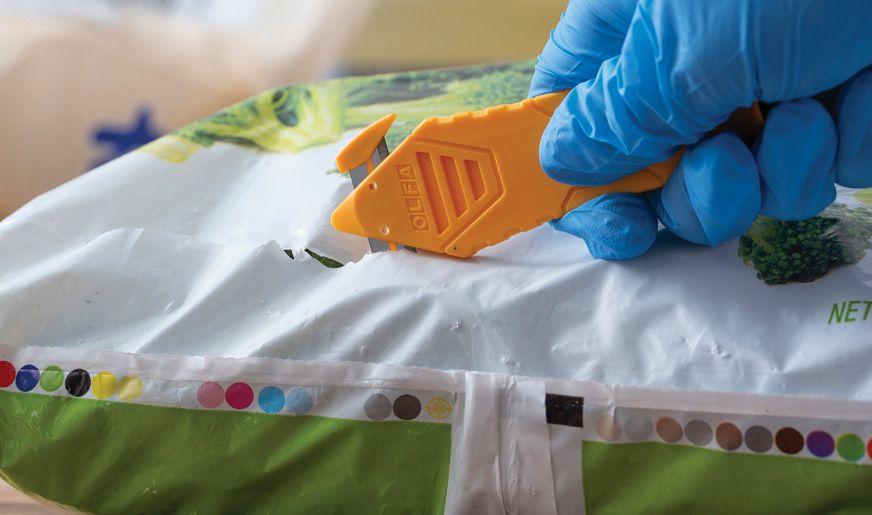
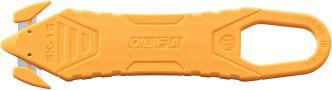
OLFA is committed to making tools that improve how people cut by developing products with an unmatched level of sharpness and that are easy and safe to use. This includes professional-grade tools used in constructions trades, shipping and warehouse operations, office work; as well as tools used in the creative world of papercrafts, quilting, modeling, and more. OLFA Safety Knives come in a variety of models to protect all levels of users, including semi-automatic knives, fully automatic knives, and concealed blade knives.
Every OLFA product is the result of OLFA’s commitment and attention to detail.
ONTARIO BOLLARDS INC.
53 Armstrong Avenue Unit 1 Georgetown ON L7G 4S1
Tel: 289-891-8559
Fax: 905-248-3629
Web: www.ontariobollards.com
Ontario Bollards is a leading supplier of industrial protection products. Our innovative polymer based guarding products will keep your people and equipment safe from forklift impact with industrial-strength barriers that flex upon impact, absorbing the impact energy, and then returning to their original state with significantly reduced risk of damage to the shop floor. Reduce maintenance costs, repairs, replacement and downtime with polymer based guardrails that do not corrode, rust or fade, never need painting and bounce back after impact.
2021 Buyers Guide
RRONCO
70 Planchet Rd Concord ON L4K 2C7
Tel: 905-660-6700
Fax: 905-660-6903
Web: roncosafety.com
RONCO is a world-class manufacturer of personal protective equipment (PPE) specifically designed for the ultimate comfort, durability, and value in workplace applications that require HEAD, HAND, or BODY protection.
Founded in 1996, RONCO has grown its distribution network to serve thousands of customers across Canada. RONCO and its partners are safety specialists, committed to consistent quality, outstanding customer service, and innovation to serve an ever-evolving PPE marketplace. The RONCO brand is your guarantee of quality and safety in the workplace.
SSAFETY CHECK CONSULTING
32340 Range Rd 20 PO Box 22, Site 1, RR 4 Olds AB T4H 1T8
Tel: 403-350-4007
Web: safetycheckconsulting.com
Safety Check Consulting has been providing on-site safety supervision to various industries and has brought this experience into JobSite SMS; a complete safety management system built by safety professionals.
JobSight is fully customizable and includes:
• Incident reporting and investigation
• Hazard IDs / Job Observations with Trending
• Action Item assignment and tracking
• Management of Change
• eLearning and training management capability
• Complete statistical reporting
• Contractor / Subcontractor management
Our mobile app includes:
• Employee dashboard showing events, assigned tasks, training
• Field Level Hazard Assessments, Hazard IDs, Job Observations
• Company safety Manual and more...
Whether it is on site supervision, or safety program management, Safety Check Consulting is available to meet your needs.
SAFETYLINE LONE WORKER
1523 East Pender St., Unit 201 Vancouver BC V5L 1V9
Tel: 604-299-5855
Web: www.safetylineloneworker.com
SafetyLine is a software-as-a-service (SaaS) platform to help companies monitor the status of workers who are remote, working alone, and/or working in hazardous situations. It is an automated check-in monitoring and emergency notification service. Safetyline uses its pioneering communications infrastructure to ensure that workers have comprehensive monitoring, 24/7, without the need for costly monitoring centers or other expensive alternatives.
Safetyline can be used to notify monitors of potential emergency situations and to provide appropriate information and procedures to help those monitors assess and resolve such solutions. This is accomplished by providing a hosted cloud-based platform, web interface, mobile apps, and device integrations to allow workers to regulars set timers for check-in or declare panic alerts.
SafetyLine is designed for businesses of all sizes in industries such as oil & energy, utilities, the public sector, government, home health care, and hotels.
SC JOHNSON PROFESSIONAL CA INC.
1 Webster Street
Brantford ON N3T 5R1
Tel: 519-756-7900
Web: www.scjp.com
SC Johnson Professional®; is part of SC Johnson, a family company and one of the world’s leading manufacturers of household cleaning products and products for home storage, air care, pest control and shoe care, as well as professional products. The company has a long history in the professional market, in which it started operating in the 1930s.
SC Johnson Professional®; provides expert skin care, cleaning & hygiene solutions for industrial, institutional and healthcare users. This incorporates our range of specialist occupational skin care products along with well-known SC Johnson brands and innovative professional cleaning & hygiene products.
Our purpose is to bring innovative, quality products and services to professional
2021 Buyers Guide
markets that rethink how people and organizations experience skin care, cleaning and hygiene. We enable customers to gain real benefits in terms of cleaner, healthier and safer workplaces and public environments.
SHOWA
2507 Macpherson
Magog QC J1X E06
Tel: 819-843-2121
Web: www.showagroup.com
SHOWA stands for the highest degree of hand protection and innovation. Our technology has forever changed our industry, the safety of manual labour and the impact we make on the environment. We pioneer the quality, performance and protection to give ordinary hands extraordinary abilities. As a fully owned, 100% integrated manufacturer, we create all our own machinery, yarns, coatings, polymers, designs and hand formers. We control every step of our process, each step of the way for 100% quality control at every level. With 9 production facilities across the globe, 5,500 employees worldwide and over 100+ researchers, we innovate globally and locally. We are SHOWA.
SOLUSGUARD
Suite 129-116 Research Dr, Innovation Place
Saskatoon SK S7N 3R3
Tel: 888-651-6510
Web: https://solusguard.com
SolusGuard delivers a suite of workforce safety and lone worker protection solutions to help keep your employees safe and your business compliant. We work with you to create customized security plans that minimize risk for your workers and your business. Our suite of solutions includes a custom-designed wearable panic button; employee check in/out software; customizable alert monitoring; and a satellite extender. SolusGuard is an excellent solution for any business with lone workers, or for which worker safety is a concern, such as—home care, mental health and addictions, property management, inspection and compliance, security and transportation.
SUPERIOR GLOVE
36 Vimy St. Acton ON L7J 1S1
Tel: 519-853-1920
Fax: 519-853-4496
Web: www.superiorglove.com
Superior Glove is a leading innovator in the design and manufacture of safety gloves and sleeves. For more than 100 years, Superior Glove has been protecting workers across the globe with specialized hand and arm protection for every major industry. Superior Glove’s headquarters is located in Ontario, Canada, and their team and company-owned/operated production facilities span across Canada, the United States, and Central America.
U
UNIQUE PRODUCTS INC.
15818 - 131 Ave. Edmonton AB T5V1J4
Tel: 780-974-7039
Web: www.e-zeelockouts .com
Unique Products is the sole Manufactures Representative for the E-Zee Lockout Device. E-Zee Lockouts are convenient and versatile locks made of high quality aluminum bar stock and 1/16” aircraft cable affording maximum strength and flexibility. E-Zee Lockouts are the Ultimate Disposable Lock. Prevent Accidents Use E-Zee Lockouts.
VITA FIRST AID
99 Crompton Dr. Barrie ON L4M 6P1
Tel: 647-699-7702
Web: www.aed.ca
Vita First Aid is a one-stop-shop for all your automated external defibrillator (AED) needs in Canada. You can rely on us for the best products and services and expert advice.
WAYNE SAFETY INC
1250 Sheppard Ave West Toronto ON M3L 2A6
Tel: 416-661-1100
Fax: 416-661-3447
Web: waynesafety.com
Proudly Canadian owned and operated, Wayne Safety has been providing safety solutions for over 74 years. We’ve built our business on the things that matter most to our customers: Service, Expertise, Quality and Value… and we constantly strive for new heights to ensure we bring you the best we have to offer. Whether you’ve been a customer for many years, or are dealing with us for the very first time, our objective is to serve you well and have our reputation for excellence bring you back, time and time again.
SERVICE
We’re at your service – every day. We go above and beyond to ensure that you have the information you need to make the safety decisions you need to make… then we’ll get the product to you on time!
VALUE & QUALITY
A winning combination!
Our lines are “top drawer”. And we’re constantly scouring the globe for innovative products to ensure that you have access to the best quality items at the best price.
WELLNESS WORKS CANADA
Scotia Place, 10060 Jasper Ave, Suite 2020 Tower 1 Edmonton AB T5J 3R8
Tel: 780-945-6134
Web: https://shop.wellnessworkscanada.ca
We are your non-profit workplace health and performance association supporting you with memberships, accreditation, training, consulting, and Mental Health First Aid Kits to support you in building a healthy, high performing work culture. We specialize in putting the H back into OHS and bridging the gap between psychological safety, culture, OHS, and performance.
WORKPLACE SAFETY & PREVENTION SERVICES
5110 Creekbank Road Suite 300
Mississauga ON L4W 0A1
Tel: 905-614-1400
Fax: 905-614-1414
Web: www.wsps.ca
Workplace Safety & Prevention Services (WSPS) is a leader in providing impactful risk management solutions that drive lasting business success for our customers. WSPS offers unparalleled health and safety expertise, insight and solutions for creating healthy work environments where employees thrive and businesses prosper.
A dynamic $43-million organization servicing 171,000 member firms, WSPS is primarily focused on the agricultural, industrial/manufacturing and service sectors. A key player in the Ontario occupational health and safety system, WSPS brings together community and business leaders to influence positive change to create a safer and more profitable Ontario.
Y1306 Algoma Ottawa ON K1B3W8
Tel: 613-688-2845
Web: www.yowcanada.com
An award winning safety training provider, YOW Canada develops courses and materials to help Canadians with occupational health and safety compliance. With over 20 years of industry experience, we proudly offer fully trackable, user-friendly training courses and outstanding customer support.
YOW CANADA INC.
Product Section 2021 Buyers Guide
Air Quality
EHS Global
HSE Elements Inc
Workplace Safety & Prevention Services
Associations
Board of Canadian Registered Safety
Professionals
Wellness Works Canada
Workplace Safety & Prevention Services
Confined Space
3M Canada
Canadian Safety Equipment Inc.
Cognibox
HSE Elements Inc
Safety Check Consulting
Workplace Safety & Prevention Services
Emergency Equipment
Canadian Safety Equipment Inc.
HSE Elements Inc
Vita First Aid
Emergency Management
Cognibox
Field Safe Solutions
HSE Elements Inc
HSE International
Safety Check Consulting
Vita First Aid
Environmental Services
HSE Elements Inc
Ergonomics
Cognibox
Workplace Safety & Prevention Services
Eye Protection
3M Canada
Bright Optical Distribution
Canadian Safety Equipment Inc.
EHS Global
Laserglow Technologies
RONCO
Wayne Safety Inc
Face Protection
3M Canada
Canadian Safety Equipment Inc.
EHS Global
Emerson Summers Canada Ltd
RONCO
Wayne Safety Inc
Fall Protection
3M Canada
AntiSlip Anywhere Ontario
Canadian Safety Equipment Inc.
Cognibox
HSE Elements Inc
Wayne Safety Inc
YOW Canada Inc.
Fire Protection
Canadian Safety Equipment Inc.
Draeger Safety Canada Ltd.
First Aid
Vita First Aid
Wellness Works Canada
Flame Resistant Clothing
Canadian Safety Equipment Inc.
GlenGuard
NASCO Industries, Inc.
Foot Protection
Canadian Safety Equipment Inc.
Mister Safety Shoes
Mister Safety Shoes
Gas Detection
Canadian Safety Equipment Inc.
Cognibox
Draeger Safety Canada Ltd.
Hand Protection
Canadian Safety Equipment Inc.
EHS Global
OLFA North America Inc.
RONCO
Showa
Superior Glove
Wayne Safety Inc
Head Protection
3M Canada
Canadian Safety Equipment Inc.
Draeger Safety Canada Ltd.
EHS Global
RONCO
Wayne Safety Inc
Health & Safety Software
3M Canada
Cognibox
Field Safe Solutions
HSE Elements Inc
HSE International
iB4e technologies inc.
Safety Check Consulting
Hearing Protection
3M Canada
Canadian Safety Equipment Inc.
Cognibox
Custom Protect Ear
RONCO
Wayne Safety Inc
Identification Products
Avery Products (Canada)
BRADY CANADA
Industrial Hygiene
3M Canada
Avery Products (Canada)
Cognibox
EHS Global
SC Johnson Professional CA Inc.
Workplace Safety & Prevention Services
Instrumentation
Canadian Safety Equipment Inc.
GENEQ inc.
Lone / Remote Worker
Canadian Safety Equipment Inc.
Field Safe Solutions
Safetyline Lone Worker
SolusGuard
Machine & Tool Safety
Cognibox
Laserglow Technologies
Ontario Bollards Inc.
Unique Products Inc.
Workplace Safety & Prevention Services
Material Handling
Cognibox
Laserglow Technologies
Ontario Bollards Inc.
Unique Products Inc.
YOW Canada Inc.
Noise Control & Monitoring
Cognibox
Pandemic Planning
3M Canada
HSE Elements Inc
HSE International
NotifyBoss
Workplace Safety & Prevention Services
Personal Protective Equipment
3M Canada
Canadian Safety Equipment Inc.
Cognibox
Custom Protect Ear
Draeger Safety Canada Ltd.
EHS Global
Emerson Summers Canada Ltd
HSE Elements Inc
NASCO Industries, Inc.
Ontario Bollards Inc.
RONCO
Respiratory Protection
3M Canada
Canadian Safety Equipment Inc.
Cognibox
Draeger Safety Canada Ltd.
EHS Global
Emerson Summers Canada Ltd
HSE Elements Inc
RONCO
Wayne Safety Inc
Safety Manuals & Posters
Avery Products (Canada)
Cognibox
HSE Elements Inc
HSE International
Safety Check Consulting
Wellness Works Canada
Workplace Safety & Prevention Services
Safety Products, Agriculture
Canadian Safety Equipment Inc.
Custom Protect Ear
Ontario Bollards Inc.
Vita First Aid
Wayne Safety Inc
Safety Products, Manufacturing
AntiSlip Anywhere Ontario
Custom Protect Ear
EHS Global
Laserglow Technologies
Ontario Bollards Inc.
RONCO
Vita First Aid
Wayne Safety Inc
Wellness Works Canada
Workplace Safety & Prevention Services
Safety Products, Traffic
AntiSlip Anywhere Ontario
Canadian Safety Equipment Inc.
Custom Protect Ear
Laserglow Technologies
NASCO Industries, Inc.
Ontario Bollards Inc.
Vita First Aid
Safety Products, Utility
AntiSlip Anywhere Ontario
Canadian Safety Equipment Inc.
Custom Protect Ear
EHS Global
Laserglow Technologies
NASCO Industries, Inc.
Ontario Bollards Inc.
Vita First Aid
Wayne Safety Inc
Wellness Works Canada
Safety Supplies & Equipment
AntiSlip Anywhere Ontario
Canadian Safety Equipment Inc.
EHS Global
Emerson Summers Canada Ltd
Laserglow Technologies
Mister Safety Shoes
NASCO Industries, Inc.
Ontario Bollards Inc.
RONCO
Unique Products Inc.
Vita First Aid
Wayne Safety Inc
Signs and Labels
Avery Products (Canada)
Laserglow Technologies
Slips & Falls
AntiSlip Anywhere Ontario
Thermal Detection
Canadian Safety Equipment Inc.
Training & Education
3M Canada
Cognibox
HSE Elements Inc
HSE International
Wellness Works Canada
Workplace Safety & Prevention Services
YOW Canada Inc.
What ’ s next for safety training?
By Jack Burton
One of the pandemic-era workplace’s defining features has been a renewed focus on occupational health and safety, and following from this transformed role in the workplace are numerous changes regarding how health and safety are taught.
Whether through emerging ways of learning, new policies or regulations on training, or refreshed perspectives and topics being taught, the majority of changes that OH&S education is currently undergoing centre around a significant shift in attitudes toward safety in the workplace, and the role that it plays under the conditions of the COVID-19 pandemic.
The primary focus of this shift in perspective, according to Jan Chappel, senior technical specialist at the Canadian Centre for Occupational Health and Safety (CCOHS) in Hamilton, Ont., is characterized by a move toward the idea of safety as a more active and embedded part of the company culture and day-today operations of the workplace — as opposed to a series of background certifications and regulations.
“Training on everyday aspects became much more important,” Chappel said of this shift.
‘Everyday’ mental health
One area affected by this move toward a more “everyday” philosophy has been the area of mental health and psychological safety.
COVID-19 has really offered an opportunity for how it is taught and
treated to evolve, noted Chappel.
“What I’ve been noticing is a shift away from focusing just on the awareness of mental health issues, and more towards figuring out how to help prevent it, or at least make it something that is more of an everyday conversation,” she said.
A major benefit that stems from the changing values around mental health discussion and education in the workplace, Chappel added, is the possibility that this openness creates for employees to “get the help that they need without worrying about stigma and repercussions for (speaking up).”
“The pandemic resulted in a clear paradigm shift to virtual learning; training could continue, remote teams could be connected, and the value of learning did not have to be undermined.”
– James Kruck, OSG
When approaching mental health education in the workplace as an everyday conversation, she recommended centring this discourse around establishing clear boundaries and expectations, especially as COVID-19 and remote work continue to blur the lines around work-home life.
“It’s about fostering a culture about knowing when a person is available and what expectations are, and that goes to both management and workers.”
E-learning: training by choice
An effect of the mass migration to remote and digital workplaces has been a reframing of e-learning and electronic modules into a necessary solution of contemporary OH&S training, though the demands of this new role means approaching online learning tools as more than just a novelty or convenience.
“The pandemic resulted in a clear paradigm shift to virtual learning; training could continue, remote teams could be connected, and the value of learning did not have to be undermined,” said James Kruck, curriculum manager at OSG, a health and safety training provider based out of London, Ont.
“That being said, this shift in delivery method necessitated some new thinking around the product.”
Central to this new line of thinking is an approach that considers the trainee’s needs, perspective, and decision-making capabilities; which Kruck sees as being satisfied by “selfpaced” e-learning programs and digital solutions that emphasize employees’ control over qualities such as the structure and content of their individual training.
With self-directed learning tools, “not only do you ensure the content is more relevant, but you can save time by skipping subjects that aren’t applicable to the participant’s workplace or role.”
The option for these programs to provide training relevant to the specific needs and experiences of each individual does not only foster efficiency, but also creates the space for employees to feel seen.
“Learners don’t often come to you as blank slates, ready to just soak up every lesson you deliver; instead, they come with their own experiences that have shaped what they understand and how they see the world,” said Kruck.
“They want training that acknowledges that reality.”
Simulation in the spotlight
The current wave of changes in safety training is driven not just by new attitudes, such as those around mental health and trainee choice, but entirely new and emerging technologies.
Montreal’s CM Labs, which specializes in the development of simulation-based training, finds themselves at the forefront of this shift.
Over the past two decades, CM Labs have developed simulator training technology for the construction, forestry, and port industries that not only teaches trainees how to navigate high stress or potentially dangerous scenarios in the workplace, but allows them to make mistakes while doing so, without any material — or human — costs.
“There’s really a sense that simulation is a technology whose time has come,” said David Clark, CM Labs’ senior product marketing manager.
The growing skilled labour shortage, along with the arrival of more tech-savvy generations into the workforce, are the two primary factors behind the current spotlight on this solution, he said.
A safe investment
With significant changes across the field of occupational safety education, adaptation and access may be issues of concern,
especially for workplaces feel ing the financial pinch of the pandemic.
One resource helping em ployers navigate these changes can be noted at the provincial level, through Ontario’s Small Business Health and Safety Training Program.
The province revealed in July that through this program, they are investing $10.5 million dollars over the next three years in an effort to make safety training freely accessible for over 60,000 small businesses across the province.
Through the program, health and safety representatives from small businesses can enrol in an e-learning course on indus try-specific safety protocols, with the program covering registration costs and compen sating representatives with up to $150 for their time away from work.
The accessibility granted by such programs is certainly beneficial in spreading safety habits across workplaces, but Lewis Smith, manager of na tional projects at the Canada Safety Council in Ottawa, be lieves that these types of legis lative initiatives also have a positive impact by showcasing workplace safety as something worth investing in and taking seriously.
“Safety is a field in which proactivity and investment are needed, but also one which is too often prioritized less due to a lack of immediately visible revenues,” he said. “Free courses, such as this one, eliminate a perceived barrier to entry, and allow for more widespread uptake.”
Jack Burton is a freelance writer in Toronto.
Safety Gear
By Treena Hein
Innovations continue in firefighting PPE
Fire safety is always a paramount workplace safety concern, and field equipment continues to evolve in terms of design and materials.
Improved washability features, connected PPE coupled with enhanced analytical capabilities, and ergonomic helmets are all trending, according to various research reports on fire-related gear.
Appropriate-fitting gear for female firefighters is also in the spotlight.
For example, Oakville, Ont.based Levitt Safety offers True North Women’s Wildland Pants.
All True North flame-resistant Wildland gear includes a micro-adjustable waistband, as well as hook-and-loop ankle straps that prevent steam burns by keeping embers out.
Self-contained masks
Respiration equipment continues to undergo innovation in order to make it more comfortable, lighter and more durable, according to Susan Yu, director of marketing at Draeger Safety Canada, based in Mississauga, Ont.
There is also “increasing testing and innovation to offer sturdy res-
What’s trending?
Improved washability features, connected PPE coupled with enhanced analytical capabilities, and ergonomic helmets are the latest in fire-related PPE.
“All PPE, including fire-related PPE, is trending towards being internet connected, allowing for new levels of safety and site management.”
piratory protective equipment for the simultaneous protection of head and respiratory equipment,” she said.
Draeger’s self-contained breathing apparatus (SCBA) comes in two formats.
The PSS 7000 ergonomically floats on the wearer’s waist, keeping the SCBA at a lower centre of gravity and allowing for less stress on the wearer during movement. The PSS 7000 can be adjusted for height and the full face mask comes in nine different sizes.
The mask also “sets new standards” with 180-degree, panoramic visibility with a triple seal for maximum reliability.
The distortion-free polycarbonate visor uses heat-resistant thermoplastic and prevents fogging through an innovative design that provides an even distribution of airflow across the mask.
The PSS 5000 SCBA provides many of the advantages of the PSS 7000 at a lower cost.
‘Connected’ PPE
There is a strong trend of “connected” PPE that is coupled with enhanced analytical capabilities, according to Derek McEwen, market segment manager, fire systems and mining technology, at Levitt Safety.
“All PPE, including fire-related PPE, is trending towards being internet-connected, allowing for new levels of safety and site management,” he explained.
Levitt offers the MSA FireHawk M7 Responder Air Mask, which can quickly transform into an
New gear
ABOVE: Draeger’s self-contained breathing apparatus (SCBA) is the foundational tool that provides the greatest amount of airway protection from toxic gas and harmful particulates resulting from fire.
LEFT: Levitt Safety offers True North Women’s Wildland Pants, which include a micro-adjustable waistband, as well as hook-and-loop ankle straps that prevent steam burns by keeping embers out.
air-purifying respirator or powered air-purifying respirator.
This means users can change respirator modes as a job changes direction from first response and rescue to scene management and remediation activities.
In addition, there are many life-safety design components, such as a 95-decibel alarm which gets louder as heat increases.
In-mask communications
Draeger offers two in-mask communications options.
Team Talk Independent Fire Ground Communications can be found with the FPS-COM 7000 and allows standalone hands-free communication between wearers.
Tactical Fire Ground Communications is available with the FPSCOM 5000.
To manage potential distress, Draeger makes an all-in-one distress signal unit and pressure gauge which continuously monitors the operational status of any NFPA-certified SCBA (2019 editions).
All information is brought together clearly and rapidly on a digital display with large, easy-tooperate buttons that can be pressed with gloved fingers.
In addition, when triggered, the Personal Alert Safety System (PASS) flashes lights both on the unit and on the carrying systems.
Levitt offers WES3 — an enhanced wireless evacuation and medical alert system.
It provides 24/7 fire detection capabilities to increase safety on worksites (occupied or not) and improves response time for evacuations and medical emergencies in complex environments.
WES3 is made up of several different types of units and each unit comes with a three-year battery-powered sensor.
Extinguisher training
Because practising with fire extinguishers using live fire has many disadvantages, Pyrosoft (available through Levitt Safety) has created six simulator training platforms.
This technology allows workplaces to offer a comprehensive fire extinguisher training course, with the ability to create your own fire scene using real video footage.
The six simulators are each designed for a different purpose.
For example, “Flare” is designed for small fires like garbage cans and lawnmowers.
“Firefly” is designed for industrial-grade fires and “Flashpoint” is designed for training professionals and larger companies.
Students-in-training can learn about the effectiveness of different extinguishing agents on a given fire type, and adjust levels of difficulty by changing fuel flammability, reflash speed and discharge time.
Treena Hein is a freelance reporter in Ottawa.
The Canadian Centre for Occupational Health and
Coping with substance use in the Canadian workplace
Canada’s legalization of cannabis in 2018 sparked a national conversation on substance use and the stigmas surrounding addiction.
As that conversation evolves, employers should review their policies and guidelines around substance use and educate their employees about the risks of working while impaired.
In doing so, they will create environments where workers feel safe and supported when asking for help.
To ensure these policies and guidelines are effective, it’s important to be aware of substance use in the workplace, and what the workplace can do to address possible impairment.
Exploring the data behind substance use
According to the Canadian Mental Health Association, Ontario, an estimated 21 per cent of Canadians will meet the threshold for substance addiction during their lifetime.
Showing employees how to recognize and report the signs of impairment in the workplace and giving them the confidence to ask for help with substance use is crucial to reducing the risk of injuries and even fatalities for themselves and fellow workers.
Stress, fatigue and injuries are some of the most common factors leading to substance use in the workplace. Other factors that can play a role can include repetitive duties, isolation, lack of opportunity to advance, high demand and low control over work, and long hours or irregular shifts.
Opioids, cannabis in the workplace
Cannabis and opioids are among the substances most frequently used in the workplace.
Opioids are prescribed to manage pain, including pain from injuries sustained at work. However, opioids can cause euphoria (feeling of being high), which increases the potential for the drugs to be used improperly.
According to the Canadian Substance Use Costs and Harms Scientific Working Group (2020) report: Canadian Substance Use Costs and Harms 2015-2017, in Canada, the cost of lost productivity from disability, absenteeism, and other effects of opioid use was $4.25 billion in 2017.
The short-term side effects of opioids include drowsiness, nausea, vomiting, euphoria, difficulty breathing, headaches, dizziness, and confusion. These effects may cause impairment and affect the ability to do jobs safely.
People working in construction, health care, and other physically demanding jobs experience a higher rate of injuries that often require pain management. This situation can leave workers vulnerable to dependence on opioids.
Employers should look for ways to prevent physical injuries from occurring in the first place. Educate workers on musculoskeletal disorders and back injuries to help them avoid movements likely to cause those injuries and let them know when a supervisor needs to be alerted to an unsafe environment or task. In office environments and manufacturing, train employees on ergonomics and avoiding fatigue to help reduce the risk of injuries for which opioids might be prescribed. Though the recreational and medicinal use of cannabis is legal — like alcohol, it can affect judgment, co-ordination, and the ability to think clearly.
The Canadian Centre for Occupational Health and Safety (CCOHS) promotes the total well-being — physical, psychosocial, and mental health — of workers in Canada by providing information, advice, education, and management systems and solutions that support the prevention of injury and illness.
Policies around impairment in the workplace should include cannabis, and workers should receive clear and regular communication about why cannabis-related impairment risks both their own safety and the safety of those around them.
Recognizing impairment and when to come forward
Substance-related impairment may look different for each person, but it often manifests in glassy or red eyes, slurred speech, unsteadiness or poor co-ordination, or the odour of alcohol or cannabis.
An impaired person’s judgment, alertness, depth perception and emotional state may impact their ability to work safely or make safety-sensitive decisions.
The after-effects of substance use, such as hangover, withdrawal, depression, or absenteeism can also affect job performance. Intervention is required if the employee is unable to perform their job safely or if their judgment or cognitive ability is impacted.
Note that it isn’t the role of a supervisor or manager to diagnose substance use or addiction, only to recognize impairment and respond according to the organization’s policies.
These steps may involve speaking to the employee in a private area to discuss their behaviour with one witness present, emphasizing that the concern is about safety for others and themselves and inviting the employee to explain what’s going on.
Based on the employee’s response, discuss the available options, and follow the steps outlined in your organization’s program.
State your concerns in an unbiased and factual manner. Do not place blame or make assumptions. Be clear that the intent is to maintain a safe working environment and that the organization is concerned for their well-being.
Try to anticipate the employee’s reaction so that you can be prepared. Identify any consequences if the issue continues and what steps must be taken.
In some cases, it may be necessary to assign non-safety sensitive work or to ask the employee to stop working. Arrange for a safe ride home. Do not let an impaired employee drive. And if applicable, notify senior management or a union representative.
Develop policies with transparency
To encourage early treatment and reduce safety risks, assure workers that they won’t be stigmatized and that their livelihood isn’t at risk if they ask for help.
Promote the availability of confidential employee assistance programs (EAPs) to encourage workers to seek help for substance use issues. Foster ongoing conversations on substance use and involve employees in the development of workplace policies. That way, they know they can expect consistency with how substance use is addressed, giving them added confidence to seek help for themselves or their co-workers.
A great place to start policy discussions is defining substance use and impairment. Employees need to know how to recognize impairment,
Note that it isn’t the role of a supervisor or manager to diagnose substance use or addiction, only to recognize impairment and respond according to the organization’s policies.
when to come forward, who to report their concerns to, and what their rights to confidentiality are when they do come forward about themselves or their colleagues.
Make sure workers and supervisors are familiar with the available training and educational resources on topics such as prevention and resilience and fighting stigma.
Also let them know about any assistance available to workers struggling with substance use, and how use and impairment will be addressed in the workplace.
Overcoming stigma
Stigma is any attitude, belief or behaviour that discriminates against people, which can often include workplace policies and the language used within them.
Stigma surrounding use, addiction and recovery is powerful, and often prevents people who use substances from seeking help for fear of appearing unreliable or weak. They may also fear losing their jobs.
To create an environment where workers struggling with substance use feel comfortable coming forward, check policies for stigmatizing language and update them with empathetic and neutral alternatives.
Acknowledge the various forms of impairment without adding value judgments.
Emphasize that substance use is something that can affect all levels of an organization and provide training on recognizing signs of impairment and how to respond appropriately.
Include and inform employees about accommodations and returnto-work options. Make them aware of resources and where they can go to for help.
One of the most impactful ways to support employees is to model person-first language when speaking about it.
Words matter — you can help support workers who are struggling, while breaking down stigma with each conversation you start.
Freight trains collide in eastern Ontario
(CP) — Two CN Rail freight trains collided in eastern Ontario on Sept. 2, leaving one person with minor injuries.
Authorities said the collision took place near Prescott, Ont., and also resulted in a minor fuel leak from one locomotive.
“All crew members have been taken to the hospital as precautionary measure. No fires or dangerous goods have been reported,’’ CN said in a statement.
CN said four locomotives derailed, two of which fell on to their sides. Sixteen rail cars also derailed in the collision.
Man urinates inside B.C. business after request to wear mask
RCMP in Port Alberni, B.C., are looking to identify a suspect who urinated on the floor and counter of a local restaurant after being refused service for failing to wear a mask on Aug. 28.
The complainant said that an unknown man had been in the restaurant and was causing a disturbance at the front counter by not wearing a mask. Staff there got into a heated discussion with him and he was asked to leave. He became verbally aggressive and abusive.
The suspect initially left the business, only to return shortly after.
He pulled down his pants and began to urinate on the floor directly in front of the till, much to the shock and screams of staff and customers, said a RCMP media relations officer.
(AP) — The bodies of 14 workers trapped when a tunnel under construction was flooded in China have been recovered, authorities in southern China said on July 22. The area where they were working was under a reservoir.
collection
Trudeau pelted with rocks at campaign stop in London, Ont.
(CP) — Police in London, Ont., are investigating after someone threw gravel at Liberal Leader Justin Trudeau during a campaign event on Sept. 6. Trudeau told reporters he felt the gravel hit him but was not hurt, and he will leave it to the police to determine what should happen as a result of the incident. Stones also struck some members of his RCMP protective detail and journalists covering the campaign.
“Let me be very clear and state the obvious — first and foremost, it is absolutely unacceptable that people be throwing things and endangering others at a political rally,’’ Trudeau said at an event in Montreal. He was there to discuss the Liberals’ plan for housing, but spent most of the news conference instead answering questions again about the security of his campaign.
After mistaking dentures for contraband, guards beat inmate
(AP) — A man was brutally beaten by corrections officers and denied medical treatment at a county jail in a small New Mexico community, after guards mistook dentures in the inmate’s mouth for contraband, according to a civil rights lawsuit.
The New Mexico Prison and Jail Project, a watchdog group for improving prison conditions, filed the lawsuit in U.S. District Court in August on behalf of former inmate Marvin Silva.
The group said Silva was left naked in a holding cell at the Valencia County Adult Detention Center with no security cameras after a medical checkup, when a guard insisted that the inmate was hiding contraband in his mouth.
Construction workers create great things — they also face great hazards. Worksite hazards include head and eye injuries, hearing and respiratory hazards, and the risk of falls from height. 3M offers integrated safety and health solutions designed to help you keep your employees protected and comfortable.