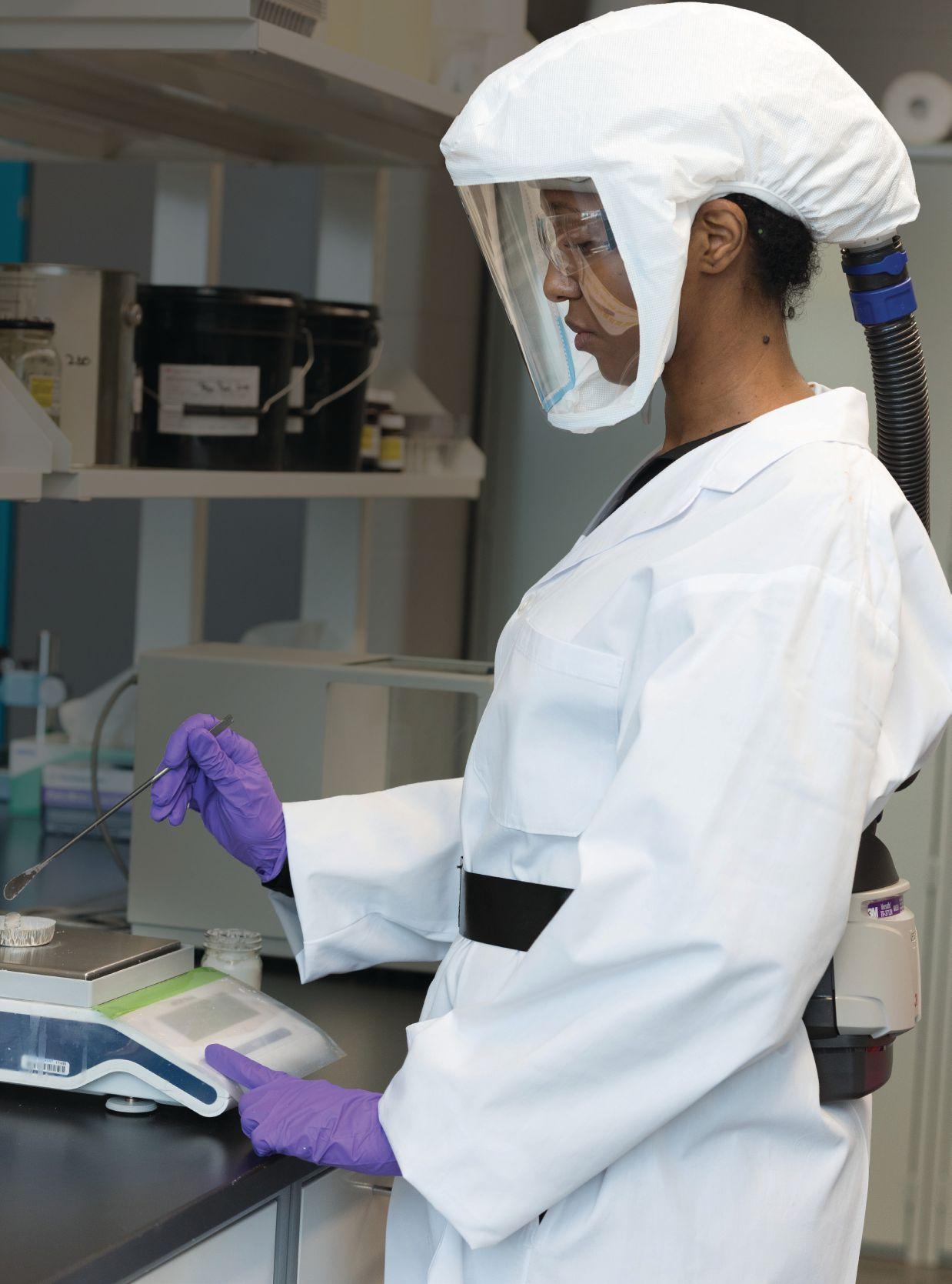
Employers prepare for new normal in workplace operations
2020 BUYERS GUIDE
Listing of OH&S vendors, service providers
‘DISAPPOINTING’ SAFETY STATISTICS Report reveals jump in injuries, fatalities
COVID-19 ON THE CONSTRUCTION SITE How Toronto Zenith coped through coronavirus
EXPLAINING OCCUPATIONAL HYGIENE
Science of preventing illness from work activities
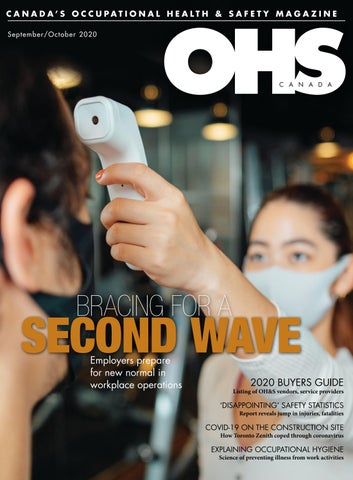
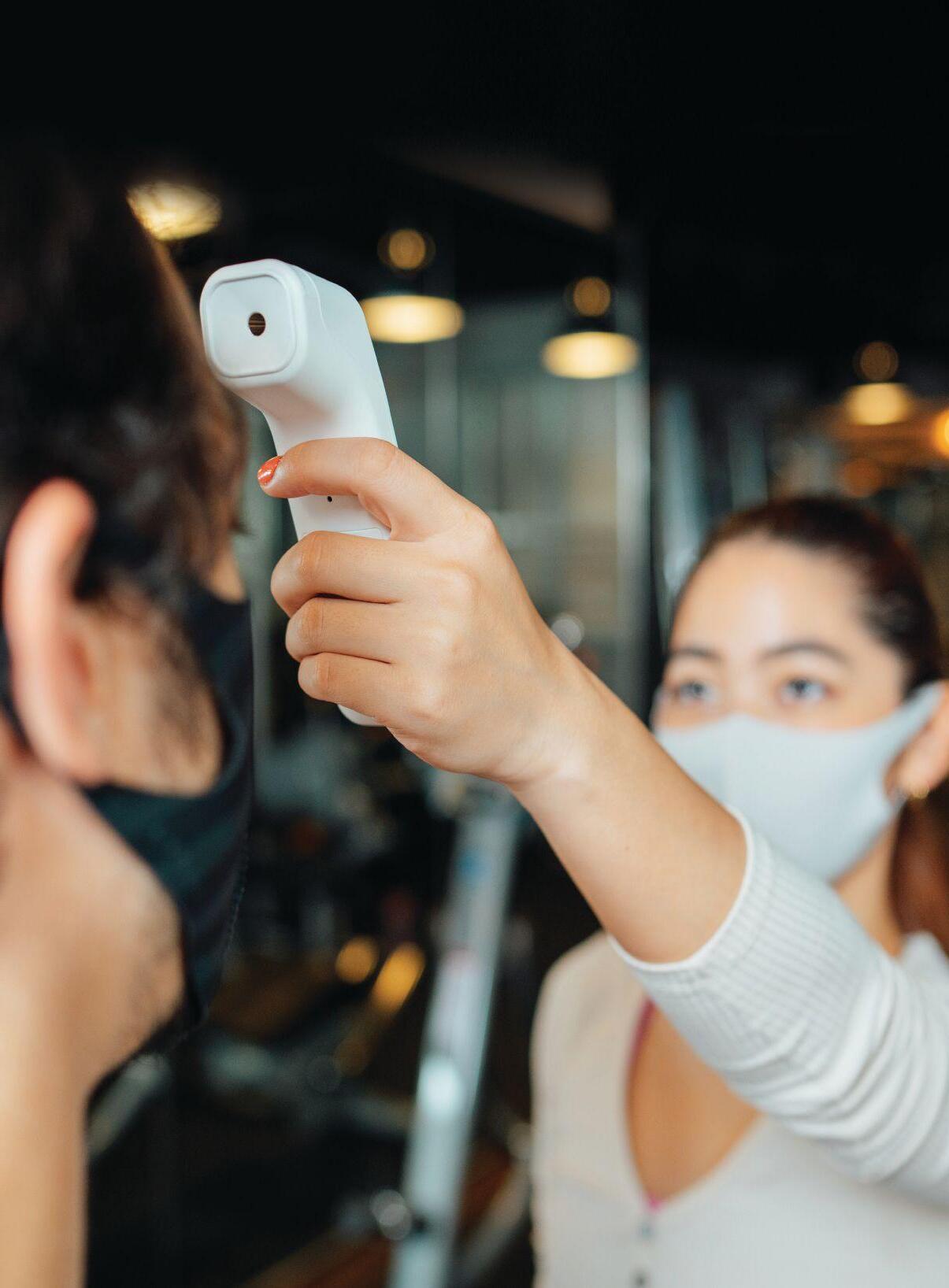
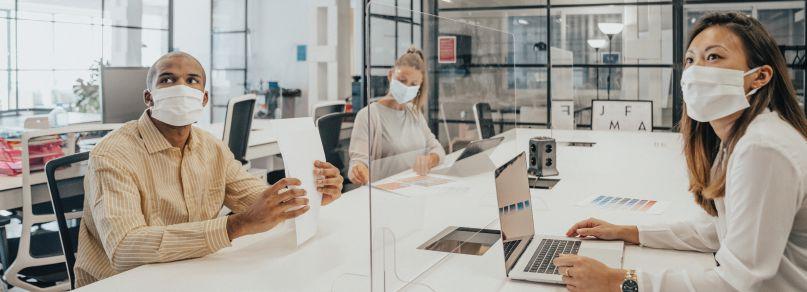
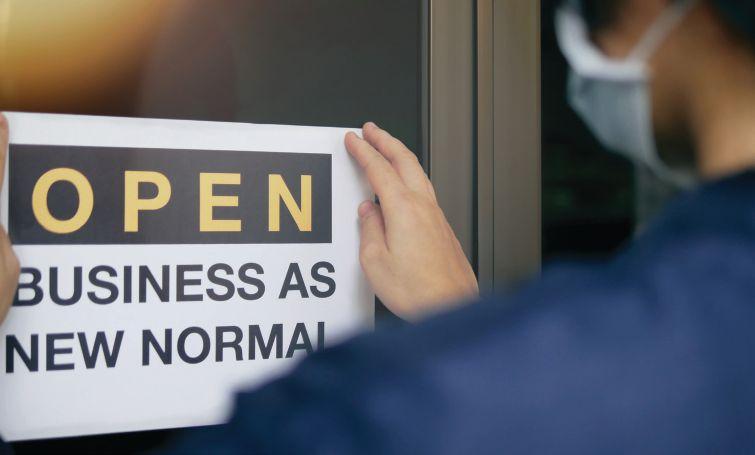
Employers will have to get used to a new normal which includes lowering expectations, being flexible and making sure workplaces are safe for employees.
GRANT CAMERON
How general contracting company Toronto Zenith shifted workplace safety policy in response to the
MARCEL VANDER WIER
Canadian
Keep calm and carry on
There’s no other way to put it — the last six months have been a wild and exhausting journey.
The COVID-19 pandemic and ensuing lockdown measures blew in largely without warning in March — and the storm continues to rage across the world to this day.
We have worked hard as a society to realize some new sense of normal through it all. Schools have reopened and many businesses have managed to find a way to cope with new guidelines on distancing and personal protective equipment.
Still, our top doctors and medical experts are currently warning of a second wave of COVID-19 cases this fall and the end date to this crisis continues to remain unknown.
All of this points to a sombre winter of more physical distancing and isolation, until — yes — a vaccine is generated or some other solution is realized. Until then, workplace safety is front and centre — as is the need to protect the mental health of your workers.
I’m fully aware that not all Canadians are on board with the health and safety policies put in place by this government. A quick pass through social media timelines unveils the dissent and nationwide polls confirm it.
But remember, we are only a few months removed from the army’s takeover of various long-term care homes in Ontario and Quebec. By all accounts, this is a serious health issue and we need to treat it as such.
It’s important also to remember the current emergency situation is not forever. This too shall pass, though the ramifications of this global pandemic will likely be felt for a while.
I’m not sure where you’re at, but from my vantage point, I remain impressed with the efforts of the majority of Canadians to initially flatten the curve and now further prevent the spread of the novel coronavirus.
I have faith in the resiliency of humankind and in our country’s leaders to serve us to the best of their ability. We will get through this — and we’ll do it together. Please, let’s all do our best to keep calm and carry on.
As our columnists point out in the pages to follow, much has been learned about the workplace hazard that is COVID-19, and reasonable precautions can be taken to get people back to work. Leadership is paramount through these days, and OH&S professionals hold an important position in the recovery.
For their part, our nation’s leaders will continue to have our backs. Billions have already been spent to assist displaced employees and organizations. The Sept. 23 speech from the throne indicates further support — no matter the cost. And the assistance is not likely to end there. Provincial and territorial governments will also be unveiling new plans in the coming weeks as the fall legislative season begins.
For our part, the team at OHS Canada will continue to keep you up to date on government policy changes and best practice in occupational health and safety. Be sure to visit OHSCanada.com on a daily basis to discover the latest information and news affecting Canadian workplaces.
CIRCULATION MANAGER JAY DOSHI 416-442-5600 EXT 5124 jdoshi@annexbusinessmedia.com
NATIONAL SALES MANAGER ROSS ANDERSON 289-925-7565 randerson@annexbusinessmedia.com
GROUP PUBLISHER PAUL GROSSINGER pgrossinger@annexbusinessmedia.com
COO SCOTT JAMIESON sjamieson@annexbusinessmedia.com
Printed in Canada ISSN 0827-4576 (Print) ISSN 1923-4279 (Digital)
PUBLICATION MAIL AGREEMENT #40065710
CIRCULATION
Tel: 416-422-5600
Fax: 416-510-5140
Mail: 111 Gordon Baker Rd., Suite 400, Toronto ON M2H 3R1
SUBSCRIPTION RATES
Published six times per year – Jan/Feb, Mar/Apr, May/Jun, Jul/Aug, Sep/Oct, Nov/Dec
Canada $100/yr plus tax
USA $130/yr (100 USD)
Foreign $214/yr ($164.50 USD)
Occasionally, OHS Canada will mail information on behalf of industry related groups whose products and services we believe may be of interest to you. If you prefer not to receive this information, please contact our circulation department in any of the four ways listed above.
All advertising is subject to the publisher’s approval. Such approval does not imply any endorsement of the products or services advertised. Publisher reserves the right to refuse advertising that does not meet the standards of the publication.
EDITORIAL ADVISORY BOARD
Paula Campkin: chief safety officer at Energy Safety Canada in Calgary, Alta.
Marty Dol: president and founder of HASCO Health & Safety Canada in Toronto
Cindy Moser: director of communications for the Institute of Work & Health in Toronto
Natalie Oree: prevention consultant with SAFE Work Manitoba in Winnipeg
David Powers: EHS director (Atlantic) with Sysco Canada in Moncton, N.B.
Richard Quenneville: senior director of corporate services with T. Harris Environmental Management in Toronto
Maureen Shaw: lecturer and presenter in Victoria
Dylan Short: managing director of The Redlands Group in Oakville, Ont.
1. Vancouver: Smoky skies cleared slightly in parts of B.C. as of mid-September, but Environment Canada is maintaining air quality statements for the entire southern third of the province. Wildfire smoke carried north from blazes in Washington state, Oregon and California is expected to continue blanketing southern B.C. for some time longer.
Source: The Canadian Press
2. Calgary: The Sofina Foods/Lilydale poultry processing plant in Calgary remained open in late August, despite a growing COVID-19 outbreak. On Aug. 28, an Alberta Health official said there had been 19 cases of the virus with 18 of them still considered active.
Source: The Canadian Press
3. Red Deer, Alta.: A central Alberta doctor says some clinics have stopped allowing patients to carry bags and backpacks since a family doctor was killed on the job. Dr. Walter Reynolds, 45, was attacked by a patient carrying a hammer and machete at a walk-in clinic in Red Deer on Aug. 10. Deng Mabiour has been charged with first-degree murder.
Source: The Canadian Press
4. Brockville, Ont.: Prime Minister Justin Trudeau and Ontario Premier Doug Ford announced a deal on Aug. 21 ensuring domestic production of medical-grade N95 masks. Under the agreement, 3M Canada will increase capacity at its Brockville facility so it can eventually produce up to 100 million masks annually.
Source: The Canadian Press
5. Quebec City: More than 80 students in Quebec City were in isolation after three cases of COVID-19 were confirmed at two high schools. A health agency spokesman said 81 students from the two schools were told to isolate for 14 days beginning Aug. 28.
Source: The Canadian Press
23%
360°
938,575
Total number of deaths due to COVID-19 in the world during the coronavirus pandemic, as of Sept. 16. There have been 29.7 million cases of the virus worldwide.
Source: Johns Hopkins University
Total number of Canadians who believe that governments and health officials are exaggerating the threat posed by COVID-19 and the need for continued and rigorous public health safety measures.
Source: Leger
$2.5M
Federal funding to be directed to the Canadian Centre for Occupational Health and Safety (CCOHS) over the next two years to assist the organization in providing guidance to workers and businesses.
Source: Government of Canada
9,193
Total number of Canadian deaths due to COVID-19 as of Sept. 16. The country has had 139,747 cases, with 65,857 occurring in Quebec.
Source: Government of Canada
$2B
Amount of federal funding directed to school improvements and personal protective equipment through the Safe Return to Class Fund on Aug. 26.
Source: Canadian Teachers’ Federation
Free CCOHS course offers guidance on returning to work safely
The Canadian Centre for Occupational Health and Safety (CCOHS) has released an ecourse “Pandemic Planning: Reopening for Business” to help organizations across Canada safely return to work during the COVID-19 pandemic.
The course guides employers, supervisors, managers and workers on how to prepare for a safe return to work, and what controls are needed to be put in place to protect everyone and minimize the impact of the pandemic.
Topics covered in the course include how coronavirus spreads and its symptoms, employer and worker duties and responsibilities in a COVID-19 return to business plan, methods of control — including cleaning and disinfecting, how to manage the workplace and prepare workers for a safe return, and understanding the impacts of a pandemic on mental health.
The free course is available on the CCOHS website in English and French.
“We know that as we start our return to the workplace and resuming activities outside of the home, things
will not be as they were before the COVID-19 pandemic,” said Anne Tennier, president and CEO of CCOHS in Hamilton, Ont.
“Businesses and organizations are
COVID-19 CONTROLS TIGHTENED AS CASES RISE AND POSSIBLE SECOND WAVE LOOMS
VICTORIA (CP) — The looming prospect of a second wave of COVID-19 this fall has governments cautiously monitoring daily infection rates as economies restart and students return to school.
A widespread return of economic and social restrictions that closed businesses and schools and cancelled public events in March is not the preferred option, but there may be no choice, say politicians and health officials.
“The last thing that anyone wants is to have to once again shut down our economies and suspend our lives to try and counter a massive second wave,” Prime Minister Justin
looking for information and guidance. We are providing that with this course to help minimize the spread of infection, and help employers and workers return to work as safely as possible.”
Trudeau said in early September.
He stressed public vigilance to fight the pandemic, frequent hand washing, mask wearing and physical distancing, because “as we’re seeing with cases rising across the country, we are not out of the woods.”
Winnipeg epidemiologist Cynthia Carr said Canadians should brace for more restrictions and shutdowns if COVID-19 cases continue to rise, even without the arrival of a second wave.
“There could still be a large increase in cases related to behaviour and that gives government opportunity to go, ‘OK, what are we going to change now to get the transmission back under control?’” she said. “That’s where government will need to focus.”
PHOTO:
TEACHERS’ UNIONS TO FILE LABOUR BOARD COMPLAINT OVER SCHOOL REOPENING PLAN
TORONTO — An escalating conflict between Premier Doug Ford’s government and four major teachers’ unions is headed to the province’s labour board as the unions allege Ontario’s school reopening plan violates its own workplace safety laws.
The unions — which represent 190,000 teachers and education workers — indicated Aug. 31 that they all plan to file complaints after meetings with Ontario government failed to address their concerns the week prior.
The Association des enseignantes et des enseignants franco-ontariens, the Elementary Teachers’ Federation of Ontario, the Ontario English Catholic Teachers’ Association and the Ontario Secondary School Teachers’ Federation all allege the school reopening plan does not take “every reasonable precaution” to protect workers from COVID-19.
“No worker in the province of Ontario should be expected to sacrifice their health and safety, especially when there are such obvious measures the government could be taking to reduce the risk and prevent potential tragedies,” OSSTF president Harvey Bischof said in a statement.
With weeks to go before classes start, the Ford government faced increasing pressure over its COVID-19 pandemic back-to-school plan.
The province’s strategy will see students in kindergarten through Grade 8 return to school without any reduction in class sizes, though students will spend the day in a single cohort to limit contact with other children.
Most high schoolers will also be in class full-time, though students at some boards across the province will take half their courses online in a bid to curb the spread of the novel coronavirus.
Teachers’ unions, school boards, and some parents say the province must lower elementary class sizes and fund the reduction, instead of insisting boards dip into their own reserve funds to lease extra space or hire additional staff to promote physical distancing.
CLASS-ACTION LAWSUIT FILED ON BEHALF OF PASSENGERS IN FATAL ICEFIELD BUS CRASH
CALGARY (CP) — A class-action lawsuit alleging the defendants acted recklessly and unreasonably has been filed against the operators of a tour bus involved in a fatal rollover at Jasper National Park’s Columbia Icefield.
Three people were killed and 14 others suffered life-threatening injuries on July 18 when the all-terrain Ice Explorer lost control while carrying passengers on the road to the Athabasca Glacier.
The bus rolled about 50 metres down a moraine embankment before coming to rest on its roof. The bus was carrying 27 people.
Named in the statement of claim filed in Calgary are Brewster Travel Canada Inc., Viad Corp, Glacier Park Inc., Brewster Inc., Brewster Tours, Banff-Jasper Collection Holding Corp., and the unidentified driver of the coach.
“The defendants knew or ought to have known that there was a significant risk to the plaintiff and class members and that the accident was a reasonably foreseeable result of failing to take adequate measures to prevent such incidents,” reads the claim.
“The accident was caused solely by the negligence, gross negligence, or intent of the defendants.”
None of the allegations have been proven in court.
The lead plaintiff is Devon Ernest, 22, from North Battleford, Sask., who was on the tour with his girlfriend, Dionne Durocher of Canoe Narrows, Sask., and his cousin Winnie Ernest.
Durocher died at the scene. Meanwhile, Ernest suffered a concussion, a fractured wrist and lacerations to his head and hands.
DOCTORS BRACE FOR VIRAL OVERLOAD BETWEEN COLD AND FLU SEASON, COVID-19
(CP) — The president of the Canadian Medical Association is warning that the collision of COVID-19 and cold and flu season could bring a new host of health-care challenges when the cold weather sets in.
Dr. Sandy Buchman says given the overlap in symptoms, it can be hard for doctors to distinguish the sniffles from the deadly disease.
Buchman says COVID-19 testing centres could be overloaded this winter between a rise in cold and flu cases and a possible second wave of the novel coronavirus.
Canada’s chief public health officer Theresa Tam told reporters in August that officials are working to help hospitals prepare for an anticipated convergence of viral activity.
Buchman says many COVID-19 hygiene habits — such as hand-washing, physical distancing and wearing masks — can reduce people’s risks of contracting the common cold or flu.
He says it’s all the more important that Canadians get their flu vaccine this year, but patients should expect longer wait times given that capacity will be limited by COVID-19 restrictions.
So, what’s on your mind?
Ever wonder what other OH&S types are thinking? Find out by making our website poll a regular stop. Is your organization implementing contact tracing to slow the spread of COVID-19?
Getting to know BCRSP chair David Johnston
On July 1, David Johnston was appointed chair of the Board of Canadian Registered Safety Professionals (BCRSP), succeeding Monica Szabo. Located in Mississauga, Ont., the BCRSP sets certification standards for the occupational health and safety profession.
Johnston is the 25th chair of the certification body and will serve a one-year term.
Responses have been edited for length and clarity.
What does it mean to you to become chair of the BCRSP?
It’s obviously a great honour and at the same time I feel the weight of responsibility to the many CRSP and CRST certificants and their expectations.
Like many things in my life, I didn’t set out with this specific goal. Instead it seems to have just happened as time went on. And like those other things I have done, I plan on giving 100 per cent to meet — and hopefully exceed — expectations.
It’s a wonderful achievement, but I take the responsibility very seriously and hope I can deliver.
What unique perspective do you bring to the position?
I don’t know if my perspective is unique or not, but I have a wide range of experience and success in multiple industry sectors across Canada dealing with federal and five provincial jurisdictions. In addition, I’ve served on multiple boards and advisory councils dealing with occupational health and safety.
What I have learned from those experiences is that the safety profession is a transportable skill set that can be effectively applied in any work environment. The basic and fundamental principles of safety apply in any occupational setting.
It is incredibly important to recognize this point because all too often we see employers who want a safety practitioner with “industry experience.” This is nonsense.
What employers really need are competent safety professionals with credentials. By credentials, I mean
someone who meets basic educational requirements, demonstrated work experience in effectively applying and managing safety principles, passing a written exam on the subject of safety, conforming to a code of ethics, and demonstrated ongoing education and professional development.
What are the main hopes and goals you wish to achieve in your one-year mandate?
The main hope and goals are nothing special or revolutionary. The BCRSP board has established a well-thoughtout and ambitious strategy based on four pillars. My goal is to continue to support and execute that strategy.
In particular, I hope to advance our advocacy efforts for formal government recognition of safety professionals, the accreditation of educational institutions, and the building of a national framework that would include and engage all persons whose work includes occupational health and safety — for example, occupational health nurses, occupational hygienists, and organizations such as the Canadian Society of Safety Engineering (CSSE).
This is critical because unless we speak with one voice, government regulators have made it clear they will not formally recognize the safety profession.
How are you using your influence to instil change within the profession?
This is a tricky question. There are many people who claim to be a “safety professional,” but lack the formal credentials to make that claim.
I know this statement will be a lightning rod for some, but think about accountants, lawyers, engineers and other professionals. All of these professions have a formal established credentialing process. We wouldn’t hire any of these professions without the credentials to back them up. The same requirement needs to apply when hiring safety professionals.
What do you think is the most pressing issue in occupational health and safety today?
The most pressing issue in OH&S today is that anybody can represent themselves as a “safety professional.” One lawyer told me their case load would be reduced by over 50 per cent if legislation existed to control the safety profession.
In most provinces, house inspectors, beauty salon technicians and others are regulated and controlled by provincial legislation ostensibly to protect the public. Yet no such legislation or controls exist in the safety profession.
Safety professionals are making what are truly life and death decisions every day and legislation is needed to protect the public from unqualified or incompetent individuals.
The BCRSP is calling on provincial governments to enact legislation to provide what is known as “Title Protection” to ensure the public is protected from unqualified and/or incompetent persons who claim to be a “safety professional.”
Imagine if something as simple as that could reduce occupational injuries and illness by 50 per cent. What’s stopping us?
What the pandemic has taught us
By Alan Quilley
Hindsight will indeed come in future decades and our successes and failures will fill numerous history books.
But for now, here are my early reflections — eight lessons that COVID-19 and our responses have taught us collectively:
Leadership matters — a lot: Countries with great leaders who took charge with authority and confidence — led by health expert advice — avoided the worst outcomes. Poor leadership shows… look for yourself. There are places that flattened the curve and places that exploded it.
Without clear leadership, the concerted efforts by groups tend to fail because they are disjointed and lack momentum. Risk is relative: Who you are and what your pre-existing conditions, strengths and weaknesses are impacts your indi vidual risk. This, like most risks that humans face, is relative.
Same virus, much different outcomes depending on who you are and the conditions in which you are living. Unfor tunately, your government’s response also matters a great deal.
Counting injuries, illness is not measuring safety: Under-reporting of COVID19-related illness is estimated to be from six to 24 times what has been officially counted.
If you want to predict safety, find out what the given population is doing about masks, distancing, hand washing and cleaning surfaces. What people do is real safety, not what does or doesn’t happen to them.
The ‘Control the Energy’ model works: Keep the hazard away from the people or the people away from the hazard.
Every recommendation from health experts does exactly what the “Control the Energy” model suggests. (Energy source | Barrier | Path | Barrier | Protected person or thing) It takes doing safety with people to be successful: Compliant populations cooperating with health experts’ advice stayed safer than those who didn’t. The evidence is overwhelming.
Co-operating with others gets better results than creating conflict through lack of consultation, unclear messaging and weak leadership.
It takes both physical aspects and behavioural safety to get results: Safety behaviours (wearing masks, washing hands and surfaces, physical distancing) requires the behaviour of people and the availability of the needed physical things (masks, sanitizers, spaces large enough to accommodate distancing).
One without the other simply would fail and we’ve seen where it has.
Culture matters: We couldn’t have afforded to do the type of worldwide experiment we just did. Compliant cultures did much better than non-compliant cultures in flattening their curve.
No matter what — be ready for it not to go well: Contingency plans need to be in place to mitigate negative outcomes.
Those ready for the second wave are doing better — and will continue to — than those who don’t.
We know with little doubt what both success and failure look like in our COVID-related safety efforts. Let’s hope the
BURNT OUT?
TIPS ON PROTECTING YOURSELF THROUGH COVID-19
By Christopher Hurley
Regardless of your vocation, we are all officially neck deep in workplace pandemic management.
COVID-19 has presented unique and unprecedented challenges in maintaining safe workplaces across Canada.
The good news is, across the board, Canada has fared far better than many other nations. That success has been driven by the efforts of everyone from public health officials to safety professionals to each and every person that ventures out into this strange new world we find ourselves in. Like most successes, it’s due to a total team effort!
It requires buy-in from all parties and engagement all the way down to the individual. So remember, this isn’t all on just you!
Managing the pandemic workload
From navigating PPE supplies, new program implementation, temperature checks, training (and retraining), life and overall workload certainly has not gotten any easier.
Even managing the pandemic “rules” (which are primarily loose guidelines), from jurisdiction to jurisdiction and company to company, is sometimes vastly different in the way they have been applied.
And there’s even dissention amongst some who believe the pandemic risks are far less than what public health officials might be theorizing.
I can only imagine that this was what asbestos workers went through in the late ’90s. It can be frustrating to some, but it’s important to stay focused on one absolute — this hazard is no different than any other hazard in the workplace.
To borrow a common safety pro saying: Plan, Do, Check, Act. Through all this, we have to keep an eye on the most important person — and contrary to what you might think, that person is you.
As safety professionals — or others with safety as a key performance metric — can profess to, the increased workload has been a challenge. Especially when it would be wholeheartedly irresponsible to take our eyes off of the other hazards in our workplace.
As with all hazards, you need a program, implementation, resources and check and balances to make the circle of safety complete.
As someone responsible for safety, you’re doing this on many other topics, all the time, so you’re built to handle this. How do you best approach this new undertaking all the while keeping yourself sane and your life balanced?
Don’t overwhelm yourself with COVID management
We have been bombarded with relentless media on the topic and it’s physically and emotionally draining. Do your best to limit overall news intake as it can be overwhelming, especially when you’re swimming in the COVID ocean all day, Monday to Friday.
In my opinion, the dust has settled on much of the confusion on proper protection measures we navigated in March, April and May. Although clarity will help once instituted, these processes take people power to make it work.
If you need help, ask for it
I have worked in environments where the level of stress was very high, resources were thin, and you had to do the best with what you have. That doesn’t mean that you’re set up for success, and it doesn’t mean you don’t need help.
Don’t be afraid to challenge your management and others to do their part and help out. Whether it’s additional safety support to manage paperwork, extra training or on-thefloor management, ask for it.
Implement COVID champions on your site or shop floor to have extra eyes looking out for opportunities for improvement. Streamline paperwork wherever possible; many sites that have obtained COR certification are now using iPads for inspections and checklists. Push for these tools! They save time, money and hassle.
Maintain a proper work-life balance
Safety pros are often the types of people that will jump in with both feet to a challenge and hang in until every aspect of the issue is resolved. Although we feel compelled to, don’t try and be everything to everyone. As one person, you are only capable of so much, so prioritize stress relief, set aside time for fun personal activities and maintain positivity.
If you are struggling, talk to someone. A friend, co-worker or family member is always a great resource to talk about your struggles. If you are fortunate enough to have a family assistance provider with access to counselling, don’t be too proud to take advantage of it! These are extremely helpful resources that can put you in contact with trained professionals on many topics.
In Canada, we are all reaping the benefits of the focus and hard work in regards to COVID-19. Don’t let that success be overshadowed with burnout.
Christopher Hurley is the founder of Safety Services Canada, a multi-functional health and safety consulting firm located in Caledonia, Ont.
STEPS ON MAKING THE RETURN TO WORK SAFE
By David Reiter
As summer ends and fall approaches, our thoughts are turning to familiar routines. Shorter and cooler days are here, and kids are going back to school.
Still — this fall is different. COVID-19 has upended all of our lives, and what once was familiar, now feels somewhat strange and uncertain.
As all of this starts to unfold, many employers are asking whether their workers can now safely come back to work? Based on the medical experts — it would seem the answer is yes, so long as reasonable precautions are taken.
To be completely transparent — we are all learning how to do this for the first time, together. However, some standards are starting to emerge. They tend to focus on the development of safety plans that make use of tools such as policy and procedural changes, as well as engineering and administrative controls.
In our view, businesses can most effectively approach the problem by first identifying who needs to be considered in the plan, and second by identifying the various controls that need to be implemented to give effect to the plan.
Identifying who is involved
The process of developing a safety plan revolves around the people that it is meant to protect. They are the ones who will be performing the operations from which the risks stem from the
work, and they are the ones that will need to comply with, and give effect to, its content.
As such, and given that the risk posed by COVID-19 is tethered to people’s exposure one to the other, the question has to focus, at least from the start, on who is involved and not on what is being done.
Depending on the facility, the range of people who need to be considered could be extremely varied.
Manufacturing facilities may involve operators, material handlers, engineers, shippers and receivers, office administrators and production managers.
Construction projects could involve safety representatives, contractors, suppliers, and pay duty officers, in addition to workers and supervisors.
What precautions need to be taken
Once a business has identified who is involved in its operations, it needs then to turn to developing controls that will protect those people both with respect to the operations they are performing and with respect to the environment in which they are working.
Recognizing that, controls should include the use of everything from procedures and policies through to engineering and administrative controls. For example, employers should:
• Identify what touchpoints (through which exposure can occur) exist in the operational tasks in which their workers and others in the workplace are engaging. Once they have done that, the operational procedures should be revised, as may be appropriate, so that the risks are reduced or eliminated.
• Consider whether policies can be implemented to control the risk of transmission between the workers and others in the workplace. For example, policies that limit worker interaction such as the staggering of shifts and breaks, and that limit the number of people in a workplace at any one time, may be helpful.
• Look at whether the introduction of engineering controls such as physical separation barriers, directional controls on traffic, and the limitation or elimination of entry and exit points at the workplace can help to limit peoples’ interactions with one another.
• Implement new disinfection procedures and hygiene-based educational programs, as well as other administrative controls such as screening at entry points and preparation of isolation rooms and exit procedures in case someone becomes ill. These can help businesses to further limit the opportunity for transmission of the virus at the workplace.
Other additional tried-and-true measures ought also to be included as part of these precautionary measures.
These would include the use of physical distancing and masks, the placement of limitations on meetings in the workplace, as well as the implementation of safe hygienic controls such as making handwashing and sanitizing facilities readily available, and creating sick day policies that encourage people to stay away if they have any symptoms.
All of these measures should be tailored, both for the workplace and for the work that the people are performing in it, and they should be communicated in clear simple language to the people who are, or may be, present in the workplace. They should also be monitored and enforced.
If these measures are taken and modified and developed appropriately to particular workplaces, everyone’s eagerly anticipated return to work will have been made that much safer.
David Reiter is a partner with Aird and Berlis in Toronto.
KEEPING WORKERS STABLE AMID CHANGES TO FALL PROTECTION
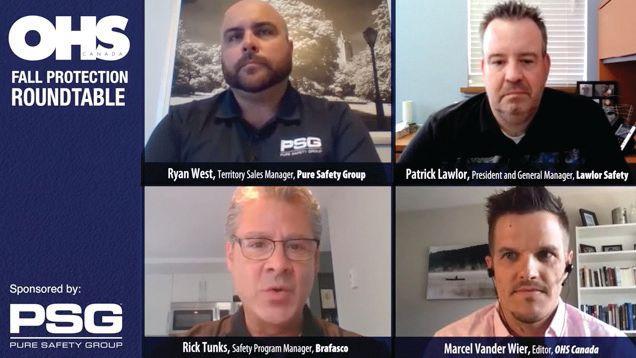
Experts discuss latest legislation, innovation, products in virtual roundtable
BY MEAGAN GILLMORE
SPONSORED BY
Falls continue to be a leading cause of workplace injuries, leading to reduced work time and fatalities.
In 2018, 66 workers died as a result of falling, accounting for six per cent of the 1,027 workplace deaths reported that year. During the same time, nearly 20 per cent of lost-time claims filed were connected to falls at work: 51,800 of the 264,000 lost-time claims from 2018 were because of injuries sustained in a workplace fall.
Proper equipment, correctly used and diligently maintained, is crucial in any workplace’s plan to keep workers safe and productive. But changing standards and differing regulations can make compliance confusing for safety managers.
Changing standards
A year after the latest CSA standard
on self-retracting devices came into effect, people are still confused about which self-retracting device (SRD) or self-retracting lifeline (SRL) is suited for which job.
This new standard, Z259.2.2-17, effective as of August 2019, “specifies the requirements for all self-retracting devices (SRDs) used as connecting components in fall protection systems.”
It further changes the classification of SRDs. Before, there were three classes: Type 1, Type 2 and Type 3. The new standard creates four different kinds: Class SRL; Class SRL-R for those that can be used when rescuing someone by raising and lowering them; Class SRL-LE for those that can be used on a leading edge; and Class SRL-LE-R, which is a combination of the SRL-R and the SRL-LE.
“We’re seeing a lot of confusion,
still,” says Patrick Lawlor, president of Lawlor Safety in Hamilton, Ont.
The standard also changed the requirements for inspection. Now, inspection is the job of the designated competent person in the company to determine how the devices are being used and how they should be classified, explains Rick Tunks, safety program manager at HD Supply Brafasco.
The changes are “basically leaving it up to the company to come up with how they’re going to classify these devices themselves,” he says, noting a product’s classification determines how often it needs to be recertified.
These aren’t the only standards changes that have caused some confusion. In February, a new standard for personal energy absorbers and lanyards came into effect. This standard, Z259.11-17, changed weight restrictions and testing requirements.
“It kind of shook up what we were traditionally manufacturing in terms of weight recommendations on lanyards,” says Ryan West, territory sales manager for Pure Safety Group (PSG).
The new testing, regulations and safety standard caused manufacturers to go “back to the drawing board,” he says. New products are being released to comply with the changed standards, and this means customers need to be educated about compliance.
There are some things customers can do to ensure they’re following the standards. Documentation is key when inspecting equipment, says West.
This is especially important with the new SRD standard that makes classification of SRLs, which determines the frequency of inspection — a responsibility of the company purchasing the equipment.
“Document when you’re putting
your SRLs into use. Document them on their inspections,” says West.
Different employees could classify the same product differently.
“Make sure that you’re documenting it. Make sure that you’re keeping track of the units that you have out in the field so you can better understand when you need to certify them.”
While safety specialists can help explain standards and show consumers which products meet the new requirements, the users are responsible for making sure they use their safety equipment properly.
Even if a product has the best safety features, accidents will happen if the user doesn’t follow the directions, or uses a product in a way it wasn’t intended. For example, SRDs that are meant to be used vertically can’t be used horizontally.
“From a manufacturing standpoint, we can put all sorts of features and benefits in a product to make it userfriendly, and to make it more safe for the user, but if they’re not installing it properly, if they’re not following the instructions that we put with our products, it’s not going to do you any good,” says West. “Accidents are still going to happen that way.”
There’s a reason safety courses emphasize instruction manuals, says Tunks. “If you’re not reading the manual, you’ve lost.”
Leading edge
It’s important to stay connected with associations and companies that provide reliable, up-to-date information about standards because some can be
hard to understand. This is true of the leading-edge classification in the new CSA standards for SRDs.
“Leading-edge application is anywhere there’s a risk of fall and your lifeline hitting the edge that you’re working on,” explains West, noting that it is a very specific classification.
The calculations for determining if something is leading edge can be fairly complicated, says Tunks. “It’s not cut and dry.”
When people don’t understand the standard, they use their equipment improperly, and that can result in accidents.
“The standards address a lot of the major issues: the stress being put on the worker or the stress being put on the equipment,” says Lawlor. “One thing that I always go back to customers on is the fall clearance. Leading-edge equipment is going to add another shock absorber between the user and the SRD device, so that can add up to 47 inches of fall clearance that the customer needs to be aware of and make sure they’re not hitting any sort of object or structure while they’re working.”
Enhanced fall protection is one reason why many consumers are opting to buy self-retracting devices instead of traditional lanyards.
“The fall clearance is going to be less,” says Lawlor.
“Traditionally, (SRDs and SRLs) are a little bit more expensive than buying a lanyard,” acknowledges West.
“But the safety features that go into them far outweigh that price point, that price difference. Safety managers
feel a lot better when their workers are attached to an SRL as opposed to a traditional lanyard.”
Having the proper safety equipment is especially important because safety plans are legally required in some jurisdictions. Just as education about standards is key when determining what equipment to purchase and how to buy it, safety managers need to educate themselves about a job’s potential hazards before they develop their safety plan.
“Know your hazard,” Lawlor says, summarizing the advice he gives to his customers about making safety plans. “Know what you’re doing. Identify anything that could possibly happen and plan for the worst in a lot of situations.”
“Identifying the hazard, that’s the main thing,” says Tunks. “Pick the right product to protect the worker and then make sure the worker’s trained on the product.”
Dropped objects
One of the biggest hazards to plan for is dropped objects. Injuries don’t just happen when workers fall. They also happen when objects, like tools, fall on
them. Injuries sustained by a dropped object account for a large portion of lost-time claims, and can also lead to death.
Workers should always tether their tools so they don’t fall. One dropped object has the potential to hurt many people, cautions West.
“A lot of these (injuries from) dropped objects aren’t a result of a direct hit straight down,” he says. “A lot of them come from deflections. For example, if you have a wrench going down and it hits a scaffold, then it can deflect.”
Even if no people are hurt, falls damage equipment, and that can reduce work performance.
“Who wants to wreck a brand-new impact drill dropping it from on high?” he says. “It doesn’t make sense.”
Despite this, many companies and worksites don’t have policies mandating tools be tied during work. In some cases, a general contractor may have a policy requiring this, but subcontractors don’t enforce similar policies. Practically, however, says Lawlor, there’s no reason why workers can’t secure their equipment.
“With the number of new solutions,
you can find an attachment point for any type of tool. There’s no excuse not to have your tools tethered,” he says.
Manufacturers realize some workers don’t want their tools tethered to them unless it’s mandatory. That’s why tape that enables workers to secure their tools only when required is popular, says West. He can inspect worksites to see how to best protect equipment.
Everybody really should be tethering off their tools when they’re working at heights,” he says. “It’s a no-brainer.”
Keeping workers safe during accidents
Workplace protection plans are required, and they need to consider how to protect workers in confined spaces, where falls can happen. Winches are especially helpful for lifting people in and out of manholes, says West. It’s also useful to have equipment suited for horizontal and vertical extractions. This equipment needs proper maintenance.
“A lot of (people) take the confined spaces equipment for granted and it gets thrown onto the back of the truck with the shovels and the other work gear, instead of treating it as a piece of safety equipment,” says Lawlor.
Rescue equipment is designed to be inspected after every time it’s used, he says. Infrequent maintenance can be dangerous.
There also needs to be proper equipment to keep workers who are rescuing others safe. Self-contained breathing apparatuses are key for protecting rescuers, says Lawlor. There needs to be more than one in case someone gets hurt.
Training is important. The best plans and equipment become useless if workers aren’t trained about how to follow them, says West.
“It’s one thing to have it documented,” he says. “It’s another thing when you’re put in that situation as a worker. I don’t know how other people would react, but I know if I was put in a confined space and something happened, without training, I would be losing my mind.”
Current
challenges and future trends
The COVID-19 pandemic has caused workplaces to consider how proper hygiene contributes to occupational
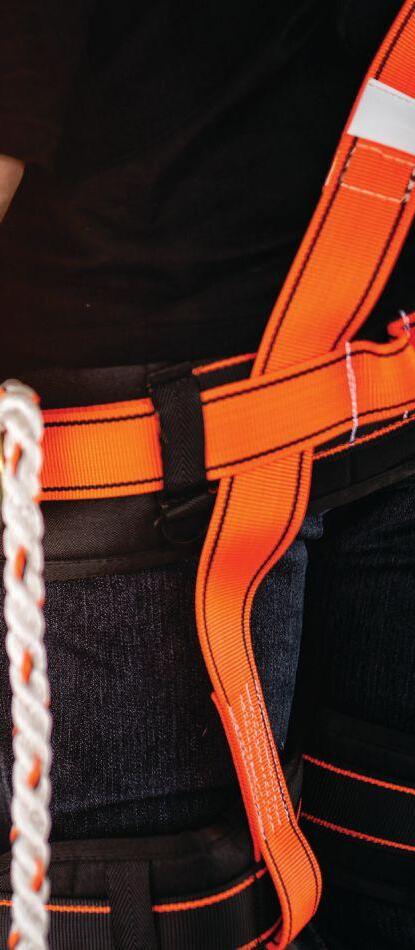
safety. Safety distributors can help customers identify the proper equipment needed to ensure each worker has their own safety equipment, like harnesses. They also know how to best clean and disinfect materials.
West compares protecting soft equipment, like harnesses and lanyards, to keeping produce safe. “If you leave it out and exposed to the elements, it’s going to deteriorate faster,” he says. “If you have a bag or storage for it, it’s going to last you a lot longer and it’s going to be better maintained.”
Beyond the current pandemic, safety distributors are developing ways to make it easier for workers to use safety equipment properly. Harnesses are being designed so chest straps stay in place and with extra padding for comfort. Some padding is removable and able to be machine washed, increasing cleanliness.
New PSG harnesses have webbing with contrasting colours that makes it easier to see frayed material that needs to replaced. Manufacturers are also
creating ways to better track equipment, like having equipment that can be scanned. Other products use technology to record how equipment is being used.
Still, gathering the perspective of an external professional can be one of the best ways to determine what equipment and plans will keep workers safe on the job.
“We’re here to help,” says Tunks. “Whether it’s working at heights, whether it’s inspections and training that we can give to the customer on how to inspect their gear and how to log it in, whether it’s a simple talk during a safety day.”
Safety distributors can inspect jobsites, review hazard plans and ensure customers know which standards they need to follow.
“Don’t be afraid to get us involved — big or small, for the opportunity or the application,” says West.
Meagan Gillmore is a freelance writer in Toronto.
Recognize the OHS expertise in your organization through a BCRSP certification
The Canadian Registered Safety Professional (CRSP) ® certification is designed for individuals leading or managing OHS systems and programs. They have in-depth knowledge of OHS principles and practices and apply broad based safety knowledge to analyze and develop systems that will achieve optimum control over hazards and exposures detrimental to people, equipment, material and the environment.
The Canadian Registered Safety Technician (CRST) certification is designed for individuals supporting a safe working environment by maintaining OHS administrative processes, conducting training, and using a range of state-of-theart tools, processes, and common practice solutions to occupational health and safety risks. They oversee and drive monitoring and compliance in relation to technical and behavioral risk controls.
Visit www.bcrsp.ca to learn more about eligibility and examination requirements for the CRSP® and CRST certification programs.
BRACING FOR A SECOND WAVE
Employers adjust to new normal in workplace operations
BY GRANT CAMERON
In March, a sucker punch from COVID-19 knocked the wind out of the Canadian economy as much of the country’s commerce ground to a halt.
Today, business owners are dusting themselves off and preparing to get into the ring for another round. This, as the country itself braces for a second wave of the novel coronavirus.
To resume business operations in the middle of a pandemic, employers will have to get used to a new normal which includes lowering expectations, being flexible and — above all — making sure workplaces are safe for employees.
“Employee safety has to be paramount,” according to Laurie Jessome, partner in the employment and labour
group at Cassells Brock and Blackwell in Toronto. “Employers must make sure that they are up to date on our best understanding of how the virus is transmitted and then apply that knowledge to their own workplace to ensure that they are taking every reasonable precaution to provide their employees with a safe work environment.”
“If your employees can’t work safely and you are faced with a COVID outbreak, productivity is impacted,” she said.
Generally speaking, it’s the employer’s responsibility to take every reasonable precaution to protect their workers, said Jessome, so they should review guidelines issued by their provincial ministry of labour.
“I recommend that every employer designate a key point person or team within their workplace to take the lead on COVID mitigation and planning. It is critical to ensure that someone is actually responsible for making sure that appropriate safety measures are considered and, where necessary, implemented.”
Seek input from workers
When putting together a reopening plan, business owners must be flexible and consider input from workers, said Troy Winters, senior health and safety officer at the Canadian Union of Public Employees (CUPE) in Ottawa.
“I haven’t talked to a business yet that said, ‘We set a plan and never
changed a thing and it worked 100 per cent,’” he said. “From dentists to hair salons and barbers, to municipal operations, they all set goals, started with a plan and made modifications once they received feedback from workers on how their jobs were impacted by the various control measures.”
“But the good news is that when they listened, while still keeping the key goals of infection prevention at the top of list, they were able to implement controls that allowed their business to re-open successfully with workers who felt confident about the safety of their work.”
While much of the country has opened up, employers still must be considerate to the needs of workers
because many have lost access to supports and were shut off from family and friends for months.
“Combined with the added pressure of precarious employment, government subsidy plans ending and all the other factors that are weighing on people, I think we will start to see the effects of peoples’ mental resiliency being run into the ground,” said Winters. “While much of this isn’t under the employers’ direct control, employers need to recognize that some workers simply will not be able to maintain the same output.”
Consider expanding policy
To help — and ultimately keep their businesses operating — employers should adopt policies that permit workers to stay home with pay to care for a sick family member and abolish attendance-management programs, according to Winters, while workers who exhibit flu-like symptoms should also be sent home with pay.
Depending on the workplace, employers should consider engineering controls like installing barriers, changing furniture layout so workers are distanced and ensuring HVAC systems are running well, he said.
Further considerations include administrative controls, such as screening people who enter an office or worksite, and routinely cleaning all frequently touched surfaces such as workstations, elevator buttons and doorknobs.
PPE should be used as an added layer of protection when other control measures are not completely effective, said Winters, noting the placing of markers on the floor and setting up hallways for one-way travel will limit unnecessary interactions. Disposable wipes, hand-sanitizing liquid and masks for workers close to each other are also suggested.
Mitigating workplace hazards
Employers must get a handle on what workers do day-to-day and task-totask to mitigate all hazards, figure out the level of risk that is attached to the work and then put control measures in place, said Jan Chappel, senior technical specialist at the Canadian Centre
for Occupational Health and Safety in Hamilton, Ont.
“In general, you would want to quickly do a walk-through of the workplace. You want to think about how people do their work. So, not just where they sit but where they stand, where they walk to. Do you have a point where people collect — like a kitchen or a bathroom, a photocopier, cash register… and how you would help guide people to stay two metres apart in each of those situations.”
If workers must be at desks in an office or a cash register at a store, they must be at least two metres apart in all directions, she said, and if that can’t be done, other steps must be taken to protect workers.
For outdoor work like construction, it might be best to create small teams for workers who are on site, so they stay within their bubble, said Chappel.
Employer duties
“In general, employers have a duty to provide a safe and healthy workplace, so developing a plan is part of it,” she said. “Developing a return-to-work COVID plan is important. You want to make sure that people understand about the virus and steps that the workplace has taken to prevent the spread and what actions you need to take.”
“You want to do everything you can under the circumstances to implement your control measures, provide enough information, education and training, cleaning, disinfection and any personal protective equipment as well.”
When a case of COVID-19 is confirmed in the workplace, Jessome says that employers should disinfect any surfaces that the worker might have touched and alert customers, clients and suppliers.
“If the employee in question has come into contact with co-workers, then you need to make sure you get a good understanding of everyone who may have come into contact with them and then let those people know.”
Grant Cameron is a freelance writer in Burlington, Ont.
COPING WITH COVID ON THE CONSTRUCTION SITE
How Toronto Zenith shifted workplace safety policy in response to the coronavirus pandemic
BY MARCEL VANDER WIER
Aldo Paganelli won’t soon forget the mad scramble that was March 13.
In the previous 24 hours, both the NHL and NBA had suspended their seasons. The Ontario government had announced the closure of schools, and a chain reaction followed that saw places of worship, restaurants and other public spaces shut down in an effort to contain the spread of COVID-19.
The president of Toronto Zenith, a general contracting company in major infrastructure, dropped everything and went into crisis mode.
“We looked at it as a crisis,” said Paganelli. “We just said, ‘What’s going to happen here? Are we going to get shut down? And if we’re essential, how can we actually operate?’”
“Everybody was waiting for a list,” he said. “Who would be essential? Who wouldn’t be? We were trying to figure out — are we going to be able to keep everybody working?”
Before the next business day arrived, logistics had been addressed and several decisions had been made — work from home was instituted for any staff able to work remotely. Staggered shift-start times and physical distancing was implemented at all worksites as
business was significantly slowed, said Paganelli.
“We set up a COVID task force with authority, so that they could make decisions. We made it a sense of urgency.”
COVID-19 training
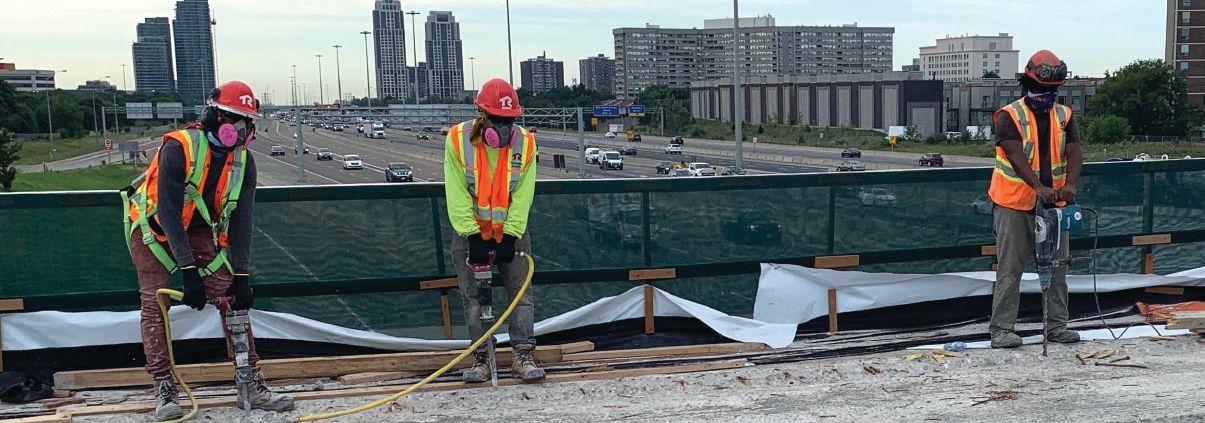
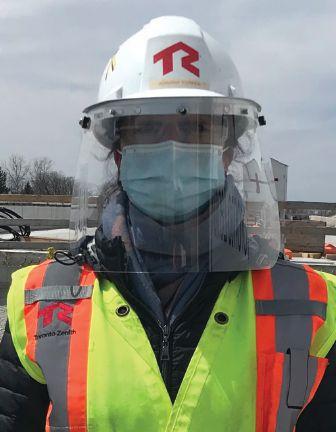
The task force was made up of members of Zenith’s executive team, including construction manager for safety and quality Adriana Torres (inset photo).
The COVID-19 lockdown began during the same week that Zenith had initiated its spring startup, she said, noting the company had already included a presentation on the coronavirus in its initial employee training.
“There was not a lot of information about COVID-19 at that time,” said Torres. “We wanted to make sure that people knew what it was. We showed a video and we kind of emphasized limiting contact between people, making sure that they washed their hands properly and no handshaking — none of that stuff. At that time, that seemed to be the right course of action.”
At the onset of the public lockdown, things began moving “super quickly,” she said. Anxiety was high amongst the company’s seasonal workforce of about
100 outdoor employees, due to the lack of initial information on the virus.
“Initially, people had a lot of questions about if it was safe for them to be working outside — if it was safe for them to even come to work.”
While Zenith never officially shut down, the company swiftly moved to instill new best practices for its worksites. Paganelli and Torres solicited feedback from the Heavy Construction Association of Toronto and other industry leaders, as well as government. Decisions were made on purchasing personal protective equipment and construction trailers.
“We made it a sense of urgency,” said Paganelli. “We really hyper focused just on the issue. That’s what it makes you do. In a crisis, you only prioritize what you can work on — immediate priorities, and you have to put all other things sort of aside.”
“Because you’ve got to keep revenues going and people working,” he said. “People need their livelihoods, but we also have to do it safely.”
As a general contractor, Zenith worked to ensure its subcontractors were all on the same page when it came to revised OH&S standards, said Paganelli.
“We had to make sure that they were screening their employees, that they were getting their employees to wear masks.”
‘Total chaos’ Paganelli communicated regularly with staff through the early days of the pandemic, assuring them they were able to choose for themselves regarding coming to work or staying home and accessing emergency government supports.
“We made sure our messaging was: ‘if you do not feel comfortable, even if we go back to work, you don’t have to come. You don’t have to have concerns. There will be a job back there for you.’”
He recalls the information flying fast and furious in the early days of the pandemic, including media reports, industry association bulletins, advisories from labour law firms and personal phone calls between companies. Policy continued to change from week to week as more information was learned.
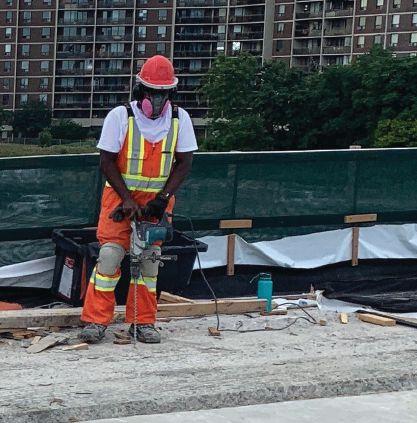
Outdoor workers were outfitted with masks, latex gloves and face shields. Initially they were provided N95 respirators, but word of a shortage in the health-care profession saw Zenith donate the rest of their stock to Torontoarea hospitals. Staff were then outfitted with P100 respirators.
One of Zenith’s first actions was pursuing hot running water on each of its construction sites, said Paganelli. “We really wanted to enforce washing your hands everywhere.”
But as Torres recalls, securing handwashing stations proved difficult.
“We couldn’t get our hands on anything, so we kind of had to build our own,” she said.
“It was like a total chaos all of a sudden. We usually have washrooms on site and hand-washing stations, but we needed more than what we usually would have had. So, it was pretty chaotic.”
As for PPE, “initially, we could get the respirators pretty easily,” said Torres. “But at the beginning of April, I think we couldn’t get anything — no latex gloves, no face shields, no respirators, no filters. Even now, it’s really hard to get stuff.”
For Torres, the rest of March into early April was all COVID, all the time.
“Pretty much, I stopped doing any other type of work that was not related to COVID-19,” she said.
“And because I also oversee quality, it was like it was a total shift on everything.”
“People were really afraid. All this stuff in the media, it just didn’t offer a lot of answers... What I did the most was going to every site and try to tell people what we were doing and how relatively safe we are, because we usually work outside,” said Torres. “We had to change the way we operated, but we could keep working.”
“The most important thing for me was to show up to the jobsites. It’s hard to tell people that they have to come to work if you don’t do it yourself,” she said. “We had five active jobsites at the time, so I would make it my purpose to go to one daily.”
Evolution of safety
By the beginning of April, Zenith had implemented a formal policy requiring workers to complete a self-assessment every day, according to Torres.
And into late summer, the focus on physical distancing continued.
“Now we put a lot of emphasis on having people working far from each other,” she said. “We want to focus on that more, because wearing PPE when its summer … you can’t really breathe.”
“So, if you don’t have to wear your P100 respirator, we want you to be at least six feet apart from one another. And if not, guys wear reusable masks, like the cloth masks.”
In terms of public health guidelines, there isn’t much information about the construction sector specifically, said Torres.
“Because most of the work happens outside, people feel somewhat comfortable, but we still want to make sure that people are not close to each other as much as possible. Sometimes it’s hard, depending on the kind of work that they’re doing.”
Productivity has slowed somewhat and costs have risen in terms of equipment rentals, such as aerial work platforms for removal of concrete from underneath bridges, she said.
“Because of COVID, and because we don’t want them to be too close, we just want one person per machine,” said Torres. “It takes longer and it’s more expensive.”
While company policy remains “if you don’t feel safe, don’t work,” Zenith’s workforce is now back up to full capacity, said Paganelli.
The company’s COVID task force continues to meet as needed, examining safety, quality and communications, he said.
While the initial anxieties have subsided somewhat, Zenith remains hyperaware ahead of a potential second wave of COVID-19, said Paganelli.
“My biggest concern would be that there’s complacency,” he said. “I don’t think we’ve won this battle yet.”
Marcel Vander Wier is the editor of OHS Canada.
STATISTICS REVEAL ‘DISAPPOINTING’ TRENDS
Latest data shows upward tick in fatalities, injuries
BY MARCEL VANDER WIER
Canadian workplaces are becoming less safe, according to the latest data on occupational health and safety across the country.
Released April 27, the 2020 Report on Work Fatality and Injury Rates in Canada indicates 1,027 workers died of work-related causes in 2018, marking an increase of 76 from 2017.
The report is based on data from 2018 — the latest available statistics. Comparable 2019 statistics will not be available until early 2021.
In 2018, most jurisdictions also reported higher injury rates, with Ontario and New Brunswick leading the way at 15 per cent, among provinces with 100,000 employees.
“That is noteworthy because for the last couple of decades at least, we’ve seen pretty consistent declines in our injury rates across Canada,” said Sean Tucker, business pro-
fessor at the University of Regina and the report’s main author. “Now we’re seeing that bottom out and the trajectory may be upward. So that’s of concern.”
“Another concern is that the injury related fatality rate increased in many jurisdictions in Canada,” he said. “You put those two together — increasing rate of injuries, increasing rate of injury fatalities — it suggests that in relative terms, workplaces are getting less safe for workers in Canada.”
Seeing the needle move the wrong way in 2018 is tough to swallow, said David Johnston, chair of the Board of Canadian Registered Safety Professionals (BCRSP) in Mississauga, Ont.
“It’s not getting better really,” he said. “It is extremely disappointing to see this happening because there’s so much effort being made and so much money being spent. And it doesn’t seem that we’re able to have any impact.”
“It is extremely disappointing because of the effort that’s being made.”
The data also spotlights continued issues in Canada’s Arctic, in terms of workplace safety, said Tucker.
Northwest Territories and Nunavut had the highest fiveyear average injury fatality rate (8.1 deaths per 100,000), according to the report.
“This is a very small jurisdiction population-wise, but their injury fatality rate of 8.1 deaths per 100,000 really is significantly higher than other jurisdictions in Canada,” he said, noting attention should be paid to this issue.
Together with co-author Anya Keefe, Tucker examined statistical data on two types of work fatalities.
Injury related deaths include motor vehicle incidents, electrocution and falls from height, while occupational disease fatalities could be due to exposure to asbestos or succumbing to mesothelioma, he said, noting the current COVID-19 pandemic will no doubt have an effect on 2020 statistics.
Call to improve data
Statistics for this annual report are drawn from data provided by the Association of Workers’ Compensation Boards of Canada (AWCBC) in Toronto.
The data originates from provincial workers’ compensation boards, each of whom collect it independently and publish it annually — usually between April and September of the following year, said Tucker.
The AWCBC then standardizes the data and publishes it online. The resulting timing lag is of issue for those attempting to identify current safety trends.
“Here we are talking about 2018 data — that’s over a year and a half ago,” he said. “We’re limited in terms of the timeliness of the data.”
“From a prevention perspective and public awareness perspective, having timely data is so important.”
While companies are able to track progress through provincial ministries of labour, access to interprovincial comparisons are not typically available, said Tucker.
“That’s just really important for prevention and awareness. And then likewise having more granular, timely statistics is helpful to identify which sectors of industry are experiencing relatively more injuries and deaths than other sectors,” he said. “That, too, will inform prevention activities.”
AWCBC CEO Cheryl Tucker declined a request for comment on this report.
“The AWCBC is not mandated to speak on behalf of our members, nor do we provide any analysis of data,” she stated.
Data harmonization has been on the agenda for decades now as general data is “almost non-existent,” according to Johnston.
“We keep talking about this,” he said, noting gathering data is specifically onerous for organizations that operate across provincial borders. “It’s not only a good thing for trying to understand what’s happening, but it’s a good thing for business.”
Transparency and clarity in workplace health and safety statistics would be of benefit for all, said Sean Tucker.
“I don’t think it’s any deliberate attempt to hide statistics whatsoever,” he said. “It’s just we have a particular structure in Canada — due to our constitution — where provinces have primary responsibility for OH&S and WCBs, and these lags are just built in.”
For this to change, provincial boards would need to take the lead, said Tucker, as they are in the best position when it comes to publishing more timely information.
Even the release of key statistics prior to the annual Day of Mourning held each April could be a major step forward for public awareness, he said.
“I think there’s an opportunity there to do that,” said Tucker. “Public awareness is really important to prevention.”
The AWCBC should take the lead on improving data availability, according to Johnston, who noted a national data bank should exist where statistics can be extracted and broken down by various search terms.
“It’s a mess — there’s no other word for it,” he said. “It takes a very long time to get these reports and then the reports together are at such a very high level, that you can’t really set any plans or objectives based on (them).”
“We need to come up with not only harmonized reporting, but we also need to take that information that we get so that we can analyze it and understand what the trends are. It’s too late when somebody’s died.”
20_1793_CN OH n S_SEP_OCT_CN Mod: August 14, 2020 11:59 AM Print: 09/10/20 5:03:09 PM page 1 v7
Ear protection in a physically distant time
By Meagan Gillmore
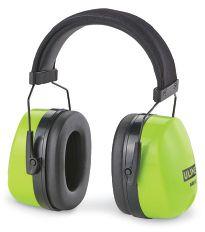
As workplaces continue to plan for safe and hygienic operations, hygiene and comfort need to be strong considerations when purchasing and using earplugs and earmuffs for hearing protection.
“Overall, there’s a more thoughtful approach to hygiene,” said Marc Kirsch, product marketing manager at Honeywell Hearing for Honeywell in Charlotte, N.C.
More workplaces are making sure that each worker has their own hearing protective equipment, or buying large packages of individually wrapped earplugs, he said.
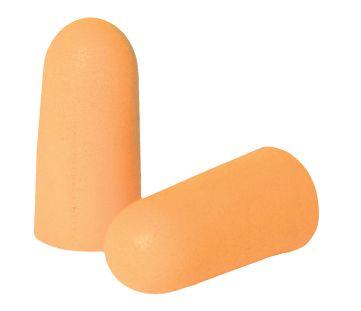
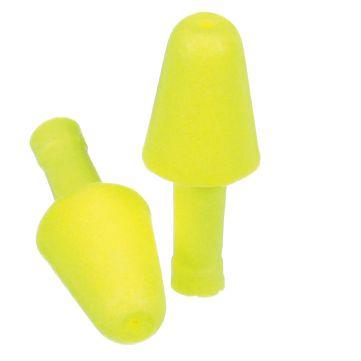
Hygienic concerns are also changing which earplugs customers prefer to buy. Push-to-fit earplugs are becoming more popular, according to Bev Borst, senior health and safety specialist for 3M Canada’s personal safety division in London, Ont. Users don’t have to roll down the foam on the earplug to insert them.
“They’re easy to insert by not touching the tip,” she said. “Push-to-fit earplugs allow for nice, clean, comfortable protection.”
The earplugs can be cleaned by wiping down the foam tip with a dry cloth and re-used, said Borst.
Honeywell’s TrustFit products can also be inserted without having to roll down the foam, said Kirsch. “You don’t have to roll down the foam or touch it,” he said. “You can put it in while you have gloves on. You don’t have to worry about touching the ear pod, and you can push it right into your ear.”
Many workers are opting for hearing protection that hangs around their neck when they’re not using it, said Mary Padron, a senior marketing and com munications specialist at Radians in Memphis, Tenn.
“That means you don’t have to take your hearing protection and lay it on a surface,” she said, noting this can keep the equipment cleaner for longer.
Ear protection during COVID More workplaces are investing in hearing protection equipment that allows employees to com municate clearly while remaining
physically distant.
COVID-19 has resulted in increased purchases of earplugs and earmuffs that allow two-way communication between workers and supervisors, said Borst. Some products are connected to radios; others have external microphones for communication and monitoring the sounds in the environment.
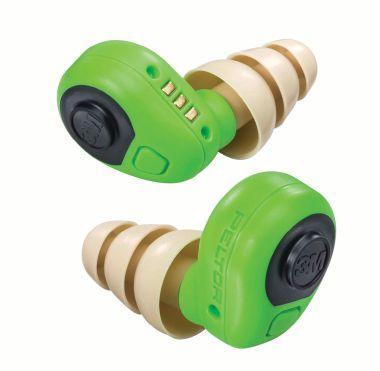
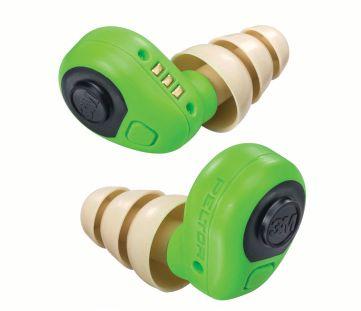
The 3M PELTOR Electronic Earplug, EEP-100 is an electronic earplug that “allows wearers to still hear the ambient noise around them” while communicating with others, said Borst. This product works best in settings where there’s continuous noise between 90 and 95 decibels, such as manufacturing facilities.
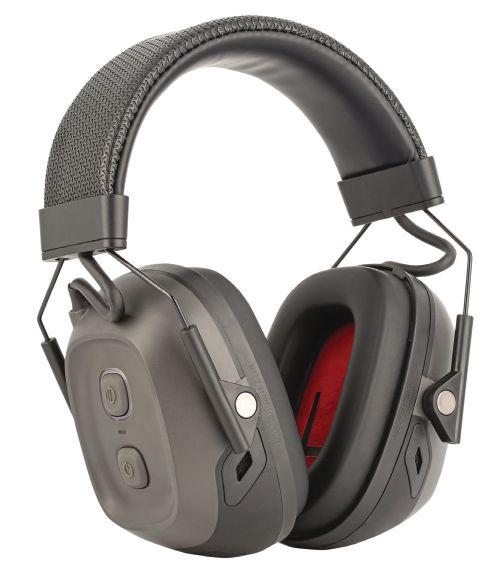
Technology is also enabling employers to see the specific dangers that workers are facing, and address those hazards quickly. With Honeywell’s VeriShield Smart Hearing Solution, safety managers can see what risks to hearing loss their workers are experiencing.
“It’s more of a headset than your standard earmuff,” explained Kirsch. “It actually measures the personalized hearing loss prevention of an individual worker.”
The headsets reduce dangerous noise levels and allow wearers to communicate with others. The headsets also collect data about noise levels and send that data to Honeywell’s cloud-based storage.
Supervisors can use Honeywell’s VeriShield mobile app to view the data and observe patterns. This can show when and where workers are most at risk. Prevention plans can be made quickly when the problems arise. The headsets also send alerts if they are not being worn properly.
Personalized equipment doesn’t necessarily have to be high-tech.
“Another popular trend is custommolded earplugs for personalized hearing protection,” said Padron.
The earplugs are made from a material that, at first, feels like silly putty. It hardens as it molds to an individual’s ear, and keeps that shape even after being washed, said Padron.
“They are a permanently molded plug,” she said, noting that they are ultimately less expensive than reusable earplugs because, although they cost more to buy, they can be used more times than disposable earplugs. The earplugs can last for years.
Radians sells a Custom Molded Earplugs case and lanyard so users can wear them around their necks.
These earplugs are especially popular with younger workers who are used to sleek earbuds and may not want to wear bulky industrial earmuffs, said Padron, noting younger workers are also more likely to buy brightly coloured earplugs.
Workplace, worker fit
Bright colours can also increase safety, according to Padron. First, bright earplugs are easier for safety managers to see. This helps with ensuring worker compliance.
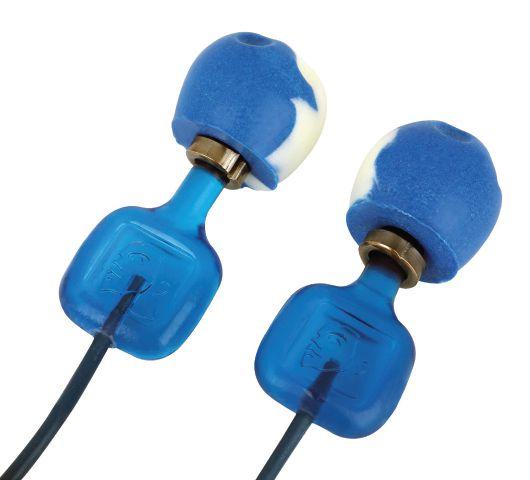
Bright blue earplugs are especially popular in food manufacturing, she said, because they’re easier to find if they fall into products. Radians has metal-detectable blue earplugs that have metal embedded into the plug so they can be detected easily.
For hearing protection to work well, it needs to be inserted properly. But not all workers insert earplugs with two hands, as described by safety instructions, said Borst.
“All earplugs require the use of two hands to properly
insert them. That’s how workers are instructed, and that’s how the noisereduction rating is calculated.”
3M’s new E-A-R Flexible Fit HA Earplugs can provide hearing protection, even when they’re inserted with only one hand, she said.
The company tested the product on workers who inserted it by using one hand, and the earplug provides up to 25 decibels of protection. That rises to 30 decibels of protection when it’s inserted with two hands.
A unique technology, it’s “the first earplug that has a one-hand insertion method with a noise-reduction rating,” said Borst.
Earmuffs typically last longer than earplugs. Workers need to diligently make sure their equipment is in top shape, she said.
“It needs to be inspected,” said Borst. “It needs to make sure that it’s sealing tight against the head of the wearer. If the band starts becoming loose, then you need to look at updating to a new pair.”
Earplugs must properly fit the shape of a worker’s ear canal to be effective.
“There is a risk of damaging your hearing if you’re not wearing it correctly and if it doesn’t fit. I could still put an earplug in right, but it’s possible it may be the wrong size for my ear canal,” said Borst. “There’s people who can put them in just like the instructions say, but it’s not the right size or shape to fit their ear canal.”
Comfort always remains key to ensuring proper protection. If earplugs or earmuffs don’t fit properly, or if they’re not comfortable, workers simply won’t wear them. This increases the dangers to their hearing.
“If they’re not wearing their personal protective equipment, they’re not protected,” said Kirsch, noting Honeywell has increased the adjustability of some of their products, and made them wider to suit various ear sizes.
“People have got to wear it all day long. It’s got to be comfortable,” he said. “But it’s also got to be adjustable to fit their face, whether it’s a big beard or glasses — it’s got to have that adjustability.”
Hearing loss may be common, but it’s not inevitable, said Kirsch. “You can be proactive and you can address hearing loss before it happens.”
“You don’t have to suffer from hearing loss and you can do something about it now.”
Meagan Gillmore is a freelance writer in Toronto.
Occupational hygiene holds important place within profession
By Richard Quenneville
The American Board of Industrial Hygiene (ABIH) — now known as the Board for Global EHS Credentialing (BGC) — reported that at the end of last year, there were 6,940 certified industrial hygienists (CIH) globally, of which 6,225 were in the United States.
Canada has the second largest group of ABIH diplomates (448) followed by China (92), Singapore (37), Hong Kong (34), India (30), Australia (30), South Korea (15), Malaysia (13), Taiwan and Saudi Arabia (eight each).
The Canadian Registration Board of Occupational Hygienists (CRBOH) is our national organization responsible for certifying registered occupational hygienists (ROH) and registered occupational hygiene technologists (ROHT) in Canada.
At the June 11 annual general meeting, CRBOH reported that there were 316 ROH and ROHTs active members.
These credentials (ROH, ROHT and CIH) certify that the individuals delivering occupational hygiene services in Canada have undergone a critical review of their years of occupational hygiene work experience, have the required science or engineering education, and have successfully passed written and oral exams designed to test their knowledge and certify that they are professionals.
With such a small group of certified professionals in Canada, the general public may not necessarily know what occupational hygiene is.
Science of safety
The term occupational hygiene (used in Canada, the United Kingdom and Commonwealth countries, as well as much of Europe) is synonymous with industrial hygiene (used in the U.S., Latin America, and other countries that have received initial technical support or training from U.S. sources).
Occupational hygiene is often defined as the science devoted to the anticipation, recognition, evaluation, prevention and control of those environmental factors or stresses (stressors) arising in or from the workplace which may cause sickness, impaired health and well-being, or significant discomfort among workers or citizens of the community.
In simple terms, occupational hygiene is “the science devoted to preventing illness from work activities.”
Occupational hygienists are scientists and engineers committed to protecting the health and safety of people in the workplace and the community.
Old-school (long-standing) occupational hygienists — including myself — originally rose from careers in the sciences, such as chemistry, biology, physics or engineering. We were self-trained on the job, attended many training courses and eventually had the courage, confidence and aptitude to challenge the certification exams and be designated a professional occupational hygienist.
That approach, of course, has evolved.
Canada now has four universities — the University of Toronto, McGill University, University of Montreal and University of British Columbia — that offer master’s degree programs which provide the necessary education and
foundation to become a professional occupational hygienist, or pursue designation as such.
Complimenting OH&S
Occupational safety may be defined as the maintenance of a working environment relatively free from actual or potential hazards capable of causing physical harm to those who work in the environment.
Safety professionals are typically responsible for monitoring and managing workplace safety and developing programs in order to help senior management comply with occupational health and safety legislation and prevent accidents in the workplace.
Occupational safety professionals often focus on workplace physical safety issues that can cause immediate injury or death such as hazardous work, slips and trips and falls, logout or tagout protocols for hazardous machines, hazardous energies, workplace violence, loss time accidents, safety inspections and risk management.
Occupational hygienists, by comparison, focus more on workplace hazards that may not have immediate outcomes, but may also lead to serious consequences, such as occupational illness, a shortened lifespan or quality of life.
Occupational hygiene compliments the health and safety process by providing expert evaluation and anticipation of the significant exposure routes for chemical, physical or biological exposures, based on their physical or chemical properties.
Occupational hygienists can characterize important similar exposure groups in a workplace in order to prioritize limited sampling resources and budgets on high-risk workers and avoid waste.
Occupational hygienists advise on sampling strategies to ensure sufficient samples are collected to statistically model the worst-case occupational exposure(s) in a similar exposure group and identify the risk of overexposure or even model workplace exposures.
Workplace evaluation
Practically speaking, occupational hygienists may not spend much time evaluating workplace physical safety or accident statistics. However, they do spend a lot of time evaluating and analyzing occupational hygiene issues that exhibit the potential for causing serious illness.
These may include biological agents such as allergens, mould, endotoxins or even COVID-19. Occupational hygienists are trained and experienced in evaluating hazardous properties of chemical agents in the workplace, such as acute toxicity, skin corrosion and irritation, eye damage and irritation, respiratory and skin sensitization, genotoxicity, carcinogenicity, reproductive toxicity and specific organ toxicity — and identify high-risk agents and provide recommendations based on the hierarchy of controls.
Occupational hygienists can evaluate workplaces over exposure to heat stress and strain from machines, clothing choices and work intensity, assess
chemical risks in a confined space and identify significant factors for improving poor indoor air quality.
They are also able to assist OH&S professionals in evaluating ergonomic factors in the workplace that may affect worker health through repetitive motion, awkward postures, poor lighting or unacceptable loads during manual material handling.
Occupational hygienists are experts in evaluation of workplace exposures to physical agents such as ionizing and non-ionizing radiation, lasers, noise and vibration and are able to enhance the health and safety process in the workplace.
They can advise and develop programs for personal protective equipment, including respiratory protection, cartridge change-out schedules and suitability of skin protection based on chemical permeability. They can recognize ventilation problems and make recommendations for improvement.
Based on the certification maintenance requirements for CIH, ROH and ROHT, occupational hygienists and technologists are required to attend courses, deliver training at conferences, participate in occupational hygiene associations — in addition to their practice, in order to maintain their certifications.
This results in professional occupational hygienists being current in new technologies such as advanced manufacturing techniques like 3D printing, nanotechnology, statistical analysis and emerging occupational hazards.
Occupational hygiene is a specialty science and necessary in the health and safety process to collaborate with and advise safety professionals on how to evaluate workplace agents capable of causing occupational illness.
In order to ensure that you are using a qualified occupational hygiene professional, contact the Canadian Registration Board of Occupational Hygiene or the American Board of Industrial Hygiene to see if they are on the roster.
Richard Quenneville is the senior director of corporate services with T. Harris Environmental Management in Toronto.
2020 BUYERS GUIDE
3M CANADA
P.O. Box 5757 London ON N6A 4T1
Tel: 800-364-3577
Web: 3M.ca/Safety
As the Canadian leaders in fall protection and personal safety, 3M helps keep everyone safer in a changing world. Across diverse industries and applications, our science and expertise drive solutions that educate people, provide comfort, increase compliance and get workers home safely.
B
Board of Canadian Registered Safety Professionals
Conseil Canadien Des Professionnels En Sécurité Agréés
BOARD OF CANADIAN REGISTERED SAFETY PROFESSIONALS
6700 Century Ave Suite 100 Mississauga ON L5N 6A4
Tel: 905-567-7198
Web: www.bcrsp.ca
The Board of Canadian Registered Safety Professionals (BCRSP) is a public interest, not-for-profit, federally incorporated selfregulating organization which sets the certification standards for the OHS profession. BCRSP strives to advance the body of knowledge, the competency of the profession, and the value our certificants bring to society. The BCRSP grants the CRSP® and CRST certifications to individuals who successfully
complete the certification process through application assessment, interview, and examination. The Board governs its certificants in order that the public interest may be served and protected.
BRADY CANADA
710 COCHRANE DRIVE MARKHAM ON L3R 5N7
Tel: 800-263-6179
Web: www.BradyCanada.ca
Brady is a manufacturer of complete solutions that identify and protect people, products and places. Brady’s products help customers increase safety, security, productivity and performance and include highperformance labels, signs, safety devices, printing systems and software.
CCASELLA
415 Lawrence Bell Drive, Unit 4 Buffalo NY 14221
Tel: 800-366-2966
Web: www.casellasolutions.com
Casella takes its commitment to develop life-changing monitoring technology seriously. Where workplace hazards include excessive noise or vibration levels, dust, vapors, and gases that can pose potential risks to worker health, Casella is dedicated to providing innovative solutions to monitor these hazards, allowing operators to assess potential risks to health and take the necessary steps to control these. Casella’s range of monitoring
solutions provides Industrial Hygienists and workplace safety managers with the necessary tools to capture data around a wide range of workplace risk areas, whether monitoring individual workers with body-worn equipment or covering emissions from the site with fence line monitoring. From noise dosimeters and sound level meters to air sampling pumps and fence line monitors, Casella cover all aspects of workplace and environmental monitoring needs with their pioneering equipment and innovation.
CERVUS EQUIPMENTMATERIALS HANDLING CALGARY
5159 72 Avenue SE Calgary AB T2C 3H3
Tel: 403-243-6011
Web: cervusequipment.com/training
Enhance your safety, productivity, efficiency, and confidence on the job with Cervus Equipment’s Heavy Equipment Operator Training.
We offer telehandler, excavator, mobile elevated work platform, fall protection, skid steer, cranes & rigging, forklift, chain saw, and front end loader training options in an online, in-class or on-site format. Our certification meets and exceeds safety standards across Canada with OH&S and CSA compliance. Contact us today for all your equipment operator training requirements.
CERVUS EQUIPMENTMATERIALS HANDLING EDMONTON
9412 - 51 Avenue N.W Edmonton AB T6E 5A6
Tel: 780-432-6262
Web: cervusequipment.com/training
Enhance your safety, productivity, efficiency, and confidence on the job with Cervus Equipment’s Heavy Equipment Operator Training.
We offer telehandler, excavator, mobile elevated work platform, fall protection, skid steer, cranes & rigging, forklift, chain saw, and front end loader training options in an online, in-class or on-site format. Our certification meets and exceeds safety standards across Canada with OH&S and CSA compliance. Contact us today for all your equipment operator training requirements.
CERVUS EQUIPMENTMATERIALS HANDLING LETHBRIDGE
935A 36 Street North Lethbridge AB T1H 6L5
Tel: 403-243-6011
Web: cervusequipment.com/training
Enhance your safety, productivity, efficiency, and confidence on the job with Cervus Equipment’s Heavy Equipment Operator Training.
We offer telehandler, excavator, mobile elevated work platform, fall protection, skid steer, cranes &
rigging, forklift, chain saw, and front end loader training options in an online, in-class or on-site format. Our certification meets and exceeds safety standards across Canada with OH&S and CSA compliance. Contact us today for all your equipment operator training requirements.
CERVUS EQUIPMENTMATERIALS HANDLING RED
DEER
#8 - 15 Burnt Bluff St. Red Deer AB T4P 0J8
Tel: 403-341-4091
Web: cervusequipment.com/training
Enhance your safety, productivity, efficiency, and confidence on the job with Cervus Equipment’s Heavy Equipment Operator Training.
We offer telehandler, excavator, mobile elevated work platform, fall protection, skid steer, cranes & rigging, forklift, chain saw, and front end loader training options in an online, in-class or on-site format.
Our certification meets and exceeds safety standards across Canada with OH&S and CSA compliance. Contact us today for all your equipment operator training requirements.
CERVUS EQUIPMENTMATERIALS HANDLING REGINA
505 Park St. Regina SK S4N 5B2
Tel: 306-721-4608
Web: cervusequipment.com/training
Enhance your safety, productivity, efficiency, and confidence on the job with Cervus Equipment’s Heavy Equipment Operator Training.
We offer telehandler, excavator, mobile elevated work platform, fall protection, skid steer, cranes & rigging, forklift, chain saw, and front end loader training options in an online, in-class or on-site format.
Our certification meets and exceeds safety standards across Canada with OH&S and CSA compliance. Contact us today for all your equipment operator training requirements.
CERVUS EQUIPMENTMATERIALS HANDLING SASKATOON
210 Faithfull Crescent Saskatoon SK S7K 8H8
Tel: 306-933-3383
Web: cervusequipment.com/training
Enhance your safety, productivity, efficiency, and confidence on the job with Cervus Equipment’s Heavy Equipment Operator Training.
We offer telehandler, excavator, mobile elevated work platform, fall protection, skid steer, cranes & rigging, forklift, chain saw, and front end loader training options in an online, in-class or on-site format.
Our certification meets and exceeds safety standards across Canada with OH&S and CSA compliance. Contact us today for all your equipment operator training requirements.
CERVUS EQUIPMENTMATERIALS HANDLING WINNIPEG
465 Egesz Street Winnipeg MB R2R 2V5
Tel: 204-233-1611
Web: cervusequipment.com/training
Enhance your safety, productivity, efficiency, and confidence on the job with Cervus Equipment’s Heavy Equipment Operator Training.
We offer telehandler, excavator, mobile elevated work platform, fall protection, skid steer, cranes & rigging, forklift, chain saw, and front end loader training options in an online, in-class or on-site format. Our certification meets and exceeds safety standards across Canada with OH&S and CSA compliance. Contact us today for all your equipment operator training requirements.
COMTREE INC. - ALUMALIFT
54-6625 Kitimat Rd.
Mississauga ON L5N 6J1
Tel: 905-673-7777
Web: www.alumalift.com
Comtree represents Alum-a-Lift: Designer and manufacturer of turnkey ergonomic lifting solutions for companies around the world. From single custom units to multiple devices to entire lifting systems, our proven solutions help manufacturers meet their material handling needs safely and efficiently.
DRAEGER SAFETY CANADA LTD.
2425 Skymark Ave., Unit 1
Mississauga ON L4W 4Y6
Tel: 905-212-6600
Fax: 905-212-6602
Web: www.draeger.com
Draeger was established in 1889 as a manufacturer of gas detection and respiratory protection and serves customers worldwide. The current portfolio includes stationary and personal gas detection systems, respiratory protection equipment, fire training systems, thermal imaging cameras and alcohol and drug detection units. “Technology for Life” is the guiding philosophy. Whether in clinical applications, industrial safety applications, oil & gas, mining or fire and emergency services, Drager products protect, support and save lives. www.draeger.com
GGLENGUARD
1831 North Park Avenue
Glen Raven NC 27217
Tel: 336-227-6211
Web: www.glenguard.com
GlenGuard is the ultimate fabric for arc-rated, flame-resistant (AR/ FR) protective apparel – delivering the perfect blend of comfort, durability, and versatility. GlenGuard is lightweight and breathable to keep workers comfortable, and its protective properties are engineered to overcome and outlast even the harshest conditions.
GlenGuard’s inherently flameresistant fabrics are available in three unique weights – 4.5 oz., 5.3 oz., and 6.4 oz. – and an array of vibrant colors.
There are many variables that you can’t control in the field, but you can control compliance. Because it‘s not what your workers wear, it‘s how they wear it. And comfortable workers are less likely to cheat compliance.
Specify GlenGuard and enable your workers to be more compliant with their FR work wear. For more information, visit www.glenguard.com.
LLEVITT-SAFETY
2872 Bristol Cir Oakville ON L6H 5T5
Tel: 888-453-8488
Web: levitt-safety.com/
Levitt-Safety is a national provider of life, fire and environmental safety products, services, and training. With strategically located branches across Canada, Levitt-Safety is equipped to serve companies of any size or industry who want to simplify their operations and improve the safety in their organization. Learn more at https://www.levitt-safety.com/
O
O2 INDUSTRIES INC
5 Michael St Kitchener ON N2G 1L7
Tel: 519-497-9695
Web: o2canada.com
Founded in 2014, O2 Industries was founded on the belief that everyone deserves to breathe clean air. O2 manufacturers reusable respirators with efficient, replaceable filters to protect:
• Healthcare professionals from bacteria and pathogens
• Individuals and travelers from air pollution
• Labourers in construction from excess dust and dirt
• Law enforcement and military from airborne lead and debris
• Sufferers of asthma, allergies, and serious health conditions
With a variety of strap solutions, coloured shells, and filter material -users can customize their respirator for optimum comfort and style.
PIP CANADA LTD. (DYNAMIC)
2477 rue Michelin Laval QC H7L 5B9
Tel: 514-409-2859
Web: www.pipcanada.ca
PIP Canada is a leading manufacturer of head protection and personal protective equipment (PPE), with most products designed and made right here in Canada. We work hard with and for our distributor partners to deliver best-in-class experiences via comprehensive product offerings, world-class sales tools, and efficient processes. We also offer online or face-to-face trainings. We are here to support
you as you adapt to the new normal by helping you solve new problems in a cost-effective way that keeps workers safe and performing at their best. And as always, you can count on our innovative designs to deliver exceptional comfort & fit. Contact us today to learn more.
PURE SAFETY GROUP
607 East Sam Houston Pkwy S Pasadena TX 77503
Tel: 800-466-6385
Web: www.puresafetygroup.com
Pure Safety Group (PSG) is the largest independent dedicated fall protection company in the world, providing high-performance and professional fall protection equipment, dropped object prevention products, and services such as training, engineering and onsite consultation. Its more than 350 employees serve customers in the construction, oil and gas, energy, utilities, telecom, mining, and transportation industries. PSG was formed by a team of industry veterans with a family of companies and brands including industryleading fall protection companies
Guardian Fall Protection, Checkmate, and Stronghold by PSG. Houston, Texas, is home to PSG global headquarters and training center with a second training center located in the U.K.
SSC JOHNSON PROFESSIONAL
1 Webster Street Brantford ON N3T 5R1
Tel: 519-443-8697
Web: www.scjp.com/en-ca
At SC Johnson Professional®, we provide expert skin care, cleaning
& hygiene solutions for industrial, institutional and healthcare users.
SHOWA
2507 Macpherson Magog QC J1X 0E6
Tel: 819-843-2121
Web: www.showagroup.com
SHOWA is synonymous with the highest degree of hand protection and innovation. Pioneering revolutionary technology, we’ve forever changed and improved our industry with over 1,800 gloves meticulously engineered for excellence. Down to every fiber, our gloves are created better to perform better, unleashing new potential for hands at work.
SWENCO LIMITED
560 Conetsogo Rd Waterloo ON N2L 4E3
Tel: 519-884-7400
Fax: 518-884-8821
Web: http://www.steelflex.com
We are Canadian manufacturers of PPE. We make best in class CSA Z334 visitors overshoes, lace in and strap on metguards, neoprene overshoes as well as ASTM approved earloop procedure face masks and N95 masks.
U
ULINE SHIPPING SUPPLIES
12575 Uline Drive
Pleasant Prairie WI 53158
Tel: 262-612-4200Uline, a familyowned business, is the leading distributor of shipping, industrial and packaging materials to businesses throughout North America.
For over 40 years, we’ve stayed committed to providing the highest levels of service and quality products to our customers. Depend on Uline to build your business – we won’t let you down.
V
VITA FIRST AID
99 Crompton Dr. Barrie ON L4M 6P1
Tel: 647-699-7702
Web: vitafirstaid.com
Vita First Aid are AED / Portable Defibrillator specialists. We exist to help you protect the people at your locations. AEDs are necessary for a complete safety plan. We carry a full line of AEDs and cabinets and have the expertise to help you become prepared for a cardiac crises. We also sell parts for all makes and models of AEDs. Contact us today with any questions or for a no obligation quote.
W
WAYNE SAFETY INC
1250 Sheppard Ave West Toronto ON M3K 2A6
Tel: 416-661-1100
Fax: 416-661-3447
Web: www.waynesafety.com
Wayne Safety is a leading Canadian provider of safety supplies and PPE to the Canadian marketplace. A family owned and operated business that takes pride in supplying quality products, while delivering
outstanding customer service for over 70 years. If you require safety products and/or PPE, Wayne Safety is your go to suplier.
YYOW CANADA INC.
1306 Algoma Road Ottawa ON K1B 3W8
Tel: 866-688-2845
Web: www.yowcanada.com
An award winning safety training provider, YOW Canada develops courses and materials to help Canadians with occupational health and safety compliance. With over 18 years of industry experience, we proudly offer fully track-able, user-friendly training courses and outstanding customer support.
Our team of dedicated professionals ensures the most accurate information is available to our clients. Each one of our courses and training products is reviewed by industry professionals to ensure accuracy, relevancy and compliance to applicable laws and regulations.
Customer input is valued and has helped us streamline our training and administration tools. A great deal of time and effort goes into the products we develop and we’re proud of what we offer. Our courses are easy to use, dynamic and effective.
YOW Canada Inc. - Safety Compliance Made Easy!
Air Quality
Levitt-Safety
O2 Industries Inc
Associations
Board of Canadian Registered Safety Professionals
Confined Space
3M Canada
Levitt-Safety
Pure Safety Group
Emergency Equipment
Levitt-Safety
Emergency Management
Levitt-Safety
Vita First Aid
Environmental Services
Casella
Levitt-Safety
Ergonomics
Comtree Inc. - Alumalift
Eye Protection
3M Canada
Levitt-Safety
PIP Canada Ltd. (Dynamic)
Uline Shipping Supplies
Wayne Safety Inc
Face Protection
3M Canada
Levitt-Safety
O2 Canada
PIP Canada Ltd. (Dynamic)
Uline Shipping Supplies
Wayne Safety Inc
Fall Protection
3M Canada
Cervus Equipment - Materials
Handling Calgary
Cervus Equipment - Materials
Handling Edmonton
Cervus Equipment - Materials
Handling Lethbridge
Cervus Equipment - Materials
Handling Red Deer
Cervus Equipment - Materials
Handling Regina
Cervus Equipment - Materials
Handling Saskatoon
Cervus Equipment - Materials
Handling Winnipeg
Levitt-Safety
PIP Canada Ltd. (Dynamic)
Pure Safety Group
Uline Shipping Supplies
Wayne Safety Inc
Fire Protection
Draeger Safety Canada Ltd.
Levitt-Safety
Uline Shipping Supplies
First Aid
Levitt-Safety
PIP Canada Ltd. (Dynamic)
Vita First Aid
Flame Resistant
Clothing
GlenGuard
Levitt-Safety
Foot Protection
Levitt-Safety
Swenco Limited
Uline Shipping Supplies
Wayne Safety Inc
Gas Detection
Draeger Safety Canada Ltd.
Levitt-Safety
Hand Protection
Levitt-Safety
PIP Canada Ltd. (Dynamic)
SHOWA
Uline Shipping Supplies
Wayne Safety Inc
Health & Safety
Software
3M Canada
Levitt-Safety
YOW Canada Inc.
Hearing Protection
3M Canada
Casella
Levitt-Safety
PIP Canada Ltd. (Dynamic)
Uline Shipping Supplies
Wayne Safety Inc
Identification Products
BRADY CANADA
Levitt-Safety
PIP Canada Ltd. (Dynamic)
Industrial Hygiene
3M Canada
Casella
Levitt-Safety
SC Johnson Professional
Swenco Limited
Instrumentation
Levitt-Safety
Lone / Remote Worker
Levitt-Safety
Machine & Tool Safety
Cervus Equipment - Materials
Handling Calgary
Cervus Equipment - Materials
Handling Edmonton
Cervus Equipment - Materials
Handling Lethbridge
Cervus Equipment - Materials
Handling Red Deer
Cervus Equipment - Materials
Handling Regina
Cervus Equipment - Materials
Handling Saskatoon
Cervus Equipment - Materials
Handling Winnipeg
Material Handling
Cervus Equipment - Materials
Handling Calgary
Cervus Equipment - Materials
Handling Edmonton
Cervus Equipment - Materials
Handling Lethbridge
Cervus Equipment - Materials
Handling Red Deer
Cervus Equipment - Materials
Handling Regina
Cervus Equipment - Materials
Handling Saskatoon
Cervus Equipment - Materials
Handling Winnipeg
Comtree Inc. - Alumalift
Levitt-Safety
Uline Shipping Supplies
Noise Control & Monitoring
Casella
Levitt-Safety
Pandemic Planning
3M Canada
Levitt-Safety
O2 Industries Inc
Personal Protective Equipment
3M Canada
Levitt-Safety
O2 Industries Inc
PIP Canada Ltd. (Dynamic)
Pure Safety Group
Swenco Limited
Wayne Safety Inc
Respiratory Protection
3M Canada
Draeger Safety Canada Ltd.
Levitt-Safety
O2 Canada
O2 Industries Inc
PIP Canada Ltd. (Dynamic)
Swenco Limited
Uline Shipping Supplies
Wayne Safety Inc
Safety Manuals & Posters
BRADY CANADA
Safety Products, Agriculture
Levitt-Safety
O2 Canada
Vita First Aid
Safety Products, Manufacturing
BRADY CANADA
Levitt-Safety
O2 Canada
Pure Safety Group
Swenco Limited
Uline Shipping Supplies
Vita First Aid
Safety Products, Traffic
BRADY CANADA
O2 Canada
PIP Canada Ltd. (Dynamic)
Vita First Aid
Safety Products, Utility
Levitt-Safety
O2 Canada
Pure Safety Group
Uline Shipping Supplies
Vita First Aid
Safety Supplies & Equipment
BRADY CANADA
Levitt-Safety
O2 Canada
Pure Safety Group
Uline Shipping Supplies
Vita First Aid
Wayne Safety Inc
Showers
Levitt-Safety
Signs and Labels
BRADY CANADA
Levitt-Safety
PIP Canada Ltd. (Dynamic)
Uline Shipping Supplies
Slips & Falls
BRADY CANADA
Levitt-Safety
Uline Shipping Supplies
Thermal Detection
Levitt-Safety
Training & Education
3M Canada
Cervus Equipment - Materials
Handling Calgary
Cervus Equipment - Materials
Handling Edmonton
Cervus Equipment - Materials
Handling Lethbridge
Cervus Equipment - Materials
Handling Red Deer
Cervus Equipment - Materials
Handling Regina
Cervus Equipment - Materials
Handling Saskatoon
Cervus Equipment - Materials
Handling Winnipeg
Levitt-Safety
Pure Safety Group
YOW Canada Inc.
ANTI-MASK PROTEST DRAWS THOUSANDS IN MONTREAL
Thousands gathered in downtown Montreal on Sept. 12 to rally against the Quebec government’s response to the COVID-19 pandemic. The march began at Premier François Legault’s office and stretched more than six city blocks at one point, according to CBC News. Montreal Mayor Valérie Plante criticized the protesters, calling the event “irresponsible.” The event featured speeches by conspiracy theorists and anti-vaccine activists, alongside symbols associated with QAnon, a far-right conspiracy with origins in the U.S.
GERMAN SANDWICH POISONER LIABLE FOR MORE THAN $1M
BERLIN (AP) — A German man who was convicted of poisoning his co-workers’ food over several years is liable for more than 1 million euros (C$1.5 million) in damages, a court ruled July 28. The 59-year-old identified only as Klaas O. was sentenced to life in prison in March last year when he was found guilty of attempted murder. A young man who was one of his victims died in January, four years after he was poisoned and fell into a coma. The defendant peppered co-workers’ food and drinks with mercury and other substances over several years. A labour court awarded the relatives of the 26-year-old who died 580,000 euros in damages. Another colleague who lost a kidney was awarded a half-million euros.
ALASKA PILOT SENTENCED FOR LYING TO ACCIDENT INVESTIGATORS
ANCHORAGE (AP) — An Alaska pilot convicted of lying to federal investigators after a fatal 2014 crash has been sentenced to a one-year prison term on Sept. 9, followed by three years of probation, as well as a $5,000 fine. Forest Kirst was found guilty of obstructing crash investigations. Three Canadian tourists and Kirst were all seriously injured when the August 2014 sightseeing flight crashed. One passenger
later died. Federal prosecutors said Kirst misled investigators about his altitude and told several different versions about what happened immediately before the crash.
MORE THAN 20 WORKERS HURT IN TEXAS CRANE ACCIDENT
AUSTIN (AP) — Two cranes collided Sept. 16 at a construction site in the capital of Texas, causing one of them to partially collapse and injuring at least 22 workers who were sent scrambling for safety, authorities said. The cranes collided and got tangled several storeys above a building under construction just north of downtown in a rapidly growing neighbourhood that includes residential, retail and office space. An EMS spokesman Darren Noak said at a news conference that 22 workers were hurt, including 16 who were taken to hospitals with non-life-threatening injuries. The cause of the accident was still under investigation. Most of the injuries occurred when workers scrambled away from the scene, he said.
PASSENGERS THREATENED FLIGHT ATTENDANT AFTER PLANE CRASH
TORONTO (CP) — The Transportation Safety Board has released its report into a crash between a Jazz Aviation LP flight and a fuel tanker in 2019, detailing how passengers ignored and threatened staff to be let off the plane. The safety board says the flight bound for Sudbury was unable to land, returning to Toronto at 1:26 a.m. on May 10, and collided with a fuel tanker while taxiing. The report notes that despite instructions from a flight attendant, one passenger climbed over their seat to open an emergency window exit and subsequently jumped from the plane. “Many passengers ignored the instructions from the flight attendant to remain seated and calm; some were gathering their bags from the overhead compartments; and some were escalating the panic by yelling that they needed to get out of the aircraft,’’ the board noted, adding that some passengers attempted to reboard the flight after disembarking.
Follow us on Twitter @OHSCanada
Increased stock and volume discounts are now available.