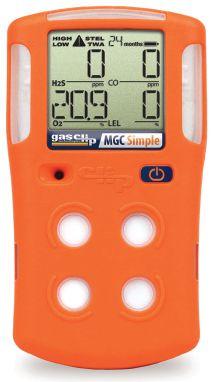
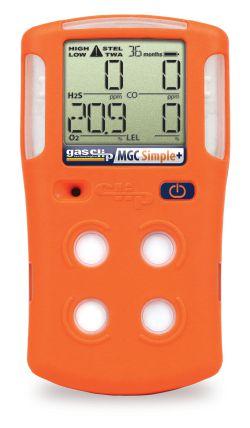
uTwo or three year run time with no charging or calibration
uDetect in oxygen deficient or oxygen enriched environments
uLEL sensor is immune to sensor poisoning
uFails to safe
uSimple, one button operation
uLogs data at one second intervals whenever gas is detected
u100% Quality control tested
uFull two or three year warranty
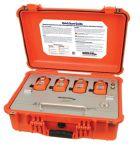
Multi Gas Clip
The portable multi gas detector that can run continuously for two months on one charge due to advanced infrared sensor technology. Detects combustible gases (LEL), H2S, CO and O2.
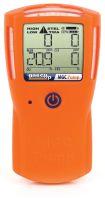
Multi Gas Clip Pump
Compact, light-weight, handheld/wearable multi gas detector with internal pump draws from 75 ft. & runs for an average of 52 hours on a single charge. Detects combustible gases (LEL), H2S, CO and O2
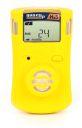
Single Gas Clip
Eliminate downtime with our ultra-reliable portable gas detector. Detects H2S, CO or O2
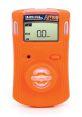
Single Gas Clip Plus
Hibernate mode offers extended life option when detector is not in use. Detects H2S or CO.
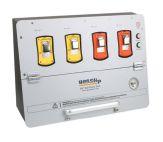
Compatible Docking Stations
Portable, durable 4-bay dock stations
quickly bump test, calibrate & log data for up to four detectors at once with the push of a button.
Single Gas Clip Dock, Multi Gas Clip Dock, MGC Pump Clip Dock & MGC Simple Clip Dock
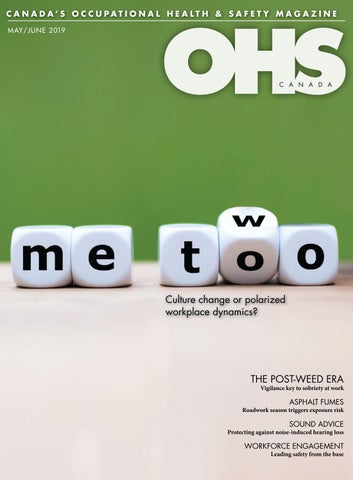
Harassment continues to be a divisive issue. It has also raised a difficult question: will it polarize workplace gender relations?
BY KELLY PUTTER
Vigilance and implementing an effective impairment-management program — not testing for impairment — are key to enforcing fitness for duty.
JEAN LIAN
British Columbia
be due for a large
called a megathrust that occurs every few hundred years.
JEAN LIAN
ALAN QUILLEY
The Battle Over Vaccines
Workplace safety in the Digital Era never fails to yield surprising twists and turns. The measles outbreak in Canada presents not only a public-health risk, but also threatens those who work in healthcare. Teachers and staff who are employed in educational institutions also face exposure risk since the outbreak is largely triggered by patchy vaccination rates among school-age children and teenagers.
According to the federal government’s weekly surveillance reports on measles and rubella, Canada has 45 reported cases of measles as at the end of April. The outbreak is so concerning that the University of Toronto launched The Centre for Vaccine Preventable Diseases — the first academic centre of its kind in the country to focus on the public perception of vaccines and exploring ways to boost vaccination rates.
The United States is not spared from the outbreak either. In the first five months of this year, there were more than 800 confirmed cases south of the border — the highest in 25 years.
The vaccine hesitancy can be traced back to a fraudulent paper published in 1998 in the prestigious medical journal, The Lancet. Andrew Wakefield, a discredited former British doctor, had falsely linked the measles, mumps and rubella vaccine to autism. Although the journal retracted the paper 12 years later, the misinformed view has taken on a life of its own and gained acceptance by the public typically through social media, according to a 2018 paper on antivaccination attitudes published in the Missouri Medicine Journal.
Aside from posing a health hazard, workplace violence is also a spin-off risk of this outbreak. The anti-vaccination camp has acquired a touch of militancy reminiscent of those demonstrated by some anti-abortionist groups: two Canadian doctors have received email threats from individuals for encouraging vaccination.
In an age where information travels at the click of a mouse and self-publishing means that information — credible or otherwise — can sprout from any corner, fake news can spread like cancerous cells. The measles outbreak in North America is an unnerving example of how misinformation can turn viral quickly and throw up unanticipated risks — both public and occupational.
It is frustrating to see modern and progressive societies take a regressive stance towards medical science by rejecting proven medical interventions that have been preventing potentially deadly diseases. So what can be done to bring the anti-vaccination camp back to the 21st century?
Firstly, the medical field needs to re-educate the public about vaccination. Non-profit organizations that support families dealing with autism need to pitch in to debunk the vaccination-autism myth. A robust immunization-information system capable of monitoring immunization coverage across the country and raising the alarm when immunization rates fall below national coverage goals needs to be established. Lastly, the education sector can help enforce vaccination obligations among students. Suspension from school should be considered as a possible measure for students who fail to meet their immunization requirements.
In short, concerted and decisive actions are needed to effectively address vaccine hesitancy and put bad science to rest.
CIRCULATION MANAGER JAY DOSHI 416-442-5600 EXT 5124 jdoshi@annexbusinessmedia.com
PUBLISHER PETER BOXER 416-510-5102 pboxer@ohscanada.com
GROUP PUBLISHER PAUL GROSSINGER pgrossinger@annexbusinessmedia.com
COO SCOTT JAMIESON sjamieson@annexbusinessmedia.com
EDITORIAL
ADVISORY BOARD MEMBERS
DAVID IRETON, Safety Professional, Brampton, Ont.
AL JOHNSON, Vice President, Prevention Services WorkSafeBC, Richmond, B.C.
JANE LEMKE, Program Manager, OHN Certification Program, Mohawk College, Hamilton, Ont.
DON MITCHELL, Safety Consultant, Mississauga, Ont.
MICHELE PARENT, National Manager, Risk Management and Health and Wellness, Standard Life, Montreal, Que.
TERRY RYAN, Workers’ Compensation and Safety Consultant, TRC Group Inc., Mississauga, Ont.
DON SAYERS, Principal Consultant, Don Sayers & Associates, Hanwell, N.B.
DAVID SHANE, National Director, Health and Safety, Canada Post Corporation, Ottawa, Ont.
HENRY SKJERVEN, President, The Skjerven Cattle Company Ltd., Wynyard, Sask.
PETER STRAHLENDORF, Assistant Professor, School of Occupational and Public Health,Ryerson Polytechnic University, Toronto, Ont.
JONATHAN TYSON, Association of Canadian Ergonomists/Association canadienne d’ergonomie, North Bay, Ont.
Printed in Canada
ISSN 0827-4576 (Print)
ISSN 1923-4279 (Digital)
PUBLICATION MAIL AGREEMENT #40065710
CIRCULATION
asingh@annexbusinessmedia.com
Tel: 416-510-5189
Fax: 416-510-6875 or 416-442-2191
Mail: 111 Gordon Baker Rd., Suite 400, Toronto ON M2H 3R1
SUBSCRIPTION RATES
Published six times per year – Jan/Feb, Mar/Apr, May/Jun, Jul/Aug, Sep/Oct, Nov/Dec
Canada $100/yr plus tax
USA $100/yr
Foreign $164.50
Occasionally, OHS Canada will mail information on behalf of industry related groups whose products and services we believe may be of interest to you. If you prefer not to receive this information, please contact our circulation department in any of the four ways listed above.
Amount that Ontario is investing in a new rope-testing machine to beef up underground mine safety. The new machine, scheduled for installation in the spring of 2020, will replace a machine acquired in 1991.
Source: Ontario’s Ministry of Labour
$165,000
Fine issued to Vinyl Window Designs Ltd. in Toronto on April 24 over a 2017 fatality. A worker was killed after entering a barrier enclosure to a machine that has not been locked out.
Source: Ontario’s Ministry of Labour
20,700
The number of time-loss injury claims among British Columbia’s transport-truck drivers from 2008 to 2017.
Source: WorkSafeBC
951
The number of occupational fatalities recorded in Canada in 2017 — an increase of 46 from the previous year.
Source: Canadian Centre for Occupational Health & Safety
1. New Appointment: Anne Naser is the new president and chief executive officer of WorkSafeBC starting from June 3. Naser, who has 20 years of experience in workplace health and safety, has assumed senior leadership positions with WorkSafeBC from 1998 to 2018.
Source: WorkSafeBC
2. Giving Back: The Workers’ Compensation Board (WCB) of Manitoba announced on May 3 its distribution of $74 million in surplus funds to employers due to better than anticipated injury-prevention and return-to-work results. The WCB saw a 37-per-cent reduction in the average rate for four consecutive years from $1.50 in 2014 to $0.95 in 2018.
Source: WCB Manitoba
3. No to Ticks: Ontario’s Peel Region has identified new risk areas for Lyme disease. In its 2019 Ontario Lyme Disease Estimated Risk Area map, the agency recommends measures that can prevent tick bites as outdoor temperature rises in spring. Public park users and outdoor workers can protect themselves by applying insect repellent to exposed skin and wearing light-coloured, long-sleeved shirts that fit tightly around the wrist and long-legged pants tucked into socks or closed shoes.
Source: Peel Region
4. Ladder Safety: WorkSafeNB launched a campaign focusing on the social sharing of fall-prevention tips on April 16. The campaign highlights falls from ladders as a leading cause of occupational injuries. Resources, which include a video and infographic, are available on WorkSafeNB’s social-media platforms.
Source: WorkSafeNB
5. Inquiry Begins: An independent human-rights board of inquiry into the case of Yvette Beals, a former employee of Comfort Inn Dartmouth who alleged that she had been terminated based on her disability, began on May 8 in Halifax.
LIGHTNING SETS OFF PLANT FIRE
Source: Human Rights Commission
A lightning strike set off a large fire at a fertilizer plant in Nebraska, injuring three truck drivers who were sleeping in the parking lot and destroying the unoccupied factory. An investigation showed that the fire was sparked by a lightning strike. The injured semitrailer drivers were treated and released from a hospital. No firefighters were injured.
Source: The Associated Press
LACK OF RISK ASSESSMENT CITED
FEDERAL — The lack of a risk assessment, in addition to fatigue and task interruption, led to the death of a railway employee in Montréal in 2017.
A Canadian Pacific Railway (CP) yard-assignment crew consisting of a locomotive engineer, a yard foreman and a yard helper was performing switching operations in St-Luc Yard on November 8, 2017, according to an investigation report that the Transportation Safety Board of Canada released on May 6.
While the crew was switching cars into their designated tracks, the yard helper left his position briefly. When he returned, he instructed the locomotive engineer by radio to stop the assignment north of the crossover switch.
The yard helper incorrectly placed the crossover switch in the reverse position, aligning the movement away from the intended destination track. He then placed the destination track’s switch in the reverse position before instructing the locomotive engineer to move the yard assignment into the destination track. Due to the incorrect position of
the crossover switch, the assignment diverted onto the crossover track and fatally injured the yard helper.
The investigation found that switching operations had been changed significantly in 2012, but a risk assessment of the changes had not been conducted.
The existing levels of lighting in the diamond area of the yard made it more difficult for the yard foreman to visually determine the location of the yard helper and distinguish the direction of travel of the yard assignment, hence heightening the likelihood of accidents. The yard helper’s fatigue and his short absence were also contributing factors.
Following the occurrence, Transport Canada issued a direction regarding lighting at St-Luc Yard. CP also conducted worker awareness campaigns on the hazards when working on or near tracks and the risk-mitigation processes.
SAFETY, MENTAL HEALTH ARE KEY
CHILLIWACK — A whopping 94 per cent of working Canadians say workplace health, safety and mental well-
PRESUMPTION LEGISLATION EXTENDED
RICHMOND — The extension of the mental-disorder presumption to emergency dispatchers, nurses and healthcare assistants in British Columbia took effect on April 16.
An amendment to the Workers Compensation Act last spring added mental-health disorders to the list of illnesses that are recognized as being associated with certain professions, specifically police, firefighters, paramedics, sheriffs and correctional officers. This recognition fast-tracks the claims process to access supports and compensation for those illnesses once a formal diagnosis has been made.
“These changes to the Mental Disorder Presumption Regulation are about fairness and support for workers who experience higher-than-average mental harm due to the jobs they do,” says Minister of Labour Harry Bains.
Bains also acknowledged the need to look at other sectors for these presumptions as certain professions are more likely to experience trauma on the job that can lead to mental illness. Factors considered for each occupation include the nature of the work, potential for exposure to
being are important when choosing a job, but only 77 per cent of them think that decisions made in their workplaces consider employee health and safety all or some of the time, according to an Angus Reid poll commissioned by the Manufacturing Safety Alliance of BC.
“What this tells us is there is a gap between what is currently happening in Canadian businesses and the management best practices that would help employees feel safer at work,” Lisa McGuire, chief executive officer of Manufacturing Safety Alliance of BC in Chilliwack, says in a statement on May 14.
According to the survey conducted in February, 97 per cent of women regarded workplace health and safety as very or somewhat important, compared to 91 per cent for men. Among young people, 96 per cent of those aged between 18 and 34 said it was very or somewhat important compared to 93 per cent of those over 35.
Executives from the Alliance and board members met with Minister of Labour Harry Bains and MLAs from across the province in Victoria to raise awareness safety.
traumatic events, rates of workers’-compensation claims for mental illness in each type of job and the financial impact of extending the presumption to the occupation.
“This is good news for B.C.’s emergency call-takers and dispatchers,” says Oliver Grüter-Andrew, chief executive officer of E-Comm in Vancouver.
Christine Sorensen, president of the British Columbia Nurses’ Union in Burnaby, welcomed the provincial government’s recognition of nurses’ mental-health needs. “Nurses are often exposed to workplace trauma, and we are hopeful this announcement will provide both resources and support for all nurses,” Sorensen says.
Jennifer Whiteside, secretary-business manager of the Hospital Employees’ Union in Burnaby, says care aides often experience violence, witness and respond to suicides and face threats and intimidation. “Today’s announcement acknowledges their valuable contributions to care, and especially of the toll that trauma experienced on-the-job can have on them,” Whiteside says.
Due to challenges in staff recruitment and retention in the face of the lowest unemployment in Canada, more British Columbia employers are recognizing that they need a robust health and safety system to attract and retain qualified workers, McGuire says. “We know that a safe and healthy workplace is what job-seekers are looking for.”
Employers in the province lost 2.75 million days to work injury or disease, WorkSafeBC’s 2018 statistics note.
HEARING-LOSS WARNING ISSUED
RICHMOND — WorkSafeBC issued a safety bulletin on May 21 to warn about the risk of hearing loss in the service industry, after studies found that noise levels in pubs and nightclubs in Vancouver and Victoria often exceed 85 decibels, which can cause permanent hearing loss in unprotected workers.
“Noise is a serious and widespread problem in many workplaces, and this includes the service industry,” says Dan
Strand, director of prevention services at WorkSafeBC in Richmond. “Our research has found that most servicesector workers and employers are not aware of the risk of hearing loss.”
While hearing protection is key in the service industry, bartenders, servers and other workers are often reluctant to use hearing protection as they believe it will make it difficult to communicate with customers. In fact, hearing protection devices protect workers while allowing them to hear clearly.
“Studies show that when noise levels reach 90 decibels or higher, hearing protection actually improves your ability to hear speech,” Strand says. “We need to change how we think about hearing protection in the service industry.”
PROVINCE GETS PAID JOB LEAVE
REGINA — Saskatchewan Legislature has introduced and passed paid job leave for survivors of interpersonal and sexual violence on May 13.
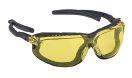
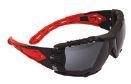
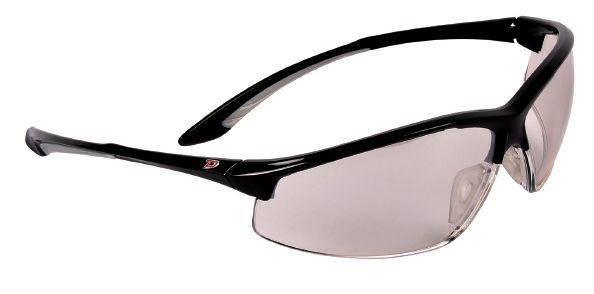
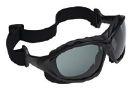
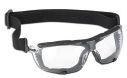
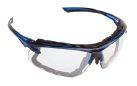
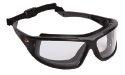
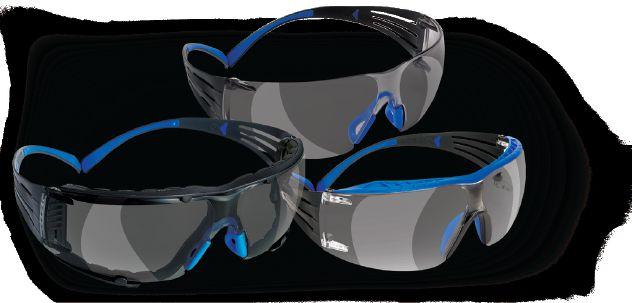
Looking for More Comfort & Fit DSI has it!
Very lightweight – less than 1 oz
9.5 base curve lens for better coverage
Employees can now take five paid days and five unpaid days under Bill No. 172, The Saskatchewan Employment (Paid Interpersonal Violence and Sexual Violence Leave) Amendment Act, 2019, which is expected to take effect upon royal assent in mid-May. Previously, employees could only take a 10-day unpaid leave.
“All forms of interpersonal and sexual violence are unacceptable,” Labour Relations and Workplace Safety Minister Don Morgan says in a statement. “We hope that allowing for survivors to take five days leave without the financial worries will make it easier for them to do so.”
To be eligible, an employee or his or her child or a person for whom an employee is a caregiver must be the victim of interpersonal or sexual violence and requires time off work to do the following: seek medical attention; obtain services from a victims’ services organization; seek psychological or other professional services; relocate temporarily or permanently; seek legal or law-
?
Dyna
Exclusive anti-fog coating
Double injection temple arms and soft nose-piece to prevent slipping in hot and humid environments
Shield Dyna Shield
Contemporary dual-lens design with half-frame
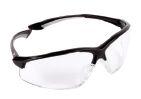
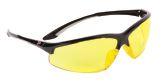
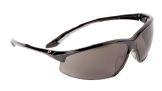
Available in Clear, Amber, Smoke and I/O Mirror lenses
Fits a wide variety of different faces
enforcement assistance; and attend court appearances.
Employees must have worked for an employer for at least 13 weeks and may be required to provide evidence of the services received. Employers are required to keep personal information confidential, the statement adds.
CLARE’S LAW IN PROGRESS
REGINA — Saskatchewan is one step closer to becoming the first province to implement “Clare’s Law” that will provide better protection against intimate-partner violence.
The Interpersonal Violence Disclosure Protocol (Clare’s Law) Act, received third reading in the legislature and will come into force after the disclosure protocol and regulations have been established.
Through the creation of a framework and standard process that will uphold two rights — the right to ask and the right to know, the Act will allow police to release information about someone’s violent past to intimate partners whose safety may be at risk.
Justice Minister and Attorney General Don Morgan said on May 2 that the provincial government will collaborate over the summer with law enforcement and the shelter community to develop the protocol and regulations. “We are working hard to get this legislation in place to help people who may be at risk in an intimate relationship,” Morgan said.
According to Chief Marlo Pritchard, president of Saskatchewan Association of Chiefs of Police in Moose Jaw, the province has one of the highest rates of domestic assaults in Canada. “Clare’s Law is designed as a tool for individuals who think they may be at risk of interpersonal violence to get knowledge that will allow them to make those necessary decisions to increase their safety,” Pritchard says.
Part of the standard process will involve a multi-sector review committee to provide recommendations on potential disclosures. The police service will retain the ultimate discretion with regards to when to disclose information.
“Clare’s Law” was named in honour of Clare Wood, who was the victim of a homicide committed by her partner.
FIREFIGHTER COVERAGE EXPANDED
REGINA — Saskatchewan’s 6,500 volunteer firefighters will have access to the same presumptive coverage as professional firefighters with the expansion of WCB coverage to include volunteer firefighters.
“We are extending presumptive coverage to volunteer firefighters to make it easier for them to access the supports they need,” Saskatchewan’s Labour Relations and Workplace Safety Minister Don Morgan announced on April 18.
Expanded presumptive coverage, which will come into force on proclamation, will include six additional cancers — multiple myeloma, prostate, skin, breast, cervical and ovarian cancer. The move towards expanded coverage was first introduced for professional firefighters through an amendment to the legislation introduced in December. Applicants need to provide a diagnosis and other required information from a medical professional to support their claim.
WorkSafe Saskatchewan highlighted the increase in firefighter occupational cancer diagnoses and deaths. Firefighter cancer was the second leading cause of occupational diseaserelated fatalities in the province in 2018, accounting for 30 per cent of all workplace deaths related to occupational disease.
“The rise in firefighter cancer diagnosis is quite concerning,” says Kevin Mooney, director of prevention with Saskatchewan WCB in Regina.
In response, WorkSafe Saskatchewan commissioned a pilot program, in collaboration with Firefighter Cancer Consultants, LLC and several fire departments, to better understand the current firefighter-preventive landscape. Fifteen fire stations, including eight departments, took part in the program.
Areas of improvement identified in the program include the use of self-contained breathing apparatus throughout the duration of overhaul, fire-gear storage, back-up sets of personal protective equipment, washing soiled uniforms after a fire, exposure documentation and department-based annual medical physicals.
Each of the eight participating departments will receive an individualized report with an action plan on how to address the gaps identified. As well, WorkSafe plans to survey more fire departments to confirm the areas for improvement identified in the pilot program.
SECURITY ENHANCED AT MENTAL-HEALTH CENTRE
WINNIPEG — Eden Mental Health Centre and Boundary Trails Health Centre will beef up their security following the signing of a memorandum of understanding with Southern Health-Santé Sud, Health.
“We know that a lack of proper system planning in Manitoba’s healthcare system has created inconsistent security standards from one health facility to the next,” Seniors and Active Living Minister Cameron Friesen said in a statement on May 10. “We are responding to this historic imbalance by reviewing security at healthcare facilities throughout the province, listening to concerns raised and, in the case of Eden Mental Health Centre, establishing a flexible, deployable security team that will improve safety for clients and staff.”
Under the agreement, the region and health centre will cost-share a security contract that will place two onsite security personnel at Eden on a 24/7 basis. This will allow the facility to admit clients at risk of or exhibiting violent behaviour, reduce the need for patients to wait in the emergency department for access to an acute psychiatric bed and lessen the need for police to supervise patients at Boundary Trails while they await an assessment or admission.
The partnership will also provide the flexibility for one of the two on-shift personnel at Eden to respond at Boundary Trails Health Centre should security concerns arise.
Jane Curtis, chief executive officer with Southern Health–Santé Sud health region, says enhanced security at Eden is “an important step” toward ensuring that clients experience safe, high-quality and timely care. “We are also reviewing the security needs at other regional centres,” Curtis adds.
These security enhancements were recommended in the VIRGO report, which outlined a strategy to improve mentalhealth and addictions services in Manitoba. They build on a number of initiatives announced in recent months, including the following: a province-wide review of security programs, services and systems at key healthcare facilities ordered by the minister; introduce amendments under The Police Services Amendment Act that will see the creation of a new institutional safety officer designation to provide security personnel with expanded authority, prescribed training and appropriate protections; and amending The Mental Health Act that allows police officers to transfer custody of individuals awaiting an involuntary medical examination to a qualified person.
COMPANY PLEADS GUILTY TO FAILURE TO REPORT
WINNIPEG — A packaging company in Winnipeg was fined $43,000 for failing to report an incident promptly.
An employee of Advance Paper Box Ltd. in Winnipeg was operating a machine that shapes paper material into trays or boxes on October 25, 2016. While trying to clear a jam, the
worker reached into the machine and suffered serious finger injuries, according to a statement from Manitoba Growth, Enterprise and Trade on April 26.
The company did not notify the Workplace Safety and Health branch of the incident until the following day. Advance Paper Box Ltd. pleaded guilty to failing to take reasonable measures to ensure workers’ health and safety and failing to report a workplace incident as quickly as possible.
MUSHROOM FARM FINED FOR INJURY
LEAMINGTON — A mushroom company in Ontario was fined $75,000 on May 16 in connection with a critical injury.
The incident took place on May 15 last year when workers of Highline Produce Limited based in Leamington were conducting filling operations in a mushroom grow room by using a hydraulic winch called a net winch puller to pull netting along the mushroom grow beds and fill them with compost.
One worker was operating the net winch puller by guiding two hydraulic winch cables connected to the netting into the winch. In the process of doing so, the worker was caught by one of the cables as it wrapped around the roller of the winch assembly. The worker was entangled and pulled into the winch assembly, suffering a critical injury.
An investigation by the Ministry of Labour determined that the hydraulic net winch puller in that grow room was not
equipped with a guard or other device to prevent access to the pinch point. The company pleaded guilty to Section 25(2) (h) of the Occupational Health and Safety Act, which requires an employer to take every precaution reasonable in the circumstances to protect workers.
STONE COMPANY SENTENCED OVER INCIDENT
WOODBRIDGE — A company that manufactures concrete products in Woodbridge, Ontario was fined $55,000 on May 24 over a critical worker injury.
On January 26, 2018, an employee of Best Way Stone Limited was getting the facility’s HESS line, which is used to manufacture paving stones, ready for production. According to Ontario’s Ministry of Labour, the worker was operating the HESS line from a control room when a transfer board become jammed in the de-stacker.
The worker entered the de-stacker area through a metal screen door and two sliding gates and pushed the stuck board, causing it to move into the HESS machine. At that point the chain drive, which was still operating, moved a stack of 16 backed-up transfer boards weighing 1,600 pounds from the stack holder into the de-stacker area. The moving stack of boards struck and moved the worker into a lift table, resulting in critical injuries.
HYDRATION IS 365! Your body needs to have the proper fluid balance to function properly year-round. Water alone won’t get the job done. Sqwincher® is the ultimate solution. Sqwincher® can handle the daily grind keeping workers hydrated, fueled and focused... AND IT TASTES GREAT! Want to learn more, contact us and we will show you how.
Jim,
The safety committee has recommended that we have a rehydration drink for our people. Check out the attached from Dentec please.
THX Jane
The company pleaded guilty to failing to ensure that the exposed moving parts of the de-stacker and associated chain drives were equipped with and guarded by a guard or other device that prevented access to moving parts.
RESOURCE ON IMPAIRMENT RELEASED
TORONTO — The Canadian Mental Health Association (Ontario Division) has published a free resource to help employers develop new or update existing impairment policies in the wake of cannabis legalization in Canada.
Impairment In The Workplace: What Your Organization Needs To Know provides guidance to help employers understand their legal requirements under the Ontario Human Rights Code, Smoke-Free Ontario Act, Occupational Health and Safety Act, and their organizations’ collective bargaining agreements, if applicable.
The resource identifies priorities for employers when reviewing organizational policies related to workplace impairment, including issues related to cannabis, other substance use and prescription medications.
It also provides a review of current approaches to responding to occupational impairment, outlines rights for employers and employees, encourages organizations to develop a comprehensive non-stigmatizing impairment policy and suggests accommodations to ensure a safe workplace.
“Implementing a policy on impairment, inclusive of workplace implications of cannabis use, is an opportunity to foster a culture that destigmatizes mental health and substance use concerns,” CMHA Ontario’s chief executive officer Camille
Quenneville said on May 14. “We are pleased to provide a resource that will guide organizations in developing policies that will promote mental health and wellness.”
REMEDIATION FIRM GETS PENALTY
OTTAWA — An Ottawa company that provides environmental remediation services was fined $100,000 on May 9 after a worker got caught in a moving conveyor.
The incident took place on January 18, 2018 when a worker employed by Clean Water Works Inc. was helping to prepare a liner designed for sealing leaks in sewer lines. The worker was pulled into the pinch point of an in-running nip hazard created by two rollers on a moving conveyor and was critically injured.
An investigation by the Ministry of Labour concluded that the company failed to ensure that the in-running nip hazard on the machine was guarded by a guard or other device that prevented access to the pinch point.
ROOFER JAILED FOR CONVICTIONS
BELLEVILLE — The sole proprietor of a roofing company in Belleville, Ontario was sentenced to seven days in jail on May
7 over a safety contravention at a residential roofing project in Belleville.
On July 22, 2017, a Ministry of Labour (MOL) inspector observed a roofer, employed by the sole proprietor Steven Bell, working without fall protection on a roof at more than three metres from the ground. Although no injury has occurred, Bell contravened Section 26.1(2) of Ontario’s Regulation 213/91 (the Construction Projects Regulation), which states that a worker working at a height of more than three metres must wear an approved method of fall protection.
Prior to this latest conviction, Bell has had three previous convictions in 2013 and 2015 — all relating to roofers working without fall protection. All three incidents did not result in injuries.
INDEX SHOWS SAFETY IMPROVEMENTS
TORONTO — Ontario’s workplaces are 1.9 per cent safer than last year, according to Ontario’s Workplace Safety and Insurance Board’s (WSIB) health and safety index. The index combines multiple performance health-and-safety indicators into a single, evidence-based measure that helps employers tailor their health and safety efforts and resources.
The index’s overall improved performance is driven by a 5.7 per cent hike in workplace-prevention activities and
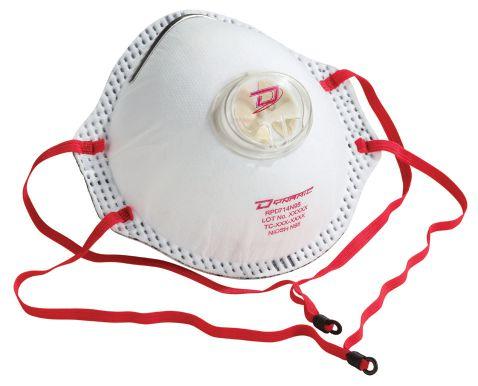
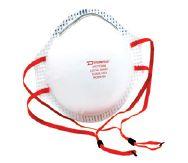
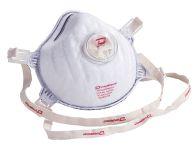
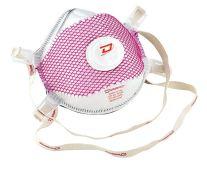
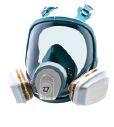
What Company produces a Respirator with the Most Benefits
Straps welded on wings, no deformation of respirator when adjusted
Straps are sonically weld, no staples
Nose and face seal closed cell foam for more comfort and fit
Drop down easy to perform
Adjustable strap on all models
Available version for welders
Complete variety from N95 to P100
Call your nearest distributor for more information and a trial
?
Curved nose clip for a better comfort and fit
Clear valve cover for easy inspection
Unique Butterfly valve, reduce resistance to exhalation
Adjustable strap made of elastic cloth material for more comfort
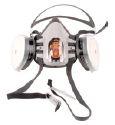
Watch the new Dyna-Pure Series Half Mask & Fullface Mask coming soon!
a 15.2 per cent increase in empowerment. Health care and social services, which were the lowest scoring industry in 2018, achieved the highest score of 4.4 per cent on the index this year due to improvements in empowerment, enforcement and the largest decrease in the number of severe injuries.
Construction has the second highest score at 1.9 per cent and is the only industry to show improvement in both years of the index. Transportation and
warehousing, manufacturing and retail trade were three industries that changed to a negative score.
Retail was the lowest scoring industry as it was affected by challenges with return-to-work support and an increase in overall injury counts.
Decreased performance was also noted in enforcement, injuries and workplace culture, which dropped by 5.5 per cent, 2.8 per cent and 0.5 per cent respectively.
CHEMICAL FIRM PENALIZED
MILTON — A Milton, Ontario-based company that produces and distributes chemical products was fined $100,000 on May 3 following a worker injury.
On November 17, 2017, a worker employed by Recochem Inc. was operating a plastic blow-moulding machine that manufactures 10-litre plastic bottles used in the production of various liquid products from Recochem’s product line. The worker was notified about issues with the quality of the bottles the machine was producing.
When the machine was in operation, the worker opened a steelframed door and climbed to the top of the machine to determine if there was a blockage in the exhaust pipe. Upon reaching the top of the machine, the worker tripped, fell and got caught in an area where sharp moving parts were opening and closing.
An investigation by the Ministry of Labour revealed that there were no guards or other devices preventing access to the area of the machine where the injury occurred. Neither was the door where the worker entered the machine locked nor equipped with an interlock.
The company pleaded guilty to failing to equip an exposed moving part with a guard to prevent accidental access. Following the incident, Recochem complied with an order from the Ministry to guard the machinery by installing an e-stop and an additional guarding to the exterior of the machine.
CAREGIVING A GENDERED TASK
TORONTO — Despite their growing numbers in the workforce, women are much more likely than men to stop working, work part-time or take time off work during the week to care for an older relative. This is the finding of a study published on April 8 by the Institute for Work and Health in Toronto.
Non-paid caregiving work remains very gendered, says Dr. Peter
Smith, the Institute’s senior scientist and lead scientist of the study. “In a household where both a man and woman are working, it is more likely that her work is going to be affected should an ill parent need care with washing, dressing, feeding and getting around,” he says. “This would be the case even if both were working in similar jobs, earning similar pay.”
The research team looked at responses from 5.8 million working people aged 40 years and older captured in Statistics Canada Labour Force Survey (LFS) from 1997 to 2015.
Results indicate that women are 73 per cent more likely than men to leave work permanently to take care of older relatives, five times more likely to be working part-time and twice as likely to take time off during a work week. If they do take time off, they are likely to take off about 2.5 hours more per week.
Overall, the percentage of workers who left work permanently or changed to part-time work to care for an older relative over the study’s 19-year period increased from 3,300 respondents in 1997 (0.07 per cent of the labour force) to the high in 2012 of just under 15,000 respondents (0.2 per cent of the labour force). Temporary work absences due to eldercare also increased over the 19-year period.
As the population of older adults grow with increasing longevity, the effects of informal eldercare on labour market participation will continue to increase. Workplace policies around flexibility and autonomy “may reduce the impact that caregiving has on workers’ ability to stay in the labour market or on their need to take hours off work and how many,” Smith suggests.
NEW HARASSMENT LAW IN FORCE
SAINT JOHN — New regulations to protect workers from violence and harassment took effect in New Brunswick on April 1. Regulatory changes define harassment and violence as workplace hazards that include sexual violence and harassment, domestic violence and intimate-partner violence.
“Harassment and violence of any
kind are unacceptable and cannot be tolerated,” says Douglas Jones, president and chief executive officer of WorkSafeNB in Saint John. “WorkSafeNB is committed to ensuring that all New Brunswick workplaces are free from harassment and violence, and these new regulations are an important piece in accomplishing that goal.”
WorkSafeNB recognizes the role the New Brunswick Nurses’ Union (NBNU) played in backing this legislation, following the grievous injury sustained by a Moncton nurse who was assaulted by a patient’s husband in mid March.
“For more than a decade, NBNU has strongly advocated for the effective prevention of workplace violence,” says NBNU president Paula Doucet. “We are pleased that the government is taking a positive step with imposing amendments to the General Regulation under the Occupational Health and Safety Act.”
Under the amended legislation, all employers are required to develop and implement a written code of practice to prevent workplace harassment. All employers must also conduct a risk assessment to analyze the likelihood of violence in their workplace.
“We know that legislation alone can’t fix this problem, but it is an important step,” Jones says.
JOB FATALITIES ON THE RISE
HALIFAX — Job fatalities in Nova Scotia rose in 2018, according to statistics
that WCB Nova Scotia and the Department of Labour and Advanced Education released on April 17.
Fourteen workers died from acute traumatic injuries and 26 fatalities were classified as chronic — 12 related to occupational diseases and 14 were caused by health-related issues like heart attacks. Industries with the highest acute-fatality counts included six people who drowned or were lost at sea in fishing and three deaths in construction.
“So many of these deaths are because of preventable incidents at work,” says WCB Nova Scotia’s chief executive officer Stuart MacLean. “Although we continue to see reductions in overall workplace injury, this is a startling number of workplace fatalities.”
Labour and Advanced Education Minister Labi Kousoulis says the agency will continue to work with safety associations, employers and partners to create a culture of safety in the province.
Statistics also show how workplace injury is changing. According to Maclean, claims today are more complex and require different levels of service. As the population ages, claims are more likely to include a mix of physical injury and mental-health considerations.
There was also a significant increase in claims related to mental health. Timeloss claims for psychological injuries went up almost 50 per cent over 2017 — more than three times what they were in 2014. This includes claims for post-traumatic stress disorder and other psychological injuries.
Follow us on Twitter @OHSCanada
So, what’s on your mind?
Ever wonder what other oh&s types are thinking about? Find out by making our website poll at www.ohscanada.com a regular stop.
‘Superbugs’ present on patients’ hands, surfaces
By Jean Lian
Anew study suggests that hand hygiene needs to be extended to include patients as getting healthcare workers to wash their hands to prevent the spread of germs in hospitals may not be enough.
“The hand-hygiene narrative has largely focused on physicians, nurses and other frontline staff, and all the policies and performance measurements have centered on them, and rightfully so,” says Lona Mody, a professor of internal medicine at the University of Michigan Medical School and the study’s lead researcher. “But our findings make an argument for addressing transmission of multi-drug resistant organisms (MDROs) in a way that involves patients too.”
The study, published on April 12, says 14 per cent of 399 hospital patients tested had “superbug” antibiotic-resistant bacteria on their hands or nostrils early in their hospital stay. Nearly a third of the tests for such bacteria on objects that patients commonly touch in their rooms like the nurse call button came back positive.
Another six per cent of patients who did not have MDROs on their hands at the start of their hospitalization tested positive later in their stay, suggesting that transmission to room surfaces is rapid. One-fifth of the objects tested in their rooms had similar superbugs on them.
The research team cautions that the presence of MDROs on patients or objects in their rooms does not necessarily mean that patients will get sick with antibiotic-resistant bacteria, since healthcare workers’ hands remain the primary mode of microbe transmission to patients.
Researchers report that of the six patients in their study who developed an infection with a superbug called methicillin-resistant Staphylococcus aureus (MRSA) while in hospital all tested positive for MRSA on their hands and hospital room surfaces.
In addition to MRSA, the study also looked for superbugs like vancomycin-resistant enterococcus and resistant Gram-negative bacteria, which have evolved the ability to withstand drugs that treat infections, thanks to the overuse of antibiotics.
Another concerning fact is that patients do not just stay in their rooms as current practice encourages them to get up and walk in the halls as part of their recovery. As patients move around, they may pick up MDROs from other patients and staff and contaminate the surfaces they touch.
Another source that is colonized by superbugs is privacy curtains used around hospital beds.
“Infection prevention is everybody’s business,” Mody says.
Long hours hike miners’ risks for injury, fatality
Miners who work long shifts are at a higher risk for injury and fatal incidents.
A recent study from the University of Illinois in Chicago found that injured miners who worked shifts longer than nine hours tended to have irregular schedules. Shift work in excess of nine hours was also associated with a 32 per cent increased risk of an injury resulting in death and a 73 per cent heightened risk for an incident that could injure two or more workers.
The researchers examined data from the United States’ Department of Labor’s Mine Safety and Health Administration reports from 1983 through 2015, which were filed whenever a miner is injured on the job. Of the 545,537 injury reports filed, 9.6 per cent occurred among workers who were working shifts of nine hours or more. Injuries among longshift miners increased three-fold in this period.
“While the mining industry has seen some improvements in injury rates among workers in recent decades, its workers tend to work longer hours than the average worker,” Lee Friedman, associate professor in the University of Illinois’ School of Public Health and lead author on the paper, said in a statement on April 15.
Miners often work 47 hours per week and multiple 10to 12-hour shifts, which is above the national average of 38 hours per week. The findings are alarming given the shift towards hiring more contract workers and the adoption of more extended-hour workdays in the mining industry, Friedman added.
The factors associated with injuries occurring during longer shifts include irregular scheduling, starting shifts at different times each week, being a temporary or contract worker and being on the job for less than two years.
The challenges of a mining job in Canada are little different from those south of the border. Shift work, long hours, a fly-in-fly-out lifestyle in remote mining camps and long periods away from family and friends are disruptive to a miner’s life. The Health, Safety and Reclamation Code for Mines in British Columbia gives an indication of the hours that miners in Canada typically put in.
According to Section 1.5.1 of the Code, no worker shall be scheduled to work more than an average of 50 hours per week. Surface miners should not exceed 16 hours in any 24 hours, while the maximum scheduled shift in an underground mine shall not exceed 10 hours. A manager shall not
permit a miner to work at an underground mine longer than 12 hours in a 24-hour period. The above restrictions do not apply to emergencies, or where urgent work is essential to the continued operation of a mine on an infrequent basis.
“Our study should serve policy makers and industry leaders who need to consider the effects of longer shifts on things like fatigue and nutrition, and the potential of fixed schedules to alleviate some of the risks with longer shifts,” Friedman said.
Safety ranks rock bottom in eye health: survey
Arecent national eye-health survey of 1,557 Canadians has revealed a concerning finding: Canadians are not taking proper care of their eyes.
The survey, conducted from March 22 to 25, was commissioned by ZEISS, a German manufacturer of optical systems. It found that only 38 per cent of Canadians who wear prescription glasses feel that ultraviolet (UV) protection is important when purchasing clear glasses, notwithstanding that half of all respondents polled cited UV radiation as the main threat to eye health, followed by cancer of the eye and photo aging.
Ultraviolet protection ranked near the bottom of important features when purchasing clear prescription glasses, trailing far behind comfort (72%), price (70%) and scratch resistance (52%).
“Ultraviolet protection is sunscreen for the eyes,” Bryan Rossi, general manager of Carl ZEISS Vision Canada, said in a statement on April 24. “It is imperative that people recognize the detriments, especially for those under 18.”
Most clear lenses block only parts of the harmful UV spectrum of up to 380 nanometers (nm) or less. This has been accepted as the standard level of UV protection for clear lenses, although the World Health Organization has established 400 nm as the recommended standard for UV eye protection — a level of protection not offered by an estimated 80 per cent of all clear-eyeglass materials.
“Ultraviolet rays are dangerous since we cannot see them, even though they are present on sunny and cloudy days,” Dr. Ritesh Patel, director of optometry at See & Be Seen Eyecare in Toronto. “With full UV protection, we can help prevent or slow down macular degeneration and cataracts, which gravely impact more than four million Canadians.”
Expectant mothers feel unwelcome at work
Many working women feel “pushed out” of their jobs when they become pregnant, while new fathers often get a boost in their careers, according to a new study out of Florida State University in Tallahassee, Florida.
Samantha Paustian-Underdahl, assistant professor of management at the University’s College of Business, studied two longstanding theories on why working mothers are more likely than fathers to leave the workforce. One theory suggests that pregnant women feel nudged out of the workplace, while the other theory indicates that mothers choose to opt out of their careers because of changing personal and career values. The findings confirmed inherent biases against expectant mothers that make them feel unwelcome at work.
“We found that pregnant women experienced decreased career encouragement in the workplace only after they disclosed they were pregnant,” Paustian-Underdahl said in a statement on April 18. “Once they told managers and co-workers, we saw a decline in career encouragement for women, but an increase in career encouragement for men.”
Known as the “motherhood penalty” and “fatherhood premium,” researchers have attributed both to old cultural stereotypes that favour fathers as breadwinners and women as caregivers. Labour statistics seem to back up that financial contrast: when couples have children, women’s salaries tend to go down while men’s go up, yet little research has been able to pinpoint the causes of those wage differences.
Paustian-Underdahl also examined the opting-out perspective, which suggests that working women with children become less motivated about their jobs and often decide to leave their careers to focus on childrearing. “We expected career motivation to decrease for mothers throughout pregnancy, but we found the opposite to be true,” Paustian-Underdahl said. “Contrary to expectations, career motivation increased for both men and women over the pregnancy.”
The study found one exception to that opting-out perspective: if expectant mothers get reduced career encouragement at work, they feel less motivated to stay with the organization or in the workforce, and they might choose to leave their jobs. On other hand, the increased career encouragement from colleagues and managers that fathers get make them more committed to their work.
To create a level-playing field for working mothers, employees should not reduce career-related encouragement toward expectant mothers. Managers should provide fathers and mothers with social and career support to help them attain their work and family goals, the study suggests.
Jean
Lian is editor of ohs canada
Follow us on Twitter @OHSCanada
VENUS VERSUS MARS
BY KELLY PUTTER
Creating a respectful work environment has never been trickier as the momentum created by the #MeToo movement continues to rock workplace gender dynamics and threatens to put a dent on organizational cohesion — even widen the gender gap.
Changing mindsets and questionable conduct that have been normalized in some workplaces cannot be achieved overnight, especially in gender-skewed sectors where sidelong glances, risqué jokes and pillow talk were all in a day’s work.
While culture change that can give inequitable gender relationships in occupational settings a corrective tilt is a good thing, there are concerns that righting harassment wrongs has acquired a crusade-like tone and intensified the tension in workplace-gender dynamics. More concerning is the insidious potential for it to be misused to discredit a rival or get back at an overbearing boss.
For employment lawyer and mediator Stuart Rudner with Rudner Law in Markham, Ontario, the 180-degree turn in our attitude towards sexual-harassment claims — from doubting alleged victims to the other extreme of tak-
ing complaints at face value without proof — is one of the consequences of this groundbreaking and potentially disconcerting shift in our workplace zeitgeist.
Bill 132, which amended various statutes with respect to sexual violence and harassment, domestic violence and related matters, the high-profile Jian Ghomeshi and Harvey Weinstein sex scandals and the ensuing #MeToo movement had made it harder for employers and organizations to look the other way when it comes to workplace harassment.
“If we lost a good member of our team (due to a sexual harassment claim), that was the cost of doing business,” Rudner describes the pre-existing workplace climate before these highly publicized scandals emerged. “But all of sudden, the impact of being known as a company that tolerates sexual harassment was so devastating to the company’s reputation and to the bottom line that they couldn’t allow it
anymore. That’s really what fuelled the change.”
Rudner cited the rush to judgement in the case of former Ontario Conservative party leader Patrick Brown as a “shocking example” of what had become the norm. Brown, who resigned as party leader in January 2018 following allegations of sexual assault, published a book in the same year, claiming that his fall from grace was a “political assassination” driven by backroom politicking.
“What I found fascinating — but also a little disturbing,” says Rudner, “was all of a sudden, companies and organizations who would have rejected allegations without even investigating them were suddenly accepting them blindly without investigating them, and the repercussions for the accused could be absolutely devastating.”
An investigation is not a prosecution, he stresses. “You are not going into it with the goal of proving allegations. You are going into it with the goal of understanding what actually happened and objectively investigating it.”
Cynthia Ingram, a senior employment lawyer with Piccolo Heath LLP in Toronto, agrees. “Allegations are not facts; allegations need to be tested,” she says. ”Until you review them, it is wrong to think an allegation is the same as a fact.”
In a case that Rudner’s law firm handled five years ago, three female employees made sexualharassment allegations against their supervisor. A third-party investigator concluded that these employees were actually disgruntled by the fact that one of them had not been promoted.
see these movements as historic turning points in terms of advancing gender equality, especially in the workplace.
While social media is a powerful vehicle that can effect cultural change in a positive direction, it can also interfere with the integrity of the investigative process, suggests Ingram, who compares social media to the modern-day equivalent of the water cooler where allegations and innuendos — proven or otherwise — can take on a life of its own.
“The more you are unable to control the confidentiality of the process,” she says, “the more you risk the integrity of the process.” Once the genie gets out of the bottle, it is nearly impossible to put it back. “So even if it is proven wrong,” she says, “the damage is done.”
The lack of evidence is one of the greatest challenges when investigating sexual-harassment complaints, says Ryan Baxter, an employment lawyer with McInnes Cooper in Halifax. In many cases, the alleged conduct would have occurred in private, creating a he-said-she-said situation. The investigator only has the word of the complainant and the accused to go on. Furthermore, it can be difficult to convince witnesses to come forward for fear of reprisals.
“Allegations are not facts.”
One pitfall that is common among employers is failing to provide a mechanism for reporting sexual-harassment allegations. “Employers must provide all employees, including those in senior management and other leadership positions, with mechanisms for reporting sexual harassment,” Baxter says.
“It became obvious from the evidence that they basically said the best way we can get him out is to make allegations of sexual harassment,” Rudner recalls. “Fortunately, we had a good investigator who realized that their claims were not only unfounded, but manufactured.” The company took action against the three employees.
“It is a great example of how sexual-harassment allegations are being weaponized,” Rudner says of the case. “But I believe now, the pendulum has swung back closer to the centre where employers will take these allegations seriously, but will investigate fairly before they take any action.”
Ingram does not believe that Canadian workplaces are struggling with a growing number of false claims centering on sexual harassment. “Absolutely, it can be misused,” she says, “but accusations of this nature are not more open to misuse as any other type of bad conduct.”
A KNOTTY PROBLEM
In 2016, the Ontario government passed Bill 132: The Sexual Violence and Harassment Action Plan Act aimed at making workplaces safer for victims of sexual violence and harassment. The amendments to the Occupational Health and Safety Act took place following a spate of highly public sex scandals involving politicians, entertainers, sport figures and cultural movers and shakers that culminated in grassroots social-media movements that went viral around the world. The two most well known social-media movements were #MeToo and #Time’s Up. Many human-rights advocates
Other pitfalls include delaying an investigation and failing to ensure a thorough investigation. “The bottom line is that all allegations of sexual harassment must be addressed promptly and fully,” Baxter adds.
Conducting a proper and thorough investigation is critical to protect employers from punitive damages claims, human-rights complaints, civil legal action or grievance. According to McInnes Cooper, the following are five steps of conducting a proper workplace investigation:
1. Procedural Fairness: An employer must investigate the circumstances before disciplining an employee. An effective workplace investigation must be neutral, fair, thorough and timely.
2. Framework: Implementing a systematic investigation framework defining the objectives, scope, timing and the person tasked to look into the complaint ensures the integrity and propriety of the investigation.
3. Preliminary Issues: The investigator and employer should address any preliminary issues before embarking on investigation interviews. Issues that need to be addressed include disclosure, privacy and assessing the nature of the complaint and whether it presents safety concerns that require alternative work arrangements.
4. Interviews: This is one of the most crucial part of an investigation. Conduct interviews while memories are fresh and where possible, team-up for better note taking.
5. Finalize the Investigation: Conduct all necessary interviews and obtain relevant documents, offer an outcome of the investigation and prepare a report if required.
UP AND UP
The shift in workplace gender relations is reflected in the numbers. According to Montreal-based Mary Polychronas, a psychologist with Horizon Occupational Health Solutions, the United States has seen a significant increase in sexualharassment charges. In 2018, there was a 50 per cent rise in sexual-harassment lawsuits. The number of visits to the sexual-harassment webpage of Washington, D.C.-based Equal Employment Opportunity Commission (EEOC), which enforces civil-rights laws against workplace discrimination, also doubled over the past year.
Nearly 25 per cent of Canadians surveyed indicated that they had been sexually harassed at work, according to a 2018 survey by public strategy and communications firm Navigator Limited in Toronto. Of that number, two in five said the sexual harassment stemmed from a person who had direct influence over their career.
For the Human Resource Professionals Association (HRPA) in Toronto, its numbers relating to sexual harassment in workplaces are substantially higher. In an online survey of its members in 2018, results showed that 43 per cent of women and 12 per cent of men reported that they had been sexually harassed or assaulted at work.
“The reality is sexual harassment now is not tolerated the way it was five or even three years ago, which is great,” Rudner says. “Women should not have to deal with sexual harassment in the workplace. There were a lot of women in the past that just grinned and bore it, because they didn’t think they had any choice.”
But changes in how workplace sexual harassment and violence are viewed today have not gone far enough to empower female workers to feel wholly comfortable in coming forward, according to Debora De Angelis, Ontario director with the United Food and Commercial Workers Canada in Rexdale, Ontario. Many employees are still enduring sexual inappropriateness and violence on the job.
• Define what constitutes sexual assault and harassment;
• Clearly outline how to lodge a complaint, rights that both the complainant and the accused have in the investigation process, what the investigation process entails, the process for making findings of fact and collecting evidence, how the final determination is made, who makes it and what the possible penalties are;
• Ensure that the complaint investigation process is completely transparent and procedurally fair. In practice, this means that the complainant must be kept informed of how her/his complaint is being managed in every step of the process and what is the outcome;
• Train employees on the content of the company’s harassment policy, what to do if they are being harassed and how to be an effective bystander; and
• Train supervisors and managers on how to prevent sexual harassment and foster an open, respectful environment.
CULTURE OF FEAR
While a corporate culture that no longer tolerates sexual harassment and violence creates a safer environment for all, the process of working towards such a culture is not without land mines. Male workers, especially those who are in supervisory or management roles, are fearful of the current lens through which workplace sexual politics are scrutinized, suggests Wendy Ellen, president and principal consultant of human-resources consulting firm, Wendy Ellen Inc. in Calgary.
The cloud of sexualharassment allegations has imbued workplace gender relations with an unprecedented tension.
“I know lots of women who don’t say anything, because they don’t feel the culture has shifted. Until people feel safe, they won’t come forward,” De Angelis says.
The perception that workplaces are not doing enough to address sexual harassment may hold water. According to the 2018 Navigator survey, Canadians expressed ambivalence about internal policies and fewer than 25 per cent rated their organization as doing a “very good job” on a variety of metrics.
The HRPA believes that the only way to combat workplace sexual harassment and violence is for employers and organizations to create a standalone sexual-harassment policy, because egregious issues require specialized and sensitive handling. The policy should achieve the following:
• The sexual-harassment policy should be given to all employees on their first day of work and be easily accessible on the organization’s website;
“To them, it is a whole new world,” Ellen says. “I have heard from a number of my male clients that they need new training on how to work with women and they don’t want to be in an office alone with a woman. They are concerned with protecting themselves.”
According to Ellen, she has been asked to train leadership and middle-management teams comprising primarily of men on how to conduct themselves when interacting with their female counterparts.
The fear of potential harassment allegations is also influencing how companies operate and giving rise to a play-itsafe approach, such as curtailing traditional duties like business travel involving a male and female employee. “That’s not happening so much anymore,” Ellen notes.
That phenomenon is also unfolding in the medical profession. An article, Men’s Fear of Mentoring in the #MeToo Era — What’s at Stake for Academic Medicine? published in December 2018 cited that men in positions of power in the medical field are afraid to mentor women out of fear that sexual-harassment allegations could put their reputation and hard-earned career on the line.
This culture of fear could have repercussions on the career advancement of women in medicine as mentorship is critical to their professional development, especially in a sector where female leaders are few and far between. Apart from creating a rift in workplace gender relations and breed-
ing distrust, it can also deepen institutional discrimination against women.
“If leaders and educators in academic medicine can examine these expressions of fear and find ways to move beyond them, our community will ultimately better support women’s career advancement,” the article stated.
Some of the ways in which male physicians can mitigate their fears towards mentorship opportunities involving female medical professionals and pave the way to gender equity in the profession are as follows: create a safe space where male and female colleagues can discuss concerns about mentoring; be transparent in compensation arrangements; support universal access to family and medical leave policies; offer leadership-development programs and implicit-bias training; encourage mentorship and sponsorship programs; and provide flexible career paths in academic medicine with promotions and advancement criteria that reflect a range of responsibilities and unique contributions by female physicians.
Employers who do not address workplace sexual harassment will lose female employees and exacerbate the gender wage gap, as women could suffer a pay cut when they seek employment with another employer, De Angelis suggests.
For Ellen, she is concerned that this cultural reckoning and resulting sensitivity around sexual mores could dampen the collegiality, friendship and appreciation between men and women at work.
While she is all for a respectful workplace that provides
an avenue for employees to report any form of misconduct, the cloud of sexual-misconduct harassment has imbued workplace gender relations with an unprecedented tension. It also leaves many men confounded on what it means to behave in an appropriate manner when they are around their female colleagues.
“I hope we don’t take the humanity out of going to work,” Ellen says. “It can be fun to joke around and enjoy office banter, but you have got to know where the line is and unfortunately, some people just don’t.”
As good practices start the top of each organization, Polychronas stresses the importance for senior management and those in supervisory roles to exemplify appropriate behaviours in the presence of employees at all times.
Baxter thinks that the cultural shift we are seeing today is a step in the right direction towards creating a safer and more open workplace, as well as compelling us to take a hard look at how we investigate sexual-harassment allegations.
“The vast majority of sexual-harassment allegations are brought in good faith by employees looking to do the right thing,” Baxter says. “So long as employers have robust and impartial policies in place for investigating and responding to sexual-harassment allegations, the risk posed by false allegations will be minimized.”
Kelly Putter is a writer in Beamsville, Ontario.
Follow us on Twitter @OHSCanada
SAFETY AND STYLE
New Style, same trusted V-Gard® Brand. The V-Gard Cap-style Hard Hat now available with a MATTE finish. It’s the same unrivaled design and features, high quality, custom options, and convenient accessories you have come to expect from the leaderbut with an exciting new look!
WHAT NOW AFTER LEGAL WEED?
By Jean Lian
Testing for impairment from cannabis is no “magic bullet”. Rather, effective oversight, worker supervision and having an impairment-management program are key to navigating the post-legal-weed world. This was the message that Tom Brocklehurst, director of prevention practices and quality with WorkSafeBC in Richmond, British Columbia, delivered during a session at the 2019 Western Conference on Safety in Vancouver.
“We are now six months after legalization. I don’t know if the sky has fallen — I don’t think it has,” Brocklehurst said. “Impairment has been around as long as there are impairing substances, and impaired workers have been around for as long as people have been working.”
He cited figures from Statistics Canada indicating a 61 per cent increase in daily or weekly use among 25- to 44-year-olds in the past decade. The latest figures that Statistics Canada released on February 7 showed that 15 per cent of Canadians over the age of 15 reported using cannabis in the last three months, and nearly one in five Canadians believe they will use cannabis in the next three months.
Brocklehurst stressed the importance of not seeing occupational impairment as a cannabis issue, but also includes pain medications like opioids and other over-the-counter medication that can cause drowsiness and compromise mental alertness. “Impairment can come in mental and physical conditions,” he added.
One of the questions he is often asked is whether WorkSafeBC will introduce new regulations and requirements
to ensure compliance now that recreational marijuana has been legalized. “The answer is no,” Brocklehurst said.
As there is no exact, definitive way to determine a person’s level of impairment when it comes to marijuana — largely due to the sheer length of time it takes to metabolize marijuana out of a user’s system — managing impairment needs strong supervision and policies.
“You do need to look at it in the context of managing the workforce. But cannabis legalization has given us this opportunity to talk about workplace impairment and what employers and workers are doing,” Brocklehurst suggested.
WHAT THE LAW SAYS
Two sections in British Columbia’s Occupational Health and Safety Act (OHSA) address both an employer and employee’s obligations towards occupational impairment. Section 4.19 of the OHSA says a worker with a physical or mental impairment must inform a supervisor of the impairment, and the worker must not be assigned activities where the reported impairment may create undue risk to another worker or person.
Section 4.20 states that an impaired worker must not enter or remain at a workplace, and the employer must not knowingly permit a person to remain at any workplace while the person’s ability to work is affected by alcohol, a drug or other substance.
The OHSA outlines these general obligations and due diligence that employers need to demonstrate: make workers aware of hazards; remedy any hazardous conditions; establish policies and programs; and provide information, instruction, training and supervision.
For employees, they have a duty to take reasonable care to protect the health and safety of themselves and others and ensure that their ability to work is not impaired by substances. As well, they have a duty to inform their supervisor if their ability to work is impaired for any reason and report contraventions if they see someone working while impaired.
go about that task:
• Assess the tasks carried out at a workplace and identify safety-sensitive positions and associated hazards;
• Put controls in place to eliminate or minimize the risk of those hazards from arising;
• Develop an impairment policy in consultation with a joint health and safety committee or a worker representative;
• Communicate the impairment policy to the rank and file;
• Train supervisors and workers to know their responsibilities and rights under the impairment policy; and
• Enforce the policy fairly and consistently.
The critical elements of an impairment policy will include a statement of purpose and provide clear messaging on what the expectations are. A statement of purpose sets out an organization’s approach to managing workplace impairment and reducing the risks it presents, while the rules define what constitute impairment, delineating the restrictions as well as consequences for violating policies.
“Impairment has been around as long as there are impairing substances, and impaired workers have been around for as long as people have been working.”
The tricky part, however, is balancing oh&s requirements of managing impairment with human rights. “While employers are required to ensure health and safety, they are also required to not discriminate on the basis of disability for things like addiction or other health conditions that might have required using an impaired substance,” Brocklehurst explained. “So getting that balance right is not something that we can really tell you exactly what to do and how to do that.”
While workplace safety is a bona fide occupational requirement, employers need to comply with these obligations in a way that does not discriminate against workers with a disability. “You have to accommodate workers with a disability, but only to the point of undue hardship. What undue hardship is, that depends on individual employers.”
So what can employers do to manage impairment at work? The following steps provide clear guidance on how to
“If they are aware of the consequences associated with working impaired and there are opportunities to disclose an impairment, they need to know these consequences,” Brocklehurst said.
Procedures outline how workers can go about informing their employer if their ability to work safely is impaired and reporting suspicions of workplace impairment. Procedures also provide guidance to employers and supervisors on how to identify impairment, what to do when impairment is reasonably suspected, the proper way to remove impaired workers from the work premise and return-to-work processes.
Training is one of the critical elements, covering areas that include how all workplace parties will be notified of and trained in the impairment policy and the confidentiality and privacy considerations that apply when impairment has been identified.
From a WorkSafeBC perspective, it will use the signs pointing to workplace impairment as a way to start a conversation and determine how aware an employer is about impairment issues, do they have an active impairment policy in place and the training and supervision provided to workers as it relates to impairment.
As workplaces continue to navigate the post-legal-weed world, Brocklehurst recommended that employers take a critical look at impairment in their workplaces, talk to workers about this issue and review impairment policies to identify potential training gaps that need to be plugged and seek advice where needed.
“We want to be in the business of catching employers doing it right,” Brocklehurst said. “The legalization of cannabis has provided us the moment to take a step back and think about workplace impairment as not just a cannabis issue.”
Jean Lian is editor of ohs canada Follow us on Twitter @OHSCanada
BIGONE THE
By Jean Lian
British Columbia’s windy roads offering views of snowcapped peaks take one’s breath away, but the geography of this province is also the stage for a megathrust — a large earthquake that occurs in a region called the subduction zone where two tectonic plates converge.
The threat of earthquakes has always been present in British Columbia, which lies on the active seismic region called the Pacific Ring of Fire. The Cascadia subduction zone, located off the west coast of North America, is a 1,000 km-long dipping fault stretching from Northern Vancouver Island to Cape Mendocino in northern California.
Megathrust earthquakes occur when one tectonic plate is forced underneath another. These interplate earthquakes are the planet’s most powerful, with magnitudes that can exceed 9.0. The last megathrust earthquake, which happens every 300 to 400 years, took place on January 26, 1700 with an estimated magnitude of 8.7 to 9.2.
“It has been 319 years since we had that damaging quake,” says Chad McGillivary, director of operations with GetMyKit.ca in Nanaimo, who spoke about emergency preparedness and earthquake risks at the Western Conference on Safety. “Scientists predict this would be the worst earthquake the world has ever seen.”
livary, who stresses that knowledge is key when it comes to emergency preparedness.
Earthquakes are not solitary events but accompanied by aftershocks, tsunamis, toppled buildings and infrastructure, fires, hazardous spills and even long-term power outages. Workplace emergency-preparedness plans will increasingly need to address risks presented by natural calamities and climate change.
“It is important to understand the hazards at your workplace, depending on where you work,” McGillivary says. Companies with more than one jobsite need to have a different plan to suit the hazards and needs unique to each site, he adds.
Al Johnson, vicepresident of prevention services with WorkSafeBC, delivered the opening remarks at Western Conference on Safety in Vancouver.
Earthquakes aside, other natural calamities that British Columbia faces include floods, landslides, dramatic temperature changes and forest fires. “They are already seeing some major forest fires happening right now,” says McGil-
A workplace evacuation plan should encompass the following: a chain of command; established evacuation procedures, including staff with mobility issues; assign responsibility to shut down operations, machinery and work tools; and the availability of emergency supplies.
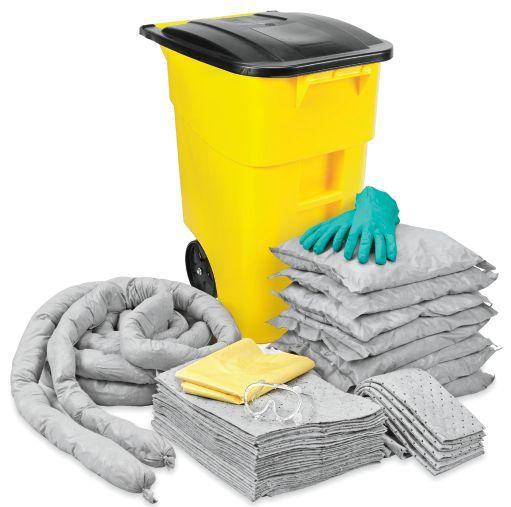
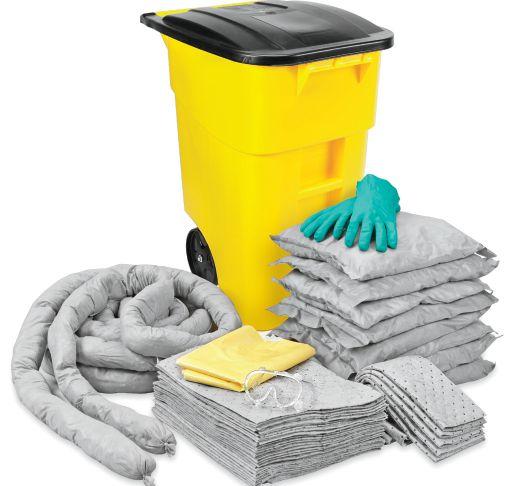
Items that go into a workplace-emergency kit include a minimum of three-days’ supply of water and non-perishable food, first aid, personal protective equipment like safety hats and respirators, warning/signalling devices, flashlights, fire extinguishers and spill kits. “It is important to know the evacuation [plan] and what employees are going to do,” McGillivary says. Those who work and live in the west coast should have an emergency kit at the office, ready to go, he advises.
Jean Lian is editor of ohs canada
WHEN THE EARTH MOVES
In view that British Columbia is the most earthquake-prone province in Canada, knowing what to do in the event of tectonic plate movements is a good form of protection. These three steps are mantra when an earthquake occurs: drop down, seek cover and hold on.
After the earthquake has stopped, check yourself and others for injuries, followed by inspecting utilities and elec-
trical lines for damage. Tune into the radio to get the latest information and stay out of damaged buildings or structures. Tread carefully when navigating your way around debris, broken glass and electrical lines. Get your emergency kit, follow the emergency plan and be ready for aftershocks. Lastly, stay away from beaches or anywhere with water as earthquakes can trigger tsunamis.
The Limitations of Water Washing for Managing Corrosive Chemical Injuries
By David Wootten
Chemical-exposure injuries occur far too often in workplaces across Canada. There are almost 50 fatalities every year as a result of short and long-term exposure to aggressive chemicals in the workplace. In fact, Canada averages about 2,500 lost-time claims per year from exposure to chemicals, resulting in thousands of lost-time days, according to 2016 statistics from the Association of Workers’ Compensation Boards of Canada.
Reducing or eliminating these risks through engineering controls, proper training and wearing the right personal protective equipment are critical to preventing serious injuries and illness caused by exposure to dangerous chemicals, one of the most common being accidental contact to human skin and eye tissue.
Workplaces with chemical risks are required to make emergency showers and eyewash stations available. Using water to remove an aggressive chemical agent from skin or eye tissue reduces burn injuries caused by strong acidic or caustic agents. The following are the benefits of flushing with water:
• Copious amounts of flowing water provides a mechanical removal effect;
• Dilutes — not neutralizes — chemical agents; and
• Water is universal and generally considered safe to help remove a chemical from skin/eye tissue.
But is flushing skin or eye tissue with water always the best option? It certainly is if only water is available. While flushing with potable water improves outcomes, it does not always prevent serious burns and permanent injuries following exposure to concentrated corrosive agents. As water is considered a passive rinse, the backend effect of water washing has the following limitations:
• Water can create a “squeegee” effect that drags the chemical agent down the body extending the area of injury.
An alternative solution that manages corrosive chemical splashes to human skin and ocular tissue is Diphoterine® — a decontamination solution specifically designed to prevent chemical burn injuries and subsequent lost-time days. As an amphoteric solution with hypertonic and chelating effects, Diphoterine® solution converts the passive backend effects of water into active effects. It is the simultaneous action of mechanical removal, reversing the tissue flow and the binding capacity on the acidic or basic ions that create this active effect, which helps to eliminate or dramatically reduce corrosive burn injuries.
• Water can only dilute a chemical agent. Diluting a chemical, especially a concentrated one, with water can take a long time to restore the physiological pH level of the skin or ocular tissue. The longer the transition takes, the greater the potential for injury and the need for medical aid.
• Water is by nature “hypotonic” to our body’s fluids, especially blood and tears. That means water has a naturalflow diffusion that penetrates the chemical deeper into tissue cells.
• Water dispensed from emergency showers and eyewash equipment is not sterile. Often, it is not even clean enough to be used on exposed burn tissue, especially eye tissue.
Diphoterine® solution is equally effective on all acidic, basic and irritant group chemicals such as reducing agents, oxidizers and solvents. The most recent study supporting the efficiency of Diphoterine® solution came from the British Burns Association (BBA), which updated their recommendations for managing chemical burns. “In the absence of amphoteric solutions, irrigation should be performed with saline solution. If neither is available, then irrigate with water,” the study stated.
The French Society of Ophthalmology also updated its guidelines for chemical eye injuries, acknowledging that “Diphoterine® is a preservative-free, sterile and amphoteric solution that binds acids and bases, restoring ocular pH within seconds or minutes,” it states. “Amphoteric solutions are most adaptive to emergency rinsing of chemical burns.”
When a chemical-exposure injury occurs, the duration of contact and what is done during that time is critical to preventing serious long-term injuries and lost-time days. Properly functioning eyewash stations and emergency showers remain essential rinsing equipment in work sites where corrosive chemicals are present.
But it is also important to know that Diphoterine® solution is superior over passive water washing, and there is growing evidence and studies supporting its efficacy. Diphoterine® solution has been adopted by many industry sectors throughout Europe, the United Kingdom, Brazil, Mexico and Australia. It is time for Canada to catch up.
David Wootten is Prevor Canadian product manager with Levitt-Safety Ltd. in Oakville, Ontario. Follow us on Twitter @OHSCanada
Paving the Road to Safety
ROADWORK SEASON: Summer marks the start of the season for public roadworks to fix potholes and cracked roads brought about by the harsh winter. Aside from road closures to allow megatonne machinery to do their jobs, many of us are also familiar with the smell of asphalt fumes emanating from road-construction zones. Road workers are not the only ones who can be exposed to asphalt fumes, a petroleum product used extensively in road paving, roofing, siding and concrete work. Roofers, contractors and construction workers are also vulnerable to asphalt fumes.
ABCs OF ASPHALT FUMES: Asphalt — a dark brown to black material with cement-like qualities made by refining petroleum crude oils — is one of the most important materials used today to make roofing products and systems. Asphalt is not a single chemical, but a complex mixture containing thousands of different chemicals, according to information from the National Roofing Contractors Association (NRCA) in Rosemont, Illinois.
Some of the chemical constituents of heated asphalt are converted to vapours, which condense into tiny liquid droplets when the vapours cool. Asphalt fumes can be inhaled into the lungs or condense onto exposed skin.
The two main hazards associated with asphalt are fire or explosion hazards and adverse health effects from exposure to asphalt fumes and vapours, notes the Texas Department of Insurance in Austin. Since asphalt products are often stored and handled at elevated temperatures, fire prevention is very important. As the presence of an ignition source is one of the greatest dangers when handling hot asphalt, any possible ignition source such as sparks, electricity, open flame and a lighted cigarette should be prohibited or strictly controlled in the vicinity of asphalt operations.
TOXIC EXPOSURE:
Workers in road construction, roofing and manufacturing can be exposed to asphalt fumes when heated asphalt is used to pave roads, seal road cracks and roofs and when roofing asphalt are being manufactured in large batches, releasing large amounts of fumes in a warehouse or an enclosed setting, WorkSafeBC cautions.
Asphalt fumes can cause coughing, fatigue, headache, reduced appetite, skin rash, throat and eye irritation and even cancer from exposure to asphalt vapours and fumes containing toxic chemicals like benzopyrene, bitumen and other polycyclic aromatic hydrocarbons or PAHs, which are recognized carcinogens.
In workplaces where asphalt fumes are a known hazard, employers need to inspect a job site regularly to determine
if the potential for risk is present. If so, safety procedures and practices need to be in place. Benzopyrene and PAHs are substances for which measures must be taken to keep exposure level as low as is reasonably achievable.
WHAT WE KNOW:
While a number of studies conducted on asphalt workers found excess lung cancer rates in roofers, they do not clearly establish a link between fumes from hot asphalt and lung cancer. Recent scientific analyses have shown that other factors may explain the excess lung cancer rate, including coal tar, which was widely used in roofing in previous years, as well as asbestos and tobacco smoking, NRCA states.
A study on 49 health effects following occupational exposure to paving asphalt fumes, published in the Occupational and Environmental Medicine journal in April 2018, may shed some light. Researchers from Shiraz University of Medical Sciences in Shiraz, Iran studied 210 subjects by measuring atmospheric concentrations of total particulate and benzene-soluble fractions of asphalt fumes, as well as obtaining urine and blood samples from subjects.
Results showed that exposure to sub-threshold limit value levels of total particulate and benzene-soluble fractions is associated with early liver and kidney dysfunction, as well as hematological disorders. As well, significant decrements in pulmonary function and a notable increase in the prevalence of respiratory symptoms in asphalt-paving workers, compared to their unexposed counterparts, point to a significant association between asphalt-fume exposure and lung-function impairments.
TAMING RISKS: Addressing asphalt-fume exposure risk calls for the four-pronged approach of elimination or substitution, engineering and administrative controls as well as the use of personal protective equipment (PPE). The Texas Department of Insurance lists the following safety measures when working with asphalt:
1. Elimination or Substitution: The best method of controlling exposure to asphalt fumes and solvent vapours is to use a safer asphalt mix, WorkSafeBC states. If explosion hazards are a problem in a paving operation, MC-
250 may be substituted for RC-250 as the flashpoint of the mix is nearly doubled, which means that it is less likely to ignite. If the toxicity of the chemical is a problem, an asphalt mixture containing a less toxic solvent, such as toluene instead of benzene, may be used.
2. Engineering Controls:
• Enclosure: Enclosing the process where asphalt is used may be possible for smaller operations like pipe-covering processes.
• Mechanization and Automation: Certain asphalt processes may be mechanized. For example, mechanical devices can replace the manual stirring of asphalt in a tar kettle, which can expose a worker to asphalt fumes, solvent vapours and severe burns.
• Local Exhaust Ventilation: This can control worker exposure to fumes and vapours, particularly in areas where enclosure of the operation is impossible.
• General Dilution Ventilation: This is not the most effective way to remove contaminants from a worker’s breathing zone, but general dilution ventilation may be used to supplement local exhaust ventilation, which involves flooding a work area with uncontaminated air to remove contaminants.
3. Administrative Controls: All workers who can be exposed to asphalt fumes should be trained about hazards and safe-work procedures. This training should include specific information about the solvents used in mixing the asphalt. Material Safety Data Sheets should also be made available to each employee assigned to work with or near asphalt processes.
4. Personal Protective Equipment: PPE is recommended when handling heated asphalt to protect workers from asphalt burns and irritation.
SAFETY REMINDERS: The following general precautionary measures are recommended when handling asphalt:
• Avoid prolonged contact with the material through skin;
• Avoid excessive breathing of asphalt materials;
• Wear PPE to protect against asphalt spatters;
• Don eye protectors when chipping/chiselling old blacktops;
• Keep all asphalt materials away from high heat and place solvent-thinned materials away from open flames;
• Close containers after each use; and
• Always follow the manufacturer’s instructions for the product being used.
Follow us on Twitter @OHSCanada
Fit For Hearing
By Jean Lian
Rising health claims due to increasing hearing loss among Canada’s military personnel is a cautionary tale for industries with high noise levels. A 2016 study obtained by Radio-Canada found that the rising incidence of hearing loss is due in part to military members’ reluctance to wear protective equipment and not being provided with suitable hearing devices. Almost a third of them have chronic hearing problems by the time they retire, according to surveys by Veterans Affairs.
Like the military, many industries like manufacturing, construction and resource extraction have high noise levels. According to Claudio Dente, president of Dentec Safety Specialists Inc. in Newmarket, Ontario, noise generated in the general industry ranges between 500 and 4,000 Hertz (Hz). “The human voice probably has 500 Hz; 4,000 Hz is a type of tool running at high speed,” Dente says.
Noise-induced hearing loss (NIHL) is the gradual and irreversible loss of the ability to hear sound. In most Canadian jurisdictions, the maximum permitted noise-exposure level over an eight-hour period is 85 decibels or dB(A). Quebec allows a maximum noise-exposure level of 90 dB(A), while federal workplaces cap it at 87 dB(A).
ions that fit around the ear and held together by a head band.
The different types of earplugs available include foam rolldown, push to fit, reusable, disposable, banded and custom-moulded. For earmuffs, they can be worn over the head, attached to a hard hat or has a back band. “All of them are available in communication devices too,” Borst says.
According to Borst, the attenuation or noise-reduction rating (NRR) for earplugs in general ranges from 25 to 33 decibels, while those for earmuffs hovers between 20 and 31 decibels. “What we know is workers receive about 50 per cent of NRR for earplugs,” she says. That means for a earplug rated at 30, most users will get 15 decibels of that protection. Earmuff users get about 70 per cent of the protection.
One possible reason why earmuffs seem to offer a higher protection is that it is comparatively easier to put a earmuff over the head than inserting a earplug properly into the ear canal. Borst cites research indicating that about 60 to 70 per cent of users wear their plugs correctly. That translates into a whopping 30 to 40 per cent of people not getting it right, which is “a fairly high percentage,” she suggests.
Not inserting an earplug correctly can give people a false sense of protection.
A scientific way to conduct noise-level tests is using a sound-level meter, which is a hand-held instrument with a microphone to measure sound that travels through air, says Beverley Borst, an advanced safety specialist with 3M Canada in London, Ontario.
Another method is to use a noise dosimeter to measure the specific noise exposure of a worker: a dosimetry is placed on the worker’s shoulder with a microphone near the ear to calculate noise exposure over an eight-hour average.
Figuring out the amount of protection needed for a work environment is the very first step, followed by selecting a hearing protector to filter down the noise below the allowed limit for the provincial requirements. “The objective of hearing protector is not to eliminate sounds so that you can’t hear anything,” Dente says. “It is to reduce it below a dangerous level that will start to affect your hearing.”
THE LOW DOWN
There are two types of hearing protection: earplugs are inserted into the ear canal, while earmuffs have soft ear cush-
Earplugs may seem like a simple hearing protector, but one that people may not necessarily know how to use them properly. Part of it is lack of training and taking the time to insert earplugs properly.
“I don’t think people realize how important it is to actually roll a foam earplug down, and how important it is to reach over with your opposite hand and pull the pin up and out,” Borst says. “If a foam earplug is inserted properly, it will provide a very high level of protection.”
Dente agrees that not inserting an earplug correctly can give people a false sense of protection. Unlike a earmuff that is straightforward to don, “a earplug is a lot of work to get it in place by comparison to be effective.”
Dente recommends giving employees training or a refresher course once a year on the negative consequences of not using hearing protection properly. “People really need to be attentive to make sure they insert it properly so that it is providing an effective seal,” he says.
COMMON COMPLAINTS
When choosing hearing protectors, several factors need to be considered: fit, comfort, ease of use, compatibility with other personal protective equipment (PPE); the attenuation needed; and environmental factors like humidity, ambient temperature or even the need for something compact if the
Magnification of Silica
Protecting you from micro-sized particles.
When exposed to the dust from blasted rock, crushed brick or cut concrete, you’re at risk of inhaling a microscopic hazard called Silica. 3M helps keep you safe by applying advanced electrostatic media to its respiratory protection solutions.
Because your health and safety on the job is always our priority.
See how we can help protect you from asbestos, silica, mould and manganese.
3M.ca/Silica
wearer needs to access tight or confined spaces or is wearing a welding helmet.
According to Dente, the problem with earmuffs is that it can be hot to wear for a prolonged period. Its weight and the tight grip of the band can also exert pressure on the sides of the head.
If this situation occurs, a user will likely bend the wire of the earband to ease the pressure on the sides of the head, which can compromise the NRR, cautions Mino Alkhawam, product manager of DSI Safety Inc. in Laval, Quebec.
The 3M™ PELTOR™ electronic earplug (top left) improves situational awareness, while Dentec’s Connex (right) combines a premium hearing protector with the latest Bluetooth™ technology. DSI’s new NP 106 (bottom left) has a bell shape to reduce pressure inside the ear canal.
As for earplugs, they can cause pressure in the ear canal. “Everyone doesn’t have the same ear canal size,” Alkhawam says. “This is why it might act differently from one person to another.”
Some earplugs have a higher expandable foam that generates more intense pressure in the ear canal, while others have lighter pressure and expands slower, hence exerting less pressure, he adds. DSI has a new hearing protector — the NP106, which is designed with a bell shape to reduce pressure inside the ear canal but continues to offer noise attenuation with an air pocket between both ends of the earplug to absorb noise and vibration.
Getting the right level of noise attenuation can avoid overprotecting a worker, resulting in their inability to hear warning signals, noise from machinery and other sounds in the immediate environment. “You can have possible overprotection when sound level reaching your ear is less than 70 decibels,” Borst warns. “It is important to match how much protection you are getting with the noise level, and you need to consider any existing hearing loss because they may be at a higher risk of being overprotected.”
3M carries a new electronic earplug — the EEP-100 — that provides hearing protection and improves situational awareness in challenging environments. The earpieces are small and lightweight, making them compatible with most head-borne PPE. The earplug can be recharged via a microUSB jack on the charging case, which stores the earpieces when they are not being used. It also offers different earplug tips: reusable and a comfortable push-to-fit that does not need to be rolled down.
The other type of earpiece 3M offers is a push-to-fit earplug. “What is nice about them is they are a foam plug, but they have a handle. So I don’t need to roll them down, and it is easy and fast to insert even for a novice user,” Borst says.
3M™ E-A-R™ Push-Ins™ Earplugs are available corded, non-corded and in metal detectable options. The soft, flexible foam conforms to the unique shape of each ear for
comfortable noise reduction. Its flexible stem requires no roll-down and makes it suited for use by people who have difficulty rolling and inserting disposable foam earplugs, such as when their hands are soiled.
COMPATIBILITY MATTERS
For any PPE to be effective, users need to know the requirements of the work conditions and determine if there might be issues with compatibility.
For example, a worker who already has hearing loss as a pre-existing condition should consult a physician before using any hearing protection, Alkhawam advises.
For employees who need to wear a hard hat, most earmuffs are designed to fit most hard hats with a sided slot. Some earplugs come with cord so that it will not fall off onto a production line, while certain earplugs are required to be visible when worn, such as those who work in the food industry. Some earmuffs come with an antenna so that a worker can listen to radio or plug into an iPod, Alkhawam explains.
One trend Dente observes is that more and more hearing protectors can be hooked into communication devices like cell phones. “The thing that is really happening in the marketplace is technology is touching these products too,” he says, citing increasing affordability as another trend.
Dentec offers Connex, a premium hearing protector with an NRR of 25 equipped with the latest Bluetooth technology. This hearing protector with a built-in microphone provides exceptional sound quality and can be connected to an iPhone or Android devices with Bluetooth, allowing users to listen to music or take cellphone calls up to nine metres away from any Bluetooth device.
Proper maintenance is also important. “Every time you put your earplug of muff in, you need to inspect it,” Borst advises. “For foam plugs, make sure they are not excessively soiled or contaminated, and they return to original shape. For earmuffs, inspect for cracks or worn parts.”
The outside of a earmuff can be wiped down regularly with warm water and mild soap, and it is recommended that the cushion and the inner foam be replaced every six months or earlier if they are damaged, she adds.
One thing to look out for in a earmuff is the ring inside it, typically made of polyvinyl chloride or some composite material. “Look at them every day to make sure there is no tear in seal because it will allow vibration or sound to get through if torn,” Dente cautions.
Jean Lian is editor of ohs canada
Follow us on Twitter @OHSCanada
Engaging the Workforce
By Alan Quilley
In my last article, I discussed the art of workplace-safety management by suggesting that the human side of the challenge of creating safety is more than just wishing that it happens through our safety commitments. We need to create it through our activities.
For those activities to be effective, they must include the very people who are affected by the safety process. It requires real engagement. Let us examine how we can get everyone from the “C” suite through the middle-management team to the line supervisors and frontline workers to engage in creating safety at work.
To bring about engagement, we need to be clear on what we are trying to accomplish. A 2004 paper, The Drivers of Employee Engagement by the Institute for Employment Studies in the United Kingdom, defines employee engagement as a positive attitude held by an employee toward the organization and its values.
An engaged employee is aware of the business context and works with colleagues to improve performance for the benefit of the organization. The organization must develop and nurture engagement, which is a two-way relationship between an employer and employee.
I would suggest that this actually falls short of what engagement needs to be, which has to actively involve everyone in an organization. Only thinking about and being committed to safety means nothing unless people execute the activities that create safety. Everyone from the chief executive officer to the hourlywaged worker needs to examine why they should make their workplaces safe.
Knowing how risks can arise and having a hierarchy of controls that mitigate risks is fundamental to engaging people in making workplaces safe and healthy. It also takes time to train everyone so that they can use their skills to bring about safety collectively.
In most organizations, the decision-making process is well understood; staff know what they need to do to get decisions made. We also know what is important by what is being discussed and measured.
Nesting safety activities requires the establishment of clearly stated goals and measures focused on activities that contribute to job safety. Leaders need to ask about progress on those activities, give feedback and provide coaching to ensure the activities are completed.
“What gets measured gets done; what gets rewarded gets results” is particularly true of senior leaders. Staff must be assessed not only on their results, but the measurable activities they did to make those results a reality.
Leading from the base of an organization utilizes the tremendous power of ideas and innovations from the floor.
It has been my experience that for a person to be involved in an organization’s goals, the individual must personally want to make a personal commitment. The real reasons for wanting safety at work is not for the government or the company; it is for the well-being of ourselves, our family and friends.
The second step is to educate everyone on how safety is created by our individual and collective efforts. Safety does not happen by magic; it is created by people who diligently commit to doing those activities that create a physically safe workplace and promote an engaged and motivated management team and workforce.
Getting better requires feedback. If we hope to support our employees, we need to ensure that they understand how they are doing in their efforts to reach our collective goals. Engaging employees, regardless of their position in an organization, is critical to safety excellence.
The classic “Plan-Do-Check-Act” (PDCA) continuous improvement model can now be put into play. The PDCA model leverages on the enormous power of an entire organization working to find and resolve safety concerns and maximize opportunities.
Those who leave behind the old model of “the few controlling the many” will never go back to that model once they have truly engaged their organization from top to bottom. Leading from the base of an organization utilizes the tremendous power of ideas and innovations from the floor.
Through coaching, mentoring and supporting, leaders in an organization can learn from employees who are at the business end of the shovel. Facilitating bottom-up leadership will produce unimagined positive results for those who are brave enough to implement the process.
It has often been said that safety management is a people problem. I would suggest that it is an “every employee opportunity” for those who take the time and effort to make it a reality.
Follow us on Twitter @OHSCanada
Alan D. Quilley is president of Safety Results Ltd. in Alberta.
TIME OUT
A NAKED ENCOUNTER: It was not just another day at a grocery store in Prince Albert, Saskatchewan. A 51-yearold man who had consumed a hallucinating substance ran naked through the store, swinging a broom stick while yelling at customers and throwing meat before jumping into a meat cooler, The Canadian Press reported on May 7. It took four officers to subdue the man who, at one point, grabbed one of the officer’s Tasers. The prosecution is seeking a oneyear jail term and a $200 fine to cover the store’s losses from the incident in early March. The man, who pleaded guilty to various charges including indecent exposure and mischief, was scheduled for sentencing on May 22.
NO KIDDING: Canadians are known for their sense of humour. A 29-year-old man in Toronto put this sense of humour to questionable ends when he painted his face as a Joker with green-coloured hair and walked into a restaurant in Kensington Market, spoke to a staff member at the cash register and walked out with a tip jar while the staff member turned his back. The store owner, who had seen the man in his store before, filed a police report. Other store owners in the area have reported similar thefts, Toronto Star reported on May 12. The Joker, who has been charged with theft, is certainly not laughing his way to the bank.
MUSICAL CHESTS: Want to know if you are cut out to play violin? Get your breasts measured, so claims a former teacher from Pincher Creek Hutterite Colony in Alberta who pleaded guilty to assaulting seven of his former students. The violin teacher started teaching violin in 1960 until his retirement in 2009. The charges relate to his interactions with female students in the 1970s, ’80s and ’90s, Toronto Star reported on May 13. The former teacher claimed that measuring the relevant dimensions of his students’ bodies was necessary to achieve a proper fit. Nice try.
CRIMINALLY HARDWORKING: Can working too hard be a criminal offence? It can be in Canada — and one that can lead to deportation. A 22-year-old international student from Punjab, India worked as a truck driver while studying in Canadore College in Mississauga, Ontario to become a mechanical engineering technician. While he was driving a commercial vehicle between Montreal and Toronto, the student was pulled over by a police officer for a random traffic stop in December 2017, Global News reported on May 13. A review of his driver’s logbook revealed that the part-time trucker had exceeded the maximum 20 hours that an international student in Canada is allowed to work each week without a separate work visa. The student has applied to Immigration, Refugees and Citizenship Canada for a temporary resident permit. If accepted, he can stay.
GOATS TO THE RESCUE: Wildfires are no ‘meh’ matter for a fire department in California, which has en-
listed the help of goats to prevent deadly wildfires. The Ventura County Fire Department released hundreds of starving goats just north of Los Angeles, utilizing farm animals to eat dead brush that present a fire hazard before moving them to another area, Toronto Sun reported on May 12. The fire department’s vegetation-management program described the measure of using goats to give dead brush a much-needed trim as “very effective.” In a demonstration of herd mentality, other fire departments across California are following suit.
QUESTIONABLE CARGO:
A famous South American chef was stopped at Los Angeles International Airport for going through customs with a cache of 40 frozen, vacuum-sealed piranhas in a duffel bag. The chef, who owned a restaurant in Peru and was featured in the third season of the Netflix show Chef’s Table, said that he hoped to serve the predatory fish at the Los Angeles food festival. Customs agents interrogated the chef and let him through after five hours, The Associated Press reported on May 8. He used the piranhas that night on a salad.
SLITHERY TRESPASSER: It was no drycleaning for a pet snake that escaped and slithered into a washing machine in a suburban Chicago home. The homeowner was totally creeped out when she saw the snake peeking out of her washing machine, The Canadian Press reported on May 10. The snake, which survived the wash cycle, was reunited with its 12-year-old owner who lived nearby. And he smelled like Downy, no less.
DUCKLINGS IN DISTRESS: Firefighters in Connecticut braved to save eight ducklings trapped in a storm drain at the University of Connecticut. According to a report by The Associated Press on May 6, bystanders called the fire department after noticing a mother duck and two ducklings crying outside the drain. A firefighter attached to a safety rope used a ladder to reach six of the eight ducklings and brought them out to safety. The crew also used a cord attached to a small dish filled with Rice Krispies to lure the remaining two down a drain pipe. The duck family was reunited and returned to a nearby lake. Mission accomplished.
ROUGH LANDING: No front wheels? No sweat. A Burmese pilot beat the odds and landed a plane carrying 89 passengers safely when the aircraft’s landing gears failed to deploy. A video footage of the emergency landing showed the nose of the Myanmar Airlines plane hitting the runway in Mandalay, causing sparks to fly as the front of the aircraft drags along the ground. The pilot dumped his fuel to reduce the aircraft’s weight before attempting the emergency landing — an astute move praised by many, MSN reported on May 13. No one was injured in the rough landing. Follow us on Twitter @OHSCanada
This is what a great fit looks like.†
Simplify the important task of gearing up your crew with proper-fitting protective eyewear as we release the latest member of the 3M™ SecureFit™ Protective Eyewear family. Your hard-working team will now enjoy the benefit of comfort and fit thanks to Pressure Diffusion Technology (PDT), the clarity of 3M™ Scotchgard™ Anti-Fog coating, and added protection with optional foam gasket and brow guard. 3M™ SecureFit™ Protective Eyewear 400/400X Series is fit for the job. Tough jobs deserve a great fit. Secure your free* sample at 3M.ca/SecureFit
3M™ SecureFit™ Protective Eyewear 400/400X Series comes with 3M™ Scotchgard™ Anti-fog Coating.