The changing face of employment GREEN HANDS Protecting young workers from harm SHIP AHOY! Keeping a solid footing on fishing vessels CREATING A CULTURE Safety comes from within
The sexual-harassment scandals that made waves south of the border has found its way to Canada. How did we get so lost, and how can we make things right? BY
DANNY KUCHARSKY
As temporary employment continues to rise, accountability on both the part of the staffing agency and its client employer is key to keeping workers safe.
BY JEAN LIAN
Creating a
culture at work requires a personal commitment from every worker.
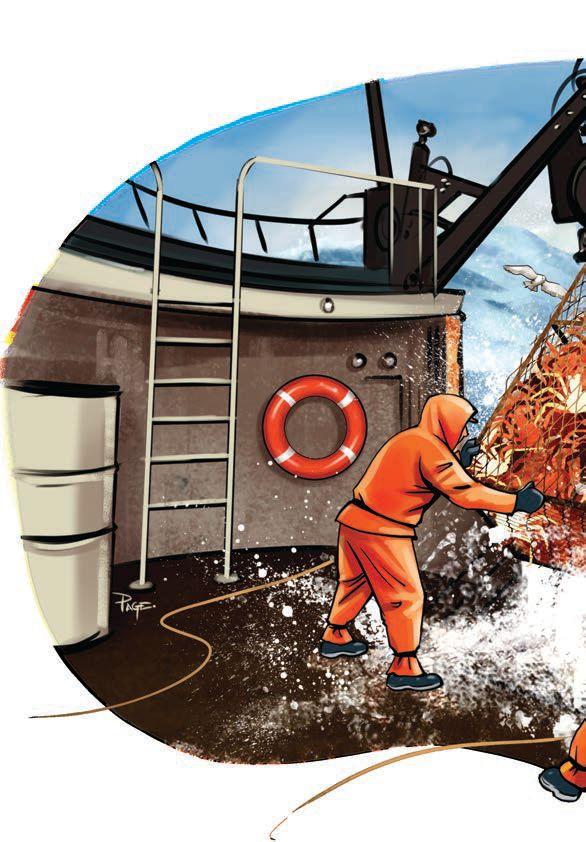
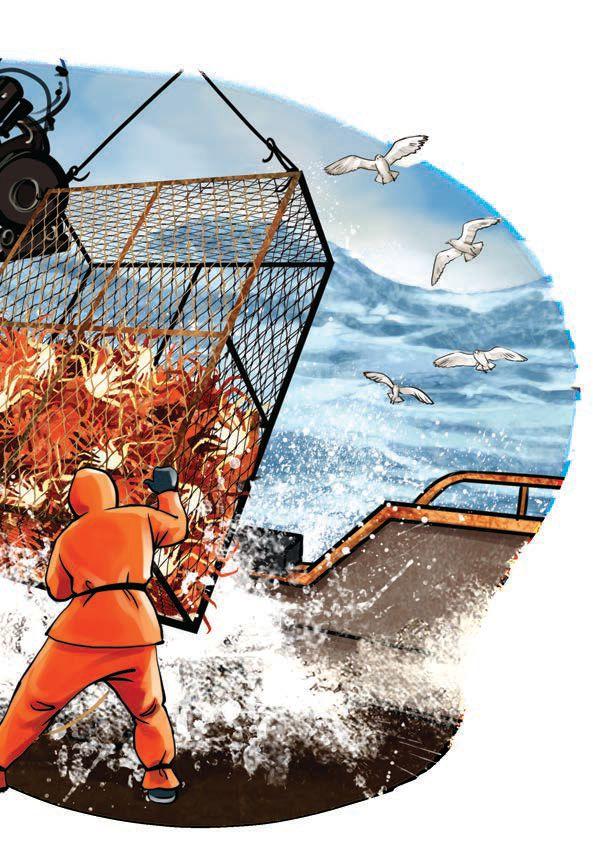
The hazards of working onboard a fishing vessel are varied. Understanding the operational environment and taking precautions offer the best protection.
workers are the future of the workforce, but they are also vulnerable. Ensuring their safety requires more than just equipping them with protective gear.
JEAN LIAN
Canada’s inaugural symposium on marijuana featured three experts who addressed occupational safety concerns about the legalization of recreational weed.
over cats; chickpeas no chicken feed; see you later, alligator; pizza 911; and more.
EDITORIAL
The Tipping Point?
TVol. 34, No. 2 MARCH/APRIL 2018
he waves of workplace sexual misconduct show no signs of abating as a quick scan of today’s news headlines yielded yet more reports of such behaviour both in Canada’s civil service and private sector. Following the footsteps of Ontario Progressive Conservative leadership candidate Patrick Brown, Calgary MP Darshan Kang, who resigned from the Liberal caucus, is the latest casualty after an investigation into a staff member’s harassment complaint against Kang concluded that Kang had violated House of Commons rules. Politics is dirty, but the cultural sector did not escape unscathed either. In an eerie echo to Soulpepper Theatre’s artistic director Albert Schultz, a long-time conductor of two choirs in Ontario was placed on a leave of absence in early March after both organizations received letters of complaint alleging sexual misconduct spanning several years.
The frequency and volume of these revelations are mind-numbing. There are a couple of ways in which one can try to make sense of this senselessness that seems to have taken a life of its own. The first is to see this as the Second Coming of the feminist movement, an unequivocal statement from women to people who have behaved dishonourably that “their time is up,” in Oprah’s words.
The second is to interpret the banding together of women from various walks of life and speaking out against their alleged harassers as a social movement made possible by the Age of Instagram and Selfie Sticks. In his book, The Tipping Point, Malcolm Gladwell defines the tipping point as “the moment of critical mass, the threshold, the boiling point” when an idea, a trend or a social behaviour crosses a threshold and spreads like wildfire.
In many ways, we are increasingly living in the Age of Tipping Point, socially and technologically. Digital technology has not only transformed the way we communicate, shop and live; it has also hastened the pace of social change. Like the 15th century invention of the Gutenberg printing press, which democratized access to knowledge and altered the power and social structure in Europe, digital technology has demolished barriers to mass communication. Increasingly frequent hashtag movements like #MeToo and #BlackLivesMatter are shaking up the status quo; they also speak to the inherent volatility of our times.
This may be 2018, but the workplace is far from a level-playing field for women. Ontario’s announcement on March 6 of its plan to introduce legislation to close the wage gap between women and men in the province shows that gender equality at work remains an ideal, not a reality. The disparity in earning power could be a contributing factor to creating workplace dynamics conducive to harassment, which is ultimately a symptom of power abuse.
Workplace wrongs in its myriad forms must be righted, but the approach of presumed innocence until proven guilty should remain top of mind and in practice. Brown’s fall from grace is a cautionary tale that allegations should not be deemed facts until proven so, in particular given the hindsight we now have that a key accusation against Brown has been proven false. Preventing the miscarriage of justice aside, nothing takes the wind out of a cause as effectively as wrongful accusations. And that’s the last thing I want to see happen to the #MeToo movement.
PUBLISHER PETER BOXER 416-510-5102 pboxer@ohscanada.com
GROUP PUBLISHER PAUL GROSSINGER pgrossinger@annexbusinessmedia.com
COO TED MARKLE tmarkle@annexbusinessmedia.com
PRESIDENT & CEO MIKE FREDERICKS
EDITORIAL ADVISORY BOARD MEMBERS
DAVID IRETON, Safety Professional, Brampton, Ont.
AL JOHNSON, Vice President, Prevention Services WorkSafeBC, Richmond, B.C.
JANE LEMKE, Program Manager, OHN Certification Program, Mohawk College, Hamilton, Ont.
DON MITCHELL, Safety Consultant, Mississauga, Ont.
MICHELE PARENT, National Manager, Risk Management and Health and Wellness, Standard Life, Montreal, Que.
TERRY RYAN, Workers’ Compensation and Safety Consultant, TRC Group Inc., Mississauga, Ont.
DON SAYERS, Principal Consultant, Don Sayers & Associates, Hanwell, N.B.
DAVID SHANE, National Director, Health and Safety, Canada Post Corporation, Ottawa, Ont.
HENRY SKJERVEN, President, The Skjerven Cattle Company Ltd., Wynyard, Sask.
PETER STRAHLENDORF, Assistant Professor, School of Environmental Health,Ryerson Polytechnic University, Toronto, Ont.
JONATHAN TYSON, Association of Canadian Ergonomists/Association canadienne d’ergonomie, North Bay, Ont.
Printed in Canada
ISSN 0827-4576 (Print)
ISSN 1923-4279 (Digital)
PUBLICATION MAIL AGREEMENT #40065710
CIRCULATION
asingh@annexbusinessmedia.com
Tel: 416-510-5189
Fax: 416-510-6875 or 416-442-2191
Mail: 111 Gordon Baker Rd., Suite 400, Toronto ON M2H 3R1
SUBSCRIPTION RATES
Published six times per year – Jan/Feb, Mar/Apr, May/Jun, Jul/Aug, Sep/Oct, Nov/Dec
Canada $98/yr plus tax
USA $98/yr
Foreign $161.50
Occasionally, OHS Canada will mail information on behalf of industry related groups whose products and services we believe may be of interest to you. If you prefer not to receive this information, please contact our circulation department in any of the four ways listed above.
816 Healthcare workers missed work last year due to Workplace Violence. (WSIB EI database)
Safe workers mean better care.
Let’s work together to reduce violence in healthcare.
Violence in the workplace cannot be tolerated workplace-violence.ca
1. Pretty in Pink: Employees of the Workers’ Safety and Compensation Commission showed up in pink on February 28 in support of Pink Shirt Day. The anti-bullying initiative this year raised $840, which will be donated to the École William McDonald Middle School in Yellowknife.
Source: Workers’ Safety and Compensation Commission
2. Partners in Safety: Ontario’s Ministry of Labour has partnered with universities, associations and research groups to invest in projects that support workplace mental health and reduce job injuries and fatalities. These projects include developing tools for workplaces to increase awareness of mobile-equipment hazards and creating educational programs and resources that provide information about mental health.
Source: Ontario Ministr y of Labour
$1 Million
Amount the Alberta government invested to fund eight projects exploring new ways of preventing occupational injuries and illnesses.
Source: Alberta Labour
71%
Percentage of employers who are not prepared for the legalization of marijuana, with nearly half of human-resources professionals citing workplace safety as the top concern.
Source: The Human Resources Professionals Association of Ontario
3. A New Look: SAFE Work Manitoba launched its annual youth-safety contest with a new look and new name: Norm the Safety Contest — Make Safety the Norm. High school students in Manitoba have until April 12 to submit their projects. The contest seeks to raise awareness about the importance of staying safe at work among young workers.
Source: SAFE Work Manitoba
4. Video Contest: WorkSafeNB and Ontario’s Canadian Centre for Occupational Health and Safety jointly launched the 2018 Focus on Safety Youth Video Contest. High-school students in New Brunswick who submit a two-minute video on workplace safety by April 6 stand a chance to win prizes.
Source: WorkSafeNB
5. Coverage Broadened: WorkplaceNL has broadened the coverage of its mental-stress policy to recognize work-related mental-health issues that may be caused by exposure to multiple traumatic events. The policy includes events that are an inherent part of an occupation. A longer-term review of PTSD coverage in workers’ compensation legislation is ongoing. Written submissions will be accepted up to March 30.
Source: WorkplaceNL
LIGHTNING STRIKES TWICE
Two workers were killed in separate industrial accidents in Johnson City, Tennessee within a week. Eight employees were inside a fluorescent-bulb-recycling facility on March 14 when an explosion occurred, killing one. This fatality came on the heels of a silo collapse on March 10, claiming one employee who was spraying sawdust off the inside walls.
Source: The Associated Press
57%
Percentage of Canadian employees who feel loyal to their employers — well below the global average of 70 per cent.
Source: ADP Research Institute
4 in 10
The proportion of Canadian professionals who lose sleep over work. Common causes of restlessness include a heavy workload, a looming business problem and strained co-worker relationships.
Source: Accountemps
THE 2017 VOTES ARE IN.
# 1 Overall Pick by You
Gold -Ansell Microflex 93-260
Hand Protection:
Gold - Ansell Microflex 93-260
Silver – Ansell HyFlex 11-542
Eye Protection:
Gold - DSI Safety Inc. - Dyna-Shield Eyewear
Silver – DSI Safety Inc. Most Comfortable OTG Glasses
Gas Detection / Instrumentation:
Fall Arrest:
Gold Draeger X-am 125 Mark II Pump
A special “thanks” to all our readers and web visitors for their votes.
We poured over the votesOur 2017 OHS Canada Readers’ Choice Awards Winners are: Congratulations
Gold - DSI Safety Inc. – Specialized Fall Arrest Harnesses
Apparel:
Gold – Ansell AlphaTech™ HiViz™ Coverall 66-687
Silver – Lakeland MicroMax NS
First Aid:
Gold - DSI Safety Inc – Personalized First Aid Kits
Education: Gold - University of New Brunswick – Online OH&S Professional Development Programs
Head Protection: Gold – DSI Safety Inc. – Full Graphic Safety Hard Hat
LETTERS
Recent issues of ohs canada and our website, www.ohscanada.com, have provided readers with plenty to chew on.
IN THE SPOTLIGHT
Controversial comments by a Nova Scotia professor has sparked a national debate on free speech on campus. (the canadian press, March 5, 2018)
Debate is an important part of university life. Young students today have been raised in a bubble of political correctness and are offended by the most simple of terms, which I am finding with my newest staff members who are all young. They feel it is important for them to correct me if I should use a politically incorrect term. I consider myself an open-minded and caring person. I am offended. Where will it end? Swinging back to the middle, I hope.
Angela Beal
There is no such thing as “systemic oppression.” Name one system or institution in Canada that discriminates based on sex, race or religion. These nonsensical social constructionists will say anything to reinforce their “oppressed” positions.
Keith
NO CHILD’S PLAY
A feature on violence against teachers was published in the January/February 2018 issue of ohs canada
It makes a lot of sense that schools are witnessing more violence these days. It is particularly difficult for the individuals working within a system that continues to increase expectations while reducing resources. A big part
of this dilemma is the fact that adults are not prepared to manage the initial crises that lead to violence. Schools are still committed to fire drills (six per year) and lockdowns (two per year), but rarely practice how to approach and manage a potentially volatile interaction. Staff have no time to discuss and practice codes that would mobilize assistance and scripts that could defuse escalating behaviours.
As a workplace-violence-prevention consultant who has delivered hundreds of non-violent, crisis-intervention training sessions to educators, it is obvious that without practice, these same adults resort to their own unproductive styles. It is essential that the issue of increasing violence be examined through its precipitating factors and the impact they have on the entire system. The five per cent of students that take up 40 per cent of the school resources need to be engaged positively by the entire school community and families.
We have to ensure that we are not responding to the non-validated stories of frustrated and traumatized individuals. Let’s be clear that violence has no place in schools. Let’s also be clear that when you host 200 to 1,200 adolescents under the same roof, there will be conflicts. Not being able to put in place proactive strategies to intercept escalating behaviours and instead, responding with threats and intimidation, will create the spark that ignites violence.
Steve Hall
MORE TRAINING NEEDED
An Alberta judge wants more training for police after a traffic stop turned fatal. (the canadian press, February 28, 2018)
Mental issues or not, if you pull a gun on the police or public, you will end up in a hospital or a morgue. The ques-
tion is, how does someone with this condition have a driver’s license and a weapon?
Scott Gilbert
ALIGNING WITH CANNABIS PLAN
Alberta is aligning with the federal government’s cannabis-legalization plan. (the canadian press, November 15, 2017)
Medical-cannabis users can run at blood levels of 10 to 50 ng/ml of tetrahydrocannabinol (THC) and even higher in some cases. This also ignores the levels of cannabinoids, which is a major mitigating factor in the psychoactive effects of THC. The daily use of cannabis as medicine results in a complete tolerance to the psychoactive effects of THC due to the receding CB1 receptors in the central nervous system, specifically the brain, and thus, there is no impairment to the ability to operate a motor vehicle.
Recreational use is most often neither based on consistent strain nor concentration of product, as the user is seeking very different results than that of a medicinal user. A medicinal user spends a great deal of time and effort finding the exact dosage, concentration and specific product to use, and then strives to maintain a systematic daily dose. This method of medicinal administration results in a complete tolerance to the psychoactive effects of THC, but a recreational user is usually seeking the “high” from THC and thus, uses the product much differently.
James Tripp Follow us on Twitter @OHSCanada Would
Would you like to share a comment? Send an email to jlian@ohscanada.com. Letters may be edited for style, grammar and length.
Safety at Work: What It Means to Employees
By Christian Fournier
How many times you have heard “safety first” or “everything starts with safety”? I am pretty sure that we have all heard some variation of these phrases. As a safety professional myself, it does become challenging at times to know which approach is the best for motivating employees and staff to be more safety conscious in the workplace and at home. Why at home as well? It is because 70 per cent of all injuries occur at home.
Our objective is to create a safety culture, but what is a safety culture exactly? The common definition is a set of common beliefs that are acceptable to a group, but I believe a safety culture goes beyond that. As such, I decided to try to increase the safety consciousness of employees and staff at my workplace by involving them in our monthly safety meetings. I started by asking each employee at safety meetings two questions: what does safety mean to them; and what is a safety culture?
For the first question, the answers I received were varied and based on their personal beliefs, like not getting hurt. I was impressed with one of the answers I received, which was that safety is “a lifestyle.” And that started to make me think about the core values of a person.
For the second question, I was surprised that most of the employees did not know what a safety culture or their concept of a safety culture was, for example, wearing a hard hat. I received a lot a positive feedback, but also backlash from some employees who did not like to be singled out in front of the group and preferred to not participate. I do understand that not everyone is comfortable with speaking in front of groups, but I believe that in order to improve as a person, you must be placed outside of your comfort zone. So my definition of a safety culture is “a set of shared core values of a group of individuals that believe safety is more than work, home or lifestyle; it is part of who we are.”
The following month, I decided to pursue the same format in our safety meetings. The two questions I asked this time were: what are you doing now to contribute to safety; and what are you willing to do for the next month to improve safety on site? Obviously, these questions were more challenging for the staff, because they were aimed to make
them dig deeper within themselves.
For the first question, just like the previous month, I received a wide range of answers from picking objects up from the ground to ensuring that their fellow co-worker locks out properly during cleaning and maintenance. When it came to the second question, the employees found it difficult to give an answer.
To help them out, I provided them two personal commitments that I had made for myself for the next two months: look only for the positive actions around me; and to observe one employee per day, thank them for working safely and let them know the reason why I thanked them. Once I mentioned my own commitments, it did encourage some of the workers to provide their own personal commitments to improve safety at the workplace.
As you can see, safety is not as easy as replacing a bolt or putting on a guard. It is dealing with people. I wish I can say that all employees were onboard with my approach, but I made some headway. Some employees’ eyes were opened to this new approach that safety comes from within each and every one of us.
Follow us on Twitter @OHSCanada
Certified health and safety consultant Christian Fournier is a safety and training coordinator with Fornebu Lumber Company Inc. in New Brunswick.
OH&S UPDATE
PRELIMINARY FIGURES RELEASED
FEDERAL — The number of railway accidents saw a significant increase in 2017 while aviation and marine accidents decreased marginally, according to preliminary statistics for transportation occurrences in 2017 that the Transportation Safety Board of Canada (TSB) released on February 20.
The TSB received 1,090 reports of railway accidents last year, representing a 21 per cent hike from 899 in 2016. There were 77 rail-related fatalities — 11 more than the previous year — of which 53 involved trespassers, compared to 47 in 2016.
The total number of reported pipeline occurrences also went up from 104 in 2016 to 125 last year. There was one serious injury related to a federallyregulated pipeline occurrence in 2017 — the first since 2012. The number of incidents involving soil erosion was also larger than usual, likely due in part to the unusually wet weather.
Incidents relating to aviation and marine accidents both declined in 2017. The TSB received 239 reports involv-
ing aviation accidents, which is lower than the five-year average of 259. The number of accidents among commercial operators increased in 2017 after a five-year decline, partly due to a higher number of flight-training accidents.
Marine accidents, on the other hand, fell 10 per cent from 307 in 2016 to 276 last year. Of the 11 marine fatalities, three occurred in the fishing industry. Although this number has decreased in the last two years, so has the number of registered fishing vessels and fishermen, the report states.
TSB will release its final statistical reports for 2017 in early spring.
ALERT ON SHIPPING CONTAINERS
RICHMOND — WorkSafeBC has released a new video and safety bulletin highlighting the risks of reusing shipping containers for storage in workplaces and residences.
“Shipping containers are being repurposed all over British Columbia,” Dan Strand, director of prevention field services for WorkSafeBC, says in a
FINDINGS YIELD SAFETY MEASURES
FEDERAL — Findings of an investigation into an incident involving an aircraft that collided with terrain last year has led to the implementation of safety measures by Mount Royal University in Calgary.
According to a report that the Transportation Safety Board of Canada (TSB) released on February 22, a Tecnam P2006T aircraft operated by Mount Royal University departed from the Springbank Airport in Calgary on an instructional flight on February 13, 2017. Onboard were a flight instructor and a pilot, who was also a flight instructor at the university, undergoing multi-engine training.
Approximately 30 minutes into the flight, the aircraft departed from controlled flight and collided with terrain 32 miles northwest of the airport, resulting in a post-impact fire that destroyed the aircraft and killed both occupants.
The TSB report states that for reasons not known, the aircraft had entered a spin from a stall exercise. Although the instructor and trainee recovered the aircraft from the spin, there was insufficient altitude to recover from the ensuing dive. While the flight-training material at Mount Royal
statement issued on February 22. “The containers are designed to be watertight, which means they are well sealed with little or no ventilation — ideal for shipping purposes, but potentially dangerous for other uses.”
Vapours or gases from common flammable or combustible substances, when combined with an ignition source in a container with little or no ventilation, can produce a catastrophic incident. A leak of just one kilogram of propane can rupture a closed shipping container. The bulletin adds that the propane tank on an average home barbecue holds nine kilograms. A full tank can generate the same explosive force as 100 kilograms of TNT.
There are other risks that can arise from reusing a shipping container for purposes other than shipping. The floorboards may have been treated with toxic chemicals to protect cargo during shipping or chemicals may have spilled in transit, and workers can be overcome by exposure to these chemicals.
WorkSafeBC advises employers to conduct a risk assessment and include safety controls, such as identifying
University mentioned two types of stall recoveries — one for the situation when the aircraft approaches a stall and the other for a scenario in which the aircraft has stalled — guidance material issued by both Transport Canada and the United States Federal Aviation Administration indicate that reducing the angle of attack should be the only stall-recovery technique to be used for either case. As well, Transport Canada issued an advisory stressing the importance of reducing the angle of attack during a stall or approach to stall, but this information was not incorporated into its instructor guide for the multi-engine class rating.
Following the incident, Mount Royal University implemented the following safety actions: increasing the minimum altitude at which an aircraft should be recovered from a stall; issuing a memo to all instructional staff clarifying the roles of the designated instructor and the student when two instructors are conducting staff-training flights together; acquiring a different aircraft type for its multi-engine training program; and producing revised multi-engine standard operating procedures.
whether any flammable or combustible products are being stored in a container. If so, these containers should be moved to a well-ventilated location. Employers should also list the contents of containers in their fire-safety plan so that first responders know the potential hazards, as well as train workers about the risks and put up signs to ensure appropriate storage procedures.
COLLISIONS A LEADING CAUSE
RICHMOND — Work-related motor vehicle incidents (MVIs) account for 33 per cent of all work-related traumatic deaths in British Columbia, making it the leading cause of traumatic workplace deaths in the province. WorkSafeBC released these statistics on February 20 in anticipation of Road Safety At Work Week, an initiative aimed at eliminating work-related motor vehicle crashes, deaths and injuries in British Columbia, which ran from March 5 to 9.
“When workers are injured in a motor vehicle crash, they are typically more severely injured and off work longer than workers injured at work in other ways,” says Mark Ordeman, WorkSafeBC’s acting manager of transportation in industry and labour services. “Taking steps to reduce the risks to your drivers will help you keep your workers safer, your costs down and your vehicles/trucks on the road.”
According to WorkSafeBC’s timeloss claims relating to MVIs from 2012 to 2016, 21 workers were killed and another 1,339 injured and missed time from work on average each year due to work-related crashes. The three sectors that make up close to three-quarters of work-related MVI injury claims for the stipulated period were transportation and warehousing (34 per cent of crashes overall), service (26 per cent) and construction (10 per cent).
Claims for the general-trucking subsector account for 14 per cent of all MVI claims in the transportation and ware-
housing sector, while the healthcare and social-services sub-sectors account for 10 per cent of all MVI claims in the service sector.
INSPECTIONS PROMPT ORDERS
RICHMOND — The first of a threephase ammonia-inspection initiative conducted in British Columbia from November 20 to December 31, 2017 has yielded more than 1,100 orders.
A WorkSafeBC statement dated February 26 says officers inspected ice rinks and recreational facilities that use ammonia as a refrigerant. The inspections focused on risk assessment, exposure-control plans, work procedures and emergency-response and evacuation plans for ammonia exposure.
Of the 223 inspected sites, 181 used ammonia refrigeration systems. The inspections yielded 1,134 orders, with the following being the three most commonly cited: monitoring and alarm
systems tested at least monthly; pressure-relief alarm systems; and exposure-control plan.
Phase two of this inspection initiative, which is in progress, focuses on contractors conducting installations, maintenance and other activities on ammonia systems. Phase three, which will take place later this year, will target workplaces other than recreational facilities and ice rinks that may be storing large quantities of ammonia on site.
WHISTLEBLOWER PROTECTIONS INCREASED
EDMONTON — Stronger whistleblower protections for public-sector employees will take effect in Alberta on March 1.
Ombudsman and Public Interest Commissioner (PIC) Marianne Ryan and Minister Responsible for Democratic Renewal Christina Gray made the announcement on February 22. The province is the first Canadian jurisdiction to explicitly state that MLAs, ministers and the Premier can all be investigated when a disclosure is made to the PIC.
“It is important that public-sector employees feel safe to report serious wrongdoings and are protected from reprisal,” Gray says. “Our new whistleblower legislation is among the more comprehensive in Canada. Alberta public-sector employees will be able to come forward without fear.”
The Public Interest Disclosure (Whistleblower Protection) Amendment Act ensures that staff in the offices of MLAs, ministers and the Premier will have clear processes that allow the PIC to investigate reports of wrongdoing. The act now requires more detailed public reporting from the PIC, who will have the authority to investigate a wider variety of wrongdoings, including bullying, harassment, intimidation and some forms of mismanagement or abuse of human resources.
In addition, processes for how investigations are handled for all public-sector employees and the PIC’s ability to access information will be strengthened. A protocol may be developed between the PIC and the Speaker of the Legislative Assembly to set out the PIC’s abilities to investigate matters affecting privileges of the legislature. Whistleblowers who have suffered punishment or retaliation from their employer will also be entitled to restitution.
“These amendments offer expanded protection for whistleblowers,” Ryan says. “I look forward to these changes and believe they will encourage both employees and their organizations to embrace a workplace culture where the reporting of wrongdoing is encouraged and supported.”
RULING UPHOLDS TESTING-BAN INJUNCTION
FORT MCMURRAY — The Alberta Court of Appeal has upheld an injunction on random drug and alcohol testing of Suncor employees in the Regional Municipality of Wood Buffalo.
“There is no evidence that random testing improves safety, which is why Unifor is committed to more reliable methods to keep our members safe on the job while respecting their dignity,” Jerry Dias, national president for Unifor, says in a state-
ment issued on February 28. Dias adds that workplace safety can be achieved through education and prevention without violating workers’ rights.
The injunction was granted at Unifor Local 707A’s request on December 15, 2017 after Unifor filed for leave to appeal to the Supreme Court of Canada to uphold an arbitration board’s ban on random testing on the grounds that the practice violates workers’ rights to privacy and dignity.
In 2012, the union, which was then known as the Communications, Energy and Paperworkers’ Union, filed a grievance and applied for an injunction when Suncor announced the unilateral implementation of random drug and alcohol testing in its Fort McMurray oilsands operations. An arbitration panel ruled in March 2014 that the ban violated workers’ rights, but a judicial review and the Court of Appeal later set aside the panel’s decision, calling for a new arbitration board to hear the grievance.
“Suncor employees are already sub-
jected to more alcohol and drug testing than Alberta’s drivers,” says Ken Smith, president of Unifor Local 707A.
He claims that Suncor conducts tests following virtually every workplace incident, in contrast to the general practice in which police can demand that a driver submit to drug and alcohol testing if the officer has reasonable grounds to believe that the driver is impaired.
PREMIER ANNOUNCES MEASURES
WINNIPEG — Manitoba Premier Brian Pallister announced measures that would create a more respectful work environment for government employees. The announcement on February 22 came on the heels of recent revelations of sexual harassment and inappropriate behaviour in the provincial government.
“The culture that allowed this behaviour to go unreported and unpunished is not acceptable,” Pallister says. “I want every employee to know they have
a right to a respectful workplace and there will be no reprisals if they assert their rights.”
Five initiatives will be implemented to ensure that all sexual-harassment incidents are taken seriously and that employees will feel safe in reporting such incidents. The first initiative, commonly known as the “no wrong door” approach, seeks to address the reluctance that staff have towards bringing forward complaints for fear of reprisal. Moving forward, political staff will be able to report complaints through other avenues, in addition to bringing their complaint to their direct supervisor or the chief of staff.
Consultations with government employees will be launched to gain insight into their experiences and understand the impact of policies, practices and other tools that address workplace sexual harassment. An external review will also be conducted to yield recommendations to prevent and address workplace harassment through simplify-
Working in a confined space can be challenging and dangerous and we know you depend on more than reliable equipment, you need a company offering complete solutions including safety evaluations, product selection, training and expertise. MSA is that company.
To learn more about MSA’s complete line of safety solutions or request a FREE, no obligation safety evaluation, visit MSAsafety.com/safetyevaluation.
ing procedures, identifying gaps in current approaches and ensuring best practices.
The fourth initiative involves implementing a public-reporting process on statistics related to harassment that occur across government workplaces. This reporting mechanism will protect the privacy of complainants, while providing accountability to employees and the public. The last initiative is to mandate workplace training for all cabinet and political staff to raise awareness on the issue.
FLYING METAL STRUCK EMPLOYEE
MISSISSAUGA — An Ontario company was fined $60,000 on March 6 over a worker injury caused by flying metal.
On May 31, 2016, a worker employed by Lexsuco Corporation in Mississauga was trimming a large copper disc on a lathe to create a flashing hub approximately two inches in length. The worker was trying to trim the outer edge of the disc with a cutting tool when it got caught on the copper, tearing a large piece of the metal off the disc and hitting the worker, resulting in injuries.
The company pleaded guilty following a subsequent Ministry of Labour investigation, which found that the spin area on the lathe was not guarded to protect the worker from the material being processed as required by the Industrial Establishments Regulation (Ontario Regulation 851/90).
FIRM FINED FOR DEATH OF QUARRY WORKER
ORILLIA — A company in Niagara Falls, Ontario was fined $170,000 on March 12 over the death of a quarry worker.
The fatality took place on February 6, 2017 when workers employed by Walker Aggregates Inc., which produces limestone, sand and gravel from 15 quarries in southwestern Ontario, were preparing machinery to restart production after the customary six-week winter shutdown. The start-up process involved ensuring each piece of equipment, including conveyors, was operating by removing the ice buildup on the two conveyors, Ontario’s Ministry of Labour reports.
When two workers were removing ice buildup on a pulley on the conveyor without an interlocking device in place, a metal bar that was used by one of the workers got caught in the pinch point between the conveyor and the steel drum of the pulley. As the conveyor moved, the bar was pulled into the moving machinery along with the worker who was holding the bar, resulting in fatal head injuries. The worker was pronounced dead at the scene by emergency services.
A Ministry investigation found that the conveyor was not de-energized, locked and tagged out while the ice was being removed from the pulley. It was not necessary to run the conveyor while the task was in progress. The company also failed to take precautions to prevent the worker from coming into contact with moving parts.
Drinking Water Sources
We all rely on safe, sustainable drinking water. If your business is located in a drinking water vulnerable area – near a municipal well or surface water intake – then you may be required to take extra steps to protect drinking water sources under the Clean Water Act. A risk management plan may be needed. If so, existing best practices to prevent and mitigate spills of hazardous chemicals could provide a solid foundation for this plan.
To find out whether policies apply, search the Source Protection Information Atlas at ontario.ca/page/source-protection.
COMPANY GETS PENALTY FOR FATALITY
BRAMPTON — A Brampton, Ontario-based company was fined $175,000 on March 8 over a fatal incident in 2016 when a worker got pinned between the guardrail of a work platform and a steel structure.
According to the provincial labour ministry, Dematic Limited was contracted to install a conveyor system as part of an automated material-handling system for a warehouse under construction in Brampton. During installation of the conveyor, workers had to install decking on previously constructed structural steel frames by moving the decking with a forklift and using a mobile work platform to access the frame.
Two workers were working from the mobile work platform, which was operated from controls that were accessed while on the platform. In order to access the various sections of the steel frame, the workers had to position themselves briefly below the top rail of the mobile work platform’s guardrails to pass under some beams of the structural steel frame.
As the worker operating the controls did not have the co-worker within sight since both were on the platform that was being moved, the co-worker got pinned between the platform’s guardrail and the steel structure. The worker was pronounced dead at the scene.
Ministry investigation revealed that while the workers had received training and instruction in the operation of the mobile work platform, the platform was not being operated at the time of the event in accordance with the operator’s manual. In particular, the manual warned against operating where insufficient clearance existed between the operator and potential obstructions.
The company pleaded guilty to failing to ensure that all vehicles, machines, tools and equipment were used in accordance with operating manuals.
PAY-TRANSPARENCY BILL INTRODUCED
TORONTO — Ontario became the first province in Canada to introduce pay-transparency legislation as part of a new strategy to advance women’s economic empowerment and build fairer, better workplaces.
Ontario Premier Kathleen Wynne unveiled Then Now Next: Ontario’s Strategy for Women’s Economic Empowerment on March 6. The introduction of legislation to increase pay transparency will require certain employers to track and publish information about compensation in their organizations, increase transparency in hiring processes and give women more information when negotiating fairer compensation that is equal to their male peers.
If passed, the legislation will also require all publiclyadvertised job postings to include a salary rate or range, bar employers from asking a job candidate about their past compensation, prohibit reprisals against employees who discuss or disclose compensation and establish a framework to require larger employers to track and report compensation
gaps based on gender and other diversity characteristics, which will be determined through consultation. Once fully implemented, employers will have to post that data within their own workplaces publicly, in addition to reporting them to the province.
The gender wage gap in Ontario has remained stagnant for the last decade, with women earning around 30 per cent less than men, according to a statement from the Office of the Premier. “It has been more than 30 years since Ontario first passed pay-equity legislation, but we are still working to close the gap,” Wynne says. “It’s time for change.”
The province’s pay-transparency disclosure measures will begin with the Ontario Public Service. Following consultation, the proposed new rules will apply to employers with more than 500 employees, before extending it to those with more than 250 employees.
NEW CHIEF PREVENTION OFFICER APPOINTED
TORONTO — Ontario has appointed Ron Kelusky as the new Chief Prevention Officer (CPO). Kelusky’s appointment took effect on March 12.
Prior to his appointment as the CPO, Kelusky was the president and chief executive officer of the Public Services Health and Safety Association and was responsible for health and safety solutions for Ontario’s healthcare, education, gov-
ernment and First Nations sectors.
Kelusky led a number of projects, including a system-wide review of violence in the healthcare sector and strategies on improving outcomes for first responders experiencing post-traumatic stress disorder.
“I am humbled by this appointment and excited to begin building upon the significant improvements the Ministry has made in reducing workplace injuries over the past several years,” Ke-
lusky says in a Ministry of Labour statement issued on March 6.
The CPO is responsible for a range of duties, including working with the province’s health and safety system partners to prevent workplace injuries, illnesses and fatalities, reporting to the Minister of Labour on the performance of Ontario’s oh&s system, setting province-wide standards for training and safety programs and establishing a provincial workplace-safety strategy.
COURT FINES FIRMS, DIRECTOR
TORONTO — A company director was fined $48,000 on February 27 for ignoring orders to pay workers.
Daniel Cameron Scott, sole director of HRG Management Inc. and Capital Business Centres Inc. in Rockland, Ontario violated the Employment Standards Act by failing to pay unpaid wages, final vacation pay and termination pay resulting from constructive dismissals in spite of orders to do so issued by employment-standards officers from the Ministry of Labour.
The offences were committed between November 21, 2013 and March 31, 2014. The labour ministry received 22 claims against HRG Management Inc.; three claims against Capital Business Centres were received between December 24, 2014 and May 6, 2015. HRG Management Inc. was convicted after pleading guilty to 20 counts and was fined $100,00, while Capital Business Centres Inc. pleaded guilty to three counts and received a $15,000 penalty.
The sole director of the companies was convicted on four counts and fined $48,000. He was also ordered to pay $86,453 for unpaid wages. The highest amount owing to an individual was $12,800.
PROBE LOOKS AT HARASSMENT
TORONTO — In response to reported operational concerns surrounding workplace bullying at the Canadian Mental Health Association’s Elgin branch, the South West Local Health Integration Network (SWLHIN) will appoint an investigator to look into the concerns and to make recommendations based on their review.
“For years we have raised red flags about the toxicity, bullying and harassment in this workplace,” Tischa Forster, president of Ontario Public Service Employees Union (OPSEU) local 133, says in a statement on February 27. “It is a very serious matter when the SWLHIN votes to hire an independent investigator for reported governance
and operational concerns.”
While the details surrounding the scope and mandate of the investigation remain unclear, members of OPSEU local 133, which represents mental health and addictions staff at CMHA Elgin, are hopeful that the process will lead to positive changes within the agency.
“A change at CMHA Elgin is long overdue,” says OPSEU president Warren Thomas. “We are hopeful for the opportunity to share our concerns with the investigator and to work with them moving forward so that we can improve the working environment for all.”
MINING COMPANY CONVICTED
TORONTO — An Ontario mining company, which has gone out of business since 2016, was fined $1.3 million over a worker fatality in 2014.
The fine, the largest ever levied against a company in Ontario, was issued on February 20 over an incident on May 6, 2014 at the Lockerby Mine in Chelmsford, Ontario where falling materials killed two mine workers. First Nickel was convicted on six counts of Ontario Regulation 854/90 (Mines
and Mining Plants) and the Occupational Health and Safety Act for the following failures:
• Ensure that a workplace in an underground mine is kept free of accumulations or flow of water which might endanger a worker;
• Develop a quality-control program for work in an underground mine so that ground-support systems that are specified in the mine design are properly installed and remain effective while in use;
• Ensure that if a potential or actual danger to a worker’s health or safety in an underground mine has not been remedied at the end of a work shift, a written record describing the dangerous condition shall be made and signed by the supervisor of the work shift;
• Include in the written report, in addition to the occurrences, a notice where a fuse, detonator or an explosive is found to be defective;
• Ensure that an employer in a underground mine, in consultation with the joint health and safety committee (if any for the mine), shall develop a written program to provide for the timely communication of in-
SENTENCES ISSUED FOR ELECTROCUTION
TORONTO — Two Ontario companies were fined a total of $285,000 on February 15 over a worker fatality.
According to a statement from the Ontario Ministry of Labour, K-Line Maintenance and Construction Limited was replacing existing overhead lines for a project in the Greater Toronto Area, while subcontractor PGC Services Inc. was excavating holes for the installation of new electrical utility poles on November 24, 2015.
PGC sent two hydrovac crews to set up equipment at the site, located near overhead power lines with a phaseto-phase voltage of 27,600 volts. Members of both crews were preparing the equipment for excavation without the presence of a designated person to monitor the movement of hydrovac boom arms and ensure that the equipment did not encroach upon the legal safety standard.
The boom arms of the hydrovac trucks were operated by a remote control. For the truck operated by the first crew, the boom arms were controlled by elevated toggles on the unit. One of the workers was removing the final dig tube from its storage rack on the driver’s side undercarriage of the first truck while simultaneously trying to pull the dig tube out of the rack with the boom’s remote-control unit hanging
formation between workers and supervisors in the mine about ground stability, ground movement, falls of ground, ground-monitoring equipment and emergencies; and
• Examine ground conditions of the workplace for hazards and make the job site safe before work starts in an underground mine.
INJURY YIELDS GUILTY PLEA
GUELPH — A road-maintenance company operating as R&N Maintenance in Guelph, Ontario, was fined $70,000 on March 1 after pleading guilty to causing a worker injury last year.
On September 26, 2016, a worker who was part of a crew performing road maintenance at a section of a road in Toronto, was travelling a short distance between sites in the back of a truck containing a functioning kettle with molten asphalt sealant heated to about 165 degrees Celsius. When the truck stopped abruptly, the molten material in the kettle spilled onto the worker, causing serious injuries.
An investigation by Ontario’s Ministry of Labour determined that the com-
underneath one arm.
The other worker on the passenger side of that truck, who had pulled a length of the high-pressure water hose from its spool in the equipment cabinet on the undercarriage of the truck, was in the process of attaching it to the digging gun used for the excavation.
As the worker on the driver’s side was pulling the final dig tube out of the storage rack, one or more of the toggles on the remote control was inadvertently triggered, causing the boom arm to move and come into contact with the overhead electrical lines parallel to the road, resulting in the fatal electrocution of the worker on the truck’s passenger side. Emergency services were called, and the worker was pronounced deceased in hospital.
PGC pleaded guilty to failing as an employer to ensure that no object was brought closer than three meters from an energized overhead electrical conductor, while K-Line pleaded guilty to failing to ensure that a designated signaller was in place to warn the operator each time any part of the vehicle or equipment approached three meters from an energized overhead electrical conductor. K-Line and PGC were fined $160,000 and $125,000 respectively.
pany failed to take precautions to ensure that materials were transported or stored in such a way that it would not endanger workers when they were being moved.
JOB FATALITY SPURS PENALTY
TORONTO — A metal-fabrication company in Maidstone, Ontario was fined $125,000 on February 12 for a workplace fatality in November 2016.
An employee of R. J. Cyr Company Inc. was doing touchup work on a conveyor skid, which was the steel frame or base for a conveyor weighing 557 kilograms. The worker used an overhead crane to lift one skid from a pile and placed it on its side on a support structure, while a second skid was similarly positioned.
In the process of detaching the overhead crane from the skids, the skids were not secured or clamped to the support structure. As the worker was securing one of the skids to the support structure with clamps, it tipped and pinned the worker to the concrete floor.
A labour-ministry investigation found no evidence that the worker had been instructed not to disconnect the conveyor skid from the overhead crane until the skid was secured to the support structure. The company pleaded guilty to failing to ensure that machinery, equipment or material that may fall and endanger a worker is secured against tipping or falling.
COMPANY FINED FOR CRITICAL INJURY
CHATHAM — An Ontario company was fined $50,000 on February 27 over an incident that critically injured a worker.
The incident took place on February 28, 2017 when LiquiForce Services (Ontario) Inc., which operates a no-dig pipeline rehabilitation service, was contracted by Henry Heyink Construction Ltd. to perform relining work on existing municipal sewer piping in Chatham.
A court bulletin from the Ontario Ministry of Labour reports that a worker was unravelling cable from a winch located at a manhole and pulling the cable towards another manhole down the street. Both work areas were surrounded by orange cones that caused traffic to drive around the area. As the distance between the two areas was several hundred feet, the worker had to pull the cable over this entire distance with no protection from passing traffic.
As the worker was walking and unspooling the cable, which formed a loop on the roadway, a vehicle passing between the two project areas snagged the cable, causing the worker to be flung backwards onto the road as the moving vehicle became attached to the cable. Although the company had a traffic-protection plan in place, the plan failed to ensure that there was adequate safeguards from vehicular hazards while the cable was being unspooled between the two areas.
The company pleaded guilty to failing to comply with regulation, which requires that a written traffic-protection plan be in place to inform workers about vehicular traffic hazards and the measures that will be used to protect them.
UNION SUPPORTS DOMESTIC-VIOLENCE LEAVE
HALIFAX — Unifor is urging the Nova Scotia legislature to pass an NDP private member’s bill that will ensure paid leave for victims of domestic violence.
A statement from the NDP Caucus dated March 1 says it will bring forward legislation that will provide paid leave for survivors of intimate partner and sexualized violence. Of those individuals who have reported incidents of domestic violence in Canada, more than half experienced an abusive incident at or near the workplace.
“Survivors of violence require support — including time to heal and access appropriate services,” says NDP Labour spokesperson Tammy Martin. “People should not be penalized at work when they are victimized at home or in public.”
According to a study on domestic violence at the workplace that researchers from the Western University and the University of Toronto released last October, close to half of the 500 respondents reported that violence issues affected their job performance negatively. One-third of respondents reported being in contact with their partner or ex-partner during work hours to engage in emotionally abusive behaviour, and one quarter of men who engaged in these behaviours dropped by their partners’ homes or workplaces during office hours. About one-fifth indicated that their partners’ co-workers
were aware of these behaviours.
“When I was in that situation, I left with the clothes on my back and I missed work for medical and court appointments,” says Koren Beaman, Unifor Woman’s Advocate with MWF Local 1, Halifax Shipyard. “The last thing women facing domestic violence should be worried about is losing their job.”
Lana Payne, Unifor’s Atlantic regional director, says the union is pleased that the NDP has tabled this bill. “We strongly encourage the other parties understand that job protection and paid leave will remove a major barrier for women escaping domestic and intimate partner violence.”
In 2016, Manitoba became the first province in Canada to pass legislation for five days of paid leave for victims of domestic violence and guaranteeing job security while they take time off to sort out their lives. Other provinces that have adopted similar policies include New Brunswick, Ontario, Alberta and Saskatchewan.
CHANGES TO APPRENTICESHIP
HALIFAX — Nova Scotia has raised the safety bar for certified tradespersons by introducing legislation that will strengthen the apprenticeship system and make workplaces safer.
The provincial government introduced amendments to the Apprenticeship and Trades Qualification Act on February 28, which will give the Nova Scotia Apprenticeship Agency additional authority to enforce certification requirements in the compulsory certified trades. The recommendations came from a working group comprised of industry representatives.
“Most employers ensure that work in the skilled trades is being performed safely by properly trained and certified workers. But there are some who do not, and they need to be held accountable,” Labour and Advanced Education Minister Labi Kousoulis says. “With these changes, we are strengthening the province’s apprenticeship system.”
The proposed amendments will enable enforcement officers to inspect employers any time work is being per-
formed. It will also subject recognized associations registering apprentices on employers’ behalf and dispatch workers to job sites to enforcement provisions.
Apart from clarifying the authority of the Nova Scotia Apprenticeship Agency when issuing compliance or stop-work orders and introducing administrative penalties, the maximum penalty for the first and second offence will be raised from $5,000 to $10,000 and from $10,000 to $50,000 respectively. The amendments will also make it an offence to breach an order issued by an enforcement officer.
“Working in these trades comes with risk,” says Sandy Bonvie of Bonvie’s Sheet Metal Fabrication Shop in New Glasgow. “Having the right enforcement tools and processes in place will help create a more level playing field for trades employers and a safer work environment for all apprentices.”
AMENDMENTS INTRODUCED
ST. JOHN’S — Injured workers in Newfoundland and Labrador may get enhanced benefits if amendments to the Workplace Health, Safety and Compensation Act, which the provincial government plans to introduce in the House of Assembly, are passed.
According to a statement from the provincial government issued on February 20, the amendments seek to increase income-replacement rate (IRR) for injured workers or their dependents in the province from 80 to 85 per cent.
That means wage-loss benefits will be calculated at 85 per cent of an individual’s net, post-tax earnings.
A higher IRR, which is the percentage of a worker’s pre-injury net income covered by the workers’ compensation system, will improve benefits to injured workers and dependent spouses without increasing the average assessment rate.
“The workplace-injury compensation system in our province is now able to provide an increase to benefits for injured workers in a period where the cost for employers has declined,” says Dennis Hogan, chief executive officer of WorkplaceNL. “We will continue to work collaboratively with safety associations, industry, workers, labour groups and employers to evolve our safety culture through focusing on the priorities in the new five-year prevention strategy, while maintaining a financially sustainable system.”
Currently, an individual’s gross income is capped at the Maximum Compensable Assessable Earnings (MCAE), which is $64,375 for 2018. Newfoundland and Labrador has the highest MCAE in Atlantic Canada.
Sherry Gambin-Walsh, Minister of Service NL, says workplace injuries affect many people in the province. “As a government, making these improvements helps ensure the workplace-injury compensation system is meeting the needs of clients. We must also ensure we maintain our continued focus on a culture of safety in Newfoundland and Labrador,” she says.
Follow us on Twitter @OHSCanada
So, what’s on your mind?
Ever wonder what other oh&s types are thinking about? Find out by making our website poll at www.ohscanada.com a regular stop.
Guarding our windows to the soul year round
By Jean Lian
Summer may seem like a universe away as we trudge through the tailend of winter, but when summer shines its glorious warmth upon us, heading out for work or play necessitates having the right eyeglasses.
While sun exposure is a commonly known risk factor for melanoma on the skin, research has also linked sun exposure to melanoma of the eye and squamous cell sarcinoma of the conjunctiva, according to the Canadian Cancer Society. Some evidence suggests that people who work outdoors have a higher risk of developing eye cancer.
Short-term, excessive exposure to ultraviolet (UV) light, especially from light reflected from sand, snow or pavement, without adequate eye protection can burn the eye’s surface. Long-term, cumulative exposure to UV can also injure parts inside the eye, increasing the risk of chronic eye diseases and various cancers.
Wearing eyewear with adequate UV protection can help guard against these eye-related health conditions. And that means selecting glasses which filter out 99 to 100 per cent of UV light, which comprises both UV-A and UV-B, the Canadian Ophthalmological Society says. For those who spend a lot of time working in the sun, wrap-around glasses prevents the sun from entering the eyes from the sides.
Shielding our windows to the soul from sun exposure applies in winter as much as in summer. Sunlight reflecting off the snow can be very harsh and has the potential to damage the eyes’ front surface. For people who hold jobs that require working outdoors in winter, such as employees in ski lodges, construction, snow removal, oil and gas or landscaping, special precautions should be taken to protect the eyes, and only goggles or sunglasses with UV protection should be worn, the American Academy of Ophthalmology advises.
Province unveils strategies for high-risk sectors
WorkSafeBC has released its three-year plan to reduce serious injuries in the manufacturing, health care, construction and forestry sectors.
The new plan targets industries with a high risk of serious occupational injury and contribute significantly to the serious-injury rate. “Our goal with the high-risk strategies is simple — to reduce the number of serious injuries,” Dan Strand, director of prevention field services for WorkSafeBC in Richmond, British Columbia says in a statement issued on February 7.
The forestry sector has a serious-injury rate of 1.2 per 100 person-years of employment, compared to 0.3 across all sectors in 2016. Identified high-risk activities for this sector typically fall into five areas of timber harvesting: manual tree falling; log transportation; cable yarding; mechanized harvesting; and silviculture. Emergency-response planning has been identified as a critical target area. Due to the continuing high injury rate in hand falling, a dedicated inspection team will also focus on employers with high injury rates and/or poor compliance rates.
For the manufacturing sector with a serious-injury rate of 0.5 per 100 person-years of employment in 2016, WorkSafeBC officers will focus on manufacturing sub-sectors at risk for serious injury and evaluate employers on aspects such as hazard and risk identification, implementation of effective controls, development of safe-work procedures and provision of training and supervision. “The risks that drive serious injuries in this sector are varied,” Strand says.
Officers will also focus on areas most applicable to each location, which include safeguarding and lockout, powered tools, hand tools (knives), material handling (falling objects), mobile equipment and falls.
Like those in manufacturing, fall from heights is a leading cause of injury for construction workers in the province, representing 29 per cent of all claims costs in 2016. Falls from ladders injured or killed 2,012 construction workers from 2012 to 2016. In view of this sector’s risk profile, the strategy will hone in on three areas: conduct inspections on health and safety planning and supervision to prevent unsafe working conditions and practices from developing; focus on the right tools, equipment or processes to reduce incidents; and work with stakeholders to encourage communication to promote a more proactive response to evolving industry challenges and emerging risks.
Unlike the risk profile that workers in the above sectors face, the threat to healthcare workers stem from the people they care for. “Healthcare workers in British Columbia are at risk of injury from workplace violence, as well as overexertion and musculoskeletal injuries, primarily from lifting patients,” Strand says.
Healthcare and social services are also disproportionately represented in time-loss claims due to acts of violence, accounting for 62 per cent of all violence-related time-loss claims in 2016. Combined, healthcare assistants, registered nurses, licensed practical nurses, social workers, homesupport workers and paramedics represent 74 per cent of all time-loss claims in the healthcare and social-services sectors.
To address these challenges, the strategy will apply point-
of-care inspection protocols and implement initiatives to educate employers, workers and supervisors to encourage safework practices with a primary focus on violence prevention.
Job stress takes a toll on mental health: survey
The changing workplace is increasing occupational stress and affecting employee-retention rates.
According to a survey conducted by human-resources consultancy Morneau Shepell, 1,510 working Canadians polled between August 28 and September 7, 2017 cited organizational stress as the highest source of stress. Forty per cent of managers and 34 per cent of employees reported suffering from extreme levels of stress over the last six months, with both groups ranking workplace stress higher than personal stress.
“More employees and managers are experiencing extreme levels of stress than ever before,” Stephen Liptrap, president and chief executive officer of Morneau Shepell, says in a statement issued on January 30.
The survey identifies several contributing factors to growing occupational stress: workload; long hours; co-workers; and job responsibilities. Female employees are more likely to report experiencing higher levels of job stress than their male counterparts. One out of five managers and 18 per cent of employees who experience high workplace stress are likely to leave their organizations. Slightly more than half of employees surveyed have dealt with a mental-health issue or a sleep-related disorder currently or at some point in the past.
“It is clear that the traditional workplace is changing, and Canadian organizations need to begin prioritizing the mental well-being and engagement of employees,” Liptrap says.
A recent survey by market-research company Ipsos Reid, released last October, yielded similar findings. Four in 10 employed Canadians have either been diagnosed as depressed or believe that they suffer from depression. About 15 per cent of respondents believe they are suffering from a mental illness, while others report feeling nervous and anxious (12 per cent) or unable to control their worrying on most days (13 per cent) over the past two weeks.
Liptrap highlights the need for organizations to be aware that depression is often an issue among high performers.
“Those with high-functioning depression are more likely to delay seeking care, resulting in health concerns being identified far too late and increasing the possibility of a mental health crisis,” he cautions. “It is increasingly important for employers to recognize high levels of stress and identify solutions before crises occur.”
Newcomers vulnerable in precarious first jobs
Newcomers to Canada who experience difficulty finding work often find themselves in precarious first jobs where they lack health and safety protection, concludes a recent study by Toronto’s Institute for Work & Health (IWH).
Almost all participating newcomers reported difficulty finding work, citing language barriers, their lack of Canadian experience and a lack of recognition of their foreign credentials as the main challenges.
First jobs for nearly all participants were poor quality, precarious jobs characterized by short-term contracts, parttime hours and poor working conditions, such as lacking protective equipment or involving strenuous, physical labour. Many were concentrated in manufacturing, food services or domestic work — sectors that also were new to many of the participants.
The qualitative study, which examines newcomers’ experiences looking for work, was conducted with the support of four settlement agencies in Ontario. Researchers interviewed 22 key informants in the immigration and employment field and held focus groups with 110 immigrants and refugees who were working or looking for work at the time. Based on its findings, IWH researchers made several recommendations for policy-makers regarding the delivery of workplace-safety information to newcomers.
“We found that ohs-related programming provided by service providers tended to be one-offs,” says Dr. Basak Yanar, an IWH research associate on the team.
The study recommends that the delivery of workplace health and safety information be executed more systematically and to offer content as a regular part of language training and employment preparation so that it reaches newcomers even before they start looking for work. Having a champion at the system level, like a policy body or ministry to coordinate oh&s programming for newcomers, was also among the recommendations, as the study has identified the diffusion of responsibility for providing workplacesafety information as one of the challenges.
Follow us on Twitter @OHSCanada
Jean Lian is editor of ohs canada.
SECRET Whispers
BY DANNY KUCHARSKY
The sexual-harassment scandals that made waves in the United States and triggered the #MeToo movement last year has brought about the downfall of actors, movie producers, politicians and celebrity chefs alike. Now, the tsunami of workplace harassment has reached the shores of Canada.
Ontario Progressive Conservative Party leader Patrick Brown, federal sport and disabilities minister Kent Hehr and Soulpepper Theatre’s artistic director Albert Schultz are recent additions to the bandwagon of high-profile sexual-harassment scandals that have rocked Canadian institutions like the RCMP, Parliament Hill and the Canadian Broadcasting Corporation (CBC).
While these scandals made headlines not so long ago, the issue of workplace harassment is far from new. A 2017 federal government study entitled Harassment and Sexual Violence in the Workplace found that 60 per cent of workers have experienced harassment or violence within the last two years at work, with nearly one-third of those surveyed indicating that they have been sexually harassed. The report also found heightened risks of gender-based violence among people who work alone, late at night and in public places or provide services such as personal care, counselling or education.
Findings of the survey are based on 10,349 valid responses to an online public consultation conducted from February 14 to March 9, 2017. The survey sought to understand the types of harassment and violent behaviours perpetuated in Canadian workplaces, the risks presented by these behaviours and the preventive measures, responses and supports that can be provided to fix the problem.
But the jury is still out as to whether workplace harass-
ment has become more prevalent, or is simply coming out in the open after being swept under the carpet for decades. For Mary Ann Baynton, program director of Great-West Life Centre for Mental Health in the Workplace in Waterdown, Ontario, workplace harassment is “probably less prevalent than it used to be.” Instead, the awareness of it has grown. “There is less tolerance of it; there is less fear of speaking up.”
The #MeToo movement has given women “a place of privilege” and made them feel safe to talk about their experiences with workplace sexual misconduct, suggests Debora De Angelis, regional director of the Ontario region and national strategic campaigns coordinator with the United Food and Commercial Workers Canada (UFCW) in Rexdale, Ontario. But she underscores the fact that there remains a power imbalance in workplaces at large.
“Not everybody can come forward, because some of them don’t have a choice,” says De Angelis, who is also the chair of the union’s women and gender equity committee.
Sexual harassment “is an issue of power,” De Angelis says, highlighting that many women are fearful of the consequences of speaking out. “In my role, I often get calls of women sharing experiences of working in retail and having trays of chicken breasts thrown at them.”
In the wake of the #MeToo movement, De Angelis is one of those women who came forward with her experience with sexual misconduct at work. Back in 1998 when she
was paying her way through university by working at Eaton’s department store, stocking shelves and changing store displays, her supervisor “would tell sexually explicit jokes all day long” to the primarily female staff.
“For the first three months, I laughed with everybody,” De Angelis says, noting that the job paid double the minimum wage then. “It took me a year to say anything, and when I asked him to stop, it was because he had accosted me in the (service) elevator,” she says. And the situation got worse.
“At that time, I tried to figure out what sort of vehicles there were to help my workplace be a better place,” says De Angelis, who lodged a complaint with Eaton’s management. In response, the human-resource department held a training session, but the supervisor “hijacked” the session, dismissed his behaviour as mere jest and left the meeting along with half of the staff. As a result, the message that his actions were inappropriate did not get conveyed to her coworkers. Another consequence of her stepping forward was her alienation by her colleagues.
“Nobody would speak to me; I was called a rat. There were pin-ups put up in my space,” De Angelis recounts. “I would get to my workstation, and there would be little postings like ‘Debora — call for a good time,’” she adds. “The first person to get let go when there was a layoff was me.”
“It shows that it [sexual harassment] really transcends all racial backgrounds, class, economic status and all industries,” Hall says. In each case, the Tribunal found that there was a violation of the Code, and the applicants were awarded monetary compensation ranging between $20,000 and $40,000. In a recent particularly egregious case involving migrant workers, the Tribunal awarded the applicants a total of $215,000 in general damages and interest and ordered the employer to provide human-rights training to all employees in their native language.
“Employees need to know that there is protection for them,” Hall says, so knowing employers’ sexual-harassment policy and procedures “is obviously very important.”
Sexual harassment
She took her complaint to the human-rights commission, which was understaffed during an era of government cutbacks. She received a call from the Commission, notifying her that Eaton’s was in receivership and asking if she wanted to continue pursuing the complaint. De Angelis dropped her case.
Since 2016, Ontario’s Bill 132 imposes a legal duty on employers to create a workplace sexual-harassment program in consultation with worker health and safety representatives. The Sexual Violence and Harassment Action Plan Act, which amended the Occupational Health and Safety Act, also requires employers to set up procedures for workers to report incidents to someone other than their supervisors or employers if those persons are the alleged harassers — something that many employers and workers in Ontario are not aware of, De Angelis suggests.
“is an issue of power.”
She applauds the measures that the Ontario government has taken to date on workplace harassment, but highlights the need for a mechanism in which employers are required to reveal what they have done to prevent workplace violence and the awareness training they have conducted on violence, sexual harassment and bullying.
But she notes that things have changed since; complaints brought to the human-rights commission today are taken far more seriously than in the 90s. “The mechanisms in place today are much better, but we can improve.”
THE RIGHT DIRECTION
The human-rights process is typically not the first avenue that comes to the minds of people who are dealing with a workplace sexual-harassment complaint, says Sharmaine Hall, executive director of the Toronto-based Human Rights Legal Support Centre (HRLSC), which provides legal advice and representation to those who have suffered discrimination that violates Ontario’s Human Rights Code. But she believes that option will feature more highly on people’s minds after four actresses in Toronto filed civil-code lawsuits rather than Criminal Code claims for sexual harassment against Soulpepper Theatre’s Schultz in January.
In HRLSC’s 2016-17 annual report, sexual harassment ranked fifth at five per cent among the 25,389 public inquiries about discrimination that the HRLSC received — well behind inquiries concerning disability, race, ethnic origin and gender. But nearly one-fifth of the mediations that the HRLSC attended at the Human Rights Tribunal of Ontario last year involved sexual-harassment cases, according to Hall. HRLSC has handled sexual harassment cases that include restaurant servers, clothing-store saleswomen and migrant workers.
“If there was a mechanism somewhere that was proactive versus reactive, we would be in a better place,” says De Angelis, adding that awareness goes beyond just having a policy and sticking it on a bulletin board.
REACHING OUT
The spate of sexual-harassment scandals has also raised concerns about compliance and prevention among employers. Some of them have reached out to Cissy Pau, principal consultant with Clear HR Consulting in Vancouver, to seek advice on creating anti-harassment policies and providing employee training.
Pau says many small businesses in British Columbia are unaware that employers are required to have formal prevention plans for workplace violence, bullying and harassment. This requirement has been in place since 2012 when the province amended its Workers’ Compensation Act through Bill 14, which also included workers’ compensation for mental disorders caused by bullying and harassment.
Small businesses in the province often find out by chance that not only do they need to have anti-harassment policies in place, Pau says, they are also obligated to review and update their policies once a year. Her consulting firm deals with businesses with five to 50 employees on average that “do not have the expertise to deal with harassment policies and training on their own,” she notes.
Pau cautions that having an anti-harassment policy is not enough unless people know about it, and not having a process in place to deal with complaints will only entrench the problem. For example, if a harasser gets promoted while leaving a trail of tears behind him, it sends a message that bad behaviour is acceptable.
Baynton advises employers who are creating anti-harassment policies to check against the legislation in their home province closely as regulations vary from jurisdiction to jurisdiction and are constantly changing. The federal government’s announcement of Bill C-65 late last year is a case in point. The bill, which would amend existing provisions in the Canada Labour Code, seeks to keep federally regulated industries free from harassment and sexual violence by giving workers and employers a clear course of action to deal with allegations of bullying, harassment and sexual harassment.
Compliance with workplace-safety legislation and the
Human Rights Code are not the only compelling reasons for creating harassment-free workplaces. Baynton points to a wide body of evidence showing that psychologically healthy companies tend to have better bottom lines and positively influence employees’ physical and mental health, motivation and productivity.
“We can have better organizational excellence and we can have better financial outcomes and productivity,” Baynton says of psychologically healthy workplaces. “It is an astute business decision, not just the right thing to do.”
A 2016 Ipsos Reid study in which Baynton was involved found that almost a quarter of Canadian workplaces are addressing employee psychological health and safety. Conversely, workplaces with cultures that inspire fear of speaking up are conducive to harassment, Baynton notes, as harassment tends to be prevalent in organizations in which “employees are not seen as a valued resource or an asset, but rather as a disposable asset.”
Fortunately, the number of organizations today where those factors exist is on the decline. “I really do believe that we are headed in the right direction,” Baynton says.
BEYOND GENDER AND SECTOR
Although women often bear the brunt of workplace harassment, Baynton points out that men are also victims of such unwanted behaviour. The experiences and responses of male employees who have been harassed, however, are different from that of women. Baynton says men feel more physically intimidated, and the harassment and bullying directed at men tend to be “more intentionally humiliating.”
Several organizations are taking steps to increase awareness of harassment. Last November, the Ontario Restaurant Hotel and Motel Association (ORHMA) launched a new online training program called It’s Your Shift, which uses a variety of mediums, including videos and case studies, to educate employees in the hospitality and tourism industries about sexual harassment and violence-prevention measures. The program, which was funded by the Ontario government, portrays all facets of harassment that an employee potentially faces, offers guidance on how to identify these behaviour when they emerge and what to do about it.
Sexual harassment is a safety issue no different than those presented by other occupational hazards or chemicals, Finnegan says. Although she maintains that harassment is no more prevalent in the food and beverage industry than in any other sectors, 80 per cent of restaurant employees in the United States indicated that they have been harassed by co-workers or customers in a 2014 study, The Glass Floor: Sexual Harassment in the Restaurant Industry.
Hospitality workers in Canada face a similar reality. In September 2016, the Ontario government announced that it would invest $1.7 million to fund six sexual-violence and harassment training projects for frontline workers, which include those who work in the hospitality and food and beverage sectors.
ENCOURAGING SIGNS
“It took me a year to say anything.”
Fatima Finnegan, director of corporate marketing and business development with ORHMA in Mississauga, Ontario, says the timing of the launch of the online training program “could not have been better” as it rides on the momentum of the #MeToo movement.
She adds that the goal is to have 25,000 people take the online training program in the next two years. A number of foodservice and hospitality operators have committed to including the program in their employee training. Ontario colleges and universities offering hospitality and tourism programs will also incorporate the online program into their curriculums.
On the union front, UFCW Canada launched the #NoMore awareness campaign in February to end gender-based violence. The union also has a sexual-harassment guide and a postcard for distribution to its members, along with launching an online survey to raise awareness of the issue.
Recent developments and high-profile allegations of occupational harassment have started a conversation about what is considered acceptable behaviour and what is not. De Angelis, who recently walked into a non-unionized Canadian Tire, describes seeing a sign next to the cashier that reads “Violence” and a big bull’s eye with an X piercing through it.
“It is amazing,” De Angelis says about the sign, which is the employer’s way of telling its customers that abusive behaviour would not be tolerated. She thinks that things have improved compared to the days when she was harassed while working at Eaton’s.
“1998 feels like a hundred years ago compared to where we are right now,” De Angelis says. “The whole culture has changed.” She speculates that if Jian Ghomeshi, the former CBC radio broadcaster who was accused of sexually assaulting three women several years ago, was to be tried today, the outcome would likely have been different.
“We have moved the yardstick around that the employers need to respond; they need to make the workplace safe. That didn’t exist back in 1998.”
Danny Kucharsky is a writer in Montreal. Follow us on Twitter @OHSCanada
ON TENUOUS GROUND
The restaurant industry in the United States employs nearly 11 million workers and is one of the fastest-growing sectors of the American economy. To understand the incidence of unwanted sexual behaviour and sexual harassment in the country’s restaurant industry, New York-based Restaurant Opportunities Centers United and Forward Together in Oakland, California surveyed 688 current and former restaurant workers across 39 states.
The study found that sexual harassment is endemic across the restaurant industry, affecting both male and female restaurant workers. The impact is greatest on tipped female employees with a sub-minimum wage of $2.13 per
hour. The system of allowing employers to pay a sub-minimum wage to tipped workers, which results in the dependence of their income on the largesse of customer tips, “create a culture of sexual objectification” and “an environment where women are undervalued.”
Restaurant workers who live off of tips are also more likely to evaluate themselves as objects of service. This self evaluation, in turn, influences the behaviour of management, co-workers and customers towards restaurant workers, as well as raises the threshold of tolerance towards harassing behaviour that the tip-receiving employee is willing to withstand as part of their jobs.
Temporary Just
BY JEAN LIAN
One year after a temporary worker was killed when the loose ends of her hijab got caught under a guard covering the chain drive of a conveyor belt at a bakery in Toronto, Ontario’s Ministry of Labour fined Fiera Foods Company $300,000 on September 14, 2017. Amina Diaby, who was hired through a temporary agency, had been on the job for about two weeks when she was killed on September 2, 2016. The 23-year-old refugee from Guinea was saving up for nursing school.
Research shows that the first three weeks on the job can be the most dangerous, says Amy Harper, director of Journey to Safety Excellence and Workplace Strategy with the National Safety Council in Itasca, Illinois.
“You might not be adapted to the new job, and you might not have gotten a whole lot of training.”
David Amos, president of Amos Group Ltd. in Chicago, points out that temporary workers are often placed in hazardous jobs as host employers outsource some of their highrisk jobs to temporary staffing agencies. “A lot of temporary workers are getting less than adequate care and treatment,” Amos says. “People say they were literally thrown under the bus. In some cases, they were.”
He cites figures showing that within the first year, 42 to 47 per cent of temporary workers will be injured. “Why? Because they didn’t have training, or didn’t have adequate training. ‘Adequate’ is a key word.” In many instances, training consists of merely showing workers a video before sending them to the work site.
According to Canada Safety Council, temporary workers suffer more injuries than permanent employees do, and those injuries tend to be more serious. Surveys conducted by Ontario’s four occupational-safety associations — Workplace Safety North (WSN), Public Services Health and Safety Association (PSHSA), Infrastructure Health and Safety Association and Workplace Safety and Prevention Services
— show that many new workers did not receive training. In industries like agriculture, construction, logging and forestry where seasonal workers predominate, the rates of injury are relatively high, due in large part to the nature of the work. That risk is exacerbated by the use of inexperienced seasonal workers.
Temporary workers also hold more jobs than non-temporary employees do. “The average tenure for a temporary work assignment is 11.35 weeks,” which works out to about four jobs a year of full-time work, Harper says. “That is just the average tenure.”
Add on to that are the many types of temporary-work arrangements that exist. Individual assignments can range from a few hours to several years, with overall employment tenure averaging just over three months, according to statistics from the American Staffing Association (ASA) in Virginia, Alexandria. For people who work five days of daily-placement jobs, “they may be facing five different sets of hazards with those workplaces that they go into,” Amos says, adding that day labour has a much higher incidence and rate of injury.
A MIXED BAG OF NUTS
There are many factors why temporary workers are not adequately protected, notes Aidan MacDonald, spokesperson for the Injured Workers’ Consultants Community Legal Clinic in Toronto.
“We know both from research into the issue and from our own experience with injured workers that precariously-employed workers, like those who work for temporary agencies, are at greater risk of being injured at work, are less likely to feel empowered to report injuries and unsafe working conditions and are significantly more likely to fall into poverty when they are injured,” MacDonald says.
help agency, constituted the lion’s share of temporary employment in 2007 and represented 6.6 per cent of all employees at 935,000. Term employment also saw the greatest jump in the decade from 1997, growing 59 per cent compared to 43.5 per cent in overall temporary employment. This was trailed by casual workers (475,000) and seasonal employees (417,000), each accounting for approximately three per cent of all employees. Workers aged 25 to 54 were more likely to have term or contract employment, while youth were found in all types of temporary jobs.
“If you look at the functions of business models, companies are doing more with less,” Amos says of the need for companies to respond nimbly and quickly to changing market conditions. “They need outside help to do some of the things that need to be done, so they rely on staffing companies to pull some of these things together.”
RAISING THE BAR
In North America, regulatory oversight over the employment and protection of temporary workers has tightened in recent years. South of the border, the Occupational Safety and Health Administration (OSHA) in Washington, D.C. launched the Temporary Worker Initiative (TWI) on April 29, 2013 to increase the agency’s focus on temporary workers as well as highlight employers’ responsibilities in protecting temporary employees from job injuries and illnesses.
“People say they were literally thrown under the bus.”
The transience of temporary employment is certainly a contributing factor. “Because temporary-agency workers are moving from one workplace to the next, they are often less familiar with a given workplace and its potential hazards,” MacDonald explains, adding that they often receive less training relating to health and safety and equipment handling. “Because they can be so easily replaced, they are less likely to be able to refuse unsafe work.”
The way in which work injuries are recorded in the workers’ compensation system means that employers in Canada also have an incentive to outsource hazardous jobs to staffing-agency employees.
“When a temporary-agency worker is injured at a client workplace, the injury shows up on the temporary agency’s record — not the client employer’s,” MacDonald says. That means only the staffing agency’s premiums are affected by the injury, but the client employer’s record and premiums remain clean, even though the injury occurred while the employee was working for the client employer.
Meanwhile, temporary employment continues to rise. Figures from Statistics Canada indicate that contract employment, including workers hired through a temporary-
“Temporary workers have been abused and misused — sometimes by the staffing agency, sometimes by the host employer,” Amos says. “That is what got OSHA’s attention.”
Under the TWI, staffing agencies and host employers are jointly responsible for maintaining a safe work environment for temporary hires, including ensuring that OSHA’s training, hazard communication and recordkeeping requirements are met. Both will be held responsible for violating workplace-safety laws, such as not giving adequate training regarding hazards.
To ascertain that there is a clear understanding of each employer’s role in protecting workers, OSHA recommends that the staffing agency and host employer set out in their contract their respective responsibilities for compliance with applicable OSHA standards. Communication between the agency and host employer is key. The staffing agency has a duty to inquire about the conditions of their workers’ assigned workplaces, ensure that they operate in a safe environment and verify that the host employer has fulfilled its responsibilities towards providing a safe workplace.
This joint-responsibility system also means that staffing agencies need to consider the potential cost of assigning a temporary worker to a job site, since the agency is responsible for workers’ compensation. “If you are doing business with the wrong company and they don’t care about safety and they are not asking to see a single work site evaluation or tell me about your safety culture, it could be a red flag for you,” cautions Sharon Pancamo, occupational safety manager with Elwood Staffing Services in Houston. Pancamo is
also the chairman of ASA’s Safety Committee.
Stephen Dwyer, ASA’s general counsel, says staffing agencies that fail to do their due diligence towards their assigned temporary workers can be a worrying indication that they might not be fulfilling other obligations relating to that temporary employment, such as paying workers for overtime if applicable. “All these other areas will come back and bite the host employer as well,” he warns.
ON THE HOMEFRONT
In recent years, Canada has embarked on a similar path of raising the bar for employers and staffing agencies’ oh&s obligations towards temporary workers.
On November 6, 2014, the Ontario government passed Bill 18, Stronger Workplaces for a Stronger Economy Act, 2014 to amend several labour and employment statutes. Among the key changes is expanding the definition of “worker” in Ontario’s Occupational Health and Safety Act (OHSA) to include co-op students and other workers performing unpaid work for employers under school programs.
costs of workplace injuries under the Workplace Safety and Insurance Act’s (WSIA) workers’ compensation experienceratings system. The passing of Bill 18 meant that employers are now required to include temporary-agency workers in their reporting obligations to Ontario’s Workplace Safety and Insurance Board (WSIB). The costs associated with these claims will be attributed to the employer and can potentially affect the employer’s premiums, according to a fact sheet from the PSHSA. Temporary-help agencies and their clients are also held accountable for certain employmentstandards violations, such as the failure to pay regular wages, overtime pay and public-holiday entitlements.
“The system that incentivizes dangerous work to be offloaded to vulnerable workers needs to be overhauled.”
With this broadened definition, interns and other unpaid employees will — in the eyes of the law — enjoy the same rights as other paid workers, including the right to know about workplace hazards and to refuse unsafe work. Employment protections have also been widened to cover all foreign employees who work in Ontario under an immigration or foreign-temporary-employee program.
Another significant change is introducing joint and several liability between temporary-help agencies and their client employers. Previously, staffing agencies shoulder the
In spite of legislative developments like Bill 18, MacDonald argues that temporary agencies continue to absorb the bulk of the financial risks associated with injuries of transient workers.
“Under an earlier version of the Bill, the host employers’ claim rate would have been impacted, rather than the temporary agency’s,” MacDonald says.
But he claims that aspect of the Bill met with significant pushback from the business community, and the provision was eventually watered down. “Now, the Lieutenant Governor in Council may make regulations to have accountability lie with the host employer, but we are unlikely to see the political will for this to happen.”
Aside from the imbalanced exposure to the financial risk associated with workplace injuries, joint responsibility between a host employer and its staffing agency is often a grey area. “The duties for each is not clearly spelled out,” says Vern Edwards, occupational health, safety and environment director with the Ontario Federation of Labour in Toronto.
“The oh&s Act was written at a time when the standard for most work was full-time continuous employment.”
Sections 25 and 26 of Ontario’s OHSA contain generalduty clauses indicating employers’ duties towards worker safety, but the specifics of what staffing agencies should do to ensure temporary-labour safety, such as checking the client employer’s safety record, ensuring that training obligations are met and that necessary personal protective equipment is provided are not clearly defined in the legislation.
“Ethically they should be doing it, but the majority do not,” Edwards says of due diligence on the part of staffing agencies. Although Bill 18 came into effect in November 2014, “the provisions dealing with temporary workers and temporary agencies under the WSIA have yet to be proclaimed and are not yet law.”
TEMP NATION
One thing is clear: the temporary-work agency sector will continue to flourish in the new economy where adaptability provides a clear competitive edge. According to the Canadian Staffing Industry Outlook: 2017 Update released last May, the Canadian staffing industry reaped $8.6 billion in revenue in 2016; the temporary-staffing industry is forecasted to grow four and three per cent respectively in 2017 and 2018.
The Staffing Industry Health and Safety Guide, developed by the WSIB and several Ontario stakeholder associations, stresses on shared responsibility that both the staffing firm and its client employer have towards the safety and health of temporary employees as outlined in the OHSA.
“It is clearly the agency’s responsibility and legal obligation to provide general orientation and training for employ-
ees and inspect the workplace prior to supplying labour,” the document states. It also recommends that a client facility tour be conducted before placing any workers to ensure that site-specific training will be provided and that the client has a health and safety program in place. “Clients have a legal obligation to take every reasonable precaution to ensure workers are protected; failure to do so will result in heavy fines being imposed,” the document adds.
Other reasonable precautions that agencies should consider taking, as outlined in the Guide, include the following:
• Ascertain that the agency’s joint health and safety committee or worker representative functions effectively so that temporary workers are adequately represented;
• Advise temporary employees of their general health and safety rights and responsibilities under the OHSA and what steps to take if they have any oh&s concerns;
• Make sure that temporary employees know who to contact regarding job-safety concerns in each workplace to which they have been assigned;
• Ensure that temporary employees have the necessary qualifications required for the assignment; and
• Remove temporary employees from the client’s workplace if there are concerns about dangerous working conditions.
“The system that incentivizes dangerous work to be offloaded to vulnerable workers needs to be overhauled,” MacDonald suggests. “We need an accountability system that actually encourages and rewards health and safety in the workplace.”
Follow us on Twitter @OHSCanada
Jean Lian is editor of ohs canada
DESIGNING THE RIGHT INCENTIVES
At the international symposium on the challenges of using financial incentives to prevent workplace injuries held in Toronto on November 29, 2012, the Institute for Work and Health presented the findings of a paper on workers’ compensation experience-rating rules and the danger to worker safety in the temporary-work-agency sector.
The presentation’s key message was that the financial structure of Ontario’s experience-rating system encourages host employers to outsource risky jobs to workers hired through staffing agencies. Under the Workplace Safety and Insurance Act, the staffing agency is responsible for covering its workers. As a result, job accidents are not reflected in the host employer’s experience-rating record. Neither is there an incentive for site employers, who direct and supervise temporary workers, to make safety a priority for temporary hires.
Although the experience-rating system is structured in such a way that renders temporary agencies disproportionately exposed to workplace-injury costs, these costs have been made affordable by several factors, one of which is that temporary agencies have relatively light return-towork obligations. Re-employment obligation applies only to
workers with 12 months of employment — a window that excludes many temporary hires who work on assignments with far shorter durations. As well, re-employment simply means that the agency must return the worker to the roster, but if the worker receives no further work, it can be considered a client employer’s hiring decision.
“Hopefully, the passing of Bill 148 will make it easier for temporary workers and other precariously employed people to form unions and protect their collective rights,” says Aidan MacDonald, a spokesperson for the Injured Workers’ Consultants Community Legal Clinic in Toronto.
Bill 148, The Fair Workplaces, Better Jobs Act, 2017 became law last November. The bill introduced a slew of amendments to the Employment Standards Act. Changes relate to minimum wage, overtime hours, leave entitlements, scheduling rights, protections for temporary employees hired through staffing agencies and other aspects of labour standards.
Although temporary workers can lodge complaints to the provincial labour ministry, “their precarious status is a major barrier to them being able to assert their rights in the workplace,” MacDonald says.
On High Seas
DREAM JOB?: Working onboard a fishing vessel has all the trappings of a dream job: voyaging on the high seas, the adrenaline of hunting and a workplace set against the horizon. If you are among those who harbour romantic notions about working on a fishing vessel, think again.
Commercial fishing is Canada’s deadliest jobs with an average fatality rate of 69.8 per 100,000 paid workers by industry from 2011 to 2015, according to figures from Statistics Canada and the Association of Workers’ Compensation Board of Canada. The body of a fishing-boat captain, recovered on February 9 after the vessel he was helming ran aground and got stranded off the coast of Nova Scotia for days, speaks to the inherent dangers of fish harvesting.
SHADES OF HAZARDS: Various dangers are associated with work in the fishing and trapping sector: cold stress; cold-water immersion; cuts, lacerations and amputations; fish-spine punctures; heat stress; noise; slips, trips and falls and sprains and strains. Working under the dictates of Mother Nature also means that hazards are as diverse as they are unpredictable. Changes in weather conditions and extreme weather, coupled with working onboard a moving, slippery and exposed platform, heightens the risk of getting injured or killed on the job.
Like any hazard, risk management involves identifying dangers in a workplace, assessing risk levels and putting control measures to mitigate risks through four approaches widely practised in the oh&s field: elimination or substitution; engineering controls through making physical modifications to facilities, equipment and processes to reduce exposure; administrative controls by changing work practices and policies; and using personal protective equipment.
MAN OVERBOARD: Falling overboard is one of the gravest dangers that workers in fishing and trapping face. According to the Transportation Safety Board of Canada, 55 people died from falling overboard from Canadian vessels between 1999 and August 2015. Aside from drowning, the risk of succumbing to hypothermia is very real. A WorkSafeBC guide on safe-work practices for commercial fishing in British Columbia estimates that the chances of surviving cold water diminishes significantly without a personal flotation device (PFD).
A person who is exposed to cold water goes through four stages, the first of which is initial cold shock with symptoms like difficulty in breathing and increase in heart rate and blood pressure. The second stage is swimming failure; symp-
toms include loss of body heat, shutdown of extremities and loss of coordination. Hypothermia — the third stage — sets in, during which the cooling body temperature and semiconsciousness diminish a person’s will to fight and heighten the chance of ingesting water. The last stage is post-collapse rescue when blood pressure drops excessively.
SAFETY ONBOARD: Wearing a PFD is a must for those who work on a fishing vessel. For a PFD to discharge its proper protective function, it must be fit and snug. Otherwise, it could slide off when the wearer is in the water. To get the best fit, a WorkSafeBC document on PFDs recommends trying on the lifejacket with work clothes on. After tightening the straps and other fastenings, have someone pull the wearer up on the shoulders of the PFD. If the lifejacket moves past the nose or head, it could be too large. Testing out a PFD in shallow water is also recommended.
Aside from taking precautions to stay onboard a vessel, knowing what to do in the event that one has fallen into water is equally important. If someone has already fallen into cold water, keep as much of the body afloat as possible and have a means of getting back onboard soonest. A WorkSafeBC guide on safe-work practices for commercial fishing
in British Columbia recommends that suitable equipment, like a ring or a sling for recovering an overboard crew member, must always be kept on board. Crews should also practise emergency-rescue drills regularly and all crew members should know how to get back onboard rapidly if they fall into the water, recover someone who has fallen overboard quickly and perform first aid on someone who is suffering from hypothermia or near-drowning symptoms.
ON SOLID FOOTING:
Being prepared and addressing known safety risks are key. Considering that four out of five deaths on fishing vessels are related to stability issues like capsizing, foundering, sinking or falling overboard and donning PFDs, the WorkSafeBC guide says keeping a record of vessel modifications and assessing their impact on vessel stability prior to modification are important aspects of ensuring safety.
According to the Transportation Safety Board of Canada and the Department of Fisheries and Oceans, there are more than 23,000 registered fishing vessels and 45,000 licensed fishermen in Canada. Although there are workers who become injured or even perish while harvesting the sea, the Canadian Centre for Occupational Health and Safety
(CCOHS) in Hamilton, Ontario recommends the following safe practices while working onboard a vessel:
• As good housekeeping is crucial to preventing slips, trips and other injuries on deck, keep decks clear and uncluttered and stow all ropes in coils. All deck gear should be tied down and loose equipment should be stowed to secure it in bad weather conditions;
• When boarding or leaving the vessel, do not jump, but use the gangway or ladder;
• Watch your footing to avoid getting entangled, especially when wires, ropes or nets are moving;
• Never stand in loose rope or wire as it may tighten suddenly and injure you or pull you overboard;
• Do not stand under a load or in areas where overhead equipment may swing and cause serious injury;
• Wear heavy gloves or mitts when handling wire rope and never guide wire with your hands or feet;
• Make sure that hatches are properly closed when they are not in use to avoid flooding and falling through; and
• Ensure belts and other moving parts of equipment have proper guards.
TONE
IT DOWN: Noise-induced hearing loss is one significant hazard that may not get as much attention as lifethreatening dangers like falling into the water. But working onboard a commercial fishing vessel can be a deafening experience. While workers should not be exposed to more than a time-weighted average noise level of 85 decibels (dBA) over an eight-hour shift, work on a fishing vessel may involve much longer hours.
The following noise levels emitted by machinery on different parts of a vessel from WorkSafeBC give an idea of just how loud the environment on a vessel can be: the compressor — 90 to 105 dBA; the deck — 88-100 dBA; an engine room — 90-114 dBA; and the wheelhouse — 80-90 dBA.
To protect workers’ hearing, protection devices against excessive noise should be selected based on noise exposure, communication demands, hearing ability, use of other personal protective equipment, temperature and physical characteristics of the job or worker.
BEAUTY REST:
Staying well rested often translates into enhanced safety, as workers who are fatigued have a slower reaction time and an increased tendency to take safety shortcuts. Steps that can be taken to create a work environment that does not promote fatigue include avoiding dim lighting and toasty temperatures, varying job tasks to eliminate repetition or long stints of monotonous work, training workers on the importance of getting enough rest and achieving work-life balance and introducing shorter shifts and rotating shifts in the direction of the sun (in the order of morning, afternoon and night), the CCOHS advises.
Follow us on Twitter @OHSCanada
In the Bud
By Jean Lian
Youth brings with it vigour and enthusiasm, but young workers — defined as those under the age of 25 — are also the weakest links. According to the Ontario Ministry of Labour, new and young workers are three times more likely to be injured during the first month on the job than more experienced workers are.
A young worker’s ability to recognize hazards is underdeveloped compared to experienced workers, according to Eric Huard, market segment manager of personal safety with service provider and distributor Levitt-Safety in Oakville, Ontario. “They have not been exposed to various situations, so they lack the knowledge to determine what is safe and unsafe.”
Young workers’ excitement towards a new job and their willingness to impress can also give rise to an approach to do whatever it takes get the job done, Huard suggests. Part of that risk profile has to do with the physiological fact that the brain’s prefrontal cortex, which regulates complex cognitive, emotional and behavioural functioning, does not become fully developed until the age of 25.
which provides resources and tips that enable parents to play a proactive role in ensuring that their children come home from work safe and sound.
One important point to drive home with young workers is that personal protective equipment (PPE) works only if it is worn correctly and specific to the risk for which it was designed. “Younger people like to stand out against the norm and show individuality,” Huard notes, stressing the need to educate them on the importance of using PPE as they are intended. But that can be a challenge in and of itself.
“Younger workers are more demanding when it comes to comfort for all-day wear,” says Tim Wolski, product manager for Fibre-Metal and North hard hats with Honeywell Safety and Productivity Solutions in Providence, Rhode Island.
Selecting PPE that fits, looks cool and feels comfortable, is integral to their protection. One example of such PPE is Honeywell’s North Zone™ hard hats which are available in two models — N10, N20. The lowprofile N10 hard hat features a short brim while the N20 features a full brim.
A safety message that resonates with young workers is critical.
“They are not thinking with a full adult brain,” says Ottawa-based Tova Larsen, a consultant with Workplace Safety and Prevention Services (WSPS) — one of four non-profit, sector-based health and safety associations in the province.
Larsen herself suffered a workplace injury when she was a young worker at a metalworking shop. She was moving a cast-iron wheelbarrow on a dolly when it fell on her feet, putting her out of work for one year. “I was in pain all the time,” Larsen recalls. “My injury could have been prevented by safety boots for a hundred bucks.”
Huard stresses the importance of training, which should be reinforced with mentorship. Larsen recommends that training should be a three-step process involving showing, doing and teaching. First, an experienced worker teaches a young worker how to perform a task. The young worker then attempts the task under the supervision of the experienced worker. The third stage involves the young worker teaching the task back to the mentor. “If they can teach it back to the mentor, they’ve got it,” Larsen says.
For parents with kids who plan to take up summer jobs or are entering the workplace for the first time, Larsen recommends them to check out the website Bring Safety Home,
“The North Zone hard hat makes it easy for nearly any worker to achieve a comfortable, personalized fit while benefitting from the reliable impact protection for which Honeywell is known,” Wolski says. North Zone hard hats also feature a patented suspension, multiple adjustment points and a rear-comfort cradle that would fit most head sizes. As looking good is important to young workers, these hard hats come in 15 different shell colors and meet CSA Z94.1 2015 Type I, Class C, G and E safety standards.
Huard thinks that using colours in PPE to differentiate young workers is a good practice. “This makes them easily recognizable and helps to create a work environment where the more experienced workers can look out for those with less experience.”
WINDOWS TO THE SOUL
As protection from job hazards often starts with good vision, Huard encourages young workers to undergo a vision test as he observes that many young workers do not realize they have vision impairment. “Prescription safety eyewear make a huge difference in their performance,” he says.
When selecting safety eyewear, pay attention to the nose bridge and arms of the eyewear — particularly behind the ears — to reduce or eliminate pressure points with adjustable arms and padded nose bridges. Safety eyewear must also meet CSA Z94.3 standard for impact protection, says
Wanda Sanchez-Miller, senior product marketing manager of Uvex safety eyewear with Honeywell Safety and Productivity Solutions in Smithfield, Rhode Island.
Comfort, fit and anti-fog performance are also important considerations. “When eyewear is uncomfortable, illfitting or foggy, workers are likely to remove it — even in the presence of hazards. Not wearing safety eyewear, or not wearing the proper type, are leading causes of eye injuries,” Sanchez-Miller says.
Honeywell’s North Zone high-visibility hard hat (top left) makes young workers visible, while 3M’s™ Solus protective eyewear with grey Scotchgard™ anti-fog lens (bottom left) keep workers’ vision clear. Inserting earplugs properly (right) is key to protection.
Based on the hazards present, the type of eyewear and the lens tints to shield against visible and invisible light hazards will be chosen. “Lens colour should be matched to the working condition or you can be susceptible to eye fatigue, which can cause migraines,” Huard cautions.
As fog obscures a worker’s view of hazards, HydroShield™ anti-fog lens coating addresses this challenge by delivering consistent anti-fog performance that lasts 90 times longer. The coating’s chemically advanced hydrophilic properties absorb moisture, while its hydrophobic properties spread and shed excess condensation. By using an intense curing process to permanently adhere the coating to the lens, HydroShield performs at its best even with frequent wear, wiping and more than 30 washings.
As Millennials are Canada’s most culturally diverse generation who make up nearly half the workforce, “finding safety eyewear that looks good, feels good and delivers a safe fit for this demographic can prove challenging,” SanchezMiller says.
With that in mind, CSA Z94.3-2015-certified Uvex Avatar™ safety eyewear feature advanced adjustability to deliver personalized, gap-free protection across a wide range of facial profiles. Avatar uses Multi-Material Technology on nose pads and temples to provide secure and reliable retention with eight points of adjustability. It also has indirect venting and comes in four frame colours and various lens tints.
EARS UP
Noise-induced hearing loss (NIHL) is one of the most common and preventable occupational injuries. As NIHL is painless, progressive and permanent, Huard recommends that workers undergo a baseline hearing test to track hearing loss that can develop over time.
“When it comes to young workers, the biggest mistake I see with hearing protection is that they don’t have the earplugs inserted into their ears properly,” Huard says. Foam earplugs need to be rolled down, inserted and held in place.
“If someone is facing you and you can see the earplugs,
they are not in the ears far enough and providing proper noise reduction,” Huard adds.
Honeywell’s TrustFit Pod™ is a hybrid, reusable push-in foam earplug designed with young workers in mind. It features patent-pending dimpled foam tips for easy push-in insertion, easy-to-grasp ergonomic stems for removal and an optional cord that hangs around the neck for convenient removal and replacement.
Honeywell also carries the new Howard Leight HL400™ earplug dispenser, which accommodates all styles of Howard Leight disposable foam earplugs. Safety managers can make these earplugs readily accessible by dispensing them in prefilled canisters or traditional zip-top bags.
“With this newly designed earplug dispenser from Honeywell, companies now have virtually endless mounting options from which to choose, helping to ensure that workers can obtain a new pair of earplugs at the most advantageous location,” says Lisa Steckert, product manager of hearing protection with Honeywell Safety and Productivity Solutions in Providence, Rhode Island.
While young workers should be provided with PPE and trained on how to use them, designing a safety message that resonates with young workers is critical. The message of coming home safely to families and kids, which is commonly seen in workplace-safety marketing, “doesn’t resonate with a teenage kid,” Larsen says.
Instead, safety messages should hook into what young workers care about. “Put yourself in their shoes: what does a teenager care about? Wear your safety glasses, because it is really hard to learn how to drive if you are missing an eye.”
She also highlights the importance of recognizing the hazards that exist in many sectors where young workers typically work. Falls from heights are common in retail, while those in the food and beverage sector handle sharps, work around hot surfaces and operate on greasy floors that put them at risk of slips, trips and falls.
“Young workers in these environments can also take a tremendous amount of abuse from the general public,” Larsen adds, citing the handling of cash and interactions with customers that can put them at risk of workplace violence.
“If we can ingrain our workers with a strong safety culture early, we can continue to build upon those practices without having [them] to unlearn any potential unsafe work practices,” Huard says.
Follow us on Twitter @OHSCanada
Jean Lian is editor of ohs canada.
OHS Canada’s inaugural symposium on marijuana in the workplace was held at the International Centre in Mississauga on February 21. About 90 safety professionals, including directors of operations, humanresource planners, supervisors and union representatives attended the event.
The symposium featured three speakers who addressed various issues associated with the legalization of recreational marijuana, including balancing compliance and enforcement requirements with employee privacy, understanding accommodation and bona fide occupational requirements, learning best practices in ensuring fitness for duty and managing worker expectations. The symposium was followed by a roundtable during which speakers took questions from the floor.
From left: Matthew Vella, partner at Loopstra Nixon, one of the Greater Toronto Area’s premier, full-service business law firms; Dr. Stefan Steinmeyer, governmental affairs manager of drug testing and forensic applications with Dräger from Luebeck, Germany; and Dr. Farrell Cahill, lead researcher with Horizon Occupational Health Solutions from St. John’s Newfoundland.
www.cancer.ca
For ad, see page 39
Conservation Ontario
www.conservationontario.ca
For ad, see page 14 Dentec
www.dentecsafety.ca
For ad, see page 15 Dräger
www.draeger.com
For ad, see page 2
DSI Safety Inc.
www.dsisafety.com
For ad, see page 12
Impacto
www.impacto.ca
www.msasafety.com
For ad, see page 13 Public Services Health & Safety Association
www.pshsa.ca
For ad, see page 5 Showa Gloves
www.showagloves.com
For ad, see page 11
Uline
www.uline.ca
For ad, see page 18
Workrite
www.workritefr.com
For ad, see page 7
3M
For ad, see page 16 MSA
www.3Mcanada.ca
For ad, see page 40
JANUARY/FEBRUARY 2018
Would
NOVEMBER/DECEMBER 2017
TIME OUT
DOPPELGANGER: Fake news took a bizarre turn and hit close to home for five councillors in Calgary as a website that calls itself the Chicago Evening Post listed the five city councillors as journalists of the publication. A phone number listed on the newspaper’s website went through to a hair salon in Chicago called Salon Zero One One, while messages sent to e-mail addresses of the supposed employees listed on the website received no replies, according to a report from The Canadian Press on February 27. Apparently, the newspaper, founded in 1890, stopped publishing when it was absorbed by the Chicago Daily News in 1932. No word from the publication as to why municipal politicians from Calgary were moonlighting for a newspaper in Windy City.
A SAFE ZONE: Police in Abbotsford, British Columbia got creative when it converted two parking stalls in front of the department’s headquarters into a space where people can meet safely, The Canadian Press reported on February 27. The area is under video surveillance and located close to the station’s front doors. Closing deals from online retail platforms like Craigslist and Kijiji comes with real risks: a British Columbia man was killed in his Vancouver apartment in 2004 after placing an ad in a local paper to sell his engagement for $18,000. Location matters in safety too.
FUR-IOUS OVER FURRY FRIENDS: If we can handle artificial intelligence, we can deal with artificial pets. That could well be the thinking of a care home in Duncan, British Columbia when it swopped a real cat belonging to one of its residents with a robotic stuffed animal. According to an article from The Canadian Press published on February 22, staff replaced the furry friend with a robotic stuffed toy because an employee had a severe allergic reaction to cats. The resident’s family got catty when they found out about the swop and decided to show its claws by pursuing the matter with the Vancouver Island Health Authority. Meow.
NUTS OVER CHICKPEAS: It is not just the garb that Justin Trudeau wore during his recent trip to India that has been criticized. The opposition party is blaming Trudeau for India’s move to raise tariffs on chickpeas from 40 per cent to 60 per cent, The Canadian Press reported on March 2. The opposition attributed that to be the result of the gaffe in which a British-Columbian Sikh, who has been convicted of trying to kill an Indian cabinet minister in 1986, was included in the guest list of receptions in India. The Liberal’s suggestion of India’s involvement in that gaffe has been cited as a factor that frayed nerves in the Indian political apparatus. Looks like it would take more than just Bollywood outfits to iron out the kinks in this foreign-relations trip.
LATER, ALLIGATOR:
It was anything but an ordinary day for an employee of an antique shop who spotted an alligator wandering around a strip mall in Florida. The em-
ployee was giving two customers a tour of renovations at the small when she saw the alligator’s reflection through a window, United Press International reported on March 6. She instructed the customers to return to their vehicle as she made her way back inside the store and contacted police, who guided the leathery trespasser to the pond. Alligators making their way to the retention ponds had previously traveled through the strip mall, although they typically walked through the parking lot. See you later, alligator.
FROSTY
RELATIONS: The United States has downsized its embassy in Havana after staff complained of mysterious health attacks. Embassy personnel began seeking medical care in late 2016 for hearing loss and ear-ringing linked to weird noises or vibrations, The Associated Press reported on March 2. Cuba has denied involvement in or knowledge of any attacks, and has said its own investigation into the illnesses has turned up no evidence of deliberate action. The mysterious case marks the nadir of relations between the two countries since the restoration of full diplomatic ties in 2015, following nearly half a century of estrangement. Nobody said making friends with old foes is a walk in the park.
WRONG LINE:
Police in the Texan city of San Antonio are urging people to reserve 911 calls to genuine emergencies. The San Antonio Police Department (SAPD) has been getting a gamut of ridiculous calls, including calls reporting a water leak in a house and ordering a pizza, Skynews.com reported on February 24. In a clip posted on the police department’s Facebook page, the police chief responded that SAPD does not stand for “San Antonio Plumbing Department” or “San Antonio Pizza Department.” Roger that, guys.
HAWKISH OVER HAWKS:
Employees of a bank in Syracuse, New York were fed up with slaughtered pigeon carcasses left behind by a hawk, which had been killing and devouring pigeons near the entrance to the bank, Associated Press reported on February 21. In a bid to keep off the hawk from leaving behind a bloody mess, bank employees tried putting up a fake owl as colourful crow-sized Cooper’s hawks have become common in cities and suburbs where flocks of pigeons and bird-feeding visitors make easy pickings. As the saying goes, birds of a feather flock together.
LAMB ROAST:
Extreme weather demands extreme measures. In response to the unusual amounts of snow that have fallen across Britain, farmers were warming up freezing little lambs by sticking them in ovens as a quick fix to restore their core body temperatures before sending them back to the barn, the United Kingdom’s Daily Mail.com reported on March 4. A gentle note of caution though: the temperature has to be just right, or one could end up with lamb roast in need of mint sauce.
Follow us on Twitter @OHSCanada
Dear Mom, You were my rock. My best friend. From the beginning it was always us. Then suddenly, I was alone. Gliding out on the ice, my legs were shaking. My heart was broken. But you steadied me. As you always did. Thousands watched... except the one I wanted most. But we did it mom. I wish you were there. Almost as much as I wish you were here.
Joannie
Joannie Rochette Olympic medallist Lost her mom to heart attack
Elevated design, stitched for performance.
3M™ Protecta® Full-Body Harnesses
With a range of full-body harnesses, 3M™ Protecta® Brand has the features and fit for you. You’ll find comfort features that include shoulder pads, moisture-wicking back pads, or foam hip pads with mesh for extra breathability. Work ease features such as an EZ-Link™ SRL adapter for the fast, simple attachment of SRLs, or a sturdy belt for convenient tool bag carrying. And, of course, important safety features including impact indicators, protected labels, and auto-resetting lanyard keepers.
See the features and fit for yourself. 3M.ca/StitchedForPerformance