Roles, rules and responsibilities of workplace health and safety
30 | Time Out COLUMNS
8 | Safety Leadership
Creative sentencing penalties can improve workplace safety
9 | Person of Interest
Tackling the ‘unseen’ hazard of COVID-19 in Manitoba, with Jamie Hall
10 | Neurosafety
The neuroscience of safety habits
STORY Recognizing Canada’s best in OH&S Saluting our OHS Canada Honours class: OH&S Professional of the Year; Community Leader; and Lifetime Achievement BY
22 CASE STUDY
Battling complacency through COVID-19 Managers at SunRype use personal connection to keep workers engaged BY MEAGAN GILLMORE
By Marcel Vander Wier
The next global safety hazard
As Canada begins to rise out of the COVID-19 pandemic, it hasn’t taken long to figure out where the next major global safety hazard will come from.
British Columbia and the western provinces were the scene of a record-breaking heat wave in late June and early July — a village burned to the ground, marine animals were scorched, and, as of press time, the summer wildfire season was in high gear.
The view from here is that climate change and global warming will be the next major safety hazard facing Canada and the world.
We’ve all heard the warnings. Environmentalists have been issuing them via the “Doomsday Clock” since 1947. As of this year, the clock is at 100 seconds to midnight — the representation of catastrophe.
A s harsher weather and temperature cycles begin to creep in, the question is: At what point will words of commitment from world leaders truly turn into meaningful action?
And, perhaps more importantly, will Canadians partner with their governments to ward off this next hazard, just as 80 per cent complied with the call for mass COVID-19 vaccinations?
In July, Canada’s environment minister said extreme weather conditions should be a wake-up call.
Experts say Western Canada’s recent heat wave that resulted in 719 deaths is a result of climate change.
MP Jonathan Wilkinson acknowledged that data suggests these types of weather scenarios will not be going away without meaningful action.
“I think it’s an opportunity to come together as Canadians and to double down in terms of being part of what has to be an international consensus and international solution,” he told the Canadian Press.
“I think it is the defining issue of our generation and certainly of our children, and I think that Canada has an opportunity to play an important role.”
From an occupational health and safety point of view, heat stress will be a major focus when it comes to the effects of climate change.
All possible prevention and accommodation options should be assembled in a central heat-exposure control plan, experts told OHS Canada in 2019.
The extreme heat recently seen in B.C. came with calls from WorkSafeBC for employers to consider closures.
A day before it was razed by fire, Lytton, B.C., hit 49.5 C on the thermometer. A week later, B.C.’s chief coroner acknowledged 719 sudden and unexpected deaths were reported during the heat wave — an unprecedented tally.
For perspective, the province of B.C. has totalled 1,763 deaths related to COVID-19 through the duration of the coronavirus pandemic.
So, what happens now? After years of warnings, the effects of climate change are knocking on the world’s doorstep. It will be up to our leaders, and all of our collective commitments, to determine our readiness for the next major emergency.
EDITORIAL ADVISORY BOARD
Paula Campkin: chief safety officer, Energy Safety Canada
Marty Dol: president and founder, HASCO Health & Safety Canada
Cindy Moser: director of communications, Institute of Work & Health
Natalie Oree: prevention consultant, SAFE Work Manitoba
David Powers: EHS director (Atlantic), Sysco Canada
Richard Quenneville: senior director of corporate services, T. Harris Environmental Management
Maureen Shaw: lecturer and presenter
Dylan Short: managing director, The Redlands Group
July/August 2021 Vol. 37, No. 4 ohscanada.com
READER SERVICE
Print and digital subscription inquiries or changes, please contact Barbara Adelt, Audience Development Manager
Tel: 416-510-5184
Fax: 416-510-6875
Email: badelt@annexbusinessmedia.com
Mail: 111 Gordon Baker Rd., Suite 400, Toronto, ON M2H 3R1
NATIONAL SALES MANAGER Ross Anderson 289-925-7565 randerson@annexbusinessmedia.com
GROUP PUBLISHER Paul Grossinger pgrossinger@annexbusinessmedia.com
COO Scott Jamieson sjamieson@annexbusinessmedia.com
Printed in Canada ISSN 0827-4576 (Print) ISSN 1923-4279 (Digital)
PUBLICATION MAIL AGREEMENT #40065710
SUBSCRIPTION RATES
Published six times per year – Jan/Feb, Mar/Apr, May/Jun, Jul/Aug, Sep/Oct, Nov/Dec Canada $100/yr plus tax USA $130/yr (100 USD) Foreign $214/yr ($164.50 USD)
Occasionally, OHS Canada will mail information on behalf of industry related groups whose products and services we believe may be of interest to you. If you prefer not to receive this information, please contact our circulation department in any of the four ways listed above.
Annex Business Media Privacy Office privacy@annexbusinessmedia.com Tel: 800-668-2374
All advertising is subject to the publisher’s approval. Such approval does not imply any endorsement of the products or services advertised. Publisher reserves the right to refuse advertising that does not meet the standards of the publication.
Quebec removes capacity limits in retail stores, reduces distancing to one metre
(CP) Quebec’s government has removed capacity restrictions in retail stores across the province and reduced the two-metre physical distancing health order to one metre.
The new rules started July 12 and are a result of sustained, low daily COVID-19 infections and rising vaccination rates, the Health Department said in a statement.
Health officials reported 103 new COVID-19 infections July 7 and one more death attributed to the novel coronavirus. Officials haven’t reported more than 100 new daily cases in the province since June 29, when there were 126.
Beginning July 12, Quebecers from separate households will be required to keep a one-metre distance from one another indoors and outdoors instead of two metres. Retail stores, meanwhile, will no longer face COVID-19-related capacity restrictions but will need to ensure clients can maintain a onemetre distance from one another.
The mask mandate in all public indoor and outdoor areas remains in place, the Health Department said, adding that the province’s workplace safety board will introduce new rules for offices as time goes on.
WEB POLL: What will be COVID-19’s lasting effect on OH&S?
British Columbia’s chief coroner says 719 sudden and unexpected deaths were reported in the province during the historic heat wave in late June and early July, and that number over a seven-day period is unprecedented.
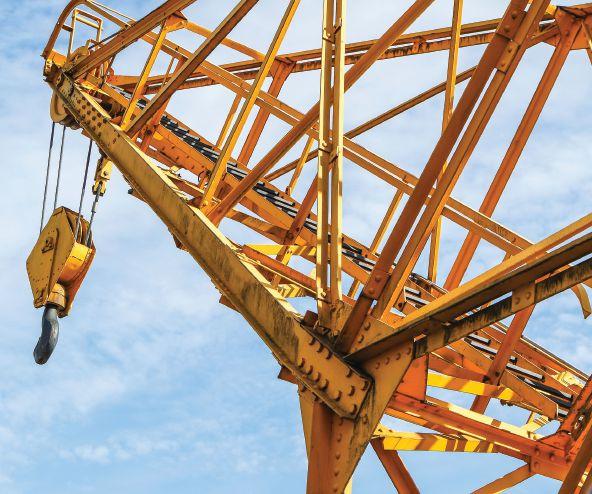
Workers die after crane collapses on Kelowna construction site
(CP) — The head of a development company building a 25-storey residential tower says there were “multiple” fatalities after a crane collapsed in Kelowna, B.C., on July 12.
Jonathan Friesen of the Mission Group said he didn’t know what caused the crane to fall and that workers who died were subtrades on the building.
“They were on our site and as a result of their work they did lose their lives,” Friesen told a news conference. “Our corporate priority is, of course, for the safety of all of our workers and we want them to go home at the end of the day, healthy and safe. And that did not happen today.”
He said construction will continue after an investigation by
WorkSafeBC and that the RCMP would release details on the number of people who died.
The coroners service is also investigating, as of press time.
“Our Mission whole team, Mission staff, and all of our subtrades are in a state of shock,” Friesen said, adding grief counselling has been offered to anyone who needs it.
The RCMP said they responded to the collapse, which knocked out power for most of the city’s downtown core and forced an evacuation of the surrounding area.
An email from the Kelowna RCMP said there were “multiple casualties,” but police would not immediately confirm any numbers or provide any further details on the incident.
11%
Total responses 92
In the News
Alberta lifts all remaining COVID-19 restrictions
(CP) Alberta became the first province or territory to remove all COVID-19 restrictions when it lifted its remaining public health measures on July 1.
Premier Jason Kenney announced on June 18 that the province had reached the vaccination threshold for the third and final phase of reopening, because 70.2 per cent of Albertans 12 and over had received at least one dose of a vaccine.
“The end of this terrible time is just two weeks away. I know it’s hard to believe, but it’s true,” Kenney said. “Thanks to vaccines and the millions of Albertans who have been protected by them, we finally have the upper hand on this virus and can safely open up our province.”
“No more limits on weddings or funerals,” said Kenney. “No more bans on indoor social gatherings. No more limits for gyms, sports and fitness activities. No more capacity limits at restaurants, in retail or for places of worship. No more advisories against non-essential travel.”
Yukon issues state of emergency for parts of territory with high water levels
(CP) Yukon has declared a state of emergency for the Southern Lakes region in response to high water levels that surpassed those last seen there in 2007.
The government says the declaration allows it to take quick action like issuing evacuation orders, if necessary.
The government said that water levels are high in Marsh Lake, Lake Laberge, Bennett Lake and Tagish Lake, and residents at risk would be ordered to immediately leave their property.
However, it says an order may not be preceded by an evacuation alert if there’s no time for a warning.
Rapid COVID-19 tests key tool to keeping virus out of offices
$350K
BLS Ashphalt in Regina was fined $350,000 in Weyburn Provincial Court on June 22, after being found guilty of two counts under OH&S regulations. Charges stemmed from a workplace fatality that occurred near Ceylon, Sask., on Nov. 22, 2017. A worker became entangled in a conveyor while clearing the chute of the conveyer system.
(CP) — Once a week, Akin Guler goes to a meeting room in his office where one of his co-workers — trained to administer rapid COVID-19 tests — inserts a small swab into his nostril.
Within 15 minutes he has the result: One stripe is a negative result, two stripes positive.
“It’s like a pregnancy test,” says Guler, channel sales manager at Rimot.io Inc., a Dartmouth, N.S., tech company.
“It’s really quick.”
As workers return to office buildings and jobsites across the country, some are being offered rapid COVID-19 tests at work.
The workplace testing program, led by Creative Destruction Lab’s (CDL) rapid screening consortium, is being rolled out across Canada in an effort to identify asymptomatic infections.
Those behind the project say it will help limit workplace outbreaks and possibly prevent future province-wide lockdowns, keeping the economy and Canada’s corporate world open.
“Vaccination is what’s ultimately needed,” says Jeff Larsen, CDL’s Atlantic site lead and executive director of innovation and entrepreneurship at Dalhousie University.
“But until there’s herd immunity from vaccines, if the virus starts to spread and we don’t know who has it, we have to go into lockdown,” he says. “With widespread testing and tracing solutions, we can be more targeted.”
Some of Canada’s largest employers like Air Canada, Rogers Communications Inc. and Loblaw Companies Ltd. joined a group piloting rapid COVID-19 testing earlier this year. The program is now being extended across the country, with very good uptake so far, Larsen said.
But in Nova Scotia, the uptake has been “extraordinary,” he said.
So far, 275 workplaces with more than 50,000 employees have agreed to participate — nearly 10 per cent of Nova Scotia’s workforce — and another 400 employers are registered for the program. Some have signed up through CDL, while others have worked directly with the province.
While the quick diagnostic tests have faced scrutiny over accuracy, Nova Scotia has identified hundreds of asymptomatic cases using rapid tests: As of June 24, there had been 378 confirmed positive cases identified at pop-up testing sites since April 1.
WorkSafeBC advises employers to consider workplace closures during summer heat wave
With extreme temperatures in many parts of British Columbia, WorkSafeBC issued an advisory on June 28 advising employers to consider closing down their workplaces if workers cannot be protected from the risk of heat stress.
“All workers are potentially at risk,” said Al Johnson, head of prevention services at WorkSafeBC. “With the heat wave across B.C., we are warning employers and workers about the risk of developing heat stress. If not recognized and treated early, heat stress can lead to heat exhaustion and heat stroke.”
Symptoms of heat exhaustion include excess sweating, dizziness, fainting and muscle cramps. Symptoms of heat stroke include cessation of sweating, an increased
Robin Angel MSc. CRSP, Board Chair, is a Regional OHS Director with Nova Scotia Labour & Advanced Education. In April 2020, Robin accepted a secondment with the Nova Scotia Department of Justice to provide OHS expertise, enterprise risk management and business continuity during the COVID-19 pandemic. Robin has over 30 years’ experience in occupational health & safety and holds a MSc in Management Systems from Royal Roads University (British Columbia) and a BSc Honours in Biological Sciences from the University of Guelph (Ontario) Robin has worked in chemical manufacturing, oil and gas exploration, oil refinery operations and industrial manufacturing and has held various positions within provincial and federal governments in the areas of safety and occupational hygiene. Robin has been a Canadian Registered Safety Professional (CRSP)® since 2006.
David A. Larson, Board Treasurer, is the National Risk Control Director for McGriff. A strategic thinker, he designs and implements casualty and property safety and risk management programs for McGriff clients in a wide range of industries. In addition to holding the CRSP, David is a Certified Safety Professional (CSP), Certified Fire Protection Specialist (CFPS), and an Associate in Risk Management (ARM). David has been a Canadian Registered Safety Professional (CRSP)® since 2014.
breathing rate, confusion, seizures and even cardiac arrest.
To prevent heat stress injuries, WorkSafeBC requires employers to conduct heat stress assessments. As appropriate, employers must have a heat stress mitigation plan that provides education and training in recognizing the symptoms of heat stress and heat stroke.
“If an employer cannot be assured that workers will be protected against heat stress, they should seriously consider shutting down their workplace during this extreme heat,” said Johnson.
In the last three years, there have been almost 100 accepted claims for work-related injuries caused by heat stress — and these are preventable injuries.
Learn more about heat stress at worksafebc.com.
Paul Belair, Board Vice Chair, is the Corporate Director, Health and Safety, for Equinox Gold and is based in Edmonton, Alberta. Paul has nearly 25 years in the field of occupational health and safety and corporate business management and his experience covers a wide range of industries and jurisdictions including utilities, the construction industry (large project management and head office), industrial, chemical process, automotive and the service sector. Paul holds a MBA from the University of Western Ontario, BASc degree, a diploma in Safety Engineering Technology and a certificate in Occupational Hygiene and Safety Program Management. Paul has been a Canadian Registered Safety Professional (CRSP)® since 2005.
Mark Fernandes, Board Secretary, is the ESH Director for Sysco Alberta which provides food services to restaurants, healthcare, and educational facilities, lodging establishments and other customers around the world. In Mark’s previous position as the General Manager of Intertek Canada he worked globally with clients in the energy, mining, transportation and manufacturing industries to improve the social, ethical, safety, and environmental impacts of their services. For the past 30 years, Mark has worked in various health and safety positions with multinational companies. He holds a MBA from Athabasca University and has been a Canadian Registered Safety Professional (CRSP)® since 2010.
Board of Canadian Registered Safety Professionals Conseil Canadien Des Professionnels En Sécurité Agréés www.bcrsp.ca info@bcrsp.ca
The Board of Canadian Registered Safety Professionals is a public interest, not-for-profit, federally incorporated self-regulating organization which sets the certification standards for the OHS profession.
Joining Robin Angel (Chair) on the Governing Board are Paul Belair, MBA, CRSP (Vice Chair), Stephanie Benay, CRSP, Tehzin Chadwick, MHSc, CRSP, ROH, CIH; David Deveau, MBA, BEDS, CRSP, Mark Fernandes, CRSP (Secretary), Brenda Henry, MBA, CRSP, David Johnston, CRSP, EP (Immediate Past Chair), David Larson, CSP, CFPS, ARM, CRSP (Treasurer) , Larry Masotti, MA, CRSP, Buck Page, CRSP, CPP, Will Rowan, CRST, Sandra Stephens, LLB, LLM (Public Member) and Executive Director Nicola J. Wright, BA (Hons), CAE.
Creative sentencing penalties can improve workplace safety
When a company’s failure to comply with OH&S regulations results in a fatality or serious incident, financial penalties are the most common punitive measure applied in Canada.
However, fines alone may be seen as a “cost of doing business” and do little to ensure a safe workplace.
Creative or alternate sentencing diverts funds that would otherwise be paid as fines to third-party recipients that promote occupational health and safety.
Creative sentencing is a way to address restoration by linking punitive measures to improved health and safety outcomes, and industry-wide learning.
In Canada, the use of creative sentencing has been common in environmental law for several years. But in occupational health and safety law, many provinces lack the required legislation and infrastructure essential to making creative sentences effective and enforceable.
Alberta and Nova Scotia are two leaders in this area. Both provinces regularly impose creative sentences for companies found guilty of significant safety violations. These commonly take the form of ordering the defendant to invest in training, research, scholarships, worker health and safety initiatives, or any other purpose the court considers appropriate to achieve safe and healthy worksites.
Why creative sentencing?
The focus of regulatory law is the protection of societal interests, as
opposed to punishing an individual’s moral faults, researchers say. High fines and jail time do not necessarily yield the intended outcomes or serve those affected by a serious incident.
On the other hand, creative sentences can help to improve the OH&S management system and culture within the offending organization.
Many creative sentences result in the development of safety programs and resources that are widely shared and promote industry-wide learning.
Additionally, companies can actively participate in restorative efforts. And importantly, survivors, family members and co-workers impacted by workplace incidents can witness positive action being taken to promote learning and prevent similar incidents in the future.
A recent study conducted at the University of Alberta examined the differential effects of traditional and creative sentencing on workers’ compensation claims in Alberta between 2005 and 2017.
The results suggest that when a company is found guilty but has not yet received a sentence, there is a significant reduction in injury rates.
This improvement is not sustained after a traditional sentence of fines or imprisonment, but is maintained if the sentence involves a creative component.
An industry perspective
As the safety association for Canada’s oil and gas industry, Energy Safety Canada has been directly involved in creative sentencing projects in Alberta.
Creative sentencing is a way to address restoration by linking punitive measures to improved health and safety outcomes, and industrywide learning.
Working in collaboration with industry, the government and the impacted company, our work in this area has resulted in publicly available resources to promote worker safety including:
• a video series on surface water transfer operations, following a serious incident where a worker was struck by a rotating piece of equipment that was not guarded or engineered
• a video series and training course addressing hazards of working in confined spaces, following an incident where a worker was fatally injured after entering a fractionation vessel that was under a nitrogen purge
• yet to be released later this year, animated learning modules on building capacity to manage pressure, following an incident were a worker completing a pressure test on a coil tube connector was inadvertently struck in the face by the test pipe, sustaining fatal injuries.
As a result of this important work, we have witnessed firsthand the benefits to the oil and gas industry, as well as the positive effects for families and co-workers impacted by severe incidents.
Structured properly, a creative sentence can generate greater and longer-lasting safety outcomes.
It can be an opportunity to prove that the loss of a loved one or a life-altering injury is not just a statistic.
It can be a chance for the offending company to demonstrate goodwill.
And it can result in more effective and broader awareness to improve workplace health and safety across Canada.
Paula Campkin is vice-president of operations and the Safety Centre of Excellence at Energy Safety Canada in Calgary, Alta.
Person of Interest
featuring Jamie Hall
Tackling the ‘unseen’ hazard of COVID-19 in Manitoba
The province of Manitoba has not been immune to the wide-ranging effects of the novel coronavirus.
Public health orders and bans on social gatherings have been in effect to reduce the impact on the provincial health system, while the vaccination rollout took place.
On June 26, the province moved into its first step towards reopening, ahead of schedule.
As of July 13, the province had logged 56,943 cases of COVID-19, alongside 1,163 deaths.
Jamie Hall is the chief operating officer at SAFE Work Manitoba in Winnipeg, a public agency dedicated to the prevention of workplace injury and illness.
OHS Canada: How did SAFE Work Manitoba assist the province and workplaces through the COVID-19 pandemic?
Jamie Hall: First, I want to start off by acknowledging the safety and health community in our province and our shared effort to protect workers from this new hazard. SAFE Work Manitoba was active with several responses in the past year.
As a society, I think we will come away with a new respect for occupational exposures.
Early in the pandemic, we created an online toolkit to provide information about COVID-19 and the workplace. This included collaboration with our peers in other provinces to provide a suite of prevention resources for employers.
We also connected with the industry based safety programs in our province to direct employers from different industries
to sector-specific prevention resources.
Finally, in response to a growing need for virtual training, we expanded our promotion of online courses from the Canadian Centre for Occupational Health and Safety (CCOHS).
As the pandemic progressed, we executed social marketing campaigns to raise awareness of this new hazard, including where to find resources to protect workers.
In the fall of 2020, our marketing campaign promoted a new online course for workers that enabled employers to ensure that their employees understood this new hazard, the risk that it posed, and how to mitigate the risk of infection in the workplace.
OHS: Did Manitoba face any unique health and safety issues as a result of the novel coronavirus?
JH: I don’t think that we faced any unique issues. I would separate the safety and health needs of workers and employers that resulted from the pandemic into three categories:
First, we had a new hazard — a virus with global impact — and we were learning about it and how protect ourselves, not just at work, but in our entire lives.
We all, including SAFE Work Manitoba, had to be nimble, listen closely to our
public health experts and then equip employers and workers to protect themselves.
Second, we provided resources to assist with mitigating psychological harm that has been increased or exacerbated during the pandemic. If we limit this to work, we can see increasing anxiety in those who may have to go to a workplace while the pandemic continues. We also see the added psychological pressure of having to adjust to working from home and the change that brought for some workers.
Third is ergonomics, especially for workers who now had to work safely in their homes. For most of us, our homes are for living and not necessarily working. At SAFE Work Manitoba, we have tried to make resources available to help those working from home do so in an ergonomically safe way.
OHS: What will be COVID-19's lasting effect on OH&S in Manitoba?
JH: Undoubtedly, the pandemic will have lasting effects on our society. I prefer to look for silver linings and I think that there will be some.
As a society, I think we will come away with a new respect for occupational exposures.
The pandemic has conditioned us to be aware of “unseen” danger. I believe this will translate to a new respect for other exposures in the workplace and will ultimately result in a healthier work environment.
I also believe that we will have a renewed respect for the basic safety and health management principles.
When we look through the lens of COVID-19, we can all understand the importance of identifying a hazard, assessing the risk of that hazard to our health or safety, and then introducing measures to mitigate that risk to an acceptable level.
Isn’t that how we always have and always should manage all of the hazards that workers face in the workplace?
Neurosafety
By Theo Heineman
The neuroscience of safety habits
One of the most challenging aspects of safety management is changing employee’s safety habits.
At best, it’s exhausting, and at worst, initiatives don’t seem to work at all. However, when we understand what a habit is and how it develops, we can use this understanding to help employees change their “bad” habits more easily.
The dictionary defines habit as: something that we do often and regularly, sometimes without knowing that we are doing it. Alternatively, a habit is the recurring, often unconscious and automatic patterns of thought, behaviour, or feelings that are acquired through frequent repetition.
Examples from the road
Take driving a vehicle, for example. If you remember your first time, it was likely awkward and maybe even a little scary.
Why? Because you were doing something you had never done before and did not have any neural connections formed in your brain for driving a car. When we learn something new, we make new neural connections in our brain. That’s what learning is.
However, as you get more experience driving the car, and neurons continue to fire in the neocortex, your brain makes more, and stronger, synaptic connections. After months and years of repetition, the neuroconnections become so strong, you don’t have to even think about it.
Your body, as the unconscious mind, can drive the car all while having a rousing conversation with your passenger. It’s become a habit.
Now let’s say you rent a car while on vacation in New Zealand, where you must sit on the right side of the vehicle and drive on the left-hand side of the road. You’ll really have to think about what you’re doing, and if you’re like me, you might even have a close call or worse, when habit causes you to turn out on the right side of the road into head-on traffic!
To successfully navigate driving in New Zealand, you’ll need to fire and wire new neural connections for driving on the left-hand side of the road. And if you stay in New Zealand for years, the neurons in your brain for driving on the right-hand side of the road in
Canada will unfire and unwire. You’ll start to forget.
This example demonstrates the neuroplastic nature of the brain. Neurons that fire and wire together when we learn new things can be unfired and unwired if we don’t practice what we’ve learned.
In other words, bad habits learned can be unlearned. However, like cutting a rope, breaking neural connections takes effort and energy, while re-firing and re-wiring new synaptic connections takes repetition and time.
Hacks for making safety habits easier to change
Focus on what you want, not on what you don’t want. As a leader, focus on the outcomes you want to achieve. If you are frustrated, you will tend to make the situation and people’s response to you worse.
Don’t try to make too many changes all at once. Be selective about the habits you want to change that will have the greatest impact on evolving your safety culture. Too much change at once can overwhelm employees and shut them down.
Start with “why” — then “what” and “how.” For example, if a commercial roofer is implementing an improved pre-job hazard assessment process, it would be an awesome idea to emphasize the fact that recently one of the crews cut through an electrical cable running across a flat roof, because they had not identified it ahead of time with a proper hazard assessment. The outcome could have been serious injury or death. This is the big “why” for the change in how hazard assessments have been habitually “pencil
Theo Heineman, CRSP, CHSC, B.Sc.Ag., founder and CEO of 1Life Workplace Safety Solutions in Winnipeg, is a certified NeuroChangeSolutions consultant and a regular columnist for OHS Canada
whipped” in the past and not communicated to the entire crew before starting work.
A solid management system provides the framework for habits to change. Substandard conditions are generally easy to correct; simply clean up the spill or remove the tripping hazard. Substandard acts and practices or “habits,” on the other hand, are not so easy and can only be controlled by an effective management system:
• Set clear standards for expected practices and outcomes in writing.
• Train everyone on the standard with emphasis on the “why.”
• Enforce the standards equally and consistently with tough love. Force creates resistance. If possible, involve workers in developing the standards that will affect them, or at a minimum allow them choice. For example: Would you like to wear the blue safety glasses,
or the orange ones? Would you like to do the monthly inspection at the beginning or at the end of the month?
Consistent repetition is key. Create an environment that supports breaking of the old habits until the new habits can be formed. For example: dispose of the old PPE that’s not to be used anymore, to remove temptation. Or schedule the new inspection frequency and attend with the employees to ensure they do it and to support them.
Be prepared for people to backslide. Know that “forgetting” or backsliding is part of the process and never take it personally. Remember it takes time for the neural connections to unfire and unwire the old habits, and then re-fire and re-wire the new ones!
Celebrate and reward progress, no matter how small. Everyone
likes praise, and positive emotions have been shown to make people smarter. This in turn reinforces the desired habits and encourages employees make the right choice again in the future.
With an understanding of how employees develop unconscious and hard-wired habits, you can provide them with the compassion, framework and encouragement that will enable them to successfully adopt new habits.
This in turn will help keep them and their co-workers safe and healthy on the job while evolving your safety culture.
Recognizing Canada ’ s best in OH&S
Stories by Jack Burton
If the last year and a half have taught us anything about workplace health and safety professionals, it’s that their work is essential when it comes to the responsibility for workers’ lives.
Through 2020 and 2021, health and safety professionals worked tirelessly to keep their workplaces compliant and their colleagues healthy through the global COVID-19 pandemic.
With this in mind, the team at OHS Canada is very pleased to unveil the winners of our inaugural OHS Canada Honours program and second annual Top 10 Under 40 program. Each program receives write-in applications over several months and nominees are judged by the OHS Canada leadership team.
Our OHS Canada Honours program recognizes: OH&S Professional of the Year, Community Leader, and Lifetime Achievement. The Top 10 Under 40 program salutes the next generation of safety leaders, under the age of 40 as of Dec. 31, 2021.
This group of winners showcased leadership, work ethic and dedication to health and safety excellence across Canada, in a wide variety of sectors.
Join us as we celebrate the best of our OH&S professionals in Canada.
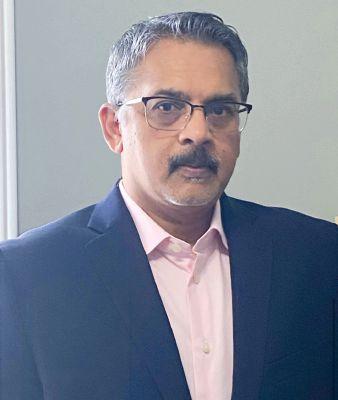
OH&S Professional of the Year: Mathur Variem earns top honour
As Cadillac Fairview Corporation’s director of occupational and life safety, Mathur Variem has had a front-row seat to numerous safety disruptions that the current global pandemic has brought to retail and front-facing workplaces.
The 53-year-old Torontorian is OHS Canada ’s inaugural winner of OH&S Professional of the Year, in recognition of his excellent work conducted through COVID-19.
Throughout the pandemic, Variem not only helped guide and develop occupational health and safety policies across Canada, but he also did so while navigating individual guidelines put forth by local provinces and municipalities across Canada — which were ever-changing.
powers employees to make educated, safe decisions on their own terms.
Cadillac Fairview’s Canadian portfolio consists of 69 properties from coast to coast, encompassing more than 35 million square feet of retail and office space where millions work, shop, live and play.
“The biggest challenge with the pandemic has been the unknown, and how to create a safe environment for our staff, as well as for customers who are coming to our malls.”
He led this work through strong leadership and collaboration with departments across the organization, including the executive team, working with the development team on new construction projects, and continuing to enhance the overall health and safety program at each property.
Ensuring his success in facing these difficulties is a no-nonsense safety philosophy that can be traced back to his roots in the oil and gas industry.
“In the oil and gas industry, it was a challenge to make sure that safety is the top priority,” said Variem.
“A lot of times, people do say that ‘safety is our top priority,’ but when it came to the production aspect of oil and gas, there were often people overlooking the requirements while continuing to operate.”
“This is where the mindset and the importance of the safety professional comes in — where there is a huge requirement to do a cultural shift.”
Throughout his career, Variem has worked to reframe the idea of safety away from a set of rules and regulations, towards an overall environment that em-
By developing the proper procedures, policies, and education resources necessary for Cadillac Fairview’s employees, Variem’s goal has been “to create a cultural shift, making sure that safety is everyone’s responsibility, and nothing prevents anyone from stopping work, asking the necessary questions, or refusing to do any kind of unsafe work.”
The development of the tools and resources needed for creating these shifts in the workplace, especially in front-facing retail environments, has only been accelerated by the pandemic, according to Variem.
“The biggest challenge with the pandemic has been the unknown, and how to create a safe environment for our staff, as well as for customers who are coming to our malls.”
The most efficient path that Variem has found in creating this safe environment during the pandemic has been by offering consistent support to staff across Cadillac
Fairview’s many locations through frequent phone calls and open communication lines between staff and management, along with comprehensive and up-to-date educational materials.
COVID or not, at the core of his many accomplishments and initiatives is an unwavering belief in the people and employees that make up workplaces, and his
Paula Campkin adds Community Leader award to stellar resumé
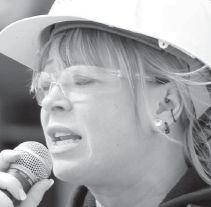
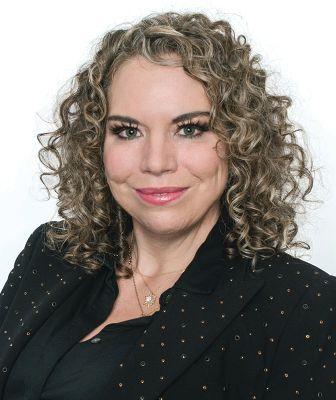
Paula Campkin is OHS Canada ’s inaugural winner of the Community Leader award.
Campkin, 48, is an experienced health and safety leader who has contributed extensively to the broader health and safety community in Canada.
The vice-president of operations and the Safety Centre of Excellence for Energy Safety Canada in Calgary has nurtured a supportive approach to occupational health and safety dating back to her childhood days spent in Sundre, Alta.
“I’ve always been community-minded, all the way back to watching my parents grow up in a small town,” she said.
“It was always instilled in me that it’s not just about you and what you can achieve, it’s how can you help others — whether they’re in your group or not.”
A highly respected leader, Campkin has more than two decades’ experience working in the energy, utilities, construction and not-for-profit sectors.
contributions to the occupational health and safety community — both in how she perceives her career and to the industry at large — has been her role in empowering and promoting women in safety through the formation of the Women in Occupational Health and Safety Society, in 2017.
The group is comprised of women in health and safety roles across various industries — and parts of the world, with its membership including women from Russia to Africa — and seeks to support gender diversity in occupational health and safety through various avenues of support and mentorship.
“It was always instilled in me that it’s not just about you and what you can achieve, it’s how can you help others — whether they’re in your group or not.”
In her current role, she provides strategic leadership to the development of safety programs, training and initiatives to reduce injury and illness within the Canadian oil and gas industry.
Among Campkin’s most impactful
The initiative was inspired by Campkin’s own experiences as a woman coming up in the industry in the 1990s, and the difficulties that arose from having to navigate the primarily male-dominated spaces of the time.
“I can remember lots of different situations where my credibility — I felt — was being questioned because I was a woman,” she said.
“And that’s not a fun place to be… when you work real hard and are just trying to do your best, but you sometimes think you have to work twice as hard just to be at the same table as other people.”
Campkin’s rise in her field, and the
conviction that they deserve all the safety, support, and representation available.
“When I started my career, very early on in the ’90s, the advice given to me from my boss at the time was: listen to people, and the people will tell you the problems that they are facing and the conditions that they’re working in. It is then up to you to make that change. Always walk the talk.”
various diversity initiatives that she has been involved with, have impacted occupational health and safety culture across the country by pushing it to be more diverse and inclusive.
Looking back at her career, it’s a shift that Campkin is proud of.
“I was the first woman manager, then I was the first woman around the board table. But now I look, and I lead a large team with all kinds of great women and men in leadership roles,” she said.
“It’s about helping to build and lead some diversity and inclusion within whatever environment I’m in.”
Campkin has many educational degrees, including an MBA, alongside her CRSP and CHRP designations.
Since April of 2020, Campkin has volunteered her time and expertise as a member of OHS Canada ’s editorial advisory board.
Lifetime Achievement: For Len
Bourdin, safety is a labour of love
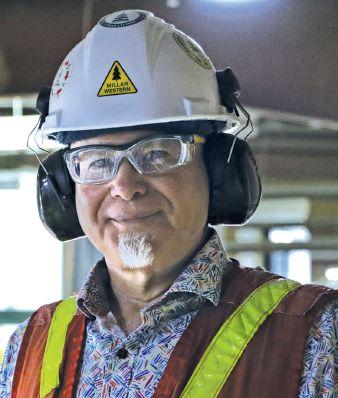
Len Bourdin, 64, feels as if he’s never worked a day in his life.
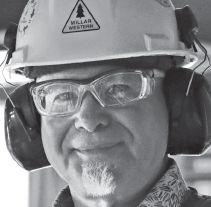
OHS Canada ’s inaugural Lifetime Achievement winner’s tenure in the occupational health and safety industry has seen him move from the oil and gas industry, to starting his own consulting company, and eventually to Millar Western — a Canadian forest products company where he’s spent the last 28 years.
“I don’t have a job,” said Bourdin, the Edmonton company’s director of health, safety and risk management. “If you wake up in the morning and you enjoy what you do, you never have to work a day in your life. And that’s what this is to me.”
As a consultant, Bourdin noted Millar Western was his first client. “In 1992, they made me an offer that I couldn’t pass up as their HR manager, and I’ve been with Millar Western ever since.”
accomplish anything, managers can’t accomplish anything, if it wasn’t for the employees,” he said.
The value that Bourdin sees in protecting employees and their well-being has instilled in him an approach to safety by “being on the floor, being with the people, and understanding what their challenges are… taking an interest in them and making that connection. Without the employees, we can’t achieve anything.”
“Millar Western was forward thinking enough to say that this needs to be a part of what we do, and I’ve been blessed to work with some incredible executives who saw my vision.”
Bourdin has spent his entire professional career dedicated to improving health, safety systems and procedures for employees within the company, and across the province of Alberta.
He has served five terms as president of the Industry Task Force Association, in addition to working with the Worker’s Compensation Board of Alberta on policy and claims management initiatives.
Bourdin’s lengthy career in occupational health and safety for the Canadian forestry industry has allowed him to not only bear witness to, but also influence, numerous evolutions and changes in the field.
“I’ve seen safety grow to where it is now, into an integral part of companies and what they do — it’s no longer an add-on,” he said. “Millar Western was forward thinking enough to say that this needs to be a part of what we do, and I’ve been blessed to work with some incredible executives who saw my vision.”
Central to this vision is building a company culture that reflects Bourdin’s own understanding of safety focusing on employees, rather than regulations: “I can’t
Through making these connections, he believes safety is redefined as a set of needs relevant to your work environment, rather than a set of enforcements thrust upon them: “It’s about doing safety with people, instead of to people,” said Bourdin.
Millar Western staff made the company successful through COVID-19, he said.
“Production hasn’t gone down, safety most definitely hasn’t gone down, and in some cases it’s only getting better.”
Millar Western Forest Products Ltd. joins OHS Canada in recognizing the outstanding work of our friend and colleague Len Bourdin. Len has spent his entire career dedicated to improving health and safety systems, procedures, and outcomes for people working in our company and throughout the forest sector in Alberta and across Canada. He has been effective in building partnerships, innovative in finding solutions, and tireless in advocating safe, healthy work conditions for all.
Congratulations, Len, on this Lifetime Achievement award. And, many thanks for your three decades of leadership in Millar Western ’s pursuit of safety excellence.
Jack Burton is a freelance writer in Toronto.
The next generation of safety heroes
Unveiling OHS Canada’s Top 10 Under 40 for 2021
Compiled by Marcel Vander Wier
Young and skilled professionals are driving the Canadian occupational health and safety profession forward, and we want to acknowledge the best and brightest.
OHS Canada’s second annual Top 10 Under 40 program recognizes the achievements of the newest generation of Canadian OH&S workers.
This awards program serves to recognize occupational health and safety professionals employed by a Canadian company, and are under the age of 40 as of Dec. 31, 2021.
DARCIE BABYSH
Environmental, health and safety adviser at AltaGas in Edmonton, age 32
In 2019 while off duty, Darcie Babysh used CPR to bring her unconscious roommate back to life. The woman had suffered a heart attack.
For Babysh, who received a Lifesaving Award from St. John Ambulance for her
heroic efforts, it was her greatest accomplishment and marked the pinnacle of her time dedicated to health and safety training, which she undertook following the death of her father and grandfather.
“My passion is helping people in all capacities — in their happy times, stressful times, grieving times — it’s what I do,” she said.
While Babysh started her career as an oilfield medic, today she serves as a health and safety adviser at AltaGas in Edmonton with a goal of not only providing immediate health care when needed, but also teaching injury prevention.
“Learning from others and being a resource for those that are just coming into
you let them know that there are options, and the company is there to work with them in finding resolutions.”
Hartfelder holds an OH&S certificate from the University of Alberta.
CONNOR HEINRICHS
Health and safety specialist at Best Buy Canada in Burnaby, B.C., age 29
Connor Heinrichs is an integral part of Best Buy’s health and safety team in Burnaby, B.C. He is responsible for supporting the program at the Western distribution centre, Canadian corporate headquarters, and the retail stores across the province.
The safety systems and processes in these three divisions keep more than 2,000 employees safe, in addition to customers.
During the pandemic, Heinrichs took upon the role of a Level 2 crisis specialist, engaged in positive exposure triages for his colleagues across the nation.
The COVID-19 pandemic turned his job role upside down as his team supported the company on a national scale, said Heinrichs.
“All my normal health and safety duties were instantly put on hold and my focus shifted to 100 per cent COVID-19 related. The normal 9-5 quickly turned into 24/7 due to the shifting nature of the pandemic and the unpredictability of the virus.”
Heinrichs is dedicated to his craft and has taken on the development of training modules, standard operating procedures and audit systems that have had a positive impact over the last two years.
“I’ve always had a passion for helping
people and OH&S allows me to help people stay safe at work,” he said. “I believe that no one should have to worry about getting hurt at work and (by) being able to engage with workers and create programs, I am able to help them stay safe.”
Heinrichs holds an OH&S diploma from Simon Fraser University in Burnaby.
DANIEL LALIBERTE
Project manager at Gestion
Environnementale T. Harris in Brossard, Que., age 30
Daniel Laliberte demonstrates high energy, enthusiasm and a great thirst for knowledge while conducting occupational
hygiene assessments in the workplace on behalf of clients.
He has quickly moved through the ranks at Gestion Environnementale T. Harris from junior technician, to senior technician, project co-ordinator and most recently to project manager within the company.
Laliberte is well organized, with great attention to detail when planning and executing site occupational hygiene assessments. He listens to the customer and is an excellent problem solver when evaluating occupational health and safety concerns in the workplace.
“Being able to find a problematic, prepare the document to help fix it, and to be able to see that the work that I did is actually helping to protect worker health, and/or the health of the people around them is the most gratifying part of my work,” he said.
Laliberte has trained the junior staff in environmental management and occupational hygiene sampling, developed a
program for dangerous waste management and built a youth co-operative health and safety program from the ground up.
He holds a Bachelor of Science degree from the Universite de Sherbrooke in Sherbrooke, Que.
STEVEN MAH
Prevention officer at WorkSafeBC in Richmond, B.C., age 36
Since the start of his health and safety career, Steven Mah has demonstrated a strong commitment to the profession, evidenced by his educational, professional and volunteer activities supporting the
practitioner community.
While maintaining his work responsibilities at WorkSafeBC and continuing his academic pursuits, he also volunteered with the BCRSP, assisting with CRSP candidate interviews in the Vancouver area.
Alongside holding his CRSP designation, Mah is a Chartered Fellow of the Institution of Occupational Safety and Health (CFIOSH), with headquarters in the United Kingdom.
His dedication to his fellow officers and peer mentorship is also of recognition, and Mah is known as the “go-to” for training new officers and providing guidance.
His graduate studies focused on developing social and emotional intelligence competencies for OH&S professionals, and his findings were presented to the CSSE.
Mah’s rise in health and safety came unexpectedly, he admitted.
Congratulations to occupational health and safety officer Steven Mah
for being named one of the “Top Ten under Forty” upcoming leaders in occupational health and safety.
Thank you for helping to create a culture of workplace health and safety.
“Coming out of high school, I had no idea that this career field even existed,” said Mah. “While in university, I was working at a warehouse and witnessed a pretty significant incident.”
“As a shop steward, I was part of the in-house incident investigation and external workplace inspection. Participating in those events opened my eyes to the field of health and safety. Shortly after, I shifted the focus of my studies from psychology towards environment, health and safety.”
MATTHEW NASBY
COR manager at the Alberta Construction Safety Association in Edmonton, age 37
Currently the COR manager at the Alberta Construction Safety Association (ACSA) in Edmonton, Matthew Nasby has been a dedicated workplace health and safety professional for 19 years.
He holds both the CRSP and CSP designations, alongside other certifications.
Nasby led the way during COVID-19 for the ACSA, ensuring the company’s plans and protocols were up to speed with recommended guidelines.
“We were all in unchartered waters on how to navigate what the immediate future would hold — even today,” he said. “Day-to-day workload looked very different from what we were all used to. Switching to being in the office to working remotely basically on the flip of a switch was something we thought would be a very difficult thing to do.”
Nasby praised his team and colleagues for their work through the pandemic.
“What I love the most about my work are the teammates I get to work with every day,” he said. “They hold the same values I have when it comes to OH&S and helping others.”
Nasby has many moments of significance through his early career. He was just 26 when he earned his CRSP certification.
In 2016, he was the only Canadian on a North American working group of 20 that developed the competency blueprint for the Safety Management Specialist certification.
A year later, he received the MySafeWork David Ellis Award for demonstrating strong worker participation and employee engagement.
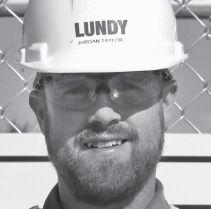
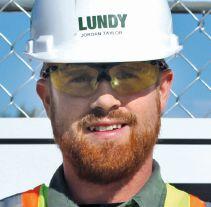
JORDAN TAYLOR
Health and safety manager at MP Lundy Construction in Ottawa, age 31
Jordan Taylor’s quick rise through the workplace health and safety ranks is more than following in his father’s footsteps — he
truly has a passion for the profession.
“I can’t get enough of training and educating workers,” he said. “Putting my own personal touch on a training topic and spinning it into a fun and professional format that engages the
group with a well-received message is extremely satisfying. Then I get to watch it be implemented in the workplace, ensuring safety for all — it’s fantastic.”
“I really cannot think of a more fulfilling career.”
Taylor’s father James is the president of Taylor’d Safety Consulting, working in the field since Jordan was a young boy.
“Having a resource with such a wealth of knowledge has to be one of the key factors (in terms of) how I got to where I am today,” said Jordan.
Recently, he and a co-partner created a new RFID health and safety product that intends to provide workers with advanced warnings through PPE such as watches and vests when working around heavy equipment and high traffic areas, alongside standard hazard awareness.
“I have always been the type of person who cares for others, who will put others before myself, so I’m motivated to ensure I do my part to inform and train workers to prevent workplace accidents,” he said.
“As a natural-born solution provider, workers can depend on me to provide them with the guidance, education, and the tools needed to complete their work safely.”
JUDITH TROTTIER
Occupational health and safety specialist at the City of Surrey in Surrey, B.C., age 38
Judith Trottier has been working for the City of Surrey since 2016, acting as the prime safety specialist serving the city’s 4,000plus employ-
She primarily works with engineering operations staff and dedicates her time to understanding their business needs, while blending all stakeholder requirements together.
In her role, Trottier has contributed to many special projects and safety improvements, including implementation of the BCMSA’s Supervisor Safety Certificate and Worker’s Safety Certificate across the City.
“The most gratifying part of my work is to ensure the workplace is safe for everyone,” she said. “I enjoy developing and delivering a health and safety program that is user friendly, where different user groups can take the program and build on it to suit their own operational needs.”
Over and above data literacy, Trottier also understands that strong relationships and
caring for staff are helpful in achieving true success.
Through COVID-19, she helped the City navigate challenges and ensure business continuity.
“I have had to make quick changes in the workplace to ensure we are meeting the ever-changing provincial health orders and WorkSafeBC requirements and guidelines as the pandemic evolved,” she said.
“The City of Surrey did a phenomenal job in proactively mitigating and suppressing the impacts of the pandemic and the day-to-day emergency response.”
Trottier earned an OH&S diploma from the British Columbia Institute of Technology.
JILL VROLSON
Team lead, health and safety, at Keyera in Fort Saskatchewan, Alta., age 35
Jill Vrolson is a peoplebased safety professional. For the last three years, she has headed up a team of worksite-based health and
safety advisers for Keyera’s major projects
group in Alberta’s oil and gas sector.
With many projects happening remotely, Vrolson was influential in standardizing the actions of safety professionals on the various worksites, which helped balance productivity, accountability and morale within her team.
“Throughout my career, I’ve met people who’ve inspired me into action through their vision,” she said. “In those times, I found a cause beyond myself which sparked a realization that the best people in the world possess a natural ability to draw out our talents and passions. When we are around them, we feel like our best selves. I try to be that person for others.”
When the pandemic hit last March, Vrolson and her team went into “fight mode” as they individually and collectively responded to the new and unknown threats that impacted nearly every aspect of their lives.
“I am deeply grateful to work with a team of incredible safety professionals who stepped up and leaned in to respond to the taxing demands,” she said, noting emotional and mental health rose dramatically in significance.
“As the provinces continue to progress (towards) reopening, we need to continue advocating and supporting people’s mental health, offering our energy when we can, and encouraging others to do the same.”
Vrolson earned her CRSP designation in 2014.
Keyera is excited to recognize the success of Team Lead Health & Safety, Jill Vrolson, on being named one of OHS Canada's Top 10 under 40.
This is an incredible achievement, and Keyera is proud to have Jill on our team. Her outstanding contributions help drive safety at Keyera each day and will help us achieve our goal of #1 in Safety Performance
www.keyera.com
Battling complacency through COVID-19
Managers at SunRype use personal connection to keep workers engaged
By Meagan Gillmore
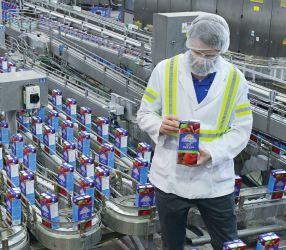
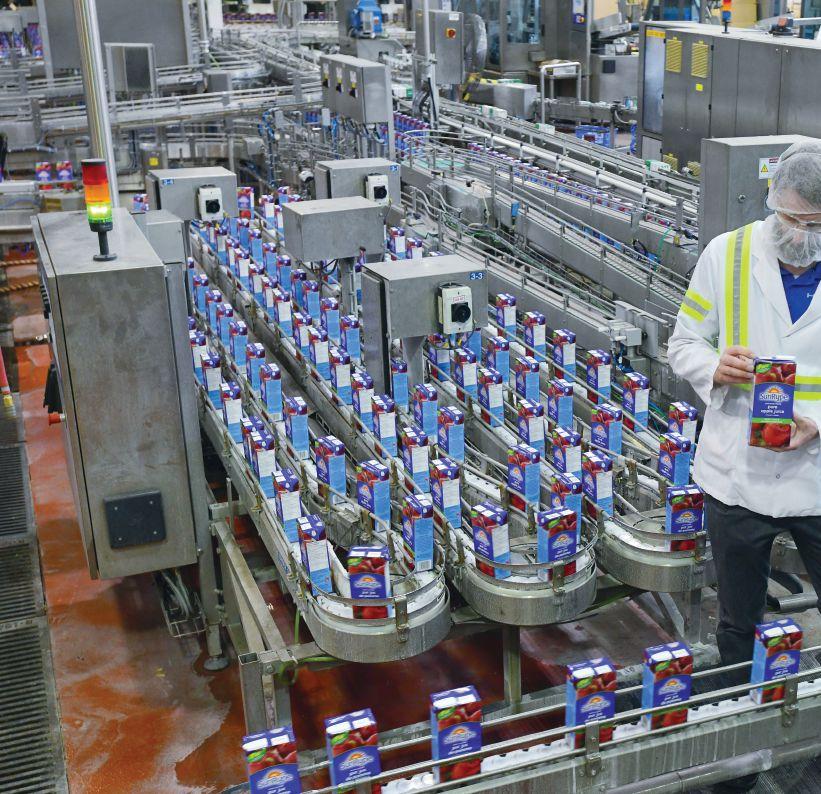
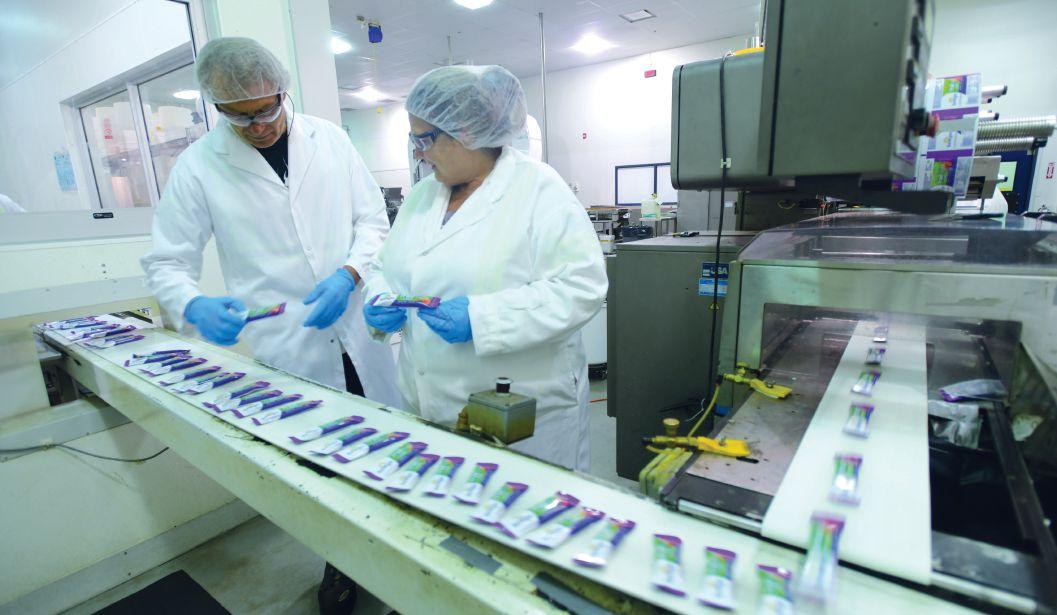
Every week, a group of managers at SunRype spend part of the offshift walking through the company’s Kelowna, B.C., plant, doing a quick safety audit of the 143,000 square-foot facility to make sure that equipment is cleaned and locked out properly, and other safety protocols are followed.
Safety is a key value for the company that has spent 75 years producing fruit juices and snacks.
In 2013, SunRype achieved COR certification through the Manufacturing Safety Alliance of B.C. in recognition of the company’s robust health and safety practices.
But these weekly inspections by managers are a new initiative, born out of the pandemic.
Managers speak to employees once a week to screen them for COVID-19 symptoms, explained David Krell, the company’s director of operations. Instead of simply asking employees to fill out a questionnaire, the managers have oneon-one conversations with them.
“At the manager level, we’re interacting with the employees more than we ever have,” he said.
The safety tours developed out of these conversations; because the
managers were already on-site, it provided a perfect opportunity for the inspections. “I think it’s gone a long way to improve the safety culture,” said Krell.
The desire to find better ways to bolster that safety culture is a hallmark of the company’s philosophy.
“Safety is not a destination,” said Lesli Bradley, the company’s president. “It’s something that you’re continuously working on, improving, modifying, tweaking and getting better day by day. We really
75 years
Safety is a key value at SunRype, which has spent 75 years producing fruit juices and snacks.
believe it’s a journey of continuous improvement.”
For SunRype, these managerial inspections and increased conversations with employees are the latest steps in a journey of increased safety that has lasted more than 15 years.
A legacy of improvement
Since its founding in 1946, SunRype has been providing consumers with nutritious fruit snacks and juices, including the bestselling
Blue Label, not from concentrate, apple juice.
Benefiting local communities is important to the brand that began when fruit growers bought two juice plants in Kelowna, B.C., and created BC Fruit Processing Limited.
To mark is 75th anniversary this year, SunRype announced it is partnering with Food Banks Canada to provide Fruit to Go snacks to school-aged children who don’t have
“When a worker has been with a company for an extended period of time, we tend to forget, or we get used to the work processes — or sometimes we just act like we know it all.”
– Jasmine Kalsi, industrial hygienist
healthy lunches during the summer.
The community loyalty exists in the company as well. More than 300 employees work at the plant. (The company also has two facilities in the United States.)
Many have worked at the Kelowna facility for 30 or 40 years, said Jane Williams, environment, health and safety manager for the company.
“We have quite a tenure here.”
The downside of that familiarity is that it can foster complacency, and that complacency can cause danger.
“When a worker has been with a company for an extended period of time, we tend to forget, or we get used to the work processes — or sometimes we just act like we know it all,” said Jasmine Kalsi, an industrial hygienist with the Manufacturing Safety Alliance of B.C., the health and safety association for the province’s manufacturers and food processors, and the ones who determine which companies achieve COR status.
As employees repeatedly work with the same potential hazards they can “get comfortable,” she said. “Sometimes they minimize the risk. It can definitely lead to a risk for
injury. Complacency and workplace injury can work hand-in-hand.”
In 2005, management at SunRype decided to respond to the high number of hours lost to work because of workplace injuries or medical leave.
months conducting physical demand analyses on every task for every position, including office roles.
From those analyses, the company created an abilities management program for workers returning after an injury.
Case Study
The goal was to give employees modified tasks so they could return to work as soon as possible, and in some cases, complete their recovery while also working, explained Williams.
“In the past, people would provide a (doctor’s) note that identified limitations,” she said. “We wanted to say: ‘Well, people are capable of coming to work — even in a modified capacity.’ So that’s why we focused on the capabilities of those injured people.”
Injured workers were given standard forms doctors could fill out. These forms were then cross-examined with the physical demand analyses to determine what tasks workers were able to do.
The program was rolled out in 2006.
By 2007, the amount of time missed due to injury or medical leave had dropped by 34 per cent, Williams said.
“It’s really second nature. Everybody knows they need our form to go out to the doctor when they’re
returning from surgery or medical leave,” Williams said. “It’s just the program that people know and participate in.”
“I don’t think we could comprehend going back to the same level of missed days that we had before,” added Krell.
Modified tasks and gradual returns to work are the norm for all positions at SunRype, whether that be for factory workers, schedulers, or managers and supervisors, he said.
Encouraging safe behaviour
While the abilities management program created significant benefits, workplace safety seemed to hit a plateau in 2008 and 2009.
“We needed something to reinvigorate our program,” said Williams.
The company’s joint health and safety committee recommended to management that the workforce be trained in behaviour-based safety.
Behaviour-based safety focuses on workers’ individual habits and
how their actions, or inactions, may be putting themselves in an unsafe situation.
“It’s coming to recognize where you may be becoming complacent and, as a result of that, maybe putting yourself at some level of risk,” said Bradley.
It can be as simple as reminding workers to hold the handrails when they’re climbing up and down stairs and to only take them one stair at a time, noted Krell.
“All of the engineering is complete: the stairs are safe, they have handrails, they have the proper treads; everything has been done. That is an example where it’s completely up to the employee to take care of their own safety.”
Training all company employees with Safe Start — the curriculum the joint health and safety committee recommended — took a year. It’s also a part of the onboarding process for new hires, said Bradley.
The training led to an initial 42 per cent decrease in time missed because of injury, and the
principles continue to be a regular part of the culture at SunRype more than a decade later.
“Employees are now comfortable approaching other employees and they’re talking about it,” Williams said. “They’re reminding them to practise the Safe Start principles. You see a positive safety culture. It shows that everybody cares about everybody in the facility.”
Each month, SunRype audits different parts of the operation, and then each year completes a comprehensive safety audit, as required through the COR certification. Every third year, an external auditor conducts the safety audit; during the other years, a trained SunRype employee does it. Employees participate in surveys about company culture every couple of years.
“We want to ensure that every person who works in this organization understands our commitment to health and safety, the basis of those programs, and knows that it’s everybody’s responsibility to know, understand and work within that framework,” said Bradley, describing the goal of the COR audits.
Confidential employee interviews with representatives from all departments are the bedrock of these annual reviews, explained Kalsi.
These interviews are a way to determine how well employees understand a company’s safety procedures.
They ask: “Is this something that is actually being done? Is it being interpreted by the workforce itself?” she said. “Do employees actually know about it, or is it just fluff on paper?”
Strengthening communication during the pandemic
The pandemic’s greatest impact on occupational health and safety was that it shut down any training sessions in large groups, said Krell. Now, supervisors and managers have quick meetings with all the employees at the start of each shift.
“Those are actually a really good venue to get safety information to each of the employees, and then to get feedback and safety concerns from the employees,” he said.
The personal conversations with each employee during screenings for COVID-19 symptoms have also been a great benefit.
The weekly conversations prevent employees from automatically responding to safety questionnaires without considering the answers, said Bradley.
“We won’t stop doing it,” she said of the conversations.
“It’s improved our safety program. It was born out of necessity, but it will live on because it’s a good practice.”
Not
Just Another Pretty Fence!
Meagan Gillmore is a freelance writer in Toronto.
Safety Gear
By Meagan Gillmore
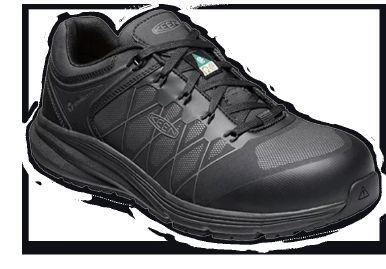
Safety shoes take an athletic turn
Comfortable fashion choices the trend in foot protection
Even throughout the changes of a pandemic, athletic and fashion trends continue to transform the direction of safety footwear.
“Our shoe walls look nothing like they would have a decade ago,” said Michael Hampton, marketing manager at Mister Safety Shoes, a shoe retailer in Toronto. “It looks like you’re walking into a general shoe store or an athletic store. What you’re looking at on the wall does not scream ‘safety shoe’ or ‘work boot’ like it used to.”
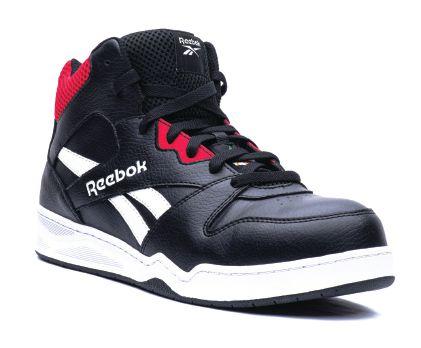
Many workers are attracted to safety footwear with designs that are similar to athletic shoes or hiking boots, mainly because those styles are much more comfortable.
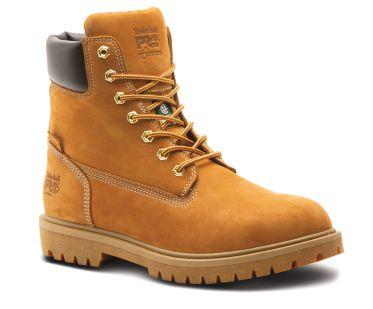
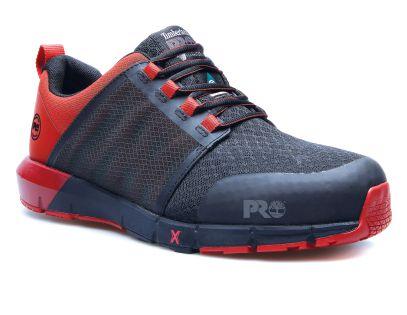
Customers who enjoy walking around in Timberland’s iconic Original Yellow Boot can maintain that fashion sense on the job with a pair of Timberland PRO’s waterproof work boots. The boots share the same design as the lifestyle version, but are waterproof, have alloy toes, puncture-resistant plates, and meet CSA requirements.
“We’ve seen a huge number of young consumers going that direction,” explained Pier-Alexandre Jean, sales manager for Timberland PRO in Canada, in Montreal. “They want something that would look the same as what they would wear typically in the evenings or on the weekends, but they want to have the protection throughout their workday. It’s been a huge success.”
The company is launching more safety footwear that is modelled after athletic brands, he said.
The increase in individuals working on home renovations through
COVID-19 has resulted in more customers buying athletic-styled safety footwear, said Jean.
The company will soon launch its Radius line of safety shoes. These shoes have the same design as the company’s athletic footwear.
But regional differences still matter. For example, he said, athletic-styled footwear is more popular in Ontario and Quebec, where warehouse and manufacturing jobs are more common.
Customers in British Columbia or the Maritime provinces often prefer hiking-styled boots.
Real-world knowledge critical when online shopping
The pandemic forced many customers to purchase their safety footwear
without the advice of an in-person product specialist. Most purchases were made online.
Even if in-store shopping was available, physical distancing limited the ability of sales associates to help insure proper fit.
This requires customers to have a thorough understanding of what their workplaces require in their footwear, and what products meet those expectations.
Customers “have more time to research,” according to Mark Ducharme, vice-president of sales in Canada for Baffin in Stoney Creek, Ont.
Increased screen time has created more opportunities for individuals to learn about the multiple products available to them, he said.
People “really want things that are specifically designed for what they’re going to be using them for, rather than more general-application items,” explained Ducharme.
Knowing that products have been tested in the situations where they’re meant to be used is especially important when looking for slip-resistant footwear.
A growing number of products are made to be slip-resistant, said Rochelle Lovatt-Waddell, associate vice-president of safety footwear at Mark’s in Calgary, Alta.
“Most of the accidents in the workplace can be related to slips, trips and falls,” she said. “One of the areas where we see continued growth is slip resistance on ice.”
Mark’s works with different companies and manufacturers to ensure customers have access to products that can keep them safe on icy surfaces.
This includes stocking footwear that has been tested with people walking across icy surfaces.
Baffin products are all tested in the environments where they are intended to be used.
“We are as authentic as it comes,” said Ducharme.
Baffin’s Ice Bear boots, for example, can be comfortably worn in temperatures ranging from 20 C to -50 C. The Grip 360 rubber boots keep workers stable on many wet environments.
focus on cleaning and sanitation throughout COVID-19 has resulted in more demand for rubber boots.
Some companies, like Amazon, require workers to have metal-free footwear, said Jean, at Timberland.
“Metal-free shoes are more and more a big component,” he said.
Timberland offers several products that don’t contain metal, and while this makes the footwear lighter to wear, it does increase the retail price of the shoe, said Jean.
Fashion can increase comfort, decrease accidents
Customers always want lightweight footwear, regardless of current fashion trends, noted Ducharme.
“A design trend can’t be gimmicky. It’s got to add value to the product itself. It’s got to make it more comfortable. It’s got to make it lighter weight. It’s got to make it perform properly.”
The growing popularity of boots that can be pulled on, and shoes without laces, is an example of a fashion trend with built-in safety benefits, said Jackie Curry, product manager at Mister Safety Shoes.
“Some industries don’t want laces because the laces could catch on something,” Curry explained. “It’s actually an improved safety (measure). There’s some factories that have very high heat applications and you may need to get your boot off very quickly.”
“What you’re looking at on the wall does not scream ‘safety shoe’ or ‘work boot’ like it used to.” – Michael Hampton, Mister Safety Shoes
“If you’re doing a lot of hosing down on stainless steel, you’re going to be able to improve your slip resistance” with these boots, said Ducharme, noting that an increased
Timberland and Baffin both offer products without laces, and products that can be pulled on.
As safety footwear becomes increasingly comfortable and incor-
porates more fashionable colours and designs, some workers may find themselves wearing their safety shoes or boots after their shift ends, if their employer allows them. That may not be the best for the footwear, since added exposure and wear can shorten the time it is effective.
Jean recommended that, when possible, workers rotate which pair of footwear that they wear. If that’s not feasible, they need to make sure their footwear is dried between uses.
“If you give the shoe time to dry and make sure that you put them back on when they’re fully dried, then you will have an impact on the durability of the inside of the lining,” he said.
When shopping for new products, customers need to pay attention to any discomfort they may feel around the toes. “How it fits is going to be very important for how long term you will be comfortable in the boot,” said Lovatt-Waddell.
“A safety toe is not going to stretch. If there’s any tightness or discomfort around the toe, that is probably not the boot for you,” she explained, adding that it’s best to try on new shoes or boots at the end of the day when feet are likely more tired and swollen.
No matter their style preferences, workers need to remember that comfort can be key to ensuring they stay focused and safe at work.
“There is a lot of discussion out there about distracted working and keeping workplaces safe,” said Hampton. “We keep thinking that there’s a place for safety footwear to contribute there too. If your feet are heavy, or hurting, you may not be paying as much attention to the things that you’re supposed to in your work environment.”
“It’s one less thing to worry about.”
Meagan Gillmore is a freelance writer in Toronto.
CCOHS Corner
The Canadian Centre for Occupational Health and Safety
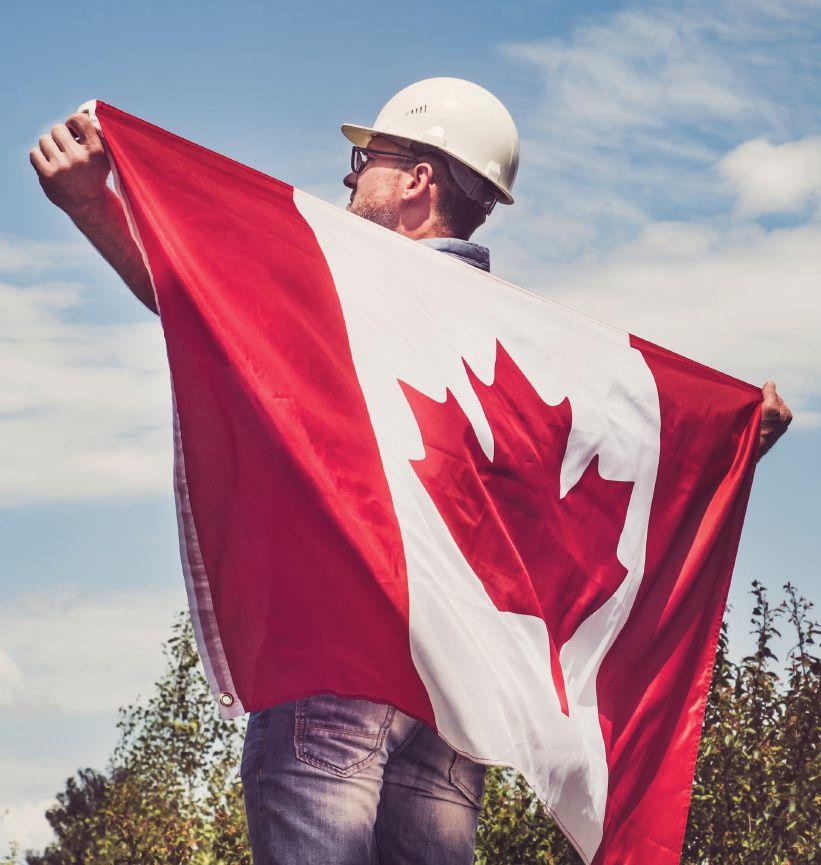
Roles, rules and responsibilities of workplace health and safety
Maintaining and promoting health and safety in the workplace is important throughout the employee journey.
Whether they’re a new worker or a seasoned professional, training (and retraining) is a key factor that can help staff stay safe while on the job.
In addition to providing training, employers must abide by a number of occupational health and safety responsibilities. Many of these elements, worker rights and employer responsibilities are similar across jurisdictions in Canada.
However, the specifics around occupational health and safety legislation and how these laws are enforced can vary from one jurisdiction to another.
Although rules and regulations vary, these three rights apply to all workers in Canada:
• The right to know about health and safety matters.
• The right to participate in decisions that could affect their health and safety.
• The right to refuse work that could affect their health and safety, and that of others.
Workers also have health and safety responsibilities.
USE OUR CHECKLIST
For a full onboarding checklist, visit ccohs.ca/ oshanswers and type “Orientation” in the search box.
They must work in compliance with occupational health and safety legislation, and use personal protective equipment and clothing as directed by the employer.
Employees also have a duty to work in a safe manner, use the prescribed safety equipment, and report workplace hazards and dangers to their supervisor or employer.
To carry out their responsibilities, workers need to know what these are, and that’s where managers, supervisors and employers come in.
Managers and supervisors act on behalf of their employer.
Therefore, they’re required by law to take every reasonable precaution to protect their workers, and they must ensure that workers are performing their jobs safely and are following occupational health and safety legislation.
This means that workers need to be trained on potential and actual hazards associated with their job, provided with written instructions on the measures and procedures taken to protect them, and use all appropriate personal protective equipment and devices.
Here are some ways you can implement health and safety measures at work:
Implement and communicate a policy
A health and safety program is a
requirement in any workplace, and having a written policy is key to its success.
Think of a policy as a plan of action. It indicates the degree of the employer’s commitment to health and safety and should reflect the special needs of your workplace.
The policy should also be explained and understood by any and every worker and provided in written form in the language of staff. It should be positive in tone (for example, focus on what the worker should do, rather than what they should not), and periodically reviewed to evaluate its effectiveness.
The policy should be signed by leadership, and include items and statements such as the employer’s duty to give health and safety education and training to all employees, the development and maintenance of health and safety roles and procedures, and planned programs that support the commitment to workers’ health.
It should make clear that co-operation on the part of all employees is vital to the success of the health and safety policy, and should be actively incorporated into the workplace and regular workplace duties and actions.
To start, it’s important to make sure all employees are aware of and understand the policy. Workplaces can achieve this by incorporating it
as part of employees’ job descriptions, and then reinforcing the commitment to health and safety by holding regular safety talks, posting signs at the workplace, by writing articles about the policy in company newsletters, posting on the internal website, and sending emails.
Create a committee
Most workplaces are legally required to have a health and safety committee or representative.
Among other things, the role of a health and safety committee or representative is to recognize and evaluate workplace hazards and participate in the development and implementation of programs to protect the employees’ safety and health.
They will respond to employee concerns and suggestions about safety and health and can create and promote programs to improve employee training and education.
Consult the most up-to-date applicable legislation in your province or territory to find out the requirements for your workplace.
Implement control measures
To help identify hazards in your workplace, perform risk assessments of specific job tasks.
During this process, it is important to consult with the health and safety committee or representative,
workers that perform the tasks being evaluated, and supervisors.
Once the hazards and risks have been identified, determine the appropriate control measures to protect workers.
When selecting control measures, consider the hierarchy of controls, which includes elimination/substitution controls, engineering controls, administrative controls, and personal protective equipment.
Risk assessments will also help identify the specific training needs of your workers.
Provide ongoing training
The process of training workers can help keep everyone safe on the jobsite.
While training is incredibly important for new staff, keep in mind that workers who are returning after an absence or are taking on new roles or responsibilities need to go through this process, too.
When training, be sure to cover topics like worker rights and responsibilities, your organization’s specific safety rules and policies, and who to ask for help.
Tour each work area in the facility to review potential hazards and safe work practices.
What about WHMIS?
If you mention health and safety, you might think of WHMIS, which stands for Workplace Hazardous Materials Information System.
WHMIS is a comprehensive system that provides health and safety information on hazardous products that are intended for use, handling, or storage in Canadian workplaces.
The main components of WHMIS include hazard identification and product classification, labelling, safety data sheets, and worker education and training.
Not sure if you need to include WHMIS in your staff training? You do if you have hazardous products in your workplace.
All Canadian jurisdictions require that employers develop, implement, and maintain a worker WHMIS education and training program.
Include mental health as part of safety and health
Although workplaces have traditionally looked at workplace health from a strictly occupational health and safety perspective, mental health should be integrated in your OH&S policy.
Worker safety isn’t just one tip, tool, or training process. It’s a journey.
Don’t forget to also review emergency and evacuation procedures and the locations of first aid kits, fire extinguishers, emergency exits, and fire alarm pull boxes.
Have all employees complete an emergency notification form which can be submitted to human resources or their supervisor. Provide staff with a contact list of the health and safety committee members or representatives.
Employees should also know how to participate in the health and safety process, like how to report hazards. Depending on the nature of work and the potential hazards (for example: working at heights, confined spaces, mobile equipment), specific training may be required.
Consult the applicable legislation in your province or territory to ensure your workers are provided with the necessary training.
Research has shown that employees who feel they have psychological support have greater job attachment, satisfaction, involvement, and performance, and more positive work moods.
To help keep your employees psychologically safe, make mental health a priority.
Promote work-life balance and encourage staff to take their earned breaks.
Show compassion and understand that priorities come up outside of work.
Check in with employees. Even a simple “How are you?” can go a long way.
The Canadian Centre for Occupational Health and Safety (CCOHS) promotes the total well-being — physical, psychosocial, and mental health — of workers in Canada by providing information, advice, education, and management systems and solutions that support the prevention of injury and illness.
A collection of wild and weird workplace health and safety headlines from Canada and across the world.
Quebec woman dies after being struck by airplane while driving tractor near runway
(CP) Quebec provincial police say a woman in her 20s has died after she was struck by a plane north of Montreal on July 5.
The woman was riding a lawnmower close to a runway near St-Esprit, Que., about 60 kilometres north of Montreal, when a plane performing a landing manoeuvre struck her.
The pilot allegedly did not see the woman during landing and was transported to hospital to be treated for nervous shock.
An investigation is underway to determine the circumstances surrounding the incident.
Man charged in bomb investigation at Regina supermarket
(CP) A man has been charged following a bomb investigation that resulted in the evacuation of a Regina supermarket.
Police said July 9 that they were called by a business about a possible explosive device at the Superstore in east Regina, and that traffic in the area was being diverted.
Police said their explosive disposal units found “items dangerous to the public’’ inside the business as well as in a vehicle in the parking lot.
A 23-year-old man was arrested.
BC Ferries passenger goes overboard during June 6 sailing
(CP) — A BC Ferries passenger was recovered from the waters near Bowen Island after going overboard on June 6.
The Canadian Coast Guard said in a statement that another passenger aboard the Queen of Cowichan witnessed a person fall off the ferry mid-afternoon. Ferry crews were alerted and a search was launched immediately.
The coast guard said the person was located and transferred to a hovercraft, then taken to Vancouver’s Spanish Banks, where an ambulance was waiting. The person’s condition was unknown, while the sailing was delayed by more than an hour.
The Queen of Cowichan travels between Nanaimo’s Departure Bay terminal and West Vancouver’s Horseshoe Bay.
An eighth noose was found in May at an Amazon warehouse construction site in Connecticut, all within a span of a month. The site was subsequently closed while the FBI investigated.
Officials denounced what they called continued racism at the site, the Associated Press reported.
Wild ride ends when truck smashes through store windows
(CP) — An Ontario man is banned from driving for a year after a wild ride ended with his truck plowing through a Sarnia auto shop.
Corbyn Critchfield, 21, appeared in Sarnia Court by video May 25, pleading guilty to careless driving.
After hitting a sign and driving over some grass around 10 p.m. on Jan. 20, 2020, Critchfield hit a shopping cart corral in a Princess Auto Shop parking lot, before driving through the front windows of the building. There were employees inside as the truck entered, but the shop was closed and they were out of the front area.
Critchfield left the truck and was found nearby by police. He was put in an ambulance where he pulled down his pants and urinated all over the inside of the vehicle.
Critchfield’s lawyer said his client was at a gathering and became overpowered after taking hits from a bong.
Recognizing leaders in workplace mental health
Sponsors
Talent Canada, a national media brand for senior leaders and HR professionals, is proud to launch the Psychologically Safe Workplace Awards.
These aren’t vanity awards. The program is designed to provide your teams with individual data about their mental health, and your organization with a comprehensive dashboard showing where to focus resources.
Got two minutes? Go to PsychologicallySafeWorkplace.com and watch the explainer video.
Scan this for more information
Presented by:
Construction workers create great things — they also face great hazards. Worksite hazards include head and eye injuries, hearing and respiratory hazards, and the risk of falls from height. 3M offers integrated safety and health solutions designed to help you keep your employees protected and comfortable.