COVID-19 CONTACT TRACING Balancing privacy with responsibility
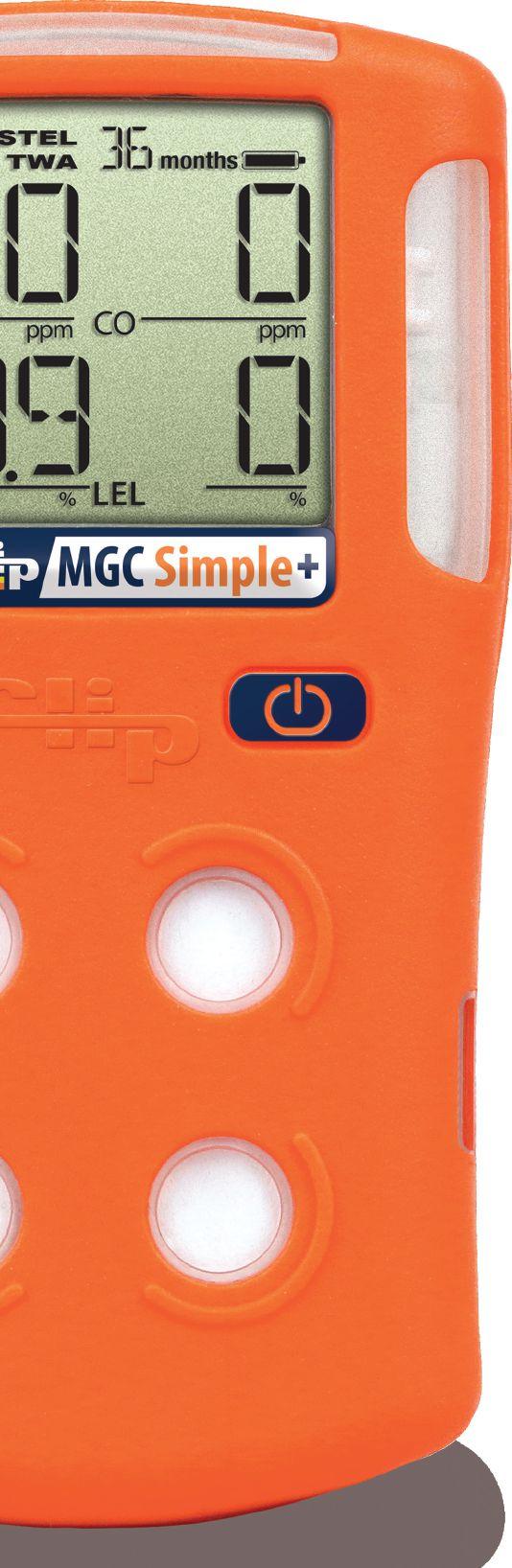
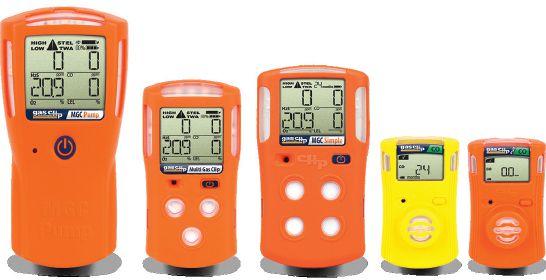
• Three-year continuous run time
• Recharging not necessary
• Recalibration not necessary
• One-button operation
• Failure alert function
• Functional in inert atmospheres
• Data logs in one-second intervals (from point-of-detection)
• LEL sensor immune to poisoning
• Detects LEL gases, H₂S, CO & O₂
CANADA’S OCCUPATIONAL HEALTH & SAFETY MAGAZINE
The winners of our inaugural Top 10 Under 40 awards program are unveiled, as we highlight up-and-coming health and safety professionals across Canada.
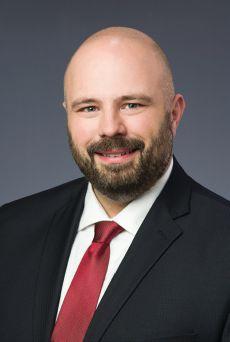
MARCEL VANDER WIER
Mapping out a safe return to work
Our virtual summit revealed best practices for physical workspaces and employee policy as Canada reopens following COVID-19 closures. BY
MARCEL VANDER WIER
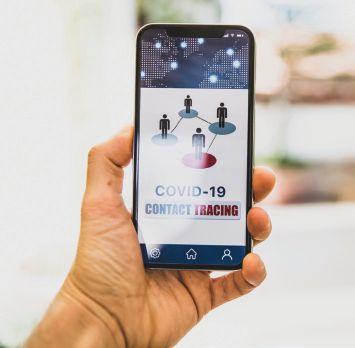
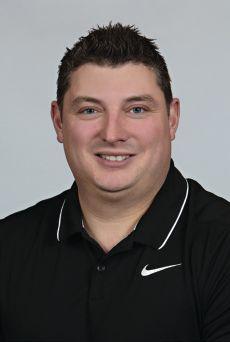
This concept tests the balance between privacy and employer responsibility in controlling the spread of infectious disease during a global pandemic.
PIERRE CHAUVIN
COVID-19 is affecting more than health-care systems and economic markets, it’s also having an especially detrimental impact on women.
JOHANNA PAGONIS
pandemic has pushed companies to double down on e-learning, giving rise to an influx of innovative tools and programs.
LINA DELLA MORA
Dexterra vice-president of airport operations Daniel Wright details pandemic
measures at
largest international airport.
Columnist Alan Quilley concludes his defence of why modern-day health and safety requires a logical approach made up of 10 tenets.
EDITORIAL
Honouring the next generation of leaders
Many adjectives have been used to describe my generation.
Entitled. Disrespectful. Lazy.
Over the years, millennials have been the bane of many employers’ strategic plans, spurring both frustration and transformation in how the workplace functions.
Today, the team at OHS Canada is pleased to flip the script and shine the spotlight on the next generation of occupational health and safety leaders.
Our inaugural Top 10 Under 40 awards program has uncovered 10 up-andcoming stars in the safety profession. Strong work ethic, leadership by example, and dedication to health and safety are all firmly present in this group.
Our winners crisscross this great nation from coast to coast, assuring me that Canada is in very good hands when it comes to working safely.
I have spent a number of years now writing about the workplace, with subject matter ranging from the future of work to how generational differences are impacting worksites.
With traditionalists, baby boomers, generation Xers and millennials all sharing the workplace, employers have their hands full in ensuring corporate culture serves all ages appropriately.
Definitions vary, but millennials are generally known as those born between 1981 and 1996, meaning this group is made up of 24 to 39 year olds. More importantly, this cohort is expected to make up the bulk of the workforce in five years.
Say whatever you want about millennials — they are the present, and future, of the workplace.
Millennials are the most highly educated cohort in history, and their impact on workplace culture may be their most defining trait, according to the Canadian Encyclopedia. This group is tech savvy and creative, desiring professional fulfillment alongside a healthy work-life balance.
And even as millennials slowly and surely leave their mark in workplaces across the world, the focus of employers is already shifting towards assimilating the next major group of young staffers — Gen Z. This group is expected to leave its own unique imprint on the world of work.
At present, millennials make up just over one-quarter (27 per cent) of the total health and safety profession, according to data pulled from the Board of Canadian Registered Safety Professionals (BCRSP) salary survey in 2019. Four in 10 safety professionals are over the age of 50.
Moving forward, health and safety will be firmly entrenched in public conversation and organizational philosophy. The fallout from the current COVID-19 pandemic has all but assured that.
Thankfully, an excellent group of young and inspirational safety professionals will be there to lead us forward.
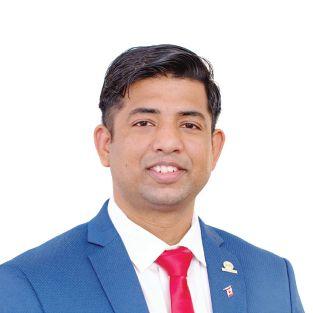
Tanner Konrad, Reza Mehboob, Nadia Edun, Tara Wright, Lance Strong, Kody Messenger, Joël Richer, Evan Edbom, Cody Woolf and Carol Casey — today we salute you for giving your energies and passion to the world of workplace safety.
CIRCULATION MANAGER JAY DOSHI 416-442-5600 EXT 5124 jdoshi@annexbusinessmedia.com
NATIONAL SALES MANAGER ROSS ANDERSON 289-925-7565 randerson@annexbusinessmedia.com
GROUP PUBLISHER PAUL GROSSINGER pgrossinger@annexbusinessmedia.com
COO SCOTT JAMIESON sjamieson@annexbusinessmedia.com
Printed in Canada ISSN 0827-4576 (Print) ISSN 1923-4279 (Digital)
PUBLICATION MAIL AGREEMENT #40065710
CIRCULATION
Tel: 416-422-5600
Fax: 416-510-5140
Mail: 111 Gordon Baker Rd., Suite 400, Toronto ON M2H 3R1
SUBSCRIPTION RATES
Published six times per year – Jan/Feb, Mar/Apr, May/Jun, Jul/Aug, Sep/Oct, Nov/Dec
Canada $100/yr plus tax
USA $130/yr (100 USD)
Foreign $214/yr ($164.50 USD)
Occasionally, OHS Canada will mail information on behalf of industry related groups whose products and services we believe may be of interest to you. If you prefer not to receive this information, please contact our circulation department in any of the four ways listed above.
All advertising is subject to the publisher’s approval. Such approval does not imply any endorsement of the products or services advertised. Publisher reserves the right to refuse advertising that does not meet the standards of the publication.
EDITORIAL ADVISORY BOARD
Paula Campkin: chief safety officer at Energy Safety Canada in Calgary, Alta.
Marty Dol: president and founder of HASCO Health & Safety Canada in Toronto
Cindy Moser: director of communications for the Institute of Work & Health in Toronto
Natalie Oree: prevention consultant with SAFE Work Manitoba in Winnipeg
David Powers: director of HSE with Oxford Frozen Foods in Oxford, N.S.
Richard Quenneville: senior director of corporate services with T. Harris Environmental Management in Toronto
Maureen Shaw: lecturer and presenter in Victoria
Dylan Short: managing director of The Redlands Group in Oakville, Ont.
1. Haida Gwaii: The Haida Nation has advised residents of Haida Gwaii about the first case of COVID-19 on the islands off British Columbia’s north coast. The bulletin says a self-reported case of the novel coronavirus was declared on July 17. Community members are self-isolating after being notified of possible exposure.
Source: The Canadian Press
2. Jasper, Alta.: A bus rollover on the Columbia Icefield on July 18 killed three people and sent two dozen to hospital. The cause of the accident hasn’t been determined. The off-road bus rolled off the road to the glacier and came to rest on a rocky slope, its six huge tires pointed up at the sky. Investigations are underway.
Source: The Canadian Press
3. Winnipeg: Manitoba launched its annual SAFE Roads campaign on May 20, reminding motorists to lower their speed and drive with extra caution through the summer construction season. SAFE Work Manitoba COO Jamie Hall said the campaign plays a critical role in the overall effort to reduce workplace injuries and illnesses across the province.
Source: Safe Work Manitoba
4. Toronto: A crane collapsed and hit a building in Toronto’s entertainment district on July 16. Toronto police say the crane operator was able to climb down to safety and was treated at the scene for minor injuries. Two buildings in the downtown core were evacuated.
Source: The Canadian Press
5. Charlottetown: New workplace harassment regulations came into effect on Prince Edward Island on July 1. The Workers Compensation Board (WCB) of P.E.I. has developed many resources to support employers and workers through the transition, including a guide to workplace harassment regulations and templates that employers can adapt for their own organization.
Source: WCB P.E.I.
8,862
Total number of Canadian deaths due to COVID-19 as of July 21. The country had 111,697 confirmed cases, with more than half of those in Quebec.
Source: Government of Canada
$100,000
New threshold for maximum insurable earnings for workers’ compensation benefits in B.C., if new legislation is approved.
Source: The Canadian Press
55%
Amount of Canadians wearing a mask most of the time while out in public. Some municipalities have mandated the wearing of facial protection during the COVID-19 pandemic.
Source: Angus Reid Institute
66%
360°
140,630
Total number of deaths due to COVID-19 in the United States during the coronavirus pandemic, as of July 21. The country has endured 3,819,139 confirmed cases — the most in the world.
Source: Centers for Disease Control and Prevention
Number of Canadians who believe two metres should remain the safe distance kept between people, as recommended by Canada’s public health authorities.
Source: Leger and the Association for Canadian Studies
Ontario launches free online safety training
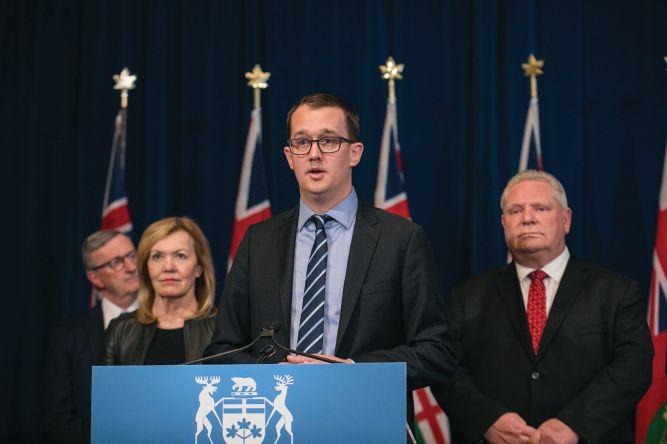
As Ontario continues to reopen following COVID-19 closures, the provincial government announced a $3-million investment in online health and safety training on July 3.
The government is hopeful the virtual courses will make it easier for jobseekers and workers to get essential qualifications while practising physical distancing and preventing the spread of COVID-19.
“In this new environment, we need to look for new and innovative ways to deliver services, while keeping people safe and healthy,” said Premier Doug Ford.
“This virtual approach to safety training will ensure employers and employees have access to the latest information without the need to physically interact with others.”
Up to 100,000 jobseekers can now take free online workplace health and
safety training through Employment Ontario, according to a news release.
There are 10 courses on offer, which include topics such as infection control, conducting health and safety incident investigations, ladder safety, slips, trips and falls prevention and preventing workplace violence and harassment.
Jobseekers should contact an Employment Ontario service provider in their area to enroll.
“This is the first time this type of online safety training has been made available at no cost to people who have lost their jobs,” said Monte McNaughton, Minister of Labour, Training and
DAVID JOHNSTON SUCCEEDS MONICA SZABO AS GOVERNING BOARD CHAIR OF BCRSP
David Johnston, CRSP, has been appointed the new chair of the Board of Canadian Registered Safety Professionals (BCRSP).
The move is effective as of July 1. He will serve a one-year term.
Johnston is the 25th chair of the certification body, succeeding Monica Szabo. He will lead the board through the execution of its strategic plan and vision.
Based in Toronto, Johnston is a seasoned environment, health and safety professional with more than three decades’ experience. He is currently employed by Toronto Hydro as director of environment, health and safety.
Johnston has international experience and volunteers in multiple capacities.
Skills Development.
“I am confident it will be an effective way to prepare people to rejoin the workforce safely.”
In addition, worker and employer members of joint health and safety committees can now use video conferencing to take training in real-time with qualified instructors from training providers approved by Ontario’s chief prevention officer.
The training includes sessions on how to establish a health and safety committee, resolving health and safety issues, workplace inspections and accident investigations.
Joining Johnston on the BCRSP executive for 2020/2021 are: Robin Angel (vice-chair); David Larson (secretary-treasurer) and Monica Szabo (past chair).
Returning governors include Paul Belair, Tehzin Chadwick, Mark Fernandes, Marianne Matichuk, Dave Rebbitt, Sandra Stephens (public member) and Peter Sturm. Newly elected governors include Stephanie Benay and William Rowan.
Nikki Wright remains executive director.
Located in Mississauga, Ont., the BCRSP sets certification standards for the occupational health and safety profession.
Through the Canadian Registered Safety Professional (CRSP) and Canadian Registered Safety Technician (CRST) certifications, the board enables OH&S practitioners to demonstrate their expertise.
The BCRSP strives to advance the body of knowledge, the competency of the profession and the value its certificants bring to society.
3M FILES LAWSUITS FOR COUNTERFEITING, PRICE
GOUGING OF N95 MASKS
MAPLEWOOD, Minn. (AP) — The leading manufacturer of N95 masks in the U.S. says it has investigated 4,000 reports of fraud, counterfeiting and price gouging in connection with the product and has filed 18 lawsuits.
3M, based in Maplewood, is among the largest global producers of the N95 mask, which has been approved by the U.S. National Institute for Occupational Safety and Health.
3M says courts have issued six temporary restraining orders and four preliminary injunctions so far to stop N95 sales that it says are unlawful.
The company says in some cases, it has led to criminal charges.
“The schemes we shut down were not only unlawful, they also endangered lives and wasted precious time and resources by diverting buyers from legitimate sources of muchneeded respirators,” said Denise Rutherford, 3M senior vicepresident of corporate affairs.
In one case filed in U.S. District Court in Minnesota, 3M sued Legacy Medical Supplies and four people connected with the company, claiming they were trying to sell 3M brand N95 respirators at a 75 to 267 per cent markup over 3M’s list price, the Star Tribune reported.
SOME RESISTANCE AS QUEBEC MAKES MASKS IN INDOOR PUBLIC PLACES MANDATORY
MONTREAL (CP) — Quebec’s mandatory face-covering measure for indoor public places has largely been followed since it came into effect July 18, but there has been some opposition to the COVID-19-related order from those who don’t want to wear one.
Quebec became the first province in Canada to bring about such a rule, which applies to people aged 12 and older. Some cities have similar rules in place on their territory.
“Assessment of the first day of compulsory wearing of the mask in closed public places: the vast majority of Quebecers respected the instructions,” Premier Francois Legault tweeted July 19.
Despite the COVID-19 pandemic and public health authorities urging people to don a face-covering amid concerns about a second wave of the virus, several anti-mask protests took place across the province.
Videos have circulated online of people being ejected from stores after refusing to wear a mask, including one widely shared incident in Montreal where police officers physically tackled and removed a man from a Tim Hortons restaurant in the city’s east-end on July 18.
The man was charged with obstructing police work and released on a promise to appear.
For now, businesses are expected to enforce the new rules and are subject to fines of between $400 and $6,000 if their customers are caught violating the directive.
Business groups have called on the government to shift those fines to consumers unwilling to abide by the rules.
ONTARIO RELEASES GUIDE ON HOW TO DEVELOP SAFETY PLAN
The Ontario government is providing employers with a new general workplace guide, which will help them develop a safety plan to better protect workers, customers and clients.
The downloadable toolkit offers tips on how to help prevent the spread of COVID-19 as more people get back on the job during Stage 2 of the reopening of the province.
“As more regions enter Stage 2 of reopening, we want to give businesses the tools and resources they need to adapt and succeed in this new environment,” said Premier Doug Ford. “By providing this guide on COVID-19 workplace safety, employers, employees and customers can have the confidence they need to resume business as usual with the right health and safety measures in place.”
The new guide will help each employer create a safety plan that is right for their own unique workplace, according to a government news release.
It includes information on the use of face coverings, as well as applying controls in the workplace, from most important to least important.
It also includes information on what personal protective equipment may be needed for workers.
The government’s first general workplace guide is accompanied by a template that employers can fill in to develop their own unique COVID-19 safety plan.
The new guide is supported by 121 workplace resources available at Ontario.ca/covidsafety to help protect workers from the virus.
REOPENING DURING COVID-19? CONSIDER YOUR EMPLOYEES’ MENTAL HEALTH
As COVID-19 restrictions loosen and more businesses are allowed to reopen, some employees may be anxious about returning to work during a pandemic.
The past few months have been a stressful time for many and adapting to changes when returning to work might be an additional challenge for some employees.
Employers have an obligation to protect their employees’ health and safety in the workplace and this should also involve consideration for their mental health and well-being.
Hope McManus, head of health and safety at Peninsula Canada, an HR consultancy in Toronto, says mental health should be a priority for employers when welcoming back workers.
“Employers should support their employees’ well-being by implementing health and safety practices in the workplace, providing mental-health resources and demonstrating empathy when addressing workers’ concerns,” she says.
“To help employees cope better, business owners should be transparent about safety in the workplace and provide training, education and updates on government guidelines for businesses.”
Fear and anxiety about returning to work may be caused by uncertainty and feeling unprepared. Employers can help
assure workers by providing training, education and updated workplace documentation when reopening their businesses.
“New health and safety policies, updated employee handbooks, posters in the workplace and social-distancing markers will help assure employees that steps are being taken to protect their safety,” says McManus.
LACK OF PPE, CONFLICTING GUIDELINES SLOW REOPENING OF DENTAL CLINICS
TORONTO (CP) — A lack of personal protective equipment and conflicting guidelines for COVID-19 practices between dentists and dental hygienists are delaying the reopening of many practices, the association representing dentists said as the province began the second stage of its reopening plan in mid-June.
Dr. David Stevenson, a former president of the Ontario Dental Association who is now the head of the group’s return to practice task force, said the resumption of services — permitted by the government in late May — has been slow.
Stevenson, who has been a dentist in the Ottawa-area for 35 years, said it has been difficult for dentists to find PPE, and many doctors gave away their supplies to hospitals early in the pandemic.
“We are getting access to a limited amount,” he said, adding that hospitals and long-term care homes are still getting priority access, which is appropriate. “I’m not going to say it’s a complete barrier to treatment, but it is still the major impact.”
Conflicting guidelines for the resumption of practice from the colleges that regulate dentists and dental hygienists are also adding uncertainty to the reopening, he said.
In mid-March, the province ordered all non-essential and elective health services to close or reduce operations as COVID-19 cases increased.
But the restart guidelines from the College of Dental Hygienists of Ontario and Royal College of Dental Surgeons of Ontario set different standards for each profession.
They take different approaches to COVID-19 screening for patients and PPE use for dental hygienists and dentists, despite the fact that they work in the same offices and with the same patients.
WCB NOVA SCOTIA ANNOUNCES FURTHER SUPPORT FOR EMPLOYERS DURING COVID-19
Employers who have front-line workers contract COVID-19 due to their work will not have the costs of those workplace injury insurance claims impact their industry rate or individual experience rating, the Workers’ Compensation Board (WCB) of Nova Scotia announced May 29.
“Workers and employers on the front lines of this pandemic are facing unprecedented challenges arising from COVID-19,” said Stuart MacLean, CEO. “Claims costs arising from COVID-19 will not impact industry rates, or the experience rating of the individual employer, and will instead be spread over the general collective liability.”
As of May 29, there were 39 Nova Scotia workers who received compensation due to COVID-19, 19 of whom have returned to work.
The change means that instead of an individual employer or industry having their rates affected by costs from claims related to COVID-19, they will be absorbed by the employer base as a whole.
Based on the relatively low numbers, the impact to any individual employer will be very small, if it is noticed at all. The change is not expected to impact the average rate.
Employer premium payments will continue to be deferred until October, including waiving of late fees and interest.
WOHSS NAMES NEW CHAIR, VICE-CHAIR
The Women in Occupational Health and Safety Society (WOHSS) is under new leadership.
Effective May 20, Stephanie Benay of Courtney, B.C., is the society’s new chairperson, while Shannon Bolger of Calgary is now vice-chair.
Benay — who had been serving as vice-chair — succeeds inaugural chair Paula Campkin, who now moves to the role of past chairperson.
“I am excited to pass the leadership reins of the WOHSS board to Stephanie and Shannon,” Campkin said in a press release.
“Both of these women are extremely capable, dedicated and passionate about building a better future for women in OH&S.”
Founded in 2017, the WOHSS is a grassroots organization dedicated to supporting women working in occupational health and safety through education, mentoring, resources and connection. The group has members from across Canada and the world.
Currently director of safety systems and assurance at BC Hydro, Benay is a Canadian Registered Safety Professional (CRSP) and is a founding member of WOHSS.
Previously serving as board secretary, Bolger is a CRSP with nearly two decades of experience. She is president and owner of Benchmark Safety, a safety management consultancy in Calgary.
So, what’s on your mind?
Ever wonder what other OH&S types are thinking? Find out by making our website poll a regular stop.
As Canada begins to reopen following COVID-19 closures, do you feel safe returning to work?
Yes 47%
No 53%
Total votes 517
A TALE OF 2PANDEMICS
By Johanna Pagonis
When reviewing statistics on where the world is at in terms of gender parity, one can see that no single society has yet to achieve equality between women and men. And now the COVID-19 pandemic is amplifying existing inequalities and gender gaps.
The truth is, the pandemic is impacting women disproportionately more than men. This phenomenon can be referred to as the tale of two pandemics — or more specifically, the pandemic the health-care system and economic markets are dealing with, and the pandemic women are experiencing.
In March, Statistics Canada indicated women ages 25 to 54 lost 298,500 jobs compared to men in the same age group, who lost 127,600.
One reason is that the largest job losses were in the hotel and food industry, which are predominantly occupied by women. These types of jobs are also more likely to be parttime and do not include benefits such as sick leave.
Another challenge facing women is caring for their children and/or elderly parents. Add home-schooling to the mix and you have a recipe that includes mental and physical stress, which can lead to potential burnout.
Women continue to disproportionately carry the burden of child care and domestic labour at home. Even though there are more women entering the workforce, they are still doing more of the housework and have less relaxation time than their male partners.
Women on the front lines
From health-care workers to teachers and mothers, women are on the front lines of this pandemic.
Now that our economy is reopening and we are returning to our physical workspaces, this presents a new challenge — who will take care of the kids when mom returns to work? Never mind the potential of getting infected with COVID-19 and bringing it home.
Another disturbing statistic that has emerged from the pandemic is the increase in gender-based violence. This impacts me on a personal level.
In 2008, I was in an abusive relationship and exploring my options to leave. Thankfully, I mustered up the courage and got the help I needed, but that came at a cost.
I chose to leave the home for my safety, and as a result my partner stopped paying the mortgage. Thankfully, I managed to settle with the bank and avoid bankruptcy.
I can’t help but think what if this had happened to me during a pandemic? Where would I go? It would be very hard to look for a new place to live or request help, knowing my partner is working from home and watching my every move.
My mind shifts to women who are currently in violent relationships and living through COVID-19. How many of them have lost their jobs? How many of them are not eligible for employment benefits? How many of them live in a community that has no internet and is three hours away from a hospital or shelter?
How can we support women and other individuals who are disproportionately impacted by COVID-19?
Women leading the way
We can learn a lot from women leaders who are excelling at navigating their countries through the pandemic.
The actions of female leaders in New Zealand, Finland, Denmark, Taiwan, Germany, Iceland and Norway have demonstrated they are managing the crisis better than their male counterparts.
Why you ask? Let’s look at diversity and inclusion for the answer. When there is an effort to include diverse perspectives in addressing complex problems, it can lead to a holistic and comprehensive solution. This is gender-based analysis plus (GBA+) in action.
The “plus” in GBA+ acknowledges that this type of analysis goes beyond biological and gender differences like race, ethnicity, religion, age and mental or physical disability.
Perhaps women leaders are better at including diverse perspectives in their strategies, since they have typically been left out of the conversation in the past.
Given the realities and challenges women are tackling today, women and men have to unite and support each other through this time.
No one knows what the future will look like, but there is one thing I do know. Women are resilient, agile and strong.
We have overcome adversity in the past, as we will in the present — and the future.
Dr. Johanna Pagonis is the owner of Sinogap Solutions, a leadership consulting firm in Sherwood Park, Alta.
WELCOME TO THE VIRTUAL CLASSROOM
By Lina Della Mora
These are trying times for Canadian organizations, but safety is hardly taking a back seat.
In fact, the current pandemic has made worker health and safety mainstream news. Organizations are adjusting their operations and enhancing their procedures to address COVID-19 guidelines, including embracing digital alternatives to workplace health and safety training.
The trend towards e-learning and “virtual classrooms” is not new, with organizations of every stripe dipping their toes into digital transformation in recent years.
COVID-19 has simply pushed companies to double down on these efforts, giving rise to an influx of innovative tools and programs that enable employees to work and learn remotely.
Students at the heart
Like any digital transformation, the move towards e-learning is a journey.
Industry training organizations like Workplace Safety and Prevention Services (WSPS) must keep pace with technology while ensuring virtual solutions carry the same depth, value and impact as traditional in-class offerings.
At the core of this journey is the student experience.
In addition to basic learning prin-
ciples, online courses must cater to a student’s desired outcomes, adjust to their learning styles and their comfort with technology.
This is often easier said than done, as learning styles vary greatly between people and industries, as do access and comfort with technology. It’s easier to adjust for these variances in a physical classroom setting, but how do you accommodate this in virtual or remote environments? How do trainers replicate the value of an in-class program and keep students coming back?
Lessons learned
We’ve learned several lessons while adapting our training programs for virtual delivery.
Audience interaction: Meaningful interaction and engagement through a screen can be hard, especially over long periods of time. Here’s where incorporating real-time polls or interactive activities can keep students attentive, alert and focused on their screens.
Multiple presenters: Many of WSPS’s virtual courses are led by multiple presenters. This provides our trainers relief and support during multi-day classes and provides learners with fresh perspectives and approaches throughout the course.
Breaking the ice: To build a sense of “team” in a virtual setting can prove difficult. Engage participants with icebreakers that promote a sense of connectivity; schedule time to let students introduce themselves and interact.
Tech support: Not everyone is comfortable with technology. Some may even shy away from taking part as a result. That’s why trainers must recognize these skill gaps and provide additional support, allowing the participant to focus their attention and energy on the content.
Seek feedback: Virtual learning is evolving and organizations must ensure their entry into this space is effective. Feedback from students and employers is critical to refining solutions. Consider conducting post-class surveys or engaging students directly.
The power of choice
Although online learning may dominate the future of workforce training, not everyone will be open to making the transition.
To that end, it’s important to have training options: something for those who wish to attend in-person (in a perfect non-COVID world), a blend of both online and physical classes where “hands-on” learning is most conducive, and/or a self-paced learning approach.
Employers will best succeed if they take into consideration the learning preferences, technology requirements and access limitations when planning staff development and training.
Lina Della Mora is vice-president, market and product innovation (interim) at Workplace Safety and Prevention Services (WSPS) in Mississauga, Ont.
&
QA
How Dexterra is protecting staff, travellers at Canada’s largest airport
Pearson International Airport in Toronto is the largest and busiest facility of its kind in Canada. Throughout the COVID-19 pandemic, Dexterra has been working to provide a safe facility environment at the airport.
Daniel Wright is vice-president of airport operations for Dexterra in Toronto.
Responses have been edited for length and clarity.
OHS Canada: What measures have been put in place at Pearson airport to protect travellers and staff?
Daniel Wright: In early January, when it became clear that COVID-19 was evolving into a global issue, we took decisive steps to enhance and elevate existing safety measures to protect passengers and staff at Toronto Pearson International Airport. From the beginning, our strategy was to be responsive and proactive to the ongoing crisis — although, like many others — our approach has developed over time to align with published guidance.
As with all of Dexterra’s operations, we rolled out a workplace-specific pandemic response plan. At Pearson, we immediately increased resources — onboarding almost three dozen staff in under one week — and deployed them to work in high-traffic areas to support the core team.
We complemented our existing sanitizing system with fast-acting disinfectant wipes and sprays to mitigate the risk of pathogen spread on high touchpoints (handrails, elevators, escalators, seating, monitors, screens and passenger kiosks).
We also enhanced protocols to ensure high levels of personal hygiene amongst our team, established physical distancing measures, installed Plexiglas barriers in our spaces, disinfected equipment between use and invested significantly in additional hand-sanitizing stations, which were strategically placed throughout the airport. We currently have over 400 units on the floor.
Due to the evolutionary nature of the crisis, we knew that maintaining regular and effective communication would play a vital role in allaying staff fears and misinformation; this was particularly important in the early weeks and months.
By the time the emergency stay-athome order was put into place in Ontario, we had already taken critical steps with our strategic supply chain partners to secure and safeguard a steady stream of vital consumables, personal protective equipment and essential cleaning supplies for the airport.
As the pandemic developed, so too did our understanding of the virus, which very quickly necessitated a refresh of training across all levels of our team. As we adjusted to a new sense of normal, and to ensure all staff were equipped with the right tools and information to work safely, we embarked on an aggressive 10-day program to formally re-train some 300 managers, supervisors and front-line staff.
Consisting of 13 modules specifically linked to the pandemic, the training covered updates to policy such as absenteeism and return to work; specialized operating procedures such as physical distancing and infection control; safety talks on topics such as safe donning and doffing of masks and gloves; and key procedures on how to safely respond to a positive case of COVID-19 at the airport.
What best practices are you employing within the airport to ensure health and safety is maintained?
DW: Meeting the expectations of more than 50 million passengers (last year) requires a constant focus on innovation and the adoption of best practice.
Long before COVID-19 hit, we had already integrated a number of innovative products, systems and technologies that have allowed the team to focus their energy in refining policy and procedure to maintain a safe operation.
In addition to autonomous cleaners, Ozone sanitization and washroom dirt extraction equipment, in 2018 we invested in a new Bluetooth assettracking system called Lighthouse.
Through a series of 700-plus beacons, a mobile application and a webbased portal accessed by our client, our IoT solution allows us to identify the location of our staff, timestamp their movement, demonstrate when they have attended an area, and once there, confirm what work and tasks were carried out. During a pandemic, this information is critical and needs to be shared with multiple stakeholders to build confidence and demonstrate compliance to a heightened set of hygiene standards.
Keeping passengers safe means first keeping our staff healthy and safe, and throughout this crisis we have continued to put them first.
Staff have been provided with all necessary PPE; they have been supported as it relates to the need to selfisolate or take time to get tested; we embedded a pre-screening checklist into the biometric clock system that helped to flag (to managers) any issues that may need further attention and we used our foggers to mist our spaces
during shift handover, which helped to clean and sanitize the air, staff equipment and their clothing as they entered and exited the airport.
In May, we completed an internal audit of our operation against guidance published by the Ministry of Labour. We used this opportunity to ensure our communication protocols and, more specifically, all of our sitelevel noticeboards aligned with the best practice guidance.
Throughout the pandemic, we have attended a number of Greater Toronto Airports Authority (GTAA)-led events, where representatives from all the various airport stakeholders came together to show solidarity, share knowledge, best practice and lessons learned — this really is a great example of the ‘I Am Toronto Pearson’ movement in action. We are also proud to be playing such a critical role in the new GTAA Healthy Airport initiative launched in late June, a program that is ensuring the long-term health and safety of everyone working, travelling or moving through Pearson.
Announcement
With the airport being a hightraffic area, how difficult was it to establish safe policies?
DW: As a service provider at Pearson International for over three decades, we are incredibly proud of our relationship with the GTAA, which is founded on the principles of openness, transparency and the highest levels of trust and respect.
As such, we are already well-versed in the creation of policies and procedures that ensure passenger and staff safety in a secure environment.
As the pandemic progresses, our close working relationship with the GTAA ensures complete alignment from a policy perspective and as any challenges or changes in direction have occurred, we have overcome them together.
A great example of this approach in action was the GTAA move to wear mandatory face coverings.
Although not a Dexterra policy, when the policy change occurred on June 1, we simply updated our policy,
communicated the requirements and retrained our staff.
In anticipation of such a move, we had already secured sufficient supplies of both surgical and washable masks, so that a variety of options could be presented to our staff.
A further example is the transparent nature that we log any positive cases of COVID-19 across our team with the GTAA.
An online log was established in May and since its launch, Dexterra has provided all required non-confidential information, living by our principles of openness and transparency.
Throughout the year, passenger opinion is canvassed by Airports Council International through the Airport Service Quality (ASQ) program.
We are incredibly proud that yearover-year for the last five years, we have steadily and constantly improved our ASQ scores in the categories of terminal and washroom cleanliness.
Our site was also successfully recertified for ISO 9001 and 14001 in December 2019.
- Board of Canadian Registered Safety Professionals 2020-21 Executive Officers
David Johnston, Board Chair, is an environmental, health and safety professional with over 40 years’ experience. He is currently employed by Toronto Hydro as the Director, Environment, Health and Safety. David has worked throughout Canada and the United States in a variety of industries and is recognized for leading organizations to safety excellence. In addition, he is a tireless volunteer contributing to the advancement of safety and the profession through serving on multiple committees, associations and boards. In 2013, he was selected as Canada’s Safety Leader of the Year. David has been a Canadian Registered Safety Professional (CRSP)® since 1999.
Robin Angel, Board Vice Chair, is the Regional Director Occupational Health and Safety Division, Nova Scotia Department of Labour and Advanced Education. Robin has diverse experience in the disciplines of occupational health and safety, environmental management, industrial hygiene, and quality assurance systems. Her experience includes chemical manufacturing, oil and gas exploration, oil refinery operations, corporate industrial hygiene, tire manufacturing and occupational health and safety programs. Robin has been a Canadian Registered Safety Professional (CRSP)® since 2006.
Monica A. Szabo, Board Past Chair, has over 25 years of experience in occupational hygiene, health and safety, and is a senior leader who has built a reputation for developing progressive and results-oriented health and safety solutions for the broader public sector. Monica is currently President of Szabo Safety & Operations Services. In addition to holding the CRSP, Monica is a Registered Occupational Hygienist (ROH), a Certified Occupational Health and Safety Technologist (OHST) and a Certified Municipal Manager (CMM III). Monica has been a Canadian Registered Safety Professional (CRSP)® since 1993.
David A. Larson, Board Secretary-Treasurer, is the Risk Services Practice Leader for Lockton Companies’ Northeast Series and is based in New York. A strategic thinker, he designs and implements casualty and property safety and risk management programs for Lockton clients in a wide range of industries. In addition to holding the CRSP, David is a Certified Safety Professional (CSP), Certified Fire Protection Specialist (CFPS), and an Associate in Risk Management (ARM). David has been a Canadian Registered Safety Professional (CRSP)® since 2014.
In addition to the Executive Committee, the 2020-21Governing Board includes newly elected Governors Stephanie Benay, CRSP and William Rowan, CRST, and returning Governors include Paul Belair, MBA, CRSP; Tehzin Chadwick, CRSP, CIH, ROH; Mark Fernandes, MBA, CRSP; Marianne Matichuk, CRSP, CHSC, COHS, CNM; Dave Rebbitt, MBA, CRSP, CHSC, CET, CD; Sandra Stephens, LLB, LLM (Public Member), Peter Sturm, BA, CHSC, CRSP; and the Executive Director is Nicola J. Wright, BA (Hons), CAE.
The Board of Canadian Registered Safety Professionals is a public interest, not-for-profit, federally incorporated self-regulating organization which sets the certification standards for the OHS profession.
Board of Canadian Registered Safety Professionals
Conseil Canadien Des Professionnels En Sécurité Agréés
www.bcrsp.ca info@bcrsp.ca
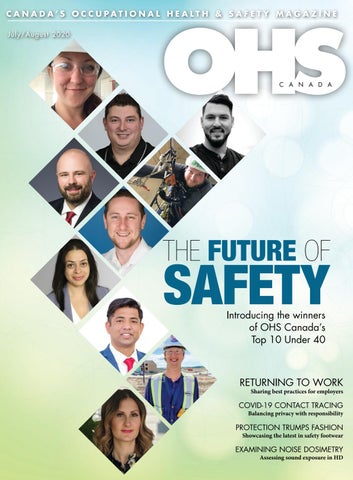
THE FUTURE OF SAFETY
Introducing OHS Canada’s Top 10 Under 40
BY MARCEL VANDER WIER
Canada’s future of workplace safety is in good hands, if our Top 10 Under 40 awards program is any indication.
The newly introduced recognition program received write-in applications from across the country and OHS Canada is pleased to unveil the 2020 winners.
Strong work ethic, leadership by example and dedication to health and safety are all acknowledged in this group of young safety professionals.
Join us as we celebrate the future of occupational health and safety in Canada.
PHOTO: BLUE PLANET STUDIO/GETTY IMAGES
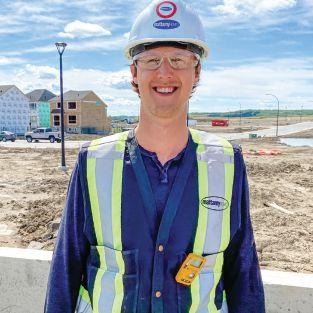
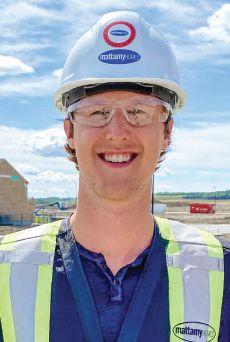
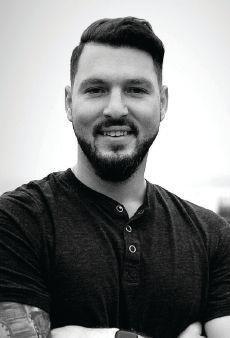
TANNER KONRAD
Safety adviser at Mattamy Homes in Calgary, age 25
For the last three years, Tanner Konrad has been leading the safety charge at Mattamy Homes in Calgary.
His work in overseeing the company’s provincial safety culture has been steady in an ever-changing world of safety.
Konrad chose the profession because of its growth trajectory and the many opportunities to adapt within the field.
“Early in my career, I found a passion for safety and believed the profession would suit me well,” he said. “At the beginning, I overcame challenges that assured me it was the right fit for myself. Among the most challenging was striving to guide and educate someone to follow proper protocol or procedure and lead them into doing something that they ultimately do because they want to — not because they have to.”
Konrad sits on various committees with BILD Calgary, and is a force in driving health and safety for residential construction in the Calgary region. He has previous experience at EllisDon.
The most gratifying part of his work is witnessing a shift in mentality towards a stronger safety mindset, he said.
“I am glad to be a part of a profession that is ever gaining traction and will be the backbone of many companies’ successes for generations to come.”
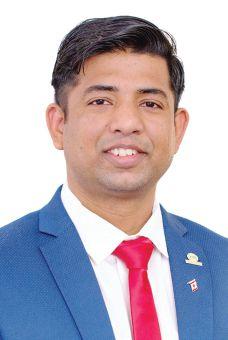
REZA MEHBOOB
Wellness, health and safety consultant with the Government of New Brunswick in Fredericton, age 30
For Reza Mehboob, safety is more than a career. It’s a hobby and a passion.
He chose the profession because it provided an opportunity to interact with front-line employees on understanding risks, calling it “an immense opportunity to serve humanity.”
Mehboob is currently serving the province of New Brunswick as a consultant. He owns a master’s degree in OH&S from the University of Greenwich and is currently working towards his PhD in ergonomics and musculoskeletal disorders at the University of New Brunswick.
A CRSP, he has many years of international experience from his work in the U.K., Qatar and the United Arab Emirates. Mehboob has served in various leadership roles with the Institution of Occupational Safety & Health (IOSH) and
other international safety bodies. He is also a board member with CSSE – New Brunswick.
The most rewarding aspect of his work is influencing senior leaders as well as young safety professionals, he said.
“I always ensure that the OH&S management system is sensible and straightforward based on the industry standards and as well as regulatory requirements.”
Mehboob is fuelled by a “never-ending desire” to actively develop and maintain his competency through continuous professional development.
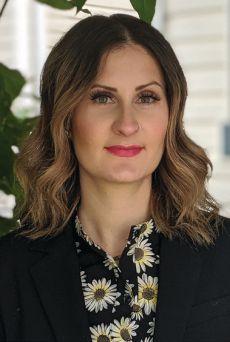
NADIA EDUN
Safety and wellness manager at George Brown College in Toronto, age 38
With 14 years of experience in many sectors and health and safety positions, Nadia Edun’s dedication to her craft has paid dividends.
In her current role at George Brown College, the CRSP and CSP supports teachers by providing relevant health and safety curriculum.
Congratulations Tanner Konrad
Health & Safety Advisor
Mattamy Homes’ Alberta Division on your recognition as one of the Top 10 Under 40 Health & Safety professionals in Canada!
www.mattamyhomes.com
Edun graduated with a chemistry degree from the University of Guelph, but began her working life in the safety profession with a pharmaceutical company. She eventually earned an OH&S certificate from Ryerson University.
“After my first two years in the field, I developed a passion for the work and found it to be very rewarding,” she said. “I woke up each day happy to get to work and ready for the challenge which always proved to be different, exciting and fun.”
Working in safety suits her personality, allowing her the opportunity to show enthusiasm while caring for others, said Edun.
“Over the past several years, I have learned that the health and safety profession is so multifaceted, I am able to be a leader, change agent, educator, influencer, health-care worker, lifelong student and so much more.”
Edun’s past professional opportunities include field projects with the Ministry of Labour and providing health and safety consulting to the agriculture, service and manufacturing sectors.
Her career has included work in the United States and around the world to assist in global auditing.
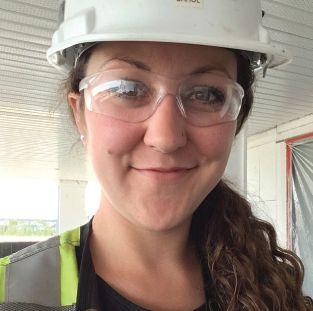
TARA WRIGHT
Safety consultant at Edmonton Public Library, age 33
The Edmonton Public Library is a safer workplace, thanks to Tara Wright’s involvement.
Among her achievements is the creation of a systemwide health and safety committee and teaching mental health first aid to all staff.
The CRSP finds gratification in watching staff internalize what they’ve learned about health and safety — then apply it in all of the work they do.
“My goal is to make health and safety accessible, and I do that by meeting each individual at their comfort level and building from there,” she said.
Wright views OH&S as less about rules and restrictions, and more about being a multidisciplinary field that can change lives.
“I firmly believe health is a state of complete physical, mental and social well-being, and that the workplace has the power to nurture or impair it,” she said.
“Working in occupational health and safety aligns with my core values of learning, creating, embodying empathy and the pursuit of excellence. It allows me to connect with people, build community and share my knowledge and expertise to make a difference in the workplace.”
Wright has a wide variety of health and safety experience in Alberta. She finds gratification when employers truly buy in to health and safety — not just to meet minimum compli-
ance — but because they recognize the benefits of supporting and investing in their people.
“That’s why I do what I do.”
LANCE STRONG
EHS specialist at Fiat Chrysler Automobiles (FCA) in Windsor, Ont., age 32
For the last eight years, Lance Strong has been demonstrating an extraordinary commitment to health and safety at the Fiat Chrysler assembly plant in Windsor, Ont.
He joined the organization as a temporary part-time worker on the assembly line and has worked his way up into a supervisory position, before eventually transitioning into his current health and safety role.
“I have always been interested in creating a safe and conducive working environment for all employees,” said Strong. “Safety is an integral part in everything I do, whether it be at home or at work — making the right choices that are aimed at creating a positive safety culture to prevent any accidents or incidents has been the key to my success.”
Strong is the lead of the joint health and safety committee in the auto plant, as well as the Safety Pillar team. He finds the interaction with the employees on the shop floor to be most gratifying.
“Our employees at FCA have a very strong safety culture and come up with innovative solutions to help resolve any of our safety concerns,” said Strong. “Working with them to resolve any of their health and safety concerns has always been my primary focus.”
“I am truly proud of the team that we have at the Windsor Assembly Plant and all of the hard work we have completed to ensure occupational health and safety is kept is an integral part in everything we do.”
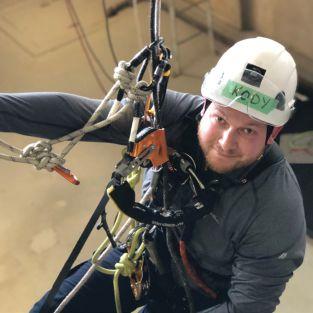
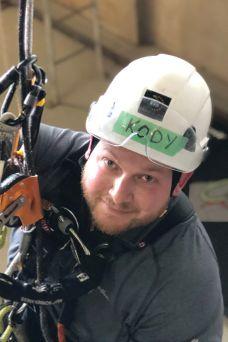
KODY MESSENGER
HSE adviser at Enger in Truro, N.S., age 31
For Kody Messenger, safety is a family affair.
“I owe a pile of my technical safety knowledge to my dad (Neil Messenger),” he said. “The safety industry has been a bit of a family affair for quite some time.”
“Second to that, I owe my appreciation for small busi-
ness and their abilities to be safe and productive to my dive boss Lenny Hart at Atlantic Sub Sea.”
Currently an HSE adviser with Enger, Messenger began his working career as a commercial diver.
“I had a pretty natural understanding of the importance of safety from that experience,” he said.
During slower periods at work, Messenger began studying safety. He soon discovered he could assist companies and workers through the bureaucracy and clutter to help them do their jobs in a better way.
“I was hooked,” said Messenger, now a CRSP.
Today, he has authored his own course material on first aid, fall protection and confined space, while also serving on various technical committees studying CSA Standards.
In 2016, he was named a safety champion by Construction Safety Nova Scotia.
“I’d have to say I’m most gratified when I help a company shed some of the weight of their safety programs and safety clutter,” he said. “It’s a great feeling to help people be operationally safer at work, while not increasing arbitrary and meaningless safety work.”
JOËL RICHER
National health and safety leader at Emco in London, Ont., age 32
When Joël Richer was only a teenager, his father suffered a broken back as a result of a workplace injury. He was never able to return to work.
The impacts of that incident give Richer a strong personal connection to his work at Emco.
“My experience allows me to have empathy and help relay the various impacts of a workplace injury for the injured worker, their families and the organization,” he said.
Richer began his career with Emco in 2013 as an internal auditor — a role that included identifying potential gaps in workplace incident management.
“Collaborating on each workplace incident at a national level helped me realize the immense importance health, safety and wellness plays in our organization,” he said.
In 2016, Richer transitioned into his current role, where he began taking steps to improve Emco’s health and safety performance and culture towards a more proactive mindset.
In recent years, he has worked to bring mental health more fully into the program.
Making a difference in his colleagues’ lives drives Richer forward, he said.
“Being a witness to the gradual change in mindset has been one of the more satisfying parts of this role,” he said.
Richer said he would not be where he is today without the tutelage of his former director Kim Fraser.
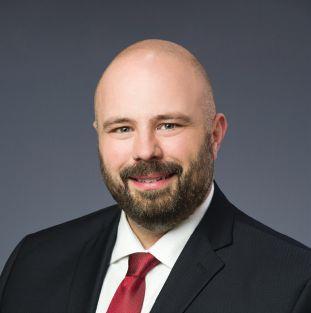
EVAN EDBOM
Director of safety (student transportation group) at Pacific Western Transportation in Calgary, age 39
A willingness to be flexible and take on responsibilities outside his comfort zone are two primary factors in Evan Edbom’s success.
“I might not have entered the safety field in the first place, if I wasn’t willing to take on new duties to help my company,” says the CRSP currently overseeing a national portfolio in passenger transportation.
Edbom’s career in safety began when he accepted a project co-ordinator position. When a designated safety contact was required on-site, he accepted the dual role responsibilities. The rest is history.
Alongside his regular duties, Edbom is involved on the advisory council of Partners in Compliance, an Alberta transportation partnership. He is a member of the BCRSP qualifications review committee and serves as an industry mentor. Previously, he advised Alberta’s labour minister on health and safety matters as a member of the provincial occupational health and safety council.
PWT proudly congratulates our Director of Safety, Evan Edbom, for being recognized as one of Canada’s Top 10 OHS Professionals Under 40.
Safely Home is our deep conviction to Safety, and the ultimate promise we make to each other, to our clients, and to the communities in which we operate. The Pacific Western Group of Companies is driven by safety. It is our first Core Value, and is at the heart of all that we do.
“Helping to grow other professionals is very rewarding to me, whether it is direct reports, operational leaders or new OH&S practitioners in the industry,” said Edbom.
“I have always strongly encouraged and supported team members to develop new skills and take on new challenges. Seeing some of those junior professionals that have worked with me move on to manager and director roles themselves, is one of my favourite parts of my career so far.”
CODY WOOLF
Director of health, safety and environment at Fillmore Construction Management in Edmonton, age 35
Before entering health and safety, Cody Woolf was employed as a provincial peace officer, ensuring commercial vehicles met provincial safety standards.
Persuaded his career experience would be an asset, he was convinced to leave law enforcement in favour of safety.
“I quickly recognized I had a passion for health and safety and enjoyed the social interaction of the profession,” said Woolf. “Since then, I have pursued additional HSE education and achieved some safety designations as well.”
Today, the CRSP manages the health and safety of 200 staff, and also develops policy for Fillmore Construction’s safety program.
The company’s commitment to investing in and promoting health and safety for all staff, while also producing building excellence for clientele, is very rewarding for Woolf.
“It is rewarding to see that health and safety is not just a priority at work, but is a value instilled in all employees, subcontractors and clients’ lives. I am proud to be a part of this energy and help lead the way.”
Woolf’s goal is to create a positive and safe work environment, striving to promote safety as not only a policy, but a lifestyle.
The support and trust of his team has made all the difference in making this a reality, he said.
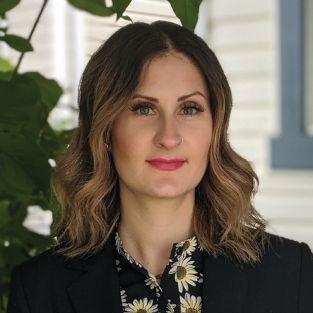
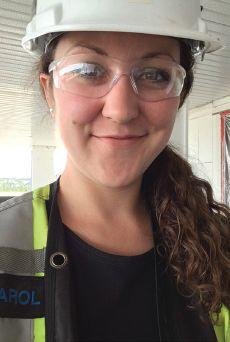
CAROL CASEY Health and safety
adviser in Alberta, age 31
Carol Casey is known among her peers as an outstanding advocate for safety, working hard to teach safety rather than simply enforce it.
A victim of recent COVID-19 layoffs, the CRST is currently working to complete her OH&S diploma at the University of Alberta.
Her pursuit of a career in workplace health and safety is with the intention of helping people.
“While employed in the office setting of the construction industry, a close friend was killed in a workplace accident and I decided to get into health and safety,” said Casey.
“I enjoy meeting new people and learning something new every day,” she said. “Working with people, understanding what they do and implementing safety together is very rewarding.”
For the past two years, Casey was employed by Pagnotta Industries, a construction management company in Edmonton.
She was nominated a record 16 times for OHS Canada’s Top 10 Under 40 award.
Nominators indicated Casey is passionate and knowledgable regarding OH&S legislation and never misses an opportunity to further her education in workplace safety. She is also praised for being detail oriented and performing her work with devotion.
Casey is described as being well-respected by her colleagues, actively leading by example and taking initiative in establishing policies and procedures.
Marcel Vander Wier is the editor of OHS Canada.
We proudly congratulate Cody Woolf on winning a Top 10 under 40 Award as a Health & Safety Professional Fillmore Construction has a “Passion for Excellence”. We are committed to provide cost effective, efficient and reliable services that surpass the needs and expectations of our clients. We provide a safe and rewarding work environment for all employees and partners associated to our organization.
MAPPING OUT A SAFE RETURN TO WORK
Best practices for employers as Canada’s economy reopens
BY MARCEL VANDER WIER
With the initial challenges of COVID-19 closures mostly behind Canadian employers, the focus has now turned to reopening.
Following three months of intense efforts to mitigate the effects of the pandemic, Canada is slowly and surely returning to work.
On May 27, together with sister publication Talent Canada, OHS Canada hosted the Back to Work virtual summit in an effort to share best practices and policies for employers looking to reopen. Close to 500 business leaders attended.
Federal Labour Minister Filomena Tassi opened the event, encouraging employers to keep the faith while anticipating a “new normal.”
“The success of this project is knowing that we all share a common goal,” she said. “That is to reopen in a way that is safe for all Canadians, industry, labour and the general public.”
Preparing physical workspaces
In mid-March, COVID-19 shut down large parts of the Canadian economy and forced employers and employees to adjust how they work.
Essential and front-line services remained open with protections such as physical distancing and proper personal protective equipment (PPE) in place, said Richard Moreau, an emergency management, security and defence expert with Calian, a professional services organization in Ottawa. Challenges did arise due to varying interprovincial standards, however, he said.
“Despite the fact that the federal government provided some guidelines, at the end of the day, it’s up to each jurisdic-
tion to decide how they are going to proceed,” said Moreau. “We quickly came to the conclusion that we couldn’t rely on each of the provincial plans — we needed to have our own to anchor our decisions on.”
Once completed, the plan was adjusted on a site-by-site basis, he said.
“In the end, our approach has been to bring back to work those who need to be back at work first, followed eventually by those who want and can return to work, and finally add some flexibility with adjusting to the new reality for those who can continue to work efficiently virtually and don’t need to re-enter the office space,” said Moreau.
“Our approach has been to go as fast as possible, but also as slow as required.”
Common areas, temperature screening
When office facilities are greenlighted to open, working alongside the building management on protections is advised, according to Kris Tierney, vice-president of HR and learning at the Human Resources Professionals Association (HRPA) in Toronto.
Landlords can assist by ensuring proper signage and protocol is in place in common building areas, she said.
“It’s easy for us to control our own worksite… (but) every movement of the tenants, of your workforce, of your employees needs to be considered in those common places.”
To properly protect workers, policy must be in place that takes into context the advice of the chief medical officer, said Dr. Ken Jenkins, national medical director of Horizon supported by Telus Health, based in Newfoundland.
“We have to get away from employees coming back to
work when they’re sick,” he said. “Let’s face it — in the past, people would have a cold, even a flu, and would show up at work. Those days are over. We’re not going to be able to afford to have people presenting the risk of transmitting a virus to other workers.”
In terms of temperature screening, Jenkins advised policy that has employees screen themselves before they leave home, noting online assessment tools are available.
“If anybody screens negative and (doesn’t) have any particular high risk for this illness, they should wash their hands with a sanitizer and then proceed on to the office setting,” he said.
Temperature checks are an extra layer of protection, but Jenkins said the science doesn’t necessarily stand behind this type of testing. For staff members who have tested positive for COVID-19, if they are asymptomatic after 14 days, they can safely return to work, he said. “There are no requirements for test clearance for returning to work.”
Lessons from essential businesses
Grocery stores and other essential businesses across Canada were the first to adopt proper health and safety protocols in the age of COVID-19, and employers in other markets would be wise to learn from them, said Tierney.
Plexiglas usage, directional signage and mandatory hand sanitizer upon entry are all helpful on-site protections that can be adapted in other work settings, she said.
In deployment of these tactics, communication is critical, though businesses must be able to back up their guidelines, said Tierney.
“You need to engage your supervisors, your managers to help with that,” she said. “You need everyone to really agree to and accept those new guidelines.”
Changing employee behaviours won’t necessarily be easy, said Jenkins.
“Leaders have to show up at this time,” he said. “Crisis periods are times when leaders come forward… The baton is being passed now. It’s going from leadership in politics and leadership in public health, and it’s being passed to business leaders as we get the economy restarted.”
Senior leaders need to “seize the moment” and reinforce important public health messaging, said Jenkins.
“Take time to clarify roles and responsibilities,” he said. “Try to rebuild your stamina, flexibility and strength in your workforce, because there’s deconditioning that has gone on over this time.”
“A lack of ramp up is potentially problematic, because it can result in dysfunctional behaviour… and worst case, it can lead to mishaps and injuries.”
HR and policy changes
Ensuring a revamped business plan adjusted to the “new normal” is in place is a solid starting point for Canadian employers, according to Sharon Ramalho, a Toronto-based consultant and former chief people officer at McDonald’s.
But when it comes to people-related policy, health and safety is priority No. 1, she said.
“Business leaders, HR leaders, we’ve got to get that right, because that impacts people’s mental health. It impacts the productivity that will then take place. And it impacts customers and clients that employees will be interacting with moving forward.”
While government policy will need to be abided by, talking to employees to understand their unique concerns is best practice, said Ramalho.
Adjusting benefits plans to potentially include more personal days, mental health supports and paid sick leave are further considerations, she said.
“People want to know that they’re going to be safe.”
An extra wrinkle in the COVID-19 shutdowns was the rapid emergence of emergency government wage subsidies, said Irene Paul, a compliance advisor at Ultimate Software in Montreal.
“In general, when a measure is announced… there is months that go between the announcement and when it actually becomes effective,” she said. “This hasn’t been the case with all the measures that are related to COVID-19.”
As of late May, there were at least 115 changes impacting HR and payroll as a result of government wage subsidies, according to Paul.
“These things needed to happen because funds had to go out to struggling businesses so that they could keep paying their employees,” she said. “We didn’t have the opportunity to iron all of the details out and make sure that everything was clear.”
In terms of the Canadian Emergency Response Benefit (CERB), it’s important to note that payments to employees don’t concern employers — it is a direct transaction between individuals and the Canada Revenue Agency, said Paul.
Remuneration boosts for essential workers and those on the front lines deserve applause, said Ramalho.
“That signals to employees that we value you; we value your contributions; we appreciate the work you are doing,” she said. “What more can you do for employees to really retain the talent that you invested so much time in nurturing and developing?”
Seizing new opportunities
COVID-19 shutdowns were disruptive to all Canadians, said Sue Ivay, chief human resources officer at Calian.
“Once we can process that fact, I think it’s such a wonderful opportunity for leaders to really get to know their people,” she said. “It’s such a beautiful opportunity for individual managers to really get their team members to engage, to get to know them better than you ever could have in an office setting… to really engage with your teams on a much deeper level.”
It is possible to consider the pandemic as an “exciting time” for workplace change, said Ivay.
“The opportunity for what this is going to look like next month, six months, 18 months, 24 months from now, it creates a whole other level of opportunity for all of us,” she said.
“This is the Internet coming in and disrupting video stores.”
CONTACT TRACING DURING COVID-19
Concept requires balance between privacy and employer responsibilities
BY PIERRE CHAUVIN
Since the start of the COVID-19 pandemic, contact tracing has emerged as one of the most efficient public health tools to stomp transmission.
But as businesses throughout the country resume inoffice work, should employers get in the business of contact tracing? At what risks?
Breaking the chains of transmission
While the concept of contact tracing has been in the news since March, public health officials have used it for decades to control the spread of infectious diseases.
From sexually transmitted infections to measles and hepatitis A, public health workers routinely use contact tracing to stop the spread, according to Dr. Mayank Singal, a physician epidemiologist with the B.C. Centre for Disease Control.
In its most basic form, contact tracing retraces the people who were exposed to a communicable disease in an effort to isolate them and monitor for symptoms.
“We break the chains of transmission right there,” said Singal.
On top of the fact there’s no vaccine against COVID-19, people can spread the virus up to two days before showing symptoms if they show any symptoms at all.
But for contact tracing to be effective, it has to reach the majority of contacts in a short lapse of time.
In Ontario, 95 per cent of contacts of a test positive case are reached within 24 hours, according to Marianne Gervais, public health nurse and spokesperson for Ottawa Public Health.
In B.C., provincial health officer Dr. Bonnie Henry has warned that as businesses reopen and restrictions are lifted, the increased contact meant that contact tracing had to be done even more quickly to mitigate the increased risks.
That translates to notifying 75 per cent of an infected person’s contact within 48 to 72 hours of the positive test notification.
With that requirement, following public health guide-
lines — “big spaces, few faces,” as Dr. Henry likes to repeat — is especially important for nurses working on contact tracing.
In Ottawa, Gervais said that the number of contacts per person infected dropped from 20 to 3.9 since the start of the pandemic — usually household contacts, which simplifies contact tracing.
General duty of employers
With effective contact tracing being conducted by public health across the country and smartphone apps rolled out in Alberta, Ontario, and soon the rest of the country, should employers get in the business of contact tracing?
It depends.
“Every employer — it doesn’t matter what jurisdiction — has an obligation to take every reasonable precaution for the health and safety of workers,” said Norm Keith, a lawyer at Fasken who specializes in occupational health and safety law in Toronto.
“That includes identifying and eliminating or reducing hazards known, or likely to occur, in the workplace.”
And COVID-19 has proven to be a potential hazard in the workplace in case of an outbreak.
While the risk of an infection can’t be fully eliminated, it can be greatly reduced.
“It’s in that second category of controlling COVID-19 as a workplace hazard that contact tracing is very meaningful and helpful,” said Keith.
“To me it’s fairly straightforward and responsible steps to take that may — if you don’t take it — be something you’re actually guilty of an offence for.”
For small businesses, contact tracing could be as simple as notifying employees who were in contact with a test-positive case or a presumptive case, and ensuring workers notify public health.
Privacy legislation and guidelines
But as soon as an employer collects and stores private
information about its employees, privacy legislation has to be considered.
“Employers must be very clear to themselves on what they are doing and why they are doing it, and their legal authority,” said Caitlin Lemiski, director of policy at the B.C. Office of the Information and Privacy Commissioner (OIPC).
In other words, before jumping on contact tracing, employers must weigh its efficacy. And, if they decide to implement it, it must be part a wider policy.
In B.C., for example, food and drink establishments must keep customers contact information for 30 days to allow for speedy contact tracing.
But that doesn’t mean they can collect any sort of information — for example, your email address — and then use that information for unrelated purposes, such as adding it to a company e-newsletter.
In its guidance, the B.C. OIPC highlights a number of principles to follow: explain the purpose of collecting this information to customers; only collect the strict minimum (contact info of one member of a dining party); don’t use it for other purposes (analytics or subscribing to a newsletter); keep the information for a limited amount of time and secure the records.
With information now routinely stored on computers, collecting personal information comes with liabilities — employers have to keep the data secure and, in some jurisdictions, allow their employees to access it.
Lemiski pointed to the 2019 hacking of LifeLabs — where confidential personal information of millions of people in B.C. and Ontario was stolen — to show how quickly collect ing information can become a liability.
Employers should follow their provincial privacy laws — B.C., Alberta and Quebec have enacted their own legislation to protect employees’ privacy in private organizations — and follow federal legislation for federally regulated industries.
As each provincial and federal body in charge of regulat ing privacy laws has put out varying amount of resources for companies, it results in a staggering amount of information.
But Lemiski said all those agencies are working together in the hope to publish joint guidelines.
“All the regulators across Canada are trying to take a uni fied approach as much as possible because we recognize that national employers don’t want to have to follow different rules in different jurisdictions,” she said.
Public health agencies weigh in OHS Canada reached out to several provincial health de partments across the country to understand their stances on employers’ involvement in contact tracing.
The responses vary widely from province to province. Yet, none had a definitive clear-cut stance on the issue.
B.C.’s Ministry of Health stresses that contact tracing “re quires a confidential conversation between a public health expert and an individual who is potentially ill.”
“It is more appropriate for the act of contact tracing to be completed by public health experts,” said spokesperson Chris Shewchuk.
On the other hand, Ontario’s Ministry of Health and Long-Term Care underscores the importance of employers’ involvement.
“To support contact tracing, employers should have a system in place so information can be provided to their local public health unit about which people had close interactions with an affected worker,” said spokesperson Christian Hasse.
Quebec’s health ministry told OHS Canada that while contact tracing is the responsibility of regional public health units, employers are informed when a worker is tested positive and their co-operation will be required to complete the contact tracing.
And in Alberta, a spokesperson for Alberta Health said that they’re not recommending employers get into contact tracing, unless they’re asked to collaborate.
As businesses across the country adapt to this new reality, employers should remember that, similar to most health and safety precautions, COVID-19-specific protections vary from industry to industry.
Keith said his firm has been giving a lot of legal advice, especially for finer legal requirements.
One recurring question: do employers have to report an employee to public health?
“Legally the answer is no, but it’s important you tell the employee to do so,” he said.
20_1401_CN OH n S_JUL_AUG_CN Mod: June 16, 2020 4:46 PM Print: 07/22/20 9:24:04 AM page 1 v7
HUGE SELECTION OF MATS
Foot protection still No. 1, even as fashion improves
By Meagan Gillmore
Workers want safety footwear that is lighter to wear, and sometimes more colourful. Yet, safety footwear must have uncompromised protection, even as products become more fashionable and the workforce becomes more diverse.
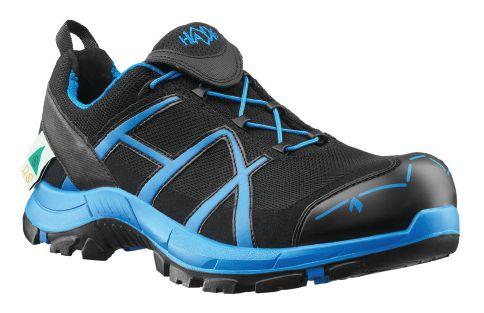
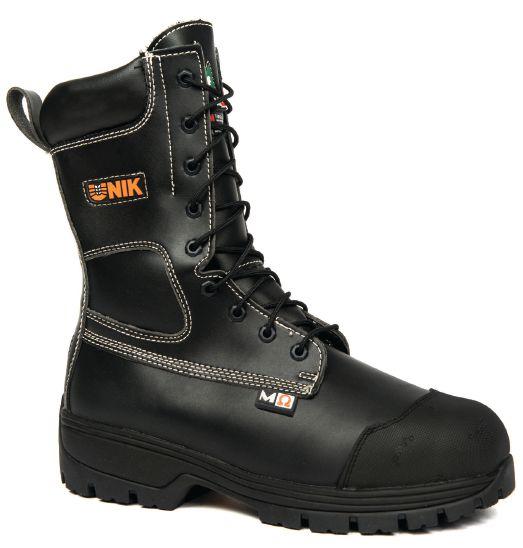
“We’re not really following the fashion of the retail (stores). The look of the boot is very basic because it’s more (important for the boot) to be good than to look good,” said Marc Labelle, president of Unik Industrial, a shoe manufacturer located in Anjou, Que.
In the past few years, the focus has shifted to include more retail considerations when designing products.
The fully Canadian company is preparing to launch a new model of its Contractor series for retail sale. The latest design will be more of a sporty shoe, suitable for work that does not involve chemicals, like jobs in mines or foundries, said Labelle.
The company’s new Terminator line is geared towards industrial environments.
Internal met guards
The past few years have also seen a growing demand for internal met guards on shoes. Usually, the met guard is a hard shell that covers the area be tween the toes and the ankle and is located on the top of the shoe.
But those can get caught, said Alexandre Bergeron, president of Regence Footwear, a manufacturer and distributor of high-end safety footwear located in Quebec City. Internal met guards are placed under the footwear’s leather.
“The more stuff you put in your shoes, the less comfortable it is,” he explained. “It’s up to the manu facturer to mitigate those dis comforts and make it more inter esting and easier to wear for the consumer.”
Regence sells the STC Footwear brand, and the Canadian company has a patent for a specific internal met guard.
This guard “keeps the protection, but adds a sponge-like layer so when you move your feet, you feel it less. You’re not touching something hard particular in your feet,” said Bergeron.
Internal met guards are particularly popular in the Prairie provinces, he said, noting that style preferences change depending on the region of the country.
Workers in the Prairies favour brown footwear, while Ontario customers like multi-coloured boots and shoes, said Bergeron.
Local economies also dictate what is required for safety footwear. Workers in oil, gas and mining will need footwear that can withstand chemicals and extreme temperatures. Warehouse workers may not require the same protections.
“If you work in construction or a warehouse, you don’t really need any additional feature on the boots,” said Labelle.
As long as the footwear meets safety standards, the biggest difference between various footwear options may be
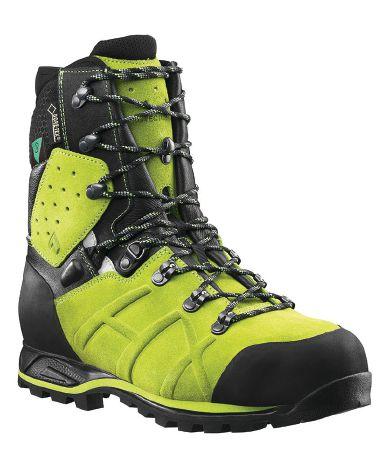
The price of footwear isn’t always indicative of the level of safety it provides, said Sandy Longarzo, marketing administration manager for HAIX North America. The European company manufactures safety footwear for industries including fire, forestry, emergency medical services and law enforcement.
Certification processes and features like protective toe caps and puncture resistance can add to the cost, she said.
“The cost of the boot can mainly be affected by the quality of materials used, the features the boots have, and how durable they are in the end,” said Longarzo. “You can have a certified boot that is in the low- to mid-range in price, but has poor durability, while boots that are on the mid- to high-end range would have a better quality of materials that last longer, or more advanced features.”
Materials, fit important
The material used to make footwear can impact how safe it is.
Composite materials can be especially problematic, according to Labelle.
“Composite is a light material,” he said. “There is no anti-torsion on that, so it’s very easy to be flexible. It’s easy on some surfaces to twist your ankle.”
All of Unik’s boots are made with the company’s Anti-torsion Support System (ATSS) that prevents workers from injuring their ankles on rough terrain. Some of Unik’s footwear also has an anklelock system that keeps feet locked into the boots, similar to the way feet are locked in skates, said Labelle.
The company also makes footwear with removable spikes that help prevent slips and falls.
For footwear to provide the best protection, a foot must fit in it properly.
It can be hard to find footwear that suits extra-wide feet, said Bergeron. If the fit isn’t right, the footwear is “useless.”
Towards gender equality
Proper sizing is especially important because more women need safety footwear.
“That’s good news,” said Bergeron. “That means that there’s more women in every type of environment that requires safety footwear, so there’s more gender equality.”
Typically, if a woman is wearing a shoe or boot that comes in a man’s size, she has to pick a pair that is two sizes smaller than what she would choose if it was women’s footwear, he said. For example, a size 7 for a woman would be equivalent to a men’s size 5, and a size 7 for a man would be comparable to a size 9 in women’s footwear.
HAIX has twozone lacing which means the top portion of a boot can be adjusted separately from the bottom part of the boot. Tightness around the foot can provide stability, while a looser leg gives flexibility, according to Longarzo.
“The most important consideration in lacing is that it provides better foot — and especially ankle — stability,” she said.
Proper width is also important. Boots that are too small will pinch feet, while boots that are too large will cause the foot to move while it is in the boot. Either increases the likelihood of accidents, said Labelle.
Unik has developed a boot with a 5E width. Only about five per cent of the population has a foot that wide, he said. “If you have a wide foot, it’s perfect.”
Regence carries boots from Acton that are made for people whose “should be wearing the shoebox, not the boot.”
“It does work, but it’s not great,” he said, noting that the best footwear for women is designed specifically for women’s feet.
Current footwear offerings are “not the best for women,” said Labelle. “It’s always too wide for women, but for today it’s the best we can offer.”
Unik hopes to release safety footwear for women who work in mining in the next few years, he said, adding there’s been an increase in women working in mines and foundries. This line would be patterned after women’s feet, not men’s.
Regardless of who is wearing them, safety footwear must be kept in good condition for equipment to be safe for workers. The type of work and the chemicals used in it, as well as industry requirements, can all impact how often workers get new footwear. HAIX offers an extended-wear program that helps boots last longer than their one-year warranty. This includes retread with original HAIX soles, new laces and rubber toe bumpers and repairs to stitches, Longarzo said.
But workers still need to be mindful of the condition of their footwear.
“If your tread gets too low, it can affect the slip resistance of the footwear,” she said. “There is a point of no return for retreading. There needs to be some tread left on the boots in order to retread them.”
While safety footwear may be incorporating more colours and different styles to appeal to different workers, the customers’ loyalty is predicted to stay constant.
“As long as the boot works for them, workers will keep it,” said Bergeron. “When you find a good fit for them, they just keep it for a long time.”
Meagan Gillmore is a freelance writer in Toronto.
Measuring noise exposure in HD
Advances continue in noise dosimetry
By Rob Stevens
Noise dosimetry is one of the most important methods in assessing workplace noise exposure.
Dosimetry involves attaching a small sound level monitor with data logging capability on a worker during a full work shift. Ideally, the sound data collected represents the noise exposure of that worker.
Unfortunately, the logged results frequently overstate workers’ noise exposures. Dosimetry is prone to capturing irrelevant “pseudo-noises” — such as bumps against the microphone, rustling of clothing or the worker’s own voice, which the dosimeter alone cannot differentiate from legitimate health-impacting workplace noise.
Including these pseudo-noises as part of the final results can inflate the data numbers and suggest the workplace is louder than it actually is, leading to unwarranted costs in pursuing noise control efforts for what is actually a non-existent workplace health concern.
Recent advances in digital signal processing technology have led to the introduction of new dosimetry methods, which increase accuracy and actually enable identification of key sources of excessive noise in the workplace. In some jurisdictions, the governing standards now recommend using these new methods to better assess noise exposure.
Workplace noise management
Broadly speaking, managing noise effectively in the workplace involves:
• determining the noise exposure levels of workers and the sound levels throughout the workplace
• understanding where the noise exceeds the limits and then implementing engineered noise controls, if practicable
• recommending the most appropriate hearing protection devices and enforcing their use for areas where the sound levels cannot feasibly be reduced.
A shorthand way to think of these three components is: workplace noise assessment, workplace noise control and hearing conservation.
Traditionally, dosimetry has only been part of the first step in noise management — workplace noise assessment. If the dosimetry indicates excessive noise exposures, considerable additional work is usually needed toward workplace noise control, including: identifying the specific equipment, operations and activities contributing to elevated noise levels; and investigating developing solutions for engineered noise control measures.
The key benefit of dosimetry is that it can be pre-programmed to run automatically without any intervention, while a worker goes about their day wearing the device.
In this way, a dosimeter can gather many hours of continuous sound data without the ongoing presence or participation of a technician or acoustical consultant. So, the risk of missing occasional or intermittent noisy events or other variations in sound level over time is reduced.
The automated nature of dosimetry is also its weakness.
The dosimeter has no real built-in “smarts” and so, unlike an acoustical expert, it cannot use its own field experience and judgment to recognize anomalous noises and exclude them to avoid “false,” inflated readings.
Moreover, traditional dosimeters utilize primarily analog electronics, which cannot process or store detailed acoustical information. So, they offer little information about the characteristics of the noise, which could be useful to identify the dominant sources of the noise.
Towards high-definition dosimetry
Several years ago, HGC Engineering began to research better ways to do dosimetry measurements, ultimately adopting an approach dubbed highdefinition (HD) dosimetry.
For a decade or more, there have been digital sound level meters, much larger than a dosimeter, which can digitally record the actual audio in a workplace noise survey at the same time that it captures the sound level data. And they can process acoustic frequency information, measuring in full-octave or 1/3-octave frequency bands.
If we chose to use one in the field, we would either have to strap a cumbersome digital sound level meter to
a worker with the microphone on a cable, pinned to the lapel or shoulder, or we would use a dosimeter alongside a digital audio recorder.
By recording audio and configuring the instrument to store the results in fast time steps — typically once per second — we were able to view the graph of sound level versus time (often called a “time-history”) in post-processing, find any peaks in sound level, and then listen to the audio recording to identify the type of sound.
This new approach confirmed exactly what we had long suspected — traditional dosimetry frequently overestimates true noise exposure levels. But we were surprised by the extent of these overestimates.
By clipping any of the noise irregularities out of the data, we found that in a considerable number of cases, the unfiltered sound data showed noise exposure levels exceeding the governing limits, while the corrected results were well within the limits.
Given this degree of divergent
results, the bottom-line consequences to a business not using HD dosimetry can be significant.
Digital dosimetry
Fortunately within the last few years, some instrumentation manufacturers have introduced fully digital dosimeters, which can gather calibrated audio recordings, measure in full-octave or 1/3-octave frequency bands, and log the results with very fine time resolution.
The accompanying post-processing software easily allows the user to view the time-history graphs and listen to the synched audio recording at the same time, while the cursor scrolls through the graph. The user can then also highlight and clip out atypical events, or group together similar acoustical events and calculate cumulative exposure levels from different activities or noise sources.
Workplace noise standards are evolving to encourage the use of these improved method.
In Canada, for example, the newly revised CSA Standard Z107.56-18 “Measurement of noise exposure” recognizes the limitations of traditional dosimetry and provides corrective recommendations:
4.2.1 – Concurrent measurement with octave or 1/3-octave bands should be used to assist with hearing protection selection and noise source identification and control.
4.2.3 – Audio recording capability may be used to assist with the identification and removal of spurious events through post analysis if required.
6.3.1 – Users should be aware that dosimetry measurements can be elevated by the worker’s own voice, if communication with raised vocal effort is a common occurrence on the job.
Additional benefits of HD dosimetry
There are broader benefits than simply excluding extraneous “false,” inflated noises from the data set.
In complex workplace environments that have many diverse noise sources — perhaps components of
multi-stage manufacturing processes with interlocked operations — it can be a labour-intensive task to isolate the sound from each item of equipment, or even their sub-components, in order to know which ones contribute most to the noise excesses.
Traditional dosimetry offers little to no useful information about what equipment, activities or processes in the workplace are the prime contributors to noise excesses.
Now the real power of HD dosimetry emerges.
In many cases, the audio recording — together with the synchronized time-history graph — can be used to identify and collate sounds of different activities and then calculate the timeweighted sound exposure levels of the various individual activities occurring throughout the worker’s shift.
If the worker is in an area with cycling process stages, such as granulating, mixing, drying and dispensing — by listening to the recording, analysts can use the software to highlight and sum together all occurrences of each process stage and thereby determine which has the greatest impact on the overall noise exposures.
Or if a worker is performing different tasks throughout the shift (for example: milling, welding, grinding, hammering), analysts can flag each occurrence of those activities and have the software calculate time-weighted sound exposures for each type of activity.
With this functionality, it is easier to prioritize the various activities for noise control.
HD dosimetry yields greater accuracy in assessing workplace noise exposure and provides a wealth of information for later noise control studies, reducing costs and saving time.
In that respect, it is quickly establishing itself as an indispensable nextgeneration tool for workplace health and safety.
Rob Stevens is a principal acoustical consultant at HGC Engineering in Mississauga, Ont.
Safety Logically is hard work, but worth it
By Alan Quilley
Ihope you’ve been following along with the discussion about implementing Safety Logically. My 10 tenets continue with the last four interdependent keys to success:
Recognize the need for the psychosocial aspects of your safety efforts
More so than ever before, our need to understand the mental health of our employees is in the forefront.
Psychosocial influences on the well-being of humans can be managed. Ensure you’re aware of your company’s employee and family assistance program.
Of course, don’t hesitate to use the services yourself. Some days it’s very hard to be a change agent. It’s not a weakness to get help with daily struggles.
In Canada we have a wonderful resource thanks to the CSA — CAN/CSA-Z1003-13/BNQ 9700-803/2013 – Psychological Health and Safety in the Workplace.
I highly recommend that you learn more and integrate these important recommendations in to your health and safety efforts.
Be patient. Change takes time — quick fixes rarely last
There always seems to be a sense of urgency related to addressing health and safety issues. I don’t believe that will change anytime in the near future.
What we do need to embrace is that true change takes time. We can’t wave a magic wand to change behaviours and physical aspects of our work.
Be patient with people as they learn the desired new normal. Avoid “flavour of the week.”
The tenets of Safety Logically
1. Do safety with people and not to people.
2. Don’t jump to a safety solution because it’s quick. Efficient and effective should be the desired outcome of any solution.
3. Use evidence to support what you do to enhance safety. You need data to make good decisions.
4. Measure what you do — not what doesn’t happen to you.
5. Stop relying on auditing! If you need an auditor to tell you what you are doing… you don’t know what you are doing.
6. Acknowledge efforts to create safety over those that just celebrate non-injury outcomes.
7. Recognize the need for the psychosocial aspects of your safety efforts.
8. Be patient. Change takes time — quick fixes rarely last.
9. Keep learning what works and let go of what doesn’t.
10. Stay connected and informed on what is new and what should be considered.
Keep learning what works and let go of what doesn’t
It’s all important in a logical approach to implementing anything to look for evidence of efficacy.
If you have an idea to improve something, take the time to build in regular measures to confirm that your efforts are getting results.
Implementing change is a process and needs to include measuring and looking for evidence of improvement.
We also need to not place past approaches on an unattainable pedestal and never challenge that there could be a better way.
Stay connected and informed on what is new and should be considered
The world is a very small place. There are so many sources of information at our fingertips that we need to plan to keep in touch with those sources.
LinkedIn and professional safety associations like the Canadian Society of Safety Engineering (CSSE) and the Women in Occupational Health & Safety Society (WOHSS) are only three examples of the numerous connections safety practitioners and professionals can make to stay in tune with what is current.
Our reality of dealing with a worldwide pandemic has demonstrated that we are all in this together and ideas can be more easily shared than ever before.
Get connected and stay connected. I’ve been fortunate enough to develop some very good friendships from LinkedIn connections from around the world.
Most importantly, read, read, read! I subscribe to several digital professional magazines — including this one, of course.
OHS Canada has been a source of current issues and trends for decades.
In addition, find out what your company’s management team is reading. Stay on top of the current thinking and decision-making best sellers.
What your boss is interested in, you should be fascinated by!
I hope this series has helped you logically refocus and re-energize your efforts to help people work and play in a healthy and safe manner.
I’ll leave you with this inspiring quote by Arthur L. Williams Jr.
“I’m not telling you it’s going to be easy — I’m telling you it’s going to be worth it.”
Alan D. Quilley, CRSP, is the president of Safety Results in Sherwood Park, Alta.
Q&A: WORKPLACE INSPECTIONS DURING COVID-19
As the COVID-19 pandemic continues, inspections by provincial inspectors have increased in Ontario.
Anne Duffy, director of the occupational health and safety branch at the Ministry of Labour, Training and Skills Development sheds some light on how the provincial government is working to ensure compliance.
Responses have been edited for length and clarity.
OHS Canada: What should employers expect from a provincial inspector if their workplace was to receive a visit during COVID-19?
Anne Duffy: Inspectors will attend the workplace to audit for compliance with the Occupational Health and Safety Act (OHSA) and regulations. It may be specific to COVID prevention, but may also be a look at all workplace hazards.
The inspector will attempt to maintain physical distancing during their field visit. They self-screen daily and do not attend any workplace if they fail the self-assessment.
Inspectors will make every attempt to follow employer’s measures and procedures to manage the pandemic.
What COVID-19 compliance issues are you looking for during a workplace inspection?
AD: Measures and procedures to manage COVID exposures and transmission will be an area of focus.
They include screening, hand hygiene, maintaining physical distancing and more.
Inspectors may also look at workplace specific hazards in the work done at a specific workplace such as guarding, falls and exposure to chemicals.
What are the statistics regarding total workplace investigations and orders issued during COVID-19?
AD: Since March 11, the Ministry of Labour, Training and Skills Development has conducted 14,339 field visits related to COVID-19 — including both proactive inspections and reactive investigations — and issued 10,263 orders while on these visits. (Statistics current as of July 16.)
What has been the most common compliance issue found in Ontario workplaces?
AD: Some of the common compliance issues found were lack of PPE, lack of physical distancing, unsanitary conditions and not taking proper COVID-19 precautions.
MISSISSAUGA MASK TIRADE ENDS WITH CHARGES
MISSISSAUGA, Ont. (CP) — Police have charged a 48-yearold man who allegedly made disparaging remarks about staff at a supermarket in Mississauga, Ont., after being asked to wear a mask. A video on social media shows a man at T&T Supermarket blaming staff for the COVID-19 pandemic on July 5. The man was repeatedly asked to leave, a request he eventually complied with. Police Chief Nishan Duraiappah says hate-related incidents can increase feelings of vulnerability, anxiety and fear for both individual victims and the community as a whole. The man faces one charge of causing a disturbance and is scheduled to appear in court on Sept. 25.
TRIO OF WOMEN ATTACKED AIRLINE WORKERS OVER FLIGHT DELAY
FORT LAUDERDALE, Fla. (AP) — Several Spirit Airlines employees were injured July 14 when they were attacked by three women who were apparently upset that their flight from Fort Lauderdale to Philadelphia had been delayed, sheriff’s officials said. The women hit the employees with “miscellaneous items, such as phones, shoes, full water bottles, metal boarding signs and fast food,” according to arrest reports. The airline said three employees at Fort LauderdaleHollywood International Airport suffered minor injuries when the women “became combative following a delayed flight.” All three women in their 20s were arrested.
ALASKAN FISHING BOAT WITH 85 INFECTED CREW HEADED FOR ISOLATION
UNALASKA, Alaska (AP) — A factory fishing vessel that docked in the Alaska fishing port of Dutch Harbor in the Aleutian Islands has 85 crew members infected on board with the coronavirus, officials said. The boat was scheduled to depart July 19 for arrival in Seward, followed by isolation in Anchorage. The 85 infected workers represent more than two-thirds of the crew on the ship owned by Seattle-based American Seafoods. The boat arrived with seven crew members reporting symptoms consistent with COVID-19 infection. They each tested positive, leading to virus screening of the remaining 112 crew.
TESLA TRIES TO ASSURE WORKERS THERE’S NO BIG VIRUS OUTBREAK
DETROIT (AP) — Tesla is trying to assure its 55,000 employees that there hasn’t been a big coronavirus outbreak at company facilities worldwide, despite a report by an electric vehicle industry website that over 130 Tesla employees or contractors have tested positive. In an email to workers July 15, Laurie Shelby, Tesla’s vice-president of environmental, safety and health, confirmed reports that Tesla is looking into more than 130 positive tests among employees, including those who contracted the virus outside of Tesla facilities. Some workers have refused to return to the plant out of fear of catching the virus. They did so after CEO Elon Musk in May defied Health Department orders not to restart production under shutdown orders due to the virus.
AMERICAN AIRLINES BANS MAN WHO REFUSED TO WEAR FACE MASK
DALLAS (AP) — American Airlines banned a man who was kicked off a plane for refusing to wear a face covering, among the first such incidents since airlines promised to step up enforcement of their mask rules in mid-June. The incident occurred June 17 at New York’s LaGuardia Airport. According to the airline, conservative activist Brandon Straka ignored requests by crew members to wear a mask while the plane with 122 passengers prepared to leave for Dallas-Fort Worth. He was ordered off the 172-seat plane and put on a later flight. Straka will be banned until the airline drops its requirement that passengers and crew members wear face coverings to limit spread of the virus that causes COVID-19.
NYC POLICE OFFICER CHARGED WITH VIOLENTLY SHOVING PROTESTER
NEW YORK (AP) — A New York City police officer caught on video violently shoving a woman to the ground during a Brooklyn protest over George Floyd’s death was charged with assault on June 9. Officer Vincent D’Andraia, 28, was released on his own recognizance after a video arraignment and ordered to stay away from protester Dounya Zayer, who was hospitalized after hitting her head on the pavement in the May 29 altercation. She said she suffered a concussion and a seizure. D’Andraia is also charged with criminal mischief, harassment and menacing. His lawyer pleaded not guilty on his behalf. D’Andraia is due back in court in October. He is the first NYC police officer to face criminal charges stemming from alleged misconduct exhibited in the wake of Floyd’s death.
THE NEXT NORMAL IN SAFETY
Today, when we say that we are Bringing the Best of the World to You® it’s not just about products; it’s about our knowledge, our long-standing history of innovative PPE, and our commitment to serving our customers.
We are here to support you as you adapt to the new normal by helping you solve new problems in a cost-effective way that keeps workers safe and performing at their best. Contact us to learn more.