







Calming safety nerves as Canada says “can” to cannabis








The law gets tough on workplace violations WHEN LIFE HURTS
Provinces seek job-protected leave
HEALTHY IN HEALTHCARE
Standing up to hospital-acquired infections
IN THE AIR
Deep where unknown gases lurk


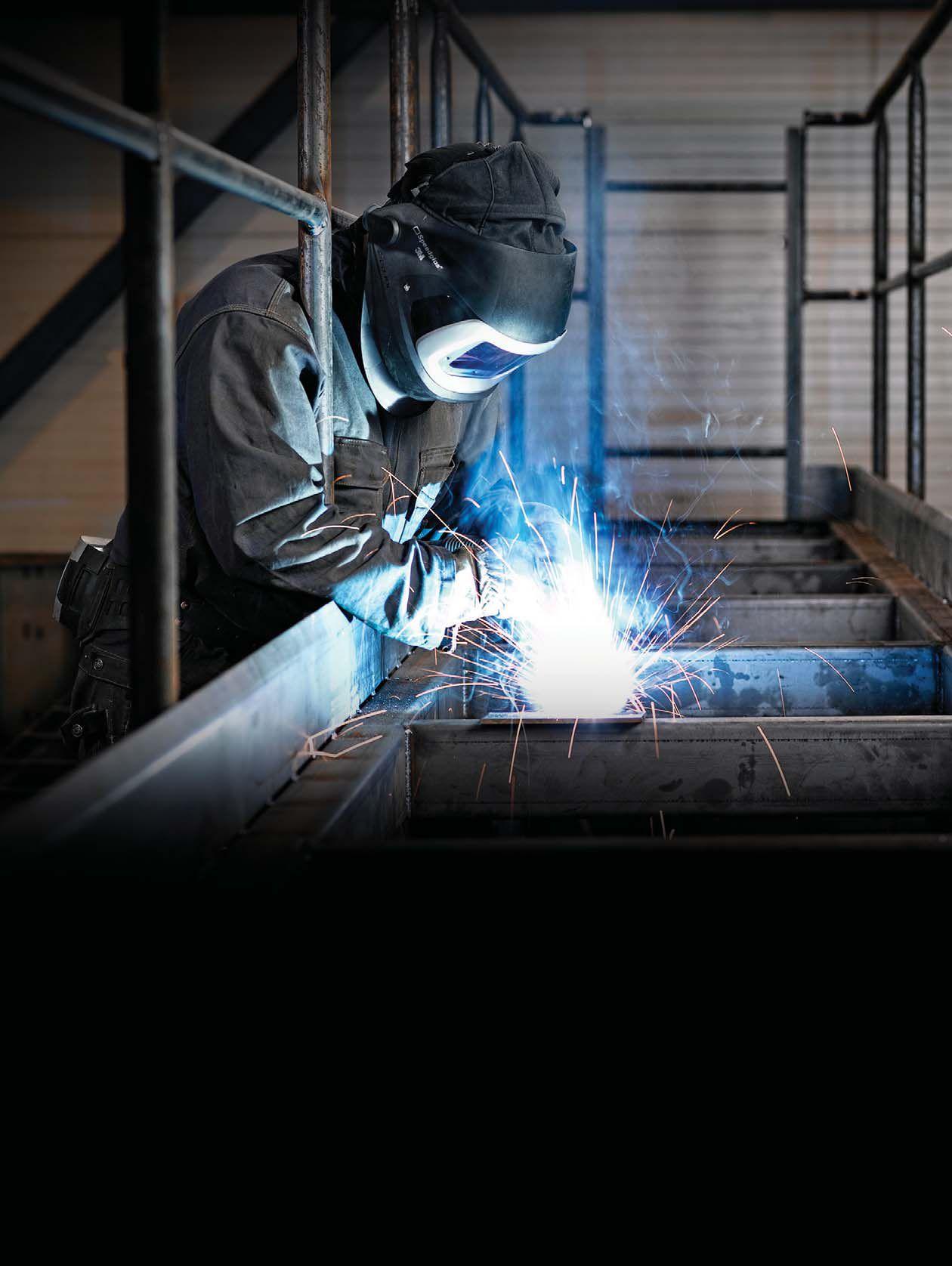
Where you see sparks, melting metal and fumes, you face a threat that’s more dangerous than anything that meets the eye. It’s called manganese. 3M helps keep you safe by applying advanced electrostatic media to respiratory protection solutions. All so you can stay focused on your craft.
See how we can help protect you from asbestos, silica, mould and manganese.

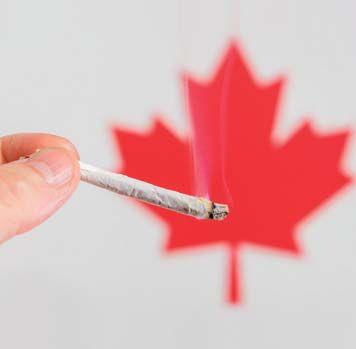

Fitness for duty, privacy rights and potential risks to workplace safety are issues that employers will need to address when recreational pot becomes legal in Canada.
BY JEFF COTTRILL
Companies that violate workplace-safety regulations are facing a bigger stick, as the law gives prosecutors more teeth to take offenders to task.
JEAN LIAN
Workplace carcinogens and the United States’ respirable-crystalline-silica standard were hot topics at the American Society of Safety Engineers conference.
In work environments where dust, debris, dirt or dangerous gases are present, respirators are indispensable in protecting workers from harmful substances.
workers provide care for the
but these caregivers themselves are
adoption of job-protected leave for long-term injury and illness speaks to an emerging trend among

Iwas researching industrial safety news when a recent workplace fatality in Singapore caught my eye. A viaduct that was under construction near an expressway collapsed on July 14, leaving one dead and 10 injured. This incident calls to mind a high-profile construction event that occurred in Toronto in 2009: four Metron Construction workers were killed when the swing stage on which they were working collapsed at an apartment building.

To me, these incidents speak to the inherently risky nature of construction work that cuts across national borders. Construction is one of Canada’s five most dangerous industries, according to the Association of Workers’ Compensation Boards of Canada. While many of the hazards in construction are also present in other high-risk industries, several safety issues are rooted in the nature of the sector and the way in which it is structured.
The sheer complexity and scale of construction jobs mean that projects are often multi-tiered and involve numerous contracts. The client, who commissions the erection of a building or structure, is at the top of the food chain, hiring consultants to advise on architectural design, project management and civil engineering. The consultants then parcel out the actual construction work to general contractors. As some construction jobs require specialized skills and equipment, many large construction firms further subcontract projects to other companies with the necessary expertise.
While subcontracting provides flexibility in meeting the unique requirements of each project, this practice gives rise to a fragmented system of subcontractors that can compromise oh&s oversight and obligations, as well as weaken the grip on accountability for the safety of workers, many of whom are transient. It also creates a work environment in which different trades work together on one site for a short duration, and each trade presents its own physical hazards.
Low-bid contracting and production pressures compound the risk factor. The viaduct collapse in Singapore is a case in point: the company that was building the viaduct secured the contract in 2015, as it had submitted the lowest bid. It was also fined in the same week as the incident over a safety lapse that led to the death of another worker in 2015.
As the twig is bent, so grows the tree. Before the first brick is even laid, safety practices should be woven into a construction project by incorporating contractor prequalification and selection criteria into the bidding and contracting process. A 2013 article by the American Society of Safety Engineers says this can be achieved by using a contractor’s safety record as a prequalification in the bidding process and having a safety engineer analyze conceptual project designs, predict potential hazards and provide engineering solutions.
While the pressure to look for the most competitive bid is not likely to go away, the Labourer’s Health and Safety Fund of America believes that responsible contracting practices, which include establishing basic safety standards and factoring in the cost of safety equipment and worker training in bids, can create a level playing field for low-bid contracting without the negative ramifications of substandard work and questionable safety practices.

Vol. 33, No. 4 JULY/AUGUST 2017
EDITOR JEAN LIAN 416-510-5115 jlian@ohscanada.com
EDITORIAL ASSISTANT JEFF COTTRILL 416-510-6897 jcottrill@ohscanada.com
ART DIRECTOR MARK RYAN
ACCOUNT COORDINATOR ALICE CHEN 905-713-4369 achen@annexweb.com
CIRCULATION MANAGER ANITA MADDEN 416-442-5600 EXT 3596 amadden@annexbizmedia.com
PUBLISHER PETER BOXER 416-510-5102 pboxer@ohscanada.com
GROUP PUBLISHER PAUL GROSSINGER pgrossinger@annexweb.com
COO TED MARKLE tmarkle@annexweb.com
PRESIDENT & CEO MIKE FREDERICKS
EDITORIAL ADVISORY BOARD MEMBERS
DAVID IRETON, Safety Professional, Brampton, Ont.
AL JOHNSON, Vice President, Prevention Services WorkSafeBC, Richmond, B.C.
JANE LEMKE, Program Manager, OHN Certification Program, Mohawk College, Hamilton, Ont.
DON MITCHELL, Safety Consultant, Mississauga, Ont.
MICHELE PARENT, National Manager, Risk Management and Health and Wellness, Standard Life, Montreal, Que.
TERRY RYAN, Workers’ Compensation and Safety Consultant, TRC Group Inc., Mississauga, Ont.
DON SAYERS, Principal Consultant, Don Sayers & Associates, Hanwell, N.B.
DAVID SHANE, National Director, Health and Safety, Canada Post Corporation, Ottawa, Ont.
HENRY SKJERVEN, President, The Skjerven Cattle Company Ltd., Wynyard, Sask.
PETER STRAHLENDORF, Assistant Professor, School of Environmental Health,Ryerson Polytechnic University, Toronto, Ont.
JONATHAN TYSON, Association of Canadian Ergonomists/Association canadienne d’ergonomie, North Bay, Ont.
Printed in Canada
ISSN 0827-4576 (Print)
ISSN 1923-4279 (Digital)
PUBLICATION MAIL AGREEMENT #40065710
CIRCULATION
email: asingh@annexbizmedia.com
Tel: 416-510-5189
Fax: 416-510-5170
Mail: 80 Valleybrook Drive, Toronto, ON M3B 2S9
SUBSCRIPTION RATES
Published six times per year – Jan/Feb, Mar/Apr, May/Jun, Jul/Aug, Sep/Oct, Nov/Dec
Canada $110.50/yr plus tax
USA $132.50/yr
Foreign $137.50
Occasionally, OHS Canada will mail information on behalf of industry related groups whose products and services we believe may be of interest to you. If you prefer not to receive this information, please contact our circulation departmenepartment in any of the four ways listed above.
Annex Privacy Office privacy@annexbizmedia.com Tel: 800-668-2374
No part of the editorial content of this publication may be reprinted without the publisher’s written permission © 2017 Annex Publishing & Printing Inc. All rights reserved. Opinions expressed in this magazine are not necessarily those of the editor or the publisher. No liability is assumed for errors or omissions.
All advertising is subject to the publisher’s approval. Such approval does not imply any endorsement of the products or services advertised. Publisher reserves the right to refuse advertising that does not meet the standards of the publication.
We acknowledge the financial support of the Government of Canada through the Canada Periodical Fund of the Department of Canadian Heritage.








$41.7 million
Amount that Transport Canada will set aside to fund safety-related improvement projects at 34 airports across the country this year.
Source: Transport Canada

5,847
The number of time-loss injuries in Nova Scotia in 2016.
Source: Workers’ Compensation Board of Nova Scotia
Source: WorkSafeBC
1 Eye on the Young: WorkSafeBC launched an awareness campaign that encourages young workers to raise safety concerns with their employers. The campaign, called Listen to Your Gut, also features a video series in which employers recount their first jobs in their youth and the safety lessons they have learned.
2 Mental Health Matters: The Canadian Federation of Nurses Unions co-hosted a breakfast briefing on mental-health care in Edmonton on July 18 with the Mental Health Commission of Canada and Alberta Premier Rachel Notley. According to statistics, 20 per cent of Canadian children and youth will develop a mental illness by the age of 25, while 43 per cent of Canadians will experience a mental-health problem over the course of their lifetime.
2,000
Source: The Canadian Federation of Nurses Unions
3 Cannabis Covered: The Ontario Public Service Employees Union rolled out coverage for medical cannabis for its own injured workers on June 15. The new benefit allows insured employees, their spouses and dependents to claim up to $3,000 a year for medical marijuana prescribed by a licenced doctor if the drug is obtained from organizations legally authorized to produce and sell medicinal pot.
Source: Ontario Public Service Employees Union
4 Heading South: Prince Edward Island reports fewer worker injuries and reduced rates for employers, according to the 2016 annual report released by the Island’s workers’ compensation board on June 26. Highlights from the report include enhanced education efforts to improve workplace-safety culture and return-towork outcomes and the inclusion of farmers under the Workers’ Compensation Act.
Source: Workers Compensation Board of PEI
The approximate number of wildfires in British Columbia each year. Humans caused more than half of the province’s wildfires last year.
Source: AgSafe B.C.


Source: Government of Nova Scotia
5. More Teeth: Changes to Nova Scotia’s Occupational Health and Safety Act, which took effect on June 12, mean that the provincial government has additional tools and authority to enforce safety requirements on those who violate safety regulations. The changes also better define when, how and which injuries and incidents must be reported.
43 mins/day
Average amount of time that Canadian professionals spent on mobile devices for non-work activities in office.
Source: OfficeTeam survey
Source: The Associated Press
A massive explosion occurred at a food shop in the resort city of Hangzhou, China during the breakfast rush on July 21, killing two people and injuring 55. Security-camera footage from the shop showed the blast flinging dust and debris across a major road traversed by cars, buses, bicycles and scooters.

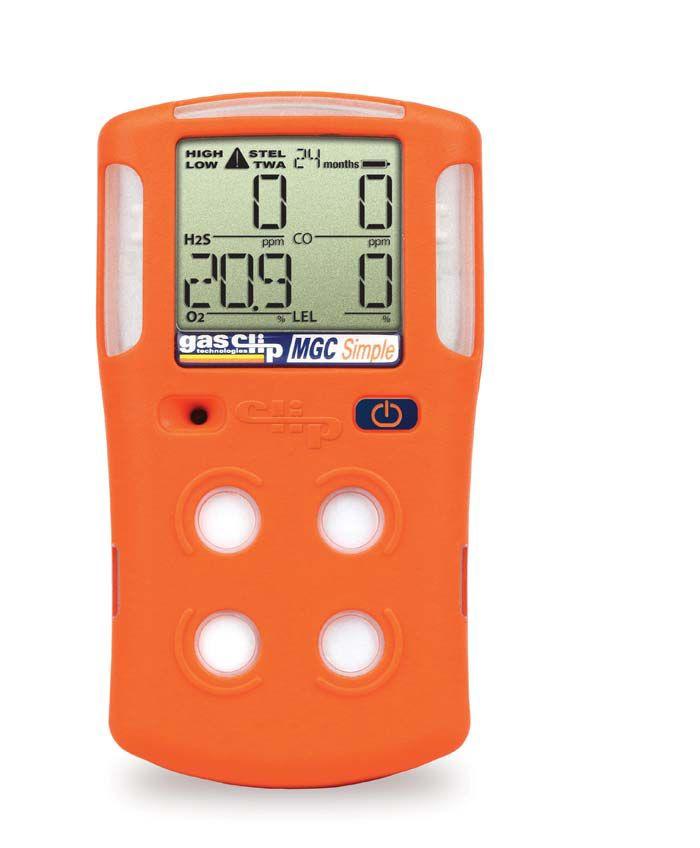
• No charging required... EVER
• Detects H2S, CO, O2 & LEL gases continuously for 24 months
• No need for calibration
(can be calibrated if required)
• Fails to safe
• No costly maintenance
• LEL sensor is immune to poisoning
• Detects gas in inert environments
• Full data logging at 1 second intervals
• Large, easy to read display
• Simple one button operation
• Assembled in USA


FEDERAL — The Fishing Vessel Safety Regulations took effect on July 13, implementing new requirements for small fishing boats in Canada.
The new rules, which replace the previous Small Fishing Vessel Inspection Regulations, apply to vessels measuring less than 24.4 metres long and with less than 150 gross tonnage. The regulations also set new legal standards for safety equipment, written safety procedures and vessel stability.
“Despite the combined efforts of governments and industry, the number of accidents on commercial fishing vessels remains unacceptably high,” federal Transport Minister Marc Garneau says. “The new Fishing Vessel Safety Regulations will enhance safety by helping to address the primary causes of fatalities on fishing vessels.”
FEDERAL — A Transportation Safety Board of Canada (TSB) report, released on June 14, made three recommendations to Transport Canada (TC) on passenger-vessel safety, in connection to a 2015 incident in which a whalewatching boat capsized in Clayoquot Sound, British Columbia.
During an excursion on October 25, 2015, a large wave struck the Leviathan II on the starboard quarter, sending 24 passengers and three crew members overboard without flotation aids. Six of the passengers died.
The report recommends that TC identify areas off the Pacific coast conducive to the forming of large waves and adopt strategies to protect vessels from them, make passenger vessels adopt better risk-management processes and strategies and have passenger vessels that travel beyond sheltered areas carry emergency radio equipment.
“Our recommendations today are aimed at putting in place measures to
avoid accidents in the first place and to expedite rescue efforts,” TSB chair Kathy Fox says.
FEDERAL — Gaps in oversight and safety promotion in the fishing sector were cited as factors in the capsizing and sinking of the Bessie E. in Mamainse Harbour near Sault Ste. Marie last year, according to an investigation report from the Transportation Safety Board of Canada (TSB) published on June 21.
The fishing vessel was carrying a master and four crew members on February 16, 2016 when an engine failed. The boat touched bottom, and the wind pushed it until it capsized. No one was injured, as all jumped ashore.
The TSB found that the fuel tanks’ filters were clogged by sediment buildup, which had restricted fuel supply to the engine. The report also revealed regulatory safety deficiencies in the vessel and could not determine if the master had had the required marine certification.
The report concludes that more collaboration is necessary between governments and the fishing community on safety standards and that the Ontario Occupational Health and Safety Act needs to be applied more to commercial fishing vessels in the province.
“The safety of fishermen will be compromised until the complex relationship and interdependency among safety issues is recognized and addressed by the fishing community,” the report notes.
WHITEHORSE — The Yukon government plans to follow the leads of Ontario and Alberta this year by adding a presumption clause to the Workers’ Compensation Act for first responders with post-traumatic stress disorder (PTSD). Afflicted workers will not have to prove that their illnesses are work-related to collect benefits, and the govern-
ment is considering amending the territory’s Occupational Health and Safety Act to address workers’ mental health.
According to a statement from the the Yukon Workers’ Compensation Health and Safety Board (WCB), the Board launched a public consultation about these issues on June 5 to seek input from employers and stakeholders on possible legislative updates. The WCB is soliciting responses on whether other occupations should also be considered for PTSD presumption and whether the respondent would support legal amendments aiming to prevent mental-health injuries at work.
“While a PTSD presumption for emergency-response workers is a good first step,” WCB chair Mark Pike says, “preventing workplace mental-health injuries is equally important.”
COQUITLAM — An attack on a staff member at the Forensic Psychiatric Hospital (FPH) in Coquitlam, British Columbia on June 13 was evidence of inadequate staff protection at the facility, a statement from the B.C. Government and Service Employees’ Union (BCGEU) claims.
A patient who had just been released from long-term seclusion assaulted an employee. Colleagues could not restrain the assailant immediately because locked doors blocked their access to the area. The worker’s injury was severe enough to prompt a report to WorkSafeBC.
The union criticizes the Provincial Health Services Authority (PHSA), which runs the FPH, for failing to equip staff with sufficient resources and protection against violence. The hospital houses mentally ill patients who have been deemed not criminally responsible for their past actions and/or not fit for trial.
“We have been urging the PHSA to provide suitable protections for staff on par with similar hospitals across Canada, such as body armour, blocking pads and meal pass-through doors for
those in seclusion,” BCGEU president Stephanie Smith says. “It is unacceptable to continue allowing healthcare workers to be exposed to potentially violent patients without such protections.”
Dangerous conditions at the FPH led to a $171,000 fine last fall. According to the BCGEU, WorkSafeBC issued 54 safety orders to the hospital and filed 102 inspection reports over the past five years.
EDMONTON — Alberta Health Services (AHS) is implementing new equipment this summer to make patient handling easier and reduce injuries among emergency medical service (EMS) workers.
In an announcement on the provincial government’s website on July 13, the health ministry reports that more than 350 of its ground ambulances will be equipped with mechanical lifts consisting of power stretchers and load
systems. Each stretcher can lift up to 317 kilograms via a battery-powered hydraulic system.
“Repetitive lifting is one of the leading causes of injuries to EMS practitioners,” says Darren Sandbeck, the EMS chief paramedic for AHS. “The new power stretchers and lift system will reduce the frequency of frontline crews having to physically lift patients in and out of ambulances.”
The equipment, which will become standard for Alberta ground ambulances, cost $20 million. The price tag is reportedly a one-time investment coming out of the province’s existing budget. “Every employee deserves to work in the safest environment possible, and it is our job to ensure that happens,” says AHS president and chief executive officer Dr. Verna Yiu.
“Alberta paramedics dedicate their work every day to saving lives,” Associate Health Minister Brandy Payne says. She adds that installing this new
lift technology will translate into a safer workplace for paramedics by protecting them from work-related physical strain.
AHS tested the power lifts in a 2015 pilot project, in which the equipment was installed in eight inter-facility transfer vehicles. Over the next 18 months, there were no lift-related injuries reported by employees assigned to the equipment. By contrast, there were 84 patient-handling injuries involving staff using all other vehicles during the same period.
The government expects to finish installing the equipment by next spring.
KITSCOTY — Occupational health and safety authorities with the Alberta Ministry of Labour are investigating the death of an employee of the Village of Dewberry, which occurred on June 13.
According to Ministry spokesperson Kathy Kiel, the 21-year-old woman,
EDMONTON — The Alberta Union of Provincial Employees (AUPE) has filed five complaints with the provincial government regarding worker exposure to cytotoxic medications, which can cause skin and eye irritation and cancer.
In a statement dated July 17, the union says the complaints stem from exposure incidents in Edmonton, Westlock, Cold Lake and Vegreville and that reports of exposure from AUPE members continue to trickle in every day. Cytotoxic medications, which are primarily used in chemotherapy, are also used to treat rheumatoid and juvenile arthritis. The medications have also been linked to vital organ damage and pregnancy-related health issues like birth defects.
The employees were handling the medication without proper personal protective equipment, reports AUPE oh&s representative Trevor Hansen. “We noted some of the acute and the chronic illnesses that could be associated with cytotoxics,” Hansen says.
At the time when the union launched a campaign to raise public awareness of the drugs’ hazards, it had received about 100 concerns from healthcare workers across the province regarding cytotoxic medication. Since the launch, AUPE has received an additional 30 to 40 complaints from membership, according to Hansen.
Todd Gilchrist, vice president of people, legal and privacy for Alberta Health Services (AHS), says AUPE members made the employer aware of the incidents in April and June. “AHS Workplace Health and Safety conducted a health and safety investigation to determine the level of exposure and potential risk,” Gilchrist says. “After speak-
ing with each employee and reviewing their individual actions and relevant safety protocols, it was determined that there had been no exposure that could cause harm. This was communicated back to employees and their labour representatives.”
But Hansen acknowledges that there is a lack of awareness about the side effects of cytotoxic medications in the industry. “Nursing staff, they hear the words ‘cytotoxic medication’, they link it back to how it affects patients,” Hansen says. “A lot of nursing staff don’t actually take the effects as to how it is going to affect them as a worker.”
In addition, workers in facility maintenance and food services often know little about cytotoxic medications or the risks of exposure. “We are finding the employers that have practices in place sporadically throughout the province. It is not consistent,” he adds.
AUPE recommends that healthcare workers wear special chemotherapy gloves and non-impermeable gowns, as well as respirators and eye protection. “That would extend into both our auxiliary nursing group, who are the nurses that would be preparing and administering the drugs,” Hansen says about the union’s recommendations. “We are advising our general support staff to take similar precautions.”
Gilchrist says AHS has safety policies, procedures and training in place to deal with the hazards of exposure to cytotoxic medications. “We will continue to work with staff and unions to ensure the continued health, safety and wellness of all AHS employees.”
— By Jeff Cottrill
was found fatally injured under a riding lawnmower under which she had been doing some maintenance work.
Juan Huss, the sergeant in charge of the Kitscoty branch of the RCMP, says a member of the public was walking down the street when he noticed a person underneath a large riding lawnmower. He sought help from the fire department, and firefighters retrieved the worker from under the vehicle. The worker, who was hired by the Village of Dewberry to perform maintenance on its equipment, was pronounced dead shortly afterwards, Sergeant Huss reports.
“The jack that lifts up the mower has two safety pins on it, and apparently, the top safety pin was in place, but the bottom safety pin was not there, causing the thing to be unstable,” Sergeant Huss says. “The person was working underneath the mower deck, and it landed on her.”
WAINWRIGHT — The Canadian Forces (CF) National Investigation Service has charged one of its corporals with sexual assault over an incident that allegedly occurred at the CF’s Wainwright base in Alberta ten years ago.
A statement from the Department of National Defence identifies the charged party as Corporal Regis Tremblay, who is accused of assaulting another CF member at the base in 2007. He was charged on July 13 with violating Section 271 of the federal Criminal Code, which is punishable under Section 130 of the National Defence Act
The case is now with the military justice system, pending the determination of the court martial’s date and location.
CALGARY — The Calgary Police Service (CPS) has taken a man and woman into custody after the man allegedly threatened and assaulted two firefighters while they were on a call on July 26.
The incident took place at around 5:50 p.m. that day, when members of the Calgary Fire Department responded to a fire alarm at an apartment build-
ing, according to a CPS statement. Two firefighters had a physical confrontation in a stairwell with a man who assaulted and threatened them with an undisclosed weapon.
After the man went into an apartment, the firefighters contacted police, who arrested a man and woman in the apartment. Charges against the male suspect are pending. No one was injured in the incident, police say.
LETHBRIDGE — Strong wind blew down a concrete wall that fell onto a worker at a worksite in Lethbridge, Alberta on June 2, killing him.
A statement from the Lethbridge Police Service (LPS) reports that emergency-response services were notified of the incident at about 4:30 p.m. that day. The worker was sent to the hospital in critical condition, but succumbed to his injuries. Officials from Alberta’s occupational health and safety division are investigating the incident.
ESTEVAN — An Edmonton-based mining firm was fined more than $85,000 on July 10 for an incident in which a worker fell six metres at a worksite near Estevan, Saskatchewan.
The incident occurred on August 10, 2015, when a worker with Prairie Mines & Royalty ULC tripped on a footrest inside the cabin of a dragline excavator and fell to the ground, resulting in serious injuries, the Saskatchewan Ministry of Labour Relations and Workplace Safety reports.
The employer, which operates as Westmoreland Coal Company, pleaded guilty to failing to provide and maintain a work environment and system that ensured worker health and safety as far as reasonably practicable.
SASKATOON — Saskatchewan’s Ministry of Labour Relations and Workplace Safety has fined a Saskatoon company
and a worker from Ontario for separate incidents that left workers injured.
Meridian Development Corp. was ordered to pay $40,000 on June 14 over an incident that took place on March 14, 2016, when a glass panel fell on a worker and severely injured his leg, according to a Ministry statement. Meridian was penalized for failing to ensure sufficient and competent supervision of all work.
On the same day that Meridian was fined, a judge at Swift Current Provincial Court fined Justin C. Cox $7,500 over an incident on May 23, 2015 in which two of his co-workers sustained second-degree burns to their hands, arms, upper extremities and faces from an arc flash near Morse. Cox pleaded guilty to failing to lock out a machine before undertaking maintenance, repairs or adjustments.
REGINA — Two employers in Saskatchewan were fined for fall-protection violations, according to a June 2 statement from the Ministry of Labour Relations and Workplace Safety.
Dalton Parisian was fined $3,750 after he was convicted for an incident on September 25, 2015, in which an employee sustained serious head injuries after falling off a roof onto a concrete driveway. Parisian pleaded guilty on May 25 to failing to ensure that a worker who could fall at least three metres was using a fall-arrest system.
Aesthetic Developments Inc. was fined $1,000 for the same offence on the same day. This conviction stemmed from an inspection by an oh&s officer on January 26, 2016, when the officer observed that two employees were not wearing proper fall-protection gear while working on top of a two-storey home near Saskatoon. No workers were injured on that day.
“Falls from heights can cause serious injuries and are easy to prevent,” the Ministry says in the statement.
WINNIPEG — A 15-year veteran of the Winnipeg Police Service (WPS) was ar-
rested for an incident in which he allegedly pointed a firearm at another police officer and threatened the colleague while both were on duty last year.
A WPS statement, dated July 18, says the 40-year-old officer faces several charges, including two counts of pointing a firearm and two counts of uttering threats to cause death or bodily harm. The WPS Professional Standards Unit is investigating the incident. The director of the Independent Investigations Unit is monitoring the investigation.
Following the officer’s arrest, police released him on a Promise to Appear and placed him on administrative leave.
WELLAND — A recent stress survey by the Ontario Public Service Employees Union (OPSEU) reveals that the vast majority of employees with the Niagara Peninsula Conservation Authority (NPCA) have experienced or witnessed some form of workplace bullying.
The survey found that two-thirds of the employees had been bullied on the job, while 70 per cent of respondents claimed to have witnessed “offensive be-
haviours” at work, according to a statement that OPSEU released on July 19. More than 85 per cent of respondents indicated that the NPCA workplace was harmful to their mental health.
“Our members at the NPCA have been telling us for a long time that their workplace is unhealthy,” OPSEU president Warren Thomas says. “These survey results would seem to back that up.”
The union conducted the survey anonymously, in partnership with the Occupational Health Clinics for Ontario Workers, based in Toronto. The latter organization modelled the survey on the Copenhagen Psychosocial Questionnaire, which identifies psychosocial factors that affect stress levels.
Management at the NPCA received the survey results from OPSEU on May 29. The union offered to work with the employer to improve labour relations and deal with other outstanding issues, but the organization has never responded.
Thomas cites an incident in which the OPSEU local’s highest-ranking steward’s job was terminated by the NPCA without cause on February 14. OPSEU held an information picket at the NPCA’s headquarters on April 26, demanding that the employer reinstate
OTTAWA — The federal government has lowered the acceptable level of workplace exposure to airborne chrysotile asbestos to as close to zero as possible. The move was effective immediately, according to a statement that Employment and Social Development Canada (ESDC) issued on July 12.
According to Patty Hajdu, the federal Minister of Employment, Workforce Development and Labour, the lower threshold will minimize the risk of workers contacting airborne asbestos fibres and align Canada’s national standard with those of individual provinces and territories. The new limit is also more consistent with international standards.
“Every employee has the right to a safe workplace,” Hajdu says. “I am proud to be announcing these long-overdue regulatory changes on asbestos, a key element of our government’s comprehensive ban.”
The move is part of the federal government’s ongoing strategy to ban all asbestos and asbestos-containing products by next year. Canada’s oh&s regulations require exposure to airborne asbestos to follow the American Conference of Governmental Industrial Hygienists threshold limit of 0.1 fibres per cubic centimetre, according to a backgrounder on the ESDC website.
the steward’s job. Thomas claimed at the time that some NPCA staff did not attend the demonstration because they were “too intimidated to come out.”
MILTON — An Ontario company that runs golf courses was fined $50,000 on July 20 over an incident in which a young worker injured his hand in a wood chipper at Milton’s RattleSnake Point Golf Club on May 27, 2015.
According to a court bulletin from the Ontario Ministry of Labour, two employees of ClubLink Corporation ULC were using the chipper that day when one of them placed a coffee cup near the machine’s back vent. The worker felt the air around the vent to check if it could knock over the cup, but the chipper pulled the worker’s hand into the vent and injured it.
The Ministry investigated the incident and found that the vent did not have a guard to protect workers from such an incident. ClubLink pleaded guilty to contravening section 25(1)(b) of the province’s Occupational Health and Safety Act.
Canadian Labour Congress president Hassan Yussuff, whose organization has been lobbying for a complete asbestos ban in Canada, says the lower threshold will “send a clear message” that the carcinogenic mineral should not be used.
“We welcome the action of the government,” Yussuff says. “Lowering the threshold certainly brings us one step closer to the inevitable situation that the government already announced — a complete ban of both import and export of asbestos.”
Yussuff adds that there is still a lot more work to do, including bringing all provincial asbestos-exposure standards into line and creating registries of buildings that still contain the mineral. “We need a national registry for workers that are dying from asbestos-related disease in this country.”
ESDC announced its strategy on a nationwide asbestos ban last December 15. In addition to the new occupational exposure limit, the strategy consists of regulating the handling, removal, repair and disturbance of asbestoscontaining material to minimize the exposure of workers. Public Services and Procurement Canada had already banned the use of asbestos in all new federal construction and renovation projects.
— By Jeff Cottrill
TORONTO — Teamsters Canada’s Local 419, the union that represents Toronto Pearson International Airport’s regular baggage workers, cites insufficient safety training of temporary workers in baggage handling as the cause of recent injuries.
According to a statement from Local 419, issued on July 17, Swissport Canada Handling Inc. hired nearly 250 temporary workers for safety-sensitive positions at the airport in May. The union, which believes that that the employer has compromised workplace safety, has filed a formal complaint with the Canada Industrial Relations Board.
Local 419 vice president Harjinder Badial says its members normally get from three to four weeks of basic training to work on the ramp. “They have been only given three to four days of actual training,” he says of the temporary workers. “It is a serious concern, because there are so many different safety components when you are loading and offloading an aircraft.”
Badial cites a recent incident in which an agency worker was injured when his hands became caught in a conveyor belt. In another instance, a temporary employee left a ladder leaning against the tail of a parked aircraft, causing damage to the plane when the plane moved.
Pierre Payette, Swissport Canada’s vice president of operations for Toronto, explains that the company subcontracted the temporary agency to deal with the summer travel rush


— a right that the company has under its current collective agreement. “All workers employed by the subcontractors receive the same training and are required to meet the same industry standards as Swissport’s own employees,” Payette says. “We are confident that protocols are being followed.”
Payette adds that all Swissport employees get at least 10 days of classroom training before starting their new jobs. “In addition, employees go through on-the-job training specific to the role they will play. This is vital to ensure safe operations and is consistent with industry standards.”
OTTAWA — Canada’s national mail service has responded to employees’ claims that aging postal trucks have been leaking carbon monoxide (CO) inside the cabs in the Ottawa area.
The issue became public after a CBC News story, posted online on July 12, reported that two mail employees in Kemptville and Smiths Falls in Ontario claimed that mail workers were being poisoned by CO coming through their trucks’ exhaust. The article also states that some Canada Post workers have begun carrying gas detectors while on their routes.
Canada Post says it has processes for equipment and vehicle maintenance and that employees are welcome to identify and report any issues. “We have taken the concerns brought forward by the two employees in Kemptville and Smiths Falls seriously and have taken action,” the organization says. “The vehicles were pulled from service, and extensive testing was conducted, including on-the-road delivery conditions to investigate. Maintenance, as well as a health and safety representative, were involved. We have informed the employees that no evidence was found to support their claims.”
Mail vehicles are inspected and maintained on a regular basis, depending upon elapsed calendar days and elapsed kilometres travelled, Canada Post reports. A multipoint inspection and any necessary maintenance are required before a truck returns to service.
“As part of their regular duties, employees are expected to complete a daily vehicle inspection to help detect any issues or potential issues that would require testing or servicing outside of the regular schedule,” the organization adds. “In addition to our regular maintenance program, if a potential safety issue is identified, we will pull the vehicle off the road for testing. We also have a joint approach with the unions — at the local and national level — to review any potential safety concerns.”
The Ontario Ministry of Labour reports that the company was operating surface drills near the St. Andrews HollowayHolt mine sites on June 25, 2014. An employee was exiting a bulldozer that day when a dead tree, which weighed more From
TIMMINS — Diamond drilling firm Orbit Garant Drilling Services Inc. was fined $200,000 on July 13 over a workplace fatality near Timmins three years ago.
than 900 kilograms, fell onto the cab door and killed the worker.
A subsequent Ministry investigation found that the route from the drill site was impossible to walk through due to softness and mud, resulting in the workers exiting the worksite via bulldozer.
A trial at the Ontario Court of Justice in Timmins determined that the employer should have provided proper transportation for the workers that day. Orbit was found guilty of failing to remove all dead trees from the route to and from the worksite and ensure a safe means of egress for employees.
OTTAWA — National union Unifor lauds a recent amendment to the Canadian Human Rights Act, which makes it illegal to discriminate against people based on their gender identity.
Unifor human-rights and international director Mohamad Alsadi calls the amendment “a major victory” in a statement issued on June 22. “While this recognition will not immediately end the discrimination that transgender people face, it is an incredibly powerful tool to continue to push for equality,” Alsadi says. “After many years, the federal government has extended the same
human-rights protections to transgender people that other communities have had for many years.”
The statement points out that transgender people still face violence and discrimination in Canada and that unions have a responsibility to defend all workers, including transgender people and those in the LGBTQ community.
NEWMARKET — A paving firm in Concord, Ontario was fined $125,000 on June 19, after pleading guilty to its role in an employee’s death more than two years ago.
On August 27, 2014, a working crew with Vaughan Paving Ltd. was grading and levelling a parking lot at a Markham strip mall to prepare it for concrete curbs, when a labourer was struck by a reversing skid steer while walking backwards after taking elevation measurements, according to the Ontario Ministry of Labour. The worker later died at a local hospital.
An investigation found that the skid steer had no functioning reverse alarm and had significant blind spots. In addition, a supervisor tried to warn the worker of danger by hitting the horn on a bulldozer, but the horn was broken. Vaughan was convicted of violating
COME BY CHANCE — The construction of a transmission line was halted west of Come by Chance, Newfoundland on June 19, after two workers were killed by a transmission tower’s collapse.
Newfoundland and Labrador Hydro (N.L. Hydro) confirms that the incident occurred during construction on a new transmission line from Bay d’Espoir to the Avalon Peninsula. The victims were employees of Forbes Bros. Ltd., an Edmonton-based company that N.L. Hydro had contracted for the project.
A statement from Forbes identifies the workers as 34-yearold Jared Moffat and 31-year-old Tim McLean. Moffat hailed from Prince Albert, Saskatchewan, while McLean was originally from Nipigon, Ontario. Forbes senior vice president Matthew Forbes says the company will work with N.L. Hydro and Service N.L. to investigate the tragedy.
On June 21, Forbes held a company-wide moment of silence for Moffat and McLean. The corporation then resumed non-related work activities at its sites outside of Newfoundland and Labrador, although the Come by
Section 104(3) of the Ontario Construction Projects Regulation.
TORONTO — A 40-year-old Toronto resident was arrested after entering the city’s downtown police headquarters and threatening officers with a knife on July 12.
According to a statement from the Toronto Police Service (TPS), Hugh Carl Persad entered the building and brandished a knife while directing threats at officers. Other TPS officers responded at 12:50 p.m. and apprehended the man.
Persad faces several charges: two counts each of assaulting a peace officer while threatening to use a weapon and uttering death threats, along with one count each of carrying a concealed weapon, holding a dangerous weapon and obstructing a peace officer. He was scheduled to appear in court on July 14.
TORONTO — Elementary schools in Ontario need better supports to protect teachers and students from violent incidents by children with behavioural challenges, according to the Elementary
Chance worksite remained closed and all construction on the Bay d’Espoir/Avalon Peninsula line was temporarily suspended. N.L. Hydro president Jim Haynes also offered condolences in a press statement.
Don Murphy, the business manager for the International Brotherhood of Electrical Workers (IBEW) Local 1620, expresses concern about such an incident occurring in a non-unionized environment, as Forbes’ employees do not belong to a union like IBEW. “In a union environment, we have got, honestly, a high concentration on talking about safety and dealing with safety issues with regards to our occupational health and safety committees.”
Murphy adds that some employers may retaliate against non-union workers who bring up safety issues. “With any construction job, there are always issues related to people staying on the job or being the first to go, for whatever reasons,” he suggests. “I would love to have some kind of comfortable whistleblower process out there for all workers to be able to comfortably deal with issues on the worksites.”
— By Jeff Cottrill
Teachers’ Federation of Ontario (ETFO).
The union held a media conference in Toronto on June 21, joined by Children’s Mental Health Ontario and the Ontario Autism Coalition, according to an ETFO statement. The groups urged the provincial government to increase frontline supports in schools starting this September.
“Our students and educators urgently need an infusion of frontline supports in September to improve working and learning conditions in classrooms,” ETFO president Sam Hammond says. “Students exhibiting behavioural challenges must have earlier and better access to school supports. The sooner they get those, the sooner they can experience success as part of their school day.”
Hammond suggested educational assistants, youth workers, social workers, school support counsellors and schoolboard psychologists as examples of supports needed. He adds that the government needs to find funding for more frontline support services in schools and ensure that any new funding is dedicated to that purpose.
ETFO previously called for action to address workplace violence in schools in January. Aside from special-needs funding, the union also requested legislative and policy requirements for safety, such as formal reporting procedures for violent incidents. Hitting, biting, punching and spitting are among the types of assaults that behaviourally challenged children have been directing at teachers and other students, according to the union.
The provincial Ministries of Labour and Education an-



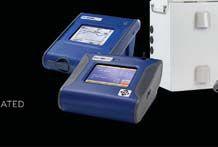
TSI DIRECT IN CANADA?
Questions about respirator fit testing, work area monitoring and/or personal exposure monitoring within indoor and outdoor applications? We can help—contact TSI direct in Canada about on-site product training, technical support, new product purchases and more.



Check out our limited time promotion at www.tsi.com/canada-direct
nounced in June that the government planned to launch an initiative to reduce violence in schools. The plan will include enhanced enforcement by inspectors and managers, guidance materials for teachers and a review of reporting requirements.
BRAMPTON — A bottle-manufacturing company headquartered in Toronto was fined $100,000 on June 13, after pleading guilty to an incident that permanently injured a worker’s hand last year.
An employee at O-I Canada Corporation’s Brampton facility was removing rings from the front of a machine on February 27, 2016 and lost sight of one ring. The worker asked the machine operator to close the mold in order to retrieve the missing ring, according to the Ontario Ministry of Labour. But the machine became activated when the worker reached in, causing the mold to pinch the worker’s hand, resulting in permanent crush and burn injuries.
A Ministry investigation determined that the employer had failed to lock out control mechanisms and to take precautions to prevent the starting of the mold-opening motion.



TORONTO — Metrolinx, the company that runs the GO Transit commuter system throughout the Greater Toronto Area, as well as the Union Pearson Express (UP) trains from downtown Toronto to Toronto Pearson International Airport, is considering whether it should adopt random alcohol and drug testing for some of its employees.
Following the Ontario Superior Court’s recent decision to allow the Toronto Transit Commission (TTC) to implement random testing on its bus, streetcar and subway operators, Metrolinx formed a committee as of early June to review its processes for determining fitness for duty, according to Alex Burke, the provincial agency’s senior advisor for media relations, communications and public affairs.
“Our goal is to ensure that Metrolinx continues to strike the right balance between employee privacy concerns and the safety and security of our customers and transit system,” Burke says. He adds that the company has a zero-tolerance approach to drugs and alcohol at work. “We do random check-ins on our drivers, including unannounced worksite visits from supervisors.”
The company also has employee-assistance and peer-support programs to help individuals who may have issues before they affect their work performance. If a supervisor detects that an employee may not be fit to operate a motor vehicle, “we remove the employee from such duties. The police will be called if a driver appears to be impaired while on duty.”
Burke clarifies that while GO buses are operated by Metrolinx employees, GO and UP trains are operated by workers with Bombardier Canada. Although Metrolinx does not currently perform random testing, “if a GO bus driver is involved in an accident, it becomes a police investigation,” he
explains. “Police would administer drug and/or alcohol testing if necessary.”
Bombardier already administers drug and alcohol testing for a variety of reasons.
Danny Harris, president of Local 1587 of the Amalgamated Transit Union representing GO bus drivers, says the organization is reviewing the situation.
OTTAWA — The federal Department of National Defence (DND) and the Canadian Armed Forces (CAF) published the results of a recent Surgeon General review on using the drug mefloquine to prevent malaria in the military. According to a DND statement dated June 1, the military will now recommend mefloquine only if a CAF member requests it or if there are contraindications to prescriptions for other anti-malarial drugs.
Although the CAF has been using mefloquine as medication to prevent the disease for more than two decades, concerns have been raised about the drug’s effects on users with mental-health disorders. Health Canada has placed monographs on mefloquine packages warning about “neuropsychiatric adverse reactions” and “psychiatric or neurologic symptoms” during prophylactic use, according to the report.
“We are recommending mefloquine as a second-line drug only, because of the unique operational environment that we work in,” says Brigadier-General Colin MacKay, the federal Surgeon General. “This direction should not be applied to a non-military environment.”
The review examines published studies on mefloquine and its use in military settings. Based on its inclusion criteria, the report found no evidence that mefloquine has potential long-term adverse effects on physical health or that mefloquine is consistently associated with inability to perform job duties.
But Brigadier-General MacKay advises the CAF to use the drug with caution, due to the difficulty of screening members for contraindications sufficiently within short periods of time. The review speculates that the shortterm side effects of mefloquine could be
mistaken for typical responses to operational military situations, complicating the management of its adverse effects.
The report recommends that mefloquine be viewed as a less preferred agent that may be considered when alternatives are deemed unsuitable or for persons who have previously tolerated, indicate a preference for and do not have contraindications to mefloquine use.
HALIFAX — Nova Scotia’s Department of Transportation and Infrastructure Renewal has launched an advertising campaign urging drivers to slow down around work zones.
A statement from the Department, dated June 21, advises drivers to keep a safe distance from road workers and their equipment, respect flaggers and warning signs, minimize distractions and expect the unexpected.
“Construction workers are someone’s dad, mom, partner or relative,” says Lloyd Hines, the province’s Minister of Transportation and Infrastructure Renewal. “We are asking drivers to slow down and stay alert when driving through work zones to ensure the safety of these workers.”
Nova Scotia Road Builders Association executive director Grant Feltmate says speeding and inattention by drivers remain “the top safety issues” for road construction workers in the province. Drivers who speed in work zones receive double the usual speeding fines and receive demerit points on their records in Nova Scotia, the statement adds.

HALIFAX — The number and rate of occupational injuries are at a new historic low in Nova Scotia, according to the latest annual report from the province’s Workers’ Compensation Board (WCB).
The report, published on June 15, states that the WCB received 5,847 time-loss claims in 2016 — a decrease from 6,014 in the previous year. The province saw a workplace injury rate of 1.74 time-loss injuries per 100 covered workers, which is an all-time record.
In addition, there were only two workplace fatalities due to traumatic injuries in 2016, along with 18 deaths from workplace-related disease. There was a 20 per cent decrease in timeloss injuries from slips, trips and falls from 2015, and injuries in the fishing sector also went down. But sprains, strains and back injuries continued to account for a large percentage of injuries in the province.
Stuart MacLean, the WCB’s chief executive officer, says the province’s time-loss injury rate has been improving every year. “That is great progress, but there is still a lot more work to do.”
Follow us on Twitter @OHSCanada
Many of the preceding items are based on stories from our sister publication, CANADIAN OCCUPATIONAL HEALTH & SAFETY NEWS, a weekly e-newsletter that provides detailed coverage of Canadian oh&s and workers’ compensation issues. For more information, please call (416) 442-2122 or toll-free (800) 668-2374.
So, what’s on your mind?
Ever wonder what other oh&s types are thinking about? Find out by making our website poll at www.ohscanada.com a regular stop.

By Jean Lian
The part of the brain that controls emotion may be larger in people who develop post-traumatic stress disorder (PTSD) after brain injury, compared to those with a brain injury and without PTSD, says a study out of the University of California in San Diego, released on July 11.
“Many consider PTSD to be a psychological disorder, but our study found a key physical difference in the brains of military-trained individuals with brain injury and PTSD, specifically the size of the right amygdala,” which regulates emotion, memories and behaviour, says Joel Pieper, Doctor of Medicine at the University’s internal medicine residency program. “These findings have the potential to change the way we approach PTSD diagnosis and treatment.”
Researchers studied 89 military members with mild traumatic brain injury. Using standard symptom-scale ratings, 29 people were identified with significant PTSD, while the rest had mild traumatic brain injury without PTSD. Brain scans used to measure the volume of various brain regions found that subjects with mild traumatic brain injury and PTSD had six per cent overall larger amygdala volumes, particularly on the right side, compared to those with only mild traumatic brain injury. No significant differences in age, education or gender between the PTSD and control groups were found.
“People who suffered a concussion and had PTSD demonstrated a larger amygdala size, so we wonder if amygdala size could be used to screen who is most at risk to develop PTSD symptoms after a mild traumatic brain injury,” Pieper explains. “If there are environmental or psychological cues that lead to brain changes and enlargement of the amygdala, then maybe such influences can be monitored and treated.”
Further studies are needed to define the relationship between amygdala size and PTSD after mild traumatic brain injury more accurately, Pieper adds, noting that participants’ brain injuries were caused mostly by blast injuries. The study also shows only an association and does not prove PTSD causes structural changes in the amygdalae.
In Canada, it is estimated that up to 10 per cent of warzone veterans, including war-service veterans and peacekeeping forces, will experience PTSD. According to the Canadian Mental Health Association (British Columbia division) in Vancouver, many people will experience a traumatic event at some point in their lives, but only eight per cent of people will develop PTSD.
Certain workers are more susceptible to PTSD than others are. A study out of the University of British Columbia found that emergency personnel like doctors, nurses, paramedics and firefighters experience PTSD at twice the rate of the average population.
Of all the people who will experience a traumatic event, only about 15 per cent will experience a lasting and harmful impact after it. Our unique psychological makeup, such as emotional make-up and how we handle challenging events, are influencing factors, the study notes.
Jean Lian is editor of OHS CANADA
By Jean Lian
Winter may be a distant memory, but the onset of summer does not mean that we are free from the flu.
“Viruses don’t take vacations; they live in our environment year-round,” Dr. Michael Cohen, an infectious-disease specialist at the University of California in Los Angeles (Health Sciences), says in a statement issued by the University on July 7.
He adds that different strains are active in different seasons. “Summer colds are generally caused by the enterovirus or adenovirus, while in the winter, we see the ‘typical’ cold — the rhinovirus — as well as influenza viruses.”
Both types of colds are characterized by a runny nose and other upper respiratory symptoms. But summer colds can make one feel sicker because they generate more symptoms that affect the whole system and cause flu-like symptoms, such as gastrointestinal issues and a low-grade fever. Summer colds are also spread differently. Unlike winter colds, which are usually transmitted in enclosed rooms by respiratory droplets, summer viruses are spread through contact with body secretions and easily transmitted by children.
People are more likely to engage in air travel during summer. Being out and about during this warm season means exposure to crowds, increasing the likelihood of catching viruses. Summer also includes the possibility of illness transmitted by mosquitos and viruses like Zika and the West Nile Virus, which can cause cold or flu-like symptoms.
“Summer colds and flu can really make you feel miserable,” Dr. Cohen says. “But preventive measures are the same for both types of colds.” Washing hands with soap and water, avoid touching surfaces, using disinfectant wipes when necessary and staying away from people who are sick reduce one’s chances of getting a summer cold. Drinking plenty of water and getting enough sleep will also boost immunity.
By Jeff Cottrill
Many workers across Canada are finding it easier today to balance their work and home lives, and management is often supportive of employees’ work-life balance, concludes a new survey from Torontobased staffing agency Robert Half Management Resources.
The company hired an independent research firm to survey more than 400 adult workers in office environments across Canada, according to a statement that Robert Half sent out on June 13. About 37 per cent of respondents report that their work-life balance has improved over the past three years. Almost a quarter (24 per cent) of the total say the improvement was significant, while the other 13 per cent indicate that their work-life balance “improved somewhat.” Forty per cent report no change at all.
“Professional environments that reap the benefits of work-life balance are the ones that consider evolving worker preferences and trends,” Robert Half director David King says, “while actively promoting these opportunities to attract potential employees and keep current teams motivated.”
work falls behind and keeping up with current and emerging trends on workplace benefits and work-life balance.
Jeff Cottrill is editor of CANADIAN OCCUPATIONAL HEALTH & SAFETY NEWS
By Jean Lian
Colds are infectious, but so is burnout among young teachers, according to a new study by Michigan State University, released on July 10.
The study found a significant link between burnout among early-career teachers and exposure to a schoolwide culture of burnout and burnout among young teachers’ closest circle of colleagues. The link is stronger to the school-wide culture of burnout than it is to burnout among close colleagues. The findings are based on analyzing survey data on burnout among 171 teachers in their first four years in the profession and 289 experienced teachers who served as the young teachers’ mentors or close colleagues.

The survey also asked workers how supportive their managers are of work-life balance and what kinds of examples managers are setting. Forty-three per cent of respondents describe their managers as “very supportive,” and 44 per cent say their managers are “somewhat supportive.” About one-fifth of respondents report that their managers are setting excellent examples of work-life balance, while 44 per cent called their managers’ examples “good.”
King says leading by example is an imperative. “When staff witness their managers taking the opportunity to unplug and recharge, they are likelier to follow suit, which supports a more productive and engaged workforce.” This could partly explain why Canada ranks fifth in an international study of employee happiness after the United States, Germany, the Netherlands and Australia, according to another recent Robert Half study that surveyed more than 23,000 working professionals across Europe, North America and Australia.
Managers can help their workers achieve better worklife balance through learning about employees’ needs by discussing their objectives with them and offering to help, setting helpful examples through one’s own behaviour, hiring a consultant to help employees with time management if
“If you are surrounded by people who are downcast or walking around under a pall of burnout, then it has a high chance of spilling over, even if you don’t have direct contact with these folks,” says Kenneth Frank, professor of measurement and quantitative methods in the University’s College of Education.
The study concludes that early-career teachers are particularly vulnerable to stress and burnout as they adjust to working full-time and resp ond to school and district expectations. Schools also often fail to provide enough resources for teachers, including the appropriate teaching materials, assistant teachers, professional development and preparation time. “These resources are critical not only for reducing teacher burnout, but also for closing gaps in students’ learning,” explains Jihyun Kim, the study’s lead author and a doctoral student at the University.
Teacher burnout is also tied to the current education policies, such as evaluating teachers based primarily on student test scores, merit pay for teachers and the lack of voice on how students are assigned to teachers — all of which can add to the pressure.
“We know that early-career teachers are susceptible to burnout because of the significant demands placed on them. It is also clear that the introduction of new reforms in K-12 education on a frequent basis adds to the pressures they experience,” Frank says.
According to the 2015 Staples Advantage Canada Workplace Index survey, 43 per cent of Canadian employees are overworked and burnt out. Nearly four out of 10 employees cite burnout as a motivator to look for a new job, and 37 per cent of respondents say more workplace flexibility boosts productivity.
Follow us on Twitter @OHSCanada


BY JEFF COTTRILL




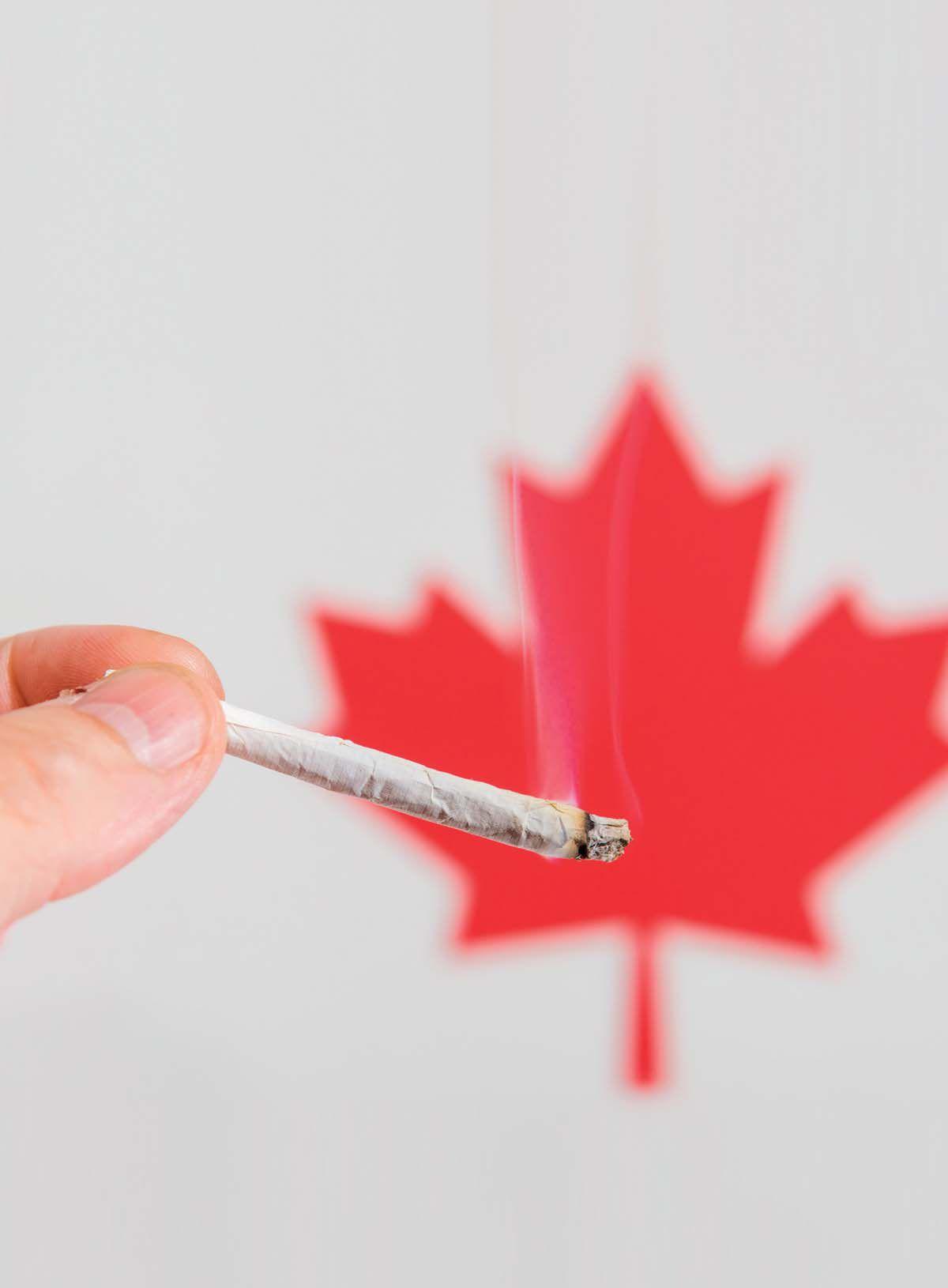
The legalization of recreational marijuana in Canada came closer to reality on April 13, when the Justin Trudeau government introduced the Cannabis Act, or Bill C-45. While pot users across the country applaud the move, others have raised concerns about the effect that the proposed legislation would have on workplace safety.
On Christmas Eve of 2009, four Toronto construction workers were killed and another was critically injured after a scaffold collapsed, sending the workers falling 13 storeys. Last year, the manager of Metron Construction was sentenced to prison for criminal negligence, ostensibly because the victims had not been using fall-protection gear. But a lesser-known fact about the incident is that three of the workers who died — including the foreman, who allegedly allowed all the others to work on the scaffold without proper protective equipment — were under the influence of marijuana at the time.
Now, recreational cannabis use is set to become legal by July 1, 2018, pending the passing of Bill C-45. Marijuana sees a wider social acceptance today, and many researchers agree that pot is no more harmful and less addictive than alcohol and nicotine, which have almost always been legal.
Yet the Liberal government’s bill, which would allow possession of up to 30 grams of marijuana for recreational purposes for Canadians aged 18 and older, is silent on the issue of intoxication at work — particularly regarding safety-sensitive jobs. A question-and-answer page on Health Canada’s website notes that “impairment in the workplace is not a new issue and is not limited to cannabis.” The page adds that federal, provincial and territorial labour ministries are having an “ongoing dialogue” on cannabis and workplace safety, but leaves it at that.
Josh Bueckert, a senior media-relations spokesperson with Employment and Social Development Canada in Ottawa, says the most direct and immediate effect of the Cannabis Act for employers would be through the changes it proposes to the Non-Smokers’ Health Act. The law, if passed, will clarify for employers “that although cannabis will be legal, smoking and vaping of cannabis will be prohibited in federally regulated places and conveyances.”
Furlan says. “We don’t have a lot of well-conducted studies.”
One recent study by the National Academies of Sciences, Engineering, and Medicine in Washington, D.C., The Health Effects of Cannabis and Cannabinoids, includes a chapter examining the association between marijuana and injury or death. While the researchers conclude that cannabis impairment increases the chances of a motor-vehicle accident, they are less certain about whether it has a significant effect on overall workplace safety. “There is insufficient evidence to support or refute a statistical association between general, non-medical cannabis use and occupational accidents,” the study authors conclude.
This lack of certainty could become troubling when one considers marijuana use by a worker in a safety-sensitive position, which the Canadian Human Rights Commission defines as any job in which intoxication could result in significant safety risk for workers, the public or the environment. This interpretation theoretically covers a broad number of industries and jobs, including construction, operating motor vehicles, healthcare, operation of heavy equipment, law enforcement and any task requiring a high level of cognitive function.
“Marijuana poses problems that we don’t face with alcohol and impairment.”
Despite the potential workplace-safety consequences, Dr. Furlan does not believe that legalizing recreational marijuana will have a significant impact on the current work situation. “There is already a lot of use of illegal marijuana in many industries,” she says. “So it is already happening.”
The main difference is that legalization will normalize the use of cannabis and encourage people to be more open about it, because law enforcement will not penalize them. But as with alcohol, which is legal, “we all know it is not safe to drive, it is not safe to operate machinery” under the influence of marijuana.

Adam Pennell, an employment lawyer and an associate with Toronto law firm Borden Ladner Gervais LLP, notes that the way that the Act is structured now serves merely as a framework. Regarding occupational safety issues, one should expect to see “a range of either federal regulations and/or the provincial and territorial legislation that is going to essentially fill in the gaps of what exists” until the legalization date next year. Until then, Pennell says, “the existing status quo is the same.”
The effects of marijuana, like those of alcohol and opioids, can impair a worker’s judgement. Pot and opioids “have what we call ‘psychotropic effects’, because they act on the central nervous system, the brain and the cerebellums,” explains Dr. Andrea Furlan, a scientist and physician with the Institute for Work & Health (IWH) in Toronto.
While the intoxication effects of alcohol have been studied for decades, relatively little research has been done on how to measure the effects of cannabis in proportion to dosage and a user’s tolerance. “This is a very new field,” Dr.
That said, Dr. Furlan does not rule out the possibility that medical marijuana could boost safety under certain circumstances. She cites studies that have shown that opioids prescribed as pain relievers can improve driving ability in some users. “They drive really bad because the pain is a distracter,” she says, but taking medication to alleviate the pain can make a big difference. “If a worker is getting medical marijuana for prescription, and it is treating a condition, it may be better for them to use than not to use.”
More research is needed before any firm conclusions can be drawn. This year, Dr. Furlan and fellow IWH researcher Nancy Carnide received a grant from WorkSafeBC to conduct a review of the literature on the use of opioids, cannabis and other drugs in relation to workplace safety.
“We just started the review; we haven’t seen the studies yet,” Dr. Furlan says.
One industry that has expressed deep concern over the safety implications of pot legalization is the oil and gas sector. Enform, the country’s safety association

for the upstream oil and gas industry, has been lobbying for regulation prohibiting recreational marijuana use for workers in proximity to the work environment.
Last August, Enform president and chief executive officer Cameron MacGillivray wrote an open letter to the Cannabis Legalization and Regulation Secretariat, stressing the inherent occupational safety risks and requesting clearer legislation regarding workplaces. Upon the introduction of Bill C-45, the organization released a statement calling for a prohibition of use, storage or sale of marijuana in or near workplaces, at least until a standard test to detect pot impairment with legal limits is established. “We are looking for some guidance from the governments and the regulators,” MacGillivray says from Calgary. “Marijuana poses problems that we don’t face with alcohol and impairment.”
nabis has been minimal to date. “Unlike alcohol, the longer-term effects of marijuana are less certain,” MacGillivray notes. What is known at present is that “somebody who is using marijuana recreationally the day before can still be impaired when he or she shows up for work and may not realize it. And for chronic users, that can go on for many days and perhaps weeks.”
Oil and gas companies also fear that the costs of safety enforcement will skyrocket with the legalization of recreational marijuana. A Canadian Press story from May 1 suggested that employers may have to foot higher bills for drug testing, drug counselling or treatment for workers and lost work hours when employees are sent home for being impaired. It has reportedly been a problem for Precision Drilling’s operations in Colorado, where legalized pot has made it harder to recruit young workers who are sober.
Enform’s position is that oil firms should instill an absolute ban on marijuana until an accurate, reliable testing method can be devised. MacGillivray claims that medical practitioners have made similar recommendations. Until a proper test is discovered, “you want to be able to prohibit workers who have marijuana in their system from safetysensitive work,” he says.
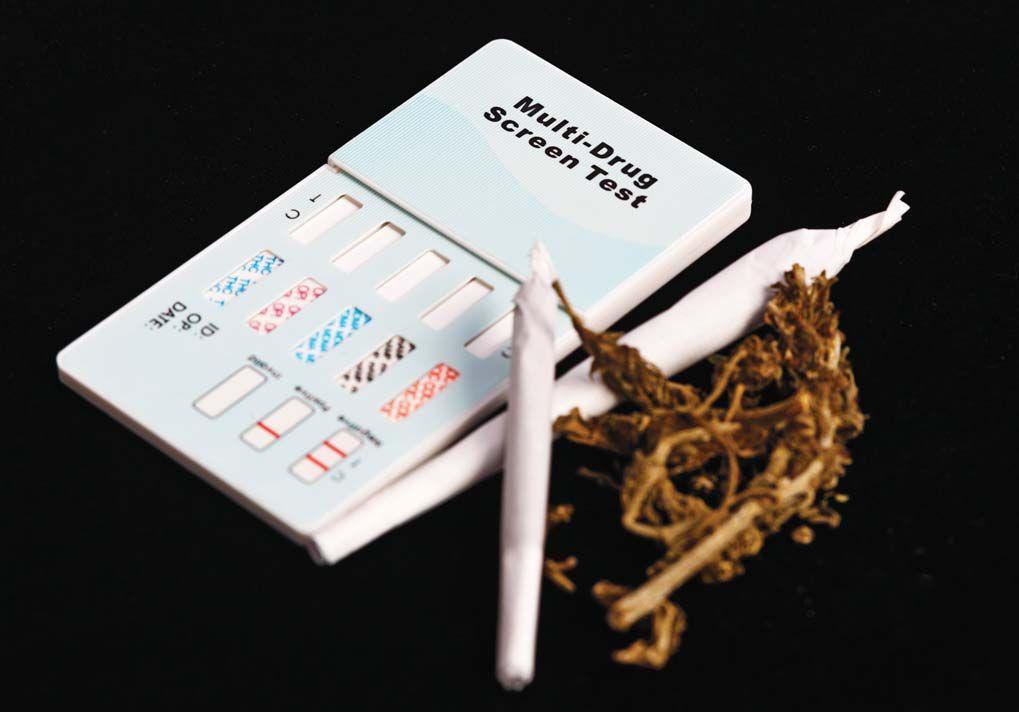
For some, the obvious way to enforce fitness for duty among employees is to conduct random drug testing, but this is tricky in itself. Unlike a simple breathalyzer test, which yields precise results for alcohol impairment, there is no exact, definitive way to determine a person’s level of impairment when it comes to marijuana. And it is not clear whether the testing methods currently available — usually through urine samples or saliva tests with mouth swabs — would even work properly.
“The fact that you have a safety-sensitive workplace full-stop is not enough.”
“The problem is, by randomly testing someone, there are a lot of false positives and false negatives,” Dr. Furlan says. False positives may occur in urine tests, for example, because marijuana can take a long time to be metabolized out of a user’s system. “Sometimes, it takes even five days to be cleaned completely,” she notes. “So if someone went to a party on Saturday, and on Monday morning, they show up to work, it is clear that they are not impaired anymore, but the urine will test positive.”
He adds that the oil and gas sector is loaded with safetysensitive work environments, including gas plants, pipelines, oil facilities and drilling operations. “If a worker is not competent in certain procedures and practices are not followed, which are safety-oriented, we could have a catastrophe.” An impaired worker using hazardous materials may cause an explosion, for example, which would endanger not only the workers, but the surrounding community too. “That is a great concern of the industry.”
It is especially confusing for employers to understand their obligations when the research into the effects of can-
There is also the question of whether testing employees infringes on their privacy rights. “Personal testing is very invasive, and it has been treated as such by courts and arbitrators,” Pennell cautions. Yet employers have to balance workers’ privacy with their duty to take every reasonable precaution to protect them. “In each case, it is going to be a case assessment, based on what the facts are.”
Bueckert points out that the Canada Labour Code contains no specific provisions about drug testing. “Workplace alcohol and drug testing is currently governed by a body of decisions from labour arbitrators, human-rights tribunals and courts, which seek to balance individual rights while ensuring workplace safety,” he writes. But at the same time,
employers are required by law to establish workplace policies that address all potential safety hazards, including drug or alcohol impairment.
“In general, employers are responsible for demonstrating that alcohol and drug testing is necessary for workplace safety,” Bueckert says. “There are also privacy-rights considerations related to alcohol and drug testing, and in unionized environments, terms and conditions of collective agreements must be respected.”
Toronto employment and labour law firm Stringer LLP gave a presentation about the legal implications of random testing at the Partners in Prevention conference in Mississauga, Ontario on May 3. “Historically, random alcohol and marijuana testing has been prohibited in almost every jurisdiction in Canada,” says lawyer and Stringer partner Jeremy Schwartz, noting that limited exceptions have occurred in “very specific situations with very safety-sensitive workplaces where there has been a history of issues.”
Schwartz cites the 2013 Supreme Court case involving Irving Pulp & Paper, a Saint John, New Brunswick company that initiated a random-testing policy. “They found that the invasion of privacy outweighed the ‘uncertain to minimal’ — this is their words — safety benefits gained through random testing,” he says of the court’s perspective. “The fact that you have a safety-sensitive workplace full-stop is not enough; you have to have evidence of a problem.”
But in Schwartz’ view, the Supreme Court failed to clarify what a “problem” with workplace impairment is. As a
counsel to employers, he finds it difficult to understand how privacy rights can trump safety benefits at a pulp and paper mill, a workplace with myriad safety hazards ranging from dangerous equipment to toxic chemicals.
“There are some very serious public and internal consequences through any kind of accident in a pulp and paper mill,” he says, citing an explosion or toxic exposure as examples. In this case, he believes, testing “could actually provide real safety.”
MacGillivray points out that random testing of employees is not the only possible approach to drug testing. “There is also post-incident testing,” he explains, “and then there is also reasonable suspicion that somebody is impaired, where you can call for testing.” Some safety-sensitive workplaces have policies that call for workers to take pre-employment or pre-access tests, “and then you have to re-establish your test on some basis, perhaps once a year.”
But Enform has supported efforts to instill random drug and alcohol testing in the oil and gas industry. “The courts have a fairly high standard for those applications of random testing,” says MacGillivray, adding that courts typically expect employers to prove “that there has been a practice of abuse, or a problem with abuse of drugs or substances in the workplace, before they support random drug testing.”
While employers cannot be sure how the Cannabis Act will affect safety-sensitive workplaces at this point, Pennell

suggests it might be worthwhile to take cues from current practices with substances that are already legal, particularly alcohol or nicotine.
“I don’t want to speculate too much, but when it does come into force, you are going to face likely the same challenges you face with alcohol,” Pennell says. “A key point is that you can’t freely use it in your workplace once it comes into force; same with alcohol. And employers can demand — and frankly, they should expect — that you are going to report to work fit for duty. So you are not going to be impaired, you are not allowed to be impaired, there is no ‘right’ to impairment.”
How can fitness for duty be enforced without stepping on
workers’ privacy? “That one is the million-dollar question,” Pennell says. “I think I’d be a rich man if I knew exactly what to do.” He predicts that employers will be scrambling over the next year to develop clearer policies that recognize employees’ rights to privacy, but also take safety into account.
“And you have to apply it consistently,” he advises. “If you have a zero-tolerance policy and it is not applied uniformly, an adjudicator is going to pick up on that, whether it is a labour arbitrator or a court.”
But workplaces will still be able to discipline workers whose recreational marijuana use results in contraventions of safety and performance policies. Pennell warns employers that once Bill C-45 goes into effect, “they are just going to have to interact with it more. So at this stage, the biggest challenge will just be making sure that policies reflect that.”
One of MacGillivray’s goals is to get provincial governments to work together, along with the feds, to harmonize their legislation and regulations about marijuana in the workplace. It would also help to clarify the issues for the oil and gas industry, among other sectors, if leaders can approach regulation about employer obligations with some common themes, pointing out that there is an opportunity for government agencies to provide some clear guidelines for industry on acceptable practices and determination for things like safety-sensitive positions.
“It is challenging for the industry,” MacGillivray says.
Follow us on Twitter @OHSCanada
Just how well prepared are Canadian employers when it comes to dealing with marijuana impairment in the workplace, with the passing of Bill C-45 on the horizon? Not very, according to a recent report by Toronto law firm Fasken Martineau. The firm conducts an annual survey of employers nationwide on occupational health and safety issues, and the 2017 version surveyed members of 358 businesses on several issues, including drug impairment.
“Alcohol and drugs, especially drugs in the workplace, have caused some of the worst disasters and loss of life in Ontario, and across Canada and around the world, and it is still kind of ignored,” firm partner and report author Norm Keith said at a press conference in Toronto on April 20.
According to Keith’s report, The Good, the Bad and the Troubling, 53 per cent of survey respondents suspected that another worker had been under the influence of alcohol or non-prescription drugs, and almost one quarter of respondents knew with 100 per cent certainty of one or more workers who had been under the influence of alcohol or non-prescription drugs while on the job over the previous 12 months. As well, 60 per cent of respondents had managers or supervisors who had not been trained to identify intoxicated workers.
“Seventy-nine per cent of respondents said they don’t have a drug or alcohol policy. None. Zero. Nada,” Keith says. While some of those workplaces might be lower-risk environments without safety-sensitive positions, making the lack of policy less of an issue, “it’s not not an issue,” he stresses. “Most employers don’t want to use those policies to find out if people are doing drugs or alcohol and fire them. They want them not to do it.”
Among the inherent dilemmas is whether to fire or accommodate an addicted employee. Keith was involved in a recent Supreme Court of Canada case in which a coalmine worker in Alberta tested positive for both marijuana and cocaine following a workplace incident, which did not result in an injury or fatality. The worker had snorted cocaine at a party and then smoked marijuana to bring down the high from the coke before his work shift. But a psychologist diagnosed the worker with an addiction to cocaine, making him technically disabled.
“My sense was that the Supreme Court was pretty open to the employer’s perspective on that,” says Keith, referring to the perceived obligation that one must accommodate employees who proactively declare their addiction. “If they don’t, and they break the rules,” he says, “you may be able to terminate their employment.”




































BY JEAN LIAN
The going is getting rougher for employers who find themselves on the wrong side of the law. Not only are prosecutions of occupational-safety offences seeking jail sentences more frequently; penalties meted out are more diverse through the wider use of stop-operations orders and injunctions.


We are seeing now much more aggressive positions taken by the crown prosecutor in certain cases,” Jeremy Warning, a partner with Mathews, Dinsdale & Clark LLP in Toronto, says of the enforcement landscape against workplace safety non-compliance in Canada. While the courts are likely to consider lesser penalties first before taking the more draconian path of seeking jail sentences, “it does seem to indicate, in certain cases, that the rule that jail is sort of the exception is perhaps under challenge by the prosecution,” Warning suggests, adding that such sentencing typically involves a detailed review and assessment of conduct.
Warning cites the Metron Construction Inc. case, in which four workers plunged to their deaths at a Toronto apartment building when the swing stage on which they were working collapsed on Christmas Eve of 2009. The construction project manager was convicted of four counts of criminal negligence causing death and one count of criminal negligence causing bodily harm. He was also sentenced to 3.5 years in prison.
According to Warning, a jail sentence is most probable when an offence is highly culpable, or the manner in which the offence is committed and how the defendant responds to the charges amounts to a flouting of the regulatory system. The court decision in the Metron case found the project manager “morally blameworthy” and concluded that his conduct had been beyond a momentary lapse, reflecting behaviour that weighed risks against the company’s desire to keep work going.
Aside from violating regulations, an utter disregard for the health and safety of others and failure to learn from past mistakes are also factors that increase the likelihood of a jail sentence. A case in point is Daniel Lane, a Brockville, Ontario contractor who was fined $45,000 and jailed for 30 days in January 2016. Lane and a worker he had hired were removing asbestos-containing insulation in a home in Gananoque on two occasions in August 2014.
Lane failed to remove asbestos according to regulations and provided no decontamination facilities to prevent the spread of dust. The work area had no signs warning of an asbestos-dust hazard, Lane and his worker wore no protective clothing and he also failed to notify the labour ministry about the asbestos-removal work, as required by law.
Lane also told the homeowner that the asbestos-removal work was done according to regulation and that he was certified to perform this work — neither of which was true. Lane did not complete the required training for asbestos work. The judge determined that Lane had not only demonstrated clear deceit and misrepresentation, but had also showed a flagrant disrespect for the health and safety of others.
Another example is a contractor who became the first person to be jailed in Nova Scotia over oh&s contraventions. Like Lane, Joseph Isnor showed a similar disregard for the law when he repeatedly failed to ensure that his employees used proper fall protection. Isnor already faces three separate sets of charges for incidents dating back to 2010. He was sentenced to 15 days in jail in May 2016.
Another emerging trend is the expanding power to issue a stop-work order, which is intended to disrupt operations until the hazard has been controlled or eliminated. A stopwork order can apply to any machine or tool, a specific job task or process, a defined area of a workplace or even an entire worksite. Some jurisdictions even give their health and safety officers the authority to issue stop-work orders that apply to more than one workplace. “We may start to see an expansion of this kind of power, which is now being termed ‘stop-operations order’,” Warning suggests.
A stop-operations order prevents work from starting at multiple locations that belong to an employer where similar unsafe conditions are likely to exist. For example, an inspector who finds a machine with a deficiency that could put an operator at risk might conclude that similar machinery at other company locations could have similar deficiencies and issue stop-work orders that apply to these other locations without actually attending them. Stop-operations orders, Warning cautions, are “terribly disruptive to the work and can shut the entire site down.”
British Columbia became the first province to make this power available. On May 14, 2015, the province passed the Workers Compensation Amendment Act, 2015, or Bill 9, which expanded WorkSafeBC’s ability to administer penalties and issue stop-work and injunction orders. The amendments allow a stop-work order to be issued when there are reasonable grounds to believe that there is a high risk of serious injury, serious illness or death and when an employer who has violated the same section in the last year fails to comply with the resulting order.
court orders that typically restrain activity and are obtained and enforced through civil courts. A court order sets out specifically what the parties subject to the injunction are prohibited from doing, and the parties who are subject to the order must be made aware of it.
“What they are prohibited from doing has to be clearly set out, so they have to know what it is they cannot do, and if they breach the order, the party is now in contravention of court rules, which means contempt.” Injunctions enforced through contempt proceedings involve significant penalties, such as fines and jail sentences, Warning adds.
Injunctions are used in British Columbia, Ontario and Nova Scotia, as well as in federally regulated workplaces that come under the Canada Labour Code. While an injunction can be obtained to stop a contravention of oh&s legislation in British Columbia, Nova Scotia and federal workplaces, British Columbia goes further by prohibiting the non-compliant party from carrying on a certain business or type of work indefinitely.
“The key takeaway is that we have this substantial power to stop work.”
Warning clarifies that a stop-operations order has to be issued in writing and requires a safety officer to seek prior approval from one of two senior officials with the workers’ compensation board. “It is not something that is solely within the discretion of a health and safety officer,” he says.
With recalcitrant employers who continue to violate the law after WorkSafeBC has exhausted other appropriate enforcement methods, Bill 9 provides a mechanism for regulators to take these individuals to task by enabling the court to grant an injunction that restrains a person from carrying on in an industry or an activity indefinitely or until further order.
“We are seeing an expansion in its use,” Warning says of injunctions, which are
“There are some differences in those jurisdictions in how injunctions can be used. Ontario is the most lenient,” Warning says, noting that British Columbia, Nova Scotia and the Canada Labour Code set out much broader powers for an injunction than Ontario does.
Under Ontario’s Occupational Health and Safety Act (OHSA), the only circumstance in which an injunction can be obtained is when a party who is subject to a stop-work order contravenes that order. “That is the only power the Ministry of Labour has to run off to get an injunction that prohibits the person from continuing to contravene that stop-work order,” Warning notes.
While an injunction itself is not punitive, it can prevent the owner from carrying out his or her livelihood. Statutes in British Columbia and Nova Scotia do not define what reasonable grounds to believe that there is a high risk of serious injury or illness means.

“So it is not exactly clear, in those jurisdictions, what factors would be taken into account to establish ‘reasonable grounds,’” Warning suggests about the risk.
Nova Scotia followed in the footsteps of British Columbia when amendments to the Maritime province’s Occupational Health and Safety Act took effect on June 12 of this year. The changes, which were passed into law in April 2016, give additional authority to the government’s oh&s director to enforce safety laws with repeat offenders. The prov-
ince’s Department of Labour and Advanced Education can issue stop-work orders to all of a repeat offender’s worksites, apply for a Supreme Court injunction to prohibit the offender from working in its sector and require the employer to notify the government of future work activities and locations.
“Most employers operate safe workplaces, but there are some who repeatedly break serious safety laws, and we need to hold them more accountable,” Labour and Advanced Education Minister Kelly Regan says in a statement issued on April 26, 2016. “With these changes, we are getting tougher on those who, again and again, put people at risk of serious injury or death.”
While one may question whether a prohibition order is the proper remedy, Warning believes that injunctions present “serious ramifications” for employers and businesses alike. “The key takeaway is that we have this substantial power to stop work,” he explains. “So you see this stop-operations order becoming a tool; it is becoming more widely available to health and safety officers across the country.”
The prosecution of workplace-safety offences looks set to become more stringent, as safety inspectors today have more teeth to enforce rules and disrupt business with stopoperation orders and injunctions.
Ontario’s Ministry of Labour is poised to step up its game: it announced its enforcement priorities from April 2017 to March 2018 at Partners in Prevention, a workplacesafety trade event that was held in May in Mississauga, Ontario. The Ministry received more than 900 critical-injury reports in 2016. “This is an increase from last year, which was about 800,” says Peter Aruso, assistant deputy minister with the Ministry in Toronto.
According to Aruso, 45 families suffered traumatic fatalities and 232 workers lost their lives to occupational illnesses across the country in 2016. “The province issued almost $11 million in fines last year for contraventions of the Act and Regulations, and 2,200 people were convicted by the courts. These results quite clearly tell us that not many workers are being properly advised of hazards, they are not
properly trained and they are not properly supervised,” he says. “We need to stop that.”
The Ministry’s priorities for 2017 and 2018 are to assist the most vulnerable workers, support workplace-safety improvements in small businesses, address the hazards that result in the most workplace injuries, illnesses or diseases, build collaborative partnerships, establish integrated service delivery and system-wide planning and promote health and safety culture.
The provincial initiatives for the fiscal year will also focus on noise, the Workplace Hazardous Materials Information System and falls from heights. The Ministry, in collaboration with the Workplace Safety and Insurance Board and health and safety associations, will make a concerted effort to reduce the number of occupational illnesses, with noise being identified as among the primary ones.
“It is the number one occupational illness, and it is the easiest to produce,” Aruso says of noise.
The Ministry has also planned 10 provincial blitzes covering the industrial, construction, mining and healthcare sectors to raise awareness and increase compliance. “Workplace violence is our primary focus of the healthcare initiative and blitz,” Aruso says.
The blitzes, which are announced in advance with the results later reported, will focus on sector-specific hazards that include new and young workers, occupational disease, residential projects, falls from heights, machine guarding, electrical hazards and compliance on personal protective equipment and high-visibility clothing.
“When it comes to inspections, the Ministry takes a very preventive and proactive approach. Our enforcement campaigns are centred to raise awareness on key hazards in workplaces,” Aruso says. “The blitzes are intended to be the same thing. We are giving you a heads-up that we are going to be in your workplace, and we are going to be looking for something specific. If we find it, shame on you, because we told you we are coming.”
Follow us on Twitter @OHSCanada
Jean Lian is editor of OHS CANADA
While there are relatively few examples of workplace-safety injunctions, one of the recent cases in which an injunction was used against a company involved a construction firm based in Alberta.
MacKay Construction Ltd. was found responsible for a jobsite injury that occurred on August 15, 2014, when a worker fell nearly six-and-a-half metres while helping two others move a truss to an upper floor at a residential construction site in Blackfalds. MacKay was sentenced to pay a $10,000 fine on May 11, 2016. The company was also prohibited from engaging in any residential construction and employing workers for the next 18 months.
Another case that demonstrated egregious workplace-
safety conduct and led to an injunction and jail sentence took place in the Vancouver area. Contractor Arthur Moore specialized in extremely low bids to demolish old residences, often hiring people as young as 14 from halfway houses to do the work without testing sites for the presence of asbestos. Employees worked without proper protective equipment to guard against exposure to asbestos fibres. Apart from callously ignoring worker safety, Moore also ignored a prior Supreme Court injunction issued against him.
He was sentenced to 60 days in prison and found guilty of contempt of court for ignoring numerous safety orders. He also received a court injunction to halt work practices that endangered his employees.
By Jean Lian
Occupational cancers represent more than half of all work-related disease cases in established market economies, and global estimates of fatal occupational diseases put cancer as the top killer after circulatory disease and work accidents. These are some of the grim statistics on workplace carcinogens that Connie Muncy, senior health and safety administrator with AES Corporation in Dayton, Ohio, shared at Safety 2017 in Denver on June 20.
According to the World Health Organization (WHO), new cancer cases are expected to rise by 70 per cent worldwide over the next two decades. “That is staggering,” Muncy says.
Cancer stemming from job exposure to carcinogens is a common threat worldwide. Figures from the International Labour Organization (ILO) in Geneva indicate that 13 per cent of all cancers in developed countries result from preventable, predictable workplace exposure, which translates to 600,000 deaths a year.
Canada faces a similar challenge: occupational cancer has become the leading cause of compensated work-related deaths — a phenomenon that is most notable in Ontario, where job-related cancer fatalities double those for traumatic injury, according to the Occupational Cancer Research Centre and Cancer Care Ontario, both in Toronto.
sociated with cancer. That statistic is climbing as occupational cancers are rapidly globalized, with the percentage of cancer fatalities among all occupational deaths in industrialized countries approaching that of high-income countries, according to another study, Eliminating Occupational Cancer, published online in July 2015.
“Long-term latent illnesses caused by long-term exposure to carcinogens are difficult to relate to the workplace and are not adequately recognized and reported,” Muncy explains. Although the figures obtained by governments through death certificates, workers’ compensation records and reports to federal and state agencies seek to provide as complete an account of occupational cancer as possible, the United Kingdom Trades Union Congress points out that it is almost impossible to link a specific instance of cancer to a specific exposure to a cancer-causing substance, as many cancers develop decades after the initial exposure.
Workplace cancer clusters are a “very real phenomenon.”
“Where is the outcry? Where are the campaigns of people trying to stop the tide of occupational cancer?” Muncy questions, stressing that there is a pressing need to elevate the profile of occupational cancer prevention globally.
Occupational cancer, which is caused wholly or partly by exposure to a cancer-causing agent and a particular set of circumstances at work, is also influenced by factors such as age increase, family history, an individual’s susceptibility to a substance, diet and lifestyle habits, existing medical conditions, the amount and duration of exposure to a carcinogen while on the job and shiftwork.
The National Institute of Occupational Safety and Health (NIOSH) in Washington, D.C. states that three to six per cent of cancers worldwide are caused by workplace exposures to carcinogens, costing $4.3 billion in the United States. “This is probably underestimated,” Muncy notes.
Previous global estimates by the ILO in 2005 established that 32 per cent of work-related deaths in the world are as-
“Most people who are killed by cancer, it is not visible. They die at home, at the hospital. Out of sight, out of mind,” Muncy says. “So there is an urgent need to harmonize the estimation methods to make them more accurate and complete throughout the world.”
Cancer’s long latency period is part of the reason why this issue does not raise alarm bells for corporate executives who answer to shareholders at annual general meetings. Roughly 100,000 chemicals are used in workplaces around the world, and only one per cent have been thoroughly tested for health risks. “Persistent misconception exists that better regulation is taking care of the problem,” Muncy says. “That is not doing the trick.”
Regarding the slow pace of identifying workplace-cancer risks, “there is good reason to believe that this could be the result of a well-coordinated industry campaign to influence the decisions of bodies, including the IARC and WHO, rather than any actual improvements at work,” she suggests.
As public funding for independent occupational health research is eroded, industry-funded research is swamping the literature, with occupational and environmental risks going underestimated or undetected as a result.
Muncy cites a report, which was published in the October-December 2005 issue of the International Journal of Occupational and Environmental Health, examining business bias in workplace studies. The report concludes that studies of potential occupational and environmental health hazards that are funded directly or indirectly by industry are likely to have negative results.
The causes of cancer vary, but even more complex is identifying workplace cancer clusters, defined as the occurrence of a greater number of cancer cases than expected among a group of people in a defined geographic area over a specific period. Workplace cancer clusters typically involve the same type of cancer. When several cases of the same type of cancer that is not common in the general population occur, they likely involve occupational exposures.
An investigation of a potential occupational cancer cluster necessitates that only primary cancers — not the spread of a primary cancer into other organs — are used to investigate a cancer cluster and requires the determination of whether the cancer is occurring among employees in particular jobs or areas.
Workplace cancer clusters are a “very real phenomenon,” and determining their occurrences is a “highly complex process,” Muncy says.
Long latency periods of 15 to 20 years aside, the health events being investigated, such as morbidity or mortality rates, are usually rare. Increases in these events tend to be small and occur over a long period of time. Information on the population at risk is often not available — not to mention that some cancer clusters do occur by chance or could result from errors in the calculation of the expected number of cancer cases and differences in how cancer cases were classified, according to the National Institute of Health in Bethesda, Maryland.
Even if a cluster is confirmed, it can be challenging to pinpoint the cause as people move in and out of a geographic area over time, making it difficult for investigators to identify hazards or potential carcinogens to which they may have been exposed and to obtain medical records to confirm the diagnosis of cancer. “Physicians, researchers, epidemiologists, employers, government, unions and individuals all need to get onto the same page,” Muncy says.
Canada has taken a public stand in support of the primary prevention of occupational cancer. In 2005, the NCEOE called on the House of Commons standing committee to back changes in Canadian law to promote preventive measures more effectively. It also called on the Canadian government to strengthen the Canadian Environmental Protection Act in its application, in particular to IARC I- and IIA-designated human carcinogens. The letter also called for bulletins to be developed to address cancer prevention and toxic-use exposure reduction, investigate the possibilities for introducing toxic-use reduction legislation and offer possible incentives for toxic-use reduction programs.
“Right now, it is very, very difficult in the United States to prove an occupational cancer case,” Muncy says, stressing the need to raise awareness to improve risk perception of workplace carcinogens among stakeholders.
Individuals can play a part by spreading the message of workplace carcinogens. “You can empower yourself, your family members and friends on how to protect themselves,” Muncy advises. “Try to do something, even if it is very small.”
INTERNATIONAL TRADE FAIR WITH CONGRESS
20 OCTOBER 2017


The work environment is changing. No one experiences this more than those in the workplace facing digitalization, new technologies, increasing flexibility and an enormous workload.
Get ready to meet these new challenges – with the sector’s No. 1 trade fair and its 1,900 exhibitors from all over the world.
www.AplusA-online.com
By Jean Lian
The respirable-crystalline-silica (RCS) standard for the United States’ construction sector, which was scheduled to take effect on June 23, has been postponed until September 23. The Occupational Safety and Health Administration (OSHA) in Washington, D.C. says the delayed enforcement will give OSHA more time to conduct additional outreach and provide educational materials and guidance for employers.
“We are looking at about 2.3 million workers who are affected by the rule, and about two million of those are in construction,” David O’Connor, director with the office of chemical hazards (non-metals) in OSHA, said at Safety 2017. “Even a higher proportion of the workplaces are in construction, so we are looking at about 87 per cent of the workers who are affected and about 89 per cent of the workplaces affected being in construction.”
The Final Rule to Protect Workers from Exposure from Respirable Crystalline Silica, published in March 2016, comprises two standards: one for construction and the other for general industry and the maritime sector. The key difference between the two standards lies in the specified exposurecontrol method.
“We heard very early on in the rolemaking process from construction employers who wanted a simple path forward, who wanted to simply know what they needed to do and not be put in a position where they had to measure exposures and figure out what controls were going to be appropriate,” O’Connor says.
Table One seeks to do just that by laying out the specific controls applicable to 18 common construction
tasks. Employers who implement those controls do not have to assess exposure, nor would they be subject to the permissible exposure limit (PEL).
“They are not going to have to worry about complying with the PEL, measure worker exposures to RCS. It is a path that we anticipate the vast majority of the construction employers are going to follow, because it is simple,” he adds.
The new standards are expected to prevent approximately 600 deaths and 900 cases of silicosis per year when they take effect, O’Connor reports. The key provisions of the Final Rule include the following:
• Halving the PEL for RCS to 50 micrograms per cubic metre (μg/m³) of air averaged over eight hours;
• Requiring employers to do the following: use engineering controls (such as water or ventilation) to limit worker exposure to the PEL; provide respirators when engineering controls cannot adequately limit exposure; limit worker access to high-exposure areas; develop a written exposure-control plan; offer medical exams to highly exposed workers; and train workers on silica risks and how to limit exposure;
• Providing medical exams to monitor exposed workers and offer information about lung health; and
• Offering flexibility to help employers, especially small businesses, protect workers from silica exposure.
As for the general-industry and maritime standard, most of the provisions will take effect on June 23, 2018.
In Canada, the eight-hour OEL for respirable crystalline silica, as recommended by the American Conference of Governmental Industrial Hygienists in Ohio, is 0.025 milligrams per cubic metre (mg/m³), or 25 μg/m³.
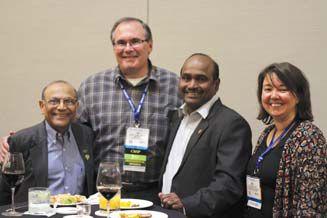
Attendees gathered at the Canadian Reception, hosted by the Board of Canadian Registered Safety Professionals and the Canadian Society of Safety Engineering, on June 20. (From left: Jitendra

The annual Award for Innovation in Occupational Safety Management went to Samantha Horseman (right) from Saudi Arabia. Her winning innovation, Intellisense, is a driver safety-management system that sends real-time alerts about high-risk behaviour to a driver so that adaptive learning occurs.
There were also four honourable mentions for the award, one of which went to two Canadians at Honda of Canada Manufacturing in Barrie, Ontario: David Catallo, CRSP, a plant-safety leader; and Matthew Clarke, CRSP, a plant-safety coordinator. Their peer-to-peer participatory ergonomics program reduced musculoskeletal disorders by 36 per cent.
Hand Protection: HyFlex® 11-542 by Ansell
This lightweight, ANSI cut-level-7 glove delivers dexterity and comfort in high-cutrisk applications and lasts two times longer on average. It also offers heat protection for intermittent contact of up to 100 degrees Celsius. Free from fiberglass, natural rubber latex and silicone.
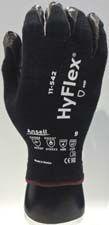
Industrial Hand Cleanser: Solopol® GFX™ by Deb Group
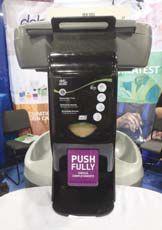
Touted as the world’s only heavy-duty foam hand cleanser with grit, Solopol® GFX™ quickly removes medium-toheavy-duty contaminants such as oil, grease and grime from your hands, without leaving residue or causing dry and cracked skin. Unlike traditional heavy-duty hand cleaners that contain ingredients like petroleum distillates or pumice, which can damage the skin, Solopol® GFX™ contains only skin-safe ingredients, biodegradable cornmeal and olive pit scrubbers and provides up to 42 per cent more hand washes per litre compared to traditional hand cleansers.
Lockout/Tagout: S856 and S866
Retractable Cable Lockout Device by Master Lock
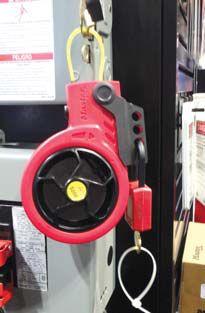
Ideal for multi-point and group lockouts, the Master Lock S856 and S866 Retractable Cable Lockout Devices make challenging lockout situations easier. The Cable Management System, which includes thermoplastic housing, a take-up reel and an internal ratcheting mechanism, stores any unused cable and allows users to increase cable tension, even after safety padlocks are applied. Featuring nine-foot, color-coded cables for a variety of uses, the S856 includes a red steel core cable for valve and other general lockout applications, and the S866 includes a yellow nylon core cable for electrical lockout applications.
Respiratory Protection:
NIOSH-Approved X-plore
8000 Respirator by Dräger
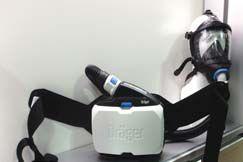
The Dräger X-plore 8000 is a powered air-purifying respirator featuring a heavy-duty design that includes rubber protectors to make the unit more robust against mechanical impact, while the splashguard lid protects the filter from environmental damage. It is also equipped with the user’s choice of standard or high-capacity rechargeable batteries incorporating the latest Li-ion technology to deliver power for a minimum of four or eight hours.
Warehousing Traffic-Safety & Warning System: GoodtoGo floor strips by Barefoot Industrial Ergonomic Flooring
In many industrial environments, intersections are often dangerous due to moving machinery like forklifts. The dual-purpose floor strips have a built-in microwave sensor that detects forklifts while filtering people. As a forklift approaches, the lights flash to warn pedestrians of oncoming traffic, and the speed bump issues a sensory notice to warn drivers that they are entering a blind intersection.
Fire-Resistant Apparel:
UltraSoft® Flex FR fabric by Westex
Westex introduces UltraSoft Flex, which offers 50 per cent more flexibility and movement than other similar fire-resistant fabric does. It is designed to bend with the body as it moves, giving wearers enhanced comfort and greater mobility while they work. This soft and lightweight NFPA 2112-certified fabric provides multi-hazard protection with an Arc Thermal Performance Value of 8.7 cal/cm2, NFPA 70E Category 2.
Jean Lian is editor of OHS CANADA Follow
By Jeff Cottrill
Most of us take breathing for granted. But the simple act of respiration may be threatened in work environments where hazardous dust, fumes, gases or vapours may be contaminating the air. That is why many jobs require some form of respiratory protection — whether it is in the form of inexpensive, disposable face masks or large, self-contained breathing apparatuses (SCBA).
Among the most common types is the N95 disposable respirator, which protects against certain particulates in environments that do not contain oil mists. According to Claudio Dente, the president of Dentec Safety Specialists, which manufactures all kinds of respiratory products in Newmarket, Ontario, people like disposable respirators because “they are lighter-weight, they are less expensive, and people find them somewhat more comfortable.”
Other types of filters, like the P95, are designed to protect against certain particulates, but in environments where oil mists may be present. This type of protection is available with disposable models or reusable face pieces, and cartridges can be added to reusable respirators for protection against certain gases and vapours. “There is something called a powered air purifier,” Dente adds, “and that is a battery-operated respirator.”
Although price should not be the only consideration when deciding what kind of respirators to purchase, employers need to identify the hazards adequately and select the appropriate respirator that meets the budget as well as the requirements of a facility’s respiratory-protection program.
According to Blundell, the first factor that a prospective buyer should consider is the specific contaminant or chemical from which the workers need protection, as well as how much of it is present at work. Different types of respirators provide different levels of protection, so one should select the appropriate level based on the amount of contaminant present and the occupational exposure limit. Some companies may choose to hire a consultant to take air samples from the workspace and send them to a laboratory for analysis.
“For the vast majority of workplace contaminants, there are what we call exposure limits,” Blundell explains, “a certain amount in the air that you can’t go above without having some sort of protection.”
Future design changes to accommodate facial hair or fashion are not out of the question.
A reusable respirator can last as long as three to five years if the user maintains it properly, according to Manish Gupta, the regional sales manager for southern Ontario with Dräger Safety Canada Ltd. in Mississauga. “I have seen people who don’t look after their respirators while working in dirty environments where the respirator is garbage after literally a few weeks or a month,” he says, pointing out a common myth that a user can continue to use the same cartridge until it is completely blocked. “Ideally, you should be changing those at least every shift.”
Stacey Blundell, CIH, a certified industrial hygienist who works in technical service for 3M Canada’s Personal Safety Division in Montreal, notes that disposable respirators are generally easier to manage. “But the cost could be higher in the long term, depending on how frequently they are used and how frequently they are thrown out.”
The inside of a respirator can get hot and humid, especially in summer, causing workers to want to replace their respirators more frequently. In this case, a disposable respirator with an exhalation valve may increase comfort.
It is also important to check that the respirator is compatible with other types of personal protective equipment, like safety glasses or hardhats. “If they both don’t work well together at the same time, you are either going to sacrifice one or the other,” Blundell adds.
A third key consideration is the physical and mental challenges affecting a worker’s physical ability to wear the equipment on the job, Dente adds. For example, a user may have some level of claustrophobia and may be put off by having to wear an SCBA or air pack that seems to limit movement.
A comfortable fit is vital in selecting respiratory protection, especially since a user might be wearing a mask for an extended period of time. “One of the things I suggest to people who haven’t really had to use a respirator: just cup your hand and put it over your mouth and nose and breathe in and out hard ten times,” Dente says. “You see how quickly the heat builds up inside. That is what it is like inside a respirator.” As such, it is important to ensure the feel of the material touching the face does not add to the discomfort of the heat.
Anne Osbourn, the industrial marketing manager with MSA in Cranberry Township, Pennsylvania, says comfort, ergonomics and ease of use are critical in the design of respirators these days to ensure that workers do not take them off when they are most needed. “Respirators are really only as good as how they are used, so it is critical that workers follow
the proper procedures at all times.”
One of the disadvantages of the N95 is the difficulty of getting a consistent fit. “The critical thing about wearing any respirator is the feel to the face, and the ability to mimic or duplicate that feel every time you go into the hazardous environment,” Dente says. So every respirator requires a “fit test” to make sure it fits tightly onto the user’s face, along with an additional “fit check” before every use.

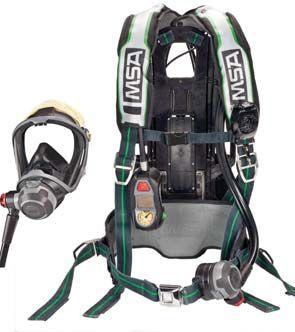
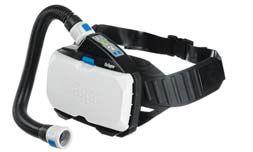
Respiratory products available today include 3M’s Rugged Comfort halfface reusable respirator (left), MSA’s GI self-contained breathing apparatus (top right) and Dräger’s X-plore 8000 powered air purifier (bottom right).
“The fit test is important because it is making sure the respirator works,” Gupta explains. “You might have the best respirator in the world, but if it doesn’t fit on your face properly and it is leaking, then all of a sudden, contaminants and other things are getting through, and you won’t know that.”
According to the CSA Group standard Z94.4-11 (R2016), or Selection, Use and Care of Respirators, a fit test on a tightfitting respirator is required at least every two years, but it may be more often than that, depending on other factors and additional regulations.
Blundell says a proper fit can prevent leakage, although contaminants going through the respirator are not so much the problem. “What is a concern is a poorly fitted respirator, contaminants going around the nose, or under the chin, or the cheeks.” That is why 3M, which manufactures respirators, puts emphasis on studying their shapes and dimensions to fit as much of the working population as possible.
Users should also inspect respirators regularly and according to the manufacturer’s recommendations, making sure that there are no cracks, tears or missing parts. A respirator with a missing inhalation or exhalation valve should be removed from use until it has been repaired.
Tight-fitting respirators are designed for workers who are clean-shaven and do not have conditions that may interfere with the sealing or function of a respirator. A beard can compromise the seal and allow contaminants to permeate, while facial jewellery can jeopardize a mask’s performance. But Gupta says future design changes to accommodate facial hair or fashion are not out of the question. A British manufacturer, for example, is trying to get approval to market a beard-friendly, tight-fitting respirator in Canada.
“You actually have to remove those when you are in the respirator,” Gupta says about facial jewellery, “which is not as
easy as it sounds. Some of those are actually locked in place.”
As facial hair and rings are an issue that Canadian respirator manufacturers have not anticipated, those who are updating the CSA Group standard are trying to account for it by communicating that hair and jewellery must not interfere with the fit, he adds.
MSA is designing facepieces with larger fields of view, lighter weight and higher overall comfort. “These are becoming increasingly important attributes to users who may be working in respirators for an extended period of time,” Osbourn says. The company has also changed the design of the back plates on its SCBAs to increase stability, reduce snag hazards and allow users to move around with the equipment more easily.
3M, too, is striving towards making its respirators more comfortable and easier to breathe through. The company has certain respirators that may accommodate users who cannot or will not shave, and it has disposable respirators with thin layers of carbon that remove what Blundell calls “nuisance odours.”
Reducing breathing hazards in a work environment does not start with respiratory products; an employer must first determine what engineering and administrative controls can be implemented to reduce contaminants. A formal, written respiratory-protection program — one that includes instructions on hazard assessment, selection, fit-testing and training on the equipment, among other items — is also necessary.
Use of respiratory protection should follow best-practice guidelines, such as the current CSA Group standard and the requirements of the authority having jurisdiction in the user’s area. Some manufacturers may follow the standard set by the Occupational Safety and Health Administration (OSHA) in the United States. The American guidelines include “everything from the hazard assessment to training on how to use the respirator, as well as maintenance itself of the respirator,” Osbourn explains. “Each of the key elements within OSHA’s respiratory-protection standard really requires careful consideration when you are choosing which type of mask should be worn.”
Whatever the task at hand, employers must take necessary precautions to ensure that every breath a worker takes is a safe one.
Follow us on Twitter @OHSCanada
Jeff Cottrill is editor of CANADIAN OCCUPATIONAL HEALTH & SAFETY NEWS.

AND
: Hospitals and healthcare facilities are places where the sick and injured seek treatment to get better. But in a work environment where germs and disease are rampant, healthcare workers are at risk of catching infectious diseases from their patients and even from each other. Doctors, nurses, laboratory workers, technicians, first responders, security officers, administrative personnel, custodians and food-service workers can be vulnerable to healthcare-associated infections (HAI), also known as hospital-acquired infections.
A 2013 report from the Public Health Agency of Canada (PHAC) in Ottawa states that the most common types of HAIs include the following: methicillin-resistant Staphylococcus aureus, which can affect the skin, bones, blood and vital organs; Clostridium difficile (C. difficile), a bacterium that can cause diarrhea and other intestinal conditions; and vancomycin-resistant enterococci. It is mainly patients that get infected, but healthcare employees are also at risk.
THREE ROUTES: The Occupational Safety and Health Administration in Washington, D.C. identifies three primary routes of infectious-disease transmission that occur in healthcare settings:
• Contact transmission occurs when infectious agents are transferred between individuals via physical contact. There are two categories of contact transmission: direct contact between individuals, including skin-to-skin; and indirect contact, in which a person gets infected through touching a contaminated object or surface.
• Droplet transmission occurs when a person infects another person in close proximity through droplets too large to stay airborne, such as through coughing, sneezing or speech. This can also occur during medical procedures like suctioning or endotracheal intubation. The droplets can carry infectious agents that contaminate an individual through the eyes, nose or mouth.
• Airborne transmission takes place when a susceptible person inhales small particles or droplets containing infectious agents. Relatively few diseases are transmitted this way, but they include tuberculosis and measles.
TRAVELLING GERMS: According to the PHAC report, about 80 per cent of common infections in Canadian healthcare settings are spread by healthcare workers, patients and visitors. As a result, more than 200,000 people across the country get infected while receiving healthcare, and more than 8,000 of these cases wind up being fatal. In Canada, the mortality rate from C. difficile infections has increased by





more than 300 per cent since 1997, while the infection rate from methicillin-resistant Staphylococcus aureus in healthcare settings increased by 1,000 per cent from 1995 to 2009. That said, HAIs are preventable. The PHAC cites a 2011 study indicating that prevention and control strategies on the part of healthcare facilities could prevent as many as 70 per cent of some types of HAIs.
The Centers for Disease Control and Prevention (CDC) in Atlanta has ample resources on its website on how healthcare workers can reduce the risk of contracting HAIs on the job. One way is consistent hand hygiene. The CDC recommends washing hands with soap and water whenever hands are visibly dirty, before eating, after using the washroom and after known or suspected exposure to C. difficile, Bacillus anthracis and patients with infectious diarrhea. In other cases, one should wash hands with an alcoholbased hand sanitizer. Surgeons must scrub with an antimicrobial soap for several minutes and remove watches, rings and bracelets before surgery.
Healthcare professionals often wear protective gloves, but dirty gloves may spread infections. One should switch to a different pair of gloves after contacting a patient’s contaminated body, or when examining a different patient.




JUST VISITING: Healthcare settings should limit physical contact between patients and visitors, especially near open wounds, sores and any other areas that may be prone to transmitting infections, the PHAC advises. Visitors, like employees, should practise strict hand hygiene by washing their hands with soap and water, or with alcohol-based hand rubs, before and after interacting with patients.
But visitors are not the only ones who can be careless. A 2015 study published in JAMA Pediatrics found that 83 per cent of employees at the Children’s Hospital of Philadelphia had gone to work while feeling ill and risked spreading infections at least once over the previous year. Some of the common reasons include staffing concerns, not wanting to let colleagues and/or patients down and fear of being ostracized.
IN CONTROL: In its 2012 booklet Protecting Healthcare Workers from Infectious Diseases: A Self-Assessment Tool, the Public Services Health and Safety Association (PSHSA) in Toronto recommends implementing an occupational infection-control plan consisting of protective policies and procedures, employee training, a qualityassurance program, protocols for assessing occupational injuries and illnesses and risk assessment. Policies and
procedures should be reviewed every year, and there should be an established process for communicating best practices between health and safety representatives and an infection-control committee.
The PSHSA advises healthcare facilities to have a strict immunization program for employees, including annual flu shots and records of immunization history of new workers and employees at risk. Environmental infection control is also necessary, including workspace disinfecting procedures and personal protective equipment for the cleaning of spills. Staff should be required to wear respirators, and indoor ventilation should be designed to minimize airborne transmission and be inspected every six months.
Another recommendation by the PSHSA is that each healthcare facility implements a surveillance program for outbreak response to identify outbreaks of communicable diseases. There should be an emergencyresponse plan developed with input from safety representatives and the infection-control committee, along with an outbreak management team and available resources for training in safe-work practices during an outbreak for potentially affected staff.
A facility should also have a waste-management program in place to deal with spills of blood, bodily wastes and other biological hazards. Employees should dispose of wastes in suitable, leak-proof receptacles and empty them at least once a day. There should be formal cleanup procedures that include proper equipment, such as gloves and the appropriate germicidal agents. Written procedures on laundering soiled clothing and sheets are also necessary, and laundry workers must be aware of exposure risks and properly trained.
Although ventilators can save patients’ lives by assisting with their breathing, they are also known to cause complications, including pneumonia and other infections, which can spread to workers. A recent study by the Johns Hopkins Armstrong Institute of Patient Safety and Quality in Baltimore, published in the July issue of Critical Care Medicine, examined the effects of ventilators in 56 Intensive Care Units (ICU) throughout Maryland and Pennsylvania from October 2012 to March 2015.
At the beginning of the study, the ICUs were seeing a rate of 3.15 ventilator-related infections per 1,000 patient ventilator days, with 1.41 potential pneumonia cases. But after the research team coached the employees on recommended practices for patients on ventilators, such as suctioning patients’ mouth tubes, performing oral and dental care and reducing narcotics and sedatives, these rates decreased to 1.56 and 0.31 respectively. The Institute has since expanded this intervention across the United States.
Follow us on Twitter @OHSCanada

By Jeff Cottrill
Alberta’s Bill 17, or the Fair and Family-Friendly Workplaces Act, which will take effect next January 1, seeks to bring the province’s workplace legislation up to date for the first time since 1988, with guaranteed, job-protected leave for long-term injury and illness, maternity, bereavement, citizenship ceremonies and the illness, death or disappearance of a child.
The legislation will also allow leave for situations of domestic violence — an idea that is catching on in other parts of the country. According to the Alberta government’s website, the Act permits unpaid leave with job protection of up to ten days per year for workers experiencing domestic violence. The time off will make it easier for victims of intimate-partner violence to make court appearances, move into transition houses and heal from injuries.
“By ensuring that Albertans fleeing domestic violence can take ten days away from work without losing their job, we can better protect survivors who need time off to find a place to live, see a doctor, access critical supports and begin healing,” provincial Labour Minister Christina Gray says in a May 29 statement. “No one should live or work in fear.”
Jan Reimer, the executive director of the Alberta Council of Women’s Shelters in Edmonton, welcomes the domesticviolence provision in Bill 17, as women who lose their jobs while fleeing from violent partners are more likely to end up homeless or dealing with mental-health issues or addiction. “We hope that employers across the province will use these legislative changes to create an effective response to domestic violence,” Reimer says.
Alberta is not the first province to write this kind of leave into workplace law. In March 2016, the Manitoba government amended the provincial Employment Standards Code to allow domestic-violence victims to have both paid and unpaid leave with guaranteed job security.
Employees in other provinces are taking notice. The New Brunswick Union, which represents civil servants and government employees, has lobbied for a law similar to Manitoba’s. And in June, the Elizabeth Fry Society of Mainland Nova Scotia, a non-profit organization that assists Halifaxarea women who have been in conflict with the criminal justice system, signed a deal with the Nova Scotia Government & General Employees Union (NSGEU) to include a provision for victims of intimate-partner violence to get paid and
unpaid time off in their collective agreement.
Nova Scotia labour law currently has no specific provisions about domestic-violence leave, explains Mark Tector, a partner with Halifax law firm Stewart McKelvey. But he notes that Kelly Regan, the province’s Minister of Labour and Advanced Education, has mentioned in the media that the government may introduce such legislation this fall.
“As far as I am aware, no details have been provided,” Tector says about the potential bill. “There are other leave provisions for other different circumstances under the labour standards here. They are all unpaid leaves, though. So if there is any talk of paid leave here, that would be a first in Nova Scotia.”
If a domestic-violence situation causes a medical condition for a worker, “that would generally justify being off work,” he elaborates. “There might even be protections if there is a medical condition attached to it, protections of human rights in the sense of disability or something like that.”
Despite the lack of concrete legislative support, both the Elizabeth Fry Society and the NSGEU feel that their new intimate-partner-violence policy is breaking important new ground. “It is moving in the right direction, for a change,” says Dawn Ferris, the Society’s acting executive director. “It is putting on paper what we know is the right thing to do.”
NSGEU president Jason MacLean believes that the new policy will “revolutionize” collective agreements throughout Canada. “It is going to acknowledge that there are issues and give help,” MacLean says. “And it is going to take away the shame of this happening to somebody and give them an ability to reach out.”
MacLean adds that the NSGEU plans to share the language of the collective agreement with other employers and unions to encourage them to adopt similar policies.
Ferris hopes that this will set a trend, prompting less progressive employers to jump on the bandwagon.
As for the possible domestic-violence bill at which Regan has hinted, Tector says that the likelihood of its passing and its effectiveness would depend on the specific terms.
“It all comes down to the nitty gritty of it,” he notes, adding that it would likely involve a consultation process to work out issues, such as how long the duration of such leaves would be and whether they should be paid or unpaid. “We would have to see what it looks like if it comes forward as a proposed bill.”
Follow us on Twitter @OHSCanada
Jeff
Cottrill is editor of CANADIAN OCCUPATIONAL HEALTH & SAFETY NEWS
.
Alberta Motor Association
www.ama.ab.ca
For ad, see page 12

A+A Messe Dusseldorf Canada
www.kanada.ahk.de
For ad, see page 29
Gas Clip Technologies
www.gascliptech.com
For ad, see page 7
TSI Inc.
www.tsi.com
For ad, see page 14
Workrite
www.workritefr.com

For ad, see page 5 3M
www.3Mcanada.ca
For ads, see pages 2 and 40


MAY/JUNE 2017 Should

Latchways SRL offers a dependable means of fall protection and has been designed for use in a number of different environments enabling a hands-free fall protection solution. Utilizing modern engineering and innovative design, they are the most advanced, reliable selfretracting lanyards on the market today.



www.MSAsafety.com/latchways
MARCH/APRIL 2017

BUZZ OFF: Prairie summers are known for bugs, but little critters have been a bigger problem than usual this year in Saskatchewan. WestJet had to delay a flight at the Saskatoon airport on July 16, because a swarm of thousands of bees had descended onto the aircraft’s front wheels and infested the vehicle that pushes aircraft away from the gate, according to the Toronto Sun. At least one airport employee was stung before the airport called in a professional beekeeper to disperse the buzzers. Skyxe, the company that runs the airport, has an apiary with 40 hives in a corner of the property, but claims that the swarm did not originate from there.
HELI-COFFEE: As the ads used to say, “You’ve always got time for Tim Hortons.” A helicopter pilot with the Canadian Coast Guard took that slogan a tad too literally back in March, when he touched down in an empty field in O’Leary, Prince Edward Island for no other reason than to grab a coffee from a nearby Timmies location. The Canadian Press reported on June 28 that Coast Guard officials had since instructed that helicopters are allowed to land near commercial establishments only in remote locations where airports or heliports are not accessible and if the situation is deemed safe and absolutely necessary. If that rule ever changes, Tim’s may need bigger drive-throughs.
TRAFFIC TURKEY: When police failed to stop speeding drivers on a side street in London, Ontario, it fell to an outsider to get the job done. But the hero was not a safety professional or a concerned citizen: it was a wild turkey that was roaming the neighbourhood. Nicknamed Terry, the bird has done a better job than traffic cops at catching drivers’ attention and slowing down cars, CBC News reported on June 19. Terry has since become a local celebrity. Here is one turkey who should survive Thanksgiving.
A 73-year-old Toronto man took it upon himself to build a flight of stairs down an embankment littered with rocks, so that residents could navigate their way safely to a park. But the City ordered the former mechanic to remove the illegally built stairs, which were deemed unsafe, according to a Toronto Sun report on July 18. Apparently, the man had approached his councillor about installing the stairs, but was told that it would cost between $65,000 and $150,000. Undeterred, the man built the stairs with the help of a homeless man for a mere $550. A spokesperson for the the City’s parks and recreation says they have since reached out to an engineer to make the stairs more “usable” before removing them. Talk about being out of step with reality.
: Customers who went to withdraw money at a bank machine in Corpus Christi, Texas on July 12 received unexpected tips with their withdrawals — in the form of S.O.S. notes. A contractor who was changing an electronic lock had accidentally locked himself in the room
connected to the banking machine, according to local NBC affiliate KRIS. The contractor had left his cell phone in the truck, so he slipped out notes through the machine’s receipt slot, but everyone thought it was a joke. One customer called the police, but even they thought it was a prank. Finally, the supervisor arrived, and police kicked the door down and set the worker free. Maybe money really is the root of all evil.
SHORT CIRCUIT: If the robots are taking over, their world-domination plan may need some work. A four-foot security android, which had recently been “hired” to guard an office building in Washington, D.C., was on duty patrolling the outside of the building on July 17 when it fell over the steps of a shallow water fountain and malfunctioned. Live human workers had to fish the robot out of the water, according to the Washington Post. The company that had designed the 135-kilogram robot promised to replace it within a week. Hopefully, the manufacturers programmed the new machine with better swimming skills.
GOOEY EELS: A truck carrying tonnes of eels created a slimy mess on the road when it overturned on a highway in Oregon while approaching road construction on July 13, NBC News reported. One container flew off the truck bed onto the southbound lane and hit one vehicle, while the other containers spilled onto the highway. Although the people in the vehicle hit by the container suffered only minor injuries, the car was covered in slime, produced by eels when stressed out. It took an afternoon of hosing down the road with water to get rid of the slime before it was reopened.
BUDGET BRAWL: It is usually easy to distinguish political debate from The Jerry Springer Show — outside of Taiwan, that is. On July 13, a disagreement in Taiwan’s parliament over budget proposals for infrastructure erupted into chaos, complete with fists flying, chairs being hurled and even the tossing of water balloons. The Huffington Post reported that the brawl had continued into the following day. The incident was not unique; Taiwan’s parliament had seen four other fights during the previous decade. If only the House in Commons in Ottawa were this exciting.
In 2017, one would expect equal treatment for both genders in the workplace. But this is not the case in one office in the United Kingdom, where a woman was recently reported to human resources because of her menstrual cramps. She told a male co-worker she was using a hot-water bottle for pain relief, but instead of checking his privilege, he issued a complaint, The Mirror reported on July 18. The human-resource director told her not to share medical problems with colleagues, as it made them “uncomfortable.” Because discomfort is not something a menstruating woman could ever understand, of course. Follow us on Twitter @OHSCanada


















































Subscribe












































































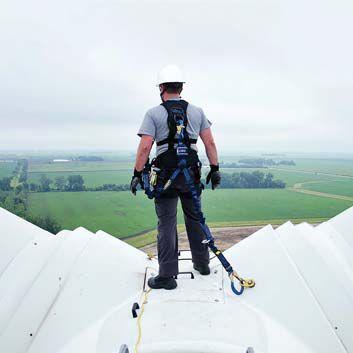
Every day on your job, you climb to new heights with two things in mind: getting your work done well and returning home safely to those you love. Our job? With DBI-SALA® and Protecta® Brands, 3M is Canada’s leader at heights - delivering and developing wo rld-class fall protection solutions. That way, you can focus on what matters most — your work, your safety and your family.
Discover how we harness safety through science, to keep you safe at any height.