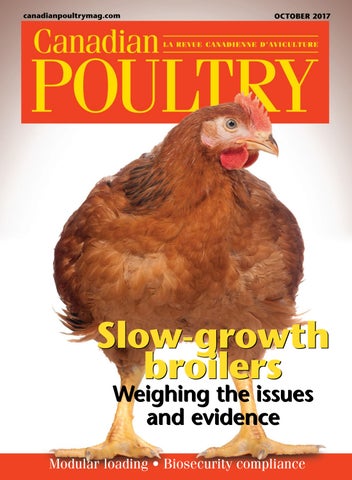
Weighing the issues and evidence. by Treena Hein 15
INDUSTRY: What’s new with turkey? An update on trends and exciting new products. by Treena Hein
BUSINESS: A&W’s egg policy puzzle Company struggles to balance promises. by Treena Hein
20
BIOSECURITY: Complying with protocols A review of important new research. by Treena Hein
26
PRODUCTION: Cage-free lessons from abroad
What Canadian egg farmers can learn from layer hen housing transitions in the U.S. and New Zealand. by Treena Hein 32
WELFARE: Are we ready for modular loading? Most barns in Ontario will require modifications to accommodate modular loading. by Karen Dallimore
38
HEALTH: National surveillance update
The CAHSN continues to collect animal health test results nationwide to enable early warning capabilities. by Karen Dallimore
FROM THE EDITOR
BY BRETT RUFFELL
The gold standard
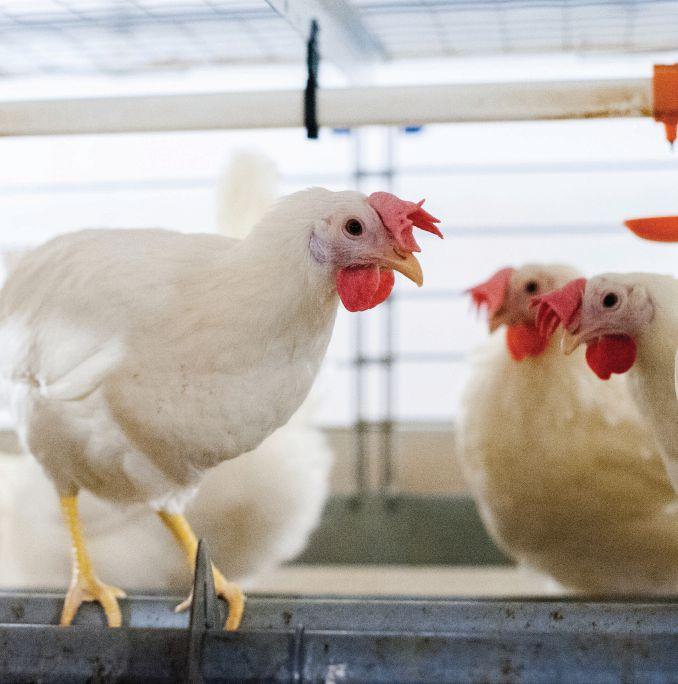
It’s no secret egg producers face big changes on the horizon. Chief among those is transitioning away from conventional housing over the next 15 years, as outlined in the recently updated code of practice.
Indeed, egg farmers have some important and expensive decisions to make. Should you convert to enriched cages or go the none-cage route? What will the different systems mean for you and your hens? To help you arrive at the best answer for your business, we’ve included a new resource with this issue of Canadian Poultry titled “Phasing Out Conventional: An egg producer’s guide”.
The supplement includes valuable insights from a range of experts. Producers who’ve already converted discuss their experiences and offer tips. Also, researchers share evidence on what different housing options mean for you and your hens.
While working on this guide, I heard people from across the board describe Canada’s model for developing codes of practice as the gold standard. “It’s a pretty unique system and one to be proud of,” a poultry researcher said of the National Farm Animal Care Council’s (NFACC) process.
A few things set it apart. Most importantly, the council uses what general manager Jackie Wepruk describes as a bottom-up approach. While the EU, for example, employs a top-down process where farmers have limited input, NFACC empowers producers to be an important part of the solution.
For instance, four egg farmers were on the layer code development committee, including chair Glen Jennings. What’s more, the public consultation period gave producers another opportunity to have their voices heard. “It’s important that farmers buy in because they’re the ones who implement it,” Wepruk says, noting that its codes aren’t regulations.
The council also brings a broad range of stakeholders to the table to try to avoid the adversarial environment seen stateside. “South of the border, you see groups that have entrenched themselves against the use of anything but cage-free systems,” Wepruk says.
“We’ve bought into the notion that the lives of animals are enhanced when people work together as opposed to seeing each other as opponents,” she continues.
To foster a collaborative, productive environment, NFACC takes a multistakeholder approach. For instance, a 17-person committee worked on updating the layer code. The team included producers, animal welfare and enforcement representatives, researchers, transporters, egg processors, veterinarians and government officials. A five-person scientific committee supported the group.
There were no votes. Instead, committee members had to reach a consensus. Jennings says that while there were challenges coming to an agreement, the group was able to form a consensus through mutual education and negotiation. For instance, some on the animal welfare side originally insisted on free-range housing only. “After educating them as to why that’s impossible, they agreed,” he says.
There was also some give-and-take with regards to the timeline. Welfare groups wanted to phase out conventional quicker while egg producers wanted more time. The group met in the middle. While he praises the collaborative process, Jennings acknowledges that some producers who’d just installed a new conventional system were shocked by the timeline. “You can’t make everyone happy but you try to make it as reasonable as possible,” he concludes.
U.S.A. - 1 Year $ 66.95 USD Foreign - 1 Year $ 70.95 USD
GST - #867172652RT0001
Occasionally, Canadian Poultry Magazine will mail information on behalf of industry-related groups whose products and services we believe may be of interest to you. If you prefer not to receive this information, please contact our circulation department in any of the four ways listed above.
As easy as 1, 2, 3. and still maintaining exceptional litter
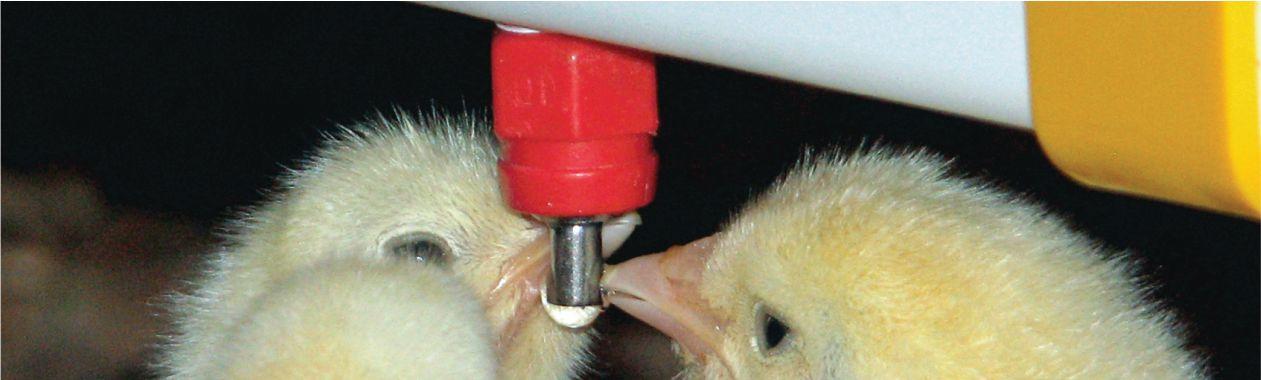
1) Large bottom pin that holds a drop of water to attract day old birds to nipple / great starts / average first week mortality below 1%.
Got Lubing? Contact your local Lubing Distributor for more detailed information.
Glass-Pac Canada
St. Jacobs, Ontario
Tel: (519) 664.3811
Fax: (519) 664.3003
Carstairs, Alberta
Tel: (403) 337-3767
Fax: (403) 337-3590
2) Greater side flow with minimal triggering force allows all birds to easily trigger the nipple and get off to a great start. Great Starts = Greater Finishes!
3) Both, vertical and side action, deliver the Opti-mum flow rates and ability to grow a 4 lb small bird up to a 10 lb Jumbo bird with the same nipple. After hundreds of house updates, customers are consistently seeing improved weight gains of up to 1/2 lbs/bird with dry litter conditions!
Les Equipments Avipor
Cowansville, Quebec
Tel: (450) 263.6222
Fax: (450) 263.9021
(423) 709-1000
Specht-Canada Inc.
Stony Plain, Alberta
Tel: (780) 963.4795
Fax: (780) 963.5034
S NAFTA Demands WHAT’S HATCHING HATCHING
ince mid-August, the poultry industry has been looking on as the North American Free Trade Agreement (NAFTA), which has tied the economies of Canada, Mexico and the United States together since it was implemented in 1994, was reopened for renegotiations.
NAFTA has been a target of U.S. President Donald Trump since he took office in January. In April, the Trump administration named its priorities, specifically mentioning opening Canada’s protections on dairy and poultry imports.
Freeland’s list includes:
• Protect Canada’s supply management system for dairy and poultry
• A new chapter on labour standards
• A new chapter on environmental standards
• A new chapter on gender rights
• A new chapter on Indigenous rights
• Reforms to the investorstate dispute settlement process
• Expand procurement
• Freer movement of professionals
The renegotiation of the North American Free Trade Agreement began Aug. 16 in Washington, D.C.
As the first round of NAFTA talks began in Washington, D.C., Canada’s Foreign Affairs Minister Chrystia Freeland released Canada’s list of key demands, noting the protection of Canada’s supply management system for dairy and poultry as a top priority.
• Protect cultural exemptions
• Maintain a process to regulate anti-dumping and countervailing disputes
“We are at an important juncture that offers us an opportunity to determine how we can best align NAFTA to new realities – and integrate
progressive, free and fair approaches to trade and investment. We are steadfastly committed to free trade in the North American region and to ensuring that the benefits of trade are enjoyed by all Canadians,” Freeland said in a news release. The second round of NAFTA talks took place in early September in Mexico City.
In the meantime, the Government of Canada is seeking input from Canadians across the country and from all sectors and backgrounds about trade. Are there areas of the agreement that you feel could be clarified? Are there parts that should be updated? Are there any new sections that should be part of a modernized agreement?
Submit your views on NAFTA here: http://www. international.gc.ca/tradecommerce/consultations/ nafta-alena/
Assessing the impact of B.C. wildfires
After a summer of devastating wildfires in B.C., the provincial government and the Government of Canada are working under the AgriRecovery disaster framework to determine the type of assistance that the province’s agriculture sector may require to recover.
“The AgriRecovery response will help B.C. ranchers and farmers recover from their losses, and return to their land and their livelihoods. We are working with producers, local officials and stakeholders, and the results and spirit of resilience is collective and clear, we will work together to respond to this emergency
Egg production on the rise
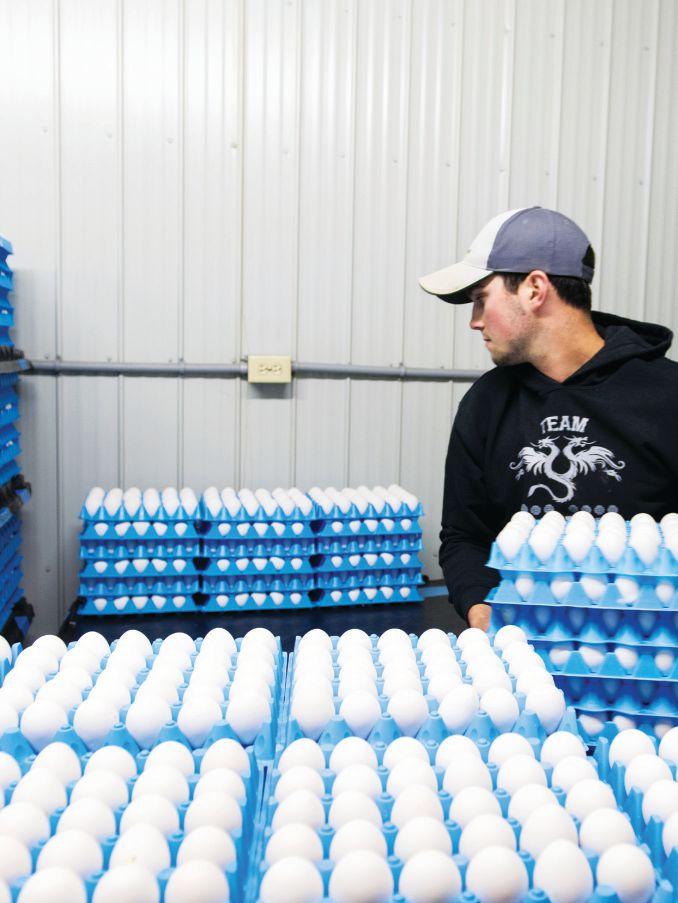
Canadian egg production has risen 4.4 per cent in the past year, according to data released by Statistics Canada. The data also outlines Canadian egg producers generated 64.5 million dozen eggs from May 2016 to May 2017.
Placement of hatchery chicks on farms rose four per cent to 65.5 million birds from June 2016 to June 2017 and stocks of frozen poultry in storage decreased 9.3 per cent to 86,453 tonnes, from July 1, 2016 to July 1, 2017.
According to Agriculture and Agri-Food Canada (AAFC), in 2016 there were 1,062 registered egg farms in Canada,
Federal Agriculture and Agri-
Food Minister Lawrence MacAulay and B.C. Agriculture Minister Lana Popham discuss the impact of recent wildfires.
until the job is done,” Lana Popham, B.C. Minister of Agriculture, said.
Officials are working together to quickly assess the extraordinary costs farmers are incurring and what additional assistance may be required to
recover and return to production following the wildfires.
The types of costs under consideration include costs related to ensuring animal health and safety, feed, shelter and transportation costs and costs to re-establish perennial crop and pasture production damaged by fire.
“Our Government stands with producers in B.C. who are facing challenges and hardships because of these wildfires. Together, with our provincial counterparts, we will work closely with affected producers to assess the full scope of their needs and help them get back in business as quickly as possible,” Lawrence MacAulay, minister of agriculture and agri-food, said.
generating $1,036 million in total farm cash receipts, contributing 1.7 per cent of cash receipts to farming operation in Canada.
Ontario had 36.1 per cent of the federal egg quota allocation in Canada, while Quebec was second with 19.7 per cent. The western provinces and the North West Territories had a combined egg production quota allocation of 36.7 per cent, while the eastern provinces had a combined production of 7.5 per cent quota allocation.
The average Canadian flock size was 22,374 hens. Canadian egg farms can range from a few hundred to more than 400,000 hens. The average laying hen produces about 305 eggs per year or 25.4 dozen.
AAFC also notes that 2016 saw the per capita consumption of eggs reach 19.9 dozen per person, 2.7 per cent over 2015, and 6.5 per cent over 2014. In the previous five years, egg consumption had increased approximately 3.5 per cent annually.
For more information, visit: fmc-gac.com/programs-services/agriculturalexcellence-conference/
November 29, 2017
Eastern Ontario Poultry Conference
St. Isidore, Ont.
For more information, visit: poultryindustrycouncil.ca/education-extensionevents/eastern-ontariopoultry-conference/
Canadian egg production has risen 4.4 per cent in the past year.
HATCHING HATCHING
Energy technology company to impact poultry industry
lobal Re-Fuel is poised to make a significant impact on poultry farming. Its PLF-500 biomass furnace addresses financial, health and environmental issues. The technology, which is now in use on a farm in Texas, converts raw poultry litter into energy, providing heat to broiler houses while creating a pathogen-free organic fertilizer.
“A ton of litter has the equivalent energy content of 67 gallons of propane. Extracting that heat and using the ash as fertilizer is a really good situation,” Glenn Rodes, a Virginia poultry farmer who has used the technology, said.
As the number of poultry operations in the U.S. increases, so do the attendant problems. Today, there are more than 110,000 broiler houses in the country, with that number expected to exceed 131,000 by 2024, the U.S. Department of Agriculture (USDA) projects.
More than 32 billion pounds of poultry litter were generated in 2015. That number is expected to grow to more than 37 billion pounds per year by 2024, which will exacerbate the soil nutrient overload that contributes to runoff pollution into U.S. waterways.
In addition, poultry farms require a great deal of propane to heat broiler houses, with the average broiler house using about 6,000 gallons of propane each year.
In 2015, more than 8.5 million tons of CO2 were emitted from burning propane to heat broiler houses, and that number is projected to grow to almost 10 million tons by 2024, according to the USDA. Global Re-Fuel’s technology eliminates nearly 100 per cent of propane usage, reducing CO2 emissions by more than 70,000 lbs per year, per house.
“The Global Re-Fuel PLF-500 increases farmers’ operating margins, decreases pollution, eliminates propane usage – which reduces CO2 emissions – and improves poultry living conditions,” Rocky Irvin, a founding member of Global Re-Fuel and a poultry grower for more than 10 years, said. “It’s good for the family farm and the environment.”
Poultry Industry Council: CELEBRATING 20 YEARS OF SERVICE TO THE INDUSTRY
What are the most significant changes you’ve seen in Canadian poultry during the past 20 years?
“Under PIC’s leadership, we have seen major investments in poultry education, research and outreach. With regard to major developments in poultry research, we sequenced the chicken genome close to 12 years ago and, more recently, the turkey genome. We are now witnessing how the genetic information gleaned from sequencing can be used to make superior genetic stocks. In the future, we will see more integration of genetic information into production for making more robust birds that are better adaptable to their environment and can resist diseases.
In the last 20 years, we have seen a major breakthrough in the way poultry are vaccinated, through the advent of technologies for injecting vaccines into embryonated eggs. We have also seen the introduction and uptake of recombinant or genetically modified vaccines for poultry.
Significant progress has been made with respect to identification of novel antimicrobial alternatives. Now there is a need for a scientific and evidence-based process to assess safety, efficacy and cost effectiveness of these alternatives for their incorporation into poultry production in Canada.”
What do you see ahead for the poultry industry?
“The Canadian poultry industry has been progressive and will continue to be so. In the future, there will be opportunities and challenges that the industry will embrace and tackle, including further integration of technologies into management practices leading to ‘precision’ or ‘smart’ poultry production. The achievement of producing safe and wholesome poultry products in management systems with reduced use of antibiotics will be reached. In addition, we will see social licensing of production practices evolve further.”
Dr. Shayan Sharif, professor and director of the emergency management research program at the University of Guelph
“World foods” in high demand from Ontario’s diverse population
Okra, Chinese eggplant, halal meats –these are some of the delicious foods that are increasingly in demand in Ontario. Ontario is Canada’s most culturallydiverse region, with one-quarter of the population born outside of Canada and 100,000 newcomers arriving in the province every year. This demographic reality is a tremendous growth opportunity for primary local food producers – and for processors as well.
Two processors in the Greater Toronto Area have taken advantage of this opportunity and leveraged investments from the Greenbelt Fund to increase their efficiency and capacity to deliver locally grown “world foods”, while creating additional jobs, in the region.
NMK Foods in Mississauga specializes in ready-to-cook halal meats, and couldn’t keep up with growing demand for local halal chicken and turkey products. The company invested in automated packaging equipment to increase output, and partnered with Cami International Poultry in Welland to secure more locallysourced chickens to meet demand.
“We freeze and then vacuum seal halal kebobs to maintain a fresh taste for the longest time possible,” says owner Adnan Khan. “We
make our food as ready-to-cook items and we pride ourselves on not using any added preservatives. The packaging machine is a much better process for the kebobs – we would be able to be much more efficient and generate more products.” The equipment will also make meeting the HACCP Food Safety Protocol easier for NMK Foods. “Once we can start packaging with it, it will increase the shelf life of our product. Also production is set to increase by four times if not more, which means that we can create more job opportunities,” say Khan.
NMK applied to the Greenbelt Fund to help support its expansion. “The Greenbelt Fund gave us such a great response,” says Khan. “They sent a team member down to visit our operation and find out more about what we do and what we need, and to help decide if an investment would be beneficial. The one thing that I really loved about working with Greenbelt is that they didn’t just write the cheque and then take a backseat. They were so hands-on; they were hosting seminars with buyers and potential clients, meeting with people, and provided great networking opportunities for us.”
Sheik Halal Farms in Etobicoke is also in the halal duck and chicken business, and similarly saw increasing demand for its chickens and ducks, which are sold locally in independent grocery stores, specialty stores and large chain stores.
The company started about 20 years ago, when owner Sheik Khan (no relation to Adnan Khan) had only one grocery store. “I wanted
to offer fresh local duck, so I contacted a local farmer,” he recalls. “I grew from 10 ducks a week to three or four hundred ducks a week. My company is now Canada’s largest halal duck processor. We have also been processing halal chicken for the last three years, now about 15,000 birds a week. We plan to double that in next three years and hire more staff.”
“ “
The Greenbelt Fund gave us such a great response.
Part of that expansion strategy is using a $75,000 investment from the Greenbelt Fund to purchase ice-making equipment, which will make his plant much more efficient. “Right now, we have to buy ice and with lots of our own ice on hand, we can chill and pack right away with much less handling,” he explains.
The economic opportunity also extends to poultry farmers interested in new market opportunities. Since halal certification is all about how the poultry is slaughtered and prepared, it’s not incumbent on farmers to change their on-farm practices when raising poultry for this market.
“I’ve heard of quite a few people being able to improve and expand their businesses with the Greenbelt Fund,” adds Sheik. “Local food is important. Consumers like to eat fresh and safe local products instead of imported food. They are more comfortable knowing it’s from Ontario and are happy to see jobs being created.”
The Greenbelt Fund changes the way we eat by investing in projects that bring more Ontario food to Ontarians’ plates, with financial support from the Government of Ontario.
Production The Whole story Whole Foods wants all the chicken it sells to be slow-growth.
by Treena Hein
The topic of slowgrowth broilers is a complex one, with a battle to sway public opinion seemingly at the forefront. As background, about a century ago it took around four months for a typical commercial chicken to get to three pounds. Today’s broilers reach about twice that size in about half the time due to changes in production factors such as genetics and nutrition.
Some animal welfare activists say the rapid rate of weight gain of today’s commercial broilers overwhelms their young bones, causing things like splayed legs, joint problems, inability to walk, heart problems, sudden death and more. These health and welfare concerns, along with what it also identifies as better-tasting chicken, has prompted upscale grocery store chain Whole Foods Market, which was recently purchased by Amazon, to act. Last year, the company announced a desire for all its suppliers to switch over the next eight years to only raising slower-growing broiler strains.
DOES SLOWER MEAN HEALTHIER?
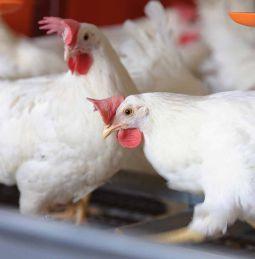
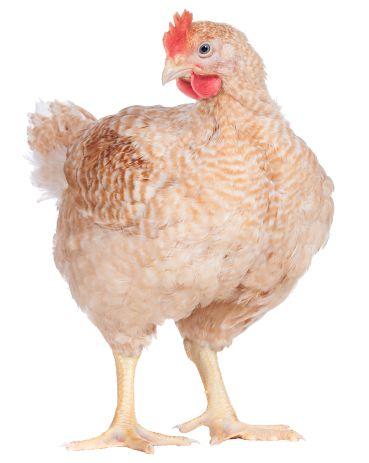
Whole Foods wants meat from slow-growth chickens, claiming that they’re healthier, happier and taste better. But some critics argue that activists, not evidence, are behind the push. Pictured is a slow-growth broiler breed from Hubbard.
Whole Foods’ Canadian meat buyer Jessica Robson says that while her company doesn’t have a specific timeline on the rollout of slow-growth chickens here, “many of our Canadian producers have already expressed their enthusiasm and interest.” She does not specify how much consumer interest played a role in the
mandated switch, and the company says it is too early to tell whether it foresees sourcing problems in Canada or the U.S. for slow-growth broilers. It seems on the surface that the Whole Foods switch to slowergrowth broilers is falling in line with an initiative announced in March 2016 by a separate U.S.-based animal welfare organization called Global Animal Partnership (GAP). GAP seemingly wishes to try and replace all fast-growing chicken breeds in the U.S. with slower-growing breeds by 2024, within its Five-Step Animal Welfare Rating Program. Whole Foods committed its support to the rating program at the time.
However, a closer look reveals the two entities to be very much interconnected. GAP was founded in 2008 with assistance from Whole Foods. Indeed, before that, the company had successfully applied its own animal welfare rating program to its U.K. suppliers. It then decided a separate organization would be more effective on an international level. Whole Foods confirms that it used to donate $200,000 a year to GAP, but now provides support for labelling fees and two full-time staff.
SLOW-GROWTH RESEARCH
Some broiler strains are recommended over others for
CONVENTIONAL
BREED
Cobb 500 BODY
Short legs, top-heavy FEATHERS
Often bare-chested from frequent nesting
MEAT
Bigger breast and wings
MATURITY
Ready for slaughter at about 48 days
SLOW-GROWTH
BREED
Redbro BODY
Longer legs, upright posture
FEATHERS
Chest is covered
MEAT
Bigger thighs
MATURITY
Ready for slaughter at about 60 days
slow-growth production. In June, GAP announced funding to “determine and evaluate the parameters necessary for assessing the animal welfare needs of different genetic strains.” This two-year research project will start this fall at the University of Guelph (U of G) in Ontario, led by Dr. Tina Widowski, chair in animal welfare, director of the university’s internationally known Campbell Centre for the Study of Animal Welfare and research chair of poultry welfare for the Egg Farmers of Canada, as well as senior research scientist Dr. Stephanie Torrey, both in the university’s department of animal biosciences.
This study builds on research going back many years into the effects of rapid broiler weight gain, such as study published in 1999 by U of G’s Dr. Richard Julian. At the time, he found that selection of chickens with high muscle-to-bone ratio and the practices of feeding them
high-calorie nutritionally complete rations “causes significant mortality from cardiovascular disease” from sudden death to pulmonary hypertension syndrome, along with severe lameness, bone defects and deformity. He also found similarities in turkeys.
According to Torrey, the major chicken genetics companies have been actively including leg strength in their selection programs for a number of years, and have successfully reduced incidences of lameness, heart issues and death in fast-growing broiler strains. However, she says most of the data is proprietary and that there are few long-term scientific studies looking at lameness and mortality in standard commercial strains. She notes that nutrition, management and hatching can significantly affect lameness and mortality, and that her study with Widowski will control these factors.
One solution that’s been talked about for reducing the
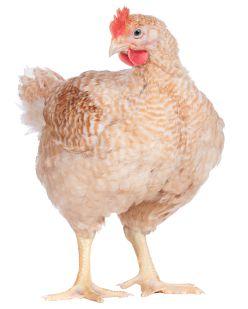
Perdue Farms, one of the largest chicken producers stateside, has been raising slow-growth chickens alongside conventional breeds. Known as the Redbro, the new birds take 25 per cent longer, on average, to mature and are, thus, more expensive to raise. Here’s how the two compare head-to-head.
Production
“It’s uncertain if having slow-growing birds will have any impact on welfare”
negative effects of rapid growth in broilers is reduction of feed intake without affecting final body weight. On that topic, Torrey urges a look at the big picture. “Broiler chickens have been genetically selected for generations for huge appetites, and as such, it’s difficult to reduce their feed intake without introducing other welfare concerns such as chronic hunger,” she notes. “Certainly, lower density diets – lower protein levels or higher fibre levels – can slow growth to some degree. However, genetics play a much larger role in growth rates than nutrition.”
Torrey adds that broiler growth
can be slowed somewhat through nutrition, “and when done in the first couple weeks of life, this can help strengthen bones and organs to support fast growth in the last couple weeks of life.” In addition, she says other management strategies, such as reducing the photoperiod, can also have a positive effect on health and welfare.
Regarding other solutions, Torrey points out that giving birds the opportunity to exercise, through provision of platforms, perches and obstacles, may help strengthen bones and reduce some health issues related to rapid growth. Some hatchery
parameters might also play important roles. “We also think that factors related to the breeding stock,” she says, “in particular, different feed restriction strategies, could lead to epigenetic changes [behavioural changes that do not involve DNA changes] in broilers’ feeding patterns, which could be harnessed to improve broiler welfare.”
NATIONAL ASSOCIATIONS WEIGH IN
For its part, the National Chicken Council (NCC) asserts that all available data on mortality, disease, digestive health, leg health and more, indicates that the collective American broiler flock is as healthy as ever. It’s currently updating its Broiler Welfare Guidelines with assistance from an advisory panel, guidelines which will be certified by an independent third party. Partly, the update is being based on a 2016 study commissioned by the NCC. An early 2017 NCC press release states that this study shows large-scale production of slower-growing chickens will cause “a sharp increase in chicken prices and the use of environmental resources –including water, air, fuel and land.” NCC also calls for more research on the health impact of growth rates.
Chicken Farmers of Canada (CFC) is currently looking to convert the study results into Canadian parameters, but Lisa Bishop-Spencer, CFC manager of communications, says the environmental impact would be similar and possibly greater due to the Canadian climate. “All animals require a certain amount of energy daily to maintain themselves, and slowergrowing birds will have greater total energy requirements because it takes more days for them to reach market weight,” she notes. “That means more to feed them, more land and water to grow the feed, more fuel, more barns and emissions for transportation and more manure produced.”
CFC has received very little indication that there is any significant Canadian consumer demand for slow-growth broilers, and indeed, the
Production
organization does not see the topic as consumer-driven.
“The desire to replace slower-growing birds as a full-on replacement to conventional chicken appears to be coming from some animal rights activists, people who aren’t meat eaters and whose primary mission is to eliminate meat consumption altogether by making it more difficult, more frustrating and more expensive for chicken farmers to do their jobs and more expensive for consumers,” Bishop-Spencer explains. “It’s activists masquerading as consumers who are demanding this change, and they’re trying to link slower-growing birds and animal welfare when it’s uncertain if having slow-growing birds will have any impact on welfare. It’s yet another attempt to raise doubts and lower trust, with the eventual aim of eliminating meat from
University of Guelph’s Dr. Stephanie Torrey is co-leading a recently launched study into slow-growth genetic strains.
everyone’s diet. It’s about creating an atmosphere of guilt, and it’s a shameful tactic that targets a hardworking value chain that brings so much to the Canadian economy and way of life.”
She concludes that we all buy food for our own reasons – cost, value, nutrition, convenience, among many others – and that many Canadian consumers have a wide range of choice in what they wish to buy, from organic, free-range and slower-growing to vegetariangrain-fed, specialty breed or conventional chicken. “Canadian chicken farmers have proven that they’re ready to adapt to a changing Canadian palate and will work hard to continue to meet consumer demands,” she notes, “but we’re not willing to do it when it’s being driven by activists who ultimately want to force our farmers out of business.” ■
A look at GAP’s 5 Steps program
WholeFoods’ embrace of slowergrowth chickens closely relates to its adoption of the Global Animal Partnership’s (GAP) 5-Step Animal Welfare Rating Program. The five steps specify a series of marketing claims followers of the program can make based on their adherence to a list of standards, with the fifth step supposedly being the highest achievement.
The steps include:
1. No cages, no crates, no crowding
2. Enriched environment
3. Enhanced outdoor access
4. Pasture centered
5. Animal centered; no physical alterations
For chickens, the program includes caps on growth rates – the slower the growth, the higher up the stepladder a company moves. For example, to qualify for steps one to three, the maximum
average growth rate of the chicken a company sells must not exceed 68 grams (0.150 pounds) per day. To reach the highest level, that rate is capped at five grams (0.077 pounds) per day.
There have been a few sets of allegations relating to the 5-Step program. In 2015, PETA (People for the Ethical Treatment of Animals) filed a lawsuit against Whole Foods, stating that the program and its associated labelling were deceiving customers.
PETA stated at the time that the program’s audit process was “a sham because it occurs infrequently and violations of the standards do not cause loss of certification.” The case was dismissed in early 2016 because the judge felt PETA had not proven the alleged misrepresentations by Whole Foods were defrauding the public.
This spring, Whole Foods, GAP and the Humane Society of the United States
(HSUS) were targeted in a complaint submitted to the IRS (Internal Revenue Service) by a U.S. non-profit animalactivist-watchdog group called the Center for Consumer Freedom. In short, the complaint alleges that HSUS is using taxexempt charitable donations to promote GAP and Whole Foods’ business interests. (Another piece of the puzzle is the fact that Whole Foods CEO John Mackey sits on the HSUS board and HSUS CEO Wayne Pacelle serves on the board of GAP.)
The complaint alleges that HSUS and several other animal rights organizations are pressuring and even threatening to attack brands unless the food companies who own them commit to buying GAPcertified products, which Whole Foods agreed to do very early on. On the GAP website, 63 brands of various types of meat are currently listed as GAP-certified, with some of these brands being owned by the same companies.
Industry
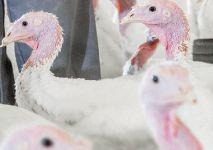
What’s new with turkey?
An update on exciting new products and why year-round product sales are growing.
BY TREENA HEIN
The protein product market has never been more crowded in Canada. The widest variety of meat, poultry egg and vegetarian options in history all entice us from their grocery store shelves, constantly vying with each other for a bigger slice of the protein product pie. However, Turkey Farmers of Canada (TFC) says that while Thanksgiving, Christmas and Easter still account for over 90 per cent of annual whole turkey sales, the popularity of other turkey products throughout the year continues to grow.
TFC says annual sales of turkey parts and processed turkey products in Canadian supermarkets have increased from 10.9 Mkg in 1995 to 14.0 Mkg in 2016. This sales growth has been primarily driven by increased popularity of further processed breast meat products, cold cuts, sausages and ground turkey. “One of the areas that we have seen an increase in is the demand for further processing of turkey thigh meat, which of course is a co-product of breast meat production,” Kristina Fixter, TFC manager of corporate communications, explains. “Traditionally, Canadian turkey thigh meat was exported, and in 2007, we exported 1.4 Mkg of thigh meat. Today, exports of turkey thigh meat represent less than half of that even though the supply has increased in the order of 25 per cent in the last five
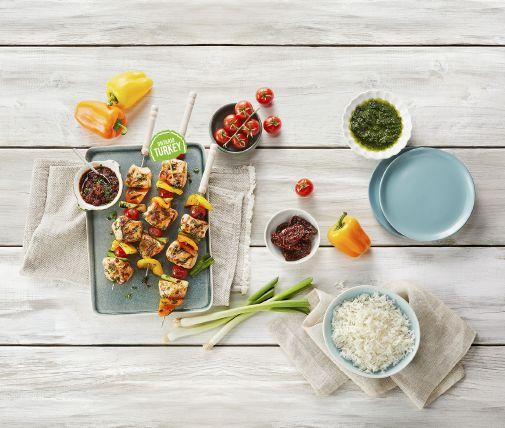
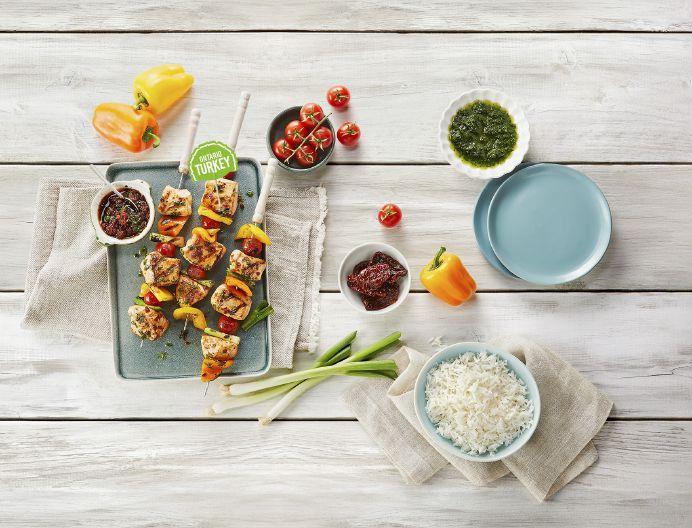
While festive seasons still account for the vast majority of whole turkey sales, the popularity of other turkey products throughout the year has continued to grow. Pictured are turkey kabobs with sundried tomatoes, a new recipe Turkey Farmers of Ontario released this year. GROWTH POTENTIAL
years. This increase is due to the growing demands of Canadians, especially for ground turkey.”
Before getting into specific new products being offered by some major Canadian companies, first a look at marketing initiatives aimed at getting consumers to eat more turkey products regularly. Last year, TFC introduced a Canadian Turkey brand initiative using the www.canadianturkey.ca website and various social media campaigns. TFC also continued to build brand partnerships, such as the Carved Turkey Sandwich rolled out last fall at Subway restaurants.
Another partnership example is the store promotion spearheaded by TFC and French’s Mustard, rolled out during last fall’s Thanksgiving season. Fixter says TFC is continuing in 2017 to boost the amount of turkey consumed throughout the year, and that the eight provincial turkey marketing boards also have specific marketing initiatives in place.
QUEBEC AND ONTARIO
For its part, Les Éleveurs de volailles du Québec (EVQ, Quebec’s marketing board for chicken and turkey) continues its
online promotional activities. “We are very active on the web platforms for both brands,” Lizianne Fortier, EVQ director of marketing and communication, says. “In only a few years, we have gained…up to 50,000 fans on the Facebook page of ‘Le Dindon du Québec.’”
Like TFC, EVQ has also engaged in sponsor partnerships with companies and sports teams to entice consumers into trying turkey in new ways. “These partnerships allow us also to teach new chefs how to prepare and include turkey in different meals,” says Fortier. “We are working to increase the know-how to cook turkey with Quebecers with recipes, blog content, video content, association with meal kit delivery companies, cooking schools and grocery workshops. Launched in the fall of 2016, our new campaign, ‘On se fait un dindon?’ (‘Are we making a turkey’?), is promoting the whole turkey as the great gatherer for family, friends or even two at Thanksgiving and the holiday season and every festive moment of life.”
Prior to 2011, Turkey Farmers of Ontario (TFO) engaged in very little direct consumer marketing, but since then has been hard at it. Initiatives have included a TV ad campaign, billboards, social media, a website refresh and more. “New recipes were developed to educate consumers on how to use the various cuts of Ontario turkey that are now appearing in the meat and poultry departments of major grocery banners, and new marketing materials – recipe booklets and more – were developed to support the messaging and consumer education,” Emily Danard, TFO marketing co-ordinator, explains. “The campaign, measured with an annual survey, indicated that consumers were getting the message, and the decision was made to continue the momentum.”
This year’s TFO marketing initiatives span new digital marketing (online banners and recipe videos), in-store promotions and experiential marketing, including the #TurkeyONTour branded trailer that visits grocery stores and events offering samples, recipe booklets and more.
IIndustry
Turkey consumption –past, present and future outlook
n an interview, Jalila Soudari, market information officer for poultry at the market and industry services branch of Agriculture and Agri-food Canada, weighed in on the state of turkey consumption.
“Input costs have decreased and are expected to remain low in the near future,” Soudari says. “However, that is unlikely to change the general consumption trend for turkey and turkey products, which has been stable to weak.”
She notes that growth in the turkey industry is mostly reliant on the further processing sector, as consumption of whole birds has been fairly stable in recent years.
NEW PRODUCTS ON THE MARKET
Granny’s Poultry Cooperative in Winnipeg (Manitoba’s only turkey processor) started offering ground turkey and pieces for year-round retail sales a few years ago, including a 1.3 kg boneless breast turkey roast in 2015 sporting a clean (natural) ingredient list. It still comes in an unstuffed version and a version stuffed with glutenfree cornmeal stuffing. “It won best new product in the Canadian Grand Prix competition,” Jason Wortzman, director of marketing and product development, says. “It’s designed to be very convenient. You can take it out frozen in the morning and put it in a slow-cooker and have a fresh roast when you get home.” Granny’s promotes turkey mostly through store flyer advertising and in-store features.
Maple Leaf currently offers a variety of Maple Leaf Prime turkey products, including Extra Lean Ground Turkey, Maple Leaf Prime Naturally Bacon Style Turkey, Turkey wieners and Turkey sausages, as well as Maple Leaf Natural Selections Oven-Roasted Turkey Breast, Turkey Back Bacon Style and OvenRoasted Turkey Breast. Maple Leaf also makes turkey deli products under a
From AAFC’s turkey market reporting web page:
• In 2015, there were 531 regulated turkey producers in Canada, producing 171.4 million kilograms of turkey (eviscerated weight), about 64 per cent of which was produced in Quebec and Ontario.
• In 2015, Canada exported over 9.3 million poults (young turkey) worth $28.4 million to 9 countries (chief among them U.S., Colombia, Mexico and Japan). That same year, 21.8 million kilograms of turkey meat and edible bi-products (fresh, chilled, frozen; worth more than $52 million) was exported to 30 countries.
variety of other brands such as Maple Leaf Deli Express, Schneiders Mainstreet Deli, Schneiders Deli Best, Schneiders Country Naturals and Sunrise.
The company’s media relations team says new snacking, shredded and deli turkey products are now being developed as well. “We have engaged consumers in communications that make them question their consumption of ground beef and consider turkey as a lowerfat alternative (a health benefit). We launched a ‘break up with ground beef’ campaign in 2013/2014, and most recently (2016/2017), we are asking consumers to ‘cut the fat’ and consider turkey as an alternative to ground beef.” Analysis of both of these campaigns, the company says, shows consumers are willing to consider turkey as a suitable substitution.
Like the turkey marketing boards and other companies in Canada, Maple Leaf has a positive view of the future of turkey product sales in Canada – and the power of marketing. “Historically, the United States has had higher consumption rates on turkey than in Canada outside of the holiday seasons,” the Maple Leaf media team notes. “This gives us reason to believe that marketing power behind items can close the gap.” ■
Business
A&W’s egg policy puzzle
Company struggles with promise to source free-run, antibiotic-free poultry products.
BY TREENA HEIN
In September 2014, A&W Foodservices of Canada announced itself as the first national quick service restaurant chain in North America to serve eggs from hens fed a vegetarian diet. A month later, the chain became the first in North America to serve chicken Raised Without the use of Antibiotics (RWA). In terms of the response to the chicken and egg campaigns, Susan Senecal, the chain’s chief marketing officer at the time and now president and chief operating officer, stated in late 2014 that, “Canadians are voting with their stomachs and the response has been fabulous.”
Senecal went on to say that “in September 2013, we became the first national fast-food restaurant to serve beef raised without the use of hormones or steroids and our guests loved it,” she says. “We then began asking what other changes they would like to see, and guests told us very clearly that how their chicken and eggs are raised and produced is very important to them.”
When asked why A&W is choosing to promote eggs from hens fed vegetarian diets when chickens are actually natural omnivores who will eat plant matter as well as insects, snails and so on if foraging outdoors for themselves, Senecal again focuses on customers. “They told us they would rather have eggs from hens fed a vegetarian diet without animal by-products and we agreed,” she says.
“Our chickens are fed a diet of wheat, corn, soy meal and vegetable oil as well as some probiotics and prebiotics.”
Then on March 10, 2016, A&W announced a major commitment to become the first national quick service restaurant in Canada to serve eggs from hens raised in ‘better’ cage-free housing. According to the company press release, it expected to achieve this lofty goal by March 2018.
At this point, all of the company’s eggs are sourced from RWA hens in enriched housing on a vegetarian diet. “Currently, there are no open-barn housing options available in Canada that meet A&W’s volume needs and also allow for an antibiotic-free
environment,” Senecal says. “Based on information and science made available to us, we feel that enriched housing is the best opportunity for ensuring hen welfare, worker welfare and food safety. With the growing interest in cage-free eggs, we believe it’s critical to find a cagefree solution that does not require the use of antibiotics while maintaining our existing standards.”
Backing up to the March 2016 press release, the company also announced it was giving a sizable grant to Farm & Food Care Canada (now called the Canadian Centre for Food Integrity) to help develop new housing options that were inline with its RWA standard. However, at the time, Farm & Food Care
Susan Senecal (second from left), A&W’s president and COO, says the consumer response to the company’s egg policies has been positive.
VOTING WITH STOMACHS
Business
Canada released the following statement to clarify about acceptance and possible use of this money: “Contrary to media reports, Farm & Food Care Canada will not be funding research into finding better cage-free housing alternatives for hens…In its press release, A&W stated the following: ‘As a part of its commitment to improving egg laying hen housing, a $100,000 A&W grant is being made to Farm & Food Care Canada… With this investment, the organization will bring together industry experts from many fields to help build on existing work and set better direction for hen housing in Canada.’
“Farm & Food Care Canada was approached for this work earlier this week as a third-party coordinator to host a session to bring egg industry partners, retail and food service from across Canada together with the US Center for Food Integrity’s Coalition for a Sustainable Egg Supply.
“The principle of the discussion would be to broaden it beyond hen welfare to include all issues impacting sustainable eggs including food safety, environment, hen health, worker health and safety and food affordability and determine areas that the Canadian egg sector felt this funding would be best spent. No agreements have been or will be signed for the funding or its terms until after the Farm & Food Care Canada board of
directors and egg industry partners have discussed best options.”
Senecal explains, “As a part of our commitment to continuously improve animal welfare, we put forward seed money of $100,000…in 2016 to potentially build on existing work and find a [cage-free] solution that will benefit Canadians, egg farmers and the food industry. We have had interest expressed in various sectors and are hopeful about making an announcement about this initiative in the near future.”
Crystal Mackay, CEO of the Canadian Centre for Food Integrity, says “nothing has been decided at this point,” and “we do not have the funds at this time.”
RESEARCH INTO CAGE-FREE, ANTIBIOTIC-FREE PRODUCTION AND ONTARIO
Dr. Elijah Kiarie explains that laying hens are not “big users” of antibiotics and that treatment of them with antibiotics takes place only under veterinary prescription. “Arguably, caging them negated any need of antibiotics for growth/performance promotion, as such housing separated them with litter and excreta contamination,” Kiarie, who is the assistant professor and McIntosh Family Professorship in Poultry Nutrition in the department of Animal Biosciences at the University of Guelph, says.
Kiarie believes placing laying hens on littered floors and cagefree environments will definitely be problematic, particularly in terms of proliferation of gut pathogens. “Although my preliminary assessment indicates the egg industry has done excellent engineering to ensure manure belts are in use in cage-free housing, variation occurs across the systems,” the expert notes. “This is a new frontier in terms of research.”
Professor Billy Hargis, director of the JKS Poultry Health Laboratory and Tyson Endowed Chair for Sustainable Poultry Health in the faculty of poultry science at the University of Arkansas, explains that in terms of hens receiving antibiotics under veterinary prescription, “we know that egg yolks accumulate antibiotics very effectively, and that a yolk starts forming about seven or eight days before the egg is laid – the withdrawal period after antibiotic use would be very long. The egg producer will have lost a lot of value for those birds for the production cycle, and it would likely make much more sense economically to cull the flock if a sizable number of hens needed antibiotics. Good management is really important.”
He says pullets are able to receive antibiotics unless the eggs they produce as adults are going to carry a label that claims ‘no antibiotics ever.’ “Gut health challenges in chickens occur,” he adds, “mostly when birds are young.”
Kiarie and his team are trying to understand the impact of long-term feeding of probiotics to pullets through to laying. Research on this is currently underway by a post-doctoral scientist in Kiarie’s lab. He also has a graduate student evaluating strategies for reducing crude protein in layer diets by using synthetic amino acids, and another student looking at functional properties of alternative protein sources such as insect meal, to partly or wholly replace soybean meal. “We see the amount and type of protein in layer diets is a big issue,” he says, “which could upset gut microbiota and ammonia emissions in cage-free environment.” ■
Currently, A&W’s eggs are sourced from hens in enriched housing.
Biosecurity Complying with biosecurity protocols
New research confirms employee engagement, barn entry design and other factors are critical.
BY TREENA HEIN
It’s well known that livestock diseases can be transmitted by mechanical means – by boots and vehicles. In response to this fact, producers have created barn entry and exit biosecurity protocols. However, many researchers have shown that compliance can be low around the world, and on poultry and swine farms in particular.
For example, among other studies, Dr. Manon Racicot, a veterinary epidemiologist and member of the Risk Assessment Models Development Team of the Food Safety Science Directorate at the Canadian Food Inspection Agency, and Dr. Jean-Pierre Vaillancourt, professor in the Research Group on the Epidemiology of Zoonoses and Public Health at the University of Montreal, and their colleagues have used video surveillance to study barn entrance protocols on poultry farms.
In Quebec several years ago, they found overall compliance occurred only between about a quarter to a third of the time. Vaillancourt has reported that from his own research, that of others and his travels, that this is typical of what occurs around the globe.
Dr. Geneviève Huard, a veterinarian and graduate student under Vaillancourt’s advisement at the University of Montreal, is doing research to support compliance training. She notes that while the training material itself is only one part of the solution, it’s critical for it to be applied. Farm owners and staff must understand
Experts say proper changing of boots should be easy when there are either just clean and dirty zones in the entry, or when there are these zones plus an additional change zone.
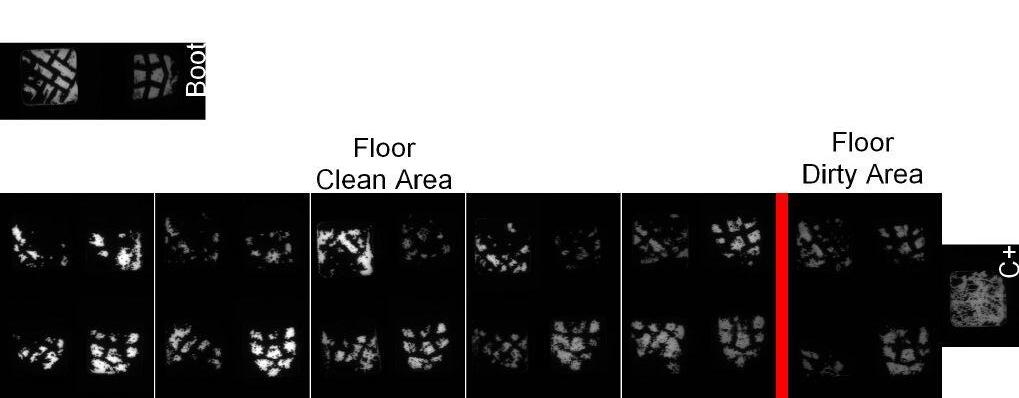
that the materials are important. The aim of Huard’s current research is to visually show through bioluminescence (see images on page 22) how actual pathogens are spread in situations where biosecurity protocols are carried out inadequately. This visual information, she says, provides more incentive for staff to ensure compliance is optimal.
Huard’s project, of which data are still being analyzed, focuses on contamination by boots in clean and contaminated areas of barn entrances. “My results have shown that preventing cross-contamination of areas with boots is an effective way of preventing the spread of contamination,” she explains. “Also, the data show
that floor and boots are contaminated with all types of errors involving crosscontamination, and they also show that there is no dilution effect after walking 10 steps (about 10 metres).”
She says proper changing of boots should be easy when there is either just clean and dirty zones in the entry, or when there are these zones plus an additional change zone. A three-area entrance does provide some advantages, such as making the distance greater from dirty to clean areas, but Huard says space availability may not allow for it and that design of the area also matters a great deal. “All that being said, and everything else being equal,” she notes, “the odds are likely
KEEP IT SIMPLE
Biosecurity
greater that you will reduce cross-contamination with a threearea versus a two-area design.”
Indeed, Huard notes that lack of space is the big issue for biosecurity compliance in some barn entries, especially old ones.
“For old barns, sometimes you just need to think outside of the box to make [good compliance] possible and it is often dependant of the desires and beliefs of the producer,” she says, but adds that “in some cases, barn entries cannot be re-organized.”
Huard says it is difficult to propose a single entrance design, but her work has shown that compliance with protocols can be achieved with any good design. She points to research by Racicot and her colleagues that found benches between clean and dirty zones are much more effective in achieving compliance than delineation with a red line on the floor.
She adds that physical barriers like benches could also prevent organic material and litter from literally flying from the contaminated area to the clean area and vice-versa when
the outside door is opened. “Of course, there is also the issue of insects such as darkling beetles,” she says, “that we frequently see in equal concentration in the contaminated and clean areas.”
In addition, Huard notes a good, regular disinfection of the entrance also contributes to reducing pathogen loads, but that the area must be designed in a way that cleaning does not contaminate the clean area (e.g., separate drains for the contaminated and clean areas).
OTHER FACTORS
Signs in the barn are also important, and the simpler the better. Huard says, generally speaking, sign messages should be conveyed using images and symbols rather than words, as poultry industry workers may have different levels of English reading skills. Signs should act as reminders, she notes, and must not be relied upon, because people stop noticing signs after a while. Providing
Dr. Geneviève Huard of the University of Montreal is researching if visually showing staff how pathogens are spread improves their compliance to biosecurity protocols. She’s using bioluminescence for the study.
Biosecurity
frequent feedback and training/reminders is critical.
Staff meetings about biosecurity should focus on issues reported as problematic, in Huard’s view. “You may want to have some key problem addressed in a meeting and not try to cover everything possible,” she says. “Information overload is not useful.” She adds that everyone who enters the barns (employees, owners, owner family members, etc.) should attend the meetings because supervisor behaviours and attitudes are correlated to employee compliance.
“This is a big deal,” she states. “In Canada, we may offer training to growers and poultry technicians, but how about the low-income farm help? It is a mistake to think that they will necessarily get the training on-farm by the grower or a technician. And how about allied industry personnel going to farms?” Huard says there may be some programs in place to handle all this – she’s not sure – but she reports that Vaillancourt and Racicot are planning to study some of these programs and how program success is evaluated.
Regarding employee engagement, Huard says the best approach is to make them partners. “For example, you can have a monthly break or lunch paid for by the farmer where biosecurity issues are brought up and debated, with the goal of coming to an agreement with the staff,” she says. “If they
Barn cleaning biosecurity project
Dr. Michele Guerin, associate professor at Ontario Veterinary College at the University of Guelph, is studying barn cleaning as it relates to biosecurity. Currently, chicken producers in Ontario are required to dry clean their barns after every cycle and disinfect their barns at least once per year, as per the Chicken Farmers of Ontario’s On-Farm Food Safety Assurance Program. “However,” Guerin notes, “sciencebased evidence is needed to establish best-management practices.” She is now studying how pathogen loads (E. coli, Salmonella spp. and Clostridium perfringens) are affected by sanitation procedures at 36 commercial broiler chicken barns with different flooring types. Each barn was dry cleaned, wet cleaned or disinfected after flock removal using the protocol normally performed by the producer. In addition to flooring type, Guerin is also studying type of disinfectant, water temperature and the presence of pathogen resistance genes. The results will be used by the Ontario broiler industry to update its standards. Still, Guerin notes additional research is needed to develop more comprehensive standards to control the wide array of pathogens that infect poultry.
participate, they are much more likely to consider what has been proposed.”
Providing adequate resources is also important. “I’ve been on many farms where the sanitizer was empty, there was no pen to sign the logbook, there were no plastic boots for visitors, etc.,” Huard reports. “Providing the necessary materials to perform the biosecurity protocol is a minimal requirement.”
Huard acknowledges that it’s very challenging for a farmer to gather information about on-farm compliance in order to improve. A few studies have looked at compliance by using video surveillance, and they found that there is a poor correlation between self-reported and observed compliance. Also, bi-monthly audits done by a non-authority figure were ineffective. “Cameras may not be accepted, but there might be ways to make it doable, such as using them not to punish, but as a training tool and to reward compliant employees,” Huard says.
She also suggests that farmers can look indirectly for evidence of the regular application of biosecurity protocols –for example, by frequently assessing entrance cleanliness or counting the number of plastic visitor boots to see if it matches the number of visitors. However, these are after the fact.
Huard notes there are technologies that are being considered that would allow tracking farm boot location, the equivalent to virtual fences where an observation is triggered when boots pass from one area to another. “Much is being developed right now,” she says, “because GPS technology is becoming so cheap and yet precise.” ■
Production Cage-free lessons from abroad
What Canadian egg farmers can learn from the layer hen housing transition in the U.S.
BY TREENA HEIN
“
U.S. shift to cagefree eggs causing market disruption.”
That was the title of an editorial blog published in July by WATT, publisher of WATT Poultry USA magazine. In it, Terrence O’Keefe, content director of agri-business, notes, “It will continue to be a bumpy transition for the cage-free egg market unless major egg purchasers set and stick to interim goals for cage-free egg purchases.”
O’Keefe notes that U.S. egg producers have been diligently converting existing housing and building new facilities to meet the sourcing commitments for cage-free eggs made by major North American companies, commitments mostly for 2025. “The problem is that the market currently doesn’t want this many cage-free eggs,” O’Keefe states. “The negative impact of this cage-free egg surplus has been magnified by the fact that there is an oversupply of cageproduced eggs as well.”
The American Egg Board, the U.S. Poultry & Egg Association and the United Egg Producers did not agree to comment on why there’s an oversupply of cageproduced eggs in the U.S. right now, or why the market for cage-free eggs is weak. Nor would they comment on what is being done to address the situation – perhaps retailers should be doing more promotion on cage-free eggs, or as O’Keefe suggests, major egg purchasers
In the U.S., a surplus of cage-free eggs has been magnified by the fact that there is an oversupply of cage-produced eggs as well.
should be setting and working to reach interim cage-free goals. They would also not comment on whether American egg producers have been too fast in converting to cage-free.
Willing to provide some thoughts is Brian Moscogiuri, a market analyst of shell eggs and egg products who works at U.S.-based consulting firm Urner
Barry. As to the main reasons there is an oversupply of cage-produced American eggs, Moscogiuri starts by explaining how cage-free demand was slowly but steadily growing prior to the Avian Influenza (AI) outbreak in 2015. During the AI outbreak, due to lowered supply, cage egg prices reached all-time highs, while cage-free and other speciality eggs
CAGE-FREE SURPLUS
In growout after growout, results prove that Ziggity Systems with Max3 drinkers consistently produce not just great but exceptional performance in every category. That’s because Max3 delivers all the hygienic water birds need to thrive and stay healthy without oversupply that causes wet litter and all of its related problems.
More ways to improve performance
management time and make correct pressure adjustment easy with PressurePro.
Visit www.ziggity.com www.ziggity.com/pressurepro
Upgrade J-Lock drinkers
saw only moderate price increases. At the outbreak peak, however, cage-free prices were at times cheaper than cage eggs. “This inflated demand in that category and was part of the reason so many companies set cage-free initiatives,” Moscogiuri says. “As prices moderated, spreads returned to normal. Generic or cage production recovered but demand has yet to fully return to normal. This created some of the lowest prices seen in the last decade.”
Moscogiuri notes that retailers have been aggressively trying to sell cage eggs, some at times offering them for as little as $0.25 U.S. for a dozen large eggs, further widening spreads with cage-free eggs. Meanwhile, producers began adding cage-free initiatives in order to meet future deadlines, and these production increases and the price competition leave cage-free oversupplied in the current market environment.
As to whether egg producers in the U.S. have been too fast in converting facilities from cage to cage-free egg production and building new cage-free facilities, Moscogiuri points out that producers had no choice but to start converting some of their facilities in order to fill orders associated with their customers’ needs, but as explained, “right now supply is outpacing the demand.”
CANADIAN PLANS
Will there be such a great price differential between cage and cage-free eggs in Canada as the number of cage eggs on the market decreases in the coming years? Egg Farmers of Canada’s answer is focused on the big picture. “A wide variety of factors affect the price of eggs which is set by stores and restaurants, and a shift in production methods will impact the cost of eggs,”
Brian Moscogiuri, market analyst of shell eggs and egg products at U.S.based consulting firm Urner Barry.
RODENT CONTROL trapped like rats » They’ll be «
These are some of the products eligible for the Vetoquinol Club points program. Sign up today at vetoquinolclub.ca and reap the benefits. club
GREAT PALATABILITY BAITS
• Low or no wax formulations
• Grains and food grade oils ingredients
• Greater acceptance for better results
• Different actives for rotation
GIVE THEM BAITS THAT THEY WILL LIKE!
New Zealand transition to cage-free
Among other jurisdictions, New Zealand is also in transition to move away from all conventional cages, in its case by 2022. There is pressure from supermarkets against eggs from hens housed in enriched colony cages as well, notes Kerry Mulqueen, senior executive technical officer with the Poultry Industry Association of New Zealand.
“Producers are indicating the likely options will be barn or free-range,” he says. In terms of how the industry is going to handle the price differential of caged and barn or colony eggs in the new few years, Mulqueen says he is not sure. “In coming years as the production types that are more costly become the bigger volume,” he says, “the sale of more expensive eggs may be more difficult.”
CEO Tim Lambert notes. “Our focus in the coming years remains on promoting a balanced portfolio of production types – enriched, aviary, free run and free range housing. This approach minimizes risk and leads to variety, choice and a nimble and responsive industry – all key to maintaining a stable supply of eggs and to ensuring the entire supply chain isn’t just as vulnerable 10 years from now to whatever trends and issues may be upon us then.”
We also asked EFC whether it’s a concern that egg producers in Canada will convert housing at a speed that seems to be causing issues for producers in the U.S. In his answer, Lambert notes that it’s important that a transition of this magnitude keeps step with demand, and that a systematic, orderly phase out of conventional housing protects consumers by avoiding supply shortages and the production of eggs
Production
Kerry Mulqueen, senior executive technical officer with the Poultry Industry Association of New Zealand, discussed his country’s experience going cage-free at a Poultry Industry Council breakfast meeting.
for which there is no market. He says the Canadian egg industry will reduce volatility by staggering and gradually retiring conventional systems in favour of alternatives. “This is why the industry analyzed what is realistic and achievable, projecting a 50 per cent restructuring in eight years, with 75 to 100 per cent in alternative systems in 13 to 20 years,” he explains. “These projections take many critical factors into account, including current production, existing farms, marketing data and direction, trend analysis, international research and lessons learned, consumer preferences and other forces.”
Canadian egg farmers, Lambert says, are diversifying their production practices based on the best available scientific information. “This steady, co-ordinated and cross-supply chain approach takes into consideration a number of factors including hen
welfare, human health, other resource implications, environmental impact and food production sustainability,” Lambert explains. “These factors are complex, and they need to be better and more widely understood outside the industry. We will be working hard in the coming years to do just that.”
As far as what needs to happen in the future in the U.S., in his blog entry O’Keefe points to the need for retailers “to start closing the gap between the retail price of cage-free and cage-produced eggs if they want to hit interim goals. Retail cage-free egg sales aren’t going to go from 15 per cent for a retailer to 100 per cent over the next eight years without a reduction in the price differential and a lot of promotion.” ■
JOIN US IN GIVING THANKS!
For the ninth year in a row, Turkey Farmers of Canada has donated $50,000 to Food Banks Canada.
This year, we have also partnered with French’s for an in-store promotion - Buy a Turkey and receive a free bottle of mustard, and together we will also donate a meal to Canadian families in need.
It’s just one of the ways Canadian turkey farmers are working to make this a happier Thanksgiving for Canadians.
Are we ready for modular loading?
Most barns in Ontario will require modifications to accommodate modular loading.
BY KAREN DALLIMORE
In terms of the modular handling of poultry, Ontario and Quebec lag decades behind Europe and the rest of North America. But, that may be changing soon.
“A lot of it’s just based on what we have to do moving forward,”
Richard Mack, president of Riverdale Poultry Express in Elmira, Ont., says. “As an overall industry, we need to keep up with the rest of the world.” While the benefits won’t likely outweigh the cost, modular handling does address animal welfare concerns by enabling gas stunning.
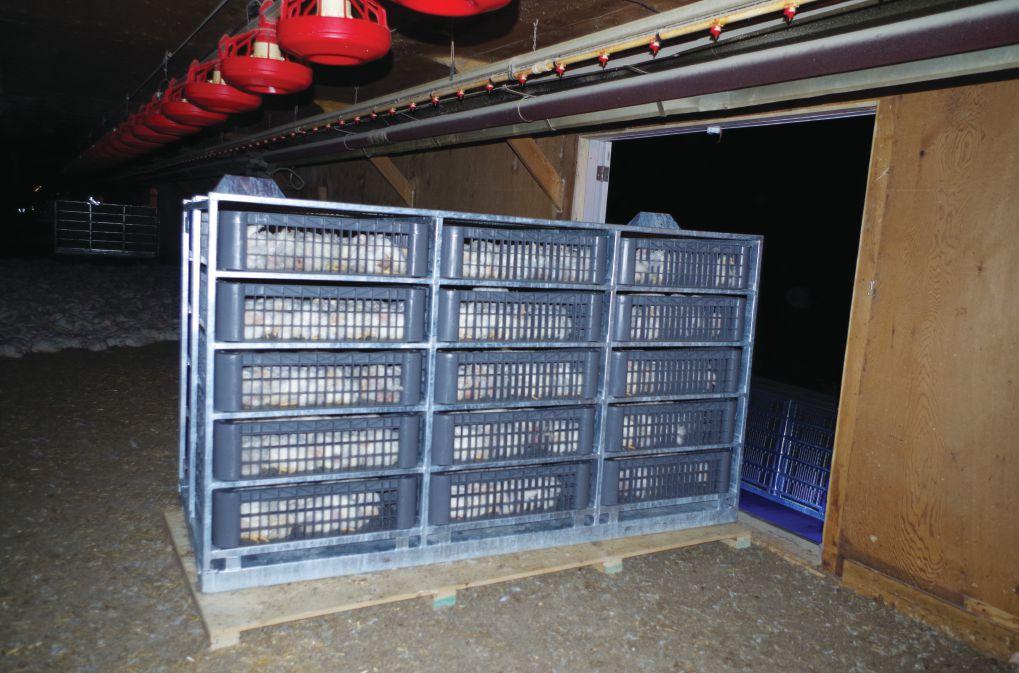
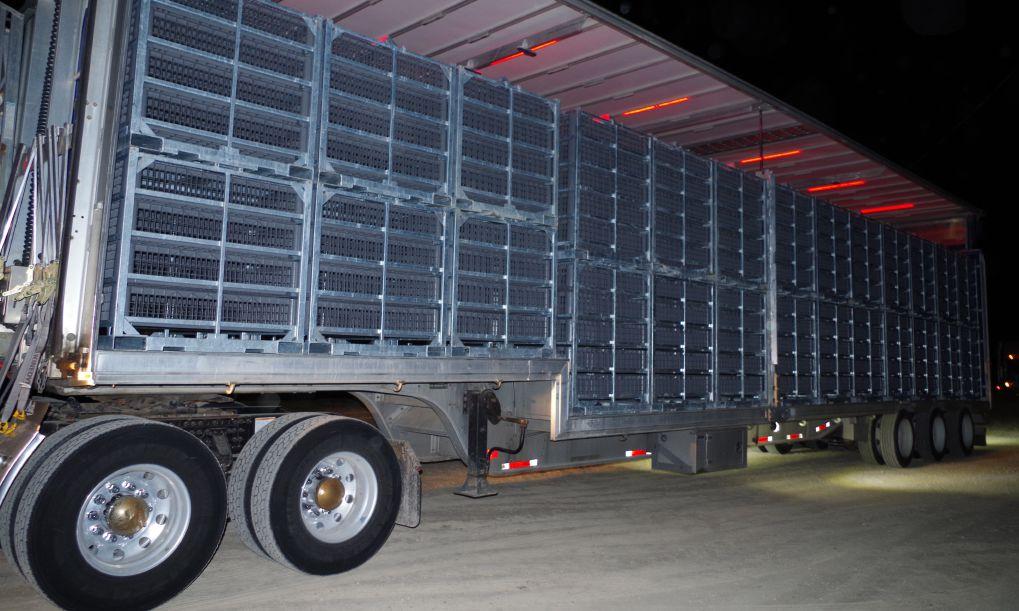
For chickens, modular transport means that the birds are placed in drawers or baskets in the barn that are then stacked in a module and moved to the truck by forklift. The birds will ride in a nested position during transit so they don’t flap and move around, avoiding injury. Once in the drawers the birds no longer have to be handled individually, reducing the stress levels and injury potential, while allowing quick and efficient processing at the plant.
For turkeys, the system is a little different to accommodate the size and nature of the birds. The birds are still loaded on the truck either by autoloader or hand catch. Mack says, “you won’t get a turkey to get into a drawer and have it sit on command – it’s not going to happen.”
At the plant, the modules are brought into a climate controlled lairage facility where the drawers can be removed and
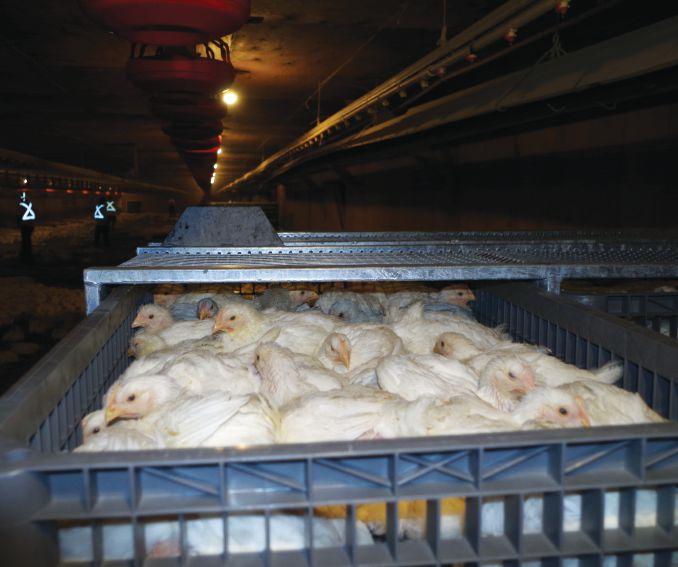
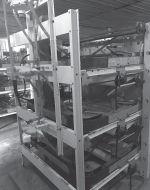
Chickens ride in a nested position so they don’t flap and move around, avoiding injury. Modular loading also enables gas stunning.
put through a gas stunning chamber or pit. Gas stunning is hard to do for an entire trailer at once, Mack explains. There are time requirements as far as timing. An entire trailer load takes an hour or two to process, so gassing the entire trailer is not feasible. A modular set up gives you the advantage of being able to do smaller sections at a time.
ARE WE READY?
Two Ontario processors are currently using modular handling. Farm Fresh Poultry implemented modular loading for broilers in May 2016 and Maple
Lodge employed the system for end-oflay poultry in February 2012. Cargill intends to implement modular loading systems in 2018. In Mitchell, Ont., the new Sofina plant will start processing Maple Leaf turkey in early 2018.
For processors, a modular plant requires more space for lairage, which may be difficult for some and expensive for others. There are 31 provincially licensed chicken and fowl plants in Ontario and 34 federally registered poultry meat establishments in Ontario and Quebec.
Are catchers prepared? Mack says it depends on the environment. The turkey
MORE HUMANE
YOUR SUCCESS IS OUR SUCCESS
At Hybrid, you’re a partner not a customer. Partnership means reliable access to our global supply chain. It means a team of industry experts focused on your business. It means you can count on us every step of the way. Our world is all about you.
WELFARE
industry might not experience a big change because they’re still going to herd the birds onto a loader or catch them. The turkey loader conveyor will stay the same, already ergonomically correct for workers to address the human component of loading. Turkey loading won’t get any faster with modular handling, using the same amount of work and catchers. The biggest change for the turkey sector will be at the processing level.
For chicken, it’s a big investment for the catchers because the modules do come off the trailers and go into the barns, requiring forklifts. Mack predicts that the loading time will be shorter for chickens, with crates typically loading in one-and-a-half to two hours with seven or eight people being reduced to loading 10 to 20 per cent lower volume in 45 minutes to an hour with five people, including the forklift operator. Two and three story facilities will take longer.
MODULAR MODIFICATIONS
Are farmers ready? “Some are, some aren’t,” Mack says. “On the turkey side, as long as the loading stays similar to what we have today, they’re prepared. It’s not a big deal. If they have room for a truck and trailer at their facility, either hand load or auto load, it should be fine.”
For chickens, under a new regulation introduced in July 2017 in Ontario, chicken farmers and processors will need to be modular loading ready by Dec. 31, 2024. The regulation prescribes the requirements for equipping existing and new chicken barns to accommodate modular loading, a process that will initially be led by the processor.
According to the regulation, ‘modular loading ready’ means “a registered premises and the barns used for chicken production on the registered premises that have all modular loading
requirements in place including laneway, hard surface loading area and weight bearing requirements, with the exception of having modular loading doors.”
Once the processor declares their intention to implement a modular system, the farmer has 56 weeks, or seven quota periods, to become modular compliant. The farmer has the option to switch processors if they choose not to comply at that time.
Most barns in Ontario will require modifications to accommodate modular loading. In the province today most trucks are just loaded beside the barn. “On the chicken side, obviously it’s a whole new dynamic,” Mack says. “When you move to a modular system, you will need to consider if can you drive a forklift inside the first floor of your barn? Do you have enough room for loading the truck?
If you have a second story do you have side-loading available? Do you have
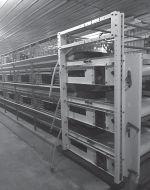
Pictured are the only broiler modules as of August 2017 being used in Ontario. They belong to Farm Fresh Poultry in Harriston, Ont. Brian’s Poultry Services provides the forklift and catchers.
WELFARE
a 30 to 35-foot laneway beside the barn for the forklift to turn? If you have a third floor, you’ll also need pass down holes so catchers can work through.”
Mack sees the one-storey, open span barns as the easiest to convert. Twostorey are a pain, needing a little land around them to adopt side door loading as needed.
The second floor must also be engineered to hold 2,800 pounds of load to support a typical full module. Some have installed a custom track system in a second floor but from his experience, anyone who has done that wouldn’t go back and do it again. Threestorey are a bigger challenge but at present there are only approximately 117 three-storey barns in Ontario and the switch to modular will likely see more decommissioning of these barns.
As of January 1, 2017, all new barns must be single storey to accommodate modular loading except where twostorey are required by local regulations to provide a smaller footprint.
PAYBACK
If the transition to modular loading is costing us, without any tangible economic advantage, why are we doing it?
On their website, the Chicken Farmers of Ontario (CFO) explains it this way, “The Ontario chicken industry is currently transitioning to modular loading in a proactive response to heightened public expectations regarding animal welfare.”
The CFO does, however, address the need for some compensation: “Farmers are responsible for the cost of renovations to their barns. However, effective A-145, farmers will receive 1.2 cents per kilo in addition to the live price for a sevenyear period as compensation. This is an interim amount that will be ‘trued up’ once a critical mass of barns have become modular loading compliant.”
In terms of labour, the human resources department at the plant will like modular handling. For processors, live receiving has to be one of the dirtiest jobs out there, Mack says. “It’s
a revolving door as far as labour goes. Some people only last an hour.” At least with a modular gas stunning set up, somebody can have an easier job. Gas stunning has a few issues but has been said to be less stressful.
Labour may be one of the only paybacks though. “I don’t think I’ve heard a processor yet say there is payback in a modular loading system,” Mack says. After spending millions on plant improvements they may save a bit of labour on the receiving side and maybe a little on some grade performance but overall, no significant payback. There’s perception, though, that gas stunning is better, so there is payback on the investment “to satisfy the public; satisfy that we’re doing the right thing; and satisfy that we’re being the most humane.” ■
For chickens, modular transport means that the birds are placed in drawers or baskets in the barn that are then stacked in a module and moved to the truck by forklift. Pictured is a Moore’s Produce transport truck loaded with modules.
OPTIMUM EGG QUALITY
The Optimum Egg Quality Handbook describes in detail all the main egg defects, internal and external, and looks at the possible causes and corresponding control measures. A comprehensive practical guide to improving egg quality.
A fresh egg, with a clean, smooth, brown or white shell, a pure, deepyellow yolk and a translucent, firm white — this is the ideal of the egg producer and the consumer. How can producers make sure that hens lay more eggs like this, and fewer with shell or internal defects?
The Optimum Egg Quality Handbook describes 15 shell defects and 9 internal defects, each illustrated with a colour photograph. It explains the possible causes and corresponding control measures for each defect. Egg producers and anyone else interested in poultry management will find this book a comprehensive, yet clear, simple and practical guide to improving egg quality.
HEALTH Surveillance update
The CAHSN continues to collect animal health test results nationwide to enable early warning capabilities
BY KAREN DALLIMORE
The Canadian Animal Health Surveillance Network (CAHSN) was originally an initiative of the Department of National Defense. The idea was to utilize and connect laboratories across Canada in order to have standardized methodologies, to create networks and to improve biocontainment. In their estimation, it didn’t matter so much how an outbreak of foot and mouth got into the country – whether it was accidental or intentional – they realized it would have the same impact no matter how it got there.
The countrywide network supports the initiatives of the Canadian Food Inspection Agency (CFIA), which in turn supports Canada’s ability to recognize and deal with emerging animal disease problems while providing and maintaining market access for Canadian livestock and poultry products. Partners include the animal health laboratories in Canada and the academic institutions and governments who operate them: the Public Health Agency of Canada (PHAC), and the Canadian Cooperative Wildlife Health Centre (CCWHC).
“There was a fair bit of money put into these things,” said Harold Kloeze, director of veterinary medicine, who joined the CAHSN in 2004 and is currently animal health surveillance lead. As a guest of the Be Seen Be Safe Building Better Biosecurity Communities Forum in Guelph, Ont., he described the main purpose of the initiative as basically surveillance - to draw on the disease detection capabilities of practising veterinarians, provincial and university diagnostic laboratories, and the federal government, collecting animal health test results nationally to assimilate
and distribute the information to enable early warning capabilities.
The CFIA is responsible for testing of reportable diseases as defined by the Health of Animals Act and the Health of Animals Regulations. When it comes to non-reportable diseases, however, various academic, provincial and private animal health laboratories across Canada perform testing that serves different geographic areas and animal populations. Collecting and sharing data across those multiple jurisdictions is challenging because of privacy legislation, client confidentiality and technology incompatibilities between the data systems of the various laboratories.
A SHARED SOLUTION
In 2011, Kloeze and several research partners developed a guideline for a minimum animal health laboratory data set, defining 15 key points to give information for basic analysis of surveillance data across multiple jurisdictions.
“We think that this was a real success,” Kloeze said. The selected data elements do not identify the producer, encouraging voluntary collaboration and data sharing while avoiding associated privacy issues. “We don’t need personal info to do our job,” Kloeze said. “This is all business information.”
An existing web-based information platform that supports intelligence exchange, surveillance and response for public health issues in Canada was adapted to network animal health laboratories, while quality assurance and bio-containment systems have been funded and supported in each laboratory. Over one hundred diagnostic staff have
been trained to ensure that national standards are maintained across all of the diagnostic laboratories.
“Our approach is not classic epidemiology,” he said. Epidemiologists often want too much data and actually end up with information overload.
“We’re not looking at an animal level. We’re working on a country level or provincial level. The information can be broken down into an animal level but that’s not what we’re trying to do.”
The CAHSN has developed an agreement that outlines the terms and arrangements of that information sharing. It’s voluntary and has been signed by the majority of partners.
BETTER TOGETHER
Kloeze counts the creation and maintenance of this laboratory network as an important component of the CAHSN. Sharing protocol is better than working independently and if there’s a major outbreak, one lab cannot do all the testing. Sharing of information makes a small lab in Canada less isolated.
He pointed to the interchange of diagnostic techniques as being a key component in developing trust. “The conversations were stilted in the beginning but by the end it actually worked well,” Kloeze said. It hasn’t been an easy sell, sometimes taking a few years to develop enough trust to collect data. Once the data was put together though, he was hearing “why didn’t you do this before?” Disease reports have now been or are being developed for poultry, cattle and swine. “We had no idea they would be that well received,” he said, citing 350 requests for the reports so far.
The sharing of results between
participating laboratories and jurisdictions has been the first step in creating this capacity for national disease trend analysis. The information will eventually allow for syndromic surveillance – the analysis of non-specific data to allow timely identification of changes in patterns of disease occurrences and to give an early warning of emerging diseases. When a vet puts in an order for a diagnostic test, syndromic surveillance can alert of potential disease even before the diagnosis is confirmed.
Rapid identification of disease allows for rapid response and mitigation of the economic consequences, while common pathogen connections between animal and human disease can be recognized and control measures implemented.
LOOKING FORWARD
CAHSN has reached out to other platforms, such as the Canadian Network for Public Health Intelligence. They have also partnered with Sunnybrook Health Sciences Centre in Toronto to collect swine influenza virus information.
In some cases, this co-operative sharing can become an information overload. There could be 400 pieces of information every day from a source, such as the Community for Emerging and Zoonotic Disease, for example. How do you sort through that? With automated information mining, Kloeze said, where computer filters have been developed to sort the information based on a definition of importance.
Meanwhile, the CAHSN continues to tackle governance issues. Kloeze pointed to a legislative gap in Canada about who controls the national response to endemic disease. “It’s not in anybody’s jurisdiction. We have found it very difficult to get any governance in place.”
Current initiatives include setting up on mobile platforms to establish two–way communication and the development of user-defined databases. Through surveys, the CAHSN continues to define all of the components that are necessary for different jurisdictions to work together. ■
AGRO-DESIGN CONSTRUCTION
CPRC Update
Ammonia: Welfare and mitigation
Commercial poultry operations can contribute significantly to the atmospheric burden of ammonia, which is considered to be detrimental to both human and animal health as well as the environment. Ammonia, the major noxious gas associated with poultry manure, is produced from microbial decomposition of nitrogenous compounds.
Poultry are exposed to manure and manure gas through three exposure routes: inhalation; oral; and through the skin – all of which could adversely affect bird welfare. Thus, the objective of this research is to evaluate control strategies that may reduce atmospheric release of ammonia from commercial poultry operations and investigate the effects of manure on bird health and welfare.
AMMONIA MITIGATION STRATEGIES
Dr. Bill Van Heyst and his research team at the University of Guelph are studying control strategies that may reduce atmospheric releases of ammonia from commercial poultry operations. The objective of this research is to determine the most efficient methods in which poultry operations can control their emissions of ammonia to improve in-barn air quality and limit emissions to the atmosphere.
To accomplish this evaluation of control strategies, they measured ventilation rates and concentrations of ammonia in addition to production performance. To date, the researchers have evaluated the use of water sprinklers and poultry litter treatment. Studies using a centralized air exchange system are ongoing.
Poultry litter treatment was found to be an effective control strategy to reduce emissions of ammonia. Initial reductions in ammonia emissions immediately after
poultry litter treatment application were found to be 72 per cent. The overall average reduction in ammonia emissions was found to be 57 per cent, lasting 11 days on average. Results from the water sprinkler campaign were inconclusive due to confounding factors in the barn. Preliminary evidence thus far suggests that the centralized air exchanger better controls the litter quality with lower moisture content and that this reduces ammonia production.
WELFARE IMPACT OF AMMONIA
Dr. Alexandra Harlander, also from the University of Guelph, and her team are conducting research to evaluate the effects of manure on bird welfare. They conducted a series of experiments to examine the both short and long-term implications of exposure to manure.
The team sought to: investigate how exposure to ammonia affects foraging and avoidance behaviour in birds; analyze whether different levels of airborne ammonia are affecting the birds preference for feeding time and duration; examine whether birds avoid foraging in areas with manure present; determine the relative preference for clean or dirty scratch pads of birds; determine whether low nitrogen-containing diets increase the risk and incidence of fatty liver hemorrhagic syndrome and trigger behavioural impairment; and evaluate whether birds prefer clean feed versus feed mixed with excreta, and how a likely choice affects problem solving behaviour.
To date, the researchers have investigated all objectives and a data analysis is ongoing. However, preliminary results obtained to date show that: birds were able to discriminate between artificial and natural ammonia sources; number
of manure belt operations did not affect the number of feeding events; birds have a relative preference for clean litter over litter substrate that has been present for the entire duration of their lives; birds visited more frequently and spent more time on dirty rather than clean scratch pads; and feeding nitrogen-reduced diets adversely impacted behavioural and/or cognitive abilities in birds.
THE NEXT STEP
These projects are ongoing and will be completed in early 2018. Completion of the data analyses will fully explain the short and long-term implications of exposure to manure on poultry welfare. It will also determine the most efficient methods in which poultry operations can control their emissions of ammonia to improve in-barn air quality and limit emissions to the atmosphere.
This research is funded by CPRC/AAFC under the Poultry Science Cluster Program, OMAFRA, Wheeden Environments and Egg Farmers of Canada.
CPRC is committed to supporting and enhancing Canada’s poultry sector through research and related activities. For more details on these or any other CPRC activities, please contact The Canadian Poultry Research Council, 350 Sparks Street, Suite 1007, Ottawa, Ont., K1R 7S8, phone: 613566-5916, fax: 613- 241-5999, email: info@cp-rc.ca or visit us at www.cp-rc.ca.
The membership of the CPRC consists of Chicken Farmers of Canada, Canadian Hatching Egg Producers, Turkey Farmers of Canada, Egg Farmers of Canada and the Canadian Poultry and Egg Processors’ Council. CPRC’s mission is to address its members’ needs through dynamic leadership in the creation and implementation of programs for poultry research in Canada.
PERSPECTIVES
BY CINDY HUITEMA
Conversion chronicles
My name is Cindy Huitema and I’m a proud egg farmer from Haldimand County, Ont., situated between Dunnville and Cayuga. I grew up near Kitchener, Ont., on a mixed farm including 2,200 laying hens.
In 1997, my father decided to sell his quota. My husband Nick and I decided this would be a good opportunity to diversify. He had been pig farming for over two decades, but the industry had been unstable for many of those years.
So, we built a barn to house close to 5,000, but only put in one row of Farmer Automatic conventional housing units to fulfill the 2,200-quota allotment. The following year, in 1998, we purchased another 2,000 units. In 2004, we built a new cooler room, added on to the front of the barn and expanded again. In 2013, we added on to the rear of the barn, making room for 8,864 laying hens. We have always gathered by hand at the front of the barn on packing tables.
We have four children – Stephanie, 27, Nicole, 25, Charlotte, 22, and John, 20. Since they’ve all helped grow the business we had a family meeting last year to discuss whether there was interest in building a new barn and growing once again.
We also composed a wish list of various needs and features we would like to see in a new barn. All of us were set on having an enriched colony barn, as we did not wish to work in a freerun or free-range facility. After getting some quotes on various needs, we decided to wait until this year to begin. Completion is now set for next April.
When we had a rough idea of the various costs, I was shocked by the amount of money we’d have to spend. I found it to be a little scary that we would be in debt for a new housing facility. Also, waiting another year gave us more time to investigate barn particulars. We chose enriched housing because, while there is uncertainty as to where the demand for egg type will go in the future, we feel that this type of housing gives us more control when it comes to animal care and the amount of time we will spend in the barn.
Our journey to a new system began with looking at various companies’ systems at the London Poultry Show and the Outdoor Farm Show. We also toured enriched barns and asked many questions as to why things were done in certain ways both inside the barn and packing room and outside the barn and loading area for when the eggs are picked up.
We decided to use Farmer Automatic, as we had a good long standing relationship with them. What’s more, their head office
The site of our forthcoming enriched colonoy barn is presently being cleared. It was a farrow-to-finish swine operation that has been empty since 2013.
is a half hour away, and we liked the various features in the enriched system. We also had to get financing in place prior to going too far with the project. We chose TD Canada Trust based on good references from other farmers and my past relationship with them. We have an existing farrow-to-finish pig barn that we thought we could take down, using the foundation for the new chicken barn. We had an architectural engineer investigate this to be sure this was a feasible possibility. They confirmed that it was, indeed, doable.
One of the major things you have to have first in Ontario is a nutrient management strategy, and we applied for this last March. According to the Ontario Ministry of Agriculture, Food and Rural Affairs (OMAFRA), it is supposed to take 30 days to get this, but we were warned of a backlog and to expect three to four months. We got the nutrient management pass in August, and could then apply for a building permit.
In their free time, Nick and his hired man have been dismantling the old barn to prepare for breaking ground for the new building in late September. We are still at the clearing of the site stage, but have made a lot of progress.
I hope that by documenting this process in my new blog on canadianpoultrymag.com, it will help others who are deciding what to do with their future hen housing. ■
REMARKABLY CLEAN
If you could protect your farm this way, you wouldn’t need any cleaners or disinfectants.
These are some of the products eligible for the Vetoquinol Club points program. Sign up today at vetoquinolclub.ca and reap the benefits. club
Vetoquinol would like to remind you of the importance of a good biosecurity protocol and its implementation on a daily basis.
NEED MORE INFORMATION? CONSULT YOUR BIOSECURITY SPECIALIST.
AVIARY LAYER SYSTEMS
ALTERNA SYSTEM HIGHLIGHTS:
- Designed to ensure efficient operations
- Optimum use of floor space & maximize bird space