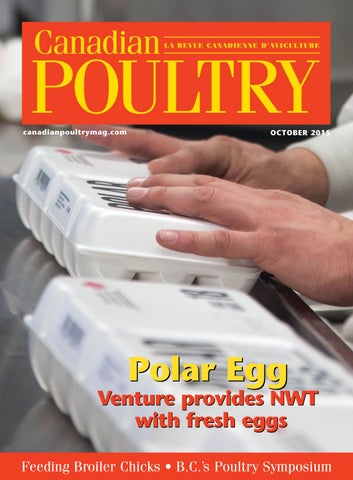
Northerners gain fresh and local egg alternative with Polar Egg venture by Tony Kryzanowski 16
INDUSTRY: Medicine from Poultry by Leslie Ballentine 22
EQUIPMENT: A Complete Change
B.C. egg producer Ken Vanderkooi installs the first enriched colony system in the province by David Schmidt 24
NUTRITION: Feeding the Newly Hatched Broiler Chick by Lisa Hodgins, M.Sc., Monogastric Nutritionist, New Life Mills, a Division of Parrish and Heimbecker, Limited. 32
Managing litter
PRODUCTION: B.C. Holds First Poultry Symposium Avian influenza dominated the day by David Schmidt
42 IN THE BARN: Litter Management Best Management Practices for Maintaining Optimal Brooding Conditions by Blake Gibson, Jones and Hamilton Co.
Eggs in the
Giving chicks the best
FROM THE EDITOR
BY KRISTY NUDDS
Consumers vs. Science
McDonald’s announced its landmark decision to only serve cage-free eggs on its menu by 2025 in all of its North American restaurants. The announcement is of great significance to the North American poultry industry and has undoubtedly set the stage for the future of egg production for the foodservice sector.
Although McDonald’s has lagged behind many of its counterparts in making such a declaration, the corporation’s immense buying power — it purchases approximately 120 million eggs for its Canadian restaurants and two billion for its U.S. restaurants — likely means that more foodservice chains will follow.
Although not wholly unexpected, the decision is somewhat disappointing considering the corporation has placed an increased emphasis on sourcing sustainable ingredients for its restaurants.
The Coalition for a Sustainable Egg Supply (CSES), comprised of leading animal welfare scientists, academic institutions, non-government organizations, egg suppliers, and restaurant/foodservice and food retail companies (of which McDonald’s USA is a participant) in North America released the results of a three-year commercial scale research project on the pros and cons of layer housing systems earlier this year. In addition to cost of production and animal well-being, the CSES examined the effects of conventional cages, enriched cage/colony systems and aviary (free-run) systems on the environment, food safety and quality, food affordability and worker health and safety.
The research showed that each system had advantages and disadvantages in terms of sustainability. Although conventional housing had the best cost for consumers and producers, it was the worst in terms of animal well-being (ability to express
natural behaviours). Enriched housing and cage-free systems fared much better on this score, with aviary being the frontrunner. However, aviary systems scored the lowest in terms of food affordability and worker health and safety. Injuries and bone breakages were also significantly higher in this type of system.
Despite the research, according to McDonald’s consumers want cagefree. John Betts, president and CEO of McDonald’s Restaurants of Canada Limited said in a press release that the company’s “decision to source 100 per cent Canadian cage-free eggs reinforces the focus we’re placing on our food and menu to meet our guests’ changing expectations, allowing them to feel even better about the food they enjoy at our restaurants.”
McDonald’s is wise to give a 10-year timeline for the transition. The U.S. in particular has been lagging on the transition from conventional housing to more welfare-friendly options, and securing two billion eggs per year from cage-free systems is going to take considerable time. Given that McDonald’s USA recently announced some of its markets will serve an all-day breakfast, the number of eggs needed is only going to increase.
Overall, the announcement should be regarded as a strong signal that consumer preferences outweigh scientific evidence. For years, the poultry industry has been saying that science-based evidence should be at the forefront of decision-making with respect to “hot button” consumer issues such as welfare and antibiotic use.
Mary Burnie – mburnie@annexweb.com 519-429-5175 • 888-599-2228 ext 234
Media Designer
Gerry Wiebe
Group Publisher
Diane Kleer – dkleer@annexweb.com
Director of Soul/COO
Sue Fredericks
Mailing Address
P.O. Box 530, 105 Donly Dr. S., Simcoe, ON N3Y 4N5
Publication Mail Agreement RETURN UNDELIVERABLE CANADIAN ADDRESSES TO CIRCULATION DEPT., P.O. BOX 530, SIMCOE, ON N3Y 4N5. email: subscribe@canadianpoultrymag.com.
The fact that the announcement from McDonald’s was quickly followed by a flurry of activity by animal welfare groups heralding the decision (and some even taking responsibility for it), also says we are losing the public relations battle. n
Mail: P.O. Box 530, Simcoe, ON N3Y 4N5
Subscription Rates
Canada – 1 Year $30.00 per year (with GST $31.50, with HST/QST $33.90)
GST – #867172652RT0001
USA – 1 Year $ 66.00 USD Foreign – $75.00 per year
Occasionally, Canadian Poultry Magazine will mail information on behalf of industry-related groups whose products and services we believe may be of interest to you. If you prefer not to receive this information, please contact our circulation department in any of the four ways listed above.
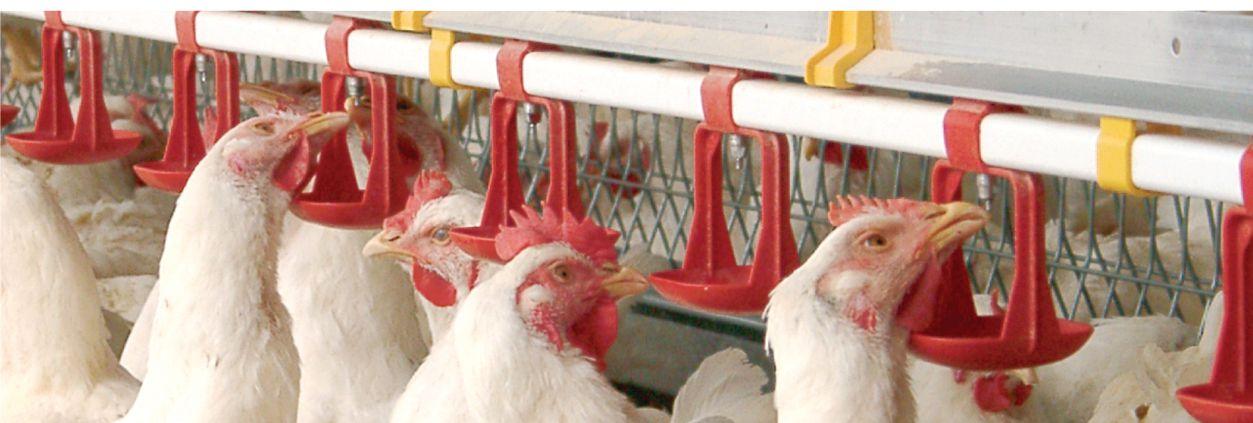
OptiGROW Nipples with easy 360 degree triggering start your birds off to success from day one. OptiGROW nipples can be used with or without LitterGuard cups.
Designed specifically and solely for breeders, the high-flow Breeder Nipple is constructed totally from stainless steel to withstand the aggressive behavior of breeder birds.
Contact your local Lubing Distributor for more information on our Proven Breeder Package or visit our website at www.lubingusa.com.
Glass-Pac Canada
St. Jacobs, Ontario
Tel: (519) 664.3811
Fax: (519) 664.3003
Carstairs, Alberta
Tel: (403) 337-3767
Fax: (403) 337-3590
J. Dean Williamson Ltd.
London, Ontario
Tel: (519) 657.5231
Fax: (519) 657.4092
Les Equipments Avipor
Cowansville, Quebec
Tel: (450) 263.6222
Fax: (450) 263.9021
Specht-Canada Inc.
Stony Plain, Alberta
Tel: (780) 963.4795
Fax: (780) 963.5034
Slow recovery WHAT’S HATCHING HATCHING R
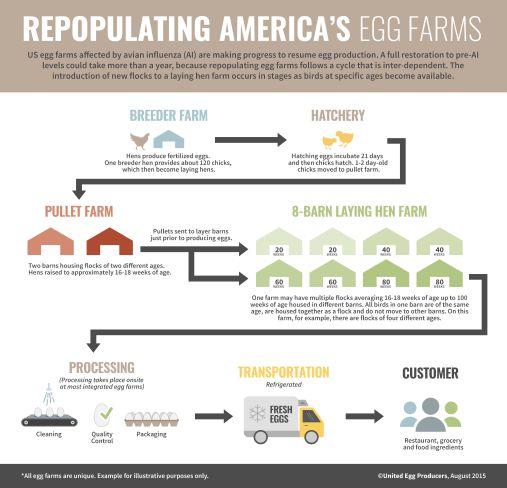
ecovery is underway for the U.S. egg farming community after the devastating outbreak of avian influenza (AI) this spring. While repopulation of flocks on affected Midwestern egg farms continues, egg farmers across the nation are also increasing biosecurity measures and preparing for the possible return of the virus during the fall migratory season.
“Egg farmers affected by AI this spring have been working diligently and are making good strides toward resuming egg production,” said Chad Gregory, president and CEO of United Egg Producers (UEP), in a release. While some of the farms affected earliest in the outbreak time period are beginning to bring young hens back into their barns, Gregory said it will be at least 12 to 18 months before egg production returns to full, pre-AI levels. In addition, farms repopulating must meet stringent cleaning and disin-
fection regulations defined by USDA-APHIS, before they can repopulate.
Although biosecurity and disease prevention have been a priority on egg farms for decades, the UEP said in a release uncontrollable and rapid spread of AI this spring stymied even the best efforts of farmers and animal health experts. In response, U.S. egg farms have enhanced biosecurity measures intended to further protect their flocks, with a focus on these key areas:
• Increasing protocols for controlled movement of workers, birds, vehicles and equipment,
• Ensuring feed and water are not at risk of virus contamination and
• Limiting contact with domesticated and wild birds.
Egg farms are tightening vehicle restrictions, increasing disinfection procedures and
expanding worker training. UEP has reviewed and summarized chapters of biosecurity recommendations from USDA-APHIS for its members, and the American Egg Board distributed biosecurity enhancement recommendations to all commercial egg farmers.
Methods proposed to increase biosecurity range from minor procedural shifts to large investments in equipment and facilities. All egg farmers have been encouraged to work with veterinarians and animal health experts to evaluate current biosecurity programs, consider new recommendations from industry experts, and adjust based on new learnings from AI.
“We pledge our best efforts to overcome this setback and re-build a healthy and viable egg industry,” Gregory said.
United Egg Producers
FPOQ Charity Golf
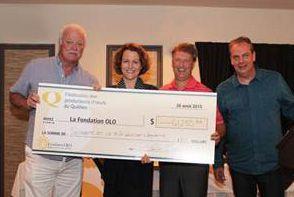
The Fédération des producteurs d’œufs du Quebec (FPOQ) have given $61,250 to Fondation OLO, an organization that provides nutrition and nutritional information to socially and economically underprivileged mothers and children in Quebec. The FPOQ have been involved with the
EFA hosts Environmental Stewardship Workshop
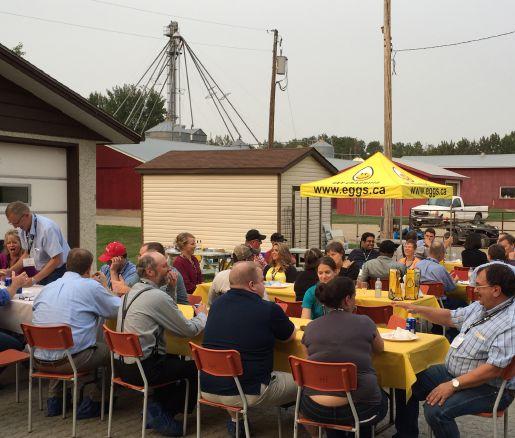
Egg Farmers of Alberta (EFA) hosted an Environmental Stewardship Workshop in Edmonton August 26-27, 2015 that brought together a diverse mix of influencers and decisionmakers from across the egg supply chain, including farmers, graders, retailers and restaurants, as well as industry, government and non-governmental organizations. Participants shared their ideas and provided strategic insights about the past, present and future of sustainable egg production in Alberta.
Susan Gal, General Manager of EFA said in a release that her takeaway from the workshop “is that all stakeholders have a desire to support one another as we work together to build a sustainable egg industry in Alberta, and across Canada.”
For Alberta egg farmers, sustainable egg production is socially responsible, environmentally sound and economically viable. The workshop enabled EFA to share past and present environmental initiatives in Alberta, including the launch of the Producer Environmental Egg Program – the Canadian egg industry’s first on-farm environmental program – and the
charity since 2002 and the announcement was made at the Golf Club of Acton Vale in the presence of over 260 participants. Through its annual contribution, the FPOQ has donated more than $ 550,000 to Fondation OLO. Its donations help provide more than 100,000 coupons for a dozen eggs to vulnerable families annually.
COMING EVENTS
OCTOBER 2015
October 6-8, 2015
Poultry Service Industry Workshop, The Banff Centre, Banff, Alta. For more information, visit: www.poultryworkshop.com
NOVEMBER 2015
November 18, 2015
publication of EFA’s inaugural Sustainability Report. More importantly, the workshop allowed other stakeholders to explain their views and expectations for the future around sus-
especially for those guests that had never been on an egg farm.
EFA says it will take the next step with these stakeholders and others on its journey of continuous improvement. Options are being considered to expand on these existing relationships and engage with additional stake-
tainability, as it relates to the egg industry and food production.
The workshop also included a tour of STS Farms, which is one of the more than 160 registered egg farms in Alberta.
Susan Schafers, chair of the EFA and her family were gracious hosts, leading the more than 30 attendees through the pullet barn, layer barn and egg collection room. It was an enjoyable and educational experience,
holders regarding the past, present and future of other important topics. “Even though we were focused on the topic of environmental stewardship, it was great to see and hear the stakeholders ask questions and offer opinions about the trade-offs between environmental stewardship, hen housing, animal welfare, food safety, economics and other factors,” said Gal.
Canadian Poultry Sustainability Symposium, Best Western Plus Lamplighter Inn and Conference Centre, London, Ont. For more information, visit: www. cpsustainability.com
November 19, 2015
Poultry Innovations Conference, Best Western Plus Lamplighter Inn and Conference Centre, London, Ont. For more information, visit: www. poultryindustrycouncil.ca
JANUARY 2016
January 26-28, 2016
International Production and Processing Expo (IPPE), World Congress Center, Atlanta, Georgia. For more information, visit: www.ippexpo.com
January 28-30, 2016
Pacific Agriculture Show, Tradex Exhibition Centre (Abbotsford Airport), Abbotsford, B.C. For more information, visit: www. agricultureshow.net
HATCHING
USDA hiring vets to fight AI
The United States Department of Agriculture (USDA) is hiring 90 veterinarians on one- and two-year appointments as part of the response to the avian influenza outbreak. The agency also is hiring 210 animal health technicians. This extra staff are among 450 temporary employees expected to help poultry and egg industries prepare for the fall migratory season and help APHIS respond to any infections.
APHIS also is taking a hard look at the National Animal Health Emergency Response Corps following a disappointing response to the H5N2 outbreak. The corps includes about 1,000 vets and about 3,000 animal health technicians who have signed up to be hired by APHIS for emergency work, but many of those called were unable to commit to the 21-day field assignments requested by APHIS during the spring outbreak.
U.S. Stockpiling AI Vaccine
The U.S.D.A’s Animal and Plant Health Inspection Service (APHIS) has been preparing for the potential recurrence of HPAI virus with its state and industry partners. Together, they are examining the potential use of vaccine to help prevent illness in birds and interrupt the spread of the disease. APHIS has announced two actions related to vaccine use: the issuance of a request for proposals for vaccine doses to equip the National Veterinary Stockpile, and notification that APHIS will publish an environmental assessment evaluating the potential environmental
impacts of using vaccine in the event of an HPAI outbreak. While APHIS has not approved the use of vaccine to respond to HPAI to date, the Agency is preparing to ensure that vaccine is available should the decision be made to use it. APHIS is seeking to create a stockpile of vaccine for the Eurasian H5 (EA H5) virus strain that circulated in domestic poultry earlier this year. APHIS has issued a request for proposals for vaccine manufacturers with the interest and capability to supply a variety of EA H5 vaccines in sufficient numbers.
COMING EVENTS
MARCH 2016
March 9-11, 2016
B.C. Poultry Conference 2016, Westin Bayshore, Vancouver, B.C. The four feather boards in B.C. are hosting a joint conference that will feature breakout sessions, trade exhibits, each commodity’s annual meeting and keynote speakers. For more information, e-mail: office@ bcchickengrowers.ca
APRIL 2016
April 6-7, 2016
London Poultry Show, Western Fair District Agriplex, London, Ont. For more information, visit: www.londonpoultryshow.com
JULY 2016
July 11-14, 2016
Poultry Science Association Annual Meeting, Hilton New Orleans Riverside, New Orleans, Louisiana. For more information, visit: www.poultryscience.org
We welcome additions to our Coming Events section. To ensure publication at least one month prior to the event, please send your event information at least eight to 12 weeks in advance to: Canadian Poultry, Annex Business Media, P.O. Box 530, 105 Donly Dr. S., Simcoe, ON N3Y 4N5; email knudds@annexweb.com; or fax 519-429-3094. Please write ‘Event Submission’ in the subject line.
Production
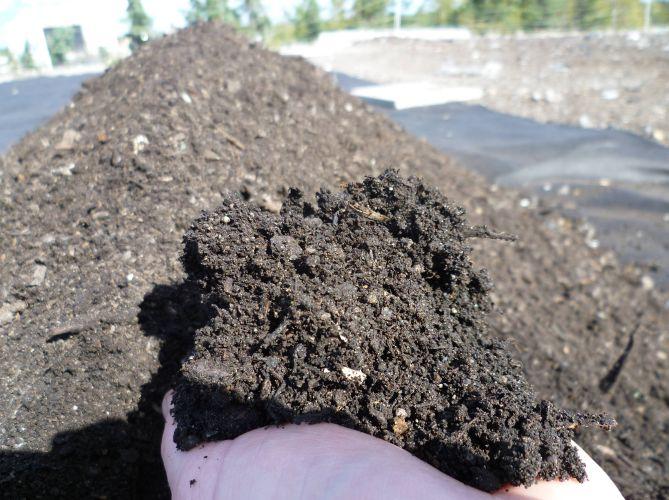
Waste Not Composting at a Northern Egg Farm
by Tony Kryzanowski
Residents throughout the Northwest Territories (NWT) are flocking to the Northern Farm Training Institute (NFTI) in Hay River to learn how to grow crops. The challenge is finding enough productive land in their communities to pursue agricultural endeavors.
That’s where Hay River-based egg producer, Choice North Farms, and its plan to convert its poultry manure into compost could play a vital role to help develop productive soils in many northern communities.
Kim Rapati, NFTI Operations Manager and former Hay River Regional Manager for an environmental advocacy group called Ecology North says that compost is a highly valued commodity in the North because there is so little arable land available in the region to pursue farming ventures in or near the region’s many small communities. Addition of compost to what she described as ‘young soils’ will provide community members with the opportunity to establish and develop their farming skills.
“The composting venture was initiated by us,” says Kevin Wallington, Choice North Farms sales and marketing representative. “In past years, there had been studies done on old poultry sites to see if there was any feasibility in it. But I don’t think there was really a will on the industry side. It really has to be championed by industry to participate in a venture like this.”
The farm houses about 117,000 laying hens producing about 37 million eggs and 3500 tonnes of manure per year near Hay River. It is working with Ecology North, the NWT government, federal government, NFTI and Town of Hay River on its composting venture. The plan is to start with a 160
cubic metre pilot scale site involving the use of about nine tonnes of manure this summer to test various mixing methods and outcomes, with the goal of developing a full scale site consisting of an area of about 18,000 cubic metres as a commercial composting operation hopefully by next summer.
Choice North Farms is owned and managed by Glen Wallington, and his son, Michael. They own part of the operation, and manage another part for a separate egg producer, but all under one roof. They started producing eggs under the Choice North Farms label about three years ago and are among the largest egg producers in NWT as well as being a supporter of the ‘Polar Egg’ initiative. Since 2012, the Polar Egg Company has been certified to grade eggs locally so that not all eggs are shipped to southern markets but also supplied for human consumption in retail stores in the North. Kevin Wallington is also Glen’s son, as well as sales and marketing director for Polar Egg.
At present, their raw manure is collected on plastic conveyor belts and removed from the barns daily, representing about one dump truck load per day that is transported to a designated landfill area 22 kilometers from the barns.
The objective of the composting project is to mix raw poultry manure with waste paper and wood. The paper and wood are necessary as part of the conversion process to produce compost. Because of that, Kevin says they are in discussions with governments such as the City of Yellowknife and Town of Hay River, as well as industries dealing with waste paper, such as paper shredding companies and the Yellowknife newspaper, to discuss possible alliances in the composting venture.
The concept is to establish an open-turned windrow system where the manure, paper and wood are piled into five metre
COLLECTING WASTE
Manure from egg layers at Choice North Farms is collected using a conveyor system and dumped into a truck for disposal once a day
wide by three metre tall windrows. At full scale operation, 3420 tonnes of poultry manure generated by the egg farm will be combined with 2800 tonnes of paper and 500 tonnes of wood to produce about 3400 cubic metres of compost annually. One of the benefits of composting is that through biological activity, it reduces the volume of the raw materials, and produces a marketable, pathogen and weed-free compost that can be used as a soil amendment in a variety of growing environments.
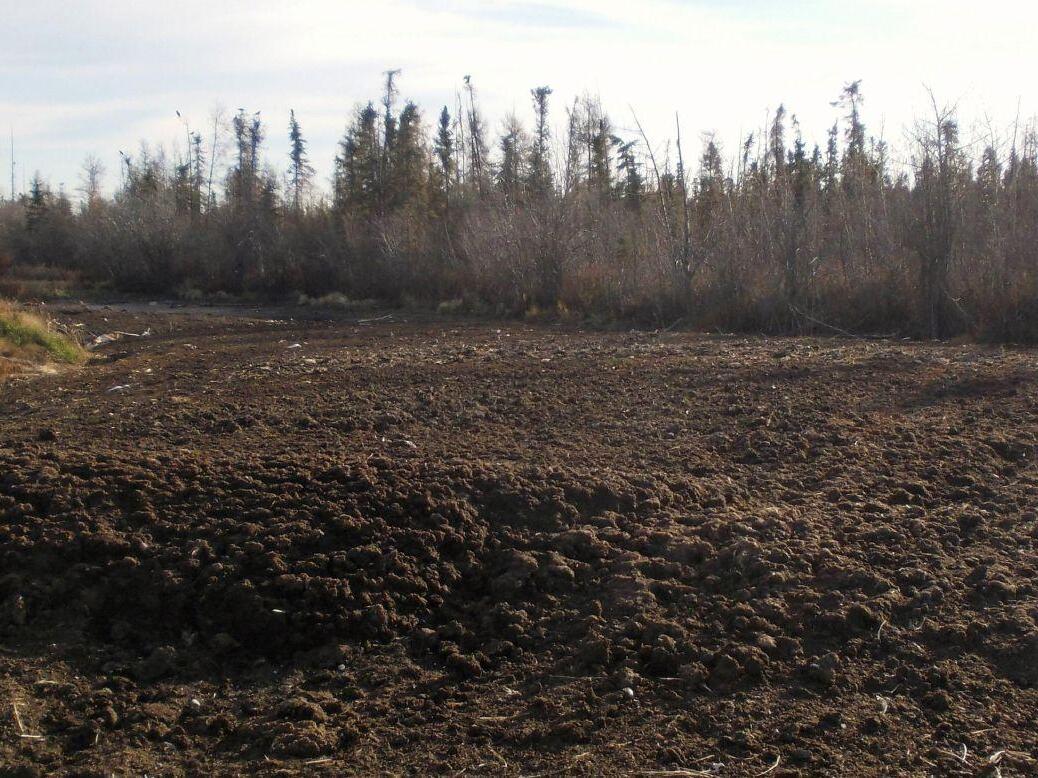
Either a wheel loader or pile turner could be used to turn the piles as needed to improve air flow and encourage the conversion process. Not only does Choice North Farms want to convert their current production of manure, but also to use the thousands of tonnes of poultry manure that they have accumulated in their nearby landfill over the past 15 years.
“This project is a benefit to us because if we didn’t compost, then effectively the landfill becomes a liability for us,” says Kevin. “Some of those pits are fairly deep and I don’t think you’d have to dig too low below the surface to find that it is fairly fresh after it’s been there for some time.” He adds that there are no issues with the landfill currently, “but I know that the government is excited about our project because the North is full of stories where people just walked away from things.”
Wallington says that the egg producer had no experience with composting and that is a major benefit that Ecology North has brought to the partnership, providing the technical knowhow needed to launch a composting venture.
Savings in diverting paper waste from the Hay River landfill to the poultry farm composting site is estimated at almost
14,000 cubic metres of space, and at $150 per cubic metre, that is a savings of just over $2 million per year. The project costs of establishing the site were estimated at about $350,000, with additional capital costs of $459,000 and annual operating costs of nearly $136,000. To recover those costs, it is estimated that there is the potential to generate just over $235,000 per year in compost sales at $70 per tonne, with the sales and marketing handled by Choice North Farms.
The egg producer has been speaking to the NWT government for a couple of years about acquiring a fresh parcel of land for the composting site, separate from its existing manure management landfill. It is located about 300 metres from the stockpiled manure in the landfill for easy access.
From a technical standpoint, poultry manure is high in nitrogen and phosphorus and requires the addition of carbon for the overall composting process to work. Choice North Farms is relying on the mentorship and experience provided by Ecology North and is also working with a laboratory in Yellowknife to establish the proper mix to produce high quality compost as an end product. Rapati says that despite the sub-arctic temperatures in northern Canada, it is possible to produce high quality compost, but it takes longer because the air temperature does not stay warm for as long as areas further south. The temperature in the windrows is required to achieve at least 55 degrees Celsius for 15 days and turned five times to ensure that the conversion is complete. Producing compost is more of a time management process in the North adapted to suit local conditions. Rapati says the conversion to marketable compost could probably be
Continued on page 40
Choice North Farms is hoping to use the poultry manure building up on its current landfill site near Hay River, NWT to make compost as a soil amendment.
New Technology Polar Egg
Northerners Gain Fresh And Local Egg Alternative With Polar Egg Venture
BY TONY KRYZANOWSKI
They don’t have polar bear insignias stamped on them like Canadian diamonds, but eggs from distributor and marketer, Polar Egg are gaining popularity with Northwest Territories (NWT) residents as a fresh, locally-produced alternative to eggs shipped from the south.
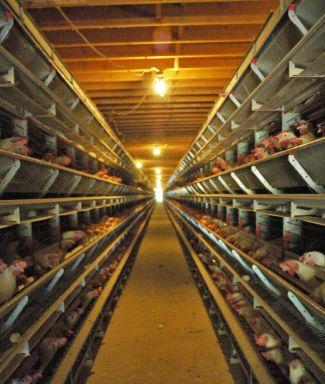
The launch of the egg grading and marketing company in Hay River, NWT in 2012 marked a significant milestone for the region, and brought a smile to many territorial and Egg Farmers of Canada authorities eager to encourage Northerners to consume locally-produced eggs. After the egg grading for human consumption operation in Hay River shut down about 10 years ago, NWT residents could not purchase locally-produced eggs in retail stores despite several local poultry farms producing eggs commercially. The grading station was still functioning, but essentially was only grading eggs for industrial use and shipping them south. Now, many Northerners can consume fresh, locally-produced eggs thanks to a half a million dollar investment by Hay River Poultry Farms Ltd, with financial support from both the NWT and federal governments. The funds were used to purchase equipment, upgrade facilities and train employees in grading eggs for human consumption and understanding the need to maintain a clean facility.
Operating under the Polar Egg brand name, the company is owned by Hay River Poultry Farms. Eggs are supplied to Polar Egg by this company and Choice
Kevin Wallington (foreground), Polar Egg sales and marketing manager was hired by company owner, Hay River Poultry Farms, to spearhead the egg grading for human consumption initiative at the company’s headquarters in Hay River.
North Farms, both located near Hay River. They operate a fully modern, Canadian Food Inspection Agency (CFIA)-approved, grading station employing seven people in Hay River. Kevin Wallington, Polar Egg sales and marketing manager, joined the company in 2011 to spearhead the project and to obtain CFIA certification, which was no easy task. The facility began selling eggs locally for human consumption in December 2012.
“It’s a commercial venture, but the way the grading station is set up with CFIA and Egg Farmers of Canada, any farmer can sell their eggs to the grading station if they
chose to,’” says Wallington.
The project, which was supported with about a $150,000 contribution from the territorial and federal governments, involved removal of all the old grading equipment and installation of state-ofthe-art Brazilian grading machines. They also completely renovated the grading station interior. Then came the process of hiring and training employees and obtaining CFIA certification, which took over a year. Today, Polar Egg is grading between 30,000 and 50,000 eggs per day and is a small operation compared to grading businesses further south that typically grade
LOCAL PRODUCTION
several million eggs per day.
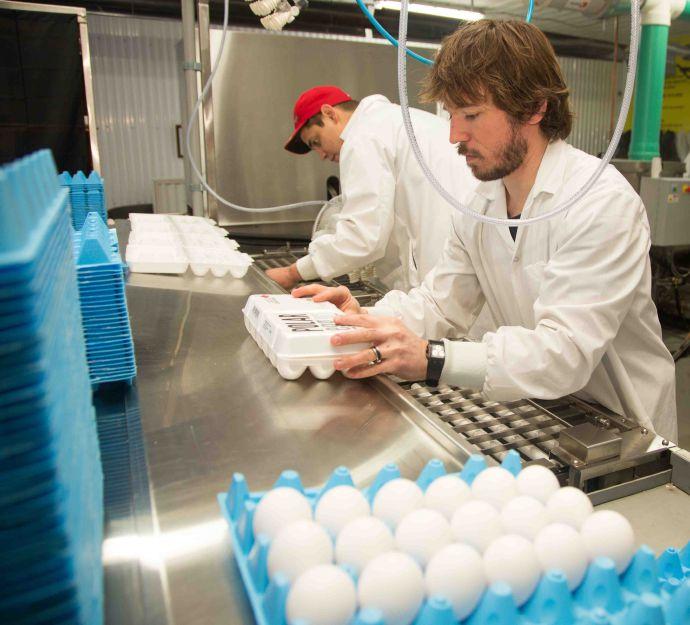
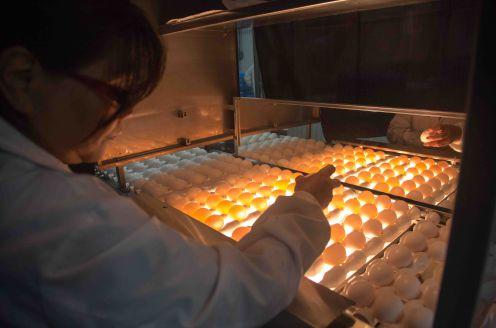
“The grading process is predominantly manual,” says Wallington. “They are loaded by one individual, processed through a machine, candled by a second individual, and then there are two people who offload and package them by hand.”
While the company currently markets about two million eggs to northern retailers from annual production of about 34 million eggs, their goal is to achieve six million eggs per year. However, they have experienced a few roadblocks to expanding their market in NWT.
Northern food retailing is dominated by a couple of companies located in southern Canada, and because of contractual agreements with egg producers in the south, several have so far declined to carry the locally-produced Polar Egg brand in their stores. This is despite what Wallington says is high demand from northern residents for locally-produced eggs. There are exceptions, such as the Loblaws store in Yellowknife, which carries the Polar Egg product. However, other retail outlets tend to be independently-owned, local businesses. Wallington says he hasn’t given up because there is tremendous support being voiced for the Polar Egg product among local store managers and brisk sales have occurred in test market endeavors. He says he will continued to try to crack that distribution egg in the corporate head offices of the major retailers, primarily headquartered further south in places like Winnipeg, to achieve Polar Egg distribution through their stores in the North as well.
He adds that in theory, Polar Egg brand products should be highly competitively priced in local retail stores because the company does not have the same transportation costs as retailers who ship in eggs supplied by southern producers. However, Wallington says Polar Egg can’t control how much local retailers want to mark up their product. To help large egg consumers,
Grading eggs at Polar Egg in Hay River, NWT still involves a lot of manual labour, which provides valuable, high paying jobs
such as people who bake a lot of food, Polar Egg has established an alternative purchase option. Customers can buy more competitively priced, loose eggs in bulk directly from the company’s grading facility in Hay River.
While other Canadians take access to fresh food for granted, it’s not common in the North and initiatives like Polar Egg are helping to change that. At present, the eggs are available in several communities, with core distribution in Yellowknife, Hay River, and Fort Smith.
“In the last couple of years, we have seen a resurgence of farmers markets in Hay River, so in the summer time, people can access some fresh produce that’s grown here,” says Wallington, “and obviously we have a lot of fish in Hay River. So you can get a lot of fresh fish. The fresh eggs are a great addition and I have been made aware that people are very excited that they can get farm fresh eggs in Hay River.” n
15HY010-HybridDramaticAds_1/4page(4)_CanadianPoultry_vf_3.pdf 1 2015-07-28 11:23 AM
what does value mean?
CPRC Update Airborne Pollutants
Agricultural operations contribute to the atmospheric burden of pollutants, mainly in the form of ammonia (NH3), particulate matter (PM) and greenhouse gases (CH4 and NO2). Poultry operations are major emitters of PM and NH3 whereas other pollutants are emitted to a lesser degree. Much still remains unknown about the variability in the emissions of pollutants.
Additional issues are evident with PM that relate to its composition, toxicity and pathogenicity. PM2.5 are typically secondary particles formed by the reactions of specific gaseous pollutants that create fine airborne salts and liquid aerosols. Secondary inorganic aerosol (SIA) formation chemistry typically involves NH3 as an alkaline precursor gas. As NH3 is produced in poultry houses, SIA particles may be partly responsible for the high PM2.5 levels observed. Thus, if SIA are being formed, it may be feasible to reduce the toxic PM2.5 levels in the house by targeting gaseous NH3 and/or the other reactive gases directly with control methods and thus reduce exposure to both poultry and barn workers.
Dr. Bill Van Heyst and his team from the University of Guelph’s School of Engineering conducted a study to determine some of the impacts poultry production has on our environment.
OBJECTIVES
The study investigated the indoor concentrations and emissions to the atmosphere of a variety of air contaminants from different poultry production systems. Measurements included:
• Air emissions from poultry housing units
• Air emissions from litter storage facilities
• Ammonia emissions from land application of litter
• Assessment of nitrogen loss via emissions from deadstock composting
The overall objective of this project was to provide a sound scientific knowledge base regarding actual agricultural air emissions. Contaminants focused on included: size fractionated particulate matter (PM), NH3, SIA concentrations and emissions as well as that for CH4 and non-methane volatile organic compounds, sulfur dioxide and other gaseous gases.
Air emissions from poultry housing units:
a) Broiler and Layer facilities
Actual pollutant emissions were determined for broiler chicken (NH3, PM2.5, PM10 and CH4), layer hen (NH3 and PM2.5 and PM10), and turkey grow-out (NH3 and PM2.5 and PM10) housing units
NH3 and PM10 emissions peaked during the winter months, while PM2.5 emissions peaked during the summer months in the layer hen facility
b) Efficacy of a sprinkler system to control NH3 and PM levels
Use of a sprinkler system reduced pollutant emissions more so for PM10 and PM2.5 than NH3 emissions.
c) Effectiveness of Poultry Litter Treatment (PLT) application Poultry litter treatments reduced ammonia emissions
Measurement of air emissions from litter/manure storage facilities:
a) Broiler litter storage facilities emit more CH4 than that from cattle manure but less than liquid swine manure storage facilities.
b) Broiler litter storage facilities emit more N2O than that from cattle
manure and liquid swine manure storage facilities.
Measurement of air emissions from land application of manure/litter:
a) NH3 losses from the broadcasted broiler manure were found to be 22 per cent and 25 per cent of the NH4-N applied after 72 and 132 hours respectively.
Measurement of nitrogen loss via ammonia emissions from deadstock composting
a) The NH3 emissions for piles using poultry litter were greater than that of the control (wood chips) and the finished/mature poultry compost, whereas the CH4 emissions were the lowest.
Dr. Van Heyst’s research was supported by the Natural Sciences and Engineering Research Council of Canada, Poultry Industry Council and CPRC.
SPONSORSHIP
Aviagen Inc. renewed its Research Sponsorship for 2015. CPRC appreciates Aviagen’s continued support of poultry research through the Research Sponsorship Program (www.cp-rc.ca). Aviagen funds have helped support more than $8 million in poultry-related research through both CPRC’s annual funding call and as part of the Poultry Science Cluster since 2012. n
CPRC, its Board of Directors and member organizations are committed to supporting and enhancing Canada’s poultry sector through research and related activities. For more details on these or any other CPRC activities, please contact The Canadian Poultry Research Council, 350 Sparks Street, Suite 1007, Ottawa, Ontario, K1R 7S8, phone: (613) 566-5916, fax: (613) 241-5999, email: info@cp-rc.ca, or visit us at www.cp-rc.ca.
Industry Medicine from poultry
Poultry has several advantages for use in biomedical models
BY LESLIE BALLENTINE
While poultry are best known for producing food, use in medical research and production is a lesser known but prominent use too. Researchers say there are several advantages to using poultry as biomedical models. One is that chickens, turkeys and ducks are self-sufficient from the time of hatching, grow quickly and require little parental care. Second, they are capable of adapting to a variety of environments, both farm and laboratory, and are easy to handle. Third, compared to traditional laboratory species, such as the genetically altered mouse, dogs, or rabbits, chickens are inexpensive to purchase and maintain. And finally, researchers using poultry as biomedical models have the benefit of conducting research with a species where much is already known about them.
EXTENSIVE CONTRIBUTIONS
For these reasons and others poultry are often used in medical research. Although subject to Canadian Council for Animal Care oversight, the specific poultry numbers (vs. all birds) are not reported. However, in looking through the literature the contributions made by poultry to medical research are extensive and impressive. White leghorn chickens are used to study sclerosis and heart disease. Broiler chickens are used
Poultry species have many advantages for biomedical research and are used as models for studying multiple human diseases and medical conditions
in cystic fibrosis research. Specially-bred chicks are considered, along with genetically altered mice, as possible models for studying the basic mechanisms of muscular dystrophy. That is because certain strains of chickens spontaneously develop muscular dystrophy with features similar to the human version.
Chickens, turkeys, and ducks are used as models for studying, cardiomyopathy, atherosclerosis, hypertension,
and cholesterol metabolism. Turkeys are being used to study antimicrobial resistance mechanisms and muscular atrophy. Because birds are susceptible to several viruses that result in tumors in body tissues, they are a model for cancer research. Poultry are also used in bone development, pathology, and surgical studies. In fact, poultry are used as models for studying a range of systems, organs and conditions, including the:
IDEAL CANDIDATE
Used year-round in your flocks, Coccivac® vaccine can help achieve simple, sustainable and profitable prevention against coccidiosis. Resistance is not an issue, so Coccivac frees birds from the stress associated with in-feed anticoccidial rotation and shuttle programs. You and your feed company can focus on improving nutrition and better gut health.
To make the transition to Coccivac, go to www.becauseitworks.ca, talk to your veterinarian or speak to your Merck Animal Health representative.
The New Coccivac® Live Coccidial Vaccines Guide is available now at www.becauseitworks.ca
muscular system; urinary system; renal/ kidney system; nervous system; immunology; nutrition; liver; pancreas; genetics; dermatology; toxicology; developmental studies; vision; and audiology. And as test subjects, poultry are used as experimental animals for testing cardiovascular, anti-depressant, cancer, antiepileptic, and anti-inflammatory drugs.
VISION STUDIES
For example, in vision research, birds are used as models for investigations of eye conditions in humans. The visual system of chickens has been studied as a model for glaucoma, cataract formation, hereditary blindness, and visual cell development. Recently Australia’s University of Canberra announced research results, using young roosters, into short-sightedness, showing sunlight exposure can increase protection against
Industry
the condition. Assistant professor of visual neuroscience Regan Ashby works with very young roosters in his study because, as he explained, the chickens’ visual system is similar to humans and his results translate well to the human model. Myopia (short-sightedness) is a growing problem.
FACIAL DEVELOPMENT
Closer to home, in an experiment at the University of British Columbia a research team headed by Dr. Joy Richman, a pediatric dentist, is studying facial development. She says, “The chicken embryo is ideal for these experiments since the environment can be locally changed in many ways either by local release of chemicals or by surgical manipulation.” Now in phase two, she explains that, “[w]e are presently extending these studies, by studying certain genes that were
identified as being changed following the implantation of face transformation signals into early embryos.” This research she says “could help scientists understand normal facial development and what causes facial deformities.”
HEARING STUDIES
Since chickens are able to restore their own damaged hearing, they are being used in hearing loss research. Researchers are identifying how supporting cells in the chicken’s ear replace damaged hair cells responsible for hearing, as well as working to find potential compounds or drugs that can make this happen in people. According to the Canadian Association of the Deaf there are approximately 350,000 profoundly deaf and deafened Canadians and possibly 3.15 million hard of hearing Canadians. Chicken eggs meanwhile have wide
Euro 2012 Meller’s Alternative Housing
Integrated into each cage are perches, large nesting area, scratch area, LED lighting and manure drying capabilities. The Euro 2012 System offers heavy duty manure drives, chain feeding systems, overhead or lift type egg collection and the “Egg-Ease” egg saver system.
medical uses. They are used to study the various effects of drugs, hormones and other chemicals on developing embryos. And they are used to study embryo development. For example, the chick embryo has served as a model for investigating normal cell differentiation and birth defects. These studies are then extrapolated to apply to humans.
Shell-less eggs are being used to screen for potential new drugs to treat multiple myeloma, a currently incurable cancer of the bone marrow. By growing human myelomas in shell-less chicken eggs researchers are able to add antimyeloma drugs and observe whether they are able to kill the specific myeloma cells. Principle EU researcher Gerold Untergasser explains that the “chicken egg is much easier to handle and cheaper than mice and it reduces the number of animal experiments,” adding, “Our vision for the future is that a separate test is performed for each patient to determine which drug is best suitable.”
Commercial medicines also rely on poultry. Rooster combs are the basis for injection-able treatment for osteoarthritis of the knee and hip. The proteins that are made out of that are similar to the proteins made in joint fluid and the natural substance lubricates and cushions joints.
Industry
University of Alberta researcher Hoon Sunwoo has developed a pill from egg antibodies that allows celiac sufferers to ingest gluten. According to recent media reports, the University of Alberta researcher has created a pill that uses naturally occurring antibodies in chicken yolk to prevent celiac sufferers from reacting to gluten. “The egg yolk antibody, in its natural form, contains a high level of very specific antibodies against gluten. These antibodies are able to neutralize the gluten from food,” he said. Parts of the research were supported by grants from Alberta Livestock and Meat Agency, Alberta Agriculture and Forestry, and Alberta Innovation and Advanced Education.
only will this new drug meet the needs of the medical community but will also support new demands for fertilized egg production in Canada, he notes.
Chickens themselves have been used by immunologists to produce antibodies for research purposes since at least the 1980s. That’s because the chicken’s immune response is stronger than either a rodent’s or a human’s, so an immunized hen will secrete large quantities of antibodies into the eggs they produce. These antibody-enriched eggs can be collected and purified, and the antibodies used in additional experiments into human and animal vaccines.
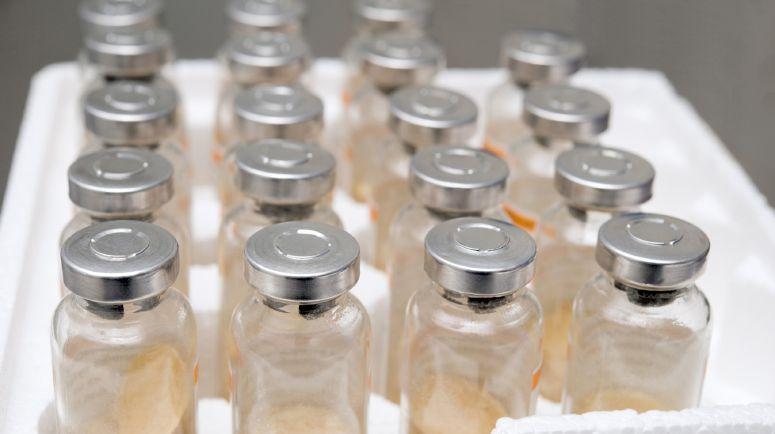
Fertile chicken eggs are specifically produced for vaccines made in Canadian pharmaceutical labs. These include both human and animal vaccines. Some of the vaccines that are made from eggs are influenza, mumps, rubella, eastern equine encephalitis, most all poultry vaccines, rabies, canine distemper and yellow fever. In Canada around 700,000 birds produce fertile eggs used for vaccine production annually.
Although just a small percentage of Canadian poultry production goes into medical applications, it plays an important role that shouldn’t be overlooked. n
15HY010-HybridDramaticAds_1/4page(4)_CanadianPoultry_vf_3.pdf 2 2015-07-28 11:23 AM
And in 2013, Egg Farmers of Ontario committed $1 million to a leading edge project into a new generation of anti-depressants derived from fertilized hen’s eggs. Rellidep, under development by Ontario-based United Paragon Associates, is working its way through the multiple testing phases for market approval. The company is still fundraising to conduct the testing, according to EFO executive director Harry Pelissero. Once the necessary funds are raised, the company will embark on phase two studies as part of the process for approval by Health Canada. Not
Equipment
A Complete Change
An increase in minimum space allowances led B.C. egg producer Ken Vanderkooi to install the first enriched colony system in the province
BY DAVID SCHMIDT
Alarge increase in egg quotas combined with a new B.C. Egg Marketing Board (BCEMB) order increasing the minimum space/bird are forcing B.C. egg producers to consider how best to meet the new requirements.
Since the BCEMB has not outlawed caged egg production (as some U.S. states have done), some producers have chosen to simply add extra footage and extra cages to their barns and reduce the number of birds/cage. Others have decided to make a complete change in their operations.
Ken Vanderkooi of Kenettas Farms chose the latter option. Aug. 12th, a week before the first layer barn was to be populated, he invited industry to tour his brand new state-of-the-art multi-million dollar farm.
Not just the barns and equipment are new. Vanderkooi has been farming in poultry-dense Abbotsford but his new farm is located across the Fraser River where the nearest poultry barn is about a kilometre away.
“I am isolated over here but still only half an hour from Abbotsford,” Vanderkooi says, adding “after avian influenza hit the area in 2004, I said it wasn’t going to catch me a second time.”
He bought a second farm in Nanaimo on Vancouver Island (operated and now owned by his son, Dwayne) “to be away from all the farms here in the valley” but
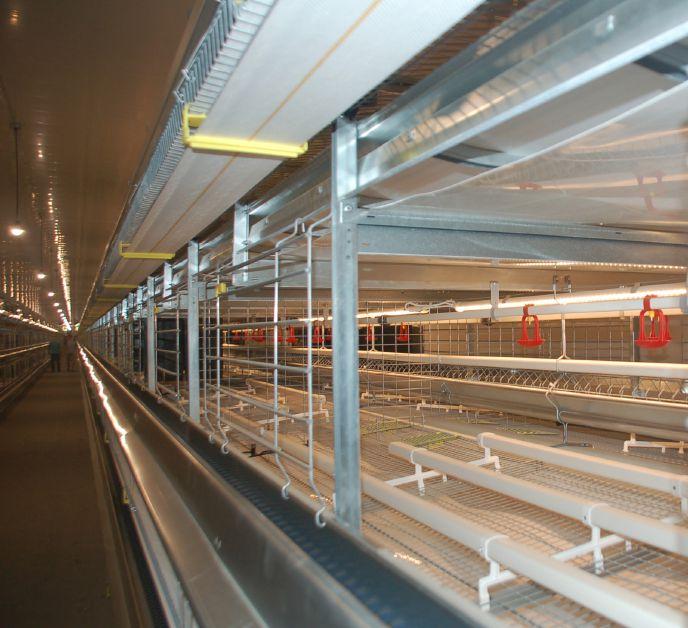
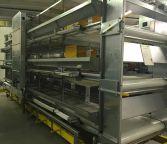
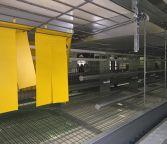
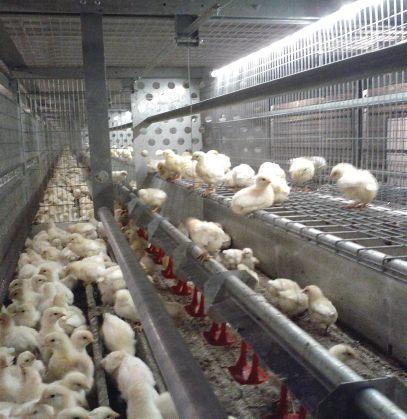
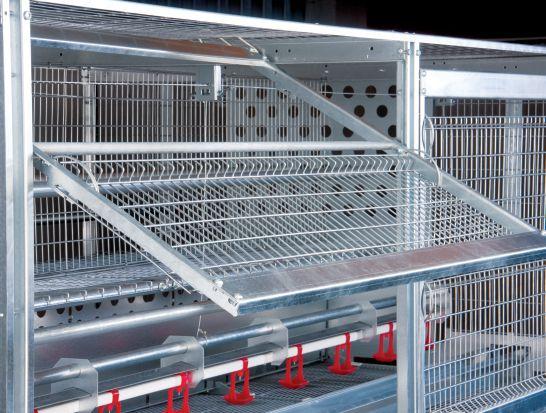
Each colony includes a feeding/living area with LED lighting and a darkened nesting area. The feeding area includes 12 cm of feeding space/bird and 15 cm of perch/bird.
continued to farm in Abbotsford.
He almost waited too long to move the rest of his birds. Just over a month after starting to build the new farm, AI again surged through the Fraser Valley but, fortunately, he and most other local farmers escaped unscathed.
NEW BARN FEATURES
The new farm includes two 40X450 foot layer barns and a 36X255-foot pullet barn. All three barns are built with the Octaform system with its food-grade PVC-finish.
“Octaform is completely sealed,
Canadian Food Inspection Agency approved and cleans up a lot better than plywood,” says equipment supplier Leo Apperloo of United Agri Systems. “I expect the coating to last at least 15-20 years.”
The layer barns have tunnel ventilation with TPI shutter inlets instead of doors while the pullet barn has a twostage ventilation system, also with TPI shutter inlets. New to B.C., the TPI inlets keep the tunnel ventilation system slimmer, eliminate the need for an outer alcove and better direct the air. When inlets first open, they direct the air towards the ceiling but when the system
COLONY FEATURES
fully kicks in (400 cubic feet/minute), the shutter position forces the air to the floor maximizing airflow through the barn.
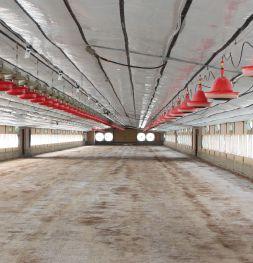
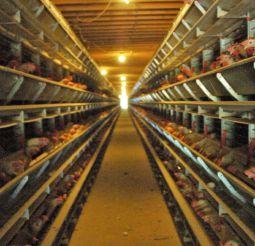
As isolated as the location is, as impressive as the buildings are, as innovative as the ventilation system may be, they pale in comparison to the equipment within: the Valli enriched colony system. Although Valli international sales manager Paolo Zazzeri notes there are already “many” units in the prairie provinces, this is the first in B.C. Vanderkooi says his son Jon, who will run and eventually own the farm, selected the system.
“Jon is responsible for everything we have done here, including the barn design. He had seen the Valli system working in Italy and told me that’s what he really wanted,” he says. “I agreed as he has to be happy because he is the one working the system and the one who will eventually have to pay for it.”
Vanderkooi admits the system is unlikely to increase productivity but will improve livability, noting it meets the requirements of the Humane Society of the United States (HSUS) and other animal welfare advocate groups.
“I believe this is where the industry’s future is,” he says.
The system includes 711 “colonies” in three tiers. Each colony is 10 feet
long and 5.91 feet wide and designed to accommodate 72 birds, giving the entire system a total capacity of 51,192 layers. This gives the Vanderkoois plenty of room for future quota increases as their current quota holding is about 45,000 birds.
They can even increase their flock size well beyond 51,000 birds in future as the barns are tall enough to accommodate a fourth tier.
“We use heavy-duty steel construction so we can go up to 12 tiers if we need to,” Zazzeri states.
COLONY FEATURES
Each colony includes a feeding/living area with LED lighting and a darkened nesting area. The feeding area includes 12 cm of feeding space/bird and 15 cm of perch/bird. There is both a central feeding system and an external feed trough. In an interesting innovation, there is a perforated guard the birds step on as they access the feed trough. The perforations are intended to shorten the nails.
Strips hanging in the nesting area keep light to a minimum, a plastic mesh
15HY010-HybridDramaticAds_1/4page(4)_CanadianPoultry_vf_3.pdf 3 2015-07-28 11:23 AM
Continued on page 30
IN YOUR WORLD
what does partnership mean?
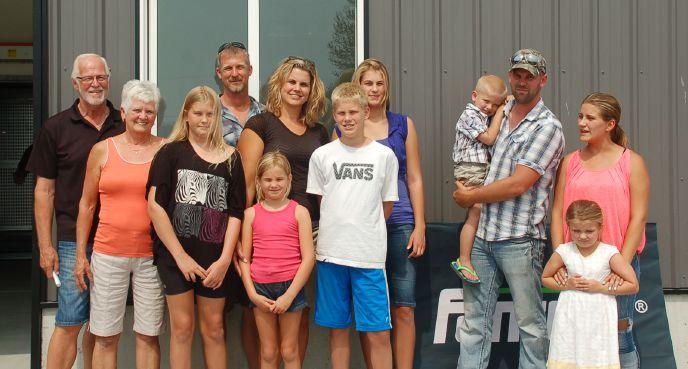
The Vanderkooi family (LtoR): Ken, Henrietta, Aimee, Dwayne, Julie, Renee, Calvin, Kaitlyn, Tyson, Jon, Taryn and Payton.
Feeding the Newly Hatched Broiler Chick
Some key strategies that producers can use to help birds transition to feed and water as soon as possible.
BY LISA HODGINS M.SC., MONOGASTRIC NUTRITIONIST, NEW LIFE MILLS, A DIVISION OF PARRISH & HEIMBECKER, LIMITED
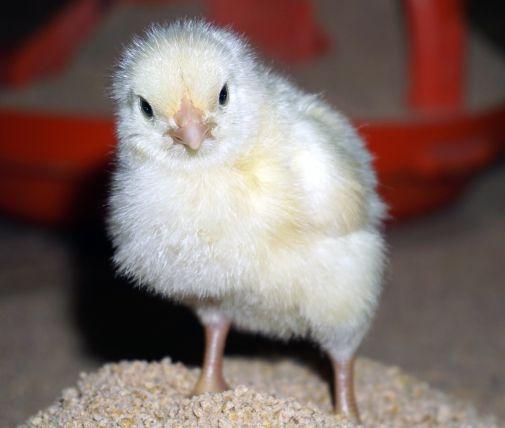
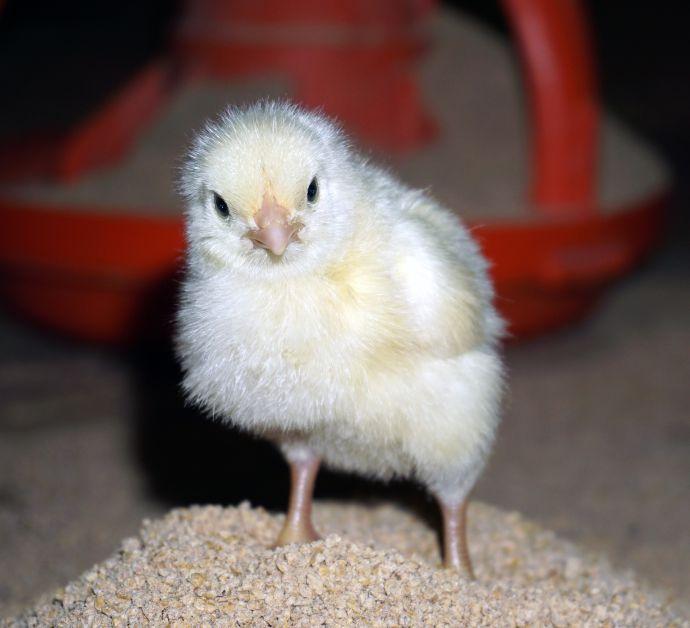
As the baby chick grows and develops inside an egg, the yolk is the sole source of nutrients to support its development. Just prior to hatch, the residual yolk is moved into the chick’s body where it functions as a temporary nutrient source for the baby chick for up to 4 days after hatch. Even with this residual yolk functioning as a nutrient source, it is critical to give chicks access to feed and water as soon as possible after hatching as this will serve to stimulate the growth and development of the digestive system.
INCREDIBLE GROWTH
Once chicks are placed in the barn, and they have access to feed and water, they undergo a very sudden change in the source of their nutrient supply. Chicks must transition from using the energy and nutrients supplied solely by the yolk to those supplied predominantly by plant-based carbohydrates, proteins, fats, vitamins and minerals formulated in to commercial feed. As soon as the chick consumes the first crumble of feed a very rapid change in regards to the growth and development of the
Nutritionist Lisa Hodgins explains how producers can help newly hatched chicks transition to feed and water quickly
gastrointestinal tract (GIT) begins. This accelerated development is significantly affected by the presence or absence of food. It has been reported that the size of the small intestine increases by an amazing 600 per cent within the first seven days of life post-hatch. The changes in the GIT include the development of crypts which serve to increase the
surface area of the intestine. In addition, there is a large increase in the number and size of villi lining the intestine. There is also a very rapid development of enzymes as soon as chicks have access to feed. Feed intake will trigger the production and secretion of enzymes which are required to facilitate the break down and enhance the digestibility of
the ingredients in the feed. If birds are not given access to feed and water after hatch, the development and secretion of these enzymes will not occur.
FEED ACCESS
There are a few key strategies that producers can use to help birds transition to feed and water as soon as possible. First, feed should be placed on paper prior to placement so that it is easily found by the chicks when they arrive in the barn. A good guideline is to have approximately 70 to 100 grams per chick placed on paper and the pans should be flooded. When birds arrive, it is very important that they are placed on the paper and close to the feed and water lines. The goal is to make it as easy as possible for chicks to find the feed and water. A good measure to determine whether or not chicks have got off to a good start is to look at crop fill. To do this, randomly pick approximately 50 chicks and softly feel their crop. If they have had a meal, their crop will be full and plump. It should be easy to feel feed inside the crop when it is full. 24 hours after placement, crop fill should be 95-100 per cent indicating that the chicks have successfully had a meal. Any delay in accessing feed will have a negative impact on body
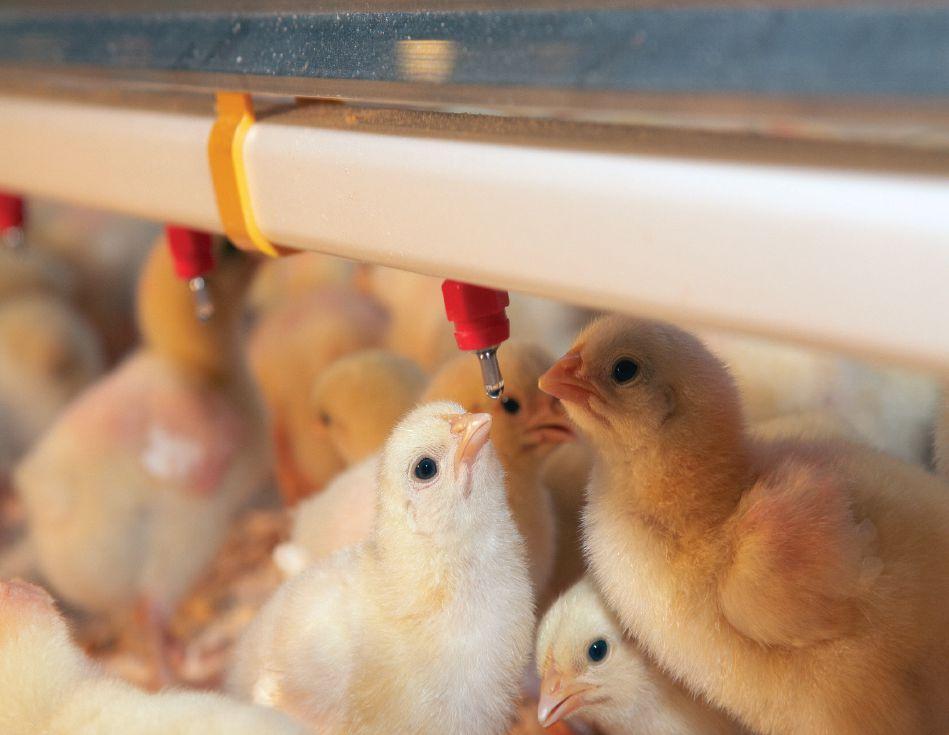
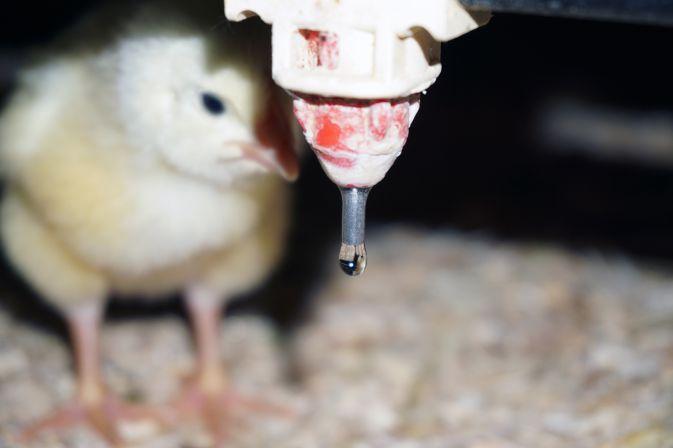
Hand triggering nipples by hand prior to chick arrival so that a water droplet is visible will attract chicks to the water lines and help them find it quickly
weight gains throughout the life cycle of the bird.
WATER ATTRACTION
It is also important to ensure chicks have access to water. One can trigger the nipples by hand prior to chick arrival so that a water droplet is visible to them. The sparkle of the water droplet will attract the chicks to the water lines thereby improving the likelihood that they will
find water quickly. It is also important to make sure that the drinker lines are at the correct height for the birds. This should be reviewed daily and adjusted as required.
15HY010-HybridDramaticAds_1/4page(4)_CanadianPoultry_vf_3.pdf 4 2015-07-28 11:23 AM
IN YOUR WORLD
what does perspective mean?
Since the gut structures grow and change very rapidly once chicks have access to feed and water, the early development and growth will set the bird up for optimal gut conditions throughout its life. Having early access to feed and
LET’S MAKE THIS A HAPPIER THANKSGIVING
For the seventh year in a row, Turkey Farmers of Canada has donated $50,000 to Food Banks Canada to help more Canadians enjoy a wholesome, nutritious meal at Thanksgiving. This year, we’ll also donate an additional $1 each time our #TurkeyFarmersCare graphic is shared on Facebook, Twitter or Pinterest, to a maximum of $2,000.
It’s just one of the ways Canadian turkey farmers are working to make this a happier Thanksgiving for Canadians.
Won’t you join us in sharing?
water as well as maintaining good gut health is key to optimizing growth, enhancing immunity and preventing pathogens from being able to thrive. When the chick hatches, the population of microflora in the GIT is essentially zero. The development of gut microflora will begin relatively quickly at hatch as the chicks explore their new environ ment and pick up bacteria from people, the environment and feed. Within 24 hours post hatch, the baby chick will have a thriving population of bacteria in its crop and parts of the small intestine. At 14 days, the population of micro flora should be well established. It is important to maintain a good popula tion of microbes in the gut in order to exclude harmful pathogens. Simply put, the “good guys” will keep the “bad guys” like Salmonella, Campylobacter, and Clostridium at bay. While the early access to feed will help the birds to establish a good population of microbes in the GIT, the type of feed ingredients we offer the chicks can also influence overall gut health and development. Nutritionists can use ingredients such as: enzymes, probiotics and essential oils to help maintain a healthy gut. The addition of enzymes will supplement the birds own enzymes and give them a boost to help break down the ingredients in the feed. Probiotics are a category of ingredients that introduce microbes to the bird though the feed which then boosts the population of “good guys” in the GIT. Populating the gut with good microbes will make it difficult for the bad ones to thrive because there is too much competition for the resources needed to grow and reproduce. Essential oils have been found to have some bactericidal properties while mannan oligosaccharides (MOS) have been found to have binding affinity for pathogens and essentially trick the pathogens into binding to them instead of the gut wall. Using these types of additives in feed is just another strategy that can be used to maintain good gut health.
Early access to feed and water is nec essary to promote good gut development and get chicks off to a good start. If
Nutrition
the flock gets on to feed and water quickly and there are no other factors (i.e. nutritional, environmental or disease challenges), you can expect the 7
ensure that chicks have access to good quality feed and ingredients will help the bird to grow efficiently throughout the grow out period and will payback in
SYMpOSIUM – 9:30 am to 4:30 pm
SpeakerS:
Nathan pelletier, Global ecologic
Nathan has been working with Canadian egg farmers. He will present his report findings on measuring environmental impacts and assessing the life-cycle of a farm, and what it means for sustainability.
Crystal Mackay, Food and Farm Care
Crystal will explain how opening a Canadian chapter of the Center for Food Integrity will help Canadian farmers and food business reach out to consumers to build trust in how Canadian food is produced.
robin Horel, president & CeO of Canadian poultry & egg processors Council (CpepC)
Join our Interactive round Table discussion
– Where do we go from here?
poultry Industry Council and Canadian poultry’s aWarDS BaNQUeT
5:00 - 6:00 pm – Social Hour 6:00 pm – Banquet
key Note Speaker – Craig klemmer, FCC Sr agricultural economist
Craig Klemmer is a Senior Agricultural Economist at FCC with experience in agricultural markets and risk. He specializes in monitoring and analyzing the macroeconomic environment, modelling industry health and providing industry risk analysis. In addition to his speaking engagements on agriculture and economics, Craig is a regular contributor to the FCC Ag Economist blog.
presentation
• Poultry Industry Council’s Poultry Worker of the Year
• Canadian Poultry’s Sustainability Award
Continued from page 23
on the floor keeps birds from touching wire while they are laying and a cover on the outside grate prevents them from accessing the feed trough.
“If they’re not eating, they’re not defecating, so you cleaner eggs,” Zazzeri says.
The egg belt is 14 cm wide and guarded by an egg saver wire and shocker wire. The wires lift up several times a day to release the eggs onto the belt. The belt is programmed to move three times a day so the entire belt is filled even though 98 per cent of eggs are being laid in the small nesting section of each colony.
“The egg belt has capacity for two days lay although most farms do egg collections once a day,” Zazzeri states.
A manure dryer and blower unit running down the centre of the colony ensures manure is relatively dry. The manure belt has a support every foot and discharges into an external manure storage building.
“We have built enough storage so we only have to empty it once a year,” Vanderkooi says.
The pullet barn has 1332 rearing cages in three rows of three tiers each. Each cage measures 1000 X 705 mm and
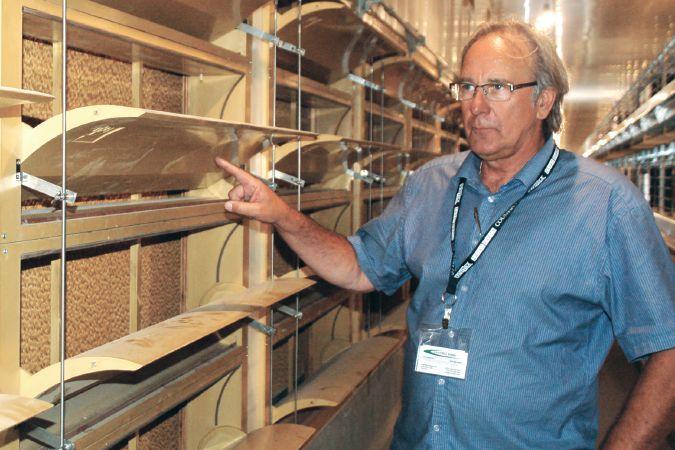
Leo Apperloo demonstrates the TPI shutter inlets, which are new to B.C. and help keep the tunnel ventilation system slimmer, eliminating the need for an outer alcove
intended to hold 20 birds for a total capacity of 26,640 birds. Although the piping for the manure dryer has been installed, it is not being used.
“We are going to put at least one pullet flock through without the dryer and see how it goes,” Vanderkooi says.
Although this is the first such installation in the province, Apperloo says it will not be the last. Another is being installed
in December and several other farmers have expressed serious interest.
“We have been incredibly busy,” Apperloo says, “with the change in regulations and today’s low interest rates, farmers are investing in new barns and new equipment. We have put in 40 aviaries in the last three years as well as conventional cages and the Valli enriched colony system.” n
YOU IS ALL ABOUT OUR WORLD
Our entire team — researchers, technicians , distributors, operations and global development — focuses all our skills on making your relationship with us the most productive and rewarding t hat it can possibly be.
Production B.C. holds first poultry symposium
AI dominated the day
BY DAVID SCHMIDT
Given the experience British Columbia has had with avian influenza (AI), the British Columbia Ministry of Agriculture (BCMA) is now trying to develop an early warning system for the disease.
Because AI originates in wild waterfowl, BCMA environmental epidemiologist Michelle Coombe says the BCMA has started collecting and testing “pond scum” in wild waterfowl resting areas to determine the presence of AI. The hope is the environmental sampling can be used “as an early warning system for both poultry and human health,” she told the first annual B.C. poultry symposium, held May 27th in Abbotsford.
Since AI is shed in wild duck feces, testing the droppings is bound to be more efficient than waiting for dead wild birds to show up at the BCMA animal health lab.
“The results will tell us what strains are present in the environment and how prevalent they are,” Coombe said, adding the test results would be used to give industry green, yellow or red alerts similar to what is done during forest fire season.
BCMA avian pathologist Vicki Bowes said BC’s experience with its 2014-15 AI outbreak is “much different” than in 2004. “We had a very successful disease containment result.”
AI was detected on only 11 commercial premises and two backyard flocks in the Fraser Valley, leading to the
BCMA avian pathologist Vicki Bowes said B.C.’s experience with its 2014-15 AI outbreak is “much different” than in 2004. She was awarded the first B.C. Excellence in Poultry Service and Leadership Award on behalf of a grateful industry at the symposium.
destruction of less than 250,000 birds. The 2004 outbreak was only contained through a mass depopulation of over 18 million birds.
“Considering the density (of the Fraser Valley poultry industry), this is an incredible success story,” Bowes said. “The initial producers did what was right.” She also credited the BCMA’s AI-certified Level 3 containment lab,
telling producers “you’re so lucky we’re here.”
Dr. Stewart Ritchie of Canadian Poultry Consultants, the symposium’s chief organizers, acknowledged both the lab and Bowes’ own considerable contributions by giving her the first “B.C. Excellence in Poultry Service and Leadership Award” on behalf of a grateful industry.
While B.C. has learned the value of
For over 50 years SALMET® has been manufacturing high quality equipment in its own production facilities, offering innovative technological solutions while continuously testing all of its systems in its own farms.
SALMET® can equip your barn with the best products available on the market including housing systems, climate control, manure management, data harvesting and more.
BARRY RUBY
Sales
1 (519) 662-2335
1 (888) 218-7829 (toll free)
1 (519) 590-7829 (mobile)
barry@oes-inc.ca
MACKENZIE KALBFLEISCH
Sales
1 (519) 662-2335
1 (888) 218-7829 (toll free)
1 (519) 275-4271 (mobile)
mackenzie@oes-inc.ca
and benefitted from good biosecurity practices, American producers did not appear to heed those lessons.
“The United States is definitely a mess,” said COBB Vantress technical services manager Shawn Carlton of Arkansas. “We have already lost eight per cent of our total egg production.”
Production
Between December and June, AI had been confirmed on over 200 commercial and backyard flocks in 15 US states, leading to the destruction of close to 50,000,000 birds. Almost 80 per cent of the cases were in Minnesota and Iowa, part of the Mississippi flyway. Only 10 were in the Pacific Flyway (which
Watering Wisdom y
YOUR
ONLINE
SOURCE FOR POULTRY WATERING WISDOM.
Even the best watering systems won’t give you the best results if they are not managed properly. And there is, frankly, a lot of misinformation in the industry that leads to improper system management.
Because of this, you’ll find us talking about best management practices more than about our products.
That’s why we started Poultry Watering U at poultrywatering.com. This is where we help you get the best information and best practices that enable producers to maximize flock performance.
Go to Poultrywatering.com. You won’t find a formula or a magic number. Just information and videos to help you get your best results.
www.PoultryWatering.com
• How-to videos
• Poultry Watering U news
• Management downloads
stretches from California to Alaska).
The best way to manage AI and other crippling diseases is to keep them out of a poultry flock in the first place, and that takes excellent biosecurity. Carlton says no one takes that more seriously than Cobb. As one of the world’s main producers of poultry breeding stock, their birds are among the most valuable in the world.
“Just one of our pedigree hens leads to 25,000 parents which leads to 3,000,000 broilers. It’s major dollars,” Carlton pointed out.
The first line of defense is to distance a flock from other producers. While that is difficult, if not impossible, to do in the Fraser Valley and many other poultry-dense production areas, Cobb has done that by locating its Oklahoma breeding facility on 500
Dr. Leigh Rosengren said it is “unfair” to point at agriculture for all of society’s ills, but said producers must reduce their “reliance” on antibimicrobials so that use in animals can be retained
acres in the middle of a 3,600-acre farm. It then restricts all movement on and off the facility and requires all workers to wear protective clothing and footwear and shower in and out of each barn.
“My record is 13 showers in one day,” Carlton said.
While AI dominated the symposium, several speakers touched on other diseases, such as Marek’s disease and IBD (infectious bursal disease), which may not spread as quickly as AI but can also devastate individual flocks.
Marek’s usually shows up when birds
bLACk-beLt PrOteCtiOn AgAinst MArek’s DiseAse
Egg Farmers of Canada is a proud partner of the Canadian Poultry Sustainability Award
Les Producteurs d’œufs du Canada sont les fiers partenaires de Canadian Poultry Sustainability Award eggfarmers.ca producteursdoeufs.ca
Poultry Diseases i nfluence D by Gastrointestinal
Healt H
Providing a wealth of background knowledge on poultry anatomy, physiology, and immunology, this comprehensive reference explores poultry diseases that are directly related to or influenced by the gastrointestinal tract.
Filled with useful images, this informative record discusses the impact of human pathogens harbored by poultry and offers alternatives to antibiotics in the treatment of intestinal disorders in poultry.
Production
are about 13 weeks of age. During the 20 weeks it takes the flock to build up enough resistance to fight off the disease, it can cause reduced performance and up to 50 per cent mortality, says Hyline Chicks technical services veterinarian Dr. Danielle Botting of Iowa.
IBD generally infects younger chicks. It has variable mortality, increases the bird’s susceptibility to other diseases and may even lead to Marek’s. Botting recommends vaccinating birds for Marek’s on the day of hatch and for IBD at 18, 24 and 30 days of age using a live vaccine.
She stressed the need to use good vaccination practices as poor vaccination is sometimes worse than no vaccination at all. In a poorly vaccinated flock, a disease could nestle in unvaccinated birds and build up resistance to the vaccinations. She also strongly recommended thorough cleaning and disinfecting (C&D) and 4-6 weeks of downtime between flocks.
“We can’t reiterate how important C&D is,” Botting said, stressing a barn should be washed and dried before a disinfectant is used.
“Removing debris is most important. Disinfectants don’t remove dirt,” Carlton added.
Saying a barn has accumulated three million units of debris/square inch by the end of a flock, Merial Canada technical services vet Dr. Louis Coulombe of Quebec detailed the effectiveness of various C&D options. Blowing the barn down with air only reduces debris by 3.4%. Airing it out drops it down by 31%. Washing with water and detergent reduces the debris count to 100,000 while finishing up with a disinfectant drops the number below 1,000.
He recommends using a gel detergent, saying it does not drip like a foam detergent, can be left on the walls longer and is easy to rinse off. He also urges growers to use a product like CID 2000 to clean and disinfect the drinking water pipeline.
While University of Arkansas poultry science extension specialist Dr. Susan Watkins also advocates the use
Production
of CID 2000 between flocks, she said it should not stop there. She urged growers to add 25-50 ppm of hydrogen peroxide to their water lines as a daily cleaner.
“Poultry water systems are perfect for growing bugs,” she said.
Instead of just using antibiotics, also known as anti-microbials, (AM’s) to treat diseases when they occur, many poultry producers have been relying on them to prevent disease outbreaks and/or boost bird performance.
“We use more antibiotics in Canada than in the US,” asserted Jan Breckman of JEFO Nutrition.
However, that will change as jurisdictions outlaw their use in order to stave off building resistance to those antibiotics in humans and food processors and retailers, such as Pilgrim and Tyson Foods in the US and A&W in Canada respond to consumer concerns by promoting antibiotic free chicken.
“A&W says their current no hormones and no antibiotics campaign is their most successful ever,” Breckman noted.
Even though Saskatchewan epidemiological consultant Dr. Leigh Rosengren said it is “unfair” to point at agriculture for all of society’s ills, noting only three of the 17 resistant infections in humans are food-borne related, she said producers must “reduce your reliance on AM’s so we can retain their use in animals.”
Her list of ways to reduce AM usage includes preventing infections in the first place through good biosecurity, good hygiene and reduced stocking density and increasing disease surveillance to permit early detection.
She urged producers to work closely with their vets to “know what you’re treating, what you’re using and why,” and to support the Canadian Poultry Research Council’s research into alternatives.
Finally, she said producers must step up their communication with and education of consumers.
“Let’s find out what the public thinks or knows and talk about how and why we are using those products.” n
Turns Deads Into Dirt
Continued from page 11
managed in one season. The frequency of turning and adding moisture to the piles depends on air temperature, airflow and moisture content readings to encourage uniform conversion is taking place within the piles. One advantage of composting in the North is that it has the space to conduct open-windrow composting and because of its sparse population, there are few if any odor complaints.
Kevin says Choice North Farms is excited about the opportunity and eager to get started.
“This is going to be business-driven, probably supported by various organizations, including the government,” says Kevin. “At the end of the day we would like to have a product that we can sell and use in the North for everything ranging from expansion of agriculture to reclamation and for municipal uses as well.” n
Production
It takes about a year for micro-organisms to turn raw organic waste like poultry manure, paper and wood chips into compost.
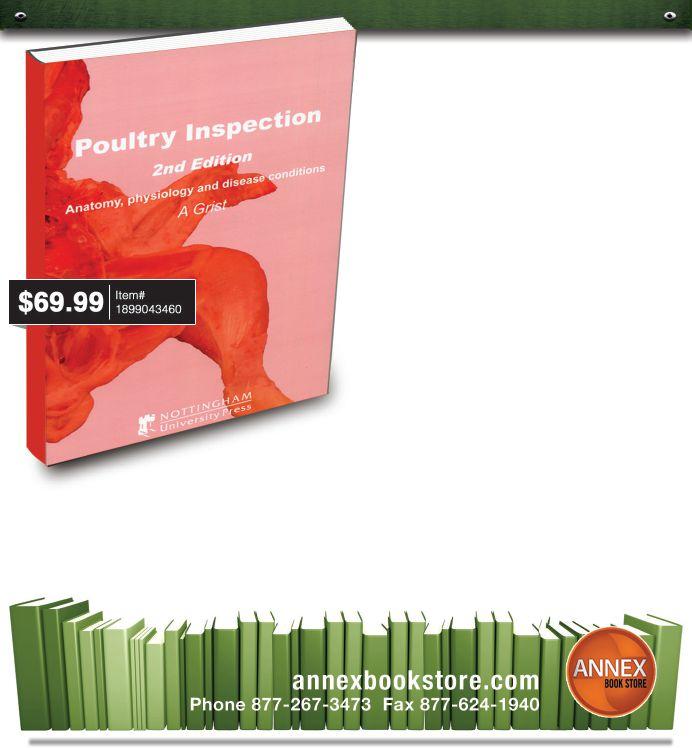
POULTRY INSPECTION
2ND E DITION
The full colour photographs make this an invaluable tool for all those for whom a knowledge of poultry anatomy, diseases and other conditions is required.
Following the success of the first edition, this second edition has been extensively updated and augmented, to better reflect the requirements of its readers. The author has replaced a large number of the diagrams with labelled photographs and expanded the anatomy section to allow a clearer and better understanding of the subject.
The diseases of poultry section has also been updated and now includes photographs of some of the conditions following a basic introductory explanation of the disease process and the body’s response. The Parasites section has also been improved by the addition of photographs.
Importantly, the author has added a guide to performing post mortem examinations on suspect birds.
Photo by Kim Rapati.
In the Barn Litter Management
Best Management Practices for Maintaining Optimal Brooding Conditions
BY BLAKE GIBSON, JONES-HAMILTON COMPANY
Litter management is a crucial part to maintaining a healthy environment and reducing challenges for every flock. Managing the litter will become increasingly vital as more companies shift toward antibiotic-free programs, or when new bedding material is scarce or extremely costly to replace.
Litter serves as the foundation of a flock’s success and careful management is required to ensure a positive impact on a flock’s performance. If proper management isn’t made a top priority, producers will more than likely be battling higher fuel costs and poor performance. Many producers take a reactive approach to litter management, but once litter has been mishandled, it is difficult to correct and in some cases it is more advantageous to clean out and start over with new bedding. That’s why it’s imperative to carefully manage litter from the time a clean out is performed so the new litter can be utilized for many flocks thereafter. In fact, litter preparation for the next flock should start while the current flock is in the house. Determining when cake formation starts in a flock and making proper changes to address the cause will ensure a much healthier floor environment.
BEGIN WITH BEST MANAGEMENT PRACTICES
Smart litter management begins with the development of and adherence to best management practices (BMPs) for waterlines, ventilation and litter condi-
At clean out, it’s vital to remove all litter down to the pad as well as dust from fixtures (pulleys, tensioners, screens, louvers, lights, etc.). This includes litter along the sidewalls, in the corners and under the fans. Any litter left in the house will cause problems later when the floors are heated.
tions. For maximum performance, these BMPs should address these three areas. Begin by carefully observing the litter to identify issues with current conditions:
• If you see: Donuts under the drinkers or continued wetness. Then: Check waterline flow, pressure and regulators as it indicates leaking nipples or improper water pressure.
• If you see: Slick cake along the length of drinker lines. Then: Check waterline height and pressure, and the regulator as it can be malfunctioning.
• If you see: Cake along the walls, doors, fans or center of the house. Then: Tighten or repair air leaks through curtains, sidewalls, static pressure systems, fan louvers and doors. Air leaks create drafts that chill birds and cake litter.
• If you see: Floury litter after decaking. Then: Focus on decaking techniques to minimize over-decaking or decaking too deep in the dry pack. Identify cake and focus just there, not on the whole house. Remember, fluffy, nice
CLEAN WELL
There’s strength in numbers
We are pleased to announce that Lohmann Animal Health is now part of the Elanco poultry portfolio. Together, our organizations can deliver more solutions, more resources and more value for poultry operations around the world.
Learn more about what our team can bring to your operation at Elanco.ca.
In the Barn
litter doesn’t grow the best birds. In fact, over management of litter causes more flock health issues than producers realize. Despite these interventions, in some houses less than optimal litter conditions demand micro management to prevent the onset of noxious gases like ammonia. This will help manage bacterial population, viral and cocci challenges.
. STARTING THE FLOCK OFF RIGHT WITH PROPER HOUSE CLEAN OUT
When cleaning out, it’s vital to remove all litter down to the pad as well as dust from fixtures (pulleys, tensioners, screens, louvers, lights, etc.). This includes litter along the sidewalls, in the corners and under the fans. If necessary, remove litter by hand. Any litter left in the house will cause problems later when the floors are heated.
Once the litter has been removed, clean and disinfect ceilings, sidewalls and any other hard surface with a strong virucidal and bacterial disinfectant. At this point, producers may want to consider applying an acidifier such as sodium bisulfate to the dirt pad; especially if performance declines or disease outbreaks without a clear reason have been occurring. The dirt pad acts as a sponge and absorbs water, ammonia, bacteria and other challenges over time. Therefore, lowering the pH of the floor environment will rid the pad of any ammonia that might volatize off once new bedding and heat is added. Also, lowering the pH to a very low level will impact the ability of some microbial growth.
If you have a concrete pad there is no benefit to applying sodium bisulfate before bird placement since there will be no ammonia to react with the product. However, once the birds have been on the litter for one to two weeks, sufficient ammonia will exist. The ammonia will react with a sodium bisulfate litter treatment while also working to suppress pH low enough to negatively impact microbial populations.
If the litter is being reused, the moment the last bird leaves, shut the house tightly in order to retain heat from the previous flock and remove excess moisture in the litter and floor. Ammonia concentrations will continue to rise while the house is closed, but unless you’re working in the house there is no need to ventilate. Ventilating during this time will actually shut down ammonia release and accelerate heat loss from the previous flock. Minimal ventilation may be required in the first 48-72 hours to prevent condensation, but during the daytime only. This will help reduce corrosive condensation from forming on equipment, sidewalls and ceiling. Once the condensation subsides the house should be shut down with no ventilation until preparation for placement starts.
PROPER PRE-HEATING PROCEDURES
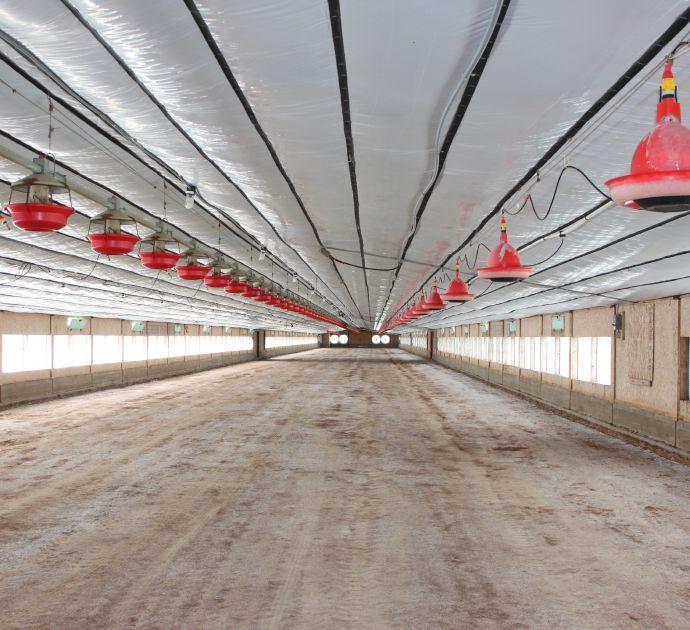
After the house is cleaned out and the pad treated, new litter should be put in at a depth of 4-6 inches. Select clean dry bedding that preferably has less than 15% moisture. It’s critical to understand how different bedding substrates handle absorption
WHY ATTEND THE 2016 weed summit?
To gain a better understanding of herbicide resistance issues across Canada and around the world.
Our goal is to ensure participants walk away with a clear understanding on specific actions they can take to help minimize the devastating impact of herbicide resistance on agricultural productivity in Canada.
Some topics that will be discusSed are:
• A global overview of herbicide resistance
• State of weed resistance in Western Canada and future outlook
• Managing herbicide resistant wild oat on the Prairies
• Distribution and control of glyphosate-resistant weeds in Ontario
• The role of pre-emergent herbicides, and tank-mixes and integrated weed management
• Implementing harvest weed seed control (HWSC) methods in Canada
TOP
In the Barn
of moisture, compaction and decomposition in order to know how to maximize the life of the litter and the number of flocks that can successfully utilize it. Once the new litter is in, the house should be shut again to keep litter dry and clean.
When it’s time to pre-heat, begin 48-60 hours prior to bird placement to reach the desired placement temperature in the core of the litter base. Remember, new litter can be damp, so the preheating period may need to be increased. Damp litter can easily cool chicks once placed, which can make them susceptible to many challenges that can reduce profitability from the very moment of placement. Whether the litter is new or built-up, the core litter temperature is extremely critical. Surface temperature is just that, on the surface; but core temperature impacts the birds’ ability to stay warm as well as ammonia volatilization
Caking of litter can be prevented by proper management of water lines and ventilation
and microbial challenges.
If you’re using built up litter, it is recommended to treat litter with sodium bisulfate just prior to bird placement to reduce the stress of ammonia and bacteria. Your treatment level will depend on litter quality, ammonia load and microbial stress.
Once birds are in the house and you’re working to maintain healthy litter conditions, use tilling as a last resort, as it creates more surface area, releases large amounts of ammonia and reduces litter’s ability to wick moisture off the surface. If tilling is required, go no deeper than the thickness of the caked areas to minimize surface area. Once tilling is finished, treat the area immediately with sodium bisulfate to eliminate ammonia. The same will happen if windrowing or litter manipulation is utilized as a heat treatment. More surface area equals more released ammonia—even.
if microbe
levels are
decreased. THE ROLE OF WATER MANAGEMENT
House conditions and litter ecology are also impacted by bird diet and water management. It begins with the gut of the bird. The first line of defense for
Meet Fast Food’s Royal Family
In the Barn
challenges is in the GI tract. Gut receptor sites will be seeded down with either good bacteria or challenging bacteria. The sooner the normal healthy microflora can be established, the less likely the bird’s gut will be colonized by unwanted bacteria such as salmonella and clostridium.
Research shows that acidifying drinking water allows for the crop to be acidified both before and after the normal crop flora becomes established (Byrd et al, 2001). Providing the bird with water at a pH below 4.0 for its first 7 to 10 days of age assists in the establishment of normal flora.
The method used to lower pH matters. If organic acids or a mixture of organic acids are being used for crop acidification or waterline management, birds will typically back off of the water. This is due to the bitter/sour taste created when the hydrogen ions that make up the molecules of acid are released in the mouth. The use of a mineral acid such as sodium bisulfate allows the pH of the water to be lowered to biologically significant levels without negatively impacting water consumption; this is because hydrogen ions are displaced in the manufacturing process making the water more desirable and palatable. Sodium bisulfate is effective in cleaning up the waterlines as well.
Getting a flock off to the right start is critical not only for the birds, but also for financial gain. It’s easy to forget the small details that, in the end, cost greatly. A solid, strong foundation and the understanding that anything that is done to the environment that the birds are in direct contact with ( i.e., water, feed, air and the floor) will impact them for better or for worse. An optimally managed environment provides the best chance of maximizing a flock’s health and financial potential. There are no silver bullets to litter management of ammonia and bacterial challenges. Focusing on the things that impact or produce them, however, is the key to a successful flock. n
PERSPECTIVES
BY MERISTEM LAND AND SCIENCE
Professionalizing Animal Agriculture
Much of the debate on farm animal welfare changes has centered on major infrastructure shifts such as facilities improvements and housing approaches. However arguably the greatest challenge – and also opportunity – facing animal agriculture may lie not in the physical environment but rather in the mindset of producers.
The human factor is a powerful one in determining the quality of animal welfare delivered, says renowned expert Dr. David Fraser of the University of British Columbia. Recognizing this and taking steps to ensure a professional, responsible mindset among everyone involved in handling and managing animals may just be the most impactful way to effect strong and sustainable welfare advancement.
“Very different welfare outcomes occur in the same type of physical environment - why is this?” says Fraser, speaking at the Livestock Care Conference. “Of course it’s because animal welfare depends on so much more than just the physical environment. It depends strongly on the quality of animal care that the animals receive. This in turn depends so much on the knowledge, skill and attentiveness of the producers and staff.”
Doctors, lawyers,Farmers?
Farming and animal agriculture have unique roots, a diversity of scales and approaches and obviously have unique characteristics quite distinct from other “professions.” But nonetheless a professional mindset is critical to maximizing success, particularly in the case of key areas of sustainability under increasing scrutiny in the public eye, including farm animal welfare, he says.
must be a real on the ground effort. The potential reward is a society that is less questioning and challenging of animal agriculture, and more trusting and comfortable with livestock and meat industries.
Health care is arguably the most professionalized industry, he says. Agriculture is different but can benefit by gradually moving closer to a professional model. Three key elements of a profession include a) the main outcome is some kind of service to clients or the public, b) participation requires competence, typically demonstrated to peers and c) the ethical acceptability of the profession comes from adhering to the ethical norms of society, usually through some form of self-regulation.
Leading Progress
Canada is making progress on this pathway in the area of farm animal care, through organizations such as the National Farm Animal Care Council and Alberta Farm Animal Care, as well as through standards and guidelines such as the Codes of Practice and Assessment Models.
“The traditional industry model of enforcement people coming in and correcting problems is what we want to avoid. Industry-driven progress. Producers taking charge of responsibility and advancement. These approaches make us much more like a true profession.”
I believe we need a continued shift in our thinking toward what I would call “Professional Animal Production”
“Whether it’s food safety, environmental stewardship, or farm animal welfare, what we need is a system that rewards that high level of skill, knowledge, dedication and performance. I believe we need a continued shift in our thinking toward what I would call “Professional Animal Production” as the way forward on these issues.”
Animal agriculture needs to ‘walk the talk’ and make sure professional approaches are implemented in all facets of industry, he says. This can’t be simply an image effort. It
Good animal producers can develop self-regulatory processes to demonstrate that they are meeting the ethical expectations of society, he says. Enforcement agencies can work in collaboration with industry groups to address any issues or problems, because while each has a distinct and important role they share the same interests. Over time, the public will see the industry organizations as the main group to reach out to when asking for concerns to be looked into and addressed.
“I think this shift has already begun with many of the initiatives industry has undertaken, particularly in recent years. We are moving in the right direction. Changes are occurring that make a professional model much more feasible for the future.” n
Problem solver
Chore-Time distributors ask the right questions to provide smart solutions.
If your poultry equipment supplier isn’t asking any questions, it might be because they don’t have any answers. Your Chore-Time distributor makes the effort to learn your business so they can deliver the right solutions to meet your needs. They have knowledge and insights built on years of poultry experience and Chore-Time training. Plus, they have an arsenal of industry-leading poultry products to help you stay productive and profitable.
Find your independent authorized Chore-Time distributor at choretimepoultry.com/distributor