By Luis Romero, Rob Renema, Martin Zuidhof and Frank Robinson
Poultry Research Centre, University of Alberta
14
BROILER PRODUCTION: Selecting for Efficiency
Growers want to look at the most balanced of the genetics available
By Technical Staff, Cobb-Vantress Inc.
18
FARMER INNOVATION: The Blade Mount Squeegee
An Ontario broiler producer has developed an effective solution for removing excess water from cleanout
By Kristy Nudds
22
PIC UPDATE: Rapid Screening of Salmonella
Researchers have developed a new, faster method for detecting salmonella from poultry environmental samples
By Tim Nelson, Executive Director, and Kimberly Sheppard, Research Co-ordinator
26
BROILER BREEDERS: Male Breeder Management
A comprehensive guide for achieving optimal and consistent male performance in a breeder flock
By Jerry Garmon, Technical Service Manager, and Mark Hogan, Technical Service Manager, Aviagen
FROM THE EDITOR
BY KRISTY NUDDS
A Tough Lesson
In late August, a major listeriosis outbreak occurred across Canada, linked to processed meat products produced by Maple Leaf at one of its Toronto plants.
Over 200 meat products were recalled and, at press time, 16 deaths across the country have been linked to the consumption of products from the Maple Leaf plant. It’s an unfortunate incident that has naturally raised a lot of debate over Canada’s food safety system.
At the heart of the debate is government regulation, or a perceived lack thereof. At the height of the crisis, major media outlets were reporting that the federal government planned to “deregulate” inspection, making it the primary responsibility of food manufacturers. Inspection hasn’t been “deregulated”, but it’s clear that inspectors have been bogged down by paperwork – examining test results on possible contaminates performed by the company, often days after the products have been shipped.
In my opinion, this is what raises the biggest flag. Whether or not inspectors are present on the processing plant floor at all times, the fact that food is distributed to consumers before test results are known is definitely a huge problem.
As a graduate student, I took a food safety course that required students to visit a major beef processor. I saw first-hand the safety and sanitizing procedures that take place in a processing plant, and they are stringent. However, what I remember most from that visit was my shock in discovering that sampling for potential pathogens was done as the products were being packaged –or had already been packaged – and that test results may not have been known until the product had left the building.
Even if government budgets allowed for increased inspection staff at plants, a major
loophole is testing times. Why are food products, particularly processed products that have a shelf life that can span months, allowed to be on grocery store shelves when test results are unknown?
Perhaps the government should focus on more rapid methods for testing pathogens. Sick consumers should not be what prompts a major recall. Ideally, test results should indicate a problem before a contaminated product reaches store shelves.
For its part, Maple Leaf needs to be congratulated on its handling of the outbreak. When first identified as the source, Maple Leaf President and CEO Michael McCain publicly took full responsibility, saying that it was the fault of the company, took swift action to close the plant and worked with the Canadian Food Inspection Agency (CFIA) to identify the source of listeria.
Once it was determined that the bacteria was growing deep within slicing equipment – despite being cleaned according to the manufacturers’ protocols – Maple Leaf announced it has amended its own cleaning protocols to include not just cleaning slicers, but also cleaning them once dismantled.
The listeriosis outbreak was a tough lesson for both Maple Leaf and the Canadian government. Having touted itself as having one of the best food safety systems, the Canadian government needs to take its part in ensuring that this reputation is not lost, supplying sufficient resources and education for processors.
With a federal election looming, the listeriosis outbreak has been the subject of political rhetoric – let’s hope that promises made aren’t forgotten after Oct. 14. ■
October 2008
Vol. 95, No. 10
Editor Kristy Nudds – knudds@annexweb.com
888-599-2228 ext. 266
Contributing Editor
Jim Knisley – jknisley@kwic.com
Publisher/Sales Manager
Marilyn White – mwhite@annexweb.com 888-599-2228 ext 237 • fax: 888-404-1129
Sales Assistant
Mary Burnie – mburnie@annexweb.com
888-599-2228 ext 234
Production Artist
Krista Misener
Editorial Director
Drew McCarthy – dmccarthy@annexweb.com
VP/Group Publisher
Diane Kleer – dkleer@annexweb.com
President Mike Fredericks – mfredericks@annexweb.com
Mailing Address
P.O. Box 530, 105 Donly Dr. S., Simcoe, ON N3Y 4N5
Publication Mail Agreement #40065710
PAP Registration #9850
RETURN UNDELIVERABLE CANADIAN ADDRESSES TO CIRCULATION DEPT., P.O. BOX 530, SIMCOE, ON N3Y 4N5.
e-mail: cnowe@annexweb.com.
Periodicals postage paid at Buffalo NY. USPS 009-324, ISSN 1703-2911. Published monthly by Annex Publishing and Printing Inc. US Office of publication c/of DDM Direct.com, 1223 William St. Buffalo NY 14240. US Postmaster send address change to PO Box 611 Niagara Falls NY 14304.
Lubing Breeder and Pullet Nipples are the Combination for Success!
Pullet Nipple - FeatherSoft Nipples with 360 degree triggering start your birds off to success from day one. FeatherSoft Nipples are available in all-stainless steel or plastic and steel combination.
Breeder Nipple - Designed specifically and solely for breeders, the high-flow Breeder Nipple is constructed totally from stainless steel to withstand the aggressive behavior of breeder birds.
Contact your local Lubing Distributor for more information on our Proven Breeder Package or visit our website at www.lubingusa.com. J. Dean Williamson Ltd.
Tel: (519) 657.5231
Fax: (519) 657.4092
Fax: (403) 337-3590 Les Equipments Avipor
Tel: (450) 263.6222
Fax: (450) 263.9021 Specht-Canada Inc. Stony Plain, Alberta
Tel: (780) 963.4795
Fax: (780) 963.5034
WHAT’S HATCHING HATCHING
C&D Requirements Explained
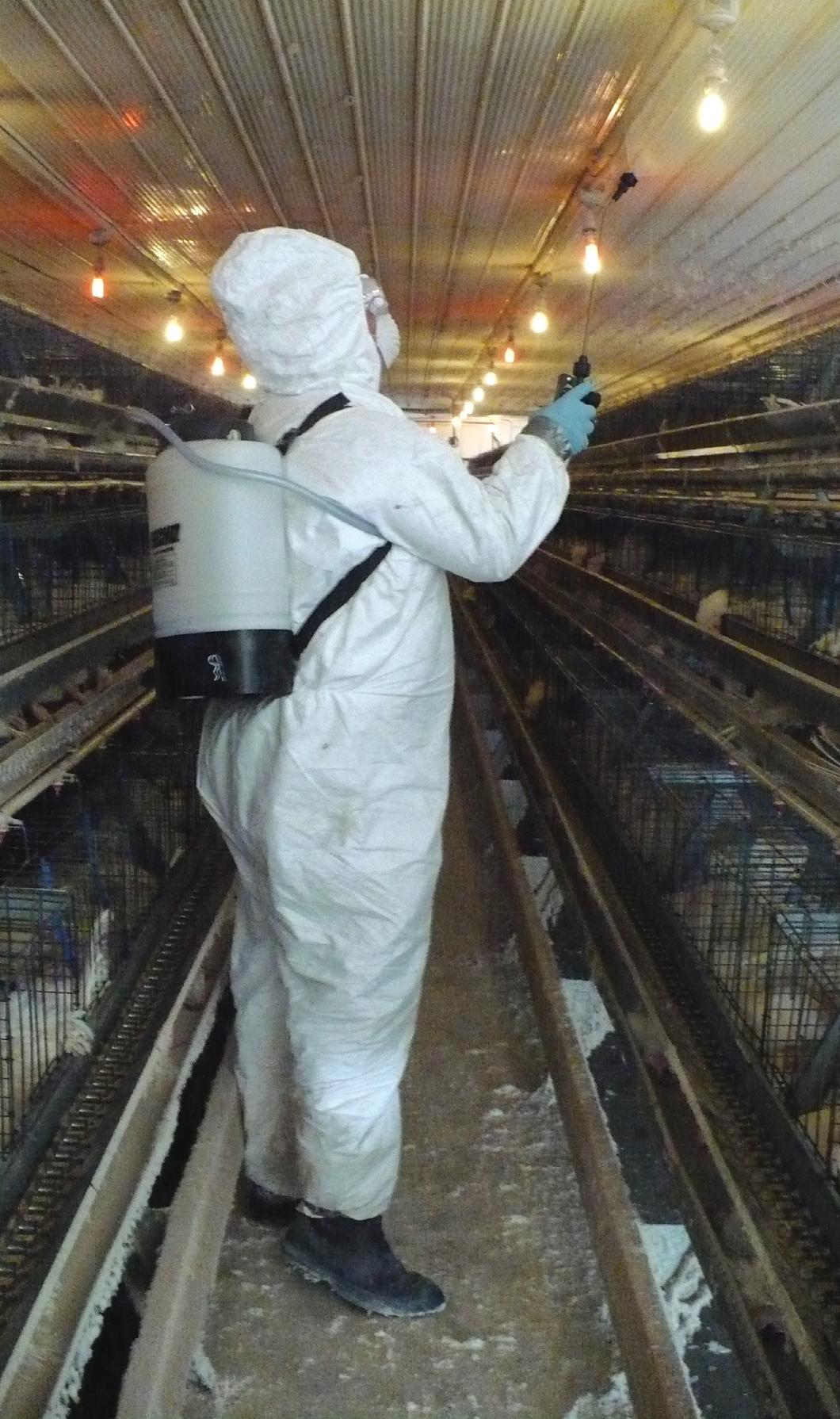
If a contagious disease should occur on a Canadian poultry operation, the Canadian Food Inspection Agency has strict guidelines that must be satisfied for cleaning and disinfecting (C&D) the barn once the birds have been destroyed. Problem is, farmers are left to do this on their own – and it’s not an easy job, physically or mentally.
If C&D doesn’t meet CFIA standards, the process must be completed again – meaning more downtime for an affected farm and a prolonged delay in getting back to business.
That’s why the Egg Farmers of Ontario (EFO) and eBiz Professionals Inc. have created a comprehensive video and manual for producers that demonstrates exactly what is required of a poultry operator with regard to C&D. The video
also explains what to expect with regard to destroying and removing birds from infected facilities and biosecurity measures that must be in place during the entire process.
“A key purpose of the video is to get the attention of the industry,” says Mark Beaven, EFO’s director of operations. “We do not exaggerate in this video, and it does have a significant impact.”
Beaven says producers’ emotional health is a big concern. He says that in a real situation, “you can’t fathom the stress level.”
The video has two parts. The first part is a powerful depiction of how the barn is prepared for gassing, and how a farmer needs to be prepared to walk inside to an eerily quiet environment once gassing is complete. The second
part of the video demonstrates the CFIA requirements for dry and wet cleaning and disinfection. This part of the video matches the accompanying manual, so that producers have a visual representation of written protocols and how they should be done properly.
The video was filmed during an AI simulation on an Ontario farm last winter using spent hens and with the participation of the CFIA, other feather boards in Ontario, and OMAFRA. The video and manual are being distributed to EFO members in November. Distribution to other boards in Ontario and across Canada will occur throughout the fall. For more information, call Mark Beaven at EFO and visit www.agbiosecurity.ca
New Veterinary College
ALBERTA
The University of Calgary’s faculty of veterinary medicine welcomed its inaugural class of 34 students last month. Although a state-of-the-art clinical skills building at the pastoral campus in Spy Hill won’t be finished until February, students will be kept busy in other areas on campus.
The program, first estimated to cost $60 million, then $84 million, will top out at $100 million in infrastructure and supplies.
New Ethanol Plant
SASKATCHEWAN
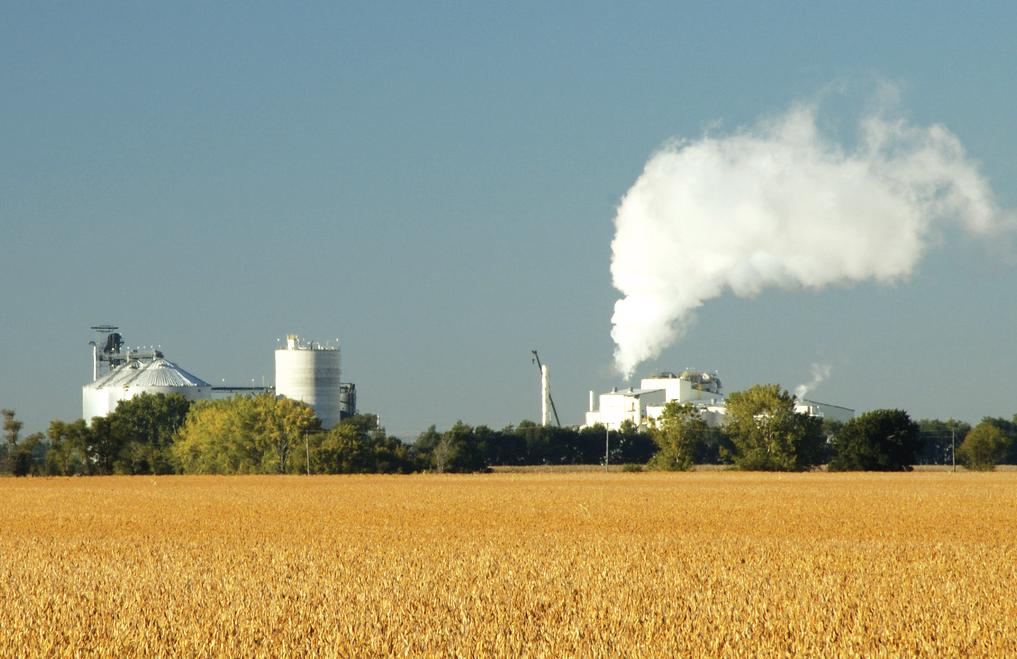
With an expected output of 150 million litres of wheat-based ethanol and 163,800 tonnes of dried distillers grains annually, a new ethanol plant in Belle Plaine, Sask., will be one of the largest in North America.
Company president Tim LaFrance says the Terra Grain Fuels facility cost $1.3 million to build and was worth every penny.
It is the fifth veterinary school of medicine in Canada and specializes in large animal care – horses and cows and other domestic species, including food animals.
It will be closely linked with the U of C’s medical faculty in an effort “to address the most pressing health challenges in this country,” the link between public and animal health, noted university president Harvey Weingarten.
Source: Calgary Herald
New PRC Website
ALBERTA
The University of Alberta’s Poultry Research Centre (PRC) recently launched a new website: www.poultry research centre.ca.
The new site features researcher and associate biographies; research publications and technical resources; information on the PRC and its facilities and people; current projects; directory; members area; search engine, and more.
He says it’s good for its proximity to wheat suppliers and has excellent infrastructure for utilities. He also says it is rare in that it is also tied into two major railway systems.
The plant, on which construction began in October 2006, is currently running at 80 per cent capacity. It started receiving grain last August.
Golden Valley Purchases Sunshine Eggs
BRITISH COLUMBIA
Golden Valley Foods Ltd. of Abbotsford, B.C., has announced the purchase of the egg distribution business of Sunshine Eggs from Kamloops, B.C., effective Aug. 15, 2008.
Sunshine Eggs is an established and respected egg grader located in the Okanagan region of B.C., serving primarily local retailers, wholesalers and the food service industry.
NOVEMBER
November 5, 2008 Eastern Ontario Poultry Conference, St-Isidore Recreation Centre, St-Isidore, Ont. Presented by the Ontario Ministry of Agriculture, Food and Rural Affairs (OMAFRA). For more information, contact Michel Moisan e-mail michel.moisan@ ontario.ca, telephone 613-679-4411 or visit www. omafra.gov.on.ca/ english/livestock/ poultry/eastern08.htm
Golden Valley Foods Ltd. has been servicing the B.C. food industry with a variety of quality shell and processed egg products since 1950. This purchase will allow for further expanding Golden Valley’s egg distribution business into the dynamic and growing market of the Okanagan in B.C.
Source: CPEPC Highlighter
November 10-11, 2008 Poultry Innovation Conference (formerly known as the Poultry Health Conference), organized by the Poultry Industry Council (PIC). Day One comprises an afternoon of research reports in a similar format enjoyed by so many at this year’s Research Day. Day Two will feature very practical sessions designed by producers for producers and industry service professionals. The day will culminate in a gala dinner to celebrate our industry with special guest speaker Donald McQueen Shaver. For more information, visit www.poultry industrycouncil.ca or e-mail pic@poultry industrycouncil.ca.
>
WHAT’S
HATCHING HATCHING
Introducing Novogen
Groupe Grimaud has established a new company, Novogen, focusing on the genetic selection and distribution of layer breeding stock. Novogen is a company under French law, with its headquarters at Quintin, Bretagne in France. Groupe Grimaud is the majority shareholder of Novogen.
Under the general management of Mickael Le Helloco, Novogen S.A.S.
focuses on genetic selection, the core business of Groupe Grimaud, and the worldwide distribution of layer Grandparent Stock and Parent Stock.
Novogen offers competitive layer breeds for the brown, white and tinted egg production adapted to the different market segments, including both alternative and conventional (cage) markets.
Hands-on Breeder Workshop A
viagen recently teamed with The University of Alberta to present a three-day workshop at the university’s Poultry Research Centre in Edmonton. The course titled “Managing the Modern Broiler Breeder” was designed for people working in the broiler hatching egg industry and focused on maximizing the production of fertile eggs from broiler breeder flocks.
In addition to co-sponsoring the event, Aviagen also provided many of the
speakers for the workshop. Other industry professionals from the U.S. and Canada also presented at the seminar. The presentations balanced theory and practice effectively. One of the strengths of this event was that it was a hands-on workshop, not just a series of lectures. Farmers, industry representatives, speakers and graduate students donned protective clothing and participated in lab sessions on female evaluation, male evaluation and egg quality.
COMING EVENTS
JANUARY 2009
January 28-30, 2009
International Poultry Expo/International Feed Expo, Georgia World Congress Center, Atlanta, Ga. Registration now open. For more information, e-mail expogeneralinfo@ poultryegg.org; visit www.international poultryexposition.com or telephone 770-493-9401.
FEBRUARY 2009
February 19-20, 2009 Atlantic Poultry Conference, Old Orchard Inn, Greenwich, N.S. The conference will feature speaker Dr. Temple Grandin and ventilation and alternative energy workshops; additional speakers and topics will be available soon. For more information, visit www.nsac. ns.ca/apri or contact conference chairs Dr. Bruce Rathgeber (902893-6654) or Mr. Peter Swetman (902-582-7544)
We welcome additions to our Coming Events section. To ensure publication at least one month prior to the event, please send your event information at least eight to 12 weeks in advance to: Canadian Poultry, Annex Publishing, P.O. Box 530, 105 Donly Dr. S., Simcoe, Ont. N3Y 4N5; e-mail knudds@ annexweb.com; or fax 519-429-3094.
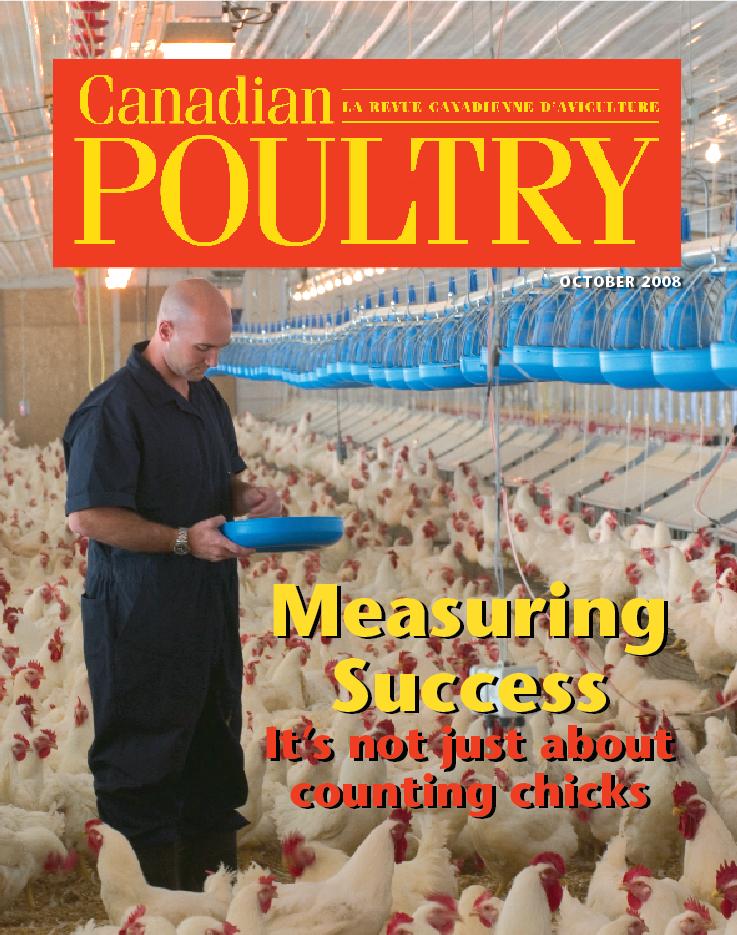
Breeder Production Measuring Success
It’s not just about counting chicks
By Luis Romero, Rob Renema, Martin Zuidhof, and Frank Robinson Poultry Research Centre, University
Avery common problem for animal production managers is finding adequate methods to measure the efficiency of the production process and the farm as an economic entity in a meaningful and consistent fashion. It’s important to find out whether the technical and managerial decisions are being effective. In the case of broiler breeder production, there are different levels of sophistication in the evaluation of flocks and farms. They go from the simple percentage of production, right up to the measurement of unitary costs in real time. In this article, we present an alternative approach to measure flock and farm success based on existing methodologies of production economics.
TAKING A NEW APPROACH
Luis Romero (above) has just completed his PhD at the University of Alberta on a project with Rob Renema, Martin Zuidhof and Frank Robinson. He brought economic analysis of production traits to a new level in the broiler breeder research program. In this article he shares some of the economic principles that were applied to the analysis of his experiments.
The most straightforward evaluation method used to measure flock performance is total egg production. Using per cent production as a measure of success is very tempting. Having a flock peaking at 90 per cent definitely feels good, whether you are selling eggs or chicks. But mortality and settable egg rates need to be accounted for; therefore, many companies and farmers prefer to measure settable eggs per housed hen. This is a fairly good indicator of the efficacy of the production process because at least we know if we are setting the number of eggs we could if everything went well and if we are meeting our production budget.
However, for a company that sells one-day-old chicks or is paid based on potential chick production, eggs per housed hen only tells part of the story of what is happening on the farm. Here, different methods to assess salable chick production are used. Some companies can only generate an estimated hatchability rate for each flock whereas other companies are capable of having very accurate counts of chick production per flock.
In any case, managers can calculate chick production per
of Alberta
housed hen, which is an even better indicator of the efficacy of the process. But does this really measure economic success? Not necessarily. Some companies use feed conversion ratios to try to overcome the limitations of simple production parameters. However, even a low feed-to-chick ratio may not translate into improved economic results if feed intake were limiting and production rates were compromised.
From the production perspective, what really determines the competitiveness of broiler breeder companies is the cost of chicks. In turn, there are two main questions that determine the cost: 1) Is the flock in the most biologically appropriate conditions to have ideal performance?; and 2) Is the manager making the right input utilization decisions?
Companies may be capable of answering these two questions as a whole on a day-to-day basis if they have a real time production/accounting system, but we would venture to say there are still many companies that only have an estimate of unitary costs at the end of the production cycle, when it is too late to make any decisions. Even assuming that the company knows what the unitary cost of today’s chicks is, it is not easy to measure the causes of a higher than normal cost. At the very least, it is time consuming and may not account for the nature of the biologic process, particularly if the analysis is only done from an accounting perspective.
NEW MEASURE OF PERFORMANCE
These complexities of commercial production brought us to develop a new approach to measure flock and farm performance, which is both simple and effective. This approach is based on the measure of economic efficiency, which is an area of production economics used to evaluate national industries and firms, especially in the
CALCULATING CHICK PRODUCTION PER HOUSED HEN DOESN’T NECESSARILY MEASURE ECONOMIC SUCCESS. A FLOCK WITH 100 PER CENT ECONOMIC EFFICIENCY HAS THE LOWEST CHICK COST, WHICH CAN BE INFLUENCED BY BIOLOGICAL, TECHNICAL, AND INPUT UTILIZATION.
manufacturing sector. For the purpose of this article, all concepts are focused on one-day-old chick production, and each broiler breeder flock is considered to be the unit of production.
Economic efficiency measures the extent to which the flock has the lowest unitary chick cost possible. A flock with 100 per cent economic efficiency has the lowest chick cost. As previously discussed, this measure is made up of a biologic/technical and input utilization factors, which are measured by what is called technical and allocative efficiency, respectively.
Broiler breeder production involves a great variety of inputs. Consequently, some simplifications are necessary to develop applicable methods. For this particular example we are accounting only for two types of inputs: time-related inputs and feed. The rationale of using time related inputs is that capital and fixed costs have an important share on the unitary costs of one-day-old chicks. On the other hand, feed is usually the single most important cost of animal production.
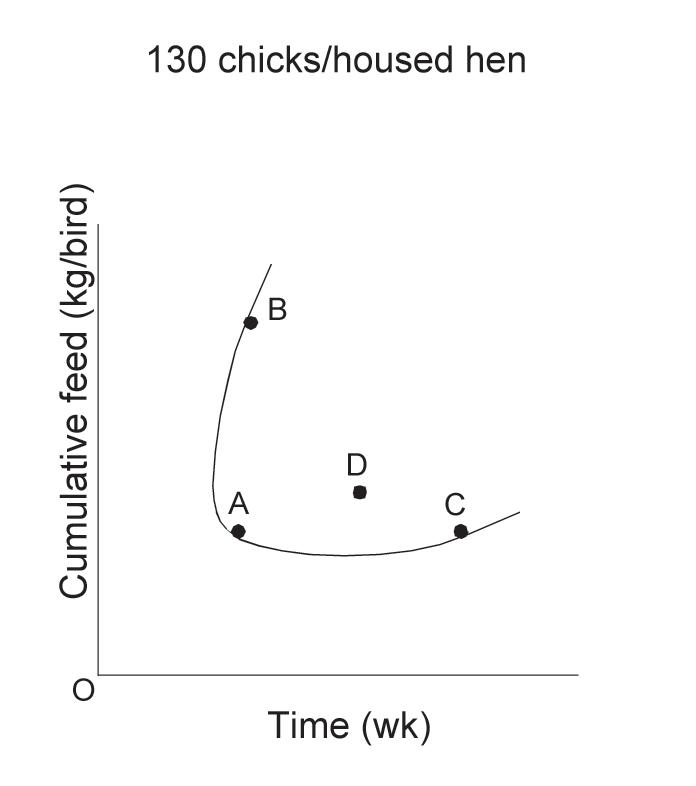
Under optimal conditions, broiler breeder flocks will require a minimum combination of feed and time to produce a number of chicks (e.g., 130 chicks). This optimal input-output relationship is called the “frontier of production.” This frontier is determined by the genetics of the strain and is represented by the curved line in Figure 1. Flocks A, B, and C are all technically efficient because birds could not do any better in optimal conditions. In contrast, flock D is utilizing more feed and time than should be necessary, probably because of management or health problems; this flock is therefore technically inefficient.
However, flock B is using more feed, and flock C is using more time than flock A to produce 130 chicks. This situation usually occurs because a manager decides to use (or allows) a higher (flock B) or lower (flock C) body weight profile than what it is recommended for this strain of broiler breeders despite birds being managed in optimal environmental conditions. These decisions are responsible for a cost increment.
Both flocks B and C are allocatively inefficient because the
input combination is not optimal. The more the cost of feed increases, the more allocativelly inefficient flock B becomes due to unnecessary expensive feed being used. The more the fixed and capital costs increase, the more allocatively inefficient flock C is because birds are taking too long to produce these chicks. The combination of both technical and allocative efficiency determines the economic efficiency of the flock; i.e., how far is the flock from the minimum cost?
FIGURE 1. POSSIBLE COMBINATIONS OF CUMULATIVE FEED INTAKE AND TIME TO PRODUCE A CERTAIN NUMBER OF CHICKS ARE REPRESENTED BY THE PRODUCTION FRONTIER LINE. FLOCKS A, B, AND C ARE TECHNICALLY EFFICIENT, BUT FLOCK D IS NOT.
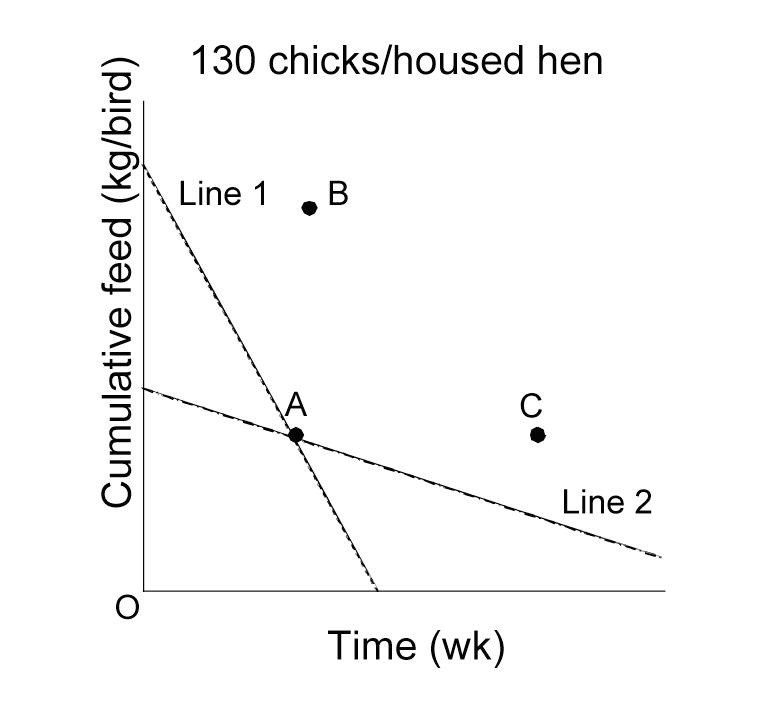
Since production frontier calculation requires complex statistical methods, we have made some assumptions to develop a simple method for flock assessment. We can compare economic efficiency of flocks with the production targets based on the input cost conditions of a farm or company. Let’s assume that point A is the target feed-time combination to produce 130 chicks. We can draw a line (line 1, Figure 2) of input combinations that have the same cost as target A, although some of these combinations may not be technically possible.
The slope of this line depends on the relative cost of a kilogram of feed versus the average weekly cost of having a bird in the barn. If line 1 defines the minimum cost combinations, flock B is more efficient than flock C because it is closer to the line. If the cost
Breeder Production
of feed increases relative to the capital and fixed costs per hen, the position of the line changes (line 2) and we would prefer to use less feed; so, flock C would be more efficient than flock B.
FIGURE 2. MINIMUM COST COMBINATIONS OF CUMULATIVE FEED INTAKE AND TIME TO PRODUCE A CERTAIN NUMBER OF CHICKS ARE REPRESENTED BY THE BROKEN LINES. FLOCK A IS ECONOMICALLY EFFICIENT AND FLOCKS B AND C ARE NOT.
Figure 2 is just a geometrical representation of what being economically inefficient means. Of course, what we want is to be able to assess economic efficiency at every level of production. In our experience, the performance objectives provided by the primary breeder companies constitute a fairly good indicator of the input combination that determines the production frontier. Then, having a table of input combinations to produce each level of output (salable chicks or settable egg numbers) allows calculation of economic efficiency with relatively simple equations.
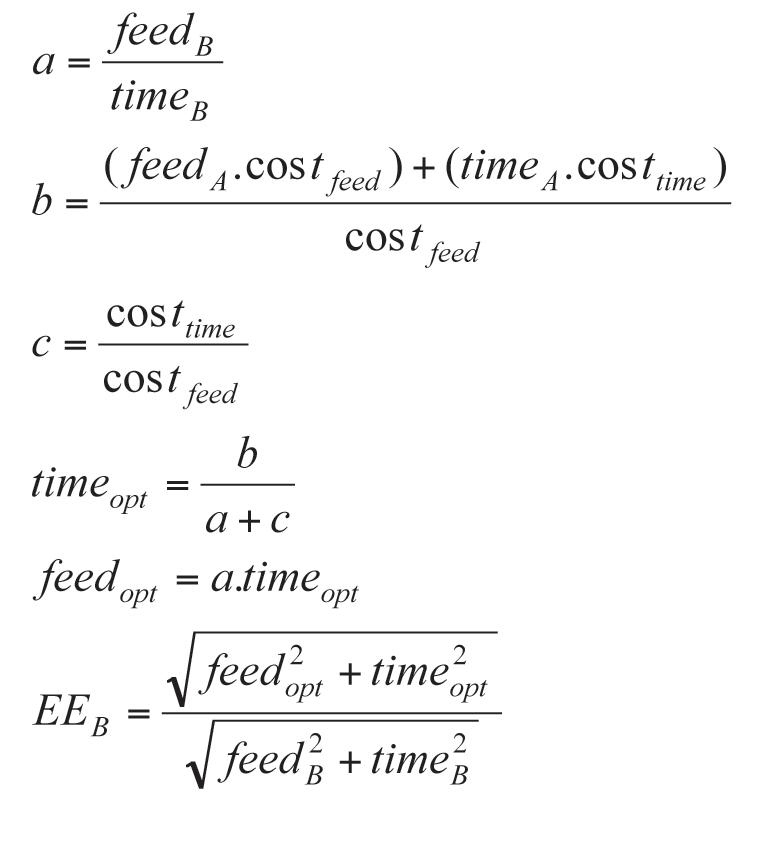
For example, we can calculate economic efficiency (EE) of flock B (Figure 2) relative to the target A (Figure 3). The variables that we need are the feed (kg/bird) and time (wk) used by flock B, the target feed and time to produce this number of chicks (feedA, timeA), the cost of feed (costfeed; $/kg), and the average weekly capital and fixed costs per housed hen (costtime; $/ hen/wk). Some instrumental variables (a, b, c) are also used just to make equations simpler in the calculation of optimum feed (feedopt) and time (timeopt).
The EE of flock B should correspond to a value from 0 to 1. However, it is possible
that good flocks will exhibit values greater than 1 because we are using the target values to define the frontier. In general, a better economic performance is expected from flocks with greater EE. These EE values can be used independently to compare flocks and farms, or to perform additional analyses.
For instance, the effect of mortality as a source of inefficiency can be evaluated by comparing EE at zero mortality, normal mortality and actual mortality scenarios. Two flocks from the same farm were compared at 50 weeks of age; both had similar peak of production, but one of them (flock 1) had greater mortality than the other (flock 2). The EE scores
were 0.87 and 0.94 for flock 1 and 2, respectively. When analyzed on a zero mortality scenario, EE scores were 0.93 and 0.96. Therefore, chicks from flock 1 were expected to have 13% over cost compared to the target unitary costs. From that 13%, 6% was caused by mortality and 7% was caused by management or health issues. For flock 2, 2% over cost was caused by mortality and 4% by management or health. Evidently, there was still potential in this farm to reduce unitary costs besides the effect of any eventual sanitary complication. A 4% reduction in cost can make a big difference in the economic results of the farm. Other factors such as settable egg and hatchability rates can also be assessed using this type of analysis. Overall, the utilization of economic efficiency as a criterion to evaluate flocks has the advantage of a more consistent relationship with the actual cost of the chicks and the economic results of the company. A more objective system will often mean better decisions and better results. Instead of focusing on increasing production, managers can focus on optimization of economic results, which is what the company expects from them. Ultimately, financial success is not always associated with the highest number of chicks. ■
Campylobacter jejuni is a pathogen found in chickens and is the nation’s leading cause of foodborne bacterial diarrhea, so poultry producers look for ways to control it before the birds go to processing. The good news is that the bacterium is susceptible to stress and is vulnerable. So what keeps it going?
FIGURE 3.
Defer principal payments for up to 12 months with our new Interest Only Term Loan¹
We understand that you may need new farming equipment at any time. That’s why we’re ready to help.
With the new TD Canada Trust Interest Only Term Loan, you can finance up to $500,000¹ for equipment purchases today and pay the principal later. You make
Visit
interest-only payments for up to 12 months, which means lower monthly payments, helping to improve your overall cash flow.
We offer competitive rates, and no set-up fee is required.² Plus, loans can be amortized up to 10 years based on the useful life of the equipment.
Broiler Production Selecting for Efficiency
Growers want to look at the most balanced of the genetics available
BY TECHNICAL SERVICES, COBB-VANTRESS INC.
Since the early 1980s, the primary breeder genetics staff at Cobb-Vantress have collected and analyzed data on reliable bird performance from a large number of individual birds, focusing on efficiency.
Broiler growout test facilities, constructed with the capability of controlling environmental variables, afforded accurate control of the environment and enabled birds to compete against each other while exposing individual bird differences – not as a response to varying external influences, but rather due to genetics. Efficient growth rate became the selection driver and feed conversion ratio (FCR) became the trait with the greatest economic importance. Feed conversion showed moderate to high heritability and was predicted to respond to genetic selection year after year.
Full testing in the pedigree programs resulted in a measureable improvement in the field performance. This advantage in feed conversion was recognized by customers and led to the full commercialization of the modern broiler breeder.
Individual bird testing identified those birds with both exceptional feed efficiency and muscle deposition. The focus was on recognizing birds that had good appetites and could be the most efficient in converting grain nutrients into meat. Fine tuning created genetic lines with the ability to grow quickly while maintaining the lowest cost per kilogram or pound of live weight produced – a sustainable advantage for customers.
The advantages that have been realized in the last 25 years are now proving even more valuable in light of what is perhaps the most challenging time in the history of the poultry industry. The rapid rise in the cost of grains and other feedstuffs during the last two years makes growth efficiency critical. The broiler grower needs a bird that will grow quickly to maximize facility use, convert feed to meat as efficiently as possible and do this while using a ration that is affordable.
All of these economic advantages put additional revenue into the pocket of the producer. In addition, the processing advantage of a better yield, for both eviscerated whole birds and breast meat percentage, is critical if the best return is to be gained for the processor.
Unfortunately, there is no such thing as a “perfect” breed. At one end
There is no such thing as a “perfect” breed. Broiler producers want to look at the most balanced of the genetics available: a bird that will return the best profit (or least cost) overall.
of the genetic selection scale there is the Leghorn bird, bred specifically for producing large numbers of eggs, which could be as many as 300 eggs per hen per year. This bird is very thin and has almost no value for meat production. At the other extreme is the meat-type bird which has tremendous amounts of breast meat yield but gains this at the expense of egg production. Broiler producers want to look at the most balanced of the genetics available: a bird that will return the best profit
(or least cost) overall, beginning with the purchase of breeder pullets, and following all the way through broiler processing.
Figure 1 is an example of two popular meat-type breeds and the resulting added value to the producer. In this example, a producer grows seven crops of broilers per year with an average beginning size of 16,143 chicks.1
Constant selection has allowed the development of a bird that is not only excellent in converting feed to meat, but also has the capability to efficiently utilize less expensive ingredients – or utilize a lower density of the feedstuffs available. A balanced bird will lose very little growth rate with reductions in feed density, due to its extraordinary ability to consume feed in all environmental conditions. This means a slightly higher FCR but in almost every case still means more profitability due to lower feed costs per tonne.
Figure 2 is a recap of a broiler trial by Cobb in the U.K. comparing a lower density/lower cost ration to a more expensive, higher density ration designed for maximum broiler performance.2
When the combined efficiencies of feed conversion (Figure 1) are coupled with the ration formulation savings (Figure 2), we see that an annual benefit to an average-sized producer could approach $11,000. This would be a nice advantage with today’s grain prices, which are predicted to stay high or even increase as world supplies of grain are depleted.
1 Flock size numbers were calculated from actual field numbers for broilers grown in Canada.
2 Performance numbers from the trial are combined with the size of an average flock in Canada, as well as the feed prices of Canadian feed rations.
CPRC Update
HOW THE CPRC FUNDS POULTRY RESEARCH
Below is an outline of the transparent and competitive process currently used at the Canadian Poultry Research Council (CPRC) to ensure that the dollars its members spend on research are spent on relevant issues and that they are leveraged to the greatest possible extent.
FUNDS PROVIDED BY CPRC ARE MATCHED BY OTHER SOURCES
One of CPRC’s main goals is to help build Canada’s capacity for poultry research. To date, CPRC Members* have committed over $1 million in support of 21 research projects at universities and federal government laboratories across Canada. Although CPRC’s contribution is significant, it only represents a fraction of the overall support for these projects; funds from other sources total about $4 million. That is to say, CPRC dollars have been matched or “leveraged” almost 4:1. Helping secure matching dollars is a large part of CPRC’s funding process. Industry dollars (such as those from CPRC) are eligible for matching by a number of sources, such as the Natural Sciences and Engineering Research Council (NSERC) and Agriculture and Agri-Food Canada (AAFC). As a prerequisite for CPRC funding, a project must secure matching funds from these or other sources. In addition to the funding quoted above, the CPRC has committed up to $500,000 for nine proposals that are currently under consideration for matching. These projects will only be funded by the CPRC if they are successful in securing matching funds. These projects could be leveraged for up to a total of $1.6 million.
WHY IS RESEARCH IMPORTANT?
The poultry industry in Canada and worldwide has made tremendous strides in virtually every aspect. Improved production efficiencies, enhanced management practices, and superior disease detection, treatment and prevention can all be traced back to research. Investment in research is key to the continued success of our industry. Although it is not always obvious how a particular research project will translate into improvements a farmer will see in the barn, it is the continuous push to learn more about the systems in which we are involved that eventually leads to these improvements. Research can very generally be divided into two broad classes: “targeted” and “primary.” CPRC supports research “targeted” towards established priorities; an emerging issue is identified, resources are made available, and the scientific community attempts to address the issue. The science behind many of the issues of interest are scientifically complex, however, in which case the intellectual tools or conceptual understanding necessary to address an issue may not exist. It is therefore also important to support “primary” research that pushes back the frontiers of
knowledge. It takes a commitment to both types of research for a country such as Canada to have a strong, productive research community in support of its poultry sector.
HOW ARE RESEARCH PRIORITIES SET?
CPRC’s contribution to research through its targeted program has been directed towards the national research priority areas of: Avian Gut Microbiology, Food Safety & Poultry Health, the Environment, and Poultry Welfare & Behaviour. These research priorities are set during regular national workshops with participants representing industry, government and academe. The last one took place in 2005 in full partnership with AAFC. The next one will take place in 2010. These workshops provide participants the opportunity to collectively decide where major research efforts should be directed. Provisions have also been made within CPRC to support research that addresses acute or emerging needs for the industry.
HOW DOES CPRC DECIDE WHAT TO FUND?
Every April, the CPRC sends out to the Canadian research community a “Call for Letters of Intent”, which normally deals with two research priorities per year. The main research priorities outlined above are cycled on a regular basis souch that researchers working in a specific field have regular opportunities to apply for funding, thereby promoting continuity within their programs. The “Call” outlines specific issues within the priority area that are of particular concern to CPRC Members. Researchers who are interested prepare brief proposals designed to address these issues. The proposals are reviewed internally by the CPRC Scientific Advisory Committee (SAC), which is a group of handpicked peer reviewers who have appropriate expertise. Based on the comments and recommendations of SAC, CPRC Members (each member is represented by a director on the CPRC Board) decide which proposals will receive support. As mentioned, actual funding from CPRC is contingent on securing matching funds from another source(s). CPRC staff assist the project leaders in applying for these matching funds and, in doing so, help maximize industry’s investment in research.
For more details on any CPRC activities, please contact Gord Speksnijder at The Canadian Poultry Research Council, 483 Arkell Road, R.R. #2, Guelph, Ont., N1H 6H8:, phone: 289251-2990, fax: 519-837-3584, e-mail: info@cp-rc.ca, or visit us at www.cp-rc.ca. ■
*The membership of the CPRC consists of the Chicken Farmers of Canada, the Canadian Hatching Egg Producers, the Canadian Turkey Marketing Agency, the Egg Farmers of Canada and the Canadian Poultry and Egg Processors’ Council. CPRC’s mission is to address its members’ needs through dynamic leadership in the creation and implementation of programs for poultry research in Canada, which may also include societal concerns.
Farmer Innovation The Blade Mount Squeegee
An Ontario broiler producer has developed an effective solution for removing excess water after cleanout
BY KRISTY NUDDS
Like many poultry farmers, Hans Veurink and his wife Diane were left with the daunting, laborious task of removing a huge amount of water from their barn after cleanout.
According to the On Farm-food Safety Assurance Program (OFFSAP), after broilers go to processing, barns – including walls, ceilings, feed and water lines –must be thoroughly washed out using a high-pressure washer. For the Veurinks’ two-storey, 27,000-square-foot barn, the amount of water accumulated on the floor was excessive.
Removing excess water can be done in two ways – turning up the heat and letting the barn air-dry, which increases energy costs, or using handheld squeegees. Like many others, the Veurinks were using two-foot-wide hand squeegees, a two-day, back-breaking job that left them sore and exhausted.
Hans says he thought the process was ridiculous and that “there had to be an easier way.” So, four years ago, he began working on an invention at his Creekside Poultry farm in Jarvis, Ont., that has transformed the clean-out process for his family and nearly 100 other producers.
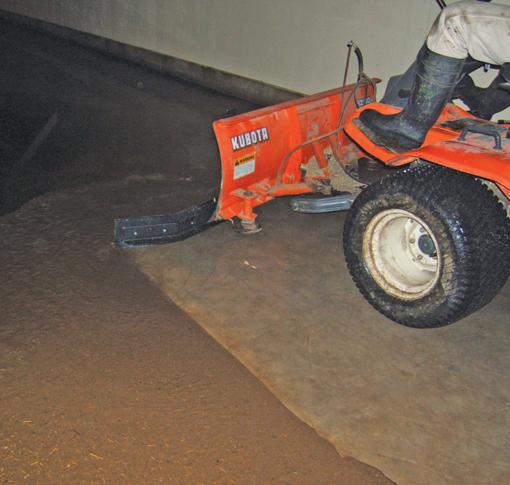
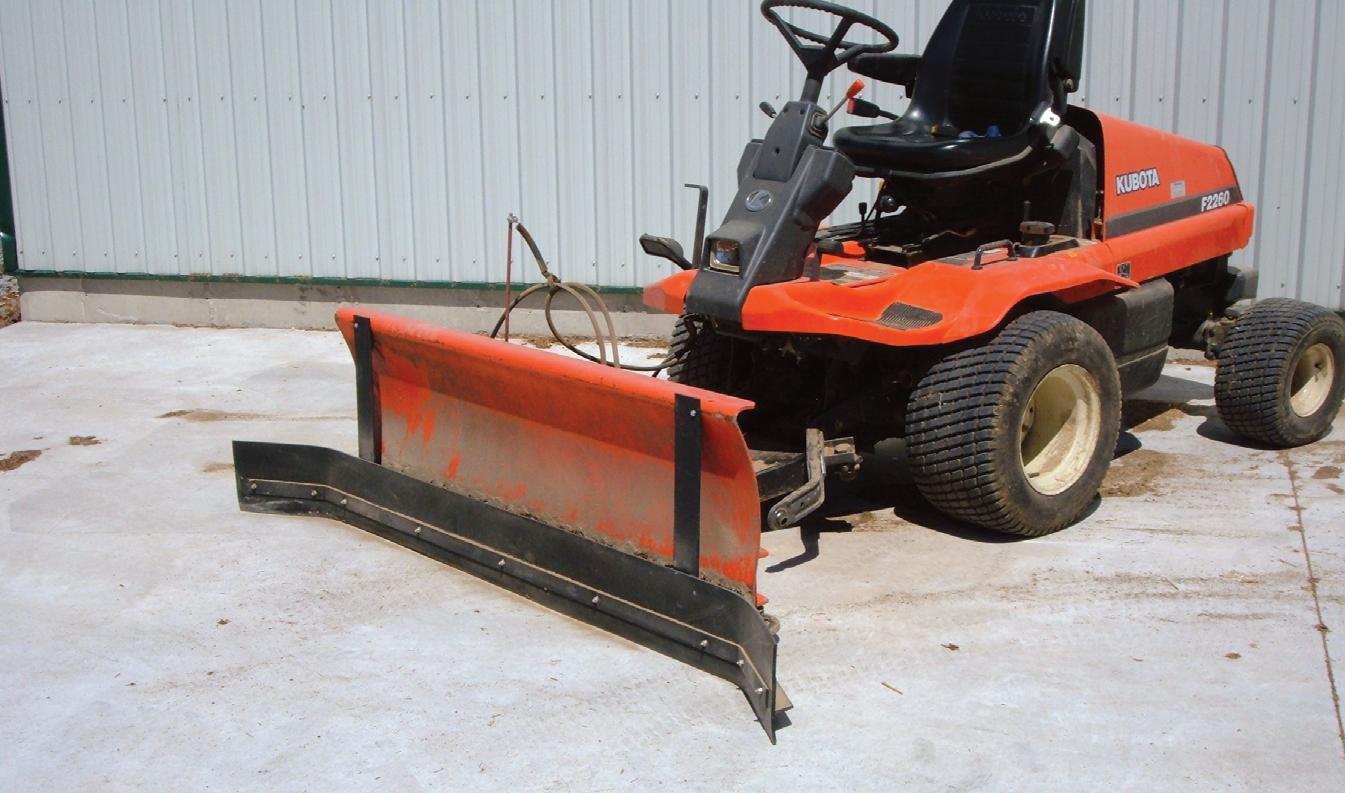
What he did is fabricate an extended squeegee that can mount onto any blade implement.
His Blade Mount Squeegee, an inge-
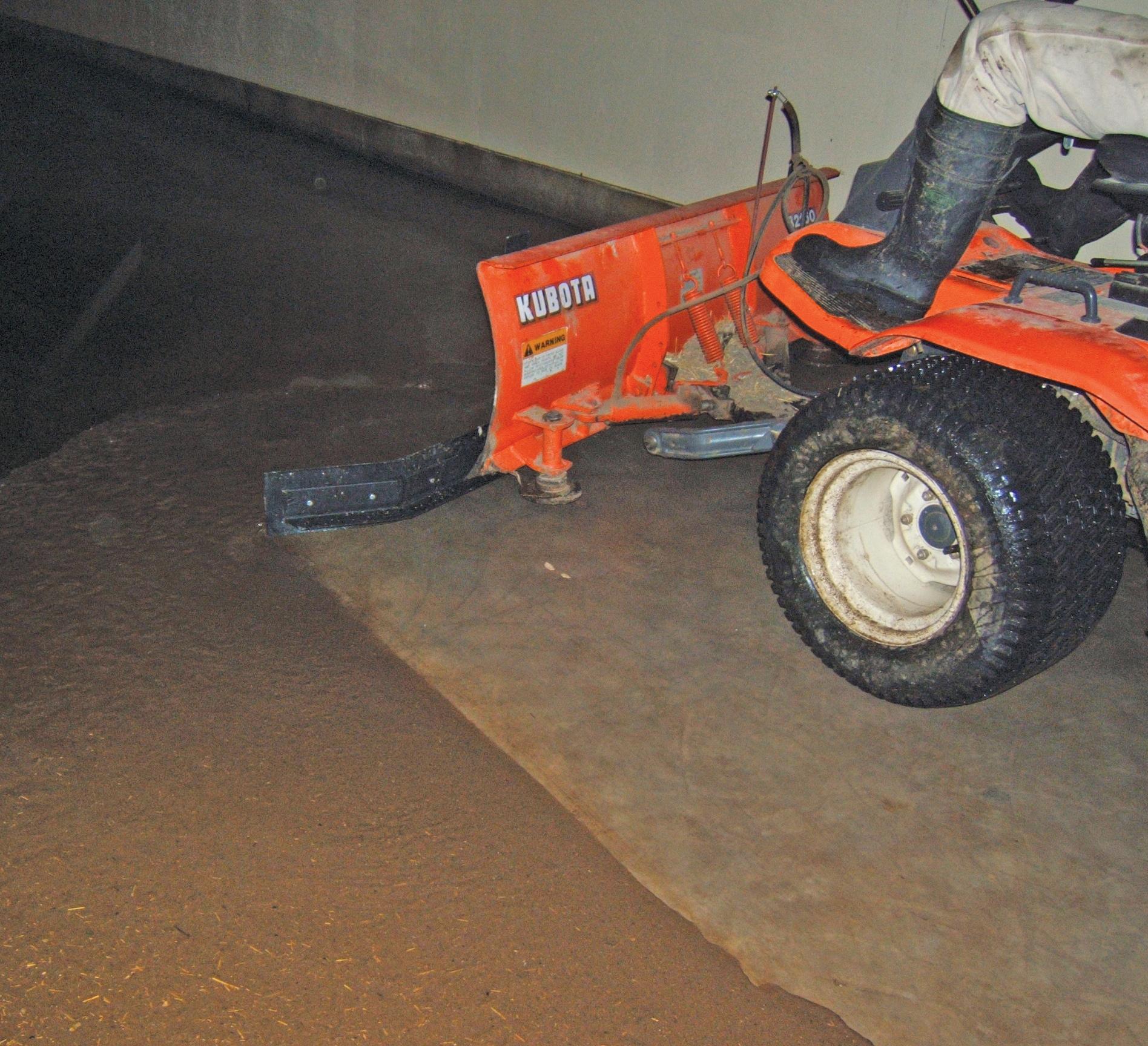
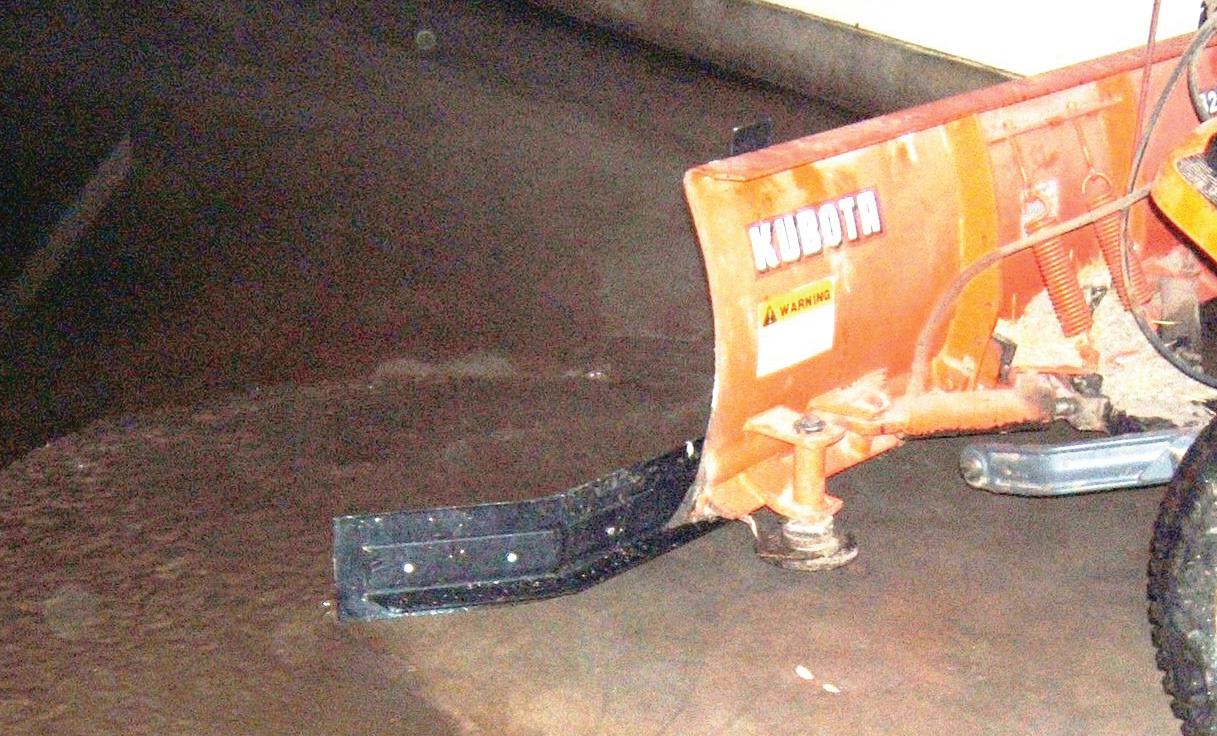
The Blade Mount Squeegee can be easily attached to any blade and efficiently cleans water and manure from floors, reducing energy and labour costs. EASY, EFFECTIVE CLEANING
nious, lightweight attachment, removes water effectively, but most importantly, quickly and without physical exertion.
Made from steel and rubber, the Blade Mount Squeegee weighs only approximately 60 pounds and has brackets that easily hook onto the back of a blade on any type of machine, whether it is a tractor, skidsteer, or four-wheeler.
The Blade Mount Squeegee angles with the blade and applies constant, uniform pressure and can be manoeuvred right up to a wall’s edge, says Hans. He says the attachment is quick to mount (in minutes or less) and can easily be hung on a wall when not in use. Hans says he hears from customers that they are amazed at how well it works, and how much time they save.
Farmer Innovation
At first, Veurink, a former dairy farmer from Thunder Bay who relocated to Jarvis eight years ago, used his creation on his own farm, but soon realized that other farmers could benefit. “I wanted to share this with others right away,” he says.
He “did a lot of driving” the first year, starting in his own county and expanding into other counties with high poultry farm densities, cold calling on poultry farmers to try to sell them on his invention.
His efforts were successful, and he sold 30 squeegees in the first year. After several satisfied customers encouraged him to market the creation more widely, he brought the Blade Mount Squeegee to the 2005 Poultry Industry Conference and Exhibition (the London Show), and has marketed the squeegee at each London Show since then.
Since he first started marketing the Blade Mount Squeegee, Hans has sold nearly 100 of them to farmers all over Ontario
and several in Alberta with 99.9 per cent positive feedback.
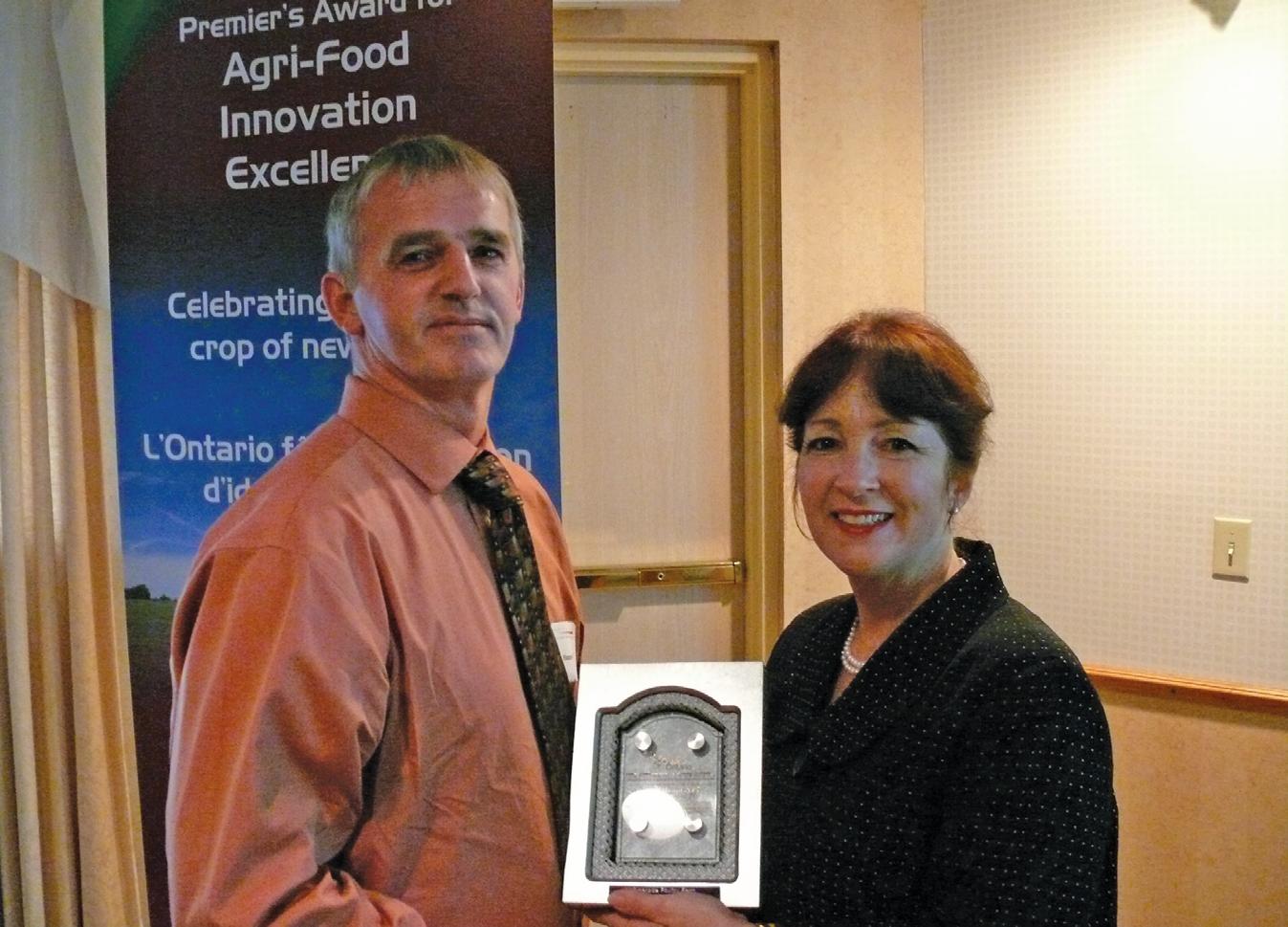
His ingenuity was recently recognized by the Ontario Ministry of Agriculture
and Rural Affairs (OMAFRA), which presented him a Premier’s Award for Agri-Food Innovation and Excellence. According to the ministry, his innovation reduces labour
THE BLADE MOUNT SQUEEGEE IS VERSATILE, FITTING ONTO ANY BLADE ON A TRACTOR, SKIDSTEER OR FOUR-WHEELER.
Farmer Innovation
HANS VEURINK, PICTURED HERE WITH ONTARIO’S MINISTER OF AGRICULTURE, FOOD AND RURAL AFFAIRS, LEONA DOMBROWSKY, RECEIVED A PREMIER’S AWARD FOR AGRI-FOOD INNOVATION FOR HIS UNIQUE INVENTION.
SolarWall
Exacon Inc.is pleased to announce that we have been appointed the Exclusive “Agricultural” Distributor for SolarWall in Ontario
• SolarWall has been installed on hundreds of agricultural and live-stock buildings, reducing heating costs by up to 30%. The system, which uses the sun to pre-heat incoming fresh air, also dramatically improves air quality and decreases humidity.
There are many reasons to consider SolarWall for your new or existing buildings:
• SolarWall provides thirty years or more of free heat.
• SolarWall means more fresh air can be brought into the building improving air quality without increasing heating costs.
• SolarWall is maintenance free and has no moving parts.
• SolarWall is cost effective - As of September 1, 2008 there is a federal contribution of $70.00/m2 of solar panel area and a matching $70.00/m2 contribution from the Ontario provincial government.
• SolarWall also contributes to cooling a building in the summer by shading the existing outside wall from the sun.
Call Exacon or an authorized SolarWall dealer near you for additional information and to obtain a free quote.
and energy costs, is affordable and makes it easier for farmers to increase the frequency of barn cleanings, improving the impact on food safety and animal welfare.
Customer comments on the squeegee are also testimony to its ingenuity and benefits for the farmer. Satisfied customers have told Veurink that “there is a lot of labour savings with great results,” “it’s wellmade, durable, easy to install”, “fast and efficient”, “the floors are so clean” and that the cost is recovered quickly in the amount of time it saves.
Veurink manufactures the squeegees on his farm and offers them in seven-, eightand nine-foot lengths, but says he could alter the size depending upon need. He also offers replacement rubber. A seven-foot squeegee costs $450, a nine-foot $500.
He also uses it for pushing manure, which further aids cleanout. He says the squeegee never catches on the barns’ plywood floors. “It works great and saves a lot of time,” he says. Some of Veurink’s customers use it to remove the last bit of dust in the barn, before washing, instead of using the dust blower, as well as for levelling shavings.
Additional benefits of the squeegee include a reduced risk of bacteria because the water doesn’t sit long enough to soak into a floor. He says that there is virtually no residue left and that concrete floors are left clean and dry.
Veurink’s next step is to build a shop so he can manufacture a larger volume of squeegees. He says he sees “more potential” for the squeegee, such as removing ice and slush from lockstone and concrete walkways or driveways, ice rinks, and removing liquid manure on dairy barn floors. “Anywhere where there is a lot of water or liquid, the squeegee can be used,” he says.
With the help of their daughters, the Veurinks have produced a video (which can be ordered from the Veurinks) of the Blade Mount Squeegee in action so that producers can see what it can do. Hans encourages producers to “just try it. It really does make life easier.” ■
To contact Hans and Diane Veurink for more information, telephone 519-587-4676 or e-mail hdveurink@execulink.com.
The Improved Ronozyme® P Product Family
For processed or non-processed feed, we have the phytase to meet your needs.
Ronozyme P-(CT) – Patented coating technology keeps phytase effective even under extreme conditions. Ideal for pre-processing addition to pelleted feeds.
Ronozyme P-(M) – High potency and easy to handle, this dustless form was specially designed for use in premixes, base mixes and dilutions used in non-processed feeds.
Ronozyme P-(L) – Perfect for post-processing spray application, the product has excellent shelf life and handles well.
Combine these formulation options with the feed cost savings and environmental benefits of Ronozyme P and your phytase choice is clear
Learn more. Contact your DSM Nutritional Products Account Manager or visit our website at www.nutraaccess.com
Product forms to match your needs.
PIC Update Rapid Screening of Salmonella
Researchers have developed a new, faster method for detecting salmonella from poultry environmental samples
BY TIM NELSON, EXECUTIVE DIRECTOR, AND KIMBERLY SHEPPARD, RESEARCH CO-ORDINATOR
Salmonella is the second leading cause of food-borne illness in Canada, with poultry and poultry products being major contributors to traceable disease. The poultry industry is now operating under increased regulatory pressure, greatly increasing the need for on-farm risk management of foodborne pathogens. The monitoring and control programs currently being used to isolate and identify salmonella have been predominantly based on conventional culture methods that are labour intensive and take 4-6 days perform.
Dr. Joseph Odumeru and his research team have been working on developing faster, cost effective isolation and identification techniques in order to provide industry with a more practical detection method. Their goal was to develop an Enzyme Linked Immunoabsorbant Assay (ELISA) screening step that could be added to currently used detection methods.
The researchers were successful in developing this technology, and poultry environmental samples were tested, including surface swabs from fans, floors, egg belts, manure and cages. Less frequently sampled areas included feed, pipes and ledgers, heaters, litter and feeders.
The method was found to be very sensitive and successful for detecting and identifying a wide range of salmonella isolates.
Overall the method developed allows for screening of negative samples and the identification of suspect positive samples within 48 hours, versus the 4-6 days required by the standard culture methods. The new method allows poultry producers to have a rapid, simple, high throughput and cost effective method to provide enhanced surveillance ability for detecting clinically important salmonella at the farm.
Furthermore, the method allows for identification of viable isolates, which helps to provide valuable information on emerging strains and changes in the epidemiology of salmonella. This means
Current monitoring and control programs used to isolate and identify salmonella can be labour intensive and take 4-6 days to perform. New research has focused on developing faster, cost effective techniques that will allow for more rapid intervention.
that rapid interventions can be carried out to help reduce production losses. Overall, the new method will aid in the reduction of on-farm and in-barn environmental risks, and enhance poultry and human health by improving salmonella testing for monitoring programs.
RAPID SCREENING
$600,000 ALLOCATED FOR RESEARCH
PIC Update
The Chairman and Board of the PIC are pleased to announce this years project funding allocations (listed below) and would
like to congratulate the successful applicants on being awarded these funds. We look forward to outcomes from these projects that will help move the industry forward in a sustainable and profitable manner.
PRINCIPAL INVESTIGATOR AND INSTITUTIONPROJECT
Dr. J-C Rodriguez-Lecompte University of Manitoba
Dr. S Sharif University of Guelph
Dr. J. Chambers Guelph Food Research Centre
Dr. J. Chambers Guelph Food Research Centre
C. Mackay Ontario Farm Animal Council
Dr. W. Köster University of Saskatchewan
Dr. B Van Heyst University of Guelph
Dr. M Zuidhof Alberta Agriculture & Rural Development
Dr. A. Bendall University of Guelph
Dr. P. Aich VIDO, Saskatoon
Y. Mine University of Guelph
Dr. A. Stinzi University of Ottawa
Dr. J. House University of Manitoba
Dr. B. Slominski University of Manitoba
Dr. R. Renema
Alberta Poultry Research Centre
Dr. M. Jendral
Nova Scotia Agricultural College
G Bedecarrats
University of Guelph
Dr. B. Holub
University of Guelph
Dr. R. Renema
Alberta Poultry Research Centre
Dr. G. Fasenko
Alberta Poultry Research Centre
Dr. G. Fasenko
Alberta Poultry Research Centre
Dr. M. Guerin
University of Guelph
Dr. R. Renema
Alberta Poultry Research Centre
TITLE
Development of a DNA-based vaccine against avian influenza
Towards the development of novel vaccines for control of Marek’s disease and shedding of Marek’s disease virus from feathers
Investigation of protected delivery of lytic bacteriophage to the chicken intestine for control of food-borne Salmonella spp.
Differences in virulence gene expression among various salmonella serovars isolated from Ontario chickens
Public attitude and consumer choice study regarding animal agriculture
Colonization of salmonella mutants impaired in invasion in-vitro and testing of new vaccine candidates
An integrated assessment of air quality impacts from the poultry industry
Nutritional mitigation strategies for antibiotic free broiler production: performance and economics
Identification of genetic pathways in the developing broiler skeleton
Understanding the mechanism of Immune enhancement and growth increase in chickens using nanotechnology based immune modulators
Modulation of gut immunity in chickens by B-1,4 mannobiose Part iiMacrophage dependent immune responses
Effects of bacteriophages on campylobacter colonization and persistence in broiler chickens
Assessment of the safety and efficacy of hemp seed products for use as feed ingredients in the diets of laying hens and broiler chickens
Distillers dried grains with solubles (DDGS) as a potential source of immunomodulating and growth promoting activity for poultry
Improving Omega-3 PUFA enrichment of broiler meat using modified flax
Determining the economic and welfare added value of natural and load-bearing movement in three strains of laying hens housed in furnished colony cages.
Development of light emitting diodes (LEDs) technology for use in layers’ and broiler breeders’ operations
Investigation of DHA content, transfer and metabolism in eggs, serum and brain in sighted and blind smoky joe hens
Oxidative stability of Omega-3 PUFA enriched eggs fortified with antioxidants and subjected to a range of cooking conditions
Poultry embryonic metabolism, cell viability, and gene expression: the influence of egg storage
The use of Infrared Thermography to assess the health and viability of broiler embryos and broiler and turkey hatchlings.
A temporal study of salmonella serovars in commercial breeder flocks in Ontario and potential application for enhanced surveillance systems
Altering broiler breeder composition to improve support of early chick quality and long-term maintenance of lay >
Joseph A. Odumeru B.Sc., M.Sc., PhD.
Dr. Odumeru obtained his B.Sc. Honors in Microbiology and Immunology from the University of Western Ontario and his M.Sc. and PhD in Medical Microbiology from the University of Manitoba. His work experience includes 22 years of experi-
PIC Update
ence in diagnostic microbiology and research work in industrial, medical and food microbiology.
He is currently the Laboratory Director of Regulatory Services, Laboratory Services Division, and an Adjunct Professor, Department of Food Science, University of Guelph. He is responsible for food quality and safety testing services provided by the Division. His research interests include development of rapid methods for the
detection, enumeration and identification of micro-organisms in food, water and environmental samples, molecular methods for tracking microbial contaminants in foods, automated methods for microbial identification, shelf life studies of foods and predictive microbiology.
His research publications include 62 publications and review papers in peer review journals, 70 abstracts and presentations in scientific meetings.
The effect of a sequential reduction in protein and amino acids on laying hen performance as a means of tempering egg size
In layers, egg size is affected by both the size of the hen and nutrition, particularly the intake of protein and the amino acid methionine. After 40 weeks of age, the usual concern is too large an egg size, since there is no economic incentive to produce extra large grade eggs and these have a higher incidence of cracks. Therefore, older layers should be fed less protein/methionine to help temper the natural increase in egg size. Just how far to reduce the protein is however, controversial. While controlling egg size is an important economic issue, few producers are willing to accept lower egg production as a consequence of any diet change.
Another potential incentive for reducing crude protein (nitrogen) level in diets is to decrease nitrogen loading of manure. To date, little research has been conducted on this topic.
In order to provide recommendations and information to industry on this important issue, Dr. Steve Leeson and his research team have been studying the response of layers to varying levels of protein/amino acid reduction through a complete laying cycle. Four complex diets were fed on different schedules. All production parameters of economic significance were measured, as well as estimates of nitrogen output in manure.
Their findings? As the percentage of protein and amino acid was reduced in the diet, the hens ate more which counteracted any effects of the diet change. The researchers note, however, that sequential reduction in protein and amino acid had the greatest impact in the final six months of production. The diets used in this research are not ideal for use in decreasing egg size of older birds, and further work on the optimizing diets specifically for older birds is recommended.
Don’t forget the inaugural Poultry Innovation Conference taking place Nov. 10-11 at Bingemans in Kitchener, Ont. This conference will feature brilliant speakers, good company and an industry gala dinner. Bring your friends and find out what you don’t know. See the PIC website (www. poultryindustrycouncil.ca) for details or phone us at 519-837-0284. ■
PIC’S PICKS
DR. STEVE LEESON, UNIVERSITY OF GUELPH
Broiler Breeders Male Breeder Management
A comprehensive guide for achieving optimal and consistent male performance in a breeder flock
BY JERRY GARMON, TECHNICAL SERVICE MANAGER, AND MARK HOGAN, TECHNICAL SERVICE MANAGER, AVIAGEN
Males make up 50 per cent of the breeding flock. Attention to male management requirements must therefore be given the same priority as that of females. Male management should focus on control of skeletal development, bodyweight and feeding to produce enough good quality males to maintain fertility and hatchability throughout the life of the flock.
This article provides management recommendations that will achieve optimal and consistent male performance for the breeding flock with specific focus on North American and Canadian poultry production conditions.
BROODING (0-2 WEEKS)
Management during the brooding period is critical as it has a lasting influence on the health and performance of the chick. The aim during the brooding period is to ensure good early chick development and bodyweight uniformity. Chicks should be provided with a good basic brooding set-up that provides proper access to light, heat, feed and water.
Light – Proper distribution of light
during the brooding period is critical to ensure chicks can see to eat and drink. Light of the correct intensity should be distributed evenly throughout the brood chamber. For the first 3 days, provide 23 hours of light at an intensity of 1-2 foot candles (10-20 lux). An initial intensity of 10 foot candles (100 lux) used within the brood chamber can be used to stimulate chick activity. Beyond 3 days, the amount of light given should gradually be reduced so that by day 10 a constant day length of 8-12 hours is reached. During this time, light intensity should be maintained at 1-2 foot candles (10- 20 lux).
Heat – The chick is highly dependent upon external heat sources to help maintain proper body temperature until approximately 2 weeks of age. Heat can
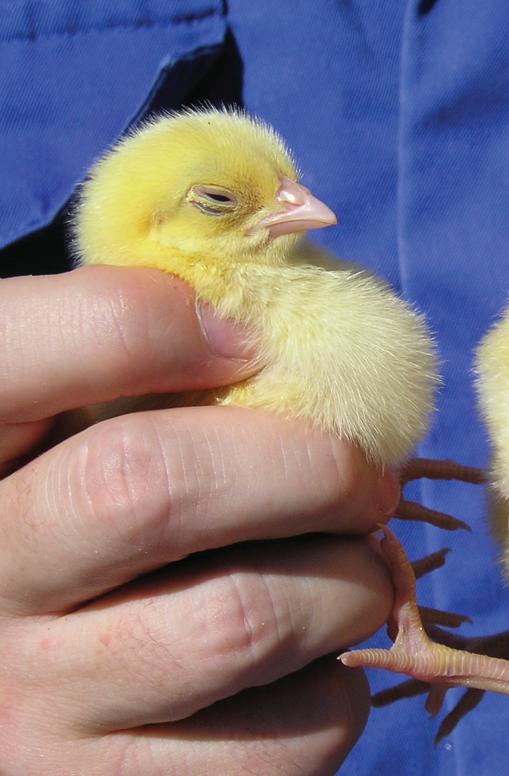
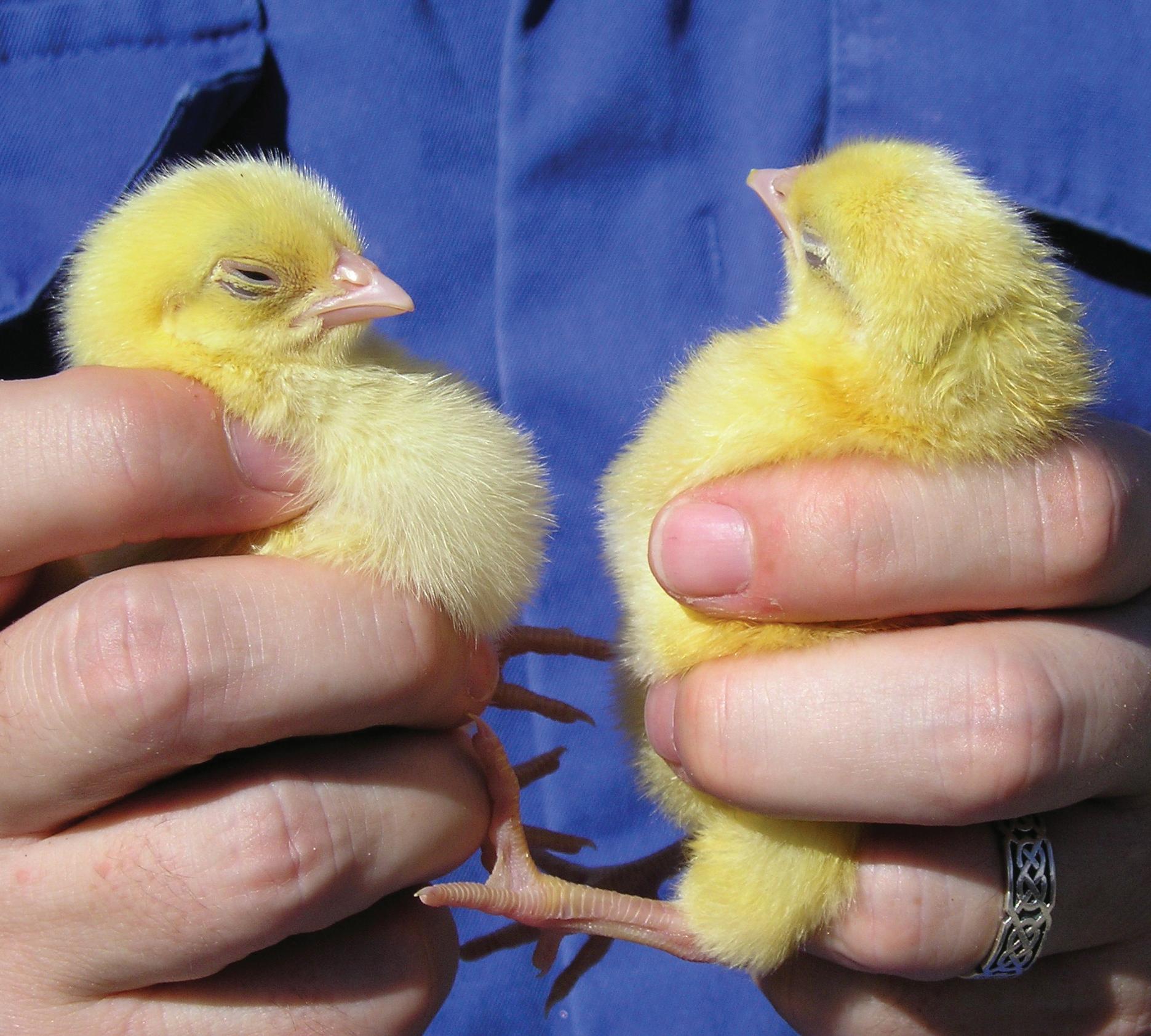
Males need equal attention and it starts with early chick development. Crop fill 24 hours after placement is a good measure of success. (Above) The chick on the left has a full crop; the chick on the right has an empty crop.
be provided by many sources (jet brooders, radiant brooders, forced air heaters and radiant tube heaters). Regardless of the heat source used, the following management practices are recommended: Preheat the brooding chamber for • 24-48 hours before chick placement depending on climate, litter conditions and season. A heating system that warms a spot on the litter
GETTING A GOOD START
Broiler Breeders
for the birds provides the best start. Typically under North American
• and Canadian conditions litter temperature at placement should be 32˚C.
• ture profile given in Table 1.
Beyond day 1, follow the tempera-
• 60-70%.
Maintain relative humidity (RH) at
• regularly.
Monitor temperature and humidity
TABLE 1
AGE (days) LITTER TEMPERATURE
Week190º(32ºC)
Week285º(29ºC)
Week380º(27ºC)
Week475º(24ºC)
Week570º(21ºC)
Week670º(21ºC)
ineffective and when males are kept in a separate pen at one end of the house.
Closely observe chick behavior dur-
• ing the first 24 hours after placement. If behavior indicates that the temperature is not correct (Figures 1 and 2), check and adjust temperature settings accordingly.
The temperature experienced by the chick is dependent upon the dry bulb temperature and relative humidity (RH).
High RH increases the apparent temperature at a particular dry bulb temperature, low RH decreases apparent temperature.
For example, the dry bulb temperature required to achieve 32°C is 35°C, but if the RH is 80%, the dry bulb temperature required to achieve 32°C is 28°C.
In North America and Canada, higher brooding temperatures of up to 35°C (at the brooder edge at chick height) are not uncommon. These higher temperatures may be required when RH is low, when the efficiency of the heating system is poor or when draught exclusion is
If chicks appear chilled and are inactive at placement (chicks should begin to drink and feed within 1-2 hours of placement), increasing the temperature by 1oC will stimulate chick activity, feeding and drinking behavior. The temperature setting can be returned to normal on the second day although chick behavior should ultimately determine decision making.
Feed – Chicks should be on an every day feeding schedule during the brooding period. Supplemental feed should be given for the first 5 to 7 days providing 1 supplemental feeder tray for every 100 chicks. Pan feeders should be flooded with feed for the first 7 to 10 days to promote feeding activity. Both the pan and the supplementary feeders should be placed within the comfort zone of the heat source.
Broiler Breeders
The Starter feed should be of a physically acceptable quality and either a course mash or, preferably, a sieved crumb (for further information on male starter rations refer to the parent stock recommendations for the breed). The provision of paper (which can cover up to 100% but not less than 25% of the litter in the brooding area) onto which food can be directly placed can be beneficial in encouraging chicks to eat.
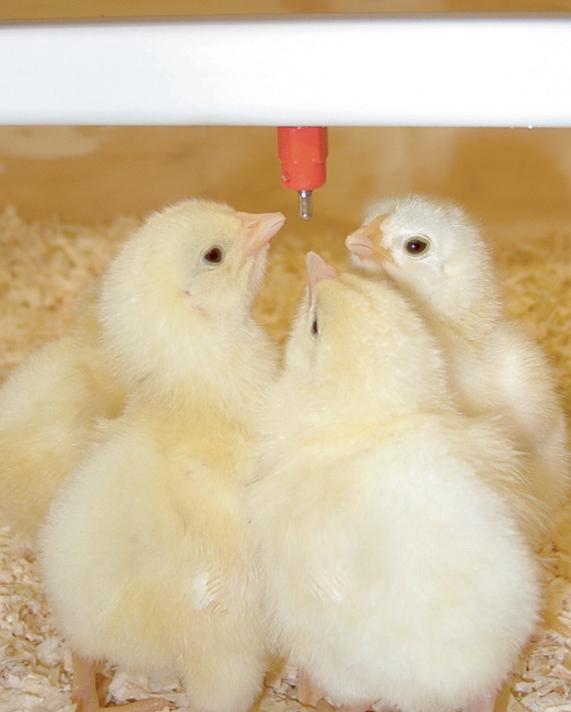
Water – The provision of clean, fresh water which is readily available is essential. Inadequate water consumption can lead to dehydration and may lead to mortality and bodyweight uniformity problems later in the growing period.
Adequate drinking space for 1000 • day-old chicks is provided by 5-6 standard bell drinkers each measuring 15.7 inches (40cm) in diameter and 10-15 supplementary mini drinkers of 5.5-8.0 inches (15- 20cm). Supplemental water >
FIGURE 1
FIGURE 2
Broiler Breeders
can also be provided in easy-fill drinkers (1 per 200 chicks), and snap-on drinkers on a nipple system (2 per 100 chicks).
Supplemental drinkers should • remain in place for the first 3 to 7 days and should be positioned within the comfort zone of the heat source so that chicks do not have to travel more than 3.3 feet (1m) for access to water. If drinkers are filled manually • they should be filled during the pre-heating period. It is important that water is delivered to the chicks at an appropriate temperature. Chicks should not be presented with cold water as this can lead to chilling, however water temperatures should not exceed 68°F (20°C).
Crop Fill – Crop fill is a good measure of a successful chick start. Chicks should have a full crop (see page 26) as soon as possible after placement. 80% of chicks should have a full • crop 8 hours after delivery. More than 95% of chicks should • have a full crop 24 hours after delivery.
To assess crop fill, randomly select 30 or 40 chicks and gently feel the crop of each chick. In chicks that have found food and water the crop should be full, soft and rounded. If the crop is full but the original texture of the crumb can be felt the bird has not consumed enough water.
GROWING (3-22 WEEKS)
Separate Rear – Separate rearing is the preferred method for controlling skeletal-frame growth and bodyweight as it allows males and females to be grown to specific and separate bodyweights throughout life.
Feeding – There should be enough feeding space to allow all males to eat simultaneously. This ensures uniform feed distribution and prevents overcrowding at the feeders. Feeding space should be gradually increased from 2
Broiler Breeders
inches (5cm) at 3 weeks to 7 inches (18cm) at 22 weeks (Table 2).
Canadian Poultry Magazine and Intervet Canada present the
MAY 2008
Willie Kleinsasser – Jenner, Alberta
JUNE 2008
10days -7weeks
7-10 weeks
10-20 weeks
2"(5cm)2"(5cm)
4"(10cm)4"(10cm)
6"(15cm)6"(15cm)
>20weeks7"(18cm)7"(18cm)
Growing separately reared males on an every other day feeding program will promote good uniformity. If feed impaction becomes a problem, other schedules may be used (e.g. 5 and 2, 4 and 3, or every day – Table 3).
For more information on feed nutrient specifications for males during the growing period, refer to the parent stock nutrition guide for the breed. Weekly feed increases should allow the male to achieve the target weight goal being used.
Water – From 3 weeks of age provide drinking space by: automatic circular or trough drink-
• ers: 0.6 inches per bird (1.5cm per bird)
• cups: one for every 20-30 birds
nipples: one for every 8-12 birds
• Water restriction should begin at the same time as initiating every other day feeding, with water being available with feed and for 2 hours after feed has been consumed. Males can consume large amounts of water on the off-feed day and the litter will become wet if water consumption is not controlled (1 hour in winter and 2 hours in the summer). Wet litter tends to increase ammonia levels and increases the risk of contact burns of the foot pads, which may develop into bumble foot in the adult male.
Lighting – Males grown separately should have the same lighting program as the females with which they are to be mated. Birds should be reared under a constant day length
> TABLE 2
Great Canadian “FLY THE COOP” Get Away Contest
Congratulations, you have found Brewster!
Record the page number and issue date where this ad is located on the contest ballot located at the Intervet insert in the centre fold of this magazine. Complete the remainder of the information on the ballot, attach a first class stamp and mail to: Great Canadian “Fly the Coop” Get Away Contest, c/o Canadian Poultry Magazine, Annex Printing and Publishing Inc., P.O. Box 530, 105 Donly Drive South, Simcoe, Ontario, Canada N3Y 4N5. Good Luck!
Amy Bouwmeester – Rockton, Ontario
JULY 2008
Barb Cowan – Auburn, Ontario
AUGUST
2008
Danny Gilbert – Burtts Corner, New Brunswick
Prizes sponsored by Intervet Canada, 250 Water St., Whitby, ON, L1N 9T5
BREWSTER
Great Canadian FLY THE COOPGetAway
Broiler Breeders
5
4 - 3
of 8- 12 hours at an intensity of 1-2 foot candles (10-20 lux). If feather pecking occurs, reduced light intensity may be required.
Bodyweight Control – During the growing period, male bodyweights should remain on target with the weight goal being used. Weekly estimates of bodyweights must be made throughout the growing period to determine if target weights are being achieved and to allow accurate decisions regarding feed allowances to be made. To determine a true representation of flock growth and development:
normal feed increase to recover in one week.
If, historically, males are consistently found to be below target, keeping birds on the Starter feed for longer will help maintain target weights prior to 12 weeks.
Males that are over weight prior to 12 weeks of age will have poor uniformity, a large frame size and reduced feed efficiency in lay. To correct this problem: Do not reduce feed lower than the • current feeding level.
Decrease the amount of the next • feed increase.
Males should not be released into the female pen until the release weight has been reached. Males need to be in good condition when released into the female pen in order to cope with the increased competition for feed and difference in feeding levels that will occur when they are mixed with the female population.
Feeding – Feeding space should be increased from 2 inches (5cm) at 10 days to 7 inches (18cm) at 20 weeks. When mixed rearing, feeding space and feed availability are critical.
To allow sufficient access to feed there should be no more than 20 birds per feed pan in the male pen at placement. The pans should be set to allow a minimum of 50% more feed through the feed drop than the female pan receives. Following this feeder set-up normally eliminates the need for extra feeding by hand.
• males (or approximately 15% of the population).
•
Randomly select a sample of 50-100
Weigh all birds in the sample.
Hold feed / delay the next feed • increase.
Weigh birds on the same day each
• week, at the same time and preferably on the off-feed days or at least 4-6 hours after feeding.
If average bodyweights are found to deviate from target bodyweight by more than 0.20 lb (90g) then corrective action should be taken.
Males that are below target prior to 12 weeks of age will have poorer uniformity, a smaller frame size and a decreased feed efficiency. To correct this problem the following steps should be taken:
Weight gains after 12 weeks must be consistent if males are to be properly fleshed at 20 weeks. If target weight gains are not achieved by 12-15 weeks of age a new profile which runs parallel to the published target should be drawn and adhered to.
Mix Rear – Growing males within the female population is common practice in some regions. At placement, males are segregated from the female population by a bird proof partition into a pen at one end of the brood chamber. Once the males reach the proper target (release) weight, they are released into the female population.
Chain feeders pose challenges in achieving target weight and acceptable uniformity. Where chain feeders are used, place the pen petition so that it provides no less than 6 inches (15cm) of feeder space per male. This normally requires a 90 foot (27m) long pen if equipped with 4 lines of chain feeder. Feeder run time should be set to ensure a full trough of feed is maintained in the male pen.
Water – The provision of drinking space for males that are mixed reared should be the same as that for separately reared males.
Lighting – As with separately reared males, mixed reared males should receive the same lighting program as the females to which they are to be mated.
Initiate the next scheduled feed
• increase and increase the size of the next scheduled feed increase until bodyweight is gradually brought back on target.
As a rule of thumb, for every • 0.10 lb (50g) under weight, a bird will require an additional 13 kcal ME per bird per day beyond the
These target weights should typically be achieved at 4 weeks of age. If males are not achieving the release weights around this age early nutrition and brooding practices should be reviewed.
Note: If the male is to be grown with females that have more aggressive appetites than the parent stock products, the male weight will need to be increased prior to release.
Uniformity – Bodyweight gain and uniformity are key to achieving success in mixed rear and should be measured weekly from no later than 3 weeks of age – ideally from placement. Low bodyweight gains and/or poor uniformity are an indication of insufficient feeder space in the starting pen. Insufficient feeder space can be caused by:
Accumulation of litter in the feed- • ing system – to avoid this, litter should be cleaned out of the feeding system daily.
PLEASE CHECK ONE:
❑ Poultry Producer or Employee
❑ Government, Libraries, Schools, Universities
❑ Hatchery, Hatchery Employees
❑ Fancy or Show Poultry
❑ Wholesale Produce and Processors, Further Processing
❑ Equipment Manufacturers
❑ Drugs, Laboratories, Vaccine Companies, Chemical
❑ Veterinary and Lab Technicians
❑ Feed Manufacturers, Feed Additives, Distributors and their Salespeople
❑ Other (please specify)
Broiler Breeders
Failure to completely charge the
feeding system – when the feeding system is found to have incomplete charge provide enough extra feed on the next feed day to fully charge the system.
IMPROVING POOR UNIFORMITY
Poor bodyweight uniformity in males increases the risk of higher mortality throughout the life of the flock. If uniformity of skeletal frame size and bodyweight in the male population becomes an issue, there are techniques that can help to improve this.
Separate Rearing – Separate rearing is the preferred method of rearing males but it can create unique challenges if male uniformity is poor. If the uniformity of the males in a separately reared group is poor, one method of improving uniformity is to mix the top 40% of the males with the females at 7 weeks of age, growing them mixed until movement. The under weight males remain in the male pen where competition for feeder space is reduced. Feed increases should be made which will bring the males to their target weight by 12 weeks.
Another method used to grade the males during separate rearing involves constructing a pen within the male chamber and grading the small males into this pen. Small males should be kept in this pen where they can be provided with an increased feed amount to allow them to achieve the target weight. As these males progress in bodyweight gain, they can then be graded out into the heavier male population as they achieve target weight. The challenge is building a bird proof pen and hand feeding the small males. Also, the small pen will contain feed every day which can create problems for the heavier birds on their off-feed days.
Mixed Rearing – If the uniformity is poor in mixed rearing (Table 4) corrective action/grading should occur. Grading allows the lightest males in the flock to recover weight gain and evens out skeletal frame size by reducing com-
petition for feeder space while slowing the gain of the heavier males. Males should be graded into the female pen at 4 weeks using the 4-week weight goal as a standard.
To grade a flock, weigh a sample and establish the birds that are heavy enough (birds that have achieved the 4 week target) to be mixed with the females. Lighter males remain in the male pen until 5 weeks when the process is repeated using the 5-week weight goal as target. Flocks with moderate uniformity problems will require 2 gradings. Flocks with severe uniformity problems will require 3 gradings, the last being at 6 weeks of age. In the first week that the males are with the females after grading, they will typically have little or no weight gain but should recover 2-3 weeks after placement. This is why it is important that males are of the desired weight before being mixed with the females.
BREEDING (23-65 WEEKS)
Feeding Equipment –Winched Feeding Equipment: Winched male feeder systems have an automated electric winch system that allows the feeder to be filled over head before it is lowered for feeding. The number of pans should allow 7 inches (18cm) of feeding space per bird. This type of feeder does not require a tube program for distribution but does require enough pans to accommodate a full days feed at the maximum amount for the house. Under typical North American/ Canadian conditions, the number of males per pan should not exceed 10. Ideally feeders should be raised after feeding to deny access. Feed allocation for the next day can then be added and feeders are lowered again at feeding time. This ensures uniform feed distribution. Where males are full-combed it is essential that proper adjustments are made to the feeders to allow feeder access. Shocker cables should be used on this type of equipment to prevent females from perching on the tube and eating male feed.
Floor Feeding: Male feeders with no electric winch system must be programmed so that feed drops into all pans when the operation begins. The lower limit micro-switch in the hopper and the control pan must work together to ensure that the auger tube remains charged with feed. Some operations have found that proximity switches are more reliable for these controls. Depending on house length, the charge of feed in the auger tube may be lost if feed levels are below 20 lb per 100 birds per day (90g per bird per day). When this occurs, extra feed should be provided to recharge the system and maintain feed delivered to the male.
Feeder Height: Regardless of the feeding system used it is essential that feeder height is correctly adjusted to limit access by females but allow all males equal access to the feed. Care should be taken to avoid litter build up or depletion from under the male feeders. Correct male feeder height should be maintained by routine observation and adjustment and will be dependent upon male size and feeder design. Feeder height should be in the range of 2.0-2.4 inches (50-60cm) above litter.
Feeder Pans: Feeder pans should be securely fitted to the tube to prevent rotation and restriction of feeder space. Secured pans that become tilted on the tube indicate that the feeding system is set too high.
Timing of Feeding: Where possible, males should preferably receive their feed slightly after the females (approximately 5 minutes). This will help to minimize the stealing of male feed by the females.
Feed Quality and Nutrient Specification: The feed given during the breeding period should be of an acceptable quality and nutrient content, supporting male condition and fertility.
Scales: The scales used to weigh
>
meller Cage Systems
MELLER PULLET CAGES
Meller brings you a world class pullet cage system proven in thousands of installations around the world, with features such as revolving belt manure removal roomy cages, solid galvanized dividers and adjustable front gate. Chain feeder or self propelled feed carrier with proportioner augers are available.
MELLER LAYING CAGES
Egg producers across the country have increased the efficiency of their operation with Meller Cage Systems, the Egg-Ease Egg Saver and faster egg collection. Sliding doors open the full width of the cage and the horizontal bars prevent feed spillage.
Broiler Breeders
male feed vary in sophistication. Whatever type of weighing equipment is used, accuracy is the key to controlling male bodyweight and the scales must be sensitive enough to accurately weigh male feed, be installed correctly, calibrated and checked regularly. The most accurate systems are those that auger the feed directly into the male scale, placing the measured amount directly into the male feeder. The least accurate systems involve using the female scale to weigh the male feed. The male feed is then passed through the same auger as the female feed falling through an extra drop in the auger. Such systems are prone to error in weights and delivery, requiring constant monitoring for accuracy.
Scales should be checked for accuracy during the first week birds are in the breeder house. Scales may be checked with a known weight or by removing a days feed from the hopper and weighing
it with an accurate scale. Investment in accurate male feed weighing systems is recommended.
Watering System – Male drinker lines typically consist of a line of nipple drinkers in the scratch area. The system should have enough nipples to provide 1 for every 8-10 males or, alternatively, enough bell drinkers to provide 1 for every 20-30 birds. Nipple drinkers are beneficial if they are managed so that water flow rate ensures adequate water delivery without causing water wastage and wet litter.
Feeding Program – After mating, males and females should be fed from separate feeding systems. This allows the effective control of bodyweight gain and uniformity for each sex. Separate sex feeding takes advantage of the difference in head size between males and females. Excluding males from the female feeding system is an essential part of male man-
agement during lay. The most effective method of restricting male access is to fit grills to the female feeding system.
A grill with a horizontal bar or wire set at 2.25-2.5 inches (57-64 mm) or a 11.25 inch (25-32 mm) PVC pipe secured to the inside peak of a standard high profile grill - in conjunction with a full comb on the male - will restrict males during the early period of production. Normally this type of grill has a width of 1.68 or 1.75 inches (43-45mm).
Male Fleshing – In addition to recording male bodyweights it is important that male condition or fleshing is monitored. An assessment of fleshing
FIGURE 3: EXAMPLE OF FLESHING SCORES
Broiler Breeders
will establish if males are correctly fleshed for skeletal size (for example, incorrectly fleshed males would be smaller skeletal frame-sized males that are over fleshed or larger framed males that are under fleshed). Lean, well conditioned males are more active and will complete more matings than heavily fleshed males.
Fleshing should be evaluated during 3 critical periods of the bird’s life: 16-23 weeks
• 30-40 weeks
• 40 weeks to depletion
• Fleshing scores can be obtained while weighing males by using a scoring system of 1 to 5 (Figure 3). A score of 1 means the bird is too thin and a score of 5 means the bird is too heavily fleshed. A score of 3 is desired and considered the best practice.
Spiking – During mating, the male to female ratio should be 10% (good quality males). Over time, the male to female ratio will decline due to male mortality or morbidity. When ratios reach 8 males per 100 females, additional males should be added to the flock to return the ratio to 10 males per 100 females. Spiking will assist in maintaining the optimum male to female ratio and the life-long fertility of the flock.
Before spiking, walk through the flock and remove any unproductive males. Do not allow cull males to remain in the flock. The obvious culls will be easy to locate and remove but over weight males that are not breeding will be harder to find. These males will normally have a full coat of new >
STAND OUT FROM THE CROWD WITH COCCIVAC®-B
As a top-level producer you have the smarts to make the grade in today’s poultry industry.
It’s time to reach for the next level with COCCIVAC®-B vaccine, the perfect match for your expertise in getting broilers to the market.
Combined with superior barn management, COCCIVAC-B vaccination can help establish long-term control of coccidiosis, reduce in-feed medication, and even let you raise antibiotic-free birds, while maintaining your current flock performance.
FIGURE 4: MALE PEN
Broiler Breeders
feathers and the fluff around the vent area will be intact. Figure 5 depicts the vent of an active male versus that of an inactive male.
Males used to spike, must weigh at least 8.5-9.0 lb (3860-4085g) and have been light stimulated for at least 3 weeks. Young, under weight males cannot compete with other adult males, resulting in starve-outs. Weigh the young spiking males separately from the original flock for at least 4 weeks subsequent to entering the flock to ensure they are eating properly. Increase feed amounts for 3 to 5 days after adding males and lower the male feeder height to accommodate the young males.
Male Pens – Holding pens are used to mature young spiking males and condition them for entry into a mature flock (Figure 4). The male water line and feeder extends into the male pen. In this pen the restriction grill is removed from the
female feeder to provide 1.5-2.0 inches (4-5cm) of feeder space per male - allowing control of feed volume through control of feeding space. To calculate feed requirements the male head count in the pen is added to the female head count. Males can be removed from the pen and introduced into the general population after 2-3 weeks when signs of maturity are evident. Providing a cross section of the house reduces fighting and improves livability in the pen. When the males are released, the females will move back to the pen area and use the nests.
CONCLUSION
The objective of male management is to promote and maintain fertility throughout the life of the flock by providing a sufficient number of good quality males (males of good condition, with uniform growth, bodyweight and skeletal
development) throughout the life of the flock. Since males make up 50% of the breeding value of a flock, management practices for males must receive equal attention to that given to females.
As with all parent stock management advice, the final results will depend upon the amount of input at farm level. If the correct basic techniques are followed with regard to management of males during brooding, rearing and breeding then optimal fertility and hatchability levels can be achieved for the life of the flock. ■
FIGURE 5: VENTS OF AN ACTIVE (L) AND INACTIVE (R) MALE
Info Market Group Lacombe
BROILER BREEDER FARM
Good location with 18,658 units broiler breeder quota. 1 grower barn and 2 layer barns. Newer home with 6 bedrooms.
EDMONTON AREA
10 acre broiler farm with 36,600 units broiler quota. 3 Barns and insulated and heated shop. Beautifully renovated log home with 5 bedrooms.
BROILER BREEDER FARM
60 acres with 2 barns (50’ x 300’ and 44’ x 289’), 9126 + 1300 units annualized quota. Vencomatic & Van Gent nesting & egg gathering systems. 1230 sq. ft. bungalow with 5 bedrooms.
If you are looking to buy or sell a poultry farm, Andries is an experienced
27778 bird layer farm for sale.
6-1/2 year old layer barn. 1-1/2 year old pullet barn on 160 acres.
1 hour south of Calgary, 50 minutes north of Lethbridge in Vulcan, Alberta. 3 bedroom house, shop, etc. Very clean operation. Buy a going concern for the same price as quota compared to other provinces. Call Leo: 403 863-6405 or 403 938-2032 leobrass@telusplanet.net
N1A 1G2 Phone 905-774-7624 or Toll
50 ACRE BROILER FARM - 2 BARN OPERATION: Barns have new steel, insulation checked and replaced where necessary. All equipment set for broilers. Barns have new vents and controls. Generator building. 3 bdrm brick bungalow completely updated. Large pond for water. Call Jack.
WANTED: Broiler Farm in Woodstock area.
GRIMSBY AREA: 10 acres on paved road. 32,000 sq. ft. of barns with auto generator. 40 x 60 x 2 drive shed used as retail outlet. 3 bdrm century brick home, pool. Call Jack
NIAGARA AREA: 45,000 sq. ft. of barns, small acreage, 3+2 bdrm home, natural gas heat. Nipple drinkers, pan feeders, radiant tube heaters. 14,000 Quota available at market price. Indoor pool and paved road location. Call Jack.
EXECUTIVE FARM ON 30 ACRES: Brick 4 bdrm, 4 bath home. Hardwood floors and ceramic, full finished basement with 2nd kitchen. 2 car garage-workshop and large barn rented long term at $800.00/month. Paved road. Priced at $599,000.00 Call Jack.
QUOTA: 8,000 H.E.M.S available. Call Jack for details
FARMERS FARM: 1000 Head finishing barn. Total Slats. Auto Sort. Chicken barn set up for Partridge. Sold on weekly schedule. Workshop 30' x 110'. 3 bdrm home all on 50 acres of land. Call Jack
This new book provides an up to date look at all aspects of broiler breeder production and management, starting with specialized genetic programs as developed by the primary breeders and ending with two chapters on very practical, hands-on aspects of breeder management. There is extensive coverage of: health management, feeding systems, environmental control, lighting programs and all aspects of male and female reproduction. Together with extensive tabular material and line diagrams, there are numerous photographs that fully depict critical aspects of breeder management.
Item #: 0969560036
Item #: 0969560052
Commercial Poultry Nutrition has become the standard text for all involved in the various poultry industries. This new 3rd edition is a major revision with virtually all sections being updated to accommodate the ever-changing genetic potential of broilers, layers, turkeys and waterfowl. The new edition emphasizes nutritional programs that allow for genetic potential to be realized in both meat and egg birds. However, it is realized that achieving maximum growth rate, for example, may not always be the most economic way to feed birds in certain situations, and so there is emphasis on alternative strategies for feeding and nutrition.
ALL THINGS CONSIDERED
BY JIM KNISLEY
Doha’s Failure
The WTO’s Doha round is down but the referee has only counted to nine so it isn’t quite out.
Most world governments seem to have given up on their contender, but there are a gaggle of academic economists, WTO officials and officials deep in trade ministries and departments around the world screaming “get up, get up.”
They have faith that their glassy eyed, rubber legged champion needs just one more shot to put the uninformed, brutish forces of protectionism on the mat.
They never lose faith. They invoke David Ricardo. They rise as one and yell out “comparative advantage.”
Their champion has been down before and risen. But this time may be different. This time comparative advantage ran into political reality and aspirational economics.
The political reality is, no matter what trade negotiators say, the U.S. and Europe will not sacrifice their agriculture and industrial support programs. Meanwhile Brazil, India and China will not give up their economic development programs and their financial service sectors to the detriment of their people and the benefit of others.
And no one wants to allow themselves to become overly dependent on others for food. Too many Third World countries have seen what happens when you allow local farmers to be bankrupted by cheap, insecure supplies of foreign food. The countries become dependent on imports they can no longer afford to buy and victims of policies of foreign governments that divert land to the production of industrial feedstock.
It is also worth remembering that before economics became a so-called science it was called political economy. The founders of the discipline knew that the two went together hand and glove. They knew that no matter how fancy the mathematics it cannot be divorced from the human element. They knew that no one would allow themselves to face rack and ruin because some economic model says they should.
tial damage. All the proponents would say in response was that in the long run things should be better.
If you are facing economic ruin that answer isn’t nearly good enough and politicians know it.
Doha failed because the WTO wanted a big, long run deal. Rather than spending seven years wandering in the wilderness the time would have been better spent going after small, incremental deals where the benefits would be clear.
People, I think, are willing to accept short-term costs if the damage is limited and the benefits are clear.
In Canada there hasn’t been as much gnashing of teeth as one might have expected when Doha hit the mat. There have been a few shots taken at supply management and the government’s support of it. But that came from the usual sources and is pretty routine and largely inconsequential. And surprisingly none of those, who had in the past said that Canada was a barrier to a trade deal, made that claim once it became clear that others had collapsed the talks.
Once Doha gets carried from the ring, if the referee ever gets to 10, the supply-managed sector in this country can breath a sigh of relief. But it should be brief.
Those who believe in the long run will never give up.
Meanwhile the internal challenges that have long faced the sector remain. They were quieted during the great Doha debate – nothing focuses the mind like impending doom – but they haven’t disappeared.
Doha failed because it focused too much on the long run
Perhaps in the long run the academics would be proven right. Perhaps, in the long run, more people would be better off if Doha succeeded. But as 20th century economist John Maynard Keynes said: “In the long run, we’re all dead.”
Doha failed because it focused too much on the long run.
Meanwhile people, groups and industries looked at the short term and saw trouble. In virtually every nation someone was going to be hurt and they could clearly identify the poten-
Allocation, pricing formulas, production quotas, disease preparedness and the ongoing struggle to win the hearts and minds of Canadians remain as issues.
Perhaps the most threatening of these is interprovincial rivalry. While it has been comparatively quiet on that front of late – thanks to Doha and higher grain prices – it won’t take much to put that back on the table.
If grain demand slips and grain stocks rise provincial governments will – as they have in the past – look to increased poultry production for relief. Those demands were accommodated and the worst of the proposals defanged in the 1990s, but the potential threat has never disappeared. It’s worth remembering that the national supply-managed system was at the brink within the last 10 years because of those threats.
So while the whole sector is rightly celebrating the collapse of Doha, it should also ensure that domestic differences don’t rise up and do what Doha didn’t. ■