Protection against infectious laryngotracheitis, Marek’s and infectious bursal diseases in one shot
The latest innovation from the manufacturer of VAXXITEK® HVT+IBD in
Proven safety for your flock
Chickens in concrete
A close look at the method and benefits of using insulated concrete forms to
Preparing for colder
Seven things to check during fall barn maintenance.
Using
Proven effectiveness at a much lower energy cost.
by Brett Ruffell
A new chapter for Project Canaan
You’ve likely heard of Project Canaan, a land development initiative set up to combat hunger in Eswatini, Africa that’s supported by Egg Farmers of Canada (EFC). You might even know a producer who’s visited the egg farm there to help out.
I’ve spoken with a few farmers who’ve accompanied EFC representatives on one of their regular trips to the region. Each one described it as a lifechanging experience in terms of how they view hunger and poverty.
For a refresher, EFC has partnered with the charitable organization Heart for Africa on Project Canaan for seven years. Through this initiative, EFC supports an egg farm in Eswatini that feeds orphaned children and others in the surrounding community.
The organization’s experts helped get it up and running, trained local staff on how to manage it and continues to support it by sharing expertise and through fundraising – EFC raises $125,000 annually for the project.
To date, the partnership has been responsible for the production of six million locally produced eggs in total and 665,000 meals annually. What’s more, the egg farm also employs 300 local residents.
Now, Jane Maxwell, a Canadian who founded Heart for Africa with her husband Ian, has
penned a new book called Hope Lives Here to provide an in-depth look at Project Canaan and the important work that EFC has helped support.
It’s her third book. The first two, titled It’s Not Okay with Me and Is It Okay with You?, started with the Maxwells’ initial move to Africa and left off with them buying a large parcel of land with high hopes for using it to make a difference. The new book tells the story of what happened next.
Maxwell says there are many layers to the impact EFC has had in Eswatini, a country that struggles with extreme poverty, hunger, HIV and violent political uprisings.
“So, by adding a hardboiled egg to our feeding program, it changed what we were doing here.”
She says malnutrition and stunting are big issues in the country’s rural communities. She’s seen too many children with so little muscle mass that they struggled to bear weight.
That’s where protein-packed eggs have a big role to play. Aside from providing children with much-needed muscle mass, Maxwell says protein even assists with the uptake of vaccines and HIV medication. “So, by adding a hardboiled egg to our feeding program, it changed what we were doing here,” Maxwell says.
She credits EFC for its dedication. “We have a lot of people who come and say they want to help but then they don’t. But EFC, from top to bottom, they do what they say they’re going to do.”
EFC’s CEO Tim Lambert welcomes the positive feedback. “That’s great to hear,” he says. And he’s pleased with how well the barn is being run. “A few farmers we’ve taken there have said, ‘You know, the farm is run as well as any farm in Canada,’” Lambert says, explaining that they’ve helped transfer Canadian standards of excellence to Project Canaan and trained local farm workers on how to execute those practices. “And they’re doing it, which is great,” Lambert adds.
Looking forward, Maxwell will continue to pursue sustainability. Previously, in an initiative led by Lambert, Project Canaan became water self-sufficient by building a pipeline to bring in fresh water from nearby springs. Now, they’re installing solar panels to power the project. The country relies on South Africa for its power, which oftentimes will suddenly shut off electricity to the entire country.
Now, by generating their own power, Maxwell hopes to eliminate those issues. “This is all about working towards self-sustainability.”
Looking back, Maxwell says she’s found what she was looking for when she first moved to Africa – and much more. “I thought that I would be looking for something that would fill a hole that I had and then I could get back to work but instead I found my life’s calling.”
canadianpoultrymag.com
Reader Service
Print and digital subscription inquiries or changes, please contact Anita Madden, Audience Development Manager Tel: (416) 510-5183
Email: amadden@annexbusinessmedia.com
Mail: 111 Gordon Baker Rd., Suite 400, Toronto, ON M2H 3R1
Account Coordinator Alice Chen achen@annexbusinessmedia.com 416-510-5217
Media Designer Brooke Shaw
Group Publisher Michelle Allison mallison@annexbusinessmedia.com
COO Scott Jamieson sjamieson@annexbusinessmedia.com
PUBLICATION MAIL AGREEMENT #40065710
Printed in Canada ISSN 1703-2911
Subscription Rates Canada – 1 Year $32.50 (plus applicable taxes) USA – 1 Year $91.50 CDN Foreign – 1 Year $103.50 CDN GST - #867172652RT0001
Occasionally, Canadian Poultry Magazine will mail information on behalf of industry-related groups whose products and services we believe may be of interest to you. If you prefer not to receive this information, please contact our circulation department in any of the four ways listed above.
Lubing is always there. From one generation to the next,
Scan code to learn more.
Glass-Pac Canada
St. Jacobs, Ontario
Tel: (519) 664.3811
Fax: (519) 664.3003
Carstairs, Alberta
Tel: (403) 337-3767
Fax: (403) 337-3590
For more than 70 years, Lubing has played a key role in helping poultry producers all around the world achieve peak performance with robust, high quality products that stand the test of time.
Our tradition of innovation keeps us at the forefront of technology developing products for poultry drinking and egg transportation that continually push productivity levels higher and help our customers become more efficient and profitable!
From Generation to Generation, you can rest assured that we will be there for you!
Les Equipments Avipor Cowansville, Quebec
Tel: (450) 263.6222
Fax: (450) 263.9021
Specht-Canada Inc.
Stony Plain, Alberta
Tel: (780) 963.4795
Fax: (780) 963.5034
What’s Hatching
Heat dome caused big losses for B.C. livestock farmers: documents
It wasn’t just humans that suffered during the deadly heat dome that punished B.C. in June. At least 651,000 animals died on farms as a result of the heat wave, the vast majority of them chicken and other poultry, according to records obtained by animal justice advocate Camille Labchuk through a freedom-of-information request. Chickens are particularly vulnerable to extreme heat because they can’t sweat to cool down.
Cobb unveils new Broiler Management Guide
The new Cobb Broiler Management Guide includes expanded, updated and newly added technical expertise to help customers optimize flock performance. The guide is available on the Cobb website and the Cobb Flock Management app. It covers topics such as water management, ventilation, equipment and several other best practices in broiler management.
Meat packers call for changes to foreign worker cap
Canadian meat packers are lobbying the federal government to let them bring in more temporary foreign workers in light of a labour shortage crisis they say has reached an “all-time high.” The Canadian Meat Council –which represents Canada’s federally registered meat packers and processing plants – says there are more than 4,000 empty butcher stations at meat production facilities countrywide, working out to an average job vacancy rate of more than 10 per cent.
B.C. company pleads guilty in chicken abuse case
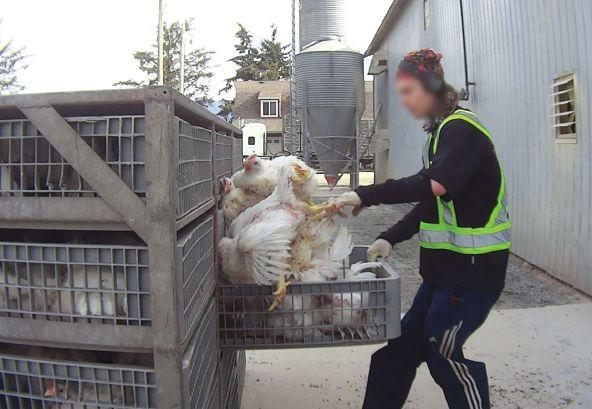
A B.C. poultry farming company has pleaded guilty to two charges for causing undue suffering to chickens, following an investigation sparked by an undercover video.
Elite Farm Services Ltd. of Chilliwack entered the pleas Monday in B.C. Supreme Court, the Public Prosecution Service of Canada confirmed.
The charges under the Health of Animals Regulations say no person shall load or unload animals in a way likely to cause injury or undue suffering.
The company was originally charged in December 2018 alongside its president, Dwayne Dueck, and Ontario-based Sofina Foods Inc.
The B.C. SPCA opened an investigation in response to the release of video footage showing hens stuck in mounds of feces and packed into wire cages with dead
birds.
When the footage was publicized, Dueck said it “sickened” him and the company took “immediate corrective action.”
Future court dates are still scheduled for Dueck and Sofina, and pleas have not been entered, according to a clerk in the B.C. Supreme Court registry.
A date for sentencing for Elite Farm Services has yet to be set.
Animal activist group Mercy for Animals was behind the undercover video that sparked the investigation into allegations of cruelty.
“Elite Farm Services’ guilty pleas represent progress for farmed animals,” says Daina Bray, general counsel at Mercy for Animals.
“Companies and their owners are responsible for the animals in their care, and they should be held accountable when animals are mistreated.”
An undercover video shot by the non-profit animal advocacy group Mercy for Animals sparked an investigation into allegations of cruelty.
The video footage shows hens stuck in mounds of feces and packed into wire cages with dead birds.
Researchers identify possible source of global Salmonella spread
Researchers at the University of Georgia have provided multifaceted evidence to suggest the likely origins behind the global spread of Salmonella enteritidis, which has caused recurring outbreaks of the foodborne pandemic linked to poultry products.
Using hypothesis-driven data mining, the research team, led by Xiangyu Deng of UGA’s Center for Food Safety, analyzed over 30,000 genomes of Salmonella enteritidis obtained from global sources and the international trade of live poultry over five decades.
The team concluded that the spread likely originated in poultry breeding stocks, or the progenitors chosen to produce future generations of chickens.
The study, titled “Global spread of Salmonella enteritidis via centralized sourcing and international trade of poultry breeding stocks,” is out now in the journal Nature Communications
From 2015-18, the largest Salmonella outbreak ever recorded in Europe occurred across 16 countries due to contaminated eggs. Yet the source, how the bacteria rapidly spread across continents decades ago, and how it caused large outbreaks in recent years remained a historical puzzle.
Deng said his team “attempted to connect the dots” to solve the mystery of the Salmonella enteritidis pandemic, “which is how the pathogen simultaneously increased in so many parts of the world.” To help solve that mystery, the team had to understand how the poultry production
industry has changed over the past 80 years.
After the researchers analyzed the data, they discovered recent isolates from domestically raised poultry in the U.S. and Suriname that were “genetically near-identical.” This was significant because the most likely overlap in poultry production systems between the two countries is breeding stock supply.
The team then expanded genomic investigations to global populations of Salmonella enteritidis. Through reconstruction of evolutionary history and population dynamics of the pathogen, they found that the global dispersal of the poultry pathogens likely had centralized origins.
The researchers then integrated the genomic data with import and export records of live poultry between countries. This allowed them to conclude that the centralized origins were Salmonella enteritidis-infected breeding stocks.
A University of Georgia research team led by Xiangyu Deng analyzed over 30,000 genomes of Salmonella enteritidis.
Coming Events
OCTOBER
OCT. 28
PIC’s Annual General Meeting poultryindustrycouncil.ca
PIC’s Science in the Pub poultryindustrycouncil.ca
JAN. 25-27
IPPE, Atlanta, Ga. ippexpo.org
FEBRUARY
PIC’s Producer Update, Jordan, Ont. February 16, 2022 poultryindustrycouncil.ca
PIC’s Producer Update, Jordan, Ont. February 23, 2022 poultryindustrycouncil.ca
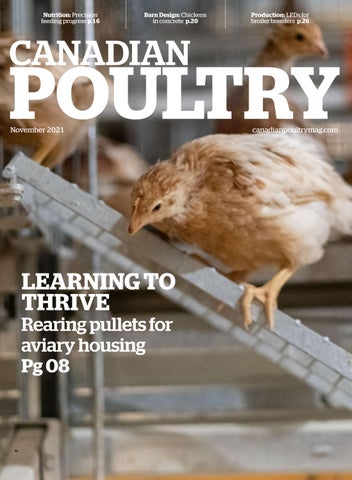
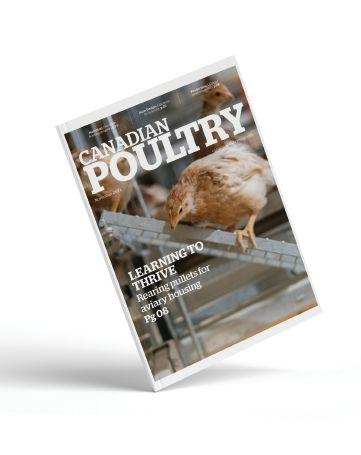
LEARNING TO THRIVE
The art (and science) of rearing pullets for aviary housing.
By Madeleine Baerg
More and more egg producers are shifting to aviary-style layer barns. But preparing pullets to navigate a multilevel housing system isn’t as easy as loading conventionally raised birds into a barn and assuming they’ll figure out each component of the system.
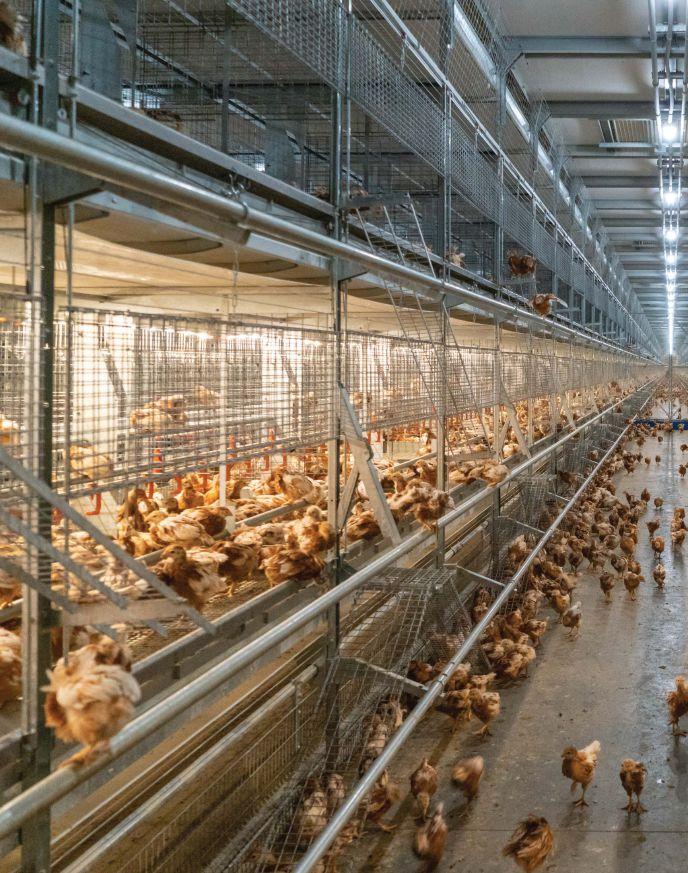
In fact, raising pullets for success in an aviary barn depends on a labour-intensive, step-by-step process to help young birds learn how to focus upwards, move through perching and nesting levels, access resources and live amongst a flock. It’s a job – a big job – that many egg producers are taking on for themselves as they realize the benefits of well-prepared pullets.
Richard Boer of Brightside Poultry in Chilliwack, B.C., has produced organic eggs since 2017. Until perbird space regulations changed in 2019, he ran his flocks in shallow pit slat-floor barns. To meet the new requirements in the most cost- and space-effective manner, he built his first aviary style layer barn in 2019: a 16,000bird barn featuring the Dutchman Natura Step system.
The plan from the start was that he’d build a 16,000bird pullet training barn alongside just as soon as the layer barn was complete. However, building the layer barn first meant that his initial flock of layers, rather than being raised in an aviary training barn, was custom-raised for him by a local farmer using a more conventional floor system. The experience – one he says he has no intention of ever repeating – convinced him of the absolute necessity of aviary-reared pullets.
“We knew it would be a struggle, but it was more than a struggle,” Boer says. “There were so many floor eggs. So many. Picking up floor eggs was a full-time job in and of itself. When you know how bad it can be, everything since then has seemed much easier.”
In fact, Boer was lucky that floor eggs were his biggest
challenge. Birds that don’t know how to navigate an aviary system can have difficulty finding feed and water, may not distribute well throughout the system and can end up crowding and crushing in certain zones of the barn. While floor eggs are a challenge and a frustrating cost, starvation and crushing can decimate returns.
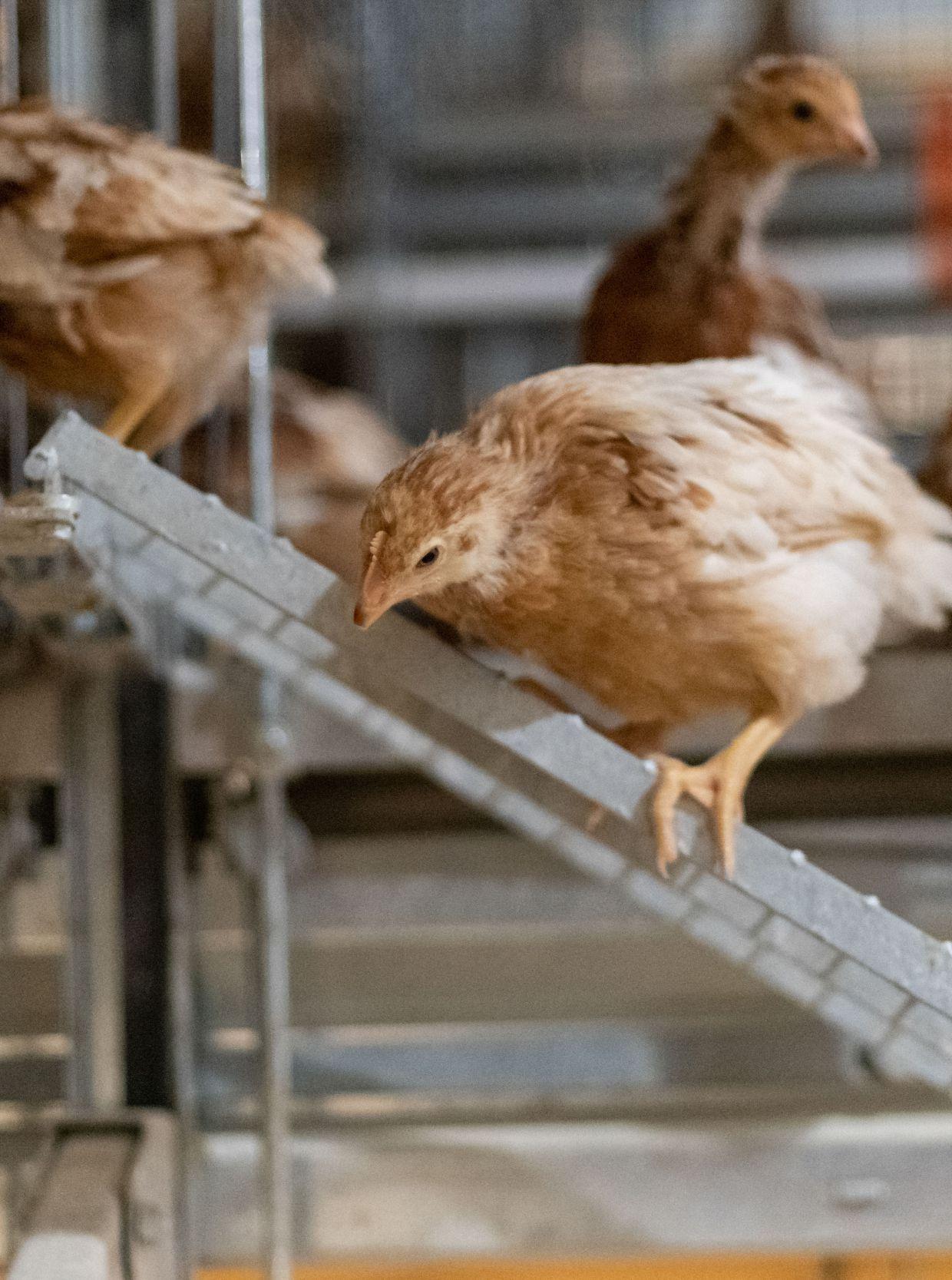
Today, Boer’s pullet barn is up and running, supplying all the new hens his aviary laying barns require. He uses the Natura Primus pullet aviary system: a system that keeps the birds caged until between four and five weeks, when the fronts of the cages open and ramps allow the young pullets access to outside perches, the barn floor and other levels.
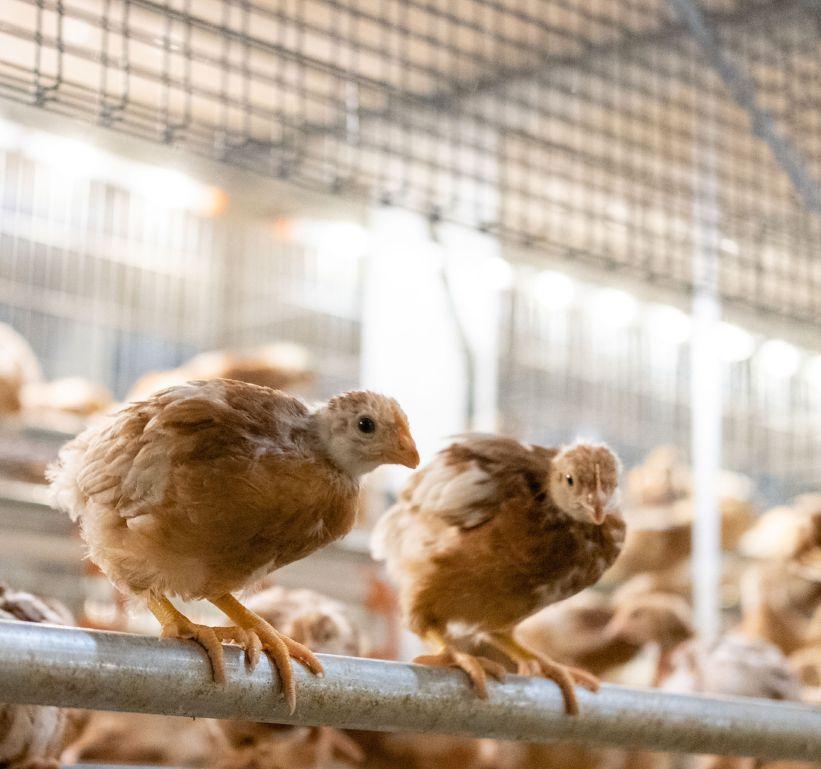
He says a few birds figure out flapping and moving throughout the system almost as soon as the cage doors open. By 11 to 13 weeks, virtually all are moving comfortably between the floor, the perching levels and the middle nesting box level.
On the other side of the country, David Lefebvre operates a similar system in his pullet aviary barns at Ferme St-Ours Inc. in Montérégie, Que., with the help of farm manager Joel Ramos. Lefebvre runs: two 20,000bird and one 50,000-bird free-run aviary layer houses; a 20,000-bird and a 50,000-bird free-run aviary-style
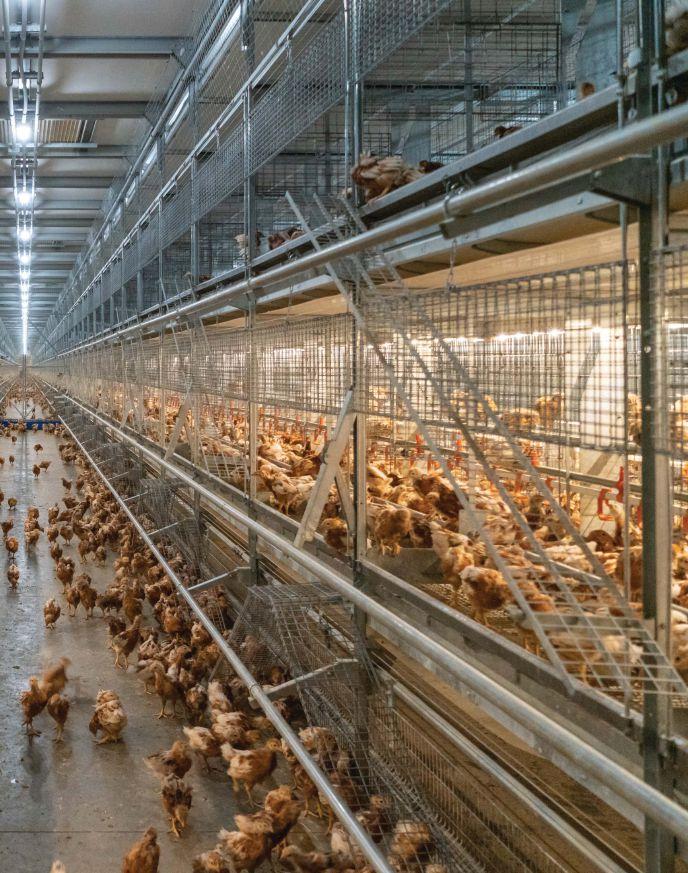
More and more producers are raising pullets in aviary-style training systems so that they’re better prepared to navigate multi-level housing.
pullet house alongside; two 10,000-bird organic aviary layer houses with a matched 10,000-bird free-run aviary pullet house; and a dozen 5,000-bird organic nest layer houses with six 5,000 organic one-floor pullet houses.
BABY STEPS
Ramos and Lefebvre start their aviary chicks on the lowest level of their three-level cage system, then split half of them up a level at 10 days to provide adequate space. At 28 days, they install ladders from cages to the floor, then open the doors of the cages.
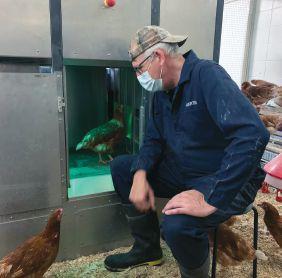
For the first two weeks after the cage door opens, Boer at his farm in B.C. and Ramos and a team of workers at their farm in Quebec walk through their barns each night after the lights are turned off to lift birds into the system.
“The first few days, it takes about three people a full hour for the 20,000-bird aviary pullet house,” Ramos says. “The rest of the first week, it’s about 45 minutes for three people. The second week, it’s about 15 to 30 minutes. Day after day, we have less birds on the floor until 99 per cent of them are in the system after two weeks.”
FULL ACCESS
Once the two-week initial training is complete, the birds are given access to the entire system.
At 12 weeks, Ramos begins to gradually remove lad-
ders to force birds to use their wings to get up into the system. “In the white layer barns, we don’t have ladders, both because we prefer not to have them in the way and because it’s better for the birds to be flying and climbing. Also, we don’t want the birds going from the top of the system to the bottom and skipping the nest.”
However, in the organic brown aviary-style layer houses, they do install their own, home-designed ladders, so that the birds are forced to walk in front of the nest to discover them faster and more easily. “The brown birds fly less than the white ones and prefer to walk. They do need ladders, even if we take the ladders off in the pullet house,” Lefebvre says.
LIGHTING CRITICAL
The single most critical piece of management is lighting, all three producers agree. “We want to reproduce the sunset and sunrise. The birds follow the last light, so you give them the last light in the system where you want them to go,” Lefebvre says.
Of course, it’s not quite as simple as that. Each flock is different, so optimizing lighting and other management strategies depends on careful and constant adjustment.
“The secret is observation,” Ramos says. “There are a general set of principles but with lighting and so many things, we respect the guidelines but the details we modify ourselves.”
RAISING ONE’S OWN PULLETS
There’s no question that training the birds for aviary success is a lot of work. However, all three producers say there are obvious benefits to rearing one’s own layers.
“The brown birds fly less than the white ones and prefer to walk.”
Boer says raising his own birds gives him better control over rearing. When he ordered flocks from a grower, he never knew exactly what would show up. “You didn’t know if the flock would be super flighty. The number you ordered was never the same as what you got.”
Also, he’s saving money through lower mortality. To reach the same ultimate size of laying flock, he typically orders two per cent fewer chicks for his aviary rearing program than for his one-floor system.
Most importantly, all three producers truly enjoy working in the aviary environment. “To see the birds use the aviary, jumping up and flapping around, with everyone perching and sleeping on the top row at night – it’s pretty cool to see them moving around and being birds,” Boer says.
Ramos and Lefebvre agree. “When you’re in the barn, you’re in the birds’ place. It’s a completely different atmosphere. It’s really great to see the birds benefit and take advantage of that liberty,” Ramos says.
“We hope that in time we get the premium for all our
Bird Management
free-run eggs but, even if we don’t, we like this [production style],” Lefebvre says.
TIME IN THE BARN
Boer and Ramos agree: no matter what production system you choose, success depends on hours spent in the barn, both at the pullet rearing and the layer stages.
Boer recommends making noise, moving freely and letting the pullets get to know you as you get to know them. He intentionally walks wherever he feels like through the barn. He often sings along to the music he’s listening to on his earbuds.
“The more they’re used to movement and noise, the calmer and less flighty they are,” he says. “You can never spend enough time in the barn.”
He also thinks movement gets them up and moving. “Every time you go through the barn, you activate them. They want to
see who it is; they’re getting up; they’re following you. Rather than having birds that just sit there on the floor, it gets them moving. They see other birds using the ramps and it helps them figure out how to get up into the system.”
WHAT NEW RESEARCH SAYS
Ana Rentsch, a PhD student at the University of Guelph, is researching how best to raise a pullet for future success in an aviary barn. Between the summer of 2019 and May of this year, she raised four flocks of laying hens. Together totalling 12,000 birds, the flocks were raised in one of three aviary-systems or a conventional cage.
The aviary systems differed in the amount of spatial complexity the birds had access to in their very first weeks of life. The simplest system consisted of a small cage that housed approximately 115 birds
and included a feeder, a drinker and a sin gle perch.
The intermediate system consisted of slightly larger cage that housed ap proximately 140 birds and added an elevat ed level and more perches (typically three).
The highest-complexity system was a grid system that housed approximately 600 birds and allowed access to the whole length of the barn. In this system, the birds had access to an elevated platform through the middle of the barn, as well as five to six perches. Once chicks were six weeks of age, all systems were opened up to offer pullets a litter area and multiple system tiers.
Not surprisingly, the conventional and simple aviary systems allowed the easiest access to food and water, whereas the open-concept system led to more navigation challenges.
Bird Management
“We do see manageability issues in more complex spaces, as it is challenging to start chicks when they are not as confined,” Rentsch says. “It is possible to manage but it requires more thought and effort.”
In terms of physical development, the birds reared in aviaries developed better than birds raised in conventional rearing systems. To date, she has not yet found conclusive evidence that there are physical differences between pullets raised in the different aviary systems.
However, clear behavioural differences exist, some of which may impact physical health in the long-term.
“What I found is that in the middle-complexity system, we see more dynamic load-bearing behaviours – things that strain bones and end up developing those bones – than in the simple system.
And in the most complex system, it’s more again. Also, white pullets perform more dynamic load bearing behaviours than brown ones in all systems,” she says.
The most obvious bone-density building activity in the open-concept barn is running: several times each day, virtually all of the chicks would run from one end of the barn to the other, often flapping their wings along the way.
“They run back and forth a few times and then they go back to doing what they were doing before. We don’t know why they do it, but it is a very commonly occurring behaviour when [birds are] given the space to perform it,” Rentsch says. “There seem to be many different triggers, but it doesn’t have to be stressful.”
Meanwhile, birds in more complex aviaries develop better cognitive function, Rentsch’s research shows. When the birds
reached 13 weeks of age, Rentsch tested their learning skills in a puzzle: a simple T-shaped maze with a reward at one end. She found that the birds raised in the mid- or high-complexity barns consistently found the reward faster than birds raised in the simple system.
“While [the test] is not enough alone to say they have better spatial ability, birds from the more complex systems do seem to learn faster. What it could mean is that if you put those birds into an adult aviary, they could learn where the resources and the nest boxes are quicker,” Rentsch says.
Interestingly, she found birds raised in the simplest aviary system were no better at finding rewards in the T-maze than birds raised in a conventional cage.
Her results did vary. She says the most interesting result was that Lohmann Selected Leghorns lites (whites) consistently used spatial opportunities more than the Lohmann Browns lites, were faster at learning resource locations and seemed more physically able to perform certain skills, regardless of rearing system.
Rentsch does not have final data collected on the long-term impacts of rearing styles yet. Among other upcoming results, she hopes to soon have analysis from x-rays data to determine if rearing differences ultimately result in changes to the keel-bone fracture rate in adult hens.
That said, certain existing research may help producers as they make aviary system purchasing decisions. For example, research from past studies definitively shows that birds benefit from being raised with access to perches from day one onwards.
Not only does early perching help them navigate vertical space, it reduces feather pecking, cannibalism and floor eggs in adult hens, Rentsch says.
There is another critical factor, however. Each specific farm has different management needs and priorities.
“We could build an aviary that’s a paradise for a chicken but it’s not feasible for a farmer,” she says. “Ultimately, whatever system one chooses, it has to work for the producer.”
This research is funded by the Canadian Poultry Research Council as part of the Poultry Science Cluster which is supported by Agriculture and Agri-Food Canada as part of the Canadian Agricultural Partnership, a federal-provincial-territorial initiative. Additional funding was received from CBS Bio-Platforms and Manitoba Egg Farmers.
GROWTH BEGINS IN THE GUT
Gut health research to lead to improved yeast-based
feed products.
By Lisa McLean
In the race to replace antibiotics on Canadian poultry farms, some producers have successfully adopted yeast-based prebiotic supplements. But there’s more potential to enhance the bioactivity of yeast-based products once researchers develop a better understanding of poultry gut health and the minute components that are active in yeast.
Recent work from Professor Bogdan Slominski, leader of the novel feed technology research program at the University of Manitoba, has led to promising results using new bioactive combinations and new recommendations for how researchers should study poultry digestion in the future.
“Yeast products are rich in protein and other nutrients and they provide bioactive components that are known for their intestinal health benefits,” he says. “Feed supplements in general are pretty expensive, so we want to make sure we are enhancing bioactivity to make them more powerful and bring more value to producers.”
Slominski’s team is working to understand to what extent feed additives change the proliferation of different good and bad bacteria in a chicken’s gastrointestinal tract. He believes that combining yeast products and their fractions with specific enzymes will allow them to develop an even better product.
To find the right combination of enzymes, Slominski needs to break down the yeast cell wall to access its specific components – a task that was impossible until recently, when his team landed on a process in previous research. Now, they are building on their work to access those fragments at the fractional level and release combinations that may be used to enhance yeast-based products.
“The cell wall is complex, and we are still testing its components to find fractions of polysaccharides that will block the binding sites for pathogens and prevent toxic effects in the gut,” he says.
In the first part of the most recent study, Slominski’s team used a yeast-based growth promoter alone and in combination with other enzymes to measure how they modulate gut physiology of young turkeys to have an anti-inflammatory effect and generally improve essential functions and fight disease.
“We haven’t found the ideal combinations – we aren’t there yet,” Slominski says. “Once we find the best combination, we will
produce larger amounts of the enzyme-modified yeast cell wall products and test them in Salmonella challenge studies using broilers and laying hens.”
To assess the success of each feed combination, Slominski’s team collected digesta samples from the small intestine and the ceca, a small pouch that joins the small and large intestine to assess microbiome structure and short chain fatty acid production. In viewing samples from both locations, they gained a better understanding of the turkeys’ digestive processes, and developed a case for changing research practice for future work in the field.
Slominski says researchers commonly look to the ceca for information about microbiota, but the digestive process mostly happens in the small intestine. By looking at both, he found the small intestine to provide more relevant information on microbiota proliferation and any beneficial effects related to gut health.
“Gut health refers to the ability of the gastrointestinal tract to perform its function of digestion and absorption efficiently,” Slominski says. “Prebiotic components have a profound effect on the proliferation and function of the growth of beneficial bacteria to control pathogens and to ensure food safety. Going forward, researchers should focus on studying the small intestine more so than the ceca.”
Bogdan Slominski’s team recently used a yeast-based growth promoter to measure how they modulate the gut physiology of turkeys.
The incredible nominations we received for the second year of this program highlighted just how many influential women there are working within Canada’s agriculture industry.
To our Top 7 recipients, those who nominated an influential woman, those who offered support through social media or tuning into the podcast series on AgAnnex Talks, and to our generous sponsors:
CONGRATULATIONS
WOMEN IN CANADIAN AGRICULTURE WINNERS
Andrea McKenna
Crystal Mackay
Ellen Sparry
Leona Staples
Noura Ziadi
Simone Demers-Collins
Tina Widowski
Feeding frenzy
Precision system shifts entire approach to meal time.
By Jane Robinson
For the past two decades, Martin Zuidhof has been searching for the best approach for growing a uniform flock of broiler breeders. He’s discovered that offering birds many small meals a day may be the better way.
Zuidhof is a professor with the Agriculture, Food and Science Department of the University of Alberta. He’s in charge of poultry systems modeling and precision feeding in the faculty of Agricultural, Life and Environmental Sciences.
“We did some research in the early 2000s that showed a real shift in the energy priorities of broiler breeder hens when they switch from their growth phase to egg production,” says Zuidhof. “It was such a strong shift that I thought if we can get a uniform flock through the growth phase, we’ll get a very uniform flock entry into lay and that will make the flock easier to manage.”
Broiler breeder flocks are notoriously challenging when it comes to flock management. Raising a uniform group of birds that are of a sufficient body weight and body condition to go into lay together takes timing, patience and as it turns out, great attention to feeding regimes.
FEEDING WHAT THEY NEED
Zuidhof’s work is based on an entirely new approach to feeding. His precision feeding system is designed to deliver the right feed to the right bird at the right time, based on a programmed growth rate trajectory. The system eliminates competition around the feeder and delivers the amount of feed that a bird of a certain weight needs to reach its target body weight in the desired amount of time.
Over the last 10 years, Zuidhof has re-
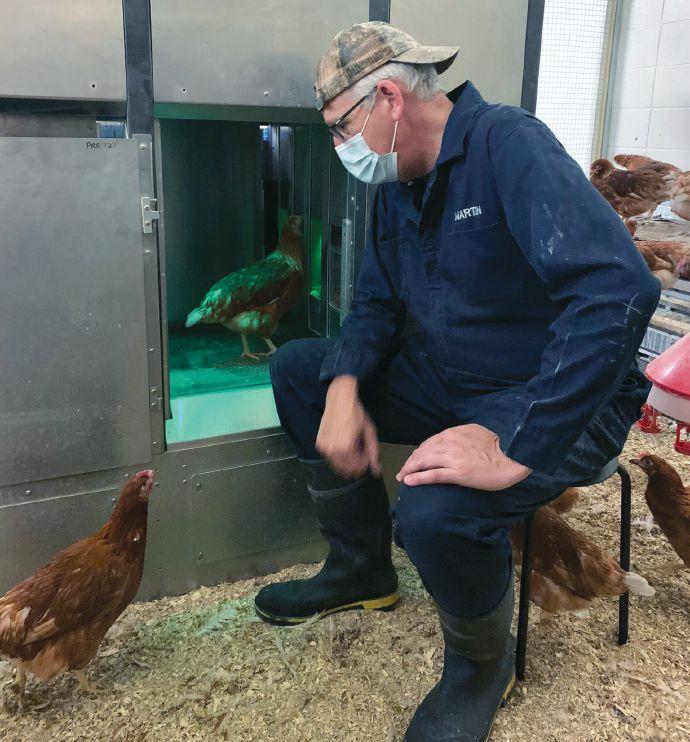
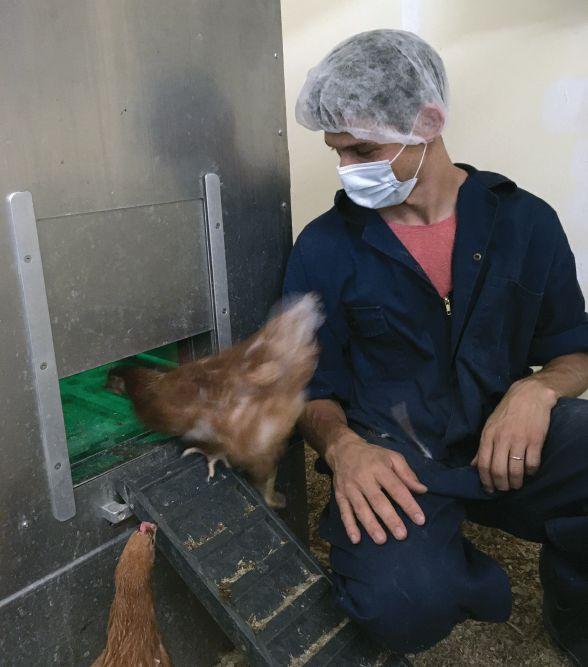
searched, tweaked and patented his system – the only precision feeding system in the world for poultry. The system consists of feeding stations that individual RFIDtagged birds are taught to enter. Once inside, a bird is identified and weighed. If it is under the target body weight, feed is dispensed. If its body weight is on target or higher, no feed is offered and the bird is “nudged” out of the station.
While the system is not yet ready for commercial use, Zuidhof has been conducting trials over the past five years. The researcher’s work has provided some very surprising results and opened up new opportunities for where he sees the feeding system going next.
LOOKING FOR THE BEST BODY WEIGHT
Some of his early findings with female broiler breeders on precision feeding fundamentally changed his approach with the system. Birds were fed to various body weight targets, some lighter and some heavier than the average. Lighting was also a variable in the early trials.
In one treatment group where birds were raised to lower body weights with suboptimal lighting, an astounding 38 per cent of birds did not come into lay. The birds reached their target body weight but were not in adequate body condition. The response was completely unexpected. “I have never seen birds not come into lay,” says
Martin Zuidhof monitors a bird about to feed in the precision feeding system he designed.
Zuidhof. “This early work was unprecedented, and the precision feeding system uncovered the fact that leaner birds didn’t have enough reserves to come into lay.”
By contrast, another treatment group with optimal lighting and a heavier body weight delivered the results he had hoped for with precision feeding. “In our best treatments, we discovered that heavier, fatter birds came into lay much better. Our best treatment grew birds to about 21 per cent higher body weight – we got them to their 21-week body weight in just 18 weeks.”
Those early results continue to guide the next steps for Zuidhof, his team and the precision feeding system. It’s important to note that those heavier body weights that delivered a better transition to lay, don’t necessarily translate into more feed per chick.
“As long as birds had enough fat reserves, we could get them into lay with four to five per cent less feed using the precision feeding, than on conventional feeding programs,” says Zuidhof. “That was one of the results that really convinced me that body condition is a huge priority for birds to start laying.”
THE BENEFITS OF A BIGGER BIRD
Zuidhof is about to start a new project with Aviagen, building on the knowledge gained in earlier research. Using precision feeding, they’ll compare various body weight targets – up to 20 per cent more than current recommendations – to find the optimum for broiler breeder females that will raise a healthy, uniform flock with enough body condition to come into lay.
He expects to learn a lot about the interaction between feeding levels, body fat, body weight and reproductive efficiency in heavier birds. For Zuidhof, there is no question that the target body weight for broiler breeders needs to be adjusted up. He’ll be looking for ways to accommodate and accomplish that with precision feeding.
FINDING A FIT
Much of Zuidhof’s work has focused on female broiler breeders, but he sees great potential with male broiler breeders. “We have seen a 4 per cent increase in fertility, without spiking, in male broiler breeders on the precision feeding system,” he says. “With males making up just 10
Precision Feeding 101
• Young birds learn how to navigate the feeding stations in a few weeks.
• One feeding station can accommodate 55 birds. Design changes to the system are expected to increase capacity to 100 birds per feeding station.
• Birds visit the feeding station between 10 and 220 times per day.
• Feed is offered to birds on about 20 per cent of feeding station visits.
• Birds receive an average of 10 to 12 meals per day.
“In our best treatments, we discovered that heavier, fatter birds came into lay much better.”
per cent of the broiler breeder flock, I think there will be a good value proposition for raising males on precision feeding when it comes to equipment investments.”
Zuidhof and other researchers in this area are also finding that if the broiler breeder is fed better, the offspring do better, which could bring potential benefits down the line for broilers.
The precision feeding system may also hold some promise with layers, and he is starting some trials here too.
A PARADIGM SHIFT
The precision feeding system is still in its infancy and no commercial units are currently available, but Zuidhof sees tremendous benefits for this paradigm shift in how chickens are fed.
He cites several benefits to the system from biological efficiency, reducing costs of production, reducing environmental impact, and welfare benefits. Acknowledging that these will be expensive units, Zuidhof expects primary breeders focused on male broiler breeders will be the place to start. He’s also had some interested hatching egg producers.
“As an industry, we used to have very consistent feed intake for broiler breeder production and the variation was all in the body weight of the birds. Now, we can produce a very consistent body weight with precision feeding and the variation is in the bird’s feed intake. That really highlights the focus from thinking about how much to feed, to what is the body weight going to be. With precision feeding, we do all that work ahead of time, program it into the system and you don’t have to think about it for the life of the flock,” says Zuidhof.
PhD student Thiago Noetzold monitors bird entry into a feeding station.
Broiler Meat Signals steps in processing. With practical tools and modern insights to guarantee an efficient produced, safe, healthy and tasty product.
On a global scale, poultry will soon be one of the most important protein source in the human diet. The quality of this meat is essential. The modern consumer is critical and has high standards of expectation. It is a challenge to meet up to these expectations.
‘To meet modern consumers standards in broiler meat, all partners in the chain should focus on quality, from the fertilized egg through broiler production and processing to consumption!’
$73.75 Item #9087403300
Chickens in concrete
A close look at the method and benefits of using insulated concrete forms to construct new barns.
By Treena Hein
Putting it mildly, it’s been a quite a while since there has been a new option for construction of poultry barns in Canada. You may already have heard of insulated concrete form (ICF) construction, and because it’s being used for new barn builds every year, Canadian Poultry decided it’s time for a closer look at the method and materials.
The walls of an ICF structure consist of interlocking rigid blocks of expanded polystyrene foam separated by plastic webbing, with concrete poured into the core which runs from the footing to the bottom of the truss. No insulation or vapour barrier is required. ICF walls are typically between 6” and 12” thick. To finish the interior of a barn, metal sheeting is usually installed. On the outside, siding goes on quickly, attached to fastener strips embedded in the insulation.
ICF structures are gaining popularity because they offer low heating bills, good
durability and high comparative performance to conventional buildings in terms of floods and earthquakes. Globally, according to a Market Research Future report entitled ‘Insulated Concrete Form Market- Forecast 2027,’ the ICF market is expected to grow at a compound annual growth rate of 7 per cent. While various sources report that residential applications make up over half the current market, ICF is also being used increasingly for commercial, institutional and agricultural buildings, including poultry barns.
Ontario ICF barn
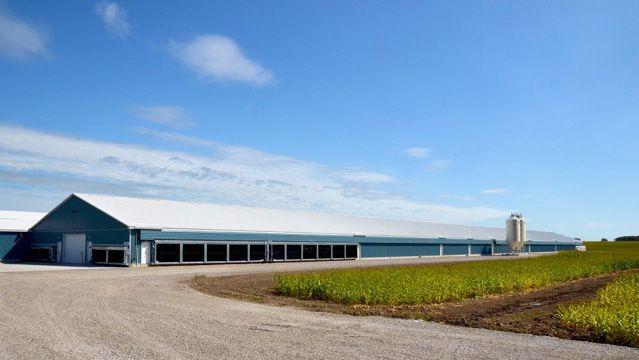
Without further ado, let’s jump into two recent ICF builds, one in Ontario and one in BC. Brian Szmiett of Strathroy, Ont. built his own ICF broiler barn in 2019. He and his wife Jessie chose ICF for better insulation and durability (nothing to rot and structurally more rigid) and they believe they had the first ICF poultry barn in Ontario. The barn is heated with a
radiant in-floor system with two natural gas boilers.
“I’ve always been interested in building methods, and had used ICF in the basement of our house which I built in 2015,” Szmiett says. “We’ve seen savings in our energy costs and I’d certainly go with ICF again for our barn. We currently grow on a ten-week cycle so the barn sits empty for periods at a time, during that time we never add any heat to the barn as it maintains its temperature so well. Also worth noting is how quickly we can heat the barn when a flock is coming in.” Szmiett explains that even with only in-floor heating, the barn floor temperature can be raised at a rate of over 2°C/hr.
Szmiett believes the cost is slightly more for ICF barns compared to stick frame in normal times (not in times of pandemic inflation) but he notes that conventional barns have to have continuous insulation on the outside to be comparable to ICF barns in terms of insu-
The Szmietts believe their broiler barn is the first in Ontario to use insulated concrete forms.
Barn Management
lation value and heating requirements. “The stick frame barns only have insulation between the studs,” he explains. “With ICF, you have 3.25” of continuous expanded polystyrene (which doesn’t lose thermal value of it becomes wet) on 100 per cent of interior and exterior wall surfaces.”
He adds that the structural strength is far superior as it is a 6” concrete core with rebar. “A tornado might blow the roof off but the walls will stand,” he says, “but even then, our truss plates are wet set into the concrete and bolted into bottom cords to prevent uplift from storms.”
Overall, Szmiett believes that with labour rates on the rise and the complexity of advanced framing methods now being used to
build homes, ICF is an impressive and simplified method of construction that gives excellent thermal value, stops air infiltration similar to spray foam and offers great structural strength. “So it makes sense to start using it in other sectors like poultry barns, shops and potato warehouses,” he says, “like McCain has already been doing in other provinces.” Szmiett notes however, that it may be difficult to find contractors who work with ICF as it’s mainly used right now in the premium custom home market.
B.C. ICF barn
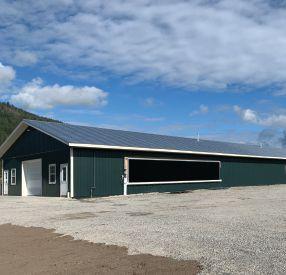
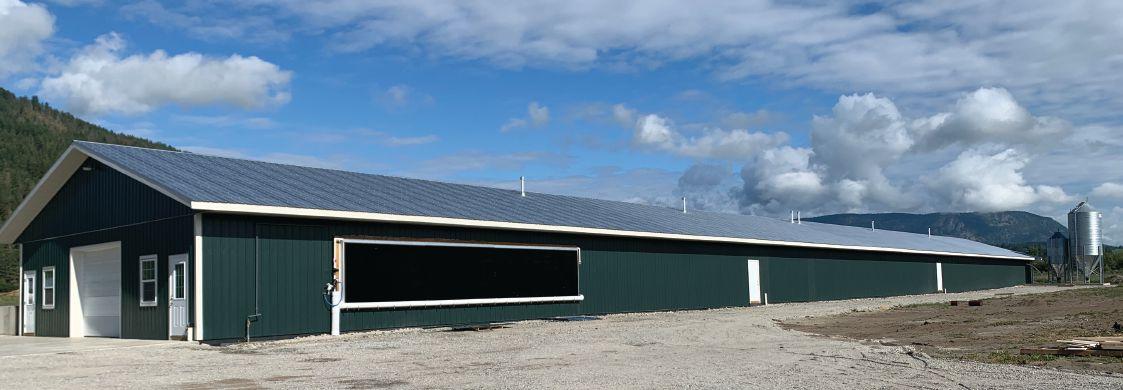
Ray and Melanie Baylis chose ICF when they built their own broiler barn in August 2020 in Armstrong, BC (Noble Farms). They also have a broiler barn management company and are now overseeing their second building of an ICF barn for one of their clients. To Ray and Melanie, ICF offers many benefits such as superior energy efficiency and pest control because the barn floor and walls create a complete enclosure. The only place where air enters or exits the building is through inlets and fans.
“We wanted to incorporate as many efficiencies as we could in our barn,” says Ray, “and we were concerned about cost, but we got a few quotes and found that they were, at the time in 2020, only about 10 per cent more than stick frame. We knew that we would have greater energy efficiency and not have to deal with the costs and the potential flock health impacts of mice or darkling beetles and we would also achieve better air quality, so we went for it. With the barn build we’re now doing for a client, it’s cheaper than a stick frame barn would be due to price of lumber.”
Baylis notes that all the companies they got estimates from offer similar systems, and they went with Fox Blocks because they just needed plain blocks (no rounded corners or other options offered for residential ICF builds) and they had those at the best price available locally.
In terms of heating (the Baylis barn has radiant heat tubes using natural gas), the barn has an insulation value of about R17 compared to the typical R10 of a stick frame barn. “It’s much easier to control and maintain the environment, both heating and cooling, in a completely sealed building,” Baylis explains. “You really notice it when we ship out the birds and shut off the heat and clean, how long it stays warm in the winter afterwards. And the entry rooms don’t need heating like they do in a stick frame barn.” Baylis also estimates that the barn’s utility bill (electricity and natural gas) is probably at least 20 per cent less
Proponents of using insulated concrete forms say they deliver more energy efficiency, better pest prevention and greater control over airflow.
than a comparable stick frame building.
Another benefit is a shortened construction timeframe by about six weeks. “The walls go up fast and once the walls are in, you’re done the framing, poly outside sheeting and insulation in that one step,” says Baylis. “The footings are identical to stick frame but a little wider, but then the blocks go right on the footing and you don’t even have to brace them for your foundation wall. No messy forms to deal with and have to strip later.”
On the inside, metal sheeting can be applied in an ICF barn, but Baylis notes that if you want metal sheeting in a stick frame
“It’s much easier to control and maintain the environment, both heating and cooling, in a completely sealed building.”
barn, it must be attached to plywood – and also that many conventional barns have only plywood, which he considers a flock health risk. “I think bacterial build-up happens in plywood,” he says. “And when I do my yearly deep cleaning with high pressure hot water, the metal comes up like new with no hold for bacteria, but when you blast that into wood, it affects the fibres and probably makes it easier every time for bacterial to take hold. With the metal sheeting, which you can have in an ICF or conventional barn, it’s so clean.”
Baylis adds that ICF does take more planning as it’s difficult to go back and move an opening for a door or fan or feed auger. However, once you have those all planned, you just frame around the openings and pour the concrete.
It’s very hard to get numbers on total barn builds in Canada using ICF. Fox Block distributor Windsor Plywood in Nanaimo, BC has so far supplied two chicken barns in the central Vancouver Island area. Project Coordinator West Jepson says there are busy contractors he recommends for ICF projects, but “it is such a user-friendly product, you could do it yourself after a two-day on-line course.” AMVIC has so far been involved with two ICF broiler barns in Ontario and one in Saskatchewan.
Barn Management
Preparing for colder weather
Seven things to check during fall barn maintenance.
By Doug Martin
Cold weather is just around the corner. By spending a few hours now “winterizing” your poultry barns, you can help insure that your birds will stay warm this winter with a minimum amount of fuel usage.
The following are recommended maintenance checks from Doug Martin, Canadian sales manager for Cumberland, to help keep birds healthy and productive:
BUILDING INTEGRITY
With cold weather right around the corner and predictions of record high fuel prices, now is the time to get your barns ready for cold weather. There are a number of things you can do that do not cost a lot that can help to keep your fuel bills to a minimum, the most important of which is making sure your barns are as tight as possible.
The tighter a barn is, the less expensive it will be to heat. Increasing barn tightness not only minimizes the amount of heat loss when the wind is blowing, but it also helps ensure that when you are ventilating, all the cold fresh air is entering through your inlets and not through cracks in the walls and ceiling.
Air entering through cracks does not tend to mix with the warm air next to the ceiling, which can lead to low temperatures and drafty conditions at floor level. Furthermore, since cold air cannot hold as much moisture as warm air, it is less effective at removing excess moisture from the litter, leading to caked litter and ammonia.
Walk around the poultry barn exterior to check for any holes, damage or other openings that will allow cold air to enter the building. A sealed exterior is important in maintaining proper ventilation flow inside.
Lastly, make sure static pressure controllers read zero when fans are off. If the pressure gauge within your barn does not measure barn static pressure accurately, inlets may open too much causing drafts and excessive fuel usage, or may not open enough, resulting in poor air quality.
COOL CELLS
Drain cool cell reservoirs and fogger lines inside the building, and drain outside supply lines to prevent freezing. Remove submersible pumps and store them in a warm place. Close off pads outside with some form of closure so they are not affected by the winter elements. This will help to prolong the life of your pads.
FANS
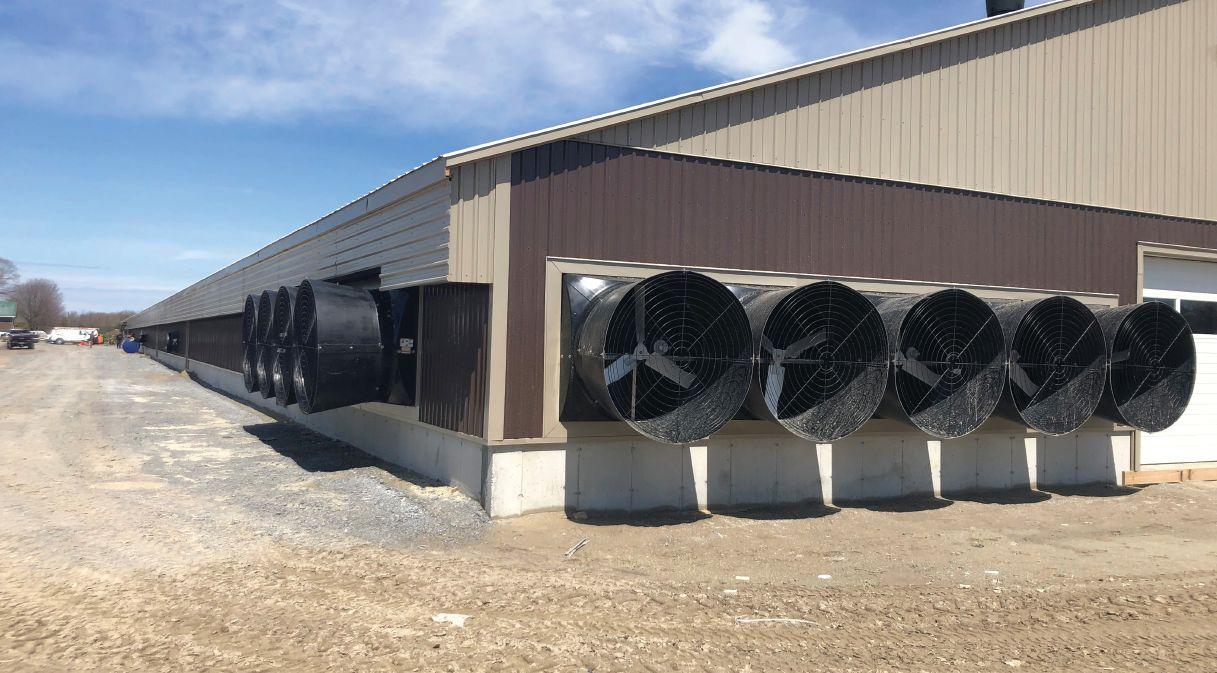
Clean dust and debris from fans, shutter louvers and any supplemental coverings. Check and replace any worn belts and bearings. Spend the time now before it gets extremely cold to look over any winter insert closures that go on unused fans. Have them close by and ready to install quickly at the appropriate time.
HEATERS
Blow off dust and dirt that may have accumulated on the top of heaters. They can act like insulation, absorbing heat rather than allowing it to radiate into the building. Inspect heaters to ensure they are in proper working order, especially supplemental heaters that did not run through the summer months.
Clean furnace/brooder burner orifices, which can corrode over time. This can lead to reduced heat output or improper fuel
Clean dust and debris from fans, shutter louvers and any supplemental coverings.
air mixtures. If you have cleaned the orifices a number of times over the years, you may want to consider replacing them because the orifice size tends to increase after numerous cleanings. In addition, check rubber gas lines for cracks or nicks.
GAS PRESSURE
Check the gas pressure. If you feel that you’re not getting enough heat out of your furnaces or brooders, you may want to have your gas company check the pressure in your gas lines. If the gas pressure is low, the output of your heaters will be reduced. Most heaters require a gas pressure between nine and eleven inches of water column. (You should always check with the manufacturer of your brooder/heater for the optimum gas pressure. This will vary depending on if they are NG or LP).
AIR INLETS
Make sure that side wall inlets open uniformly. If the inlets open on one end of the barn more than the
• Drain cool cell reservoirs and fogger lines inside the building and drain outside supply lines to prevent freezing
• Clean dust and debris from fans, shutter louvers and any supplemental coverings.
other, barn temperature and air quality can vary significantly. Clean screens over side wall inlet openings. Dirty screens over side wall inlets reduce the distances that air can be drawn across the barn by 20 percent or more. This reduces the amount of heating the incoming air receives before it drops to the floor
CONTROLLER
A change of seasons is also a good time to check to see if any software updates are available from your controller manufacturer that will provide improved efficiencies for the operation.
These are all fairly easy steps producers can take to ensure an optimal poultry barn environment for the fall and winter seasons. Proper maintenance can help avoid costly repairs and maintain high productivity.
Doug Martin is Canada sales manager for Cumberland. For additional information, visit CumberlandPoultry.com.
Using LEDs in breeder production
Proven effectiveness at a much lower energy cost.
By Winfridus Bakker
Chickens can receive light through the eyes but also through the skull to stimulate the hypothalamus and pineal glands. Red light can penetrate the skull to stimulate sexual development better than blue light, which is at the opposite part of the light spectrum. This is the main reason why warm light, which favors the red end of the spectrum, is preferred in the egg production period.
Colour Temperature – degree Kelvin (°K):
• > 5,000K cool colours (bluish white)
• 4,000K neutral white
• < 3,000K warm colours (yellowish white through red)
• Warm white 2,700K (red spectrum) light ideal for rearing and breeders
Over the last few years, LED light has proven to work as well as the traditional light sources to bring parent stock into production with the advantage of a much lower energy cost. Compared to incandescent lights, high-pressure sodium lights can reduce energy costs by 40 per cent over a five-year period. However, compact fluorescent and LED lights can reduce costs by 63 per cent and 73 per cent over a five-year period, respectively.
Currently, new light installations are primarily LED lamps/tubes or strings due to the low energy consumption compared with other lamps, the long life span (> 50,000 hrs), dimming ability, and adjust-
able colour output. They are also easy to wash, clean, and disinfect, and have a high Ingress Protection value (IP; related to the level of dust and humidity penetration). The general recommendation in rearing and production is 2,700K (warm light) with a dimming system. Warm light tends to prevent floor eggs relative to cold light (6,000K).
LED lights have had a considerable impact on breeder management. The introduction of dimmer units (dusk to dawn) have made it possible to work with low light intensity outputs of 1.5 to 2 Lux but still see well enough to manage the birds. Some farm managers prefer
non-dimmable LED lamps. In these cases, management is concerned some staff members may change the settings, which may dramatically affect the light susceptibility (refractory) of the birds toward the end of the rearing period. Therefore, on farms with dimmable LED units, it is very important that the dimmers are not adjusted without specific authorization from the livestock manager.
Dimming ability is important in rearing to keep the birds calm. Furthermore, running lights at a lower intensity has a big impact on energy consumption. Installing a dimming system will also have a major impact on the LED’s life span,
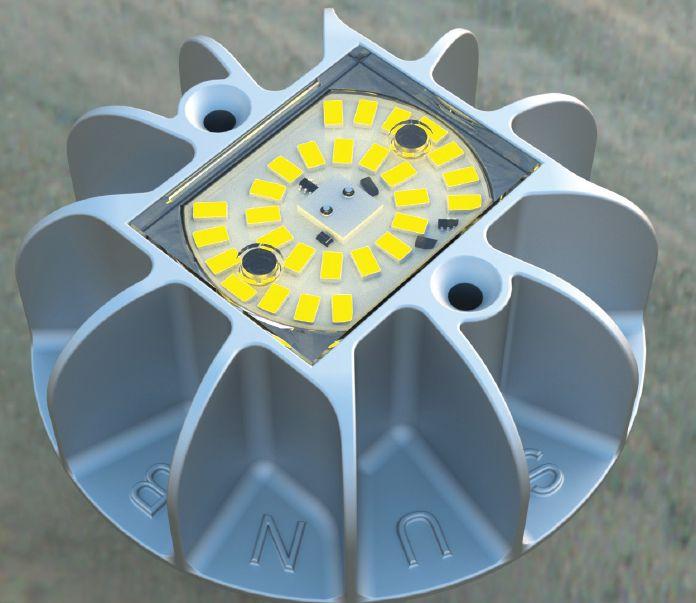
LEDs produce heat and, therefore, the design and size of the heat sink in relation to the power unit is important especially during hot weather.
Winfridus Bakker is breeder specialist and world technical representative with Cobb-Vantress, Inc.
especially during the production period. LEDs also produce heat, and the cooler they run the longer they will last.
The design and size of the heat sink in relation to the power unit is important, especially during hot weather (Figure 1). However, if lamps are dimmed to 70 per cent of total capacity, there is very low heat emission increasing the life expectancy of the bulbs. Choosing an LED which is dimmable and has a maximum output of at least 100 Lux gives one the capability to be dimmed to 70 Lux during the production period. In general, linear dimmers with 1 V intervals work well.
To create female light sensitivity, rearing houses need to have light traps with light reduction factors > 3,000,000 to achieve true blackout of < 0.1 Lux. During the 8-hour lights-on period, a light intensity of 1.5 to 2 Lux measured under the lamps should be achieved. Good light distribution in rearing is very important to have all females and males on the same Lux pattern. Having pens in the house with different light intensities will affect the sexual uniformity of females and males at 22 weeks to 23 weeks of age.
Avian eyes adapt quicker to light and darkness than humans. When feed distribution is done in the dark, timing and calculating the amount of time it takes to get the feed around the chain tracks are critical. Do not keep the lights off too long when the feed has circulated because some of the females that are already positioned in front of the feeder tracks will tend to eat more. These females have learned where the track is and can eat in the dark, giving them more time than their counterparts to consume feed. In addition, a bird’s perception of light and colour is more intense than humans.
For this reason, it is important to use uniforms consisting of the same colours for staff that work inside the houses.
Replace your Lux meter with an LED light (Lux) meter or test your current Lux meter with an LED meter to see if there are differences in the readouts. Table 1 demonstrates that LED Lux meters indicate, in general, a higher light intensity.
Lumen maintenance is also important
and depends a lot on the quality of the lamp purchased. As demonstrated in Table 2, the reduction in brightness is a function of the manufacturer’s quality of the light. A spreadsheet, available from your Cobb technical representative, can
be used to compare the lamps available on the market. Metrics of the lamps are used as input, and the spreadsheet will compare the quality and cost.
All LED chip manufacturers should have a report similar to Table 2 for
CLEAN • CLEAN • CLEAN
TABLE 1. DIFFERENCES IN READINGS BETWEEN LED AND NON-LED LUX METERS
TABLE 2. THE BRIGHTNESS REDUCTION OF LED LIGHTS AFTER 10,000 HOURS OBTAINED FROM DIFFERENT MANUFACTURERS.
chipsets. The life span is generally based on L70 or 70 per cent of the original lumen output. The chips are run for a certain number of hours to determine how the lumen output declines and the data is used to project the expected life span. Always buy the LEDs and the dim-
ming unit from the same supplier. Mixing and improvising will usually create issues. Recently, specialized LED lamps for the poultry industry have been developed and are relatively inexpensive. They work with a PSU (Power Supply Unit) to ensure that the correct and consistent
current is going to the 48V DC LED lamps. In many cases, for less than US$4000, a 14 m x 140 m community nest production house can be equipped with good-quality LED lights producing up to 100 Lux at bird level, with a PSU and linear dimming capability.
Lighting in breeder production is a critical factor for the reproductive success of the stock, as lighting signals are used by the hen to initiate and sustain repro
ductive hormones. When considering costs, lighting can also be a considerable percentage of the budget. To improve reproductive success and consistency as well as reduce costs, consider using LED lights.
LED lighting has a longer life span (>50,000 hrs), dimming ability, and adjustable colour output compared to other lighting technology.
Triaro Farms
The business
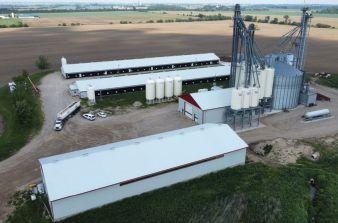
Triaro Farms is a broiler and crop farm just outside of Arthur, Ont. Clarence Pronk, along with sons Jason and Steve, work over 1,800 acres and raise almost one million chickens a year.
The need
Location Arthur, Ont.
Sector Broilers
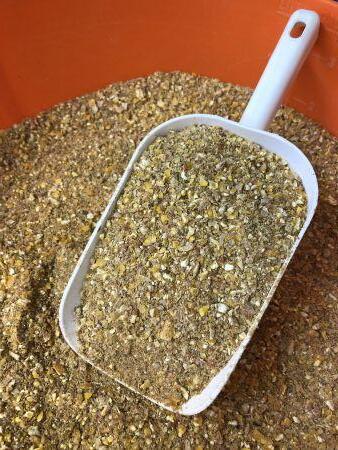
They were struggling with wet litter, which they felt was impacting bird health. The root cause of this moisture, they suspected, was how commercial feed they were using interacts with a chicken’s gut. But a local farmer who was producing his own feed presented a solution. The mash feed he was making was meant to interact better with a chicken’s gut, leading to more natural manure and less moisture. After a trial run, the Pronks decided to build their own feed mill to produce mash feed for their flocks.
The feed mill
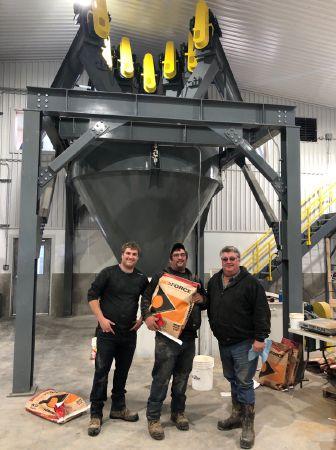
The feed mill, which opened last November, includes a roller mill to ensure a consistent grind size for the corn, which they grow themselves. They then use a Hayes & Stoltz mixer to blend the grind with a premix from Grand Valley Fortifiers. The producers say the switch in feed has meant less labour and management, improved bird health and greater profits. “We routinely ship a flock of chickens with less than three per cent mortality now,” Jason says. They’ve also begun selling their feed to other producers.
Construction began in October 2019 and the feed mill opened last November.
Clarence Pronk (first on the right) runs the farm along with sons Jason (first on the left) and Steve.
The farmers use the feed mill to produce a mash feed that’s meant to lead to better bird health.
The Pronks like the control they’ve gained by producing their own feed using corn from their farm.
PHOTO CREDIT: TRIARO FARMS
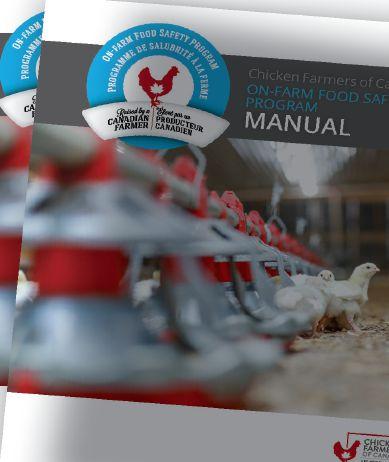
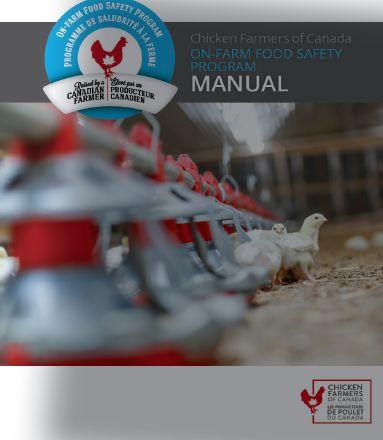
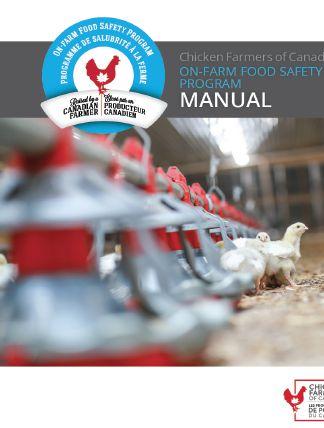
Chicken Farmers of Canada has released a revised version of the Raised by a Canadian Farmer On-Farm Food Safety Program manual. This is the first major update of the program since 2014, and the requirements will take effect for all audits as of January 1st, 2022.
One of the major changes in this revision is greater flexibility around washing, disinfection, and downtime. Three di erent options are now provided for this, with di erent combinations and frequencies of cleaning and downtime. Other changes have also been made to harmonize with current regulations and clarify existing requirements.
Check out all the details and new forms at www.chickenfarmers.ca/o sp-manual/
YOU
HAVE AN INSTINCT TO PROTECT. WE HAVE AN INSTINCT TO PROTECT FAST.
Introducing Poulvac® Procerta™ HVT-IBD. Timing is everything in a poultry operation, and Zoetis created its newest vector vaccine to put time back on your side. Backed by the latest science resulting in excellent overall protection, studies found that Poulvac Procerta HVT-IBD protected chickens fast against classic and important variant IBD strains.1-3 It’s a quick way to full protection from infectious bursal disease. Contact your Zoetis representative.
1 Brown A. et al., Early Onset and Duration of Immunity of a Recombinant HVT-IBD Vaccine Against Virulent, Variant, and Very Virulent Infectious Bursal Disease Challenges. American Association of Avian Pathologists, Virtual Conference, Jul 30-Aug 6, 2020
2 Brown A. et al., Efficacy of a recombinant HVT-IBD vaccine in layers following virulent, variant, and very virulent IBD challenge, International Poultry Scientific Forum, Atlanta, GA (virtual), Jan 25-26, 2021.
Brown A. et al., Early Onset and Duration of Immunity of a Recombinant HVT-IBD Vaccine Against Virulent, Variant, and Very Virulent Infectious Bursal Disease Challenges, Western Poultry Disease Conference, Sacramento, CA (virtual), Mar 15-16, 2021.