Register today for this unique live event coming to Hamilton.
Join us to hear from today’s most influential female leaders in Canadian agriculture.
This year, six IWCA honourees were chosen by our team. On November 7, 2023 at 1:00pm ET, they come together with other prominent trailblazers in agriculture to share their experiences, life lessons and more for the live 2023 IWCA Summit.
Join us for an afternoon of interactive discussions as they share their experience, offer guidance and discuss their journey in agriculture.
September/October 2023 Vol.21, Issue 5
Rise above the hazards
How a research team recognized risks assocaited with gypsum bedding and educated their fellow farming professionals.
14 16 18
Poultry manure and potatoes
A blend of manures could be key in managing a disease that frustrates producers.
BY JACK KAZMIERSKI
Recipe for disaster
Managing methane is key in preventing explosions that could destroy your barn –and harm your herd.
BY JACK KAZMIERSKI
Safe and (bio) secure
With HPAI and ASFV on producers’ minds, manure management should follow specific, biosecure practices.
BY JAMES CARELESS
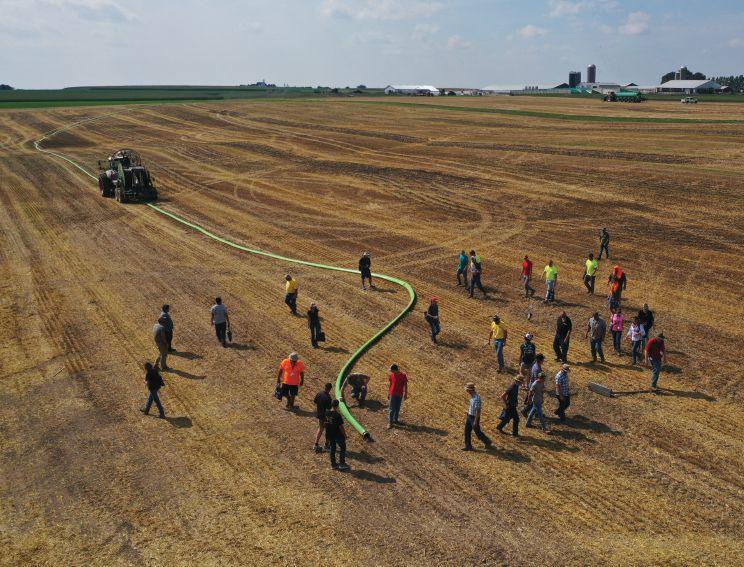
Rapid transfer of manure at the North American Manure Expo. Photo by Dan Hagenow
Let’s not get too comfortable
I know we’re not supposed to use the “f-word” when it comes to our magazine issues – every issue of Manure Manager is supposed to be my favorite. But if you were to really press me, I might admit that the annual safety issue is my favorite.
On one hand, it feels like we’re constantly talking about safety. On the other hand, it feels like we can never talk about it enough. Because accidents keep on happening.
According to Purdue University, 11 accidents involving livestock waste storage facilities were reported in 2022, with eight being fatal. There’s been a general upward trend in such accidents, particularly since 2015. While ag accidents are (tragically) common, manure storage incidents have one uniquely over-indexing: victims tend to be younger. The average age of victims in 2022 was 37, significantly lower than the average age of U.S. farmers, and one of the 2022 victims was a teenager. It’s not just that manure accidents keep taking farm workers from us; it’s that they’re taking them too young.
biosecurity smarts are essential. The last year has seen HPAI be a constant source of stress for Canada’s poultry producers (the World Organization for Animal Health recently declared the outbreak “resolved” for Canada’s poultry flocks) and now, many farmers are looking over their shoulder, wondering if an outbreak of African Swine Fever Virus, which has not yet made it to North American soil, is not a matter of “if” but “when.” There are many recognized practices that can play a part in the fight against animal diseases, including feed practices and manure management. James Careless gives the rundown on manure management for biosecurity on page 18.
At this year’s North American Manure Expo, we also took the opportunity to add an educational safety event and the Expo’s firstever high-pressure hose break demonstration. As someone who was there, I can safely say that you don’t understand the power of a hose with a pressure of 90 PSI until you see it
“Manure accidents are taking farm workers too young.”
Storage and transportation are indeed the two biggest areas of concern when it comes to manure safety, due to risks of asphyxiation and crashes (not to mention combustion, as explored in Jack Kazmierski’s feature on page 16). However, in this issue we decided to look at some other aspects of safety.
For one thing, there’s biosecurity. From the smallest family farm to the busiest commercial facilities,
up close (and hear it whip through the air). You can see images from the Expo on page 8 and 9, including our focus on safety on page 9.
You know your job well – probably like the back of your hand. But you should never assume that you’ve done something enough times that you can do it safely without all the proper checks and balances. What is more important: saving a few minutes on a task, or coming home at the end of the day to be with your family? •
All advertising is subject to the publisher’s approval. Such approval does not imply any endorsement of the products or services advertisted. Publisher reserves the right to refuse advertising that does not meet the standards of the publication.
+ Low Life-Cycle Costs
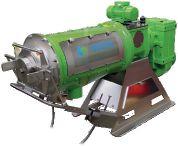
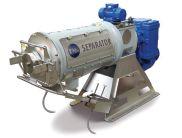
+ Turnkey from a Single Source: Separator Pump(s)
Control Unit
Stationary or Mobile Skids
+ Patented Profile Auger with Counter Bearing for No Auger Screen Contact
+ Continuously Variable Dry Matter Content
+ Large Capacities
844-647-7867 www.boerger.com
Nature Energy drops plans for Minnesota digesters
This time last year, Danish company Nature Energy had big plans to break ground in the U.S.
Nature Energy, which specializes in digesters that incorporate manure and food waste, set its sights on Benson and Wilson, MN, for its first two U.S. digester projects. It also reportedly had plans for digesters in Roberts, WI as well as in Quebec, although the Roberts application was retracted in late 2022.
Since then, Nature Energy has been acquired by global gas giant Shell – which announced last month that all U.S. projects would be strategically suspended. Nature Energy’s U.S. site, which contained
information on its proposed Minnesota sites, no longer exists and redirects users to the company’s main site.
Responding to a request for comment from Manure Manager, a rep from Nature Energy issued the following statement:
Nature Energy, a wholly owned subsidiary of Shell plc (Shell), has strategically suspended all of its projects in the U.S. In line with efforts to deliver maximum value, we consistently review our portfolio projects to ensure the right mix of assets and, when needed, take necessary action to ensure the prudent commercial course is achieved.
IWCA TO HIT THE STAGE IN-PERSON
The Influential Women in Canadian Agriculture (IWCA) Summit will host its first in-person event since its inception in 2020. Initially conceived as a program to highlight the achievements of outstanding women in agriculture through podcasts and feature articles, the program grew to a virtual event in its first year. Since 2020, 20 women have
been honored for their contributions to ag. Now, with the resumption of live events in full swing, the program will host an in-person event in Hamilton, Ont. on Nov. 7.
Honored at this year’s event are Everdale farm manager Karen Della Campbell, AAFC research scientists Ana Badea and Judith Nyiraneza, Vineland research VP Darby McGrath, Farm and
Food Care Ontario executive director Kelly Daynard and VIDO research scientist Heather Wilson. Wilson (pictured left), who specializes in vaccine research for livestock, says she’s witnessed increasing gender diversity in her lab settings, and that in general, all forms of diversity are good for the farming world and the research that
BY THE NUMBERS: CONFIMENT AND SAFETY
83
Number of reported cases from agricultural confined cases (manure and grains) in 2022.
24
Most confinement cases in a single state in 2022 (Iowa).
Percentage increase in number of reported cases between 2021 and 2022.
11
affects it. “Once you get into the graduate level, you start seeing more people from all over the worlds... I think it’s great. You learn more about different farming practices, what producers do in different countries – you learn from everybody.”
Tickets for the IWCA Summit are available at agwomen.ca. Early bird rates will last until Sept. 30.
42/41
Balance of grain-related entrapments vs. non-grain cases.
16 40.7% 29%
Number of incidents involving livestock waste storage facilities.
Percentage of all cases reported that were fatal.
73%
Percentage of accidents involving waste storage facilities that were fatal.
Age of the youngest victim of a livestock waste confinement case.
ON TRACK
Puck introduces new force feed tandem for hog farmers
Puck’s new FF 3009 T pump trailer unit is designed specifically for hog farmers, following the success of its FF 5770 T with dairy farmers. The new trailer unit quickly deploys the submersible boom for higher pushout levels, getting up to 3000gpm with five to 10-inch pieces.
Situated on a 32-foot-long gooseneck chassis, the tandem axle force feed has a Cat 7.1L, Tier 4-compliant engine with 302 hp. The pump is a Cornell 10NNWH with hydrostatic drive and an operating pressure of 45-250 psi. The pump is equipped with Puck’s signature LightSpeed control system for near real-time control from any connected device.
The rear-mounted boom can reach 20’ up and over slurry stores and has a horizontal reach just below 45 feet. The agitation nozzle is three inches with 180 degree rotation at the end of eight inch pipework. KROHNE flowmeters are another standard on this liquid transfer pump, which includes eight LED work lights and four LED service lights throughout the unit. The FDS hookups feature eight-inch outflow, six-inch bypass outflow, eight-inch pig shooter and 10-inch feeder.
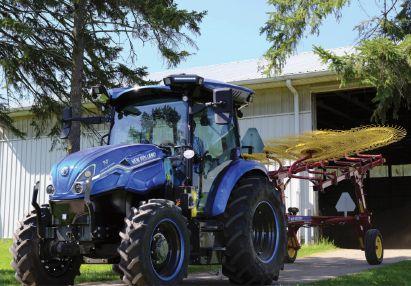
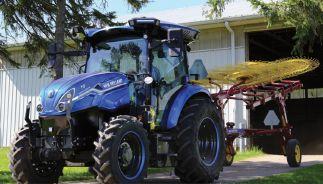
New Holland to introduce new electric tractor
For 2024, New Holland Agriculture is introducing the first all-electric utility tractor with autonomous features: the T4 Electric Power. This cuttingedge tractor opens a new class in the market, the Utility Electric, focused on offering solutions for more efficient field operations. The tractor is suitable for mixed farm, hay and forage, dairy, livestock, municipality, greenhouse and specialty crops. It’s the latest development in New Holland’s strategic plan for electrification and the newest addition to the brand’s lineup of alternative energy sources powered equipments.
“The T4 Electric Power addresses a number of challenges they are facing everyday on their operations,” said Lena Bioni, product marketing manager for New Holland Agriculture North America, in a statement. “What New Holland is bringing to our farmers is a convergence of technology – electric propulsion, autonomous features, better performance – in the body of a utility tractor.”
Pumps
WASTE WATER TREATMENT
BENEFITS
Call the FAN/BAUER boys: East: Jim Dewitt, 1-630-750-3482, j.dewitt@bauer-at.com
• Midwest: Trey Poteat, 1-219-561-3837, t.poteat@bauer-at.com West: Jeff Moeggenberg, 1-630-334-1913, j.moeggenberg@bauer-at.com Sales Director: Ray Francis, 1-219-229-2066, r.francis@bauer-at.com
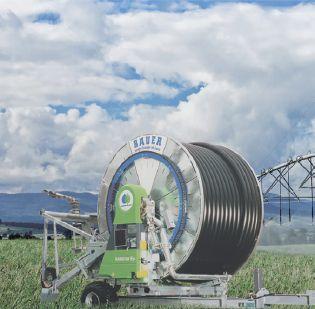
RAINSTAR TRAVELERS
AND NOW, for something completely different
The 2023 Manure Expo included a half-dozen new features.
BY BREE RODY
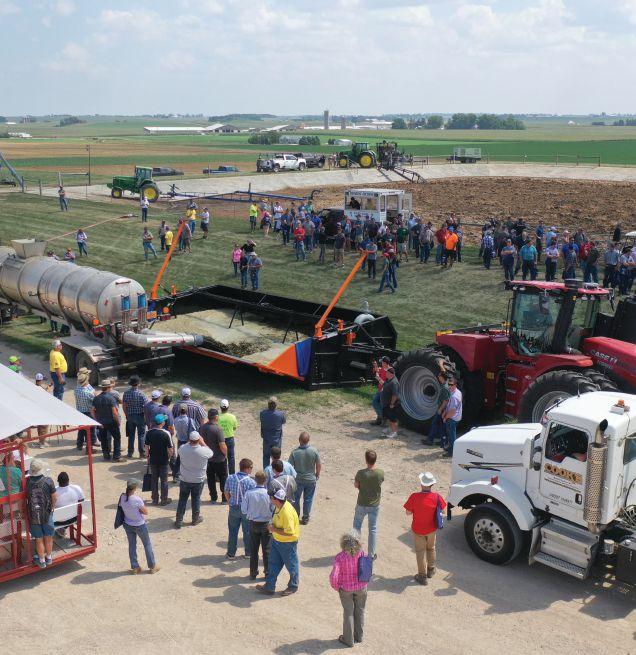
Clockwise from left: Attendees witness liquid manure being transferred from a tank to a dumpster; the trade show earns a captive audience; the day two application demonstrations impress.
For the first time since 2015, the North American Manure Expo returned to Wisconsin – the state that started it all.
Approximately 1,000 people arrived at the Arlington Research Station near Madison, WI to witness the Expo. Jerry Clark, regional agriculture educator with UW-Madison and Expo co-chair says the state remains important for the Expo.
“Wisconsin is still home to over a million dairy cows, not to mention all the calves and replacement animals that are raised for the dairy industry,” says Clark. “Around 40 percent of the manure applied in Wisconsin is applied by a custom applicator.”
The Expo is unique, he says, because of the unique intersections of people that come together –farmers, industry and agency personnel.
IN WITH THE NEW
This year’s Expo brought back all the classic elements of past Expos – education sessions, spreader demonstrations, agitation demos, tours and, of course, the trade show.
This year’s show also added new elements including a safety event, a barbecue and social hosted by Case IH, and demos showcasing separator and pelletizers, rapid transfers, drag-hose and sidedressing and a hose bridge. Finally, the event was capped off with a high-pressure hose break.
“The industry changes rapidly,” says Clark. “So adding new technology demonstrations was needed to showcase the evolving industry.”
SPOTLIGHT ON SAFETY
Many of the Expo’s new elements focused on safety.
The first day of the Expo included its first-ever Safety & Operations Knowledge Event. Presented by sponsors GreenField Spreading, Yokohama, Drager, Husky Farm Equipment and Bauer, the event promoted best practices and put safety top-of-mind in the industry. Speakers included Isaac Lemmenes, Walter Grose, Fernando Perez, Ernie Sundstrom and Dave Eisentraut.
LEFT
Attendees observe the marks left by the high-pressure hose break.
Our job is to bring to their attention things that can go wrong.”
Key takeaways from the event:
• Complete regular inspections on all equipment, and keep records;
• Ensure your PPE is adequate and up-to-date;
• Double- and triple-check your potential hazards every time;
• Use buddy systems – especially when a task involves dangerous gases;
• Ensure you are rested and alert.
UNDER PRESSURE
The Expo concluded with a highpressure hose break. Onlookers took a seat (from a safe distance) to witness a hose filled with air at 90 pounds per square inch. The pin was then pulled, causing the hose to immediately release all the pent-up pressure in a frenzied display that lasted nearly 25 seconds.
The high-octane demo was exciting, but also served an important purpose: it showed how easily one can be injured (or worse) by a hose.
“I found this demonstration very impactful,” says Clark. “It demonstrated the power and danger of hose application systems and how everyone working with high-pressure manure systems needs to take this equipment seriously.” •
“Our job is to bring to their attention things that can go wrong.”
Lemmenes, who began his career as an applicator and now works as a product specialist, says he has become more passionate about safety awareness as he looks back on his career.
“As an applicator 10-plus years ago, safety was not taught much, if at all,” he says. “I personally had way to many near misses that, to be honest, should have had much worse end results. Others are no that fortunate. I just want to help others get home every night.”
Husky Farm Equipment owner and ag safety advocate Grose spoke on his specialty of road safety. “We have more people on the road, more people trying to communicate with you regularly,” he explains. “[People] try to work many more hours and longer hours because we have to spread more gallons with less people in less time…
Sponsored by
Rise above the hazards
Recognizing risks associated with gypsum bedding.
BY ROSALIE TENISON
In a roughly 12-month period a decade ago in Pennsylvania and Maryland, four people died and two children required treatment in three separate incidents involving manure storage. The tragedies alerted agriculture extension staff and researchers of an impending threat related to manure. Within months of examining multiple storage facilities, the experts determined the culprit to be manure mixed with gypsum bedding. A cooperative effort between Pennsylvania State University and the State’s agricultural extension department was launched to educate on the dangers of manure storage and how to prevent catastrophe.
“The research demonstrated clearly that farmers using gypsum bedding faced dangerous levels of hydrogen sulfide (H2S) as the manure was agitated,” explains Robert Meinen, one of the scientists involved with the research. When released, he says, H2S can be toxic within minutes. According to Meinen, comparison farms using sawdust or other bedding without gypsum materials were not likely to experience the dangerously high levels of toxic gas. The research team determined the culprit was
ABOVE
gypsum bedding, a material derived from recycled construction materials, such as drywall, that is ground into a useful material, particularly in dairy operations. Considered environmentally friendly for its re-purposing of material formerly destined for landfill, the bedding is high in calcium sulfate and gentle for animals. However, once the bedding is transferred with manure to storage, particularly anaerobic or oxygen-free storage, a chemical change occurs creating hydrogen sulfide, one of the most toxic gases farmers can encounter. In the incident where the two children survived the gas, they were merely playing beside the manure pit during agitation. Since H2S is heavy and lays close to the ground, the two- and four-year-old entered an invisible cloud of toxicity. Had their father not acted quickly to pull them to safety, this story would have had a more tragic outcome.
“We needed to create awareness that these materials cause danger,” says Meinen. “When the manure is agitated, the gas is released immediately and can remain at dangerous levels for up to one hour and beyond.” As a result of the
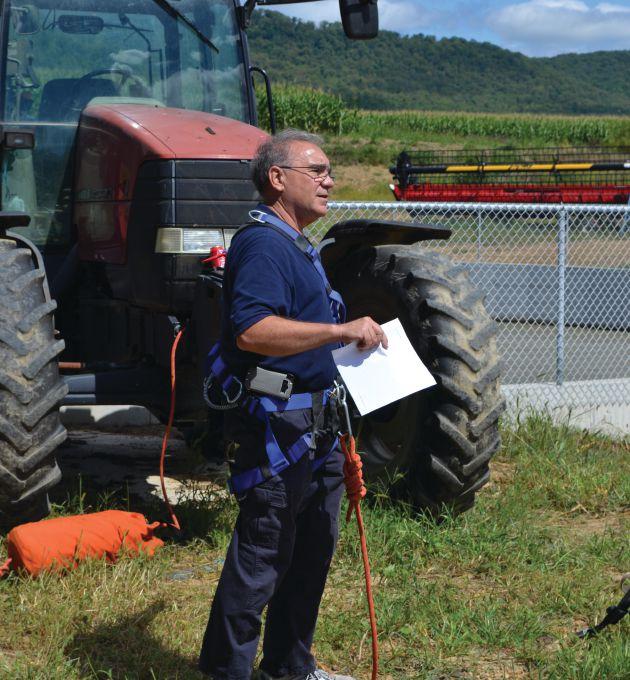
Davis Hill of Penn State Extension (retired) demonstrates the use of a self-contained breathing apparatus, which should be worn when entering confined spaces.
research, the team came up with a list of recommendations for construction and management of manure storage and strategies for working with it safely.
Meinen describes H2S as a gas that acts like dry ice while remaining invisible and far more toxic. When released, dry ice creates a cloud as it connects with warm air and the cloud often hangs close to the ground before drifting skyward and gradually dissipating. It’s a good visual for farmers to keep in mind when they approach their manure storage even though they can’t see the cloud that is gathering around them.
Since identifying the cause, the extension staff at Penn State and the agriculture department began a campaign to educate anyone associated with manure management on safety. According to the United States Department of Labor, at only 200 ppm, H2S can cause uncomfortable respiratory tract irritation and pulmonary edema. At 500 ppm, a person exposed to the gas will collapse within five minutes, experience eye damage, and could die within 30 to 60 minutes.
Meinen recommends wearing an H2S monitor when working around manure, especially during agitation. He says it is worrisome that less than five percent of people working with manure use the monitors. Since the gas is invisible and highly toxic, tragedy could strike before someone is aware of a problem. He adds that vowing to stay five more minutes to get the job done, even though symptoms of gas exposure may be manifesting themselves, is self-destructive.
“I recommend monitors be worn any time a dangerous job, such as cleaning tanks or pumping, is undertaken. Always try to have two people involved in the work,” says Meinen. “If entry into a storage for repair is necessary, use safety harnesses and consider wearing a self-contained breathing apparatus.” Open-air storage is better than enclosed storage but, if enclosed storage is used, ensure there are multiple exits. Meinen also recommends that, when a new storage is designed or an existing storage is upgraded, locate pumping equipment outside or away from storage rather than confining it in a small building or enclosed space.
Once research was complete and the problem identified, the education effort was cooperative. Meinen says the gypsum bedding suppliers got on board to provide education. Meanwhile, he and
his colleagues have been talking about the issue at stakeholder meetings around the state. “We don’t know if we have saved lives, but we have reached out to many farmers and believe awareness is out there,” he says. “We have heard of no serious incidents since his campaign.”
Meinen also developed a self-assessing list that he gives to farmers. “I’ve been talking for 12 years about my list I call ‘body alarms’ and I’ve been told by some they remembered the list and avoided danger.”
Knowing any hazards that could
result from your choice of bedding will increase awareness when you deal with the resulting waste. As you begin disposal or agitation processes, wear PPE and don’t ignore physical signs your health is at risk. Meinen says: “Don’t work yourself to death.” Instead, be aware of the hazards and take breaks rather than pushing on to complete a task. Move slowly, and keep children away from watching you work with manure. Move away if your body alarm goes off because, in the presence of H2S, your life truly depends on it. •
AGRICULTURAL AND DAIRY SOLUTIONS
When the going gets tough, turn to the toughest pumps in the field. Vaughan has unique pump configurations specially designed for agricultural applications, including:
• Barn flush pits
• Separator feeds
• Lagoons
• Digester mixing
• Scraped manure
• And more!
Choose the unmatched reliability of Vaughan. Ask about our free trial program and on-site demos.
NOVEMBER
7, 2023
HAMILTON, ON I 1:00PM ET
INSPIRE | LEARN | LEAD | CONNECT
Join us to hear from today’s most influential female leaders in Canadian agriculture.
This year, six IWCA honourees were chosen by our team. On November 7, 2023 at 1:00pm ET, they come together with other prominent trailblazers in agriculture to share their experiences, life lessons and more for the live 2023 IWCA Summit.
Join us for an afternoon of interactive discussions as they share their experience, offer guidance and discuss their journey in agriculture.
Ana Badea
Darby McGrath
Della Karen Campbell
Kelly Daynard
Heather Wilson
Judith Nyiraneza
Poultry manure and potato early die
Poultry litter could be the key to controlling the disease that reduce potato crop yield.
BY JACK KAZMIERSKI
Potato Early Die complex (PED) has been a problem in North America for many years, devastating potato crops and reducing yield.
“It’s caused by a soil-borne fungus, known as Verticillium dahlia,” explains Dr. Marisol Quintanilla, a nematologist working on a solution at Michigan State University.
Quintanilla explains that the fungus is able to infect potatoes on its own. However, when it gets help from a microscopic roundworm known as the Pratylenchus penetrans nematode, the infection can spread more rapidly. “The fungus doesn’t need the nematode in order to infect the plant,” she adds, “but the nematode helps, because it burrows into the plant, makes a wound, and introduces the pathogen into the plant.”
The fungus that causes PED seems to do well in cooler weather, and in climates where the soil is moist. It’s a problem in the northern parts of the U.S. and Canada. “This includes Michigan,
Idaho, Oregon, Washington and a lot of the states in the Pacific Northwest,” adds Abigail Palmisano, a graduate student who works with Quintanilla at Michigan State University. “These are the areas that get a lot of rain.”
When PED hits potato crops, Palmisano says that up to 50 percent of the yield could be lost.
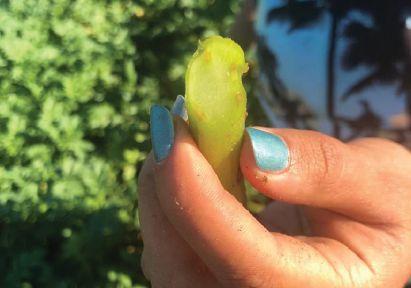
The infection causes wilting and yellowing in the lower parts of the leaves, Palmisano adds, and stunts the growth of the infected plant. “And if you open a potato plant,” she says, “You’ll usually see a ring in the stem. It’s a brown discoloration of the vascular system, which is also visible in the potato tuber.” An infected potato is still safe to eat, which means that an infected crop doesn’t have to be destroyed. The potatoes can still be harvested and sold. The problem is that the yield can be greatly reduced, which impacts the bottom line of North American producers. “The potato is an important plant for the economy,” adds Quintanilla. “So if the
ABOVE: The full lab team at Michigan State University.
MIDDLE: Example of discoloration caused by PED in a potato stem.
yield is cut by 50 percent, that’s a bit deal.”
One of the challenges with PED, according to Palmisano, is the fact that the fungus is especially hearty. “It can live in the soil for up to 20 years, and the potato field can be fine,” she explains. “It can be sitting in wait before infecting the plants, and farmers won’t know until it’s too late. Some growers will mistake [the infection] for early maturation.”
NEW RESEARCH
Quintanilla and her team recently received a $750,000 grant from the USDA’s National Institute of Food and Agriculture to develop and evaluate sustainable methods of managing PED. One of Quintanilla’s graduate students, Luisa Parrado, helped write this grant.
As a nematologist, Quintanilla and her team will be using the grant to fund studies designed to find ways to deal with Pratylenchus penetrans, which is the specific nematode that is instrumental in the spread of Verticillium dahlia, the fungus that causes PED.
“This grant goes a little bit deeper,” Quintanilla adds, “because we found that some manures and manure compost had a significant effect on Pratylenchus penetrans. We wrote a publication on this and we wanted to understand why this is working.”
Their goal is to find out if compost formulas can be tweaked to make them more effective at controlling nematodes. “We found that the poultry manure blend that we were using from Morgan Composting, [a company in Michigan], was really effective at suppressing root lesions,” Palmisano adds. “We also prepared a compost blend, and found that it improved the yield and reduced the incidence of tuber vascular discolouration.”
The team discovered a combination of compost and more traditional chemical herbicides and fungicides helped reduce the population of nematodes. “However, none of the treatments were able to change the population, incidence or severity of the Verticillium dahlia fungus,” Palmisano adds.
POULTRY MANURE IS KEY
So far, research seems to be pointing at poultry manure as an especially effective ingredient in the composts that were most successful at controlling PED. “We found that the lowest number of Pratylenchus penetrans (nematode) within the roots
and soil was from the chicken manure application,” Palmisano explains. “It also boosted the number of beneficial microbes in the soil, so we’re thinking that the treatment is killing the nematodes, but also boosting the soil quality and the plants’ vitality.”
Quintanilla has a theory as to why poultry manure is most effective. “We compared the different sources of manures that we evaluated. One was dairy manure, one was poultry manure, and one was a combination of dairy, poultry and wood ash. We found that effectiveness is correlated with the level of acetic acid and butyric acid, and that chicken manure and ash had higher levels of these compounds.” Chicken manure, also had an effect on the vascular discoloration in potatoes. “So even though the fungi was still growing in the stems, there was a significant reduction in the amount of potatoes that were discolored. The chicken manure was suppressing the speed of the growth of the fungi.”
The fungi was still there, she notes, but it would seem that chicken manure helped reduce the fungal growth, thereby preventing it from getting to the potato.
“We don’t know how this is happening,” Quintanilla admits, “so we’re still looking at it. It’s a tough nut to crack.”
THE SECRET SAUCE
Based on research done so far, it would seem that PED might be best controlled by the specific combination of dairy manure, chicken manure and wood ash found in a compost blend sold by Morgan Composting. Quintanilla says that she shared her insights with the company owner years ago, and that he based his formula on her recommendations, which included her advice to add chicken manure in the mix.
In theory, producers could make their own blend of dairy and chicken manure, mixed with wood ash order to combat PED, but there’s no guarantee it will work as well as Morgan Composting’s blend.
“In order to make a general statement like, ‘Chicken manure compost is effective at reducing root lesion nematode and potato early die,’ we need to be able to test compost from other companies. When we test other products, we will be able to make a more generalized statement that will have a more national impact.” •
A LONG WAY TOGETHER
V-FLEXA
No matter how challenging your needs, V-FLEXA is your best ally for agricultural trailers, tankers and spreaders. This latest-generation product features VF technology, which enables the transport of heavy loads both in the fields and on the road at lower inflation pressure. V-FLEXA is a steel-belted tire with a reinforced bead that provides durability, excellent self-cleaning properties and low rolling resistance even at high speeds.
V-FLEXA is BKT’s response for field and road transport with very heavy loads avoiding soil compaction.
For info: Western Canada 604-701-9098 Eastern Canada 514-792-9220
Recipe for disaster
When fires break out and facilities explode, gases are quickly blamed.
BY JACK KAZMIERSKI
Gases are the natural byproducts of manure decomposition. Properly managed, they’re not a problem. Improperly managed, they can destroy property or worse—they can kill unsuspecting workers.
“The four major gases of concern are ammonia, carbon dioxide, methane and hydrogen sulphide,” explains John Tyson, agricultural engineer, Penn State Extension dairy team. “They’re all byproducts of microbial activity in manure.”
Of the four major gases, hydrogen sulphide is most to blame for the asphyxiation of workers.
“It’s probably the most deadly on its own,” says Tyson. Interestingly, he says it’s also the gas over which producers have some control. “The limiter of hydrogen sulphide is how much sulphur is available. If you use high-sulphur feeds like distiller’s grains, or if the water the animals are drinking is high in sulphur, that makes more sulphur available for that [chemical] reaction.”
Methane, on the other hand, is most likely to destroy property, if it’s not managed correctly. Tyson says that methane is the only gas, of the four, that’s flammable. However, it requires specific conditions
ABOVE
in order to amass concerning quantities.
“The bacteria that make methane live in an anaerobic environment,” Tyson explains. “So if you have manure in a storage facility that’s 10 or 12 feet deep, for example, the bottom of that storage is anaerobic, which means there’s no oxygen there.”
Besides an anaerobic environment, the bacteria that produce methane also need heat. That’s why the microbial activity that makes methane increases in warmer weather. “This means you’re going to get more methane from manure in the summer than in the winter because it’s warmer,” Tyson adds. “In fact, most all those gases are going to be produced at a higher rate in warmer weather.”
THE BLAME GAME
Barn fires are tragically common, and methane is not always to blame. For example, an April 10 fire at Southfork Dairy Farm, which killed an estimated 18,000 head of cattle, received national news attention due to the scale of distruction. The Texas Fire Marshal office ruled that the fire was an accident that started with an engine fire, with
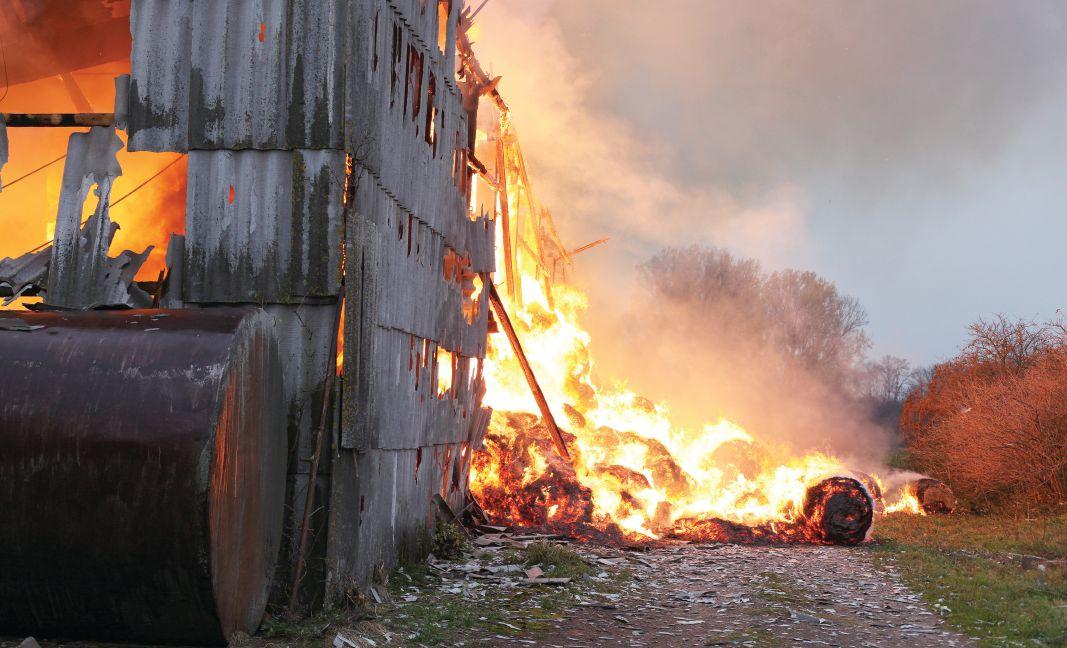
A barn fire, which can escalate in only a short amount of time.
methane not mentioned in the report. Prior to the report, there had been specuation that methane had caused the explosion, including one headline which said the explosion was “ignited by [the cows’] farts”. Tyson warns that without all the facts, it doesn’t make sense to speculate – and there are common misunderstandings of methane at play.
“You have to get to the right methane-to-oxygen concentration, and then you have to have the right spark. [For example], a tank of propane sitting in your backyard is not considered terribly hazardous until you open it up and mix it with the air. Even then, it doesn’t instantaneously ignite or explode, until you hit it with your gas grill igniter or a match or something,” he explains. “So [in the case of the dairy farm], those three components would have had to be mixed at the right time and in the right proportions in order to make an explosion possible.” Moreover, Tyson warns that methane is not the only thing that can catch fire. Building materials can burn, including insulation.
BETTER SAFE THAN SORRY
Although methane wasn’t mentioned in the report out of Texas, it’s still a gas of concern that has to be managed properly. While we think of methane as a byproduct of manure decomposition, Tyson says there are other sources of methane.
“Methane is going to be produced by all types of manure, but it doesn’t only come from manure,” he says. “It can be produced from fruit and vegetable waste, in the right environments. We can take food waste from a commercial kitchen, run it through an anaerobic digester and make methane biogas. So if you have the right foodstuffs to support that methane bug, you can make methane. Manure is not a requirement. It just so happens that manure is a good food source for methane-producing bacteria.”
That said, the amount of methane produced from manure varies, depending on the species of animal and the type of feed. “Different animals have different feed, and their manure produces different quantities of the various gases,” explains Eileen Fabian, professor of agricultural engineering at Pennsylvania State University. “When it comes to methane, you’ll get the most from cattle, much less from swine, and almost none from poultry.”
BEST PRACTICES
Fabian stresses that managing manure properly is the best way to prevent catastrophes. Fires seldom start spontaneously, regardless of the amount of methane or any other combustible material that may be present. There has to be a spark or an ignition source of some kind that starts the fire.
Preventive measures, like proper ventilation and manure management are key to preventing dangerous gas accumulation. “If you think of an open lagoon, for example, methane is lighter than air, and it will tend to enter the atmosphere on its own,” Tyson explains. “If it’s not contained, we don’t have a problem. However, as soon as we cover that storage, either with a barn or a cover, we capture methane.”
While blowing fresh air into a manure pit is a good way to reduce the concentration of other gases, methane will escape on its own. “Methane is lighter than air, so in its own time, it will actually leave the space. You have to close the lid to keep it in there,” explains Tyson. “With the other gases being heavier than air, the reason we blow air down into a pit, even with an open top, is that we’re trying to push out the carbon dioxide, the ammonia and hydrogen sulphide.”
MOST COMMON SCENARIOS
Basic high school physics teaches us that a fire needs three things to start: fuel, oxygen and a spark. If eliminating methane as the fuel source is impossible, due to the normal biological processes that naturally take place when bacteria consume manure, and if eliminating oxygen is also impossible, then the only element that farmers can and should eliminate is the possibility of a spark setting off the mixture at the wrong time.
Tyson says a spark could come from a variety of sources.
“It could be an electric motor, a hot muffler that’s overheating, a spark from an internal combustion engine, even static electricity,” he says.
“There was an instance here in our county a couple of years ago, where a hay building burned down on a dairy farm,” he continues. “They were grinding hay one Saturday afternoon, [and] they assume that there must have been a rock in one of the bales of hay that went through the grinder and made a spark when hitting the steel blades. The hay started to smolder until it finally got enough oxygen to smolder itself into a fire. By two o’clock in the morning, the barn was on fire.”
Most sparks, he adds, will likely come from equipment, which is why proper maintenance is key. “You’ll want to use sealed electric motors in order to prevent sparks from getting out.”
Fortunately, the kind of fires was saw in Texas earlier this year are rare. “We’re pretty good at managing manure,” Fabian says about producers. That said, we can’t prevent all accidents from happening. We can, however, be as careful as possible keeping in mind the recipe for disaster: fuel, oxygen and a spark. •
Safe and (bio)secure
Minimizing biosecurity risks from manure.
BY JAMES CARELESS
By its very nature of being animal waste, manure is a natural repository for disease. Some of the diseases can be ‘zoonotic’; in other words, capable of being passed from animals to humans via exposure to infected manure. The list of zoonotic diseases include anthrax, brucellosis, cryptosporidiosis, dermatophilosis, Escherichia coli, giardiasis, leptospirosis, listeriosis, pseudocowpox, Q fever, rabies, ringworm, salmonellosis, tuberculosis, and vesicular stomatitis.
“There are a number of pathogens shed in livestock manure that can be harmful to human health,” says Amy Millmier Schmidt, professor of biological engineering at University of NebraskaLincoln. “These are considered zoonotic diseases since they can spread among different species.”
In contrast, diseases like “African Swine Fever, HPAI, foot and mouth disease, PEDV and many other diseases of livestock and poultry are dangerous to the health of animals within that particular species,” she observes. “But these do not pose a direct threat to human health.”
This said, diseases that can only be spread from
ABOVE
animal to animal via infected manure are just as serious. Left unchecked, they can kill vast numbers of livestock and lead to severe financial losses for farmers.
A prime example is Johne’s disease, a contagious, chronic, and usually fatal infection of ruminants’ small intestines that is passed on by the ingestion of infected manure — such as when a calf nurses on a mother’s udder with manure traces on it. “Any disease-causing organisms excreted in manure from livestock (e.g. enteric diseases) are able to be transmitted to other animals through fecal-oral routes,” says Schmidt.
So how serious a problem is Johne’s disease, which results in reduced milk production in dairy cattle and short productive lifespans? According to the U.S. Department of Agriculture’s Animal and Plant Health Inspection Service, “about 68 percent of U.S. dairy herds have at least one cow that tests positive for Johne’s with herd prevalence approaching 100 percent in large dairy herds. Because few herds have instituted biosecurity programs, infection continues to spread. Although
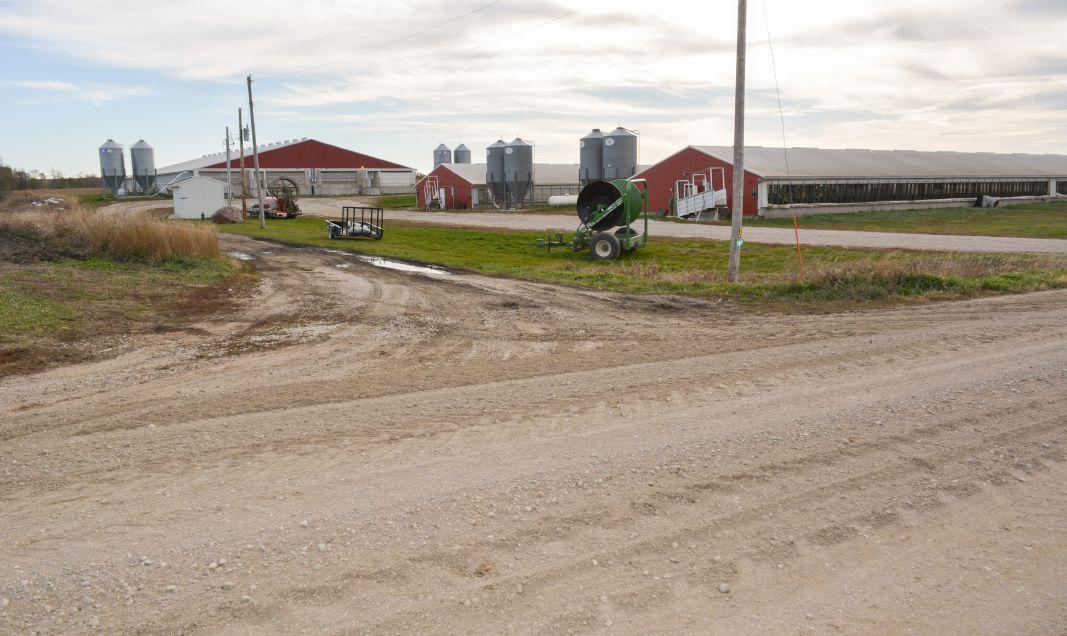
A two-drive site. Farm workers use a primary driveway, while a secondary drive is primarily used for manure application equipment to help with the lines of separation.
ABOVE
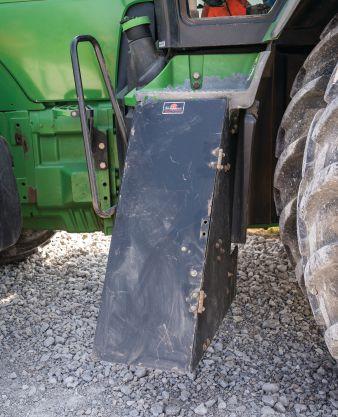
A step cover used by an Iowa manure applicator which helps make tractor steps easier to clean and potentially curbs the spread of disease as people mount on and off the tractor.
infection seems less widely distributed in beef and goat herds and sheep flocks, Johne’s is nonetheless of critical significance to all producers.”
The key word here is ‘biosecurity’. To minimize the transmission of disease from manure to animals and humans alike — and the serious consequences from this happening — farmers, animal producers, and manure haulers need to treat this substance as the biohazard it is. For this to happen, they must adopt safe handling practices for farm animal manure. By implementing proper ‘biosecurity’ measures and management practices, the risks associated with disease transfer can be significantly reduced.
UNDERSTANDING THE ENEMY
To understand what it takes to establish effective, viable biosecurity to minimize disease transmission via manure, one needs to know how this enemy of animal and human health operates first.
For example, “contaminated manure may infect humans via direct exposure through the handling or processing of manure,” says Daniel Andersen, associate professor and extension specialist at Iowa State University. “But some zoonotic diseases include HPAI, ASF, and Hep E. In manure the disease needs a fecal-oral mode of transmission. Some diseases can be spread in aerosolized form — such as swine influenza, which is spread by
sneezing. Other diseases we deal with in the swine industry include Porcine epidemic diarrhea (PED) and Porcine Reproductive and Respiratory Syndrome (PRRS). While these aren’t zoonotic, their transmission is extremely important to manage and control.”
Then there are ‘vectors’ that spread disease from manure. According to the European Food Safety Authority, “A vector is a living organism that transmits an infectious agent from an infected animal to a human or another animal.”
When it comes to spreading disease from manure, “people, fomites, insects, wild animals, and air” are the main vectors, says Anderson. “People entering the facility are the largest risk.”
The specific ‘vectors of transmission’ from humans include “boots and clothing worn from a production area/building into another without thorough cleaning and disinfection,” says Schmidt. Other vectors can include “hands or tools that are not washed/disinfected properly between contact with sick and healthy animals, vehicles that are not thoroughly cleaned and disinfected after being used to transport employees or animals, and even
domestic pets or pests.”
Then there are fomites, which are “any object or material that is likely to carry an infection agent,” explains Robb Meinen, assistant research professor with the Penn State department of plant science. “Anytime you handle manure you are handling a high-risk fomite.”
There is one other vector that often goes unseen, which “moves from farm to farm,” says Courtney Wilson, compliance specialist with the Georgia Department of Agriculture. These are “Rodents!” she declares – rats, mice, and any other kind of rodent that use poorly-kept barns as allthey-can-eat buffets. “Clean up your feed areas so that you don’t attract rodents that are looking for food,” says Wilson. “They do travel and will travel [far] to find food.”
BIOSECURITY BEST PRACTICES FOR LIMITING DISEASE TRANSMISSION
In all of the instances listed above, biosecurity-minded steps can and should be taken to block these routes of infection transmission via manure.
The first best practice comes down to minimizing exposure to manure by humans and animals. Their holding areas should be
Biological Breakdown Painless Pump-out
built to minimize retention of manure as much as possible, and any manure that remains should be removed immediately. Adhering to the old stereotype of ‘shoveling out the sh*t at the end of the day’ is a sure way to spread disease.
Human operators should also wear protective clothing when handling manure. Coveralls, boots, gloves, masks, and eyewear are good ways of minimizing their ingestion of manure particles.
Once manure has been removed, it needs to be stored away from animals, humans, and weather sources in safe, contained areas. It is vital to ensure that these manure storage facilities are well-maintained, properly sealed, and equipped with appropriate ventilation systems to reduce the risk of airborne pathogens. Just dumping it on a pile on the ‘back 40’ is no solution.
Of course, manure doesn’t magically remove itself. It requires human-operated tools and machines to move it from the barn to the storage area. This is why regular cleaning and disinfection of equipment used for handling manure is a Biosecurity Best Practice. Equipment such as shovels, buckets, or pumps should be cleaned thoroughly after every contact with manure to remove any potential pathogens. Disinfectants approved for agricultural applications should be also used according to manufacturer instructions — after assessing any harmful side effects on livestock, humans, and runoff into the soil.
This brings us best practices for reducing the vectors of transmission. When it comes to people, “a minimum precaution is washing boots before and after a farm visit, all the way to ‘shower in/shower out’ and wearing only farm clothes that stay at the facility,” says Anderson. “And depending on the livestock
species, there should be a different biosecurity protocol for each.”
“All equipment, clothing, and people working with manure are at high risk,” notes Meinen. “Biosecurity standards are the best defense that we have to minimize disease transfer risk.”
Then there are the other fomites, namely anything that comes into contact that can retain infectious agents after exposure. This applies during the removal of manure onsite, and the transportation of it away from animal holding areas afterwards. Without exception, “equipment that touches manure needs to be treated as contaminated,” says Andersen. “Manure application equipment that goes onsite needs to have the mud and manure washed off before arriving.”
As well, “arrange traffic flow at the site so that lines of separation between those people working on the manure removal and those caring for the animals can be maintained,” he said. “Good hygiene goes a long way as well: If you spill some manure, clean it up as best as possible to avoid tracking around and limit the risk of other people inadvertently touching and becoming a biosecurity risk.”
Remember: “Manure handling equipment — agitators, pumps, hoses, application equipment — can carry diseasecausing organisms from a ‘dirty’ site to a ‘clean’ site if they aren’t properly washed to remove all organic residue and followed by a disinfectant used according to industry recommendations,” says Schmidt. People performing manure handling activities can also serve as vectors for disease transmission if they don’t take similar steps to prevent the spread of disease due to manure contamination.
By “not cleaning and disinfecting their equipment between farms” contagion can be spread by haulers,” explains Wilson. They “need to ensure that they are following biosecurity protocols when changing from one farm to another under different ownership.”
Here’s another practice to consider: Devising and then following a strict manure management plan can reduce disease transmission risks. Besides the points mentioned above, proper composting techniques for manure storage ensures the piles get hot enough for pathogen destruction. And after all, composting reduces disease-causing organisms while converting manure into valuable fertilizers.
Close collaboration between animal producers, haulers, veterinarians, and public health officials is vital for ensuring that effective disease prevention strategies are in place and working on a continuing basis. Regular training sessions on biosecurity measures can also help educate individuals involved in handling farm animal manure about best practices for preventing disease transmission.
Granted, it takes time and money to implement biosecurity best practices for safe manure handling. But the payoffs are real and well worth the effort. Safe manure handling leads to healthier livestock, better financial returns (and reduced veterinary costs), and a reduction in zoonotic disease infections — which is particularly important as expanding urban communities encroach on livestock farms and feedlots.
The bottom line: “Good standard operating procedures assume that the unseen bacteria or virus is always present,” says Meinen. “The manure handler should want to take themselves out of the disease transfer equation by minimizing risk.” This is why “the practical solution is to adhere to strict biosecurity standards.” •
MANURE MINUTE
CHRYSEID MODDERMAN
| University of Minnesota Extension
Fall manure application tips
Carol Bishop Hipps spoke of fall as “…the mellow, messy, leaf-kicking, perfect pause between the opposing miseries of summer and winter.”
Personally, I think she should have added “manureslinging” to her list of fall descriptors. Since our between-miseries manure season is right around the corner, here are some reminders on best practices to make accurate applications and avoid nutrient loss.
APPLICATION TIPS
• Sample your manure and get it tested. Manure is a variable product so knowing the actual nutrients (not “book values”) in the manure is important for accurate application.
• Soil sample. While we’re on the subject of nutrient analysis sampling, you will also need to have a recent analysis of your soil. The soil test tells you what nutrients are needed, while the manure test tells you how much of the nutrients you have. Both are an essential piece of the accurate application puzzle.
• Nitrogen calculations can be tricky. Did you know that not all of the total nitrogen in manure is plant-available in the first year? Manure provides two forms of nitrogen: the inorganic N (immediately plant-available), and the organic N (not immediately plant-available). The organic fraction will need some time to break down (called mineralization) to become usable by the plant.
manure supplies too much P for the plant to use, causing it to build up in the soil over time.
Instead, if your soil test shows high P levels already, consider applying at a P-based rate. That means looking at how much P your plants will need, and applying at a rate that provides that amount of P. Of course, this will likely underapply N, so you will need to supplement with another N source.
• Wait for cool (<50F) soils to apply manure. When applying manure in the fall, you’ve got a long wait until spring for a crop to use those valuable nutrients; and you want those nutrients to stay put in the soil and wait patiently. Nitrogen, unfortunately, has a knack for escaping into the environment, and nitrate is the most mobile form of nitrogen. Manure doesn’t contain significant amounts of nitrate, but the ammonium in manure (the plant-available form) can convert to nitrate through a process called nitrification.
“Don’t blindly apply based on how much nitrogen you need.”
When calculating a nitrogen-based application rate, use the total nitrogen multiplied by the availability factor. You can find the availability factor at your local extension manure application webpage.
• Don’t forget to credit all nitrogen sources. Was last year’s crop a legume? Was manure applied last year? Does your irrigation water contain nitrogen? Will you use a commercial starter fertilizer that contains N at planting? If you answered “yes” to any of those, you need to subtract that N in your rate calculations for this year.
AVOIDING NUTRIENT LOSS TIPS
• Avoid phosphorus buildup in your soils. Excess phosphorus in soil can lead to runoff and phosphorus pollution. To avoid P buildup, don’t blindly apply based on how much nitrogen you need. When applying at a N-based rate, most
Nitrate is easily lost through leaching and denitrification (lost as a gas), so we would like to keep manure nitrogen in the ammonium form, and not let it convert to nitrate. As long as the manure is incorporated into the soil, and not left on the surface, most of the ammonium will stay where you put it. How do we avoid this dreaded nitrification process? Apply to cool soils. Nitrification happens rapidly at high temperatures, but slows with cooler temps. Therefore, we recommend waiting until soils are 50oF or cooler to apply manure. Note that nitrification is not halted at cool temperature, just slowed. Even around freezing, the process continues very slowly.
• Don’t apply when runoff is likely. It should be common sense to not apply manure right before a big rainstorm or onto frozen or snow-covered soil. Check the forecast and keep an eye on your soil saturation.
• Incorporate manure into the soil. When there is not a crop to take up nitrogen, incorporating manure into the soil immediately after application is important for avoiding nitrogen loss to the atmosphere as a gas through a process called volatilization. If manure is left on the surface, nearly all of the immediately-plantavailable nitrogen (ammonium) will be lost, though organic N will remain.•
There
is
no secret that we don’t already know.
We know exactly of what manure is made of. That’s why our equipment is designed to handle it in the most efficient way. Our expertise is unmatched. Let our specialists and dealers advise you on a manure management plan made for your farm. Manure does not have any secrets from us.