Find a new revenue stream in the last place most people want to look.
Turning agricultural waste into renewable natural gas (RNG) is a win-win for farms: it generates an additional source of income and also mitigates the methane emissions from livestock manure. Clean Energy is a one-stop shop for the development, operation, financing, marketing, and distribution of RNG. With 550+ fueling stations nationwide, including 127 in California, we provide the shortest path from farm to fleet.
September/October 2022 Vol. 20, Issue 5
Better safe than sorry
This issue features new research on manure gas, lessons from a farm accident survivor and more as we focus on human health and safety.
Back at the Expo
Views from the ground at the first in-person North American Manure Expo since 2019.
BY BREE RODY
Islands in the stream Floating “islands” of native plants could provide a natural solution for cleaning feedlot runoff.
BY J.P. ANTONACCI
Urban sprawl and manure
More neighbors mean more challenges. How to store, spread and educate in a more populated area.
BY JIM TIMLICK
Risks to human health and safety during agitation. See page 18. Photo by Stefanie Croley.
Let’s not get ahead of ourselves
The first of the leaves outside my office window are developing a reddish tinge to them. Pumpkin decor has landed in stores. I’ve even worn my fall jacket once or twice. While summer seemed far too short, I can take comfort knowing that at least some of that feeling comes from how busy it was. Whereas summer 2021 was spent in my sweltering home office watching virtual events, summer 2022 was spent largely on the road. A field day here, a meet-and-greet there… oh, and a 1,200-attendee Manure Expo.
But it might be a bit pie-in-thesky of me to romanticize the feeling of a short, quick summer. For crop farmers, this season has contained very tight windows at every step of the way, often due to either too much moisture or not enough. If you’re in the business of spreading, you know that all too well – getting nutrients on the field this summer has been difficult for some, given the very constrained timelines and at-times uncooperative weather.
An historic labor shortage also
weather, input costs and broader geopolitical issues: we humans have a lot more control over it. No, not every incident is predictable – auto accidents, for example, require the elements around you and other drivers to behave according to plan. But the outcome can be more predictable with consistent and wellcommunicated practices. Standard procedures are just that: standards. Improvisation is great for jazz musicians and tap dancers, but not so much for manure haulers.
That’s why it’s important to invest in safety – not only in terms of equipment and personnel, but also in time. Taking the time every term to review standard procedures for key scenarios means you and your staff are more prepared for when things don’t go your way. Refreshers might also be needed more frequently than in the days of old; equipment is changing, and so is the world of farming. Urban expansion, as well as some people’s COVID-driven decisions to move out to more rural areas, means there is now more
“The outcome can be predictable with consistent practices.”
continues as demand for services continues to surge, resulting in longer hours and tired workers.
In many industries, it’s easy to urge people to take time, slow down and reap the rewards of working smarter, not harder. But when you’re pumping, transporting or spreading manure, it’s difficult to not feel the time crunch. And the further one falls behind on safety, the longer those errors take to address and fix.
Fortunately, there’s one thing that separates safety from things like
traffic on country roads.
While manure application and other aspects of agriculture often feel like a race against the clock, and the economic impact of just a few extra hours can seem insurmountable, it is also important to ensure the longterm survival of you, your workers, your animals, people around you and your environment. There is a difference between efficiency and rushing – so don’t let those first few tinges of red on the leaves make you think now is the time to rush. •
P.E.I. seeks input on manure guidelines
Prince Edward Islanders are being asked to provide comments and feedback to update the provincial guidelines for manure management in P.E.I.’s agricultural industry.
The Manure Management Guidelines will replace the current guidelines, which were released in 1999. The review of the guidelines will focus on ensuring the recommended practices align with modern assessment tools and current scientific considerations, while also recognizing manure as an agricultural resource for nutrients and soil health. A climate change lens will also be applied to ensure that beneficial management practices in the updated
guidelines consider ways to adapt to and address a changing climate.
“I encourage all stakeholders and interested Islanders to participate in this public survey and send us ideas, input and suggestions that will help update and modernize these guidelines,” said Darlene Compton, minister of agriculture and land in a statement. “The previous guidelines have not been updated in some time, so we look forward to modernizing this process as we continue to prioritize climate change, water quality and soil health across our island, and improve upon best management practices in agriculture.”
Vilsack: Inflation reduction act “will provide significant support for farmers”
In August, the U.S. Senate passed the Inflation Reduction Act of 2022 (IRA), with the act officially signed into law on Aug. 16.
Ag secretary Tom Vilsack referred to the IRA as “historic” and, in a statement through the USDA, thanked house speaker Nancy Pelosi for “putting rural America over special interests” in the delivery of the bill. Vilsack said
the IRA will “provide significant support for farmers, ranchers and forest landowners” while creating jobs and more economic opportunity in rural communities.
The IRA would provide $19.5 billion for agricultural conservation, adding over $18 billion in additional funding for existing farm bill conservation programs, including the Environmental Quality
Incentives Program (EQIP, $8.45 billion), Regional Conservation Partnership Program (RCPP; $4.95 billion), Conservation Stewardship Program (CSP; $3.25 billion) and Agricultural Conservation Easement Program (ACEP; $1.40 billion).
These programs will provide assistance to landowners who voluntarily implement
conservation practices on agricultural land, prioritizing mitigation activities. The IRA would also support renewable energy initiatives through $13.3 billion for farm bill energy title programs. Additionally, it would provide debt relief for distressed farm borrowers and assistance for underserved farmers and ranchers.
New Canadian emission reduction targets prompt pushback from some
The most recent agreement for the Sustainable Canadian Agricultural Partnership includes stronger targets such as a three to five MT reduction in greenhouse gas emissions.
Some, such as Ontario agriculture minister Lisa Thompson, have expressed objection or disappointment to this update. Others that have responded publicly include the Canadian Federation of Independent Businesses (CFIB), Grain Growers of Canada (GGC) and others.
The CFIB’s official stance is that the emissions reduction target should remain voluntary. Corinne Pohlmann, SVP of national at CFIB, said in a statement, “Requiring Canadian agri-businesses to
reduce their use of nitrogen fertilizer would add another hurdle and have negative impacts on the industry that is already hard hit by skyrocketing input costs and supply chain delays.”
The GGC recommended a “farmer-led approach,” adding that there is no one-size-fits-all solution. GCR chair and Alberta-based farm owner Andre Harpe, wrote, “Our sector knows nitrogen fertilizer is essential to the success of individual farm operations and, in turn, the Canadian economy… With the threat of global food insecurity, we must develop an approach that aligns the imminent need for increased food production with the long-term goal of increasing on-farm sustainability.”
OCT. 18, 2022
10:00AM MT / 12:00PM ET
INSPIRE | LEARN | LEAD | CONNECT
Register for this free, virtual mentorship-style event with some of the most influential female leaders in Canadian agriculture.
Hear from the 2022 Influential Women in Canadian Agriculture program and other industry trailblazers on important topics such as leadership, balance, and communication.
Join Lana Shaw, Megz Reynolds, Valerie Carney, Heather Watson, Lisa Mumm and more for an afternoon of interactive discussions as they share their experience, offer guidance and discuss their journey in agriculture.
Gold Sponsors Bronze Sponsor
Platinum Sponsor
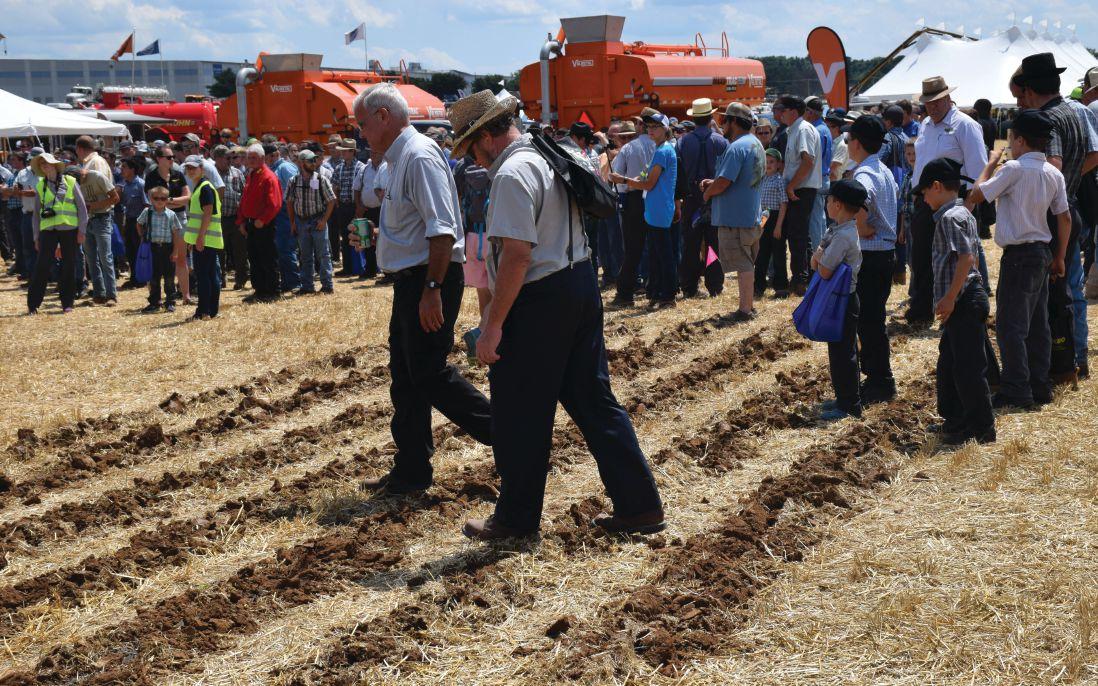
CLOCKWISE, FROM TOP LEFT
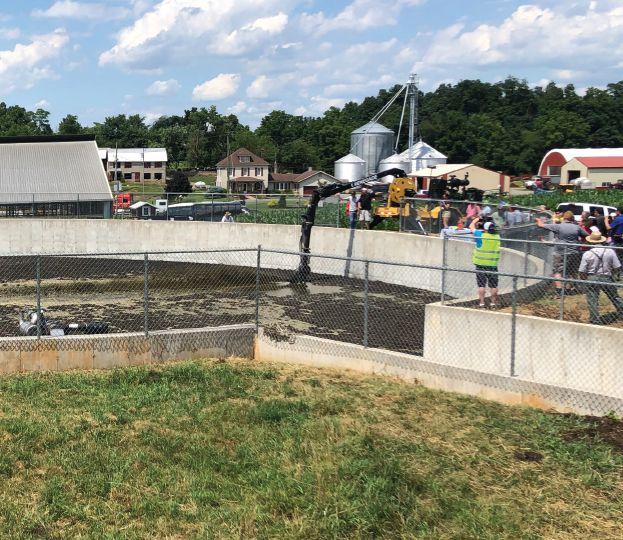
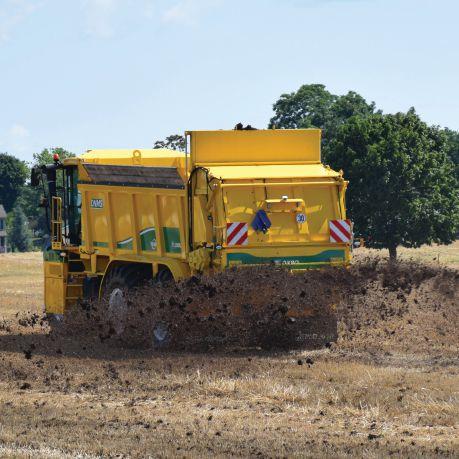
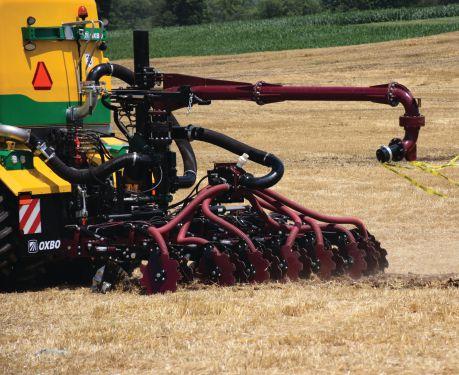
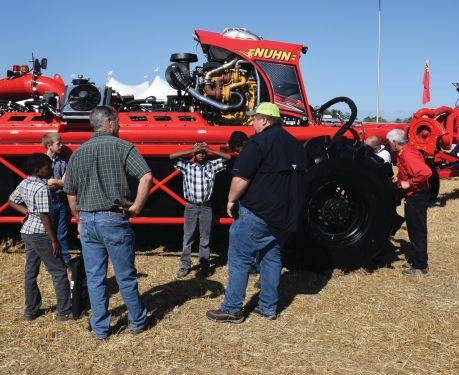
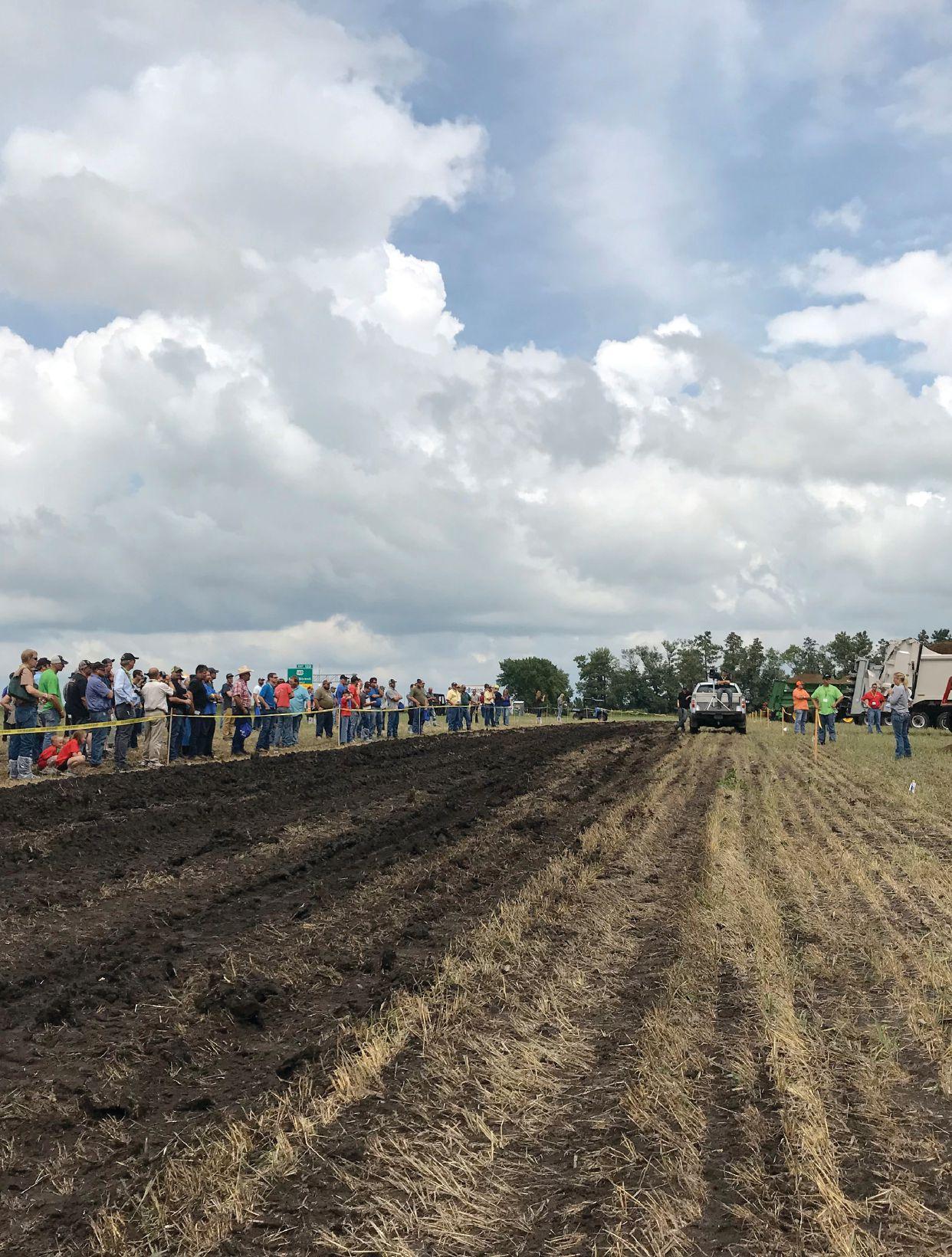
Attendees view solid and liquid spreading demos, and inspect the patterns. Visotirs view equipment, robot milking technology and an agitation demo.
The 2022 North American Manure Expo (NAME) marked an important milestone. It was the first in-person NAME event in three years.
With the 2020 event postponed to 2021 and then eventually held virtually, this year’s event, held July 13-14 in Chambersburg, PA was the official return to the field. With 59 exhibitors, 17 education sessions and more than 1,200 visitors to take it all in, the Expo action picked right back up without missing a beat. In addition to exhibitors and education sessions, attendees also took in tours of local farms and facilities, demonstrations of solid and liquid spreading, an agitation showcase and a spill response demonstration.
Jennifer Bratthauar, ag conservation technician with the Franklin County Conservation District and co-chair of this year’s NAME committee, says hosting the Expo is a lot of work – but worth it.
“The display of technology, live equipment demonstrations, the manure spill response demonstration and educational sessions all promote the wise utilization of manure nutrients, which fits into the work we do with agricultural producers at the conservation district.”
In addition to having more than seven million acres of farmland, Pennsylvania is a major livestock producer.
On the first day of the Expo, attendees were bussed to various tours, including tours of central Pennsylvania agri-businesses Oakleigh Farms and Herbruck’s Poultry. The tours showcased progressive technology being employed by the businesses; Oakleigh uses a robotic milking and manure cleanup system, which is said to have positive effects on herd health and save on personnel costs. Herbruck’s production facility will specialize in pelletized poultry manure, which is an increasingly popular form of fertilizer.
Bratthauar says the importance of industry events like the Expo cannot be overstated. “Holding an event like this in Franklin County is important because Franklin County is fourth in the state for poultry and eggs, second in the state for cattle and calves, and fifth in the state for hogs and pigs,” she says, citing the 2017 Census of Agriculture. “There are a lot of agriculture operations and custom manure haulers handling manure on a regular basis. The Expo provides opportunities to receive up-to-date information on research involving manure applications and crop utilization.”
The 2023 North American Manure Expo will be held Aug. 9-10 in Arlington, WI. •
Highlights from the first in-person Expo in three years
A natural cleaning system
Could floating islands decontaminate feedlot runoff water for reuse?
BY J.P. ANTONACCI
So-called “floating islands” – groups of native wetland plants in the middle of water bodies – are used to decontaminate soil and pull pollutants out of urban wastewater. Now researchers at Olds College in Alberta are testing whether those islands can also clean up feedlot runoff.
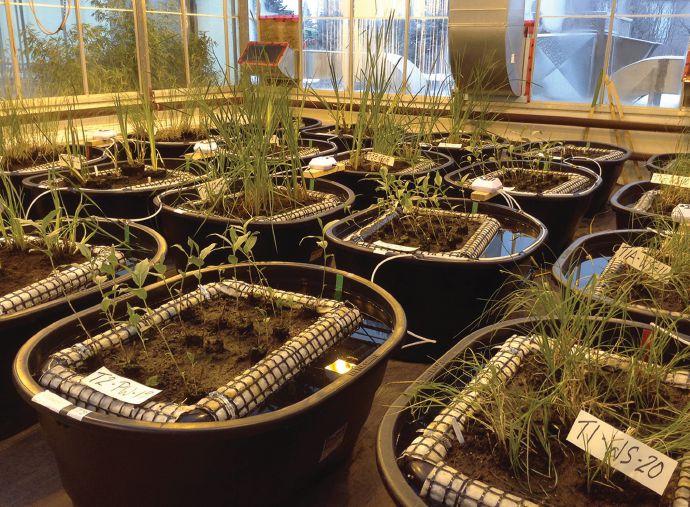
The first two phases of the study at the Olds College Centre for Innovation had researchers use a mix of sedges, rushes and cattails to remove excess nutrients – mainly nitrogen, phosphorus and potassium – from contaminated potable water and feedlot runoff water in a controlled greenhouse setting.
The third stage sees the team move from the greenhouse to the feedlot for a real-world test of the remediation technology.
“We’re looking to see if it improves that water so it can actually be used for the operations around the feedlot,” says principal investigator Daniel Karran, an ecohydrologist who studies how water cycles through different ecosystems.
“If we can apply these technologies and it works to get rid of some of these contaminants,
that’s a source of water we can reuse.”
The raw material for this experiment is found in abundance in cattle-rich Alberta, where intensive livestock operations generate acres of manure that is used in agriculture but also can end up in waterways due to runoff from farm fields and catch basins.
The feedlot runoff water that fills these often giant holding ponds is contaminated with manure, introducing excess nutrients, pathogens and heavy metals to the ponds. These pathogens and heavy metals are harmful to animal and human health, while the heavy metals also make the water unfit for crops.
The high nutrient loads turns the holding ponds into breeding grounds for toxic algal blooms, and the extra biomass in the water creates an oxygen-free environment that is unsuitable to most forms of aquatic life.
“It’s quite nasty. They’re very unhealthy ecosystems,” says Karran. “It’s really dirty water and a good proof of concept for this design, if it works.”
The floating islands act as a kind of natural
filtration system, with the plants taking up nitrogen and phosphorus from the runoff water and adding oxygen from the atmosphere to the holding ponds through their root systems, essentially seeding the water with oxygen.
“By having those islands in the ponds, the hypothesis is they’ll make the ponds more aerobic. And if they make the ponds more aerobic, that means there’s going to be more of these microbial communities that can break down the biomass faster,” explains Karran.
During phase three of the research trials, the plant biomass will be harvested and tested to determine the level of nutrient uptake and how the floating islands are changing the feedlot ecosystems.
In a future on-farm system, Karran envisions the plants that absorb heavy metals like mercury and arsenic being harvested and destroyed, while plants enriched by excess phosphorus and nitrogen would be eventually reabsorbed by the soil on the floating islands as the plants die and decompose.
“I think it has a lot of potential once you get it up and running,” he says of
ABOVE
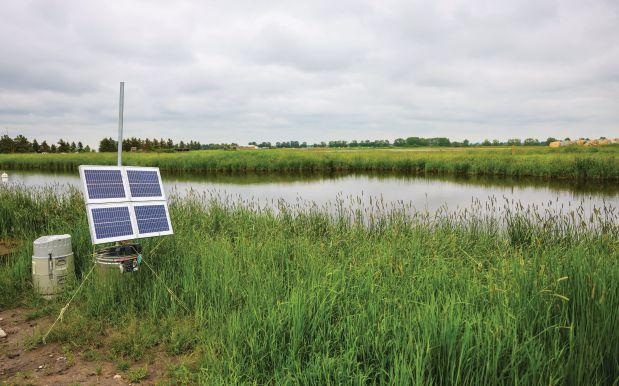
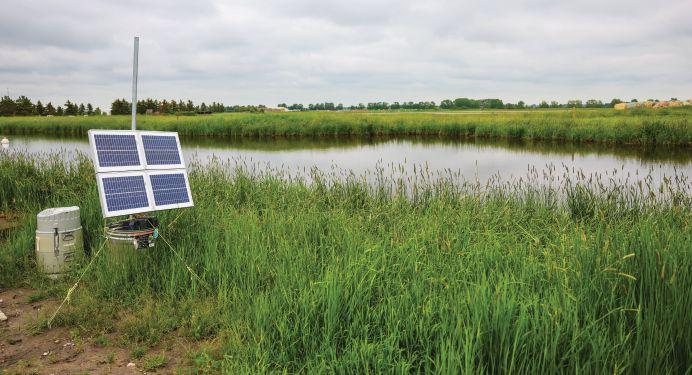
The feedlot runoff pond on campus at Olds College, which is included in the third phase of research for Floating Island Technology.
the technology. “It’s not like a wastewater treatment plant – it doesn’t require a lot of labor or inputs. It just kind of exploits nature to do what nature does best.”
Using plants to clean contaminants – a process known as phyto-remediation – is well-documented in soil remediation and more recently applied to mining operations and other settings that
produce wastewater.
“Now we’re looking at scaling it up to different ag applications,” says Karran.
The first two phases of the floating island research were “very promising,” he adds, as the plants proved “very effective” at removing significant quantities of macronutrients from wastewater – in some cases up to 84.9 percent of excess
-Jared Kvols, Beef Farmer, Laurel, Nebraska, USA
nutrients. Overall, researchers said the performance of the native plant species was “mixed,” with more evaluation needed to determine best practices.
The third phase, which begins in October, will evaluate the plants’ success at removing nutrients and improving water quality in four catch basins on commercial feedlots. Researchers will also monitor concentrations of heavy metals, sodium, fecal bacteria and other elements that make water unsuitable for irrigation or livestock watering.
The research team at Olds has industry partners assisting their work, including cattle farmers who have volunteered their feedlot ponds to host phase three.
EVERY DROP MATTERS
Getting feedlot water back in circulation on the farm has many potential benefits for farmers and the environment alike.
If cleaning and reusing water from feedlot ponds can reduce the amount of water farmers need to truck onto their farms, that could represent significant cost savings. As a bonus, floating islands should reduce odors and make feedlot holding ponds more aesthetically pleasing, while also working to minimize the presence of toxic algal blooms.
Floating island technology is a passive water remediation system that can be easily and cheaply installed on individual farms, eliminating the need to engineer and build expensive wastewater treatment plants and import additional water.
“We’re exploiting the natural processes of nature to try and remove these contaminants,” explains Karran. “The idea is it’s a low-cost way of making more water available on the farm for use in the long run.”
The technology has a small carbon footprint and is designed to last for decades, with minimal maintenance.
“(The islands) will just sit there doing what they do naturally,” says Karran. These potential benefits have farmers interested in the research, “with a healthy bit of skepticism... We’ll have to demonstrate that the cost of these islands is going to have a good return.”
The most important payback, notes
LEFT
Floating Island Technology in the Olds College Centre for Innovation greenhouse.
Karran, is for the environment.
“The ag sector is the largest consumer of water in both livestock and field crops,” he says. “We’re really just going at the angle that there are better, more sustainable ways to do things. This is where we should be headed.”
The World Bank estimates that on a global scale, agriculture accounts for 70 percent of all withdrawals from freshwater sources, with better water management practices needed to meet the expected future growth in demand for food while water scarcity increases.
“The water challenges that we’re going to be up against are potentially massive –climate change, increasing competition, and just a general uncertainty with our water supply,” says Karran.
The 2020 Agricultural Water Survey, released by Statistics Canada in December 2021, found that Alberta’s 432,195 hectares of farmland receiving irrigation accounted for 71 percent of the total irrigated land in Canada. The research is in part a response to “massive mega-droughts” in the U.S. and the 2021 drought in Western Canada, which he calls “a pretty big scare” for farmers and residents. “This could be foreshadowing for the future of the Prairies,” says Karran. We need to learn how to do more with less, and that’s what this research is trying to do.” •
ABOVE
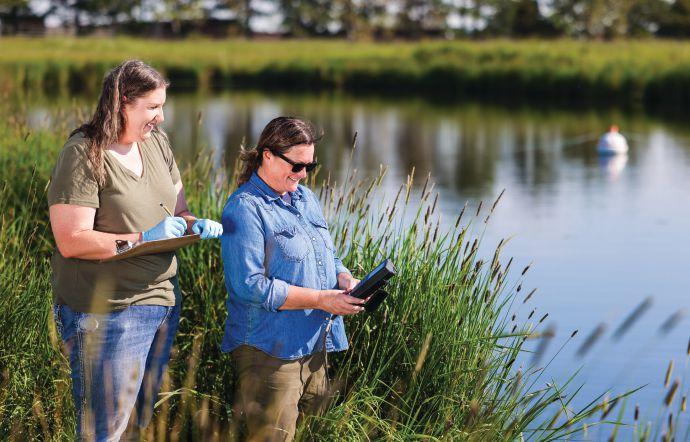
Researchers performing water samples at the feedlot pond on campus at Olds College of Agriculture & Technology.
SARAH FRONCZAK | Michigan State University Extension
ERICA ROGERS | Michigan Department of Agriculture and Rural Development
What’s all the hype about the pipe?
As livestock facilities continue to grow to meet consumer demand, so does the amount of manure at each facility. This may mean manure needs to be moved greater distances from where it is produced. Manure can be transported either above ground via semi tankers, dump trucks, tractors with spreaders, etc., or below ground through manure pipelines. Both methods have their risks and rewards.
In a Livestock Poultry Environmental Learning Community (LPELC) webinar titled “Going the distance: Considerations for the use of manure pipelines,” the topic of below ground manure transport via pipelines was addressed with a short presentation by Glen Arnold from Ohio State University Extension outlining some of the background information surrounding manure pipelines as well as a panel of experts (Suzanne Reamer, USDA NRCS-MI, Dave Cunningham, Bridgewater Dairy and Arnold) that held a question and answer session for participants.
Arnold’s presentation covered basic information including the volume of manure produced at livestock facilities and the value of manure as a fertilizer source, especially given the current cost of fertilizer prices. The presentation then addressed the logistics of manure pipelines, from the infrastructure to the installation, to the workings
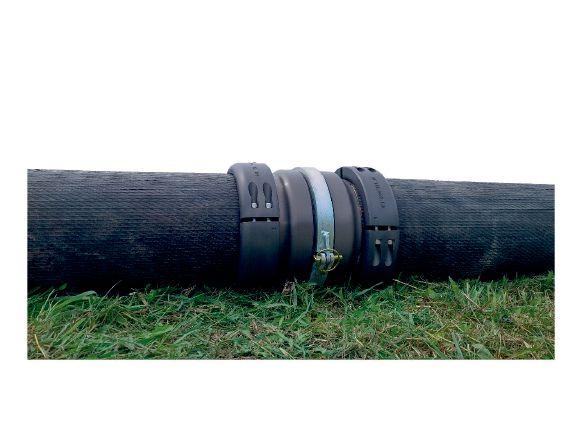
Initial cost: $158,400 per mile for 10-inch diameter pipe on open ground:
• One mile of 12-inch diameter soft hose: $96,000;
• One mile of 10-inch diameter soft hose: $72,000;
• Does not include cost of needed hose carts;
• Lifespan of equipment is 20 years.
Go above and beyond to communicate with stakeholders.
of the system. Reduced road traffic is a positive result of installing manure pipelines, which means less road wear and risk of accidents or manure spills. Additionally, underground pipelines can help reduce the mess of manure on roads or mud tracked by equipment onto the roads, allow for the potential of more in-season application of manure, and require less labor due to fewer transportation vehicles needed. Lastly, Arnold mentioned some points to consider such as the size of the system and how it accompanies the size of the farm, ownership of the land where the underground manure pipelines would be placed, and what types of regulations may be in place based on individual states. Probably one of the biggest considerations is the cost. Below is a rough estimate:
Some of the potential obstacles to overcome when installing a manure pipeline system can include local, state and federal regulations. These regulations differ from state to state, but it is important to consider the different entities that will be involved in the planning process. The governmental and non-governmental entities that you may have to get to know as you navigate the process of installing a manure pipeline in a public right-of-way are your neighbors, township supervisors, drainage commissioners, utility companies or State Department of Transportation staff. Establishing good relationships and then going above and beyond to communicate with these people before, during the planning of, and after the installation process is helpful. Always try to be proactive and not reactive so that if emergencies occur, they are more likely to be resolved in a timely manner. In some cases, manure pipelines are welcomed due to less trucks on the roadways, which helps decrease the amount of odor and road degradation and it can be a cost savings for the farm.
Some obstacles you may uncover could include tile that is not mapped and may or may not be hooked into a larger system, soil type and topography may be a challenge, and existing utility lines. Think about contacting your local soil and water conservation office and call-ahead utility
notification to identify soils and objects such as gas or electrical lines. Manure pipelines should be buried below frost levels.
If you are considering installation of a manure pipeline, keep in mind basic engineering standards for the practice. According to the NRCS practice standards, which is a nationwide standard (some states may have more regulations or restrictions in place):
1. Pressure ratings for pipes need to be 72 percent of the pipe rating.
2. Check valves are required.
3. Backflow prevention is required if connected to a well.
4. The type of pipe and joints need to be watertight.
5. A programmable control panel to indicate, via an alarm, if there is a loss in pressure.
Sediment buildup and scouring can be a real problem in manure pipelines and, therefore, NRCS practice standards recommend a velocity of three to six feet per second. The percentage of sand in the manure may make more of an issue as it is hard on equipment. These are usually pressurized systems in order to deliver the manure to the application equipment at the appropriate rate. On average, pressure ratings of larger pipelines should be around 250 PSI near the source. Realize, however, the pressure will drop as you move further away, so if you want for instance, a 250 PSI system, the pressure should be around 300 PSI to start. Take into consideration the pressure the system’s valves can handle or have pressure relief valves in place. The valves also need to allow for the cleanout device to move through the pipeline during cleanout.
The NRCS Livestock Pipeline design spreadsheet calculates the right pipe size for an installation. The spreadsheet linked in this article above is from Wisconsin while the spreadsheet below is a pipeline thrust design spreadsheet found under the MI NRCS website under engineering. Check valves, double-check valves, or flowmeters should be considered in the equipment list.
Though site-specific, if a manure pipeline is connected to a well, perhaps for cleaning the manure pipeline, the backflow prevention needs to be a RPZ valve and certified by the American Society of Sanitary Engineers (ASSE), according to the Department of Environment, Great Lakes, and Energy (EGLE) in Michigan. For example: if a pipeline has an uphill
flow, the backflow prevention is crucial along with a check valve is recommended to prevent any backflow in the pipeline when the pump stops.
Having a good operation and maintenance plan for the pipeline is key to maximize the useful life of the equipment. If you have a designed system, you should receive an operation and maintenance plan, which will outline the annual or seasonal checks you should do of your specific system. NRCS has an operation and maintenance plan/generic checklist on
their field office field tech guide website. Inspection points will include joints, valves, and turns in the manure pipeline. In Michigan, EGLE may also require a visual inspection during the operation of a pumping system be documented.
Michigan State University Extension recognizes that a manure pipeline system is not an option nor will it be beneficial for all farms, but the above information can help those who are contemplating this decision.
For more information on pipelines, visit https://extension.msu.edu. •
WASTE WATER TREATMENT
TURNING
Fan produces bedding material with a dry matter content of
RAINSTAR TRAVELERS
The incredible nominations we received for this program’s third year highlighted just how many influential women there are working in Canada’s agriculture industry.
To our Top 7 recipients, those who nominated an influential woman, those who offered support through social media or tuning into the podcast series on AgAnnex Talks, and to our generous sponsors:
CONGRATULATIONS
WOMEN IN CANADIAN AGRICULTURE WINNERS
Presented by
Sponsored by
Christine Noronha
Heather Watson
Karen Tanino
Lana Shaw
Lisa Mumm
Mary Ruth McDonald
Valerie Carney
Risks inside and out
While open air environments pose fewer health risks from manure gases, new insights show safety isn’t always guaranteed.
BY BREE RODY
When it comes to manure safety, one of the major areas of concern is asphyxiation. Injury and death can occur when a person is in close proximity to manure when levels of hydrogen sulfide (H2S) exceed the hazardous concentrations. Naturally, this occurs most commonly in confined spaces, such as below-grade containment structures.
However, a small number of incidents in recent years including a fatality near Amherst, WI has experts concerned about the risk of asphyxiation in outdoor settings as well. While asphyxiation risks are significantly lower in outdoor settings as open air allows gases to disperse, the risk is not zero – and serious outcomes and even death can still occur. A team at University of Wisconsin Extension secured funding under the USDA NIFA Foundational Program CARE to launch a study to identify strategies to reduce human health risks from exposure to manure gases containing hydrogen sulfide. The study looked closely at exposure to gases containing hydrogen sulfide in outdoor settings both during agitation
ABOVE
events and on days without agitation, and how gas concentration varied in various weather conditions.
The study was recently completed, with most of the data analyzed. Rebecca Larson, associate professor and extension specialist at the University of Wisconsin-Madison, and a team of researchers including Kevin Erb, director of the extension division’s conservation professional training program, now have more data on what factors pose a greater risk to human health in outdoor settings.
Larson says in the past, many professionals in her field had been primarily concerned about risks in confined spaces. And while confined spaces still pose the greatest risks, she says those in the safety world are now looking at amplified risk factors outside. “I think we always knew some releases were happening during agitation,” she says. “Now we know, maybe a certain amount of time it’s not concerning, but there are circumstances even in open spaces where it can be an issue.”
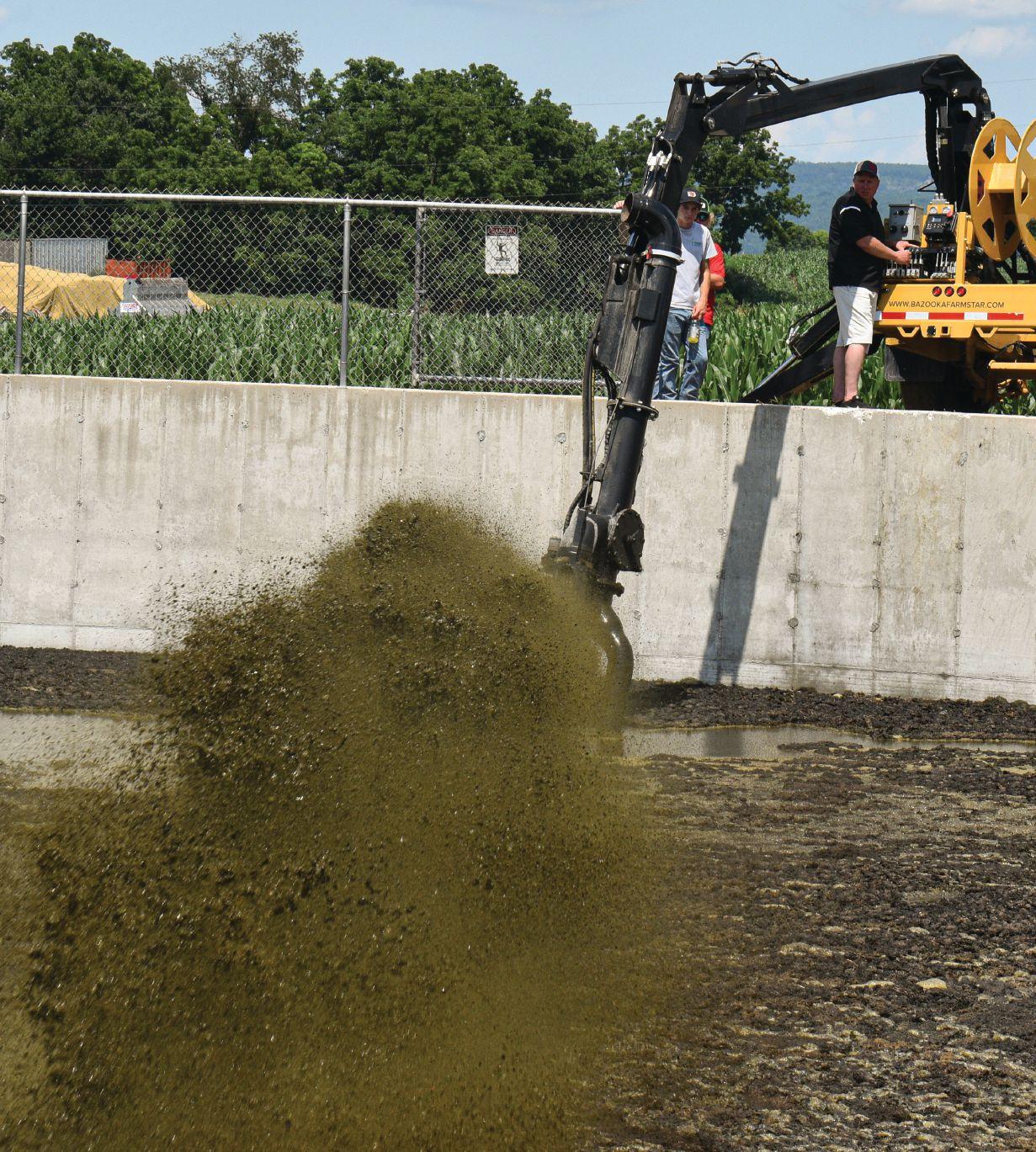
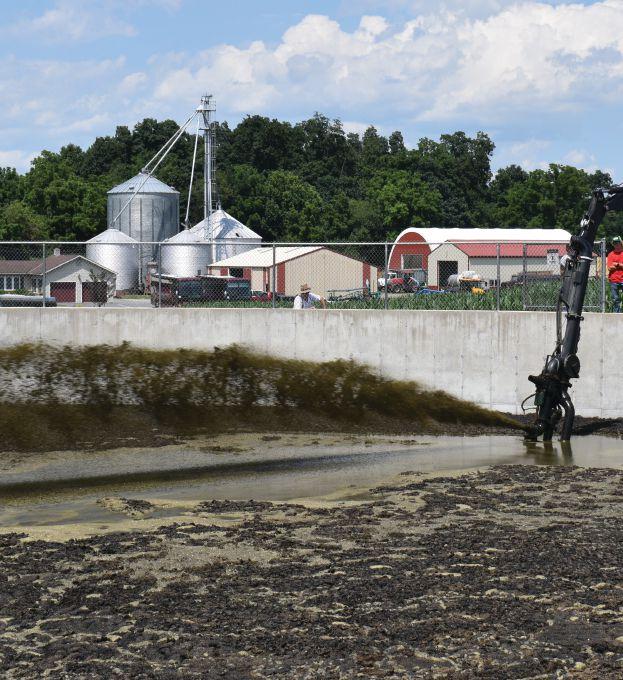
An agitation event takes place during a Pennsylvania demonstration, where educators spoke of how gases and odors are dispersed through open air.
HOW AGITATION CAN CAUSE ISSUES OUTDOORS
Larson says the industry has always known that emissions are greater during agitation – but how much of a risk they pose might have been underestimated. Overall, she says during the study, days during which agitation occurred were the biggest concern. “There were certain circumstances where we didn’t get any events with high concentrations of hydrogen sulfide, [such as] earlier in the season, in the springtime,” she says, adding that’s not to say it is not possible. “Only during agitation and during the warmer parts of summer.”
While agitation systems that can be controlled farther away from manure storage – such as boats – are popular these days, most operators are still using systems that require them to be close to the pit – the highest-risk location.
Agitation causes the release of gases in a way Erb compares to a burp. “The movement of the liquid causes the gases to come out of suspension,” he explains. “You start agitating and the manure storage will ‘burp.’ There will be this burping release of pent-up gases.”
How likely those gases are to harm humans depends a lot on weather conditions. Some conditions will keep gases closer to the ground and make their dispersion much slower. Temperature is likely the biggest factor, says Larson, with warmer temperatures posing the bigger risk as they can increase gas production. Additionally, temperature inversions –when a layer of warmer air sits above a layer of cooler, denser air, trapping it –can also increase the risk.
Larson says the research has been most focused on the U.S. Occupational Safety and Health Administration (OSHA) standard, as there are not many other standards for H2S in an agricultural setting. OSHA has a ceiling of 20 PPM for H2S, with a 50 PPM peak above that. Larson says there were “absolutely” times during their study during which the 20 PPM ceiling was hit outdoors. Of the 20 days in the field, more than half of which were non-agitation days, Larson says there were three to four days in which those numbers were hit.
Wind also affects dispersion, where higher winds can encourage the transport of gasses reducing concentrations locally. Larson says the team is still examining the exact figures to know what magnitude of wind will pose the highest risk. There is no clear indication of a correlation
between humidity and increased risk to human health.
OTHER INDOOR RISKS
While the study looked at risks in outdoor settings during agitation events, it also took into account processing facilities – on-farm, indoor facilities that both Larson and Erb say were not as common even a few decades ago.
These buildings often house tasks such as sand separation or solid separation. “People started designing contained systems where equipment was not exposed to the elements all the time,” says Larson. “We didn’t have a ton of manure processing two decades ago.”
Erb says with more farms installing technlogy such as sand and solid separation, there are simply more places and situations to consider when looking at gas safety. “The only place you really thought about manure gases [before] was the small reception pit where it was
“You have a lot of byproducts being mixed into beef and dairy rations.”
pumped to the lagoon.”
Building design elements that take air circulation into account could go a long way in these settings, says Larson. “There are design standards for how many air exchanges you want to target, [or] air exchanges per hour. Having none, or not providing that adequate ventilation is very dangerous.”
BEYOND THE ENVIRONMENT
The properties of the manure itself can also affect the amount of risk.
Erb says there may be a bigger concern nowadays in part because the manure itself is different. “How we’ve fed the cows has changed,” he says. “Thirty years [ago], cows had corn silage, they had hay or haylage and maybe a mineral mix. Now, you have a lot of byproducts being mixed into beef and dairy rations.” He says this can impact the type of bacteria that can generate gases.
Agitating when manure temperatures are lower will reduce risk. Previous research shows that manure colder than 64F (18C) greatly reduces H2S emissions
(Andriamanohiarisoamanana et al. 2015).
Although, like all other safety factors, temperature alone is not a guarantee of safety. Other factors with the manure include sulfur content and pH. As the pH of manure decreases, more of the dissolved sulfide is in the form of H2S). While increasing pH may reduce H2S emissions, this could be difficult to achieve in practice due to the cost.
Overall, says Erb, there are always economics to consider. For example, while some feed will result in manure that gives off fewer H2 S emissions, that might not necessarily work for the budgets of the farm. “If you have two feed options that do the same thing that are similar in price, you can alternate one to the other,” he says. “If it’s economical, consider using that lower sulfur feed.”
THE SOLUTION IS SIMPLE
While all the data is helpful, Larson and Erb say there’s a bit of irony at play. “In the end, I like people to understand that there are a lot of meteorological factors that can go into this, but how often do people actually know [for example] the wind speed?” asked Larson, who also pointed out that weather events like inversions are often not something most people can easily pick up on simply by stepping out their door. In the end, says Larson, it’s best to be armed with the right personal protective equipment at all times, not only because it’s hard for humans to know the exact weather conditions, but also because those conditions can quickly change.
Larson recommends wearing a hydrogen sulfide monitor during all indoor activities, as well as outside when agitating, particularly on days that are higher than 59F (15C).
Some operators experience what those in the industry call “alarm fatigue.” Erb says it’s true that the alarms tend to go off at a rate that might bother those wearing them. “In any other industry, when [an alarm] goes off, you leave the area and don’t go back until it’s safe,” he says. “In agriculture, the tendency seems to be, ‘I’m going to finish this task, and then I’m going to leave.’ They’ll silence the button and keep going.”
But Erb and Larson say it only takes one instance of ignoring an alarm for something devastating to happen. Larson says education with employees remains key. “The fact of the matter is, protecting yourself with a monitor is the most important thing,” she says. •
Tough year for your farm this year, huh?
That's a rough break... Sounds like there’s a lot going on. Let's talk about it.
Yep, I can’t seem to catch a break with this weather, but that’s farming for you.
In agriculture, we can’t always be close together but that doesn’t mean we’re far from help. Talking about our mental health can be as easy as talking about the weather. Rather than toughing it out, let’s talk it out, together. That’s why we’re here. The Do More Ag Foundation connects you to mental health counseling, training, and education tailored for Canadian farmers and their families. Visit domore.ag for agriculture-specific mental health tips and resources.
Manure management when city meets country
With the urban-rural divide narrowing, there are opportunities for education.
BY JIM TIMLICK
It’s no secret that the divide between urban and rural living has narrowed in recent years.
As more and more homeowners look to escape the big city and put down roots in a more bucolic setting, the number of new homes being built in rural communities has skyrocketed. As a result, the buffer that once separated individual family dwellings from farm operations has shrunk considerably. This increasing closeness has impacted many aspects of farm operations, probably none more so than the application and storage of manure.
“Oh, absolutely,” says James Dyck, an engineering specialist for crop systems and the environment for the Ontario Ministry of Agriculture, Food and Rural Affairs (OMAFRA), when asked if rural communities were experiencing an influx of new residents.
“I’m located in an area in Niagara [Ontario] where we’re close to the Greater Toronto Area, and even before COVID there seemed to be an exodus
ABOVE
from the GTA. We’ve seen real estate prices climb a lot in the surrounding municipalities. As a result, there’s now a lot of different places where rural and urban areas interface and that can potentially cause some issues.”
Dyck says the odor from manure has traditionally been one of the top issues his department has had to deal with, and it continues to field a significant number of complaints from the general public as urban expansion continues in many areas of southern Ontario.
The ministry’s basic goal in those kinds of situations, he explains, is to help farmers understand and follow appropriate practices. In cases where there may be room for improvement, the ministry can recommend remedial steps to address the issue.
One of the steps Ontario has taken to address complaints about odor from livestock facilities is to develop a land use planning tool known as the
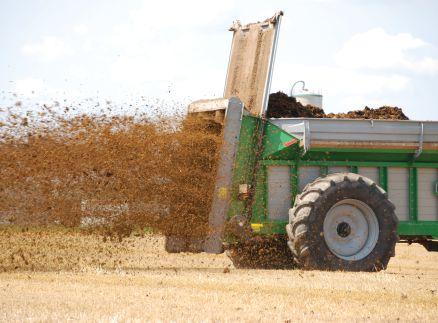
Solid and liquid spreading takes place on a farm near Listowel, Ont. during an equipment demonstration in 2021.
Minimum Distance Separation (MDS) formula. When a farmer builds a new livestock barn or renovates an existing one, they must first perform a calculation, which basically determines how far out that barn must be from the nearest home. Conversely, anyone who wants to build a house near a livestock farm must do a similar calculation.
“The idea behind that is to try and manage some of these issues preventatively by saying if we put a house so far away at least if there is an odor or nuisance, it will be a little more diluted and maybe not quite as concentrated,” he explains.
Doug Johnston and his brother Dave co-own Maplevue Farms, a grain and dairy farm near the town of Listowel, Ont. The farm is home to about 150 milking cows and a four-year-old robotic milking barn. Listowel is the largest town in Ontario’s Perth County and, with a current population of just under 10,000, represents almost two-thirds of Perth County’s 15,538. Listowel’s population shot up by 26.7 percent between 2016 and 2021. Perth County is about a 45-minute drive away from cities like Guelph and the fast-growing Waterloo Region.
While the nearest homes are still located some distance away from their farm, Johnston says the family-owned operation tries to be a good neighbor by keeping nearby homeowners informed about their activities, especially when it comes to spreading manure on their fields.
“We talk to the neighbors about what we’re doing and likewise they let us know when they’re having a family gathering or if there’s a wedding so we can try not to haul any manure that day,” he says.
“I think it’s very important to keep the lines of communication as open as we can. Ten days ago we were going to put a bunch of steer and pig manure on a section of the farm. I called the guy we rent the land from and said this is the weekend we’re going to be [applying it]. He said ‘thank you’ and then he went away for the weekend.”
It’s a similar situation south of the border, where urban development continues to grow in rural areas of the U.S. that are home to a large number of farm operations.
In Ohio, for example, hundreds of new homes are built each year in counties that are home to large livestock farms. While some of those counties have strict regulations on how close homes can be
located to farm, others have virtually no restrictions, which can sometimes lead to tensions between farmers and transplanted urbanites, says Glen Arnold, a field specialist in manure nutrient management with Ohio State University Extension.
One of the biggest sources of that tension, according to Arnold, is the changing nature of livestock farming. As operations have grown in size, so too have the barns required to house pigs and cattle. A typical pig barn can now house as many as 1,500 swine while a dairy
farm can have upwards of 2,000 head of cattle. More animals means more manure which can sometimes mean more odor. Arnold says one of the best things farmers can do to diffuse some of those tensions is to get to know their neighbors and share information with them about what’s happening on their farm. The better you know someone, he explains, the less likely they are to become annoyed with what you are doing. Likewise, people
CONTINUED ON PAGE 27
Farm accident survivor sheds light on experience
Even though we rely on the skill and expertise of our blue light services to save lives, no one wants to see them have to attend a farm, or any other place for that matter.
Farming, sadly, is the second-most dangerous occupation in the U.K., only outranked by the construction industry.
The latest figures from the U.K.’s Health and Safety Executive (HSE) states there were 25 work-related farm deaths between April 2021 and March 2022, down from 41 deaths the previous year.
The biggest cause of the U.K. farm fatalities involved being struck by a moving vehicle, mostly tractors, closely followed by people being struck by a moving object, such as bales and trees.
More than a third of the workers killed were aged 65 years or older, and the youngest person killed was a nine-year-old child.
Many groups around the world lobby hard to farmers, reminding them about the perils of farming and encouraging them to take a moment to ensure the task before them is safe before proceeding.
Of course, any activity to highlight farmyard dangers is welcome, but one U.K. agri-machinery sales representative who, as a boy, survived a farm accident that took one of his limbs, is on a mission to really drive the message home.
William Sayers says he was very lucky to have survived his horrific farm accident back in 1990, that saw him lose an arm in a tussle with a pto shaft. It was quite a devastating blow to the young 12-year-old boy from Donemana, Northern Ireland, but he is using his personal experience to raise awareness and help try and prevent other farm accidents.
For the past 27 years, Sayers, now 44, has worked in sales for the Massey Ferguson dealership, D & M Farm Services in Eglinton. It’s a job he adores, as it gets him out and about onto farms discussing the farmer’s tractor requirements as well as other machinery. That might be the day job but Sayers also enjoys openly talking about his accident to others and has become an ambassador to promote farm safety.
Sayers lost his arm on Easter Monday in 1990 after his coat got caught up in the PTO shaft of a slurry tanker while he and a friend were filling it with slurry. That quick moment changed his life forever, but he is very thankful to have survived with his life.
“It just happened in an instant,” says Sayers. “The next thing I knew I was lying on the ground and could see my right arm lying across the yard. I knew I had lost it but it still felt that I still had a right arm… The biggest issue I had was that I had disobeyed my father, who had told me not to go near the PTO shaft. The fear I saw in both his and my mother’s eyes as I ran up to the house has left me with an immense sense of guilt ever since.”
The shaft on the tanker was fully guarded, except for a few inches at the top. Sayers was wearing a coat his mother had asked him to put on during the last load of slurry as it was getting colder in the evening. As Sayers went to adjust the regulator on the tanker pump to help it fill quicker, the shaft caught his coat, which wasn’t zipped, and dragged him in.
“I thought I was dying,” he says. “All I was wearing after the shaft caught me was my underwear. My dad rushed me to hospital as my sister Jane picked up my arm and washed it. The hospital actually sent an ambulance out to the farm to collect my arm and later tried to sew it back on but without success.”
His family farm was a dairy farm and his father had set it up with a new milking parlor for him to take over one
day. Sadly, that day never came as it was impossible to milk cows with one arm. Today, the farm is home to a few suckler cows, and Sayers still goes there to check on his father, George, who is now 85. His mother Kathleen sadly passed away a few years ago.
“I’m very happy working as a sales representative for D&M Farm Services,” says Sayers. “I am very thankful that the owners, Jim Dinsmore and William Moore, took me on all those years ago.
“It’s amazing how tractor and machinery technology has evolved over the years. I keep well up-to-date with all the new products released by Massey Ferguson, more so via online training courses these days. My job is quite varied and I never know what each day will bring.”
Prior to his accident, Sayers was right-handed and has since had to learn how to write all over again with the left hand. Driving is less of an issue. “I’ve never been affected mentally by the accident, which is remarkable. My father, who lost one of his legs in a farm accident when he was only two years old, was very supportive over the years and helped me a lot. I also lost my uncle William, who I was named after, in a tractor accident when he was only 25 years old.
“I’ve had to learn to do a lot of normal tasks like writing, tying my laces and buttoning my shirt with the left hand, but I’ve mastered them all.”
His message to farmers remains very
strong: “It is your own responsibility to ensure you work [safely] and in a safe environment. There are plenty of warnings from various agri groups and bodies urging farmers to heed the safety
LEFT
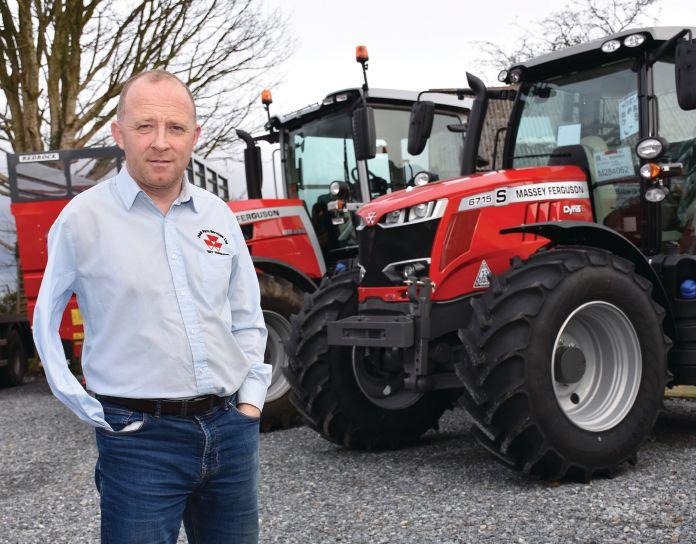
Equipment salesman William Sayers survived a farm accident at the age of 12. Now he shares his story openly.
advice. People think accidents like mine never happen to them, but they can and do. I did not heed my own father’s instructions and I paid a heavy price for that. If my story can help prevent someone having an accident, losing their arm, being seriously injured or even losing their life, then it is worthwhile for me telling it.”
In his role as a farm safety ambassador, Sayers volunteers his time to talk to farmers groups, young farmers, church groups and anyone who asks to hear his story. He also gets calls from people who have already had an accident and lost limbs and need someone to talk to.
“I’ve had a number of people call me who have lost a limb during an accident and need someone to talk to for moral support and advice. I will talk to anyone, anytime, if they want and am very happy to do so.” •
A LONG WAY TOGETHER
WHEREVER YOU ARE, BKT IS WITH YOU
BKT provides you tires that are reliable and safe, sturdy and durable, capable of combining traction and reduced soil compaction, comfort and high performance.
BKT: always with you, to get the most out of your agricultural equipment.
Growing tractor sales ‘indicate positive outlooks’ for ag industry
The latest data from the Association of Equipment Manufacturers (AEM) shows total tractor sales fell throughout the U.S., but grew in Canada during the month of August. Overall, U.S. ag equipment unit sales rose above the fiveyear average for the first time since April 2022, even though tractor sales fell by 11.7 per cent compared to August 2021. Mid-range tractors between 40 and 100 HP were down 7.2 percent, and the sub-40hp segment led segment losses, down 16 percent.
In Canada, growth in all segments led Canadian unit sales to its first positive year-over-year month in unit sales since January 2022. Overall unit sales in tractors were up 7.2 percent. All tractor segments grew, most notably 4WD units, up 326.7 per cent to 64 tractors sold. Unit sales in 2WD segments grew by 4.9 percent, led by 100+hp unit growth of 43.9 percent.
“Demand for everything other than the smallest units remains positive,” said Curt Blades, SVP, industry sectors and product leadership at AEM in a statement. “But supply chain difficulties remain in the way of the supply side market.”
He added, “Despite concerns around input costs for farmers, we are still seeing the larger units, harvesters and heavy-duty tractors, lead sales trends, indicating positive outlooks.”
New Holland revamps boom sprayer lineup
New Holland Agriculture North America has revamped its lineup of SP310F, SP370F and SP410F Guardian front boom sprayers to feature new technological and precision capabilities. These sprayers integrate the advanced precision technologies from Raven to enhance efficiency while covering more acres per hour in the field.
“The advancements made to the Guardian front boom sprayer are really elevating the operator experience in the cab while improving application accuracy and the quality of data collected,” said Sally Johnson, VP for New Holland Agriculture North America in a statement. “These upgraded units are connecting many components of an operation and data points for owners and operators to find more efficiency and profitability, as well as empowering them to make more informed agronomic and logistical decisions.”
This lineup of Guardian sprayers incorporates precision technologies: Slingshot from Raven and IntelliSpray II. The data generated from these features are collected, streamlined and aggregated by Raven’s Connected Workflow system. The Connected Workflow system works by syncing data from the office to the field and back again for simplified management of work, idle and transit time. The data can be used to create programs and strategies like herbicide rate prescriptions for individual fields and is accessible by the operator through the Slingshot mobile app.
Other recent updates and new products from New Holland include returning the Hayliner name to all of its small balers in North America, its new lineup of Discbine Plus Series centerpivot disc mower-conditioners, the new Bro-Belt Series and Roll Belt 450 Utility Plus model balers and the FD2 FlexDraper combine header.
New ASF Connect features from Case IH focus on data
Case IH has released two new updates to the suite of ASF Connect tools available to producers: AFS AccuSync machine coordination and new, productivity-focused ASF Connect features. With the addition of AccuSync, producers can now share real-time data between machines in the same field for a fully connected operation.
AccuSync functions as a subscription service, which allows producers to connect multiple machines in a field to ensure all operators are working together efficiently through the sharing of features such as coverage maps and A/B guidance lines.
The new ASF Connect features will enable producers to use their connected fleet more efficiently, with features such as insights dynamic machine reporting, machine reports and CSV exporting, CAN parameter visibility and archived vehicle benchmarking.
Kendal Quandahl, ASF marketing manager, called AccuSync a “game changer” for farmers “who have long desired a way to intuitively manage and link their equipment, and feature updates for AFS Connect give operators more ways to use data for better in-field outcomes.”
MANAGEMENT
WHEN CITY MEETS COUNTRY
moving to a rural area for the first time need to better understand how important farms are to the communities they are a part of, he adds.
“We all want to have food when we go to a restaurant. We all want to have whatever we want for breakfast. In order for that food to be there, somebody’s got to grow it, somebody’s got to harvest it and somebody’s got to transport it,” he says.
“Many times people think that can all be done in some other state rather than here locally in my backyard. But livestock is a large economic powerhouse for most rural areas. There’s a lot of trickle down.”
As important as relationship building and understanding is to easing these tensions, there are some concrete steps farmers can take in the field to reduce complaints about manure spreading and storage.
Arnold says one of the most important things producers can do to lessen the smell from manure is to incorporate it into the soil in as timely a manner as possible. Leaving manure on the surface of a field means the can carry much farther if the wind blows in a certain direction or if a rain remoistens it, he adds.
He also advises farmers to stack manure inside or at least in an outdoor location where it’s not visible to passersby.
“Most of us smell with our eyes as much as our nose. If it looks bad, it’s a lot easier to become offended by something,” he says.
Dyck agrees that it’s important for farmers to talk with their neighbors about their operations, especially when it comes to the application or storage of manure. That kind of dialogue can help reduce any uncertainty or frustration neighbors could be feeling, he adds.
Farmers may also want to take a closer look at some of the latest technology available for fertilizer application, he explains. For example, a growing number of farmers have switched to using drag lines or injection-type spreaders. By injecting manure directly into the soil, farmers can reduce the potential for nutrient loss and also cut down on odor, Dyck adds.
capture the nutrients from the manure, but they also trap much of its odor, he explains.
Johnston also recommends farmers spread manure in different areas each year rather than “pounding” it into the same field year after year.
Johnston and his family are currently working to develop a digital platform that will track exactly how much manure they apply to each acre of field. They hope to be able to share that information with neighbors once the system is operational.
“People have to understand that manure
is not waste, it’s a nutrient. We treat it as special. It’s valuable to us. It’s not something you want to just get rid of. It has to be spread precisely and tracked,” he explains.
Dyck says an important part of bridging the gap between urban and farm communities is continued education.
“Rural Ontario is not just empty countryside where people just happen to live. It’s also a place of business and the business of farming involves a lot of machinery and livestock. There can be noise, there can be odors,” he says. •
Johnston says something that has helped reduce the odor associated with manure on his farm is planting cover crops in its wheat fields. Not only do these crops help
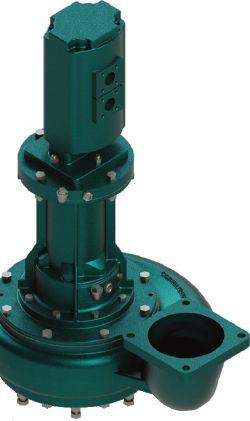
Fits in tight spaces
Semi-open style impeller
Cutter plate rips up straw and other stringy material
Pump resists plugging
MANURE MINUTE
CHRYSEIS MODDERMAN | University of Minnesota Extension
MELISSA WILSON | University of Minnesota Extension
Updated fall application tips
Carol Bishop Hipps spoke of fall as “…the mellow, messy, leaf-kicking, perfect pause between the opposing miseries of summer and winter.” Personally, I think she should have added “manure-slinging” to her list of fall descriptors. Since our between-miseries manure season is right around the corner, here are some reminders on best practices to make accurate applications and avoid nutrient loss.
APPLICATION TIPS
• Sample your manure and get it tested. Manure is a variable product so knowing the actual nutrients (not “book values”) in the manure is important for accurate application.
• Soil sample. While we’re on the subject of nutrient analysis sampling, you will also need to have a recent analysis of your soil. The soil test tells you what nutrients are needed, while the manure test tells you how much of the nutrients you have. Both are an essential piece of the accurate application puzzle.
• Nitrogen calculations can be tricky. Did you know that not all of the total nitrogen in manure is plant-available in the first year? Manure provides two forms of nitrogen: the inorganic N (immediately plant-available), and the organic N (not immediately plant-available). The organic fraction will need some time to break down (called mineralization) to become usable by the plant.
N-based rate, most manure supplies too much P for the plant to use, causing it to build up in the soil over time.
• Instead, if your soil test shows high P levels already, consider applying at a P-based rate. That means looking at how much P your plants will need, and applying at a rate that provides that amount of P. Of course, this will likely underapply N, so you will need to supplement with another N source.
• Wait for cool (<50F) soils to apply manure. When applying manure in the fall, you’ve got a long wait until spring for a crop to use those valuable nutrients; and you want those nutrients to stay put in the soil and wait patiently. Nitrogen, unfortunately, has a knack for escaping into the environment, and nitrate is the most mobile form of nitrogen. Manure doesn’t contain significant amounts of nitrate, but the ammonium in manure (the plantavailable form) can convert to nitrate through a process called nitrification.
Nitrate is easily lost through leaching and denitrification (lost as a gas), so we would like to keep manure nitrogen in the ammonium form, and not let it convert to nitrate. As long as the manure is incorporated into the soil, and not left on the surface, most of the ammonium will stay where you put it.
Nitrification happens rapidly at high temperatures.
When calculating a nitrogen-based application rate, use the total nitrogen multiplied by the availability factor. You can find the availability factor at your local extension manure application webpage.
• Don’t forget to credit all nitrogen sources. Was last year’s crop a legume? Was manure applied last year? Does your irrigation water contain nitrogen? Will you use a commercial starter fertilizer that contains N at planting? If you answered “yes” to any of those, you need to subtract that N in your rate calculations for this year.
AVOIDING NUTRIENT LOSS
• Avoid phosphorus buildup in your soils. Excess phosphorus in soil can lead to runoff and phosphorus pollution. To avoid P buildup, don’t blindly apply based on how much nitrogen you need. When applying at a
How do we avoid this dreaded nitrification process? Apply to cool soils. Nitrification happens rapidly at high temperatures, but slows with cooler temps. Therefore, we recommend waiting until soils are 50F or cooler to apply manure. Note that nitrification is not halted at cool temperature, just slowed. Even around freezing, the process continues very slowly.
• Don’t apply when runoff is likely. It should be common sense to not apply manure right before a big rainstorm or onto frozen or snow-covered soil. Check the forecast and keep an eye on your soil saturation.
• Incorporate manure into the soil. When there is not a crop to take up nitrogen, incorporating manure into the soil immediately after application is important for avoiding nitrogen loss to the atmosphere as a gas through a process called volatilization. If manure is left on the surface, nearly all of the immediately-plant-available nitrogen (ammonium) will be lost, though organic N will remain. •
Exactly what you asked for.
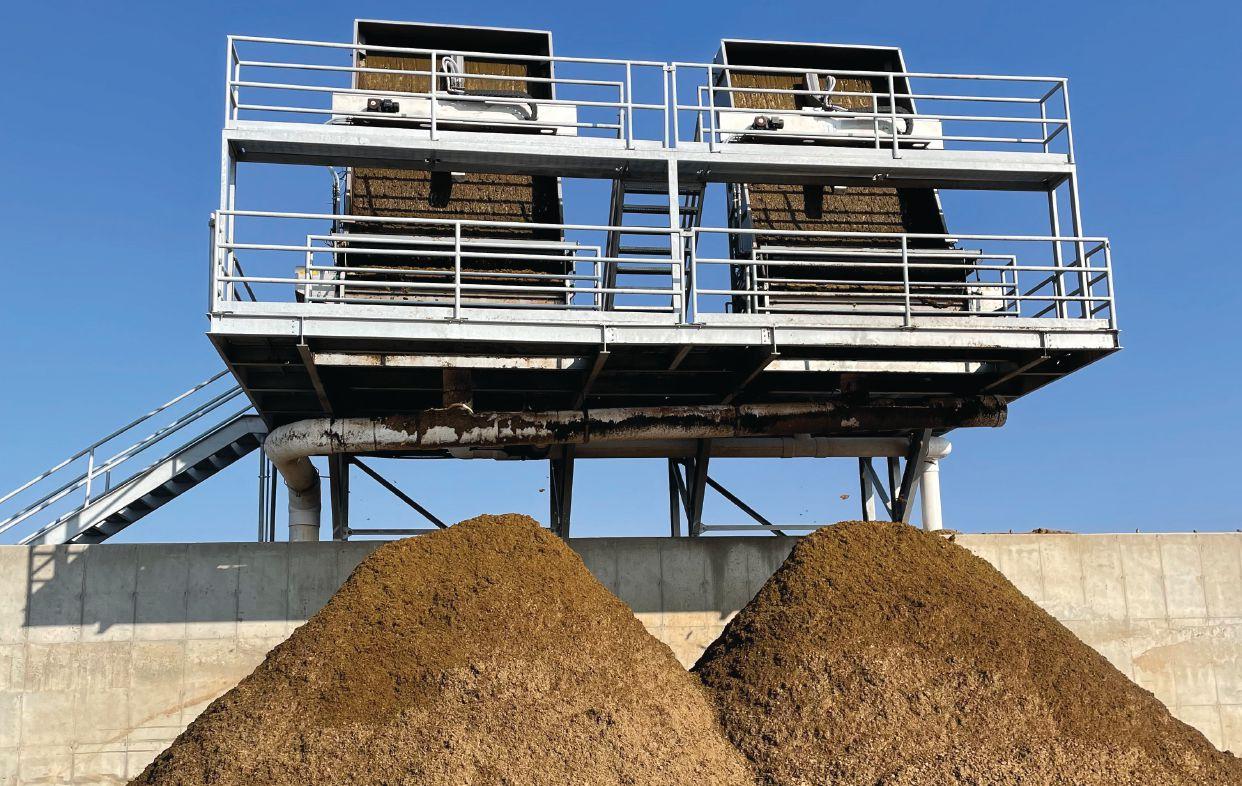
Improved modular design with the same high-level performance. Combined with the GEA OptiCleanTMautomated cleaning system - reduce labor and optimize performance throughout the life of the screen.
The GEA OptiCleanTM uses pressurized water to remove fiber and includes an integrated chemical system to remove minerals and soil.
Sustainable use of manure and its components Built of stainless steel to last in highly demanding and corrosive environments
Modular design that can grow based on individual customer needs
Automated cleaning system to reduce cost and save labor
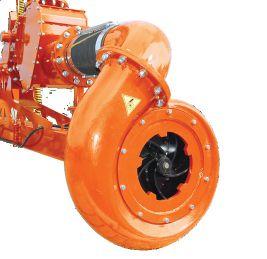
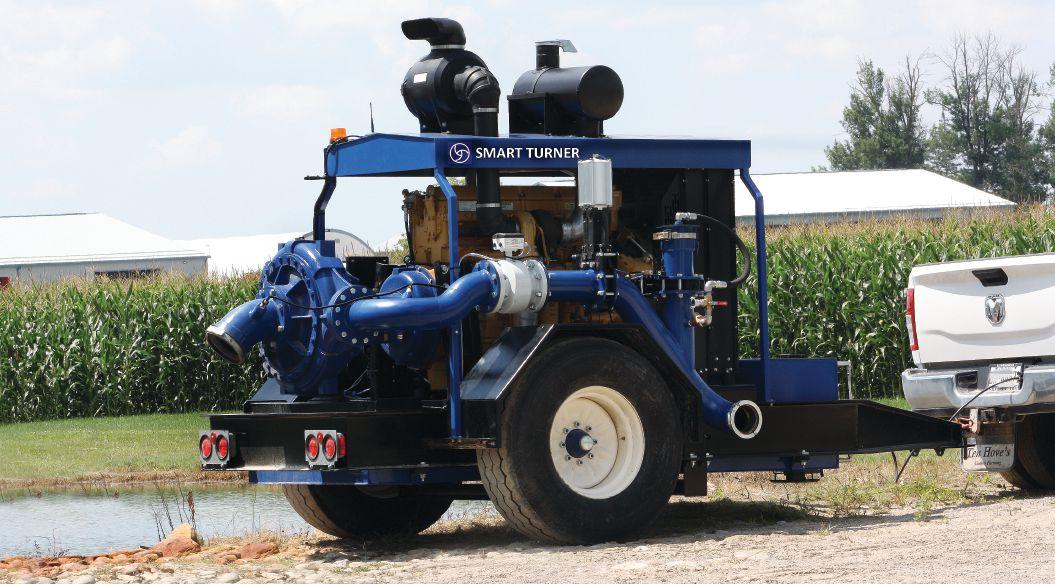
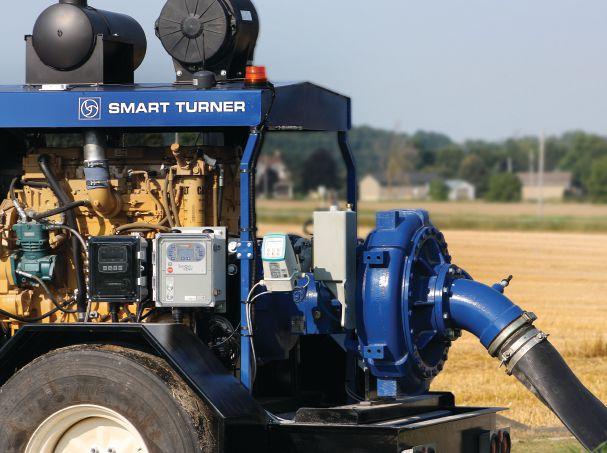
The new HD pumps are built to pump manure, built to run smoother to save fuel, run at a lower rpm with larger and wider impellors to reduce engine wear and plugging issues.