High-tech soil sampling is key to the future of precision agriculture | 14
Small profile, big future
Mini digesters are entering North America with great potential | 18
Focus on the future
Implementing environmental farm plans | 28
September/October 2019
Considering windrow composting
HAULING SLURRY DEMANDS RELIABILITY, CONTROL, AND POWER.
Case IH tractors with a CVXDrive™ continuously variable transmission are an ideal choice for pulling slurry tankers, forage wagons, trailers and any other loads that depend on high speed road travel for productivity. The CVXDrive allows you to easily preset desired speed and active stop lets you start and stop the tractor just like an automatic transmission. With CVXDrive, ease-of-use is at your ngertips. Simply push the speed control lever forward and go! CVXDrive does the rest — matching transmission response and engine power – minimizing fuel consumption and optimizing performance. For more information, visit your local Case IH dealer or caseih.com/slurry
ON THE COVER
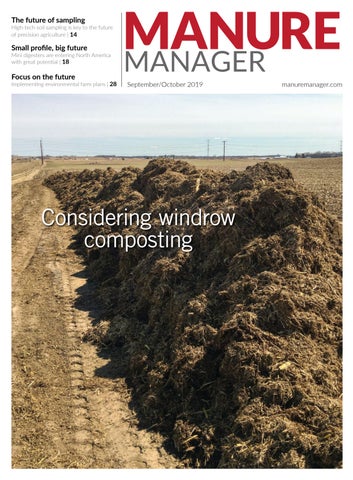
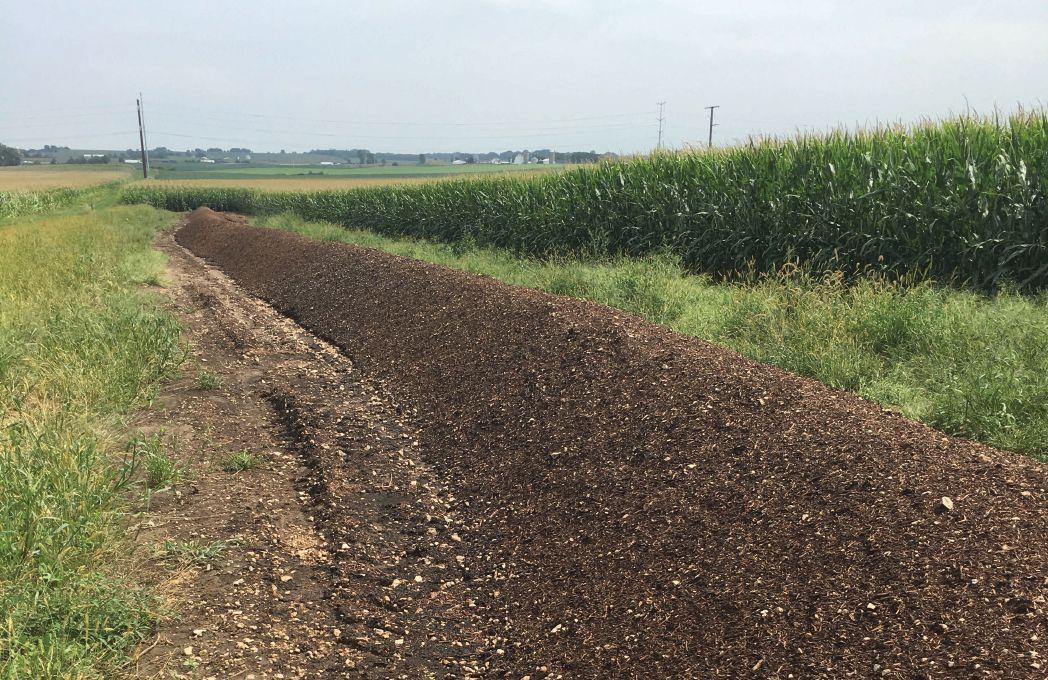
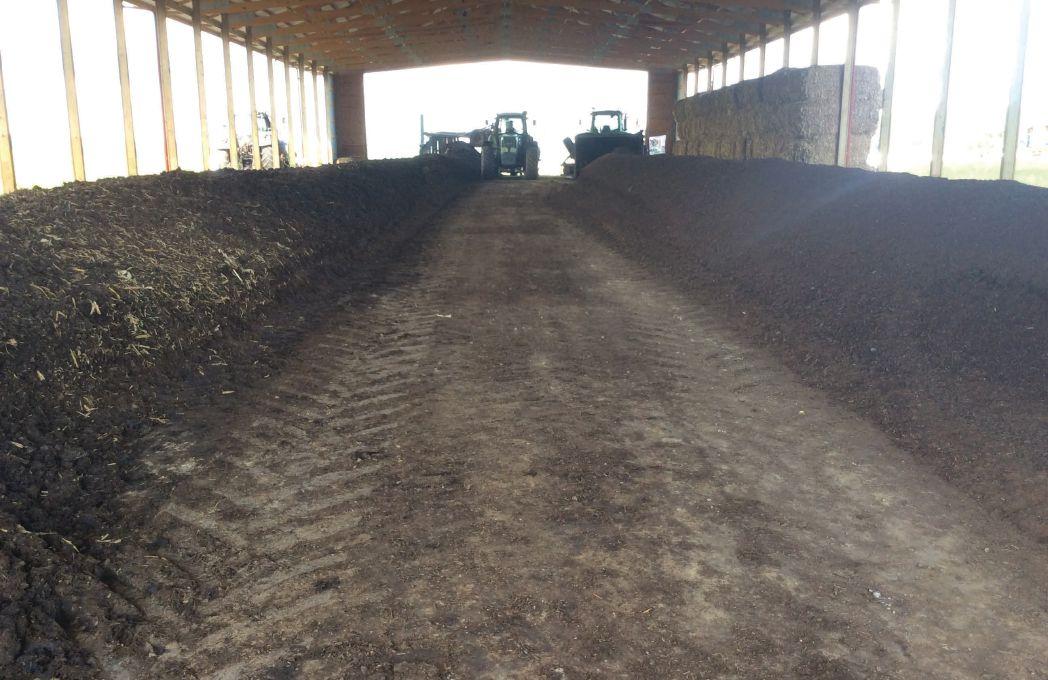
Windrow composting can provide numerous benefits to farms, as proven during a research trial on three dairy farms in Wisconsin. See more on page 8.
Editor’s note: On page 11 of the July/August issue, we reported on a Compost Heat Recovery Project taking place at a dairy farm in Connecticut. The funding for the project was noted incorrectly in the story. Funding for the project was provided by Connecticut Resource Conservation and Development and the Connecticut Farm Energy Program, through a grant received from the Connecticut Department of Energy and Environmental Protection (DEEP), through a United States Department of Energy grant. We apologize for the error.
Consider windrow composting
A Wisconsin study looks at improving water quality through windrow composting.
Small
to the future of precision agriculture.
BY MADELEINE BAERG
BY TREENA HEIN
Focus on the future
As sustainable sourcing initiatives take the lead, environmental farm plans are growing in popularity.
BY TREENA HEIN
Continuing education and conversation
When you begin working in a new industry, it takes some time to understand the ins and outs and intricacies of it all. Having been at the helm of an editorial team overseeing Top Crop Manager (a sister magazine, also published by Manure Manager’s parent company, Annex Business Media) for several years, I’ve gleaned a lot of knowledge about the agriculture industry that transfers over to Manure Manager, but there’s still so much to learn.
I was reminded of this in August when I came across a fascinating news story about Kevin Solomon, an assistant professor at Purdue University in the department of agricultural and biological engineering. Solomon recently received the United States Department of Energy Career Award, which supports the development of research programs by notable scientists early on in their careers, for his groundbreaking efforts to improve the production of medicines and fuels from biomass by using manure from sheep, cows, horses, rhinos, zebras,
Luckily, I have some great resources right in front of me. Within the pages of this magazine, we’ve covered new research, uncovered new products and shone light on issues that affect livestock producers and custom manure applicators across North America. For example, in our cover story on page 8, we explore research from Dr. Laura Good of the University of Wisconsin-Madison. She’s found the benefits of windrow composting extend to water quality improvements – a hot topic amongst farms in all parts of North America. We’ve also drawn some inspiration from exciting international projects in this issue. On page 18, you’ll read about mini digesters’ exciting entrance into the North American market after experiencing success in Europe. And, a Norweigian company’s innovative plasma reactor system shows potential for improved manure use efficiency. Don’t miss that story on page 22.
Finally, you, our audience, will be
The lines of communication to Manure Manager are always open.
wildebeests and giraffes. Call it ignorance or naiveté, but I had to stop and re-read the last part of that sentence again. I know where manure comes from, of course, but for some reason I never thought about the potential of using waste from exotic animals (that is, those not native to North America) in such a high-level, technical manner. It was a reminder that the scope of this industry reaches far beyond what happens in the barn down the road.
the greatest source of information as I dip my feet into another aspect of the agriculture industry. From emails and interactions on social media, to a phone call or a conversation at an industry event, your lines of communication to the staff at Manure Manager are always open. If you have an interesting story idea or a piece of industry insight to share, please get in touch. After all, you’re the experts in your field – and it’s my job to share your story. •
2019
17, No. 5 Published by: Annex Business Media, P.O. Box 530 Simcoe, ON N3Y 4N5
Mail: 111 Gordon Baker Rd., Suite 400, Toronto, ON M2H 3R1
Occasionally, Manure Manager will mail information on behalf of industry-related groups whose products and services we believe may be of interest to you. If you prefer not to receive this information, please contact our circulation department in any of the four ways listed above.
All advertising is subject to the publisher’s approval. Such approval does not imply any endorsement of the products or services advertisted. Publisher reserves the right to refuse advertising that does not meet the standards of the publication.
On-the-go nutrient analysis
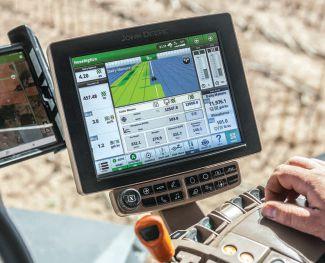
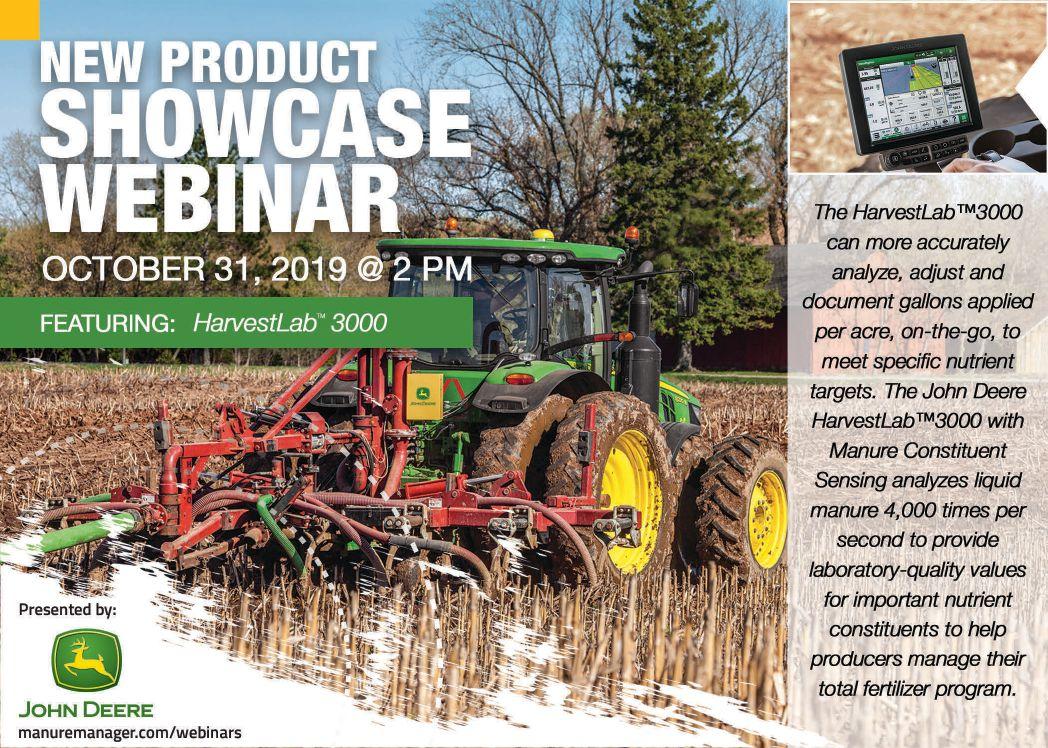
HarvestLab™ 3000 Manure Constituent Sensing.
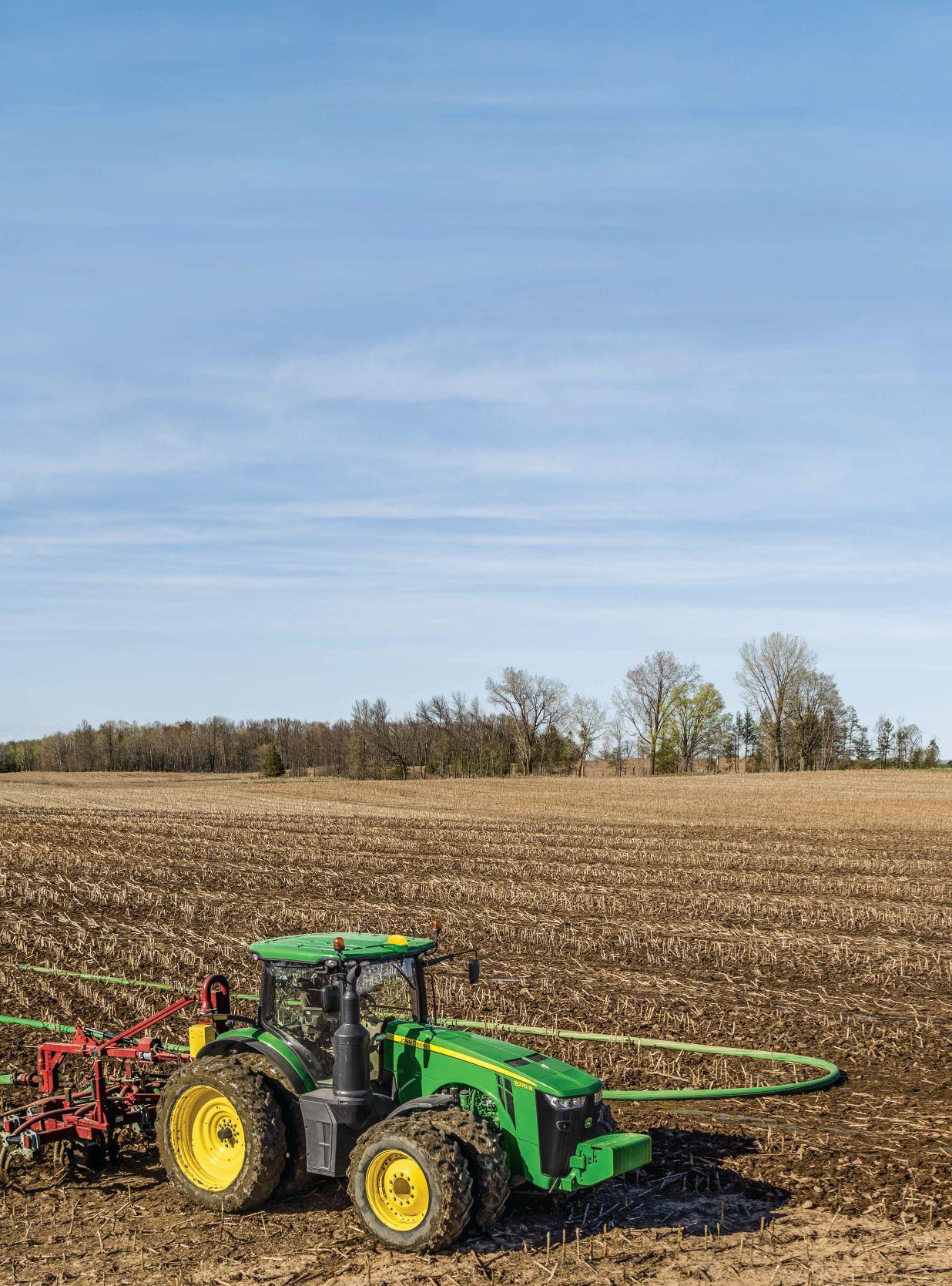
Confidently apply liquid manure nutrients at the right rate in the right place, and easily share the as-applied data. Using the HarvestLab™ 3000 sensor, you can document liquid manure application to better control total crop nutrient costs. The system easily installs on your current tanker or drag line applicator. Pair that with an 8R/8RT Series Tractor, and you have an field-proven solution that will handle your nutrient application tasks with ease and accuracy. Learn more about Manure Constituent Sensing at the John Deere booth.
Nothing Runs Like A Deere™.
JohnDeere.com/Ag
Bioenergy DevCo invests in anaerobic digestion
Bioenergy DevCo, a global developer of anaerobic digestion facilities, has received an institutional investment of $106 million from Newlight Partners LP, a private equity firm based in New York.
Bioenergy DevCo currently has more than 200 plants around the world that create renewable natural gas and healthy soil products. The company says it intends to use the investment to expand its operational footprint in North America, working
with to develop anaerobic digestion facilities. The projects will transform organic waste into renewable natural gas and an organic soil amendment, reducing landfill waste and carbon emissions.
The company has also acquired BTS Biogas, an Italy-based company that has built 200 biogas plants around the world. The acquisition will enable Bioenergy DevCo to increase BTS Biogas’ technology footprint in North America.
2019 MANURE EXPO DRAWS LARGE CROWD
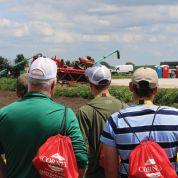
Attendee enthusiam ran high at the 2019 North American Manure Expo. About 1,000 people visited Fair Oaks, IN, over the two-day show to see and learn the latest about manure management and application. Attendees from more than 25 U.S. states and three Canadian provinces took part.
The event got underway with a morning of bus tours featuring three themes
– beef and poultry, dairy and swine. More than 200 people took part in the tours and educational opportunity to see operations up close. Attendees saw the poultry manure operation at Rose Acres White County Facility and how things work at Bio Town Ag, a 4,500-head natural beef cattle operation. Attendees of the dairy tour visited Windy Ridge Dairy to see their new aerobic digester
and the Midwestern BioAg warehouse to see their natural fertilizer manufacturing operations. As a result of biosecurity and concerns over African swine fever, the swine manure workshop was held inside a classroom instead of on-site. Buiter Farm and Klemp Farms presented on their manure operations, including some notes on swine transportation.
The rest of the Expo included an
BY THE NUMBERS - THE POTENTIAL OF BIOGAS
3% 10%
Potential to add more than new biogas systems across sectors
13,500
agitation demo, education sessions, and solid and liquid manure application demonstrations. Attendees got to see equipment up close and in action, as well as learn about manure, compost, safety and upcoming technology in the industry.
The 2020 North American Manure Expo will return to Canada next year, in Listowel, ON, on Aug. 26 and 27, 2020.
242
8,241 ONLY of livestock waste is recycled by anaerobic digesters of methane emissions in the United States are contributed by livestock manure
2,200
farms with active digesters in the United States operating biogas systems in the United States
estimated potential number of livestock biogas systems
CONSIDERING windrow composting
A Wisconsin study looks at improving water quality through windrow composting.
BY DIANE METTLER
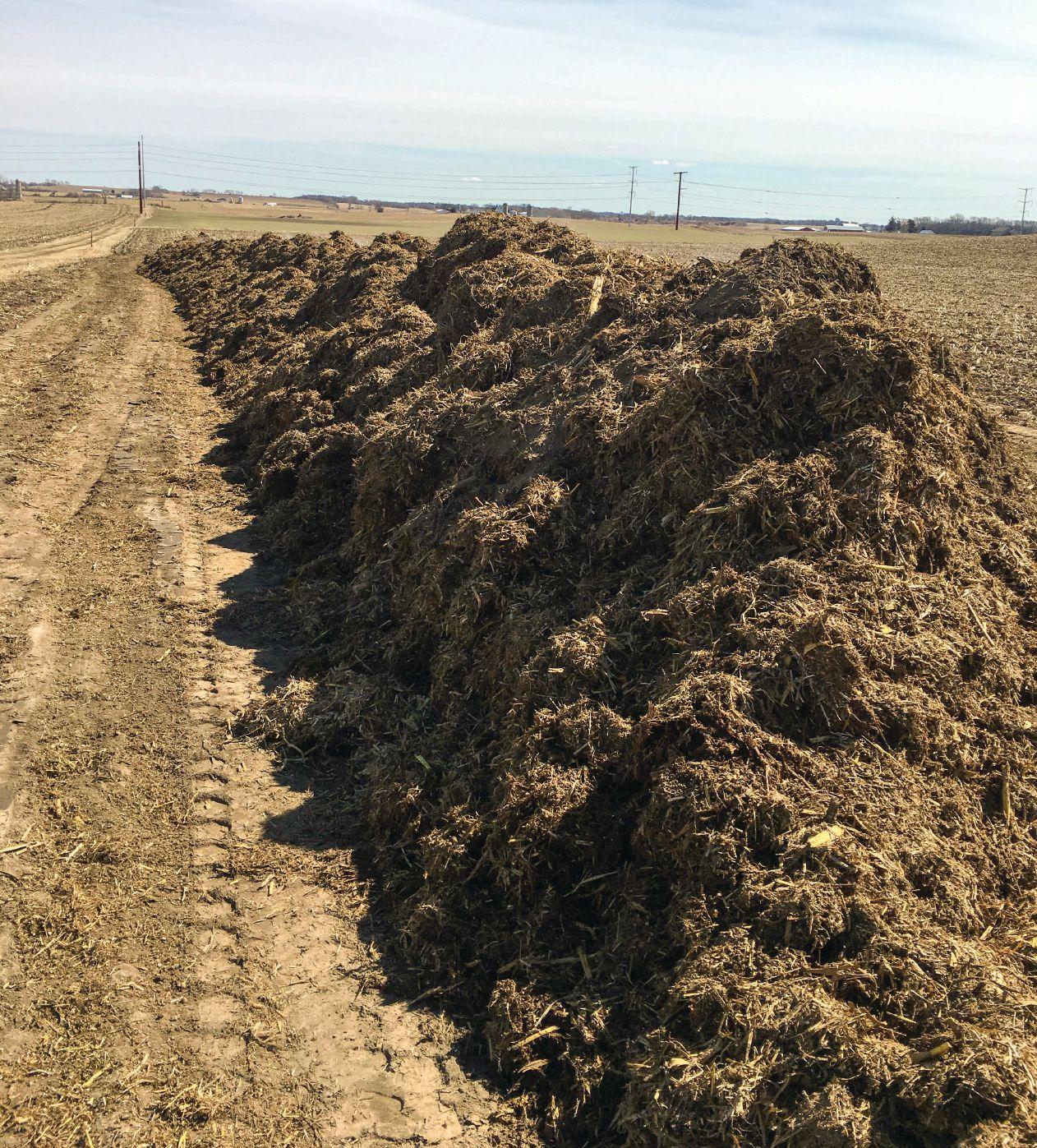
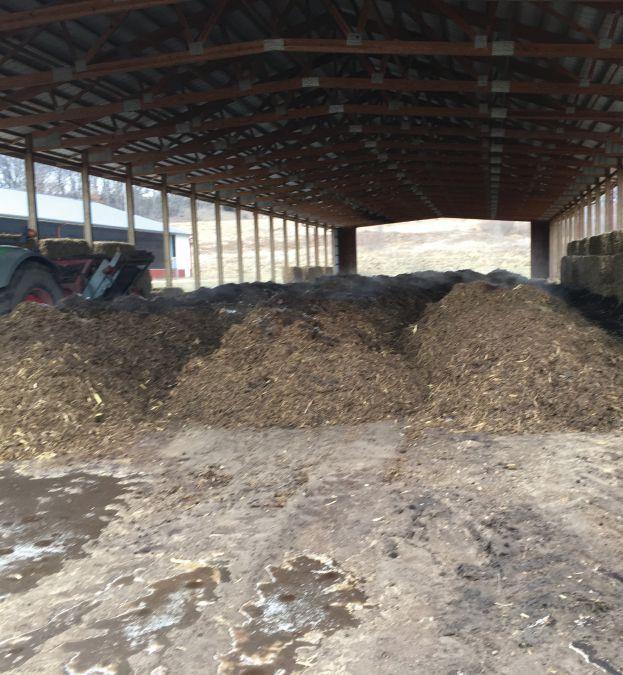
BELOW: Outdoor windrows at Farm B are piled together in this shape to maintain good conditions for composting.
Farmers are continually looking for ways to control runoff from their operations. A new study demonstrates that composting may be a valuable tool.
Dr. Laura Good, a soil scientist in the department of soil science at the University Wisconsin-Madison, and Pamela Porter, research program manager at the university’s Center for Integrated Agricultural Systems, were tasked with analyzing three dairy farms in Dane County, WI, that were composting bedded pack manures to determine the impact of windrow composting on the Yahara River Watershed.
Bedded pack manures come from livestock housing where cornstalks, straw, wood shavings, and/or sand are spread on the floor for bedding. This solid manure from young and dry cows –typically managed separately from the manure produced by lactating dairy cows – can make up 20 to 25 percent of a dairy farm’s total manure production.
Over two years, Good and Porter studied the three operations to evaluate potential phosphorus (P) runoff losses on these farms following compost application to cropped fields, and compared them to expected losses from applying the manures directly to the fields without composting. Their secondary objective was to document the agronomic benefits and costs associated with composting and to evaluate the costs per pound of P runoff reduction.
FARM A
To control moisture over the winter, Farm A built a covered storage area where manure from 400 mixed age heifers was composted year-round under a roof. The windrows were 250 feet long, 15 to 20 feet at the base, and six feet high.
The annual raw manure production was approximately 3,300 tons, plus 220 tons of corn stalks, straw, and other organic materials. The windrows were constructed by combining manure and bedding cleaned from different buildings with wetter and drier manures. Over the two years, the farm used various off-farm materials (corncobs, sawdust and sand) in their bedding.
“The nutrient analysis of the finished compost has varied somewhat over the course of the project,” Good says. “For our comparison, we used an analysis from the fall of 2017 that contained some ground corncobs and comparatively little sand.”
FARM A RESULTS
The result of composting decreased the volume of the manure and the potential for the P in the manure to dissolve into water. With respect to the phosphorus reductions, Good and Porter created a model and estimated the farm could reduce P and sediment running off their fields and entering waterways by applying compost instead of raw manure over a seven-year crop rotation.
to Good. Nonetheless, phosphorus requirements were met by the phosphorus in the manure and compost applications when fertilizing the fields. Putting the manure in windrows for composting allowed the farm to avoid spreading raw manure in the winter, when runoff risks from snowmelt and rain on frozen soil are high compared to the rest of the year.
FARM B RESULTS
The use of compost cut the expected average phosphorus runoff losses across the crop rotation by about a third, even though the starting losses were higher, due to steeper fields with more erosion and higher per-acre phosphorus application rates.
It is likely, however, because of the outdoor windrows, that the area beneath the windrow has a high concentration of phosphorus and other nutrients. In addition, windrows should be carefully located to avoid areas with risk of surface runoff or leaching to groundwater. Therefore, finding areas suitable for windrow placement is an important consideration when contemplating outdoor windrow composting.
*Replacement value for fertillizer (80% of total P2O2 equivalent).
*Replacement value for fertillizer (80% of total P2O5 equivalent).
*Estimated by researchers **Estimated by researchers
FARM B
The second farm also composted year-round, but the windrows were outdoors. The manure came from 200 steers and 25 cows located several miles from the home dairy farm. Cornstalks, straw and sand were used as bedding.
On a weekly basis, 90 tons of bedding and manure was removed and 40 tons of new sand was added. Good noted in her analysis that the bedded pack was approximately 40 percent sand and that variations in sand content in the compost lead to variations in nutrient contents by weight.
The results also indicated a small tonnage reduction due to the outdoor windrows, which gain moisture from rain. The outdoor composting also resulted in some loss of phosphorus, nitrogen and other nutrients, although some nitrogen is always lost in composting – even under a roof, according
*Estimated by researchers **Estimated by researchers
FARM C
Farm C composted seasonally. The farm created windrow compost from approximately 65 calves and 25 cows in the summer and composted until the crops were off in the fall. The farm spread 1,200 pounds of sand per month in heifer pens with cornstalks and/or straw added for bedding over the sand.
The compost was applied to a 13-acre field outside of the watershed being studied, and in places where there were steep inclines. The flat and steep slope comparisons shown in Table 6 were examples of typical fields on the farm that Good used to determine how they might compare to raw manure on the farm itself.
FARM C RESULTS
Both manure and compost reduced estimated erosion compared to an un-manured field, but the compost was more effective. And, despite some fields having steep slopes, the results were positive.
“Composting was positive across the system for reducing phosphorus losses due to runoff,” Good says. “In some fields in some years, you might make a tradeoff that it would make
Table 1. Characteristics of raw heifer bedded pack and compost used in Farm A comparison.
Table 2. Farm A reduction of P and sediment loss indicators with compost compared to raw bedded pack for 29 fields (447 acres), 2017-2023.
Table 3. Characteristics of raw heifer bedded pack and compost used in Farm B comparison.
Table 4. Farm B reduction of P and sediment loss indicators with compost compared to raw bedded pack for 23 fields (294 acres) 2017-2023.
a little bit more phosphorus loss because you’ve moved the applications to a different crop or timing. But overall, farm-system wide, it was very helpful.”
THE NEXT STEP
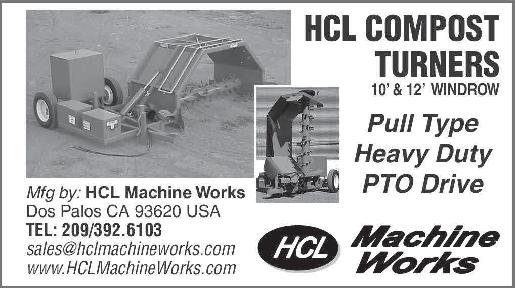
Because of the heat that is generated during the composting process, the windrows need to be turned weekly, allowing oxygen to be added to the pile and waste gasses to vent, which, in turn, accelerates the composting process. For the analysis, the three farms rented a compost turner owned by a company that circulates it throughout Wisconsin.
*Replacement value for fertillizer (80% of total P2O5 equivalent).
**Bedded pack collected from pen without sand.
ADDITIONAL BENEFITS
Good says the results show the definite advantages to composting. “Anytime you have more of the rain or snow melt that runs off rather than leaches in, it’s riskier for runoff,” says Good. “So, if you have a system that helps you avoid having to apply the manure at a time when it’s really risky for runoff, that’s one big benefit. That was a really big benefit here, in addition to the flexibility of when and where you can apply it and what crops you can apply compost to compared to raw manure.”
She added that in the end, composting didn’t reduce the amount of phosphorus that was in the manure, but it did reduce the water solubility of that phosphorus.
The famers in all three farms cited other advantages to windrow composting as well:
• The compost manure can be applied to growing alfalfa when it’s needed most, without damaging the crop.
• Manure pathogens are reduced during the process and the compost contained higher concentration of nutrients and less moisture.
• More flexibility when applying to fields, or even selling the compost to other farms.
• Compost used as bedding cut costs.
• Using compost on the fields also lowered fertilizing costs because there is no need to purchase additional P fertilizer.
• Capital outlay for a composting facility is less than a manure storage tank.
• One farmer saw a yield increase in alfalfa of 10 percent using compost.
Jeff Endres, owner of Farm A, decided to build his own. “I needed a turner that would complement my space,” he says. “I had an idea in my mind about what I wanted to do. I worked with a local engineer at a manufacturer, and we built [the turner] from scratch. It fits on the back, on the three-point of a tractor,” he explains. “You back into the windrow very slowly and the beater kicks the compost onto the cross conveyor. And then it restacks it to the side.
“Our primary carbon source is corn stover or corn stalks. So, the beater has aggressive teeth on it that actually help scythe the material and rip it apart. These aggressive teeth really help break down the carbon and actually, speed up the composting process,” Endres adds. “I come up with the carbon to nitrogen ratio that’s considered finished compost on my compost in eight to 10 weeks.”
Endres today composts roughly 2,500 tons of material per year, and 700 yards of raw material creates about 300 yards of compost. The compost is primarily used on the farm’s alfalfa field, and because he is spreading his own manure product on to the hay ground (versus using commercial fertilizer), he says the farm’s efficiency has increased substantially.
TAKING COMPOSTING TO THE COMMUNITY
As a member of Yahara Pride Farms, a farmer-led conservation group that promotes soil health, Endres is taking the composting concept even further.
“We’re working close with the county and our local sewer district in an adaptive management program,” Endres says. “I’ve got 10 windrows on 10 different farms that we basically put out in the fields in the winter months, with the idea of not spreading it and reducing the runoff. We then return to the windrows and turn the manure into compost during the summer months. Because my turner is mobile, I can pick it up and run down the road with it with a tractor and go from job to job.”
Yahara Pride Farms is studying the economics of composting while monitoring the water quality. They track the results of the 10 different compost windrows and how they respond. “Most of the time if we have issues, they are either too wet, or they’re too low in carbon,” Endres says. “We’re also trying to see if we can concentrate this manure enough that we can move it further, so farmers who don’t need the nutrients on their farm could potentially sell it to somebody who does.”
After working with composting over the past few years, Endres is satisfied with the product. “It has pretty good phosphorus levels,” he said. “Our average analysis per ton is about 15 nitrogen, 13 to 14 on phosphorus, and about 30 on potassium. I like the flexibility of being able to spread manure at the time of the year you need it the most on growing crops. I also do like the that I’m getting a little bit of a yield bump, I feel, on my 350 to 400 acres of alfalfa.”
Both Good and Endres are looking forward to seeing more farmers applying the information available on windrow composting and experiencing positive results. •
Table 5. Characteristics of raw heifer bedded pack and compost used in Farm C.
Table 6. P Index for corn grain fields on Farm C with no manure and with unincorporated raw bedded pack or compost applied at equivalent P rates (95 lb P2O5).
Tamara Carter Co-founder
Carter Cattle Company Ltd. Lacadena, SK
American Biogas Council hails new biogas tax credit
The American Biogas Council (ABC), a trade organization that represents the biogas industry in the U.S., has hailed the Agricultural Environmental Stewardship
Act recently introduced by Congressmen Ron Kind and Tom Reed.
The bill (H.R. 3744), which was reintroduced on July 12, 2019, will improve agricultural viability by recovering and recycling agricultural biomass and converting this into nutrientrich fertilizers and renewable energy in the form of biogas.
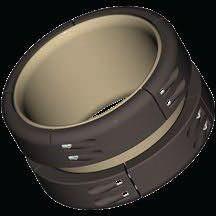
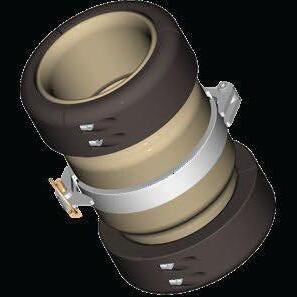
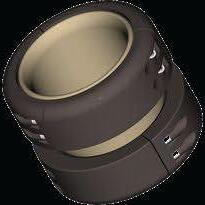
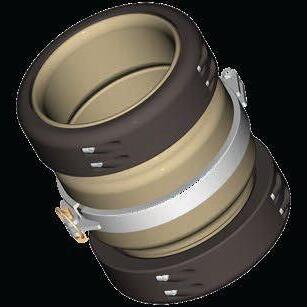
FAST. FLOTATION. THE ALLIANCE 398 MPT.
The only thing better than a high-performance flotation tire is a high-performance flotation tire that can carry huge loads at up to 62 mph (100 km/h).
That’s the Alliance 398 MPT, a multi-purpose tire created from the ground up for the demands manure applicators and livestock producers face every day. With its load-carrying brawn cloaked under a smooth, stable ride, the all-steel Alliance 398 MPT radial is ideal for manure application equipment and can even replace duals on straight-axle trucks and semis.
Plus, it’s backed with the industry-leading 10-year Alliance warranty. Learn more from your Alliance Tire dealer, visit www.atgtire. com or call us at (800) 343-3276.
As an incentive to encourage investment in agricultural biogas projects, the bill allows qualifying biogas and nutrient recovery systems to receive a 30 per cent investment tax credit.
There are currently no tax breaks offered to investors in biogas and nutrient recycling systems. A previous tax credit that promoted the use of renewable energy expired a year and a half ago.
This new tax credit promotes the production of biogas that would serve as a source of pipeline quality natural gas and compressed renewable natural gas to fuel vehicles, as well as nutrient-rich fertilizers produced as a byproduct of biogas production which provide nutrients essential for producing crops.
Bion Environmental Technologies, Inc., a developer of advanced livestock waste treatment technology that recovers high-value co-products from the waste, received support for approving ammonium biocarbonate as a fertilizer.
The Terms and Definitions Committee of the Association of American Plant Food Control Officials (AAPFCO) recommended to officially approve ammonium bicarbonate at their next meeting in February 2020, as a listed fertilizer under their guidelines.
Bion’s 3G technology captures the volatile ammonia in the livestock waste stream and converts it into stable concentrated ammonium bicarbonate. It will contain 12 to 17 percent nitrogen in a crystalline form that is easily transported, water soluble and provides readily-available nitrogen. It will contain none of the other salt, iron and mineral constituents of the livestock waste stream, and will be in an industry-standard form that can be precision-applied to crops using existing equipment.
AAPFCO is an organization of fertilizer control officials from each state in the United States, Canada and Puerto Rico, that provide uniform standards for the fertilizer industry. All states, Canada and PR require fertilizers to (at least) meet AAPFCO standards.
The future of sampling
High-tech soil sampling is key to the future of precision agriculture.
BY MADELEINE BAERG
For decades, soil testing has required little more than a shovel, a bucket and a mailing address for a lab. That said, it can be challenging to find time for soil testing, it can be difficult to collect truly representative samples, and the composite nature of traditional soil testing – often a single sample represents 100 or more acres – means that results don’t always provide producers with enough certainty to influence major management decisions.
All of that is in the process of changing. Just like virtually every aspect of agriculture, soil testing is currently undergoing significant automation and technological innovation. In the very near future, expect to be doing a very different kind of soil testing.
A number of companies are currently working to automate sample collection beyond the already-common truck-mounted hydraulic probe. Among the simplest is the Falcon 5000 automated soil sampler, invented by North Carolina producer Allan Baucom and introduced
to the market in 2015. This sampler uses a five, seven or 12-inch probe attached to a 675 pound (lb) hollow steel drum. As the drum rolls along the ground at up to 12 MPH behind a vehicle, its weight pushes the probe into the ground on every revolution. The slightly tapered probe catches the sample until, when it revolves to the top of the drum, gravity forces the sample to drop out of the wider end of the probe into the drum’s hollow centre. Once a specified number of samples are collected and mixed in the drum, a composite sample is sent down a slide into an automatic bagging and geo-referenced labelling system, after which it is ready to for mailing to a lab for conventional analysis. The Falcon 5000 can pick up samples every 15 feet to a maximum of about 40 samples per minute.
At the other end of the spectrum, multiple researchers are working on very high-tech automatic samplers using unmanned ground vehicles (UGVs). Though no unmanned solution is yet available on the market, Dr. Eero Väljaots,
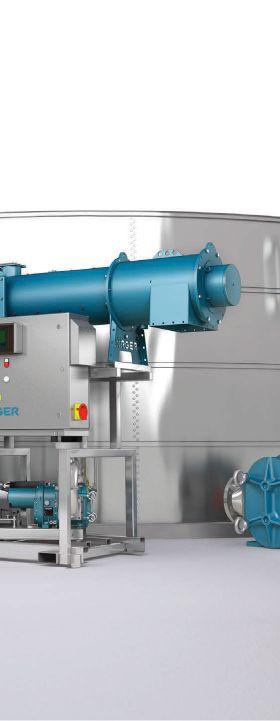
EFFICIENT SOLIDS LIQUID SEPARATION
ORGANIC FEED SYSTEMS
BIOSELECT
+ Solid Liquid Separation
+ With Structure
+ Without Chemicals
POWERFEED
+ Feeding and Transfer of Organic Waste
+ Closed Loop System
+ Process Control
+ Energy Efficient
the research lead on UGV soil sampling project in Estonia, says he expects this type of technology to be the future of soil sampling on average farms in approximately five years.
“There is a growing need for taking samples and (the) time (available) for collection is quite limited; therefore, taking the workload off from authorized personnel is desired,” he explains. At a current cost of about $34,000USD, the purchase of an unmanned soil sampling vehicle for an individual farm is not economically feasible for most farms, so he says rental is more likely.
Along with automated sampling, infield testing equipment and handheld analysis technology is also evolving. Multiple companies are researching and developing probes and scanners that can provide near instant results right to one’s smartphone.
Soil probes by Teralytic, a precision ag and soil health specialist, feature 26
sensors designed to read microclimate data (air temperature, humidity and light) collected at the soil surface, soil gas (aeration and respiration) data from six and 18-inch depths, and multiple soil characteristics (moisture, salinity, temperature, pH, nitrate, P and K) from six, 18 and 36-inch depths. The data can be transmitted wirelessly up to 10 miles and stored in the cloud, and can be translated via Teralytic’s analytics service into real-time guidance provided in chart format.
AVAILABLE TOOLS
Already, some infrared and nearinfrared soil testing tools are on the market, including those available from AgroCares and Bruker. AgroCares’ scanner is designed to analyze nutrient content in leaves, feed or soil at the touch of a single button, with results and analysis in your hands within 10 minutes.
Markus Weber, president of LandView, says his company’s new LabFlow soil testing spectrometer will be market-ready within the year. Already, the company has the technology in place to measure soil carbon via digital spectrometry. Now, LandView and partner company Stream Technologies Inc. is currently imaging thousands of soil samples to develop machine-learned algorithms for N, P, K and S.
“We used to joke that [sending soil samples away to a lab means] we’re sending Alberta to Ontario one box at a time. Moving away from chemical analysis and going instead to spectrometry means you can essentially get your results while you’re standing in the field,” Weber says.
And, he adds, results are more accurate. Because testing via spectrometer will be cheaper than analyzing soil tests at a lab, producers
ABOVE
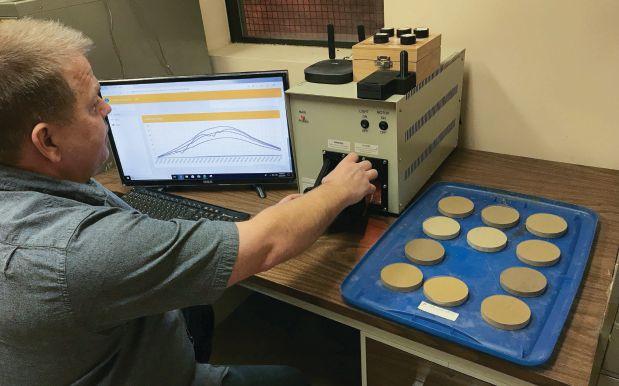
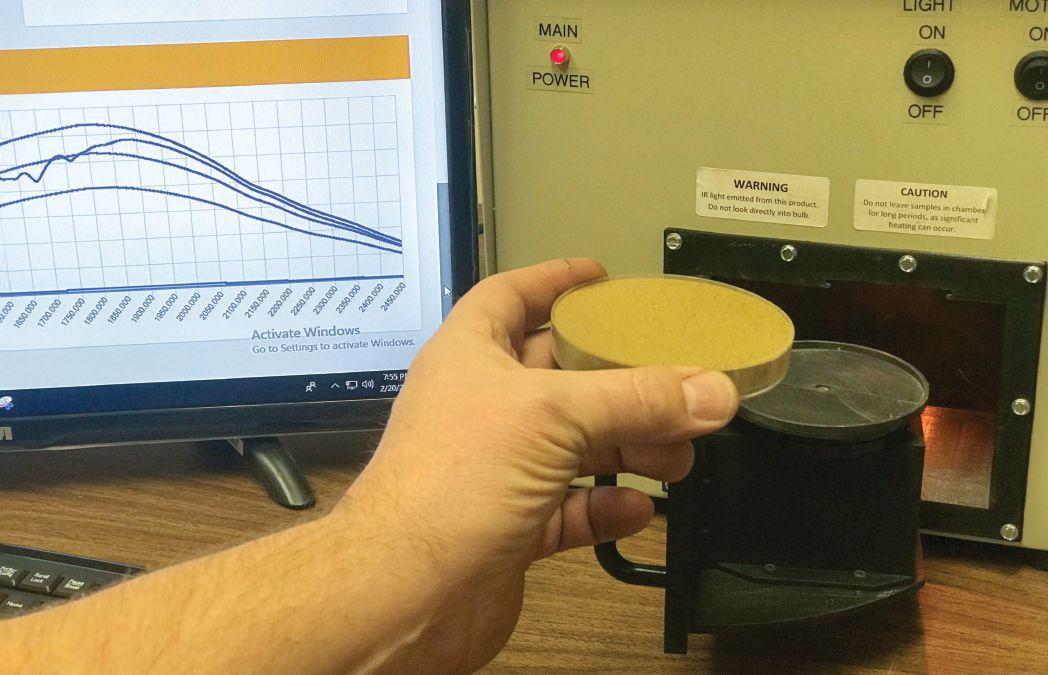
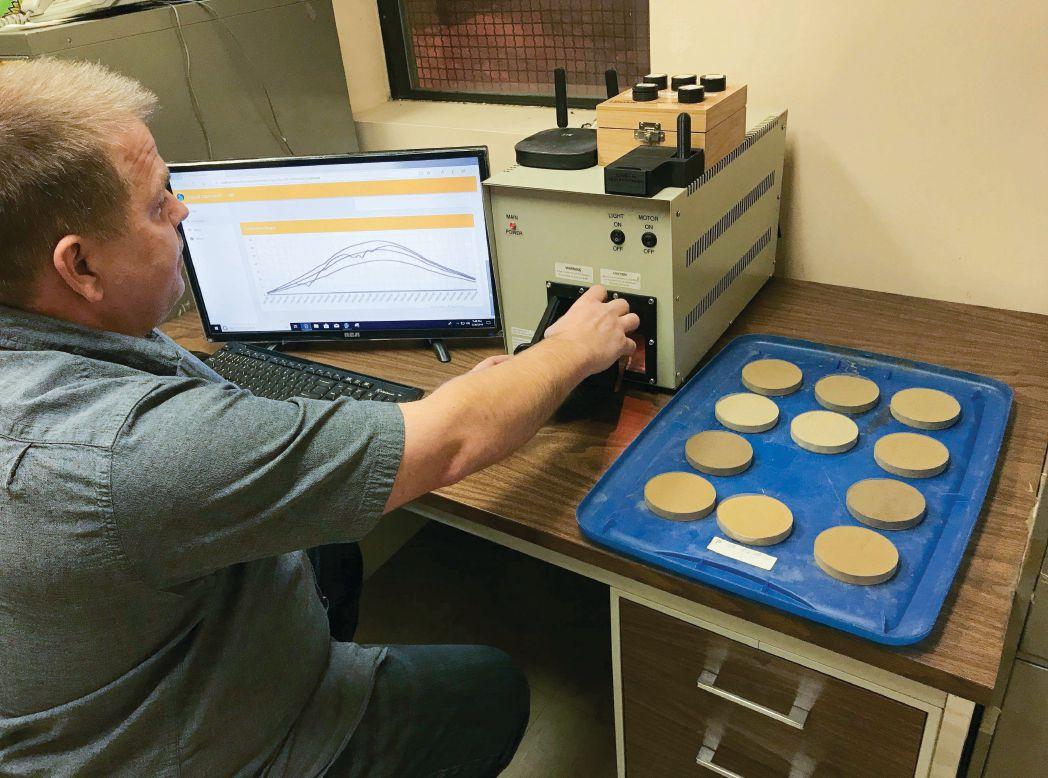
The Cloud Connect analytics platform, shown on the computer screen, captures data from the samples.
will be able to afford to get higher resolution or more representative results via multiple samples.
Hardware for a LandView spectrometer currently sits at approximately $30,000. Within three-tofive years, however, Weber expects that the equipment cost will be low enough to be affordable by individual farms.
“I spend a lot of time with people who are already in the precision ag world. They see incredible opportunity with this technology,” Weber says.
In an ideal world, laser-scanning will soon allow a vehicle to travel through a field, mapping precise soil nutrient levels as it goes.
TRANSLATING DATA INTO ACTION
No matter how innovative and precise the soil testing technology, translating data to action may still be challenging, says Trevor Wallace, a nutrient management specialist with Alberta Agriculture and Forestry.
“You have to ask: Does the producer have the technology on their equipment to do anything about the results they
get? It’s really nice to get a good soil map so you know where to target nutrients. But if you have no way to change nutrient application rates, what can you do with the information?”
From a manure spreading standpoint, adjusting application rates can be as simple as speeding up or slowing down one’s pump or gearing one’s machine up or down,
“It’s really nice to get a good soil map so you know where to target nutrients.”
so site specific manure application is achievable if nutrient zones are fairly simple and clearly identified. From a fertilizer application stand point, however, most farmers’ current air seeders may not have variable rate fertilizer application options, so a precise nutrient map may not be as
fully actionable as one might hope.
Also, the short length of growing season, particularly in many parts of Canada, means timing is always of the essence.
“Everyone understands the dollar savings of precision agriculture. Farmers are … updating or retrofitting equipment or looking at adopting different methods of nutrient delivery so as to take advantage of this information. … But the more you have to change your system or the more complex it gets, the more time it takes. It has nothing to do with farmers’ ability or experience; sometimes they just need to get the seed in the ground as fast as possible.”
While the optimistic side of Wallace says advanced soil testing is coming, he says the realist in him know that not all equipment and not all farmers are ready.
“We’ve been talking about it for 10 years with the false sense that (largescale uptake of precision technology) was right around the corner. We’ve been putting out promises that variable rate is the way of future, but we haven’t really delivered on it yet.” •
SMALL PROFILE, big future
After seeing success in Europe, mini digesters are entering the North American market with great potential.
BY TREENA HEIN
Farm-generated electricity and heat using proven technology; rapid installation; remote monitoring; minimum maintenance; an attractive ROI – these are just some of a mini digester’s attractive qualities.
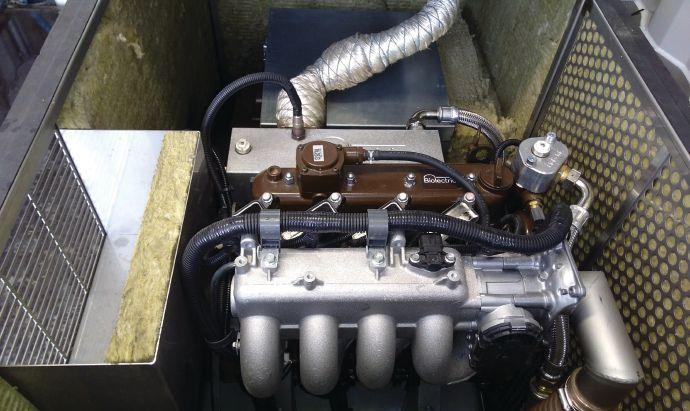
Mini digesters are gaining in popularity, and with these features, more and more installations across North America are likely to happen in the near future. Common in Europe, a Belgium-based company called Bioelectric, has installed more than 220 mini digesters over seven years on small farms (50500 milking cows) in Belgium, the Netherlands, France, Italy, Poland, Sweden and the United Kingdom.
ABOVE
A
Working with Martin Energy Group, a U.S.-based engineering and consulting firm, an Ontario installation was completed in 2018, and a Pennsylvania farm received a mini digester in 2019. Talks are currently in progress with other farms in Pennsylvania and Vermont. The differences between these mini-digesters and full-sized digesters are perhaps more stark than one might expect. “A full-sized digester is a construction project requiring a large amount of money, many months, an engineering team and a full impact assessment,” notes John Hawkes, project development manager at Martin Energy Group.
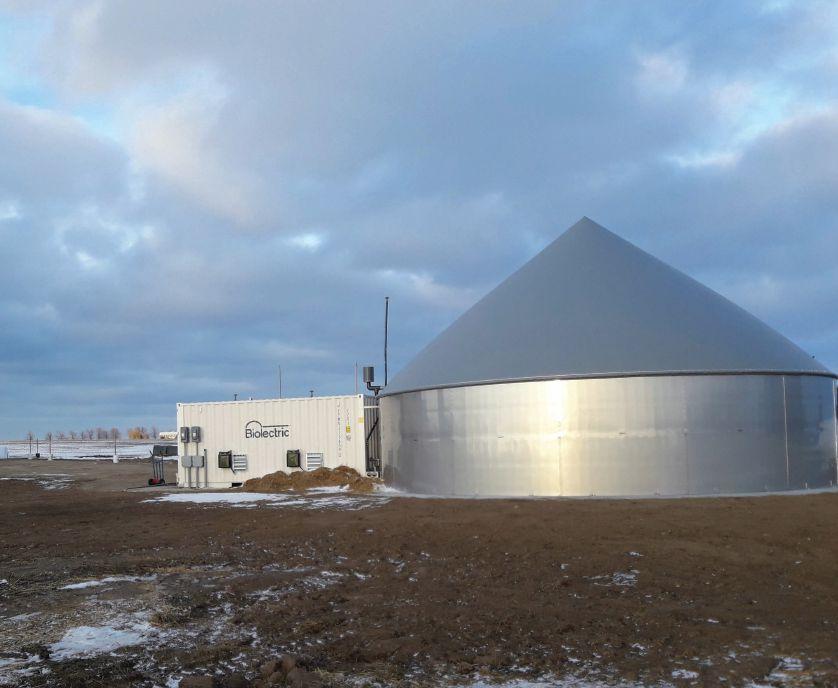
Martin Energy Group mini digester located on the farm of Rob McKinlay in Beachville, ON.
PHOTO COURTESY OF MARTIN ENERGY GROUP/HARCOLM FARMS.
“A mini digester is not so much a project but a product, costing a fraction of a full-sized digester. It comes delivered with pre-assembled components that are put together over a few days on a concrete pad.” Mini digesters are sized at 10 to 50 kilowatts (kW) and are designed to be able to run on farm waste alone. No off-farm substrates means no pre-processing and truck deliveries, notes Hawkes, and simpler permitting.
MINI IN ONTARIO
The mini digester at Harcolm Farms near Beachville, ON, owned by dairy farmers Rob and Rachel McKinlay, was finished in 2018. However, the idea for it came eight years prior.
At the time, there was a provincial funding program (feed-in tariff, or FIT) supporting the installation of small renewable energy generation on farms and residential properties. Most of projects were solar arrays and a few were wind turbines; there were no solid small digester options on the North American market at the time, Hawkes says. He and Rob McKinlay had been in touch about
another topic and started discussing the possibility of how to make the idea of a small digester become reality.
They looked at what funding they could access in addition to the FIT program (which provides steady income once power is fed into the provincial grid), and accessed some funds from an Ontario agency called Bloom, which deployed provincial money to reduce carbon emissions. They also were able to receive a small amount through a federal agency called Bioenterprise Canada.
From there, it took a few years of research and trips to Europe before Hawkes and McKinlay decided their best bet was to import a mini digester kit from BioElectric. By March 2018, the mini digester components had arrived from Belgium.
McKinlay says it took eight people about four days to assemble it on a concrete pad near his dairy barn, then a few more days to fully hook it up. A 25ton crane was needed to lift the stainless steel reactor panels, liner and roof.
There are two generators for this 20-kW mini digester. One 10-kW generator is dedicated to feeding power
into the grid for profit under the Ontario MicroFIT program. Another 10kW generator makes electricity just for the farm. “After installation, we had to get the electrical system approved to national [CSA] standards and we needed to put in a bigger propane boiler to heat up the digester just in case it needed to be shut down for a while due to something like a pump failure,” Hawkes explains. “We also needed to make sure we met the national explosive gas standards. That involved a pressure test to test for leaks and we had to do a small modification to the flare.”
MANURE ONLY?
While these mini digesters are designed to use only manure, McKinlay uses 95 percent manure and adds about half a skid steer bucket a day of stale grain feed to his. However, he only has 65 milking cows right now, and he believes that the manure of 100 cows would be sufficient to produce 20kW. He and Rachel plan to increase their milking herd to 100 as milk quota becomes available.
The McKinlays plan to use the heat from the digester to warm up the barn
ABOVE
and other farm buildings in the colder months of the year. Hawkes notes these small digesters actually produce more heat energy (from the generator engine) than they do electrical energy.
As with any digester, the digestate can be put through a screw press. McKinlay uses the solids as cow bedding and spreads the remaining liquid on his fields.
ROI AND MORE
Hawkes says these digesters are designed to have their capital and operating costs paid off within eight to 10 years, with funding in place. McKinlay says that’s in line with his financial picture. “The operating cost is minimal,” Hawkes notes, “and we’ve reduced capital costs as much as possible. The plan going forward is to make more of the components and not import as many from Bioelectric.” In terms of currently available renewable energy/carbon emissions reduction funding programs in the USA and Canada, Hawkes notes that in Pennsylvania, there is the Alternative and Clean Energy Program (ACE) and in Vermont, a FIT program. There is also a US federal program called REAP.
At the beginning of the mini digester project, McKinlay says functional reliability was his top concern, but says now that aspect “has been no problem.” His best advice for those in North America who are looking at installing a mini digester like his is two-fold. “Book your Euros to fix the exchange rate,” he says, “and ensure the system is properly winterized in the event that the heat source [engine] goes down in the winter.”
The McKinlay mini digester has sparked lots of interest, with three packed open houses over the past year, and Hawkes expects the Pennsylvania project to attract the same kind of attention. He notes that while European countries have a variety of support programs in place to help fossil fuels replace biofuels and biogas, he expects “we will see more renewable energy farm subsidy programs like that in Pennsylvania.”
“There are some 10,000 farms with less than 200 milking cows just in the northeast area of the North American continent,” Hawkes notes. “Just five percent of that number gets us to 500 mini digesters. I think that’s a conservative estimate for the number that will be installed in this region over the next 10 years.” •
ABOVE
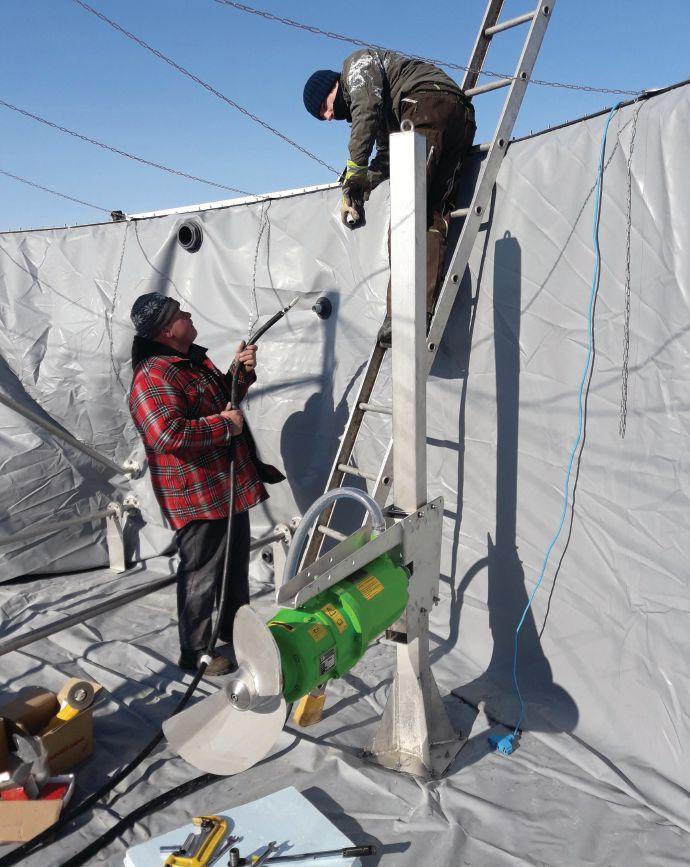
The construction of the mini digester on Harcolm Farms in Beachville, ON.
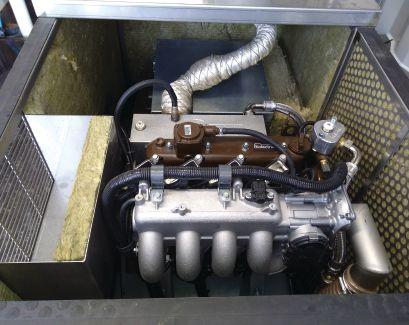
The mini digester houses two generators: one feeding power to the grid for profit under the Ontario MicroFIT program, and the other to make electricity for use on the farm.
Alliance Tire announces $100 rebate on IF and VF farm tires
Farmers can receive rebates of $100 to $125 per tire on purchases of two to 16 qualifying Alliance Agriflex increased flexion (IF) or very high flexion (VF) tires under an autumn rebate from Alliance Tire Americas, Inc. The rebate covers more than 80 sizes and tread patterns among Alliance’s Agriflex 354, 363, 372 and 389 tire lines purchased between August 15 and October 31, 2019.
Tires eligible for the rebate include tires for tractors, combines, self-propelled and towed sprayers, grain carts, manure tanks and other farm equipment. The Agriflex line is dedicated to high-flexion tires that require 20 to 40 percent less inflation pressure to carry the same load as same-sized conventional radials, or can carry 20 to 40 percent greater load at the same inflation pressure as standard radials. The company says the low-pressure benefits of IF and VF tires can significantly reduce soil compaction on fields.
Details of Alliance’s Autumn Agriflex Rebate are available online at http://ataoffers.atgtire.com/autumnrebate. The rebate applies to purchases of two to 16 qualified tires. Completed forms and original receipt or invoice must be postmarked by Nov. 30, 2019, and received by Dec. 15, 2019.
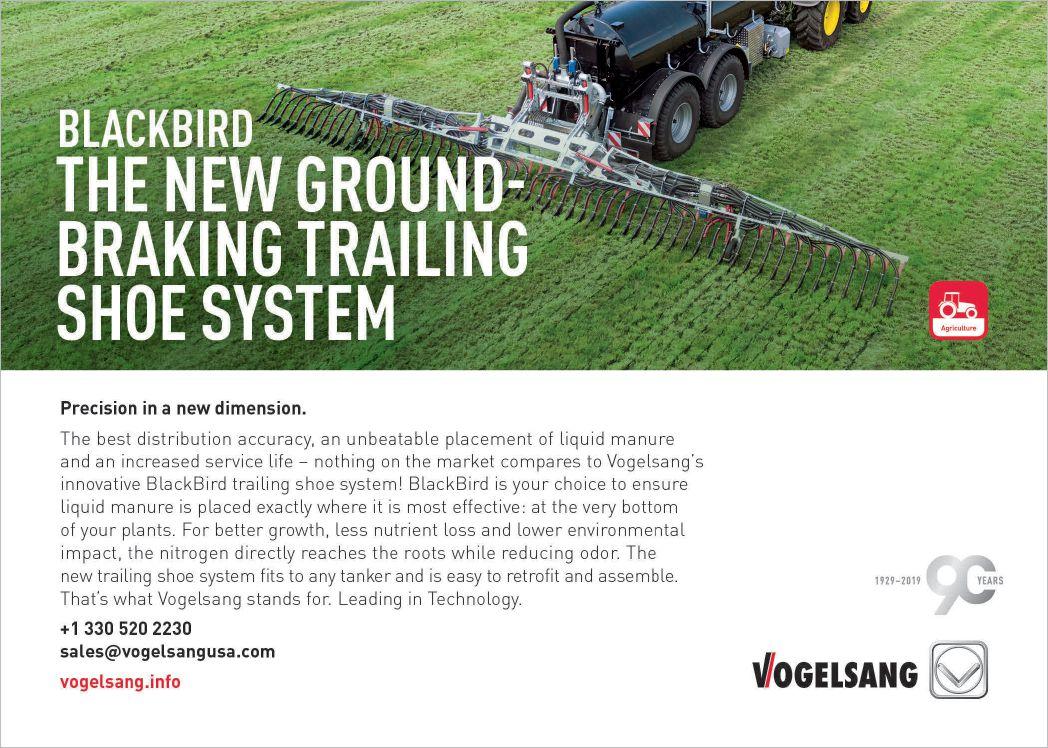
Vogelsang launches BlackBird
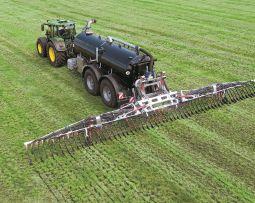
German company, Vogelsang GmbH & Co. KG, launched its BlackBird trailing show linkage, with a flowoptimized liquid manure discharge.
The long, beak-like shape helps to ensure a controlled and even flow of liquid manure through every discharge, therefore preventing the crops from getting contaminated during manure spreading. By actively applying pressure, the BlackBird’s pointed skid is able to penetrate the soil, ploughing a small furrow for directly depositing the liquid manure under the crops.
Vogelsang has also modified the hose layout to prevent the unit from creating a V-shaped imprint at the start of its furrows. The hoses themselves are black and are installed for the first time in the new trailing shoe linkage.
The power requirements have been reduced, by up to 50 percent, as a result of new rotor design and lower speeds. There is less strain on the cutting blades because of the reductions in speed and the internal pressure of the distributor, which also extends the service life of the unit by up to 50 percent.
Implementing innovative technology
A new plasma reactor system aims to utilize manure more efficiently.
BY CHRIS MCCULLOUGH
Anew system that has the potential to revolutionize the benefits of manure is currently on trial in two European countries. The new concept, developed by Norwegian company N2 Applied, involves passing manure or digestate through a plasma reactor to produce liquid nitrogen fertilizer.
With a goal of saving farmers up to 20 percent of their artificial fertilizer costs and to create a tool that reduces ammonia emissions, the company is excelling with two trials – one on a 750-cow dairy farm in Northern Ireland, and the other on a pig farm in Denmark.
George Bingham and his father, Robin, run the dairy farm, near Templepatrick in Northern Ireland. They installed a biogas plant one year ago, which produces electricity for the national grid. The N2 Applied system involves passing manure, or in the case of the Bingham farm, biogas plant digestate, through a plasma reactor to produce the liquid nitrogen fertilizer.
The plasma reactor was installed at the farm in 2018 on a trial and is already producing liquid nitrogen that has been spread on test plots at the farm. With knowledge gained in the fertilizer industry over many years, the experts at N2 Applied
have developed and patented this technology that uses a plasma reactor that fixes nitrogen from the air and adds it to the manure.
This causes a reaction with the manure and stops ammonia losses as well as emissions of other greenhouse gasses, and additionally removing bad odor. Besides reduction of ammonia emissions, the system increases the nitrogen content in the manure and transforms it from a waste problem into a highvalue fertilizer.
The main markets for this new technology are bigger livestock farms in North America and Europe, where greenhouse gas emissions are a problem and are being heavily regulated.
“Plasma processing is known for the sanitation effect by causing microbial reduction. But it also has an effect on the odor compounds and the result of processing manure or biogas digestate in a plasma unit removes the smell of the product,” says Henk Aarts, the business development director at N2 Applied.
“Our ultimate goal is to substitute chemical fertilizers with fertilizer produced locally on the farm from air and renewable energy. And meanwhile, we work on a better stable climate and a more
ABOVE
The N2 Applied plasma reactor processes digestate from the biogas plant on the Bingham farm, fixing nitrogen from the air and adding it to the manure.
North American Manure Expo Demos IN REVIEW
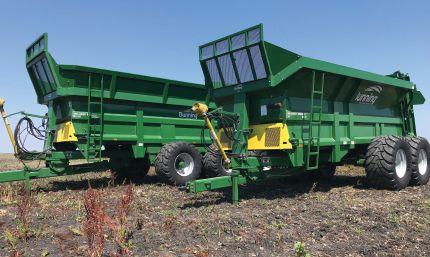
Bunning Manure Spreaders
Benefits:
• Heavy duty construction
• 3 year warranty
• Heat treated Boron Augers
• Dynamically balanced augers
• Rubber cushion drive coupling
• Heavy duty apron chains
• Socket fit floor slats
• Heavy duty gearboxes
• Lowest cost of ownership Contact: USA Norwood Sales 800-446-0316 Norwood@gtbunning.com Canada: 306-731-2954 mail@gtbunning.com www.gtbunning.com
Zimmerman – Red Viper
Benefits:
• Cover up to 20,000 gallons to the acre
• 10” of hydra-flex travel
• 30 degrees swivel each way
• Adjustable down pressure on closer wheels
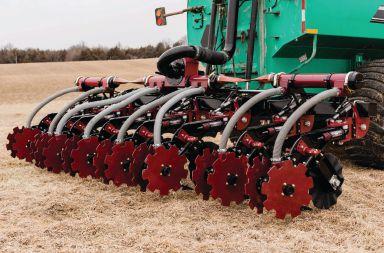
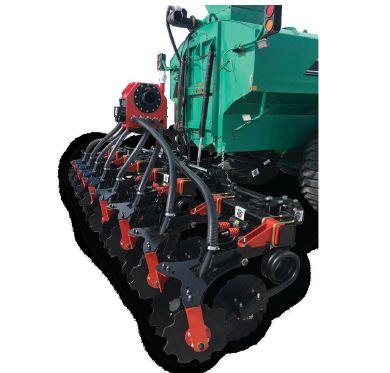
Benefits:
• Equipment designed/built by VTI
• Changed to hub style assembly to accommodate row spacing, easy blade change with retro kit update to existing bar
• 10” of vertical travel & swivel capabilities
• Discs do not clog up with mud
• Inject 4-8” deep to prevent any run off
• Manifold 3,000 gallons per minute with no adjustment needed
more information contact Phil Reed (319) 591-2222 or vtillc.com
– NITRO 600
Benefits:
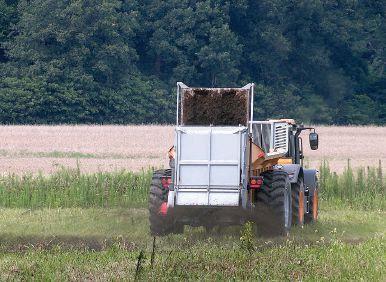
• Vertical beater manure spreader
• Nitro spreads manure evenly and efficiently
• Variable speed
• Hydraulically driven apron chain feeds fast moving vertical beaters
• Finely spread application every time
For more information contact (641) 799-8667 or info@zimmermanmfg.com zimmermanmfg.com
sustainable livestock sector. We can also upgrade biogas digestate to a higher value fertiliser with our technology. We expect the first steps to the North American market in 2020, depending on the interest from the market and potential partners.”
N2 Applied is partnering with SBI, an innovative plasma welding company based in Hollarunn, Austria, and together are using the competence of the University of Vienna for analysis of plasma composition and temperatures. “We are still waiting for the statistical analysis report from the
Bingham trial, but the preliminary results show that processed digestate had 10 to 20 percent better yield compared to unprocessed digestate and performs as well as mineral fertilizer,” Aarts adds. “So, the ammonium nitrate that we produce by fixing nitrogen from air shows good results on the field. This demonstrates that our solution indeed can substitute the use of mineral fertilizer. It leads to reducing emissions of ammonia on the farm, as well as GHG emissions reduction from the mineral fertilizer production and
MAKE YOUR DAIRY EXTRAORDINARY
FEATURES AND BENEFITS:
• Oil bath bearings - self cooled and lubricated, needs no water flush
• Disintegrator tool - for hoof blocks and other solids
• Heavy duty seal and bearing systemlonger life in severe service
• Ductile iron casing and bearing housingheavy castings for long life
• Heat treated cast steel wear parts - for longer life in abrasive grit service
• Most parts readily available from stock for expedited delivery
APPLICATIONS INCLUDE:
• Digester Feed
• Digester Mixing
• Small Pit Recirculation
• Tanker Loading
• Flush Water
• Feeding Heat Exchangers
• Manure Transfer
• Separator Feed
supply chain to the farm gate.”
The key argument to convince farmers to use this plasma reactor is explaining how much nitrogen from livestock and slurry is being lost and later supplemented by artificial fertilizer. In fact, about 2.13 million tons of ammonia is lost on European livestock farms each year – a huge loss of potential fertilizer.
Dairy farmer George Bingham said the system interested him as it met his desire to farm in a more environmentally friendly way. “Northern Ireland is very heavily populated with livestock, and ammonia emissions are becoming more of a problem,” Bingham says. “Using this plasma reactor system will help us achieve our goals of farming more environmentally friendly while at the same time, sorting out my ammonia emissions. I see this as a potential game changer across the world helping farmers get more from their farmyard slurry and saving them money.”
Bingham says that for his operation, reducing or even eliminating his chemical fertilizer bill is one of the main benefits of the system. “This system has only been installed a relatively short time and we have already produced our own liquid nitrogen and spread it on some grass test plots to see if the theories of faster plant growth with higher yields are feasible,” he says.
The payback term for using this system of course depends on farm size, usage and requirement. “Our farmer’s business case shows a payback time of three years, based on an electricity price of €50 (approximately US$55 or C$75) per MWh and a nitrogen fertilizer price of €840 (approximately US$930 or C$1,234) per ton of nitrogen,” Aarts says. “The case is partly driven by the added value on yield increase, as well as flexibility in spreading caused by a higher content of nitrogen per volume and smell reduction. We see that the markets are very different, and many regional as well as specific farm conditions and factors influence the eventual case.”
Aarts explains the amount of product a 25-kW plasma unit can process annually depends on several parameters, like pH and composition of the input product. Based on a processing capacity of around 2,500 to 3,500 cubic metres (approximately 3,270 to 4,578 cubic yards) yearly, it can, depending on housing system and feeding, process the manure or the biogas digestate from a 100to 200-dairy cow farm.
The company is currently considering the scale of commercial units and plans to have the first unit available in late 2019. •
TACKLING MANAGEMENT CHALLENGES
A super-charged polymer may provide solutions to a host of problems.
Manure deserves its reputation as “black gold.” Spread onto agricultural fields, it can substantially reduce a farmer’s chemical fertilizer bill while improving soil’s structure, porousness and water-holding capacity. That said, large-scale collecting, pumping and spreading of liquid livestock manure isn’t without challenges: crusting, odor, solids build-up, flies, slow and problematic pumping, inconsistent nutrient distribution and more can make manure management frustrating, time consuming and a
lot less effective than desired. Could technology change all of that?
In an ideal world, all nutrients that enter a pit would be easily and consistently pumped back out and spread evenly, in plant-available form, across crop fields. The reality on most farms is quite different.
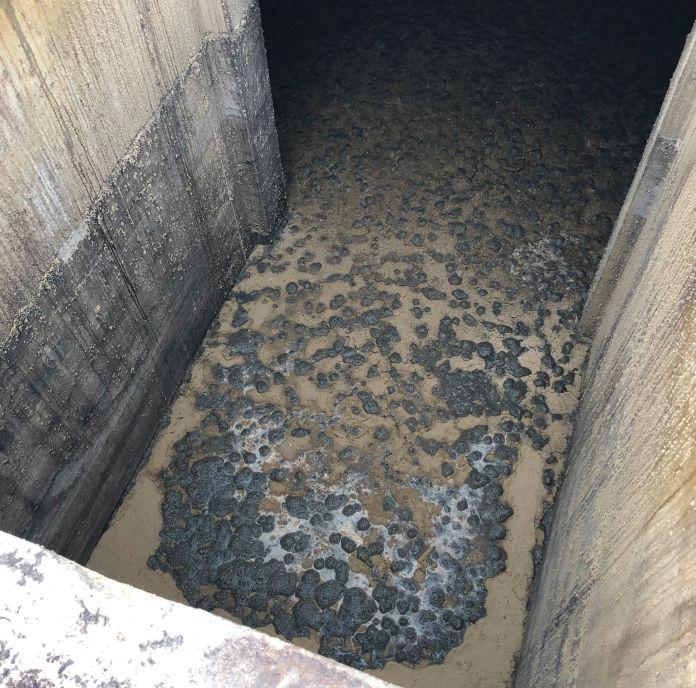
Manure naturally separates into thicker and thinner components. The settling of solids makes pumping challenging: it’s common to fully pump a pit yet have a thick several of unpumpable solids built-up on pit walls and floor. As build-up increases, pit
capacity drops: a real issue for farmers who have only just enough capacity to get from one scheduled pumping to the next. In hog barns, build-up isn’t limited to a pit’s walls and floor: the thickness of hog manure means a several-inch deep crust – impossible to pump and the ideal habitat for fly larvae – almost always forms. Flies are more than just annoying: they can cause stress, depressed health and decreased gains in livestock.
The settling of solids also creates an uneven distribution of nutrients in the pit. Particulate phosphorus
The immediate effect can be seen in both hot and cold weather, but the greater impact on odor control occurs during the summer.
attaches to solids rather than liquids. As such, the top, liquid layers will carry significantly less phosphorus than the bottom, sludgy component. Since a pit is usually pumped from top to bottom, the natural stratification of nutrients in a pit makes for very uneven nutrient distribution in the field. While mixing or agitating the manure before pumping certainly helps, doing so can quickly cause damaging erosion of a pit’s sidewalls. Storing manure in a pit is problematic for nutrients besides phosphorus. As manure breaks down (especially if any bacterial or enzymebased treatment is added to the pit to speed break-down), vast quantities of nitrogen are lost as ammonia offgasses. This off-gassing is wasteful, smelly and can compromise animal and worker health.
Various treatments exist to tackle manure management challenges. Most of the products are biological: naturally occurring bacteria or enzymes designed to help the manure break down. More recently, a variety of chemical additives have hit the market.
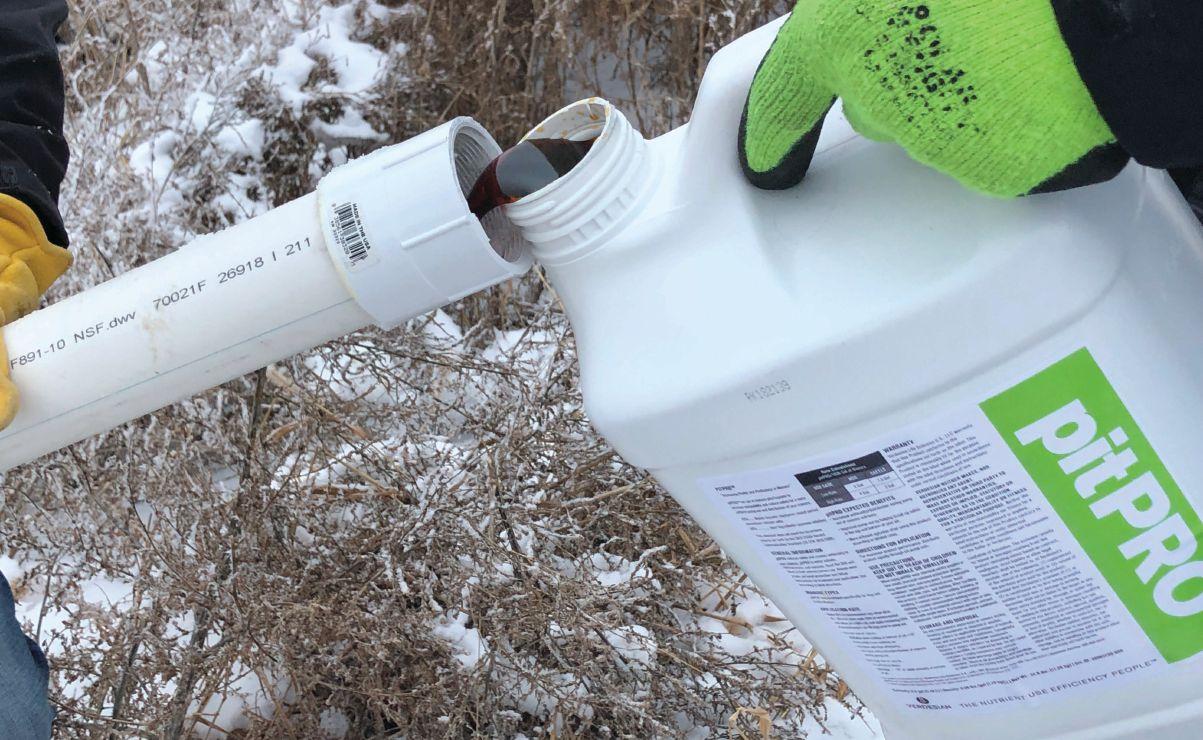
Among the newer products available is PitPro, a water-soluble, biodegradable, entirely non-toxic chemical polymer. Highly negatively charged, Pit Pro functions as a magnet, pulling manure’s positively charged solids into suspension and homogenizing a pit’s contents.
A 2018 trial of the product conducted in a 1.2-million gallon pit beneath a 5,000-head hog barn showed a 50 percent reduction in solids build-up, greatly increased pumpability, and more consistent distribution of nutrients both in the pit and, ultimately, on the field.
Larry Plagman, who finishes 1,000 head of hogs on his Rainbow Hills farm in Carson, Iowa, has been trialing the product on his own operation for two years. He says the results speak for themselves. “I’ve tried a lot of products over the years and PitPro worked the best of any of them.
“When I pump my pit now, I get 15 more loads out. When I pump this fall, I’ll be able to wait a whole year this time instead of having to pump in the spring when I’m busy. That’s huge.”
He’s also noticed much more consistency in his corn crop. “Before I started using PitPro, I’d see yellow spots in the corn by summer where the nitrogen didn’t go on evenly. This year and last year, it’s just solid green,” Plagman says.
Rick Martens, a licensed
commercial applicator and owner of Martens Manurigation, has experienced the results of PitPro first-hand too. “Generally you can’t get hog manure to hold suspension well: when you start pumping, it’s really watery; by the end it goes onto a field black as tar. [When treated with PitPro], it appeared like there was more consistency to the manure. The color was darker at the beginning and everything seemed more consistent across the field.”
He also likes the enhanced pumpability produced by PitPro. “One customer has a heavier pit that we usually have to add water to before pumping. He used PitPro and that’s the first time in a lot of years that we didn’t need to use any water, and we got it down all the way to the inlet pipe.”
And he appreciates treated manure’s decreased odor. “My farmers have commented that when they added PitPro and then spread the manure on the field, they can’t believe how much the odor is down. There’s economic benefit but there’s social benefit too: that’s going to keep your neighbors a lot happier,” Martens says.
In addition to decreasing buildup, enhancing pumpability, improving nutrient consistency and minimizing odor, PitPro also offers a secondary benefit of maximizing the availability of manure’s nutrients to plants. Whereas bacteria or enzyme-based pit additives off-gas significant amounts of nitrogen, PitPro holds onto the nitrogen in plant-accessible ammonium form. It also makes manure’s phosphorus more readily plant-available: whereas 65 percent of the phosphorus in dry fertilizer attaches to the soil as soon as it is spread, PitPro holds the phosphorus until plants absorb it.
Martens believes nutrient maximization could be among PitPro’s very most important benefits. He is currently conducting a trial in a customer’s large corn field and hopes results will be obvious by this fall.
Plagman says the benefits he’s already achieved make PitPro an obvious choice. “PitPro is definitely worth it. It’s a standard of practice for me now. I think anyone using manure for fertilizer, once they catch onto it, they won’t do anything else.”
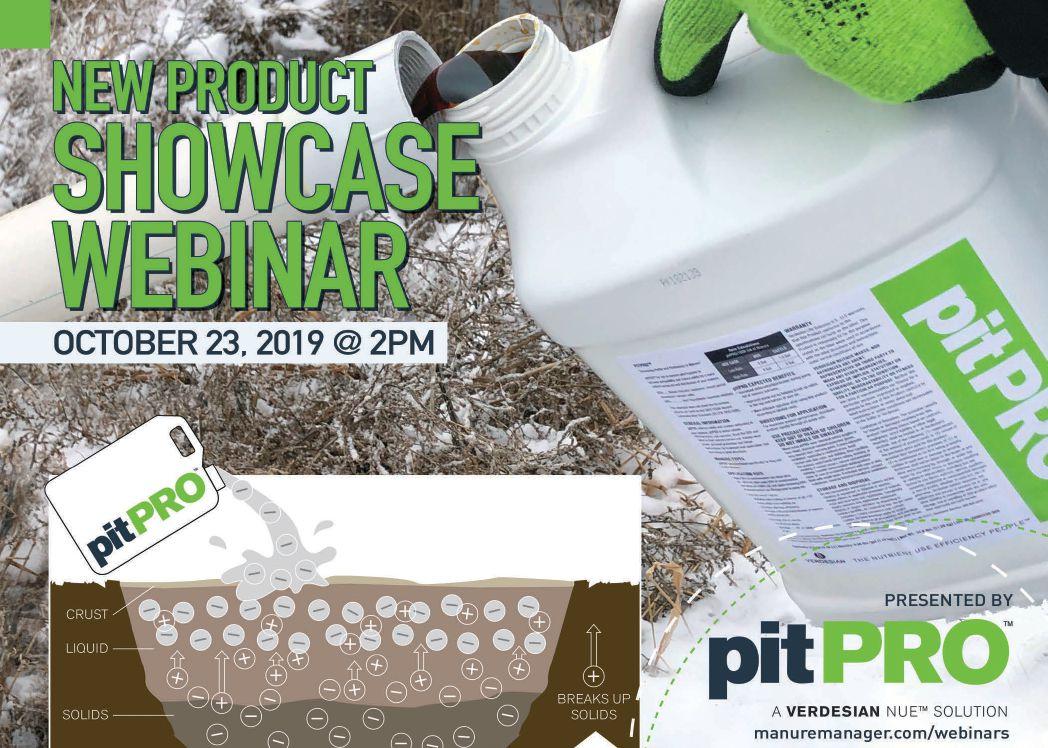
The highly negative charge of PitPro, interacting with the positively charged manure particles puts the manure in suspension, creating a consistent, homogeneous consistency, reducing solids and increasing pumpability.
FOCUS ON the future
As the global food industry turns more toward sustainable sourcing initiatives, environmentally minded farm plans are growing in popularity.
BY TREENA HEIN
In Canada and the United States, voluntary programs can help determine environmental risks.
Sustainable sourcing is becoming increasingly important these days to companies of all types around the world, but it’s particularly growing in popularity within the food industry.
The concept of sustainable sourcing involves buying goods from suppliers that can demonstrate they are following sustainable practices relating to the social, economic and environmental aspects of the production and distribution of their products. Environmental criteria in sourcing initiatives encompass soil stewardship, proper nutrient management and crop production product use, biodiversity and water enhancement and protection.
These are all things that the Environmental Farm Plan (EFP) in Canada addresses, as do similar programs in the USA. In both countries, these programs are mostly voluntary self-assessments of a farm or ranch to determine environmental risks and the development of an action plan to reduce the identified risks. To implement the plan, some costsharing funding for select projects is provided.
THE SUSTAINABLE AGRICULTURE INITIATIVE
“We are heading into an era where being part of a sustainability program and being able to demonstrate that you meet sustainability benchmarks is a standard part of doing business,” notes Paul Watson, EFP director at the Agricultural Research and Extension Council of Alberta (ARECA) and national co-chair for EFP harmonization across the Canadian provinces.
In Canada, EFP personnel in Quebec have already started the process of making its EFP equivalent to the Sustainable Agriculture Initiative (SAI)’s Farmer Sustainability Assessment. Saskatchewan and Alberta are following suit and all other provinces are expected to do so as well. The SAI is used in 32 countries and has dozens of members, many of which are global food industry players, such as Unilever, Nestle, McDonald’s and McCains.
Getting the EFP to be recognized by the SAI is important, Watson says, because it’s a widely used and recognized global program that has been benchmarked against other sustainability tools.
Outside of the SAI, John Neufeld, communications manager at Manitoba Agriculture, notes that there are certain commodities in that province that are also utilizing the assessment of the EFP for their sustainable sourcing requirements. Watson says commodity purchasers in Alberta have also expressed interest in a similar path, and the Saskatchewan Ministry of Agriculture says the organization is looking at integrating sustainable sourcing requirements into their supply chain. Nationally, the environmental aspect of the Dairy Farmers of Canada’s proAction program is based on the EFP and implementation of this will start in September 2021.
Watson notes the EFP’s long use has positioned Canadian farmers well with regards to sustainability, and while he can only specifically speak about the Alberta EFP, he believes having it recognized through the SAI will mostly be a matter of participants adding a little documentation.
EFP MANURE COST-SHARING PROGRAMS IN SOME PROVINCES
Not only does participation in an EFP or in similar programs in the United States allow livestock producers to be part of sustainable-sourcing supply chains, it also reduces environmental risks associated with manure storage and application on their farms – and saves them money. Improved manure storages, for example, should result in less wear and tear on equipment, explain representatives of Alberta Agriculture and Forestry (AAF). Relocating a poorly placed livestock facility provides benefits such as improved herd health, improved water quality, reduced stream bank degradation, improved riparian function and improved public perception. In addition, relocations or improvements in pen floor liners will result in reduced maintenance and easier
manure haul-out, easier accessibility of site for loading and unloading cattle, and better positioning for future production and expansion.
CURRENT PROGRAMS AND INITIATIVES
There are several current projects supported through cost sharing under the Environmental Farm Plan across the Canadian prairies, and similar programs in the United States.
In Alberta, EFP cost-sharing projects
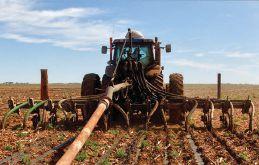
include the conversion of existing manureapplication equipment to surface banding or injection delivery systems, use of vertical spreader assemblies and main/booster pumps for dragline systems (must include an automatic shut off feature). Projects also include the use of in-field temporary manure storage systems (fillable bags or bladders for dragline systems), compost turners and directional drilling for dragline systems (culvert under or pipes over).
In Manitoba, there are two manurerelated projects available for cost sharing to
ABOVE
In Saskatchewan, livestock producers are not required to submit an Environmental Farm Plan to receiving funding for manure-related projects under a new funding arm of the Farm Stewardship program.
farmers with a valid EFP, both for reduction of liquid manure storage odor and barn odor. There is another stream of activities, according to John Neufeld at Manitoba Ag, for custom service providers related to direct manure injection and in-season manure application.
In Saskatchewan, livestock producers are no longer required to submit an EFP to receive funding for manure-related projects under the Livestock Stewardship BMP [best management practice] funding arm of the Farm Stewardship Program (as part of the Canadian Agricultural Partnership). Ministry staff members conduct environmental risk assessments of each project funded to ensure the project will adequately mitigate the environmental concern. The BMP for improved manure storage includes cost sharing for concrete or clay pads for storing solid manure or improved structures to store liquid manure such as tanks or an engineered earthen manure storage system. There is also costsharing for relocation of livestock facilities or implementation of runoff controls
works to improve or protect surface water. There is no funding for improved manure application equipment at this time.
In the USA, the U.S. Department of Agriculture (USDA) National Institute of Food and Agriculture (NIFA) has many programs that support farmers to better manage manure. In addition, the USDA’s Natural Resources Conservation Service offers funding for voluntary projects through three sources: the Environmental Quality Incentives Program (EQIP), the Conservation Stewardship Program (CSP) and the Regional Conservation Partnership Program (RCPP). NRCS also offers competitive Conservation Innovation Grants to eligible grantees willing to work with EQIP-eligible producers to showcase innovative natural resource techniques, including new and creative ways to address manure management.
Before eligible livestock producers can access NRCS funding programs to addres identified natural resource challenges, they must start with a conservation plan and then work with NRCS conservation
planners to secure funding to support the activities outlined in the plan. The producer then signs a contract with NRCS to carry out those activities. In 2018, NRCS entered into nearly 9,000 contracts with producers for a total of $429 million to treat about 2.4 million acres. These voluntary manure management projects are widely diverse, and include different ways of storing and handing manure, improved waste storage facilities, roofs and covers, protection of areas of heavy use and building or improving waste treatment and waste separation facilities.
NRCS funding generally helps producers cover between 75 and 90 percent of the cost (based on typical payment rates) to adopt a conservation practice. In addition, eligible historically underserved, new, tribal and veteran farmers or ranchers can receive additional assistance, such as advance payments. •
Resource roundup
Manitoba Environmental Farm Plan www.gov.mb.ca/agriculture/ environment/environmentalfarm-plan/
Alberta Environmental Farm Plan www.albertaefp.com/
Saskatchewan Environmental Farm Plan www.saskatchewan.ca/business/ agriculture-natural-resourcesand-industry/agribusinessfarmers-and-ranchers/canadianagricultural-partnership-cap/ environmental-sustainability-andclimate-change/environmental-farmplans
The Natural Resources Conservation Service encourages livestock producers to visit their local U.S. Department of Agriculture (USDA) service center and speak to its staff about specific natural resource concerns. Livestock producers also can visit USDA’s mobile-friendly website, www.farmers.gov, to view and apply for program assistance.
PHOTO BY MANURE MANAGER.
Managing weed seeds in manure
Small but mighty, weed seeds in manure can be problematic when they result in overgrown, weedy fields after manure application. And seeds are abundant: a survey found that fresh manure on dairy farms had an average of 75,000 seeds per ton. Luckily, measures can be taken to reduce the viability of those seeds.
First of all, don’t assume that animal digestion will take care of the problem. Though it will reduce weed seed viability, simply feeding the material to livestock will not eliminate all seed. Grass and soft-coated broadleaf seeds are more easily destroyed in digestion than hard-coated seeds. In one study conducted on rumen animals, such as cattle, 27 percent of hard-coated seeds remained viable after digestion. The gizzard digestive system of poultry is highly effective at destroying weed seeds, and only 3.5 percent of hard-coated seeds fed to ducks were recovered and found viable in a similar study.
So what can you do to reduce weed seed viability beyond the gut? In general, heat is the enemy of weed seed survival. The benchmark for good seed mortality is 140 F (60 C) sustained for three days. Hot temperatures that fall below that mark for a shorter duration will still kill some seeds, but not as thoroughly. How you subject the seeds to heat is up to you, but below are a few suggestions.
MINIMIZE WEED SEEDS IN MANURE BY COMPOSTING
What if ensiling isn’t feasible? What if your manure is already contaminated with weed seeds? In those cases, composting is a very effective method for killing weed seeds – more effective than ensiling.
Internal heat generated by properly composting manure will kill most weed seeds –even the hard-seeded ones. The key word here is “properly.” Aged manure is not composted manure. Proper composting requires active management and must be monitored and aerated for correct weed-killing conditions to develop.
Composting is a very effective method for killing weed seeds.
MINIMIZE WEED SEEDS IN FEED AND FORAGE BY ENSILING
What goes in must come out, so killing seeds before they get to the animal is a good strategy. One way to do that is to ensile the feed (if appropriate for the feed type). The fermentation and heat generated during ensiling is quite effective for killing weed seeds. One study found that just one month after seed-contaminated alfalfa haylage was stored, viability of the toughest seeds dropped by 41 percent, and in corn silage, the drop was even greater at 60 percent. Logically, seed viability continues to decrease as silage storage time increases. Eight weeks of ensiling was shown to kill up to 87 percent of viable seed; and when feed went through both ensiling and rumen digestion, the seed mortality increased to 89 percent.
Temperature and moisture are the two most crucial elements for seed mortality in compost. Studies have shown that sustaining the compost at that benchmark of 140 F for three days can reduce weed seed viability by 90 to 98 percent, so long as a minimum of 35 percent moisture is maintained. Another study found that overall duration was important and that it took between 21 and 50 days of composting for best results. Even under the most diligent composting program, there can be seeds that survive. It is theorized that, since manure is not a uniform product, this mortality escape is due to cooler pockets that do not sustain high temperatures for long enough. Therefore, just because manure has been composted does not necessarily mean it is free of weed seeds.
FIELD APPLICATION OF CONTAMINATED MANURE
Remember, even if the feed was ensiled and the manure was composted before spreading, it’s still possible for weed seeds to remain viable. A 98 percent reduction in viability seems sufficient, but even low seed survival rates can be problematic. Two percent survival of 75,000 seeds would leave 1,500 viable seeds remaining per ton. Applied at eight tons per acre, that would increase the weed seedbank by 12,000 seeds per acre. Therefore, it is crucial to scout fields that receive manure to head off any severe weed infestation. •
Widen Your Horizons
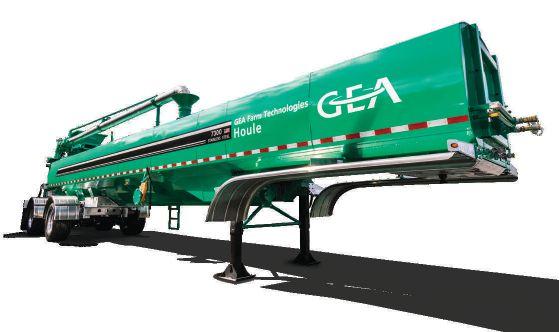
The road to more efficient manure transport is now wide open with the STR Series Manure Semi-Tanker from GEA.
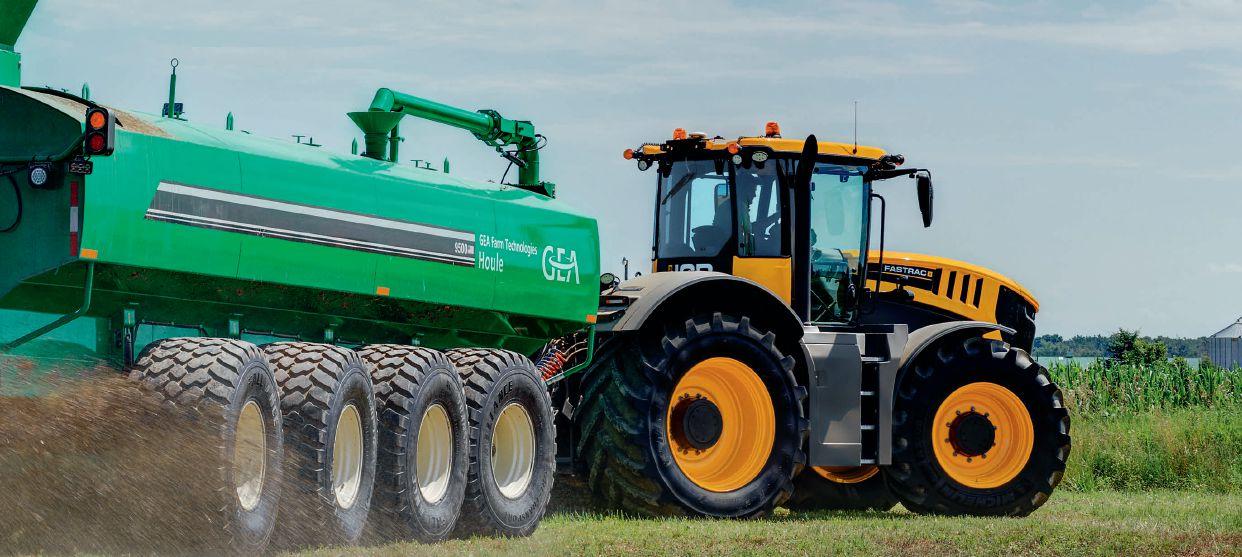
GEA’s STR Series Manure Semi-Tanker streamlines manure transportation for faster, farther hauling. From farm to field, this first-class manure hauling system saves time, fuel and equipment wear and tear. The STR Series SemiTanker can also haul and apply slurry directly on hard soils after harvesting, giving you flexibility in hauling times.
The GEA STR Series Semi-Tank meets all traffic safety regulations for vehicle weight and width for increased safety for you and everyone on the roads.
Don’t let distance slow you down. Hit the road with GEA’s STR Series Manure Semi-Tanker.