How one company created a niche by listening to farmers. | 20
Back to basics: sampling manure
How, when and how often? | 26
September/October 2020
Turn animal manure or agricultural waste into new revenue. Lead the transition to net zero with renewable natural gas production.
Enbridge Gas is seeking agribusiness partners to turn organic waste into Renewable Natural Gas (RNG). Let our experts guide you through the process of setting up an RNG facility and then delivering RNG to the natural gas system.
rng@enbridge.com enbridgegas.com/RNG
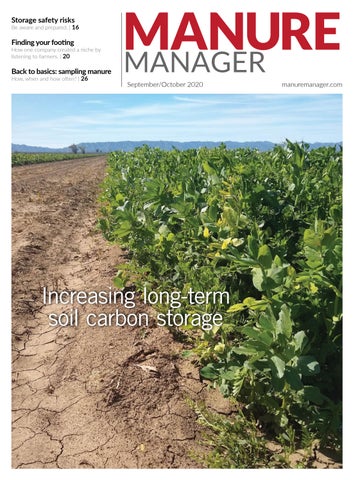
Increasing soil carbon storage
A long-term study shows compost is important to improving cropping systems and increasing carbon sequestration.
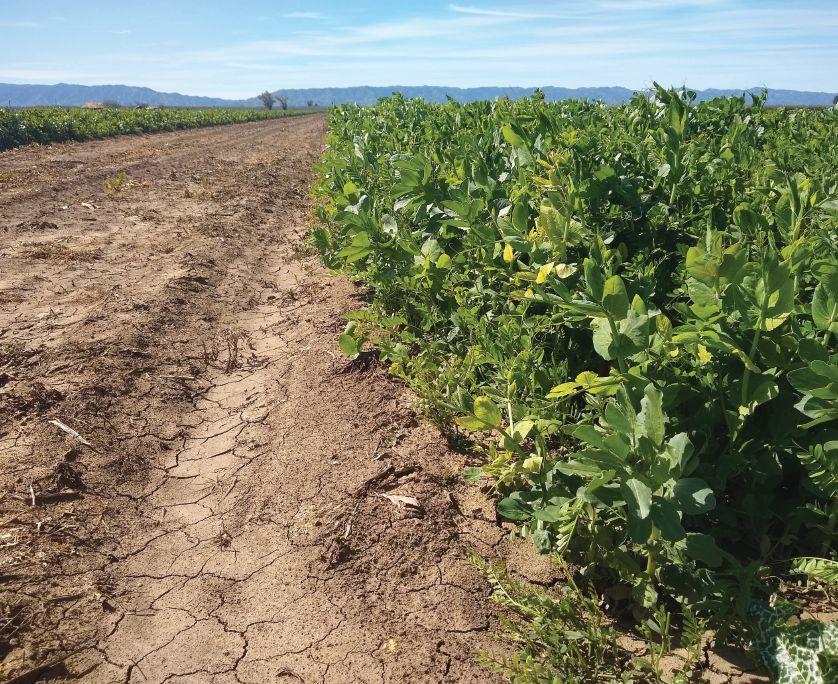
A long-term study in California shows how important compost is to improving crops and increasing carbon sequestration, See page 8.
Optimizing onfarm sustainable energy projects
A new model looks at maximizing the potential of anaerobic digesters.
BY DONNA FLEURY
Understanding manure storage safety risks
Ensure you and your staff are aware and wellprepared.
BY TRACEY ERICKSON,
Finding your footing by not fearing change Digested Organics created a niche for themselves by listening to farmers.
BY ALEX BARNARD
Photo courtesy of Russell Ranch, UC Davis.
Spotlight on safety
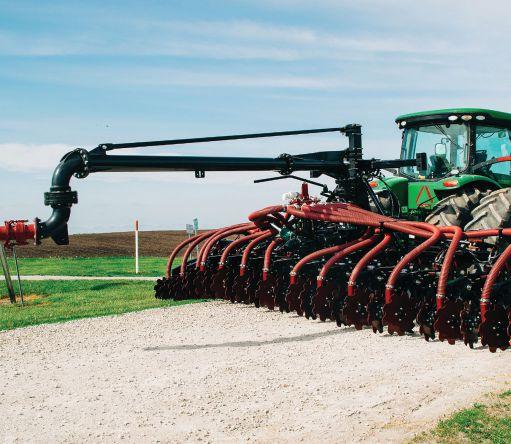
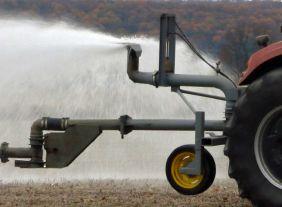
We live in a rural area in Ontario, with several farms surrounding us, including a hog farm just down the road. In early September, my six-year-old and I went for a bike ride when he noticed a tractor in the field dragging a long hose around. When I explained to him that the farmer was using the drag hose to apply manure, he immediately commented that it didn’t smell as bad as it usually does. The rest of our bike ride was spent guessing how long the hose actually was, and trying to catch a glimpse of the pump in action – a new fall memory in the books.
It’s often said that you never forget how to ride a bike after you’ve learned. When it comes to farming, and specifically manure management, certain skills stay with you even if you don’t use them regularly. Safety needs to be one of them.
By the time this issue hits your mailbox, your fall application may be complete, and you may be looking toward a winter application. No matter the season, safety on the farm, and especially near manure storage, needs to be of utmost
the farm or visiting the farm that hazards exist in a confined space.
2. Have a written safety plan for hazardous spaces, giving details about potential hazards, why entry would have to be made, and what procedures to follow if entrance is necessary .
3. Do not enter a hazardous space without at least two people at the site. One person should always remain outside of the space and be available to summon help if necessary.
4. Test any potentially hazardous space for explosive gases and oxygen deficiency using a gas detection instrument that can test for oxygen, explosive gases and hydrogen sulfide.
5. Before entering a potentially hazardous space, ventilate it to provide fresh air. Refer to manure pit safety standards and regulations to determine proper ventilation protocols.
6. A body harness attached to a fall arrest and retrieval system is recommended for anyone entering a potentially hazardous area.
There’s no better time than now to do a safety check.
importance. There’s no better time than now to do a safety check around your farm.
Here are some tips based on a fact sheet from PennState Extension:
1. Keep your signage up to date, warning people of a potentially hazardous atmosphere, in order to help educate everyone on
To better understand the safety risks surrounding manure handling and storage, be sure to read Tracey Erickson’s article on page 16. Erickson, a dairy field specialist with South Dakota State University Extension puts it best – if you think you’re at risk, you are. Stay safe. •
scroley@annexbusinessmedia.com
Associate Editor ALEX BARNARD (519) 429-5179 abarnard@annexbusinessmedia.com
Advertising
SHARON KAUK (519) 429-5189 skauk@annexbusinessmedia.com Account Coordinator MARY BURNIE (519) 429-5175 mburnie@annexbusinessmedia.com Media Designer CURTIS MARTIN Circulation Manager SHAWN ARUL sarul@annexbusinessmedia.com 416-510-5181
VP Production/Group Publisher DIANE KLEER dkleer@annexbusinessmedia.com COO SCOTT JAMIESON sjamieson@annexbusinessmedia.com
Tel: (416) 442-5600 ext 3555 Fax: (416) 510-6875 (main) (416) 442-2191 Mail: 111 Gordon Baker Rd., Suite 400, Toronto, ON M2H 3R1 Occasionally, Manure Manager will mail information on behalf of industry-related groups whose products and services we believe may be of interest to you. If you prefer not to receive this information, please contact our circulation department in any of the four ways listed above. Annex Privacy Officer privacy@annexbusinessmedia.com Tel: 800-668-2374
All advertising is subject to the publisher’s approval. Such approval does not imply any endorsement of the products or services advertisted. Publisher reserves the right to refuse advertising that does not meet the standards of the publication.
Three more Wisconsin dairies partner with DTE Biomass Energy in RNG project
DTE Biomass Energy, in collaboration with local dairy farmers, recently commissioned three dairy-based renewable natural gas (RNG) facilities in Wisconsin.
Joining DTE’s four Wisconsin RNG projects are facilities co-located at the Rosendale Dairy and New Chester Dairy owned by Milk Source, and Kinnard Farms, owned by the Kinnard family.
“Converting dairy waste to RNG is a great way to reduce our carbon footprint in the dairy industry
while adding a new revenue stream to our farming business.” said Lee Kinnard, owner of Kinnard Farms.
Biogas from cow manure at these three dairy farms is collected and processed into pipelinequality natural gas. This RNG is then trucked from the farms to a DTE RNG terminal located in Newton, WI, where it is injected into a nearby natural gas transmission line for ultimate use in compressed natural gas vehicles.
BENEFITS TO REUSING POULTRY LITTER
A new study shows that the microbiome in reused poultry litter can deter growth of pathogens like Salmonella.
“When you read or hear that broiler litter is reused to raise multiple flocks of chickens, the typical reaction is that it must be bad for food safety,” says Adelumola Oladeinde, a co-author of the recent study. “Our
study demonstrates the exact opposite.”
Oladeinde is a researcher at the USDA’s National Poultry Research Center in Athens, GA. He and his colleagues found that “good” bacteria in used poultry litter can hinder Salmonella growth.
“It may be worthwhile to invest time and resources to characterize the
bacteria in reused litter,” Oladeinde says. “We can develop the promising ones into beneficial microbes for better chicken gut health.”
The study also explored litter characteristics, such as moisture and ammonia levels. These characteristics can dramatically affect the litter microbiome – the mix of bacteria, fungi, and viruses in litter. Chicken litter plays a big role in determining broiler health.
“Our findings provide new information on the relationship between the physical environment of broiler litter and its microbiome,” Oladeinde says. “Management techniques that account for both factors may help reduce Salmonella in chickens.”
BY THE NUMBERS - 4R Nutrient Stewardship
In a three-year survey conducted in 2014-17, Fertilizer Canada surveyed Canadian growers on their fertilizer use on 8.3 million acres of cropland.
Western Canadian canola growers who tailor fertilizer application by field:
In 2017, growers said they tested every year for:
3,292 70%
Canadian growers who apply fertilizer at spring planting (a 4R BMP) in 2017: of Ontario corn-growers apply phosphorus (P) by side-banding or seed placement, which reduces P runoff as much as 60%
Sow mortalities and feed costs continue to rise in North American swine industry
MetaFarms, an agricultural information platform, recently announced the release of its Production Index data, which provides key performance indicators for the swine industry –including productivity, finishing, and mortality – based on anonymized data from its platform.
Leading indicators from the MetaFarms Production Index demonstrate that the industry continues to see an increase in sow mortality, with sow mortality percentage nearly doubling from 2012 to 2019.
“In general, the swine industry has focused quite a bit on genetic improvements – meaning that we are seeing a steady increase in total
born – but haven’t yet closed the gap for mortality,” said Brian Parker, MetaFarms chief operating officer.
“From the tightening trade market due to geopolitical factors, to environmental impacts caused by climate changes and growing populations, this will need to be a key focus in the years to come to ensure that we are able to meet the growing demand in the market.”
Other key findings include:
• Feed cost is the highest it’s been since 2013, coming in at $309.76 per ton on average;
• U.S. sow farm productivity rate increases over Canada;
• Lighter start weights lead to lower performance and higher mortality.
GLOBAL 4R NUTRIENT STEWARDSHIP CERTIFICATION COUNCIL LAUNCHED
The North American fertilizer industry, together in partnership with The Nature Conservancy, have formed the Global Nutrient Stewardship Certification Council (NSCC) in the continued push for the adoption of 4R Nutrient Stewardship. The NSCC will serve as the international governing body of the 4R Nutrient Stewardship Certification program.
The Global NSCC will create consistency across geographies, maintain program rigour, and ensure core auditable requirements are represented in each geographies’ standards. The partnership will also provide guidance to new entities interested in developing programs.
“The North American fertilizer industry has developed a robust sciencebased 4R Certification program for agri-retailers, which validates the climate-smart agricultural practices of their growers,” said Garth Whyte, president and CEO of Fertilizer Canada. “The 4R Certification program further demonstrates the fertilizer industry’s commitment to increase onfarm crop productivity and fertilizer efficiency while also demonstrating our leadership in sustainable agriculture.”
4R Nutrient Stewardship (Right Source @ Right Rate, Right Time, Right Place) is an internationally recognized framework that can be tailored to fit specific crop types, climates and soils. The 4R Certification Program is a voluntary, industry-led program that promotes the sustainable use of nutrients on agricultural fields, which significantly reduces and prevents nutrient runoff.
U.S. research group receives $10 million to explore AD options for farmers
A new U.S. federal grant will allow a research team led by Iowa State University, Penn State and Roeslein Alternative Energy (RAE) to develop new methods of turning biomass and manure into fuel.
The five-year, $10-million grant from the U.S. Department of Agriculture’s National Institute for Food and Agriculture will power the Consortium for Cultivating Human and Natural reGenerative Enterprise (C-CHANGE) as it works to create new value chains on U.S. farms, with emphasis on the generation of renewable natural gas (RNG), improved rural economic outcomes and protection of the environment.
The project director of the grant is Lisa Schulte Moore, a professor and associate director of the Bioeconomy Institute at Iowa State University. Schulte Moore said the consortium will innovate methods for farmers to make more efficient use of resources while maintaining current value chains, resulting in an agricultural economy that’s both more profitable and environmentally sound.
“We recognize the benefits of current production systems, but also there’s a lot of inefficiency in how we use land, sunlight, nutrients and water,” Schulte Moore said. “We also realize that farmers and rural communities are struggling.
“We know we can address inefficiencies by adding perennials and recoupling crop, livestock and energy systems. Research is needed to ensure these combinations are also profitable.”
C-CHANGE researchers are developing new ways for farmers to produce RNG that could be used as an energy source both on and off farms.
The project centers on anaerobic digestion and new separation technologies, allowing biogas to be upgraded to RNG and distributed through the gas pipeline network. Researchers will test variables such as feedstock mixture, pretreatment, digester temperature and water content to make the process as practical as possible.
INCREASING long-term soil carbon storage
A long-term study shows compost is important to improving cropping systems and increasing carbon sequestration.
BY DONNA FLEURY
Composted manure and other organic amendments benefit cropping systems while increasing the opportunity for long-term soil carbon storage and climate change mitigation. Researchers at the University of California, Davis compared different cropping systems to understand the impacts of cover crops and compost on soil organic carbon (SOC) sequestration. The research was conducted as part of the Russell Ranch Century Experiment, a cropping systems trial initiated by the university in 1993, which examines the longterm sustainability of soil healthbuilding practices in irrigated
ABOVE
Mediterranean agro-ecosystems of northern California.
“The focus of this 19-year long-term cropping study project was on tilled row crop systems under the semi-arid Mediterranean region conditions of this area, which typically have wet winters and hot, dry summers,” explains Kate Scow, professor of soil science and microbial ecology and director of the Russell Ranch Sustainable Agriculture Facility. “We compared the use of composted poultry manure amendments, which are sometimes used in row-cropping systems in this region, the use of winter cover crops and the
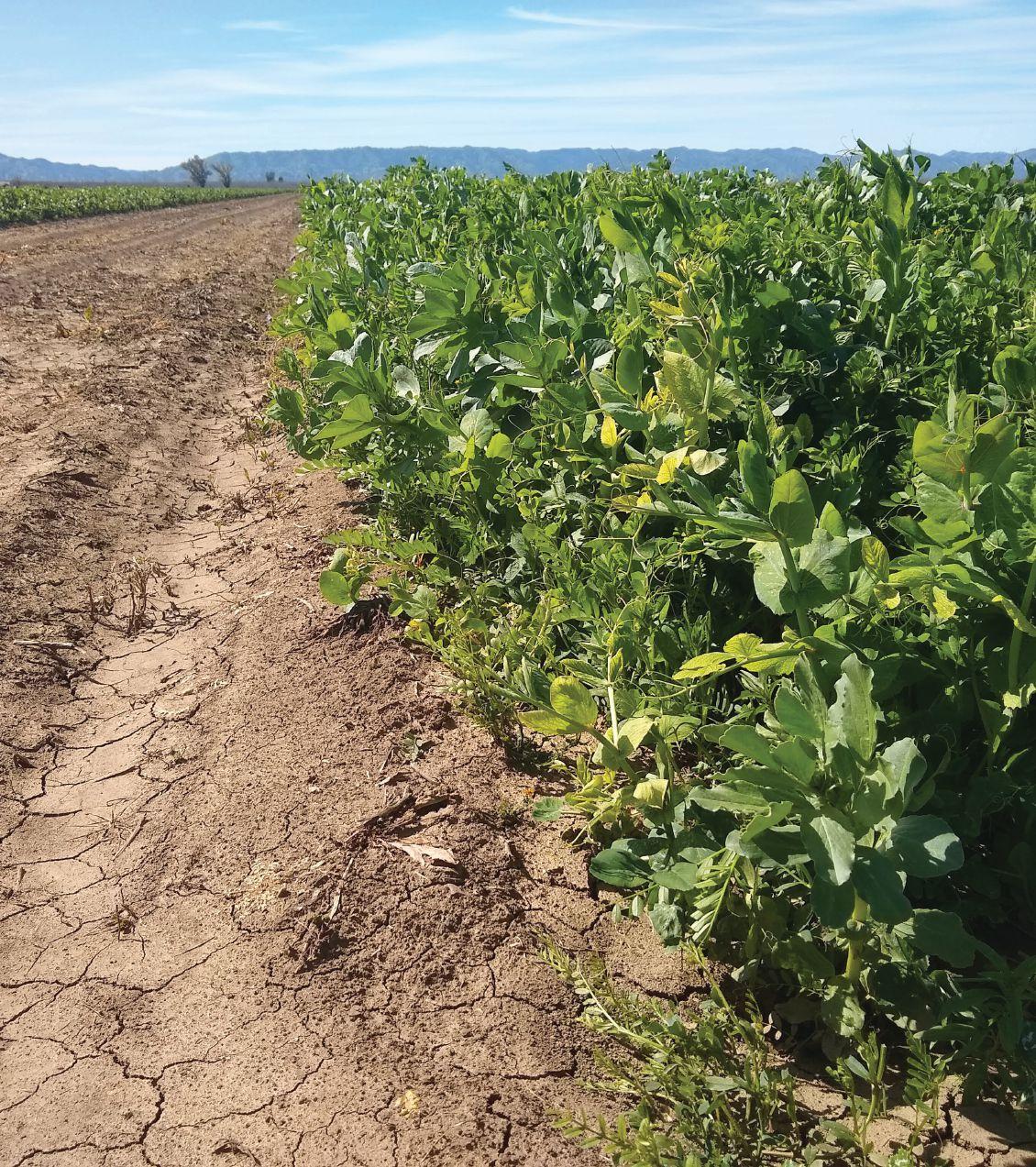
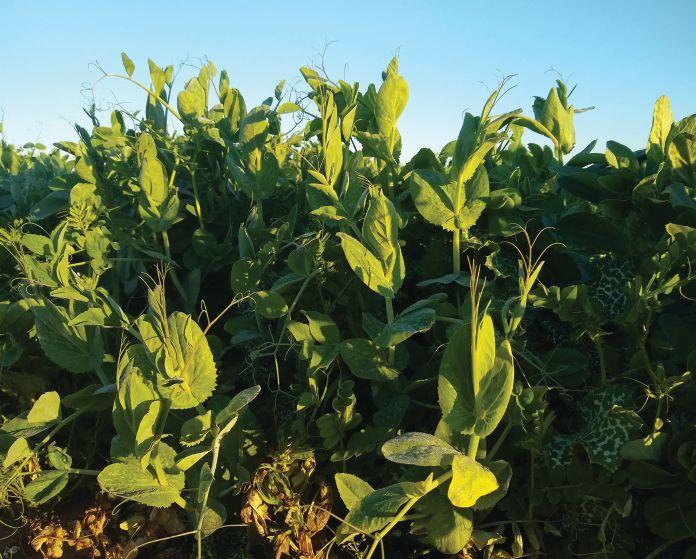
The study compared different management approaches to determine the impacts of cover crops and compost on carbon sequestration.
PHOTO COURTESY OF RUSSELL RANCH, UC DAVIS.
The incredible nominations we received for the inaugural year of this program highlighted just how many influential women there are working within Canada’s agriculture industry.
To our Top 6 recipients, those who nominated an influential woman, those who offered support through social media or tuning into the podcast series on AgAnnex Talks, and to our generous sponsors:
RATULATIONS
M EN IN CANADIAN AGRICULTURE WINNERS
Sponsored by
Presented by
Peggy BrekveldBarbara Cade-MenunKristen Phillips
Karen SchuettKaren Schwean-LardnerLaura Van Eerd
combination of composted manure and cover crops to determine the impact on SOC sequestration at different depths.”
The study compared different management approaches for two typical cropping systems: maize (corn)-tomato and wheat-fallow. The maize-based system compared: a conventional corntomato system with synthetic fertilizer, pesticides and winter fallow; a certified organic system with composted poultry manure and winter cover crops; and a hybrid conventional system with synthetic fertilizer, pesticides and winter cover crops. The winter wheat-fallow system compared dryland (rainfed) and irrigated systems with and without synthetic nitrogen (N) fertilizer, plus one dryland winter wheat trial with a winter cover crop. Depending on the system, the carbon inputs came from crop residues, cover crop residues and roots or compost.
Researchers compared SOC at five different soil depths, ranging from the zero to 30-centimeter (zero to 12-inch) surface layer down to a two-meter (6.56-foot) depth. Soil organic carbon was measured at the initiation of the experiment and at year 19 across all five depths. In many previous soil studies, the focus was only on the surface layer, where most of the nutrient, water and
crop dynamics occur, particularly in row crop systems. However, this study was one of the first to include deep subsurface soil inventories to measure SOC.
“Some of the findings were quite surprising, particularly the differences in SOC levels in deep soil versus the top soil layer across different management systems,” Scow explains. “If we had only measured the top layer, we would have missed some of the most important conclusions and not seen the synergistic benefits of the combination of compost and cover crops. What was striking was how much opportunity we found for carbon sequestration deeper in the soil.”
For the surface soil layer, the study
LEFT
Cover crops in the corn-tomato cropping system trials.
showed that over the 19 years the SOC in the top 12-inch (30-cm) layer in the conventional corn-tomato system didn’t change much; there were no real gains or losses in carbon. In contrast, the organic system showed quite a substantial gain in SOC in the top layer. SOC increases in the hybrid system were between the other two systems.
“The really interesting findings were what we observed throughout the entire two-meter profile in the corntomato system,” Scow says. “Again, the conventional SOC showed only a small loss, but the organic system with both compost and cover crops showed very large carbon storage throughout the twometer depth, increasing SOC by 12.6 percent. If we had only accounted for the SOC in the surface layer, we would have underestimated soil C sequestration in this system by 57 percent.
“Another surprise when looking at the two-meter depth was that the hybrid system with the cover crop actually lost carbon – more than the conventional system. We aren’t really sure why,” she says. “It may be related to soil microbes not getting all the nutrients they need from cover crops, resulting in losses rather than gains of carbon. A new research project is underway to try to answer this question, looking at microbial activity and access to nutrients throughout the soil.” In the wheat systems, none of the management systems had much impact on C sequestration.
RIGHT
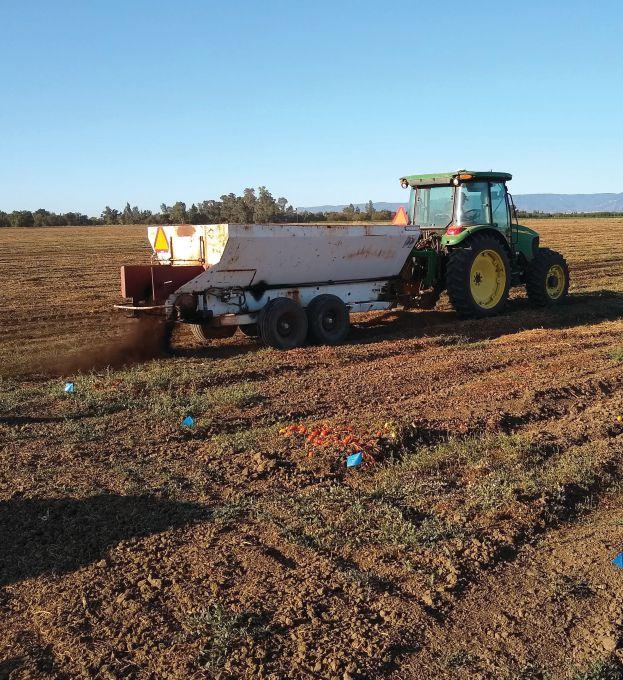
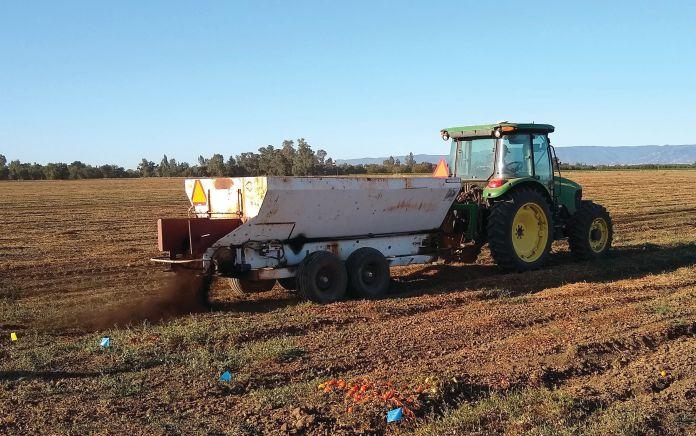
Spreading composted poultry manure on the certified organic corn-tomato cropping system trials.
PHOTOS
COURTESY OF RUSSELL RANCH, UC DAVIS.
Scow adds, the results indicated there is substantial capacity to store carbon below the top layer, which is beneficial for several reasons. The lower soil depths are below the level of tillage and other human soil manipulation activities, so soil carbon is protected from disturbance. The soil properties are different at different depths, with higher mineral fractions deeper that are able to bind tightly to organic compounds, increasing the capacity for storage. Also, lower depths are subject to lower microbial activity, protecting the carbon from being broken down.
Though it can be challenging to measure carbon deeper in the soil, it is important to consider both surface and subsoil carbon dynamics to identify and promote practices that are both practical and have the greatest benefits at depth.
“A benefit of compost is that it provides not only carbon, but vital nutrients for soil microbes to function effectively in building soil organic matter,” Scow explains. “In soils that received compost inputs, there was movement of dissolved organic carbon down into the deeper soils. However, cover crops also seemed to play an important role by increasing infiltration and water movement deeper in the soil. The combination of dissolved carbon and roots creating channels helped move that carbon down to the place where it can be stored. These inputs feed both the plant and the soil, as well as the important microbes that help to build soil structure and aggregate stability, in turn improving infiltration rates and increasing soluble nutrient soil reservoirs.
“Additional benefits of organic amendments such as compost are that they build organic matter and help reduce leakage of nutrients, like nitrate, that might otherwise leach from the system,” she says. “Other benefits of compost is crop disease suppression in systems with higher microbial biomass and diversity. Feeding the soil and microbes along with the plants is very beneficial for agriculture.”
Other research at the Russell Ranch has evaluated opportunities and benefits of various organic amendments, including manure, composted manure, composted food waste, biodigestate and biochar. In a small two-year study, three nutrient treatments were compared in a corn-wheat rotation. The treatments included 100 percent synthetic N
fertilizer, 100 percent dry dairy manure (scraped from yards including straw) and 50-50 N fertilizer/manure. The results showed equivalent crop yields from all three treatments, but with higher SOC levels in the manure treatments.
“In another recent study, we compared mineral N fertilizer, anaerobically digested food waste and dairy manure digestate biofertilizers as fertilizers for processing tomatoes,” Scow says. “The different treatments were applied through a subsurface drip fertigation system. Overall, the results were quite interesting, with the dairy manure digestate treatment having the highest tomato yields (7.13 tons per hectare, or ton/ha), followed by the food waste digestate (6.26 ton/ ha) and the N fertilizer treatment (5.98 ton/ha). The food waste treatment also produced tomatoes with significantly higher total and soluble solids contents compared to the N fertilizer treatment. Both food waste and dairy manure digestate biofertilizers show promise for use in tomatoes and subsurface drip fertigation methods.”
Looking to the future, Scow sees many opportunities to couple
sustainable farm management practices with solving current disposal problems associated with food wastes and manure. “Our research approach has been focused on carbon and nutrient inputs at the farm-plot scale and how to optimize for different outcomes and cropping systems. To evaluate overall impacts on climate change, we need life cycle assessments to measure all potential environmental impacts, such as carbon footprints, and savings associated with every stage of compost production, from collection of feedstocks, to the composting process, to transport and then application to crops.
“There also needs to be development work to come up with formulations that work with existing equipment, time constraints and are practical in the field. And we need to ensure there are no contaminants associated with these composts that would be introduced into the food system. These valuable cropping system inputs improve long-term soil carbon storage and soil health, and contribute to climate change mitigation and adaptation potential of agricultural systems. •
A LONG WAY TOGETHER
WHEREVER YOU ARE, BKT IS WITH YOU
BKT provides you tires that are reliable and safe, sturdy and durable, capable of combining traction and reduced soil compaction, comfort and high performance. BKT: always with you, to get the most out of your agricultural equipment.
Optimizing on-farm sustainable energy projects
A new model looks at maximizing profitability and technology adoption of anaerobic digesters.
BY DONNA FLEURY
Anaerobic digestion systems provide an alternative for manure management that can reduce greenhouse gas (GHG) emissions and produce renewable energy. However, economic and technical considerations are challenges to adoption of these systems.
Researchers at North Carolina State University and the University of Wisconsin have developed a planning methodology and computer model to help show farmers and investors how to make on-farm sustainable energy projects more sustainable and maximize economic returns.
The project and resulting techno-economic optimization model were developed by Mahmoud Sharara and his fellow researchers at the University of Wisconsin. Sharara, now assistant professor and extension specialist at North Carolina State University, continues to collaborate with colleagues at the University of Wisconsin, Madison.
“We were approached to review proposals for nutrient concentration and energy generation facility concepts, including a series of centralized facilities,
each a hub with contributing spokes. We reviewed the proposals to assess engineering assumptions and process economics, optimal size of cluster, and other factors. We observed the use of rules of thumb to determine maximum shipping distances of manure before it becomes uneconomical, which is a source of uncertainty.”
To assist with planning and assessment, researchers developed a computational model that tells users how to maximize the economic return on anaerobic digestion (AD) systems. The model helps identify optimal location, system capacity and geographic area recommended for the renewable energy projects. It can also generate reliable estimates for capital budgets and more accurately predict profitability of systems. It improves on earlier efforts by using advanced computational techniques to address uncertainty.
“Along with various known factors, such as which species a farm is raising and the size [and location] of each farm, the model also addresses
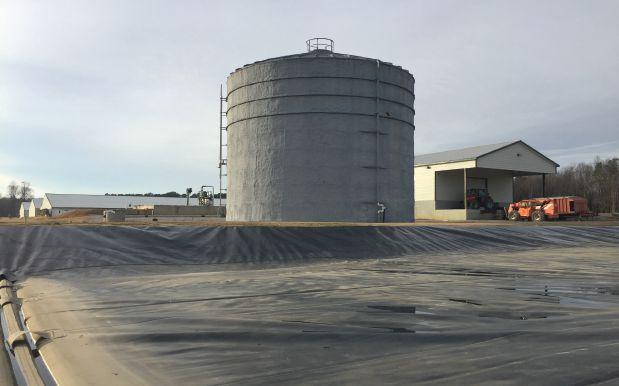
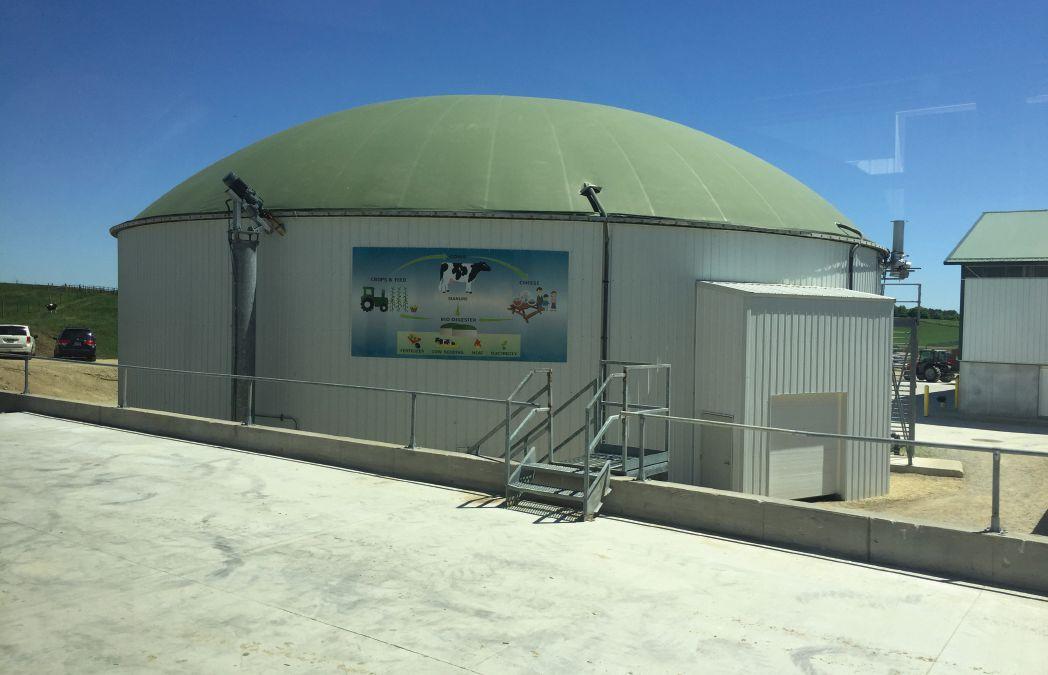
Dairy manure digester, mixed tank, in Dodge County, WI. PHOTO
different sources of uncertainty that affect the profitability of an anaerobic digester,” Sharara explains. “There are several assumptions on engineering design and efficiency and other technical and economic variables that impact the various scenarios for best value, worst value and something in the middle.
“To get the odds, it is much easier to roll a dice with two outcomes, but it is much more difficult when there is a wider range of variables. Not all of the parameters or variables move in the same direction. With access to sophisticated computing, mathematical algorithms and modelling, we can essentially simulate rolling a dice for every variable to assess profitability, using a probabilistic approach to overcome uncertainty regarding project parameters, such as manure biomethane potential, project capital, and electricity sale price.”
Researchers identified 13 key sources of uncertainty that can affect the profitability of an AD system, which, for this study, were restricted to conversion of biogas to heat and electricity and their sale to the grid, surrounding farms or processing facilities, or a combination. These include: manure biomethane potential, digester efficiency, generator efficiency, thermal recovery efficiency, parasitic thermal load, parasitic electric load, capacity factor, digester CAPEX, cost share, electric energy sale price, GHG reduction credits, thermal energy price and renewable energy credits.
Although some variables, such as future sale price of electricity or digester efficiency, are uncertain, a price range or performance range can be used in the optimization rather than one single value (eg. digester efficiency range of 75 to 91 percent). The researchers designed the model to run repeated simulations that account for variation in each area of uncertainty, and tell users which combination of factors would generate the most profit.
Once the model was developed, researchers set up two case study areas of anaerobic digester systems for dairy farms in two regions of Wisconsin to test the planning methodology. The first was a south-central region with 156 dairy herds with a total herd size of 39,851 head, and the second area had 151 dairy herds, with a total herd size of 46,557 head. A subset of technical and economic system parameters were selected for the uncertainty assessment.
The optimization model ran 1,000 evaluations for each study area, resulting in different probabilities for each region. The
most critical parameters driving the model turned out to be biomethane potential and the electricity sale price. The herd size on the host farm was an important factor in determining the feasibility of digestion projects. Geographic distribution and sizes of dairy farms played a critical role in optimizing profitability and technology adoption for ADs in both regions. For both case studies evaluated, optimizing the objectives favored development of collaborative AD systems.
“By running the model with the two
different regions side-by-side, we could compare the impact of size of farm and distances between them on profitability,” Sharara says. “Then for the ones that yielded a profitable design, we could go into more detail of all the parameters of the system and do a series of optimization for profitable outcomes.
“The model allows for adjusting and building in tradeoffs between system size and costs of production and finding
CONTINUED ON PAGE 22
MAKE YOUR DAIRY EXTRAORDINARY
FEATURES AND BENEFITS:
• Oil bath bearings - self cooled and lubricated, needs no water flush
• Disintegrator tool - for hoof blocks and other solids
• Heavy duty seal and bearing systemlonger life in severe service
• Ductile iron casing and bearing housingheavy castings for long life
• Heat treated cast steel wear parts - for longer life in abrasive grit service
• Most parts readily available from stock for expedited delivery
APPLICATIONS INCLUDE:
• Digester Feed
• Digester Mixing
• Small Pit Recirculation
• Tanker Loading
• Flush Water
• Feeding Heat Exchangers
• Manure Transfer
• Separator Feed
UNDERSTANDING manure storage system safety risks
Confined manure systems present myriad safety risks. Ensure you and your staff are aware and well-prepared.
BY TRACEY ERICKSON, SDSU EXTENSION
Are you at risk while pumping out your manure storage system? Without throwing out the “here’s your sign” card, the simple answer to the question posed in the title of this article is: yes! Many producers know and understand the risks associated with confined manure handling systems, but accidents and deaths still occur because unwarranted risks are taken as manure is handled and removed from the confined manure handling systems.
Ask yourself these questions: Does every employee understand the risks associated with confined manure handling systems? Have they received proper training when dealing with confined manure handling systems? Do you have the appropriate hazard signage posted near the confined manure handling system, warning people of the dangers? Do you have the appropriate safety gear available and have you provided instruction to employees on using the equipment? Do you have employees with limited English-speaking skills? Do they fully understand the safety risks and signage provided? Do employees and family members have the ability to communicate location directions in an emergency 911 call?
These may seem like simple things; unfortunately, they often go overlooked. We assume that everyone should know the risks and know what to do in an emergency. Taking the time to provide proper safety equipment and educate employees and family members about the correct safety protocols around confined manure handling systems helps prevent deaths and accidents.
UNDERSTANDING THE RISKS
air. The gas is lighter than air and typically found near the top of the pit, and high enough concentrations can cause death by suffocation.
Hydrogen sulfide: Hydrogen sulfide is an extremely toxic gas with a “rotten egg” smell at low concentrations; at high concentrations, it can paralyze the olfactory senses. It is heavier than air and often settles towards the bottom of the manure pit. At low concentrations, it can cause dizziness, headache, nausea and respiratory tract irritation. At high concentrations, it can cause unconsciousness, respiratory failure and death within minutes. It is also explosive at various concentrations.
Carbon dioxide (CO2): Carbon dioxide is an odorless gas that is heavier than air and often settles near the bottom of the manure pit. At low concentrations, it causes labored breathing, drowsiness and headaches. In high concentrations, it can displace enough oxygen and cause death via suffocation.
So, what is the risk with confined manure handling systems? Understanding that there is risk associated with manure pits and manure lagoons is important. They both produce toxic gases as the manure undergoes anaerobic digestive fermentation. The gases produced and the characteristics of each are below:
Methane: Methane is an odorless gas that is flammable or explosive at concentrations of five to 15 percent by volume of
Ammonia (NH3): Ammonia has sharp odor characteristics that irritate the eyes, nose, throat and lungs. Exposure to high concentrations can be fatal.
Besides understanding the various types of gases produced in confined manure handling systems, you should also follow these guidelines when working around confined manure handling systems.
MANURE PITS
These are enclosed manure storage structures, which should be equipped with ventilation systems. They are often found in dairies as manure is pumped out to a lagoon, in confined swine operation buildings, or certain types of beef finishing operations that utilize a confined building.
• Keep all manure pits ventilated and fans working properly.
• Keep all manure pits covered with appropriately ventilated grating.
• Post hazard signs near all manure pit entry point locations.
• Never enter a manure pit unless absolutely necessary and only when proper safeguards are utilized.
• If entry into the pit is necessary, test the air for toxic gases.
PHOTOS COURTESY OF TRACEY ERICKSON.
JOIN THE CONVERSATION
Register for a virtual mentorship event with some of the most influential leaders in Canadian agriculture.
This half-day virtual event will showcase select honourees and nominees of the IWCA program in a virtual mentorship format. Through roundtable-style sessions, panelists will share advice and real-life experiences on leadership, communication and balance working in agriculture.
• Never enter a manure pit unless someone is standing by and maintaining constant contact. The person standing watch should be able to lift an unconscious person wearing a safety harness attached to a lifeline. They should never enter the pit trying to rescue someone. They should have the ability to communicate necessary information in case of an emergency 911 call.
• Always wear a safety harness attached to a mechanical device such
as a winch, hoist or pulley. This is your lifeline, so the person on the outside must maintain constant contact with the lifeline.
• Always wear a positive-pressure, selfcontained breathing apparatus (SCBA).
• Provide a powered, explosion-proof air ventilation system for each manure pit that will help bring in a continuous fresh air supply.
• Never enter a manure pit to attempt a rescue without a safety harness and proper respiratory protection.
MANURE LAGOONS
Manure lagoons also produce toxic gases in localized layers, which – especially on hot, humid days with little breeze –can cause a health hazard and potential death. Gases are readily released when lagoons are agitated to remove manure to be incorporated as fertilizer into the fields. They often have a thick liquid, floating crust, which can make swimming and buoyancy difficult if you were to slip or fall into the lagoon. Additional safety guidelines for manure lagoons are as follows:
Open-air lagoons should be fenced off around the perimeter with locked access gates to keep unauthorized people or unwanted animals from accidentally entering them. Hazard signs should be posted at entry points warning of toxic gases and drowning dangers.
• Wear a safety harness attached to a lifeline with someone on the other end that can drag you out if it is necessary to enter the lagoon.
• Rescue equipment, such as flotation devices and lifelines, should be attached to every manure pump.
• Move slowly around manure lagoons as the ground can be uneven, causing a person to trip and fall.
• Never work alone, but all other unnecessary bystanders should stay away from access points or pumpout points.
• No horseplay allowed in these areas.
• No smoking or open flames allowed near agitation or pumping areas due to the explosive gases that may be present.
• If equipment breakdown occurs during agitation or pumping, shut it down and remove it from the lagoon area before servicing.
• Follow the same 911 emergency call guidelines as manure pits: be able to describe the situation, number of victims, location and directions.
Safety is not a choice. It is something that we need to practice on a daily basis in agriculture. Enclosed manure holding facilities are one of many areas in livestock operations that have inherent risks. However, by following these recommended safety guidelines and training all involved we can be safer and live to see another day with loved ones and family. •
Editor’s note: This article was originally published by SDSU Extension and republished with permission.
FINDING YOUR footing by not fearing change
Digested Organics created a niche for themselves by listening to farmers.
BY ALEX BARNARD
The course of success never did run smooth.
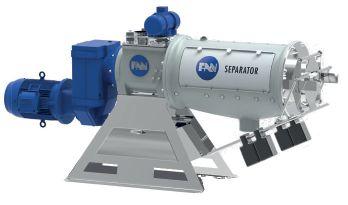
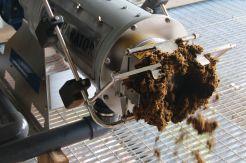
Bobby Levine, CEO of Digested Organics (DO), started the company in 2013. Currently, DO specializes in filtration of high solids, organic wastewaters – tricky wastewaters that are difficult to remediate in other ways. Their filtration equipment can separate and reclaim clean water, and many of their clients are dairy and swine farmers.
However, that wasn’t always their focus.
“When we first started the company, we thought we were going to focus on food waste digesters, and we actually had a solution for small-scale distributed food digesters,” Levine explains. “The idea was to sell [big box stores] and university cafeterias digesters to process their organic waste, make clean energy on site and reduce their disposal costs. The reality set in, after a couple years of working on that, that it was really hard to convince people not to use their dumpster. They’ve been landfilling their organic waste forever – why change, why spend more?”
Digested Organics then shifted its focus to digesting manure, ending up in conversation with a dairy farm in Wisconsin.
While he hoped that DO’s technology would revolutionize small-scale digestion for dairy farms, Levine quickly learned, by listening to the farmer, that he needed to provide a different solution.
“It was a good lesson for us in that the customer thought he wanted a digester, but what he really wanted was a way to get rid of his manure, and he wanted to concentrate his nutrients. We went there trying to sell a digester, and we ended up selling a digester. But we also ended up selling a filtration solution on the back end of that digester that effectively de-waters the product that comes out.”
frankly, looks just like what went in the digester. We still have all of these gallons, we still have to store them, we’re still worried about our lagoon overflowing, and we’re worried about nutrient runoff.’ So, the whole management of the liquid side of a dairy farm and a swine farm really became apparent to us through that work,” he says.
“I think it’s just one of those cases of focusing on something that you thought was really critical, that the customer needed to gently remind you is not that critical. But it was an important lesson for us. I think it got us moving in the right direction towards being able to provide something that the industry really needs.”
Recognizing this need and shifting their business model to fill it has helped DO remain competitive and build relationships. “There’ve been a lot of companies that have tried to sell things to farmers that don’t work. We’re very cognizant of that and we worked really hard to make sure that’s not the case for us. We want to be sensitive to that and make sure we’re providing a good solution, and we’re there to back it up.”
In discussing the needs of other dairy and swine farmers, DO found its niche.
“We went from food waste to dairy manure, and then from digestion more to filtration, by listening to the farmers tell us, ‘There’s 10 people out here who are trying to sell me a digester. But no one can get rid of what comes out of the digester, which,
In June, DO won the Manure Innovation Challenge, put on by the Yield Lab Institute, an agrifood tech entrepreneurship support organization. The Challenge consisted of a year-long program of mentorship and meetings for manure-centric start-up businesses. The Manure Innovation Challenge provided an opportunity for DO to refine their focus and work alongside others who would usually be their competition.
“Normally, we don’t want to talk to them in a way where we could disclose proprietary information, but actually it was really fun to get people that usually talk about manure in a room and be like, ‘Hey, we can all just talk about manure together.’ The other companies, I think they’re doing great work,” Levine says.
ABOVE
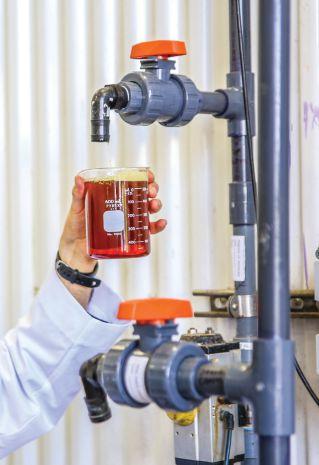
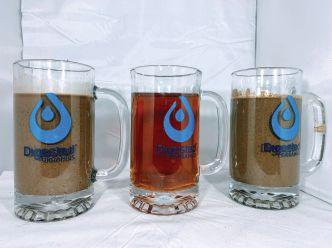
Ultrafiltered permeate, produced by running manure through Digested Organic’s filtration equipment.
PHOTOS COURTESY OF DIGESTED ORGANICS.
He notes that the problem of manure remediation is on such a large scale that there’s room for each company to succeed. “We’re very honored to have won, but this is such a massive problem that I could go sell 100 filtration systems, and there still be room for every other company to sell 100 of their systems. And we still would only touch a fraction of big farms in the United States,” Levine says. “I’m hoping they all also were buoyed by [the Challenge] and their solutions should come to the fore, as well.”
Levine notes that, with the World Wildlife Fund as a sponsor, some of the discussion centered on sustainability and how to create metrics and incentives around it. DO can sell filtration systems based on tangible benefits, like less odor, reduced hauling and spreading costs, less nutrient runoff, higher crop yields. But at the moment, there is no external validation for many sustainability benefits, like reimbursement or credits for reduced phosphorus runoff or reclaimed water.
“We went as far as brainstorming about, is there value to branding and to the end sale of the milk?” he says. “How do you get benefit for the farmer for doing something different? It’s a big conversation that is not going to happen overnight. But it was fun to be part of that.”
The Manure Innovation Challenge was intended to end in a live, public pitch competition at the Animal AgTech Innovation Summit in San Francisco in mid-March. When the event was cancelled due to concerns about COVID-19, the Yield Lab Institute took the pitch competition to a digital platform.
“On the one hand, it was a little disappointing not to be able to make it a real event. But on the other hand, totally understandable given what we’re going through,” Levine says. “I think it worked well remotely. We still were able to connect with a lot of people afterwards via social media and other outlets to
LEFT
Two mugs of manure surround one of ultrafiltered permeate. Drinking the reclaimed clean water has become a rite of passage for DO employees.
follow up and we definitely got some new international interest from it. So again, it was overall a very positive experience.”
The international exposure the virtual pitch competition provided was a major bonus for DO, and they plan to pursue opportunities in Europe in the near future.
Two things stand out to Levine as the main benefits of participating in the Challenge. “One was the platform it afforded us – the opportunity to speak at the events and the conclusion, and the social media and PR benefit that generated,” he said. “But maybe even more than that were the connections we made with the attendees at the events. Being part of it and being in that ecosystem of talking about manure sustainability has led to relationships that will be beneficial to us in the coming years.” •
TURNING LIQUID GOLD INTO ENRICHED BEDDING
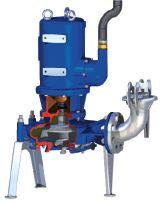
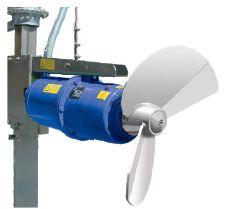
Submersible motor mixer WASTE WATER TREATMENT TURNING WASTE WATER INTO HIGH QUALITY BEDDING!
BENEFITS
• Save money • High-quality bedding made from manure
• Easy to maintain • Low energy consumption
motor pump gear unit design
BAUER North America, Michigan City, Indiana 46360, PO Box 8943 +800 922 8375, bnasales@bauer-at.com, www.bauer-at.com/en
ON TRACK
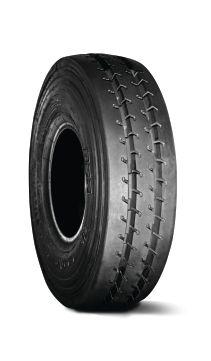
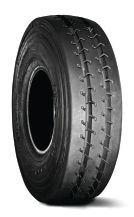
BKT introduces new tractor tire
In May, BKT launched the new LiftMax LM 63 tire, designed to fit tractors for industrial and logistical use.
The LiftMax LM 63 features low rolling resistance, reduced vibrations, stability and a more comfortable drive due to the All Steel casing equipped with multilayer steel belts. It also includes resistance to punctures and wear-and-tear, improved mileage and reduced fuel consumption.
The new LiftMax LM 63 is available in two different sizes: 6.00 R 9 and 8.25 R 15. BKT is already working on the development of new sizes to expand the range.
BKT is also expanding the LiftMax LM 81 range, a product specifically for forklifts and vehicles for the handling of empty containers. This range now includes seventeen different models. Also new is the 18.00 – 33 size for the CONTAINER KING, designed for vehicles used to lift and handle heavy loads.
CONTINUED FROM PAGE 15
Optimizing on-farm sustainable energy projects
the systems with the larger probability of profitability. For example, some farms showed up more frequently than others in the optimal solution,” Sharara explains. “Similarly, certain farms were identified as necessary for a central digester to have enough critical capacity. Compressing all of the optimizing results into one probability map can communicate the variability or the ordering of how the cluster would look in this region or how it could be dissected into certain hubs and spokes to farmers, investors and planning agencies.”
Two goals were evaluated by optimizing the economic and technical performance parameters of the system: optimizing a system for maximizing profitability, and maximizing the adoption of the technology – provided the project doesn’t lose money. In some situations, collaborators may be willing to go ahead with the investment to get a system established and sacrifice profitability for a net-zero, but no loss. This can change the decisions, for example; if profit is the priority, the probability map will identify one or two systems for
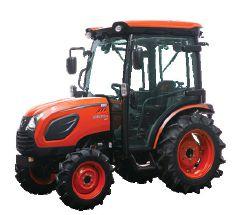
KIOTI Tractor adds new model to CK10SE series
KIOTI Tractor recently added a new model to its CK10SE series. The CK2610SE HST Cab offers the same quality and comfort the series is known for in a lower horsepower (hp) option.
The CK2610SE model features a 24.5 hp engine with hydrostatic transmission and a factory-installed cab with A/C and heat. The cab features a panoramic view, with standard front and rear window wipers. It includes a three-range transmission with twin pedal operation and Tier 4-compliant KIOTI diesel engine.
The CK2610SE HST Cab was designed with compatibility in mind, incorporating a standard rear three-point adjustment lever to easily raise and lower the telescopic lower links and stabilizers from outside the tractor when attaching implements. Dual rear remote valves allow for accommodation of a wide variety of implements. Pair the CK2610SE with KIOTI’s KL4030 front end loader, equipped with a dual lever quick-attach bucket, producing a lift capacity of 1,835 pounds. The available KB2475L backhoe lets you trench up to 89.7 inches deep with a reach of 125.1 inches.
As with other models in this series, the CK2610SE HST Cab includes an HST linked pedal, an ergonomically designed, adjustable suspension seat with dual armrests, front and rear working lights, power steering with a tilt wheel and a dual air cleaner.
a particular area. However, widening the circle may allow for building a differentsized cluster or reconfiguring the cluster by adding more hubs and spokes, but with declining profitability.
“We have published the study results and presented the results at several meetings,” he adds. “Initially it is myself and students that have the capacity and training to run the model. One critical piece is computing capacity and the reliance on optimization computing engines, but we are working with colleagues on finding an open-access, open-source engine and infrastructure that could host and run the model. I am working with graduate students to extend the model, including the ability to include multiple livestock species, integrating other sources of organic feedstock and accommodating end products.”
The second stage of the work will raise awareness for practitioners and agencies. To ensure the robustness of the model, Sharara is looking for input to make sure the assumptions and numbers are as up-todate as possible, including equipment costs and other variables.
“We want to make sure people working in planning or funding projects are aware of this sophisticated tool that can provide
interesting insights beyond just a go or no-go profitability decision. The model can rank projects, test differences in areas and compare different pricing scenarios and capital budget options, for example. For those that don’t want to write their own code, we can input data specific to a region or state, or a group of counties or provinces, to provide customized, detailed economic and technical performance parameters of a system for assessing profitability and technology adoption.”
With the planning methodology and model in place, Sharara is working on integrating other prior research components into the system. “There are several other separate pieces published earlier, such as processing nutrients and pelleting, that will be a good fit with the model, and my goal is to bring all of these pieces together,” Sharara says. “Although modelling becomes more challenging in terms of computational overhead as you add more components, the results provide far more answers and information for developing capital budgets and making economic and profitability decisions. We continue to work with [those] who are interested in using the model to assist with project planning and new capital investments for anaerobic digestion systems.” •
EFFICIENT SOLIDS LIQUID SEPARATION
ORGANIC FEED SYSTEMS
BIOSELECT
+ Solid Liquid Separation
+ With Structure
+ Without Chemicals
POWERFEED
+ Feeding and Transfer of Organic Waste
+ Closed Loop System
+ Process Control
+ Energy Efficient
INNOVATIVE DESIGNS FOR HANDLING LIQUID WASTE SLURRY
Designed using the
Stay connected. Stay in Control.
Back to basics: sampling manure
While it seems exceedingly basic, one of the most common questions I get asked is how to take a good manure sample. When planning to apply manure to a field or pasture, you need to know the nutrient content to determine how much manure to apply and to make sure you don’t over-apply; this requires manure sampling. And taking a good, representative sample is important for accurate application.
There are many tables out there that give average nutrient values for manure, called book values, but we advise against using these as the actual values can vary widely due to a variety of factors, such as storage facility, bedding, and diet.
WHEN TO SAMPLE
There are two main options for sampling timing: prior to application or during application. For large operations, we recommend sampling manure at application right off the spreader or during pumping to get the best estimate of what is actually being applied. The main drawback with this approach is you won’t get results back until after application. But once you’ve sampled a few times, the nutrient content should remain similar as long as no management practices have changed. So, keeping good records is important!
For small farms with solid manure, sampling
HOW TO SAMPLE SOLID MANURE
To sample solid manure, use a shovel or probe to dig out a small amount of manure from the stockpile or spreader. Try to avoid sampling from the edges or crust and vary the amount of bedding in the sample. Take many small samples from many locations and place in a clean plastic bucket. Then, mix your small samples together in the bucket with a gloved hand or stick. The more samples taken, and the better you mix them together, the more accurate your results will be. Next, take a sample of the manure you mixed and place it in a well-labeled, double-bagged plastic sample bag. Finally, freeze the sample before sending it to the testing lab. You do not want to leave the manure sample in a warm area because some of the manure nutrients will be converted to gas within the bag and lost when the bag is opened. If you are mailing the sample to a testing lab, try to send it at the beginning of the week so it doesn’t sit in a delivery service vehicle over the weekend.
HOW TO SAMPLE LIQUID MANURE
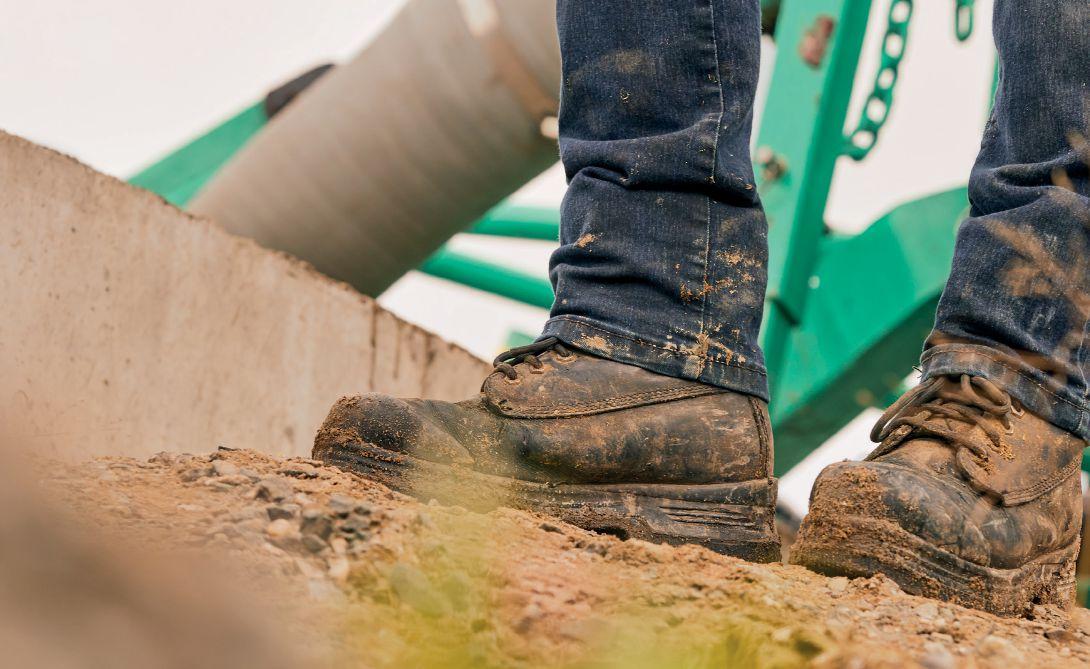
As always, safety during manure sampling is important.
from the stockpile before application is acceptable since the amount of manure is low and less likely to be highly variable, compared to large volumes of manure.
HOW OFTEN TO SAMPLE
The frequency of sampling largely depends on what record-keeping is required in your location. As a minimum, we recommend sampling annually for the first three years of operation, and then every three to four years or whenever manure management changes. However, sampling more often – every year or at each time of application – will give you the best opportunity for accurate application.
Sampling liquid manure uses the same principles listed above: take a lot of samples and mix them well. You can take a sample of the well-agitated manure during pumping or from the applicator. A ladle or cup on a stick work well to take many small samples to place in your clean plastic bucket. Once you’ve mixed the samples together well, place a sample in a plastic widemouth container with a screw top. Do this quickly as the solids will begin to rapidly settle out once you stop stirring. Often, testing labs will have sampling jars available. To prevent leaks (and an angry mailman), place the sample jar in a sealable bag and freeze before sending.
As always, safety during manure sampling is important. Hydrogen sulfide gas from manure can be extremely toxic and cause nausea, fainting, and in high concentrations, instantaneous death. Remember that high concentrations of this harmful gas are most likely to form in storage during agitation and can happen in both confined and open pits. Happy sampling! •