Connecting phosphorus producers with phosphorus users. | 14
Daring to change
Dairy farms respond to the climate through manure separation and bio-digestion. | 18
Top of the flock in management Manure methods from a turkey farm. | 22
November/December 2019
NOV/DEC 2019 Vol.17, Issue 6
Made from manure
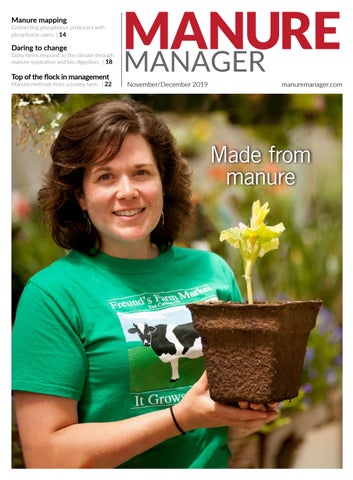
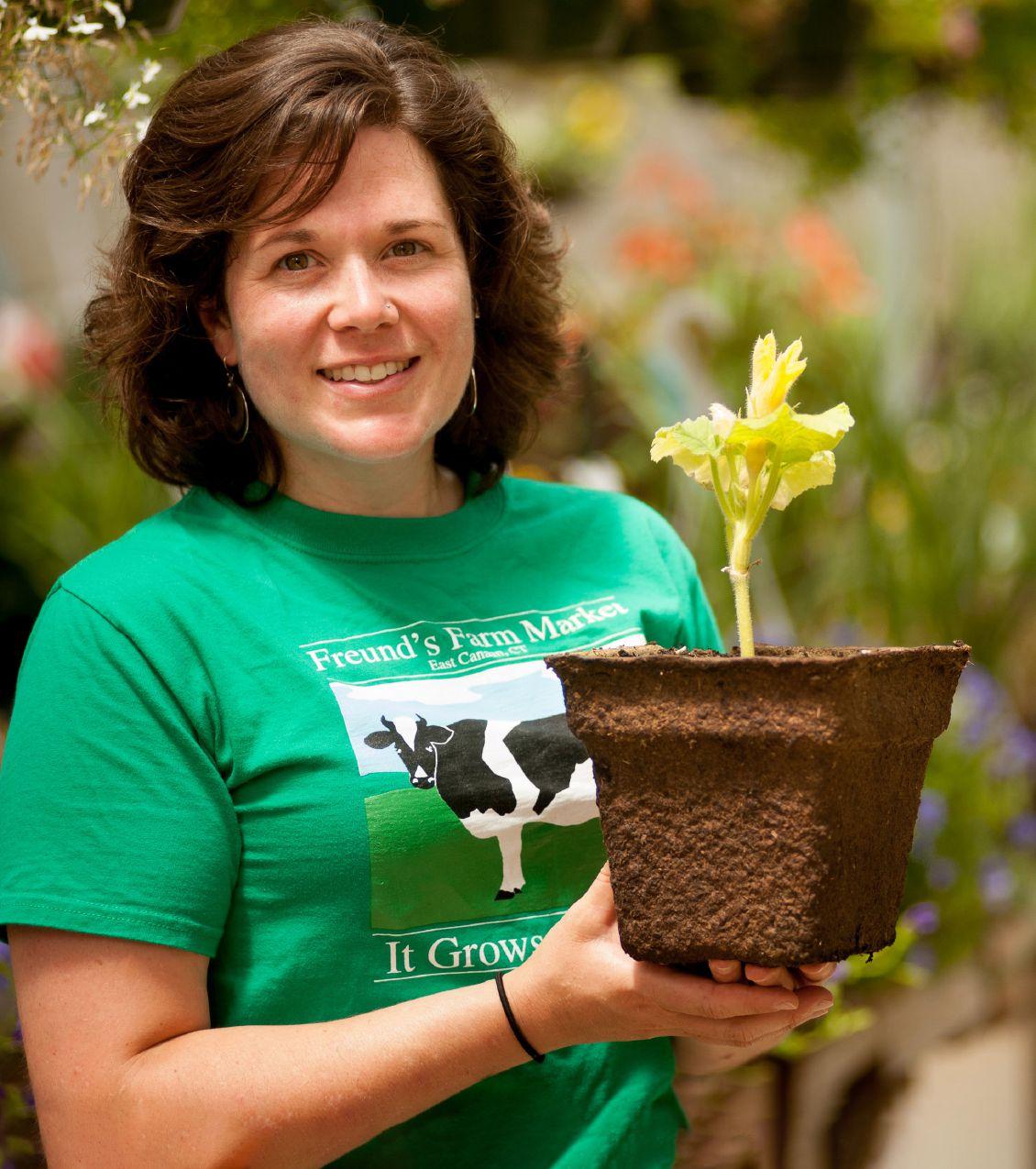
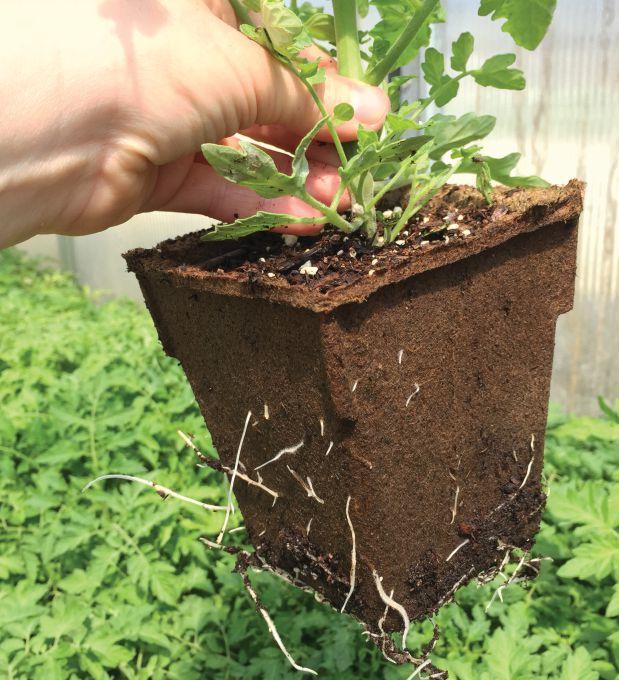
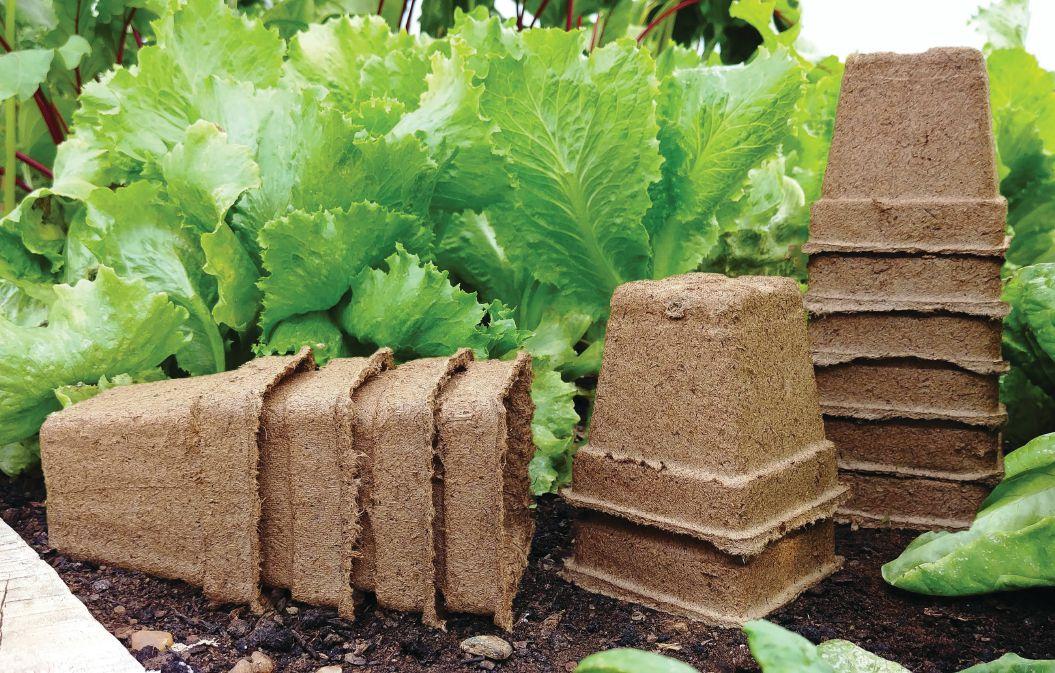
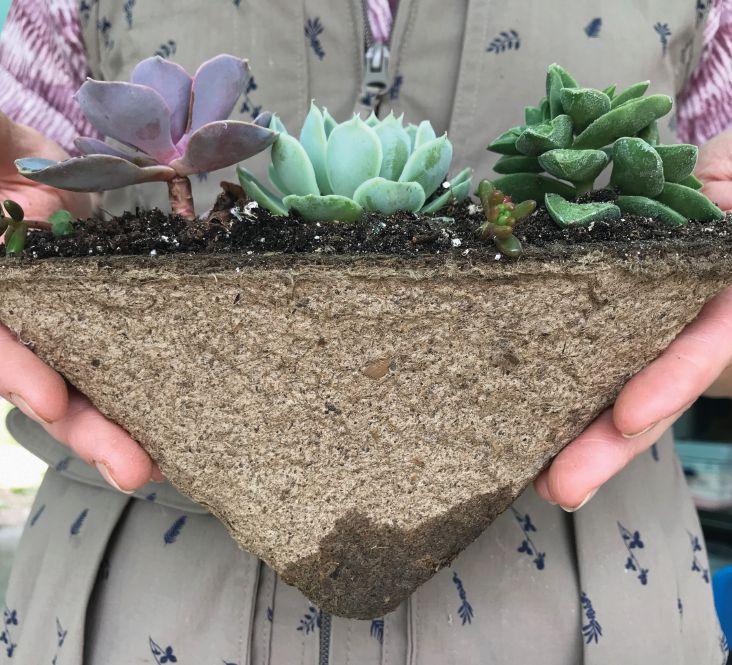
CowPots are biodegradable planting pots made from composted and dried dairy cattle manure.
A Connecticut farm is transforming their manure into planting pots and biodegradable packaging material. See page 10.
Photo courtesy of Matt Freund.
14 18 22 Manure mapping Boosting sustainability by matching phosphorus producers with phosphorus users. BY
RONDA PAYNE
Daring to change
Manure separation and bio-digestion emerge as some of the best ways to reduce emissions.
BY TONY KRYZANOWSKI
Top of the flock in management
Large turkey farm uses numerous methods to manage manure on the operation. BY
RONDA PAYNE
Making manure mainstream
In late October, Toyota announced that its new electric vehicle, Mirai, could be powered for a year using the manure of just one cow. Essentially, hydrogen extracted from the manure of one cow would be enough to provide enough fuel to run the car for a year of average mileage, according to an interview the company’s chief technology officer did with The Irish Times This is huge given the backdrop of a changing climate, rising demand for alternative sources of energy, and a growing environmentally conscious consumer base. But, manure isn’t new – it’s always been here, and it’s becoming mainstream as more consumerfacing companies start to notice its potential.
New digester projects, where dairy or hog operations are connecting to the electric grid to help provide an alternative source of renewable energy, are popping up on a regular basis. Whether its blending into a pipeline, being applied on corn, or being spread on the freeway through
neighbors moving into rural areas and complaining of odor during times when manure was being applied. But, as you’ll see in some of the articles within this issue –one man’s manure is another man’s treasure. Little do those neighbors know, manure is becoming a sought-after commodity. So, while Toyota may be onboard with manure, it’s important that customers join them too.
Some kinks in logistics still need to be smoothed out, but there’s no doubt that manure has potential beyond the field. Take the story on page 10, for example: manure is being turned into planting pots and biodegradable packaging material. And, on page 14, you’ll read about researchers who have joined forces to map out the manure hot spots in the world to better connect those who are looking for manure and those who have manure. It’s important that those looking to work with manure are able to access it for manure to continue to grow as a resource outside of agriculture.
“One man’s manure is another man’s treasure.”
vehicles, manure has entered the mainstream. It’s great to see that manure is spreading – pun intended – but it’s not yet at the level where it’s being accepted with open arms.
At a recent conference for Canadian farm writers, a discussion sprung up about the urbanrural divide in British Columbia. Anecdotes were shared of urban
As the winter season comes upon us, take the time to see the potential in your own manure. What kind of partnerships can be built? How can manure turn into an investment in a sustainable future? As you flip through the pages of this issue, may a spark be ignited that brings on new opportunities in 2020. Have a wonderful holiday season! •
MANURE
ext. 277 scroley@annexbusinessmedia.com
Associate Editor STEPHANIE GORDON (437) 688-6107 (416) 510-5116 sgordon@annexbusinessmedia.com
Tel: (416) 442-5600 ext 3555 Fax: (416) 510-6875 (main) (416) 442-2191 Mail: 111 Gordon Baker Rd., Suite 400, Toronto, ON M2H 3R1
Occasionally, Manure Manager will mail information on behalf of industry-related groups whose products and services we believe may be of interest to you. If you prefer not to receive this information, please contact our circulation department in any of the four ways listed above. Annex Privacy Officer privacy@annexbusinessmedia.com Tel: 800-668-2374
All advertising is subject to the publisher’s approval. Such approval does not imply any endorsement of the products or services advertisted. Publisher reserves the right to refuse advertising that does not meet the standards of the publication.
Features:
• Confidently apply and document liquid manure nutrients at the right rate in the right place
• Visualize and share as applied nutrient data with those that help you make even better decisions in your operation
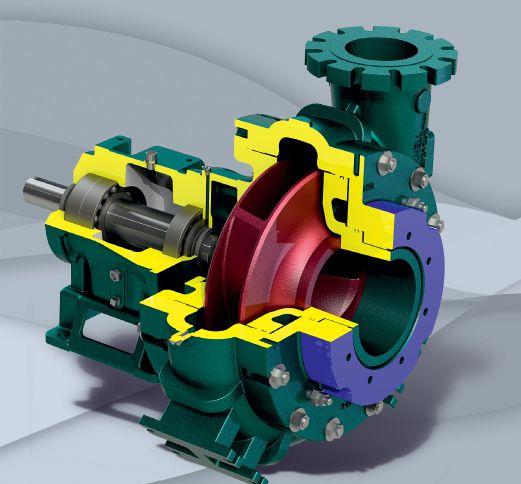
6819MPC PUMP BEST SELLER WITH MANURE PUMPERS.
HANDLES UP TO 3” SOLIDS. EXCELLENT EFFICIENCY AND CYCLOSEAL®
CYCLOSEAL® SYSTEM
STANDARD FLOWS TO 4,250 GPM / HEADS TO 600’
HEAVY-DUTY CONSTRUCTION
THICK CROSS-SECTIONS FOR ABRASIVE WEAR AND HIGH OPERATING PRESSURES
ENCLOSED WHITE IRON IMPELLER
REPLACEABLE WHITE IRON WEAR PLATE
HIGH-CHROME WHITE IRON OR HYBRID DUCTILE IRON PUMP-END
Start-up modernizes manure at Forbes Under 30 Summit
Livestock Water Recycling (LWR), a manure startup, joined this year’s presenters at the 2019 Forbes Under 30 Summit in Detroit, MI. This summit convenes 10,000 of the world’s brightest young leaders in business, entertainment, and sports.
Karen Schuett, cofounder and CEO of LWR discussed how businesses and AgTech investment are making an impact on the ag industry.
“Farm productivity has never been more important, and we have proven that sound environmental practices don’t have to come at the expense of profit,” Schuett said.
A “circular economy” - where resources enjoy multiple life cycles - is established when the LWR
is added to a farm. The LWR system concentrates manure into two dry solid fertilizers, phosphorus and nitrogen, and recycles clean reusable water.
“Renewable energy is at the core of sustainable economic growth, precision agriculture improves productivity, sustainability, and profitability, and data analytics feeds production. Maximizing the value of manure within the circular economy is where we are having a tremendous impact on how our food is produced.”
In October, LWR took home the $250,000 USD prize for their technology in the early-stage category of the Nutrien-Radicle Challenge held in Saskatoon, SK.
RESEARCHERS FIND MULTIPLE EFFECTS ON SOIL FROM MANURE FROM COWS ADMINISTERED
A new study led by Colorado State University and the University of Idaho found multiple effects on soils from exposure to manure from cows administered antibiotics, including alteration of the soil microbiome and ecosystem functions, soil respiration and elemental cycling. The team also saw changes in how plants allocated carbon below ground and take up nitrogen from the soil. In addition, they observed a decrease in ecosystem carbon use efficiency. This means that when antibiotics are used, less carbon is stored in the soil and more is lost to the atmosphere as carbon dioxide.
The study, “Prolonged exposure to manure from livestockadministered antibiotics decreases ecosystem carbon-use efficiency and alters nitrogen cycling,” is published in Ecology Letters Carl Wepking, the lead author and a postdoctoral fellow in the Department of Biology at CSU, said the findings give him “pause” due to the widespread use of antibiotics.
Virginia Tech Department of Dairy Science.
Previous research found researchers injecting antibiotics into manure, then adding it to the soil, or adding raw antibiotics to the soil. The design of this study offered a much more realistic and applicable design.
In the U.S., 80 percent of antibiotics are used in livestock production. Globally, livestock antibiotic use is projected to increase by 67 percent by 2030. For the study, researchers analyzed ecosystems exposed to manure from cattle given no antibiotics and manure from cattle given a common antibiotic, as well as a control sample not exposed to manure. All of the manure samples were collected from standard dairy operations maintained by researchers from the
The research team also used a pulse-chase experiment, a technique to examine elemental cycling, focusing on the manure’s effect on whole ecosystems. Scientists took samples over the course of seven days, and found that in the presence of antibiotics, carbon traveled into the above ground plant material, to the roots of the plants, into the soil and respired back out as carbon dioxide much faster than any of the others.
“There was much less of that new carbon
retained in the system compared with other soils we sampled,” explained Wepking.
It’s often thought that manure is a helpful fertilizer, and that it adds nutrients and carbon to soil but this benefit might be offset if antibiotics are administered to livestock.
While more research is needed, Wepking said given the study’s findings, people may want to consider the effects of antibiotics in the soil when using manure as fertilizer.
“It’s already welldocumented that overuse of antibiotics is a problem for humans, and that we are running out of effective antibiotics to treat bacterial infections. Based on this research, we have learned that antibiotic use also has environmental effects,” said Wepking.
2019 Biogas Award Winners announced
Eight biogas projects received awards from the American Biogas Council (ABC) for their outstanding performance and contribution to the U.S. biogas industry. The awards were announced at BioCycle REFOR19, the ABC’s annual conference.
This year, five projects received 2019 Project of the Year designation in the categories: dairy, agriculture, merchant, municipal, and landfill. The winning projects in dairy and agriculture were: the Valley View project, which creates renewable natural gas (RNG) from hog waste in Greencastle, MO; and, the Calumet Renewable Energy project which manages dairy RNG through a virtual pipeline in Newton, WI.
Jordan Dairy Farm in Rutland, MA, received the 2019 Longevity Award for over five years of continuous operation and Renovar Arglinton LTD won the 2019 Innovation of the Year award. The Renovar Arlington LTD - Landfill and Waste-Water Digester (WWTP) Gas Upgrading project is based in Landenberg, PA.
Also, due to an increased number of projects in development, one of ABC’s judges created a new category, the 2019 Up-And-Coming Biogas Project Award. Vanguard Renewables/Vermont Gas Project, which involves a partnership between a local gas utility, academic institution, farm, and investor in Salisbury, VT, took home the title.
Manure survey: Waste or valuable agricultural resource?
Stories about manure often illustrate two opposing sentiments. Is manure a “waste” that pollutes our water resources and creates undesirable nuisances for communities? Or, is manure a “resource” that reduces the demand for importing greenhouse gas intensive inorganic fertilizers and improves the health of our soils?
A team of university educators and agricultural organizations have released a survey hoping to better understand the factors that impact manure use on cropland.
Both statements about manure contain some truth. However, the balance of the truth lies in the management choices made during the storage and utilization of animal manures. When using manure in cropping systems, “How can manure’s pros be maximized and cons minimized?”
Some questions the survey hopes to answer are:
What issues are most important to you as you make decisions for the use of manure in cropping systems? Why do you choose manure over other fertilizers? Or commercial fertilizers instead of manure? Manure can create challenges; but which of these challenges are “deal breakers” preventing manure use on some fields? Which barriers and benefits drive your decisions about manure use in cropland?
The 15-minute survey is accessible online at https://go.unl.edu/manure and will close on Jan. 31, 2020.
Partners for the survey include members from across the University of Nebraska-Lincoln, Iowa State University, the University of Minnesota, USDA’s North Central Region Sustainable Agriculture Research and Education (NC-SARE) Program, and Manure Manager, as well as The Fertilizer Institute.
BY THE NUMBERS - THE COST OF LIVESTOCK
USDA opens 2020 enrollment for Dairy Margin Coverage program
Dairy producers can now enroll in the Dairy Margin Coverage (DMC) for calendar year 2020.
USDA’s Farm Service Agency (FSA) opened signup on Oct. 7, 2019 for the program that helps producers manage economic risk brought on by milk price and feed cost disparities.
The DMC program offers reasonably priced protection to dairy producers when the difference between the all-milk price and the average feed cost (the margin) falls below a certain dollar amount selected by the producer.
The deadline to enroll in DMC for 2020 is Dec. 13, 2019.
Dairy farmers earned more than $300 million dollars from the program in 2019 so far. Producers are encouraged to take advantage of this very important risk management tool for 2020.
Mining manure for phosphorus
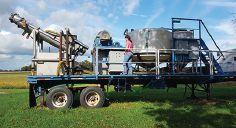
MAPHEX, the shorthand name for a mobile system that removes phosphorus from manure, is steps closer to offering dairy farmers greater flexibility in where, when, and how they use the nutrient to fertilize crops.
The Manure Phosphorus Extraction System is the invention of a team of scientists led by Clinton Church, with
All producers who want 2020 coverage, even those who took advantage of the 25 percent premium discount by locking in the coverage level for five years of margin protection coverage are required to visit the office during this signup period to pay the annual administrative fee.
“Dairy producers should definitely consider coverage for 2020 as even the slightest drop in the margin can trigger payments,” said Northey. “Dairy producers should consider enrolling in DMC to guard against what has been, for several years, an extremely unforgiving market.”
For more information on enrolling in DMC and taking advantage of an online dairy decision tool that assists producers in selecting coverage for 2020, visit the DMC webpage: fsa.usda.gov/ programs-and-services/ dairy-margin-coverageprogram/index.
the Agricultural Research Service’s (ARS) Pasture Systems and Watershed Management Research Unit, and Alex Hristov at Pennsylvania State University’s (PSU) Department of Animal Sciences. Both are in University Park, Pennsylvania.
According to Church, an environmental chemist, the system was designed to remove phosphorus from liquid manure and concentrate it in a dried form that’s easier to transport – for example, to off-site fields, where it can be spread onto crops in need.
Mindful of the environmental
New solid separation resource released
The Natural Resources Conservation Service (NRCS) has a new technical document entitled “Solid-Liquid Separation Alternatives for Manure Handling and Treatment.” This document brings together both the theory behind solidliquid separation and the practical application of many different separation technologies. Several farm scale demonstration projects are also summarized in the report.
Solid-liquid separation can serve to achieve many livestock operational objectives such as nutrient partitioning, improved pumping characteristics, solids removal from storage facilities and reduced organic loadings. The use of separation technologies is essential for many operations and have become an integral
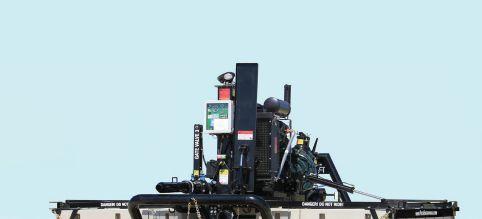
and economic constraints, the team designed MAPHEX to operate atop a flatbed trailer that can be driven straight to where it’s needed, namely, the lagoons or holding tanks where dairy farms store liquid manure.
The system, which ARS and PSU share a joint patent on, works in three stages to filter out increasingly smaller fiber particles and other phosphorus-containing solid matter from manure. The remaining water, which contains nitrogen, can be recovered and applied to crops.
part of the efficient performance of these livestock facilities. Some of the purposes and uses of this document include assisting in solid-liquid separation technology selection, evaluating separation performance, and quantifying the impact of solid-liquid separation on manure management.
On Oct. 18, 2019, a webinar provided an overview of the document including methods of solid-liquid separation, influence of manure characteristics and handling methods, fundamentals of solidliquid separation, performance of various solid-liquid separation technologies, unique separation technologies and applications and design considerations. The recorded webinar is available online through lpelc.org/whats-newwith-solid-separationnrcs-has-an-answer.
As the researchers envision it, the system might service 10 small dairy farms (about 100 cows) on a 10-day rotational basis – perhaps through a cost-sharing venture like a cooperative – or be permanently installed in place on a single large farm (2,000plus cows) on a 24-hour basis.
The team has applied for a provisional patent on the DE recycling method and is seeking a commercial partner to further develop the system, which also has potential to remove phosphorus from poultry and swine manure.
MADE FROM manure
A Connecticut farm is transforming their manure to planting pots and biodegradable packaging material.
BY TREENA HEIN
The Freund brothers experimented with thousands of prototypes for their planting pots made from manure before arriving at the final design.
One man’s manure is another man’s treasure, and that’s exactly what’s happening with CowPots. CowPots are biodegradable planting pots made from composted and dried dairy cattle manure. “The initial research and development began in 1997 after we built a digester and were looking for opportunities in which we could utilize the digested fibres coming off the screw-press separator,” notes Matt Freund, who co-founded the company with his brother Ben. With their families, Matt and Ben milk a herd of 300 cows with robotic systems in addition to growing field crops.
When they first started separating their solids, the Freunds composted and sold them. However, their neighbours with a much larger dairy herd started doing the same, but at a price the Freunds couldn’t compete with. They looked for alternatives, and after a number of trials, started using their solids for cow bedding. However, the brothers were still looking for a way to remove some manure from the farm on an ongoing basis, which would be a positive for both the farm business and the environment.
Phosphorus loading of watersheds is a serious issue in New England, and Freund notes that the Natural Resources Conservation Service of the United States Department of Agriculture (USDA) is working to determine a phosphorus cap for P application on Connecticut farm fields. Many of the state’s fields are already over the likely P threshold, he says, and in some cases by double or even triple.
LEFT
Recently, the brothers have expanded to created packaging –like packing corners – from their material. Photos courtesy of CowPots.
HOW IT ALL STARTED
When Matt first tried to make the prototypes, he experimented with various methods and shapes, and even dried them using the family toaster oven. Later on, the Freunds received of grant of $700 from the Sustainable Ag Research and Education Program (SARE) to focus on their idea and spared the rest of their kitchen appliances.
The brothers looked for a way to remove manure from the farm on an ongoing basis.
The Freunds had the idea to make biodegradable planting pots from composted manure and kicked the idea around at a meeting of the Canaan Valley Agricultural Cooperative. The Cooperative brings together livestock farmers, personnel from the state and federal departments of agriculture and energy, University of Connecticut Extension staff and more to discuss better nutrient management. What started as a conversation became CowPots. Freund says that since they officially launched CowPots in early 2006, 12 to 15 per cent of the farm’s total manure leaves the farm that way. Some solids are still being used for cow bedding, and Freund explains that they’ve “managed to meet the needs for both, [although] there are times in the year where the CowPots factory demands more of the material.”
The CowPots business generates an important stream of farm income for the family. Two of Matt’s children, Amanda and Isaac, work full-time at CowPots and farm’s businesses. Matt’s wife Theresa and daughter Rachel work at the farm market and garden centers, where they make use of thousands of CowPots every year.
The grant allowed them to invest in equipment to prove the concept of their idea. “It also demonstrated that we could follow through and were accountable,” Freund explains. “This was an important jumping off point for future grants. We’ve successfully received another SARE grant, as well as USDA Small Business Innovation Research Phase 1 and 2 grants to make real capital investments in our process.” They also procured grants from USDA Rural Development and USDA Rural Energy for America Program (REAP), as well as from the Connecticut Department of Agriculture and Department of Energy and Environmental Protection.
Thousands of prototypes in the early 2000s never made the cut, and ended up being used among regular cow bedding and then, into the digester. The process started all over with new prototypes.
Along the way, after approaching organizations for help, Freund found a Canadian equipment manufacturer who was able to provide some guidance on the best manufacturing process. “Then I inspired a retired engineer to help me refine the process and develop the equipment we needed to move forward,” he recalls. “We use a pulp molding process. The forming machine is custom-built to meet our production needs. The pots are dried to zero percent moisture to eliminate any E. coli issues.”
EFFICIENT SOLIDS LIQUID SEPARATION
ORGANIC FEED SYSTEMS
BIOSELECT
+ Solid Liquid Separation
+ With Structure
+ Without Chemicals
POWERFEED
+ Feeding and Transfer of Organic Waste
+ Closed Loop System
+ Process Control
+ Energy Efficient
MARKET LIFTOFF
In the first year, they approached hardware stores, garden centres and growers in their tri-state region, which include New York and Massachusetts. “We were introducing a brand-new product to the market at a very high price, so at first the product (and we farmers) were met with some skepticism,” Freund recalls. “It was a slow but steady buildup of local business interest.” He adds that the price has come down significantly as their cost of production have decreased.
One of the early adopters was a national catalog business called Gardeners’ Supply Company, the leaders of whom, Freund says, appreciated the innovation and the environmental qualities of the product. The Freunds also received assistance from the USDA to attend an international trade show for growers in Essen, Germany, which put them face-to-face with potential new customers. “At that show, we were visited by one of the largest greenhouse growers in the U.S. who decided to begin using our product in one of his commercial greenhouses for growing bedding annuals,” Freund says.
The greenhouse deal helped break the ice, but another big marketing turning point came when, during the summer of 2006, their application to appear on the television show Dirty Jobs was approved. By the fall, they were shooting their segment with host Mike Rowe. “There are reruns on to this day and it has played in 120 countries,” Freund says. “At the time, we were still such a new company that
we were underprepared for the attention it would bring to our homemade website, and it actually exceeded our bandwidth and our site crashed following the airing of the ‘Poo Pots’ episode. To this day, people recognize our product as ‘that thing from Dirty Jobs.’ I can’t put a direct money amount on the sales, but the international recognition and attention for a small start-up company has been very impactful.”
In 2007, the show’s host Mike Rowe asked Matt to join him on Larry King Live, which gained them further attention. In the same year, working with Gardeners’ Supply Company, CowPots received national recognition from winning the Green Thumbs Award from the Direct Gardeners Association. In 2008 and 2009, the Freunds presented their product on The Martha Stewart Show and The Today Show.
Along the way, the family persisted in getting CowPots into some of the big national retail chains. “Eventually, ‘no thanks’ turned into ‘sure, we’ll give it a try,’” Freund says. “That’s how we got CowPots into True Value and Tractor Supply Company.”
LOOKING AHEAD
As you might have guessed, the future for this environmentally-conscious, effective and innovative product is looking bright. The Freunds are routinely asked by other farmers if they can be manufacturers, and just in September 2019 alone, they fielded requests to license the technology by business people in Ivory Coast, Australia and England. However,
the Freunds feel that at this stage in the development of CowPots, they are not quite ready to look to additional manufacturing sites.
Despite not looking for manufacturing sites, they are still diversifying what they manufacture. Most recently, CowPots Packaging was launched during PackExpo, a trade show dedicated to packaging equipment held in Las Vegas in September 2019,. The company launched a “new alternative to fiberboard” with biodegradable items like packaging corners that protect items during shipping. Instead of throwing packaging material in the trash, customers can throw the CowPots fiber in their garden, yard, or compost to naturally degrade.
When asked about the whole journey, Freund says determination has certainly played a big role, but adds, “Each year along the way, we’ve had reason for optimism, from university trials demonstrating our pots stood out against competition with horticultural benefits to growers sharing their testimonials on how well the pots worked for them . . . some years it’s been as simple as a few new customers or a big grower-prospect that gives us reason to keep moving forward.”
They’ve needed that determination and optimism, as CowPots have always been a premium product competing with cheaper alternatives. However, Freund adds that “we’re hoping the increased attention on the need to reduce plastics will drive more stores, growers and consumers towards renewable and biodegradable alternatives like our pots.” •
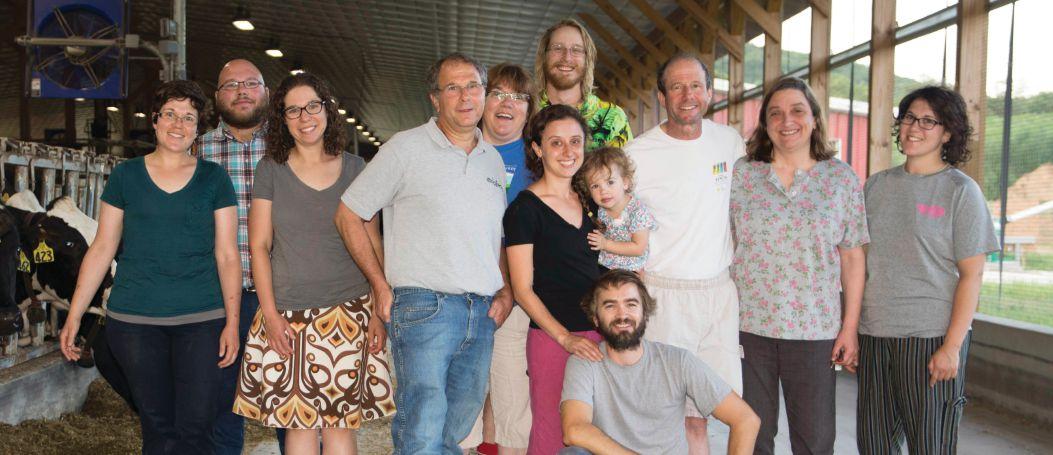
The entire family is involved with the CowPots business, from working behind-the-scenes to using the planting pots in their farm market and garden centers.
Manure mapping
Connecting phosphorus producers with phosphorus users to increase the sustainability of this crop nutrient.
BY RONDA PAYNE
One of the biggest challenges with manure is making the connection between the provider and the user: those who have it struggle with where to put it, and those who need it can have a hard time finding it. Sometimes these two groups can be closer in geographical distance than previously thought, but still worlds apart because they don’t have a way to find each other.
Through the Stevens Institute of Technology, researchers have found ways to identify regions with large volumes of manure-based phosphorus, as well as regions that lack it, to enable its recovery, recycling and reuse.
Phosphorus is a finite resource produced from rocks containing the nutrient. Sources aren’t evenly distributed around the globe, leading to production and import expenses that could be partially reduced if phosphorus recovery became common. A statement from the Institute earlier this year notes that in 2019, the world’s farmers
ABOVE
will use more than 45 million metric tons of phosphorus fertilizers. At the current rate of use, known sources of the nutrient won’t run out for several centuries, but it remains an essential farming resource with limited availability. Despite finite quantities, phosphorus can be recycled.
MANURE MAPPING PROJECT
Steve Powers is the first-author and driving force behind the Manure Mapping project. He was a researcher and instructor at Washington State University throughout its development. Working alongside him, often virtually, were a number of other researchers from around the world, including David A. Vaccari, professor of environmental engineering with the Stevens Institute of Technology. Powers, Vaccari and other contributors came from four continents and a number of countries, each involved in a number of aspects of the project, managing to integrate
Phosphorus sources aren’t evenly distributed around the globe, leading to production and import expenses that could be partially reduced if phosphorus recovery became more common.
their work in-person and virtually.
The collaboration between Vaccari and Powers began about four years ago and led to the identification of regions where there is an excess of phosphorus or a need for it. Data sets of crop production and concentrations of humans and livestock farming allowed for “hot spots” of need or excess to be defined. These hot spots were then put into a grid of the earth divided into approximately six-mile (10-kilometer) blocks to allow for regional identification
of manure source and lack locations. While Vaccari’s own work looked at the movement of phosphorus through the food system, it lacked the regionalization that made the knowledge actionable.
“It’s a systems view of all those flows,” he says of his work in looking at the movement of phosphorus. “To see which layer in conservation efforts would give the most bang for the buck. Of course, manure is one of those. One of the criticisms of my work, the high-level model I worked on, [was that] it was not
MAKE YOUR DAIRY EXTRAORDINARY
FEATURES AND BENEFITS:
• Oil bath bearings - self cooled and lubricated, needs no water flush
• Disintegrator tool - for hoof blocks and other solids
• Heavy duty seal and bearing systemlonger life in severe service
• Ductile iron casing and bearing housingheavy castings for long life
• Heat treated cast steel wear parts - for longer life in abrasive grit service
• Most parts readily available from stock for expedited delivery
APPLICATIONS INCLUDE:
• Digester Feed
• Digester Mixing
• Small Pit Recirculation
• Tanker Loading
• Flush Water
• Feeding Heat Exchangers
• Manure Transfer
• Separator Feed
resolved regionally, so [Powers] took that next step. He broke the world down into all those hexagons and found data on all the parameters for each of the areas.”
Combined, Powers’s “big data” approach and Vaccari’s “what if” model look at various options for phosphorus conservation. The information may be able to reduce the strain on the planet’s finite phosphorus sources and possibly reduce costs to farmers. Because the nutrient is recoverable, recyclable and reusable, farmers can limit reliance on newly sourced phosphorus. According to the data, a number of regions could benefit economically from recycling their phosphorus.
ACTIONABLE STEPS
Vaccari suggests starting with the low-hanging fruit by working in the highest concentration areas in order to get the best return on efforts. For example, animal waste has five times the volume of phosphorus as human waste. Identifying the points on the map that have large concentrations of phosphorus from livestock farming may indicate regions where policy makers and innovators can implement programs for phosphorus movement to those who need it.
“Vaccari suggests starting with the low-hanging fruit by working in the highest concentration areas in order to get the best return on effort.”
“I think this points to places where these conservation efforts, such as manure recycling, are more likely to have benefits because it shows physical proximity between production and demand,” he says. “It shows them where to apply their efforts. If that works, farmers will likely benefit from those kinds of efforts.”
The Manure Mapping project creates a number of opportunities for a wide range of stakeholders. The first is farmers who may be able to partner with each other in order to create direct
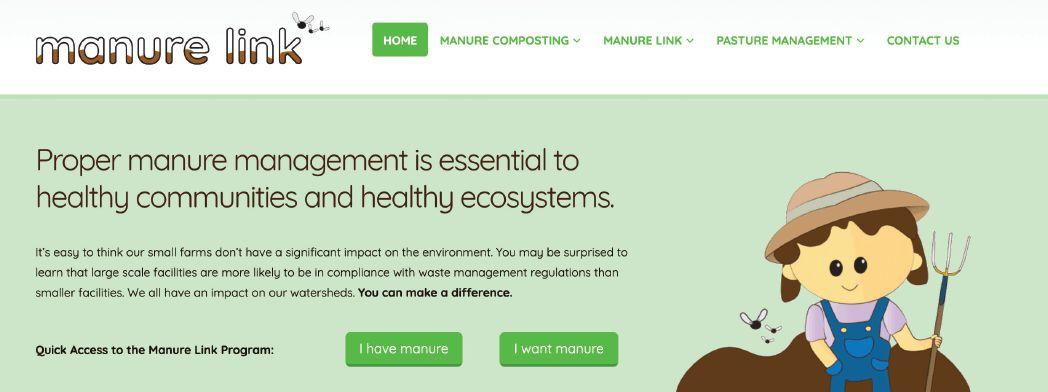
B.C.-based Langley Environmental Partners Society has a number of manure management programs, including Manure Link, a “dating site” for manure.
distribution channels for the movement of manure. They may also want to encourage innovators to establish tools like bio-digestors in their region if they are in one of the hot spots with an excess of phosphorus-rich manure.
“I would love it if the farmers went out and said, ‘I need this kind of stuff, if there’s anyone that has what I can use,’” he says.
SOLVING PROBLEMS WITH MANURE
The second group of stakeholders that may benefit is policymakers. These individuals can use the Manure Mapping data to identify high volumes of phosphorus and create regulations around the movement and reuse of the nutrient in order to reduce environmental impacts and lower costs crop farmers face in the purchase of phosphorus-based nutrient additives. This takes the information about phosphorus sources one step further to regulate how it can be recaptured, recycled and reused so that it doesn’t leach into waterways and other sensitive areas while benefitting those who need it.
The third groups of stakeholders that can benefit from manure mapping are the innovators and other third-party groups already looking to find solutions to manure over-abundance issues. One such group in Langley, B.C., is the Langley Environmental Partners Society (LEPS), which has a number of manure management programs, one being the Manure Link website which is the equivalent to a manure dating site.
Langley has a large number of
equestrian farms, so the volume of horse manure in the community is significant. Those with manure simply go to the site at manurelink.com and click on “I have manure” to add their own listing about manure they have available. Those needing manure can click “I want manure” to see the listings of manure available in various areas.
“Identifying the points on the map that have large concentrations of phosphorus from livestock farming may indicate regions where policy makers and innovators can implement programs for phosphorus movement to those who need it.”
“This is where those third parties can be most productive,” Vaccari says. “That would be the first audience for this kind of work. These people can look at [the manure map] and say, this is where our efforts can bear fruit.”
He explains that with farming going to monocropping and single-focused farms over the past decades, the creation and use of manure has lost its balance.
“Nowadays, it’s not like the old days
where people raised cattle and they raised their own feed for the cattle,” he says. “It’s common where one farmer grows the feed and they ship it to what we call an animal-concentrated area. We’ve separated the feed production from the animal production. We need to close that loop to prevent phosphorus and other nutrients from polluting our water and while we’re at it, using nutrients in a sustainable way.”
Currently, farming around the world generally uses phosphorus once. The waste goes into food and never makes it back to a farm.
“The goal in all of this is to find a way to close those loops again, like they used to be,” he notes. “It’s not so easy now that we’ve separated all of those functions.”
Vaccari notes that Europe is already working on ways to recycle their phosphorus as they have no local source of it. The U.S. does have some phosphorus mines, but those are subject to depletion over time.
“If we largely deplete our reserves, the next source is really the biggest source, a country that controls over 70 per cent of the world’s known reserves,” he says. “That is the country of Morocco.”
He sees the project as delivering dual benefits, the first is to recycle, reuse and make better use of a non-renewable resource while potentially reducing a farming cost; the other is the reduction of nutrient leaching into waterways that can cause contamination. Whether it’s farmers, policymakers or individuals who care about the earth, it’s a common goal everyone should be able to support. •
DARING TO CHANGE: dairy farms respond to the climate
Manure separation and bio-digestion emerge as some of the best ways to reduce GHG emissions on dairy farms.
BY TONY KRYZANOWSKI
When it comes to reducing its contribution to greenhouse gas emissions (GHG) emissions, the dairy industry has been headed in the right direction. General advancements in manure management practices, such as separation and bio-digestion, are becoming increasingly common on dairies. The practices have economic benefits alongside the benefit of GHG reduction, making them appealing for producers.
Manure separation into solids and liquids and bio-digestion to treat raw manure prior to lagoon storage or land application significantly reduces the American
ABOVE
dairy industry’s production of greenhouse gas emissions.
That is according to the Dairy Coordinated Agricultural Project (CAP), an expansive study funded through a $10-million grant from the United States Department of Agriculture (USDA). The goal of the project was to prepare dairy farmers for the future in a changing climate, with a focus on reducing GHG emissions per gallon of milk produced. The USDA also funded a similar project for beef producers.
Dairy CAP wrapped up after six years of research last February and included more than 100 scientists, staff, educators and students from
The CAP study presents practices that can be implemented on both smaller and larger dairy farms. Photos courtesy of Matt Ruark.
13 institutions working in partnership.
The Environmental Protection Agency (EPA) reports that there are currently 248 bio-digesters operating on livestock farms in the U.S., with 104 having received USDA financial support. While that may seem like a large number, it is important to note that there are over 8,000 dairies in the state of Wisconsin alone. The EPA estimates that installing bio-digestion is technically feasible on over 8,000 of these dairy and hog operations nationally.
Reducing GHG emissions is a planetwide focus: GHG emissions contribute to the warming of the planet, which leads to climate change. Agricultural activities involving livestock have been identified as a significant GHG emissions generator. In response in 2009, the American dairy industry set an ambitious goal of reducing its GHG emissions from all milk production activities, including manure management, by 25 percent by 2020. They targeted a 25 percent decrease from 2007-2008 levels.
“Early insights are that the hard work and implementation of innovative practices by dairy farmers and dairy companies are making a difference.”
With its focus specifically on milk production in the Great Lakes region, consisting of Wisconsin, New York and Pennsylvania, the CAP study found that the production of large volumes of manure from dairy accounts for 35 percent, or more than a third, of all onfarm GHG emissions. The CAP report states that a dairy cow generates more than 20 gallons of waste per day.
Dr. Ying Wang, vice-president of sustainability research and food systems at The Innovation Center for U.S. Dairy,
based in Rosemont, IL, was among the scientists working on the Dairy CAP project. The Innovation Center is where the dairy industry and producers come together to address common goals. One of the Dairy CAP projects completed under Wang’s guidance was a life cycle assessment (LCA) of a gallon of milk to set the record straight on dairy’s environmental footprint.
“This work established a baseline for the U.S. dairy industry from ‘grass to glass’ and confirmed the industry
“This project was done in collaboration with the dairy industry to explore opportunities and tradeoffs to reducing GHG emissions, and as part of the project, we put together a list of beneficial management practices,” says Matt Ruark, project director and soil scientist at the University of WisconsinMadison. His co-director on the project was Molly Jahn.
Not only did the Dairy CAP project identify opportunities to reduce GHGs, like methane and carbon dioxide, but scientists also found there were opportunities to reduce the amount of ammonia released into the environment as well.
FAST. FLOTATION. THE ALLIANCE 398 MPT.
The only thing better than a high-performance flotation tire is a high-performance flotation tire that can carry huge loads at up to 62 mph (100 km/h).
That’s the Alliance 398 MPT, a multi-purpose tire created from the ground up for the demands manure applicators and livestock producers face every day. With its load-carrying brawn cloaked under a smooth, stable ride, the all-steel Alliance 398 MPT radial is ideal for manure application equipment and can even replace duals on straight-axle trucks and semis.
Plus, it’s backed with the industry-leading 10-year Alliance warranty. Learn more from your Alliance Tire dealer, visit www.atgtire. com or call us at (800) 343-3276.
ENGINEERED TO KEEP YOU AHEAD
contributes approximately two percent of total U.S. GHG emissions,” Wang says.
The CAP study discovered that a combination of manure separation and bio-digestion has the potential to reduce GHG emissions from manure by 68 percent. When looking at each practice individually, separation reduced emissions by 46 percent and bio-digestion reduced emissions by 25 percent.
The CAP project presented a number of on-farm activities that help reduce
GHG emissions from cow selection and feed ration adjustments, to manure management and crop management. Ruark says that it will be up to the industry as a whole to filter the project’s findings down it its members and encourage greater uptake at the farm level.
Whether the industry will actually achieve its GHG emissions reduction objective by next year is an open question, but CAP researchers concluded that, “Reductions of GHGs are achievable and will lead to
economic gains, even in the face of a changing climate.”
The dairy industry is currently conducting surveys to evaluate changes in management practices that have occurred over the past decade to be able to calculate how these changes have translated into GHG emissions reductions.
“The dairy industry has been working to track progress using an intensity metric calculated as GHG emissions per unit of production,” Wang says. “Early insights are that the hard work and implementation of innovative practices by dairy farmers and dairy companies are making a difference.”
IMPLEMENTING RELEVANT RECOMMENDATIONS
It was the CAP project’s goal to present farmers with findings and options that could be incorporated over the normal course of day-to-day farm management. Ruark says that it is all about improving dairy farm management efficiency, because greater efficiency leads to GHG emission reductions.
For example, some dairy farms have already invested significantly into manure separation, composting the solids and then reusing them as bedding. Other options include selling the compost as a commodity or using it as an organic fertilizer on the dairy’s farmland, all of which benefit the farm financially. Separation reduces
the nutrient load in the liquid stream, resulting in fewer GHG emissions from open liquid storage lagoons. CAP scientists also found that selection of bedding materials has an impact on GHG emissions.
One of the benefits of bio-digestion of raw manure is the production and capture of methane or biogas, which is a commercial commodity that can be used as a fuel in the production of both power and heat. Ruark says that the cost/benefits of bio-digestion have to be considered on a case-by-case and even state-by-state basis to investigate the upfront costs of installing an onfarm bio-digestion system. Possible state and federal financial support available should also be considered. Then farmers need to consider the potential benefits, if any, of using the biogas to provide heat or electricity that can be used on the farm to offset heat and power bills, or in the case of power production, sold as a commodity to generate income.
While there is a reduction in GHG emissions from bio-digestion, it doesn’t always make financial sense. This option generally works better on larger dairy farms. That is already evident within the industry, particularly on farms where they are constrained by available land and also on where they can apply manure as an organic fertilizer. Because bio-digestion reduces the nutrient load in the liquid stream, more can be applied on land located closer to the dairy, which is a financial benefit and reduces GHG emissions since the effluent is transported over a shorter distance.
“The CAP provides options for farms of all sizes. Digesters are an
Field and farm data helped to update and improve many of the predictive GHG emissions models that were commonly being used.
expensive commitment, but there are other options that can lead to GHG reduction,” Wang says. “There are learnings, such as covering lagoons with a safe flare system that are affordable options for smaller farms.”
Ruark says that reducing GHG emissions without increasing production costs was an important consideration for researchers against the current backdrop of a struggling dairy industry. Given the low milk prices, the goal among researchers was to present options without adding to milk production costs. The resulting beneficial management practices (BMPs) presented by researchers can be implemented on both smaller and larger dairy farms and consider the varying levels of ability out there by dairy businesses.
Outreach and education are an important aspect of the CAP study, so the researchers developed a virtual farm to act as a demonstration farm for the management practices that are available. Through the site, virtualfarm.psu.edu, farmers can access the suggested BMPs and more information on bio-digestion. It visually depicts a typical 150 cow dairy in Wisconsin and a 1,500-cow operation in New York, which are representative of the Great Lakes region.
LEFT
The project spanned six years with the ambitious goal of reducing the dairy industry’s GHG emissions by 25 percent by 2020.
Producers can “visit” the virtual farm and take a closer look at each system through a variety of levels by using their mouse to hover over a farm component, such as manure management. For now, the virtual farm website will be available until the end of 2023 and is being maintained by CAP’s study partner, Pennsylvania State University.
While raw manure treatment was found to have both financial and environmental benefits, scientists also investigated manure management practices for storage, processing and manure application, using different cropping systems, application rates, and application methods. They discovered that integrating these management practices with a bio-digester could lower the overall GHG emissions of the farm by more than half. Everything made an impact and there were some links discovered back to the feed silo, where feed ration selection on the front end could influence manure management systems and practices later on, leading to a reduction of GHG emissions.
Through the CAP study, field and farm data helped to update and improve many of the predictive GHG emissions models that were commonly being used. The only question that remains is, what will the industry do with it? •
RIGHT
TOP OF THE FLOCK in manure management
A large U.S.-based turkey farm uses numerous methods to ensure the best nutrient management for their operation.
BY RONDA PAYNE
To say that Mike and Paula Thompson are stewards of the land they farm is something of an understatement. As a third-generation farmer, Mike Thompson takes the preservation and improvement of land, water and the environment very seriously, and is constantly looking for new ways to benefit the family’s turkey farm, Round Hill Poultry in Rockingham County, VA.
Thompson’s grandfather was involved in hatching chicks and poults and helped to found Rockingham Poultry starting in 1951. Some of the chicken houses he built in Rockingham are still standing.
For Thompson, making the land a little bit better than what it was when he started farming was very important to him. His actions spoke louder, and Round Hill Poultry won the U.S. Poultry and Egg Association’s 2019 Family Farm Environmental Excellence award as well as the Cargill Friends of the Environment award in 2018. Thompson was also asked to be on the Virginia No Till Alliance’s committee to establish rules and regulations to help control animal waste in Virginia for the next decade. He sees environmental stewardship as a way to better the earth while also creating a profitable business.
From Round Hill’s three farms, including the Thompson’s son Zeth’s neighboring farm, the family primarily produces turkey. They also produce grain corn, and to a lesser degree hay, small grains (barley, oats, rye, etc.) and soybeans.
to significant environmental problems. The issue grows in sensitivity when its noted that Round Hill is located in the Chesapeake Bay watershed region, which consistently battles algal blooms and nutrient runoff concerns.
“I work through a broker to sell leftover litter each year,” Thompson says. “I am vigilant in where and who it gets transferred to. As we try to get it out of the watershed however, trucking is the expense [that] drives the price to commercial fertilizers and it is sometimes hard to move.”
His manure broker is arranged through the poultry litter hotline program, a program of the Virginia Poultry Federation. The hotline connects growers to brokers and haulers and Thompson will only permit his litter to be sold to farmers who are not in the Chesapeake Bay watershed area and who have a nutrient management plan.
“We’re totally all in/all out, meaning we start poults and finish to market,” he says. “Round Hill consists of 600 acres at the main farm, where we also raise row crops, corn, beans, wheat and hay and an additional 2,000 acres is leased for those crops, [and is] within the three counties surrounding [Rockingham County].”
Round Hill now produces about 412,500 turkeys a year in three cycles of 137,500 birds each in the 10 poultry houses. In 2018, the operation added new barns to take the operation from 282,000 birds a year to the present amount, a 46-percent increase in capacity. That amount of turkeys leads to a lot of dry litter waste which, if managed improperly, could lead
Not long after the newest turkey barns were built in 2018, the Thompsons built a new litter shed for one of the other farm’s existing barns, bringing overall litter storage capacity to 12,000 tons of dry waste. The new shed is big enough to accommodate litter trucks so that there is no spillage during loading. It also includes a 63’ x 30’ concrete composting area, guttering for clean water diversion and a four-foot gravel buffer circling the shed.
On-farm uses of litter average about 8,000 to 10,000 tons annually. The rest, almost 65 percent of the litter produced, is trucked offfarm. Pasture and forage fields get about nine percent of the total waste litter and row crops get about 26 percent.
Thompson makes the best use of the litter before composting it.
“As a turkey producer, we reuse starter-house bedding in the grow-out houses,” he explains. “So we use litter twice before it’s a waste product.”
Although best management practices for his type of operation state that litter should be cleaned from barns after every sixth flock, Thompson cleans out the barns after every third flock. The family has found that this improves flock health and performance as well as preventing the build-up of excess waste nutrients.
Thompson knows that applying more and more nutrients is seldom the way to better crops. He has a structured plan he follows to ensure proper nutrient application for the right rate of uptake and plant growth.
“We strictly follow our nutrient management plan as far as rates and application,” he says. “Fields are sampled in the winter, prior to the application of litter and then we do tissue sampling when crops are growing for side-dressing of urea.”
Leaves and stalks from previous crops (stover) are never removed, but instead are incorporated back into the soil. Because Round Hill is a no-till operation, a few years ago, Thompson purchased a Turbo Till, to incorporate the residues, but it is used only to a depth of two inches to shred the stover and to loosen the soil to allow for small grain contact. All of Round Hill’s crops are shelled for grain.
“We’ve have been totally no-till for 20 years now,” he says. “No deep tillage whatsoever. We rotate with wheat and beans from corn.” He says the move to no-till was a “big learning curve, but we found it more beneficial in using what we apply and it is more manageable.”
In 2018, Thompson saw the benefits of his nutrient and notill management plans. With record rainfalls, there was no soil loss to washouts. The current soil management practices have led Thompson to describe his soil as a sponge, though he has different sponge types to manage.
“No-till is the way to go for us, but there comes a time where we have to manage our sponge type,” he says. “We have learned on hay [planting] ground we want to split applications of litter to two times a year.”
Additionally, he has found that grass can only make use of between 40 and 60 pounds of nitrogen per cutting.
“So why put it all down in one shot?” he asks. “Normally [we apply] two tons per year per the nutrient management plan. We have found an increase of 30 per cent yield by doing this. The nutrient is not lost for the second and third cuttings, but utilized.”
Water management is also a part of Thompson’s environmental practices and the newest poultry barns make use of water plumes instead of retention ponds in order to safely release water rather than holding runoff. Turkey houses built in 2014 make use of drainage ditches and sediment ponds on the site to prevent runoff. The home farm also makes use of ditches that flow into crop fields with rock lining to slow runoff and act as buffers.
Good neighbors do good things on their farms and for Thompson this also means 600 spruces trees planted around the turkey houses to provide a wind buffer, but also to catch exhaust dust and odors from the barn fans. It’s part of an overall farm program partly established by his enrolment in the Natural Resource Conservation Service’s Conservation Stewardship Program. Along with no-till practices, the program requires preside dress soil nitrate testing, GPS and low-drift nozzles on crop sprayers, litter spreaders with GPS to prevent over-application and a number of other management techniques.
The Thompsons are seeing the results of their work both in their own production levels and in the health of the Chesapeake Bay. Management of excess nutrients is a big job, but the steps made by producers like Thompson help make a meaningful difference. •
Shocking smell
A two-part system for the barn that helps clear the air.
BY DIANE METTLER
As complaints about odor emissions increase, poultry and swine producers have come under increasing pressure to reduce their impact on the surrounding areas. These emissions (comprised primarily of ammonia, hydrogen sulfide, volatile organic compounds) are not only odorous, but have potentially harmful effects on the environment and the health of both humans and animals.
As a result, numerous technologies promising to solve the smell problem became available. In 2011, one product was the focus of a study was conducted by Texas Water Resources Institute (TWRI). The study was to determine how effective the new technology was at reducing odors, dust, and gas emissions from a commercial poultry farm.
NEW TECHNOLOGY
The technology, developed by John Baumgartner of EPI Air was a twofold system comprised of an Electrostatic Particle Ionization (EPI) system and a Bio-Curtain.
The first phase, the EPI technology, is for inside the barn and comprises four basic elements: a power
ABOVE
supply, corona pipes, a high voltage (on/off) switch, and a motorized winch. Once installed, the rows of sharp-pointed stainless-steel corona pipes and a high voltage power supply are used to generate an ionization field within the barn. What this system looks like is steel bars suspended from a barn ceiling, spaced equally apart and depending on a producers’ needs, usually hanging about 50 inches above the floor. The high voltage switch can turn the system on and off and the motorized winch can change the height of the corona pipes, both switches allowing a producer to get into the barn to do chores. When on and charged, the EPI system creates an electric field of negative charged ions. These negatively charged ions attach themselves to the molecular structures of ammonia and other particles. These highly charged particles then either grounded themselves and dissipate, or would aggregate into larger particulates which would be attracted to a grounded surface.
The EPI in-barn technology was then used to create the EPI Air Filter Wall technology. By replacing the corona pipes with a corona wire, and installing it directly outside the exhaust fans of the
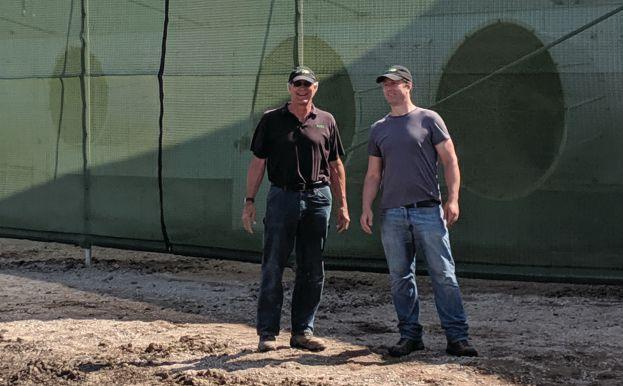
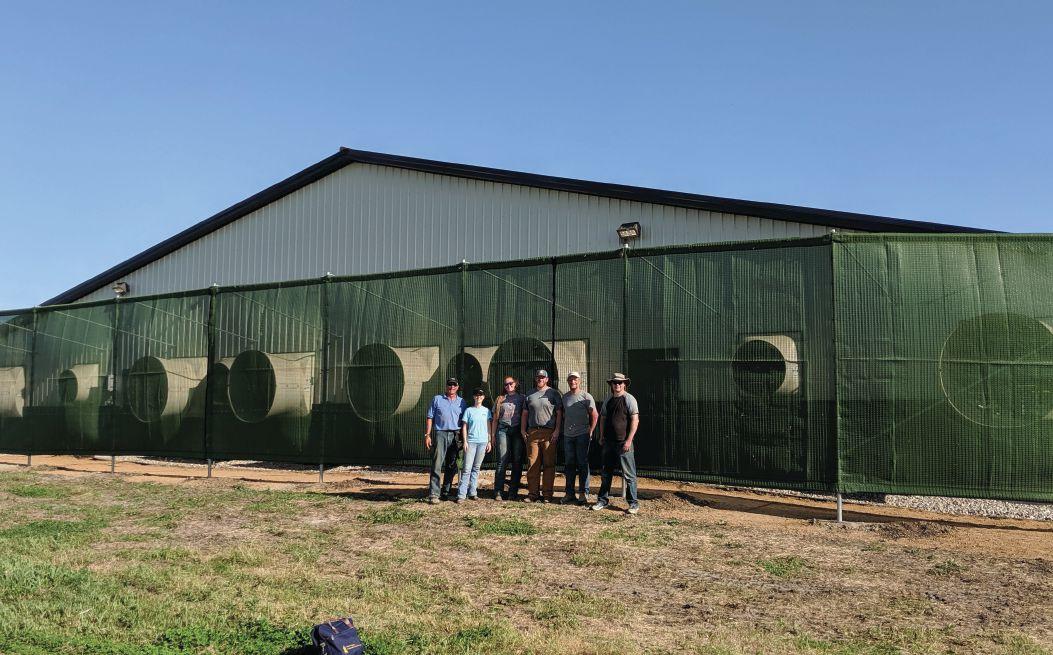
The corona wire, made out of the same material as the ion-conducting corona pipe, is installed directly outside the exhaust fans of the barn so it can ionize the air as it leaves the barn.
barn, the filter wall is able to ionize the air as it leaves the barn. This forces all the exhaust air through the same ionizing field as the in-barn EPI systems.
The next phase was the Bio-Curtain – a wall of 3D-geotextile fabric attached to metal frame fencing which ran on the outside of the barn in front of the exhaust fans. The exhaust fan blew the air through the Bio-Curtain, particulate matter was filtered out, and then either settled on the ground or stuck to the fabric, cleaning the air that was released from the barns. The aggregating effect of the EPI field caused the particulate to be much larger, allowing a looser mesh to have a much higher impact.
The TWRI study concluded that the system was quite effective. The BioCurtain reduced total suspended particle matter by as much as 43 percent, and the EPI in-barn system reduced ammonia by 17 percent and total suspended particle matter by 39 percent.
UPGRADES
Flash forward to 2019, the EPI and BioCurtain technologies advanced from their earlier versions after several rounds of fine tuning.
One adjustment was the corona pipe height in the in-barn systems. Victor Munsen, the chief operations officer of EPI Air, explains how the switch in height came about. “Pretty early on, [the inventor] John was able to optimize the height of the corona pipes. The corona pipes running the length of the barn put out very large quantities of negatively-charged ions into the air, and tend to precipitate dust very quickly . . .[But,] John determined that impact was even greater if the corona pipes were installed around chest level.” Putting the system at chest level wasn’t immediately accepted with open arms. Even though there is a winch switch system that can lift the corona pipes up, farmers sometimes felt uncomfortable. “They’re not going to hurt anybody, I’ve run into them myself,” Munsen reassures. “They do wake you up.”
The cleaner air creates a healthier environment for the animals. “When [the system] is in the barn itself, it has the ability to precipitate airborne particles. A lot of the airborne viruses travel on particulate matter,” Munsen explains. “Studies have found when you drop the particulate matter out of the air, a percentage of the airborne viruses come with it. Additionally, there have
been studies that suggest that large ion concentrations actually inactivate airborne viruses, not just knock them out of the air,” he adds.
Munsen points to one example where a customer has specifically used the EPI Air Filter Wall to help contain the spread of disease. “We have a client that specifically installed the filter wall because, whenever they got new pigs in their quarantine barn, the neighboring barn would get a spike in illnesses,” Munsen recalls. “After it was installed - although they did not conduct a
study - they reported to us that they have not had any incidents since.”
For those farmers more concerned about their exhaust air than the in-barn environment, EPI Air also upgraded the EPI Air Filter Wall from its early design.
“What we did to make this filter wall was take the corona pipes from the in-barn solution we had and turn them into wires, just for ease of installation and weather resistance. We then installed them across the air flow for the barn in front of the BioCurtain,” Munsen explains.
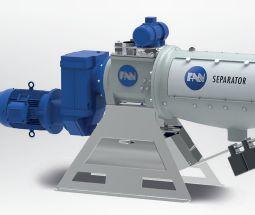
FAN SEPARATOR IS THE WORLD LEADER
ANS ARATOR
IN LIQUID SOLID SEPARATION
D SOLI QUI
BENEFITS
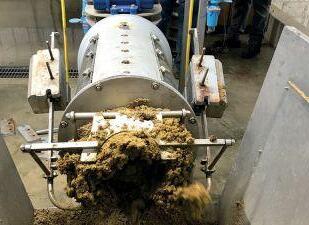
▪Dry Matter content up to 38% in solids when separating cattle slurry
▪Economical production of high-quality bedding from the manure solids already on the farm. No need to buy additional bedding
▪High dry matter content even at high throughput rates
▪Low energy consumption
▪Press screw and screen basket made of stainless steel
▪Long life of the auger due to hard metal coating
▪Including automatic weight control
▪Including control panel
▪New robust cage and XC wearing screen
▪Housing made of cast iron
▪Permanent cleaning of the screen by the auger
▪Easy to maintain
▪Gearbox with NEMA flange allows convenient and costeffective sourcing of US motors up to 15 HP
Life time of waste parts is depending on the consistency of the manure and the dry matter of the plug.
Separator GREEN BEDDINGTM 3.3-780 HD
Capacity up to 3 cubic yards of bedding material per hour
Dry matter content up to 38%
Input power max. 15 HP
Screen size 0.75 / 1.0 mm
motor pump gear unit design
Baumgartner replaced the original material with a 3D geotextile fabric, now referred to as the EPI Air Filter Wall. The new generation of geotextile can hold a small charge. When that geotextile is constantly exposed to the ionizing field of the corona wires, it retains that charge. That charge improves its ability to interact with the charged particles after they pass through the ion field.
“Additionally, we no longer do a full enclosure, mainly to ensure we don’t interfere with the exhaust fan’s ability to keep up the airflow running through the barn. We ensure that the top is open, and there’s even a small gap along the sides and bottom to allow air to escape. It’s more of an open system, but the particles still adhere to the wall and the filter wall has lost none of its effectiveness.”
That said, Munsen feels the in-barn EPI Air system shouldn’t be discounted as a way of achieving exhaust air cleanliness. “You have the source of the dust constantly being exposed to the ions, and therefore, you are constantly knocking the dust down and reducing the odors. Your exhaust is automatically going to be cleaner.”
STUDY OF THE NEXT EVOLUTION
In 2018, Iowa State Farms installed an EPI Air Filter Wall and had Iowa State University conduct a study to see how effective the system was. John Stinn of Iowa Select Farms reported the results in a presentation at the Iowa Pork Congress held in January 2019. They found that using the EPI Air Filter Walls and planting a finishing screen of trees and shrubs reduced odor by 50 percent. “The general response from neighbors is that, right around the farm, it smells nice,” he said.
A much larger outdoor system is being installed in Wisconsin. Five 400,000-head poultry barns are under construction. The litter from these barns will be conveyed to a 600-foot barn. From the outside, the system looks like green mesh running along the back of the barn.
“We’ve got three corona wire there, stacked vertically,” Munsen explains. “As the air passes through them, they charge the air, and then it impacts the geotextile, and from there, essentially it would be trapped and stop a lot of the dust.”
INSTALLATION
The system is fairly simple to install and
low maintenance, according to Munsen. He says four people are able to install a system on a 100-foot barn in less than two days.
In Stinn’s presentation at the 2019 Iowa Pork Congress, he brought up how easy it was to clean off the fence – just use a hose if the rain hadn’t already taken care of it. Stinn added that they did a more thorough cleaning every six months when they cleaned the whole exterior of the barn. But Munsen agrees, “Usually a good, strong rain keeps it clean.”
The Filter Wall runs 24/7 and uses very little energy. “This is one of the reasons why the farmers found it more amenable than the full in-barn installation,” Munsen says. And the power supply is easily accessible in the back of the barn.
LOOKING AHEAD
Beyond inlet and outlet air, the EPI Air Filter Wall is also being considered to help reduce the spread of contaminants.
“The poultry industry is considering this product to improve bio security for more modern farms,” Munsen says. •
USask names new Beef Industry Chair
The University of Saskatchewan (USask) names Gabriel Ribeiro as the new Saskatchewan Beef Industry Chair. Ribeiro will be developing nutritional strategies to improve health, performance and profitability, while lessening the environmental impact of beef cattle production.
The chair will help to identify technologies and nutritional and management practices to improve the sustainability and productivity of forage-based and feedlot beef cattle production systems.
“My goal as the Saskatchewan Beef Industry Chair is to train high-quality students and conduct research and extension that answer to the needs of the Canadian Beef Industry,” Ribeiro said.
Ribeiro’s research interests include optimizing grain and forage processing technologies, consequently improving rumen health, feed efficiency, and beef cattle productivity. Other areas of interest are the development of nutritional strategies to reduce greenhouse gas emissions in beef cattle, and alternatives to the use of antibiotics as growth promoters.
MetaFarms acquires consulting company Swine Management Services
MetaFarms, Inc., an information platform for agriculture, acquired Swine Management Services LLC of Fremont, NE, to expand its services portfolio.
SMS is an independent swine consulting company founded in 2002 by Ron Ketchem and Mark Rix, based in Fremont, NE, and serving producers across North America and Australia.
The SMS approach uses data to help swine producers dig deeper into their production insight. For example, the Swine Smart Sow Analysis System helps swine producers make decisions based on 25 years of historical production insight.
SMS will join the MetaFarms family and operate as a wholly-owned subsidiary, while continuing to provide all its current analytic and consulting solutions to the swine industry.
The transaction closed September 30, 2019. Current SMS customers will see no disruption to their existing services and will continue to receive customer service from the SMS and MetaFarms teams. SMS will continue to operate from its headquarters in Fremont.
Manure basics: calibrate your manure spreader
Whether you apply liquid or solid manure, applicator calibration is an important step that is often overlooked. Taking a few extra moments – despite a busy schedule – to adjust your speed and settings will greatly improve your confidence that you haven’t over- or under-applied nutrients – and eyeballing it isn’t going to work. A study from Michigan State University found that only a quarter of farmers who didn’t calibrate were within 20 per cent of their desired application rate. If you’ve already done the work of soil sampling, manure nutrient testing and calculating application rate, why wouldn’t you calibrate your spreader to ensure you’re actually applying the amount you had planned?
You should calibrate every couple of years, or whenever manure consistency or equipment has changed. Note that the application methods described here are for broadcast applications of solid and liquid manure; manure injectors tend to rely on flow meters for accuracy.
HOW TO CALIBRATE
CALCULATIONS
Math time! For both the weight and tarp method, you just need to extrapolate the amount spread over the small area/tarp to amount per acre. To do this, you first need to figure out how much manure was spread over the small area/tarp. Subtract the afterapplication spreader weight or empty bucket/ tarp weight (in pounds) from the full spreader or full bucket/tarp weight to get pounds of manure spread. Then, divide that number by the area spread/tarp area (in square feet). Multiply by 21.8 to get tons of manure applied per acre. Note that 21.8 is derived from 43,560 square feet per acre divided by 2,000 pounds per ton – a different number will need to be used for metric units. This method will work for solid manure.
Calibration is a fairly simple process. The easiest method that works for both solid and liquid manures is to weigh the spreader before and after application to a small area. Measure the length and width of the area to which manure was spread. If you don’t have access to drive-on scales, the tarp method can be used for solid manure. You’ll need a scale, a five-gallon bucket, and a tarp. First, weigh the empty bucket and tarp. Then, lay the tarp in the field with bricks or rocks to hold down the edges. Measure the length and width of the tarp to get spread area. Next, apply manure normally to the area with three passes (one directly over tarp, the other two on either side of the tarp) to account for overlap. Then, fold up the tarp and place in bucket. Weigh the bucket and tarp full of manure.
“Eyeballing it isn’t going to work and studies prove it doesn’t.”
For liquid manure, since it is applied in gallons per acre, not tons, you’ll need to do an extra step. To convert tons per acre to gallons per acre, you’ll need to find the density of your manure – yes, it’s different than the density of water. This is also fairly simple. Just weigh an empty five-gallon bucket (or any container of known volume), and then weigh it again full of manure. Subtract those numbers to find how much manure occupies a five-gallon space. Divide five gallons by the manure weight in pounds, and then multiply by 2,000 to get gallons per ton. Finally, multiply that number by the tons per acre you calculated earlier to get gallons per acre.
From here, you can decide to adjust speed or equipment settings to spread more or less per acre.
It is a good idea to repeat the calibration process a few times to get a good idea of application rate. Make sure to record your settings for future reference. Happy spreading! •
Widen Your Horizons
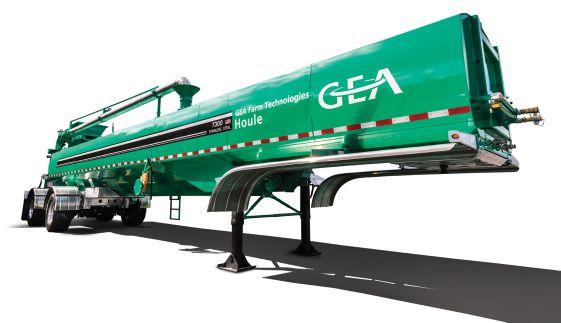
GEA’s STR Series Manure Semi-Tanker streamlines manure transportation for faster, farther hauling. From farm to field, this first-class manure hauling system saves time, fuel and equipment wear and tear. The STR Series SemiTanker can also haul and apply slurry directly on hard soils after h giving you flexibility in hauling times.
The GEA STR Series Semi-Tank meets all traffic safety regulations for vehicle weight and width for increased safety for you and everyone on the roads.
Don’t let distance slow you down Hit the road with GEA’s STR Series Manure Semi-Tanker.