The low-down on timing, management and site-specific rules. | 8
Manure and soil sampling
Solid advice for your soil. | 15
Volatile solid output
Can it help predict emissions? | 18
May/June 2023
May/June 2023 Vol.21, Issue 3
Accuracy matters
Given the nature of manure properties, it could result in over- or under-applying, which is where fertilizer can sometimes help to balance things.
8 15 18
Short term, big impact
The ins, outs and extra-specifics of temporary solid manure storage.
BY JAMES CARELESS
Know the soil, know the solution
Testing prior to application is key for nutrient management.
BY RONDA PAYNE
A new model
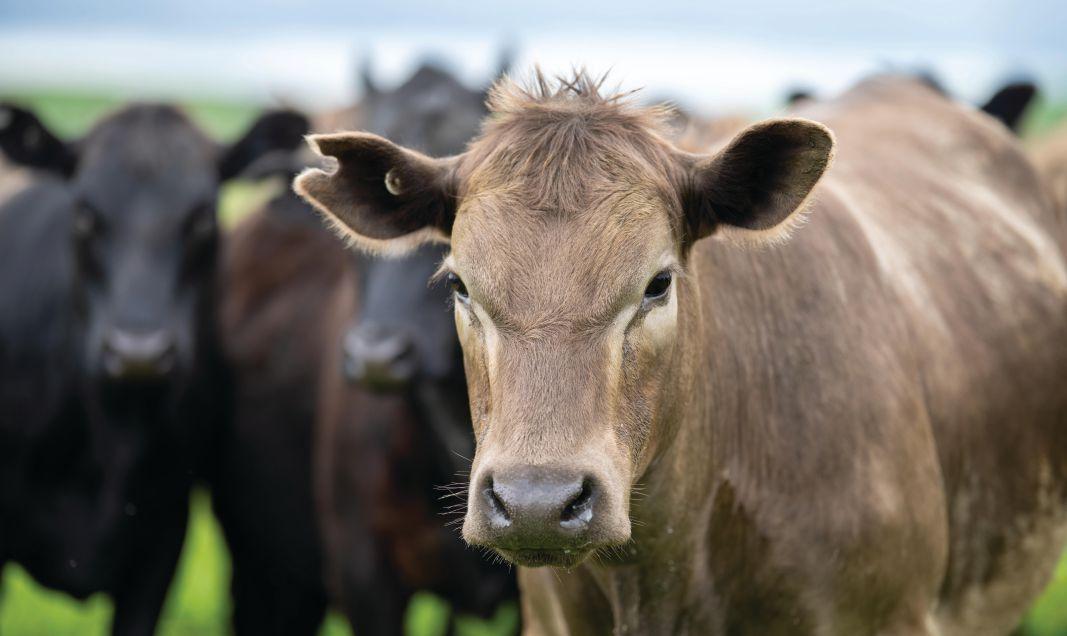
A joint study shows that predicting emissions through volatile solid output in dairy cows is possible.
BY RICHARD KAMCHEN
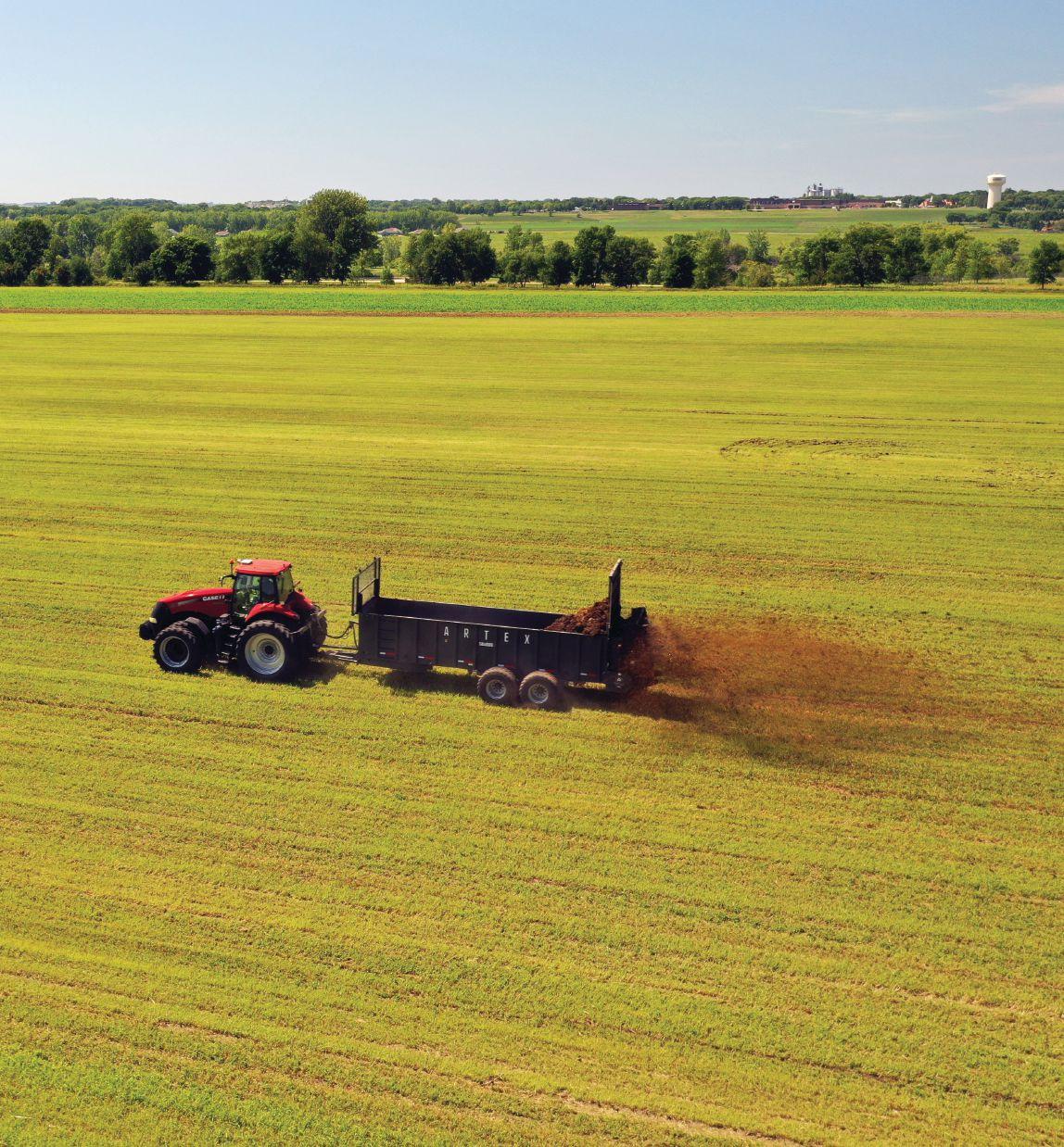
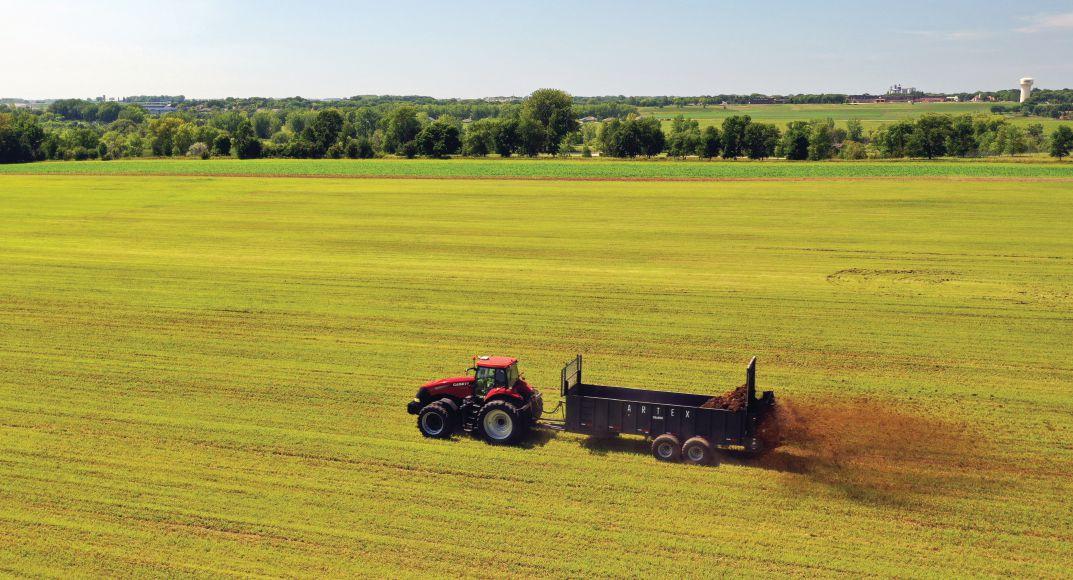
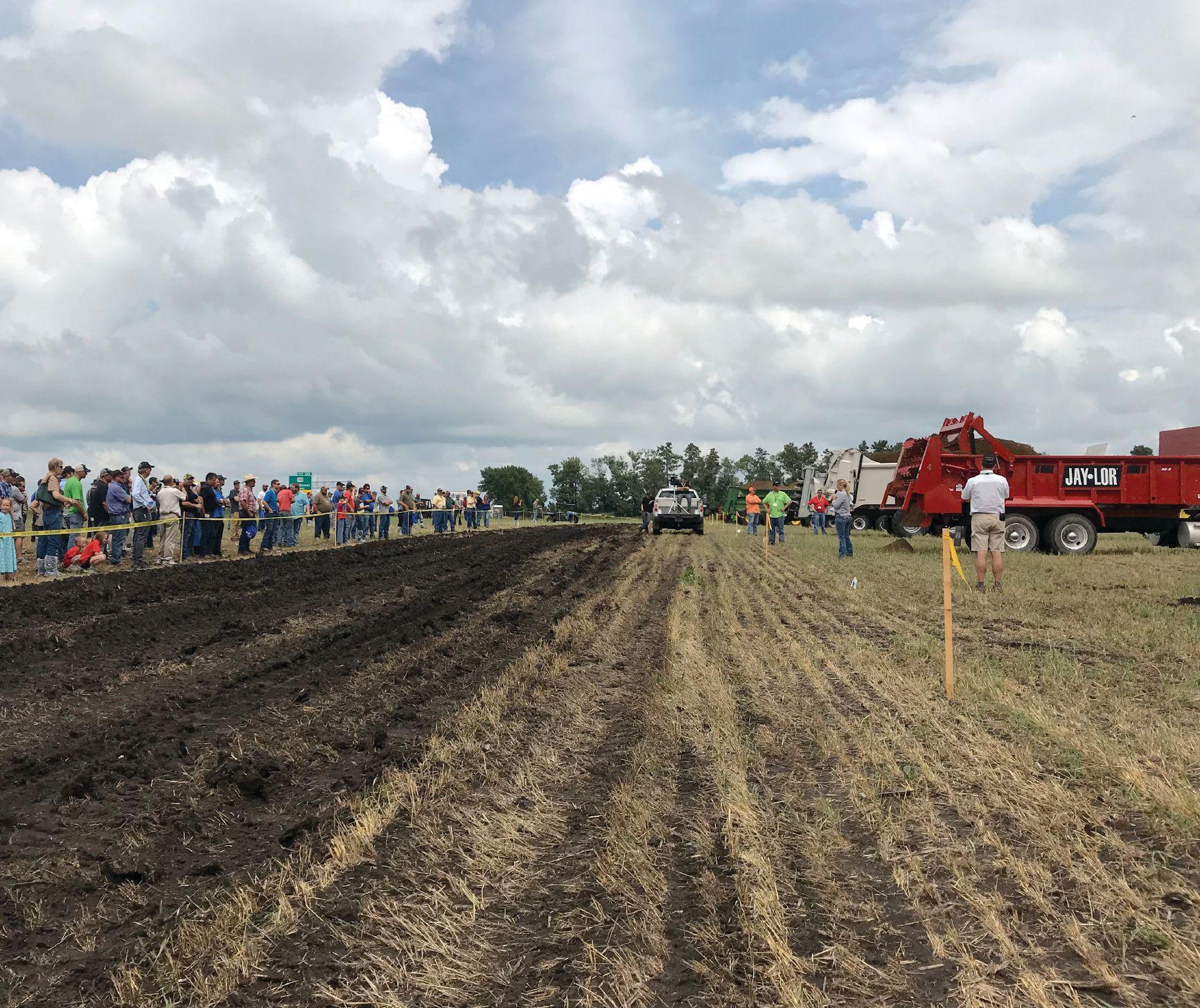
Solid manure is applied in a Minnesota field. Image courtesy of Melisa Wilson.
Manure requires ma-nuance
On Friday nights, when most people would hit the pub or have a nice dinner, I teach dance to children ages five to eight. In a recent class on a warm evening, I cracked a window open in the studio. I heard a child exclaim, “Something smells!” When I told them, “That’s manure spreading,” naturally, there were a few giggles and highpitched “Ews!” But to my delight, some of the kids (even the extremely young ones) already knew about spreading, and joined me in lecturing about the importance of manure. It was fantastic to see children as young as six grasp (and teach) the concepts of farmers being crucial to our lives.
Of course, we live in a community driven (and highly influenced) by agriculture, with our town slogan being “Ontario’s garden.” This helps contextualize not just things like the smell of manure, but also the economy of agriculture, what’s driving prices in which direction, the role of farm workers and, of course, farm safety. By contrast, I was 19 the first time I smelled manure spreading in earnest.
application itself – over- and underapplying can happen so easily, and what constitutes over- and underapplying can vary depending on the crop (as is evidenced by a recent USDA study outlined in our news section on Page 6).
Similarly, creating a magazine also requires balance. We work to ensure we provide a mix of bigpicture, research-based content (Richard Kamchen’s feature on Page 18 explores a new model that could predict emissions based on volatile solid output from dairy cows), along with content that is more (no pun intended) applicable in the immediacy. Jeff Tribe’s feature that explores nutrient uptake specific to alfalfa and hay grass is a good, example of that (see Page 10); likewise, Ronda Payne’s feature on soil sampling (Page 15) dives into not only how to sample soil before applying solids, but also why certain steps are crucial, and what new things we’re learning about soil sampling. We also have some
“Despite the universal benefits of manure, there is nuance.”
I had no idea about the nuances of fall spreading (long, arduous) versus spring spreading (stressfully quick – in fact, your spring spreading might be done by the time you read this), the merits of solid versus liquid manures, different storage solutions, etc.
Despite the highly universal benefits of manure, there is nuance. That’s why we ensure in our yearly planning that we dedicate themes to both liquid and solid manure.
There’s also nuances to the
practical knowledge on Page 8 in James Careless’ piece on temporary storage – all the nuances to take into consideration when stockpiling solids during the coming summer months.
If I were to explain all those concepts to my school-aged students, surely a few would lose interest. But knowledge has to start somewhere, and the fact that we can teach future generations the basic benefits of manure should make us all feel a little better about the future. •
#867172652RT0001
Manure Manager will mail information on behalf of industry-related groups whose products and services we believe may be of interest to you. If you prefer not to receive this information, please contact our circulation department in any of the four ways listed above.
Texas dairy farm explosion kills 18,000 cows, injures one person
Castro County Sherriff’s Office confirmed on April 11 that it, along with the Dimmitt, Hart and Nazareth Fire Departments, responded to an explosion and fire at the Southfork Dairy Farms southeast of Dimmit.
The cause of explosion and resulting fire, which killed 18,000 cows, is still being investigated at press time. Photos posted by the Sherriff’s Office on social media show a large, black cloud of smoke rising from the ground.
At the time of the explosion, sheriff Sal Rivera was quoted by Amarillo’s KFDA News Channel saying it was possible that a piece of equipment became overheated
and reacted with methane and other gases, although at the time Rivera stated that this was pure speculation. Later in April, the Texas State Fire Marshal’s Office issued a release with the official cause of the explosion, which it ruled as the result of a “failure of a piece of equipment that is used within the dairy on a daily basis.”
The release also stated that due to a number of factors, there will be a more in-depth investigation to determine the reason for the failure by other origin.
In addition to the 18,000 cows, which represented the majority of the dairy’s operation, the explosion injured one worker.
FORTIS BC PARTNERS WITH DICKLAND FARMS
RNG specialists FortisBC Energy have paired with Chilliwack’s Dickland Farms to produce RNG from agricultural and food waste. Once at peak production, the project is expected to produce RNG to meet the annual gas
BY THE NUMBERS
20%
Typical amount of solids in manure to constitute classification as “solid” manure
needs of approximately 2,000 homes in British Columbia.
Dickland Farms will combine anaerobic digestion and a biogas upgrading plant to produce RNG from the manure emitted by its
own dairy cows, as well as from locally produced, organic food waste.
George Dick, owner of Dickland Farms, said in a statement that this project “[turns] our agricultural manure and local food waste into
RNG, organic fertilizer pellets and clean water,” adding that it’s a great way “to diversify the farm’s revenue streams, while also operating the farm in a more sustainable manner in line with our values.”
40% 80%
Typical amount of solids in poultry manure
Amount of phosphorus typically found in settled solids of manure storages
50/50 20
Approximate, typical split of nitrogen between solids and liquid.
handbook, second edition.
Estimated amount of total solids (in pounds) per day produced by a 1,400-lb lactating dairy cow
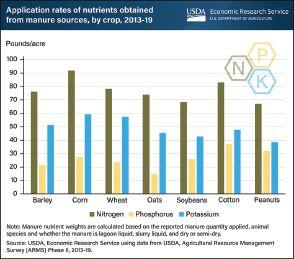
USDA study finds manure application rates vary by crop
The proportions of nutrients such as nitrogen, phosphorus and potassium available in manure are unlikely to match a crop’s nutrient needs perfectly, according to a recent study published by the USDA. For instance, while manure could be used to satisfy many crops’ nitrogen requirements, this would result in more phosphorus being applied than what most crops need.
Between 2013 and 2019, producers of seven major crops in the U.S. who used manure were asked how much manure they applied per acre on these croplands. Corn received the highest application rate of nitrogen from a manure source—92 pounds per acre—followed by cotton, wheat, barley, oats, soybeans, and peanuts. Cotton led phosphorus application at 37 pounds per acre, and corn led potassium application at 59 pounds per acre. Soybeans and peanuts require less nitrogen fertilization; therefore, they were applied with the lowest manure nitrogen application rates.
NEW POULTRY RESEARCH CENTER COMING TO ONTARIO
The Ontario government is investing $13.5 million in a new poultry research centre in Elora.
“As part of the Grow Ontario Strategy, our government is focused on enhancing our research and innovation capabilities across the agri-food sector,” said Lisa Thompson, minister of agriculture, food and rural affairs in a statement. “This research center will, once completed, equip our poultry industry with the tools, and the knowledge to stay competitive, while creating jobs, growing the economy and ensuring supply chain security.”
Ontario-led agri-food research conducted at this
facility will support animal welfare, reproduction and nutrition, as well as meat quality and safety. Results will be shared with poultry farmers and the broader poultry business sector to encourage the adoption of innovative, safer, healthier and more efficient animal and on-farm production practices.
Ontario’s poultry industry includes more than 1,200 chicken and turkey producers and 432 egg farmers across the province who will benefit from the cutting-edge research and innovative technologies that will be housed onsite. The new centre is expected to begin construction in 2024 and be completed by 2026.
SHORT TERM, big impact
How to achieve the best temporary solid storage solution.
BY JAMES CARELESS BELOW
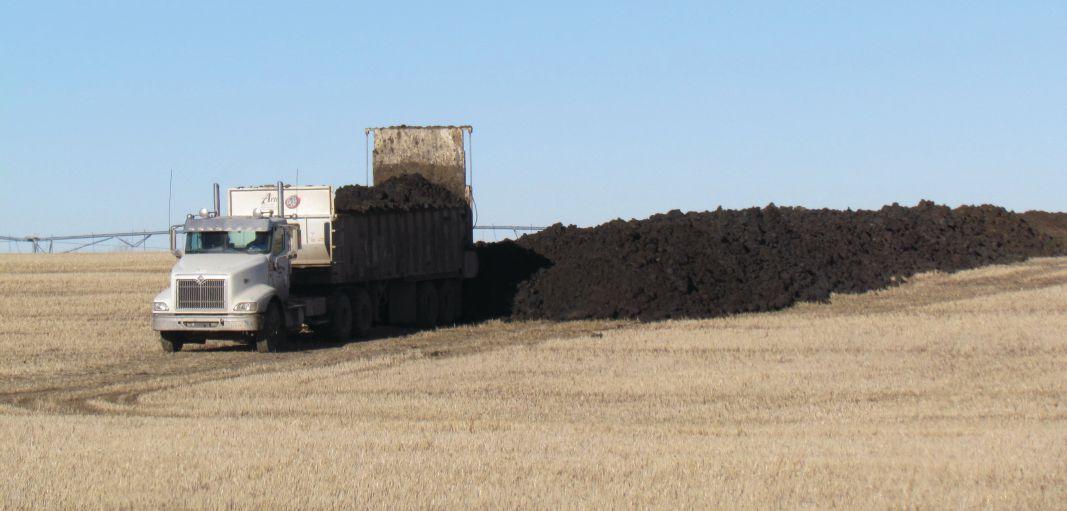
There are several ways to store solid manure – and sometimes, your method of storage depends on how long you intend to store it. This being said, different jurisdictions have different rules on how long one can keep solid manure in at a temporary storage site before it is required to be in long-term storage.
With the summer growing season coming up, temporary manure storage can be a good solution for farmers, allowing them to clean out pens and store the manure until there is an appropriate window for application during or after the growing season.
Temporary solid storage can be a helpful tool – but there are region-specific guidelines to keep in mind in different states and provinces. While this report has examples of details on B.C. and Alberta guidelines, it is always best to check the specifications in your jurisdiction.
WHY TEMPORARY STORAGE NEEDS TO BE TRULY TEMPORARY
In the old days, many farmers would simply let solid manure build up in their pens for months, even years, without worry. However, based on what we know now, this isn’t an environmentally safe practice.
“Concerns begin to arise should farmers site temporary storages under conditions that could cause nutrients to migrate away from the pile,” says Jake Turek, waste management engineer with the British Columbia Ministry of Agriculture and Food. “Examples of irresponsible siting could include stockpiling manure on coarse soils where nutrients could reach aquifers or in a low spot where runoff and precipitation would pool.”
As well, temporary manure storages that lack proper site preparation can contaminate groundwater, and cause “significant nutrient deposition at a site,” says Deanne Madsen,
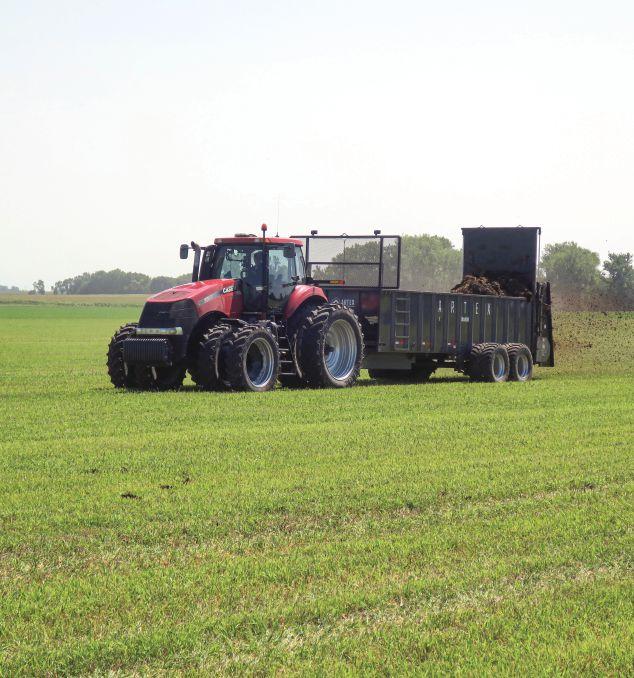
An example of a temporary solid manure solution in Alberta.
sustainable agriculture resource specialist with Alberta’s department of agriculture and irrigation.
“This is made worse if there are no management or cropping options available to remove nutrients from the site.” Add the risk of odors, flies and aggravation to neighbors, and temporary manure storages need to be just that – temporary.
RULES MAY VARY
Before depositing manure at temporary storage sites, farmers should check the rules in their jurisdiction. For instance, the Code of Practice for Agricultural Environmental Management governs temporary field storage of solid manure in British Columbia. “In high-precipitation regions (areas that receive 600mm or more of precipitation from October 1 to April 30), the temporary field storage must be covered from October 1 to April 1,” says Turek. “Additionally, in regions that are classified as vulnerable aquifer recharge areas, the pile must not be located over coarse soils. If the temporary field stored manure is located in the same spot for two weeks or more, that site must not be used for another three years.”
In Alberta, temporary manure piles are referred to as “short-term solid manure storages” in the Standards and Administration Regulation under the Agricultural Operation Practices Act (AOPA). “AOPA allows owners or operators to store solid manure, at a short-term storage site, for only a total of seven months over a three-year period,” says Madsen. “They are also required to locate sites at least 100 meters (about 328 feet) away from a water well or spring, place them one metre above the water table and one metre above the one in 25-year maximum flood level, with a 150 meter setback from the nearest neighboring residence.” Temporary manure storages must also be at least 30 meters from a common body of water when the land slopes toward that water body with a slope of four percent or less, 60 meters away for a four percent to six percent slope, and 90 meters away for less than a 12 percent slope. “Any steep land that slopes more than 12 percent towards a common body of water must not be used to store manure,” she says.
FINDING THE BEST SITE
To put the above limits and rules into a positive light, the best sites for temporary manure storages are high and dry, on
top of “fine soils to minimize the escape of leachate and cover during periods of high precipitation to minimize leachate production,” says Turek.
“Sites should be located away from places where water pools or runs off the property into water bodies,” Madsen adds. Ideally, any runoff should be retained in the field, which should remain flood-free and accessible even during wet weather.
If the site meets this criteria and the applicable rules governing temporary manure piles, then no site preparation should be necessary. But be prepared to restore the site’s vegetation (if so required) once the manure has been moved, and save yourself grief by locating this storage as far from neighbours and roadside traffic as possible. People are unlikely to complain about what they don’t see or smell.
REMEMBER: TEMPORARY IS TEMPORARY
Farmers should assume their jurisdiction has time limits for temporary manure storages, and be prepared to stay within them to avoid legal problems and fines.
In Alberta, if an owner or operator of a site exceeds a total of seven months in
a three-year period, they could be subject to compliance action by the Natural Resources Conservation Board (NRCB). “The NRCB will work with producers to find an acceptable solution,” says Madsen. “This can include spreading, moving it to another temporary storage site, or applying for a permit for long-term manure storage.”
The same limit applies in B.C. “Farmers must move the temporary storage pile after seven months to permanent storage where agricultural by-products can be stored for longer periods of time, and apply if possible, or export off-farm,” says Turek. “Seven months is the maximum duration for temporarily storing material, but that does not mean storing material for the maximum amount of time is a ‘best’ or beneficial management practice.”
Given the reality of such time limits, Madsen’s words of advice on temporary storage are worth heeding. “Plan ahead. Identify suitable sites ahead of time. Remember that while short-term manure storage sites are very effective tools, a site is limited to seven months out of a three-year period — so time their use appropriately.” •
A LONG WAY TOGETHER
V-FLEXA
No matter how challenging your needs, V-FLEXA is your best ally for agricultural trailers, tankers and spreaders. This latest-generation product features VF technology, which enables the transport of heavy loads both in the fields and on the road at lower inflation pressure. V-FLEXA is a steel-belted tire with a reinforced bead that provides durability, excellent self-cleaning properties and low rolling resistance even at high speeds.
V-FLEXA is BKT’s response for field and road transport with very heavy loads avoiding soil compaction.
Don’t overdo it
The importance of accuracy when applying manure to alfalfa and grass hay.
BY JEFF TRIBE
Melissa Wilson’s enthusiasm for the benefits of manure application on alfalfa and grass hay is no laughing matter.
But Wilson, an associate professor and extension specialist in manure nutrient management and water quality with the University of Minnesota does sum it up that way.
“I kind of joke, manure is kind of like a multivitamin and probiotic for your soil,” says Wilson. “It’s not just fertilizer, it has the carbon, the microbes, it helps with the whole ecosystem.”
As effective as a modern agricultural translation of replenishing the soil with animal by-product can be however, she cautions mindful moderation is required.
“You can overdo it with manure too.”
Similarly, John Lory, associate professor of extension, division of plant sciences and technology with the University of Missouri and nutrient management specialist for Missouri says manure application should be quantified as accurately as possible, within the broader context of a nutrient management plan to maximize value while diminishing potential concerns.
“As with anything else, it’s the figuring out of how to balance competing needs.”
In essence, Wilson’s career centers around balancing the competing needs between cost and environmentally effective agricultural production.
“I just love the idea of finding how [we can] best grow our food while maintaining our streams and rivers.”
A small-town Pennsylvania native whose school project on water quality led through a doctoral dissertation on absorbing nutrients and maintaining them in place through cover crops, and then teaching nutrient management at the University of Maryland, she says her current focus allows job security – “There is always going to be manure,” Wilson says with a smile – along with a fascinating and productive area of study. There’s an increasing requirement to effectively close the loop on recycling its beneficial nutrients – as Wilson puts it, “Getting the best bang for your buck out of it.”
Manure seems to be most beneficial to alfalfa and grass hay in situations where soil fertility is low, says Wilson.
“If fertility is high, manure doesn’t seem to benefit quite as much.”
There is also an ‘entourage effect’ quality to manure, secondary or micronutrients beyond the most recognizable elements contributing to its
overall efficacy. “Boron, things like that,” adds Wilson.
Grassier hay stands have a greater requirement for regular nitrogen application to boost production, compared to alfalfa, which can meet its nitrogen requirements through symbiotic fixation. Alfalfa will, however, preferentially source nitrogen from the soil and sources including manure if available.
“If you have an alfalfa/grass mix and apply manure, your grass may take over,” says Wilson. “Grass hay especially just loves manure.”
Grassier hay’s rhizome roots are also more tolerant of liquid injection, seeming to regenerate better after being cut over legume alfalfa, leading to a contemporary research project.
“We’re looking at traffic-tolerant (alfalfa) varieties right now.”
Manure-based nutrients can be ‘leaky’ says Wilson, the goal of holding them effectively in place instead of migrating to watercourses and elsewhere high on the list. Deep alfalfa roots are effective in holding nitrogen in place, less ‘leaky’ than an annual such as corn for instance. Wilson also encourages farmers to apply manure on fields where there will be minimal runoff during storm season. Freak two- or three-inch rain events are far more frequent than formerly in her state of Minnesota, and she encourages farmers everywhere to ‘keep an eye on the forecast.’
“Think about how you are going to use best management practices to use manure in your system while protecting water quality.”
Old farm sites can be identifiable on soil test maps through high ‘legacy’ phosphorus and potassium levels in close proximity to the former barn. Modern equipment is more conveniently mobile than a horse-drawn manure spreader for example, however a variable
In some situations, it can pay to haul manure further, depending on where, exactly, nutrients are needed.
cost/time effectiveness calculation featuring machinery, fuel and fertilizer prices and time does apply.
“In years like this where fertilizer prices are high, it may pay to haul it further out if you have the space. It’s really pencilling it out and seeing where you need the nutrients and how much would they cost if you used fertilizer.”
Given manure properties may not precisely line up with plant requirements, Wilson sees it as ‘part of the package,’ recognizing manure on its own may represent over-applying something and under-applying something else.
“And there’s where fertilizers come in to even things out.”
CONTINUED ON PAGE 14
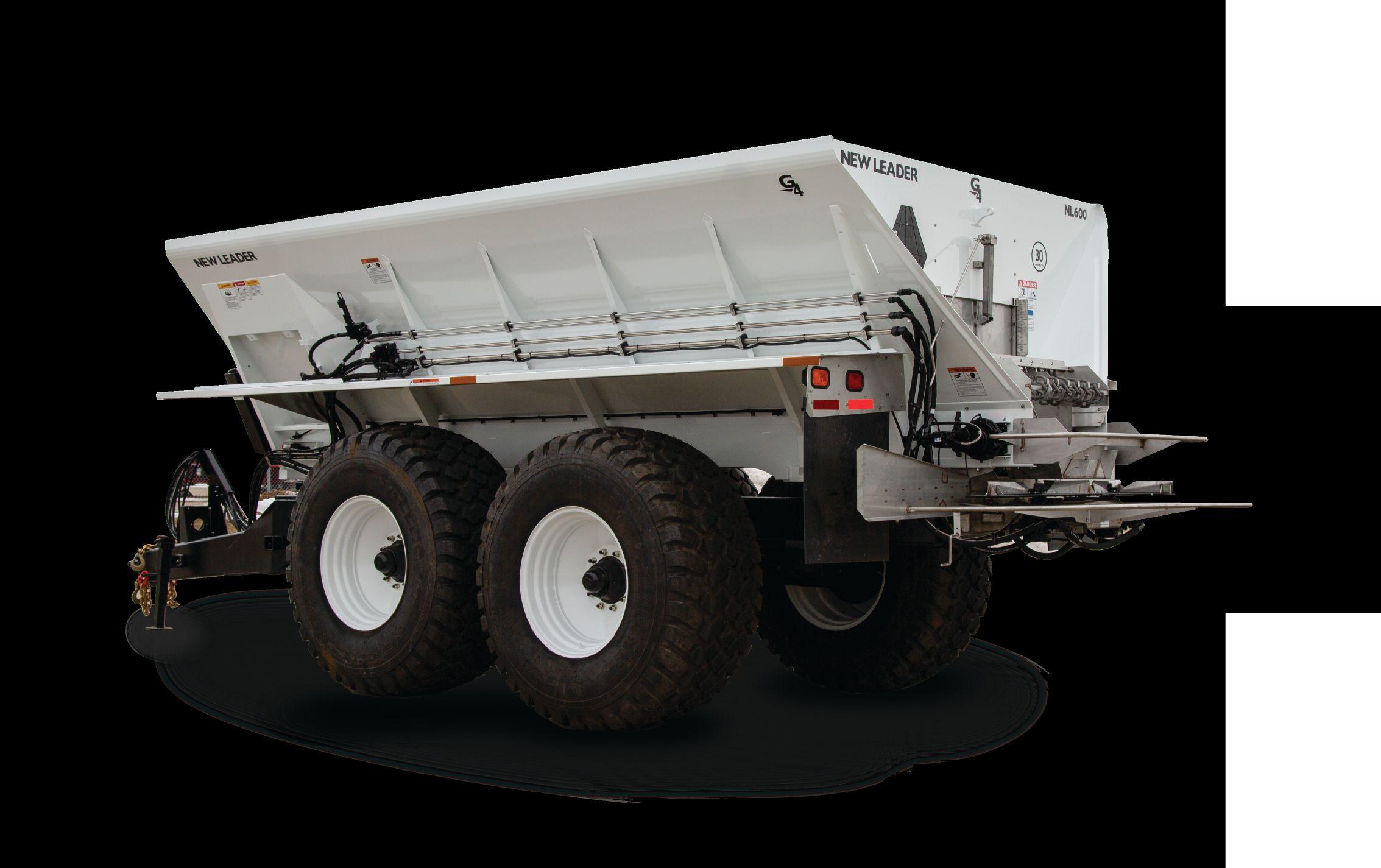
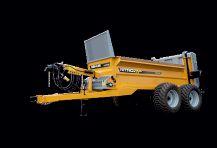
The strength and reliability of Nitro Spreaders set the standard for nutrient management.
The variable speed apron chains feed fast-moving beaters that ‘bite’ the load and throw it into the field with remarkable consistency.
The addition of a variable rate application system, further reduces overhead, increases yields, and verifies field application rates.
When you’re ready to spread, we’re ready for duty.
REGISTER NOW FOR TOURS AND EXPO FAST-PASS TICKET:
TOUR EARLY BIRD RATE - $20
EARLY BIRD RATE ENDS JULY 15
DAY ONE – AUGUST 9
8:00 am: Entech Digester Tour
8:00 am & 10:00 am: Arlington Research Station Agronomy Tour
10:00 am: Dairy Facility & Manure Separation Tour
11:00 am: Tradeshow Opens
1:00 pm: Manure Separator Demo
1:30 pm: Agitation Demo
3:00 pm: Safety & Operations Knowledge Event
DAY TWO – AUGUST 10
8:00 am – 10:00 am: Education Sessions
10:30 am – 11:30 am: Solid Manure Demos
1:00 pm – 2:00 pm: Liquid Tanker Demos
3:00 pm – 4:00 pm: Dragline / Rapid Transfer Demos
4:00 pm – 5:00 pm: Tradeshow
Education Session Sneak Peek
• Manure emissions during agitation and processing
• Applying fall manure for hybrid rye
• Nitrification inhibitors and manure
• Real-time nutrient sensing for precision manure application
• Biochar and manure management
• Nitrogen mineralization in treated manures
• Manure innovations of the Northeast
• Manure separation systems
• Interaction of cover crops and manure
• Interactive calculator to estimate manure value
Lory says manure application reflects a variable calculation maximizing nutrient value, meeting but not exceeding a crop’s requirements against the backdrop of timing and the fact a farmer simply may have to get it out of storage and onto a field.
“These three things on a given day will lead you to different locations.”
Manure can present challenges when compared to the guaranteed nutrient composition of commercial fertilizers.
Manure application within a nutrient management plan requires regular testing over time on destination soil, to identify and match requirements with the product. Testing or using test record results on well mixed or agitated manure resulting in as consistent a product as possible allows farmers to assess how much to apply to meet and not exceed soil requirements. Uniformity in application is another key, adds Lory.
“At that point you can kind of treat it as a fertilizer.”
It’s a tough life.
Grass hay or the fescues he is most familiar with benefit more from manure application than alfalfa.
“They need fertilizer or they’re not going to grow. Both will use the manure nitrogen, it’s just [that] one doesn’t need it.”
Farmers who have to get manure out onto alfalfa may accept the fact they are loading up on phosphorus and potassium, and essentially writing the nitrogen off says Lory.
“The nitrogen value is questionable. You’re not getting full value – but whoever does,” he adds with a laugh.
Balancing phosphorus and potassium from manure alone can be problematic, in that rates based on annual alfalfa phosphorus requirements may not provide sufficient potassium. Meeting the latter through manure alone rather than supplemental commercial potassium, for example, may result in an overabundance of unutilized phosphorus, requiring effective management to prevent negative water quality effects from runoff or erosion.
Lory also cautions manure application may negatively mitigate the competitive advantage alfalfa enjoys through fixing its own nitrogen. Whether including grass or weed seeds or not, application may encourage competition of existing or new growth. Conversely, manure application may be used as a tool to help boost yield in older, thinner stands of alfalfa through encouraging grass production.
Lory also sees application during a stand’s later years as a potentially positive benefit prior to rotation to, for example, corn or silage.
“Take advantage of that transitional period to get some nitrogen down.”
Application should also be timed to prevent damage to stands, either physically through machinery transit, large smothering clumps of solid manure or alfalfa’s sensitivity to the higher salt content which may be present in liquid manure, particularly originating in the beef or dairy industries.
“Get it on immediately after cutting to reduce contact with that young growth, because that young growth is sensitive to salt.”
In conclusion, Lory recommends optimizing manure’s valuable nutrients by selecting application areas where they are needed most.
“If you do go on alfalfa, you want to follow a few rules so as to not damage your stand.”
Know the soil, know the solution
Manure can aid crop yields, but only when soil and manure testing results are known.
BY RONDA PAYNE
Those who cook know that tasting along the way is an essential aspect of the process. People taste, find something lacking and then add. The same theory applies to soil – although taste-testing is not recommended. What is recommended is scientific testing of the soil for a variety of nutrients, minerals and other aspects to fully understand what it needs. If there is an interest in adding manure to the soil to increase nutrient levels, the same logic applies. It’s important to know what the manure’s properties are before adding them to the soil to determine if they will fulfill the needs of future crops by supplementing what exists in the soil.
Naeem Kalwar, extension soil health specialist with North Dakota State University brings extensive knowledge of soil sampling to farmers. His colleague, Leslie Johnson, associate extension educator in animal manure management with the University of Nebraska–Lincoln, brings the understanding of manure sampling to the fold. It’s essential information for farmers who know they need to understand their soil and inputs in order to get the best results.
ABOVE
LEARNING FROM THE SOIL
“Frequency of soil sampling depends upon the sampling objectives,” says Kalwar.
Testing for soil fertility should be performed at the same time each year. Looking at other factors, such as soil salinity, would be done less frequently; perhaps every two or three years depending upon the site, but like testing for fertility, the time of year must stay consistent.
Consistency in test timing is important because nutrient results are often different in spring versus fall and it’s necessary to monitor field changes over the long term. For example, testing in the early spring – pre-planting – may reveal an abundance of certain nutrients plants need whereas testing in the fall will reveal another picture – that of nutrient use of plants post-harvest. While both results are important and can inform farming management practices, assessing soil over multiple years must compare apples-toapples, rather than immediate crop needs or usage.
Kalwar says that in North Dakota, most soil fertility testing is done in the fall.
“That gives [farmers and soil consultants]
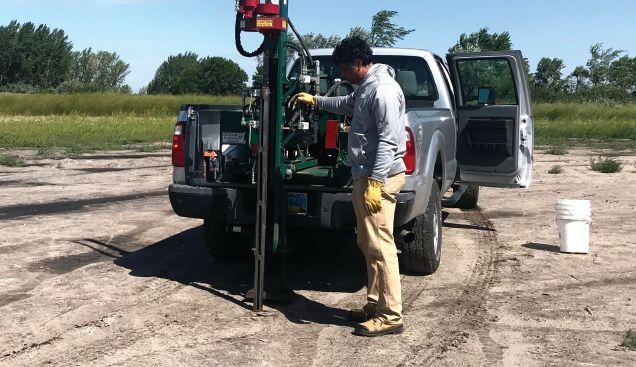
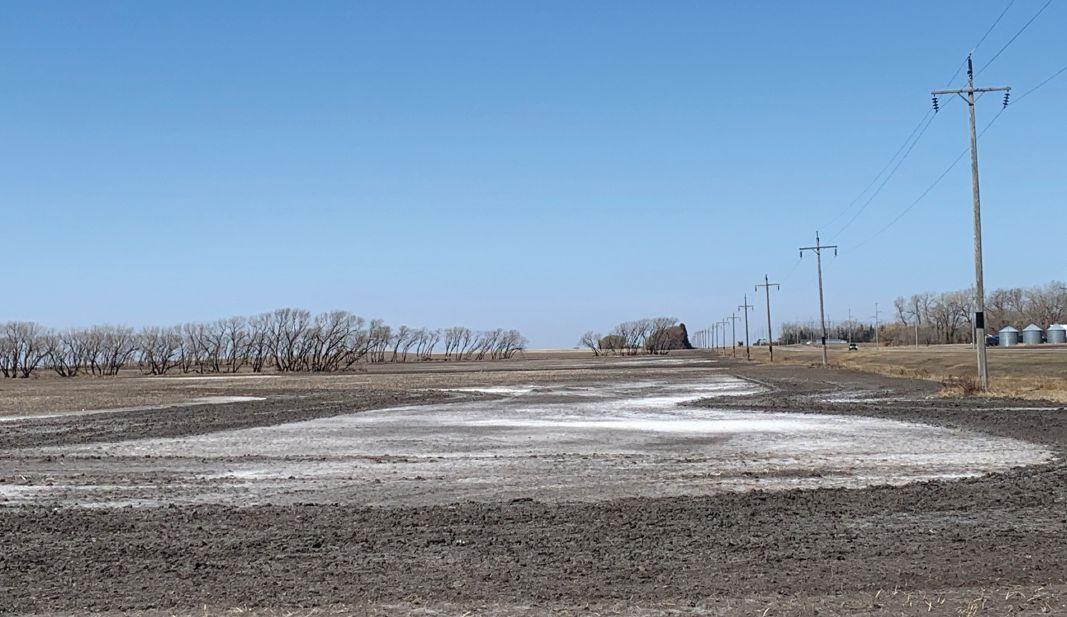
In some states, such as North Dakota (pictured), a wet and busy spring makes for a less-than-ideal time for sampling, meaning it is best saved for fall.
enough time during the winter to figure out their fertility programs,” he says, but adds that depending upon what information is desired, “it is a matter of when the fields are ready and convenient.”
Results from testing give farmers the ability to optimize the results of their land.
“That includes avoiding over- and under-applying fertilizers and planting crops on areas that may not be suitable for a
LEFT
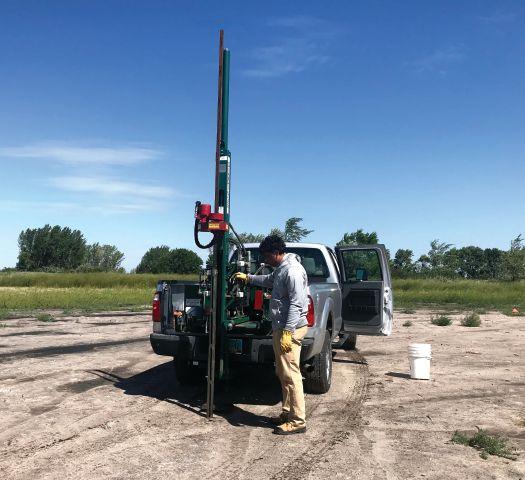
Only once soil is understood can applying amendments like manure come into play.
particular crop,” he notes. “Plant nutrient levels change spot-tospot throughout a land base due to differences in soil organic matter, mineralization, pH, soil moisture and temperature.”
SAMPLING 101
Soil sampling is not difficult, but does require pre-planning and basic tools in hand. Separate the sampling area into zones. These should be based on different soil types, problematic areas, topography and other factors that would indicate reasonable variability between sections.
Using a Z or W pattern, take samples throughout each zone along the imaginary lines. Small zones may only require three to eight samples, while larger zones could need up to 15.
Push organic matter out of the way before starting, then insert the soil probe straight down into the soil in one continuous motion. Depth depends upon the depth of the roots of crops grown in the zone as well as what is being tested for. Take each sample to the same depth and keep notes of sample locations.
Put matter from all samples of one zone into a bucket or large bag and mix well, breaking up clumps and fully blending. Remove any organic matter and put about two cups of mixed soil into a labelled bag and ensure it arrives at the lab within 48 hours. Refrigeration is advised after the sample is put in the bag before shipping to ensure microorganisms don’t alter the sample’s levels from the in-field levels.
Repeat the process for each zone separately to obtain two
cups of sampling material to be tested for each zone.
Kalwar suggests taking samples to a depth of up to four feet and separating each individual sample into four onefoot sections. This would require four buckets for a zone’s sample collection: one for each 12-inch section of all the core samples. While a depth of four feet is suggested, most crops have about threefeet of rooting, so this is the minimum suggested depth.
“Essentially, each soil sample is comprised of several cores and the number of cores depends upon the size of the sample area,” he says. “Use sturdy plastic bags, label the sample IDs and sampling depths clearly.”
Be clear on what the lab is testing for and what methods should be used. While some labs test for nutrients or salinity in the same way, others may have dramatically different results due to alternate methods. For long-term soil analysis, testing must be done the same way for results to be meaningful – just as sampling must be done correctly to lead to actionable results from the lab.
TEST BEFORE APPLICATION
Once the soil is understood, applying amendments like manure come into play. Johnson says in her state of Nebraska, manure samples are required annually, but most manure is tested more frequently than that.
“Because of manure’s variability, it cannot be assumed that the manure that was actually applied has the same nutrient concentrations,” she says. “Therefore, manure should be sampled prior to application to verify the nutrients that are in it and adjust any additional fertilizer that might follow.”
As soil is tested for nutrients, the need of the crop can be matched to what is in the soil and what can be added without overapplying or adding amendments the soil doesn’t need. Just as manure may not always be the right amendment for a zone in the field, the usual commercial fertilizer may not be either. It’s essential to know the nutrient needs of the soil and the crop to ensure application doesn’t result in leaching or excessive concentration of nutrients.
“Certain nutrients, particularly phosphorus, tend to build quickly with manure application as we often apply more than the crop needs,” she notes. “This is why it is important to know what you’re
actually applied through sampling and verifying your application rate so that you’re not over or under applying nutrients.”
Manure sampling can be done anytime. There are different sampling methods to use depending upon the kind of manure, but like with soil, the key is to mix together several “like” samples for a representative result.
“Make sure that [the sample] is sealed well, usually double-bagged and send the sample [to the lab] early in the week,” she suggests. There is also a benefit to
including an ice pack with a sample mailed in warmer periods.
INFORMATION IS POWER
Once the soil and manure testing is done, determining application rates and calibrating equipment allow for the plan to put into action. While farmers from centuries past knew to apply manure to fields to generate higher yields and stronger plants, modern farmers have the benefit of science to see how much to apply for the right results. •
A new model
Quantifying emissions through volatile solid output.
BY RICHARD KAMCHEN
A collaborative study has found models that could benefit farmers, especially as governments’ greenhouse gas (GHG) reduction strategies take aim at sectors such as agriculture.
Livestock manure management systems (MMS) are major GHG sources, especially in industrialized livestock farming regions. Methane (CH4) is the main GHG emitted, particularly from liquid-based MMS.
MMS, common in North America, makes CH4 from MMS a chief target of governments seeking to mitigate GHG emissions from agriculture, according to the study, a collaboration between Iowa State University (ISU), University of California-Davis, and University of Guelph.
Quantifying CH4 emissions from MMS is important in establishing national inventories and assessing the effect of mitigation programs like anaerobic digestors, the study said. But because measuring CH4 emissions is expensive and laborintensive, mathematical models may be a preferred method to predicting the emissions.
These models can prove very helpful and useful to farmers to efficiently evaluate their emission-
ABOVE
reduction efforts.
When it comes to dairy cows, there are two sources of GHG: burps, or enteric methane emission, (meaning the methane is produced in the digestive track of the animal), and manure.
VOLATILE SOLIDS
Emissions from the manure can be estimated by using volatile solid (VS) output. VS is typically collected after excretion and stored in liquid or solid form until field application.
“We need to know the volatile solids in manure to predict CH4 emissions from manure,” says study lead Dr. Ranga Appuhamy, an assistant professor at ISU’s department of animal science.
Presently, Intergovernmental Panel on Climate Change (IPCC) Tier 2 methodology determines VS with a model requiring information such as gross energy (GE) intake and dietary energy digestibility, both of which aren’t typically available at commercial farms.
As a result, default constants or population averages are generally used for those variables. But
Farmers in various states and provinces are under pressure to reduce emissions, with many scrutinizing the dairy industry in particular.
constant values can considerably affect the accuracy of VS estimates because factors like DE are highly variable across diets, the study said.
The VS models can assist producers to determine GHG emissions from their dairy cows’ manure more efficiently rather than collecting and measuring total manure volume and sending it to labs for chemical composition analysis, Appuhamy says.
“This study offers a model that predicts VS output (kg/d) of individual cows by using organic matter intake of the cow (kg/d) and concentrations of fiber and protein in the diet. Therefore, the model can explain how diet impacts manure CH4 emissions,” he explains. “However, to determine organic matter intake, you need to know the dry matter intake (DMI) of individual cows.”
DMI
For equations predicting methane emissions of dairy cows, DMI is often the number-one variable because it drives the substrate availability for production of methane in the digestive tract or manure, says Appuhamy.
“Animals eating more dry matter will emit more methane,” he says. “That’s the main reason for the difference between the greater enteric methane emissions (g/d) of dairy cows compared to beef cattle, because dairy cows consume daily more feed than beef cows.”
The more they eat, the more feces they excrete.
But tracking the quantity of feed an individual cow consumes is challenging. It’s possible to make an estimate of the average DMI by calculating the feed delivered to a particular pen, subtracting what’s left over, and then dividing that by the number of animals in the pen. However, not every farm may have the capacity to come up with such estimates.
Therefore, this study uses a DMI prediction model including easily found variables on farms, such as milk yield and milk composition, Appuhamy says.
“Instead of actual observation, we may be able to use this estimated dry matter intake to plug into our model predicting volatile solid output of dairy cows,” he says.
VS MODEL BENEFITS
The study says new models could more accurately and efficiently predict VS output than the IPCC Tier 2 recommended methodology, which requires accurate
estimation of energy digestibility of feed.
The predicted VS output will help determine efficiently the manure CH4 emission factors (kg/cow/year) for greenhouse gas inventories and biogas potential of biodigesters, Appuhamy says.
Another benefit to farmers is having a tool to evaluate some strategies aiming to mitigate CH4 emissions and thereby taking advantage of carbon market incentives, which pays farmers for mitigating emissions, he adds.
“The farmer can adapt different
strategies to mitigate methane emissions, the methane emissions produced in the animal itself, or the methane emissions from the manure,” says Appuhamy.
Cows that produce more milk relative to DMI will have lower VS output, meaning their manure produces less methane per unit of milk.
“Those sustainable efforts will be evaluated, verified, and paid in the future (where available), and we need tools such as prediction models to perform those tasks efficiently,” says Appuhamy. •
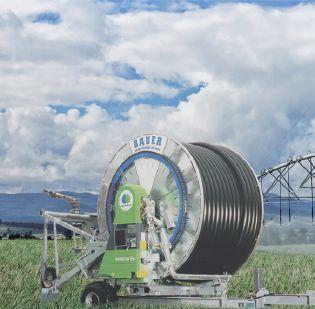
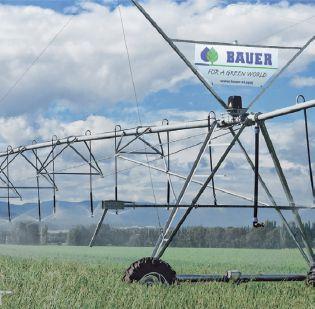
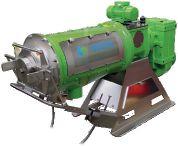
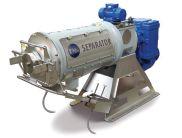
STATE-OF-THE-ART PIVOT SYSTEMS GREEN BEDDING® SEPARATORS Mixer, Slurry and Water Pumps
TREATMENT
BEDDING Fan produces bedding material with a dry matter content of up to 38% in solids.
BENEFITS
Call the FAN/BAUER boys: East: Jim Dewitt, 1-630-750-3482, j.dewitt@bauer-at.com
West: Jeff Moeggenberg, 1-630-334-1913, j.moeggenberg@bauer-at.com
Sales Director: Ray Francis, 1-219-229-2066, r.francis@bauer-at.com
Rob Hultgren, 1-800-922-8375, r.hultgren@bauer-at.com
RAINSTAR TRAVELERS
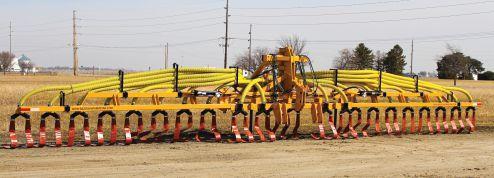
Bazooka unveils Dribble Bar 2
Liquid manure equipment specialists Bazooka Farmstar have unveiled its latest product, the Dribble Bar 2. This upgrade to the original Dribble Bar is designed for greater precision, durability and efficiency.
One of the highlighted features of the Dribble Bar 2 is its heavy-duty construction. It has been designed to withstand highly challenging conditions, including rocky, uneven terrain and heavy use. It’s also been designed with new features to make use easier.
Featuring Y-shaped drop tubes and upgraded threeinch Bumblebee hose, the Dribble Bar 2 reduces the risk of plugging and ensuring uniform distribution. Other features include hydraulic, rear folding wings for safe and fast transport, a standard flux manifold for accessible cleaning and even manure distribution, and a coverage width of 44 feet. Operators can apply anywhere from 3,000 to 25,000+ gallons of manure per acre through the dribblelines spaced one foot apart, increasing productivity.
The Dribble Bar 2 is available now, with optional upgrades, including a pipe swivel with hose swivel for easier turning and a six-inch Krohne Flowmeter for precise flow measurement.
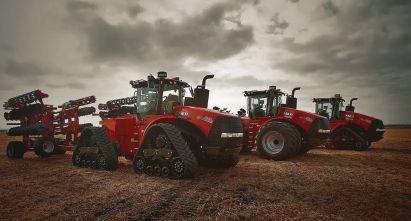
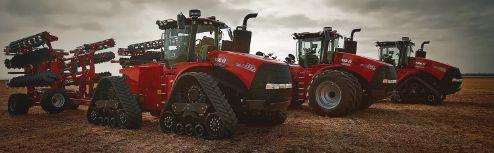
Case IH unveils new high-powered Steiger series models
At the recent National Farm Machinery Show in Louisville, ag equipment giant Case IH unveiled its plans to offer more high-powered options as part of its upcoming Steiger 2024 line of tractors.
The Steiger 425, 475, 525, 555, 595 and 645 are scheduled to go into production during the fourth quarter of 2023. At the highest-powered 645 model, at max boosted power, the tractor should be able to offer 699 peak horsepower.
In addition to high power, the new line will bring upgraded levels of cab comfort, four-week drive chassis and AFS Connect data management technology. Other upgrades include integrated overhead grab rails, improved door handles, enhanced LED lighting, additional front console storage and more.
MANURE MINUTE
CHRYSEID MODDERMAN | University of Minnesota Extension
Why you need a manure management plan
When applying manure, the main goals are to apply at an accurate rate and to avoid nutrient pollution. But this isn’t always easy because manure, in general, is complicated. There are five main factors that make manure complicated; often, more complicated than commercial fertilizer. Following a manure management plan will help combat these challenges. Read on for the five challenging factors.
OVERALL
NUTRIENT CONTENT IS LOW
Total nutrient content of manure is low – rarely above 10 percent – whereas commercial fertilizers have a much higher nutrient concentration by weight. The low nutrient content of manure is a potential problem because you need a lot more volume of manure than commercial fertilizer to achieve the same nutrient application rates. This increases time and transportation cost, making it more economical to apply to the field nearest the barn. Over time, repeated over-application to the same field can lead to nutrient build up and subsequent pollution. It is quite common to see fields nearest a livestock operation with very high soil test phosphorus levels.
NUTRIENT
RATIO IS FIXED
Unlike commercial fertilizers that can be mixed and adjusted to reach desired nutrient balance, manure nutrients are fixed. It is what it is. Let’s do some quick math to illustrate this. Let’s say you have turkey
NUTRIENT AVAILABILITY IS DIFFICULT TO ESTIMATE
Nutrient availability, especially the availability of nitrogen, can be challenging to accurately estimate. Manure supplies two forms of nitrogen: inorganic and organic nitrogen. The inorganic nitrogen is immediately available to the plant; while the organic nitrogen is not. Organic nitrogen can become inorganic nitrogen over time through a process called mineralization. The challenge is estimating how much organic nitrogen will become inorganic nitrogen, and how fast. This can be tricky because mineralization is a microbial process, meaning that how fast or slow it processes organic nitrogen depends heavily on the environment. And we know how fickle the environment can be!
NUTRIENT CONTENT IS NOT UNIFORM
Unlike commercial fertilizers that are fairly uniform throughout, manure uniformity varies spatially and over time. This can make accurate rate calculations tricky. To meet this challenge, it is very important to take a good representative manure sample for testing. But even then, it is likely that slight over- or under-application can occur.
NUTRIENT
TIMING MAY NOT BE IDEAL
You need a lot more volume of manure than commercial fertilizer.
manure with 30 pounds of plant-available nitrogen and 40 pounds of plant-available phosphorus per ton, and your agronomist says to apply 180 pounds of nitrogen per acre for your corn crop. You’d need to apply manure at six tons per acre (180 / 30 = 6).
Does this application rate pose a risk for nutrient pollution? Yes. At 6 tons/acre, you will apply 240 lbs P/acre (40*6=240). Corn only uses 0.29 lbs P per yield unit. So, even a really high yield of 250 bu/ac corn would only require 72.5 lbs P/acre; and that’s including what is already in the soil. Adding 240 lbs of P is way too much! Over-application of phosphorus can lead to phosphorus buildup, which can lead to pollution.
In a perfect world, manure would only be applied when the nutrients are necessary and when it poses the least risk to the environment. Unfortunately, we don’t live in a perfect world. Often, manure application timing is driven by storage limitations and working around wet weather, harvest, or planting rather than when it is best for the crop and environment. Nutrient loss from manure is higher when application occurs in late winter, around the time of snowmelt.
HOW TO MEET THESE CHALLENGES
While we may never be 100 percent perfect with manure management, there are ways to minimize these challenges. The most significant is to have a manure management plan which encompasses best management practices such as accurate rate calculations, sampling, setbacks and buffers, spreader calibration and more! •
Often imitated, but never equalled.
GEA Liquid Manure Spreaders are continuously renowned for their performance, reliability, and durability. The effective design and high-level fabrication of this equipment as well as the service/support provided by our knowledgeable dealer network make GEA spreaders the preferred choice over any brands on the market. Put the GEA Liquid Manure Spreader to the test and you will see that the reputation is not overrated.
Contact your local GEA dealer to learn more about GEA ProManure equipment