In our annual issue on whole farm management, we explore how farmers and applicators can stay up to date and be true multi-hyphenates.
Working with new users
Hired by a recent manure convert? Here’s how to guide them through the process.
BY JULIENNE ISAACS
Caring for the land
A primer on 4R nutrient stewardship (and why it’s not a “silver bullet.”)
BY JAMES CARELESS
Automation station
Automation already plays a big part in agriculture – what’s the next big thing coming our way?
BY CHRIS MCCULLOUGH
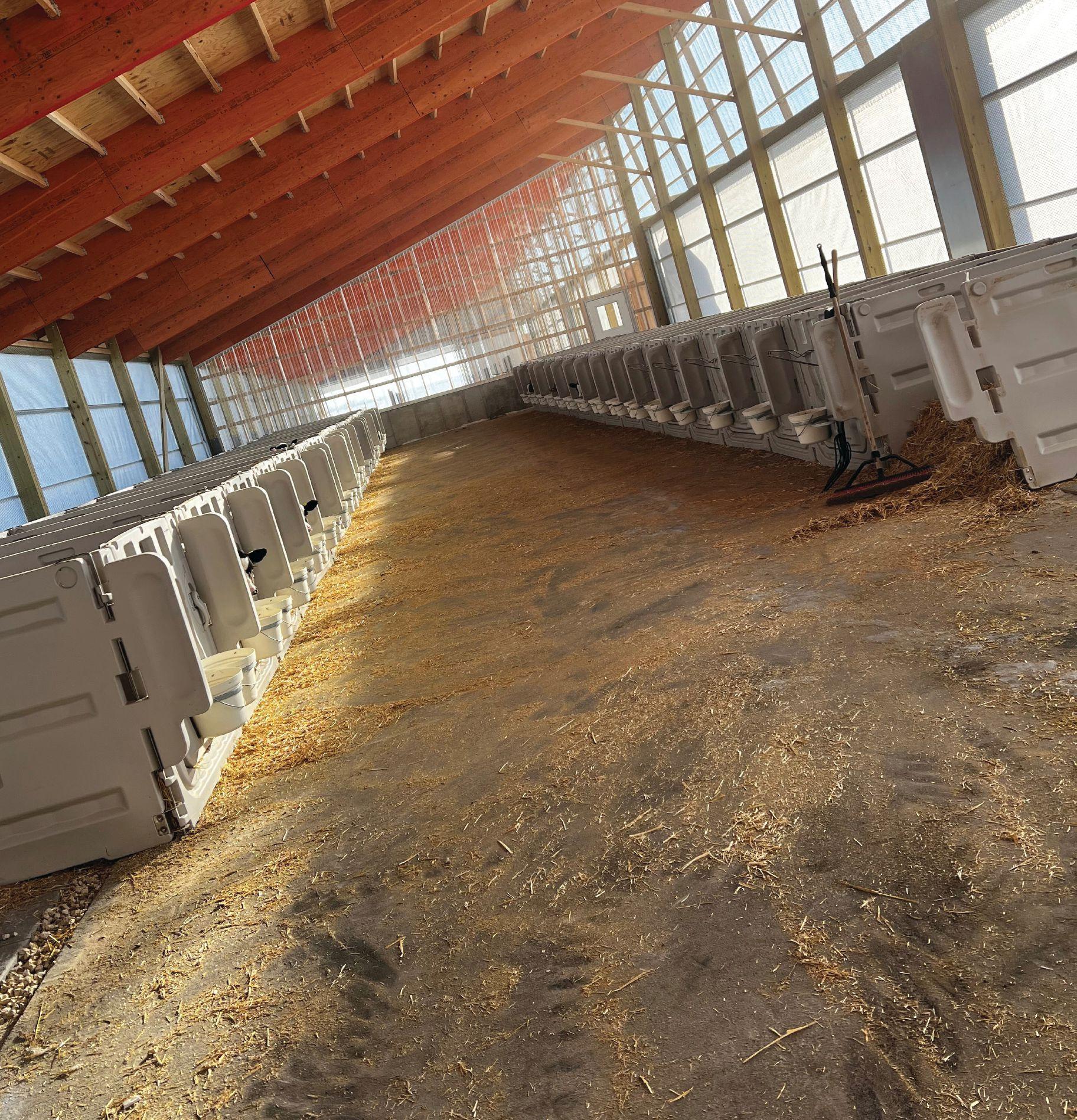
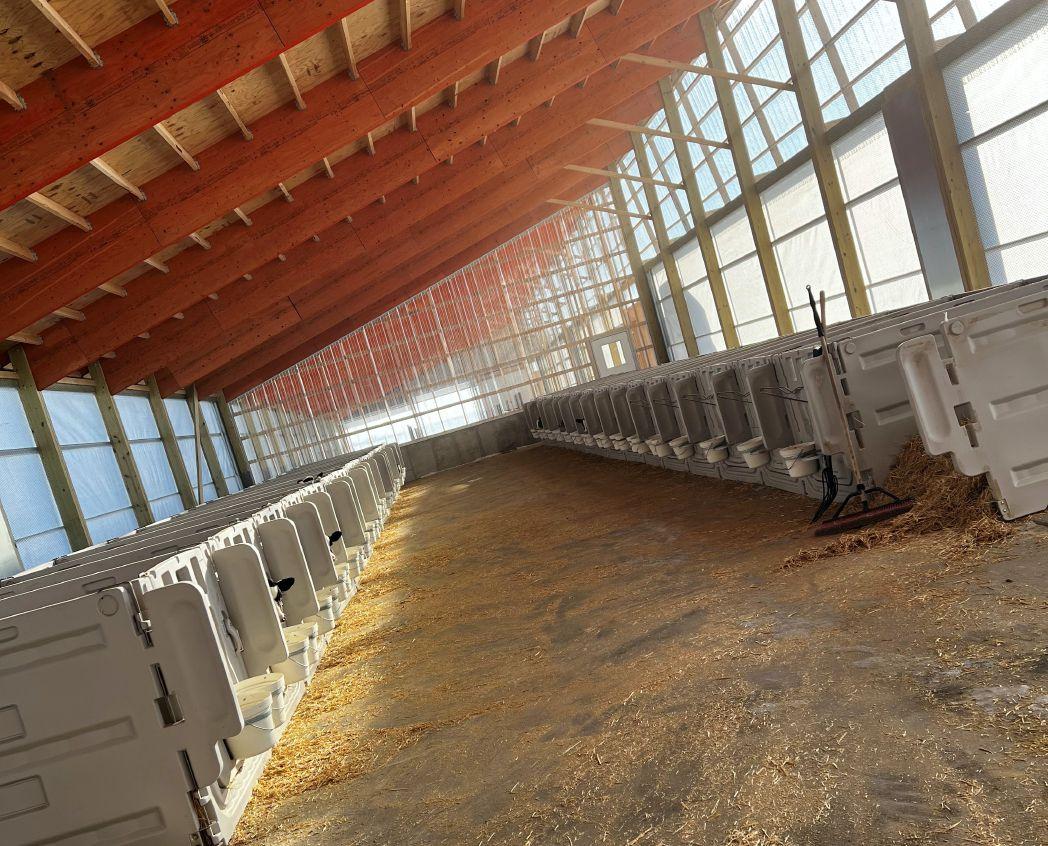
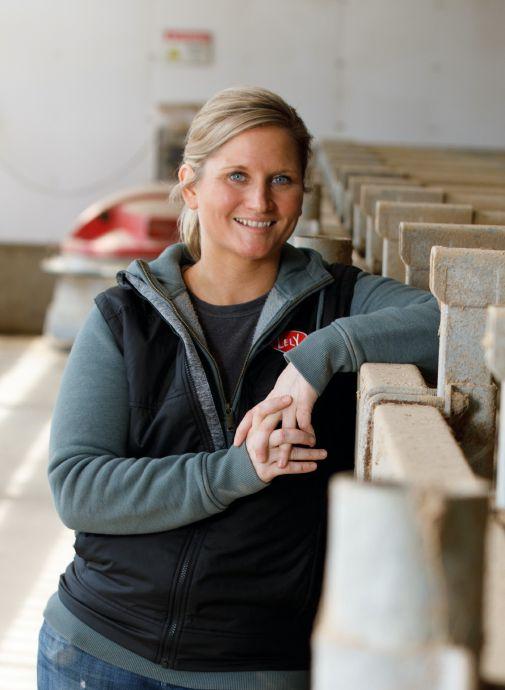
Back to basics (and not-so-basics) with calf health. Photo courtesy of Megan Kregel.
Smells like opportunity
For me, the first telltale sign of spring is the sound of the ground squishing under my feet when I’m out for a run, or the little puddles splashing on the sidewalk as I walk out to my mailbox. Squish, splash, spring is here! And after a decade in the big city, I’m excited for my first “small-town spring” since I was a child. In particular, living in the county known as “Ontario’s garden,” I know that will mean the sights, sounds and (naturally) smells of spring farming. The smell of spring spreading will waft in from the farms – a smell I am sure I will have to get used to.
But the smell of manure spreading is not only something we can all eventually adjust to (after all, as a child I grew up around sulphur mills and rendering plants) but also the smell of productivity and progress. Much like the industrial aromas present in my small town growing up, the smell of spreading means that we will eventually reap the benefits at a plentiful harvest. It’s important to remember that as consumers when we’re going out to the farmer’s market to pick up
has become an increasingly complex task with recent innovations (see page 16 for our feature on enhancing calf health). There’s increased pressure – nay, need – to be loyal stewards to the land (on page 8, we discuss how 4R nutrient stewardship is growing in popularity). And as community engagement – whether that’s through in-person tours, Zoom networking or on social media – becomes more important, many are also tasked with feeling like a one-person marketing team (see Chrissy Wozniak’s column on page 22 about marketing farms and products responsibly).
All that is to say, there’s always more to the stink than we think.
There’s always more to the stink than we think.
crunchy corn that we’re going to grill, or the succulent strawberries we share for dessert. This didn’t always look or smell pretty, and applying manure is not a job everyone could do. We should think twice before we turn up our nose at it.
And we must always remember that farming is rarely a straightforward, uncomplicated or even linear venture. The whole reason we created an issue on whole farm management is because farmers wear more hats than ever nowadays – animal care
And being open-minded when it comes to manure is not just a lesson for people driving through the countryside. Plenty of growers are just now looking to manure due to the exorbitantly rising costs of commercial fertilizer. This is not only good news for those who have manure and are looking to capitalize but also potential good news for those looking to use manure for the first time. For more information on how to guide those new users through the switch and communicate the benefits of manure, check out our Q&A with nutrient management specialist Melissa Wilson on page 8.
In the meantime, I’ll be eagerly counting down the days until I can buy some roadside corn to throw on the barbecue – and so I’ll know when a certain smell wafts over my neighborhood that the day is getting closer. •
Manure pipeline webinar now available
The use of manure pipelines has become a frequent topic of conversation in the public and agricultural sectors. The Livestock Poultry Environmental Learning Community (LPELC) hosted a webinar on Feb. 18 titled “Going the distance: considerations for the use of manure pipelines,” to provide the basics about this manure transport option. Glen Arnold (Ohio State University Extension), David Cunningham (Bridgewater Dairy), Suzanne Reamer (USDA NRCS-MI, Environmental Engineer) and moderator Erica Rogers (Michigan State University Extension) were the panelists.
The webinar includes an overview from Arnold on manure pipelines basics including cost, pros and cons and environmental considerations. Panelists also discussed topics such as the longevity of manure pipeline systems, potential obstacles with the installation based on regulations as well as in the field, how often these types of systems should be cleaned out and what kind of inspection points or checklists exist/should be in place to help prevent spills. The full webinar can be found on the LPELC website at the following link: https://lpelc.org/going-the-distanceconsiderations-for-the-use-of-manure-pipelines/.
NATIONAL OUTSTANDING YOUNG FARMERS ANNOUNCED
The winners of the National Outstanding Young Farmers (NOYF) for 2021 and 2022 were announced earlier this month at the annual NOYF Awards Congress in South Carolina. This
year’s ceremony honored finalists from the past two years after postponing the event in 2021. Winners for 2022 are:
• Richie and Sarah Heinrich (North Dakota);
• Matt and Jenna Kilgus (Illinois);
• Hunter and Laura Grills (Tennessee); and
• Joe and Ashley Dudkiewicz (Wisconsin). Winners for 2021 are:
• Matt and Melissa Bottoms (Georgia);
• Hillary Barile (New Jersey);
• Joroen and Traci van der Ploeg (New Mexico); and
• Philip and Laura Finger (Wisconsin).
National winners received a savings bond from sponsor John Deere and the opportunity to represent the program at future agricultural events.
Matt and Jenna Kilgus are dairy farm owners, milking 150
Jerseys and raising other livestock including beef, hogs and goats. Hunter and Laura Grills are also beef cattle farmers as well as crop farmers. Joe and Ashley Dudkiewicz grow corn, soybeans, wheat, hat and cattle. Joroen and Traci van der Ploeg raise beef cattle along with their dairy operation, while Philip and Laura Finger operate a dairy while growing other crops.
Canada, B.C. commit $228 million in flood relief
Following last year’s devastating floods, British Columbia farmers who suffered damages will have access to up to $228 million in federal-provincial government support.
Federal minister of agriculture and agri-food, Marie-Claude Bibeau and British Columbia minister of agriculture Lana Popham announced the CanadaBC Flood Recovery for Food Security Program, which will be delivered by the government of British Columbia and will leverage the federal government’s AgriRecovery Framework and Disaster Financial Assistance Arrangements (DFAA).
The program will help farmers who have incurred extraordinary expenses from uninsurable damages such as:
• Cleanup, repair and restoration of land, barns and animal shelter, water and waste systems; returning flood impacted land and buildings
to a safer environment for agricultural production;
• Repair of uninsurable essential farm infrastructure; reasonable repair of on-farm structures such as livestock containment fences, and the rental of temporary production facilities drainage ditches and riprap;
• Animal welfare; replacement feed as well as livestock transportation, veterinary care and mortality disposal; and
• Loss of perennial plants not raised for resale The response was designed following extensive consultation with agricultural organizations and individual farmers in the different disaster areas. Farmers who have already undertaken any work are advised to keep their receipts, track the hours of work involved, and take pictures documenting the damage and repairs to support their application.
Meristem launches new Excavator formula
Meristem Crop Performance has launched a new formulation of its Excavator biological, which it says is good timing as commercial fertilizer prices have hit significant highs.
Joe Gednalske, senior product development lead at Meristem, said in a statement that the proprietary
New Holland launches production of methanepowered tractor
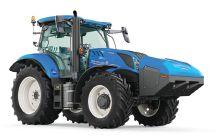
New Holland Agriculture North America has launched the T6 Methane Power tractor . Michael Corman, livestock and dairy segment manager for New Holland North America, said in a statement that the launch is a “a significant step forward on the path to decarbonizing agriculture, and it is happening now, as the development of this sustainable tractor has reached its production phase.”
It is commercially available to customers beginning this season.
The T6 Methane Power’s performance is equivalent to its diesel equivalent, with up to 30 percent reduction in running costs. It can run on either biomethane or compressed natural gas (CNG).
Compared to emission limits allowed under European Stage V emission regulations, the tractor produces 98 percent less particulate matter. When running biomethane, it can provide a 10 to 15 percent reduction in CO2 for a negative emission profile.
The T6 Methane Power features a new NEF 6.7-liter engine specifically developed for agricultural applications by FPT Industrial and benefits from the company’s 20+ years of experience in natural gas powertrain technology development.
The gas tanks with 49 gallons of capacity are stored in the same position as the diesel tanks on the standard T6 model. This maintains visibility from the cab with no restrictions in access.
surfactant blend allows Excavator to get deep inside the pith of residue.
“That’s when the value of our six specially developed microbes deployed in very high numbers of CFUs (colony forming units) is expressed, when those microbes wake up in the residue, multiply and begin
their work.”
“A unique surfactant combined with fulvic acid is the carrier system for six different microbes, all dormant and stable in liquid right up to the time they hit the residue,” Gednalske explained.
At press time, the new Excavator formula is patent-pending.
Bazooka unveils new agitation solution
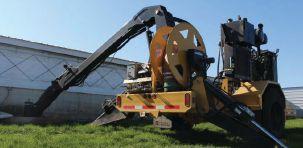
Bazooka Farmstar unveiled its latest addition to its agitation portfolio, the Renegade agitation trailer.
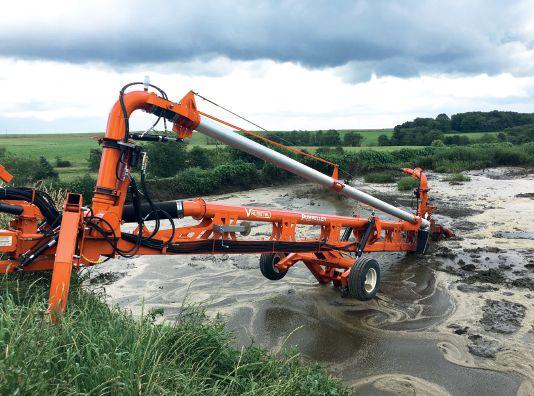
Bazooka says the Renegade has already gleaned positive performance remarks from its early adopters. The maneuverable, triplesection boom structure can reach a below-grade pumping depth of 14 feet. The trailer is equipped with two agitation nozzles that rotate 180 degrees and thoroughly agitate manure pits. The Renegade consistently hits 2900 GPM with the standard configuration featuring a 15-inch Bazooka submersible pump, 173 horsepower John Deere engine and 125 CC hydrostat motor. Other features and upgrades include an LED light halo complete with six lights total for 360 degree coverage around the trailer and 13 square feet of built-in storage on the front side.
A LONG WAY TOGETHER
WHEREVER YOU ARE, BKT IS WITH YOU
BKT provides you tires that are reliable and safe, sturdy and durable, capable of combining traction and reduced soil compaction, comfort and high performance.
BKT: always with you, to get the most out of your agricultural equipment.
WORKING WITH MANURE CONVERTS How to guide them through
How to help producers do their research, refine their goals and tailor expectations
BY JULIENNE ISAACS, WITH FILES FROM BREE RODY
This year might see a new crop of converts to manure. With commercial fertilizer prices at record highs going into 2022, incorporating manure into fertilizer regimes might help some producers bring down costs while maximizing soil health benefits.
If you’re an applicator working with producers who are new to the practice, they might have a lot of questions about best practices and how to make sure manure fits into their overall soil fertility plan.
Melissa Wilson, assistant professor and extension specialist in
ABOVE
manure nutrient management and Water Quality at the University of Minnesota, shares how you can help new manure users understand the nuances, get the most out of their investment, and stay proactive once you’ve left their field.
MM: What should applicators let producers know about manure in terms of its limitations? What are the best ways to set expectations? MW: When it comes to comparing manure to fertilizer, one thing to know about manure is that nutrient release is more variable. Manure is
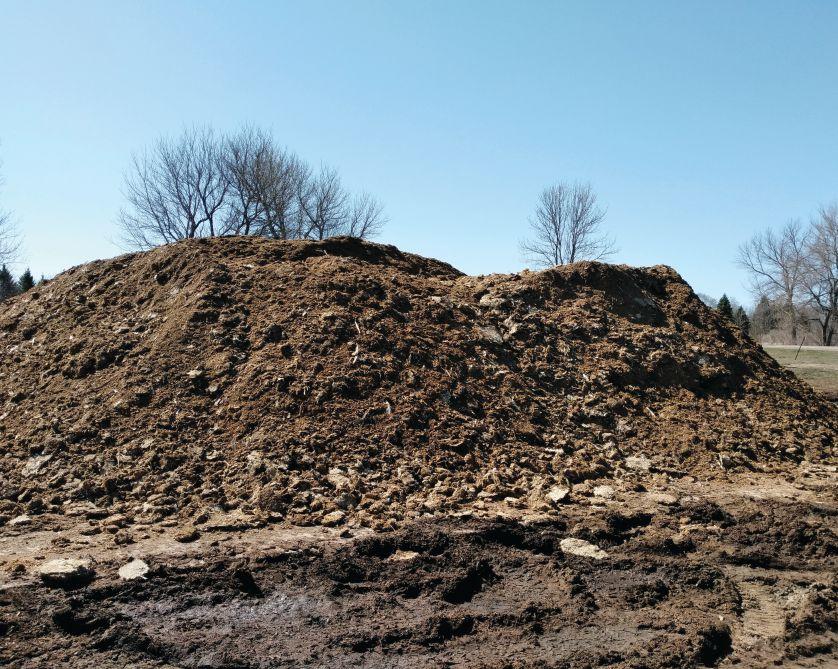
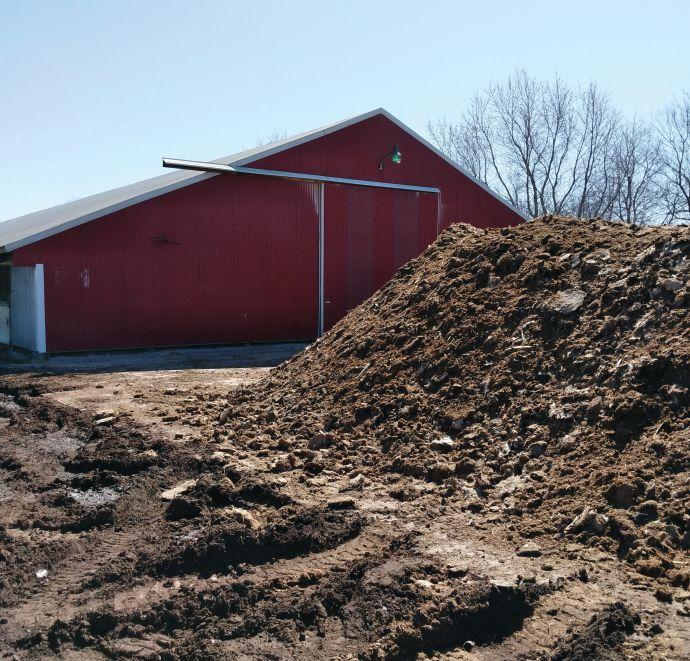
In Minnesota, manures like poultry litter or turkey litter (pictured) tend to be hauled further, because less water is being hauled with it.
ALL PHOTOS COURTESY OF MELISSA WILSON
the gift that keeps on giving, and nutrients can be released over several years. But with manure, you get what you get, and it doesn’t always meet the ratios that the crop needs. Crops often need several pounds of nitrogen (N) for every pound of phosphorus (P). However, manure is sometimes more rich in N to P, sometimes by a factor of two to one. Sometimes N and P are equal, but that depends on the manure type.
MM: How does one figure out how much nitrogen the manure accounts for?
MW: So this one is something that varies by region, probably because of different feeding patterns with different livestock, but also because of climate. There will be differences in how quickly the N releases based on where you are.
In general terms you figure out how much ammonia is present, and then you figure out how much N in organic matter is present.
There are calculations for each region that assess how much of the N is plant available.
So there are two parts–ammonium, which is plant available, and organic N, which has to be converted by microbes into ammonium. The calculations help
[producers] figure out how much of that will be converted in the first year and how much will be available in the second year, which helps you figure out N credits.
MM: Producers will want to know what to expect in terms of effects on crop and yield. Do you have any real-world examples that can help with tailoring expectations?
MW: We’ve seen some places where the field did not have a manure history, and the crop seemed to have a really nice benefit, and we think that’s maybe due to some of these other nutrients, like sulfur and micronutrients, that [would not be] included in commercial fertilizers if you didn’t pay for them.
In other fields, where there is a manure history, it looks very similar to fertilizer yields, unless the weather is extreme.
In 2020 in Minnesota, the manured fields looked better than where we’d applied fertilizer.
This past year, in the 2021 growing season, we had a drought and crop yields were similar but there was slightly less precipitation.
The organic form of the nitrogen wasn’t able to release as quickly.
MM: Many producers are concerned about excessive runoff and nitrate leaching. How can applicators and producers work together to ease this concern?
MW: That one is complicated, because it has a lot to do with [a producer’s] soil, and if [they’re] doing a lot of tillage and keeping soils loose, with or without manure, [the] soils could blow away or run off. It’s a combination of production practices. Using good practices and applying manure… results could be slightly better than using good practices without manure.
There is some research that’s shown manure can help build water holding capacity and help increase infiltration, and there have been studies looking at the soil microbial activity as well. A lot of that research is really new. It’s interesting to see. Overall, as long as you’re using it judiciously and applying at agronomic rates, it can be beneficial because it’s adding nutrients and helping with soil health as well.
I think some of the bigger issues are that there’s a lot of water that comes with manure and it feels [for producers] like [they’re] transporting water. Manure has a lot of water. As far as what’s more or less economical, the higher the nutrient content per 1000 gallons or tonne is more economical, because you’re carrying less other stuff with it.
MM: Producers are also concerned about soil quality and compaction, and many, particularly in the northeast, dealt with torrential downpours in the past year. How big of an issue is compaction and how can you ensure you’re easing the minds of producers before you bring a spreader out onto the field?
MW: With wet conditions, it can be a big concern. There areadjustments you can make. Make sure your tires are pumped up [at] about 10 to 15 PSI in the field, if you can get them down that low. And they should be higher if you’re on the road, so making those adjustments as you get into the field is really important, [as well as] trying to spread the load out of a wider area. Think about wider width [for tires] and wider axels.
MM: What knowledge should you leave with a new user for after you leave the farm and being proactive between applications?
MW: [Tell them to] nutrient test – so get
ABOVE
Poultry litter, like the turkey litter pictured, needs to be stockpiled a certain distance above the water table in Minnesota.
out in the field, get a couple samples and put them in a big bucket, and then mix that up and create a smaller sample from that mixture and send it into a lab. That’s a really great way to understand what you applied this year, and that can help them manage nutrient management planning for a few years.
Some of the things that might change kind of drastically [if you used] liquid manure is how well it was agitated. Even if you have solid manure. Or if you have hotspots or not, phosphorus [is a factor], because phosphorus can settle to the bottom in liquid environments. The same with nitrogen. If [they] had less nitrogen than expecting, [they] can potentially adjust with the spring application or even side-dress to meet nutrient needs.
MM: Producers also want to know what they should actually be paying for nutrients, and how that compares across different states and manure types. I understand University of Minnesota is working on a national manure nutrient database for the U.S. Can you tell me how that will help increase transparency around pricing and expectations?
MM: When I started my job, everyone talked about book values – “this is how much nitrogen you can expect in swine manure,” “this is how much from poultry.” But all of those numbers are really old – from the early 2000’s… It might have been 20 samples across the Midwest, and that became the book value.
So there’s been a lot of advancements recently. [For example], swine producers are using phytase which helps the animals digest phosphorus a little bette. There’s a lot that changes in our diets, so you have to expect there’s going to be changes in what comes out of the back end too.
So we wanted to update those numbers, and we have all these labs in the U.S. that are analyzing manure across the country. It seemed like a really useful place for us to start to get some of these averages. We think we can have really accurate book values, maybe even for each state.
It’s not [live] yet, but we’re working on the programming. It is so different, the information that everyone collects about the manure. We’re working on it, and will probably be available through University of Minnesota, and in the U.S. we’re working with the NRCS.•
•
•
•
•
WASTE WATER TREATMENT
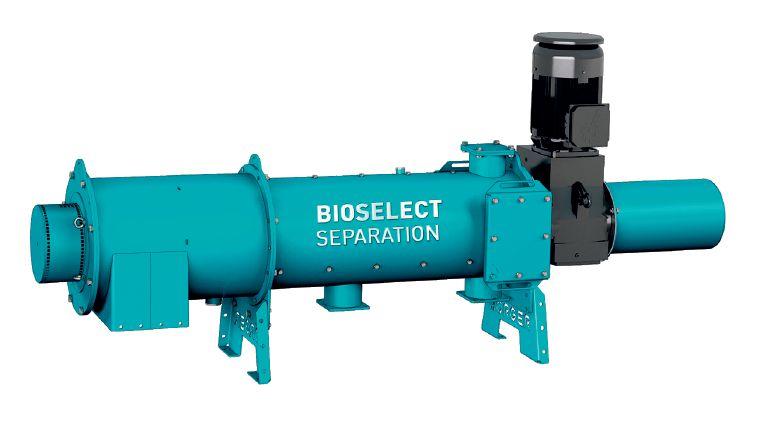
Fan produces bedding material with a dry matter content of up to 38% in solids. FAN PRESS SCREW SEPARATOR • Saves money
Call the FAN/BAUER boys: East: Jim Dewitt, 1-630-750-3482, j.dewitt@bauer-at.com
West: Jeff Moeggenberg, 1-630-334-1913, j.moeggenberg@bauer-at.com
Sales Director: Ray Francis, 1-219-229-2066, r.francis@bauer-at.com
Parts/Operations: Rob Hultgren, 1-800-922-8375, r.hultgren@bauer-at.com BAUER North America Inc.
City, IN 46360, 1-800-922-8375, bnasales@bauer-at.com
• Every contact point is greaseable
• All wear points are rebuildable
• Eliminates costly down time and expensive repairs that can occur with a broken hitch
• Comes with a 3 year
Keeping up with the 4Rs
The 4R approach is not a silver bullet to sustainability, but remains
BY JAMES CARELESS
The practice of 4R nutrient stewardship is based on the ‘4Rs’ of fertilizer (including manure) application, “which refers to using the right source of nutrients at the right rate and right time in the right place,” says Andrew Allman, director of business operations at the Ohio AgriBusiness Association and executive director of the Nutrient Stewardship Council. “This approach provides a science-based framework for plant nutrition management and sustained crop production, while considering specific individual farms’ needs.”
At the same time, “As much as we would like to think that the 4Rs are a silver bullet, we know this is not the case,” says Erica Rogers, environmental extension educator with Michigan State University. “It is one part of a bigger equation to help promote sustainable farming.”
A 4R PRIMER
“The principles of 4R Nutrient Stewardship were developed in order to apply nutrients in a way that considers growers’ economic, social, and environmental goals,” says Brittany Thibaudeau, communications specialist with Fertilizer Canada. “4R Best Management Practices and recommendations from an agronomist will ultimately vary depending on numerous factors, including a farm’s location, crop rotation, climate, soil type, nutrient sources available and equipment.” Rogers adds, “Right source means proper fertilizer nutrients [commercial or manure] being utilized for immediate or delayed crop uptake. Right rate means
ABOVE
a key piece
match the amount of applied fertilizer to the crop nutrient uptake, making sure to do a manure and soil analysis to appropriately match [the] actual amount of fertilizer needed for crops based on individual field fertility. The right time means applying the manure as close to the plant uptake of nutrients as possible, with consideration given to weather, seasonal conditions, and the mitigation of potential odours. Finally, the right place means fertilizer placed as close to the root zone as possible for best plant uptake, taking into account potentially sensitive areas like surface waters.”
MANURE POSES 4R CHALLENGES
Compared to commercial fertilizers, manure can be more challenging to manage in line with 4R principles.
The core challenge: “Due to the volume of manure applied to get the same fertilizer value compared to commercial fertilizer, achieving the right time and right place and right rate is more difficult,” says Christine Brown, sustainability specialist for the Ontario Ministry of Agriculture, Food and Rural Affairs’ field crops unit. “Manure composition doesn’t respond to a customized fertilizer blend so application rates can easily over or under apply nitrogen or phosphorus. As well, the Right place for fertilizer focuses on placement, but with manure the need to apply to the ‘right’ field is just as important as the ‘right’ placement.”
A further challenge: “In Ontario, I think the biggest emphasis of manure 4Rs management has been ‘right time,’ and the importance of not applying manure
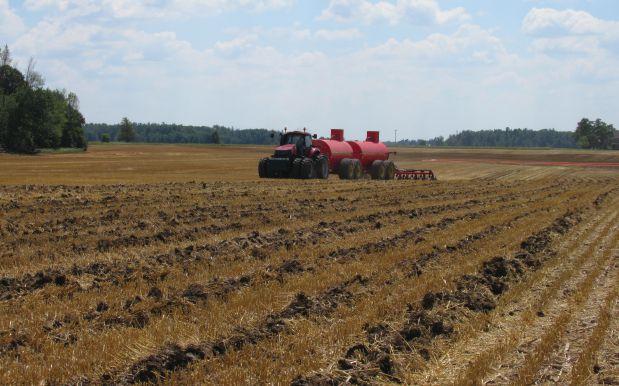
Manure is applied on an Ontario field in the summertime.
during the wrong time, such as on frozen and snow-covered fields,” says Brown. Although surveys show a high level of 4Rs awareness and acceptance among young farmers and those who run larger farms, “weather is the biggest barrier to implementing 4Rs in livestock farms,” she notes.
The realities of manure disposal on livestock farms can also complicate adherence to 4Rs principles. “Most farms still need to apply manure in the late fall or spring to manage limited winter storage,” says Brown. “A wet spring or fall will result in manure being applied with longer intervals to incorporation, or may increase some winter manure application. Higher rainfall can also limit usual storage capacity and lead to application timing that doesn’t meet 4Rs standards.”
CHANGES TO FARMING PRACTICES REQUIRED FOR 4R
Implementing the 4Rs to achieve more sustainable agriculture doesn’t start and stop with applications to fields. “Ultimately, there is some cost associated with implementing more advanced practices such as enhanced efficiency fertilizers, variable rate technology or purchasing equipment upgrades to allow for banding placement,” says Thibaudeau. “These investments contribute back by reducing nutrient losses to the environment while maintaining or improving yields.”
“I think there are just as many economic advantages as barriers when manure nutrients and organic matter is utilized to its maximum benefit,” says Brown. Still, there is a cost associated with acquiring and implementing the new technology required to fully implement 4R principles. When it comes to using applying, this purchases can include technology to apply/inject manure into standing crops, tires and inflation systems, storage technology t and the cost of labor. “Government grants to subsidize new technology helps,” she says.
This said, there is no one-size-fits-all solution to 4Rs implementations. As no two farms are alike, so too are the 4Rs approaches that can make them sustainable – and not all require a big outlay of cash.
“Even the smallest change can make the biggest difference: It does not always have to involve big, expensive equipment or technologies,” says Rogers. “Farmers can just start where they are at now, using whatever resources are available at their fingertips. This doesn’t mean that they can’t invest in some of these more expensive options at a later point. But if they don’t start somewhere, that isn’t very effective either.”
NO SILVER BULLET
For all their benefits, the 4Rs are not a “magic solution” that can fix all issues in agriculture.
“No, the 4Rs are not silver bullets that will clean up water quality issues in the Western Lake Erie Basin or other water bodies and achieve overall sustainability, which has different meanings to different people,” says Allman. “The 4Rs are a piece of the puzzle and exist to provide proven, science-based best management practices and education at the retailer, independent
crop consultant and farmer levels.”
Brown cuts to the heart of this issue when she observes that “sustainability is more than just the 4Rs. Sustainability includes environmental, social and economic considerations, and goes beyond just balancing nutrients. Environmental sustainability includes water, air and soil.” At the same time, she says, when manure management practices align with 4Rs principles, the result is improved crop nutrient utilization and reduced environmental impacts. •
ALLIANCE FARM TIRES
LIFT. HAUL. PULL.
Could autonomous vehicles be the next big ag revolution?
It’s fair to say that big-name corporations are queuing up to back numerous automated agricultural vehicle concepts that seem to emerge from nowhere these days. However, there are a number of questions floating around that investors should really consider before diving headfirst into such significant investments.
The main question is: how many of these concepts will actually become commercially produced and available to purchase? Plus, by the time they do reach the market, will their technology be out of date?
Farmers know autonomous vehicles offer a huge solution to the global issue of a lack of labour availability and that they can increase efficiency on the farm when it comes to cultivation, planting and harvest, but at what cost? Fifty years ago, farmers would have laughed at the idea of robots working on farms, but today automation is already playing a huge role in modern agriculture.
Robots can be found in barns milking cows, feeding livestock and scraping up manure. Outdoors they are becoming very popular seeding and weeding crops with autonomous tractors striving to be the next big player in the market. Although the idea of a ‘driverless tractor’ has been around since the 1940s, it is only within the last decade that there has been a real push to develop and bring to
fully autonomous 8R tractor that can be completely controlled in the field by a mobile phone. Using CES in Las Vegas as its launchpad, John Deere captivated the audience and insisted this new auto 8R is not a concept tractor and will be commercially available to customers later this year. The machine uses John Deere’s 8R tractor with a TruSet enabled chisel plough, GPS guidance system and new advanced technologies. The goal, says John Deere, is to provide technology that can help farmers feed a global population that is expected to grow to 10 billion by 2050.
With less land available to grow this food coupled with a shrinking skilled labour pool and growing issues created by climate change, autonomous technology will play a key role in driving agriculture efficiency forward.
Diving into the technology on the new auto John Deere 8R, the tractor has six pairs of stereo cameras, which enables 360-degree obstacle detection and the calculation of distance.
Images captured by the cameras are passed through a deep neural network that classifies each pixel in approximately 100 milliseconds and determines if the machine continues to move or stops, depending on if an obstacle is detected.
Automation is already playing a huge role in modern agriculture.
production such a vehicle.
Of course they will not be for everyone, nor will they suit the farming landscapes of many countries, but they will find their place in some of the bigger farms around the world. Seeding and weeding robots, however, are more suitable for smaller farming systems and are already at work in many countries. The big requirement to ensure many of these autonomous systems actually run is a strong connectivity to satellites and wireless communications, which also may provide a barrier to their use in some regions.
Nevertheless there have been a few autonomous/ robotic systems that have been launched recently including a tractor from John Deere that can work independently, once the farmer drives it to the field.
Earlier this year John Deere launched its new,
The autonomous tractor is also continuously checking its position relative to a geofence, ensuring it is operating where it is supposed to, and is accurate to within less than one inch.
All a farmer has to do to use the new tractor is drive it to the field and configure it for autonomous operation. Using John Deere Operations Centre Mobile, they can swipe from left to right to start the machine. While the machine is working, the farmer can leave the field to focus on other tasks while monitoring the machine’s status from their mobile device.
This mobile technology from John Deere provides access to live video, images, data, and metrics, and allows a farmer to adjust speed, depth, and more. In the event of any job quality anomalies or machine health issues, farmers will be notified remotely and can make adjustments to optimise the performance of the machine.
Jahmy Hindman, chief technology officer at John
Continued on page 24
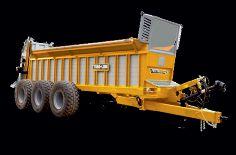
The strength and reliability of Nitro Spreaders set the standard for nutrient management.
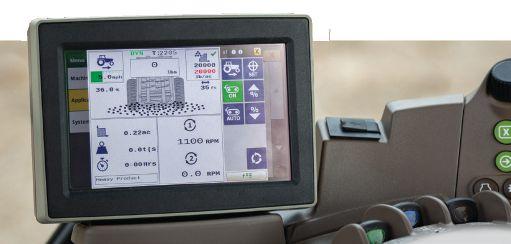
When equipped with a variable rate application system, Nitro Spreaders efficiently apply manure evenly to your field.
This helps to reduce overhead, increase yields, and verify field application rates.
When you are ready to spread, we’re ready for duty.
NITRO
ENHANCING the essentials
Calf health tools contribute to healthy animals and create ripples of increased production, farm growth and better economic viability
BY RONDA PAYNE
BELOW
Food, water, shelter, cleanliness. These are the essential aspects of raising a healthy calf. But each element has so much more to it than first assumed. In fact, considering the necessary investments in livestock and their direct correlation to revenue, doing just the basics is no longer enough in a rapidly changing agricultural marketplace.
Jennifer Bentley, dairy field specialist with Iowa State University grew up in dairy farming and brought that passion to her research around raising happier, healthier calves.
“Nutrition, housing and environment are all key factors in reaching these goals,” she says. “Simple tracking and reviewing of records on an individual farm basis could help in determining if calves could be healthier.”
SETTING AND WATCHING CHECKPOINTS FOR HEALTH
Pre-weaning is a critical time to observe markers that indicate calf health, she says.
“Monitoring calf health and growth is important to understand if calves are going through the pre-weaning stage effectively,” she says. Each farm
The McAllister Family Dairy is home to 280 milking cows.
should establish its own growth indicators based on the herd’s average body size at maturity. “A goal would be to double calves’ birthweight by 56 days of age, around the time of weaning,” she says.
She also points to the Dairy Calf and Heifer Association Gold Standards as a resource for understanding key levels for certain conditions. For example, treatment rates for pneumonia in calves should be less than 10 percent and scours (runny, discolored stool) should be less than 15 percent.
THE BASICS WITH A TWIST
In New Vienna, Iowa, Megan Kregel, is a sixth-generation dairy farmer managing the calves of the 280-milk-cow herd at McAllister Family Dairy. Her fiance Ted McAllister and his brother own and operate the farm. She’s aware of the importance of providing the daily basics to calves to ensure their long-term success, but she’s also willing to incorporate new elements into that management if she sees a benefit.
higher level of valuable information on the genetic potential of each animal.
And Kregel will also be incorporating Bentley’s tip about weight as a monitoring tool.
“We will be implementing weighing calves in order to ensure we are reaching key growth benchmarks,” says Kregel.
MANAGING THE FACTORS THAT CAN’T BE CONTROLLED
Humans can control a lot of things, but
“We will be implementing weighing calves in order to ensure we are reaching key growth benchmarks”
“Monitoring daily consumption is always a key indicator of calf health,” she says. “Feeding calves individually allows us to watch drinking speed, water consumption, feed intake and more. We also pay close attention to their manure or any other changes in behaviour. The basics always apply to having happy, healthy calves: keeping them dry, well-bedded, well-ventilated and proper nutrition.”
With a brand-new calf barn now housing the calves, she’s excited about bringing in a milk taxi for feeding. The taxi is a computerized, mobile milk tank that has individual settings for each pen allowing farmers to observe how the calf behaves rather than being overly caught up in the details of the feeding itself.
“This new-to-us technology will allow for better consistency and improved efficiency,” she adds.
weather isn’t one of them. How farmers respond to it is the key question as it will impact calf health.
“Weather can play a major role in the health and growth of calves and weather conditions need to be taken into consideration to make sure calves are always receiving adequate nutrients to both stay healthy and grow,” says Bentley.
Kregel says the Midwest can be particularly brutal in terms of adjustments necessary to deal with extreme heat and
Science has also taken a significant role on the McAllister family farm. Females are all genomic tested which provides a
LEFT
Megan Kriegel knows the importance of feeding calves individually and monitoring their habits closely.
cold. “From the highest of highs to the lowest of lows, we have to deal with all of it in the Midwest,” she says. “We have to keep calves dry year-round in times of humidity and sub-zero temps.”
Bentley has created an article on cold weather calf care as well as one on heat stress to help farmers better understand what to do when the mercury climbs or dips to extremes. Within her cold weather care article, she explains that calves do best in what is known as the thermoneutral zone – a temperature range of 50 to 78 degrees Fahrenheit where they won’t use any additional energy to maintain their body temperature. One-month old calves can manage a wider range of 32 to 78 degrees.
She advises that when the temperature reaches zero degrees, calves should be fed 50 percent more calories to maintain their body temperature. With just three to four percent body fat at birth, these animals don’t have a lot of room for loss. Too few calories in a cold weather event may contribute to illnesses and poor growth.
“Providing higher energy intakes [to] calves during colder weather does have a long-lasting impact,” she says in her cold weather article.
She refers to a study from Cornell University that says that a one-pound daily weight gain difference during preweaning resulted in 850 pounds more milk in the calf’s first lactation. Over three lactations, the total is 2,280 pounds. This study proves that keeping calves warm, while ensuring their ongoing nutritional needs are met, will create a higher production operation.
Additional tips she advises for cold weather management:
• In the first 24 hours, calves need a warm environment like a warming box or heated room to enable drying and prevent chilling. Cold conditions also make colostrum even more important.
• To increase food energy, she recommends increasing from two to three daily feedings, increasing volume fed, increasing powder in the same volume of water or switching to a higher fat content milk replacer or pasteurized milk.
• Feed milk should be warmed to between 101 and 105 degrees at the time of feeding.
• Fresh warm water should be provided to up to 30 minutes after each feeding.
• Incorporate starter in small amounts after three days of age.
• At under three weeks old, calves should have a calf jacket that is adjusted regularly as the calf grows.
• Take a moment to experience their environment. Kneel in the bedding and note if your knees get wet. Observe air quality and fresh air movement to maximize ammonia removal while decreasing drafts.
WHEN THE HEAT RAMPS UP
High heat events will lead to heat stress in calves and the resulting dehydration and reduced feed intake can compromise immune systems and delay growth. Above 78 degrees Fahrenheit (with consideration of the impacts of humidity levels) a calf may start experiencing heat stress.
Signs of heat stress Bentley notes include: reduced movement, faster breathing rate, open-mouthed panting, decreased feed intake and increased water consumption. •
Farm income to remain stable in North America
Canadian, U.S. outlooks show above-average performances for 2022
BY BREE RODY
Recent research and outlook statements from both the U.S. and Canada show that despite various economic and environmental difficulties, farms will bring in above-average income.
The USDA’s Economic Research Service estimated that net farm income increased by 25.1 percent, or $23.9 billion, in 2021 relative to 2020. While net farm income is expected to decrease by $5.4 billion, or 4.5 percent, in 2022 relative to 2021, with a forecast of $113.7 billion, 2022’s net farm income would still be 15.2 percent above its 20-year average (2001 to 2020) of $98.7 billion when adjusted for inflation.
Net cash farm income is estimated to have increased by $17 billion, or 14.5 percent, in 2021 relative to 2020 and is forecast to increase another $1.9 billion (1.4 percent) in 2022 to a total of $136.1 billion. That total would be 13.6 percent above its 20-year average.
Total crop receipts are expected to increase by $12 billion (5.1 percent) from 2021, following higher receipts for soybeans, corn, cotton and wheat. Animal and animal products are expected to increase even more by $17.4 billion (8.9 percent) following higher receipts for milk, cattle/ calves and broilers. However, lower direct government payments and higher production expenses are expected to counteract net effects. Direct government payments are forecast to fall to $11.7 billion in 2022, representing a decrease of 57 percent. The decrease is primarily due to lower supplemental and ad hoc disaster assistance for COVID-19 relief. Production expenses are also expected to increase.
Meanwhile, Agriculture and AgriFood Canada (AAFC) found that Canadian farmers and producers’ income grew to record levels despite the ongoing economic effects of
COVID-19 and other events such as the summertime drought and the floods in British Columbia. Net cash income for 2021 is estimated at CAD $26.6 billion (approximately USD $21 billion) for 2021, representing a 49 percent increase in prices. While the drought that affected areas such as Manitoba, Saskatchewan and northwestern Ontario caused production losses, grain and oilseed prices were up substantially, resulting in a 17 percent increase for crop receipts.
Canada’s livestock sector was also strong, with hog prices being a standout, and overall receipts increased by 15 percent. Program payments are also
estimated to have increased due to higher crop insurance payments.
Net operating income per farm is forecast to have increased by 59 percent in 2021.
While net cash income is forecast to decline by 25 percent to CAD $19.7 billion in 2022 (driven primarily by the impact of the drought), AAFC states that what might be viewed as a substantial decrease “is relative to the record levels of 2021” and that the forecast for this year will still be the second-strongest year on record. Average net worth of Canadian farms is also expected to remain strong for 2022.•
AUCTION
Lessons learned from a career in safety
ABOVE
Manure pits are among the many areas for which safety is a unique concern.
A Wisconsin dairy producer once asked me at a safety training, “Of all the jobs in agriculture, why would you choose a job that deals with injuries and deaths?” As I prepare to retire from a 32-year career in agricultural safety and health, this wasn’t about injuries and death. It was about people.
As a child, manure was a part of daily life on a 70cow dairy. In the early 70s my parents expanded the operation with a double four herringbone milking parlor, free stall barn with automatic alley scraper and a manure lagoon (a clay lined open air storage 140 by 60 feet with maximum dept of 14 feet) enclosed with a five-wire fence. We didn’t talk about manure gases, agitation and pump safety, sand-laden manure issues or road travel issues with a farm tractor and 500-gallon tanker. It wasn’t that hazards weren’t present, nor that safety wasn’t important to my family. But this type of manure handling and storage system and technology was new.
In May 1990, the National Institute for Occupational Safety and Health (NIOSH) issued an alert: “Request for Assistance in Preventing Deaths of Farm Workers in Manure Pits.” That year was a significant point of time in my life too. In January, my brother, who had taken over the farm, was killed in a car crash and in December, I took an outreach specialist position in agricultural safety and health at the University of Wisconsin-Madison. A personal loss led to a professional commitment: preventing
the loss of loved ones.
There’s a saying that your personal rearview mirror should be smaller than the windshield in front of you. With a glance to the past, here are safety considerations for the year ahead.
YOU’RE SPILLING WHAT?
My initial programming with the UW Division of Extension Nutrient Management team was related to manure spill response demonstrations. Having worked with emergency preparedness and response there was a natural connection. People come first – everyone needs to go home at the end of the day. An injury doesn’t just happen – like that manure spill – there is a cause.
MAKE SAFETY ASSESSMENTS YOUR PRIORITY
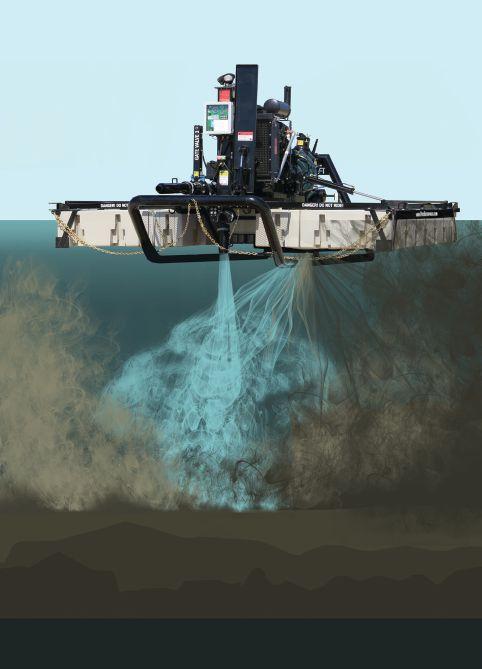
When agitation boats were entering the scene, a field day to demonstrate equipment was held on a farm in northwest Wisconsin. It was a successful program with great attendance. Behind the scenes part of this programming was a meeting on risk management with university lawyers and extension risk management personnel. There needs to be those discussions on risks, but those can be tough. Agitation produces manure gases – how would we know if attendees were exposed to these dangerous gases? What actions would be taken if a gas monitor
would sound its alarm? There’s a chance of drowning in manure slurry – what happens if someone falls in the manure slurry? Every time a company launched their boat for the demonstration, I prayed that nothing would go wrong. It really was the time spent assessing hazards, developing procedures, and communicating procedures to demonstrators and attendees that made the day a success.
Technology will continue to bring new systems and equipment to the farm and field. Sand separators, digesters, composters, deep pit barns, agitation boats, drag lines and transfer pumps to name a few recent technologies. Numerous business considerations are evaluated before investments are made. Have you considered your return on investment for safety?
Putting on my dairy boots, armed with gas monitors, and clipboards to assess hazards took me into dark and stinky places. For farm owners/managers, it provided a learning experience. To the question of “do you have an emergency plan for your farm?” it was common to be handed the manure spill response plan.
If you haven’t conducted a safety assessment for your operation, make it a priority. For those who have completed safety assessments, take time to review the assessments for changes to processes, equipment or personnel involved.
Consider needing to repair a pump in a reception pit. That reception pit is a confined space with a plethora of hazards –work your way down a confined space permit for types of hazards – falls, mechanical, atmospheric permit. That person entering a confined space enters a danger zone. In some cases, individuals have not come out alive and rescuers have died too. From safety research, The Hierarchy of Controls (https://www.osha.gov/safety-management/ hazard-prevention) places priority on engineering out or substitution of hazards. Every time a pump can be lifted out for repair, that’s one less confined space entry a person must make.
LESSONS FROM 2016
While manure gases were a known hazard, incidents in 2016 surfaced new issues. Manure gases and gas monitoring equipment are on the top of my safety action list. A value can’t be placed on the lives lost or human health costs that could have been prevented with gas monitoring instruments and safety procedures both in confined spaces and outdoor open-air situations. Without gas monitoring instruments
always being used, these dangerous gases will continue to take health and life away without a moment’s notice.
KEEP ON ROLLING
A 2021 review of manure spills in Wisconsin from 2015 to 2019 found that 38 percent of the spills related to transporting manure either by tanker or draglines. Operator error was a factor in many of these incidents. Fatigue is a significant factor in work-related injuries. Manure application often has time pressures due to field
conditions, quantity of manure to apply and weather. Pressures build to get the work done and odds are something will go wrong – something that could significantly impact a business but forever change life of family and friends.
It has been an honor to serve the agricultural industry by addressing safety and health issues. I can’t imagine the new technologies to be developed. However, I know that there will be people involved and their safety and health needs to be top priority. •
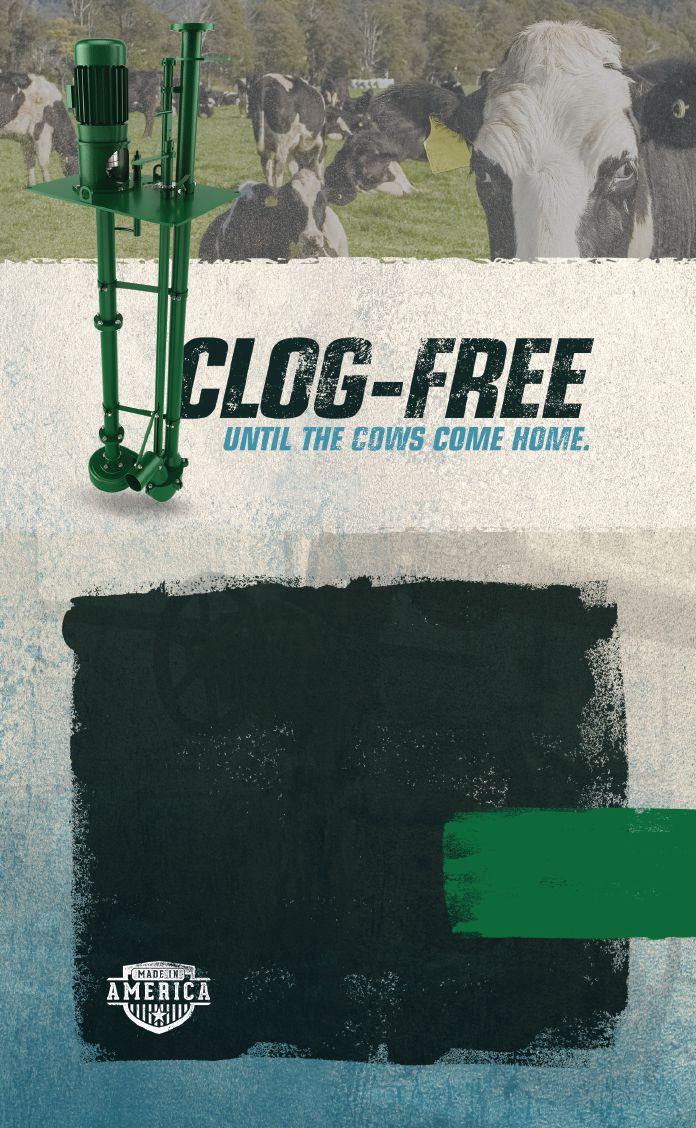
When the going gets tough, turn to the toughest pump on the planet. Since 1960, the unrivaled Vaughan Chopper Pump has been on the cutting edge. This original chopper pump was built first and made to last.
Choose the unmatched reliability of Vaughan. Ask about our free trial program and on-site demos.
Barn Flush Pit
Digester Mixing
Scraped Manure
and More!
Marketing farms and products responsibly
ABOVE
Pushes for local, organic and non-GMO food have created new consumer expectations.
Having worked in ag marketing for many years I can talk for hours, even days on how to position a product to gain impressions, follows, sales and profit, how to maximize efficiency in sales and marketing, how to read trends and build reports. But over the last few decades, marketing has become misused – and we in the industry need to lead the fight against this and work hard to promote our products responsibly.
Unethical marketing has contributed to many of the problems the agriculture industry faces. As we all know, the general public has been misled when it comes to food and food production. GMOs, hormones and organics, for example, have been turned into heroes and villains. I remember for years we were convinced that eggs were bad for us. At the time my sister, who was training to become a police officer, would start every day with two eggs, about which I had my doubts. Since then, I’ve seen the light and made the switch myself – but all the while, campaigns have inspired fear in parents who want to feed and raise healthy children. It’s time for us to rewrite this script.
So, when thinking about marketing the products raised on your farm, I challenge you to market in a way that will take back the message and shed light on the truth.
We must resist the temptation to fall into the trap of aligning with this dangerous and destructive messaging, like slapping a “non-GMO” label on your whole wheat bread. Truth should stay at the core of your marketing.
I recently attended a conference where the agriculture economist and podcaster Damian Mason was speaking, and something he said really struck me: no one cares how your phone is made, the consumer just wants it to work and understand what they get out of it.
In recent years producers have made a great effort to share their stories, especially over social media. They explain how crops and livestock are grown and help the public understand where their food comes from. I think this is wonderful, I love seeing on-farm videos of farmers sharing their daily lives. But it doesn’t stop there.
In all messaging, you need to put yourself in the shoes of the consumer, and ask their questions they would be asking – like “what do I get from this?” Better health, stronger kids, longer life, less pain, a feeling of doing the right thing. Whatever you produce, you need to show the world what you do and why you do it – and how it benefits the consumer.
Your purpose should never be to mislead. We need to fight against food misinformation and shine a light on how farms exist to produce food that nourishes people. You can do this by educating consumers and sharing how your product affects their lives, and in turn, nourishes the world.•
Chrissy Wozniak is the founder of an agriculture-focused marketing and consulting agency and hosts the podcasts North American Ag Spotlight and What Color is Your Tractor?
8” and 10” discharge sizes
Hydraulically-driven
Operated in lagoon or pit
Fits in tight spaces
Semi-open style impeller
Cutter plate rips up straw and other stringy material
Pump resists plugging
Deere, said in a statement: “You fast forward a century from the first tractors and you’ll find some of the most advanced robotic machines are being used on the farm to feed the world. If you visit a farm, you’ll see as much technology in the field as you will in Silicon Valley.
“This precise location-sensing technology enables farmers to place seeds, spread nutrients and harvest their crops without having to touch the steering wheel.
“Farming is incredibly exhausting mentally and physically. GPS technology allows farmers to spend their time in the cab of a tractor looking at the real-time data they are collecting during the job they are doing and making adjustments,” he said.
CLAAS INVESTS
German agricultural machinery manufacturer Claas has invested in a Dutch robotic start-up company to step into the autonomous tractor market. The company has entered into a cooperative venture with AgXeed BV and acquired a minority
shareholding in its international funding round as a mark of their commitment.
AgXeed will be bringing its autonomous AgBot to fields, pastures and specialty crops alongside a full suite of vehicle peripherals. The aim for this autonomous field robot with diesel-electric drive, wheels or crawler tracks, up to 156hp and standard three-point linkage, is to assist farmers with a wide range of tasks. Optional crawler tracks with belt widths from 300 to 910mm, combined with a low maximum weight of six tonnes, without ballast, makes the AgBot very soil-friendly. The vehicle also features an adjustable track width, load-sensing hydraulics and a linkage with a lift capacity of up to eight tonnes. An electric PTO, independent of the engine speed, and external high-voltage connections are optionally available. The electric equipment includes all the technology required for hazard and obstacle detection, in addition to an RTK steering system.
FIELD ROBOTS
Switching attention to robots and one of the latest machines to be unveiled is a new weeding robot that uniquely uses lasers to exterminate the enemy manufactured by Carbon Robotics in the US.
The Seattle based company’s third generation weeder uses a combination of robotics, artificial intelligence (AI), and laser technology to safely and effectively drive through crop fields to identify, target and eliminate weeds.
Farmers who operate automated robots have the ability to reduce their herbicides use, reduce labour and costs while at the same time improve crop yields. Carbon Robotics CEO and founder Paul Mikesell said in a statement: “AI and deep learning technology are creating efficiencies across a variety of industries and we’re excited to apply it to agriculture. Farmers, and others in the global food supply chain, are innovating now more than ever to keep the world fed. Our goal at Carbon Robotics is to create tools that address their most challenging problems.” •
Calibrate your manure spreader
Whether you apply liquid or solid manure, applicator calibration is an important step that is often overlooked. I know you’re busy, but just taking a moment to adjust your speed and settings will improve your confidence that you haven’t over- or under-applied nutrients. Eyeballing it isn’t going to work. A study from Michigan State University found that only a quarter of farmers who didn’t calibrate were within 20 percent of their desired application rate. If you’ve already done the work of soil sampling, manure nutrient testing, and calculating application rate, why wouldn’t you calibrate your spreader to ensure you’re actually applying the amount you had planned? You should calibrate every couple of years or whenever manure consistency or equipment has changed. Note that the application methods described here are for broadcast applications of solid and liquid manure; manure injectors tend to rely on flow meters for accuracy.
HOW TO CALIBRATE
CALCULATIONS
Math time! For both the weight and tarp method, you just need to extrapolate the amount spread over the small area/tarp to amount per acre. To do this, you first need to figure out how much manure was spread over the small area/tarp. Subtract the after-application spreader weight or empty bucket/tarp weight (in pounds) from the full spreader or full bucket/tarp weight to get pounds of manure spread. Then, divide that number by the area spread/tarp area (in square ft.). Multiply by 21.8 to get tons of manure applied per acre. Note that 21.8 is derived from 43,560 sq ft per acre divided by 2000 lbs per ton – a different number will need to be used for metric units. For solid manure, that is all you need to do.
Calibration is actually a pretty simple process. The easiest method that works for both solid and liquid manures is to weigh the spreader before and after application to a small area. Measure the length and width of the area to which manure was spread. If you don’t have access to drive-on scales, the tarp method can be used for solid manure. You’ll need a scale, five-gallon bucket, and a tarp. First, weigh the empty bucket and tarp. Then, lay the tarp in the field with bricks or rocks to hold down the edges. Measure the length and width of the tarp to get spread area. Next, apply manure normally to the area with three passes (one directly over tarp, the other two on either side of the tarp) to account for overlap. Then, fold up the tarp and place in bucket. Weigh the bucket and tarp full of manure.
Why wouldn’t you ensure you’re applying what you planned?
For liquid manure, since it is applied in gallons per acre, not tons, you’ll need to do an extra step. To convert tons per acre to gallons per acre, you’ll need to find the density of your manure –yes, it’s different from the density of water. This is also fairly simple. Just weigh an empty five-gallon bucket (or any container of known volume); and then weigh it again full of manure. Subtract those numbers to find how much manure occupies a five-gallon space. Divide five gallons by the manure weight in pounds, then multiply by 2000 to get gallons per ton. Finally, multiply that number by the tons per acre you calculated earlier to get gallons per acre.
That’s all there is. From here, you can decide to adjust speed or equipment settings to spread more or less per acre. It is a good idea to repeat the calibration process a few times to get a good idea of application rate. Make sure to record your settings for future reference. Happy spreading! •
We have a new family member!
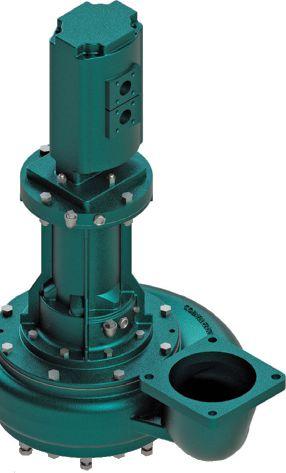
This year, GEA ProManure welcomed a NEW addition to the 10-inch lagoon pump family, the Lagoon Agi-Pompe
The 10-inch lagoon Agi-Pompe features a field-proven heavy-duty propeller capable of displacing tens of thousands of gallons of manure every minute. No matter the quantity or consistency of manure you have to deal with, GEA ProManure has a five-star pump made for you!
PERFORMANCE
10-inch discharge & new intake design
TIME SAVINGS
Faster loading & agitation
STABILITY
Design for use on multiple terrains
CONFIDENCE
High quality fabrication
WEAR RESISTANCE
Critical components made of Hardox® 450
The new HD pumps are built to pump manure, built to run smoother to save fuel, run at a lower rpm with larger and wider impellors to reduce engine wear and plugging issues.