Could automated milking tech be the response to a higher minimum wage? | 8
Changes across the pond
With Brexit official, how are livestock producers coping with new rules? | 14
Talking tech How emerging ag tech gets evaluated | 16
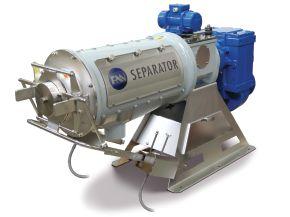
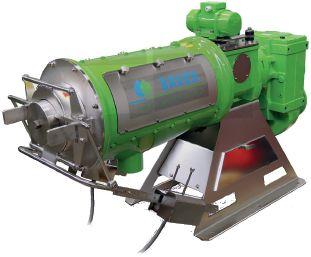
TURNING MANURE INTO HIGH QUALITY BEDDING
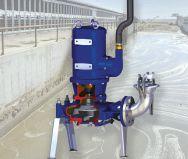
WASTE WATER TREATMENT
WASTE WATER TREATMENT
TURNING
FAN PRESS SCREW
SEPARATOR
•
•
Fan produces bedding material with a dry matter content of up to 38% in solids.
MARCH/APRIL 2021 Vol.19, Issue 2
From manure to microgrid
A Connecticut farm navigates the economic challenges of adding a digester and robotic barn to its operations.
When a cow meets a robot Is now the right time to invest in milking technology? Experts weigh in on the economics and logistics.
BY JIM TIMLICK
How are farmers evolving with the times?
A conversation with the NRCS on tech, tools and bridging those key gaps. BY BREE RODY
What comes next? Beyond Brexit
The agreement is signed, but how are dairy farmers coping so far?
BY CHRIS MCCULLOUGH
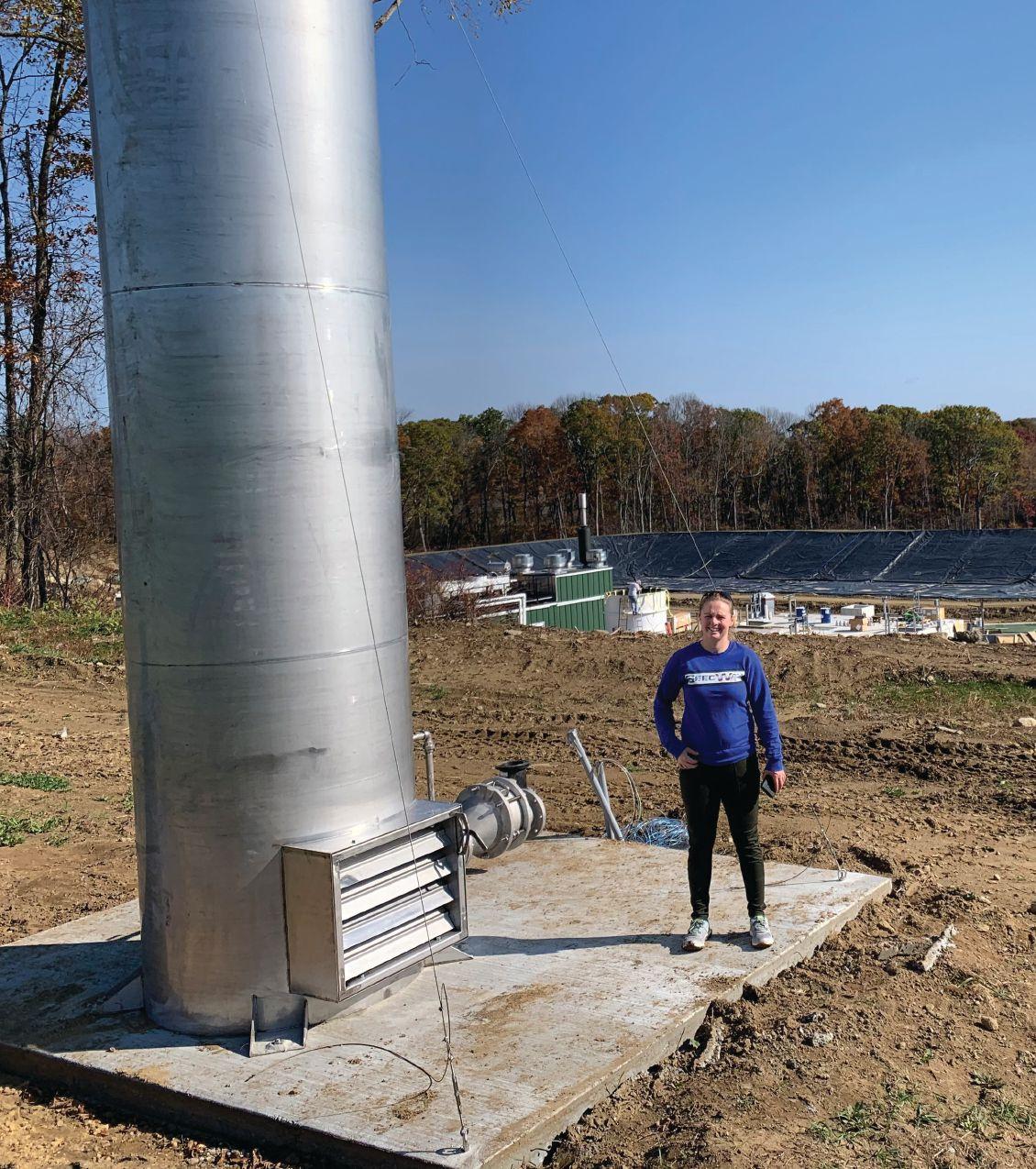
Kies Orr at the site of her farm’s new digester. See page 11. Photo by Ag-Grid Energy
Farm management is for the most cunning strategists
In 2020, I didn’t start baking bread, doing TikTok dances or any of those other pandemic-era clichés. But I did engage in one stereotypical 2020 hobby: I took up chess.
Yes, I was inspired by Netflix’s The Queen’s Gambit to try my hand at the game that had always seemed too complex or my binary, point-Ato-point-B thinking. I quickly learned that nothing breaks you out of that type of thinking quite like chess. It forces you to think a half-dozen steps ahead, prepare a simultaneous attack and defence and always have a contingency plan. You have to learn a new lingo (beyond terminology like “forks” and “skewers,” notation itself is a whole new language) and work with, not against others, to rise to the top.
That’s why the idea of whole farm management reveals so much about farming– all it takes is a conversation to understand how many hats a farmer wears, how many situations they must
In our last issue, we talked about innovation and how producers and applicators have adapted to every curveball thrown their way; in this issue we look at the foundation of it all – why they’re able to be so adaptable.
For the hypermodernists (Réti, Catalan, Nimzowitsch), we take a look at how farmers are tackling big, modern issues like a potential federal minimum wage increase, through big investments like robotic milkers (page 8). We also look toward the U.K. and how the finalization of Brexit is affecting its livestock industry (page 14).
For those who love a gambit opening, we look at how one family farm is future-proofing their operation with big investments focused on automation and renewable energy (page 11). And for those in search of some study material, we speak with the NRCS Animal Manure and Nutrient
“All it takes is a quick conversation to understand just how many hats a farmer has to wear.”
prepare for and all disciplines they must master. They have to understand nutrition, technology, politics, climate, community relations, safety and more – often without the financial flexibility to have specialists for each discipline They have to both be master investors who can commit to a project, and cunning strategists who can make decisions on a dime. They have to know new lingo, understand the periodic table and master relationships with numerous stakeholders.
Management Team to learn how landowners are staying ahead of the curve (page 18).
Just as chess is never as simple as advancing your pieces and converging on the King, farming is never straightforward. Between storage, application, equipment investment and more, a successful farmer is akin to a grand master. And the only way one gets there is through experience, collaboration and the right calculated risks •
All advertising is subject to the publisher’s approval. Such approval does not imply any endorsement of the products or services advertisted. Publisher reserves the right to refuse advertising that does not meet the standards of the publication.
ISU to study role of manure in livestock health
Iowa State University researchers were recently awarded a $1 million grant from the U.S. Department of Agriculture’s National Institute of Food and Agriculture to study how manure management systems for livestock affect the development of antibiotic-resistant bacteria. This builds on previous research from the team, who have also studied how other factors in livestock production such as environmental
processes, contribute to antibiotic resistance. Adina Howe, assistant professor of agricultural and biosystems engineering and principal investigator, said antibiotic resistance poses a real threat to animal and human health. The research will work to fill gaps in the understanding of how livestock production and manure management can resist the spread of such bacteria.
HOW COVID-19 AFFECTED CANADIAN BEEF PRICES
New data from the University of Calgary’s School of Public Policy looks at the impact of COVID-19 on the beef industry in Alberta and Canada as a whole, in terms of supply, demand and prices. During the week of March 11, overall retail grocery sales in Canada shot up 46 percent yearover-year, and beef sales went up 55 percent. But as supply dwindled and downstream issues including facility
Amount, in U.S. dollars, provided by the USDA’s Coronavirus Food Assistance Program to producers as of Dec. 16., 2020 [1]
2.38 million
Estimated number of milking cows in the U.S. as of year-end 2020. [2]
closures occurred, Statistics Canada data shows that cows slaughtered in Canada fell drastically throughout the spring, as much at 19 percent in May.
Feedlot gross revenues fell by an estimated $379 million or 6.7 percent. “Feeder” cows leaving cow-calf operations also fell by 2.8 percent and prices for those cows fell by as much as 12 percent in April.
Amount, in U.S. dollars, expected in net farm income for 2021. [1]
66,227
Number of farms in Canada that report applying manure on their operation as of 2016. [3]
Karen Spencer (pictured), project coordinator with the Simpsons Centre and author of the study tells Manure Manager that for Alberta beef producers, a $42-million “set aside” program from the governments of Alberta and Canada helped mitigate some of their backlog. But as of year-end 2020, Canada’s beef producers still have more than 90,000 surplus cows. The program
compensates farmers for keeping additional cows for up to 63 days. Spencer says the program has been very helpful in providing relief, but adds that the industry consensus is that it should be extended into the spring as producers are facing another tough season. She adds it would be helpful to extend the program to cow-calf operators as well, in order to offset any impending losses.
Percentage decrease in U.S. net farm income between 2020 and 2021. [1]
Percentage decrease in the number of Canadian farms applying manure between 2011 and 2016. [3]
Percentage of farms in the U.S. that identify as family farms. [1]
Most
people seek help when they need it.
Farmers
go it alone.
shouldn’t be any different
It’s time to start changing the way we talk about farmers and farming. To recognize that just like anyone else, sometimes we might need a little help dealing with issues like stress, anxiety, and depression. That’s why the Do More Agriculture Foundation is here, ready to provide access to mental health resources like counselling, training and education, tailored specifically to the needs of Canadian farmers and their families.
When a cow meets a robot
If a higher minimum wage drives more farm owners to adopt automated milking technology, what does that mean in terms of long-term costs?
BY JIM TIMLICK
One of newly elected U.S. President Joe Biden’s first acts following his inauguration in January was to announce plans to raise the federal minimum wage to $15 an hour.
The proposal was not signed into order and it is still not yet known when, or even if, such a plan might take effect (some have speculated it could come into effect as late as 2025). Despite the as-yet-unknown factors, it has already generated plenty of discussion about what the implications could be for industry, including (but not limited to) the agricultural sector. And just as the discourse has prompted speculation about a rise in automated check-outs in grocery stores or touchscreen ordering at fast food establishments, some in the dairy industry have debated whether or not higher wages for workers could lead to more farmers taking an alternative route: investing in automated technology such as milking robots.
“Yes, I think that’s a logical consideration,” says Dale Beaty, director of member relations for Edge Dairy Farmer Cooperative, which represents about 850 Wisconsin dairy farmers and is part of the
ABOVE
Dairy Business Association. He says there are many factors to weigh, beyond just hourly wages.
“When you’re looking at robotic milkers one of the main areas you have to look at is your labour costs and, not only [that], but the scarcity of labour. We face that all the time, where there’s not people beating down farmers’ doors wanting to work at dairy farms. It’s hard work, it’s very labour intensive and it takes a special kind of person.”
The tech offers some obvious appeal. It can reduce milking time by as much as three-quarters, meaning far less manual labour is required on the floor of a milking parlor. It can also significantly boost milk quality and production, while also promoting better health in dairy cows.
UPFRONT COSTS
Despite the obvious benefits of milking robots, that technology doesn’t come cheap. A typical, boxstyle milking robot can cost as much as $150,000 to $200,000 per unit. Since each robot can milk about five dozen cows per day, a dairy farm with
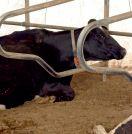
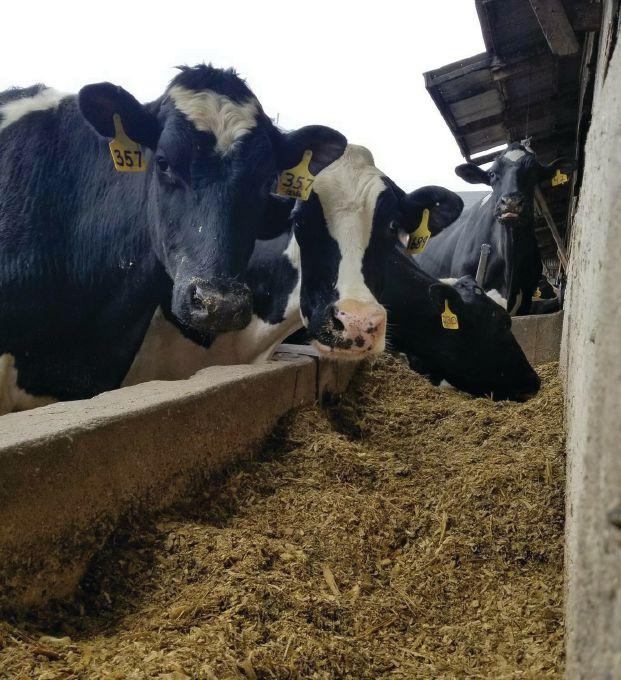
The cows of the Westvale-View Dairy Farms await their date with a set of robotic milkers.
240 cows would have to spend as much as $800,000 upfront on the machines alone.
Amber Yutzy, an educator with Penn State University Extension who specializes in dairy management techniques, says one of the most important considerations for farmers who may be considering using milking robots is whether or not their existing farming structures can be retrofitted to accommodate the machines. A new building can mean a greater payoff in terms of productivity but also significantly higher upfront costs. Another longer-term cost to consider, according to Yutzy, is software upgrades. Milking robots are constantly feeding data to a computer and require regular updates to ensure the free flow of all timely and relevant information.
“With a robot, it’s technology, and technology is constantly changing. There’s new software that’s a constant expense,” she says. “Most farmers will need people to come in and routinely service them. Just look at your iPhone. In the past five years, how many times has the iPhone [software] been upgraded?”
WHEN A HUMAN TOUCH IS STILL NEEDED
Although milking robots can dramatically reduce labour needs, Yutzy cautions that doesn’t mean farmers don’t need to have someone paying attention to their cows. If something goes wrong with a robot or a cow isn’t entering the milking parlor, a human presence is still required to deal with the situation.
“Some people think, ‘I won’t have to deal with the cows now. I can go out into the field,’” she says. “But they quickly realize they are still needed in the barn with the cows. You had to be a good manager before the robots, and you continue to have to be a good manager after you have the robots.”
Dale Beaty advises farmers who are considering adopting automated technology as part of their operation not to make any decisions in isolation. That means consulting with your financial advisor, veterinarian and even the person who helps serve up feed as part of the decision-making process.
“This is an entire system and transitioning to this system affects every part of the cow and every part of your operation,” he says. “You have to make sure that you are looking at all of the variables that come along with making
this kind of transition and making sure that it…works out for you. It’s way too big of an investment not to.”
SUCCESS WITH AUTOMATION
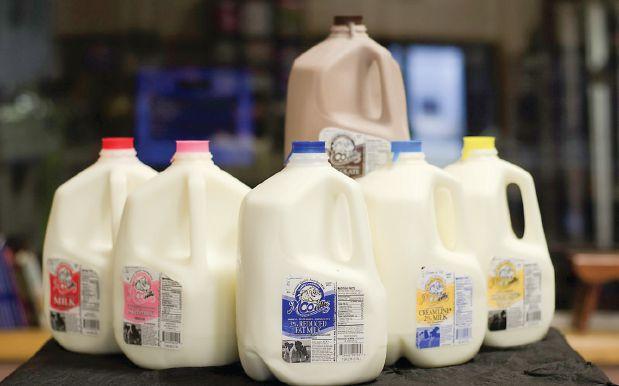
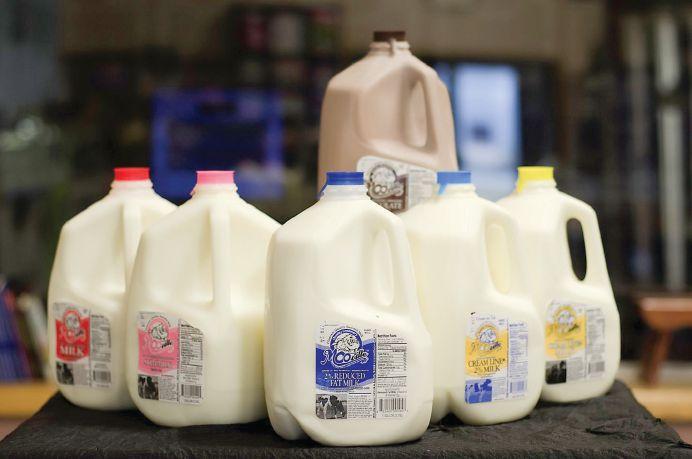
Doug and Louisa Westendorp have been operating family owned Mooville Creamery in Nashville, Mich. for the past 30 years and employ about 40 full and part-time staff, including family. They began using milking robots at their Westvale-View Diary Farm about eight years ago in part because of increased
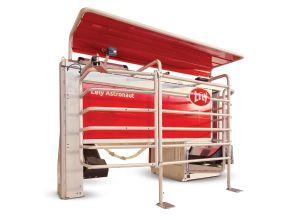
demand for milk in their creamery operations. They upgraded to four new Lely Astronaut A5 robots about a year ago.
While there was a bit of an early learning curve, including getting the right nutrition mix for feed, Westendorp says he has no regrets about the decision to move to an automated milking system.
“They’ve been awesome,” he says of the robots, which have helped increase milk production at his farm by 10 percent per cow each day. “They’re just so efficient. It just changes your whole lifestyle. You
the going gets tough, turn to the toughest pump on the planet. Since 1960, the unrivaled Vaughan Chopper Pump has been on the cutting edge. This original chopper pump was built first and made to last. Choose the unmatched reliability of Vaughan. Ask about our free trial program and on-site demos. • Digester Mixing
• Separator Feed
• and More! • Barn Flush Pit
• Scraped Manure
• Lagoons
ABOVE
The milk that comes from the Westendorp family’s Mooville Creamery is largely courtesy of an automatic system.
don’t have to be there at [3:00] in the morning to start milking.”
Westendorp views his farm’s milking robots as a long-term investment. In order to protect that investment, he says, farmers need to be prepared to budget for regular maintenance as part of their long-term costs to ensure the technology continues to operate properly.
“There’s a fair amount of maintenance with the robots. You’ve got to keep everything working perfectly to make sure they’re working right. Anything that’s half worn out needs to be changed. The maintenance costs are higher with robots, but it’s worth the extra effort,” he explains.
Westendorp’s advice to other dairy farmers who might be considering making a similar transition to automated technology is to make sure they choose the a who can provide them with the support they need. He also suggests talking to other area farmers who may already be using the same technology.
NEW SKILL SETS
Although milking technology can translate into labour savings, it can also shift the way a dairy operation is managed. In addition to managing people, a farmer is now also managing technology. Beaty says farmers need to be comfortable with such a role or make sure they have someone on staff who is.
“A lot of it is automated, but there are challenges that arise and someone has to be there to handle and manage it,” he says.
One of the biggest advantages with the technology is that it can provide all kinds of data at the click of a button, from how much milk is produced during a specific period of time to what kind of nutrients are contained in that milk.
That can also be one of the technology’s biggest challenges, according to Ben Laine, a dairy analyst with Rabo AgriFinance. “One of the challenges for managers is to learn to use all of the new data that becomes available to them in a meaningful way,” he explains. “You can get over 100 data points specific to each cow every time they walk through the machine. It can be important to not get overwhelmed by the data and instead make incremental changes.”
Laine says an important spinoff of adopting this kind of technology is that it can serve as a means of attracting the next generation of dairy farmers by offering a more modern, data-driven farm.
There are numerous milking robots to choose from and choosing the robot that is right for your particular farm can be critical. Yutzy says that’s why it’s important for farmers to think about how they plan to use the technology before spending tens of thousands of dollars.
“I think as a farm manager you have to set your priorities on what’s important to you and what are the tasks for you to complete and what’s important that you can get a robot for and where that priority falls because every farm is different,” she says.
Even though the cost may make some producers wary, Beaty says it’s important for them to think not only about the impact it can have on their farm, but on also their personal life too.
“They’re not required to be up at 3:00 to milk in the morning and then three hours in the afternoon. The robotic milkers give them an opportunity to get off the farm and go to their [child’s] ball game and be [with] family more often.” •
So what exactly is a milking robot?
Contrary to what you might think, it doesn’t resemble a cute, anthropomorphic butler from The Jetsons. It looks more like a long, metal arm with tubes and brushes that gently slides under the cow’s udders.
The milking process begins once the cow enters an area called the feeding box. A feeding system that can be pre-programmed to dispense up to five different types of food helps to entice the cow to enter the box. Food rationing is determined by milk production and the lactation phase of the cow.
Sensors instantly recognize the cow as soon as it enters the feeding box by way of an ID tag on her collar and help inform the robot of the exact position of the teats. Teat cups are then placed on the cow’s udders and a vacuum system is then used to gently withdraw milk and pump it into a storage take.
Milk is monitored by the machine throughout the milking process to ensure the quality of the milk. In addition, health issues can be spotted at an early stage thanks to pre-set parameters and an electronic warning can be issued if a problem is detected.
Once the milking process is completed, the feeding box swivels away and the cow is free to leave.
Forward thinking fueled by old-school values
Fort Hill Farms in Thompson, Conn. has made big investments in progressive infrastructure.
BY BREE RODY
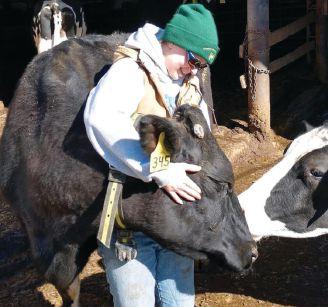
“I have 500 children,” Kies Orr says proudly, of the cows on her farm. “I can be milking them and not see their tag or their name, but I know them by their legs, and I know them by their marking.”
They’re the classic values one might expect from a fourth-generation farm – a deep and tender care for one’s animals, a steadfast commitment to supporting local, circular economics and an up-with-the-sun work ethic. But Orr, who took ownership of the farm in 2018, is also steering Fort Hill Farms into the 2020’s with a progressive vision – think agrotourism, microgrids and even some robots.
At the centre of it all is a forward-thinking manure management strategy, one that involves national conservation bodies and the input of environmental scientists. More than keeping the world green, it also brings in the green –allowing Fort Hill to not just function for the future, but also flourish.
ABOVE
Manure Manager caught up with Orr on a busy day between her morning milking and afternoon classes to discuss the various hats she wears – and what it takes to build a farm of the future.
FAMILY MATTERS
In the early 2010s, Orr was attending SUNY Cobleskill College of Agriculture and Technology, just a short drive away from the family farm in Thompson, CT. It was there where she met her now-fiancé, Jared LaVack. At the time, the farm was still run by Orr’s father, Peter Orr, while her mother, Kristin, was the mastermind behind not only the Fort Hill Farms Gardens, but also the on-site creamery and ice cream stand. Throughout his career, Peter Orr was heavily involved in advocacy for Connecticut dairy as a member of the Farmer’s Cow co-op’s sustainability committee, a member of the Connecticut governor’s dairy council,
Kies Orr stands at the site of Fort Hill Farms’ largest infrastructure undertaking yet.
milk promotion board and milk regulation board.
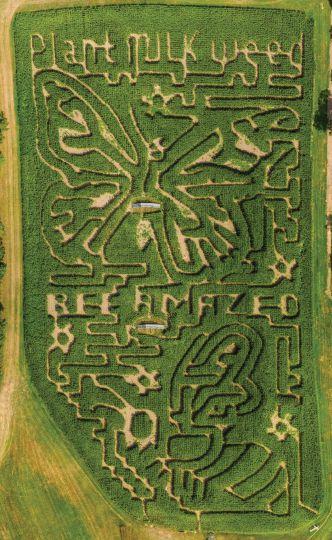
The property, spanning more than 1,000 acres is located in the northeast corner of Connecticut. It’s been a largely diversified operation since the 90s, Orr says. The creamery has been around since her own childhood – and her mother’s home-grown lavender has helped create a signature lavender ice cream that tourists love. Pick-your-own pumpkins, a seven-acre corn maze, fitness classes, energy walks and botany walks also draw a crowd.
“We’re all about tourism and asking, how do we reach back to the community? The ice cream was a big part of that effort – it was part of teaching [the community] what agriculture is.”
When Peter died in 2018, Orr, holding a degree in agricultural business, assumed the position as proprietor and general manager, with a focus on the day-to-day operations, including farming, outreach and edcation (Orr’s specialty) and retail operations (LeVack’s specialty).
Finally, her uncle, Jim Orr, runs the finance and business operations of Fort Hill – which, these days, is a particularly heavy job. There’s the livestock – of its cows, 200 are for milking, and they’re used for the production of both Cabot Cheese and Farmer’s Cow Ice Cream. Then there’s the various agro-tourism ventures. But beyond that, Fort Hill is undertaking some big projects that will allow it to take its manure management, as well as its livestock operations, to the next level.
THE FUEL BEHIND THE FARM
Orr says that for years, others have remarked on how much energy she and her mother both have, and wondering where she gets it all. Indeed, running a farm the size and scope of Fort Hill takes a great deal of energy.
The good news is, Orr says, it produces energy too.
“Sustainability really is the key word nowadays, and this allows us to meet that standard and also diversify that much more. We knew we needed to do something else with our manure, and this was the best way to do it.”
The 500 cows on the farm, fed a diet of haylage and corn silage, produce an estimated 22 tons of manure per day – around 8,000 in a year. It results
in a mass amount of water use – the wash water for the farm’s milking parlor as well as its other needs result in a required 40 tons of water per day, a ratio of nearly two to one for manure produced.
All that makes it the perfect contender for an anaerobic digester installation – a modern, yet highly complex operation. Previously, Fort Hill relied on a lagoon for storage; that lagoon is now being repurposed for stormwater retention.
The digester project’s wheels were already in motion when Peter died, but Orr knew it was a passion project of her father’s, she explains. Fort Hill had partnered with Massachusettsbased Ag-Grid Energy to become the site of the first digester of its kind in Connecticut. It finished in late 2020. (See our January/February issue for our recent interview with Rashi Akki, CEO of Ag-Grid Energy, on why the project was unique for Ag-Grid and where the company is going from here).
Orr admits the digester is a massive undertaking, but one that’s worth it in the long run. Besides coinciding with the recent year-over-year decline in dairy prices, thus helping offset some losses, Orr says the project can also make good use of food waste from the farm and surrounding areas. The plan is to co-digest anywhere from 18,000 to 24,000 gallons per day of food waste.
“That food waste is a big part of what makes that electricity,” she says. “It comes here instead of going to landfills.”
The estimated cost to Fort Hill is $24,000 per year – the result of paying $0.12/kWh to the project. It is estimated that it will produce 3.5 million kWh of electricity per year. Of that, only 200,000 will go toward the farm, while the additional 3.1 million will go into the local grid, operated by Eversource. The estimated price on
that is $0.131/kWh, meaning it will generate about $400,000 per year for the farm in passive income.
To help offset the cost, Fort Hill also partnered with Connecticut Green Bank, a financial services provider established by the Connecticut General Assembly in 2011. Green Bank’s mission is to help promote the adoption of green energy in the state, and it does so through grants with preferential interest rates, around two percent for 10 to 15 years.
Bert Hunter, EVP and CIO at Green Bank, explains: “The difference between [our grant] and a higher market rate would be equal to, say, a $200,000 grant that we would otherwise just give away. The benefit of offering them a loan package instead of a grant package is twofold. One is it would give the developer more capital to work with, and because we were willing to subordinate our loan to senior financing, it would enable them to combine their equity with our subordinated loan and secure bank financing on better terms than they otherwise could obtain.” He adds that sometimes, banks would require a higher level of capital in order for the lendee to qualify, from a risk management perspective.
Green Bank makes the money back through interest, says Hunter, who chuckles and says, “We recycle the capital.”
But even though Hunter and his company are in the business of helping big capital projects like this happen, he acknowledges that there are still a number of challenges with adopting them. Besides the financing, he adds that the regulatory side is no joke.
“Particularly when you’re dealing with manure, you want to make sure that things aren’t going into the groundwater. You have to be careful,” he says. While building permits are more straightforward, he says, any permits that go through the Department of Energy and Environmental Protection [DEEP] are a bit more complex.
And beyond the construction costs, he says, there’s the long-term investment. “The big question is always, ‘what are the economics to make everything work?’ It’s the same questions… that any lender or investor will look at in terms of the repayment. In terms of a digester, you have to have confidence in the developer.”
PHOTO COURTESY OF FORT HILL FARMS.
In the case of Fort Hill, the project uses gas to ultimately produce electricity through a generator.
“For a digester on this, which relies substantially on dairy waste, it’s clear to us that the cows are there, the farm has been there for years.” He adds that Connecticut in particular has legislation that states that any large emitter of organic material (such as food waste) that generates more than one tonne per week of materials has to divert those materials to the digester if there’s one within 20 miles of that location.
FULL CIRCLE
Besides the income that will come from the digester, Orr says it will also provide some on-farm support – it will also produce bedding for Fort Hill’s hundreds of cows. “A lot of farms don’t do the separated solids,” Orr says, but adds that being able to do that pays off. “You can separate the solids from the manure and it basically becomes like a sawdust,” she explains. The more the farm relies on itself, she says, the better. The annual savings expected from the digester for electricity, heat and bedding are estimated at $100,000.
But the digester isn’t even Fort Hill’s biggest undertaking of the 2020s.
“I always say, ‘don’t judge me, it’s an old facility,’” Orr says of the family farmstead, including the milking parlor. But that’s among the things she’s aiming to change. “We are working to make it better, but it’s not going to be built overnight. We are slowly working toward building a new facility, which will be a robotic barn.” The hope is that it will be complete in three to five years, and that by 2026, the 200 milking cows will be milked primarily by automated technology (see page 8 for more on the economics of milking technology).
As a fitting complement to the farm’s circular philosophy, the construction of
the new barn will be powered entirely by electricity generated from the digester.
EMPHASIZING OUTREACH
Between the creamery, the digester and the agro-tourism, Orr says the farm’s operations often circle back to one principle: educating the public about the role farms play, and demystifying myths or misconceptions about the dairy industry.
For example, Orr says, one of the things they emphasize throughout their educational endeavours is that the farm isn’t organic – but that doesn’t mean the milk of cows who are treated for ailments make their way into customers’ refrigerators. “Treated milk goes down the drain – it’s never touched a human table.”
Besides working with tour groups on the farm and with local schools to teach students, Orr works with Connecticut State Representatives to help keep the state’s dairy farm industry healthy and lively. The family also established a memorial scholarship in Peter Orr’s name, awarded annually to a local
Future Farmers of America high school senior planning to major in agriculture. And, just like on the home farm, Orr is aware that the work is never done.
“We’re still an old facility, but slowly, we’re showing our new sides.” •
A LONG WAY TOGETHER
WHEREVER YOU ARE, BKT IS WITH YOU
BKT provides you tires that are reliable and safe, sturdy and durable, capable of combining traction and reduced soil compaction, comfort and high performance.
BKT: always with you, to get the most out of your agricultural equipment.
PHOTO COURTESY OF FORT HILL FARMS.
PHOTO
Beyond Brexit: What comes next?
After 47 years, the United Kingdom is no longer part of the European Union. For farmers, this means they are no longer bound to its bureaucratic rules and regulations, which, over time, resulted in years of paperwork increases, red tape and falling commodity prices that drove some farm businesses into the ground.
For those in North America who might be unfamiliar: the EU consisted of 28 different countries, which traded freely with each other. Now, there is a border between the two that generates tariffs. The burning issue, though, is that U.K. farmers received a total of £3.4 billion per year in subsidies under the EU’s Common Agriculture Policy (CAP), with the money distributed on the basis of the size of the farm.
Now, four years after the historic 2016 referendum, a long-awaited Withdrawal Agreement was finally drawn up, focusing on how the two nations would coexist and trade in the future. After those four years, the U.K. officially left the EU on Dec. 31, 2020. Now, although that tumultuous journey is over, a new one has just begun, as the U.K. sets itself up for trade battles to find new markets for the food produced by its thousands of farmers.
Northern Ireland Protocol and came into effect on Jan. 1, 2021. Goods such as meat, milk, fish and eggs can be checked coming into Northern Ireland from Great Britain under direction from the EU. This has caused all sorts of logistical nightmares for food exporters in both the U.K. and the Republic of Ireland, as well as trucking companies.
In 2019, the Republic of Ireland exported around 1.8 billion liters of milk to the U.K., worth around €£870 million.
This represents more than 30 percent of the U.K.’s dairy imports and making Ireland by far the biggest supplier of dairy produce to the U.K. France and Germany are second and third, respectively.
While politicians battle to get the trading channels between the Republic of Ireland and Great Britain opened up more freely, dairy farmers on both sides of the Irish border are still milking their cows.
That milk is still being processed and consumed, generating healthy prices for the farmers, probably more so due to the COVID-19 pandemic rather than Brexit.
However, dairy farmers in Ireland are expected to tap into a €€1 billion support package allocated to the country by the EU as compensation for trade lost to the U.K. by Brexit. All the while, both countries are still (at press time) battling through lengthy COVID-19 lockdowns.
“There have been some early teething problems with shipping.”
Since Brexit, the U.K. government has said it wants to reduce those subsidies toward farms, and alter the system so that farmers get paid more so in exchange for looking after the environment.
TRADING HICCUPS
But it gets even more complicated. The U.K. consists of England, Scotland, Wales and Northern Ireland, the latter now sharing a border with the Republic of Ireland, which remains in the EU.
As part of the historic Good Friday agreement, both the U.K. and Irish government agreed that the border between Northern Ireland and the Republic of Ireland should be “invisible,” which was easy enough when they were both part of the EU. However, after Brexit, it was agreed that Northern Ireland would still follow many of the EU’s rules, and therefore, a customs border was set up in the Irish Sea between Northern Ireland and Great Britain (England, Scotland and Wales). This was called the
Although the initial closure of the food service sector saw a drop in demand for dairy, the overall market for dairy has strengthened as more people cook and bake at home. In fact, the latest outlook for the dairy industry in the U.K. predicts further growth as people continue to work from home and cook from scratch, as more home budgets become further stretched. One of the big fears, then, is that Ireland’s agriculture industry becomes collateral damage if the EU insists on keeping the controversial Irish Sea customs border.
BREXIT BENEFITS
Since the official “divorce,” the U.K. government has ramped up its own support for dairy farmers in the form of a new code of conduct and has embarked in a new direction of gene editing. Imbalances of power within the dairy supply chain were believed to be causing instability for
dairy farmers. This includes where milk buyers are able to set and modify the terms of a contract on short notice. Responses to this consultation clearly demonstrated the need to introduce new regulations to require certain standards for contracts between those producing and buying milk for processing. The consultation also revealed that the distinctive circumstances in Northern Ireland may need to be reflected in regulations, and this will be considered.
Victoria Prentis, Minister of Environment, Food, Rural Affairs and Farming, says, “It is only right that any contracts drawn up between farmers and processors deliver fair conditions across the board, for an industry that works hard year-round to provide the dairy products for which we are world-renowned.
“This new code of conduct will crack down on unfair practices within the supply chain, supporting the dairy sector and ensuring that our dairy farmers remain competitive as they look to the future.”
Brexit has also offered an opportunity for the U.K. to make its own decisions on gene editing. Technologies developed in the last decade enable genes to be edited much more quickly and precisely to mimic the natural breeding process. If given the green light, gene editing could be a real game-changer in the dairy industry, boosting the overall genetic profile of the dairy herd, possibly reducing the use of antibiotics and boosting milk quality.
REDUCING EMISSIONS
Since Brexit, another big issue targeted by the U.K. government is reducing emissions with a pre-set goal of reaching net zero greenhouse gas (GHG) emissions across the whole of agriculture in England and Wales by 2040. Livestock-heavy countries around the world are under pressure to reduce their ammonia emissions in a bid to become more environmentally friendly. Agriculture is the dominant source of these emissions, with the sector accounting for about 88 percent of total U.K. emissions. The main sources are identified as livestock manures, slurry and mineral fertilizers.
Cattle farming is responsible for 44 percent of the U.K.’s total ammonia emissions, where most ammonia losses come from manure spreading on land (48 percent of cattle emissions) and from livestock housing (34 percent). Dairy farms have been labelled as one of the more intense sources of ammonia production. Targets and quotas have been set in many countries in an effort to cut emissions.
National Farmers Union president Minette Batters says, “Agriculture is uniquely placed to be a part of the solution, as both an emissions source and a sink. As farmers, we have a special responsibility to protect carbon reserves already in our soils and vegetation. But we must and we can do more. We know emissions from U.K. farms presently amount to 45.6 million tonnes of carbon dioxide equivalent a year – about onetenth of U.K. [greenhouse gas] emissions.”
But, in stark contrast to the rest of the economy, she says, only 10 percent of this is CO2. “Around 40 percent is nitrous dioxide (N2O) and 50 percent is methane (CH4).
“At the same time as reducing our impact on the climate, we should not reduce our capacity to feed consumers with high-quality, affordable British food.”
She says the U.K. must not achieve its climate change ambitions by exporting U.K. production and its greenhouse gas emissions to other countries. “Our ambition for a net-zero contribution to climate change across the whole of agricultural production by 2040 is a national aspiration, not an expectation that every farm can reach net-zero.”
Every farm will start that journey from a different place, she cautions, and thus will need its own unique plan. “It is important to start that journey by assessing the likely emissions sources on [each] farm.”
That “challenging, but achievable” goal of carbon neutrality can only be achieved with concerted support from government, industry and other key groups, she says.
ON THE GROUND
It’s too early to evaluate Brexit whether it will generate better commodity prices for farmers, but there have been some early teething problems with shipping goods.
Shipments of agri produce in both directions between Northern Ireland to Great Britain have been burdened with extra paperwork and also from the Republic of Ireland to the U.K. These issues are easing, but other problems such as the importation of animal feed such as soy from outside the U.K. are attracting higher prices and shipping delays.
Exports of beef and lamb from the U.K. are still operational to countries outside the EU, but again are being hit by transport delays and extra paperwork. Some shipments of perishable meat and fish have been dumped due to port delays.
In a nutshell, demand for ag produce in the U.K. is up, prices are steady and new export markets are actively being signed. •
Nitro RS Spreaders are ideal for any size operation and are available with vertical beaters or a spinner deck.
How are farmers evolving with the times?
Jeffrey Porter of the NRCS Animal Manure and Nutrient Management Team provides a national perspective on how advances in tech innovation are causing farmers to adapt, evolve and re-prioritize.
BY BREE RODY
When the U.S. Department of Agriculture’s Natural Resource Conservation Services (NRCS) started out, it was focused primarily on soil conservation. Since then, its moniker has changed entirely because it’s about much more than soil. Jeffrey Porter, the manure management team leader with the NRCS Animal Manure and Nutrient Management Team (AMNMT), says even within his more specific discipline, that’s starting to go broader as well. It’s keeping with the overwhelming trend in farmers having to wear multiple hats, he says – as landowners become more protective over their bottom line, knowing what to invest in, how to factor costs and how to evaluate new equipment and tactics can be a crucial juggling act.
Manure Manager spoke with Porter to talk about the evolution of the AMNMT, why it’s broadening its focus outside of pure manure and how farmers can make the right decisions for managing their farm holistically.
Interview has been edited for clarity and length.
Can you tell us a bit about your background and what led to you working with the USDA? I grew up on a small farm in southwestern Indiana, and I’ve always had that passion for working with farmers and getting my hands dirty – I’ve always enjoyed things like doing the gardening, growing the crops and vegetables, raising livestock. I went off to college, went to Purdue and got my degree in agricultural engineering, which you don’t hear too many people calling it that anymore. It’s all ‘biological engineering’ now. After I got my masters, I wanted to see what I could do to work with landowners and farmers, to help them – helping people help the land is really what I’m all about. When I started working with the USDA, I was with a group called the Agricultural Research Service, looking at erosion models. That’s what led me to the group called the Soil Conservation Service, which is now the NRCS, because we’re more than just soil. We cover a lot of different research areas. As I worked through the different agencies, I’m now at almost 34 years, but with almost every position I’ve
PHOTO BY TOP CROP MANAGER.
had there’s been some element tied in with livestock, and for the last 14 years, I’ve been on the Animal Manure and Nutrient Management Team. But again, it’s much broader. My job has been all about asking, ‘how do we help future generations? How do we make this sustainable?’
Could you elaborate on how the AMNMT’s mandate has become broader and why? We used to be called the manure management team, but it’s much more than just manure. When we started back in 2004, we were working with groups that were solely focusing on the manure management side of things. Our main focus was on questions like “How can we store the material?” “How can we apply it more efficiently? How do we deal with nutrients in more effective ways?” But as we’ve moved on, we’ve seen that it touches other areas. For example, we’ve started to look at how we improve grazing, or how we improve feed management, what kind of impact does our feed have on the nutrients that are excreted from the animals and on things like methane production? We’re also looking at animal health with regards to diseases [like] avian influenza, [and] the potential for African Swine Fever. We’re looking at how we can help these landowners deal with all these animal health issues, how we can be more sensitive, how we can make sure things are installed properly – because there’s all this new technology, new land applications, new injection systems. Then we have some areas where we have very concentrated livestock operations, and because of the concentrations of these animals, we have more nutrients available than land that it can be applied to – so how do we do a good job of distributing the nutrients to where they’re actually needed? Here in the United States, we’re only land-applying manure on about five percent of our cropland.
That’s clearly a lot of moving parts – how are farmers managing with all of that, not just economically but also in terms of access, knowledge and education? It’s very difficult because it always comes down to the dollar – at the core of everything is, “How can we implement this and still stay viable?” Landowners are trying to always weigh knowing that something is good technology or knowing that it’s something they’d like to do, but wondering if they can stay viable with it. Or, they’ll try to come up with a byproduct
that can help pay for it. The other thing is complexity – if they implement something that is complex, do they have to hire someone else? What is the operational maintenance required for these new technologies? The other thing that it comes down to is also regulatory. We have certain regulations that are coming down such as discharge limits, certain limits on what your phosphorus or nitrogen levels can be. And applying manure during the winter is now a big issue, because many states now have limitations on when you can apply to frozen ground. Now, some take the approach of “I just have to do this,” but addressing these issues is very important to us.
What are some success stories you’ve witnessed around landowners using new technologies or techniques?
I actually don’t get to see the success stories that often. My position is at a national level. So what I do is, I receive requests from the state level – they contact us to see if we can review the technology and apply it. But one recent success story I was privy to is that here in North Carolina, we have a way of dealing with mortalities that uses forced air technology, then a grinder to grind up the mortalities and compost it in a shorter time than traditional composting operations. Not only does it shorten the time, but also the area required for doing the composting is much smaller, giving you a much smaller footprint than a traditional bin system.
Can you tell us a bit more about the review process?
Basically, we have a set of more than 170 conservation practice standards that cover the whole gamut of resources concerned. Of those, there are 20 to 25 that are manure management-related standards. We set up this process: Let’s say a tech provider goes to the state and says, “We would like to have this installed. Would you take this as acceptable technology?” If [the state] is not familiar with that tech, they contact us, we talk with the tech provider, we ask them to provide the information, and we ask for thirdparty verification so it’s as unbiased as possible. We compare that information with what’s in our conservation practice standards, we determine whether the practice or technology meets the criteria that’s outlined. We will then make the recommendation to that particular state to the best of our ability, whether it meets our standards or at this time there’s still
limiting factors. It’s still up to the state to decide if they want to use that practice or not. We’re actually looking to take this process and maybe expanding it. This isn’t approved yet, but we’d like to expand it to look at all technologies, not just manure management but agronomic engineering. These technologies are coming so fast, we’re getting so many new technologies, we just need a process so that we can help landowners who are interested in installing them.
What are some of the biggest trends and most interesting innovations you’ve seen in requests in recent years? We get such a big variety of things. Some of the ones in recent years are using soldier flies with your manure management, or using vermiculture. And we get a lot of requests related to innovative waste treatment technologies – a lot of landowners are looking at new separation processes these days, asking how they can be more efficient with separating particular nutrients. We call that nutrient partitioning, so we can more effectively land-apply the nutrients where and when they’re needed. In Wisconsin, we have an egg layer operation that has a real innovative composting process. They pelletize their manures and sell it as an organic fertilizer. They call it Chickity Doo Doo – when the pellets break, they have granules, and then they have dust. It’s been really interesting to watch the process as they’ve grown over time in selling their product. It’s now in all 50 states.
With farmers having to balance so much these days, where would you recommend they start to find unbiased views to evaluate big purchases and new strategies?
It is hard to find that unbiased view. Livestock groups are a great place – your poultry and egg associations, swine producer associations. And of course, there are a lot of trade shows, and especially today, everything is so virtual. You can participate from your living room if you’d like. They might be biased toward their favourite livestock type, but they’re going to be unbiased in their recommendations. Then, of course, if you work with the NRCS, we would definitely give them an unbiased view of our recommendations. We’re not necessarily the experts in every field, but we walk them through the process. We never say, “Do it this way,” it’s always their decision. We just guide them through. •
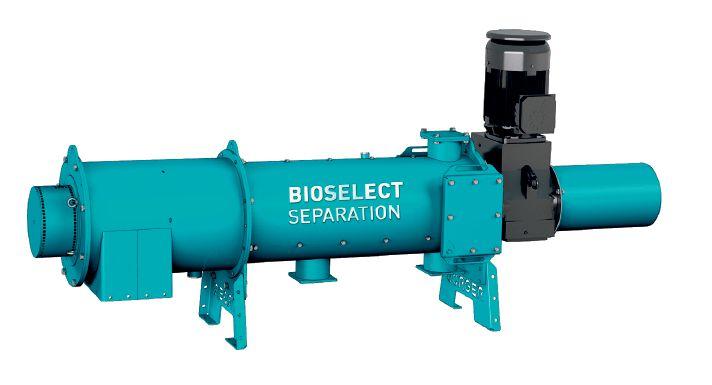
THE BIOSELECT
INNOVATIVE SCREW PRESS SEPARATION TECHNOLOGY
+ Largest Screw Press on the Market
+ Turnkey Systems: Separator Pump(s) Control Unit
Stationary or Mobile Skids
+ Patented Auger with Counter Bearing
+ No Auger Screen Contact
+ Multi Disc Technology
Ontario adds new support for
The Government of Ontario has introduced new funding to help protect the province’s turkey farmers.
The Ministry of Agriculture and Agri-Food announced funding of up to $559,285 to help turkey farmers in Ontario launch a new insurance product to protect their operations from losses associated with outbreaks of avian influenza (AI).
According to a spokesperson for the Ministry, the last major outbreak of AI occurred in 2015. While AI is “one of the bigger infectious disease threats in turkey,” the spokesperson added that infectious Laryngotracheitis can also pose a threat to production.
Prior to the new coverage, costs not previously covered may have included incremental costs such as cleaning and disinfection, veterinary services, the disposal of feed and other costs related to the resumption of operations, the spokesperson told Manure Manager.
The new insurance product will help bridge the gap in existing coverage, specifically covering economic losses resulting from the difference between compensation through the Canadian Food Inspection agency for animals ordered destroyed and their full market value.
Canada’s turkey industry generates products worth $382.6 million, and up to $42.6 million in exports to 37 countries.
In 2019, turkey producers in Ontario generated 1.1 percent of Ontario’s farm cash receipts ($165.5 million), and 43 percent of the total farm cash receipts in all of Canada.
However, the ministry added that COVID-19 had a significant impact on the sector. Beyond typical consumer behaviour shift, the representative added that the major tentpole events of Easter, Thanksgiving and Christmas, which typically account for 35 percent of yearly turkey sales, did not see significant sales this year due to decreases in family gatherings.
CONSISTENT NUTRIENT VALUE - AGITATION MAKES THE DIFFERENCE
Center agitation system evenly blends nutrients
Better utilization of “waste” translates into less purchased fertilizer
ENVIRONMENTALLY SOUND
Designed and constructed using bolted glass-fused-to-steel panels for secure storage and high corrosion resistance
Aboveground - minimizes the danger of run-off, leaching and groundwater contamination
Environment-friendly odor control - releases odors above ground level into higher air currents
USDA RELEASES FARMING FINANCIAL PROJECTIONS FOR 2021
The USDA’s Economic Research Service has issued its first of three farm income statement and balance sheet estimates, which provides insight into the financial status of the farm economy.
Economist Carrie Litkowski presented the data in the online webinar in
February. The data is generally used to determine the financial health of the sector. All data is U.S.-only.
That includes an estimated two million farms, nearly one million farm businesses and six million people living in farm households. The data does not include
THE STRENGTH OF ORANGE
services related to farming, including agricultural services or equipment manufacturing.
Overall, net farm cash income is expected to drop 5.8 percent, for an annual total of $128.3 billion (down $7.9 billion). Net farm income is expected to drop 8.1 percent down to $111.4 billion. Litkowski says this is driven largely by a drop in direct government payments, which are forecast to decrease by $21 billion (43 percent). The bulk of that reduction comes from a decrease in miscellaneous payments which include coronavirus assistance funds. Although those assistant funds are set to decrease over time, they are still expected to total $2.5 billion this coming calendar year.
Cash receipts from commodity sales are expected to increase modestly by 5.5 percent ($20.4 billion). This is driven mostly by higher prices and larger quantities. Cash receipts generated from corn and soybeans are expected to increase the most.
It's o cial. Now one brand, one color.
Valmetal, Jamesway Farm Equipment and US Farm Systems unite under one brand: Valmetal. Valmetal now o ers a complete selection of high-performance and innovative equipment for all your feed and manure management needs.
Federal commodities insurance indemnities are expected to increase by $0.7 billion (7.3 percent). Average net cash farm income is set to decrease six percent to $91,800. Median total farm household income is expected to increase by one percent to just under $87,000.
Profits for the sector are expected to decline from 2020, but still in single digits (7.5 percent for net cash, 9.7 percent for net farm average income). Profits are still projected to be higher than they were in 2016 through 2019.
In terms of expenses, certain things have trended upward in 2020. Spending on fuels and oils, livestock and poultry purchases and interest are all expected to go up in 2021, although are still lower than or equal to what they were in 2019. Fertilizer, labor, feed, property taxes and pesticides are all set to increase and have steadily increased since 2019. Meanwhile, seeds and net rent are set to decrease.
The overall decline in net income varies by region; the westernmost and easternmost regions of the U.S. as well as the upper midwest will see doubledigit declines. The Prairie Gateway and Northern Great Plains regions will see only modest declines (two and one percent, respectively). The Heartland region is expected to increase by nine percent.
Hard Metal or White Iron materials available for abrasion resistance (MP Series)
Low head transfer to high head booster pumps
High efficiency — Lower HP required
Heavy duty construction — Low maintenance
50+ years’ experience in manure handling
Manure gas safety
As we work through our spring manure applications, it is important to keep safety in mind. Working with manure presents some special safety challenges beyond the basic farm dangers of working with large machinery, stress, and fatigue. One of those challenges is harmful manure gases.
MANURE GAS SAFETY RISKS
The first step to manure gas safety is to understand the risks. In most operations, hydrogen sulfide and methane are of the biggest concern. Other gases such as ammonia, carbon dioxide and carbon monoxide can also cause health concerns, but can be more easily managed through ventilation and equipment upkeep.
Hydrogen sulfide is a colorless gas created during anaerobic (low/no oxygen) decomposition of manure which is most commonly found in liquid storage pits. It accumulates in the manure and is then released during agitation and pumping. Though it can smell like rotten eggs, you can’t solely trust your nose, since your sense of smell becomes dulled to persistent odors. Levels as low as 0.1 ppm can cause eye irritation, and death can occur at just 200 ppm if there is extended exposure. Hydrogen sulfide is also dangerous because it can cause unconsciousness that can lead to drowning if near the pit, fall injury, and prolonged exposure that can cause lung damage and even death. Keep in mind that high levels of this gas don’t just occur in deep pits or in confinement; open pits can also
handling manure, especially activities like agitation and pumping. When working with manure, ask yourself the following questions related to agitation and pumping:
• Are livestock and personnel removed from the manure basin area where they might inhale dangerous gases?
• Is the pit or basin well-ventilated?
• Have you disconnected any electrical equipment that may cause a spark?
High levels of this gas don’t just occur in deep pits.
accumulate high hydrogen sulfide levels since it tends to hang near the ground.
Methane is also a colorless gas that is heavier than air and is created by manure decomposition. While the gas itself is not typically toxic, it can cause asphyxiation as it displaces oxygen and breathable air. The other concern with methane is that it’s highly flammable. When levels reach five to 15 percent by volume, fires and explosions become a hazard. It is also quite mobile and can accumulate in unexpected areas, so ignition points far across the barn from the agitated manure can still pose a threat.
SAFETY TIPS
To avoid the above risks, develop safety protocols for your farm or operation when it comes to
• Do you have the proper personal protective equipment (selfcontained breathing apparatus and harness with lifeline) on hand in case you need to enter the pit or basin?
• Do you have personal gas monitors?
• Do you have an Emergency Response Plan with updated phone numbers and contacts?
• Do you have signage or other communication measures in place to inform others that agitation and pumping are occurring?
• Have all employees and personnel been trained to follow your safety protocols and plans?
Working with manure can impose many risks, but mitigating risk is easy when you know what to look for before the work begins. •
STRONG AND DURABLE
SELECTABLE PLACEMENT
OPTIONS TO FIT YOUR ALLEY OR CROSS GUTTER
SW Cable Drive Unit
Works around the clock year after year, just like it did on day 1.
I WANT AN EFFICIENT DRIVE UNIT WITH EASY OPERATION, THAT REQUIRES MINIMAL MAINTENANCE. Don’t get stuck in the same old, same old. Place your drive unit where you want it. Our unique design also moves the drive unit laterally which reduces wear to a minimum. Elevating the drive unit over the cross gutter allows easy access for maintenance and keeps the working area clean.