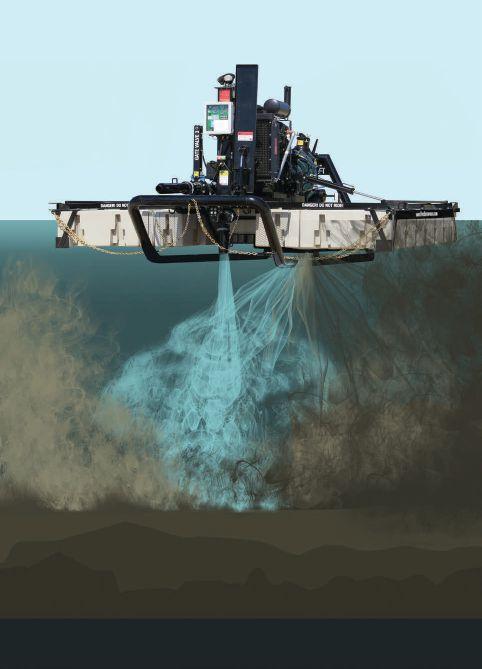
Current research on antibiotic-resistant bacteria in manure. | 16
Manure in transport
How is technology improving biosecurity in livestock transportation? | 20
Troubleshooting compost
Common compost problems, symptoms and solutions. | 26
July/August 2019
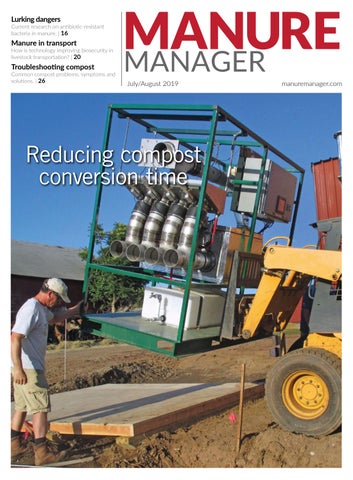
Reducing compost conversion time
COMFORT ZONE YOUR NEW
New cab suspension on all 8RT Tractors
Now run in comfort like never before. With our new four-corner cab suspension system on two-track 8R Tractors, we’ve given the word “comfort” a whole new meaning.
It’s finely tuned with John Deere technology to overcome the shakes, rattles and rolls in the field to boost your acre-per-day productivity. Plus, the cab now sits six inches higher than before, giving you better visibility all around.
Together with our exclusive AirCushion™ suspension on the axle and undercarriage and the ComfortCommand™ seat, our new suspension system delivers an unsurpassed comfort zone at faster speeds in rough field conditions and on the road. See your John Deere Dealer for details. Nothing runs like a Deere™.
Reducing compost conversion time
Technology that reduces compost conversion time by 75 percent impresses Connecticut dairy.
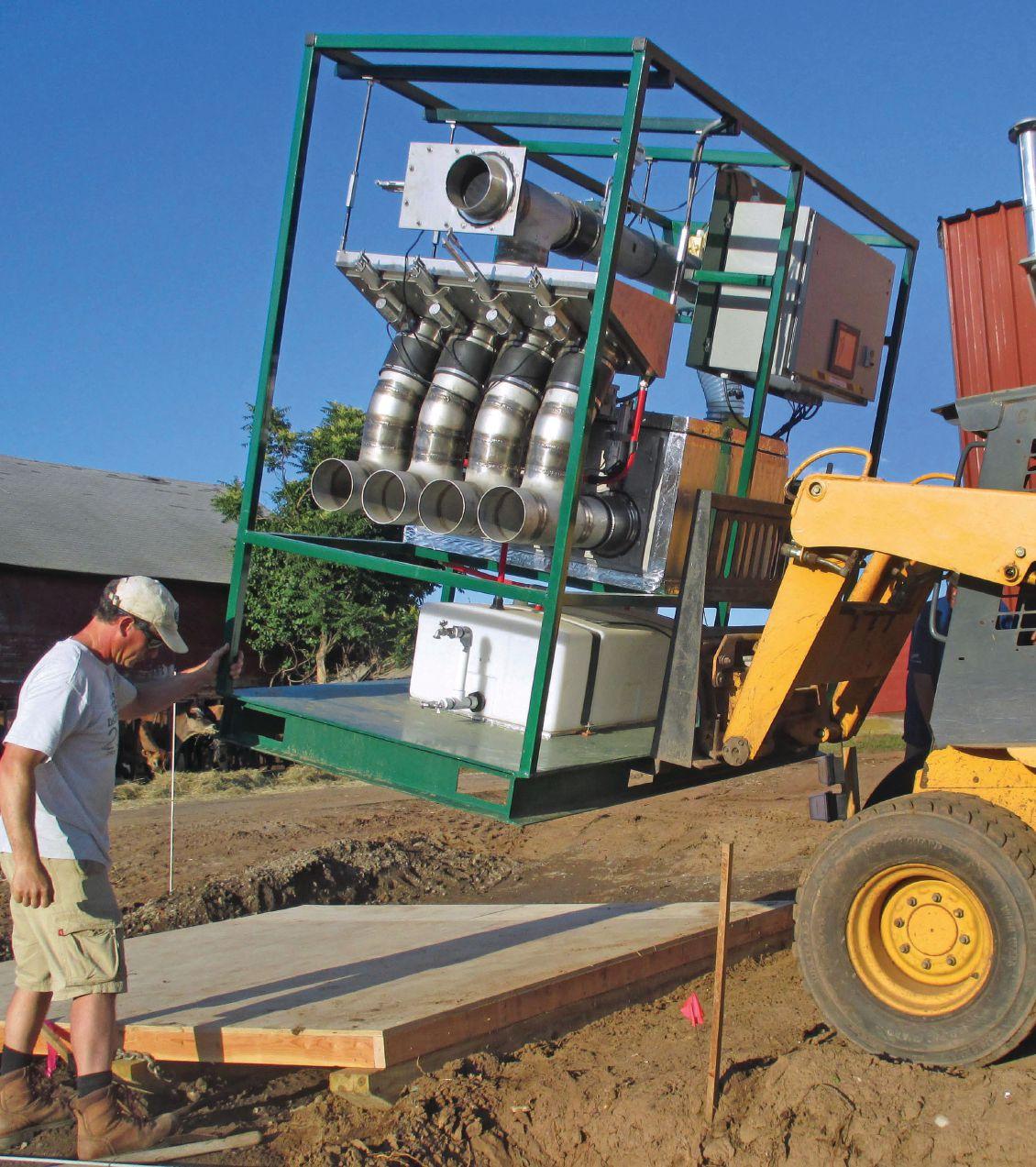
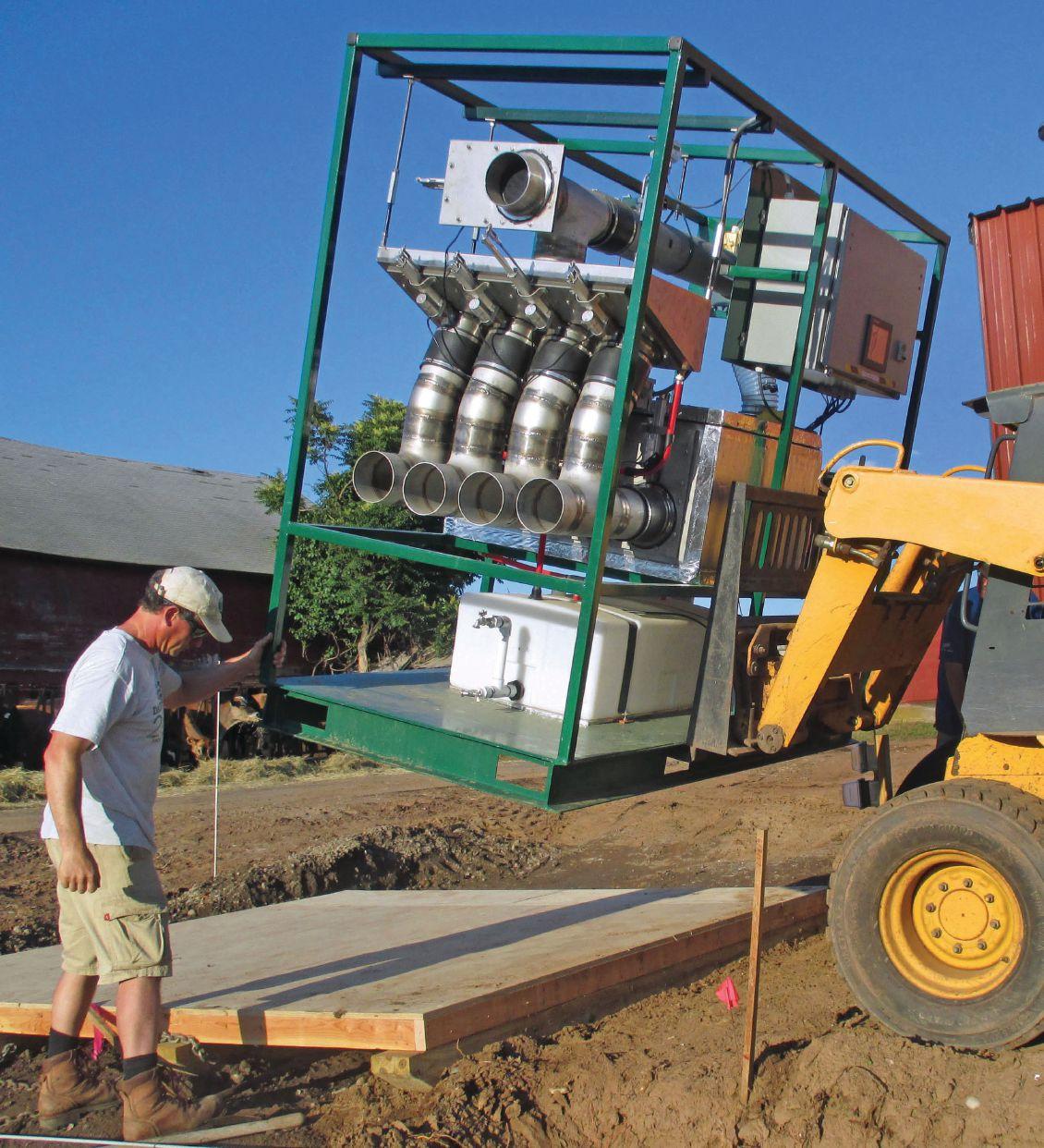
The Agrilab Technologies Hot Skid 250R unit is moved into place within the new composting site established at the Collins Powder Hill Farm. See page 10 for more.
Lurking danger
A
Manure in transport
Troubleshooting your compost pile
Common compost
BY TREENA HEIN
BY TREENA HEIN
BY CHRYSEIS MODDERMAN
Planning ahead for prevention
In this issue of Manure Manager, you will find an additional offering. This month we have put together a handbook for manure storage spill safety. In the enclosed Manure Storage Spill Response Handbook, we review the seven steps to managing a manure spill, provide vital tips for recording and reporting the spill and outline the emergency contact information operators should keep on hand.
While this resource focuses on how to handle a spill, ideally, it is best to prevent the spill from happening in the first place. Prevention and preparation are key to minimizing the impacts of a manure related emergency – do not wait for a problem to occur before you start to think about a plan.
manure spills researchers found that there were quite a few manure storage overflows in April, which was expected as it is a time of the year when rainfall is high and operators may not be able to field apply due to an abundance of moisture in the field. However, according to Erb, researchers also saw just as many storage spill incidents in August, a time of year that should not present the same moisture challenges.
“That really surprised us. Why are we seeing so many in August? When it is dry when we are not getting rain or snow melt. In most cases we found it was overflows because people were busy with harvest and they just didn’t walk out back and see how full the storage was.”
Mail: 111 Gordon Baker Rd., Suite 400, Toronto, ON M2H 3R1
“The first thing is to prevent a problem from occurring in the first place. Then the second is thinking about where problems may occur and having a plan in place to deal with them,” says Kevin Erb, conservation professional training program director with the University of Wisconsin-Madison, Division of Extension. “Keeping an eye on things and making repairs before they become a big problem is vital. Operators need to be walking around the manure storage itself and looking for animal burrows or other problems, but also looking at and monitoring how much space is actually available in the storage facility.”
It is suggested to keep a log of storage levels for good record keeping but also to ensure the consistency in these vital site inspections. When it comes to farm employees, Erb notes that most operations will review emergency spill plans with farm employees annually and operators should ensure all employees sign-off
Do not wait for a problem before you start to think about a plan.
on the fact that they have read and understand the process of what is to happen if an emergency spill should occur.
Occasionally, Manure Manager will mail information on behalf of industry-related groups whose products and services we believe may be of interest to you. If you prefer not to receive this information, please contact our circulation department in any of the four ways listed above.
Erb explains that in 2010 in Wisconsin, while examining primary
“Having the employees trained is important but also having employees empowered to use their best judgement in dealing with the situation is critical,” Erb says. For more information, check out this month’s special supplement the Manure Storage Spill Response Handbook. •
All advertising is subject to the publisher’s approval. Such approval does not imply any endorsement of the products or services advertisted. Publisher reserves the right to refuse advertising that does not meet the standards of the publication.
Wisconsin boosts water quality trading programs
The Wisconsin State Senate unanimously passed legislation that will boost Wisconsin’s water quality trading programs, leading to more financially sustainable ways to improve water quality.
The legislation is designed to increase participation in Wisconsin’s current water quality programs by enabling a third-party Clearinghouse to facilitate water quality trading. The Clearinghouse will provide an extra element of certainty and accessibility needed for farms, industry and the wastewater treatment plants to
work together toward shared water quality goals.
The advancement of this bill creates a path to put Wisconsin at the forefront of market-driven, clean water solutions. Through this approach, farms of all sizes can be incentivized to voluntarily adopt new practices and technologies beyond what they’re already doing, small manufacturers and food companies remain in operation and municipalities don’t pass along multi-million-dollar wastewater treatment plant upgrade costs to taxpayers.
AFRICAN SWINE FEVER CREATES WAVES
African Swine Fever has caused the loss of hundreds of millions of pigs across China and Southeast Asia, creating a massive shortfall in animal protein supply for these regions through 2020, and possibly for years to come. That shortfall will have significant implications for the U.S. animal protein and feed sectors.
According to a new report from CoBank’s Knowledge Exchange Division, the animal protein sector stands to
benefit from increased exports to fill the supply void, while feed demand will drop off significantly, reducing U.S. feed and grain exports. Although a continuation of the trade dispute and other market variables currently in play could affect the degree to which U.S. agriculture is impacted by the pork shortage in China and Southeast Asia.
“The U.S. continues to remain a low-cost exporter of protein products and is in
strong position to be a major beneficiary as China and other Asian markets ramp up their imports,” says Will Sawyer, lead economist, animal protein, CoBank. “But if the trade dispute with China remains unresolved, the upside trade potential for the U.S. meat sectors may not be fully realized.”
Most projections call for China losing roughly one-third of its hog production over the next 12 to 18 months. That loss will have direct
negative impacts on the U.S. grain and feed market. The reduction of feed demand due to ASF will be especially painful for elevators, crushers, and feed mills focused on Chinese markets.
CoBank’s report, African Swine Fever Implications for U.S. Ag, provides a detailed analysis of opportunities and threats for the U.S. animal protein and feed sectors as a result of the hog loss due to ASF. For more information, visit: manuremanager.com
- A Retrospective Assessment of U.S. Pork Production: 1960 to 2015
Inputs required to produce one pound of pork in 2015 compared to 1960 Feed conversion (pounds of feed needed for pound of pork gained)
75.9%
4.52.8 25.1% 7% less land In 1960 In 2015
38% improvement even while market hog weights went from 200 pounds to 281 pounds less water
TECH SPREAD
New feed additive lends to odor reduction in manure
Purina Animal Nutrition has released a new feed additive designed to reduce manure odors, make manure easier to handle and reduce manure volume while supporting grow-finish pig performance.
“EcoCare feeds help manage manure without the additional step of mixing a pit additive,” says Emily Otto-Tice, senior nutritionist with Purina Animal Nutrition.
Purina and its university partners have
researched the benefits of EcoCare feeds for more than 10 years. Studies showed: a 40 percent reduction in ammonia emissions; 28 percent less nitrogen excreted in manure and an optimal ratio of nitrogen to phosphorus for use as fertilizer; 26 percent less manure produced when pigs were fed EcoCare feeds in combination with DDGS2; and 33 percent less time needed to dissolve manure.
“No two grow-finish operations have the same needs,” OttoTice says. “EcoCare feeds deliver a broad spectrum of benefits such as maintaining fresh air in barns, minimizing odor impacts on neighboring properties, maintaining manure storage and supporting pig performance. Together, these benefits add up to long-term business success.” For more information, visit: purinamills.com/ecocare.
JCB dealer network expands in Canada
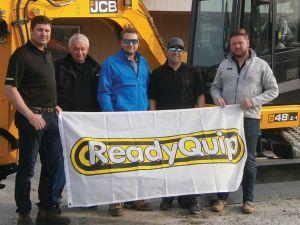
ReadyQuip JCB is the newest addition to JCB’s growing North American dealer network. The new JCB dealership operates from ReadyQuip’s premises in Timmins, Ont., to sell and support JCB machines throughout eastern Ontario, including Algoma, Cochrane, Greater Sudbury and Timiskaming.
“For more than 30 years, ReadyQuip has provided customers with innovative construction machines and outstanding service and support,” says Mike Larose, vice president of ReadyQuip JCB. “As a JCB dealer, we now represent the brand that invented the backhoe loader, the telehandler and the telescopic skid steer loader. And with more JCB product innovations on the way, we’ll be equipping our customers for even greater success.”
ReadyQuip was founded in 1986 and is today a full-line construction equipment supplier. As a JCB dealer, the company offers a full range of JCB construction machines, including backhoe loaders, skid steer and compact track loaders, wheel loaders, excavators and telescopic handlers.
In 2015, ReadyQuip invested $1.5 million to expand its 10-acre head office facility in Timmins, which includes a parts and service department, seven-bay workshop and fleet of support vehicles.
“ReadyQuip has built an outstanding reputation with the customers it has served over the past three decades,” says Christian
ReadyQuip JCB in Timmins, Ont., is the newest addition to the JCB dealer network in Canada.
Baillie, vice president of Construction Equipment Dealer Sales for JCB North America. “We’re excited to work with the ReadyQuip team to offer the productive, reliable and innovative construction machines their customers need to compete and grow in a competitive market”
JCB is the world’s largest privatelyowned manufacturer of construction, agricultural and defense equipment. From its North American headquarters in Savannah, Ga., and at 21 other manufacturing facilities in the United Kingdom, China, India and Brazil, JCB manufactures a range of more than 300 products for customers in 150 countries. JCB products include Loadall telescopic handlers, backhoe loaders, excavators, wheel loaders, compact excavators, skid steer loaders, compact track loaders, Access aerial work platforms, rough terrain forklifts, and Fastrac tractors. For more information, visit jcb.com.
Ontario farmers can now access an electronic process to update EFPs
The governments of Canada and Ontario are giving farmers in the province a quicker and easier way to renew their Environmental Farm Plans (EFPs).
Farmers in Ontario can now access an upgraded, electronic process to update their EFPs. The enhanced system will make it easier for many to continue using this key tool, which guides Ontario farmers to voluntarily adopt more environmentally sustainable practices.
The changes will provide a more userfriendly and resourceful online tool, in addition to offering a convenient option
for farmers to update their EFPs without requiring them to travel to attend in-person workshops.
The improved electronic Environmental Farm Plan (eEFP) instrument was developed by the Ontario Soil and Crop Improvement Association with support from the federal and provincial governments through the Canadian Agricultural Partnership. More than 45,000 farmers have participated in the Environmental Farm Plans process since its inception. The improved electronic EFPs supports the Ontario government’s digital first strategy.
Emily Otto-Tice, Ph.D., senior nutritionist with Purina Animal Nutrition.
PHOTO
REDUCING COMPOST CONVERSION TIME
COMPOST
LEFT
The Agrilab Technologies Hot Skid 250R unit is moved into place within the new composting site established at the Collins Powder Hill Farm.
Connecticut dairy and compost producer Collins Powder Hill Farm is using a compost aeration and heat recovery (CAHR) technology that really sucks, but in a good way.
The technology allows atmospheric air and hot vapor to be sucked through compost piles resulting in more active microbes that make the conversion of raw manure to compost possible. Equipped with this technology, Collins Powder Hill Farm is now able to produce quality compost in three to six months versus two years.
The dairy located near Enfield is owned by Jack and Mavis Collins, along with their son, John, and his wife, Ashley. In total, the farm looks after a herd of 183 milk and dry cows, heifers and steers, and they also operate The Collins Creamery, which sells premium ice cream. Composting their dairy barn manure is a venture that they started way back in 1992.
They clean out their barns twice daily and up until recently, have placed the material in windrows in a designated area for composting. The mixture is a combination of sand and manure from the milking barn and manure and wood shavings bedding from the calf barn. In the fall months, they also have seven landscapers who bring them leaves to blend into the mixture.
Essentially, composting is their manure management method, with most of the compost used as organic fertilizer on their 250 acres of owned and rented feed and cropland.
However, a portion is bagged or sold in bulk as a commodity. In total, they produce about 4,000-cubic yards of compost annually.
The traditional composting process is fairly labor intensive. It requires regular windrow turning and close monitoring of heat and moisture content to ensure proper conversion.
In 2017, Ashley Collins discovered an energy efficiency funding opportunity being offered by Connecticut’s Resource Conservation and Development Farm Energy Program (CFEP). The farm applied for a grant and were successful. They became a pilot site for CAHR technology developed and commercialized by a Vermont-based company called Agrilab Technologies Inc. The project featured their Hot Skid 250R unit.
Funding and assistance for the project was provided from a variety of sources including CFEP and also the United States Department of Agriculture Rural Energy for America program. The Collins’ only cost was for site materials and labor for building the compacted gravel working pad. Detailed analysis of the CAHR process by CFEP staff occurred for a year from July 2017 to July 2018. (Their detailed findings are available at CTFarmEnergy.org.)
One major difference between the CAHR composting production technology and conventional composting is that there is no windrow turning involved.
Jack says that with the
Technology that reduces compost conversion time by 75 percent impresses Connecticut dairy.
BY TONY KRYZANOWSKI
ABOVE
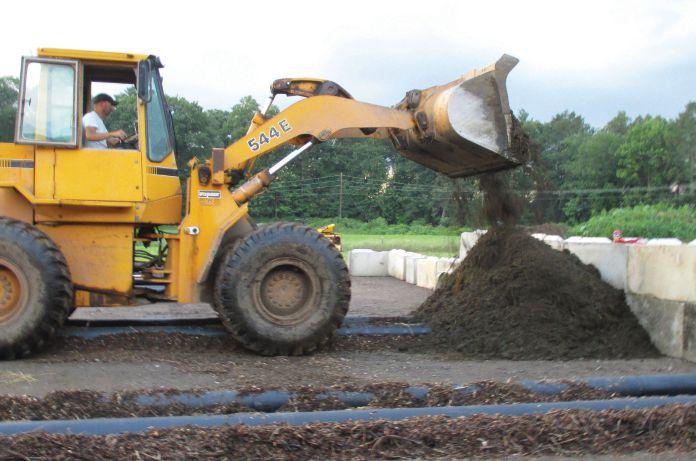
Jack Collins places a mixture of raw manure, sand and wood shavings on top of the piping as part of the compost aeration and heat recovery project on the Collins Powder Hill Farm. The technology deployed on the project can produce compost in one quarter to one third the time as conventional composting.
ABOVE
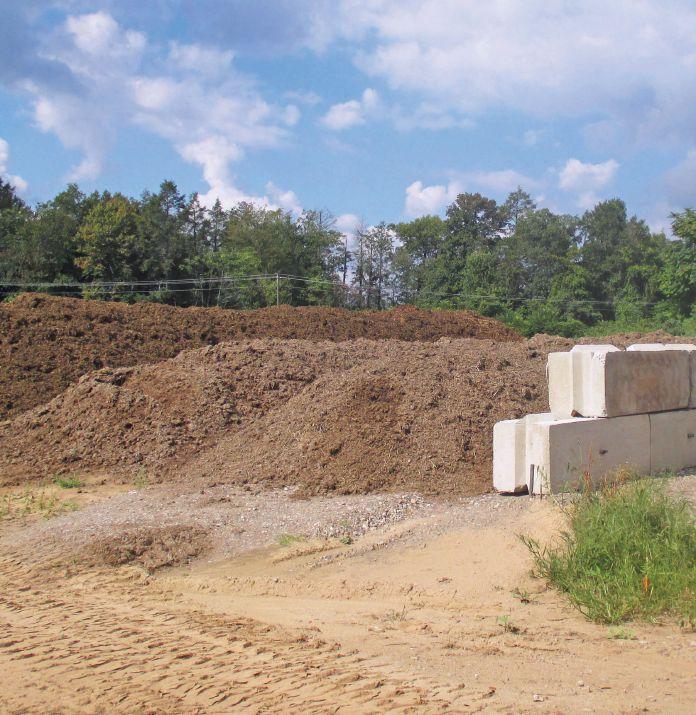
Four compost heaps are in various stages of maturation, resulting in year-round compost production at the Collins Powder Hill Farm. A new batch of compost is produced about every 12 weeks.
unprecedented amount of rain that the Enfield area has experienced recently, one lesson they have learned is that this compost conversion system works better and faster in a covered environment.
“Last year, it worked really slick and we were getting 125-degree water in the milk room siphoned off the heat recovery system,” he says. “This year, if we get 75-degree water, we are doing well, but we have had an awful lot of rain. We got eight inches of rain in April. Also, both the leaves and horse shavings came in wet.”
So, they are strongly motivated to place a cover over their composting set up.
“If we ever did this again, we’d want to put a building over it,” Jack says.
One other important lesson they have learned is that having sand as part of the mix is probably diminishing the full potential results that can be achieved with this system, because sand doesn’t compost.
“Having said that, it seems that if we put enough of the wood shavings so that the mixture is light enough to draw air through it, the system works,” Jack says. “Our bagged compost is almost all leaf compost and cow manure. The bulk stuff gets a bit less of the leaves.”
Given their experience as composters, they have developed and follow specific recipes of approximate measures of raw materials that they know will produce quality compost.
On its own, the entire Agrilab Technologies CAHR unit and accompanying infrastructure such as piping costs about $110,000 (USD). A cover over the operation adds another $50,000 for a total cost of about $160,000.
With the ability to produce compost in one-quarter to one-third the time, this significantly reduces the time horizon for system payback. With the ability to compost faster, this opens the door to possible farm expansion if manure can be disposed of by conversion to compost at this significantly reduced rate. Furthermore, there is potential to expand composting operations if a finished product can be produced and marketed more quickly, offering an opportunity to boost on-farm income. Also, generating more compost for use as organic fertilizer on cropland can offset the cost of commercial fertilizer.
In addition to accelerated compost production, the Agrilab Technologies
CAHR system offers heat recovery from heat generated during composting. For example, this system generates heat of over 130 degrees Fahrenheit (F) from the compost piles. With fresh batches of compost, the system has hit peak temperatures of 160 degrees F. It can be channelled for use to heat dairy process water and to heat buildings, thereby offsetting fuel costs. It also has the capability to scrub composting off-gasses, which avoids complaints from neighbors. In Connecticut’s climate, the Collins Powder Hill Farm experience shows that it is possible to stagger compost production and produce compost year round.
Jack says that he has witnessed that it does accelerate the composting process and that the heat generated from composting has offset diesel fuel costs and labor, while providing heat for both buildings and process water.
Agrilab Technologies’ CAHR system has been around for a while, with research and development conducted in both the U.S. and Canada. Its first system featuring sucking air and hot vapor through compost piles, or what it describes as ‘negative aeration’, as well as its Isobar heat exchangers, was installed at Vermont’s Diamond Hill Custom Heifers in 2006. Since then, the technology has been refined, and in 2015, the company launched a standard product line of modular CAHR systems, which it says meets the needs of most farms and commercial operations.
The pilot site at the Collins Powder
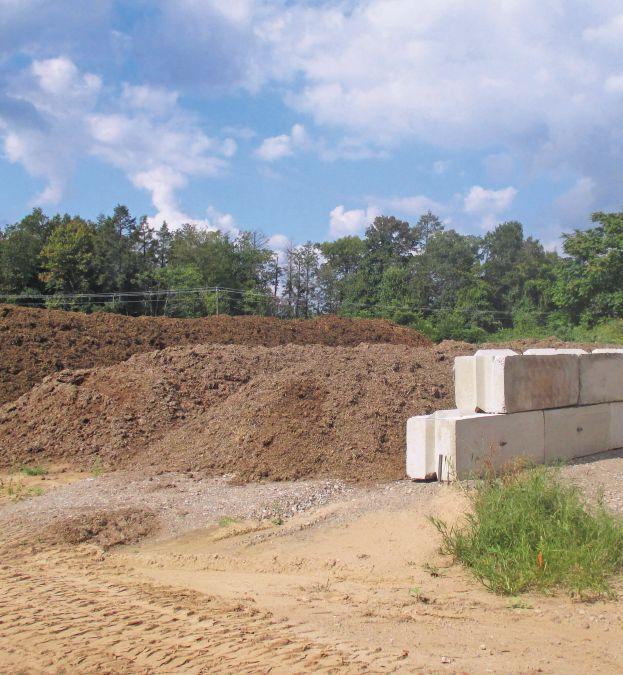
Hill Farm consists of a geo-textile and compacted gravel and sand floor as well as walls on three sides measuring fourinches high constructed with concrete blocks. It also contains duct work consisting of eight perforated eight-foot plastic pipes to draw the air and hot vapor from four separate compost heaps. The pipe spacing was designed to match their loader wheel base. It is used to add and remove material. Wood chips
“One of the advantages of our system is that we have the ability, with timer-controlled valves, to re-direct that hot vapor back into batches of compost.”
were placed over the pipes to aid in air filtration. Placement of the raw manure on the wood chips in each of the four composting zones was timed so that each followed a different maturation timeline, thus providing sources of compost at various stages of completion at various times of the year.
The Hot Skid 250R unit itself is on a custom steel pallet skid measuring fourfeet wide, eight-feet long, and seven-feet high. It weighs 1,400 lbs, and comes with
LEFT
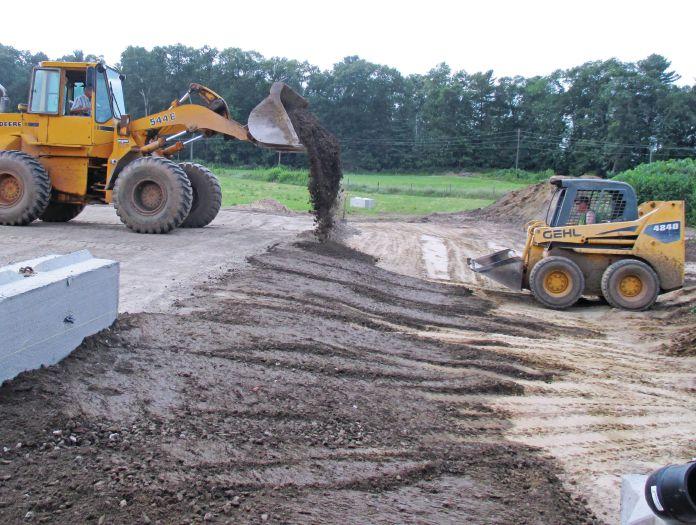
Jack Collins and son, John, prepare the gravel pad where the Agrilab Technologies CAHR composting system was installed on their Connecticut dairy farm.
six-inch hoses for compost aeration and exhaust connections.
A three-phase connection provides power to the two-horsepower blower, capable of blowing in the range of 100 to 500 cubic feet per minute (CFM). Power is also supplied to the composting unit’s circulator pump and computer control panels. In the case of the Collins Powder Hill Farm, their power costs for this unit were about $300 per year. Air flow can be adjusted manually or with feedback controls. Sensors within the compost batches provide temperature, oxygen and air flow feedback so that the farm can adjust to ensure that compost conversion is taking place within the optimum range.
The Hot Skid 250R unit is capable of sucking air and hot vapor through four compost piles, rotating from batch-tobatch through a series of timed air flow and rest intervals for good compost production. To capture the heat, the hot vapor is drawn through its heat exchanger.
“The hot vapor experiences a phase change, essentially condensing into liquid, while transferring the heat into a water and glycol loop,” says Brian Jerose, owner of Agrilab Technologies Inc. It is the heat in this loop, similar to a solar thermal or geothermal system, that provides the heat. It is most often transferred to a hot water boiler for process water and to heat buildings.
“We specify the loop. Sometimes it needs to go 50 feet or sometimes 400 feet to where the heat is going to be used,” Jerose says. “The compost heap is the heat source.”
An aeration fan expels the returning vapor to the air through an exhaust manifold. In cases where odor could be an issue, it can be scrubbed through a biofilter.
“One of the advantages of our system is that we have the ability, with timercontrolled valves, to re-direct that hot vapor back into batches of compost,” Jerose says. “That is particularly advantageous in winter operations, to push hot air from one of our active batches to cold materials to provide it with a thermal jumpstart. Once the
Customer reflections
Foster Brothers Farms in Middlebury, Vt., purchased a Hot Skid 250 R in 2017. The farm has a milking herd of 440 head, and has had the state’s largest composting facility, called VT Natural Ag Products (VNAP), since it started up 27 years ago. VNAP processes dairy, poultry and horse manure, forestry residuals, source-separated food scraps and other biomass into various manure and soil products. The farm received the U.S. Dairy Sustainability Award in 2016.
“We purchased the technology to dry our compost and heat the bagging facility in the winter,” explains president Robert Foster. “Having it in place has sped up our composting process by at least 50 percent, from an average of fourand-half months to about two-anda-half months. Our windrows only have to be turned four times as opposed to 15 or 16 times. And the data logging allows us to prove we meet the temperatures required in the organic compost standards.”
biology is stimulated, it starts to generate its own heat to sustain itself.”
The farm collects and temporarily stockpiles its manure daily, using it to start a new compost batch once a treated pile is deemed mature and is removed.
“A smaller farm, and I think the Collins farm is one example, would likely be on a 12-week cycle on average,” Jerose says, “so with four compost piles being processed at a time, they would be loading a new batch about once every three weeks.”
Collins Power Hill Farm had the option of purchasing the system for a dollar once the pilot was complete, which they did and it has become their composting system. Jack says that he is quite intrigued with the technology.
“It really is quite an ingenious system,” he says. “We can make compost quicker, we have saved a lot by not having to turn windrows in the field, and it was pretty neat how it heated both the milk room and milking parlor.” •
The processing time reduction and labour savings add up to savings of about $7,300 a year. Annual heating oil, propane and diesel cost savings are calculated at $17,205.
“It allows a lot of flexibility in how you can manage the composting process,” Foster says. “We can take the warm moist air from an established pile and move it into a new pile, and if that new pile is cold, it cuts the time it takes to get the temperature up from ten days to two. It’s all controlled from a smart phone. We are still learning what we can do with the system.”
DESTROYING antibiotic residues in manure
A look at the number of antibiotic residues and antibiotic-resistant bacteria presently in manure and an update on treatments of manure that better destroy these materials.
BY TREENA HEIN
Due to regulatory changes, residue levels of some types of antibiotics have decreased significantly in manure over the last few years in Europe, North America and elsewhere. Antibiotic use in livestock farming has been restricted to only the treatment or direct prevention of disease. However, those uses still add up to a large amount of drug residues ending up in manure, along with bacteria that have become resistant to some antibiotics.
The United States Food and Drug Administration recently published a report on how much antibiotic use in livestock farming has been reduced. The 2017 Summary Report on Antimicrobials Sold or Distributed for Use in Food-Producing Animals states that domestic agriculture sales of antibiotics important to human medicine and also approved for use in livestock decreased by 43 percent from 2015 (the year of peak sales) to 2017. From 2009 to 2017, they decreased by 28 percent, and from 2016 to 2017, sales of the largest category (tetracyclines) decreased by 40 percent. In terms of livestock species, the report’s authors estimate that most of these antibiotics (42 percent) are intended for cattle, 36 percent for swine, 12 percent for turkeys, five percent for chickens, and an additional five percent for other species.
this is because the number of livestock animals are increasing in the U.S.”
Aga has been studying the presence of antibiotic residues and antibiotic-resistant bacteria in manure for about 12 years. She adds that it is important to note that residues in the environment also result from human consumption of antibiotics – municipal wastewater and sludge contain some residues, and in some jurisdictions around the world, the sludge is spread in farmers’ fields. However, due to doctors being more careful with prescriptions, human consumption of antibiotics in many countries has been reduced. This is because of greater awareness of the problem of resistant bacteria. Initiatives such as One Health, which recognizes that the health of people is connected to the health of animals and the environment, have helped a great deal. Within One Health, scientists, doctors, veterinarians and others monitor and control public health threats and study how diseases spread at the local, regional, national and global levels.
However, other antibiotics that are not important in human medicine, namely the ionophores, are still being used in the U.S. livestock industry at levels similar to the past. They are used, for example, to treat a parasitic disease called coccidiosis that mainly targets young calves.
“There has not been much change in sales volumes over the last few years of these antibiotics and, in fact, the volume has gone up from 2009 to 2017 by 18 percent,” notes Diana Aga, a professor of chemistry at the University of Buffalo. “I can only speculate that
ABOVE
There are two main ways that antibiotic residues and antibiotic-resistant bacteria in manure can be ingested by livestock and potentially grow within the gut, leading to antibiotics being ineffective when they are also ingested in the course of treatment. One is through manure being spread on fields, with antibiotics potentially leaching into groundwater and being given to livestock in contaminated drinking water. The other way is manure solids being used as livestock bedding, bits of which could be ingested.
RESEARCH FINDINGS
Aga has studied two treatment systems that destroy some antibiotic residues or antibiotic-resistant manure: Advanced
Scientists found that destruction of antibiotic residues and antibiotic-resistance genes in manure is much higher when manure is composted. Composting can be done in conjunction with anaerobic digestion, composting the solids left over after the liquid digestate is metabolized by digester bacteria.
DIANA AGA, PROFFESOR, U OF BUFFALO
+
+
+
+
+
+
+
anaerobic digestion and reverse osmosis filtration. However, she notes that the main intention of these systems has nothing to do with removal of antibiotics; advanced anaerobic digestion is used to reduce odors and produce biogas, and reverse osmosis is used to recycle water.
2019-06-18 9:34
“These systems are not common on pork, beef and dairy farms mostly because they are expensive,” Aga says. She notes that on large dairy farms in Idaho, for example, manure management using long-term storage lagoons and having the liquid constantly evaporate may be sufficient for most farms –odor emission is less of a concern, especially in open-lot dairy and beef facilities. However, in places like Wisconsin where many members of the general public are in closer proximity to the farm, advanced treatment systems are more common to control odor and to demonstrate sustainability.
Aga and her colleagues found that these advanced treatment technologies were not as effective at destroying antibiotic residues as expected. Both treatment technologies did little to cut down residue levels in solids; Aga and her team found that residues migrate from the liquid component of manure into the solid component during treatment. Indeed, solid manure produced after screw-press separation may contain higher concentrations of antibiotics than raw manure slurry. However, the scientists found that destruction of antibiotic residues and antibiotic-resistance genes in manure is much higher when manure is composted. Composting can be done in conjunction with anaerobic digestion, composting the solids left over after the liquid digestate is metabolized by digester bacteria.
With testing the effectiveness of composting, Aga and her team were building on earlier studies on poultry litter that demonstrated a reduction in ionophore residues of up to 70 percent can be achieved after 150 days.
“Overall, our studies show that composting is pretty effective due to the high temperatures that are achieved,” she notes. “Composting is not expensive compared to anaerobic digestion, but it’s not easy to implement for large operations dealing with large volumes of manure.”
When asked about whether she thinks many farmers will compost manure if there are no financial incentives to do so, nor regulations requiring it, Aga is doubtful.
“If they can sell their composted manure, that helps,” she says, “and public perception is also an incentive. Farmers don’t
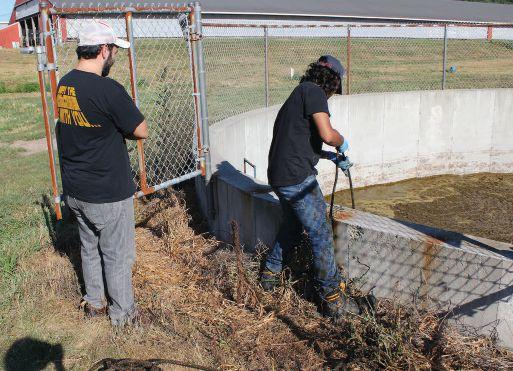
Researchers from the University of Buffalo sample a manure lagoon.
want the general public to feel negatively towards farming, and odor is a factor in that. Composting also shows that farmers are trying to be more sustainable. I think government regulation may come, but it’s a long way away. However, even if not every farmer composts manure, the ones that do will still make an impact on reducing the risk of spreading antimicrobial resistance through land application of manure. The loss in the efficacy of many antibiotics for treating illnesses is a serious threat.”
Moving forward, Aga and her team are planning research initiatives looking into the effectiveness of using grass buffer strips to prevent manure runoff when it’s spread on farm fields. •
A REVIEW OF CURRENT RESEARCH
By Treena Hein
The Livestock and Poultry Environmental Learning Community recently presented a webinar entitled, Reduction and fate of manure pathogens and antimicrobial resistance. The webinar included a handful of presentations from today’s leading research scientists.
Zong Liu, assistant professor in the department of biological and agricultural engineering at Texas A&M University, reminds us that pathogen reduction in solid manure can be achieved through, composting (heat), the most common method, and pelletization (heat and drying).
In liquid manure, methods of pathogen reduction are: digesters (heat); lagoons (nutrient depletion so pathogens have nothing to feed on); the use of cationic polymers to make larger particles (flocks) that precipitate to the bottom for easy removal; high-speed centrifugation; specialty mushrooms that may also kill pathogens (through a biocidal effect); and treatment with active iron media.
Ed Topp, research scientist with Agriculture and Agri-Food Canada, notes that some bacteria can persist in soil for years, and he is studying how much AMR is occurring (in Clostridium bacteria) in existing soil bacteria or in bacteria added through manure application.
Lauren Wind, graduate research assistant at Virginia Tech, is studying which pre-application treatments are more effective at reducing AMR genes in
soil bacterial populations. She recently tested application of composted and raw manure from cows given different antibiotics and whether type of crop (root and leafy vegetable) makes a large difference. Over time, she tested soil bacteria under the various study treatments for resistance to five antibiotics (some given to the study cows and others important to human health).
She found crop type had no effect on population levels of AMR bacteria, but as expected, composted manure gave
reduced levels of AMR bacteria over raw manure application. The antibiotics in the soil were gone by day 90, and she is researching what else is happening in the soil, beyond the presence or nonpresence of antibiotics.
For all the presentations and the Q&A sessions from the The Livestock and Poultry Environmental Learning Community recently presented a webinar entitled, Reduction and fate of manure pathogens and antimicrobial resistance, visit lpelc.org
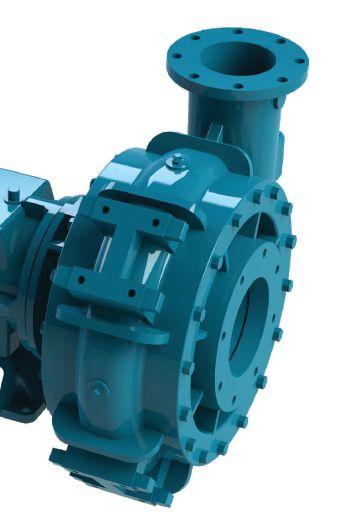
MAKE YOUR DAIRY EXTRAORDINARY
FEATURES AND BENEFITS:
• Oil bath bearings - self cooled and lubricated, needs no water flush
• Disintegrator tool - for hoof blocks and other solids
• Heavy duty seal and bearing systemlonger life in severe service
• Ductile iron casing and bearing housingheavy castings for long life
• Heat treated cast steel wear parts - for longer life in abrasive grit service
• Most parts readily available from stock for expedited delivery
APPLICATIONS INCLUDE:
• Digester Feed
• Digester Mixing
• Small Pit Recirculation
• Tanker Loading
• Flush Water
• Feeding Heat Exchangers
• Manure Transfer
• Separator Feed
Learn More at ChopperPumps.com
The risk of manure
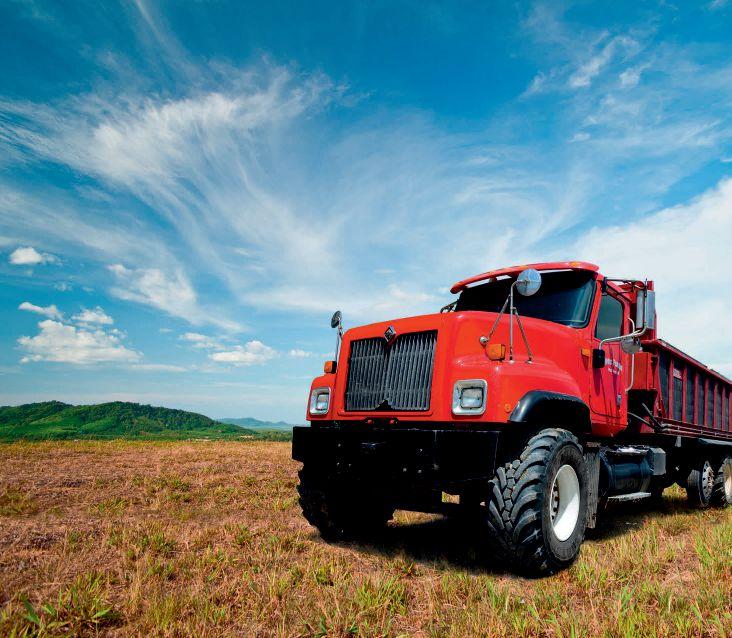
A new technology is being used in Canada to improve cleaning of livestock transport trucks and aid the reduction of biosecurity risks.
BY TREENA HEIN
Anew Canadian technology may be an asset to producers in improving livestock transport truck disinfection, according to Mark Beaven, executive director at the Canadian Animal Health Coalition (CAHC), a non-profit organization that works on livestock health and welfare solutions.
The new tech, named Transport Genie (TG), is a patented real-time sensing system that was launched by the Ontario-based creators of Be Seen, Be Safe, a geo-fencing biosecurity app.
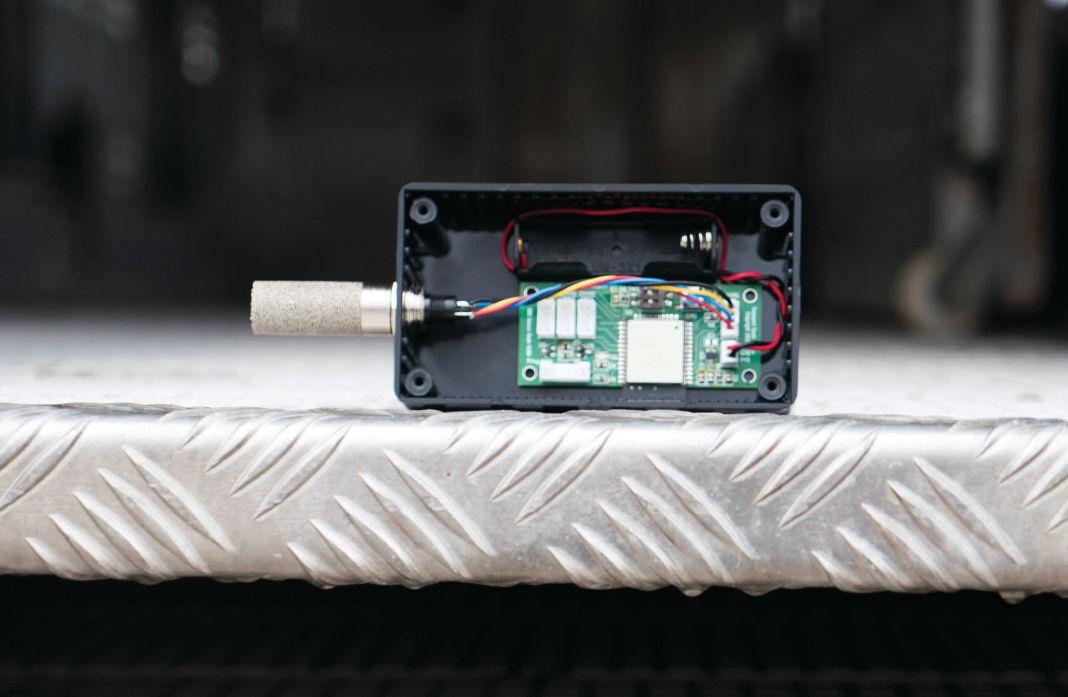
TG consists of sensors placed in the trailer that continually relate data on the trailer environment (i.e., humidity and temperature) to the driver of the transport truck, and also livestock transport fleet managers if desired. With this real-time data, transport firms can ensure a high level of welfare to the animals being hauled. Data from transport can be tracked over time.
The system has already been presented at various pork, poultry and cattle industry meetings, and is now being readied for commercial launch.
ABOVE
Joel Sotomayor, TG president and CEO, reports that starting in May, TG and CAHC will be doing trials with Luckhart Transport, a livestock hauler, in Ontario. Luckhart showed early interest in TG, both for gathering data on how its trailers are working, but also for proper disinfection.
Another trial partner is Terry Fonstad, an associate professor in the department of civil, geological and environmental engineering at the University of Saskatchewan.
“When PEDv was first identified in Canada about four to five years ago, livestock transport trucks were pinpointed as the likely vector for transfer,” Fonstad explains. “It reportedly cost around $600 to $800 to clean a truck. It’s a lot of hot water and labour. They generally use a fire hose to remove dirty bedding, then pressure wash, then do removal of biofilm with soapy water and rinse again. Then it may take three or four hours of drying at 45 degrees Celsius.”
“We conducted testing a couple of years ago at VIDO-InterVac (Vaccine and Infectious
The Transport Genie is a patented real-time sensing system that was launched by the Ontario-based creators of Be Seen, Be Safe, a geo-fencing biosecurity app.
Disease Organization-International Vaccine Centre, at the University of Saskatchewan) and determined that none of the pathogens tested survive high temperatures,” Fonstad notes. “PEDv was most heat-resistant, but we found that 75 degrees C for 15 minutes killed it in the lab. This was announced at a meeting with trailer cleaning company owners, and they immediately got on their phones and told their managers to turn the dryer temperatures up. It was the fastest announcement of a scientific finding getting out to industry that I’ve ever seen.”
However, there was, and is, still work to be done to see if there are areas of the trailers that are not being exposed to the required temperature.
“We looked at making a sensor system to give us this information and found out that TG was already developing sensors for animal comfort during transport, so we partnered with them,” Fonstad says. “We are working with them to add capabilities to the temperature sensors, expanding them to measure beyond the range of temperatures that are measured by TG for animal welfare purposes.”
The trials with the TG system may show that trailers will have to be baked longer or that the heat distribution in the drying ovens may have to change, using duct work, for example, to focus the heat in a certain area.
“The sensors have to be present and working every time,” Fonstad notes. “The cleaning is done by custom cleaning companies and they need verification that cleaning took place (through GPS sensors) and that it was properly done (through TG sensors). It’s easy to get blamed for a biosecurity breach that happened somewhere else in the chain. So, we need the sensors to be designed so that microbes aren’t retained but also designed so that they can tolerate many washings and the temperature extremes. Changing trailing design may also help.”
John Neufeld, Manitoba Agriculture spokesperson, says more research is needed to fully understand which pathogens and diseases exist in lagoons, regardless of the type of manure.
“There is also a knowledge gap on how long these pathogens like PEDv or Salmonella can survive in the lagoon, and how or if they may be transferred when manure is applied,” he says. “There are many factors which can influence whether or not a pathogen can be transferred
from the lagoon during application to a field, which could include the type of application, the field type (tilled or forage, for example), the weather at the time of application, and biosecurity practices. If good biosecurity practices are in place and proper steps are taken, the ability for manure to be a source of disease to a herd or flock is greatly diminished.”
Neufeld notes that there is no proven way to disinfect a manure lagoon to eradicate PEDv or any other pathogen, but he says, “there are many effective
and proven methods for cleaning and disinfecting premises that have been infected with PEDv. New methods and disinfectants may arise over time, but the principles of thorough cleaning before applying disinfectants and providing enough time for disinfectants to work properly remain constant. Following established biosecurity practices that meet or exceed the national swine biosecurity standards remains the best approach to prevent the spread of highly-contagious pathogens like PEDv.” •
FAST. FLOTATION. THE ALLIANCE 398 MPT.
The only thing better than a high-performance flotation tire is a high-performance flotation tire that can carry huge loads at up to 62 mph (100 km/h).
Check out our demo at Manure Expo
That’s the Alliance 398 MPT, a multi-purpose tire created from the ground up for the demands manure applicators and livestock producers face every day. With its loadcarrying brawn cloaked under a smooth, stable ride, the all-steel Alliance 398 MPT radial is ideal for manure application equipment and can even replace duals on straight-axle trucks and semis. Plus, it’s backed with the industry-leading 10-year Alliance warranty.
Learn more from your Alliance Tire dealer, visit www.atgtire.com or call us at (800) 343-3276.
ENGINEERED TO KEEP YOU AHEAD
MANURE MINUTE
Troubleshooting your compost pile
Proper composting is almost an art, and it takes the right combination of many components to work efficiently. In general, you want a particle size of 1/8 to two inches; internal temperature of 110 to 150 degrees F; moisture content of 50 to 60 percent; oxygen content of 10 to 15 percent; carbon to nitrogen ratio (C:N) 25:1 to 30:1. When these components are unbalanced, it can hinder the whole composting process. However, when a compost pile doesn’t break down correctly, it’s not always immediately apparent which factor is lacking or in overabundance. Below are some common compost problems, their symptoms, and how to remedy them.
ROTTEN EGG SMELL
If your compost is giving off a sulfurous or rotten egg smell, it might be an indicator that the pile is oxygen-deficient. Composting is an aerobic process, meaning it requires adequate oxygen for decomposition. The lack of oxygen might be from excessive moisture or compaction due to small particle size.
To test for excessive moisture, pick up a handful of compost and squeeze it. If water drips from your hand, the compost is too wet. If wetness is the problem, turn and mix the pile
atmosphere at high rates as ammonia (hence the smell). To increase the C:N, carbon sources such as straw, corn stalks, or wood chips can be added to the pile.
PILE DOESN’T HEAT UP
One of the most common problems in compost is that the pile does not reach high enough temperatures for good decomposition. There are a variety of reasons this might be happening. The pile might be too small. A very small pile will not have the mass to maintain high internal heat. This one is a simple fix: just make the pile bigger. The absolute minimum size for manure composting is three ft. by three ft. by three ft. One of the most common reasons a pile isn’t heating properly is that it is too dry. If you do the squeeze test (as described above) and the compost does not hold its form and crumbles apart, it is too dry. To fix this, simply add water with a hose or bucket while turning and mixing. Lack of nitrogen might also be the problem. To remedy this, add nitrogen sources such as grass clippings, soybean straw, or hay. Lack of oxygen can also cause heating problems. The same rectifying methods of increasing oxygen through turning and adding larger particles apply here, as they do above for “rotten egg smell.”
The compost can have multiple problems simultaneously.
to aid drying and consider covering with a tarp or roof.
If particle size appears to be the issue, turn and mix the pile. This “fluffing” of the pile will help create air pockets and reduce compaction. If the problem persists, add bulky particles, such as wood chips, that are about two-inches in diameter.
AMMONIA SMELL
A quick whiff of strong ammonia smell is quite distinct. And if it’s coming from your compost pile, it’s likely due to excess nitrogen. Keeping carbon and nitrogen balanced is a necessary tight rope to walk; and if the compost C:N drops below 20:1, the pile may become rancid and sludge-like. Nitrogen is also lost to the
The pile might also resist heating if the weather is cold. During the winter or a cold snap, turn and mix the pile less frequently. Also make sure the pile is large enough to retain heat; at least five ft. by five ft. by five ft. Or, finally, perhaps the composting process is complete. If the pile resembles soil, has an earthy (not manure) smell, and is crumbly, the compost is probably done and does not need to heat up any more.
Overall, knowing what might be causing a heating issue or foul smell can put you on the right track to identifying and fixing the root problem. Of course, each problem may not exist alone, and the compost can have multiple problems simultaneously. In those cases, you’ve got to put on your detective hat and analyze the combination of symptoms to find the problems and their solutions. •