Digital tools can make application more precise, cost-effective and green. | 18
January/February 2023
January/February 2023 Vol.21, Issue 1
Innovative ideas
In this issue, we explore concepts related not only to technology, but also to planning ahead, embracing change and more.
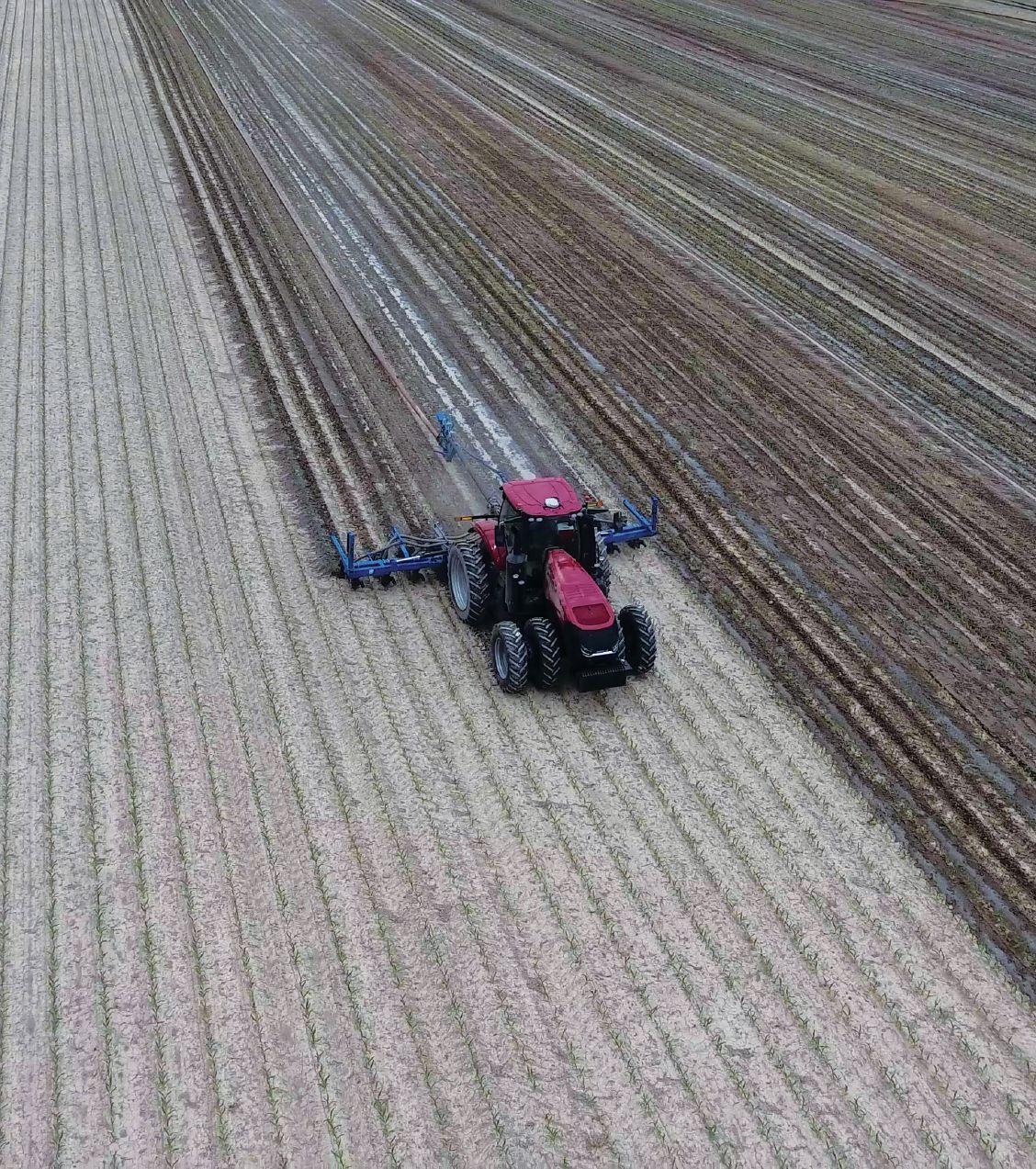
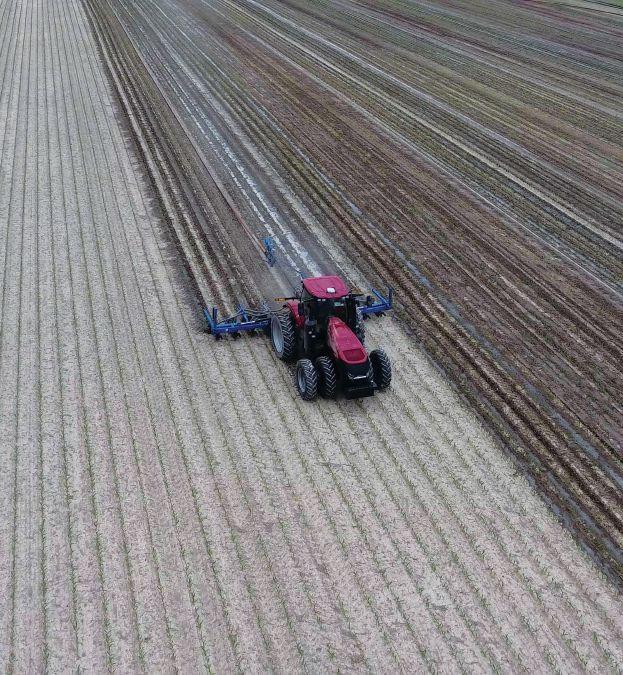
Manure applied via drag hose. More on page 14. Photo courtesy of Glen Arnold.
Winter runoff concerns Those applying manure should anticipate more runoff-inducing events in winters, say experts.
BY JAMES CARELESS
Modern dairy, modern manure
Homestead Dairy has been awarded for its innovation in calf health and environmental practices.
BY JULIENNE ISAACS
Let’s get digital Digital tools can help manure applicators and landowners apply and manage nutrients more precisely. BY
RICHARD KACHMAN
Innovation is more than technology
This is now my third Innovation issue with Manure Manager. Prior to agriculture, I was the editor of a trade publication covering media buying, advertising and broadcasting. In that context, “innovation” meant increased automation in the buying process, layering extensive data to better inform transactions and using platforms like Snapchat to gameify real life. Naturally, when I did my first innovation issue of Manure Manager, I was stuck on technology. I sought out stories about robotic milking barns and automated tractors.
And don’t get me wrong – all of those things are indeed innovations for farmers and manure applicators alike. However, innovation and technology are not synonymous. There is a reason why this is called the Innovation issue and not the Technology issue.
To innovate is to adapt to your surroundings and conditions as they change. And although agriculture remains one of the U.S. and Canada’s greatest traditions, the world of agriculture is changing rapidly. Climate
To innovate is to combine proactivity with reactivity, find ways to make the things you are doing more efficient and think ahead. Sometimes, that solution involves data and digital tools (like OMAFRA’s digital Agri-Suite tools, explored in-depth on page 18). Other times, that involves smart investments (like the investments at Homestead Dairy, profiled on page 10). In order to innovate effectively, one needs as much information as possible so that they can make their purchasing, management and application decisions with sound confidence.
As purveyors of information, we recognize that we also have a need to be innovative, proactive and ahead of the curve. That’s part of why we are launching a new agriculture brand at Annex Business Media. Beginning this March, we will begin publishing The Trough, a multi-platform media brand that dives deep into the world of livestock feed, nutrition and additives. If you raise livestock – or if you grow grain – The Trough will provide the essential information on
“There’s a reason why this is not called the Technology issue.”
events are posing greater challenges when it comes to the timing of planting and harvesting and the application of manure. Increased knowledge and scrutiny of matters such as greenhouse gas emissions have given those housing livestock new matters of concern. Economic crises such as supply chain stalls and inflation mean business owners are having to do more with less – or invest in infrastructure that will remain steady amidst economic shifts.
animal health, nutrition and business to help you keep evolving. And, in the name of innovation, we’ll deliver that information through much more than a print magazine. We’ll also publish podcasts, online news, webinars and more.
Adding a new vertical to our remit is our own way of innovating and keeping our readers armed and ready to face whatever challenges come their way in 2023 – and, more importantly, beyond that. •
Canada, Ontario invest in more rural internet
The governments of Canada and Ontario have invested more than $5.8 million to bring high-speed internet to more areas of the province. The latest investments target the areas of Grey and Bruce counties, Simcoe County and Middlesex County, serving approximately 5,000 families, farms and businesses.
Specific communities affected include Holstein, Varney, Orchardville, Maple Lane, Yeovil, Dromore, Tartan, Thistle and Bognor in Grey County; Sauble Beach and Sauble Beach North in Bruce County; Severn Bridge in Simcoe County; and Putman,
Crampton, Avon, Mossley, Harrietsville, Gladstone, Kerwood, Napperton and Strathroy in Middlesex County. Lisa Thompson, minister of agriculture, food and rural affairs for Ontario, said in a statement that the infrastructure “will have lasting benefits for our entire community.”
The upgrades are part of a partnership with Southwestern Integrated Fibre Technology (SWIFT). The governments have previously invested in upgrades to internet infrastructure in Waterloo Region, Elgin County, Perth County and more.
OFA HOPES FOR ‘FAIR RESOLUTIONS’ ON FERTILIZER TARIFF
The Ontario Federation of Agriculture (OFA) says it looks forward to continuing to work with the federal government on a fair resolution to tariffs applied to fertilizer imported from Russia. Tariffs were first applied in February in response to Russia’s invasion of Ukraine. In late 2022, federal Finance Minister Chrystia Freeland announced that Canada will use $115 million,
including revenue from the tariffs, to support the rebuilding of the Ukrainian power grid infrastructure damaged in the recent conflicts. Freeland also assured Ontario farmers she will continue to work with fellow ministers and others on a fair resolution to the tariffs.
“The OFA has and continues to stand with the people of Ukraine and strongly condemns the illegal invasion by Russia,” said Peggy
Brekveld, OFA president, in a statement. “We are also supportive of the federal government’s efforts to provide support and aid to Ukraine to urgently rebuild Kyiv’s power grid. Regarding collected fertilizer tariff dollars, the conversations continue, and we hope that the government is in a position to announce its plan to support farmers in Ontario and Eastern Canada in the coming
days and weeks ahead.”
According to the OFA, the tariff has driven up input costs for Ontario farmers. Urea prices have jumped by 97 percent, according to research from Ridgetown College, and mono-ammonium phosphate prices have increased 47 percent.
“These tariffs have hit Ontario farmers particularly hard due to imported fertilizer,” said Brekveld.
Danish energy company touches down in Minnesota
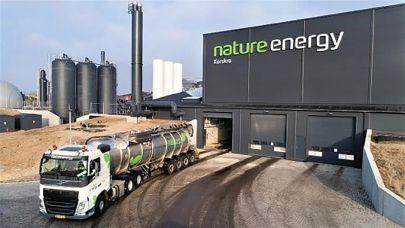
Nature Energy, a Danish business that harvests energy from both manure and food waste, will begin construction on two projects in Minnesota this year. It will establish locations in Benson, located in central Minnesota, and Wilson in the southeast. The company is also working on plans for a third Minnesota location in Roberts, as well as an eventual facility in Quebec, scaling its Danish model for North America.
CEO Alexis Glick said Minnesota was chosen because of its significant agricultural community.
Nature Energy has been operating in Denmark since 1979, and began as a municipal natural gas company. Around the time it was founded, Denmark began a program to encourage the development of
large community digester projects to produce biogas from dairy and hog manure as well as food processing waste and food waste. Nature Energy established its first community biogas facility in 2015.
PHOTO COURTESY OF NATURE ENERGY.
ON TRACK
CNH Industrial unveils electric tractor prototype
CNH Industrial unveiled the New Holland T4 Electric Power, an allelectric light utility tractor prototype with autonomous features.
The prototype presented is branded under the New Holland Agriculture banner, while the commercial model will also extend to the Case IH Brand.
The e-motor peak is up to 120hp, with max torque up to 440Nm. The unit is equipped with four-wheel drive at a max speed of 40kph. The tractor’s battery pack is marketed as delivering up to a full day of operation, depending on one’s mission profile.
Additional features include roof house sensors and remote activation capabilities with a smartphone app.
Tractor sales down for 2022 in U.S., Canada
Combine harvester sales finished 2022 with healthy gains in unit sales while ag tractors finished the year below 2021 levels in both the U.S. and Canada, according to the latest data from the Association of Equipment Manufacturers (AEM). Total U.S. ag tractor unit sales fell for the year as a whole compared to 2021. The sub40hp segment had the biggest losses, down 19.3 percent for calendar 2022. U.S. self-propelled combine sales, however, finished the year up 15.8 percent.
In Canada, unit sales of tractors finished the year down 7.2 percent from 2021. Sub-40hp segment led losses, down 9.8 percent for the year. Conversely, 4WD units were the only tractor segment to finish the year positive, growing 6.3 percent for the year. Two-wheel-drive tractors above 100hp finished the year nearly flat, selling only nine fewer units than in 2021, putting that segment down 0.2 percent.
GEA partners with N2 Applied
Processing solutions specialist GEA has signed a long-term, exclusive strategic partnership with Norway-based N2 Applied in order to manufacture and globally distribute its manure management solutions.
N2 creates liquid manure (slurry) processing units, which converts livestock manure into fertilizer using plasma technology, enriched with nitrogen from the atmosphere. Additives help to lower the pH balance, reducing ammonia and methane emissions. Those units will become available worldwide through GEA’s sales organization.
GEA recently exhibited at EuroTier 2022 in Hanover.
WASTE WATER TREATMENT
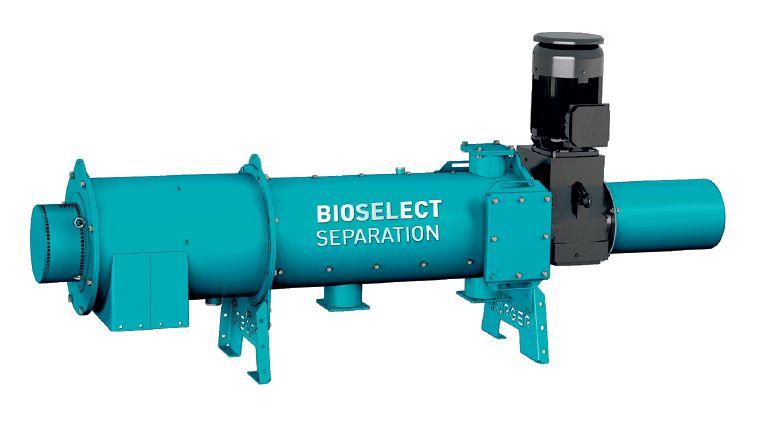
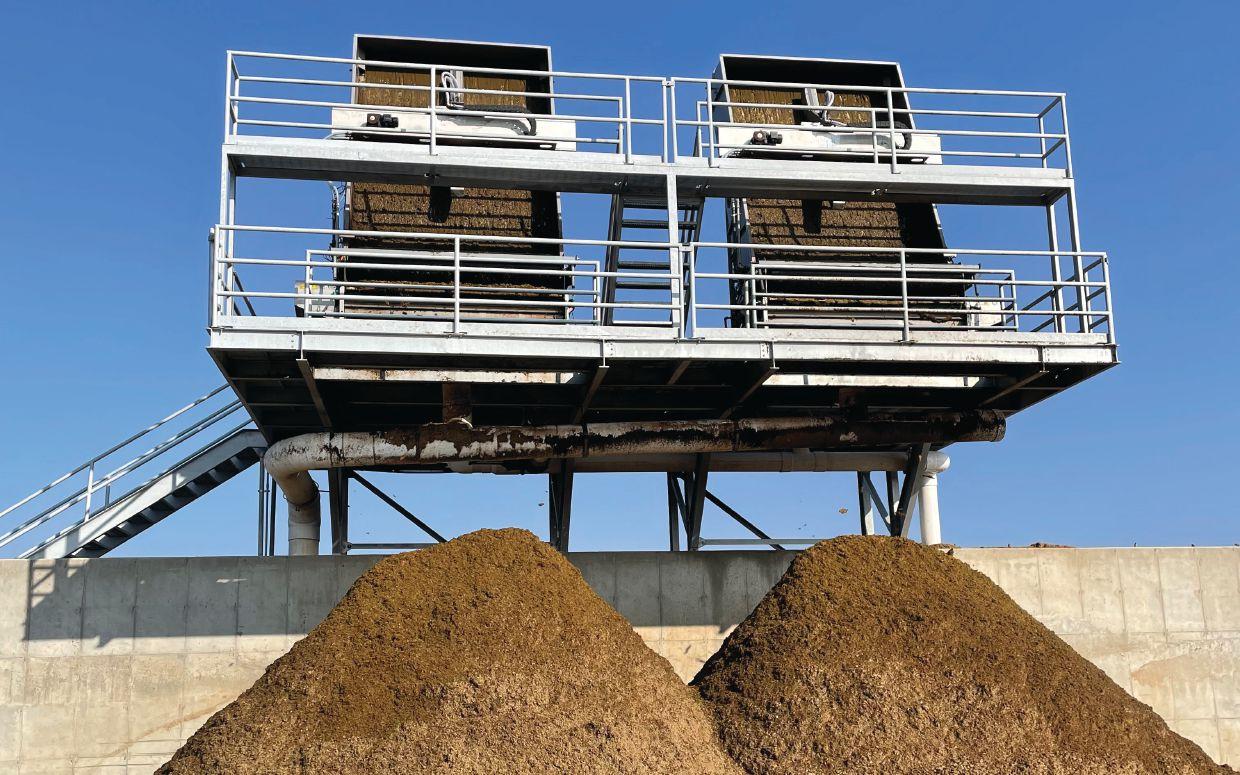
Fan produces bedding material with a dry matter content of up to 38% in solids.
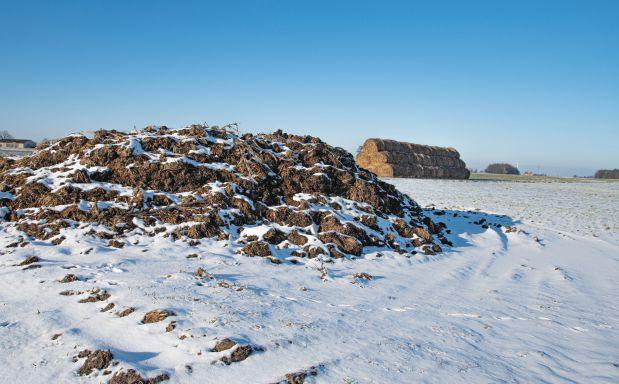
Winter runoff concerns
Mitigation measures now need to keep in mind that nutrients move more in winter.
BY JAMES CARELESS
Anyone applying manure to a field knows that nutrient runoff is a concern, which is why many growers and applicators look at mitigation measures. However, for years it has been assumed that during the winter months, there is less opportunity for runoff due to the different types of weather events that occur during the cold months. However, rising winter temperatures in many areas could mean an increase in rain-on-snow runoff and melting snowpacks. In turn, this increased winter runoff will flush substantially higher levels of nutrients into groundwater, rivers, lakes and oceans on a large scale.
That’s the core argument in a recent publication entitled, “Winter runoff events pose an unquantified continental-scale risk of high wintertime nutrient export.” For farm fields applying manure, this could mean more nutrient runoff than landowners have traditionally come to expect.
Given the many forces that are increasing winter runoff, “We suggest that the assumption of low wintertime discharge and nutrient transport in historically snow-covered regions no longer holds,” the document reads. “Critically, however, we lack sufficient data to accurately measure and predict these episodic and potentially large
wintertime nutrient export events at regional to continental scales.”
“We found that 40 percent of the U.S. has nutrient rich soils and large rain-on-snow events in the winter, so we’ve got at least 40 percent of the U.S. creating winter pollution when it rains and snow melts, but we’re not keeping track of how much, where it’s going, or what it’s impact on water quality is,” says Carol Adair, director, Aiken Forestry Science Lab and associate professor at the University of Vermont and one of the authors of the publication. “We also found in our analyses that winter discharge on the upper Mississippi and Missouri rivers has nearly doubled since 1925.”
THE STUDY
To investigate their thesis on the impact of increased winter runoff, the writers looked into existing geospatial datasets covering rain-on-snow frequency overlain on nitrogen and phosphorus inventories to identify areas of the contiguous U.S. where water quality could be threatened by this change. To illustrate the potential impacts of these events, they examined flow and turbidity data from a large regional rain-on-snow event in the Mississippi River Basin.
“We estimated historical daily rain-onsnow frequency for the U.S. using output from the snow data assimilation model system (SNODAS) operated by the National Operational Hydrologic Remote Sensing Center, part of the National Weather Service and the National Oceanic and Atmospheric Administration,” the document says. A large rain-on-snow event is defined as at least 10 mm d1 of rain falling on a snowpack of at least 10 mm snow water equivalent. Next, “We calculated the average daily rain-on-snow frequency for 16 hydrologic years of SNODAS record (October 2003 to September 2019).”
Based on their assessment, the team found that “rain-on-snow, a major flood-generating mechanism for large areas of the globe ... affects 53 percent of the contiguous U.S. and puts 50 percent of U.S. nitrogen and phosphorus pools (43 percent of the contiguous U.S.) at risk of export to groundwater and surface water. Further, the 2019 rain-on-snow event in the Mississippi River Basin demonstrates that these events could have large, cascading impacts on winter nutrient transport.”
Next, to formulate a map of total nitrogen pools across the contiguous U.S., the team combined maps of fertilizer and manure phosphorus application and topsoil phosphorus to create a map of total phosphorus pools across the contiguous U.S. “We estimated topsoil phosphorus (0-5 cm; kg P ha-1) using U.S. Geological Survey (USGS) total soil phosphorus concentration (mg P kg soil-1) and soil bulk density data.” Adair adds, “We did the same thing for nitrogen, but also included atmospheric nitrogen deposition.”
FACTORS AT PLAY
The driving force behind increased winter runoff is warmer winters, but the dynamics are more complicated. The cold and snow that historically reduced wintertime runoff and nutrient transport are now punctuated by runoff- and flood-producing snowmelt, rainfall and rain-on-snow events. “It’s especially complex as snow thins or disappears – so soils freeze and thaw, making it easier for them to be eroded by winter rains,” Adair notes. While previously runoff from major midwinter “flushing” events were historically infrequent, the research indicates that these events are now more frequent. Research found that humans add an estimated 22 to 26 Tg (teragrams) of phosphorus as fertilizer, 183 Tg of
nitrogen as fertilizer and from nitrogen fixation by legumes, and 25 to 33 Tg of nitrogen via atmospheric deposition from fossil fuel combustion.
It could be argued that increased winter runoff is simply hastening the water-borne movement of nutrients that historically have happened in spring. If so, then why is the difference in timing a cause for concern?
The answer, according to the authors, is that the nutrient load in spring runoff is mitigated by certain natural factors.
A spring nutrient flux coincides with and is often tempered by springtime plant growth, resulting in plant nutrient uptake. Besides the typical springtime nutrient uptake, there are also environmental, seasonal factors. “Our initial analysis of the upper Mississippi and Missouri found that events in the winter carried more sediment (and therefore likely more nitrogen and phosphorous) than similar sized events in the spring, summer or fall,” says Adair.
FARM-LEVEL SOLUTIONS
This pulication asserts that more than 40 percent of the contiguous U.S. is at risk of
nutrient export from rain-on-snow transmissions, and that half of the nitrogen and phosphorus pools in the contiguous U.S. are in areas with historically large, relatively frequent rain-on-snow events. The research team says there is a need for “a conceptual framework for winter nutrient transport with testable hypotheses, to serve as a starting point for developing a mechanistic, predictive understanding of winter nutrient transport and its impacts on water quality.
But despite some unknowns, there are still some ways to adjust one’s nutrient management approach and keep the team’s findings in mind.
“We do hope that our maps can be used by [nutrient] managers to pinpoint locations for investigation and management,” says Adair.
There is good news: most of the measures known to mitigate runoff still work; one simply can’t assume there will be minimal winter runoff.
“We think that we already know many management practices that may help to mitigate winter nutrient loss,” says Adair. “For example, winter cover crops or buffer strips.” •
A LONG WAY TOGETHER
WHEREVER YOU ARE, BKT IS WITH YOU
BKT provides you tires that are reliable and safe, sturdy and durable, capable of combining traction and reduced soil compaction, comfort and high performance.
BKT: always with you, to get the most out of your agricultural equipment.
Investing ambitiously and LEARNING FOR LIFE
Back in 2003, Brian Houin had just completed a degree at Purdue University and returned to work at the Houin family farm, Homestead Dairy, in Plymouth, IN.
The Indiana-based farm has been recognized for innovation and sustainability.
BY JULIENNE ISAACS
Houin “couldn’t wait to be done with college and out in the real world.”
Then came a moment when he realized that to be successful he’d need to keep studying. “The biggest irony for me was that I realized I was doing this continual learning. And that’s what we’re going to continue to do,” he says.
In 2021, Homestead Dairy was named the 2021 Innovative Dairy Farmer of the Year at the Internation-
ABOVE
al Dairy Foods Association (IFDA) Dairy Forum. It was an important public recognition of something the Houins have always known about themselves: if it makes sense for the family and the operation, they’re willing to try something new.
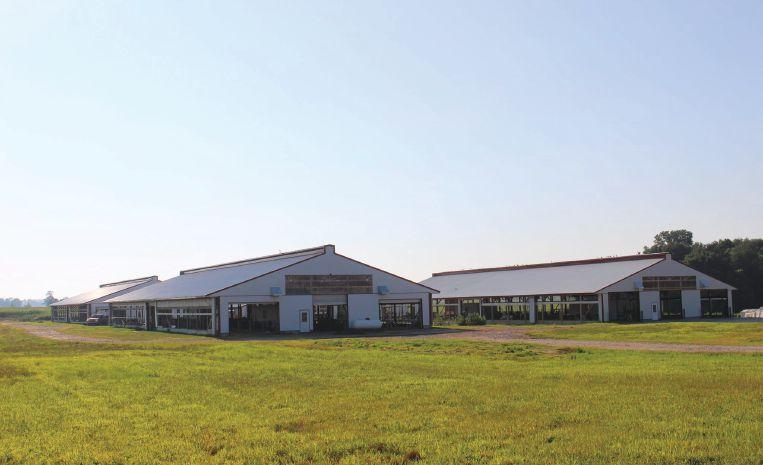
The farm started in 1945 when Elmer and Lena Houin, Brian’s grandparents, bought just over 200 acres and nine dairy cows. In 1979, Brian’s father and uncle purchased the farm and christened it “Homestead Dairy.” Since then, the farm has steadily grown. These days, it’s managed by the third and fourth generations of Houins, and operates on three facilities. “We’re milking
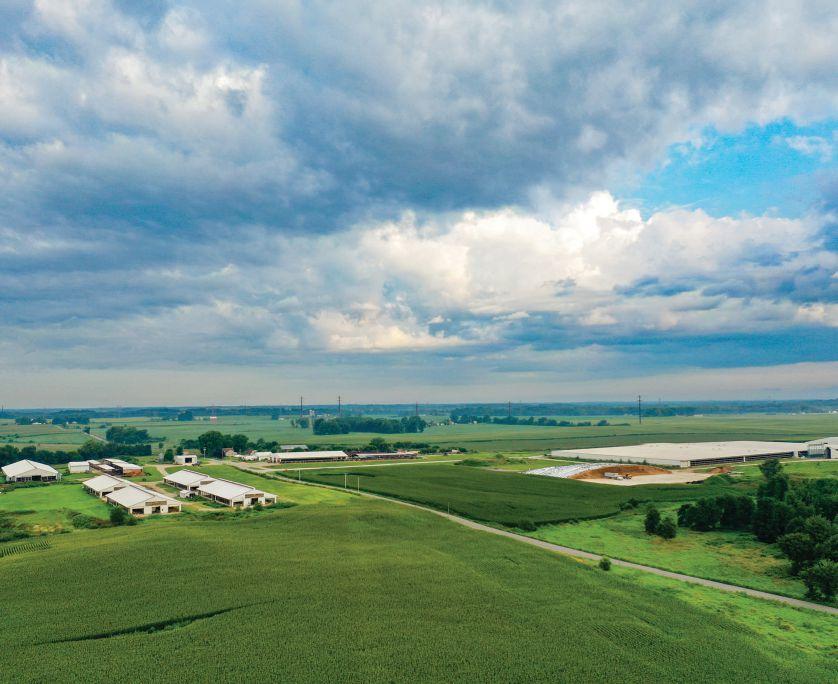
An aerial view of Homestead Dairy in Plymouth, IN.
around 5,000 cows,” says Houin.
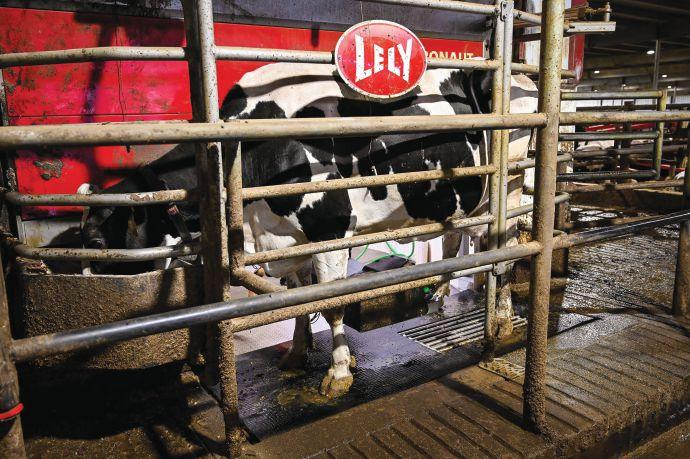
In 2013, the family installed a methane digester at their main facility. In 2015, they built three new technologically advanced calf barns. Just two years later, they installed 36 Lely Robotic Milkers at another of their facilities.
Each of these investments represents a huge amount of research, discussion, time and resources. They’ve paid off, says Houin, but only because the family has been willing to continually adapt and improve the way they do things.
“The way we managed cows 30 years ago is not how we manage cows today and it probably won’t be the way we manage cows 15 to 20 years from now,” says Houin. “Not all farms that have invested in technology have been successful. You have to be willing to learn from other people, from industry and from yourself.
“It’s not always perfect, and we’ve had hiccups along the way, but being able to diagnose problems and fix them has allowed these technologies to be successful.”
“You have to be willing to learn from other people, from industry and from yourself.”
THE DIGESTER DIFFERENCE
When the Houins decided to add the anaerobic digester to their main facility a decade ago, the equipment was still very new to the dairy community.
“It was difficult for the bank to be comfortable with it at first, and then it was difficult to get it insured. Insurance companies didn’t know anything about it and being that methane gas is flammable, we were paying premiums,” says Houin.
The Houins received a government grant to help build the digester, which helped, he adds.
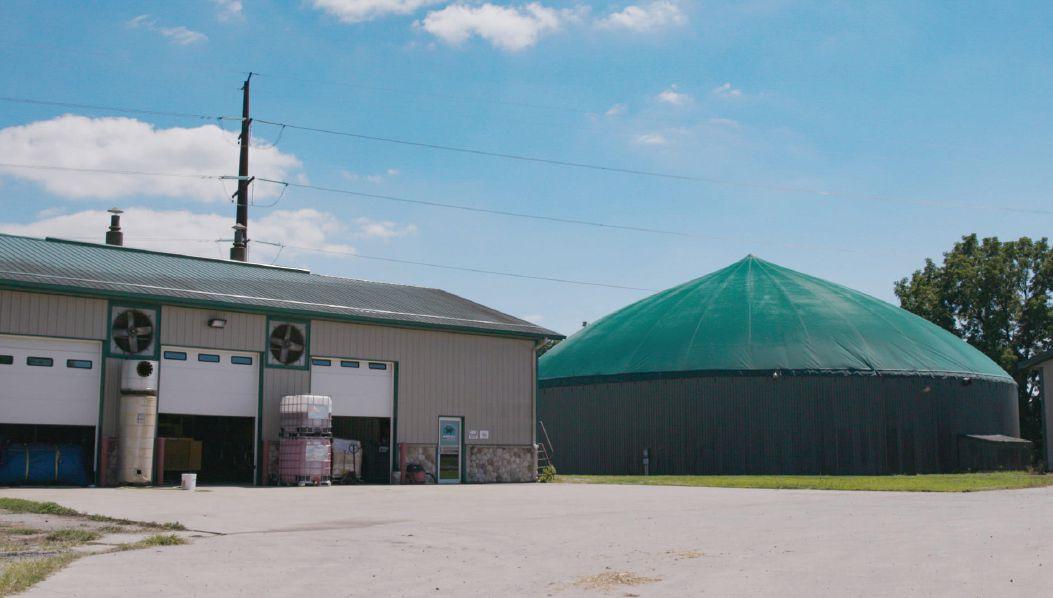
The digester processes liquid slurry, which is housed in two tanks covered with a fabric roof, Houin explains. The liquid is maintained at about 105 degrees and bacteria breaks down the manure. Homestead Dairy also receives cafeteria food waste from nearby Notre Dame University, which is processed along with the manure. Methane gas collected from the
tanks runs generators that supply electricity to the local grid, powering around 100 homes.
Manure that comes from the digester is then recycled into the farm’s cropping operation; after processing the nutrients are sufficiently broken down to be much more plant-available, he explains. “So we can reduce again the amount of nutrients we’re applying to the ground.”
Houin’s cousin Matt Houin manages the cropping operation – 5,000 acres of corn, soybeans and seed corn. The Hou-
ins use variable rate technology and soil testing to ensure they don’t apply excess nutrients.
They hope to eventually add a second digester, he says.
INVESTING IN THE FUTURE
Not all of Homestead Dairy’s equipment investments over the years have been made strictly by choice.
One example is the auto-feeding calf barns. Houin says in 2012, Indiana passed regulation that changed how the state
legally views calves: prior to this, each calf technically counted as a third of an animal due to its size. A cow-calf unit, for example, would be considered 1.3 animals in terms of its resource consumption.
Since the law changed, animals are considered complete “units” regardless of size. As a result of the change, hutch water management either had to shift, allowing for collection of rainwater around hutches to meet requirements, or calves had to be housed in barns.
The Houins opted to build group housing for their calves – two new barns with auto-feeding and calf-monitoring equipment. Initially, the idea of group housing worried Houin. Prevailing wisdom at the time suggested that calves could build better immunity by being housed individually. That was Houin’s view, too. Herd health had always been a strong emphasis at Homestead Dairy: Houin has run benchmarks on herd health for 17 years.
But after a lot of research, Houin de-
cided to go for it. “We toured a few farms that had [built group housing], talked with experts in the industry and ventilation experts, and tried to get the right design to ensure we were successful,” he says.
“I was amazed – the calf growth and health has been a lot better in a group setting. It’s easier on employees because they’re in a barn. And tour groups absolutely love it – they can go into the pen and play with the calves and have a more intimate time with the calves compared to when they’re in hutches.”
Over four years, the Houins built a total of four calf barns. Each is equipped with auto-feeders that read individual
calves’ RFID tags to customize intake based on individual animals’ dietary needs. The calves are growing faster and stronger in community housing, says Houin.
There’s no perfect system for deciding which investments are going to be profitable in the long run. All the research in the world can’t solve that question. Houin says the farm keeps a running wish list of three or four investments they’d like to make in the future. “We have only so much funds to spend, [so] you try to pick to see which is going to have the biggest impact on the operation and the business,” he says.
It’s not always a matter of short-term
ABOVE Methane gas collected from the digester’s tanks runs generators that supply electricity to the local grid, powering around 100 homes.
RIGHT One of Homestead Dairy’s facilities houses 36 Lely Robotic Milkers.
payback. For example, Houin says there’s interest from multiple companies in installing solar panels on the farm’s land. But these contracts are active for decades, meaning “you’re making decisions that will last for multiple generations.”
“It is very difficult to think ahead and try to figure out the pros and cons and what’s the best decision for our family,”
Houin says. “[About] seven years ago, we did a strategic plan and that helped guide us a little bit, and now we sit down and hash it out and try to come up with a consensus on what to do.”
Sometimes, Houin says, it can be valuable to keep an eye on what the neighbors are doing. An example is technologies that will help farms shift to carbon neutrality. Houin doesn’t believe the technology is ready yet. But the market will demand it in time.
“I know of some farms that like being the first on those things, so I’ll keep my eyes and ears open, and when they get it to where it’s working, that will be the time we look at investing in those things as well,” he says. It’s a learning process, like everything else at Homestead Dairy. Continual education is a guiding value in every single area of the farm life. The Houins wouldn’t have it any other way. •
ABOVE
Houin says calf growth and health has improved in a group setting
It’s no drag
Drag hose systems have real benefits, but they’re not right for every area.
BY JACK KAZMIERSKI
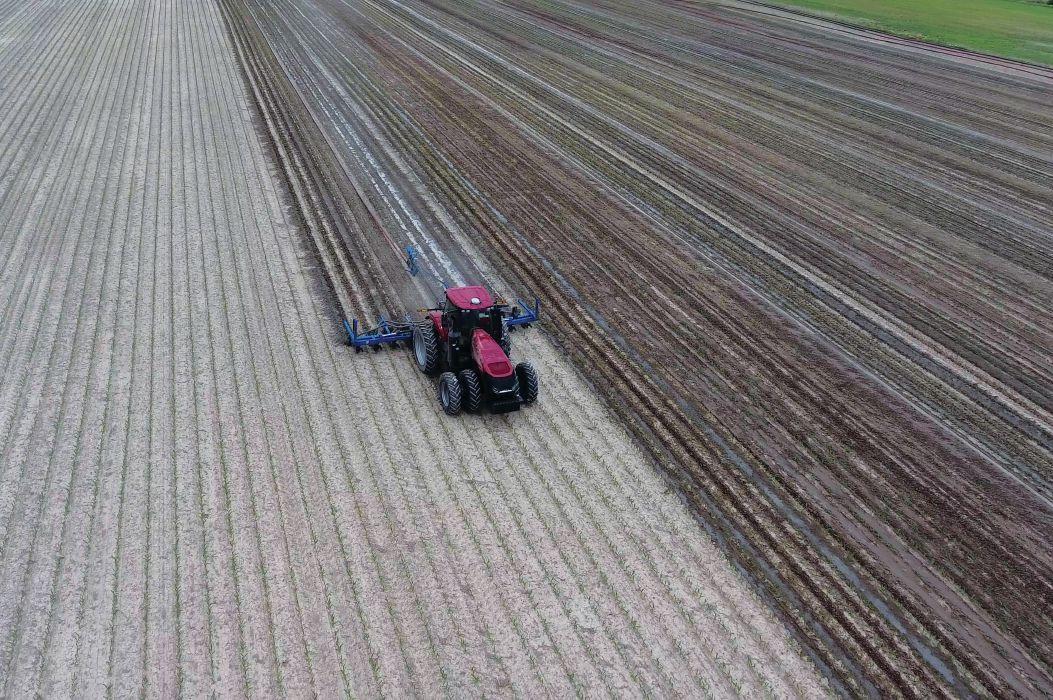
Many custom applicators – particularly in the Midwest – know the benefits of drag-hose systems. Drag hoses allow an applicator to apply a large volume of manure and have potential payoff in terms of yield. Glen Arnold, field specialist, manure nutrient systems, and professor with Ohio State University Extension, says these systems are most popular in the Midwest “because our ground is favorable to that. Drag hoses do not like rocks, so if you’re in eastern Ohio or Pennsylvania, where they have a lot of rocks in the soil, you can rip the drag hoses when you drag them across the ground.”
But despite the niche popularity of drag hoses, which rose to prominence in the Midwest in the 1990s, not all growers know the benefits of applying manure via drag hose.
Arnold discusses the best ways to communicate the advantages of drag-hose systems, discusses some of the recent advancements in the field of drag hoses, shares why drag hoses don’t work in all areas and why some farmers might not want to do DIY drag-hose applications.
Manure Manager: What are the advantages of a drag-hose system versus a typical manure tanker application?
Glen Arnold: When you use a manure tanker, you typically load up a 5,000-gallon manure tanker, drive out to the field, apply that 5,000, then drive back to the source of the manure and reload that. So depending on the distance you had to travel, you would get perhaps two or three loads of manure done in an hour.
So if you got three done, you’d be moving 15,000 gallons of manure in an hour.
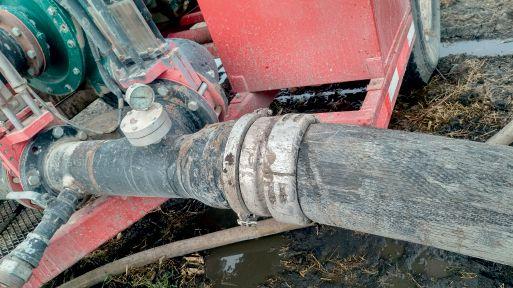
With a drag-hose system, when they first started, they were using a six-inch diameter mainline hose. Now, they’ve worked their way up to eightinch hoses, and now we’re even seeing some farmers or some livestock producers, and commercial manure applicators go to 10-inch mainline drag hoses. The bigger the diameter of the hose, the larger the volume of the manure. So we see a lot of drag-hose systems that commonly apply 2,000 to 3,000 gallons a minute.
PHOTO COURTESY OF GLEN ARNOLD.
MM: When would it not make sense to use a drag-hose system?
GA: If the property is too small, it would be a waste of time to set up a drag hose because it usually takes a drag-hose operator more than a couple of hours to set up the hoses and the pumps. So if it’s a small field, and I’m saying a field under 20 acres or so, then they’ll spend more time in set-up and tear-down than they would the actual manure application.
MM: How does the stage of growth of a crop play into the decision to use a drag-hose system?
GA: Let’s look at corn as an example. We know corn wants nitrogen to grow, and with livestock manure, we can apply enough nitrogen for the corn to reach its potential. But with a drag-host system, we cannot go beyond the V4 stage of the corn crop. At stage [V5], our research shows that you lose a lot of yield from your corn when that drag hose begins to snap it off. It’s okay to flatten the corn with the drag hose, but you don’t want it to snap off. So V4 is the upward limit of where we feel comfortable using a drag hose in a corn field.
MM: Can this be done with a DIY approach?
GA: Most people hire a professional applicator to work with them. To buy a drag hose and to get established with the pump, the hoses and the equipment, you would probably be easily looking at probably a $150,000 investment. A smaller grower would probably be better off simply modifying their manure tanker and side-dressing their corn or top-dressing their wheat using their manure tanker. We have a lot of farmers who do that, but soil compaction is always a concern when you put a heavy manure tanker out on fields.
MM: What are the advantages of hiring a professional?
GA: Almost every commercial manure applicator has a story about the first time they went out and used their equipment and how something went wrong. If you make a mistake with those manure hoses, you end up with a bunch of what they call “Tootsie Rolls.” A Tootsie Roll has a twist on each end to keep it tight, and you can do the same thing with those manure hoses when you’re dragging them, if they’re not full of manure. You can get them twisted, and they’re a pain to get untwisted because they’re very heavy. Also, if you kink your hose by not making the proper turns, the manure hoses can burst.
MM: What are the benefits of using a drag-hose system?
GA: If we look at corn as an example, the number-one benefit is that you’re usually going to get about 10 more bushels of corn per acre using livestock manure as your nitrogen source, as compared to commercial fertilizer. Second, it’s an in-season application, so you’re going to put your nutrients on the field when there’s a growing crop that wants to use them. Then, I think the other advantage is reduced chance of soil compaction.
MM: How should growers calculate the cost/benefit ratio?
GA: You always need to start with the nutrient content of your manure. If it’s really low in nutrients, then it probably would make more sense to try to irrigate that on a growing crop, or surface-apply it when a crop is newly-planted. And don’t think that it’s going to replace your purchased side-dressed nitrogen that you would have bought. If it has sufficient nutrients, especially hog manure, which seems to be a lot higher in nitrogen
than dairy, then you know what your fertilizer costs are per acre, and you know what you’re going to pay anyway to have that manure applied each year. For example, the price of nitrogen has almost tripled in the past four years, so the cost of growing crops has gone up quite a bit. So, when you look at at the nutrients you already have in your manure pit versus buying it, you have to just push the pencil and see what the numbers look like.
MM: What can growers do in order to potentially lower their costs when hiring a professional with a drag-hose system?
GA: In our area, the cost of having manure applied with a drag hose is about a penny per gallon, or maybe a little higher if it has to be hauled from further away. So if we wanted to put 7,000 gallons per acre, then that’s roughly $70 an acre. If you would have purchased nitrogen, then that would have cost you probably $175. That means you can have your manure put on there for less than half the cost of actually buying that same nitrogen. If your commercial applicator says he wants two cents a gallon, I think there’s certainly room for negotiation. The farmer can help a bit by planting the field to make it work out best for the applicator. We have farmers who know they want pig manure on a particular field, so they will plant that field at a 45 degree angle, because the applicator will lay his or her hose diagonally across that field. In other words, they divide the field into two triangles, they put the manure on one half of the field, or one triangle. Then they’ll do a crossover, and they’ll put manure on the other other triangle. If the farmer wants to make life easy for the manure applicator, he can plant his field this way. •
U.K. UPDATE
Let’s take farmer mental health seriously
It may be somewhat of a taboo subject, but farmers need to open up more and discuss their feelings in order to boost their mental health –before it is too late. So say health professionals, rural support groups and farm family members across the world. But farmers, being stubborn, shy or even too macho, tend to lock their feelings away.
For many farmers worldwide, taking the opportunity to sit down and talk to their peers, family or help groups just might save their lives.
From the outside looking in, some farmers seem to appear calm and collected, but in reality they are battling their demons on their own.
The figures surrounding farmers’ poor mental health are quite concerning, and more work and support needs to be on offer to help them open up.
Recent research in the Republic of Ireland suggests almost a quarter of farmers there are at risk of suicide. In the U.K., 36 percent of farmers admit to being “possibly” or “probably” depressed. A total of 44 farm-related suicides were registered in England and Wales alone in 2020.
A recent study in England by the University of Exeter and The Farming Community Network reported farmers felt there was a huge lack of public appreciation for them and understanding of the work they do.
Many farmers interviewed felt undervalued,
and encourage them to open up more about their problems. These signs could include: a sudden change of work routine, lack of sleep or changing sleep patterns, behavioral changes such as being very quiet, avoiding people, forgetfulness or even things like the farmyard becoming very untidy. There are also some physical indicators, including stress, tension, a fast-beating heart, breathlessness or poor personal hygiene and presence.
THE SOCIAL FACTOR
Rebecca Wheeler, senior research fellow from the Centre for Rural Policy Research at the University of Exeter, said: “Cultural loneliness refers to feelings that arise from a sense of difference with others in the wider community, including feelings of being an outsider or being misunderstood by other cultural groups.
“It’s concerning to see that this type of loneliness repeatedly emerged in participants’ stories, with many farmers describing or alluding to a strong sense of disconnection with the wider public, and of feeling undervalued and misunderstood by government and society.”
It’s concerning that loneliness repeatedly emerged in stories.
identifying a feeling of “disconnect” between farmers and wider society, and a lack of understanding from the general public about farming and its unique pressures.
Loneliness was also found to be linked to mental health problems such as depression and anxiety. Other factors include commodity prices, weather, paperwork, livestock disease and animal welfare. Some farmers interviewed said they had been subject to abuse by members of the public while carrying out their daily work, especially when using tractors on the roads.
RECOGNIZE THE SIGNS
Family members and friends can look out for the signs of a farmer suffering from poor mental health
Jude McCann, CEO of The Farming Community Network, said: “Sadly, many people, particularly in urban environments, have very little exposure to farming, and as a result often a limited understanding of the challenges involved and the hard work and long hours that are required to ensure food is produced for the country and to a high standard. We hope that the findings of this study will help to encourage people to appreciate their local farmers more and to be more aware of what is involved in farming, helping to bridge the gap between farmer and non-farmer, and rural and urban environments.”
Some of the suggestions by the researchers to address these issues recommended the need to strengthen connections between farming and non-farming communities in order to avoid farmers feeling isolated from society.
This could be carried out by enhancing opportunities for community engagement with agriculture, improving public dialogue in relation to food and farming, and by promoting local food networks that facilitate more direct relationships between producers and consumers. •
LET’S GET DIGITAL
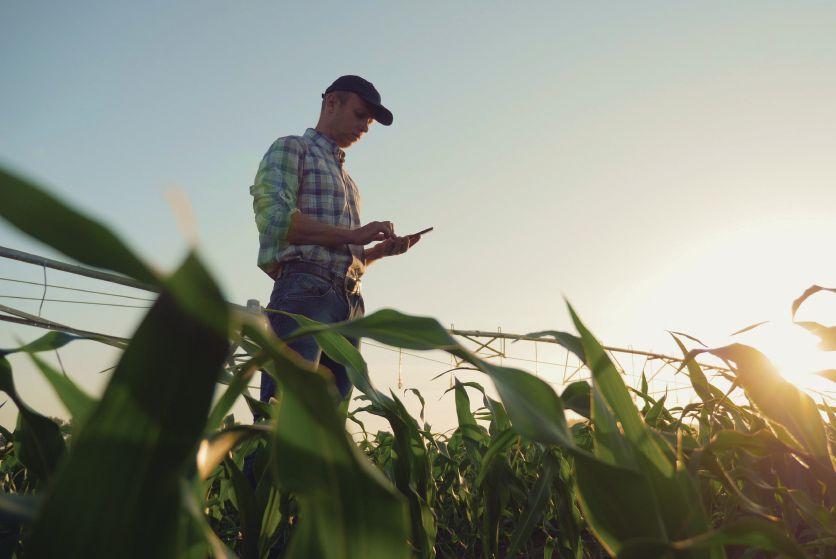
Whether you’re a grower who applies manure to your crops yourself, or you’re a custom applicator for hire, knowing the right amounts, timing and storage solutions can mean all the difference in the world, from higher yields to increased quality. For that reason, growers and applicators are always looking to maximize their nutrients.
Maximizing nutrient use through digital tools.
BY RICHARD KAMCHEN
The Ontario Ministry of Agriculture, Food and Rural Affairs (OMAFRA) has spent the last several years upping its game to bolster its suite of digital tools. It now offers producers and consultants “AgriSuite,” a host of free, voluntary web-based support tools developed by the provincial department – with components that expand beyond the borders of the province.
“The tools are meant to help with nutrient management decision-making,” explains Christine Brown, OMAFRA field crops sustainability specialist. “They allow users to get an idea of nutrient efficiencies and environmental losses. It lets them try different management practices at the click of a button.”
AgriSuite also assists farmers in
fully crediting the nutrients they get from manure and where to best target their nutrient dollars.
“It’s fine-tuning the efficiency of the nutrients because it looks at what the balance is over the rotation, and looking at what the approximate nutrients are that you’re getting from manure,” says Brown.
ORGANIC AMENDMENT TOOL
“It’s basically a manure calculator,” says Brown. This tool helps determine nutrients supplied from manure inputs by calculating the amount of available nitrogen, phosphorus and potassium (N-P-K) and micronutrients supplied from a manure analysis. This could be provided by the farmer or from a database of samples.
The database is extensive: pig and dairy manure each have more than 2,200 samples to choose from. It can also be fine-tuned.
“If you’ve got sows, you would have a much more watery manure –less dry matter – than if you’ve got finisher manure. So they can choose those dry matter levels,” says Brown. “Eventually, we’re going to have an
option where people can pick finishers or sows or farrow-to-finish. That’s coming in an upcoming release.”
Growers can also choose application timing – spring, fall or late fall — and incorporation details, such as if the manure’s injected, incorporated same-day, after two days or not at all. They can also specify if it’s applied to a growing crop or residue.
Also included in the calculation is the manure application rate. This is interchangeable for metric, imperial, or U.S. units.
The results provide projected available nutrients and an estimated economic value (N-P-K equivalent after application).
“This helps people put a value to manure, that it’s not just a waste product,” says Brown. “This hopefully helps put the manure in the fields where those nutrients are needed the most.”
This tool isn’t limited to Ontario and can be applied in any region, she adds.
CROP NUTRIENT AND FERTILIZER CALCULATORS
AgriSuite’s crop nutrient support tool provides N-P-K recommendations based on soil test values, geographic location and
nitrogen credits from the previous crop, as well as estimated nutrient removal based on yield goals.
This helps growers determine the amount of nutrients they’ll need to maximize economic crop yields.
Meanwhile, AgriSuite’s fertilizer calculator helps ascertain total nutrients from applied commercial fertilizers, and the commercial fertilizer required, before or after manure nutrients are worked out. It’s intended to ensure crop needs have been met and prevent overapplication, while also providing a blend of commercial nutrients to meet crop needs not supplied by manure.
FIELD MANAGEMENT PLAN
“What we did is we provided these nutrient management tools so that they were standalone tools and could be combined into more comprehensive tools,” Brown says.
The AgriSuite field management plan layers a number of calculators, including the ones described above for manure, crop nutrients and fertilizer.
“It allows the user to input the full crop rotation, all the different timings within the rotation of where fertilizer or
organic amendments are applied, and then at the end of the day seeing whether they are in a rotation nutrient deficit or surplus, and how that impacts the soil fertility levels for that site or field,” explains Brown. “The layering in the field management plan lets the producer determine where they still need to add more fertilizer, or where they can potentially move manure to fields with higher fertilizer needs, or sell manure to a neighbour and make some additional profits.”
The field management plan will alert, or flag, users applying too much or too little fertilizer.
“If we apply more than 200 pounds of nitrogen and the crop doesn’t need that much, it will give you a red BMP flag, with a comment, ‘The total nitrogen applied exceeds 200 pounds per acre,’” says Brown.
The field management plan also provides a new, recently added tool that calculates average greenhouse gas emissions based on user-provided information.
MANURE STORAGE AND SIZING
This AgriSuite tool helps users plan and size the infrastructure they’ll need to store
all nutrient-rich materials generated on their operations.
“You can choose storage type and input what the dimensions are, and it will give the days of storage, total capacity, material capacity and rainfall capacity,” says Brown. “It shows approximately how much manure is produced by specific animal type and numbers, approximate dry matter of that manure, and also suggests nutrient units, and estimated livestock barn area that’s required.”
Not confined to Ontario’s borders, this
tool provides units in both cubic feet and gallons per day.
The tool can account for changing livestock numbers, and also offers the option of adding treatments like solid/ liquid separator, composting system, inbarn active composting, sand separator and anaerobic digesters.
GREENHOUSE GAS CALCULATOR
The greenhouse gas (GHG) decision support tool estimates greenhouse gas emissions from crop and livestock opera
tions, and allows users to test how different management practices could reduce emissions and sequester carbon.
“It can show differences being made with beneficial management practices like cover crops, rotations with forages or wheat, or no-till,” says Brown.
She stresses this is only meant to be an educational tool, and not to assist in receiving carbon credit dollars.
OMAFRA plans to eventually tie the calculator to the field management plan.
“We will have a button in the field management plan where we’re going to have a ‘Do you want to convert this to a greenhouse gas calculator?’ so that you don’t have to input all the data over again. We’re not quite there yet.”
“No two farms are identical. There are no conditions that are the same every year.”
LIMITATIONS
AgriSuite users are advised that the tools provided should be considered guidelines only. “No two farms are identical,” says Brown. “There are no soil or weather conditions that are going to be the same at every location, every year. All of those impact crop nutrient uptake and losses, so the tool’s never going to be 100 percent accurate.”
The new GHG calculator should be seen in the same light. Updates happen quickly as new research becomes available. Its purpose is to demonstrate to users where carbon dioxide, methane and nitrous oxide losses occur, and how different management practices compare in their impact on greenhouse gas emissions.
NEW LOOK
Originally aimed at consultants undertaking nutrient management plans for farms, AgriSuite has been re-done and re-located to a new platform. The new version is accessible via smartphone, tablet and PC.
Currently, no offline options are available, but OMAFRA is considering future opportunities there.
Users needn’t create an account to access most of the tools, but can’t save or access previous work without one. •
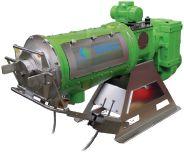
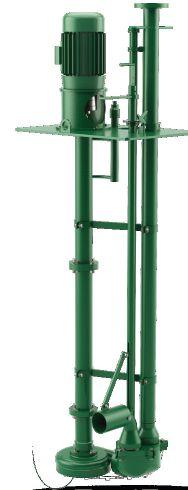
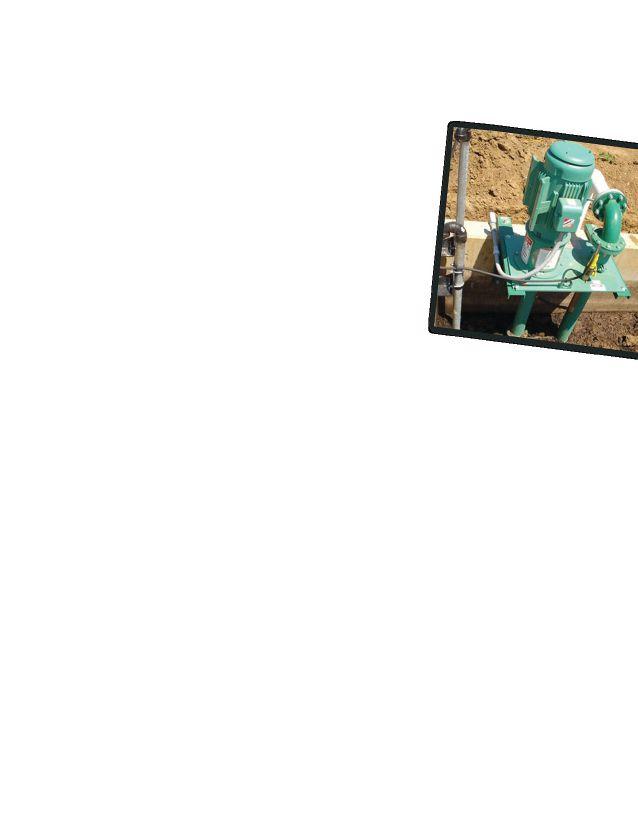
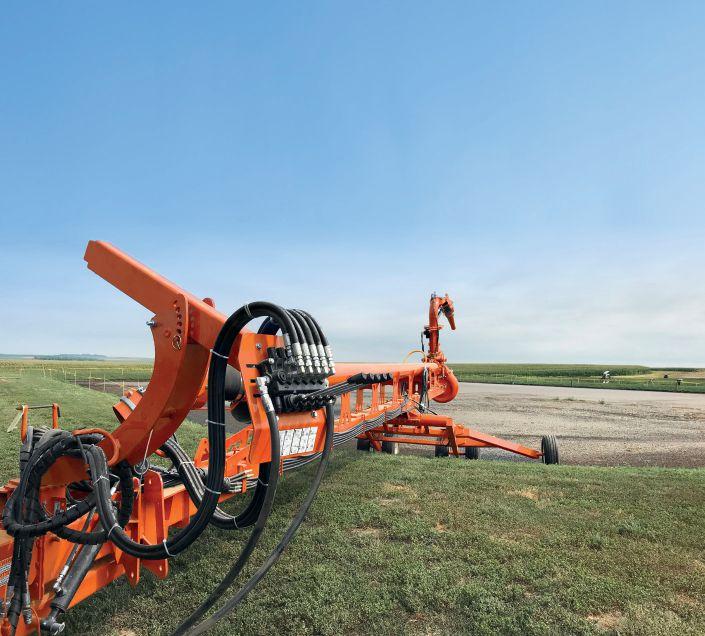
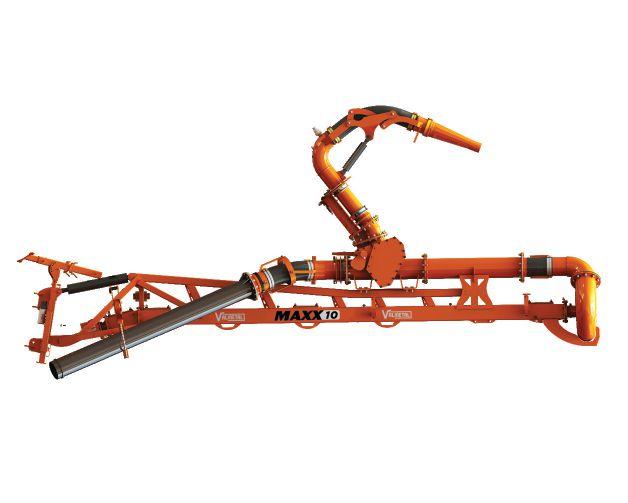
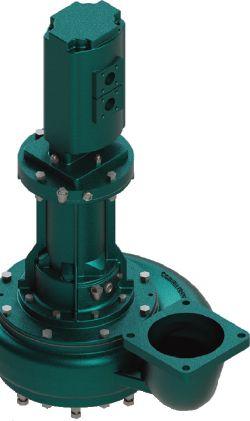
8” and 10” discharge sizes
Hydraulically-driven
Operated in lagoon or pit
Fits in tight spaces
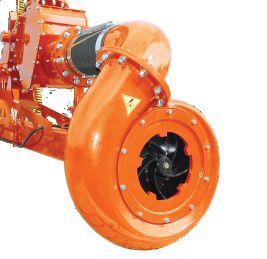
Semi-open style impeller
Cutter plate rips up straw and other stringy material
Pump resists plugging
MANURE MINUTE
CHRYSEID MODDERMAN | University of Minnesota Extension
Manure application with high phosphorus soil
ABOVE
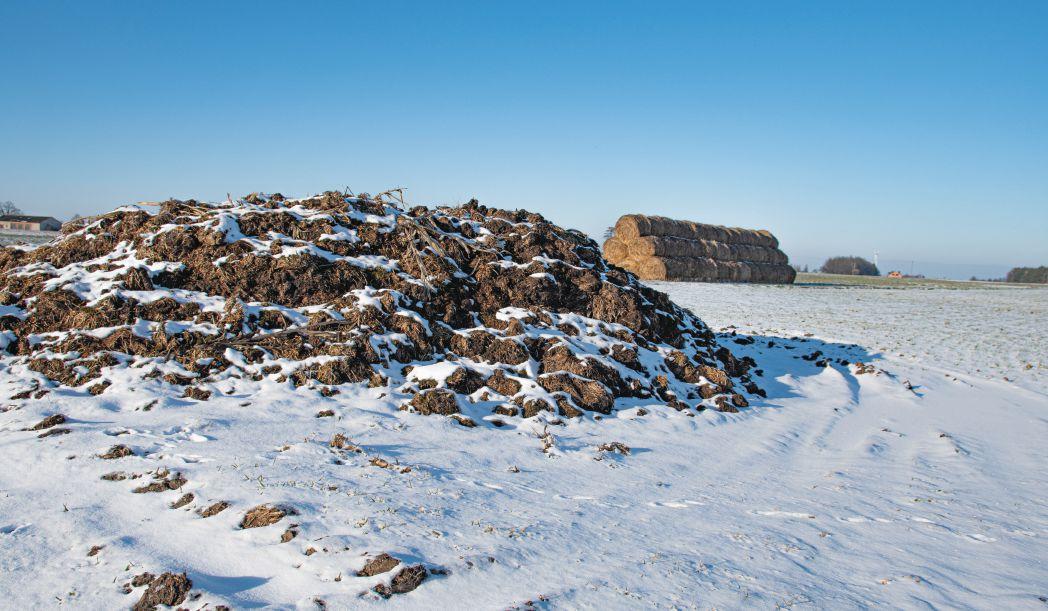
Solid manure prepared for application on farmland.
Phosphorus is an essential macronutrient for most crops, so it’s needed in the soil. But you know what they say about too much of a good thing. Soils with high phosphorus levels can lead to runoff, putting the environment (especially waterways) at risk. Many areas have regulations requiring a plan to reduce high soil-phosphorus levels over time. From a general nutrient management standpoint, we recommend refraining from applying phosphorus to the soil until the high levels have drawn down to a more moderate level. With commercial fertilizer, this is easy: simply don’t apply a phosphorus fertilizer. If manure is your most common nutrient source, this is trickier. The nutrient ratio of manure is fixed, so we can adjust the application rate up and down, but the overall ratio of nitrogen to phosphorus (and all other nutrients) will remain the same. As if that weren’t challenge enough, manure also tends to overapply phosphorus for most crops when applied at a nitrogen-based rate. Below are some ways to manage high phosphorus soils while using manure.
• Refrain from manure application on high phosphorus areas. The best way to lower phosphorus levels is to avoid applying that nutrient for a few years. This may not be possible for those with large amounts of manure and few spreadable acres.
• Acquire more land. Increasing manure-spreadable land base (while maintaining the same amount of manure) will allow more flexibility with application so high phosphorus fields can be skipped. Though this might not be financially feasible for many, it’s worth considering as a long-term goal for farms that have many high-phosphorus fields.
• Sell manure. For many livestock owners, this is a more realistic, short-term solution to increasing their land base compared to buying more land. Some would argue it’s a bit illogical to sell manure, a good nutrient source packed with macro- and micronutrients along with soil health benefits, just to buy commercial fertilizer for their high-phosphorus fields. Counterintuitive? Yes, but also an effective way to avoid phosphorus application.
• Apply manure at a phosphorus-based rate. Look up the phosphorus removal rate of the intended crop, and then calculate manure application rate to meet those phosphorus needs. This allows some manure to be applied while ensuring phosphorus levels are not built to even higher levels. However, soil phosphorus will not be reduced, only maintained, so this method is best for those who have limited land and need to apply some manure to each field. Also note that manure application based on crop phosphorus needs often underapplies nitrogen, which may mean adding a commercial nitrogen fertilizer.
• Plant crops with high phosphorus uptake. This will accelerate phosphorus draw-down and allow a higher application rate when using a phosphorus-based rate. •