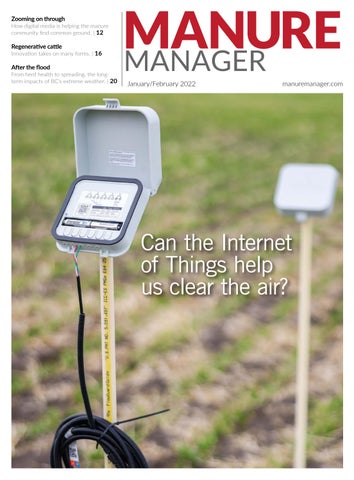
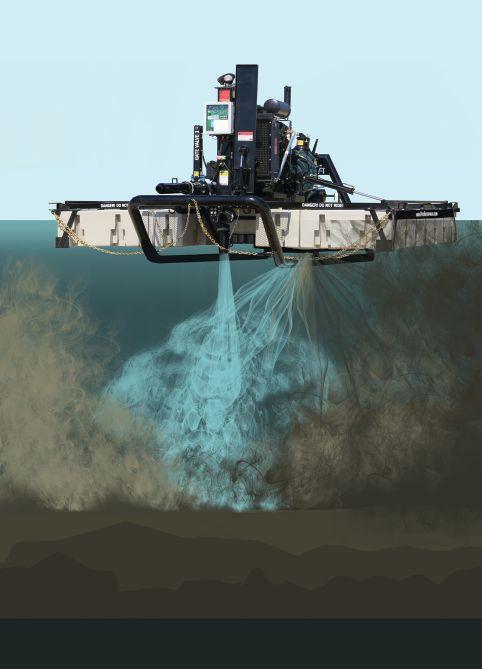
In this issue we explore how producers and custom applicators are adapting to new technology, new ideas and “new normals.” 12
Lessons learned from Zoom
Which
Diversity at every level
How a cattle farmer in Saskatchewn changed others’ perspectives – as well as his own.
BY BREE RODY
BY JULIENNE ISAACS
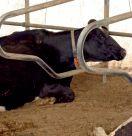
After the flood From herd health to overflowing manure storage, farmers in British Columbia work to pick up the pieces together.
BY BREE RODY
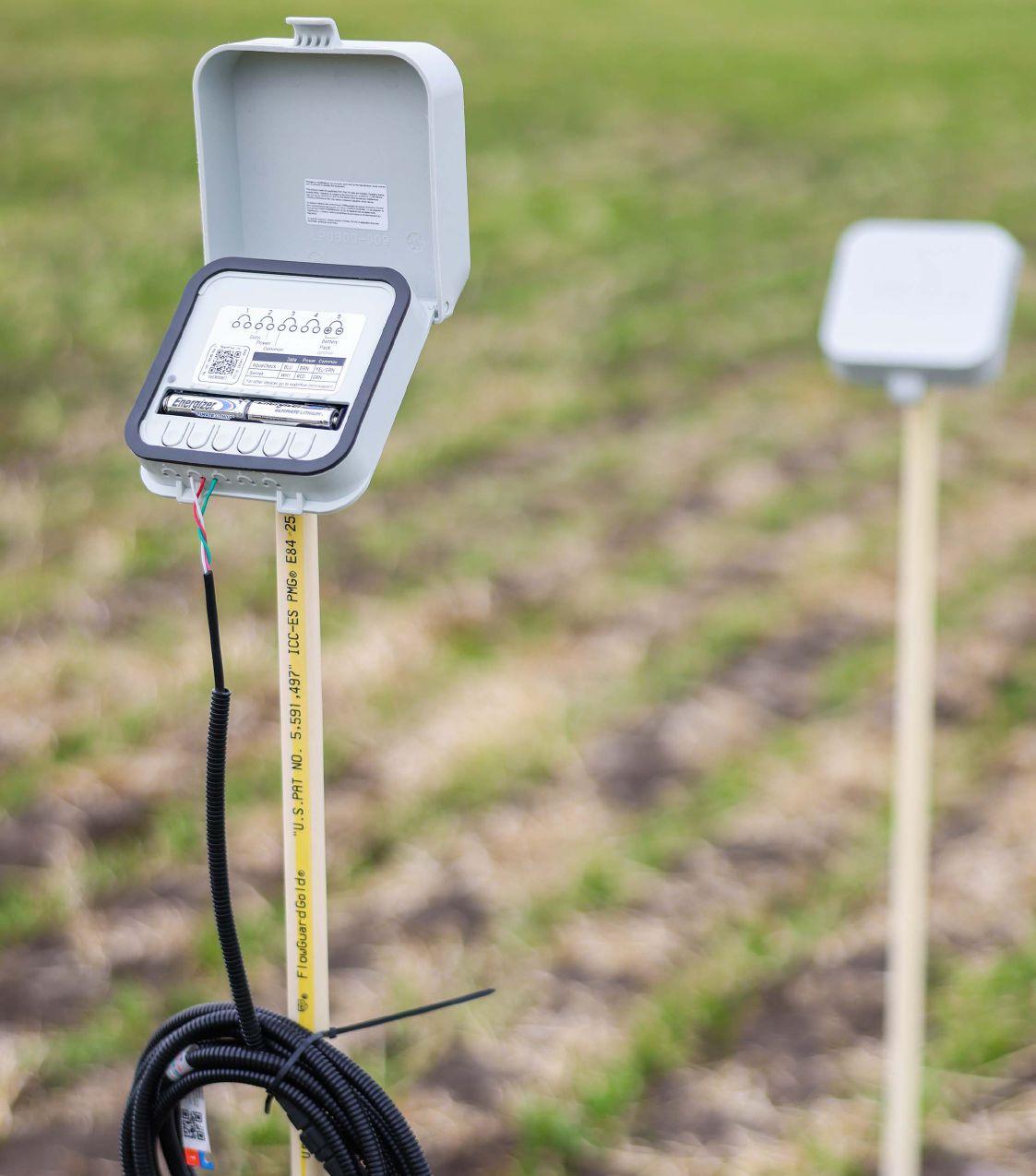
Soil sensors play a key role in precision agriculture. Photo courtesy of Olds College.
Innovation has the power to unify
I’ve found it difficult to write this issue’s editorial note for one key reason: it seems no two jurisdictions are experiencing the same conditions. With the latest wave of COVID, driven by the Omicron variant, the differences in terms of restrictions from state-tostate, province-to-province and even country-to-country means something as simple as having a meeting or taking a course doesn’t mean the same thing to any two readers. Some of you were able to attend expos and vote in AGMs this past month, and some had to do so virtually.
And sure, closures don’t limit your spreading or your on-farm operations much, but they can – and do – strain one’s ability to learn from and network with others in-person or delay things like maintenance calls. For producers, closures or restrictions on restaurants and retail also might mean that demand for your product goes down.
But we’re not at square one. In fact, the things we learned during the first year-and-a-half of closures and restrictions are still coming in handy.
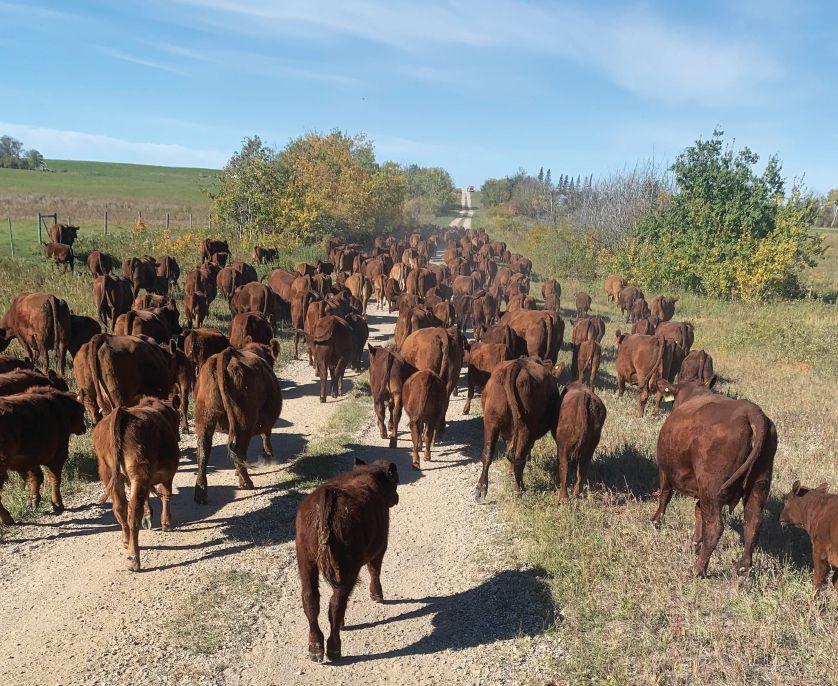
like cattle farmer Stuart Chutter (page 16) who focuses on running cows who are low-input, easy fleshing and have a high grass capacity, which makes sense from a production and manure management perspective. In this case, innovation comes from a holistic approach, understanding how the components of your farm can work together in the most efficient ways.
And sometimes, innovation simply comes down to making a quick decision and changing the rules in order to get the right thing done. Just look at the historic floods in British Columbia (page 20), where whole highways were closed for days and weeks at a time. In order to ensure herds could be well-fed, officials had to make executive decisions – and key exceptions – quickly to allow cargo trucks to cross the border and route through the United States in order to make sure the herds were fed on time.
When we say agriculture is becoming smarter, yes, we mean the machines are becoming smarter, but we also mean that the people
“The machines are becoming smarter, but so are the people.”
For example, webinars were not unheard of prior to 2020, but never before has the ease of a webinar been more clear. Through webinars, bicoastal meetings via webcam and digital peeks behind the curtain, we’ve become more collaborative and better innovators.
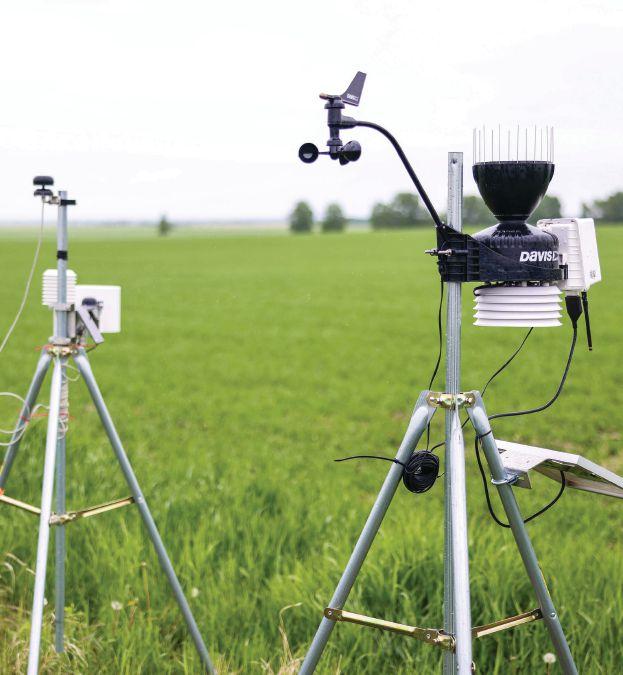
Of course, we tend to primarily associate innovation with technology – blinking lights and wireless machines, like the ones at Olds College’s SmartFarm (page 8).
But there’s also innovative ideas,
are becoming smarter. We are more well-informed on safety, on nutrition, on climate change and more. We can adapt (and have adapted) to changing circumstances at a moment’s notice.
Whether you’re an American or Canadian farmer (or U.K.-based –don’t forget to check out our U.K. update on page 14), whether you do liquid or solid spreading, whether you artificially drain your land or not, we’re all far more united than we used to be. •
Do you know an influential and innovative woman involved in Canadian
We’re looking for six women making a difference in Canadian agriculture. Whether actively farming, providing agronomy or animal health services, or leading research, marketing or sales teams, we want to honour women who are driving Canada’s agriculture industry.
Gold Sponsors: Platinum Sponsor:
UGA breaks ground on Poultry Science Complex
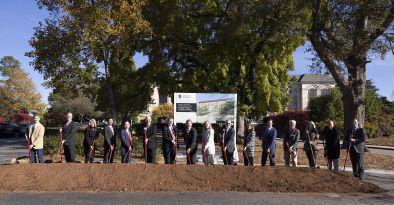
The University of Georgia broke ground this winter on its new Poultry Science Complex in Athens. The complex is intended to be more technologically advanced and to increase capacity for instruction, research and collaboration. Construction will begin this coming spring, and completion is set for fall 2023. The project has garnered widespread support including $1 million from the R. Harold and Patsy Harrison Foundation as well as the Georgia State government. The value of the project is estimated at $54.1 million. With its most recent donation, the facility will measure more than 70,000 square feet
including instructional and lab space and student facilities.
AFRICAN SWINE FEVER DETECTED IN ITALY; ONTARIO GOVERNMENT ADDS SUPPORT
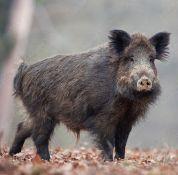
The regional government of Piedmont, Italy has confirmed that African swine fever, a deadly virus that has destroyed significant portions of hog herds in the last several years, was found in a wild boar in the region. Tests confirmed the virus in a dead boar in Ovada, southwest of Milan. Although the virus is not novel and is harmless to humans, its physical and economic harm on the hog sector has been significant. China
Iowa
and other key buyers banned imports of pork from Germany in late 2020 after cases were confirmed among wild animals in the country. It has also been detected in Asia in 2018 and in Haiti and the Dominican Republic last year. In response to the discovery, the government said it is enhancing surveillance of wild boars and increasing cleaning measures. Following increased concern about African Swine Fever, the Ontario Ministry of Agri-
culture, Food and Rural Affairs (OMAFRA) has outlined the Enhanced Biosecurity for African Swine Fever Preparedness Initiative under the Canadian Agricultural Partnership. The plan is to reduce the likelihood of the introduction of ASF into Ontario. The initiative targets mainly producers and processors as well as others in the agri-business sector along the pork value chain. Those applying for the program benefits must be an active
participant in Ontario’s pork value chain and meet several other requirements outlined on the OMAFRA website. The program has made available a cost-share of up to 50 per cent of verified eligible expansions incurred and paid up to $40,000. Expenses must be incurred between Oct. 19 2021 and March 21, 2022. These expenses include labor costs, rental facilities, education, training, assessment and planning and others.
Since Iowa governor Kim Reynolds signed a bill in June allowing animal feeding operations in the state to exceed confinement capacity if the farm installed an anaerobic digester, at least nine new digester permits were issued in the state, with seven more planning expansion, according to the Iowa Department of Natural Resources. Companies that
have built or are planning digesters include Black Soil Dairy, Marshall Ridge Farms, Van Ess Dairy, Kirkman Farms, Winding Meadows Dairy, Legacy Dairy, Meadowvale Dairy and Rock River JerseysInwood Dairy. The new law allows expansion beyond 8,500 animal units with no specified upper limit, if all manure is digested.
SPREADING for the future
Like other sectors, agriculture continues to benefit from new technology advancements and tools for nutrient management, cropping systems and best practices. Combining good management with precision agriculture and fit for purpose technology tools can help improve nutrient use efficiency, profitability and environmental sustainability on the farm.
to manage the variability of yield and nutrient requirements in a field is an example of precision agriculture technology. Digital agriculture, another term implemented about eight years ago, is much broader and applies to using any digital technology for collecting and analyzing agriculture data for making farm decisions.”
Newer advanced technology can improve efficiency and environmental sustainability.
BY DONNA FLEURY
“Understanding the terminology and the range of technology and tools is an important place to start,” explains Alex Melnitchouck, CTO-digital ag at Olds College in Olds, Alta. “Precision agriculture is a farming practice developed more than 20 years ago that uses geographical information systems or GPS, navigation and prescription mapping tools and other technologies to manage field variability. Applying variable rate technology (VRT)
ABOVE
Internet of Things, or IoT, refers to various devices connected to one Internet or communications network to solve different problems on the farm or manage better decisions.
“Those devices connected to the internet can be almost anything, field sensors, sensors on implements, computers on field equipment, web data sources or other digital tools,” says Melnitchouck. “These various ‘things’ are connected into one integrated network where information can be
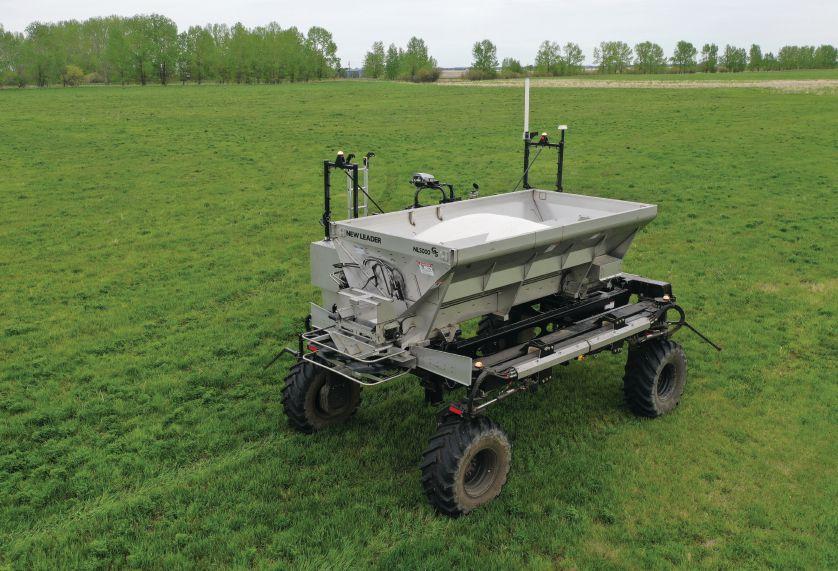
OMNiPOWER, the autonomous platform, performing a mission of applying granular fertilizer to a Smart Farm field.
quickly transferred from one part of the network to another and back and forth, and results in more efficient agricultural operations. An additional term is ‘smart agriculture,’ which is broader than digital agriculture, and includes any kind of innovation and technologies that go beyond digitalization, such as biotechnology, advanced crop protection tools, genomics and new food innovations.”
Although all of these new tools and technologies offer opportunities for agriculture operations, there remain some challenges. One of the biggest challenges for farmers and custom applicators in some rural areas is access to reliable cellular phone service and internet connections to be able to fully utilize many of these tools. Instead of being able to utilize tools in real time in the field, such as nutrient or fertilizer prescriptions, some farmers have to save the files to a memory card and then upload it to the tractor to see if it works. Melnitchouck remembers in the past when trying to share documents with colleagues it meant mailing floppy disks back and forth or using slow dialup internet, where today using tools such as Google Docs means documents can be shared, edited and discussed in real time from anywhere in the world.
“Farmers will be able to use real-time tools and send results back to equipment on the go.”
“Not having reliable connectivity is inconvenient and time-consuming, and better Internet and networking capabilities will be a big boost for rural agriculture operations,” says Melnitchouck. “For sectors such as banking, entertainment and others, better networking and software development have opened huge opportunities for collaboration on connecting computers for transferring large amounts of data for these digital operations. For agriculture it is a bit tricky because without reliable Internet coverage in rural areas, technology and software developers are reluctant to invest in developing products and tools unless they can be used. This is beginning to change and hopefully in the near future all areas will have networking capability and multiple options to match their needs.
Then the field display on the tractor will become similar to Google Docs with the capability of connecting and implementing all of the different products. Farmers will be able to use real time tools such as sensors and servers that can get results from the field, such as soil nutrient or moisture analysis, weed or disease detection and send the processed results back to the field equipment on the go.”
These new products and technology open exciting opportunities, however, there are fundamentals that must be
addressed first. Agronomic decisions for precision agriculture or various digital tools require detailed and credible agronomic information from the outset. This may be field mapping based on yield potential or soil organic matter, soil test results, manure analysis, nutrient requirements and historical information. Once the various layers of information are developed, then precision agriculture and digital tools can be implemented. A second consideration is the hardware and engineering requirements to be able to
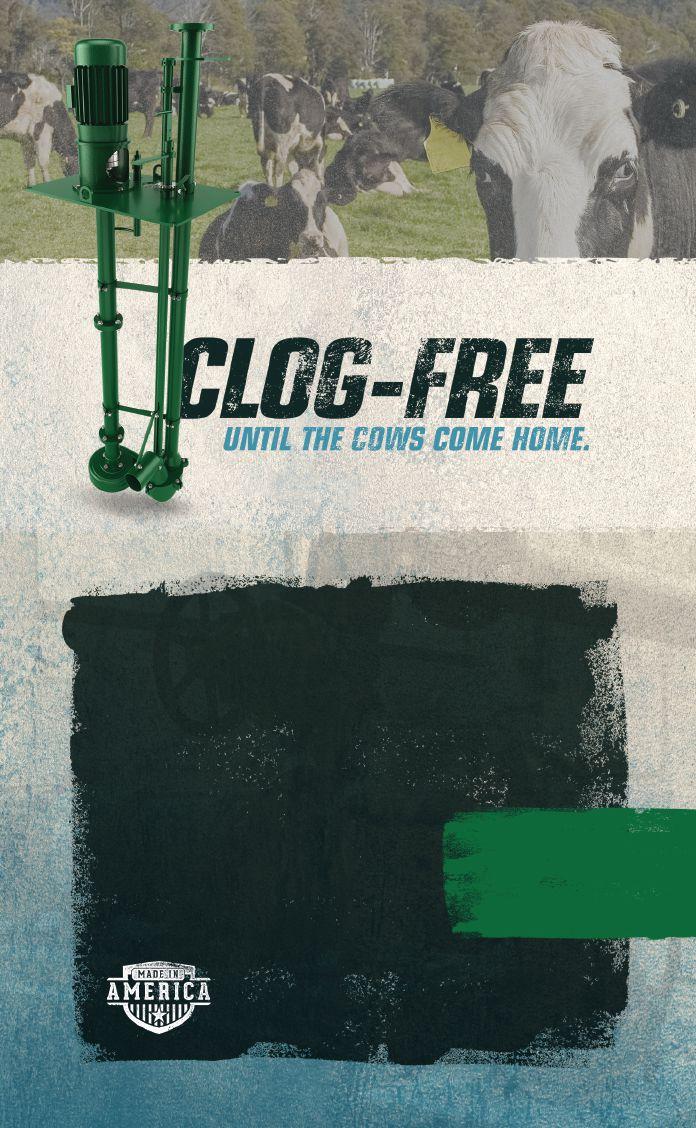
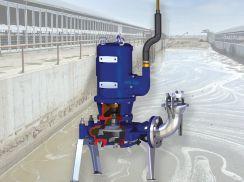
When the going gets tough, turn to the toughest pump on the planet. Since 1960, the unrivaled Vaughan Chopper Pump has been on the cutting edge. This original chopper pump was built first and made to last.
Choose the unmatched reliability of Vaughan. Ask about our free trial program and on-site demos.
• Barn Flush Pit
• Separator Feed
• Lagoons
• Digester Mixing
• Scraped Manure
• and More!
utilize the data or information.
Melnitchouck emphasizes that good quality agronomic information and the science behind it is critical to making good decisions. “If you have good information and data going in, you will have good results coming out. However, as one of our industry experts Rob Saik points out, ‘poor agronomy plus precision agriculture means poor agronomy applied precisely’. So no matter what kind of digital technology or equipment you have, if there is not good agronomy or crop and livestock science behind it, then you won’t get the results expected. For example, to make a proper nutrient, manure or fertilizer rate recommendation, it is necessary to know the level of nutrients available in the soil and what the plants will be able to take up. The technology and hardware components should also be able to ensure very accurate application and rate changes of nutrients everywhere you want across the field.”
As with any new investment, it is important to do some background research, talk to industry experts and pencil out the math to see if a new digital technology or product is going to work for you.
Although new technology may improve efficiency or make some operations easier, there may not be the return on investment (ROI) expected. “Let’s say on average a western Canadian farmer makes $200 per acre, then a new technology solution will need to deliver three times or five times to the grower,” he explains.
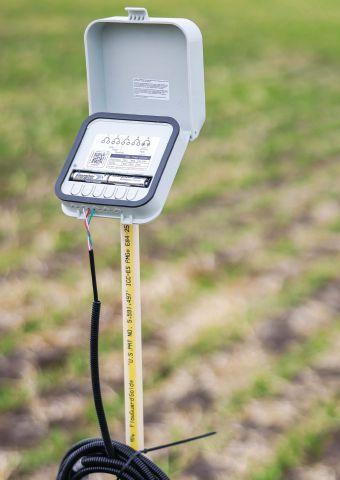
ABOVE
Soil sensor installed on the Olds College Smart Farm.
“Therefore if somebody sells you something that costs $30/acre, then you will need to make at least $90 or $100 per acre using that technology for a good ROI. Make sure to get all the information you can before investing in a new technology or product and make sure it will be reliable, deliver what is promised and is right for your farming system. You can’t digitize wheat or canola or livestock, you still need boots on the ground and work with unpredictable mother nature in our farming systems.”
“Most of the new technologies are environmentally friendly in many ways and bring several benefits,” adds Melnitchouck. “Autosteer navigation on a tractor or combine or other machines, first available about 20 years ago, automatically steers very accurately straight back and forth, which reduces overlaps or gaps between passes. For nutrient application, autosteer can reduce fuel use by five per cent and nutrient use by five
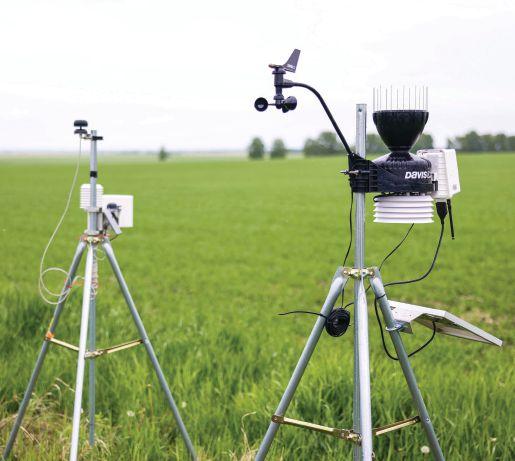
ABOVE
Weather sensors installed at Smart Farm.
per cent because of no overlaps. Without any regulations or new requirements, the new technology improves efficiency by five per cent and can contribute to greenhouse gas reductions and carbon credit management. Variable rate technology for nutrient application, whether that is organic fertilizer, manure or compost applications, can also increase nutrient efficiency by five or 10 per cent or even more by applying nutrients at the right rate, at the right time in the right way in combination with the right agronomy. And again without any regulation but just by using
newer advanced technology that makes a farming system more efficient and environmentally friendly.”
Over the next few years, Melnitchouck expects to see digitalization, automation and machine learning in ag evolve. Automation will make farming decisions more convenient and more efficient. At the Smart Farm, one priority is collecting a range of data for training and developing predictive algorithms. “We are collecting ‘Hyper Layer’ data from various fields including biophysical and physical characteristics of soils and plants, yield, imagery and many other data points. However, unlike in math or physics that work with exact numbers, in agriculture we have to work with probabilities. Once the right sources of data are collected and all of that information is managed properly, then the probability of success goes higher and higher. The purpose of the data collection is to be able to automate certain decision making procedures and certain algorithms to make farming decisions more efficient. Essentially everything that can be explained verbally can be automated.”
Olds College continues to focus on applied research and demonstration of many new digital and IoT technologies through their Smart Farm Program together with industry collaborators. It have also scaled programs and courses for students, with a new Ag Tech program and more than 35 new courses to help develop the skills and talent to commercialize and scale reliable new technologies. Farmers adopting newer advanced technology that are compatible with their operations for nutrient planning, monitoring and application, as well as many other cropping system practices can make their farming systems more efficient and environmentally friendly. •
Now with NO Grease Covering Arm Assembly
Now with NO ClozingGreaseArm Assembly
Q&A: Lessons learned via Zoom
How the virtual learning era is changing the game for research and collaboration in the manure industry.
BY BREE RODY
Almost two years ago, when the 2020 North American Manure Expo (NAME), scheduled to be hosted in Listowel, Ont., was postponed and then eventually moved to an online-only event, the team at the Ontario Ministry of Agriculture, Food and Rural Affairs (OMAFRA) had no idea what to expect. Could an online expo hold an audience?
Fast-forward to 2022, and the team is now producing a weekly webinar series, Manure Mondays. Some editions are encore presentations of NAME sessions on topics like compaction and drag hose systems, others are on new topics such as composting bedded pack barns and nutrient management tools.
OMAFRA is now facing a good problem – it’s had to increase registration capacity, because more than the original maximum of 300 viewers have signed up for sessions. And, according to OMAFRA, others from the U.S. and Europe have approached the ministry about adding to the Manure Mondays lineup – although environmental specialist Dave Bray says he’s not sure the ministry wants Mondays to “overstay [their] welcome.”
Now, Bray, environmental specialist Andrew Barrie and field crop sustainability specialist Christine (Chris) Brown reflect on some of the collaboration forged through NAME and Mondays, as well as issues that they didn’t realize were so universal across the North American manure industry.
This interview has been edited for clarity and length.
higher virtually than they ever were at an in-person event.
Christine Brown: And the opportunity to have speakers from the U.S. and Ontario gave people more interest in participating, but we didn’t have to pay for people to travel, no one had to get passports updated, and yet we got a perspective from a much wider geography.
Dave Bray: And you could come and go as you please, as well.
MM: When you’re virtual and you’re reaching a more borderless audience. Do you find that because you’re a provincial ministry, do you find that poses a challenge when you have to take other geographies into mind? How do you ensure content is always relevant?
Manure Manager: When you realized that Manure Expo would have to be virtual, obviously there was disappointment, but what was the hidden potential that was unlocked?
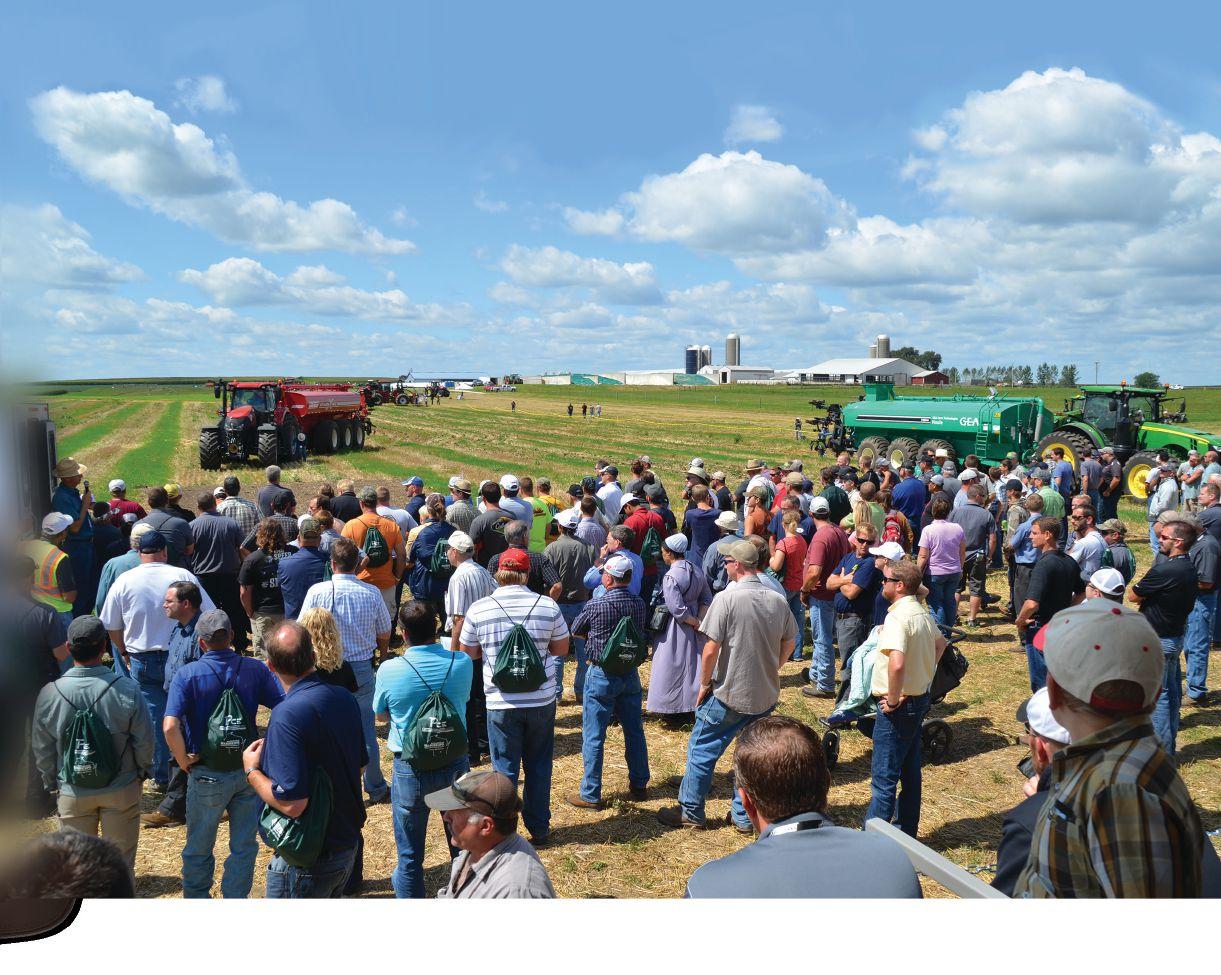
Andrew Barrie: When you normally think of [NAME] you think of it as a trade show. People go and network, kick tires, see some black smoke. In some ways, going virtual almost turned the event upside-down to turn it into an educational event that had some trade show components as well. Take tours, for example. On a tour day, you fill three buses, you have max 120 people. Now we can flow 300 people to a tour, coming and going as they want. On the sessions… our numbers were way
CB: One of the aims is to get people thinking a little bit beyond their own geography. I’m thinking of British Columbia. I’m sure anyone involved in the manure business, when they heard of the flooding in the Vancouver and Abbotsford area, thought, wow, if I had to manage that flooding and the issues that came with manure management, what would I do?
Or in the Minnesota, South Dakota area where they have drier winters, I think it’s important for Ontario farmers to know what they deal with. It opens up the opportunity to understand issues like environmental issues, and to learn about more solutions.
AB: The key is getting the right people in place. When you look at the range of speakers, they’re from academia, they’re farmers, they’re businesspeople. Putting those right people together, you have such a strong team that there’s less missed.
CB: And I have to give credit to Kevin Erb [University of Wisconsin Extension, Manure Expo board]. Because we have a connection now with the U.S. counterparts that do the same things as us, that gives us a lot of great access to the right people.
DB: Having that breath of fresh geographic perspective was helpful. There were people reaching out to after us saying, “Here’s a new technology, did you consider this?”
MM: What are some of your favorite collaborations that wouldn’t have happened without Zoom?
AB: The first that comes to mind is the compaction demonstration. What was really interesting and unexpected was the way it was picked up in the U.S. They really latched onto that and saw some really neat Ontario research that they weren’t aware of. [The team] was requested to present similar stuff to some folks in the U.S. It opened up a whole new world of connections into the U.S.
DB: Also, the aeration technology. It’s new to Ontario and the U.S. When we went to explore it, little did we know that there were other folks offering aeration for slightly different purposes. One of those companies was based in the U.S., and they invited us to their facilities in Ontario. It opened up exchanges of ideas and knowledge.
AB: One of the videos you can see on the site is Dave, where he’s got the “sludge judge,” and he’s doing sampling in that tank of different levels, taking those samples off, and Chris worked in the labs to find out what’s happening in terms of the nutrient composition. It
helped us as a ministry as well.
DB: We see farms now that are starting to embrace that technology for a few different reasons, and there’s some research suggesting it’s a great way to reduce methane emissions.
CB: In that same video, we had questions from academia, including John Lauzon [University of Guelph] asking, “Isn’t this going to increase nitrogen loss and the potential for GHG emissions?” So we have the opportunity now to work with John and with Claudia [Wagner-Riddle, University of Guelph] to look more intensively at how these systems impact climate change.
MM: Are there some things that you didn’t realize prior to the Expo and the webinars that you didn’t realize people across North America could relate to?
CB: The panel with [the Ontario Professional Agri-Contractors Association] that tackled the issue of how to charge the right price and how to deal with the competition that are willing to do it for less but not as environmentally sustainably, or without insurance.
MM: Are you aware of any efforts or progress in terms of access to better rural Wi-Fi?
DB: It’s happening, a little bit at a time, but probably not quick enough for some people.
MM: What about tech education for farmers? How is that coming along?
AB: The motto of 4H is “learn to do by doing.” And when it comes to technology, that’s what’s happened over the pandemic. Early on, we had a meeting with a commodities group out of the GreyBruce area, and half the attendees took the meeting from their tractor on their phones. People forgot to mute at times, all the goofy stuff you expect, but they learned, and they’re getting better. And with Zoom, it can downgrade the quality based on your connection, to ensure that you’re still on the call.
CB: And I think with all events, if you make the content irresistible enough, people will find a way. We had one attendee who went to his local church, because the Wi-Fi was better. So the content is irresistible, people will persevere. •
Diesel usage under pressure as alternative fuels emerge
BY CHRIS MCCULLOUGH
Diesel usage in the agricultural industry to produce food is historically high due to the fact it has been the main source of energy for engines for decades.
Research claims that agricultural activity is responsible for almost a quarter of all greenhouse gas pollution. A large part of the emissions is due to the use of fossil fuels in agricultural machinery. As people become more aware of climate change the emissions produced from diesel engines has come under close scrutiny for its harmful effects on the environment.
Even though diesel engines are more efficient than petrol versions, they still emit carbon monoxide (CO), hydrocarbons (HC), particulate matter (PM) and nitrogen oxides (NOx).
With such heavy usage in agriculture, diesel engines are such a big target for authorities to tighten regulations up on, and subsequently there have been a number of developments of alternative fuel engines recently.
Indeed, these developments have been accelerated due to the fact governments are starting to ban the use of diesel engines in some countries by various target dates from around 2030 to 2050.
However, there remains challenges if authorities try to establish a total ban on diesel engines as
large tractors, long distance trucks and ships really have no viable alternative. Or do they?
One diesel alternative that is gaining ground in agriculture is hydrogen power and is already available under the hood of some machinery. Significant funds have already been invested into using hydrogen or biomethane to power larger machinery by manufacturers and investors. These sources are not without their complications though, as they can be expensive to produce and need a lot of storage capacity on a machine.
HYDROGEN ENGINE
U.K. manufacturer JCB has recently invested £100million into developing its own hydrogen engines and has launched a prototype of its famous Loadall telehandler and a backhoe, both powered by hydrogen. A team of 150 engineers is already working on this new type of machine as JCB targets the end of 2022 for the first units to be available commercially for sale to customers.
JCB chairman Lord Bamford says: “Our sort of machinery will need to be powered by something other than fossil fuels. We make machines which are powered by diesel, so we have to find a solution and we are doing something about it now.”
“We are investing in hydrogen as we don’t see
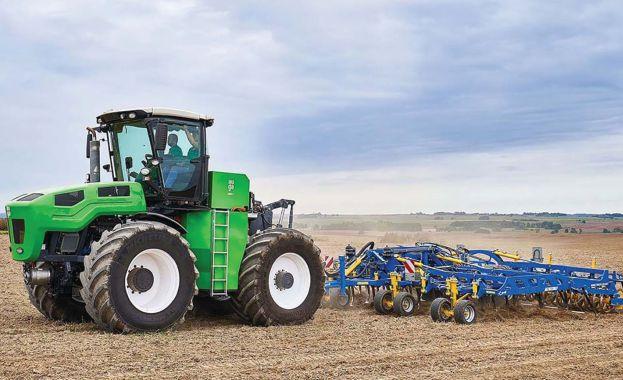
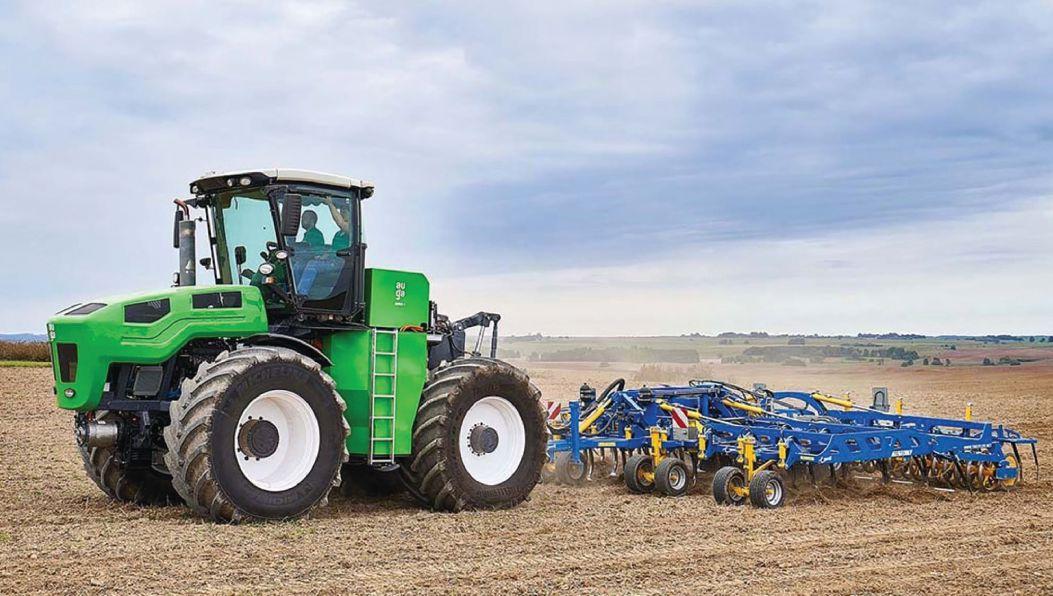
IMAGE COURTESY OF AUGA GROUP.
electric being the all-round solution, particularly not for our industry because it can only be used to power smaller machines.
“It does mean we will carry on making engines, but they will be super-efficient, affordable, high-tech hydrogen motors with zero CO2 emissions, which can be brought to market quickly using our existing supply base. These will be our industry’s first hydrogen engines, developed in Great Britain by British engineers. Hydrogen motors have the potential to help the U.K. reach CO2 emissions targets more quickly.”
USING BIOMETHANE
A European organic food producer has developed what it claims to be the world’s first hybrid biomethane and electric trac tor. Based in Lithuania, the Auga Group farms 39,000 ha of organic cereals, root crops and vegetables, plus a large dairy farm with 3,400 cows.
It has developed its own Auga M1 tractor, which can do the work of diesel powered 400hp tractors, only with zero emissions. The tractor is six meters long, four meters high and runs on 900/60R 42 tires. The Auga group says its tractor can work for 12 hours on one fuel cartridge.
Such a system does not waste energy in low load conditions, uses a relatively small but efficient motor and is able to extract tremendous power when needed. These solutions allow the tractor to work for up to 12 hours.
The second obstacle to the spread of biomethane-powered tractors is the underdeveloped biomethane refuelling station infrastructure. The Auga group says it has solved this problem by offering quick and convenient gas cartridge
ELECTRIC WEEDER
New Holland Agriculture has just introduced its new electric XPowerä XPN concept integrated in the New Holland Braud 9000N carrier, to weed narrow vineyards. The XPN concept features a generator drive powered by the load sensing hydraulic circuit of the carrier. It is also equipped with a brand-new applicator specifically suited to the requirements of the narrow vineyards in terms of weeding width and adaptability to the types of vines encountered. •
Kestutis Juscius, CEO of Auga group, said the hybrid Auga M1 tractor is unique because it solves two main obstacles that have so far prevented the world’s largest corporations from offering such equipment for professional use.
“Our team of engineers has found solutions to solve the problem of refuelling and ensure uninterrupted operation of the tractor throughout the working day. Currently, biomethane-powered trac tors are able to operate for only two to four hours because the gas cylinders do not physically fit into the tractor structure. However, farmers need agricultural machinery that can work for 12 hours or more. Auga group understands this perfectly and has created a solution.”
The company’s patented design allows the tractor to accommodate larger biomethane gas cylinders. The Auga M1 tractor uses a hybrid biomethane-electric fuel system. When the tractor is running, an internal combustion engine powered by biomethane generates energy and transmits it directly to the electric motors that spin the wheels. When operating under normal conditions that do not require high power, the tractor stores the generated energy reserve in the batteries.
DIVERSITY at every level
For Stuart Chutter, there’s value in diversity – in terms of cows, plants and people.
BY JULIENNE ISAACS
Stuart Chutter is easily recognized these days: he was a 2021-2022 nominee for Saskatchewan’s Outstanding Young Farmers program. Chutter runs a small purebred cattle and diverse forage crop operation near Killaly, Sask. Over the last two years, he’s also written and spoken publicly about his experience coming out as a young gay farmer and has been involved in discussions about how diversity on farms is portrayed.
It’s a path he never thought he’d take.
Chutter, 36, grew up on a cowcalf ranch in rural British Columbia. As a kid, he never thought farming was an option for him.
“I didn’t have any expectations
ABOVE
or opportunity for succession in B.C., so I set out to build a life and career for myself outside of primary production,” he says.
He earned a degree in economics and started a career in commercial lending in Alberta. Most of his clients were farmers, and as he got to know more about their businesses, he began to realize that it was possible to build a first-generation farm without independent wealth or inheritance. “Before I got into banking, I thought farmers had to be elite, special, wealthy or born into it. But what I learned from banking was that my customers were all people who just started,” he says. “Whether they moved from Europe and started
Chutter focuses on low-input and easy calving genetics.
a farm or sold their house and started a farm, at the end of the day they were passionate, believed in themselves and were willing to risk it all for their dream. I realized I could do that too.”
Within a year, Chutter had rented farmland and started a herd of 400 meat goat does. Soon, he realized he loved the work enough to do it full-time. He scaled up his operation with the addition of 200 ewes and quit his job at the bank.
After two years he’d outgrown his land and found a farm in southwestern Saskatchewan where he could work and graze in exchange for yardage and feed for his livestock, an arrangement that worked well. But six years in, he’d grown his herd to 1,000 breeding animals and paid off his livestock, and he was ready for the next step.
Four years ago, Chutter bought his own farm near Killaly. These days he owns 640 acres and runs a herd of 175 purebred Red Angus and Limousin cows. Both professionally and personally, he’s come farther than he ever imagined was possible.
At 33, he came out as gay, and shifted the narrative again.
“I’ve made a conscious effort to make being a gay farmer a part of my story to normalize that conversation as something of importance. Some people ask why that’s important, and [ask] why can’t I just be a farmer? But I didn’t see it growing up, and I didn’t know it was possible. I’ve heard people say, ‘You can’t be what you don’t see.’ If you can’t envision it, you can’t be it or grow into it. For me, visibility is important,” he says.
It was the dawning realization of the importance of diversity in healthy farming systems that helped Chutter realize he was ready to come out.
“Slowly, over time, I was constant-
•
•
•
“For healthy livestock, you need healthy grass. My focus has shifted from livestock to grass and soil.”
ly being reminded that diversity is so valuable on the farm. That convinced me that this is a strength. This is a part to celebrate. This is fine. It’s diversity in nature’s systems that convinced me that there’s so much value in diversity in people,” he says.
DIVERSITY IS FOUNDATIONAL
On his farm, Chutter’s perception has shifted from thinking of himself as a livestock producer to thinking of himself as a
•
•
“soil manager.”
“When I started farming, I thought that if you were a livestock producer your job was to look after and market your livestock. And you do, of course, but the more I learned the more I realized that to have healthy livestock and a profitable business you need healthy grass. As I went down that path, I realized that to get healthy grass to make those livestock, you need healthy resilient soil. So my focus shifted from livestock to grass to soil,” he says.
When he bought his Killaly farm, it was in crop production, with soil organic matter levels of around 2.4 per cent. Chutter put it into perennial forage production with blends of between eight and 15 species. Four years on, the soil organic matter has doubled.
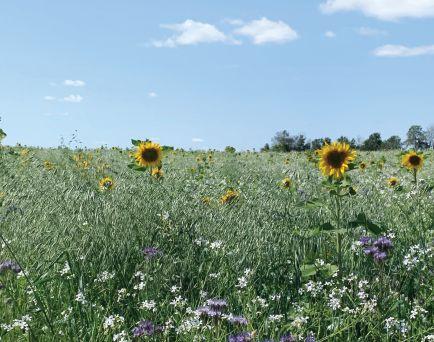
When choosing forage species, he attempts to fill specific categories – for example, warm and cool season forages, tap roots, tubers, legumes and grasses –but says he also finds value in unplanned diversity when, depending on the growing season, “you find a plant that’s thriving or filling a gap that you never expected,” he says.
The same principle applies to animals: he’s had goats, sheep, cattle, chickens and swine, depending mainly on grazing needs. For example, sheep can take care of weeds while cattle efficiently convert grass to energy, he says. He transitioned to cattle after putting in high-value forages. “You look at the system and where there’s a role to convert that [biomass] to food,” he says.
ABOVE
Chutter includes warm and cool season forages, tap roots, tubers and more.
But there’s even diversity between breeds of cattle, he adds, and value in cross-breeding them. Red Angus, he says, is a highly maternal, low input, productive mother cow, while Limousin offers high carcass and protein quality and is an efficient converter of feed to lean meat. “They’re both cows, but different breeds with very different characteristics, and by having two different characteristics is another way diversity can be used to make the farm more efficient,” says Chutter.
With his breeding herd, Chutter focuses on low-input and easy calving genetics based on a cow’s weaning production as a percentage of her body weight. Basically, he aims to run cows that are low-input, easy fleshing, moderate framed, with good feet for traveling and a high grass capacity, so he can keep them on pasture for as much of the year as possible. This also makes sense from a manure management perspective, he adds.
“I want to select and keep heifer calves [that have those traits], and cows that don’t have those traits won’t thrive under my management. I’m looking for a cow that has the characteristics to thrive under grass based management and still produce a good, high quality, profitable meat product,” says Chutter.
He sees cows as an environmental resource that’s crucial for regenerative farming, as animal impact on the land is a pillar of soil health and conservation and carbon sequestration.
He has the numbers to back up that claim. Beyond improvements to soil organic carbon, he says his farm is net carbon sequestered, meaning after accounting for methane emissions and transportation and processing emissions all along the supply chain, when a consumer eats a steak from his farm, its carbon footprint is negative.
“Consumer stereotypes on food production can be just as inaccurate as stereotypes of people,” says Chutter. “Cows aren’t bad for the environment. And gays aren’t out of place in rural agriculture spaces. You can sequester carbon and be a cow, you can be a beef producer and an environmentalist and you can be gay and take up space in agriculture.”
Whether it’s about soil health or identity, Chutter believes there’s room for the industry to advance in how it talks about diversity in farming.
“What’s important to me in celebrating diversity is celebrating diversity in its entirety – for me, [my identity as an] LGBTQ+ [farmer] makes it personal, but in agriculture we need to celebrate diversity in all ways,” he argues. “Our labor shortage issue, for example, is massive, and we’re not going to solve it if different people aren’t welcome. We can’t get our products to market without all sorts of diverse people, and we need them.
“Normalizing words like diversity, inclusion, equity and belonging – those are things we need to talk about not only from a social but an economic perspective. It’s important for us to realize there’s a business case for it as well.”
After Chutter came out, he was pleasantly surprised to find that the majority of farmers were supportive and welcoming. He’s had “amazing” conversations, particularly with young farmers, who share his commitment to diversity in farming. Agriculture can be polarizing, but Chutter believes in his community.
“There are so many moments in agriculture of people saying, ‘No, I get it,’” he says. “We’re getting to the point where we’re saying, ‘Yes, let’s make room for these discussions.’” •
After the flood
Herd health problems, feed shortages and overflowing manure storage – can B.C.’s livestock industry recover?
BY BREE RODY
Richard Bosma knows one thing: he refuses to let this flood be what finishes him and his dairy farm off.
Bosma is part of the team that owns and operates Vedderlea Farms, a dairy farm in Abbotsford, B.C. Like many other B.C. farmers, he’s spent the last two months putting the pieces back together after the events of an historic November rainfall.
The cause of the flooding was a meteorological phenomenon known as a Pineapple Express, a type of atmospheric river driven by a strong, southern branch of the polar jet stream. The onslaught began in earnest on Nov. 12, and the final event lasted until Dec. 1. The effects were both short- and long-term, from damage to land and infrastructure, to severe transportation disruptions. One of the primary concerns was the disruption of key transportation corridors – including sections of British Columbia Highway 1 (part of the Trans-Canada Highway), Highways 99, 7 and 3,
and the Coquihalla Highway. With road and rail disruptions, livestock feed was limited. Between housing concerns, the physical effects of the flood and an unstable flow of food, dairy farmers have been dealing with the fallout in their herds ever since. To add to that, some farmers are facing pressure on their manure storage.
Bosma considers himself among the lucky. A small number of his heifers had to be euthanized in the fallout of the flooding due to pneumonia. But he was still able to successfully relocate his 75 cows in a short amount of time.
The morning it began, Bosma and his wife received a knock at the door from local authorities urging evacuation. At first he and his wife were unsure, but by midday, they were in full evacuation mode. “I didn’t even ask where [the cows] were going. Some guy just said, ‘I’ve got a farm for them.’” Bosma estimates that there are between 300 and 400 farmers in the Fraser Valley area,
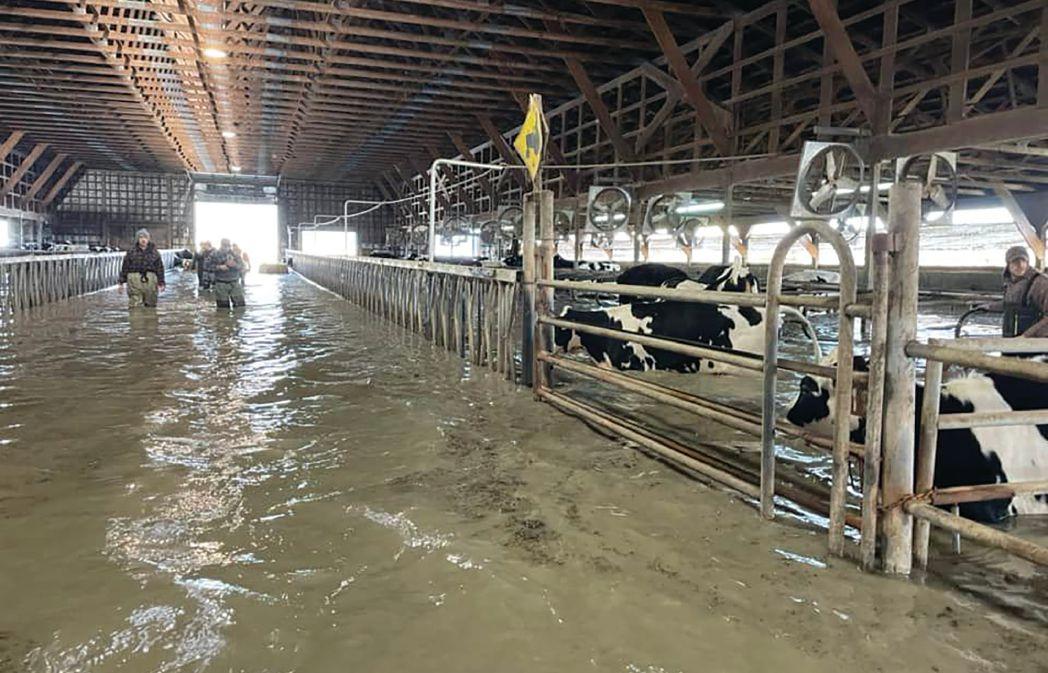
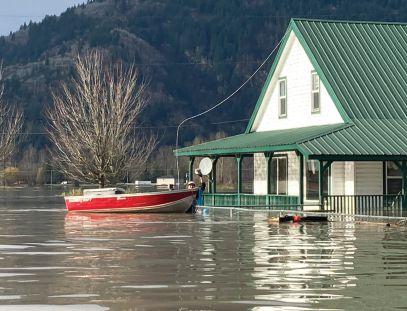
TOP Richard Bosma’s barn on the day off the initial rainfall. BOTTOM Bosma’s neighborhood, mid-flood.
about 60 of whom were acutely affected by the floods, so many of the remaining offered to take cattle. Some herds, like Bosma’s, were able to largely stay together; others had to be split up or moved multiple times.
From the knock at the door to the return home of Bosma’s last cow, that stage of the journey lasted 32 days.
HEALTH AND SAFETY EFFECTS
According to Holger Schwichtenberg, chair of the B.C. Dairy Association, a total of 6,000 cows across 62 farms in the Sumas Prairie area were evacuated. He was among those who took in other cows, as did his neighbors. But thousands of other cows had to stay put. He estimates that between 12,000 and 14,000 cows had to stay in their barns. Beyond the flood, there were long-term health impacts. Pneumonia and physical injuries were the two biggest impacts to Bosma’s herd. While only a few of his had to be euthanized, the provincial total for cow deaths from the flood and resulting illnesses or injuries is 420, plus 12,000 hogs and 628,000 poultry. Schwichtenberg says farmers are also experiencing other concerns – such as milk production.
“If you’re a cow standing in water for four-and-a-half days and you’re 220 days into your lactation… you’re not going to turn the tap back on.”
Prolonged lack of healthy food and water affected herds. Schwichtenberg says it’s still early to tell the scale of the long-term effects, but he is sure there will continue to be at least some problems.
The excessive water also put pressure on manure storage systems. Bosma says he lucked out again – of his two lagoons, one is more effluent than the other. “One drains at a high point,” he says, explaining that their size and make made the lagoons almost into artificial dikes. “One neighbor had emptied his whole lagoon in the fall, and then he had the floodwater get back in, so he had to take his big pump and blast it back out again.”
Because of the impact of the storm, the B.C. government had to enact emergency spreading rules. Farmers whose storage systems are facing potential overflow due to excess water, who had to dispose of excess milk in their storage systems due to supply chain issues or who accumulated an excess of manure due to taking on extra livestock are permitted to spread that manure, providing some relief to their storage systems. Spreading is subject
to certain conditions, and farm owners must apply for the exemption.
SUPPLY CHAIN WOES
The significant disruption to road and rail alike meant both imports and exports ground to a halt. For the everyday BC citizen, that meant mail might have been a little slow. For farmers, that meant not knowing when feed was coming. “We had 500 bales of hay that floated away. We didn’t even know they could float,” says Bosma. “We had no idea when we were going to get our next order of grain.”
Eventually, exceptions were made for transport drivers to divert their route into the U.S. – while it added an additional eight hours onto their drive, allowing anyone with a drivers’ licence to cross the border for the purpose of transporting essential goods made a major difference.
Output is also a struggle. Stan Vander Waal, president of the B.C. Agriculture Council, says many farmers experienced weeks of coming into work only to find out that no trucks were going out.
“We’re almost on an island,” he says. “We’re talking food, we’re talking flowers, we’re talking grains.” He adds that with
crops, it might not be known until spring what the long-lasting impact will be of them sitting in water for such long stretches.
MOVING FORWARD
Even well into January, Bosma is still feeling the impact. Though the feed is flowing in more reliably now, there are major expenses incurred. The front door of his barn blew off, costing $7,000. And while the community has rallied in ways he never imagined – one farmer donated semen from his top bull to replenish herds, and the B.C. Dairy Association has raised more than CAD $900,000 in donations – Bosma is staying realistic.“I’m not sure how much longer we can highlight it,” he says. “There’s always another disaster in the world.” He adds that addressing the problem of extreme weather on a more long-term basis can’t be solved at a local level and has to involve the U.S. as well.
While he and his farmer brethren know it will be a struggle moving forward, he says he knows for the sake of his own mental health, he has to simply keep pushing through. “It won’t be the flood that finishes us off.” •
A LONG WAY TOGETHER
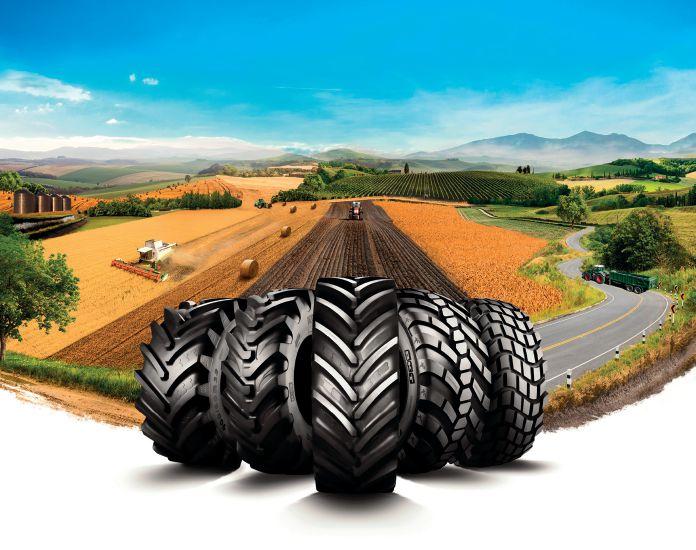
WHEREVER YOU ARE, BKT IS WITH YOU
BKT provides you tires that are reliable and safe, sturdy and durable, capable of combining traction and reduced soil compaction, comfort and high performance.
BKT: always with you, to get the most out of your agricultural equipment.
Valuing manure as a seller or buyer
When talking about manure’s value, one needs to think about a variety of factors. Most folks think of fertilizer nutrients as manure’s primary value or MVP, but it takes more than one or two star players to make a great team. As such, manure wouldn’t be as great as it is without other characteristics like the added organic matter that you get when applying manure, or the microbial community that is added to your field with that application. The value of manure depends not only on the nutrient concentration in the manure, but also what the next crop requires, the condition of the soil, and whether or not commercial fertilizer will be used to supplement manure and make up for nutrient imbalances that often occur.
If you really don’t need something, just how valuable is it? If you’ve got a great team already, are you willing to pay big bucks to bring in a star player? Or, if your soils need nutrients and could use additional organic matter or microbial life, would you still sell the manure that could help you build that soil back up? It’s for this reason that manure value changes for every field that it is applied to.
Nutrient value and the ability to offset commercial nutrient costs is easier to put a dollar value on, but some of manure’s valuable assets that aren’t straightforward. Many think of manure as a water quality problem, but because of its ability to
probably applied nutrients to crops that were used to feed area livestock that then produce manure. The manure can and should be recycled back onto fields that will grow more feed for those animals creating a circular economy.
But not all manure is created equal. Different animals eat different feeds in different proportions and therefore, they produce manures with different compositions of nutrients and consistencies. The only way to really know the nutrient content of the manure and whether the nutrients are balanced for what your crop needs, is to sample that manure and send to a lab for analysis. When talking about manure nutrients, we often focus mainly on nitrogen (N), phosphorus (P), and potassium (K), but other nutrients that plants need are also found in manures. Secondary nutrients like sulfur (S) and micronutrients like zinc (Zn) are good examples. When these are needed, they boost manure value because they help offset additional fertilizer costs.
Nebraska Extension offers a Manure Value Calculator (go.unl.edu/manurevalue). It’s an Excel tool that helps determine the value of the manure nutrients and potential yield increase. To use the calculator, you need the following information:
• Soil and manure information including an analysis for each;
“There’s more benefit to manure than just nutrient value.”
improve water infiltration and holding capacity by increasing soil health, it can actually decrease risk of water quality impairment. Fields that have been receiving manure tend to have better infiltration rates and hold more water during a precipitation event, thereby decreasing runoff as compared to those fields that didn’t receive manure. Additionally, fields that haven’t received manure for five to 10 years often notice a yield bump. While the reason behind this is not well understood, many believe it is due to the microbial community that is introduced with the manure.
Another value that certainly can’t be overlooked this year with fertilizer prices and availability so unfavorable is the fact that manure is most often a local nutrient that doesn’t need to be hauled in on ships, trains and trucks over long distances from other locations. Over the years, local farmers
• Next year’s cropping plan including nutrient recommendations and how you plan on applying the manure; and
• Current fertilizer prices for N, P, K, S and Zn.
It can be used to determine a hypothetical value for manure you plan to sell by using estimated soil values, or it can be used to compare manure from different sources to determine which is the most economical for your field. For the latter, where you purchase manure or pay someone for application, you will also need this cost to input into the spreadsheet. Remember, when determining a value for selling manure, buyers will need to factor in transport and application costs, so don’t set your price too high.
There are other value calculators out there from the likes of University of Minnesota and more. No matter what tool you use, whether you’re buying or selling, remember that there’s more benefit to manure than just nutrient value. It’s just harder to put a real dollar value on some of those things. •
MM_WER_janFeb21_CSA.indd 1
TURNING LIQUID GOLD INTO ENRICHED BEDDING
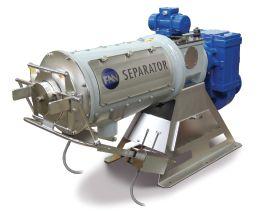
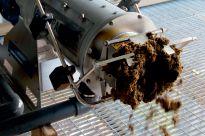
FAN PRESS SCREW SEPARATOR
• Saves money
• High-quality bedding made from manure
• Easy to maintain
WASTE WATER TREATMENT
• Low energy consumption
TURNING WASTE WATER INTO HIGH QUALITY BEDDING!
Fan produces bedding material with a dry matter content of up to 38% in solids. MAGNUM CSPH
BENEFITS
2020-11-30 3:26 PM
• Submersible
• Save money • High-quality bedding made from manure
• Easy to maintain • Low energy consumption
• Motor pump gear unit design CONTACT Director of Sales: Ray Francis 1-219-229-2066 | r.francis@bauer-at.com
CSPH Submersible motor pump gear unit design
BAUER North America, Michigan City, Indiana 46360, PO Box 8943 +800 922 8375, bnasales@bauer-at.com, www.bauer-at.com/en
VTI adds Contour Master Swivel
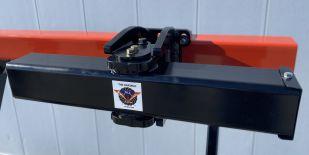
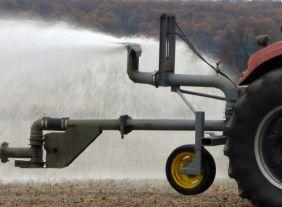
Manure injection specialists VTI LLC have introduced the new Contour Master Swivel attachment to make injection even easier. The Contour Master Swivel (pictured) is a patent-pending design that utilizes torsion rubber technology for cushioned contouring, and assists row units back-to-center along with ground engagement. The Contour Master Swivel is a lighter, sleeker design with no greasing required. Users can pair the Contour Master Swivel with any of VTI’s row units to handle their injection needs in any condition.
JT Boats adds new agitator
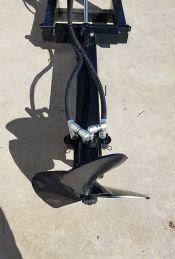
JT Boats has unveiled the JT SkidMix, a skidsteer-mounted agitator designed for small lagoons, straight-wall lagoons, and smaller spaces harder to get in with an agitator. It’s designed for ease of operation, with a propellor that can move 45 degrees in either direction. It folds up, enabling operators to enter a 36” by 36” opening and works in pits with a six- to 10-foot depth.
Kuhn completes its new ripper range
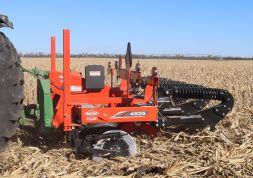
Kuhn North America has introduced its newly completed range of 4835 in-line rippers, which now includes all models from 430R – 1130F and completely replaces the 4830 range. A new parabolic shank is now available as an option for all 4835 models. This shank provides more surface disturbance than an MRD shank and will be useful for customers looking to incorporate significant quantities of residue. It is also available with coverboards to promote more residue incorporation.. When coverboards are not fitted, a wear bar is mounted to the face of the shank to provide additional wear life. Also available is a newly developed minimum residue disturbance (MRD) shank for the 4835. The shank is positioned between the no-till and parabolic shank options in terms of residue incorporation and soil disturbance. The new shank utilizes the same wear bar as the no-till shank and the same 7” wing points as the parabolic shank, reducing the number of overall components for more simplified inventory management.
New Holland wins tech award
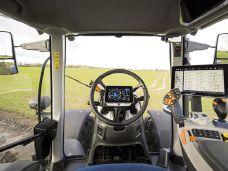
New Holland Agriculture’s Horizon Ultra tractor cab has been recognized for its advanced technology by the American Society of Agriculture and Biological Engineers (ASABE) with a 2022 AE50 award. Carlo Labro, brand president for New Holland Agriculture, said in a statement, “These awards are a testament to the strength of the New Holland teams around the world: from the engineers who design our latest innovations to our field teams who work in the field side-by-side with our farmers to identify our next opportunities, and every step of the journey in between.” One of the key features of the cab is its noise level – it emits no more than 60 decibels of noise. In addition to noise reduction, the cab has been expanded by eight per cent overall from previous models and has an automatic climate control system with 35 per cent more capacity than the previous model. It integrates New Holland’s precision land management (PLM) intelligence, which allows farmers more options to plan their operations in advance.
MANURE MINUTE
Basic components of composting manure
I will say this over and over again: aged manure is not composted manure. Proper composting needs regular, active management with the right combination of temperature, size, moisture, oxygen and carbon-to-nitrogen ratio to keep microbes happy and make the piles break down into compost. It’s as much of an art as it is science.
TEMPERATURE
The temperature of a pile can show you if you’ve got a healthy composting system or not. In the life cycle of a compost pile, there are three temperature phases: First is the warm-up, which is the time from pile construction until the internal temperature reaches 105 F; Second is the thermophilic, or hot composting, in which the microbes do the heavy lifting of decomposition; third is cool curing, when composting is complete and the compost material stabilizes.
If your pile should be in the thermophilic phase but is under 110 F, or it’s over 160 F, there might be a problem. Sometimes, it needs to be turned. But it could also have to do with one of the components listed below.
SIZE
A compost pile should, at minimum, be three feet square by three feet deep. Anything smaller won’t
“Composting is as much of an art as it is science.”
generate the internal heat necessary for composting. If you’re composting in winter, that minimum size should be five feet by five feet by five feet. As for maximum size, you should not exceed the size that your machinery can effectively turn and mix. For particle size, careful not to go too small. Smaller bits mean more surface area, so microbes have better access to degrade those bits. However, if the particles are too tiny, they will fit together too closely and limit the amount of oxygen in the pile that the microbes depend on. Particle sizes of 1/8” to 2” are best. Manure is crumbly and can be broken into bits of that size, but coarse bedding such as corn stalks may need to be shredded are too large.
MOISTURE
Moisture is crucial to break down organic materials; and it also helps regulate the temperature of
the compost. The optimum level for composting is 50 to 60 per cent moisture, but many of the microbes will still do their job at 40 to 65 per cent. Try the “squeeze test.” While wearing gloves, squeeze a handfull of manure. If water drips, the compost is too wet; if you open your hand and the compost crumbles, it’s too dry. Compost with optimal moisture will hold its shape without dripping; it should feel like a damp washcloth. Do this a few times in different areas of the pile. If moisture is not optimal, there are ways to alter it. A covered pile can’t get too wet from excess rain, or too dry from sun. If the pile is too wet, additional aeration and turning can help dry it. A too-dry pile can be moistened with water from a hose or bucket.
OXYGEN
Aerobic (oxygenated) conditions are necessary for composting. And the need for high oxygen levels is greatest at the beginning of the composting process. A minimum of five per cent oxygen in the pore space is necessary;10 to 15 per cent is optimal. Within the pile, oxygen will be most abundant in the outer layers. The compressed inner core of the pile will have the least pore space, and therefore, the least oxygen. Turning and mixing the compost is important to spread oxygen throughout the pile, bringing the center of the pile to the outside, and the outside to the center.
RATIOS
Carbon sources in composting are typically bedding, and nitrogen can come from manure and bedding, depending on bedding type. The optimal ratio for composting is between 25:1 and 30:1.
If the C:N is lower than 20:1, nitrogen will be lost to the atmosphere as ammonia. To remedy this, add carbon sources such as straw or wood chips to the pile. If the C:N is higher than 40:1, nitrogen will be tied up by the excess carbon. To remedy this, add nitrogen sources to the compost pile such as grass clippings or hay.
It can be tricky to tell if your C:N is off. If the pile is not breaking down the way it should, and you’ve ruled out other factors as the culprit (moisture, size, etc.), you may benefit from sending samples of the compost pile to a manure laboratory to test for C:N. •
We have a new family member!
This year, GEA ProManure welcomed a NEW addition to the 10-inch lagoon pump family, the Lagoon Agi-Pompe
The 10-inch lagoon Agi-Pompe features a field-proven heavy-duty propeller capable of displacing tens of thousands of gallons of manure every minute. No matter the quantity or consistency of manure you have to deal with, GEA ProManure has a five-star pump made for you!
PERFORMANCE
10-inch discharge & new intake design
TIME SAVINGS
Faster loading & agitation
STABILITY
Design for use on multiple terrains
CONFIDENCE
High quality fabrication
WEAR RESISTANCE
Critical components made of Hardox® 450
The new HD pumps are built to pump manure, built to run smoother to save fuel, run at a lower rpm with larger and wider impellors to reduce engine wear and plugging issues.