As producers become more knowledgeable, they’re leveraging technologies to improve air quality at a lower cost.
13
New fans and ventilation systems
The latest offerings on the market boost both barn energy efficiency and bird comfort.
18 The pursuit of peak immunity Research shows promising results in the search of non-antibiotic necrotic enteritis protection.
22 Hatchery ventilation Experts outline the top mistakes to avoid.
13
18
COLUMNS
08 | World of Water
Summer water prep
26 | Ask the Vet
Air quality and poultry health
DEPARTMENTS
04 | Editorial
More resources and advice as the pandemic lingers
06 | What’s Hatching
Canadian Poultry launches Top 4
Under 40 program for producers
29 | Classifieds
30 | Barn Spotlight
New enriched barn solves unique ventilation challenge
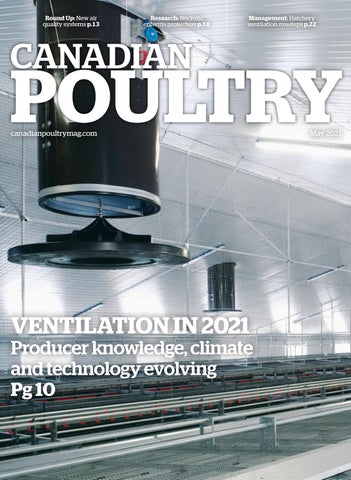
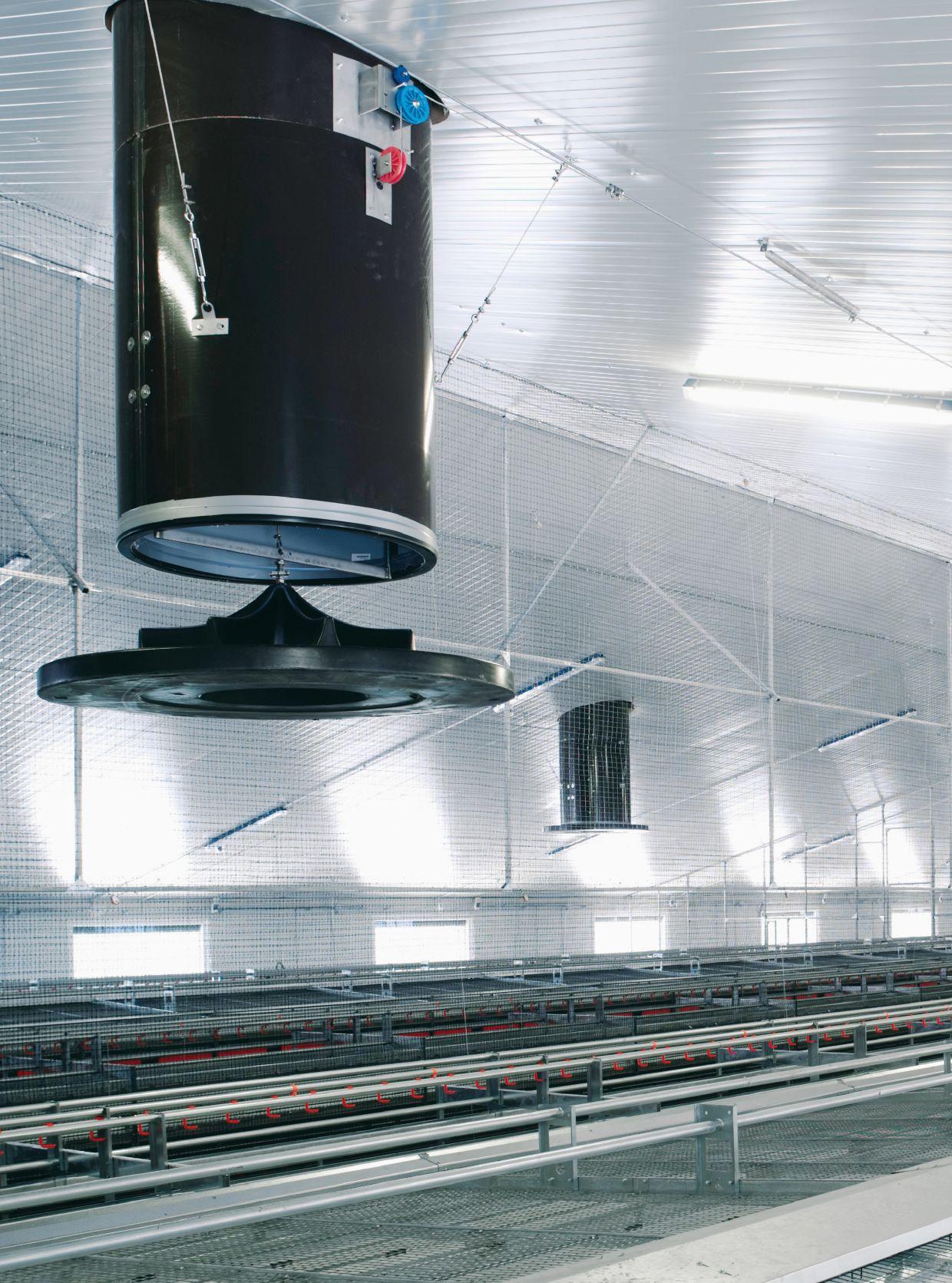
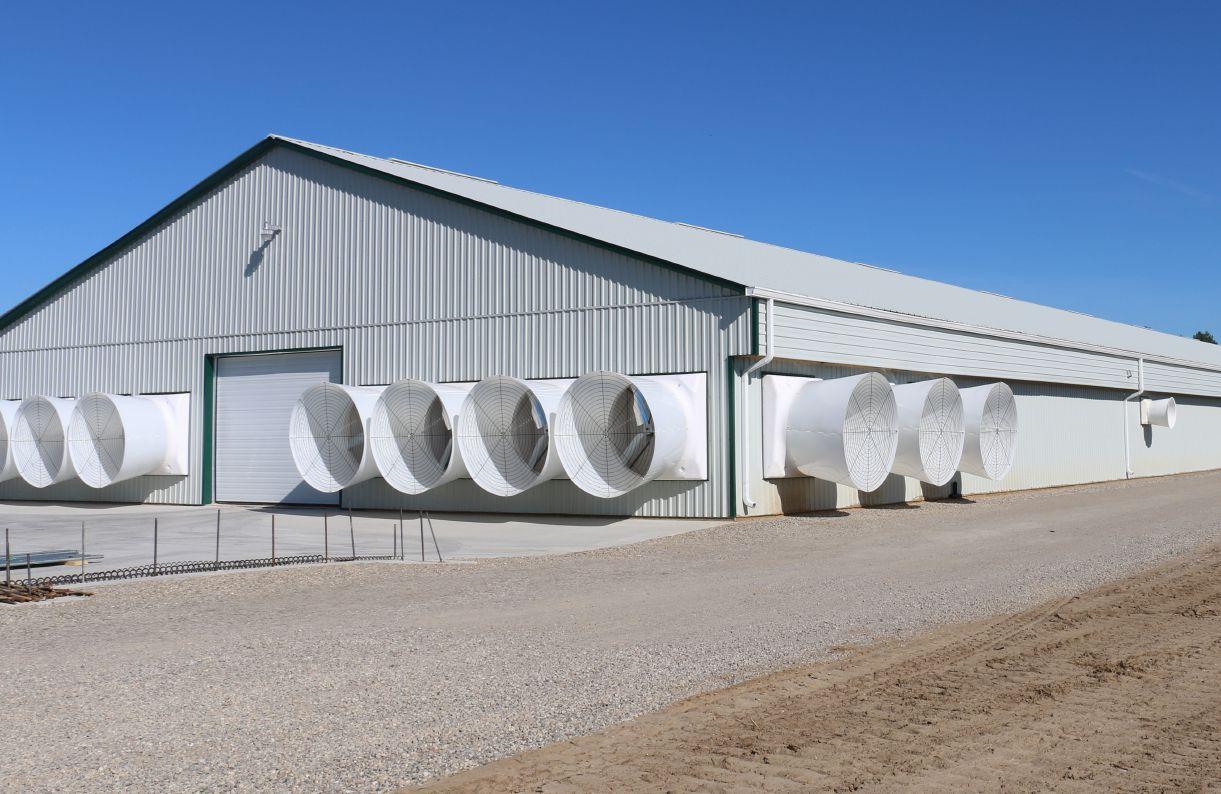
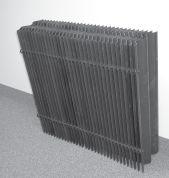
ON THE COVER Experts say producers are increasingly combing technologies to maximize air quality. Pictured on the cover are fresh air chimneys, which are a popular choice when good air circulation is impossible to achieve with only wall inlets.
See story on page 10.
by Brett Ruffell
Helpful tools for a lingering pandemic
Iwas hoping at this point we’d be at the tail end of the pandemic. And yet as I write this my home province of Ontario has just entered its third lockdown. What’s more, Canada has now surpassed the U.S. in terms of new COVID-19 cases per capita (who saw that coming a few months ago?).
Given this situation, a new resource from the Poultry Industry Council (PIC) is particularly timely. In late March, it unveiled the “COVID-19 Resource Hub”. Funded by the Ontario Ministry of Agriculture, Food and Rural Affairs (OMAFRA), the educational tool is intended to help poultry producers reduce the risk of farm workers becoming infected with the virus.
Housed on poultryindustrycouncil.ca, the hub includes insights from a range of industry stakeholders and producers. That feedback is centred on technologies and practices that help reduce person-to-person contact, cut down on labour demands and innovate how people in the industry work in the context of the pandemic.
“It was really interesting to hear first-hand how our membership has adapted to a whole new way of working and how quickly they did it,” says PIC executive director Ashley Honsberger. “The pandemic business pivot has helped the sector find novel ways of working and leveraging their biosecurity knowledge for good busi-
ness continuity.”
PIC conducted over 30 interviews as well as an online survey to collect background information for the resource. Some of the interesting technologies they discovered during the research emerged from other sectors, such as health care, and from university research. For example, surface cleaning using UV chambers and high-efficiency ozone filtration systems for shared workplaces and in the barn.
Other insights were more about sticking to the basics: Washing hands; wearing masks; keeping a distance; and working from home when possible.
emerged were shared more broadly,” Honsberger says.
Passing on helpful information for managing in these trying times is also why Canadian Poultry continues to talk to producers and stakeholders about their stories. In our latest round up of pandemic profiles, found at canadianpoultrymag.com/ covid19, we talk to a large egg producer, a hatchery and a poultry veterinarian.
The team from L.H. Gray & Son Ltd. discuss how they collaborated to orchestrate the egg giant’s pandemic response. Dr. Daniel Venne, a poultry veterinarian based in Scott, Que., revealed how he adapted his practice. And Al Keshwani, president of Rochester Hatchery in Westlock, Alta., shares his perspectives, including on
“The pandemic business pivot has helped the sector find novel ways of working and leveraging their biosecurity knowledge for good business continuity.”
The hub includes a variety of other COVID-19 prevention resources and helpful tools from allied industry partners. In particular, Honsberger says the hub includes a checklist from OMFRA highlighting what to do if someone on your farm tests positive. “I think it’s helpful because you’re in a panic moment when you find out something like that has happened,” she says.
OMAFRA approached PIC in December about developing a resource for preventing farm workers from contracting COVID-19, reducing labour and enhancing innovation. “They wanted to make sure that any best practices, equipment, ways of working or new ideas that
canadianpoultrymag.com
Reader Service
Print and digital subscription inquires or changes, please contact Anita Madden, Audience Development Manager Tel: (416) 510-5183
Email:
amadden@annexbusinessmedia.com
Mail: 111 Gordon Baker Rd., Suite 400, Toronto, ON M2H 3R1
Alice Chen achen@annexbusinessmedia.com 416-510-5217
Media Designer Brooke Shaw
Group Publisher Michelle Allison mallison@annexbusinessmedia.com
COO Scott Jamieson sjamieson@annexbusinessmedia.com
PUBLICATION MAIL AGREEMENT #40065710
Printed in Canada ISSN 1703-2911
Subscription Rates Canada – 1 Year $32.50 (plus applicable taxes) USA – 1 Year $91.50 CDN Foreign – 1 Year $103.50 CDN GST - #867172652RT0001
the many mainstream media stories in recent months reporting a surge in backyard chicken ownership during the pandemic.
One of Honsberger’s biggest takeaways from working on the hub was how much vigilance we’re all still going to need for several months to come still. That’s because OMFRA wants the resource to be available for almost two years. “So, we just have to settle in and say we need to do the washing hands, physical distancing, meeting outside, minimizing contact, those types of things for quite a bit longer.”
Unfortunately, I think she’s right.
Occasionally, Canadian Poultry Magazine will mail information on behalf of industry-related groups whose products and services we believe may be of interest to you. If you prefer not to receive this information, please contact our circulation department in any of the four ways listed above.
When you choose to install the LUBING 4023 Maximum Flow, All-Stainless Nipple with 360 degree action, you choose a real winner! It is constructed 100% from high grade, precision machined, stainless steel and is virtually indestructible.
This nipple is designed to be used with our one-arm LitterGard cup and has a wide range of flow that can be adjusted down for small 4 lbs. birds or adjusted up to over 100 ml for large 9.5 lbs. birds. You can decide the flow you want! Combine this nipple with our 28 mm (1.10-in) drinker pipe, the largest on the market, and you have the water volume you need 24/7.
Glass-Pac Canada
St. Jacobs, Ontario
Tel: (519) 664.3811
Fax: (519) 664.3003
Carstairs, Alberta
Tel: (403) 337-3767
Fax: (403) 337-3590
Join the club of thousands of growers that have enjoyed the longevity and performance of this nipple/cup combination that has been proven time and time again for well over 20 years.
Got Lubing? You can’t afford not to!
Les Equipments Avipor
Cowansville, Quebec
Tel: (450) 263.6222
Fax: (450) 263.9021
Specht-Canada Inc.
Stony Plain, Alberta
Tel: (780) 963.4795
Fax: (780) 963.5034
What’s Hatching
Canadian Poultry launches Top 4 Under 40 program for producers
Canadian Poultry magazine is excited to introduce a new program to recognize young poultry producers called Top 4 Under 40. Nominations are now open and end May 31, 2021. We are looking for nominees who demonstrate on-farm leadership, who have embraced innovation and who go above and beyond for the industry and their community. The four winners will be introduced in a series of podcasts and a digital issue highlighting their accomplishments in September. For more information and to submit a nomination, visit canadianpoultrymag. com/top-4-under-40.
CFC elects new executive committee
Chicken Farmers of Canada (CFC) has unveiled its 2021 executive committee. CFC’s 15-member board of directors elected Benoît Fontaine, of Stanbridge Station, Que., to remain chair. Nick de Graaf of Port Williams, N.S., was elected 1st vice-chair. Tim Klompmaker of Norwood, Ont., was elected second vice-chair. Lastly, Derek Janzen, of Aldergrove, B.C., was elected executive member.
Manitoba eyes tighter farm security
The Manitoba government is planning to tighten rules around farm security and trespassing on rural property in a move partly aimed at animal rights activists. One of two bills put before the legislature in March would require a person to obtain consent before entering a biosecurity zone, such as a farm or food-processing plant, or feeding an animal in transport. The proposed legislation would cover animal rights activists who might enter barns and pose a threat to biosecurity standards.
Poirier-Berard in Saint-Félix-deValois, Que., won for the best Cobb500 SF flock based on chicks per hen housed.
Four Canadian producers win Cobb’s annual Flock Awards
Cobb has awarded four facilities in Canada with its annual Flock Awards. Launched in 2004, the awards recognize the top-performers in North and Central America.
Synergy Agri Group in Port Williams, N.S., won for the highest average of chicks per hen housed and the best Cobb500 FF flock based on chicks per hen housed.
“Thanks to the Cobb technical team’s expertise and commitment to quality, customers throughout North America continue to maximize flock performance,” says Chance Bryant, director of tech services.
“We are extremely proud of the winners of this year’s North America Flock Awards who continue to show the potential in our products with excellent performance.”
Synergy Agri Group in Port Williams, N.S., won for the highest average of chicks per hen housed and the best Cobb500 FF flock based on chicks per hen housed. This is the fourth year in a row this facility won an award.
Poirier-Berard in Saint-Félix-deValois, Que., won for the best Cobb500 SF flock based on chicks per hen housed. The team worked
hard to make improvements to the lighting and feeder spaces in their houses, which showed in their results.
Sollio Agriculture - Avantis in Saint-Léonard, N.B., and Cox Atlantic Chick Hatchery in Maitland, N.S., are co-winners of the award for the flock with the highest number of total eggs per hen housed.
Cobb presented this year’s winners with plaques to commemorate their achievements. The Cobb technical team conducted its Flock Breeder Survey to determine the award recipients based on four key metrics: Egg production; hatchability; chicks per hen housed; and life of flock hen mortality. “We will continue finding innovative ways to support all of our Canadian customers as they strive to achieve the best results possible,” says Benoit Lanthier, Cobb’s advisor tech service. “We look forward to seeing our customers continue to succeed with more productive, healthy flocks in 2021.”
5 questions with new EFO general manager Ryan Brown
Ryan Brown took over as general manager of Egg Farmers of Ontario (EFO) in March. He brought with him a broad range of experiences with Ontario agricultural groups, having most recently served as general manager of Turkey Farmers of Ontario (TFO) since 2016. Before that he served in leadership roles with Grain Farmers of Ontario and Ontario Corn Producers. We asked him five questions.
Tell us a bit about your background.
I grew up on a small cash crop, mixed livestock farm down around Chatham-Kent. And then I went to the University of Guelph and my undergrad was in agronomy crop science and I did a minor in animal science. And then from there I started with for-profits. I worked at DeKalbMonsanto for about five years before transitioning into the not-for-profit sector while at the same time doing an MBA.
What is your first priority in your new role with EFO?
Really, to learn the business. I’m just trying to soak in as much information as I can. We’ve got a whole different array of producers and producer experiences on our board of directors. So, I’ve just been trying to spend time with them and learn as much as fast and as best as I can and get to know the staff at EFO. And then the other thing, too, is just dealing with some of the industry priorities and issues that have been popping up. And some of those have been influenced and inflicted upon us by the COVID pandemic.
What are you proudest of?
My ability to overcome adversity. Some of the positions I’ve entered have been enduring difficult times. And I guess my philosophy has always been working with the board, working with staff, pulling in the industry where you need to, having a plan in place and working really hard. Sometimes you’ve got to have a little bit of luck, I think. But if you work hard and you put a plan together then you make your own luck. So, I have run into some contention during my career but we’ve always come out the other side of it stronger and better.
What were some of those challenges you faced?
When I started with TFO there had been some board changeover and there had been some transition with staff. I think the industry at that time was looking for a stabilizing force. And the other thing that was happening in turkey was that you had a traditional festive market. But as people are getting older they’re not eating the whole birds anymore. So, the industry had to start to think about how it was going to make itself sustainable.
Do you have a leadership philosophy?
Part of my strategy is I always believe in team. I think part of your job is to make sure that you surround yourself with the right people that do things that you’re not so good at very well. You can’t be the best at everything. And you can’t be on top of everything as an individual. So, you have to rely on and trust the people that work with you.
Coming Events
MAY
MAY 5
PIP Innovation Showcase Webinar Series poultryinnovationpartnership.ca
MAY 6
PIC’s Research Impacts Webinar poultryindustrycouncil.ca
Ryan Brown is general manager of Egg Farmers of Ontario.
World of Water
By Mary K. Foy
Summer water prep
Water changes with the seasons, too!
Our water sources and delivery mechanisms are in a constant state of flux. Indeed, just because we can’t see the water doesn’t mean there’s nothing happening. In fact, because we don’t see the water much, there’s probably a lot more going on in the system than there should be.
Let’s start at the source. Wells are all unique. They can have a different dominant bacterial flora in the summer than they had in the winter. This can set a grower up for battling more bacteria coming into the barn during the warmer months than during the winter months.
As winter snows melt and spring rains fall, the water from these events can leach down through the soil and into the water source. This leaching takes minerals with it that are present in the soil, contaminants that may be sitting on the surface or hidden below and living organisms that are now thriving in the warm, wet soils above the water source.
A study on wells by the University of Arizona demonstrated that in the winter months only 7.5 per cent of the tested wells had E. coli present. Once the wet season moved through, the number of wells contaminated with E. coli jumped to 48 per cent.
Another change that can occur is in the pH. As the water leaches through leaves on the ground, it can cause a change in pH in the final destination – the well. Often, we think that a deep well won’t be affected by the changing of the seasons. We are finding that this can also be an unreliable assumption.
The U.S. Geological Survey found that when the summer months call for more water use (high pumping
Mary K. Foy is the director of technical services for Proxy-Clean Products. The U.S. company’s cleaning solution is used in Canada as part of the Water Smart Program developed by Weeden Environments and Jefo Inc.
season), the water tends to be “newer”. This water is more likely to be contaminated with elements from the groundwater moving through vertical hydraulic gradients that are not normally a needed source during the low pumping season. This “younger” water can have a different make-up such as higher nitrate concentrations, for example.
Besides the changes that occur in the source water, there are a number of things that can occur inside the water lines in the barn and this is where even a municipal water source can face a challenge. No longer is the water moving underground and up into the barn in cold weather. Everywhere the water lines come above the frost line they are getting warmer and more susceptible to bacterial growth – and not just bacteria, but mold, algae, yeast and fungi are also waiting for their moment.
The living community in the water now has a head start on their growth even before they get inside the barn where it’s nice and warm. The warmer season also means the ventilation
in the barn has increased. The fans are pulling more outside air into the barns and with that comes contaminants. These contaminants can land on the drinkers.
Once on the drinker, it is just a matter of time before whatever it was, be it a mold or fungi spore or bacteria, makes its way into the water line and sets up house.
We see a large increase in water problems when the fields next to a farm are tilled either for spring planting or for fall dormancy and all the dust from the farm gets pulled into the barn by the ventilation fans. Within a week or so of crop tilling next door, growth in the water line can begin to clog the drinkers.
The change in the season can bring unexpected and unwelcomed changes in the water system. This is a great time to do some mineral or bacteria testing on your source. It’s even a better time to review and reinforce your efforts to clean the water lines when the facilities are empty and decide on a water program while birds are in the barn.
Spring can bring unexpected and unwelcomed changes in the water system.
Ventilation in 2021
As producers become more knowledgeable, they’re leveraging technologies to improve air quality at a lower cost.
By Treena Hein
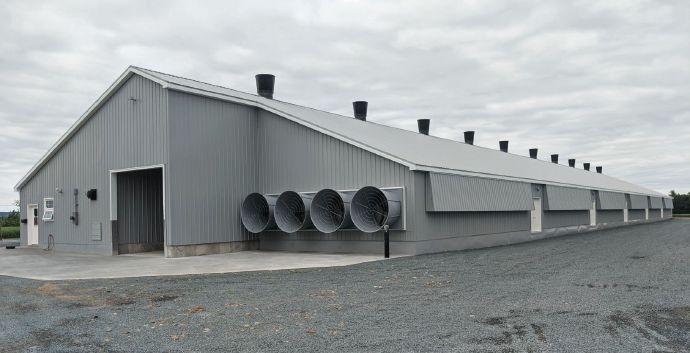
These days, whether producers are retrofitting a barn or building a new one, they will face the same ventilation challenge – they must ensure capacity is adequate to safeguard bird comfort year-round while also minimizing energy costs. That said, here are some of the ways Canadian experts suggest accomplishing this feat.
INCREASING KNOWLEDGE
Producers are becoming more knowledgeable about how the different aspects of barn ventilation interact. Experts would like to see that trend continue. “There are some producers who really understand how everything should work together,” explains Kevin Weeden, president of Weeden Environments, a barn environment specialist company in Ontario. “But many need to increase their understanding so that they can make educated decisions.
“In Canada, barn fans, inlets, cool cells,
heating and more must all be set up to ensure birds are kept comfortable when the external weather is extremely cold or hot. The importance of minimum ventilation in the winter is often discounted when considering barn ventilation design. In the first week of February in Canada, every producer needs to make sure the barn is capable of providing adequate air exchange.”
ENSURING ADEQUATE CAPACITY
Indeed, in providing barn ventilation design across Ontario and parts of the U.S., Weeden and his team talk to many producers who have barns that lack adequate ventilation. For example, they often speak to farmers who have had tunnel barns built without anywhere near the fan capacity needed to produce the wind speeds for tunnel ventilation to function properly during times of heat stress.
Bill Van Heyst, a professor of engineering at the University of Guelph in Ontario who studies barn ventilation, agrees. “Simply
putting on larger or more fans in a tunnel-ventilated system may not do the trick,” he says.
Van Heyst and one of his graduate students have been working on modelling air-flow in a poultry barn using computational fluid dynamics under minimum and maximum ventilation scenarios. He believes modelling will provide a better understanding of the indoor barn environment, which in turn will lead to enhanced spatial analysis of wind velocity, enhanced prediction of ammonia and particulate matter generation and other factors.
Ian Rubinoff, a veterinarian and director of global technical services at Hy-Line International, adds that when converting flat deck houses to aviary house layer barns, producers must upgrade their ventilation. Aviaries require much more ventilation because of physical barriers and the greater number of birds they house, he explains.
“I would actually argue that in an aviary or a free-run layer barn, two ventilation
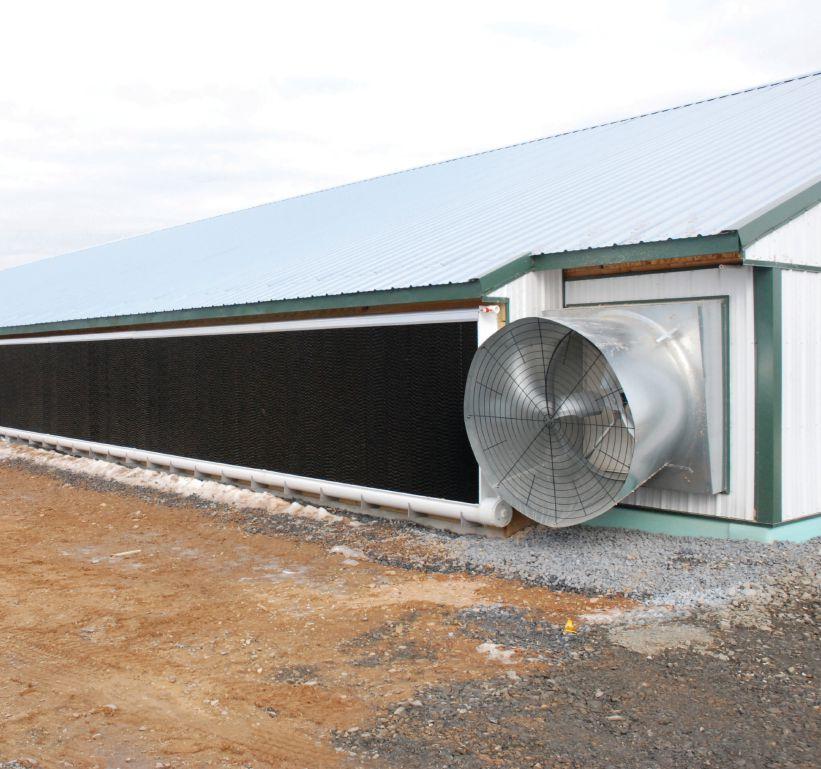
A tunnel-ventilated barn with attic inlets and modular sidewall inlets, which combine to help with both continuous baffle and freezing.
systems are best – a minimum ventilation side wall system for winter and a tunnel ventilation system for summer,” Rubinoff says. “Producers can switch back and forth and always have the ventilation needed for proper temperature control and to keep litter dry to ensure good air quality and welfare. Many smaller cage-free houses (with less than 100,000 birds) being built in the Midwest U.S. at this time are putting in dual ventilation systems.”
Another common ventilation issue that producers sometimes don’t understand is that adding a cool cell is going to require 20 per cent more ventilation power, explains Bryce Bramhill, operations manager at Weeden. Because the cool cell increases air pressure, this acts to lower windspeed. Thus, more fan power is required to achieve the same speed. And whereas five years ago cool cells were unique in Canada – at least in Ontario – Bramhill says they are very common now with the hot summer weath-
er that’s becoming the norm.
“A cool cell is part of every quote now,” he observes. “We always recommend that every producer sits down with an experienced person who can explain ventilation so they can make educated decisions and select the best design. Producers need to understand whether or not they actually need a cool cell, cross flow versus tunnel systems, what continuous baffle or modular sidewall inlets provide, what attic inlets can do, etc. They need to understand their particular barn and also the weather that’s typical in their geographic area as well.”
LARGER AND MORE EFFICIENT FANS
In terms of fan performance, Weeden advises producers to compare the results of the annual tests at BESS Lab at the University of Illinois, a well-known and trusted fan analysis facility.
Due to their high performance, lower
With effective farm hygiene protection for poultry
No matter what kind of pest control you need to protect your poultry, Bayer is ready with dedicated solutions you can trust. Bayer’s new family of farm hygiene formulations deliver proven protection against crawling and flying pests, including darkling beetles, for all standard poultry structures and facilities. From innovative residual premise sprays to our ready-to-use fly bait, Bayer has the fast-acting, long-lasting results your animals need for healthy development.
Key ventilation trends for 2021
Increasing Knowledge Level: Producer understanding of how barn ventilation works and the merits of various options is growing, enabling them to make more educated decisions.
Ensuring Adequate Capacity: Across the industry, under-ventilated barns are becoming scarcer and well-ventilated barns are becoming more widespread.
More Efficient Fans: Producers are adopting larger, direct-drive, variable speed fans because they provide the most efficiency.
Avoidance of Inlet Freezing: While many producers still struggle with this problem, more of them are implementing strategies and tools that solve the issue permanently.
Better Remote Monitoring: Barn ventilation and environment sensors are becoming more specific, allowing easier and more effective remote management.
Barn Management
maintenance requirements and their now-lower costs, direct-drive, variable-speed fans are becoming much more common. They generally produce higher air volumes per minute per watt than similar single-speed, belt-driven fans.
“The use of more of these fans is great for
low-ventilation scenarios like winter when you want to have more incremental increases in your ventilation,” Van Heyst explains. “This helps prevent excessive heat loss due to over-ventilation with simple on/ off type fans.”
Overall, many experts consider large,
direct-drive variable-speed fans a new, exciting development that can save producers a ton of money. For example, the Weeden team says that a producer running two 54-inch VAL-CO V-Fans running at 50 per cent speed can move 13,400 CFM (cubic feet per minute) at 0.05 static pressure while achieving 53.8 CFM/ watt, which is more than a 300 per cent increase in efficiency.
And, as poultry barn size has increased, companies are marketing larger and more powerful fans to ensure efficient air movement. In 2020, the Weeden team installed exhaust fans as large as 72 inches. They recommend only using smaller fans if absolutely needed and to, conversely, use as many larger fans as possible. That’s because, variable speed or not, larger fans are more efficient.
PREVENTING BAFFLE AND FREEZING
In terms of incoming air, Bramhill says most producers are still battling with both continuous baffle and modular side wall inlets freezing up during the coldest parts of winter. To avoid this situation, which can negatively affect both bird health and power consumption, he recommends one of two solutions.
The first is to use a side wall inlet designed for good performance in frigid temperatures. “The other is to use attic inlets where tempered air from the attic is introduced to mix with the warmest air in the barn having risen to the ceiling, and then it’s gently mixing that air over heaters,” Bramhill says. “More and more growers are using attic air, and I don’t think we’ve equipped a barn in the last two years without them.”
Van Heyst believes any method of preheating air is always good, and that a lot of barns are designed with the incoming air first entering the attic space and then being dropped through the ceilings as a way of heating the air up a bit. “Pre-heating the incoming air does require specialized equipment, usually in the form of an air-to-air heat exchanger,” he adds. “These range in size to units that are mounted
Continued on page 28
New fans and ventilation systems
The
latest offerings
on the market boost both barn energy efficiency and bird comfort.
By Treena Hein
Following up on Canadian Poultry’s 2020 report on fan and barn ventilation developments, here is a round up of some of the exciting new offerings on the market this year. Now, more than ever, the latest versions of both fans and inlets are focused on increasing both energy efficiency and functionality in the poultry barn.
Fans
As expected, this year there are more direct drive fans available for producers to select from. These fans are becoming much more popular because their electricity consumption and maintenance requirements are very low – and their prices have come down.
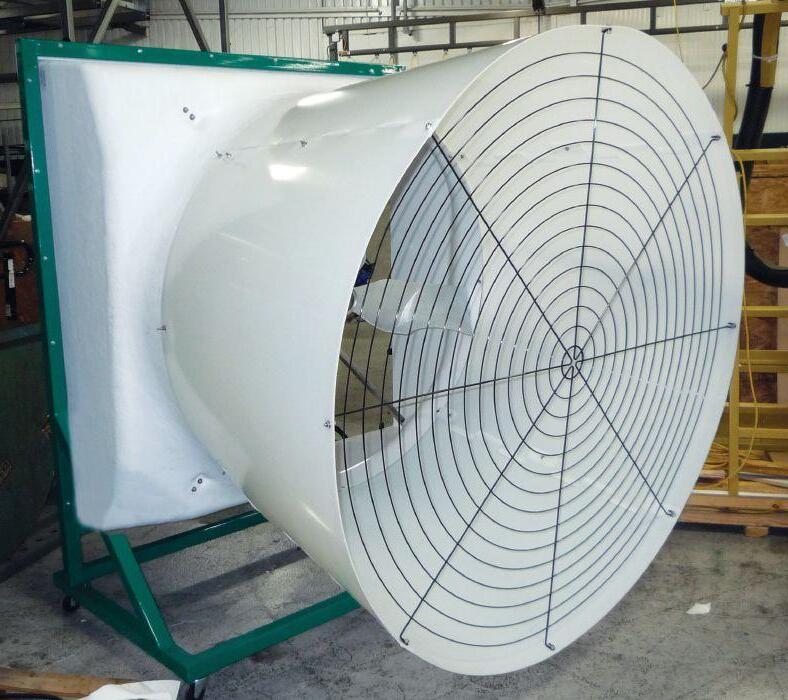
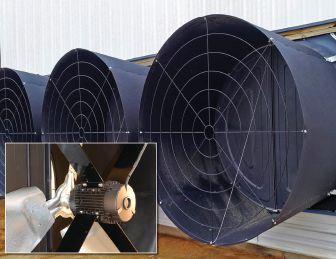
Chore-Time, for example, has introduced 57-inch direct drive models of its ENDURA fan. Like other fans with direct drive motors, there are no belts, pulleys or bearings and, therefore, no need for regular lubrication. “Fan speed is controlled automatically by a CHORE-TRONICS 3 Controller, in combination with a variable frequency drive,” says Mindy Brooks, global marketing director. The company selected fan materials to provide corrosion resistance and maximum durability across the barn temperature range. These fans also gain added efficiency due to their HYFLO shutters, which Brooks explains do not suffer the typical
12 to 15 per cent efficiency loss and air speed typical of traditional louver-style shutters. “So, air speed is maintained to the end of the flock, when it is needed most,” she says.
HYFLO Shutters also improve fan performance by minimizing obstructions during operation. “A cable attachment helps maximize efficiency by allowing the HYFLO
Doors to float left or right together,” Brooks says.
“Other features of the direct drive ENDURA fans include a black, high-density polyethylene cone for light control, a long glass fiber composite shroud and HYFLO doors for durability. The units are engineered to have a slight downward tilt, making them self-draining.”
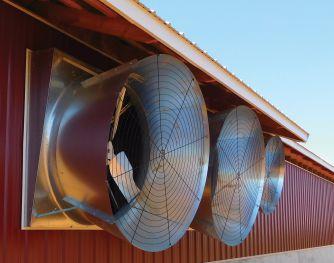
Direct drive fans like the ones pictured here are becoming much more popular because of their energy efficiency and low maintenance requirements.
The ZEW Flatwave compact wall inlet from Munters.
Executive Committee 2021/2022
Darren Ference Chair
Board of Directors
Darren Ference - Alberta
Calvin McBain – Québec
Brian Ricker - Ontario
Calvin McBain Vice-Chair
Shawn Heppell – British Columbia
Jelmer Wiersma – Saskatchewan
Mike Reimer – Manitoba
Think TurkeyTM
Brian Ricker Executive Member
Marco Volpé – New Brunswick
Steven Eadie – Nova Scotia
Doug Hart – CPEPC
Michel Pépin – CPEPC
Adam Power – FPPAC
Turkey Farmers of Canada and the Canadian Poultry and Egg Processors Council are entering into year three of a fully integrated, bilingual marketing campaign aimed at keeping turkey top of mind for Canadian consumers.
Learn more at thinkturkey.ca and on social media.
Scott Olson - Alberta Alternate turkeyfarmersofcanada.ca
Round Up
DACS
The new 57-inch MagFan ONe from DACS has achieved best-in-test at the BESS Lab at the University of Illinois, a well-known and trusted facility where experts evaluate fan efficiencies each year. That superiority, explains DACS president Niels Dybdahl, stems from a body design that allows air to pass through the unit with minimal power consumption.
The MagFan ONe can run with either an on/off set-up or with a variable frequency drive (VFD). The BESS Lab analysis showed a performance of 40,900 CFM (cubic feet/ minute), 28.7 CFM/watt at 0.00 WC (measurement of static pressure).
DACS also now offers the MagFan Mini, a 30-inch wall-mounted direct drive fan with a capacity of 11,050 CFM and 23.5 CFM/watt at 0 Pascal (static pressure). Like the MagFan ONe motor, the MagFan Mini’s 0.3 kW motor can run in both on/off mode (60 Hz operation) or VFD mode, Dybdahl explains.
“Speed controlling via VFD allows for a 70 per cent reduction in electricity consumption and also brings a more predictable airflow pattern due to the variable fan speed,” he says. “Also, the more predictable airflow pattern ensures sufficient speed for the incoming air to travel far enough to be properly warmed before moving down to bird level.”
There are no replacement parts needed and no maintenance requirements for the MagFan Mini.
Both the MagFan and the MagFan Mini can be equipped with the MagDoor shutter system. MagDoor is a fast-operating roller door that substitutes conventional shutter systems and ensures completely unrestricted airflow and unsurpassed efficiency. MagDoor, with its insulated PVC segments, seals off a full-size wall fan like MagFan, to prevent backdraft and cold air ingress. Mounted in front of a MagFan with an additional fan cover on the outside fan cone, the combination offers excellent thermal insulation and air tightness.
VAL-CO
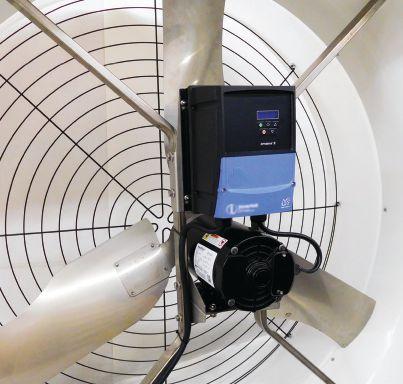
VAL-CO’s new V-Fan models also have a direct drive VFD and their permanent magnet alternating current (PMAC) motor
In A New Direction We Are Moving
You know Chore-Time’s ENDURA fans for their reputation of reliability and durability. Now we are taking this proven design and moving it further – adding even greater reliability and superior energy efficiency with an affordable direct-drive motor design.
» One of the industry’s highest air flow ratings – up to 32,100 CFM.
» Variable speed function minimizes operation costs.
» Low maintenance – no belts, no pulleys and no bearings.
ENDURA® Direct-Drive Fan
Round Up
provides greater efficiency than induction VFD-driven motors. BESS tests results show that a 54-inch V-Fan delivers up to 35,000 CFM at top speeds and provides up to 62.7 CFM/watt at low speeds; a 36-inch Fibreglass V-Fan delivers over 14,000 CFM at full speed and up to 43.0 CFM/watt.
The two sizes are available in galvanized, Z-Material and fibreglass finishes. Sean Francey, director of customer support, says that, in addition to energy savings, this fan will “potentially eliminate the need for smaller-size fans for minimum ventilation.”
Exhaust and heat recovery
Exacon now offers the AF24MQIE2 exhaust fan with multi-fan motor, with BESS labs test results of 14.0 CFM/watt at 0.10-inch static pressure (with cone). Exacon also offers the 54-inch direct drive variable speed fan from Better Air.
Other new offerings from Exacon include the Avi-Air Heat Recovery system, which preheats incoming air to help reduce heating costs. “The intake fan can be inversed in warm weather to work as an exhaust fan, turning the Avi-Air into a two-stage ventilation unit to evacuate stale, moist air,” president Mark Relouw says.
New inlets
In addition, Exacon offers the new TPI Air Inlets’ model called Ventum. Its universal dimensions make it easy to replace existing inlets. The curved inner valve helps guide air downwards to the birds during maximum ventilation. The polyurethane material (R-value of 0.93) offers high insulation
VAL-CO’s V-Fan has a motor with a variable frequency drive (VFD), but it’s also a permanent magnet alternating current (PMAC) motor, yielding greater efficiency than induction VFD-driven motors.
• Exacon’s brand name since 1987
• Available in sizes 12” to 60”
• White or Black polyethylene flush mount housings
• Designed to meet the rigorous demands of farm/agricultural ventilation
• Energy efficient Multifan, MFlex or North American motors
• Fiberglass housings available in 50” and 60” diameter
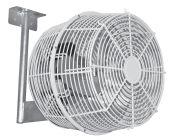
GREENBREEZE BASKET FAN
• Designed for more air flow and consistent pattern
• Precise guard spacing reduces air restriction
• Easy to open front guard allows easy cleaning
• Includes hanging bracket to allow direction adjustment
• Variable speed, efficient motor 115/230v
value in cold weather.
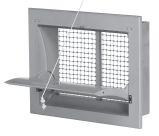
Hog Slat has also added a new series of insulated side wall inlets to its product line up. They feature insulated curved inlet doors that directs incoming air to the ceiling for effective mixing before dropping to floor level, explains Austin Baker, Hog Slat’s ventilation director. Their plastic construction resists corrosion, while the flexible door seals tightly to minimize heat loss and air infiltration. The inlet series comes in two sizes, 13 by 44 inch rated at 3,700 CFM and smaller eight by 44 inch rated at 1,700 CFM.
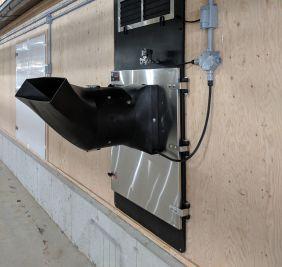
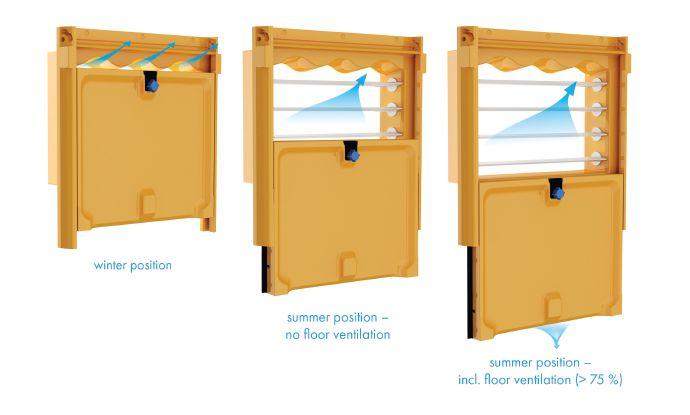
Munters has introduced the ZEW Flatwave compact wall inlet, which has air flow and air guidance decoupled, and four individually adjustable air conduction lamellas. In the winter position, the inlet allows a high throwing range of fresh air at minimal opening, but air is guided slightly upwards. During the summer, the flap allows an intake of warm fresh air along the wall downwards when open 75 per cent or more.
Munters has also released Weather Hood for Professional 2900 and Flatwave inlets. They provide improved resistance to high wind conditions and stress cracking, and have a white exterior with opaque black interior for improved light reduction.
Lastly, Munters’ new Horizon Tunnel Door is available in 36-inch or 42-inch heights and built to any length. They provide multi-row control using a single actuator and have a closed-cell foam interior, allowing the doors to achieve a R-Value of 8. These doors open to near 90° for maximum airflow and are designed for easy assembly with welded bracketry, minimum fasteners and minimum adjustments.
TPI WALL AND CEILING INLETS
• TPI is a well known manufacturer of high quality polyurethane inlets
• High quality and high insulation value results in precise manufacturing delivering high tolerance for better ventilation control
• Wall inlets, ceiling inlets and tunnel inlets
• TPI wind hoods and wind hoods with built-in light trap also available
PUR AG AIR FILTRATION SYSTEM
• High quality L7 Pathogen barrier filter with prefilter significantly reduces the chance of air transmitted diseases. (ie bird flu and other influenza viruses)
• Clarcor provides a complete system such as filter housing frame designed for eaves and side air inlets
• This system makes installation of filters easy and practical plus reduces the risk of non-filtered air from entering the building
GENIUS I-TOUCH VENTILATION CONTROL
• The well known and proven Genius control line is now available as a Touchscreen interface
• Navigates like an I-Pad by simply touching, swiping or dragging on a 7” or 10” touch screen
• Available with up to 8 variable stages and between 15 to 30 on/off relays
• A slave is available to expand to 50 on/off relays Many options including light control, bird scales, perch scales and bin scales
• Built-in wifi allows easy access to the internet for managing, viewing and recording history on FarmQuest website
LIGHT TRAP/DARK OUT
• High light reduction
• Low resistance to air flow
• Simple Installation
• Easy to clean
• Uses P.v.c. snap release spacers
Chore-Time has introduced direct drive models of its ENDURA Fan. Like other direct drive variable-speed fans, they are low maintenance and maximize energy efficiency.
The pursuit of peak immunity
Research shows promising results in the search for non-antibiotic necrotic enteritis protection.
By Lisa McLean
Poultry producers around the world are familiar with the devastating effects of necrotic enteritis (NE), a gastrointestinal disease that causes mortality in young broiler chickens. To date, the only way to successfully control disease outbreaks is through the preventative use of antibiotics – an option that will soon be off limits, as the industry transitions away from the practice.
Professor Susantha Gomis of the Western College of Veterinary Medicine at the University of Saskatchewan has taken a multi-pronged research approach to solving this complex issue. His work has yielded promising results toward NE prevention, without the need for antibiotics.
“In order for antibiotic-free chicken farming to be successful in Canada, we must figure out how to activate a broiler’s immune system and keep it activated,” Gomis says. “The question is how to protect young broilers against NE when their
immune system is still developing.”
When an NE outbreak occurs, significant number of birds will die within hours or days due to clinical disease. In subclinical form of NE, birds will reduce eating and grow slowly. “Whatever vaccine we are going to produce, we need to protect birds at the intestinal level too, and prevent the disease and the sub-clinical disease.”
ON-FARM PATHOGENS
NE is caused by toxins produced by the bacterium Clostridium perfringens (CP) as it grows in the intestinal tract. The disease is influenced by several factors, including diet, immune status and stress.
Birds are at higher risk for NE when they are exposed to certain pathogens that are commonly found in Canadian broiler barns, but pathogens vary across Canada. For example, one pathogen that causes immunosuppression (a variant of bursal disease virus) was found to be circulating in more than 50 per cent of broiler barns
in Saskatchewan and B.C.’s Fraser Valley, but prevalence could vary in chicken barns in other provinces.
Gomis’ team developed an animal model and suppressed the immune system of commercial broilers with the bursal disease variant, and then challenged them with different isolates collected from field cases of NE.
EXTENDING IMMUNITY
NE outbreaks normally occur after broilers reach at least three weeks of age – once a chick’s maternal antibodies begin to wear off. But Gomis thinks accessing that early immunity – and boosting it – will allow for lifelong protection from NE.
“Let’s say the broiler bird has some protection from its parents when they were vaccinated,” Gomis says. “If we can enhance antibody protection at a high level in broilers by vaccinating broilers at hatch, it will probably be sustained.”
His team has been experimenting with
Professor Susantha Gomis’ work has yielded promising results toward necrotic enteritis prevention, without the need for antibiotics.
Most people seek help when they need it.
Farmers go it alone.
shouldn’t be any different
It’s time to start changing the way we talk about farmers and farming. To recognize that just like anyone else, sometimes we might need a little help dealing with issues like stress, anxiety, and depression. That’s why the Do More Agriculture Foundation is here, ready to provide access to mental health resources like counselling, training and education, tailored specifically to the needs of Canadian farmers and their families.
giving vaccines to broilers once their immune system is activated, for a combination of immune stimulation. “Our approach is to use NE vaccine formulation and a very small piece of synthetic DNA to stimulate the bird’s immune system.”
PROOF OF CONCEPT
To test their approach, the team developed an animal model and a delivery system.
They manufactured a nebulizer chamber that allowed them to test their approach on a commercial scale, by facilitating aerosol delivery to 8,000 birds at a time. A sample of broiler chicks received the treatment that combined an immune boost, and they were later challenged with a lethal dose of E. coli
“We found a significant level of protection in broiler chicks against the E. coli challenge. They were ready to fight against deadly bacterial infection,” Gomis says. The research, published in Poultry Science
in January 2021, represents a significant breakthrough in broiler chick immunity.
Gomis hopes that by incorporating the concept of giving the vaccine with different models of immune stimulant, they may be able to stimulate the immune system so that birds only need a single shot of vaccine.
NEW CLUES
Due to the complexity of NE, Gomis says they need to approach it from all angles.
“We are taking the conventional approach to use pathology to understand the disease at the clinical and subclinical level, and we continue to extend our knowledge about the bacterial level, and now we are using new tools to understand the tiny fractions of information associated with NE.”
His team has recently begun working with The Metabolomics Innovation Centre at the University of Edmonton. Metabolomics is an emerging field of research specializing in the analysis of small molecule
metabolites found in living organisms
“It should help us determine how a bird becomes sick, or protected. With this tool we are able to look at panels of biomarkers. We have seen promising results in a short period,” he says. Gomis says his team is still in the lab, developing proof of concept. As a next step, the NE vaccine should be tested in field conditions across Canada.
“There is real potential that we can deliver a vaccine in the hatchery and boost immunity at the same time. That would result in a one-shot vaccine, and make a big difference when the poultry industry can no longer use preventative antibiotics,” he says.
This research is funded by the Canadian Poultry Research Council as part of the Poultry Science Cluster, which is supported by Agriculture and Agri-Food Canada. Additional funding was received from Chicken Farmers of Saskatchewan.
Ready for your custom solution? Contact your Cumberland dealer for an expert who stands with you and behind the
Across the Canadian Poultry Industry
In every sector, young leaders are emerging and demonstrating innovation and dedication to drive the industry forward and continue to ensure that poultry production in Canada remains strong and sustainable.
Hatchery ventilation
Experts outline the top mistakes to avoid.
By Melanie Epp
The developing embryos inside incubating eggs require a balance of correct temperature, humidity and carbon dioxide to oxygen ratio. Striking this balance is only possible if hatchery rooms are properly ventilated. While most producers understand the essentials of hatchery ventilation, industry experts say they’re still seeing ventilation problems on-farm.
Optimal embryo development takes place in a consistent environment. Incubators should only have to fine tune the air entering the room. In Canada, where seasonal temperatures vary widely, this can be especially challenging.
In an online guide on hatchery ventilation essentials, Aviagen points out that incubator manufacturers make certain assumptions about the temperature and relative humidity of air entering the machine. These assumptions allow them to determine what the heating and cooling capacity of a machine should be in order to best control the internal environment.
Manufacturers usually include recommendations for variables such as: Incubator air requirements per 1,000 eggs; minimum room air changes per 1,000 eggs; room air pressure; and exhaust plenum air pressure. According to the Aviagen guide, the important aspects of ventilation, therefore, are air volume supply, room pressure, air temperature and relative humidity.
Tolga Erkus, incubation specialist at Aviagen, says ventilation mistakes can be costly, as they cause hatchability, chick quality, predictability and biosecurity problems. While it’s difficult to put a number on what these problems cost producers, Erkus did say even a one per cent loss could be costly.
All this being said, experts have weighed in on the most common hatchery ventilation mistakes producers make and how to avoid them.
1. Uneven air distribution
When it comes to proper ventilation, Erkus says it’s important to create an accurate and
protected reference point for pressure sensors. Common errors he’s seen include uneven air distribution, including drafts and improper airspeed in chick holding rooms.
Some hatcheries, he says, are using neutral pressures instead of slightly negative pressure at exhausts. Some are using high-range pressure sensors for low-pressure set points.
To avoid ventilation issues, Erkus recommends buying air-handling units with 20 per cent higher capacity. “This will extend the life of the systems and give a chance to compensate for problems in challenging situations,” he says.
Erkus also recommends using efficient pressure control systems in setter and hatcher rooms. Well-insulated doors should be kept closed.
“Avoid using high-range pressure sensors for regulating very low pressures,” he adds. “Don’t forget that pressure sensors have one per cent error; using a sensor error rate higher than the set-pint will cause serious
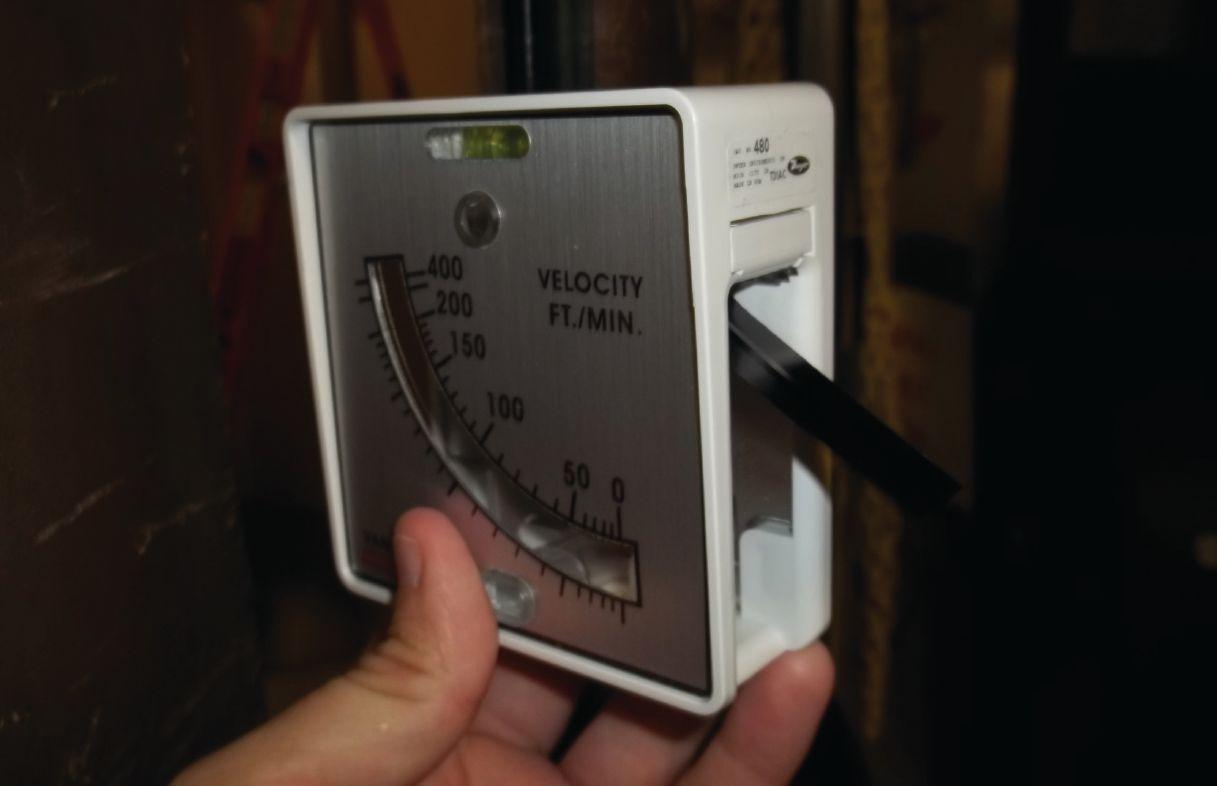
Use a manometer or anemometer to ensure air is flowing in the correct direction. Check airflow between clean and dirty areas.
Management
fluctuations.”
Finally, he recommends cleaning air ducts and exhausts and calibrating pressure sensors and dampers periodically.
2. Improper air handling units
Cobb-Vantress hatchery specialists Tommy Lively and Scott Jordan point out similar mistakes in the hatchery. They’ve seen undersized air handling units or units not designed for hatchery ventilation in use.
“When the air handling unit is undersized, it is not able to provide enough air supply for the incubators or hatchers in the room, resulting in negative pressure in the fresh air plenum,” Lively says. “Negative pressure can cause overheated embryos and a spread in the hatch window due to microclimates inside the machines, which will increase seven-day mortality.”
3. Incorrect use of exhaust fans
Most hatcheries have a very large exhaust fan in the chick takeoff room to extract loose fluff during the pull process, Jordan says. This room should be negative to the clean tray room as well as the corridor hallways.
However, some hatcheries have a very large exhaust fan with little or no inlet. The exhausted air must come from some other place in the hatchery, often the nearby hatcher or incubator rooms, he says.
The exhaust fan ends up stealing air from the incubator or hatcher room and causing negative pressure there, Jordan says. “When air is also being stolen by an extraction fan, the air handling unit is unable to keep up with the ventilation needs, resulting in negative room pressure,” he says.
4. Incorrect airflow
Another mistake Lively and Jordan often see is air flowing from dirty to clean areas. Air should always flow from the clean area towards the dirtier areas, they say.
Since chick down is a source of bacterial contamination, it can cause infection and lead to an increase in seven-day mortality, Lively says. Use a manometer or anemometer to ensure airflow between the clean tray room and the chick takeoff room is flowing in the correct direction.
Air should enter the clean tray room and move toward the chick takeoff room, Lively says. The optimum place to take this reading is close to the tray washing machine, he adds.
5. Poor door management
Rui Silva, a ventilation specialist at Jamesway Chick Master Incubator Inc., has seen several ventilation issues that impact quality and biosecurity, including poor door management.
When rooms are improperly sealed or where door management is poor, air volume coming from the HVAC system will have to increase in order to compensate, Silva says.
As a result, energy use and associated costs will rise, and the facility’s overall ecological footprint will increase. Poor ventilation can also lead to biosecurity issues, as air travels from dirty to clean
areas in the hatchery, Silva says.
6. Rooftop units mismanaged
Another issue Silva often sees involves rooftop discharge. Air temperature discharge, especially in rooftop units, is much higher than the set point on heating mode and much lower than the room set point on cooling mode, Silva says. The air also enters the room at a higher speed. Therefore, if the air of discharge grills is directed to the machines close to the grilles it can cause imbalance inside the machine, he says.
7. Poor humidity control
Poor humidity control is also an issue in some hatcheries, Silva says. When humidity is too low dampers remain at minimum (low O2/high CO2). As a result, the machine compensates with spray, which leads to cold spots, wet eggs and a cold floor. The machine then calls for heating, creating imbalance between heating and cooling.
When humidity is too high dampers open to compensate, leading to excessive CO2, poor humidity loss, poor embryo development and low chick quality, especially in old flocks, Silva says.
When temperatures outside are low, heating mode activates on the HVAC system, and the rising temperature lowers relative humidity. “In this case, humidity correction in the room is needed, with the addition of humidity – water spray – to the room via a dedicated humidification system,” Silva says.
“To have a consistent RH value is key to a stable incubation operation, avoiding or reducing the need for the incubator machine to spray inside and lead to an unbalanced and inefficient operation.”
Basically, the more stable the air is with regards to temperature, relative humidity and pressure, the more efficient incubators will operate. Efficient incubators shorten the hatch window, and improve day-old chick uniformity and hatchability rates.
Improved efficiency will be reflected in all key performance indicators, including feed conversion ratios and a reduction in overall cost per kilogram, Silva concludes.
Ask the Vet
By Dr. Luke Nickel
The primary author of this article is Dr. Luke Nickel of Poultry Health Services, which offers a brooding program that includes guidance around creating an optimal barn environment for your flocks. Send questions for the Ask the Vet column to poultry@annexweb.com.
Air quality and poultry health
How does the air quality in my barn affect the health of my flocks?
The air quality within a poultry barn needs close attention to help achieve optimal poultry production results. It is one of the most important areas for a poultry producer to manage.
Although most modern poultry barns have full computer integration, which controls the exchange of air, producers need to make small adjustments to respond to continually fluctuating weather and environmental conditions.
Most poultry farmers in the world do not face the climate extremes that Canadian poultry producers face in both summer and winter. If the bird is housed in an unfavourable environment that is not achieving high quality air metrics it will lead to increased mortality, condemns and poor growth.
Some of the metrics to consider in providing good air quality include: Ammonia levels; dust; relative humidity; carbon dioxide; and air temperature.
The mucociliary escalator within the bird’s trachea is one of its first defences against respiratory challenges. The cilia are small hairlike structures that cover the inside of the trachea along its whole length. The cilia move in a coordinated motion to expel harmful bacteria, viruses and other dust particles that become stuck in the mucous secretions of the trachea.
For this physiological process to work effectively, it is reliant on integrity of the tracheal lining and proper mucous secretions. Any damage to the cilia or ability of the cells to secrete mucous will limit the
ability of the bird to clear harmful particles from the respiratory tract. It will also allow bacteria and viruses a greater opportunity to cause damage to the bird.
Ammonia
One of the most common causes of damage to the mucociliary escalator is exposure to high levels of ammonia (20 to 25 parts per million [ppm]). Ammonia is a normal by-product of poultry production. Protein consumption in a bird’s diet leads to uric acid deposition, which is eventually converted to ammonia. Some of the factors that will increase ammonia production within the litter include pH, temperature, moisture, feed ingredients, relative
Adequate ventilation will play an important role in maintaining dry litter and subsequent ammonia production.
humidity and ventilation.
If the level of ammonia production within the barn becomes too high it will cause ciliostasis (paralysis of the cilia) or even deciliation within the trachea. This process will lead to trapped particles (bacteria, viruses and dust) that cannot be adequately removed from the bird’s respiratory system and end up deeper in the lungs and air-sacs.
Adequate ventilation will play an important role in maintaining dry litter and subsequent ammonia production. During the winter months it can become even more challenging to control litter conditions. But spending the necessary money on heating will outweigh poor litter quality and potential
respiratory health challenges.
Ammonia levels below 20 ppm can be difficult for the human nose to detect. Gas detectors and strips are available to help measure ammonia levels and aid in guiding ventilation decisions. It is important when taking these measurements to be at the level of the bird and consider the ventilation system. To get an accurate picture of the levels in the barn, experts suggest taking the reading in the morning (before max ventilation output) and prior to all the fans turning back on.
Relative humidity
have delayed gut development, impaired immune systems and stunted growth.
The easiest way to measure humidity is by having a meter in each barn or floor. It is best practice to have these installed at the level of the feed-pans to get an accurate reading each day. If the RH is above 70 per cent experts suggest increasing the run time of fans or adding another stage to the curve.
If the RH is below 50 per cent experts suggest moving to minimum ventilation and decreasing the run time of the fans if you are on a set timer.
Barn temperature
Another important factor to consider is the air temperature within the barn. The air temperature in the barn should be consistent during the day and evening, with the goal of minimizing large fluctuations.
Again, air temperature needs to be measured at the bird height and calibrated properly to ensure consistency.
It is important to acknowledge the value of maintaining good air quality in your poultry barn. After all, it will have a tremendous effect on the health and performance of your flocks!
Another key component of air quality is relative humidity. For optimal results, experts recommend keeping relative humidity (RH) between 50 to 70 per cent. If the environment is above 70 per cent for an extended period it will cause the litter to pick up increased moisture.
Once the litter starts to move in this direction It can be very difficult to correct. With the added moisture, the litter will also start to generate increased ammonia, which can lead to respira tory health issues mentioned earlier. The added moisture will also lead to increased growth of harmful bacteria, viruses, fungi and coccidial organisms as they prefer to grow and replicate in these environments.
We can also have problems if the RH falls below 50 per cent, particularly during brooding. Dewpoint is the temperature at which air can no longer hold all its water vapour and provides a more accurate reading on the effective “feels like” temperature for poultry.
Brooding at 90°F with 40 per cent RH is a significantly differ ent environment than 9°F with 60 per cent RH. Chicks are hatched in an environment that is consistently at 70 to 80 per cent humidity and then delivered to the farm. If the farm is brooding at below 50 per cent RH it can lead to dehydrating the young chicks and potentially chilling. Birds that are chilled will
Chicks that are chilled will have delayed gut development, impaired immune systems and stunted growth.
Barn Management
Continued from page 12
single fans to larger centralized heat exchangers.
“We have measured ammonia and particulate matter in one broiler barn with a centralized heat exchanger and found that the litter was drier (and hence had more particulate generation) as a result of low moisture content of the cold outside air and the higher ventilation rate that was used (venting out the moist barn air).”
TECHNOLOGY EVOLUTION
In the next five to 10 years, Weeden expects that remote control of the barn environment will continue to improve. “Already, the communication between the barn systems and the producer is improving,” he says. “You used to get an alarm with very little information provided. And now with controllers linked to your smartphone, you
“Overall, whether it’s cold stress or heat stress, it’s about the birds being comfortable.”
have instant and detailed information pertaining to which specific heater is producing too much heat or which individual fan motor has died.
“I also think that artificial intelligence will be coming in the future where controllers will begin to learn and anticipate user preferences to automatically make improvements in environmental parameters. Sensors are also evolving and I believe ammonia level, for example, will be another parameter that will soon be commonplace in any ventilation set up. And there will clearly be much more use
of wireless systems.”
As the genetics of broilers, layers and turkeys evolve to enable faster growth and climate change effects worsen, Weeden says ventilation systems will continue to adapt. He says that even with modern technologies, producers still need to carefully plan what they select and how it will interact with existing equipment. “Overall, whether it’s cold stress or heat stress, it’s about the birds being comfortable, so educate yourself before you make your decisions to maximize flock health and avoid costly retrofits.”
Barn Spotlight
Davalen Enterprises Ltd.
Sector
Layers
Location
Abbotsford, B.C.
The business
Henry and Deb Penner have owned Davalen Farms Ltd. for about 40 years. The egg farm includes seven barns and a 100,000-bird quota. For the past several years, barn managers Mark Doerksen and Dave Hiebert have run the operation full-time.
The need
With their conventional barns aging, the team thought it was time for an update. Also, with the regulations stipulating that producers must phase out conventional housing by 2036, they wanted to get ahead of the curve. Thus, they decided to build a new enriched barn to move half of their production into.
The barn
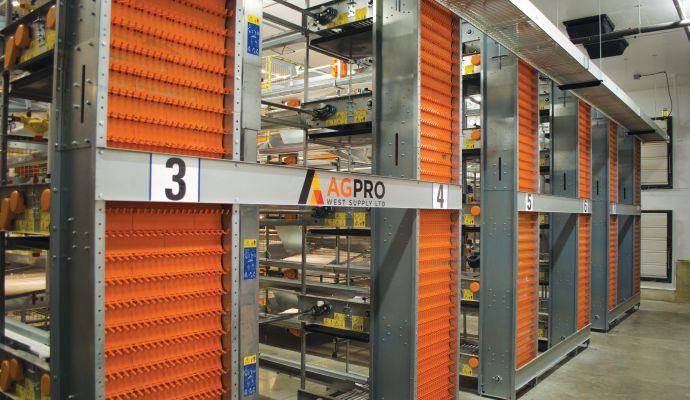
Working with AgPro West Supply, they selected Big Dutchman’s Avech 2240, the company’s widest enriched system, “so we can get the best bang for our buck,” the managers say. The barn includes five tiers and four rows. They installed ceiling exhaust fans and inlets, which is uncommon in the Fraser Valley region. That’s because there was another barn with side wall inlets only 14 feet away. The barn opened in February and the managers were impressed with the climate inside. “The temperature is just rock solid – we’re only half a degree off from front to back.”
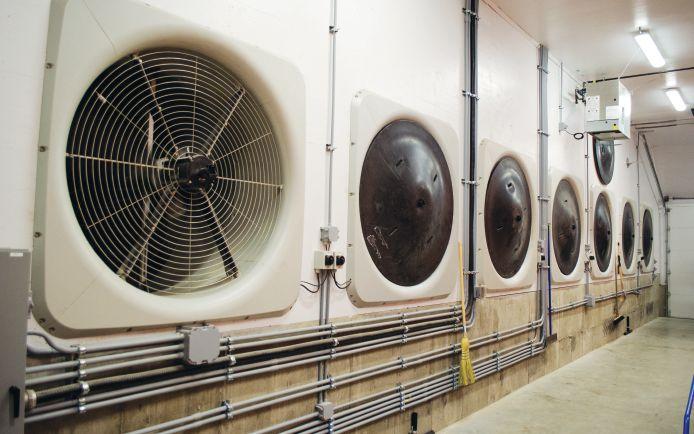
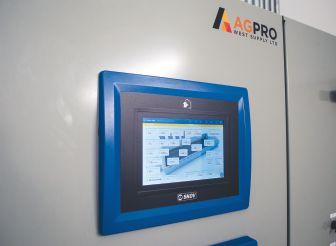
They went with full ventilation from Skov, including DA1700 Blue fans and DA600 chimney fans.
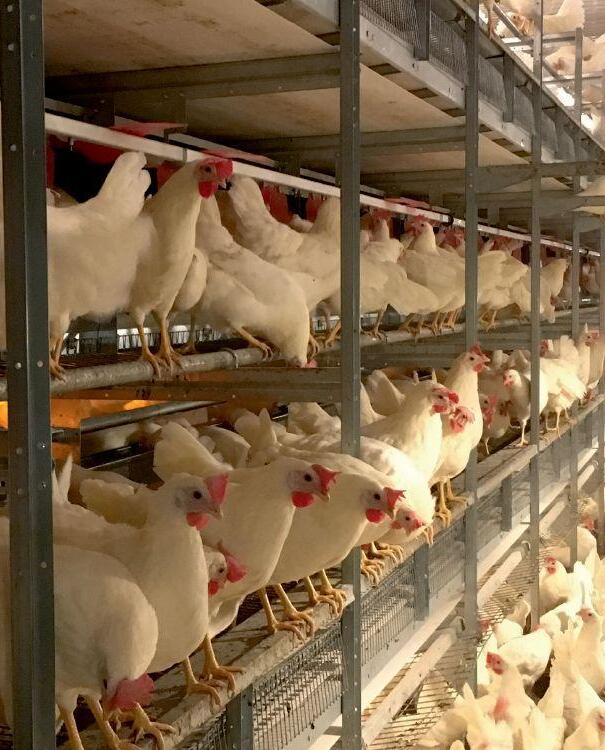
The barn includes five tiers and four rows of Big Dutchman’s Avech 2242 enriched system.