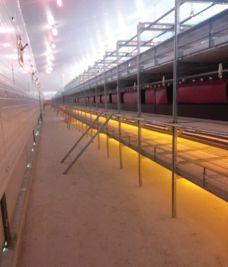
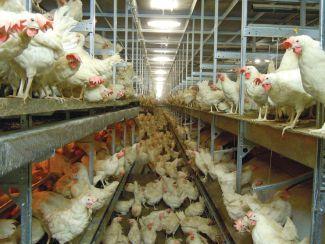
If you could protect your farm this way, you wouldn’t need any cleaners or disinfectants.
These are some of the products eligible for the Vetoquinol Club points program. Sign up today at vetoquinolclub.ca and reap the benefits. club
Vetoquinol would like to remind you of the importance of a good biosecurity protocol and its implementation on a daily basis.
NEED MORE INFORMATION? CONSULT YOUR BIOSECURITY SPECIALIST.
10
PRODUCTION: Poult Temperature Management
The first week of a poult’s life is a sensitive time that requires a lot of attention to ensure a good healthy start by Dr. Juan Lopez, Hybrid Turkeys (a Hendrix-Genetics Company)
12
COVER STORY: Modern Broilers
The old management rules don’t apply by Chance Bryant, technical manager, North America west region, Cobb-Vantress, Inc.
20
BREEDING: Future of Turkey Production
The industry is faced with factors such as increasing competition for land, as well as an evolving consumer, making genetic decisions more challenging by Karen Dallimore
24
INDUSTRY: Poultry Industry Meets in B.C. National issues highlight of first annual B.C. Poultry Conference by David Schmidt
10 Off to the right start 12 Managing 21st century birds 20 Designing a better bird
B.C. Poultry Conference
FROM THE EDITOR
BY KRISTY NUDDS
Turning the Tide
The rapid escalation in cage-free sourcing announcements from fastfood and quick serve restaurants in recent months has become concerning. The words “cage-free” have become a marketing gimmick, and less a about the welfare of laying hens.
Opponents of animal agriculture will look upon this tidal wave as win for animal welfare, and continually claim that these restaurant chains are answering consumer concerns over hen housing. But, I suspect that most food businesses are, for the most part, bowing to pressure placed on them from animal activist groups.
Releasing a cage-free commitment announcement has essentially become an insurance policy for a company against having its name associated with disturbing undercover videos or other forms of negative press and social media backlash.
Until recently, this battle hasn’t affected individual farmers in Canada to a great extent. It’s provided an opportunity for some to expand or transition and supply what is still considered a niche market. However, when major grocery store chains follow suit, the entire egg industry is going to be affected — and so is the average consumer.
Restaurant and foodservice providers can make blanket statements about sourcing one type of egg because it’s too complicated for them to offer, for example, a breakfast sandwich made with either an egg that’s cage-free, conventional, organic, enriched or free-range housing – it’s confusing and a logistical nightmare for their supply chains. Whether a consumer is actively choosing a particular restaurant because the eggs are cage-free or not is a moot point when virtually every chain offers the same egg option. For a consumer, the decision of where to eat becomes a
matter of convenience, price, and taste.
However, the grocery store is still where a consumer can make a conscious decision on what type of egg to buy. But that may change. In mid-March grocery members of the Retail Council of Canada(RCC), including Loblaw Companies Limited, Metro Inc., Sobeys Inc., and Wal-Mart Canada Corp., announced they are “voluntarily committing to the objective of purchasing cage-free eggs by the end of 2025” (see page 6).
No longer is the cage-free issue a way for a company to differentiate itself within a competitive marketplace, it’s now on a path to become the majority. There’s no doubt that cage-free housing offers improved animal welfare compared to conventional housing, however a multiyear intensive study by the Coalition for a Sustainable Egg Supply (CSES) determined that when all factors of sustainability were examined, including important parameters such as food affordability and environmental impact, cage-free systems did not reign supreme. The CSES study determined that enriched colony housing offered the best for the hen, farmer and consumer – yet it’s a system that is rarely mentioned by restaurants and retailers.
The Egg Farmers of Canada (EFC) hope to change this. It’s not about pitting one system against another – it’s about providing the consumer and retailers with choices, and keeping eggs an affordable source of high-quality protein.
There’s still time to turn the tide – but it’s going to be a battle the Canadian egg industry will be fighting for the next several years at least. n
U.S.A. - 1 Year $ 66.95 USD Foreign - 1 Year $ 70.95 USD
GST - #867172652RT0001
Occasionally, Canadian Poultry Magazine will mail information on behalf of industry-related groups whose products and services we believe may be of interest to you. If you prefer not to receive this information, please contact our circulation department in any of the four ways listed above.
Got Lubing? Contact your local Lubing Distributor for more detailed information about our innovative products or vist our website at www.lubingusa.com.
Scan code to see What’s New at Lubing.
Glass-Pac Canada
St. Jacobs, Ontario
Tel: (519) 664.3811
Fax: (519) 664.3003
Carstairs, Alberta
Tel: (403) 337-3767
Fax: (403) 337-3590
J. Dean Williamson Ltd.
London, Ontario
Tel: (519) 657.5231
Fax: (519) 657.4092
With more than 60 years of experience developing innovative products for poultry producers worldwide, Lubing has established a reputation of leadership by introducing new, cutting-edge technologies to the poultry industry.
Our innovative products are produced with the most modern manufacturing capabilities giving our customers a profitable advantage in productivity.
Curve Conveyors
Handle up to 60° angles
Belt Conveyors
Lengths up to 2,000 ft.
Transfer Tables
Rugged Construction - Built to last
Dirty Egg Returns
Superior design - Reliable performance
Nipple Drinking
Ideal water flow from pullets to layers
Les Equipments Avipor
Cowansville, Quebec
Tel: (450) 263.6222
Fax: (450) 263.9021
Specht-Canada Inc.
Stony Plain, Alberta
Tel: (780) 963.4795
Fax: (780) 963.5034
Grocery retailers commit to cage-free WHAT’S HATCHING HATCHING
The Retail Council of Canada (RCC) grocery members, including Loblaw Companies Limited, Metro Inc., Sobeys Inc., and Wal-Mart Canada Corp., announced March 18 that they are voluntarily committing to the objective of purchasing cagefree eggs by the end of 2025.
The grocery members of the RCC remain committed to taking a leadership role in animal welfare and have been working collaboratively to ensure the animal products they purchase meet stringent food safety standards and are raised in a sustainable and humane manner.
Guided by this approach, RCC and its members have been actively engaged in domestic and international discussions related to egg production.
“There have been significant discussions over
the last several months among producers, processors, the scientific community and consumers regarding the best approach for raising hens,” said David Wilkes, RCC senior vice-president of government relations and grocery division. “These discussions have led to the announcement our members are making today, further demonstrating our commitment to providing Canadians with responsibly sourced food.”
Wilkes commented: “This voluntary commitment is made recognizing the restrictions created by Canada’s supply management system and, importantly, this objective will have to be managed in the context of availability of supply within the domestic market.”
A key part of RCC’s approach to animal welfare issues is support for the National Farm Animal Care Council (NFACC). NFACC is the only group in the world that brings together animal
welfare groups, retailers, government and farmers under a collective decision-making model for advancing farm animal welfare.
NFACC is currently finalizing recommendations on a Code of Practice for Layer Hens. This code will provide guidance to industry on a number of areas related to sound management and welfare practices through recommendations and requirements for housing, care, transportation, processing and other animal husbandry practices.
Wilkes concluded by saying, “RCC remains firmly committed to the NFACC process and will work with other participants to not only advance our voluntary commitment to move to cagefree environments by the end of 2025, but also by ensuring suppliers adhere to the Code’s recommendations.”
The Code is expected to be finalized later this year.
Cobb Canadian Flock Awards
Synergy Agri Group of Nova Scotia is the latest winner of the award for the top Cobb500 breeder performance in Canada.
The award was presented to Synergy production manager Gary McAleer by David Engel, Cobb-Vantress technical service manager for Eastern Canada. The group was also presented with the award for the top chick producing Cobb 500FF flock, as well as the top egg producing Cobb 500 flock in Canada
Ranked on adjusted production to 65 weeks of age,
Inaugural B.C. Poultry Conference a Success
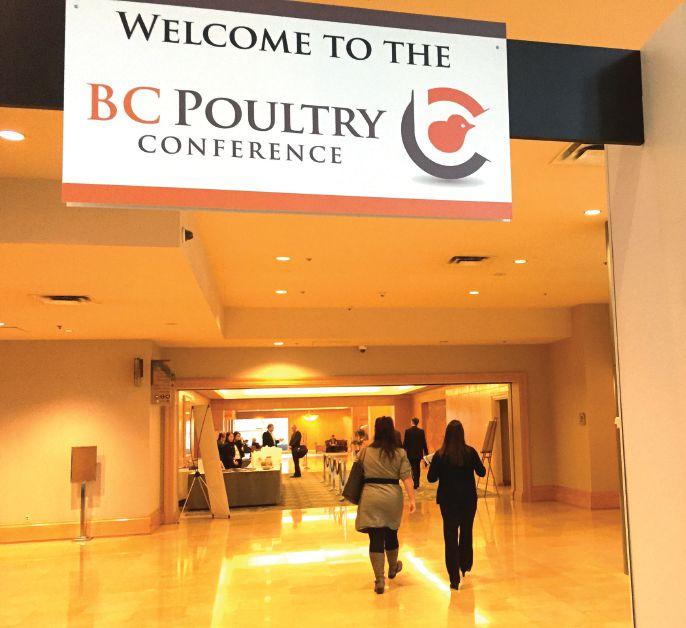
The first B.C. Poultry Conference was held March 9-11, at the Westin Bayshore Hotel in Vancouver.
The event featured all four marketing board annual meetings, 18 breakout sessions, two lunch keynote speakers, three networking receptions and a gala dinner.
By having BC Egg Marketing Board, BC Chicken Growers Association, BC Hatching Egg Producers Association and BC Turkey Association AGMs in one place, diversified poultry farmers who normally had to juggle different AGMs could now attend all meetings at one place over two days. Other industry partners and government officials were very pleased with how easily they
the company averaged 150.91 chicks/hen housed on all of their flocks. Their flock in Barn 5 won the award for the most chicks with an individual Cobb 500FF flock and shared the award for the most total eggs, averaging 159.37 chicks/hen housed and 189.9 total eggs, adjusted to 65 weeks of age.
An award was also presented for the top Cobb 500SF flock which Couvoir Boire & Frères in Quebec won for the third year running. The flock at Girard-1 achieved 151.26 chicks/hen adjusted to 65 weeks of age.
Sharing the award with Synergy’s B5 barn for the
could now schedule all four AGMs into their calendars.
There were 541 total registrants, including more than 200 B.C. poultry farmers, 70 sponsors and exhibitors and 30 out of province industry guests.
The attendance and support for the conference, was much greater than organizers expected. Conference sponsors came from all segments of
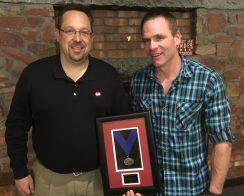
Gary McAleer (Synergy operations manager), right, accepting the award for the top overall Cobb breeder performance in all of Canada from David Engel, Cobb
highest total eggs with a Cobb 500 flock was Barn B-52 at the Pondeuses Atlantique farm in New Brunswick. This flock produced 189.20 total eggs adjusted to 65 weeks.
the poultry supply chain –farm equipment suppliers, feed companies, bankers, insurance and other service providers, processors, food retailers, restaurants and more. These sponsors played a huge role in helping to make this conference a success, according to organizers, because the sponsorship money helps to minimize costs for farmers.
Griffin Recognized for Innovation
Jenna Griffin, Industry Development Officer for Egg Farmers of Alberta was recognized with the Award of Distinction for Innovation from Alberta Farm Animal Care (AFAC) at the Livestock Care Conference, March 22-23 in Olds, Alta.
Griffin has been the driving force behind several significant enhancements for Alberta’s egg and poultry industries, including her
tenacious work in the area of euthanasia that has directly resulted in the development of innovative new technology and improved processes.
“Jenna’s commitment to animal welfare and continuous improvement, along with her project management and communication skills, makes her very deserving of this award,” said Christina Robinson of Egg Farmers of Alberta.
PEOPLE IN THE NEWS
COMING EVENTS
MAY 2016
May 4, 2016
PIC Research Day, OMAFRA building, Guelph, Ont. For more information, visit: poultryindustrycouncil.ca
May 25, 2016
Western Meeting of Poultry Clinicians and Pathologists (WestVet), Ramada Plaza & Conference Centre, Abbotsford, B.C. For more information, visit: www.westvet.com
May 26, 2016
B.C. Poultry Symposium, Ramada Plaza & Conference Centre, Abbotsford, B.C. Registration deadline is April 30. For more information, visit: canadianpoultry.ca
JUNE 2016
June 15-17, 2016
Canada’s Farm Progress Show, Evraz Place, Regina. For more information, visit: www.myfarmshow.com
JULY 2016
July 11-14, 2016
Poultry Science Association Annual Meeting, Hilton New Orleans Riverside, New Orleans. For more information, visit: www.poultryscience.org
SEPTEMBER
September 5-9, 2016
XXV World’s Poultry Congress, China National Convention Center, Beijing, China. For more information, visit: www.wpc2016.cn
ALBERTA
Canada Regains Market Access for Poultry Meat to Mexico
The federal agriculture department says Mexico has lifted a ban on Canadian fresh poultry meat imports that were put in place in 2004 after an outbreak of avian influenza.
AAFC says the industry estimates that lifting of the ban will open the way for exports including chicken, turkey and duck worth a combined
Temperature Tracking
C
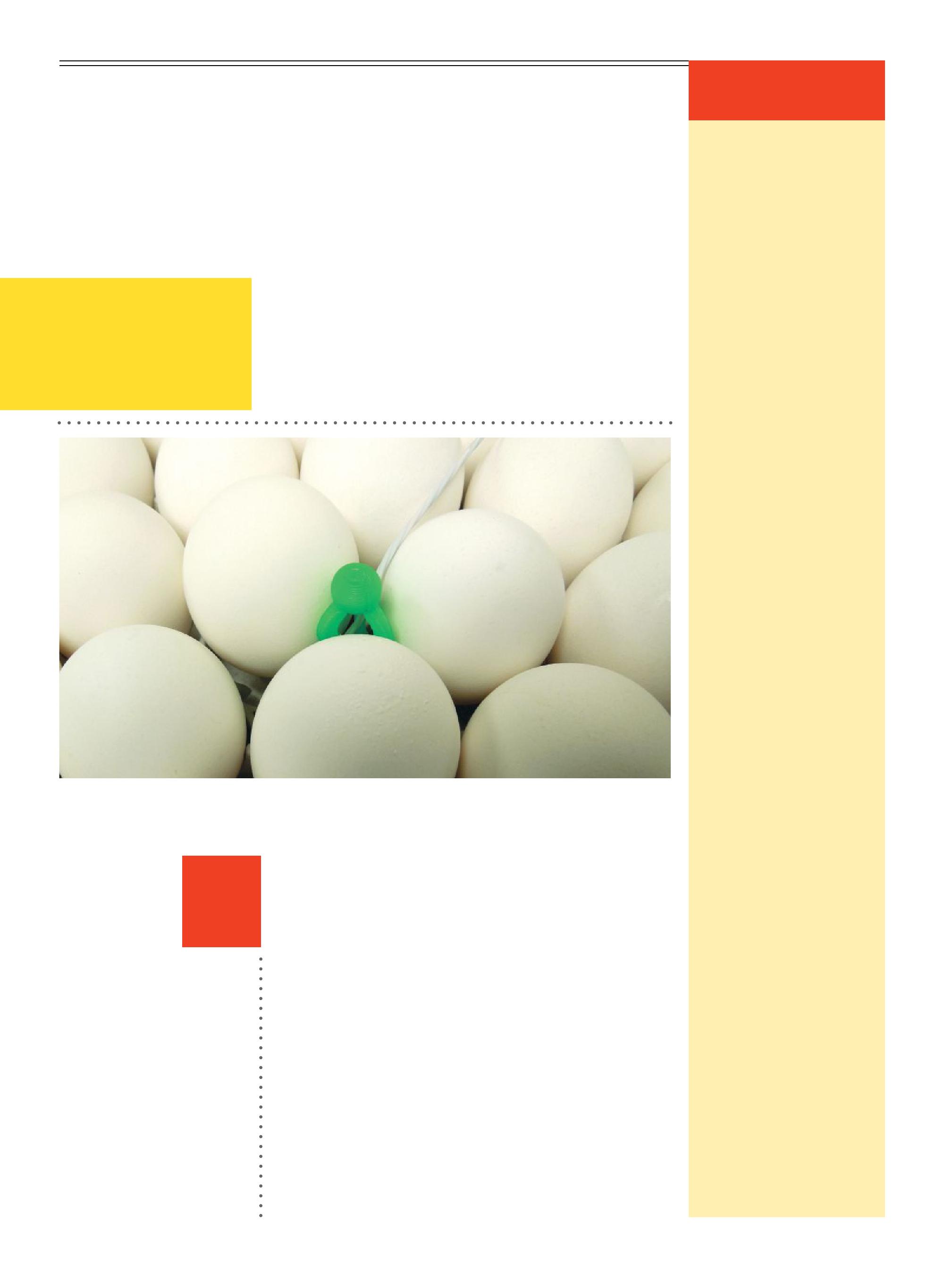
The Tempo sensor provides precise eggshell temperature data via a Resistance Temperature Detector (RTD)
hick Master is introducing a new tracking tool, Tempo, to monitor eggshell temperature in real time. Tempo is now available with Chick Master’s Maestro Hatchery Management System on all Avida Symphony setters.
The information provided by Tempo can aid hatcheries to improve chick quality.
Robert Holzer, president of Chick Master, said, “One of the key factors influencing high quality chick development is proper embryo temperature during the incubation period. Tempo now adds a new dimension by providing the
total of roughly $3 million a year. The government says it’s still working to lift the few import restrictions from avian influenza that remain in place in Mexico. The lifting of the fresh poultry ban comes after Mexico’s secretary of agriculture met with Canadian Agriculture Minister Lawrence MacAulay in February.
September 13-15, 2016 Canada’s Outdoor Farm Show, Canada’s Outdoor Park, Woodstock, Ont. For more information, visit: www.outdoorfarmshow.com
OCTOBER
October 4-6, 2016 Poultry Service Industry Workshop, Banff Centre, Banff, Alta. For more information, www.poultryworkshop.com
JANUARY 2017
January 31 - February 2, 2017
International Production and Processing Expo (IPPE), Georgia World Congress Center, Atlanta. For more information, www.ippexpo.org
user the ability to monitor egg shell temperature in each zone in the most uniform single stage setter today.”
Tempo provides precise eggshell temperature data via a Resistance Temperature Detector (RTD) which is used in healthcare services and medical research where precise accuracy is required. The temperature readings are not affected by the radiating heat that surrounds the targeted egg providing more precise temperature information allowing the user to better evaluate and monitor optimal embryo development.
We welcome additions to our Coming Events section. To ensure publication at least one month prior to the event, please send your event information at least eight to 12 weeks in advance to: Canadian Poultry, Annex Business Media, P.O. Box 530, 105 Donly Dr. S., Simcoe, ON N3Y 4N5; email knudds@annexweb.com; or fax 519-429-3094. Please write ‘Event Submission’ in the subject line.
Production Poult Temperature Management
The first week of a poult’s life is a sensitive time that
requires a
lot of attention to ensure a
good healthy start
BY DR. JUAN LOPEZ, HATCHERY EXPERT, HYBRID TURKEYS (A HENDRIX-GENETICS COMPANY)
When a poult hatches, its thermoregulatory system is not totally developed, meaning it cannot control its internal body temperature. The development of this system takes place during the first four to six days after hatch. The poults attempt to keep their internal temperature in a thermal neutral zone. When the environment is not optimal, this forces the birds to alter their metabolic rate in order to regulate their temperature. In doing so, this diverts the necessary resources from general development of the bird, and in extreme cases, it can lead to death.
Therefore, it is of utmost importance to assess poult temperature. When in the thermal neutral zone, poults are able to keep their body temperature at a constant level without altering their metabolic rate and focus on the basic requirements of growth at this time, such as eating and drinking.
TEMPERATURE ASSESSMENT
Poult temperature should be assessed at the hatchery, at the following stages:
• During pre-pull assessment
• At time of pull
ASSESSING TEMPERATURE
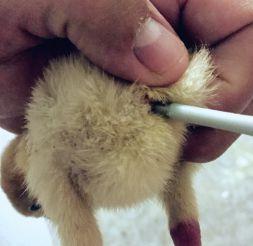
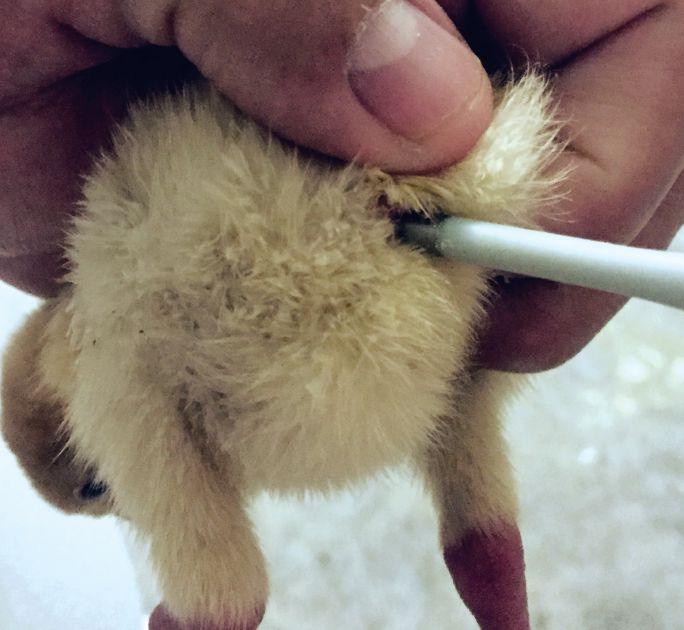
Direct assessment is achieved by physically taking the poult’s temperature via a specialized thermometer and is the best way to confirm the internal temperature of a poult. Shown here is how far to insert the thermometer.
• In the service room
• In the poult holding room Poult temperature should also be checked upon arrival at the farm for placement. Poult temperature can be assessed directly or indirectly. Direct assessment is achieved by physically taking the poult’s temperature via a specialized thermometer and is the best way to confirm the internal temperature of a poult. How to perform a direct temperature
assessment:
• Requires the use of an accurate e-thermometer such as the Braun Digital Stick Thermometer PRT1000
• Sampled poults should be taken from different areas of the containment
• Expose the cloaca, then slowly introduce the thermometer
• Thermometer depth should not exceed 6 to 8 mm (0.33 in.)
• Poults with very dirty or wet cloaca
should not be sampled
Appropriate internal temperature (thermal neutral zone) should be 39.4 to 40.0 C (103 to 104 F).
Indirect assessment includes identifying particular behaviours. Poults naturally change their behaviour to compensate for temperatures that affect their thermal neutral zone. For example, significant changes in vocalization can indicate the environment is too cold or too hot. The following are examples to consider when evaluating poult temperature indirectly.
Indications that the environment is too cold: Poults will huddle together, and refrain from eating or drinking. Indications that the environment is too hot: Poults will pant, and poults will
open their wings.
Pre-warming the barn prior to poult placement is an important step in achieving the target environmental temperature. When both the environmental temperature and the poult’s internal temperature are within appropriate ranges, you will find the poults are quiet and evenly spread out in their surroundings.
The best way to be sure the poults are maintaining an appropriate internal temperature, at any stage during the first week, is via direct assessment with a thermometer.
Indirect assessment is important to consider and a good indicator of poult temperature. Additionally, poult temperature can be taken at the hatchery and during transport via weight loss assessment. n
Here is an example of how to take a poult’s temperature
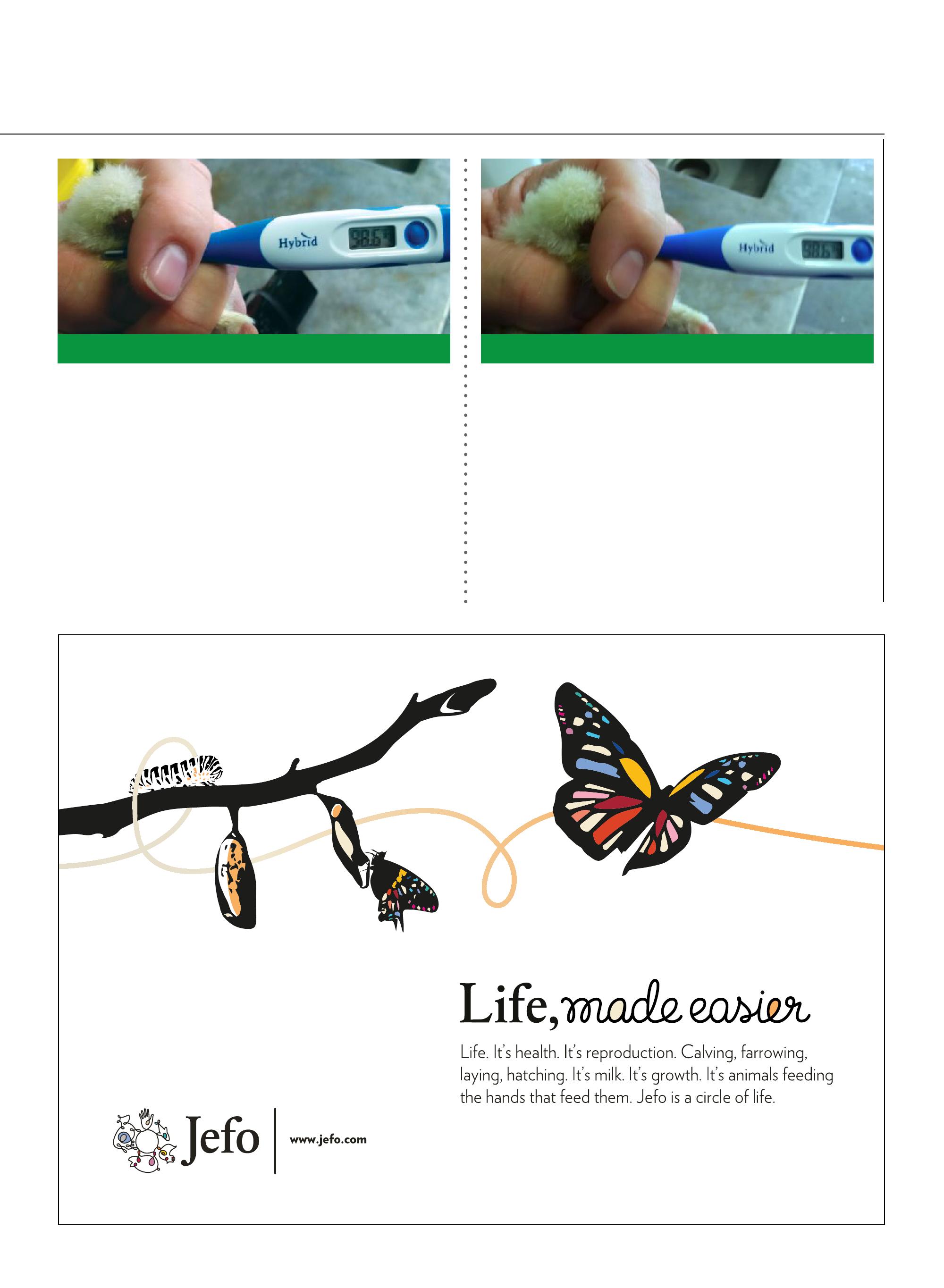
Here is an example of how not to take a poult’s temperature
Cover Story
Modern Broilers
The old management rules don’t apply
by Chance Bryant, technical manager, North America west region, Cobb-Vantress, Inc.
Every year, we strive to bring innovative solutions to every facet of the poultry industry, including genetics. As birds continue to evolve, so too must our management practices.
In 2016, pullets, hens and broilers are vastly different genetically than they were 30 years ago. Today’s birds want to grow faster. They are more feed efficient. And these traits are passed down through breeding stock.
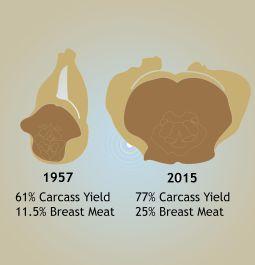
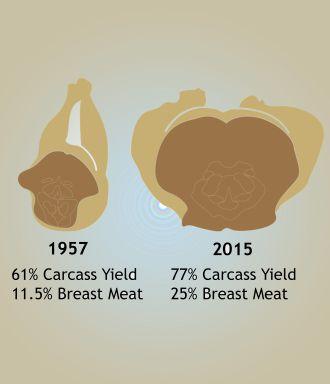
When comparing benchmarks such as average daily gains (ADG), weight at 42 days of age and meat on carcass, broilers in 2010 were roughly 50 per cent larger than they were in 1980.
Yet many of the standard management practices we use today originated in the 1980s. Those same rules simply don’t apply today.
The following tips on how to manage 21st century birds are important for everyone throughout the complete production line – from grandparent (GP) to processing and everything in between.
NEW HOUSING PARAMETERS
VASTLY DIFFERENT
The broiler of today is considerably bigger and more efficient than decades ago. Yet, many of the standard management practices we use today originated in the 1980s. Those same rules simply don’t apply today.
As we have seen progression in poultry genetics, housing has also needed to change to accommodate a more efficient and larger bird.
In older facilities, everything was manual. They were smaller in capacity, more labour intensive, less efficient and the birds weren’t kept as comfortable. Today, houses are controlled exclusively with computers – managing the ventilation, temperature, feed lines, water and lights – allowing birds to realize their full genetic potential.
And as demand increased, farms grew and houses often
contained more birds or total pounds. Manual systems could not have kept up with today’s ventilation systems, which include bigger, more efficient fans, complex air inlet systems and controllers with multiple settings to account for changes in temperature throughout the year.
Ultimately, it comes down to creating the best environment for birds. The better the birds’ environment, the better the end product will be. Therefore, making investments in housing updates or additions now will pay for itself in the long run.
NEW MANAGEMENT
While broilers have nearly doubled in size over the last 30 years, breeding stock weight standards have changed very little. The only way to achieve those weights is through extremely precise management techniques.
All birds want to be broilers by nature and want to eat and grow. It is our job to restrict the pullet/hen weight to a similar weight as 20 to 30 years ago so they will still produce eggs. With genetic improvements weighted heavily toward broiler production, it’s harder and harder to keep the pullet/hen from trying to grow too quickly.
MORE FEEDER SPACE
In pullets/hens/broilers, uniformity is key to efficient production and having healthy flocks. Yet, because today’s birds convert feed more efficiently and grow faster, they need proper feeding space more than ever before.
Giving pullets and hens adequate feeder space – ideally, having available 11.5 – 15 cm per bird (4.5 – 5.5 in.) on chain
Investing in cage-free is more than just buying a system. You need to make sure you’re investing in the right system, and when it comes to cage-free management you need the right people in place. That’s why when you invest in a Big Dutchman cage-free system, you get a dedicated team of cage-free specialists to help you maximize your investment.
From rearing to layer, we have the most complete and versatile lineup of cage-free options, and more experience to help you than any other company.
Our dedicated cage-free specialists are here to partner with you, and to help you prosper.
Cover Story
system and 12 to 14 birds per pan on pan system – ensures that birds eat the same amount at the same time. Managing the intake, spacing and timing reduces competition for food, resulting in better uniformity and feed efficiency.
Because broilers are growing more quickly, getting feed management correct from the start is more important than ever. In 1967, brooding (the first seven days) equated to only 11 per cent of the bird’s total 63-day lifespan that it took to achieve 4.4 pounds. Today, brooding is 21 per cent of the bird’s total grow-out of 33 days to achieve 4.4 pounds. With a shorter lifespan, there simply isn’t time to correct mistakes made in that first week.
WATER NEEDS HAVE INCREASED
Today’s 35-day old broiler is more like a 50-day old broiler 30 years ago. We’ve already examined several ways this impacts the birds’ needs, and water is no different. Birds need more water because they are developing more quickly. Broilers drink at a ratio of 2 to 1 in relation to water to feed consumption. Thus, if water is restricted, the birds will not eat the needed feed to grow properly. When the lights first come on, it is an extremely high demand time for water. Monitor house meters during the first two hours after the lights come on to ensure all houses are getting adequate volume.
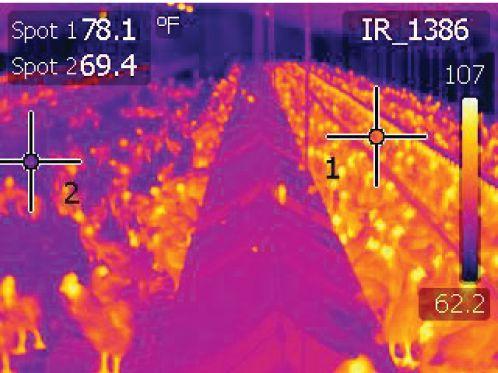
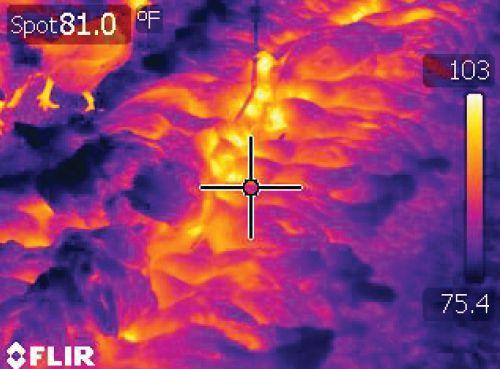
Thermal camera shows all the heat is on the slats where the hens are during feeding. Controller sensors are in the scratch area where the temperature is much cooler
For pullets and hens, the need for water spikes right after feeding. Water systems should be able to provide approximately 11 to 12 gallons per 1,000 birds for the three hours following feeding. However, antiquated systems cannot keep up with this volume
and only provide birds with about five to six gallons per 1,000 birds. That’s only half of their actual need. For newer houses or retrofitted water systems, plumbing needs to be able to handle the peak volume during feeding, not just the overall flow throughout the day.
The results of insufficient water are
Cover Story
dire in pullets/hens:
• Increased possibilities of choking birds.
• Difficulty achieving the proper weight.
• Extended cleanup time of feed intake.
• Excessive slat eggs, because birds stay at the feeder/water longer and don’t
Fast Food’s Royal Family
Hubbard M99 & Hubbard Classic are ideally suited to the specific needs of the fast food industry.
Bred for superior Carcass Uniformity, strong WOG Yield and proven Hardiness, this broiler leads the small bird segment in:
go to the nest in time.
• Reduced peak egg productions.
COMPLEX VENTILATION SYSTEMS
We cannot ventilate houses the way we did years ago because of the growth of the bird. Modern ventilation systems have numerous components to provide the optimal environment. They monitor the levels of ammonia, carbon monoxide (CO2), and dust inside the house. They control the temperature as well as relative humidity (RH), which keep the birds comfortable and the litter dry.
To create the best environment for birds, it’s crucial to first understand basic principles of ventilation.
1. Static Pressure (SP) – For every .01 of SP air is thrown ~61 cm (2 ft.)
2. Relative Humidity (RH) – For every 11.1 C (20 F) the temperature increases, RH decreases by 50 per cent.
These are the three “must-haves” of minimum ventilation:
1. Must have correct SP for your building
2. Must have correct air inlet door opening
3. Must then determine proper run time to control humidity in house
Getting any one of these components wrong could lead to unsuccessful ventilation. Always use the companyprovided ventilation rate charts of your particular system, but consider factors such as outside temperature and RH to adjust as needed.
Stir fans are also a key piece in maintaining an even temperature throughout the house to break up stratification of hot and cooler air. This also keeps litter dry by controlling the moisture level throughout the house.
GREATER HEAT STRESS
We have controls throughout the chicken house to monitor the temperature. However, that doesn’t take into consideration the temperature of the birds.
The most important factor is the bird’s core body temperature, especially during feeding time when birds are in such close proximity and prone to excitement.
For pullets and hens, managing
Cover Story
temperature at feed time is crucial for proper feed intake, optimal performance and peak production. Be aware that birds are eating in areas of the house that typically aren’t monitored by the controller temperature sensors and are congregated tightly together during feeding, producing lots of BTU’s. Overheating at this time can cause excessive mortality, increased floor/slat eggs and poor performance. Ventilation/ air flow should be increased during this time to manage bird temperature.
In broilers, we should pay special attention to bird temperature once they become fully feathered. Feathers act like an insulation and make it more difficult for birds to release excess heat. One misconception is that just because you grow small birds, over-heating isn’t a problem. The truth is that because you can place more small birds in any house, they actually produce more heat than larger birds that are less densely placed at the same respective age.
CONCLUSION
Over and over again, we see examples of ways that pullets, hens and broilers have dramatically evolved over the past 30 years. And with that we must constantly adapt and fine-tune
our management practices – as well as the housing facilities – to meet the needs of these new, larger and more efficient birds. By providing birds with the optimal environment, we can better realize their genetic potential while maximizing performance and production. n
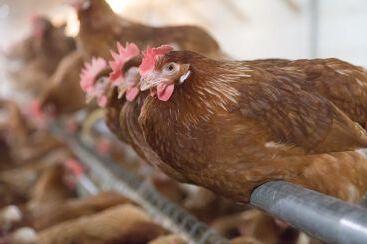
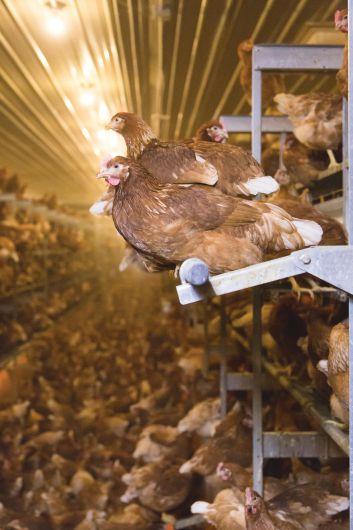
Close up shot of hens eating on the slats
CHICKEN FARMERS OF CANADA
WHO WE ARE
Canadians want Canadian chicken, so we provide fresh, locally-raised food, just the way they like it. Our farmers are a stabilizing force in rural Canada, where they can – and do – reinvest with confidence in their communities, but their contribution is much wider. In sum, we are part of Canada’s economic solution, and do so without subsidies, and are very proud of both.
People care deeply about their food, about knowing where it comes from and that what they’re serving to their family and friends is of the highest quality; our farmers and their families are no different. So when we say that the Canadian chicken industry is good for Canadians, it’s because we know that we’re raising our chickens to the highest standards: yours.
Breeding Future of Turkey Production
The industry is faced with factors such as increasing competition for land, water and resources, as well as an evolving consumer, making genetic decisions more challenging
BY KAREN DALLIMORE
While chefs and dieticians encourage the consumption of turkey and turkey products with nutritional information and delicious recipes, geneticists work away at the other end of the production chain, trying to create a better bird for a global market.
The consumer may never have to worry about how to stuff a 60-pound turkey in their oven for Thanksgiving, but at our current rate of progress, it’s not out of line to suggest that the farmer can expect to turn out a 20-week tom of that size for further processing markets, while still needing to produce a smaller table bird with different and possibly unique characteristics.
It’s a challenging task. Paige Rohlf is the research and development manager for Aviagen Turkeys Inc., where she manages the breeding program, selects pedigree lines, and implements new technology and selection techniques. As she explained to the audience at the 2015 PIC Innovations Conference, it takes up to four years for anything at the pedigree level to filter back into the farm level commercial bird and have an effect on the industry.
Paige Rohlf, research and development manager for Aviagen Turkeys Inc., says it takes up to four years for anything at the pedigree level to filter back into the farm level commercial bird and have an effect on the industry
“It still takes time,” Rohlf said. “It’s very important that we have feedback.” At the pedigree level, everyone is your customer. What’s working? What’s not working? Where is the industry going? What are the domestic and global trends?
What does our Canadian bird look like now? AAFC monitors domestic turkey meat production by bird size: over 40 per cent of domestic Canadian turkey meat production is comprised of heavy birds –
those weighing more than 11 kilograms –and mature turkeys. Turkey breasts coming from these large birds are used for deli products or turkey breast roasts, while the dark meat or meat from mature birds will end up as turkey kielbasa or pepperoni, turkey bacon, or turkey burgers and franks. The remaining birds that hit the market are less than 11 kilograms, with 75 per cent sold at retail as whole birds and the rest sold as parts. Our seasonal market parallels
DEFINING A BETTER BIRD
that of the U.S. with nearly 80 per cent of whole birds ending up on our Christmas or Thanksgiving tables.
Globally, Aviagen is keeping its eye on current increased production in North Africa and Russia, and potential for increasing markets with importing countries such as Mexico, the EU, China, South Africa and Russia. In terms of consumption, Asia presents a real opportunity: South Central and Eastern Asia will be dependent on importing meat because the population is growing faster than production can support. In Taiwan, turkey is a working man’s meal, as it is more affordable for restaurants to purchase whole turkeys and boil them down to serve over rice than it is to purchase broilers.
But it’s not just volume that must be contemplated when trying to define a “better bird.” The industry is also faced with factors such as increasing competition for land, water and resources, as well as an evolving consumer, making genetic decisions more challenging. In the EU, the industry has started labeling the carbon footprint on food. Rohlf predicts this trend will come our way. It’s hard to calculate but it makes people feel good to buy a product with claims of a lower carbon footprint. Add to this consumer concerns about fertilizer and pesticide use, housing and management systems, raising birds organically or with restricted antibiotics, and layered on top of changes from a whole bird market for making bigger birds and more eggs to a resource management perspective, all while keeping turkey competitive with broilers and pork.
On the production side, think about where we raise the birds. It’s different all around the world, but over the past 70 years, there has been a global trend to raise them indoors, which Rohlf points to as a big step in the right direction in terms of survival. The bird we see is the result of genetics expressed in that environment. There are a lot more inputs we can now measure every day: their weight, feed conversion and health. We can control their environment, their feed, their water and their lighting, but
THE NEXT GENERATION OF CONTROLS
TRIPLE LAYER PROTECTION
Triple layers of protection, with fail-safe redundancy to control mission-critical functions
MULTI-HOUSE CONTROL
With EDGE, you have the power to control multiple houses from a single controller using one interface.
WIRELESS SETUP
Installing the EDGE system couldn’t be easier. Optional wireless communication with the expansion boxes greatly reduces wiring time and expense.
how much can we control their genetics?
Breeding
What we can control by genetic selection is determined by the heritability of the trait – a highly heritable trait allows faster progress. For example, growth rate is highly heritable: a heavy tom mated with a heavy hen will have heavy offspring; the environment doesn’t matter as much. But it’s not all just as simple as weighing a bird. Feed efficiency is less heritable; reproduction traits, fitness or survival, and livability are much more influenced by the environment, therefore it is harder to make improvements in these traits and we have to rely on technology to collect information to make selection decisions.
When it comes to nutrition, Rohlf then raises the question, how do we feed the birds to realize their full genetic potential?
“This is where the challenges are.” While large companies have their own in-house nutritionists and feed companies generally know how to feed turkeys, there are no recent published standards (the last was in 1994). Since then, U.S. heavy toms have gotten 10 pounds heavier. Are we breeding for growth rate or breast meat yield? As the saying goes, the last bit of feed is the most efficient: the birds need to gain weight for maintenance, then they put on additional weight, then the feed goes to the breast. How do the birds use different feeds for maintenance? For growth? For breast meat production?
Some in-house research is indicating protein levels can be reduced as long as amino acids are balanced, while alternative feedstuffs and fillers offer different amino acid spectrums over the traditional corn and soybean diet. More research is needed to determine how the birds utilize amino acids, or use new feeds such as dried distiller’s grains, or how probiotics will affect genetic potential.
Rohlf is excited about a new genetic opportunity with satellite cells. These myoblasts – baby muscle cells – are determined before a bird hatches but defined after the bird is hatched. Can we make more breast meat by promoting feed intake in the first few days after hatch to stimulate these satellite cells?
Genetic programs have so far focused on efficiency, growth and fitness. For this year, Rohlf expects an improvement of 0.34 per cent in breast meat yield as per cent of live weight in toms at 20 weeks of age, continuing a steady pace of improvement. She also predicts four points of improvement in feed conversion for toms at 45 pounds (20.4 kg), from 2.45 to 2.41 pounds of feed per pound of gain. In weight, toms at 20 weeks of age will be 0.70 pounds (320 g) heavier this year. Aviagen Turkeys’ breeding goal also includes several measures of fitness, including walking ability and livability. These traits receive similar emphasis in selection as the growth and efficiency traits. n
CHICKEN FARMERS OF CANADA EXECUTIVE COMMITTEE
DAVE JANZEN – CHAIR
British Columbia
Quebec
CYR – 2ND VICE-CHAIR
New Brunswick
Ontario
YVON
BENOÎT FONTAINE – 1ST VICE-CHAIR
MURRAY BOOY – EXECUTIVE MEMBER
Industry Poultry Industry Meets in B.C.
National issues highlight of first annual B.C. Poultry Conference
BY DAVID SCHMIDT
Fantastic” is the only way to describe the first-ever B.C. Poultry Conference, held in Vancouver, March 9-11.
“We had no idea it was going to be such a big turnout in the first year,” said conference chair Dale Krahn.
As is already done in several other provinces, the conference combined the BC Broiler Hatching Egg Commission & Producers Association (BCBHEC), BC Chicken Growers Association (BCCGA), BC Egg Marketing Board (BCEMB) and BC Turkey Marketing Board (BCTMB) & Producer Association annual meetings into a single event. As a result, B.C.’s diversified poultry farmers, industry partners and government officials could attend all meetings in one place. The conference also included two keynote speakers, three networking receptions, a gala dinner and concurrent seminars on poultry diseases, animal welfare, the media and antibioticfree production.
There were 541 total registrants for the annual meetings, including more than 200 growers and producers, 30 out-ofprovince industry guests and 70 sponsors.
“We went 50 per cent over our sponsorship target,” Krahn said. He added that having so many stakeholders in one place gave participants “opportunities to network with each other and join forces to make our industry better.”
“There’s a lot of commonality of interest among the four sectors,” noted
B.C. Farm Industry Review Board chair John Les noted that there was a lot of commonality of interest among the four sectors at the conference and complimented producers for “looking for new opportunities and new markets”
John Les, chair of the B.C. Farm Industry Review Board. His comments at the BCEMB annual meeting would have been just as appropriate at any of the other meetings. He complimented producers for “looking for new opportunities and new markets” and stressed the need for them to “maintain your social licence.” He suggested producers focus on public
concern for food security as that “plays right into your hand.”
That’s just what 20 farmers did Friday morning, handing out 300 Triple O Sunny Start breakfast sandwiches as they told their story to passers-by.
HATCHING EGG
Canadian Hatching Egg Producers (CHEP)
COMMON INTEREST
Addition of fats or oils rich in polyunsaturated fatty acids in poultry diets is a straightforward approach to enrich poultry products with polyunsaturated fatty acids. Consequently, there has been a great interest in using different types of fats, oils or oil seeds as feed additives in poultry nutrition.
The purpose of this book is to educate the readers on the role of dietary fats in poultry on: production aspects, health effects, growth and product quality.
In addition, the role of poultry food products in meeting the human requirement of much needed functional nutrients such as omega-3 fatty acids is discussed.
chair Jack Greydanus called biosecurity “job one” since avian influenza can devastate long-life hatching and table egg flocks.
He praised producers’ adoption of the Canadian Hatching Egg Quality (CHEQ) program, saying it has led to a 40 per cent drop in the number of cracked and/or dirty eggs arriving at hatcheries. He also complimented producers on being able to adapt after the use of antibiotics at the hatchery level was banned. He said he expects the ban on antibiotics to expand in future, as raised without antibiotics (RWA) becomes the new norm.
Late last year, CHEP reached a five-year agreement resolving complaints Ontario and Quebec hatching egg producers took to the Farm Products Council of Canada last summer. The agreement follows “many years” of meetings, discussions, analyses, proposals and reviews of the broiler hatching egg allocation system.
“We are now changing our internal
Industry
policies to make [the agreement] happen,” Greydanus said.
He noted Nova Scotia and New Brunswick have not yet signed on to becoming members of CHEP but he expects that to change soon. “Nova Scotia producers are working on organizing themselves and getting recognition from their provincial government,” Greydanus said, adding that if Nova Scotia joins CHEP, he expects New Brunswick to follow. “Our goal is to represent all Canadian hatching egg producers.”
CHICKEN MEETING
B.C. is one of the few holdouts to Chicken Farmers of Canada’s (CFC) new allocation agreement. The agreement has 14 of the required 19 signatures, which CFC chair Dave Janzen, a B.C. chicken grower, calls “a good start to this year’s chapter of our success story.” Even though the new allocation formula was created to address
chronic underallocations in Alberta and Ontario, Janzen told the BCCGA annual meeting all provinces have grown “at least five per cent” since CFC began using it last September. That’s because Canadian per capita chicken consumption continues to increase and is now at a record 31.7 kg.
Unfortunately, B.C.’s three signatures are still missing. B.C. is holding out because its processors have appealed the agreement to the Farm Industry Review Board (FIRB), the province’s supervisory board. That doesn’t sit well with B.C.’s national director, Derek Janzen, who claims it includes factors “good for B.C. Our processors agree with more chicken for Alberta but not for Ontario. I don’t understand that. It’s time to get our national chicken industry back in order. If we want supply management, we need a national system.”
Even though demand is increasing, the recently completed Trans-Pacific Partnership (TPP) trade agreement means Canada will have to give some of that growth to other countries.
“We will need to bring in 26 million kg/year under TPP,” noted Mike Dungate, CFC general manager. He said that is the equivalent of 61 farms. Added to the 7.5 per cent already allowed in, that represents 9.6 per cent of Canadian chicken production.
Despite that, Janzen said Canada was able to maintain “the integrity of the [supply management] system” in the TPP agreement. As a result, growers “can invest in their future.”
When the Conservatives announced the TPP agreement last fall, they promised supply managed producers a multi-million dollar compensation package and pledged to tighten up border controls. Dungate said it’s essential the new Liberal government live up to those promises, particularly when it comes to border controls. He wants an end to use of the import-export relief program, which some poultry processors are using to bring in product one year, knowing they have up to four years to “reexport” it.
“Imports under that program have gone from two million kgs to 96 million kgs in the last two years,” he said.
He also wants mandatory certification of spent fowl imports and for the Canadian
Border Services Agency to stop allowing importers to circumvent tariffs by bringing chicken in as part of a “mixed” product. Last year, they brought in 103 million kgs of so-called “spent fowl meat” – more than all the spent fowl breast meat the U.S. produced. They also brought in such “mixes” as chicken wings and pizza.
Dungate said the circumventions represent 20 per cent of the Canadian chicken market. If eliminated, it would more than offset any losses under TPP.
“It’s all being done by fraudulent marketers,” he insisted. “It won’t hurt any legitimate processor.”
B.C. may be growing more chicken, but the price growers are getting for it is “unsustainable,” said Ravi Bathe, BCCGA president.
“We have the lowest returns in nine years,” he said, claiming the cost of production is now higher than the price.
He blames Ontario’s new pricing formula, noting B.C.’s live price has dropped 4.95 cents/kg since it was introduced. A factor in the Ontario formula reduces the live price when allocations increase due to “efficiency increases.” Bathe said the same is not true in B.C. because of its lower barn densities.
A few years ago, FIRB ordered the BC Chicken Marketing Board to set its live price using a weighted average of the live price in Ontario, Manitoba, Saskatchewan and Alberta, which is why the B.C. live price drops every time the Ontario price drops.
Chair Robin Smith said the BCCMB will use its new cost of production study to compare B.C. grower returns with those of Ontario growers. It hopes to develop a formula acceptable to FIRB which gives growers an adequate return yet still ensures processor competitiveness.
Bathe insisted they are competitive, saying a BCCGA-commissioned study shows B.C. processors pay the same for chicken as their Ontario counterparts and less than these same processors pay in Alberta.
“Western processors are calling the price creep over the Ontario price
• Exacon’s brand name since 1987
• Available in sizes 12” to 60”
• White or Black polyethylene flush mount housings
• Designed to meet the rigorous demands of farm/agricultural ventilation
• Energy efficient Multifan, MFlex or North American motors
• Fiberglass housings available in 50” and 60” diameter
TPI WALL AND CEILING INLETS
• TPI is a well known manufacturer of high quality polyurethane inlets
• High quality and high insulation value results in precise manufacturing delivering high tolerance for better ventilation control
• Wall inlets, ceiling inlets and tunnel inlets
• TPI wind hoods and wind hoods with built-in light trap also available
PUR AG AIR FILTRATION SYSTEM
• High quality L7 Pathogen barrier filter with pre-filter significantly reduces the chance of air transmitted diseases. (ie bird flu and other influenza viruses)
• Clarcor provides a complete system such as filter housing frame designed for eaves and side air inlets
• This system makes installation of filters easy and practical plus reduces the risk of nonfiltered air from entering the building
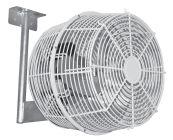
GREENBREEZE BASKET FAN
• Designed for more air flow and consistent pattern
• Precise guard spacing reduces air restriction
• Easy to open front guard allows easy cleaning
• Includes hanging bracket to allow direction adjustment
• Variable speed, efficient motor 115/230v
GENIUS I-TOUCH VENTILATION CONTROL
• The well known and proven Genius control line is now available as a Touchscreen interface
• Navigates like an I-Pad by simply touching, swiping or dragging on a 7” or 10” touch screen
• Available with up to 8 variable stages and between 15 to 30 on/off relays
• A slave is available to expand to 50 on/off relays
• Many options including light control, bird scales, perch scales and bin scales
• Built-in wifi allows easy access to the internet for managing, viewing and recording history on FarmQuest website
LIGHT TRAP/DARK OUT
• High light reduction
• Low resistance to air flow
• Simple Installation
• Easy to clean
• Uses P.V.C. snap release spacers
Industry
unsustainable at a time when they are receiving record margins,” he charged.
Bathe admited changing B.C.’s pricing formula won’t be easy. “The last time this happened, we had to spend 10 days in front of FIRB in a supervisory review to try and solve the problem.”
EGG MEETING
B.C. egg producers produced almost 71.5 million dozen eggs last year, over a million dozen more than in 2014, the BCEMB reported at its annual meeting.
All of the increase came in specialty eggs (free run, free range and organic), which were up over two million dozen and now represent over 19 per cent of eggs produced in B.C., far and away the highest percentage in the country. With B.C. leading the way, the demand for specialty eggs continues to increase across the country, said Peter Clarke, Egg Farmers of Canada chair.
To meet the increasing demand for eggs, EFC issued new quota last April, September and December (the BCEMB is still waiting for FIRB approval to issue the December increase to its producers). It also removed its 97 per cent quota utilization cap, adding another 661,000 birds to the national flock.
Despite the increases, B.C. remains notoriously short of eggs. “14.4 per cent of our eggs come from across [provincial and national] borders,” Brad Bond, BCEMB chair, reported. He said the board hopes to address the shortage through a regionalization program.
Some of those eggs will continue to come across the U.S. border. Clarke pointed out Canada has agreed to greater tarifffree import access for eggs under the recently-completed TPP agreement. If the agreement is ratified – and the pending election and growing protectionist sentiment in the U.S. make that a big if, Greydanus said – Canada will have to allow another 19 million dozen eggs/year by year 18.
Even though avian influenza has become “the new normal” for producers, Clarke noted Canada was able to escape most of last year’s AI outbreak, which saw U.S. farmers lose 36 million birds.
Both he and Bond credit the smaller size of Canadian poultry and egg farms. U.S. egg farms average a million birds while Canadian producers average 22,000 birds. B.C.’s largest egg farm has about 119,000 birds, while Cal-Main Foods, the largest U.S. egg producer, has 32 million birds.
“We have a greater sense of social licence,” Bond said.
The size of U.S. farms discourages new entrants but the opposite is true in Canada. B.C. has started 26 new entrants since 2010, each receiving a 3,000 bird quota to produce specialty eggs.
Add producers who buy existing quota and/or farms to enter the industry and new entrants represent “19 per cent of our producers,” Bond stated.
He said supply management provides the stability for producers to convert to new housing systems. While U.S. egg farmers believe only about 51 per cent of their birds will be housed in cage-free or enriched systems, he noted 22 per cent of B.C.’s layers are already out of cages. Bond also praised B.C.’s biosecurity and Start Clean Stay Clean programs, saying they result in a healthier egg supply.
“In Canada, only one in a million eggs tests positive for SE. In the U.S., one in 20,000 eggs is SE-positive,” Bond said.
Bond insisted supply management does not drive up the price of eggs, pointing out the Canadian wholesale egg price at the end of February was lower than in the U.S., Australia and New Zealand. The retail price of a dozen eggs was about a dime less in Vancouver than the price in Seattle (converted to Canadian dollars) and almost $2.00/dozen less than in San Francisco.
“We have to tell this story,” Bond said. “We do a disservice to ourselves when we don’t.”
TURKEY MEETING
To keep its processors competitive, the B.C. live price is now just 0.5 cents/kg higher than Ontario’s price for broiler turkeys and hens while toms are only five cents/kg higher.
Since the price of corn, which forms the basis of turkey rations in Ontario, has dropped while the price of wheat used in B.C. turkey feed has remained stable, B.C. growers’ margins have dropped along with the price.
But that could change, said Michel Benoit, BCTMB general manager. He told growers at the BCTMB and BC Turkey Association annual meeting he expects prices to rise enough to restore their previous margins.
To help, the BCTMB has decided not to pass the increase in the Turkey Farmers of Canada levy on to its growers, noting the board has enough cash reserves to absorb the increase. New BCTMB chair Phil Hochstein said he was “impressed by the [industry’s] commitment to biosecurity” based on his initial visits to B.C. turkey farms, processors and feed suppliers. “British Columbians should take great comfort in the care and attention paid to ensuring food safety.”
Although he will continue as BCTMB vice-chair, Shawn Heppell is stepping down as B.C.’s national rep after 16 years. TFC executive director Phil Boyd credited Heppell for engineering the TFC’s current quota allocation policy.
Heppell noted overproduction in Ontario from 2010 to 2014 “tested” TFC over the past 18 months but has now been resolved with a binding arbitration panel ruling. The panel upheld TFC’s $1.7 million overproduction penalty against Ontario and approved a 2.3 million kg cutback in Ontario’s production.
While that issue has been resolved, a new issue is emerging. That is the TPP agreement, which will increase turkey imports from 3.7 to 6.4 per cent of current consumption by the end of the 20-year agreement.
While it means turkey growers “are giving away our growth,” TFC chair Mark Davies said it “could have been much worse. I think our negotiators did the best job they could.”
Although the code of practice the now-mandatory TFC Flock Care program is based on is being revised, Benoit believes the changes “will not cause hardship.”
Davies noted a “shift in our culture” means more people consider themselves “actively involved” in the industry, making the program essential. “It’s the new reality we’re living in. We have to prove we take good care of our birds.” n
BY CENTER FOR FOOD INTEGRITY
Engaging online can be intimidating PERSPECTIVES
For some, the internet is a mysterious place where it seems impossible to know who to reach or how to reach them. It boils down to a guessing game, a bit like throwing darts blindfolded.
But if you’re not reaching the right audiences — particularly as more consumers rely on online sources for information about food — your efforts may be falling flat.
The internet has obliterated the traditional model of mass communication, where only a few push information to us. Now, masses of communicators generate masses of information and ordinary people can have extraordinary influence online.
With no clear direction, communicators in food and agriculture often attempt to reach as many consumers as they can. The more, the better, right?
Not so, especially when resources like time, staffing and budgets are limited, and in a digital environment where getting your information into the hands of the right people can have a big impact.
Make your hard work pay off by reaching the right people — the influencers who not only are content finders, but content generators and sharers. That’s how you amplify your message and move the needle.
FOOD TRIBES
The Center for Food Integrity (CFI), through extensive research on consumer food system attitudes, has identified eight food tribes — providing a framework for engaging influential groups of consumers in a manner that’s most meaningful to them.
The research was conducted as part of our 2015 study on building trust through transparency — research that utilized focus groups, online qualitative surveys and a robust quantitative study of more than 2,000 U.S. consumers.
We not only identified the tribes that are important to the food system but also the tribe leaders — the Early Adopters who drive the conversations, lead trends and influence the direction consumers want to see the food system head. No need to reach the entire tribe when you can find just a handful of influencers.
Understanding each tribe, from Delightful Indulgers™ and Cynical Skeptic™ to Cost Consumed™ and Socially Sensitive™, helps us provide the information they’re looking for when it comes to the food system and food in general.
The research shows that three of the tribes deserve special attention when it comes to building trust:
MINDFUL MASTERS
• Most common sources of information: websites, Google, friends not online (rank order)
• Level of concern with all issues is significantly higher than other segments
• More than two-thirds are Early Adopters who are likely to actively seek information, generate unique content, share it and drive conversations
SYSTEM SATISFIED
• Most common sources of information: websites, Google, family not online (rank order)
• Level of concern with all issues is significantly higher than most other segments
• More than half identify as Early Adopters who are less likely to generate content but will read and share it
COST CONSUMED
• Most common sources of information: friends not online, websites, family not online (rank order)
• Level of concern with all issues is significantly higher than most other segments
• More than half classify as Early Adopters who are likely to read content, but not as likely to share far and wide unless it’s with immediate family and friends online
These three tribes represent a significant portion of the population and, most importantly, CFI research confirms that increasing transparency builds their trust.
Following a recent food topic blogger tour coordinated by CFI, 13 bloggers who were carefully selected based on their “tribal” influence wrote about their tour experience. They were given no parameters as to what to write — if anything.
But the bloggers did write. Their reviews were positive and their stories were shared with a combined 940,000 followers, which resulted in 1.3 million immediate impressions. There’s no doubt that many of those reached were content sharers as well, amplifying the reach exponentially. So, in a relative blink of an eye, reaching 13 translated to reaching a million or more. That’s the power of finding the right tribe leaders.
The food tribes are featured in our 2015 research, “A Clear View of Transparency and How it Builds Trust,” which is available for download: http://www.foodintegrity.org/research/consumertrust-research/current-research/download-current-research-2/. n
TIME IS MONEY.
Get faster development of immunity against coccidiosis with Coccivac-B52*
With spray application at one day of age and appropriate management, Coccivac®-B52 provides earlier immunity development against coccidiosis. This early protection helps enable your broilers to reach their full genetic potential, providing you with superior flock performance.
FASTER PROTECTION.
SUPERIOR PERFORMANCE.*
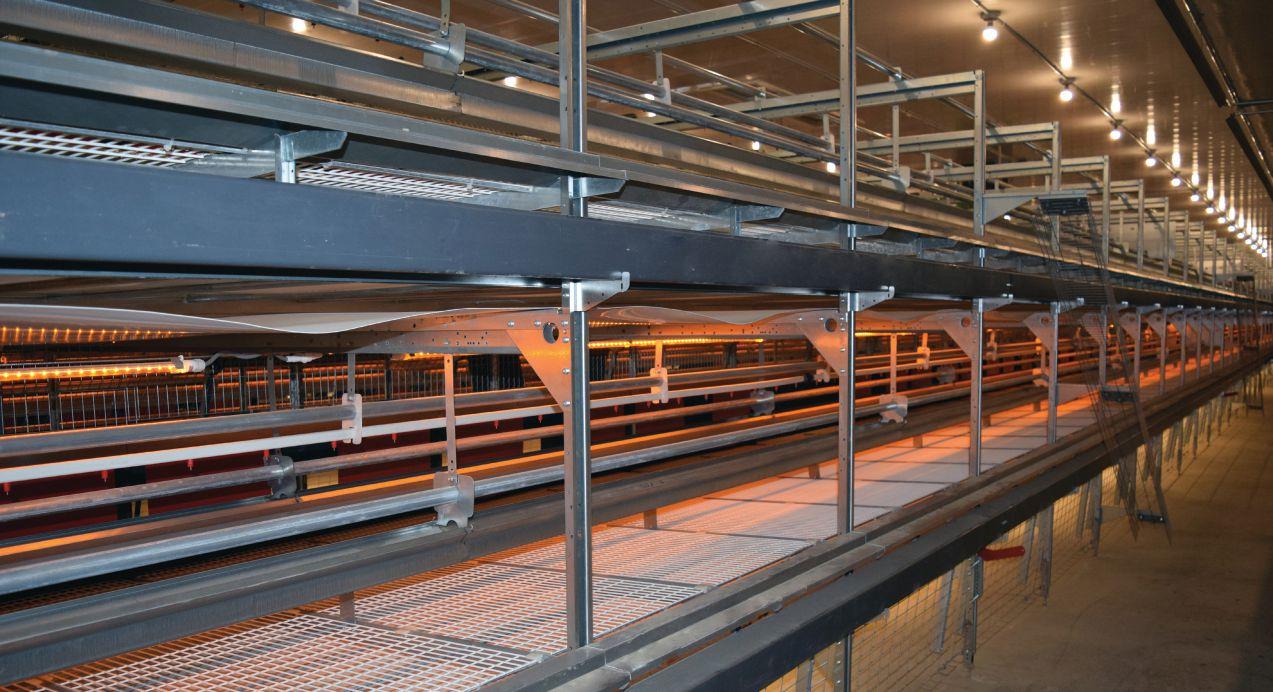
Farmer Automatic Aviary Housing Systems
ALTERNA Design ensures efficient operations and optimum use of floor space, maximizes bird numbers
Customizable features available including automatic system egg collection and ground level manure belt
LOGGIA Advanced design to maximize production, egg quality and ease of management