Pic uPdate: Pathogenesis of Common Health Problems
Maternal age and eggshell quality have been identified as predisposing factors for health problems in broiler, as well as embryo, deformities
By Kimberly Sheppard, Research Co-ordinator, and Tim Nelson, Executive Director
26
industry: Success Shouldn’t Breed Complacency
The chicken industry has accomplished “amazing things” in recent decades but challenges remain
By Dan Woolley
30
energy: Energy Savings
Taking advantage of available programs and implementing changes can pay off
By Dan Woolley
34 genetics: Selecting for Sustainability
The challenge for this century will be to continue genetic improvements, so that as an industry we make high-quality animal protein available in a manner that is sustainable
By Dominic Elfick, International Product Manager, Aviagen
FROM THE EDITOR
bY KrIstY nudds
Food a First for Political Platforms
With barely six weeks to campaign for a national election, the federal parties in Canada had a lot of ground to cover in a very short period of time. Although it wasn’t key to all parties’ platforms, food, rather than just the broader topic of agriculture, was included in the debate for the first time.
This isn’t surprising given that food costs are at their highest since 2008 and projected to increase throughout 2011 and beyond. According to many analysts, the end of the decades-long era of cheap food is drawing near. This should be of concern to potential leaders because, as the cost of basic necessities increases, consumer spending on other goods decreases. This is already happening and, despite the assertion by the Conservatives that Canada has made it through the recession (they assume the recession is over; I beg to differ), the economy is still on shaky ground due to increasing costs not only for food, but for fuel and other energy sources as well.
I give all parties credit for addressing the issues of food security and production in Canada, but I think they still fall short. The New Democratic Party (NDP), the Green Party and the Bloc Quebecois have addressed most of the food-related subjects important to voters: local production, sustainable farms, good incomes for farmers and increased funding for homegrown agriculture. All parties, including the Conservatives, are proponents of food sovereignty via some type of national food policy.
All parties have addressed the need for greater food inspection capacity and pledged support for supply-managed industries. The Liberals and the NDP have
made the greatest effort to link health-care costs to food, focusing on educating consumers about eating healthy. How this is to be achieved co-operatively between health and agriculture departments is not clear.
As I write this in early April, polls indicate Canada will have either a majority or minority Conservative government on May 2. The Conservatives plan to continue with a more traditional agricultural policy, with a strong focus on export rather than local markets, and express no desire to tackle a national food strategy of any kind.
So, we will likely continue with the status quo. How will farmers and consumers feel about this? It’s hard to say at this point, but I am concerned that consumer backlash over rising food costs will be directly felt by agricultural producers.
Opponents of supply management say that the high prices for dairy and poultry products are due to regulated marketing. Cheap imports threaten other sectors. Although many consumers want to eat Canadian-made food, in tough economic times the wallet often rules over principle, particularly if consumers don’t understand what is going on behind the scenes.
As discussed in this month’s cover story (page 14), the agriculture industry needs to build trust with consumers. We need to communicate values such as safe food, humane animal care, environmental responsibility, and show how we are producing more food with fewer resources, to help them understand the effect each has on society and the prosperity of agriculture.
This is something that a national food strategy, which is currently lacking, will do for us. n
May 2011 Vol. 98, No. 5
Editor Kristy Nudds – knudds@annexweb.com
888-599-2228 ext. 266
Associate Editor
Jim Knisley – jknisley@kwic.com
Publisher/Sales Manager
Marilyn White – mwhite@annexweb.com
519-429-5193
888-599-2228 ext 237 • fax: 888-404-1129
Sales Assistant
Mary Burnie – mburnie@annexweb.com 519-429-5175 • 888-599-2228 ext 234
Production Artist
Emily Sun
Group Publisher
Diane Kleer – dkleer@annexweb.com
President Mike Fredericks – mfredericks@annexweb.com
Mailing Address
P.O. Box 530, 105 Donly Dr. S., Simcoe, ON N3Y 4N5
Publication Mail Agreement #40065710
PAP Registration #9850
REtuRN uNDEliVERABlE CANADiAN ADDRESSES tO CiRCulAtiON DEPt., P.O. BOx 530, SiMCOE, ON N3Y 4N5.
e-mail: cnowe@annexweb.com.
Printed in Canada iSSN 1703-2911
Circulation
e-mail: cnowe@annexweb.com
Tel: 866-790-6070 ext 207 Fax: 877-624-1940
Mail: P.O. Box 530, Simcoe, ON N3Y 4N5
Subscription Rates
Canada – 1 Year $ 25.20
(includes GSt – #867172652Rt0001)
$27.12 (includes QSt/HSt)
uSA – 1 Year $ 60.00
Occasionally, Canadian Poultry Magazine will mail information on behalf of industry-related groups whose products and services we believe may be of interest to you. If you prefer not to receive this information, please contact our circulation department in any of the four ways listed above.
[ spek-tak-yuh-ler ] Of the nature of a spectacle; impressive or sensational.
Nothing says specktacular like OptiGROW!
Lubing's all-new Opti GROW Nipple is designed to work in today's challenging broiler environment. Because the nipple has been optimized for growth, you will be amazed by the first-week performance and explosive bird growth. OptiGROW offers:
Large body and pin9
Acid resistant design
Easy triggering for day-old birds
Low mortality
Increased side-action flow
Larger flow range for jumbo birds
Increased weight gains
Improved feed conversions
To find out more about this specktacular new product, please contact your local Lubing representative.
Glass-Pac Canada
St. Jacobs, Ontario
Tel: (519) 664.3811
Fax: (519) 664.3003
Carstairs, Alberta
Tel: (403) 337-3767
Fax: (403) 337-3590
J. Dean Williamson Ltd.
London, Ontario
Tel: (519) 657.5231
Fax: (519) 657.4092
Les Equipments Avipor
Cowansville , Quebec
Tel: (450) 263.6222
Fax: (450) 263.9021
Specht-Canada Inc.
Stony Plain, Alberta
Tel: (780) 963.4795
Fax: (780) 963.5034
HATCHING HATCHING
Compensation rates Increased
The Chicken Farmers of Canada(CFC), Turkey Farmers of Canada (TFC), Egg Farmers of Canada (EFC) and the Canadian Hatching Egg Producers (CHEP) together applaud new updates to the schedule of maximum amounts payable for compensation to owners of birds ordered destroyed for disease control purposes. The update was announced by Agriculture Minister Gerry Ritz at an industry reception organized by the national poultry organizations in Ottawa March 23.
The amendments to the federal Compensation for Destroyed Animals Regulations raise the maximum amounts of compensation that are more reflective of the true market value of each type of bird.
“Poultry farmers and processors have shared in the responsibility and cost of
risk prevention through onfarm food safety programs, biosecurity initiatives and the development and implementation of the pre-emptive cull protocol in the unlikely event that there is a suspicion of avian influenza,” TFC chair Mark Davies said in a release. “Compensation values that reflect the true market value of a bird are a logical next step in this process.”
Layers now qualify for up to $60 per bird in compensation (up from a maximum of $18), and grandparent breeders are now worth up to $120 (up from $60).
The maximum compensation for a broiler chicken is $30, up from $8. Parent broiler breeders have a maximum compensation of $60 (up from $24) and a grandparent broiler breeder is now worth up to $100 (up from $75). A primary broiler
breeder chicken raised for foundation breeding stock but ordered destroyed has its own category for compensation, with a maximum of $1,200 per bird.
For turkeys, meat birds are now worth up to $70 each (up from $35), parent breeder birds worth up to $250 each (up from $90) and grandparent breeder birds worth up to $700 each (up from $270).
As for primary broiler breeders, primary breeder turkeys now have their own category, with a maximum of $1,050 per bird.
The Canadian Food Inspection Agency (CFIA) emphasized compensation is an “important tool” to encourage early reporting of animal disease outbreaks, and expect that the revised compensation maximums will reduce the potential economic impact of a disease outbreak.
Photo courtesy of Al Dam, OMAFRA
Support for Energy Savings
brItIsh ColuMbIA
b.C. farmers will soon have new tools to help them identify potential energy savings and tap into green energy revenue streams thanks to support from the Government of Canada and other industry partners. An investment of over $122,000 was announced by Member of Parliament Ed Fast (Abbotsford) at the British Columbia Agriculture Council’s (BCAC) annual general meeting.
Garnet Etsell, chair of BCAC and an Abbotsford area turkey farmer, said farmers will “see not only where they could cut energy costs, but also whether they can further improve their bottom line and their sustainability by using an anaerobic digester.”
This investment will be used for two projects:
• $36,520 for Phase II of the BC Farm Energy
Funding for Agri-Health Research
the Governments of Canada and Manitoba are committing $406,000 in funding to the Manitoba Agri-Health Research Network Inc. (MAHRN) to support the further research, development and commercialization of projects that identify links between food components and health.
“Never before has the term ‘you are what you eat’ been more applicable – as the sci-
Assessment Pilot Project, led by BCAC’s Climate Action Initiative, will expand upon a tool for identifying potential on-farm energy savings. This project will develop a module to evaluate clean energy opportunities on B.C. farms; incorporate a broader range of commodities; facilitate access to energy assessments; improve knowledge and information regarding commodity and region-specific energy and fuel issues; and communicate the potential benefits of implementing energy efficiency measures through the development of case studies.
• $86,000 towards Benchmarking Anaerobic Digestion Feasibility across B.C.’s agriculture and agrigood sector, led by the BC Agricultural Research and Development Corporation (ARDCorp), will help turn onfarm challenges into revenue streams that support the sec-
ence of food meshes with the science of good health,” said Manitoba Agriculture Minister Stan Struthers. “Application of this research is helping to advance valuable diet-related solutions to a variety of chronic health conditions.”
Funding of $281,300 is provided on a 60/40 basis through Growing Forward. An additional $125,000 is provided through Manitoba Innovation, Energy and Mines.
MAHRN promotes Manitoba’s capacity and capabilities in the research, development and commercialization of functional foods and nutraceuticals. Anchored by world-class facilities, includ-
tor’s economic viability and environmental sustainability. The investments are delivered through the Government of Canada’s $163-million Canadian Agricultural Adaptation Program that aims to help the Canadian agricultural sector adapt and remain competitive. Additional support is provided by Terasen Gas, BC Hydro, the BC Ministry of Agriculture, the BC Ministry of Energy, Mines and Petroleum Resources, and producers.
ing the Canadian Centre for Agri-Food Research in Health and Medicine located in the St. Boniface Hospital Research Centre, the Richardson Centre for Functional Foods and Nutraceuticals located at the Fort Garry campus of the University of Manitoba and the Food Development Centre located in Portage la Prairie. Research at these facilities helps link the health benefits of Prairie-grown and made foods to diets that can reduce the incidence of chronic diseases.
A listing of research projects is available on line at: www.govmb.ca/agriculture/ mahrn/pdf/research_notes_ feb_2010.pdf
MAY
May 10, 2011
PIC Research Day, Victoria East Golf Club, Guelph, Ont. For more information, visit: www.poultryindustrycouncil.ca or tel: (519) 837-0284
June
June 12-14, 2011
CPEPC Convention, Delta Hotel, St. John’s, NL. For more information, visit: www.cpepc.ca or tel: (613) 724-6605
JuLY
July 16-19, 2011
AAAP/PSA Joint Annual Meeting, America’s Center, St. Louis, Missouri. For more information, visit: www.poultryscience.org/ psa11
AuGust
August 8-11, 2011
5th International Workshop on the Assessment of Animal Welfare at Farm and Group Level (WAFL), University of Guelph, Guelph, Ont. Hosted by the Campbell Centre for the Study of Animal Welfare and the Ontario Veterinary College. For more information, e-mail: CCSAW@ uoguelph.ca or visit: http:// www.uoguelph.ca/csaw/ events
August 14-18, 2011
World Veterinary Poultry Association Congress, Cancun, Mexico. For more information, visit: http:// www.wvpc2011cancun.org
HATCHING HATCHING
Merger Called Off
Merck and Sanofiaventis announced the mutual termination of their agreement to form a new animal health joint venture by combining Merial, the animal health business of Sanofi-aventis, with Intervet/ Schering-Plough, Merck’s animal health unit. As a result, each party will keep its current, separate animal health assets and businesses.
Since the initial announcement about the intended combination on March 9,
2010, both companies have worked diligently to create the proposed animal health joint venture. The companies are discontinuing their agreement primarily because of the increasing complexity of implementing the proposed transaction. Merck and Sanofiaventis mutually determined that ending their plan is in the best interests of both companies and their respective shareholders, as well as the employees of Merial and Intervet/Schering-Plough.
Poultry Processors buying Maple leaf Assets in berwick, N.s.
Canada’s largest private poultry processor and a company representing producers in Nova Scotia and Prince Edward Island have teamed up to buy the Maple Leaf Foods facility in Berwick, N.S.
Value of the transaction, expected to close May 13, was not disclosed. Maple Leaf announced the closure of its prepared meats plant in Berwick last November, with production scheduled to end April 29.
The buyer is Eden Valley Poultry, a new poultry processing company made up of
septeMber
september 13-15, 2011
Canada’s Outdoor Farm Show, Canada’s Outdoor Park, Woodstock, Ont. For more information, visit: www.outdoorfarmshow.com
OctOber
october 3, 2011
Western Meeting of Poultry Clinicians and Pathologists (WestVet), Post Hotel, Lake Louise, Alta. For more information, visit: www.westvet.com
october 4-6, 2011
Poultry Service Industry Workshop, Banff Centre, Banff, Alta. For more information, visit: www.poultryworkshop.com
JAnuArY 2012
January 24-26, 2012 International Poultry Exposition, Georgia World Congress Center, Atlanta, Ga. *Please note this event has changed to a Tuesday, Wednesday, Thursday format. For more information, please visit: www.ipeweek12.org
United Poultry Producers Inc., which is owned by poultry producers in Nova Scotia and Prince Edward Island, and privately owned Maple Lodge Holding Corp.
The Berwick plant will be converted into a new poultry primary processing facility. The deal fulfils Maple Leaf’s commitment to find an alternative use for the plant.
The new facility is expected to be operational by early summer 2012, processing more than 40 million kilograms of poultry annually and employing about 200 people.
We welcome additions to our Coming Events section. To ensure publication at least one month prior to the event, please send your event information at least eight to 12 weeks in advance to: Canadian Poultry, Annex Publishing, P.O. Box 530, 105 Donly Dr. S., Simcoe, Ont. N3Y 4N5; e-mail knudds@ annexweb.com; or fax 519429-3094.
Photo by Carroll McCormick
PRODUCTS PRODUCTS
54" Galvanized Exhaust Fan
big Dutchman, Inc. has expanded its exhaust fan product offering. The new 54" fan is its newest and most energy efficient fan offered. High output with high CFM/ Watt meets large volume ventilation requirements while keeping energy costs as low as possible. These fans are offered with either steel or cast aluminum blades to meet virtually any requirement. Galvanized
construction and cross-frame drive supports ensure years of trouble-free service.
For more information, visit: www.bigdutchmanusa. com or visit your local Big Dutchman dealer.
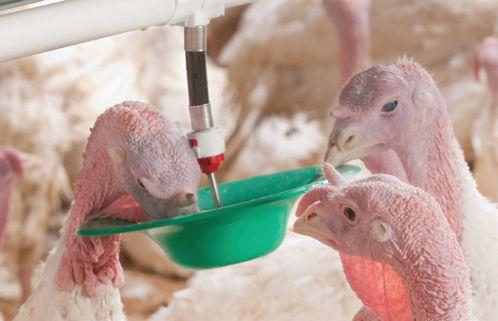
Ziggity Systems, Inc. has developed a new drinker for adult turkeys, the T-Max™, that is self-cleaning and built-to-survive aggressive turkey behaviour.
The company field-tested and fine-tuned the T-Max drinker for more than three years, and results show T-Max ensures the birds receive all the hygienic water they need to thrive and thereby reduce litter costs.
Turkeys have poor eye-beak co-ordination, so Ziggity created a larger target that the birds cannot miss. As the birds peck at the T-Max, it tips and rotates. It is not a stationary drinker like cups used on other systems. The rotating action swishes the water around, self-cleaning the drinker. No manual scrubbing is required.
bNew Turkey Drinker Binview Tank Monitoring
As turkeys grow, their drinking action becomes increasingly aggressive; and they can rapidly wear out a watering system. Ziggity designed the T-Max drinker with a shockabsorbing flex stem that allows the entire drinker to give. This eliminates breakage and potential leaks. The drinker is made of a durable plastic that is green in colour, which turkeys find more attractive.
The basic concept Ziggity uses in its new adult turkey drinker was first pioneered in the company’s poult drinker that combines enclosed water delivery systems and drinkers with active reservoirs called Activators. The Activator attaches to the end of the trigger pin. The poults drink the small reserve of water that is present, and while doing so, their necks push the drinker to the side. This replenishes the water they consume.
Such a system exposes only a small amount of water to the poultry house environment; and the birds have less opportunity to share water, reducing the threat of disease spreading from bird to bird. Producers can learn more about Ziggity’s T-Max drinker at www.ziggity. com or by visiting their local Ziggity dealer.
inMaster Level Controls announces the introduction of BinView – an innovative inventory management system that offers real-time bin level monitoring for solid materials over the Internet or via a company LAN or VPN. The components of the BinView solution are BinMaster’s SmartBob2 or SmartBob-TS1 sensors mounted on the bins, a wireless or wired data communications network, a gateway to provide connectivity to a personal computer or IP network, and data collection software that can be viewed securely by any authorized individual via an Internet connection or over the company’s LAN or VPN. BinView eliminates the need to manually check bin levels to improve safety and save time, money and manpower. BinView delivers real-time bin data where you need it, when you need it – and can be configured for local access only, multi-site access, or corporate visibility of data. SmartBob sensors are programmed to take measurements at predetermined intervals and send bin level data to a gateway with connectivity to an IP network. When using the BinView program, alerts can be sent to a cell phone, a PC, or a PDA via e-mail when bin levels meet critical levels.
For more information, visit www.binmaster.com.
Our Growth. Your Gain. Pfizer Animal Health Global Poultry’s recent acquisitions of Alpharma Animal Health and Synbiotics products mean more solutions for better results in your poultry operation. From devices to vaccines to feed additives to diagnostics—with comprehensive support behind it all—we are more prepared than ever to help you run a healthier, more productive operation. For more information, talk to your Pfizer Animal Health representative or visit pfizerglobalpoultry.com.
King/Alpharma is now part of Pfizer Inc. The integration of King/Alpharma and Pfizer entities may be pending in various local jurisdictions and integration may be subject to completion of various local legal and regulatory obligations. All content in this message is subject to works council and/or union consultations, if applicable, and other legal requirements where appropriate.
CPRC Update
2011 board of directors
CPRC is pleased to announce that all of its directors, who represent each of the organization’s five members, are returning to the board for 2011.
Jacob Middelkamp was elected to serve a third year as CPRC chairman. Middelkamp is a broiler chicken producer in Alberta. He has been a Director on the Alberta Chicken Producers (ACP) Board for 10 years, serving five of those on the Research Committee (three years as chair) and three on the Quality Committee.
He also championed efforts to implement the “Chicken Farmers of Canada on Farm Food Safety Program” on behalf of ACP. Middelkamp has represented Alberta on the CFC board for four years, serving two years on the CFC Food Safety Committee and one year on the Finance Committee. He has been a CPRC Director for the last four years. He also serves on the Steering Committee for the Virtual Centre for Poultry Welfare at Guelph.
Roelof Meijer, a turkey producer from Alberta representing the Turkey Farmers of Canada (TFC), is once again CPRC’s vice-chairman. Meijer has served on the Alberta Turkey Producers Board for six years and is a board director for the Poultry Research Centre at the University of Alberta. Meijer has also served on the Research Committee for the Alberta Dairy Producers, as well as on a special committee assigned to improve information transfer between researchers and industry stakeholders.
Erica Charlton will continue to represent the Canadian Poultry and Egg Processors Council (CPEPC) on the CPRC board. Charlton has held the position of CPEPC technical director for five years
and is responsible primarily for technical files for the poultry meat processing companies, and occasionally for the egg processor companies, as required.
Charlton acts as industry/government liaison and is the processor industry’s single point of contact on technical issues with the Canadian Food Inspection Agency (CFIA) and Health Canada. She is the staff lead on the Poultry Operations Technical Committee. Charlton’s exposure to technical aspects of poultry meat inspection and food safety gives her a unique perspective on issues relating to the CPRC.
Charlton is also a board member for the Canadian Partnership for Consumer Food Safety Education and serves on the Canadian Meat Council Technical Committee, Canadian General Standards Board Technical Committee for Organic Agriculture, and the Turkey Farmers of Canada On-Farm Programs Committee.
Cheryl Firby sits at CPRC representing the Canadian Hatching Egg Producers (CHEP). Firby is the current chair of CHEP’s Research Committee and is active on other committees. Her responsibilities include management of over 10 per cent of the hatching egg production in Ontario. Firby joined the Ontario Broiler Hatching Egg and Chick Commission (OBHECC) in 2007 and shortly afterward became an alternate to CHEP. Cheryl is also a vicechair at OBHECC.
Dr. Helen Anne Hudson has been CPRC’s director representing the Egg Farmers of Canada (EFC) since 2007. Dr. Hudson earned both MSc and PhD degrees in poultry science from the University of Georgia. Her education and experience provide a strong background in laying hen rearing, housing
and management Dr. Hudson is currently self-employed as a poultry consultant working mainly for Burnbrae Farms. Her 15-year tenure at Burnbrae involves day-to-day farm activities and management of land and properties. Dr. Hudson is chair of a committee that leads environmental/energy awareness at Burnbrae. Dr. Hudson is actively involved with a number of organizations across Canada relating to poultry research. She is a director at the Alberta Poultry Research Centre, serves on the Research Committee and HACCP Committee at EFC, is a director of the Poultry Industry Council (PIC) in Guelph, Ont. is chair of the PIC Research Committee, and is a member of the Steering Committee for the Virtual Centre for Poultry Welfare at Guelph.
CPRC is delighted that these vibrant individuals have returned to the board and thanks them for their continuing efforts in support of poultry research in Canada.
For more details on any CPRC activities, please contact Gord Speksnijder at The Canadian Poultry Research Council, 483 Arkell Road, R.R. 2, Guelph, Ontario, N1H 6H8, phone: 289-251-2990, fax: 519-837-3584, e-mail: info@cp-rc.ca, or visit us at www.cp-rc.ca. n
The membership of the CPRC consists of Chicken Farmers of Canada, the Canadian Hatching Egg Producers, the Turkey Farmers of Canada, the Egg Farmers of Canada and the Canadian Poultry and Egg Processors’ Council. CPRC’s mission is to address its members’ needs through dynamic leadership in the creation and implementation of programs for poultry research in Canada, which may also include societal concerns.
for the last time They’ll fall in love
Bait does not have to be sprinkled in a heart-shaped form to be effective.
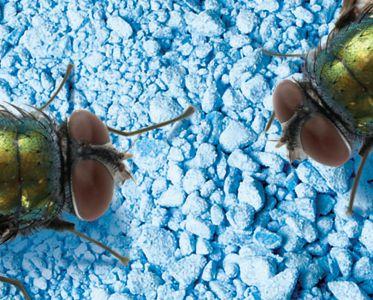
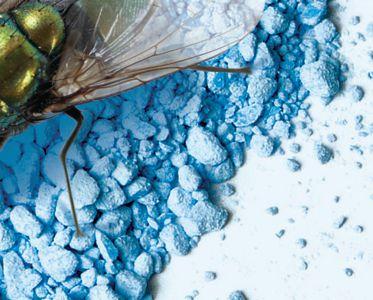
Starbar® Premium Fly Bait contains the long-lasting, powerful attractant that flies always fall for.
Tried and true Starbar® Premium Fly Bait has long-lasting residual activity for effective fly control. Muscamone® attracts male and female flies. Flies remain in treated areas – thereby feeding longer and ensuring complete kill.
Always read the label before using this product.
® Starbar and Muscamone are registered trademarks of Wellmark International.
Communication
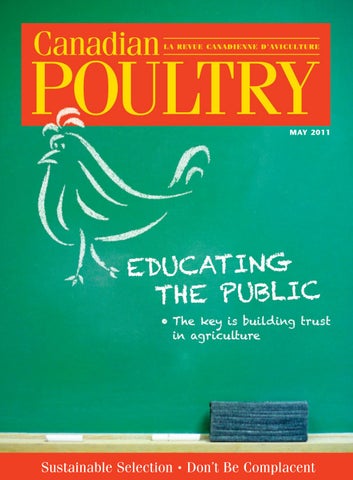
Educating the Public
It’s about building trust in agriculture, say experts
By Kristy Nudds
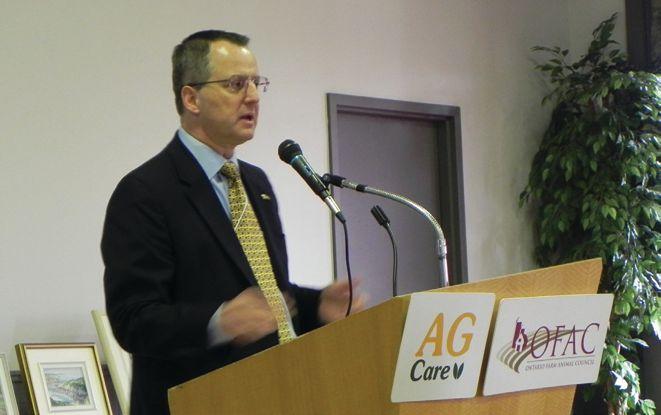
Lack of understanding on the part of consumers creates a huge information vacuum that is too frequently filled by our detractors,” Charlie Arnot, CEO of the Kansas City-based Center for Food Integrity, told attendees at the recent joint Ontario Farm Animal Council (OFAC) and Agricultural Groups Concerned About Resources and the Environment (AGCare) annual general meeting.
As a result, agriculture producers are finding their practices under scrutiny, and feeling as though they have to defend what they do. “Producers likely didn’t choose to be involved in public relations or public policy – most got involved in agriculture and food production because they have a passion for it,” he said. “They expect to have the freedom to operate their farms, but this freedom is being threatened by increased regulation, legislation, and market requirements.”
“We need to stop fighting the definition that others give us, and really start defining who we are, to build consumer trust,” he said.
Until the Center for Food Integrity (CFI) was formed in 2007, building trust with consumers was not a strategy employed by agriculture. Traditionally, agriculture has employed two strategies to combat misinformation or questions concerning its practices: provide sciencebased reasoning, or go on the attack.
The CFI is a not-for-profit organization whose members represent each segment of the food chain, including farmers and ranchers, universities, food processors, restaurants, retailers, and food companies. The organization brings
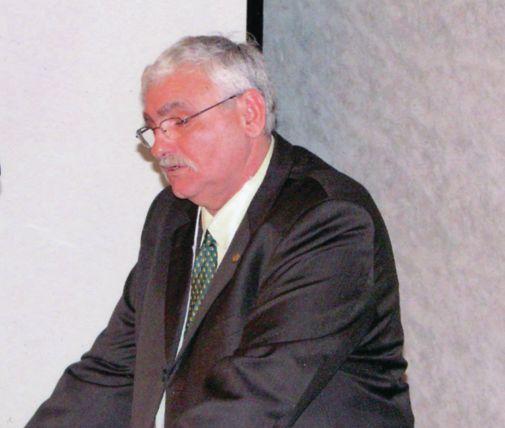
Charlie Arnot (above) of the Center for Food Integrity says that if the public trusts producers to do what is right, they will grant them a social licence to produce food, and will not restrict their freedom to operate.
together stakeholders to reach consumers in meaningful ways with a unified voice. Its goal is to promote dialogue, model best practices, address issues that are important to consumers and serve as a resource for accurate, balanced information about the food system. The CFI does not lobby or advocate on behalf of individual food companies, producer groups or brands.
Early in its formation during a stakeholder engagement seminar, Arnot said he had an “aha” moment. “The vice-president of Social Corporate Responsibility for one of the leading global quick-service teams, said that agriculture thinks it has an image problem, but it doesn’t,” he said. “Agriculture has a trust problem.”
These are fundamentally different problems that require different approaches, said Arnot. So the CFI partnered with Iowa State University and decided to figure out what it takes to build trust in food.
The two groups performed a metaanalysis of 21 different pieces of existing research, and identified three common drivers for what leads consumers to have trust in something:
• influential “others” (i.e., family, friends and other respected people who can influence opinion)
• confidence – a perception of shared values and ethics (i.e., can a consumer count on you to do what is right?)
They then surveyed 6,000 consumers over a period of three years on the issues of food safety, animal welfare, nutrition and sustainability. What they found is that, when it comes to building trust, shared values (confidence) are three to five times more important than competence.
Historically, the agriculture and food industries have spent the majority of their
SociaL LicEncE
Photo courtesy of Kelly Daynard, OFAC
Communication
public relations efforts on competence, rather than on shared values, said Arnot. “In terms of how we engage with the public, we’ve had the equation backwards.”
Arnot said that consumers have questions: Should you be housing animals that way? Should you be feeding them the way you do? Should you be using that crop technology, or using GM seed? “We’ve told them that science says we can,” he said. “But we’ve been answering the wrong question. We’ve substituted scientific validation for ethical justification.”
He said that sometimes the industry has undermined its own credibility simply by talking about who it is, and what it does. It answers consumers’ questions with responses such as “we take care of the animals and the land because if we’re more productive, we’re more profitable.” He, like many others, has used a similar type of response, he said. But by doing so, producers are giving consumers the idea that they
are not doing it because it’s the right thing to do, but because it’s profitable.
Opponents of agriculture (activist groups, environmental groups, etc.) rate higher in terms of a moral hierarchy in the minds of consumers because their values are committed to a cause, based on a set of principles (i.e., the “right” thing to do). Business ranks lower on the scale, “so when we come to the table talking in terms of profit, we are coming to the table three touchdowns down,” said Arnot.
“We come in with a significant credibility deficit. Is it right? Is it justified? No, but it’s reality, so we have to deal with it.”
The good news is that consumers have trust in farmers. The problem is, they aren’t sure that contemporary food production is still considered farming, he said.
The CFI has developed a model for communicating with consumers that can be used by agricultural groups and those involved in the food industry. The model
was developed to protect a producer’s freedom to operate, and protect the “social licence” to produce food. A social licence, in this context, is defined as the privilege of operating with minimal formalized restrictions (i.e., regulations, market requirements) based on maintaining public trust by doing what’s right.
“If the public trusts you to do what is right, they will grant you that social licence,” said Arnot. “They won’t feel the need to restrict your freedom to operate.”
This social licence is not an act of altruism, said Arnot, but rather enlightened self-preservation. “It’s an opportunity for you to demonstrate that you are operating in a way that is consistent with a consumer’s values.”
The CFI model is based on three pillars of sustainable balance: scientific verification, economic viability and ethical grounding.
“We can’t get rid of science, we have
Communication
to have good science,” said Arnot. “But it has to play a different role in our public conservation.”
Of course, if a production system is not economically viable, then it is not sustainable. This needs to remain part of the discussion, but, like science, it cannot be the sole reasoning or justifi-
cation for producing food using certain production practices, because it holds no “value” to a consumer. “We need to help consumers understand the benefits of agricultural production practices to society, not just to us,” said Arnot What is really key to the model is the premise of being ethically grounded.
“When we talk about science, we have increased a consumer’s knowledge, but we haven’t changed anything about what the person believes or how they may feel, and this person is more likely to act on the latter,” he said.
The CFI has redefined agriculture as the “ethical” choice – in order to produce the food we need, we must do so with fewer resources using responsible systems. “This creates a very broad base of support, and the nice part is that this is what agriculture has been doing for the last 40 to 50 years.”
But we haven’t approached it in the right way, as we haven’t let consumers know how our increases in efficiency benefit them or society. We must change our language, Arnot said: telling consumers that increases in efficiency use less land and water, and have a smaller environmental footprint, is more reassuring than simply telling them we are more efficient.
“We have good ethical reasons for what we do; we just need to change our language to make it meaningful to consumers,” he said.
Arnot gave an example of how to do this. When approached with a question regarding animal care from a concerned consumer, he suggested giving an answer similar to the following: “As a food producer, I recognize that I have an ethical obligation to the animals, my employees, the environment, my customers and my community. Here is what I am doing every day to live up to this . . .”
Arnot said that the agriculture industry can overcome bias in size and practices used if it shows commitment to four key values: safe food, the environment, care for animals and contribution to community.
This value-based communication is essential to CFI’s trust model. The model has three strategic platforms: build trust via communication, redefine the food system as the “ethical” choice, and support consumer choice.
The CFI works with agricultural and food industry groups on messaging as well as ongoing research. Working with food retailers and processors began in 2010 because of increasing pressure from animal activists. Currently, activists
Communication
meet with big brands such as Costco, Wal-Mart and McDonald’s quarterly in Washington, D.C. Ongoing CFI research has helped retailers understand that, when it comes to who is responsible for animal welfare, retailers are at the bottom, and they don’t have to own the issue or take responsibility for it.
Activist groups such as the Humane Society of the United States (HSUS) have focused on retailers and state legislators for the past few years, and have deep pockets: they are beginning to employ the same types of tactics here in Canada.
That has Paul Hodgman, former executive director of Alberta Pork and a
speaker at the joint OFAC/AGCare meeting, worried. He has been hired by the farm animal councils in Canada to help develop a Canadian food industry strategy to bridge the gaps in the supply chain between the farm and the food industies.
As the CFI realized, Hodgman says here in Canada, we need to approach the issue of animal activism in agriculture in new ways.
“The issues we are dealing with are so national and universal in scope, that dealing with it as one commodity is too difficult,” he says.
The changes activist groups demand seem small and for the better of animals, but these groups are never satisfied, and will continue to push for more. “This costs money, and producers don’t have much say in it. The whole supply chain is affected,” he says.
He notes that Canada’s agriculture industry is fragmented; our supplier, food producers and retailers don’t always talk to one another and don’t have strategy sessions. That’s why the existing farm animal councils in Canada are working together to develop the strategy, with the goal of enhancing consumer trust and confidence in food and farming in Canada.
The Canadian strategy will follow a lot of the core options in the CFI strategy, with some Canadian adaptations, says Crystal MacKay, executive director of OFAC. Specific objectives include addressing key areas such as animal welfare and the environment. Primary targets are the food industry, supply chain partners and agri-food industry professionals. Consumers are secondary targets. A better place for consumer outreach is the new FarmCare Foundation, developed in the fall of 2010 (www.farmcarefoundation.ca).
“We haven’t done enough on the proactive and advocacy side,” says Hodgman. “We don’t need to apologize for who we are; we need to change our tactics. We are in a position where we are going to lose our social licence to produce food, and we need to build trust within the system.”
A report on the strategy was completed at the end of April, and implementation of the plan is expected to begin on Sept. 1, 2011. n
Biosecurity without compromise
PIC Update
Pathogenesis of Common health Problems
maternal age and eggshell quality have been identified as predisposing factors for health problems in broiler, as well as embryo, deformities
B Y K IMBERLY S HEPPARD , R ESEARCH C O - ORDINATOR
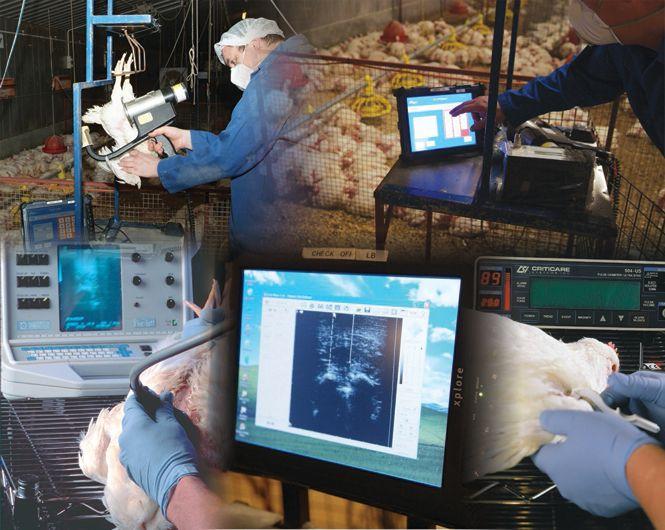
sometimes a research project takes us down an unexpected path of discovery. The original question is answered, new questions arise and, if we are lucky, new and unexpected information comes to light. Dr. Andrew Olkowski of the University of Saskatchewan has been studying various causes of heart failure in broilers for years, and has most recently looked into the link between shell quality and heart failure. In doing so, he has uncovered a fascinating, but problematic, link between shell quality, hen status and some never-before-seen anomalies in broiler embryos.
Recent advances in the understanding of risk factors associated with predisposition to heart disease in humans have linked several important maternal factors with heart failure in some individuals. It has been shown that heart disease may be initiated in utero, and heart failure may be triggered by precipitating factors later in life. In essence, there are a number of similarities in many aspects of pathology, clinical symptoms, hemodynamic changes and biochemistry of heart failure in humans and broiler chickens. Therefore, many similar
dFeatured r esearcher
r. Andrew Olkowski holds a Phd degree, dvm degree, and B.sc. degree in biochemistry, and has many years of clinical field experience and practical research experience in veterinary biomedical sciences. his research interest is focused on
metabolic disorders in animals genetically selected for rapid growth characteristics. For several years, he has been investigating the patho-physiological and biochemical mechanisms associated with heart failure, cellulitis, genetic defects and necrotic enteritis in fast-growing broiler chickens.
maternal risk factors may be as relevant in broiler heart failure etiology as they are in human heart etiology.
For birds, the eggshell is an important component of the interface between the embryo and the external environment. Therefore, changes in eggshell characteristics can have a profound effect on the physiological processes of the developing embryo. Because of this, and given what we know about human heart health, Olkowski felt it was important to consider that the cardiac health of broiler chickens may be affected by factors associated with eggshell characteristics during embryonic life. He and his research team began this project by investigating whether eggshell quality may be a factor increasing the predisposition of broilers to develop acute or chronic heart failure.
However, the first round of experiments led to the discovery of several important, previously unrecognized factors that may help us in understanding the etiology of not only heart failure, but also many other problems commonly seen in commercial broiler operations. The findings obtained from these experiments indicated that poor eggshell quality was associated with overall reproduc-
tive and hatchability failure as well as many common health problems seen in broiler flocks. The higher incidence of these conditions seemed to be independently correlated to aging of the parental flock, as well as negative attributes of eggshell quality. Therefore, a new approach and broader experiment was designed to look at these things, specifically targeting aging breeder flocks.
Ten thousand commercial broiler eggs were collected from a breeder flock at 62 weeks and the condition of the eggshell matrix was examined using light. Eggs were separated into two general categories: 1) eggs with normal eggshell – low risk, and 2) eggs with poor quality eggshell – high risk. From the pool of 10,000 eggs, 65.5 per cent were classified as low risk, and 26.3 per cent were classified as high-risk.
All eggs were then incubated and hatched according to routine procedures in commercial production. All goodquality chicks, hatched from eggs representing both groups, were raised as commercial broilers. Daily monitoring recorded mortality, morbidity, and overt signs of heart failure and ascites. All mortalities and birds euthanized for humane
CFC Executive Committee Le exécutifComitédes PPC
adrian rehorst 2011
David fuller
Nova Scotia | Nouvelle-Écosse Chair | président
David janzen
Martin Dufresne
British Columbia | Colombie-Britannique 1st Vice-Chair | premier vice-président
Ontario Member-at-large | membre à titre personnel
PIC Update
reasons were subjected to detailed post mortem examination. Condemnation data was collected for each group separately. A total of 683 unhatched eggs from the low-risk group, and 720 unhatched eggs from the high-risk group were subjected to detailed examination in order to determine the causes of reproductive failure. Broilers hatched from the high-risk group showed lower growth rate and substantially higher losses associated with mortality, morbidity and condemnations than those in the lowrisk group. Acute heart failure (sudden death syndrome) and chronic heart failure (ascites) accounted for the majority of losses in both groups, but the incidence was much higher in the high-risk group that had poor quality eggshells. These results were somewhat suspected and further confirmed Olkowski’s earlier findings of a link here. A major cause of morbidity was leg problems, and major causes of condemnations included cellulitis and cyanosis, all associated with inferior eggshells.
One of the most interesting overall findings of significance was what they found in the unhatched eggs: a high incidence of monstrosities in near-term embryos. The most common deformities included hydrocephalus, exposed brain, lack of eyes, a single eye, deformed beak, lack of upper beak, deformed legs and exposed body cavities. In many instances, embryos were affected by multiple deformities. Some of these cases attracted special attention because of their unusual presentation, complex nature and novelty – particularly spina bifida and incarceration of the intestinal loops. These embryonic defects were previously not observed in broilers.
Previous literature suggests that spina bifida in chickens is extremely rare. However, the detection of this deformity in relatively large numbers of broiler embryos may signify a more serious and widespread problem, which therefore requires further investigation. The researchers are unsure of the causative factors of spina bifida, but nutrition, toxicology and genetics could all play a role, as does hen status. Undoubtedly,
PIC’s Picks
B Y T IM N ELSON , Ex ECUTI v E D IRECTOR
As I noted in the January issue of Canadian Poultry magazine, this year the Pic has lodged scientific research and experimental development tax credits with the canada revenue agency (cra) for industry investment in scientific research.
this was our first year of lodging this return and, as a result, we were just in time to lodge a claim for 2009 as well as for 2010.
We lodged a claim for $697,846.00 for the 2009 financial year and $565,907.00 for the 2010 financial year, a total of $1,263,753.00 for the two years combined.
We have not had a result from cra yet but we have no reason to be anything other than optimistic that they will oK this tax credit.
What does this mean?
as individual businesses, the ontario Feather Boards pays something towards scientific research each year on your behalf – it varies depending on what your Board decides it wants to invest in. as such, you as individuals or private businesses are eligible for a tax credit (at your nominal tax rate) on whatever amount you’ve paid.
as an example, in 2010, if you had a turnover of $500,000.00, you would have contributed approximately $215.00 to research through your board to the Pic and, as a result, you
metabolic status of the hen has a very significant impact on the health and performance of the offspring. The high incidence of embryo deformities in general is likely a sign of a more profound problem, and in this context the importance of these findings should be evaluated very seriously.
Overall, the findings of this project not only advanced our knowledge considerably, but also provided several important facts of practical significance.
would be eligible for a tax credit on the $215.00. if your nominal tax rate is 35 per cent, your credit would be $75.00. now i can hear you saying, “$75.00? What’s the big deal!”
so, take a second look at the numbers above, because, at 35 per cent, if the entire industry claims its credit, the value to industry for the 2009 and 2010 combined is $442,313.00, which is a big deal. this amount would run the Pic for almost three years, so it’s actually a huge deal.
What next?
look for a tax credit notification from your board. if it’s for the 2009 year you have until June 30, 2011, to lodge it. if it’s for the 2010 year you have until June 30, 2012, to lodge it.
then?
on your behalf, the Pic would be very pleased to invest your rebate in a fund that supports future research infrastructure, research equipment and science chairs.
so please consider making a donation of your rebate to Pic, because when you do, you will be making a donation towards the future of your industry, a donation which essentially has cost you nothing – please think about it.
For more information, please contact tim nelson at Pic – 519-837-0284 or e-mail: tnelson@poultryindustrycouncil.ca.
As such, the findings should set new trends in the research strategy. In order to develop management strategies for more effective control of the most common causes of significant economic losses in the Canadian broiler industry, such as sudden death syndrome, ascites, cyanosis, and cellulitis, identification of parental risk factors that may predispose broilers to health problems is essential. To read more about this project, please visit www.poultryindustrycouncil.ca. n
Industry
success shouldn’t breed Complacency
the chicken industry has accomplished “amazing
things” in recent decades but challenges remain
B Y D AN W OOLLEY
Chicken Farmers of Canada (CFC) chairman Dave Fuller warned producers at the Chicken Farmers of Nova Scotia (CFNS) annual meeting that now is not the time for complacency in the Canadian chicken industry.
“We have done amazing things in the last three decades. We’ve gone from a per capita consumption of roughly 14 kilograms per person to 31. We’ve gone from a 14 per cent market share of meat protein to 34 per cent,” Fuller said.
Canada’s chicken producers have also created a food safety program to ensure they are growing a safe product for consumers and, he continued, an animal care program that shows their industry’s high standards of on-farm animal care.
But Fuller said that doesn’t mean the industry should relax. It needs to set the stage now for a discussion of the future challenges it will face. “One of those challenges is to grow the market. Not just to grow it but to do it efficiently and profitably.”
“The past few years have seen production surge past the one billion kilogram mark, but then plateau. We need to take the bar and raise it even higher. We need to get more consumers interested in our product, or at least get them interested enough to choose it more often,” he said.
The CFC is also examining growing the chicken farmers’ market share
cFc chair david Fuller (above) outlined a fivepoint consumer action plan to address amr, and cFc general manager mike dungate said cFc’s oFFsaP program has 97 per cent compliance.
among the available meat sources, he said. “We have to deliver into our competitors’ market.”
Building that market share will require the chicken industry to establish a consensus on the industry’s important issues, stated Fuller. “One of our biggest issues right now is antimicrobial resistance.”
“As an industry we have been ahead of this issue for a long time . . . despite efforts to make it look like it’s been a surprise. Antimicrobial use and resistance
has been a critical priority of Chicken Farmers of Canada for several years.”
But CFC has been “putting out fires” on the AMU/AMR issue of late, he said. The most recent flare-up was a report by the CBC Marketplace program saying twothirds of the samples of chicken it bought in Canadian supermarkets, when tested, contained antimicrobial resistant bacteria.
In response to consumer concerns, he said CFC has a five-point action plan to address the issues, consisting of:
Future ChAlleNges
electrolytes-A/F
Primarily for rehydration
With vitamins, two possible doses, for animals with a slight loss of appetite and vitamin deficiencies
electrolytes plus stress-aid
For animals with a significant loss of appetite and important vitamin deficiencies
• Implementation of an On-Farm Food Safety Assurance Program to standardize on-farm food safety production practices;
• Funding research to examine antimicrobial resistance and alternatives to antibiotic use;
• Establishment of a working group of industry stakeholders to examine ways to reduce antibiotic use;
• Education of consumers on the safe handling and cooking of chicken; and
• Working co-operatively with the Canadian Integrated Program for Anti-microbial Resistance Surveillance (CIPARS) of the Public Health Agency of Canada.
Since 2002, the federal government has done antibiotic resistance surveillance at the retail and processing levels.
Industry
Fuller said CFC is working with the federal government to finalize a new protocol for an on-farm surveillance program to monitor on-farm levels of antibiotic resistance to pinpoint potential resistance sources and develop mitigating policies and procedures. “We need to know if we’re contributing to the problem.”
He urged producers to volunteer for the monitoring program. “We can’t do it without your help.”
With producers picking up the challenge of on-farm surveillance it will help frame future steps to deal with the resistance issue. “We need to take ourselves out of the equation. That is why we are opening our doors to the Public Health Agency of Canada,” he said.
CFC is also evaluating the practices of chicken producers in other countries, said Fuller. “We need to take more steps and we must do it now. This issue is far
from over and we need to take this seriously. If the consumers turn off chicken; we will all be worse off.”
Meanwhile, across Canada, OFFSAP is now at 97 –per cent producer certification, with New Brunswick the eighth province to sign on, and CFC is now waiting for Nova Scotia and Newfoundland-Labrador to complete the process, said Mike Dungate, CFC general manager, who also reported that in just its first year the CFC Animal Care Program has received a 25 –per cent signon from Canadian chicken farmers.
Shelley Acker, CFNS general manager, said in her report to the CFNS annual meeting that staff are working to get regulatory changes to approve mandatory OFFSAP. Both it and the Animal Care Program will come to Nova Scotia. “We are closer than ever in getting this project certified,” she said. n
energy savings Energy
taking advantage of available programs and implementing changes can pay off
BY DAN WOOLLEY
Farm Energy Nova Scotia (FENS), a group of researchers, academics and industry consultants from the Nova Scotia Agricultural College, Nova Scotia Department of Agriculture and Agra Point, provide Nova Scotia farmers with guidance and research for on-farm energy sustainability in the pursuit of conservation and energy efficiencies.
FENS staff will also go to farms to assess their energy needs. Gerry MacDonell, an Agra Point agriculture energy engineer, said FENS has now done about 40 farm energy reviews.
The review is a snapshot of the farm’s current energy use, said MacDonell, to help identify energy reduction opportunities.
Julie Bailey, NSDA’s farm energy specialist, added the poultry industry is looking for particular lighting intensity in its poultry housing, with the recommended lighting level being 20 foot-candles for poultry houses, 50 foot-candles for incubators and 100 foot-candles for egg inspection stations. She also noted producers can take advantage of natural light, with windows, skylights and light tubes in ceilings.
CFls
Compact fluorescent lights (CFL) use 75 –per cent less power than incandescent fixtures and can last up to eight times longer, Bailey said, adding they contain mercury but will put less mercury
nova scotia department of agriculture’s farm energy specialist, Julie Bailey, says do your homework when it comes to replacing incandescents with cFls and led bulbs.
into the environment than incandescent bulbs because much of Nova Scotia’s electricity is generated by coal-fired boilers. MacDonell noted incandescent lights will no longer be available within a year.
Bailey observed that a farmer could save $500 annually ($650 if the lights are on 24 hours a day) by replacing 10 100watt incandescent bulbs with 10 26-watt CFL lights. Dimmable CFL bulbs are also available, she said.
In linear fluorescent bulbs, the T12 has been banned for new installations and replaced by the High Performance T8, which uses 40 –per cent less energy and provides better colour rendering.
Metal halide (high-intensity discharge, or HID) lamps have a 2,000-hour service life, said Bailey, but they take
several minutes to come to full power and, if there is a power disruption, they will take a half-hour to restart. They also contain mercury. Moreover, linear fluorescent lights can provide the same light for about half the cost.
leds
Light emitting diodes (LEDs) are very expensive to buy, although they are supposed to last four to five times longer than fluorescent tubes. Bailey cautioned they are also a new technology and a buyer should ensure the LEDs are under warranty.
A recent study of broiler barn lighting by the University of Arkansas Center of Excellence for Poultry Science rec-
Not All Are the sAMe
Energy
ommended LEDs over CFLs for incandescent light replacement, she noted, observing, “The experience in Nova Scotia has been good in that the performance of CFL lighting has been very brand specific. Some farmers have had multiple CFL failures with one and success with others.”
Bailey estimated Nova Scotia farms have the potential to achieve a 15 –per cent saving in annual electrical costs. A 26 –per cent potential reduction in onfarm energy use has also been identified through on-farm energy audits done in the province.
The Farm Investment Fund (FIF) can provide 75 –per cent funding, up to $2,000, for an on-farm energy review, she said.
heAtINg
Another saving can come from heating. An infrared heater for a poultry barn can use 10 to 40 per cent of the energy consumed by a standard box heater, observed Bailey.
In a poultry barn, she calculated, there is a two-year payback for conversion to CFL bulbs and in broiler housing the payback is even shorter, less than one year.
Bailey said in one broiler barn in the province, 140 incandescent fixtures were replaced by 72 high-performance T8 tubes, producing an expected annual electrical saving of $2,000, with 50 per cent of the $21,000 conversion cost covered by FIF. The result is a five-year payback.
ProgrAM sAVINgs
Under Efficiency Nova Scotia, the independent agency that promotes reduced energy use and increased energy efficiency, there is a Small Business Lighting Solution (SBLS) program with a two-year payback. She said the SBLS program has a free assessment and up to 80 per cent funding to cover the installation cost of energy-efficient lighting.
Efficiency Nova Scotia also has the Commercial and Industrial Customers program, which will cover larger farm-
Energy
ers. It is meant for projects that will save 20,000 kilowatt-hours annually and comes with funding of up to $500,000, or 50 per cent of the implementation cost.
There is also Smart Lighting Choice, another Efficiency Nova Scotia program that encourages the purchase of highefficiency lighting fixtures at discount prices through specified vendors.
Another program is the AgroEnvironmental Initiatives in the FIF program for green, renewable energy projects. Bailey said a Nova Scotia farmer is refitting two of his poultry barns with six ground source heat pumps that can either heat or cool water as required to offset his oil heating costs.
He has been spending $36,000 a year for fuel oil, she said, noting the project will cost $235,000; but it has received FIF money, Eco Energy refit funding, plus a Nova Scotia Power business energy rebate, with an expected payback within four years at $1 per litre of oil.
solAr
Preheating ventilated air for poultry housing makes a lot of sense to her and that is what Cornwallis Farms, of Port Williams, Kings County, N.S., has done by installing a solar wall along 270 feet of the south side of a poultry barn.
The project, costing about $56,000 will save about 30 per cent of the annual heating cost or about $7,000 in propane, she said.
It is subsidized by FIF money and a 15 –per cent grant from Conserve Nova Scotia.
FIF can also support other renewable energy sources such as wind power, she said, adding a one-kilowatt-hour wind turbine will have a payback between 10 and 30 years.
Glenn Jennings was an early adapter, erecting three small wind turbines at his Masstown poultry farm in Colchester County a few years ago.
She recommended, however, that farmers should choose carefully a location for their wind turbine, as higher turbine towers will generate more electricity because they can reach stronger winds. n
SELECT DOSER
• Select Doser dispenses products accurately into low and high pressure watering systems through it’s tubing via compression and peristalic action.
• Aggressive products and powders never pass through the pumps mechanism that can cause premature wear and maintenance.
• New improved Model 640 is now simple to use with one tube size
• New Select Doser Max can now operate in high pressure and volumes
Cooling System
diameters • Polyethelyne housing
• with Multifan or Performa+ Leeson motors
Genius picture Ge-430
• Genius 430LS Livestock climate control
• User friendly Interface (hot Keys)
• Large Display Screen for easy viewing
• Up to four variable stages and 30 off/on relays
• Expandable to 50 relays with relay module
• Up to 12 temperature sensors , one Humidity sensor
• Up to 12 heat zones, 12 cool stages, 2 light programs
• Up to 5 water metering, 2- 0-10volt outputs for dampers
• can operate Dual, natural and tunnel ventilation
• Available in pilot or spark Unvented Unit Heater 72”
Genetics selecting for sustainability
the challenge for this century will be to continue genetic improvements, so that as an industry we make high-quality animal protein available in a manner that is sustainable
BY DOMINIC ELFICK, INTERNATIONAL PRODUCT MANAGER, AvIAGEN
over the years, selection for improved efficiency has been extremely successful.
The cost of producing a pound of live chicken declined from US $2.32 in 1934 to US$1.08 in 1960 down to US$0.45 in 2004 in today’s money. Within a flock, improvements in veterinary medicine, environmental control, nutrition, etc., have undoubtedly had dramatic impacts on bottom line performance; however, Havenstein (2003) stated that his results “indicate that genetic selection brought about by commercial breeding companies has brought about 85 to 90 per cent of the change that has occurred in broiler growth rate over the past 45 years. Nutrition has provided 10 to 15 per cent of the change.”
The challenge for this century will be to continue these improvements, so that as an industry we make high quality animal protein available to all, but to do this in a way that is “sustainable”.
CoNtINued
IMProVeMeNt
in addition to traditional methods of selection, increased knowledge of genomics will be used to select more efficiently and effectively for traits of importance.
WhAt Is sustAINAbIlItY?
There are many definitions of sustainability but many of these definitions are unclear or open to interpretation. Often the definition “to meet the needs of the present without compromising the ability of future generations to meet their own needs” is used. As commonsense as this may sound it provides no metrics for us to measure ourselves against. The International Reporting Initiative uses a framework for reporting “sustainability” using three “pillars” of: economic, environment and social. Sustainability
to a breeding company must encompass these three pillars.
The social and ethical issues associated with animal production have become increasingly important. Accumulations of leg health issues, poor immune responses, high feed intake or high outputs of waste product are today not considered suitable for a long-term sustainable breeding program. As an industry we also face issues the social issues of human health (pathogen freedom and the nutritional factors in the meat we produce) and the availability of animal protein for nutrition on a global scale.
eNVIroNMeNtAl thINkINg
Environmental traits will be increasingly considered in breeding goals for the future, but these interlink with social issues across many parts of the globe. As wild populations of fish and animals shrink and human population becomes increasingly urbanized, the provision of low cost animal protein will be increasingly desired by consumers world-wide. Poultry with its scalability, high throughput and excellent FCR is an opportunity for people in both established and emerging markets. Land is becoming more expensive if not scarce. Peri-urban land previously used for agriculture is being utilized for urban expansion and industry. This will increase the distance our food supplies have to travel to reach us, with its knock on effects of greenhouse gas emissions, congestion and so forth.
Genetics
Published data indicates that of all the meat producing livestock species, commercially raised broilers have the lowest green house gas (GHG) emissions per kg of meat produced. Genetic selection of broilers over the last 20 years has shown a reduction of GHG emission of around 25 per cent, with this reduction predicted by the authors to continue for the next 20 years or so.
Commercial geneticists feel that this is a very conservative estimate given the enhanced technologies available today and in the near future. Selection targets for efficiency, especially in FCR and meat yield have primarily driven this reduction, at the same time as reducing the wholesale price of high quality, healthy animal protein to the customer.
breedINg strAtegY
The breeding industry is required to produce products that are acceptable and
desired by the end user. Therefore feedback and consultation with direct customers, end users, consumers, scientists and lobby groups has always been a key feature in developing breeding goals. Due to the structure and nature of the breeding business, there are approximately five years from a breeding decision being made in the pedigrees, before the first effects of these changes can be experienced in the broiler generation. Genetic change is not sudden and is often not greatly noticeable until some years of advancement accrue much like compound interest. It is therefore crucial to the future success of the animal breeders to effectively predict consumer issues in the future and to identify emerging issues from the field. Within Aviagen a major part of our global success has been the emphasis that has been placed on balance, not just in terms of performance traits, but also by ensuring that we focus
on the support traits for our birds, with this strategy now broadening to capture environmental and emerging ethical concerns.
PerForMANCe eFFICIeNCIes
Aviagen has long been a leader in the use of advanced technology to improve the feed efficiency of broiler chickens. For over 30 years we have used highly controlled individual test pens to enhance FCR in our birds. This technique has almost halved the amount of feed required to generate a unit of poultry meat since the 1970’s. Individual pens, while cost effective and of high welfare standards, do not address the behavioural aspects of feed efficiency. In 2005, Aviagen started selecting pedigree chickens using performance testing stations in its breeding program.
These stations allow birds to be group housed and demonstrate the behavioural aspects of feed intake and efficiency. This technology will allow Aviagen to make faster improvements in FCR, with improvement rates around 2.5 per cent per annum. This improvement rate is close to the predicted increases in world chicken meat output. This being the case, the industry will be close to truly sustainable with inputs reducing at around the same rate as growth.
Improving meat yields also play a part in ensuring long-term sustainability. Using traditional conformation scoring along with ultrasound technology and information on the actual yield of siblings, we are able to increase yields at over 0.30 per cent per annum.
globAl FoCus
For many years Aviagen believed it was appropriate to grow our pedigree birds to their maximum potential under close to ideal conditions, in order to expose any underlying physiological issues. This allows selection only from families that are capable to rapid growth with no negative related issues. We still believe that this is appropriate, however we understand that around the world there are people unwilling or unable to achieve the levels of nutrition, biosecurity and management that we recommended. Almost 10
Genetics
years ago we set up sibling testing, where brothers and sisters of pedigree birds are exposed to management and feeding practices in line with the bottom quartile of the industry. This exposes our chickens to lower input type scenarios, again potentially improving the sustainability, and ability of our stock to thrive under such conditions. Increasingly robust chickens, in the face of disease challenge or management misstep, have no negative implications for those with the finances or management skills to follow high input advice.
PhYsIologICAl FuNCtIoN
Twenty years of continued focus on welfare traits such as leg strength and cardio-vascular function, using traditional inspection methods, medical technologies, such as X-Rays, ECG and oximetry, as well as genetic technologies that better understand the relationship between traits, has reduced these issues to very low incidences on effectively run commercial production facilities. While effective measurement of the reduction of these concerns is difficult, large datasets like those available from the Canadian Meat Inspection Service, indicate dramatic improvements in both the underlying genetic susceptibility of modern broilers to these issues, and an increased awareness as to the management requirements of these improved individuals.
bIodIVersItY
All of the large commercial companies keep large populations within each “line” to maintain variation and control inbreeding. There has also been a move for many of the breeding companies to acquire more varied stock types to give more depth to their programs and provide greater choice to consumers. In some, primarily developed countries, there is increasing interest in non-standard farmed chickens, due to a perception of higher “quality”, in systems such as free-range, organic, slow-growing and so on. The demand stems from a small but significant percentage of consumers, to which producers are responding. All of
these strategies tend to reduce “sustainability” through usage of greater amounts of feed and increased GHG production. They also increase cost and care should be taken that lower income consumers are not legislated out of eating chicken, as this remains one of the healthiest animal proteins available.
Future PoteNtIAl
With the publication of the full chicken genome, the inclusion of genomic technologies into commercial poultry breeding programs has moved a step closer to reality. All the current primary breeding groups are investing heavily into these areas. Our increased knowledge of the genetic factors in our birds will be used to select more efficiently and effectively for traits of importance.
The traits that will benefit the most from these technologies are likely to be the ones for sustainability, environmental impact and robustness, as these are traits often difficult or destructive to measure in a traditional breeding structure.
There is good evidence to suggest that the concerted efforts by Aviagen, and other breeding companies have reduced the levels of physiological issues associated with modern fast growing types of broilers. At the same time improvements in absolute performance have greatly reduced the carbon footprint of the industry and will continue to do so. Undoubtedly there will be emerging issues of welfare, sustainability and consumer ethics that will come to the forefront over time. Genetic lag will be an issue in these circumstances, with the time taken from a breeding decision made to the first impact appearing in the field, potentially being construed as lack of willingness or understanding by the breeding companies. It is important to understand that while selection for sustainability and welfare traits will continue, with additional power coming through genomics, that this is a slow and gradual process. Daily management, nutrition, and biosecurity, etc., can have more dramatic and immediate impacts on individual flocks in the field than genetics alone can offer. n
Choretime equipment. Sprinkler mist system. 55 kw generator and alarm system. Natural gas heaters. 12 acres on paved road.
“NEW LISTING” – LITTLE BRITAIN - BROILER BREEDER FARM WITH 14256 H.E.M.S. – Split flock. 2 barn operation. Barn 1- 275 x 40 x 1, Barn 2- 305 x 40 x 1. Solar wall Vencomatic Nests, Roxell Feeders, Fancom Computer, Bird weighting. Box heaters. Lubing drinkers. Automatic generator, 105 kw. New well. Pullet quota of 8257 produced off site. Year round production. 50 Acres, 45 workable tiled loam soil. New 3+1 Bdrm brick home.
ALL THINGS CONSIDERED
bY JIM KnIsLeY
Fedfest
It’s like Christmas and Halloween combined.
Bright signs popping up on lawns across the county, hordes of people going door to door promising to trick or treat, and people waiting to open up the goodies that are to appear under the tree.
It is that seemingly almost annual event – fedfest: a monthand-a-half of fun and frolic. It’s when grown women and men let loose their childish instincts, shed their inhibitions and unleash images designed to both frighten and delight.
Some may scoff at the excesses. Some may bemoan the expense. Some may see it all as a futile exercise designed to entrap the unwary. Many will attempt to ignore it.
But, as the Borg (on Star Trek: The Next Generation) said, “resistance is futile.” The advertising, the drone of the media, the signs, the mail, the knocks on the door and, if we are lucky, the blimps, balloons and fireworks, make for an impossible to ignore spectacle.
Rather than wallow in the futility of every election seemingly producing the same result, revel in the festive spirit of it all.
How often do politicians doff their superiority complex and come cap in hand to your doorstep? How often do you get to tell them directly and straight out what you think? How often do you get to advise them that they are your representative in Ottawa rather than Ottawa’s emissary to you? It is the one time they need you and not you them.
The political parties will have their platforms. Perhaps they will focus on government finances, economics, employment and unemployment. Perhaps they will focus on moral issues like honesty or respect for democratic institutions.
the struggles of working Canadians and for the lax ethics.
The Conservatives seem to have struck a chord by saying the election is unnecessary and will cost Canadians in excess of $300 million. What seems to have been forgotten is that the G20 conference in Toronto cost more than three times that and came in at more than $1 billion not including the various and sundry court costs for charges laid against both police and protesters.
The election may also be just the little bit of additional economic stimulus the country needs. The government cost of holding the election pales in comparison to the private money the parties will spend. The money will be spent everywhere from coast to coast. Every riding will get a share.
And this spending may come at just the right time. Economic growth has been slowing in many parts of the country in recent months and the election spending may be just enough to prime the pump to get things going again.
However, increasing numbers of Canadians see neither the potential for fun and frolic nor the possibility of economic spinoffs. They are, instead, turned off by the whole process. For them healthy skepticism has been replaced by cynicism.
Fedfest shouldn’t be just about fun and frolic
Skepticism, which may be a justifiable response to political entreaties, is being increasingly replaced by cynicism among the electorate. This is perhaps justifiable. If you recall, the Conservatives ousted the Liberals by largely focusing on integrity and ethics. The Liberal campaign focused on their economic management. As Finance Minister, Paul Martin had pulled Canada from the brink, and eliminated the deficit and running budget surpluses. The voters put ethics ahead of the economic track record.
This time the Conservatives are running on the economy, and, record deficit aside, their skills as financial managers. The Liberals, meanwhile, are railing against the ethical deficiencies of the Conservatives.
The New Democrats condemn both for forgetting about
As a result, more than a third, and perhaps 40 per cent, of eligible voters won’t vote. One result is that a party could win the support of 25 per cent of eligible voters and form not just the government but a majority government. In some ridings the number of people who don’t vote exceeds the number who voted for the winning candidate. Such deep cynicism may reflect the futility – “they’re all the same” – some feel. It may reflect a “plague on all their houses” mentality. Or it could be just a visceral response to all the attack ads.
There may even be some apathy involved, but increasingly, failing to vote seems to be a conscious decision among independent voters. They seem to have determined that none of the parties deserve support.
Hopefully, this election will turn that around, and politicians will see that their tactics are alienating increasing numbers of voters. Hopefully, they will try to engage the disengaged.
It is important. We have seen how important in recent weeks in Tunisia and Egypt, where people put their health, safety and lives at risk to, as peaceably as possible, bring down dictatorships and bring in democracy. As this is written people in Libya and Yemen are doing the same.