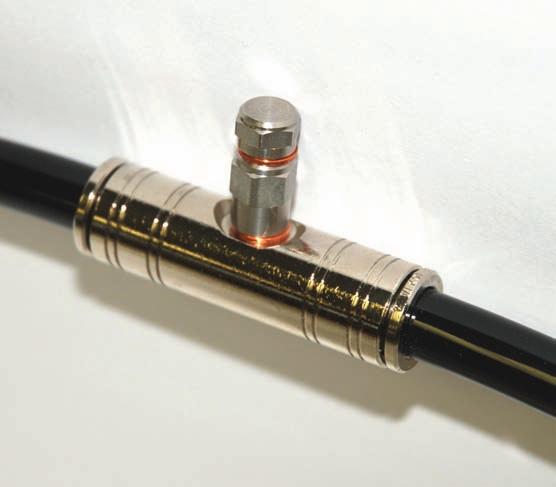
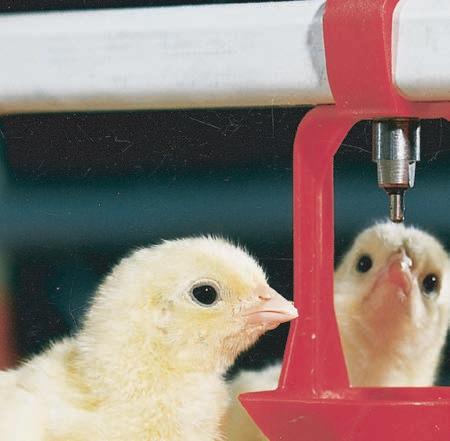
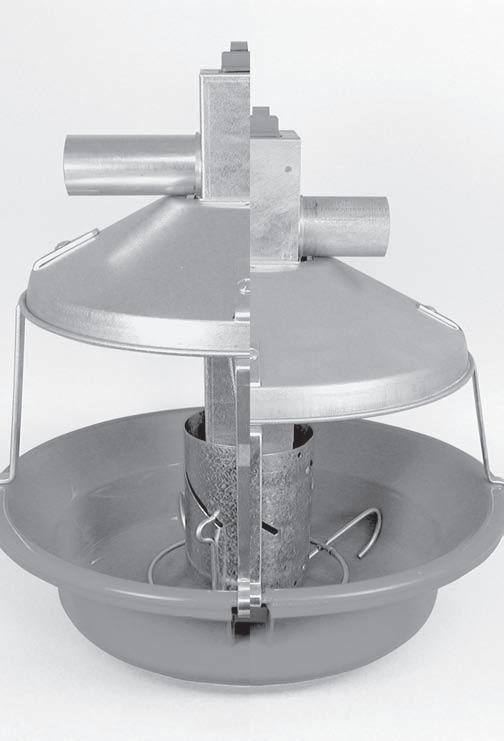
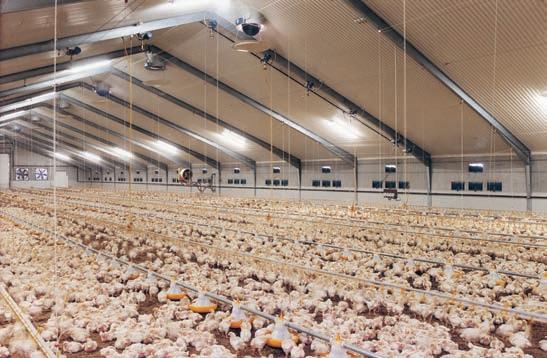
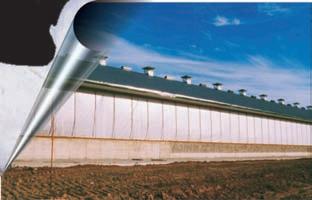
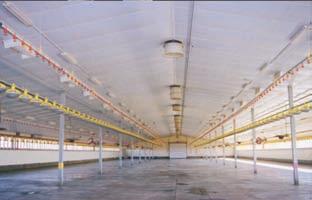
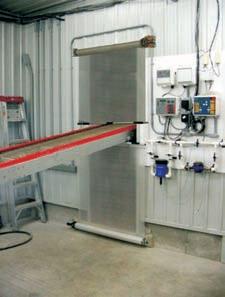
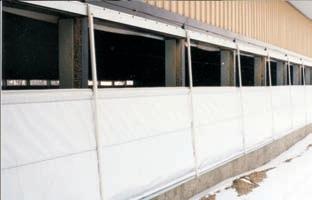
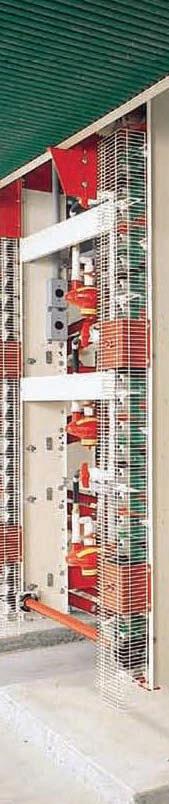
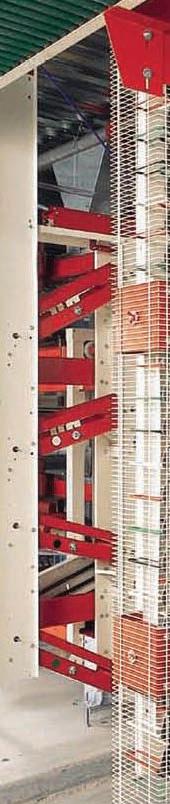
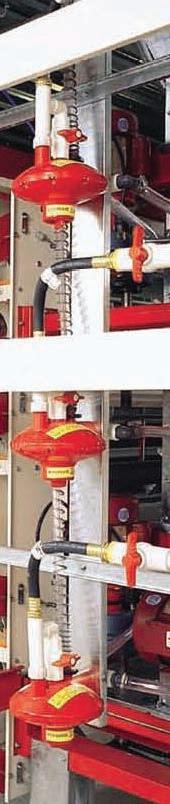
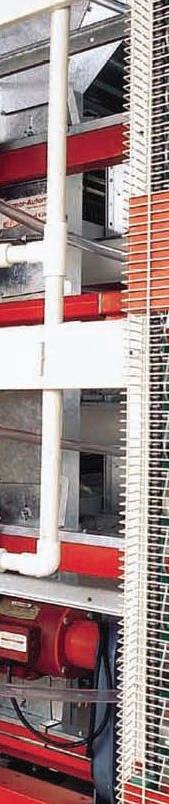
The PolAIR™ Flex Fog System represents VAL-CO’s newest cooling technology, bringing flexibility in cooling capability, performance and installation. Enjoy the benefits of high performance cooling such as even temperature reduction, no-drip atomization nozzles and quick and easy installation.
New and exciting in the PolAIR™ Flex System, is the use of a flexible hose which is capable of operating from 600 psi to 1000 psi giving the grower the options of a mid range pressure system all the way to a high pressure system. Flexibility is the key; flexible in pressure, performance and installation.
• PolAIR™ Pressurization / filtration pump system, complete with 2-filter filtration and On/Off box (a controller can be added to automatically switch the unit on and off).
Which ever system pressure is selected, performance is guaranteed through VAL-CO’s unique patented PolAIR™ Atomization Fog Nozzle — the best atomization nozzle on the market.
INDUSTRY: Partnerships in Agriculture
Their importance and why they are necessary By
Tim Nelson
18
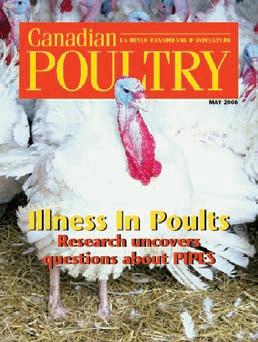
HEALTH: lllness in Poults
Research uncovers some interesting questions about the cause(s) of Poult Immunosuppression Pancreatic Enteritis Syndrome (PIPES) in U.S. flocks By Brett A. Hopkins
26
PIC UPDATE: Enhancing Vaccine Efficacy
Novel immunostimulatory oligonucleotides (ODNs) show promise as tools for fighting disease By Tim Nelson and Kimberly Sheppard 29
FEED: Planning a Feed Mill Expansion
Things to consider, including new feed mill options By Dan Woolley
PROCESSING: Chillin’ Chicken
Scientists study which method of chilling works best By Sharon Durham
COMMODITIES: No Escape From Grain Prices
Next year will bring little, if any, letup By Jim Knisley
FROM THE EDITOR
BY KRISTY NUDDS
Up, Up and Away
In the past few months, have you noticed an increase in your grocery bill? Despite soaring costs for raw materials such as grains, a recent article in the Globe and Mail entitled “Against the Grain” claims that food inflation isn’t being felt in Canada – yet.
Rapid increases in food prices have caused inflation to spike in many countries around the globe (according to the article, increases in food prices of four per cent, six per cent and 21 per cent in the U.S., Europe and China, respectively have occurred in the last year), sparking violent protests in many developing countries.
So why hasn’t Canada felt the same effect? The article says that Canada has experienced something unusual, a deflation in food costs. Upon closer examination, this isn’t really true and certainly won’t last. And it doesn’t bode well for supply-managed commodities should we lose out at the WTO.
It’s true that some grocery items, particularly produce, are cheaper, but this is due to our strong dollar in comparison to the U.S., where much of our grocery store produce originates.
There’s no doubt that food commodity prices are soaring – a Bank of Canada commodity index says they’ve actually risen more than 50 per cent in the past year – but retailers in Canada aren’t passing this along to consumers right now, in part due to strong competition from the new Wal-Mart “Supercentres.”
The article says that retailer duelling doesn’t tell the whole story. Of course, retailers cannot continue to eat profits. “Price controls imposed by marketing
boards,” the article says, are playing a role at keeping costs down on dairy and poultry for now, and food prices may “be kept low because the country is producing so much of its own food – possibly too much.”
The article indicates that stable or falling pork and beef prices are due to an overcapacity of these products in Canada. What it completely missed was the reason for this.
Pork and beef are in an overcapacity right now because unlike supply-managed commodities, they have evolved in such a way that they were highly dependent on U.S. markets. With a faltering U.S. dollar and the BSE crisis, beef and pork now don’t have the market they enjoyed several years ago. It’s gotten so bad that the Government of Canada is paying pork producers to cull their breeding herds. It’s a perilous situation when a commodity in one country is so dependent on the economy of another to remain viable.
Overcapacity of red meat could have a significant impact on poultry meat products. Overcapacity causes a decrease in retail prices and, if prices decrease considerably, to compete, the price of poultry will have to respond accordingly if it is to remain Canada’s number 1 protein.
Canada’s strong dollar has already made over-quota tariffs ineffective and if supply management loses out in the sensitive/special products category at the WTO negotiations in the coming months, increased access to our market will cause us to find ourselves in similar peril to beef and pork. ■
May 2008
Vol. 95, No. 5
Editor Kristy Nudds – knudds@annexweb.com
888-599-2228 ext. 266
Contributing Editor
Jim Knisley – jknisley@kwic.com
Publisher/Sales Manager
Marilyn White – mwhite@annexweb.com
888-599-2228 ext 237 • fax: 888-404-1129
Sales Assistant
Mary Burnie – mburnie@annexweb.com
888-599-2228 ext 234
Production Artist
Brooke Shaw
Editorial Director
Drew McCarthy – dmccarthy@annexweb.com
VP/Group Publisher
Diane Kleer – dkleer@annexweb.com
President Mike Fredericks – mfredericks@annexweb.com
Mailing Address
P.O. Box 530, 105 Donly Dr. S., Simcoe, ON N3Y 4N5
Publication Mail Agreement #40065710
PAP Registration #9850
RETURN UNDELIVERABLE CANADIAN ADDRESSES TO CIRCULATION DEPT., P.O. BOX 530, SIMCOE, ON N3Y 4N5.
e-mail: cnowe@annexweb.com.
Periodicals postage paid at Buffalo NY. USPS 009-324, ISSN 1703-2911. Published monthly by Annex Publishing and Printing Inc. US Office of publication c/of DDM Direct.com, 1223 William St. Buffalo NY 14240. US Postmaster send address change to PO Box 611 Niagara Falls NY 14304.
The Government of Canada is investing in a project to study the regulatory environment in the agriculture sector with a view to encourage competitiveness and prosperity. In a press release, the government said the reason for doing the study is that “we are committed to keeping our farmers competitive by removing unnecessary regulations and red tape.”
The announcement was made in early April by the Honourable Gerry Ritz, Minister of Agriculture and Agri-Food and Minister for the Canadian Wheat Board, at the University of Western Ontario’s Richard Ivey School of Business.
“The Government of Canada is committed to giving our world-class farmers the tools they need to compete at home and abroad,” said
Minister Ritz. “We are committed to funding research and working in partnership with industry, stakeholders and academia.”
The federal contribution of $2,086,250 will assist the University of Western Ontario in the five-year Agriculture and Agri-Food Project (AAFP) that will evaluate the impact of government regulation on the agriculture sector. The AAFP will help industry, government, academia and stakeholders to share knowledge, identify and address emerging issues, and provide advice and recommendations on regulations.
The AAFP will be co-ordinated by a Regulatory Impact Chair at the Richard Ivey School of Business. Under the Chair’s direction, the AAFP will:
• Conduct research that will focus on government policy-making and regulatory decisions, informed by the priorities of the sector;
• Present research findings
to media, government agencies, community groups, and the general public;
• Hold annual workshops and seminars for industry, government, rural and academic stakeholders to discuss and identify regulatory solutions to critical agricultural and agrifood issues;
• Produce teaching materials and executive training programs; and
• Create an online platform for the sector to access information and network with colleagues and stakeholders.
This project will also engage business students and expose them to agriculture and agrifood issues. It is an opportunity to develop a new generation of business managers to continue to lead the agriculture sector to sustainable profitability.
Funding is provided by Agriculture and Agri-Food Canada through the industryled Agricultural Adaptation Council.
Processors Join Forces
MARITIMES
As part of their co-operative partnership, New Brunswick-based Groupe Westco Inc and Olymel L.P. recently confirmed their intention to join forces to develop and consolidate their poultry production, slaughtering, cutting and deboning activities for the entire Maritimes from New Brunswick.
This new partnership is the result of a business relationship between Westco and Olymel L.P. formed almost a year ago.
CEOs of both companies were cited in a press release as saying that the partnership will make the poultry supply chain for New Brunswick and the entire Maritimes more efficient, and that producers, industry, and consumers would benefit.
The two CEOs also confirmed that talks toward the acquisition of the Nadeau
Bylaw Wanted
ONTARIO
Seventy Waterloo residents want city council to pass a bylaw that will permit smallscale chicken farming in the city.
The Waterloo Region Record reports that city staff are looking into the request but aren’t sure what to do, as there is no existing bylaw that says you can’t have chickens within the city.
Matthew Bailey-Dick, a founder of the Waterloo Hen Association, was quoted as saying he wants to keep hens
Poultry slaughterhouse in St-François-de-Madawaska, initiated in August 2007, had reached an impasse after its owner, Maple Lodge Farms, unilaterally decided to break off discussions in January. They also indicated that they were prepared to go ahead with talks with Maple Lodge Farms executives, or even to intensify discussions with a view to a business agreement, if the latter showed a willingness to do so. They also stated that the plan to acquire the Nadeau Poultry slaughterhouse would not result in any plant closings, and that in the event Maple Lodge Farms did not change its position, Olymel L.P. and Westco planned to build a new slaughterhouse in the region. In the meantime, Westco’s slaughtering volume would temporarily be transferred to an Olymel L.P. slaughterhouse in Quebec starting July 20.
Exceldor to Close Plant
QUEBEC
Quebec poultry processing co-operative Exceldor has announced it will close its Grenville plant Aug. 1, the farm newspaper La terre de chez nous reports.
The co-op, which bought Volailles Grenville in March 2007, announced to the plant’s employees in June 2007 that it would consolidate its fresh poultry slaughter and processing operations in its other two facilities, at St-Anselme and St-Damase, and explore other avenues for their facility. The co-op, whose total stated slaughter capacity is about 1.4 million chickens per week, announced in October last year that it would spend $18 million to modernize the StAnselme facility.
so he can provide eggs for his family.
Two other Ontario cities allow chicken: Niagara Falls (as long as they are not atlarge) and London (as long as they are kept in pens or coops).
COMING EVENTS
JUNE
June 8-10, 2008
Canadian Poultry and Egg Processors Council (CPEPC) annual convention, Westin Bayshore Resort & Marina, Vancouver, B.C. Keynote speaker: Bernard Voyer, the first North American to reach the Seven Summits. Visit www. cpepc.ca for registration information.
June 29- July 4, 2008
23rd World’s Poultry Congress, Brisbane Convention And Exhibition Centre, Brisbane, Queensland, Australia . For registration information and agenda, visit: www.wpc2008.com; tel: +61 (0) 7 3858 5594
JULY
July 20-23, 2008
Poultry Science Association (PSA) Annual Meeting, Sheraton on the Falls Hotel and Convention Centre, Niagara Falls, Ont. The PSA is celebrating 100 years in 2008. For more information, visit: www. poultryscience.org/psa08/
We welcome additions to our Coming Events section. To ensure publication at least one month prior to the event, please send your event information at least eight to 12 weeks in advance to: Canadian Poultry, Annex Publishing, P.O. Box 530, 105 Donly Dr. S., Simcoe, Ont. N3Y 4N5; e-mail: knudds@annexweb.com or fax: 519-429-3094.
WHAT’S
HATCHING HATCHING
UEP Welfare Program
United Egg Producers (UEP), a trade association representing most U.S. egg farmers and companies, has developed a new working relationship with the American Humane Association.
An agreement between the two states that UEP will recognize American Humane Certified™ animal welfare audits as also meeting UEP Certified standards if those egg producers also meet some additional criteria. The American Humane Certified program establishes guidelines for the production of eggs from hens in cage-free and free-range farm systems, while the UEP Certified program provides
science-based guidelines for the production of eggs from hens either in modern cage production housing systems or cagefree farm systems.
Under terms of the agreement, an egg farmer who passes the American Humane Certified audit, pays the fees and is a member in good standing with the UEP Certified Program and meets the UEP guidelines on 100 per cent of their egg production, can then use the UEP Certified logo and market those eggs as UEP Certified in addition to marketing them as American Humane Certified and using the American Humane Certified logo.
New Energy Tool Available Online
The Government of Canada has unveiled a new resource to help farmers reduce their dependence on conventional energy sources and improve farm sustainability. The Integration of Renewable Energy on Farms (IREF) website is a complete repository of technical information and online tools for analyzing the potential for integrating renewable energy sources onto individual farms.
The IREF website launch
The B.C. Egg Marketing Board welcomes Al Sakalauskas, as General Manager. Al brings strategic, governance, and accountability leadership balanced with sound agricultural knowledge. As a former Assistant Deputy Minister of the Ministry of Agriculture, Fisheries and Food, Al’s extensive knowledge also includes experience in the Ministry of Finance and Corporate Relations, and more recently, Partnerships BC.
was announced at the Growing the Margins Conference, held in London, Ont., in early April. The website has taken the best information on renewable energy technology for the agricultural sector and made it easily accessible through the Internet. The IREF website provides online tools to help farmers assess viable options and determine return on investment.
The IREF website can be found at www.farm-energy.ca.
The BC Egg Marketing Board welcomes Anne-Marie Butler, CMA, as Manager of Finance and Administration. Her extensive business management, finance, and IT experience gained from SCI, Cognos, and PeopleSoft will complement our team, ensuring continued success. Anne-Marie attributes her boundless energy to eggs and yoga.
Randall Ennis takes on the role of Chief Executive Officer of “Aviagen Broiler Breeding.”
In this position, Randall is responsible for all chicken breeding and distribution operations. Aviagen recently divided into two separate business units: “Aviagen Broiler Breeding” and “Aviagen Turkeys and other Aviagen Operations.”
AL SAKALAUSKAS
ANNE-MARIE BUTLER
RANDALL ENNIS
Industry
Partnerships in Agriculture Their importance and why they are necessary
by Tim Nelson, executive director, Poultry Industry Council
Ask yourself the question: Why are partnerships in agriculture important?
Farmers excel at what they do, producing fresh wholesome food, converting plant material into animal proteins, creating dietary energy for human consumption and bio-energy as fuel, adapting new technologies for local conditions etc.
Whichever way you want to look at producers they have some commendable traits, for example, they know how to innovate and adapt. But the other commonality is that farms are also disparate entities, small businesses that stand alone in the world and as fast as they adapt new technology, someone else has already taken the next step.
It’s a never-ending cycle: they’re on a treadmill, a term coined by U.S. agri-economist and professor emeritus at the University of Minnesota, Willard Cochrane. It used to be the case that farms were self-contained, supporting the farm family and the farm workers and their families.
GETTING OFF THE TREADMILL
Tim Nelson discusses the importance of partnerships in agriculture and why they are necessary for driving relevant research to “bulletproof” our industry against the associated impacts from the massive and very rapid changes taking place worldwide.
The only interaction between the farm and the outside world was one of taking excess produce to market. Markets were close, produce was fresh, life was simple. But early last century rural populations started to migrate to the cities, and have kept migrating since and will keep migrating.
Living standards improved, the demand for food grew.
To meet the demand we agriculture became specialized
and with specialization came a new era of farm intensification and productivity. To support the increased productivity we needed to buy in the technology and the goods and services upon which farming is now so heavily reliant. We now have to deal with a ton of people, organizations and stuff our “not so distant” ancestors could never have dreamt of.
The increased productivity soon satisfied consumer demand and so it brought with it a new need – the need to be competitive. To be competitive the farmer had to have higher productivity than his/her competition or add value to his her product to stay viable. Small businesses are as a general rule, cash strapped and time poor which is not a good combination from which to develop the next step forward in improving the technical superiority of your business nor to develop a new end product…and as we said earlier you’re up against Cochranes Treadmill.
So how did we meet this demand, how did we lift productivity, specialize, survive? How did we change?
Industry invested collectively and jointly with government in the development of solutions to the problems of being able to provide enough nutrition to grow birds more quickly, and in improving the genetics needed to produce more than 100 eggs per year for example. Industry needed to be competitive, government wanted to secure national food production.
NO. OF PEOPLE LIVING IN CITIES % POPULATION LIVING IN CITIES
With more eggs to collect and an increasing labour cost, industry collectively invested in developing systems designed to collect and manage those extra eggs, then in sophisticated storage, transport and handling facilities to preserve them in perfect condition ready for market.
There were of course parallels in broiler and turkey production.
But change creates a conundrum – which is why people generally hate change.
When industry changed to satisfy the emerging demand for food it created new challenges, the challenges which arose from having large populations of more homogenous genetic material in one place and in the management of those intensive production systems.
Industry invested collectively to understand more about the cycles and control of the newly emerging disease problems and movement, management and processing of huge numbers of birds.
But the environment in which we operate was also changing and by the time we started to get on top of some of this stuff, the increasingly sophisticated market was beginning to demand food in a new way.
The “market” started to look for convenience products with a long shelf-life that could be cooked quickly. Food processing was born. Entirely new food sciences were developed, food microbiology, food technology, etc. Food processing brought with it a whole new cycle of increased demand and increased competition and a lot of nonsense and noise that accompanied it.
No longer did we need a chicken to make food taste like chicken, eggs became death traps for the weak hearted. Margarine- and sugar-packed breakfast cereals and salty flavoured stuff replaced these “monsters” in the kitchen.
Once again the industry responded accordingly. But this time it was not only to seek major productivity gains at the farm level (that had never stopped) but in research that produced new products (TV dinners, processed chicken and turkey the chicken nugget, pre-prepared products, etc.), fast food was born.
Fast food made fast food restaurants possible and with this came a new demand for product, increasing demand still further but this time not just for more chicken but for very uniform products that would fit into tight, almost military, specifications – portion control was born.
This is a very tough call. We’re dealing with living organisms, which don’t grow in portions. Such uniformity in living things is not easy, but the poultry industry did it! By enhancing processing we created long shelf life, portion- controlled chicken meat products, the ubiquitous chicken burger being the star.
The chicken burger was quickly adopted by fast food as a beef alternative and gave the Big Mac a testing time and Colonel Sanders and his imitators, Golden Rooster, St Hubert, Red Rooster and the like, giving Ray Kroc’s franchise a run for its money, forever securing chicken meat as a fast food favourite. Eggs were a later addition and the fast food industry catapulted into our lives as a reliable breakfast, lunch and dinner alternative.
Pretty quickly fast food was everywhere – and we loved it.
So as well as the traditional work there was now a new type of research needed aimed at defending our products and rebutting the negative messages being thrown at them. Researchers created the bullets (the facts) for industry to fire back at the protagonists – the exploding of the myth surrounding cholesterol in eggs being one of the best examples.
TABLE 1: INCREASE IN WORLDWIDE URBAN POPULATIONS, 1900-2030
Industry
This was new research different from previous research, which had been traditionally undertaken with the support of government.
LACK OF SUPPORT
For government there was no longer any “public good” to be served in providing funding to help develop new products, (although this has changed to some extent in new product development in recent years with the advent of biotech and innovation incubators). But these centres of innovation and business incubators are a relatively recent development.
We (agriculture) were a success story. We were producing enough food. So as a result government funding for industry productivity research started to wane.
The once reliable support for productivity research in the agricultural industries was on the decline; advances in technology that would make the sector more competitive were moving into private hands. Productivity research giants like Monsanto were emerging, GM crops were developed, Dolly the sheep made headlines and ownership of intellectual property (IP) in farming became a huge issue, which raged famously in the courts.
Productivity research had well and truly moved into the private sector.
Without the need for technical advice to keep it competitive, the farm sector could no longer rely on the input of government funds into research and technology transfer and so the army of agricultural advisors employed by government also declined. Information could now be gleaned from private companies, and of course the Internet.
But you have to ask yourself how free from bias and therefore how reliable is the information from these sources?
With the declining funding base from the government universities soon became less interested in applied agricultural research and scientists and scholars started to move into more specialized, higher, less applied research work.
Also around this time for a host of reasons, agriculture stopped being sexy to school leavers, enrolments in science and particularly agriculture gave way to a new interest in business, marketing, computer sciences and food sciences. If agriculture needed extension/education and research, then industry was going to have to fund it itself. This I’m sad to say was/is a worldwide phenomenon.
Towards the end of last century a new wave of challenges and threats to industry emerged.
It started with the emergence of foodborne pathogens in the late 1970s. First cab off the rank was pathogenic E. coli in 1979. This was the first sign that the food system we’d created was perhaps at best imperfect. From then onwards it seemed there were media worthy outbreaks of food poisoning being reported on a regular basis. Because of its rapid spread during the late 1980s and 1990s Salmonella hit the headlines and
because of its association with poultry has cast a shadow over the industry time and again.
Is the association with poultry production and food poisoning justified? Probably not.
Is it a problem for our industry? Definitely. Why?
Because it costs the community a lot. And it doesn’t matter what actually causes the outbreak, chicken, pork and shellfish are always cited in the accompanying media as being potential problem foods.
But this was just one issue of many, as we’ve said, and the last on the list (competition from newly emerging agricultural producers) is one I’d like to look at very quickly from a couple of perspectives and think about how we’re impacted here in Canada.
WHAT DOES IT ALL MEAN?
We hear a lot about increasing production in Brazil but what does it look like and what does it mean?
Obviously its higher overall world production. Product needs to be sold.
It creates further marginalization of western countries as commodity producers. Common ownership (Tyson, Cargill, etc.) accelerates the Cochrane effect. Loss of services and expertise as we become too minor to support, and increasing pressure on raw materials prices – particularly feed – is also a concern. The concentration of production also has implication for disease issues.
Where does it all go? The good news is that the world is consuming more. Where else does it go?
One other example is China. It would be hard to talk about the world without mentioning China and what it might mean for us.
Firstly, what’s different about China? What does it mean to us that a city of two million people is created every month in China? If they all take their chickens with them it’s a massive increase in density of chickens and the disease risk is huge. If they all start to buy chicken feed instead of letting chickens scratch around in the dirt in the countryside the demand for feed will be huge.
If they all want gas cookers, $2,500 cars and electric lights and air conditioning, world energy prices will rise.
Can they afford the increases? Will they pay? Can they pay? They can pay and they will pay, putting pressure in the rest of the world’s finite resources and driving costs up (see Table 2 on the following page).
So will this trend of increasing world chicken production, movement around the world and associated risks to our industry continue?
All of these problems impact in some way on our industry, and none of these issues can be ignored. I’m not suggesting we try and compete in these markets but I am suggesting that the role of research is to bulletproof our industry here in
Chair: Mark Davies (centre)
Vice Chair: Wayne Kroeker (left)
Executive Member: Cameron Lavallée (right)
Shawn Heppell, British Columbia
Roelof Meijer, Alberta
Wayne Goodsman, Saskatchewan
Wayne Kroeker, Manitoba
Ingrid DeVisser, Ontario
Cameron Lavallée, Quebec
Bertin Cyr, New Brunswick
Mark Davies, Nova Scotia
Doug Hart, CPEPC
Christian Chevrier, CPEPC
Jeff McDowell, FPPAC
Canada against the associated impacts on our industry of these massive and very rapid changes.
Who will help us in research, particularly productivity research and research for emerging new issues? As I’ve already said it’s hard to keep the birds performing, the litter clean, the eggs collected, the incubator monitored, the farm running smoothly and to pay the bills, without having to worry about all this other stuff coming over the horizon at you.
Thankfully there are those among us who think about this stuff and understand that as individuals there are some things that are impossible to tackle, but collectively we have (if you look at the history) a good chance of finding some solutions.
REWORKING POULTRY RESEARCH
There are many thousands of examples of successful partnerships in agriculture whose existence has benefited individual producers.
The Poultry Industry Council is a terrific example of how partnerships in agriculture can work successfully for the common good of the industry. Since its inception as the Poultry Industry Conference and Exhibition (PICE), the first London Poultry Show (LPS) in 1957 and its subsequent amalgamation with Poultry Industry Centre to become the Poultry Industry Council (PIC) a little over 10 years ago, its role has been all about partnerships.
Whenever an exhibitor joins us at the LPS it’s the formation of a new partnership, when a new scholarship is offered, a partnership forms between the donor and the recipient.
When the University of Guelph, OMAFRA and the PIC signed a joint agreement to form the Poultry Program Team (PPT) and industry investors supported that initiative through targeted donations, many partnerships were created.
The ultimate partnership, however, is with the whole industry by having the
Industry
TABLE 2: AVERAGE INCOMES OF PEOPLE LIVING IN CHINA, INDIA, BRAZIL AND CANADA, 1950-2006
individuals, you, as partners guiding and benefiting from everything we do.
So over the past 12 months we’ve been working to nail down the best way to do that and we started by re-engineering the mechanism through which industry works to elicit research and education priorities.
We used your collective wisdom to guide research and education not just in listing the issues and problems but in providing guidance for the work which will hopefully provide the solution.
Developing the new mechanism is still a work in progress, but we now have a process to engage with industry on a broad scale through an “Industry Forum” a group that consists of a broad cross-section of about 60 stakeholders from across the industry and at a specific level with the four feather-boards.
Through this process we have developed a Poultry Research and Education Strategy.
This document contains both the generic industry and sector specific issues and (importantly) recommended actions. But importantly it encompasses the collective wisdom and ideas of the more than 100 individuals from industry, academia and government who gave of their time and knowledge on behalf of the industry.
That was the start:
We’ve also made some changes in the way in which PIC operates and the manner in which we communicate not only the results from the research you
fund, but also what that research means, what outcomes it delivers for industry and how we evaluate and communicate that.
This has led to:
• Changes to our Role (see website www.poultryindustrycouncil.ca);
• Review and changes to our communications (ex. PIC Updates in Canadian Poultry magazine);
• Our reporting (see six-month report on website);
• More proactive committees;
• Better targeted, more attractive events and
• A funding MOU with the feather boards.
This last point formalizing a longstanding partnership, a move which will allow PIC to much more proactively manage research and education.
PIC has already become very proactive in managing research and education for our industry and over the next 12 months to two years there’ll be more changes, better communication and meaningful analysis of what the collective investment in research is delivering.
It’s a new look PIC, with a new way of doing things but it won’t work without our partners who have a vested interest in its success supporting it: You.
We need your input to help us understand the impact of the emerging issues on your business so we can help you to work towards finding solutions – that’s how partnerships work. ■
STAND OUT FROM THE CROWD WITH COCCIVAC®-B
As a top-level producer you have the smarts to make the grade in today’s poultry industry.
It’s time to reach for the next level with COCCIVAC®-B vaccine, the perfect match for your expertise in getting broilers to the market.
Combined with superior barn management, COCCIVAC-B vaccination can help establish long-term control of coccidiosis, reduce in-feed medication, and even let you raise antibiotic-free birds, while maintaining your current flock performance.
Find out how COCCIVAC-Bvaccine can be profitable for you - consult your veterinarian or call our technicalservices team at 1-800-605-2584.
Managing Your Arthritis
BY KAREN DALLIMORE
Arthritis is the leading cause of disability in Canada today. For many people the disease means that they are not able to perform simple everyday tasks like opening a door or even holding a fork. As a farmer you perform repetitive tasks, lift heavy and awkward loads, and expect yourself to perform intensively during times like planting and harvest that may cause and compound the pain of arthritis.
Learn some helpful tips on how to manage your arthritis.
The 15-member Board of Directors, made up of farmers and other stakeholders from the chicken industry, places their trust in the following representatives:
David Fuller, a farmer from Blomidon, Nova Scotia, has been re-elected as CFC’s Chairman – a position he has held since 1999. He has been with CFC’s Board since 1996, and has been active with the Chicken Farmers of Nova Scotia for over fifteen years. David and his family produce 1.4 million kilograms of chicken annually in the Annapolis Valley. Three generations of Fullers have been involved at all levels of the industry.
New Executive at Chicken Farmers of Canada
Martin Dufresne, representing the province of Quebec, was re-elected to the position of 1st Vice-Chair. Also a member of CFC’s Market Development Committee, Martin farms near St. Félix-de-Valois with his wife and three children. He produces approximately 1.7 million kilograms of chicken per year on the farm started by his father in 1954. He has been farming for over 20 years and was recently elected Chair of the Quebec provincial board, Les Éleveurs de volailles du Québec.
Urs Kressibucher, a 2nd generation farmer from Beaverton, Ontario, was re-elected to the CFC Executive Committee as 2nd Vice-Chair for 2008. Since 2004, Urs has participated on the CFC Market Development Committee, the CFC Food Safety Committee and the CFC Animal Care Committee. Representing District 9 (Eastern Ontario) for seven years for Chicken Farmers of Ontario and serving as Vice-Chair of the Poultry Industry Council, Urs and his family have been chicken farmers for the past 19 years.
Erna Ference has been involved with poultry farming for years and joins the CFC Executive Committee as the new Member at large. As a Certified Management Accountant and a second generation poultry farmer, she brings a breadth of experience to the table. Married to Reg, a former CFC Board member from Alberta, they have five kids between the ages of 13 and 24. Their operation produces about 1.5 million kg per year and is located in the foothills of the Rocky Mountains.
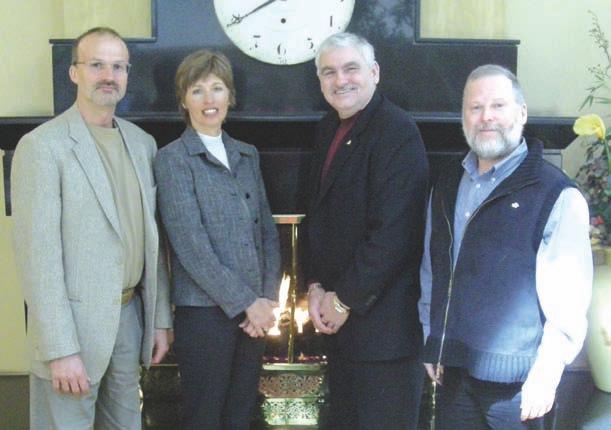
From left to right: Urs Kressibucher (ON), Erna Ference (AB), David Fuller (NS - Chairman), and Martin Dufresne (QC)
Health Illness in Poults
Research uncovers some interesting questions about the cause(s) of Poult Immunosuppression
Pancreatic Enteritis Syndrome (PIPES) in U.S. flocks
BY BRETT A. HOPKINS, MS, DVM, PHD, DACPV CEVA BIOMUNE COMPANY
Over the years of turkey production producers have observed unexplained illness occurring in their turkeys that has typically been expressed as unthrifty poults with enteritis while they are in the brood barns. The affected flocks never fully recover and they are more susceptible to environmental stresses, hemorrhagic enteritis virus (HEV) vaccination, E. coli and other organisms normally found in a turkey barn.
Names such as summer enteritis, late summer enteritis, eight-12-week syndrome, poult enteritis, two-week enteritis, three-to-five-week syndrome, turkey runting and stunting, noisy poults syndrome, and flushing syndrome have been assigned to the various conditions producers have seen repeat in their poults growout after growout or season to season. The age and time of year but an unexplained illness has been occurring in commercial market turkeys from the Midwest to the east coast.
In 2007 a focused investigation of these illnesses in turkeys led to finding similar to identical pathology and clinical disease as well as age at onset, duration, and sequelae at several locations in the U.S. The consistent findings and ancillary information gathered to date supports a syndrome and the name given for this illness is: “Poult Immunosuppression
CAUSES EXPLORED
Research on a syndrome known as PIPES in poults is being conducted to understand the cause.
Pancreatic Enteritis Syndrome”
(PIPES).
The clinical symptoms and known epidemiology of the syndrome are eerily similar to the Runting and Stunting Syndrome (RSS) in broilers. The syndrome name given for the turkey disease provides a more accurate description of the pathology that also leads to reduced growth (stunting), enteritis and to a lesser degree mortality. One of the etiologic agents of PIPES has been initially identified as an Avian Rota virus type D, which is very similar to identical to the Avian
virus
with RSS. At present the virus has been isolated from turkey intestines that were exhibiting pathology consistent with PIPES.
The gross pathology of PIPES consist of severe atrophy and eventually complete ablation of the thymus. I currently estimate it takes a minimum of four to five days after infection of the thymus for complete ablation to occur. As the atrophy of the thymus progresses it loses its lobular appears and coalesces into
Rota
isolated from broiler chicken
Parting is such sweet sorrow.
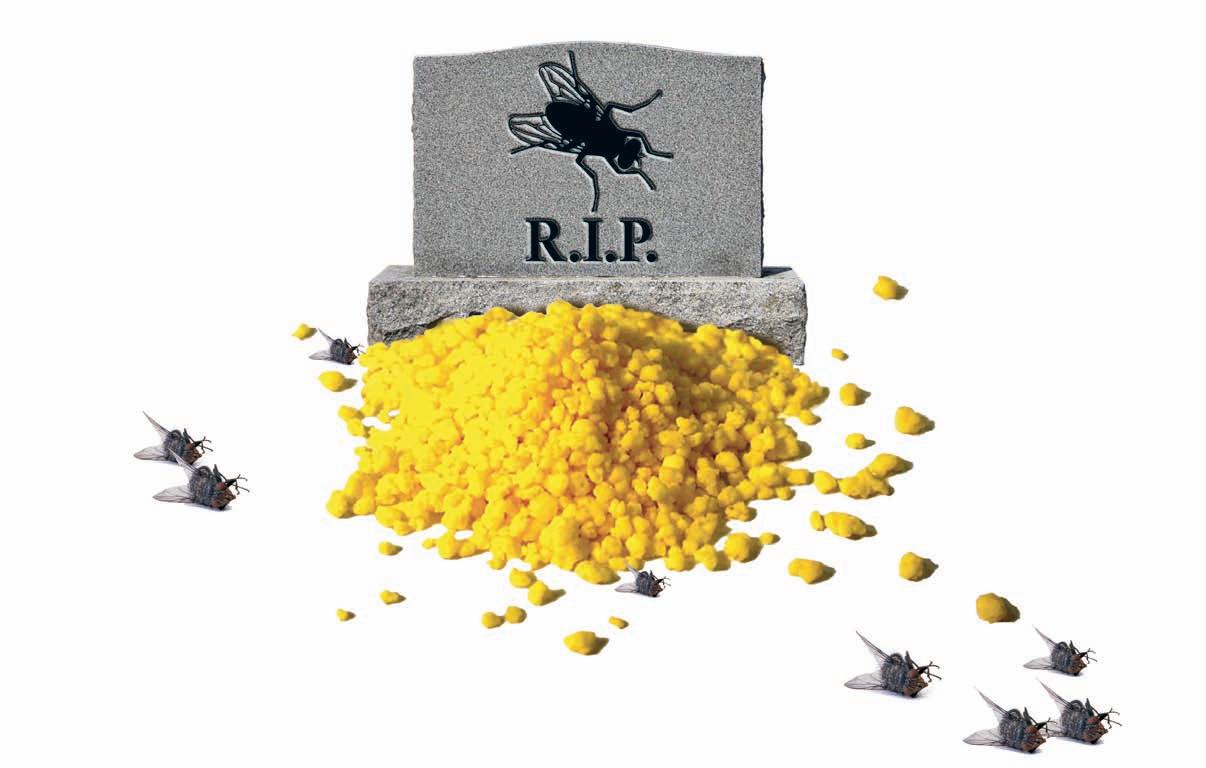
Easy to handle and apply, AGITA® Fly Bait delivers fast, effective control with a strong safety profile and no known cross resistance. This is the new standard for effective adult house fly control.
AGITA Fly Bait – The last flight of the fly
Get AGITA working for you. Contact your local distributor or Novartis Animal Health Canada Inc. customer service, 1 800-387-6325. Technical information on the correct use of AGITA is available at www.ah.ca.novartis.com.
FLY BAIT FLY BAIT
Health
a single thin band of tissue that continues to get smaller until it is completely gone. Severe and permanent atrophy of the bursa of Fabricius, atrophy of the spleen and atrophy of the pancreas which may or may not have hyperemia with multifocal white spots.
As the infection progresses the pancreas becomes very pale ending up close to white in color and eventually, if the damage is severe enough, some regions of the pancreas may be as hard as cartilage.
The characteristics of the enteropathy vary with the stage of infection with the classical lesions initially consisting of edema, thickening of the wall and enlargement of the intestines with thick mucoid creamy to curdled milk consistency ingesta seen more commonly in the duodenum, that progresses to extreme thinning of the intestinal wall to the point of transparency with a lumen filled with clear to mildly tan to caramel colored thin mucous, fluid and occasional small chunks of cellular debris or ingesta.
The duodenum, jejunum, ileum, ceca and colon can all be affected but it is has not been common for the lesions to be seen at the same time through the entire gastrointestinal tract. Typically only one or two sections of intestine are affected at necropsy. The enteropathy will progress down the intestine, starting with the duodenum then moving down to the jejunum and then into the ceca and finally the colon in some cases.
Finding poults with only cecal lesions is common especially in flocks that have progressed to a later phase of infection which is more common in flocks older than 12 days of age.
Many poults from an affected flock have had normal appearing intestines upon examination between 8-24 days of age. This is due to those poults not having the disease or they are examined before the pathology has started or too late after the enteropathy has subsided and the intestines have repaired which is typically seen in poults older than 17 days of age. The highest odds of virus isolation occur when culturing poults between 818 days of age that have the intestinal lesions described above.
Many of the poults appear to have thin pale anemic blood that does not clot normally. In these poults the muscles including the heart, liver, kidney, appear very pale in color. Most poults do not have purulent air sacculitis, tracheitis, peritonitis, synovitis, pericarditis, etc., but mild sudsy air sac and an occasional Aspergillus nodule have been seen as secondary invaders. Increased mortality and E. coli infections two to three weeks post splenic origin HEV vaccination are also common.
The affected poults are likely to have malformed feathers especially the primary and secondary wing feathers, they will be stunted in growth, likely have fecal accumulated below the cloaca (pasty vents), may appear depressed with increased respiration rate and have an elevated temperature or they may exhibit a normal appearance. Some flocks have been reported to exhibit feed passage or flushing with caking of the litter. A through necropsy of several poults ranging from small, sick, cull-like to large normal appearing poults is recommended to
aid in making the correct diagnosis.
The development of the PIPES can be broken down into six phases. The hallmark of phase I is the immunosuppression created by the necrosis and eventual absence of the thymus, atrophy of the spleen and bursal of Fabricius and suspected bone marrow suppression. A notable symptom during phase I is increased vocalization (The affected poults are very noisy. This is the first symptom the growers notice). Phase I appears to begin as early as four days of age with five to eight days of age being very common. The poults appear to be immunocompromised for life following the initial infection and immunosuppression.
One explanation for the lifelong immunosuppression is that once the thymus has been completely destroyed, regeneration is impossible and even poults that survive to older ages through to processing never regain a thymus.
Phase II is the damage to the pancreas consisting of multifocal necrosis and degeneration. The exact onset of phase II has not been confirmed and in some cases may occur simultaneously with phase I or III. The pancreatic damage initially appears to be viral related but it is not clear if a different virus or the virus(s) responsible for the immunosuppression or enteritis is also infecting the pancreas. During the time the pancreas is being damaged the poults continue to vocalize (get noisy), go off feed, may appear chilled, (may huddle in some flocks), and exhibit a fever. Phase II is the beginning of the growth retardation. Phase III consists of intestinal lesions. The immunosuppression that occurs in the first phase of the PIPES appears to be so severe that aggressive changes of the intestinal bacterial and micro flora lead to invasion and replication of pathogenic bacteria (Clostridium spp.) and an intestinal virus(s) (Avian Rota virus). The estimated incubation time starting with Phase I, before observing gross lesions in the intestines, is about four to seven days. The intestinal phase (Phase III) is typically first seen between 8-12 days of age. The vocalization continues through Phase III and the poults begin to look rough (curly, dirty feathers, lethargy, depression, sleepy-eyed with head drooped), pasty vents from diarrhea and flushing becomes common, the house may begin to “smell” different, the poults have a fever, an increased respiratory rate and possibly open mouth breathing is common. It becomes obvious that the uniformity of body size is poor as “sizing” has begun to occur and it appears as though some poults have completely stopped growing. It would be very typical to be able to select poults that appear to be the size of six-nine-day-old poults from a flock that was actually 15 days of age.
Phase IV is the onset of secondary infections such as crop mycosis, E. coli, air sacculitis as a result of the immunosuppression and enteritis.
Phase V is the mortality. Limited mortality is associated PIPES but the severity of the enteritis and secondary invaders can be bad enough to increase mortality. There is typically a rise in mortality in the two to three weeks following HEV vaccination, especially when a splenic origin vaccine has been
>
Les Producteurs de poulet du Canada, un organisme dirigé par les producteurs qui représente les 2 800 producteurs de poulet du Canada, est fier d’annoncer l’élection de son Comité exécutif pour 2008. Les 15 membres du Conseil d’administration, composé de producteurs et d’autres intervenants de l’industrie du poulet, font confiance aux représentants suivants :
Nouveau Comité exécutif des Producteurs de poulet du Canada
David Fuller, un producteur de Blomidon, en Nouvelle-Écosse, est réélu comme président du Conseil des PPC, poste qu’il occupe depuis 1999. Membre du Conseil depuis 1996, David est aussi membre actif des Chicken Farmers of Nova Scotia depuis plus de quinze ans. David et sa famille produisent 1,4 million de kilogrammes de poulet par année dans la vallée de l’Annapolis. Trois générations de la famille Fuller ont participé à tous les niveaux de l’industrie.
Le représentant de la province de Québec et un membre du Comité d’expansion du marché des PPC, Martin Dufresne a été réélu premier vice-président. Ses fermes près de St-Félix-deValois, entreprise lancée par son père en 1954 et où il demeure avec son épouse et ses trois enfants, produisent environ 1,7 million de kilogrammes de poulet par année. Martin exploite cette entreprise depuis plus de 20 ans et a récemment été élu président de l’office provincial du Québec, Les Éleveurs de volailles du Québec.
Urs Kressibucher, un producteur de deuxième génération à Beaverton en Ontario, a été réélu deuxième vice-président du Comité exécutif des PPC pour 2008. Depuis 2004, Urs a aussi fait partie du Comité d’expansion du marché, le Comité sur la salubrité des aliments et du Comité des soins aux animaux des PPC. Il représente le district 9 (Est de l’Ontario) au sein des Chicken Farmers of Ontario depuis sept ans et est vice-président du Conseil de l’industrie avicole. Urs et sa famille exploitent leur entreprise depuis 19 ans.
Erna Ference se livre à la production avicole depuis des années et se joint au Comité exécutif comme nouvelle membre à titre personnel. Comptable de gestion agréée et productrice avicole de deuxième génération, elle possède de vastes connaissances qui sauront profiter à l’ensemble du Conseil. Elle et son époux Reg, un ancien membre du Conseil des PPC représentant l’Alberta, ont cinq enfants âgés de 13 à 24 ans. Leur ferme produit environ 1,5 million de kg de poulet par année et est située dans les contreforts des montagnes Rocheuses.
De gauche à droite : Urs Kressibucher (ON), Erna Ference (AB), David Fuller (président - N.É.), Martin Dufresne (QC)
Health
administered. The quality of the husbandry and other interventions play a big role in the degree of mortality associated with PIPES.
Phase VI consists of surviving poults that are stunted in body size, do not have a functioning thymus, have atrophy of the bursa of Fabricius and spleen and may have overt or covert secondary infections. Crop mycosis was a very common finding in PIPES flocks beyond 21 days of age and especially in the grow-out barns. Most PIPES flocks resume eating and some may even appear “normal” while others still appear to have an illness and stunting would be very obvious in one to 30 per cent of the flock.
The PIPES birds may survive to be processed but they are generally very “light” in weight (three to 15 lbs. less than average). It should be made clear that at all ages the normal-sized birds in the flock have an intact normal-sized functioning thymus, bursa of Fabricius and spleen, and appear healthy.
CLINICAL APPEARANCE
The earliest symptom is increased vocalizations (noisy poults). As the infection progresses over the next week the affected poults decrease feed consumption; become lethargic, sleepy-eyed with head drooped, or depressed; have an increased respiration; and run a fever. Once the intestinal disruption or syndrome phase III begins four to seven days after the initial increased sounds the poults begin to exhibit loose stools, flushing, dirty or pasty vents. The feathers become dirty and may be curly.
Body growth is dramatically slowed or stopped for several days. The feathers and especially the wing feathers continue to grow and the primary wing feathers will extend well beyond the tail and rear of the poult. The overall feather quality is diminished. The feathers appear rough, some may be curly others are very long. Urates may accumulate at the vent in dehydrated poults. The litter quality may suffer as the poults excrete liquid feces and the feet or foot pads will become “caked” with litter and feces. The uniformity of body size deteriorates rapidly and there will multiple sizes of poults by 14 to 21 days of age. Many of the 21-day-old poults will be the same size as they were at 10 to 12 days of age, as it appears they have stopped growing at the onset of Phase II or III.
HISTOLOGY
The initial lesions in the thymus consist of multifocal to coalescing necrosis of lymphocytes with infiltration of heterophils in more advanced lesions. In many poults with clinical PIPES lesions the thymus is completely gone, thus preventing histologic examinations.
Spleen: moderate to severe diffuse depletion of lymphocytes and white pulp cells were the most common finding and infiltration with RBCs was common. Bursa of Fabricius: moderate to severe lymphocyte depletion and reduction of the number and size of follicles, fimbrae atrophy and fibrosis.
Pancreas: Multifocal to coalescing interstitial necrosis of exocrine cells, and occasional basophilic cytoplasmic inclusion
bodies have been seen in some sections.
Crop: Common to find multifocal infiltrations with Candida albicans. Intestines: It was very common to find many poults in a flock with normal intestines; however typical PIPES poults had severe atrophy and fusion of villi, to the point of only having viable crypt cells, RBC congestion or hemorrhage, epithelial necrosis, severe architectural disorganization and some lymphocyte infiltration in the lamia propria.
The intestines that had edema of the intestinal wall and thick mucoid or thin watery intestinal contents had classic severe viral enteropathy histologically with an overgrowth of gram positive bacterial rods typical of Clostridium spp
EPIDEMIOLOGY
There does not appear to be any association with breed or sex. Housing and rearing practices may influence the severity of the disease but not the onset of the PIPES. Some companies have reported a seasonal onset (summer or late summer earlier fall) but PIPES can most likely be found year round with seasonal peaks.
Poult Immunosuppression Pancreatic Enteritis Syndrome has been recognized in most turkey growing regions from Texas and to the eastern shores of the U.S. The PIPES does not appear to have been recognized yet west of Texas in the U.S. Onset always occurs in the brood barns with observation of typical clinical signs between eight and 12 days of age. Many brood barns are split into two sections by a wire or chain-linked fence that separates the birds into two flocks in a single barn. This fence obviously would not stop the horizontal spread of a virus but the PIPES has not been shown to pass from one flock or half house to the other or to other barns on the same farm.
The initial investigations have led to a suspicion that there may be a link to certain young (<10 weeks in lay) breeder flocks and susceptible poults/flocks, suggesting a role of vertical transmission or an important role of protective maternal antibodies. At this time it is speculated that the PIPES occurs as a result of either or both, a passive vertical transfer of the infective immunosuppressive virus or the lack of passive transfer of protective maternal antibodies to their progeny. This initial assumption is based on the observation that the PIPES does not appear to spread from one half of the brood barn to the other. One side of the brood barn may be severely or moderately affected by PIPES and the other side or half may have normal poults. The only difference is the breeder flock source or sources.
When affected birds are mixed with normal birds during routine housing changes, the infection does not appear to spread. Horizontal transmission may play some role as infected poults shed virus in the house and it is picked up by susceptible flock mates but having susceptible flock mates is the key. Poults from other breeder flock sources housed in the same brood barn do not appear to be susceptible. There also may be an age of susceptibility of one to 14 days of age or maybe even up to 28 days
Continued on page 31
More Weight with Less Wait.
Glass-Pac Canada
St. Jacobs, Ontario
Tel: (519) 664.3811
Fax: (519) 664.3003
Carstairs, Alberta
Tel: (403) 337-3767
Fax: (403) 337-3590
J. Dean Williamson Ltd. London, Ontario
Tel: (519) 657.5231
Fax: (519) 657.4092
Bigger. Faster. Better.
Studies prove and customers agree that higher flow rates grow BIGGER birds FASTER with BETTER results. Low-Volume flow drinkers ultimately restrict a birds' water consumption and have a negative effect on the birds' growth rate. Take the Upgrade Challenge and let us show you how much more can be going in your wallet with a quality Lubing Watering System.
Got Lubing? Contact your local Lubing Distributor for more detailed information.
Tel: (450) 263.6222
Fax: (450) 263.9021
Tel: (780) 963.4795
Fax: (780) 963.5034
WATER-SMART Program NEW PRODUCTS PRODUCTS
W
eeden Environments and United Nutrients Corporation – Member of Jefo Group – have formed a joint alliance to launch their WATERSMART livestock water sanitation program in Canada. This program will take advantage of both companies’ complementary products to both clean and maintain a farmer’s waterline system. It combines Weeden’s ProxyClean which removes biofilm from waterlines and Jefo Nutrition’s Jefacid water acidifier to dissolve mineral buildup and lower pH.
Hi-Cap Nest System
The Vencomatic Hi-Cap nest is a winchable laying nest developed for the traditional North American building layout. Optimum egg quality and production, simple installation, reduced maintenance, low investment and the highest possible ROI were key factors in its development.
It has a removable wire mesh floor that can fit a variety of flooring options (shown here with the
Steve White (above on right), sales manager for United Nutrients, explained that the program was developed after both companies recognized the need for a sound program in the marketplace. “Based on feedback from the industry there was a definitive need for a bona fide water sanitation program for poultry and swine producers.”
“Water has been ignored for far too long,” said Kevin Weeden (left,
rubber Vencomat). The nest can be closed using an optional maintenance-free rack and pinion system with a built-in mechanical safety to protect the birds and the nest.
Roof, wire mesh nest
above), President of Weeden Environments. “When following the WATER-SMART Program, farmers can feel confident that the water provided for their flocks is bacteria free,” added Weeden.
For more information on the program, contact Kevin Weeden at 1-800-552-1064, or by e-mail at kevinw@ weedenenvironments.com; or Steve White at 1-866-7712358, or by e-mail at swhite@ jefo.ca.
bottoms, and the cross-over covers can be moved from the nest for cleaning or service without tools. The nest is lightweight and rugged, so it
can be hoisted up to the ceiling with ease.
For more information, contact David Thompson at 403-241-7692.
Chicken Farmers of Ontario Our Partners, Our Industry, Our Future
Highlights from our 2007 Annual General Meeting
Chicken Farmers ofOntario (CFO) held their 2007 Annual General Meeting on March 17th.This year’s event drew attendance from a wide range ofproducers,industry and government including major processors,agri-food and grocer associations,provincial and national chicken board counterparts and elected officials ofboth the federal and provincial legislature along with senior civil servants.
Ken Wong presents “The Next Big Thing”
tearful salute.With over 20 years ofcombined service,we appreciated their experience and contribution to CFO as we continue to work towards maintaining the health and viability ofOntario’s chicken producers and the industry.CFO wishes all the best to Paul and Tom.
Keynote speaker,Ken Wong, Associate Professor from Queen’s University,School ofBusiness, was both entertaining and engaging as he provided the group with insight about differentiating your business and establishing market presence.Drawing examples from Viagra and Coca-Cola,Professor Wong pointed out how these companies were able to make a name for themselves in their respective saturated markets.As he said during his presentation,product variation will be key to winning diverse markets.More importantly,“brands make promises that products have to keep” to ensure that the product you have is the “Next Big Thing”. Attendees were challenged to think “out ofthe box”and to see opportunities where innovation,ingenuity and hard work could lead them.
Farewell,Paul and Tom
Government reaffirms support to supply management
The Honourable Leona Dombrowsky,Minister ofAgriculture and Rural Affairs,kicked offthe evening’s reception by re-iterating the Liberal government’s support ofthe Chicken Farmers of Ontario and supply management.She also touched on the importance ofindustry relations and how Dalton McGuinty and the Liberal government plan to ensure that such relationships remain healthy and strong.
The evening wrapped up with tributes to Paul Karges and Tom Posthuma who retired from the Board this year.Adrian Rehorst, fellow Board Director, shared stories ofhis first years on the Board then under the helm ofChair,Paul Karges.It was both a humourous and
We’d like to thank all ofour speakers,including:Lou Rinaldi, M.P.P.,Parliamentary Assistant,Northumberland Quinte West; Mike Dungate,General Manager,Chicken Farmers ofCanada; Dave Hope,Chair,Ontario Farm Products Marketing Commission;Bill Smirle,Chairperson,National Farm Products Council;David Fuller,Chair,Chicken Farmers ofCanada;Tim Nelson,Executive Director,Poultry Industry Council;Bruce McCullagh,Senior Vice-President,Maple LeafFoods;Kelly Daynard,Program Manager,Ontario Farm Animal Council;Kim McKinnon,Vice President Communications,Canadian Council ofGrocery Distributors.
2007 CFO Executive alongside Hon.Leona Dombrowsky and her staff
PIC Update Enhancing Vaccine Efficacy
Novel immunostimulatory oligonucleotides (ODNs) show promise as tools for fighting disease
BY TIM NELSON, EXECUTIVE DIRECTOR, AND KIMBERLY SHEPPARD, RESEARCH CO-ORDINATOR
One of the biggest problems facing the Canadian poultry industry is the loss of productivity due to disease. In-feed antibiotics have been used to maintain the health status of the birds. However, the recent worldwide trend of pathogens becoming more resistant to antibiotics and the consequent increasing consumer concerns are driving the investigation of alternative strategies to manage infectious diseases in poultry. Development of novel vaccine enhancers will enable increased vaccine potency, decreased dosage and toxicity, improvements in protection against common poultry pathogens and potentially decreased cost of vaccination and antibiotic use on Canadian farms.
Immune-stimulators are substances (drugs and nutrients) that stimulate the immune system by inducing activation or increasing its activity. Oligonucleotides (ODNs) are short sequences of nucleotides (RNA or DNA) that can be used alone, or as vaccine adjuvants (strengtheners). Immunestimulating oligonucleotides (ODNs), have shown considerable potential against disease and infection in mice, humans and poultry. Three structurally
Dr. Serguei Golovan (left) and Sergey Duvanov have discovered that ODNs show promise as the basis for developing new, more effective tools to fight disease.
different classes of synthetic immunestimulating ODNs (A,B and C) that show distinct immune-stimulating profiles (what they affect and how), have recently been described in humans.
To see if they could match a particular immune response with specific pathogens in poultry, Dr. Serguei Golovan, together with his M.Sc. student Sergey
Duvanov and collaborators Drs. Eva Nagy and Shayan Sharif, have been evaluating the immunostimulatory properties of different immune-stimulating ODNs in poultry. To ensure that selected ODNs would function in the poultry bloodstream, the three different immunostimulatory ODNs classes (A, B and C) were trialled using whole
A NOVEL IDEA
PIC Update
chicken blood. The ODNs were incubated in the blood, which was subsequently tested to evaluate the expression of immune genes.
Their findings? All three classes of ODNs were shown to be strong activators of an early stage of the immune response with each showing distinct immune-stimulating profiles. The researchers are also trying to improve delivery of ODNs to the immune cells, which will allow for decreased cost of vaccines. The results are very promising and will serve as a basis for the development of some new, more effective tools to fight disease.
To read more about this project visit: www.poultryindustrycouncil.ca and click on “Research Results.”
PICS PICKS FROM THE LPS
The 2008 London Poultry Show (LPS) was good;, the mood was upbeat and by all accounts the exhibitors and visitors all found it very worthwhile. Thanks to everyone who participated.
The producer updates, now in their second year, were fairly well attended and the feedback on the presentations positive in terms of currency and style.
A GOOD TIME TO REVIEW ENERGY
Energy costs ranked as a very high priority in our discussions about research and education needs with each of the sectors.
So straight off the pages of the Research Strategy comes a recommendation for producers to have a look at reducing energy costs by having an Energy Audit done on the farm. If you heard the speakers (Ron MacDonald and Mark Armstrong) at the London Poultry Show you already have some valuable tips up your sleeve for making a few changes around the farm to save on fuel, and we noticed a lot of people taking notes on the incentive packages currently on offer. If you couldn’t make it to the Show, it’s highly likely that your hydro supplier has an energy audit scheme running right now. It’s usually a free service and you’ll get some great tips on how to better insulate your buildings and therefore your business against increasing energy costs. If you’re not sure whom to contact, you can always contact PIC and we’ll point you in the right direction.
POULTRY WELFARE SWEDISH STYLE
Dr. Lotta Berg gave us all food for thought, from the impact of phasing out cages in Sweden by 2012 to the host of reasons for euthanizing large numbers of poultry and the many methods that are being trialled.
We’re all aware of the practical and cost implications for producers changing systems, but some of the side issues of
“new entrants” and the problems (particularly disease) that they brought with them because of their lack of management skills were really interesting. The predictable movement of cage-produced eggs from countries (in her case, Finland) to fill the void at the cheaper end of the market was not news and we will no doubt see a similar scenario in California if cages are phased out in that state post November 2008.
BIOSECURITY FOR THE SMALL FLOCK SECTOR
Al Dam gave an update on the way in which the industry is trying to reach this important sector. The kits for these guys will be available through OMAFRA in the next couple of weeks. If you have a small flock near you Al suggests taking a kit to the managers – it’s packed with good info and advice.
FARM SAFETY
The OMAFRA team told us about some of the problems surfacing around the industry in relation to farm safety and how they’re being handled. For more information, contact Al Dam (email: al.dam@ontario.ca).
BACK AT PIC
This year we have 41 high-quality project proposals submitted and in future editions we’ll be reporting on the successful applicants and how we’re investing in research and education for the industry. ■
FROM LEFT TO RIGHT: PIC STAFF TIM NELSON, KIMBERLY SHEPPARD AND ANNETTE HARTLEY AT THE LPS.
PIC Update
Fowl
adenovirus
V
iruses can cause severe, sometimes devastating diseases in poultry with severe economic losses to the industry, as evidenced by the recent influenza outbreak in British Columbia. Although some of the viruses are well studied; others are less so. Such is the case with avian adenoviruses, which cause, among other diseases, inclusion body hepatitis (IBH). IBH typically occurs in meat-type chickens under six weeks of age, and results in anemia and mortality in up to 10-15 per cent of the flock. Birds that do not die normally recover. IBH been diagnosed more frequently in recent years than in the past.
Despite the growing importance of this disease and the adenoviruses that cause it, knowledge on the nature of the virus, how it causes disease, and the response of chickens to the virus is limited. Therefore, Dr. Eva Nagy and her research team at the University of Guelph have been working to address some of the pressing issues. One issue is that of susceptibility. Others have shown that chicken lines may differ in their susceptibility to diseases such as infectious bronchitis, Marek’s,
and avian leukosis – but no data are available regarding IBH caused by fowl adenovirus infection. Therefore, Nagy has been investigating the susceptibility of different lines of chickens to disease induced by fowl adenoviruses.
Nagy looked at fowl adenovirus infection in groups of four different lines of chickens – White Leghorn, Columbian Rock, Barred Rock and Rhode Island Red. After infection, blood and tissue samples were collected and clinical signs were monitored to six weeks of age. The immune response to the virus was also monitored.
Their findings? All four lines of chickens mounted an immune response to infection with fowl adenovirus. However, the Barred Rock birds had a lower antibody level throughout the trials, and their antibody response developed later than the other three lines partly due to less vigorous viral replication. Therefore, the Barred Rock line appears to be more resistant to infection by fowl adenovirus than the other three lines.
To read more about this project visit: www.poultryindustrycouncil.ca and click on “Research Results.”
Borrowing solutions that
The right people with the right financial tools can help you make the most ofyouragricultural business.
At CIBC,you can count on us for insightful and practical advice aswell as flexible borrowing products* to fit your business plan:
• CIBC Farm Operating Loan
• CIBC FarmTerm Loan
• CIBC Farm Mortgage Loan
Talk to us about the solutions that are right for you. Call1-888-493-2422 orvisit cibc.com/agriculture. *Subject to credit approval.Some conditions and restrictions apply.Credit limit and rates will depend on an assessment of each application.“For what matters.”is a
DR. EVA NAGY, UNIVERSITY OF GUELPH
Planning a Feed Mill Expansion
Things to consider, including new feed mill options
BY DAN WOOLLEY
In planning a feed mill expansion, producers must first understand their reasons for expansion, Alan Bell of Superior Agri-Systems, Winnipeg, Man., told attendees at the Atlantic Poultry Research Institute’s feed mill workshop, held this past February at the Nova Scotia Agricultural College. He said an expansion can compensate for a shortage of farm labour or help the farmer meet new regulatory requirements for CQA and HACCP.
In modernizing a feed mill, Bell said that the producer must define his goals, identify problems in the system, then set priorities for dealing with them.
The receiving equipment could have insufficient capacity; a larger horsepower motor might be needed or a faster discharge system. The equipment could be outdated, or it could be upgraded but would it be economical to update, or should it be salvaged if it is in decent condition?
The producer will have to look at how he stores and processes feed ingredients, his scaling, mixing and pelleting, then how he distributes the processed feed to the bins.
After identifying the bottlenecks in his feed mill system, Bell said, the farmer can then draft a plan to make it function more smoothly. “You have to do the math. How much more production will occur?”
He said the questions that must be resolved are: “How much money will it
Alan Bell of Superior Agri-Systems says producers must know why they need an expansion when planning to increase their feed mill.
save?… What will it cost?....How will we finance it? . . . Can the project be completed in phases?”
He also recommended, “Look at what will make the most money and do that part first which will help finance the rest of the expansion.”
In executing the plan, the farmer should also compare what was projected
financially and what is actually happening in production, and adjust the plan as needed if it is not working as projected. Bell commented: “There are many ways to skin a cat.”
He also identified several new feed mills the poultry producer might want to consider before planning an expansion of their existing feed mill.
Feed
“Particle size reduction is probably one of the biggest things you will see in the next little while,“ he said.
He noted the multi-Zone hammermill (MZH), the roller/ grinder mill, the disc mill and the variable-speed hammermill can change their speed to automatically reduce the particle size without changing a screen.
The MZH has five zones in its grinding chamber and uses plates rather than a screen, said Bell. There is also less wear in this mill than a conventional hammermill; but it is only available from 75-horsepower and up.
The roller/grinder mill has two pairs of rollers rotating at different speeds with each roller having a different number of grooves.
Bell observed this mill has a higher processing capacity per hour than a hammermill, lower operating costs; but it also has a higher capital cost.
The basic roller mill costs about $18,000 and its maintenance costs will be much lower if the feed material is first cleaned and screened before grinding, said Bell, adding the roller/grinder mill works very well for poultry feed.
The disc mill works with two plates, one stationary and the second plate, which has a rough surface rotates, with the particle size determined by how closely the plates are put
together, he said.
The variable-speed hammermill runs through a variable frequency drive with varying tip speeds to change the particle size.
There are new alternatives also to tote bags, which can be a real problem to handle and use, Bell said. The new poly hoop totes and steel hopper totes can be moved with a forklift and stacked on a pallet. The new totes can also be shut off, whereas the existing totes have to be emptied before they are removed.
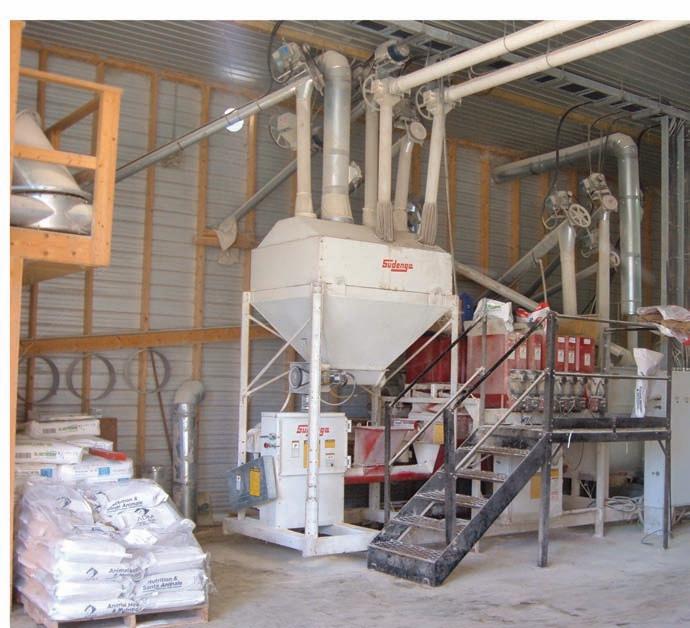
Less farm labour is needed with feed mill automation, said Bell. His company recently installed a feed mill system on one Manitoba farm with 24 30-tonne capacity bins.
Except for 12 to 16-hours per week, this farm’s mill runs unattended, with any one bin fed automatically, through computers and sensors, when it gets down to less than five tonnes of feed, he said, noting, a rotary blower distributes feed to the bins from the roller/grinders and hammermills.
Everything on this farm’s feed mill is controlled by computer from either house or the main barn, said Bell. “Other than unloading trucks and handling totes; they don’t have to do anything other than clean up. This farm could easily produce twice as much as it does.” ■
Health
Continued from page 22
of age in a rare case. The majority of all affected flocks start to show symptoms before 20 days of age and most start around seven to 14 days of age. When an affected flock has been co-mingled with another flock after four weeks of age there has not been any indication of the spread of the infection. Interestingly though the Avian Rota virus will easily spread from pen to pen on research facilities.
The cause of and exact age of onset of the immunosuppression has not been determined to date and this aspect of the PIPES has piqued my interest and ranks as the highest priority of the investigation. The enteritis has been duplicated in turkey poults at one day of age in challenge studies using the Avian Rota virus isolated from PIPES turkey poults and the Avian Rota virus isolated form broiler chickens with RSS symptoms. Interestingly there was much less immunosuppression in the poults from these challenges, which provides for the assumption that a second or third virus may be synergistically involved in the PIPES to initiate the immunosuppression.
INTERESTING QUESTIONS
What is causing the immunosuppression? Are multiple viruses involved, i.e., is there a single immunosuppressive virus and a second or third pancreatic and intestinal virus? Or is there only a single virus that is replicating in the intestine, pancreas and the lymphoid organs, creating immunosuppression?
Does the initial infection start in the thymus, causing immunosuppression, then move into the pancreas and intestines or does initial immunosuppression open the door for an intestinal virus to invade and create clinical symptoms? What is the role of vertical or horizontal transmission and does the presence of or lack of maternal antibodies play a part in the prevention or onset of the PIPES? ■
This research was presented at the 2008 Midwest Poultry Federation Conference in St. Paul, Minn.
Processing Chillin’ Chicken
Scientists study which method of chilling chicken works best
BY SHARON DURHAM, AGRICULTURAL RESEARCH SERVICE INFORMATION STAFF, USDA
Chicken processing is big business with almost 9 billion broiler chickens being produced in the United States last year. Processing birds efficiently and economically is the name of the game. And researching ways to convert poultry into food that is safe for human consumption is what Agricultural Research Service food scientists strive to achieve.
Quality and safety of poultry products for the U.S. consumer must be ensured. At ARS’s Richard B. Russell Research Center, in Athens, Ga., two ARS food technologists have examined the chilling stage of poultry processing to determine the best method for meat quality, food safety, and water management. Julie Northcutt is in the Poultry Processing and Swine Physiology Research Unit, and Doug Smith is in the Quality and Safety Assessment Research Unit.
CHILL OUT
“While immersion chilling is still the predominant method used in the United States, seven poultry-processing plants have recently switched to air chilling, and several others have made arrangements to install air-chilling equipment in the near future,” says Northcutt. This method may make significant inroads in processing in the United States and open new product markets, particularly in Europe.
It’s important that carcass temperatures are quickly lowered after
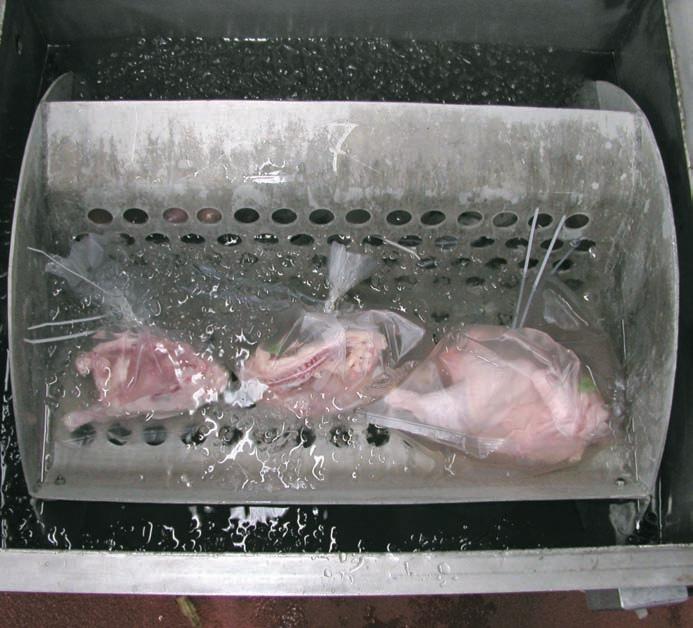
immersion chilling using a technique of individually bagging broiler carcasses. The bagging prevents bacterial cross-contamination from one carcass to another.
slaughter to prevent bacterial growth. The industry standard is to bring carcasses to 40 F or less within four to eight hours (depending on carcass weight) after slaughter to inhibit growth of pathogens and spoilage micro-organisms. Pathogens are those bacteria that cause foodborne illness when consumed.
“Cooling of poultry is typically accomplished by one of three methods – immersion chilling, dry-air chilling, or evaporative air chilling,” says Northcutt.
“In immersion chilling, carcasses are submerged in tanks of cold water or an ice and water mix. Dry-air chilling is achieved by blasting carcasses with cold air. Evaporative air chilling cools poultry down by a combination of cold-air blasts and water misting.”
Since, air- and immersion-chilling systems are now being used commercially, Northcutt and Smith worked with University of Georgia graduate student Roger Huezo to compare the effects of air chilling and immersion chilling on
Simulated
CHILL
COMPARISON
the microbiological profiles of broiler carcasses and meat quality.
Northcutt, Smith, and Huezo found no significant difference in bacterial pathogen levels between the two chilling methods. “Each of the chilling methods reduced bacteria populations to similar levels,” says Northcutt, “so once we discovered the similarities in carcass microbiology, we focused on water management and meat quality.”
CHEWY OR TENDER?
During commercial processing, whole carcasses are aged under refrigerated conditions to allow the muscle fibres to relax and become tender. After aging for a few hours, the carcasses may be cut into parts or deboned.
Northcutt and colleagues tested the most popular part of the chicken: breast fillets. They compared tenderness of fillets removed from carcasses immediately after chilling (0 hours aging) to fillets aged on carcasses for 150 minutes or 24 hours after chilling. For air- and immersion-chilling methods, all breast fillets were considered tender or very tender after 24 hours of aging, but shorter aging times caused variations in tenderness.
According to Smith, shorter aging times are of interest to the industry because plants have limited space to store carcasses after chilling, and the additional holding time is costly.
In the tests, immersion-chilled and air-chilled fillets were deboned immediately after chilling or after 150 minutes. The researchers found that 70 per cent of the immersion-chilled fillets were slightly tough to tough, and 30 per cent were tender to very tender. Of the airchilled fillets, 44 per cent were slightly tough to tough, and 56 per cent were tender to very tender.
“In addition to improving meat quality, air chilling provided higher cookedmeat yields than immersion chilling. Colour and texture of skinless breast fillets were similar for both chilling methods,” says Northcutt. The team believes that the lower cooked yield of
Announcing the MODELATF™ PLUS New
You know Chore-Time’s MODEL ATF™ Feeder. Call today to get the new PLUS features – added strength and size for today’s bigger birds.
•
A SMARTER OPTION FOR ADMINISTERING SOLUTIONS
INTO WATER SYSTEMS
• Select Doser performance yields highly accurate dosages all the time.
• Accuracy is 95+ percent, superior to water or electric powered pumps.
• Longer lasting with less maintenance than water powered dosers.
• A diagnostic tool for your watering system.
• One piece polyethylene housing creates the most efficient venturi, resulting in incredible C.F.M.performance. (24" =10,200 C.F.M. @ 18 cfm/watt and 36" = 15,300 C.F.M. @ 26 cfm/watt.)
• A multi-position bracketallows youto tilt and lock the fan angle and air flow direction
“AIRCOOL” Centrifugal Cooling System
• A cooling system without using nozzles
• Adjustable water volume
• Mobile or stationary unit available
• Use for cooling air, humidity, recirculation, dust and odor control
RECIRCULATION FANS
Circular Recirculation Unit
• 16" and 20" diameters
• 3600 coverage using directional wind vanes
• Superb alternative to race tracking
• With Multifan or Performa+ Leeson motors
Circulating Fan
• 12" – 24" diameters
• Polyethelyne housing
• with Multifan or Performa+ Leeson motors
The ‘Wave’Environmental Control
• Large 2.75" X 5" LCD Display Screen and 12 Quick Key Pads (to grouped settings) allows easy and precise Temperature, Humidity, Heating, Lighting and Airflow Management
• The ' Wave manages 4 variable stages and 8 or 16off/on relays for cooling, up to 8heaters, 4 clock outputs and up to 8 inlet zones
• Humidity control by increasing ventilation and heat activation
• History of water consumption, temperature, humidity and birdcount
Poultryhouse Fan
• High quality material and aerodynamic air inlet
• Variable speed Performa+ motor
• Dual voltage, fully enclosed motor
• Low energy consumption and noise level
• 16" and 20" modelsproducing 2792 and 4770 cfm
• Includes hanging hardware
PSI
Unvented Unit Heater
• Total stainless steel construction
• Hi-Low switch
• Watertight enclosures
• Propane and natural gas
• Available in 20,000 to 225,000 BTU units
Totally Controlled Heat from
' The Ultimate Brooder '
• Maximum radiant surface area
• Reliable spark ignition
• Dual safety pressure switches
• Easy, unobstructed access to control components
• Various models for multiple applications (Farms, Garages, Workshops etc.)
Varifan®
• LX-641, LX-642 and LX-644 with optional SVM-1 (Smart Ventilation Inlet Module)
• DIP-1 digital Inlet Positioner
• ECS"M" Series 1, 2, 3, 4 and 5 stage controls
• IC-610 Programmable Logic Computer controls
• Plus numerous ‘Special Application’controls
• 2 yr.warranty
• Material polypropylene
• Will not harbour bacteria
• Easily cleaned
• Large 2' x 4' panels
• Reduces floor problems and breast blisters
• Keeps birds warmer, dryer, more productive
• Durable - minimal maintenance
• Easily installed
• Will not rust or corrode
LIGHT TRAP/ DARK OUT
• High light reduction
• Low resistance to air flow
• Simple Installation
• Easy to clean
• Uses P.V.C.snap release spacers
Processing
the immersion-chilled fillets was the result of high moisture absorption during chilling, which was later cooked out of the product.
The issue of aging only relates to poultry that is further processed. “Processors selling whole carcasses may not have a reason to make a switch to air chilling based on meat quality,” says Northcutt. “Air chilling may, however, be a suitable alternative for deboning and other processing operations.”
WATER, WATER EVERYWHERE – NOT!
The two principal poultry-chilling methods vary markedly in their water use. According to recent surveys, it takes an average of seven gallons of water to process each bird. Immersion chilling requires almost 3/4 of a gallon of water per bird to fill the chill tank at each shift startup and another half gallon of overflow — about 60,000 gallons depending on the length of the chiller.
The southeastern part of the United States is struggling to meet the water needs of its residents, and water costs are at a premium. “In 2005, some poultry processing plants in the South had to cut back on the number of birds they processed because water was not available. The drought has encouraged the privatization of water, with new companies being developed just to sell one of our most precious natural resources,” says Northcutt.
William Merka, former University of Georgia professor and poultry extension scientist, says water savings may be advantageous to processors. “Processors pay at least $4 for every 1,000 gallons for water and sewer cost,” he says. “If they can save even half a cent per bird with water conservation, that would save about $1,250 per day or $325,000 annually. But cutting back on water use is about more than just economics for the poultry industry; it’s also about the environment and water availability for future generations.”
Moving from immersion to air chilling would also involve a change for the processing plant and a learning curve
for its employees. “One of the biggest concerns for the poultry industry is cleaning and sanitizing the areas associated with air chilling. It is much easier to clean and sanitize an immersionchilling system,” says Northcutt.
Still, according to Northcutt, air chilling would save a minimum of one-half gallon of water for each bird processed. “Since 9 billion chickens were processed last year, that would equate to a savings of 4.5 billion gallons of water if all nine billion birds were air chilled,” she says. “But here’s the catch: air chilling takes longer – 90 to 150 minutes – than immersion chilling, which typically takes 50 minutes. If you consider time, energy cost, and yield, the two processes are economically equivalent.”
REGULATIONS TIP THE BALANCE
Water is at a premium in the Southeast, where residential and commercial users must compete for supplies. Stricter water regulations may help push conversion from immersion to air chilling. The rest of the Southeast is watching water restrictions in Georgia because it is the top broiler-producing state, at 1.3 billion chickens each year. Northcutt says that changes in Georgia typically affect the rest of the poultry industry.
“Currently there are seven plants in the United States that commercially air chill poultry and charge a premium price for the product. When air-chilled poultry products become commonplace, the price will drop, and there will no longer be an economic advantage to producing air-chilled poultry,” says Northcutt. ■
This research is part of Food Safety (Animal and Plant Products), an ARS national program (#108) described on the World Wide Web at www.nps.ars.usda.gov.
Julie Northcutt and Doug Smith are with the Richard B. Russell Research Center, 950 College Station Rd., Athens, Ga. 30604; phone 706-546-3592 [Northcutt], 706546-3132 [Smith], or fax 706-546-3633.
CPRC Update
Last month’s issue gave a brief overview of what the Canadian Poultry Research Council* (CPRC) is and what it is about. Here is more detail on some CPRC-supported research. Please feel free to contact us if you need more information.
TOWARDS ALTERNATIVES TO ANTIMICROBIALS
There is increasing concern, both from within and outside the agricultural community, over the continuing use of antimicrobial compounds in agriculture. The first research program sponsored by CPRC was therefore designed to determine the impact of these compounds on microbes in the avian gut, as well as the potential implications of reducing their use. Work is also underway towards alternative ways of treating and preventing certain poultry diseases. Four main projects are underway:
1
The effect of antibiotics on gut microbe populations: Antibiotics commonly used in the poultry industry disrupt populations of gut microbes in the chicken. Since microbes in the gut directly affect immune function, changes in their populations may also affect the bird’s ability to fend off disease. Shayan Sharif at the University of Guelph and Joshua Gong, a scientist at Agriculture and Agri-Food Canada, have joined forces to look at the important relationship between antibiotic use and immune function.
2 Understanding Necrotic enteritis: Necrotic enteritis (NE) is a disease that can significantly impact the poultry industry. Relatively little is known, however, about its development. Although a number of factors appear to contribute to the progression of the disease, it is always associated with the bacterium Clostridium perfringens. There are many strains of C. perfringens normally present in the chicken gut. However, NE appears to be caused by increased numbers of only one or two strains. Patrick Boerlin at the University of Guelph has developed methods by which
relative numbers of different strains of C. perfringens in the gut can be measured. This tool will be very useful to those working towards a better understanding of NE and finding alternative measures for its control.
3
Using enzymes to improve gut health: Common poultry diets based on corn, soybean, wheat and other plant-based ingredients have a number of components that are poorly digested. The presence of these indigestibles in the gut can support the growth of a range of harmful organisms. Bogdan Slominski and Gregory Blank at the University of Manitoba are using a new generation of enzymes to break down these components to see if the resulting products promote the proliferation of beneficial bacteria in the gut. They are especially interested to see if the beneficial bacteria can then out compete harmful ones such as C. perfringens. So far, results suggest the enzymes can improve feed efficiency of birds fed a wheat-based diet and can increase overall weight gain of birds fed corn-based diets.
4
Studying
Campylobacter: Campylobacter jejuni is among the main causes of gastroenteritis (inflammation of the lining of the stomach and the intestines) in people. The bacterium lives in the poultry gut without causing problems, but poultry products contaminated with it have been linked to human infection (when these products have been improperly handled or prepared). Brenda Allan at the Vaccine and Infectious Disease Organization in Saskatchewan is trying to better understand how this bacterium colonizes the gut in the bird. With an eventual goal of developing a vaccine against the bacterium, Dr. Allan’s work has begun to determine the genetic differences between strains of C. jejuni that colonize the gut and those that don’t.
NEW PROJECTS
Last year, the CPRC invited researchers to submit proposals that build on work
already underway in this program. CPRC approved six new projects for which additional funding partners are being sought.
FUTURE RESEARCH
The CPRC solicits new proposals from Canada’s research community each year that are consistent with agreed priorities. This year’s invitation relates to two priority areas:
1Environmental issues: The “environment” represents a very broad topic area. Projects initiated in 2005 are dealing with manure, calcium and phosphorus flow in layers, workplace health, and residues from veterinary pharmaceuticals. Results from many of these projects are in, with the rest expected soon. The current call for new proposals aims to build on this research.
2
Finding less expensive feed ingredients: There is an emerging need for research on the use of feedstuffs alternative to current grains (especially corn), which are anticipated to increase in price due to demands from the energy sector. The CPRC is interested in research towards alternative ingredients that will meet the nutritional needs of commercial poultry.
For more details on any CPRC activities, please contact Gord Speksnijder at the Canadian Poultry Research Council, 483 Arkell Road, R.R. #2, Guelph, Ont., N1H 6H8, phone 289-251-2990, fax: 519837-3584, e-mail: info@cp-rc.ca or visit us at www.cp-rc.ca. ■
*The membership of the CPRC consists of the Chicken Farmers of Canada, Canadian Hatching Egg Producers, Canadian Turkey Marketing Agency, Canadian Egg Marketing Agency and the Canadian Poultry and Egg Processors’ Council. CPRC’s mission is to address its members’ needs through dynamic leadership in the creation and implementation of programs for poultry research in Canada, which may also include societal concerns.
Commodities No Escape From Grain Prices
Next year will bring little, if any, letup
BY JIM KNISLEY
High grain prices are traditionally the cure for low grain supplies.
High prices convince farmers to plant and produce whatever is in short supply and high prices reduce and shift consumption to more plentiful, lower-cost alternatives.
In recent decades, one growing season was usually enough time to pump up supplies and slap down prices.
But this time is different.
If it’s a grain or an oilseed, supplies are tight and prices are way up. It has put growers in a comfortable quandary. They can plant just about anything and be assured a price that would have been unimaginable two years ago.
For buyers and consumers there is no escape. The price of whatever they want to use as a substitute is almost as high as what they are fleeing and supplies are almost as tight and next year will bring little, if any, letup.
The situation for high-quality milling wheat is especially critical. Spot prices in Minneapolis were running over $20 a bushel and have been as high as $25.
Canadian Wheat Board analyst David Boyes recently told Manitoba farmers that world wheat demand has exceeded supply for five of the last seven years and supplies are expected to remain tight despite expectations of more wheat production next year.
“Essentially we are running on fumes right now,” he said in a report in the Manitoba Co-operator.
Canadian Wheat Board analyst David Boyes recently told Manitoba farmers that world wheat demand has exceeded supply for five of the last seven years and supplies are expected to remain tight, despite expectations of more wheat production next year.
The wheat situation is so tight that Husky Energy, the operator of two ethanol plants in Western Canada, has decided to replace feed wheat as its dominant feedstock and use corn. The company said there is very little feed wheat available and the wheat that is available is costing about 20 per cent more than corn.
But how long that can last is an open question.
The USDA is projecting a four per cent decrease in corn planting this spring, a 12 per cent increase in soybean planting and a slight increase in wheat acres.
Last year the U.S. seeded more acres to corn than in any year since the Second World War and corn prices still rose.
RUNNING ON EMPTY
Commodities
A reflection of the volatility can be seen with China. It had been a corn exporter, but recently decided to suspend corn exports and stop building corn ethanol plants, which were taking an increasing share of its harvest.
The move by China is designed to
Effects on Poultry >
The high grain and oilseed prices in 2008/09 will be a challenge for U.S. poultry producers. Not only must they deal with high prices they are limited in their ability to move to lower cost alternatives.
“Low inclusion rates for distillers grains in swine and poultry rations will limit the ability of producers of these animals to control feeding costs,” the USDA said.
The persistent high feed costs are likely to limit expansion of poultry flocks and livestock herds next year, limiting projected gains in domestic soybean meal disappearance to a modest 0.8 per cent for 2008/09.
In addition, U.S. poultry producers face a slowing economy, which may make it harder to pass along costs and U.S. broiler output may slow in 2009, according to the USDA.
Meanwhile pork producers will be further stressed by higher feed costs and the U.S. cattle herd should continue to shrink.
But the shrinking of the cattle herd in 2008 will mean increased meat supplies in the short term as more cows and heifers move to market.
Meanwhile the USDA has slightly reduced projected egg production for early 2008 as the industry has not responded as rapidly as expected to egg price increases.
“Forecast egg prices are increased through the first half of the year on strong demand and slow production response to record high prices,” the USDA said.
avoid high-priced imports.
However, China, which is already far and away the world’s largest importer of soybeans, is expecting to import more in the future because of the country’s inability to increase its own production.
The unprecedented volatility has pulled in and let go tens of billions of speculative dollars looking to escape collapsing U.S. real estate markets, sagging stock markets and fragile investment banks, adding froth to the bubbling commodity market.
Looking ahead, grain users face few knowns and many unknowns.
Meanwhile forecasters have read the tea leaves, pondered the crystal ball and issued their initial projections for 2008 seeding.
Agriculture and Agri-Food Canada expects the area seeded to wheat to be up about 11 per cent from last year. It also forecast a drop in corn acreage and smaller increases in canola and barley area.
The increase in wheat seeding is the result of record high prices, especially for the high protein wheat and durum that Canada specializes in and low carryover stocks from the current crop year.
The area seeded to all types of wheat is expected to hit 24.216 million acres, up from 21.866 million seeded in the spring of 2007. Durum seeding will jump to 6.178 million acres up from 4.816 million acres seeded to durum in 2007.
Canola area is forecast to rise slightly to 14.888 million acres compared with 14.727 million acres seeded in 2007.
Barley acreage is forecast at 10.922 million acres up from 10.865 million in 2007.
Corn area is expected to drop almost 13 per cent to just over 3.0 million acres from 3.44 million in 2007.
Soybeans are expected to be seeded to 3.015 million acres compared to 2.92 million last year.
Canadian producers were expected to
decrease the area in oats to 4.991 million acres from 5.407 million seeded in 2007, Agriculture Canada said.
With reasonable weather and average yields, supplies of wheat are expected to return, but the Canadian Wheat Board’s first pool return outlook for 2008 calls for continuing high prices. Prices for corn, soybeans, canola and barley are also expected to remain strong.
Meanwhile the USDA’s Interagency Commodity Estimates Committees for Wheat, Feed Grains, Rice, and Oilseeds is forecasting record average prices in 2008/09 for wheat, corn, and soybeans. The high prices are “driving prospects for combined acreage for the three major field crops to the highest level since the mid 1980s,” the USDA said.
For wheat the USDA expects more seeded acres and lower exports. This should allow the U.S. to have ending stocks well above the historic lows of this year.
Total wheat area in 2008 is expected to increase 3.6 million acres to 64 million. Winter wheat area is up 1.6 million acres and spring wheat (including durum) is expected to gain 2.0 million acres. Wheat production in 2008 is expected to increase 13 per cent to 2,330 million bushels, driven by higher harvested area and a rebound to trend yields.
Production of all five classes of wheat is expected to rise, with nearly twothirds of the increase in soft red winter due to much larger planted area. Total U.S. supplies in 2008/09 are expected to be up just three per cent over last
TABLE 1: PROJECTED U.S. ACREAGE, 2001-2008
Safe
Multiple
Proven
Non-corrosive to your
Cost-effective
Commodities
year because of low carryover. The U.S. is expected to increase imports of high protein milling wheat from Canada, the USDA said.
The USDA cautions that its forecast is very sensitive to weather problems affecting yields.
U.S. wheat use is expected to increase six per cent in 2008/09, with most of the rise coming from increased feeding.
“Although wheat prices will be historically high, cash prices for wheat relative to corn will be lower both this summer and for the marketing year, making wheat feeding more attractive,” the USDA said.
Internationally, high prices have encouraged expanded winter wheat area across Europe and the former Soviet Union. Production in Australia is also expected to recover from droughts during the past two years. World wheat production can be expected to reach a new record high in 2008/09, the USDA said.
While corn plantings are expected to decline this year, they will remain at historically high levels.
United States corn acreage for 2008 is expected to decline 3.6 million acres from 2007. But at 90 million acres, corn plantings would still be the second highest since 1944.
Meanwhile corn prices have risen steadily in the U.S. since early October with cash prices up nearly $2.00 per bushel during that time and new-crop futures up nearly $1.50 per bushel. Newcrop futures prices have consistently traded above $5 per bushel US since the beginning of January, more than $1 higher than last year.
Corn production is projected at 12,810 million bushels, down 264 million bushels from last year, but still the second highest on record by more than one billion bushels.
Total corn use is expected to increase only 0.5 per cent in 2008/09 as lower feed and residual use and exports mostly offset the rise in ethanol use.
However the stocks-to-use ratio for 2008/09 is projected at 9.5 per cent, down for a fourth straight year and
New VIR-KIL™ is a premium quality, broad spectrum surface disinfectant designed for effective, sustained antimicrobial activity against a broad array of viruses, bacteria, molds and yeasts.
VIR-KIL’s powerful, sustained and synergized biocidal action makes it ideal for swine and poultry operations where biosecurity is a priority.
VIR-KIL:
• contains two active ingredients which work together in a powerful, synergistic manner to deliver sustained biocidal activity
• contains a detergent and water softener to cut through dirty surfaces when mixed with either soft or hard water
• will not corrode metals or plastics and is odourless
Now, for a limited time, receive $20 OFF the retail price of every 5 kg pail of new VIR-KIL you purchase, or $80 OFF every 20 kg pail purchased. For all the details please see your farm supply retailer or veterinarian, or contact Engage Animal Health at 1-866-613-3336.
Commodities
below the 11.1 per cent projected for 2007/08. The tightening of stocks relative to use mostly reflects growth in ethanol production.
The average price to U.S. corn farmers is projected at a record $4.60 per bushel, up $0.60 from the mid-point of the 2007/08 forecast.
But unlike last year corn has competition this year. Last year gains in corn values far outpaced those for soybeans, but this year new-crop futures for the two commodities have generally moved higher together since fall, according to the USDA.
Soybean plantings are expected to make a comeback because of higher expected returns compared to last year. Soybean supplies, however, are projected lower with sharply lower carryin, the USDA said.
United States soybean area is projected to rise to 71 million acres in 2008, up 7.4 million from last year. Increased area is expected to come from reduced corn and cotton plantings, as well as from more double cropping.
Soybean supplies for 2008/09 are projected at 3,116 million bushels, down two per cent from 2007/08 as sharply lower beginning stocks more than offset increased production. Soybean production for 2008 is projected at 2,950 million bushels, 14 per cent above last year’s crop based both on increased area and a higher yield.
Despite record soybean prices, soybean area will not reach the 2006 record due to strong prices for feed grains, wheat, and other oilseeds, including sunflower seed and canola, the USDA said.
The average U.S. farm price for soybeans is projected at a record $11.50 per bushel, up from $10.40 per bushel in 2007/08.
Tighter global oilseed stocks, strong corn and wheat prices, record vegetable oil prices and high soybean meal prices are expected to support their record price levels for soybeans in 2008/09, according to the USDA. ■
•
•
•
•
CLASSIFIEDS
BARN WASHING
K. MILLER REALTY, BROKERAGE
Each office is Independantly Owned And Operated 220 BROAD ST EAST, DUNNVILLE, ONTARIO N1A 1G2 Phone 905-774-7624 or Toll Free 1-888-718-8445 Fax 905-774-5960
NIAGARA AREA: 45,000 sq. ft. of barns, small acreage, 3+2 bdrm home, natural gas heat. Nipple drinkers, pan feeders, radiant tube heaters. 14,000 Quota available at market price. Indoor pool and paved road location. Call Jack.
EXECUTIVE FARM ON 30 ACRES: Brick 4 bdrm, 4 bath home. Hardwood floors and ceramic, full finished basement with 2nd kitchen. 2 car garage-workshop and large barn rented long term at $800.00/month. Paved road. Priced at $599,000.00 Call Jack.
QUOTA: 8,000 H.E.M.S available. 200,000 lbs Turkey Quota. Call Jack for details.
Jack Huitema, Broker of Record (res.) 905-774-8291 jack-huitema@coldwellbanker.ca
Richard Vyn, Broker (res.) 519-674-2434 rvyn@ciaccess.com
Ross Emerson, Sales Rep. (res.) 905-899-1056 remerson@sympatico.ca www.coldwellbanker.ca
PLEASE CHECK ONE: ❑ Poultry Producer or Employee
Government, Libraries, Schools, Universities
Hatchery, Hatchery Employees ❑ Fancy or Show Poultry
Wholesale Produce and Processors, Further Processing
Equipment Manufacturers
Drugs, Laboratories, Vaccine Companies, Chemical
Veterinary and Lab Technicians
Feed Manufacturers, Feed Additives, Distributors and their Salespeople
Other (please specify)
- Payable to Annex Publishing & Printing Inc.
Poultry Health and Management: Chickens, Ducks, Turkeys, Geese, Quail
After many years of phenomenal growth, the greenhouse industry is settling into maturity. Since the third edition was published in 1992, there have been many more developments in the poultry industry, which have made a new edition necessary. This new edition discusses systems that are environmentally and welfare friendly; and more emphasis is placed on hygiene and vaccines in disease control and the role of molecular biology and cloning. New material also includes the advances in management, with special reference to feeding, drinking, lighting, and egg collection; and advances in genetics, developments in housing, and nutrition.
Item #: 0632051728
Poultry Inspection: Anatomy, Physiology and Disease Conditions
Following the success of the first edition, this second edition has been extensively updated and augmented, to better reflect the requirements of its readers. The author has replaced a large number of the diagrams with labelled photographs and expanded the Anatomy section to allow a clearer and better understanding of the subject. The diseases of poultry section has also been updated and now includes photographs of some of the conditions following a basic introductory explanation of the disease process and the body’s response. The Parasites section has also been improved by the addition of photographs.
ALL THINGS CONSIDERED
BY JIM KNISLEY
‘Who are those guys?’
Meat producers may well be uttering that line taken from Butch Cassidy and the Sundance Kid in coming months.
Until now it appeared that those guys were a posse of commodity speculators, Asian consumers and ethanol producers determined to track down and consume every last kernel of grain. But it is starting to look like a second posse is forming and it will be made up of consumers, supermarkets, feedlot owners and beef and hog producers.
The first posse didn’t quite catch our boys, but did make life miserable by driving up grain and oilseed prices around the world. The U.S. version of Butch and Sundance – poultry producers in their other lives – have few allies and are taking all the financially crippling blows. They watched as the Pilgrim buckled under the assault shutting plants, exiting turkey and making itself a smaller target.
Canada’s Butch and Sundance have an abundance of friends, a wall to duck behind and the ability to pull in more money when the cost of feed goes up. Their pork- and cattle-producing neighbours have no such protection. They are starting to buckle and the cattle guys south of the border and the hog guys north of it are starting to shrink.
That could be a problem. When the cattle and hog guys shrink, the roads (and supermarkets) become clogged with cheap meat. In the long term the meat will disappear, supplies will tighten and prices will rise. But as Sundance’s friend John Maynard Keynes once observed: “In the long run we’re all dead.”
Already in the U.S. cattle producers are moving cows and heifers to feedlots. Feedlots are shortening the cattle’s stays and moving lighter than usual animals to packing plants. If this continues the meat will show up in increasing amounts in supermarkets, prices will fall and consumers (particularly in Canada) will be faced with a beef or chicken dilemma.
The U.S. ethanol industry is on the verge of another big expansion and lower corn could encourage them to operate flat out. Canada’s ethanol industry is also expanding.
Meanwhile India and China aren’t getting any smaller and they are getting richer. It’s hard to imagine that demand for grain and oilseeds in those two countries and elsewhere has anywhere to go but up.
While forecasters say grain and oilseed markets might not soar as high in 2008/09 as they did in 2007/08 they are virtually unanimous in predicting higher average prices in the coming crop year.
And they caution that word of drought; disease or pest problems virtually anywhere will result in extreme volatility.
They also warn that anything that looks like a runup in prices could bring speculators out of the woodwork. Billions of dollars moving in and out by the hour (or the minute) does nothing to promote predictability or stability.
What is scary is this is happening before spring crops are planted and grain markets move into what is traditionally their most tumultuous time.
This year the weird got going way ahead of schedule.
There is another interesting phenomenon occurring down in Chicago. While both soybeans and soyoil prices have been bouncing around all-time highs soyoil prices have been particularly strong.
It may be that fewer cattle and hogs may mean less pressure on corn and soybean prices. But then again it may not.
It isn’t the first time this has happened, but in the early 1970s it happened in a big way.
Grain prices back then soared as they have this year and livestock producers fell into a major cost-price squeeze. They shrank their herds. For a while beef and pork was plentiful and cheap.
But that soon ended. As supplies tightened, meat prices rose and joined oil and grains as a driver of 1970s inflation.
If there is a bright side to this it may be that fewer cattle and hogs may mean less pressure on corn and soybean prices. But then again it may not.
The value of soyoil as a percentage of the soybean crush rose to over 50 per cent versus 40 per cent a year ago. In other words, this year soyoil is the main product while soymeal is the byproduct. Last year it was the reverse.
If you want an explanation for this it’s probably wise to look at China which prefers to crush soybeans, but has a seemingly insatiable demand for soybean oil.
If soybean supplies were more plentiful this would be good news for livestock, and especially poultry producers.
This whole thing seems like the scene where Butch and Sundance are standing on a cliff looking down at a raging river with the posse closing in.
Butch says they have to jump. Sundance says no they’ll fight. Butch says they can’t win and asks why Sundance wants to fight. “I can’t swim,” says Sundance. “Don’t worry,” says Butch, “the fall will probably kill you.”
This may be a good year to brace for the fall and learn how to swim. ■