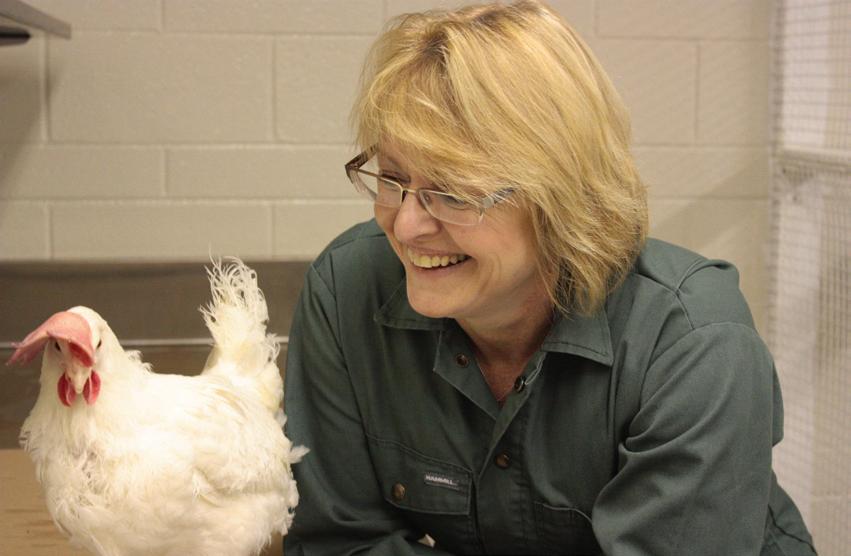
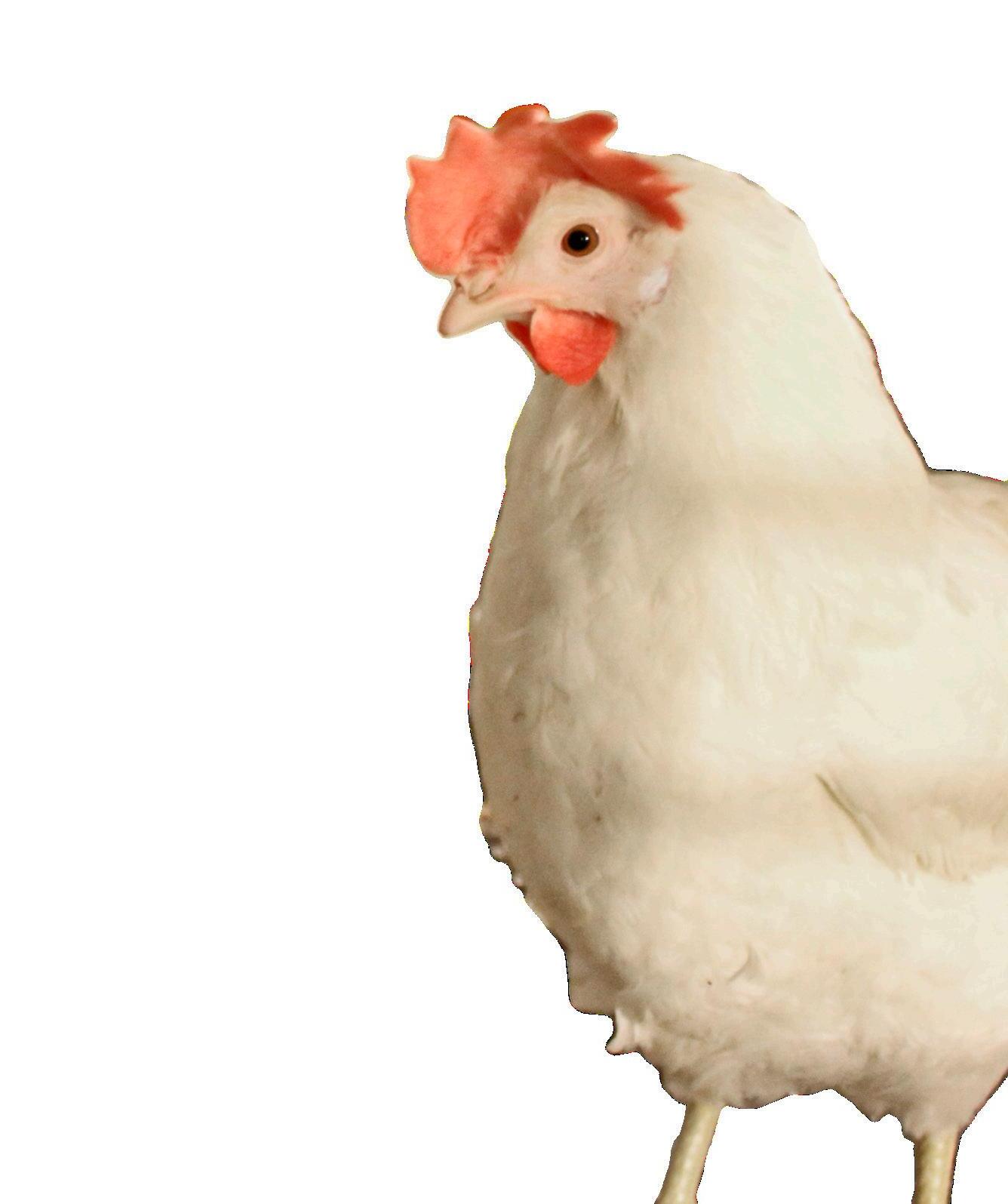
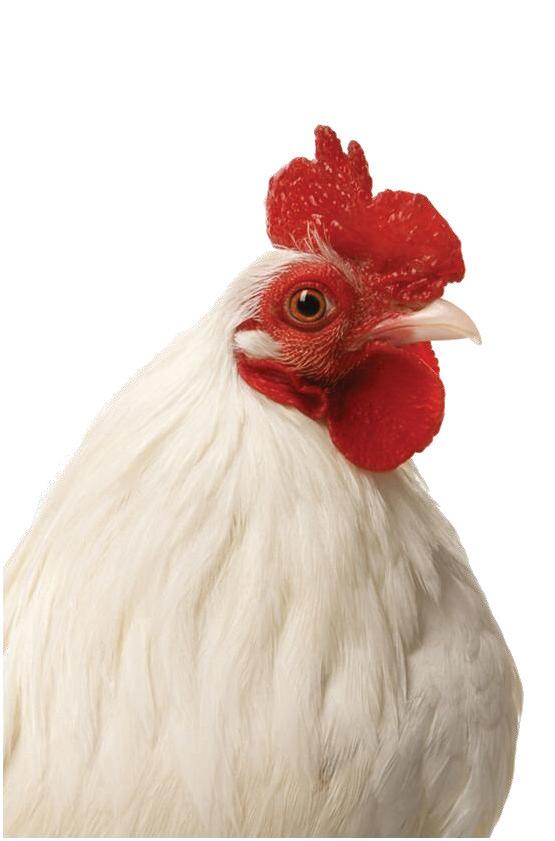
Research chair Tina Widowski is examining alternative housing systems
By Kristy Nudds
DISEASE: H5N1 Studies Spur Controversy
U.S. biosecurity experts want a ban on publication, while scientists says the studies are necessary to understand spread
By Helen Branswell, The Canadian Press
PIC UPDATE: Assessing Air Quality
Year III of an integrated assessment of air quality impacts from the poultry industry
By Kimberly Sheppard, Research Co-ordinator and Tim Nelson, Executive Director
Poultry Power
New research, one operating facility and a possible project to come, all relating to the use of poultry litter for power production
By Treena Hein
MIND OVER SUCCESS: Understanding Values
Your values affect all of your decisions, but are you really aware of them?
By Pierrette Desrosiers, M.Ps.
Par André Dumont
FROM THE EDITOR
BY KRISTY NUDDS
Fighting Back
As the old saying goes, when under attack, you need to fight fire with fire.
That’s exactly what the Dairy Farmers of Canada (DFC) has done in response to criticism of dairy production and supply management. The dairy sector has taken the biggest punch from opponents of supply management in the past six months, and they have retaliated in a clever, yet deceptively simple, way.
At its annual policy meeting in early February, the DFC announced the launch of its new consumer website, yourmilk.ca. The purpose of the website it to bust myths about dairy farming and supply management, to explain why supply management is successful, and to provide consumers with facts on just how much profit a dairy farmer really makes on a glass of milk.
What’s clever is the name of the website. It’s similar to a website launched last fall by the Canadian Restaurant and Foodservice Association (CRFA), freeyourmilk.ca. When consumers surf the Internet to find the CRFA’s website, they will also likely come across the DFC’s website, giving them an opportunity to see both sides of the story.
The CRFA has been a very vocal opponent of supply management in the dairy sector. Spurred by the dismantling of the Canadian Wheat Board (CWB), the CRFA has taken its opposition to new heights. It used to be that when the Canadian Dairy Commission (CDC) released its annual milk pricing, the CRFA was quick to respond with how unfair the pricing of dairy products is to its members. But now, the CFRA is trying to convince consumers to share its general views on supply management.
The CRFA is calling for a three-point plan to “ensure the long-term viability of Canada’s dairy industry.” The plan calls for an increase in domestic dairy consumption
(the CRFC believes if the CDC lowers prices, this will automatically happen), a transition to open markets (using the deregulation of dairy in Australia and New Zealand as a model), and growing the export market (they claim dairy farmers would benefit). A petition for consumers to sign is also available.
While there are obvious obstacles to achieving the plan, what is most troubling is that the CRFA is lobbying consumers to achieve its own agenda. Basically, the CRFA is angry about high dairy prices, because they cut into its members’ profits, pure and simple. But so do the rising costs of many other food staples. Bread products have nearly doubled in the past five years, but the CRFA didn’t attack the CWB on that issue. And now that wheat is soon to be traded in a “freer market” – as the CRFA wishes for dairy – it would be hypocritical of them to do so.
What’s great about the DFC’s website is that it confronts the CRFA’s criticism head on, and does what many supply-managed organizations have needed to do for some time – it explains the importance of supply management, not just to farmers, but to all others who benefit, among them consumers, processors, feed companies and rural communities.
An informative video on the website, created by the four poultry marketing boards and the milk marketing board in Alberta, gives viewers a broader picture of what supply management entails. Helping the public understand these complex issues is important if we want consumers to make informed choices.
President Mike Fredericks – mfredericks@annexweb.com
Mailing Address
P.O. Box 530, 105 Donly Dr. S., Simcoe, ON N3Y 4N5
Publication Mail Agreement #40065710
RETURN UNDELIVERABLE CANADIAN ADDRESSES TO CIRCULATION DEPT., P.O. BOX 530, SIMCOE, ON N3Y 4N5.
e-mail: jmatheusik@annexweb.com.
Printed in Canada ISSN 1703-2911
Circulation
e-mail: jmatheusik@annexweb.com
Tel: 866-790-6070 ext 207
Fax: 877-624-1940
Mail: P.O. Box 530, Simcoe, ON N3Y 4N5
Subscription Rates
Canada – 1 Year $ 24.00 (with GST $25.20, with HST/QST $27.12)
GST – #867172652RT0001
USA – 1 Year $ 60.00 USD
Occasionally, Canadian Poultry Magazine will mail information on behalf of industry-related groups whose products and services we believe may be of interest to you. If you prefer not to receive this information, please contact our circulation department in any of the four ways listed above.
Got Lubing? Contact your local Lubing Distributor for more detailed information about our innovative products or vist our website at www.lubingusa.com.
Les Equipments Avipor
Cowansville, Quebec
Tel: (450) 263.6222
Fax: (450) 263.9021
Glass-Pac Canada
St. Jacobs, Ontario
Tel: (519) 664.3811
Fax: (519) 664.3003
Carstairs, Alberta
Tel: (403) 337-3767
Fax: (403) 337-3590
Specht-Canada Inc.
Stony Plain, Alberta
Tel: (780) 963.4795
Fax: (780) 963.5034
J. Dean Williamson Ltd.
London, Ontario
Tel: (519) 657.5231
Fax: (519) 657.4092
With more than 60 years of experience developing innovative products for poultry producers worldwide, Lubing has established a reputation of leadership by introducing new, cutting-edge technologies to the poultry industry.
Our innovative products are produced with the most modern manufacturing capabilities giving our customers a profitable advantage in productivity.
Curve Conveyors, Belt Conveyors, Dirty Egg Return Conveyors, Transfer Tables
Dead Bird Removal
Views on the Future of the U.S. Industry WHAT’S HATCHING HATCHING
Views on the future of the U.S. poultry industry were given by a distinguished group of speakers at the Executive Conference on the Future of the American Poultry and Egg Industry held at the 2012 International Poultry Expo (IPE).
Jeff Simmons, president of Elanco Animal Health remarked that as the farming and agriculture industries look for ways to become more efficient and play a greater part in feeding the planet, the playing field in which they will be working for the next several decades will be shaped by global population increases, rising demand for dairy and meat proteins, environmental concerns, economic constraints, and various public issues.
James Paulsen, chief invest-
ment strategist for Wells Capital Management, suggested that while bad economic news seems to be everywhere, the early indicators of a turnaround may have been overlooked or downplayed because of outdated ideas of what improvement should look like.
Dr. Elisabeth Hagen, Under Secretary for Food Safety in the Food Safety and Inspection Service, addressed the USDA’s recent announced plan to modernize poultry inspections to focus on areas most relevant to food safety while pulling back on items that have little impact on detection and prevention of foodborne illnesses. She said it would strengthen protections for consumers as well as offer the poultry industry more flexibility, yield tremendous cost savings for the industry, and save taxpayers an estimated $90 to $100 million in
the first three years after they are enacted and lower poultry production costs by at least $250 million a year.
Tom Silva, vice president at J.S. West Milling Co., described his initial results in his presentation on enriched colony housing. The favorable points about the enriched colony system is that it “feels good, looks good, and shows good to the public,” Silva said, noting that the cage height is what most impresses visitors. On the negative side, the initial investment in a flock is 75 per cent higher, due to the cage specifications. He suggested that innovations such as enhanced colonies will spread from a few early adopters. “The egg industry will be different in the future, and I think we have to accept that. Whether the enriched colony is what we finally end up with, it is changing,” Silva remarked.
Eden Valley Plant on Schedule
Anew processing plant for Eden Valley Poultry Ltd. will open in June 2012 right on schedule, according to spokesman Ian Blenkharn, who spoke with Nova Scotia’s Daily Business Buzz.
Renovations on the plant in Berwick, formerly a Larsen Packers Ltd. (Maple Leaf) pork processing facility, will be complete in time for the opening in June 2012. The plant was
Farm Gate to Plate Video
OnTrace, an industry-led not-for-profit corporation created to lead food traceability programs and initiatives debuted a new animated video “OVN: From Farm Gate to Dinner Plate(R)” to promote and provide an informal introduction to the OnTrace Verified Network (OVN).
The OVN is a service owned and operated by OnTrace. It delivers a secure, inter-party network that lets producers, processors, distributors, truck-
Anew website launched by Canada’s dairy industry takes the bull by the horns when it comes to setting the record straight on the country’s supply management system for milk.
Dairy Farmers of Canada
purchased by the two shareholders of Eden Valley Farms: United Poultry Producers Inc. (compromised of producers from Nova Scotia and Prince Edward Island, and active members of ACA Co-operative) and Maple Lodge Holding Corp. of Brampton, Ont.
ACA closed its Eastern Protein Foods’ plant in Kentville in 2009 and reduced production at its New Minas facility the same year, shipping chilled carcasses to Nadeau’s
plant (owned by Maple Lodge) in New Brunswick for final processing and packaging. The New Minas facility will be closing once the Berwick plant is opened. Blenkhard told the Daily Business Buzz that the new plant will require about 200 workers, half of which will come from the New Minas plant.
Blenkharn also confirmed ACA Co-operative has made a court application to change its corporate structure from a cooperative to an incorporated company.
ers, retailers and other partners share information, track movement and verify the source of your products for branding and market access purposes.
Brian Sterling, CEO, OnTrace, said in a release that the objective of the video is to spread the word about the
(DFC) has created the site –yourmilk.ca – in an effort to dispel misinformed myths about Canada’s dairy industry and its successful supply management system.
DFC’s new website will be updated regularly with various types of content (video, commentaries and others) during the next year. For now, it busts popular myths, such as: • Supply management stops Canada from sign-
MARCH
March 13-15, 2012
Midwest Poultry Federation Convention Saint Paul River Centre, Saint Paul, Minn. www.midwestpoultry.com.
APRIL
April 11-12, 2012
The London Poultry Show Progress Building, Western Fair Entertainment Centre, London, Ont. www.poultryindustrycouncil.ca
MAY
May 8, 2012
PIC Research Day
Victoria East Golf Club, Guelph, Ont. www.poultryindustrycouncil.ca
JUNE
June 10-12, 2012
CPEPC Convention Fairmont le Manoir Richelieu, La Malbaie, Charlevoix, Que. www.cpepc.ca
benefits of OVN and provide an easy explanation of tracking movement.
To view the video, visit YouTube and put “OVN: From Farm Gate to Dinner Plate” in the search line. To find out more information about OVN, visit http://ovn.ontrace.ca.
ing free trade agreements • Canadian dairy farmers are subsidized by taxpayers
The first video on the site explains the supply management system and how it benefits farmers, consumers, and rural communities. It was produced by the Alberta Milk Producers, Alberta Egg Producers, Alberta Chicken Producers, Alberta Hatching Egg Producers and the Alberta Turkey Producers.
JULY
July 9-12, 2012
Poultry Science Association (PSA) Annual Meeting
The Georgia Center, Athens, Ga. www.poultryscience.org
AUGUST
August 5-9, 2012
XXIV World’s Poultry Congress Salvador, Bahia, Brazil www.wpc2012.com
SEPTEMBER
September 11-13, 2012
Canada’s Outdoor Farm Show,
Canada’s Outdoor Park, Woodstock, Ont. www.outdoorfarmshow.com
WHAT’S
HATCHING HATCHING
Elanco Acquires Feed Enzymes
Elanco, the animal health division of Eli Lilly and Company, announced at the International Poultry Exposition (IPE) that Lilly has signed an agreement to acquire ChemGen, Corp., a privately held bioscience company specializing in the development and commercialization of innovative feed enzyme products.
The acquisition will provide Elanco with a portfolio of leading feed enzyme prod-
ucts, as well as a pipeline of innovative compounds in development. ChemGen will continue research and administrative operations at its current location in Gaithersburg, Maryland and manufacturing activities at its facility in Terre Haute, Indiana. ChemGen will become a wholly owned subsidiary of Lilly and an operating unit of Elanco.
Financial terms of the transaction were not disclosed.
2012 IPE Successful
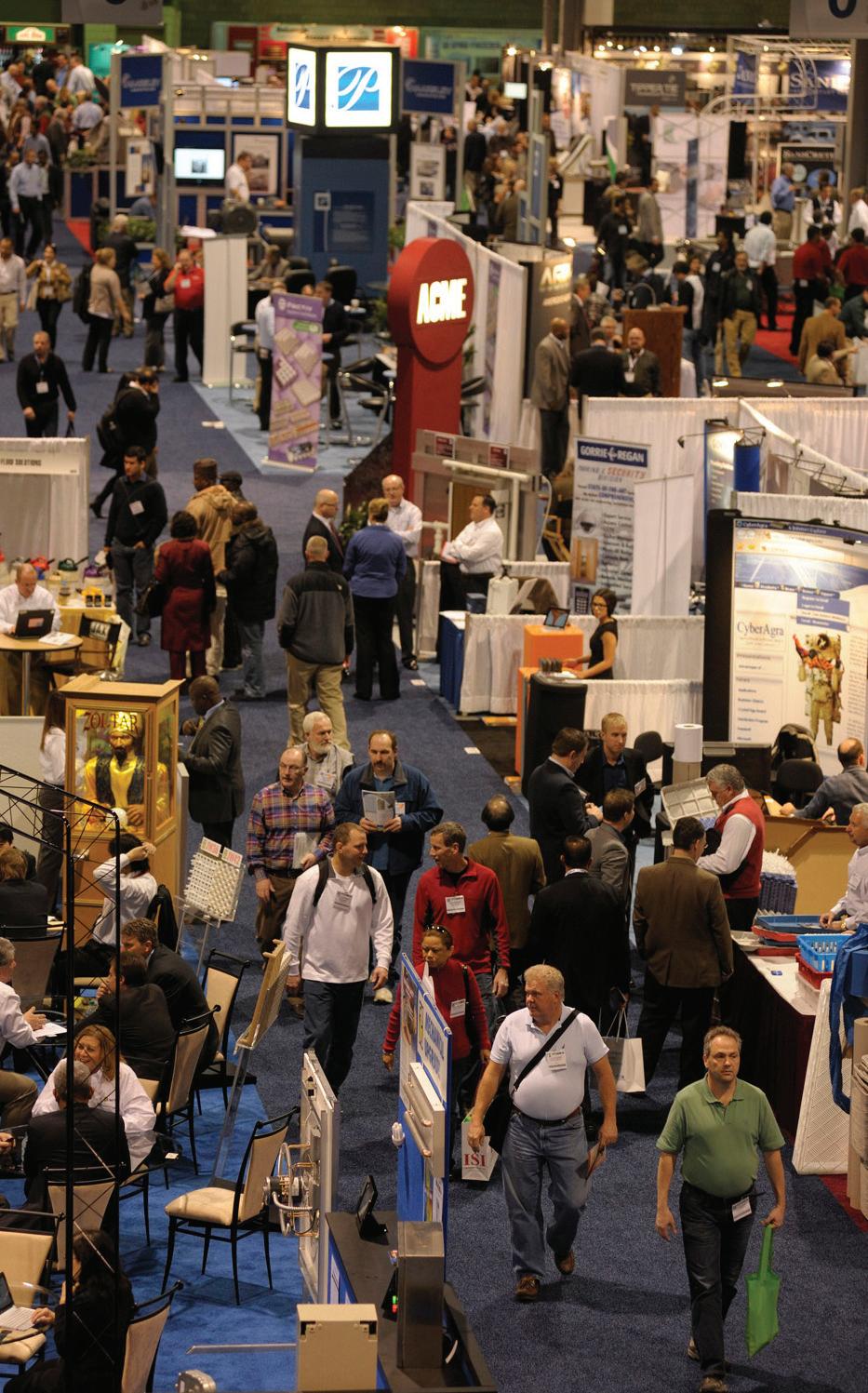
The 2012 International Poultry Expo (IPE) and International Feed Expo (IFE) drew 20,651 poultry and feed industry leaders from all over the world. International visitors came from 100 nations and totaled 4,142. The largest group from a single country outside the United States was Canada with 685 visitors. The largest region represented was Latin America and the Caribbean with 1,877 visitors. These numbers are virtually identical to last year’s numbers, according to USPOULTRY, sponsors of the IPE.
The central attraction was the large exhibit floor. 895 exhibitors presented the latest advances in equipment, sup-
SEPTEMBER
September 11-13, 2012 Canada’s Outdoor Farm Show
Canada’s Outdoor Park, Woodstock, Ont. www.outdoorfarmshow.com
OCTOBER
October 2-4, 2012 Poultry Service Industry Workshop
The Banff Centre, Banff, Alta.
www.poultryworkshop.com
NOVEMBER
November 8-9, 2012 Poultry Innovations Conference
London, Ont.
www.poultryindustrycouncil.ca
JANUARY 2013
January 28-31, 2013
plies, and services.
Helping drive the attendance, a week-long schedule of education programs complemented the exhibit floor by keeping industry management up-to-date on current issues.
The American Meat Institute has signed an agreement to locate it’s annual tradeshow with the IPE and IFE starting in 2013. The three shows will operate under the same umbrella and it is expected that the number of exhibitors and attendees will increase and that nearly one million square feet of exhibit space will be used.
The 2013 IPE/IFE and AMI meat conference will be held Jan. 28-31.
International Poultry Exposition (IPE), International Feed Exposition (IFE) and American Meat Institute (AMI) tradeshow Georgia World Congress Center, Atlanta, Ga. www.ipe11.org
We welcome additions to our Coming Events section. To ensure publication at least one month prior to the event, please send your event information at least eight to 12 weeks in advance to: Canadian Poultry, Annex Business Media, P.O. Box 530, 105 Donly Dr. S., Simcoe, ON N3Y 4N5; e-mail knudds@ annexweb.com; or fax 519429-3094.
TDiscommittedtohelpingfarmersbuildforthefuture.
Whenthe Martinfamilywantedtoraise theproductivity of their dairy business, they turnedtoDaltonPotter for guidance.DaltonisaseasonedTD Canada Trust Agriculture Specialist andafarmerhimself, andwithhis help,the Martinswere able to buy anewfarm in a primelocation.Our understanding of agricultureand nancing,combinedwithapersonalizedapproach,ishowwe’rehelpingfamiliesliketheMartinsgetexactly what they’re lookingfor.
For more information, visit a branch or go to www.tdcanadatrust.com/agriculture
MatthewMartin DairyFarmer
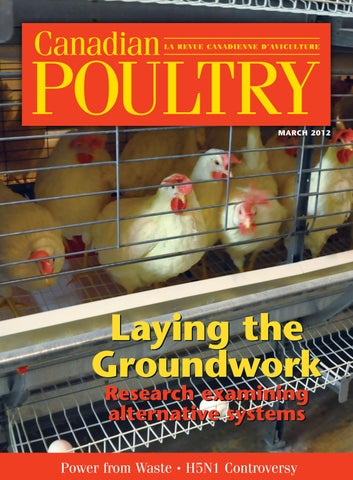
Laying the Groundwork Research
New research chair is examining the welfare of hens in alternative housing systems
BY KRISTY NUDDS
Pressure from animal rights groups to improve the welfare of laying hens has resulted in significant legislative changes in Europe and California with respect to layer housing. Welfare concerns have also caught the attention of consumers and retailers in the rest of North America, and egg producers are now faced with providing a better quality of life for the hens, while still providing a product that meets food safety standards and that is economically feasible, not only for their own bottom line, but also at the grocery case.
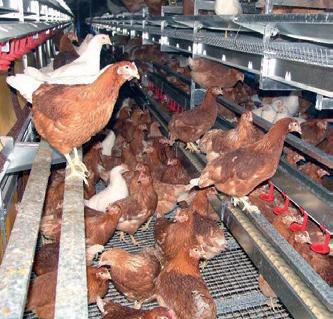
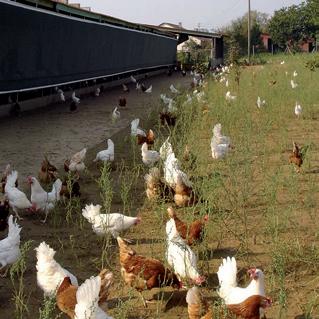
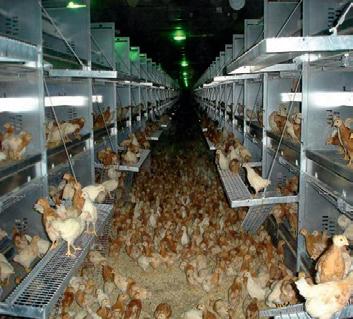
Consequently, many producers in Canada are considering installing (or have already installed) alternative housing systems, such as enriched cages or aviaries, on their farms. Although existing research in Europe and North America shows that these alternative systems provide many welfare benefits, many questions still exist with respect to cost of production, how best to optimize bird management in each different system, and how bird density and group sizing affects welfare and costs within the systems.
That’s why nearly two years ago, the Egg Farmers of Canada (EFC) decided that it wanted to support a research chair in animal welfare, according to EFC’s manager, corporate and public affairs, Bernadette Cox. The organization spent some time examining the research work and meeting with scientists in the field.
EXAMINING AMENITIES
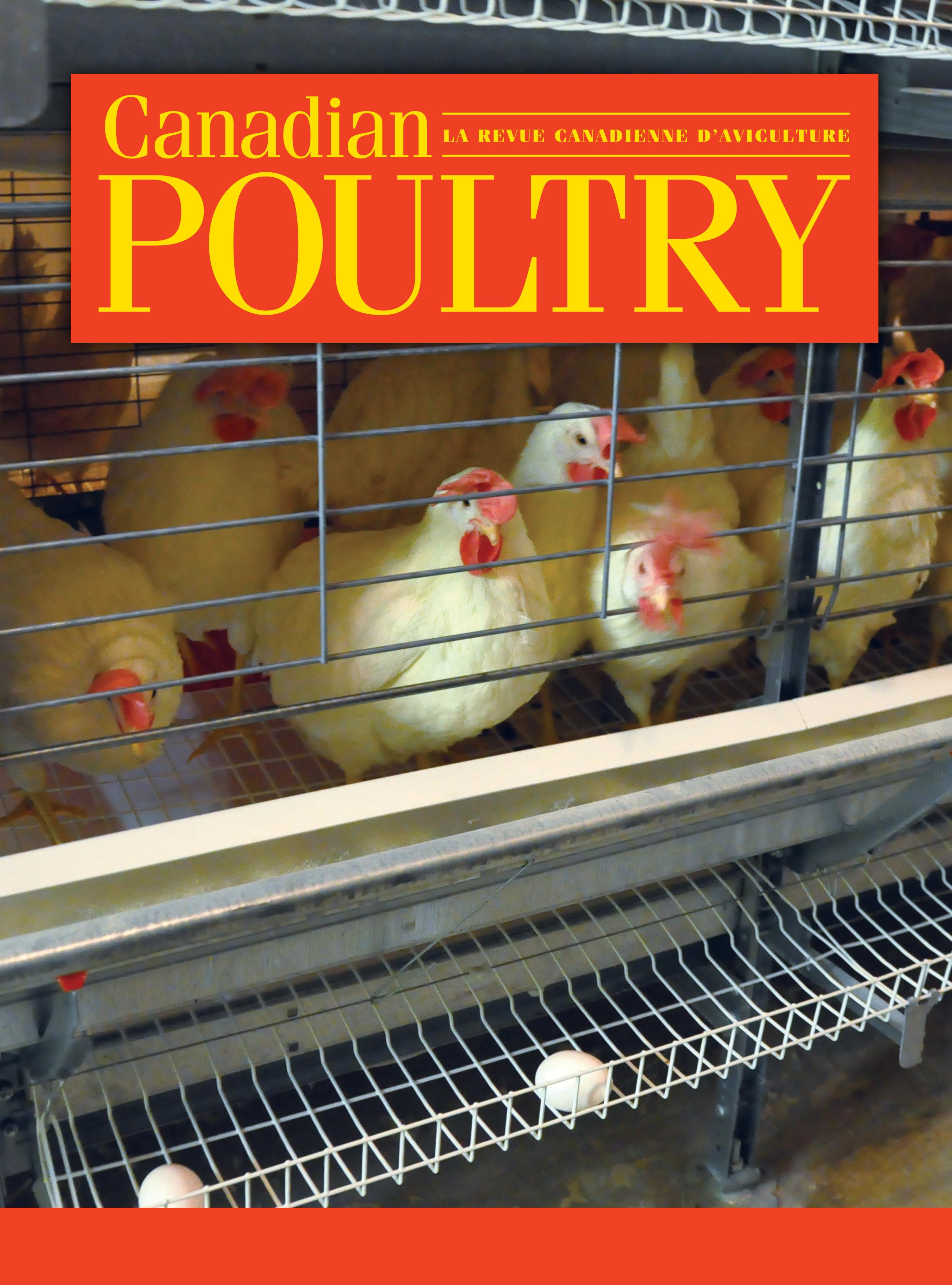
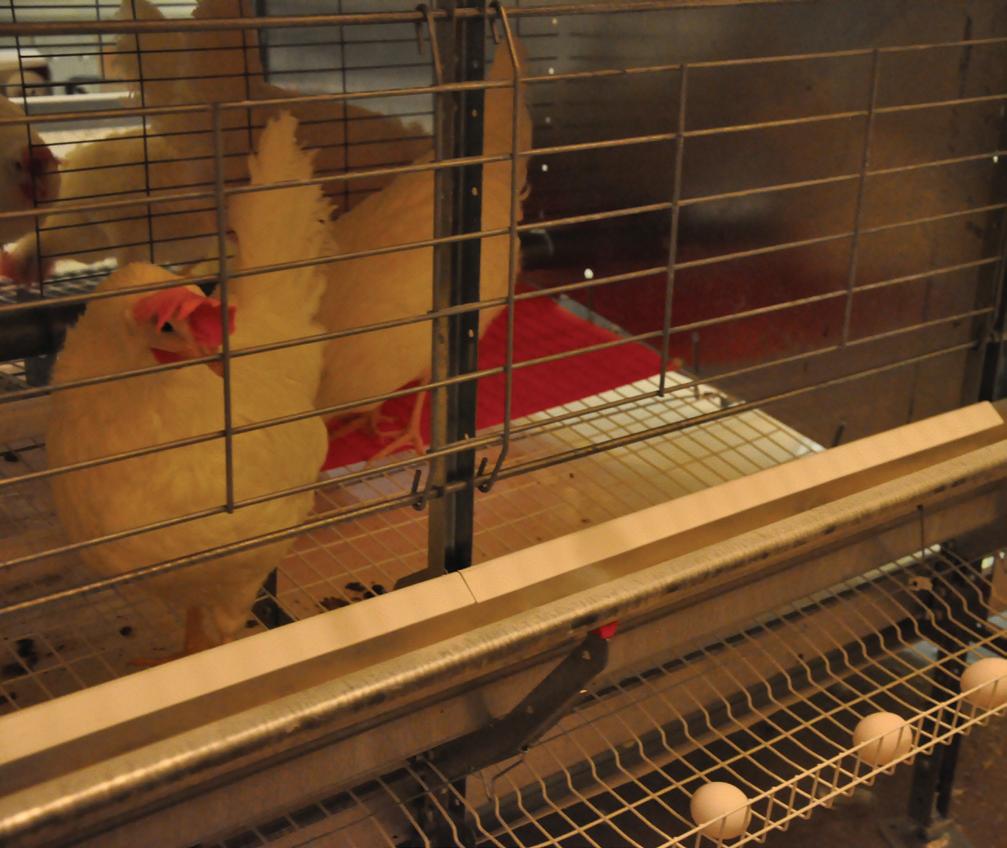
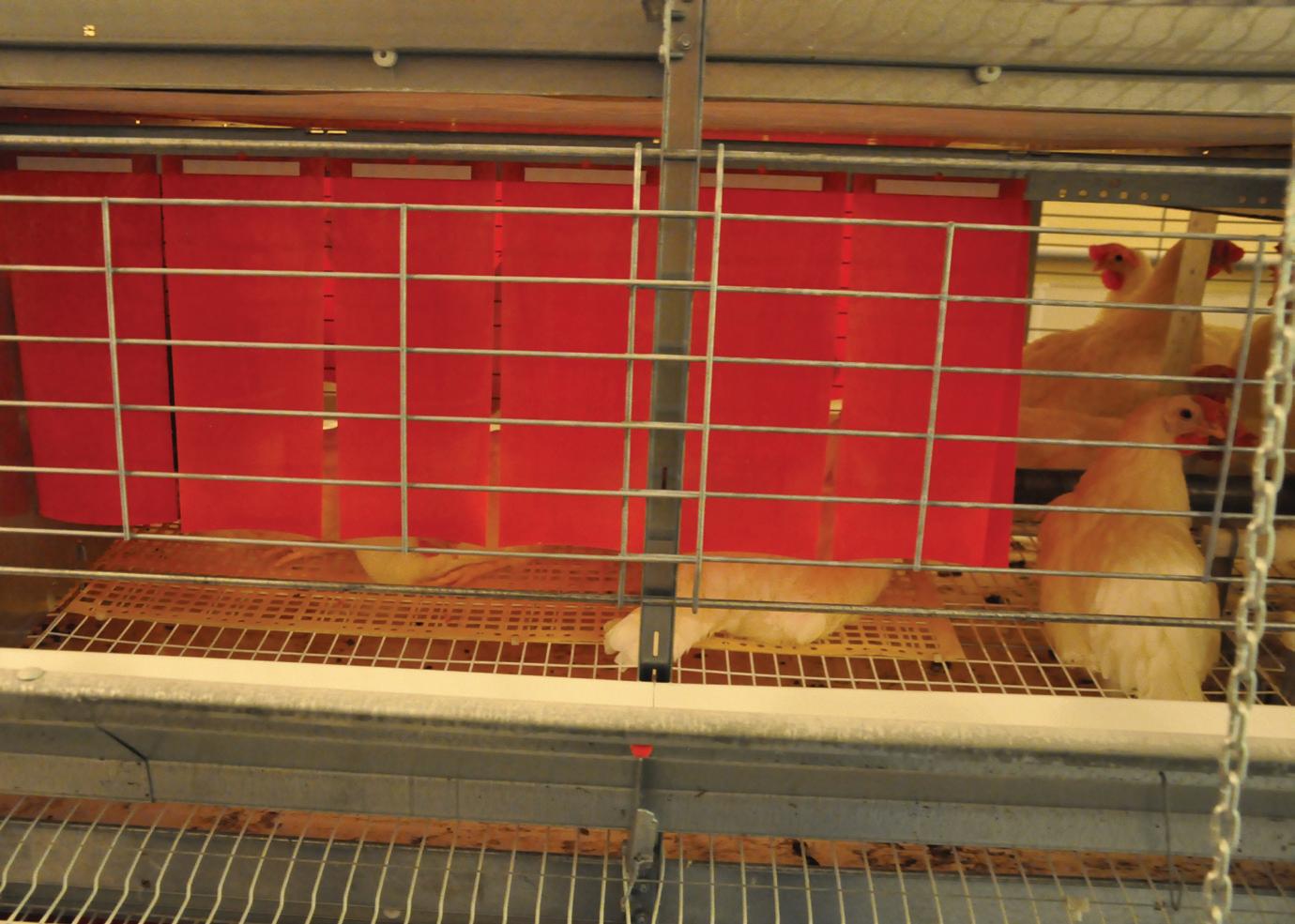
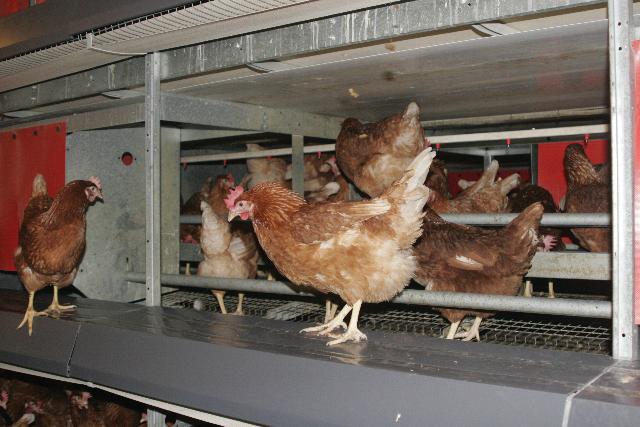
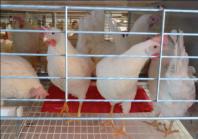
Dr. Tina Widowski, EFC’s chair in poultry welfare research, is examining how well hens use furnishings (such as nesting areas, above) in enriched cage systems.
Cox says that CEO Tim Lambert and EFC chair Peter Clarke felt that Prof. Tina Widowski of the University of Guelph was the person they were looking for, and announced that she was the new EFC chair in poultry welfare in May 2011. Widowski, who is based in the Ontario Agricultural College’s Department of Animal and Poultry Science, was chosen in part because she has an impressive record of research in a variety of welfare issues, is actively engaged with other scientists in North America (including the University of
Michigan and the Poultry Welfare Cluster, also based at the University of Guelph), and is the leader of North America’s largest group of animal welfare scientists as director of the Campbell Centre for the Study of Animal Welfare.
Cox says that, although EFC is not directing the type of work that is being done, Widowski does inform the organization of her progress and seeks opinions about what areas of welfare research are the most pressing for Canadian egg producers.
The funding partnership between the
Open House
Clark Ag Systems Ltd. hosted an open house at the University of Guelph’s Arkell poultry research station in September 2011 to allow producers and industry representatives to see the Farmer Automatic Portal Rearing System, Loggia system and Layer ECO system. Dr. Tina Widowski and representatives from Clark and Farmer Automatic were on hand to answer questions and show attendees how the systems operate. Pictured here are attendees viewing the Portal Rearing System.
University of Guelph and EFC formally began in March 2011, and will continue through January 2017.
Not only will the partnership benefit egg producers, but it will benefit the University of Guelph as well, says Widowski. The funding has allowed for the hiring of a junior faculty member (currently underway) and has provided opportunities for several graduate students, who will become part of the next generation of technical experts in animal welfare.
The university’s poultry unit at the Arkell research station has also benefited, with new, up-to-date equipment, she says.
EQUIPMENT
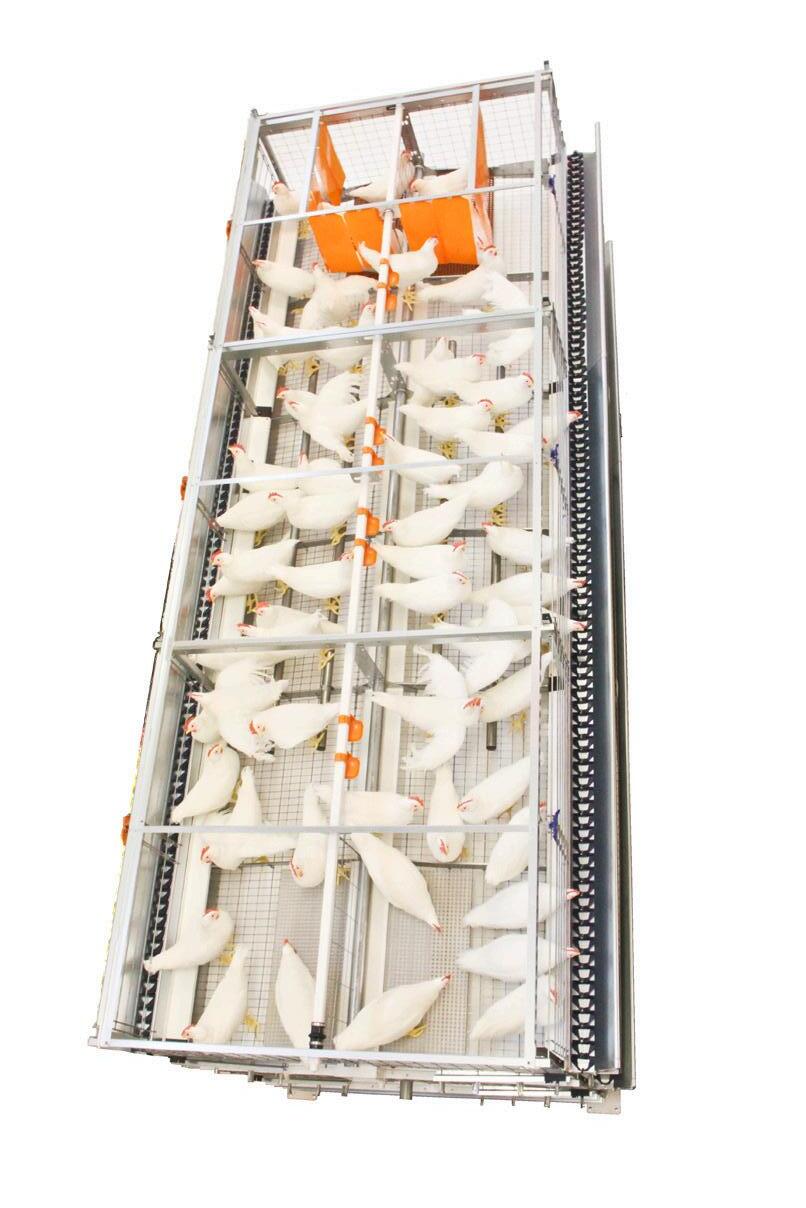
Four rooms in the poultry unit were cleared to accommodate the new housing systems, all of which are manufactured by Farmer Automatic (FA), a Germanybased company that has a partnership with Ontario-based Clark Ag Systems Ltd.
One room houses FA’s pullet-rearing floor system, the Portal Rearing System, while another of the rooms houses the Loggia system, the company’s layer aviary.
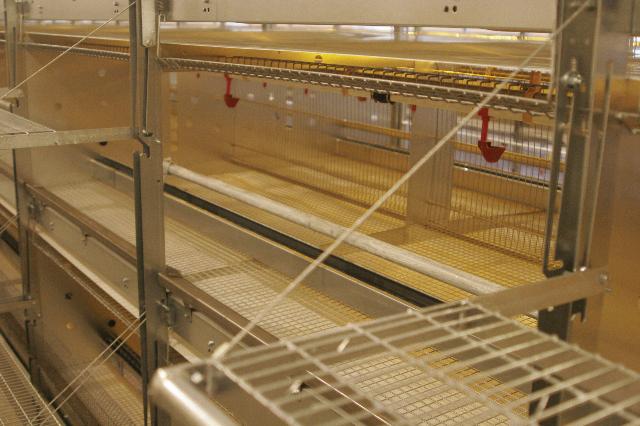
The other two rooms house the Layer Cage ECO, FA’s enriched cage system, which has been designed according to the regulations for layer housing set forth by the EU and that came into effect Jan. 1, 2012.
The equipment was installed over the summer of 2011, and the university and Clark Ag Systems Ltd. held an open
Research
house in mid-September for producers and industry representatives prior to the arrival of the birds (see sidebar).
WHAT’S BEING STUDIED
Widowski’s first project is to study the behaviour, welfare and production parameters of layers housed in the enriched system at two different densities — 80 square centimetres/bird and 116 square centimetres/bird (the EU regulation). The reason behind this, says Widowski, is that if the industry is faced with a “transition” period with respect to bird densities (as may happen in the U.S. with the proposed agreement between the Humane Society of the United States and the United Egg Producers), it’s important to know what production levels are achieved with smaller densities because more barns will be required to match the current production levels of conventional systems.
Two different cage sizes are being utilized. The larger cage is double the size of the smaller, and the amenities (i.e., “enrichments” such as nest area, perches, scratching area and floor space) are also doubled. To examine the effect of density in each cage size, the smaller cages have groups of 28 or 40 birds, and the large cages have groups of 55 or 80 birds.
What’s of interest to Widowski is how well the birds are using the enrichments. Decades of research have shown that hens are highly motivated to perform/ express behaviours that are natural to them, which conventional cages do not allow. Four key behaviours have been identified as being important to a hen — foraging, dustbathing, nesting and perching. Enriched systems provide the tools to allow hens to express these behaviours, but Widowski says that although we like to give ourselves a pat on the back for giving the birds something to perch on and a nesting area, it’s important to make sure that these behaviours are actually being supported by the amenities provided.
For example, what is not known is whether the nesting area is sufficient for the number of birds in each cage, she says. She and her research team have observed that about 10 to 20 per
cent of eggs are being laid outside of the nest area, with the majority of these laid in the scratch area. Widowski says she would like to know whether this is because the nest space is insufficient, or because, like the nest area, the scratch area is in a corner of the cage and this offers the birds the same seclusion they would have in the nest.
Methodology for data collection has been completed and Widowski says she has a team of graduate students ready to start collecting and quantifying welfare and behaviour data. Each room is equipped with video cameras, and the students will be examining bird behaviour on the videotape as well as through live observation.
One student will be looking at nesting in depth — where the birds are laying, why this varies and whether social competition for nesting is a problem, she says. Another student will be examin-
Let
take care
ing dustbathing and foraging behaviour. This student will be looking at how well the birds use the scratch area, which is a smooth plastic mat (Widowski opted not to use an astroturf-type mat, as it gets full of manure and she says many producers are moving away from these). Because enriched systems do not provide litter or
Research
other material to stimulate foraging and dustbathing as the aviary/free-run housing systems do, this behaviour is being triggered by having a feed auger over the scratch area that provides 20 grams of feed 10 times throughout the day. The effectiveness of the auger approach will also be examined.
The feed conversion leader.
A third student gets the “night shift,” says Widowski. She will be looking at how well the birds are using the perches, and how the perches are being used. Widowski is interested in answering some previously unanswered questions, for example: Are the birds conservative in perching? Is it the same birds perching? Is there a specific spot that they always go to? Eventually, says Widowski, she will be comparing the bone strength of the keel and leg bones in perchers versus non-perchers.
Also of interest are activity patterns — the birds have a lot more space, but do they use it, and how? She will also be looking at the pattern of time the eggs are being laid. She says that depending on the strain of hen (the birds in the current study are Lohmann), some will lay their eggs in more compressed or wider windows of time, which will in turn affect the competition and pressure on the nesting area at certain times of the day. If the window of time is compressed, “it’s like a big family wanting to use the bathroom at the same time,” she says.
Parameters such as egg production and feed intake are being measured and will be compared to birds housed in conventional cages located in another room at the Arkell research station.
Research methodology is near completion for the aviary system, and later this spring chicks will be placed into the Portal Rearing System. Widowski says she will be examining how pullets raised in this system adjust to the aviary. Once in the aviary, she plans to look at how loadbearing exercise and the opportunity to fly increase bone strength.
Widowski regularly updates EFC’s research committee and board of directors on the progress of the research. Cox says that results from the research will be summarized and communicated to producers either through the provincial boards or directly from EFC by way of a mailing or Internet posting. n
To view videos of the Layer Cage ECO and Loggia systems, visit www.canadianpoultrymag.com (see this article under “current issue”) or YouTube (put “TheClarkCompanies” in the search bar).
CPRC Update Tackling Antibiotic Resistance
Antibiotic resistance is a very important issue with implications for both agriculture and human health. It is an issue that is receiving a lot of attention from media and the scientific community. Prophylactic use of antimicrobials (used to prevent rather than treat an infection) has been of particular concern, especially when the drugs used are of the same or related class as those used in human medicine. Scientific evidence clearly shows that exposing bacteria to antimicrobials selects for resistance. However, what is not entirely clear is how agricultural use relates to the development of bacterial resistance, especially to antimicrobials used in human medicine. What are the contributions to resistance of bacterial communities in animal hosts versus human hosts? This is a complex question on which many scientific opinions remain divided.
Several studies suggest that agricultural use of antimicrobials has a direct bearing on the development of resistance to antimicrobials used in human medicine. On the other hand, recently published results from a large epidemiological study in Scotland (Mather et al. 2011, Proceedings of the Royal Society: Biological Sciences), which involved scientists from the University of Guelph and the Public Health Agency of Canada, suggest the risk of passing resistance from animals to humans may be lower than previously thought. The authors suggest that current policy restricting agricultural use of certain antimicrobials may therefore be overly simplistic. Nevertheless, antimicrobial resistance is an issue that the poultry industry takes very seriously. The National Poultry Organizations, through the Canadian Poultry Research Council (CPRC), continue to make significant financial contributions to research in this area.
HOW PREVALENT IS RESISTANCE?
An important aspect of understanding antimicrobial resistance is to determine how much is out there and how resistance rates are affected by production practices. Dr. Michele Guerin, an epidemiologist at the University of Guelph, is leading a surveillance study comparing rates of bacterial resistance in conventionally raised broiler chickens and those raised without antimicrobials.
HOW DO ANTIMICROBIALS AFFECT POULTRY?
A major emphasis of CPRC’s Avian Gut Microbiology research program is to better understand how antimicrobials affect the microbial populations in the avian gut, and in turn, how these changes affect the bird. These changes can have profound impacts on avian immune function, for example. One aspect of the strategy to reduce the need for antimicrobials is to make use of, and enhance, the bird’s own defences. As indicated in last month’s CPRC update, research designed to do just that is ongoing.
WHAT ARE THE ALTERNATIVES?
Another emphasis is to develop alternatives to antimicrobials in the event that currently used products become less effective, or their continued use is deemed detrimental. An arsenal-type approach of dealing with infections using a variety of methods makes it less likely that bacteria can develop resistance. A number of alternative control strategies are being developed with CPRC support. For example, Dr. Christine Szymanski at the University of Alberta is developing technology based on bacteriophage and engineered antibodies that can target spe-
cific bacteria. Dr. Bogdan Slominski at the University of Manitoba is looking at the pre- and pro-biotic effects of products from enzymes used to breakdown certain feed constituents, as well as the potential of Distillers Dried Grains with Solubles (DDGS) to promote poultry health in the absence of antimicrobials. Drs. Éva Nagy, John Prescott (University of Guelph), Byeonghwa Jeon (Atlantic Veterinary College, P.E.I.) and Martine Boulianne (University of Montreal) are all working on various vaccine technologies that could offset or replace antimicrobial use. Dr. Joshua Gong, Agriculture and Agri-Food Canada, is hoping to exploit the antimicrobial properties of essential oils and spices for use in infection control strategies.
In short, CPRC continues to direct considerable resources into research relating to antibiotic resistance. Details on the outcomes of this research will be provided in future updates. These, and other studies around the world, are contributing to the overall effort to better understand bacterial resistance to antimicrobials and develop rational strategies that promote the prudent use of antimicrobials in the poultry industry.
For more details on any CPRC activities, please contact the Canadian Poultry Research Council, 350 Sparks Street, Suite 1007, Ottawa, Ontario K1R 7S8, phone: 613-566-5916, fax: 613-241-5999, e-mail: info@cp-rc.ca, or visit us at www.cp-rc.ca. n
The membership of the CPRC consists of the Chicken Farmers of Canada, the Canadian Hatching Egg Producers, the Turkey Farmers of Canada, the Egg Farmers of Canada and the Canadian Poultry and Egg Processors’ Council. CPRC’s mission is to address its members’ needs through dynamic leadership in the creation and implementation of programs for poultry research in Canada, which may also include societal concerns.
Real Results
For a fully enriched future, get the “real results” and proven performance from the AVECH and fully Enriched systems.
With over 50 million birds living and thriving in the AVECH™II, you get the peace of mind that comes from investing in a system that has a consistent and proven track record
Customers are experiencing real results from installed and working AVECH™II systems:
Disease H5N1 Studies Spur Controversy
U.S. biosecurity experts want a ban on publication, while scientists say the studies are necessary to understand spread
BY HELEN BRANSWELL, THE CANADIAN PRESS
Influenza scientists are worried they may be feeling a cold front moving in.
In December 2011, an unprecedented decision by the U.S. government to ask two leading scientific journals (Science and Nature) to withhold publication of key information from controversial avian influenza studies has scientists in this sector nervous.
They fear a chill may be descending on their field, potentially making it harder to tackle studies aimed at answering one of the key questions in influenza science, namely, how viruses that normally infect birds, pigs or other mammals evolve to become viruses that infect people.
But a scientist at the centre of a raging controversy over bird flu transmission studies has broken his silence, in the process revealing information about his study that has not been made public previously.
In a commentary in the journal Nature, flu virologist Yoshihiro Kawaoka argued the work he and other high-level influenza scientists do to try to puzzle out why some flu viruses spread in humans while others don’t is too important to be shelved (see sidebar).
“Our work remains urgent – we cannot give it up,” wrote Kawaoka, who up until mid-January made no comment on the controversy that is pitting flu scientists against the community of biosecurity experts, some of whom insist no further
Two scientific journals were slated to publish H5N1 studies conducted by research groups in the Netherlands and the U.S., but in December 2011 biosecurity advisors in the U.S. asked the journals to hold off, fearing that the studies posed a risk of “an unusually high magnitude.”
transmission studies on the dangerous H5N1 flu virus should be undertaken.
The standoff between the two groups started when the National Science Advisory Board on Biosecurity, which advises the U.S. government on research that could be put to so-called dual use, recommended two studies into how H5N1viruses could become more transmissible should not be published in full.
In his commentary, Kawaoka revealed that his laboratory at the University of Wisconsin-Madison made a hybrid virus, fusing the hemagglutinin protein (the H in a flu virus’s name) from H5N1onto the human H1N1 virus that caused the 2009 pandemic.
The H1N1 virus spreads easily among
people but H5N1currently does not.
His team found the viruses came together readily, and spread easily among ferrets kept in separate cages. Ferrets are considered the best animal model for predicting how a flu virus will act in humans. And that type of study is meant to show whether viruses can spread in the way they do in people – by being propelled through the air by coughing or sneezing.
But while it was highly transmissible, Kawaoka’s mutant virus did not kill the ferrets. In fact, it was no more pathogenic to the animals than the 2009 H1N1 virus, Kawaoka said.
“Our results ... show that not all transmissible H5 HA-possessing viruses are lethal,” he wrote. HA is the short form for
STUDYING
H5N1
hemagglutinin used by flu scientists.
Disease
Nature, which plans to publish Kawaoka’s paper, acknowledged it gave him dispensation to release information about this work.
Normally journals will not publish studies if the findings have already been reported elsewhere, including in the mainstream media.
Spokeswoman Rachel Twinn said Nature decided it was in the public interest to allow Kawaoka to share details of his findings at this time.
Kawaoka –who also has an appointment at the University of Tokyo – runs one of two labs caught up in this roiling controversy. The other is run by Dutch virologist Ron Fouchier of Erasmus Medical Centre in Rotterdam.
Fouchier called Kawaoka’s findings “completely unexpected.”
“I would have guessed that if you would have put a highly pathogenic HA on the pandemic H1N1 that you would get a virulent virus. And clearly that’s not the case,” Fouchier said, though he noted he hasn’t read the study and doesn’t know the full details of the work.
The findings suggest a couple of things, Fouchier said in an interview from Rotterdam.
The first is a point that Kawaoka also made. If a hybrid of
this constellation of genes – the H5 hemagglutinin with seven genes from the pandemic H1N1 virus –were to emerge “we may not have to fear as much as we would think,” Fouchier said.
But another point he made sounded a more chilling note. He observed that the combination of his work and Kawaoka’s shows that there are at least two different routes that the H5N1virus could take to become one that is easily transmitted among mammals – and perhaps people.
“We now show in completely independent studies in two completely different ways that we cannot say that H5 will never gain the ability to go aerosol transmissible,” Fouchier said. “There is now already two very easy paths of achieving it.”
Fouchier has been front and centre in the debate over whether to publish these two studies, having previewed his own findings last fall at an influenza conference in Malta. (Journals’ pre-publication bans don’t apply to presentations made to scientific conferences.)
Fouchier’s team forced evolution of an H5N1 virus in ferrets, getting it to the point where it easily transmitted among the animals.
It was a full H5N1 virus – it was not a hybrid – and it was fatal to at least some of the animals. His paper is to be published in Science
But before Science and Nature could publish the works, the
The Controversy
scientific journals Nature and Science were slated to publish H5N1 studies conducted by research groups in the Netherlands and the U.S., but in December 2011 biosecurity advisors in the U.S. asked the journals to hold off, fearing that the studies posed a risk of “an unusually high magnitude.”
The studies were submitted for review to the U.S. National Science Advisory Board for Biosecurity, a group that advises the U.S. government on so-called dual-use research.
The group says a pandemic with the H5N1 flu virus, either caused by nature or by a transmissible virus engineered in a laboratory, would be an unimaginable catastrophe. The studies show how H5N1 viruses, which currently don’t transmit efficiently among mammals, can be made to do so in ferrets, the best animal model for predicting infection in humans.
After weeks of deliberation, the advisory panel suggested that the scientific journals should be asked not to publish the means by which the researchers manipulated the H5N1 virus to get it to the point where it was easily transmitted among ferrets.
The U.S. National Science Advisory Board on Biosecurity outlined its position publicly in the journals at the end of January.
Flu scientists announced a voluntary two-month moratorium on research in this area and at least one of the journals has agreed to hold off publication to allow international talks on resolving the dispute to get underway.
BIOvatorTM in-vessel composter. Quality compost in as little as four days.
#1 Name for In-Vessel Composting
The
Disease
INFLUENZA SCIENTISTS HAVE OBJECTED TO THE PUBLICATION BAN, SAYING TO HOLD BACK THE FULL DETAILS OF THE STUDIES WILL IMPEDE SCIENCE THAT NEEDS TO BE DONE.
panel of biosecurity experts advised the U.S. government to ask the journals not to publish the full works, saying to do so would be to print recipes for potential bioterror weapons.
The journals and the scientists have grudgingly held off. But the flu community and some others in the science world have objected to the decision, saying to hold back the full details of the studies will impede science that needs to be done.
In the hopes of creating room for a compromise, last week 39 leading flu scientists – including Kawaoka and Fouchier –announced they would observe a voluntary 60-day moratorium (from Jan. 20) on H5N1transmission studies. The idea was to give the global community time to sort through the troubling issues the work raises.
The World Health Organization, which has been asked to help mediate the problem, stated that it will convene a meeting of technical experts in Geneva in mid-February.
The WHO’s point person on the issue, Dr. Keiji Fukuda, has said the meeting will be small, involving fewer than 50 people. The scientists who did the studies as well as scientists from WHO’s network of flu laboratories will be invited to attend.
A representative of the National Science Advisory Board on Biosecurity will also be invited to attend, Fukuda has said.
In his commentary, Kawaoka argued that trying to disseminate the full details of his and Fouchier’s work on a need-toknow basis – the U.S. proposal – will be unworkable.
And he said redacting the studies won’t eliminate the possibility that the information will become public.
“There is already enough information publicly available to allow someone to make a transmissible H5 HA-possessing virus,” he warned. n
Update
Assessing Air Quality Impacts
Year III of an integrated assessment on the poultry industry’s impact on air quality
BY KIMBERLY SHEPPARD, RESEARCH CO-ORDINATOR
Air pollution is increasingly being linked to human health effects in terms of cost of illness as well as the occurrences of pulmonary and cardiac diseases. Ammonia and fine particulate matter are two contaminants that are emitted by agricultural operations and that contribute to the general burden of illness due to atmospheric exposure. Production commodity groups thus need a sound scientific knowledge regarding their agricultural air emissions so that future discussions, decisions and policies can be made in a rational and logical manner.
Emissions from farming enterprises are extremely complex and interrelated. Emissions to the air can occur from all stages including the animal housing unit, the manure storage, and the subsequent field application of the manure. The aim of the overall study is to conduct an integrated investigation of different poultry operations (broiler and/or layer) as a whole system to quantify the strength of sources as well as their interrelationship for a suite of air contaminants, including ammonia, greenhouse gases (methane and nitrous oxide), size fractionated particulate matter (PM10 and PM2.5), and gaseous and particulate anion and cation concentrations. This project, which represents the third year in the study, focused on the emissions of ammonia and particulate matter from poultry houses.
To date, emission factors for ammonia and particulate matter have been published for broiler facilities. As an example, for a summer broiler flock, the estimated ammonia emission rate was 120.8 g/day/AU and particulate matter emission rates, as PM10 and PM2.5, were 5.2 and 1.0 g/day/AU respectively (PM10 refers to particulate matter with aerodynamic diameters of less than 10 mm, or the coarse fraction; PM2.5 refers to particulate matter with aerodynamic diameters of less than 2.5 mm, or the fine fraction; and AU represents an animal unit taken as 500 kg live weight). These emission factors developed for the release from housing facilities are seasonally dependent as ventilation rates vary accordingly. The expertise and knowledge gained with broiler operations is now being applied to layer facilities. Methane (CH4) and nitrous oxide (N2O) emissions from an outside broiler litter storage bunker were measured and emissions
ASSESSING AIR QUALITY
Emissions to the air can occur at all stages, including the animal housing unit, the manure storage, and the subsequent field application of the manure.
factors developed. On a mass of litter basis, the estimated annual emission rates of CH4 and N2O from the exposed litter surface in the bunker were 19 and 3.3 g/(kg of litter), respectively. These emission factors are somewhat dependent on the depth of the litter in the bunker, the mass of volatile solids within the litter and the season of the year.
Experiments aimed at estimating the loss of NH3 to the atmosphere after surface broadcasting of broiler litter on soil surfaces indicate that 22 per cent of the ammonium (as N) in the litter was lost 72 hours after application and 25 per cent after 132 hours.
Composting of chicken carcasses is also a source of NH3 to the atmosphere. Flux chamber experiments on static compost piles have indicated that different amendment materials used, such as broiler litter, finished compost and fresh wood chips, can affect the levels of NH3 generated and released from the pile. The controlled experiments clearly showed that broiler litter emitted the most NH3 while finished compost emitted the least over time. Elevated NH3 releases can lead to odour concerns as well as the loss of nutrients. To read more about this project, please visit www.poultryindustrycouncil.ca. n
Healthy Birds, Healthy Profits
Don’t hand them over to necrotic enteritis-The Profit Killer!
BMD® Helps Improve Your Bottom Line By:
Reducing subclinical and clinical disease, resulting in greater productivity and decreased morbidity/mortality
Ensuring the absorption of nutrients from feed through preserving the integrity of the gut wall and controlling necrotic enteritis1
Update
PIC’s Picks
BY TIM NELSON, EXECUTIVE DIRECTOR
There is little doubt that poultry production/science teaching at Canadian universities has decreased over the last 20 years.
The explanation for this reduction in the amount of poultry production/science being taught lies quite simply in a supply and demand equation.
As farm size and technological sophistication increases, the need for a large volume of skilled and semi-skilled workers decreases. With automation comes unemployment. It’s the story of advanced agricultural countries the world over.
If there is no demand for poultry science graduates from our industry, students will not choose to enrol in poultry production/science courses. No enrol-
ment means no work for teaching staff.
RECRUITMENT
The recruitment of teaching staff at a university (that the university is willing to pay for), will therefore be into those disciplines that bring revenue to the university – the ones that fill lecture halls and cost little to run, where classes of up to 1,200 students are possible. The social sciences and psychology are the current moneymakers. Universities are no different from any private business in that they look to where they can grow profits. Just as in agriculture, economies of scale are attractive, as opposed to niche markets – the teaching of poultry
production/science, for example – which are not.
And, as with niche markets, if the customer is willing to pay, the supplier will provide the product. Teaching poultry production/science is as to a dozen organic eggs as teaching psychology is to a dozen caged eggs.
Poultry nutrition is a smaller niche market again, just one element of poultry production/science.
Of course, industry still requires highly skilled technicians, production managers and scientists or, in the jargon of the day, highly qualified personnel (HQP).
Those of you who employ such people will have come to recognize that more and more they are coming at a premium,
One Million Birds. One Conclusion.
Canadian Trial Demonstrates the Performance Improvements of Vaccination with VAXXITEK® HVT + IBD.
In one of the largest Canadian field studies of its kind, more than one million broilers were vaccinated with VAXXITEK® HVT+IBD over four periods from June 2010 to February 2011 1 At the end of the trial, the conclusion was clear. Vaccination with VAXXITEK HVT+IBD resulted in a substantial improvement, particularly in livability, number of condemnations and profitability.
Here’s what satisfied customers are saying: Learn more about the field studies, visit www. .ca or talk to your veterinarian today.
We started using VAXXITEK shortly after its launch and noted a big improvement in chick quality right from the start. Our customers reported fewer condemns and reduced mortality. Now we have customers asking for VAXXITEK-vaccinated chicks. We’re extremely happy with the results.
“
Ernie Silver, Hatchery Manager, Western Hatchery, Abbotsford, BC
More than 800 Merlo sold throughout Canada sinCe 2004
Merlo redefines standards in agriCulture:
Designed and built to outperform the loader tractor
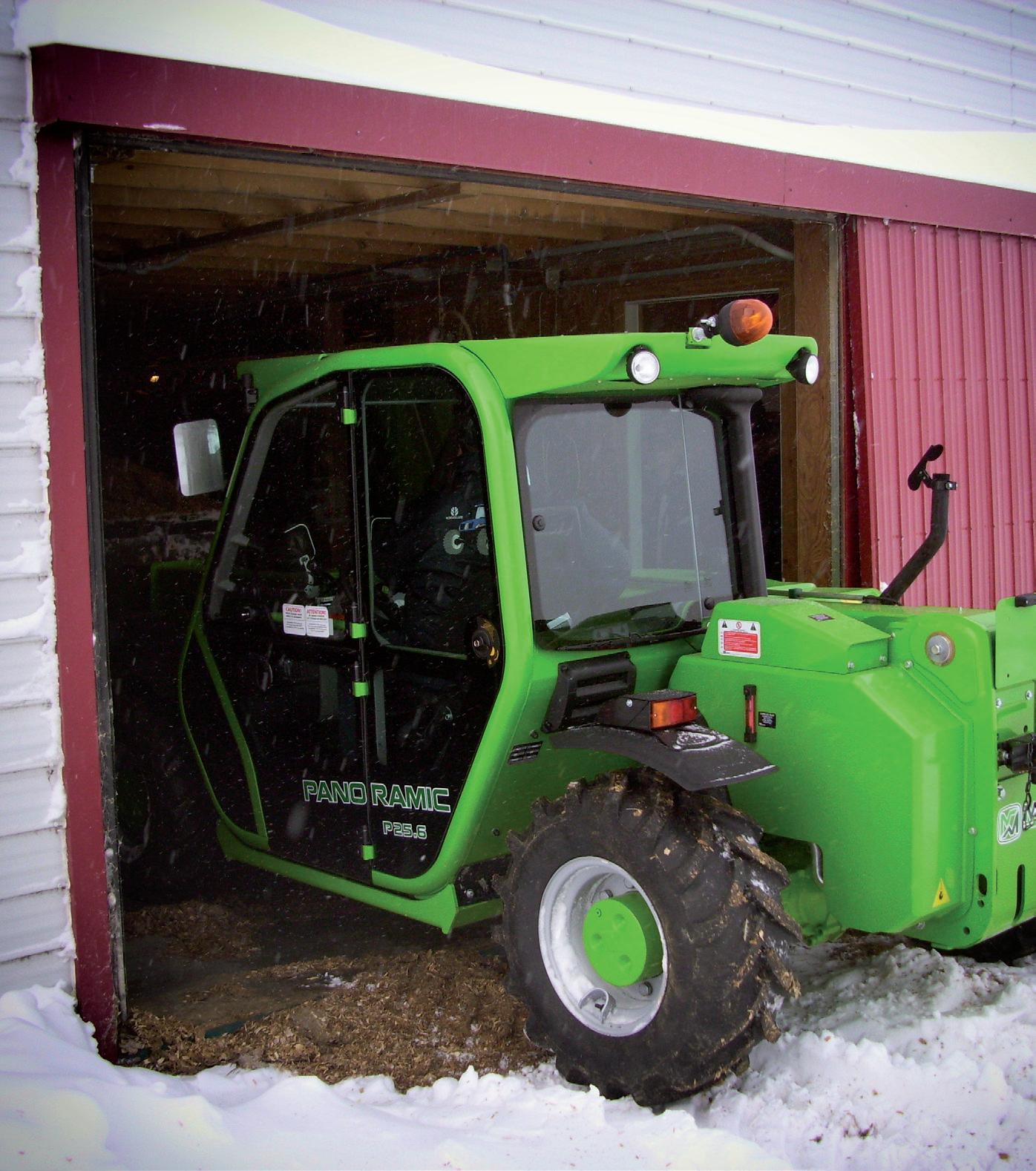
Discover the amazing use and versatility of the frontal reach
British ColuMBia: Agassiz: Meinen Brothers Agri Service, (604) 796-3820
PIC Update
because there are fewer and fewer of them.
We will always need poultry nutritionists – the feed and ingredients manufacturers employ many of them.
But the fact remains, we do need fewer people now than we did 20 years ago and perhaps we need fewer poultry nutritionists. But perhaps not.
The retirement of Dr. Steve Leeson from the University of Guelph has created a conundrum for the industry. Do we value having a poultry nutritionist at the University of Guelph highly enough to dig deep and pay for it? The cost would run somewhere between $750,000 and $1 million to secure a position into perpetuity.
And, then there is the question of research. Feed represents approximately 70 per cent of our input costs. Feedstuffs will, in the not too distant future, be in short supply around the world and costs will increase.
The industry is evolving towards a future where our environmental, food safety and welfare record will be under the constant scrutiny of an ever more inquisitive and demanding consumer.
What we feed and how we feed it can play an enormous role in defining how we manage some of these issues and, therefore, is of paramount importance to the sustainability of our industry.
There are several other poultry nutritionists at work to one degree or another at universities around the country and, of course, the feed companies employ their own nutrition experts on staff.
So, do we need a poultry nutritionist at the University of Guelph? If we do, are we prepared as an industry to dig deep and pay for the privilege? We’d like your thoughts on this.
PIC hosted a meeting with the feed companies in late January to discuss the issue. However, if demand is there we will convene a broader meeting and facilitate an industry-wide discussion in the spring. Send us your thoughts: e-mail: pic@poultryindustrycouncil.ca.
The more response we get, the more robust the discussion, the better the result. Join in. n
Energy
Poultry Power
New research, one operating facility and a possible project to come, all relating to the use of poultry litter for power production
BY TREENA HEIN
In August 2010, British Columbia’s first biodigester began operating in Abbotsford – using, among other substrates, poultry litter.
The B.C. government provided $1.5 million to assist in the development of the project (known as “Fraser Valley Biogas”) as a way to go beyond green electricity generation. “B.C.’s Clean Energy Act sets a target to ensure our electricity supply is 93 per cent renewable,” notes Sue Bonnyman, director of generation and regulation electricity policy at B.C.’s Ministry of Energy and Mines. “However, the current low electricity prices, due to B.C.’s very fine hydroelectric system, create challenges for a number of new or renewable technologies.”
That’s one reason the province has made it possible for Fraser Valley Biogas to sell “biomethane” to the natural gas company Fortis, instead of using the digester’s biogas to make electricity.
Digester biogas must be “cleaned up” before it’s placed into any natural gas network (the biogas is then known as “biomethane”), and the scrubbing equipment required is costly. “Such a system thus only makes sense at larger-sized projects such as these, of at least one megawatt,” notes Matt Lensink, application manager with PlanET Biogas, the company that built Fraser Valley Biogas. (Another obvious limitation for digesters to sell biomethane is that they must also be located near a natural gas pipeline.)
How many tonnes per day of dry or wet manure is required to run a one-
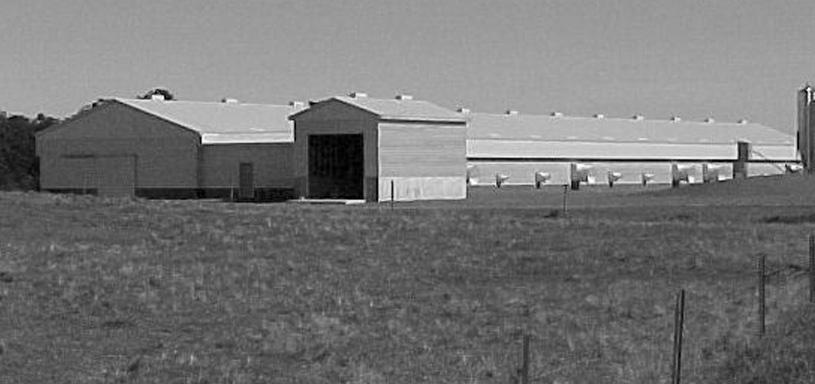
Fibrowatt is eyeing the Fraser Valley as a possible location for a poultry-litter-fuelled power plant (such as the one above). The poultry litter would be purchased from surrounding farms and burned inside the plant to produce electricity and ash.
megawatt system depends on the type of manure – and the type and amount of off-farm materials.
Fraser Valley Biogas uses liquid dairy cattle manure and solid poultry manure from four nearby farms, as well as a substantial amount of food industry byproduct. As the project is just beginning, Lensink says details are not available about things like how much poultry manure/litter is used per year, what overall percentage of digester feedstock comes from poultry litter, whether it’s placed directly in the digester after barn cleanout, and whether the farmer is compensated for the manure. However, no matter how much or how little manure is used at Fraser Valley Biogas, co-substrates are definitely needed for manure digesters to be economically viable, says CH-4 Biogas Inc. Systems Analyst Claire Allen.
CH-Four has created a software program to analyze what amount of a given substrate, such as source-separated organics or fat/oil/grease, is advisable to add to what’s already present in a digester. The company has nine digester systems running in Canada, one in New York State and three more being constructed in Canada; they are all “combined heat & power” (CHP) systems, generating heat and electricity.
UNIQUE TO CANADA
Fraser Valley Biogas is unique in Canada as an on-farm digester with biomethane being injected into the natural gas network. All others are at municipal sewage plants, landfills or food processing companies. Electrigaz Technologies Inc. president Eric Camirand notes that in
POWER FROM LITTER
Used year-round in your flocks, Coccivac® vaccine can help achieve simple, sustainable and profitable prevention against coccidiosis. Resistance is not an issue, so Coccivac frees birds from the stress associated with in-feed anticoccidial rotation and shuttle programs. You and your feed company can focus on improving nutrition and better gut health.
To make the transition to Coccivac, go to www.becauseitworks.ca, talk to your veterinarian or speak to your Merck Animal Health representative.
Energy
Quebec the Ministry of Environment now subsidizes municipal biogas plants up to 66 per cent of capital costs, with the focus on injection of biomethane. Ontario is also looking at this concept; Electrigaz has done several studies for gas companies such as Union and Enbridge on scrubbing biogas and injection biomethane into their networks.
DIGESTERS SPECIFICALLY FOR POULTRY LITTER
Biodigesters that run specifically on poultry manure are being investigated by Anna Crolla, a senior researcher at the Ontario Rural Wastewater Centre (located at the University of Guelph’s Alfred campus). The research project is being funded by the Ontario Ministry of Agriculture, Food and Rural Affairs (OMAFRA) and Natural Resources Canada-Canmet Energy. The anaerobic digestion process applicable to poultry manure is known as dry fermentation, Crolla explains. “It’s a process that can handle substrates with high solids content, greater than 25 per cent, whereas traditional digesters use wet fermentation with slurries containing solids contents lower than 15 per cent.” Dry fermentation is advantageous, Crolla notes, in that a smaller reactor is required compared to that needed for wet fermentation. The amount of effluent wastewater is lower as
well, resulting in significantly reduced manure handling costs. A dry fermentation digester usually consists of boxes into which the substrate is emptied through the use of wheelloaders. After the boxes are sealed in an airtight fashion, the anaerobic digestion process begins. About three to four weeks later, most of the digested substrates are removed and the boxes are filled again (for higher efficiency, some of the residual fermented material with high concentrations of bacteria is left in the boxes).
CHALLENGES
However, there are a number of challenges to making dry fermentation of poultry manure work. Crolla explains that when poultry manure (which is rich in nitrogen) is anaerobically digested, the high solids content causes ammonia to accumulate, which slows the digestion down (and production of biogas) down. One way of dealing with this is co-digesting the poultry manure with carbon-rich substrates to increase the C:N ratio, so Crolla is studying how the addition of energy crops works to boost performance of a dry fermentation digester. “The energy crops that we’re studying will include corn silage, corn stover, wheat straw, switchgrass (non-leguminous) and, clover,
Energy
alfalfa and soybean silages (leguminous),” Crolla notes. She began work on evaluating optimal C:N ratios, pH and moisture content, as well as studying the effects of ammonia accumula tion on substrate digestibility, in September 2011. Bench-scale digesters will be built this coming summer.
ANOTHER PROJECT IN B.C.?
A major developer, builder, owner and operator of electrical power plants fuelled by poultry litter and other agricultural biomass is currently eyeing the Fraser Valley for a possible project. Pennsylvania-based Fibrowatt was founded in 2000 by the management team that built the world’s first three poultrylitter-fuelled power plants in the U.K. in the 1990s. These plants have converted more than seven million tons of poultry litter into more than four million megawatt-hours of electricity (serv ing about 150,000 homes) and 500,000 tons of ash fertilizer.
In 2007, Fibrowatt built the United States’ first poultrylitter-fuelled (about 50/50 chicken and turkey) power plant in Minnesota, a 55-MW facility that serves about 40,000 homes. The poultry litter is purchased from surrounding farms through long-term contracts and spot purchases, transported in tightly covered trucks and stored at negative pressure to prevent the escape of odours. Inside the power plant, the litter is burned at very high temperatures, heating water in a boiler to produce steam that drives a turbine. A large amount of ash is also produced.
“We sell 90 000 to 100 000 tons of ash a year to a fertilizer company,” says Jim Potter, president and COO of parent company Homeland Renewable Energy Inc. “The rating of the ash is 0-7-7 for NPK, as all the nitrogen in the litter is combusted into N2 gas.” (Note that by-products other than biogas that are created in Canadian digesters are also being used; the effluent is spread on fields, and the solids from the digester tank are used as cattle bedding.)
WILL IT WORK IN CANADA?
Although low electricity prices in B.C. pose a challenge to any Fibrowatt facility moving forward in that province, Potter says, “We hope that people will place a premium on the other services a project such as this can provide. Our plants offer an environmentally responsible and useful outlet for poultry litter in regions that produce more litter than can be utilized for land application. This enhances the sustainability of the poultry industry.” Fibrowatt is also pursuing projects in areas of the U.S. where excess nitrogen and phosphorus is being released into water sources, such as Chesapeake Bay. n
Your partner with innovative, unique and effective Alternative poultry production equipment solutions!
SALMET, one of the Zimmerer Family group of companies established for nearly 50 years, a Global supplier of a wide range of innovative and unique poultry production concepts with emphasis on bird friendly welfare solutions. The Zimmerer Family, are in Germany also one of the leading producers of Barn, Organic and Free Range egg production on their own farms. Salmet’s wide range of products are tested in the field on their own farms before being promoted for Global sales. All Salmet equipment are manufactured in their own factories.
With Alternative egg production systems, Barn, Free Range and Organic. Salmet offer a unique rearing system “PediGrow2” appropriate for successful egg production in Salmet innovative production concepts; High Rise 3 - known as a compact and effective production and management system, Combi Barn - perching and nesting system, High Rise 1 - with double floor system and our AllinOne system. Standard nesting systems with slats for deep pit systems or manure belts under slats are also available.
All Salmet products are compliant with welfare regulations and with our expertise we Share our knowledge.
Understanding Values Mind Over Success
Your values affect all of your decisions, but are you really aware of them?
BY PIERRETTE DESROSIERS, M.PS.
You’re thinking of buying a tractor. Will you choose the most comfortable or the most luxurious one, the one with the best warranty, or the one that carries the most prestige?
Unbeknownst to you, your values influence your decision. But to what extent are you aware of what those values are?
One of the first emotional abilities related to emotional intelligence (see this column in the December 2011 issue) is knowing yourself, which starts with knowing your values. A value is what is true, beautiful and good, based on personal or social criteria, and what is used as a reference or moral principle. Your values affect your choices, your actions and your level of satisfaction in life. Indeed, when you feel that your lifestyle is in line with your values, you feel more in harmony. These are important references in your personal, professional and business life. A value is said to be 10 to 100 times more important in life than a gift, a talent or a quality.
When we are faced with a dilemma or with an interior conflict because of a decision we need to make, it means that one or more values that are important to us are conflicting. We must make a difficult choice, based on a hierarchy of values. This hierarchy is bound to change gradually over the years, but it can happen more suddenly due to a tragic event (such as death, accident, bankruptcy or divorce).
If you want to quickly discover your values or those of others, pay attention to the following three questions:
1. Where do you invest your money?
Example: You find that fresh fruit and
VALUES AND THEIR INFLUENCE
Pierrette Desrosiers says that when we are faced with a dilemma or a decision, one or more of our values are conflicting.
vegetables are always too expensive (value = health), but you drive a luxury car (comfort, prestige, recognition). You prefer to forgo renovations in your house (comfort, estheticism, prestige) in order to invest in your children’s education (education).
2. Where do you spend your energy?
You have time to sit on four committees (social involvement or recognition), but never enough to work out (health), or to spend time with your family (family). There are 24 hours in a day, and the way you spend your time is based on what you value the most.
3. What do you like to talk about?
You always talk about your business, ways to increase production (efficiency, recognition, achievement) or you talk about your children and their projects (family, children).
Each decision that we take, or do not take, speaks to our values.
To find out what your values are, think about this:
• What makes you the happiest?
• What offends you or frustrates you the most?
• What are the criteria that you most often base your daily decisions on?
• If you could change the past, what would you change?
Think of yourself at age 80 and ask yourself…
• What will be my biggest regrets when I look back at my life?
• Which achievements will I be the most proud of?
All of your answers reflect your values. If you are dissatisfied with your answers, it may be time for you to reconsider what truly matters to you. n
Pierrette Desrosriers is a work psychologist, speaker and psychological coach who specializes in helping those working in agriculture. She can be contacted by e-mail at pierrette@ pierrettedesrosiers.com, or if you would like more information, visit her website at www. pierrettedesrosiers.com.
Meller Aviaries for Layers and Pullets
Meller offers a wide variety of Poultry equipment to meet today’s standards and needs. The Meller Aviary meets all EU standards as well as providing an exceptional living space where the welfare and production of the flock are able to flourish.
Starting from day old chicks to 19 week layers Meller has it all.
Call for more information or check out www.meller.ca • Email: meller@optionsdsl.ca
Official Dealer for all Jansen Poultry Equipment products in Ontario and Manitoba
Meller poult march 12.indd 1
Production
Poulailler enrichi, poules sans soucis
Maurice et Alain Richard sont les premiers au Québec à utiliser des cages enrichies. Leurs poules profitent à fond de l’espace supplémentaire et des accessoires.
PAR ANDRÉ DUMONT
Chassez le naturel et il revient au galop. Qui aurait dit que cette expression s’appliquait judicieusement à l’aviculture? Dans son tout nouveau poulailler enrichi, Maurice Richard constate que les poules reprennent des comportements naturels plutôt difficiles à exprimer en cage conventionnelle.
La Ferme Paul Richard et fils, à RivièreHéva, en Abitibi, est la première au Québec à se doter d’un poulailler aux cages enrichies. Les poules s’y sont installées à la mi-septembre et déjà, on constate qu’elles se servent abondamment de l’espace supplémentaire et des accessoires que ce système leur offre.
Copropriétaire avec son frère Alain, Maurice Richard préfère parler d’ « habitacles » plutôt que de cages. « J’essaie d’éviter le mot cage de plus en plus, dit-il. Les gens ont l’impression qu’une cage, c’est une prison. » Dans le nouveau poulailler, les poules sont hébergées par colonies de 60 individus, dans des cages de 1,25 m par 3,6 m.
Le système Farmer Automatic que les Richard ont choisi est conforme à la norme européenne pour 2012. Il offre à chaque poule environ 80 % plus de
PENSER À L’AVENIR
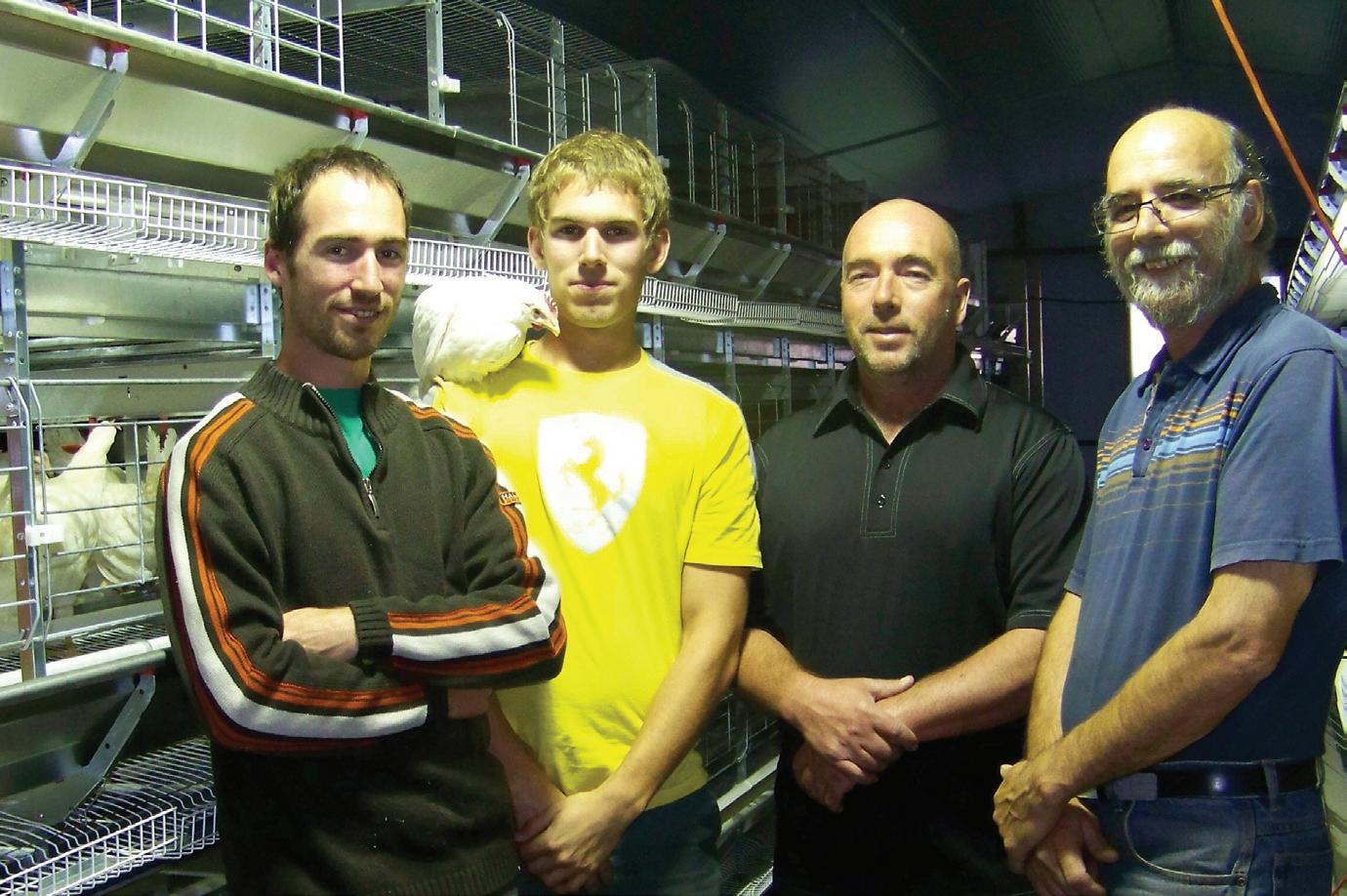
Maurice Richard (deuxième à droite) et son frère Alain (à droite) sont satisfaits de leur décision d’installer des logements entièrement enrichi. On voit également fils de Maurice JeanPhilippe (à gauche) et Alexandre (deuxième de gauche).
superficie et trois fois plus de volume d’air (mètres cubes) qu’un système de cages conventionnelles.
Ces cages sont conçues en fonction des besoins naturels de poules. Selon Maurice Richard, elles se servent véritablement des accessoires. « Le soir, elles s’installent toutes sur les perchoirs pour dormir et 95 % d’entre elles se servent des isoloirs pour pondre. » Elles utilisent aussi le tapis pour se gratter les pieds et profitent de l’espace pour étirer leurs ailes.
Maurice Richard a réfléchi pendant deux ans et demi avant de décider d’aller de l’avant avec un système enrichi. Il a visité des poulaillers en Grande-Bretagne, en France, aux Pays-Bas et en Allemagne, en plus de lire des recherches scienti-
fiques à ce sujet. Malgré un dépassement de coût de 400 000 $, pour une facture totale de 1,5 million $ pour héberger 28 000 pondeuses, il est convaincu du bien fondé de sa décision.
La différence avec ses deux autres poulaillers encore en cages conventionnelles est frappante, dit le producteur abitibien. « Ce système est vraiment meilleur pour les oiseaux et on se sent vraiment mieux quand regarde ce que ça donne, dit-il. Les poules sont beaucoup plus calmes. Elles sont à l’aise et ne se préoccupent pas de nous quand on circule dans le poulailler. »
Le 11 octobre dernier, la famille Richard tenait une journée porte ouverte pour les gens de l’industrie. Chose peu commune, ils ont voulu organiser
l’événement une fois les poules arrivées. « Les gens avaient l’autorisation d’aller partout dans le bâtiment. Ils ont vu la différence dans le comportement des oiseaux », raconte Maurice. Parmi les invités qui se sont soumis aux mesures de biosécurité se trouvait le ministre de l’Agriculture du Québec, Pierre Corbeil, qui est aussi député d’Abitibi-Est.
Déjà, on observe des résultats tangibles : les poules pondent à un plus jeune âge et le taux de mortalité est beaucoup plus faible. Si ne n’était pas des quelques oiseaux qui s’endorment sous les perchoirs et y restent coincés trop longtemps sans qu’on vienne les libérer, les mortalités seraient pratiquement nulles.
On a aussi observé que les poules consomment un peu moins d’alimentation, mais cela pourrait être attribuable à la meilleure isolation du bâtiment, soupçonne Maurice Richard. Selon lui, les poules en cages enrichies sont plus actives, mais elles ne consomment pas nécessairement plus que leurs consoeurs en cages conventionnelles.
L’humidité s’avère plus faible dans le bâtiment. Cela pourrait s’expliquer par une meilleure ventilation, mais aussi par le fait que le volume d’air est plus grand, ce qui permet aux fientes de sécher plus vite.
Quant aux autres indicateurs de bienêtre, il est encore trop tôt pour les observe. Puisqu’elles font plus d’exercice, les poules devraient développer de meilleurs os. Avec plus d’espace, leur plumage pourrait s’user moins. La qualité de la coquille des oeufs pourrait aussi s’améliorer.
MISE EN MARCHÉ
La Ferme Paul Richard et fils est l’un des rares au Québec à posséder un poste de classification et à faire sa propre mise en marché. Les oeufs de la marque Les Oeufs Richard Eggs Inc. sont écoulés principalement en Abitibi.
Comment mettre en valeur les oeufs produits en cages enrichies pour les vendre à meilleur prix? Les Richard y réfléchissent encore. Sur le marché relativement petit de l’Abitibi, la demande pour des oeufs de spécialité ne suffirait pas à
It takes a lot of time to milk over 400 cows. So the Schoutens started to ‘think outside the barn’.
Arnold and Elaine Schouten run one of Ontario’s top producing dairy herds, milking over 400 Holstein cows daily. That’s a lot of energy spent on a repetitive, time-consuming task. With the next generation now becoming involved, the Schoutens have invested in their future by purchasing 10 robotic milking systems, leaving their hands free to run the rest of their operation.
That’s the kind of ‘doing things a bit differently’ that farming demands in order to stay competitive. And it’s where Scotiabank can help, with innovative products and lending that can give you access to the funds you need, when you need them.
To learn more, contact your branch today or visit scotiabank.com/agriculturalservices
Production
absorber le tiers des oeufs de la ferme. C’est sans doute quand d’autres producteurs au Québec utiliseront aussi des cages enrichies qu’une mise en marché en produit de niche pourra s’organiser.
Maurice Richard croit que ces oeufs feront compétition à ceux des poules en liberté sur parquet. « Nos poules sont aussi en liberté, dit-il. La plus grande différence est qu’elles n’ont pas accès à leurs fientes. C’est donc plus propre et plus sanitaire. »
À défaut d’obtenir un meilleur prix pour les oeufs de ce poulailler enrichi, le coût de production sera plus élevé et les bénéfices plus faibles, ne serait-ce qu’en raison du coût de construction supérieur. Une conversion alimentaire supérieure, ainsi qu’un taux de mortalité inférieur, pourraient venir atténuer la différence de rentabilité avec les poulaillers conventionnels.
L’AVENIR
Les frères Richard ont les yeux résolument tournés vers l’avenir. « Quand on prend une décision comme celle de construire un nouveau poulailler, c’est pour 20 ou 25 ans », dit Maurice, qui se doute bien que tôt ou tard, les cages enrichies deviendront aussi la norme au Canada. La pression du public en faveur du bien-être animal est bien palpable, rappelle-t-il.
En plus de vouloir offrir de meilleures conditions d’élevage à leurs poules et d’anticiper que l’opinion publique force un jour les producteurs à convertir tous leurs poulaillers, les Richard ont le souci de préparer leur ferme à la relève. JeanPhilippe et Alexandre, les fils de Maurice, rentreront bientôt des études pour prendre leur place à la ferme.
« Ils ont à coeur la ferme et ils participent déjà aux décisions », dit Maurice de ses fils. Ce dernier songe à la retraite et il sait très bien qu’il est plus facile pour lui d’emprunter pour investir que ce le sera pour ses fils lorsque la ferme viendra tout juste de leur être transférée.
Ce premier poulailler enrichi servira à mesurer les coûts et avantages de ce système, mais déjà, Maurice Richard sait que sa prochaine construction sera aussi du type enrichi. « C’est certain qu’on ne retournera pas en arrière. » n
ALL THINGS CONSIDERED
BY JIM KNISLEY
Uncertainty Is an Enemy
If anyone would like a large, tractor tire – including rim – I’ve got one. The problem is I don’t own a tractor and the tire and rim are sitting atop a 10-foot concrete breakwater. They were delivered by Lake Erie during a windstorm that submerged 25 feet of beach and sent waves over the concrete barrier.
But that wasn’t the weirdest part. The really strange thing was watching it snow “up.” Presumably the snow began in the clouds (there was none on the ground), fell for a while, but as it approached the ground the wind drove it up.
This is just the latest in a series of weird weather days in Canada’s banana belt, where I now live. A couple of days earlier we had Aprilish temperatures and driving rain, and a couple of days before that I was out hitting golf balls.
Last winter we were buried. The road that takes me into town was imitating a tunnel with huge snowdrifts on each side. The lake was frozen as far as the eye could see.
And this area is far from exceptional. When it comes to weirdness we aren’t even in the top 10.
Take for example, Regina, where I used to live. In midJanuary bitterly cold air -40ish temperatures combined with westerly winds to produce wind chills approaching -50. At that temperature, frostbite on exposed flesh can happen in less than 10 minutes. This deep freeze followed bouts of unseasonably or perhaps unreasonably warm weather.
Meanwhile, a town in Alaska was dealing with 20 feet of snow, Seattle faced snowmaggedon and ski slopes in the eastern United States were bare.
All of this uncertainty, according to the experts, is partly due to La Niña and partly due to the Arctic and North Atlantic Oscillations.
weather more common, and more extreme, in coming decades.
It is “virtually certain” that the 21st century will see an increase in the frequency and magnitude of warm temperature extremes and a decrease in cold extremes, according to the IPCC.
They also expect that climate change will affect precipitation patterns in many regions.
But in the near term or the immediate future uncertainty is the operative word.
For grain farmers or those, like poultry farmers, who depend upon grain production uncertainty is an enemy.
Uncertainty makes it particularly hard to plan and adds some punch to the old catchphrase “if you fail to plan, you plan to fail.”
A result of the uncertainty is volatility and we’re seeing that in spades. In recent weeks, grain and oilseed prices have fallen. There is more available than earlier thought and consumption has slipped.
The general expectation is that this will continue into next crop year and that prices will drift. Just the other day corn prices in Chicago went limit down.
Meanwhile, wheat and, to a lesser extent, sugar have become corn by other names. Lower-quality wheat supplies are more than adequate in North America and internationally and this has led to soft prices and the substitution of wheat for corn in some feed rations. Meanwhile, sugar is being used instead of corn sweeteners in some cases. In both instances this has somewhat softened demand for corn.
In the near term or the immediate future uncertainty is the operative word
La Niña has helped push the jet stream north, near the Canada-U.S. border and funnelled dry air across much of North America.
Meanwhile, the Arctic Oscillation and the North Atlantic Oscillation are strong this year, unlike last year when they were weak, which results in a steady west to east flow of that drier air.
But the end may be near as the two oscillations and La Niña may be weakening. The result could be a dry early winter followed by a wet late winter and spring. But who knows?
Meanwhile, some may be heartened to hear that global warming may not be playing a role in any of this. But, then again, it might.
The Intergovernmental Panel on Climate Change (IPCC) warned in a report that climate change would make extreme
But corn supplies remain historically tight and prices, despite recent weakness, remain above long-term averages. All of this sets the stage for a potential weather market and the possibility for extreme weirdness.
Some of this has already shown up. The Ukraine, for example, has been exceptionally dry and the winter wheat crop is said to be in trouble. Meanwhile, Australia may be headed for a bumper crop.
But the key will be the U.S. plains. Decent or “normal” weather would mean tight but adequate supplies of corn and soybeans. But grain markets look like they will be easily spooked. If it doesn’t rain in Des Moines for a couple of weeks this summer expect prices to jump. If it rains too much this spring expect prices to rise. If the Canadian Prairies have another wet year and it looks like a lot of feed wheat is coming in the fall, expect it to affect corn prices.
The bottom line is that if the weather is weird, expect feed grain prices to be just as weird. n