“We went through the process of evaluating the traditional ERP solutions out there, and concluded that Quickbooks for our needs, was going to perfectly serve as the heart of our technology ecosystem.”
Discover how to scale your business with confidence. Download our Scaling Up eBook for practical strategies for managing growth, improving cash flow, and scaling your team.
Maxwell Gallop, Menatwork - Toronto
How
7 Control goes to code
Adoption of vPLCs promises to change control technology and spur a cultural shift.
By Jacob Stoller
Ethos of innovation
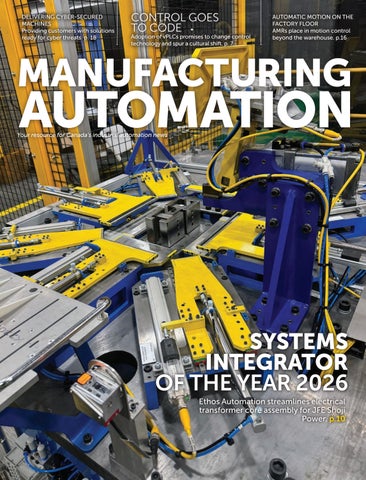
How Ethos Automation, MA’s winner of Systems Integrator of the Year, streamlined the manufacturing of electrical transformer cores for JFE Shoji Power.
By Jared Dodds
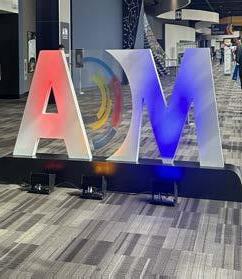
in action at ADM 2025 in Toronto
ADM 2025 showcased the latest advancements in robotics, design tools, packaging, automation and more. By Sean Tarry & Jared Dodds
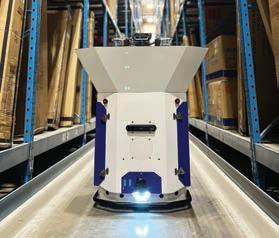
Automatic motion on the factory floor
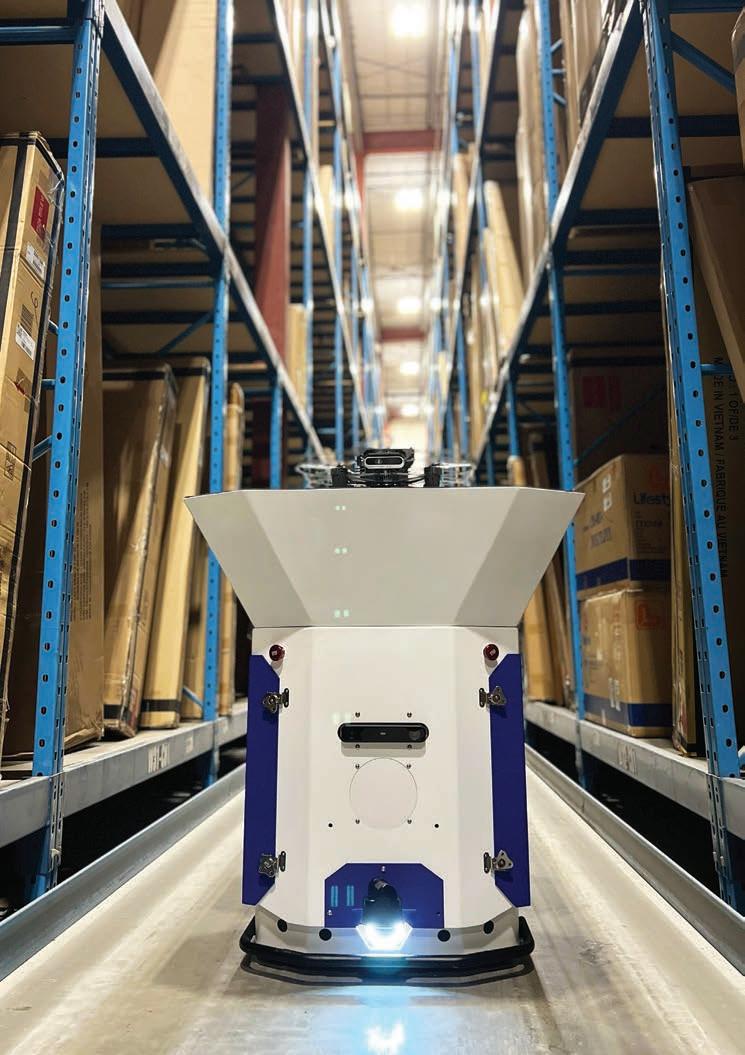
The expanding use of AMRs in motion control and its impact beyond the warehouse.
By Treena Hein
FROM THE EDITOR
BY JARED DODDS
Musings from event season
We are officially exiting my favourite time of year, and 2025 certainly held up its end of the bargain. The Blue Jays, though they fell short, brought Toronto together in a way I haven’t seen since the Raptors’ win in 2019, and really captured everything I love about sports: the camaraderie in the lunchroom discussing the previous night’s game, the subtle nod to the person passing you on the street in their Jays gear on gameday and, most importantly, the outpour of support for that group of players and the roller coaster ride they took us on, even if it did not end as many of us hoped. It was magical. But a playoff run was not the only notable thing happening this Fall, as events season was in full swing for myself and other members of the manufacturing and automation sectors. From September to November, I was able to attend trade shows, product showcases and symposiums in Houston, Texas, Kingston, Ont., New York City and in my own backyard, Toronto. Here are some of my thoughts from these events, about manufacturing, automation and everything in between.
• A common point of conversation, particularly at robotics-focused events like the Canadian Robotics Council Symposium or the Advanced Design and Manufacturing Expo, recaps for both of which you can read in this issue, was the impact of increased defence spending on the robotics sector. This conversation will continue into 2026 and beyond, with Hannover Messe announcing it will be adding a Defence Production Area to the exhibition in the coming years. It seems prudent for robotics companies and manufacturers to be asking themselves what ways the can capitalize on this spending.
• While the federal government is making some significant investments in AI, outlined in Budget 2025, it is essential for them to recognize the importance of Industrial AI and support it appropriately. Solutions are being developed at an exponential pace, and if Canada doesn’t create an ecosystem for manufacturers to capitalize on these developments, we are going to fall behind.
• Canada continues to be a hotbed for innovation in the automation sector. Take Innovative Automation, last year’s winner of MA’s System Integrator of the Year Award for RoboTape. Not resting on their laurels, I have seen them at multiple shows this year in Canada and the U.S. demoing their newest solution RoboClip, continuing to ask what’s next and push the boundaries of automation. In 2026, Ethos Automation earned the title of System Integrator of the Year for their unique approach to electrical transformer core assembly for JFE Shoji Power. Read more within!
• Being able to put faces to the names I see in emails day-in and day-out is the best part of attending in-person events, and something I look forward to continuing.
• In a time where people could be beaten down by tariffs and current market conditions, they are instead engaged and focused on collaborating to find a solution, always with a smile on their face. It’s inspiring. As my first calendar year as editor comes to a close, I can’t help but look towards the new year and anticipate what’s coming next. A run to the Super Bowl for my New York Giants looks bleak to say the least, but another run to the World Series for the Jays? Hard to say. What I can confirm is there will be more great stories in automation from across Canada, and we will be here to tell them. Enjoy the issue, have a happy holiday and we will be back with our next print edition in 2026! | MA
JIM BERETTA, President, Customer Attraction and host of The Robot Industry Podcast
JONATHAN GROSS, Managaing Director, Pemeco Consulting
MIHAELA VLASEA, Associate Professor, Department of Mechanical and Mechatronics Engineering and Research Co-Director, Multi-Scale Additive Manufacturing Laboratory at the University of Waterloo
SHELLEY FELLOWS, Past-Chair, Automate Canada
STEPHANIE HOLKO Director, Project Development at Next Generation Manufacturing Canada
WALTER GARRISON, Former Advanced Manufacturing Business Consultant for City of Mississauga
for Canada’s industrial automation news
Reader Service
Print and digital subscription inquiries or changes, please contact customer service
Angelita Potal
Tel: 416-510-5113
Fax: (416) 510-6875
email: apotal@annexbusinessmedia.com
Mail: 111 Gordon Baker Rd., Suite 400 Toronto, ON M2H 3R1
EDITOR
Jared Dodds jdodds@annexbusinessmedia.com Tel: 416-510-5225
ABB has signed an agreement to divest its Robotics division to SoftBank Group Corp. for an enterprise value of $5.375 billion and not pursue its earlier intention to spin-off the business as a separately listed company.
“SoftBank’s offer has been carefully evaluated by the Board and Executive Committee and compared with our original intention for a spin-off. It reflects the long-term strengths of the division, and the divestment will create immediate value to ABB shareholders,” said Peter Voser, chairman of ABB, in a media release. “Our ambitions for ABB are unchanged and we will continue to focus on our long-term strategy, building on our leading positions in electrification and automation.”
As a result of the signing of the agreement ABB will adjust its reporting structure and move to three business areas. As of the fourth quarter 2025, the Robotics division will be reported as Discontinued operations.
At the same time, the Machine Automation division, which together with ABB Robotics currently forms the Robotics & Discrete Automation business area, will become a part of the Process Automation business area.
Upon closing, the divestment will result in a non-operational pre-tax book gain of approximately $2.4 billion with expected cash proceeds, net of transaction costs, of approximately $5.3 billion.
The ABB Robotics division has a workforce of approximately 7,000. With 2024 revenues of $2.3 billion it represented about seven per cent of ABB Group revenues and had an Operational EBITA margin of 12.1 per cent.
Hannover Messe introducing Defence Production Area as new exhibition format
Hannover Messe is introducing a new exhibition format, the Defence Production Area, dedicated to state-of-the-art manufacturing technologies for the defence sector.
This specialized platform will feature companies showcasing actionable solutions to help the defence and security industry scale its manufacturing capacity rapidly, efficiently and with a focus on security
– embedded in the industrial environment and global reach that characterize Hannover Messe.
The Defence Production Area, which will be housed in Hall 26, will reportedly provide a central platform for manufacturers and suppliers with technologies, machines, systems or components that are used in the
manufacturing of security-relevant products. This new platform, where visitors will discover solutions spanning the entire industrial value chain, aims to foster direct connections between suppliers and users, facilitating targeted dialog on industrial production for security-critical applications and the advancement of the sector as a whole.
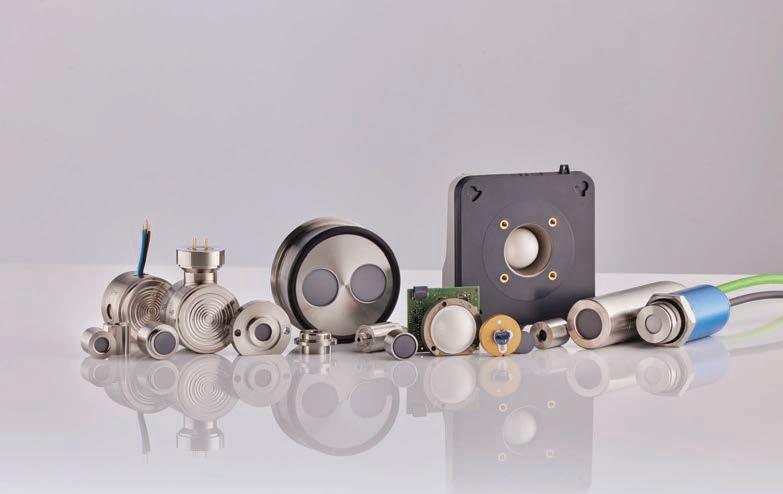
Your Application. Our Sensor.
Endress+Hauser Sensors & Components is your reliable partner for customized pressure and level sensors. With many years of experience across diverse applications, innovative technologies, and close collaboration with our customers, we develop precise sensor solutions tailored exactly to any kind of individual requirements.
Looking for the right sensor for your application? We’re happy to advise you and collaborate to develop the ideal solution for your measurement task.
Want to learn more about our portfolio? www.sensors-components.endress.com
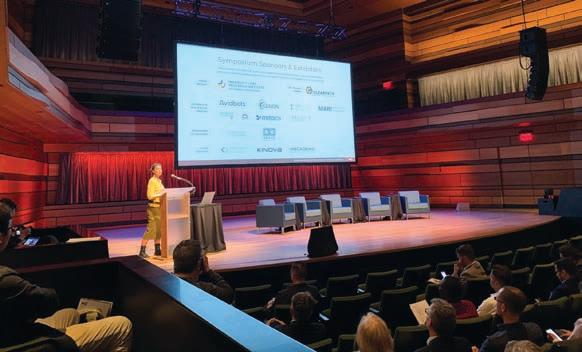
CRC 2025 Symposium brings together industry stakeholders to help shape the future of Canadian robotics
The manufacturing industry and Canada’s economy as a whole has spent the better part of a year operating in front of a backdrop of uncertainty and hesitance created by the ongoing trade war with the United States.
It was against this backdrop that the 2025 Canadian Robotics Council (CRC) Symposium, held on October 9 at Queen’s University in Kingston, Ont., began, bringing together over 200 experts and key stakeholders from industry, government and academia to network, collaborate and strategize, with the goal of creating a unified strategy for the future of Canadian robotics.
The event opened with CRC executive committee updates from Ryan Gariepy, chair of the CRC and vice president of robotics for Rockwell Automation, in which he shared the 31 per cent increase in attendees from the 2024 symposium and echoed Manufacturing AUTOMATION’s call for a national robotics strategy from the federal government.
“There is not a national robotics strategy nearly on the level of the national AI strategy,” Gariepy said, emphasizing the importance of that changing.
The morning sessions were marked by an ongoing examination of the impact increased government defence spending will have on the industry, starting with a panel titled The Dual-Use Robotics Advantage: A New Industrial Strategy for Economic Resilience and Prosperity and ending with a fireside chat between Duncan Stewart, parter, deep tech fund at BDC and retired lieutenant-general Frances Allen from the Canadian Armed Forces.
The panel called for adjustments to the existing procurement system, with Eric Jackson, president of Cellula Robotics, saying it is, “very difficult to depend on standard government contracts as long as the current procurement procedures are in place.”
Allen echoed the calls for collaboration between public and private entities, highlighting the importance for an ecosystem that supports simultaneous growth for both sectors.
“I’m a big proponent for trying to create an environment that will let the…military learn from industry and produce and defend Canada and its allies and our values around the world,” she said.
After a break for lunch, the symposium shifted to an afternoon of roundtables, where those in attendance broke off into groups to discuss actionable strategies each could take to improve the resilience of the robotics industry.
Topics included the creation of a toolkit for ethical robotics integration in the workforce, applying the latest safety standards to collaborative applications, crafting case studies for the Canadian Robotics ROI Library and creating a blueprint for a Canadian maritime situational response network.
Each roundtable will be
and infrastructure sectors.
Operated in partnership with CEVA Logistics, the centre is designed to contribute to Canada’s energy security by ensuring faster and more reliable delivery of essential electrical components and equipment across the country.
distilled into a report which will be released at a later date.
NEW DIGS
Schneider Electric Canada opens new distribution centre in Halton Hills
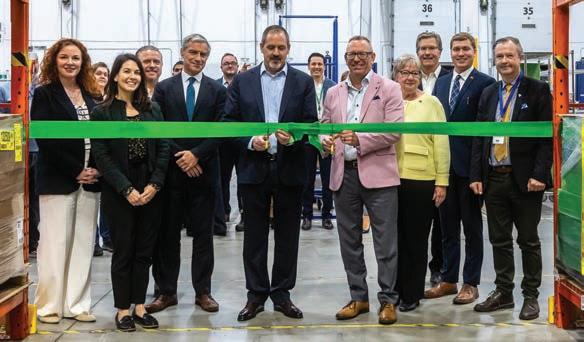
Schneider Electric has officially opened a new 130,000 squarefoot distribution centre in Halton Hills, Ont.
This strategic investment aims to strengthen Schneider’s Canadian operations by improving delivery timelines and contributing to national energy sustainability.
Located at 6 Cleve Court in Georgetown, the facility will serve customers across commercial, industrial, residential
CEVA’s Halton Hills facility is also among the first of several global locations deploying Manhattan Associate’s Active Warehouse Management and Order Management systems, which reportedly accelerate the integration of new technologies for improved operational efficiency.
“The opening of the Halton Hills distribution centre demonstrates our commitment to Canada and to providing fast, reliable access to critical electrical infrastructure components,” said Emily Heitman, president of Schneider Electric Canada, in a media release.
Schneider Electric continues to invest in its Canadian footprint, employing more than 2,000 people nationwide and operating four R&D centres, 20 sales and service offices and three manufacturing plants. Its technologies are currently found in 40 per cent of Canadian homes and 50 per cent of buildings, showing its central role in enabling sustainable energy and automation solutions across the country. | MA
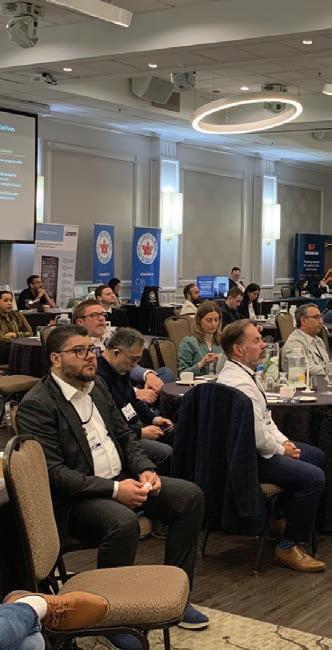
The 2025 CRC Symposium brought together stakeholders from across the robotics industry to network and strategize. PHOTO: JARED DODDS
Members of the Schneider Electric Canada team joined by government officials at their newest centre opening. PHOTO: SCHNEIDER ELECTRIC CANADA
CONTROL GOES TO CODE
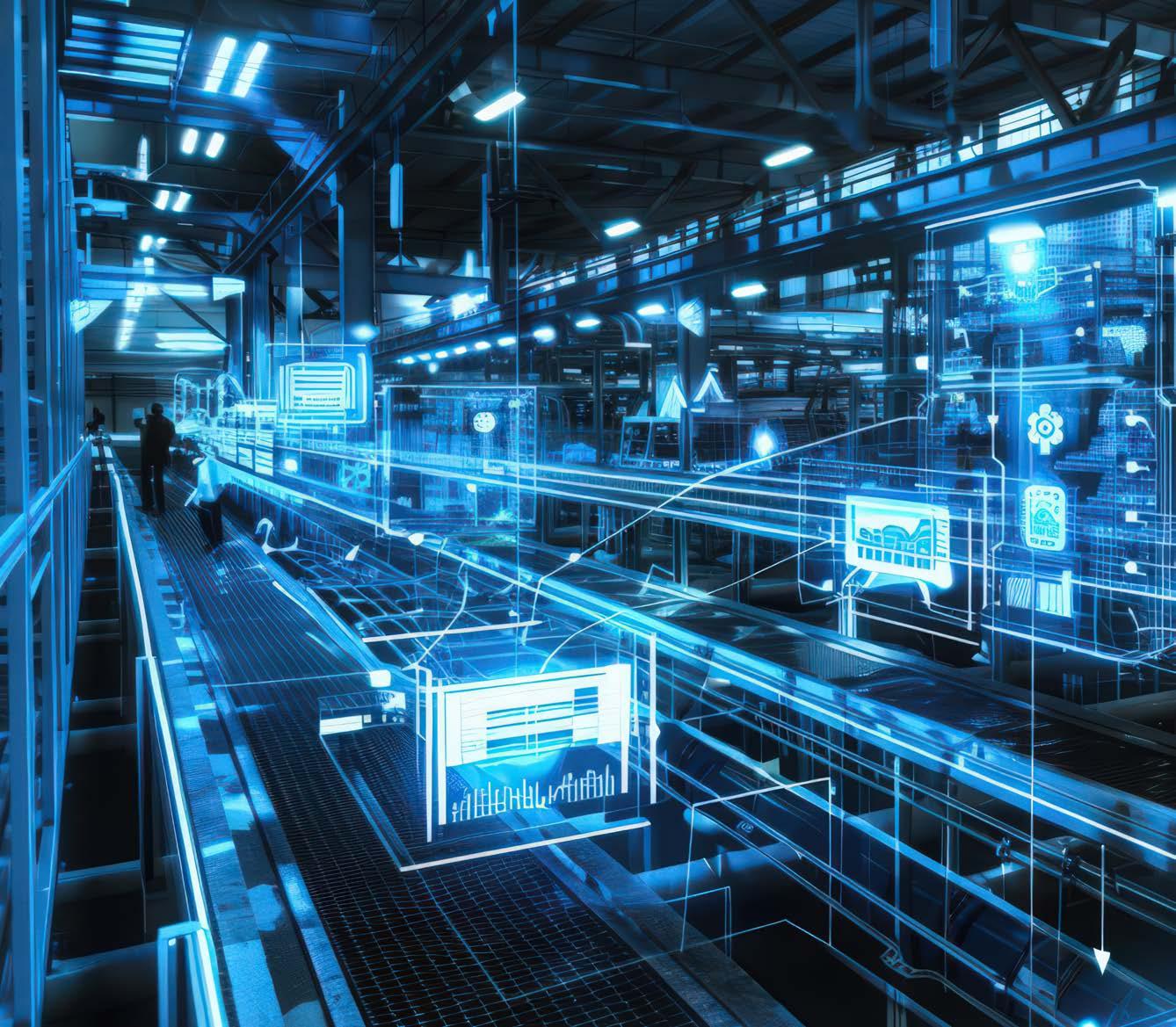
Adoption of vPLC technology promises to make control technology less costly and more accessible. The new paradigm, however, requires a major cultural shift.
BY JACOB STOLLER
Decades ago, there was a saying that nobody ever got fired for buying IBM. That same aphorism might be applied today to industrial control giant Rockwell Automation – a vendor acknowledged as a safe bet when choosing control systems.
“The trend has always been to trust the big PLC OEMs,” said Paul DeJong, president of Northern Dynamics, a system integrator headquartered in Cambridge, Ont., “and they have always emphasized reliability in their marketing.”
“This is a watershed moment where lots of people are thinking about making largescale conversions.”
– Paul DeJong, Northern Dynamics
That level of trust has been wellearned. These established industry leaders have robust products, responsive customer service and huge installed bases across the globe. They also speak the language of plant engineers and electricians — the conventional PLC user interface uses a “ladder logic” based graphic depiction of a circuit diagram showing the coils and switches that define physical plant environments.
Advocates for the vPLC approach, on the other hand, subscribe to the logic of software architecture. For them, it’s all about robust and efficient code that’s easy for programmers to understand and troubleshoot, is accessible to other apps that collect data for analytic purposes and, last but not least, is manageable for cybersecurity purposes.
Decoupling software from hardware
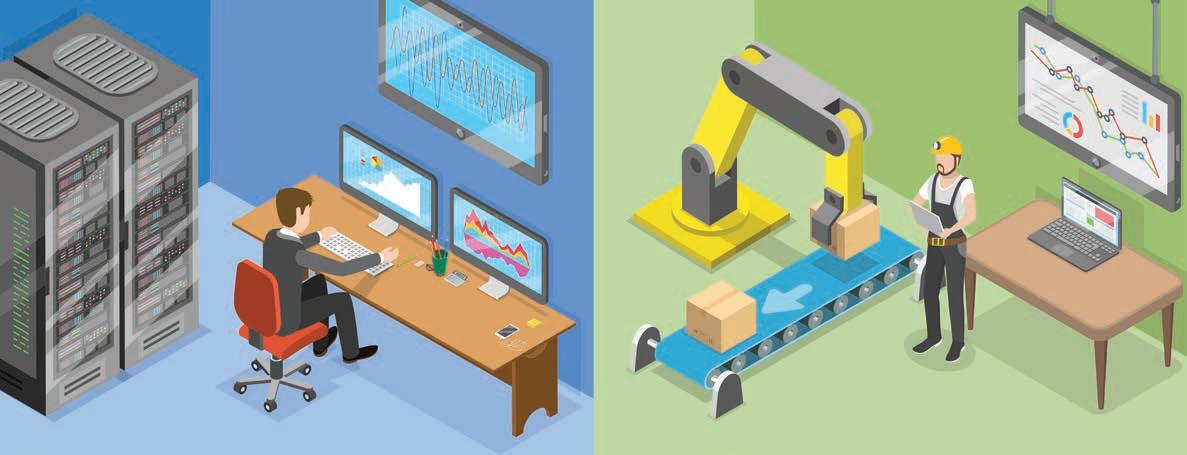
With vPLCs, traditional hardware-based PLCs are replaced by their virtual equivalent that runs on modestly priced Windows or Linuxbased industrial PCs (IPCs) and PLC software platforms such as CODESYS or TwinCAT. IPCs can be located in a secure server room, with the possibility dozens of PLCs running on a single machine.
The technology has obvious advantages. It is far less costly than traditional controllers, and the risk of hardware obsolescence and ensuing costly upgrades is eliminated. Configurations, accordingly, are easily scalable without the requirement of additional hardware.
Redundancy is also relatively inexpensive. “In traditional setups, a facility with ten production lines would require ten primary PLCs and ten backup PLCs , for a total of twenty physical controllers, to ensure
AIredundancy,” explained Seinan Khan, junior automation systems engineer at Halifax-based Enginuity. “With vPLCs, the same architecture can be achieved using just two IPCs, each running ten vPLCs. If one vPLC fails, its backup can automatically take over while the original instance recovers - a process that can even be fully automated.”
Even more persuasive to many, however, is the accessibility of vPLC data to analytics platforms through industry-standard protocols, allowing shop floor trends to inform strategic decision-making.
“A lot of companies want to see their data at the end of the day,” said Khan, “and that data has to be provided to the IT department so that they can provide them with the quantitative analysis of whatever they want to do.”
The winds of change
Some people believe that the manufacturing sector is on the verge of a vPLC revolution. “This is a watershed moment where lots of people are thinking about making large-scale conversions,” said DeJong.
While transitioning factories with thousands of PLCs won’t happen overnight, the advantages of the vPLC approach are more pronounced when companies are piloting new control concepts. Enginuity, for example, developed a proof of concept demonstrating a PLC implementation for a utility company, where multiple field devices were simulated using the
vPLC model. The entire testing architecture was deployed on only two IPCs.
“Without having to invest in hardware, they were able to validate the coding, the communication protocols, the hardware specifications and the entire architecture,” said Khan. “So, the vPLC approach lets us prove all of those things in a much more cost-efficient way.”
The ability to link vPLCs with other software can also bring the power of AI to the shop floor. A key area is predictive maintenance, where data from multiple sensors is fed into a machine learning model that senses small anomalies that could, if not corrected, spiral out of control to create major damage and costly downtime.
“To do predictive maintenance, you need to collect performance data on the machine and analyze it in real time,” said Dev Vajaria, application specialist for Beckhoff Automation Ltd. “PC-based control makes that much easier, because now you can run your data collection algorithm on the same hardware that you’re running the PLC, and you can infer a machine learning model on the same hardware as well. To do all these things, you don’t need to buy additional hardware, and you don’t need to reprogram the PLC application.”
The technology also has the potential to completely upend the basic definition of the PLC. Since a vPLC is just code, there’s no reason it has to be specific to one piece of equipment. It would be possible, for example, to install a PLC “brain” in the
“It will require a mindset change. But with newer people entering the industry, people with more software background, this transition will happen soon enough.”
- Dev Vajaria, Beckhoff Automation Inc.
The ability to link vPLCs with other software can also bring the power of AI to the shop floor.
car at the start of the production line that would talk to all the production machinery as it travels from station to station. So, the car literally could make itself, drive itself onto the carrier, and then transfer the license to a waiting car at the start of production. This could have profound implications for the assembly line.
Bridging the culture gap
A key barrier to vPLC adoption has been the age-old culture war between the operations technology (OT) people and the IT people. “There has always been a huge tug-of-war between plant people and people on the IT side,” said DeJong. “They both want to control their environments, and they’re willing to fight for it. But
what I say is that it’s time that we start to work together.” DeJong noted that one of the developers on his team is a computer science graduate.
“There are a lot of different factors that are not necessarily helping with the transition,” said Vajaria. “It will require a mindset change. But with newer people entering the industry, people with more software background, this transition will happen soon enough.”
The necessity of collecting data for better decisions may force the issue for many companies. “We’re starting to see more situations where OT and IT (industrial integrators and IT departments) are working closely together,” said Khan, “because a lot of our infrastructure does rely on
communication between each other using normal protocols. The future is going to be things talking over the internet more and more, so the entire environment has to be organized with collaboration in mind and also, very importantly, cyber security.”
As in other industries, the younger workers that are moving into the field have grown up in a world where quick and easy access to data is a given. The transition, therefore, is largely about spreading the word.
“The more manufacturers of various PLC brands open their vPLCs, providing free/demo access to integrators or educational institutions, the more people will feel comfortable breaking into this new virtual world,” said Khan. | MA
WHO’S MAKING The move?
The stories of the uncharted innovations, collaborations in Industrial Smart Technology.
THE ETHOS OF INNOVATION
How Ethos Automation, this years’ winner of Manufacturing AUTOMATION’s Systems Integrator of the Year award, streamlined the manufacturing of electrical transformer cores.
BY JARED DODDS
Manufacturing AUTOMATION’s Systems Integrator of the Year Award gives us the chance to showcase the power of successful automation implementations and the critical nature of these initiatives in a time of uncertainty for the manufacturing industry. But, perhaps more importantly, it gives us the opportunity to highlight the creativity and vision of these organizations and the innovative minds that are leading the way.
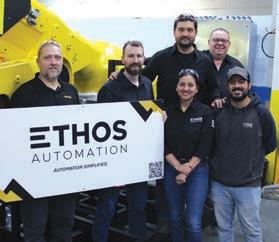
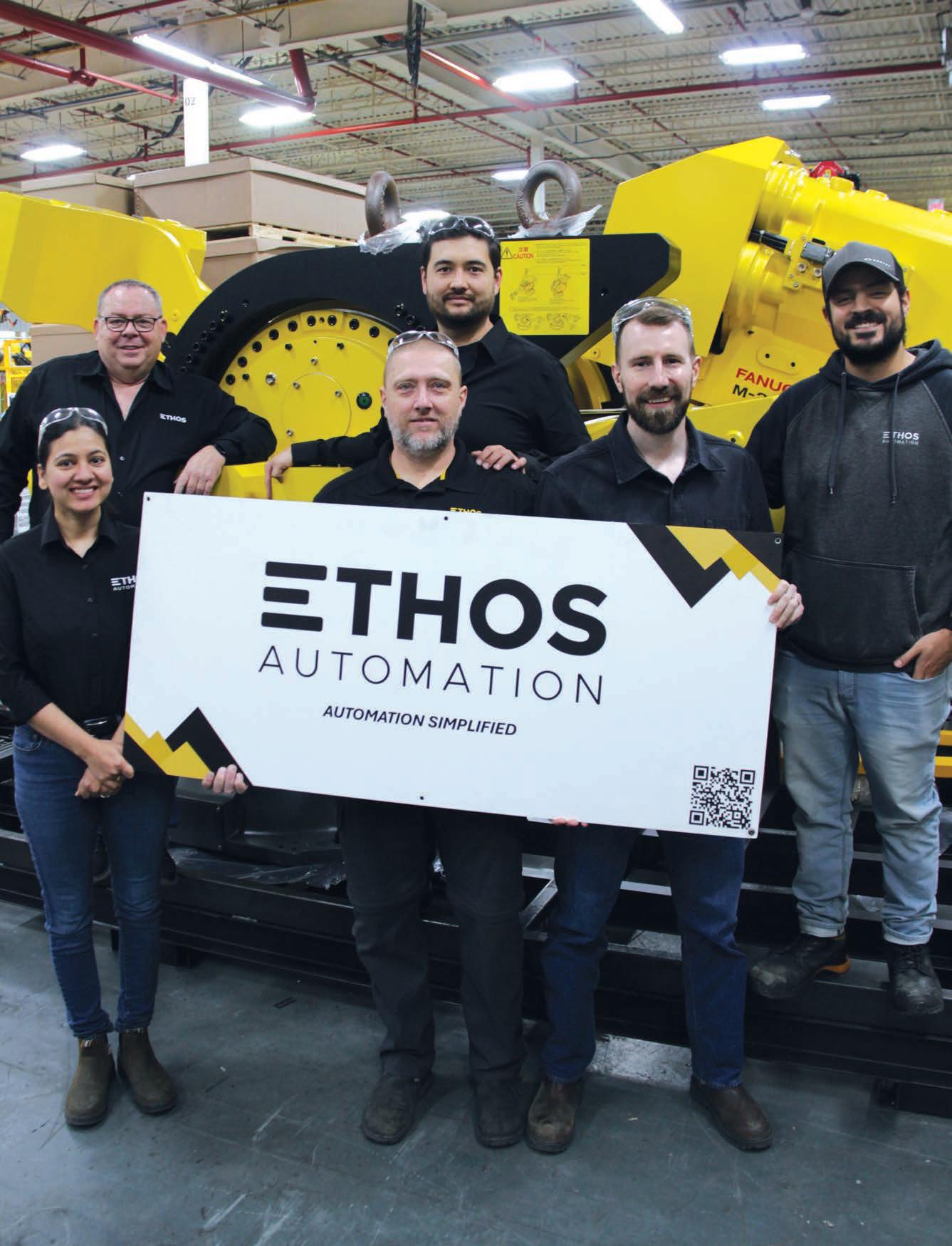
This year’s winner, Ethos Automation, embodies those characteristics. Founded in 2018 by Peter Botros and Calvin Kimura, both previous recipients of Manufacturing AUTOMATION’s Top 10 Under 40 Award, the solutions-based automation company designs, builds and integrates custom solutions to address a bevy of manufacturing pain points and streamline their customer’s operations. And in September 2024, they did just that with their electrical transformer core assembly solution.
The project Ethos was approached by JFE Shoji Power Canada Inc., an electrical steel products manufacturer located in Burlington, Ont., to automate the assembly of their top five selling electrical transformer core sizes, used in transformers. At the time, these products were created by hand, with an employee manually manipulating sheets of laminated metal over each other to the required thickness. This process was monotonous and time consuming, leading to operational bottlenecks and inconsistent quality, making it a perfect candidate for automation.
The project immediately presented hurdles, according to project manager Priyanka Rao, who managed client communication to align their priorities with the team of 10 back at Ethos.
“When we started this project there was a very tight schedule,” Rao said, citing the under six-month turnaround required by the client. But after the initial assessment from Ethos, it was clear that timeline wasn’t the main concern, but rather information.
The pieces of laminated steel came directly out of a bender into a bin, where they were transported to the operator assembling the unicore. The bender was a third-party piece of technology critical to the project and, due to the black-box nature of its design, Ethos couldn’t gather any data from the system to inform their decision making.
“It’s coming out of a bender we didn’t design and had limited access to, so we couldn’t get smart feedback because they are a third-party group that wanted to keep their intellectual property,” said Erik Zurowski, the project’s primary mechanical designer and a member of the team from the initial proof of principle all the way through the final install.
“Everything from the initial concepts, the prototyping and then the actual final design, I was designing that in 3D-CAD and releasing it to the shop,” Zurowski said.
Because of this lack of access, the team had to find a way to take these flimsy pieces of metal, each a slightly different size and occupying a unique 3D space, from the bender and transition it to a controlled scenario for the manufacturing process.
Zurowski said the initial design
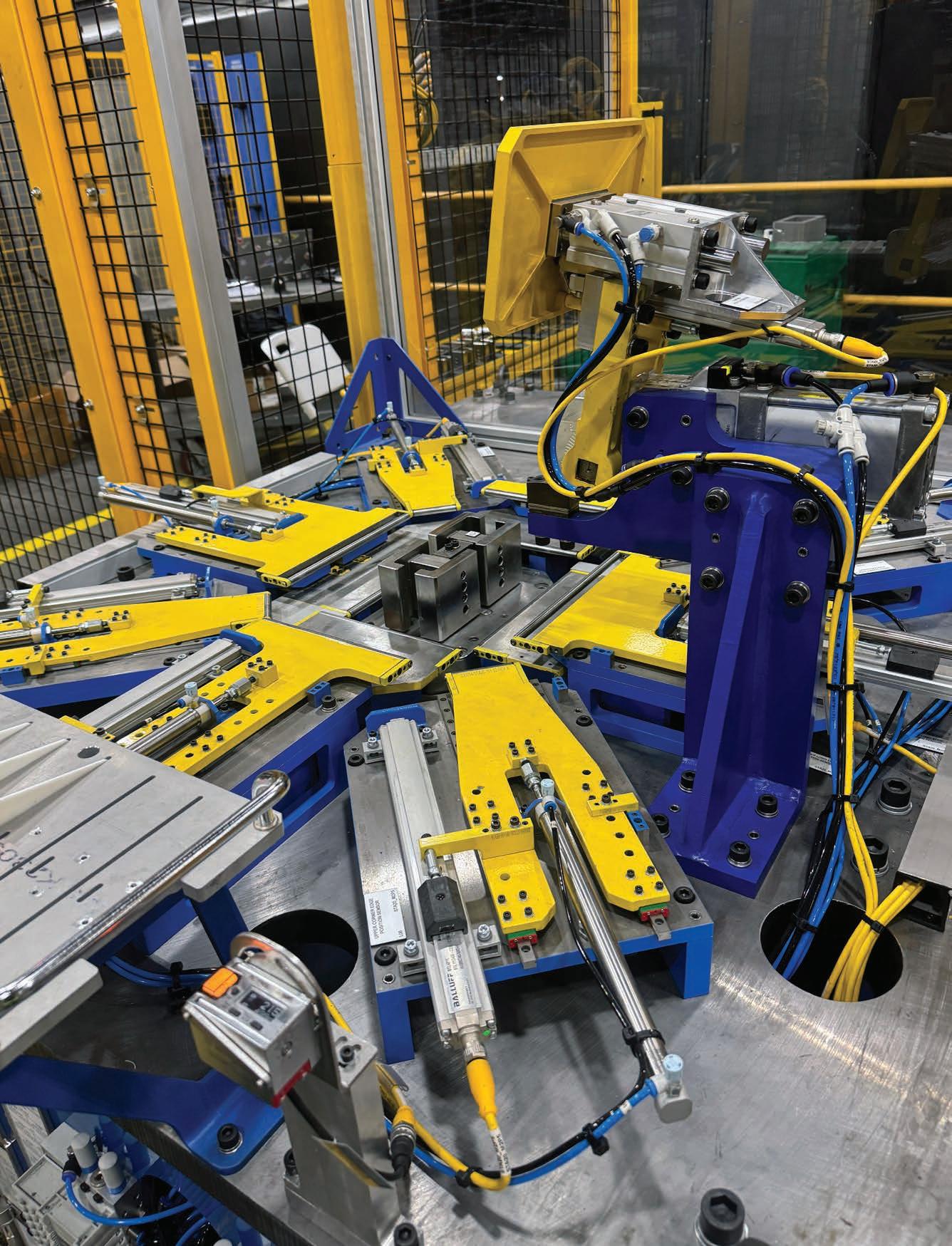
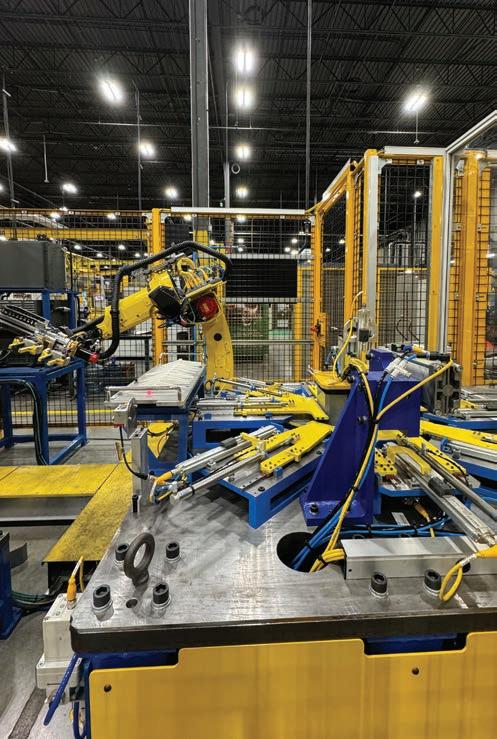
The final solution was designed to replicate the motions of an operator, using Fanuc 50iD robots in the place of humans.
he had in mind was a series of shoots with moving walls, allowing the piece to drop into a consistent place before being squared up as it moved through the solution. However, the flimsiness of each lamination required a change in direction.
“The final concept we ended up just emulating what operators do with their hands,” he said. “I wasn’t expecting that with this project but, in this case, just copying an actual operator was the way to go.”
The solution
“We ended up just emulating what operators do with their hands. I wasn’t expecting that with this project... copying an actual operator was the way to go,”
— Erik Zurowski, Ethos Automation
The final design for the project utilizes a seventh-axis solution on the end of a six-axis robot, specifically a Fanuc 50iD, which emulates the operator reaching out and grabbing the lamination from the bender, using a magnetic gripper to secure the piece and dropping it into a chute to square it up. From there, a second material handling robot of the same model comes in with two gripping fingers to perform the same stretching motion as an operator, lowering each sheet onto a fixture where the unicore is manufactured.
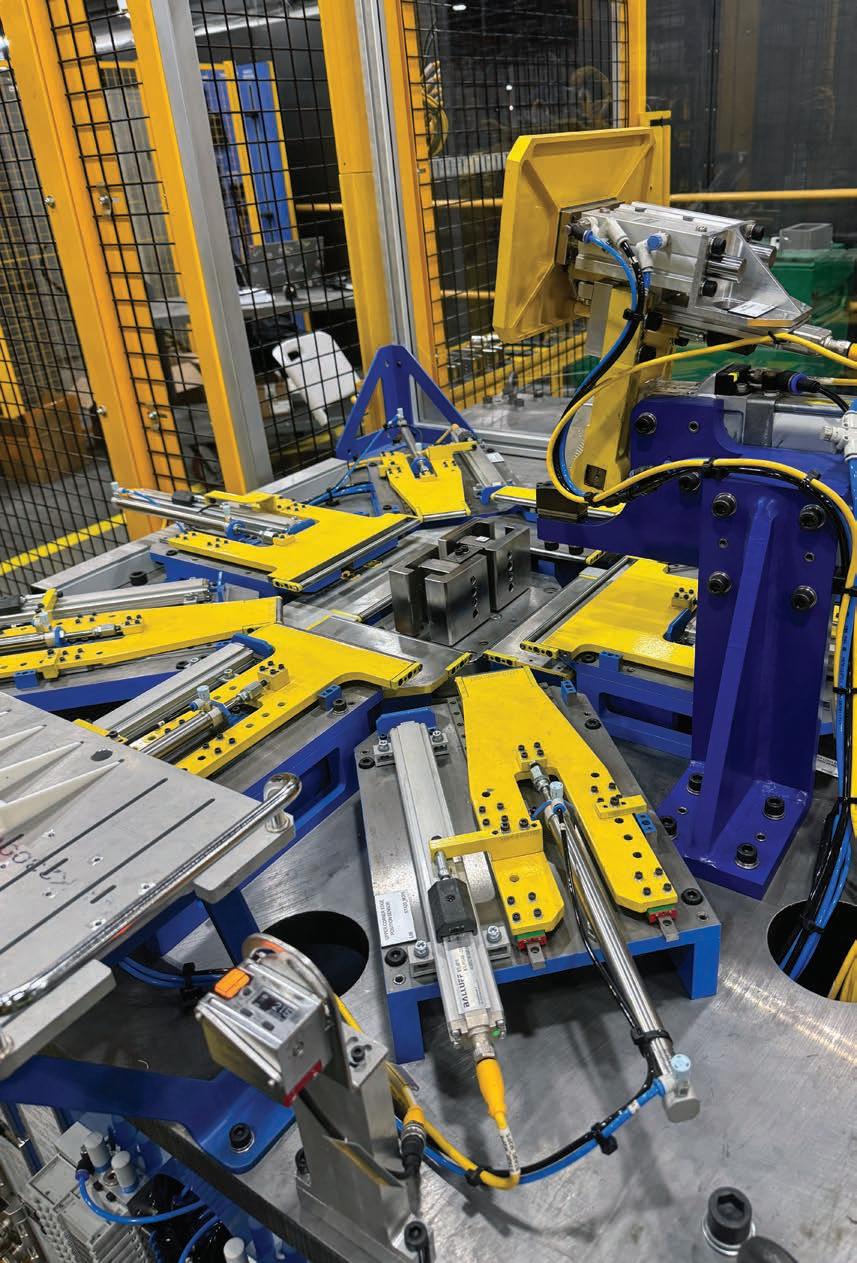
The fixture has a series of actuating rollers to maintain consistency and uniformity as each lamination is added, and, when the core is complete, drops the pedestal below the table to release the finished part
into the hands of an operator. With an average cycle time of 12 seconds, a completed electrical transformer core can be created in anywhere from 20 to 30 minutes, depending on the size, all while maintaining quality and consistency.
Ethos utilized Fanuc robotics, Balluff sensors and Allen Bradly PLCs throughout the entirety of the project.
The use of robotics, while elegant, presented a new challenge for Xavier Villanueva, the main PLC programmer for the project. “The biggest
Each lamination is lowered onto this fixture, which is fitted with actuating rollers to ensure uniformity as each layer is added.
roadblock that we faced was taking the part out of the bender itself,” Villanueva said. “We had so many variables and no sheet would come out the same as the previous one.”
To address this concern, Ethos integrated laser sensors to the end of the initial robot which, through trigonometry, calculated the angle of the sheet, where it was hanging in space and its orientation, ensuring the part was grabbed smoothly every time.
“We ended up figuring out a smart solution, because say there was
another core model added to this machine. There wouldn’t be that much more programming because we have this intelligent way of detecting how it should be picked up and in what orientation,” Zurowski said.
Scott Luke, who oversaw the assembly and electrical work for the project, managing a team of three, echoed Zurowski’s feelings on the sensor solution in a reflection on the challenges they ended up facing compared to their expectations entering the project. “The funny part with this was what we thought would be high-risk and where we would have the most issues ended up being what came easiest to us,” Luke said.
“When placing that sheet around that fixture we thought we we’re going to have a hell of a time trying to keep that within their tight tolerances,” he said. “But in the end, that was the easier part, and the more challenging was pulling the piece out of the bender.”
What comes next
After the successful delivery of the solution to JFE Shoji Power, Ethos began to ask themselves how they can utilize the lessons-learned and continue to grow.
“We have actually talked about scaling this, handling a larger set of cores,” Zurowski said. “We’ve discussed building out own bender next time to simplify the retrieval of the laminations.”
Rao echoed this sentiment, building their own bender for future customers could allow for an even more streamlined design and effective end-result, and remain in contact with JFE to potentially increase the range of core sizes they can construct.
Luke summarized the project best, encapsulating what many systems integrators across the country feel at the end of any successful initiative.
“The project had its ups and downs, and as a group, collectively, I think we weathered the storm, having that good relationship with all the different trades and people on the job.” | MA
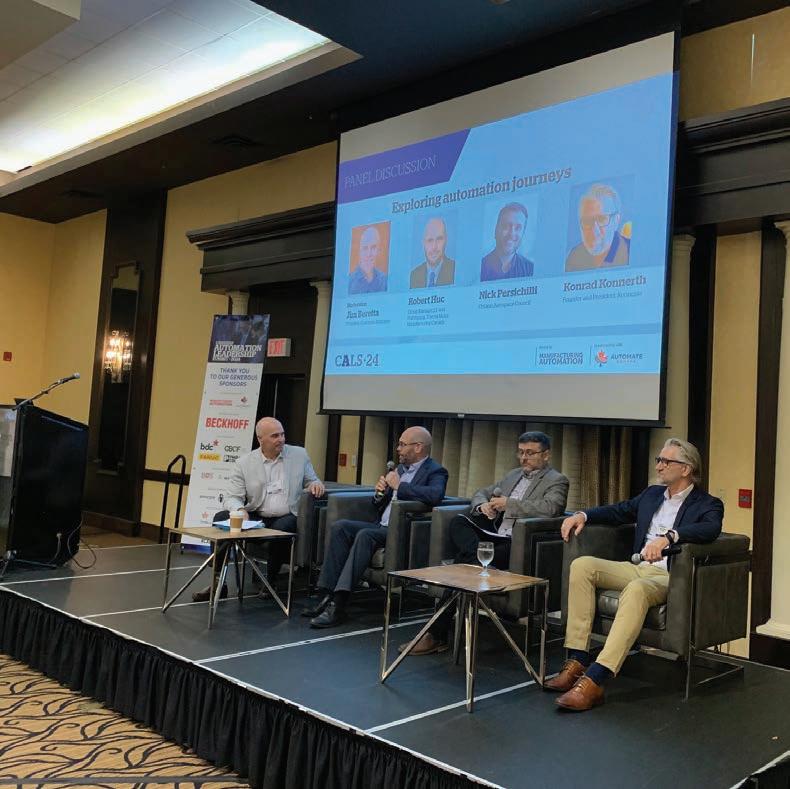
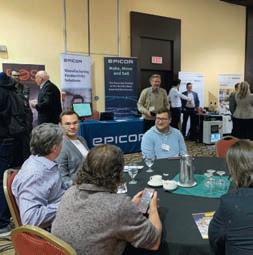
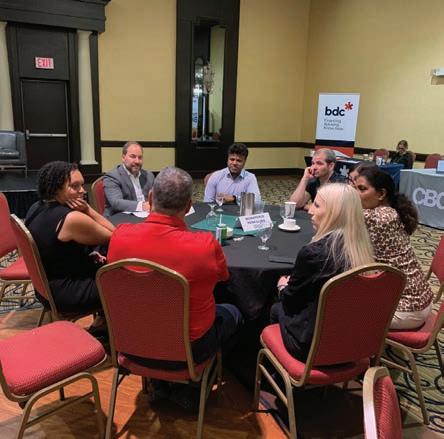
Step into the future of manufacturing at the third annual Canadian Automation Leadership Summit, where leadership and technology converge to shape the next era of Canadian manufacturing. This premier in-person event gathers top executives, innovators and automation experts to explore how manufacturing leaders can harness advanced technologies to drive growth, efficiency and innovation.
WHY ATTEND CALS26?
• Network with like-minded manufacturing and automation leaders
• Learn from an automation-focused agenda curated specifically for manufacturing leaders
• Explore tabletop displays showcasing the latest automation products and services
• Forge partnerships for future collaborations
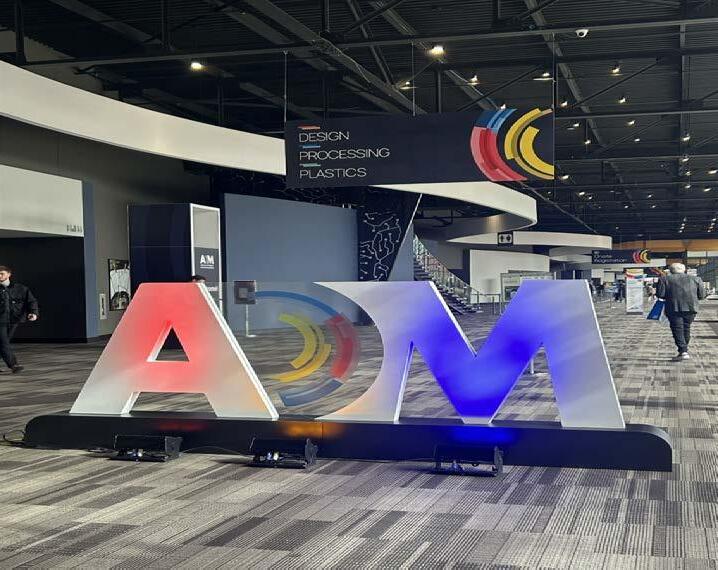
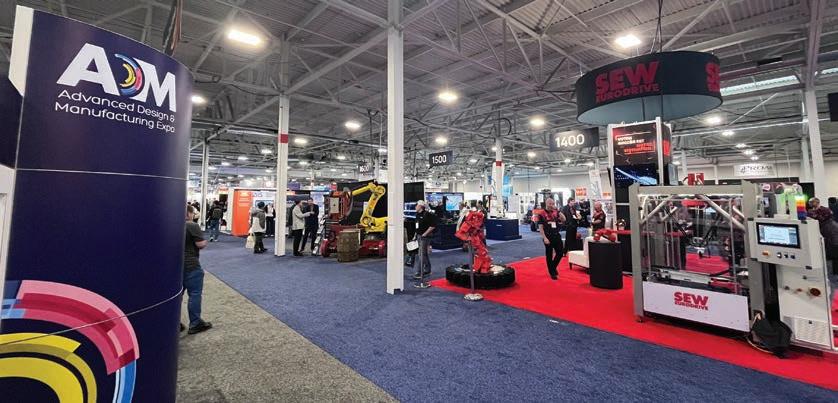
INNOVATION IN ACTION AT ADM 2025 IN TORONTO
From the latest advancements in robotics to design tools and packaging automation, the ADM 2025 showcased solutions from more than 350 exhibitors.
BY SEAN TARRY AND JARED DODDS
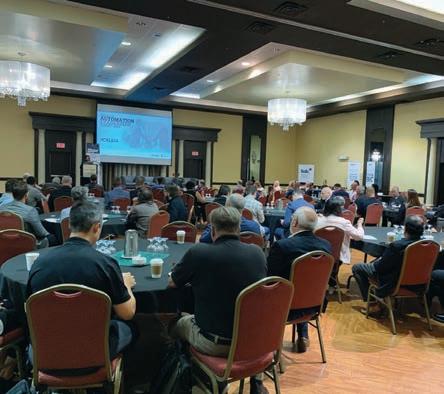
Held at the Toronto Congress Centre from October 21 to 23, the 2025 edition of ADM brought together more than 6,000 manufacturing professionals to explore the latest innovations in design and manufacturing technologies, and to discuss the issues and challenges impacting Canada’s evolving industrial landscape.
Setting the scene: A broad-scope manufacturing forum
For any manufacturing professional—whether you build machines, design systems, lead OEM strategies or manage warehouse automation— one of the key messages delivered at
this year’s show is that the future of manufacturing is interconnected. The tools and systems that once operated in silos are now being introduced into integrated workflows. ADM reinforced an understanding that staying ahead means staying connected.
And automation was an ever-present focus, featuring a collection of products and presentations highlighting the importance of continued automation to combat the ongoing pain points for the manufacturing industry, including the trade war with the U.S., the widening productivity gap and a continued lack of skilled labour.
Industry realities
In the opening keynote address,
Dennis Darby, President and CEO at Canadian Manufacturers and Exporters, cut the stark realities surrounding the manufacturing sector, including the loss of approximately 35,000 jobs in trade-exposed sectors since March 2025 and the massive decrease in exports. Some strategies to improve performance were suggested, including the removal of regulatory gridlock and the modernization of our tax system to spur investment, as well as the adoption of advanced technologies.
When comparing the gap in worker investment from the U.S., who invest approximately $57,400 per worker, to Canada’s approximately $18,000 per worker investment, Darby urged an increase in automation solutions from Canadian manufacturers.
“That means our productivity is behind which means Canadian workers are not working with the most advanced equipment they could,” he said.
AI and robotics
The implementation and use of artificial intelligence and robotics was another central theme at this year’s show, with a number of AI-powered tools and technologies and robotic solutions on display from a range of vendors and industry partners. And
the conference agenda also reflected this interest, featuring a host of sessions dedicated to conversations around these advancements. From explorations of current real-life case studies to prognostications about the future, speakers discussed the benefits technologies like AI and robotics present to manufacturers everywhere, as well as the challenges they face in adopting and implementing these tools.
More key themes
As Canada’s manufacturing sector continues to push forward through adversity and challenge, the number of topics impacting professionals seems to grow. In an effort to address as many of the most significant forcing functions currently influencing manufacturing resilience and growth, ADM put together an impressively comprehensive agenda, which included the following themes and points of discussion.
• Supply-chain resilience & trade dynamics: In light of the current global economic climate and ongoing trade tensions with the U.S., sessions and speakers explored how Canadian manufacturers can diversify sourcing, respond to geopolitical shifts and reduce risk going forward.
• EV and battery manufacturing on the move: With the event’s expanded EV/Tech focus, attendees heard from Ontario Vehicle Innovation Network (OVIN) and others concerning the growth of Ontario’s EV supply-chain, battery cell manufacturing and associated safety and regulatory challenges.
• Workforce & future talent pipeline: Another key topic was the current skills gap and workforce readiness in advanced manufacturing. Panels on talent development, mentorship and career pathways—under the show’s “ADM Pathways” initiative—addressed how machine builders, integrators and OEMs can cultivate capable teams for increasingly automated environments.
On the show floor
Live demonstrations by exhibitors ranged from 3D-printing and additive systems to vision-guided robots, collaborative automation and autonomous material handling, highlighting the innovation currently happening throughout the industry.
One of the more exciting products on display was Beckhoff’s MX-System, a pluggable system solution for control-cabinet free automation, saving precious space on the shop floor with a reduced machine footprint and lack of cable paths.
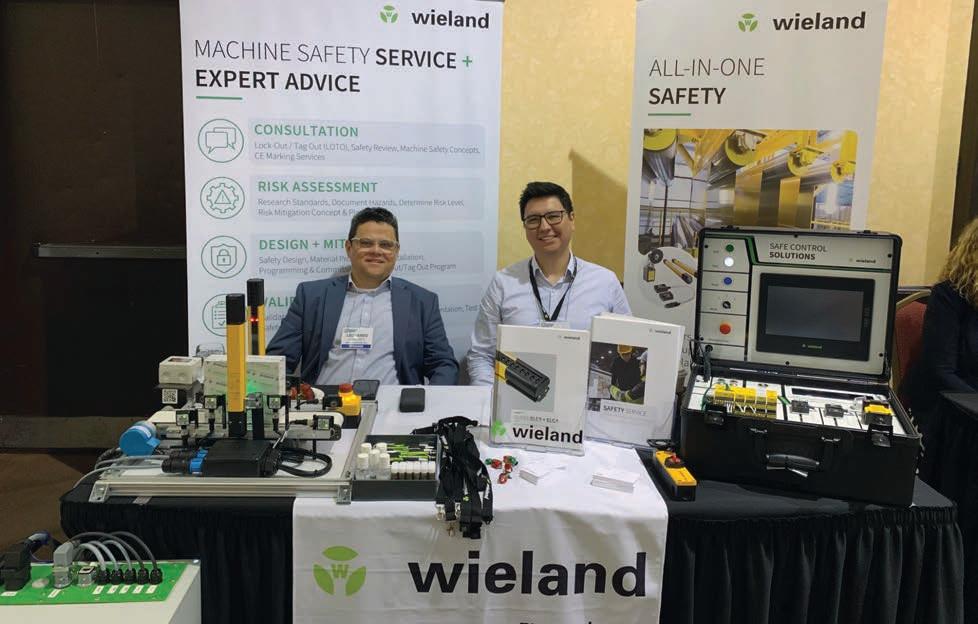
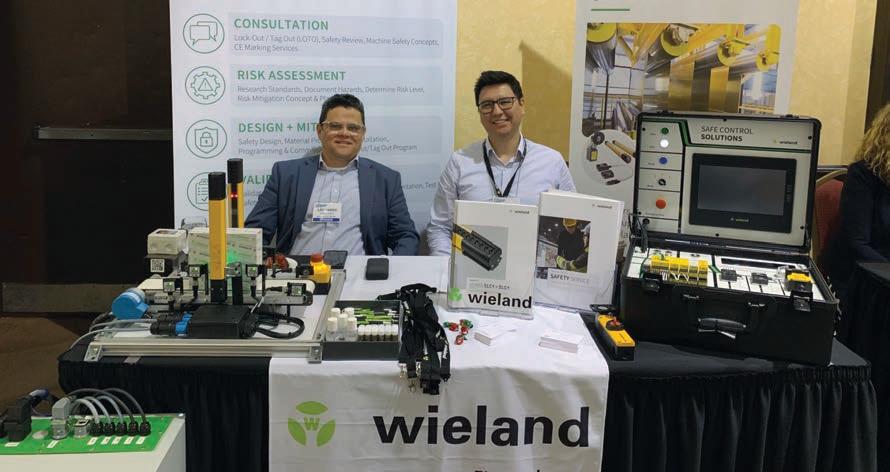
Another was Wieland Electric’s Samos Pro Motion Safety Controller - an all-in-one solution with integrated motion monitoring designed for vertical/slow axes with speed and position windows.
And SCHUNK showcased its Robot PLUS portfolio, a set of advanced tool changes, modular equalizing units and sensors.
Looking forward
The 2025 ADM Toronto show proved to be a significant success, serving as a convergence point for manufacturing disciplines responding to rapid change. With trade dynamics shifting, automation intensifying and EV supply chains expanding, the event prompted attendees to think holistically about the future of design and manufacturing in Canada.
The Advanced Design & Manufacturing show will be in Montreal November 11-12, 2026, at the Palais des congrès de Montréal. For more information about next year’s event, visit www.admmontreal. com. | MA
AUTOMATIC MOTION ON THE FACTORY FLOOR
The expanding use of AMRs in motion control and its impact beyond the warehouse BY TREENA HEIN
After a sluggish year for motion control in 2024, 2025 sales have picked up more than expected, experiencing growth even in the face of tariffs. This was, in part, due to a strong uptick in AMR adoption.
Looking at the overall AMR sector in manufacturing, Clara Sipes with Texas-based Interact Analysis said mobile robotics currently sit at under two per cent of the overall motion controls market. “However, they represent the fastest-growing application segment,” said the analyst. “AMRs are on track to become one of the largest application segments for motion control.”
The current drivers are not hard to list. Reshoring of manufacturing to the U.S. is one factor that’s accelerating adoption, said Sipes, as companies invest in building new plants or expanding existing ones. These facilities
integrate large amounts of automation from the ground up, making AMRs a natural fit.
Persistent labour shortages across manufacturing are another major and obvious factor driving AMR growth.
“Many of the tasks that AMRs can perform, such as repetitive material handling, are difficult roles to staff, making automation both necessary and cost-effective,” Sipes explained. “Especially for physically-demanding
As tech continues to advance with the use of AI, AMRs are becoming standard. If others are adopting a technology, you need to do so too in order to stay competitive. — Peter King, Cypher Robotics
roles, AMRs provide a safer and more-efficient alternative.”
Peter King, founder and CEO of Cypher Robotics, has similar thoughts. “Like other types of robotics, AMRs have been playing a key role in positions that tend to be challenging to fine employees – the dirty, dangerous and dull jobs with high turnover,” he said. “AMR’s also boost employee satisfaction.”
Craig Resnick, VP at ARC Advisory Group in Massachusetts, adds that AMRs also make jobs more secure because they make the company more productive and profitable. “You are also improving a plant’s operational resilience with AMRs in the face of supply chain continuity, labour shortages, disaster recovery and so on,” he said. “During the pandemic, for example, the plants that were further along with their digital transformation journey
and able to do remote monitoring and control securely, and more automated were the fastest to get up and running again.”
AMR use will also grow as manufacturing company leaders grow in understanding of the technology and how it can compliment worker duties, said King. “As tech continues to advance with the use of AI, AMRs are becoming standard,” he observed. “And if many others are adopting a technology, you need to do so too in order to stay competitive. It becomes the norm. We’re also seeing a much higher adoption rate because prices have come down.”
Evolving usage
Most AMRs are used to automate warehouses. But beyond smaller units, very large AMRs – that is, autonomous forklifts – are getting more popular in the warehouse every day. Grandview Research reported the 2024 global autonomous forklift market size at $4.8 billion USD, and the firm projects that this may almost double by 2030 to $9.5 billion USD. Grandview also reports that the counterbalance type of autonomous forklift makes up the largest share of current sales, 32 per cent, and that most of today’s autonomous forklifts employ light detection and ranging (LiDAR) tech for navigation.
But out of the warehouse, AMRs are growing due to improvements on several fronts. For example, Sipes said safety advancements in drives and controllers are making AMRs safer, opening up opportunities for their use in close proximity to people in complex manufacturing environments.
At the same time, the industry-wide trend toward equipment compactness is another key factor. According to Sipes, “integrated motor-drive designs are reducing the footprint of AMRs, enabling them to be deployed in more diverse applications than before. In addition, the expansion of ultra-low-voltage (ULV) motors and drives is particularly important. This technology is well-suited for battery-powered systems, and as these solutions mature, they will further increase both the safety and efficiency of AMRs. This makes ULV not just
You are improving a plant’s operational resilience with AMRs in the face of supply chain continuity, labour shortages and so on. — Craig Resnick, ARC Advisory Group
an enabler of AMR growth, but also a long-term differentiator in mobile robotics.”
Beyond safety and compactness, King said AMR applications are trending are towards more autonomy and connectivity. He notes that as networked systems in the plant are integrated with robotics, AMRs will be able to move more raw materials and parts, replacing large traditional systems like conveyor belts and pallet jacks. With AMR’s connected to a plant’s digital oversight system, the flow of goods is automatically adjusted, not just from area to area in a factory but also building to building.
Resnick added that the rise of AI means that AMRs can basically function as collaborative applications, not just working with humans, but with other AMRs, partnering on the factory floor for parts movement, delivery to packaging and warehousing, among other uses. “They are extremely effective assistants, and make employee key performance indicators higher,” he said. “They can also have a huge impact on reducing the incidence of back injury and carpal tunnel. Their safety has been proven, and with the automated forklifts being orchestrated to avoid each other, people and other obstacles, you avoid incidents that could injure workers as well as the accidental destruction of inventory too.
“But you have to have a connected workforce where today you have over 50 per cent of workers wearing sensors and/or carrying visualization devices as part of their roles, ranging from wireless tablets to smart phones. I’d say maybe 10 to 15 per cent of factory workers in the U.S. right now have access to wearables such as smart glasses that are connected to the plant system and providing, for example, augmented reality (AR), collaborating with plant floor assets and AMRs, but that will grow very rapidly, as will the
2030
Grandview Research reported the 2024 global autonomous forklift market size at $4.8 billion USD, and the firm projects that this may almost double by 2030 to $9.5 billion USD.
percentage of workers wearing sensors and/or carrying or wearing visualization devices,” Resnick said.
Shapes and sizes
Everyone knows there are many applications being explored for Boston Dynamics’ Spot robot ‘dog,’ but they may not know that this AMR recently started punching the clock at a Cargill feed processing plant in the Netherlands. The unit continually inspects equipment operation and potential safety issue. In fact, Spot’s inspection capabilities were recently enhanced with an AI system that analyzes images taken by Spot and provides a safety risk analysis. Hazards in this plant range from grain spills or other tripping hazards to equipment doors that someone might leave open.
Spot proves AMRs can go beyond cylindrical or square shapes, but will we see humanoid AMRs in factories anytime soon? Resnick thinks we are at least a few years away from wide spread deployments.
“The humanoid form is useful in home settings, but in the factory setting it’s often more efficient to have a wheeled unit,” he said. “And you may want to have better gripping, with higher weight and speeds possible in your AMR motion than what a humanoid-shaped AMR could provide. In the end, you want the AMR to be suited to the task and to be better than human form, such as Spot for climbing. There’s also sometimes better worker acceptance if the AMR isn’t humanoid in shape, which may be perceived as the worker’s future replacement.”
King’s thinking is similar. “The most successful implementations are when we fill a gap and not replace a worker,” he said. “That is where AMRs have the biggest impact. Those companies trying to replace workers are never getting the best value for their investment.” | MA
CYBERSECURITY
BY JIM MILLER
years of experience in the field. He recently retired as the director of OT cybersecurity at a large auto parts manufacturer, where he was responsible for designing and implementing their OT cybersecurity program to protect the company’s 200+ production environments from cyber threats.
Delivering cyber-secured machines
As customers spend more money each year to protect their systems, machine builders and system integrators are determining how to provide solutions that are ready for cyber threats.
An IBM report titled Cost of a Data Breach found that while the overall costs of cybersecurity breaches fell in 2024, in manufacturing the cost grew to $5.556 million from $4.73 million, an increase of $830,000 or 17.5 per cent. Hackers have identified the previously considered low-risk sector of manufacturing as a lucrative target, and manufacturers are willing to spend to protect their critical infrastructure, with nearly all respondents in the 2026 Advanced Manufacturing Outlook Report stating they have invested in cybersecurity efforts.
The question, then, for machine builders and system integrators, is simple: can they provide solutions to their customers that are ready for cyber threats? It’s easier to include cybersecurity from the start than to add it later, and while today this might be considered a special service, in the future it could be something every customer expects.
The question that needs answering is what cybersecurity elements you can add to your solutions while spending minimal time and money, as well as how to go above and beyond the client’s cybersecurity expectations to drive your value-added proposition home.
Foundational cybersecurity elements
When speaking with clients about cybersecurity, they will likely speak about a framework like IEC 62443 or NIST 800. NIST is from the U.S. while 62443 is used worldwide. They are alike in what they cover, so for the purposes of this article each point will speak to both frameworks.
There are easy cybersecurity steps we can use on all your devices and software. We don’t need to be an
expert to do this and can add them to our checklist as an important part of our work. These steps help make our system more secure. I will outline each of thee steps in the following sections.
It’s easier to include cybersecurity from the start than to add it later.
Usernames and passwords
While this sounds simple it is an important place to start. Devices and software that use usernames and passwords should have this feature turned on, with basic steps including changing default accounts to ones with names and making all default passwords strong and hard to guess. Document the devices and software with their usernames and passwords and ask your customer for their favoured ‘hard’ password to use in their setup. Outline how to change the password in the setup guide!
Device administrative access
Try to make the device use SSH or HTTPS. Older devices are managed through Telnet, but SSH is better because it keeps passwords and information safe. Use HTTPS and FTPS instead of HTTP and FTP for the same reason.
Extra tips: Turn off the non-safe protocols. Also, turn off other protocols and services that the customer doesn’t need or use. Make a list of software and devices that don’t support safe protocols, so the customer knows where they will need to add extra protection.
Network device configurations
Any solution that uses network switches should use a managed switch. This will allow for additional security features detailed in the
Jim Miller is an accomplished cybersecurity professional with over 20
Network Setup section of this article. It is important to disable unused ports. It is recommended to create a secure configuration can be put onto all devices; figure it out once and use it for all your customers. Ensure all passwords are encrypted in the configuration and that the latest firmware is installed.
In addition, ask your customer for their preferred brand of network switch, standard configuration and firmware version.
Operating systems
If the system uses Windows or Linux, make sure these devices have the latest version of the operating system and include any license details. Before giving them to the customer, apply the latest updates. Turn off any services that aren’t being used. If the operating system has a firewall, turn it on and document what was enabled to protect the system.
Usually, these devices are not set to update on their own. You should have instructions for the customer on how to install the updates. You should also ask the customer for their preferred End Point Protection solution.
Firmware-based devices
When working with PLCs, robots and other factory machines, ask the customer which firmware versions they prefer. This will help keep everything the same on all their machines.
Backup and recovery
Each part of the total system needs a complete plan to back up and recover data and configuration items. This plan should use offline or safe local storage that can handle a cyber-attack. Extra tip: Implement a scheduled backup process. Include a process to verify the backups are working as expected. Provide documentation on how to restore each device to a known good state.
Remote access
Remote access functionality should
not be part of your solution, and any component allowing for remote access should have this feature disabled. Instead, the solution should be designed to use the customer’s remote access solution, which means you need to ask our customer what solutions they provide, and only provide something yourself if they do not have one available.
To take it a step further, you should expect to use Multi-Factor Authentication (MFA) to access our customers environment and provide the customer with a list of named users that will support the solution. This is an added layer of protection to ensure only authorized people can access their environment.
Remember, you are a third-party; if you get hacked, you do NOT want the hacker to get to the customer through you. That would almost guarantee a loss of trust from the client!
Network setup
Networks can quickly become complex in many customer environments. It is important for us to get VLAN and IP plans from our customer before starting your configurations. This will allow us to use the right information from the beginning without having to redo configurations during the integration phase of the project.
Wrapping it up
Be sure to make a Cybersecurity Configuration document for the system. This document will explain the security steps used in the project. It should have the checklist we used to make sure everything was done. Overall, it should include:
• Network architecture (zones, conduits, VLANs, IP addressing)
• Port and service inventory
• System dardening details
• Patch status
• Known deviations from security baselines
• Bonus item: Software Bill of Materials
Advanced Topic
IEC 62443 introduces the concept of zones and conduits. Zones can be thought of as groupings of devices by function, line or cell. Sometimes this can be stated in how well the various devices play in the same sandbox with others. If they don’t play well, we put them into their own zone. This can also be applied if devices need extra protection from other devices on the network.
A conduit is the connections between two zones. We limit the communications between the zones to protect them from each other. This is normally achieved using a firewall, but other tools can be used if a firewall is not available.
Remember, you are a third party; if you get hacked, you do NOT want the hacker to get to the customer through you.
A secure environment would include zones for the business, one or more zones that sit between the business and the factory floor (known as Demilitarized Zone –DMZ), and one or more zones for the factory floor. There would not be a conduit between the business zone and the factory floor zones.
Customers may have their preferred solution on how to integrate our solution into their environment.
Zones and conduits help control the amount of traffic getting to our system. Too much traffic can impact safety and real-time traffic; using zones and conduits lowers the chance of non-critical traffic affecting the system. Extra tip: give the customer a list of expected communication in each conduit.
Document all required external communications, expect this communication to require approval from the customer. New Industry 4.0 solutions often expect to send the customer’s data to a vendor’s cloud. Many customers will not want their data given to vendors; we must identify these situations before delivering the solution.
MOTION CONTROL
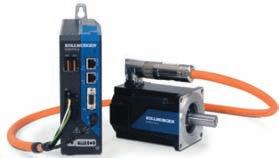
Kollmorgen Essentials Servo Motion System
Electromate Inc. has announced the availability of the Kollmorgen Essentials Service Motion System in its offerings. By pre-configuring key axis configurations and standardizing interfaces, the Essentials solution reportedly helps to reduce development time, simplify procurement and shorten deployment. Features include motors from 200 W to 3 kW, rated speed of 3,000 rpm with a maximum up to 6,000 rpm, support for EtherCAT, EtherNet/IP CIP Sync and PROFINET IRT, battery-less, multi-turn absolutefeedback via the SFD-M encoder (24-bit single-turn + 16-bit multi turn), built-in express setup via kollmorgen WorkBench and more.
electromate.com
INDUSTRIAL CONTROL
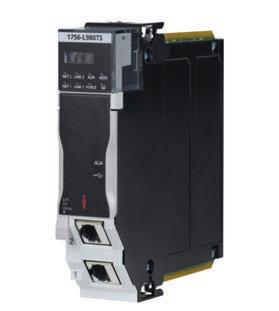
ControlLogix 5590
Rockwell Automation, Inc. has launched its newest controller, ControlLogix 5590,
which is at the core of the Logix platform. Designed to meet the evolving demands of modern manufacturing, this all-in-one controller aims to deliver seamless software integration and multidiscipline control across the enterprise to streamline operations. Key capabilities include integrated safety, powerful performance for demanding applications, built-in cybersecurity based on the IEC 62443 global standard and streamlined engineering experience with a unified software suite.
rockwellautomation.com
ENERGY MANAGEMENT AND ENCLOSURES
Ionic Modular All-in-One
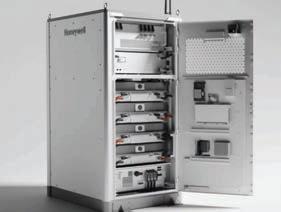
Honeywell has introduced the Honeywell Ionic Modular All-in-One, a compact, endto-end battery energy storage system (BESS) designed for the commercial and industrial segments. The system is fully integrated into the all-in-one modular BESS, providing the latest analytic tools to deliver advanced control and customization onsite. The advanced control software also incorporates industry-standard ISA Secure 2 cybersecurity, ensuring protection for users and mitigating vulnerabilities for potential network cyber threats. The new, smaller enclosure enables it to offer a range of power storage options from 250 kWh up to 5 MWh to bring
energy storage scalability to more commercial and industrial settings.
INDUSTRY 4.0
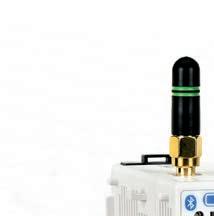
Digi XBee 3 Global LTE Cat 4
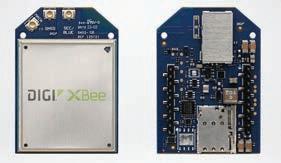
Digi International has released the Digi XBee 3 Global LTE Cat 4 cellular modem, designed to deliver reliable, cost-effective connectivity for higher bandwidth IoT applications. The latest edition to their embedded wireless module product line
features the standard Digi XBee form factor and APIs alongside global carrier and end-device certifications, an integrated GNSS receiver for location-award applications, Bluetooth Low Evergy for sensor connectivity and built-in Digi TrustFence device security. The device can be managed at scale with Digi Remote Manager and Digi XBee Studio and the MicroPython environment delivers edge intelligence and simplifies design. digi.com
CYBERSECURITY
Radiflow360
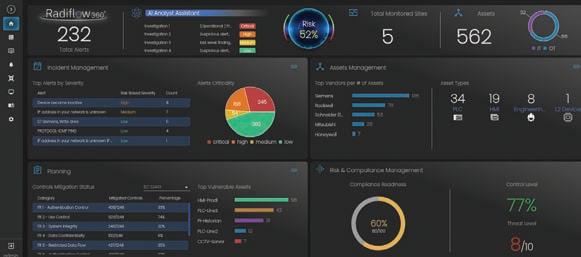
Industrial automation network cybersecurity provider Radiflow has launched Radiflow 360,
a unified, AI-enhanced OT cybersecurity platform that reportedly delivers full visibility, risk management and streamlined incident response for mid-sized industrial enterprises. The new platform streamlines compliance and integrates other Radiflow and third-party tools, delivering a scalable, unified approach to OT cybersecurity, while the AI analyst assistant interfaces with commercial GenAI engines to bridge skill gaps and accelerate incident investigation. radiflow.com
MACHINE VISION
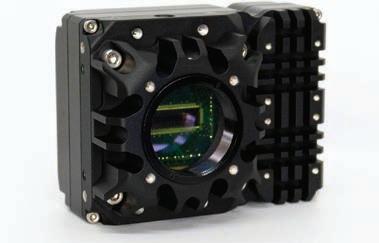
New Imaging Technologies (NIT) has released the LiSaSWIR 2048 v2, a high-performance upgrade of its line-scan SWIR camera series. Featuring NIT’s new high-performance sensor, the NSC2301, this upgraded model brings major enhancements in sensitivity, image quality and system integration flexibility. Key features include a 2048×1 pixels resolution, a pixel pitch of 8µm, a > 110kHz frame rate, a 66 dB typical dynamic range and more. new-imaging-technologies.com
SOFTWARE
RealBOT Embodied Open Platform
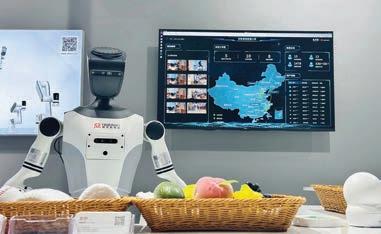
RealMan Robotics has debuted its RealBOT Embodied Open Platform, enabling the
cross-regional teleoperation of humanoid robots to perform complex interactive tasks. The comprehensive open platform is designed to accelerate embodied AI innovation, integrating advanced motion control, multi-dimensional perception and precision manipulation. Advantages of the platform include full-stack in-house development with proprietary actuator and
control technologies, flexible compute support compatible with both NVIDIA Jetso Orin and Digua RDK S100 platforms, multisensory fusion perception which integrates depth and wide-angle cameras, LiDAR, IMU and microphone arrays, a high degree of dexterity with 21 active DOFs with support dor dexterous hands and more. realman-robotics.com
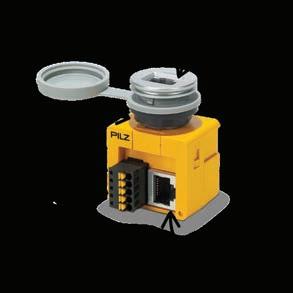
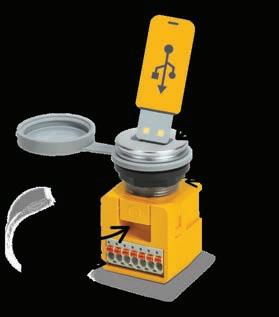
Simplify Secure Programming with Pilz PIT oe
Two port options to meet your controller programming needs:
22.5mm cutout (EN 60947-5-1)
24v input for port activation
cutout (EN 60947-5-1)
LiSaSWIR 2048 v2
INDUSTRY WATCH
BY PAUL HOGENDOORN
For more insight or information from Paul on related topics, please contact paul@tpi-3.ca or visit TPI-3.ca.
Tariff Talk: The return of community thinking
“Manufacturing isn’t an industry, it’s a community”.
I came across this quote on a LinkedIn post a couple weeks ago, and it really resonated with me. Manufacturing is indeed a community; it’s a community of people who get things done, who understand real value and know how to build things, partnerships and prosperity. The manufacturing community at large created, and sustains, the middle class. And the manufacturing “community” spans both sides of the Canada-U.S. border, with like-minded manufacturing organizations on both sides.
However, once you get out of the manufacturing “community” and start looking at the manufacturing “industry”, or manufacturing “sector”, things start to look different. Politics come into play, and, just as damaging, public opinion and sentiment.
The North American manufacturing industry has become polarized, and although tariffs and trade talks are a dynamic and ongoing issue, the biggest factor in the escalation of hard feelings by Canadians towards America is the Canadian media and certain Canadian politicians.
When speaking to the Canadian manufacturing community at large, you find a strong contingent who have no ill feelings towards their American counterparts. Manufacturers on both sides of the border have long counted on one another, supported one another, bought and sold from one another and succeeded and suffered with one another. They remain members of the same community at large.
It’s the politicians that have made it seem otherwise, and they’ve taken these positions for their own political gain. To be clear, I’m not talking about DJT and his tariff tactics. In my opinion, he set out on a course to ensure the long-term stability of the American manufacturing industry, and a strong and healthy U.S. manufacturing sector is ultimately good for
all western democratic societies intent on maintaining a strong middleclass. As I stated in my previous column, it’s a matter of putting your own oxygen mask on before you help the person beside you do the same.
Once you get out of the manufacturing “community” and start looking at the manufacturing “industry” or the manufacturing “sector”, things start to look different
The problem, as I see it, was not DJT’s initial negotiating stance, it was the Canadian government’s “elbows up” response. Both the Canadian federal government (Liberal) and the Ontario provincial government (Conservative) adopted an us-versusthem mentality and message that was amplified by the media, stirring up negative public sentiment towards America. It was a tactic to help them win elections, and it did that, but the after-effect lives on.
Much of Canada’s media continues to play up to this negative narrative, and surprisingly, the Premier of Ontario continues to fuel it, despite the fact that Ontario’s primary economic engine is manufacturing.
He needs to hear the voices coming from the manufacturing community and understand that these words are not just unwelcome, they are extremely harmful. If I were a dues-paying member of an industry association, I would be insisting they move more quickly and speak much louder than they are presently to remind the Premier of that fact.
The manufacturing community
is one that serves our countries and societies well. They build things. They build partnerships. They build prosperity. Politicians, the media and even the Canadian public in general need to be reminded of that. It’s time to put entrenched political party differences aside, drop the public charades and get a deal done so the manufacturing community can once again do what it does best.
Manufacturers want to control their own destinies by meeting the expectations of their customers. And they’re very good at that. They’ve been doing it for over a century, year in, year out. They’ve done it by collaborating, competing, solving problems, adapting and executing. Our governments could learn a lot by gaining a true, tangible understanding of all that.
From what I see from my vantage point, the American manufacturing community is full of fresh confidence and renewed vigor, (and there are objective economic indicators that support that). And that’s a good thing. Let’s hope the Canadian manufacturing community gets to start to feel that way soon. Enough harmful words, enough empty slogans. It’s in everyone’s best interest to restore a great and prosperous manufacturing “community” that spans the Canada-U.S. border. | MA
Paul Hogendoorn is a serial entrepreneur that has built multiple manufacturing and manufacturing technology companies. He has been a regular contributing columnist for 15 years.
Amplify Content Studio is a full-service custom content studio, helping companies share their story, build brand awareness and garner trust through original content.
There are so many ways to reach a target audience. We’ll craft you content for any medium:
• Thought leadership – long-form or short-form articles
• Blogs, whitepapers, infographics and case studies
• Webinars, podcasts and video
• Tradeshow marketing content
• Automated content marketing supported by first-party data ....and so much more!
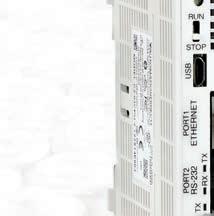
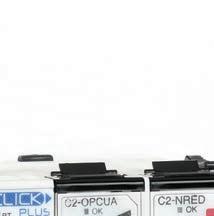
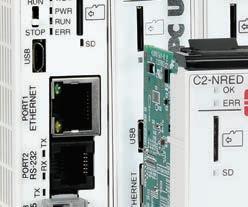
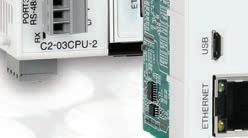
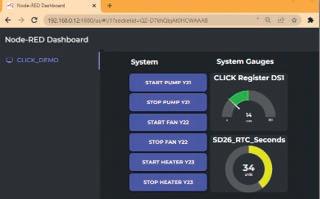
CLICK PLUS CPUs offer the utmost versatility with up to two option slots for custom control configurations.
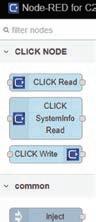
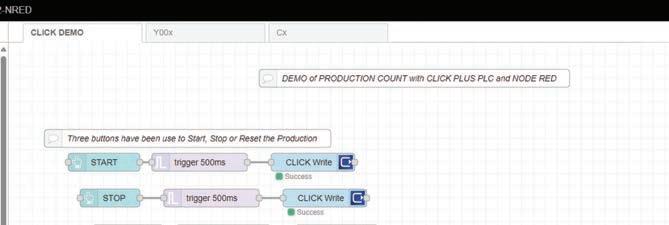
With the new Node-RED® option slot module, you can combine the most affordable and user-friendly PLC in the industry with one of the most popular open-source software tools in the industrial sector for developing IIoT applications.
• Create interactive and customer-specific HMI dashboards that can be accessed with any browser
• Easily integrate plant-floor data into existing business systems/databases, e.g., MES or ERP systems
• Access cloud-based services or website APIs for a wealth of information (weather reports, energy/raw material costs, etc.) that can be used to optimize your processes What can it do?
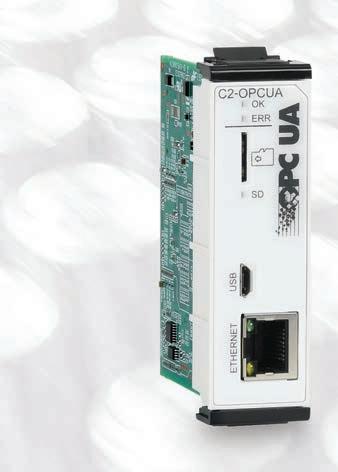
The C2-OPCUA module, when added to a CLICK PLUS CPU, allows the simplicity and reliability of CLICK PLCs to be deployed in many more applications, providing one of the lowest cost OPC UA systems available.
What does it offer?
• Scalability - capable of large amounts of data transfer no matter the application
• Versatility - with OPC UA support, the CLICK PLUS can work seamlessly with numerous 3rd party control platforms, business/IT systems, cloud networks, SCADA systems, etc.
• Enhanced security - featuring authentication, authorization, and encryption methods
• Better efficiency - real-time data exchange for process optimization
*Free shipping does not apply to items requiring LTL transport, but those shipments can take advantage of our negotiated super-low at rates (based on weight) that include brokerage fees. See Web site for details and restrictions at: www.automationdirect.com/canada