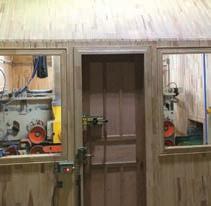
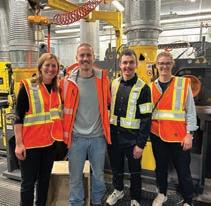
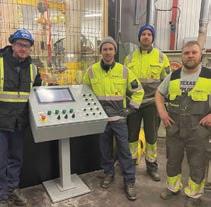
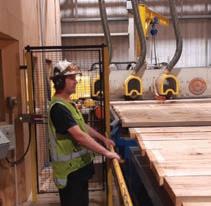
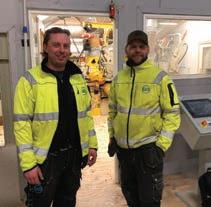
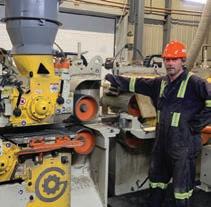
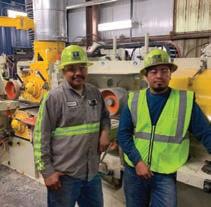
“The HewSaw team has been extremely helpful, accommodating and supportive throughout the install, start-up and into steady state operations. The Hampton FSJFP team has been extremely pleased with HewSaw’s ability to adapt and meet our company and project goals, key metrics and manufacturing philosophies.”
Ian Gray Regional Manager, Hampton Affiliates -
Click here to see the sawline in action!
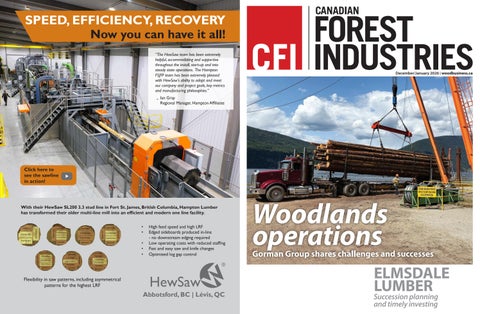
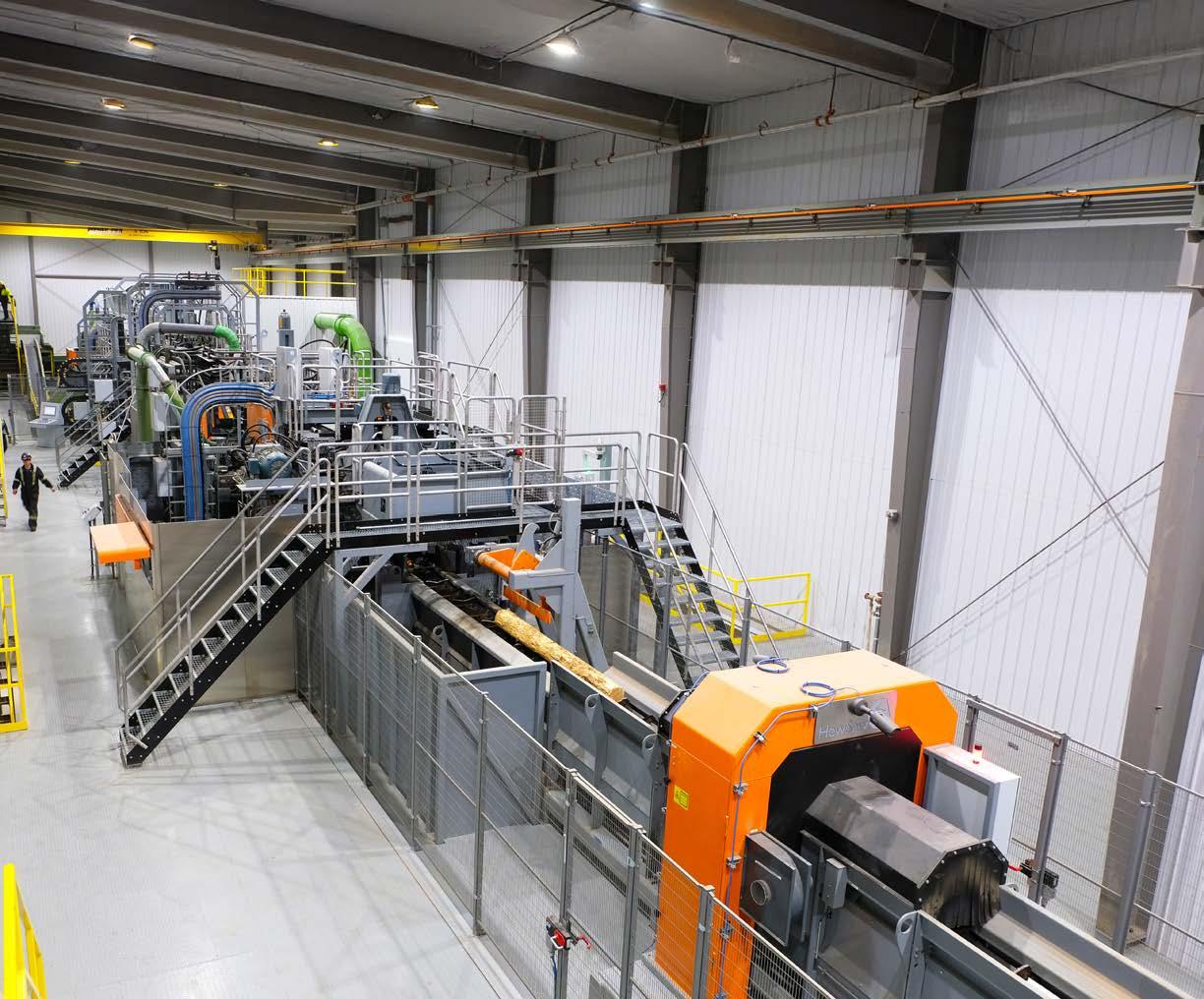
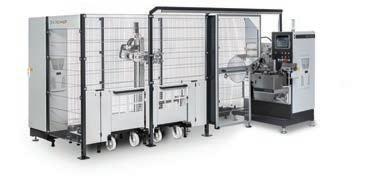
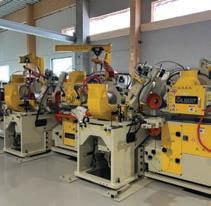
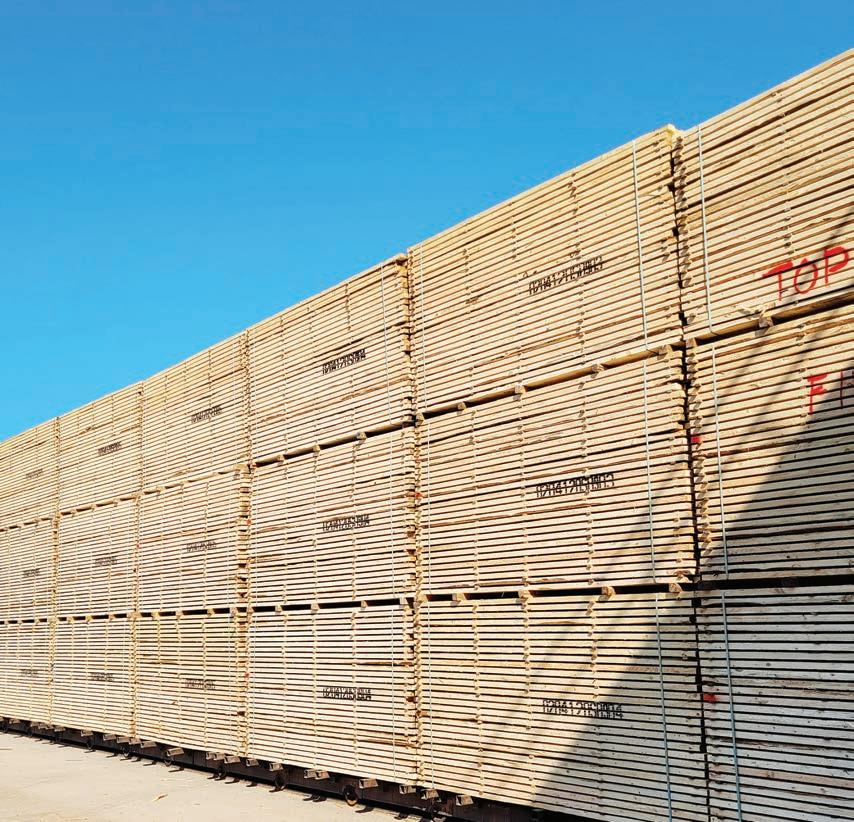
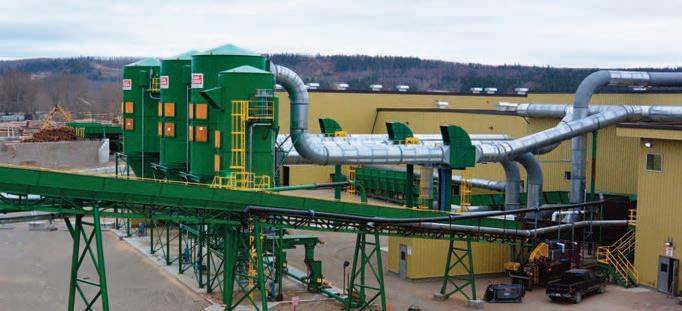
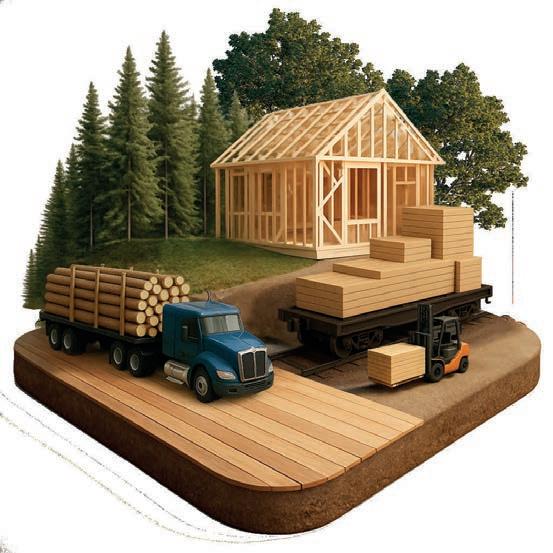
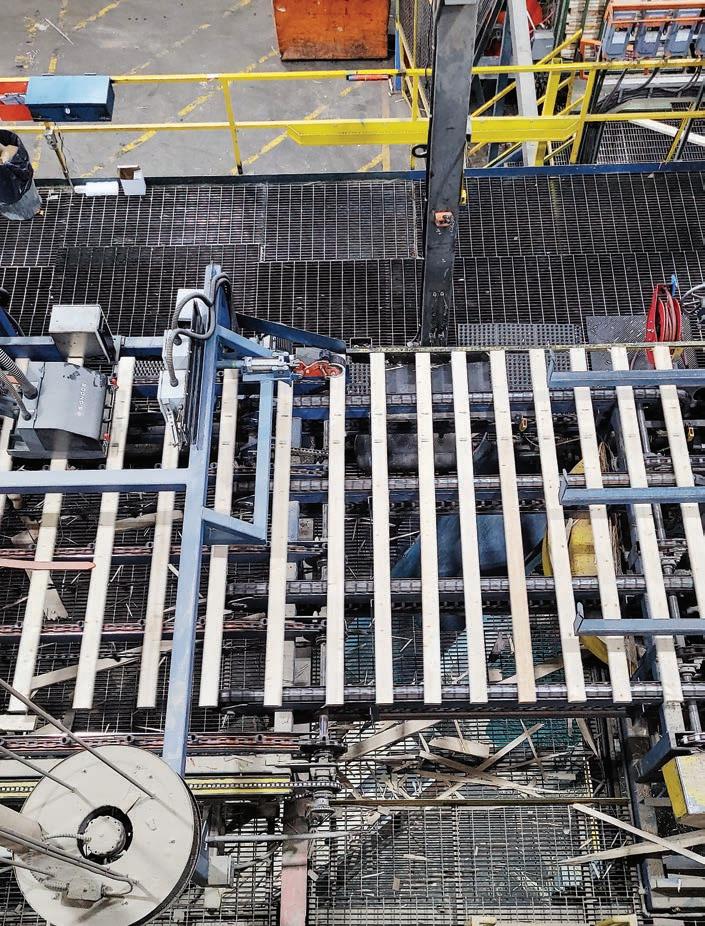
With their HewSaw SL200 3.3 stud line in Fort St. James, British Columbia, Hampton Lumber has transformed their older multi-line mill into an efficient and modern one line facility.
Flexibility in saw patterns, including asymmetrical patterns for the highest LRF
• High feed speed and high LRF
• Edged sideboards produced in-line
- no downstream edging required
• Low operating costs with reduced staffing
• Fast and easy saw and knife changes
• Optimized log gap control
Abbotsford, BC | Lévis, QC
first cut
asnook@annexbusinessmedia.com
New home needed
Bioeconomy needed for long-term health of sector
As the editor for Canadian Forest Industries and Canadian Biomass, I recently had the pleasure of attending another fantastic Scaling Up Bio Conference in Ottawa. This unique educational and networking event boasts dozens of speakers tackling all aspects of the bioeconomy
One particular session caught my attention that featured forest products associations from across Canada discussing how to move forward in the bioeconomy.
and as a result, markets for their residual bark sawdust, chips. So that, by itself, was keeping me up at night,” Dunn told the crowd.
Canadian
Moderated by Scott Jackson, CEO, Centre for Research & Innovation in the Bio-Economy (CRIBE), this panel discussion included Ian Dunn, president of the Ontario Forest Industries Association (OFIA); Mahima Sharma, vice-president of innovation, environment, and climate policy for the Forest Products Association of Canada (FPAC); Sheila Harrison, vice-president of policy for the Alberta Forest Products Association (AFPA); and Kurt Niquidet, vice-president and chief economist for the BC Council of Forest Industries (COFI).
Jackson kicked off the conversation by asking each panelist about the most fundamental challenges facing the forest sector.
While the slowdown of the housing market across North America and the ongoing U.S. tariffs and duties were understandably top of mind for most panelists, it was another issue facing the forest products sector that resonated with me during this discussion.
One of the challenges in Ontario that OFIA’s Dunn touched on was the massive number of pulp and paper mill closures that have taken place in recent years.
“Ontario is a lower cost jurisdiction for lumber, but there has been a large consolidation of the pulp paper sector in Ontario. We haven’t seen the widespread closures of sawmills, but the sawmills have witnessed a decline in the pulp and paper sector,
Since 2005, the pulp and paper sector in the province has nearly disappeared, going from 16 primary pulp and paper mills down to only three (and Kap Paper is looking like it’s on life support right now). When those 16 mills were operating in 2005, pulp and paper mills consumed 18 million cubic metres of fibre, offering a much-needed home for pulp logs and the residuals of Ontario’s wood products sector.
Ontario is not alone with this challenge. Since the 2020 closure of Northern Pulp in Nova Scotia, sawmills in the province have had to manage more challenging harvesting environments, as well as find homes for their residuals at a significantly reduced rate of return.
If Canada’s wood products sector is going to rebound and flourish, there needs to be a home for harvested pulp logs and sawmill residuals. The greatest opportunity lies within the growth of Canada’s bioeconomy. Whether that is through electricity and heat produced using biomass, wood-based biofuels or wood pellets production, there are certainly opportunities for our wood products and pulp and paper sectors to play key roles for sawmill residuals.
While there are some great things happening on a case-by-case level with some companies in the forest products sector, a true national bioeconomy strategy needs to be produced to aid Canada’s bioeconomy, wood products, and pulp and paper sectors, in finding new homes for residuals and to bring new products to market.
Without a home for pulp logs and residuals, Canada’s forestry sector will continue to struggle, and that’s something the more than 200,000 people employed by the forest products sector can’t afford to have happen.
ANDREWsnook
NEWS upfront
West Fraser to permanently close mills, including 100 Mile House in B.C.
The hits to B.C.’s forest products sector continue as West Fraser Timber Co. Ltd. (West Fraser) has announced its plans to permanently close its 100 Mile House lumber mill along with its Augusta, Ga. lumber mill, citing timber supply challenges and soft lumber markets.
The company stated that the 100 Mile House mill is unable to reliably access an adequate volume of economically viable timber; and that the situation at the mill worsened with the higher duties, additional tariffs and challenging softwood lumber demand. The closure of the mill will impact the 165 employees on site and reduce the company’s capacity by 160 million board feet.
West Fraser stated that the closure of the Augusta lumber mill stemmed from challenging lumber demand and the loss of economically viable residual outlets, affecting the mill’s long-term viability. The Augusta mill closure will impact approximately 130 employees on site and reduce the compa-
ny’s capacity by 140 million board feet.
The company stated it will attempt to mitigate impact on affected employees by offering work opportunities at other company operations, where available.
West Fraser also announced that the 2024 curtailment of its lumber mills in Huttig, Ark. and Lake Butler, Fla. will now be permanent, and that those mills will be dismantled and the sites sold.
The company added that its replacement Henderson, Texas mill has started up operations and that the adjacent mill has ceased operations.
“The closure of these mills better positions West Fraser to compete in this challenging environment,” the company stated.
Thousands of hard-working people are planning to gather in May to conduct some serious business and to have some fun. The LOGGERS’ EXPO features a wide array of supplies and services, heavy equipment and trucks — for loggers and land clearers, tree care professionals and firewood dealers, sawmillers and landowners. This year’s show features the Weiler Log Loading Competition.
MAY 1-2, 2026
CHAMPLAIN VALLEY EXPOSITION, ESSEX JUNCTION, VT For information about attending or exhibiting at the Loggers’ Expo: visit northernlogger.com email expo@northernlogger.com call 315-369-3078
Sponsored
TAPPI announces new president and CEO
TAPPI recently announced the appointment of Lawton Roberts as its next president and CEO, which took effect on Nov. 3, 2025. Roberts will succeed Larry Montague, who retired at the end of the year after 19 years of distinguished leadership.
“It has been the honour of a lifetime to serve this incredible community,” Montague said. “From day one, our focus was on putting members first, literally placing them at the top of our organizational chart. I’ve seen this industry evolve, grow stronger, and come together in ways that continue to inspire me. I’m confident Lawton is the right person to lead TAPPI into its next chapter.”
Prior to taking on his new role, Roberts held the position of TAPPI’s chief operating officer. He has been with TAPPI since 2017 and has
worked alongside Montague since 2006. The organization stated that his deep understanding of TAPPI’s mission, strong relationships within the industry, and operational leadership made him a unanimous choice by TAPPI’s Board of Directors.
“Lawton brings passion, institutional knowledge, and a clear vision for the future,” said Kim Nelson, TAPPI Board Chair. “His leadership will ensure continued momentum in serving our members and supporting innovation across the pulp, paper, and packaging value chains.”
Roberts and Montague will work closely through the remainder of 2025 to ensure a seamless transition into the new year.
Stella-Jones completes acquisition of Brooks Manufacturing
Stella-Jones Inc. has completed its acquisition of the assets of Brooks Manufacturing Co. (Brooks) at a purchase price of approximately US$140 million, subject to working capital adjustments. Brooks manufactures treated wood distribution crossarms and transmission framing components from its Bellingham, Wash. facility.
“We are pleased to officially welcome the Brooks team to Stella-Jones,” stated Eric Vachon, president and CEO of Stella-Jones. “This acquisition further strengthens our position as a partner of choice to utilities and aligns with our ambitions to support strong infrastructure across North America.”
Brunette Machinery acquires Salem
Brunette Machinery Company Inc. recently announced the asset purchase of Salem Equipment Inc., a U.S. manufacturer of premium sawmill machinery. Brunette Machinery stated that the acquisition strengthens its North American growth strategy.
“We are more than pleased to welcome this established leader in master-crafted sawmill systems into our family,” said Kirk Forbes,
president and CEO of Brunette Machinery. “This acquisition is a milestone in our continued growth and strengthens our position as a global leader in wood-processing solutions. Salem’s history of innovation, safety, and client value aligns perfectly with our principles. We are very happy with the fit.”
Salem Equipment will operate under the new name, Brunette Salem USA Inc.
416-510-5113
Email: apotal@annexbusinessmedia.com
Mail: 111 Gordon Baker Rd., Suite 400, Toronto, ON M2H 3R1
EDITOR - Andrew Snook (416) 510-6801 asnook@annexbusinessmedia.com
GROUP PUBLISHER - Anne Beswick (416) 410-5248 • Mobile: (416) 277-8428 abeswick@annexbusinessmedia.com
AUDIENCE DEVELOPMENT MANAGER Barb Adelt (416) 510-5184 badelt@annexbusinessmedia.com
NATIONAL SALES MANAGER - Josée Crevier Ph: (514) 425-0025 • Fax: (514) 425-0068 jcrevier@annexbusinessmedia.com WESTERN
COO - Scott Jamieson sjamieson@annexbusinessmedia.com PUBLICATION
P.O.
Pincourt,
COMPETITIVENESS IS KEY
FPAC National Policy Conference focuses on expansion and growth
BY ANDREW SNOOK
Leaders from the wood products sector converged with political representatives from across Canada for the Forest Products Association of Canada’s 2025 National Policy Conference on Oct. 22 at the National Arts Centre in Ottawa.
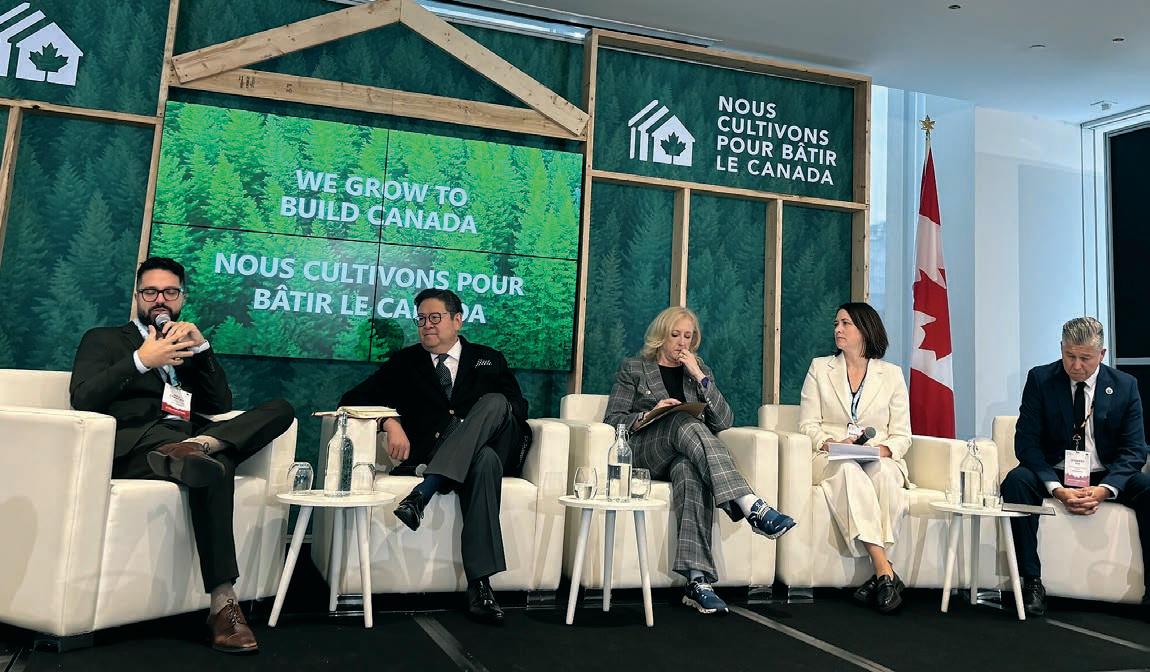
Themed “We grow to build Canada,” FPAC’s annual conference featured a panel session on reclaiming Canada’s competitiveness. Moderated by Moe Kabbara, president of The Transition Accel-
erator, the discussion included Lennard Joe, CEO of BC First Nations Forestry Council; Shenandoah Johns, chief environment and sustainability officer at West Fraser; Gary Mar, president and CEO of the Canada West Foundation; and Lisa Raitt, cochair of the Coalition for a Better Future and vicechair of global investment banking at CIBC.
To regain Canadian competitiveness, Lennard Joe said that the forest products sector needs to
(L to R): One panel session focused on reclaiming Canada’s competitiveness featuring moderator Moe Kabbara and panelists Gary Mar, Lisa Raitt, Shenandoah Johns, and Lennard Joe. Photo: Andrew Snook.
have everybody in the room with an understanding of the depth of the various relationships between everyone involved.
“Being First Nations from B.C., looking at not just the structure of governance, but really a structure of discipline. What are you coming into the room with, and what is your responsibility? Within our organizations, everyone probably talks about continuous growth, continuous improvement, but what does that really mean on a national stage and on a global stage? And so, get everybody into the room, find out what your job is and your responsibility, work collaboratively, make the decisions and actually create some action,” he said.
Shenandoah Johns told the crowd that faster, thoughtful regulatory framework is necessary for the survival and competitiveness of the forest products sector in Canada.
“The U.S. Inflation Reduction Act (2022) was implemented with speed. In Canada, here we have incentive tax credits that were introduced in 2022, and we’re still waiting for biomass. So, the opposite of speed. You see two extremes there,” she said.
Johns added that there is a need for federal and provincial governments to eliminate duplication within their regulations that generate inefficiencies within the sector and to create more certainty.
“Carbon taxes are a good example. Investors can get their heads around certainty. In Finland, they have five times the mass timber market that we do in Canada with 12 times less forested area, and they have a carbon tax,” she said.
Lisa Raitt, a former long-time MP for the Conservative Party of Canada who was appointed minister for natural resources, labour and transportation throughout various stages of her political career, acknowledged that Canada’s proximity to the U.S. has been an economic opportunity. However, while there has always been competitiveness within the sector between the two countries, Canada’s forest products sector has never faced a threat like the one today from its neighbour to the south.
“It’s about something more significant in terms of wanting to actually take away the market share of Canada, and as a result, we have to look at things differently,”
she said, adding that the country needs to stand united in order to weather the current economic storm. “That is going to have to be the secret sauce and making sure that as we move forward from a competitive lens, we just can’t continue in this role with the United States where they call the tune and we dance to it.”
Gary Mar noted that the longstanding Canada-U.S. relationship goes far beyond Prime Minister Carney and U.S. President Donald Trump, from provincial and state governments working together to our tightly integrated supply chains, and more, but added that some market diversification is needed.
“We have to double-down on our efforts with our biggest market, which will always be the United States – the geography is the biggest factor in what we do –while at the same time, we need to be able to expand marketplaces,” he said.
TR ADE INFRASTRUCTURE
Mar said one of the key areas that Canada needs to focus on to diversify its markets is improving its trade infrastructure, noting that two-thirds of Canada’s GDP comes from exports, 75 per cent of which goes to the U.S.
“If we don’t expand our capacity, then there’s a problem, because if you can’t move it, you can’t sell it, and if you can’t sell it, you’re not growing your economy,” he said. “I would look at where it wants to go, and how to get it there, and where are the bottlenecks.”
Mar noted that Canada’s major ports in Vancouver, Montreal and Prince Rupert are all ranked in the lower 15 per cent in terms of efficiency in the world by the World Bank Group; and that The Port of Montreal and Port of Vancouver both have some of the lowest rankings from the World Economic Forum.
One piece of good news that Mar shared is that the four western provinces and the three territories have all signed a memorandum of understanding (MOU) related to trying to build a port corridor from Prince Rupert, B.C. to Churchill, Man. He added that the groups of projects being reviewed by the newly formed Major Projects Office include improving trade corridors across the country.
“Now it’s harder to quantify what the value of the ROI of a trade corridor is,
but it’s important to be able to move what you’ve got to where it needs to go. I think it’s critically important. So, I think the federal government is moving in the right direction, but it’s got to move at the speed of government. It cannot move at the speed of bureaucracy,” Mar said.
Johns added that she would like to see rail infrastructure be made a priority within the Major Projects Office.
“Fifty to 60 per cent of our products moves by rail, given the vastness of this country and the rural communities we work in,” she said. “If the rail cars don’t show up, or if there’s labour disruptions, it really can be very crippling to our industry where we don’t necessarily have lots of storage. So, you can see mills having to take outages or curtailment within a week.”
For expanding the mass timber market, Mar said Canada needs to look at current regulations with respect to municipal building codes, government procurement, and challenges related to attracting capital to that part of the wood products sector.
“Governments need to work with industry to figure out how to do all those things at the same time. It’s not good enough to have one party working towards it without all parties working towards it,” he said.
FIRST NATIONS AT THE TABLE
One of the keys to Canada improving its competitiveness in the forest products sector and beyond is to ensure First Nations economic participation and reconciliation is part of these processes.
In B.C., where there are 204 recognized First Nations and 32 distinct languages, leaders formed the First Nations Leadership Council, which is comprised of the political executives of the BC Assembly of First Nations. Joe said this type of structure is the start of having everyone coming into the room and understanding what they are responsible for.
“What we’ve done in B.C. is we’ve gotten a strong enough First Nations base that has come forward and said, ‘Here’s how we govern ourselves, and here’s how we have the responsibility for the land, and here’s what we can bring into the room,’” he said. “The success of anything is the ability to attract investors, and when you attract an investor, they’re
going to put in the work themselves. But you have to prove that.”
B.C. was one of the first provinces to accept into law the Declaration on the Rights of Indigenous Peoples Act (DRIPA), which mandates the province to bring provincial laws into alignment with the United Nations Declaration on the Rights of Indigenous Peoples (UNDRIP); and develop and implement an action plan in consultation and cooperation with Indigenous peoples to meet the objectives of the UNDRIP
“When you have a law, it becomes responsibility. We now have the responsibility of now getting into the room, having a seat and saying, ‘Here’s how we’re going to move forward,’” Joe said.
For working with the forest products sector, the First Nations Leadership Council created the BC First Nations Forestry Council, which allows First Nations to sit with the province and work on the transformation of forest policy and regulations, Joe explained.
“I think that’s what we’ve got to do with Canada,” Joe said. “We can make that happen… everyone comes into the room with a different level of understanding and responsibility, and it takes many times being in that room through the iterative approach of coming back around to make things work.”
WILDFIRE REGULATIONS
Forestry companies are well equipped to be part of forest fire mitigation strategies in Canada. However, regulations and investments need to improve to allow companies to better manage the forests.
“I think that there’s a very compelling economic and climate change argument, and right now, I think our regulation does not permit that,” Johns said. “Here’s an example that industry is facing. You’ve got regulation that protects migratory birds and fish and caribou, all good things, right? But in terms of activating into the land base to reduce the fire risk and the fuel loading on the ground, it can take one or two fire seasons to pass before we’re able to do that. So those are very pragmatic issues getting in the way of balancing those things.”
COURAGE TO MAKE CHANGES
Raitt noted that the building blocks of
competitiveness are decreasing expenses and expanding markets.
“Under decreasing expenses comes the regulatory reform and the courage of the politicians to follow through on that regulatory reform, and they have to be reminded that what regulations are, it’s just risk management,” she said. “And if the regulations don’t make sense for the mission that we now have, which could be very different from the one that we’ve had for the last 100 years, well then we have to amend our risk appetite, quite
frankly, and that takes a lot of courage from politicians.”
Raitt added that FPAC, forest products companies, and the communities across the country that are bound together by the forestry sector, have to raise their voices to make sure that politicians hear their concerns.
“We are at a point where a non-decision is a decision. So not wanting to go forward with regulatory reform, well, that’s your decision, because we’re at that point,” she said.
A LONG WAY TOGETHER
FORESTECH
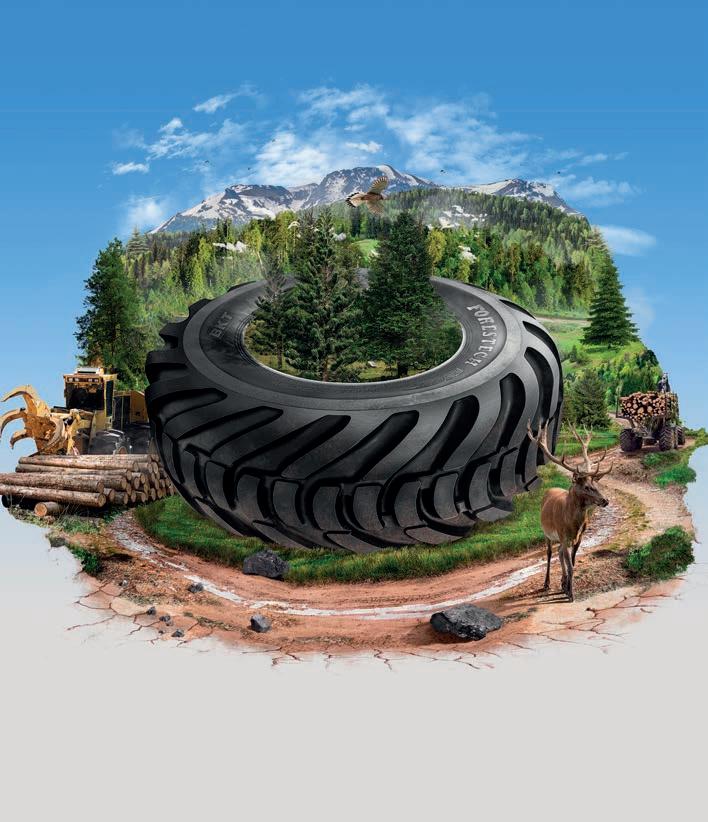
FORESTECH is a BKT bias steel-belted tire, suitable for forestry applications with forwarders. It provides excellent traction even in heavy-duty service and applications. Its strong bead and shoulder area ensure high puncture resistance as well as a longer tire life cycle. As a result, you can deal with the toughest working conditions in the forest without concern.
Choose the BKT range for forestry applications!
Joe Dias
Eastern Zone Manager
Directeur Régional, Est du Canada
BKT Tires (Canada) Inc.
Cell: 514-792-9220
Web: www.bkt-tires.com
OPTIMIZING WOODLANDS OPERATIONS
The Gorman Group shares its challenges and successes
BY ANDREW SNOOK
You don’t manage a successful wood products company for 75 years without learning a thing or two about how to manage woodlands operations.
Producing lumber since 1951, the Gorman Group in the B.C. Interior has continued to grow its business despite the many challenging headwinds facing Canada’s wood products sector. The company’s most recent growth took place earlier this year with the completion of the purchase of
Weyerhaeuser’s lumber mill in Princeton, B.C. One of the reasons for the group’s success has been its ability to optimize its access to fibre within the company’s woodlands operations.
“Some of the biggest challenges that we currently work through in the Gorman Group are managing our log inventor y to reduce degradation,” says Greg Hislop, woodlands general manager for the Gorman Group, based at the
By ensuring road permits and cutting permits are set up several months in advance, the company also reduces the number of potential interruptions for logging contractors.
company’s operations in Canoe, B.C.
After every fire season, the company works hard with the B.C. Ministry of Forests to get permit approvals on burnt stands to be able to harvest them before they deteriorate and lose value.
“We’ve had some good success there, but that needs to continue to be a focus,” Hislop says. “That’s something that we do well here in the Okanagan, accessing those stands. You have six months to a year before you end up with some serious deterioration.”
and cutting permits at least six months to a year ahead of time. The company used to target having two years of standing timber inventory, but with approvals processes changing and becoming more challenging, 12 months is a more feasible target and helps maintain a certain degree of flexibility.
“WE HAVE EVERGREEN CONTRACTORS, AND WE TRY TO KEEP THEM GOING, AND THAT KEEPS THEIR COSTS DOWN AND KEEPS THEIR EMPLOYEES WITH THEM.”
Once those logs are cut and delivered, they cannot be left to sit around and deteriorate further in the log yard. For that reason, Gorman Group focuses on keeping its inventories low in the yards during the summer periods when the drying takes place.
“We really focus on log quality and try and maximize log product value,” Hislop says. “We make sure that the feedback is given to the contractors and quality issues are promptly corrected. Our operations super visors and scaler go out to the bush and make sure that we’re getting proper log lengths and quality, that’s super important.”
Part of ensuring the fibre’s value is maximized is finding the right mill for every log.
“Not everything goes to the closest destination. Sometimes it’s worth taking it further, to either Gorman’s West Kelowna mill; or to the Canoe plywood plant; or to Downie Timber, depending on the species, to get the right product mix, that’s key,” Hislop says.
WORKING AHEAD
On the permitting side of operations, Gorman Group works to maintain approved road permits
“It allows for market changes. Sometimes you can delay a block if, for example, Hemlock saw log values are not working for you. Then you can focus on other areas and then come back to those blocks when it’s appropriate. You’re not forced into these areas at inopportune times,” Hislop explains.
By ensuring road permits and cutting permits are set up several months in advance, the company also reduces the number of potential interruptions for logging contractors, which is important to keep their work flowing and spread mobilization costs.
Hislop says he prefers to focus work in areas over 10,000 cubic metres available at a time.
“Otherwise, you’re too fragmented and your costs are too high,” he explains. “When practical, we try to keep volume flowing to provide contractors with continuous work, to keep their hours up and keep their people. It’s a struggle right now with markets the way they are, but that is a focus. We have evergreen contractors, and we try to keep them going, and that keeps their costs down and keeps their employees with them.”
A careful balance needs to be weighed between keeping their contractors working and being mindful of log inventories. Communication between the company, contractors and First Nations in the areas being harvested is key to creating successful partnerships.
“We’ve really worked at improving our communications and work with First Nations, trying to make sure that their culture and values are respected and build relationships. This helps us keep forest management heading in the right direction, which in turn keeps logs flowing,” Hislop says.
The company also works regularly with the BC Council of Forest Industries (COFI) to ensure they are providing constructive feedback to the provincial government to help make operations as efficient as possible.
“I think there’s a big onus there to ensure that we give credible and constructive feedback and try and make things move smoother.” Hislop says.
THE RIGHT PEOPLE
Another key to the successful woodlands operations at the Gorman Group is its ability to lean on an experienced staff.
“From an efficiency point of view, having people that have been around for a while and developing new people for the long term is super important so you’re not having to spend much
time doing double coverage, and they grow and can take on a lot of responsibility,” Hislop says.
Gorman Group also has log purchasers that meet with private landowners and woodlot owners that the company purchases additional wood from. These people are key as they are often the face of the company.
When it comes to training people for woodlands operations, one of the key pieces of advice Hislop has is for managers to listen to their logging contractors.
“The feedback you get is necessar y,” he says.
There are currently significant challenges with staffing in the industry in B.C., and new people that are coming into these types of positions may not have a lot of experience, so training should focus on log flow, log quality, and keeping contractors working.
“Think about log quality, and how you maintain your contractors, maintain logs across the scale, maintain your inventories. It’s all about thinking about the flow of wood and trying to work at that. If you have the ability to increase your standing timber inventory, or your cutting
Hislop prefers to focus work in areas of over 10,000 cubic metres at a time to control costs and keep volume flowing to contractors.
permits and your road permits, to make those efficient decisions, that’s good,” Hislop says.
He adds that new staff should get as many opportunities as possible to learn the ins and outs of the operations they are responsible for managing.
“Gain as much experience as you can and spend as much time as you can looking at logs or looking at blocks, looking at areas to get that
experience, so that you can make good decisions when you’re in the office,” Hislop says.
He also recommends people take the BC Forest Safety Council’s supervisory courses.
“That would be a good place to start outside of your normal technical and university training. They have a ton of information there on steep slopes and safe work practices,” he says.
INCREASING THE TIMBER HARVESTED ANNUALLY
Earlier this year, the B.C. Minister of Forests Ravi Parmar had stated a target of 45 million cubic metres of timber harvest. Moving measurably towards the target is vital for fibre supplies for wood products companies throughout the province.
“I can’t say enough about the health of the contractor force, and the need for communities and sawmills to have that,” Hislop says. “That continuous flow of affordable volume, it’s not there yet. There are people working to get there, coming up with plans, but that’s, in my mind, what needs to happen to have a healthy forest industry in this province. And so, the more we can do to streamline approvals through and get volume up for sale through BC Timber Sales, that that will help make things more efficient,” Hislop says.
THE LEGENDARY FORESTRY GRAPPLE
Hultdins has long been a world leader in highly engineered by-pass style grapples. SuperGrip SG Grapples are the forest industry standard on log trucks and forwarders. Our traditional SuperGrip SG Grapple models have become common on excavators for tree service, land clearing, feeding chippers or grinders, and part time logging. All SG Grapples are equipped with Indexator GV Rotators. Links are available to match any forwarder, log truck, or excavator mounts. Since its launch in the mid-1990s, we’ve continually improved the SuperGrip to meet increasing productivity demands.
Greg Hislop, woodlands general manager for the Gorman Group.
Photos: Gorman Group.
sponsored content
A home for wood products
Canada’s housing crisis is a sizable opportunity for the forest industry.
Canada is synonymous with trees. Covering nearly 40 per cent of our land mass, close to nine per cent of the global total, Canada’s forests hold the answers for many who work and play there.
The forest is also the answer to a growing national crisis: housing.
Since 2020, Canada’s population has sharply risen, fuelled by immigration, and its housing stock failed to keep up. The Canada Mortgage and Housing Corporation estimates 3.5 million homes must be built by 2030 to keep up with demand.
Rick Jeffery, president and CEO of the Canadian Wood Council (CWC), works closely with the home building industry, the largest driver of domestic lumber sales. He is well versed in these numbers. “Essentially we’d have to go from building 250,000 housing units a year in Canada to building 500,000.”
Those targets are impossible to achieve with traditional construction methodologies, Jeffery says. Housing in many regions – Ontario in particular – is as unaffordable for builders as it is for buyers. The cost of land, development charges and taxes, permitting delays, and the cost of building materials and labour all work to make new builds out of reach.
But, Jeffery says, with the right mix of government actions, funding, and industry investment, Canadian wood is poised to help solve the housing crisis.
Canada’s housing starts are 70 per cent multi-family and 30 per cent single family, meaning the market trends toward higher-density residential construction. Mid-rise, light wood frame apartments and condos are well-known to be the most affordable housing type, but traditional construction methods can be slow and face expensive regulatory hurdles.
Changes to Canada’s building codes over the past
decade now allow up to 12 floors out of wood, with some provinces allowing up to 18. The new regulatory landscape reflects modern wood technologies, such as encapsulated mass timber solutions, which remove past obstacles to densifying cities with wood high-rises. Yet wood has a less than one per cent share of the 7- to 18-storey market – a significant area for growth, Jeffery says.
“There’s room to see how we can build that sector out in a way that can bring costs down and be one of the solutions for affordability,” he says. This is the remit of the CWC, working with architects, engineers, construction companies and governments on codes and standards and technical support to make wood the affordable low-carbon construction option. And a large element of affordability is standardization.
The current federal government has taken significant preliminary steps to address the housing shortage. In September 2025, they launched Build Canada Homes, a new federal agency with $25 billion and a mandate to scale affordable home construction. Canadian lumber and modern wood solutions, such as mass timber and modular construction, have featured heavily in their talking points. They
aim to double current annual housing starts to 500,000 units.
Jeffery says while the feds intend to mobilize Canada’s wood products industry, it remains to be seen how the new agency carries out its marching orders. It’s a period of “extreme consultation,” he says. At the end of the day, it’s a procurement conversation.
“Industry needs continuity of orders. It’s a boom-and-bust business right now,” Jeffery says. “Government can use procurement on non-market housing, social housing, these kinds of things, to do two things. One, provide that steady flow of business that allows industry folks to invest in their capacity. And then to provide loans and grants to build out that capacity.”
For primary lumber producers, the challenge ahead is to work with the industrialized construction folks to supply the right raw material off-site manufacturers need to scale modern methods of construction, such as factory built, modular, and mass timber. In short, the parties need to work together to find solutions.
Another step in the solution is firming up the supply chain for modern wood homes. Jeffery foresees the creation of industry expertise clusters to supply to Canada’s urban centres where demand will peak. For some producers, that could mean vertically integrating to produce both primary and secondary products. Other options could be partnerships and co-ops.
When modelled out by the CWC, the opportunity in front of the forest industry is more than double the current demand for domestic residential construction, from 1.7 billion bd ft to 3.7 or 4 billion bd ft. That’s roughly 20 per cent of Canada’s current lumber production.
“Time is of the essence. We need solutions now,” Jeffery says, while noting the solution, like the problem, is multi-faceted. But one way or another, Canada’s wood products industry will be a part of it.
That’s encouraging news, says Sarah Hicks, CWC’s manager of communications and outreach.
“Wood products can be locally sourced all across Canada. We have the natural resource, the primary industry – the sustainable forestry, harvesting, and sawmill operations – and we have value-added operations along the supply chain, from engineered wood product producers and small companies fabricating trusses and panels all the way up to mass timber manufacturers or modular manufacturers. The industry is really in this amazing stage of advancement and positioned for growth,” Hicks says.
Forestry is already a critical piece of the national economy, contributing $27 billion to GDP in 2023. Realizing this domestic homebuilding opportunity would boost lumber production and value-added wood products manufacturing,
sponsored content
creating a ripple effect along the value chain. A strong Canadian expertise in modern methods of wood construction would lead to new export opportunities in the future.
Weathering years of external headwinds, for the primary industry in particular, has made investment challenging, but now is the time to grow and make incremental investments that focus on the significant domestic need, Hicks says. “If we invest in new scalable technologies and we invest in training people, this industry can build on its existing strength to capture more value from our forest resources and create lasting economic benefits.”
Procurement conversations can be small and local, too. New schools, civic centres, and hospitals in our communities are conversations all should take part in, Hicks says. Building with wood is the low-carbon solution to creating the infrastructure needed in a way that is not accelerating climate change.
Looking at the bigger picture of Canada’s housing crisis, this industry can be proud of the solutions it has to offer, Hicks says. Building with sustainably harvested wood products will continue to support the industry, significantly reducing the carbon footprint of the built environment, all while housing people. The puzzle pieces fit in a meaningful way, she says.
“The Canadian forest industry is one of the most sustainable industries in the world,” Jeffery says, “and we should be leveraging that to build these homes. The challenge in front of us in the industry is capturing that opportunity.”
Created
WOODPRODUCTS
THE LAUNCH OF GROUPE BNG ÉCO MODULAIRE
A chat with William Lebel
BY ANDREW SNOOK
On July 31, Boisaco, La coopérative forestière Nord-Côtière, and Éric Gagnon signed a shareholder agreement leading to the creation of Groupe BNG Éco Modulaire Inc.
The company, which officially started up operations on August 4 at former wood processing facilities located in Longue-Rive, Que., will design and produce sustainable and economical modular homes using local materials and low-environmental-impact practices.
“Groupe BNG Éco Modulaire is part of an effort to consolidate the socio-economic vitality of the Haute-Côte-Nord region, while emphasizing respect for the environment. Through its factory manufacturing model, the company optimizes the use of local forest resources, reduces waste, and limits transportation; thus, fully embracing a circular economy approach,” the company stated during the original announcement of its launch.
To learn more about the formation of the company and its future goals, Canadian Forest Industries reached out to William Lebel, president of Groupe BNG Éco Modulaire for more details.
HOW WAS GROUPE BNG ÉCO MODULAIRE FORMED?
William Lebel (WL): The idea for the project was
born following a discussion between Mr. Donald Perron, Mayor of the Municipality of Longue-Rive, and Mr. Éric Gagnon, the third shareholder of the project. The municipality has owned the site since the closure of the sawmill and Mr. Gagnon owns a construction company in another region of Quebec and has North-Shore roots. Mr. Perron contacted Mr. Gagnon to inform him of the possibilities that the Longue-Rive site could offer. Interested, Mr. Gagnon was introduced to Boisaco and La NordCôte, two companies that have been established for 40 and 54 years in the region that have found the project promising and embarked on the adventure.
HOW MANY PEOPLE DO YOU EXPECT TO EMPLOY WHEN FULLY OPERATIONAL?
WL: The development of the organization is currently planned in two phases. At its full potential, we believe that nearly 50 people could work there.
WHAT ROLES WILL BOISACO AND COOPÉRATIVE FORESTIÈRE LA NORDCÔTIÈRE PLAY WITHIN THE COMPANY?
WL: Boisaco will supply some wood products for modular homes. Forestry operations will also
”At its full potential, we believe that nearly 50 people could work there.”
be managed by Boisaco and its various service providers. Coopérative forestière La Nord-Côtiere specializes in silvicultural work and its participation in the project is at the level of administration and management of the new company.
WAS A GREAT DEAL OF INVESTMENT NEEDED TO CONVERT THE FACILITIES IN LONGUE-RIVE FOR BUILDING MODULAR HOMES?
WL: For the first phase of the project, the installations did not require any modifications. Upgrades had to be made to the electrical and organizational systems. The second phase, which should include automation, will require more adaptation to the facilities.
WHAT DO YOU HOPE WILL BE THE ANNUAL PRODUCTION FOR THE FACILITY?
For the first phase, we aim to validate our niche.
We should be able to produce about 40 units in our first phase.
WHAT ARE THE BIGGEST OPPORTUNITIES AND HURDLES FOR FUTURE GROWTH?
WL: The facilities, the proximity to the raw material and the strength of the partner group will surely have a positive effect in the development of this new company. The context of housing shortages combined with certain government priorities positions us advantageously. On the other hand, the location of our production site in relation to the market will bring us an interesting challenge where we will have to distinguish ourselves by the quality of our product and the adequacy with customer expectations.
For more information on Groupe BNG Éco Modulaire, visit: www.groupebng.ca.
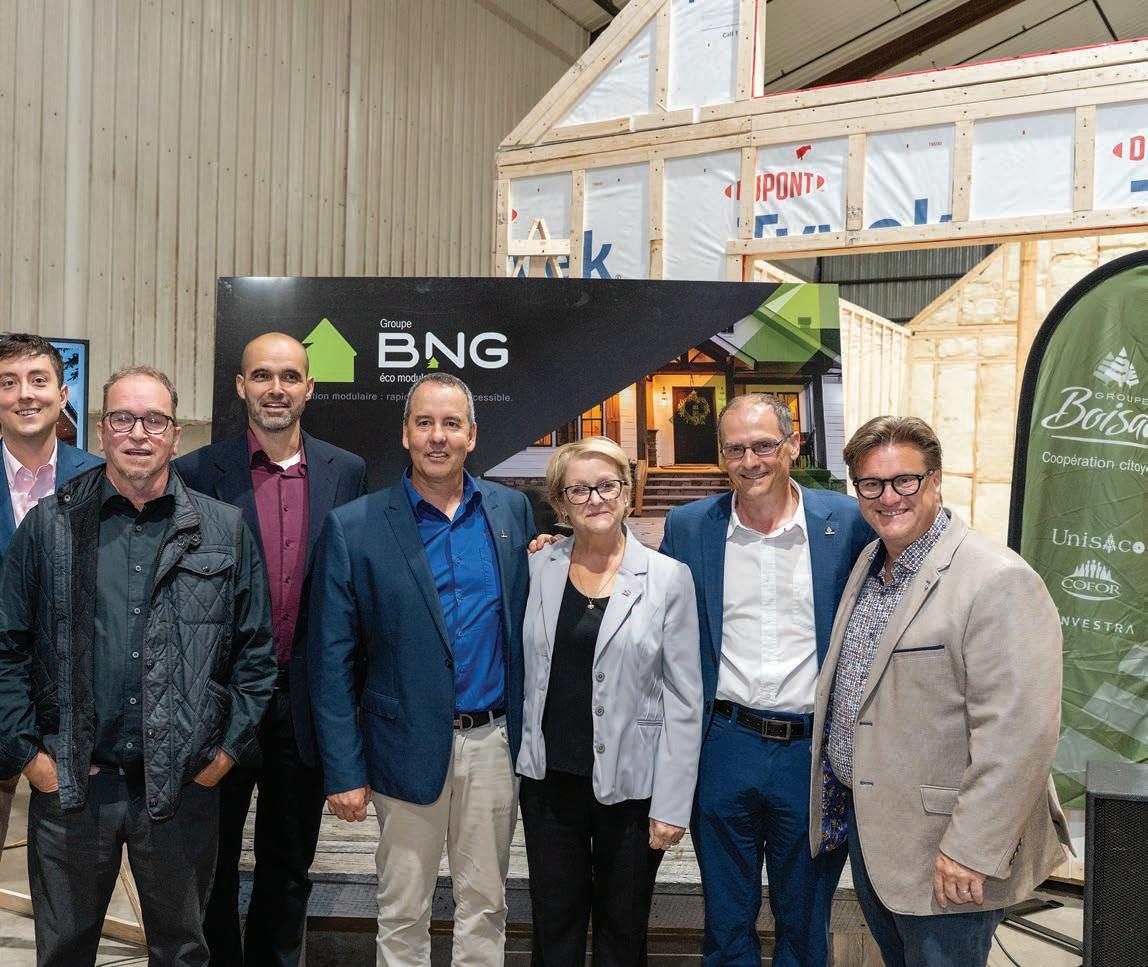
Groupe BNG Éco Modulaire Inc. president William Lebel (fourth from left) poses with team members during the official launch of the company. Photo: Groupe BNG Éco Modulaire Inc.
CANADIAN
WOODPRODUCTS
THE NEXT GENERATION
Elmsdale Lumber succession continues family tradition
BY ANDREW SNOOK
The forest products sector is unlike many other industries in Canada. You’ll often hear from those active in the sector that sawdust is pumped into their veins at an early age. Growing up in the bush or around a mill is common for the younger generation of workers, who often were half-raised in their parents’ pick-ups, spending time with them as they worked the mills or logged the forests – and their parents were often raised in a similar fashion. Simply put: the forest products sector is very much a family affair.
A prime example of this can be found at the Elmsdale Lumber Company (ELCO) in Elmsdale, N.S., where the company recently completed the successful succession of the fourth-generation, family-run mill to its current president, Mark
Wilber. Mark recently took over the role from his father, Robin, who ran the company from 1976 until April 5, 2025. Robin continues to hold an active role as Chairman of the company and is regularly on site to continue to share his decades of experience with his son.
THE BEGINNING
ELCO’s roots date back to 1917 when Walter Wilber began producing lumber in Elmsdale to ship to the U.K. to supply Canada’s key ally in the First World War.
His son, James Wilber, joined the family business at a young age, learning the family business. James ended up taking a job with Charlie McCulloch purchasing lumber from various small mills across the province to supply the U.K. during The Second World War. After the war ended, the Wilber family continued to purchase lumber from the many other small mills operating with a focus on supplying the U.K., as there was not a strong domestic demand in Atlantic Canada for the lumber being produced there.
“These small mills were run by mechanics, people who knew how to run a mill. But they had no sales expertise, and to get a contract in Britain, you had to go there, we didn’t have internet,” Robin explains. “Dad was a business guy who grew up in the lumber business. And so, he travelled to England and got good contracts, and then he had to buy lumber from a lot of these smaller mills.”
Back then, a licensed grader was required to place a British stamp on the lumber.
“You had to be trained on what the British requirements were. You had to go to the Maritime Lumber Bureau in Amherst to take a three-week course,” Robin explains. “We had graders, so we would buy lumber from all kinds of mills and bring it into Elmsdale, grade it, and package it. The
BUILT FOR THE LONG RUN
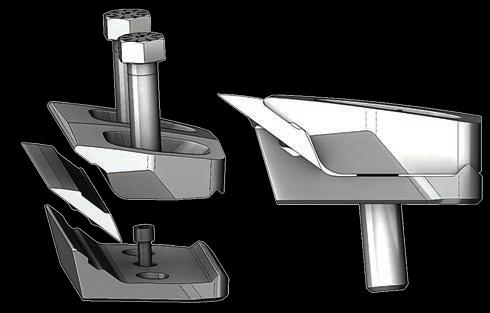
From steel formulation to clamping design, every detail of Blade’s disposable knife is precision-engineered to perform, cut after cut.
• Cleaner cuts for superior surface finish and grading
• Fast, precise knife positioning
• Longer edge life and reduced downtime
• Easier maintenance, faster cleaning
• Lower operating costs
It’s not just a cutting tool—It’s OEM intelligence applied where it matters most.
small sawmills didn’t realize that the British wanted a nice, neat package with the straps put on straight – it says something about your product. Dad knew that. He toured the mills and saw what he was competing with and trained our guys to do it right. So, we became known as a U.K. mill.”
SIMPLY BETTER
In 1950, James and his friend, Fred Miller, purchased the sawmill for $25,000 from his father and incorporated Elmsdale Lumber Company. Miller ended up selling his 50-per-cent stake in ELCO to Luther Anderson in 1960, which was then purchased by Robin in 1976, making ELCO 100-per-cent owned by the Wilber family.
In 1990, ELCO produced 9.6 million board feet of lumber using two sawmills. Under Robin’s leadership, the company grew to producing approximately 30 million board feet of lumber on a single shift, five days a week with 50 full-time employees.
Mark is ready to take the reins of the family business. He holds a lumber grading certificate from the Maritime Lumber Bureau and embraces the adoption of modern sawmill technologies to enhance
efficiencies. Mark is extremely active in Atlantic Canada’s forest products sector offering his service to the Maritime Lumber Bureau as a member of the Quality Control Committee; the president of Forestry Safety Nova Scotia; and as a member of Forest Nova Scotia.
“Elmsdale Lumber is all I have ever done, and I’ve been around the mill since long before I was legal age to work. This is my passion; therefore, making the transition mostly seamless. I couldn’t picture myself ever doing anything else, as I also have sawdust in my blood,” Mark says.
While he is settling into his new role as president, a fifth generation of the Wilber family is already active in the family business.
“My 19-year-old grandson is taking business administration at Nova Scotia Community College. He just started his second year, and he’s been with us for four summers working in the mill,” Robin says. “We’ve moved him around as much as we could so he could get some experience. He’s got a real interest in it, so that’s a good thing. Maybe we’ve got number five coming – and I might live long enough to see it.”
MILL OPTIMIZATION
Over the mill’s 108 years of operation, it has undergone many transformations. Over the past six years, ELCO’s operations have undergone significant upgrades.
“We knew we needed to do some modernization. Stuff was getting old and worn out, and everything we were doing was manual,” Mark explains. “We had a lot of manual labour in the mill. Everything had to be manually positioned, even our two-face cants had to be
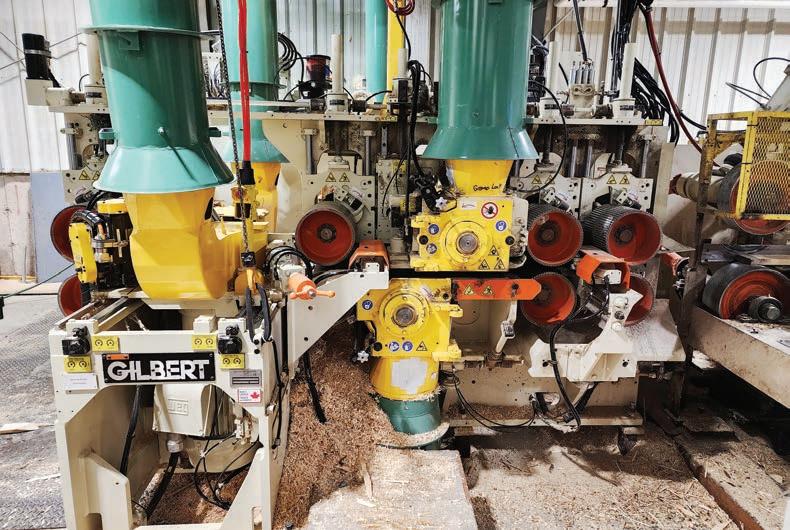
To solve a bottleneck in their planer mill, ELCO decided to purchase a new Gilbert S-Series planer earlier this year.
manually positioned, lined up with lasers showing where the saws were going to cut.”
When putting together their plan for upgrading the mill, ELCO had three focuses: to modernize equipment to improve recovery; to replace worn out equipment; and reduce the manual labour required.
“We’ve successfully done all three,” Mark says.
The investments started with the replacement of the wooden building housing the mill, which was decided quickly out of necessity when the company was notified by their insurance company that it was no longer insuring sawmills anywhere around the world. In 2020, ELCO decided they needed to remove the old combustible building so they could find another company willing to insure them.
“At the same time, COVID happened and the lumber markets went wild. The money was rolling in so we very quickly started planning what we were going to do for equipment, booking production slots with machinery companies and told them what we needed. It was kind of a
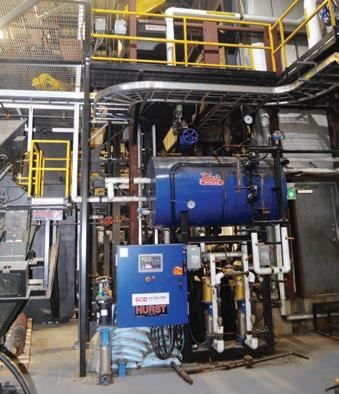
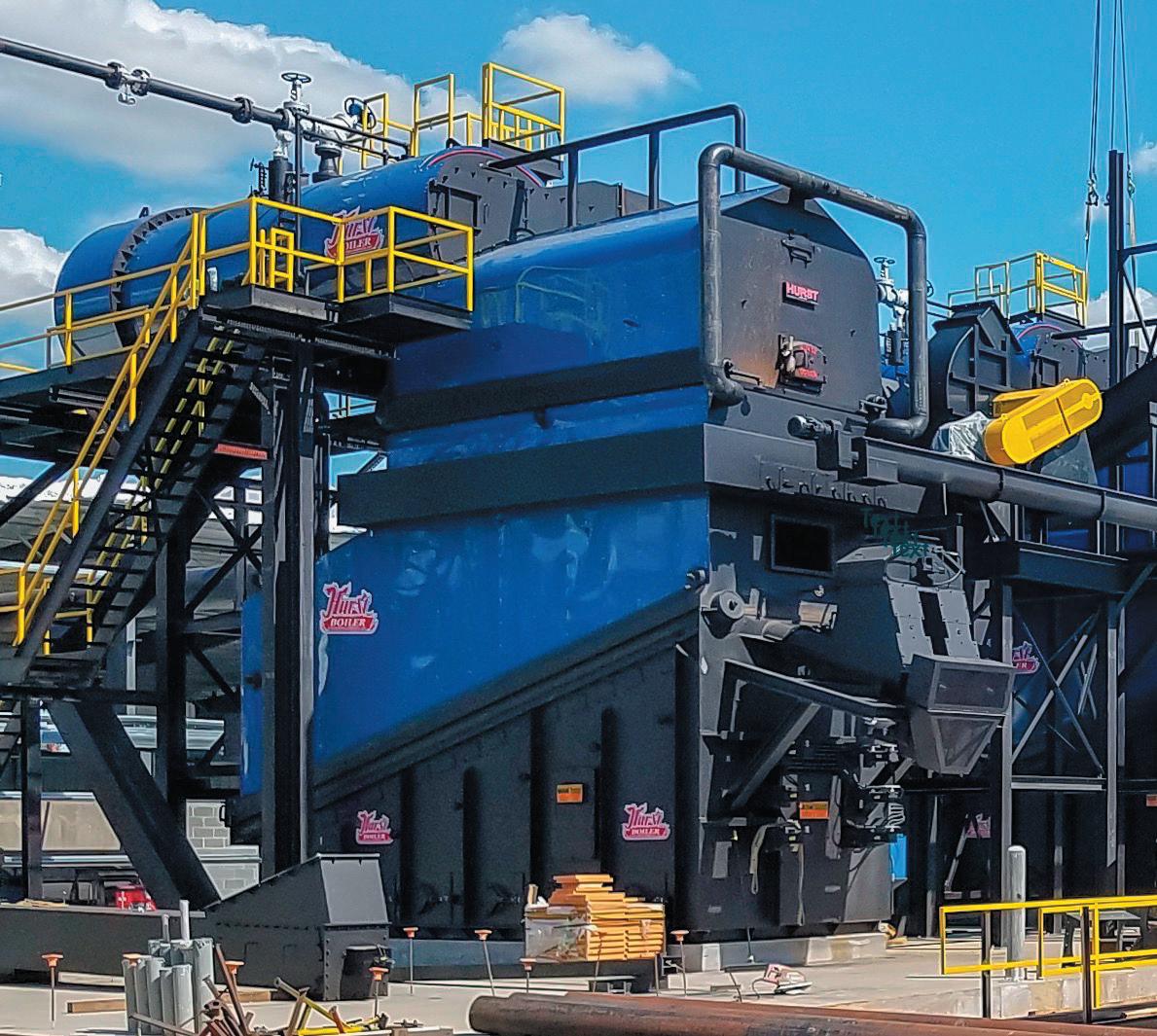
ELCO recently invested in a new Hurst Boiler, which has reduced fuel usage and improved the control of heat to the dry kilns.
perfect storm that enabled us to do what we’ve done,” Mark says.
One of the first major projects undertaken in the past six years was the installation of a new board edger, curve saw and gang saw designed and built by McDonough Manufacturing, which had
purchased Fredericton, N.B.-based Valley Machine Works a few years earlier.
“We had a Valley machine combination board and gang edger in the mill from 1995 up to six years ago. We loved that design and way of sawing, so McDonough stayed with the type of equipment that Valley was doing, and we went with them for the board edger,” Mark explains.
While ELCO did get quotes from multiple suppliers, their previous positive experience with Valley equipment and McDonough’s close proximity to the mill for servicing, made them the right fit, he adds.
“Previous to that, we put in an optimized drop saw trimmer made by TS Manufacturing in Lindsay, Ontario, and a bin sorter, so we were ready for it. We put the board edger in, continued to run our old gang, got the board edger perfected, then we shut down last January for 32 days and completely tore out everything in the mill from the halfway point out. It was a blank slate. Then 32 days later, we were starting up our new gang saw. What a massive difference,” Mark says.
Once the new board and gang edger were running smoothly, ELCO quickly identified its next bottleneck. Prior to the new equipment being installed, staff were manually positioning the board edger resulting in a tremendous amount of 1’x3’s and 1’x4’s that weren’t being captured, all ending up in chips. When the Northern Pulp mill in Abercrombie shut down, shipping the chips out was no longer an option.
“They were our biggest customer. They took all of our residuals – bark for their biomass energy facility and our sawdust. When they left, it was a huge hit to us. The selling price for our bi-products dropped to approximately a third of what Northern Pulp paid. For the volume we had, that was a massive hit,” Mark says.
When the board edger came along, chip production went down, but they started recovering all the 1’x3’s and 1’x4s. The mill’s old planer required a significant amount of manual labour due to smaller pieces like 1’x3’s and 1’x4’s having difficulty getting processed, creating jams and bottlenecks in production.
“We had an older push-type planer,
where a piece in the planer had to be pushed through by the next piece coming in on the infeed, and the little pieces –1’x3’s and 1’x4’s – would overlap and go into the machine and break. If we got 30,000 board feet of 1’x3’ through our planer in a day, we were doing pretty good. With our maintenance staff over there tearing their hair out, it was down more than it was up. So, we had to buy a new planer and a new infeed for the planer mill,” Mark explains.
To solve this new bottleneck, ELCO decided to purchase a new Gilbert S-Series planer fed by a new TS Manufacturing and DO2 infeed system. Gilbert and ELCO have enjoyed a strong partnership for many years.
“Five years ago, Gilbert enhanced Elmsdale’s old planer by adding an automatic cutting-tool positioning system and an upgraded feed table to improve its safety and efficiency. These components were recovered and incorporated into the recent modernization project,” says Sylvain Lefebvre, senior sales engineer for Gilbert.
ELCO’s planer mill produces an impressive number of products ranging from
1’x3’s to 6’x6’s, including custom specialty items.
“What truly drives Elmsdale is flexibility, fast changeovers, and exceptional wood quality,” Lefebvre says. “To meet those goals, they chose the Gilbert S-Series planer, featuring advanced automation, a high knife count, and precision control. The result: a flawless finish, optimized production, and safer operation — all backed by Gilbert’s proven expertise.”
The Gilbert system is almost entirely automated, which is a huge help since it has become increasingly difficult to find people willing to work positions requiring heavy physical labour.
It only took two weeks to remove the old planer and swap in the Gilbert S-Series planer. To prepare for the installation of the new planer, ELCO tore down the old room housing its planer operations while continuing business as usual.
For its drying operations, ELCO also recently upgraded its boiler system a few years ago installing a new Hurst Boiler as part of an upgrade to the company’s kiln.
“The new boiler has reduced fuel usage and improved the control of heat to our dry kilns. Thus, improving the quality of our drying. It has also improved the lives of the boiler operators by way of the newer technology managing much of the work previously done by the operators,” Mark says.
FIBRE SUPPLY
Fibre supply has been challenging for ELCO since the loss of the Northern Pulp mill in 2020. Many small woodlot owners are interested in having their timber harvested, but much of the wood is low grade that would normally be destined for the pulp mill.
“So, if I harvest their land now, 50 per cent of the wood on that land they’re not going to get paid for. So now they’re anxiously waiting for a new pulp mill to be built,” Robin says, which would be a difficult feat as new pulp mills are in short supply across Canada. “It’s hard to convince people to put their land into management and harvest it. We desperately need a pulp mill. It takes lower quality wood that’s 50 per cent of the wood on the ground. That makes the harvesting worthwhile. It makes everything worthwhile.”
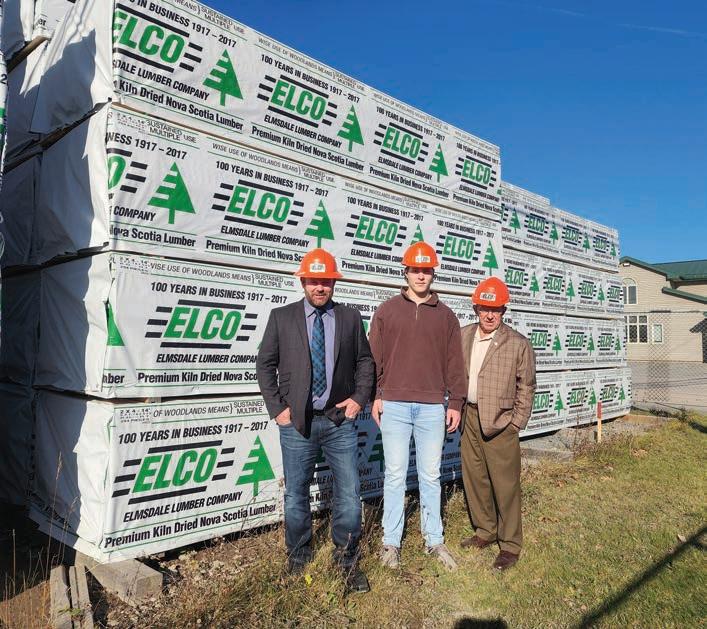
(L to R): ELCO president Mark Wilber; fifth generation of the Wilber family working the mill, Ty Campbell; and Chairman Robin Wilber.
Hurst biomass systems lead the alternative energy boiler market with innovative solid-fuel-combustion design
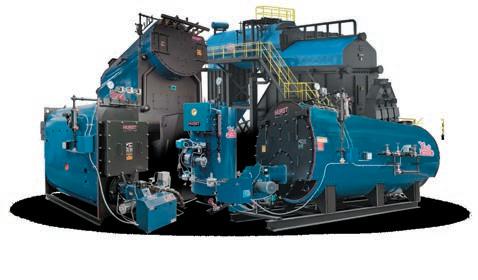
Hurst is a custom manufacturer of engineered packaged steam and hot water boilers and integrated boiler systems, renewable fuel fired gasification/ combustion/heat recovery systems, biomass & hybrid boiler systems, CHP/ co-generation systems, PLC-integrated boiler controls, parts & boiler room accessories. Fire-tube, water-tube & feedwater equipment for all industrial heating & process applications. Low NOx modular boilers & burners available.
Hurst Biomass Systems lead the alternative energy boiler market with innovative solid-fuel-combustion design.
Complete modular construction for easy low cost installation.
Hurst has specialized in custom design of biomass steam plants and cogeneration systems since 1967.
High Efficiency Integrated Control Systems
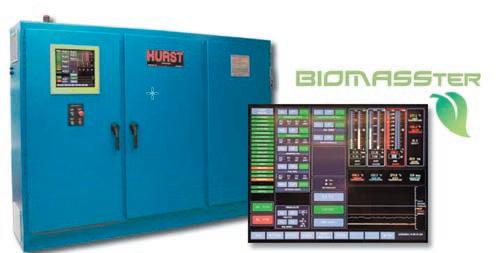
Offering integration and scalability, the new, high efficiency Integrated Control Systems from Hurst Boiler for boiler room monitoring and communications provide advanced supervisory boiler controls for all new and legacy Hurst products.
WOODPRODUCTS
DRYING DATA CONSOLIDATION
BY VINCENT LAVOIE
The wood drying process has evolved significantly in recent years. Think about how moisture content (MC), an important dr ying quality indicator, is measured and tracked. With a few notable exceptions, planer mills now feature an in-line
moisture meter to measure the MC of all pieces in a kiln load. Many lumber manufacturers have installed dielectric measurement systems inside their kilns to improve kiln shutdown, a key step when it comes to maximizing quality, productivi-
ABOVE: One major challenge for drying operations is consolidating all of their data in one location where analyses can be carried out, and findings and recommendations made. Photos: FPInnovations.
ty, and energy consumption. In addition, MC can now be estimated at the exit of the sawmill by using information on package mass, wood volume and species density.
Grade and MC information can also be grouped per load at the planer, something that is more than highly recommended when a traceability system has been implemented.
Most recently, the real-time monitoring of conditions has been integrated with the detection of kiln operating problems to ensure compliance with drying conditions and to optimize equipment productivity.
Despite this progress, drying precision can be further improved. Kiln loads are still dried without being optimized from a point of view of quality and/or productivity and/or energy efficiency.
PIECES OF THE PUZZLE TO PUT IN PLACE
A major challenge is consolidating all this information in one location where analyses can be carried out, and findings and recommendations made.
It’s as if each information component was a puzzle piece. While most mills have all the puzzle pieces, they have not necessarily put them in place.
How many times has it been nec-
essary to track down the following information in different places at the mill during technical support interventions in the form of coaching?
• Composition of the kiln load (often found in kiln load print reports);
• Freshness of the bundles loaded onto loading trains and time between package formation at the sawmill and the planing operation (information often compiled by hand and not used);
• Dr ying schedule and compliance with conditions (printed drying chart or available in the control system);
• Direct and indirect MC values provided by equipment integrated into kilns and used for shutdown (in the control system or Excel files);
• Moisture content values from validation hot checks using hand-held moisture meters (hard copies or in an Excel file);
• Length of time between dr ying completion and planing;
• Data on final grade at the planer, MC measurement, and planer productivity.
Many drying-related issues can be resolved by using the information provided by all these puzzle pieces. Grade and MC distribution per load at planing makes it possible to target successful and problematic loads after the fact, and then to guide actions to improve the process. This obviously requires – as has been said – being able to proceed to the traceability of the bundles at the planer. This is a critical piece of the puzzle that the industry must prioritize to promote advancement in the drying process.
JUDGE DRYING SUCCESS FIRST
A successful kiln load depends on successfully attaining a certain level of moisture content and controlling a small percentage of tolerated green lumber as well as the grade distribution that leads directly to product value. Both are closely linked. The goal of wood drying is to reduce the MC to the level required by the market. Too much wet wood will result in downgrading. On the other hand, it is known that over-drying wood will cause more drying defects due to higher shrinkage levels. Shutting down kilns at
Combustible Dust Specialists
Allied brings 49 years experience to help you meet current NFPA Standards with: system design/documentation, spark detection, isolation, grounding, PLC, venting, blast path management, clean-up systems and duct audits — CWB certified and member SMACNA.
Sawmill – Biomass – Boardplants – Pulp & Paper – Power Generation – Mining 50 years of
Vincent Lavoie is the the lead researcher for wood drying and smart manufacturing at FPInnovations.
IT MUST BE POSSIBLE TO ESTABLISH LINKS BETWEEN THE RAW MATERIAL, HOW THE WOOD HAS BEEN DRIED, KILN SHUTDOWN, STORAGE PERIODS, AND DRYING SUCCESS.
the right time at the greatest frequency possible becomes a key element of successful drying.
Once it is ensured that every kiln load at the planer that contains an acceptable percentage of green wood based on a set target is analyzed, a decision on when to shut down the kilns can be made. Loads whose green wood proportion exceeds the set limit become non-compliant, as do charges containing no green wood whatsoever. A success criterion for the grade must also be set by each company based on its objectives. Consequently, there is a need to integrate baseline data and automated updates per load on drying success with just a few mouse clicks on one platform and per kiln load. It’s a tool that should be prioritized to assist the dr ying operation.
Loads that meet both the MC and grade compliance criteria are deemed a success. It must be possible to establish links between the raw material, how the wood has been dried, kiln shutdown, storage periods, and drying success. These winning conditions will become a guide for obtaining more compliant loads. A recipe for success may vary from one product to another. Loads that do not meet the MC criterion once drying has been completed present a problem regarding kiln shutdown. Special attention must be paid to the MC measured at the kilns (by inte-
grated systems or by validation through portable instruments) and the MC measured in the final product at the planer. Loads that meet neither the grade criterion nor the MC criterion must first be brought into compliance with the MC criterion. Once that has been done, there is a strong likelihood that the grade will improve. If it does not, over-drying and other potential causes that may or may not be related to drying will have to be looked at. And this is where an integrated system becomes even more compelling as it will help in quickly pinpointing potential causes that could lead to changes. Changes guided by knowledge of the process will make it possible to improve the operation and a company’s key performance indicators at the same time.
LINKING THE OPERATION TO THE COMPANY
There is often a tendency to confuse “key performance indicator” with “process performance indicator” or operational metric. A key performance indicator relates to a business’ performance, is found at the highest level, can be used for several departments, and is used for strategic business decisions. A process performance indicator, or an operational metric, on the other hand, is more closely tied to the performance of a specific process.
Good process knowledge will help to determine and prioritize the right process performance indicators.
For example, final grade distribution at the planer is more a key performance indicator for a business, while products’ final MC distribution is more closely tied to a drying process performance indicator.
There are, of course, important connections between both and any contributions made to improve the performance indicators related to final MC distribution will help to improve the key performance indicator for final grades.
Good process knowledge will help to determine and prioritize the right process performance indicators. Process specialists will assist greatly with this prioritization process and are a centerpiece of the overall optimization exercise.
Tracking both performance indicators’ levels concurrently and connecting them will lead to enhanced process optimization. Obviously, actions and follow-ups will be necessar y for performance to improve.
In conclusion, tools, knowledge of the process, actions, and tracking enable the overall improvement of process and business performance.
Vincent Lavoie is the lead researcher for wood drying and smart manufacturing at FPInnovations.
COLUMN final cut
Small but mighty
SMEs vital to forestry sector resilience
Small- and medium-sized enterprises (SMEs) have always been the backbone of Canada’s economy, employing most of the country’s private-sector workforce (over 60 per cent as of last year) and generating much of Canada’s product, service, business process, and technological innovation across a spectrum of industries. The country’s forestry sector is no exception. SMEs are vital to sustainable forest management, job creation, and direct contributions to local and regional economies.
The SME environment in Canada is fragile and has not recovered from the devastation small businesses experienced during the lockdowns of the pandemic. Statistics Canada reported that, in the month of June (2024) alone, over 46,000 SMEs closed their doors – a staggering 1 in 20 businesses across all sectors of the economy. Forestry sector businesses, small and large alike, also remain challenged by the economic and political realities that hamper sustainable growth, productivity and prosperity.
In these trying times, it takes a visionary and innovative entrepreneur to enter the fray and proclaim, “I have a great idea and I am going to bring it to market” or “I see where the market is going and I am going to adapt and capitalize on opportunities I have identified.” Fortunately, the forestry sector continues to attract talented people, not only to larger corporations, but to the SME space as well.
The recent Canadian Institute of Forestry 2025 National Conference in Thunder Bay featured a panel of dynamic entrepreneurs who are guiding their forest sector businesses to success despite the external challenges. True to the theme of the event, they are “finding opportunity in complexity.” These self-starters talked about their choices to enter the market and run their own companies and, at the same time, affirmed the importance of sector collaboration and partnerships as a path to growth and innovation.
Forestry SMEs are critical to the sector’s overall health and prosperity. They identify and populate niches, fill gaps in value chains, and often exhibit agility in responding to opportunities that a larger firm might find difficult. In a highly integrated sector that needs
to adapt to remain competitive, SMEs are frequently innovation leaders and trailblazers – especially if they operate in a supportive government environment. In response to a question from a government policy officer, the panel acknowledged the necessity for policy and regulation within the sector yet stressed the importance of quick approvals and decisions by governments to help SMEs capitalize on market opportunities, sector trends, and technological advancements that make the sector more competitive. The collective advice to government seemed to be: we know you are going to establish some necessary parameters but once you have, please get out of the way. In contrast, government support not only of forestry, but of all natural resources sectors is welcomed as it has both direct and indirect potential economic benefit to forestry firms.
These entrepreneurs were generous with their time and their advice, most notably to the young forestry professionals and forestry students in attendance. They highlighted entrepreneurship as one of many paths to a fulfilling forestry career, whether in the forest, the research lab, or the office. They stressed the importance of making professional connections, talking about what they do and building a sector network that can increase their business visibility as well as attracting prospective clients or customers. They advocated for greater investment and access to capital to support innovation that leads to greater productivity, competitiveness, and better forest management.
Challenging economic and political times require leadership that embraces innovation, creativity, and some calculated risk-taking. These attributes define successful entrepreneurs and SME owners as well. Canada’s forestry sector continually adapts to changing domestic and international pressures while balancing the demand for new products, new ways of delivering services, and improved forest management practices. Finding opportunity in complexity is key and forestry SMEs are leading the way. As the longest standing forestry society and voice of forestry practitioners across the country, the CIF continues to deliver education, science, advocacy and networking resources SMEs need to succeed.
Curtiscook Executive director, Canadian Institute of Forestry
SOFTWOOD LUMBER INDUSTRY
The lumber industry has shown strong support for the Softwood Lumber Board since its inception, and in return, the SLB has a proven track record for delivering meaningful results.
• Every $1 invested returns $44 to the industry—the highest ROI of any USDA checkoff program.
• Without the SLB, annual U.S. softwood lumber consumption would have been 3.5% lower.
• The SLB’s investments have generated more than 16 BBF of incremental demand since 2012.
• The SLB’s strategic plan targets 2.9 BBF of new annual demand by 2035 through investment in building segments with high potential.
The SLB is essential for unlocking new market opportunities for softwood lumber that benefit the entire industry and its investors on an individual level.
Serious power. Superior visibility.
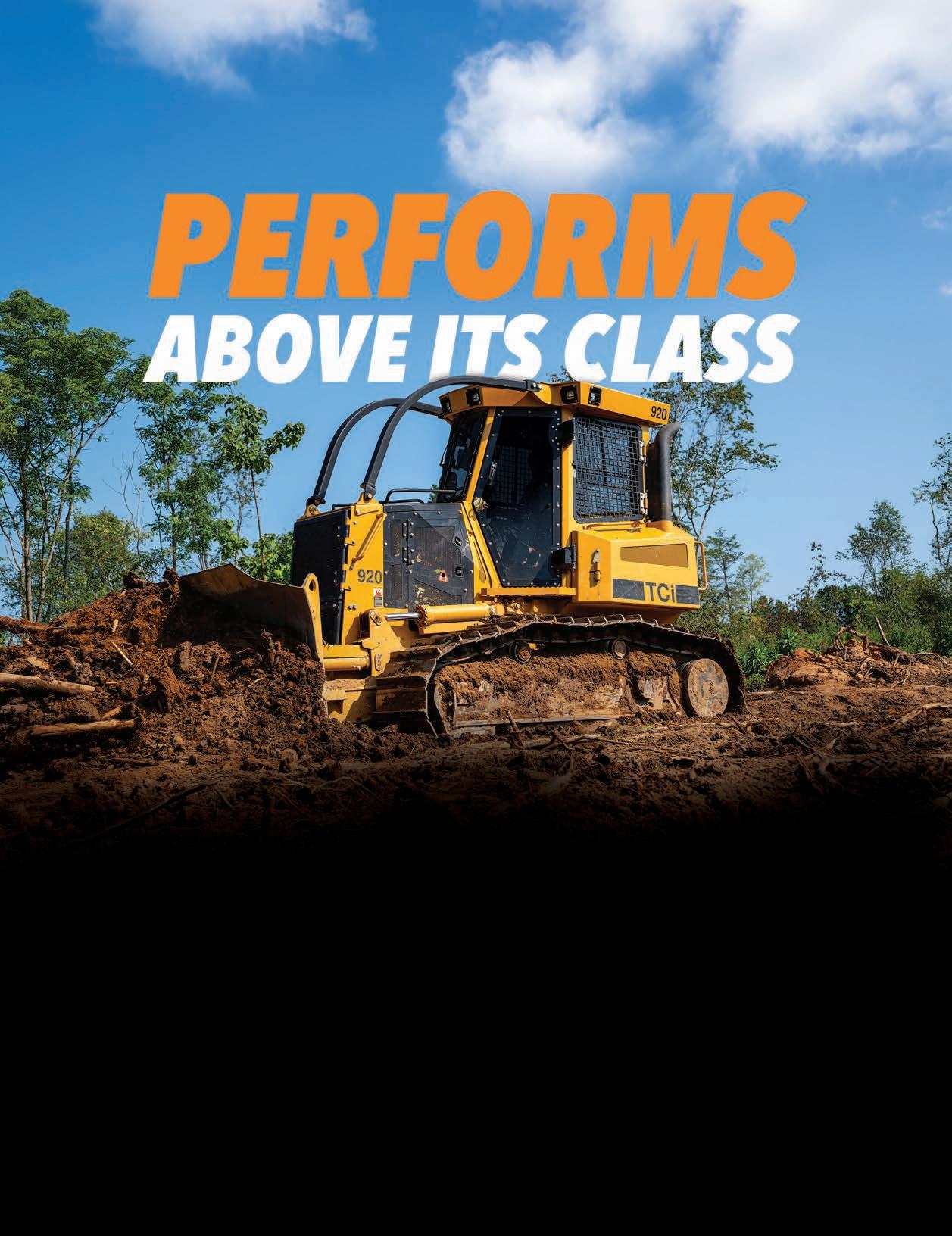
The 920 moves more, pushes harder, and finishes the job faster.
Purpose-built for the toughest environments, the 920 dozer takes on demanding duties like road building and stump removal — delivering the reliability and performance logging professionals depend on.