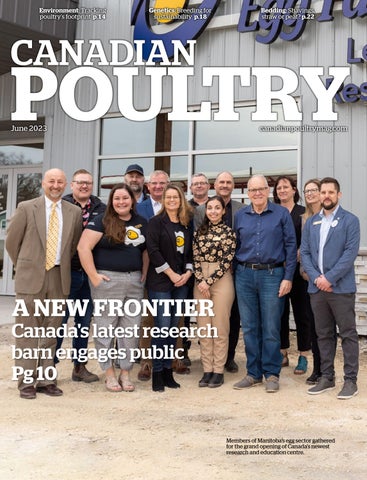
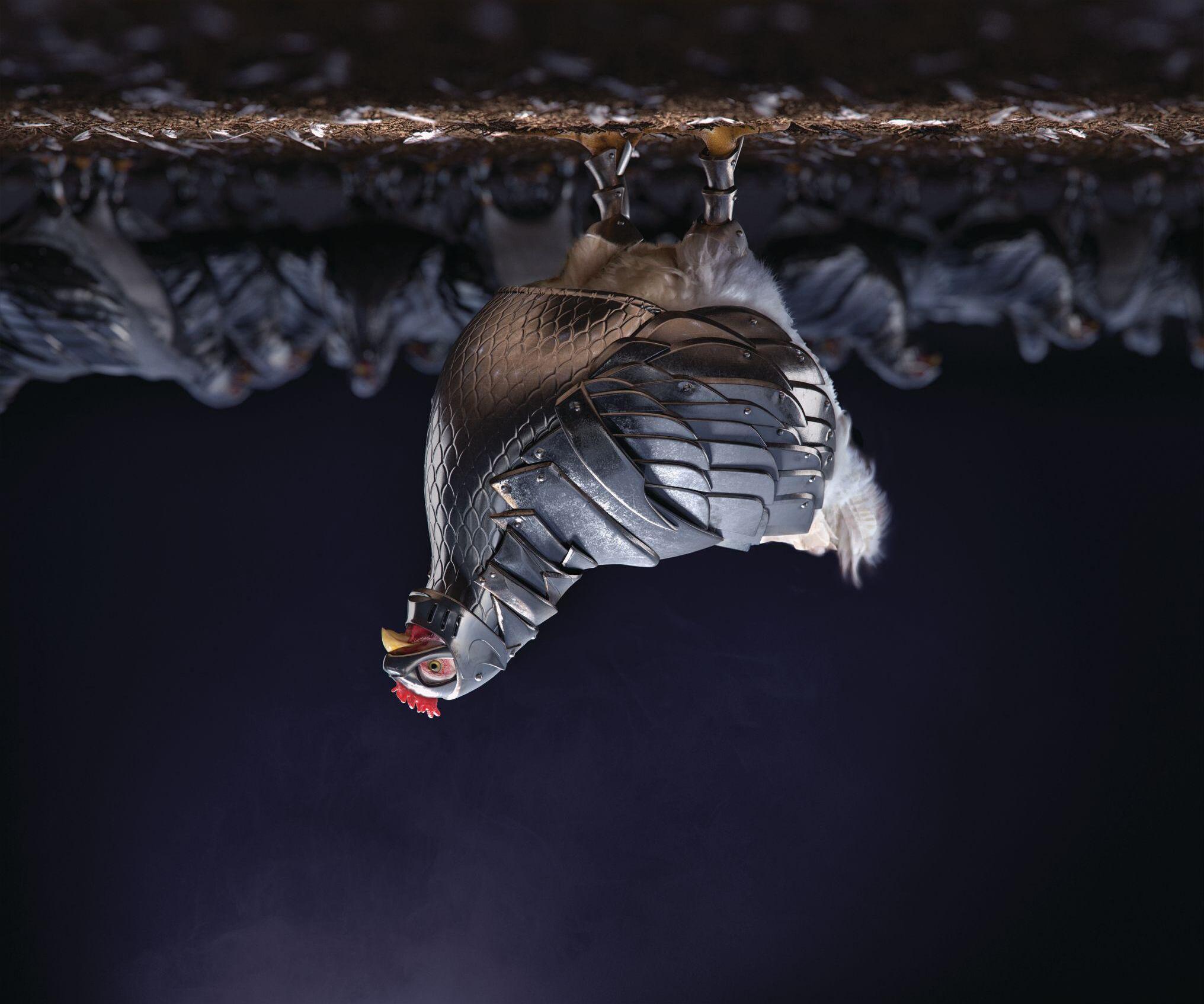
Experts compare the pros and cons of wood shavings, straw and peat.
From the Editor
by Brett Ruffell
A time to recognize excellence
It’s that time of year again when we at Canadian Poultry magazine recognize excellence. Firstly, there’s Influential Women in Canadian Agriculture (IWCA), a program designed to honour, highlight, and celebrate the work women are doing across Canada’s agriculture industry.
Now in its fourth year, I’m proud to present the six women chosen as the 2023 Influential Women in Canadian Agriculture honourees.
Please join me in congratulating: Ana Badea, research scientist, barley breeding and genetics, with Agriculture and Agri-Food Canada (AAFC); Della Karen Campbell, farm manager, Everdale; Kelly Daynard, executive director, Farm and Food Care Ontario (FFCO); Judith Nyiraneza, research scientist, AAFC; Darby McGrath, VP, research and development, Vineland Research and Innovation Centre; and Heather Wilson, research scientist, adjunct professor, University of Saskatchewan.
These six women will share their stories, wisdom and insights in the IWCA podcast series on AgAnnex Talks, a podcast channel presented by Top Crop Manager, Potatoes in Canada, Canadian Poultry, Fruit & Vegetable, Drainage Contractor, The Trough, and Manure Manager magazines. The first episode will air on June 14, and new episodes will follow biweekly after that. Subscribe today wherever you
listen to podcasts.
This year’s IWCA program will culminate with an event this November, bringing together women from across the industry to share in their experiences and offer guidance and advice in an interactive setting. Stay tuned to agwomen.ca for more details!
I had the honour of interviewing Daynard for this year’s IWCA podcasts, someone well connected to the poultry industry in her role as a public trust advocate.
Through FFCO, she’s focused on sharing meaningful stories and information to consumers to broaden their understanding of Canadian food and farming. A big part of
“It’s that time of year again when we at Canadian Poultry magazine recognize excellence.”
that involves on-farm events as well as producing virtual barn tours. And she’s done just that to educate people about egg and poultry production.
“I've always said that if we could take every single person in this country out to a farm, there would be no need for organizations like Farm and Food Care,” Daynard told me during our interview. “And I think that would be a good problem to have.”
More than teaching the public about how their food is produced, Daynard is also focused
facebook.com/CanadianPoultry
on introducing Canadians to the people behind their food. She’s accomplished that through initiatives such as the Faces Behind Food Instagram campaign and the More than a Migrant Worker web portal.
You can listen to my discussion with her in mid-June. Learn about how her unique background prepared her to be a public trust “agvocate”, some of the innovative programs she’s helped launch to educate Canadians and her thoughts on the future of agriculture in this country.
The team behind IWCA wishes to extend a sincere thank you to our audiences for participating in the program, and to our sponsors for their support.
In other recognition news, Canadian Poultry’s 4 Under 40 program is back! While we’ve yet to close nominations at the time of writing this column, based on the response I’ve seen thus far it has continued to grow in its third year.
As a refresher, for this program we honour three producers and one professional in a supporting role (e.g., geneticist, researcher, veterinarian, etc.) under 40 years of age.
The four nominees chosen by a judging panel as this year’s honourees will be featured in our Top 4 Under 40 podcast series this summer, and in a special digital issue of Canadian Poultry in the fall.
Keep an eye on canadianpoultrymag.com in June to learn who this year’s honourees are. I sincerely appreciate everyone’s help in continuing to grow this program!
canadianpoultrymag.com
Reader Service
Print and digital subscription inquiries or changes, please contact Angelita Potal, Customer Service Rep. Tel: (416) 510-5113
Email: apotal@annexbusinessmedia.com
Mail: 111 Gordon Baker Rd., Suite 400, Toronto, ON M2H 3R1
President/COO Scott Jamieson sjamieson@annexbusinessmedia.com
PUBLICATION MAIL AGREEMENT #40065710
Printed in Canada ISSN 1703-2911
Subscription Rates Canada – 1 Year $32.50 (plus applicable taxes)
USA – 1 Year $91.50 CDN Foreign – 1 Year $103.50 CDN
GST - #867172652RT0001
Occasionally, Canadian Poultry Magazine will mail information on behalf of industry-related groups whose products and services we believe may be of interest to you. If you prefer not to receive this information, please contact our circulation department in any of the four ways listed above.
Thieves ruffled some feathers after making off with 30,000 chickens from a Southwestern Ontario farm last month, stumping everyone from investigators to farmers and armchair experts. The 15-day-old chickens were reported stolen from a Huron County farm near Exeter sometime in the late afternoon to early morning April 19-20. Anyone with information about the major chick heist is asked to contact Huron OPP at 1-888-310-1122 or 519-482-1677.
B.C. has first avian flu case since January
In late April, B.C. had its first case of highly pathogenic avian influenza (HPAI) since January. The Canadian Food Inspection Agency reported that a new case of HPAI in a commercial poultry flock in Chilliwack was confirmed on April 29. Specific information concerning the type of flock involved, or how many birds were affected has not been disclosed by the CFIA. The last time HPAI was confirmed in British Columbia was January 22, with that case also being in Chilliwack.
Quebec avian influenza deaths near one million birds
Poultry farmers in Quebec are grappling with a series of outbreaks of deadly avian flu, as the number of birds that have died or been euthanized due to the disease since early last year nears the one million mark. As of mid-May, 20 locations in the province were considered actively infected. Martin Pelletier, a spokesman for a group that monitors poultry disease in Quebec, said there have already been more outbreaks this year than all of 2022.
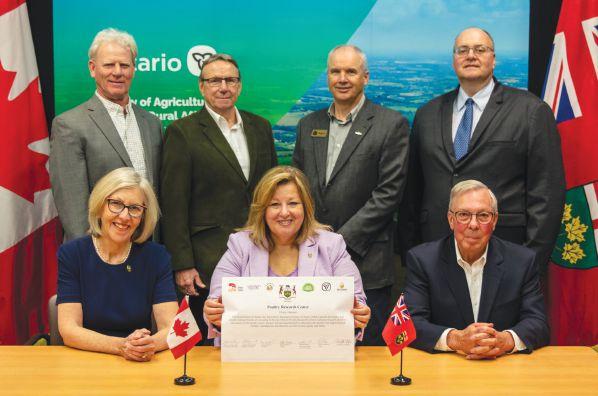
Minister of Agriculture, Food and Rural Affairs, Lisa Thompson joins the chairs of the four feather boards, the President of the University of Guelph and the chair of the Agricultural Research Institute of Ontario to sign an MOU for the new Ontario Poultry Research Centre.
Ontario investing in new poultry research centre
The Ontario government is investing $13.5 million in a new, poultry research centre in Elora.
$13.5M is how much the Ontario government is investing in a new poultry research centre in Elora.
The Government of Ontario, the Agricultural Research Institute of Ontario (ARIO) and the province’s four poultry industry boards signed a Memorandum of Understanding to invest in the new Ontario Poultry Research Centre to advance research and drive innovation for the poultry sector.
“As part of the Grow Ontario Strategy, our government is focused on enhancing our research and innovation capabilities across the agri-food sector,” says Lisa Thompson, Minister of Agriculture, Food and Rural Affairs.
“This research centre will, once completed equip our poultry industry with the tools, and the knowledge to stay competitive, while creating jobs, growing the economy and ensuring supply chain security.”
Ontario-led research conducted at this facility will support animal welfare, reproduction, nutrition, meat quality and safety.
Results will be shared with poultry farmers and the broader
poultry business sector to encourage the adoption of innovative, safer, healthier, and more efficient production practices.
The new centre is expected to open in 2026.
Poultry leaders welcomed the development.
“OBHECC’S farmer and hatchery members are keen and excited to collaborate with our feather industry counterparts and other stakeholders in advancing this important project that will enhance Ontario’s leadership in poultry research and innovation,” says William Bearss, chair, Ontario Broiler Hatching Egg & Chick Commission.
Murray Opsteen, chair, Chicken Farmers of Ontario, weighed in as well. “The Poultry Research Centre of Excellence will help to further establish Ontario as a leader in innovation, sustainability, animal welfare, and food safety.
“CFO is committed to supporting the research and innovation needs necessary to advance the chicken industry, and the broader Ontario agriculture community.”
LRIC Update
There’s a growing narrative that eliminating animal agriculture is the key solution to the world’s climate change problem – much to the frustration of the livestock industry.
According to Ian Ross, president and CEO of Grand Valley Fortifiers (GVF), this ignores the critical role that livestock plays in global food protein security, regenerative agriculture, and carbon sequestration.
What’s needed, he believes, is for the sector to be a more active participant in the climate change discussion, promoting the science and industry realities that show it’s economic and food security importance as well as the environmental efficiency of meat, milk and eggs when measured on a human digestible protein basis.
By Lilian Schaer Ian Ross, CEO of Grand Valley Fortifiers.
Livestock Research Innovation Corporation (LRIC) fosters research collaboration and drives innovation in the livestock and poultry industry. Visit www.livestockresearch.ca or follow @LivestockInnov.
Livestock, climate and sustainability
their domestic and international market opportunities shrink and may also face limited financing and investment capacity in the future.
“We know that focusing on sustainability can also have a positive impact on farm profitability.”
side growth, we can see quite clearly what the best feed program is for particular genetics at a particular stage of life,” Ross says.
Gathering proof points
To help gather that data, GVF has deployed internet-enabled scales on over hog 60 farms to track average daily gain in real-time. This type of on-farm technology will also provide proof points for something the industry is very proud of – Canadian livestock farmers are already among the most efficient producers in the world.
This includes greater understanding of how much human food and energy by-products livestock consume in developed nations and the positive effects pasturing and manure have on soil health and carbon sequestration.
Sustainability targets
This matters because food companies, for example, are setting their own sustainability targets, including for emissions that come from the entire value chain, and will be looking to their suppliers to help meet those targets.
According to Ross, suppliers – and this includes farms –who can’t comply will likely see
“We’re seeing governments, banks, and large food companies who have full-time staff dealing with sustainability issues, driving adoption of environment, social and governance (ESG) plans and over time, this will cascade down to small and medium size business,” Ross says. “So how do farms, who don’t have those kinds of resources, navigate in this environment? How can we help position famers better for a more sustainable future?”
Biggest impact from feed
With feed production accounting for 55 to 75 per cent of greenhouse gas (GHG) emissions from meat, milk and egg production as well as representing a significant proportion of a farm’s cost of production, the biggest impact could
come from better feed conversion, Ross notes. Better feed efficiency also means lower feed costs and improved business profitability.
In other words, it can pay to pay attention to sustainability – and GVF is focusing its corporate efforts on making it easier for producers to do just that.
That includes taking a very close look at feed formulation, like embracing ingredients that support reducing methane emissions, searching for different protein sources, and including GHG emissions metrics in its feed formulation software to calculate the emissions per tonne of complete feed.
“Part of this process for us is metricizing everything. If we track feed conversion along
GVF is also piloting two existing environmental models from the Netherlands and the UK on 12 Ontario poultry, swine, dairy and beef farms. The goal is to evaluate how well they work at the farm level, and what results they provide before potentially making them available to farmers.
“If companies like ours don’t try to figure this out and help our customers understand what’s coming at them, I’m concerned that they may not have as many markets available to them down the road – but in the immediate, we know that focusing on sustainability, which is really about efficiency, can also have a positive impact on farm profitability,” believes Ross.
This article is provided by Livestock Research Innovation Corporation as part of LRIC’s ongoing efforts to report on research, innovation, and issues affecting the Canadian livestock industry.
Follow the Science
By Lisa McLean
Tackling yolk sac infections
Yolk sac infection (YSI) is the most common cause of early chick mortality within a chick’s first two weeks of life. As the industry moves away from antibiotics to treat YSI, researchers in Saskatchewan believe they have found a way to make chicks less vulnerable to infection, by stimulating the chick’s own natural immunity.
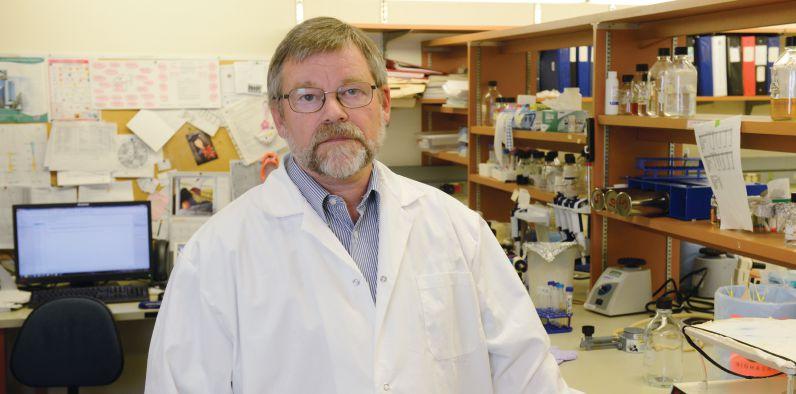
Dr. Wolfgang Köster, Vaccine and Infectious Disease Organization (VIDO) and Department of Veterinary Microbiology, University of Saskatchewan, is leading research into the safe and effective use of immune stimulants. Administered in the right combination – and at the right time – the stimulants increase chicks’ natural immunity and make them less susceptible to pathogenic bacteria during those crucial early days after hatching.
“Antibiotics have been overused, and our only option for the future is to find an alternative,” Köster says. “We believe
we can overcome this reliance on antibiotics by boosting innate immunity, an immune response that is not specific to any bacterium or virus.”
HOW TO STIMULATE AN IMMUNE SYSTEM
In a previous stage of this project, Köster’s team identified four innate immune stimulants, which they administered as an in ovo injection. After hatching, chicks that had received each stimulant were challenged with an infection model that included a pathogenic strain of Escherichia coli. The researchers saw particular promise in one of the immune stimulants, known as CpG ODN.
“We have known the benefits of CpG ODN for some time, and in our most recent work we have been using it in different combinations and content ratios with other immune stimulants to see how they perform,” Köster says.
HOW YSI OCCURS
A chick’s yolk sac is crucial to
early growth and development because it delivers nutrients and energy the chick needs to grow.
“Even the day before hatching, a yolk sac is still completely outside of the chick inside the egg,” Köster says. “It gets internalized within a day, but it takes some time to absorb the whole yolk material.”
When the yolk sac becomes infected with bacteria, the process of delivering nutrients and energy slows. Some chicks will grow at a slower rate, and some will die of systemic infection.
SECOND DOSE FOR STAYING POWER
By administering combinations of stimulants in ovo before hatching, Köster says the team was able to successfully stimulate innate immunity. When the treated birds hatched and were challenged with E. coli, they demonstrated immunity for approximately four to seven days. Köster notes chicks are still vulnerable to YSI up to 14 days.
“We decided to try adding a
second dose of stimulants to extend the immunity,” he says. “in ovo injections are successful, but the effect doesn’t last as long as we’d like, so we added a second injection the day after hatch, and we found the innate immune response was enhanced.”
His team, including Drs. Arshud Dar, Thuy Nguyen and Colette Wheler, delivered the second dose to chicks subcutaneously (under the skin).
Köster says the project provided valuable insights about innate immunity and shows promise as an antibiotic alternative. And he notes future opportunities to expand on this research could aim to determine the ideal timing of that second subcutaneous dose. He suggests future work could also refine the most effective combinations of stimulants for optimal innate immunity.
“Sometimes one component works nicely, and another is satisfactory, but if you combine them, you might get a synergistic effect,” Köster says. “Sometimes two-and-two doesn’t make four. With the right combination, it might make six or eight – that is the value of further investigation as we continue to see bacteria and viruses, and our tools to manage them, evolve.”
This research is funded by the Canadian Poultry Research Council as part of the Poultry Science Cluster which is supported by Agriculture and Agri-Food Canada as part of the Canadian Agricultural Partnership, a federal-provincial-territorial initiative. Additional funding provided by the Saskatchewan Chicken Industry Development Fund (SCIDF).
This section highlights the latest, most interesting studies funded by the Canadian Poultry Research Council.
Dr. Wolfgang Köster is leading research into the safe and effective use of immune stimulants.
A new science frontier
Manitoba's egg sector unveils Canada’s most innovative layer research and public engagement barn.
By Madeleine Baerg
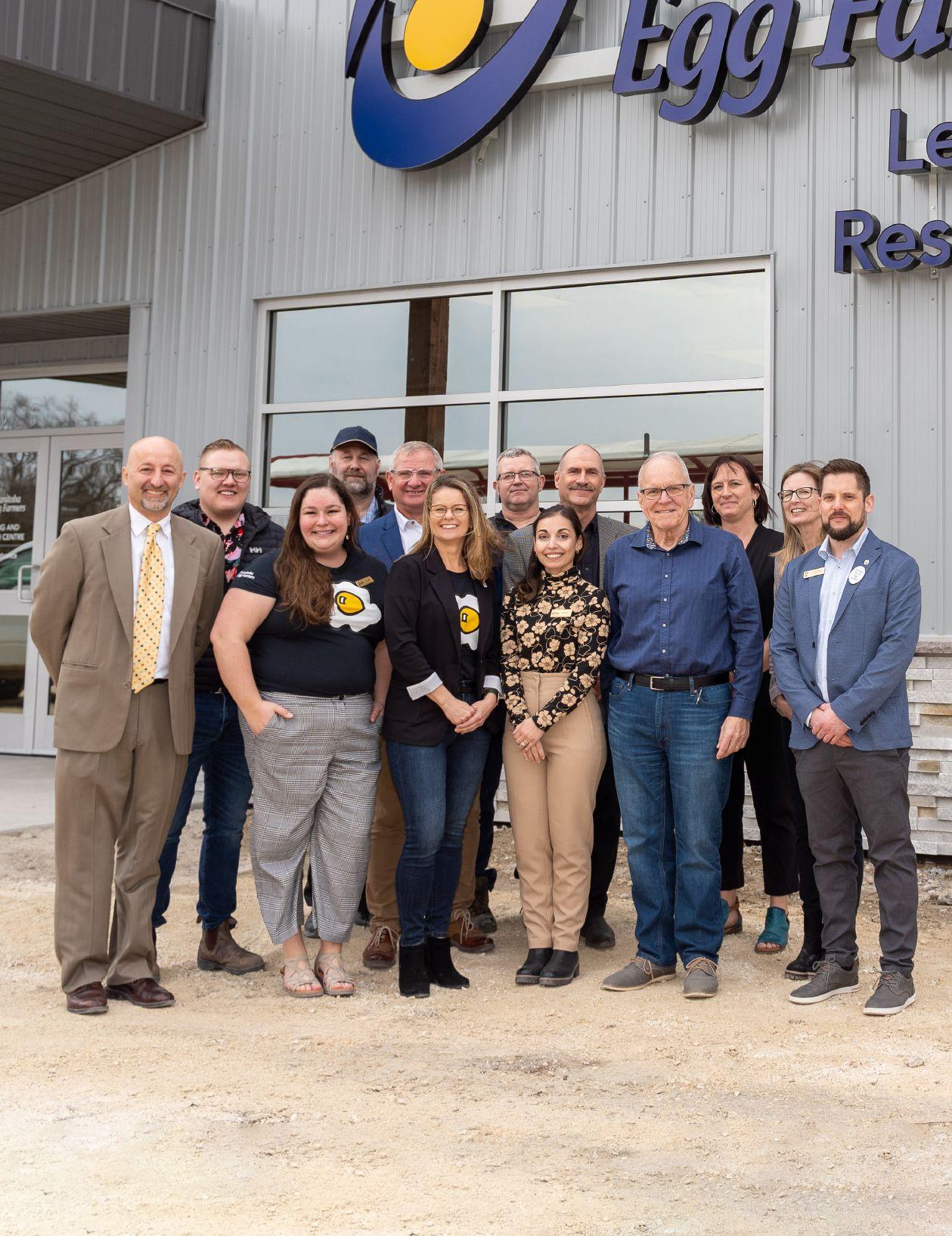
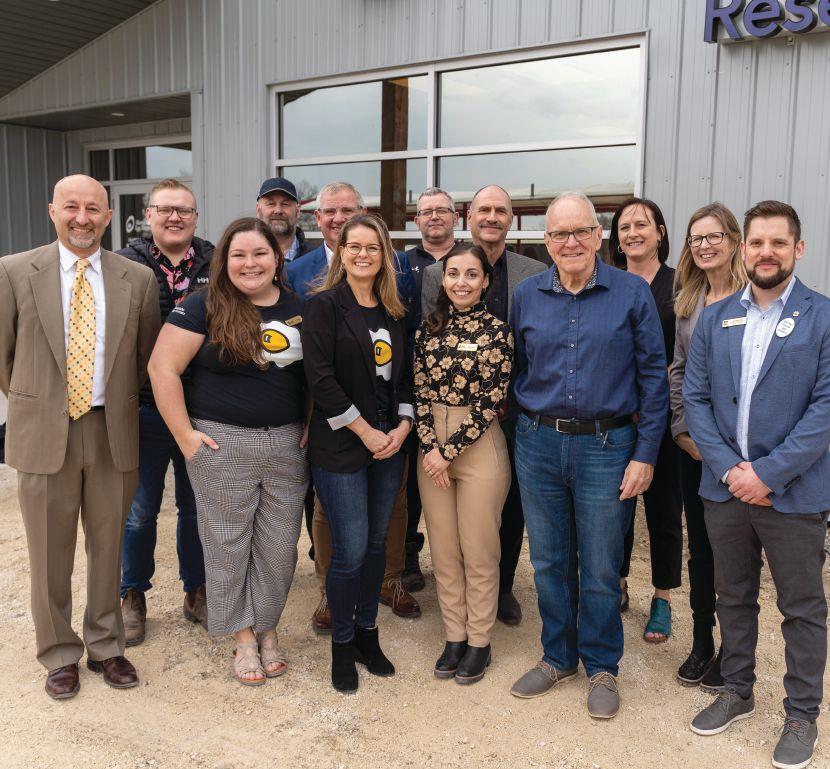
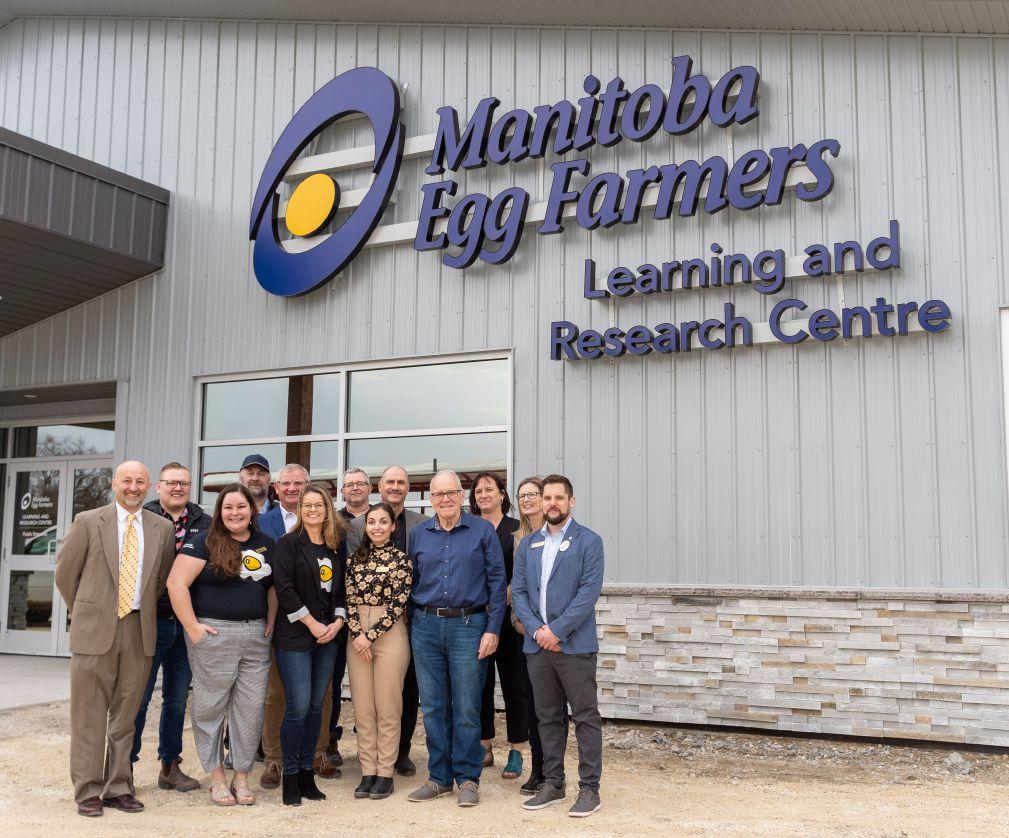
On April 26 th, Manitoba Egg Farmers (MEF) officially handed the keys for Canada’s newest poultry research and education centre to the University of Manitoba (U of M). The Manitoba Egg Farmers’ Learning and Research Centre, co-financed by MEF and the governments of Canada and Manitoba, is the most modern egg and layer research, education and training facility in all of Canada. It’s also the only one purpose-designed to conduct cutting-edge research while also engaging and informing the general public.
PUBLIC FRONT AND CENTRE
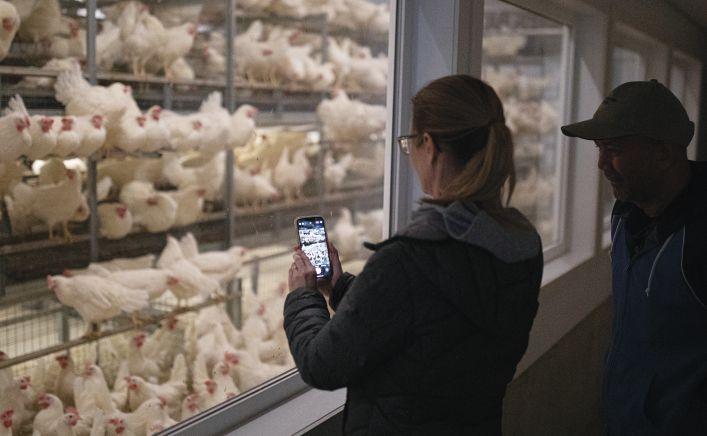
The facility features two housing systems: one a free-run aviary and the other equipped with enriched colony housing. Each is designed to run exactly how commercial barns operate around Manitoba. Unlike commercial barns, the facility is built with the public in mind. Large windows allow visitors direct views into all parts of both housing systems. Additional windows showcase the movement of eggs from nests through the conveyor belt system to the egg packing
facility and onwards to the refrigeration room.
“We wanted to be able to provide a place where folks can see exactly what we do on our egg farms. As far as the stocking density, housing systems, day-to-day chores, the regulations that we follow as egg farmers, we’re not doing anything different in this new building than we’d do onfarm. We’re really just showing what we do on farm, but in a biosecure way,” says Catherine Kroeker-Klassen, MEF’s board chair.
The new facility has pubic access components because it’s not just innovation and training the industry requires, it’s also the public’s trust, says Dr. Nazim Cicek, associate dean of research at the U of M.
“We need the public to understand where food comes from, how safely it is produced in Canada, what the latest practices are. There’s nothing like seeing, feeling, smelling the place to get you there. We can’t just talk about these things in the press or on TV: we need an open-door policy.”
Trained staff are available to talk people through the production process.
“I often hear people say, ‘Sorry, this is a dumb question’. There are no dumb questions. If you want to know about what we do, we want to answer. This barn allows us to do that,” says Kurt Siemens, a board director with MEF and an instrumental part of the new facility’s planning and building. “A lot of times, just seeing it isn’t enough. You need to know what the birds are doing and why.”
The new layer barn is in good company. It is the newest addition to the Bruce D. Campbell Farm and Food Discovery Centre: a learning centre for all ages that also features a working hog barn, the Dairy Farmers of Manitoba Discovery and Learning Complex, and a wide variety of hands-on interpretive exhibits.
CUTTING-EDGE RESEARCH CAPACITY
The building is also purpose-built for cutting-edge research. Each housing system can be divided into smaller mini systems for replicated trials: the enriched housing divides into three rows of 108 units; the aviary into two rows of four sections per row.
Well-equipped research space in non-public portions of the building allow university students to learn about eggs and chickens, and scientists to explore different facets of production, from animal health and well-being, to egg quality, to production efficiency and more.
The space also features three controlled environment research rooms, egg quality and post-mortem laboratories, staff and student areas, meeting spaces and a feed storage kitchen where researchers can design customized feed for delivery to the metabolic rooms.
“We can look at no antibiotic alternatives, at novel feed products, at adding specific enzymes, all of which was hard to do in aging facilities with a lack of controls,” Cicek says.
In addition, the new facility is much better instrumented, from climate and care controls to powerfailure backups.
Two Housing Systems
The research facility houses half of the birds in an enriched system and the other half in a free-run system
“I’m sure there’s quite a few miles of wire in there just for internet alone. There’s a controller system that can be run remotely, so the barn can be run off an iPhone. It’s got its own generator: if there’s a power failure, it’s all powered back up again within two or three seconds,” Siemens says.
“It’s very exciting. Now we’ll be able to combine all of that data and provide existing and future farmers with information for real time decision making to allow them to be more profitable, more sustainable and better stewards of their animals,” Cicek says.
In the near term, most of the research undertaken at the new facility will be continuations of the work that was underway at the previous location. However, the new facility’s state-of-the-art equipment will allow scientists research opportunities they couldn’t have
pursued previously.
With luck, the new facility will help the U of M retain existing research talent and draw additional high-caliber expertise. Cicek says the school already boasts excellent animal science researchers who will take great advantage of the new facility.
Already, the university has hired several new staff, including digital agriculture researcher who began work this past March. In addition, the U of M is hoping to leverage the new Layer Research Barn to attract a poultry-specific research chair to advance the sector.
“There already exist research chairs in different parts of the country in different universities, but we don’t have one [for poultry] at the U of M. Now is the time to leverage the new infrastructure by bringing in world class talent. You really can’t do that if you’re touring them in facilities from the ‘60s or ‘70s. You do
need new infrastructure to bring in the best minds,” he says.
A GROUP EFFORT
The MEF Learning and Research Centre project came together thanks to the efforts of many. U of M provided the land, MEF and the U of M designed the facility, and MEF managed the actual build.
The project’s $4 million price tag was partially funded through a $1.5 million contribution from the governments of Canada and Manitoba through the Canadian Agricultural Partnership (CAP) fund. The remainder of funds – over $2 million – came from Manitoba egg farmers.
“We found a neat win-win-win way of funding where we allowed our farmers to [buy quota] for a couple of extra birds in their barn. Then, we used that money to fund the facility,” Siemens says. “Farmers really jumped at the opportunity. The
By the numbers
Here are some quick facts about the Manitoba Egg Farmers’ Learning and Research Centre.
22,000 is the square footage of the new facility.
4,400 is the amount of quota the centre has, which includes 2,200 in enriched housing and an equal amount in a free-run system.
May 1st, 2023 is the day the research facility opened to the public.
9,000 is the approximate number of people expected to visit the research centre annually.
16 is the number of faculty who will be working in the facility to start.
$300K is the facility’s annual operating budget, which will be paid by the university.
Manitoba Egg Farmers has officially handed the keys for Canada’s newest poultry research and education centre to the University of Manitoba.
turnaround on it was very quick: within about a week we had all 6,000 [quota units] sold at [a maximum of] 55 birds [per producer]. With the money going to such a great project, you can hardly say no.”
Siemens says the whole MEF board is incredibly grateful for producers’ support.
“I think the most important message is to thank Manitoba producers for their backing. Not a single person said, ‘Oh, that’s a crazy idea’ or ‘That’s way too much money’. They saw the value and they contributed.”
On Grand Opening day, MEF officially handed operations of the building to a “very appreciative” U of M, Cicek says.
“None of this happens without the close connection between our stakeholders. We want to acknowledge all of them. That’s really the model for agriculture. If you want to achieve new heights, we need to work together.”
A WELL-NEEDED UPGRADE
The new facility replaces the University of
Winnipeg Blue Bombers and the University of Manitoba Bison football team sta-
Large windows allow visitors direct views into all parts of both housing systems.
PHOTO: MANITOBA EGG
“ We wanted to be able to provide a place where folks can see exactly what we do on our egg farms.”
search done at the new facility. The close relationship between Manitoba Egg Farmers and the university will enable the scientists to ensure research priorities align with industry’s priorities.
Additionally, he encourages farmers to attend and engage with the facility’s researchers and staff during the regular tours, meetings, and stakeholder engagement opportunities that will be hosted at the new barn.
“The whole intention of having MEF closely involved in the design of this fa-
cility is to then allow their members to benefit most from it. Otherwise, we would have just built a research facility. But that’s not what this is. This is a research, public engagement and stakeholder facility,” he says.
As a parent and a farmer herself, Klassen says the barn offers important industry benefits for the next generation too.
“I’m a fourth-generation farmer. My brother and I farm together not far from the new research centre. We’ve both got kids who are interested in being farmers
when they grow up. We want to be able to offer that to them. We don’t want to be in a dying industry. This [facility] is a great legacy that will help our kids have opportunities in this industry.”
AND NOW, THE REAL WORK BEGINS
The facility’s first round of birds arrived in March. For the first few months, the facility staff will ensure both the aviary and enriched housing areas run to commercial standards before research begins.
Hiring research staff and graduate students to conduct the day-to-day testing will also take some time. However, Cicek says researchers are “chomping at the bit” to get in and start working.
“Everybody walked away from [the grand opening] with a sense of optimism and joy and excitement. We don’t want to lose that momentum. Our goal now is to follow up on that.”
Tracking poultry ’ s environmental footprint
Lifecycle assessments help set benchmarks and track improvements. By Lilian Schaer
The growing global focus for increased sustainability across all segments of the Canadian economy is making itself felt in the poultry industry as well. Canada’s poultry sectors have been using lifecycle assessment (LCA) reports to understand their environmental footprints and measure improvement –and the results are foundational to producers sharing their sustainability story with Canadian consumers.
LCA is an assessment method regulated by the International Organization for Standardization (ISO 14040/14044). It helps establish how current practices contribute to carbon footprints and identifies areas where improvements can be made.
Turkey Farmers of Canada (TFC) is the most recent national poultry group to have completed an LCA, with the report by Groupe AGÉCO released at the end of March.
Benchmarking the turkey footprint
According to TFC executive director Phil Boyd, the organization had been contemplating an LCA for some time, driven by growing interest in environmental sustainability, carbon footprint and how this
blends together with the economic viability of turkey farming.
“One of the primary reasons we did this is that the consuming public in Canada is concerned with where food comes from and how it is produced – and we need to be able to answer those questions as well as meet that market need,” Boyd says, adding the organization was pleased with the high degree of engagement from its producers in participating in the project.
Overall, the LCA showed the one kilogram of eviscerated turkey meat has a carbon footprint across the sector from input to processing of 3.5 kilograms of carbon dioxide (CO2) equivalents. The largest contributors to those emissions come from three areas:
• Feed: mostly corn, wheat and soybean meal and the energy and fertilizer used to grow these crops
• Energy: electricity, heat and diesel fuel used on the farm
• Waste management: landfilling of animal waste
When compared to older data, the report concluded that emissions have decreased by 10 per cent per kilogram of eviscerated turkey over the last decades,
which Boyd attributes to better genetics and farm management and productivity improvements.
“All of these contribute to reduction and from other similar studies that AGÉCO has done, our footprint is substantially lower than in other jurisdictions like the United Kingdom and the United States,” he says. “We’re happy to see this (result). It has given us a good benchmark and gives us direction to probe further. This is really driven by a genuine interest in the topic area.”
The TFC board will be delving into the details of the report over the coming months to determine next steps, he adds.
Eggs leading the way
It was Egg Farmers of Canada (EFC) that led the way on sustainability when it released the Canadian poultry industry’s first LCA in 2016. The study was conducted by Dr. Nathan Pelletier, Associate Professor in Biology and Management at the University of British Columbia and the NSERC/ Egg Farmers of Canada Industrial Research Chair in Sustainability.
His report found that although egg production increased by 50 per cent, the environmental footprint of Canadian egg
The egg, chicken and, most recently, turkey sectors have all conducted lifecycle assessments to gauge the environmental impacts of their industries.
ECO Unit
ECO Unit creates a healthy airflow with additional heating and cooling you can maintain an even house temperature all year round.
• 35% lower ammonia levels
• Better FCR
• Better litter
• Circulate up to 30,000 m3 of air an hour
• Recovers up to 80% of heat
• Easier cleaning with the automatic cleaning options
• Earn back your investment in < 5 years *
• Save up to € 12,000 ** per year on your total energy cost
* Based on € 1,30/kg/GLP, 7 flocks p/y ** Based on € 1,30/kg/GLP, 7 flocks p/y @35K birds
Pols Enterprises Ltd. ON - T: +1 905 708 5568 sales@polsltd.ca
Ruby360 Ltd. ON - T: +1 888 218 7829 sales@ruby360.ca
Western Ag Systems SK - T: +1 306 222 4881 wayne@westernagsystems.com
production had been cut in half between 1962 and 2012. These findings laid the groundwork for EFC’s ongoing sustainability activities with producers, consumers, and government.
In 2020, EFC released its first sustainability report outlining the sustainable growth of the egg industry. And just last year, EFC introduced the National Environmental Sustainability and Technology Tool (NESTT), an online tool for Canadian egg farmers to measure, monitor and manage their own farm’s environmental footprint and create action plans for improvement.
Tracking progress
EFC is the first national group to update its LCA. The second egg industry LCA released in 2022 showed continued improvement across a variety of indicators, including a general decrease in input and
emission levels across most housing systems and better resource use efficiency.
According to Ian Turner, a PhD student in Pelletier’s lab who worked on the updated report, feed, water, and energy use, as well as the number of hens per ton of eggs produced, all decreased.
“We did see a 30 per cent increase in eutrophying emissions in free-range housing systems, but the best explanation is that it was likely the product of a sampling error. It represents such a small population of Canadian egg production that if you’re not sampling the entire population, you can get volatile results,” Turner explains.
And although the study results showed conventional cage housing to have the best environmental outcomes and free-range to have the lowest, Turner suggests much of that stems from how well farmers have been able to optimize cage-based production over the decades. This will evolve as the
industry continues its transition away from caged housing and producers learn how to maximize new housing systems, he adds.
“In a follow-up study, we did find that if every farm in Canada was operating at the most efficient level that is currently observed by any single farm, the environmental impact of alternative systems can be just as low as conventional cages,” he says. “I would say there is potential for all the alternatives to be that low if they aren’t already.”
Forty years of improvement
It was the original EFC report that inspired Chicken Farmers of Canada to launch its first LCA of the chicken value chain in 2017 to measure the environmental and social performance of Canadian chicken production.
The report found that the industry had made considerable environmental improvements between 1976 and 2016, including reducing its carbon footprint by
At a Glance
Poultry’s sustainability performance
Turkey:
3.5 kg CO2 equivalent per kg of eviscerated turkey meat
10 per cent decrease in emissions from turkey production
Eggs:
50 per cent increase in egg production with 50 per cent reduction in carbon footprint in last 50 years
Chicken:
2.4 kg CO2 equivalent per kg of chicken
37 per cent lower carbon footprint, 45 per cent less water used, 37 per cent lower non-renewable energy consumption in last 40 years
37 per cent, its water consumption by 45 per cent and its non-renewable energy consumption by 37 per cent. Farmers were producing more with less due to major productivity gains and a 20 per cent improvement in the feed conversion ratio of broiler chickens.
The report found Canadian chicken production to have the lowest carbon footprint overall at 2.4 kilograms of CO2 equivalent compared to the average carbon footprint of global chicken producing regions.
The study also highlighted a strong social performance for Canadian chicken farmers, with 100 per cent certified on food safety and animal care programs, over 90 per cent engaged in some kind of community involvement, over 90 per cent paying workers salaries above minimum wage and about 70 per cent offering workers additional benefits like health insurance or bonuses.
According to CFC, the organization has used the report’s findings to develop an in-depth understanding of the environmental impacts of chicken farming, to inform research goals and funding, and to educate the entire sector as new initiatives are being developed.
CFC is committed to LCA updates every five years; the activity is part of the organization’s 2023-2025 strategic plan.
CP_JeniMobile_April23_MLD.indd 1
2023-03-06 10:42 AM
Breeding for sustainability
A look at advances in feed efficiency, gene editing and more.
By Treena Hein
Over the last few decades, the Canadian poultry industry has made enormous sustainability gains, and breeding is the main reason. Already, the industry has attained huge advances in feed conversion ratio (FCR), growth rate and egg production. At the same time, breeders have long focused on welfare in terms of leg strength, overall robustness and more.
With broilers and turkey, less feed to produce the same bird weight means the environmental impact of feed production is lowered on a per-bird basis. Hendrix Genetics notes that over the past 40 years, the amount of feed needed to produce one kg of meat has halved.
On the egg side of the industry, today’s hens can consume less feed than ever before to produce the same or more egg mass through higher FCR, higher persistency of lay, longer production cycles and more. Hy-Line International notes that over the past 30 years, up to 350 grams of feed saved per kilo of eggs and 15 to 30 grams of feed saved per egg has reduced the overall carbon footprint of the global egg industry by some 20 per cent.
With all categories of birds (broiler breeders, broilers, layers, turkeys, ducks and so on), higher FCR also means total excretions per bird is lowered, reducing environmental impact on this front as well. Aviagen also notes that better feed
conversion leads to better nutrient utilization, resulting in a reduction of nitrates and phosphate excretion into the environment.
What’s happening right now with further sustainability breeding advances? Canadian Poultry contacted major breeding firms to gather the latest updates.
Before diving in, however, note that all poultry breeding firms now use cutting-edge technologies to advance their breeding goals related to sustainability and more. This includes computer vision, CT scanning, RFID technology, other sensor systems, and artificial intelligence-level software.
At companies like Hendrix Genetics, for example, RFID technology is helping to reduce bird handling and more efficiently capture breeding data. At the Hendrix pedigree facilities, feed stations use RFID technology to capture individual feed
consumption.
The company also uses RFID to capture individual bird weights each time they step on a scale. Birds can hop on and off the scales as many times as they like, which increases the number of data points collected. It also means better acceleration of genetic progress.
Broilers
At Cobb-Vantress, the complex broiler traits that contribute to overall sustainability includes improved broiler skeletal and leg health, enhanced heart and lung efficiency, improved robustness and livability, improve growth, FCR and total yields, and improved production traits.
In addition to the current standard use of new technologies, another way Cobb-Vantress is accelerating breeding advances is through a new research initiative it announced in January. “We invited
Hy-Line measures feed conversion ratio in two ways: by feed consumed per egg mass produced and by feed consumed per number of eggs produced.
You can enhance your farm’s sustainability journey
The National Environmental Sustainability and Technology Tool is a first-of-its-kind system that egg farmers can use to track, assess and benchmark the environmental impact of their farm.
How the tool can help you
You can use the tool to:
Understand the environmental impact of your farm
Compare your results to other egg farms
Improve your operations with tailored recommendations
Access the latest on-farm sustainability resources for egg farmers
How to access the tool
By using the tool, you’re supporting the broader movement of egg farmers who are collaborating and innovating for a more sustainable future.
All you need to get started is your Farm Registration ID!
Genetics
research project proposals from leading academic institutions across the world to specifically help address these trait areas,” Herring explains.
Laying hens
Geneticists at Hy-Line continue to make selections to improve egg farming sustainability. They’re doing so by focusing on key laying hen traits such as persistency of lay, eggshell quality, internal egg quality, disease resistance robustness and adaptability to different housing systems. “FCR conveniently brings these various traits under one measurable figure,” explains global product manager Thomas Dixon. Hy-Line measures FCR in
“Gains in feed efficiency will continue, sustaining our customers, their local societies and the planet for decades.”
two ways: by feed consumed per egg mass produced and by feed consumed per number of eggs produced.
Currently, Dixon reports, “Hy-Line continues to improve the feed efficiency of our layers at a rate of five grams of feed per dozen eggs produced each year. This improvement may not sound like a lot but as this improvement flows through the some two billion Hy-Line
MAKE QUALITY ON-FARM FEEDS
layers worldwide each year, we project several positive annual impacts.
“These include a reduction of 11,000 hectares of cropland required for the same output as the previous year, and elimination of CO2 emissions from grain production required to feed Hy-Line’s world layer flock by the equivalent of 30,000 automobiles annually.”
In its laying hens, Hendrix Genetics has significantly improved the length of the laying period while maintaining egg quality. “Over time, we have increased emphasis in our breeding programs on improving survival and robustness (ability to strive under challenging conditions),” explains chief innovation and technology officer Johan van Arendonk, adding that this contributes to improved sustainability.
Sustainable laying hen reproduction
them (using various technologies in development) and use the male eggs for other purposes, or to identify male chicks after hatching and cull them.
The governments in Germany and France have banned the mass killing of male chicks and most other European Union countries are looking at similar bans.
Using gene editing, a team from the Israeli Agricultural Research Organisation, Volcani Centre, has achieved the creation of hens that only produce female chicks, following seven years of research with Huminn, an American-Israeli firm.
Eggs are laid by these hens that contain male embryos. But when the eggs are exposed to blue light for several hours, the male embryos fail to develop. Female embryos are unaffected by the blue light and develop normally.
There is also hope that a thorny sustainability (and animal welfare) issue related specifically to laying hens may be solved through new breeding advances. Researchers in Israel are using gene editing to create hens that lay eggs from which only female birds hatch.
This negates the need for using the energy to power machines and the labour presently needed to incubate all layer breeder eggs and either test
The researchers did not respond for comment, but about gene editing and its future use in poultry, William Herring, vice president of research and development at Cobb-Vantress, says, “We believe it’s an interesting technology that has potential to address areas of poultry production that, so far, have been difficult to progress.”
Disease, conserving genetics and more
Gene editing is suited to situations where a single gene con-
trols a trait. Thus, it may make more of an impact indirectly on improving sustainability through preventing or controlling disease processes in poultry, rather than directly improving sustainability through improving bird growth rates and FCR. These are complex processes controlled through many genes. Fewer sick birds mean less wasted resources and higher sustainability levels for the industry.
There are already several research projects looking at how gene editing can knock out a single gene in poultry and other livestock types, preventing a disease process from taking hold in the first place.
And in a recent review paper titled “Chicken genome editing for investigating poultry pathogens”, a group of researchers from Scotland noted that the development of novel in vitro cell culture systems, coupled with new genetic tools to investigate gene function, will aid in developing novel interventions for existing and newly emerging poultry pathogens.
They added that, “Our growing capacity to cryopreserve and generate genome-edited chicken lines will also be useful for developing improved chicken breeds for poultry farmers and conserving chicken genetic resources.”
No matter the size of the role gene editing will play in years to come, further sustainability advances in poultry breeding are anticipated.
As Tim Burnside, global vice president of welfare, sustainability and compliance for Aviagen Group, notes, “Gains in feed efficiency will continue, sustaining the businesses of our customers, their local societies and the planet for decades to come.”
For more Aviagen has just released an animation, “Delivering Improved Productivity and Sustainability for the Broiler Industry over the past 20 years”, outlining these improvements and their concrete sustainability benefits. Visit their YouTube page at youtube.com/@AviagenMain to view this production.
The great bedding debate
Experts compare the pros and cons of wood shavings, straw and peat. By
Lilian Schaer
The type of bedding used in poultry barns has a great impact on the air quality inside those facilities. They come with other pros and cons too, which was a hot topic of discussion at a Poultry Industry Council event hosted in Guelph, Ontario this past winter.
Wood shavings
Wood by-products like shavings are considered the gold standard of poultry bedding, according to Christoph Wand, livestock sustainability specialist with the Ontario Ministry of Agriculture, Food and Rural Affairs (OMAFRA).
The small particle size has good moisture absorption and improves air quality by keeping dust down. As well, saponins and resins in the wood are likely microbial inhibitors, which can contribute to better bird health. Wand also works with composting bedded pack dairy barns, and they’ve been experiencing challenges with the supply, logistics and cost of wood
products, he says.
“Wood products have doubled and almost tripled in five years by the time it is at the barn – that’s in dairy so it’s likely not much different for poultry,” he says, adding that pandemic-driven mill shutdowns and higher trucking and fuel costs are helping to make wood pricier.
Straw
Straw is one option for poultry bedding, and according to Sarah Minler of The Straw Boss in Mount Elgin, Ontario, their dust-extracted chopped straw pellet product is most widely used by broiler breeder and broiler producers.
“We grind up the straw more finely and send it through a pelletizer. The straw is heat-treated, which helps kill any salmonella, bacteria, or mould from the field etc, and makes it a super-clean bedding,” she explains, with the pelletized straw then crumbled to lay flat on the barn floor.
From an air quality perspective, the straw pellets are dust-extracted and it’s either
blown into two-storey barns or applied with a spreader on the ground floor, which keeps dust to a minimum, she adds. A thin layer is applied, and the crumbled pellets expand and grow with the birds, resulting in about a one-inch layer of bedding.
“When it’s going back on the land, the manure value is greater than shavings or chopped straw from a nutrient perspective,” she says, adding the pellets wick away moisture to keep the barn very dry, which also improves air quality.
The first seven days are the most important days in a bird’s life, so a dust-free, dry environment gets them off to a good start – and is more enjoyable for barn workers too. Virtually all of their straw comes from wheat and is sourced locally as much as possible.
From a cost perspective, pellets are more expensive than chopped straw, but require less handling, trucking and storage on-farm. Minler says Straw Boss supplies poultry producers within a three-hour radius of its southwestern Ontario location.
Peat moss offers superior absorption and a natural way to control pests, says producer Ryan Kuntze.
PHOTO: RYAN KUNTZE
Your local Hog Slat/Georgia Poultry store is the place you count on for service and repairs. We feature GrowerSELECT ® p arts as costeffective replacements for a ll types and brands of live production equipment.
Stop by a store, shop online, or call us toda y.
Barn Management
Peat
After 15 years of growing layer pullets, Ryan Kuntze built a broiler barn in 2017 and had his first experiences with poultry bedding. Disappointment with his straw bedding led to a search for alternatives and a neighbour suggested giving peat moss a try. Kuntze was impressed and with two barns in production today, he not only uses peat moss exclusively, but also distributes it.
Peat moss offers superior absorption, he notes, and provides an environment that insects, flies and darkling beetles, which can carry disease, don’t like, resulting in a natural way to control pests. Peat moss is also generally accepted as a good soil amendment and when mixed with chicken manure, becomes a great source of fertilizer and organic matter for the soil. And there are welfare benefits too, with peat bedding giving birds a chance to express natural behaviours like foraging, scratching, and dust bathing.
The picture is admittedly less clear when it comes to peat moss and air quality, although in Kuntze’s own experience, his old cage layer barn was dustier than the peat-bedded broiler facilities he has now.
“ We do need to ask ourselves the long-term hard questions about bedding sustainability.”
“Air quality can be a challenge if it’s not managed properly and it’s a challenge across the industry because of the nature of the barn environment,” he says.
His Naturesorb peat product is harvested and packaged in Quebec, and although the approximately 1,500 km it needs to travel to get to his farm is a disadvantage, Kuntze says peat moss nonetheless remains cost competitive.
“We’re cheaper than wood shavings and straw pellets, about 50 per cent of the cost of those two specific products. For farmers that are using their own straw, we’re a bit more expensive but that also depends on the supply,” he explains. “(Straw) price is mostly determined by supply so this year, we may be more expensive than traditional straw; in other years, there’s a shortage and we’ve been cheaper, so we’re middle of the pack.”
The sustainability question
For Wand, though, the long-term question the industry should think about when looking at bedding options is that of sustainability. Bedding is part of the poultry industry’s overall environmental footprint, a footprint that will need to be considered by any commodities looking
to follow the lead of Egg Farmers of Canada, which announced its commitment to reaching net-zero emissions by 2050.
The sustainability of wood is multi-faceted, he notes. While wood is a natural, renewable product, the overall footprint of forestry industry itself also must be considered and producers will have to carefully consider long-term cost, availability, and logistics –aspects often beyond their control.
Peat is also a natural product, and it carries benefits for bird health and welfare as well as soil health. The UK, however, has recently announced it will ban sale of peat for home gardening as of 2024 to protect peatlands – a known carbon sink – and the natural environment. What that could mean for agricultural uses long-term is unknown.
“I don’t see any immediate challenges (in Canada) but I think it depends on how far out we will look,” Kuntze says. “The
companies harvesting and processing peat here are very heavily regulated by the government.”
From a sustainability perspective, Wand suggests producers take a closer look at growing their own bedding, whether it’s switchgrass, miscanthus or cereal crop based. It gives producers greater control over the quality and supply of their bedding, he notes, as well as making for more complex crop rotations that can benefit the soil.
“One of the big strengths of animal agriculture in Ontario is that largely, people who farm livestock grow crops, so we have a better whole farm nutrient balance. The next logical step could be to grow our own inputs if a farm has the land base,” he says. “I don’t know where the industry is going, but we do need to ask ourselves the long-term hard questions about bedding sustainability.”
Pros and cons at a glance
Straw pellets
Pros: low dust, very absorbent, heat-treated; supports good nutrient value of manure; renewable crop that can contribute to soil health when added to a rotation
Cons: higher cost; availability can depend on straw production; not available in all regions
Peat
Pros: good absorption, insect suppression, encourages natural bird behaviours; great source of fertilizer and organic matter, cheaper than wood shavings, straw pellets
Cons: lengthy transport to the farm; possible long-term sustainability concerns; air quality could be an issue if not managed
Wood
Pros: widely used, very absorbent, keeps dust down for better air quality
Cons: logistics and supply challenges; increased price
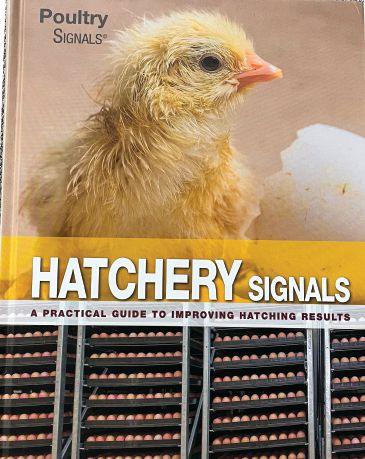
Good hatchability and optimal chick quality is the result of a sound basic knowledge of climate control techniques and the biology of the avian embryo. Hatchery Signals shows the art of the incubation process. Based on the look-think-act approach, it provides practical tools and insights to further improve and optimise hatch results, chick quality and offspring performance in a commercial hatchery environment.
Hatchery Signals is essential for hatchery workers, breeder farm managers, broiler farmers, advisors, and students.
Nutrition Perspective
By Tanka Khanal
Reducing undergrade eggs
Egg consumption per capita has increased by more than 30 per cent over the last decade (2012 to 2022) in Canada. If we look at 2022, more than 1,200 registered egg producers in this country produced on an average more than 2.32 million dozen eggs daily.
Egg production in Canada has been consistently increasing since 2005. It increased by 1.1 per cent for the year 2021 compared to 2020. Table eggs (approx. 70 per cent) and processed eggs (approx. 30 per cent) are two major categories of the Canadian egg market. Having many undergrade eggs is one of the Canadian egg industry's major problems. Usually, undergrade eggs cross two per cent.
It is alarming when undergrade eggs crosses 2.5 per cent of the total grade out.
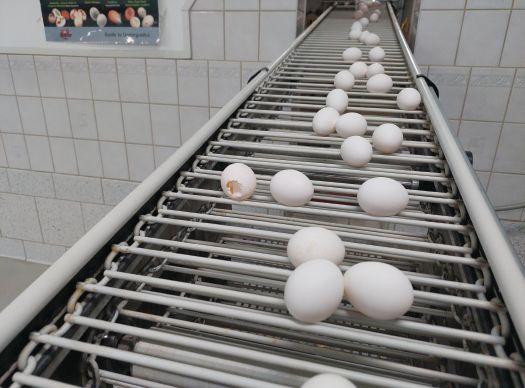
The undergrade eggs include cracks, class B, and rejects. The actual undergrade is even higher because farmers grade out some cracked and rejected eggs, mostly blood-tinged at farm level before sending to the graders.
There are several critical control points where we can work to reduce undergrade eggs. For instances, case structure, nest position (for enriched cage), lights (duration, intensity and colour), egg belt and wire, belt run time, egg handling, trucking and transportation, and graders etc.
However, in this article I take a nutritional point of view.
Egg grade out in Canadian context
Graders in Canada categorize eggs into nine different grades. They include jumbo, extra-large, large, medium, small, peewee, class B, cracks, and rejects. Class B, cracked, and rejected eggs. These cumulate to give total undergrades.
Cracks contribute to a major proportion of undergrades mostly ranging from 40 to 60 per cent, followed by rejects and then class B. The cracks and rejects contribute more than 80 per cent of total undergrades. Therefore, the focus of this discussion is on how to control crack and rejected eggs through nutrition.
Nutrition plays a significant role in controlling cracks and reject eggs. This article discusses two aspects of controlling cracks and rejects: primary and secondary. Thus, the article is
Having many undergrade eggs is one of the major problems of Canadian egg industry.
split into two sections.
The first section discusses calcium utilization by hens for eggshell quality and, thus, eventually lower undergrades. This means understanding and applying the concepts of limestone particle size distribution, its impact on fractional passage rate of calcium from gizzard to duodenum, calcium digestion and absorption, and vitamin D3 activity on active calcium utilization.
The second part will discuss on enhancing available phosphorous, controlling body weight gain during lay, preventing acidosis in hens, rearing pullets to optimum frame size and bone health for less undergrades. Additionally, implementing split feeding from the beginning of peak lay could
give a better eggshell quality and fewer undergrades at leastcost formulation.
Enhancing calcium utilization
In general, the limestone particle size is maintained through the specified ratio of fine to coarse limestone. A nutritionist should also focus on distribution pattern of limestone particle size in the given limestone type.
Determining the limestone particle size distribution and adjusting the ratio of fine to coarse accordingly could give a better ratio of larger to fine limestone. This will affect the fractional passage rate of calcium from gizzard to duodenal loop and will significantly affect the calcium utilization from intestine to uterus during active eggshell formation process in the night.
This will affect eggshell thickness, breaking strength and eventually crack percentage. The calcium utilization is of paramount importance, as influenced by limestone particle size distribution and activity of Vitamin D3.
Vitamin D3 and late lay
Vitamin D3 is an essential nutrient to optimize calcium (directly) and phosphorous (indirectly) utilization in laying hens. Vitamin D3 improves apparent retention of calcium. Poor eggshell and eventually higher undergrades because of larger proportion of cracks in the late lay phase is a common problem in Canadian and
Tanka Khanal is a poultry nutritionist and graduate degrees holder from Wageningen University & Research, the Netherlands (MSc) and University of Guelph (PhD). He is a principal poultry nutritionist at Grand Valley Fortifiers. Contact him at tankakhanal@grandvalley.com.
Cracks contribute to a large proportion of egg undergrades.
Nutrition Perspective
global egg industry.
Sometimes, several laying hens, especially during peak and egg lay in closed housing, face leg problems and show a temporary abnormal gait. Adding extra vitamin D3 (regular or activated) could enhance performance, fix the temporary abnormal gait, and enhance eggshell thickness and breaking strength.
Now, an important question is, “How much of vitamin D3 or activated vitamin D3 (25 hydroxycholecalciferol, 25OHD3) is required to get a better result when there is incidence of poor eggshell quality?” The answer depends on the level of vitamin D3 in basal diets.
If vitamin D3 level in basal diet is less than 4,000 IU/Kg of ration, supplementing extra 5,000 IU/kg (125 µg/kg) of vitamin D3 or activated vitamin D3 for a short period (1.5 to two weeks) improves performance, eggshell quality, and cracks.
Modern day hens could produce more than 93 per cent of eggs even after 68 weeks of age.
And at that age, eggs are usually bigger. Thus, supplementing extra vitamin D3 at regular intervals could enhance performance and eggshell quality.
Conclusion
Canadians' per capita consumption of eggs has been increasing for a decade and still shows sign of continuing to increase. Persistent lay with better grades is one of challenges of our egg industry. A nutritionist plays a vital role in controlling poor gradings.
When considering calcium for eggshell quality and undergrade eggs, a nutritionist should look at the distribution of limestone particle size too rather than just only from the ratio of coarse to fine limestone in formulation. Determining limestone par-
ticle size distribution and adjusting the ratio of fine to coarse accordingly could give a better supply of calcium for eggshell formation.
Better utilization of calcium through vitamin D3 fortification could provide better eggshells and help prevent structural bone mineral loss.
This could prevent quick bone drainage and poor eggshell quality at late lay. Supplementing extra 5,000 IU/kg (125 µg/kg) of vitamin D3 or activated vitamin D3 for a short period at regular intervals could be a practical application to improve performance and reduce undergrades.
Part 2
The second part of this article covers various strategies to control undergrades at the farm level. Read it now at canadianpoultrymag.com
FARM THE SUN
Barn Spotlight
Lakeview Farms Ltd.
Location
Langley, B.C.
Sector
Broilers
The business
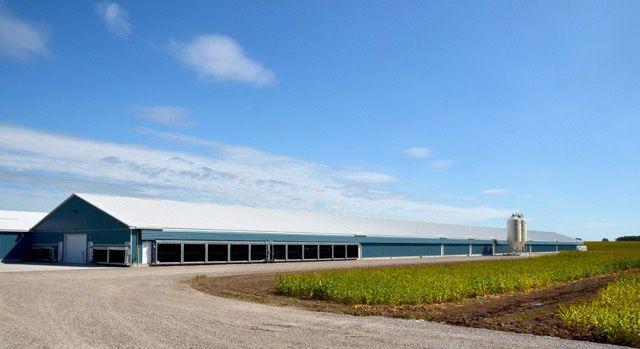
The Friesen family have been operating farms in B.C.’s Lower Mainland for nearly 30 years. Founded by Everett and Emelie Friesen in 1995, their son Rob and his wife Jenn now run the broiler operation. They produce 60,000 to 70,000 chickens per cycle.
The need
In 2013, having outgrown their original facility, the producers expanded to a new location. Since then, they have been focused on implementing an environmental plan that optimizes the use of their property for continued expansion. They pay attention to every detail, including creek management, culvert replacements, composting, building upgrades, and even rotational grazing. Now, they’ve taken things a step further by embracing solar energy to reduce their environmental footprint and deliver long-term cost savings.
The barn
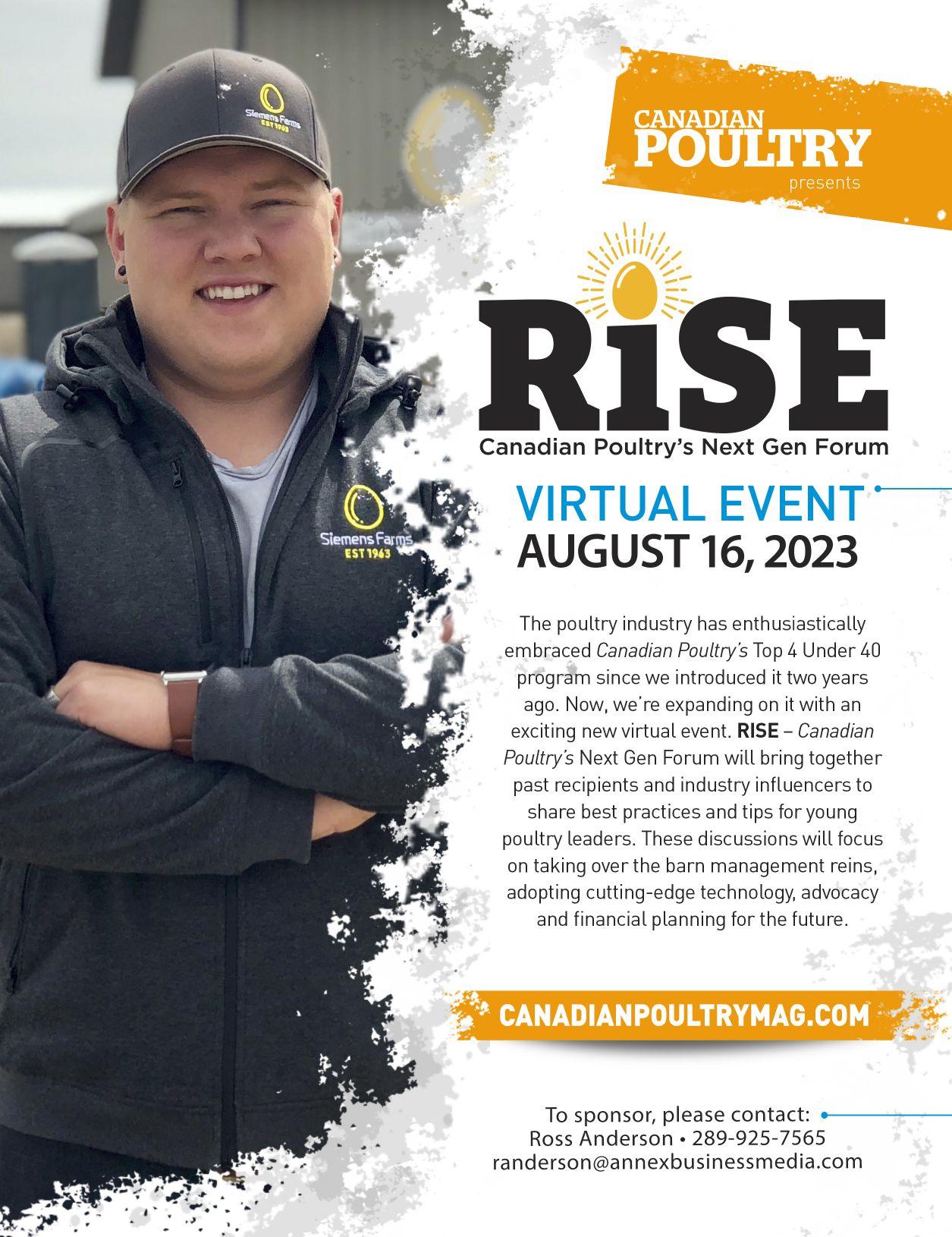
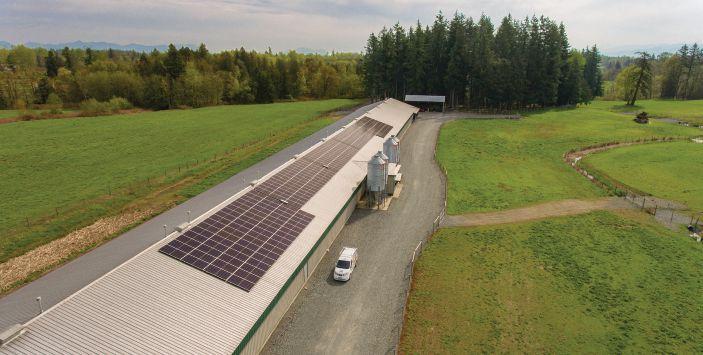
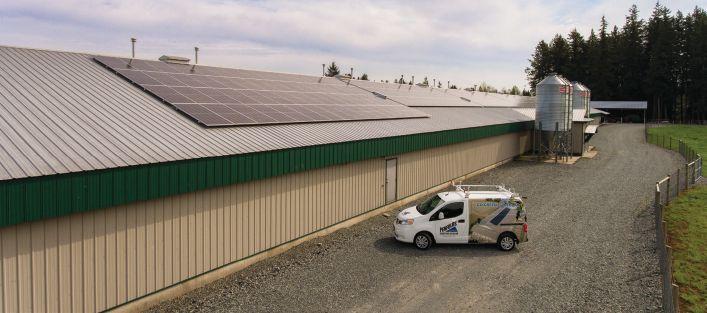
Working with Penfolds Roofing & Solar, the producers had a 123-kW solar system installed this spring. It offsets up to 111 per cent of their electricity consumption. Thus, not only will it virtually eliminate their electricity bill, but it also provides them room to expand their operations without impacting their electricity costs. What’s more, the system is equivalent to saving over 58 metric tons of carbon dioxide each year – the same amount of CO2 produced annually from burning over 6,500 gallons of gasoline.
The Friesen family invested in solar panels as part of their multilayered environmental plan.
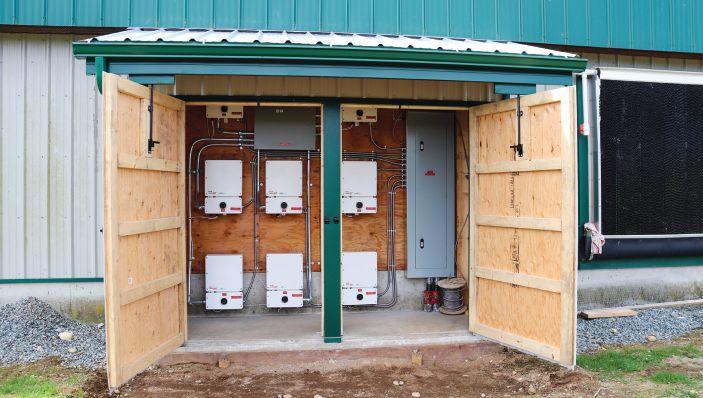
Inverters convert the DC power from solar panels into AC power to be utilized by the farm.
The producers’ 123-kW solar system offsets up to 111 per cent of their electricity consumption.