On any given day, if you’re so inclined, you can Google “animal welfare,” hit the “news” button and find thousands of postings from around the globe. That fact alone should be proof enough that the issue is noteworthy to the general public. But, if you sift through those articles, there are some that should be of equal concern to farmers, and others that will leave you scratching your head.
We’ve known for years that practices that seem standard to us are often alarming to the average person. But here’s a whole new ball game – the scenario in which even good news animal stories can be turned on their head. Enter the Oakland Press, and a small report on my beloved Major League Baseball team, the Detroit Tigers. Yes that’s right. The Tigers of Comerica Park – my Tigers – recently found themselves the target of severe reprimand related not to their sport, but to animal welfare.
Huh?
Let me explain. In what was meant to be a fundraising event during spring training in Miami, star pitcher Justin Verlander and third baseman Miguel Cabrera posed for publicity stills. In these pictures, they’re holding the club’s namesake, tiger cubs, borrowed from the Dade City Wild Things Zoo. The fundraiser was for the tiger cubs themselves, whose home at the zoo was reportedly destroyed by a tornado in March.
Aww. How completely warm-and-fuzzy!
Well, not to about 1,100 Facebook users who, upon seeing the posted pictures, jumped on the shame bandwagon already started by the International Fund for Animal Welfare (IFAW). The IFAW, according to this news item, attempted to “shame the Tigers” for “fairly significant public safety and animal welfare issues.” Forget that they were trying to raise money for a replacement home for the tiger cubs; the
IFAW said that the Detroit Tigers Baseball Club Inc. shouldn’t be supporting travelling animal displays, which turn a profit “showing off child animals that are disregarded – even killed – after outgrowing their usefulness to the entertainer.”
Oh.
While the IFAW argues that big cats can kill people and that it’s not a game to handle them, I’m personally not sure that they’re on the right track here. I don’t see anything dishonourable about the logic behind the shoot (incidentally, the page was removed as soon after the condemnation began).
Apparently, I’m wrong. Probably biased because of my background and definitely biased because I’m a Tigers fan, what was irresponsible in the eyes of thousands of faceless social media users seemed “A okay” me. Yet, I can’t dismiss them as ignorant dogooders. This group is increasingly influential and very vocal – and it’s not going away.
When we talk of “accepted practice” in farming, it doesn’t mean anything to Facebook Jane. If “cute-and-fuzzy” is no longer her first impression of a photo op with a tiger cub, it’s a warning to our sector that we need to think differently. We need to consider the perspective of our customers – and our opponents.
I don’t mean just with management either, I mean with how we explain onfarm practices. Defensive answers, given when questioned about animal welfare, don’t assuage our sceptics. And any ball club will tell you that it is easier to succeed when you have a supportive home crowd versus an empty stadium.
omissions. All advertising is subject to the publisher’s approval.
Heavy weights might be good for Sumo Wrestling but they're even better when they are on your birds.
Glass-Pac Canada
St. Jacobs, Ontario
Tel: (519) 664.3811
Fax: (519) 664.3003
Carstairs, Alberta
Tel: (403) 337-3767
Fax: (403) 337-3590
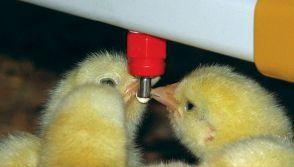
Time after time, Lubing drinkers continue to impress growers by outperforming the competition. Our patented nipple drinking systems simply deliver the exact amount of water at each stage of the bird’s life while never restricting their intake. Sumo-Size Your production with a quality Lubing Watering System.
For information regarding our lastest cutting-edge products please contact your local Lubing Distributor or visit our webstie at www.lubingusa.com.
J. Dean Williamson Ltd.
London, Ontario
Tel: (519) 657.5231
Fax: (519) 657.4092
Les Equipments Avipor
Cowansville, Quebec
Tel: (450) 263.6222
Fax: (450) 263.9021
Specht-Canada Inc.
Stony Plain, Alberta
Tel: (780) 963.4795
Fax: (780) 963.5034
A H7N9 Cases Increase WHAT’S HATCHING HATCHING
ccording to China’s official Xinhua news agency, the number of confirmed H7N9 avian influenza cases had increased to almost 135 at time of print, with cases still being reported. The number of deaths has also been on the rise during the same timeframe, climbing to more than 30.
Meanwhile, China’s Ministry of Finance (MOF) has allocated 303 million yuan (equivalent to over $50 million Cdn) to better prevent human infections of the flu.
The money will be used to subsidize projects aimed at monitoring cases of H7N9 infection, influenza-like illnesses, severe acute respiratory infection and unexplained pneumonia, the MOF said in a statement.
The Public Health Agency of Canada (PHAC) stresses that there have been no identified cases of people or birds in Canada and the risk
to Canadians remains low. A PHAC medical expert is based in Beijing and is liaising with the Chinese infectious disease prevention authorities on this outbreak.
The National Microbiology Laboratory (NML) has developed tests that can rapidly detect the virus using the H7N9 genetic sequence and is also working closely with provincial public health laboratories to ensure they also have the tools and tests required to detect the H7N9 virus.
A live sample of the H7N9 virus has arrived at the NML and researchers are conducting advanced research on this new pathogen.
The NML is also developing important diagnostic tests, including: a test to detect antibodies against the virus; and a test to monitor for any changes in the H7N9 virus.
All research work with the live H7N9 virus is being done
under strictly controlled settings in high-containment laboratories.
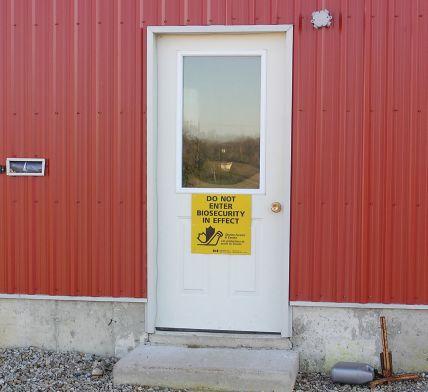
The following key biosecurity measures can help protect poultry health: Do not allow poultry or their feed and water to have contact with wild birds – particularly ducks and other wild waterfowl, which are known to be reservoirs for avian influenza viruses. Control movements of people, animals, equipment and vehicles on your property. Observe your animals daily for signs of disease.
If you suspect your birds are sick, you should immediately contact a veterinarian, the provincial ministry of agriculture, or a local CFIA office.
For more information, please visit the Public Health Agency of Canada H7N9 website at: http://www.phac-aspc. gc.ca/phn-asp/2013/h7n90403-eng.php.
Canadian Farmland Values Increase
Farm Credit Canada (FCC) has released its Spring 2013 Farmland Values Report based on the second half of 2012.
According to the report, the average value of Canadian farmland increased by 10 per cent, following gains of 8.6 and 6.9 per cent in the previous two semi-annual reporting periods, respectively. But the values varied considerably between provinces, with Quebec showing the highest increase, with 19.4 per cent. Manitoba followed with 13.9 percent and Ontario showed the third-highest change, with an increased of 11.9 per cent.
The FCC report tracks and highlights average changes in farmland values provincially and nationally, which helped producers make more informed business decisions. The two key drivers of the report are strong commodity prices and low interest rates.
However, FCC warns that knowing one’s risk tolerance is important when assessing to acquire farmland.
The average results per province were:
Alberta – 7.2 per cent
British Columbia – 0.4 per cent
Manitoba – 13.9 per cent
New Brunswick – 0 per cent
Newfoundland and Labrador – 0 per cent
Nova Scotia – 6.8 per cent
Ontario – 11.9 per cent
Prince Edward Island –5.7 per cent
Quebec – 19.4 per cent
Saskatchewan – 9.7 per cent
The national value of farmland has increased at the annual rate of 12 per cent since 2008, approximately twice the rate from 2002 to 2007.
“Strong crop receipts create a favourable environment for higher farmland values,” said J.P. Gervais, FCC Chief Agricultural Economist. “Low interest rates make it easier for producers to consider expanding their farm operation.” He cautioned buyers to do their homework and ensure their budgets have room to flex should commodity prices fall or interest rates rise to more traditional levels.
Gervais noted that current farmland values also reflect expectations of future crop receipts. Recent agricultural outlook reports in Canada and the United States suggest that while crop prices are expected to come down from recent highs, prices are projected to remain above historical averages over the next ten years. “The outlook for Canadian agriculture is really positive,” Gervais said.
To see the FCC Farmland Values Report video, visit www.fcc.ca/farmlandvaluesvideo and to view previous reports, visit www.farmlandvalues.ca.
COMING EVENTS
JUNE
June 16-18, 2013
CPEPC/CMC Convention, Fairmont Banff Springs Hotel, Banff, Alta. For more information, visit: www. cpepc.ca
June 19-21, 2013
Canada’s Farm Progress Show, The Co-Operators Centre, Regina, Sask. For more information, visit: www.myfarmshow.com
JULY
July 21-25, 2013
Poultry Science Association (PSA) annual meeting, Town & Country Resort & Conference Center, San Diego, Calif.
For more information, visit: www.poultryscience.org
AUGUST
August 20-21, 2013 Manure Expo: Getting it Right – Precision Manure Management
University of Guelph, Arkell Research Station
For more information, visit: www.manureexpo2013.com
SEPTEMBER
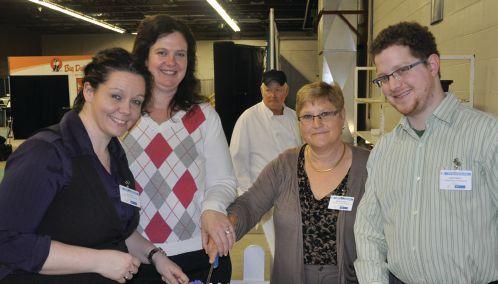
On April 10-11, 2013, Canadian Poultry commemorated its 100th anniversary at the London Poultry Show in London, Ont.
During the successful twoday trade show, members of the editorial and sales teams were present to talk with readers about the magazine, hand out complimentary copies and
discuss the industry.
At the end of the first day, the magazine held a wine and cheese event with over 200 of our close industry friends, contributors and writers.
As well, various members
of the industry were interviewed to reflect the magazine. The video can be seen at: http://youtu.be/9DsYfwprg7Y.
We would like to thank everyone who came and helped us celebrate.
September 10-12, 2013
Canada’s Outdoor Farm Show, Canada’s Outdoor Park, Woodstock, Ont.
For more information, visit: www.outdoorfarmshow.com
OCTOBER
October 1-3, 2013
XXXVIII Poultry Service Industry Workshop, The Banff Centre, Banff, Alta. For more information, visit: poultryworkshop. com/index.php
HATCHING HATCHING
Making a Better Chicken
Studies by Dr. Agnes Narcy and fellow researchers from the French National Institute For Agricultural Research (INRA) and France’s Center of Agricultural Research for Development (CIRAD), selecting for larger digestive organ size in chickens could reduce the amount of waste excreted. The researchers hypothesized that chickens with larger, better functioning digestive organs would absorb more nutrients from their feed and therefore produce less waste.
To test this hypothesis, the researchers selected chickens and raised three lines with differing abilities to digest feed. After rearing nine generations of each line, the researchers found that chickens with larger digestive organs ate less feed, produced less waste and that selecting for this trait could make poultry production more environmentally and economically sustainable. They also added that a farmer raising 20,000 chickens could save 8.9 tonnes of feed per hatch.
Hellmann Celebrates 15 Years
HFrom left to right: Greg Olson, Hans Odhner, Andreas Moors, Jack Lepelaars, Stephane Chouinard, Marzellus Hellmann, Melinda Tomol, Jim Currie, Calvin Hiebert and Johann Benner.
ellmann Poultry Equipment celebrated its 15th year in Canada at the London Poultry Show. Jim Currie, president of Hellman NorthAmerica was joined by the entire Canadian Sales Team, as well as by Hellmann GmbH president Marzellus Hellmann and vice-president Hans Odhner, among others.
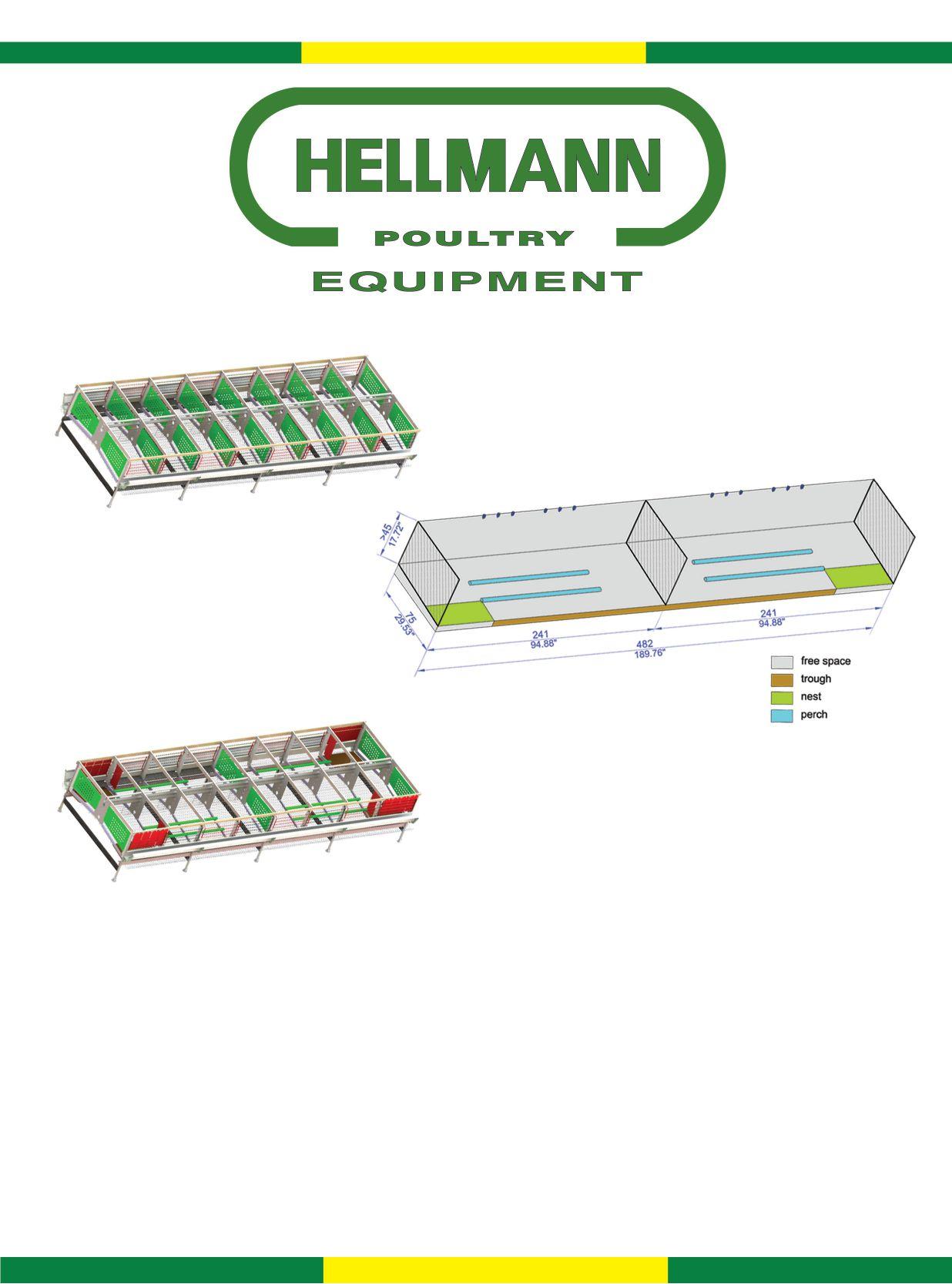
The company offers a diversified range of products for all layer and pullet producers, including standard, enrichable and fully enriched layer systems for aviary, layer and pullet systems, as well as alter-
NOVEMBER
November 7-8, 2013
Poultry Innovation Conference, Best Western Lamplighter Inn, London, Ont. For more information, visit: www.poultryindustrycouncil.ca/trainingand-events/innovationsconference/
SEPTEMBER
September 17-21, 2013 2013 International Plowing Match and Rural Expo, NULANDIA Dairy Farm, Perth County, Ont. For more information, visit: http://www.ipm2013. org/index.html
JANUARY 2014
January 28-30, 2014 International Production and Processing Expo (IPPE) 2014, World Congress Center, Atlanta, Ga. For more information, visit: www.ippe14.org
MARCH 2014
native housing and free range systems. Each system can be designed with a choice of multiple tier heights and depths. Additionally, Hellmann layer cages can be equipped with a choice of egg elevator or egg lift collection systems.
Hellmann has nation-wide sales, parts and services to support over 300 customer installations. The company continues to innovate to world-class layer, pullet and alternative housing.
For more on Hellmann GmbH, please visit http:// www.hellmannpoultry.com/ index.php/en.
March 19-20, 2014 Midwest Poultry Convention, Saint Paul RiverCentre, Saint Paul, Minn. For more information, visit: http://midwestpoultry.com/
We welcome additions to our Coming Events section. To ensure publication at least one month prior to the event, please send your event information at least eight to 12 weeks in advance to: Canadian Poultry, Annex Business Media, P.O. Box 530, 105 Donly Dr. S., Simcoe, ON N3Y 4N5; e-mail lappleby@annexweb.com; or fax 519-429-3094. Please write ‘Event Submission’ in the subject line.
Photo courtesy of Marilyn White
Remarkably Clean
CPRC Update What’s New at CPRC?
The Canadian Poultry Research Council (CPRC) recently held its Annual General Meeting during which Roelof Meijer, the Turkey Farmers of Canada (TFC) board representative, was elected chair and Helen Anne Hudson, representing Egg Farmers of Canada (EFC), was elected vice-chair. Meijer replaces Jacob Middelkamp, the former Chicken Farmers of Canada (CFC) representative, who was on the board for six years and served as chair for four. The CPRC board and staff wish to express their gratitude to him for his dedication and leadership. Ed O’Reilly, the CFC board representative for Newfoundland and Labrador, replaced Middelkamp on the board.
As well, the Canadian Hatching Egg Producers (CHEP) representative, Cheryl Firby, is stepping down after three years on the CPRC board. She has been a valuable voice in all board decisions and we wish her well in all her future endeavours.
NEW POULTRY SCIENCE CLUSTER APPLICATION
On behalf of the Canadian poultry industry, CPRC submitted an application to Agriculture and Agri-Food Canada for a new five-year Poultry Science Cluster under the recently announced AgriInnovation Program (AIP), which is part of the Growing Forward 2 policy framework for Canada’s agricultural and agri-food sector. A broad range of industry organizations and companies that have come together to provide resources to support the proposed research endorse the application. If the application is successful, the new cluster will secure considerable government funding to match industry investment (significantly larger than the first three-year cluster that ended on March 31, 2013).
A “cluster” brings together multidisciplinary teams of scientists to solve complex problems and to create synergies in research efforts, in order to make the
most of available resources and support a strong business case for investing in Canadian poultry research. Pooling intellectual and financial resources to address issues of common interest is a powerful way to maximize the impact of our collective investment in research.
The research proposed within the application represents consensus of needs by the poultry reflects major sector priorities and research target outcomes identified in the National Research Strategy for Canada’s Poultry Sector including economic viability, genetics, food safety, animal health products, poultry health, poultry welfare, on environment and poultry feedstuffs. The strategy was the result of in-depth consultation with producers, producer organizations, the research community (both government and university) and representatives of the poultry processing sector.
The application focuses on four themes, each encompassing several sector priorities:
1. Poultry Infectious Diseases –Impact on poultry health and/or zoonosis.
2. Alternative Animal Health Products and Management Strategies – Enhance avian immune function and mitigate the impact of infectious pathogens while displacing the need for traditional antimicrobials.
3. Poultry Welfare and Well-being – Focusing throughout the production chain, as impacted by early immune function, bird harmony within various alternate production systems, restricted feeding options of breeding stock, bird stocking density and the effects of temperature extremes during live bird transport.
4. Environmental Stewardship – As impacted by emissions of particulate matter, ammonia and greenhouse gases and their effect
on poultry, poultry workers and the industry’s environmental footprint.
The proposed cluster would provide capacity to resolve many current issues facing the poultry industry. The unique co-operation among scientists, industry partners and government departments across Canada will synergize efforts to address these issues. The scale allows for basic research and more near-term, applied studies that will provide both immediate answers and future information for the poultry and food industries, as well as factors impacting consumer well-being. We will provide updates on the application in future issues.
FOR MORE INFORMATION
For more details on these or any other CPRC activities, please contact the Canadian Poultry Research Council, 350 Sparks Street, Suite 1007, Ottawa, Ont., K1R 7S8, phone: 613-566-5916, fax: 613241-5999, e-mail: info@cp-rc.ca, or visit us at www.cp-rc.ca.
The membership of the CPRC consists of Chicken Farmers of Canada, Canadian Hatching Egg Producers, Turkey Farmers of Canada, Egg Farmers of Canada and the Canadian Poultry and Egg Processors’ Council. CPRC’s mission is to address its members’ needs through dynamic leadership in the creation and implementation of programs for poultry research in Canada, which may also include societal concerns.
Production Enriched Cages Make Cents
Quebec producer does not regret the switch to enriched cages
BY DAN WOOLLEY
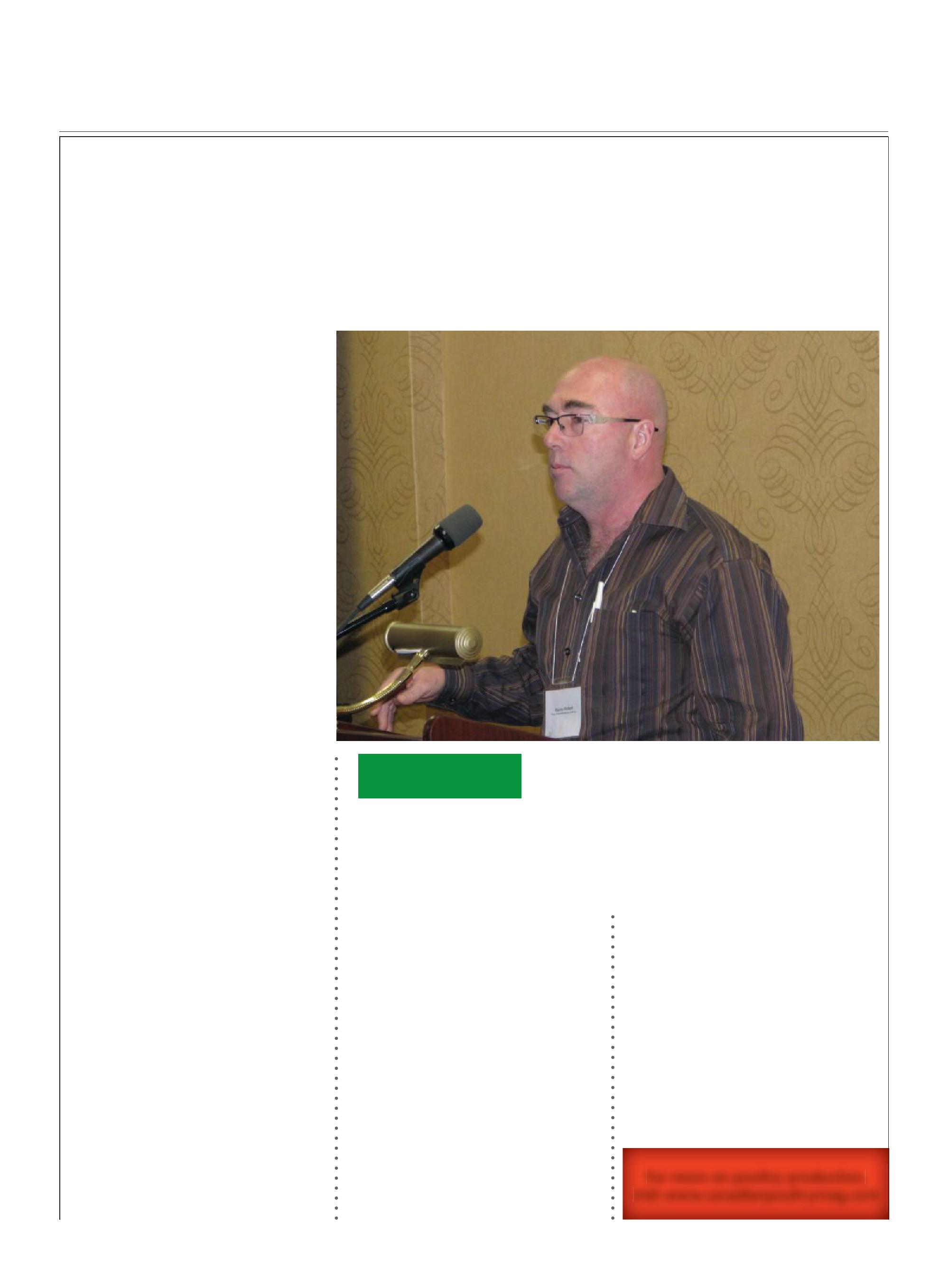
In 2011, Maurice Richard became the first egg producer in Quebec to use enriched cages on his poultry farm. Two years later, he says he never wants to go back to conventional housing.
It all began when he set off to western Europe in 2010 to tour poultry farms and study the newly installed enriched cage systems mandated by European Union directives. Upon his return, Richard, an egg producer with 76,000 layers on two farms in Rivière – Héva, Que., decided to demolish one of his own bird barns (circa 1975) housing 25,000 layers, to make the transition from conventional to enriched cages the following year.
Richard now operates an enriched cage production system on two floors, with three decks on each eight-foot floor that is ventilated through a forced-air system in the roof.
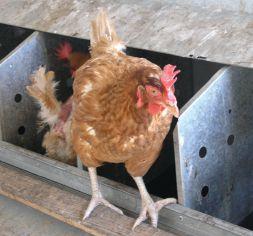
The layers like their enriched cages, says Richard, adding that 90 per cent of their eggs are laid in the nesting boxes.
“Each hen will lay more eggs if they have more space in the cages,” he adds. “You have to achieve a balance with the cage’s population density.” With this new system, each cage can contain 60 white birds or 48 brown birds.
Richard installed LED lighting in some scratch areas in the cages, leaving a darker area of the cage available for the layers’ nests. He also programmed his LED lighting for artificial sunrise and sunset to stimulate the productivity of his hens.
Having taken his cue from Europe and switched one of his barns to enriched cages, Maurice Richard shares with others his experiences with the new system.
He told the Nova Scotia Egg Producers (NSEP) that he chose to heat his new layer building because he wanted to dry the layers’ manure, “The eggs they lay are very clean,” he says. “The enriched cage system seems to lower bird mortality.”
Productivity in the enriched cages is better than in conventional cages, with about 338 eggs per hen over 52 weeks of production, Richard estimates. The new cages are in a building that is 86.5 metres (284 feet) long and 13.7 metres (45 feet) wide, and each cage is approximately 1.2 metres (four feet) by 11.8 metres (39 feet).
“With the enriched cages it takes longer to clean the building because it’s big-
ger than the building it replaced,” he says. “Because there are more birds housed, it also requires more poultry feed.”
This year, he plans to tear down a second barn that holds conventional cages and replace it with another new structure holding enriched cages. The price per layer, not including the cost of foundation and footings, will be about $42: $17 per enriched cage and another $25 for the building itself.
ENRICHING EXPERIENCE
Health Keeping Cool
Heat stress is common in Canadian poultry barns, but there are ways to decrease impact on your birds
BY DR. LLOYD WEBER, DVM, LLOYD WEBER CONSULTING SERVICES LTD.
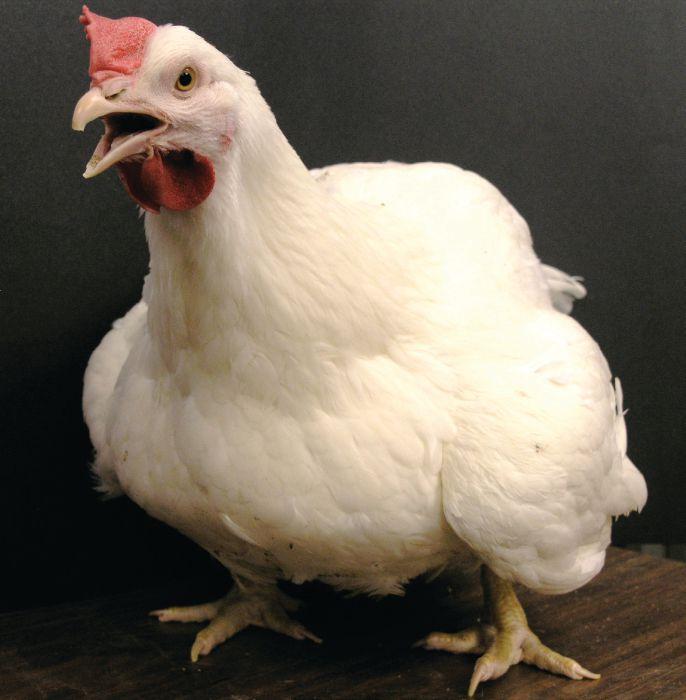
Every summer, Canadian poultry farms experience some degree of heat stress.
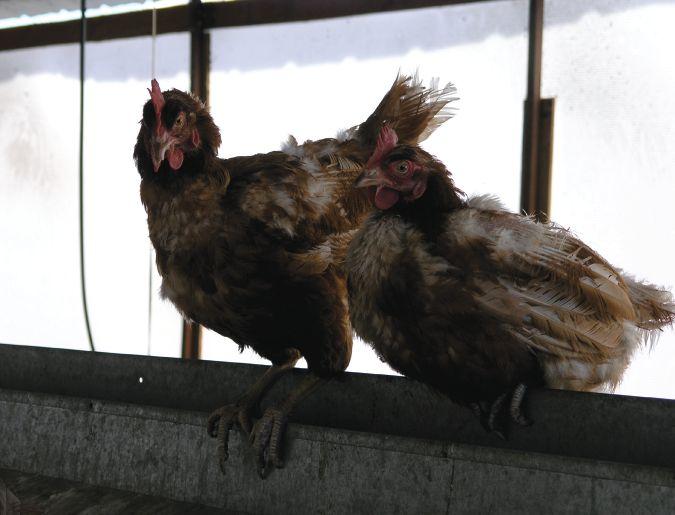
High temperatures (those above 30°C), combined with elevated humidity, can result in reduced feed intake and possibly heat prostration mortality.
During times of heat stress, flock performance and health may be compromised by reduced intake of vitamins and minerals. Thiamin requirements double during heat stress and there is also reduction in the absorption of fat-soluble vitamins A, D and E.1 This is concurrent with increased excretion of minerals such as sodium (Na+) and potassium (K+), which, in turn, negatively affects the heat dissipation capacity and acid-base balance of the bird, resulting in decreased growth performance.
Birds can get rid of excess heat in one of five ways:
1. Conduction – Hot birds will try to cool down by touching water pipes or digging into litter to contact a cool floor. In extreme cases, the breast muscle will develop a pale, cooked appearance after the bird sits for prolonged period of time.
2. Convection – Moving air over the birds is the most effective way to keep them cool, but if air is not moving quickly enough, heat can build up around their
During times of heat stress, flock performance and health may be compromised by reduced intake of vitamins and minerals.
bodies. In severe heat situations, birds can often be found dead along walls where air does not circulate efficiently. These birds usually die from heat prostration, not from lack of oxygen.
3. Radiation – Birds will raise their wings to allow heat to radiate from areas where feather cover is poor. Note that many leghorns survive well in cages because of poor feathering and lack of floor litter, which permits maximum radiation.
4. Excretion – Defecation is another means by which heat is lost because birds will typically double their intake of water during periods of heat stress and thus excrete more hot urine and water in feces. It is therefore especially important to ensure your barns have an appropriate drinker ratio, clean water filters and welladjusted pressure regulators to maximize water delivery during warm weather.
AFFECTED BY HEAT
5. Evaporative Cooling – Evaporation of water takes place on the surface of the skin and from the respiratory tract. In heat stress conditions, the bird will try to maximize heat loss by panting.
Under heat stress conditions, maintaining water and electrolyte balances are important factors affecting the survivability and productivity of the birds – especially when humidity is high.
By panting, the birds could increase their respiratory rate tenfold; this would result in excessive CO2 loss, which would alter the internal acid-base balance of the bird. By altering their own metabolism, the birds would increase the energy spent towards homeostatic regulation rather than processes supporting growth.2
Excessive water can also be lost through panting and higher urine flow, which negatively influences the birds’ capacity to dissipate heat.3 Unfortunately, ions of sodium, potassium and chloride are also lost. This is dangerous because the ions are important in maintaining the internal acid-base balance and cell membrane integrity of the bird. Some research has shown that sodium chloride and potassium chloride, when administered in the water, were able to alleviate the adverse effects of heat stress.4
Gut lining integrity, which will cause interference with the natural absorption of essential vitamins and minerals, is also compromised under heat stress conditions.
In summary, valuable vitamins and electrolytes can be lost with the rapid respiration and increase urine output caused by heat stress and must be replaced. In many cases, the few dollars spent on water medication such as Electrolytes Plus could have a significant effect upon the productivity of poultry and livestock.
REFERENCES
1. P.R. Ferket; M.A. Qureshi (1992). Performance and immunity of heatstressed broilers fed vitamin- and electrolyte-supplemented drinking water. Poultry science. 71: 88-97.
2. Mongin, P. (1981) Recent advances in dietary cation-anion balance: applica-
tions in poultry. Proceedings of the Nutrition Society. 40: 285-294.
3. Belay T. and Teeter, R.G. (1993). Broiler Water Balance and Thermobalance During Thermoneutral and High Ambient Temperature Exposure. Poultry
Science 72: 116-124.
4. Smith, M.O. and Teeter, R.G. (1987). Influence of feed intake and ambient temperature stress on the relative yield of broiler parts. Nutrition Reports International, 35(2): 299-306.
Just see a veterinarian? We see more.
We see the numbers that connect us We see the number of visits our e h veeterinarian, terinar Dr. Helen Wojcinski, makes to improve your flock performance. We see the countless hours of training and experience perform that come with Helen wherever she goes. that c
Together by understanding the numbers, we understand the industry. Tog
11 years of formal Animal Health education gyg, Strength in Numbers.
10 0 0 travell customers e of form educ
100,000 miles travelled to visit customers each year
16 industry presentations delivered per year
120 people trained through Hybrid Hatchery Workshops
Business Pushing for Pullet Growers
Producers continue to work towards marketing board status
BY DAN WOOLLEY
The Pullet Growers of Canada (PGC) has been working hard to achieve marketing board status in order to give pullet growers a clear voice in the industry.
At its annual general meeting in March, Andy DeWeerd, chairman of the organization and a farmer in Perth County, Ont., told the Nova Scotia Egg Producers (NSEP) that the PGC have been working with pullet farmers and provincial egg marketing agencies to develop a business plan for the proposed marketing board.
DeWeerd said that the PGC has developed a draft federal-provincial agreement for the new marketing agency, as well as a separate operating agreement and quota formula, and used these drafts to consult with the provinces. Also, in July of last year, the pullet growers submitted a detailed proposal to the Farm Products Council of Canada for Part Two status in hopes of achieving a stable production check-off and an adequate return for pullet producers.
“Most provinces have contributed money to move the project forward,” said DeWeerd. However, he noted that Quebec pullet growers should have a new provincial pullet marketing board within the next few months on their own.
Public submissions on the proposed agency closed last February. Out of 81 submissions, 48 were positive, five were neutral and 28 were negative, so the proposal went forward. Additionally, the PGC proposal got a lot of support
SEEKING CHANGE
Andy DeWeerd, chairman of the Pullet Growers of Canada, anticipates that a marketing board will be established within the next few months.
from the other poultry marketing boards.
If the farm products council recommends granting Part Two status to the Canadian pullet growers, DeWeerd said, the recommendation would then go to the Minister of Agriculture and Agri-Food Canada for approval. Following that, the final Federal-Provincial Agreement for a pullet growers national marketing board will be drafted.
John Griffin, the Atlantic provinces’ representative to the Farm Products Council of Canada, said a two-member panel from the council will soon review the application to decide on whether to hold hearings for the public. He added that any public hearings would likely be held in April or May, as the council
hoped to make a recommendation to the agriculture minister by July.
DeWeerd added that the PGC is looking for an accepted cost of production formula for the pullet industry, as well as an improved pullet production cycle, management practices and agency status to ensure the cost of production is recovered in the price of pullets.
“It is important to control pullet production volumes, so pullet growers must separate from the egg producers who produce eggs for human consumption,” said DeWeerd.
Research
New Humane Dispatch Tool
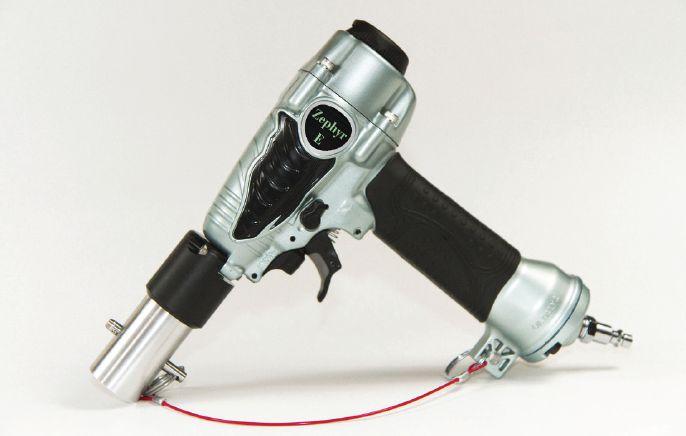
The Zephyr E is a practical alternative for euthanasia of turkeys
BY KAREN DALLIMORE
The development and commercialization of the Zephyr E small animal dispatch tool is a great example of what can happen when research and industry work together.
Originally designed for stunning rabbits in abattoirs, the Zephyr was created for use by the Ontario Ministry of Agriculture and Food. Dr. Tina Widowski, the director of the Campbell Centre for the Study of Animal Welfare and an animal and poultry science professor at the University of Guelph, had an idea that the non-penetrating captive bolt tool could be adapted for use with other small animals, such as poultry and piglets.
Widowski enlisted the assistance of her graduate students, Marisa Erasmus and Teresa Casey-Trott, to test the device as a dispatch tool for turkeys and small pigs. The new prototype they developed uses a longer, more conical nylon bolt head than the previous version.
In their tests, the tool effectively rendered all test animals immediately unconscious, followed quickly by death in a one-step process. It also consistently administered the same force to the skull independently of the strength of the operator. During their research, the team also identified the most effective placement of the Zephyr for turkeys – directly above the cerebral cortex, in the middle of the skull between the ears and the eyes. This location is now depicted in the user manual of the Zephyr.
TWO TOOLS
Both are portable, but whereas the Zephyr E needs to be hoseconnected to a stationary air compressor, the cordless TED runs off a gas canister.
The development of this tool did not escape the notice of Farm and Food Care (FFC). Its head office is only a stone’s throw from the University of Guelph, and Casey-Trott was part of a Scholarship Program Partnership between the two. Her supervisor, Widowski, had also been part of a video and resource development team for a previous project on how to properly use, clean and maintain captive bolt guns for proper functioning.
FFC worked closely with Casey-Trott throughout her research to help deter-
mine the practical advantages of the Zephyr for on-farm use.
The main criteria for a euthanasia tool are: operator safety, rapid insensibility of the subject, consistent results, ease of use and compliance with recognized euthanasia guidelines. Since the Zephyr met all the criteria, Widowski contacted Randall Bock, president of Bock Industries in Pennsylvania, in January of last year to open a discussion about the commercial development of the Zephyr E.
Bock industries already had a similar captive bolt tool – the Turkey Euthanasia
Photos courtesy of Farm and Food Care / Karen Dallimore
Device (TED) - a portable tool designed for on-farm euthanasia of cull stock.
The distinction between the TED and the Zephyr E is that the TED is portable, working off a gas canister, allowing complete mobility around the farm or remote emergency use. While similar, the Zephyr E is designed to connect to a 120-psi air compressor in a fixed location.
As Bock explained, a fixed Zephyr E could have potential applications in a processing facility where a bird may be injured on a truck and it must be dispatched quickly at the receiving dock. On the other hand, if a truckload of turkeys overturned on the road, the driver would be able to quickly dispatch the injured birds by using the TED instead of blunt force trauma.
But why not just use blunt trauma?
Bock explained that this change has been driven by the need to have a less dramatic, one-step process to appease the concerns of workers, the general public and consumers. A humane death is important in the eyes of both the consumer and the retailer.
“We’re not repurposing a hammer,” said Bock, “We’re designing a tool specifically to address this need.”
Bock has now sold these tools as far away as Australia, where customers will use them to dispatch emus and ostriches.
Now that the Zephyr is commercially available, it seemed a natural fit that FFC would promote the use of this device by bringing hands-on demos to industry events. The organization has also assisted in the development of educational resources, including an informational video and a fact sheet for farmers.
The Zephyr can be used to effectively euthanize rabbits, piglets and turkeys, as well as chickens, geese and ducks. The next step at Bock Industries will be to investigate the tool’s use in larger animals such as lambs or veal calves.
For more information, you can visit Bock Industries at www.bock-industries. com.
Research
Euthanasia: The Human Toll
Failure to make the right decision doesn’t impact just the animal in question
BY KAREN DALLIMORE
The room went silent for a moment as Jan Shearer fought to keep his composure, unable to speak.
“I struggle sometimes to give this presentation,” the veterinarian from Iowa State University told a gathering of Farm and Food Care (FFC) delegates at a meeting in Guelph earlier this spring.
His presentation was about what he called the “caring and killing paradox” –the emotional toll of being called on to perform euthanasia, but not always for humane or medical reasons.
Veterinarians struggle with euthanasia for the sake of convenience. For example, a dog is no longer wanted because the owner has redecorated the house and the dog doesn’t match the colour scheme anymore. “Do I send this person out the door and possibly send this animal to a terrible death?” he asked. But on the other end of the spectrum, what about when an owner wants to continue treating an animal regardless of the animal’s quality of life, only because they can’t let go?
Dealing with the destruction of healthy animals creates a moral stress for the veterinarian, whose life is devoted to maintaining the well-being of animals. This can create a condition not dissimilar to post-traumatic stress disorder, called perpetration-induced traumatic stress. “It’s a very real issue,” said Shearer, “one day a healer; the next day an executioner.”
One study in the United Kingdom has
A TOUGH CHOICE
Dr. Jan Shearer, DVM, says that veterinarians suffer a huge emotional toll from the decisions and circumstances around euthanasia.
revealed that veterinarians are three times more likely to commit suicide than the general population. Shelter workers, laboratory technicians and even young people in 4-H clubs are exposed to the caring and killing paradox, marked by depression, grief and other destructive behaviours that can include alcohol and drug abuse. “It takes a toll,” said Shearer, “a real toll.”
Shearer described the difference between human and animal cognition by quoting Bernard Rollin, a philosophy professor at Colorado State University: “In the animal mind – there is only ‘qual-
ity of life.’ It’s painful or it’s not, hungry or not, thirsty or not.”
Humans, on the other hand, will endure short-term negative experiences for the purpose of achieving long-term goals. “To be the animal’s advocate we have to keep these things in perspective,” said Shearer. The euthanasia procedure can be stressful for a caregiver when the animals are suffering as well. “In a perfect world, we would preserve all life and relieve all suffering by medical or other means,”
Continued on page 40
Photo courtesy of Karen Dallimore
Health Leading the Discussion
Animal welfare is a difficult topic, but also an important responsibility
BY KAREN DALLIMORE
Ethics are about what’s right and what’s wrong, and can be based on tradition, religion, laws or popular beliefs.
Simply put, animal welfare is about ethics, says Tim Blackwell, lead veterinarian in Swine Disease Prevention for the Ontario Ministry of Agriculture and Food. “It’s about the responsibility we have for animals in our care.”
But, what should farmers say when that responsibility is questioned?
THE BEGINNINGS OF ANIMAL WELFARE
Animal welfare concerns have been around a long time. In 1867 the American Society for the Prevention of Cruelty to Animals (ASPCA) Act was passed into law, and in 1868, the ASPCA took its first case under the act to court, arguing that the shipping of sea turtles for meat from the southern U.S. to New York City was inhumane. The live turtles were flipped over with their flippers wired together so they could not right themselves for seven to 10 days on a boat.
However, the judge refused to hear the case – he wasn’t about to turn seamen and turtle hunters into criminals. The New York press stood behind the judge, calling animal rights supporters fanatics who were completely out of touch with societal norms.
Blackwell says the public “went nuts” in response because they had no idea this was going on. Large numbers of New Yorkers began to donate time and money
OUR RESPONSIBILITY
It may seem that success is impossible where animal rightists are concerned, but it is crucial to strive for continuous improvement in animal welfare.
to the ASPCA and the organization went from a one-man operation to the large and very influential body that it is today.
“Some think we can ignore what the public thinks is right and wrong,” continues Blackwell. “But livestock agriculture has lost every case with the Humane Society of the United States (HSUS) to date, and if we ever win a case, it will be the sea turtle scenario all over again. We will come off looking bad in the eyes of our customers.”
WHAT TO SAY?
So when questions of animal welfare arise, what should farmers do?
One response that doesn’t work is that we cannot feed the world without the highly restrictive housing of livestock –Blackwell asserts that this is not true and not believable.
Neither is the concept that animals don’t have rights because animals cannot comprehend rights or argue on their own behalf. “It is a truly compassionate society that establishes rights for the weak, the powerless and the most vulnerable,” continues Blackwell. “Animal rights are entitlements that society chooses to bestow on animals, those being the legal right to food, water, shelter and medical care for all domestic animals in Canada.”
There is an unfair belief that all animal rights activists are extremists, but Blackwell says the majority of customers are middle-of-the-road, animal rights moderates. “A lot of customers just believe in avoiding unnecessary suffering,” he adds “To misjudge or mislabel them is to risk losing their trust.”
Sometimes it may feel as if animal welfare groups will never be satisfied so there is no point in working with
Disinfection Foot Mat
Keeps your premises free of contamination
Reasons to use Disinfection Foot Mat: 5
Universal applicator for use with different disinfectants
Efficient use of disinfectant – (min 75% less disinfectant than standard foot baths)
Ultimate solution for indoors & outdoors in all poultry farms, hatcheries and poultry processing premises
these people. But Blackwell says that is wrong. “We must commit [for example] to continuous improvement in all areas of swine production. Improvement is always a continuous process.“
For a perfect example we have only to look at factory reforms over time.
In 1802, the U.K. declared that factories needed to have proper ventilation and owners cried that the changes would put them out of business. In 1819, they argued that a 12-hour day for nine- to 16-year-old children would leave them broke. In 1833, they cried foul over a nine-hour day for children under 13; in 1878, they complained that a 10-hour day for women followed by a 1878 ban on labour for children under 10 years of age would put them out of business.
Change is slow, but a very important step in the evolution of business.
Blackwell draws a parallel from back then to what farmers are saying today, that making changes could be bad for business. “It looks ridiculous but that’s where we are right now.”
What about supporting animal welfare that is based on solid science? Blackwell believes we should not use it to deny what we should do. Once we determine how animals should be treated, scientists can help us determine how, or even if, we can achieve our goals.
Using the example of castrating piglets and pain control, Blackwell says science can tell us what pain control is and what works, but not if we should provide it to the animals.
“Do not confuse ‘should’ do it with ‘can’ or ‘cannot’ do it.”
If undercover videos surface that call into question certain animal welfare incidents, Blackwell says to respond by saying that extreme cases are not by any means the norm. “Immediately and without reservation condemn inappropriate behaviour whenever and wherever it occurs,” he advises. “Kicking a sow in the head is wrong – just say we never condone such behaviour.”
What about the argument that since productivity is increasing, welfare must be as well? Blackwell argues that they are not the same, and that citing standard
industry practices is not a sound defence either. While many practices may be legal, legal is not necessarily moral. “Fifteen states are making some housing situations illegal,” says Blackwell. “[But] winning in a court of law can be a loss in the court of public opinion.”
It is easy to dismiss animal welfare questions by saying that urban residents think pigs should be treated like pets. In their defence, Blackwell points out that urban Canadians, like all Canadians, believe in the humane treatment of all emotionally responsive creatures because our sense of justice and compassion extends to the most vulnerable members of our society and to avoid unnecessary suffering.
Some feel the HSUS has been successful in its mission to support animal welfare because it has money, but Blackwell points out that the HSUS appeals to the North American ethic that the innocent and powerless must be protected. It is not the money that makes the HSUS message successful, but the message that makes the HSUS money, and we must take the message back.
How then do livestock farmers to explain their practices to the general public? Blackwell says the public believes livestock farmers are ideally qualified to ensure animal welfare is protected, but you must be careful, he warns, as you could lose that trust. And once that trust is lost, it can be very difficult to get back.
THE BEST POLICY
“Our religions and culture hold stock people in high esteem,” adds Blackwell. “The public expects livestock producers to be the real experts on animal welfare.”
He suggests that farmers openly engage in discussions on animal welfare issues and acknowledge areas of concern. The main principle behind the discussion is: reduce unnecessary discomfort wherever possible.
As Blackwell advises, just be honest. It is the best policy, after all.
www.grandvalley.com
Power Pac premix has been formulated to develop a structurally sound laying hen to maximize egg quality and the total number of eggs laid per hen per cycle.
Call us today at 1-877-625-4400 and speak to one of our Poultry Specialists and find out how you can add to your bottom line.
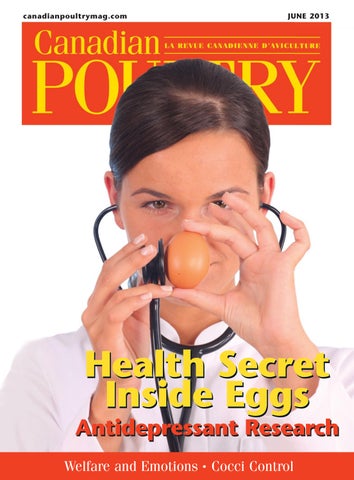
Health Health Secret Inside Eggs
Antidepressant Research
BY LIANNE APPLEBY
Eggs, it can be said, have had their fair share of the media spotlight. There was a time when it seemed they were to be blamed, solely, for high cholesterol and, (if we really want to exaggerate), for the heart attacks of many an unsuspecting consumer. Now, as with many dietary staples, it’s generally accepted that when consumed in moderation, eggs can be part of a healthy diet.
Most readers will be thinking, “well, we knew that all along, it’s common sense”. And, like many, other examples of bad media, the only thing to do was to ride out the unwanted publicity storm.
What do you do when the reverse is true, though – when ground-breaking research shows that eggs may be the answer to one of the most crippling conditions a person can suffer? Well, if you’re Egg Farmers of Ontario (EFO), you support further work on the subject and view it as a research and development investment.
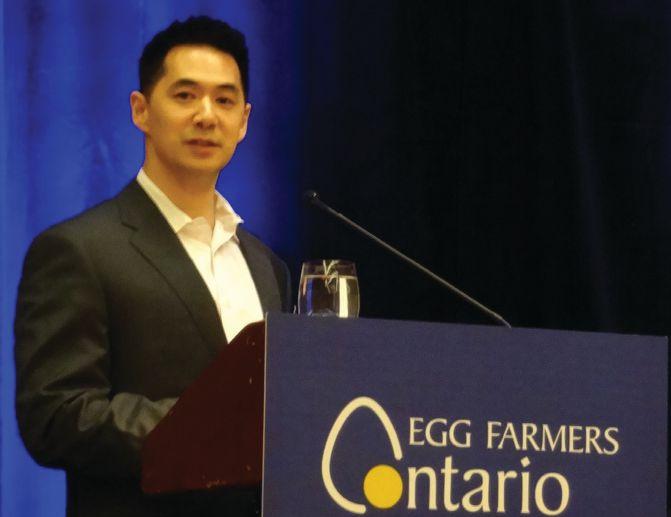
Thus, on March 26, EFO announced at their annual meeting in Mississauga that they will provide $1 million to United Paragon Associates (UPA), an Ontario-based privately-held pharmaceutical developer, to fund clinical trials for a new antidepressant drug that could help millions of people, worldwide, who suffer from Major Depressive Disorder (MDD). Cleverly named Rellidep™* (after former hockey great, Ron Ellis, long-time champion in the fight against MDD, and UPA’s Vice-President of Public Relations) it would be an understatement to say that there are high-hopes for Phase 2 of clinical trials.
EARLY
RESULTS
While a small sample set was used, George Yeung says early trials show that Rellidep has benefits over other antidepressant drugs currently on the market.
If any of this sounds familiar, it shouldn’t. EFO has never before supported such work. In fact, when it comes to commodity groups, Ontario’s egg board is probably the only group in Canada currently funding the development of a human health drug. And whether you eat eggs or not, depression is very likely a condition that has affected you or someone very close to you.
According to the Canadian Mental
Health Association’s Website, “depression is a term used to describe a long period when a person is sad to the point of feeling worthless, hopeless and helpless. It can be caused by stress, a loss, or a major disappointment, but sometimes, it seems to happen for no particular reason at all – the result of a chemical imbalance in a person’s body.” Statistics Canada’s 2002 Mental Health and Well-being Survey showed that 5.3 per cent of the Canadian
Photos courtesy of UPA and Lilian Schaer
population aged 15 years and over had reported symptoms that met the criteria for MDD in the previous 12 months, including 4.8 per cent for major depression and 1 per cent for bipolar disorder.
When EFO was approached by UPA, they were told that the company had found that fertilized eggs could play a key role in alleviating depression. Given the millions of Canadians battling the disorder and the simple “good news story” that could come of it, it was a no-brainer for Ontario’s egg farmers to get behind the work.
“I got introduced to it last fall,” said EFO chair Scott Graham. “Our general manager, Harry Pelissero, had been introduced probably a year previous to that. We’ve signed a letter of intent for a million dollars that we hope is going to be a stimulus to help [UPA] raise another $7.5 million [to undertake] a second clinical trial.”
Graham is hopeful the results will be as
Health
favourable as they were in the first trial. Those findings indicated that Rellidep may be more successful in alleviating depression than other drugs currently on the market, while at the same time resulting in fewer and less disruptive side effects.
“Despite recent advances in treatment, there continues to be great unmet need specific to three key areas in the fight against major depressive disorder,” George Yeung, UPA’s president of Research and Development told the audience in Mississauga. “Early phase trials with Rellidep have demonstrated tremendous promise, as it may offer improvements over currently available drug treatments in three areas. Potentially better efficacy, shorter time-to-clinical-benefit and significantly fewer side-effects were observed. We are hoping to see similar results in the next phases of our research.”
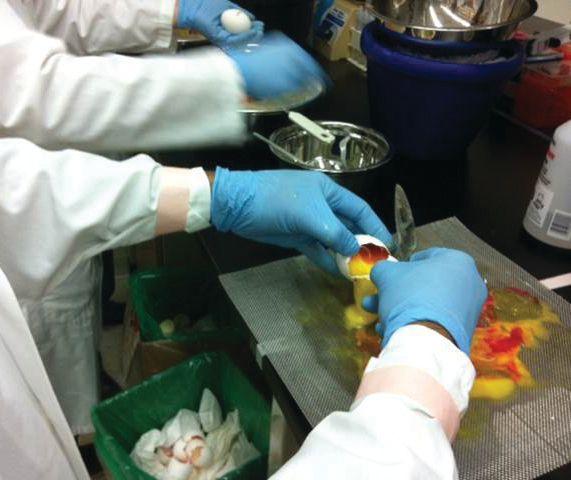
At a certain stage of development, Yeung explained, a specific molecule is taken from embryonic stem cells in fertilized eggs through a proprietary and patented process. It then forms the foundation of the antidepressant, Rellidep. While he agrees with Graham that early results were encouraging, he emphasized that the sample set was small.
With a mandate to explore potential uses of eggs and expand the market, this investment seemed like a great fit for EFO, although its $1 million won’t kick in until UPA raises the remaining $7.5 million to go ahead with Phase 2 of the clinical trials. EFO, according to Graham, was also keen to keep the research in
Canada (specifically Ontario) by supporting UPA. Besides that, he cited the innovative nature of the research, the fact that it is not food-related and its potential economic impact as draws for EFO to infuse money into the project. Speaking to a small group of reporters after the announcement was made, Graham’s emotions were evident when he talked about the humanitarian implications of the new drug, should it reach the market.
There is, however, much work to be done before the drug gets to that point. Yeung explained that even if the money needed for Phase 2 is procured, it could be years before the drug is at the point where it can be prescribed. And likely, Rellidep would be out-licensed to a larger multinational pharmaceutical company after Phase 2, so there are still a lot of unknowns, he added. It could take longer than six years for Rellidep even to be approved for human use.
For now, the needed $7.5 million to start up the next trial phase is the most crucial factor for UPA to tackle in getting the drug to market. For Ron Ellis, though, that figure dwindles in comparison to the statistics around economic loss related to depression. In reference to published studies, he said, “the economic cost of lost productivity in Ontario due to depression, as measured by short-term and long-term disability days, is estimated to have been $8.8 billion in Ontario in 2000. Costs due to depression are estimated to have been over $2 billion in Ontario in 1998.”
Thus, for Ontario’s 440 egg producers, there is a collective holding of breath to see how this potential great news story ends. Stay tuned.
* Rellidep is a trademarked product.
ABOUT UNITED PARAGON ASSOCIATES INC. (UPA)
UPA is an Ontario-based, privately held pharmaceutical developer. For more information, contact George Yeung, UPA’s president of research and development at 416-207-1001 or gyeung@
TD Canada Trust
TD is committed to helping farmers build for the future.
Dave Jeffries and his sons, Roland and Ernie, know a thing or two about farming. So, when it was time to expand the business, they naturally chose a bank that knew how to help. At TD, they found Agriculture Specialist Vince Puchailo, who helped implement a succession plan. Vince’s understanding of the complex process even impressed the lawyers handling the sale. A personalized approach to agriculture finance, like Vince’s, is something all TD Agriculture Specialists bring. Maybe it’s time you brought one to your farm.
For more information, visit a branch or tdcanadatrust.com/agriculture
Dave, Roland & Ernie Jeffries Vegetable Growers
Vince Puchailo TD Agriculture Specialist
Research Unravelling Feather Pecking
Millions of birds engage in feather pecking, but why?
BY KAREN DALLIMORE
It was 1873 when Robert Oettel, a German poultry fancier, first described “feather pulling” or “feather eating.” Today, studies in the United Kingdom indicate that 78 per cent of hens engage in severe feather pecking, with similar numbers in the European Union. Bring those numbers to Canada, where there are about 22.5 million hens, and that means the behaviour could affect up to 17.6 million Canadian birds.
The answer to why hens feather-peck has eluded researchers for 140 years. “It’s an old problem,” says Austrian veterinarian Dr. Alexandra Harlander, one of the world’s experts on feather pecking in laying hens, who has recently joined the poultry welfare faculty at the University of Guelph.
Harlander posed a question at a recent lecture in Guelph hosted by the Campbell Centre for the Study of Animal Welfare: Is feather pecking redirected behaviour from food pecking, ground pecking or dust bathing? As she explains, it’s generally accepted as a multi-factorial process, involving genetics, management and nutrition.
So far, detective work has explored many facets of feather pecking, from natural behaviours to diets to digestive differences in the birds themselves. However, Harlander is convinced that feather pecking is redirected foraging behaviour, not redirected dust-bathing behaviour.
She describes foraging as having two
A COMPLICATED PROBLEM
At a recent lecture hosted by the Campbell Centre for the Study of Animal Welfare, Dr. Alexandra Harlander explained that feather pecking is generally accepted to be a multi-factorial process.
components: seeking and consumption. It’s possible that feather pecking is part of exploration. Hens without some sort of floor substrate, such as wood shavings, will display an increase in feather pecking behaviour. Is it possible that birds may misperceive feathers as a foraging substrate?
It is known that birds don’t mind working to find food, but do they work as hard for feathered feeds?
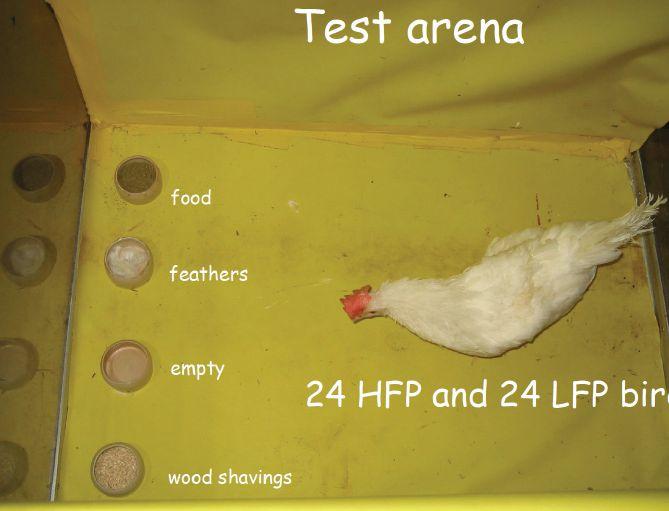
Harlander references her study where hens with high and low feather-pecking (HFP and LFP) tendencies were offered food pellets, loose feathers and fixed feathers as a food source. The results showed that both groups of birds ate the same amount, but the HFP hens preferred a higher-feather diet (see photo above).
But would HFP and LFP birds prefer feathers over shavings?
Birds were then individually presented
Photo courtesy of Alexandra Harlander
Research
with a bowl of wood shavings, a bowl of feathers, an empty dish and a bowl of mash. The HFP birds voted for the feathers.
This raised another question: How hard would birds work to get wood shavings or feathers? Birds were asked to peck a key or press a lever with food, wood shavings or feathers as a reward (known as operant conditioning). The HFP and LFP lines didn’t differ when food or shavings were the reward, but when feathers were rewarded, the HFP birds became highly motivated.
What is it about feathers that make them attractive? Harlander described the process of consumption as follows: we see the food, touch it, smell it, taste it and decide to either swallow it or spit it out.
But for feathers, the distinction is more difficult. Feather colour doesn’t seem to make a difference; neither does feather placement. While some flocks start in pecking in one area, others concentrate on other areas and we don’t know why – research has shown no area preference so far.
Birds have shown a preference, however, for shorter feathers, choosing twoor four-centimetre feathers over six- or eight-centimetre feathers. This shows
that physical characteristics are important, says Harlander. Birds also seem to prefer the tip or middle part of the feather and avoid the calamus, the stiff part.
It is possible that chemosensory cues have an influence as well. Birds preferred washed feathers to unwashed feathers, and they loved feathers soaked in garlic but avoided bitter quinine feathers.
With the quinine feathers, both groups of birds showed a reduction in severe feather-pecking bouts, but returned to their old behaviour after three weeks.
If HFP birds are so highly motivated to feather-peck, why not mix feathers into the food? Harlander says that making feathers available in the HFP feed will substitute the specific appetite for feathers and therefore actually reduce pecking activity compared with birds provided with normal feed or birds given feed containing insoluble cellulose instead of feathers.
This further led Harlander’s team to wonder if the fibre source or concentration would make a difference. When birds were fed isocaloric (similar caloric content) feeds of similar particle size, those with five per cent chopped feathers and five per cent cellulose in the diet had the same number of severe feather-
pecking bouts, while providing a diet of 10 per cent feathers reduced feather pecking significantly and improved plumage condition.
However, the mechanism by which fibre reduces feather pecking remains unknown.
Harlander hypothesizes that feathers, as non-nutritive substances, may act the same as insoluble fibre, by speeding up feed passage time. Studies have shown this to be the case, with feed passage time being fastest with high-feather diets. The physical structure of the feathers increased the grinding activity of the gizzard, affecting peristaltic movement of the gut. Ingested feathers increased the speed of feed passage, but wood shavings did not.
In summary, both HFP and LFP birds explore at similar levels, but because the HFP birds showed a specific, strong appetite for feathers, substituting litter substrate was not effective. As well, feather ingestion increases the rate of food passage and can affect gut micro biota.
Feather pecking seems to be a multifactorial issue that affects both organic and conventional commercial operations, resulting in mortality and loss of productivity. Group housing may actually encourage feather pecking, with birds picking up the behaviour by watching and imitating other birds.
Birds with access to an outdoor run (free-range birds with access to outside light) do not have a lower or higher level of feather pecking than birds kept inside their entire lives. Light intensity in general can influence feather pecking, but the behaviour has nothing to do with indoor or outdoor housing.
While her research at Guelph will continue to explore the feather-pecking mystery, Harlander suggests that producers experiment with genetic selection for feather-pecking propensity or spraying birds with a bitter-tasting substance if feather pecking is a problem.
Feather pecking is an old problem, but a very important one.
Bigger birds. Dry litter.
In growout after growout, results prove that Ziggity Systems with Max3 drinkers consistently produce not just great but exceptional performance in every category. That’s because Max3 delivers all the hygienic water birds need to thrive and stay healthy without oversupply that causes wet litter and all of its related problems.
More ways to improve performance
Reduce management time and make correct pressure adjustment easy with PressurePro.
The affordable way to upgrade your existing system to Ziggity performance.
Visit www.ziggity.com www.ziggity.com/pressurepro
Upgrade J-Lock drinkers
Health
An Alternative to Messy Foot Baths
British Columbia-based company sells a solution to help improve farm biosecurity
BY MELANIE EPP
There’s a new tool in town, and not only can it help improve on-farm biosecurity, but it can also save money. On a farm, without preventive measures, micro-organisms can survive for days or weeks on infected footwear, potentially spreading wherever it travels.
In the past, in order to prevent pathogens from entering (and leaving) hatcheries and poultry barns, producers required visitors to disinfect or sanitize their boots and shoes using a foot bath – which can be both messy and somewhat costly.
Atesco Industrial Hygiene Ltd., based in British Columbia, sells a new solution: disinfection foot mats.
Atesco’s managing director, Peter Adamski, has been selling the disinfection mats in Canada for about eight months now.
He says that the company hopes to eventually have reps in all of the provinces, but for now it conducts its business entirely online, and has sold the mats all over Canada, from British Columbia to Nova Scotia.
INSIDE THE MAT
The 24” by 35” foot mats are made of tarpaulin and are composed of a slipresistant outer sleeve and grid, with a foam core. The outer sleeve, which is also waterproof, comes with a zip fastener to
LAST DEFENCE
The disinfection floor mat is key to protecting your flock from tracked dirt and all that it carries, as well as a perfect alternative to messy foot baths – or nothing.
access the inner foam.
The 1.6” high-density polyurethane foam inside can withstand heavy loads, as well as be cleaned and replaced if necessary. While the inner foam is heavy duty, it is resistant only to chemical solutions. Adamski is careful to note that the foam should not be filled with unmixed chemical disinfectants.
In terms of on-farm biosecurity, the foot mat offers the same level of security
as the foot bath does for shoes, boots and other types of footwear. It protects against and kills possible pathogens, helping to keep them outside of the premises.
What makes the product unique is that it can be used with all types of registered disinfectants, says Adamski. However, he does not recommend using unregistered chemicals because you never know if they’ll work.
“It’s best to use the registered products
Photo courtesy of Atesco
with the mat,” he says.
The disinfection foot mat is a universal applicator that can be used with all registered disinfectants, and more efficiently that standard foot baths. In fact, says Adamski, the mat uses 75 per cent less disinfectant because it does not splash.
It is the ultimate indoor and outdoor solution for poultry farms, hatcheries and poultry processing facilities, he says.
“When customers call, there are three main questions we get,” says Adamski. “What kind of products can I use with it? How often do I have to refresh? And how much does it cost?”
WHEN TO REPLACE
Since all registered disinfectants can be used with the mat, the choice of which to invest in comes down to personal preference. But when it comes to renewing the disinfectant, the decision should be based on a number of criteria, including: the amount of traffic the foot mat has seen the amount of organic matter on the mat the type of disinfectant used (varies from product to product)
whether or not it has been diluted by rain or affected by sunlight the quality of water used to make the solution
“Some manufacturers offer a pH indicator to enable users to see if the disinfectant is still usable,” says Adamski. “At best, this will only tell the user the pH of the foot mat and nothing else.”
“The only reliable way to maintain effective biosecurity using a foot mat is to ensure that the correct concentration of disinfectant is used and that it is changed regularly,” he continues.
To purchase your Disinfection Foot Mat, place your order online at www.atescoindustrialhygiene.com.
The disinfection foot mat is currently available only online.
Photo courtesy of Atesco
Research Digital Education on Coccidiosis
A unique education program is being created to provide targeted information for coccidiosis control
BY TREENA HEIN
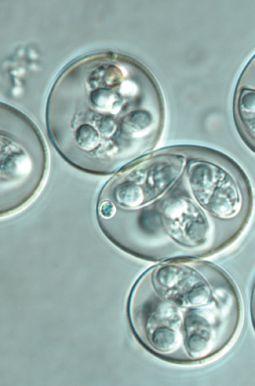
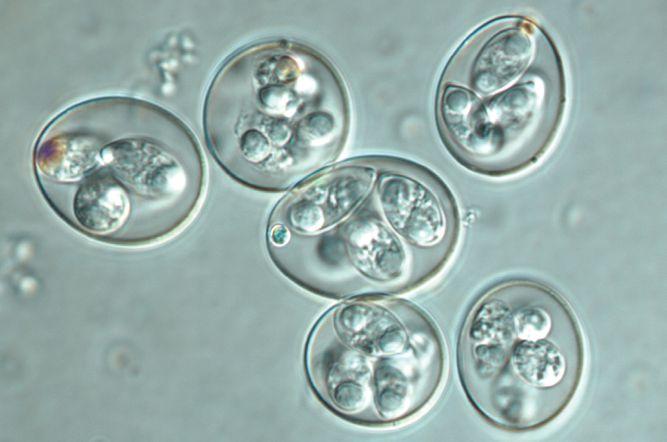
Where you find any kind of poultry across the world, you will find the Eimeria parasites that cause coccidiosis. It’s a global “everyday” production problem that impacts both poultry gut health and performance, with significant economic ramifications.
“The problem of coccidiosis and how to manage it depends on a large variety of factors,” notes Kayla Price. “And without a basic understanding of the parasite, there can be confusion in how to deal with it.”
Price is a University of Guelph doctoral student researching coccidiosis management and control, supervised by parasitologist Dr. John Barta.
Coccidiosis presents her with an opportunity to make a difference in the industry. “Prophylactic drugs are the current prevention program of choice for this disease, but concerns with resistance and drug residues may limit their future use,” Price notes. “Vaccination is a good solution but, to be fully effective, producers must have a basic knowledge of the parasite and how to manage it.”
In-person training for all poultry workers who have direct involvement with Eimeria management, whether in the hatchery, at feed companies or in the barn, is difficult – and expensive.
MEETING INDUSTRY NEEDS
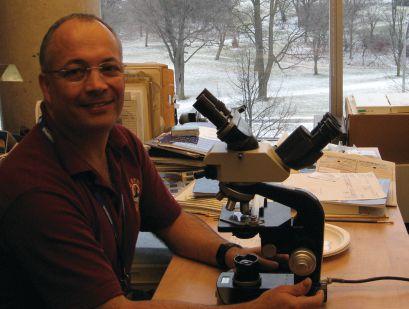
Parasitologist Dr. John Barta of the University of Guelph is a committee member for the Knowledge Translation and Transfer (KTT) program.
Training programs can also vary in style, may consume too much time, and may not adequately address the concerns of all poultry operations.
With that in mind, Price is spearheading a project, funded by the Ontario Ministry of Agriculture and Food’s (OMAF) Knowledge Translation and Transfer (KTT) program, the Poultry Industry Council and members of the poultry industry. It has brought together interested professionals from industry, government and academia to create a self-guided, educational tool to meet the
needs of large and small flock producers, hobby farmers and game bird farmers. “A knowledge disconnect exists between the end-users that must deal with the negative impact of the parasite on their flocks and those who understand the parasite,” Price explains.
The answer is to create materials that encompass the entire diverse nature of the poultry industry that are compiled, streamlined and presented in an accessible way.
The project’s outcome will be an educational DVD and a smartphone-accessible
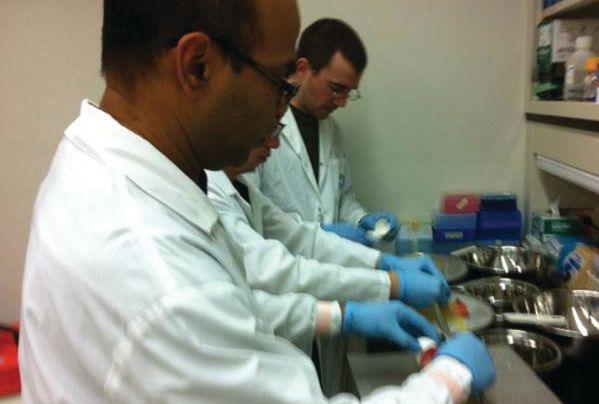
Photos courtesy of Kayla Price
Research
website thanks to help with storyboards and the outline from a group of undergraduate, graduate and veterinary students. “In April, we met with interested stakeholders to present our ideas and gather input – it’s a true collaboration,” Price says.
She stresses that the aim is not to replace veterinarians or company representatives, but to provide reliable and focused education. “It’s about tapping the knowledge and expertise of those in industry, academia and government to build enhanced understanding of the parasite and how to implement best practices for proactive management of the parasite,” she notes.
Changes in feed and the potential for changes in housing and management styles (for example, moving to an alternative systems for layers) can also have an impact on parasite management. “It’s therefore very important for there to be a comprehensive, interactive and scientifically sound resource for those making production-style changes or who wish to change their current coccidiosis prevention program,” Price says.
Price says what makes this program unique to Canada and the world is that it will present a general overview of coccidiosis and its management, as well as provide targeted information for as many production system styles and control methods as feasible. “While government websites of other countries have some resources related to coccidiosis and poultry, to our knowledge, nothing is as comprehensive as the resource we are developing,” she explains. “Coccidiosis prevention companies do provide information related to control, but this information may not be targeted to all of our intended audience.”
She says their materials will be agenda-free, address the climatic and other challenges of Canadian poultry production, and also be customized to size and style of operation. “Each end-user will be able to pick a selection of video segments or web pages that best apply to them,” she notes.
A thriving poultry industry, in Price’s mind, requires constant scientific innovation to drive success. “The link between academia and industry is therefore critical, especially in matters of poultry health,” she says. “The Knowledge Translation and Transfer program is a great way to make sure these innovations and collaborations with industry are introduced to the target audience in a dynamic way. This project is a great way to learn how to make research accessible and useful to the public, to help them do better.”
The KTT project committee members include: Ms. Kayla Price (Dept. Pathobiology, University of Guelph), Dr. Gregoy Bédécarrats (Dept. Animal and Poultry Science, University of Guelph), Dr. Michele Guerin (Dept. Population Medicine, University of Guelph), Dr. Csaba Varga (Ontario Ministry of Agriculture and Food), Mr. Kobus Van-Heerden (Ceva Animal Health), Ms. Laura Bowers (Poultry Industry Council) and Dr. John Barta (Dept. Pathobiology, University of Guelph).
Health Heat Stress
Your options for effective management
BY SHAWN CONLEY, WEEDEN ENVIRONMENTS
Many producers have had a catastrophic loss associated with heat stress at some point.
The more insidious problem with heat stress, though, is the decreased gain and loss in egg production. According to Purswell et al., heavy broilers grown to 63 days were approximately 700 grams lighter when grown in a 26°C humidex compared with 15°.1 Even at 20°C, birds were nearly 400g lighter – and these changes were all due to severely impacted feed consumption levels.
At 26°C, 1100g less feed was consumed, while at 20°, 250g less was consumed compared to 15°. This paints the picture that increased panting causes feed conversion rates to skyrocket to over 4.00 on birds that are typically performing in the 2.05-2.15 range, although at 20°, values were approximately 3.00.
In a study by Feizi et al. in 2012, layers exposed to temperatures 5°C above recommendations lost 50 grams of body weight and declined nine per cent in egg production over 6 weeks.2 These differences illustrate the declines in all types of poultry efficiencies when birds are subject to heat stress.
Tunnel ventilation can be a great way to use wind chill to accentuate the effect of exchanging air from the building. In addition, wind chill can add as much as 6°C in additional cooling over conventional cross-ventilation, based on a wind speed of 500 feet per minute versus speeds typically under 100. These are critical degrees, and also can benefit the birds greatly when other cooling methods are added in extreme heat and humidity.
There are two options though: humidifying the air and sprinkling to cool birds.
The third option is the use of cooling pads, but due to water quality, water consumption and expense of installation, it is not a practical one. In Canada we only require auxiliary cooling for a few weeks every year, unlike the Southern United States and other sub-tropical and tropical countries. Cooling pads are waffled paper or plastic materials, usually about six inches thick. Air passes through the pad as water flows down the pad, adding humidity to the air, increasing its heat carrying capacity and therefore lowering the sensible temperature of the air.
FOGGING AND MISTING
Fogging and misting are popular in Canada. However, adding humidity to the air by using high-pressure foggers can increase the heat carrying capacity of the air, indirectly cooling the birds by reducing the overall temperature of the barn. At 32°C, with 60 per cent humidity – a maximum of 6-7°C of cooling can be attained. The maximum perceived cooling would actually be just over 3°.
The other problem with fogging is the need for continual maintenance, especially when water conditioning is not ideal, and wetness under the nozzles due to leaking between uses. Cake can also form because increases in air humidity result in increases in litter moisture, and humidified dust will stick to equipment and walls.
SPRINKLING
Sprinkling is another alternative cooling method in which a light spray of large water droplets stimulates the birds to stand. It is used as the only auxiliary cooling method in some parts of Canada, and in many and tropical areas of the world, it is used as an additional or primary
cooling method in the evening when temperatures are still high, but humidity goes through the roof. Many producers would say that it is not the highest, driest temperatures of the afternoon that cause mortality, but the high and moist temperatures in the evening that cause problems. In a study by Liang et al., humidity in barns cooled with sprinklers had, on average, 20 per cent lower humidity levels.3 This equates to about an 8°C difference due to humidity, while the sprinkler barns were 2-3°C higher. This is a net of 5° in perceived temperature decrease compared to cooling pads or fogged barns. Some other benefits to this method are that birds tend to feed and drink when stimulated, helping to maintain daily gains, and dust levels decrease dramatically, resulting in cleaner barns. Litter will cake less, and sprinklers generally run at well pressure and have check valves to prevent leaking between cycles.
REFERENCES
1. Purswell, J.P. et al. (2012). Effect of Temperature-Humidity Index on Live Performance in Broiler Chickens Grown from 49 to 63 Days of Age. Presented at the Ninth International Livestock Environment Symposium, Valencia, Spain, July 2012.
2. Feizi, A. et al. (2012). Effects of Heat Stress (HS) on Production of Hy-Line Layers. Research Journal of Biological Sciences. 7(5): 206-208.
3. Liang, Y. et al. (2012). Sprinklers Cool Birds and Conserve Water. University of Arkansas, Division of Agriculture: Research and Extension. Fact Sheet (FSA1073).
Research
Continued from page 18
said Shearer. “Reality is, there are many conditions in animals, whether caused by injury or disease, that result in excruciating pain and/or horrible suffering that cannot be relieved by any other means than euthanasia.”
Either way, as a veterinarian, Shearer looks for a so-called “good death,” where life is ended without pain or distress to the animal. “This requires a technique
that induces immediate loss of consciousness followed by cardiac and respiratory arrest which results in a loss of brain function and death.”
“It’s complicated,” he said, adding that the emotional aspects are harder to deal with than the actual procedure; “the decision is not always black and white.” No one likes or wants to do it, and all are afraid of the possibility of acting too soon.
Research is improving euthanasia procedures and the Iowa State University website provides extensive information on euthanasia, including such aspects as equipment maintenance.
“Killing can be kind,” said Shearer, again quoting Bernard Rollin. “Better a week too early than a day too late.”
For more on poultr y research, visit F t w . ww.canadianpo p ultr ym y agg.com. www.canadian
“It’s a very real issue,” said Shearer, “one day a healer; the next day an executioner.”
THE BACK PAGE
BY ROY MAXWELL
Allocation, Allocation, Allocation
The expression “location, location, location!” is well known in the real estate business, but in the chicken industry, allocation carries a similar weight.
Allocation means cutting a national pie into 10 (relatively unequal) provincial pieces. Slicing of this quota pie has been a serious challenge for decades because nobody ever seems willing to take a smaller piece, even if others are in desperate need of more. How to divvy up bigger pies in the future to reflect growing markets is a difficult problem to tackle.
But the need to address differential growth is critical because failing to sufficiently supply domestic chicken markets is unacceptable to government, as it should be.
In previous decades, several provinces have either left or threatened to leave the national agency.
The most recent example is Alberta, which served an official notice in a letter dated Nov. 22, 2012, stating it plans to withdraw from the national agency on Jan. 1, 2014. It is hard to imagine that Alberta wants to opt out, but the notice is a clear demonstration of that province’s frustration – and it sends an equally clear message to government. However, Alberta wasn’t the first province to want to opt out, and presently isn’t the only one to feel victimized by the allocation system. But it needs to be the last.
Under federal legislation, Alberta was allowed three months to withdraw its letter if it chose to do so, but since the three-month period lapsed in February, it can now only withdraw its notice with the consent of all signatories.
arrangement than a business deal. My concern is that if supply management prevents domestic chicken markets from being adequately supplied, the system will collapse.
I don’t think that will happen, but on the other hand, no one can realistically expect the government to defend and promote supply management on the global stage if it isn’t working at home, especially when all of Canada’s key trading partners – present and future – want our federal government to kill it.
In April of this year, Laurent Pellerin, chair of the federal government’s Farm Products Council of Canada, which oversees national agencies in supply-managed industries, announced that the chicken industry had six months to solve the allocation problem before the Council imposed its own solution. In light of ongoing trade negotiations, it is easy to see why timing was so important – it is the same government that holds the future of supply management in its hands.
Nobody ever seems willing to take a smaller piece, even if others are in desperate need of more.
This whole process is reminiscent of the 1990s when Chicken Farmers of Ontario announced it was leaving the national agency because other provinces refused to let Ontario produce enough chicken for McDonald’s to introduce chicken fajitas in its restaurants. McDonald’s gave up on chicken and introduced a beef fajita instead. The mainstream urban media loved the story and chewed up supply management as if it were a fajita itself.
In fairness, this is not an easy problem to resolve because sharing production among all farmers in all provinces has been a cornerstone of supply management. But that philosophy is now viewed by many people as being more of a socio-economic
Chicken Farmers of Canada (CFC) executive director Mike Dungate says that he does not underestimate the difficulty the industry faces in resolving this problem, but he is optimistic because he believes everyone truly understands that changes are needed. “Pro rata is not part of the current Federal Provincial Agreement and there is a push for differential growth,” he said. When asked to simplify that statement, he added, “No farmer has the right to expand just because.” Finding the best process for change is the greatest and most immediate challenge facing CFC and the industry, according to Dungate.
By the time this article is published, CFC will have met one on one with all of the provinces, and other important meetings will have taken place to devise a process that will lead the industry to a solution. Dungate believes an agreement is close, and has stated several times, “This is a very collaborative effort and everybody knows changes must be made.”
I hope he is right. But either way, we will know soon whether it is industry or government that will need to fix critical cracks in a system that must include differential growth to survive.