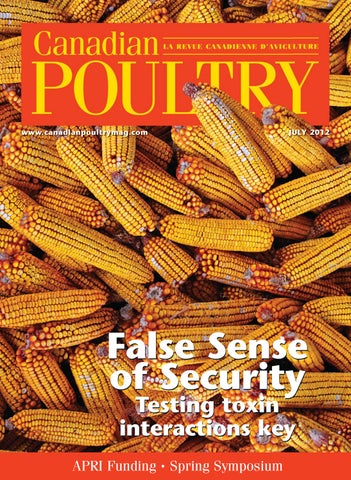
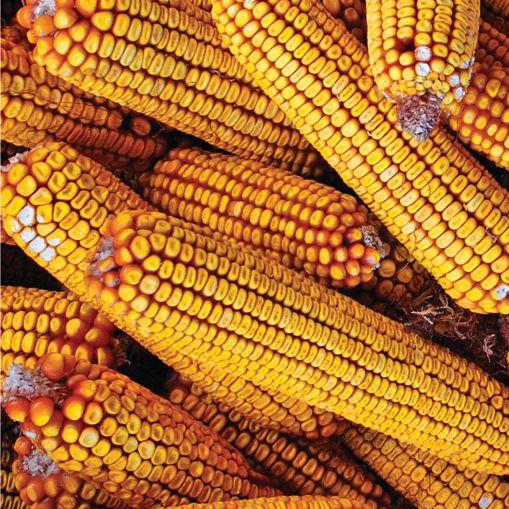
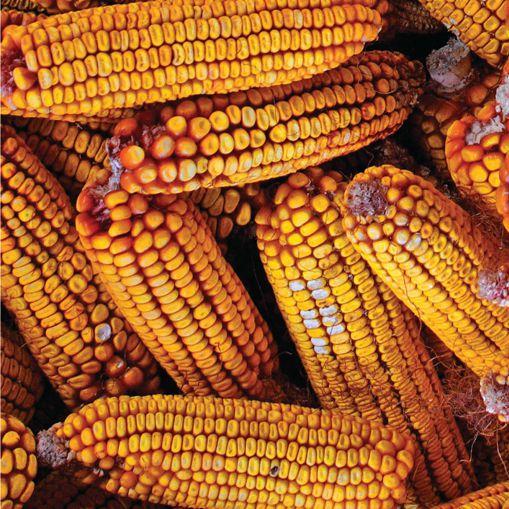
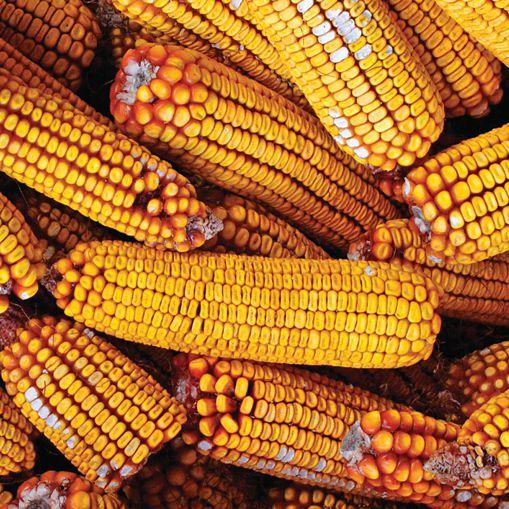
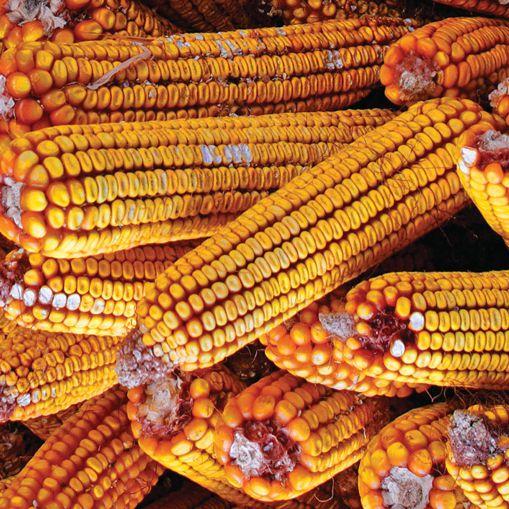
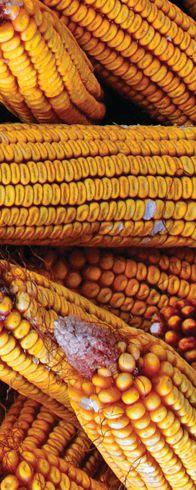
A False Sense of Security Testing for more toxins in poultry feed – and measuring interactions between the toxins – is important in the quest for better bird health
Treena Hein
A Rewarding Journey EFO Chair Carolynne Griffith retires after 17 years with the organization
Jim Knisley
Movement of Caged Laying Hens
important to understand your strengths and
FROM THE EDITOR
BY KRISTY NUDDS
Agvocacy Needed
Significant changes are afoot in the food industry. In recent months many restaurant chains have given in to the pressure exerted upon them by animal rights groups, namely the Humane Society of the United States (HSUS).
McDonald’s, Burger King and Tim Hortons have pledged to work with the pork industry to phase out the use of gestation stalls in the next five to 10 years, and Burger King and Tim Hortons announced that they would begin sourcing eggs from enriched colony housing systems.
Tim Hortons has chosen not to source 100 per cent of its eggs from alternative systems right away, but to aim for an amount that is achievable right now (see page 8), and it will continue to work with industry as more results become available.
Unlike Burger King and Tim Hortons, McDonald’s has not made any announcement with regard to eggs. In the United States, it may seem redundant to do so as the pending agreement between the United Egg Producers (UEP) and HSUS has become part of the Farm Bill and will likely become law. In Canada, however, it appears McDonald’s is trying to determine how important animal
housing issues are to consumers. In May the chain launched a campaign called “Your Questions” (http://yourquestions. mcdonalds.ca) where consumers can ask questions about the food served at McDonald’s. Many questions have to do with animal welfare, but others also reveal the ignorance about food production and mistruths that abounds.
It’s this ignorance that has allowed groups such as the HSUS to garner support among consumers and influence food companies and restaurants. The website serves as a reminder that agricultural producers more than ever need to become “agvocates” and continually seek out opportunities to educate the public and combat mistruths.
You need to agvocate by telling the public what we are doing right (for example, determining how alternative systems affect farmers as well as the hen), why certain practices are used and how they benefit both animals and consumers. Join social media sites, monitor comment sections of newspapers online. Get involved. Don’t just rely on existing agvocacy groups to do it all – consumers are most interested in hearing from you.
JULY 2012
Vol. 99, No. 7
Editor Kristy Nudds – knudds@annexweb.com
888-599-2228 ext. 266
Associate Editor
David Manly – dmanly@annexweb.com
Publisher/Sales Manager
Marilyn White – mwhite@annexweb.com 519-429-5193
Sales Assistant Mary Burnie – mburnie@annexweb.com
Media Designer
Emily Sun
Group Publisher
Diane Kleer – dkleer@annexweb.com
President
Mailing Address
P.O. Box 530, 105 Donly Dr. S., Simcoe, ON N3Y 4N5
Publication Mail Agreement #40065710
RETURN UNDELIVERABLE CANADIAN ADDRESSES TO CIRCULATION DEPT., P.O. BOX 530, SIMCOE, ON N3Y 4N5.
Printed in Canada ISSN 1703-2911
Circulation
Jim Knisley, our longtime associate editor and back-page columnist, recently retired, wanting to dedicate more time to his golf game. I would like to thank Jim for his mentorship and dedication to the magazine. He has agreed to continue writing All Things Considered each month, and I may be able to convince him to write an occasional article.
I would also like to introduce David Manly, our new associate editor. He has been with our publishing company, Annex Business Media, since November, where he has held the positions of associate editor (Canadian Biomass magazine) and web editor of Annex’s new agriculture web portal, AgAnnex (www.agannex.com). The science and social media enthusiast has an honours bachelor of science in biology, ecology and zoology from York University and a masters in journalism from Carleton University.
Subscription Rates
Canada – 1 Year $ 24.00 (with GST $25.20, with HST/QST $27.12)
GST – #867172652RT0001
USA – 1 Year $ 60.00 USD
peck
Glass-Pac Canada
St. Jacobs, Ontario
Tel: (519) 664.3811
Fax: (519) 664.3003
Carstairs, Alberta
Tel: (403) 337-3767
Fax: (403) 337-3590
J. Dean Williamson Ltd.
London, Ontario
Tel: (519) 657.5231
Fax: (519) 657.4092
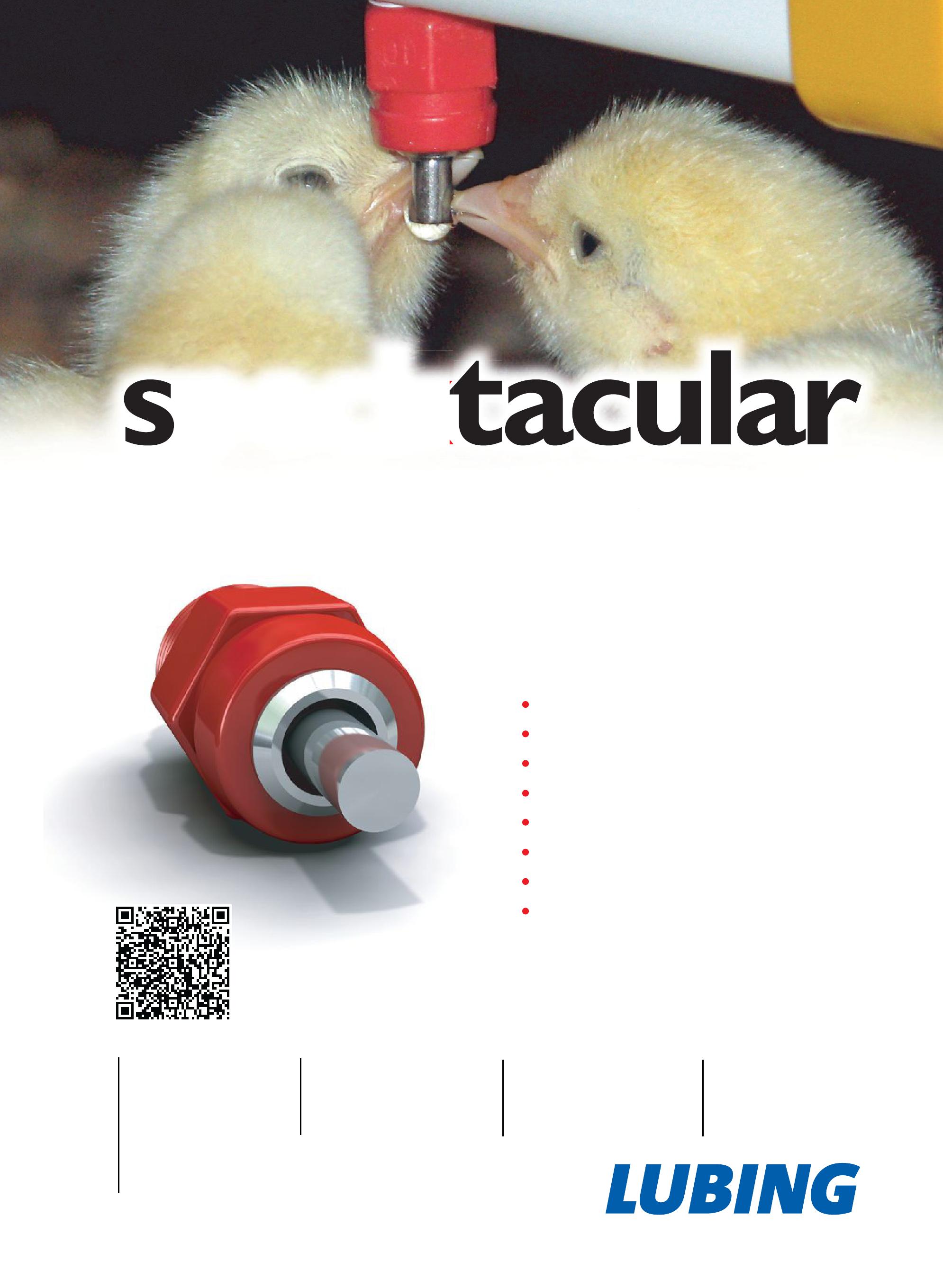
Nothing says Not specktacular k like r OptiGROW!
ing'sLub all-new OptiGROW Nipple is designed e work in today's challenging broiler environment. to w ause the nipple has been Beca optimized for growth, will be amazed by the first-week performance you explosive bird growth. and OptiGROW offers: W
Large body and pin
Acid resistant design
Easy triggering for day-old birds
Low mortality
Increased side-action flow
Larger flow range for jumbo birds
Increased weight gains
Improved feed conversions
Les Equipments Avipor
Cowansville, Quebec
Tel: (450) 263.6222
Fax: (450) 263.9021
Specht-Canada Inc . Stony Plain, Alberta
Tel: (780) 963.4795
Fax: (780) 963.5034
A Dangerous Bird Flu Mutations WHAT’S HATCHING HATCHING
bird flu study that was blocked from publication for months after biosecurity experts questioned if it was unsafe to put it in the public domain has finally been published.
The work, conducted by a team led by influenza virologist Yoshihiro Kawaoka of the University of WisconsinMadison and the University of Tokyo, suggests that as few as three changes to the main gene on the surface of some H5N1 flu viruses might allow the virus to transmit efficiently among mammals, perhaps even humans.
Kawaoka and his team managed to create a hybrid virus that would transmit through the air, passing from infected to healthy ferrets, which were used in the experiment as a stand in for people. The newly transmissible virus
needed four mutations in the surface gene, the hemagglutinin, which gives a flu virus the H portion of it name.
“Our study shows that relatively few amino acid mutations are sufficient for a virus with an avian H5 hemagglutinin to acquire the ability to transmit in mammals,’’ Kawaoka said in a press release.
Kawaoka’s paper, published in the journal Nature, is one of two that have been at the centre of a protracted fight that has pitted biosecurity experts against influenza scientists.
The U.S. National Science Advisory Board for Biosecurity argued publishing the paper could threaten national security and public health. But flu research establishment countered that sharing the data is critical both to shore up a new and delicate international flu virus sharing agreement and to monitor H5N1 viruses in the wild for dangerous
changes.
The second study, carried out by Dutch virologist Ron Fouchier, is to be published in Science, though a publication date has not yet been announced.
Flu expert Malik Peiris of the University of Hong Kong raised the possibility that the receptor binding changes the virus had to undergo to adapt to mammalian transmission may lead to less severe disease in mammals.
Adolfo Garcia-Sastre, a flu virologist at Mount Sinai Hospital in New York City, suggests that the findings will be useful for scientists and public health experts who are monitoring H5N1 viruses for changes that might make the viruses more of a threat to humankind. For instance, bird flu outbreaks caused by viruses bearing the mutations Kawaoka used could be prioritized for control over others that don’t, he said.
NSAC to Merge with Dalhousie University
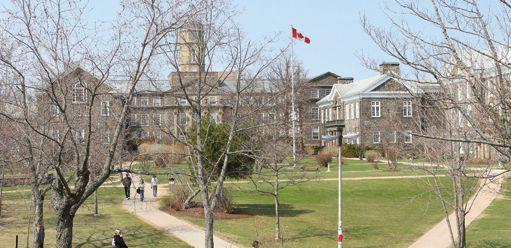
The government of Nova Scotia has introduced legislation to formalize a proposed merger of the Nova Scotia Agricultural College (NSAC) and Dalhousie University to strengthen the college, which has experienced financial problems in recent years.
Agriculture Minister John MacDonell says the legislation would authorize a former merger agreement to be signed later in the spring. MacDonell says the target date for the merger has been extended from July 1 to Sept. 1 to allow enough time to finalize the agreement and for transition preparations.
$1M investment in Eden Valley
Poultry
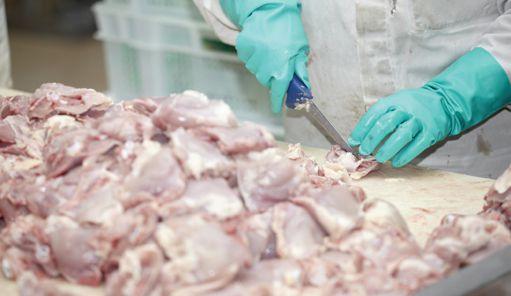
Economic and Rural Development and Tourism Minister Percy Paris has announced a $1-million capital investment in Eden Valley Poultry Incorporated through the Productivity Investment Program (PIP) to increase its productivity by more than 40 per cent through the purchase of leading-edge poultry processing equipment
“The province understands the importance of investing in our businesses and helping them become more productive and globally competitive,” said Paris. “This investment supports good jobs in rural communities, and that’s what jobsHere is all about.”
Eden Valley has invested about $40 million to renovate a Berwick facility that closed in 2011. The new plant will employ up to 200 people, and have the capacity to process
The Nova Scotia Agricultural College, founded in 1905, will become Dalhousie’s Faculty of Agriculture and college faculty and staff will become Dalhousie employees on Sept. 1.
40 million kilograms of poultry annually.
Equipment purchased with support from the province will increase chicken process-
ing capacity by 40 per cent to 12,000 boilers per hour, and double the number of turkeys that can be processed to 2,500 per hour.
Passing of Dr. Ursula K. Abbott
Poultry geneticist Dr. Ursula K. Abbott passed away Jan. 15, 2012, at the age of 84. A native of British Columbia, Dr. Abbott received her B.S.A. and M.S.A. in poultry and genetics from the University of British Columbia, and completed her PhD in genetics at UC Berkeley, where she remained
James Peel has been named regional sales manager, Eastern Canada, for the Production Animal Business Unit of Vétoquinol Canada. A graduate from the Faculty of Agricultural and Environmental Sciences of McDonald College (McGill University), Peel brings more than 30 years of experience in agribusiness with a specific interest in bovine production. His past experience includes work in the field of artificial insemination, breed improvement and genetics. Peel has held various positions in business development, team management, sales and marketing.
as an instructor, eventually becoming chair of the Department of Avian Sciences. She conducted research in the field of developmental genetics, and was known for her discovery of the scaleless mutation.
Throughout her career she was awarded numerous honours, including a Guggenheim Fellowship.
Dr. Kate Barger has been appointed director of world animal welfare for Cobb. Dr. Barger began her career with Cobb as export manager in 2003 and two years later became manager of sales and technical service for the Mexico, Central America and Caribbean region. In 2009, she moved to the U.K. to support Cobb Europe as the company veterinarian and quality assurance manager, responsible for managing programs involving biosecurity, animal welfare and avian health. In her new position Dr. Barger will fulfill an internal role ensuring that Cobb farm and hatchery operations comply with all company and national legislative requirements for animal welfare.
NOVA SCOTIA
NOVA SCOTIA
JAMES PEEL
DR. KATE BARGER
HATCHING HATCHING
Tim Hortons Welfare Initiative
Tim Hortons announced in early May that it has set a goal of purchasing at least 10 per cent of its eggs from enriched hen housing systems by the end of 2013. The company plans to actively evaluate the industry’s capacity to provide eggs from enriched housing systems, and to progressively increase its commitment beyond 2013 as additional supply becomes available.
The company also called upon the pork industry and its
suppliers to eliminate gestation stalls for sows and to develop clear plans and timelines by the end of the year to phase out these housing systems. Tim Hortons intends to give preferred sourcing to egg suppliers working to phase-in enriched hen housing systems. Tim Hortons will share next steps in early 2013, after reviewing industry plans and having further dialogue with the egg and pork industries and other animal welfare stakeholders.
IPE Updates Website
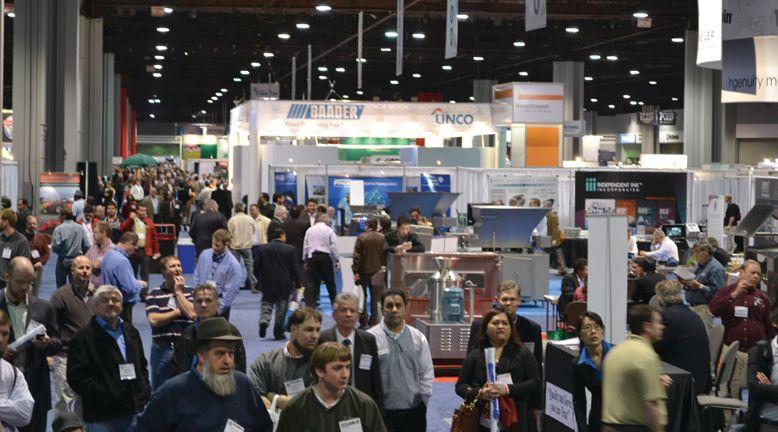
The International Poultry Expo has a new, redesigned website that focuses on relevant attendee and exhibitor information and features a video on the new International Production & Processing Expo (IPPE), the co-location of the International Poultry Expo (IPE), the International Feed Expo (IFE), and the American Meat Institute’s (AMI) International Meat, Poultry & Seafood Convention and Exposition in 2013. New information on events and education programs, which will be held throughout the week of the
AUGUST
August 5-9, 2012
XXIV World’s Poultry Congress
Salvador, Bahia, Brazil
For more information, visit: www.wpc2012.com
SEPTEMBER
September 25-27, 2012
Poultry Service Industry Workshop (PSIW)
The Banff Centre, Banff, Alta. For more information, visit: www.poultryworkshop.com
OCTOBER
October 2, 2012
Western Meeting of Poultry Clinicians and Pathologists (WestVet 23) Ramada Inn and Conference Centre, Abbotsford, B.C. (**please note the location change from previous years)
For more information, e-mail: stewart.ritchie@ canadianpoultry.ca or visit: www.westvet.com
October 2-4, 2012
Expo, will be added to the website as it becomes available. Be sure to check back often for updates.
The IPE, as part of the International Production & Processing Expo, is scheduled for Tuesday through Thursday, Jan. 29-31, 2013, at the Georgia World Congress Center in Atlanta. The IPPE will highlight the latest technology, equipment, and services used in the production and processing of poultry, feed and meat products.
For more information about the new website, go to www.ipe13.org.
Broiler Breeder Workshop (presented by the University of Alberta Poultry Research Centre), Agriculture Centre, Airdrie, Alta.
For more information, e-mail: valerie.carney@gov.ab.ca
We welcome additions to our Coming Events section. To ensure publication at least one month prior to the event, please send your event information at least eight to 12 weeks in advance to: Canadian Poultry, Annex Business Media, P.O. Box 530, 105 Donly Dr. S., Simcoe, Ont. N3Y 4N5; e-mail knudds@annexweb. com; or fax 519-429-3094.
PRODUCTS PRODUCTS
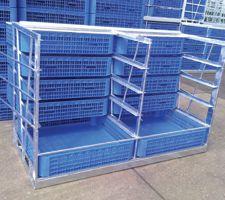
Hi Cube Drawers
Anglia Autoflow N.A.’s new larger Hi Cube Drawers can increase line capacity by increasing the number of birds ready for processing.
The drawers are 50 per cent larger than previous drawers and more than an inch taller, which allows companies to handle more birds and potentially run their lines at higher speeds.
The drawers come five high and two wide and can be loaded from the bottom, pulling an empty drawer over
the top of a full drawer. This is less strenuous on workers because they are pulling an empty drawer over a loaded drawer, versus pushing a full drawer back into place.
Water on Demand System
The new Water on Demand (WOD) from Plasson allows producers to easily control and manage the water pressure in all drinker lines in the poultry house to meet the changing demands of the birds during a 24-hour period and during the grow-out.
The WOD can be easily retrofitted on every Plasson watering system. By changing only two parts of the Plasson line pressure regulator all of the pressure regulators can be converted into pressure
AgriShift LED Poultry Lights
AgriShift LED poultry lights were created to help poultry operators significantly reduce electricity costs, decrease labour demands from frequent replacement of traditional lights, and increase flock performance.
reducers. This allows for the management of the water pressure in all drinker lines in the house to be achieved from one central location. The WOD uses the water itself to control the pressure of the lines and does not require the installation of additional equipment.
The Low-Medium pressure regulator is used to at the beginning of the growing period, and the pressure can be increased every few days according to need. When reaching a medium pressure, the Medium-High pressure regulator is used to continue increasing the pressure until it reaches a high pressure at the end of the growing period.
Switching between the main pressure regulators during the day to increase/ decrease the pressure in the lines will fulfil the birds’ demand for water (for example, there is minimal demand at night so low pressure is used; peak demand occurs in the morning, so a high pressure is used).
For more information about Water on Demand, visit your local Plasson dealer or visit: www.plassonpoultry.com.
This is the first line of poultry lights with proprietary ONCE™ AC LED conditioning and colour temperature shift control technologies to take advantage of the spectral response of domestic fowl to light. The combination of these technologies, along with innovative lamp designs and customized LED packages, makes it possible to achieve smooth dimming and colour modulation in the same step. Each of four models produces light output tailored for a specific poultry application.
AgriShift PL lights are predominately within poultry’s peak spectral sensitivity range. The luminous efficacy (lumens per watt) is poultry optimized and results in maximum perceived light at minimum power. For that reason, red can be dimmed low to save energy and will provide adequate light for broilers, while blue can be dimmed for layers and breeders. As important as energy savings, light colour affects biological function.
For more information, please contact your local Once Innovations dealer or visit: www.onceinnovations.com.
CPRC Update Towards a Necrotic Enteritis Vaccine
Dr. John Prescott and his team of researchers at the University of Guelph have taken significant steps towards a better understanding of necrotic enteritis and developing a vaccine that can protect broiler chickens from the disease.
WHY AN NE VACCINE?
Necrotic enteritis (NE) is among the most common enteric (intestinal) diseases in poultry. It is caused by the bacterium Clostridium perfringens, which adheres and causes damage to gut tissues. Left unchecked, this damage can impair nutrient absorption and in some cases open the door to other gut infections such as coccidiosis. An NE-affected flock may suffer from increased mortality, but often “sub-clinical” cases don’t present any signs other than reduced flock performance. Without obvious signs, these cases can go unnoticed, and therefore untreated. Reduced performance, increased mortality and correlation with other diseases add up to significant losses for the industry, with some estimates as high as $2 billion a year globally. NE is currently controlled with antibiotics; however, increasing concern over antibiotic resistance are putting pressure on the industry to find alternative methods of disease control.
NE IS MORE COMPLEX THAN WE THOUGHT
Research from around the globe suggests that C. perfringens carries specific genes associated with its ability to cause disease. However despite extensive study, it is not entirely clear why some strains of the bacterium cause disease while others do not. Dr. Prescott’s group has
confirmed that several of these so-called ’virulence’ genes can be found on small, portable strands of DNA known as plasmids that are readily passed from one bacterium to another. Genetic analysis reveals the plasmid DNA sequences are often re-arranged during transfer resulting in a variety among bacteria; some strains have the information that confers the ability to cause disease whereas others do not. Dr. Prescott has been able to identify genes common among virulent strains of C. perfringens and determine which are important for causing NE. What is becoming clear from this and other research around the world is that it is likely the combined effects of several bacterial genes, each with different functions, that contribute to the development of NE. For example, one of the genes identified is responsible for production of a secreted protein that may be crucial to the bacterium’s ability to adhere to cells in the bird’s intestine. Another gene directs bacterial production of a toxin that contributes to the intestinal cell damage associated with NE. Continuing research into the complexities of this disease is revealing insights into potential strategies for its control.
A VACCINE IN THE MAKING
Dr. Prescott’s approach to controlling NE is to identify the bacterial proteins that contribute to development of NE then immunize the bird against them – if the bird’s immune system can neutralize the effect of one or more of these proteins, NE is much less likely to develop. To be effective, this strategy would elicit an immune response in the intestine. The researchers started with a Salmonella vaccine that can do just that. Using modern molecular biology techniques,
they modified the vaccine so it could confer resistance to Clostridia in addition to Salmonella. Early tests of this strategy show that immunized broiler chickens can be protected from NE, and further tests are underway to confirm these exciting results.
NEXT STEPS
The researchers will further characterize the roles that selected virulence genes play in development of NE. Based on these results, additional vaccine vectors may be engineered that elicit immune responses to one or more gene products. Candidate vaccines will be tested for their ability to protect birds from C. perfringens challenge and vaccination protocols will be optimized.
Establishing an effective, stable vaccine platform with which to mitigate the effects of NE would be of great benefit to the poultry industry, especially in the face of increasing pressure to find alternative means to control this important disease.
The CPRC, Poultry Industry Council and the Ontario Ministry of Agriculture, Food and Rural Affairs provided funding for this work in partnership with Agriculture and Agri-Food Canada as part of Growing Forward, a federal-provincialterritorial initiative.
The membership of the CPRC consists of Chicken Farmers of Canada, Canadian Hatching Egg Producers, Turkey Farmers of Canada, Egg Farmers of Canada and the Canadian Poultry and Egg Processors’ Council. CPRC’s mission is to address its members’ needs through dynamic leadership in the creation and implementation of programs for poultry research in Canada, which may also include societal concerns.
Nutrition
A False Sense of Security
Testing
for more toxins in poultry feed – and measuring interactions between the toxins
– is important in the quest for better bird health
BY TREENA HEIN
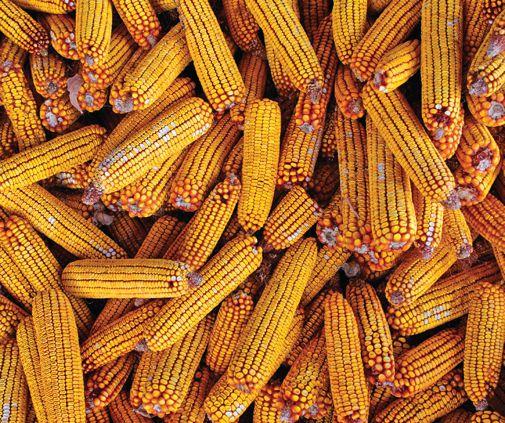
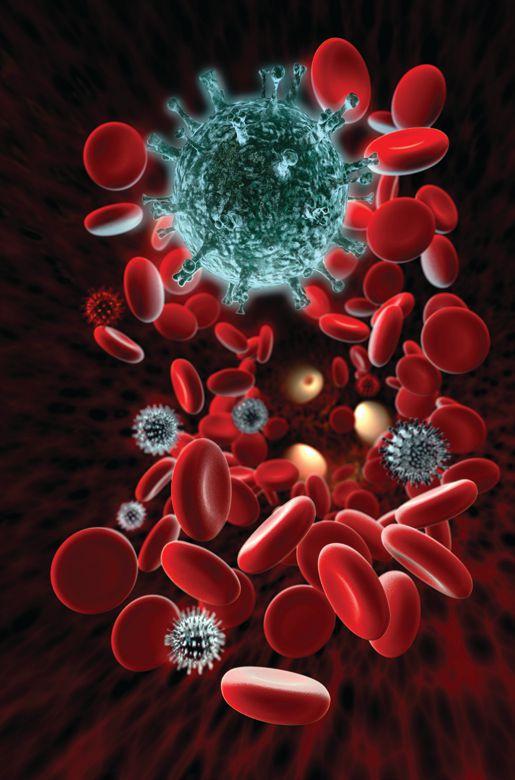
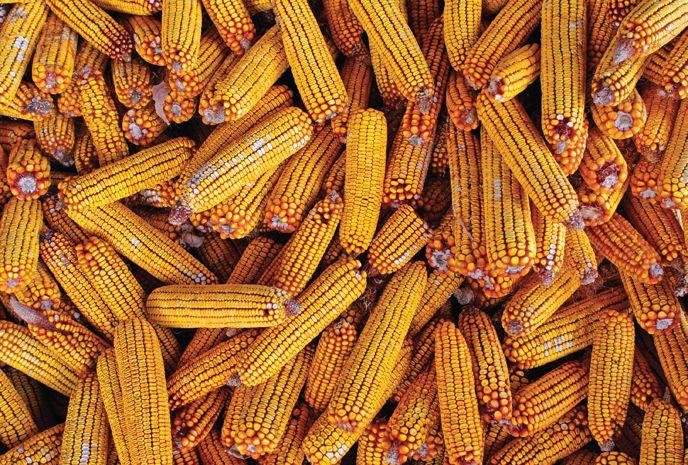
Concerns over the presence of mycotoxins, the secondary toxic metabolites produced by various moulds in poultry feed, are nothing new. Major effects on birds include poor weight gain/egg production, reproduction and immunity.
Historically, mycotoxin research focused on the effects of a single mycotoxin, but in the last decade or so, research has turned towards uncovering the menacing world of toxic interactions that can occur when two or more different mycotoxins are present in feed. “These interactions can lead to toxicity at very low concentrations – concentrations at which no toxicity is expected when we look at each mycotoxin in isolation,” says Dr. Swamy Haladi, global technical manager, mycotoxin management team at Alltech Canada in Guelph, Ontario.
Haladi and his Alltech colleague Dr. Ted Sefton, along with University of Guelph scientists Dr. Herman Boermans and Dr. Niel Karrow, have been trying to understand these interactions based on the published research work. “Toxicity from interactions has already been assessed when two different mycotoxins are present in the same feed (see table), but the issue gets more compli-
TOXIC INTERACTIONS
Historically, mycotoxin research has focused on the effects of a single mycotoxin, but now research has turned towards uncovering the toxic interactions that can occur when two or more different mycotoxins are present in feed.
cated when three or more mycotoxins are present,” Haladi explains. “With some mycotoxins, their combined toxicity is simply their individual toxicity levels added together. However, with some, there is a synergistic interaction that makes the feed far more toxic than one would predict.”
MYCOTOXINS IN FEED
The most significant mycotoxins for the global poultry industry include aflatoxins, ochratoxins, T-2 toxin, deoxynivalenol (DON), fumonisins and zearalenone (ZEA). Fusarium mycotoxins such as DON and ZEA are the most common and widespread throughout Canada, while
ergot toxins tend to be a bigger challenge in Western Canada. Haladi says other Fusarium mycotoxins such as 3-acetyl DON, and 15-acetyl DON are also frequently found in Canadian feedstuffs at low levels, but they are seldom tested for. “Although not common, T-2 toxin and its related compounds may also be present,” he notes.
Haladi also says that research from Dr. Trevor Smith’s lab at University of Guelph shows that turkeys are the most sensitive poultry species to Fusarium mycotoxins, and among chickens, laying hens have higher risk than broiler chickens due to their long-term exposure.
Since one mould can produce several mycotoxins, and several moulds can be
Nutrition
present in one feedstuff, it is expected that there are likely more mycotoxins present in a given feed sample than are being tested for. “If a sample contains T-2 toxin, for example, chances are there are several others, likely HT-2 toxin and neosolaniol, present as well,” Haladi explains. “We know now that these toxins contribute to the toxicity of T-2 toxin, but because we neither test for their presence nor had a way of analyzing their interactions, we have a false sense of security about that sample of feed. This is why it’s so important to be able to test for and analyze as many toxins as possible in an affordable and timely manner.”
To be able to assess the toxicity of a feed containing multiple mycotoxins, Haladi and his colleagues propose a ‘Toxicity Index’ (TI) for each mycotoxin present in the feed based on published ‘LD50 values’ (these values are the concentration at which half the one-day-old chicks that ingest it, perish).
“The TIs are calculated using the ratio of LD50 value of the least toxic mycotoxin by the LD50 value for each of the other mycotoxins identified,” Haladi explains. “Each TI is then multiplied by the corresponding mycotoxin concentration in the feed. The products of such multiplication are then added to obtain a total mycotoxin concentration, which can then be used to predict the potential toxicity of the feed.”
Congratulations Springford Farms (Ross Springford) Nanoose Bay Vancouver Island BC
F or Tr ue C age -fre e B ird s!
Qual ity Imp o rt ed H ar dwo od
F ree-Ru n/ Fr ee R ange/ B reed er
B i rd C omfo rt and Warm t h
Longes t Las t i ng Sl at
C le aner Eggs
Easy S et -up
NEXT STEPS
Being able to calculate a TI value for every feed sample depends on two main factors – the first being to identify and quantify all mycotoxins in feed. Haladi says quick ELISA mycotoxin tests are important for use on grain at Canadian feed mills, but that test only screens for DON. “This is where Alltech’s 37+ Program will be able to help,” Haladi says. “It will be commercialized this year, and will allow 38 mycotoxins to be analyzed in a single run using sophisticated analytical equipments such as Ultra Pressure Liquid Chromatography with double mass spectrometry.” According to Haladi, this methodology is very accurate and sensitive. “Our recent analysis of 37+ Program has shown that more than 90 per cent of North American feed ingredients contained one or more mycotoxin,” says Haladi. “About 45 per cent of samples contained five or more mycotoxins.”
The other factor is that not all LD50 values have been determined. “More research to find LD50 values for the less-studied mycotoxins is needed,” Haladi notes.
“There is no single magic bullet for mycotoxin control,” he concludes. “Mycotoxins are formed in the field as well as in storage. Minimizing mycotoxin production is a matter of using various management programs on-farm and at feed mills. However, knowing the toxicity that results from interactions between toxins is another tool to help the poultry industry reach better bird health and productivity.”
Some mycotoxin interactions in poultry
Dr. Swamy Haladi says that with some mycotoxins, their combined toxicity is simply their individual toxicity levels added together. However, with some, there is a synergistic interaction that makes the feed far more toxic than one would predict.
MycotoxinsType of interaction
Aflatoxin B1 X Ochratoxin ASynergistic
Aflatoxin B1 X DiacetoxyscirpenolSynergistic
Aflatoxin B1 X T-2 toxinSynergistic
Aflatoxin B1 X Cyclopiazonic acidAdditive
Aflatoxin B1 X DeoxynivalenolAdditive
Ochratoxin A X T-2 toxinAdditive
(source: Devegowda and Krishnamurthy, 2005) Sur efo o t S
Ochratoxin A X Cyclopiazonic acidAdditive
T-2 toxin X DeoxynivalenolSynergistic
T-2 toxin X Fumonisin B1Additive
Fumonisin B1 X MoniliforminAdditive
Fumonisin B1 X Fusaric acidSynergistic
ARE YOU INTERESTED IN EXPLORING AGRICULTURE AND THE POULTRY INDUSTRY IN CHINA?
The Canada-China Agriculture and Food Development Exchange Centre (CCAGR) is offering a unique opportunity to Canadian poultry producers and industry representatives.
The CCAGR has organized a tour to China that will provide Canadians with business opportunities, and the chance to learn about Chinese agriculture and share knowledge and expertise.
The CCAGR has access to Canada-China agricultural specialists with 26 years’ experience, which allows for it to arrange meetings and tours with influential Chinese researchers, farmers, companies and government officials.
The tour will combine business with an unforgettable tour of some of China’s most famous sites, including the Great Wall and the life-size Terracotta Warriors and Horses. Cities visited will include Beijing, Xian, and Shanghai.
The CCAGR looks after all travel details, including accommodation, food and transportation.
Dr. Doug Yungblut, an animal nutrition consultant who travelled with the CCAGR to China in 2008, says “CCAGR has the resources to connect you with the right people, and the experience was amazing.”
KEY HIGHLIGHTS
Enjoy customized services and a focus on poultry tours and agriculture in China.
Attend the first-ever Canada-China poultry industry partnership conference supported by the Chinese government and local government agencies and associations. Witness the latest Chinese achievements in agriculture and discover agri-business opportunities.
Gain an understanding of modern Chinese politics. Meet with China’s leading agri-food business owners and influential government officers.
Understand the resources available to support agribusiness ventures.
Take part in internal networking sessions with fellow mission participants.
Take advantage of optional business matching.
Meet hospitable Chinese people and experience over 5000 years of history, agriculture, amazing landscapes and ancient culture.
Become part of China’s future.
CANADIAN POULTRY INDUSTRY
TOUR MISSION TO CHINA
GROUP TRAVEL DATES OCTOBER 29 - NOVEMBER 9, 2012
ORGANIZED BY Canada-China Agriculture and Food Development Exchange Centre with assistance from Canadian Poultry Magazine
Trip Includes:
EXPERIENCE CHINA AT ITS BEST
Enjoy an amazing guided tour through key agricultural regions, and visit China’s most spectacular sites!
• Round trip International airfare (Depart: Toronto/Vancouver to Beijing. Return: Shanghai to Toronto/Vancouver)
• 4 and 5 star hotel accommodations
• 3 full meals each day
• Coach tour, including entrance fee for tour attractions
• Fluent and knowledgeable, English speaking Canadian Professional Agrologists.
• Several important events include – Welcome Dinner in Beijing, Canada-China Poultry Industry Partnership Seminars, Tiananmen Square, Great Wall of China, Xian Terra Cotta Warriors, plus much, much, more.
Cost: $7,700 per person double occupancy, $8,700 per person single occupancy, and $5,000 per child under 12 years of age.
Everyone is welcome to join us for this amazing guided tour of China whether for business or for pleasure!
REGISTER NOW! SPACE LIMITED. BOOK BEFORE AUGUST 15, 2012
For more information or to reserve contact Marilyn White, Canadian Poultry Magazine at 519-400-2424 or e-mail: mwhite@annexweb.com. For a full itinerary with important information visit Canadian Poultry Magazine – www.canadianpoultrymag.com/china
Canada-China Agriculture and Food Development Exchange Centre
Profile A Rewarding Journey
EFO Chair Carolynne Griffith retires after 17 years with the organization
BY JIM KNISLEY
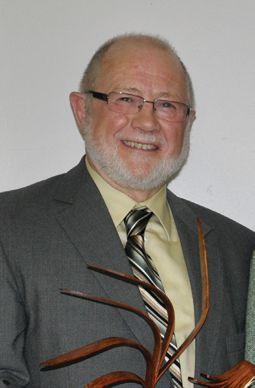
In her last speech as chair of the Egg Farmers of Ontario (EFO), Carolynne Griffith said, “I am proud to be an egg farmer of Ontario.”
After a decade at the helm of the organization and 17 years on the board of directors Griffith commented, “It’s been a great, fulfilling and rewarding journey.”
Deciding to leave the board was not easy. But it was time. It is, she said: “A day of sweet sorrow for me.”
She thanked Ontario’s egg farmers, the EFO staff and the EFO board of directors for their help and support. “Thank you for the many opportunities you have afforded me.”
She also made special mention of her late husband Arthur, who encouraged her first to run for the board and then supported her through her years as a director and chair.
Griffith, an egg farmer from Alviston, Ont., first joined the board in 1995 and has held the position of chair since 2002.
During her tenure she said there were many challenges, not the least of which are the ongoing talks at the WTO. Griffith took on the protection of supply management as both a professional and personal challenge. A friend said, jokingly, that in recent years Griffith had been to meetings of the WTO in Geneva so often that she likely knows the streets of Geneva as well as she knows the streets of her hometown of Petrolia, Ont.
Griffith said that the struggle to preserve supply management is not over. While both the prime minister and the federal agriculture minister have been
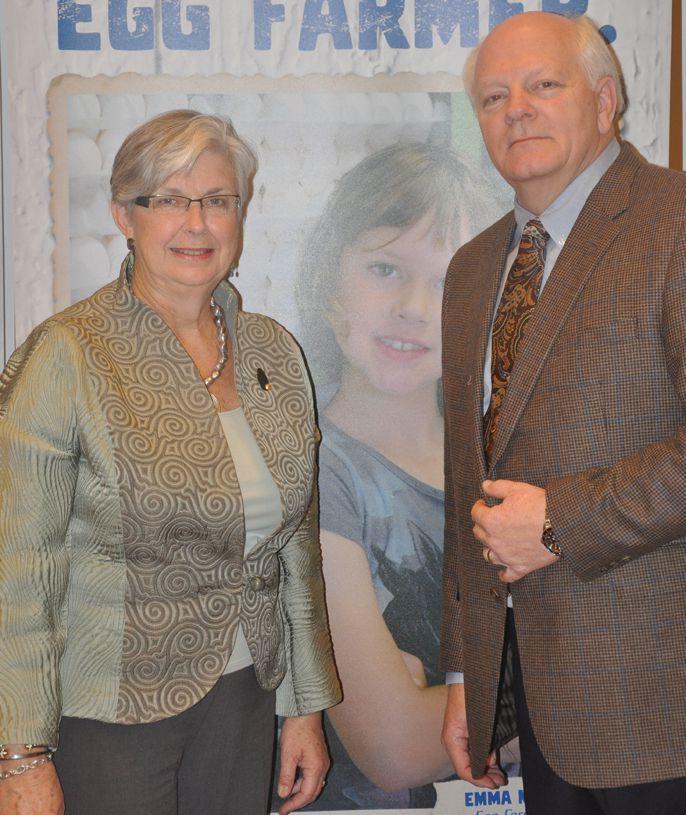
Carolynne Griffith (shown here with EFO general manager Harry Pellisero) said her tenure on the EFO board has “been a great, fulfilling and rewarding journey.”
unwavering in their support, supply management continues to be under attack at the WTO and in the press.
While the threat from the WTO appears to have receded in recent months she cautioned that the trade talks are only “in hibernation, but not dead” and could reawaken after the U.S. elections and after Europe deals with its economic crisis.
In the past year, supply management was under near constant attack from some journalists who have made it “their life’s work to tear down what we have built over the last 40 years.”
Those critics are not going to go away so egg farmers and others in the supplymanaged sector must remain vigilant and remain ready to counter the assertions.
PROUD EGG FARMER
One way to deal with the critics is to connect directly with consumers. For consumers to trust you they must know you and that is at the heart of EFO’s awardwinning “Who Made Your Eggs Today?” campaign.
Introducing the public to egg farmers builds a connection. It brings human faces to the forefront and makes eggs more than just a commodity. “This has been one of the most memorable achievements during my tenure,” she said.
“We have a great story to tell and only we, because of our experience, can tell it,” she said.
Egg farmers now connect with consumers at a personal level and they are doing it in ways that even 15 years ago couldn’t have been imagined, she noted. When she first joined the board no one had a cellphone and few if any of the directors even had a fax machine. Today cellphones, smartphones and more are essential tools, and not just for communicating with each other. The EFO carries out its campaigns across a host of different platforms including social networks, Twitter, e-mail, its website as well as the more traditional television, newspaper and magazine ads.
Griffith said an egg farmer’s goal is to produce the best eggs for consumers, and consumers should be told that in a way that connects them to the producer and that assures them egg farmers and consumers have shared values. The “Who Made Your Eggs Today?” campaign is doing just that.
Griffith said her late husband showed her early on that being a farmer is something to be proud of – you’re never “just a farmer.” It is not just an honourable career; it is an essential one. Producing healthy food and being appropriately rewarded is something to be proud of and, if necessary, it is something worth fighting for even if that means taking on journalists and the WTO.
The EFO thanked Griffith for her years of service by presenting her with a painting of one of the favourite spots she shared with Arthur and erecting a “Thank you, Carolynne” billboard in Petrolia.
PIC Update
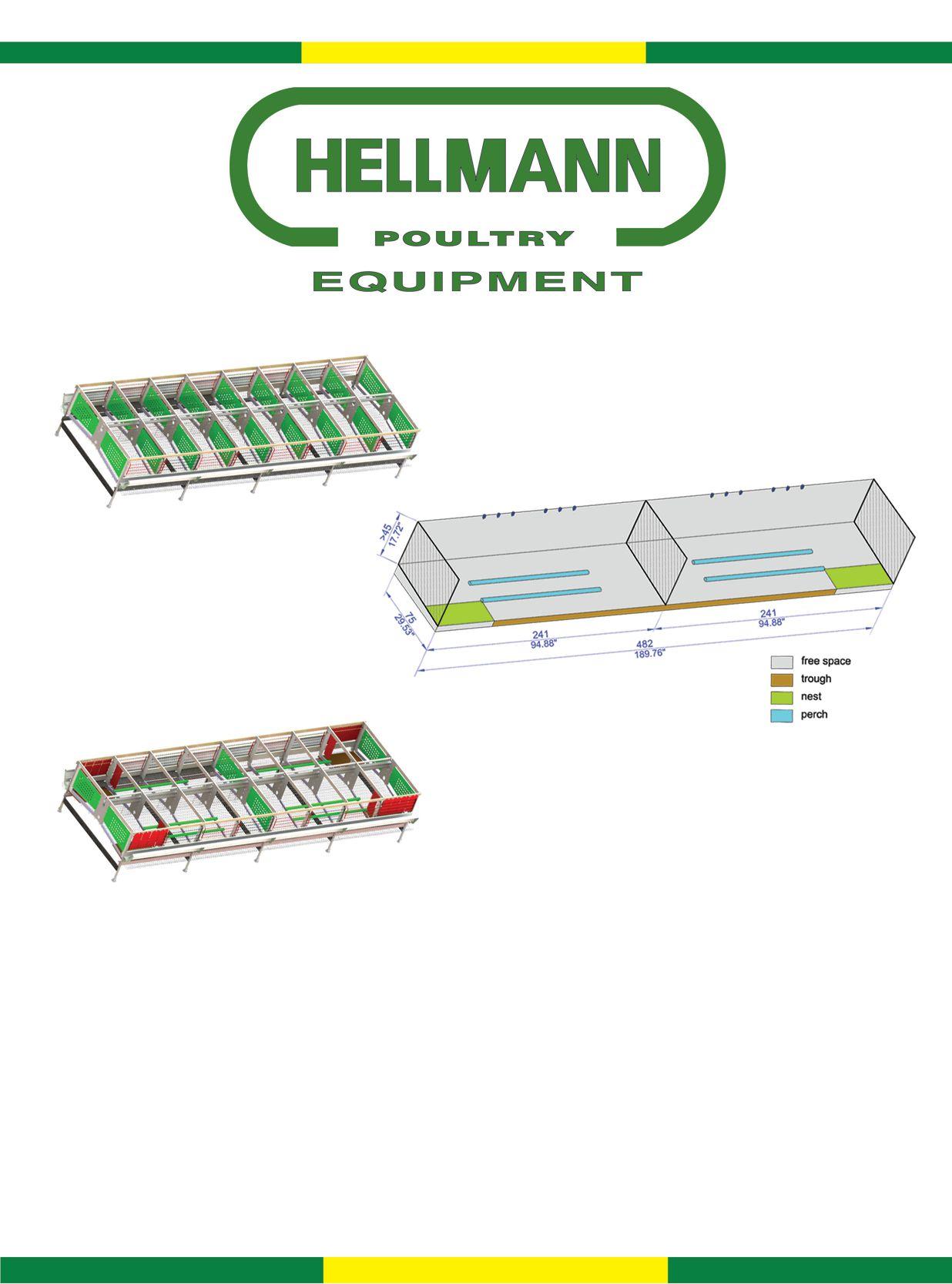
Movement of Caged Laying Hens
Researchers are exploring the economic and welfare added value of large group cages
BY KIMBERLY SHEPPARD, RESEARCH CO-ORDINATOR
Concern for the welfare of laying hens housed in conventional battery cages, a behaviourally restrictive housing environment, is growing, and an increasing number of producers are preparing to transition to alternative housing systems such as furnished cages. However, converting to new housing systems is not as simple as placing hens into them and being rewarded with good welfare and high production. Although furnished housing provides more behavioural freedom, it presents other challenges.
To address the challenges of intensive and competitive production in these alternative cage environments, Dr. Michelle Jendral and her research team at the Nova Scotia Agricultural College have been evaluating laying hen production in furnished cage systems. Their overall goal has been to compare production, physiological, behavioural and condition parameters of three laying hen strains: Lohmann Brown (LB), LL (LL) and Shaver White. The hens were housed in conventional battery and furnished large group cages over two production cycles, to assess hen health, welfare and productivity in, and strain suitability to, the different housing environments.
Included in this large, multidisciplinary study was an assessment of the prevalence and severity of osteoporosis
MFeatured Researcher
ichelle J. Jendral completed her PhD in Animal Science in August 2008, at the University of Alberta. The focus of her doctoral research concerned the development of sustainable cage and non-cage housing systems for laying hens that balance hen productivity, health and well-being. Currently, Michelle is an assistant professor, Poultry Behaviour and Welfare, at the Nova Scotia Agricultural College in Truro, N.S., where she is continuing her research in laying hen housing systems. Additional research interests include production and welfare issues facing the poultry industry, poultry behaviour, neuroethology and cognitive processes, and the importance of the human-animal interaction in animal production. Michelle teaches courses in domestic animal behaviour, avian biology, avian production systems, applied ethology and animal welfare.
and bone fractures, as determined from the incidence of breaks during the production cycle and after processing, as well as the bone breaking strength at end of cycle, feed consumption, egg production and quality, and calcium metabolism efficiency during the production period. Behaviour was monitored through live observation and digitally recorded footage to quantify hen prelay and nesting behaviour, dustbathing and amenity use, aggression, stereotypies, comfort and locomotory activity. Condition of the integument was monitored to further assess hen health, and blood white cell counts and tonic immobility were conducted to assess hen stress and fear.
Their findings? In contrast to previous findings in Dr. Jendral’s laboratory, when hens were housed at 450 cm2 in furnished and conventional cages, the current study housed birds at 660 cm2, and no treatment differences in femoral or tibial bone breaking strength were found. The increased floor space allowance in the current trials may have encouraged sufficient static walking activity in conventional cages to contribute to structural bone preservation. Notably, treatment differences in furcula, keel, pubis, wing and leg bone fractures
were largely absent throughout the production periods, possibly reflecting the positive impact of increased floor space provision on structural bone preservation. However, humeral breaking strength values were lower in conventional than in furnished cages, suggesting that providing increased cage height and raised amenities such as perches and a dustbath, which increase hen opportunity for wing movement, is necessary to maintain humeral architecture in caged hens. Furthermore, a high incidence of processing-related fracture was seen in both housing treatments, suggesting that cumulative structural bone loss remains a concern in commercial strains, and that genetic selection for birds that are better able to preserve structural bone should remain a priority. In the more prohibitive conventional cage environment, lighter hybrid strains were also more susceptible to osteoporosis. Importantly, both humeral and femural bone data from this study support the provision of increased floor space and cage height above current national standards. Despite findings that hens housed in furnished cages at 450cm2 consume more feed than hens housed in conventional cages at the same density, housing
treatment differences in feed consumption were not observed in the current flocks. This suggests that at a greater floor space provision, freedom of movement is increased in both systems, and movement is sustained through similar energy intake. Notably, in both housing systems, and at all ages, LB hens consumed the most feed, followed by LL and then Shaver White hens.
Strain differences in body weight were apparent in both conventional and furnished cages at both peak and late production, with LB hens weighing the most on average, followed by LL and Shaver White. Significant changes in body weight, primarily observed for LB hens, emphasize the importance of group size, management and housing interaction on bird health.
Treatment differences in egg production and quality were largely absent. In both systems, LB hens produced heavier eggs than Lohmann White and Shaver
PIC Update
White hens and had stronger shells, and LB and Shaver White hens appeared to better maintain shell thickness with age than LL. Overall, eggs from LB and Lohmann White hens were found to be stronger than those from Shaver White. Since Jendral et al. (2008) previously observed treatment differences in egg quality when hens were housed in furnished cages and conventional cages at 450 cm2 usable floor space, but did not in this study, in which hens were housed at 660 cm2, bone and egg findings from the current research suggest that increasing floor space allocation for caged hens contributes to both bone and egg quality.
Prelay behavioural findings indicate that provision of a nest box in furnished cages permitted expression of normal nesting activity, resulting in an overall decrease in hen frustration. As a result, hens showed increased expression of comfort behaviour, which was likely facilitated by the higher cage height in furnished cages and the additional floor space created in the cage area when the nest box was in use. Reduced aggressive pecking in general, and reduced feather pecking for LL hens, was also observed in furnished cages. High levels of and variation in displacement activity in both systems suggest that nesting was frustrated in conventional cages, and that competition for the nest space did occur in the large group furnished cages, as also evidenced from some nesting in the cage area in furnished cages.
Despite the competition for the dustbathing space in large group furnished cages, as evidenced by aggressive pecking in all strains and reduced bathing activity by larger LB birds, hens in these cages used the facility to express dustbathing and foraging behaviours. The provision of a dustbath in which the smaller LL and Shaver White hybrids could dustbathe, and the larger LB hybrids could predominantly forage, likely minimized the expression of feather pecking behaviour. Dr. Jendral believes these findings provide evidence that foraging and dustbathing are highly motivated behaviours, and permitting hens to express these activities mitigates the performance of redirected damag-
ing behaviours. Amenity space provision, design and timing of substrate delivery must be further examined to reduce competition for bathing and foraging facilities in cage environments.
Total feather condition did not differ between treatments early in the production cycles; however, treatment and strain differences were apparent with age. Also, considerable variation in individual hen feather cover existed within the cages. In furnished cages, this was likely reflective of the large and potentially unstable group size, which from the behavioural data, appears to have led to competition for amenities, and feather pecking of subordinate birds.
In conventional cages, frustrated nesting activity, as evidenced from the prelay behavioural data and redirected foraging and bathing activity, likely contributed to feather pecking. In general, hens in furnished cages had improved back, breast and wing condition over conventionally caged hens, which provides evidence that despite the large and likely unstable group size, provision of amenities in furnished cages permitted behavioural expression that reduced frustration and redirected feather pecking activity. High variability in hen condition in furnished cages combined with the absence of treatment differences in hen stress and fear response provide additional evidence that, despite increased freedom of behavioural expression in furnished cages, the large group size in furnished cages is nonetheless contributing to hen stress.
The findings from this research provide compelling evidence for the production and welfare benefits conferred by providing caged hens with adequate space and amenities to express natural and loadbearing activities. Variation in individual hen and overall strain response to large group housing suggests that further studies examining group size, in combination with stocking density, strain analyses and amenity design must be conducted. Layer breeding programs must also continue to be adapted to select against metabolically and environmentally induced disorders. To read more, please visit www.poultryindustrycouncil.ca.
More than
VAXXITEK
The effectiveness of a single dose of VAXXITEK HVT + IBD against Marek’s and Gumboro Diseases has been proven in over 66 countries. Our team appreciates your confidence which has helped us build the path of success for VAXXITEK HVT + IBD.
PIC Update
PIC’s Picks
The PIC Spring Symposium, formerly known as Research Day, was “bookended” by two talks: the first on the impact and costs of disease at the macro (industry/ economy) and micro (farm) levels, and
BY TIM NELSON, EXECUTIVE DIRECTOR
the last from a producer who has been through a disease problem on his farm. Although not a massive, catastrophic event, it was nevertheless inexplicable to him, damaging to his confidence and
WHO CARES...
…if trace mineral safety for your layers is not as simple as cracking a few eggs?
While consumers are demanding more poultry, they are also demanding safety. Do you know where your trace minerals come from? We do. Alltech’s Poultry Advantage program brings you local manufacturing in the heart of Canada and guarantees safe and traceable minerals everyday through our state of the art Q+ program. Be Alltech Farm Proud with the advantage, the Poultry Advantage
So, who cares about safety in your trace minerals? Remember…
placing considerable strain on his farm business and personal life.
His account was a story we never hear. Yet there would be few poultry farmers who haven’t at some stage felt the added pressure of a disease outbreak on their farm and gone through a similar experience. This personal experience is what I call the “intangible-substantial” cost of poultry disease.
We hear and talk about disease in a strikingly clinical manner; disease strikes the farm, production drops, vaccination and culling occur, productivity drops, profit is reduced and biological and financial losse are incurred. Between flocks, extra money is spent cleaning and sanitizing trying to address the problem.
Throughout, you continually ask yourself the obvious question – how did this happen to me? You followed recommended biosecurity protocols, clean and disinfect and dry the barn before new litter, have a rodent and insect control program, check feed bins, sanitize the water and medicate as required. What else is there?
In meetings we talk about the financial costs and control measures as if they’re absolutes, certainties that will prevent the problem. Producers ask the experts what they should and shouldn’t do and the experts tell them that, to the best of their knowledge, if everything is being done correctly it should be OK. But what if it’s not?
If when the next flock arrives and the same problem is encountered when insidious self-doubt about one’s own practices can start to creep in.
Our Spring Symposium producer speaker, Len Jewitt (see page 29), described having a disease organism found on his farm that he couldn’t get rid of as, akin to having a “stain” on his professionalism, as if everything he’d done in the past, the way he’d managed his business, was suddenly brought into question. He felt the birds he’d brought into his business to care for and grow had been put at risk by him and, worse still, everything he’d worked for his entire career, was suddenly being put at risk by his actions. He felt a sense of shame, a stigma, at having a problem that he, a professional farmer, was struggling with. He also felt as if he
was the only producer going through this. His self-doubt was normal, and all in his head, as he is probably one of the best operators in the business. But when you own your own business, it’s natural to wonder whose fault can it be, if not yours?
We’ve all heard about (some firsthand), the human toll from catastrophic disease outbreaks such as those witnessed in British Columbia. In such times it’s a credit to our industry and affected communities that rally to support affected families. And, thanks to the professionalism of our producers and the biosecurity systems we have in place in Canada, such catastrophic events are rare. But equally rare are discussions about the psychological pressure and personal impact of farmers coping alone with a “minor” isolated disease outbreak on their farm.
When there is a disease outbreak on a farm, we rightly isolate that farm in order to control the disease. But when it is over, we continue to treat the incident as isolated instead of acknowledging that there are many other farmers who have had similar issues working through the process and aftermath of dealing with disease.
It is acknowledged and completely reasonable that anyone wanting to sell stock (chicks, pullets) from that property does not want to broadcast the fact that they have had a disease on farm. But the majority of farmers don’t sell pullets or chicks and many farmers are putting up with low levels of financially and psychologically damaging disease and feeling just like our speaker did: alone and too ashamed to seek help.
We have high hopes that Mr. Jewitt’s talk will start a long overdue conversation about the human impact of disease that we can help facilitate. Anyone who heard his talk could not fail to have been moved by the personal disclosure about his experience and the passion with which he spoke.
But do we in poultry (in fact, in all of agriculture) ever really share information about disease and how we are coping with it in different ways? And if not – then how do we exchange ideas and learn from each other about how to cope? We get technical bulletins, hold
We see a flock of numbers that connect us. We see the millions of pounds of feed that together, we have worked to save every year with our birds. We see more secure operations, thanks to our industry leading health status. We see the many lasting relationships we have forged in this dynamic industry.
Together, by understanding the numbers, we understand the industry.
Strength in Numbers.
Maximize Profits
PIC Update
workshops, read factsheets – all produced by “experts” but I don’t think we ever really have a conversation between farmers about disease. So we never get an opportunity to “learn” that we’re not alone in facing disease challenges.
Here’s an example: There are some discussion groups happening in the dairy industry at the moment and they’re talking about disease. At one of these meetings, one farmer told the group that he thought that 96 per cent scouring in his calves was normal and acceptable. It was only by having a conversation with other farmers that it became apparent to him that his “normal” was not the industry “normal.”
If we had a conversation in the poultry industry about how we individually adapt and adopt the technologies and science to our farming systems, would it be, as the Biosecurity Calendar puts it, “spread the terms not the germs?” Would we not be better informed? Would we not be able to identify gaps in our knowledge that we can then ask the technocrats to fill? I think we would benefit from this.
Ask us how utilizing Grand Valley Fortifierrs s poultry premix and mixing on-farm ca c n sa s ve money and improve your flocks perrforrmance. Call us today at 1-8777-6225--44 4 00 0 and speak to one of our Poultry Specialliists
Advanced Animal Nutrition for Improved Human Health
So how do we get the conversation going? If more producers who’ve been through a disease cycle (or two), and who are willing to talk about the impact it had on their farm, their life and their family in a facilitated session/workshop style, came forward, that would be a powerful start. We would immediately get a more realistic idea of how widespread poultry disease really is across our industry and what impact it’s having.
Secondly, we could discuss how each coped financially, physically and psychologically, compare stories and start building a bank of ideas containing technologies, farm management tips and smart ideas that will help other producers get on top of disease faster and cope with the stress.
The PIC would be very pleased to hear from producers who think that such an initiative would prove valuable, and any who might be interested in offering their story through which we could get the conversation going and together build better flock and producer health and reduce the cost of disease. Interested producers may contact me at tnelson@ poultryindustrycouncil.ca.
Know Yourself Mind Over Success
It’s important to understand your strengths and weaknesses
BY PIERRETTE DESROSIERS, M.PS.
Can you list your 10 greatest strengths as well as 10 things you need to work on?
When I ask participants to answer this question in 15 minutes during my training sessions, quite a few of them feel unsettled. Knowing your strengths and your weaknesses, or things you need to improve upon, is one of the key abilities that pertain to emotional intelligence. What’s more, Socrates, one of the greatest Greek philosophers, made this concept famous more than 2,000 years ago when he said: “Know yourself.”
Why is it important to know your strengths and your weaknesses? Take Marc, for example. He decided to triple his dairy production and thought that with the right equipment and a good account manager, everything would fall into place. He was dumbfounded when he realized that it was much easier to add cows to his operation on paper than in real life. Going from a business he ran with his wife to a business with three employees did not require the same competencies, abilities or interests. Reality was far from what he had pictured.
“Had I known that human resources management was so difficult and that my job would change so drastically, I’m not sure I would have made the same decision,” says Marc. “Human relations and management, day in, day out, are not my strengths.” Of course, Marc could work on these skills, but it is an increasingly accepted fact that in order to perform well, a person is best to work in an environment that relies on his strengths, not his weaknesses. We must adapt our work, our roles and our responsibilities to who we are – not the opposite.
STRENGTHS AND WEAKNESSES
Knowing both is essential before undertaking a big project or making major changes that will affect your role.
For a long time, experts thought that with training, time, energy and motivation, anyone could excel at anything. Companies invested thousands of dollars to help employees and managers overcome their weaknesses. At best, by working very hard on your weaknesses, you could become average in an area, but never outstanding. However, by focusing on your strengths and your natural talents, you will excel. As a bonus, you will feel fulfilled and enjoy your work even more.
Of course, we must be fully aware of our weaknesses, identify them, recognize them and understand how they can affect our business. We must surround ourselves with people whose strengths compensate for our weaknesses. This does not mean that we cannot improve ourselves. However, the success of our business should not rest on our weaknesses but on our natural talents.
Before undertaking a big project and making major changes that will affect your role, ask yourself if this change allows you to use your strengths and shifts the focus away from your weaknesses.
TAKE THE TEST
In 15 minutes, make a list of 10 strengths and 10 weaknesses.
If you stop after three strengths only, you are either being too modest or you don’t know yourself. If you find many more weaknesses than strengths, your selfesteem suffers. Finally, if you only write down strengths and almost no weaknesses, you are quite sure of yourself, but it may be in your interest to ask people around you for feedback.
By the way, do you really want to know yourself? Ask five people who know you well and whom you hold in high esteem to describe your main strengths and weaknesses. This would be an excellent exercise in self-knowledge… and humility.
Pierrette Desrosiers is a work psychologist, speaker and psychological coach who specializes in helping those working in agriculture. She can be contacted by e-mail at pierrette@ pierrettedesrosiers.com, or if you would like more information, visit her website at www. pierrettedesrosiers.com.
Research
PIC Highlights Health and Disease
Researchers explore resistance, probiotics and selective breeding
BY DAVID MANLY
On May 8, 2012, the Poultry Industry Council (PIC) held its Spring Symposium (formerly known as Research Day), celebrating the careers of three distinguished poultry researchers, as well as highlighting research regarding poultry health and disease that it helps fund.
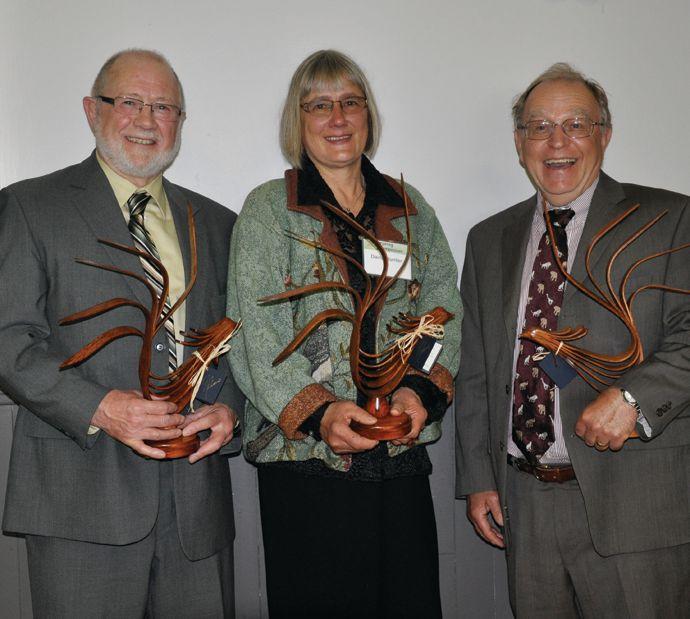
The day began with the presentation of the Poultry Worker of the Year Award to Ian Duncan, who did groundbreaking work on laying hen welfare, and poultry nutrition researcher Steve Leeson. Also honoured was the late Bruce Hunter, a much beloved teacher and researcher from the Ontario Veterinary College. Each award was preceded by a short video featuring colleagues and peers discussing the recipients’ accomplishments and significance to the field. All of the honorees were emotional and extremely thankful, none more so than Bruce Hunter’s widow, who was noticeably touched by the kind words said.
The rest of the day was devoted to researchers discussing various aspects of poultry health and disease, beginning with Jean-Pierre Vaillancourt from the University of Montreal, who discussed putting disease into perspective.
Vaillancourt stated that animal loss due to disease is a continuous and significant problem that claims a large number of animals each and every year. Inside the poultry system, he said, diseases constantly change and adapt, and therefore it is a constant battle between manage-
IN PERSPECTIVE
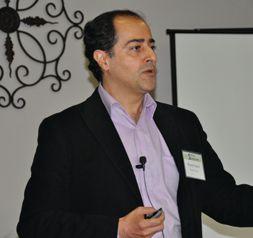
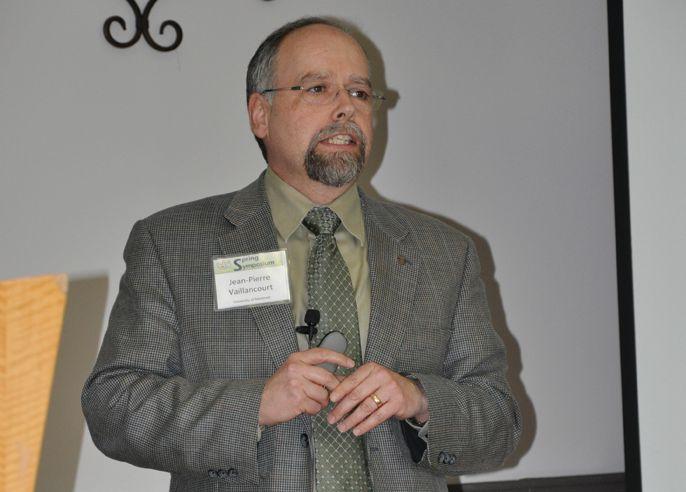
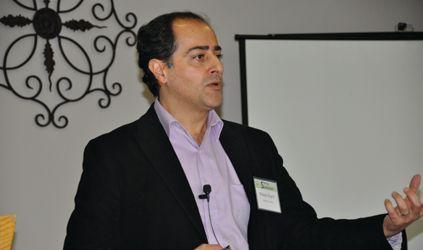
Vaillancourt (above) and Shayan Sharif were two of the presenters at the PIC Spring Symposium.
ment and prevention.
He also said that as density continues to increase, productivity will continue to decrease because production diseases and infection pressure will rise. “The potential costs are huge if we are unprepared,” he said, “and can have major effects on human health as well.”
The second speaker at the symposium was Cindy-Love Tremblay, a PhD student at the University of Montreal studying antimicrobial resistance in birds and how normal gut flora could acquire resistance. Her results have shown that healthy
poultry could be a reservoir for resistance genes, which could quickly spread throughout a population of bacteria.
Although the research is only in its early stages, Tremblay said that future work could be used to help reduce resistance by decreasing the ability of the bacteria to exchange genes.
Shayan Sharif from the Ontario Veterinary College at the University of Guelph followed with an explanation on the potential uses of probiotics in humans, as well as poultry. According to him, the use of a combination of probiotics in
Jean-Pierre
chickens can help modulate the immune response, increase weight gain, improve feed conversion and decrease both mortality and overall parasite/bacteria load.
This was demonstrated in tests using a cocktail of three different probiotic bacteria; the researchers found that the cocktail can help enhance the chickens’ immune response. Research is also being done on the potential antibacterial properties of probiotics using a new cocktail of five different probiotics targeted against a specific strain of Salmonella
Ben Wood, a geneticist from Hendrix Genetics, then took to the podium to discuss the challenges associated with selecting for specific traits in turkeys. He said that screening for metabolic disorders with a genetic basis are quite effective, but artificially selecting against behaviour and pathogen resistance is more difficult.
The reason for this, Wood said, is that, by selecting for improved resistance, the
Research
results visibly decrease the presentation of commercially viable traits, such as growth rate and feed conversion. “And until breeders get the word that consumers are willing to pay for less product,” he added, “things aren’t going to change.”
The final scientific presentation was by Michele Guerin from the University of Guelph on the prevalence of Salmonella serovars in breeder flocks in Ontario. The results showed that there was a seasonal difference between Salmonella’s presence in breeders (more pronounced in the fall) and hatcheries (summer), and that the best way to eliminate an outbreak is constant monitoring at the breeder flock and hatcheries across all poultry types. She noted that if she and her research team could gain a better understanding of why these seasonal patterns occur, they could design studies to show how these infections could be prevented.
Len Jewitt, owner of BLT Farms Inc.,
a turkey, egg and broiler operation north of Guelph, ended the day with an emotional presentation on the impact of disease at the farm level. Jewitt, who several years ago had one of his layer barns test positive for Salmonella enteritidis (SE), he explained that there are many costs to the producer when disease strikes, and these go beyond dollars and cents.
The biggest challenge was the mental cost. “This is something that as an industry, we don’t want to talk about,” he said.
He said the positive result made him feel “like a loser,” and he asked himself what had gone wrong, as he and his employees had been so clean and had followed all necessary protocols.
He finished his talk with a piece of advice for those who are responsible for going on the farm and beginning the depopulation and disinfection process – to use a gentle hand. “Remember you are walking into someone’s dreams,” he said.
Honours
Flock of Winners
Three
distinguished researchers claim the 2012 Poultry Worker of the Year Award
BY KAREN DALLIMORE
Dr. Ian Duncan, Dr. Steve Leeson and the late Dr. Bruce Hunter were each recipients of a 2012 Poultry Worker of the Year Award in Guelph, Ont., on May 8 during a ceremony at the Poultry Industry Council’s Spring Symposium. The annual award recognizes individuals who have made a significant contribution to the poultry industry.
Duncan, who earned his PhD in Scotland, began his career with groundbreaking research on frustration and conflict behaviour of domestic fowl. His first published work on animal welfare in 1975 is now regarded as the pioneering foundation of the animal welfare work being done today.
During his tribute, friends described Duncan as a world-renowned researcher and tireless mentor for students. He has published more than 150 papers on animal welfare and has left a legacy in teaching, challenging and inspiring thousands of people, colleagues and students.
CONTRIBUTIONS
How important is a nest to a hen? Duncan has spent his career trying to find the answers to such questions, investigating beyond simple biological functions to question what’s going on in their heads. Duncan had a way of making chicken research fun, all the while making people think about the importance of how animals feel and finding ways to measure those feelings.
In his acceptance speech, the now professor emeritus and chair in animal welfare at the University of Guelph
The PIC honoured three researchers with its annual Poultry Worker of the Year Award. From left to right are Ian Duncan, Daina Hunter, wife of the late Dr. Bruce Hunter, and Steve Leeson.
acknowledged that some of his work has “caused some pain” in the industry, but he hopes that people can look back in 10 years and say, “That sod was right!”
Regarded as the “god of poultry nutrition,” Steve Leeson has made a highimpact contribution to the poultry industry through the volume and quality of his work. He has authored or co-authored 18 books, 351 articles in refereed journals and 82 articles in trade journals, averaging out to one publication per month over the course of his career. He has also advised or co-advised more than 40 graduate students from around the world.
Leeson’s focus has been on nutrition,
not only for birds but for people as well. Craig Hunter of Burnbrae Farms said that Leeson had a real sense of research priorities that were relevant to the industry, and he credited Leeson with opening up a new era of production and marketing opportunities with such designer egg products as omega-3 eggs.
“I’ve gotten a few awards over the years but none means more than this because this is from you,” said Leeson to his peers in his acceptance speech.
During a very emotional presentation, Daina Hunter accepted the award on behalf of her late husband, Dr. Bruce Hunter, who passed away suddenly in
POULTRY WORKER OF THE YEAR
October 2011 at the age of 61. The award acknowledged Hunter’s 33 years of teaching and research that encompassed poultry and fur farming, as well as environmental conservation.
Hunter started his career with exotic birds and reptiles, running the Ontario Veterinary College wild bird clinic for more than 15 years. He wrote what is known as “Bruce’s Black Book on Mink Farming” – the recognized “go-to” handbook for that industry. He retired from the OVC department of pathobiology in 2010 as a full professor.
Hunter was instrumental in setting up a Canadian Community of Practice in EcoHealth (CoPEH) and a graduatelevel course in ecosystem approaches to health involving University of Guelph, the University of British Columbia and Université du Québec à Montréal. He was also co-leader of a poultry project in Ghana for Veterinarians Without Borders.
STRONG, SILENT TYPE
Robert Jacobs, chair of pathobiology at OVC, described Hunter as the “strong, silent type with a spontaneous smile” who was humble to the point of being apologetic. “He left a legacy of unselfishness and a love of people,” said veterinarian Mike Joyce. Al Dam, OMAFRA poultry specialist, said that Hunter always had time for everyone and made you feel like you already had the answer to your own questions, “he just teased it out of you.”
During his tribute, friends described Hunter as “Grizzly Adams” in appearance, a man well respected as a teacher, mentor and collaborator who had a natural gift for communication and the ability to bring people together.
Research APRI Takes Flight
Health and feed research gets a boost in Atlantic Canada
BY DAN WOOLLEY
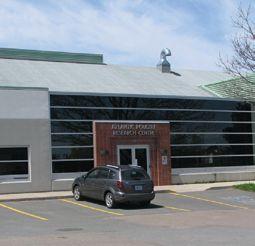
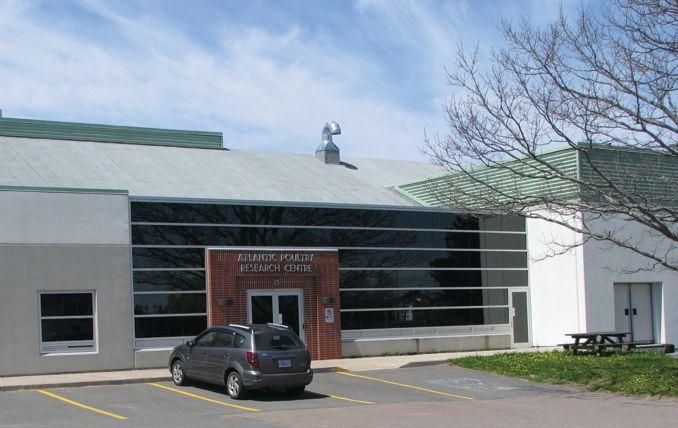
The federal government has provided the Atlantic Poultry Research Institute (APRI) at the Nova Scotia Agricultural College with $600,000 to assist its feed and health research.
In announcing the grant on behalf of federal Agriculture Minister Gerry Ritz, Scott Armstrong, the CumberlandColchester-Musquodoboit Valley MP, said the research investment will help Atlantic Canadian poultry producers remain competitive, “by ensuring they continue to improve upon their quality products in order to meet the demands of today’s health-conscious consumer.”
Six projects will receive funds for research into better nutrients and improved disease resistance for the regional poultry industry. This funding will benefit consumers, as it will support research into ways to increase omega-3 fatty acids and antioxidants in eggs and chickens, plus ways to improve flock health and reduce disease.
The research projects also include the identification of healthy, cost-effective alternatives to traditional feed, such as omega-rich crab meal, canola seeds and cold-pressed canola oil, development of a new approach to vaccination, as well as finding an alternative to antibiotics to ensure poultry health while assuring the concerns of safety-conscious consumers.
According to APRI’s CEO, Dr. Derek Anderson, all programs will be completed by Dec. 31, 2013, and the research aims to “find some answers for the poultry industry with respect to alternatives to antibiotics and the efficacy of feeding low protein diets formulated to meet
QUALITY RESEARCH
The Atlantic Poultry Research Institute has received a research grant of $600,000 from the federal government.
amino acid requirements of laying hens by using synthetic amino acids.”
Dr. Anderson also hopes to reduce the cost of poultry diets without having detrimental effects on production performance. Methods include the use of opportunity feed ingredients and the development of omega-3 fatty acid enriched eggs by feeding crab meal.
The Canadian Agricultural Adaptation Program’s four councils in the Atlantic region, led by Agri-Futures Nova Scotia, will deliver the investment in the research projects.
Nova Scotia will also contribute $220,000 to the projects from its Technology Development Program.
Nova Scotia Minister of Agriculture John MacDonell observed: “The Government of Nova Scotia is investing in these projects to support scientific research that will improve the poultry sector’s adaptability, competitiveness and innovation.”
As of 2010, Atlantic Canada’s 235 chicken, turkey and egg farmers generated
$259 million in revenue at the farm gate.
The research is also heavily producerdriven, said Dr. Anderson.
He noted: “APRI is an Atlantic-wide institute that has successfully leveraged funds from the industry and from government to further its applied research needs, which in turn are identified with input from each of the Atlantic provinces’ poultry marketing boards.”
Anderson added that, for the APRI, the new research grant means active research on broiler chickens and laying hens will provide training related to poultry for graduate students and research personnel.
For the producers, he continued, it could mean lower cost diets, alternative feed ingredients, as well as alternatives to antibiotics for broilers and increased broiler weight gains.
He also emphasized APRI works from producer-generated priority lists and the organization supplied the foundation dollars to start the funding process.
Quality Prinzen Egg Qygg Packer in excellent shape. For use on a commercial egg producing farm. This machine will save you hours of chore time by automatically packing all the eggs into trays tips down. Approx. 200’ of conveyor included. Please contact John @ 403-345-3805 or 587-220-1147
FOR SALE: BROILER FARM WITH OR WITHOUT QUOTA IN CENTRAL ALBERTA
Broiler Farm with or without quota units for sale in central Alber ta located within 60 km of Edmonton The farm has six barns with a total of 161,600 sq. ft. Other buildings include a 22,000 sq. ft. shop, a 600 sq. ft. generator shed, a 2,100 sq. ft. office with shop and a 2,560 sq. ft. manure storage shed with 16 ft high ceilings. There are two residences on the property. The main house is a 2,400 sq. ft two stor y with a fully finished basement. The second residence is a 900 sq. ft. bungalow with a fully finished basement, which sits on 65 acres of land. A full list of equipment, which is negotiable with the sale, is available. For more information on this fantastic opportunity, please contact Rick Weiss, Tel: 780-312-6131.
BY JIM KNISLEY
ALL THINGS CONSIDERED Older, Fewer and Wealthier
The headlines were all too similar. Farmers were, on average, getting older and had never been older.
This came out of Statistics Canada, which reported in the 2011 Census of Agriculture that the average age of a Canadian farmer is 54 years.
The Globe and Mail led off its report saying, “Canadian farmers have never been older, raising questions over who will produce the country’s food in the coming decades.”
Many reports noted that the rise of grey power has been a cause of concern for a decade, with the average age rising from 49.9 in 2001. Almost half of all farmers are now 55 or older. In 2001 that number was fewer than 41 per cent, and less than 10 per cent of farmers – 8.2 per cent to be exact – were under the age of 35.
Along with aging, the number of farmers is also shrinking as farms get larger. There are now just 294,000 farmers out there, 10 per cent fewer than five years ago, and almost three-quarters of them are male. In fact, the average size of Canadian farms increased 6.9 per cent between 2006 and 2011, from 728 acres to 778 acres. In Saskatchewan, the average farm size jumped 15.1 per cent to 1,668 acres, the largest increase in the country.
The increase in size is reflected not only in the number of acres but also in cash receipts. For example, there are 3,298 farms with cash receipts of more than $2 million. This is up from 2,700 farms in 2006 or an increase of 22 per cent. In 2011, 6,304 farms had cash receipts of more than $1 million, but less than $2 million. In 2006 there were 4,614 farms in that class. Meanwhile the number of farms in the middle fell dramatically.
Also, it is official that 2005 to 2010 was a terrible time to be a hog farmer. Gross farm receipts for hog and pig farms fell 33.2 per cent (at 2010 constant prices). Statistics Canada says hog farms represented 1.7 per cent of all Canadian farms and reported 8.1 per cent of all gross farm receipts in 2010, down from 2.6 and 12.5 per cent in 2005.
Statistics Canada’s agriculture balance sheet shows that for poultry and egg farms, the average total assets of $4.9 million are up 37 per cent from 2005. The bulk of the assets – $4.6 million – are long-term assets. Meanwhile, total liabilities (longand short-term) are just over $1 million. The result is, on average, a net worth of $3.88 million.
For the sake of comparison, dairy farms have an average net worth of $2.66 million, while beef and grain farms show an average worth of $1.16 million and $1.65 million respectively.
For Canadians in 2005, the median assets of families were $229,930 and the median debt was $44,500. Their median net worth was $148,350, according to Human Resources and Skills Development Canada. In 2005, the principal residence and other real estate represented 42 per cent of the total assets of all Canadian families.
Not surprisingly, median family net worth peaked at $407,417 where the family head was between the ages of 55 and 64. After age 65, net worth declines as people tap assets to pay for retirement.
A decade ago I thought poultry was experiencing an asset bubble, but I was wrong.
The percentage of farms with receipts of $100,000 to $250,000 fell 21.6 per cent and the percentage of farms with receipts of $250,000 to $500,000 was down 10.6 per cent.
According to the 2011 Census of Agriculture, the 9,602 farms with $1 million or more in gross farm receipts accounted for almost half of the gross receipts for the entire sector. In other words, fewer than five per cent of farms generated almost 50 per cent of the receipts. In 2005, 3.2 per cent of the farms had receipts over $1 million and accounted for 42.8 per cent of receipts (at 2010 constant prices).
Looking at poultry and egg farms, gross receipts increased by 9.8 per cent during the five years from 2005 to 2010 to $4.0 billion, while the number of poultry and egg farms fell by 2.1 per cent.
What does all this add up to? Well, the average farmer is getting older (but aren’t we all?) and there are fewer of them. With the exception of beef and hog farmers, farmers are doing fine and poultry farmers are doing extremely well when compared to the average farmer and Canadian.
But there are challenges.
The age thing will take care of itself. The shift to fewer and bigger farms looks to be continuing. For poultry, the constantly rising average value of fixed assets – $4.6 million – is daunting. A decade ago I thought poultry was experiencing an asset bubble, but I was wrong, as the 37 per cent increase in the last five years shows. Today with the average poultry and egg farm worth almost $5 million and much of that in quota value, I don’t know what to think. Perhaps supply and demand – limited supply of quota and strong demand – will continue to pull quota prices and values upwards. Or maybe quota values will plateau. But to figure out what will happen you need a better crystal ball than I have.