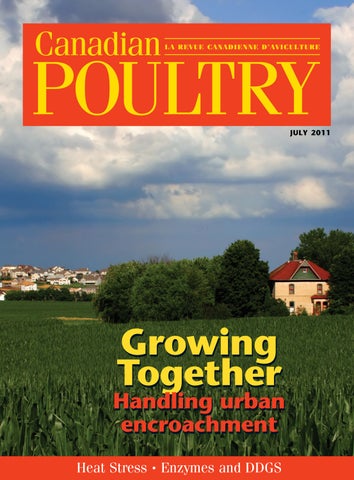
Considerations the poultry industry needs to make to handle urban encroachment
By Kristy Nudds
18
PiC UPdatE: Eggshell Quality and Uterine Proteins
Uterine proteins that change with age may play a role in controlling the mineralization of eggshell
By Kimberly Sheppard, Research Co-ordinator and Tim Nelson, Executive Director
20
FarmEr HEaltH: Surviving Success a new Brunswick poultry mogul tells the true story behind his limitless ambition
By André Dumont
24
inSidE tHE Barn: managing Heat Stress Keeping the birds cool is essential to prevent production losses
By Treena Hein
ProdUCtion: aBF turkey Production the key is good management
By R. Michael Hulet, Associate Professor, Department of Poultry Science, Pensylvania State University
nUtrition: Enzymes Benefit ddGS inclusion Updated University of nebraska research shows that enzymes can allow for higher ddGS inclusion rates and add savings
By Dr. Sheila Purdum, Mr. M.K. Masa’deh and Ms. Dana Hahn
bY KrIsTY nUdds
Food safety needs more Focus
on april 13, the Canadian medical association Journal (CmaJ) published an early release of an editorial entitled “Food in Canada: Eat at your own risk.” in the editorial, available on the CmaJ website, the authors state: “Canada’s public and private sectors are not doing enough to prevent food-borne illnesses.” among Canada’s failings are inadequate active surveillance systems, a lack of incentives to keep food safe from farm to fork and an inability to trace foods along that pathway.
as a result, more than 11 million episodes of food-related gastroenteritis occur in Canada every year, a “crude” estimate given that fewer than one in 200 cases are reported. this puts a huge cost burden on our health system: given that our population is aging and the elderly are at the greatest risk of serious health complications from food-borne illness, pressure from health advocates on our food system to be more transparent and traceable is sure to remain at the forefront.
the editorial also points to Canada’s poor standing with respect to traceability in the “World ranking: 2010 food safety performance” report released by the organisation for Economic Co-operation and development. this report rated Canada’s food industries and government agencies 15th out of the 16 countries featured in the report on traceability.
But it’s not all bad news. Canada ranked number 1 when it came to food recalls and governance. So, once a contaminated food is discovered, we are good at limiting continued risk to consumers, but less vigilant about tracing its exact path throughout the food chain. With respect to produce, we have been fortunate not to have had an outbreak of the same magnitude as those recently experienced in Germany and the United States, to test just how bad – or not
so bad – our existing traceability system is. the federal government has recognized that traceability is a key component of ensuring a safe food supply, mandating a national traceability system to be in place by 2011, although it seems doubtful that this will be achieved. the Weatherhill inquiry focused on improving government processes. as the CmaJ editorial states, we have more inspectors, but we still lack uniform national standards or process benchmarks. in the ontrace report “an appetite for traceability,” the result of a conference held by the not-for-profit, non-government ontario corporation whose mandate is to champion traceability, participants overwhelmingly felt that full agri-food traceability needs to be a shared initiative between industry and government, and that industry should operate any national traceability system. the government’s role should be to oversee enforcement of the system.
and this is where one of the biggest hurdles to implementing a national system lies – in co-ordination between all sectors. also, who is responsible for funding – government, industry, or both? the ontrace report also pointed out that the agricultural industry needed to leverage the opportunities (such as enhanced consumer confidence, export opportunities and competitiveness) in addition to mitigating risk and controlling animal disease outbreaks, which have been the primary drivers of traceability initiatives so far.
despite our shortcomings in traceability, Canada is still seen as a food safety leader. However, discussions among agricultural sectors and the government must ramp up and become a priority if Canada is to maintain and deserve this reputation. let’s not let an outbreak of food-borne illness or the human health industry force us into a traceability system that hinders instead of helps progress. n
July 2011 Vol. 98, No. 7
Editor Kristy Nudds – knudds@annexweb.com
888-599-2228 ext. 266
Associate Editor
Jim Knisley – jknisley@kwic.com
Publisher/Sales Manager Marilyn White – mwhite@annexweb.com 519-429-5193
Canada – 1 Year $ 25.20 (includes GSt – #867172652Rt0001) $27.12 (includes QSt/HSt) uSA – 1 Year $ 60.00
Occasionally, Canadian Poultry Magazine will mail information on behalf of industry-related groups whose products and services we believe may be of interest to you. If you prefer not to receive this information, please contact our circulation department in any of the four ways listed above.
[ im-pek-uh-buhl ] Superior design; flawless craftsmanship, amazing results.
Nothing says impeckable like OptiGROW!
Lubing’s all-new Opti GROW Nipple is designed to work in today’s challenging broiler environment. Because the nipple has been optimized for growth, you will be amazed by the first-week performance and explosive bird growth. OptiGROW offers:
Large body and pin
Acid resistant design
Easy triggering for day-old birds
Low mortality
Increased side-action flow
Larger flow range for jumbo birds
Increased weight gains
Improved feed conversions
To find out more about this impeckable new product, please contact your local Lubing Representative.
Glass-Pac Canada
St. Jacobs, Ontario
Tel: (519) 664.3811
Fax: (519) 664.3003
Carstairs, Alberta
Tel: (403) 337-3767
Fax: (403) 337-3590
J. Dean Williamson Ltd.
London, Ontario
Tel: (519) 657.5231
Fax: (519) 657.4092
Les Equipments Avipor
Cowansville, Quebec
Tel: (450) 263.6222
Fax: (450) 263.9021
Specht-Canada Inc.
Stony Plain, Alberta
Tel: (780) 963.4795
Fax: (780) 963.5034
What’S
HATCHING HATCHING
Strong Support for Sm
Canadian dairy, poultry and egg farmers applaud the federal government’s continued support for supply management, which was clearly reinforced in the speech from the throne on June 3.
the government commits that, “in all international forums and bilateral negotiations, our government will continue to stand up for Canadian farmers and industries by defending supply management.”
this follows a similar pledge by the Conservative Party of Canada in the recent federal election campaign.
“Prime minister Stephen Harper said during the election that a re-elected Conservative government would continue to resolutely defend the supplymanagement system,” said david Fuller, chair of Chicken Farmers of Canada (CFC). “We applaud the government for following through on their
commitment in the speech from the throne.”
“Canadian dairy, poultry and egg farmers greatly appreciate the government’s strong and ongoing support for supply management, particularly in the context of international trade negotiations,” said Jack Greydanus, chair of the Canadian Hatching Egg Producers (CHEP).
added turkey Farmers of Canada (tFC) chair, mark davies, “With this clear mandate and the significant recognition in the speech from the throne, our producers can continue to be reassured that the government will deliver on its commitments.”
the national agencies also congratulate all of those recently appointed to the federal cabinet. these include returning minister of agriculture and agri-Food Gerry ritz and returning minister of Health leona aglukkaq. also welcomed is Ed Fast, who is the new minister of international
trade and Christian Paradis, the new minister of industry who also returns as minister of State (agriculture).
mr. Fast hails from the B.C. agricultural riding of abbotsford where there are numerous egg, poultry and dairy farms operating under supply management. “mr. Fast understands the importance of supply management to Canada’s economy and in job creation; we expect he will be a strong advocate in international trade negotiations for all Canadian agriculture sectors,” Egg Farmers of Canada (EFC) chair Peter Clarke said in a release.
“We look forward to working again with mr. ritz on trade and other issues involving farmers,” he adds. mr. ritz has a history of working on behalf of farmers. For example, he worked closely with egg and poultry organizations in modifying compensation regulations under the Health of animals act.
Groupe Westco Inc. Claims Court Win
NEW brUNSWiCk
In a ruling handed down on June 2, 2011 the Federal Court of appeal has in effect upheld the decision of the Competition tribunal rendered on June 9, 2009 dismissing nadeau’s petition to force Groupe Westco inc. to continue selling its entire production of live chickens to nadeau, despite the absence of any supply contract between the parties. the Federal Court of appeal’s judgement that Westco’s business decision to cease supplying nadeau does not constitute a “refusal to deal” under article 75 of the Competition act and that
New Research Chair in Poultry Welfare
oNtario/CaNaDa
egg Farmers of Canada (EFC) announced that University of Guelph professor tina Widowski has been named as the new Egg Farmers of Canada Chair in Poultry Welfare.
Widowski is based in the o ntario a gricultural College’s ( oa C) d epartment of a nimal and Poultry Science and she leads n orth a merica’s largest group of animal welfare scientists as d irector of the Campbell Centre for the Study of
this decision is in no way illegal.
Groupe Westco inc. said in a release that this ruling “should finally allow Sunnymel, a company formed by Westco and olymel to concentrate fully on building and operating its ultra-modern new slaughterhouse at Clair, n.B.”
in January, Sunnymel held public information sessions, an important step toward obtaining environmental permits before starting construction work, and provided answers to residents’ questions. Sunnymel anticipates receiving the government approvals to go ahead with it’s planned slaughter facility shortly.
a nimal Welfare. i n her new role, Widowski will collaborate with researchers on laying hen welfare and egg production, including enriched and aviary systems.
EFC is confident this new seven-year partnership will bring enormous benefits to both the University of Guelph and the Canadian egg industry. For the university, the chair expands and complements the highly regarded research being done in food and animal welfare. Egg farmers will benefit from the creation of a critical mass of young, well-educated professionals with knowledge of poultry welfare that may become part of the next generation of industry leaders and technical experts.
nadeau, owned by ontario-based maple lodge Farms have been in a bitter battle of control of processing maritime chicken since 2008, when nadeau filed a complaint with the Chicken Farmers of new Brunswick (CFnB) indicating that the CFnB should create a guaranteed supply system that would require Westco to supply live chickens to the nadeau slaughterhouse. nadeau’s complaint was dismissed by the CFnB. the Farm Products Commission and the Court of appeal of new Brunswick both confirmed the CFnB decision. in addition, an order issued by the n.B. minister of agriculture, which, at the time, designated the nadeau facility as the sole processor of chickens produced in new Brunswick, was also invalidated by the courts.
t he creation of the Egg Farmers of Canada Chair in Poultry Welfare is made possible thanks to a contribution by EFC. t he agreement came into effect in m arch 2011 and runs through January 2017.
Widowski was appointed to a faculty position in the d epartment of a nimal and Poultry Science in 1990. a s director of the Campbell Centre for the Study of a nimal Welfare at the University of Guelph, her research focuses on housing and management practices and their affect on the physiology, behavior and welfare of poultry and swine. t he Campbell Centre is the first research centre of its kind in n orth a merica and second of its kind in the world.
JULY
July 16-19, 2011
Poultry Science Association (PSA)/American Association of Avian Pathologists (AAAP) joint annual meeting, america’s Center, St. louis, missouri. For more information, visit: www.poultryscience.org/ psa11
aUGUsT
august 8-11, 2011 5th International Workshop on the Assessment of Animal Welfare At Farm and Group Level (WAFL), University of Guelph, Guelph, ont. For more information, visit: www. uoguelph.ca/ccsaw/wafl
august 14-18, 2011
World Veterinary Poultry Association Congress, Cancun, mexico. For more information, visit: www. wvpc2011cancun.org
sepTember
september 13-15, 2011
Canada’s Outdoor Farm Show, Canada’s outdoor Park, Woodstock, ont. For more information, visit: www.outdoorfarmshow. com or tel: 800-563-5441
OCTOber
october 3, 2011
Western Meeting of Poultry Clinicians and Pathologists (WestVet), Post Hotel, lake louise, alta. For more information, visit: www.westvet.com
What’S
HATCHING HATCHING
Farm Profits Rise
statistics Canada says farm profits soared last year as declining operating costs outpaced a slight decrease in receipts.
the agency says realized net farm income amounted to $4.5 billion in 2010, up $1.4 billion (46.1 per cent) from 2009. the increase followed a 16.6 per cent drop in 2009. realized net income increased in every province except alberta and new Brunswick, where declining receipts exceeded
falling expenses.
receipts from supplymanaged commodities (dairy, poultry and eggs) slipped 0.1 per cent as a 3.8 per cent drop in poultry more than offset increases in egg (up 1.1 per cent) and dairy (1.4) receipts. Poultry prices fell for the first time since 2006.
Farm operating expenses fell 4.2 per cent to $34.5 billion, their second straight annual decline.
-The Canadian Press
Campylobacter Found in Day-old Chicks
Professor margie lee from the College of veterinary medicine at the University of Georgia presented work revealed that campylobacter can be detected in day-old chicks.
Her research team took samples from the ileum, not from the cecum or feces, as has been the norm. lee’s research involved taking dayold chicks from a breeder flock that had been treated with the antibiotic fluoroquinolone, making sure they had had no access to food or water since hatching.
once euthanized, yolk
and intestinal contents were removed and tested for campylobacter
While it was not possible to cultivate colonies of campylobacter from these samples using traditional culture techniques, using the polymerase chain reaction (PCr) method to amplify the dna, the researchers were able to find campylobacter dna in the ileal, cecal and yolk contents. the implication was that, either the bacteria were present on or in the shell at time of hatching, or that there was some degree of vertical transmission involved.
COMING EvENTS
october 4-6, 2011
Poultry Service Industry Workshop (PSIW), Banff Centre, Banff, alta. For more information, visit: www.poultryworkshop. com, or e-mail: info@poultryworkshop.com
nOVember
november 10-11, 2011
Poultry Innovations Conference, lamplighter inn, london, ont. (*please note new location for this event). Hosted by the Poultry industry Council (PiC). For more information, visit: www.poultryindustrycouncil.ca or tel: (519) 837-0284, or e-mail: pic@poultryindustrycouncil.ca
JanUarY
January 24-26, 2012 International Poultry Exposition (IPE), Georgia World Congress Center, atlanta, Ga. For more information, visit: www.ipe11.org
We welcome additions to our Coming Events section. To ensure publication at least one month prior to the event, please send your event information at least eight to 12 weeks in advance to: Canadian Poultry, Annex Publishing, P.O. Box 530, 105 Donly Dr. S., Simcoe, ON N3Y 4N5; e-mail knudds@annexweb.com; or fax 519-429-3094.
electrolytes-A/F
Primarily for rehydration
With vitamins, two possible doses, for animals with a slight loss of appetite and vitamin deficiencies
electrolytes plus stress-aid
For animals with a significant loss of appetite and important vitamin deficiencies
Thymox Obtains Ecologo Certification
Thymox is the first agricultural disinfectant to obtain Ecologo certification. developed by Sherbrooke, Que.-based laboratoire m2, thymox is the first biodegradable disinfectant for livestock farms in Canada. it contains thyme- and essential oil- based active natural ingredients.
Founded in 1988 by the Canadian government, the Ecologo program provides its customers – public, corporate and consumer – with assurance that the products and services bearing the logo meet the most stringent standards
of environmental leadership. thymox obtained its certification in the category “Certified disinfectants and disinfectant-Cleaners CCd166” following a complete audit of the manufacturing process to ensure that the product meets requirements such as: being non-irritating to users, does not contain phosphates or Edta, does not contain colouring, aromas or halogenated solvent, compounds toxic to aquatic life, contains less than one per cent volatile organic compounds and is sold in chlorine-free, recyclable containers.
Aviagen Opens vet Lab in U.K.
aviagen has completed the construction of a new, cutting-edge veterinary laboratory facility near its U.K. headquarters in Edinburgh. an expansion of the existing laboratory, which was opened in 2003, the new extension enables aviagen to continue diversifying its capabilities, pursuing new technological advancements in serology, virology and bacteriology. the facilities also provide aviagen’s newly-created molecular department with the necessary infrastructure to push the boundaries of cutting-edge diagnostics, with extra capacity being earmarked for molecular diagnostic work in particular.
Created in 2010, the molecular department enables the business to select and recommend the most appropriate and bestvalue techniques to customers and partners around the world. the laboratory extension also allows the team to handle the dramatic increase in workload that has been prompted as a result of the recent significant growth in aviagen’s European business.
in the last four years aviagen has more than doubled the number of production bases it has in Europe and the demands on its infrastructure has grown accordingly.
the official opening of the new facility took place on may 20.
Correction Notice
In the article “taking the next Step in automation” (June issue, pages 30-31), the farm name was incorrectly identified. the farm name is meadow view Poultry. also, it was not made clear in the article that the
“next step in automation” is the fact that the Staalkat Hatchery Packer and Grader sorts off-size eggs into two separate trays, which is unique to this system. Canadian Poultry magazine apologizes for these errors.
Loblaw Companies limited, Canada’s largest food retailer, stated in it’s 2010 Corporate Social responsibility (CSr) report that it will work with industry to transition all President’s Choice (PC) brand eggs to cage-free. released in early may, the 2010 CSr report: The Way We Do Business details loblaw’s social responsibility achievements and key areas of focus. through its approach to CSr, the company says it looks to meet the needs of today while laying the foundation to address potential future challenges. among the innovative initiatives in 2010 that the company believes will serve to be building blocks for its long-term vision, loblaw granted a $3-million gift to the University of Guelph to establish the loblaw Companies limited Chair in Sustainable Food Production, and took a leading role in the development of the Conference Board of Canada’s Centre for Food in Canada, which aims to develop a framework for a national food strategy.
loblaw’s approach to business is guided by five corporate social responsibility pillars: respect the Environment, Source with integrity, make a Positive difference in our Community, reflect our nation’s diversity and Be a Great Place to Work.
the commitment to cagefree eggs by the end of 2011 was made under the pillar of Source with integrity.
CPRC Update bright ideas for broiler Production
Poultry prefer to be active during the day and rest when it is dark. Provision of daily light and dark periods therefore has important implications for poultry productivity and welfare. although many lighting programs that include one or more dark periods per day are used by the industry, many questions need to be answered to optimize lighting programs that further enhance bird welfare without unduly compromising productivity. dr. Hank Classen and his team at the University of Saskatchewan have been working to help answer some of these questions:
hoW ShoULD thE DarkNESS bE DiStribUtED?
a given number of hours of darkness can be given to a flock all at once, or in short periods distributed throughout the day. dr. Classen’s team looked at six or nine hours of darkness provided in one, two or three periods per day. the researchers found that splitting up the dark period had no effect on growth rate, body weight at market age, or feed conversion ratio. However, they did notice a slight increase in breast meat yield when darkness was given in two or three periods rather than just one. on the other hand, providing the dark hours all at once consistently resulted in less mortality. When the researchers observed the behaviour of the birds given the various lighting programs, they noted more preening, dustbathing and stretching when the birds were given darkness all at once (especially for the longer, nine-hour dark period), which may suggest improved welfare.
WhEN ShoULD DarkNESS FirSt bE GiVEN to ChiCkS?
i n another experiment, broiler chicks were started off on 23 hours of
light and one hour of dark per day (23 l :1 d ). t hey were then switched to a daily program with six hours of darkness (18 l :6 d ) at one, four, seven or 10 days of age. t he lighting change resulted in an immediate decline in the rate of body weight gain, but in all cases the birds given more darkness were just as heavy by market age (39 days) as those given only one hour of darkness. l onger exposure to darkness had no effect on feed conversion ratio. m ortality was less when the switch to 18 l :6 d was made early. However breast meat yield (percent of live weight) was lowest when the program was started on day one. t he researchers suggest starting a lighting program when the chicks are four days of age.
hoW briGht ShoULD thE LiGhtS bE?
a n important consideration in any lighting program is light intensity. d r. Classen’s group started chicks at 40 lux light intensity and 23 hours of light for the first seven days. Birds were then switched to 17 hours of light at 1, 10, 20, or 40 lux. Production traits (body weight, feed conversion, mortality) were not affected by light intensity in this trial but carcass, thigh and drum yield decreased as light intensity increased. i ncreasing light levels also resulted in decreased incidence of foot pad lesions during these trials. Birds exposed to low light levels displayed fewer behaviours that the researchers associated with welfare. t he lowest level also affected eye development. Based on these results, it is recommended that lighting programs for broilers use 10 lux as a minimum light intensity.
hoW Do LiGhtiNG ProGramS aFFECt LEG WEakNESS?
throughout these studies, dr. Classen’s group looked at the effect of various lighting programs on bird mobility and leg weakness. one method of doing so is known as gait scoring. it is performed by trained technicians watching birds walk and scoring their movements using predetermined and well-defined criteria. the most common gait scoring system uses a range from 0 (no visible leg issues) to 5 (unable to stand). Previous research has shown that birds scoring 3 or higher are experiencing some degree of pain. dr. Classen’s work suggests that birds scoring a two may also be in pain, which may represent a welfare concern. accurate and consistent gait scoring requires training. Even with training, scoring is somewhat subjective and the technique is time consuming. as such, it may not be a useful assessment tool on farm. dr. Classen’s group has been evaluating the use of force plate analysis as an objective measure of leg weakness. as the name suggests, the technology can measure the amount of force, both vertically and laterally, that a bird exerts on each leg. While the technology shows some potential, it needs to be more fully developed to become a reliable, objective measure of leg weakness in birds. results from this work are published in the journal Poultry Science. For more details on any CPrC activities, please contact Gord Speksnijder at the Canadian Poultry research Council, 483 arkell road, r.r. #2, Guelph, on, n1H 6H8, by phone at 289-251-2990, by fax at 519-837-3584, by e-mail at info@ cp-rc.ca, or visit us at www.cp-rc.ca. n
Environment Growing together
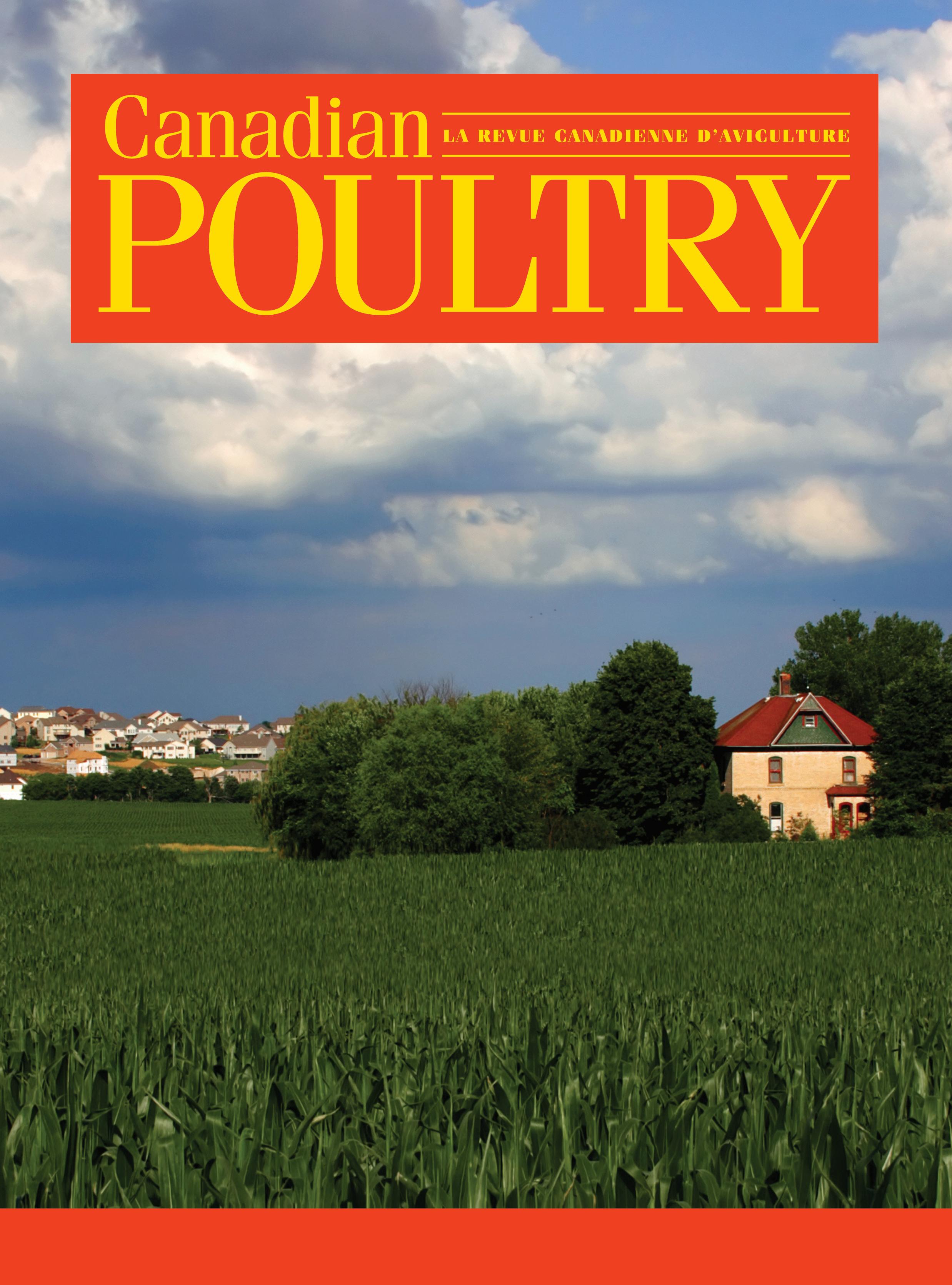
considerations the poultry industry needs to make to handle urban encroachment
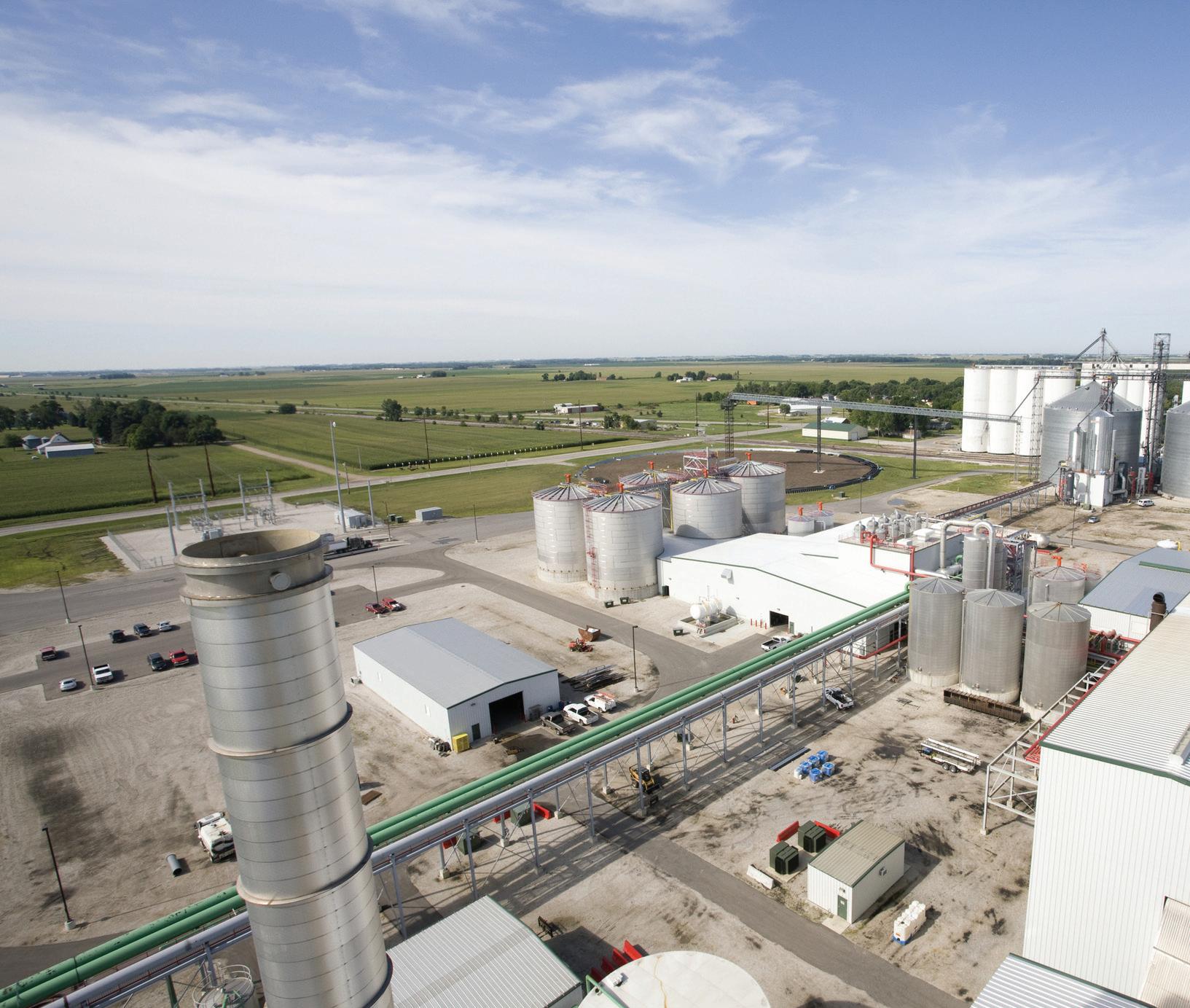
in many parts of Canada, urban encroachment into once-rural areas has been increasing rapidly for the last decade or so. While the loss of prime agricultural land to housing development is of concern, also significant are the burdens placed on agricultural operations from their new urban neighbours. these new neighbours, often ignorant and intolerant of farm practices, compete for resources such as energy, and could drive regulatory change, particularly with respect to odour and emissions.
research that strives to understand the potential impacts poultry farming has on odour and emissions was presented at the Poultry industry Council (PiC) research day, whose theme was Sustainability: Poultry and People Growing together.
the presentation given by dr. Bill van Heyst from the School of Engineering, University of Guelph, outlined his and his research team’s current work on measuring emissions from broiler facilities and the dispersion of these emissions into the surrounding environment.
air qUaLitY
van Heyst noted that air pollution has been linked to cardiac and pulmonary disease in humans, and that the Canadian agriculture sector accounts for upwards of 85 per cent of all human-made emissions of ammonia. ammonia is a precursor gas of fine particulate aerosols (known as particulate matter (Pm)). Both ammonia and Pm are precursors of smog, making them of particular concern to Environment Canada, along with Co2 and methane. ammonia, Co2, methane and Pm10 (par-
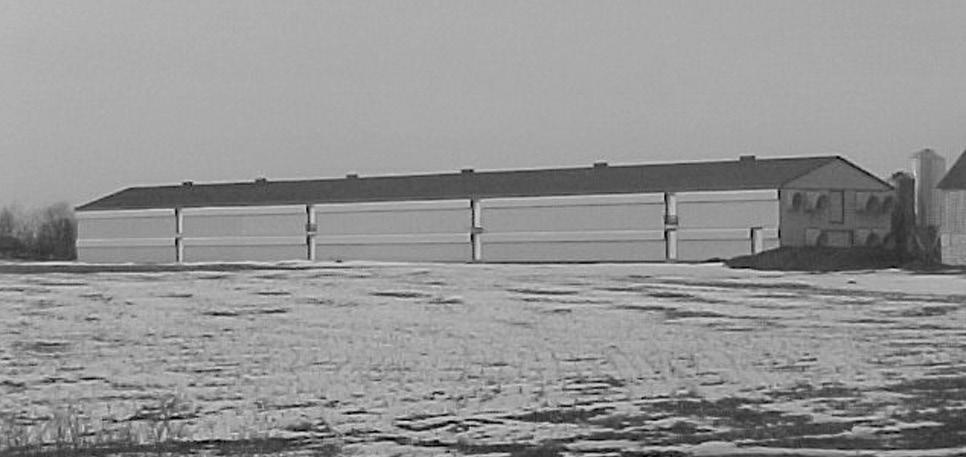
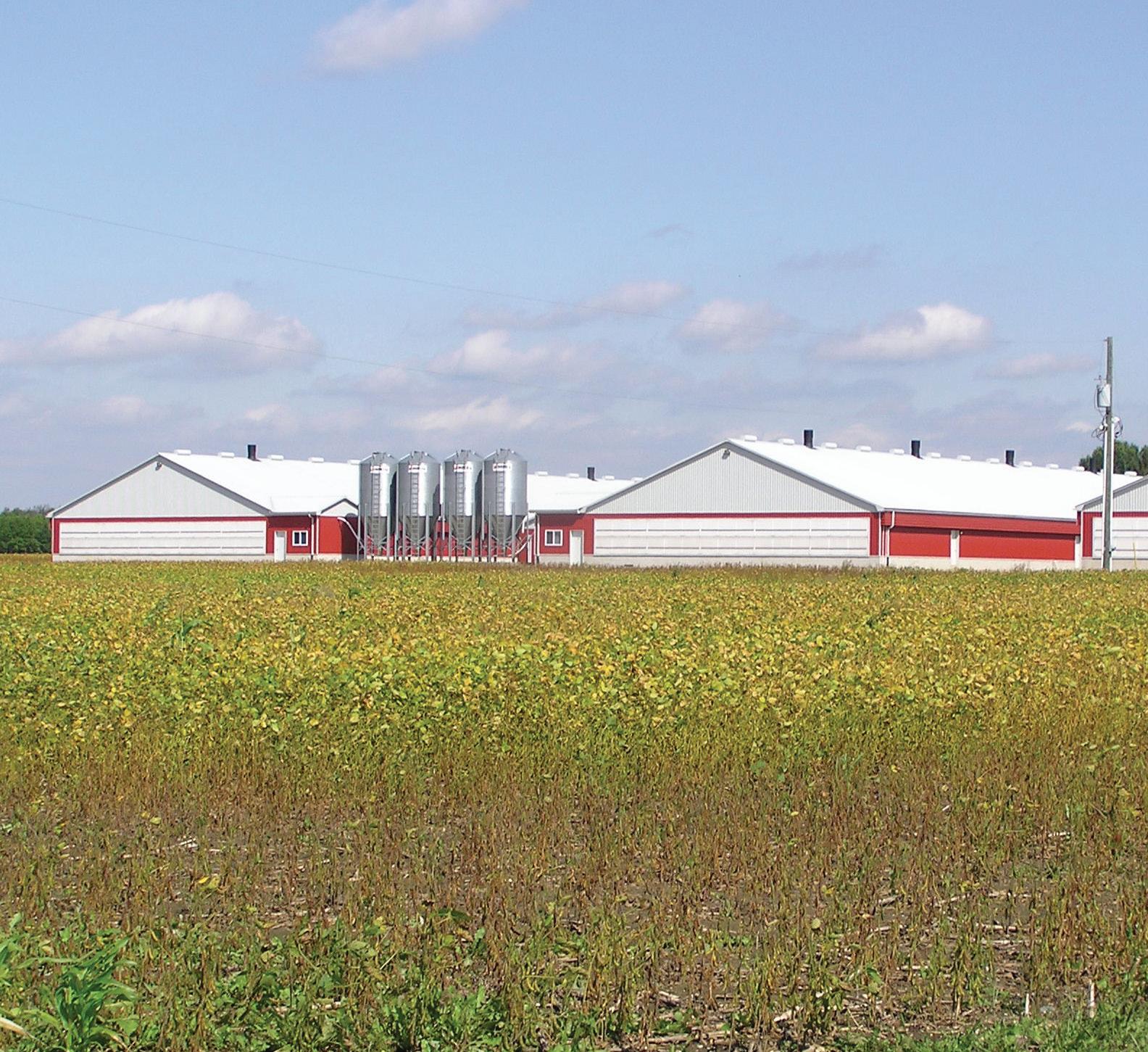
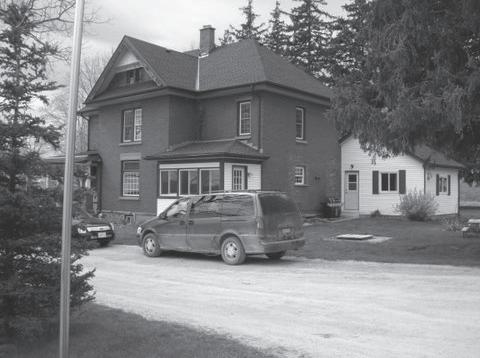
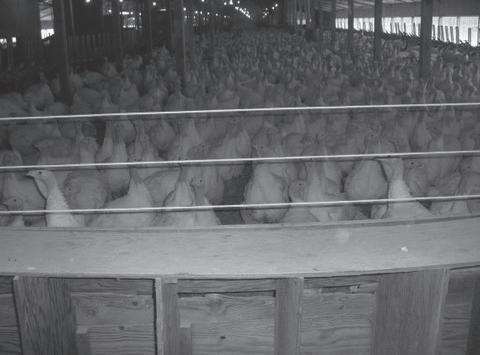
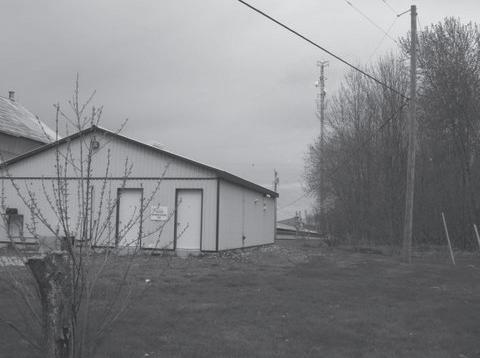
as more rural areas become urban, competition for resources and keeping neighbours and government satisfied will become significant issues for farms.
ticulate matter with a diameter of 10 µm) are classified as toxic under the Canadian Environmental Protection act (CEPa), and thus “the government can place restrictions and/or regulations on their emission levels,” said van Heyst.
Currently, not all pollutants have a set limit for exposure, but the current Canadawide standard for Pm10 is 30 µm, based on a 24-hour averaging time.
van Heyst and his research team used the University of Guelph’s arkell research farm, which houses swine and poultry and is located just southeast of the university, to try to determine what happens to atmospheric emissions from a typical broiler barn. this location was chosen because urban encroachment on this farm has been “significant” in the last two decades, and the “neighbours are not afraid to complain,” said van Heyst.
Using the aErmod atmospheric dispersion model, one of the regulatory models used by the ontario ministry of the Environment (moE) to measure emissions from industrial sources, van Heyst wanted to see if the Pm10 standard would be
breached.
in the model, van Heyst and his team “inserted” a broiler barn where the swine facility is located at arkell, and used Pm10 as the pollutant. they input five years of moE meteorological data and assumed that most of the facility was surrounded by cultivated land, except for the southwest quadrant, which had urban development. they used an emission factor of 8.9 kg/ cycle of Pm10, based on a case study with an average of 32.5 days to produce birds weighing 1.8 kg.
the model generates what’s called a wind rose, a graphic representation of how wind speed and direction is typically distributed at a particular location. the wind rose showed wind dispersion on a 5 km x 5 km grid. they found that the broiler barn did not come close to reaching the 30-µm standard for Pm10. However, when the farm was intensified to include four identical barns, each 20 m apart, the dispersion of emissions was much wider, covering a much greater geographical distance from the barns. although the largest concentration of Pm10 remained on the farm prop-
B Y K RISTY N UDDS
ShariNG SPaCE
Breathe easy!
NEW INNOVAX®-ILT VACCINE HELPS PROTECT YOUR BIRDS AGAINST BOTH MAREK’S DISEASE AND INFECTIOUS LARYNGOTRACHEITIS WITH NO RISK OF SPREADING ILT.
Innovax-ILT is a brand new kind of vaccine that protects your flocks from both Marek’s Disease and Infectious Laryngotracheitis (ILT). Applied at the hatchery, it makes field vaccination unnecessary As well, since Innovax-ILT does not induce ILT, potential reactions or house to house spread that may be associated with some other classic live ILT vaccines are virtually non-existent1
Talk to your veterinarian or hatchery today about making Innovax-ILT the cornerstone of a new vaccination program that can improve the overall respiratory health of your flock.
Environment
erty, the level of Pm10 was now up 16 µm, almost twice the standard limit.
van Heyst cautioned that his model has limitations – for example, he only used five years of meteorological data – and he used a constant emission factor for Pm10 the latter is not really valid, he said, because as the birds grow, so do the Pm10 emissions. litter moisture and the season will also have an effect. it’s also not easy to accurately model the initial dispersion of the pollutants, he said. Currently, van Heyst and his team are working on methods to more accurately measure particulate matter, taking all factors into account, including manure storage. When asked by an attendee at research day how barn design could possibly mitigate emissions through the type of exhaust system used, van Heyst said that roof-top ventilation would be ideal, as it would decrease the dispersion area compared to tunnel or side fan ventilation.
rEDUCED ammoNia
But what if we could decrease the amount of ammonia being produced in the first place? that was a question tackled by dr. Steve leeson, a professor with the department of animal and Poultry Science at the University of Guelph. ammonia released into the atmosphere affects air quality, but lowering ventilation rates is detrimental to bird and farm staff health. So, leeson tried to determine if the precursor for ammonia production in birds, crude protein (CP) in the diet, could be reduced without affecting bird performance. initial (unpublished) research by leeson and his research team determined that by decreasing CP by 0.4 to 1.2 per cent, ammonia output can be reduced by 0.8 to 0.9 g per bird.
But decreasing CP levels in the diet is not a black-and-white solution. CP is essential to maintain the current production levels industry has come to expect as standard.
He and his research team performed feeding trials that “phased” the inclusion of CP (starting with a high level, and then decreasing the CP level over time) in layers. they found it was possible to decrease
ammonia output without significantly decreasing performance at an inclusion level as low as 14.5 per cent CP. they examined the performance of lohmann birds from 19 to 72 weeks of age, fed diets starting with 20.5 per cent CP, then decreasing two per cent each interval to a low of 10.5 per cent inclusion over the life of the bird. the lowest three CP inclusion level (14.5, 12.5 and 10.5 per cent) diets were supplemented with amino acids to maintain the birds’ level of performance throughout the trial. the amount of feed consumed and ventilation was the same for all levels studied. the effect on ammonia production was “dramatic,” reducing it from 50 ppm at the highest inclusion level to 10 ppm at an inclusion level of 14.5 per cent CP. rate of lay was only significantly affected at the 12.5 and 10.5 per cent inclusion levels, unless two additional amino acids, valine and isoleucine, were supplemented. these amino acids are not as economically priced as the other amino acids supplemented, but if this were to change, leeson said it would be possible to feed at these low rates of CP, which would further reduce ammonia output. overall, they calculated that by using a diet of 14.5 per cent CP, adequate performance could be sustained (although rate of lay was slightly lower than the current average of a commercially raised lohmann bird), and ammonia efflux to the atmosphere could be reduced by 400 kg/100,000 layers per year.
leeson also noted another important fact regarding ammonia emission – that as the amount of nitrogen in the diet increases, so does water intake by the birds. if we have to start paying more for water, or its use is restricted in the future, water will become an even more important driver to reduce ammonia, he said.
What aboUt GhGs?
When considering what’s going into the air from a poultry operation, one must also consider the possible effect on climate change. that’s what dr. adrian Williams at the Centre for Environmental
risks and Futures at Cranfield University in the United Kingdom is trying to do. research day opened with a presentation on Cranfield’s work for the department for Environment, Food and rural affairs (dEFra) that examined the environmental impacts of 10 agricultural commodities (livestock and crop) using a life Cycle assessment (lCa). He presented the poultry portion of this work.
lCa is an objective process that evaluates the total environmental burden associated with a product, accounting for all inputs and outputs, from farm gate to processing, distribution, purchase and consumption.
the Cranfield study found poultry is the most “environmentally-friendly” of livestock sectors studied, having the lowest greenhouse gas (GHG) emissions, from primarily methane and Co2, due to increased feed efficiencies and rate of growth. the Cranfield study, however, also looked at global warming potential (GWP), which not only reflected the effect of methane and Co2, but also of eutrophication and acidification. these are both related to nitrogen of which poultry is a contributor via feed, manure, and fertilizer used on land to grow feed crops. GWP is also affected by the type of gases produced by energy consumption.
the study found that overall there was no significant difference in the GWP between the poultry systems examined (layers versus broilers, and organic versus conventional). However, feed was the dominant environmental “burden” due to the amount of land and fertilizer application required, and the resulting ammonia output.
However, an interesting finding in the study was that the energy required to raise organic poultry and eggs was increased by 30 and 15 per cent, respectively, compared to conventional systems. this was in contrast to other livestock systems, where a decreased use in energy was observed for organic systems. Williams noted that, although less energy is required to make organic feeds, the poorer bird performance and subsequent increase in feed consumption offset any energy gains. n
There are plenty of phytase choices in the market, each trying to break through the clutter by introducing a unique “benefit” that may not be any benefit to you at all. At DSM we’ve decided to level the playing field. The bottom line: when comparing phytase sources, all that matters is the cost of product form to release equivalent amounts of phosphorus.
To learn more about how to evaluate phytase, go to www.phytasefacts.com, or call 1 800 526 0189.
PIC Update
Eggshell quality and Uterine Proteins
uterine proteins that change with age may play a role in controlling the mineralization of eggshell
B Y K IMBERLY S HEPPARD , R ESEARCH C O - ORDINATOR
Cracked eggshells are a major factor in the loss of salable product in the egg industry, and eggshell strength is therefore a primary concern. r educing the incidence of thin, soft shells and cracked or broken eggs is of economic benefit to producers and processors.
t he eggshell is laid down in the hen’s uterus. Here, the egg spends 18 to 20 hours as calcite crystals are embedded in an extracellular matrix containing numerous proteins produced in uterine tissue. Some of these proteins help to protect the egg against pathogens and are thought to play an important role in the development of calcite crystals during shell formation. t he formation of these crystals likely relates directly to the shell strength of eggs. However, not a lot of work has been done to discover how protein profiles influence crystal formation in relation to the age of the bird.
i t is known that as laying hens grow older, they tend to lay eggs with thinner shells as a result of increasing egg size and a reduction of calcium reserves within the bones. a dditionally, small commercial birds that lay white shelled eggs tend to have more eggshell problems than
bFeatured r esearcher
ruce rathgeber received his B.sc. in agriculture from the department of animal and Poultry science at the university of saskatchewan. he went on to work for shaver Poultry Breeding Farms and then cuddy chicks before entering a m.sc. program in the Poultry science department at the university of arkansas. he returned to the university of saskatchewan, earning a Phd in Food science. Bruce became a faculty member in the
larger brown shell-egg laying birds. i n addition to lack of knowledge of the influence of age and strain of bird, there is no understanding of how bird nutrition may impact the profile of uterine proteins, and potentially the structure and strength of eggshell.
t herefore, d r. Bruce r athgeber and his research team at the n ova Scotia a gricultural College designed a study to answer these questions. t hey looked at commercial ( l ohmann l ite, l ohmann Brown and Shaver White) and heritage (Fayoumi and l ight Sussex) breeds over a full production cycle, and fed six dietary treatments with differing levels of calcium and vitamin d 3
Egg quality traits differed between commercial and heritage breeds, and between commercial strains. t here was a correlation between uterine proteins and eggshell quality traits, revealing that proteins that decreased
department of Plant and animal sciences at the nova scotia agricultural college (nsac) in 2000. after six years in this position he joined agriculture and agri-Food canada as a research scientist where he has remained located at the nsac in truro, n s his current research interests include projects that focus on the influence of production practices, bird nutrition and genetic background on product safety and quality, including both meat and eggs.
with age were positively correlated, and proteins that increased with age were negatively correlated with all other eggshell quality traits, and vice versa for egg weight and shell weight. o ne particular protein was found to be potentially responsible for decrease in specific gravity and shell thickness with bird age.
t he study of genetic differences in eggshell quality traits, ultrastructural variations and proteins involved in eggshell formation provide insight into the factors that cause age-related changes in eggshell quality. o verall, it was found that uterine proteins that change with age may play a role in controlling the mineralization of eggshell and growing crystals, resulting in a change in ultrastructural morphology of the eggshell and shell strength. to read more on this project, please visit www.poultryindustrycouncil.ca.
PIC Update
Salmonella in the Production Chain
F E at U r ED rESE ar C h E r : d r. m ichele
BY K IMBERLY S HEPPARD , R ESEARCH C O - ORDINATOR
Salmonella is one of the most common causes of foodborne illness worldwide. ontario has a higher than average incidence of illness caused by Salmonella, with 40.8 per cent of total reported cases between 1997 and 2001 thought to be associated with consumption of chicken and eggs.
But how do poultry flocks become colonized with Salmonella such that it is so readily transmitted to humans at the end of the line? Where does the colonization begin? the poultry industry is in need of a greater understanding of this pathogen in order to implement effective control measures. We do know that transmission of Salmonella can occur horizontally (bird to bird via direct contact or environment), vertically (parent to progeny via eggs) or both. there are two types of vertical transmission: primary, which is infection via the ovary, and secondary, whereby the eggshell surface is infected by the cloaca, fecal material or contaminated equipment, and the bacteria penetrates into the eggs. Salmonella can enter the production chain at any level, resulting in contamination of poultry or eggs.
Because few Canadian studies have focused on temporal (time-related) distribution of Salmonella serovars in poultry breeder flocks, dr. michele Guerin and her research team at the University of Guelph have undertaken a temporal study of Salmonella serovars in commercial breeder flocks and hatcheries in ontario. to gain a better understanding of prevalence, temporal trends and seasonal patterns and clusters of Salmonella, the researchers analyzed ontario Hatchery and Supply Flock Policy data from 1998-2008, which represented all poultry breeder types. decreasing trends in Salmonella were observed in broiler, layer, and
turkey breeder flocks, primarily due to decreasing trends in the prevalence of S. Heidelberg, although prevalence varied year by year. long-term trends in Salmonella prevalence in the hatcheries were less consistent, and varied by year and season; the prevalence was highest in the summer and fall. S. Enteritidis (SE) was not isolated from layer and turkey breeder hatchery fluff samples. Further, it was infrequent in breeder flocks (0.9 per cent of the total isolates). However, SE was the third most common serovar in fluff from broiler hatcheries, suggest-
ing that domestic-origin broiler-breeders might not be an important source of SE to ontario broiler hatcheries. Clusters of S. Heidelberg, S. Typhumurium and S. Hadar in breeder flocks were temporally linked to clusters in the respective breeder hatcheries, suggesting that breeder flocks were the most probable source of these serovars to the hatcheries it was determined that control measures be directed at the breeder flock, hatchery and sampling visit levels. For more information on this study, please visit www.poultryindustrycouncil.ca. n
P i C’s Picks
B
Y T IM N ELSON , Ex ECUTI v E D IRECTOR
Oil prices are reaching record highs yet again! While it was a brief rise, we can only assume that it is a taste of things to come.
twelve months ago PiC initiated a program of research with the University of Guelph to look at the complementary energy systems that are currently on the market. the goal was to develop a tool to assist farmers in making objective decisions about which of the various types of alternative energy systems (solar wall, geothermal, wind, digesters, etc.) is the most cost effective for their operation.
the project has been running very successfully and is now at the point where some of the assumptions made in the model need to be verified against reallife situations.
if you have had experience (good or bad) with purchasing and building an alternative energy system on farm, know the costs of running it and the savings you are (or may not be) making, we’d really appreciate hearing from you.
Please contact us by telephone at 519837-0284 or by e-mail at sthomson@poultryindustrycouncil.ca, and we’ll organize a time for the project team to visit you. over the summer PiC is working with many producers and industry service sector personnel (huge thanks to all of you) to develop a decision tree for loading poultry for transport, a PaaCo-certified welfare auditors course and the curriculum for our online Poultry management course. We are also finalizing our costbenefit of biosecurity project and Better Biosecurity video project, organization of the golf tournament (being held Sept. 7) and, of course, planning our annual innovations Conference (being held nov. 10 and 11, in london, ont.).
this year we’re hosting a pre-conference workshop on farmer health and the impact your health has on your bottom line – featuring not-to-be-missed guest speaker Susan Brumby from australia – watch this space, our website and Canadian Poultry magazine for details.
Farmer Health Surviving Success
a new Brunswick poultry mogul tells the true story behind his limitless ambition
BY ANDR é DUMONT
one day, i’ll show them what i am capable of.” From his teenage years on, this became Jean-Paul ouellet’s mantra. From poverty, he would grow so rich and powerful he could “buy them all out.”
Earlier this year, the new Brunswick poultry entrepreneur went public and published his story. Written by his psychologist and business coach Pierrette desrosiers, the book Survivre à la réussite ( Surviving Success ) tells of the transformation of a man who built one of Canada’s greatest poultry empires.
the story is about poverty and humiliation, fast-paced growth and business success, family dreams and tragedy, drugs and alcohol addiction and, most importantly, overcoming rage and forgiving. ouellet’s account alternates with professional insight from desrosiers, who has worked with countless other clients in agriculture.
Jean-Paul ouellet was born in 1954 near rimouski, Que., as the 10th child of 16. in his early youth, his family moved to Saint-Hilaire, n.B., a small village close to Edmundston. the family farmed 60 acres of land, with everyone contributing to chores.
despite the hard work, the ouellets remained poor. Jean-Paul remembers being sent to the neighbours to borrow a screwdriver, only to be mocked about his family’s extreme poverty. in school, classmates would notice him wearing their old clothes and call him “toilet” instead of “ouellet.”
Jean-Paul ouellet’s strive for success took him down a path towards self-destruction. With Pierrette desrosiers’ help, he can enjoy life and the business he built.
School was a nightmare. after failing the same grade twice, teachers would move him to the next, only because he had become too big for his younger classmates. “When you get the belt in front of everyone because you didn’t do your homework (i understood nothing), that you are isolated in a corner, that your teachers tell you you’ll never do anything good in life, you lose confidence and you think you are really not smart.”
one Sunday after mass when he was 12, ouellet went to the general store to buy his father a chaplet. He asked the owner if she could make him a loan, promising to reimburse 25 cents every
week. the lady accepted with a smile. “i told myself: Wow! one can borrow,” ouellet tells in the book. “Without knowing, this lady gave me confidence in life. i understood that one day, i could do business. Big business. i saw that there were people who could trust me.”
a t 16, o uellet dropped out of school, without knowing how to read and write. “But i could count,” he says. “When i was small, i remember telling myself: i will hire people to work for me, because i am not good in school, but some are. i will find educated people that will help me.”
When he was 21, ouellet obtained
SoUGht hELP
Medicator Promotion
•
•
H. Fedema — Grimsby
Quality Workmanship Renovations
Custom Designed
Building on a 20 Year Tradition
Dan van Bruinessen
R.R. # 1 Keene, Ontario
Phone: (705) 295-4033
Fax: (705) 295-4045 Visit us at our web site www.vanbruinessenfarmbldg.com Let us
Farmer Health
quota for 30,000 broilers and purchased his first three acres of land. the following year, he started a hog operation. disease among the piglets brought him close to bankruptcy in 1981. Using his contacts and his charisma, he managed to reimburse his line of credit and escape losing everything.
From 1988 on, ouellet started purchasing farm after farm. at one point, he owned property in 16 municipalities. His company reached a turnover of $60 million annually, employing up to 150 workers.
His wife monique was a shareholder right from the start. His controller Yves durepos also took part in the ownership. Both supported ouellet through phases of rapid expansion. despite being illiterate, he had an incredible flair for business opportunities. there was always someone around he could trust to read important papers or to temper him in his boundless ambition.
Success drew admiration, but ouellet was not a happy man. “When people told me i was successful, inside of me, i felt like i wanted to die.” What was wrong? Blinded by ambition, he lived only to get bigger, every acquisition bringing nothing but short-lived satisfaction.
9:53 AM
•
He remembers telling his 11-year-old daughter annick she had grown. “dad, i grow even when you are not there,” she answered. He is also saddened to recall how his son marc would sleep with a photo of him. He was nonetheless a loving and caring father, says monique. a major blow came in 1998, when annick died in a car accident at 21. She and ouellet had been on a mission to “feed the world.” His son marc had already left the family business, because he thought it was too big. ouellet’s dream of transferring the company to his children was shattered.
a few days after annick’s funeral, ouellet received a phone call from a competitor, asking if his company was for sale, now that his daughter had passed away. He answered: “my daughter has died, but i am not dead. Just watch me.” ouellet hung up the phone and
said: “now, we are developing.” that same year, he invested $7 million. there was nothing stopping him. in 2000, ouellet started feeling tired. that’s when he first called in Pierrette desrosiers, a well-known Quebec farm psychologist. Her first diagnosis: ouellet should slow down. Perhaps she’s not the right person to advise me, he thought. desrosiers asked ouellet why he had built such a large company. it took him five years to find the right answer. “it was getting even with all those who had hurt me in my youth,” he said in an interview with Canadian Poultry magazine. “i did it for my ego, to prove that i was someone.”
the rage that fuelled ouellet’s ambition had become unbearable. alcohol and drugs brought no relief. it was time to get help. desrosiers came back, lent an empathetic ear and therapy started.
“very few men are able to admit they need help,” desrosiers says. “Jean-Paul is a man with a lot of discipline. all the energy he was putting in this company, he now put it on healing himself.”
ouellet’s story may be set in a farming context, but in many ways it’s universal, desrosiers says. “We must lift the taboo on the myth of the rational businessman,” she says. many business decisions are based on emotions rather than reason, be it the purchase of a bigger and newer tractor or the acquisition of another farm.
ouellet had to learn to manage his emotions and rid himself of negative thoughts that contaminated his everyday life, desrosiers explains. the little voice inside that used to say, “don’t let anyone walk over you,” “Show them that you are the best,” or “if you are the biggest, richest and most powerful everyone will respect you,” is now under control.
most importantly, ouellet learned to forgive those who had humiliated him. He accepted the need to let go of part of his business, in order to better enjoy life.
today, ouellet is a transformed man.
Continued on page 27
Inside the Barn managing heat Stress
Keeping the birds cool is essential for preventing production losses
B Y T REENA H EIN
Heat stress is a serious concern in poultry farm-ing and sprinklers provide one way to control it. Before we look at how putting water droplets on birds works to cool them, let’s do a quick refresher about how heat stress affects chickens and how they naturally cool themselves.
a substantial amount of any feed energy an animal or bird takes in goes towards keeping the organism’s body temperature steady. in the case of cold environmental temperatures, that heat is needed to keep the bird warm (but some heat is always lost as well). i n high temperature/high humidity conditions, birds can’t release heat as effectively, and a natural response is to take in less feed. this affects growth and profitability.
a chicken typically uses two natural pathways to cool down, says d r. Yi l iang, an assistant professor in the department of Biological and agricultural Engineering at the University of a rkansas. t he first is known as sensible heat dissipation, where a little heat from the chickens is removed by conduction (transfer of heat when two objects touch) and substantially more heat is removed through convection/radiation (transfer/removal of heat into the air). “For chickens with no sweat glands, they highly rely on the respiratory system [to cool themselves], which is breathing or panting in very hot conditions,” liang said in an interview
When the temperature rises, birds can’t release heat as effectively, and a natural response is to take in less feed. this affects growth and profitability (and even death), so assisting the birds with cooling is essential.
with sprinkler manufacturer Weeden Environments, based in Woodstock, ont. this process is known as evaporative heat loss. the exhaled air is higher in humidity (from being in the chickens’ lungs) than the air they breathe in, and the drier the surrounding air, the better the process works.
very dry air is the norm in poultry barns with sprinkler systems, says d r. tom tabler, the a pplied
Broiler research Unit manager at the University of arkansas’s avian advice Center. “the temperature [can be] very high, which scares a lot of people, but the air is also very dry,” he said in an interview with Weeden Environments. in other words, a sprinkler system is more focused on cooling the birds than their environment. tabler also points to the cooling “wind chill effect” that occurs with the use of sprinklers. With
haNDLiNG hEat
Inside the Barn
good ventilation, the water sprinkled on the birds is quickly evaporated, cooling them effectively.
He added that some of the other cooling effect of sprinklers stems from “the fact that these chickens . . . are all producing thousands of BtUs’ worth of heat that basically, as long as they’re sitting [on the barn floor], stays trapped.” He notes that sprinkling them with water causes them to get up and move around so that the fans can remove some of the heat from the floor area. “they feel this cold water hitting them, they all get up . . . and the fact
every 30 minutes.” He says almost all the water lands on the birds in coarse
Inside the Barn
the fall before the temperature gets to freezing, and i might have one or two nipples clogged in the spring (i have hard water), and i just soak them in Clr,” he says. “i’ve never cleaned the lines.”
Weeden Environments president Kevin Weeden says it’s always a good
practice to clean the water lines in any system, but that water lines used for cooling obviously do not have to cleaned with the same diligence as those containing water consumed by birds. “Even though the sprinklers are designed not to plug or drip, water with higher mineral content may require
The feed conversion leader.
periodic removal of calcium-lime buildup,” he adds.
How much water is applied in total on a given summer day depends on the temperature (potential heat stress on the birds) and the size of the barn. “one 20-second sprinkling equals five gallons/20 litres in a 20,000-squarefoot barn,” says Weeden. He notes that a 10-year study in the U.S. has shown that over the life of a flock, a sprinkler system uses about half as much water as a fogging system. “one sprinkler unit emits 10 ounces of water over an area of about 450 square feet, which almost all lands on the birds, with very little landing on the litter,” he adds. Weeden says that because more air movement in a barn provides better evaporative cooling of the dampened birds and more opportunity to move air around the floor area once the birds have moved due to sprinkler operation, tunnel-ventilated barns are ideal, but side-vented barns with circulating fans also work well.
Paul dietrich, owner of dietrich Farms inc. near Stratford, has 19,000 broilers in a barn with sidewall ventilation. He says he decided on installing a sprinkler system and chose Weeden because “everyone i talked to was happy with them and said it’s low maintenance. i’ve had them for seven years in the chicken barn and i liked them so much, i put them into our finishing hog barn.” Since he’s had sprinklers, dietrich has never had to take his birds off their feed when the weather gets hot. “i’ve never not made my weight, even with stretches of five days of 30°+ weather right before shipping them out,” he says. “the two summers before i had sprinklers, i had 2,500 dead chickens in the July cycle. i’ve only ever lost a few birds [to heat stress] since then, and that’s because i didn’t have the sprinklers running often enough.” the most he’s ever run the system is for 40 seconds every two minutes.
For more information, visit www. canadianpoultry.com to view videos on heat stress and the use of sprinkler systems for cooling. n
Farmer Health
Continued from page 22
“i feel good,” he says. “i used to not even notice the birds or the sun. today, i can look inside a flower and appreciate its beauty.”
His company has downsized by 80 per cent. His son marc and some 30 employees take care of several layer barns, a hatchery and a grading station. this has made the company attractive to marc, who has come back for good. “He’s not taking over to please me,” ouellet says. “He’s doing it because he’s really passionate about our company.” at 56, ouellet now enjoys taking care of his wood lots and his sugar shack. He spends a lot of time reading, meditating and enjoying nature. He has his own private retreat, in the form of a large teepee.
ouellet also gives talks and attends conferences, to tell his story and promote desrosiers’ book. People think that wealthy businesspeople are totally happy, he says. But a lot are truly unhappy, despite professional success. “People who have built large companies have to ask themselves: why have i gone so far?”
if only 10 people have been helped by his story, ouellet believes it was worth telling. in fact, more than 1,000 copies of the book have been sold. desrosiers receives e-mails daily, telling her how the book was passed around in a company, or how it has changed the life of someone.
ouellet is an exceptional man, desrosiers says. “this man was able to recognize his weaknesses. He had a big ego, but he didn’t let it take all the space. He became aware of his limits and sought help.”
very few businessmen have gone public about failure and admitted that the decisions that drove the growth of their company where not rational, desrosiers says. “We realize that behind great success, there is often great pain.” the book, Survivre à la réussite, is published by les Éditions la vie agricole. Pierrette desrosiers may be contacted at pierrette@pierrettedesrosiers.com. n
Maximize Pro ts
Ask us how utilizing Grand Valley Forti ers poultry premix and mixing on-farm can save money and improve your ocks performance Call us today at 1-877-625-4400 and speak to one of our Poultry Specialists.
www.grandvalley.com
Production abF turkey Production
the key is good management
B Y R. M ICHAEL H ULET, A SSOCIATE
P ROFESSOR , D EPARTMENT OF P OULTRY S CIENCE , P ENNSYLvANIA
S TATE U NI v ERSITY
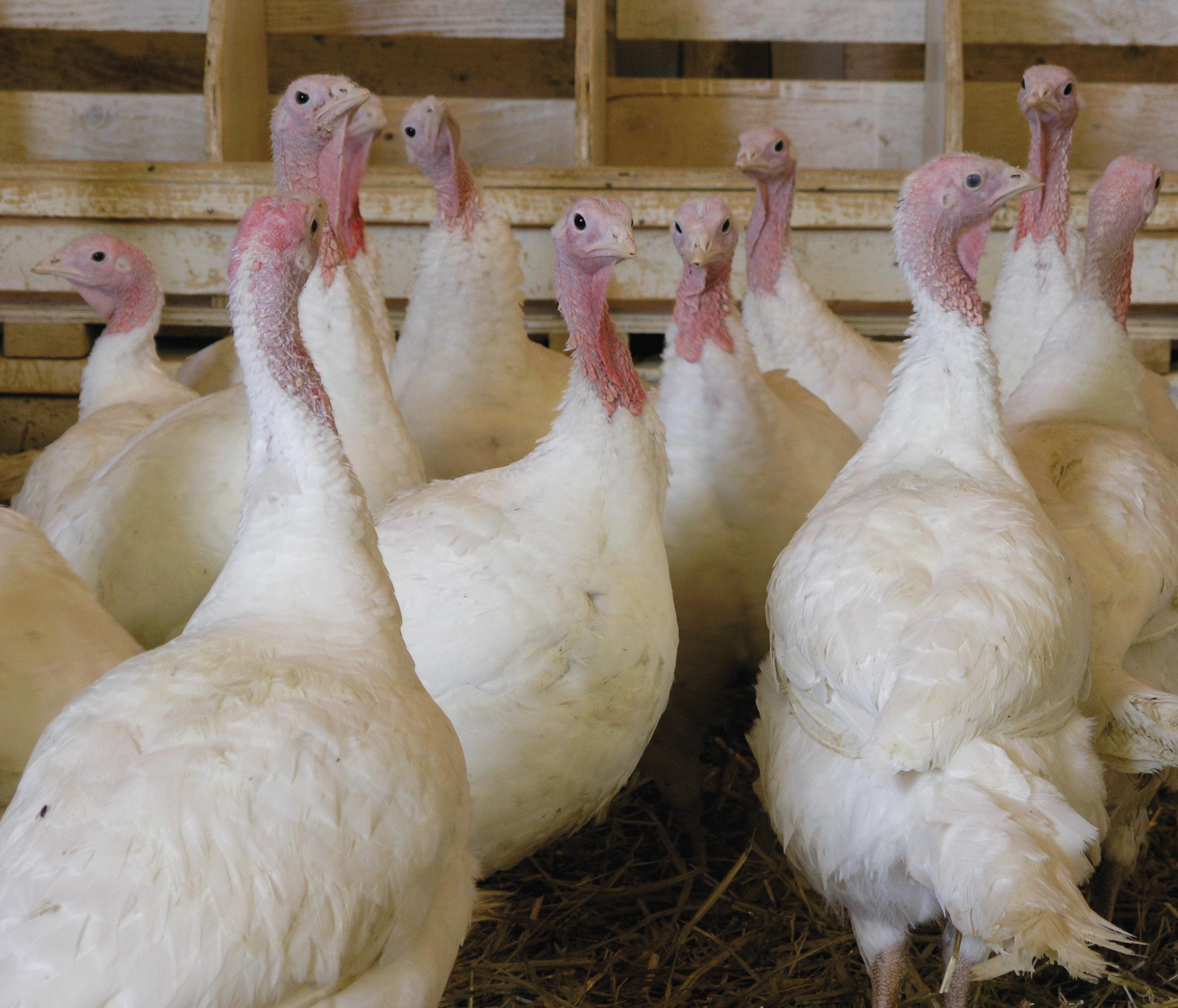
the key to producing antibiotic-free (aBF) turkeys is good management, Pennsylvania State University professor r. michael Hulet said at the midwest Poultry Federation Convention in St. Paul, minn., in march. “We have often used antibiotics as a substitute for poor management or when management was inadequate,” he said.
“When growing aBF turkeys, it is important to start right, monitor bird health at each stage of production, and be vigilant in our management of our facilities and use of our tools of production. if we fail at any portion of our management plan, we can pay for it in much higher losses during the times that we can least afford it,” he said.
management is especially important today because of rising feed and other production costs. “With higher feed prices and other increased costs of production, the margin needed for aBF production demands management and care of turkeys at a high and consistent level,” he said. although demand for aBF poultry remains small, it is increasing because of consumer fear of a possible increase in antibiotic-resistant bacteria that could theoretically be caused by feeding therapeutic levels of antibiotics during the rearing process of meat animals. this has encouraged a search for alternatives for use in the diets of commercial poultry and other livestock.
an increase in the marketing of “natural fed” (use of no animal protein products), organic, and “antibiotic-free (aBF)
although aBF turkey production is a small market, its market share continues to grow. to be successful, good management is essential.
diets” is a direct result of increased consumer demand for these products. it is estimated that around 2.3 per cent of the commercial turkey production in the U.S. is aBF, and market share continues to grow. However, it remains a niche market.
information has been published to investigate if consumption or association with food animals treated with antimicrobials increases the risk of human resistance.1 reports such as these and many others address the risk of bacterial resistance to human pathogens that can be increased by use of antimicrobial agents in com-
mercial agriculture. the main issue is that some antibiotics used to treat specific human pathogens are also used on the farm to treat livestock.2
the selected growth of antibioticresistant bacteria that could contaminate foodstuffs if consumed by endangered human populations remains a potential risk. Some human populations are immunologically challenged by diseases that affect the immune system, such as surgery, age and chemotherapy, or by other circumstances that would increase their susceptibility to potential pathogens. in order to maintain efficient production of commercial agriculture, management practices, vaccines and other
a NiChE markEt
alternative treatments have been used to effectively produce poultry.
in 1998, the European Union instituted a ban on the feeding of antibiotics that are valuable in human medicine to livestock for growth promotion. Since Jan. 1, 2006, antibiotics used for growth promotion have been eliminated from prophylactic use in all of the EU. this tool was replaced by the use of antibiotics for treatment of animals that develop disease symptoms and then followed by probiotics and other treatments to reduce morbidity and mortality and restore intestinal gut florae. Even in the United States, our antibiotic tools have been limited and in some instances, such as blackhead, eliminated.
Supplements are added to antibioticfree diets in order to improve livability, feed efficiency, carcass quality, and growth. Some additives are formed as fermentation products and act similarly by changing the microbiological florae in the digestive tract as well as by eliminating potential pathogens that would diminish growth productivity. Some products help to enhance immune effects of the bird as well as use of vaccines that can reduce the challenges to the health of the birds. What is known is that morbidity and mortality of the poult is exacerbated by the presence of more than one disease or management challenge. that is, a disease such as bronchitis can become more severe when either wet litter or high levels of ammonia are present in the environment. these are critical elements of management that must be controlled and will be discussed below, along with the use of prebiotics, probiotics, essential oils and organic acids.
Production
and intestinal monitoring. reducing the environmental challenges to the poults can yield bird performance that can rival what is seen for commercial toms and hens. However, failure to control these factors can lead to disastrous results.
CLEaN hatChiNG EGGS
the process starts with clean hatching eggs, which involves clean nests, no floor eggs and control of egg sanitation. Cleanliness of nests and concentration of the cleaning solution is especially critical as breeder flocks get older. as the production season progresses, the eggs increase in size but the amount of shell deposited doesn’t change greatly. this means that the shell thickness decreases as egg size increases and the opportunity for bacteria to go from outside the shell to the embryo increases. Bacteria can enter the egg pores within the first 15 minutes until the shell dries and makes a clean nest environment essential to egg sanitation. Some producers or hatcheries will use black lights to monitor proper sanitation of eggs on the farm. maintaining temperature and cleanliness of the egg storage room – free from foreign matter as well as moulds and fungi – is important. taking environmental swabs of clean eggs and storage room walls on a regular basis is a good verification practice to check for bacterial and mould load.
during the early incubation stages and higher than optimum during the latter stages.3 Poults are quite sensitive to high temperatures. the effects of high temperatures are increased yolk sac and smaller poults. When the poults don’t consume most of the yolk sac, they lack part of the immune capability, the stomach is extended, which makes exiting the egg more difficult and results in red hocks and unhealed navels.4 lack of uniformity of leg length can also contribute to imbalanced birds.5
PoULt ProCESSiNG aND hoLDiNG
to be successful with aBF turkeys the following areas of management are necessary: breeder/hatching egg management; precise incubation; poult quality; vaccination efficiency; temperature control during holding, transportation, and brooding; air, water and feed quality; litter moisture control (ventilation); bird density; and morbidity/mortality evaluation
incubation has gained importance for poult performance, with recent research showing the effect of embryonic temperature on leg strength and growth efficiency. recent research has shown that shell temperature of 100-100.5 F is optimum during the incubation period for development and maturation of the embryo into a quality chick.3
Shell temperatures lower or higher than this contribute to reduced hatchability and embryo development. multistage incubation tends to provide lower than optimum embryonic temperatures
Handling of the poults after hatch is important to avoid two significant problems observed – pre and post-processing temperatures and vaccinations – that could lead to other problems. Poults are most comfortable at a rectal temperature of between 102 and 104 F. Prior to processing, stacks of poults can be pulled and stacked side by side, preventing airflow over the poults that can cause overheating. after processing, if the holding area is either too hot or too cold, it can cause heat stress on the bird. if the temperature is about right, the poults settle down and maintain a good body temperature. if birds are noisy, they need to be checked for too high or too low a temperature, or too drafty an environment. Putting air directly on the birds can cause a draft that will chill them. Chilling through drafts or too cool a temperature can cold stress the poults. too high a temperature can contribute to increased respiration and dehydration in these small birds. Some vaccines are sprayed on the birds without adequate light or warmth to allow increased activity levels and consistent uptake of the vaccine. the moisture from the spray can also contribute to chilling without adequate temperature control in the holding area.
Humane handling of birds has become an important and audited element of
mEthoDS
EmbrYo tEmPEratUrE / PoULt qUaLitY
poultry production. i t is especially important for aBF production for two reasons: 1) to prevent stress and promote health of the poult, and 2) most retailers of the aBF product demand strict animal care and handling standards. therefore, attention to details regarding truck temperatures, bird rectal temperatures taken from birds located at different sites in the truck, litter temperature on arrival at the brooding house, and ammonia and carbon-monoxide levels during brooding are important to monitor and maintain at acceptable levels. treatment of the litter by thermal fogging has been shown to have positive results in reduction of bacteria levels and providing a clean environment for the poults.
Brooding is critical to bird health and growth. Having level littered areas with fresh water and feed and consistent temperatures for the brooder rings will allow a proper start for the flock of turkeys. too high a temperature for too long can be as damaging as too low a temperature. many flocks have different heat requirements based on floor temperature, poult size, perinatal temperature, vaccination response, etc., and monitoring behaviour of the poults during the first day is critical to adjusting the starting house temperature of the flock. For the finisher stage, use of equipment to recondition the litter, removal of caked portions and in some instances windrowing litter, have been positive in reduction of bacteria levels, release of ammonia, and reduction of moisture in the litter in preparation for moving the birds to the finisher stage.
ventilation is extremely important to promote health and growth of the birds. if the gut florae are maintained healthy, growth and feed conversion can be optimized. Proper mixing of air and control of humidity to remove moisture from the house is a strategy that is important not only for foot pad scores, but also for dust, ammonia and respiratory health. infrequent tilling can actually cause spikes in ammonia, mould and fungi being released into
Production
the air. r egular tilling of feed and water lines can be done without injury to the birds and can help in moisture control and leg health of the birds. tilling, along with other treatments to limit darkling beetles, has been shown to help reduce the reintroduction of disease organisms from one flock to another and thus improve health. r odent control, as well as beetle control, is something that needs to be done to prevent buildup and recurrence of disease problems, especially salmonella.
birD hEaLth aND moNitoriNG
monitoring of bird health and efficiency has to be done on a regular basis. Evaluation of gut integrity early in production (four to six weeks) for the presence of coccidiosis, worms, bacterial damage (Clostridial sp., especially) is important to assess products used and individual treatments for farms. diagnostic skill and resources are important tools in proper treatment and application of additives.
rEFErENCES
Water pH and quality need to be monitored because water hygiene is an important means of preventing bacterial challenges to the gut of the birds. Water pH has been shown to be beneficial when slightly acidic (6-6.5). When chlorine is used, free chlorine levels of 35 ppm at the end of the water line are desired. Cleaning bio-film out between flocks can help in maintaining water sanitation. l itter moisture and quality are helped by proper ventilation and drinker control, and consistent tilling of the litter. n ipple drinkers have helped in reducing over-consumption and spilling of water onto the litter. a lthough yeast byproducts have to date met with varying success in terms of promoting growth and growth efficiency, other prebiotics, such as oregano, mannan-oligosaccharides, fructo-oligosaccharides, chicory and probiotics, have been proposed to help replace the use of antibiotics and growth promoters. Some nutritional supplements have shown promise in sustaining turkey growth and performance. a BF turkeys have mortality rates that average one to two per cent higher than those of non- a BF turkeys; this fact, along with lower placement densities, increases the production costs of this segment of the industry. Hence other nutritional and management research is needed to help production performance for this segment of the industry.
1. Spring, Peter, 1999. t he move away from antibiotic growth promoters in Europe. in: Under the microscope: Focal Points for the new millennium. Proceedings of alltech’s 15th annual Symposium (t.P. lyons and K.a. Jacques, eds.), n ottingham University Press, nottingham, 173-183.
2. Salyers, abigail, 2000. Why poultry producers should worry about bacterial sex. Poultry USa, February, Watt Publishing, 22-25.
3. Hulet, r.m., G. Gladys, d. Hill, r. meijerhof, and t. El-Sheikh, 2007. i nfluence of egg-shell embryonic incubation temperature and breeder flock age on post-hatch growth performance and carcass characteristics of broilers. Poult. Sci. 86:408-412.
4. Barri a ., C.F. Honaker, J. r Sottosanti, r m. Hulet, and a.P. m cElroy, 2011. Effect of incubation temperature on nutrient transporters and small intestine morphology of broiler chickens. Poult. Sci. 90(1): 118-125.
5. o viedo- r ondon, E. o ., m .J. Wineland, S. Funderburk, J. Small, H. Cutchin, and m. mann, 2009. incubation conditions affect leg health in large, high-yield broilers. J. appl. Poult. res. 18(3): 640-646. (oviedo-rondon, et al., 2009).
From a paper presented at the Midwest Poultry Federation Convention in St. Paul, Minn., in March 2011 n
WatEr aND FEED qUaLitY
Nutrition Enzymes benefit DDGS inclusion
updated university of nebraska research shows that enzymes can allow for higher ddgs inclusion rates and add considerable savings
B Y D R . S HEILA P URDUM , M R . M.K. M ASA’ DEH AND M S . D ANA H AHN D EPARTMENT OF A NIMAL S CIENCE , U NI v ERSITY OF N EBRASKA , L INCOLN
Research carried out at the University of nebraska has found that dried distillers Grains with Solubles (ddGS) can be included at high levels in pullet, laying hen and broiler chicken rations when properly formulated and balanced for amino acids.
the research also found that “addition of exogenous enzymes allows the nutritionist to down-spec diets including ddGS or meat and bone meal.” in addition the researchers found that “considerable savings can be attained with the addition of enzymes to diets containing ddGS.”
However, future research will need to be conducted to evaluate the value of high-protein and low-fat dd GS products with and without enzyme supplementation.
baCkGroUND
dried distillers grains with solubles has been available for poultry for many decades primarily from the beverage industry and it has been recognized that ddGS are a valuable source of energy, protein, water soluble vitamins,
research carried out at the university of nebraska has found that dried distillers grains with solubles (ddgs) can be included at high levels in pullet, laying hen and broiler chicken rations when properly formulated and balanced for amino acids, and that enzymes can add considerable savings.
and minerals for poultry However, the use of ddGS in poultry diets has historically been limited to about five per cent due to inconsistent supply and pricing of the product and variability in nutrient content and digestibility, the researchers said in a presentation at the m idwest Poultry Federation Convention in St. Paul, m inn., in march.
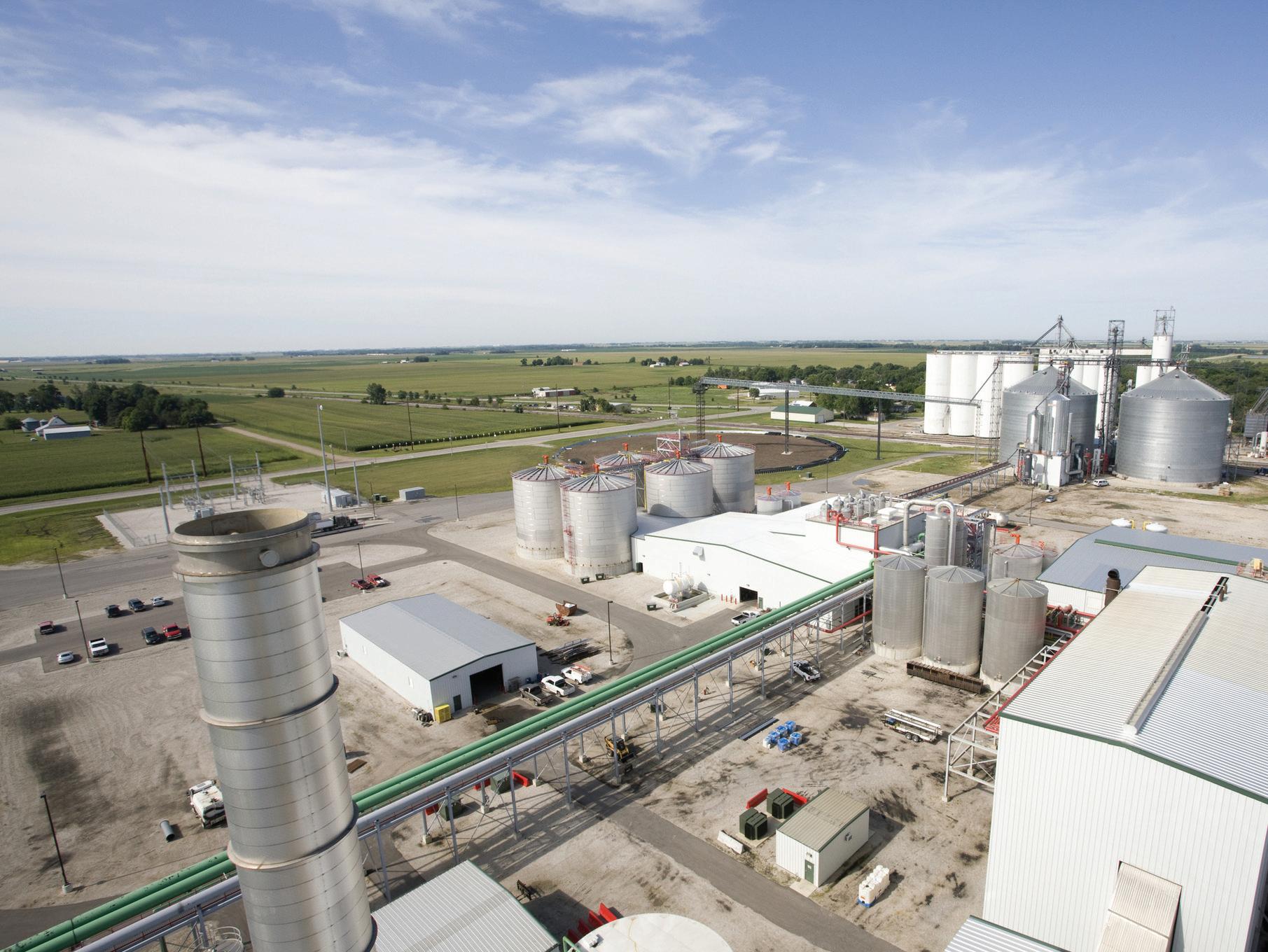
However supplies of distillers grains have increased dramatically in recent years with the growth of the cornbased ethanol industry. in the U.S. in 2008, production of distillers grains for
livestock exceeded 23 million metric tons. the poultry industry consumes around five per cent of the ddGS, whereas the hog industry utilizes around 20 per cent. the majority is fed to ruminants. Ethanol production is forecast to increase dramatically and, as a result, the production of ddGS will increase exponentially.
this could make ddGS attractive to livestock and poultry producers as a low-cost ingredient to replace corn and soybean meal. this increased availability could encourage the use of ddGS at a greater percentage than has typically
DDGS + ENzYmES
CaN = SaViNGS
Nutrition
been used in the past.
Previous research with laying hens using dd GS showed no negative effects on egg production when fed at 10 to 20 per cent.
t he protein concentration of ddGS is approximately three times the concentration of the whole corn grain. it is high in total P and n compared to corn, and consequently can decrease the amount of inorganic sources of P added to hen diets, and increase n and P excretion in laying hens’ manure, according to the report.
ENzYmES aND DDGS
With increasing corn prices, the interest in using ddGS in poultry diets has escalated.
Exogenous enzymes such as phytase and combinations of amylase, protease and carbohydrases have found increased use in poultry diets of late during times of high commodity prices. the majority of the research on enzyme efficacy has been conducted in corn- or wheat-based diets with soybean meal as the major protein source.
the report asks: “How do these enzymes work in a diet with a large ddGS component?” this is a question that has been one of the focuses of the nebraska group’s research for the last three years.
“Can poultry diets down-spec nutrients with the addition of enzymes” when ddGS is in the ration?
rESEarCh obJECtiVES at UNL, 2007-2010
1. to test the higher inclusion and economical amount of ddGS of feed to laying hens for one production cycle.
2. to test the maximum inclusion level of ddGS and its effects on feed intake, body weight and growth rate in SCWl pullets.
3. to test maximum inclusion rates in layers and broilers of ddGS with
enzyme supplementation (SSF). 4. to look at synergies of ddGS or meat and bone meal and enzyme supplementation in layer rations.
rESULtS oF triaLS
Laying Hen Trial 1: Testing the Maximum Inclusion Levels of DDGS in Layer Rations
When ddGS was incorporated in the diet, more synthetic lysine and fat blend were added. on the other hand di-Ca-P was decreased as ddGS was increased in the diet. Feeding 25 per cent ddGS to laying hens saved $20.92 and $9.92 per ton for Phase i and Phase ii compared to zero per cent ddGS. in this initial study, results indicated that feeding corn ddGS up to 25 per cent had no negative effect on egg production parameters during both phases. However, feeding ddGS at 20 and 25 per cent affected egg weight in Phase i but not in Phase ii this was due to changing the aa balance from fixed lysine and tSaa in Phase i to fixed lysine and methionine during Phase ii
Feeding high inclusion rates of ddGS is possible if attention is given to aa balance and availability in the diets containing ddGS. in addition, dd GS can replace dicalcium phosphate in layer diets to reduce feed costs. the reductions in n and P excretion were positive impacts of feeding greater levels of ddGS.
of Feeding
the trial was conducted in laying hens feeding 0, 10, 20, 30 or 40 per cent ddGS with or without SSF enzyme in a factorial arrangement. diets were formulated to be isocaloric and isonitrogenous. When SSF enzyme was added to the diets, mE was reduced by 75 kcal/kg. results of the long-term trial indicate a slightly lower level of egg production and egg mass at the highest level of ddGS – 40 per cent inclusion rate. diets with SSF enzyme
Nutrition
Table 1. Laying Hen Trail 1. Effect of Various Levels of DDGS on Egg Production Parameters for Phase I
< 0.1, ** P < 0.05
Table 2. Laying Hen Trail 2. Effect of Various Levels of DDGS on Egg Production Parameters for Phase II DDGS inclusion,
fully supported equal production to those without enzyme supplementation. adding allzyme SSF enzyme saved an average of $8.00/ton of feed and feeding up to 30 per cent ddGS saved $64.00/ton of feed compared to the basal zero per cent ddGS diet. rESPoNSE
LaYiNG hEN triaL 2:
Effects
DDGS with SSF Enzyme
rESULtS - LaYEr triaL
Table 3. Levels of DDGS by Enzyme Interaction
taken monthly.
during Phase 1 (24-35 wks), there were no significant differences between the diets for production parameters. there was a significant time effect for the last three weeks (wks 10, 11, 12) where feed intake decreased 4-8 g per bird per day (p < 0.05), most likely due to heat stress. there were no differences noted between treatments for any other parameters measured.
in Phase 2, there was a significant effect for feed intake between moderate and low mE diets, with the low mE diets having a greater feed intake overall (p ≤ 0.03). However, there were no other significant differences between treatments for any other parameters measured. thus, decreasing mE, P and Ca with the addition of enzymes has no negative effect on egg production or quality.
Nutrition
PULLEtS
Pullet Trial 1. Maximum Inclusion Rates of DDGS in Pullets from one day of age to 16 wks of age.
Four hundred fifty Hy-line W-36 pullet chicks were fed diets containing 0, 2.5, 5.0, 7.5, 10.0, or 12.5 per cent ddGS from day-old chick to 16 weeks of age. the starter diet was formulated to provide, 2950 Kcal/kg mE (metabolizable Energy), and 20.0 per cent protein, and fed from day-old to 6 weeks of age. the grower diet was fed from 7 to 9 weeks of age and formulated to provide 3000.60 Kcal/kg mE, and 18.0 per cent protein. the developer diet was formulated to provide, 3050.61 Kcal/kg mE, and 16.0 per cent protein, and fed from 10 to 15 weeks of age. the pre-lay diet was fed for one week (16) and formulated to provide, 3050.61 Kcal/kg mE
and 17.0% protein. Fifteen chicks were placed per cage with five replicate cages per dietary treatment in a randomized complete block design. Feed intake and body weight were measured every week (table 1). average feed intake was similar (p > 0.05) between treatments with a comparable feed intake to Hy-line W-36 manual. average pullet weights were similar (p > 0.05) between dietary levels of ddGS. there was no difference in pullet weight gain (p > 0.05) between treatments.
in summary, feeding ddGS up to 12.5 per cent had no negative effect on body weight, growth rate and feed intake. Body weight, growth rate and feed intake are comparable to the Hy-line breeding manual standards.
From a paper presented at the Midwest Poultry Federation Convention in St. Paul, Minn., in March 2011.
LARGE POULTRY OPERATION: Presently set up for Turkey. 3 barn operation. 88,000 sq ft of growing area. Suitable for other poultry. Standby generator and all farm & barn equipment. Modern 3+1 bdrm home. All on 50 acres of land located near Acton, ON.
WINDHAM CENTRE – BROILER FARM: One barn operation. 40 x 352 x 2. Ziggity nipple drinkers. Chore-Time equipment. Sprinkler mist system. 55 kw generator and alarm system. Natural gas heaters. 12 acres on paved road.
LITTLE BRITAIN - BROILER BREEDER FARM WITH 14256 H.E.M.S. Split flock. 2 barn operation. Barn 1- 275 x 40 x 1, Barn 2- 305 x 40 x 1. Solar wall Vencomatic Nests, Roxell Feeders, Fancom Computer, Bird weighting. Box heaters. Lubing drinkers. Automatic generator, 105 kw. New well. Pullet quota of 8257 produced off site. Year round production. 50 Acres, 45 workable tiled loam soil. New 3+1 Bdrm brick home.
ALL THINGS CONSIDERED
bY JIm KnIsLeY
it is getting Weird
Down the road the tractor sits. disc harrow attached, a few surrounding acres turned and seemingly ready for seeding, but a much larger part of the 100-acre field untouched.
For the past month, the farmer has grasped every opportunity to get on the land. But the opportunities have been few and far between. april was awful. Snow and then rain with the sun making so few appearances it was taken as a novelty. may was worse. rainfall records were being shattered with a week-and-a half left in the month.
down here, in what used to wryly be called the banana belt, the heavy clay soils long ago exceeded their capacity to take on or shed water. Ponds emerged, ducks moved in and frogs croaked happily in what should be fields of corn.
the forecast calls for sunshine, but only following another week of rain, mixed with thunderstorms. down here it is a season of worry, but it could be and is, as the headlines avow, much worse elsewhere.
in Quebec, where they are getting the same storms, there is flooding. in manitoba, there is flooding. in northern alberta there are wildfires, including the one that ravaged Slave lake.
to the south, the southern and midwestern United States are experiencing one of the worst, if not the worst, tornado seasons ever. in alabama, scores of people were killed and a few weeks later more than 100 more were killed in missouri. the property damage is in the billions and entire communities will have to be rebuilt.
the mississippi river and its tributaries have rolled over their banks. Farms and communities have been inundated and billions more in damages have been recorded.
atlantic hurricane season. according to one model, this could result in unusually active weather stretching from Florida and the Carolinas all the way north to nova Scotia.
a constant question throughout has been: “is this the result of global warming?” the answer varies. the more cautious say, “We’re not sure,” or “We don’t know enough.” the more audacious answer, “these are the kinds of results the (global warming) models predict.”
one meteorologist said that with warming you get increased atmospheric humidity. With increased humidity you get: greater volatility, more atmospheric activity and unpredictability. Even if that isn’t right, it sounds right.
down here we normally get a big storm in march. this year we got a big storm in late april – hurricane force winds, rain you could swim in, toppled trees and lots of damage. We never get that kind of storm in april. then a couple weeks later we got a not so pale imitation.
it’s been too weird. But weird was what was forecast a few years ago by one of the proponents of global warming – a phrase he disliked. instead of warming he said he preferred the phrase “global weirding.”
A constant question throughout has been: “Is this the result of global warming?”
meanwhile, just to the west of the flood zone, what meteorologists are calling another “extraordinary weather event” is taking shape. the western edge of louisiana, southern texas and eastern new mexico are in the grip of a drought. this isn’t a normal drought. this is Sahara-like. in the worst hit areas there has been no rain for months. the result has been wildfires.
Western louisiana was where the drought and the flooding met. When the U.S. army Corps of Engineers decided to open floodways to divert water away from the mississippi and save Baton rouge and new orleans, it flowed onto the edge of the drought zone. this prompted the headline “Flooding to relieve drought.”
Still to come, according to forecasters, is a very active
Global warming, he said, could be argued place by place, case by case. Some places – like the arctic – would get warmer. But other more temperate places wouldn’t warm up – they’d cloud up and some might actually cool a bit. this would provide ammunition, or at least a debating point, for those who wanted to argue that Co2 wasn’t causing climate change. it would be easy enough for virtually anyone to look out on a crowd that had just experienced a cool, wet spring and say: “Warming – have you felt any warming?”
But if weird weather was held up as the consequence of a changing climate, as he said it should be, it would be much harder to dispute. that is especially true down here where the occasional sun sighting sparks a lot of joking, with people asking what the big yellow ball in the sky is. or they may talk about their latest invention – a hovercraft with lawnmower blades or a helicopter seeder.
But the jokes soon pass because anyone who doesn’t have a tractor sitting in the mud waiting for the fields to dry knows someone who does.
meanwhile, today is sunny and almost warm. But the forecast for tomorrow is for showers with scattered strong storms, thunder and lightning, and heavy rain. n