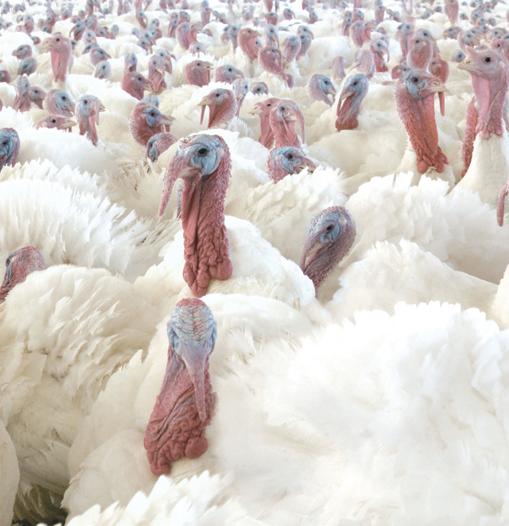
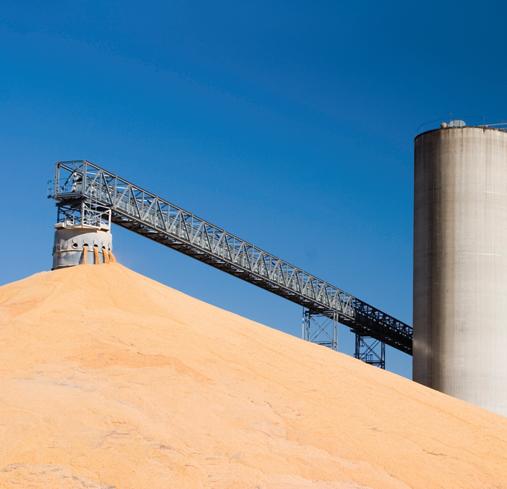
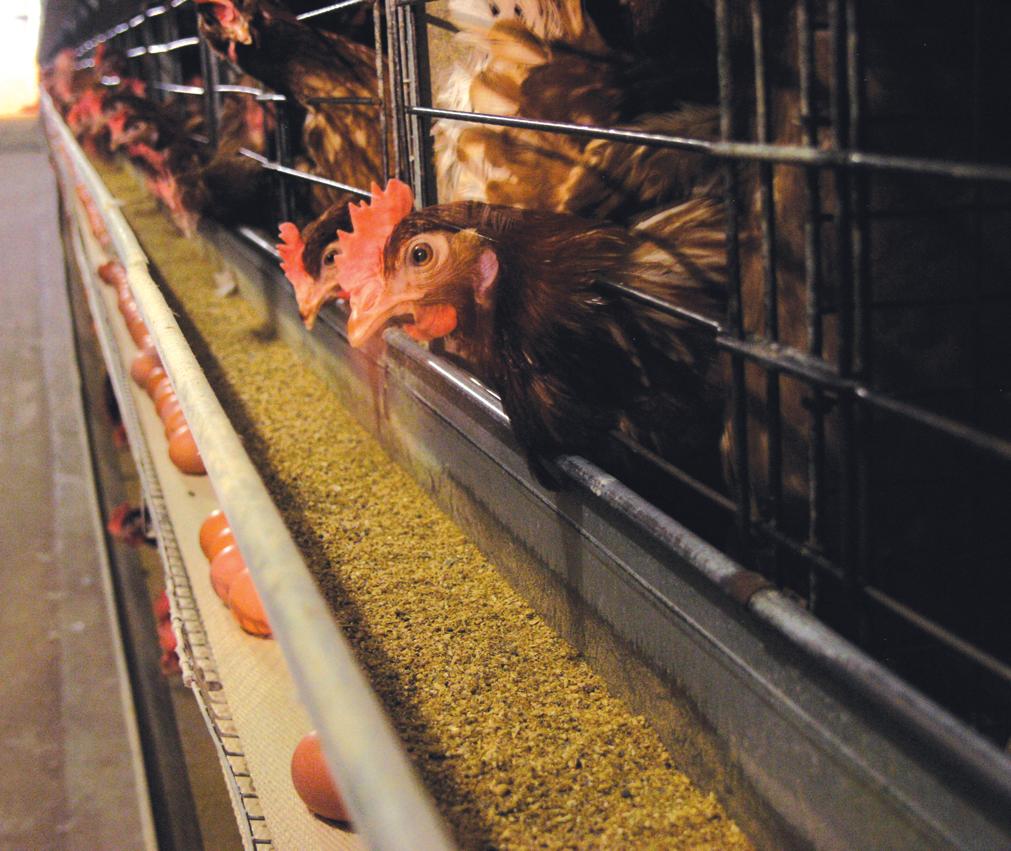
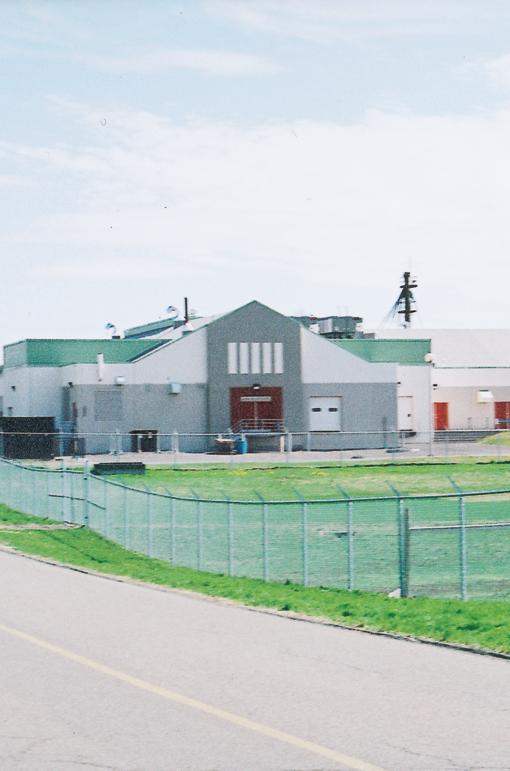
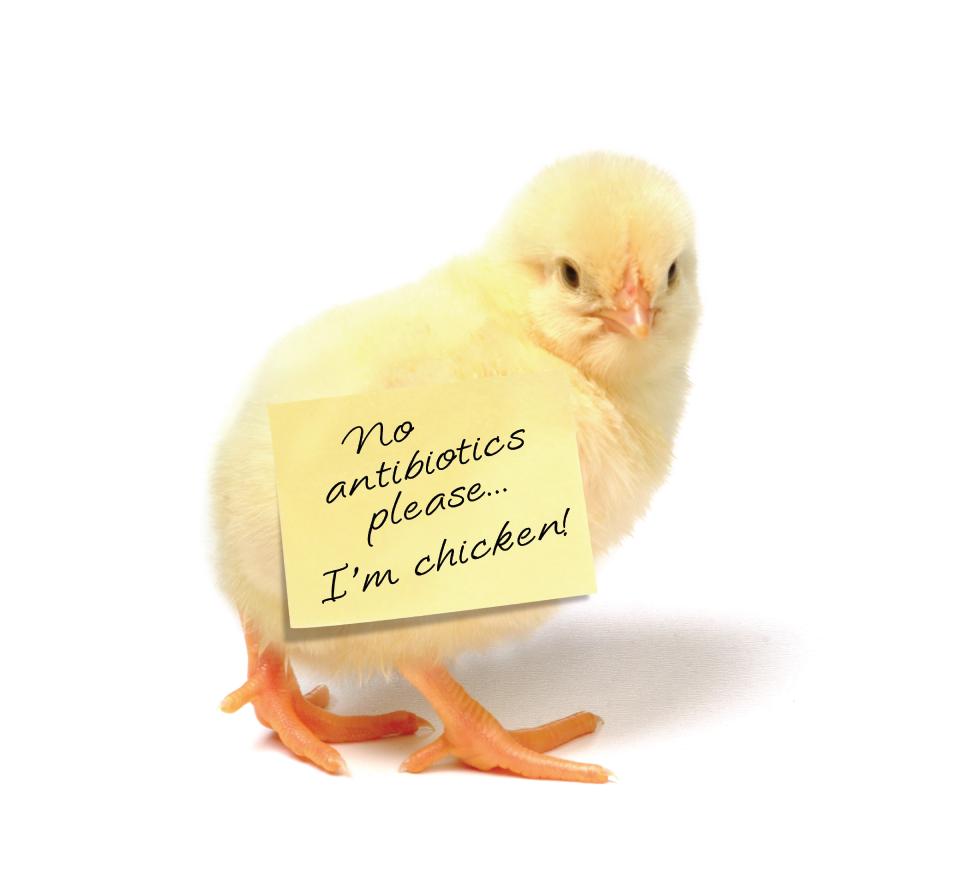
This is just one of the challenges that Danisco can help you solve.
Using new Thermo Protection Technology, Phyzyme XP TPT phytase is heat stable up to 95°C. This highly effective new generation phytase is at least 20% more effective than traditional phytases in improving the digestibility of phosphorus and other nutrients contained in many feed ingredients.
Thermo Protection Technology enables Phyzyme XP TPT to be included before pelleting in the majority of feed manufacturing processes. TPT
Feed value consistency can vary By Dr. Milan Hruby, Technical Manager, Danisco Animal Nutrition
18
PIC UPDATE: Midnight Feeding
Effect on the bone density and egg quality of brown and white table egg layers
By Tim Nelson and Kimberly Sheppard
26
PERFORMANCE:
Optimizing Genetic Gain
Reconciling reproduction, yield, and body weight in a nucleus turkey breeding program
By Ben J. Wood, Hendrix Genetics Ltd., Kitchener, Ont.
32
RESEARCH:
APRC: Second Phase
Corn Consistency 26 Optimizing Genetic Gain
A new feed manufacturing facility will allow researchers more flexibility and meet regulatory guidelines. By Dan Woolley
APRC’s New Feed Facility
Midnight Feeding Explored
FROM THE EDITOR: Kristy Nudds
FROM THE EDITOR
BY KRISTY NUDDS
Not Tough Luck
Arecent editorial in the Globe and Mail criticized supplymanagement, something that publication does from time to time, particularly when an economic or trade report is released.
This was the case on June 16, when an editorial titled “Tough Luck for Consumers” described, very briefly, a 160-page report on Canada’s economy from the Organization for Economic Cooperation and Development (OECD).
In the report, supply management programs are heavily criticized, and the editorial decided to take some liberties with the information contained within the report.
Through the “ingenious scheme of supply management” consumers are told they fund a guaranteed income for farmers utilizing an inefficient system.
How is supply management inefficient? Poultry and dairy production – as is all intensive livestock production – is more biologically efficient today than it has ever been. This is a product of science and research, not governance.
And the real reason for increasing efficiency was not created by a marketing board. It was a joint effort between government, academia and retailers in North America to keep the price of growing food, and thus the food itself, as low as possible.
North American consumers have gotten quite used to plentiful amounts of cheap food. With corn reaching US $8 a bushel and fuel costs skyrocketing, retail food prices have increased; however, food inflation in North America is nowhere near what it is in other parts of the world.
Take a look at what’s happening to the
pork and beef industries. Not under supply management, they have fallen victim to the global marketplace so touted by the Globe and Mail. What did it do for them? And do you think if consumers realized that they may very well soon be eating pork from China that they would be happy about it?
The Globe and Mail writer also says that “lack of competition has stifled innovation, discouraging the creation of new products.” Well it was Canadian scientists that developed the Omega-3 egg, as well as DHA-enhanced milk.
I find it tough to swallow that in the current climate of advocating local food, going green and saving fuel that consumers are being urged to fight a system that offers them quality homegrown food at a fair price. I also think they would have a tough time seeing agriculture go by the wayside.
That’s really what’s at stake here. Sure, publications and politicians can criticize supply management for being a monopoly, but without it, livestock agriculture in this country could be in big trouble. We have a problem called winter – and for some provinces more than others, this problem makes poultry rearing in the winter months expensive. If it were not for supply management, we couldn’t compete on production prices with countries such as Brazil.
I think the question consumers should really be asked is, do they want agriculture to remain in Canada? ■
July 2008
Vol. 95, No. 7
Editor
Kristy Nudds – knudds@annexweb.com
888-599-2228 ext. 266
Contributing Editor
Jim Knisley – jknisley@kwic.com
Publisher/Sales Manager
Marilyn White – mwhite@annexweb.com 888-599-2228 ext 237 • fax: 888-404-1129
Sales Assistant
Mary Burnie – mburnie@annexweb.com
888-599-2228 ext 234
Production Artist
Krista Misner
Editorial Director
Drew McCarthy – dmccarthy@annexweb.com
VP/Group Publisher
Diane Kleer – dkleer@annexweb.com
President Mike Fredericks – mfredericks@annexweb.com
Mailing Address
P.O. Box 530, 105 Donly Dr. S., Simcoe, ON N3Y 4N5
Publication Mail Agreement #40065710
PAP Registration #9850
RETURN UNDELIVERABLE CANADIAN ADDRESSES TO CIRCULATION DEPT., P.O. BOX 530, SIMCOE, ON N3Y 4N5.
e-mail: cnowe@annexweb.com.
Periodicals postage paid at Buffalo NY. USPS 009-324, ISSN 1703-2911. Published monthly by Annex Publishing and Printing Inc. US Office of publication c/of DDM Direct.com, 1223 William St. Buffalo NY 14240. US Postmaster send address change to PO Box 611 Niagara Falls NY 14304.
Heavy weights might be good for Sumo Wrestling but
they're even better when they are on your birds.
Glass-Pac Canada
St. Jacobs, Ontario
Tel: (519) 664.3811
Fax: (519) 664.3003
Carstairs, Alberta
Tel: (403) 337-3767
Fax: (403) 337-3590
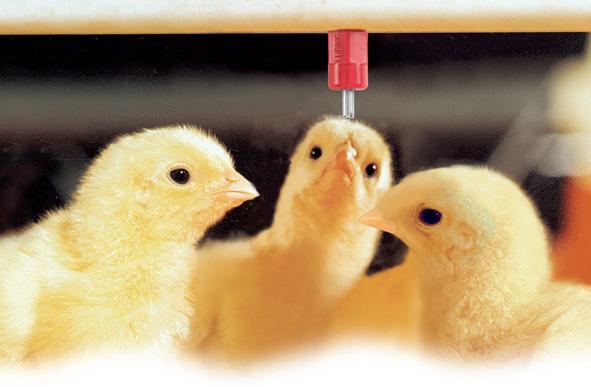
Time after time, Lubing drinkers continue to impress growers by outperforming the competition. Our patented nipple drinking systems simply deliver the exact amount of water at each stage of the birds' life while never restricting their intake. Sumo-Size Your production with a quality Lubing Watering System.
For information regarding our cutting-edge products please contact your local Lubing Distributor.
J. Dean Williamson Ltd.
London, Ontario
Tel: (519) 657.5231
Fax: (519) 657.4092
Les Equipments Avipor
Cowansville, Quebec
Tel: (450) 263.6222
Fax: (450) 263.9021
Specht-Canada Inc.
Stony Plain, Alberta
Tel: (780) 963.4795
Fax: (780) 963.5034
WHAT’S HATCHING HATCHING
S National AI Surveillance
tarting in August, the Canadian Food Inspection Agency (CFIA) will be testing 1,000 flocks across Canada for Notifiable Avian Influenza (NAI) to meet the current NAI guidelines from the World Organization for Animal Health (OIE) and new trade requirements from the European Union (EU) that take effect in January 2009.
NAI is defined by the OIE as all avian influenza type A viruses with high pathogenicity and all H5 and H7 subtypes with high or low pathogenicity.
This is the first year that the CFIA will monitor for AI in domestic birds. The agency has worked with public health agencies and the Canadian Cooperative Wildlife Health Centre to carry out AI surveillance in wild birds for a number of years.
The surveillance program, called the Canadian Notifiable
Avian Influenza Surveillance System (CanNAISS), will test flocks randomly based on geography and timing of slaughter, says Dr. Christine Power, national manager of epidemiology and surveillance, CFIA.
Canada is planning to test about 1,000 commercial poultry flocks before the end of December 2008. It is expected that sample collection will start in July 2008. The program will be phased into various commercial groups. The first round of sampling to be completed in 2008 will include on-farm testing of chickens, turkeys and spent hens prior to slaughter. Sampling of commercial ducks, geese and other poultry categories will start in 2009.
Producers whose flocks are chosen for random sampling will be contacted by their processor and/or the CFIA a couple of months before the slaughter date, and have to
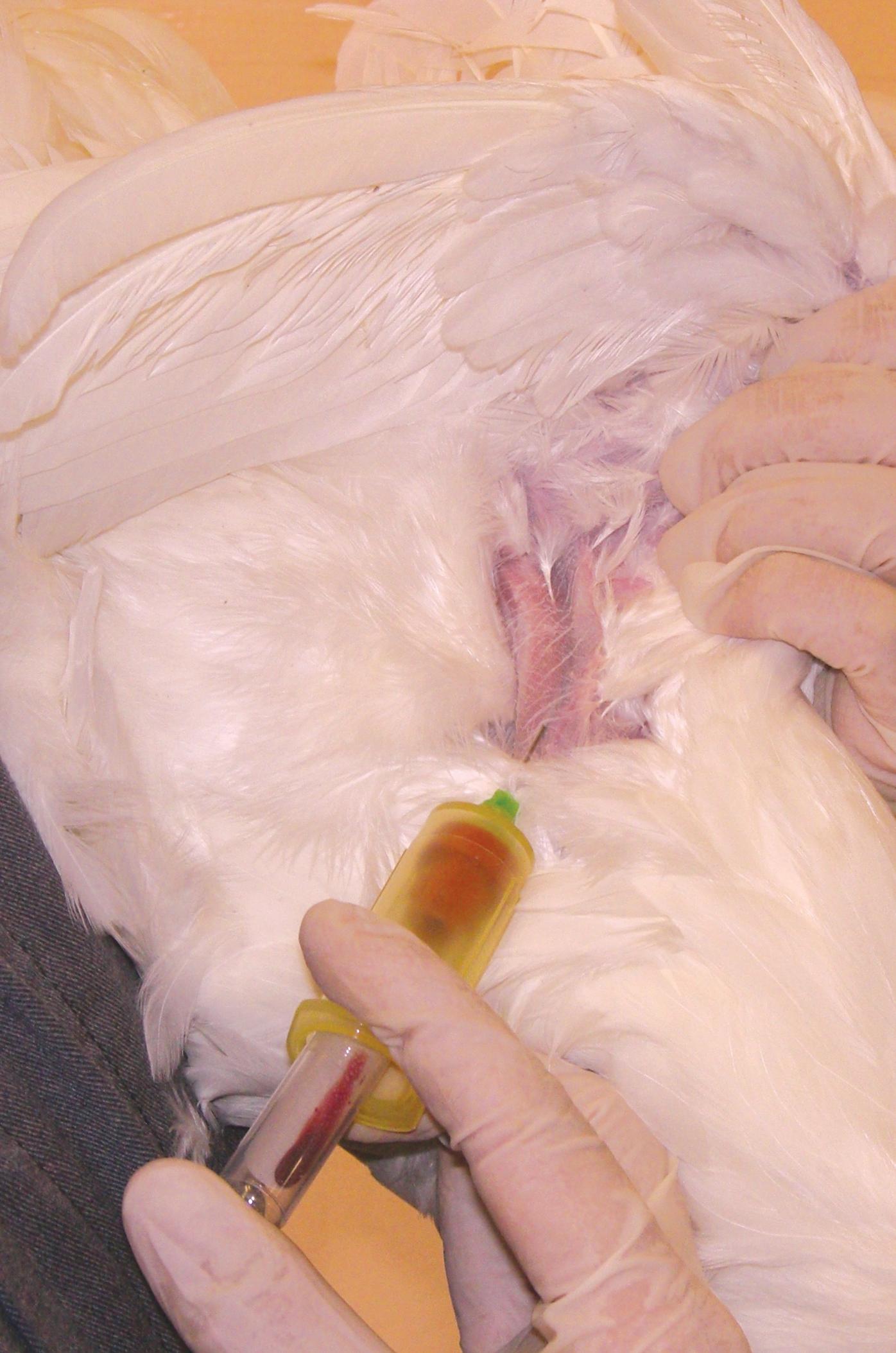
register with the CFIA to get blood samples taken.
The testing is intended to help Canadian poultry exports comply with recent changes in European Union regulations for poultry exports that require such testing not only for products destined for its markets but also those which pass through it to other destinations.
If blood sampling indicates an active infection, the flock will be depopulated to prevent the virus from mutating to a more highly pathogenic form.
Although the CFIA worked with provincial and federal marketing boards on CanNAISS, the issue of compensation has still not been addressed and remains inadequate.
Canadian producers export C$50 million worth of hatching eggs and day-old chicks plus C$185 million worth of processed products.
Photo by Tennille Knezacek
COMING EVENTS
New Hiring Initiative
ALBERTA
Finding qualified people to enter into agriculture, food and bioresources careers is becoming increasingly difficult. IgniteAg is a new program launched by Calgarybased AgCall to help bring more candidates into the industry.
The program’s primary goal is to expand the pool of candidates with an initial focus on entry level positions. Right now, that pool is too small to meet industry needs.
Arron Madson, vice-president, sales and marketing, AgCall, says “we want to help make sure graduates of agriculture programs stay in the industry. But we want to look deeper. We want to talk to students with rural backgrounds who are not in agriculture programs. We also think there’s great potential with students who do not
Lilydale
Wins Award
ALBERTA
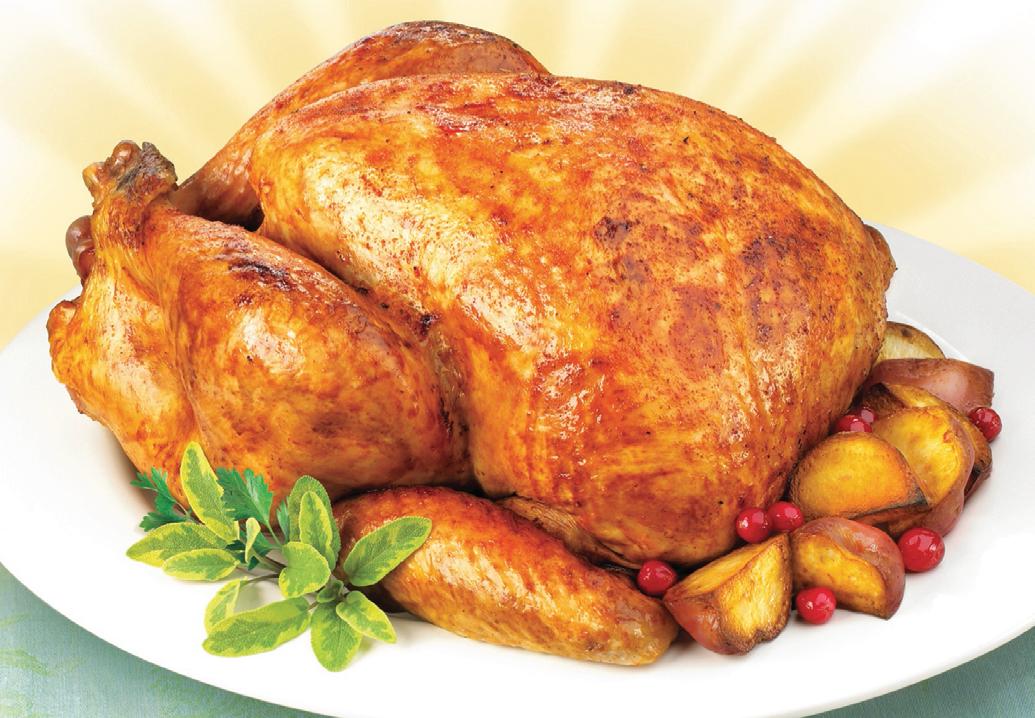
Lilydale’s new Roast & Boast ™ turkey was declared the winner of the best new product in the Deli, Meat and Seafood category in the Canadian Grand Prix New Product Awards™ competition.
Lilydale’s Daystarters™ turkey bacon was also named a finalist in the competition.
Open to manufacturers and distributors of all sizes, the competition is sponsored by the Canadian Council of Grocery Distributors (CCGD). Selection is based on innovation, packaging and design,; pricing, taste
have a rural background to apply their education and skills to the agriculture industry. And, we want to help the industry facilitate bringing new Canadians into the agriculture workforce.”
IgniteAg is currently working with industry, government agencies and post- secondary institutions to secure funding for the initiative. A pilot program will be launched in September primarily targeting students in their final years of college, university and technical school.
IgniteAg has set up a website at www.igniteag.ca with early information on the program and how sponsors, organizations, students and other potential candidates can get involved. As the launch date for the pilot program approaches, more information will become available.
UVHC Opens
QUEBEC
Canada’s most modern University Veterinary Hospital Centre (UVHC), the cornerstone of the Université de Montréal’s Faculty of Veterinary Medicine, was inaugurated in St-Hyacinthe on May 23. Outdated facilities were renovated and capacity doubled to establish a new multidisciplinary animal health-care role. Federal and provincial governments invested over $74 million towards the facility.
The UVHC treats about 14,000 animals each year and is comprised of four sectors: a domestic pet hospital, a farm animal hospital, an equine hospital and a roving clinic that features a team of specialists who provide on-site visits to treat livestock.
and nutritional value, and overall benefits to the consumer.
Lilydale says the Roast & Boast™ answers the consumer call for a no-fuss traditional meal, producing a perfect golden brown turkey without all the work. The product is a
JULY
July 20-23, 2008
Poultry Science Association (PSA) Annual Meeting, Sheraton on the Falls Hotel and Convention Centre, Niagara Falls, Ont. The PSA is celebrating 100 years in 2008. For more information, visit www. poultryscience.org/psa08/.
AUGUST
August 19-21, 2008
Managing the Modern Broiler Breeder Workshop, University of Alberta Poultry Research Centre. This hands-on workshop is co-hosted by Aviagen and the PRC. For more information, visit www.poultryresearchcentre.ca.
SEPTEMBER
September 30, 2008
19th Western Meeting of Poultry Clinicians and Pathologists (WestVet), Post Hotel, Lake Louise, Alta. For more information, visit www.westvet.com.
OCTOBER
October 1-2, 2008
whole, frozen turkey between 5 and 7 kg in size that goes directly from freezer to oven with no thawing or handling required. Ready in 4-5 hours, it is pre-seasoned and prebasted and comes in its own roasting jacket.
Poultry Service Industry Workshop, Banff Centre, Banff, Alta. For more information, contact Kate Cheney by e-mail at info@poultry workshop.com; or by telephone at 1-800-267-9180; or visit www.poultryworkshop. com. >
PETA Ends KFC Boycott
KFC Canada is promising improved welfare for the chickens it buys for its fastfood outlets in exchange for an end to a boycott campaign that will continue in the United States and elsewhere.
The People for the Ethical Treatment of Animals agreed to call off its Canadian “Kentucky Fried Cruelty’’ campaign, which featured high-profile actress Pamela Anderson among others, following a signed agreement with the company in late May.
WHAT’S
least cruel method of slaughter.
The company is also promising to insist on other “animal-welfare friendly” measures relating to how the birds are kept, including a maximum on crowding and phasing out of drug usage.
Customers of the popular restaurant chain will also be able to order a vegan “chicken” item.
COMING EVENTS
NOVEMBER
November 10-11, 2008
Poultry Innovation Conference (formerly known as the Poultry Health Conference), organized by the Poultry Industry Council (PIC). For more information, visit www.poultry industrycouncil.ca or e-mail pic@poultry industrycouncil.ca.
JANUARY
HATCHING
HATCHING
The deal obliges KFC Canada to begin buying from suppliers who use gas to kill their chickens painlessly, which PETA considers to be the
While the anti-KFC campaign will now end in this country, PETA said it will continue in the U.S., the U.K. and other countries. However, it is hoping to persuade Yum Brands, which owns KFC outlets in the U.S., to follow the Canadian lead.
Canada Passes Biofuel Bill
In late May the Government of Canada celebrated the passage of its biofuels legislation through the House of Commons, which allows requirements that all gasoline sold in Canada contain five per cent ethanol by 2010, and all diesel and heating oil contain two per cent renewable fuels by 2012. The legislation is now going to proceed to the Senate of Canada for debate.
The government introduced Canada’s Biofuels
Strategy in 2006 to increase opportunities in the biofuels industry and ensure Canadians will have cleaner air for generations to come.
The government is investing $500 million in the development of new biofuels technologies. Next generation technologies such as cellulosic biofuels are taking the discarded stocks of corn plants to produce fuel while sending the corn kernels back into the food supply.
January 28-30, 2009 International Poultry Expo/International Feed Expo, Georgia World Congress Center, Atlanta, Ga. Attendee and Hotel Registration opens Aug.1. For more information, visitwww.internationalpoultryexposition.com.
FEBRUARY
February 19-20, 2009 Atlantic Poultry Conference, Old Orchard Inn, Greenwich, N.S. Registration information and details available soon. For more information, visit: www.nsac.ns.ca/apri
We welcome additions to our Coming Events section. To ensure publication at least one month prior to the event, please send your event information at least eight to 12 weeks in advance to: Canadian Poultry, Annex Publishing, P.O. Box 530, 105 Donly Dr. S., Simcoe, Ont. N3Y 4N5; e-mail: knudds@ annexweb.com or fax: 519-429-3094.
Business Profile Weeden Environments
True stockman spirit and a strong desire to bring new technology
to
producers
has
blossomed into an award-winning full-service poultry company
BY KRISTY NUDDS
Bringing innovative technologies to the poultry industry is something that Kevin Weeden was born to do.
The president of Weeden Environments, an Ontario-based full-service poultry equipment supplier, was raised on Hybrid Turkey’s (now a division of Hendrix Genetics Ltd.) number three farm in New Hamburg, Ont.
Kevin’s father, Len, began his career in poultry in the early 1950s blood testing poultry for the provincial government and running the poultry research station at the University of Guelph. In 1955, he met brothers Milo and Ross Shantz, who ran a family turkey breeding business that later became known as Hybrid Turkeys. Len left Guelph and joined the Shantz brothers, as production manager for the Diamond White breeding program in the 1960s and ’70s. As Hybrid grew internationally, Len managed the company’s international technical service division, assisting turkey farmers in over 30 countries worldwide.
After graduating from the University of Guelph with a Diploma in Agriculture, Kevin followed in his father’s footsteps and joined the turkey business. In the early 1980s he worked in research and then went oversees to work for Hybrid in France and then in Ireland.
After spending more than a year in Europe, Kevin returned to Ontario to manage production on the farm that he grew up on, branching out into technical service and sales, and by the 1990s he was vicepresident of Sales and Marketing. However, Weeden says his demanding career came at a cost.
By 1996 he was travelling non-stop, and on one particular trip called home from the Czech Republic, and he says “my three-
year-old daughter asked me when I was going to come and stay at our house.”
This heart-tugging comment prompted Weeden to re-evaluate his career path.
Left to right: Mike Wolf, John Stolp, Kevin Weeden, Pam Zehr, and Derek Bender. (Right) New sales representative Shawn Conley
THE WEEDEN TEAM
Business Profile
“I always wanted to own my own business,” he says, and he left Hybrid Turkeys to build his own male turkey breeder farm and work with Cold Springs, selling semen to them for their breeding stock. He then became their procurement manager and also sold eggs and poults. The male breeder farm called Weeden Farms was bought out by Cold Springs in 2002.
The timing was perfect, says Weeden. In 2003, his father Len was retiring for the second time. His first retirement, from Hybrid was in 1994. Towards the end of his career at Hybrid, he had developed allergies caused by dust. Len was “on a mission to decrease dust for both animals and people,” says Weeden, and after retiring from Hybrid came across a water sprinkler system used in Israel for cooling and saw its value to reduce dust from litter.
Len brought the system to Canada and started Weeden Sprinkler Systems. What
Award-Winning Company
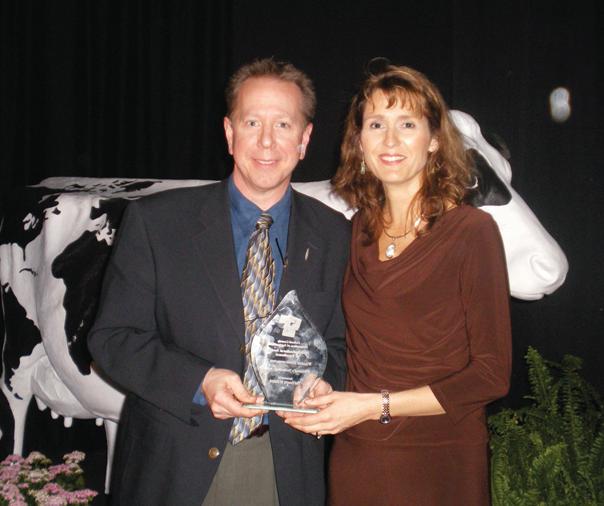
Kevin Weeden, President of Weeden Environments and wife Claudia Weeden receiving the 2008 President’s Technology Award from Oxford County Federation of Agriculture.
Weeden Environments was recently recognized for its leadership in applying scientific advances and new technology in the agricultural sector. On April 2, Weeden Environments was presented with the 2008 President’s Technology Award by the Oxford County Federation of Agriculture.
initially began as a hobby grew every year, says Weeden. “My dad is a real green thumb turkey breeder, a true stockman that everyone listens to,” he says.
Kevin purchased the sprinkler business from his father in 2003 and immediately focused on expanding the business. He knew he needed to sell more than just sprinkler systems and wanted to provide both equipment and expertise to producers to help them maximize their production.
Weeden saw the potential with the sprinkler systems, for use in delivering other products, and entered into a relationship with AgTech Products of Wisconsin to administer their product MicroTreat “P” through the sprinklers to the litter below. MicroTreat P introduces friendly bacteria to broiler and turkey litter to control litter decomposition, and out compete the detrimental gram-negative bacteria within the environment where the birds live.
“Alternative producers were screaming for this type of product and delivery method,” says Weeden.
Leasing a small facility in the town of Tavistock, Kevin was joined by dad Len and office manager Donna Winhold. At the Poultry Industry Conference and Exhibition (the London Poultry Show) that year he met with Diversified Imports, a New Jersey-based supplier that had just what he was looking for – innovative products.
Weeden then began distributing these products in Canada. “With this partnership I was able to bring new things to Canadian producers that hadn’t been tried before,” he says. He also wanted to provide equipment that could stand up to the rigors of a poultry operation. “Farmers aren’t in the business of fixing,” says Weeden.
He focused on testing new turkey water and feeding systems and scales, hiring technical service manager Derek Bender, who worked with manufacturers such as Rotem to rewrite technical manuals for the Canadian market. At the International Poultry Exhibition in Atlanta, Weeden formed a relationship with Space-Ray and helped raise the profile of radiant tube heaters and brooders, where the latter had become unfavourable with producers in Canada and the U.S., and began promoting savings of up to 15 to 20 per cent in
heating costs, he says.
Equipment sales became the second core part of Weeden Sprinkler Systems, he says. Having grown into a company that offered more than just sprinklers, Weeden says he and his staff underwent a branding exercise with a local marketing firm, which led to the name change Weeden Environments, to better reflect the goals of the company.
To keep up with customer demand, two installers and territory managers Mike Wolf and John Stolp joined the company in 2006. Marketing co-ordinator Pam Zehr joined in 2007, and Shawn Conley joined the company in June, as another territory manager with responsibilities within Ontario, western Canada and the western U.S.
This past January, Weeden Environments moved from its small location in Tavistock to a five-acre property in nearby Hickson. The company renovated a new 4,000square-foot office and now ships its products from that location across Canada and the U.S.
Weeden himself has been busy “managing the growth of the company,” as well as the third core part of the business – continuous-use products, particularly Proxy-Clean, a water line cleaning product that Weeden has private labeled and markets across Canada. In April, Weeden Environments formed a partnership with United Nutrients Corporation (UNC) and launched the WATER-SMART sanitation program, a simple, complete program for complete water maintenance.
In the future, Weeden says he wants to expand his line of natural products and compost products, but knows government registration is a significant problem. “The process has to change. Canadian farmers have to have more tools available to them,” he says. He also plans to continue to expand in the U.S. market and internationally.
He says like his dad, he has a desire to help producers raise happy, healthy birds. “At Weeden Environments, we take a whole approach to disease prevention by lowering stress levels and improving the barn environment, which optimizes efficiency, and returns for our customers.” ■
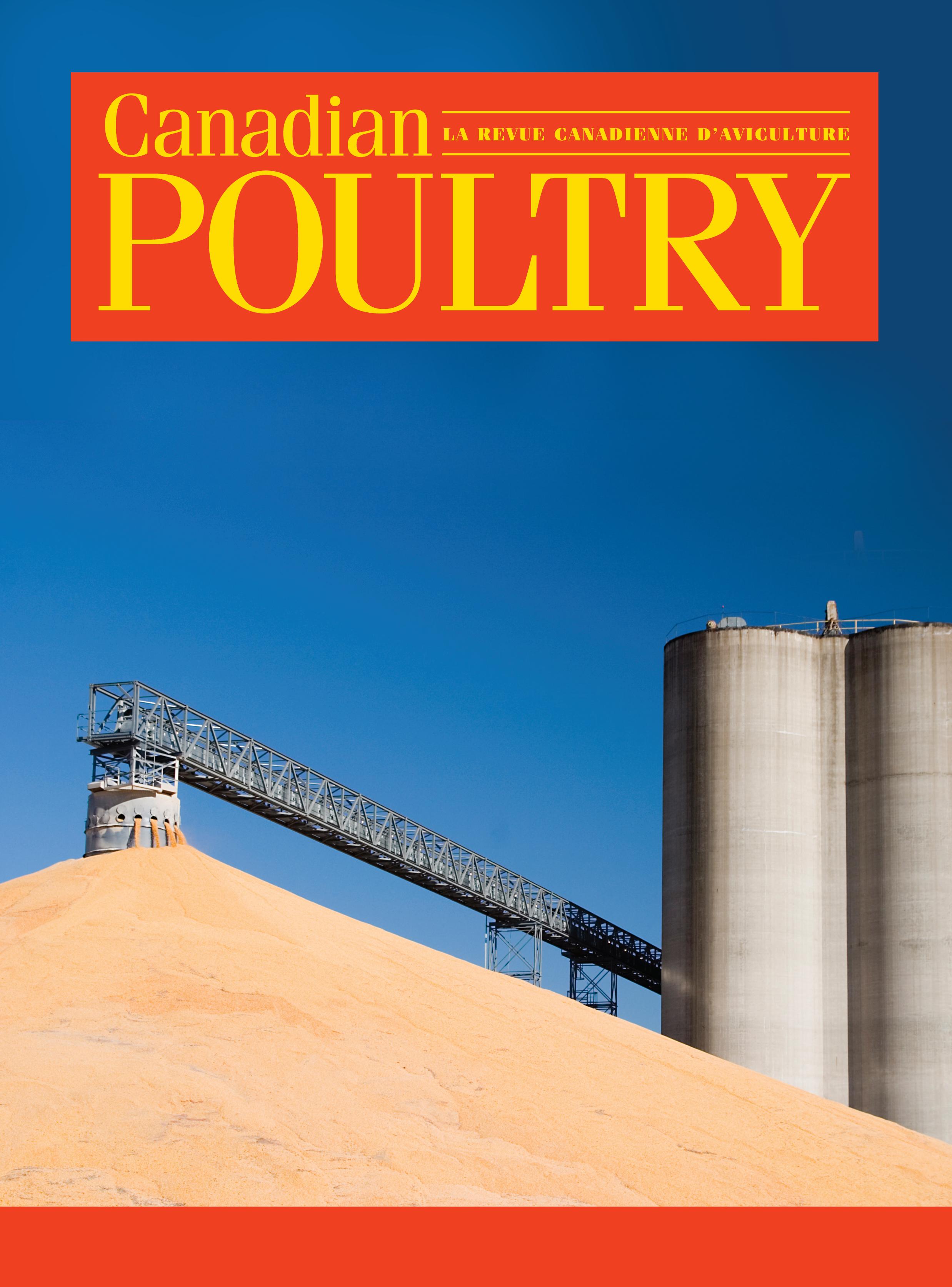
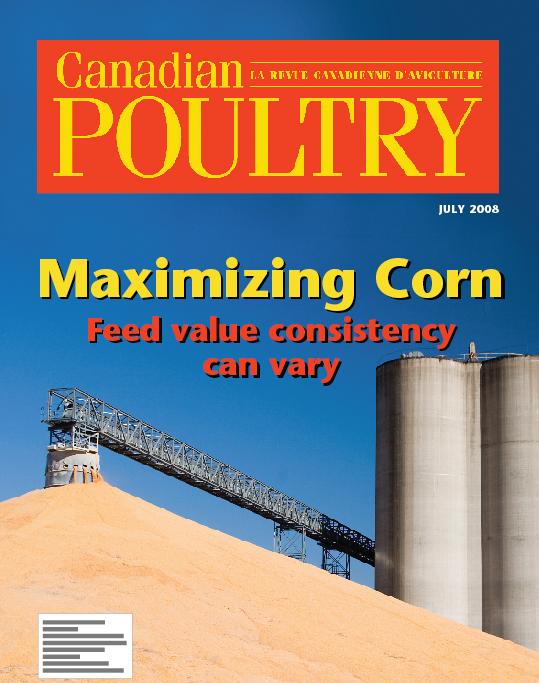
Maximizing Corn Feed value consistency can vary
by Dr. Milan Hruby, Technical Manager, Danisco Animal Nutrition
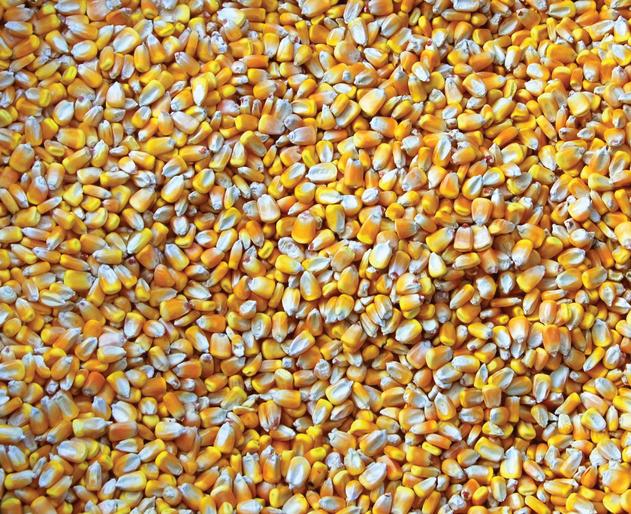
Poultry producers, nutritionists and feed manufacturers tend to regard corn as an ingredient which is consistent in terms of nutritional value, regardless of where in the world it is grown and under what conditions. This is a myth.
During the last four years Danisco Animal Nutrition has conducted wideranging studies that have proved conclusively that corn exhibits remarkable variation, which has major implications for all sectors of the global poultry industry.
ASSESSING VARIABILITY
Scientific evidence has shown that corn can be an inconsistent grain and that its Apparent Metabolisable Energy (AME) can vary dramatically. A number of factors contribute to this variability, including the corn’s genotype; the location in which it is grown; seasonal variations in growing and harvesting conditions, as well as drying and storage conditions.
NOT ALL CORN EQUAL
Poultry producers need to appreciate the true extent of corn’s variability, says Dr. Milan Hruby, Technical Manager, Danisco Animal Nutrition.
Feed manufacturers and commercial poultry producers who require uniform feeds from batches of corn produced in different harvest years, locations or growing conditions, therefore face serious challenges.
To help nutritionists, feed manufacturers and poultry producers manage the issue of corn variability more effectively
Danisco’s research focuses on two areas. Firstly, what are the key factors affecting corn quality and secondly, how can specific enzymes reduce variability and improve the nutritional value of feed derived from different batches of corn?
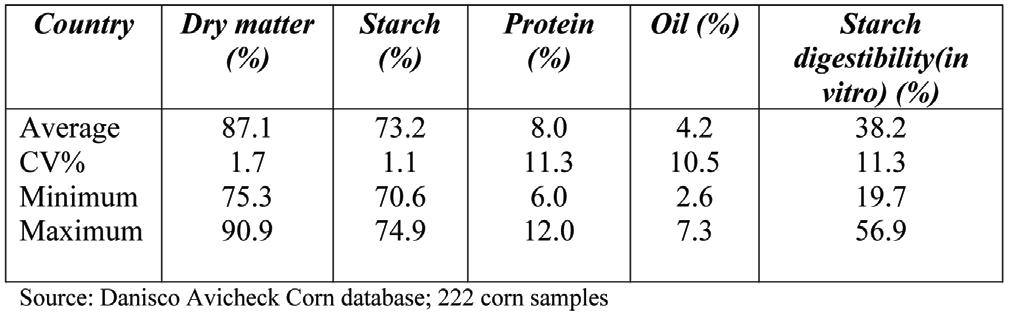
Danisco’s analysis of 222 corn samples harvested in 2007, grown in 17 countries and collected from commercial feed mills and poultry integrators proved conclusively that dry matter, starch, crude protein, oil content and starch digestibility can vary widely between samples of corn (see Table 1). Dry matter ranged from 75-91 per cent, levels of starch from ~71-75 per cent, crude protein from ~6-12 per cent, oil from ~3-7 per cent and in vitro starch digestibility from ~20-57 per cent. Interestingly, similar variations in nutritional content were also evident between samples from within the same country.
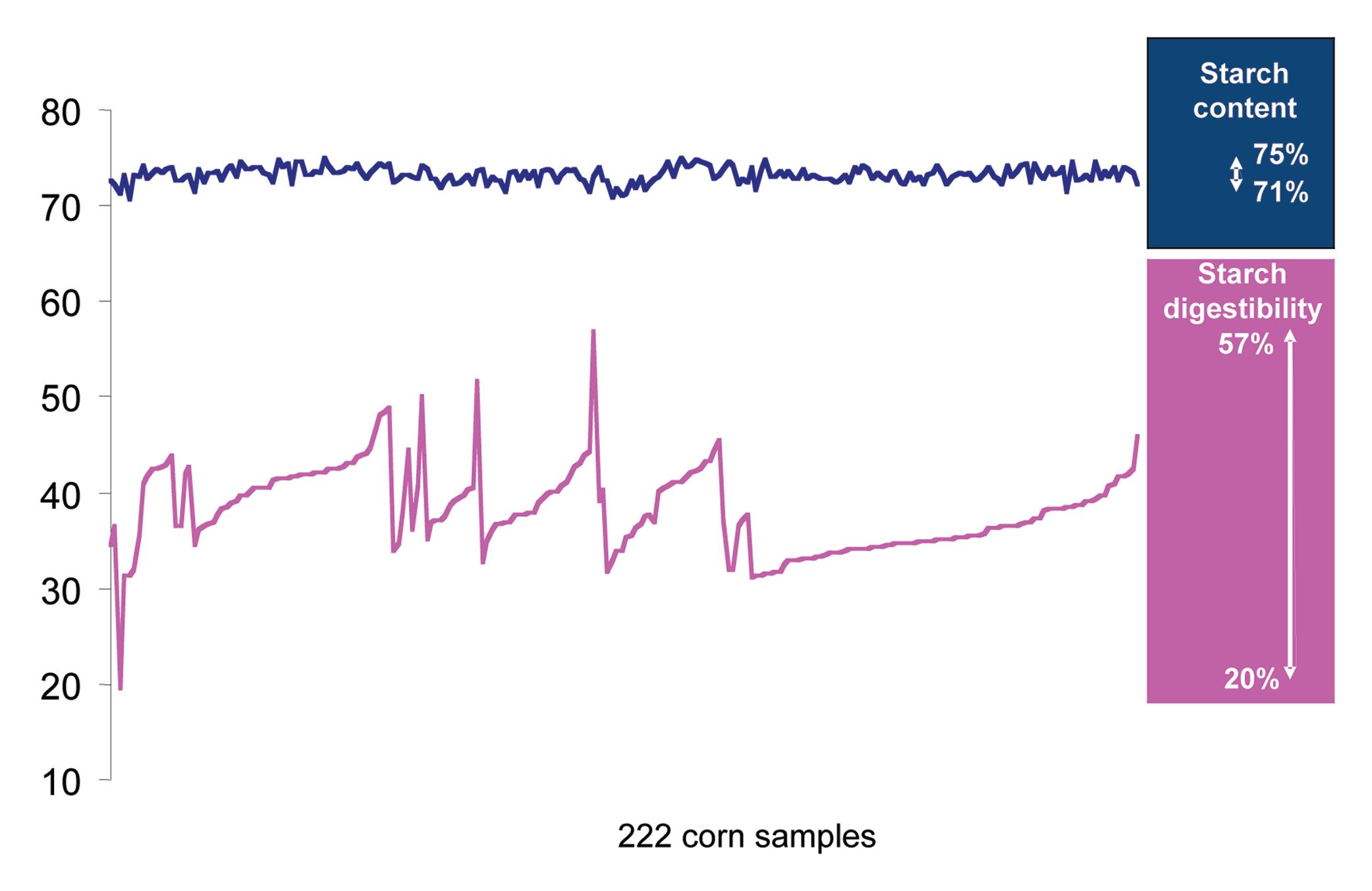
Since starch contributes around 65-70 per cent of the energy value of corn, it is interesting to note that analysis of the 222 corns highlighted the fact that both the starch content and starch digestibility can be highly variable between batches of corn (refer to Figure 1).
VARIABLE PERFORMANCE
Consistent bird performance is the goal of the poultry producer. Since a typical corn-soy diet contains 65-70 per cent corn, significant variation in the nutritive value of corn will clearly lead directly to variation in bird growth and feed conversion. Danisco set up a research program to establish the effect of corn variability on bird performance. The research program involved obtaining 59 different corns, from 13 countries worldwide representing U.S., South America, Europe and Asia. These corns were included in different batches of feed, formulated to contain 55 per cent of each corn sample in an
otherwise constant diet. The diets were fed to broilers and the ileal digestible energy of each diet and liveweight gain of birds were measured at 28 days.
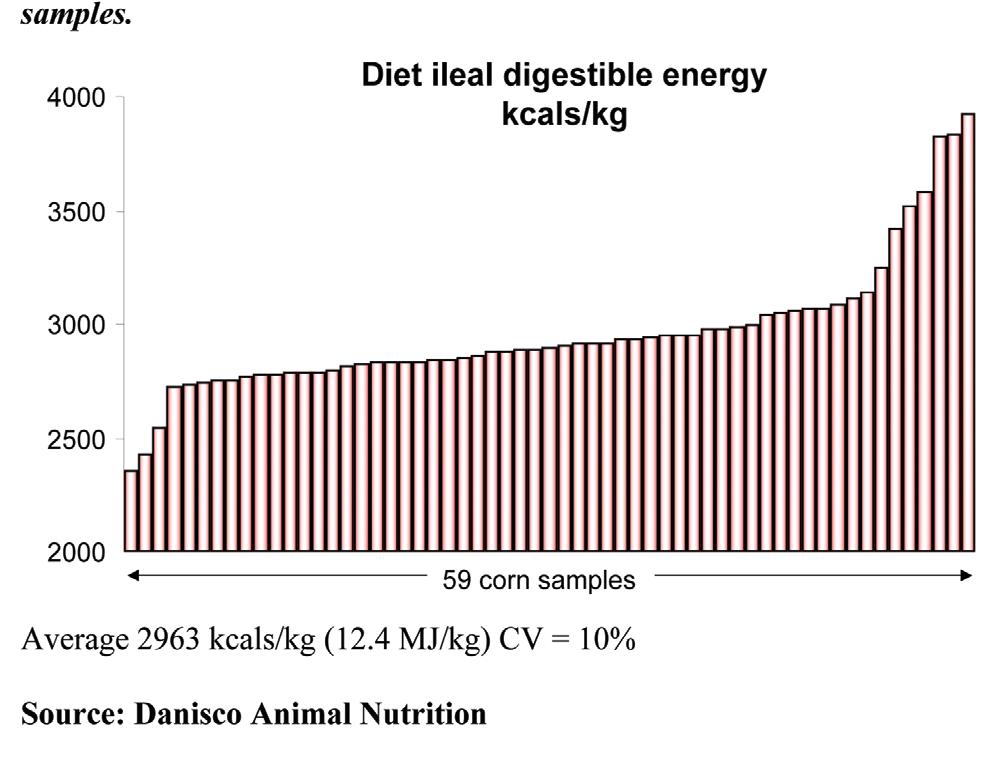
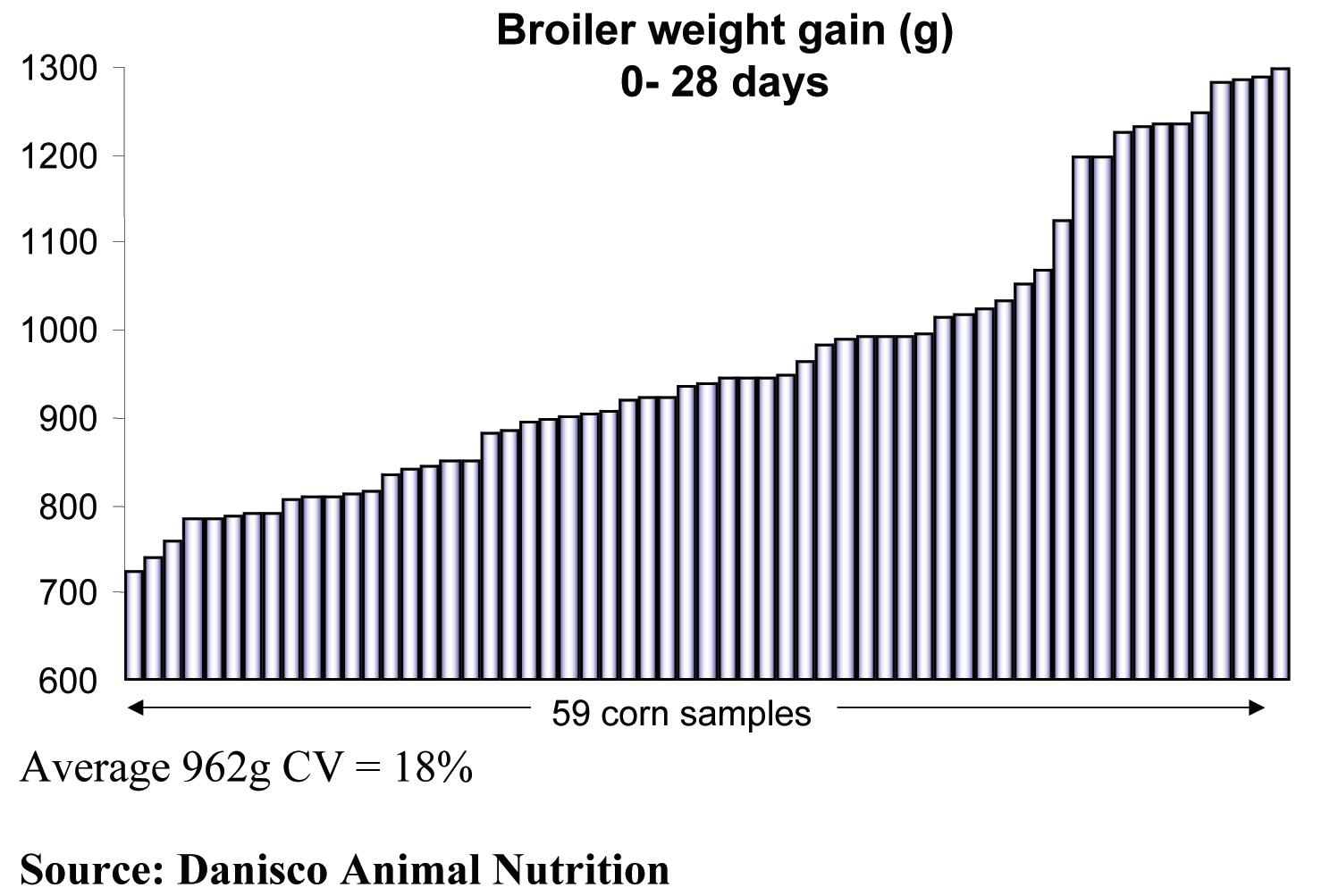
Ileal digestible energy varied substantially between samples from 2361 kcals/kg feed (9.9 MJ/kg feed) to 3930 kcals/kg feed (16.4 MJ/kg feed) (Figure 2) and bodyweight gain at 28 days ranged from 747 g to 1301 g (average 962 g) (Figure 3). Since all diets were otherwise identical in composition, including source of ingredients except for the corn, any variation in ileal digestible energy and bodyweight gain between the birds could be directly attributed to variation in corn feeding value.
IMPROVING CORN QUALITY
Proven to be effective in more than 70 research and commercial trials, Danisco’s enzyme combination (Avizyme 1502), a unique blend of xylanase, amylase and protease, improves the rate of starch digestion within the small intestine. Amylase, a starch digesting enzyme, helps the bird to digest more of the starch in the corn. Since the major source of energy in corn-based diets is starch, increasing starch digestibility means an improvement in energy digestibility. Protease, a protein digesting enzyme, breaks down proteins that bind starch. The bound starch is then released and more available for digestion
FIGURE 1. STARCH CONTENT AND IN VITRO STARCH DIGESTIBILITY CAN BE HIGHLY VARIABLE BETWEEN BATCHES OF CORN.
FIGURE 2. ILEAL DIGESTIBLE ENERGY IN BROILERS FED DIETS CONTAINING DIFFERENT CORN SAMPLES
FIGURE 3. WEIGHT GAIN OF BROILERS FED DIETS CONTAINING DIFFERENT CORN SAMPLES
Feed
by both the bird’s own amylase and Avizyme 1502 amylase. Xylanase breaks down the fibre-rich cell walls, releasing enclosed starch, again increasing its availability for digestion.
The net result is that the amylase, protease and xylanase in Avizyme 1502 work in combination to improve starch digestibility and hence increase corn energy digestibility.
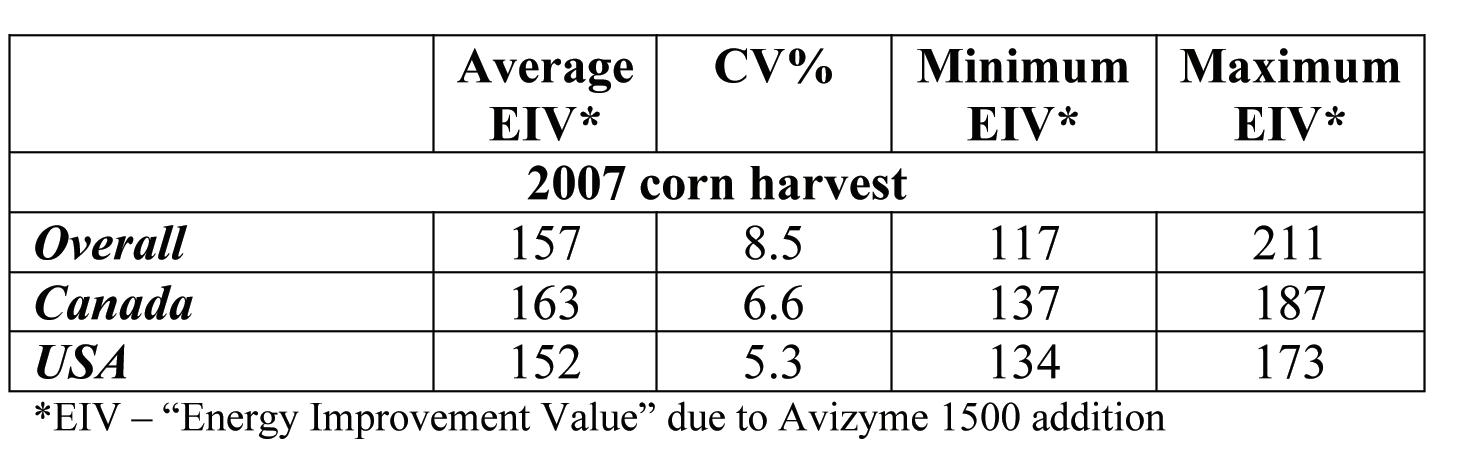
The degree to which the enzyme blend can improve the energy digestibility of corn is expressed as an Energy Improvement Value (EIV). Danisco identified that several factors influence the degree to which the enzyme blend can improve the energy digestibility of corn. These include starch, protein and oil content, starch digestibility and protein solubility index (which provide an indication of the degree of protein binding with other nutrients in corn). These factors are measured routinely in the Danisco laboratory to assess the EIV of different corns.
Table 2 summarizes the average EIV of the 222 corn samples harvested in 2007, as well as the key countries, U.S. (67 corn samples) and Canada (48 corn samples). The average EIV for all samples was approximately 157 kcals/kg, ranging from 117 kcals/kg to 211 kcals/kg.
MORE PROFIT
In broiler production systems, feed is the biggest single cost and profitability depends on the relative cost and nutritive value of the key ingredients. As indicated, corn is inherently variable and therefore maximizing its nutritive value and minimizing its variability can significantly improve the economics of broiler production.
The knowledge gained from our research into corn variability led directly to the development of a unique service – Avicheck™ Corn. The service enables broiler feed manufacturers to optimize their use of Avizyme 1502, according to the quality of corn used in the feed formulation. The service includes a unique laboratory assay that estimates how much Avizyme 1502 can improve the ME [of corn, reported as the “Energy Improvement Value” (EIV). Including Avizyme 1502 and the new higher energy corn into the feed formulation provides opportunities to reduce feed costs. Typically the higher energy corn replaces some more expensive high-energy ingredients, such as fat or oil.
The service also includes an economic model that estimates the value of the enzyme blend to the broiler producer accru-
ing from both reduced feed costs and improved broiler bodyweight uniformity. The financial benefits are very attractive. For example, the current net financial benefit to a Canadian broiler producer from using the enzyme blend, as predicted by Avicheck Corn, is approximately $ 5.00 Cdn/tonne of feed. This currently equates to an additional $1.1 million Cdn of income annually for a broiler producer processing 1,000,000 birds a week. Avizyme 1502 is a flexible product that can be used in diets containing both corn and wheat.
It seems that high corn and fat/oil prices are here to stay for the foreseeable future. For commercial broiler producers looking to maximize production efficiency and improve bird uniformity these latest advances in enzyme technology represent an exciting and significant step forward. ■
Enzymes and Poultry Feeding
According to a recent paper in the International Journal of Poultry Science, a large number of enzymes – such as carbohydrases, proteases, phytases and lipases – are used, most often in combination in feed preparations, to increase nutrient digestibility, remove antinutritional factors (for example, those from mycotoxins), reduce environmental impacts from manure, and improve overall production efficiency.
Two economic approaches to enzyme usage are commonly employed when considering their inclusion in a diet formulation. The first is to supplement a standard diet with enzymes, the goal being to enhance overall performance. The second use is to manipulate the diet formulation by reducing nutrients (or utilizing lower quality feedstuffs) and adding enzymes to restore nutritional value, equal to a standard diet.
Economic and Environmental Impact of Using Exogenous Enzymes on Poultry Feeding, International Journal of Poultry Science 7(4): 311-314, 2008.
TABLE 2. ENZYME ADDITION IMPROVES THE ENERGY
PLEASE CHECK ONE:
❑ Poultry Producer or Employee
❑ Government, Libraries, Schools, Universities
❑ Hatchery, Hatchery Employees
❑ Fancy or Show Poultry
❑Wholesale Produce and Processors, Further Processing
❑ Equipment Manufacturers
❑Drugs, Laboratories, Vaccine Companies, Chemical
❑ Veterinary and Lab Technicians
❑ Feed Manufacturers, Feed Additives, Distributors and their Salespeople
❑ Other (please specify)
- Payable to Annex Publishing & Printing Inc.
c/o Annex Publishing & Printing Inc. P.O. Box 530, 105 Donly Dr. S. Simcoe, Ontario N3Y 4N5 e-mail: cnowe@annexweb.com www.canadianpoultrymag.com
PIC Update Midnight Feeding
Effect on the bone density and egg quality of brown and white table egg layers
BY TIM NELSON, EXECUTIVE DIRECTOR AND KIMBERLY SHEPPARD, RESEARCH CO-ORDINATOR
As laying hens age, both egg quality and bone density decrease. Decreased egg quality translates to economic losses for egg producers. Decreased bone density (osteoporosis) is a welfare concern for a couple of reasons. Osteoporosis can hamper a bird’s ability to reach food and water and secondly, weakened bones can break easily both during production and depopulation. This is painful and also results in a loss in egg production if it occurs during lay. Some birds are more prone to osteoporosis than others, therefore if producers are experiencing a problem with osteoporosis in their flocks, it is important that they have management strategies to help control this problem.
Doug Korver, together with Crystal Riczu and Kerry Nadeau at the University of Alberta, has been studying possible ways to make the bones of older hens stronger. One of the reasons bones become weak in laying hens is that some of the calcium being used to make eggshell comes from the bone. This happens when the digestive tract is empty and there is therefore no calcium in the gut to use in eggshell production.
Most of the feed that hens consume
before the lights go out is digested before the lights come on in the morning, and since shell calcification takes approximately 20 hours, much of the process is occurring at night when there is no dietary calcium left in the digestive tract.
Korver and his team investigated whether allowing an hour-long midnight feeding could increase the amount of calcium coming directly from the digestive tract for eggshell formation, for both white and brown layers.
Their findings? Overall, midnight feeding did not improve the skeletal health of the birds, egg production, or egg shell quality. The researchers say it is important to note, however, that the birds used in the study may
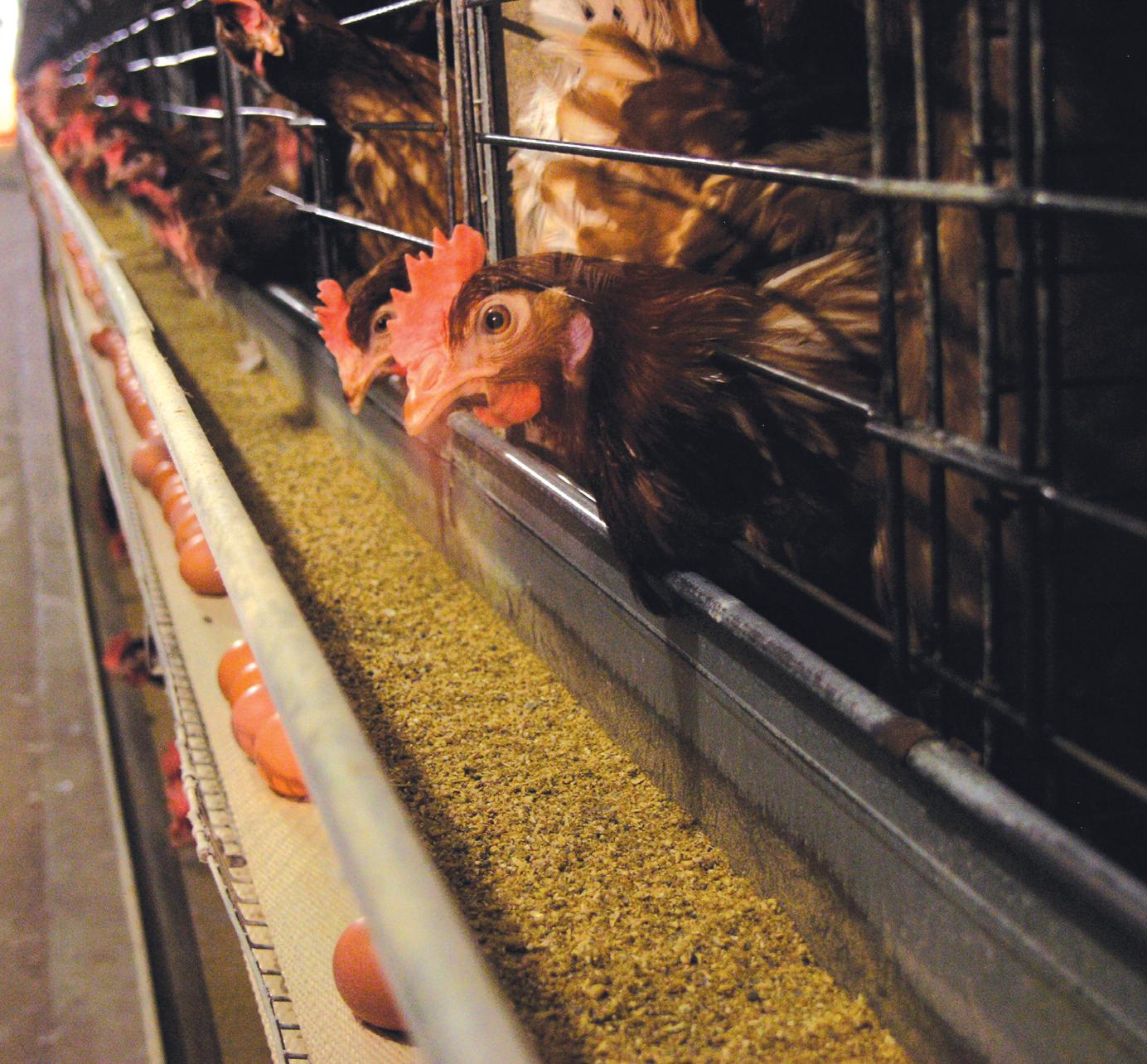
Dr. Doug Korver examined whether providing an hour-long midnight feeding could increase the amount of dietary calcium available for birds, preventing calcium uptake from bones.
not have been prone to osteoporosis and therefore showed no benefit from the midnight feeding. They suggest that in the instance of osteoporosis developing in a flock, midnight feeding may still be beneficial. To read more about this project, visit: www. poultryindustrycouncil.ca and click on “Research Results.”
PIC Update
FEATURED RESEARCHER – DOUG KORVER
Doug Korver was born and raised in Lethbridge, Alberta., Canada. He graduated from the University of Saskatchewan in 1990 with a Bachelor of Science in Agriculture, and began a Master’s degree program at the University of Delaware. During his time there, he investigated to role of dietary fat stability on feed quality and broiler chicken performance. He completed the M.Sc. degree in 1993 and began his Doctoral program at the University of California, Davis. His research at Davis focused on the interaction of nutrition and inflammation, as modulated by omega-3 fatty acids. His PhD was conferred 1997.
Doug returned to the University of Saskatchewan to take up a Post-doctoral Research Fellowship, working with Dr. Hank Classen.
In May of 1997, Doug began his appointment as Assistant Professor of Poultry Nutrition at the University of Alberta.
Relevance of his research to the poultry industry remains a hallmark of his approach to research. Recently, in collaboration with other researchers at the University of Alberta, he has developed and is using the Indicator Amino Acid Oxidation method for the determination of amino acid requirements of poultry to assess changes in protein synthesis during the inflammatory response in broiler chickens.
Doug’s interest in avian bone metabolism has led his research group to validate the use of Quantitative Computed Tomography to measure distribution of bone mineral among various bone types in poultry. This method allows bone mineralization in individual birds to be followed through the various stages of production.
Doug is active in teaching, and has won several individual departmental, faculty and university teaching awards. As a member of the Alberta Poultry Research Centre he also shared in the 2004 World’s Poultry Science Association Education Award. In 2008, he was awarded the Poultry Science Association’s “American Feed Industry Association Nutrition Research Award”.
Doug is the author or co-author of 30 peer-reviewed papers, six book chapters, and 52 abstracts at scientific conferences. He has presented over 60 invited talks in North and South America, Europe and Asia at scientific and poultry industry technical conferences.
Role of altered hemostasis in FLHS
Fatty Liver Hemmorhagic Syndrome (FLHS) can affect up to five per cent of hens at peak of lay and is therefore of economic significance to producers. Livers from hens that die from this disease have excessive fat accumulation and signs of internal bleeding in multiple areas. Preliminary evidence suggests that there is a difference in the rate of blood clot formation in plasma from FLHS-susceptible hens compared to plasma from normal hens.
Drs. Darren Wood and Jim Squires and their research team at the University of Guelph thought that if they could discover the cause of blood clotting abnormalities in laying hens with FLHS, then not only might it provide the industry with a way forward in managing this important disease, but it might also provide a model to study the impact of abnormal blood coagulation in other diseases where blood clotting abnormalities have also been observed.
In this study the researchers fed three different diets: standard, higher fat and omega-3 to an inbred strain of hens predisposed to FLHS, and to an age-matched single-comb white leghorn (SCWL) flock. Fat enriched diets were fed because they have previously been shown to induce the FLHS syndrome. The researchers investigated which factors regulate thrombin,
generation in plasma from the normal and FLHS-susceptible laying hens. Thrombrin is the protein responsible for blood coagulation. The method also allowed them to look at whether changes in blood parameters of FLHS-susceptible laying hens are representative of the situation in normal laying hens that spontaneously develop FLHS.
Their findings? It was found that the strain of laying hens susceptible to FLHS did exhibit a higher frequency of FLHS than the SCWL hens. The FLHS susceptible birds also exhibited a slightly higher clotting activity. However, despite this and regardless of strain or diet, the higher frequency of the syndrome observed in the FLHS susceptible hens did not appear to be related to abnormalities in the hemostatic (blood clotting) system.
This suggests that coagulation abnormalities do not appear to be the reason for hemorrhage associated with FLHS.
Some differences in fatty acid (lipid) profiles possibly associated with the strains and diets were observed and this observation has led to a further investigation. The thinking behind this being that these lipid variations may cause cell membrane abnormalities, which could occur in the liver or thrombocytes and contribute to the development of the syndrome. To read more about this project, visit www.poultryindustrycouncil.ca and click on “Research Results.”
DRS. DARREN WOOD AND JIM SQUIRES, UNIVERSITY OF GUELPH
FEATURED RESEARCHER –DARREN WOOD
Darren Wood has been a faculty member in the department of Pathobiology since 2002. He graduated with a Doctor of Veterinary Medicine in 1994 from
PIC Update
the Atlantic Veterinary College, and completed graduate training and board certification in veterinary clinical pathology in 2001. He has a special interest in the diagnosis and pathogenesis of coagulation disorders in multiple species.
2008 Advance Payments Program Federal Assistance to the Livestock Sector
Through the Advance Payments Program (APP), producers can get repayable cash advances to help improve their cash- ow.
As part of a national action plan to help hog and cattle producers, improvements have been made to the APP for 2008 to give livestock producers easier access to cash advances, including:
• Removing the requirement for livestock producers to use a Business Risk Management (BRM) program as security for a cash advance and allowing producers to use only inventory as security. Producers are still required to participate in an eligible BRM program to get a cash advance.
• Declaring that a state of severe economic hardship exists for the cattle and hog sectors so that emergency advances of up to $400,000 are available to eligible producers for the 2008-09 production period.
To apply for the 2008 APP, contact a participating producer organization by visiting agr.gc.ca/app or call 1-888-346-2511.
Growing Forward
A vision for a pro table, innovative, competitive, market-oriented agriculture, agri-foods and agri-based products industry.
PIC PICKS
Research Day
This year’s research day was definitely a winner. “I’ve been coming to research day for years –- this was the best in a long time, really practical,” said Brian Baynton, Alltech.
Focusing on research that’s delivering what the market is looking for and overcoming production issues, this year’s research day really drilled down to our industry’s core business with some eye- opening research and insight into how we can meet emerging market trends for nutritionally superior poultry products by manipulating production and some of the management issues that this might reveal.
For a full report, see our website.
Annual Meeting
What, already? Please make a date change in your diaries. The PIC Annual Meeting will be held in conjunction with an industry meeting on Oct. 7, venue to be confirmed.
Golf Tournament
It sounds like advertising, but it’s true! By the time you receive this, the PIC golf tourney, scheduled for Sept. 10, will be well on the way to being sold out! Register now at www.poultry industrycouncil.ca
Research Resources
What do we need? Where should they be located?
Have your say on the web http:// poultryresearch.blogspot.com/. If you haven’t got web access but would like to hear what others are saying and join in the discussion by posting a comment through PIC, simply give us a call at 519-837-0284. ■
Looking for books on Poultry?
www.annexbookstore.com
Phone: 1-877-267-3473 Fax: 1-877-624-1940
A New Packer From Jansen NEW PRODUCTS PRODUCTS
n automated system for the on-farm packing of both table and hatching eggs has been added to Jansen Poultry Equipment’s roster.
Depending on the size and type of tray used, the machine is capable of a maximum throughput of 28,000 eggs per hour and can be adapted to handle either fibre or plastic trays. With it’s integrated tray de-nester, the machine can be located in rooms where space is at a premium.
In addition to significant labour saving benefits, the machine’s gentle egg
Rear Discharge Mower
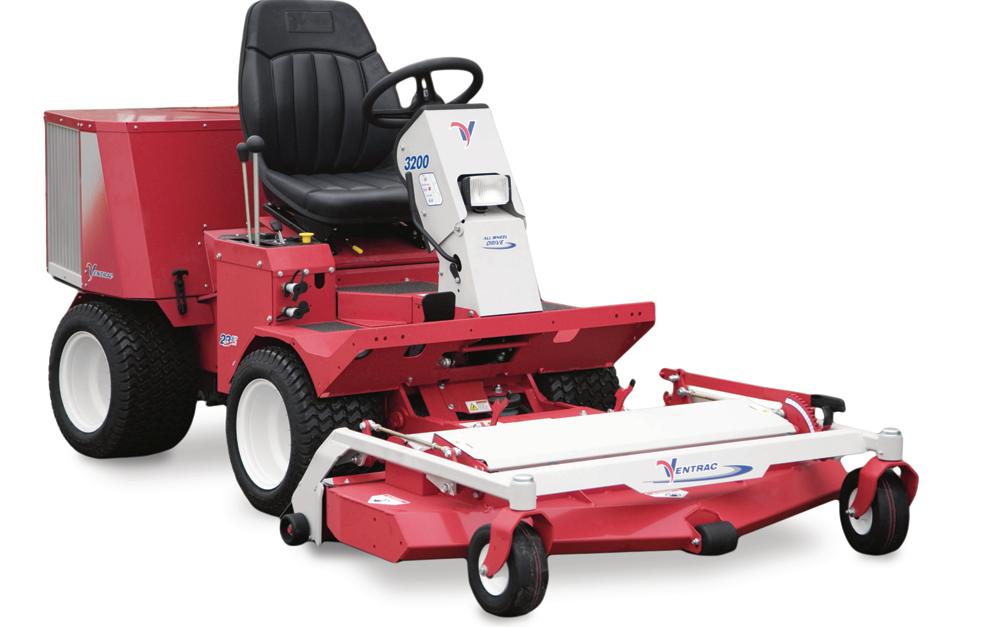
Venture Products, Inc. has designed the new Ventrac LK520 Rear Discharge Mower for superior trimming on both the left and right sides.
The LK520 is the newest in Ventrac’s line of deck mowers and is designed to attach to the 3000 series tractors. As do all of Ventrac’s attachments, the LK520 attaches using Ventrac’s Minute Mount system, allowing one person to add, remove or change
handling technique also ensures a minimum number of seconds when packing table eggs and maximum hatchability when it comes to hatching eggs.
Commenting on this latest addition to the Jansen Poultry Equpment range of egg handling equipment, Jansen Poultry Equipment’s managing director Mari van Gruijthuijsen said “We have been installing third-party makes of farm packers for some years now as they
attachments in about a minute or less, with no tools or heavy lifting.
The LK520 combines a
52-inch cutting width and 14 cutting positions ranging from 3/4 to 4 inches in cutting height. The cutting
complement well our range of nest boxes and FlexBelt egg conveyors. However, as demand has grown for this type of automation across all types of egg production units we decided it was time to design and manufacturer our own farm packer.”
The Jansen packer has been installed on several farms across Holland and in the UK. For further details, contact your nearest Jansen Poultry Equipment dealer.
height adjustment can be done without tools using a single quick select lever.
The Rear Discharge Mower is designed with a center front roller for anti-scalping and full rear roller for even cutting and striping. The mower uses three 18-inch mulching style blades, and the flip-up deck design allows easy service and cleaning. The LK520 is available at authorized Ventrac dealers.
New LCF Software
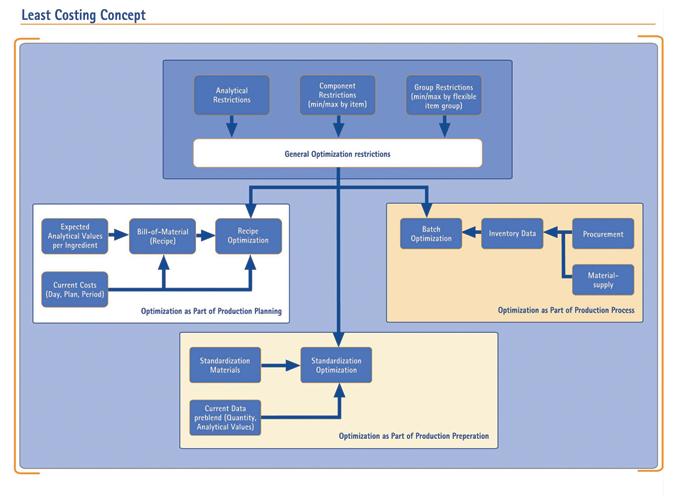
CSB-System recently announced a new version of its least cost formulation software. Using different material potential, such as protein content, fat content and other material attributes, the new system is more modular and allows multiple different approaches to Least cost formulation in the planning stages as well as in the operational production execution. The new system can be integrated into the CSB-HACCP module, so that lab tests for these attributes can directly feed the dynamic formulas on the production floor.
For more information, please visit www.csb-system.com.
• White polyethylene flush mount housing (black available in some sizes)
• Standard design – self draining
• Designed to meet the rigorous demands of farm/agricultural ventilation
• Energy efficient Multifan or Performa+ Leeson motors
• 10" - 60" sizes available
• Available in 24" Variable Speed and 36" Single Speed
• One piece polyethylene housing creates the most efficient venturi, resulting in incredible C.F.M.performance. (24" =10,200 C.F.M. @ 18 cfm/watt and 36" = 15,300 C.F.M. @ 26 cfm/watt.)
• A multi-position bracketallows youto tilt and lock the fan angle and air flow direction
“AIRCOOL”
Centrifugal Cooling System
• A cooling system without using nozzles
• Adjustable water volume
• Mobile or stationary unit available
• Use for cooling air, humidity, recirculation, dust and odor control
RECIRCULATION FANS
Circular Recirculation Unit
• 16" and 20" diameters
• 3600 coverage using directional wind vanes
• Superb alternative to race tracking
• With Multifan or Performa+ Leeson motors
Circulating Fan
Bio-Mos CFIA Approval
Alltech announced that Bio-Mos® has recently received approval from the Canadian Food Inspection Agency (CFIA) for its product description in swine and poultry feeds.
According to the agency, Alltech is now allowed to make the following statement in Canada: “Bio-Mos is a yeast cell wall supplement for swine, broiler and turkey feeds, improving efficiency of gain and average daily gain in these species.”
This product’s approval follows in the footsteps of Ecocert Canada’s allowance of Bio-Mos for organic use in animal feeds.
• 12" – 24" diameters • Polyethelyne housing
• with Multifan or Performa+ Leeson motors
The ‘Wave’Environmental Control
• Large 2.75" X 5" LCD Display Screen and 12 Quick Key Pads (to grouped settings) allows easy and precise Temperature, Humidity, Heating, Lighting and Airflow Management
• The Wave ' manages 4 variable stages and 8 or 16off/on relays for cooling, up to 8heaters, 4 clock outputs and up to 8 inlet zones
• Humidity control by increasing ventilation and heat activation
• History of water consumption, temperature, humidity and birdcount
Poultryhouse Fan
• High quality material and aerodynamic air inlet
• Variable speed Performa+ motor
• Dual voltage, fully enclosed motor
• Low energy consumption and noise level
• 16" and 20" modelsproducing 2792 and 4770 cfm
• Includes hanging hardware
A SMARTER OPTION FOR ADMINISTERING SOLUTIONS INTO WATER SYSTEMS
• Select Doser performance yields highly accurate dosages all the time.
• Accuracy is 95+ percent, superior to water or electric powered pumps.
• Longer lasting with less maintenance than water powered dosers.
• A diagnostic tool for your watering system.
PSI
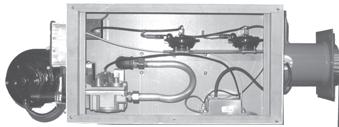
Unvented Unit Heater
• Total stainless steel construction
• Hi-Low switch
• Watertight enclosures
• Propane and natural gas
• Available in 20,000 to 225,000 BTU units
Totally Controlled Heat from
' The Ultimate Brooder '
• Maximum radiant surface area
• Reliable spark ignition
• Dual safety pressure switches
• Easy, unobstructed access to control components
• Various models for multiple applications (Farms, Garages, Workshops etc.)
Varifan®
• LX-641, LX-642 and LX-644 with optional SVM-1 (Smart Ventilation Inlet Module)
• DIP-1 digital Inlet Positioner
• ECS"M" Series 1, 2, 3, 4 and 5 stage controls
• IC-610 Programmable Logic Computer controls
• Plus numerous ‘Special Application’controls
• 2 yr.warranty
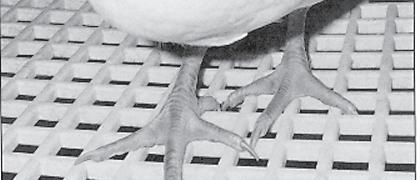
• Material polypropylene
• Will not harbour bacteria
• Easily cleaned
• Large 2' x 4' panels
• Reduces floor problems and breast blisters
• Keeps birds warmer, dryer, more productive
• Durable - minimal maintenance
• Easily installed
• Will not rust or corrode
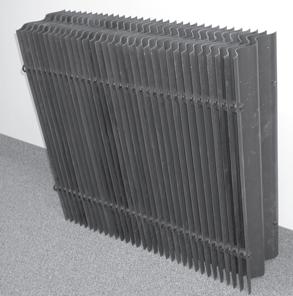
LIGHT TRAP/ DARK OUT
• High light reduction
• Low resistance to air flow
• Simple Installation
• Easy to clean
• Uses P.V.C.snap release spacers
CPRC Update
Under one of its priority research programs, the Canadian Poultry Research Council (CPRC) has provided funding for a number of projects relating to the Environment. Below are summaries of the final reports for two of them:
VETERINARY PHARMACEUTICALS AND THE ENVIRONMENT
When animals are given medications such as antimicrobials and coccidiostats (collectively referred to as veterinary pharmaceuticals, or VPs), residues can sometimes be found in their manure. These residues are introduced into the environment when manure is applied to agricultural land. Drs. Shiv Prasher and Xin Zhao at McGill University, and Dr. Ciro Ruiz-Feria of Texas A&M University have been investigating the fate and transport of VPs in soil and water. There has been relatively little work done in this area, especially specific to Canadian environmental conditions; more information is therefore required to determine the extent to which VPs persist in agricultural soil and runoff, and what risks are posed by their presence.
Dr. Prasher’s team took manure from Quebec poultry farms feeding one of three coccidiostats (monensin, narasin or salinomycin) and applied it to soil at an equivalent of 10 mg of manure per hectare (~4.5 ton per acre). The soil was previously free of poultry manure for 10 years. The research was conducted in specially designed devices, known as lysimeteres, which were used to track the movement of these VPs through the soil and into groundwater. Rainfall was simulated to represent the 50-year maximum in the area over three months (July to September). Soil samples were collected from the surface and at three depths (0.1, 0.3, 0.5m), and leachate (groundwater runoff) was collected 0.9m below the surface throughout the experiment.
Persistence in Soil
The researchers found that the VPs varied in their persistence in the soil and in the rate at which they moved into groundwater. Monensin persisted the longest in soil and was detectable at all depths throughout the 60-day experiment. A small amount of monensin was found in the drainage water until day 15. The amount of narasin found on the surface declined over a 30-day period, while subsurface levels declined below detection limits by Day 15. Levels of salinomycin declined quickly at the soil surface and were undetectable by Day 3. Below the surface, salinomycin was only detectable until Day 7. It was detectable, however, in drainage water throughout the entire experiment. These results suggest that while monensin can persist in soil over a longer period, salinomycin is more mobile and may present a greater threat to water resources.
Predicting VP Movement
The data collected in this study are being tested against
a mathematical model designed to predict movements of VPs in soil and water. It is hoped that information gathered during ongoing work will lead to Best Management Practices designed to minimize any negative effects of VPs in the environment.
Biological Significance
Work is also underway to determine the biological significance of VP residues in soil and water. Preliminary information in one study, for example, indicates that half-lives of three herbicides (atrazine, metolachlor, and metribuzin) increased with the presence of VPs in soil. One of the primary mechanisms of pesticide degradation in soil is by microbial action; the presence of VPs in soil may be affecting microbial survival in soil. However, more work needs to be done in this area before any concrete conclusions can be drawn.
CALCIUM AND PHOSPHORUS FROM LAYERS
Drs. James France and Steve Leeson at the University of Guelph and Dr. Ermias Kebreab at the University of Manitoba have developed a mathematical model to describe and predict calcium (Ca) and phosphorus (P) flows in layers.
The first step in this project was to perform a literature review to collect relevant data regarding the many interactions of Ca and P in layers. Data collected were entered into a database that was used to develop the model. Once developed, a functional model was tested using data from the literature and was shown to accurately predict outcomes that matched those measured in real experiments. A working mathematical model of Ca and P flows in layers will help industry (producers, nutritionists, etc.) make dietary and management decisions to optimize Ca intake and reduce P excretion in manure. This has the potential economic impacts of saving dietary input costs while maximizing layer productivity, and will help reduce the environmental impact of commercial layer production.
Funding for both of these research projects was provided by the CPRC and the former joint Natural Sciences and Engineering Research Council/Agriculture and Agri-Food Canada matching fund program.
For more details on any CPRC activities, please contact Gord Speksnijder at The Canadian Poultry Research Council, 483 Arkell Road, R.R. #2, Guelph, Ontario, N1H 6H8, by phone 289-251-2990, fax: 519-837-3584, or e-mail: info@cprc.ca, or visit us at www.cp-rc.ca. ■
The membership of the CPRC consists of the Chicken Farmers of Canada, Canadian Hatching Egg Producers, Canadian Turkey Marketing Agency, Canadian Egg Marketing Agency and the Canadian Poultry and Egg Processors’ Council. CPRC’s mission is to address its members’ needs through dynamic leadership in the creation and implementation of programs for poultry research in Canada, which may also include societal concerns.
Book yourspaceNOWfor
New
Field Inspector
The Canadian Egg Marketing Agency (CEMA) manages the national egg supply and promotes egg consumption while representing the interests of regulated egg producers in Canada.
If you want to “Get Cracking™” CEMA is now recruiting for a Field Inspector. You must have knowledge of poultry/livestock management and experience with HACCP-based programs.
Key responsibilities and requirements include:
• Field audits of producer sites
• Promoting food safety and animal care programs
• Verifying products by monitoring grading stations and breaking plants
• Must be able to communicate (both orally and in writing) in English and French
• Eastern Ontario/Southern Quebec territory
Please visit the Careers section at www.canadaegg.ca for more details. Resumes may be emailed to careers@canadaegg.ca
Performance Optimizing Genetic Gain
Reconciling reproduction, yield, and body weight in a nucleus turkey breeding program
BY BEN J. WOOD, HENDRIX GENETICS LTD., KITCHENER, ONT.
Balanced breeding is the catchphrase used by all of the primary breeding companies, but what this means or how it is developed is less understood. Here, I will describe the development of the economic values used by Hybrid Turkeys (a division of Hendrix Genetics Ltd.) to assist in setting its breeding goals.
The breeding goal should take into account all the economic impacts on production and also some factors that do not, yet these non-economic factors can also have an impact in the market and on breeding goal.
The commercial turkey industry has a well-defined structure with implicit input costs and returns and for this reason it is well suited to economic modelling. The behaviour of the system can be described in terms of mathematical equations that define the relationships between production variables. The input variables must be reasonable (and validated) to give the results power but given this proviso the importance of each trait in the breeding objective can then be defined.
A model that accurately describes integrated commercial turkey production should by definition apportion the appropriate selection weight to each
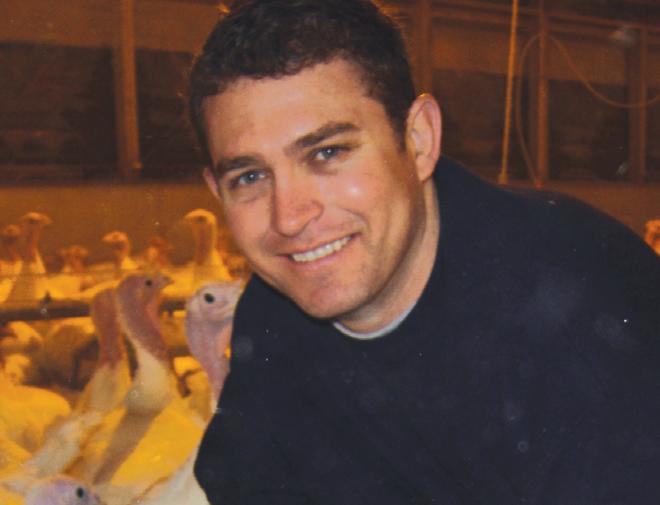
Ben Wood (right) explains that by using a selection index based on factors impacting profitability, the nucleus turkey breeder aims to breed a product that optimizes the profitability of production at each level of the chain.
trait. The following model estimates margins using commercial production and processing costs together with processing plant production returns.
Breast meat yield, feed conversion and body weight have significant impacts on the margin; similarly, the reproductive traits (egg production, fertility and hatchability) also have an effect on
profitability through their impact on commercial poult cost. By using a selection index based on factors impacting profitability, the nucleus turkey breeder aims to breed a product that optimizes the profitability of production at each level of the chain but that ultimately optimizes profitability of the whole integrated company.
Performance
PRODUCTION MODEL
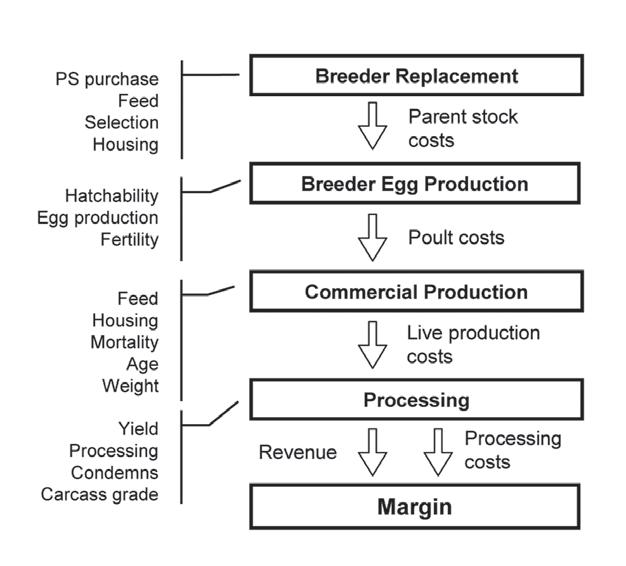
Turkey production was evaluated as a whole system with each component contributing to profitability through the supply chain (Figure 1). Commercial poult cost is a function of the cost of obtaining parent stock hens and rearing to capitalization, level of parent stock tom selection, costs through lay, number of eggs produced, fertility and hatchability.
The cost in conditioning until selection includes feed and housing (taking into account maximum growing density), labour costs and mortality along with parent stock poult costs. The cost of a selected breeder candidate is increased proportionally to the number of parent stock selected minus the revenue generated from the commercial processing of non-selected breeder parents. Post-selection (assumed 20 weeks) the birds still need to be kept until the start of production. Costs through this period are principally housing and feed costs taking into account once again the density the birds are kept under and the expected mortality at which time the cost of a capitalized breeder can be calculated. Through the laying period the cost of feed, housing and labour need to be calculated against the time in lay and lay-
ing density. Additional cost is involved in investment in parent stock and rearing costs before obtaining a return in commercial poult production. Once these costs are calculated, the poult cost is then a function of these costs spread over the number of eggs produced corrected for fertility and hatchability.
Model equations for commercial production and processing are scaled to a common unit of cost and profit per live weight delivered to the processing plant. Poult cost previously calculated is adjusted to account for birds that do contribute to returns but are lost as mortalities in production. Brooding and commercial housing cost are calculated using the maximum density in each, slaughter age and brooding and slaughter weights.
Maximum housing densities were included with housing described in terms of cost/area/year to better reflect the change in capacity with different slaughter weights.
SPECIALIST SUPPLIERS OF:
◆ Ventilation & Heating Systems
◆ Feed & Watering Systems
◆ Equipment for Poultry complexes
◆ Authorized dealer for G.S.I., Big Dutchman, Val, Canarm and Agile
Nick Woodhouse – Operations Manager Kelley Glass – Accounts Administrator
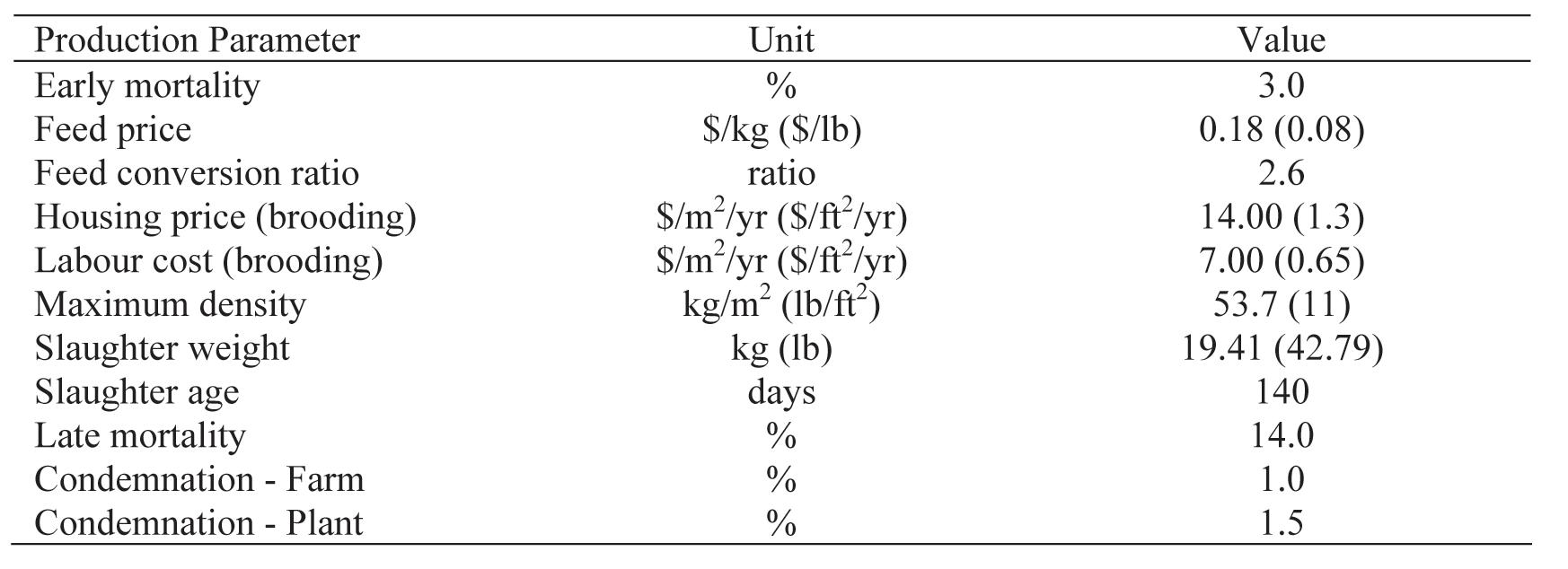
TABLE 1. MANAGEMENT AND COMMERCIAL PRODUCTION BASE PARAMETERS
TABLE 2. CARCASS YIELD (% OF LIVE WEIGHT) AND CARCASS COMPONENT VALUE
Performance
FIGURE 1. SUPPLY CHAIN WITH SIGNIFICANT INPUTS AT EACH LEVEL (MODIFIED FROM WOOD AND BUDDIGER 2007)
Feed cost is calculated using the expected feed conversion, slaughter weight and feed price. An adjustment is made for birds taken from the commercial house but lost due to condemnation, consequently adding to the cost of production without a resulting increase in revenue. The total cost of production per live weight delivered can then be calculated as the sum of the cost of feed, housing, adjusted poult cost plus the added correction for birds lost to condemnation divided by the slaughter weight. The cost in processing a carcass was calculated as the sum of the fixed overhead cost per bird and a variable cost related to the speed and efficiency of the line. The total cost of processing is then divided by the slaughter weight. Revenue generated from the processed bird is a function of the yield and the value of the meat yielded from each carcass. The total return per weight processed is then the sum of these values. The margin for production is then calculated as the value of the processed meat subtracting the cost of production and processing.
MODEL PARAMETERS
Commercial base values for production are shown in Table 1 with these figures validated against industry values (Agri Stats Inc, 2007). Base carcass composition and the value of each component of the carcass are shown in Table 2. The carcass parts value was simplified to only include breast, leg and parts with latter
Performance
comprised of a composite of the lower value components of the carcass with wing, rack and giblets. Individual values for these elements add little to a margin analysis given the relatively small value compared to the breast and thigh.
RESULTS
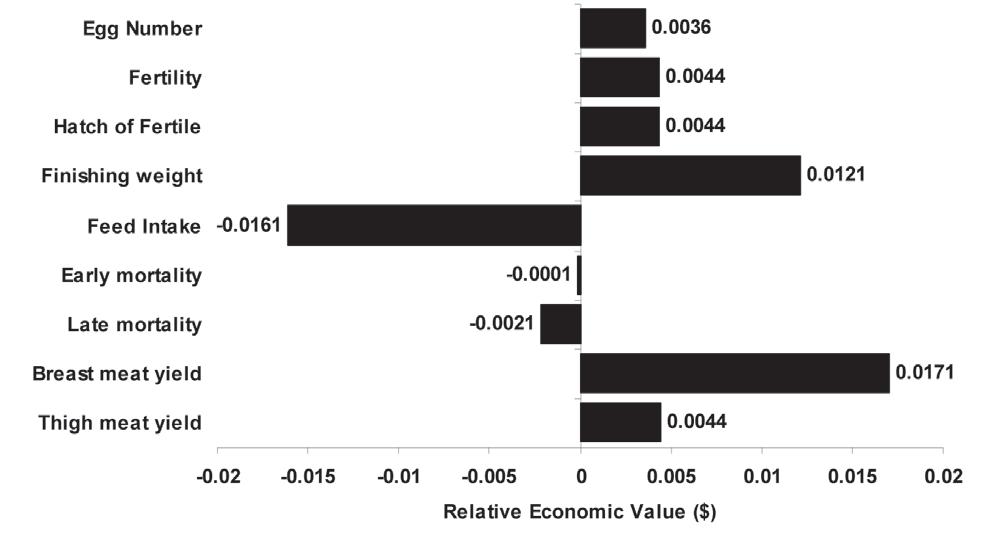
The economic values (EV) for a one unit change in a trait can be calculated and in the strict sense these values should be used to calculate the index and goal in a breeding program. An easier method to visualize the importance of each trait is to use the relative economic values, which take into the amount of genetic variation present and give an indication of the change that could be achieved.
The relative economic values are shown in Figure 2. From the figure, the importance of bodyweight, breast meat yield and feed consumption (or conversion) has on margin, and consequently, the relative economic value is clearly visible. They all have similar and relatively large economic values compared to the other traits. The reproductive traits had a significant but relatively smaller economic value compared with feed, weight and yield.
RESULTS OF INDEX SELECTION
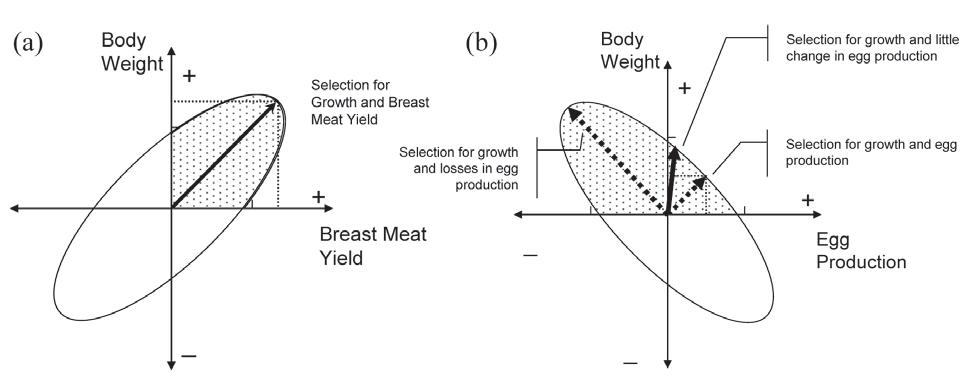
The overall result of selection for a combination of body weight, yield and egg production can be described in terms of the genetic relationship or correlation between the traits. The relationship between body weight-yield and body weight-egg production are positive and negative, respectively. The relationship and the result of selection based on a combination of selection based on a balanced objective are shown in Figure 3.
The figure displays two dimensionally the possible outcomes of selection when there is either a positive (a) or negative (b) correlation between two traits. When there is a positive correlation, as for example between body weight and breast meat yield, selection for either trait will result in a strong selection for the other trait with the greater response depending
Safe to use humans, animals, environment
Multiple applications foam, spray or fog
Proven effective against most harmful disease causing agents
Non-corrosive to your equipment
Cost-effective based on your real needs THE PERFECT CHOICE in your Cleaning and Disinfection Program !
Performance
2. RELATIVE ECONOMIC VALUES FOR TOM PRODUCTION IN AN INTEGRATED TURKEY COMPANY
on the economic value of each trait.
In contrast, negatively correlated traits selection in one trait can lead to a decrease in the other such as increasing body weight at the expense of egg production. The middle ground, selecting for decreased body weight gain whilst maintaining or increasing egg production is the heart of balanced breeding. Using the example of two traits it is easy to visualize but when we move above two or three traits the number of dimensions cannot be visualized and we rely in the economic values calculated to place the appropriate
FIGURE 3. SELECTION BETWEEN TWO TRAITS AS VISUALISED IN TWO DIMENSIONAL GRAPH WITH TRAITS WITH POSITIVE (A) AND NEGATIVE (B) CORRELATION (MODIFIED FROM WOOD 2007)
weight on each trait to optimize the genetic gain.
To obtain the correct balance across all the traits in the breeding objective, appropriate weights must be apportioned to each when making a selection decision. This is further complicated when we consider that the economic values previously calculated are at the parent stock level for reproductive and commercial level for production traits. Reproductive traits expressed in the female line are often the result of a two-way cross and the commercial product is a further cross such that it can be the combination of three or four pure lines.
Transfer of the economic values must be such that the sum of the selection weights in the pure lines (or pedigree birds) closely matches that calculated for the whole integrated balanced breeding objective. Matching the selection weight of each line is required to produce the balanced parent stock and commercial product.
CONCLUSION
Feed intake, body weight and breast meat yield have a major impact on the profitability of integrated turkey production and consequently have relatively large economic values on which to base index selection. Of lesser value but still significant are the reproductive traits expressed in the breeder flock and mortality expressed in the commercial flock.
The economic values show the clear trend in the industry towards growing turkeys to increasingly heavier weights for further processing. The significant value of reproductive traits, particularly egg number, shows that a turkey selection goal must include some level of selection pressure on reproduction. With four-way cross-breeding, the challenge is to translate the economic value at the commercial and parent stock levels into separate breeding objectives for pure lines whose genetics constitute one half of the breeding stock or one quarter of the commercial bird. ■
REFERENCES
Agri Stats Inc. 2007. Monthly Turkey Reports, Fort Wayne, IN. Wood, B.J. 2007. Genetics - where can we take it? International Poultry Practice. 21:17-19.
Wood, B.J. and N. Buddiger. 2007. Calculation of economic values for turkey breeding using a production model. Association of Animal Breeding and Genetics. 17:45-48.
FIGURE
Research
APRC: Second Phase
A new feed manufacturing facility will allow researchers more flexibility and meet regulatory guidelines
BY DAN WOOLLEY
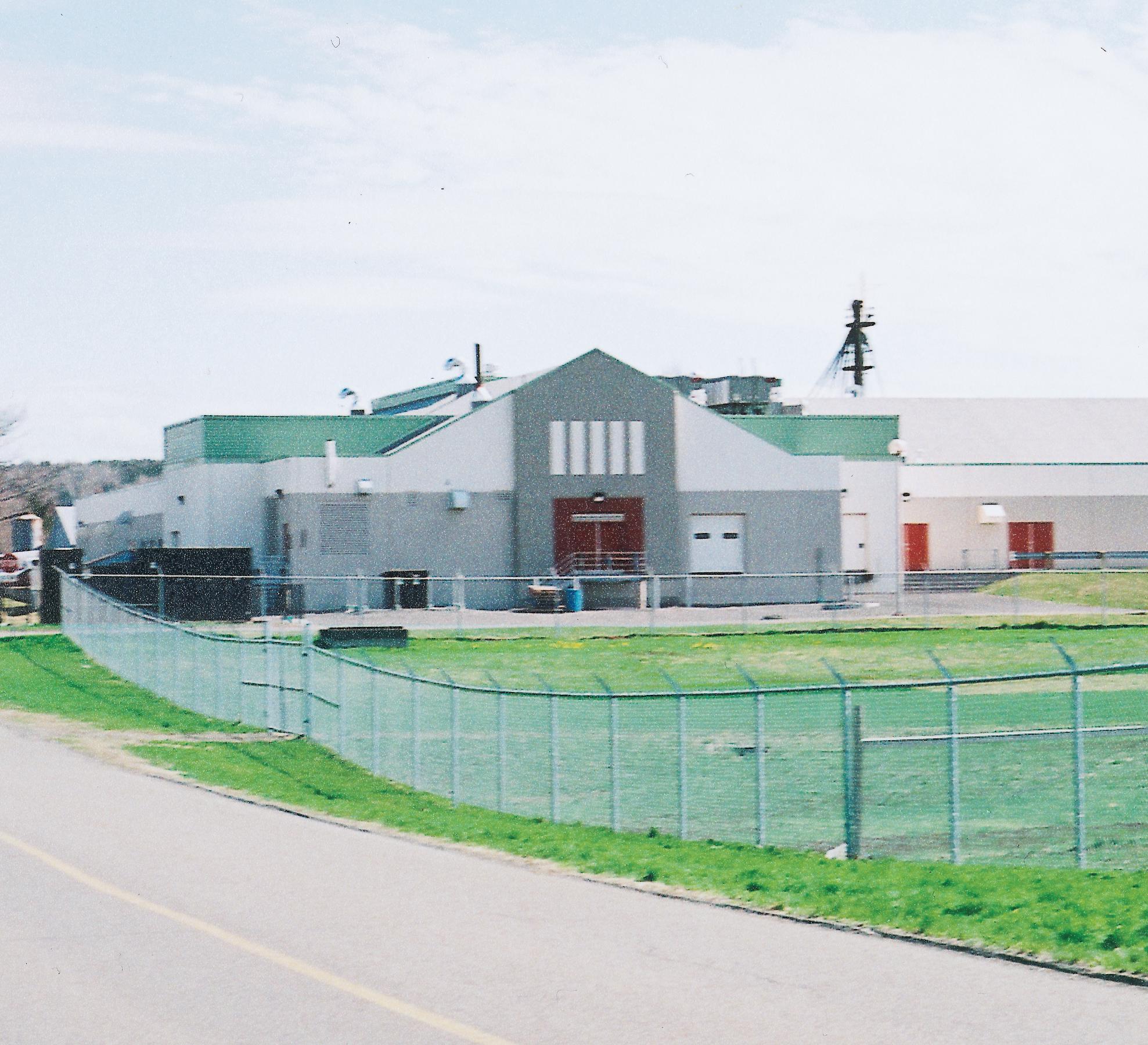
By mid-August, the second phase of the Atlantic Poultry Research Centre at the Nova Scotia Agricultural College should be completed.
Lana Crewe, NSAC’s poultry, fur and feed mill co-ordinator, hopes the new feed mill facilities will be tested and operating by September when students arrive for classes at the research centre.
The APRC has a dual role, she emphasized, of both research and instruction.
The new mill building replaces obsolete feed preparation facilities at the NSAC that were built in the mid-1960s. The mill and its equipment will cost between $1.3 and $1.5-million.
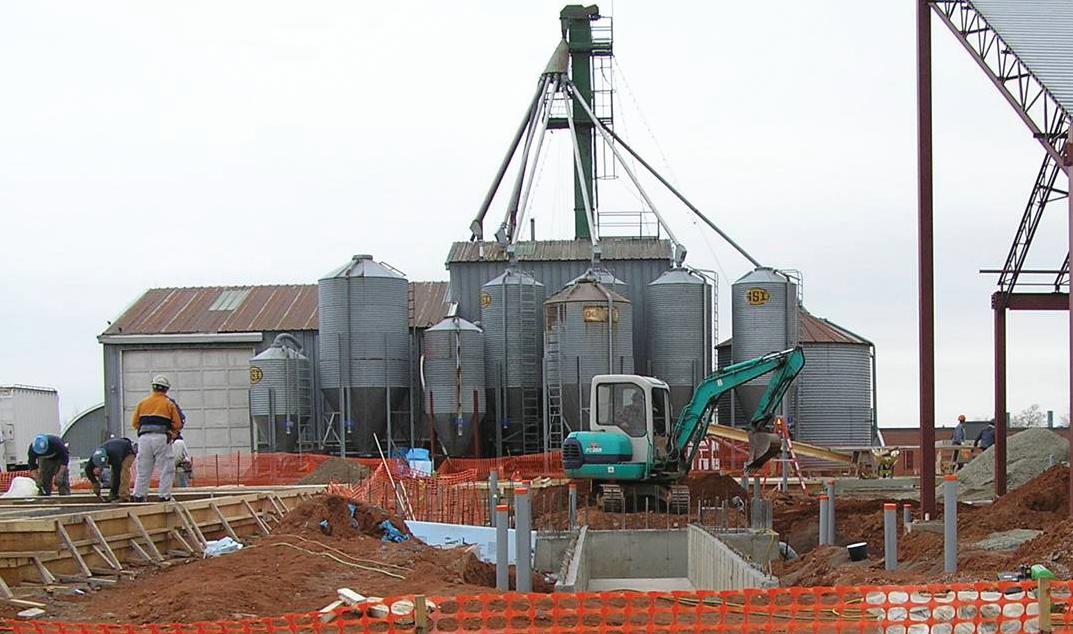
Around the 128 x 60 foot mill structure, Crewe said, there will be 10 bulk ingredient tanks of varying dimensions: four large tanks, two medium-sized vessels and four small tanks. The four large tanks, each of 2,000 cubic feet capacity, will hold wheat, corn, barley and possibly alternative ingredients.
The two medium-sized tanks, each of 1,150-cubic-foot capacity, will likely contain canola and soybean meal, while the four smallest 300-cubic-foot capacity tanks will possibly hold ingredients such as distillers’ grain and alfalfa.
Crewe added: “We purchase our ingredients, as much as possible, through local mills in town (Truro). Also, we buy from
QUALITY CONTROL
The Atlantic Poultry Research Centre (above) will house a modern feed mill for the NSAC, replacing the existing outdated facility (right).
our suppliers special nutrients, vitamins and minerals used in our micro-mixes.”
Regulatory changes have also dictated the need for new feed preparation facilities, she observed. “As things change in animal husbandry, quality control is required to meet the food safety requirements imposed on producers. So, our standards of feed preparation must be improved.”
She continued: “We have never had a pelletizing and small batch mixing facility. Now, students can come in and mix their own diets within a well-laid-out room with the appropriate equipment.”
Inside the feed facility, Crewe said the ingredient flow will follow best management practices, with ingredients arriving at one end of the building, then moving
Research
to the mill for processing and leaving at the other end as finished feed, which was not possible at the old mill building. “We will have computer software that will be able to track the product from the time it comes in until it leaves.”
The new facility will have a vertical mixer with a Windows-based computer for a batch control system, with a realtime automated display both at the mixer and in remote stations. “So, if I was at home; I could connect to it and see what was going on,” she said, adding, “ It will be able to give us the reports we need and the traceability that is required.”
Crewe noted: “The goal is to have the mill follow the good management practices and ultimately become HACCP-certified.”
She said the APRC mill is modelled “after one we saw at the University of Manitoba.”
The APRC feed facility will also have a two pair, high roller/grinder mill, Crewe said. “It will increase our capability of what we process and produce.
As planned, the feed facility will provide diets for poultry as well as the NSAC’s cattle and sheep, plus, potentially in the future, for its aquaculture and fur animal research.
The mill will also have exterior loadup tanks for processed feed for loading on trucks that will then transport it to the APRC and the nearby Ruminant Animal Centre or wherever NSAC is doing animal research. “This is a huge difference for us because previously we had filled the trucks inside the mill building,” she said.
“We are using portable poly bins for small diets. They will be on pallets which a forklift will then take to the poultry feed room which can hold 16 of these bins, 12 for broilers and four for layers,” Crewe said.
“This way we will have no more open bag products. Everything will be in a sealed bin and we will eliminate the use of totes for our feed.”
The new feed mill building will be designated as The Chute Animal Nutrition Centre, in recognition of
THE NEW FACILITY WILL HAVE COMPUTER SOFTWARE THAT WILL BE ABLE TO TRACK PRODUCT FROM THE TIME IT COMES IN UNTIL IT LEAVES.
Dr. Harold Chute and his family, who donated almost $200,000 towards the construction cost of the feed facility.
Dr. Chute graduated in the NSAC degree program in 1944, going on then to further study at the Ontario Veterinary College, Ohio State University and the University of Toronto.
He had a distinguished career at the University of Maine as a poultry pathologist during which time he developed several strains of vaccine to combat Newcastle Disease.
The Chute Centre can mix small and large batches, do precision premixing, grind and roll ingredients, extrude ingredients, pelletize small and large batches and do ingredient inventory control. Its feed preparation will support animal science, said Crewe.
Following the official opening of the first phase of the $9.8-million APRC in May, 2007, two full cycles of broilers and a teaching flock have gone through the broiler research unit since last September. Crewe said the initial flock of layers which arrived last August are still in the egg research unit; and the next group of broilers arrived in the latter part of May, “when the next research cycle got underway.”
At the APRC itself, the controlled environment rooms are in the final design stage, with tentative plans calling for the building of two prototype rooms, “to work out the bugs,” she said, before building the rest of the controlled environment suite. ■
• CHICKS BORN WITH INTESTINAL BACTERIA: STUDY
The conventional wisdom among scientists has long been that birds acquire the intestinal bacteria that are necessary for good health from their environment, but a new University of Georgia study finds that chickens are actually born with those bacteria.
The Story of a Kentucky Super-brand
John Y. Brown Jr., a pioneer in the food service industry, discussed how he helped build the Kentucky Fried Chicken brand – a brand bigger than McDonald’s – at Alltech’s 24th Annual International Health and Nutrition Symposium.
Read his full speech on how he bought Kentucky Fried Chicken from “Colonel” Harlan Sanders, grew the business and created a super-brand.
BUYERS GUIDE
Our Buyers Guide is the only reference tool to bring the entire Canadian Poultry industry together in one directory.
DIGITAL MAGAZINE
To sign up for a free trial of Canadian Poultry magazine, Digital Version, please go to www.canadianpoultrymag.com.
E-NEWSLETTER
To sign up for our bimonthly e-newsletter, visit www.canadian poultrymag.com. It’s free!
BROILER BREEDER FARM
Good location with 18,658 units broiler breeder quota. 1 grower barn and 2 layer barns. Newer home with 6 bedrooms.
EDMONTON AREA
10 acre broiler farm with 36,600 units broiler quota. 3 Barns and insulated and heated shop. Beautifully renovated log home with 5 bedrooms.
BROILER BREEDER FARM
60 acres with 2 barns (50’ x 300’ and 44’ x 289’), 9126 + 1300 units annualized quota. Vencomatic & Van Gent nesting & egg gathering systems. 1230 sq. ft. bungalow with 5 bedrooms.
If you are looking to buy or sell a poultry farm, Andries
N1A 1G2 Phone 905-774-7624 or Toll Free 1-888-718-8445 Fax 905-774-5960
NIAGARA AREA: 45,000 sq. ft. of barns, small acreage, 3+2 bdrm home, natural gas heat. Nipple drinkers, pan feeders, radiant tube heaters. 14,000 Quota available at market price. Indoor pool and paved road location. Call Jack.
EXECUTIVE FARM ON 30 ACRES: Brick 4 bdrm, 4 bath home. Hardwood floors and ceramic, full finished basement with 2nd kitchen. 2 car garage-workshop and large barn rented long term at $800.00/month. Paved road. Priced at $599,000.00 Call Jack.
QUOTA: 8,000 H.E.M.S available. 200,000 lbs Turkey Quota. Call Jack for details.
FARMERS FARM: 1000 Head finishing barn. Total Slats. Auto Sort. Chicken barn set up for Partridge. Sold on weekly schedule. Workshop 30’ x 110’. 3 bdrm home all on 50 acres of land. Call Jack.
ATTRACTIVE POULTRY FARM: East of Bismark. 2 barns, 300’x 40’x2 and 44’ x 30’ x 3. Insulated workshop. Emu fenced yard & shed. 78 acres with small woodlot. $650,000.00. Call Ross.
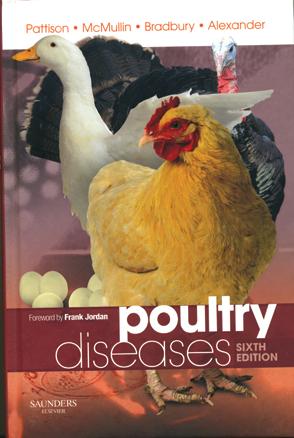
Now in its sixth edition, Poultry Diseases is once again fully revised with the addition of vital new material. It remains the standard reference work on health and disease for those involved in the poultry industry, government and veterinary education. Following a familiar structure, readers of the sixth edition gain concise but major reviews on current knowledge of general and disease-specific topics discussed over 45 (5 new) chapters in seven sections.
Item#: 0702028625 Price: $169.99
Alex Veens, Real Esate Broker Tel: 519-522-0667 Fax: 519-522-0668 aveens@tcc.on.ca
In case you haven’t noticed, fuel costs hit record highs this year. And those who analyze oil supplies say this isn’t a short-term event.
They admit there will be some zigging and zagging of prices but the trend to lower supplies and higher prices is unstoppable.
The immediate effects are obvious – people complaining at the gas pumps. But it goes way beyond that. Behaviour is starting to change with people switching to more fuel-efficient vehicles. Carpooling is becoming more widespread, companies are starting to subsidize employees’ cost of getting to work and there are many, many more people working from home.
At an individual level these things are important. But they are small in the grand scheme of things.
More interesting are the evolving effects on commerce.
One of the great, underreported stories this year is asphalt. It is one of the lowliest uses of oil, but it is also one of the most significant. This year asphalt prices have surged.
The result is that municipalities and provincial governments are paying more to repair and rebuild fewer and fewer kilometres of road.
An example of this is the municipality next door to mine. I cover that municipality’s council meetings for a local paper and got an up close look at what is happening there.
During its budget deliberations earlier this year the council decided to continue with its longstanding paving program. The cost was estimated and this year’s portion of a 15-year plan approved.
A couple of months later the tenders for the work returned to council and the costs were one third higher than estimated all because of the higher price of asphalt. With the tax rate already set and no money available from any other source, one third of the work targeted for this year was set aside.
going up.
But those increases are miniscule compared with the increases in the cost of shipping across oceans and continents. Ocean freight rates have almost tripled since 2000. It now costs more than $8,000 to ship a container from China to New Jersey.
In a recent report by CIBC World Markets Jeffrey Rubin and Benjamin Tal write: “In a world of triple-digit oil prices, distance costs money.”
All of this makes a real mess of the just-in-time manufacturing strategies established in recent decades. Cheap oil underpinned the scattered factories and fleets of trucks required to make this work. With oil no longer cheap companies are rethinking their manufacturing models with an eye to squeezing out transportation costs.
Already we’re seeing a shift to rail for the long distance shipping of containers. Some companies are even looking at reinventing the warehouse and putting them at railheads.
Now that really would be a blast from a past when every community of any size had a warehouse district.
But this goes way beyond even those things. With distance equalling money, local products have an advantage. This is especially true for agricultural products, which can be expensive to move.
While the 100-mile diet and other initiatives have been generating headlines as environmental movements, it looks as if they will soon become more than trendsetting ideas. The reason will be cost. If transportation starts to account for 10, or 15 or 20 per cent of a product’s price, then it leaves a lot of room for local producers to grab the local market.
The bottom line in all this is that soon everyone will be thinking and acting local
I have been told the same thing is happening nationwide.
Given that the infrastructure deficit in this country is estimated in the tens of billions and municipal councillors are routinely elected on promises to keep taxes down it looks like the roads are going to get very bad indeed.
While provinces have more resources to play with than municipalities they too are being squeezed and that will take a toll on highways. Since it costs more, in both fuel and repairs, to drive on bad roads than good ones that too will drive up transportation costs.
Bottom line, local and regional transportation costs are
This advantage will grow even further as the world moves to methods of charging for CO2 emissions. It’s already happening in Europe and many parts of the U.S. and, while it will no doubt be a divisive political debate in Canada, it will happen. It’s just a question of how and when.
Charging for CO2 will further increase the cost of transportation and further enhance the local advantage.
Thirty-five years ago, when rural schools all across Ontario were being consolidated, a professor of mine called school buses the “yellow plague.” He said hauling students all over the countryside was expensive, inefficient, socially disruptive and resulted in no academic benefit.
The bottom line in all this is that soon everyone will be thinking and acting local, in more ways than we can imagine, because it will be the only thing that makes economic sense. ■
All VAL drinkers are carefully designed with patented seats, nipple cap, and self-cleaning features. The machine tooled stainless steel nipples are made with precise-fit lathing from the best quality materials.
Trust VAL drinkers for:
• Longer lasting, wear-resistant nipples
• Even water flow from nipple to nipple
• Dryer floor and lower ammonia
• No leakage with Triple Seal Stainless Seat made with watch-like precision and low ¼ PSI
• Easier maintenance; no rubber seals to replace
• Snap on water line left or right without threads
• One nipple works for every age bird from new chicks up to 9-lb adults
• Engineered with precision to always give the perfect amount of water.