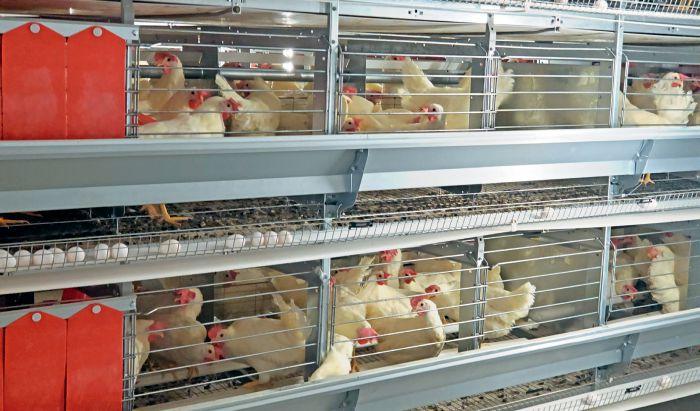
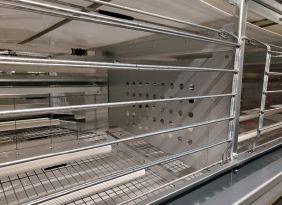
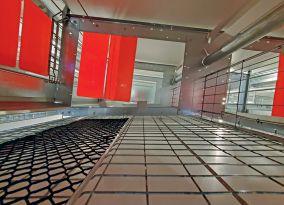
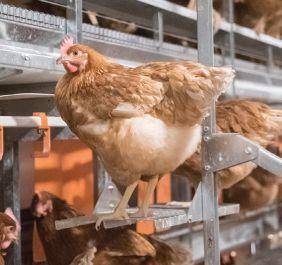
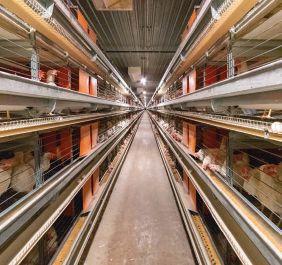
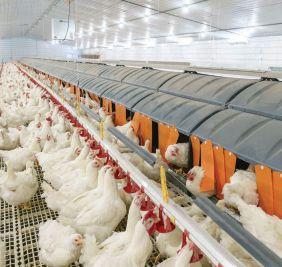
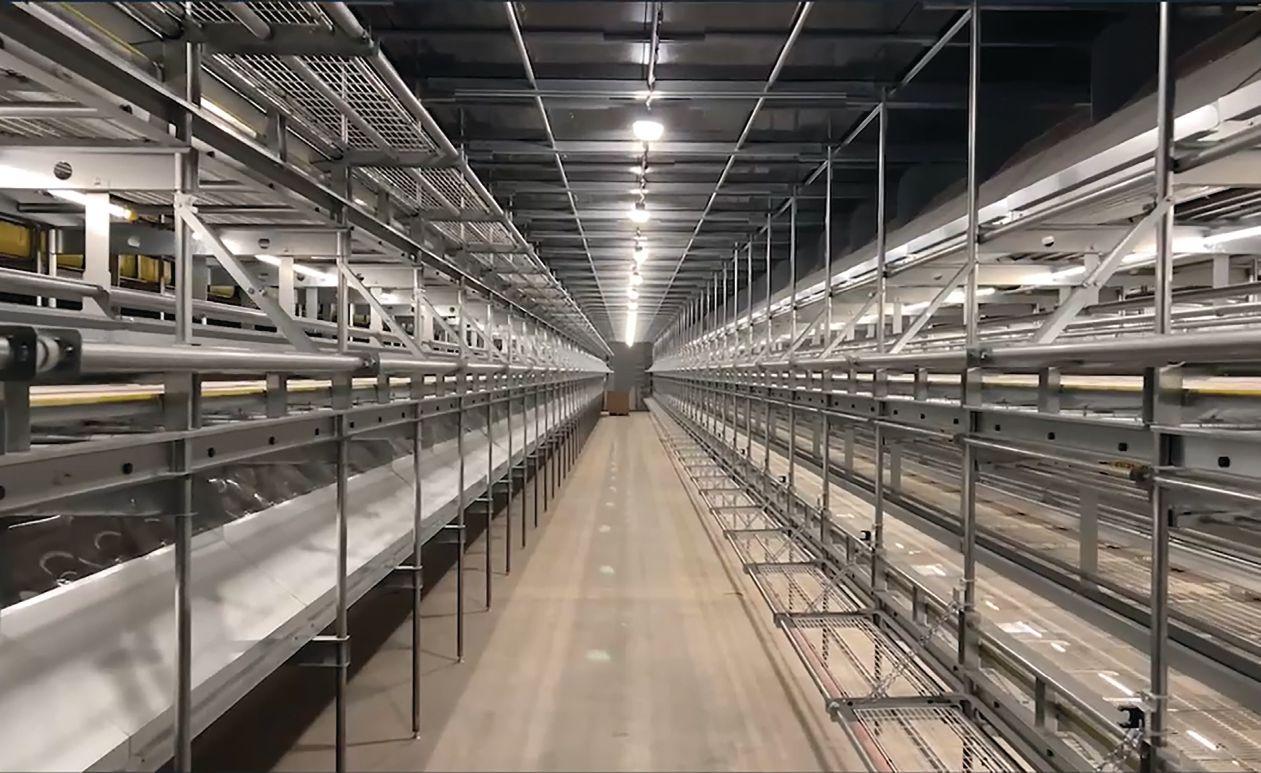
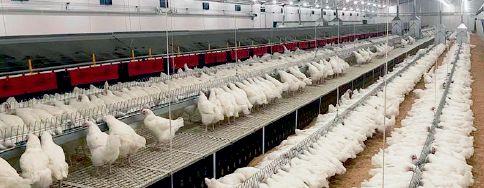
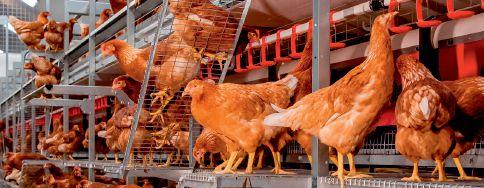
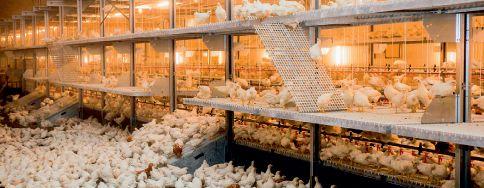
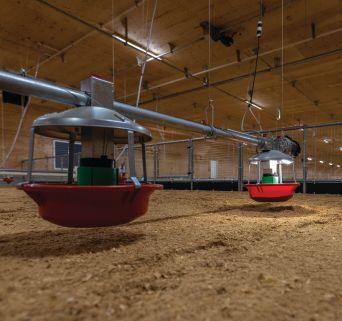
• Nests at the front for excellent egg quality thanks to the short egg travel distance
• 24 birds per compartment
• Increased height reduces coccidiosis
• Backwall between the compartments for easy access to the birds
• Choice between perforated, solid or wire partitions
ALBERTA William Vis: 204-781-4699 BRITISH COLUMBIA Dave Coburn: 778-752-9279 MANITOBA Calvin Hiebert: 431- 205-3365
ONTARIO Andy Stokman: 519-777-1495
ONTARIO Clarence Martin: 519-669-2225
ONTARIO SERVICE Steve Poppe: 519-348-8483
QUEBEC Stephane Chouinard: 450-266-9604
SASKATCHEWAN Greg Olson: 306-260-8081
LISTINGS FOR: Health monitored hatcheries, registered egg stations, egg product stations, feed manufacturers, feed supplements, drugs, vaccines, etc., registered poultry stations, provincial associations, Department of Agriculutre and university officials, consulting veterinarians and agriculture representatives for banks.
their respective provinces:
From the Editor
by Brett Ruffell
Protection from trade concessions one big step closer
Canada’s dairy, poultry and egg farmers welcomed the recent passage of Bill C-282, An Act to amend the Department of Foreign Affairs, Trade and Development Act (supply management) in the House of Commons.
The bill is intended to safeguard supply managed sectors by preventing further market access concessions in future trade agreements.
Dairy Farmers of Canada, Egg Farmers of Canada, Chicken Farmers of Canada, Turkey Farmers of Canada and the Canadian Hatching Egg Producers released a joint statement thanking the Members of Parliament who supported the piece of legislation.
They are now calling on the senate pass the bill into law.
“Enacting Bill C-282 into law will not only strengthen and protect Canada’s essential system of supply management; it will present the opportunity to champion growth within Canada’s agricultural sector, and support thousands of jobs and economic activity across our country,” says a press release from the poultry organizations.
The significant concessions Canada has made during recent pacts have had real world impacts here at home, not just on chicken, egg and turkey producers but on feed providers, hatcheries and other suppliers. “We know Canada is a trading
nation and we support that,” Roger Pelissero, chair of Egg Farmers of Canada (EFC), told Canadian Poultry when they were first rallying support for the bill last year. “But on the other side, we know the benefits that supply management brings.”
He said that politicians he’s spoken with have expressed strong support for the bill, although some questioned the need for it. That’s because the federal government has pledged to protect supply management and says it has no plans on granting further concessions.
To that, Pelissero said that a statement is only a statement. A bill, on the other hand, is much more powerful because it would
“Enacting Bill C-282 into law will not only strengthen and protect Canada’s essential system of supply management.”
require a vote in the House to change. “When we explain it that way, they understand our reasoning – why we would be looking for this bill.”
Then there’s the possibility of renegotiating existing agreements. For instance, some fear if the U.S. were to re-enter the Comprehensive and Progressive Agreement for Trans-Pacific Partnership (CPTPP), it might seek additional access to our poultry and dairy sectors.
So, what happens if the senate
approves the bill? “Every trade deal that’s out there would be honoured,” Pelissero noted. “But say there’s a new trade deal that comes along – what it does is it protects our sectors from a little bit more of that slice of pie being given away.”
Not everyone in the food sector welcomed the news of MPs passing the bill. Dan Darling, president of the Canadian Agri-Food Trade Alliance (CAFTA), issued a statement blasting the development.
“CAFTA members are profoundly disappointed the House of Commons have voted to pass Bill C-282 on third reading. In doing so, Members of Parliament have chosen to entrench protectionism and favour one economic sector above all others.
“CAFTA is calling on the Senate of Canada to give this Bill the proper second sober thought it needs to carefully consider the negative impacts of Bill C-282. CAFTA urges the Senate Committees to dedicate ample time and resources to hear from all sectors and groups impacted by this Bill.
“The effects of the Bill will be negative to both the businesses who depend on trade and the consumers who benefit from better access to international markets. Not only will our already established trade agreements, like CUSMA, be threatened but our future trade opportunities in other parts of the world will be largely diminished – if not erased.”
canadianpoultrymag.com
Reader Service
Print and digital subscription inquiries or changes, please contact Angelita Potal, Customer Service Rep. Tel: (416) 510-5113
Email: apotal@annexbusinessmedia.com
Mail: 111 Gordon Baker Rd., Suite 400, Toronto, ON M2H 3R1
Brand Sales Manager Ross Anderson randerson@annexbusinessmedia.com Cell: 289-925-7565
Account Coordinator
Alice Chen achen@annexbusinessmedia.com 416-510-5217
Media Designer Curtis Martin
Group Publisher Michelle Bertholet mbertholet@annexbusinessmedia.com
Audience Development Manager Anita Madden amadden@annexbusinessmedia.com 416-510-5183
President/COO Scott Jamieson sjamieson@annexbusinessmedia.com
PUBLICATION MAIL AGREEMENT #40065710
Printed in Canada ISSN 1703-2911
Subscription Rates
Canada – 1 Year $32.50 (plus applicable taxes) USA – 1 Year $91.50 CDN Foreign – 1 Year $103.50 CDN
GST - #867172652RT0001
Occasionally, Canadian Poultry Magazine will mail information on behalf of industry-related groups whose products and services we believe may be of interest to you. If you prefer not to receive this information, please contact our circulation department in any of the four ways listed above.
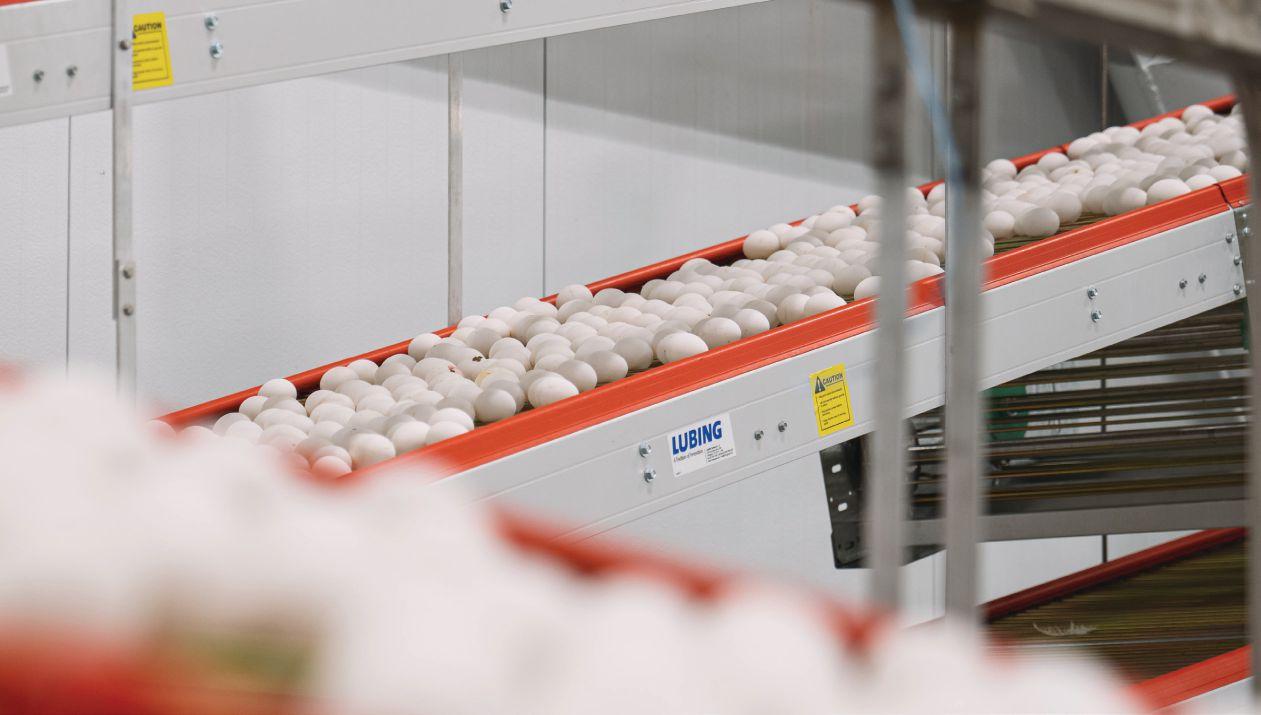
Our egg conveying systems safely transport a large volume of eggs from the nest to the processing area, which is why over 75% of all eggs produced in the U.S. are riding on a LUBING egg conveying system.
Our conveying systems are flexible, and can be adapted to nearly any configuration with curves, angles, heights and distances.
Glass-Pac Canada
St. Jacobs, Ontario
Tel: (519) 664-3811
Fax: (519) 664-3003
Carstairs, Alberta
Tel: (403) 337-3767
Fax: (403) 337-3590
Les Equipments Avipor
Cowansville, Quebec
Tel: (450) 263-6222
Fax: (450) 263-9021
Specht-Canada Inc.
Stony Plain, Alberta
Tel: (780) 963-4795
Fax: (780) 963-5034
What’s Hatching
Canada goes full month without an HPAI outbreak
June 2023 appears set to be Canada’s first month without a new highly pathogenic avian influenza outbreak in poultry or other domesticated birds since the disease returned to this country in late 2021. Canada has booked 322 outbreaks in domestic birds in the past 19 months, of which 31 were detected so far in 2023. Of the 31, just one was detected in May, in a commercial barn in Quebec’s Les Maskoutains regional municipality on May 6.
New EFC campaign puts spotlight on eggs for dinner
Egg Farmers of Canada (EFC) recently unveiled its latest marketing campaign centered on the concept of enjoying eggs for dinner. The organization is sharing this message with Canadian consumers through humorous and quirky ads that feature relatable situations and ask, ‘What’s stopping you?’ from serving eggs for dinner. The campaign will reach consumers throughout the summer months and into 2024.
Broiler producers donate 1,400 kg of chicken
Ontario chicken farmers, in partnership with Yorkshire Valley Farms, recently announced a donation of 1,400 kilograms of chicken, which will contribute to over 12,000 meals for families and individuals in need, through the Huron Country Food Bank Distribution Centre. The donation of chicken was made through the CFO Cares: Farmers to Food Banks program, which enables chicken farmers to donate their chicken to food banks across Ontario.
To mitigate further impacts from avian influenza, specifically to small flocks, the federal and Ontario governments established a project with Poultry Industry Council.
PIC unveils program for small flock and non-supply managed flocks
The avian influenza crisis of 2022 impacted the entire poultry supply chain, from farmers, to those moving poultry products through active control zones, to suppliers travelling in and out of zones and more.
$300K over two years is how much governments contributed to help PIC establish the “Small Flock Future State” initiative.
On the industry side, supporting the large number of active infected premises – particularly small flock sites – nearly overwhelmed the emergency response system. The amount of industry and government resources, time invested and financial impacts were significant.
To support and mitigate further impacts, specifically to small flock and non-supply managed flocks, the Governments of Canada and Ontario have established a “Small Flock Future State” project with Poultry Industry Council (PIC) in the amount of $300,000 over two years, funded under the Sustainable Canadian Agricultural Partnership.
The intent is to create proactive outreach and information sharing resources as well as to train a roster of case workers to support active infected premises.
This project will take two years to complete and begins with the development of novel online and paper-based informational resources for farmers. The new website will initially house and collate existing information on biosecurity and disease prevention, animal welfare and details on avian influenza adapted to a small flock perspective.
The original Small Flock Kits, which OMAFRA developed, will be updated and revived into kits that will be handed out at key dissemination locations such as feed supply shops, or by ordering online.
A separate component of the project is to train available industry people to act as “case workers” in the instance there is an overabundance of small flocks affected by HPAI and needing a coach or liaison to assist them through the response process, so that business can return to normal.
The project kicks off June 5, 2023 and phase one of the project is expected to roll out over the summer of 2023.
Poultry and egg farmers host Downtown Diner
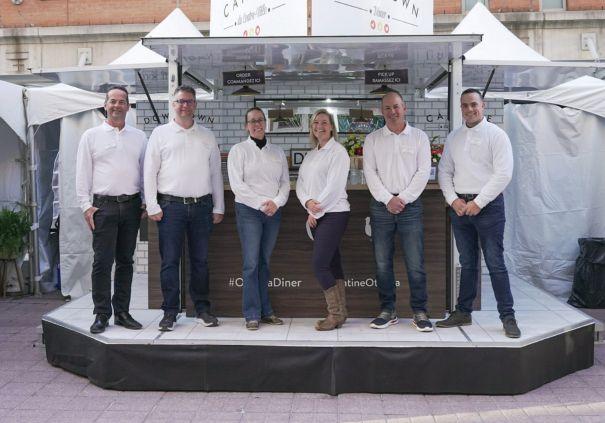
In May, Canadian poultry and egg farmers hosted their much-loved pop-up, Downtown Diner, on Sparks Street in Ottawa. The event put a focus on the hard work of Canada’s poultry and egg farm families and their commitment to producing food in a sustainable manner through innovative practices and world-class standards.
During the event, farmers representing Egg Farmers of Canada (EFC), Chicken Farmers of Canada (CFC), Turkey Farmers of Canada (TFC) and Canadian Hatching Egg Producers (CHEP) served up an array of dishes made with fresh, local, high-quality ingredients while answering questions about farming.
MPs, Senators, political staffers and the public stopped by the event to learn about the steps poultry and egg farmers are taking to ensure responsible, sustainable food production.
“We are thrilled to connect with Canadians and showcase some of the food items we work so hard to produce,” says Luce Bélanger, a chicken farmer from Quebec and
director at CFC.
Over a thousand guests and Ottawa community members took part in the Downtown Diner throughout the day, engaging in conversation and discussion. “It’s important that we talk with Canadians about where their food comes from,” adds Jennifer Paquet, turkey farmer from Quebec.
“The Downtown Diner is a tremendous opportunity to answer questions and share our farm-tofork story.”
Downtown Diner also put a spotlight on the important role of Canada’s unique system of supply management in ensuring a sustainable future for Canadian poultry and egg farmers.
“Farmers like me are proud to deliver the products that Canadians want and enjoy, while also supporting our national economy,” explains Brian Bilkes, hatching egg farmer from British Columbia and chair of CHEP.
“Collectively, our sectors support more than 144,000 jobs and deliver $11.1 billion to Canada’s GDP.”
Canadian poultry and egg farmers at Downtown Diner in Ottawa, in celebration of sustainably produced made-in-Canada food.
PIC’S Science in the Virtual Pub poultryindustrycouncil.ca
SEPT. 26-28, 2023
Shell Egg Academy, West Lafayette, Ind. shelleggacademy.org
NOVEMBER
NOV. 7, 2023
IWCA Summit, Hamilton, Ont. agwomen.ca
LRIC Update
By Lilian Schaer
Livestock Research Innovation Corporation (LRIC) fosters research collaboration and drives innovation in the livestock and poultry industry. Visit www.livestockresearch.ca or follow @LivestockInnov.
Plant-based doesn’t mean healthier
New research from the University of Guelph shows that how the body digests food is as important as what it’s made of. A piece of plant-based chicken might look and taste like chicken, but that doesn’t mean it has the same impact on the human body as the real thing.
This has consequences for overall human health, says Prof. Michael Rogers, a Tier Two Canada Research Chair in food nanotechnology and associate professor in the University of Guelph’s food science department who led the research.
“We’re seeing an entirely new epidemic of metabolic syndrome and we see the prevalence of this syndrome, which includes obesity, high blood pressure and diabetes, increase whenever a population introduces new ultra-processed foods,” Rogers says.
He believes what he calls the disturbing trend of displacing minimally processed foods –like meat – with products that
are ultra-processed – such as plant-based alternatives – to be a significant contributor to the problem. Ultra-processed foods are ones made from ingredients extracted from whole foods, formulated to be tasty, low cost, convenient and have a long shelf life.
Rogers and Ph.D. candidate Zhitong (Zoe) Zhou compared how the body digests a plantbased meat product and an actual meat product. The project used a Beyond Beef burger and a burger made of real ground beef, but the findings are equally applicable to plant-based chicken alternatives and chicken meat, he notes.
They found that it is quicker and easier to digest a plantbased burger than a meat burger. This leads to rapid fat digestion and ultimately a higher lipemic index (equivalent to the glycemic index for carbohydrates), an important biomarker for cardiovascular health.
In addition to lipids, the plant-based burger contains
“Just because something is plant-based, doesn’t make it healthier.”
significant amounts of starch, which is capable of increasing blood sugar levels, whereas a meat patty contains no carbohydrates, so it doesn’t impact blood sugar levels.
“Meat is a complex protein network that entraps fat, so it takes the body longer to access and digest or break down that fat. This releases nutrients more slowly into the body, potentially altering feelings of fullness for a longer period of time after eating,” Rogers explains. “When you formulate a plant-based burger, the fat can’t be bound the same way as it is in meat, so it breaks down more quickly. That’s a major limitation to current ultra-processed food technologies.”
Although the food industry has done a remarkable job of creating many processes to turn perishable whole food commodities into self-stable
ingredients such as oils, starches and protein isolates, Rogers believes more needs to be done to formulate them into ultra-processed foods that also resemble whole foods while they’re being digested.
“People need to change their thinking around ultra-processed foods. Just because something is plant-based, doesn’t make it healthier,” Rogers says.
Part of the challenge is that only about two per cent of Canadians are involved in farming, leaving most people with little understanding of food and how it is produced. This spills over into environment and climate change issues: there is little appreciation for the key role that livestock play in carbon sequestration and being able to use land for food production that isn’t suitable for growing crops.
“A two-class food ecosystem is emerging in Canada, where only a subset of Canadians can afford the time and cost to follow Canada’s Food Guide recommendations to prepare meals from scratch and to avoid ultra-processed foods; this will become a problem for Canada moving forward,” Rogers says.
Rogers’ research was supported by Natural Sciences and Engineering Research Council of Canada (NSERC) Discovery and Canada Research Chair Programs. A webinar where Rogers presents his research in more depth is available on the Livestock Research Innovation Corporation website.
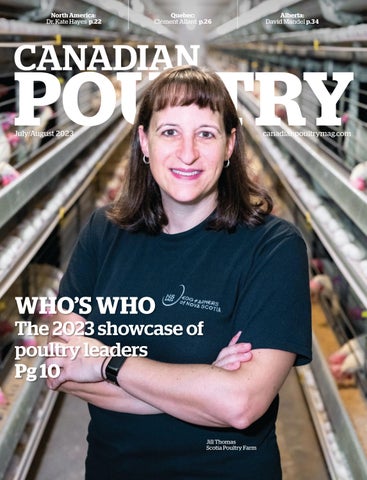
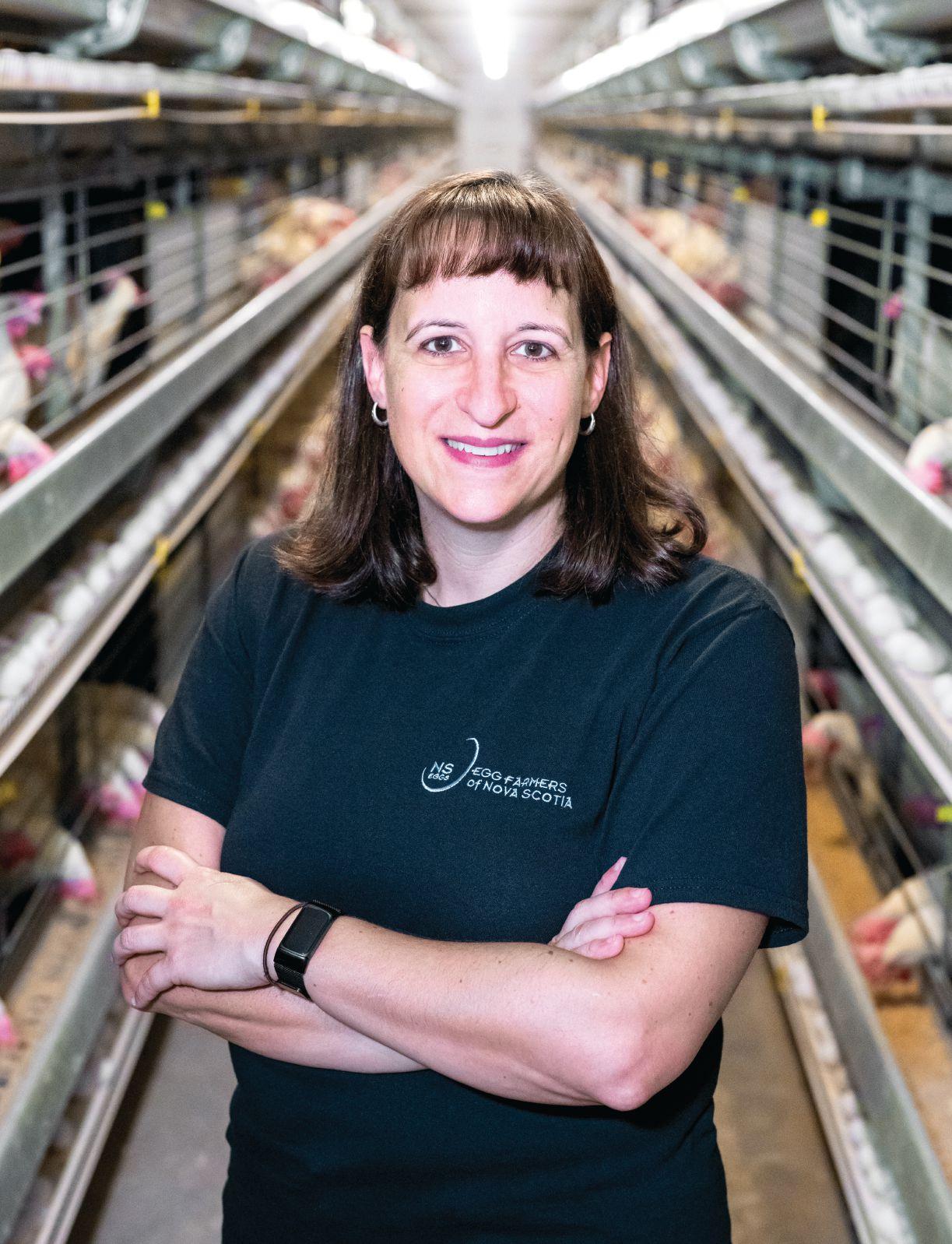
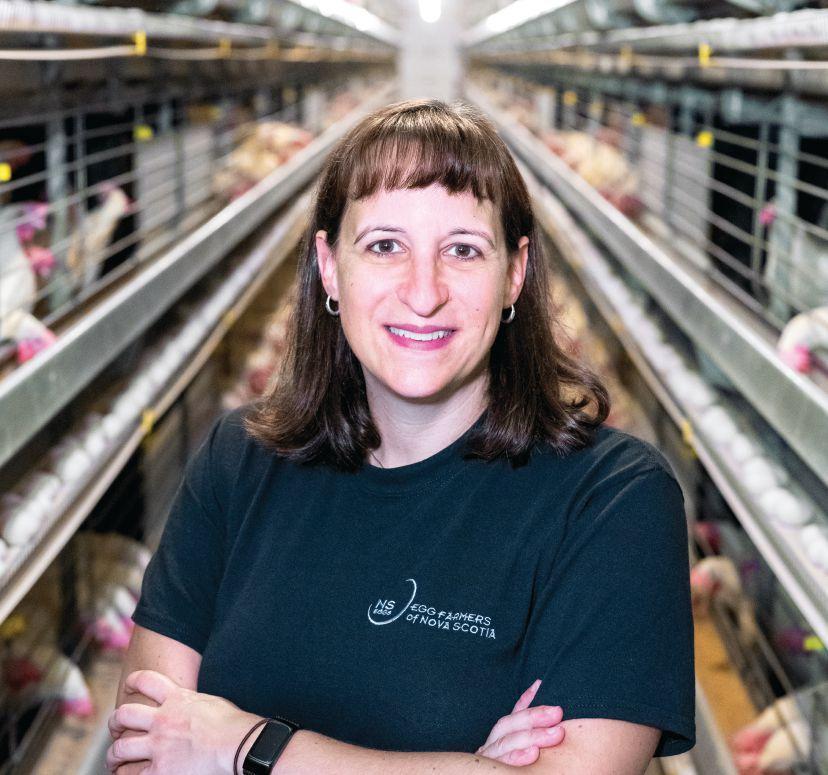
Jill Thomas
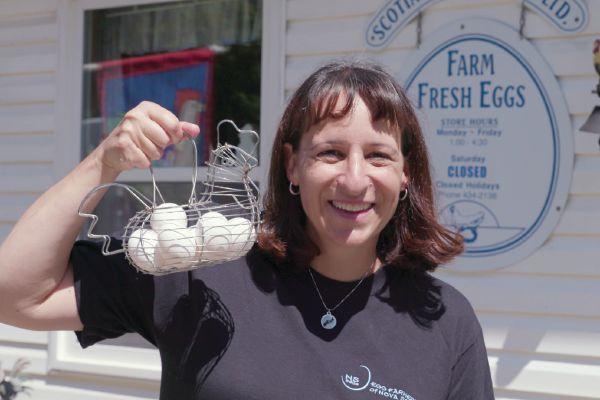
Producer runs an on-farm store and acts as a dedicated egg ambassador.
Like many egg farmers in Canada, Jill Thomas started helping on the farm at a young age, is actively involved in serving her industry at the board level and always assists the industry when called upon. However, few egg farmers in Canada serve the public directly the way Thomas and her family do, selling tens of thousands of eggs every month at the farm gate to ensure the community always has a fresh and economical protein source.
Thomas operates the family farm, Scotia Poultry Farm in Cole Harbour, N.S., with her mother Sharon and brother Ian. “My parents Sharon and Laurie bought the farm in 1973,” she says. “I started working in the barns when I was 14. I attended Nova Scotia Agricultural College in Truro (now part of Dalhousie University) for an agricultural business diploma, and this year, I’ve been full time for 27 years. Unfortunately, my dad passed away in 2001, but my mom still comes to work every day.
By Treena Hein
My cousin Andrew Cook works with us and also Ian’s two sons, Connor and Owen.”
The Thomas farm has just over 36,000 hens and supplies Atlantic Poultry under the Nova Eggs brand.
The farm has two connected barns, and both were upgraded in 2015 and 2020 for higher energy efficiency, with changes to insulation, ventilation and barn environment controls. They also installed LED lights and high-efficiency fans.
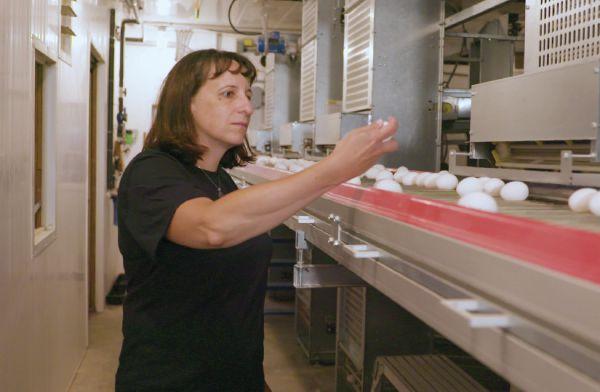
In 2020, one of the barns was converted to Valli enriched housing. “We just placed our fourth flock in the enriched barn, and it’s been a learning curve but overall, it’s an easy system to work with, and the hens are healthier and happier,” Thomas says.
“We’ve had reduced mortality, feather pecking and increased egg production. We’re a bit unusual in our location in that we’re isolated from other poultry farms, yet we are minutes to the main shopping in Cole Harbour and can be in downtown Halifax in 25 mins or less. Since avian
influenza (AI) arrived again last year, we’ve added to our biosecurity in bringing back foot baths for our outdoor shoes and we also added foot baths for our barn boots as well.”
Feed cost has increased over the last two years in Nova Scotia, which Thomas says is quite a concern. “It’s been so volatile due to a lot of reasons out of our control, so we pay close attention,” she explains. “We installed feed tank scales to better monitor feed consumption and eliminate waste by making sure there’s no spillage. Recently, we’ve upped our protein a little and consumption has dipped a little. We also put a bigger feed tank in to supply one barn, so we’ve cut delivery from twice a week to once a week.”
Selling to the public
The most outstanding feature of her operation is the on-farm store (but since the pandemic and last year’s AI outbreaks, only curbside pickup).
Jill Thomas operates the family farm, Scotia Poultry Farm in Cole Harbour, N.S., with her mother Sharon and brother Ian.
Every weekday afternoon from 1:00 to 4:30 a.m., Thomas (if she’s not away) meets those in cars pulling up in the driveway, gets their order and brings it out. “We’re quite a bit cheaper than the regular grocery stores here,” she says. “We want to make sure eggs are as affordable as possible, and we want to support those people who want locally produced food. We didn’t have major increases in our prices during the past two years, like the grocery stores did. We sell dozens, 18 packs and flats. In total, we sell about 1,800 dozen a week on farm.”
The Thomas’s have met so many people in their community this way, and indeed, some of their customers have been coming to buy eggs for 30 years. “And many times, they have questions,” Thomas says. “The most common is the difference between white and brown eggs. We used to produce white and brown, but now we get brown eggs delivered here when our eggs are picked up, because some customers prefer them. We sell them for about 15 cents more a dozen and as everyone in the industry knows, they do stay fresher longer due to being less porous.”
The egg sales are also a way to keep in touch with the community on social media. Customers want to know holiday availability but are also keen to know when there are double yolkers for sale. “They are really, really popular,” Thomas says.
“Mom checks them by hand. We could get two to five flats a day when the hens are just starting to come into lay, but of course, some hens lay them their whole lives. It’s a great fit, as these eggs can’t be sold as commercial table eggs as they’re too large and more breakable. We charge 60 cents more a dozen over our jumbo price and jumbos are our biggest seller. Customers can get our jumbos for less than large in the grocery stores.”
Promoting eggs
Thomas calls herself an egg ambassador, and is doing more every year to promote eggs at a broad range of public events. These include at the rink (Thomas is a former competitive curler who has
competed at the Scotties Tournament of Hearts twice), ‘Meet the Farmer’ events and cooking competitions.
“There have been a lot of events over the last year or so,” she says. “At the finish line of Maritime Race Week, I gave out hardboiled eggs and promotional materials. My
family and I have also worked with Egg Farmers of Nova Scotia and Egg Farmers of Canada to provide eggs for the breakfast program at one school so far this year, and to sponsor our Nova Scotia Wheelchair curling team at Nationals. We also took part as a family in the 50th anniversary of
TRASH THE TRAYS
Konavi® Feeding System
Start your whole house brood with a Konavi® Feeding System and eliminate the need for supplemental feed trays. Konavi® Feeders have a low pan height that lets chicks eat from the outside of the pan from day one.
With no trays to pick up and clean, you save labor costs and reduce feed waste. Your birds get easy access to free-choice feed from start to finish.
Learn more at choretime.com/TrashTrays
EFNS TV spot and I did a TV commercial for Fields to Forks. I’ve really pushed myself outside of my comfort zone.”
Part of the confidence to do this has come from participating in the ‘Women in the Egg Industry’ Program. Each woman egg farmer is matched with another somewhere across the country to chat about similarities and differences between farm operations, but also how to deal with the same day-to-day issues and pressures. It’s a one-year program that Thomas engaged in two years ago with an egg farmer in Manitoba named Sandra.
“I really enjoyed it and I’d like to do it again,” she says. “It’s a great opportunity to make friendships with fabulous women across the country with the same lifestyle. It starts in Ottawa with an event for the incoming and outgoing participants and you have events throughout the year online on different topics.
“There was one session about life-work balance that was really good. The farm for me is like a baby and it comes first, and it can be hard for me to get that balance sometimes, to delegate. There were also great sessions on time management through out your day, how to handle different pressures, and how to use social media.”
Thomas adds, “you get to encourage and cheer for each other. I was able to cheer on Sandra as she took the step to run for her provincial board and she was successful with being voted on! When I decided to agree to be nominated this year (thanks to a push from a past participant), it gave me confidence to see how great Sandra was doing and know I could reach out if I needed some encouragement. I just started on the board here in March, so I’m the newbie, but it’s great to see that our board has a lot of women now.”
Looking forward
Conversion of the other barn to enriched will likely involve about 18 months of planning. “The last renovation of this barn was a huge project,” Thomas says. “We had
“We want to make sure eggs are as affordable as possible, and we want to support those people who want locally produced food.”
to rebuild the barns from foundation up with all new lumber, insulation, Trusscore walls, ventilation and barn controls, so this one won’t be as much work with just the housing, but there’s still a lot involved. We’d also like to install some solar panels in the near future.”
And perhaps a third ‘Farm of the Year Award’ (from Egg farmers of NS) is the cards. The Thomas’s won in 2014 and again in 2022.
“It’s a huge honour for us to win twice,” says Thomas. “It really makes us proud of how hard we all have worked. I find farming very satisfying every day. It’s really rewarding to produce such a nutritious wholesome product that everyone can eat and everyone seems to love. I also get to see my mom and other family every day. I’ve really treasured that time and I’ll continue to treasure it.”
Thomas sells thousands of eggs each month through her on-farm store.
In 2020, Thomas converted one of her barns to Valli enriched housing.
Roger Pelissero, Chair
up for our e-newsletter eggfarmers.ca/newsletter Follow us on Twitter @eggsoeufs Like us on Facebook
Farmers of Canada Les Producteurs d’oeufs du Canada Follow us on LinkedIn inkedin.com/company/ egg-farmers-of-canada
BOARD OF DIRECTORS
Beatrice Visser, AB
Walter Siemens, BC
Kurt Siemens, MB
Hans Kristensen, NB
Joseph R. W. Smallwood III, NL
Michael Wallington, NT
Glen Jennings, NS
Scott Brookshaw, ON
Tim Churchill, PE
Emmanuel Destrijker, QC
Regan Sloboshan, SK
Wayne Beggs, CAC
Ted Hudson, CPEPC (Grading)
Mike Vanderpol, CPEPC (Processing)
Drew Corneil, CPEPC (Hatcheries)
Melanie and Kevin Boldt
Chicken producers own a carbon neutral farm -to-fork operation.
By Melanie Epp
Growing up, Melanie Boldt never expected she’d be running an agri-food business. Yet, she and her husband Kevin operate Pine View Farms, the only All Natural meat business in the province of Saskatchewan. The business has been greatly successful. The enterprise has given both her and Kevin an opportunity to shine in what they do best. Melanie takes care of business operations and marketing, while Kevin oversees production and operations.
Pine View Farms wasn’t always marked for success, though. In fact, it went through several transitions to get to where it is today. Melanie and Kevin met at the University of Saskatchewan, where Kevin was working towards a diploma in agricultural studies and Melanie was earning a business degree with a major in marketing. While Melanie had grown up in small-town Saskatchewan, she had never contemplated farming until she met Kevin.
They were married in 1991. At that time, Kevin was working on the family farm, a dairy and grain operation in Osler, Sask., just 20 minutes north of Saskatoon. Melanie worked off-farm in sales and marketing, eventually in agricultural sales, as it brought her closer to home. In 1998, the couple bought a farm yard just up the road equipped with a chicken barn and small abattoir. The yard had been Kevin’s great grandfather’s homestead back in 1901, but the land had been out of the family for about 40 years. It
would become Pine View Farms and a diversification to their existing grain operation.
Around the same time, the couple took over Kevin’s parents’ grain farm. They bought the equipment and rented the land from his parents. Kevin’s father had made the decision to get out of dairy a few years earlier, so the business was focused on grain production only at that time.
Raising and processing chickens was supposed to be a sideline to grain farming. “We processed chickens in between seeding, haying and harvest,” Melanie says. “But time would prove that this little butcher shop had more potential than that. Growing at 30 per cent per year at the start, more and more people kept showing up to buy meat. It only made sense to add beef, pork, lamb and turkey to the product mix – and so it went.”
Melanie recalls the first six years on the grain farm being difficult. “We got slammed with grasshoppers, drought and low commodity prices in grain,” she says. “The crucible of hard times teaches you a lot about yourself, and what you’re made of and what you want to be.”
“We really had to take a hard look at what we were doing, and at the time, grain farming was just too risky for the reward,” she adds. “But we had this fledgling farm-gate chicken business that seemed to have an upside, and so we had to decide what our farm was going to look like if we wanted to survive in the long term.”
Eventually, the Boldts decided to sell the machinery, let go of the land and instead focus on building up an All Natural meat business. They reinvested funds to expand and equip their poultry processing plant,
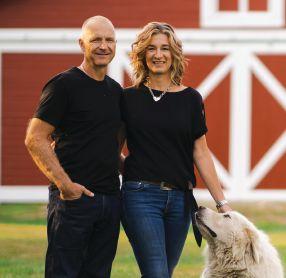
Melanie and Kevin Boldt operate Pine View Farms, the only All Natural meat business in Saskatchewan.
purchase quota, expand their poultry barn and focus on producing and marketing meat directly to the public.
Beef, pork, and some seasonal lamb, grown by Partner Producers and cut and wrapped at Pine View Farms, are also available for purchase in the shop and online atpineviewfarms.com. They produce sausages and deli meats in-house. They are the only provincially inspected, farm-to-fork, All Natural meat operation in Saskatchewan.
But their uniqueness isn’t their only selling point. Melanie and Kevin focus on All Natural production, a label that means their birds are fed a diet in accordance with the All Natural Protocol outlined by the Canadian Food Inspection Agency. They have year-round access to the outdoors with plenty of room to exhibit their natural behaviours. When put together, all of these measures create a low stress environment for the animals, Melanie explains.
The on-site processing facility is small enough that they can do most of the work by hand. Melanie says keeping the operation small is what allows them to have better control over the entire process. Animal welfare is very important. When customers ask, and they do, Melanie is able to explain how every animal was handled from start to finish.
Today, Pine View Farms employs seven full-time workers and 20 part-time employees. Melanie is responsible for the financial side of the business, including hiring and payroll, as well as marketing and social media.
Kevin’s role is production and operations. Both roles are time and labour intensive, Melanie notes.
“We’re lucky we’re a complementary team,” she says. “I think that’s our key to success in the farm-direct marketing business.”
Moving towards carbon neutrality
Part of the business has always been focused on sustainability, both economic and environmental, Melanie says. The couple wanted to find a solution for the high levels of power and natural gas they use to operate the barns and abattoir. In 2019, they installed 134 solar panels, which supply 25 per cent of their needs on-farm.
In addition, over the past 25 years, they’ve planted over 4,000 trees, establishing a poplar forest and creating rows of shelterbelts. Planting 1,600 trees alone would have given their farm carbon neutral status. Their farm reached official carbon neutral status in January of 2019.
“We want to show people that it is possible for people to eat animal protein and be socially and environmentally responsible,” she says. “We as farmers need to tell the story of food so consumers get the whole story, right from the source.”
PERFORMANCE FOCUSED ON-FARM NUTRITION
Helping to feed a growing population. Reducing the environmental impact of poultry meat production. Providing efficiencies for sustainable farming. Breeding sustainability is what we do. Let us show you at aviagen.com.
Mark and Bryan Siemens
The family that farms together also farms apart.
By Ronda Payne
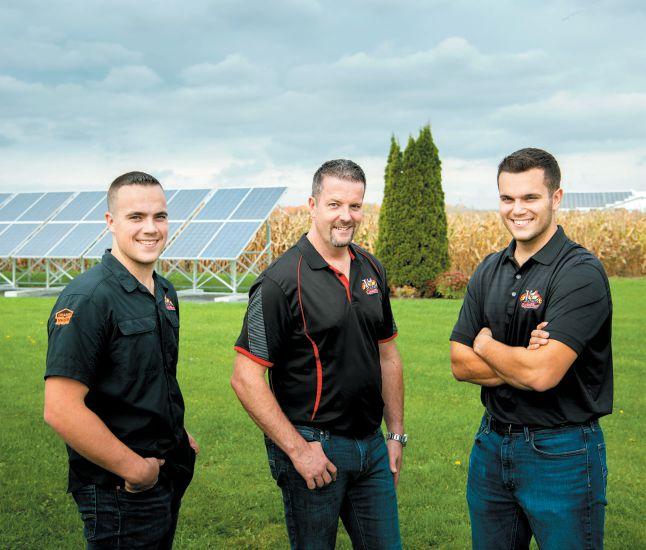
Together, two brothers grew an 80,000-bird egg farm. Now, the next generation of brothers continue growing it together, but also apart. Mark and Bryan Siemens are following their family’s path dedicated to laying hen operations in Abbotsford, B.C.
Like their father and uncle, they collaborate and share with other farmers within their family and neighbourhood, but also expand knowledge far beyond their regional borders.
“He came here from Paraguay, was working on the railway and some acreage, was farming raspberries,” says Mark Siemens of his grandfather who established the family’s first farm in the 1960s. “When the supply management system came in, he got into egg production and was one of the original farms back then.”
Siemens’ father Walter and uncle got into the business at a young age, starting with a few thousand birds and embracing the changes and challenges the industry threw at them as they took things on from their father. Walter and his brother grew the operation to about 80,000 birds. That’s when Mark and his brother Bryan stepped back into farming and started exploring what it could look like with them at the helm.
“In 2005 to 2014 my brother and I were both off the farm doing other things, getting other experiences in life,” Mark says. “My dad and his brother were farming
together, but as part of their succession planning, they bought a couple of properties over the years and they were able to separate their farm into two.”
While these two farms operated as one entity for Walter and his brother, Mark and Bryan finalized that separation so they could continue to work together, but also each have their own farm.
“We’re both able to use our leadership
skills without butting heads,” he says. “Now, we’re able to really work together and support each other, but have independence in those day-to-day decisions and we have a really great relationship.”
Walter’s new role
Taking a step back is hard for any farmer, but Mark gives his dad credit for being able to let his sons run with the businesses and
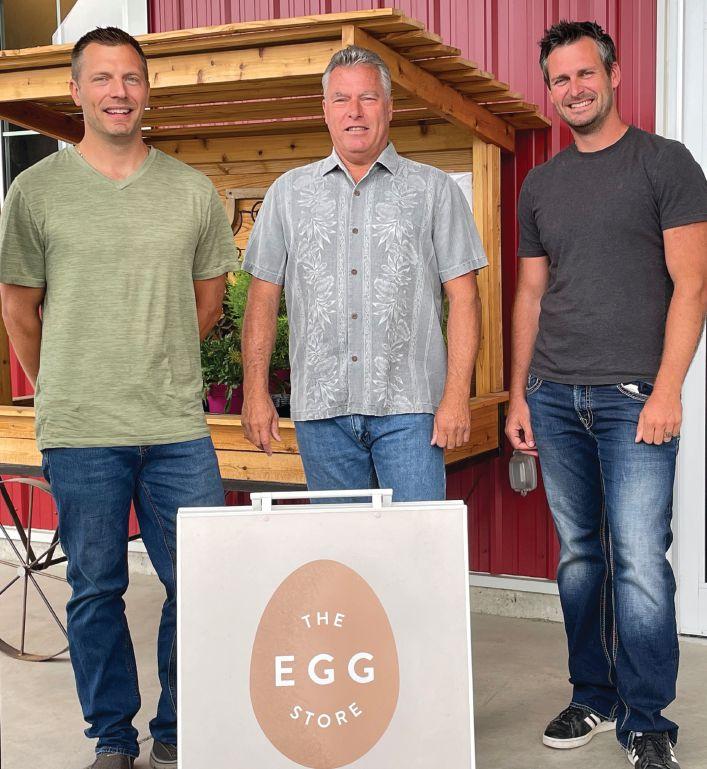
Brothers Bryan Siemens (left) and Mark (right) run an egg operation with help from their father Walter (middle).
make their own mistakes.
“He has taken a real mentorship role. He gave us oversight as we went through the learning curve of building new farms,” he says. “Each year he really gave us more and more freedom. He’s really involved in the industry with Egg Farms of Canada.”
That industry awareness has been essential for the brothers as they’ve grown the businesses. Not long after they took the operation over, they saw the future of the industry going to either enriched housing or aviary. The knew they needed a new barn, but which way would they go?
“We looked at the aviary system and the labour demands and the fact that it would make economic sense to build two separate farms instead of one large farm and that’s what really drove that,” he explains. “My dad has been involved in the industry on a global scale and that helped my brother and me make those decisions."
Shift into aviary production
The new free-range aviary operation built in 2015 was a big shift for the farm. And a daunting one at that, what with moving away from cages and conventional flat barns. “After a steep learning curve, we’ve had a lot of success in that [aviary system],” Siemens says.
His barn was first, then they built another aviary system facility for Bryan’s farm. Each brother now manages mixes of about 50,000 Lohmann Brown and Novogen Brown hens. Mark's operation is free-range while Bryan’s is both freerange and organic.
Recognizing the enriched housing system wasn’t the right fit for the farms, the multi-staged aviary has played out well for both the birds and the brothers.
“It’s kind of like a jungle gym playground for chickens,” he says. “We were confident in our ability to figure it out and
take on that new challenge.”
Now, several years into the system of long platforms that accommodate feed, water, laying eggs and dust bathing, the brothers have been able to step away from the very long days of learning and trouble-shooting into more of a systematic approach with staff they’ve trained.
“The farm is an amazing place,” Mark says. “Me and my brother are really experienced in this type of production now. We had to learn it for ourselves to be able to train employees,” he explains. “There were a lot of long hours, a lot of mistakes made, not knowing the tricks to make a chicken lay an egg in a nest. A lot of learning through trial and error.”
The amount of labour and workhours with each bird goes up with the lack of enclosure. Getting familiar with the system and training staff on it helped Mark and Bryan get their time back, but that
doesn’t mean the aviaries have made them bored or complacent.
“One of the things that’s fun and frustrating about it is that in the cage-free farming, every flock has unique challenges. It keeps you engaged,” he says. “Some birds won’t respond to the old tricks. There’s always room for improvement.”
The Egg Store
They identified one place for improvement on a community-level during the pandemic.
“After the farms were built, we had a small farmgate style store that had been on the farm for almost two decades,” he explains. “When the pandemic hit and the challenges that brought about, we transitioned from that shack to a drive-thru.”
While this helped people get their eggs, it became clear that there was a significant need for community-based shopping
experiences with a local farm feel.
“My brother started construction,” Siemens notes. “Building a designated farm store. We began that during the pandemic. In 2022, he opened the store.”
Now, seniors and other s in the community have a place that provides a farm feel when they buy their eggs, beef, pork,
vegetables and other locally produced food.
Knowledge transfer
Shifting to an aviary system to keep up with trends seen in Europe is one way the brothers are staying ahead of evolution in the industry. Another is listening to others in the industry, regardless of where they are located.
“As genetics change, we’ll often have a lot of farmers going through the same things,” he says. “It really brings the community together.”
Community is important to the Siemens family and being connected with other laying hen farmers is part of the business. Walter showed his boys the importance of being part of information exchanges and he continues to do so as the vice chair of the B.C. Egg Marketing Board and a member of the executive with Egg Farmers of Canada.
“Around the same time I came back to the family farm, I got on the B.C. Egg Producers,” Mark says. “After a bit of experience there, I took on the role of president. I’ve been that now for eight or nine years.”
Bryan sits on the B.C. Egg Marketing Board audit and finance committee.
Without that shared knowledge, from a global perspective, the brothers wouldn’t have had the information needed to make an informed decision on how to move the farm forward.
Staying involved in industry associations is one of the many ways this family can gain the information needed to embrace the changing trends.
The producers switched to an aviary housing system several years ago, which was a daunting transition.
Meet the 2023
Please join us along with our sponsors in congratulating the following four poultry leaders selected as part of this year’s program:
For more on each of our honourees, visit canadianpoultrymag.com/top-4-under-40/ or scan here!
Listen to exclusive podcast interviews with our winners now!
CHERYL Norleen 4GPoultry Raymore, Sask.
RYAN Snyder Ceva Animal Health Cambridge, Ont.
KIERAN McKeown Daybreak Farms Terrace, B.C.
JEFF Kamlah Kamlah Farms Ltd. Didsbury, Alta.
Dr. Kate Hayes
Poultry veterinarian driven by helping others.
By Lilian Schaer
From a young age, Dr. Kate Hayes had her heart set on becoming a veterinarian.
She grew up in Calgary in a family that had strong human-animal bonds, and during her undergraduate studies in animal science at Middle Tennessee State University, she took advantage of opportunities to work on the school’s dairy farm and at a small animal clinic in town.
“I went to vet school at the University of Tennessee still focused on large animal medicine but there was one course in poultry that was interesting and made me think that I knew nothing about these crazy little creatures,” Hayes recalls.
Her first job after graduation was as a veterinarian in a small animal practice, but then her husband got a job with poultry genetics company Aviagen North America. He began telling her about his work with chickens and chicken farmers – and when the company had an opening for a poultry vet, he persuaded her to apply.
Specializing in poultry
“That was 15 and a half years ago, and the rest is history – I wouldn’t want to move away from this industry; it’s awesome,” she says. “I get such a kick out of chickens, they’re really interesting and I love their little personalities – but I also love the ability to help on the international team and interface with our customers. That’s where we can make a huge difference and that means a lot to me.”
Hayes joined Aviagen as a poultry rookie so to speak and in her new role as associate veterinarian, began learning the
industry from the ground up. Her job focused on building relationships with farmers and the internal Aviagen team, supporting them as needed with biosecurity training, welfare and when birds were having health challenges.
After about eight years, she got her first taste of management and being able to provide leadership support as a production program veterinarian, and in 2021, she was appointed vice president of veterinary services for North America. It’s a job that oversees seven internal veterinarians and
a laboratory director and touches virtually all aspects of Aviagen’s business from hatcheries and quality assurance, to production planning, exports, and laboratory services.
Leadership roles
“This gives me the opportunity to be a leader and help guide the team; it’s a nice way to have a role that has the pleasure of working with everyone at Aviagen,” she says, adding she’s also part of the company’s global health team which gives her
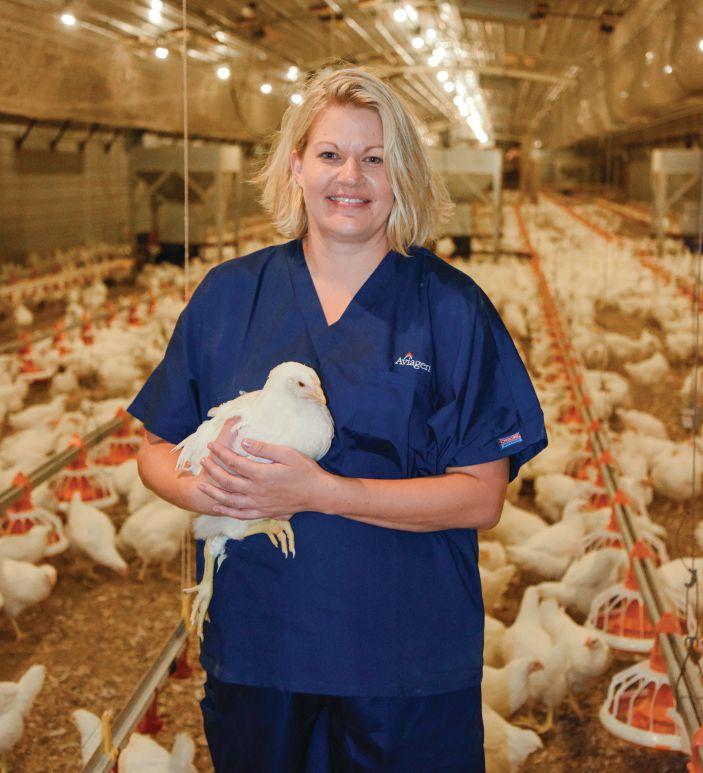
As vice president of veterinary services for Aviagen North America, Dr. Kate Hayes works to ensure the safety and security of Canada’s poultry supply.
an opportunity to consider the industry from an international perspective.
Two milestones in particular stand out in her mind as achievements she’s particularly proud of at Aviagen. The company’s two internal labs in the U.S. have both achieved ISO 17025 accreditation, which Hayes says took an enormous amount of commitment and effort from her team members.
And in 2017, Aviagen became the first primary poultry breeder in the U.S. to be certified as an Avian Influenza Clean Compartment, meaning the company can provide its poultry farmers worldwide with an uninterrupted supply of quality breeding stock.
“I’m at the stage in my career where it’s less about me and more about everybody else, which is very rewarding.”
Compartmentalization is an international program developed by the World Organization for Animal Health that sets standards to allow for evaluation of an exporting country’s poultry management practices and biosecurity programs.
“Every year we look at new ways in how to do better and improve; I’m really proud of the team,” she says. “
Industry involvement
In addition to her work at Aviagen, Hayes is also active in the broader industry. She was chair of the American College of Poultry Veterinarians (ACPV) examination
committee from 2018 to 2022, where she supported a reorganization to streamline the exam process for veterinary candidates.
She has also co-chaired the mentorship subcommittee for the American Association of Avian Pathologists (AAAP) Membership Committee and is a Professional Animal Auditor Certification Organization (PAACO)-certified welfare auditor.
As much as she loves poultry, though, Hayes’ real drive comes from her passion for people and commitment to help others coming into the industry.
“I look back on people who helped and supported me during my career and progression and what they did to go above and beyond. There are so many wonderful people in this industry,” she explains. “I’m an introvert and I started pretty shy in connecting with people. So, I would like to help future colleagues facing similar challenges, so they don’t stumble.”
Rewarding opportunities
She believes strongly in supporting more diversity in the industry, particularly bringing more women into management roles, and encouraging young people – especially those not from farming backgrounds – to consider careers involving poultry.
“It’s an innovative industry that offers
rewarding opportunities to people with wide ranging interests, and we move quickly on new technologies and innovation,” she notes. “I look at my team members and how they’re hungry to learn and have their minds stimulated, and we will continue to innovate and do things better tomorrow.”
The opportunity for the industry is endless, she adds, but only if it is able to keep evolving to deal with emerging diseases and challenges that will come with the impact changing environmental conditions can have on both animals and people. That means being forward-thinking and willing to change the status quo.
According to Hayes, not having an agriculture background didn’t keep her from pursuing a career in the industry. For her, working with animals during her undergraduate years – when that meant getting up at 3:00 a.m. to milk cows – was rewarding, as was the idea of providing food for people and sharing with others what agriculture means to the world.
In contemplating her future in the industry, her focus is very much on people and helping others achieve their goals.
“I’m at the stage in my career where it’s less about me and more about everybody else, which is very rewarding. I can take delight in seeing other people get the win and be successful,” she says. “I want to look at life going forward in whatever turn of the road is out there and think about how I can best serve those in the industry to maximize their potential –that makes me happy.”
Hayes (right) with Dr. Sara Reichelt, director of animal welfare at Aviagen North America.
Clément Allard
Hatching egg producer continues family’s agricultural political legacy. By Mark Cardwell
The age-old enigma about what comes first, the chicken or the egg, has never been a mystery for hatching egg producer Clément Allard.
“Without us there is no chicken industry,” says Allard, a fifth-generation member of a prominent family in Quebec’s poultry industry, co-owner of one of the largest broiler hatching egg production businesses in la belle province, and for the past year a substitute board member with the Canadian Hatching Egg Producers (CHEP). “Hatching eggs is where it all starts.”
It’s a lesson Allard learned as a boy growing up on his parents’ hatching egg farm in Saint-Alexis, a rural village in Quebec’s Launadière region, a half-hour drive north of Montreal.
“I started telling people when I was only six that this is what I wanted to do when I grew up,” says Allard, now 43 and
co-owner of the 2,240-metre incubation farm with his mom, Martine Mercier. The two run the operation with the help of two fulltime employees and occasionally his girlfriend Mahée and his four daughters – Daphné, Zoé, Océanne and Émy. “I’ve always loved everything about the business, especially the family side. I’m a real father hen,” Allard adds.
Family legacy
He comes honestly by his connections to agriculture in general and the poultry industry in particular. His maternal grandfather, Laurent Mercier, who was one of five brothers who were all broiler and pork producers on the same concession road in Saint-Alexis, was a founding member of the Fédération des producteurs de volailles du Québec.
He served as president of the newly created provincial poultry producers’ group from 1976 to 1989, and notably
spearheaded the creation of an aid program that continues to distribute free quota to help give new producers a helping hand.
For her part, Mercier followed her father into agricultural politics, being involved at the highest levels of hatching egg producer groups at both the provincial and federal levels, including a term as president of CHEP.
She also served as a second- and firstvice president of Quebec’s farmers’ union, the Union des Producteurs Agricole – or UPA – before ending her political career in 2007.
The Mercier clan remains well known in Quebec broiler and turkey circles, with seven of Allard’s uncles and cousins now producing some six million birds a year in and around Saint-Alexis.
“We all live just a few minutes apart so we get together regularly,” Allard says. “For suppers at Christmas, Easter and Thanksgiving there are 45 of us around the table.”
Clément Allard is co-owner of one of the largest broiler hatching egg businesses in Quebec.
Overcoming challenges
However, farming hasn’t always been an easy row to hoe for Allard. Though his family’s hatching egg production business successfully introduced and used innovative methods like the Vencomatic egg collection system – becoming one of the first farms in Quebec to use the robotic technology in the late 1980s – Allard’s world fell apart when his parents separated.
He continued to live and work alongside his mother throughout high school and even college, when he studied farm management at the nearby Joliette campus of the Cegep de Lanaudière.
Allard became a co-owner in the business in 2002, shortly before a mouse chewed through an electrical wire in the laying barn, causing a short circuit and a fire that destroyed two of farm’s four coops. Thousands of birds that were set to be shipped out that same day at the end of their 42week production period were killed.
Another fire of unknown origin (though likely the work of a pyromaniac who had set fire to several barns in the region) destroyed the new laying barn in 2006.
“It was tough,” Allard says about the blaze, which happened as he was planning to build a new house for his own young family on La Ferme Mercier et Allard. “But you have to be strong and keep going.”
Enters ag politics
After building a new barn with a conventional system and a new home for his family, Allard decided to follow his family into agricultural politics.
“It’s in my blood,” says Allard, who grew up playing hockey, a sport he continues to enjoy, along with golf. “But I thought I could help to improve what I saw as a lack of information about programs for young producers. And I was looking for a new challenge as well.”
He was first elected president of the young farmers syndicate in the Lanaudière region in 2008. After serving a four-year term, he was elected second vice president of the provincial body.
Allard was also elected to the local Achigan-Montcalm branch of the UPA, and
Serving Wester n Canada for Over 70 Years
later became an executive member of the regional chapter.
In 2014, he was appointed a board member of the provincial hatching egg producers body – the Producteurs d’oeufs d’incubation du Québec.
After serving four years as a municipal councillor in Saint-Alexis – during which he renovated two old barns on his farm into modern laying facilities – Allard failed to win the mayor’s seat in the 2021 Quebec municipal elections.
That loss failed to dampen his enthusiasm, however, for involvement in either the local community or farming circles.
“Saint-Alexis is my home – I’ve spent my entire life here,” Allard says. “My family and I love to be involved with local activities like benefit suppers for the church or groups like the Optimists’ Club. We give lots of time to help out, whether it’s setting up tables and chairs or cleaning up after.”
Politically, Allard says he’s happy – for now at least – with his current role as substitute with CHEP. And he is also excited by the strong interest that his 15-yearold daughter Océanne is showing in the family business.
“She’s a lot like me,” Allard says. “Despite her young age, she says this is what
she’d like to do. So, we’ve started involving her in conversations about the business and she comes with me to presentations and meetings that deal with egg production. I don’t want to push her. But it’s nice to think that another generation of egg producers in our family may be on the way.”
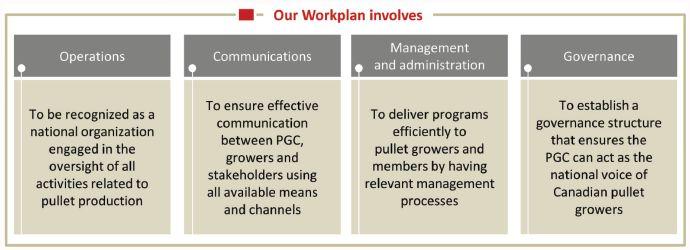
We represent the interests of Canadian pullet growers, working to ensure their success as critical partners in the Canadian egg industry
x. 8589
Allard is a substitute board member with the Canadian Hatching Egg Producers.
At Neogen®, we believe today’s global poultry producers find value in being stewards of the environment. And we wanted to help!
Introducing the New EVO Line of Phosphate-Free Detergents: products that provide maximum cleaning while producing minimal environmental impact.
• CHLOR-A-FOAM™ EVO: High foaming, chlorinated detergent for cleaning prior to disinfecting
• ACID-A-FOAM™ EVO: A rotational product, ideal for removing scale build-up from fan blades, trays, buggies, and other hatchery equipment
• ACID TRAY WASH EVO: Non-foaming, acid-based tray wash liquid to descale spray nozzles and heating coils in tray wash machines
• FARM-FOAM EVO: High foaming, non-chlorinated detergent for cleaning prior to disinfecting
Tim Klompmaker
Making a difference fuels passion for the poultry industry. By Lilian Schaer
From handfeeding chickens on his grandparents’ farm to today chairing the Chicken Farmers of Canada (CFC), poultry have always been a key part of Tim Klompmaker’s life. His grandparents built the family’s first chicken barn in the early 1960s, and his parents took over the family farm in 1972.
It was 1984 when Klompmaker struck out on his own, buying a farm with the support of his parents and starting with his first flock of 14,000 chickens. When two neighbouring farms came on the market in the mid-1980s, he used that opportunity to expand his operation.
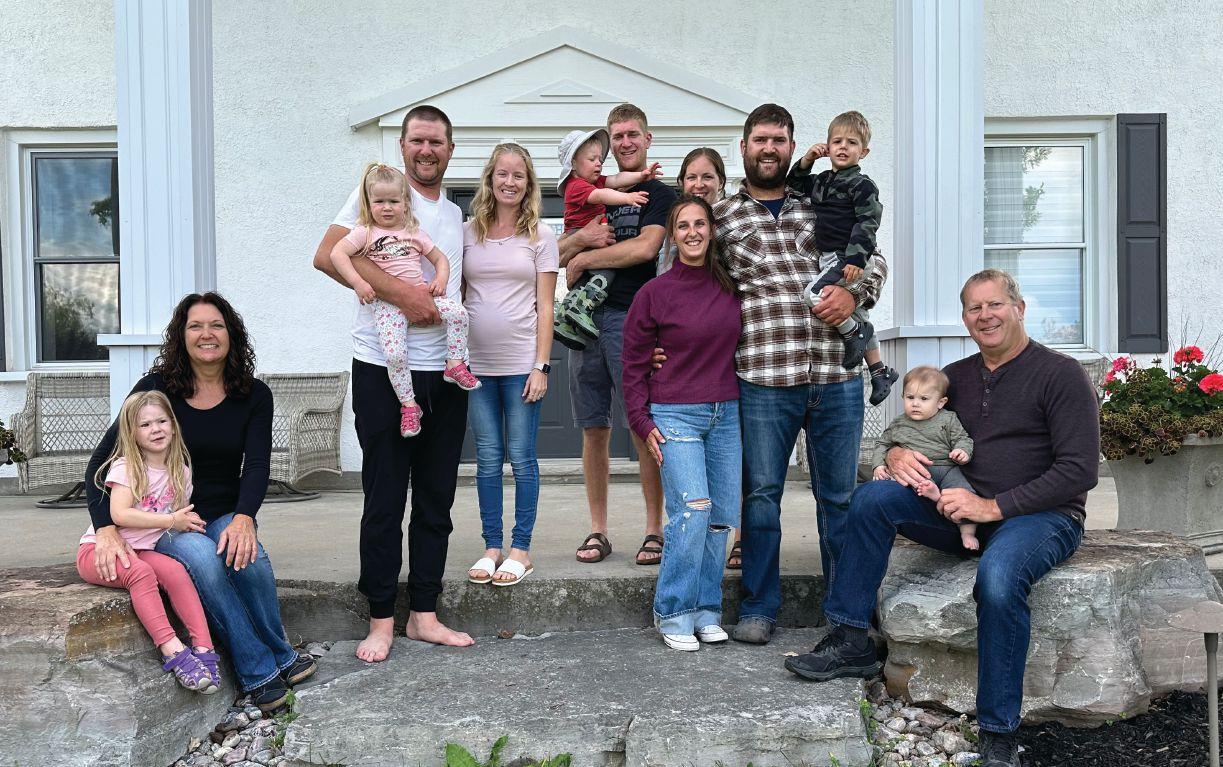
Today, he and his wife Annette farm in Norwood, Ont., near Peterborough with their sons, Chris and his wife Angela, Mitchell and his wife Taylor, and Cameron and his wife Emma, running their four independent farms together.
“Farming has been part of my life
since day one. That’s one of the great things about supply management – it has given us the confidence in the industry to help our kids get into it as well,” Klompmaker says. “It’s stable and that’s how we were able to expand and able to prepare for our kids being able to enter the industry too.”
Looking for new opportunities
Today, their production is mostly organic, a market they decided to commit to after one of their sons started raising organic broilers. It’s a production system that is different, but not better than conventional production, he believes, and it’s the responsibility of farmers to produce to meet consumer demand, including organic. His family, however, is continually looking for new opportunities as the poultry industry grows.
That includes a strong focus on sustainability, like renewable energy – one son
has completed a solar project on his farm – and planting trees to minimize barn noise, odours or dust. Animal husbandry practices are also a top priority, with the Klompmakers taking very hands-on roles in monitoring their flocks and keeping current with the latest technologies.
“Another big focus for us in how we look at things in general is maintaining family farms and supporting the evolution to the next generation,” Klompmaker says, adding that of their six grandchildren, all under four, his oldest granddaughter is already showing interest in going to the barn.
“The plans our kids are starting to layout now is in anticipation of some of their kids being interested in growing chickens too,” he says.
Love of farm politics
Alongside his passion for raising poultry has been a life-long interest in farm politics. Klompmaker remembers attending local
Tim Klompmaker, pictured here on the right with his family, farms in Norwood, Ont., and chairs Chicken Farmers of Canada.
Chicken Farmers of Ontario (CFO) meetings with his father at a young age, where he discovered he enjoyed “being in the know about what was actually going on”.
His father became a CFO provincial director around 1990, and shortly afterwards, Klompmaker became a district committee representative, a position he held for 17 years. Today, his son Chris holds the same position. It was that local role that laid the path for making the jump to the provincial board, although it wasn’t something he originally envisioned doing.
“I had no intention of doing it; my kids were very young, and I was extremely busy at home, so the time commitment was the big reason at the time, not from not wanting to do it,” he recalls, adding he eventually got a tap on the shoulder from the provincial director in his region who was stepping down, and the rest, as they say, is history.
Becoming CFC chair
After 13 years as a CFO director, including serving on the CFO executive and representing Ontario nationally as an alternate, there was another tap on the shoulder –this time to fill a vacancy on CFC's board as the Ontario director. That was six years ago; in 2022, Klompmaker became chair of the national organization.
“It was never my intention; it was one of those things where I kind of evolved into the (chair) role as I became more and more involved at the national level. I was always very intrigued by the trade files, the development and ongoing evolution of national programs and the allocation process,” Klompmaker says.
“When the previous chair said he was stepping down, I felt I could contribute a lot to the board and so I took it as an opportunity.”
As CFC chair, he believes strongly in collaboration and constant communication across the whole value chain to help the industry both tackle challenges and seize opportunities. Currently, avian influenza is the top-of-mind issue, but longterm, Klompmaker says CFC is focused on
closely monitoring trade developments and any moves to increase international market access.
Industry future is bright
Despite the challenges, though, he believes the industry has a bright future as
the meat protein with lowest carbon footprint in North America, a consumer base that views chicken as a healthy protein, and the evolution of new technologies that can make poultry production even better.
He’s proud of his involvement with the
UPGRADE PERFORMANCE IN A SNAP!
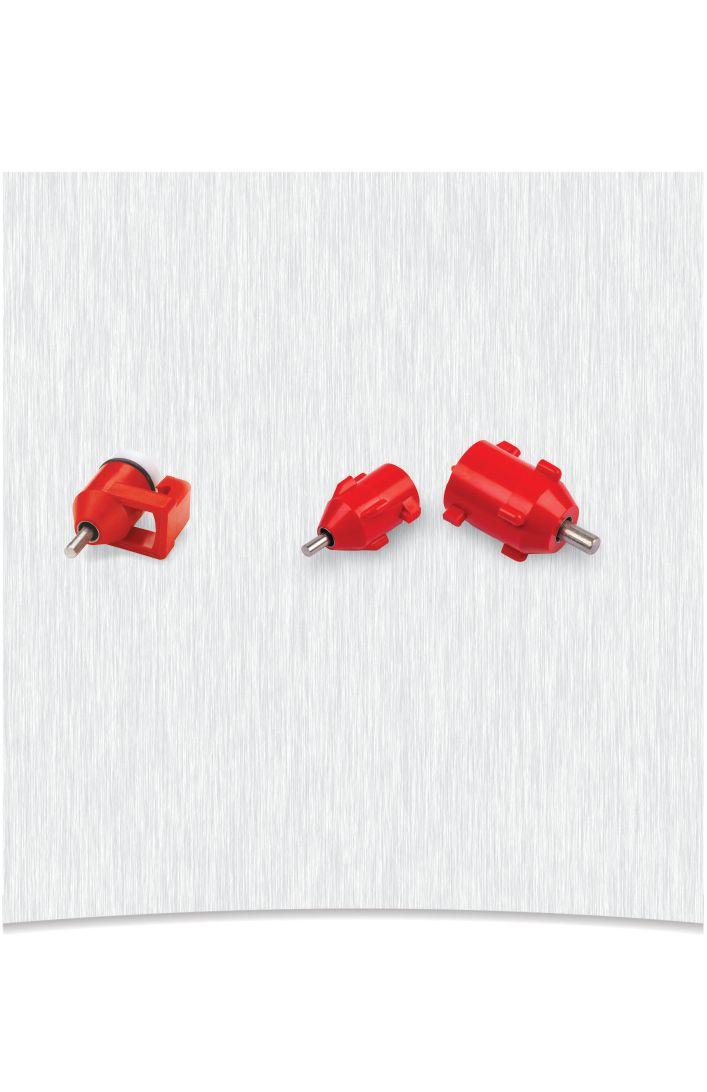
Ziggity makes upgrading your watering system fast, easy and affordable with its lineup of drinkers and saddle adapter products, designed to easily replace the nipples of most watering system brands with our own advanced technology drinkers. So if your watering system nipples show signs of wear, leaking and poor performance, just upgrade to Ziggity drinkers to start enjoying improved results! See how easy it is and request a quote at www.ziggity.com/upgrade.
The Poultry Watering Specialists
Aktive Drinker Max3 Drinker Big Z Drinker
VAL/Cumberland Lubing ChoreTime® Plasson®
industry working group that helped negotiate a program for supply managed poultry farmers to offset market access concessions made as part of the Canada-United States-Mexico Agreement (CUSMA) and the Comprehensive and Progressive Agreement for Trans-Pacific Partnership (CPTPP).
The Poultry and Egg On-Farm Investment program will help the industry move forward to improve animal health and sustainability, he says, but the piece he’s most proud of is being able to secure a higher cost-share contribution percentage for farmers under age 35.
“This is significant because young farmers are our future and getting them involved in the industry is so important,” he says, believing it’s also key to encourage farmers to step up and take leadership roles in the poultry industry to help maintain the supply management system.
Family support
It’s a responsibility he couldn’t have taken on without the support of his family, he adds; the more than 100 days a year he spends on CFC business is a significant commitment, but one he says is easy to do when you feel like you’re contributing and making a difference.
TURKEY FARMERS OF ONTARIO
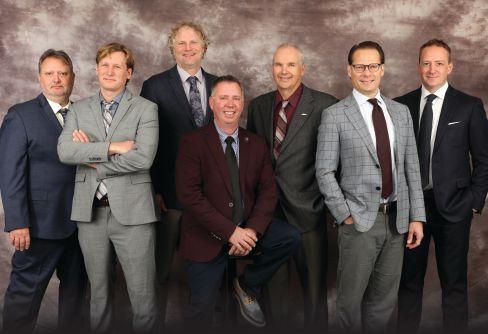
BOARD OF DIRECTORS
BOARD (LEFT TO RIGHT)
Greg Lansink, District 4
Steven Vanderzanden, Executive Member, District 2
Tim de Wit, District 1
Duane Dietrich, District 3
Brian Ricker, Chair, District 2
James Schlegel, District 3
Matt Steele, Vice Chair, District 1 turkeyfarmers.on.ca
“Every step I’ve made included long talks with my wife and her response has always been she will always support me,” Klompmaker says.
“And when I was considering the CFC chair role, my kids said to me “pretend you don’t even have barns” and now they make me sign the visitor logbook.”
Most of the family’s production is organic, a market they decided to commit to after one of their sons started raising organic broilers.
CORNERSTONE PRESSURE WASHING
SPECIALIZES IN BARN WASHING & DISINFECTING LET US MEET YOUR BIOSECURITY & SEASONAL NEEDS
ADDITIONAL SERVICES INCLUDE:
BIO-SECURITY CONSULTING: We provide consulting on bio-security best practice and site specific bio-security plan development.
EMERGENCY CULLING & END OF FLOCK SERVICES: We provide emergency culling and end of flock services to the Poultry & Turkey Industries. Cornerstone is IMS (Incident Management Systems) certified.
FULL TURN AROUND SERVICE: We are able to handle every aspect of your turn around so that you can worry about all the other things you need to get done around your operation. This service includes (if necessary) flock culling, removal & disposal, and facility washing & disinfecting.
David Mandel
Turkey producer is known for his positive outlook, attention to detail and his sense of humour.
By Treena Hein
David Mandel is a leader in raised-without-antibiotics (RWA) turkey production in Canada. He has over six years of experience and began selling RWA turkeys to B.C.-based Sunrise Farms in 2020.
“Changing your mentality is the most important thing,” he says. “It’s a continual learning process. With RWA, birds are always teetering on the edge of the cliff, and you need to do your prevention but also to notice small signs and take action. RWA forces you to be a better manager – to pay more attention. It’s been a very interesting road, not always a pleasant one, but always interesting. And it continues.”
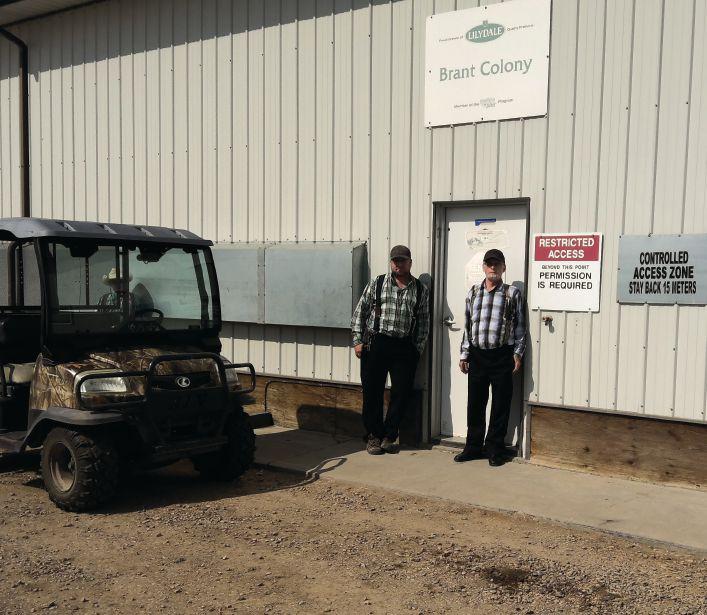
Mandel is a member of the Brant Hutterite colony in southern Alberta, where Brant Farming Co. produces crops, eggs, swine, turkeys (40,000 per year) and milk for sale, as well as small numbers of ducks, geese, broilers and dairy-beef crosses for colony consumption.
The colony also makes its own feed. Mandel’s partner in the turkey barns is his uncle Paul, and his four children also help. Younger members of the colony also continually cycle through every year, learning about all the types of food production at the colony. What's more, Mandel is very welcoming to the vet students who come through with his vet.
He started thinking about RWA turkey production years back because the use of antibiotics was cumbersome at their on-
farm mill in terms of needing to make antibiotic-free feed for the layers and dairy cows. “I was also pushed toward RWA because the hatcheries stopped being able to use Category I and II antibiotics in a preventive manner,” he says.
“It gave me confidence to give it a try. I started using various gut health products and I found they worked well. When Sunrise approached me to grow RWA in 2020, I was already on that path for three or four years.”
Disease prevention
A big part of Mandel’s success with RWA, as mentioned, is close observation. He worked hard, for example, to watch and document the typical pattern of coccidiosis surges in his flocks to prevent infection.
“It took me a lot of time to figure out the pattern,” he says. “There’s a surge when you are changing the diet from a starter to a grower diet at about day eight, and then it cycles from there. So, at day six, 14, 19, 27, 56 and again if I’m not careful at day 77, I give the birds juice from the yucca plant, made by a company in California.
“It’s a very effective preventative and my go-to product for cocci. I give it for 24 hours and I may go 48 hours with it depending on how the birds look. I’ve tried a lot of things, and you have to find what works in your barns. I’ve talked to a lot of RWA growers, there are about five in Alberta, and everyone’s gut flora and timing might be different depending on the barn’s microclimate. So, it’s very important to find products that work well
David Mandel, pictured on the left with his uncle Paul, is a turkey producer from Brant Hutterian Brethren.
AgrifoodJobsite.ca is Canada’s premier online job portal for the growing agrifood sector. A laser focus on the right people across the country’s largest agrifood media audience means you get the right applicants the first time. No more massive piles of unqualified applicants, just professional employers reaching qualified professionals.
Powered by the top agrifood media brands in Canada, the reach to over 500,000 industry professionals on AgrifoodJobsite.ca is amplified by:
Website advertising to 185,000 qualified monthly site visitors
A comprehensive and magnifying reach across multiple associated job boards
Email promotion and job alerts to 131,000 industry emails using Canada’s largest CASL-compliant direct access to agrifood professionals
Social media promotion to all brand networks on Facebook, Instagram, Twitter and LinkedIn
in your barn environment.”
Achieving long-term feed consistency also strongly contributes to the health of the Brant turkeys. The colony can harvest and store enough wheat to last 1.5 years of feed, Mandel explains, making the level of protein and other components the same for that period.
When he has to switch to a new harvest lot of wheat, Mandel has it tested as usual and then works with his nutritionist to try and replicate the previous diet as closely as possible. However, he also gives copper sulphate or probiotics and extra vitamins a day or two before the switch, to boost the birds’ immune systems and avoid flushing.
Mandel also switched, at the request of Sunrise, to a certified all-vegetable diet at the same time as the RWA. “We had to change some of our vitamins because they had an animal fat-based coating,” he says. “I also give higher vitamins in my starter diet, about 25 per cent more than ShurGain recommends. I add them to
“RWA forces you to be a better manager – to pay more attention.”
their feed, as it’s more convenient than in the water. The birds are eating so little at that age, so there isn’t much extra cost and it’s definitely worthwhile.”
Lighting changes
Brant has two turkey barns, one larger than the other. About 10 years ago, Mandel replaced his lights in the large barn with LEDs at a spectrum of 6,500 kelvin and immediately noticed a very high level of litter picking. Birds were dying due to impacted bowels. “It was bad,” he remembers. “The only way I could get them to stop was to turn down the lights to almost darkness, which isn’t a solution. I then put in canola straw, which prevented bowel problems, but introduced insects.”
(Hybrid recommends 4,500 kelvin, but Mandel wasn’t aware of that at the time. When he put in LEDs in the small barn about six years ago where brooding takes place, he got 3,000 kelvin lights and they are working very well.)
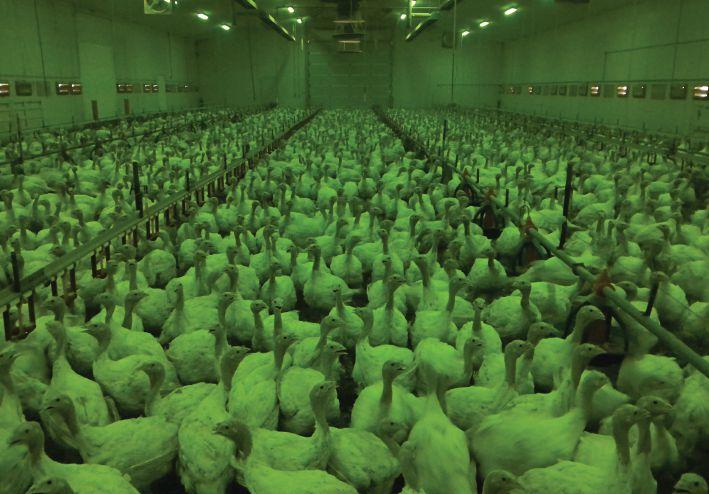
Recently for the large barn, however, Mandel heard about a few poultry farmers who had eliminated litter picking with light wavelengths in the green area of the spectrum. “So, late this winter, I looked into filters and gave them a try,” he says. “I chose from thousands of green filter colours at Lee Filters and bought a roll. I do a lot of leather work and I cut the filter into long strips. A friend and I taped then them on each bulb over a couple of hours. It’s been a big improvement and cost very little. I’m not sure I have the exact right colour but I’m on the right track.”
Board experience
For the last eight years, Mandel has served on the board of the Alberta Turkey Producers, as chair, vice chair and Alberta’s alternate director on the board of Turkey Farmers of Canada. He joined because he wanted to make sure there was diversity on the board, and the existing board members were also very encouraging of having Hutterite members.
“We collectively own quite a bit of the turkey quota in Alberta, so it’s good for the Hutterite community to have that voice,” Mandel says. “I am most proud of the allocation policy we created. It took many years to get it finished. And as chair, I spent a lot of time talking to producers and I think I helped producers feel they could trust in the board, that the board has its integrity in the right place.
“I went to farms and to coffee shops to meet with producers and made sure they felt they were being heard. I think now most producers trust the integrity of the board, even though they might not agree with
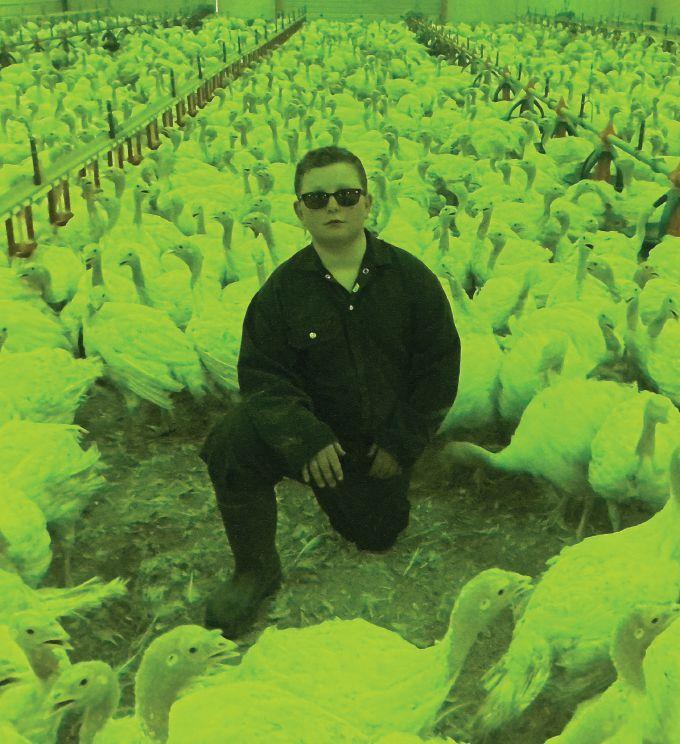
Mandel recently added green light filters because he heard they help with litter picking. Pictured here is one of his sons.
NOVEMBER 7, 2023 LIVE EVENT I 1:00PM ET
INSPIRE | LEARN | LEAD | CONNECT
Register today for this unique live event coming to Hamilton.
Join us to hear from today’s most influential female leaders in Canadian agriculture.
This year, six IWCA honourees were chosen by our team. On November 7, 2023 at 1:00pm ET, they come together with other prominent trailblazers in agriculture to share their experiences, life lessons and more for the live 2023 IWCA Summit.
Join us for an afternoon of interactive discussions as they share their experience, offer guidance and discuss their journey in agriculture.
Gold Sponsors
Bronze Sponsors
Platinum Sponsor
every decision it makes.”
During this experience, Mandel himself has valued all he’s learned about how the entire industry works. “It’s been very interesting to learn about how allocation is set, what parameters are looked at to achieve everything to make supply management work at the farm level. I had, like most producers, no idea about how much effort is put into this industry at the national and provincial level to make all this work.
“We need to be very thankful to all the staff at both levels, processors and producers who take the time to make sure this system works to the best of its ability. And I think as an industry we need to continue to try to grow a as much as possible. That should be, and I believe it is, the goal of everyone in the industry, from the offices that manage allocation and export to the producers. We need to work to build the
willingness to try all the turkey products out there today and create some more new ones.”
As far as his own goals in turkey farming, Mandel would like to be able to someday say he’s producing RWA turkey as efficiently as conventional turkey is produced. He would also simply like to
continue to enjoy farming. “It’s an extremely rewarding lifestyle, to be with family and learn constantly, and to know where your food comes from,” he says. “With the RWA, it’s been very interesting. I’ve never been a lover of medication and it’s very satisfying and worthwhile to have achieved success without it.”
Give your poultry farm a clean start with Neogen’s family of HPAI solutions
Now more than ever, with diseases like Avian Influenza challenging your birds at every turn, your ability to prevent disease has never been more critical and Neogen® can help!
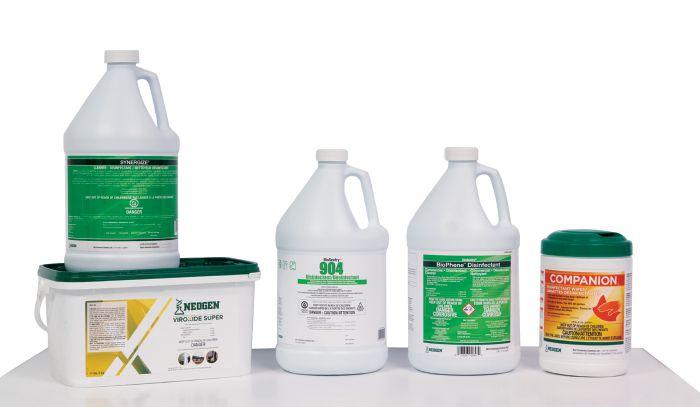
Neogen provides a full range of disinfectants to help in your prevention efforts. From quaternary ammonium/glutaraldehyde combinations like our industry standard Synergize® to oxidizers like Neogen Viroxide Super™. From phenols like BioSentry ® BioPhene™ to quaternary ammoniums like BioSentry ® 904 to disinfectant wipes like COMPANION™, Neogen has a chemistry to fit your specific needs.
Call your local animal health provider or visit neogen.com today to find out which HPAI solution is right for you.
Mandel is a leader in raised-without-antibiotics turkey production in Canada.
Don Gaultier
Award-winning egg producer takes great pride in his operation. By Melanie Epp
When Don Gaultier’s name was drawn under Manitoba Egg Farmers (MEF)'s New Entrant Program, he knew very little about raising layers. He was, however, practically a household name in the poultry community at large.
Gaultier would be the first to admit that much of his success hinges on the relationships he’s forged within the poultry sector, but the last to acknowledge just how much he’s contributed to it himself. His impact on Manitoba’s egg sector has not gone unnoticed, though.
Gaultier is a fourth-generation farmer from Notre Dame de Lourdes, Man., and the first in his family to raise layers under Canada’s quota system. He and his wife Shannon have been producing eggs ever since they were awarded 6,000 quota units through Manitoba Egg Farmer’s New Entrant Program in February 2013.
The producer may not have grown up in
poultry, but agriculture has always been a part of his life. When he was very young, his father grew grain and kept a small herd of beef cattle and hogs. When Gaultier was just a boy, his father rented out their land, and left agriculture to open a septic tank business. Growing up, Gaultier was still very much interested in working in the industry, though, so he pursued a diploma in agriculture from the University of Manitoba.
Passion for poultry
Following graduation, he took a position as a junior salesman at Feed-Rite. At first, his job was confined to the sales counter, but later he was asked to go out on the road and sell feed to egg and poultry producers, a sector with which he had no experience. It was here that he fell in love with the world of egg farming.
After a couple of years with Feed-Rite, Gaultier took a job with a credit union, where he worked as a commercial and agricultural lender.
“The whole time I was in lending, I had really fallen in love with the poultry industry – but mostly with layers,” he says. “I love the industry, how organized it is, and dreamt of one day being able to work in it.”
Gaultier remained at the credit union for some 10 years. Each year, though, he applied for the new entry program in the hopes that he would someday be able to transition into egg production.
In 2012, just days before the deadline, Shannon called him at work to remind him that they still needed to get their application in order. Gaultier says he didn’t have time to pull the application together but suggested that Shannon do it if she could.
“I don’t want to say I was done trying, but you know, it had kind of come to that point,” he says.
“Eggciting”
news
In February 2013, Gaultier and Shannon learned that their names had been drawn. He remembers it as an exciting time. The
Don Gaultier owns and operates D&S Gaultier in Notre Dame de Lourdes, Man., with his wife Shannon.
next 11 months were a whirlwind of farm visits and information gathering. He had a lot to learn.
In January 2014, less than one year later, D&S Gaultier placed its first flock and the couple began their journey as Manitoba egg farmers. Gaultier couldn’t be happier that he and his wife were given the chance to become egg farmers.
He’d come to love the sector back when he was working as a junior salesman at FeedRite. Gaultier says he was particularly attracted to the organization and stability of the industry. He also liked that it was easy to set and meet production targets by following a clear set of feed and water guidelines.
“There are so many benchmarks set out,” he says. “It’s very easy to gauge if you’re doing good or bad. It is very organized and very detailed.
“I really like the people in the industry,” he adds. “I know that probably sounds corny, but the customers that I was dealing with were all great.”
Getting off the ground
It was the wider community that really helped the farmers get their start. Being able to tour local farms helped them make decisions around the type of housing they wanted and the type of management system that would best meet their needs.
Gaultier opted for an alternative housing system, basing his operation on many of the European standards. He chose enriched front-nest cages designed and manufactured by Hellmann Poultry Equipment. By the time the new housing code came into force, Gaultier’s operation was almost completely compliant.
He is grateful to the egg farmers in his community who helped him get his operation off the ground, which is why he extends the same courtesy to new entrants who are unfamiliar with enriched systems.
“I like to think that I’ve kind of returned the favour to the industry,” he says.
Giving back
But Gaultier has given back so much more than that. He attends producer meetings and has become an ambassador for the industry
• Exacon’s brand name since 1987
• Polyethylene or fiberglass flush mount housings available in white or black
• Designed to meet the rigorous demands of farm/agricultural ventilation
• Energy efficient Multifan, MFlex, or AGI motors
• Available in sizes ranging from 12” to 72”
TPI WALL AND CEILING INLETS
• Produced out of high-quality polyurethane, TPI inlets are designed to optimize airflow
• High insulation value is ideal for cold weather climates
• Easy to assemble, maintain, clean and adjust to meet your specific ventilation needs
• Wall inlets, ceiling inlets and tunnel inlets
• TPI wind hoods are available with a builtin light trap option
MULTIFAN V-FLOFAN
• The V-FloFan creates a uniform climate in poultry houses
• Equipped with a water and dust resistant
IP55 rated, low noise
Multifan motor
• Helps control the humidity of the litter resulting in an active microclimate at bird level
• Special aerodynamic shaped conical outlet optimizes vertical airflow contributing to lower energy costs
• 3 year warranty on complete fan
L.B. WHITE GUARDIAN® FORCED AIR HEATERS
• Available in natural gas(NG) or liquid propane(LP)
• Manufactured with high quality, corrosion resistant components and Tri-Shield coating to provide years of worry-free performance in even the harshest livestock environments
• Features high temperature protection, air proving switch and a totally enclosed motor to assure safe, dependable operation
GENIUS iTOUCH CONTROLS
• User-friendly livestock production control equipped with a 10” colour touch screen for easy navigation
• Cutting-edge technology facilitating the management of ambient air(ventilation, heating, humidity, static pressure, CO2), animal populations, feed levels/consumption, lighting, and more
• Access real time data 24/7 and manage your operation remotely from anywhere you can access the internet using the FarmQuest online management tool
LIGHT TRAP BY EXACON
• Lightweight, corrosion resistant and easy to assemble on site using PVC spacers
• Provides maximum light reduction with very little resistance to air flow
• Also available assembled with a galvanized frame
or call us for
by participating in events, including Brandon Fair and Ag in the City, that help educate the public about egg production in Manitoba.
“Don has been a wonderful advocate for the regulated industry in Manitoba,” says Cory Rybuck, general manager of MEF. “Not only is he very personable, but he’s very engaged with what's happening in the industry and very proud of what he and his family do on their farm.”
Currently, Gaultier is participating in the director-in-development program through Manitoba Egg Farmers, a six-month role that allows him to passively test drive a position on the board. It has helped him to better understand public policy and the greater issues facing the industry.
The hope is that he’ll stand for election once the voluntary position comes to an end. Rybuck says Gaultier brings a unique perspective to the board, especially given his experience in feed and commercial lending.
“Hopefully, down the line, Don will join us as a director,” Rybuck says.
Accolades
In 2017, the Gaultiers were selected as MEF’s Farmer of the Year. The award honours exemplary egg production practices including on-farm food safety, production management, animal care initiatives, and community service.
While the award honours farmers who stand out in terms of food safety, animal care and production management, Gaultier’s dedication to the egg-farming community at large is what made him an attractive candidate.
“I guess it goes back to how much I really love this industry,” he says. “And sometimes that's just not enough, so you have to give back.”
In 2017, the Gaultiers were selected as Manitoba Egg Farmers’ Farmer of the Year.
WHO’S WHO DIRECTORY & LISTINGS
ALBERTA
HEALTH MONITORED HATCHERIES
LETHBRIDGE HATCHERY
13542-73A Ave., Surrey, BC V3W 1C9
Ph: (403) 327-0491
LILYDALE - SOFINA FOODS INC.
7503 – 127th Ave., Edmonton, AB T5C 1R9
Ph: (780) 475-6607
MAPLE LEAF CONSUMER FOODS
4710 - 39 Ave., Wetaskiwin, AB T9A 3G2
Ph: (780) 421-0638
MILLER HATCHERIES
10011 94A Ave., Westlock, AB T7P 2M7
Ph: (780) 349-6636
ROCHESTER HATCHERY
27020 Hwy. 18, RR 1, Westlock, AB
T7P 2R9
Ph: (780) 307-3622
F&M FARMS LTD.
9420 – 109 St., Westlock, AB T7P 2R4
Ph: (780) 307-3622
UNIVERSITY OF ALBERTA
116 St. – 83 Ave. Edmonton, AB T6G 2R3
Ph: (780) 492-7694
REGISTERED EGG GRADING STATIONS
Armena
Sunworks Farms Ltd.
PO Box 55, AB T0B 0G0
Ph: (780) 672-9799
Fax: (780) 672-9984
2023 –2024 BOARD OF DIRE C T OR S :
CH A IR : Peter Waldner
VIC E CH A IR : Conrad Vanessen
EFC DIRECTOR : Beatrice Visser
EFC ALTERNATE : Jerry Hofer
DI R E C T O R : Elie Hofer
DI R E C T O R : John Hofer
GENERA L MAN AGE R : Stephen Scott
#101-90 Freeport Blvd NE, Calgary, Alberta T3J 5J9
131 Legislature Building, 10800-97 Avenue, Edmonton, AB T5K 2B6 Minister of Agriculture, Forestry and Rural Economic Development – Honourable Nate Horner
THE POULTRY RESEARCH CENTRE, Department of Agricultural, Food and Nutritional Science, University of Alberta F83, AFDP, University of Alberta, 116st, 85 ave, Edmonton, AB T6G 2R3
Alberta Hatching Egg Producers 9677 45th Ave. NW Edmonton, AB T6E 5Z8 Ph: (780) 434-8414 Fax: (780) 434-9552 info@ahep.ca www.ahep.ca
Jeff Notenbomer, Chair; Kevin Tiemstra, Vice Chair. Directors: IIja Veldhuizen,, Brian Wassink, Dennis Wickersham, Harry Voorhorst. Bob Smook, General Manager
Alberta Turkey Producers 9677 – 45 Avenue, Edmonton, AB T6E 5Z8 Ph: (780) 465-5755 Fax: (780) 465-5528 info@albertaturkey.com www.albertaturkey.com
Laurel Winter, Chair; Marc Therrien, Vice-Chair; Directors: Graham Gilchrist, David Mandel, Scott Olson; Director in Training: Astrid Stephenson. Cara Prout, Executive Director. Egg Farmers of Alberta #101-90 Freeport Blvd. NE, Calgary, AB T3J 5J9 Ph: (403) 250-1197
Peter Waldner, Chair; Conrad Vanessen, Vice Chair; Beatrice Visser, EFC Director; Jerry Hofer, EFC Alternate; Elie Hofer, Director; John Hofer, Director; Marcella Van Strylabnd, Director in Training; Stephen Scott, General Manager.
Western Feed Industry Association
c/o Peggy Kimmel
Stn Main, RR3 Site 6 Box 17
Lacombe, AB T4L 2N3
Ph: (403) 350-0495
manager@wfia-anac.com www.wfia-anac.com
Mike Robinson, Chair; Tim Armstrong, Vice-Chair; Sharon Klinger, Past Chair; Directors: Darryl Lewis, Nancy Fisher, Mark Cameron; Social Director: Kelly Cruise; Division Manager: Peggy Kimmel
BRITISH COLUMBIA
HEALTH MONITORED HATCHERIES
BRADNER FARMS HATCHERY
28670 - 58th Ave., Abbotsford, BC V4X 2E8
Ph: (604) 856-1227
ECHO POULTRY FARM AND HATCHERY
30230 Huntingdon Rd., RR 1, Abbotsford, BC V4X 2K6
Ph: (604) 859-7925
FARMCREST FOODS LTD.
1880 - 30th St. SW, Salmon Arm, BC V1E 4M1
Ph: (250) 832-0036FRASER
VALLEY CHICKS SALES
1681 Clearbrook Rd., Abbotsford, BC V2T 5X5
Ph: (604) 864-0555
GOLDEN FEATHER HATCHERY
5840 Blackburn Rd., Chilliwack, BC V2R 4N9
Ph: (604) 823-4938
OKANAGAN HATCHERY
RR #32, 1429 McLeod Rd., Armstrong, BC V0E 1B8
Ph: (250) 546-9223
LILYDALE - SOFINA FOODS INC.
27923 Myrtle Ave., Abbotsford, BC V4X 1R3
Ph: (604) 856-4171
ROSSDOWN FARMS LTD.
2325 Bradner Rd., Abbotsford, BC V4X 1E2
Ph: (604) 856-1218
SKYE HI FARMS, INC.
4213 Stewar Rd., Chiliwack BC V2R 5G2
Ph: (604) 828-2525
Local, fresh and delicious! We help BC family-owned and operated egg farms bring the goodness of eggs to BC tables.
BC EGG BOARD OF DIRECTORS
Gunta Vitins, BSc, BEd, MBA CHAIR
Walter Siemens VICE-CHAIR, EFC REPRESENTATIVE
Jon Krahn EFC ALTERNATE
Jeff Regier SECRETARY
Matt Vane DIRECTOR
BC EGG MANAGEMENT
Katie Lowe, PAg EXECUTIVE DIRECTOR
Joey Aebig MANAGER OPERATIONS & LOGISTICS
Amanda Brittain, ABC, SCMP DIRECTOR
COMMUNICATIONS & MARKETING
Erin Duetta MANAGER FINANCE
Nicole Thompson EXECUTIVE ASSISTANT
250 - 32160 SOUTH FRASER WAY, ABBOTSFORD, BC V2T 1W5
604.556.3348 | BCEMB@BCEGG.COM
WESTERN HATCHERY LTD.
505 Hamm Rd., Abbotsford, BC V2T 6B6
Ph: (604) 859-7168
PACIFIC PRIDE CHICKS
32870 King Rd., Abbotsford, BC V2S 7Z7
Ph: (604) 850-2913
REGISTERED EGG GRADING STATIONS
Abbotsford
Golden Valley Foods Ltd. PO Box 1800, BC V2S 7G3
Ph: (604) 855-7431
Fax: (604) 855-7439
Abbotsford
Pinegrove Farms Ltd. (Maple Hill Farms)
2130 Mount Lehman Rd., BC V4X 2L6
Ph: (604) 852-2159
Fax: (604) 852-2150
Abbotsford
Siemen’s Farms Ltd.
1237 Columbia St., BC V2T 5X9
Ph: (604) 807-4866
Aldergrove
Royal Columbian Poultry ULC 554 – 256 St., BC V4W 2H8
Ph: (604) 835-4000
Armstrong
Kelly Burden, (Shovel Tree Acres)
1930 Power House Rd., RR 2, BC V0E 1B0
Ph: (250) 546-8597
Black Creek
Kehler Vegetable Company Ltd.
8083 Island Highway, BC V9J 1G9
Ph: (250) 202-3236
Bridge Lake
Sunset Egg Grading Station
7611 Lee Rd., PO Box 107, BC V0K 1E0
Ph: (250) 593-0038
Chilliwak
Local ChickInn Ltd.
7324 Hopedale Road, BC V2R 4J9
Ph: (604) 799-2053
Creston
Sunshine Valley Farms Inc., 3160 Lister Rd, BC V0B 1G2
Ph: (250) 431-8941
Dawson Creek
Peace View Hutterian Brethren Church (Peace View Colony)
4414 Triangle Rd, BC V1G 0J4
Ph: (250) 219-0805
Duncan
Running W Egg Farm Ltd., (Farmer Ben’s Eggs)
1711 Herd Rd., RR 1, BC V9L 1M3
Ph: (250) 746-6110
Fax: (250) 746-7799
Falkland
Dueck’s Poultry Farm Ltd.
132-4958 Silvernails Rd, BC V0E 1W0
Ph: (250) 309-2317
Farmington
South Peace Hutterian Brethren Church, (South Peace Colony) PO Box 69, BC V0C 1N0
Ph: (250) 782-8164
Nanoose Bay
0917522 B.C. Ltd., (Springford Farm Egg Co.)
1934 Northwest Bay Rd. BC V9P 9C5
Ph: (250) 468-7540
Fax: (250) 468-7545
Redstone
A&S Enterprise Management Inc. (Pasture to Plate)
3781 Chezacut Rd., Box 20, BC V0L 1S0
Ph: (250) 394-4005
Ruskin
Thompson Creek Farm, (Phillip Northrop)
10437 Wilson Rd., BC V4S 1B4
Ph: (604) 462-9641
Terrace
414612 B.C. Ltd., (Daybreak Farms Ltd.)
4423 Eby St., BC V8G 0B3
Ph: (250) 638-0777
Fax: (250) 638-8757
Victoria
Michael Romaine, (Healing Farm) 5971 Old East Rd., BC V8Y 1V7 Ph: (250) 652-6456
Westholme
Burnbrae Farms Ltd., (Island Eggs, A Division of Burnbrae Farms Ltd.)
3492 Mt. Sicker Rd., PO Box 1, BC V0R 3C0
Ph: (250) 246-9298
Fax: (250) 246-2110
REGISTERED EGG PRODUCT STATIONS
Abbotsford
Eggsolutions – Vanderpols Inc. 3911 Mt. Lehman Rd., BC V2T 5W5 Ph: (604) 856-4127
Fax: (604) 856-6724
Richmond
Neptune Fresh Produce Inc. 12411 Horseshoe Way, BC V7A 4X6 Ph: (604) 880-5979
Richmond
T&T Supermarket Inc. 6311 Fraserwood Place, BC V6W 1J2 Ph: (905) 695-3202
Dale Krahn, President; Fred Redekop, Vice President; Directors: Dennis Flokstra, Matthew Burgsma, Mitchell Fried, Bev Whitta, Des Soumang, Manager: Jennifer Curtis.
BC Chicken Marketing Board 220 – 1848 McCallum Rd. Abbotsford, BC V2S 0H9
Ph: (604) 859-2868
info@bcchicken.ca www.bcchicken.ca
Chair: Kevin Klippestein; Vice Chair: Derek Janzen; Members: Jim Collins, Ray Nickel, Carol Paulson. Woody Siemens, Executive Director
BC Egg Marketing Board
250 – 32160 South Fraser Way, Abbotsford, BC V2T 1W5
Ph: (604) 556-3348 bcemb@bcegg.com www.bcegg.com
Gunta Vitins, Chair; Walter Siemens, Vice-Chair. Directors: Matt Vane, Jon Krahn, Jeff Regier
Katie Lowe, Executive Director. British Columbia Broiler Hatching Egg Commission 210 – 1848 McCallum Rd. Abbotsford, BC V2S 0H9
Department of Animal Science, Faculty of Agricultural & Food Sciences, 201 Animal Science/Entomology Building 12 Dafoe Rd. University of Manitoba (Fort Garry Campus)
Jake Wiebe, Chair; Leonard Klassen, Vice Chair. Directors: Stuart Nikkel, Rod Wiebe, Murray Klassen, Henry Heppner, Colin Grenier, Zack Gross. Staff: Wayne Hiltz, Executive Director.
Manitoba Egg Farmers
18 - 5 Scurfield Blvd., Winnipeg, MB R3Y 1G3
Ph: (204) 488-4888
Fax: (204) 488-3544
www.eggs.mb.ca
Catherine Kroeker-Klassen, Member-at-Large, Chair; Harold Froese, Member-at-Large, Vice Chair; Members: Rick Lee, District 2; Kurt Siemens, District 3; Harley Siemens, District 4; Ed Kleinsasser, District 5, Victor Hofer, District 6. Sandra Dyck, Member-at-Large.
Manitoba Turkey Producers
895B Century St., Winnipeg, MB R3H 0M3
Ph: (204) 489-4635
Fax: (204) 489-4907
mbturkey@turkey.mb.ca www.mb.canadianturkey.ca
Rachelle Brown, Chair, Executive Committee, Turkey Farmers of Canada Director; Mike Reimer, Vice-Chair, Executive Committee, Turkey Farmers of Canada
Alternate; Steve Hofer, Director, Keystone Agricultural Producers
Kevin Weppler, Chairman; Dave Dieleman Vice-Chairman; Rhett Arnason, Treasurer. Members: Rob Lister (Atlantic), Rhett Arnason (MB). Director-at-Large: Mario Boivin.
Chicken Farmers of Newfoundland and Labrador PO Box 8098, St. John’s NL A1B 3M9
UNIVERSITY OF GUELPH, Department of Animal Biosciences (ABSc)
50 Stone Rd. E., Guelph ON N1G 2W1
Ph: (519) 824-4120 ext. 56219
Department Chair: James Squires, Professor and Chair Ph: 519-824-4120 ext. 53928 jsquires@uoguelph.ca. animalbiosciences.uoguelph.ca
INDUSTRY ASSOCIATIONS
National Farm Business Management Resource Centre
300 – 250 City Centre Ave., Ottawa, ON K1R 6K7
Ph: (613) 237-9060
info@fmc-gac.com www.takeanewapproach.ca
Association of Ontario Chicken Processors
52 Royal Rd. Unit 2B, Guelph, ON N1H 1G3
Ph: (519) 836-8383
Chicken Farmers of Ontario PO Box 5035, 3320 S. Service Rd., Burlington, ON L7R 3Y8
Ph: (905) 637-0025 24/7 CFO
Connects: (855) 800-4815
24/7 Emergency Hotline: (877) 767-2973
info@ontariochicken.ca
www.ontariochicken.ca
Board Director: Adrian Rehorst, 1st Vice Chair, District 1; Rick Kaptein, District 2; Brian Lewis, District 3; Andrea Veldhuizen, District 4; Jordan Fois, 2nd Vice Chair, District 5; Murray Opsteen, Chair, District 6; Doug Duimering, District 7; Scott Buchan, District 8; Tim Klompmaker, District 9.
Egg Farmers of Ontario 7195 Millcreek Dr., Mississauga, ON L5N 4H1
Ph: (905) 858-9790
Fax: (905) 858-1589
general@getcracking.ca www.getcracking.ca
Scott Helps, Chair, Zone 1; Lorne Benedict, Zone 2; Dan Veldman, Vice Chair, Zone 3; Roger Pelissero, Zone 4; Brian Miller, Zone 5; Sally van Straaten, Zone 6; Scott Brookshaw, Zone 7; George Pilgrim, Zone 8; Ian McFall, Zone 9; Marcel Jr. Laviolette, Zone 10; Alvin Brunsveld, Pullet Director.
Farm & Food Care Ontario
660 Speedvale Ave. W., Unit 302, Guelph, ON N1K 1ES
Board of Director: John Taylor, President; Claude Gauthier, Past President; Andrew Coghlin, Vice President; Martin Kiefer, Treasurer. Director: Claude Gauthier, Nadine Schwandt, Richard Smibert, Sandra Wolfe, Andrew Coghlin, Clare Kinlin, John Taylor, Kevin Weppler, Joanne Caputo, Don Kabbes, Martin Kiefer, Trudy McGovern.
Ontario Association of Poultry Veterinarians, OAPV
Animal Health Lab, University of Guelph, PO Box 3612, Guelph, ON N1H 6R8
Ph: (519) 824-4120 ext. 54530
Ontario Broiler Chicken Hatching Egg Producers Association
Sam Haverkamp, Chair; Nick Daunt, Vice-All; Jim Patton, Secretary-Treasurer; OBHECC Directors: Nick Daunt, Tim Hutten, John Kapteyn, Mark Woods. Farm and Food Care Rep: Gudrun Haas, Peter Greydanus; Office Administrator: Annette Lewis-Copeland.
Peggy Brekveld, President, Director-at-Large; Drew Spoelstra,Vice President, Zone 5; Crispin Colvin, Vice President, Zone 6; Paul Vickers, Executive Member, Zone 2. Directors: Louis Roesch, Zone 1; P Larry Davis, Zone 3; Tracey Arts, Zone 4 ; Ethan Wallace, Zone 7; Jennifer Doelman, Zone 8; Mark Reusser, Zone 9 ; Steve Brackenridge, Zone 10; Jackie Kelly-Pemberton, Zone 11; Bruce Buttar, Zone 12; Paul Maurice, Zone 13 ; Vanessa Renaud, Zone 14; Bill Groenheide, Zone 15. Directors at-Large: Teresa Van Raay, Sara Wood.
Ontario Hatcheries Association
195 St. David St. South, 3rd Fl., offices 1. 2. 3. Fergus, ON N1M 2L4 Ph: (519) 787-4322 krista.tfio@bell.net www.ontariohatcheries.com
David Brock, President; Directors: Paul Bulman, Aden Frey, Devin Hanna, Steve Kraemer, Jeff Wilson, Erik Spek, Glen Taschuk. Susan Fitzgerald, Executive Director.
Ontario Institute of Agrologists PO Box 100, 60 Elora St., S., Harriston, ON N0G 1Z0
Ph: (519) 510-4047 info@oia.on.ca www.oia.on.ca
Richard Heck, President; Dan Roberts, Vice President; Gary Eagleson, Treasurer; Directors: Emily Robins, Lance Schultz, Andy Van Niekerk, Wes Kennedy, Corrina Ward. Ryan Koeslag, Executive Director.
Ontario Livestock and Poultry Council
195 St. David St. South, 3rd Fl., Offic 1, 2,3. Fergus, ON N1M 2L4
Ph: (519) 787-4322 laura.tflo@bell.net ontlpc.com
Gordon Coukell, Chair. Directors: Jean Howden, Julie Harlow, Kendra Keels, Darby Wheeler, Klaus Schneeberger, Steven Roche.
Ontario Soil and Crop Improvement Association 1-367 Woodlawn Rd. W, Guelph, ON N1H 7K9
Steve Sickle, President. Warren Schneckenburger,, Past President. Phil Oegema, 1st Vice President; Eleanor Renaud, 2nd Vice President; Andy Van Niekerk, 3rd Vice President, Ian McDonald, Honourary President. Directors: John Poel, Allan Thompson, Brady Jones, Gord Speknijder, Chad Quinlan, Birgit Martin, Alan Kruszel, Dave Schraa.
Poultry Industry Council 483 Arkell Rd., Puslinch, ON NOB 2J0
Board Officers: Caroline Gonano, Chair; Greg Lansink, Vice Chair; Cathy Lennon, Treasurer. Directors at Large: Laura Bowers, Doug Duimering, Samantha Haverkamp, Kayla Price, Marg Pritchard, Babak Sanei, Mike Terpstra, Sally Van Straaten, Ed Verkley. Ashley Honsberger, Executive Director.
Turkey Farmers of Ontario 1120 - 100 Conestoga College Blvd., Kitchener, ON N2P 2N6
Ph: (519) 748-9636
Fax: (519) 748-2742
www.turkeyfarmers.on.ca
District 1 Directors: Matt Steele, Tim de Wit. District 2 Directors: Brian Ricker, Steven Vanderzanden. District 3 Directors: James Schlegel, Duane Dietrich. District 4 Director: Greg Lansink. Jon-Michael Falconer, General Manager
John Dennis, Chair; Tim Churchill, Vice Chair; Nathan Burns, Secretary Treasurer; Ian Simmons, Egg Farmers of Canada Director, Peter Stavert. Michael Cummiskey, General Manager.
QUEBEC
HEALTH MONITORED HATCHERIES
CANARDS DES MONTS INC. 855 rue Martin, Ville Saint-Jude, QC J0H 1P0
Ph: (450) 469-4362
CANARDS DU LAC BROME LTÉE
40, chemin Centre CP 120, Knowlton, QC J0E 1V0
Ph: (450) 242-3825
COUVOIR BOIRE & FRÈRES INC.
532, 9e Rang, Wickham, QC J0C 1S0
Ph: (819) 398-6645
COUVOIR OVO
532 Rang 9, Wickham, QC J0C 1S0 Ph: (819) 314-7630
COUVOIR PINTABO INC.
410, chemin Yamaska, St-Germain de Grantham, QC J0C 1K0
Ph: (819) 395-5495
COUVOIR SOLLIO COOP (PROVINCIAL ARTHABASKA)
165, rue Laurier Est., Victoriaville, QC G6P 6P8
Ph: (819) 357-8480
COUVOIR QUEBEC INC.
11605, boul. de la Colline, Loretteville, QC G2A 2E1
RÉGIE DES MARCHÉS AGRICOLES ET ALIMENTAIRES DU QUÉBEC
201, boul. Crémazie Est., 5e étage, Montréal QC H2M 1L3
Ph: (514) 873-4024
Fax: (514) 873-3984
rmaaqc@rmaaq.gouv.qc.ca
www.rmaaq.gouv.qc.ca
DEPARTMENT OF ANIMAL SCIENCE, McGill University, Macdonald Campus, 21111 Lakeshore Rd., Ste. Anne de Bellevue QC H9X 3V9
Ph: (514) 398-7773
Fax: (514) 398-7990
animal.science@mcgill.ca www.mcgill.ca/animal/ Professor Raj Duggavathi, Departmental Chair
UNIVERSITÉ DE MONTRÉAL, Faculté de médecine vétérinaire/ Faculty of Veterinary Medicine 3200, rue Sicotte, St-Hyacinthe QC J2S 2M2
Ph: (450) 773-8521
fmv.umontreal.ca/faculte
INDUSTRY ASSOCIATIONS
AQINAC - Association
Québécoise des Industries de Nutrition Animale et Céréalière 4790, rue Martineau, bureau 100, Saint-Hyacinthe, QC J2R 1V1
Ph : (450) 799-2440
Fax : (450) 799-2445
info@aqinac.com www.aqinac.com
Directeurs et administrateurs: Renald Mercier, Chairman of the Board; Renee Henry, 1st Vice President; Simon Baillargeon, 2nd Vice President; Remy Ten Have, Treasurer; Raymond Breton, Secretary. Directors : David Arseneau,, Mario Cote, Jean-Francois Dion, Christian Breton, Jean-Marc Parenteau, Daniel Richard, Christian Gonthier, David Robitaille. Sebastien Lacroix, CEO.
Association des abattoirs avicoles du Québec (AAAQ)
216, rue Denison Est, Granby, QC J2H 2R6
Ph: (450) 349-1521
info@conseiltaq.com
https://conseiltaq.com/association/ cqtv
Conseil de la transformation alimentaire du Québec (CTAQ)
216, Rue Denison Est, Granby, QC J2H 2R6
Ph: (450) 349-1521
info@conseiltaq.com
https://conseiltaq.com/association/ cqtv
Les Membres du ca: Martin Le Moine, President ; Elisabeth Belanger, Vice-President; Pierre Rivard, Past President ; Member of the Executive : Robert Eiser, Valeri Jalbert, Claire Bara, Daniel Vielfaure. Danielle Bergeron, Treasurer ; Bruno Barrette, Secretary.
Fédération des producteurs d’oeufs du Québec
Maison de l’UPA
555, boul. Roland-Therrien, bureau 320, Longueuil, QC J4H 4E7
Ph: (450) 679-0530
Fax: (450) 679-0855 www.oeuf.ca
Paulin Bouchard, President; Sylvain Lapierre, 1st Vice-President; Emmanuel Destrijker, 2nd Vice-President; Directors: Nicholas Tremblay, Danny Guillemette, Jean-Philippe Désilets, Maryse
Labbé, Maurice Richard, France Perreault, David Lefebvre.
Mike Robinson, Chair; Tim Armstrong, Vice Chair; Sharon Klinger, Past Chair; Directors: Darryl Lewis, Nancy Fisher, Mark Cameron. Social Director: Kelly Cruise. Division Manager: Peggy Kimmel.
This book gives a comprehensive overview of the mode of action of probiotics and the theories behind it.
In addition, it highlights the main benefits of using probiotics in poultry production, such as maintaining gut health and integrity, reducing gut inflammation, modulating the immune system, preventing bacterial lameness, preventing reproductive tract infections, combating various enteric pathogens and improving performance.
The chapters of this book illustrate various studies which show the efficacy of probiotics in reducing livestock and poultry diseases, potentially reducing the need for antibiotic intervention, in addition to improving production performance.
$74.40 Item #0955501180
Meller Poultry Equipment
Meller Poultry Equipment Inc.
Call us on: 519-587-2667 or 519-420-7913
826 Nanticoke Creek Parkway, Jarvis, Ontario, N0A 1J0
Call us on: 519-587-2667
www.meller.ca • mellerpoultry@gmail.com
Authorized dealer VDL Jansen VDL Agrotech
Authorized dealer VDL Jansen VDL Agrotech
BEST SOLUTIONS FOR BROILER BREEDERS MANAGEMENT
The Chainovation chain feeding system, developed in cooperation with breeding associations, is extremely reliable. Feed can be distributed at various speeds, giving all the birds almost simultaneous access to the feed. The Matrix feeding system for males improves animal health and welfare The males have more space, eat side by side, simultaneously and receive equal portions of feed. This is less stressful for males and females
COMFORT 2.0® AVIARY SYSTEM
The Comfort 2.0 aviary system is an open, multi-tier system making optimal use of the space in a new or existing house. Perches, feed, and water are situated at different levels in the system to stimulate the natural behaviour of the birds.
The Premium+ laying nest, the best-selling nest worldwide and with a good reason. Still undisputed at the top after 35 years of on-going further development. Close collaboration with breeding companies and adaption to the constantly changing genetic characteristics of the animals has resulted in a nest system being perfected down to the last detail.
young
Intelligent machines for poultry farmers
Labour saving automation for egg processing
Our machines are specially designed for automatic processing of consumption eggs and hatching eggs. To ensure the automation runs smooth, our approach is as efficient as possible. This means that you can operate the machine without comprehensive explanation. The machine does not occupy more space than necessary and is virtually maintenance free.
for
in the NivoVaria system perform optimally.
Kletec BV is a Dutch manufactor that specialises in the field of tray buffers, trolley loaders, egg stackers and pallet loaders.
kletec.com
Meller Poultry Equipment Inc.
826 Nanticoke Creek Parkway, Jarvis, Ontario, N0A 1J0
Call us on: 519-587-2667
www.meller.ca • mellerpoultry@gmail.com
Authorized dealer
VDL Jansen VDL Agrotech
NIVOVARIA® REARING SYSTEM
Prepares
pullets
their future in an aviary system. The system trains hens to jump and fly, taking into account the hens’ development. Laying hens reared
Chairman: Kevin Weppler; Vice-Chairman: Dave Dieleman; Treasurer: Rhett Arnason; Directorat-Large: Mario Boivin.
Animal Health Canada PO Box 3013 RPO, Elora, ON N0B 1S0 www.animalhealthcanada.ca
Co-chairs: Dr. René Roy, Dr. Keith Lehman; Directors: Dave Taylor, Dr. Nina von Keyserlingk, Luce Bélanger, Dr. Jim Fairles.
Canadian Animal Health Institute
1 King St. West, Ste. 4800-199, Toronto, ON M5H 1A1
Ph: (437) 253-1667 www.cahi-icsa.ca
Chair: Dr. Rob Bell, Bio Agri Mix; Vice-Chair: Paul Ray, Dechra Veterinary Products Inc.; Past Chair: Dr. Jair Garcia, Zoetis Canada; Secretary-Treasurer: Susan Blair, Boehringer Ingelheim Animal Health Canada Inc.
Directors: Isabelle Mongeau, Chris Wilson, Dr. Tye Perrett, Caroline Desforges, Bill Lopez, Pat Hinnegan.
Canadian Association of Poultry Veterinarians, CAPV-ACVA
www.capv-acva.ca
Executive Members: Dr. Kathleen Long (West); Carol Jakel , (OAPV); Daniel Venne (AVIA).
Canadian Federation of Agriculture
21 Florence St., Ottawa, ON K2P 0W6
Ph: (613) 366-4721
Fax: (613) 236-5749
info@canadian-farmers.ca www.cfa-fca.ca
Keith Currie, President; Todd Lewis, 1st Vice-President, Pierre Lampron, 2nd Vice-President. Directors: Martin Caron, Ron Maynard, Ian Boxall, Cyr Couturier, Mark Reusser, Emmanuel Destrijker, Tim Marsh, Jean Szkotnicki, Julie Bissonette, Stan Vanderwaal, Lynn Jacobson, Ken Forth, Steven Eadie, Cain Vangel, Jill Verwey, Lisa Ashworth, Mike Medeiros, Wayne Simmons, Scott Buchan, Gyslain Loyer, Kelly Van Ham, Pierre Lessard, Andrew Kuyvenhoven, Kevin Runnalls, Rick Mastronardi.
Canadian Food Inspection AgencyNational Headquarters
1400 Merivale Rd., Ottawa, ON K1A 0Y9
Ph: (613) 773-2342
Toll-Free: (800) 442-2342
www.inspection.canada.ca
Canadian Hatching Egg Producers
21 Florence St., Ottawa, ON K2P 0W6
Ph: (613) 800-2315
info@chep-poic.ca chep-poic.ca Brian Bilkes, Chair; Gyslain Loyer, Vice-Chair; Calvin Breukelmanm Second Vice-Chair; Drew Black, Executive Director; Garen Afarian, Economist; Teddy Markey, Communications and Government Relations Advisor; Victoria Sikur, Food Safety Officer; Amanda Puffall, Animal Welfare Officer.
Board of Directors: Tim Klompmaker, Chair (ON); Nick de Graaf, 1st Vice-Chair (NS); Ray Nickel, 2nd Vice-Chair (BC); Luce Bélanger, Executive Member (QC). Directors: Tim Klompmaker, Ray Nickel, Dennis Steinwand, Nick Langelaar, Josie Boschman, Rick Kaptein, Luce Bélanger, Marc Cormier, Nick de Graaf, Barry Uyterlinde, Theresa Heffernan, Yvan Brodeur, Kerry Towle, Don Kilimnik, Paolo DiManno.
Egg Farmers of Canada 21, rue Florence St., Ottawa, ON, K2P 0W6 P: (613) 238-2514 F: (613) 238-1967 eggfarmers.ca | producteursdoeufs.ca Chair & Acting CEO: Roger Pelissero Directors: Beatrice Visser (AB), Walter Siemens (BC), Kurt Siemens (MB), Hans Kristensen (NB), Joseph R. W. Smallwood III (NL), Michael Wallington (NT), Glen Jennings (NS), Scott Brookshaw (ON), Tim Churchill (PE), Emmanuel Destrijker (QC), Regan Sloboshan (SK), Wayne Beggs (Consumers’ Association of Canada), Ted Hudson (Grading), Mike Vanderpol (Processing), Drew Corneil (Hatcheries)
Farm Products Council of Canada
Central Experimental Farm 960 Carling Ave., Building 59, Ottawa, ON K1A 0C6 Toll Free: (855) 611-1165 aafc.fpcc-cpac.aac@agr.gc.ca www.fpcc-cpac.gc.ca
Pullet Growers of Canada 555, Roland-Therrien blvd., office 100, Longueuil (Quebec) J4H 3Y9 450-679-0530 x. 8589 info.secretariat@epc-pgc.ca https://epc-pgc.ca/ Board of Directors: Marie-Josée Forest, Chair; Jessica L. Morin (QC); Kimberly Kelly (NB); Alvin Brunsveld (ON).
Turkey Farmers of Canada 7145 West Credit Ave., Bldg. 1, Suite 202, Mississauga, ON L5N 6J7 Ph: (905) 812-3140 Fax: (905) 812-9326 info@tfc-edc.ca www.turkeyfarmersofcanada.ca
Board of Directors: Darren Ference, Chair (AB); Calvin McBain, Vice Chair (QC); Jelma Wiersma, Executive Member (SK). Directors: Shawn Heppell (BC); Mike Reimer (MB); Michele Levesque (NB); Steven Eadie (NS); Matt Steele (ON); Doug Hart (CPEPC), Michel Pépin (CPEPC); Adam Power (FPPAC).
Egg Farmers of Canada
Egg Farmers of Canada (EFC) oversees the national egg supply, promotes egg consumption and develops standards for egg farming in Canada. This national organization represents more than 1,200 egg farmers in all ten provinces and the Northwest Territories, and works closely with egg boards, industry partners and government to ensure a thriving and sustainable egg farming sector.
The Canadian egg industry operates under the system of supply management. By matching egg production with demand, Canadians have a consistent supply of fresh, local, high-quality eggs and farmers receive a fair return. Canada’s egg industry is responsible for contributing $1.3 billion dollars to Canada’s GDP.
Over the past 15 years, Canadian egg production has increased by over 50%. A successful egg farming industry allows farmers to invest in Canadian communities, advance sustainable agricultural practices and embrace innovation through on-farm programs and a comprehensive research program.
Celebrating five decades of egg supply management
EFC celebrated their 50th anniversary in March of 2023, marking five decades of egg supply management. Visit eggfarmers.ca/50years to watch the celebratory video series highlighting their history, featuring interviews with egg farmers and industry leaders.
Advancing sustainable agriculture
EFC announced a commitment to achieve net-zero greenhouse gas emissions by 2050 as the next step in the Canadian egg farming industry’s sustainability journey. The commitment builds on five decades of
work to embrace research, innovation and techniques that support sustainable agricultural practices.
Egg farmers have always sought out and embraced sustainability techniques— adopting such innovations as smart technology, renewable energy and other practices such as the National Environmental Sustainability and Technology Tool (NESTT). This on-farm tool equips Canadian egg farmers to measure, monitor and manage their farm’s environmental footprint. Visit eggsustainability.ca to learn more.
Innovating through evidence-based research
EFC’s robust research program funds a broad range of evidence-based research projects in areas of importance to the egg farming sector. More than 50 research projects are currently underway at universities across Canada, offering new insights on priority areas ranging from animal welfare to exploring medical advancements. EFC also supports a unique multidisciplinary Research Chair Network focused on economics, poultry welfare, sustainability and public policy, in addition to a broad range of research partnerships.
Nurturing next gen leaders
EFC is nurturing the next generation of industry leaders through their national young farmer and women in the industry programs. Both programs offer egg farmers learning and development opportunities aimed to grow skills and knowledge. Egg farmers can learn more by contacting their egg board.
Supporting communities from coast to coast
EFC’s social impact work is driven by a vision of a world where everyone can enjoy the immeasurable benefits of the humble egg. Millions of eggs are donated every
Industry Snapshot
1. Reported data for 2022.
2. Reported data for 2022. Excludes inventory for eggs for processing and special permits.
year in Canada and globally through partnerships with Food Banks Canada, Breakfast Club of Canada, Heart for Africa (Canada) and Canadian Food For Children. These partnerships are a testament to the power of the humble egg and the commitment of Canadian egg farmers to give back.
Under the leadership of Chair Roger Pelissero and with the dedication of a 16-member Board of Directors, EFC is known for its forward-looking approach. To learn more visit eggfarmers.ca and sign up for their newsletter, follow @eggsoeufs on Twitter, and Egg Farmers of Canada on Facebook, LinkedIn and YouTube.
Pullet Growers of Canada
Pullet Growers of Canada (PGC) is a non-profit organization that was founded in 2006 to form a national grower association to represent the common interests of Canadian pullet growers. For the past 17 years, PGC has served as a national voice for all Canadian pullet growers and provided a body to address their needs and issues.
The members of PGC are the provincial egg boards that represent the interest of pullet growers and egg farmers. Currently, three provincial egg boards are active members of PGC: Egg Farmers of New Brunswick, Fédération des producteurs d’œufs du Québec and Egg Farmers of Ontario.
VISION
PGC strives to solidify its reputation and enhance its recognition as the source of support and expertise for all problems and processes related to pullet production. This includes but is not limited to the Animal Care Policy for Pullets and the national Code of Practice, as well as ensuring the financial stability and viability of the industry by helping achieve a fair price to the grower.
MISSION
PGC defends the interests of Canadian pullet growers, working to ensure their success as critical partners in the Canadian egg industry.
Member’s advantages
Being a member of PGC provides the following advantages to provincial egg boards and their pullet growers:
• A designated seat at the Board of Directors and thus direct participation in decision-making processes.
• The opportunity to have input on na -
Our Workplan involves
tional committees such as the EFC HACCP Review Team and CEIRA.
• The opportunity to improve the economic return to pullet growers.
• Access to the Care of Pullets Guidebook which can then be shared with the pullet growers of their province.
• Leadership opportunity in facilitating the implementation of the Code of Practice in their province by sharing information with the pullet growers and offering technical support.
• Access to cutting-edge information regarding pullet rearing.
Priorities for 2023 and 2024
PGC has identified the following work priorities for the coming year:
Finalizing the Study on the Cost of Growing Pullets
PGC has initiated a Cost of Growing (COG) study to help ensure that pullet growers receive sufficient income to cover
the cost of rearing pullets, as well as a fair rate of return for both their equity and management. This assessment, piloted by Serecon, is well under way, with surveyors in the field meeting pullet growers in Ontario, Quebec and New Brunswick. The study’s results should be available next fall.
Renewing PGC’s Business Plan
With its current business plan ending in 2023, PGC will conduct a strategic planning exercise with its members and partners over the next few months, with the objective of preparing a new business plan covering the 2024-2028 period.
Continue Improving PGC’s Visibility
Through wider distribution of its communications and targeted investments, PGC will ensure that its role in the Canadian egg supply chain and its actions are well known by industry stakeholders.
To learn more, visit epc-pgc.ca and subscribe to our newsletter.
Figure 1. Core values of PGC
Figure 2. Key Result Areas of PGC’s 2019-2023 Business Plan
Our core values enable us to be a source of support and expertise for all problems and processes related to pullet production.
Chicken Farmers of Canada
Our Vision
Canadian chicken: Trusted. Preferred. Sustainable.
Our Mission
To lead and grow a trusted and sustainable Canadian chicken sector.
Our Board
Chicken Farmers of Canada (CFC) is guided by a 15-member Board of Directors, comprised of a farmer-director from each province, two processors, one further processor, and a representative from the foodservice sector. The Board provides leadership on the strategic direction of the Canadian chicken sector. As a result, CFC and its stakeholders work together on behalf of the sector, from farmer to consumer.
Industry Snapshot
Sources:
Our Mandate
Chicken Farmers of Canada has two primary mandates. Our main responsibility is to ensure that our 2,800 farmers produce the right amount of fresh, safe, high-quality chicken to meet Canada’s needs. The sector operates under a risk management system known as supply management.
Under supply management, Chicken Farmers of Canada:
• Meets with farmers, processors, further processors and members of the foodservice sector from across the country every eight weeks to decide, based on market demand, just how much chicken to raise
• Monitors compliance with provincial quota allocations – making sure each province raises as much chicken as agreed upon
• Monitors the inter-provincial or market development trade of chicken
Our second responsibility is to represent the interests of chicken farmers and the Canadian chicken industry. Chicken Farmers of Canada plays a key role in coordinating, developing, implementing, and managing programs for Canada’s chicken farmers that demonstrate farmers’ commitment to sustainability excellence, on-farm food safety, and animal care, values which are embodied within the Raised by a Canadian Farmer brand. Through programs such as our Raised by a Canadian Farmer Sustainability Excellence, Raised by a Canadian Farmer On-Farm Food Safety Program, and Raised by a Canadian Farmer Animal Care Program, Chicken Farmers of Canada works closely with government partners and industry stakeholders to keep the sector innovative and responsive.
Allocation Growth Over Base*
Turkey Farmers of Canada
TFC represents over 510+ farmers across the country in our eight-member provinces, across Canada, the turkey industry generates $4.0 billion in economic activity annually and supports over 16,000 jobs across rural and urban centres. The turkey industry also contributes over $1.2 billion to Canada’s Gross Domestic Product (GDP), generating approximately $400 million in annual farm sales.
Created in 1974 under the federal Farm Products Agencies Act, the Agency encourages cooperation throughout the Canadian turkey industry, promotes the consumption of turkey meat, and oversees the supply management system for turkey in Canada. TFC works with farmers, processors and further processors to determine anticipated market requirements, and it is the responsibility of TFC to set production levels accordingly, in accordance with the Farm Products Agencies Act (FPAA) and the Federal-Provincial Agreement for the Marketing of
Turkey Farmers of Canada Stats - 2022
Turkey in Canada (FPA). In that capacity, TFC represents the interests of Canadian turkey farmers and of the sector generally, in collaboration with downstream stakeholders.
TFC is underway with a fully integrated
five-year bilingual campaign called THINK TURKEY to raise awareness of the benefits of turkey and to increase turkey consumption across Canada. Learn more at www. turkeyfarmersofcanada.ca and www.canadianturkey.ca.
AGRO-DESIGN constructs all poultry-related facilities as well as out buildings for equipment, etc. We offer custom designs complete with engineering services, if required. Our past clientele are people who require a solid building construction with attention to the finer details that truly make a functional and attractive building.
AVIAGEN Since 1923, Aviagen® has been a preferred global poultry breeding company with a mission to help its customers -- the world’s chicken meat producers -- supply sustainable, affordable and nutritious protein to their growing communities. Aviagen® stands at the forefront of poultry genetics, pioneering research and innovation on a global scale. Our broiler breeder brands are among the most recognized and respected in the industry and each has a proven record of success in addition to a large and loyal global customer base. For more information, visit www.Aviagen.com.
Gunta Vitins BSc (agr) BEd MBA BC EGG MARKETING BOARD Gunta Vitins has been spearheading innovative agri-food initiatives in the public and private sectors for over 25 years. Her work experience spans government, academia, international business and trade, agricultural production, processing, sales and marketing. Over her career, Gunta has worked with global leaders in organic and natural foods and was active on Agriculture and Agri-Food Canada’s Organic Value Chain Roundtable as industry Co-Chair, and Chair of the Market Development Working Group. Gunta is also past President of the Canada Organic Trade Association, and founding director of the Pacific Agricultural Certification Society. Gunta was appointed Chair of the BC Egg Marketing Board in 2017 by the BC Minister of Agriculture.
BIG DUTCHMAN
Big Dutchman has been the worldwide leader in providing innovative equipment to farms since 1938. We offer practical, economical, and environmentally-friendly solutions geared to farmers’ future needs. This includes egg production systems with nests, modern egg collection, and manure-handling technology. Our automatic feeding systems and well-known feed pans for broilers, breeders, and turkeys have been sold successfully all over the world. We also carry state-of-the-art housing and ventilation concepts with a complete line of controls and management software to control production. Big Dutchman has a large network of sales representatives and distributors that are nearby and ready to assist with your needs. Find one by visiting www.bigdutchmanusa.com.
Harold Bundy BRAEMAR BUILDING SYSTEMS LTD.
Harold has been with Braemar since 1986 and is familiar with all facets of the operation. He started on the construction side, moved to sales in 1996 and was appointed Sales Manager in 1998. Drawing on his experience in renovation and construction of farm buildings, Harold works diligently to ensure that customers receive quality products, outstanding customer service and competitive pricing. Call: 1-800-215-1996.
CHARISONS TURKEY HATCHERY LTD. has been supplying Western Canada with poults for over 70 years. We continue to work closely with producers to provide the quality poults they are looking for. For more information, please call Jamie or Shane at 204-886-2922.
Tim Klompmaker, Chair
CHICKEN FARMERS OF CANADA
Hailing from Norwood, Ontario, Tim started farming in 1984, along with his wife Annette and their three sons. He is a third-generation chicken farmer with the fourth generation already in place and running chicken farms of their own. Tim served as a District Committee Representative for Chicken Farmers of Ontario (CFO) before being elected to the Ontario Board in 2010. He was CFC’s Ontario Alternate from 2012-2013, acted as liaison with the National Farm Animal Care Council (NFACC), and served as 2nd Vice-Chair of CFO. Tim was elected to the Chicken Farmers of Canada Board in 2017.
CHORE-TIME Chore-Time continues its tradition established in 1952 of leadership in the design, manufacture and marketing of equipment for poultry and egg production. With complete end-to-end systems for feeding, feed handling, drinking, egg handling, climate control and house management, Chore-Time is a market leader known for product performance, tailored solutions and a proven independent distribution network. Part of the CTB, Inc. family of companies, Chore-Time now offers a complete line of nests and aviaries for cage-free production. Chore-Time operates globally from facilities in Indiana, Alabama, the Netherlands, Poland and Thailand. For more information or to find your local distributor, see www.choretime.com. Find us on Facebook, Twitter, Instagram, YouTube and LinkedIn.
CLARK AG SYSTEMS We are a trusted supplier of high-quality poultry and egg production equipment. We offer a complete line of production equipment that includes Tecno Poultry Equipment, FK Poultry housing options and much more. Our professional and experienced staff constantly strive to achieve the highest standard for sales, installation, and service. Serving the industry since 1950. Contact us at 1.800.263.6410 or via email sales@clarkagsystems.com Check us out at www.clarkagsystems.com
COBB-VANTRESS, LLC Cobb-Vantress, LLC, a leading global poultry genetics company, makes quality protein accessible, healthy, and affordable worldwide. Our research and technology innovates the global poultry industry. Founded in 1916, we are the world’s oldest pedigree broiler breeding company and we distribute poultry to more than 100 countries. Find more at cobbvantress.com
CORE CALCIUM AND
SHELL PRODUCTS
has been the leader in supplying Quality Shell Products to the Poultry and Feed industry for many years. Still located in Mobile, Alabama, the Sales and Management is headed by Ronnie McDonough. Ronnie has over 30 years’ experience in the business with the former Oyster Shell Products Company who owned plants in Baltimore, Maryland and Houston, Texas as well as Mobile. Core Calcium and Shell Products has carried on the process of production closely following the popular Pilot Brand Shell. Our current Coastal Brand Shell is also known as the Organic Choice. With the price of eggs today, Coastal Brand Shell as your Calcium source is more important than ever as any breakage at all can be very expensive. We have new facilities, which opened several years ago, and are looking for suppliers in areas including Western Canada. We have warehouse space, bagging, barge and ship loading and offloading capabilities at our private Port terminal in Mobile AL. with 38 feet of depth. For more information contact us toll free at 1-877-679-1399.
COUNTY LINE EQUIPMENT LTD. We are a leading supplier for all aspects of poultry production equipment. Founded in 1998 Countyline has steadily grown based on a foundation of excellent products & service. We are located in Listowel, Ontario where we house over 30,000 sq. ft. of parts as well as components for new systems including feeding, watering, housing (cages & nests) lighting, heating, ventilation, and the latest in controller technology. Our experienced staff can assist with design & consultation of new projects as well as renovations. We take pride in our service department, which is fully staffed with licensed electricians & gasfitters and we offer 24hr service. Contact us today to learn more about our product lines or for help on your next project. Visit www.county-line.ca or by phone 1-800-463-7622.
CUMBERLAND You welcome Cumberland on your farm because you expect performance. We welcome the opportunity to help you reach your potential. Cumberland offers a full line of proven and dependable solutions to maximize the growth potential of every bird and your business. Our feeding, climate control, and remote management products are engineered to be easy to install, simple to operate, durable, and efficient. With high-quality systems and real support when you need it. Cumberland helps you raise your best birds and grow a thriving business. Learn more at CumberlandPoultry.com.
EGG FARMERS OF ALBERTA Established in 1968, Egg Farmers of Alberta (EFA) represents Alberta’s 170+ registered egg farmers and works in close partnership with the Egg Famers of Canada (EFC), to provide Albertans with a stable supply of fresh, high quality, locally produced eggs and egg products.
Roger Pelissero, Chair and Acting CEO, Egg Farmers of Canada
EGG FARMERS OF CANADA Roger Pelissero is a third generation egg farmer from St. Ann’s, Ontario and Chair of the Egg Farmers of Canada Board of Directors. Prior to his appointment as Chair in 2017, Roger represented Ontario on the Egg Farmers of Canada Board of Directors. He has also served on numerous Board appointed committees including Executive, Cost of Production, Marketing and Nutrition, Service Fee and Production Management.
A member of the Egg Farmers of Ontario Board of Directors representing Zone 4, Roger is a champion of both farmers and agriculture. As Director for Ontario’s Zone 4, Roger represents Ontario’s Counties of Brant and Haldimand and the regional municipalities of Hamilton-Wentworth and Niagara. He has also served as a member of Egg Farmers of Ontario’s Executive Committee.
Roger has appeared before the House of Commons Standing Committee on Agriculture and Agri-Food and International Trade and the Standing Senate Committee on Agriculture and Forestry to brief MPs and Senators on the egg industry’s activities and objectives. He is an advocate for evidence-based research that supports progress and innovation, and a member of the Egg Industry Center Board of Advisors of Iowa State University. Roger is highly engaged in the international egg community. He is an Office Holder and member of the Executive Committee of the International Egg Commission. He also serves on the Environmental Sustainability Expert Group and Constitution Working Group of the International Egg Commission. Roger was appointed Acting CEO of Egg Farmers of Canada in March of 2023, overseeing the organization’s activities through a transitional period. Roger has been farming with his family and wife Lorrie since 1984.
Jeff Clarke, Chair
EGG FARMERS OF NOVA SCOTIA Jeff Clarke is the Chair for the Board of Directors at Egg Farmers of Nova Scotia, the organization that represents the province’s licensed egg and pullet farmers. As a fifth-generation farmer of Southview Farms, Jeff’s dedication and knowledge in egg and pullet production is an asset to the industry. Southview Farms is a family farm located in beautiful Annapolis Valley and is home to Jeff, his wife Kelly, and their three children.
Scott Helps, Chair
EGG FARMERS OF ONTARIO Scott Helps is Chair of Egg Farmers of Ontario (EFO), an independent, self-governing association funded entirely by egg and pullet farmers. Elected as Chair of the Board in April 2020, Scott served as Vice Chair from 2015 until 2020 and as a Board Director 2012 to the present. As the Director for Zone 1, Scott represents farmers in the Counties of Essex, Kent and Lambton. The Chair of EFO serves as the ex-officio on all board committees including Executive, Egg Industry Advisory, Production Management, Finance, Pullet and Public Affairs.
EXACON INC. Is your “ONE SOURCE” provider for ventilation in the Canadian Agricultural (poultry, hog, dairy), Commercial, Industrial, and Greenhouse markets. We provide leading edge, high quality products to meet your heating, cooling, feeding and air filtering needs.
BEST BRANDS: Agrifan, Multifan, Farmquest, Genius iTouch controls, Varifan, Recov-Aire and AVI-Air heat recovery, TPI inlets, Better Air, J&D, LB White heaters, Solarwall, Crystal Spring feeders and Multiheat hot water heaters.
Contact Exacon to find a dealer today. 866-335-1431, sales@exacon.ca www.exaconinc.ca
GLASS-PAC Glass-Pac designs and manufactures Livestock Ventilation and Heating systems including our fiberglass exhaust fans and air inlet systems manufactured in St.Jacobs.
We also distribute quality lines of poultry products from ROXELL - feeding systems, LUBING - drinking systems, FANCOM - ventilation controls, feed weighing/blending systems, live bird weighing systems, HIRED-HAND - super saver heaters, BRANT RADIANT tube heaters and DELTA TUBE hot water heating.
Glass-Pac also offers VAN GENT breeder nesting systems and SALMET aviary and enriched cage systems.
Our products are sold direct to end users with full design, installation, training and support made available.
GRAND VALLEY FORTIFIERS Our company empowers farmers to produce meat, milk and eggs profitably and sustainably for the advancement of human lives, nutrition and health.
Contact us at 1-877-625-4400 or visit us at www.grandvalley.com
Advanced Animal Nutrition for Improved Human Health
Canadian Family Owned | EST. 1960
HELLMANN POULTRY offers a wide range of products for egg producers, including traditional, enrichable and fully enriched systems, as well as alternative cage-free aviary systems for pullets and layers. Thanks to a choice of multiple tier heights and depths, Hellmann housing systems can be individually adapted to meet customer needs. Additionally, Hellmann housing systems can be equipped with egg elevator or egg lift collection systems. Through its nationwide distributor network, Hellmann provides reliable service and support to its customers. For more information on Hellmann Poultry GmbH, visit www.hellmannpoultry.com or call our toll free number 1-800-894-4082.
HOG SLAT/GEORGIA POULTRY For more than 50 years, Hog Slat has been North America’s leader in providing producers with cost-effective production equipment. From our location in Mitchell, ON, we stock and service a full line of poultry products, including LB White heaters, Cumberland drinkers, Dosatron medicators, and Hellmann nesting equipment as well as Hog Slat’s exclusive GrowerSELECT ventilation and feeding equipment. Hog Slat engineers, manufacturers, and distributes GrowerSELECT products directly to farmers to ensure the best possible price to the end user. The GrowerSELECT ventilation lineup consists of AirStorm fiberglass fans, Windstorm circulation fans, curtain and inlet controllers, tunnel doors, and ceiling inlets. Hog Slat bulk bins and flexible augers complete the feed system highlighted by our Classic Flood, Classic Pullet, and Adult Turkey pan feeders. Give us a call today at 519/348-8483 for a quote on your next new or remodeling project.
JENI MOBILE WASH We have been serving the poultry community since 1986 and our commitment and dedication to “OUR” industry continues. We provide an honest, top quality, reliable, barn washing and disinfecting service to S.W. Ontario. Barn washing is our SPECIALTY. We are safety conscious and WSIB compliant with well-trained crews to match any size operation. We have 10 trucks to serve you better, so you can always count on our reliability. We carry effective, quality disinfectants to complement your biosecurity requirements, and will continue to focus on biosecurity as an integral part of our service to you. We at JENI MOBILE WASH know that quality and service make the difference! Head office: 1-800-361-3637 or 519-843-2672, jmw@wightman.ca, www.jenimobile.com
KAISER AG is excited to offer our KPS (Kaiser Poultry Systems) line of poultry housing equipment. We are a Canadian based full service poultry equipment manufacturing, designing and servicing company. We offer equipment for all styles of systems; free-run, free-range, organic, enriched and pullet. We can also customize the design of your equipment! KPS also sells and services Völker egg packing equipment, Stienen BE ventilation and control equipment, Ovoconcept egg packing robots, and Dacs exhaust fans. For more information please see our website www.kaiserpoultry.com
LES EQUIPEMENTS AVIPOR LTEE A family business established in 1982 and notable supplier of poultry equipment. Built to the highest quality and engineering standards for unmatched reliability. Our priority has and always will be the improvement of the working conditions for our customers as well as their livestock. We provide sales and services across Canada. Contact us at 800-265-6222 or via e-mail: info@avipor.com Check us out at www.avipor.com
LUBING With more than 75 years of experience developing innovative products for poultry producers worldwide, Lubing has established a reputation as one of the most technologically advanced companies in the poultry industry. Our concentrated efforts in developing new technologies for nipple drinking systems, egg conveying systems, high pressure fogging systems and evaporative cooling systems have allowed us to specialize our knowledge and produce the most innovative products in the marketplace. Got Lubing? For information on our cutting-edge poultry products, please call 423-709-1000, use our toll-free fax line 1-866-289-3237, write to info@ lubingusa.com or visit www.lubingusa.com
MANITOBA CHICKEN PRODUCERS Our mission is to advocate for the sustainability of our farmers so that we can continue to provide a healthy, safe, and nutritious supply of chicken to our communities.
NEOGEN is the single source for all your biosecurity needs. From cleaners and disinfectants to water treatment products, from Prima syringes to rodenticides and insecticides, Neogen provides poultry producers with the tools they need to prevent the onset of infectious disease. Our Synergize Disinfectant has been an industry standard for almost twenty years, and our newest addition, Neogen Viroxide Super (NVS), is a high-powered, dry, oxidizing disinfectant proven effective against HPAI and a broad spectrum of poultry specific disease. We also manufacture a complete line of phosphate-free detergents (EVO), designed for hatchery use.
Serving the poultry industry since 2004 Contact us at 877-944-2697 www.neogen.com
PULLET GROWERS OF CANADA (PGC) is a non-profit organization founded in 2006 to form a national grower association to represent the common interests of Canadian pullet growers. PGC is the only national organization that recognizes pullets from one day to 19 weeks of age. By promoting the interests of Canadian pullet growers, PGC works to ensure their success as critical partners in the Canadian egg industry.
“This year will be a year of change for us through the new study on the cost of growing pullets, the preparation of a new strategic plan this fall and our involvement in the implementation of the pullet section of the Code of Practice. We look forward to working closely with our members and partners to achieve our shared goals of sustaining pullet growing in Canada’s egg industry.” – Marie-Josée Forest, Chair
Martin Kanehl
SPECHT-CANADA sells German-manufactured Specht laying, pullet, breeder, aviary cages and floor nest systems. Our cages are of high quality and animal-welfare friendly. We can customize to suit our client’s needs, with options available for egg gathering, manure drying and ventilation. SpechtCanada supplies equipment for broiler, breeders, turkey and duck barns. Installation and ongoing service by trained personnel. Contact us at martin@spechtcanada.com
WEBER’S FABRICATING LTD. Weber’s Fabricating is a family owned business, which started manufacturing Live Turkey Loaders in 1970. Clare grew up on a turkey farm and he has first hand knowledge of the turkey business. Today we offer the traditional slider model as well as a telescoping model in either a single or 2 storey. We are a custom job shop and can probably build it if you can think of it. We would be pleased to quote on your needs. Contact us at (519) 664-3711 or email Scott Weber, sweber@webersfab.ca
ZIGGITY SYSTEMS, INC. PERFORMANCE MATTERS at Ziggity Systems. Performance of your birds, as well as your poultry watering system. As the poultry watering specialists, we are dedicated to helping you improve performance through customer-focused service, education and innovative products for broiler, breeder/parent stock, egg and turkey poult operations worldwide. Contact us at info@ziggity.com
ZOETIS is the leading animal health company, dedicated to supporting its customers and their businesses. Building on more than 65 years of experience in animal health, Zoetis discovers, develops, manufactures and commercializes medicines, vaccines and diagnostic products, which are complemented by biodevices, genetic tests and a range of services. Zoetis serves veterinarians, livestock producers and people who raise and care for farm and companion animals with sales of its products in more than 100 countries. Tel: 514-459-3000
Email: order_desk@zoetis.com Web: www.zoetis.com
Barn Spotlight
McDermott Farms
Location
Abbotsford, B.C.
Sector
Turkeys, broilers, layers
The business
McDermott Farms has been raising turkeys since the mid-1980s. They also produce broilers and layers across multiple locations. The business is owned by Alf and Bruno Wall along with Erv Wiens, who runs the farm with his son Jordan and a team of support staff.
The need
Built around the early 1970s, their original turkey barns were reaching the end of their shelf life. “We needed to upgrade, not only the equipment but also the barns,” Wiens says. Then, in late-2021 floods hit the Fraser Valley floodplain where the turkey farm was located, devastating their facilities. In wake of that disaster, and considering their aging barns, Wiens and co. decided to build new facilities outside of the flood zone near the airport.
The barn
Working with United Agri Systems, McDermott Farms built two identical twostage barns side by side. Both facilities have a starter section where poults are raised from day one to week six. The birds are then moved to the finisher section at the back of the barns. Previously, they had separate starter and finisher facilities. “It would take a bit longer to move the birds over. Now, it’s an easy transition,” Wiens says, explaining that they simply open two doors to allow the flock to cross over a corridor into the finisher section. He estimates that about 70 per cent of flocks cross sides on their own. Barn staff shepherd the remaining birds over.
Barn Spotlight highlights new and renovated barns and hatcheries. Do you know of a good candidate to be featured? Let us know at poultry@annexweb.com.
The 400 by 60 ft. barns combine tunnel ventilation with evaporative cooling pads to prevent heat stress.
Their first turkey barns were flooded out when high waters hit the Fraser Valley area in late-2021.
The brooding section of the barn includes feeders that can be adjusted as poults grow.
The finisher section includes durable heavy-duty feeders that lock in place.
Health on the Farm
Health on the farm is a top priority and this Cobb Academy course can help you gain a better understanding of why it’s so important.
MEET THE EXPERTS:
Andre Derkx - Cobb EMEA Veterinarian
Devin Stuart - Sr. Regional Mgr QA & Vet Services
Ewoud Kampschoer - Cobb Europe Veterinarian
Lyndsey Cassidy - Senior Specialist QA
Dr. Kate Barger Weathers - Director of Animal Welfare
Discover more delicious recipes like these Orange and Mustard Marinated Chicken Breasts.