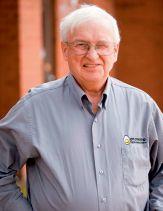
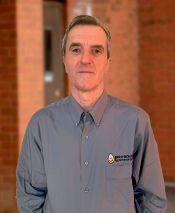
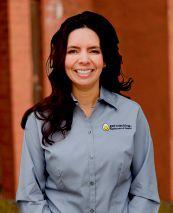
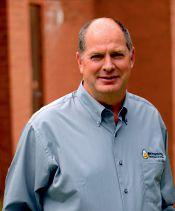
LISTINGS FOR: Health monitored hatcheries, registered egg stations, egg product stations, feed manufacturers, feed supplements, drugs, vaccines, etc., registered poultry stations, provincial associations, Department of Agriculutre and university officials, consulting veterinarians and agriculture representatives for banks.
listed in their respective provinces:
by Brett Ruffell
More well-deserved recognition
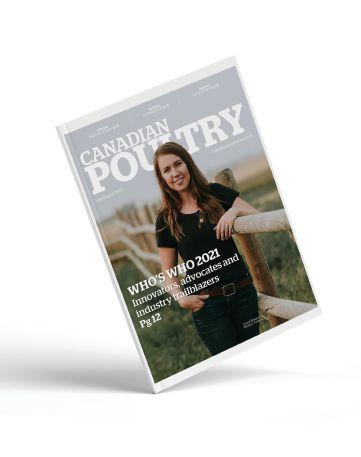
It’s that time of year again where we highlight amazing people doing amazing work. Canadian Poultry’s annual Who’s Who issue has always been my favourite to put together. That’s because I get to learn about more of the talented people who run this industry.
This year’s edition was particularly enlightening, as we took an even broader approach than usual. In the pages ahead, we once again recognize talented poultry farmers from coast to coast producing chickens, eggs, turkeys and broiler breeders – the whole feather gamut.
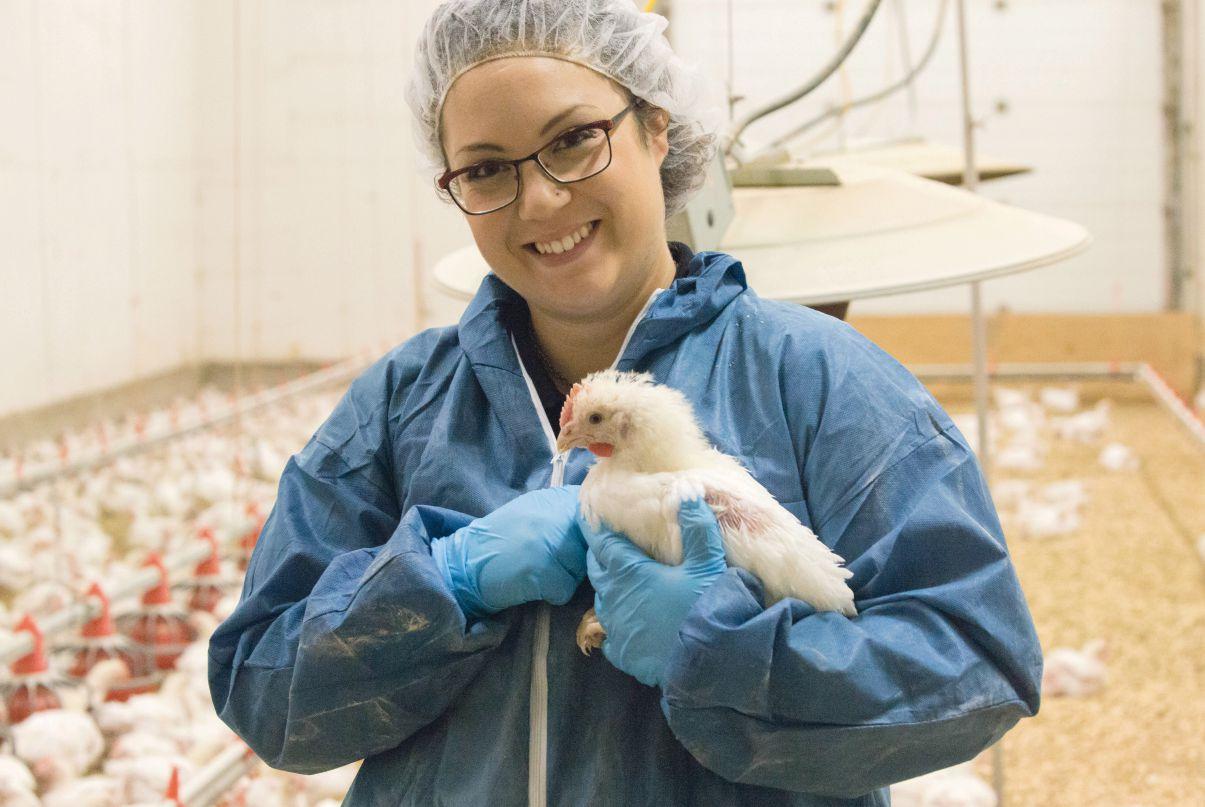
In addition, we also celebrate non-farmers doing impactful work for the industry, from welfare researchers to veterinarians to nutritionists.
At the same time, we’ve also developed a digital program to honour even more producers. In March 2021, Canadian Poultry launched our inaugural Top 4 Under 40 program in order to recognize young poultry farming leaders.
We were truly blown away by the incredible submissions we received.
Now, we’re thrilled to unveil the four producers we’ve selected as our first honourees.
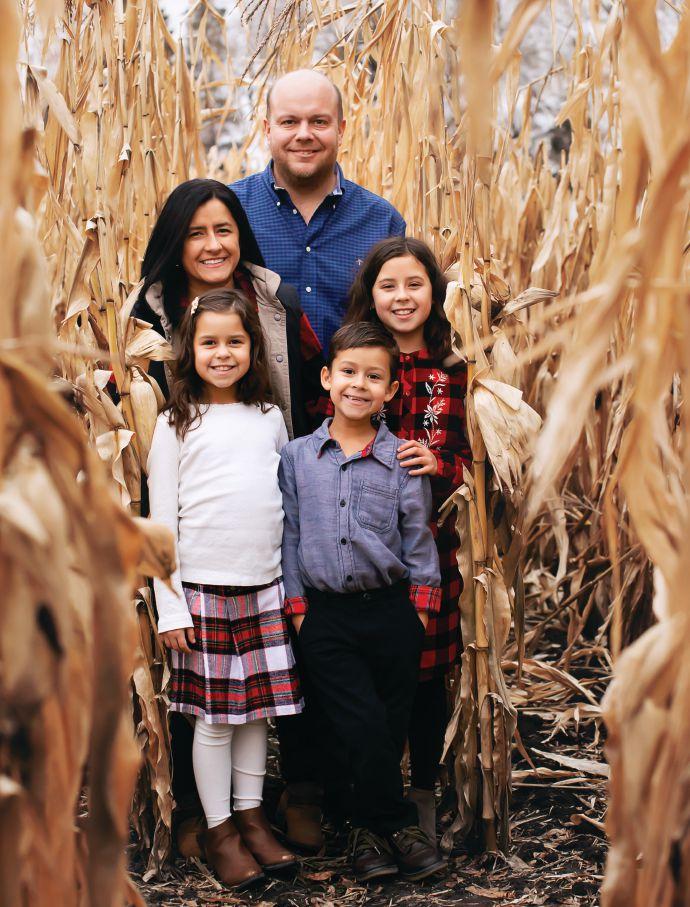
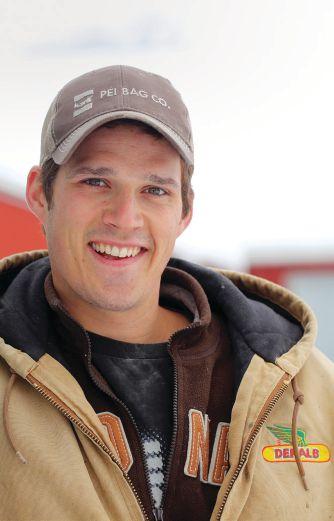
For one, there’s Brightside Poultry’s Richard Boer of Chilliwack, B.C. This young producer built a diverse poultry farming business from the ground up.
The poultry operation en-
compasses specialty chicken, layers, pullets and an innovative retail store with a unique vending machine from Europe that the producers use for convenient egg sales to consumers.
He also takes time to give back, including volunteering at an egg farm in Africa. “I’m nominating Richard Boer, not for any one project, but for an eight-year career that has seen a lot of growth,” said Richard’s wife Jacqueline.
Then there’s Tiffany Martinka of Martinka Chicks. This broiler producer from St. Benedict, Sask., is a strong advocate for chicken farming and agriculture both provincially and nationally. She’s also an educator, harnessing social media to give non-farmers an up-close-and-personal look at broiler production.
“We can’t think of anyone that has worked harder in the past couple of years to promote poultry farming.”
“We can’t think of anyone that has worked harder in the past couple of years to promote poultry farming and public trust in our industry,” says nominator Kim Hill, operations manager with Chicken Farmers of Saskatchewan.
Another producer we’ve chosen to recognize is Harley Siemens of Siemens Farms. The Rosenort, Man., producer
co-manages his family’s egg and pullet farm together with his dad Kurt. Siemens recently led a huge renovation that included state of art technology, innovation and aviary housing for his hens and pullets. The producer is also a tireless educator and advocate for his industry.
“Harley meets every single one of the criteria for this recognition, from managing his barn, to leading the way with technology and innovation, to advocacy and education,” summarizes 4-D Farms Ltd.’s Sandra Dyck, an egg producer who nominated Siemens.
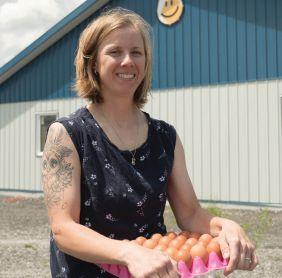
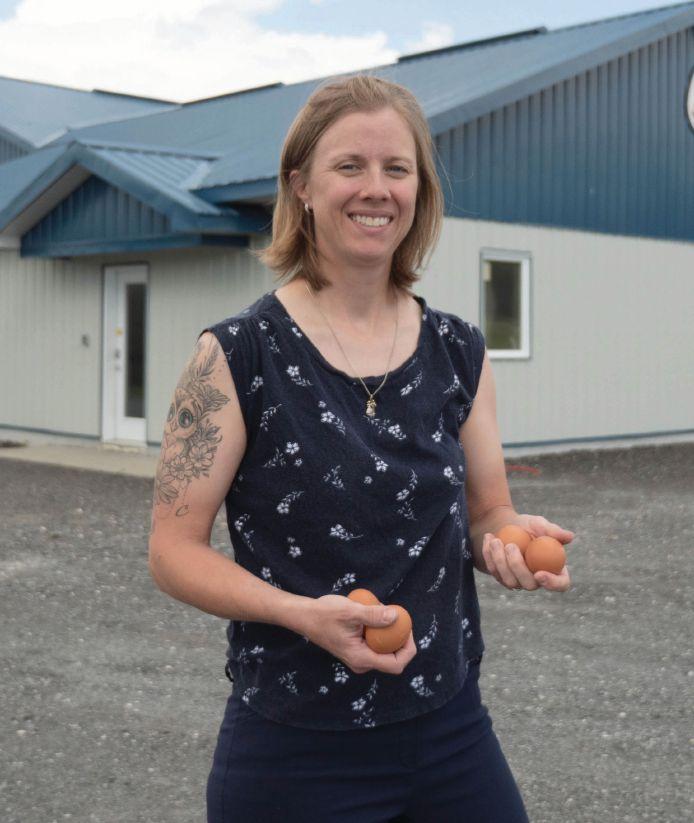
Lastly, there’s Anneke Stickney of Stickney Poultry Farm in Elora, Ont. A chicken and egg farmer, Stickney led her farm’s expansion into broiler production as well as its transition from conventional layer housing to an enriched system.
The poultry producer also goes the extra mile for her industry and community, including coordinating egg donations, serving on a women’s network and more.
“She is one of the most inspiring business leaders, a fierce advocate for feathers and an incredible mom,” says nominator Katie Giddy.
Please watch out for a new podcast series launching midJuly featuring interviews with this year’s winners.
Follow canadianpoultrymag.com/top-4-under-40 for updates.
We sincerely appreciate everyone’s help in making the program’s inaugural year such a success!
canadianpoultrymag.com
Reader Service
Print and digital subscription inquiries or changes, please contact Anita Madden, Audience Development Manager Tel: (416) 510-5183
Email: amadden@annexbusinessmedia.com
Mail: 111 Gordon Baker Rd., Suite 400, Toronto, ON M2H 3R1
Alice Chen achen@annexbusinessmedia.com 416-510-5217
Media Designer Brooke Shaw
Group Publisher Michelle Allison mallison@annexbusinessmedia.com
COO Scott Jamieson sjamieson@annexbusinessmedia.com
PUBLICATION MAIL AGREEMENT #40065710
Printed in Canada ISSN 1703-2911
Subscription Rates
Canada – 1 Year $32.50 (plus applicable taxes) USA – 1 Year $91.50 CDN Foreign – 1 Year $103.50 CDN GST - #867172652RT0001
Occasionally, Canadian Poultry Magazine will mail information on behalf of industry-related groups whose products and services we believe may be of interest to you. If you prefer not to receive this information, please contact our circulation department in any of the four ways listed above.
Your birds will definitely perform better with LUBING!
Glass-Pac Canada
St. Jacobs, Ontario
Tel: (519) 664.3811
Fax: (519) 664.3003
Carstairs, Alberta
Tel: (403) 337-3767
Fax: (403) 337-3590
Did you know that there are over 3 billion birds around the world today drinking from a LUBING system?
LUBING nipple drinking systems have earned the reputation for being the most trusted and reliable drinkers in the world.
When considering your next purchase, invest in a system that will stand the test of time and get the best ROI with a quality product from LUBING.
Got Lubing? You can’t afford not to!
Les Equipments Avipor
Cowansville, Quebec
Tel: (450) 263.6222
Fax: (450) 263.9021
Specht-Canada Inc.
Stony Plain, Alberta
Tel: (780) 963.4795
Fax: (780) 963.5034
What’s Hatching
Producers can now apply for trade compensation program
In early June, Minister of Agriculture and Agri-Food Marie-Claude Bibeau announced that the Poultry and Egg On-Farm Investment Program (PEFIP) is now accepting applications. The PEFIP will provide almost $647 million over 10 years to support poultry and egg producers through on-farm investments. Each producer is entitled to an amount proportional to their quota holdings as of January 1, 2021. Applications will be accepted until March 31, 2030, meaning producers can apply when they are ready.
ARMMI shutting down
The Agriculture Response Materials Management Inc. (ARMMI) organization has ceased operations and will distribute the remaining stockpile among the four founding feather boards. Incorporated as a not-for-profit in 2008, ARMMI was created out of a response to the SARS outbreak in 2003-2004 that created a shortage in the availability of quality biosecurity supplies which affected the livestock industry. Its mandate was to ensure that, in the event of a disease threat or emergency, farmers and farmworkers would have access to an adequate supply of biosecurity equipment..
PGA golfer joins Think Turkey campaign
Think Turkey, the five-year marketing campaign aimed at raising awareness of turkey as an everyday protein option, is staking its place on Canadian grills this BBQ season with the launch of The Griller’s Bird campaign. The bilingual barbecue program kicked off in June to celebrate National Turkey month and showcases the many ways to bring turkey to the grill with recipe inspiration from Canadian PGA golfer and barbecue enthusiast Graham DeLaet, plus a host of BBQ influencers across Canada.
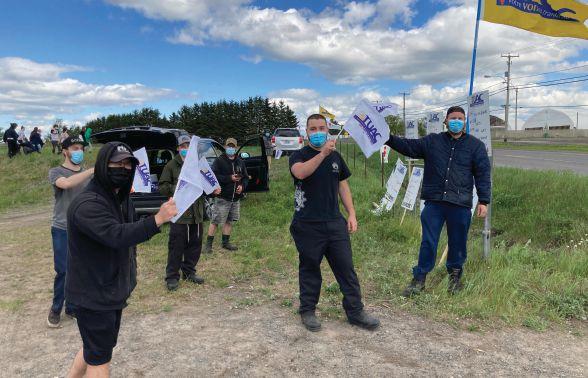
An extended labour dispute at an Exceldor co-operative slaughterhouse led to the birds being euthanized. is how many meals the discarded chickens would have provided.
One million chickens euthanized during labour dispute
The head of an association representing Quebec chicken producers says it is unacceptable that one million chickens have been euthanized during an extended labour dispute at a slaughterhouse near Quebec City.
The Exceldor co-operative closed its slaughterhouse in St-Anselme, Que., south of the provincial capital, on May 23 due to a strike, leaving few options for chicken producers.
Pierre-Luc Leblanc, president of Les Eleveurs de Volailles du Quebec – the province’s association of chicken producers – said he’s never received as many calls and messages from members as in the past few weeks, unsure of how to handle the situation.
“People are telling me they are offended, mad and sad,” Leblanc said. “It’s not an easy situation because there’s not a lot of solutions for us.”
Leblanc’s association represents
more than 700 producers, mostly family-run businesses, who operate within strict guidelines.
“There are rules for producers: when you transport the chickens, you are allowed to have only one per cent rate mortality. If you go beyond that, you can get a fine for animal cruelty,” Leblanc said. “But right now, we are allowing that many chickens to be killed.”
Both the union and the company have confirmed the one million discarded chickens would have provided up to four million meals.
The union said the strike has forced Quebec producers to send euthanized chickens either to waste sites or to a rendering plant, where they can be transformed into products not for human consumption.
After a month-long work stoppage, the strike ended in late June when the union accepted a settlement.
5 questions with Aviagen North America’s Dr. Sara Reichelt
In May, Aviagen North America named Dr. Sara Reichelt as its new director of welfare and sustainability. In this new role, Reichelt will be the face of welfare and sustainability for Aviagen’s North American customer base. We asked her five questions.
Why was the director of welfare and sustainability role created?
This additional role was created after years of considering how to best serve our birds, our customers, and our industry as it evolves in our North American company. The focus on welfare and sustainability by consumers and customers will continue to grow, as it should, as the modern consumer becomes more and more interested in where their food comes from and how the animals were treated. So, we needed someone to be able to consolidate data, lead trials, research innovative technology, and institute practices to meet and exceed expectations.
What are you responsible for?
I am responsible for continuing to grow our welfare and sustainability culture at Aviagen North America. What that means is, I work alongside many teams in supporting the company on key welfare opportunities, researching and implementing ongoing improvement in bird wellness and well-being. I also work in close cooperation with the global Aviagen Group welfare and sustainability team. With welfare evolving constantly, I also help provide internal training to ensure employees remain up-to-date on the latest best practices. For sustainability, I will lead efforts to implement efficiencies that make poultry production
environmentally, socially, and economically responsible.
What has been your first priority?
My first priority has been building bridges and connections. I have spent a significant amount of time talking to people throughout the company to determine what the needs and expectations for welfare and sustainability are. You can have all of the best intentions, but without a team that is “all-in”, you won’t be able to instill a culture, and that is my greatest mission internally for this role.
You also chair the American Association of Avian Pathologists (AAAP) Women’s Network. Can you tell us about that initiative? When Dr. Kate Barger reached out four years ago to create a network to support women in the AAAP, it was an opportunity I could not say no to. The AAAP is an evolving organization with a changing demographic, so the AAAP Women’s Network (AWN) was created to ensure a welcoming organization to all by providing support to the increasing number of women who are entering a traditionally male-dominated industry.
What is your proudest career achievement thus far?
This one is hard to say. I honestly feel that every week there are small wins that mean quite a bit to me. Holding a successful training where a crew member is excited to know the “why” behind one of our practices, participating in a heated discussion with teammates that ends in a practical protocol to roll out, or seeing first-hand the welfare or sustainability standards we share be instituted all feel like achievements.
Coming Events
AUGUST
AUGUST 4
PIP Innovation Showcase Webinar Series poultryinnovationpartnership.ca
SEPTEMBER
SEPTEMBER 1
National Chicken Month Kickoff, Nationwide chickenfarmers.ca/national-chicken-month
SEPTEMBER 1
PIP Innovation Showcase Webinar Series poultryinnovationpartnership.ca
Dr. Sara Reichelt is director of welfare and sustainability with Aviagen North America.
What s Hatching
AgScape Partners with EFO on resource for educators
AgScape, collaborating with Egg Farmers of Ontario (EFO), has launched a curriculum-linked egg resource, An Exploration of Egg Farming in Ontario, Teacher Guide for Grades K-8.
The resource includes a teacher’s guide, providing an overview of egg farming in Ontario, as well as three interdisciplinary lesson plans targeting grades K-3, grades 4-6 and grades 7-8.
The lesson plans cover different themes such as the farm-to-table process of egg farming (K-3), the nutrients of eggs as a part of a healthy diet (4-6) and careers linked to the egg farming industry (7-8).
AgScape and EFO’s goal with this tool is to share the story of egg farming and our food system with Ontario students, from farm to grading station to grocery store.
Shaunna MacQuarrie, AgScape
The resource includes a teacher’s guide, providing an overview of egg farming in Ontario, as well as three interdisciplinary lesson plans
Canadian poultry meat production drops for first time in decade
According to newly released data from Statistics Canada, poultry farmers produced 1.5 billion kilograms of chicken, turkey and stewing hens in 2020. That’s down 2.2 per cent compared with 2019, the first decline in the total weight of poultry birds produced in Canada in a decade. Meanwhile, net egg production rose 2.1 per cent annually to 839.3 million dozen eggs in 2020 – the 16th consecutive annual increase.
Cobb names new global senior director of human resources
project assistant and Ontario certified teacher, says, “in this resource, educators will have all the information they need to fully explore the farm-to-table process of egg farming using the lessons provided as the foundation for learning and the in-depth overview and extension ideas to elevate the overall classroom learning experience.”
EFO echoes AgScape’s sentiment. “Egg Farmers of Ontario understands the importance of sharing the egg farming story with students and inspiring future generations,” EFO chair Scott Helps says. “The knowledge students will gain through this resource will help to dispel myths about egg farming and cultivate a well-informed youth.”
Educators interested in receiving this resource can register for AgScape’s Teacher Resource Packages at: https:// forms.gle/CMqJn3RX2Zufrny67.
AgScape and EFO’s goal with this tool is to share the story of egg farming and our food system with Ontario students.
Cobb has Brian Sorensen as its new global senior director of human resources. Sorensen will lead the creation and implementation of human resources processes to support the global Cobb team. He will help shape the company’s future by ensuring industry-leading practices are in place for talent acquisition, talent development, total rewards, employee relations and compliance. Sorensen will also provide leadership and oversight of environmental compliance and team member health and safety across Cobb’s international footprint.
PIC updates, expands online training resource
The Poultry Industry Council (PIC) has updated its Poultry Pro online training resource for poultry workers and has also added three new modules, called Poultry Pro Plus. Poultry Pro and Poultry Pro Plus are intended to give new poultry workers a comprehensive overview of barn environment, feed and water, breeder and disease management, and animal welfare, in all commercial poultry.
LRIC update
By Lilian Schaer, Livestock Research Innovation Corporation
Livestock Research Innovation Corporation (LRIC) fosters research collaboration and drives innovation in the livestock and poultry industry. Visit www.livestockresearch.ca or follow @LivestockInnov on Twitter.
New educational series tackles big issues
U.S. writer and futurist
Alvin Toffler is well known for having declared that it’s important to think about big things while doing small things so that small things go in the right direction.
LRIC CEO Mike McMorris knows first-hand that there’s no shortage of small – but not unimportant –things facing the livestock and poultry sector daily. But he believes it’s also important for someone to keep the big picture in mind.
“The big things facing livestock and poultry today are more than any single organization can tackle on its own. And even if they could, there is a shared vulnerability which means that all sectors need to move forward, or all are at risk.,” McMorris says. “More than ever, consumers see livestock as livestock and don’t differentiate much between the livestock and poultry species, so it’s important that the industry takes a collective approach to solutions.”
Those big issues include things like the impacts of livestock and poultry production on climate change and soil health, antimicrobial resistance (taking a new One Health approach), transmissible disease and zoonoses, genetics and “animal-free” milk, eggs and meat.
According to McMorris, a collective approach to many of the common aspects of livestock and poultry production is one reason LRIC was originally formed. And it was the catalyst for one of the corporation’s latest initiatives, a collection of white papers complemented by monthly webinars called the Horizon Series.
“As an organization, our vision is to create a robust future for the farmed animal value chain, and part of that is keeping an eye on both
opportunities and threats that may be coming at the poultry and livestock sector,” he says.
“All of these topics mean different things to different people, and while there is a lot of information out there about each of them, not all of it is credible, and a lot of it certainly isn’t balanced,” he adds, citing greenhouse gas emissions as a leading example where fingers are often unfairly pointed at livestock and poultry production.
LRIC’s goal is to provide people with an easy starting point for credible, accurate Canadian information on topics relevant to the sector. Each white paper is researched and written by LRIC’s team and is then reviewed by a credible subject matter expert who serves in the role of contributing editor.
That subject matter expert then presents the issue in a webinar and takes part in a question and answer session with participants. Webinars are recorded and posted on the LRIC website along with the white papers.
The series started in February with regenerative agriculture and Dr. Rene van Acker, Dean of the Ontario Agricultural College. Dr.
“The big things facing livestock and poultry today are more than any single organiza-
tion can tackle on its own.”
Claudia Wagner-Riddle and Dr. Susantha Jayasundara of the Department of Environmental Sciences at Guelph focused on livestock and greenhouse gases and Jean Szkotnicki, who served 29 years as the president of the Canadian Animal Health Institute before retiring, led the antimicrobial use and resistance in livestock topic.
Most recently, Heather Murphy, associate professor in the Department of Pathobiology at the Ontario Veterinary College, addressed the topic of One Health.
Upcoming papers and webinars will look at genomics, getting research into use by industry, livestock and water use, and the future of vaccines, including mRNA – a new platform that many Canadians have heard of recently as it’s the basis of both the Pfizer and Moderna COVID-19 vaccines.
All papers and recordings are available at livestockresearch.ca/ white_papers.
This article is provided by Livestock Research Innovation Corporation as part of LRIC’s ongoing efforts to drive innovation in livestock production.
Dr. Rene van Acker, dean of the Ontario Agricultural College, kicked off the Horizon Series webinars in February with a presentation on regenerative agriculture.
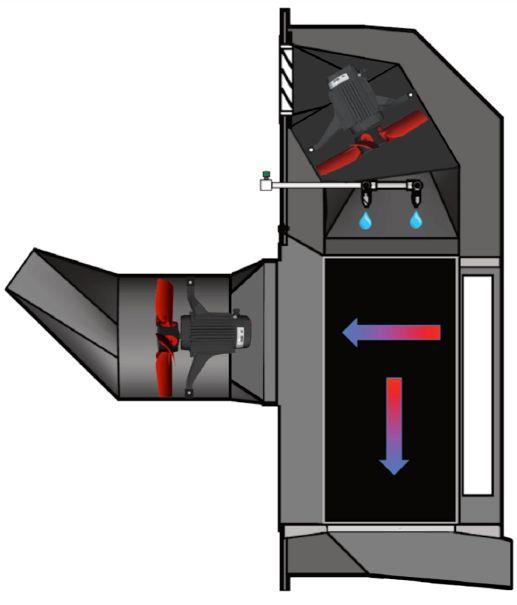
Avi-Air heat exchangers help farmers reducing heating cost.
Avi-Air heat recovery systems are being installed in many farms across Canada.
Managing minimum ventilation through heat exchangers was a must in Benoit Fontaine’s latest broiler barn planning in Stanbridge Station QC. The new barn built in 2020 is equipped with 18 AviAir units to ensure minimum ventilation to roughly 70 000 birds. The heat exchangers are wired to a Maximus controller that manages the auto-wash and defrost sequences. “After a full year of broiler production, I reduced my heating bill by 40% on a yearly average, says Mr. Fontaine. This barn will reduce its CO2 emissions by 65 tons every year.” Avi-Air heat exchangers not only help make the barn more energy efficient, they regulate air quality and litter humidity. “Next year, I will have enough data to establish a clear relationship between outstanding barn conditions and broiler performance.”
This type of equipment is now eligible for both provincial and federal subsidies that help cover the cost of equipment and installation. The AviAir Heat Exchanger reduces green house gas emissions and improves the barn environment, an increasingly important factor in saving money with rising propane costs and carbon taxes. Mr. Fontaine will have three similar barns equipped with Avi-Air Heat Exchangers by the end of this year and this equipment will surely be the future of broiler production practices.
All Avi-Air units come with the unique auto-wash feature that prevents dust accumulation in the core and thus improve the heat transfer performance. They can be wired to sophisticate automates like Genius Itouch and sophisticated automation controllers or the small Avi28 controller that is best suited for retrofit installations.
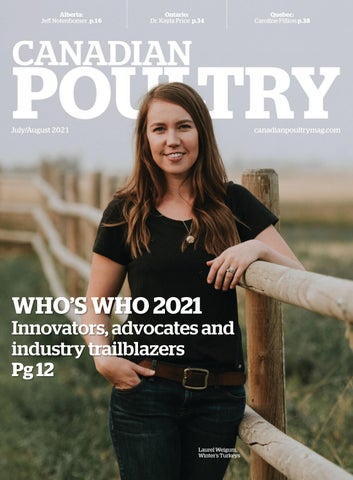
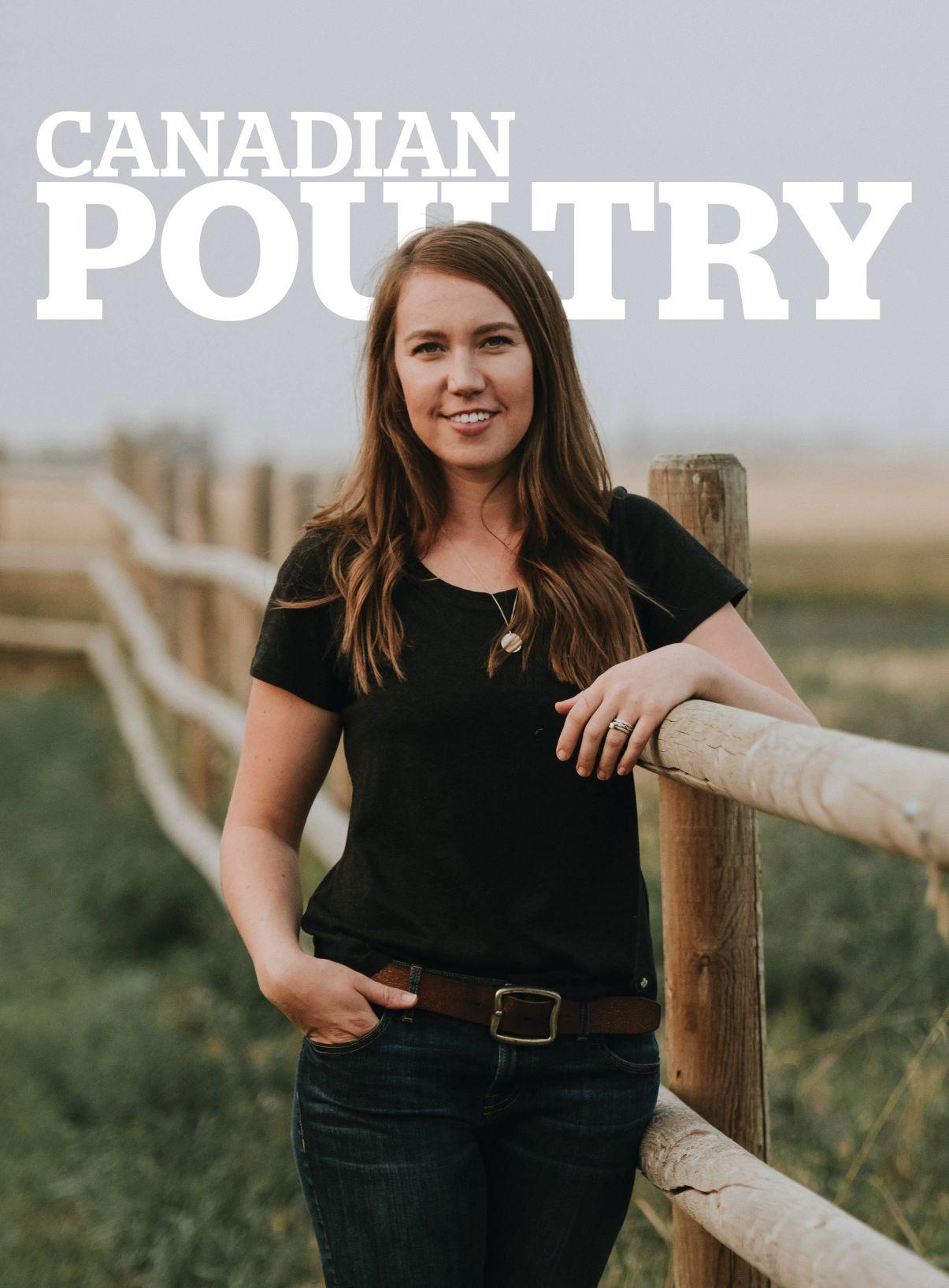
Laurel Weigum
Carrying on a decades-long tradition of providing fresh and local turkeys.
By Lilian Schaer
Winter’s Turkeys has been selling fresh turkeys directly to consumers in the Calgary area for over 60 years. Today, Laurel Weigum and her husband Lyle run the farm, although her parents, Darrel and Corrine Winter, are still involved with the business.
It was Weigum’s grandfather Jack Winter who saw an opportunity to add turkey to his mixed farming business, which at the time also included cattle, grain, egg, and pork production. He started selling grain-fed, outdoor birds to neighbours, friends and local meat markets.
“We were doing free-range long before it was a thing, but as the market demand continued, we’ve been capitalizing on that, including adding a certified organic flock,” Weigum says. “We still farm the same land today, but it’s turkeys that have let us stay in agriculture, so we’re thankful that Grandpa Jack had the foresight to see a future in turkey.”
Fresh turkeys for the holidays
Winter’s Turkeys raises two free-range flocks per year, one for Thanksgiving and one for Christmas. Although some sales are from the farm, most of the seven to 12-kilogram birds are sold fresh through local grocery stores, meat markets and natural food markets. A small portion of their production is dedicated to five to seven-kilogram certified organic Orlopp Bronze heirloom turkeys. As their business has grown, they’ve added a range of additional turkey products, including sausage, lunch meats, roasts and ground meat.
“Building retail relationships let us grow substantially over the years and service a wider group of people and grow more turkeys. My grandparents sold turkeys to a meat market in Calgary where today the owner’s son still buys our turkeys,” she says.
Weigum has had a passion for the farm her entire life, coming home from university in the summers. After a
few years of teaching after graduation, she joined the business full-time in 2015. Originally from a grain farm north of Calgary, her husband Lyle is also full-time on the farm. He has a unique mechanical ability that “lets him fix anything”, whereas Weigum’s passion is for marketing, relationship building and advocating for the industry.
Telling the story of turkey production
That passion is behind the family’s participation in Open Farm Days. It’s an annual weekend in August where farms and other agricultural businesses across Alberta open their doors for consumers, meet the farmer events hosted by their retail customers. The family also hosts school and bus tours.
“It’s a way to help consumers see where their food comes from. There are many misconceptions about how turkeys are raised, which can drive the narrative, especially with the gap between consumers and farmers,” she says. “We have loyal customers and they become advocates for us as well, but we need to be the ones driving
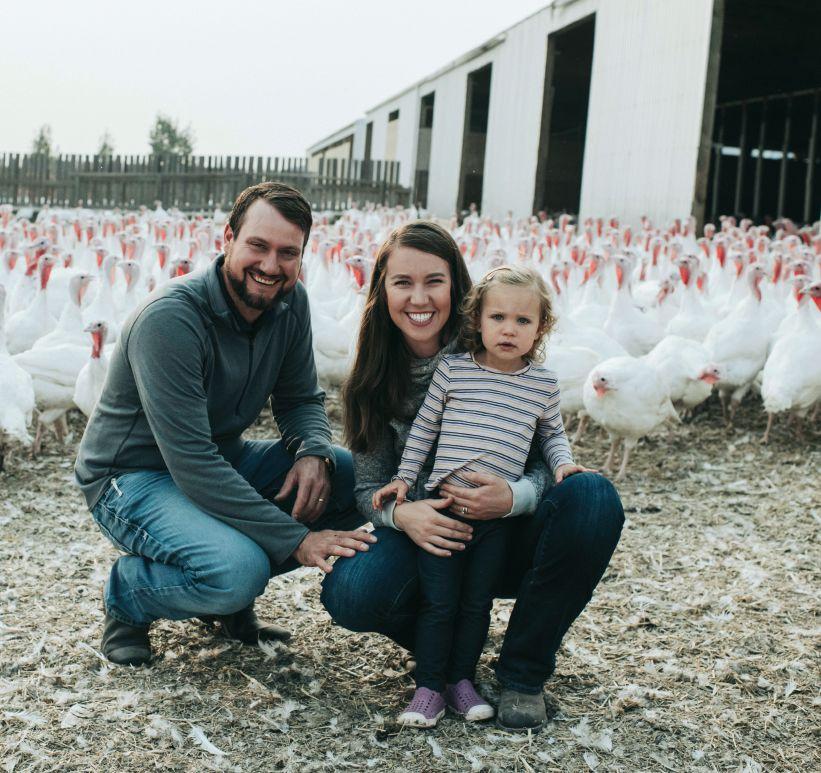
Laurel Weigum, pictured here with husband Lyle and daughter Cecelia, is the fourth-generation owner of Winter’s Turkeys.
the narrative and letting people know turkeys are humanely and ethically raised.”
Community Natural Foods, one of Calgary’s first natural food stores, started selling Winter’s Turkey in 1991. Fresh category manager Lisa Cheah first met Weigum’s parents at a food conference in Italy almost 20 years ago and began working closely with them when she started her job at Community Natural Foods. Today, it’s Weigum who’s her primary business contact.
“I’ve known Laurel since she was a teenager and I’ve seen her growth from a young teen to running the farm. Now, we have a business relationship – it’s wonderful to see,” Cheah says. “The things she does and that Winters’ have always done to support small business and educating their consumers and ours are wonderful. Our organization is all about being on the farm and to be able to talk the talk and the only way to do that is to forge strong relationships with our vendors.”
“I’ve taken groups of employees out there, and it’s very eye-opening for them to see how much care and hard work goes into putting a bird on the table at Thanksgiving,” she adds. “It’s beautiful to see that care that is taken and it’s very respectful – that’s what you want to see.”
Advocating for producers
Weigum is often on the go-to interview list for media, which she says is somewhat attributable to the fact that the farm, only half an hour from Calgary, is easy to get to. But she’s also well-spoken and knowledgeable about all things turkey – and happens to now also be the chair of Alberta Turkey Producers.
It all started six years ago when she attended an Alberta Turkey meeting during her first year on the farm full-time. The work the board did was eye-opening, she says, and piqued her interest in becoming involved. She’s now in the first year of her second three-year term on the board of an organization that represents both provincial turkey producers and those regulated federally.
“It’s important to have a balanced board. We are provincial growers and market our own birds, so we have different challenges and opportunities than federal growers have, which is one reason that originally got me involved in board work,” she explains.
“But it’s also an opportunity to be an advocate for all producers in Alberta. I’m passionate about ensuring the viability of the future of our industry as turkey growers and I want my children to have the opportunity to take over (the farm) if they want – the way to do that is to become involved and educated in how to make that happen.”
Focus on the future
The rise of plant-based proteins is hard to compete with, she notes, and changing demographics mean fewer families want whole birds. What’s more, newer Canadians aren’t as familiar with turkey as a meat choice. At the same time, turkey continues to be an appealing protein that’s healthy, lean and versatile and there is a lot of opportunity for product innovation.
Winter’s Turkey’s own market development activities are focused on smaller cuts, more value-added products and ready-to-eat options that will make turkey more available and appealing to consumers outside of the festive season. There’s also year-overyear demand growth for their organic products.
“I can honestly say the turkey business has given us an opportunity to live on the farm and raise our kids here and have a future in agriculture and in feeding our community – I wouldn’t give that up for the world,” she says.
“What fuels our fire is hearing the feedback from our customers, seeing people whose parents bought turkey from my parents now come and buy that turkey from me. It is humbling being part of someone’s Christmas tradition and playing a role in their family feast.”
Dr. Luke Nickel
Poultry vet and turkey farmer a changemaker in fast-forward.
By Madeleine Baerg
Full-time poultry vet and parttime turkey farmer Dr. Luke
Nickel makes the near-impossible look, well, easy. Just four years ago, Nickel was gearing up for graduation from the Western College of Veterinary Medicine. One year ago, he completed the Master of Avian Health and Medicine program at the University of Georgia. Today, he’s a managing partner at Poultry Health Services, he’s responsible for their B.C. office and he’s fundamentally changing how B.C. poultry producers view and engage with veterinary support.
“When I hired Luke for his residency, he was really excited to do individual farm contracts with poultry producers,” says Dr. Tom Inglis, CEO of Poultry Health Services. “That’s pretty common in other parts of animal agriculture – the swine farm has a vet; the dairy farm has a vet – but it’s not how poultry works. In our industry, veterinarians primarily work for supply companies. I explained to him why it wouldn’t work, kinda letting him down gently. He
came back to B.C. and he’s doing it anyway.”
In the past year, Nickel has built a strong B.C. business for Poultry Health Services, with a focus on farm-direct relationships. “He’s getting farms to pay for something they’ve never paid directly for before and they’re finding it valuable and wanting to continue it. It’s a complete paradigm shift,” Inglis says. “It shouldn’t come as a surprise to us – these are big businesses and they’re really driven to get better – but we just didn’t think it was possible.”
Nickel grew up on a layer farm in B.C.’s Fraser Valley that diversified into broilers and turkeys. Today, he helps provide vet service on the family farm alongside occasional chores. Offering farms direct veterinary support seems obvious to him, since he sees the benefits of individualized veterinary care on his own farm.
“If the supplier is paying for the veterinary consultation, it limits the amount of time a vet can spend on each farm,” he says. “We’ve faced some issues that maybe needed fuller-service veterinary support.”
Customized service
A direct relationship between farm and vet allows a vet to help customize management and care to the unique realities of the individual farm and ensures a producer can get immediate help as soon as they identify an issue. But it’s not just crisis animal health issues that benefit from veterinary involvement. Nickel says the biggest value he can add is in being part of ongoing production management discussions and decisions.
“A lot of farmers are very frustrated – one told me that they either had to improve or they were going to sell the farm,” Nickel says. “As an industry, we’ve had a lot of Band-aids over production schemes. As we reduce antibiotics, the problems that were already there in the background become more visible.”
Nickel says optimizing farm outcomes starts with data collection on everything from environmental conditions to bacterial counts to gut health statistics.
“We put in data loggers to record things like temperature and humidity in a barn
Dr. Luke Nickel is a turkey farmer and managing partner at Poultry Health Services, where he’s developed innovative farm-direct relationships.
PHOTO: DR. LUKE NICKEL
every 15 minutes. Then we graph it to show environmental controls. Instead of just telling producers it was too cold in a barn, we’ve tried to create testing that shows them that it’s real.”
Destined for poultry
Nickel’s enthusiasm for poultry isn’t new. He was the kid who enjoyed barn chores and the teen who liked talking about turkeys. “My siblings thought I was crazy,” he says. When Nickel headed off to vet school, everyone “just knew I was going to be the chicken guy”, he says.
“It’s kind of an unusual direction in veterinary school: there aren’t many of us who planned on a career with poultry. But, I’ve always enjoyed poultry husbandry, the management and the working with farmers. I really like population medicine: the diseases we work with and the strategies to control them.”
At 29, Nickel is the youngest partner with Poultry Health Services. If it seems he has missed a few steps in a normal career progression, that’s because he has. Following vet school, he jumped immediately to residency, bypassing an internship, while completing a master’s at the same time. Two years later, he was offered full partnership in Poultry Health Services.
Alongside building a practice in B.C., promoting his new concept in animal health to poultry producers and managing the B.C. arm of Poultry Health Services, Nickel is simultaneously working on a specialty turkey project with friend and co-producer, Jason Lepp.
Together, Lepp and Nickel have secured quota for 2,000 birds, found barn space, competed all production planning and confirmed the sales too. The project is unique and exciting in that Lepp and Nickel intend to differentiate their birds as
Bundle AgExpert Accounting and Field Premium. Just $499 per year.
specialty rather than commodity, selling them at Lepp Farm Market.
Motivated change agent
“Luke is pretty unique. He’s a crazy ball of energy. Everything is on fast-forward and he does it all with a big smile and no stress,” Inglis says. “His nickname is Lucky Luke, but his luck is mostly dedication, preparation and work ethic. He probably doesn’t think he’s doing remarkable things.”
Inglis says Nickel has a “magical” ability to achieve the impossible. “He and I were sitting on an airplane, flying out of Abbotsford Airport. We looked down and could see the B.C. Animal Health Centre from the air and, just beside it, the new WestGen Building. I made a joke saying he should get an office in the new building. A month later, they were making space for him. Why? Because he’s Luke. You point at a building from an airplane, he makes it happen.”
Can you start quickly? Yes. Accounting is designed for farm businesses just like yours.
Can you share files? Sure. Send files instantly to your accountant and financial team.
Can you Netfile your GST/HST? Absolutely. Make your tax time easier.
Make your best business decisions with AgExpert Accounting Premium software. AgExpert.ca/Accounting
Jeff Notenbomer
Broiler breeder an industry advocate, research champion and innovative farmer.
By Jane Robinson
When Jeff Notenbomer was 19 years old, he was headed off to school with no particular plans to farm. Then the family suffered a devastating fire and everything changed. He never left the farm. And he never looked back.
His decision to stay and ultimately take over the family broiler breeder operation was a choice he was happy to make, and one that continues to deliver notable impacts for the Canadian poultry sector from barns to boardrooms.
“I was on my way to university when our farm burned down. I looked at my dad and asked him if he would like me to stay and help,” Notenbomer recalls. “He said, ‘Yes, please’.”
Notenbomer, now 45, is the second generation to operate Willow Creek Poultry, a 25,000 breeder hen operation outside of Fort McLeod in southern Alberta. While his parents remain shareholders and silent partners, he operates the farm with his wife Melinda. “I wear a lot of different hats and am involved in the political side of poultry farming and the research side. I like pushing forward, innovating and trying new things. And I always give 100 per cent.”
That outlook has served Notenbomer well and all those around him in the diverse aspects of his work as a producer, advocate, mentor and leader in Canadian agriculture.
PROGRAMMED
TO SERVE
Notenbomer comes by his desire to serve
the hatching egg industry from his parents. His mother Tina and father Marty both served on the provincial Alberta Hatching Egg Producers (AHEP) board and Tina also served on the Canadian Hatching Egg Producers (CHEP) board. After they retired, Jeff soon began his work on provincial and national boards that would feed his interest and passion for the political side of the industry.
He worked his way up through the AHEP board as director, vice chair and
has now served as chair for the past two years. He also joined the national board – Canadian Hatching Egg Producers (CHEP) as an alternate director and now chairs the group’s research committee.
“Jeff has played a leadership role in Alberta, and nationally in his roles at AHEP and CHEP, and his position on the board of the Canadian Poultry Research Council,” says Drew Black, CHEP Executive Director who first met Notenbomer in April 2018. “He’s a strong proponent for
Willow Creek Poultry’s Jeff Notenbomer is a broiler breeder and industry advocate who’s also heavily involved in supporting research and innovation.
• Exacon’s brand name since 1987
• Available in sizes 12” to 60”
• White or Black polyethylene flush mount housings
• Designed to meet the rigorous demands of farm/agricultural ventilation
• Energy efficient Multifan, MFlex or North American motors
• Fiberglass housings available in 50” and 60” diameter
TPI WALL AND CEILING INLETS
• TPI is a well known manufacturer of high quality polyurethane inlets
• High quality and high insulation value results in precise manufacturing delivering high tolerance for better ventilation control
• Wall inlets, ceiling inlets and tunnel inlets
• TPI wind hoods and wind hoods with built-in light trap also available
PUR AG AIR FILTRATION SYSTEM
• High quality L7 Pathogen barrier filter with prefilter significantly reduces the chance of air transmitted diseases. (ie bird flu and other influenza viruses)
• Clarcor provides a complete system such as filter housing frame designed for eaves and side air inlets
• This system makes installation of filters easy and practical plus reduces the risk of non-filtered air from entering the building
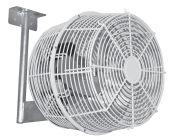
GREENBREEZE BASKET FAN
• Designed for more air flow and consistent pattern
• Precise guard spacing reduces air restriction
• Easy to open front guard allows easy cleaning
• Includes hanging bracket to allow direction adjustment
• Variable speed, efficient motor 115/230v
GENIUS I-TOUCH VENTILATION CONTROL
The well known and proven Genius control line is now available as a Touchscreen interface Navigates like an I-Pad by simply touching, swiping or dragging on a 7” or 10” touch screen
• Available with up to 8 variable stages and between 15 to 30 on/off relays
A slave is available to expand to 50 on/off relays
• Many options including light control, bird scales, perch scales and bin scales Built-in wifi allows easy access to the internet for managing, viewing and recording history on FarmQuest website
LIGHT TRAP/DARK OUT
• High light reduction
• Low resistance to air flow
• Simple Installation
• Easy to clean
• Uses P.v.c. snap release spacers
“I really wanted to get industry, researchers and producers together and I want to keep that conversation going.”
engagement, relationship building and working closely with the research community. And he’s always seeking out new information.”
A BRIDGE TO RESEARCH
For most of his farming career, Notenbomer has been interested in making stronger connections between what researchers are working on and what the industry needs. It was while sitting on the CHEP research committee and the Canadian Poultry Research Council board that he wondered about the disconnect between theoretical research happening at university and government labs, and the practical on-farm research that producers needed to improve and innovate.
Being new on these boards, he respectfully took the time to listen and learn about the poultry research being done in Canada. “Then I thought there might be something I could do to help bridge that gap,” Notenbomer says. “I knew I was stirring things up a bit, but I really wanted to get industry, researchers and producers together and I want to keep that conversation going.”
His interest in making research more relevant and meaningful led to his involvement with the Poultry Innovation Partnership (PIP) in Alberta, a group he currently chairs. “I see my role at PIP as a way to bring
the industry together – from marketing boards to processors, hatcheries and retail. We can work smarter and stronger when we work together,” Notenbomer says.
Dr. Doug Inglis has known Notenbomer for about three years and is already a big fan of the farmer, research connector and industry advocate. Inglis is an Agriculture and Agri-Food Canada research scientist. He credits Notenbomer with being instrumental in the direction of the poultry research done at his Lethbridge, Alta., lab.
“Jeff provides guidance to my team on research topics that are relevant to the broiler breeder sector. His input in invaluable into the design of research studies, feedback on ongoing studies and providing samples from his farm for my team,” Inglis says. “As a research and innovation advocate, Jeff is instrumental in fostering interactions between researchers and industry stakeholders.”
BRINGING HOME INSPIRATION
Notenbomer puts the same passion and drive to connect and inspire on his farm, as he does in his board work. One simple way he keeps a strong home team is to hold a Wil-
low Creek Poultry staff meeting every morning. But these meetings have an extra incentive – they include a home cooked breakfast. “We have a kitchen in the barn and after we collect the eggs, we serve some up for breakfast at our staff meetings,” Notenbomer says.
Two full-time staff function as his left and right hand, especially given the busy board meeting schedule that often takes him away from day-to-day activities. Four younger part-time staff round out the team. “I am so proud that our farm has younger staff that we can mentor,” Notenbomer says. “It’s important to me to provide a fun and productive training ground.”
When it comes to the overall approach to his farming operation, Notenbomer always looks for the innovative approach. “I want to do everything well and efficiently – it’s a lesson I want to impart to my children and my employees. Do your best at every job you do. The broiler breeder sector is a complicated business that is constantly changing and that’s what keeps me passionate about it. I like the variety and pushing to trying new things. And I like to reach out to new producers and mentor them if I am needed.”
Notenbomer is driven to try things that others might not. “While skip a day feeding is standard practice with breeder hens, I have never done it,” he says. “In my experience, every day feeding is better for the animal and better for productivity.” He takes an innovative approach in other farm decisions including barn design, lighting, feeding and ventilation.
At the end of the day, Notenbomer wants to be known as the guy who worked together to build a stronger, sustainable poultry sector. “I want to create a good environment for farmers, for animals and for processors so we can get a high-quality product to consumers.”
He loves being an advocate for the industry – whatever form it takes. From virtual farm tour classes he conducts with the University of Alberta, to the continued need to support Canadian poultry through trade talks and protection of supply management. “I need to be a steward to advocate for and protect our industry.”
Black and Inglis have both experienced firsthand the impact of Notenbomer’s energy, enthusiasm and drive. “Jeff pushes for deeper engagement throughout the industry, and that includes working with students and others in the research community to create a better understanding of hatching egg production and on-farm practices, and he always encourages other producers to do the same,” says Black. “He’s a very innovative broiler hatching egg farmer,” Inglis adds. “He clearly loves what he does.”
Notenbomer has already made a tremendous impact on the industry. His life is busy on and off the farm, and it remains to be seen if a third generation will someday take over Willow Creek Poultry. But his good days are still the ones where he can sit quietly in the barn with his birds.
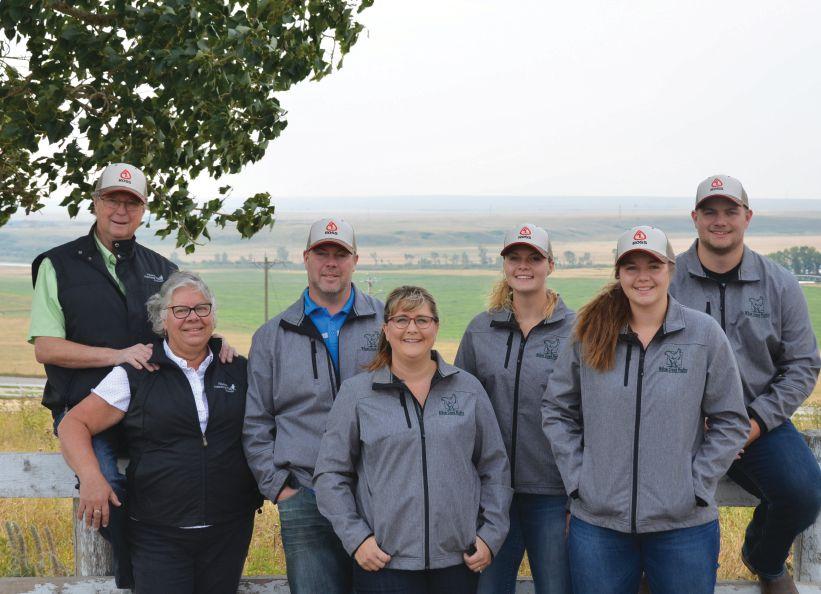
From left to right: Marty and Tina Notenbomer; Jeff and Melinda Notenbomer; and Jeff’s children, Tianna, Madilyn and Caleb Notenbomer.
Christian Bellerose
Pioneering broiler producer leads the way through innovation. By
Mark Cardwell
Sustainability has never been an empty buzzword for Quebec broiler producer Christian Bellerose. Rather, it’s been a guiding light in a long career marked by visionary innovations and investments in the most modern methods of animal husbandry.
“My goal from the beginning has been clean and healthy production,” says Bellerose, 64. “My approach is the antithesis of the American factory farm.”
It’s a path Bellerose chose early in his agricultural career, which began on his family’s broiler farm in St-Félix-de-Valois, a poultry-rich rural community an hour’s drive northeast of downtown Montreal.
After graduating with distinction from the animal sciences program at the St-Hyacinthe campus of Quebec’s college-level Institut de technologie agroalimentaire in 1976, Bellerose spent the next 15 years as sales director for the farmer’s coop in Joliette, a 20-minute drive from his family’s farm. The coop notably served the more
than 50 poultry producers in the region who operate some 200 barns.
TAKING THE REINS
Bellerose left the coop in 1990 to buy and run his father’s farm, a business that today produces 1.7 million kilograms of 2-kg female and 2.5- to 4-kg male birds in five barns on two sites.
From the get-go as a producer, Bellerose took regular trips abroad to see and learn firsthand about different chicken production systems. He credits those trips – to the U.S., Europe, South America and Asia, including several visits to China – for opening his eyes and mind to the realities and challenges of broiler production around the world.
“I learned that the practices of low-cost, high-volume producers in places like the U.S. and China don’t evolve,” Bellerose says. “They continue to suffer from the same bad management practices and diseases.”
It was in Europe, where chicken is the second most produced and consumed meat
(after pork) and producers face issues similar to their Canadian counterparts –everything from regulations, taxes, energy and feed costs to stocking densities, indoor rearing practices and environmental and health concerns – that Bellerose discovered many novel methods for rearing broilers in more cost-efficient, animal-friendly ways.
He has imported and incorporated some of those innovations into his own business over the past 30 years.
An early one was a computer-based, automated system from Holland and France to provide food and water and control lighting that Bellerose installed in his barns in 1994. “I was one of if not the first broiler producers in Quebec to computerize things,” says Bellerose, who works with his son Philippe. “Once other producers saw how well it worked, I helped them to convert their barns.”
Bellerose has continued to upgrade his system, which now provides him with round-the-clock information and updates from inside his barns. “In the morning I use
Christian Bellerose, a broiler farmer based in St-Félix-de-Valois, Que., has been an early adopter of numerous impactful innovations.
my tablet to validate everything and see the quantity of food and water being consumed. I can even predict equipment that is having or could have a problem based on historical data.”
Another cutting-edge innovation that Bellerose imported from France 15 years ago was a feeding system that prohibits chicks from getting into trays.
Around the same time, he also spearheaded a European-inspired project to reduce pollution by creating a value-enhanced biomass made from chicken manure mixed with wood chips and straw. Despite support from the Quebec government and agricultural circles, the project was never realized.
HIS MASTERPIECE
In 2010, Bellerose built what he considers his chef d’oeuvre: a one-story pullet barn that features the latest in energy efficient technology. At the heart of the 260-foot-
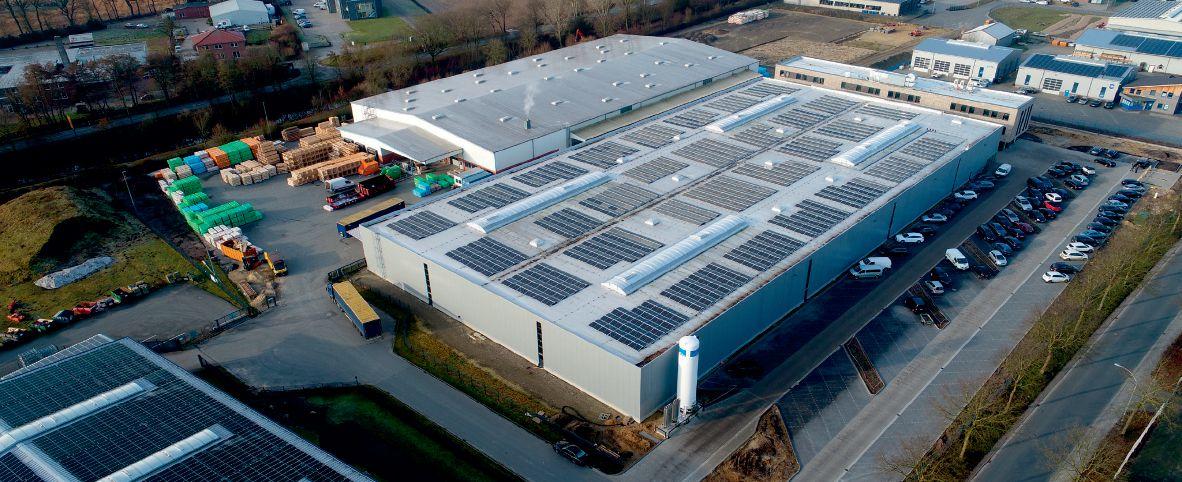
long barn, which is equipped with solar panels on the roof and a heated floor, is a $100,000 heat recovery system with four large ventilators that Bellerose imported from France in 2014.
Such systems are only now attracting interest in poultry- and hog-rearing circles as an important step towards net-zero energy barns for intensive livestock operations.
“It’s easy to operate, clean and maintain,” Bellerose says about his pioneering system, which he has twinned with a French computer system that calculates the ventilation according to the weight of his birds.
“The system works full-time and adjusts according to the outside temperature, which results in more comfortable conditions,” Bellerose says. “I like to tell people that I’m not ventilating my buildings, I’m ventilating my birds.”
According to Bellerose, the system, which is also connected to his house and a
heated machinery garage, has cut conventional fuel consumption by 56 per cent (producing a four-year payback period) and relative humidity in the barn by eight percent.
“Improving the birds’ welfare was always my main focus, but I also knew that I could improve on energy consumption,” he says.
Bellerose is getting equal performance and satisfaction from the $100,000 water treatment system he imported from France in 2018. He said the non-toxic acid disinfectant used in the system saves him $25,000 a year in the cost of chemicals needed to treat water and for cleaning.
“Before investing in things, I first visit farms to see them in action and to talk to producers about the advantages and disadvantages,” Bellerose says. “I don’t follow the crowd. I take the time to learn and listen and then take decisions based on what’s best for my birds and my business.”
ADVANCED DRINKING WATER HYGIENE
WANT TO KNOW WHAT’S IN MY DRINKING WATER?
• No harmful residuals
• Fully biodegradable
• Trusted by the poultr y industry
• Totally non corrosive
• User friendly
• No odour, colour or taste Contact our distributor in Canada for more information & tailor-made advice based on your specific needs: Tel: 855-513-2525 or info@arbourdale.com.
Ben Entz
Egg producer committed to quality and safety while embracing innovation.
By Melanie Epp
There’s nothing Ben Entz likes more than a good challenge. It is what he loves most about being an egg farmer and perhaps what makes him so good at it as well.
Entz has been managing Huron Poultry on Huron Hutterite Colony near Brownlee, Sask., for over 30 years now. The colony had moved to the province from Alberta in 1969. At the time, the colony had a 4,200bird flock and someone else managed the layer barn.
When Entz took over in 1989, they were raising 5,000 layers in an old stair step Big Dutchman caged system with a manure pit. Five years later, the colony shut down their hog business and converted an old sow barn into a new layer barn. Slowly, he worked the flock size up to 16,000 birds, buying some quota, but leasing the rest from farmers who had quota but not enough space.
At that time, producers made agreements without board involvement. “We were one of the first ones to do this leasing,” Entz recalls.
“I can’t remember anybody else doing this for quite a number of years.”
Today, however, leasing contracts go through the board. Currently, Huron Poultry has quota for 19,000 units, but actually manages a flock of 30,600 birds. They leased additional birds through the leasing pool.
While there’s no way of knowing what will be available year to year, Entz doesn’t worry too much because the farm has its own grading station. “We basically grade
what we need and the rest is shipped to Star Egg, our main grade in Saskatchewan,” the producer says.
To do this, Entz runs two lines of cartons: their own Huron cartons and a fine food carton.
At one point, Entz says Huron Poultry had contracts with all of the fine food companies in the province. Over time, though, market demand outpaced what they could produce and Star Egg took over some of the contracts. Today, the farm sells most of their eggs direct and then delivers the rest to Star Egg.
Innovative new barn
Much has changed since Entz took over at the farm. Last summer, they opened the doors to their newly constructed layer barn. The facility is equipped to hold 60,000 birds, although it’s nowhere near capacity right now. The ventilation system and everything else in the barn is equipped to scale up over time, as needed.
The barn is also equipped with a solar wall, a dream of Entz’s for many years. “I always had it in the back of my mind,” he says. “If I was ever to build a barn, I would put the solar wall on the barn.”
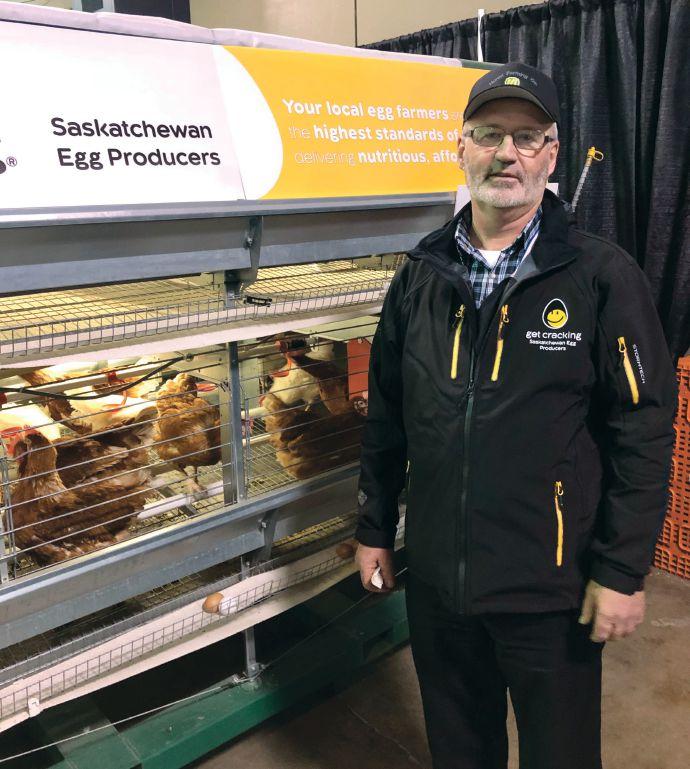
Ben Entz, pictured here at Agribition in Regina, has been managing Huron Poultry on Huron Hutterite Colony for over 30 years with an impeccable record.
“Ben is a skilled egg farmer and he’s a true gentleman. He’s a real asset to our industry.”
While many people see the solar wall and assume it’s for electricity production, it’s not. When the sun hits the perforated paneling, it heats up. That warm air is sucked into the attic where it warms the air used during the winter for ventilation. Even when it’s as cold as -40°C outside, the air in the attic can be warmed to -10°C. Saskatchewan is perfect for this type of technology, Entz says, because despite its extremely cold temperatures in winter, days are often sunny and bright.
The ventilation system is called DACS and it comes out of the Netherlands. Instead of using a side or ceiling inlet, it sucks air from the attic through a Corona inlet. It also sucks air away from the birds. Using air from these two points means there’s no ice buildup between warm and cold regions – even in extremely cold temperatures.
“It’s pretty interesting to monitor,” Entz says. “I expected a little bit of frost. There was virtually nothing.”
Prioritizing feed quality
Another challenge Entz took on after taking over the farm was improving feed quality. Six years ago, he started buying raw soybeans, which he would then put through an extruder. The extruder essentially forces the beans through a grinder at high temperatures. This cooks them in a way, and helps to break down fibrous tissue that would otherwise cause digestion problems in the birds.
Soybean contains about 19 to 20 per cent oil. This oil is left in the bean during the extrusion process and what remains is full-fat soy that provides the birds with a rich, balanced diet that’s high in energy and protein.
“Everything is almost down to the grain now,” Entz says. “The feeding has come a long ways over the years.”
Huron Colony has ventured further and now makes its own canola meal as well. In fact, the feed side of the equation has been so successful that it’s turned into a full-time operation that creates quality feed ingredients for mills.
Committed to the craft
Beyond bird nutrition, Entz strives to keep his birds safe and healthy – and he has an impressive safety record to prove it. Since it was implemented, Entz says Huron Poultry has received a score of 100 per cent on at least 10 Start Clean, Stay Clean audits. This is the result of diligence and vigilant recordkeeping.
The new barn was designed with improved food safety and biosecurity in mind. Guests are welcome to purchase eggs on-
farm as long as they make use of biosecurity mats and stay in the unrestricted zones. Restricted zones are clearly divided and visitors and staff have to physically step over a barrier to change into coveralls and barn boots. Entz says the bench serves as a reminder to heed biosecurity measures – and it works.
Entz enjoys the day-to-day challenges that come with egg farming. “The whole thing is a challenge,” he says. “You never can say you know everything. There’s something new every day.”
A true asset
Off the farm, Entz has offered his time to educate the public about poultry farming at Agribition in Regina. While visitors check out the small-scale enriched housing systems for some 30 to 40 hens, Entz explains how the system works and its benefits for the birds. He enjoys interacting with the public and meeting new people.
Cam Broten, executive director of Saskatchewan Egg Producers, has known Entz for years. They have worked together at off-farm events with the public, including Agribition.
“Ben is a skilled egg farmer and he’s a true gentleman,” Broten says. “He’s a real asset to our industry.”
“He’s skilled at reaching out to the public and communicating what he does and shows a real passion for the job of providing good nutritious eggs to the consumer.”
Alexandra Harlander
University of Guelph researcher’s unique work combines veterinary medicine and behavioural studies. By Melanie Epp
If you asked a researcher what they’d focus on if money were no object, there are few who’d say they’d do exactly what they’re doing today. And while University of Guelph researcher Alexandra Harlander hadn’t thought about a future in poultry, after working with her first farmers, she couldn’t resist the work.
Her research is unique in that it brings together veterinary medicine and behavioural studies. This allows her to address some of farmers’ biggest concerns, especially around feather pecking and keel bone damage in aviary systems.
Early passion for animals
From a very young age, Harlander knew
she wanted to work with animals. Growing up in a small village in Austria, she felt close to nature, and especially to animals. So, while other little girls said they wanted to be ballerinas or actors when they grew up, she always said she wanted to be a zoologist.
After high school, she thought about studying biology, but later decided to study veterinarian medicine instead. It’s proven to be an asset. While she’s surrounded by specialists in animal biology and animal agriculture, not many have a background in veterinary medicine.
“I think it makes me very unique in my field,” she says. “Not so many people working with farm animals link it so much to physiology or to nutrition.”
Chooses Guelph
Post-graduation, Harlander worked at a poultry research facility in Switzerland before being offered two positions, both at highly regarded universities: UC Davis in California and the University of Guelph. She chose the latter. “I chose Guelph because it’s a wonderful group,” she says, highlighting its diversity and cooperative spirit.
Harlander especially likes the university’s collaborative approach, as it allows her to work closely with veterinarians, animal and bio-scientists as well as integrative biologists.
“I think it’s a unique approach,” she says. “I have extremely nice colleagues, and I think, for me, this is very important, having a good working environment to produce
Dr. Alexandra Harlander works at the Campbell Centre for the Study of Animal Welfare at the University of Guelph.
good research output.”
Perhaps what she likes most about Guelph, though, is having the ability to work on a research farm. Many of Europe’s top universities closed their research facilities, she said, which makes similar research there very challenging.
“I think, personally, it’s good that we can conduct some research in our field with farm animals on the farm,” she said. “But it’s also important that they have a research farm, as I’m doing a lot of fundamental research.”
Applied science
Linking fundamental research with applied problems is Harlander’s specialty. Since her very early days, she has been fascinated by the problem of feather pecking. A call for a graduate student to conduct research on a company farm presented itself, and she took the opportunity. The job was on a small company farm in the Austrian Alps.
The company wanted to better understand how pop-hole dimensions in aviary systems with outdoor runs impacted the number of birds that went outside. Harlander moved to the commercial farm and set up her experiments.
“This was my first contact with chickens,” she says. “I had a little
TURKEY FARMERS OF ONTARIO
BOARD
OF DIRECTORS AND STAFF
BOARD
Brian Ricker, Chair, District 2
Matt Steele, Vice Chair, District 1
James Schlegel, Executive Member, District 3
Tim de Wit, District 1
Steven Vanderzanden, District 2
Duane Dietrich, District 3
Greg Lansink, District 4
STAFF
Jon-Michael Falconer, General Manager
Safiya Rahman, Office Administrator
Joel Nahrgang, Finance & Quota
Administrator
Emily Haramule, Marketing & Communications
apartment on the farm. It was in the middle of nowhere – it was beautiful there – and I lived with the chickens.”
During her time on the farm, she was invited to join an auditor on visits to the company’s other farms. “This is how I ended up with feather pecking,” she says. “I realized they were going outside, but they were naked.”
“I learned a lot,” she adds.
Feather pecking focus
The feather pecking question stuck with her. From farmers she learned that it was a bad sign when there were no feathers on the floor during rearing. This means they’re eating the feathers, she says. And where there is feather eating, there is usually feather pecking.
The puzzle has brought her to other questions around gut composition, feed passage time and the role of the gut brain axis in chicken behaviour. She’s found, for instance, that high feather pecking birds lack lactobacillus in their gut, a bacteria that’s present in birds that show little to no pecking behaviour. She also found that the enteric nervous system responds immediately when lactobacillus is added to the diet. This work has been published.
Driven by unanswered questions
Harlander says her research is driven by the need to answer a question, and this is how she became a specialist in poultry behaviour.
“I really wanted to know why they pecked each other,” she says. “They have a lovely environment, they’re in small groups, but still they peck each other.”
“It kept my attention,” she adds. “I really wanted to find out why.”
The question still drives her research today. While she believes it’s a multifactorial issue that involves environment, nutrition, social stress, the answer is not yet clear.
Research in feather pecking has led her to another area of interest: keel bone damage in aviary systems. Despite years of study at institutions around the world, it is still difficult to understand how hens sustain so much damage to their keel bone. Harlander believes it has something to do with the velocity with which they hit the ground when they fall from higher tiers, but the answers aren’t clear just yet.
Right where she belongs
Interestingly, when asked what she would do if budget wasn’t limiting factor, she says, “Honestly, I’d do fundamental research and applied research in the field of feather pecking.”
She adds that maybe it would be nice to work with more students and have a larger research facility within which to work. And while it might be the questions that drive her, ultimately, it’s the farmer that she most wants to help.
“It’s sometimes really heartbreaking for farmers,” she says. “They do everything, they try everything and these girls peck each other. This can be really frustrating.”
“I love my research,” she adds. “And I think I’m unique because somehow I work together with so many other fields… fields that never work with chickens. I think this enriches our research.”
Meet the 2021
Please
And watch out for a new podcast series launching mid-July featuring interviews with this year’s winners.
ANNEKE Stickney
Stickney Poultry Farm, Elora, Ont.
RICHARD Boer
Brightside Poultry, Chilliwack, B.C.
TIFFANY Martinka Martinka Chicks, St. Benedict, Sask.
HARLEY Siemens
Siemens Farms, Rosenort, Man.
Ontario
Tim deWit
Bold move into organic turkey production provides ongoing opportunities.
By Treena Hein
For Tim deWit, there were many reasons to switch to organic turkey production 10 years ago. He saw it as a way to use his knowledge, taking production to a new level and seizing market opportunities in the process. It would also mean reduced environmental impact on his farm and side-stepping the concerns related to antibiotic resistance.
With his wife Katrina, DeWit produces organic turkey and cash crops just west of the town of Embro, Ont. At Fowl Play Farm Ltd, the deWit family also produces lamb, but it’s not certified organic right now. DeWit has been a director at Turkey Farmers of Ontario (TFO) for almost four years and has also served in the past on the board of the Poultry Industry Council (PIC).
It was in 2009 that the DeWits sold their five-acre farm (where they already produced turkey) and moved to their current farm location. “When we arrived, there were empty older broiler barns and we converted two of them to turkey,” deWit explains. “We also converted the 100 acres to organic corn, soybeans and wheat and we also run a flock of 200 ewes.
“We run our farm with family labour except for turkey catching and some custom field work. Our three kids, Isaiah (17), Luke (15) and Charlotte (13), help out daily on the farm with regular chores and with moving turkeys to the grow-out barn.”
In 2014, they renovated their two-storey brooder barn, adding new equipment,
Turkey producer Tim deWit is CEO of Fowl Play Farm and a Turkey Farmers of Ontario director.
PHOTO: TIM DEWIT
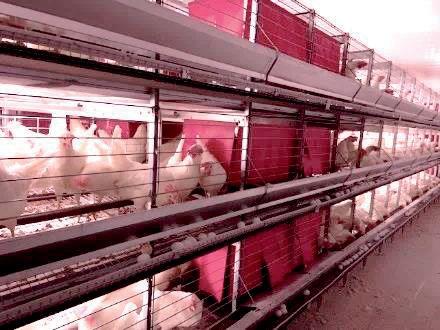
Enriched Layer Unit Small Group “Condo Living” for Laying Hens Now with CBM In-Cage Lights
Meeting or Exceeding 2017 NFACC Code of Practice
Floor Feeding with “Quad” Perch System Completes a Cage Free System with Community Nests
New feed trough with built in step/bumper rail standard on all tiers. The ergonomic wide flat top is gentle on the feet and helps prevent damage to the egg trays.
www.fdipoultryequipment.com
With effective farm hygiene protection for poultry
No matter what kind of pest control you need to protect your poultry, Bayer is ready with dedicated solutions you can trust. Bayer’s new family of farm hygiene formulations deliver proven protection against crawling and flying pests, including darkling beetles, for all standard poultry structures and facilities. From innovative residual premise sprays to our ready-to-use fly bait, Bayer has the fast-acting, long-lasting results your animals need for healthy development.
insulation and electrical. In 2017, they tore down one of the old barns and built a new organic turkey growout barn, 18,000 ft2 in size and with improved outdoor access required for organic production.
MAKING FARMING WORK
DeWit was raised on a dairy farm, which his older brother now operates. He knew growing up that he wanted the farming lifestyle of working wi-th animals and crops.
With the high costs to get into farming, he knew he would need off-farm income to make farming work. In 1998, after living and working in New Zealand for a year, deWit started a job with Alltech selling feed ingredients and additives across Ontario.
He looked at his options for farming and chose turkey. It’s not as labour-intensive, and allowed deWit to balance working off the farm full-time and running the farm after hours. He worked for Alltech full-time until 2017.
Before 2011, when he made the switch to organic, deWit had made many industry connections at Alltech and also saw the many opportunities to be had in niche poultry products. “I was seeing companies in North America and beyond successfully doing organic,” he says, “and I had also learned a lot raising antibiotic-free flocks. I connected with Yorkshire Valley Farms (Canada’s largest organic meat company) and Jones Feed Mills and went for it.”
By fall of 2011, the deWits were selling organic turkeys to Yorkshire, which was new at the time, and they still sell all their production to the company today. Every year, they produce three flocks of hens and two flocks of toms, totaling about 280,000 kilograms.
ORGANIC PHILOSOPHY
DeWit is firm that “the decision to move to organic was one the best decisions we’ve made. The demand was there and it’s still there and there was not a steady supply of organic turkey on the market when we started.”
Organic farming, he adds, was also a great way to increase farm cash flow without having major capital expenditure. And he had the synergies of using the manure from their turkeys and sheep on the fields, a
critical key to making organic cropping work.
“Right now, I age our turkey litter but I want to fully compost it, as it’s better for the soil,” deWit says. “I need to buy some equipment so that I can windrow it and turn it a few times and I’ll add additional carbon from the sheep manure.”
All that aside, deWit is simply attracted to the whole organic philosophy, with livestock providing fertilization, no antibiotic use and no chemicals applied to the fields. “It’s good for the environment, overall, livestock and human health,” he says.
DeWit sells his grain to Jones Feed Mills, which built a state-of-the-art organic mill a few years ago, and also to Beechwood Ag Services. He notes that due to complications of COVID-19, the supply of imported organic soybeans (from India) is limited now for Canadian feed mills. This has significantly impacted prices, and deWit’s organic soybeans are, therefore, in hot demand this year.
INDUSTRY INVOLVEMENT
“The decision to move to organic was one the best decisions we’ve made.”
During his time as a director with PIC, DeWit deepened his belief in the importance of research to keep the industry moving forward and solving current issues.
Reflecting on his time so far at TFO, deWit describes the board as “great,” and notes that “we all have individual strengths that we bring to the table.” He says that an ongoing challenge for the turkey industry has been achieving consistent growth – and that growth
The deWits switched to organic turkey production 10 years ago to seize new market opportunities.
will be more critical than ever in the near future to help offset the imports that will coming into Canada once recent trade deals are ratified.
Turkey is a great product, deWit states: great tasting, high in protein and low in fat. To build demand, the industry simply needs to continue to focus on product innovation.
In addition, deWit adds, “TFO has really supported those who want to go organic and other niche markets. They want to support companies who want to expand the turkey markets. But organic producers are still a small part of the Ontario turkey industry. I think there are about six of us doing organic out of about 155 producers in total.”
But from what deWit understands, there are huge opportunities for organic turkey and other meats, if volume can be increased. “In talking with Yorkshire Valley Farms, it seems that there are great opportunities with the bigger retailers that we can collectively take advantage of,” he says. “We just need more supply.”
PERSONAL AND FARM GOALS
DeWit wants to do his part to grow the organic industry by growing his own production, but most of his desire to expand Fowl Play Farm is to ensure the farm business can support the next generation of his family. Growing the farm’s acreage also means that investments in specialized cropping equipment will make more financial sense.
“We’d like to achieve 30 to 40 per cent growth in turkey production over the next five years,” DeWitt says. “We’ll need to build, as our current facilities are maxed. We also see the opportunities in the under-supplied lamb market in Canada.”
In terms of their leisure time, the deWits’ interests are heavily tied to their children. “Currently, both my wife and I help coach as well as help run the local soccer club,” he says. “We also help out with our hockey teams. I still try and get out and play soccer as well.”
HEADS UP!™
SYSTEMS OPERATE AT DIFFERENT HEIGHTS TO PROMOTE EFFICIENT NO-SPILL DRINKING
Dedicated MALE drinker system with Big Z Drinkers.
HEADS UP DRINKING™ takes into account what broiler breeders have to do in order to drink - namely, lift their heads and let gravity do its work.
By incorporating gender specific drinker lines and gender specific Big Z Drinkers, water spillage is eliminated as the drinkers are positioned at the proper height for both males and females. The advantage with no-spill drinking is a healthy, ammonia free and a more productive breeder environment.
Benefits of Ziggity’s Broiler Breeder Concept include:
• Dramatically improved male uniformity, livability and performance
• Dry slats and litter means virtually no ammonia release
• Improved bird welfare
• More hatching eggs and improved hatchability
• No bacteria-laden catch cups
The Poultry Watering Specialists
more about
Heavy Duty
Big Z Drinkers are twice the size and weight of standard TL drinkers
Learn
Ziggity’s exclusive HEADS-UP™ breeder watering system at ziggity.com/HeadsUp
Dedicated FEMALE drinker system with Big Z Shielded Drinkers.
Big Z TL
Dr. Kayla Price
City-girl turned poultry advocate wears many hats.
By Madeleine Baerg
You likely recognize the name Dr. Kayla Price from her informative poultry health and husbandry articles in Canadian Poultry magazine. But sharing her knowledge in this publication is just one of the many ways this agvocate is helping build a stronger poultry industry.
“I guess I do wear quite a bunch of hats,” she admits with a laugh. “I just really love this industry and I see many opportunities to do my part.”
A bunch of hats, indeed.
Price’s official title is technical manager for Alltech Canada. In that role, she provides technical and sales support, not just for the Alltech team but also for all parts of the poultry value chain, from producers to feed reps, from veterinarians to processors and everyone in between.
She’s also in charge of Alltech’s Canadian regulatory and research portfolios, overseeing new products and technologies coming
to market across multiple livestock types. Although, she is quick to say, “Poultry is my first love.”
Inspired educator
Alongside a very busy job, Price makes time to regularly present at national and international conferences on all kinds of poultry-related topics, from gut health to new production technologies to new research findings. Colleagues see her as a connector: a connector of ideas, of new technologies and of people, too.
“Kayla stands out from the crowd, she knows her own mind and has the information to back up why she is so confident in everything she does,” says John Cooper, poultry technical manager with Alltech U.K. “She is always looking at opportunities to help her industry from an advisory point of view as well as from an Alltech perspective. [Her skill is] bringing ideas and people together from across the industry.”
While in-person presentations are a great way to share in-depth knowledge, Price also serves up smaller, more accessible bites of information to a wider audience through social media. Using the hashtag #poultrywithkayla, Price shares her technical knowledge, free to all, in a fun, accessible, high-energy way.
“Kayla is a great social agvocate for the poultry industry,” says Jenn Norrie, communications manager for Alltech North America and Europe. “She’s so creative and uses social media as a great way to share her passion for poultry.”
“I’m really passionate about educating people,” Price says. “Teaching others is something that really drives me. If I could have a positive impact on even one person -- if I help them learn something new, or give them information so they could think a little differently about their operation or their management – that’s the legacy I want to leave. That’s the best impact I can have.”
Dr. Kayla Price is technical manager for Alltech Canada and provides support for all parts of the poultry value chain.
To round out an already bursting schedule, Price also serves as an adjunct professor in the Ontario Agriculture College at the University of Guelph, supporting student research projects and helping with grad student advisory. “I really appreciated the people who took the time to teach and mentor me and who gave me the space to learn. I hope that’s something I can do for others coming into the industry as well.”
Path to poultry
As dedicated as Price is to poultry today, could this born-and-raised city kid have imagined, if you’d asked her a just over decade ago, that she’d commit her career path to poultry? “Honestly, no. Originally, agriculture was a distant idea: I just knew that was how food got to the grocery store. A career in agriculture was a complete left turn for me,” she says.
In fact, when Price took her first parasitology class during her undergrad degree,
she already had her whole career path laid out. She planned to become a doctor – the human physician kind – and the class was simply a step en route to that goal. But the class engaged and inspired her and got her thinking about research. Curious to dig a little deeper, she enrolled in a parasitology research class, where she started working with coccidiosis in chickens.
She was hooked, though at the time, her interest was in the protozoan invaders, not the poultry they attacked. “It’s not the direction I planned, but I found the research so fascinating,” she says.
As she moved into grad school, she decided she should get to know more about the animal host she had chanced into researching. “By the time I went into grad school, I started to ask more questions. As I started opening my eyes to poultry in general and to what the poultry industry is about, I started realizing I really enjoyed it. I enjoyed how the industry is set up and I
really enjoyed working with poultry themselves. And maybe most of all, I enjoy the community feel of the industry: it’s the producers for sure but it’s also everyone from the feed mills to the vets to the hatcheries and processors and allied industries: they’re all very much a community. I’m excited that I get to be part of that.”
Having an impact
Price has already made key impacts to poultry production. During her Ph.D. research, she studied the environmental influence on live coccidiosis vaccine success in chickens, leading to an innovative vaccine delivery model that is now widely adopted by industry.
In just the last couple of years, she’s been instrumental in helping layer operations improve their eggshell quality through feeding advanced forms of organic trace mineral blends, resulting in reduced downgrades and fewer cracked eggs.
Dr. Deborah Adewole
A new force in antibiotic alternative research.
By Jane Robinson
Canada’s poultry sector has made tremendous strides in reducing antibiotic use over the past several years. Helping lead the way is Dr. Deborah Adewole, whose innovative new research is focused on effective alternatives that will improve bird health and productivity.
Adewole, a monogastric nutritionist, holds the Industry Research Chair in Sustainable Antibiotic Reduction in Poultry at Dalhousie University’s Faculty of Agriculture. It’s a five-year position co-funded by the Chicken Farmers of Canada via the Atlantic Poultry Research Institute, the Nova Scotia Department of Agriculture’s provincial-federal Growing Forward II fund and Dalhousie University. Chicken Farmers of Nova Scotia has also committed to providing industry funds for her research projects over the term of her appointment.
“The overarching goal of my research is to develop strategies that establish a healthy gastrointestinal tract environment, offering ways to reduce production costs while increasing profitability and sustainability in poultry production,” says Adewole, who is an assistant professor in the Department of Animal Science and Aquaculture.
In the few years she’s been at
Dalhousie, Adewole is making a big impact with the breadth of projects she’s leading, and the team she has built around her. Her work is focused on helping the industry continue to reduce antibiotic use by investigating alternatives that will support healthier birds. She’s looking at innovative ingredients to boost gut health that may also decrease the overall environmental impact of the industry.
Several of her projects centre on dietary fibre as an alternative to antibiotics in broilers and she’s turning to interesting, local sources that may provide an effective and low-cost option for improving bird gut health.
“I am looking at what can be used to improve the health of chickens when antibiotic use is reduced,” Adewole says. “I know that cost is a key factor for producers, and that made me consider waste products like oat hulls and grape pomace. They are low cost and redirecting them to poultry feed could help reduce the overall environmental impact.”
The route to Dalhousie
Adewole’s path to poultry research began on her family farm in Nigeria. “I grew up where meat protein is not affordable for every household. And I became interested in how to make meat protein more available to families,” she says.
After completing a Bachelor of Agriculture degree at Obafemi Awolowo University in Nigeria, she began to look farther afield for ways to use research to improve the availability of meat protein in Nigeria. “I wanted to gain more knowledge
about animal nutrition and apply that to improving food security in meat protein,” says Adewole. “So, I began to look for opportunities to study animal science research abroad.”
Her thirst for knowledge took her to the University of Manitoba in 2009, where she completed her M.Sc. and Ph.D. in monogastric nutrition and nutritional biochemistry. She focused on the digestive health in swine and poultry, studying how various feed components influence digestion and absorption.
“Poultry is one of the most affordable meat proteins with a low environmental footprint and this caught my attention while I was doing my Ph.D.,” Adewole says. And it was while doing her post doctoral work on the use of feed additives to improve gut health in poultry and swine that Adewole was recruited by Dalhousie University in 2018 to her current position.
“Deborah is a tour de force. She’s assembled a strong research team of graduate students, research associates and technicians. She’s a great mentor and manager, and has already published papers on her work,” says Dr. Christine Power, director of animal care and sustainability with Chicken Farmers of Canada. “Her mandate at Dalhousie is to focus on areas that could provide nutritional substitutions – prebiotics, probiotics and essential oils – that support the gut health of chickens and help eliminate preventative use of antimicrobials.”
Practical options to improve gut health
Adewole is immersed in a broad
“Deborah
is a tour de force. She’s a great mentor and manager.”
range of projects (see sidebar) that share a common goal to be part of the overall strategy to reduce antibiotic use in the Canadian poultry sector. “We need alternatives and my research mandate is to develop nutritional strategies that can be used to maintain health and productivity while reducing the use of antibiotics in poultry production.”
What Power finds particularly exciting about Adewole’s research is the use of common materials. “Deborah’s capacity to test all types of materials like oat hulls, grape pomace, seaweed and red osier dogwood is really exciting to see. She is on the leading edge in this area and brings tremendous value to the whole process of evaluating different materials and examining the impact on intestinal health and bird performance.”
She’s particularly excited about the potential of her work using es-
sential oils and oat hulls to improve bird health. “The impact we saw with lower blood cholesterol levels and the improvement in the structure of the gut means this research has great potential. This work also improved the opportunity for beneficial microbes and reduced the presence of non-beneficial microbes in the gut,” Adewole says.
Adewole’s research has results in several published papers – something that brings her great satisfaction. “My publications give me a sense of fulfilment,” she says. “I feel good when the work I do in the lab and the barn is eventually out there for the industry and the public to read. And when my students receive training because of my research, that is very rewarding.”
Making an impact on farm
Adewole believes grape pomace holds the most promise for the
ingredient with the greatest commercialization potential. “There are a lot of wineries in Atlantic Canada so there is cost-effective, local supply and grape pomace has not been used in the food chain.”
To date, Adewole has been using the facility at the Atlantic Poultry Research Centre for her research to mimic both laboratory and farm situations. She has future plans for broader farm level studies to further support the industry.
As for the connection back to the food security situation in Nigeria that started her on this research path, Adewole knows she can have an impact from Canada. “The connection back to Nigeria to impart my knowledge could be through collaborative work, a sabbatical or training students,” she says.
Current research projects
Adewole is currently working on the following research projects in broiler chickens:
• In ovo delivery of probiotics, essential oils and other bioactive compounds.
• The use of locally available fibre ingredients (oat hulls), fruit by-products (grape pomace) and seaweed to improve gut health.
• The use of red osier dogwood plant extracts to improve gut health and promote food safety by eliminating Salmonella, and prevent or cure oxidative stress induced by lipopolysaccharide challenge.
• The use of organic acid/essential oil blend and its combination with oat hulls to promote gut health.
• Nutritional strategies using folic acid and grape pomace to prevent white striping and woody breast.
Dr. Deborah Adewole is the Industry Research Chair in Sustainable Antibiotic Reduction in Poultry at Dalhousie University.
Caroline Fillion Quebec
Egg producer harnesses social media to educate the public and defend her industry.
By Mark Cardwell
Quebec egg producer Caroline Fillion was just looking to break the solitude of working alone in her layer barn three years ago. That’s when she first started uploading photos and videos of her doing chores on Facebook and Twitter.
But she ended up bringing the world to her family’s farm in Saint-Sébastien-de-Frontenac, a two-hour drive south of Quebec City.
In doing so, she became an online ambassador and advocate for the egg industry in la belle province.
“It’s a lot of fun and very rewarding to share my daily routine and show people what it is I do as an egg producer,” says Fillion, a legitimate social media influencer with more than 7,000 Twitter followers. “But it also requires a lot of work and commitment.”
‘The Hen’ Fillion
The producer’s posts mostly involve her tending to the 14,000 Lohmann brown laying hens and 14,000 chicks she keeps in the newest of two henhouses – a freerun barn with automated collection belts and high-tech grading room built in 2017. In addition, Fillion responds to the many messages she receives from her fans across Quebec and beyond.
“Some tell me what videos they like best on chickens or eggs and why or they ask me questions about something they see in them,” Fillion says.
Others, she added, have chickens of their own at home and ask her questions
about everything from poultry health to the differences between laying hens and broilers.
“Some call me la poule (The Hen) –they see me as an expert on chickens,” Fillion says, laughing. “If I know the answer to their question I tell them. But if I don’t I refer them to a person or organization that does know.”
An honest defense
Not all of the messages Fillion receives through social media, however, are polite, inquisitive or respectful. Animal rights
activists and militant vegans, for example, often send critical or hateful missives her way. “If I post a photo of me with my freerun birds all around me someone might say, ‘You’re cruel – your chickens have no space,’ which is not true,” Fillion says. “But I don’t whitewash farm work and I don’t shy away from defending the realities of farming. When we do an annual turnover and all our birds go the slaughterhouse, for example, I publish that.
“However, I also explain that we respect the many standards and laws that govern our industry and that have helped to im-
Fillion overcame a near-fatal snowmobile accident to become a thriving egg producer.
prove conditions,” Fillion continues. “And I tell people that our birds allow us to earn a decent living and that we want and need them to be as healthy as possible.”
Though she tries to understand and not rush to judge, Fillion says she has come to realize that there is no pleasing people who are opposed to and obsessed by the notion of animals being exploited on farms.
Two years ago, Fillion was attacked and threatened online by a small group of militants in France. News of the threats – and Fillion’s plucky defense of her farming practices and the modern egg industry – made headlines and earned her appearances on some of Quebec’s most popular TV talk shows.
“At one point, I was afraid, not for me but for my family,” says the 40-year-old, who is married with three young children. “But I decided to keep posting and not be intimated.”
Path to poultry
Courage and determination are nothing new for Fillion. The youngest of three children, she grew up dreaming and planning to take over her parents’ dairy farm.
“I didn’t see myself anywhere else,” Fillion recalls. “I always wanted to be my own boss and work outside with animals.”
A near-fatal snowmobile accident in 2004 changed all that. After months of rehab and painful recovery from multiple fractures, a concussion and a pulmonary embolism that almost killed her months after the accident, Fillion was forced to abandon the idea of tending large livestock.
It was Bertrand Rainville, a teacher at the Cégep de Lévis where Fillion had just completed a college degree in farm management, who suggested egg farming as an alternative career.
“He told me about the need for young egg producers in Quebec and about an annual contest the Fédération des producteurs d’œufs de consommation du Québec had where you could win a bird quota,” Fillion says. “When I looked into I immediately realized that egg farming was for me.”
Fillion was one of some two dozen entrants who submitted a business plan to the contest in 2007, where she was a finalist.
It was on her third entry in 2009 – the year her parents Serge and Michelle sold the family’s milk herd – that Fillion won the contest and the 5,000-bird quota.
The next year Fillion built a 93-feet-long, 29-feet-wide henhouse and equipped it with used cages from Newfoundland to house her first flock of white Lohman laying hens. She had a total of 8,100 birds, including the 5,000 under the quota and another 3,100 on loaned quota.
Cautious expansion
Fillion added a fourth row of cages and increased the number of birds to 10,800 in 2014 – the year she met her partner, Luc Normand, a machinery salesman for Shur-Gain, and gave birth to the couple’s first child.
Two years later, Fillion decided to build the second henhouse using a free-run system made by Salmet that she and Luc first
saw at a poultry show in London, Ont., and then at the company’s facilities in Germany.
The 140-feet-long, 60-feet-wide building features the latest henhouse and egg production technologies and heated floors in both the processing room and the 25-foot-by-60-foot area where day-old chicks arrive and live for 19 weeks. They also built a garage and heat plant with a wood furnace that burns three truckloads of eight-foot-long logs that are mostly harvested from the Fillion family’s extensive property.
Though her 32,100-hen farm is slightly smaller than the average Quebec egg farm, Fillion has no plans to expand her business any further.
“I think we’re at a good size right now,” says Fillion, who shares the workload in the two henhouses with employee Danielle Lapierre, who works weekday mornings, and Luc, who works weekends. Her father also helps out by checking cages and removing dead birds in the older building.
“We’re becoming more and more automated for lighting and feed and egg collection,” Fillion adds. “I’m very proud of our operation. It gives me the energy and inspiration to plan and do posts on social media that share my passion for egg production.”
The Thiessen family
Grain farmers turned egg producers recognized for commitment to excellence.
By Treena Hein
Diversification – it’s something that a lot of Canadian farmers are thinking about or have already incorporated within their operations. Leading up to 2010, Manitoba grain farmers Jason and Esther Thiessen set their eyes on diversifying into egg production.
They had already expanded into some custom grain cleaning for other local farmers in 2005. Luckily in 2010, their names were chosen in the provincial egg quota lottery. They set about building a barn for 12,000 layers (Salmet enriched housing system) and welcomed their first flock of 6,000 in January 2011.
However, besides diversification, Jason and Esther had other reasons for wanting to become egg farmers. “It provided a safe way for our children to be involved on the farm, now and in the future,” Jason Thiessen says. “And thirdly, it provided an opportunity with low risk. It’s a stable type of farming, thanks to supply management.”
Thiessen represents the third generation to own and operate the family grain farm south of Winkler, which he and Esther run with his parents, Peter and Irene, and their three children, Abigail, Cossette and Tobías. They farm crops such as edible beans, corn, sunflower, millet, canola and wheat.
In 2017, they partnered with Esther’s brother Josh to manufacture their own brand of wild bird feed, which carries the Schoen Farms name on the label. The entire farm business has five full-time and four part-time year-round employees.
EARLY EGG FARMING DAYS
Having no knowledge of egg farming, Jason and Esther had a huge amount of learning to do when they first started out. “We depended completely on other members of the egg industry,” Thiessen explains. “The staff at Manitoba Egg Farmers (MEF), pullet and feed suppliers, grading station staff and other egg farmers, all of
them were very willing to help us, and they deserve a lot of the credit for our success. From my experience as a grain farmer, this is what makes the egg industry unique. We help each other!”
Thessen narrows down their main egg farming challenges in the early days to temperature management, time management and the achievement of consistent
Jason and Esther Thiessen, pictured here with their three children, were originally grain farmers before expanding into egg production 10 years ago.
egg size under different feed regimes. Regarding temperature, during their first few summers of egg farming, the hens were experiencing more heat in the barn than desired, so the Thiessens added a misting system. The use of the misters is able to lower the ambient temperature by up to 6°C on very hot days.
Thiessen adds, “Another major barn change was upgrading the environmental controller to allow us to remotely monitor barn temperature, water and feed usage as well as recording flock information and egg production. We also automated with egg packing. Even with our smaller flock size, automation is important to manage your time.”
“It provided a safe way for our children to be involved on the farm, now and in the future.”
GETTING FEED RIGHT
During various points since they started egg production, the Thiessens have tried different feeds: regular, all-vegetable and one rich in omega fatty acids. Each of these feed types presented different challenges in terms of maintaining proper egg size. “As the hen gets older, the feed for specialty eggs can speed the process of egg enlargement,” Thiessen says. “We worked closely with the feed supplier to adjust the feed ingredients to maintain the proper size.” However, after eight years of producing specialty eggs, the Thiessens decided to produce classic eggs.
The Thiessens also added a feed mixer in 2014 to allow them to use their own grain. It’s obviously efficient and
TRASH THE TRAYS
Start your whole house brood with a Konavi® Feeding System and eliminate the need for supplemental feed trays. Konavi® Feeders have a low pan height that lets chicks eat from the outside of the pan from day one.
With no trays to pick up and clean, you save labor costs and reduce feed waste. Your birds get easy access to free-choice feed from start to finish.
economical, and also provides consistency in feed for the hens. But Thiessen points to another purpose for making their own feed. “It’s important to us to have a good understanding of feed ingredients,” he says, “and their nutritional benefits for the hens.”
RECOGNIZED FOR EXCELLENCE
Schoen Eggs has consistently attained a superior rating under the national onfarm food safety and animal care programs over the years. In addition, the Thiessens have been recognized for excellence as the winners of MEF’s 2019 Farmer of the Year Award, an honour that encompasses exemplary on-farm food safety, production management animal care initiatives.
The yearly award also recognizes community service. “We enjoy sharing information about egg farming with our neighbors and the public,” Thiessen says. “And serving our local community and the industry is important to us, so we look for opportunities to give back.” These include serving in their church, supporting breakfast in the local community centre, supporting fundraisers and participating in MEF Ambassador’s Program through such events as The Red River Exhibition in Winnipeg and the Royal Manitoba Winter Fair in Brandon.
Thiessen has also served on the MEF Audit Committee for several years and participated in MEF’s Director Development program. Both, he says, were very educational. “If I can summarize it to a statement, it would be: ‘The strength of our industry is farmers working together, in provincial and national levels.’ I have enjoyed connecting with farmers from all over Canada. We share the same challenges but also benefit from a strong industry.”
Even though some might have expected it, for Thiessen, winning the Farmer of the Year Award was a surprise. “We have many Manitoba egg farmers deserving this award,” he says. “The goal on our egg farm is to follow the program to benefit the hens which results in a clean, safely produced egg. This award recognized the hard work of our team.”
FUTURE PLANS
In terms of future plans for egg production, the Thiessens would like to install a heat recovery system in the barn and make improvements to air quality. They would also like to find value for broken eggs and are still in the research phase for that.
Looking forward, when asked to identify the biggest current challenges for the egg sector, Thiessen points to succession planning. “How is the next generation going to afford the transition with current quota values,” he asks. “Also, I believe maintaining supply management will be a challenge. With a small voice, how do we convince the majority that our system benefits everyone? Lastly, public image. It will be a challenge to navigate the question of whether we make our decisions on science or public pressure.”
In his spare time, Thiessen enjoys building practical equipment on the farm. Esther enjoys gardening and painting. All the children enjoy checking the hens and collecting eggs in the weekend with their Dad, but each of them has their own inter-
ests as well. Abigail, the oldest, enjoys all animals and painting. Cossette enjoys horse riding and baking. Tobías enjoys soccer and tractor rides. And grandparents Peter and Irene enjoy camping and spending time with their grandchildren.
To close off, Thiessen would like to take this opportunity to thank his family and staff for their contributions and dedication to their egg farm. “To the previous generations,” he adds, “thank you for your vision, which provides opportunities for the future!”
One reason the Thiessens expanded into eggs was because it provided a safe way for their children to be involved on the farm.
Tim Ansems
Chicken and turkey producer thrives outside of comfort zone. By Melanie Epp
While Tim Ansems might come off as an everyday, average guy, he’s anything but. What makes him exceptional is just how comfortable he is outside of his comfort zone. That is, except for that short stint where he explored the idea of doing something other than farming.
Today, farming and family are at the centre of everything he does. One could say it defines him.
Born and raised on a mixed family farm in Nova Scotia, Ansems is one of four children to Dutch immigrants. He has an older brother and sister, as well as a younger sister. His parents raised chickens and turkeys, and grew tobacco on a farm in Port Williams, N.S.
Ansems hadn’t planned on farming. In fact, in the 1990s, he attended the University in Ottawa, where he pursued a degree in computer engineering. But listening to him talk about life on the farm makes one wonder how he could have pursued anything else.
“I do remember growing up that I would always sort of flock to my dad whenever he was out in the field just to see what they were up to,” he says.
One of the reasons he was so unsure about returning to the farm was because he didn’t understand the business side of it. It seemed unreachable at that young age. But the world of computers was booming and it seemed like the right move. Ansems had already been tinkering with the computer at home, helping his dad reformat it as needed.
During his years of study, Ansems would return home each summer and work as a labourer on two nearby farms. He picked rocks and worked on an irrigation crew on a potato and onion farm. On the second farm, he helped with the hoeing, weeding and planting of market vegetables. “That summer, I had a wide range of opportunity to do different things,” he says.
BACK FROM THE CITY
It was in his third year of university that Ansems realized he wanted to return to
home to the farm. He talked with his brother, who was studying at Acadia at the time, and decided to transfer his credits and continue his studies closer to home. “The city life, I guess, wasn’t for me,” he says in retrospect.
During the summer, Ansems continued working on the farms and helping out on the family farm. His dad was serving on the turkey board at the time. It was there that he first heard there was turkey quota for sale. He went home and asked Ansems and his sister if they were interested in purchasing it. His dad had space in the barn at the time and Ansems was able to take on a flock while he was home in the summer.
A couple of years after he bought his first quota, the neighbour’s farm went up for sale. It was rundown, but it had a house, a barn, some land and several outbuildings. “My dad said, ‘You know, the neighbour’s house only comes available once right’,” the producer says.
A year later, Ansems met Angela, his then would-be wife. The connection was instant, and they were married a couple of years
Chicken and turkey producer Tim Ansems was born and raised on a mixed family farm.
Intelligent machines for poultry farmers
Labour saving automation for egg processing
Our machines are specially designed for automatic processing of consumption eggs and hatching eggs. To ensure the automation runs smooth, our approach is as efficient as possible. This means that you can operate the machine without comprehensive explanation. The machine does not occupy more space than necessary and is virtually maintenance free.
Kletec BV is a
specialises in
manufactor
field of tray buffers, trolley loaders, egg stackers and pallet loaders.
later. They have three children of their own. The kids are homeschooled on the farm, where there’s an emphasis on life and reading rather than TV and screen time. It’s a lifestyle that works well for them.
BOARD INVOLVEMENT
Not long after Ansems first bought quota, he started attending the local poultry board meetings, first with the Chicken Producers Association and later with the Chicken Farmers of Nova Scotia. A couple of years in, he took a position on the board, later serving as chairman of the board and as alternate director for the Chicken Farmers of Canada (CFC).
All in all, Ansems put nine years in on the boards in two separate stints. He enjoyed his time there and says it was a good opportunity to learn more about how the chicken industry works.
“The board was definitely an eye-opening journey into the chicken world,” he says.
FOR
PRICING FOR GROWERS
Ansems’ passion for poultry farming led to him serving several years on industry boards.
“You definitely learn the ins and outs of the industry there.”
Lauren Kenned, CFC’s director of public affairs, has had several opportunities to work alongside Ansems. She likes that he’s collaborative and engaged, even outside of his comfort zone. “He’s open to new ideas – that’s one of my favourite things about him,” she says.
NEW TURKEY BARN
In 2009, Ansems and Angela put in a new turkey barn. They had been using a fivelevel barn that Ansems felt was more labour intensive than it needed to be. The new barn is a two-storey turkey barn with a hot water system that uses a straw burner. In his search for a heating system that used an alternative energy source, he came across a system out of England. It was exactly what he was looking for at the time. “It was a big learning curve,” he says. “I call it a labour of love.”
While the heating system uses more straw than he’d anticipated, it’s been a saving grace at times when fuel prices skyrocketed. “I guess I always like to give myself options,” he says.
THE RIGHT CHOICE
Today, Ansems has nearly 500 acres of land, where he grows wheat, corn and soybeans. Working with different companies, they do a lot of on-farm cropping research, testing products and new varieties. He’s still working on upgrading the farm, a project he thinks will take be a lifelong journey.
“I just like to be educated on what’s going on and try to keep on top of things,” he says. “The goal is to become more efficient as time goes one.”
Looking back, Ansems knows he made the right choice. “I enjoy working,” the producer says. “I enjoy the lifestyle. You know, working on the farm, it doesn’t seem like it’s a chore to me. I don’t wake up with regret and think ‘I gotta work today.’ You know, it’s a new day.”
“Every week I get a chance to try and do better,” he adds. “I guess it’s an ongoing competition with myself to do better. I enjoy the opportunity to be able to do that.”
WHO’S WHO DIRECTORY & LISTINGS
ALBERTA
HEALTH MONITORED HATCHERIES
LETHBRIDGE HATCHERY
13542-73A Ave., Surrey, BC V3W 1C9
Ph: (403) 327-0491
LILYDALE - SOFINA FOODS INC.
100 Commerce Valley Dr., Markham, ON L3T 0A1
Ph: (780) 472-0769
MAPLE LEAF CONSUMER FOODS
4710 - 39 Ave., Wetaskiwin, AB T9A 3G2
Ph: (780) 352-7307
MILLER HATCHERIES
Box 5669, Westlock, AB T7P 2P6
Ph: (780) 349-6691
ROCHESTER HATCHERY
27020 Hwy. 18, RR 1 Westlock, AB T7P 2R9
Ph: (780) 307-3622
SUNRISE HATCHERY INC.
9420 - 109 St., Westlock, AB T7P 2R4
Ph: (780) 307-3622
UNIVERSITY OF ALBERTA, 116 St. – 83 Ave.
Edmonton, AB T6G 2R3
Ph: (780) 492-7694
REGISTERED EGG GRADING STATIONS
Armena
Sunworks Farm Ltd.
PO Box 55, AB T0B 0G0
Ph: (780) 672-9799
Fax: (780) 672-9984
Athabasca
Katherine Nelson
PO Box 336, AB T9S 2A4
Ph: (780) 675-4741
Bezanson
Mini Creek Farm Ltd.
PO Box 40, AB T0H 0G0
Ph: (780) 568-3308
Blackfalds
Hutterian Brethren Church of Bentley (Bentley Colony Section)
RR 1, AB T0M 0J0
Ph: (403) 885-5095
Breton
Purnima Farms
PO Box 575, AB T0C 0P0
Ph: (780) 696-2332
Fax: (780) 696-2402
Calgary
Burnbrae Farms Ltd.
3404 - 56th Ave. SE, AB T2C 2C3
Ph: (403) 279-1779
Fax: (403) 236-5323
Calgary
1899029 Alberta Ltd., (Sparks Eggs)
RR 6, AB T2M 4L5
Ph: (519) 671-7568
Carbon
1315153 Alberta Corp., (Britestone Farming)
PO Box 129, AB T0M 0L0
Ph: (403) 572-3049 ext 245
Cardston
Hutterian Brethren Church of East Cardston (1977)
General Delivery, AB T0K 0K0
Ph: (403) 653-2451
Castor
Castor Farming Co. Ltd
PO Box 547, AB T0C 0X0
Ph: (403) 352-3074
Delia
Cloverleaf Colony Farming Co. Ltd.
PO Box 269, AB T0J 0W0
Ph: (403) 364-3605
Fax: (403) 364-3606
Drumheller
Starland Colony
PO Box 1720, AB T0J 0Y0
Ph: (403) 772-2133
Fax: (403) 772-2152
Eaglesham
Codesa Colony, (Peace Country Poultry Farms)
PO Box 300, AB T0H 1H0
Ph: (780) 359-2422
Fort Macleod
Driview Farms, (Gerrit and Janet Van Hierden)
PO Box 1123, AB T0L 0Z0
Ph: (403) 553-2178
Grande Prairie
Hutterian Brethren Church of Grandview, (Grandview Colony)
723042B RGD RD. 74, AB T8X 4L1
Ph: (780) 532-6500
Granum
Hutterian Brethren Church of Granum
PO Box 360, AB T0K 1A0
Ph: (403) 687-2180
Hilda
Roseglen Farming Co. Ltd.
Box 117, AB T0J 1R0
Ph: (403) 838-2272 ext 712
Fax: (403) 838-2039
Huxley
Hutterian Brethren Church of Huxley, (Huxley Colony)
RR 2, AB T0M 0Z0
Ph: (403) 442-2488
Irracana
Hutterian Brethren Church of Tschetter, (Tschetter Colony)
General Delivery, AB T0M 1B0
Ph: (403) 935-4406
Irvine
Hutterian Brethren Church of Elkwater, (Elkwater Colony)
PO Box 117, AB T0J 1V0
Ph: (403) 834-2120
Fax: (403) 834-2006
La Crete
Wild Rose Poultry Farms, (Abraham F. Wall)
PO Box 924, AB T0H 2H0
Ph: (780) 928-2557
La Crete
Savage Farm, (Corny F. Wall)
PO Box 1024, AB T0H 2H0
Ph: (780) 928-2721
Lethbridge
Galimax Trading Inc
409 12A Street South, AB T1J 2T2
Ph: (403) 715-8470
Lethbridge
Harvest Haven Market Farm
RR 8, Site 22, Comp. 1, AB T1J 4P4
Ph: (403) 329-9157
Fax: (403) 329-3412
Mayerthorpe
Rocfort Colony Ltd
PO Box 1080, AB T0E 1N0
Ph : (780) 785-3208
Morinville
Moralta Poultry Farms, (Morinville Colony)
RR 2, AB T8R 1P5
Ph: (780) 939-2118
Fax: (780) 939-3452
Morinville
Kuku Farms
RR 1, AB T8R 1P4
Ph: (780) 777-7786
Nobleford
5 Grain Eggs Ltd.
Box 596, AB T0L 1S0
Ph: (403) 308-3502
Oyen
Acadian Hutterian Brethren Ltd., (Acadia Colony)
PO Box 210, AB T0J 2J0
Ph: (403) 664-2406
Pincher Creek
Hutterian Brethren Church of Spring Point
PO Box 249, AB T1K 3Z8
Ph: (403) 553-2284
Pincher Creek
Hutterian Brethren of Pincher Creek
PO Box 1028, AB T0K 1W0
Ph: (403) 627-4021
Red Deer
Hutterian Brethren Church of Pine Hill (P.H. Egg Farms)
RR 4, AB T4N 5E4
Ph: (403) 886-4626
Fax: (403) 886-4656
Standard
Standard Hutterian Brethren, (Standard Colony Farming Co. Ltd.)
PO Box 390, AB T0J 3G0 Ph: (403) 6442224
Fax: (403) 644-2196
Standard
Midwest Agricultural Co. Ltd
PO Box 190, 213012 Highway 262 Grid, AB T0J 3G0
Ph: (403) 677-2665 ext 712
Vulcan
Hutterian Brethren Church of the Little Bow Colony
PO Box 1587, AB T0L 2B0 Ph: (403) 897-2323
Warburg
Hutterian Brethren Church of Warburg, (Warburg Colony)
PO Box 520, AB T0C 2T0 Ph: (780) 628-7770 ext 106 Fax: (780) 848-2571
Warburg
Sunshine Organic Farm, (Edward & Sheeill Horvath)
RR 1, AB T0C 2T0
Ph: (780) 848-2288
Fax: (780) 848-2295
Warner
Plainview Hutterian Brethren, (Country Morning)
PO Box 240, AB T0K 2L0
Ph: (403) 642-2111 ext 526
Fax: (403) 642-2085
REGISTERED EGG PRODUCT STATIONS
Lethbridge EggSolutions (EPIC) Inc. 2525 36 St. N., AB T1H 5L1
Dale Krahn, President; Fred Redekop, Vice President; Directors: Brian Whitta, Dave Martens, Ravi Bathe, Brad Driediger, Jeff Spitters, Ray Baylis, Mark Bartel. Administrator: Margaret Duin.
250 – 32160 South Fraser Way
Abbotsford, BC V2T 1W5
Phone: 604-556-3348 • bcemb@bcegg.com
Family-owned and operated farms that support the community and ensure a choice of high quality eggs.
BC Egg Board of Directors
Chair
Gunta Vitins, B.Sc., B.Ed, MBA
Vice-Chair, EFC Representative Walter Siemens
Director, EFC Alternate Matt Vane
Director, Secretary Jeff Regier
Director Jon Krahn
BC Egg Management
Executive Director
Katie Lowe, PAg
Manager Operations & Logistics Joey Aebig, BBA
Directors Communications and Marketing
Manager Finance
Executive Assistant
Amanda Brittain, MA, ABC
Erin Duetta, BBA
Nicole Thompson
BRITISH COLUMBIA/MANITOBA
BC Chicken Marketing Board
220 – 1848 McCallum Rd. Abbotsford, BC V2S 0H9
Ph: (604) 859-2868
info@bcchicken.ca www.bcchicken.ca
Chair: Harvey Sasaki, Vice Chair: Alistair Johnson, Members: Derek Janzen, Ray Nickel, Gay Hahn. Bill Vanderspek, Executive Director
BC Egg
250 – 32160 South Fraser Way, Abbotsford, BC V2T 1W5
Ph: (604) 556 3348 bcemb@bcegg.com www.bcegg.com
Gunta Vitins, Chair; Walter Siemens, Vice-Chair, EFC Representative; Matt Vane, Director, EFC Alternate; Jeff Regier, Director, Secretary; Jon Krahn, Director; Katie Lowe, Executive Director
British Columbia Broiler Hatching Egg Commission
210 – 1848 McCallum Rd. Abbotsford, BC V2S 0H9
Ph: (604) 850-1854
Fax: (604) 850-1683
info@bcbhec.com www.bcbhec.com
Jim Collins, Chair; Calvin
Breukelman, Vice Chair. Directors: Beata Kunze, Daniel Zylstra, Joe Neels. Stephanie Nelson, Executive Director.
British Columbia Broiler Hatching Egg Producers’ Association
PO Box 191, Abbotsford, BC V4X 3R2
Ph: (604) 864-7556
association@bcbhec.com www.bcbhec.com
President, Bryan Brandsma; Director: Angela Groothof, Art deRuiter, Wayne DeJong. Secretary, Sandra Lepp.
British Columbia Turkey Marketing Board
106 - 19329 Enterprise Way, Surrey, BC V3S 6J8
Ph: (604) 534-5644
Fax: (604) 534-3651
info@bcturkey.com www.bcturkey.com
Kevin Klippenstein, Chair; Shawn Heppell, Board Member, TFC Representative; Debbie Etsell, Board Member, Finance Chair; James Krahn, Board Member & Vice Chair. Michel Benoit, General Manager.
To advocate for the sustainability of our farmers so that we can continue to provide a healthy, safe and nutritious supply of chicken to our communities.
CANADIAN FOOD INSPECTION AGENCYWestern Regional Office 1115 57th Ave. NE, Calgary, AB T2E 9B2
Ph: (587) 230 2200
Fax: (587) 230 2253 www.inspection.canada.ca
VETERINARY DIAGNOSTIC SERVICES, DEPARTMENT OF AGRICULTURE, FOOD AND RURAL DEVELOPMENT, GOVERNMENT OF MANITOBA 545 University Cres., Winnipeg MB R3T 5S6 Ph: (204) 945-8220 www.gov.mb.ca/agriculture/animalhealth-and-welfare UNIVERSITY OF MANITOBA Department of Animal Science, Faculty of Agricultural & Food Sciences, 201 - 12 Dafoe Rd. Winnipeg MB R3T 2N2 Ph: (204) 474-9383 Fax: (204) 474-7628 animal_science@umanitoba.ca www.umanitoba.ca/afs/animal_ science/ Operations Manager, Glenlea Research Station Jay Bourcier, (204) 712-6000
Catherine Kroeker-Klassen, Memberat-Large, Chair; Harold Froese, Member-at-Large, Vice Chair; Members: Rick Lee, District 2; Kurt Siemens, District 3; Doug Pauls, District 4; Ed Kleinsasser, District 5, Edward Maendel, District 6. Sandra Dyck, Member-at-Large.
Manitoba Turkey Producers 895B Century St., Winnipeg, MB R3H 0M3
Kevin Weppler, Chairman; Dave Dieleman, Vice-Chairman. Members: Rob Lister (Atlantic), Rhett Arnason (MB). Director-atLarge: Chris Mateo.
Chicken Farmers of Nova Scotia 531 Main St., Kentville NS B4N 1L4
Ph: (902) 681-7400
Fax: (902) 681-7401
chicken@nschicken.com www.nschicken.com
Thom Qulton, Chair; Ron teStroete, Vice-Chair; Directors: Nick deGraaf, John Swetnam, Julie Gould, Warren Cox. Chris Bell, Executive Director. Egg Farmers of Nova Scotia 55 Queen Street, PO Box 1096, Truro, NS B2N 2B2 Ph: (902) 895-6341
www.nsegg.ca
Jeff Clarke, Chair, Pullet Director; Tim Cox, Vice Chair, Western Zone; Glen Jennings, EFC Director, Central Zone; Ralph DeLong, Southern Zone; Krista Oulton, Western Zone; Theodore Eyking, Eastern Zone; Paul Overmars, Eastern Zone; Cory Cox, Central Zone.
Turkey Farmers of Nova Scotia 969 Seminary Ave., Box 407, Canning NS B0P 1H0
Burnbrae Mississauga, (Division of Burnbrae Farms Ltd.)
5434 Tomken Rd., ON L4W 1P2
Ph: (905) 624-3600
Fax: (905) 624-5298
Monkland
Ontario Pride Eggs Inc.
17350 Hwy. 43, PO Box 53, ON K0C 1V0
Ph: (613) 346-2154
Fax: (613) 346-2427
Mount Albert
Ontario Egg Master Ltd.
Egg Farmers of Ontario’s (EFO’s) Board of Directors represent the more than 500 egg and pullet farm families in Ontario.
For 56 years, EFO has worked to ensure that consumers have access to safe, high-quality and reasonably priced eggs with a fair return to farmers.
RR 3, ON L0G 1M0
Ph: (905) 473-3001
Navan
Bearbrook Game Meats Inc.
5396 Dunning Rd., ON K4B 1J1
Ph: (613) 835-7575
Fax: (613) 835-3685
New Liskeard
Craig Haven Farm and Gardens
RR 1, ON P0J 1P0
Ph: (705) 647-4878
Newmarket
403834 Ontario Ltd., (Homestead Specialty Foods)
983 Graham Side Rd., ON L3Y 4V9
Ph: (905) 775-2106
Fax: (905) 775-9416
Orono
Terry Hollingsworth
RR 1, ON L0B 1M0
Ph: (905) 786-2425
Fax: (905) 786-3447
Oshawa
White Feather Farms Inc.
65 Raglan Rd. E., RR 1, ON L1H 7K4
Ph: (905) 655-7694
Fax: (905) 655-3898
Lorne Benedict, Zone 2
Dan Veldman, Vice Chair, Zone 3
Roger Pelissero, Zone 4
Brian Miller, Zone 5
Tonya Haverkamp, Zone 6
Alvin Brunsveld, Pullet Director
Marcel Jr. Laviolette, Zone 10
Ian McFall, Zone 9
George Pilgrim, Zone 8
Scott Brookshaw, Zone 7
Scott Helps, Chair, Zone 1
Owen Sound
Allan Tobey
RR 6, ON N4K 5N8
Ph: (519) 371-1194
Oxford Station
John Beking, (Beking’s Poultry Farm)
RR 1, ON K0G 1T0
Ph: (613) 258-5396
Paisley
David Weber & Ellen Weber (Webers Pastured Meats)
1230 Bruce Road 11, ON N0G 2N0
Ph: (519) 353-4113
Port Hope 2479611 Ontario Inc.
5647 Heaslip Lane, ON L1A 3V8
Ph: (647) 588-6425
Rockwood
Mykolas Kamaitis
6089 Fourth Line, ON N0B 2K0
Ph: (519) 217-7689
Simcoe
V.G. Packers Limited
966 Concession 6 Woodhouse Rd., ON N3Y 4K4
Ph : (519) 428-7926
St-Isidore
Ferme Avicole Laviolette Ltée
4503 chemin Bourgon, ON K0C 2B0
Ph: (613) 524-2847
Fax: (613) 524-2847
Stayner A & D Bird Seed Inc.
1617 County Rd. 42, ON L0M 1S0
Ph: (705) 428-2465
Strathroy
Maple Lynn Foods Ltd.
PO Box 127, 301 Ellor St., ON N7G
3J1
Ph: (519) 245-1630
Fax: (519) 245-1690
Strathroy
Gray Ridge Eggs Inc.
644 Wright St., ON N7G 3H8
Ph: (519) 245-0480
Fax: (519) 245-5829
Strathroy
Norman & Gayle Frisa, (Frisa Farms)
30130 Centre Rd., RR 6, ON N7G
3H7
Ph: (519) 232-4478
Fax: (519) 679-1624
Tavistock
Fred & Merna Alexander Eggs
RR 2, ON N0B 2R0
Ph: (519) 462-2478
Thunder Bay Vanderwees Poultry Farm
RR 11, 5221 Townline Rd., ON P7B 5E2
Ph: (807) 935-2507
Fax: (807) 935-2337
Walford Station
Abraham & Minerva Frey
100 Mailloux Rd., ON P0P 2E0
Ph: (705) 844-9974
Wallaceburg
Ross McCreary, (McCreary Farms)
7651 McCreary Line, ON N8A 4L1
Ph: (519) 627-6754
Fax: (519) 627-5141
Wallenstein
Cleason F. & Mildred W. Martin, (Sunrise Egg Farm)
7310 4th Line, RR 2, ON N0B 2S0
Ph: (519) 669-7648
Warkworth
Laver Farms Ltd
372 Concession Road 2 East, ON K0K 3K0
Ph: (705) 653-6035
Waterford
Wm. Kenny Alderson, (Kenny Alderson)
RR 1, ON N0E 1Y0
Ph: (519) 443-7756
Wellesley
Local Egg Limited
111 David St., ON N0B 2T0
Ph: (519) 465-0894
Wroxeter
Hoffnung
44212 Salem Rd., RR 1, ON N0G 2X0
Yarker
Hank-John Reinink
RR 3, ON K0K 3N0
Ph: (613) 378-2479
Fax: (613) 378 2479
Zurich
Don Gingerich
RR 2, ON N0M 2T0
Ph: (519) 236-4852
REGISTERED EGG PRODUCT STATIONS
Brampton
Country Queen Foods Inc.(Country Queen Foods)
205 Wilkinson Rd., ON L6T 4M2
Ph: (905) 456-2460
Fax: (905) 456-3640
Brockville
Burnbrae Farms Ltd.
260 Central Ave., ON K6V 4N8
Canadian Hatching Egg Producers
21 Florence Street
Ottawa, Ontario
K2P 0W6
Telephone: (613) 232-3023 Fax: (613) 232-5241
Email: info@chep-poic.ca
Board of Directors
2021: Brian Bilkes, Chair; Gyslain Loyer, Vice-Chair, Quebec; Calvin Breukelman, Second Vice-Chair, British Columbia; Kevin Tiemstra, Alberta; Mike Wurtz, Saskatchewan; Murray Klassen, Manitoba; Mark Woods, Ontario; Ernie Silveri, Canadian Hatchery Federation; Christian Trottier, Canadian Hatchery Federation
Farmers, veterinarians, researchers, and other industry experts share their knowledge and experience on ways to eliminating the preventative use of antibiotics in flocks.
The solutions on each farm are different, but these podcasts can offer some tips and opportunities for those that are looking for extra guidance.
Ph: (613) 342-3960
Fax: (613) 342-8083
Burlington
Malabar Super Spice Co. Ltd.
459 Enfield Rd., ON L7T 2X5
Ph: (905) 632-2062
Etobicoke
Global Egg Corporation, (Egg Solutions, A Division of Global Egg Corp.)
283 Horner Avenue, ON M8Z 4Y4
Ph: (416) 231-2409
Fax: (416) 231-8991
Etobicoke
Global Egg Corporation, (Egg Solutions, A Division of Global Egg)
25 Newbridge Rd., ON M8Z 2L6
Ph: (416) 354-4176
Fax: (416) 231-8991
Etobicoke
2162889 Ontario Ltd., (Supreme Egg Products Inc.)
17 Newbridge Rd., ON M8Z 2L6
Ph: (416) 237-1313
Fax: (416) 237-1316
St. Marys
Perth County Ingredients Inc.
20 Thames Rd., ON N4X 1C4
Ph: (519) 284-3449
Toronto
Global Egg Corporation, (Egg Solutions, A Division of Global Egg Corp.)
ANIMAL HEALTH LABORATORY, LABORATORY SERVICES DIVISION
University of Guelph, PO Box 3612, Guelph ON N1H 6R8
Ph: (519) 824-4120 ext 54530
Fax: (519) 827-0961 ahlinfo@uoguelph.ca www.uoguelph.ca/ahl/ Avian and Fur-Bearing Pathologists: Dr. Emily Martin, Dr Margaret Stalker, Emily Brouwer, Andrew Brooks
ONTARIO ANIMAL HEALTH NETWORK (OAHN)
Animal Health Laboratory, University of Guelph Building 89, 419 Gordon St., Guelph, ON N1G 2W1
Poultry Network: Dr. Alison Moore, Co-lead OMAFRA; Dr. Emily Martin, Animal Health Laboratory; Dr. Mike Petrik, Private Practitioner; Dr. Cynthia Philippe, Private Practitioner; Dr. Fernando Salgado-Bierman, Private Practitioner; Dr. Alex Weisz, Private Practitioner; Dr. Michele Guerin, Ontario Veterinary College; Dr. Tim Pasma, Epidemiologist, OMAFRA; Dr. Melanie Barham, OAHN Coordinator, Animal Health Laboratory.
ONTARIO VETERINARY COLLEGE
University of Guelph, 50 Stone Rd. E., Guelph ON N1G 2W1
Ph: (519) 824 4120 ext 54401
Fax: (519) 824-0317 ovc.uoguelph.ca
POULTRY HEALTH RESEARCH NETWORK
Dept. of Pathobiology, Ontario Veterinary College
University of Guelph, 50 Stone Rd. E., Guelph ON N1G 2W1
Ph: (519) 824-4120
Fax: (519) 824-5930 www.phrn.net
Advisory Board – Dr Shayan Sharif, Dr John Lumsden, Dr Eva Nagy, Dr Michele Guerin, Dr Tina Widowski, Tim Nelson, Dr. Bruce Roberts.
UNIVERSITY OF GUELPH, Department of Animal Biosciences (ABSc)
50 Stone Rd. E., Guelph ON N1G 2W1
Ph: (519) 824-4120 ext 56219
Department Chair: James Squires, Professor and Chair Ph: 519-824-4120 ext 53928, jsquires@uoguelph.ca. animalbiosciences.uoguelph.ca
INDUSTRY ASSOCIATIONS
National Farm Business Management Resource Centre
300 – 250 City Centre Ave., Ottawa, ON K1R 6K7
Ph: (613) 237-9060
info@fmc-gac.com
www.takeanewapproach.ca
Association of Ontario Chicken Processors
52 Royal Rd. Unit 2B, Guelph, ON N1H 1G3
Ph: (519) 836-8383
Chicken Farmers of Ontario PO Box 5035, 3320 S. Service Rd., Burlington, ON L7R 3Y8
Ph: (905) 637-0025
Fax: (905) 637-3464
24/7 CFO Connects: (855) 800-4815
24/7 Emergency Hotline: (877) 767-2973
info@ontariochicken.ca www.ontariochicken.ca
Board Director: Adrian Rehorst, 2nd Vice Chair, District 1; Rick Kaptein, CFC Alternate Rep, CBC Rep, District 2; Brian Lewis, District 3; Andrea Veldhuizen, District 4; Jordan Fois, FFC
Ontario Rep, District 5; Murray Opsteen, 1st Vice-Chair, District 6; Ed Benjamins, Chair, District 7; Scott Buchan, PIC Rep, District 8; Tim Klompmaker, CFC Rep, District 9.
Scott Helps, Chair, Zone 1; Lorne Benedict, Zone 2; Dan Veldman, Vice Chair, Zone 3; Roger Pelissero, Zone 4; Brian Miller, Zone 5; Tonya Haverkamp, Zone 6; Scott Brookshaw, Zone 7; George Pilgrim, Zone 8; Ian McFall, Zone 9; Marcel Laviolette, Zone 10; Alvin Brunsveld, Pullet Director. Ryan Brown, General Manager.
Farm & Food Care Ontario
660 Speedvale Ave. W., Unit 302, Guelph, ON N1K 1ES
Board of Director: Nadine Schwandt, President; Richard Smibert, Past President; Claude Gauthier, Vice President; John Taylor, Treasurer. Director: Andrew Coghlin, Matt Gardner, Kevin Weppler, John Taylor, Jim Campbell, Martin Kiefer, Cassandra Loomans. Russel Hurst, Executive Director.
Ontario Association of Poultry Veterinarians, OAPV
Animal Health Lab, University of Guelph, PO Box 3612, Guelph, ON N1H 6R8 Ph: (519) 824-4120
Ontario Broiler Chicken Hatching Egg Producers Association
483 Arkell Rd., Puslinch, ON N0B 2J0 Ph: (519) 821-0657
obchepa@golden.net www.obchepa.ca
Melissa Sinnige, Chair; Peter Greydanus, Vice-All; Nick Daunt, Secretary-Treasurer; OBHECC Directors: Tim Hutten, John Kapteyn, Ed Mosterd, Mark Woods. Farm and Food Care Rep: Sam Haverkamp; Office Administrator: Annette Lewis-Copeland.
Peggy Brekveld, President, Director-at-Large; Mark Reusser,Vice President, Zone 9; Drew Spoelstra, Vice President, Zone 5; Crispin Colvin, Executive Member, Zone 6.
Versatile Light Dimming Made Easy
Directors: Louis Roesch, Zone 1; Paul Vickers, Zone 2; Larry Davis, Zone 3; Tracey Arts, Zone 4 ; Brent Royce, Zone 7; Jennifer Doelman, Zone 8; Steve Brackenridge, Zone 10; Jackie Kelly-Pemberton, Zone 11; Bruce Buttar, Zone 12; Rejean Pommainville, Zone 14; Mark Kunkel, Zone 15. Directors at-Large: Teresa Van Raay, Hugh Simpson.
David Brock, President; Directors: Paul Bulman, Aden Frey, Devin Hanna, Cameron Struth, Jeff Wilson. Susan Fitzgerald, Executive Director.
Ontario Institute of Agrologists
PO Box 100, 60 Elora St., S., Harriston, ON N0G 1Z0
Ph: (519) 510-4047 www.oia.on.ca
Mike Dougherty, President; Robert Alton, Vice President; Andy Van Neikerk, Treasurer (Huronia Branch); Directors: Adolph Ng (Central), Dan Roberts (HamiltonNiagara), Bethany Davidson-Eng (At-large); Wes Kennedy (Ottawa-St. Lawrence); Gary Eagleson (Western). Ryan Koeslag, Executive Director.
Ontario Livestock and Poultry Council
39 Williiam St., Elmira, ON N3B 1P3
Ph: (519) 669-3350
Fax: (519) 669-3826
Laura.tflo@bell.net www.ontlpc.ca
Ontario Soil and Crop Improvement Association 1-367 Woodlawn Rd. W, Guelph, ON N1H 7K9
David & Kathryn Mayberry, Honorary Presidents; Stuart Wright, Past President; Chad Anderson, President; Warren Schneckenburger, 1st Vice President; Steve Sickle, 2nd Vice President; Phil Oegema, 3rd Vice President. Directors: John Poel, Andy van Niekerk, Gord Speknijder, Eleanor Renaud, Birgit Martin, Stefan Szeder. Andrew Brekveld, Executive Director.
Poultry Industry Council
483 Arkell Rd., Puslinch, ON NOB 2J0
Ph: (519) 837-0284
pic@poultryindustrycouncil.ca
www.poultryindustrycouncil.ca
Board Officers: Ed Verkley, Chair; Greg Lansink, Vice Chair; Patricia Botter, Treasurer. Directors at Large: Laura Bowers, Scott Buchan, Caroline Gonano, Brian Miller, Kayla Price, Marg Pritchard, Babak Sanei, Mike Terpstra, Bill Van Heeswyk. Staff: Ashley Honsberger, Executive Director
Turkey Farmers of Ontario 1120 - 100 Conestoga College Blvd., Kitchener, ON N2P 2N6
John Dennis, Chair; Tim Churchill, Vice Chair; Nathan Burns, Secretary Treasurer; Ian Simmons, Egg Farmers of Canada Director, Peter Stavert. Michael Cummiskey, General Manager.
201, boul. Crémazie Est., 5e étage, Montréal QC H2M 1L3
Ph: (514) 873-4024
Fax: (514) 873-3984
rmaaqc@rmaaq.gouv.qc.ca www.rmaaq.gouv.qc.ca
DEPARTMENT OF ANIMAL SCIENCE,
McGill University, Macdonald Campus, 21111 Lakeshore Rd., Ste. Anne de Bellevue QC H9X 3V9
Ph: (514) 398-7773
Fax: (514) 398-7990 animal.science@mcgill.ca www.mcgill.ca/animal/ Professor Raj Duggavathi, Departmental Chair
UNIVERSITÉ DE MONTRÉAL, Faculté de médecine vétérinaire/ Faculty of Veterinary Medicine 3200, rue Sicotte, St-Hyacinthe QC J2S 2M2
Ph: (450) 773-8521 fmv.umontreal.ca/faculte
INDUSTRY ASSOCIATIONS
AQINAC - Association
Québécoise des Industries de Nutrition Animale et Céréalière 4790, rue Martineau, bureau 100, Saint-Hyacinthe, QC J2R 1V1 Ph : (450) 799-2440 info@aginac.com www.aqinac.com
Directeurs et administrateurs: Christian Breton, Président; Sébastien Lacroix, Président-directeur général; Renald Mercier, 1er vice-président; Claude Robitaille, 2e vice-président; Hélene Cliche, Trésoriere; Raymond Breton, Secrétaire. Administratrice/Administrateurs: Renée Henri, Gino Vachon, Patrice Gagnon, Mario Coté, Jean-Marc Parenteau, Daniel Richard, Francois Bécotte, Carl Lessard, Pascal Élie, Patrice Brochu, Simon Baillargeon, David Arseneau. Association des abattoirs avicoles du Québec (AAAQ)
Conseil de la transformation alimentaire du Québec (CTAQ)
216, Rue Denison, Granby, QC J2H
2R6
Ph: (450) 349-1521
info@conseiltaq.com
https://conseiltaq.com/association/ cqtv
Les Membres du ca: Yvan Brodeur, Vice-Président ; Silke Schantz, 1er vice-président; Dominique Martel, 2e vice-président; Sylvie Richard, Secrétaire Géneral; Administrateurs: Bruno Giannone, Tony Palladino, Vincent Vecchio.
Fédération des producteurs d’oeufs du Québec Maison de l’UPA
555, boul. Roland-Therrien, bureau 320, Longueuil, QC J4H 4E7
Ph: (450) 679-0530
Fax: (450) 679-0855 www.oeuf.ca
Paulin Bouchard, Président; Gislain Houle, 1er vice-président; Sylvain Lapierre, 2e vice-président; Le conseil d’administration: Nicholas Tremblay, Danny Guillemette, Emmanuel Destrijker, Jean-Philippe Désilets, Maryse Labbé, Maurice Richard, France Perreault.
Henry Van Ee, Chair, Ben Middleton, Vice Chair, Nick Langelaar, CFC Director, George Hofer, CFC Alternate, Wally Sloboshan, Director, Graham Snell, Executive Director.
Chairman: Kevin Weppler; Vice-Chairman: Dave Dieleman; Treasurer: Rhett Arnason; Director-at- Large: Chris Mateo. Canada-China Agriculture and Food Development Exchange Centre 150 Main St. W., Hamilton, ON L8P 1H8 Ph: (416) 642-3890 www.ccagr.com
Chair: Dr. Jair Garcia, Zoetis Canada Inc; Vice-Chair: Dr. Rob Bell, Bio Agri Mix; Past Chair: Daniel Beauchamp, Merck Animal Health; Secretary-Treasurer: Diane Bourassa, Vétoquinol N.A. Inc.
Directors: Fiona McLellan, Paul Ray, Elise Wickett, Kalena Statutiak, Dr. Garth Graham, Michelle McCotter. President: Dr. Catherine Filejski.
Canadian Association of Poultry Veterinarians, CAPV-ACVA
www.capv-acva.ca
Executive Members: Dr. Kathleen Long (West); Dr. Fernando Salgado-Bierman , (OAPV); Dr.Daniel Venne (AVIA).
Canadian Federation of Agriculture 21 Florence St., Ottawa, ON K2P 0W6 Ph: (613) 236-3633
Mary Robinson, President; Keith Currie, Vice-President, CFA; Chris van den Heuvel, Second Vice-President, CFA. Directors: Marcel Groleau, Ron Maynard, Cyr Couturier, Mark Reusser, Jean Szkotnicki, Paul Glenn, Lynda Atkinson, Lynn Jacobson, Ken Forth, Cain Vangel, Bill Campbell, Lisa Ashworth, Mike Medeiros, Wayne Simmons, Pierre Lampron, Kurt Siemens, Nick Langelaar, Brian Ricker, Gyslain Loyer, Kelly Van Ham, Pierre Lessard, Andrew Kuyvenhoven, Todd Lewis, Kevin Runnalls, James Neven.
Canadian Food Inspection Agency -
National Headquarters 1400 Merivale Rd., Ottawa, ON K1A 0Y9
Ph: (613) 773-2342
Toll-Free: (800) 442-2342
www.inspection.canada.ca
Canadian Hatching Egg Producers 21 Florence St., Ottawa, ON K2P 0W6
Board of Directors: Brian Bilkes, Chair; Gyslain Loyer, Vice-Chair, Quebec; Calvin Breukelman, Second Vice-Chair, British Columbia; Kevin Tiemstra, Alberta; Mike Wurtz, Saskatchewan; Murray Klassen, Manitoba; Mark Woods, Ontario; Ernie Silveri, Canadian Hatchery
Federation; Christian Trottier, Canadian Hatchery Federation.
Bruce Roberts, Executive Director. Directors: Dr. Helen Anne Hudson, Chair (EFC); Rick Kaptein, Vice Chair (CFC); Erica Charlton (CPEPC); Vic Redekop (TFC); Jeff Notenbomer (CHEP).
Chicken Farmers of Canada 50 O’Connor St., Suite 1610, Ottawa, ON K1P 6L2 Ph: (613) 241-2800 www.chicken.ca/www. chickenfarmers.ca www.poulet.ca / www. producteursdepoulet.ca
Board of Directors: Benoît Fontaine, Chair (QC); Nick de Graaf, 1st Vice-Chair (NS); Tim Klompmaker, 2nd Vice-Chair (ON); Derek Janzen, Executive Member (BC). Directors: Ted Froese (MB), François Cloutier (QC), Marc Cormier (NB), Dennis Steinwand (AB), Nick Langelaar (SK), Barry Uyterlinde (PEI), Paul Dunphy (NL), Yvan Brodeur (CPEPC), Kerry Towle (CPEPC), Don Kilimnik (FPPAC), Paolo DiManno (Restaurants Canada).
Egg Farmers of Canada 21 Florence St., Ottawa, ON K2P 0W6
Pelissero. Chief Executive Officer: Tim Lambert. Directors: Beatrice Visser (AB), Walter Siemens (BC), Kurt Siemens (MB), Hans Kristensen (NB), Joseph R. W. Smallwood III (NL), John Penner (NT), Glen Jennings (NS), Scott Brookshaw (ON), Ian Simmons (PE), Emmanuel Destrijker (QC), Regan Sloboshan (SK), Wayne Beggs (Consumers’ Association of Canada), Ted Hudson (Grading), Mike Vanderpol (Processing), Drew Corneil ( Hatcheries).
Farm Products Council of Canada
Central Experimental Farm 960 Carling Ave., Building 59, Ottawa, ON K1A 0C6
Board of Directors: François Jacques, Chair; Marie-Josée Forest (QC); Kimberly Kelly (NB); Alvin Brunsveld (ON).
Turkey Farmers of Canada 7145 West Credit Ave., Bldg. 1, Suite 202, Mississauga, ON L5N 6J7 Ph: (905) 812-3140 Fax: (905) 812-9326 info@tfc-edc.ca www.turkeyfarmersofcanada.ca
Board of Directors: Darren Ference, Chair (AB); Calvin McBain, Vice Chair (QC); Brian Ricker, Executive Member (ON); Directors: Shawn Heppell (BC); Jelmer Wiersma (SK); Mike Reimer (MB); Marco Volpé (NB); Steven Eadie (NS); Doug Hart (CPEPC), Michel Pépin (CPEPC); Adam Power (FPPAC).
This book gives a comprehensive overview of the mode of action of probiotics and the theories behind it.
In addition, it highlights the main benefits of using probiotics in poultry production, such as maintaining gut health and integrity, reducing gut inflammation, modulating the immune system, preventing bacterial lameness, preventing reproductive tract infections, combating various enteric pathogens and improving performance.
The chapters of this book illustrate various studies which show the efficacy of probiotics in reducing livestock and poultry diseases, potentially reducing the need for antibiotic intervention, in addition to improving production performance.
$74.40 Item #0955501180
Egg Farmers of Canada
Egg Farmers of Canada (EFC) oversees the national egg supply, promotes egg consumption and develops standards for egg farming in Canada. This national organization represents more than 1,200 egg farmers in all ten provinces and the Northwest Territories, and works closely with egg boards, industry partners and government to ensure a strong and sustainable egg industry.
The Canadian egg industry operates under the system of supply management. By matching egg production with demand, Canadians have a constant supply of fresh, local, high-quality eggs and farmers receive a fair return. Canada’s egg industry is responsible for over 18,500 jobs across the country, contributing $1.3 billion dollars to Canada’s GDP.
Over the past 15 years, Canadian egg production has increased by almost 50%. A successful egg farming industry allows farmers to invest in Canadian communities, advance sustainable agricultural practices and embrace innovation through on-farm programs and a comprehensive research program.
Delivering a consistent supply of made-in-Canada eggs
Canada’s egg farmers are proud to deliver top-quality products while also responding to a strong and growing interest to purchase local eggs. In fact, 93% of Canadians feel it is important that the eggs they buy come from Canada. The pandemic heightened this even further, with nearly two-thirds of people saying they are more inclined to purchase Canadian eggs. EFC’s Egg Quality Assurance™ certification program makes it easier for Canadians to identify made-in-
Industry Snapshot
1. Reported data for 2020.
2. Reported data for 2020. Excludes inventory for eggs for processing and special permits.
Canada eggs produced to the highest quality.
Advancing sustainable agriculture
The egg industry outlined their commitment to the future through their inaugural Sustainability Report, released in November 2020. The report presents concrete ways in which egg farmers are moving towards increasingly sustainable practices and highlights the egg industry’s recent advances. EFC’s approach to sustainability draws on a holistic outlook based on five pillars and is available at eggfarmers.ca.
Innovating through evidence-based research
EFC’s robust research program supports innovation in the egg farming sector. More than 45 EFC-funded research projects are currently underway at universities across Canada, covering priority
areas ranging from animal care science to sustainability and nutrition. EFC also supports a unique multidisciplinary Research Chair Network focused on economics, poultry welfare, sustainability and public policy, in addition to a broad range of research partnerships.
Growing consumption with Eggs Anytime
Through the much-loved Get Cracking® brand, quick-witted television ads inspire Canadians to eat eggs at any time of day, including for lunch, dinner or a snack. The marketing initiative is reaching consumers across Canada, demonstrating how eggs fit into their lifestyle.
Supporting communities from coast to coast
EFC’s mission is to position the Canadian egg industry as a leader in Canada’s agricultural future through sustainable growth, continuous improvement and social responsibility. Their philanthropic work is driven by a vision of a world where everyone can enjoy the immeasurable benefits of the humble egg. Millions of eggs are donated every year in Canada and globally through partnerships with Food Banks Canada, Breakfast Club of Canada, Heart for Africa (Canada) and Canadian Food For Children. These partnerships are a testament to the power of the humble egg and the commitment of Canadian egg farmers to give back.
Under the leadership of Chair Roger Pelissero and with the dedication of a 16-member Board of Directors, EFC is known for its leadership and forward-looking approach. To learn more visit eggfarmers.ca and sign up for their newsletter, follow @eggsoeufs on Twitter and Facebook, or visit them on LinkedIn.
Pullet Growers of Canada
Pullet Growers of Canada (PGC) is a non-profit organization that was founded in 2006 to form a national grower association to represent the common interests of Canadian pullet growers towards government officials and Egg Farmers of Canada. For the past 15 years, PGC has served as a national voice for all Canadian pullet growers and provided a body to address their needs and issues.
The members of PGC are the provincial egg boards that represent the interest of pullet growers and egg farmers. Currently, three provincial egg boards are active members of PGC: Egg Farmers of New Brunswick, Fédération des producteurs d’œufs du Québec and Egg Farmers of Ontario.
Vision
PGC strives to solidify its reputation and enhance its recognition as the source of support and expertise for all problems and processes related to pullet production. This includes but is not limited to the Animal Care Policy for Pullets and the national Code of Practice, as well as ensuring the financial stability and viability of the industry by helping achieve a fair price to the grower.
Mission
PGC defends the interests of Canadian pullet growers, working to ensure their success as critical partners in the Canadian egg industry.
One Voice for Canada
Canada is the only country to have a national organization representing the interests of pullet growers. This translates into a unique opportunity to put into practice relevant principles for all the Canadian pullet growers such as obtaining a fair return for their production in a consistent way across Canada. With the rising demand for pullets reared in noncage systems and pullet growers investing substantially in their facilities, it is more important than ever that the price received by pullet growers minimally reflects the cost of growing pullets in these new and improved facilities. PGC is the only organization
that can contribute to the establishment and implementation of the cost of growing in the various operating facilities.
Acting as a facilitator between the pullet growers and national organizations such as the National Farm Animal Care Council and Egg Farmers of Canada, PGC is also the only organization that can contribute to the implementation of national standards for pullet production in a consistent way and in harmony with egg production standards. Through its involvement in the implementation of a certifiable and auditable national standard, PGC will contribute to making Canada one of the few countries to have an Egg Quality Assurance™(EQA™) program spanning from the day-old chick to the laying hen.
Because our industry is evolving fast, PGC aims to become an effective and reliable channel for growers and stakeholders to transfer the latest information regarding all aspects of pullet rearing. PGC intends to remain the common voice of Canadian pullet growers, with the support of provincial egg boards. Because pullet growers are the foundation suppliers that set the layer farm up for success, our organization is crucial to the whole table egg supply chain. To strengthen this national voice for pullet growers, we strongly believe that all provincial egg boards should be members of our organization.
To learn more, visit epc-pgc.ca and subscribe to our newsletter.
As essential actors in the egg supply chain, pullet growers care for laying hens in their first 19 weeks of life and provide the highest quality ready-to-lay pullets to egg farmers.
PGC estimate that 27 million pullets are raised in Canada every year by 600 pullet growers.
Farm Products Council of Canada (2014)
Chicken Farmers of Canada
Our Mandate
Chicken Farmers of Canada (CFC) has two primary mandates. Our main responsibility is to ensure that our 2,877 farmers produce the right amount of fresh, safe, high-quality chicken to meet Canada’s needs. This evolving risk management system we operate under is commonly known as supply management. This system allows farmers across the country to match their production to Canadian demand. By using this system, consumers are assured a reliable supply of fresh, high-quality food at a reasonable price. Supply management supports a healthy, sustainable sector whose farmers are able to reinvest with confidence in their communities and businesses.
Our second responsibility is to represent the interests of chicken farmers and the Canadian chicken industry. CFC plays a key role in developing, partnering or managing programs for Canada’s chicken farmers that prove our producers continue to grow the high-quality chicken that Canadians trust. Through programs such as our Raised by a Canadian Farmer Sustainability Excellence, Raised by a Canadian Farmer On-Farm Food Safety Program, Raised by a Canadian Farmer Animal Care Program, and other biosecurity initiatives, CFC works closely with government partners and industry stakeholders to keep the industry innovative and responsive.
Through our government relations program, CFC strives to ensure that key decision makers in government fully understand the views of Canada’s chicken farmers and that these are taken into account when important agriculture and trade policy decisions are made.
Our Board
Our directions and policies are determined by a 15-member Board of Directors comprised of farmers appointed by the provin-
Provincial Production of Chicken
Allocation Growth Over Base*
* Allocation Period: A160-A167
Industry Snapshot
cial chicken marketing boards. Non-farmer directors — one from the restaurant industry, another from the further processingindustry, and two representing the primary processing industry — are appointed by their respective national associations. This way, CFC and its stakeholders work together on behalf of Canada’s chicken industry, from farmer to consumer.
Our Vision
Canadian Chicken: Consumers’ preferred and trusted protein.
Our Mission
To lead and grow a sustainable Canadian chicken industry, while strengthening trust and enhancing value for Canadians.
Our Farmers
Canadians want Canadian chicken, so we deliver them fresh, locally-raised food, just the way they like it. Our farmers are a stabilizing force in rural Canada, where they can – and do – reinvest with confidence in their communities, but their contribution is much wider. In sum, we are part of Canada’s economic solution, and do so without subsidies, and are very proud of both. The chicken sector in Canada makes a valuable contribution to the economies of rural and urban communities from coast to coast. In addition to 2,800 chicken farmers and 191 processors, the sector generates employment in not only farming and processing, but veterinary work, transportation, retail, restaurants and more.
In total, the sector:
• SUSTAINS 101,900 jobs
• CONTRIBUTES $ 8 BILLION to Canada’s Gross Domestic Product
• PAYS $1 .9 BILLION in taxes
• PURCHASES 3 MILLION tonnes of feed, supporting other farmers in turn
People care deeply about their food, about knowing where it comes from and that what they’re serving to their family and friends is of the highest quality; our farmers and their families are no different. So, when we say that the Canadian chicken industry is good for Canadians, it’s because we know that we’re raising our chickens to the highest standards: yours.
Turkey Farmers of Canada
Turkey Farmers of Canada (TFC) was created by proclamation of the Canadian Parliament under the federal Farm Products Agencies Act (FPAA) in 1974, as the Canadian Turkey Marketing Agency (CTMA).
A primary responsibility of TFC is to ensure our farmers produce the right amount of turkey to meet consumer needs while obtaining a fair return on their labour and investment, through the national system of supply management. TFC works with farmers, processors and further processors to determine anticipated market requirements and it is the responsibility of TFC to set production levels accordingly, in accordance with the Farm Products Agencies Act (FPAA) and the Federal-Provincial Agreement for the Marketing of Turkey in Canada (FPA). In
that capacity, TFC represents the interests of Canadian turkey farmers and of the sector generally, in collaboration with downstream stakeholders.
TFC represents over 520 farmers across the country in our eight-member provinces, from Nova Scotia to British Colombia, the turkey industry generates $4.0 billion in economic activity annually and supports over 16,000 jobs across rural and urban centres. The turkey industry also contributes over $1.2 billion to Canada’s Gross Domestic Product (GDP), and generates approximately $400 million in annual farm sales.
TFC is underway in the third year, of a fully integrated five-year campaign called THINK TURKEY to raise awareness of the benefits of turkey and to increase turkey consumption across Canada. Learn more at www.turkeyfarmersofcanada.ca and www.canadianturkey.ca
Turkey Farmers of Canada Stats 2021
AGRO-DESIGN constructs all poultry-related facilities as well as out buildings for equipment, etc. We offer custom designs complete with engineering services, if required. Our past clientele are people who require a solid building construction with attention to the finer details that truly make a functional and attractive building.
Scott Gillingham, DVM
AVIAGEN Since 1923, Aviagen® has established itself as a global poultry breeding company that develops pedigree lines for the production of commercial broiler chickens under the Arbor Acres®, Indian River®, and Ross® brand names. The Rowan Range® and Specialty Males® are specialty breeding stock from Aviagen that offer greater flexibility for customers to meet specific or niche market requirements. The company is based in Huntsville, Alabama, USA with a number of wholly-owned operations across the United Kingdom, Europe, Turkey, Latin America, India, Australia, New Zealand, Africa, and the U.S., and joint ventures in Asia. In Canada, the primary team members are Regional Business Consultant, Scott Gillingham, DVM (604) 302-4615, sgillingham@aviagen.com; and technical managers Mark Belanger (518) 5693150, mbelanger@aviagen.com and Matt Klassen (604) 302-5452, mklassen@aviagen.com. For more information visit www.aviagen.com.
BAYER Dedicated Farm Hygiene Solutions from Bayer. No matter what kind of pest control you need to protect your poultry, Bayer is ready with trusted solutions that deliver the results animals need for healthy development. Annihilator POLYZONE® liquid concentrate provides broad-spectrum control of crawling and flying pests, including flies, darkling beetles (lesser mealworms), mosquitoes and ticks. Credo® SC premise spray provides dedicated control of darkling beetles. Ready-to-use QuickBayt® kills house flies inside livestock facilities. Tempo® 20 WP is a broad spectrum, fast-acting general surface spray that controls flying and crawling insects in livestock structures. Together, Bayer’s farm hygiene formulations provide proven protection for all your poultry facilities
Gunta Vitins BSc (agr) BEd MBA
BC EGG MARKETING BOARD Gunta Vitins has been spearheading innovative agri-food initiatives in the public and private sectors for over 25 years. Her work experience spans government, academia, international business and trade, agricultural production, processing, sales and marketing. Over her career, Gunta has worked with global leaders in organic and natural foods and was active on Agriculture and Agri-Food Canada’s Organic Value Chain Roundtable as industry Co-Chair, and Chair of the Market Development Working Group. Gunta is also past President of the Canada Organic Trade Association, and founding director of the Pacific Agricultural Certification Society. Gunta was appointed Chair of the BC Egg Marketing Board in 2017 by the BC Minister of Agriculture.
BIG DUTCHMAN Big Dutchman provides equipment to farms around the world and has been the worldwide leader in poultry and egg production systems since 1938. We offer practical, economical and environmentally-friendly solutions geared to
your future needs. Big Dutchman stands for long-lasting quality, service, and unsurpassed know-how. As the industry leader, our innovations will continue to positively impact the industries we serve. Every day farmers the world over realize the benefits of Big Dutchman’s dedication to innovation. From our poultry and egg production systems, to our tightly integrated automatic controls, we continue to set standards for efficiency, productivity and reliability. Big Dutchman has headquarters located around the world, and with a global network of sales representatives our support staff is already nearby at www.bigdutchmanusa.com
BOULTER MACHINE WORKS LTD. Boulter Machine Works specializes in the custom re-manufacture of Diamond farm packers. We also provide dependable sales, service and repairs on egg handling equipment across Canada and the Western United States. Serving the industry since 1983. Contact us at 250-748-2130 or via e-mail: boultermac@shaw.ca. Check us out at www.boultermachine.com
Harold Bundy
BRAEMAR BUILDING SYSTEMS LTD.
Harold has been with Braemar since 1986 and is familiar with all facets of the operation. He started on the construction side, moved to sales in 1996 and was appointed Sales Manager in 1998. Drawing on his experience in renovation and construction of farm buildings, Harold works diligently to ensure that customers receive quality products, outstanding customer service and competitive pricing. Call: 1-800-215-1996.
Brad Clarke
BRAEMAR BUILDING SYSTEMS LTD. Brad has been with Braemar since April 2007 and in that time has become a very valuable and integral part of the Braemar Sales Team. Prior to joining Braemar, Brad was the Plant Engineer for North America’s largest manufacturer of water heaters and HVAC equipment. Brad brings over 24 years of project management experience including Capital Projects, Design/Build, Estimating and Construction. Drawing on this experience and the Braemar team you can be assured that Brad will deliver outstanding customer service, quality products and competitive pricing. Call: 1-800-215-1996.
Brian Bilkes, Chair;
CANADIAN HATCHING EGG PRODUCERS
Founded in 1986, CHEP is a national organization that represents 220 producers from British Columbia, Alberta, Saskatchewan, Manitoba, Ontario and Quebec. Our mission as an organization is to continue to grow a sustainable and profitable broiler hatching egg industry in Canada to ensure a strong, efficient and competitive industry that creates a dependable supply of quality broiler hatching eggs to Canadian chicken producers. Our commitment extends to providing hatching eggs that meet the need of the Canadian marketplace while ensuring fair returns to our members and supporting stable, consistent and profitable growth for all stakeholders. CHEP is dedicated to animal welfare, is a leader in food safety initiatives and provides research grants to support continuous improvement in the industry. Canadian farmers produced more than 805 million hatching eggs in 2020.
CHARISONS TURKEY HATCHERY LTD. has been supplying Western Canada with poults for over 65 years. We continue to work closely with producers to provide the quality poults they are looking for. For more information, please call Jamie or Shane at 204-886-2922.
Benoît Fontaine, Chair CHICKEN FARMERS OF CANADA. Hailing from Stanbridge Station, Quebec, Benoît Fontaine, Chair of Chicken Farmers of Canada (CFC), first joined the Board of Directors in 2013 as an alternate and became the Quebec Director in 2014. He farms in the Lac Champlain area and raises chickens and turkeys. A former high school Canadian history teacher and principal, and 2nd generation chicken farmer, Benoît has also been heavily involved with the Éleveurs de volailles du Quebec since 1999. Benoît became Chair of CFC in 2016.
CHORE-TIME Chore-Time continues its tradition established in 1952 of leadership in the design, manufacture and marketing of equipment for poults and egg production. With complete end-to-end systems for feeding, feed handling, drinking, egg handling, climate control and house management, Chore-Time is a market leader known for product performance, tailored solutions and a proven independent distribution network. Part of the CTB, Inc. family of companies, Chore-Time now offers a complete line of nests and aviaries for cage-free production. Chore-Time operates globally from facilities in Indiana, Alabama, the Netherlands and Poland. For more information or to find your local distributor, see www.choretime.com. Find us on Facebook, Twitter, Instagram, YouTube and LinkedIn.
CORE CALCIUM AND SHELL PRODUCTS has been the leader in supplying Quality Shell Products to the Poultry and Feed industry for many years. Still located in Mobile, Alabama, the Sales and Management is headed by Ronnie McDonough. Ronnie has over 30 years’ experience in the business with the former Oyster Shell Products Company who owned plants in Baltimore, Maryland and Houston, Texas as well as Mobile. Core Calcium and Shell Products has carried on the process of production closely following the popular Pilot Brand Shell. Our current Coastal Brand Shell is also known as the Organic Choice. With the price of eggs today, Coastal Brand Shell as your Calcium source is more important than ever as any breakage at all can be very expensive. We have new facilities, which opened several years ago, and are looking for suppliers in areas including Western Canada. We have warehouse space, bagging, barge and ship loading and offloading capabilities at our private Port terminal in Mobile AL. with 38 feet of depth. For more information contact us toll free at 1-877-679-1399.
COUNTY LINE EQUIPMENT LTD. We are a leading supplier for all aspects of poultry production equipment. Founded in 1998 Countyline has steadily grown based on a foundation of excellent products & service. We are located in Listowel, Ontario where we house over 30,000 sq. ft. of parts as well as components for new systems including feeding, watering, housing (cages & nests) light-
ing, heating, ventilation, and the latest in controller technology. Our experienced staff can assist with design & consultation of new projects as well as renovations. We take pride in our service department, which is fully staffed with licensed electricians & gasfitters and we offer 24hr service. Contact us today to learn more about our product lines or for help on your next project. Visit www. county-line.ca or by phone 1-800-463-7622.
CUMBERLAND Cumberland is a world-class poultry equipment manufacturer offering a full line of proven and dependable solutions to maximize production returns for broiler, breeder and turkey producers around the world. Cumberland’s product offering includes feeding and watering systems, feed storage and delivery systems, ventilation equipment, heaters, cooling systems, controls and alarms, nesting equipment and more. Able to accommodate the needs of poultry production operations large and small, Cumberland delivers products engineered to outlast and outperform, service that doesn’t punch a clock, expertise that understands the industry inside and out and the vision to see what’s coming next. For more information visit cumberlandpoultry.com Cumberland is a part of GSI, a worldwide brand of AGCO.
DISTRIBUTION AVI-AIR INC. is established near Granby Qc. It manufactures, distributes and supports poultry barn heat exchangers across Canada. Avi-Air also offers conventional ventilation products including MULTIFAN ventilators, MONITROL Genius Itouch controllers and Emerson ASCO stainless electric water valves.
EGG FARMERS OF ALBERTA Established in 1968, Egg Farmers of Alberta (EFA) represents Alberta’s 170+ registered egg farmers and works in close partnership with the Egg Famers of Canada (EFC), to provide Albertans with a stable supply of fresh, high quality, locally produced eggs and egg products.
Roger Pelissero, Chair
EGG FARMERS OF CANADA Roger Pelissero is a third generation egg farmer from St. Ann’s, Ontario and Chair of the Egg Farmers of Canada Board of Directors. Prior to his appointment as Chair in 2017, Roger represented Ontario on the Egg Farmers of Canada Board of Directors. He has also served on numerous Board appointed committees including Executive, Cost of Production, Marketing and Nutrition, Service Fee and Production Management. He currently serves on the Egg Farmers of Ontario Board of Directors representing Zone 4 and has also served as a member of Egg Farmers of Ontario’s Executive Committee. As Director for Ontario’s Zone 4, Roger represents Ontario’s Counties of Brant and Haldimand and the regional municipalities of Hamilton-Wentworth and Niagara. As a representative of Egg Farmers of Canada, Roger has appeared before the House of Commons Standing on Agriculture and Agri-Food and the Standing Senate Committee on Agriculture and Forestry to brief MPs and Senators on the egg industry’s activities and objectives. He is an advocate for evidence-based research that supports progress and innovation, and a member of the
Egg Industry Center Board of Advisors of Iowa State University.
Roger has been farming with his family and wife Lorrie since 1984.
Roger Pelissero Président des Producteurs d’œufs du Canada LES PRODUCTEURS D’ŒUFS DU CANADA
Roger Pelissero est un producteur d’œufs de troisième génération de St Ann’s (Ontario) et président du Conseil d’administration des Producteurs d’œufs du Canada. Avant sa nomination à titre de président en 2017, Roger a représenté l’Ontario au Conseil d’administration des Producteurs d’œufs du Canada. Il a également été membre de nombreux comités constitués par le Conseil d’administration notamment le comité exécutif ainsi que ceux du coût de production, du marketing et de nutrition, des frais de service et de la gestion de la production.
Il représente à l’heure actuelle au Conseil d’administration des Egg Farmers of Ontario la zone 4 et a également fait partie du comité exécutif des Egg Farmers of Ontario. À titre d’administrateur de la zone 4 de l’Ontario, Roger représente les comtés de Brant et Haldimand et les municipalités régionales de Hamilton-Wentworth et Niagara en Ontario.
À titre de représentant des Producteurs d’œufs du Canada, Roger a comparu devant le Comité permanent de l’agriculture et de l’agroalimentaire de la Chambre des communes et le Comité sénatorial permanent de l’agriculture et des forêts pour informer les députés et les sénateurs à propos des activités et des objectifs de l’industrie ovocole. Il préconise la recherche fondée sur des données probantes permettant d’appuyer le progrès et l’innovation, et est membre du comité consultatif de l’Egg Industry Center de l’Iowa State University. Roger travaille dans le secteur agricole avec sa famille et sa femme Lorrie depuis 1984.
Jeff Clarke, Chair
EGG FARMERS OF NOVA SCOTIA
Jeff Clarke is the Chair for the Board of Directors at Egg Farmers of Nova Scotia, the organization that represents the province’s licensed egg and pullet farmers. As a fifth-generation farmer of Southview Farms, Jeff’s dedication and knowledge in egg and pullet production is an asset to the industry. Southview Farms is a family farm located in beautiful Annapolis Valley and is home to Jeff, his wife Kelly, and their three children.
Scott Helps
EGG FARMERS OF ONTARIO Scott Helps is Chair of Egg Farmers of Ontario (EFO), an independent, self-governing association funded entirely by egg and pullet farmers. Elected as Chair of the Board in April 2020, Scott served as Vice-Chair from 2015-2020 and as a Board Director 2012 to present. As the Director for zone 1, he represents farmers in the Counties of Essex, Kent and Lambton. The Chair of EFO serves as the ex Officio on all Board Committees, including Executive, Egg Industry Advisory, Production Management, Finance, Pullet and Public Affairs. Scott also served as EFO’s representative to Egg Farmers of Canada.
EXACON INC. Is your “ONE SOURCE” provider for ventilation in the Canadian Agricultural (poultry, hog, dairy), Commercial, Industrial, and Greenhouse markets. We provide leading edge, high quality products to meet your heating, cooling, feeding and air filtering needs.
Best Brands : AGRIFAN, MULTIFAN, GENIUS ITOUCH controls, FARMQUEST, VARIFAN, Recov-Aire and AVI-Air Heat Recovery, TPIPolytechniek inlets, Better Air, J&D, LB White heaters, Crystal Spring feeders and SOLARWALL. Contact Exacon to find a dealer today. 1-866-3351431, sales@exacon.ca.
FARM CREDIT CANADA
FCC is Canada’s leading agriculture and food lender, with a healthy loan portfolio of more than $41 billion. Our employees are dedicated to the future of Canadian agriculture and food. We provide flexible, competitively priced financing, management software, information and knowledge specifically designed for the agriculture and food industry. As a self-sustaining Crown corporation, we provide an appropriate return to our shareholder, and reinvest our profits back into the industry and communities we serve. For more information, visit fcc.ca or follow us on Facebook, LinkedIn, Instagram, and Twitter.
AU SUJET DE FINANCEMENT
AGRICOLE CANADA
FAC est le plus important prêteur à l’industrie agricole et agroalimentaire canadienne et possède un portefeuille de prêts de première qualité de plus de 41 milliards de dollars. Nos employés ont à cœur l’avenir de l’agriculture et de l’agroalimentaire au Canada. Nous offrons des solutions de financement souples et concurrentielles ainsi que des logiciels de gestion, de l’information et des connaissances spécialement conçus pour l’industrie agricole et agroalimentaire. À titre de société d’État financièrement autonome, nous versons des dividendes à notre actionnaire, et nous réinvestissons nos profits dans les secteurs et les collectivités que nous servons. Pour en savoir plus, visitez fac.ca.
FDI POULTRY EQUIPMENT
(FORD DICKISON 2000 INC.) For more than 50 years, FDI has offered a full line of Canadian manufactured poultry equipment ranging from enriched layer and pullet batteries and aviaries, manure and egg conveyance, to specialty systems for quail, rabbits, research farms, colleges and universities. As Canada’s only full line poultry equipment manufacturer, we have a continued devotion to meet the requirements of our customers around the world. We are committed to the constant improvement of our equipment and in charge of the quality of our products from start to finish.
GLASS-PAC Glass-Pac designs and manufactures fibreglass exhaust fans and air inlet systems and also represents a quality line of poultry products from ROXELL - feeding systems, LUBINGdrinking systems, FANCOM - ventilation controls, feed weighing/blending systems, live bird weighing systems, HIRED-HAND - super saver heaters, BRANT RADIANT tube heaters and DELTA TUBE hot water heating. Glass-Pac also offers various breeder nesting systems and more. Our products are sold direct with full design, installation, training and support made available.
GRAND VALLEY FORTIFIERS
Grand Valley Fortifiers specializes in the formulation, manufacturing and sale of high-quality animal nutrition products and has established itself as a significant force in the Canadian premix industry. GVF is also a leader in niche market research and product development to improve animal health and production while reducing producers’ costs. We’re committed to providing on-farm support and expertise aimed at improving production and the producer’s bottom line. To learn more about unique GVF Poultry Feeds, Premixes and opportunities, connect with Ryan Snyder, GVF Poultry Production Improvement Specialist, 519-778-5377.
HELLMANN offers a diversified range of products for all layer and pullet producers, including traditional, enrichable and fully enriched systems, as well as alternative free run, free range and bio systems for both layers and pullets. Each system can be designed with a choice of multiple tier heights and depths. Additionally, Hellmann layer systems can be equipped with a choice of egg elevator or egg lift collection systems. Hellmann has nationwide sales, parts and services to support over 300 customers. The company continues to innovate to world-class layer, pullet and alternative housing. For more information on Hellmann GmbH, please visit www.hellmannpoultry.com or call our toll free number 1-800-894-4082.
HOG SLAT For more than 50 years, Hog Slat has been North America’s leader in providing producers with cost-effective production equipment. From our location in Mitchell, ON, we stock and service a full line of poultry products, including LB White heaters, Cumberland drinkers, Dosatron medicators, and Hellmann nesting equipment as well as Hog Slat’s exclusive GrowerSELECT ventilation and feeding equipment. Hog Slat engineers, manufacturers, and distributes GrowerSELECT products directly to farmers to ensure the best possible price to the end user. The GrowerSELECT ventilation lineup consists of AirStorm fiberglass fans, Windstorm circulation fans, curtain and inlet controllers, tunnel doors, and ceiling inlets. Hog Slat bulk bins and flexible augers complete the feed system highlighted by our Classic Flood, Classic Pullet, and Adult Turkey pan feeders. Give us a call today at 519/348-8483 for a quote on your next new or remodeling project.
JENI MOBILE WASH since 1986 we have been serving the poultry community, our commitment and dedication to “OUR” industry continues. We provide an honest, top quality, reliable, barn washing and disinfecting service to S.W. Ontario. Barn washing is our SPECIALTY. We are safety conscious and WSIB compliant. Well-trained crews to match any size operation. We have 8 trucks to serve you better, so you can always count on our reliability. We carry effective, quality disinfectants to complement your biosecurity requirements. We continue to focus on biosecurity as an integral part of our service to you. We at JENI MOBILE WASH know that quality and service do make the difference. Head office: 1-800-361-3637 or 519-843-2672, jmw@wightman.ca, www.jenimobile.com
KAISER AG SOLUTIONS LTD. Kaiser Poultry Systems is a Canadian based full service poultry equipment manufacturing, designing and servicing company. We offer equipment for all styles of systems; free-run, free-range, organic, enriched and pullet. We are excited to announce that all of our poultry housing systems are Canadian based, and now offer custom design and manufacturing services! KPS also sells and services associated poultry equipment such as egg packers, farm controls, ventilation inlets and fans. For more information please see our website www.kaiserpoultry.com
KARCHER PROFESSIONAL WASH SYSTEMS can help with all of your sales, service and parts requirements. As a leading supplier of quality cleaning equipment in Ontario for the last 25 years, our mandate at Karcher Pro is to provide our customers with optimum customer service. Our experienced sales staff can assist with choosing the machine best suited to each individual or business need including custom installations, specific applications or a recommendations on equipment that best suits those requirements. Also, our Karcher-trained service department, providing both in-house and on-site service calls, as well as our knowledgeable parts department provide a more comprehensive post-purchase customer experience. We also offer free demos and quotes as well as training on equipment as required. Whether it’s a sweeper, scrubber, vacuum or pressure washer; our Karcher Pro Wash team can provide an efficient and cost-effective cleaning solution for your poultry operation.
LUBING With more than 70 years of experience developing innovative products for poultry producers worldwide, Lubing has established a reputation as one of the most technologically advanced companies in the poultry industry. Our concentrated efforts in developing new technologies for nipple drinking systems, egg conveying systems and high pressure fogging systems have allowed us to specialize our knowledge and produce the most innovative products in the marketplace. Got Lubing? For information on our cutting-edge poultry products, please call 423-709-1000, use our toll-free fax line 1-866-289-3237, write to info@lubingusa.com or visit www.lubingusa.com
MELLER POULTRY EQUIPMENT provides Egg producers, Chicken producers, and Hatching egg producers with quality products for their farming operations. Meller Poultry Equipment provides Nesting, Slats, and egg collection systems and Aviaries for Layers and Pullets from Jansen Poultry Equipment manufactured in the Netherlands. Also providing the VDL Agrotech Feed systems, Perches, and watering systems for Broilers, Breeders, Free Run/Range Layers. Egg coolers, egg washers, and many other items available for the Poultry industry.
PULLET GROWERS OF CANADA (PGC) is a non-profit organization founded in 2006 to form a national grower association to represent the common interests of Canadian pullet growers towards government officials and Egg Farmers of Canada. PGC is the only national organization that recognizes pullets from one day to 19 weeks of age. By defending the interests of Canadian pullet growers, PGC works to ensure their success as critical partners in the Canadian egg industry. “Pullet growing is an essential part of the Canadian egg industry success, and PGC intends to work with other stakeholders of the egg supply chain to bring pullet grower concerns to the table in an informed way” - François Jacques, Chair
ROAM TECHNOLOGY are specialised in the production and worldwide commercialisation of residual free and biodegradable disinfectants. We protect the world with science and diligence. Our products are used in 4 general industries: Agro Solutions, Industrial Applications, Medical Support and Consumer Products. Whilst our hightech, sustainable biosecurity products raise the bar in global hygiene, we ensure that they don’t leave a harmful footprint on the planet. Our experts provide solutions and scientific services for specific biosecurity problems. While our specialist teams globally support our product portfolio in a wide range of markets, their knowledge and reliability ensure that our services are based on trust, honesty and proximity.
SCHIPPERS CANADA At Schippers Canada, we believe that every farmer should have access to the best products, enabling them to optimize their hygiene, prevent disease and realize sustainable growth. By providing best-in-class products, we set you on the right path to success and help in the fight against Antimicrobial Resistance (AMR). Our new MS Gold product range consists of the very best hygiene and care products, created with livestock farmers, for livestock farmers. Available in over 40 countries, the MS Gold label is only awarded to products that outperform the highest standards in the specialized hygiene applications that we find in the livestock industry. For more information, visit www.schippers.ca or give us a call at 1-866-995-7771.
Martin Kanehl
SPECHT-CANADA sells German-manufactured Specht laying, pullet, breeder, aviary cages and floor nest systems. Our cages are of high quality and animal-welfare friendly. We can customize to suit our client’s needs, with options available for egg gathering, manure drying and ventilation. Specht-Canada supplies equipment for broiler, breeders, turkey and duck barns. Installation and ongoing service by trained personnel. Contact us at martin@spechtcanada.com
SUNRISE HATCHERY Family owned layer
hatchery supplying Western Canada with Shaver White, Bovans, Dekalb and ISA from breeders in secure Alberta locations. Our bio-secure hatchery is designed to supply all the western provinces from Manitoba to British Columbia. Sunrise Hatchery offers combined experience in breeders, layers and hatching that total over 68 years. We help producers achieve better margins! 1-877-534-4676
SUREFOOT SLAT SYSTEMS Importing exotic hardwood from Asian countries, Surefoot continues to excel as the most popular slat for the Canadian Broiler Breeder farm, and now becoming the most popular choice for the “Cage Free Layer.” Top quality and service remain the priority of Surefoot since 1990 and we are still going strong after 25 years. We provide farmers a flooring system that is strong, clean and easy to install. Our product is sold direct and designed specifically to meet the needs of each individual producer. More and more farmers across this country are realizing full satisfaction because of Surefoot Slat Systems. Call Surefoot toll free in Canada and USA at 1-877-57FARM (3276), email: dennis@surefootslats.com.
VAL-CO is committed to creating an unparalleled farming experience. As a leading manufacturer of production equipment for poultry and egg industries, VAL-CO creates new and exciting products based on innovative thinking, technical research, and field experience. By controlling the manufacture of all the components, VAL-CO engineers its products to work together as complete systems, where compatibility is not only preferred but essential. VAL-CO prides itself in driving innovation through product development, providing its customers with premier next generation products and systems that help to ensure success in poultry and egg production operations. With VAL-CO, you’re not just getting innovative, precision-manufactured products – you’re also getting specialized attention, 24-hour technical support, and access to resources to help you learn about our products and get the optimum bird performance from them. We help you grow at VAL-CO. val-co.com • marcom@val-co.com
WEBER’S FABRICATING LTD. Weber’s Fabricating is a family owned business, which started manufacturing Live Turkey Loaders in 1970. Clare grew up on a turkey farm and he has first hand knowledge of the turkey business. Today we offer the traditional slider model as well as a telescoping model in either a single or 2 storey. We are a custom job shop and can probably build it if you can think of it. We would be pleased to quote on your needs. Contact us at (519) 6643711 or email Scott Weber, sweber@webersfab.ca
ZIGGITY SYSTEMS, INC. is the only manufacturer 100 percent focused on poultry watering for improved performance. Since 1977, Ziggity has developed innovative poultry watering products to help producers achieve exceptional performance in every category — bird weight, feed conversion, mortality, condemnations and egg production. That’s because Ziggity drinkers are designed to deliver all the water birds need to thrive without wetting the litter or pits. Additionally, Ziggity provides an educational resource for producers through clearly presented videos and blogs on Ziggity’s popular Poultry Watering U website, www. poultrywatering.com, where visitors can obtain a helpful understanding of how birds interact with watering systems and how to best manage such systems for optimal results. Call +1 574-825-5849, fax +1 574-825-7674 or visit www. Ziggity.com.
Barn Spotlight
Poplar Ridge Farms
Location: Rosenort, Man.
Sector: Layers
The business
Jerry Bartel is a second-generation egg farmer from Rosenort, Man. He farms with his son Justin, who plans to one day take over the family farm. They have 10,700 laying hens. Bartel has owned and operated the farm for the last 30 years, including 19 years of free-run flocks.
The need
In 2019, the family decided to build a new layer barn. Bartel spent a lot of time researching, visiting other facilities and trade shows and thinking of improvements for their operation. In 2020, the producers were finally ready to make these improvements and built their dream barn that they designed themselves.
The barn
The Bartels built a new single-tier freerun facility and placed the first flock in May. The barn boasts state-of-the-art manure scrapers along with a dedicated manure room. The family included these features specifically to address the high ammonia level in winter, which has been a big challenge for facilities with a manure pit underneath the slatted floor. “The manure scraper installed in the storage pit underneath the floor allows frequent removal of manure from the laying facility,” says Manitoba Egg Farmers’ extension specialist Dr. Wei Jia. “We look forward to seeing how much this device will help improve indoor air quality when the winter comes.”
Hens lay eggs in the nest boxes, which then roll safely into a covered egg belt.
Bartel installed highly capable ventilation throughout the barn .
Bartel built these perches himself according to code of practice standards.
The manure room includes concrete on the floor and part of the walls to make for easy clean-up.
Scrapers are used to scrape the manure out every day, keeping the ammonia levels low.
World-class eggs start with Canadian farmers
Egg Farmers of Canada is proud to represent more than 1,200 egg farmers and farm families in every province and the Northwest Territories. Over 789 million dozen eggs are produced on Canadian farms every year, and Canadians can count on our farmers to deliver the steady supply of fresh, local, high-quality eggs they want and enjoy.