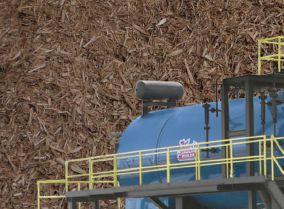
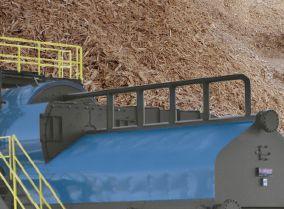
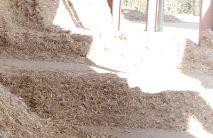
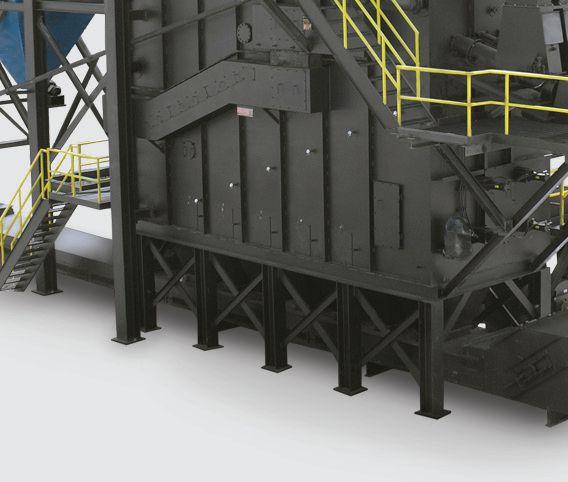
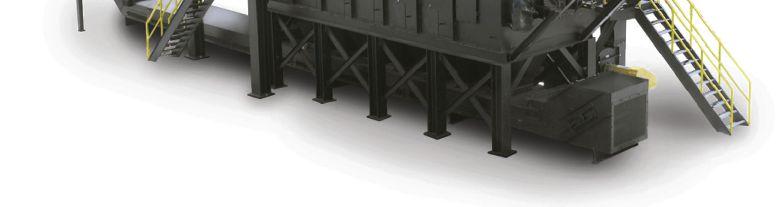
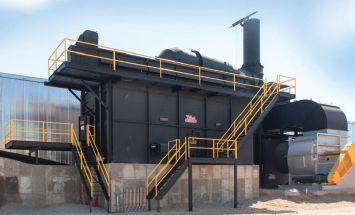
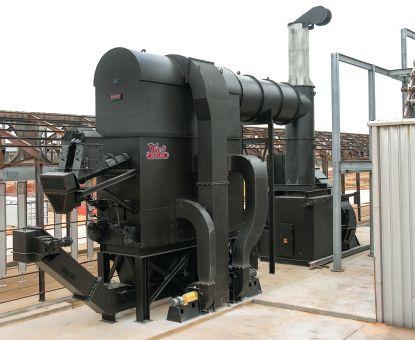
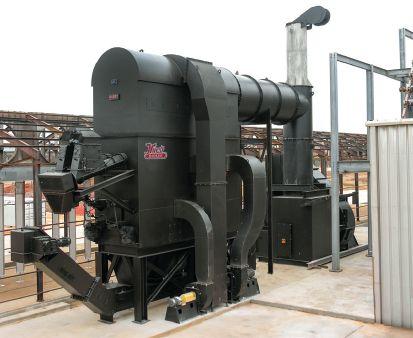
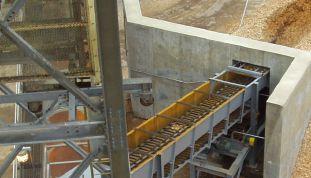
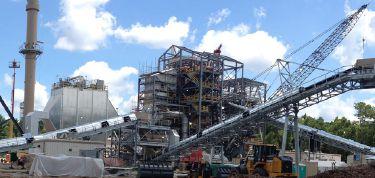
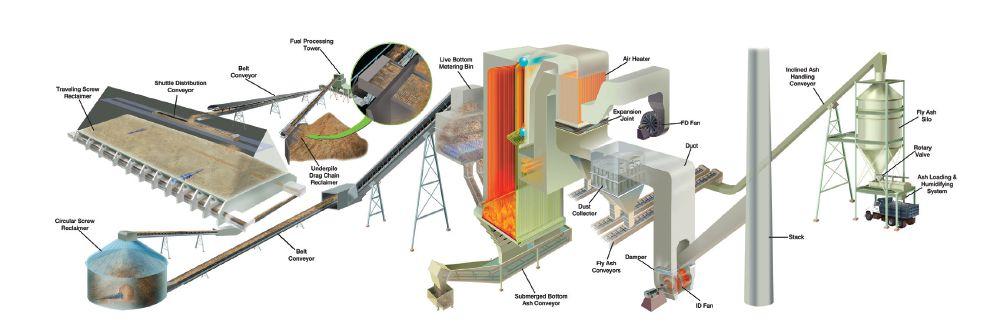
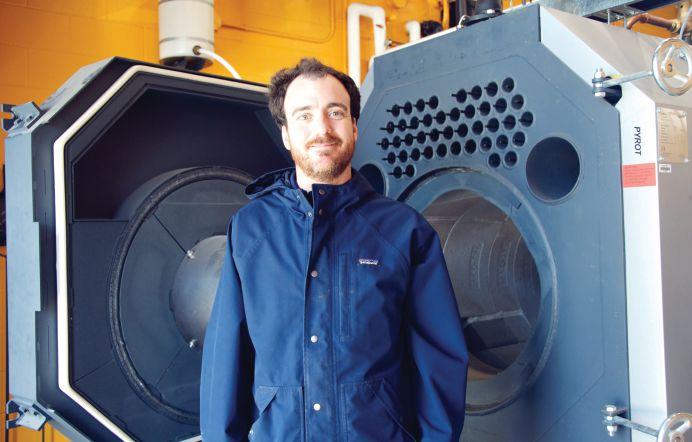
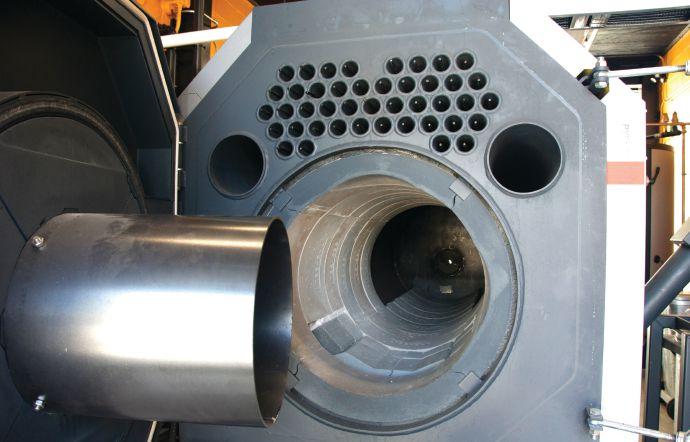
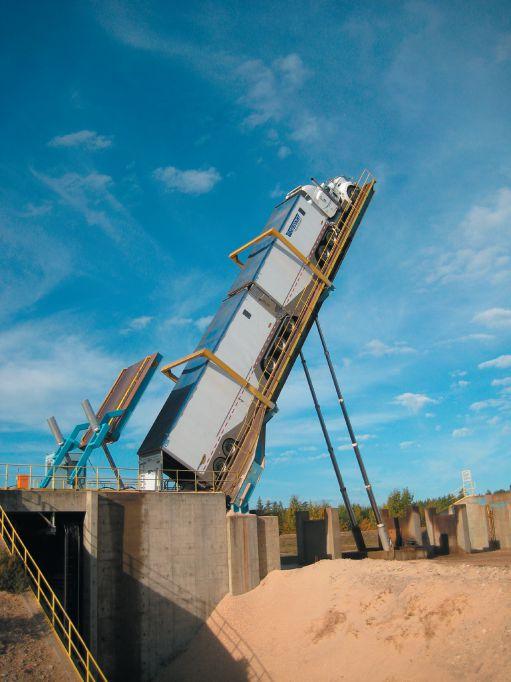
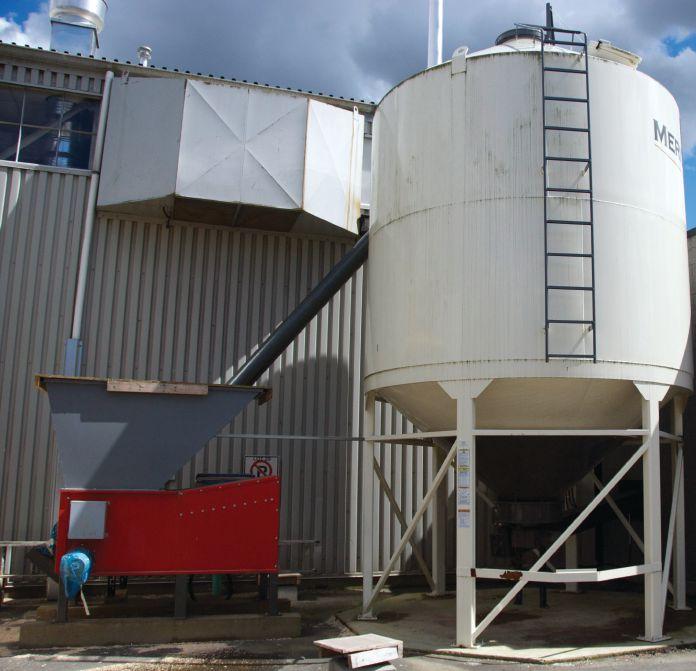
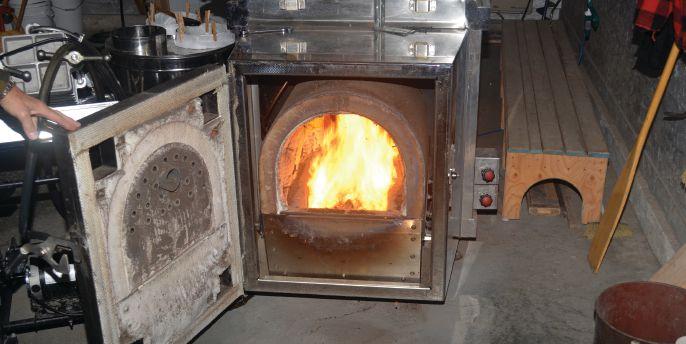
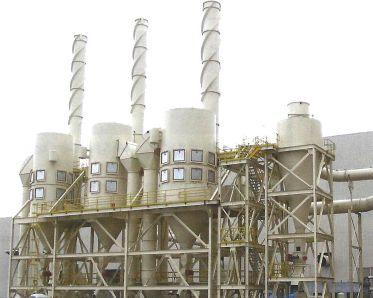
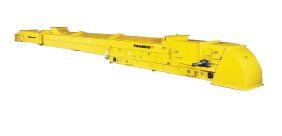
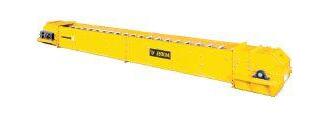
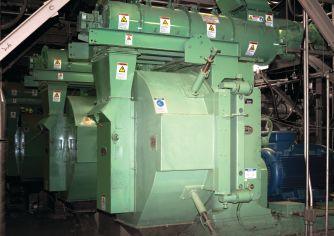
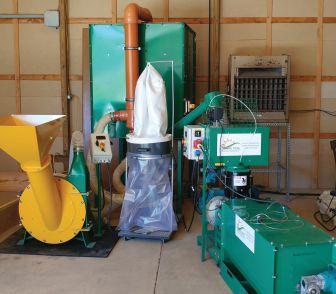
Hurst offers a full line of biomass fired combustion systems backed with fifty years of innovative clean-burn design. Diverse in every way with multi-fuel blending capability. Hurst stokers utilize hundreds of common and abundant solid biomass fuels.
Large or small scale, project management is eased with the impressively short installation time required with prefabricated modular components.
Rotary Dryers
Sand Dryers
Grain Dryers
Lumber Kilns
Cement Kilns
Brick Kilns
Energex
Part
Groupe
Everything
WPeak positioning
Pinnacle betting big in Alberta
estern Canada’s longest-running wood pellet producer is setting itself up for major growth next year.
A few months ago, Pinnacle Renewable Energy announced that it plans to build an $85-million, 475,000-tonne wood pellet plant in Entwistle, Alta., a little over 100 kilometres west of Edmonton.
While I was initially surprised by the investment, the more I thought about it, the more I realized the potential dividends a plant like this could pay.
With an annual production capacity already over 1.5-million tonnes, Pinnacle Renewable Energy is one of the world’s largest producers of wood pellets.
are co-firing, demand would be almost 40 million tonnes per year.”
And that’s just one country (granted, a huge one).
What would happen if several countries decided to walk the same path? Having an additional near half-million tonnes capacity would certainly be advantageous.
By adding the 475,000-tonne capacity plant to its arsenal, Pinnacle is positioning itself to be able to handle increased demands in markets overseas in Asia and Europe.
This could prove vital if more and more countries take advantage of the carbon neutrality of wood pellets for heating – especially with so many countries agreeing to meet their emissions targets within the Paris climate accord.
Think about what would happen if, say, China decided to make wood pellets a more significant part of its renewable energy strategy?
In FutureMetrics’ Global pellet market outlook in 2017, written by William Strauss, he states that if China embraced co-firing of wood pellets, even at modest ratios, that it would increase demand significantly. In the article he writes, “…a five per cent co-firing rate, in 2020 if only 16 per cent of China’s coal power plants
But the decision to build a massive wood pellet plant in Alberta doesn’t just position Pinnacle for growth. It protects the company’s current market share.
The allowable annual cuts for timber harvesting in British Columbia are declining in several areas, and with those declines comes sawmill closures and less available high-quality wood fibre.
By building a massive pellet plant outside of B.C., several hours away from some the most competitive areas in the country for high-quality fibre, Pinnacle’s new plant should give the company new opportunities to increase its fibre security in a cost-effective manner.
And if the company ever needed to temporarily shutter one of its B.C. plants due to fibre shortages, they could always make up the production in the massive Entwistle facility.
Don’t get me wrong, $86 million is a big investment, but with the way Pinnacle is positioning itself for the future, it looks like a pretty sound bet to me.
Andrew Snook, Editor
Volume 17 No. 4
Editor - Maria Church (416) 510-5143 mchurch@annexweb.com
Editor - Andrew Snook (289) 221-8946 asnook@annexweb.com
Western Sales Manager Tim Shaddick - tootall1@shaw.ca Ph: (604) 264-1158 Fax: (604) 264-1367
Media Designer - Mark Ryan
Circulation Manager Carol Nixon – cnixon@annexweb.com 450-458-0461
COO Ted Markle – tmarkle@annexweb.com
President/CEO Mike Fredericks
Canadian Biomass is published six times a year: February, April, June, August, October, and December. Published and printed by Annex Business Media.
Publication Mail Agreement # 40065710 Printed in Canada ISSN 2290-3097
Subscription Rates: Canada - 1 Yr $49.50; 2 Yr $87.50; 3 Yr $118.50 Single Copy - $9.00 (Canadian prices do not include applicable taxes) USA – 1 Yr $60 US; Foreign – 1 Yr $77 US
Occasionally, Canadian Biomass magazine will mail information on behalf of industry-related groups whose products and services we believe may be of interest to you. If you prefer not to receive this information, please contact our circulation department in any of the four ways listed above.
All advertising is subject to the publisher’s approval. Such approval does not imply any endorsement of the products or services advertised. Publisher reserves the right to refuse advertising that does not meet the standards of the publication.
www.canadianbiomassmagazine.ca
BIOMASS
update
FEDS ANNOUNCE $2 BILLION FOR MOVE TO LOW-CARBON ECONOMY
Ottawa is giving Canadians and Canadian companies a $2-billion incentive to reduce their emissions and make their homes and buildings more efficient.
Minister of Environment and Climate Change, Catherine McKenna, introduced the new fund as part of the pan-Canadian climate change framework announced last fall.
“We understand that a clean environment and a strong economy go hand in hand. The Low Carbon Economy Fund will deliver clean, sustained economic growth for years to come. It is seeking the best and most innovative ideas to reduce our emissions for the good of current and future generations. These projects will also reduce energy bills and create good, middle class jobs for Canadians,” McKenna stated.
The fund will also go towards supporting the forest and agriculture sectors to enhance stored carbon in forests and soils. Provinces and territories that adopted and made climate change commitments in the frame-
work are receiving $1.4 billion of the $2 billion fund. Those projects will begin in the fall and summer.
The rest of the fund will be used for a Low Carbon Economy Challenge that will be formally launched this fall. Projects for the challenge can be submitted by provinces and territories, municipalities, Indigenous governments and organizations, businesses and both not-for-profit and for-profit organizations. Projects that support a switch to lower carbon fuels and programs for enhanced forest management were given as examples.
“Canada has great expertise and a proven history of innovation in our natural resource and energy sectors. This investment will help to build on this capacity, to create and capture new opportunities in the low-carbon economy across a broad range of industry sectors,” stated Minister of Natural Resources Jim Carr.
Canada’s target is to reduce emissions to 30 per cent below 2005 levels by 2030. •
BIOAMBER LAUNCHES PHARMACEU-
TICAL GRADE BIO-SUCCINIC ACID
BioAmber Inc. has launched BIO-SA pharmaceutical grade. This new grade of material provides a USP/NF and FCC Grade of bio-succinic acid manufactured under the United States Food and Drug Administration’s (FDA) good manufacturing practices (GMP) for food and excipients.
The United States Pharmacopeia (USP), the National Formulary (NF), and the Food Chemicals Codex (FCC) are the public pharmacopeia standards for medicines, food ingredients, dietary supplement products, and ingredients.
These standards are used by regulatory agencies and manufacturers to ensure products are of the appropriate identity, strength, quality, purity and consistency.
“Having met the stringent requirements contained in the NF and FCC reflects BioAmber’s continued dedication to quality through our best-in-class production and purification processes. By achieving this new benchmark, our global customers in the food, pharmaceutical and dietary supplement industries can be assured BioAmber’s facility adheres to the rigorous quality control standards set by the United States Food and Drug Administration (FDA),” said Fabrice Orecchioni, BioAmber’s president and COO. “This grade will allow BioAmber to supply these high-value industries with commercial volumes of an FDA regulated bio-succinic acid, a grade previously unavailable to these
South Korea and Japan pellet imports at record high
Wood pellet imports to Asia reached an alltime-high in the 4Q/16 when Japan and South Korea together imported 630,000 tons of pellets. Although import volumes were down slightly in the 1Q/17, they were still over 40 per cent higher than in the 1Q/16, as reported in the latest issue of the Wood Resource Quarterly (WRQ).
South Korea is by far the main destination for pellets in Asia, and in 2016, the country was the world’s third largest importer of pellets, trailing only the United Kingdom and Denmark. Although import volumes to Japan have tripled from 2014 to 2016, the usage of pellets is still at a relatively low level (see WRQ for detailed trade data).
Consumption of pellets in Japan and South Korea has increased quite rapidly the past four years because of new government requirements which favour reducing carbon emissions and increasing the usage of renewable energy. The recent trend in pellet usage is likely to continue in the future and is driven both by incentives (subsidies) and regulations (renewable energy portfolio standards). With an urgent need to replace nuclear energy and generous feed-intariffs, it is expected that Japan will increase importation of wood pellets quite substantially over the next five years.
Vietnam has been the major supplier of pellets to the Asian market for the past three years, accounting for almost two-thirds of the shipments to Japan and South Korea in 2016. Canada was an early supplier to the Asian market, but its market share dropped from 22 per cent in 2014 to 14 per cent in 2016. However, in the 1Q/17, Canada increased shipments to Asia to the second the highest quarterly level on record and the market share was up to 21 per cent.
Import prices for pellets to South Korea fell dramatically from early 2014 to the summer of 2016, according to a recent WRQ Trade Snapshot report. The two-year long price decline ended in the 3Q/16, when prices slowly started to recover. The import prices continued their upward trend during the first four months of 2017 with Malaysian pellets increasing the most.
Source: Wood Resources International LLC.
PPulling out of Paris
The effect on the U.S. wood pellet industry
By Gord Murray, WPAC executive director
resident Donald Trump announced that the United States will withdraw from the Paris climate accord, framing his decision as “a reassertion of America’s sovereignty”, adding he was “elected to represent the citizens of Pittsburgh, not Paris.”
Mr. Trump’s decision may have catastrophic consequences for the U.S. industrial wood pellet industry, for European biomass power utilities, and even for the Canadian wood pellet industry. This is due to a new European requirement that wood pellets may only be sourced from countries that are party to the Paris agreement and have ratified the agreement. The fallout may adversely affect Canadian pellet producers despite Canada’s support of the Paris agreement.
In November 2016, the European Commission released its Proposal for a Directive of the European Parliament and of the Council on the promotion of the use of energy from renewable sources (“RED II”), which includes rules regarding renewable energy and biomass sustainability. Article 26.6 of the proposal pro vides that biomass – i.e. wood pellets – must be sourced from a country that is a party to, and has ratified the Paris agreement. If a country has not signed the Paris agreement, RED II speci fies that forest management systems must be “in place at the forest holding level to ensure that carbon stocks and sinks levels in the forest are maintained.”
Since the U.S. wood pellet industry sources its fibre from thousands of small private land owners, it is highly improbable that such for est management systems can be put in place at the forest holding level. This would mean that every single U.S. landowner who supplies feedstock would hence forth prepare his/her own written for est management plan and that European power utilities could prove the existence of each such plan to the satisfaction of Europe an regulatory authorities.
Presently, European industrial-scale power utilities consume about 10 million tonnes of wood pellets annually, with several new projects at advanced stages of development that will bring this total up to about 13 million tonnes within the next two years. In 2016, the U.S. accounted for 4.6 million tonnes or 46 per cent, followed by Canada at 1.9 million tonnes or 19 per cent, and various European countries and Russia at
3.5 million tonnes or 35 per cent.
The U.S. industrial pellet industry is totally reliant on Europe, exporting its entire production to just a few European countries – notably the United Kingdom, Belgium, and Denmark. If, due to Mr. Trump’s announcement, Europe no longer accepts U.S. sourced pellets, the consequences would be catastrophic. European power utilities would have to replace U.S. pellets from other sources such as Canada, northern Europe, and Russia. In the short term, pellet prices would likely increase. However, it would be difficult for those countries to scale up production fast enough to meet the needs of European power utilities. Without access to sufficient raw material, European power plants would be at risk, putting the entire wood pellet supply chain in jeopardy.
Although Canadian wood pellet exporters are also highly reliant on the European power market, shipments to Asia have been increasing, especially to Japan. However, this may not be enough. First, should Europe become closed to U.S. producers, the result would be that many U.S. producers would more aggressively seek to compete with Canada in Asia. Second, although Asian markets are presently growing nicely, the rate of growth may not be fast enough to accommodate a wholesale redirection of U.S. pellet exports. How likely is it that these scenarios will materialize? The answer lies with the Council of the European Union. The European Union adopts legislation through a variety of legislative procedures. RED II is still in the form of a proposal from the European Commission. It must be approved by the Council of the European Union in order to become law. Recently there has been no indication by European legislators that they are willing to relax any proposed rules regarding biomass sustainability. Moreover, given the belligerent nature of Mr. Trump’s announcement and the negative reaction from European political leaders, it is all the more likely that they will bear down on the requirements of Article 26.6. The eventual withdrawal of the United Kingdom from the European Union could potentially offer some relief, but it is not likely to occur quickly enough and there is no guarantee that the U.K. would not ultimately impose similar requirements.
The only certainty is that we are in for turbulent times ahead. •
AWood pellet industry lauded for safety improvements
By Frank Peebles
safety meeting that fit inside an office last year has now grown to the size of a convention centre.
In only a few years’ time, the British Columbia wood pellet manufacturing sector went from one of the worst corporate citizens to one of the best, for employee safety, and broke some moulds along the way.
If a biofuel executive had said such things, it might be construed as industrial propaganda, but these were the words of hard-line WorkSafeBC agents who once viewed the wood pellet industry as the juvenile delinquent on the natural resources block. It was only a couple of decades old, but was already a chronic abuser of safety rules and hostile to inspectors.
But when that changed, it changed fast and it changed big. The two sides were so impressed with the wild turnaround that they made a short documentary film about it, as a how-to guide for other industries.
It also formed the crux of the conversation at the safety conference held by the Wood Pellet Association of Canada (WPAC) in biofuel rich Prince George.
“Frankly, you weren’t very good,” said WorkSafeBC occupational safety officer Mike Tasker. “Now, you are among the very best. That should cause your chests to swell. You turned that completely around. We pushed you outside of your comfort zone, but the really cool thing is, you did it. And then you started to ask us what we wanted you to do next. There wasn’t just a willingness to reach compliance – the least safe you could be to meet our standards – you started striving for excellence. That, for me, was the TSN Turning Point.”
It only happened, said Tasker, because Greg Lobsinger, plant manager for Pinnacle Renewable Energy made a potentially humiliating, self-incriminating proposal. Lobsinger, with full company blessing, offered WorkSafeBC an unfettered look behind their dirty, dusty scenes.
In exchange, WorkSafeBC agreed to conservatively penalize them for any infractions and be extraordinarily helpful to Pinnacle if they took decisive corrective action.
Both sides were amazed at the extent to which the other went to reverse the adversarial history and embrace an opportunity to save lives.
While most industries point to political or market forces as being their biggest existential concern, the conference put a different threat at the top of the WPAC list: the specter of pellet plants exploding.
“We all know the stories (of Lakeland and Babine, the two lumber mills that fatally exploded due to buildups of fine wood
dust), and if we want to achieve a different result we need to operate differently,” said Pinnacle’s senior VP Scott Bax, chair of the conference. “We needed a lot of change.”
It wasn’t just the ambient dust, which was shockingly thick and dangerously managed, according to WorkSafeBC’s Geoff Thomson, an occupational hygienist who led an audit of every pellet plant in the province. Doubling the problem was the presence of syngas that emanates from wood fibre in the pelleting process. The combined mismanagement of syngas and dust made these facilities a particularly hazardous workplace.
Companies across B.C. took Pinnacle’s lead and WorkSafeBC’s
hand, and aggressively changed their ways as a block.
“A lot of heavy lifting was done here, and I want to thank you for helping us move forward, for taking a chance on showing us your dirty laundry,” Thomson said. “Not every sector is interested in working with us, so it was an important step your industry took.”
WorkSafeBC also had to change some of its attitudes to allow for the paradigm shift, said Budd Phillips, the agency’s regional prevention manager. Now, said Phillips, “other regulators have asked us ‘how did it work?’ so there is interest from other provinces and other industries.”
Dustin Meierhofer had a long career in operational forestry before recently shifting to the BC Forest Safety Council. He applauded the wood pellet industry for its innovative leadership.
He explained to the audience that addressing safety happens in phases. First, you have to do a wholesale audit of your operation to pinpoint all the dangers. Second, management has to invest in mitigation. Third, the employees must take ownership of their own health at work with steadfast communication about safety problems.
The wood pellet industry isn’t nearly as experienced in safety measures as sawmilling, mining or construction. That initial data must still be gathered, sorted and documented. Meierhofer said a working group formed in spring looking specifically at the issue of dust storage, the wood pellet industry’s largest area of concern.
WorkSafeBC recognizes that while fine wood dust is a hazard in most industry settings, it is the main ingredient in the making of pellets, so it must be regulated differently. There are no such regulations in place. Therefore, said Meierhofer, WorkSafeBC was giving the industry the chance to have comprehensive input into how the regulations might work in their special circumstance.
Meierhofer said the working group was aiming at the end of July for handing WorkSafeBC a working draft, after which there would be study and revision until approximately September.
“The way your sector worked with WorkSafeBC is certainly a model,” Meierhofer said. “There are some challenges ahead but I see some dedicated people looking at some definite outcomes. We (on the working group) want to be as thorough as we can, provide what we think are the best answers up front, so we can speed things up and ease WorkSafe’s process.”
Cheering them on is someone who knows agonizingly well how workplace safety inaction feels. Candace Carnahan showed, with deft balance, how to stand on one foot if you’ve taken your prosthetic leg off to show an audience what happens when factory machinery isn’t safeguarded. She lost her lower left leg in a paper mill incident and now tours Canada as a workplace safety experiential consultant.
“If you see something, say something,” was her main message to the conference crowd. She stressed the imperative of refusing any work that puts yourself or your colleagues in any sort of danger, and managers backing them up.
“You can do (a routine unsafe act) a thousand times and be fine, but as soon as you’re caught once there is no going back,” she said. “It’s not about me and it’s not really about you. It’s about whom you said goodbye to this morning and expects to see you back home at the end of the work day. Safety is not nine to five, safety is not four on-four off, safety is 24/7. Safety is a lifestyle.”
When Pinnacle enacted their new way of corporate life in 2014, their medical incident rates dropped by 70 per cent, their lost-time accident rate dropped by more than 80 per cent, there was a 1,500 per cent increase in safety feedback from employees and contractors, but their EBITA (Earnings Before Interest, Taxes and Amortization) shot up 140 per cent.
“Safety makes you money,” said Lobsinger.
He didn’t offer to change his industry because of the bottom line, but that is the first line of the documentary. The 11-minute film will soon be released to the public to perhaps show other industries how to put safety first the way the wood pellet sector has.•
Quality Matters Part II
By Gord Murray
Onthe surface, biofuels seem more expensive than fossil fuels. A litre of ethanol costs more than a litre of gasoline. A ton of wood pellets costs more than a ton of coal. But is this a fair comparison? What would fossil fuels cost if producers had to pay for the environmental damage they caused? How much would coal and gasoline producers have to raise their prices if they had to account for the cost of reversing global warming and acid rain? Despite their higher initial cost, global biofuel consumption is increasing. This is because biofuels are cleaner than fossil fuels, and have a lower greenhouse gas impact. Governments have implemented various mechanisms to support biofuel use, either through mandates or subsidies. However, for governments to support biofuel use, they require evidence that biofuels do indeed provide GHG benefits and that they are produced sustainably. This has led to the rise of third party sustainability certification in the biofuels industry.
The forest industry adopted third party sustainability certification some twenty years ahead of the biofuels industry. The Forest Stewardship Council (FSC) and the Programme for the Endorsement of Forest Certification (PEFC) are two well-known organizations with certification programs that provide third party verification of sustainable forest management as well as chain of custody certification to demonstrate to the end consumer that finished forest products come from sustainably managed forests. A common feature of these programs is that they have multi-stakeholder governance, which includes participation of forest industry, environmental interests, social interests, and aboriginal interests. Canada leads all countries with 166 million hectares of certified forests, a figure that is nearly four times more than second place United States at 47 million hectares.
Sustainability certification for liquid biofuels – i.e. ethanol and biodiesel – began with the European Union’s 2009 Renewable Energy Directive (RED). The RED required mandatory sustainability criteria for liquid biofuels, but was silent regarding solid biofuels, thus leaving it to individual EU member countries to decide how to address the sustainability of solid biofuels. According to the RED, for liquid biofuels to be considered sustainable, they must achieve greenhouse gas savings of at least 35% in comparison to fossil fuels, rising to 50% in 2017. In 2018, it rises again to 60% but only for new production plants. All life cycle emissions are taken into account when calculating greenhouse gas savings. This includes emissions from cultivation, processing, and transport. Biofuels cannot be grown in areas converted from land with previously high carbon stock such as wetlands or forests. Biofuels cannot be produced from raw materials obtained from land with high biodiversity such as primary forests or highly biodiverse grasslands. One
way for companies to demonstrate that their biofuels comply with the criteria is to participate in voluntary certification programs that have been recognized by the European Commission. For the purpose of certification, the whole production chain from the farmer growing the feedstock up to the biofuel producer or trader is checked by independent auditors. Schemes are mostly privately run but recognized as valid by the European Commission. Presently there are 16 sustainability certification schemes for liquid biofuels recognized by the European Commission.
The European Union remains the largest market for solid biofuels, especially wood pellets, consuming about 20 million metric tons of wood pellets per year, half for heat and half for power. The European Commission has been silent regarding sustainability criteria for solid biofuels, leaving it to member countries to determine their own rules. Unfortunately for industry participants, this has resulted in each EU member country developing its own sustainability rules with such rules varying significantly from country to country. Electrical power utilities must demonstrate that they are complying with sustainability rules of each country in which they operate in order to receive government subsidies. European power utilities initially developed individual inhouse procedures to verify the sustainability of their wood pellet purchases. However, they eventually decided that it would be more efficient to have a single pan-European sustainability certification system, thus leading to the development of the Sustainable Biomass Program (SBP). Today SBP’s members include Drax Power, Dong Energy, Eon, Engie, Hofor, RWE, and Vattenfall. The SBP certification program was initially developed for wood pellets and has recently been extended to cover wood chips.
THE SBP FRAMEWORK INCLUDES SIX STANDARDS:
• Feedstock Compliance Standard: the principles, criteria and indicators defining the management system needed to verify that feedstock is legal and sustainable;
• Verification of SBP-compliant Feedstock: the method for the evaluation of the risk associated with feedstock;
• Certification Systems: the requirements on certification bodies in verifying compliance by SBP certificate holders;
• Chain of Custody: the requirements for documentation showing custody, control, and transfer of certified material;
• Collection and Communication of Data: the methodology for collection and communication of data along the supply chain; and
• Energy and Carbon Balance Calculation: requirements for generators regarding energy and carbon balance calculations.
While each of the six standards is essential to SBP’s certification process, arguably the first two require the most attention from wood pellet producers as they relate to what feedstock is acceptable and the verification procedures. The Feedstock Compliance Standard is concerned with ensuring legal compliance; maintaining biodiversity and high conservation values; forest productivity; soil, air and water quality; labour rights and health and safety; land use rights; continuous improvement; maintaining carbon stocks; impacts of residue harvesting; and competition with food and subsistence uses. The Verification Standard provides two methods for demonstrating compliance with compliance with its feedstock standard. The first is if a biomass producer obtains feedstock from certified forests, then SBP will accept FSC or PEFC certification as evidence. The second, for situations where FSC or PEFC certification is not available, then the biomass producer must undertake a detailed supply base evaluation of the areas from which it obtains feedstock. The supply base evaluation consists of a risk assessment and verification procedures. To obtain SBP certification applicants must be audited by an accredited third-party certification body. Certifications are valid for five years, provided that certified organizations pass annual surveillance audits. At the end of five years, organizations wishing to renew their SBP certification must reapply.
As an organization, SBP has been diligent in trying to develop a certification program that would comply with the sustainability requirements of all EU member countries. To that end it has mostly succeeded, although at this time the Netherlands will not
accept SBP’s risk assessment procedure for large forest units. One area where SBP’s members have failed is in their relationship with the organizations that they want to become SBP certified. SBP’s members have treated wood pellet producers as adversaries rather than as allies. Wood pellet producers have asked to participate as equal partners in developing SBP from the very beginning. Instead, SBP’s partners have maintained absolute control over the SBP and have shut pellet producers out of the governance process. They have given the appearance of acting as a buyers’ cartel exercising absolute authority over the wood pellet industry. In fairness to SBP, the members have now indicated a cautious willingness to include pellet producers as well as environmental groups in the governance of SBP. For them to repair the damage they have done to supplier relationships, SBP’s members will need to move a little faster than their current glacial pace.
Solid biomass fuel markets have recently begun to develop rapidly in South Korea and Japan. While two countries are motivated by similar concerns about sustainability and GHG reduction, these issues have not evolved as quickly as in Europe and we still have time to apply the lessons learned from our European experience. Sustainably produced biofuels are less polluting and better for our atmosphere than fossil fuels. And when we add the cost of environmental damage to the cost of fossil fuels, we can argue that biofuels are cheaper too. So, for the continued growth and survival of biofuels, it is essential for all participants to demonstrate that they are producing sustainability. Sustainability certification will continue to provide a vital role. •
FUEL
Burning to learn
BCIT biomass boiler system is first an educational tool
By Maria Church
Theboiler system residing at the British Columbia Institute of Technology (BCIT) is a little ways yet from operational, but as Alexandre Hebert explains, the system is much more than just a biomass boiler; it’s a learning tool.
“Our core business is education – everything we do is for students first, and the co-benefit is that it’s good for the planet,” says Hebert, who is BCIT’s manager of zero-emissions buildings and energy systems application.
Hebert and his team have planned the boiler system down to the last screw. Every facet of the system was designed with an educational purpose in mind.
Energy from the boiler will heat what BCIT calls its Factor Four buildings, seven buildings used by the college’s School of Construction and the Environment. Factor Four is an initiative led by the department to reduce its emissions by 75 per cent (check out their blog at www. commons.bcit.ca/factorfour). The welding shop, in particular, uses significant energy in the winter because of its ventilation system to control particulates from the welding process.
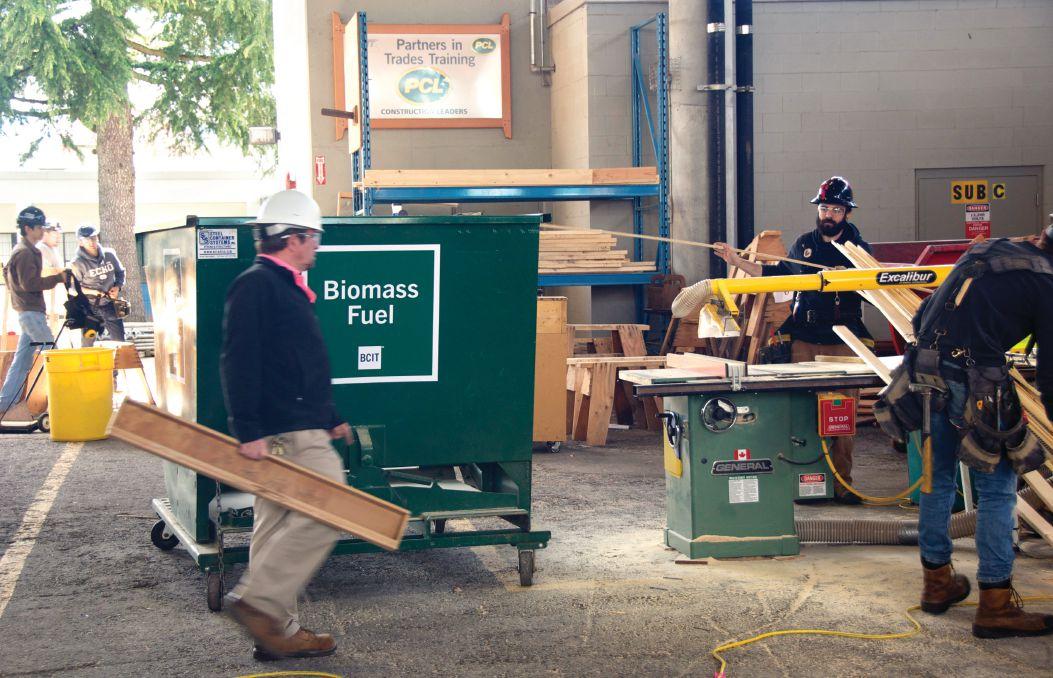
Wood residuals from the joinery and carpentry facilities will be feedstock for the boiler once it’s up and running.
“With the volume of wood waste that we were getting rid of, we knew there had to be a better solution,” says Rob Sawatzky, joinery instructor with the School of Construction and the Environment.
A student brought the idea of a biomass boiler forward and prompted the department to run with it.
“The institute is very supportive of taking new ideas and allowing people with initiative to go ahead,” Sawatzky says.
Even though the boiler is not operational yet, Hebert says it is already doing its job as an educational resource for many
of the college’s programs. In fact, because it’s not in use, instructors are still able to take students through the facility to view exactly how the system works.
From an aesthetic perspective, BCIT went the extra mile. The boiler is housed in a wood and masonry building that
welcomes visitors with a glass viewing door and placards that explain the design of the system and extol the benefits of burning wood residuals for heat.
“This facility is a living laboratory that targets an annual waste reduction of 250,000 kg, and greenhouse gas emission
Alexandre Hebert and his team designed the boiler system at BCIT with painstaking detail to ensure it is both functional and an educational tool.
Once it’s up and running, the boiler will be fuelled by wood residuals from the joinery and carpentry facilities. Dried, untreated wood, free of glue is sorted into biomass bins that will make their way to the chipper.
reduction of 250 tonnes of CO2eq, which is equivalent to the carbon released by burning 100,000 litres of gasoline,” the sign reads.
Other standout architectural features of the building, constructed by Stuart Olson, include pre-fabricated wood that was produced without the use of glue or sealant to allow BCIT to burn the building at the end of its lifecycle, and wood paneling on the exterior sealed with a burning technique that creates a unique charred design.
A LOOK INSIDE
The facility itself has five main components: a chipper, fuel storage, the biomass firebox and boiler, an air emissions filter, and a buffer tank.
The Reinbold chipper uses a gravity-fed top-mounted hopper and produces one-inch wood chips. The chips then exit onto a conveyor that drops them into a Meridian silo, which stores about 43 cubic metres.
Another conveyor takes the wood chips from the silo to the Viessmann boiler system, which has a rated output of 300 kW. Fink Machine, the west coast supplier for Viessmann, installed the boiler. The burner has a moving grate to get the most combustion out of the wood chips.
A heat exchanger provides an indirect connection between the boiler and a series of hot water distribution pipes both above and under ground. This smart thermal grid is largely to blame for the delay in commissioning the boiler, Hebert says. The plan was to
connect to an existing district energy line, but when a pipe burst the decision was made to abandon the line.
“That left the biomass project without a line to connect to. We had to go to an engineering firm and ask for a design for another way to connect. And that is now a 200-metre line from what was 10 metres. We didn’t have the budget for that. Now we’ve found a partner so it’s in the works,” Hebert says.
The air emissions filtration system was also carefully chosen to ensure the boiler meets Metro Vancouver’s emission limit of 18 milligrams per cubic metre of particulate matter. Without a filter, the boiler’s emissions are about 50 milligrams per cubic metre, which is low enough that in Austria the boilers are used without filters. But to meet the strict 18 milligram limit, Fink Machine added two stainless steel mesh filters with small pores collects particulates on the outside of filter. Compressed air systems inside of the filters blow the cake into a bin that must be removed regularly.
A 2,600-litre insulated buffer tank stores hot water from the boiler to avoid the system shutting off when it’s not required.
Even the system’s exhaust has been planned with students in mind. The stack outside of the building has three convenient port locations to enable students from the Environmental Health program as well as other environmental programs to access and take measurements with probes.
Ash from the boiler is collected and will be used as an additive for BCIT’s landscaping.
“The project took a long time so we had so much time to think,” Hebert explains.
SORTING FUEL
Air quality restrictions as well as the internal nature of BCIT’s boiler project requires Hebert to fuel the boiler with only dried, untreated wood, free of glue, sourced from on campus.
Because of the glue restriction, about 20 to 30 per cent of the wood residuals from the shops is unusable. As a result, the boiler will likely be under capacity for a number of years, Hebert says, unless he’s able to supplement it with wood from off campus. “Hopefully, someday MDF and plywood are produced with glue that is benign and OK to burn in an urban environment”.
A waste sorting system at its carpentry and joinery shops is an important component of the supply chain to make sure the right fuel is headed to the chipper.
Large coloured signs indicate to students which waste should be placed into which container. Green is for biomass fuel, which is solid wood only with no metal or glue. Red is for wood waste, which includes MDF, plywood, particleboard, wood with finishing, and so on. Grey is for metal waste. And yellow is for garbage.
“We’re getting people to re-think waste,” Hebert says.
BIGGER PICTURE FOR BCIT
Once it’s up and running, likely in the fall, the boiler system will bring the School of Construction and the Environment’s emission reductions up to between 70 and 90 per cent; this will likely exceed the Factor Four initiative’s goal of 75 per cent reduction. “It was very doable with existing technology,” Hebert says.
Staying true to the educational goal, Hebert wants to build a district energy
learnaing wall that explains the different components involved in building a system, as well as pros and cons of different materials.
The boiler system is also one component of BCIT’s overall pledge to reduce its overall emissions by 80 per cent by 2050. It’s a big goal and it’s taking time to realize, Hebert says.
“We did a lot of engineering studies on all five campuses and we know how to reduce our emissions by 50 per cent with off-the-shelf technology,” he says. Hebert led a proposal that was approved by the college’s board to implement a 33 per cent-reduction plan by 2021, following the same framework successfully tested with the Factor Four initiative.
“There’s no silver bullet today so you have to come up with a series of solutions and find a way to integrate them,” Hebert says. “And those solutions will be site specific. For me I have wood waste, for others it might be heat recovery from other things. We’re not going to solve anything with one big project. We take pride in being small.” •
The boiler system has five main components: a chipper, fuel storage, the biomass firebox and boiler, an air emissions filter, and a buffer tank.
Pellets for pancakes
Groupe Savoie fuelling the maple syrup industry
Woodpellets are a fairly popular fuel choice for heating across New Brunswick. The number of residential and institutional facilities choosing to heat their buildings with wood pellet-fuelled boiler systems and wood stoves in the province have been steady or growing in recent years; so it comes as no surprise to hear that close to 60 per cent of the 90,000 tons of wood pellets produced annually at Groupe Savoie’s pellet plant in Saint-Quentin, N.B. go towards satisfying the needs of the domestic market in the province (the remaining production is shipped overseas for the European industrial grade pellet market).
But it might surprise you to hear that 2,500 tons of those domestic wood pellets are used to fuel one of the region’s most popular and valuable commodities: maple syrup.
Groupe Savoie’s seven-year-old wood pellet operation fills orders for maple syrup producers throughout Quebec and New Brunswick.
Jonathan Levesque, vice-president of sales and development for Groupe Savoie, says the maple syrup industry is a good fit for the wood pellet operation, which received its first order for pellets from a maple syrup producer with close family ties to the company.
“We started with my uncle as our first customer about five years ago,” Levesque says, adding that the maple syrup industry helps balance supply and demand for local wood pellets because producers require a large percentage of their pellets in the summertime when the pellets are otherwise in low demand.
“All these people have silos so we fill them in the summer when the roads are easier to access so they have their season’s supply ready before the season starts,” Levesque explains.
By Andrew Snook
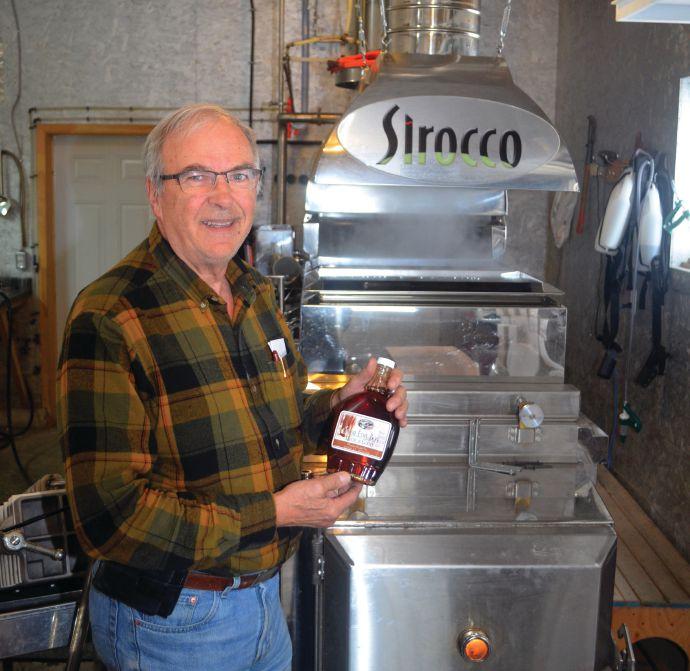
Jean-Claude Savoie, chairman and CEO of Groupe Savoie, shows off a bottle of his “Savoie être bon” maple syrup at his sugar shack in Saint-Quentin, N.B.
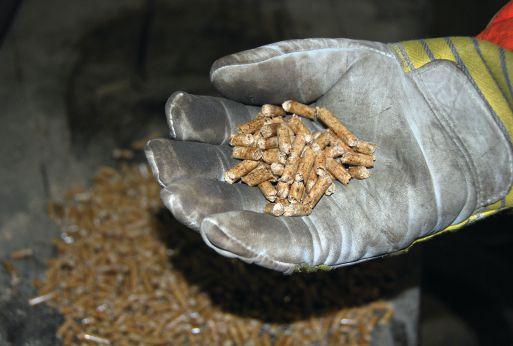
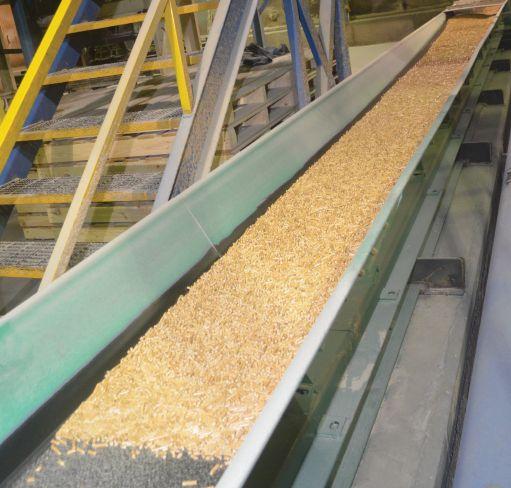
Approximately 2,500 tons of Groupe Savoie’s annual domestic wood pellet production goes to fuelling maple syrup production in New Brunswick and Quebec.
SYRUP FOR THE PEOPLE
Not only does the specialty hardwood products company fill orders for wood pellets for maple syrup producers in Quebec and New Brunswick, but Jean-Claude Savoie, chairman and CEO of Groupe Savoie also produces it as a hobby, for a good cause.
“When we started 12 years ago producing maple syrup, we were giving it all away – friends, customers, family,” recalls JeanClaude, during a tour of his maple syrup operation in Saint-Quentin. “Eventually people started asking for it, so we thought maybe we can get a few dollars for it.”
Instead of keeping all the profits, JeanClaude decided to do something noble with the proceeds from his sticky venture and donate every dollar from the sales to Fondation Hector Savoie, a charity that assists low-income families in northwestern New Brunswick.
“We use the funds to mostly help sick people,” Jean-Claude explains. “For example, if you go to Moncton to get treatment for cancer, the government will pay for the treatment but nothing else. So the travel, the food, the hotels, we subsidize for people. We also have quite a few motorized wheelchairs for people that can’t move
around. We also buy food stamps for the kids at school so they can buy lunch.”
Last year Groupe Savoie’s maple syrup sales raised over $10,000 for the foundation.
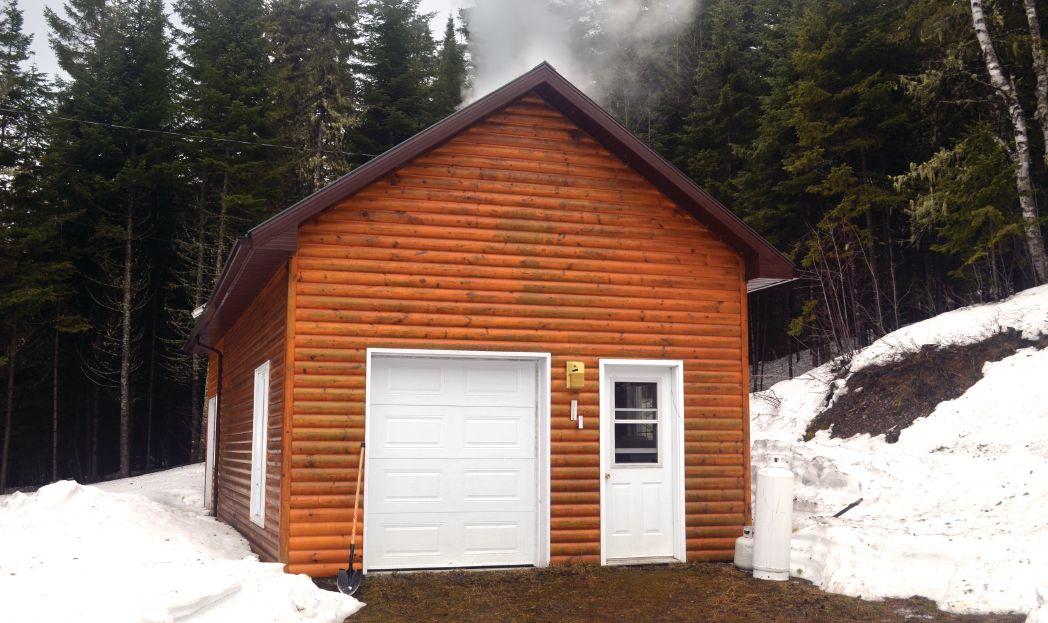
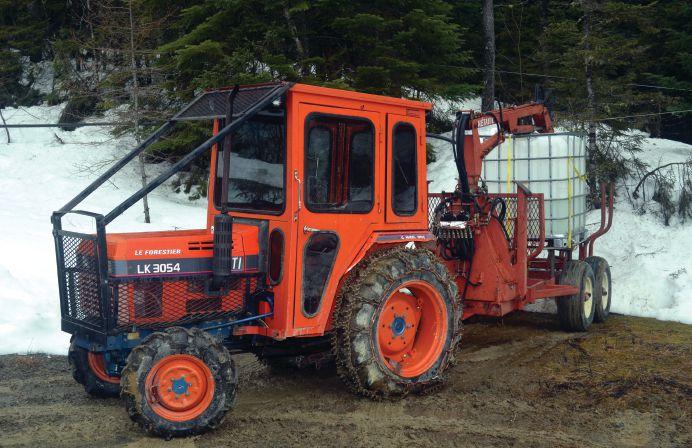
The sap is collected from up in the mountains on Jean-Claude’s 400-acre property from 900 tapped maple trees that fill a tank near the bottom of the mountain. He then transports the tank via tractor over to his sugar shack where the sap is
transferred to the evaporation tank to start the syrup process.
Groupe Savoie decided to brand its maple syrup “Savoie être bon” or “Savoie is good” in English.
With all the proceeds from the syrup sales going to help low-income families and others in need throughout the region, it would be hard to argue that fact. Savoie être bon, indeed. •
Every dollar from the sales of Jean-Claude Savoie’s maple syrup production go to Fondation Hector Savoie, a charity that assists low-income families in northwestern New Brunswick.
The sap collected from 900 tapped maple trees is transported via tractor over to the sugar shack.
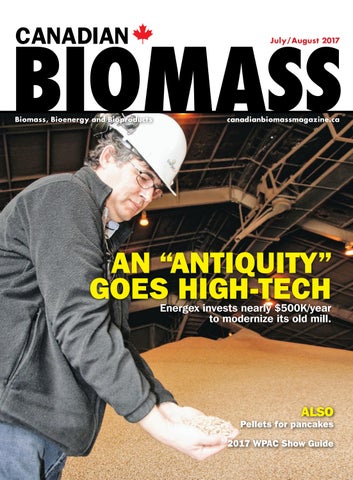
An “antiquity” goes high-tech
Energex invests nearly half a million dollars a year to modernize its old mill.
By Anabel Cossette Civitella
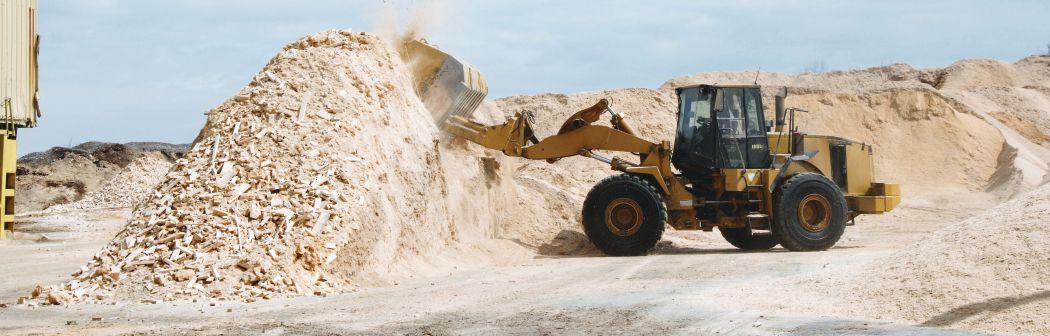
To ensure the pellets’ uniformity, the excavator’s operator must master the art of mixing sawdust and planks when mixing the two piles of hardwood with a pile of soft wood.
Oneof the largest pellet plants in Quebec, Energex, could also be the oldest. Max Béraud, the mill manager, does not even hesitate to call it an antiquity! Created in 1983 by BioShell – in the midst of an oil crisis – the plant located in Lac-Mégantic, Que., in the Eastern Townships benefited from the know-how and oil standards in place to develop its efficiency. Bought by Energex in 1993, the plant has since continued to exceed standards for pellets and refine its equipment in fire prevention.
PELLETS SIGNED ENERGEX
“The excavator operator has the most influence on the pellet making recipe,” says Max Béraud, while overseeing the wood chips mixing process outside the plant.
With the shovel, the operator must master the quasi-gastronomic art of mixing two piles of hardwood with a pile of softwood. He thus ensures the uniformity of the shavings, sawdust and other wood trims coming from the 80 sawmills across Quebec. And beware, Energex buys only virgin wood. “No recycling (wood pallet or construction wood), no bark, no aspen, no chemicals,” says Béraud, walking between the buildings intended for pelletizing and bagging.
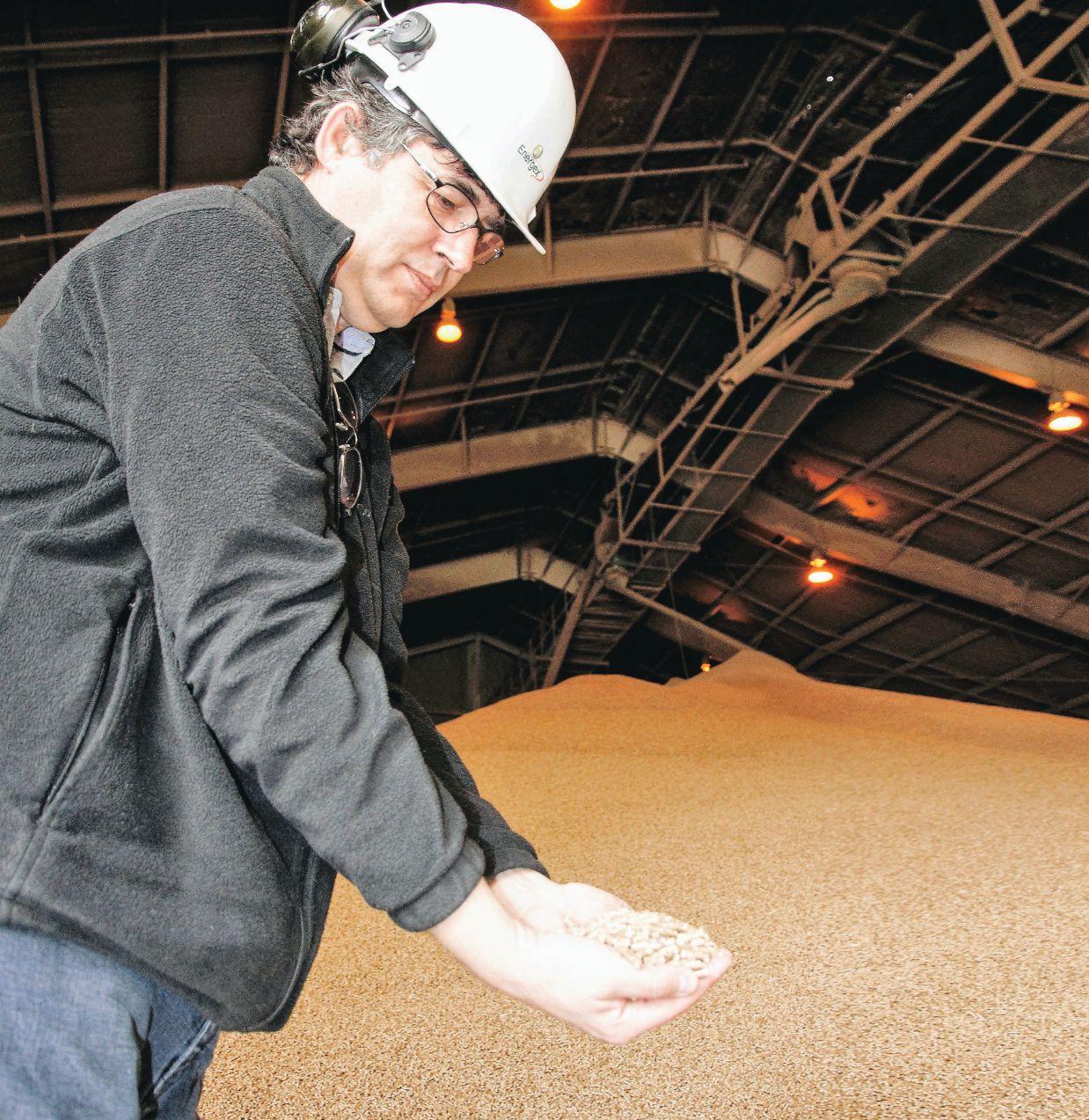
Out of the 2,000 tons of ready-to-ship pellets piled in the warehouse in late April, most will go to Maine Energy Systems, the largest bulk customer. The other portion, bagged, is sold to Home Depot, Lowes and small traders, accounting for 80 per cent of the 40lb. bag production. In total, Energex produces 120,000
metric tons of pellets per year, as much as its twin plant located in Pennsylvania. The main buyers are in the United States. Only two per cent of production remains in Quebec or goes overseas to Italy. The entire production is intended for the residential sector.
OLD FACTORY, NEW EQUIPMENT
When you enter the plant, you immediately notice how small the floor surface is, at only 10,000 square feet. The dryer, grinder, granulator, cooler and sieves share the space vertically on four floors.
“It’s a 32-year-old plant,” Béraud notes, listing the company’s latest investments averaging half a million dollars a year. During the last four years, Energex has remained faithful to its MEC dryer. However, they opted for more efficient Rodair cyclones made with stainless steel. The new LMM cooler was also chosen for its efficiency. Andritz not only manufactures the plant’s new granulator, but also the matrices and rollers used to compress the pellets. “They are able to make these parts according to our specifications,” Béraud says.
TIGHT VIBRATION TRACKING
When pellets are made, the granulator is the heart of the system. “We put the heart of the system on full monitoring,” Béraud says. “It is tracked like just like if it was at the hospital emergency.”
And what instrument allows this tight follow-up? The Ness continuous vibratory analysis system, a tool that differentiates Energex from its competitors.
“By being aware of the vibration on each machine, we know exactly what is going on and we control them excessively well,” Béraud says. “We make sure they are well-adjusted, well lubricated… thus optimizing the machine condition and productivity.”
At the heart of operations there is lubrication. A normal plant spends $100,000 in fat each year for four granulators, states Béraud. By comparison at Energex, lubrication costs $6,000 and this is done, simply by hand lubricating. “Instead of using automatic lubricators, we’ve changed our machines and we need very little grease.”
PROTECTED AGAINST FIRE
What other equipment differentiates Energex? The Flamex spark detection and the Fenwall anti-explosion systems. With so much dust and wood residue, a spark from a rubbing conveyor or a broken bearing is enough for the plant to go up in smoke.
This is why Energex has installed an explosion shock wave detection system. Soccer-sized balls containing water under pressure are installed wherever there is a lot of dust, like on the hoppers. If an explosion occurs, the system detects the air movement preceding the fireball, which triggers the opening of the balls. The water that comes out stops the explosion.
STRONG!
The criteria of excellence in efficiency and safety were not always sufficient for Energex. In 2010, they stopped production due to lack of clients. At that time, they had no other choice but to develop their client directory. Fortunately, Home Depot became a new bag costumer, buying up to 60 per cent of the plant capacity in a good
PELLET ROLLER COASTER
Morbark Strong. It’s more than a slogan; it’s a
year. Nevertheless, the plant still does not operate at full capacity and currently produces between 70 to 75 per cent capacity.
To solve some of its fibre supply challenges, Energex has partnered with Tafisa Canada in Lac-Mégantic, a particleboard plant.
The group purchases of timber allow for improved cost control.
“We do not hurt each other and we have a higher bargaining power,” Béraud says.
Given these difficulties, when asked what Energex’s next step will be, Béraud can, of course, imagine starting a new plant to get closer to the raw material and the buyers’ market. But before thinking about getting bigger, a better bulk distribution network needs to be developed, he believes. And that’s a big gap in the pellet market.
Even though wood pellet plants compete directly with the oil industry, paradoxically, the company could benefit from the fossil energy supply network.
“We must not delude ourselves, people in the oil industry tend towards renewable energies,” says Béraud, who gives the example of Sonic, who, after buying a pellet boiler licence are starting to look at the distribution channels.
“Here, we have Turmel oil, which supplies heating oil,” Béraud explains. “They know their customers and their boilers. These people have an interest in maintaining their energy distribution network. Whether they are distributing pellets or oil, it’s the same setup. They would be good candidates to help build the distribution network.” •
Vibrations are detected continuously in the factory, a system that distinguishes Energex from its competitors. This system makes it possible to adjust the machines more quickly and reduces the need for grease.
Energex produces 120,000 metric tons of pellets per year, as much as its twin plant located in Pennsylvania. The main buyers are in the United States. Only two per cent of production remains in Quebec.
WPAC Members, WOOD PELLET
Expanding Horizons: New opportunities for Canadian biomass
HELLO EVERYONE, WHERE HAS THE YEAR GONE?
On behalf of the board of directors of the Wood Pellet Association of Canada, I would like to extend an invitation to everyone to attend the 2017 annual general meeting and industry conference September 18 to 20 in Ottawa, Ontario.
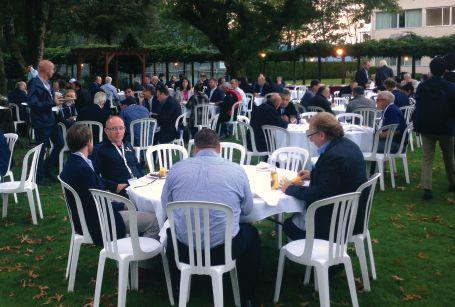
The Wood Pellet Association of Canada’s conference and annual general meeting is Canada’s largest gathering of the Canadian wood pellet industry. Each year, this event attracts hundreds of wood pellet, biomass and bioenergy professionals from across the country, as well the U.S., Europe and Asia, to discuss the issues and opportunities that are impacting the industry here in Canada.
Our theme this year is “Contributing to Canada’s Low-Carbon Future.”
In 2016, the Federal government announced they intend to phase out the use of coal in power generation by 2030 as part of its clean-energy strategy. This year the federal government and the provinces agreed to the Pan Canadian Climate Framework. There is no question that Canada is committed to reducing green house gas emissions from power and heat. We have chosen Ottawa as our venue this year and have partnered with IEA Bioenergy to ensure government understands the important role wood pellets can play in their overall strategy. IEA Bioenergy shares a common goal of reduced GHG emissions from energy use and promoting sustainable options like wood pellets as a fuel option.
Monday, September 18 is our pre-conference day and AGM. We invite all WPAC members to join us for our AGM to get an update on the work your association is doing to better our industry. We will have two very important workshops you will not want to miss. In the morning we will explore quality standards, their importance and how to obtain certification. In the afternoon we will explore sustainability, why we need to be on top of this very important issue and the Sustainable Biomass Program.
Join industry thought leaders as they educate us on these two very important industry topics. There is also a tour of a local wood pellet producer and a nearby biomass heating installation. A full day with something for everyone!
This year’s conference will have a full day all about biomass co-firing and dedicated firing. On Tuesday, September 19 join us for an introduction to biomass co-firing, the impact of this globally and the potential benefits for Canada. Also, get an update on the current and future pellet market outlook. Hear why biomass conversions work from generators who have done this successfully and learn about the policy and legislation impacting our industry.
Wednesday, September 20 is dedicated to wood pellet heat. Hear industry leaders explain the case for wood pellet heating, the current markets and more. Listen to what is being done to develop the heat market in North America and in Europe. Get an update on the all the great work being done by WPAC’s safety committee and hear the story of Candace Carnahan.
There will be lots of networking opportunities between sessions and a kick-off party celebrating Canada’s 150th birthday on Monday night at the Mill Street Brewery with live entertainment. Built in 1842, the historic Thompson-Perkins Mill pays homage to the rich Canadian history of brewing, as brewery and distillery operations have flourished in the vicinity of the flats and Chaudière Island over centuries. The site and building offer unique views of the Capital, attractive access to the Ottawa River and exemplify the history and industrial heritage of Canada’s capital region. Entertainment will be provided by Anna Ludlow. Anna combines traditional Cape Breton style Celtic music with jazz, blues and electronic influences to create her own unique style of music she likes to call Maritime fiddle fusion.
See you all in Ottawa this September.
Rene Landry President Wood Pellet Association of Canada
AGENDA
9:00 a.m. to 11:00 a.m.
Annual General Meeting
Open to all WPAC members
Board meeting to follow AGM from 11:00 a.m. to 12 p.m.
Location: Albert Room, Ottawa Marriott Hotel
9:00 a.m. to 12:00 p.m.
IEA Bioenergy Task 32 Business Meeting
IEA Task Force members only
9:00 a.m. to 4:00 p.m.
Workshops
Location: Capital/Carleton Room, Ottawa Marriott Hotel
9:00 a.m. to 12:00 p.m.
Community Biomass Heating Workshop
- Government of Ontario and Ecostrat
Topics include:
• Bioheat in Ontario - regulatory environment
• Biomass supply chain risk
• Evolution of biomass heating in Europe and lessons for Ontario
• Wood supply challenges and opportunities
• Biomass boiler and micro generation
• Biomass experience in Ontario schools
• Biomass successes and challenges in Northeast U.S.
• Quality certifications
• Heating with wood pellets
12:00 P.M. - 1:00 P.M. - LUNCH
1:00 p.m. to 4:00 pm
Sustainable Biomass Program - Carsten Huljus and Simon Armstrong, SBP
Topics include:
• Why do we need sustainability certification?
• What is the Sustainable Biomass Program?
• The SBP framework - key concepts
• Data tracking system
• Getting certified
• Costs
• Key players - SBP, ASI, certification bodies
• Organization of SBP - roles of the board, advisory board, and stakeholder committee
Workshop pre-registration is required; spaces are limited.
12:00 p.m. to 5:30 p.m.
Tour of Lauzon Recycled Wood Energy and Nearby Biomass Heating Installations
Explore Okofen Boiler heating system in a Church in Papineauville, Que., followed by the Lauzon pellet plant tour.
Tour pre-registration is required. Transportation and lunch will be provided.
6:00 p.m. to 9:00 p.m.
Pellet Party: Celebrating 150 years of sustainable energy in Canada
Join us at the Mill St. Brewery to kick off WPAC and celebrate Canada’s 150th birthday in the nation’s capital!
> TUESDAY, SEPT. 19, 2017: CONFERENCE PART 1 - BIOMASS CO-FIRING AND DEDICATED FIRING IN PC BOILERS
8:00 a.m. to 9:00 a.m.
Networking Breakfast
Check-in at registration outside the exhibition area and enjoy a hot breakfast before sessions commence.
9:00 a.m. to 9:20 a.m.
Welcoming Remarks
Speakers:
• Rene Landry, president, Wood Pellet Association of Canada
• Representative from the Federal Government of Canada
9:20 a.m. to 9:50 a.m.
Keynote speaker: William Strauss, FutureMetrics
An introduction to wood pellets, biomass co-firing, current global impact and potential benefits for Canada.
9:50 a.m. to 10:20 a,m.
The Global Pellet Outlook
10:20 a.m. to 10:50 a.m.
Networking Break
Beverages and light snacks will be available in the exhibition area.
10:50 a.m. to 12:20 p.m.
The Case for Biomass: Sustainability, GHG benefits and Cost Comparisons
Moderator: Rob Mager, Ontario Power Generation
Speakers:
• Carsten Huljus, Sustainable Biomass Program: Producing biomass sustainably. Biomass raw material sources, sustainability indicators, tracking GHG benefits, role of certification.
• Devin McCarthy, vice-president, public affairs, Canadian Electricity Association: Biomass in the power mix. Compare and contrast with coal-to-gas conversions, NGCC, wind, solar, tidal. Prevalence of each. Cost comparisons, dispatching, connecting to power grid, GHG benefits, NIMBY issues, environmental considerations etc.
12:20 p.m. to 1:30 p.m.
Networking Luncheon
Lunch buffet will be available in exhibition area.
1:30 p.m. to 3:00 p.m.
Why Biomass Conversions Work
Moderator: Vaughan Bassett, Pinnacle Renewable Energy
Speakers:
• Deborah Keedy, Drax Power - Drax’s biomass power journey.
• Rob Mager, Ontario Power Generation - Full conversion, Canadian case studies: OPG. White pellets at Atikokan, black pellets at Thunder Bay.
• Paul James, Ramboll - International experiences with biomass power conversions.
3:00 p.m. to 4:00 p.m.
Networking Break
Beverages and light snacks will be available in the exhibition area.
4:00 p.m. to 5:20 p.m.
Biomass Policy and Legislation
Moderator: Jaap Koppejan, IEA Bioenergy Task 32
Speakers:
• Yves Ryckmans, Laborelec - Engie’s biomass power experience in Belgium
• Gordon Murray, WPAC - Review of global biomass support policies - EU, UK, NL, Belgium, Denmark, Korea, Japan, Canada, Alberta. Goals, support mechanisms, sustainability and GHG rules.
• Speaker TBD - Solid Biofuel Standards.
6:00 p.m. to 7:30 p.m.
Cocktail Reception
Enjoy spectacular views overlooking Parliament Hill in the Revolving Room, located on the top floor of the Marriott for a networking cocktail reception.
Enjoy a hot breakfast in the exhibition area before sessions commence.
8:30am to 10:00am
The Case for Pellet Heating: Wood Benefits, Markets and More
10:00 a.m. to 10:30 a.m.
Networking Break
Beverages and light snacks will be available in the exhibition area.
10:30 a.m. to 12:00 p.m.
Panel Discussion: Developing the Canadian and U.S. Pellet Heating Markets, Moderator: John Arsenault, Wood Pellet Association of Canada & Quebec Wood Export Bureau
• John Ackerly, Alliance for Green Heat - introduce the benefits of wood pellet heating, where it is used worldwide, the kinds of appliances used, the potential benefits for Canada and what delegates will learn today.
• Gilles Gauthier, European Pellet Council - European Pellet Market Review
• Christiane Egger, Upper Austria Energy Agency - Austrian experience in growing biomass heating
• TBD - North American Market Review
11:30 a.m. to 12:00 p.m.
Safety Matters at the Plant
Canadian wood pellet safety update with Scott Bax, Pinnacle Renewable Energy.
12:30 p.m. to 12:45 p.m. Wrap-up and Adjournment
AGI
AGI is a leading manufacturer of grain, feed and fertilizer handling, storage and conditioning equipment. The company’s growth is driven by robust global agricultural fundamentals and its brands are amongst the most recognized in global agriculture in both commercial and farm sectors. www.aggrowth.com
AIREX
Recognized leaders in energy efficient solutions, we have provided assistance and guidance to companies for the past 40 years in their efforts to decontaminate air and offer a clean environment for workers and the surrounding milieu. We endeavour to provide engineering services from office to field with solutions tailored to meet the needs of our customers. Their satisfaction is the key to our success. www.airex-industries.com
AIROFLEX EQUIPMENT
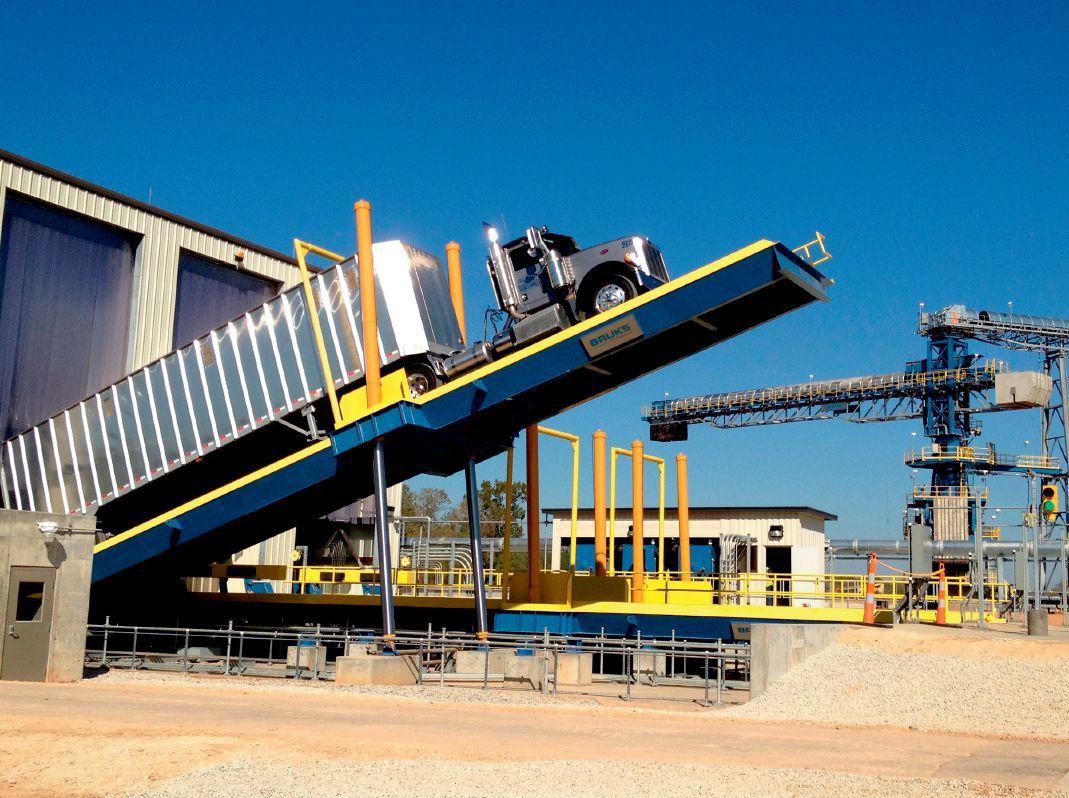
Airoflex Equipment has been supplying innovative engineering concepts for hydraulic truck dumpers/tippers since 1947. Airoflex products have been installed throughout the United States, Canada, Mexico, Central America, South America, and in the Middle and Far East for industries such as biomass, municipal solid waste, pulp and paper, energy generation, cogeneration, food processing, rendering, and recycling industries. www.airoflex.com
ANDRITZ
Andritz is the leading supplier of technologies, systems, and services relating to the equipment for the biomass pelleting industry. Andritz has the ability to manufacture and supply each and every key processing machine in the pellet production line. www.Andritz.com
BIOMASS ENERGY LAB
Biomass Energy Lab (BEL) specializes in solid biofuels testing. ISO 17025 Accredited for CEN/EN methods, BEL provides Analytical Certifications for export shipments of wood pellets and other solid biofuels to help meet contractual needs. Along with testing services, BEL also offers EN Plus Auditing & Consulting, and can assist with
EXHIBITORS
internal lab design/setup and the development of quality management systems. www.biomassenergylab.com
BRUKS ROCKWOOD
Bruks is a global leader in mechanical engineering and equipment supply for the bulk materials handling industries. Customer service and product performance are at the heart of its corporate culture; it provides specialized customer solutions, including the development of custom machines and systems. Its services include project engineering, technical support, start-up training and remote-monitoring/ servicing of machine functions. www.bruks.com
BRUNETTE MACHINERY COMPANY
Brunette Machinery Company, with its head office in Surrey, B.C. is an independently owned and operated company serving the North American Forest Industry since 1942. Brunette Machinery Company’s long history of manufacturing experience guarantees its customers an unsurpassed level of quality and leading edge technology built into every single one of Brunette Machinery Company’s innovative products. Brunette Machinery Company’s commitment to quality gives our customers an important advantage as they compete in an ever-changing global economy. www.brunettemc.com
CERTIFIED LABS
Certified is a leading manufacturer and supplier of maintenance products and services for industrial, commercial and institutional customers in more than 60 countries. To keep your equipment and facilities looking better, working better and lasting longer, you can rely on Certified.www.certifiedlabs.com
CPM GLOBAL BIOMASS GROUP
CPM has been a leader in biomass pelleting for over 20 years. With the formation of the Global Biomass Pelleting Group, we can now call on all of our resources worldwide to ensure that you receive the highest quality equipment and support worldwide. www.cpm.net
DANSONS
Dansons Inc. is the leader in the field of supplying specialty lubricants to the biofuel industry. Not only have we developed and supplied specialized lubricants to the pellet mill industry, we also provide technical support and expert advice on how to get maximum life out of wear components. www.dansons.com
FIKE CANADA INC.
Fike has over 65 years of field experience and a team of engineers, application specialists and combustion researchers delivering a complete line of products and innovative technologies to the explosion protection market. www.fike.com
IEA BIOENERGY/ IEA ENERGY TECHNOLOGY NETWORK
IEA Bioenergy is an organization set up in 1978 by the International Energy Agency (IEA) with the aim of improving cooperation and information exchange between countries that have national programs in bioenergy research, development and deployment. www.ieabioenergy.com
IEP TECHNOLOGIES
Since 1956, IEP Technologies has been dedicated to enhancing safety in process industries. We operate under a simple principle that every employee – yours and ours – has the right to work in a safe environment. We are also focused on protecting our customer’s operations – including property, equipment and business continuity – against the threat of devastating explosions. We do this by offering innovative solutions to meet our customers’ needs anywhere in the world. Then we back those solutions with the highest quality systems, parts and services to maximize the value of your IEP Technologies investment. www.ieptechnologies.com
KAHL GROUP
The five companies of the KAHL Group offer sophisticated solutions for process engineering, machine and plant construction as well as the erection of complete factories for many industries. Research, planning, and development
are essential functions of the companies. The most important machines and plant components are fabricated in the central factories at Reinbek near Hamburg and Ganderkesee near Bremen. So they are “made in Germany”. More than 700 motivated employees of the Group guarantee smooth and perfect service. www.akahl.de/en/
LMM
Law-Marot-Milpro (LMM) offers advanced solutions for the handling, storage and processing of bulk products.
The internal capacity of our group is based on a group of engineers with varied and complementary expertise. Our diversified skills enable us to meet your current needs while ensuring the future development of your business. Thanks to an international network of associates and partners, we are able to select the most suitable equipment to guarantee the achievement of your objectives whatever your sector of activity. www.lmm.info
PLAYER DESIGN INC.
The philosophy behind PDI is simple –design and supply state-of-the-art, reliable equipment to enable our customers to succeed in today’s manufacturing markets. By combining innovative engineering and practical experience, we have created a line of machinery that delivers substantial economic benefits, superior finished product quality, and some of the lowest emissions in the industry. www.playerdesign.net
PORT OF BELLEDUNE
Port of Belledune is a modern, yearround marine transport facility and deep-water point of access that is innovative in developing its services and facilities to the fullest. The Port has proven itself capable of handling any and all goods, offering flexible services, creative solutions and excellent rates. Additionally, the Port specializes in the handling of bulk and break-bulk cargoes and is the only existing point of export for wood pellets on the East Coast of Canada. www.portofbelledune.ca
PROCESSBARRON
ProcessBarron is a turnkey solutions provider specializing in air handling and materials handling equipment. ProcessBarron offers design, manufacture, installation, maintenance and repair for all these products and services. ProcessBarron is an industry leader thanks to its quality products, proven reliability and dedication to customer service. www. processbaron.com
SHW STORAGE & HANDLING SOLUTIONS
SHW-SHS expertise in the receiving, conveying, dosing and storage of bulk materials that are difficult to handle. The company offers advice, planning, project management, construction, production, installation and commissioning as a full-service partner. http://shw-shs.de/en/home.html
TSI
TSI designs and builds equipment for today’s highly automated plants in the Engineered Wood and Biomass Industries. TSI offers solutions for Dryer Islands, (Heat Energy, Drying and Emission Control) and Finishing lines. Designed with the customer needs in mind, the systems are customized for the specific applications, whether updating aging equipment, adding to an existing line or creating a new green-field production plant. www.tsi-inc.net
UZELAC INDUSTRIES
Uzelac Industries is a dynamic design-build manufacturing company base in Greendale, Wisconsin with rotary drying systems in operation worldwide. Uzelac Industries was originally comprised of two operating divisions: Industrial MetalFab Specialties and Duske Dry-
ing systems. These companies have over 40 years experience behind the custom design and fabrication of our exclusive systems. www.uzelacind.com
WELLONS
Wellons Canada, a member of the Wellons Group, is located in Surrey, B.C. Specializing in the design, manufacture and turnkey installation of biomass and gas fired thermal energy systems, and lumber drying kilns, Wellons has the unique in-house ability to offer its clients a total project solution from concept to completion.
www.wellons.ca
*Exhibitor list at press time.
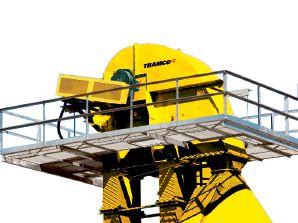
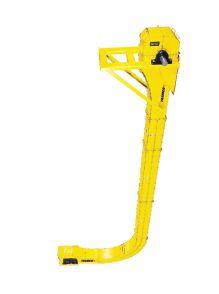
JETBELT ™
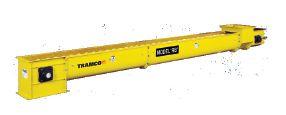
MODEL RB
Producing pellets
Canadian Biomass checks out some of the latest pelletizer technologies.
CPM
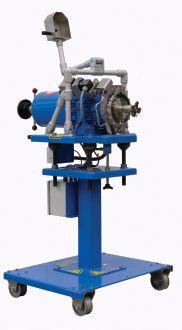
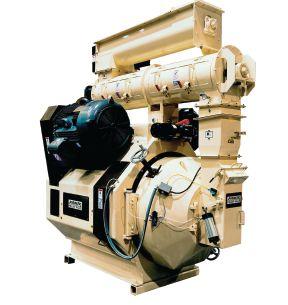
Produce wood and biomass pellets efficiently and economically with the CPM 7900 Series pellet mill. It’s the workhorse and go-to pellet mill for the most demanding biomass applications, built to operate 24 hours a day under tough running conditions. The 7900 Series features CPM’s standard gear drive for greater energy efficiency and less maintenance, making it the best value for wood and biomass pelleting, hands down. www.cpm.net
LAWSON MILLS
Lawson Mills Biomass Solutions Ltd of PE Canada offers a full range of turnkey biomass pelleting systems from 200 lb/hr up to 1 tonne per hour. They offer drying, grinding, pelleting and bagging solutions of all types of biomass
from wood waste to grasses and compost pelleting. The systems come with installation and training at the producer’s facility and can be custom built to suit a producer’s needs.
www.lawsonmills.com
GALA INDUSTRIES
Gala Industries, a Member of Maag, a Dover Company, offers an underwater pelletizing system for processing biopolymers or highly filled polymers. When applicable, applying the use of Gala’s patented i-Heat process aids drying pellets, reducing water contact by expediting the pellets to the centrifugal pellet dryer and taking advantage of the pellet temperature to help flash off latent moisture from the pellets as they are discharged from the dryer. www.gala-industries.com
PRODESA
Prodesa designs and provides comprehensive tailor-made solutions for the production of pellets. Prodesa covers all technological stages in the development of industrial plants such as design, manufacturing and supply under the concept of “Turnkey” or “EPC” projects. www.prodesa.net
BLISS INDUSTRIES
Bliss a leading manufacturer of biomass pelleting equipment for commercial and industrial applications. Founded in 1981, Bliss maintains a reputation of manufacturing efficient and reliable equipment with ease of operation and maintenance to provide lower operating costs and great performance for each end user. Bliss also manufactures an extensive line of hammermills and coolers for biomass size reduction and cooling. www.bliss-industries.com
ANDRITZ
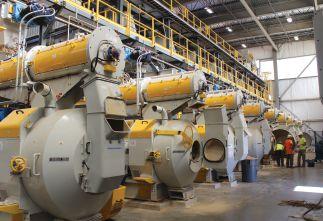
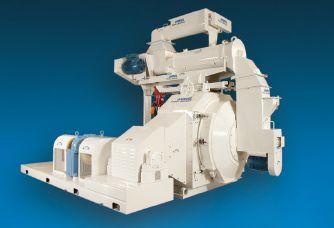
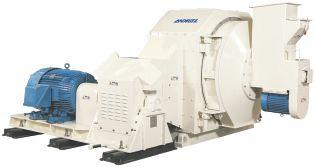
The ANDRITZ 26LM pellet mill is uniquely designed to provide maximum production at the industry’s lowest operating costs. This innovative, high-performance, high-efficiency pellet mill leads the Canadian market for biomass pelleting. Consistent with ANDRITZ’s rugged line of durable, reliable biomass pellet mills, the 26LM offers ease of maintenance as well as efficient control of pellet quality and energy consumption for pelleting operations.
www.andritz.com
There’s a saying that gets tossed around a lot here:
“It just runs.”
Our hammermills and pellet mills aren’t the prettiest. But they’re rock solid. And they run—year after year after year.
But “It just runs” isn’t just about our products.
It’s about our company, which literally spans centuries.
And it’s about our ongoing relationships with our customers—how we’ll always be there for you.
Give us a call, and find out just how CPM can run for you.
FECON INTRODUCES
EXCAVATOR ROTATING TREE SHEAR
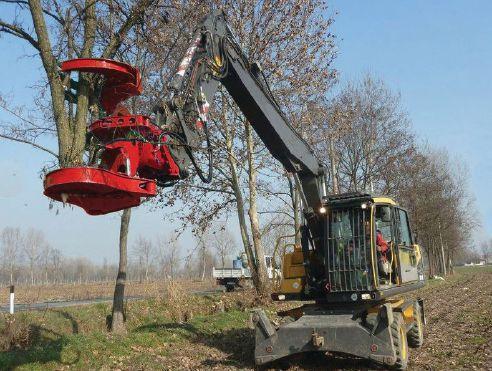
Fecon recently introduced the Fecon Rotating Shear, the FRS10. This excavator tree shear provides 360-degree rotation providing amazing range of motion. The rotation allows operators to save time and be more efficient with less repositioning of the excavator. The FRS provides much needed safety due to the shear being able to load chippers. The FRS10 is for 12- to 18-ton excavators and cuts up to 14” material. The FRS can be equipped with an accumulation arm to allow an operator to bunch smaller material. This Fecon Tough shear is constructed with Hardox in My Body. Be sure to learn about all the FRS models ranging from 5 to 35 tons. www.fecon.com
DUST CONTROL TECHNOLOGY CHANGES NAME TO BOSSTEK
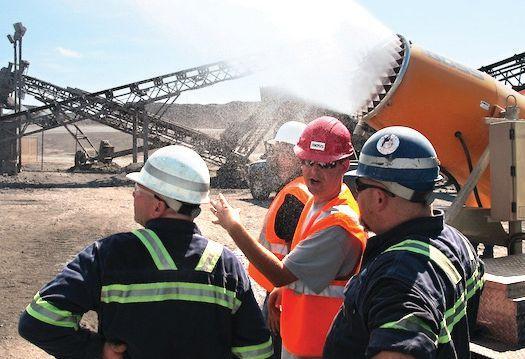
Dust Control Technology has changed its name to BossTek to better reflect all of the company’s successful product lines. These include the OdorBoss odour suppression technology, with its line of environmentally safe topical and airborne odour treatment agents, and the KoolBoss crowd cooling technology for large outdoor events. BossTek president Laura Stiverson explained that the company’s expansion into other aspects of industrial air quality has come as a result of repeated inquiries from businesses with unmet needs for solutions to common issues.
“Over time, we began to realize that we were not simply a supplier of dust suppression equipment, but rather a solutions provider with the expertise to address a much wider range of applications,” she said. “These new segments of our business are growing far beyond our initial expectations, and our updated company name more accurately reflects the firm’s commitment to the expanding needs of our customers.” www.bosstek.com
UZELAC APPOINTS NEW VICE-PRESIDENT AND GENERAL MANAGER
Uzelac Industries Inc. has appointed Mike Hobbs as vice-president and general manager. Uzelac is a leading manufacturer of design-build rotary drying systems headquartered in Greendale, Wisc.
Before joining Uzelac, Mike served as operations manager at Rockwell Automation. He began his career at Siemens, where he held engineering, project management, sales and
management roles. He later served as general manager at Avanti Wind Systems.
Hobbs graduated with honours from the Milwaukee School of Engineering, earning a bachelor degree in mechanical engineering technology.
He is a LEED-accredited professional and a registered Professional Engineer in the state of Wisconsin.
www.uzelacind.com
BANDIT EXPANDS SKID-STEER LOADER ATTACHMENTS
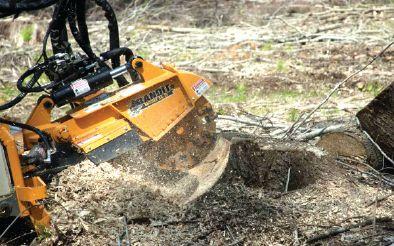
Bandit Industries, Inc. has expanded its line of skid-steer loader attachments to include the Model SA-25, a hydraulically powered stump grinder attachment that operates off a loader’s existing high flow hydraulic systems. The SA25 features a 24.5” diameter Revolution cutterwheel, the same size cutterwheel found on some of Bandit’s largest self-propelled stump grinders.
The Model SA-25 joins Bandit’s lineup of skid-steer loader attachments that includes the Bandit Stump Gun vertical stump grinder and the Model 60FM and Model 72FM forestry mulchers. www.banditchippers.com
JOHN DEERE UNVEILS SEVERE-DUTY PALLET FORKS
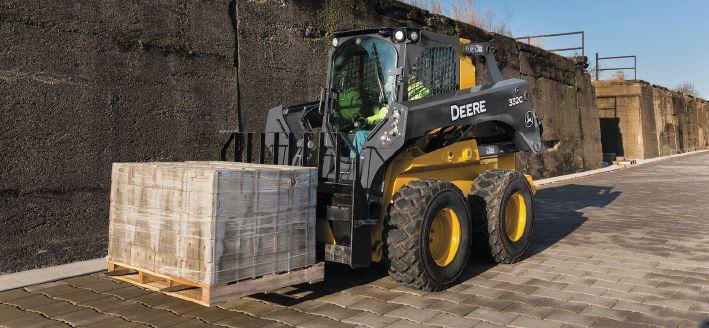
John Deere offers an option for material-handling jobs of every scale with the new severe-duty pallet forks, the latest additions to the ever-expanding lineup of Worksite Pro attachments. Two new pallet forks (PF45 and PF60) are optimized to work with John Deere G-Series skid steers as well as G- and E-Series compact track loaders (CTLs), along with another pallet fork that was specifically designed for use on K-Series compact wheel loaders with the skid steerstyle Quik-Tatch coupler.
All new pallet forks are also compatible with most competitive models. The severe-duty pallet forks for skid steers and CTLs are available in lengths of 48” and 60”, and they can be positioned in widths from 45” in 5” increments to 60” in 5.35” increments. They feature a walk-through backrest with a bolt-on option and unrestricted visibility to the fork tips.
Skid-resistant steps on both sides of the pallet fork frame also ease vehicle entrance and exit. With the universal, self-cleaning Quik-Tatch easy attachment system, the machine can easily add and remove the severe-duty pallet forks in seconds.
The new fork frame, which was designed for use on compact wheel loaders, offers improved visibility, increased capacity and better durability over the previous fork-frame design. It was specifically designed for use on a compact wheel loader with a parallel lift, and it will enable operators to load the far side of a trailer with ease. The tines are ITA class 3B rated and available in either 48” or 60”.
www.johndeere.com
ANDRITZ is one of the world’s leading suppliers of technologies, systems, and services relating to equipment for the biomass pelleting industry We offer single machines for the production of solid and liquid biofuel and waste pellets. We have the ability to manufacture and supply each and every key processing machine in the pellet production line.
ANDRITZ Feed & Biofuel A/S Europe, Asia, and South America: andritz-fb@andritz.com USA and Canada: andritz-fb us@andritz com
www.andritz.com/ft
Advancing bio-based solutions for a low-carbon economy
TPaul Lansbergen is a senior vice-president for Forest Products Association of Canada.
here is considerable talk in government circles of how Canada can improve its innovation performance. Earlier this spring, the federal government tabled its ‘Innovation’ budget. A key plank of this budget is moving forward with its committed investment in clusters and networks, which in the words of the government, is “intended to catalyze private sector dynamism, bring a critical mass of stakeholders together and connect their ideas to the marketplace.”
On innovation, the forest products industry is in the midst of a fundamental transformation to diversify its products and markets to create more value from its fibre streams; and bring to market more carbon-friendly materials and products.
Canada’s bioeconomy already has some 900 companies, sustains over two million jobs nationwide and generates over $300 billion in total annual revenue.
At the same time, Canada needs to address climate change and that means shifting to a low carbon economy. Canada’s forest products industry is already a leader in both areas and is working hard to advance bio-based solutions for a low carbon economy.
On climate change, Canada’s forest products industry has already reduced its GHG emissions by 66 per cent since 1990. Last year, FPAC raised the bar when it announced its ambitious 30 by 30 Climate Change Challenge where it pledged to cut 30 megatonnes of greenhouse gases a year by 2030, about 13 per cent of the federal government’s overall climate change target.
Seeing broader opportunity for Canada, FPAC has recruited partners like FPInnovations to develop a bioeconomy supercluster proposal. Not only is Canada rich in sustainable biomass including forestry, agriculture and other sources, it also has a myriad of developed industries along with stateof-the-art research and innovation facilities that can leverage the potential of industrial biotechnology. Canada’s bioeconomy already has some 900 companies, sustains over two million jobs nationwide and generates over $300 billion in total annual revenue.
The notion of (what we are affectionately calling) a Bio Design Super Cluster is a new paradigm in Canadian Innovation. Designed to maximize feedstock value from a social, economic, environmental and cultural perspective this is a non-linear approach to product development; a truly Canadian approach that is based on decarbonizing the consumer market through a whole value chain, circular economy approach. It would connect players along the value chain from biological feedstocks to specific bio-based market
applications, building on our current investments and successes in creating world bio-based technologies, products and markets. Such a cluster will provide outstanding momentum to further attract the best ideas, the brightest talent, the leading companies and smart capital.
Our vision is for Canada to be a global leader in the bio economy. Our mission will be to translate industrial biotechnology into tangible commercial outcomes throughout the Canadian economy.
By establishing a national Bio Design Super Cluster, Canada will send a very strong signal that it means to accelerate clean technology deployment and commercialization, throughout the country, and that this requires bold new thinking.
Designed as an inclusive nation-wide partnership, the Bio Design Super Cluster will connect and attract a wide range of industries and organizations from across the value chain, some of whom would otherwise remain unlikely partners. By leveraging our respective strengths, infrastructure and common goals, the super cluster will clearly accelerate knowledge transfer among mature companies, technology developers and end customers, while attracting international organizations in full support from participating research and innovation organizations and networks from across Canada. This is a Canadian super cluster. •
PLANNING YOUR NEXT PROJECT?
Bliss Industries has the experience combined with 21st century technologies for your size-reduction or pelleting needs. Call today!
Bliss Industries, LLC is a leading manufacturer of pelleting, cooling and size reduction equipment. Founded in 1981, Bliss Industries maintains a reputation of manufacturing the most efficient, reliable and well-built equipment in the industry.
Developed from a design concept proven worldwide, the range of Pioneer Pellet Mills continues to expand. Overall reliability, maximum efficiency, ease of operation and maintenance combine to provide lower operating costs to each owner. With the ability to provide a wide range of die sizes, die speeds and drive power, Bliss can more than meet your requirements for high quality at a reasonable cost.
Rotochopper is driven by customer focused innovation and continuous improvement, incorporating the latest technological advancements into our machines. The patented grind and color system remains the ONLY “PerfectinOnePass”® solution. It was the first and the best. Now it’s better.
Introducing Rotochopper’s 2nd generation patented grind and color system with superior one pass coverage and technical user-friendly improvements. Now the best is even better.
Contact us today to learn how Rotochopper’s 2nd generation grind and color technology can maximize the margins of your mulch operation.