The broiler breeding innovator. Market leader in research and development. Cutting-edge progress in performance, welfare and sustainability. Our innovations will strengthen your success. Let us show you at aviagen.com.
Visit Aviagen at IPPE booth C10629
by Brett Ruffell
New year, new learning goals
Happy New Year! Like many of you, once the holiday festivities are over I often consider two things for the months ahead – my next professional development goal and which activity on my bucket list I’m going to check off.
My training target for 2019 was to develop multimedia skills. You’ll soon see the fruits of that labour in the form of videos and podcasts.
As for my bucket list, for the umpteenth time in a row I planned to go whitewater rafting on the Ottawa River. Last summer, I finally followed through and, obviously, lived to tell the tale!
From an ag perspective, a reader recently told me about a unique learning opportunity for farmers. I thought I’d share the details, firstly, because it’s personal development season. Secondly, I was impressed with how it brings farmers from different industries across Canada together to support each other.
It’s called Canadian Total Excellence in Agricultural Management (CTEAM). Developed by the George Moore Centre 20 years ago, AgriFood Management Excellent (AME) took it over in 2013.
Far from being industry specific, students acquire business management skills that any farmer could apply. “It benefits everybody in
every industry because the business management skills are the same,” says AME principal Heather Broughton.
It includes four week-long modules, each of which is held in a different province. The first two modules focus on business strategy and finance. Module three covers human resource management and succession planning. The last module concentrates on policy, governance and time management.
Students – classes are capped at 25 – devote one day to touring different ag facilities, learning from other farmers and industry experts.
“What
didn’t have a good plan,” O’Rourke admits.
Fast-forward five years, O’Rourke now has a new broiler barn and 20,000 birds. She says CTEAM helped her family diversify. “What was most helpful was seeing how other people farm and expand,” she says, highlighting how one family whose barn they toured shared their experiences with succession planning.
With three staffers and also family who work at the farm seasonally, O’Rourke found the human resources module to be especially helpful, noting that neither she nor her husband had any prior training in the area.
They then spend the next four days in a classroom learning from instructors and each other. The course centres around a business plan that learners develop and perfect throughout the program and in follow-up sessions.
The working document is invaluable, says CTEAM grad Janet O’Rourke, a broiler, hog and cash crop farmer from Perth County, Ont. In 2015, just before she and her husband Kevin first expanded into broilers, they thought it was an ideal time to develop their business acumen. “We
The CTEAM alum used her newly acquired know ledge to develop job descrip tions and evaluations. She also created a procedures manual in collaboration with her staff. “I had the ac tual people doing that job write the procedures for me,” she explains.
The business plan is still a work in progress that she continues to refine. “Because there’s follow up there’s good accountability,” she says. Looking back, the producer is adamant that the intensive schedule and $8,500 tuition fee was worth it.
Now, Broughton reveals that she’s currently running the numbers to provide concrete evidence of CTEAM’s return on investment. She ends with some wise words to start off 2020. “We want people to start thinking about investing in themselves.”
editor or the publisher. No liability is assumed for errors or omissions. All advertising is subject to the publisher’s approval. Such approval does not imply any endorsement of the products or services advertised. Publisher reserves the right to refuse advertising that does not meet the standards of the publication.
Glass-Pac Canada
St. Jacobs, Ontario
Tel: (519) 664.3811
Fax: (519) 664.3003
Carstairs, Alberta
Tel: (403) 337-3767
Fax: (403) 337-3590
With more than 70 years of experience and more than 3 billion birds around the world drinking from a Lubing system on a daily basis , LUBING has established a rock solid position as a global leader developing innovative products that work!
No matter if you are looking for a drinking system for Turkeys, Broilers Breeders, Layers or if you need an Egg Conveyor System to move eggs, we know your equipment and your birds will definitely perform better with LUBING!
Cobb recently announced that the Cobb500 broiler is now certified kosher by the Orthodox Union (OU). The Cobb500 is the first broiler to receive the OU Kosher certification and be approved by Badatz Jerusalem. The company is now putting additional marketing effort behind the announcement to maximize exposure to kosher customers..
Subway’s lawsuit against CBC over chicken claims dismissed
The Ontario Superior Court has thrown out a $210-million defamation lawsuit launched by Subway against CBC, which had reported the sandwich chain may have been selling some poultry products that were only 50 per cent chicken DNA. The Marketplace investigation met the “‘public interest’ test,” was an example of investigative journalism, and therefore is protected under Section 137.1(3) of the Ontario Courts of Justice Act, Justice E.M. Morgan said in his ruling.
Ontario introduces bill to protect farmers from animal rights activists
In December, Ontario introduced new legislation that would create so-called “animal protection zones” with increased fines for trespassing – a move applauded by farmers but roundly criticized by the animal rights activists who say it targets them.
Agriculture minister Ernie Hardeman said the bill – dubbed the Security from Trespass and Animal Safety Act –would hike fines for trespassing on farms and food-processing facilities and make it illegal to obstruct trucks carrying farm animals..
KFC Canada partnered with alternative protein company Lightlife on its plant-based fried chicken products.
KFC Canada introduces plant-based fried chicken
in December, KFC Canada announced a new alternative protein offering, KFC Plant-Based Fried Chicken.
The company’s Plant-Based Fried Chicken Sandwich and Popcorn Chicken debuted during a one-restaurant, one-day test in November.
The company partnered with Lightlife, a plant-based protein brand, to create a signature Plant-Based Fried Chicken Sandwich and Popcorn Chicken.
KFC Canada’s Plant-Based Fried Chicken debuted during a limited, one-restaurant, one-day test on Wednesday, November 27 in Mississauga, Ont.
“We believe the Colonel’s famous finger lickin’ good taste should have no boundaries,” says Sam Redman, chief marketing officer, KFC Canada.
“So, we’ve created several craveable plant-based options for Canadian’s looking for a meat-free meal,” she continues.
During the limited test release, the Plant-Based Fried Chicken sandwich (available in regular or spicy) was available for $6.99 or in
a meal starting at only $8.99, and the Plant-Based Fried Popcorn Chicken bucket was available starting at $3.99.
What’s more, customers could try both the plant-based sandwich and popcorn chicken options by selecting a meal for one option for $10.99.
Developed in response to Canadian’s evolving tastes and preferences for plant-based proteins, KFC’s Plant-Based Fried Chicken is made in Canada by Lightlife, a leading plant-based protein brand whose broad portfolio of products is available in retailers such as Metro, Loblaws, Sobeys, Longo’s and Federated Coop.
“This is a landmark moment for Lightlife. We’re proud to join forces with KFC to bring Canadians a plant-based chicken with incredible taste,” says Dan Curtin, president and CEO of Greenleaf Foods, SPC, the owner of Lightlife.
5 questions with CPEPC’s past president and CEO Robin Horel
Robin Horel grew up in Saskatoon and was introduced to Canada’s poultry industry in an unexpected way. Among other positions, he has just finished 16 years as president and CEO of the Canadian Poultry and Egg Processors Council (CPEPC). We asked him five questions.
How did you get into the poultry industry?
I had planned to be a teacher. But, in second year university I quit to travel in Europe. When I got back, I got a job at Canada Packers Poultry, working in the plant and driving a truck. Awhile later I took an office job there, followed by a temporary stint as a salesman before going back to school. It turned out I liked sales. I was promoted to sales manager and then general manager by the time I was 30. I spent 27 years with the firm (which eventually became Maple Leaf Foods) and for the last six I represented Maple Leaf on the CPEPC board. In 2003, I became CPEPC’s fourth president and CEO.
What are your proudest career achievements?
Being selected as president and CEO of CPEPC. It was a great job and a real privilege to represent the sector to government and industry both domestically and abroad. I’m proud of the way my part of the industry pulled together, notwithstanding that CPEPC members are competitors, to supply product from eastern Canada to B.C. in 2004 in response to the avian influenza crisis. I’m also proud of my members for working to declare food safety and animal welfare pre-competitive, and that
Canada (and CPEPC) is a founding member of the International Poultry Council (IPC). The CPEPC board has enabled me to continue to represent Canada at IPC for a while post-retirement, which allowed me to be elected the new IPC president.
What are your thoughts on the state of the poultry industry? It is easy to get overwhelmed by our detractors. We have to keep telling our story, the good news regarding animal welfare and environmental impact and that poultry is a healthy, affordable and sustainable protein. Despite various sources of opposition, our industry continues to grow. This is particularly true for eggs and chicken, but even turkey (when measured against total meat consumption, which is decreasing) is holding its own.
What advice do you offer your successor?
I’ve worked with Jean-Michel Laurin for the last few months of transition, and he likely got tired of all my advice. But overall, I encourage him to stay close to our members. They understand the business, the issues and what is most important to concentrate on.
What are some of your retirement plans?
We are scheduled to go to Maui for a month early in 2020. I have never been able to take more than two weeks’ vacation in a row before. It will be great to escape the cold and snow for a while, but I will miss a bunch of curling games. My wife and I will also travel to Bordeaux, France in April for the IPC Conference.
and Egg Processors Council for 16 years.
Coming Events
JANUARY
JAN. 15
Regional Poultry Conference, St. Isidore, Ont. poultryindustrycouncil.ca
JAN. 20
PIC’s Science in the Pub, Guelph, Ont. poultryindustrycouncil.ca
JAN. 28-30
International Production and Processing Expo, Atlanta, Ga. ippexpo.com
JAN. 28-30
FarmTech, Edmonton, Alta. farmtechconference.com
JAN. 29-30
Precision Agriculture Conference and Ag Technology Showcase, London, Ont. farms.com
Robin Horel was president and CEO of the Canadian Poultry
LRIC Update
By Lilian Schaer, Livestock Research Innovation Corporation
Is gene editing poultry’s next frontier?
Five years ago, the Food and Drug Administration in the U.S. approved a transgenic chicken.
It won’t end up on anyone’s dinner plate though; rather, the bird was genetically engineered so that its eggs would contain an enzyme that can treat a rare metabolic disorder in humans.
Today, genomics, DNA markers and new gene editing technologies like CRISPR-Cas9 are opening up new possibilities for genetic improvements in poultry.
Changes in DNA code, which is what gene editing does, happen naturally over time, resulting in species diversity. Breeders have long used selection (“best begets best”) to make genetic improvements, but it’s a very slow process.
Modern gene editing, by
comparison, allows genetic material to be added, removed or altered at particular locations in the genome to create very precise changes in an organism while improving both the speed and accuracy of breeding.
Research by Mark Tizard of the Australian Animal Health Laboratory at the Commonwealth Scientific and Industrial Research Organization (CSIRO) has recently looked at the potential benefits of this technology for poultry farming.
Selective breeding has led to dramatic changes in production, efficiency and product quality of both meat and eggs, but traits related to disease and welfare outcomes have been harder to alter.
According to Tizard’s study, these are two areas that influence both production and public perception of the industry and its products – and
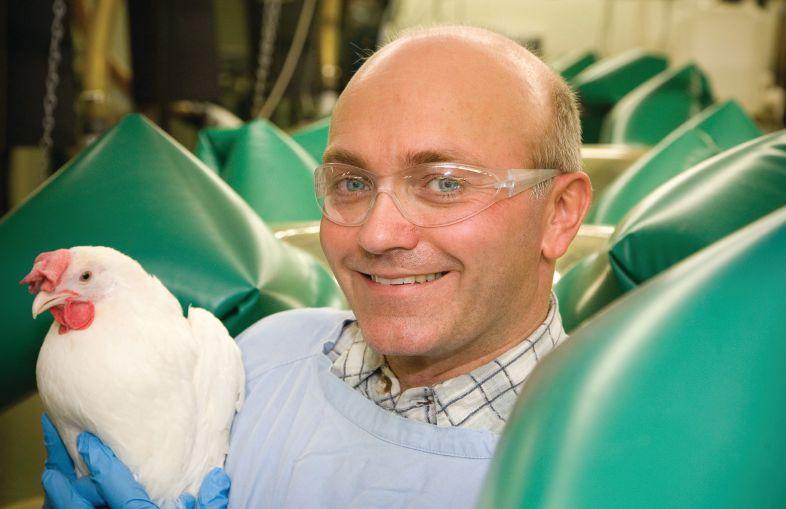
Mark Tizard of the Australian Animal Health Laboratory has recently looked at the potential benefits of genetic editing for poultry farming.
gene editing provides the potential for making changes in these areas.
Key target applications include strengthening birds’ disease resistance and early sex detection of eggs destined for the layer sector. Other applications that are more directly related to human health address the allergenicity of eggs and improving eggs as a substrate for vaccine production.
Work on all of these is underway in some capacity to date. Scientists at the Roslin Institute at the University of Edinburgh, for example, are working on chickens with complete resistance to avian
influenza by making gene edits that affect proteins essential for the flu virus to thrive.
This could prevent the crossing of influenza virus from wild birds into first poultry and then, ultimately, humans – addressing a major global concern around the health catastrophe potential of a human flu pandemic stemming from birds.
Another way to protect humans from influenza is through vaccination, but it can be hard to produce enough vaccine – which is grown in eggs – to meet demand. Up to two eggs are needed for a single dose of vaccine, so a team at CSIRO is using gene editing to produce a premium, high yielding egg that would increase vaccine growth tenfold. That dozen eggs that produces six doses of vaccine today would yield 60 doses!
The World Allergy Organization counts eggs among the leading food allergens, particularly in children. Creating allergen-free eggs would address this problem, which is another one of the projects the CSIRO lab is currently working on.
According to Tizard, one of the proteins in egg white, ovomucoid, is the editing target of their work. That’s because it’s the most allergenic of the egg white proteins and has no clear role to play in fertility, egg formation or nutritional value of table eggs, so non-allergenic eggs would be expected to be fertile and fully nutritious.
Livestock Research Innovation Corporation (LRIC) fosters research collaboration and drives innovation in the livestock and poultry industry. Visit livestockresearch.ca for more information or follow @LivestockInnov on Twitter.
cobb-vantress.com
Pest Control
By Alice Sinia
Ratting out rodents
Rodents can easily ruffle feathers in any poultry farm. These varmints not only disturb and agitate fowl but can also cause expensive damage to the property and transmit harmful diseases to birds and humans. Rodents can quickly become a nuisance to any poultry farming facility, so catching a rodent problem early on will help prevent a larger population from wreaking havoc.
Like humans, rodents seek shelter indoors as temperatures drop in the winter months, and as food becomes scarce outdoors, they seek food and protection in man-made structures. To protect facilities from turning into rodents’ next nesting spot, it is important to shield any space from these pests before they settle in for the winter.
Understanding how to identify rodents’ entryways and harbourage points – and eliminating other conditions that attract them – can help prevent rats and mice from entering a facility.
Structural deficiencies
Rodents do not need much room to slip inside undetected. So, it is important to pay close attention to any structural deficiencies that may allow these pests to sneak in.
Rats can fit through holes the size of a quarter, while mice are able to fit through gaps as small as a dime. As you inspect facilities and building exteriors for pest activity, keep an eye out for any cracks, gaps and crevices that can help rodents escape the cold.
Wear-and-tear openings around foundations, utility lines, vents, roof vents and walls provide major entry points for rodents. Landscaping may also allow rodents an easier entrance into the building. Overgrown tree branches and shrubs provide a bridge onto walls and rooftops, so be sure to trim foliage back away from the building as well.
Installing a gravel barrier can also help
Alice Sinia is quality assurance manager – regulatory/lab services for Orkin Canada. She focuses on government regulations pertaining to the pest control industry. For more information, visit orkincanada.com.
When it comes to fighting off rodent populations this winter, a proactive, preventive approach to pest management is essential.
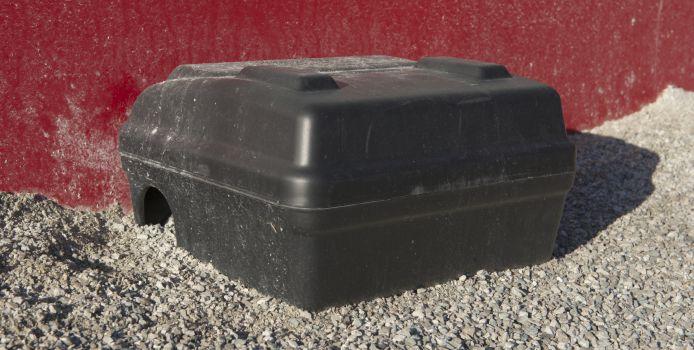
prevent rodents from reaching building exteriors because the gravel eliminates burrowing grounds and shelter provided by branches and shrubbery. Experts advise having this barrier be at least 60 cm wide to optimize its effectiveness in preventing rodent activity.
Rodent attractors
In addition to munching on and hiding in any foliage around buildings, rodents are known to feast on spilled grains from feed bins. Inspect feeders for any breaks or cracks that allow mice and rats an all-access pass to their next meal. Replacing any damaged bins can discourage these pests from encroaching on the facility.
Birds’ perches and coops provide rodents with plenty of shelter that allows them to go undetected for a prolonged period of time. Old equipment, machinery and other covered, sheltered areas can also act as the ideal spot for a rodent to burrow.
Check under equipment for any litter that can prevent pests from being discovered and monitor cluttered areas that could harbour rodents. Water is also a strong attractor and provides nesting re -
sources for rodents, so be sure to keep areas dry and remove standing water areas.
Heating lamps are often used to warm up fowl while they are roosting in their perches. While this heat is necessary to keep birds safe and comfortable, it can also attract rodents attempting to escape winter weather.
Pay close attention to areas where heaters or lamps are present and keep an eye out for signs of a potential rodent infestation to identify areas where additional monitoring is needed. These key indicators include droppings and urine stains, grease marks along baseboards and gnaw marks on wiring, walls, feed containers and other materials.
Rodent risks
Rodents are known to carry and transmit a variety of diseases, viruses and other illnesses that they can transmit to humans and poultry alike. As mice and rats roam around facilities, they leave behind droppings, urine and blood that can contaminate areas on the property.
To limit birds’ and employees’ exposure to these rodent souvenirs, implement a facility maintenance schedule to remove and sanitize any rodent remnants that could infect the facility.
Rodent-borne illnesses aren’t the only contaminants rodents leave behind. These pests can also bring other parasitic
pests like mites and fleas into the building. Mites and fleas, while small in size, tend to hitchhike into buildings on rodents and can spread to people and poultry, creating an issue for the ecosystem at large.
In addition to the hazards these pests can present to humans – like mild skin irritation, frequent itching and bacterial infections – they are even more detrimental to bird populations. Mites can cause birds of all kinds to be restless and anemic as well as suffer sever weight and feather loss.
Plundering packaging
Rodents have large incisors that are used to chew through a variety of materials, including cardboard, wood, concrete and even some metal. With such strong teeth, packages and boxes do not stand a chance against hungry rodents. Proper package storage is essential to preventing mice and rats from contaminating products like bird feed.
To properly store incoming shipments, keep these top tips in mind:
• Inspect shipments before bringing them inside. Rodents are able to travel inside trucks and other transportation
READER QUESTION:
Mite treatment for free-range flock
Q. We could really use some advice on eradicating mites from our flock, or at the very least, controlling them over the long term. We have been using sulphur powder (dusted and ingested), Eprinex/Ivermectin as a spot-on, as well as regularly spraying the housing with pyrethrins. We have switched from litter to sand as well. However, though the mites do seem to disappear for a month or so, they always come back. We have had more than 10 per cent losses in the flock due to anemia caused by this problem over the last year, as well as increased diarrhea and respiratory illness this winter, which we think is due to a decrease in the birds’ immune function because of the stress and anemia caused by the mites. We have seen evidence of northern fowl mites, red mites, and possibly feather lice. What treatment do you recomment for free-range barns dealing with this terrible problem?
vehicles from one facility to the next. It is important to inspect packages for signs of pest activity before unloading the shipment’s contents into the facility. This can help prevent pests from spreading into additional spaces inside.
• Elevate boxes and packages. Once products are brought inside, store any packages on pallets or shelving to limit rodents’ access. This will make it more difficult for them to access the contents inside any packaging.
A. Controlling bird mites and other poultry parasites can be very challenging, and you need an integrated approach. Focus on treating the facility and on treating the birds with the following steps:
Treatment:
• If mites are detected, it is important that treatment be performed right away, as mite populations can establish and grow quickly. Start by emptying the holding or rearing room and working with a pest management provider to treat the area with a residual insecticide. Be sure to focus on cracks and crevices, cages, baseboards and resting poles, as these are sites where mites commonly hide.
• Next, treat the affected birds directly with dust or an approved insecticide product. Consult your pest management provider before treatment and follow product labels exactly. Mites can be hidden or concealed in the birds’ feathers. So, be thorough when applying the
• Implement a “first in, first out” procedure. When packages and shipments remain in one location for a prolonged period of time, rodents have a greater opportunity to infest and chew away at a business’s profits. By moving or using the oldest products first, rodents will have less time to infiltrate packages. When it comes to fighting off rodent populations this winter, a proactive, preventive approach to pest management is essential.
treatment to ensure it penetrates these areas for maximum effectiveness. Overall, it is best to use a combination of liquid application, dust and ingested medication. These should all be coordinated in a timely and consistent manner for maximum efficiency. Contact a veterinarian to coordinate ingested medication as well.
Ongoing control:
• Often times, mites can hide in the birds’ feathers, so start by thoroughly inspecting all birds that come into your facility.
• Practice good, consistent sanitation. Remember, if there is no mite activity during the growing season, there will be no population growth later on. So, it’s best practice to have a preventive strategy in place for treating potential harbourage sites.
• In most cases, wild birds are the source of mite infestations and re-infestation. So, establish an ongoing bird control program to control nuisance populations.
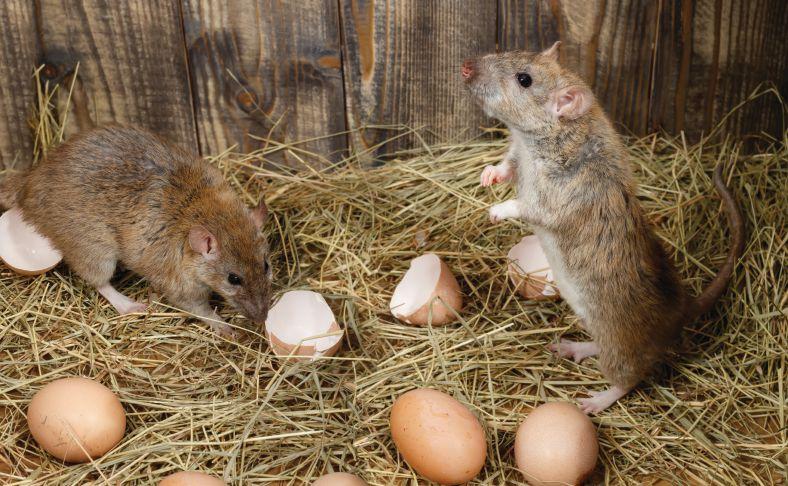
Rodents are known to carry and transmit a variety of diseases, viruses and other illnesses that they can transmit to humans and poultry alike.
Barn Management
Preventing invasions
Experts share tips for protecting your farm from activist trespassers.
By Mark Cardwell
Ontario agricultural minister Ernie Hardeman knows how tough the farming business is. That’s why he was happy to propose legislation in early December that aims to alleviate growing farmer angst over farm invasions by animal welfare activists.
“There is an urgency to act,” Hardeman, a former feed mill owner and veteran Conservative MPP from rural Ontario, told Canadian Poultry just minutes after he tabled the Security from Trespass and Protecting Food Safety Act at Queen’s Park on December 2. “I’ve heard from farmers who no longer feel safe in their own homes.”
The proposed Ontario law includes fines of up to $25,000 for trespassing on farms and food processing facilities. It also contains measures to enhance public, animal and food safety.
It is similar to – but not as punitive as – Alberta’s Bill 27. Passed a week earlier, the new Albertan law brings a 100-fold increase in the maximum fine for trespassing to $200,000 for individuals and corporations, and
possible jail time.
“People have the right to gather but they don’t have the right to do it on private property,” says the 72-year-old Hardeman, who also served as agriculture minister under former Ontario Premier Mike Harris. “They are putting people and animals at risk.”
Series of invasions
The stricter penalties are a legislative response to the spate of invasions of Canadian poultry and livestock operations that have made headlines in Canada over the past year.
The most recent incident occurred on Labour Day. That’s when several dozen animal rights activists from across Canada and as far away as New York City stormed a turkey barn near Fort MacLeod, Alta. In April, the same informally organized group occupied a hog barn in B.C. to protest the killing of animals for food.
The protesters claimed the 30,000 birds in the Hutterite-owned Alberta barn were being kept in inhumane conditions. Their five-hour siege ended peacefully thanks to the calming efforts of farm manager Mark Tschetter, who gave the protesters a tour of his facility.
“We tried to deal with them in a nice manner because it was very agitating,” Tschetter told reporters that day. “To see people come off the highway into your farm – I mean, I won’t do it and I don’t expect other people to do it.”
The executive director of Alberta Turkey Producers applauded
both the laying of charges against four of the protestors – albeit two months after the incident – and the advent of Bill 27. “We respect an individual’s right to make moral and dietary choices,” Cara Prout says. “But these individuals broke the law, disrupted a farm business and put biosecurity and animal health at risk in the name of their ideology.”
“We’re glad to see governments take measures to protect Canadian farmers from forced interference into their lives and workplaces,” adds Lisa Bishop-Spencer, director, brand and communications with Chicken Farmers of Canada.
Preventitive measures
Beyond beefed-up trespassing laws, Bishop-Spencer says there are individual actions poultry producers can take to help prevent or deal with a militant action like a farm invasion.
They include enforcing a zero-tolerance policy towards animal abuse (an issue that has both fueled and directed protests at poultry operations), being more selective in the hiring process and keeping a close eye on traffic in and out of barns.
Bishop-Spencer also encourages farmers to actively communicate with both employees and the surrounding community, including emergency services and law enforcement. “Farmers are trusted members of their communities and are a safe source of food,” Bishop-Spencer says. “But they need to tell their story and explain and show to people just what it is
corporations, and includes possible jail time.
Alberta’s recently passed Bill 27 hikes the maximum fine for trespassing to $200,000 for individuals and
they do.”
Legal and security experts warn, however, that increased fines and best-practice farm management can’t and won’t deter the most determined militants in today’s online, social media-driven world.
“Young people now live in the echo chamber of the Internet,” says Kurtis Andrews, an Ottawa lawyer who specializes in legal services for farmers and rural residents – though issues involving the activities of animal rights activists are now his main area of practice. “Some of them really buy into these causes. It’s like a religion and they believe their actions are justified even if they’re illegal.”
According to Andrews, the face and tactics of animal rights groups
have changed in recent years. “It used to be multinational groups like Mercy for Animals or Last Chance for Animals running sophisticated undercover operations with members posing as farm employees to film images they could put on the Internet,” says Andrews, current vice-chair of Ontario’s Normal Farm Practices Protection Board.
“But now you’ve got groups like Meat the Victims and At War for Animals Niagara that operate on social media and organize vigils, disruptions and attacks on sales barns, abattoirs, transport trailers and farms.”
He says farm invasions are particularly dangerous because they put both people and animals at
risk. “It can result in a serious escalation of conflict between property owners and trespassers,” says Andrews, who was raised on a family farm near Toronto that grew and sold vegetables and once had a petting zoo – an attraction he would today advise his parents not to have because it could attract unwanted atten tion from activists and others.
“And having activists from another part of the country or even another area of the world entering poultry and livestock barns creates a huge biosecurity risk. Food safety is one thing –but what about bird flu?”
Andrews adds that police and Crown prosecutors have been re luctant to arrest and prosecute
Quick tips for protecting your farm from trespassers
1.
Secure your barn and make it as uninviting as possible to activists.
2. Screen employees carefully to weed out undercover activists or potential animal abusers.
3. Inform and monitor employees to ensure humane treatment of animals.
4. Communicate with local groups, including law enforcement, to ensure understanding and transparency of your operation.
5 Make and communicate a plan on what to do if and when your farm is
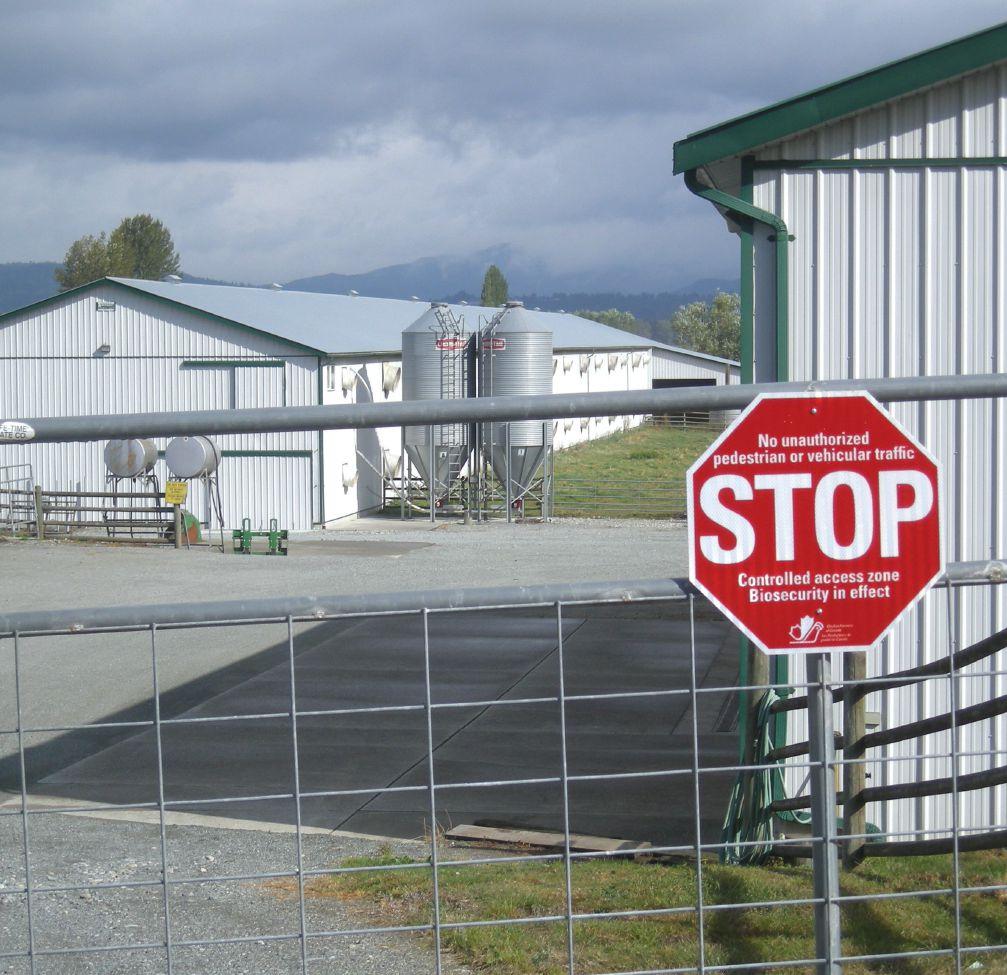
Make your barn look uninviting to activists scouting for places to target with things such as fencing and signage and keep your doors locked.
Barn Management
activists. He hopes that attitude will change now that governments seem to be taking the issue more seriously.
In addition to better legal enforcement, security expert Jim Rovers says farmers – especially those located near big cities – can help the situation by making their farms harder targets for inva -
sion-minded activists.
“Modern steel barns are imposing structures, but not if doors or gates are left open and there is easy access to the site,” says Rovers, vice president of AFIMAC Canada, an international risk management and site security company. “You need to keep doors locked and have signage and fencing that
“Some of them really buy into these causes. It’s like a religion and they believe their actions are justified even if they’re illegal.”
make things secure – and that make them look secure to somebody driving around scouting for easy and inviting places to attack.”
Rovers also recommends farmers develop toolkits and train family and employees on what to do and how to act if and when a farm invasion occurs. “Farms are easily breeched and overrun and chaos quickly ensues,” says Rovers, who gave a presentation entitled “Are you a target for activists?” to a packed house at the Poultry Industry Services Workshop in Banff, Alta., in October.
“You need to have a contingency plan in place so that you and your employees know how to talk to protesters and how to contact and deal with police.”
You’re invested in your business. So are we.
A dream is just the start. It needs vision to grow, dedication to thrive and partners working together to make it happen. As the only lender 100% invested in Canadian agriculture and food, we can help. Together we’ll find opportunities and help you grow through our networks and expertise.
Let’s get to work | fcc.ca
Kurtis Andrews is an Ottawa-based lawyer who spends most of his time on issues involving the activities of animal rights activists.
Tamara Carter Co-founder
Carter Cattle Company Ltd. Lacadena, SK
National poultry health update
An overview of the current disease landscape in an evolving industry.
By Treena Hein
It’s time once again for Canadian Poultry’s annual national disease update. For this we turn to presentations given at the recent Poultry Service Industry Workshop in Banff, Alta. In October, Dr. Frank Marshall of Marshall Swine and Poultry in Camrose, Alta., presented a western overview and Dr. Jess Walkey of Joyce Veterinary Services in Hillsburgh, Ont., delivered the eastern update. They combined their personal observations with information from other veterinarians and colleagues in the industry.
In their reports, Marshall and Walkey outlined what’s stabilized, what’s sprung up and what will likely be the biggest issues for each bird type in 2020. This comes as the industry continues to phase out health-protecting antibiotics in broilers while phasing in alternative housing systems in layers. Disease threats are particularly important in broilers, as the growth of raised without antibiotics (RWA) production forces industry stakeholders to search for good alternatives to antibiotics and adjust production practices. Here is a summary of their reports, with added commentary.
Broilers
In Atlantic Canada, Quebec and Ontario, Walkey reports disease threats in 2019 to be colibacillosis, coccidiosis, reovirus, inclusion body hepatitis (IBH) and infectious bursal disease (IBD). In Atlantic Canada,
there were also some leg issues, woody breast and salmonellosis this year in broilers. In Quebec and Ontario, other recent diseases in some broiler flocks included infectious bronchitis virus (IBV), necrotic enteritis (NE) and E. cecorum.
IBV continued to be a challenge throughout the summer months in Ontario, with the Delmarva (DMV) strain being the most commonly serotyped in both Ontario and Quebec. E. coli was the most common pathogen isolated across eastern Ontario, causing early chick mortality (omphalitis, yolk sacculitis), purulent arthritis, pericarditis, perihepatitis and air sacculitis.
Walkey notes that Ontario is seeing a significant increase in cases of proventriculitis, proventricular ductal dilation and pendulous
crops in broilers. These pathologies can cause feed regurgitation, lower feed efficiency, increased condemnations, immunosuppression and spikes in mortality.
While the cause is unconfirmed, experts suspect transmissible viral proventriculitis (TVP, caused by the chicken proventricular necrosis virus) in some of these cases. Walkey reports that the Animal Health Lab at the University of Guelph isolated TVP in three cases earlier this year. Further testing is required to determine the significance and prevalence of TVP in eastern Canada flocks.
Across the broiler industry in Canada’s western provinces, Marshall notes issues with chick quality. This has caused him and others to question whether high rates of first-week mortality might become the
Issues with chick and poult quality have experts wondering if early mortality will become the new norm.
new norm. Broiler chicks from B.C. to Manitoba are suffering from omphalitis, yolk sac infection (typically involving coli pathotypes) and dehydration.
“There were also some cases of ascites still present, especially in the spring, but reduced compared to the years before,” Marshall reports. “NE is a factor from 17 to 28 days, with and without coccidiosis in RWA systems and with use of antibiotics.”
In both conventional and RWA flocks as well as small flocks, Marshall adds, there is some IBH and reovirus “still smolder ing” in western Canada with large mortalities in Manitoba. That said, overall these diseases have decreased compared to years past. There was also some broiler mortality in western Canada due to culling for welfare reasons and stunting. Other broiler diseases seen this year in the west include colibacillosis, E. coli pathotypes, pericarditis, polyserositis and air-sacculitis and woody breast in some Alberta flocks.
Broiler
breeders
In Atlantic Canada, Quebec and Ontario, coccidiosis, Staphylococcus, E. cecorum and salmonellosis were present this year, with some infectious laryngotracheitis (ILT) in Quebec and colibacillosis, IBV and NE in Ontario. In the west, some omphalitis and
at disease issues across Canada
• Early chick mortality is a serious issue in broilers and turkeys.
• With the growth of RWA broiler production, the search for good alternatives continues but husbandry is very important.
• Turkey lameness and blackhead problems persist.
• With layers, ILT is a concern in backyard flocks across the west (also present in some commercial flocks). Presentations are now being given for backyard flock owners.
• Proper use and storage of vaccines is important.
breeders, as well as colibacillosis and cocci-vaccine failure, resulting in staph arthritis/osteomyelitis. There are also ongoing recent infections of ILT in B.C., as well as some salmonellosis and intussusception in B.C. and Alberta.
Turkeys
Some colibacillosis, histomoniasis (blackhead) and Salinomycin toxicity was observed this year in Maritimes turkey flocks. In Quebec and Ontario, there was also colibacillosis, coccidiosis, salmonellosis and NE. Across all western provinces, as with broilers in 2019, there were high first-week mortality rates in turkey flocks due to omphalitis, yolk sac infections, ascites, dehydration and brooding management struggles.
Some cases of NE with and without coccidiosis, aspergillosis mycotic pneumonia and colibacillosis were present as well. “There was also some lameness due to short shanks and chondrodystrophy, which could progress into tibial dyschondroplasia and Cowboy-legs,” Marshall says. “Blackhead was present in commercial flocks with dirt floors and also in some small flocks in B.C.”
Layers
“Some layer flocks in Atlantic Canada experienced mycotoxicosis, fatty liver and IBV,” Walkey says. “IBV was also present in Quebec and Ontario, as well as colibacillosis, Staphylococcus, coccidiosis and Mycoplasma synoviae.”
There was also some fatty liver hemor-
rhagic syndrome and cannibalism in layer flocks across the west. ILT is a concern in backyard flocks across all the western provinces, Marshall says, and is also present to some extent in commercial flocks in B.C., similar to last year’s rates. “It’s now standard to use a tissue culture origin (TCO) vaccine, administered as an eye drop to each chicken,” Marshall says.
“Chick embryo origin (CEO) vaccine is strongly not recommended because this vaccine virus can revert to virulence and cause severe disease in vaccinated and unvaccinated birds, and is believed to be responsible for a
lot of the outbreaks of ILT in commercial flocks in B.C. It’s been a historical problem in the Fraser Valley, where there is intensive poultry production. If it’s been diagnosed in a backyard flock, the flock must be quarantined, vaccinated and monitored.”
Indeed, growing numbers of small layer flocks are leading to challenges for disease control across western Canada, he says. “Owners of these flocks used to get antibiotics to treat whatever they thought their flocks were suffering from, but things have changed with the requirement for them to have a vet-client relationship like commercial producers do,” he
explains. “As mentioned, ILT is endemic and small flock owners also don’t tend to vaccinate for Marek’s disease.”
Marshall adds that the commercial poultry industry has a lot of checks and balances in place to ensure food safety but some people who want backyard flocks don’t perceive this. They think their own backyard flock is safer. “So, there is education to do,” Marshall explains, “but there will always be some backyard flocks, and my practice colleague Dr. Teryn Girard is doing workshops for small flock owners with Dr. Frank Robinson to help them improve husbandry and prevent disease.”
Walkey’s view, “it’s critical for the industry to work synergistically to ensure bird health, food safety, production and profitability do not suffer. This includes a targeted approach to proactive medicine, increasing management awareness and expanding our toolbox with alternative products to be used both as prevention and treatment.”
Proper storage and use of vaccines
Marshall notes that where there are industry standards for vaccination programs for pullets, over the last few years, he and colleagues are observing inadequate coverage. “Some producers do it well and some don’t, and with those who don’t, we’ve seen egg drop syndrome,” he reports. “If a layer flock is inadequately vaccinated, vaccines used in the onsite pullet barn may cause problems in the onsite layers. Getting a baseline serology at 14 to 15 weeks for your layer flock helps to reference if a flock is at risk.”
RWA and health
Regarding RWA, Marshall says the industry must continue to investigate and understand its critical control points, feed and water mitigation strategies centered around gut integrity and immune status, use of cocci vaccines and more. In
Vaccine storage is also a concern. Marshall and colleagues have uncovered situations where producers were storing vaccines in an egg cooler rather than in a refrigerator. All vaccines should be stored in a fridge. Marshall adds, “many vaccines are modified live virus types and have to be stored perfectly to be viable. I and others have put together new standard operating procedures for storage and use, reminding producers to do things like removing chlorine from the watering system for 24 hours before vaccination for example. There is a lot of work to be done.”
Dr. Frank Marshall of Marshall Swine and Poultry in Camrose, Alta., presented a western disease overview at the Poultry Service Industry Workshop in Banff, Alta.
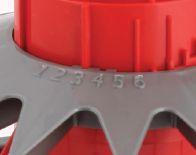
CL ASSIC FLOOD CL ASSIC FLOOD
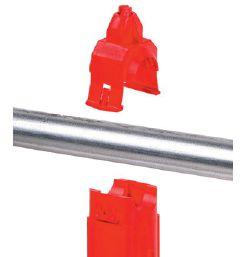
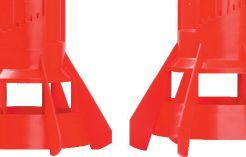
Optional two piece cone for installation on existing feed pipes.
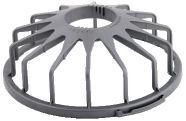
Optional 8 or 14 spoke grill.
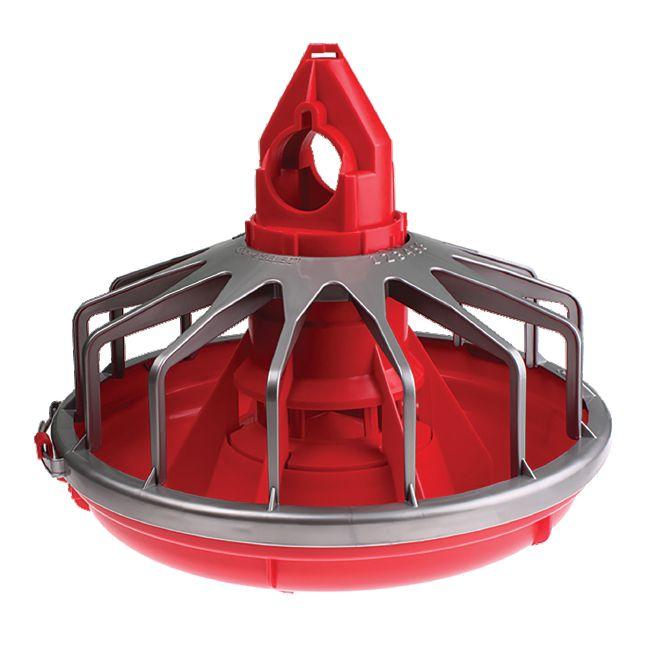
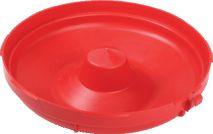
Reinforced wear areas in the pan add strength, leading to a longer lifespan.
Easy to read Feed Level Indicator ensures each pan is set exactly the same and allows for adjustments as chicks grow.
Specially designed flood windows increase available feed in the pan to attract chicks starting on feed.
Standard or 1/2” longer extended fin. Extended fins keep the cone off the pan bottom maintaining feed flow.
Weighing the alternatives
The science behind maintaining gut health without antibiotics. By
Karen Dallimore
There is no silver bullet that will replace antibiotics in maintaining a healthy gut. The bottom line is, antibiotics work. The reality is, they will need to be replaced. Are there alternative solutions out there now to maintain gut health or just ideas?
“I never really know what is efficacious and what is good salesmanship,” admits Dr. Lloyd Weber. As a practising veterinarian and a poultry producer, Weber knows that farmers want products that act under a wide variety of circumstances, that are easy to use and, most of all, that are economically viable.
At a fall meeting hosted by the Poultry Industry Council in Guelph, Ont., Weber described an industry that he predicts will be all raised without antibiotics (RWA) in three to five years, following the lead of the EU.
Europe does well, Weber said, but they keep coccidiosis – the number one dis-
ease pressure – under control. To him, it’s “not a big deal” that antibiotics will be gone as long as we can keep our ionophores and he also predicts that vaccination use will increase.
The problem now is, while many alternative interesting gut health management ideas are out there, many have yet to be scientifically proven to be effective in terms of their production or economic value.
So far, nothing replaces antibiotics in terms of feed conversion or growth. That said, there is enough work published to pique interest. A farmer may just say, “If it pays, I’m happy.” But ideally, we want it to do more than pay.
Signs of a healthy gut include consistent body weights and feed intake, dry litter, good feed conversion and minimal incidence of E. coli, coccidiosis and necrotic enteritis (NE). Weber’s list of additives he has tested to help achieve this without antibiotics includes water acidification, enzymes in water, probiotics and prebiotics, yeasts and essential oils.
It starts with water
Good gut health starts with good water, Weber said: “Insist on excellence.” Historically, water treatments have included chlorine, hydrogen peroxide and other lesser used methods such as ultraviolet and filtration. Eighty per cent of Canadian farmers still use hydrogen peroxide, Weber noted, while many Americans use only chlorine dioxide, which is far superior because it is effective at any water pH.
But what really works? He’s seen producers spend upwards of $100,000 on water treatment – with the only noticeable result being their toilets aren’t brown anymore. He has seen one farmer spend $2,200 for an H2O 2 product that was supposed to be better but instead his E. coli got worse with every crop. When they tested the H2O2 level it was 1 ppm; hydrogen peroxide won’t work below 30 ppm. Since every farm is different, he suggests a chemical analysis of the water as well as the typical bacterial analysis.
So far, nothing replaces antibiotics in terms of feed conversion or growth.
Off-the-shelf solutions may not work. The efficacy of water treatments is difficult to interpret. If you do a water treatment and you don’t monitor your water for bacteria and minerals, the treatment is useless. The water treatment devices themselves take a lot of
monitoring – are they working? Weber is often shocked that people would do any treatment without checking for iron mush, manganese or slime or calcium buildup that may reduce the effectiveness of any additive, noting that a lot of sludge builds up with low pressure and
warm environments.
Lowering the pH of water is helpful, Weber said. Pointing to a 2003 broiler trial at the University of Guelph that compared a pH of 7.2, 6, 5, and 4, a pH of 5 gave the best performance overall. At pH 4 there was less bacterial growth but the results were not useful because the drinkers plugged up as sludge was released from the lines and eight per cent of the birds were lost to dehydration. This emphasized that water lines must be clean or sanitized before starting with a new product.
Weber compared the process to going to the dentist: You need to have plaque removed from your teeth, just like the buildup inside water lines needs to be removed too. Does a pH of 4 give better performance? Some trial results using organic acid and chlorine dioxide have shown a little better feed conversion and also a difference in water consumption. Birds can sense the taste of water better than humans do – a chicken has a greater ability to respond to an acidic pH.
Organic apple cider vinegar is very costly but some producers swear by it; inorganic acids are good or bad depending on whom you ask. It’s mainly about economics, but factors such as the
Dr. Lloyd Weber, a practising veterinarian and a poultry producer, spoke at a fall meeting hosted by the Poultry Industry Council.
baseline water quality or using open drinkers versus nipple drinkers will also give different results. Open drinkers are at a greater risk for bacterial contamination; you’re more likely to get clean water from a nipple.
Ultimately, Weber has learned that if you’re going to put additives of any kind in the water you better have good quality water to be sure the product is even getting to the bird.
Enzymes, pro- and prebiotics and yeast
Enzymes in feed have shown some response in feed conversion and weight gain, compensating for those young broilers who don’t have the enzyme capability able to digest feed fully in first seven to 10 days or may have difficulty digesting soybean meal. Poor digestion may result in gut upset resulting in looser droppings, which in turn results in increased NE. The use of enzymes in feed results in less undigested protein in the lower gut. Weber sees further potential for providing enzymes in water, something that producers are reluctant to add to the water because they don’t want the hassle.
The activity of probiotics and prebiotics is still unclear. So far, Weber is not seeing negatives but neither is he reporting great positives.
There are yeast additives as well – cell wall yeasts or enzyme enriched yeasts. In a process known as “competitive exclusion”, cell wall yeast sets up barrier at the villi so bad bugs can’t attach.
Essential oils and other ideas
The practice of using essential oils typically travels from Europe, where they are more commonly used, to Quebec, to Ontario. Weber will go into a broiler barn and smell a variety of scents, everything from cayenne pepper to extracts to acid – so many that he quips, “I’ve got to run to keep up!” Right now, he’s involved with an Agriculture Canada research trial assessing encapsulated cinnamaldehyde and he’s very impressed.
There are lots of stories of other products too. Weber heard from a company in Ireland who want to use algae, claiming it can help to provide the same omega 3 fatty acids from broilers that you can get from salmon. That’s just one of the stories he hears, to which he responds, prove it!
More science is needed
What all of this tells Weber is that we don’t necessarily need an antibiotic to get good performance. Are you being proactive or using additives for treatment? Prevention is better than treatment but it’s harder to quantify.
Are you using good science to test and evaluate your results? Are the results significant? Are they repeatable across different flocks and chick qualities, and in different seasons? If you’re using a cocktail approach, what part is effective? It can be difficult to assess.
Ideally, we’re looking for decreased disease plus increased performance and, ultimately, some sort of synergy where one plus one is greater than two. Looking ahead, we need to document everything and somehow share that information.
Ask the Vet
By Tom Inglis
Water management
Is my water quality acceptable and, if not, what can I do about it?
There are several trends in the management of water delivery systems for poultry. One of the biggest ones includes a better understanding of the challenge biofilms in water lines present to bird health. On that note, there are new technologies that monitor water lines for biofilms, the goal being to maintain water quality.
Another trend is an increased administration to birds by water of so-called alternatives – phytogenics, essential oils and prebiotics. These are emerging as the poultry industry embarks on antimicrobial use reduction strategies.
Yet another trend is that climate disasters seem to be happening more often. Flooding, droughts and the like have serious implications for water quality for poultry.
With flooding, there is an extreme risk that underground water basins will become contaminated from run-off water, creating a public health disaster for humans and birds alike. Hence the need to secure wells against the risk of flooding. With drought, the chemical composition of well water can change adversely with certain minerals reaching toxic levels for bird health.
In light of these trends, in this article I’ll cover the importance of water quality, how to measure it and how to remedy problems.
Importance of water quality
Water is the most important nutrient in the body of birds. It helps remove wastes, lubricates joints, is a major component of blood and a
necessary medium for many reactions that form meat and eggs.
In addition to being a nutrient, water also softens feed and carries it through the digestive tract of the bird, aids in digestion and absorption and cools the body as it evaporates through the bird’s lungs and air sacs. Substandard water quality – water with adverse mineral content or contaminated with microorganisms – can have an adverse impact on poultry performance.
In some aspects, inferior water quality can have a greater negative effect on bird performance than feed quality because it is a well-known fact that birds consume approximately twice as much water as feed. It is important to know that water is a variable input in the management of poultry. Water in the watering system today may be different from the water present two weeks or two months from now. Variables include changes in source water (e.g., flooding, drought) and changes in the system itself, examples being buildup of minerals and biofilms.
Biofilm is generally present in all watering systems and the only good way to suppress mature biofilms is to aggressively shock water lines with an appropriate cleaning and disinfection program between flocks, and by using a sanitation program to prevent build-up of mineral deposits and biofilms when birds are present.
Measuring water quality
To have confidence in your water quality, it is necessary to conduct three laboratory test procedures on an on-going basis.
Water is the most essential nutrient birds receive. Yet, we often take the quality of drinking water for granted.
Microbiological testing: This detects the presence or absence of the range of organisms that might flourish in water lines. Water samples must be taken at source (well head) and directly from various locations from water lines in the barn when birds are present. Source water must be negative for microbiological growth.
The standard for potable water for humans is 0 colony forming units (CFU) per ml of water. It is difficult to have a negative result with inline testing of water in poultry barns because of contamination occurring while samples are being taken (e.g., dust). While the goal is to have as low a CFU count as possible from in-line testing, what is more important is knowing what microbes are present.
In addition to testing water lines via water samples, the newest advancement in poultry management is physically taking samples from water lines to remove biofilms, which in turn are used to identify microbes present and their sensitivity and resistance to disinfectants and antibiotics.
It’s important to remember that biofilms can carry drug resistant bacteria from flock to flock as well as organisms that cause disease. You can use inspection cameras that can fit in a water line and hook up to your phone for video and recording so that water lines can be checked for dirt.
It’s important to remember that biofilms can carry drug resistant bacteria from flock to flock as well as organisms that cause disease.
Mineral content and chemical characteristics: The mineral content of water can have an impact on bird health and barn conditions (e.g., litter quality and ammonia level). Water that has a high content of certain minerals like sodium, iron, magnesium and sulfates can result in reduced performance, contribute to the incidence of certain disease and trigger gut health problems.
High iron content in water causes
Tom Inglis is managing partner and founder of Poultry Health Services, which provides diagnostic and flock health consulting for producers and allied industry. Please send questions for the Ask the Vet column to poultry@annexweb.com.
Ask the Vet
leaking drinkers and promotes the growth of E. coli, salmonellae and pseudomonas and has been linked to botulism. Calcium and magnesium are the primary culprits of scale and over time scaling can reduce pipe volume, clog foggers and solidify cool cell pads. It also reduces the effectiveness of cleaners and disinfectants by protecting bacteria in the biofilm created.
In addition to mineral content of water, it is important to know how acidic or basic water is; this can be measured by pH. A low pH indicates a high acid content and a high pH indicates a low acid content. One important point about pH is the success that many producers have experienced when they have adjusted a high pH of 8 or more to below 7. A pH lower than 7 increases the efficiency of chlorine as a disinfectant. Water treatments that go as low as pH 4 are used to control certain bacteria.
Biofilm testing: This can be conducted from swabs or even parts of the water system such as pipe. Innovative technology we at Poultry Health Services in Alberta tested allows producers to run disinfectant sensitivity tests on biofilms cultured from their barns. Individual biofilms are made up of different types of bacteria that may react differently to disinfectants together than they do independently. By submitting samples, producers can get an idea of what type of disinfectant will be helpful in eradicating biofilms from their water systems.
How to fix poor water quality
The first thing to do is determine whether the cause of poor water is due to water at the source having excess content of certain minerals (and possible microbial contamination as well) or if biofilms in the water lines are the problem. Note: the minerals calcium and magnesium, in addition to being of significance to poultry nutrition, also aid formation of biofilms by the scale they produce.
A mineral content problem: Excess minerals can be treated by technologies that are specific for particular minerals:
• Iron, manganese and sulfur are best removed through oxidation and filtration.
• Sodium and chloride levels may be
managed by reformulating diets (always share water analysis reports with your nutritionist) or, if necessary, can be removed with reverse osmosis.
• If water contains more than 90 ppm combined calcium and magnesium and more than 0.05 manganese and 0.3 ppm iron, a water acidifier will be needed in the line-cleaning program.
• High nitrate levels are a reason to be concerned! What’s the source? Is it fecal contamination? That can be removed with reverse osmosis or anion exchange resin.
Microbiological contamination in water source: The questions are where has the contamination come from? Fecal coliforms or the presence of nitrates isolated indicate the security of the well platform or well casing has been compromised. Is the well’s location lower than the surrounding area? Has there been flooding? What should you do? Finding the source of contamination is the highest priority. It may be necessary to shock chlorinate the well. Next, it is necessary to install new filters in the water line as it enters the barn. An acid:chlorine sanitation program is needed in the barn when birds are present.
In-line contamination: With birds in the barn, an acid:chlorine program that delivers 3 to 5 ppm free chlorine residual at the end of the line or drinker farthest from chlorine injection is necessary in cases of in-line contamination. Between flocks, it is time to aggressively shock water lines to dislodge biofilms in the entire water system. The basics to cleaning water lines include:
1. After birds are removed from the barn, flush lines with water using a high-pressure flush if available. Remove and discard filters.
2. Acidify the water to a pH of 4 (let stand for eight to 24 hours). This helps dissolve the mineral complexes in the biofilm and the water line. Flush.
3. Add hydrogen peroxide in a final concentration of 0.8-3 per cent (let stand for 12 to 72 hours). This step disrupts the organic component of the biofilm. Flush. Note: Peroxides produce gas when they contact biofilms so the system must be open to prevent bursting the water line!
4. Add a disinfectant that is approved for water systems and let stand for 20 to 30 minutes. This step is to kill any remain-
Inferior water quality can have a greater negative effect on bird performance than feed quality.
Humane. Quick. Final.
The Talon™ is a user friendly and effective way to euthanize poultry using CO 2. Collect a few culls in the bucket, place the bucket in the holder, press the button and let the Talon™ run its cycle. With the Talon™, you not only have an easy way to euthanize, but you can also enjoy the peace of mind that you are using an approved method of animal welfare
Talon Features:
• Portability—one unit can be used for multiple sites.
• Powered by Dewalt 20V battery
• Mount to a wall or pair it with a Poultry Hawk™ trolley system
• Simple push button operation
• Monitoring sensors & indicator lights to ensure proper operation
• Uses common 20lb. CO2 bottle
ing microbes that may have been exposed but not killed by the peroxide. Flush.
5. Replace filters. Fill line with water and let stand until several hours before arrival of baby birds. Flush.
6. Start birds on fresh sanitized water with 3 to 5 ppm free chlorine residual at the end of the line or drinker farthest from chlorine injection.
Practice tips
1. Acids and chlorine sources should never be added directly together to create stock solutions. Prepare separate stock solutions and proportion directly into the water system.
2. Do not add chlorine when administering vaccines, vitamins, alternative products or copper sulfate. Do not mix chlorine and other products in the same solution.
3. Mix stock solutions well! Do not as-
sume that just adding water will result in the ingredient being distributed evenly throughout the stock solution. Water at room temperature is better for making stock solutions than cold water.
4. Keep containers used for preparing stock solutions clean and covered. Dust and flies in the stock solution will contaminate water lines!
5. Pilot test any new product being administered by water by adding the product at recommended use rate to water in a Mason jar. Mix well and let sit at room temperature and observe over an hour-hour period. Two Mason jars are recommended: One with water from source and the other with water as the birds are drinking.
6. When it comes to dispensing antibiotics through the water system, each antibiotic has special requirements. (For example, when you are adminis -
tering penicillin and sulpha drugs, turn off the water acidifiers. A pH above 7 works best.)
7. As products used to sanitize water lines are caustic, eyes and skin should be protected. Materials should be kept away from children. Directions should be followed.
Conclusion
Water is the most essential nutrient birds receive. Yet, producers often take the quality of drinking water for granted. Providing flocks with a clean, wholesome supply can make a difference in performance. Investment in regular microbiological and chemical testing of water, along with the new technologies to monitor biofilms in water lines is money well spent! Water is a variable input in poultry production. It deserves to be managed just like any other input.
CLASSIFIEDS
Outside Sales Rep Position
Ruby360 strives to exceed our customers’ expectations by distributing quality and innovative solutions to our agricultural customers throughout North America. We are looking for a Full-Time Outside Sales Representative with industry proven prospecting and sales skills to join our team.
Responsibilities and Duties include:
• Sell agricultural equipment, primarily in the poultry laying industry including poultry housing systems, ventilation systems, control systems, lighting systems, and renewable energy
• Source new sales opportunities via outbound calls and in-person appointments
• Research existing and potential customer needs and perform cost/benefit analysis to meet them.
• Close sales and achieve annual sales targets by meeting customers overall needs
Minimum 5 years of experience in the poultry industry – Location • Tavistock, Ontario For more Information and to submit your application, please visit our website at ruby360.ca/careers or email your resume to careers@ruby360.ca
If you prefer not to receive this
please indicate so by
Barn Spotlight
The Gras Family
Location
Granton, Ont.
Sector
Layers
The business
Rick and Erma Gras, with their son Eric, established the farm in 1998. The family started egg production in 2007 with a flock of 500 layers. They sell their organic eggs to Gray Ridge and source the organic feed from Masterfeeds.
The need
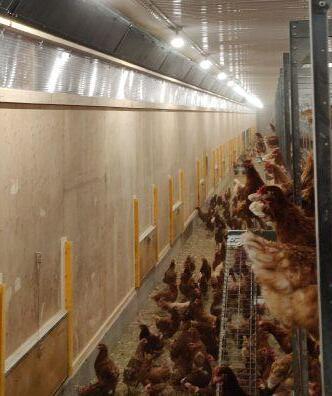
To expand their flock, the Gras family replaced their small barn with a new one that currently houses 5,000 organic birds but has capacity for expanding to 10,000. They chose a Loggia 3 Plus aviary organic system with two rows because it provides easy bird and worker movement. It also replicates a natural bird habitat, Eric says, while maximizing the number of birds housed.
The barn
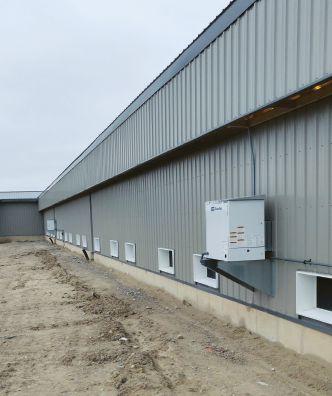
For top efficiency, they built the barn with a south-facing roof so that solar panels can be added someday to reduce grid electricity consumption. A transparent material runs the length of the barn, allowing uniform natural daylight lighting. “Pop-hole doors are mounted close to the floor for ease of access to the outside pasture area,” Eric says. “Daily opening and closing of these doors, depending on the weather conditions, is controlled by an actuator.” The barn has a cross-ventilation system and two box heaters, which are mounted outside for safety so that the burner flames are outside the building.
Barn Spotlight highlights new and renovated barns and hatcheries. Do you know of a good candidate to be featured? Let us know at poultry@annexweb.com.
Eric Gras says his family’s new organic layer barn replicates a natural bird habitat.
A transparent material runs the length of the barn, allowing for uniform natural daylight.
The barn has a cross-ventilation system and two box heaters mounted outside.
Chicken Farmers deliver on Public Trust
Canadians want Canadian chicken – They want it, because they know it stands for excellence in food safety, excellence in animal care, and a commitment to excellence in all aspects of sustainability.
As farmers, you deliver on this – you help to create and maintain public trust in our product.
The standards we uphold each day have an impact, and absolutely drive the credibility that chicken farmers have with consumers.